From the FasterSkier archive — posts syndicated from athletes’ and coaches’ own blogs between 2004 and 2012, kept online as published. Current coverage is at fasterskier.com.

Tag: Amanda Ammar

  • The Ninjas Fight On: ‘The Team is Retired … We Hope That The Idea Will Live On’

    The Ninjas Fight On: ‘The Team is Retired … We Hope That The Idea Will Live On’

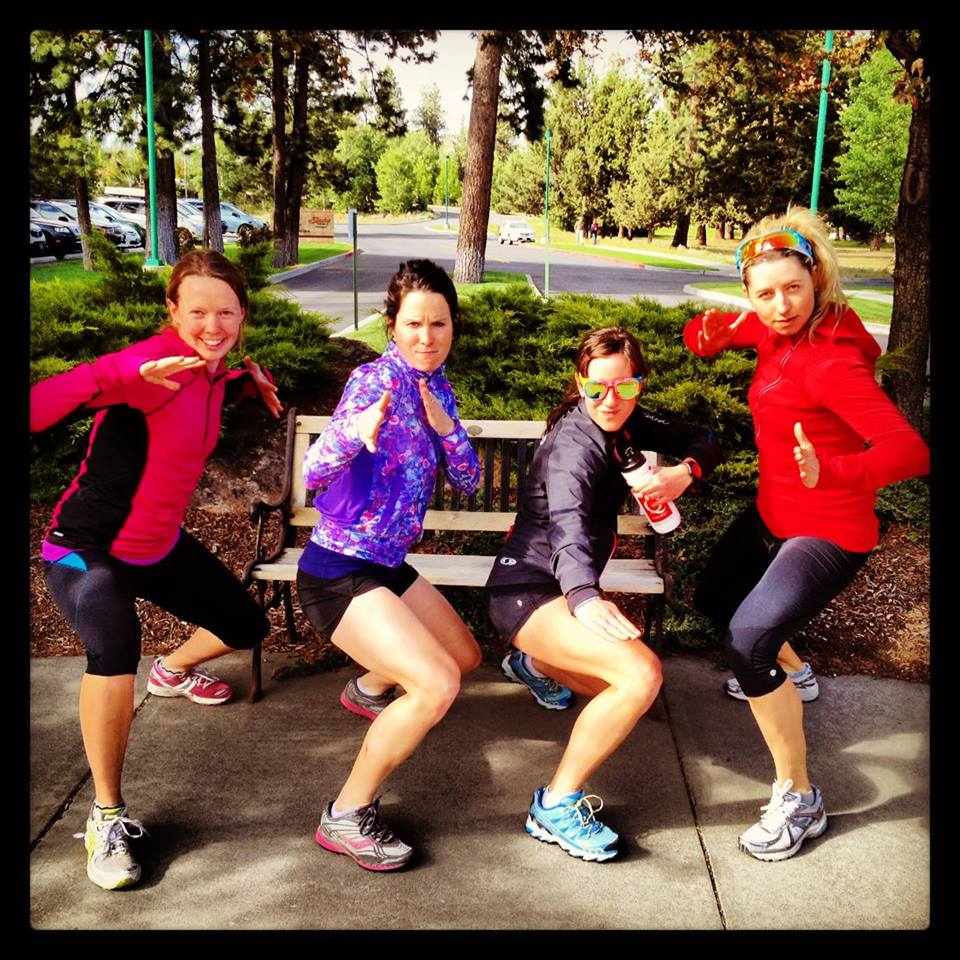
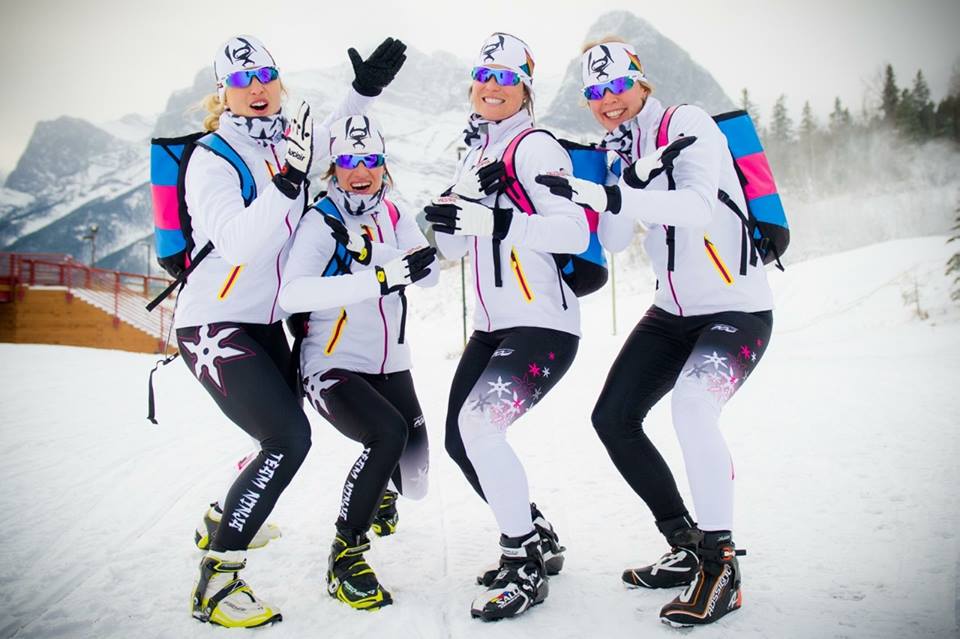
    Team Ninja: l-r Crawford, Ammar, Thomas, Roy; photo courtesy of Team Ninja. https://www.facebook.com/pages/Team-NINJA/181009732101939
    Team Ninja last season in Canmore, Alberta (from l-r) Chandra Crawford, Amanda Ammar, Alana Thomas, and Zoe Roy (Courtesy/Facebook photo)

    With Chandra Crawford, Alana Thomas, Zoë Roy, and team founder Amanda Ammar all bowing out of competitive cross-country skiing this year, Team Ninja only existed for a season, but what a season it was.

    FasterSkier recently checked in with each of the Ninjas, including Thomas, Ammar and Roy, to talk about the independent team and discuss what each of them intend to do as they turn the page to a post-ski racing chapter of life.

    Training with Team Ninja

    “Once you get to a certain age, I don’t think you should be on a generic program. We all had our own focuses and goals and we didn’t hold hands the whole time but we came together for key workouts where we’d push each other hard.” — Amanda Ammar, two-time Olympian, former Canadian National Team member and Team Ninja founder
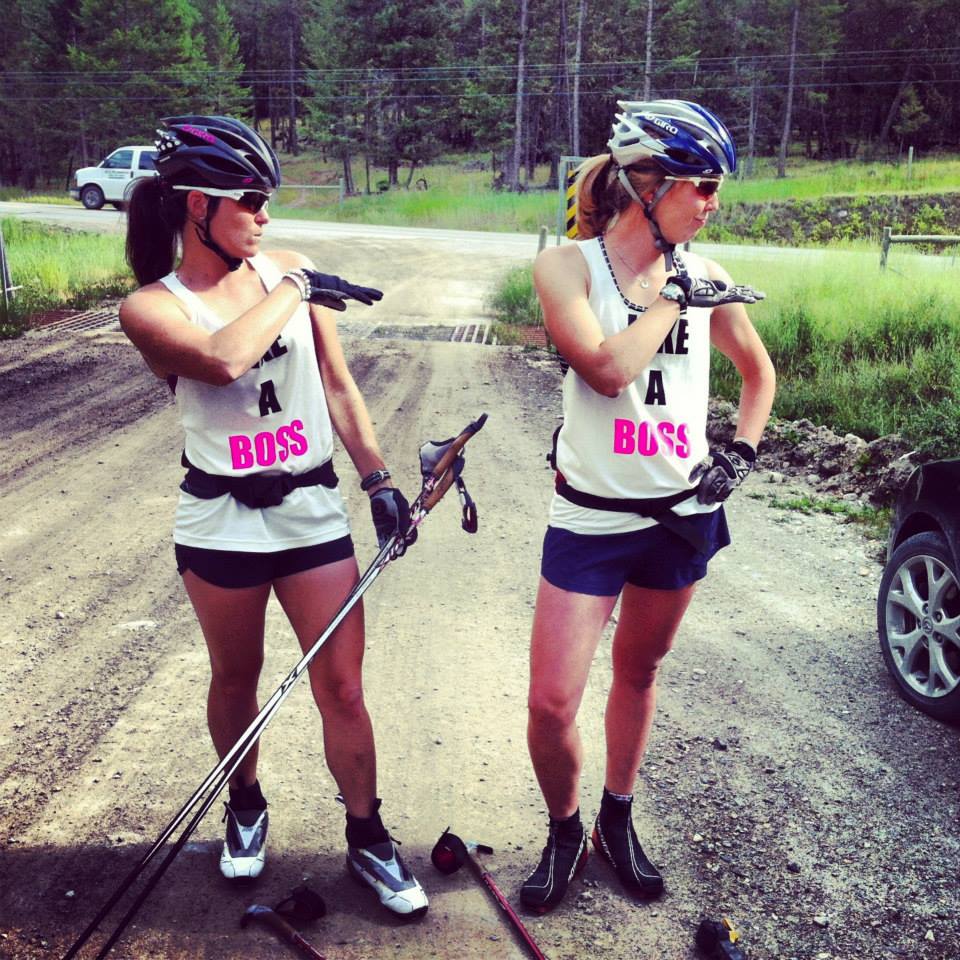
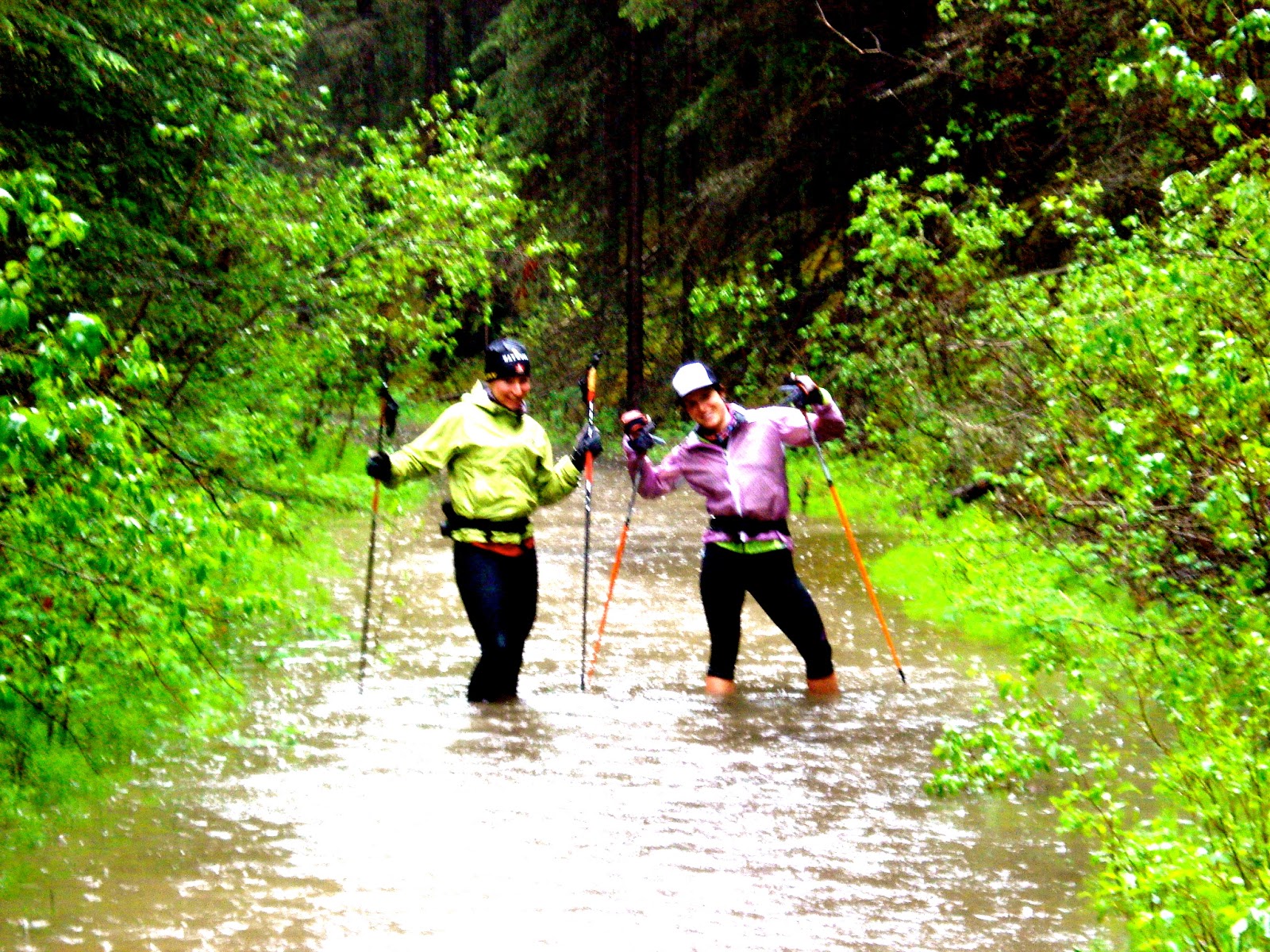
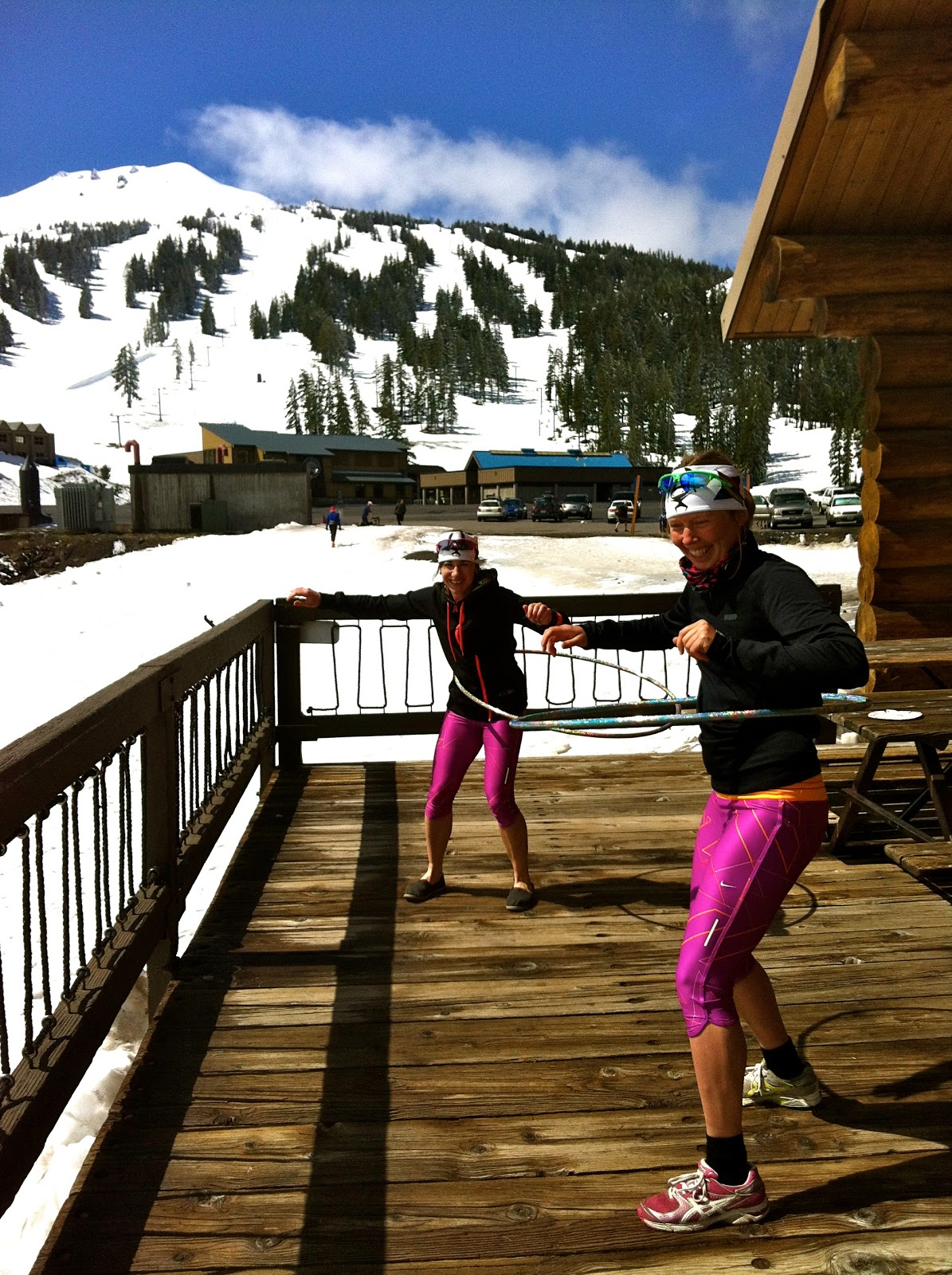
    Thomas (left) and Roy, Ninja training Like A Boss; Photo Courtesy of Team Ninja
    Thomas (left) and Roy, training “Like A Boss” (Courtesy photo)

    One of the features that set Team Ninja apart from other ski teams is that there wasn’t a single coach responsible for guiding all four athletes’ training regimens. Ammar was coached by Chris Butler, Crawford by Peter Larsson, Roy developed her own training program with help from several coaches, and Thomas worked with Jack Sasseville. This approach allowed each member to focus on their own strengths and weaknesses and helped them to work their training around work and injuries. Both Thomas and Ammar were plagued with lower-back issues, common among nordic skiers.

    Ammar tried upping her running hours to take strain off her upper body, only to develop a foot injury from too much running. With advice from U.S. Ski Team member Sadie Bjornsen, Ammar switched her training to swimming for a week and a half and soon after, she posted a personal best in a time trial up the Mt. Norquay access road in Banff, beating her previous best by two minutes.

    Thomas’s back pain stemmed from disc issues and affected her for a large portion of the year.

    “From July on through to January, training was really tough because of my back,” she said.

    For Thomas, it was Team Ninja’s support and positive attitude that motivated her to stick with it.

    While the Ninjas trained hard, it was their desire to have fun first and foremost that defined their training season. They had filled up Sriracha Hot Sauce bottles with a sport drink for “Ninja Juice” feeds on long runs, worn “Like A Boss” T-shirts for every workout at their training camp in Invermere, B.C., and had a blast while mountain biking on trails in Bend, Ore.

    An Olympic Year

    “I had a really solid race season, but it wasn’t quite good enough for the Olympics. I think it was a pretty good ratio having half our team going to the Olympics though! I was really happy to help along my teammates and be part of building their success.” — Zoe Roy
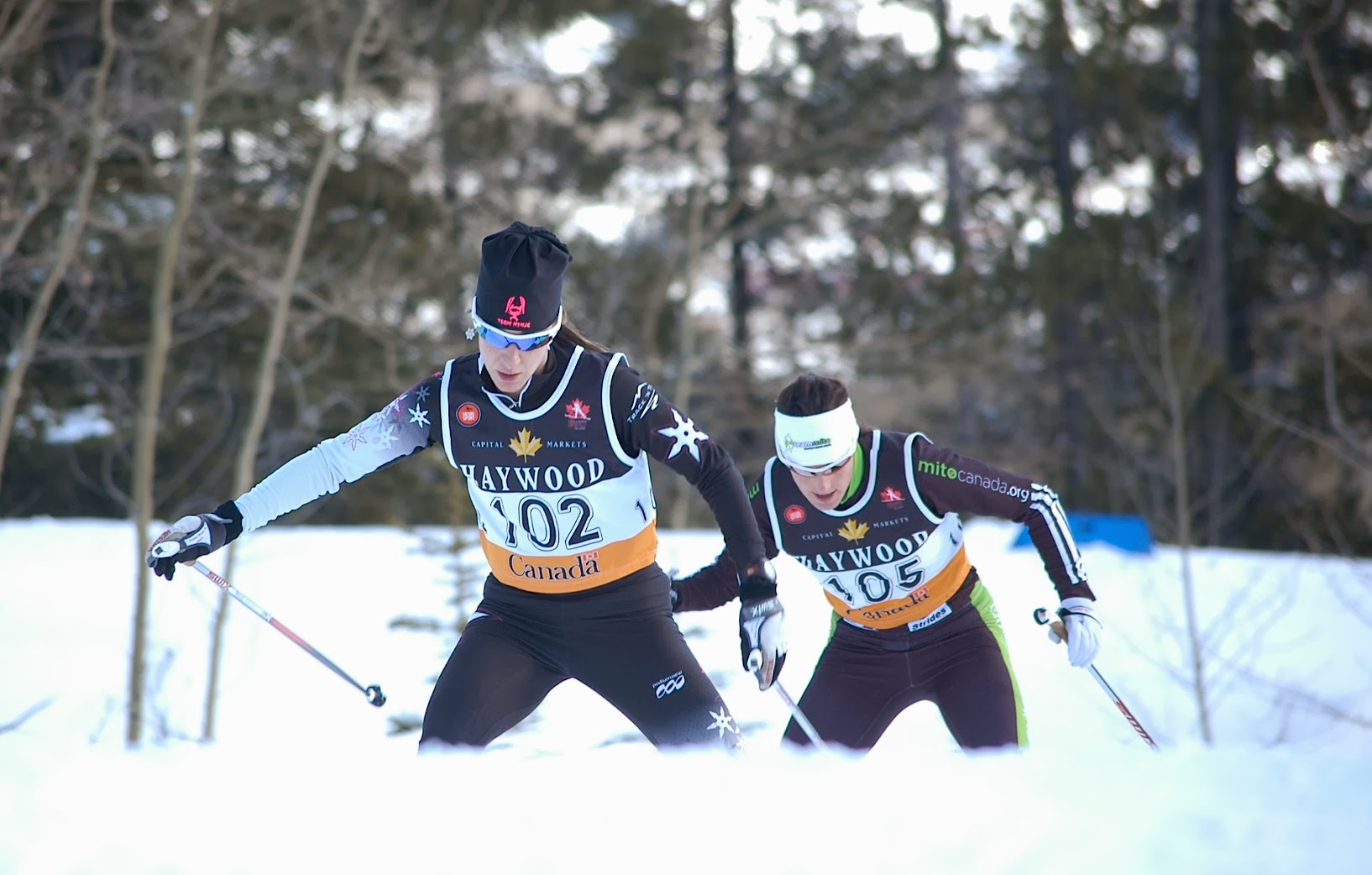
    Ammar leads Brittany Webster in the 15 k skiathlon at Olympic Trials (Photo: Angus Cockney)
    Ammar leads Brittany Webster in the 15 k skiathlon at Olympic Trials (Photo: Angus Cockney)

    When the dust settled after Canadian Olympic trials, two of the seven women on the Olympic team were Ninjas: Crawford and Ammar.

    For Ammar, qualifying for the Olympics was the big goal and, according to her, her team was instrumental in getting her to Sochi.

    “I needed those girls this past year,” she said. “They brought a whole new element of fun and working with them challenged me to push out of my comfort zone. That extra diversity of not having to train by myself really helped me raise the bar. Without them there was no way — plus we had so much fun.”

    Ammar described her Sochi experience as more or less an uphill battle. She and Brittany Webster, of Team Mito Canada, were added to the Olympic team after the official team naming, and as a result, prepared separate from the rest of the team.

    “It was really rough going to the Olympics, having to fight so hard to get there and then have my skis broken in transit,” Ammar said. “I felt like it wasn’t a really fair shot against the world.”

    Aside from the Olympics, Team Ninja made every stop of the NorAm circuit except Westerns. At the first NorAm of the season, they “Christmas-tree bombed” trees at the SilverStar venue. Roy posted two podiums, including a win, at Canadian Eastern Championships in February, and Ammar finished her season with the first national title of her career in the 30 k classic event at Canadian Nationals in March.

    The Future of Team Ninja

    After Nationals, Ammar, 28, was debating continuing her career.

    “At the end of the season it was almost hard for me to retire, I’m in the best shape of my life right now,” she said. “Mentally and physically I’ve never felt stronger than this season.”

    But having spent over 13 years racing competitively (her first nationals was Thunder Bay in 2000), and after having injury continually crop up, she decided it was time to move on.

    Reflecting on her final season, she was content with meeting her two big goals of qualifying for Sochi and winning a nationals distance race. Ammar plans to begin studying Chinese medicine at a Calgary acupuncture school this fall and has already been offered a position, upon the completion of her studies, at the Canmore Alberta clinic where she currently works as an administrative assistant.

    In terms of milestones, 2014 was it for Ammar. The weekend after her return from Sochi, her boyfriend of five years as well as her coach, Chris Butler took her backcountry skiing and proposed to her on top of a mountain.

    “All the Ninjas were betting that it [the proposal] would be at Christmas but when it didn’t happen I thought it’d be next fall,” she said. “I was surprised when he proposed right after the Olympics!”

    She said yes.

    Roy, 26, was happy to finish her career with a solid race season, ranking sixth overall on the NorAm circuit without racing at Nationals. Having raced on the U.S. collegiate circuit with the University of Utah, to the Scandinavian Cup, Roy says it’s time to try something new.

    “I’m moving on to different things,” she said.

    She’s currently the assistant manager at the Paintbox Lodge, owned by 2006 Olympic silver medalist Sara Renner and her husband Thomas Grandi, an alpine Olympian, in Canmore. Roy works with former Alberta World Cup Academy skier Kate Brennan.

    That’s her “summer plan,” she said, explaining she’d like to go into business with her brother.

    “My brother has started a backpack company so I’m thinking of going back to Bend to help him with that in the future,” she said. “This is still in the works but that’d be my plan in the fall.”

    After coping with injury for the last year, Thomas, 26, finally stepped back from skiing in January.

    “On any other team I would have quit earlier, but I wanted to be with the Ninjas and support their races, that was really what kept me around,” she said. “The other Ninjas were really successful and I’m very happy to have been part of it. … I had hoped that I could finish it off strong, but injury ended things a couple months earlier than expected.”

    With a degree in economics under her belt, Thomas will be working this summer at the CIBC bank in Canmore and shredding mountain bike trails in her free time. She plans to return to Ottawa, where she completed her undergrad, to start work on her master’s in the fall.

    The Ninja Spirit

    One thing that each of the Ninjas are adamant about is that, while Team Ninja may have raced its last Canadian Nationals, the team itself is not a thing of the past.

    “The team is retired, but anyone can think of themselves as a Ninja,” Thomas said. “We hope that the idea of team Ninja will live on.”

    The Ninja spirit created by the four athletes has inspired many younger skiers and has the potential of growing into something even bigger than the team that conceived it.

    “I’ve had a couple coaches approach me to keep it going,” Ammar said. “I didn’t realize we had connected with so many younger athletes, but I’d like to share this with younger generations of girls and boys. I’m just trying to figure out how to do this right now.”

    The Ninjas are entertaining the idea of starting an outreach camp for young skiers but for now, with limited time on their hands, they plan to start off small, stepping in to help coach the occasional practice with the Canmore Nordic junior team.

    Team Ninja Ninja Suit Kitty; photo courtesy of Alana Thomas: http://alanaskis.blogspot.ca/
    Team Ninja Ninja Suit Kitty (Photo: Alana Thomas/alanaskis.blogspot.ca)
  • Ammar Gets Coveted Gold at Canadian Nationals in 30 k Classic; Babikov Tops Sandau in 50 k

    Ammar Gets Coveted Gold at Canadian Nationals in 30 k Classic; Babikov Tops Sandau in 50 k

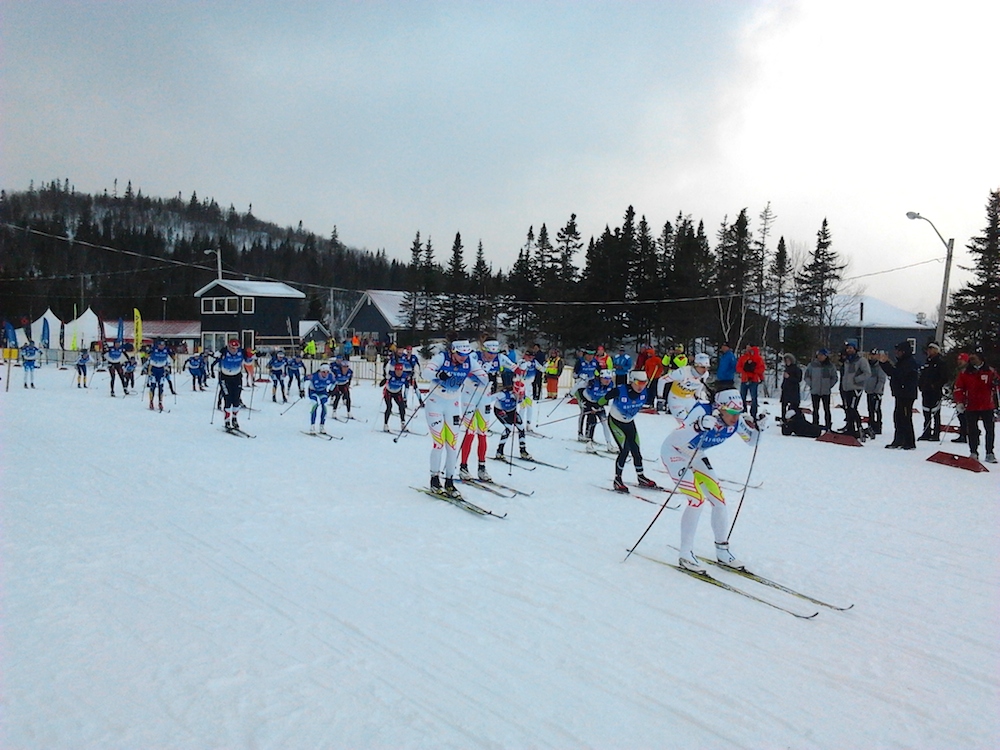
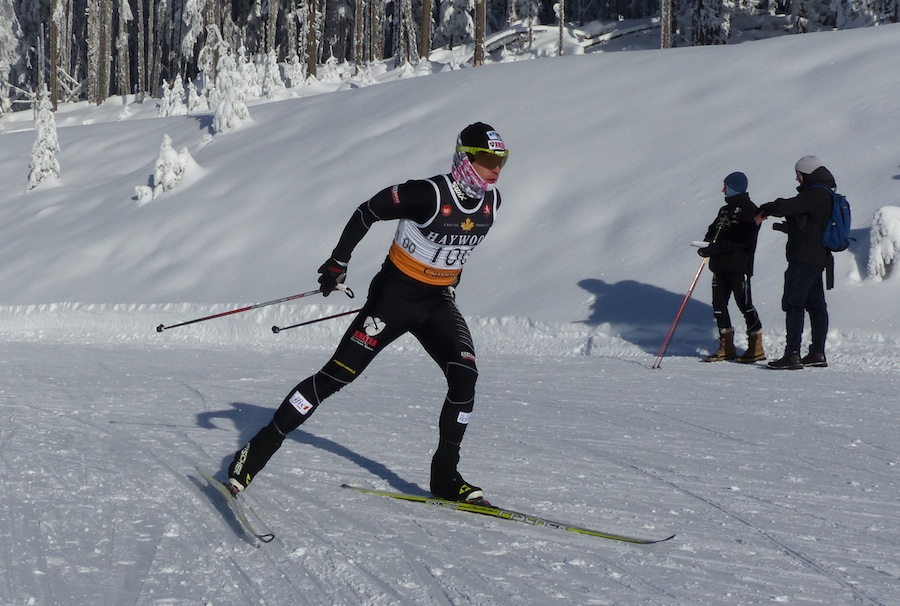
    The senior women's 30 k classic mass start on the last day of Canadian Nationals last Saturday in Corner Brook, Newfoundland.
    The senior women’s 30 k classic mass start on the last day of Canadian Nationals last Saturday in Corner Brook, Newfoundland.

    CORNER BROOK, Newfoundland — The last day of Canadian Nationals started bright and early last Saturday with the senior men’s competition at 9 a.m. The men raced 50 kilometers, women and junior men 30 k and junior women  20 k, all classic mass starts.

    With skiers already having completed three other individual races this week,  some doing four with the team relay, the distance race is not only a good indicator of endurance and race fitness, but also a test of who has recovered the best throughout the week.

    Newfoundland came through with some pretty exciting weather for the final race. Blowing snow was the name of the game for most of the morning at Blow Me Down Trails and made for interesting conditions for the competitors.

    Senior Men

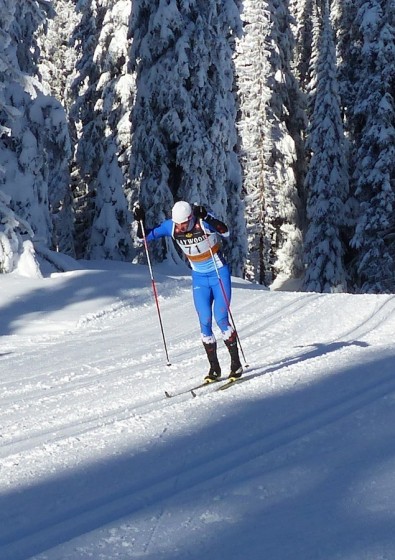
    Fighting through the snow, the senior men stayed in a pretty big pack for the first two-thirds of the race until Ivan Babikov, of the Canadian World Cup Team, pulled ahead to win the 50 k by 41.5 seconds in 2:19:32.3.

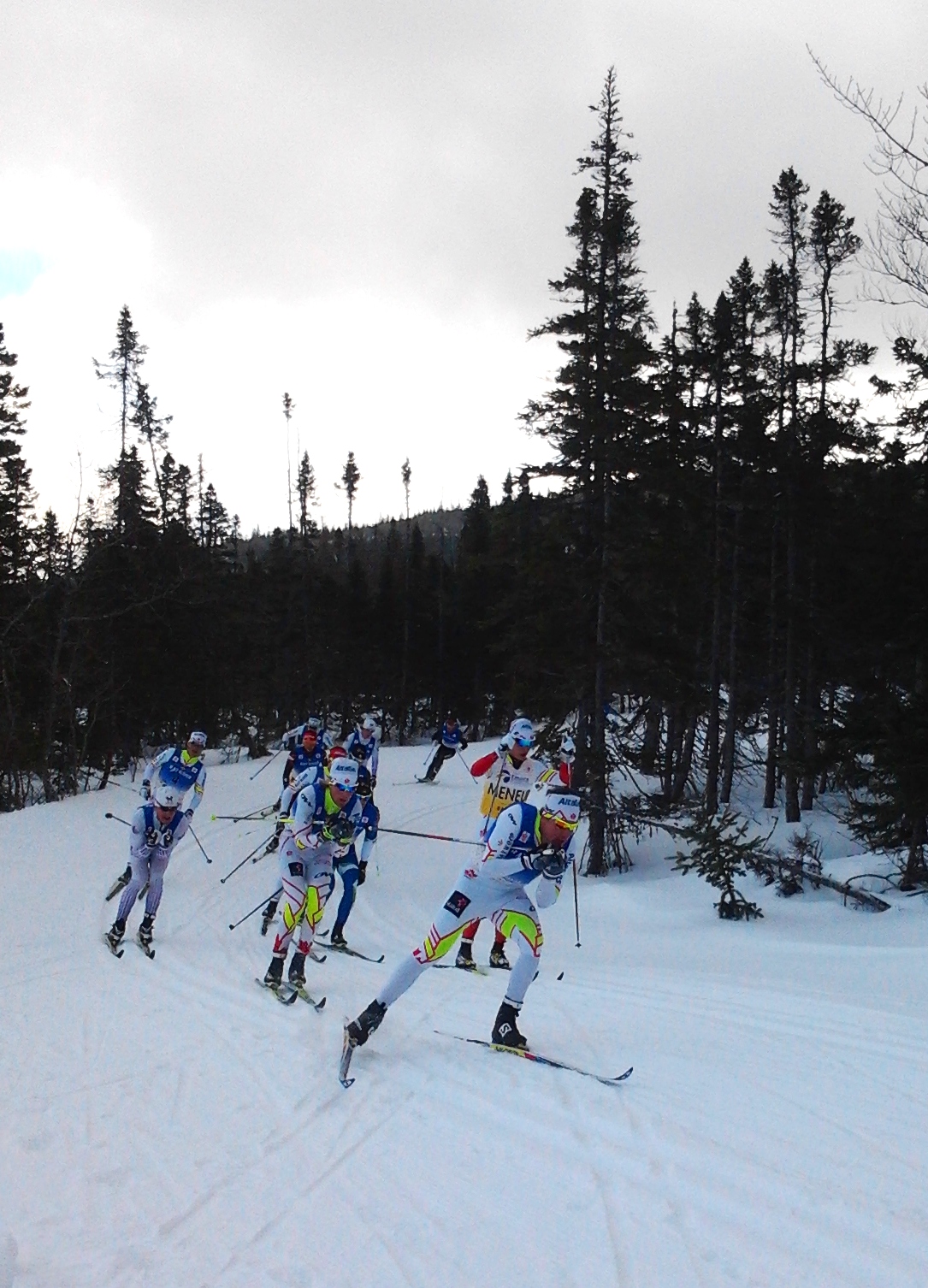
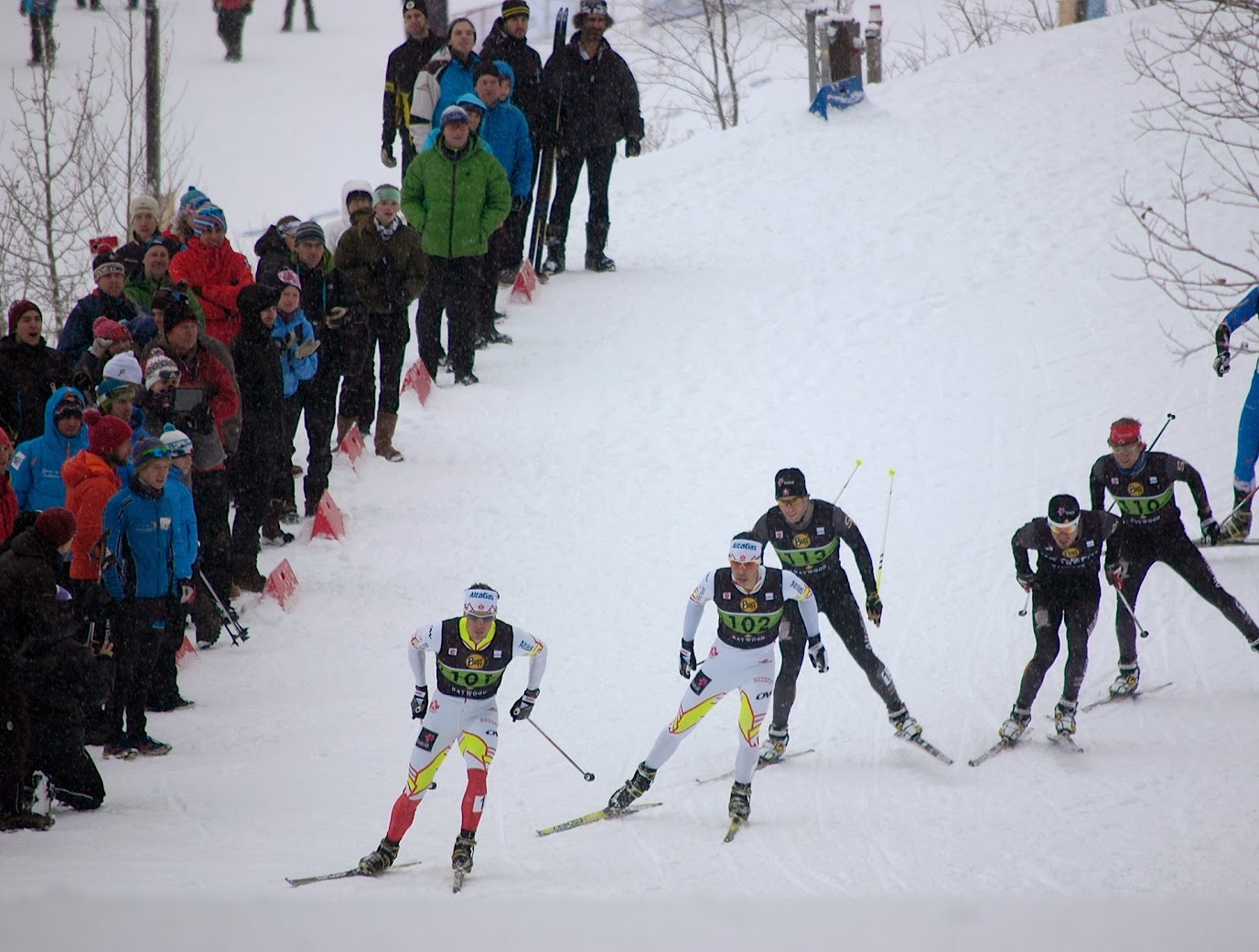
    Ivan Babikov, of the Canadian World Cup Team, leads fellow Olympian Graeme Killick (AWCA/NST) and others in the senior men's 50 k classic mass start on the last day of Canadian Nationals last Saturday in Corner Brook, Newfoundland.
    Ivan Babikov, of the Canadian World Cup Team, leads fellow Olympian Graeme Killick (AWCA/NST) and others in the senior men’s 50 k classic mass start on the last day of Canadian Nationals last Saturday in Corner Brook, Newfoundland.

    Runner-up Kevin Sandau of the Alberta World Cup Academy (AWCA) and Canadian Senior Development Team (NST) talked about the race and about his experience at nationals this year.

    Kevin Sandau (2nd)

    – What was your race plan going into the 50 k? Stick with the pack? Push the pace and string things out?

    “I didn’t want to have a relaxed and passive pace for much of the 50 k. Sometimes 50’s just aren’t hard enough until the last 10 t0 15 k, so they end bunching up quite a bit, and it can get frustrating and sketchy skiing with a big pack like that. I took my turns in the front, kept the pace high. When Ivan attacked on the second last lap a group of three of us tried to pull him back, but well he sort of crushed it that lap and put some big time into us.”

    – Looks like you had a pretty good week of racing. How do you feel about your performance this year at nationals?

    “Best nationals for me by far. I was actually most nervous about the team sprint and defending Foothills Nordic’s gold-medal streak in that race. Also it was the first time I did the sprint race since maybe 2009 at nationals and I managed to sneak into the A-final, so I was pretty excited about that.”

    – How many nationals podiums do your currently have to your name? How many titles?

    “Seven podiums including two team-sprints titles. The [individual] national-champ title still eludes me, but I did grab this years overall title so pretty pumped for that.”

    – I hear you are racing at the Alberta Cup Sharkfest. Safe to say this was your main focus for the season? 

    “Pretty much the biggest focus. You’re only as good as your last race, right? And I figure it will be some good motivation to ski on the weekend.”

    Men’s 50 k Classic Top 10

    1. Ivan Babikov (Canadian World Cup Team) 2:19:32.3
    2. Kevin Sandau (AWCA/NST) +41.5
    3. Graham Nishikawa (NST/Para-Nordic Team) +52.7
    4. Andy Shields (NDC Thunder Bay/NST) +54.4
    5. Graeme Killick (AWCA-NST) +1:29.4
    6. Knute Johnsgaard (Yukon Elite) +1:52.4
    7. Colin Abbott (Yukon Elite) +1:54
    8. Frédéric Touchette (Laval) +2:15.6
    9. Michael Somppi (AWCA/NST) +4:09.5
    10. Colin Ferrie (Black Jack) +4:12.5

    Senior Women

    The senior women’s race played out quite differently. Amanda Ammar (Team Ninja) broke the pack early on, with only Emily Nishikawa (AWCA/NST) being able to match her.

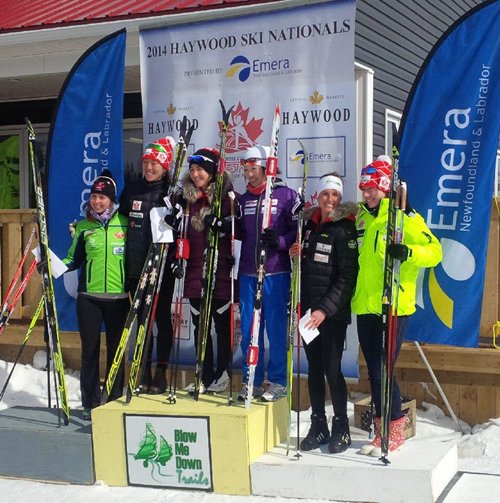
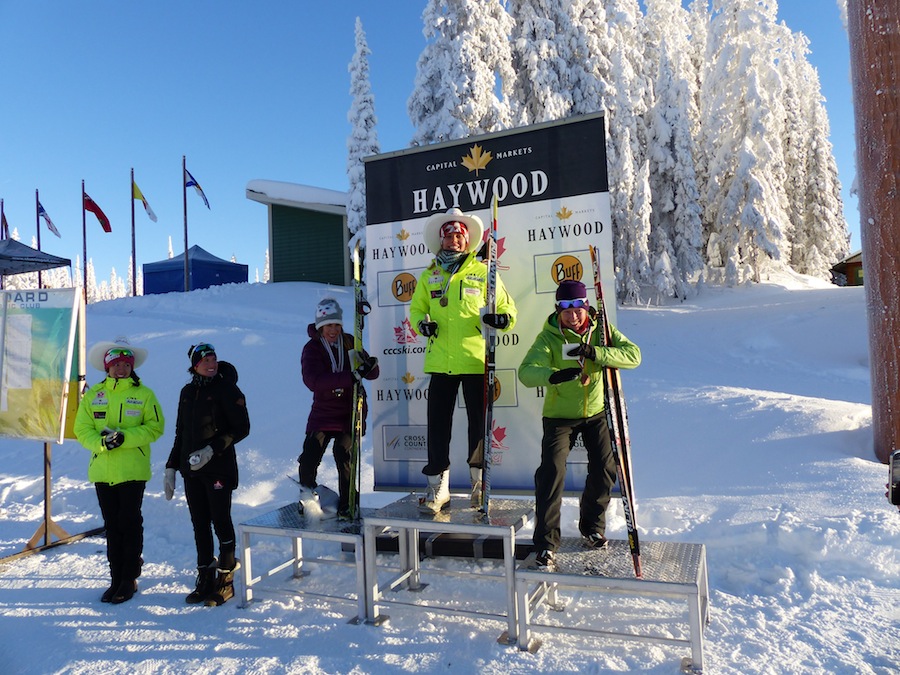
    The women's 30 k classic podium at Canadian Nationals on Saturday in Corner Brook, Newfoundland. (Photo: Cross Country Canada) http://www.cccski.com/Media/Haywood-Race-Report/Haywood-RACE-Report--Ivan-Babikov-and-Amanda-Ammar.aspx#.UzH_XNxH3FI
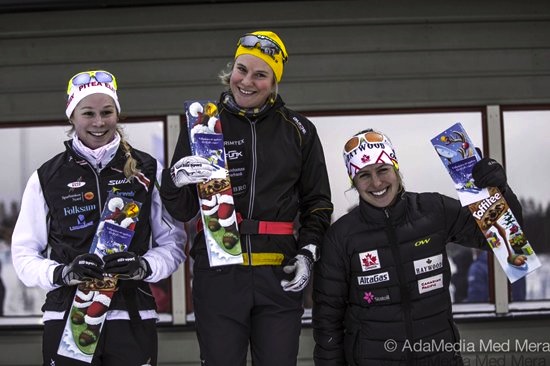
    The women’s 30 k classic podium at Canadian Nationals on Saturday in Corner Brook, Newfoundland, with winner Amanda Ammar (third from left), runner-up Emily Nishikawa (second from l) and Japan’s Chisa Obayashi in third (third from r). (Photo: Cross Country Canada)

    These two skiers worked together, opening up a big gap over third-place skier Chisa Obayashi (Madshus Japan), until Ammar pulled ahead in the last lap to take the win with by 54 seconds over Nishikawa.

    Amanda Ammar (1st)

    – You really broke the field pretty early on. Was that your game plan before or did you decide during the race that you felt great and you’d just go for it?

    “Winning the nationals 30 k was a goal of mine all year, but obviously not the most important. Olympics was first. Breaking the field was always in the back of my head, but you can only make that decision really on the day of … you need to gauge your energy and that day I felt awesome in my warmup, so it was an easy game plan. As a distance skier, I absolutely hate tactics, and would love to have the luxury of always just blasting off the start.”

    – You’ve put down some really solid races at these nationals. Do you think that your experience at the Olympics put you in a good place for nationals or do you think that you went into these races pretty fatigued?

    “The Olympics was physically and mentally exhausting. Leading up to the Olympics was stressful for me with the appeals, Brittany [Webster] and I had a horrible travel schedule, and then while traveling to Sochi the airline company broke most of my skis. So I wasn’t in the best headspace. That being said, the Olympic course was one of the most challenging that I have ever raced on. After completing all of my events, I felt a huge sense of accomplishment and confidence. I knew if I could start and finish a race on that grueling of a course, then it would be an absolute piece of cake on any other course.

    “When I got home from the Olympics I was pretty toast. I had no desire to go to nationals, but I  knew that once I got there that my frame of mind would change, and that I would have fun no matter what. So did I have energy going into nationals? No, but does anybody, really? It’s a long season, especially an Olympic season. We are all tired, and I feel that every athlete is in the same boat.”

    – Any thoughts about your nationals races this year? The 30 k was your first national title, correct?

    “I couldn’t be more excited about my results at nationals this year. A Ninja winning the nationals aggregate? So stoked! This is the first time I have ever medalled as a senior, and I managed to get top 5 in every race! In 2012, I was nine minutes and 30 seconds behind in the 30 k classic event, so that is just one example of how far I’ve come in three years. These results mean so much to me in that I’ve always wanted to be a positive role model for the young women coming up in sport.

    “These last three years I’ve done it my way, no carding, no national/development team, no rules! Chris [Butler] and I made the training plan, and worked together with other athletes in the bow valley. We kept it sublimely simple.”

    Women’s 30 k Classic Top 10

    1. Amanda Ammar (Team Ninja) 1:32:23
    2. Emily Nishikawa (AWCA/NST) +54.5
    3. Chisa Obayashi (Madshus Japan) +4:51.6
    4. Brittany Webster (MitoCanada) +5:36.1
    5. Alysson Marshall (AWCA/NST) +5:39.9
    6. Erin Tribe (NDC Thunder Bay/Lakehead) +5:43.3
    7. *Anne-Marie Comeau (CNEPH/NST) +5:56.2
    8. Heidi Widmer (AWCA/NST) +7:56
    9. Kendra Murray (Carleton) +7:56.4
    10. Marlis Kromm (AWCA) +12:37.7

    *Top junior

    Junior Men

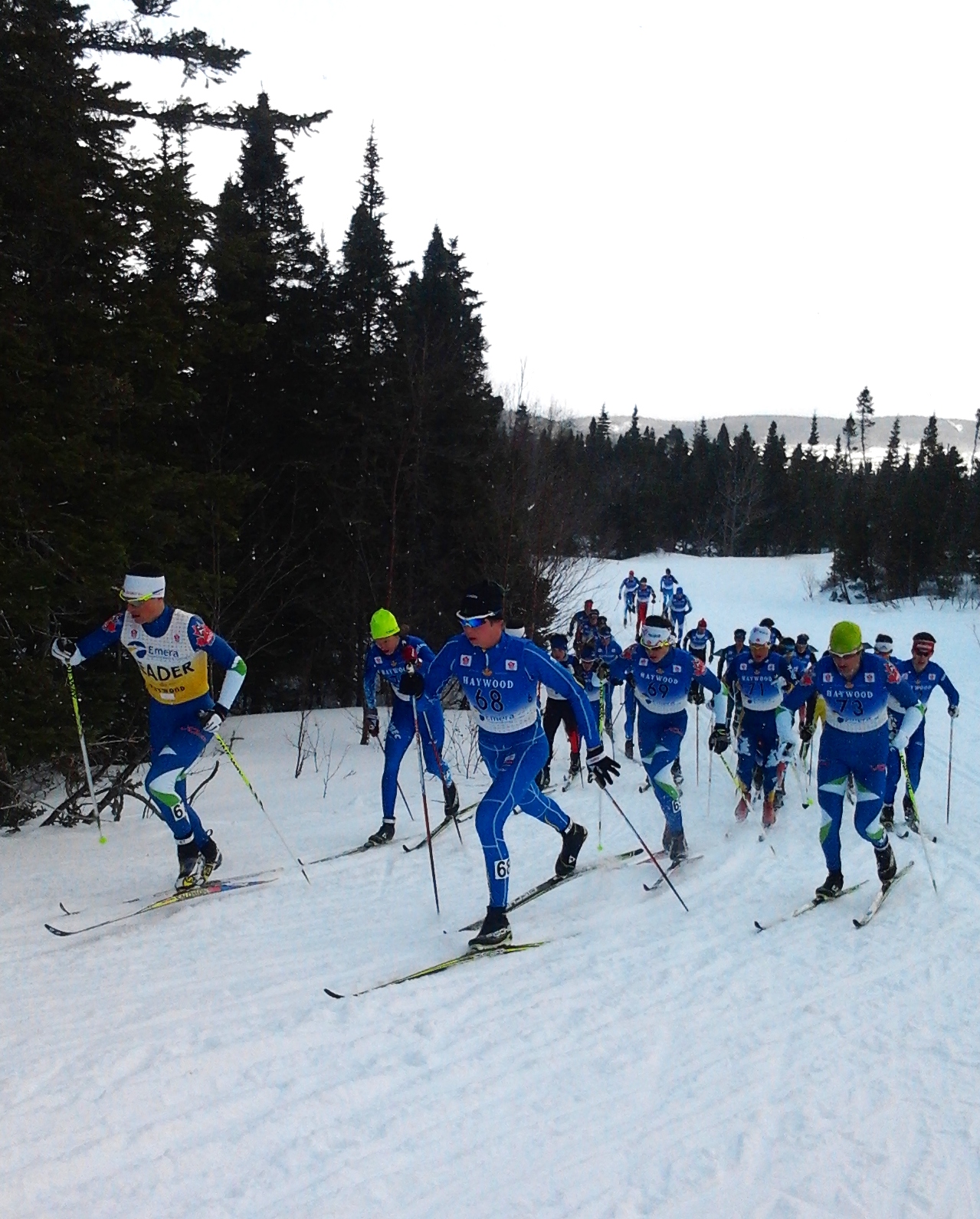
    The junior men's 30 k classic mass start on the last day of Canadian Nationals last Saturday in Corner Brook, Newfoundland.
    The junior men’s 30 k classic mass start on the last day of Canadian Nationals last Saturday in Corner Brook, Newfoundland.

    In the junior men’s 30 k, NDC Thunder Bay ruled the roost once again, sweeping the podium. Pulling off his third national title this season, Scott Hill raced to a nearly two-minute win over the rest of the field. His NDC teammates also on the National Junior Team, Evan Palmer-Charrette and Ben Wilkinson-Zan followed in second and third, respectively.

    Junior Men’s 30 k Classic Top 10

    1. Scott Hill (NDC Thunder Bay/NST) 1:23:10.7
    2. Evan Palmer-Charrette (NDC Thunder Bay/NST) +1:51
    3. Benjamin Wilkinson-Zan (NDC Thunder Bay/NST) +2:29.1
    4. Alexis Dumas (QCST) +3:12.0
    5. Colin Foley (CVTC) +3:32.8
    6. Julien Lamoureux (QCST/Cégep Édouard-Montpetit) +4:32.6
    7. Conor Thompson (QCST/Cégep Édouard-Montpetit) +5:04.9
    8. Nicholas Pigeon (Skinouk) +5:05.4
    9. Gavin Shields (Lappe) +5:45.2
    10. David Askwith (Georgian Bay) +7:32.2

    Junior Women

    Much like in the senior women’s race, the junior women spread out early on. This made for a mentally challenging race as most of the competitors pushed through the pain alone for much of the 20 k distance.

    Upsetting this trend, the top three, Dahria Beatty (AWCA/NST), Katherine Stewart-Jones (Nakkertok/NST) and Annah Hanthorn of the Yukon Territory Ski Team, worked together for much of the race setting up a comfortable lead on the others. On the third of four laps, Beatty and Stewart-Jones slowly pulled away from Hanthorn and the last lap became a two-skier battle. Beatty pulled away on the hills of the final lap to take her second national title of the week by 16.5 seconds.

    Junior Women’s 20 k Classic Top 10

    1. Dahria Beatty (AWCA/NST) 1:08:12
    2. Katherine Stewart-Jones (Nakkertok/NST) +16.5
    3. Annah Hanthorn (YTST) +46.3
    4. Frédérique Vézina (CNEPH/NST) +2:45.2
    5. Sophie Carrier-Laforte (QCST) +3:03.7
    6. Jennifer Jackson (NDC Thunder Bay/NST) +3:12.6
    7. Emilie Stewart-Jones (Nakkertok) +3:18.9
    8. Sarah Beaudry (Caledonia) +4:00.9
    9. Maya Macisaac-Jones (CNEPH/NST) +6:02.4
    10. Ember Large (Edmonton) +6:47.5


    Complete results: Zone4.ca

    For aggregate national titles from the week: Cross Country Canada

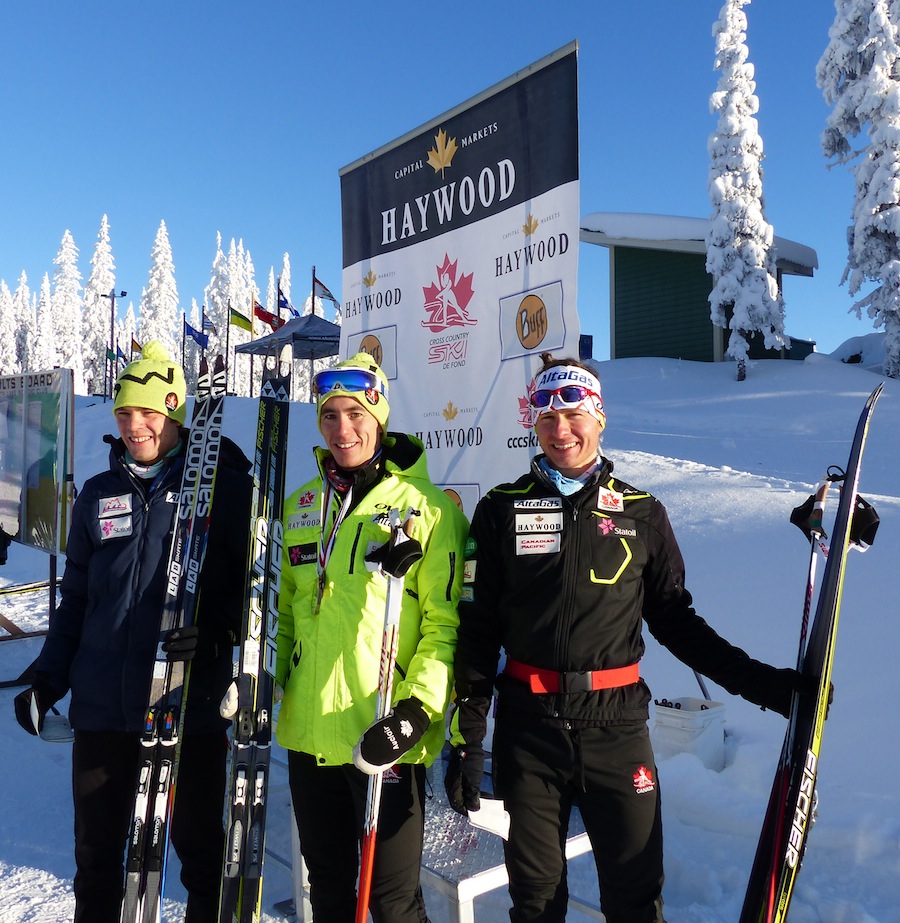
    Ivan Babikov and Amanda Ammar, winners of the 50 and 30 k classic mass starts at 2014 Canadian Nationals (Photo: Cross Country Canada) http://www.cccski.com/Media/Haywood-Race-Report/Haywood-RACE-Report--Ivan-Babikov-and-Amanda-Ammar.aspx#.UzH_XNxH3FI
    Ivan Babikov and Amanda Ammar, winners of the 50 and 30 k classic mass starts at 2014 Canadian Nationals in Corner Brook, Newfoundland. (Photo: Cross Country Canada)

    ***

  • Canadian Women Stand Together, Reflect on Olympic Experience

    Canadian Women Stand Together, Reflect on Olympic Experience

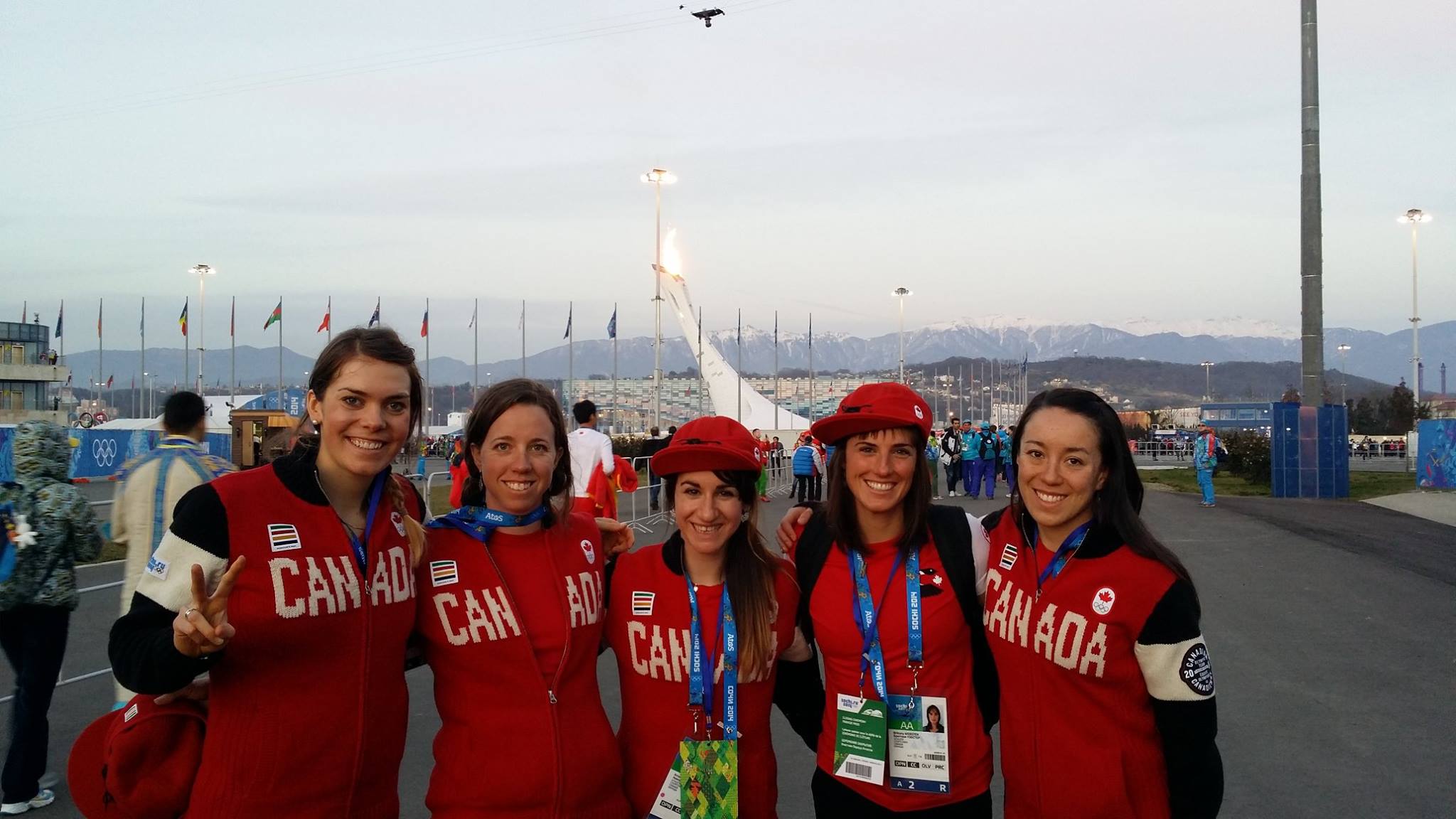
    The Canadian women's team before the Closing Ceremony in Sochi, Russia: (from left to right) Heidi Widmer, Perianne Jones, Amanda Ammar, Brittany Webster, Emily Nishikawa (Photo: Emily Nishikawa)
    The Canadian women’s team before the Closing Ceremony in Sochi, Russia: (from left to right) Heidi Widmer, Perianne Jones, Amanda Ammar, Brittany Webster, Emily Nishikawa (Photo: Emily Nishikawa)

    KRASNAYA POLYANA, Russia — One by one, the four Canadian women in the 30-kilometer freestyle mass start last Saturday, their final race of the Olympics, walked away from the finish line and into the media corrals, assembling as a unit to be interviewed.

    Without watching the race, one might’ve guessed they missed the relay; that’s how much of a team these women appeared to be.

    Two were teammates on the Alberta World Cup Academy and Canadian Senior Development Team: Emily Nishikawa and Heidi Widmer, both in their first Olympics.

    The other two were independent racers, Amanda Ammar, 28, of Team Ninja, and Brittany Webster, 26, of Team Mito.

    All had finished within seven places of one another in the 30 k finale, with Webster notching the top result of 46th and Widmer, the youngest on the team at 22, placing 52nd. (On Friday, Widmer turned 23.)

    Without the team’s three World Cup sprinters in Perianne Jones, Dasha Gaiazova and Chandra Crawford in the race, the group provided a glimpse of the future of Canadian women’s skiing.

    Each had taken different roads to get there — Nishikawa and Widmer more traditionally through the Olympic Team Trials in January, and Ammar and Webster through an appeals process soon after the trials. The latter two, both former national-team members, were in their second Olympics since semi-retiring from the sport a few years ago. Ammar cited injuries and burnout; Webster had gone to the 2010 Vancouver Games but did not compete, then in 2011, decided her slip in results stemmed from a lack of enjoying the sport.

    Ammar returned to racing in late 2011, Webster in 2012.

    Come the next Winter Olympics, here they were, with two newcomers in Nishikawa, 24, and Widmer as teammates.

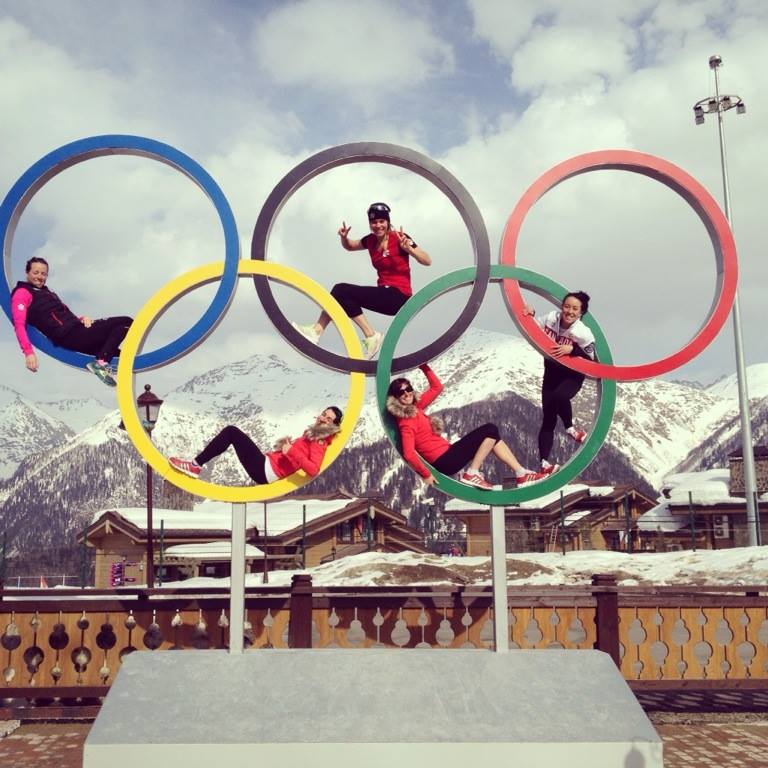
    Several members of the Canadian Olympic cross-country ski team get the perfect photo opp at the Olympic rings in Krasnaya Polyana, Russia. (From left to right): Perianne Jones, Amanda Ammar, Heidi Widmer, Brittany Webster, and Emily Nishikawa. (Photo: Emily Nishikawa)
    Several members of the Canadian Olympic cross-country ski team get the perfect photo opp at the Olympic rings in Krasnaya Polyana, Russia. (From left to right): Perianne Jones, Amanda Ammar, Heidi Widmer, Brittany Webster, and Emily Nishikawa. (Photo: Emily Nishikawa)

    Together, the team had its best results of 11th in the classic team sprint with Jones and Gaiazova, 14th in the 4 x 5 k relay with Jones, Gaiazova, Nishikawa, and Webster, and a top individual result of Jones’ 23rd in the freestyle sprint, just ahead of Gaiazova in 25th.

    The 30 k wasn’t a personal best for any of the Canadians, but it was a capstone in their respective careers.

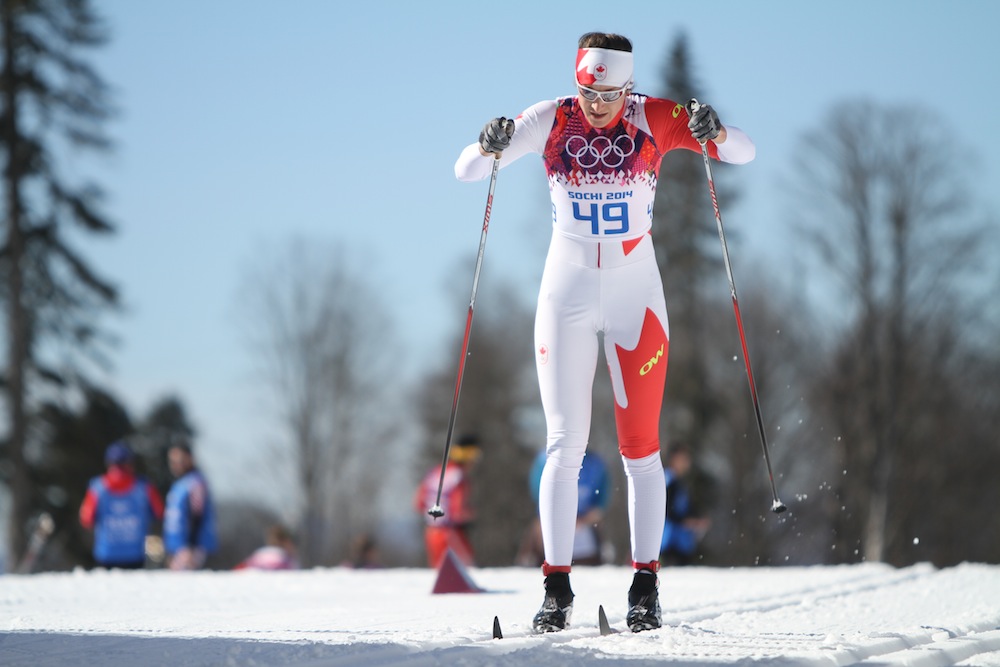
    Aside from her result of 49th, Ammar called it her most memorable part of the Sochi Games.

    “I’m so proud of these girls — I mean 30 k is so hard,” she said, fighting tears while looking at her teammates. “I know we were all a little terrified, maybe, excited, but anyone who does this race is a hero in my eyes.”

    Of her teammates, Ammar said she started the fastest and paid the price. Webster and Nishikawa passed her, and like Widmer, Ammar said that gave her motivation to push harder.

    “A 30 k is just an abundance of walls and when you’re going to hit it you never know,” she said.

    Webster said it was funny because the ended up within places of one another, but didn’t ski together. Only Ammar changed her skis, which she called “a mistake.”

    “They got slower, but so did everyone else’s, I felt like,” Webster said.

    Widmer was hoping the competitor she was skiing with would go in for a fresh pair.

    “I was secretly like, ‘Please change, please change. OK, we’re not changing, we’re gonna do it,’” she recalled. “But my skis were fast, so I was like ‘If they change, I’ll change,’ but mine were faster so I was like … ‘Maybe I’ll just go chill.’ ”

    Widmer went on to beat Croatia’s Vedrana Malec by nearly two seconds in what she called a “slow-motion sprint” to the finish. She had been skiing with Kazakhstan’s Tatyana Ossipova in front of her and Malec behind her for most of the race.

    “The last 5 k, the Kazakh broke me and the [Croatian] chick passed me on the last uphill, and then I passed her back,” Widmer said. “I was like, ‘I will stay in front of her if it’s the last thing I do,’ so that was the sole victory.”

    The four women laughed together, snapped a group photo and hung out under the sunny and warm skies. They were in no rush, despite being indescribably tired.

    After finishing 33 seconds behind Webster in 47th, Nishikawa reflected on her first Olympics.

    “From the start of my first race, the pursuit was an incredible feeling — ‘Oh my God, I’m an Olympian!’ ” Nishikawa said. “It was just really cool to realize, ‘Oh, I’m here,’ and I had a great race that day. I’ve had an incredible time here, so I’m incredibly fortunate and just feel incredibly grateful that I had the opportunity to get three Olympic races in.”

    “The two words that stick out right now are how proud I am and how inspired I am that you get to represent your country and then you get to race against the best in the world,” Widmer said. “That has inspired you to be that much better, come back stronger.”

    Webster praised her teammates after spending three weeks with them at a hotel in the valley town of Rosa Khutor. “It’s been nice to become close to everyone and feel like … for the first time in my entire ski career, I feel we have a great team,” she said. “I’ve never really felt that before.”

    The Post-Olympic Period

    After the Games, some team members, like Gaiazova, went home.

    According to Cross Country Canada, Widmer will join other NorAm leaders, including Andrea Dupont and Alysson Marshall, in the March World Cups, which start this weekend in Lahti, Finland. Jones is the lone woman on the Canadian World Cup team who will be racing there, and Cendrine Browne was also called up for the races based on her results at U23 World Championships.

    While Gaiazova could not be reached for comment, she tweeted on Feb. 23, the day after the 30 k: “Really sad to be going home instead of the World Cup races in Scando. Such is life… @cccski good luck to those racing!!!”

    Head coach Justin Wadsworth said Gaiazova wanted to leave after she was done racing at the Olympics.

    “We did tell her that she’s not welcome on the rest of the World Cup,” he said. “She broke all our team policies and code of conduct.”

    After Gaiazova placed 44th in the 10 k classic, her second of four races at the Olympics, Wadsworth said she had “been out partying” the night before.

    “We had talked about it at our Olympic briefing, that there’s no partying at the Olympic Games [before your races are over],” Wadsworth said, adding that Cross Country Canada had the paperwork to back that contract up. “She’s appealing it.”

    On Feb. 17, Crawford tweeted that she was on her way back to Canmore.

    Since the beginning of the season, there have been indications that this would likely be the last Olympics for Jones, Gaiazova, and Crawford, although when each plans to retire has not been publicly laid out.

    “I will definitely race ’til 2015 at World Champs in Falun,” Crawford told FasterSkier more than a year ago. “It’s just set in my mind as a for sure, but I’ll probably reevaluate after the Olympics the feasibility of another quadrennial.”

    Gaiazova said she’d make a decision after Sochi.

    “When I ski race, I put my 100-percent effort into it, and as long as I’m able to do that and as long as there’s desire and determination I think I would be thrilled and honored to continue,” she said around the same time. “And if my priorities shift and something else comes up or for whatever reason I’m not able to perform at 100 percent then, you know, you sort of reevaluate and see if you want to commit to more.”

    — Seth Adams contributed reporting

    Lahti skate sprint start list

  • Webster 42nd in 10 k Classic as Canadians Struggle Through Slush

    Webster 42nd in 10 k Classic as Canadians Struggle Through Slush

    Dasha Gaiazova (Canadian World Cup Team) racing to 44th in Thursday's 10 k classic individual start at the 2014 Olympics in Sochi, Russia.
    Dasha Gaiazova (Canadian World Cup Team) racing to 44th in Thursday’s 10 k classic individual start at the 2014 Olympics in Sochi, Russia.

    FasterSkier’s coverage is made possible through the generous support of Rudy Project.

    SOCHI, Russia — It’s not every Winter Olympics that athletes have to deal with temperatures soaring above 12 degrees Celsius and racing in slush.

    Three of four of the Americans wore either T-shirts or sleeveless tops in the women’s Olympic 10-kilometer classic individual start, and while the Canadians were in white (as opposed to the black U.S. suits), it was still hot out there.

    Slushy snow during the womem's 10 k classic individual start on Thursday at the 2014 Olympics in Sochi, Russia.
    Mashed-potato-like snow during the womem’s 10 k classic individual start on Thursday at the 2014 Olympics in Sochi, Russia.

    Brittany Webster started to cramp a kilometer or so into the two-loop race, with the first half around on the upper part of the trails at the Laura Cross-Country Ski Center and the second lap down a roughly two-minute descent, and then back up again.

    “It was a total battle with my mind,” Webster said after placing 42nd, the best result of four Canadian women.

    “I felt good off of the start and then one minute in you’re like, ‘Oh man,’ and then you see people kind of skiing away and you can’t keep up with them. It’s hard not to think, ‘I wonder what’s gonna happen for the rest of the race. Oh my god, I’ve only done 2 k and I’m already cramping!’ You just have to play a mind game and basically say, ‘Stop! No! Look where you are; concentrate on that climb.’ ”

    Once she got through the first half of the race, the 26-year-old Toronto native started to feel better on the long downhill.

    “I think I was able to breathe it out and not create as much lactate on the shorter [climbs] which made it a lot better,” Webster said. “The conditions, too, it was a little hard to stay on my feet. I crashed twice, one just randomly going up an uphill. Both of them were in the back of the course over there, definitely the safer parts of the course, but it happens in these conditions. It’s thick, it’s soupy, but I really find it fun out there.”

    Webster also wasn’t complaining about the 12 degree Celsius temperatures and accompanying sun. But she said it was difficult to determine whether she drank too much or too little sports drink that led to the cramping.

    Canada's Brittany Webster racing in the women's pursuit at the Olympics in Sochi, Russia.
    Canada’s Brittany Webster racing in the women’s pursuit at the Olympics in Sochi, Russia.

    After Webster finished 3:23.2 minutes behind the race winner, Poland’s Justyna Kowalczyk (who won in 28:17.8), Dasha Gaiazova was another 6 seconds back in 44th.

    Gaiazova had started 30 seconds ahead of American Ida Sargent, and Sargent caught her quickly. The two skied together for much of the race, yo-yoing back and forth as Gaiazova carried more speed through the downhills and Sargent took the lead up the final long ascent back toward the stadium. Sargent ended up beating her to the line and ended up 34th, nearly 32 seconds ahead.

    “It was definitely a very difficult one for me, but at the same time I don’t do many 10 k’s,” Gaiazova said in the second race of her second Olympics. “The last one I did was in Lenzerheide at the Tour de Ski and that was awful.”

    There, in Switzerland on New Year’s Day, she placed 59th of 63.

    “I didn’t have many expectations today, just wanted to really push it,” Gaiazova said. “I’m relatively happy. I wish I could’ve been a little faster maybe on the downhills and the flatter sections, I’m not used to pushing so much. I’m used to glide and relax.”

    While Gaiazova said she could’ve used more glide, Canadian head coach Justin Wadsworth suggested that was not the way to go on this course and in these conditions.

    “Everyone’s gonna be on klister and there’s only so much speed you can find with klister, especially in these conditions,” he said. “I think if you make the choice to go light on kick, I don’t know what you’re thinking, but you better be ready to tough it out with your arms because there’s a lot of climbs. In some ways, I think it almost becomes more of a who’s ready to suffer and slog it out.”

    Gaiazova and Heidi Widmer were two of the team’s sprinters in the distance race. The Canadian national team brought three distance skiers to the Olympics — Webster, Amanda Ammar and Emily Nishikawa —  but Nishikawa recently came down with a cold.

    Ammar placed 55th (+4:31) and Widmer was another 13.1 seconds back in 57th in her second race of her Olympic debut.

    “It was hard today; I’m struggling at these Olympics,” Ammar said in her second Olympics since the 2006 Games. “I had a tough lead-in with my skis getting all broken and a lot of stress leading up to the Games so i’m just trying to do the best I can and push the best I can and I did that today, but I think the results will not please me when I see them.”

    Ammar said her skis were damaged in transit while flying into St. Petersburg when the flight company put her ski bag in an elevator and “taco-ed” her bag. Fischer helped her repair four of them, she said.

    “Already it’s a tough course and then you add the hot weather and the slow conditions and it makes for a mentally tough day for sure,” she said.

    Heidi Widmer (Canadian Senior Development Team) racing to 57th in Thursday's 10 k classic individual start at the 2014 Olympics in Sochi, Russia.
    Heidi Widmer (Canadian Senior Development Team) racing to 57th in Thursday’s 10 k classic individual start at the 2014 Olympics in Sochi, Russia.

    “It’s a tough race for them and obviously they’re not in the world-leading shape,” Wadsworth said of Webster, Ammar and Widmer. “But I like the effort that Brittany and Amanda and Heidi put out there today. It’s not easy skiing towards back of the pack and having no confidence. I’ve been there and it sucks.

    “I’m concerned for the focus of some of our women’s team,” he added. “We are at the Olympics and there are a lot of people working hard for them, as well as a lot of resources that have gone into them. I hope all our women are giving it their all, and preparing as best they can for each race. That’s all I ask.”

    Widmer, 22, who filled in for Nishikawa, said she’s had some tough moments in her first Olympics, but tried to keep them in perspective throughout Thursday’s race.

    “I feel pretty defeated, but these are the kind of races you think about in the summer and you’re like … ‘When I go back there I’m gonna train that much harder and that much smarter to make improvements,’ ” she said. “Looking up the last hill and being like, ‘Next time I do this it’s gonna seem that much easier. Every little failure you make is an opportunity to improve on it.’ ”

    For Widmer, who specializes in skate sprints, she tried to think about being as smooth as possible and efficient with where she expended her energy.

    “I had a pretty good idea that I would be able to start this race,” she said. “It’s really, really unfortunate that Em Nish came down with a cold. She is the princess, I should stay, queen of classic 10 k’s … but she’s making a smart decision taking care of her body first. I’m just lucky that I had a chance to start the Olympics and just absorbing as much as possible.”

    Two days ago after placing 43rd in the skate-sprint qualifier, Widmer said she tried to FaceTime her parents on her phone during her cool down. Without a wireless connection at the venue, she gave up on it for the time being, and put her phone in her pocket.

    “Running around the athletes village … I heard it in my pocket and then I saw them all in their sleeping gowns up in the middle of the night and I just broke down crying,” Widmer said. “Our sports psych explained it as your pyramid of support, so the stronger and wider that base of support is the stronger your summit of the pyramid is going to be.”

    Thinking back to seeing her parents, two brothers and her sister and their significant others and her dog, she recalled: “They’re the best … Those are the kind of things that really put it in perspective.”

    Results

  • First Race Over and Done, New Olympians (and Some Veterans) Soak Up the Spirit

    First Race Over and Done, New Olympians (and Some Veterans) Soak Up the Spirit

    Sadie Bjornsen (U.S. Ski Team) during the classic leg of the women's Olympic 15 k skiathlon on Saturday in Sochi, Russia. She placed 31st in her Olympic debut.
    Sadie Bjornsen (U.S. Ski Team) during the classic leg of the women’s Olympic 15 k skiathlon on Saturday in Sochi, Russia. She placed 31st in her Olympic debut.

    FasterSkier’s coverage is made possible through the generous support of Rudy Project. 

    SOCHI, Russia – For some of the skiers and biathletes competing on Saturday, the races represented their very first experience as Olympians.

    For rookies – and even for veterans – the Olympics can be stressful. Even though the races have the same formats as other World Cup events throughout the season, the Olympics is something different.

    So how did it go for the North American first-timers?

    “It was good practice for just getting used to what the Olympics are like,” U.S. Ski Team member Sadie Bjornsen, 24, said after finishing 31st in the 15-kilometer skiathlon Saturday afternoon. “There’s a lot more stuff going on with nerves and stuff, it’s just sort of underestimated. So it’s good practice to get ready for some of the other races that I’m looking forward to more later in the week, like the 10 k classic on Thursday and then some relays.”

    Jessie Diggins (U.S. Ski Team) racing to eighth in the 15 k skiathlon, the first race of her first Olympics, on Saturday in Sochi, Russia. The result tied the best Olympic showing by an American female cross-country skier, set by Kikkan Randall at the 2010 Vancouver Games.
    Jessie Diggins of the U.S. Ski Team (15) racing to eighth in Saturday’s 15 k skiathlon, the first race of her first Olympics, in Sochi, Russia. The result tied the best Olympic showing by an American female nordic skier, set by Kikkan Randall at the 2010 Vancouver Games.

    The best coming-out party undoubtedly belonged to Jessie Diggins, Bjornsen’s 22-year-old teammate who placed eighth in the skiathlon. It tied the best-ever finish by a U.S. woman in an Olympic cross-country ski race, equaling Kikkan Randall’s eighth place in the classic sprint at the 2010 Vancouver Games. And the consensus was that it was also one of the best classic races of Diggins’ career.

    That it came with all the added hype was perhaps more impressive – or perhaps not. Diggins has shown nerves of steel over the last few years, including when she anchored the U.S. women’s relay team to its first podium in a World Cup race last winter. At the time, the result was something of a shock.

    Instead of the pressure, Diggins talked after the race about other new experiences that are uniquely Olympic. For instance, her parents made the trip all the way to Russia to cheer for her. That doesn’t happen for a usual World Cup race. Diggins also dyed her hair, intending it to come out red and blue, but it turned out more pink.

    “It’s nice because then my parents can always find me!” she laughed.

    Another unique experience was the support Diggins gets from home. Athletes’ home clubs are always excited when they make the international circuit, but the Olympics is draws even more support. For one of the first times in years, the U.S. athletes were swamped in the mixed zone with media from standard American news outlets. On the less stressful side, they have received messages, videos, and cards from home.

    “My teammates actually made an awesome video for us,” Diggins said of her Stratton Mountain School T2 team. “They re-wrote the words to a song and were dancing and lip-syncing, and it got me really fired up.”

    “I’m just so excited to finally be an Olympian,” Diggins said. “It’s a really cool feeling.”

    Nishikawa Leads Canadian Women

    Of the three Canadian women in the skiathlon, two of them were in their first Olympic race and another hadn’t raced at a World Cup outside of Canada in seven years. Emily Nishikawa, 24, led the team in 42nd at her first Olympic race.

    “I was fighting hard; I felt really good today,” Nishikawa said after the race. “I’m just so happy to be out here. It was really cool at the start to hear the crowd and to enjoy the moment.”

    As for nerves, the Whitehorse, Yukon, native said she was mostly excited.

    “I had a big smile on my face right at the start and I was really happy to be here,” she said. “I pushed hard and hung in there with the skate. …I think I did a great job with racing and I did a good job with the pace.”

    Last year, Nishikawa made her World Championships debut in Val di Fiemme, Italy. Before that, she had only raced two World Cups outside of the country. Comparing her Olympic experience so far to World Championships, she said she’s healthier and “feeling stronger all around.”

    Brittany Webster, 26, placed 51st in the skiathlon — her first Olympic race after making the Olympic team in Vancouver but missing out on competing because of sickness. Feeling pretty collected in the morning, she said that changed before the race.

    “We got to the start line and I was like, ‘This is a big deal,’ ” Webster said. “I definitely got nervous. The beginning of the race started really hard and not being used to the World Cup races took a little getting used to, but the experience of having your first race under your belt is going to be so good for the rest. I was so happy, the fans were amazing, the skis were great, and it was just so nice to racing a whole bunch of girls who are the best in the world.”

    Before Sochi, Webster and Amanda Ammar trained in Seefeld, Austria, just over a week before the Olympics. They were officially named to the Olympic team on Jan. 24.

    “We had a pretty crazy travel schedule; lots of train rides, lots of walking with ski bags, planes, things like that,” Webster said. “We are so happy to be here. Sochi is so amazing. We never really expected this. We’ve had a pretty good surprise.”

    A 2006 Olympian, Ammar finished 55th on Saturday — two days after her 28th birthday — in her first Olympic skiathlon.

    “It’s been seven or eight years since I’ve been on a World Cup so I expected the pace to be hard,” Ammar explained. “But still once you’re living it, it’s like, it’s Marit Bjørgen! It’s Therese Johaug! These girls are fast! It’s the Americans. It was tough and you just hold on for dear life. … Just to be here I am so proud of myself. Even though on the results today it’s nothing phenomenal.”

    Smith Top North American Biathlete

    Nathan Smith of Canada finished 13th in the first Olympic race of his career.
    Canadian biathlete Nathan Smith finished 13th in the first Olympic race of his career on Saturday in the 10 k sprint in Sochi, Russia.

    In his first Olympics, Canadian biathlete Nathan Smith had the added nerves of starting first of 87 athletes in the men’s 10 k sprint on Saturday night.

    “It was a little bit nerve-wracking,” Smith, 28, said. “The crowd pays a little bit more attention to you, and I haven’t started first before. Last night when I found out I was number one, I was like, ‘Wow.’ So I gave it some thought and thought of some strategies for the range where I could stay focused.”

    In the end, it worked out as Smith held his position and finished with the fastest time, holding off Sweden’s Fredrik Lindstroem in bib 2. The two skied the exact same course times and also cleaned, but Smith shot faster on his way to hitting all 10 targets.

    In fact, he tied teammate Jean-Philippe Le Guellec with the seventh-fastest shooting time. While Le Guellec posted his best Olympic result of fifth on Saturday, Smith broke through in 13th.

    “I knew I could do this sort of race; you can’t always shoot clean, so I’m really happy with that,” Smith said, adding that he’d hoped for a top 16. “I had ambitious goals, but this year has been a big step up for me so I didn’t want to expect too much. At the beginning of this year I had no qualification criteria for the Olympics, and now I’m having great races.”

    For the first time this year, American Leif Nordgren, 24, also shot clean in a competition — doing so at his first Olympics. He placed 45th in the sprint with perfect shooting and a couple close calls during three loops around Sochi’s hilly course.

    With a near-50-degree afternoon cooling down significantly before the start of the 6:30 p.m. race, Nordgren said the moisture in the snow hardened and he almost crashed on one of the downhills on his second loop.

    “I barely held on,” he said. “Which would’ve hurt.”

    On the last loop, he pinched a nerve in his back and nearly fell to the ground. But all was well at the finish — Nordgren’s top-60 finish qualified him for Monday’s pursuit, and his physiotherapist got him “back up and running!” he later tweeted.

    “I was probably a little bit more nervous then most World Cup races, but I just tried to put that deep down and focus on the things that you work on during training,” he said. “It paid off pretty well. This is the first time i’ve shot clean all year so I was really happy with that and looking forward to the pursuit now.”

    As for the atmosphere, with bright lights illuminating the 3.3 k loop as if it were in broad daylight and an enclosed range directly in front of the stadium, Nordgren said, “It’s a really fun atmosphere … there’s not a ton of fans here, but they’re all pretty energetic. There’s actually a pretty good American fan base, so the atmosphere is really fun and exciting.”

    Another American biathlete in his first Olympics, Russell Currier, 27, said the crowd size couldn’t compete with the World Cup in Oberhof, Germany, but it didn’t have to.

    “Just the hysteria that comes with it is always ahead of anything else out there, at least for us anyway,” he said.

    Currier placed 61st, less than three seconds out of the top 60 needed to qualify for the pursuit. He missed four prone shots, costing him about a minute and a half on the penalty lap, and he finishing 2:25 behind Norway’s winner, Ole Einar Bjørndalen, who won his seventh Olympic gold and 12 medal to tie Bjørn Dæhlie for the most Winter Olympic medals of all time.

    “First race is always stressful,” Currier said. “I [was] just trying to have fun and focus on the process and not to build up any results and see what happens, essentially. For the most part a lot of things went really well today and one really key thing didn’t go so well.”

    While it wasn’t the race he was hoping for, he couldn’t be disappointed with making it to Russia for a once-in-four-years opportunity.

    “At the end of the day, it’s still the Olympics so I’m happy just to be here,” he said.

  • How Webster, Ammar Earned Additional Spots on Canada’s Olympic Team

    How Webster, Ammar Earned Additional Spots on Canada’s Olympic Team

    Amanda Ammar (Team Ninja) leads Brittany Webster (Highland Trailblazers) in the 15 k skiathlon on Jan. 12 at 2014 Canadian Olympic Trials in Canmore, Alberta. (Photo: Angus Cockney)
    Amanda Ammar (Team Ninja) leads Brittany Webster (Mito Canada) in the 15 k skiathlon on Jan. 12 at 2014 Canadian Olympic Trials in Canmore, Alberta. (Photo: Angus Cockney)

    Editor’s Note: With the Olympic Games set to kick off in earnest with the Opening Ceremony on Friday night (Moscow Time Zone, 9 hours ahead of EST), the Canadian National Cross-Country Team is ready to go in the mountain village of Krasnaya Polyana, where it’s been training for the last few days. This article explains how their team grew by two just a few weeks before the Olympics, and shortly after the official nomination.

    ***

    On Jan. 14, Cross Country Canada (CCC) nominated 11 athletes to its 2014 Olympic squad: a roster that included seven prequalified World Cup skiers, plus an additional two men and two women.

    Over the next week, teams like the U.S. also announced their Olympic picks, with the U.S. nordic team opting to use 14 of its 17 allotted quota spots. Nations that chose not to fill their quotas for various reasons, limited support-staff accreditation being one of them, gave countries like Canada the option to bring more athletes.

    By Jan. 23, the CCC appeals process was in its final stages regarding the selection of its own team — a policy designed to ensure member athletes get fair treatment when it comes to decisions that “may include, but are not limited to, carding, contract matters, harassment, selection and discipline,” according to the document.

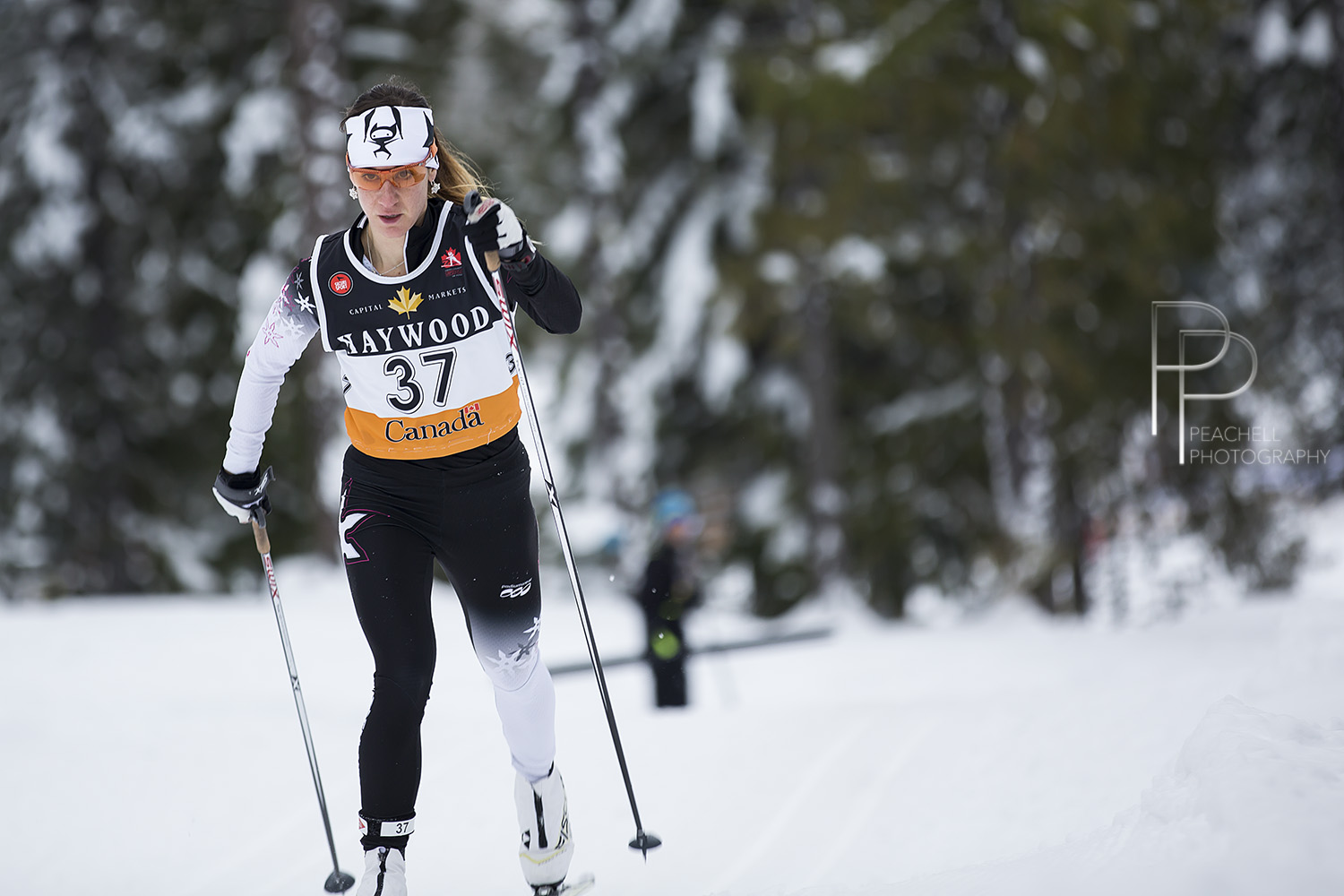
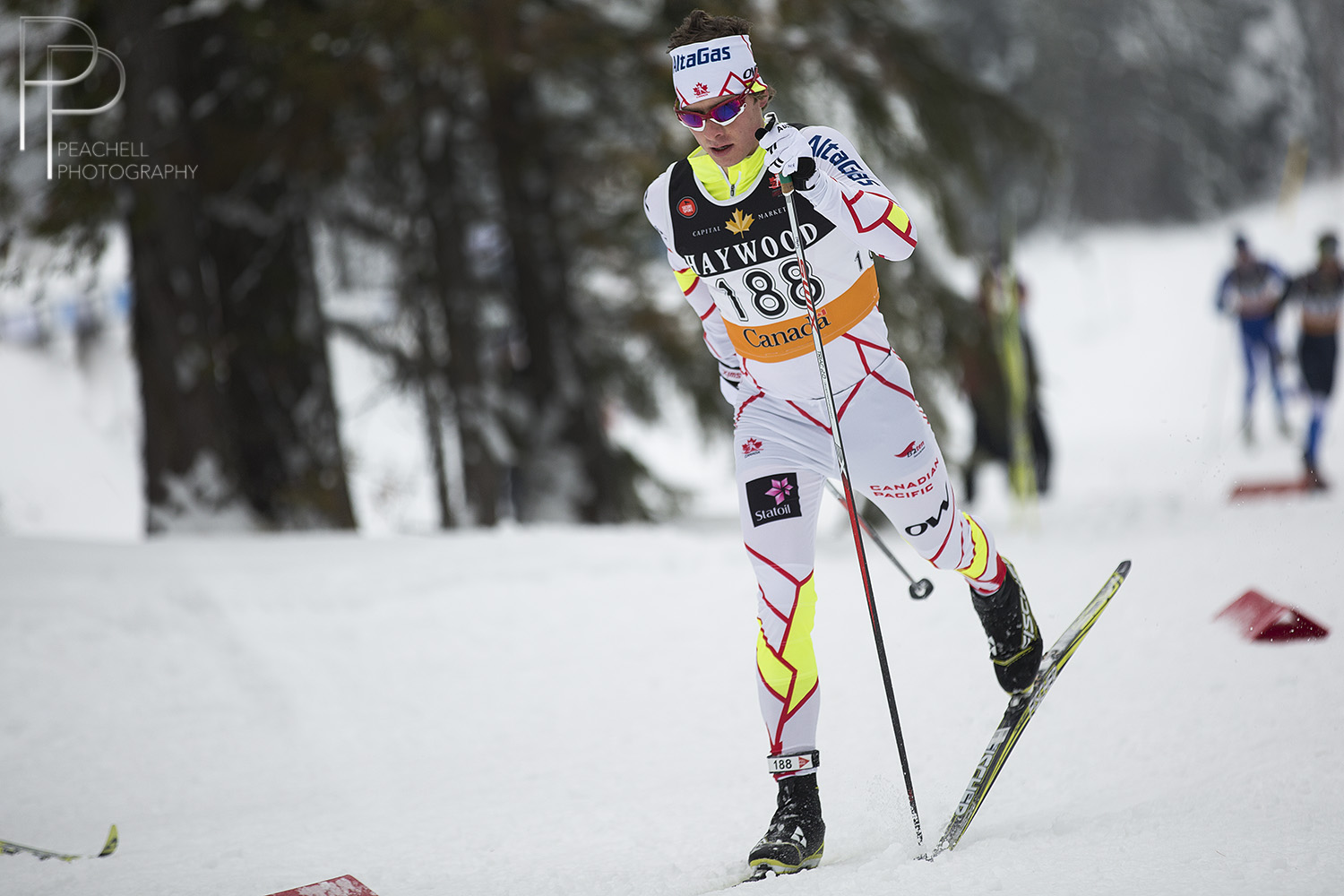
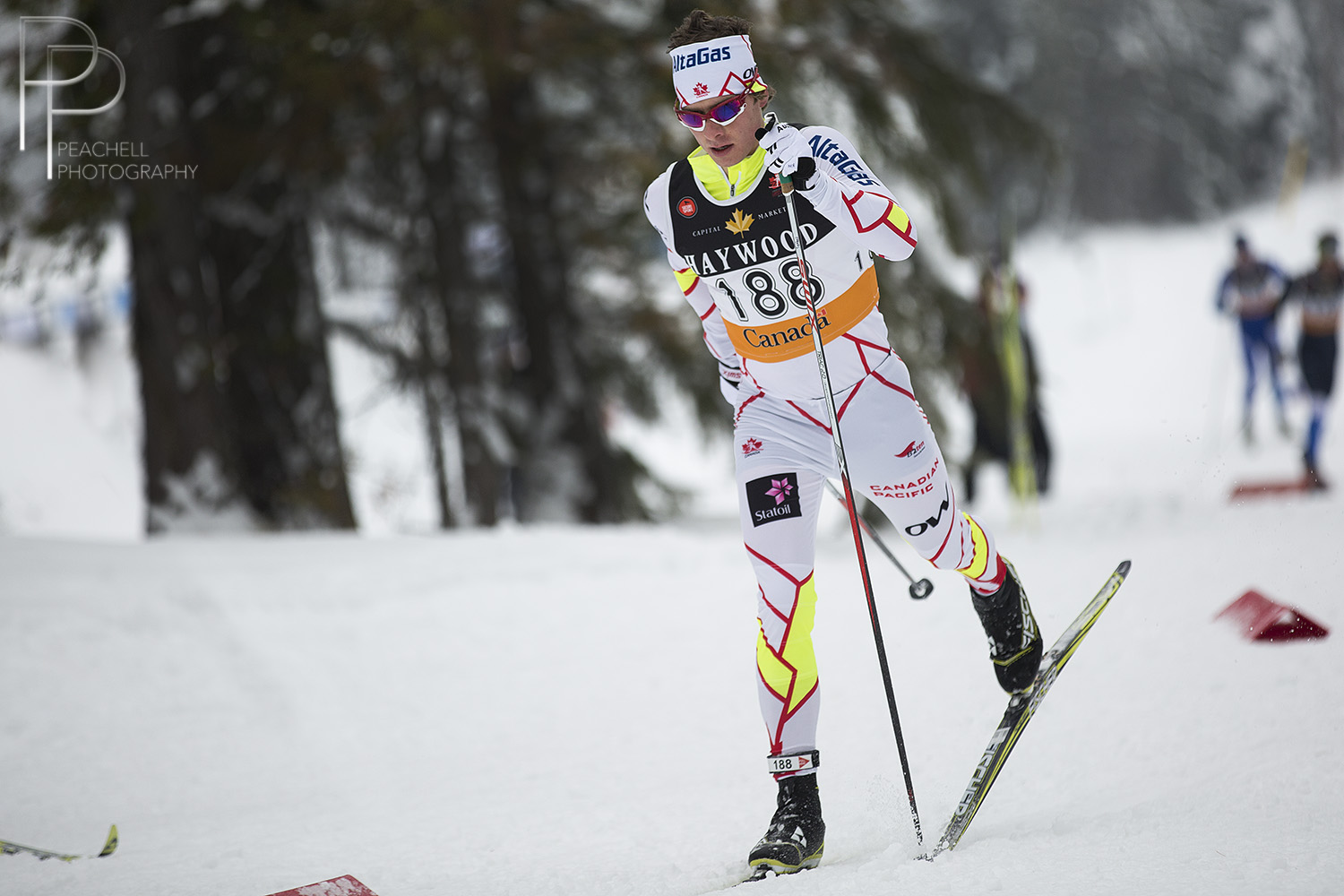
    Amanda Ammar (Team Ninja) racing to third in the Black Jack NorAm 10 k classic individual start on Dec. 15 in Rossland, B.C. (Photo: Shelley Peachell/Peachell Photography, http://peachellphotography.com/)
    Amanda Ammar (Team Ninja) racing to third in the Black Jack NorAm 10 k classic individual start on Dec. 15 in Rossland, B.C. (Photo: Shelley Peachell/Peachell Photography)

    Two former national-team members who narrowly missed the Olympic cut based on their  Canadian Points List (CPL) standings after Olympic Team Trials — Brittany Webster (Mito Canada) and Amanda Ammar (Team Ninja) — stepped forward.

    “If an athlete is not satisfied with the decision of a selection committee in any of our selections, they can appeal internally within Cross Country Canada,” CCC High Performance Director Thomas Holland explained on the phone. “They go to the president, he [sends it to] another panel to hear the appeal.”

    With the Olympics three weeks away and a panel typically having up to 21 days to hold a hearing, CCC rejected one of the appeals because of the short time frame, Holland explained. In that instance, athletes can go to Sport Dispute Resolution Centre of Canada (SDRCC) to have their appeal reconsidered.

    “That’s what Amanda Ammar did,” Holland said. “So then you basically have a hearing for both sides and there’s an arbitrator who decides the case.”

    Based on CCC’s published criteria, which stated it could take up to 12 athletes to the Olympics, Webster was the first one in the door after CCC accepted her appeal.

    “The criteria was a little ambiguous on one point, so she made a case internally to appeal,” Holland explained. “It was all friendly fire anyway. She brought that case forward for the ambiguity in the criteria, which was really looking at the second-place finish [at Olympic Trials].”

    Reviewing Olympic Trials

    The team’s selection process consisted of a prequalification stage at the World Cup level, followed by a series of NorAm races in early January in Canmore, Alberta, which doubled as trials. In addition to the seven World Cup athletes that prequalified, CCC planned to take four more athletes from the results of those trials: a male and female sprinter, and a male and female distance skier.

    For three out of the four disciplines, the decision was clear.

    Heidi Widmer of the Alberta World Cup Academy (AWCA) and National Senior Development Team (NST) won the second freestyle sprint after placing second in the first one to Chandra Crawford, of the World Cup Team and Team Ninja, who had prequalified.

    Jesse Cockney (AWCA/NST) placed second and first, respectively, in the two freestyle sprints, and Graeme Killick (AWCA/NST) finished second in the 10 k classic race by just 1.5 seconds and then dominated the skiathlon a few days later.

    As a result, Widmer, Cockney and Killick were all named to their first Olympic team two days after the trials, along with Emily Nishikawa (AWCA/NST), who won the women’s 10 k classic race by 54 seconds. She went on to place sixth in the 15 k skiathlon, more than 2 minutes behind Ammar as the winner.

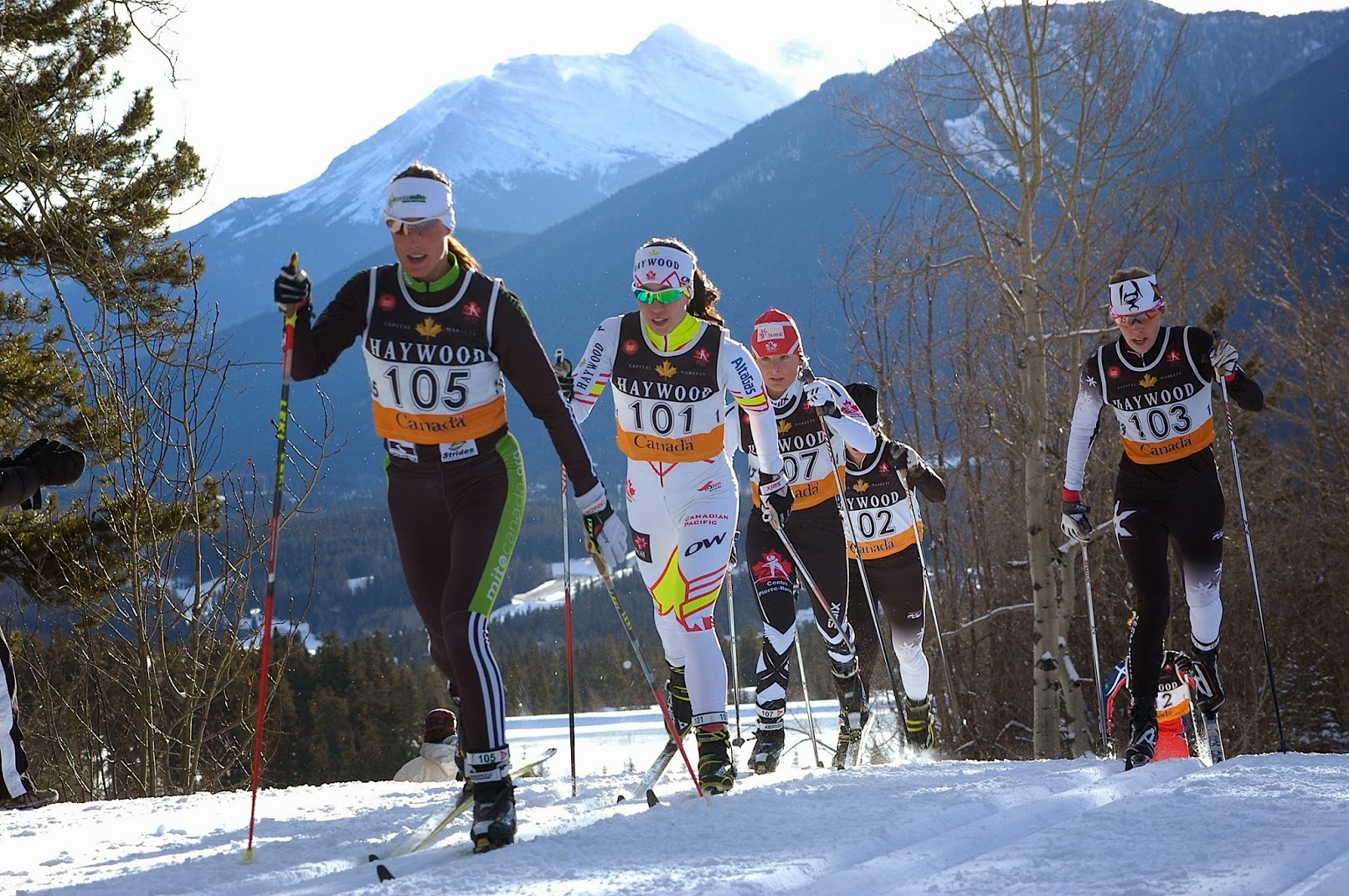
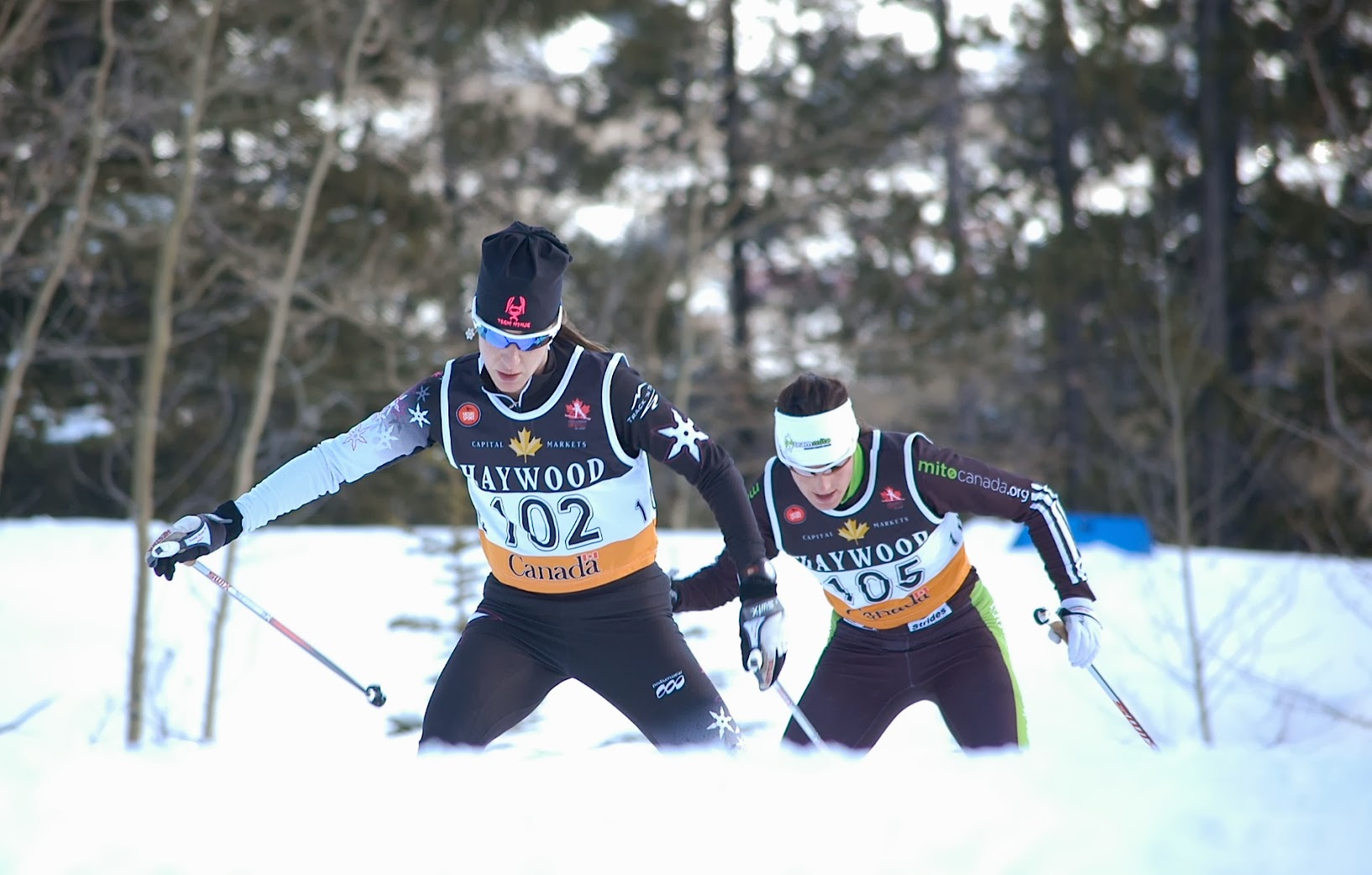
    Emily Nishikawa (101) follows Brittany Webster (105) in the women's 15 k skiathlon at Canadian Olympic Team Trials on Jan. 12 in Canmore, Alberta. Nishikawa placed sixth in the final race of the trials, securing her spot at the 2014 Sochi Olympics from Feb. 7-23. Webster took second after winner Amanda Ammar (102). (Photo: Angus Cockney)
    Brittany Webster (105) leads Emily Nishikawa (101) in the women’s 15 k skiathlon at Canadian Olympic Team Trials on Jan. 12 in Canmore, Alberta. Nishikawa placed sixth in the final race of the trials, securing her spot at the 2014 Olympics. Amanda Ammar (102) won, and Webster placed second. (Photo: Angus Cockney)

    Ammar had placed sixth in the 10 k classic, 1:50 behind Nishikawa. Webster placed second in both of those races.

    Going into the trials, the general consensus among athletes was that winning one of the races was necessary to have a chance at nomination. Nishikawa was named to the team based on her CPL points for the two races better than Ammar’s, topping her by a single point, according to Ammar’s Facebook page. CPL points are the Canadian equivalent of USSA/FIS points.

    After the Olympic team was announced, both Ammar and Webster filed appeals with CCC with separate arguments.

    Ammar stated that the CPL-based selection process was flawed and additionally, that Canada wouldn’t fill its distance starts at the Olympics with the athletes already nominated to the team, with four sprinters among five women. She argued that, had Nishikawa placed fifth in the skiathlon (versus sixth), the points for the skiathlon would have been better because of Nishikawa’s strong point profile, which would’ve boosted Ammar’s points. The CPL scoring system considers only the seed points of the top-five finishers in each race to determine the race points.

    Webster, on the other hand, could have been nominated to the team based on Olympic qualifying standards.  According to CCC’s Nomination Procedures for the 2014 Olympics, an athlete does not explicitly need to win one of the trials races to be selected. In fact, a key component of qualification is having the best points between two trials races.

    “If there are two race winners, the ranking list based on the athlete’s sum total of the designated distance races … will decide the top ranked athlete for the purpose of selection,” the document states.

    Through the end of the trials on Jan. 12, Webster’s points for those races were higher than those of both Nishikawa and Ammar. That, paired with additional Olympic quota spots granted to Canada on Jan. 24, supported Webster’s grounds for nomination.

    Holland said the whole process, including Ammar’s appeal to an outside governing entity, moved quickly — and involved other athletes, such as Para-Nordic Team veteran and 2010 Olympian Brian McKeever, who “started to appeal and for various reasons withdrew that appeal,” Holland explained.

    While McKeever could not be reached for comment, Holland said McKeever, who won the 15 k classic at trials, brought up his case after more athletes were being considered for additional quota spots.

    “He felt that he had a better ranking so why wouldn’t he be considered,” Holland said. “Once an outside appeal committee jumps in, the decision can get very messy because other athletes can come forward and say, ‘What about me?’ We made that case very clear. Anyways, we’re past it, we’ve got our team, and we’re happy to move forward.”

    The entire process started shortly after trials, and with team-naming deadlines looming for both the national and Sochi Olympic committees, Holland said the panel had to move quickly.

    “Sometimes you have to do this within hours,” he said. “That’s why it happened fast and that’s why we have an appeals process that allows for that. It moves pretty quick and these aren’t just hearsay, these are things where we have to put forward a case and put facts on the table.”

    Reacting, Moving Forward

    Once CCC acknowledged it could take up to 13 athletes to the Olympics, both Webster and Ammar received notice on Jan. 24 that they would be named to the team, according to Ammar.

    “I found out on Friday at 6 a.m.,” Ammar said. “So it was a very long, exciting day.”

    When she first discovered she didn’t make it, Ammar said, “Like a normal athlete, I just cried.”

    Frank Ammar cheering for his daughter Amanda Ammar (Team Ninja) on the final day of the Canadian Olympic Team Trials in Canmore, Alberta. A week and a half after the trials, Amanda was named to her second Olympic team. (Photo: Angus Cockney)
    Frank Ammar cheering for his daughter Amanda Ammar (Team Ninja) on the final day of the Canadian Olympic Team Trials in Canmore, Alberta. A week and a half after the trials, Amanda was named to her second Olympic team. (Photo: Angus Cockney)

    The one-point margin was what got her.

    “I mean if it was something huge, then I would have gotten over it, but luckily my dad doesn’t take really no for an answer, and he’s like, ‘Nope, nope, we’re fighting this, nope, we are fighting this,’ and he talked to my old coach, and they’re like, ‘Oh yeah, we more than have a case here, this shouldn’t be an issue.’ So we went forward, and there was a lot of people behind me and supporting me throughout this whole thing.”

    A 2006 Olympian, Ammar, who turned 28 on Thursday, stepped away from skiing for two seasons (from 2009-2011) and came back to it with the help of her boyfriend and coach, Chris Butler. She had been derailed by injuries and dealt with pains in her back and foot as recently as last fall. The NorAm leader at the end of last season, she had the opportunity to start this winter over in Europe. She declined, resolving to rehab her injuries and train more at home to peak for Olympic trials.

    “It feels deserving, it feels amazing, it feels exciting,” Ammar said of being named to her second Olympics. “I have never felt so strong in my whole career. Taking that time away and coming back and training the way I believed to be the best, and staying true to myself and doing my own things as an independent racer has never been more fun and more rewarding. When I hit those start lines at trials this year, I knew there was nothing more I could have done, and there was nothing more in my way.”

    Eight years ago, the Olympics came as a bit of a surprise.

    “I wanted to go to world juniors, and I wanted to be fit, and I ended up making the Olympics — sweet,” she said.

    This time around, she revived and reinvented herself.

    “I came back from so much,” she said. “I came back from an eating disorder, I came back from a back injury, I came back from food allergies, I came back from overtraining, I came back from sleep problems. It was so hard, and I put it out there — I made it real — I said, ‘I want to make Sochi,’ and I just went for it.”

    A member of the 2010 Olympic team, Webster, 26, has also returned to the sport. Four years ago at the Games in Vancouver, B.C., she was initially too sick to race and did not start as a result.

    “[The team] wanted to fly me back to Calgary so I could go back, and in their words, ‘Rest up for a day or two’ and then start training again, but not be around the Olympic environment,” Webster said. “They were going to fly me back for the team relay and the 30 k skate, and for me, it made a little more sense to stay in place and try to recover as best as I could.

    “I had a fever, a sinus infection, a sore throat, and I wasn’t really fit to fly, so I decided instead to stay with my parents at their condo, and that didn’t fly well,” she continued. “So that was basically the end of the story.”

    After taking some time off after the 2010 Olympic season, Webster renewed her zest for racing, making it to World Championships last year in Val di Fiemme, Italy, where sickness knocked her out for all but two of the competitions.

    “I think that if I’m healthy and fit and feeling the way I do now, I can definitely pull out a good race,” Webster said. “What that is on the World Cup or Olympic scene, I have no idea. I would love to think that it’s a top 30, but I really haven’t had a lot of experience stepping on the start line in a good mindset and … healthy in a championship like this, so that would be like the ideal circumstance. In order to get there, I just have to stay happy and healthy and really just enjoy the whole process.”

    Earlier this week, Webster and Ammar flew to Sochi to join their team in the mountain village of Krasnaya Polyana, where all the nordic events will be held. On Saturday, On Saturday, Webster, Ammar and Nishikawa will represent Canada in the women’s 15 k skiathlon, the first race of six women’s events at the 2014 Olympics.

    “I came back from so much … It was so hard, and I put it out there — I made it real — I said, ‘I want to make Sochi,’ and I just went for it.”  — Amanda Ammar

    Accreditation

    In terms of staffing, Canadian Head Coach Justin Wadsworth wrote in an email that they will  have three coaches, seven wax technicians, a team doctor, osteopath, two massage therapists, physiologist, and Holland as the team leader in Russia. Of the 16, all but four (the doctor, osteopath, physiologist, and one masseuse) are accredited, which grants access to the venue and certain restricted areas.

    Canada worked with Australia to bolster its accredited staff. According to Holland, the relationship between the two national teams started before the World Cup races in Sochi a year ago.

    “It is simply an arrangement where we [work] their skis in exchange for accreditation,” he wrote. “Works for both nations. Every Games we are short on accreds for techs.”


  • Canada Adds Two Women, Webster and Ammar, to Olympic Roster

    Canada Adds Two Women, Webster and Ammar, to Olympic Roster

    Amanda Ammar (Team Ninja) leads Brittany Webster (Highland Trailblazers) in the 15 k skiathlon on Jan. 12 at 2014 Canadian Olympic Trials in Canmore, Alberta. (Photo: Angus Cockney)
    Amanda Ammar (Team Ninja) leads Brittany Webster (Highlands Trailblazers) in the 15 k skiathlon on Jan. 12 at 2014 Canadian Olympic Trials in Canmore, Alberta. (Photo: Angus Cockney)

    Cross Country Canada announced late Friday night that it added two women, Brittany Webster and Amanda Ammar, to its 2014 Olympic cross-country team. That brings the team total to 13 athletes, seven women and six men.

    The two former national-team members, who had each been to the Olympics before, filed appeals after 11 athletes were originally named to the team on Jan. 14 “knowing that with the team named … Canada would not have a full representation in the women’s distance races, which were recently granted,” according to a CCC press release.

    “This combined with additional quota spots that became available to Cross Country Canada only [Thursday], confirmed their nomination to the team,” the release explained. “FIS provides quota spots to each country based on international rankings. If other nations do not use their entire quota, those spots are then redistributed in a second round of offers.”

    At Canadian Olympic Team Trials from Jan. 8-12 in Canmore, Alberta, Webster and Ammar finished just outside the quota cutoff — with the one women’s distance spot going to Emily Nishikawa. Webster and Ammar are both distance skiers.

    The founder of the Canmore-based Team Ninja, Ammar, 27, competed at the 2006 Olympics in Turin, Italy. She took two seasons off (from 2009 to 2011) and dealt with injuries in her back and foot this fall, she won the 15-kilometre skiathlon at the Olympic trials.

    Webster (Highlands Trailblazers) went to the 2010 Olympics, took some time away from the sport, and came back to compete at 2013 World Championships. The 26-year-old finished second in both distance races at trials.

    “Adding Brittany and Amanda rounds out the most talented group of cross-country ski athletes to start for Canada at an Olympic Winter Games,” CCC High-Performance Director Tom Holland said in the press release. “This opportunity will allow these two additional athletes to continue their development with this opportunity to race at the Olympics. We welcome them both to the team.”

  • Widmer, Cockney, Killick, and Ammar Show Strength at Canadian Olympic Trials

    Widmer, Cockney, Killick, and Ammar Show Strength at Canadian Olympic Trials

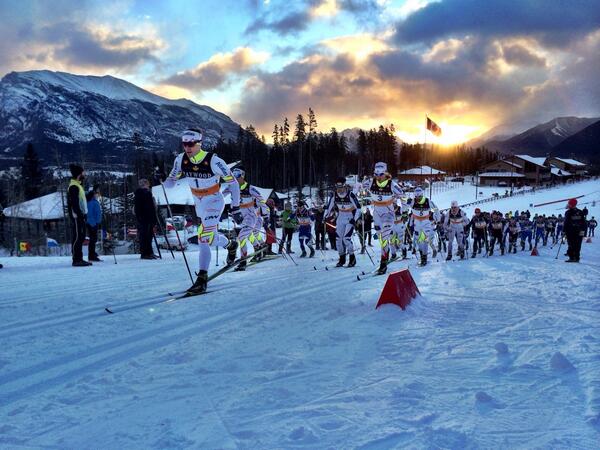
    The start of the men's skiathlon at the Canmore Nordic Centre on Sunday. (Photo: Pavlina Sudrich).
    The start of the men’s 30 k skiathlon at the Canmore Nordic Centre on Sunday. (Photo: Pavlina Sudrich)

    CANMORE, Alberta — Four racers made claims to berths on Canada’s Olympic team this weekend in the freestyle sprints and 15- and 30-kilometer skiathlon on the last two days of Olympic Trials at the Canmore Nordic Centre.

    Heidi Widmer of the Alberta World Cup Academy (AWCA) and Canadian National Team (NST), and Jesse Cockney (AWCA/NST) took top honors in Saturday’s freestyle sprint, while Graeme Killick (AWCA/NST) and Amanda Ammar (Team Ninja) won Sunday’s skiathlon.

    Cross Country Canada (CCC) intends to name one sprinter and one distance racer per gender to the Olympic team based on this past week’s races at the Canmore Nordic Centre. The team will be announced Tuesday morning in Calgary.

    “I didn’t want to be one of those Olympiczillas getting caught up in it all. … This is a dream come true, but I have only completed part one. Now the real journey and work begins.” — Heidi Widmer, 2014  Canadian Olympic Trials skate-sprint winner

    2014 NorAm BUFF® Sprint Series from Twin Zebra on Vimeo.

    Freestyle Sprint

    Heidi Widmer of the Alberta World Cup Academy and Canadian Senior Development Team, en route to a victory in the 2014 Canadian Olympic Trials skate sprint. (Photo: Angus Cockney)
    Heidi Widmer of the Alberta World Cup Academy and Canadian Senior Development Team, en route to a victory in the 2014 Canadian Olympic Trials skate sprint on Jan. 11. (Photo: Angus Cockney)

    Heidi Widmer all but guaranteed her selection to the Olympic team on Saturday with a win in the 1.3 k freestyle sprint. This backs up her second-place finish in Wednesday’s freestyle sprint to Chandra Crawford (Team Ninja/NST), who is already prequalified for the Olympics. Although Crawford did not race on Saturday, Widmer wrote in an email that she used the lessons she had learned from racing Crawford to help her take the win on Saturday.

    “I have raced these trails and trained on them so many times, but this just feels so surreal,” Widmer told CCC. “I was on a mission for this. I didn’t want to be one of those Olympiczillas getting caught up in it all. There are so many ups and downs. I just wanted to stay focused on the process and not look back or ahead of myself. This is a dream come true, but I have only completed part one. Now the real journey and work begins.”

    Behind her, the women’s field showed remarkable consistency from Wednesday’s freestyle sprint.  In the absence of Crawford, the women’s top-four finishers from Wednesday simply became Saturday’s top three.

    Biathlete Zina Kocher showed that her third place on Wednesday (in her first-ever sprint) was no fluke by finishing second in the trials on Saturday. Despite her strong finishes, she has no intention of switching over to cross country.  Kocher is proud, however, of representing biathletes well.

    “I know biathletes get a rep for not being as fast [and] strong as xc skiers, but I hope I have started to prove otherwise!” Kocher wrote in an email. “But I’m not going to make a complete switch [to cross country]. Biathlon has another element to it that I love [and] that makes it incredibly exciting and it would be hard to give that up!”

    Andrea Dupont of Rocky Mountain Racers rounded out the podium in third.

    Phil Widmer (AWCA/NST) leads teammate Jesse Cockney (second from l) and the rest of the men's final at the 2014 Canadian Olympic Trials on Jan. 11 in Canmore, Alberta. (Photo: Angus Cockney)
    Phil Widmer (AWCA/NST) leads teammate Jesse Cockney (second from l) and the rest of the men’s final at the 2014 Canadian Olympic Trials on Jan. 11 in Canmore, Alberta. (Photo: Angus Cockney)

    For the men, Jesse Cockney moved up to top spot on the podium after finishing second on Wednesday and, along with Widmer, will almost certainly be named to the Olympic team.

    Skiing tactically within the pack until the finishing stretch, Cockney moved alongside Phil Widmer (NST) in the finishing stretch and threw the hammer down to win the 1.7 k skate-sprint final by two seconds.

    Widmer finished second and young-gun Patrick Stewart-Jones (AWCA) followed in third. Cockney described his finishing strategy to CCC:

    “I just kept telling myself to get to the line. … Phil has been so strong, and I took that outside lane for the finish. I didn’t know what else to do, but I just wanted to get to the line. It has been years of hard work. I don’t know if it is official. I did all that I can do and I just want to enjoy this moment.”

    15/30 k Skiathlon

    With the qualification wrapped up for the sprint racers, the last chance for the distance racers was Sunday’s skiathlon.

    Killick, who finished second to Brian McKeever (Canadian Para-Nordic World Cup Team) in the 15 k classic on Thursday, was a strong favorite heading into the men’s race and he delivered.

    “My initial strategy was to try and break with someone in the classic and work together to hold off the group,” Killick wrote in an email. “I tried a few times to go the classic but was pulled in on the downhill and never really got away with anyone. On the last lap I was finally able to respond to an attack by Graham Nishikawa and keep pushing past to get a little gap on the field. Jess [Cockney] bridged to me and we were able to work together into the first lap of the skate.”

    Graeme Killick (AWCA/NST) soaring to a 30 k skiathlon victory at 2014 Canadian Olympic Trials on Jan. 12 in Canmore, Alberta. (Photo: Angus Cockney)
    Graeme Killick (AWCA/NST) soaring to a 30 k skiathlon victory at 2014 Canadian Olympic Trials on Jan. 12 in Canmore, Alberta. (Photo: Angus Cockney)

    After that, Killick, who had not raced the previous day’s sprint race, started to pull away.

    “I just tried to keep a good pace going and managed to stay strong through the last couple laps,” he explained.

    By the end of the race, Killick had extended his lead to just under a minute to take the win. He joins Cockney and Heidi Widmer as another almost shoe-in for the Olympic team.
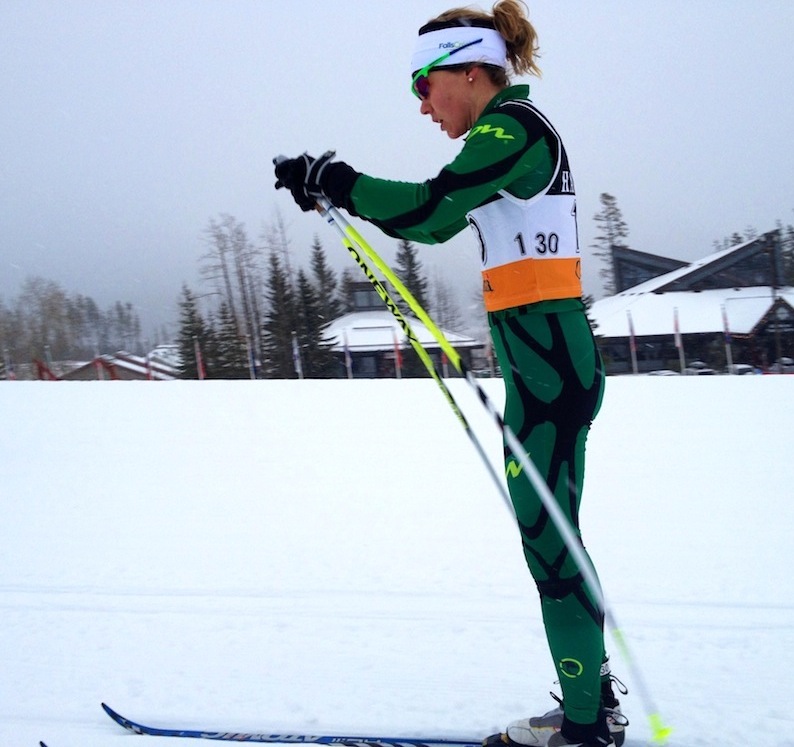
    Cockney faded somewhat towards the end of the race and was caught by the rest of the pack, but he regrouped to win a sprint finish with Michael Somppi (AWCA/NST) for second place.  Already having secured a vital win during the week’s trials, Cockney entered the day with a relaxed attitude.

    “The day was really fun,” he wrote in an email. “Tactically I just wanted to conserve energy and ski near the front for a podium. I’m happy with the result and thrilled with the week of racing.”

    Somppi wrote in an email that he was happy with the day, but overall unsatisfied with his fitness thus far this season. Though the Olympic team is likely out of his reach for this season, he wrote:

    “I still don’t feel I am racing at my best, but today was a good step forward.  I will take some much needed rest and recovery now and hopefully I can find my top racing form for the second half of the season.”

    McKeever, winner of Thursday’s distance race, ended up in eighth and is likely out of the running for Olympic qualification — but the visually impaired skier is a gold-medal favorite at the Paralympics in early March.

    Amanda Ammar (Team Ninja) leads Brittany Webster in the 15 k skiathlon on Jan. 12 at 2014 Canadian Olympic Trials in Canmore, Alberta. (Photo: Angus Cockney)
    Amanda Ammar (Team Ninja) leads Brittany Webster in the 15 k skiathlon on Jan. 12 at 2014 Canadian Olympic Trials in Canmore, Alberta. (Photo: Angus Cockney)

    On the women’s side, Ammar gritted out a huge win for herself after finishing sixth on Thursday.  Although she wrote in an email that she didn’t feel great energy-wise on the day, she tried to simply “hold on” for as long as possible. Her strategy worked, as the pack was whittled down to three skiers, two of whom Ammar thought she could out-sprint in the end (the other being herself).

    However coming into the last few kilometres, she decided to start her sprint with 1 k remaining in the race, and it was all over for the other racers.

    Ammar crossed the finish line in 49:16, with Brittany Webster (Mito Canada) five seconds back and junior Anne-Marie Comeau (Pierre-Harvey National Training Centre) at 30 seconds back. All three were over a minute ahead of the fourth-place finisher.

    Ammar, while thrilled with her result, is circumspect.

    “No matter what happens with the Olympic decision, I will now know that I am just as fast and as fit as the girls going, and I’m at that top level. It’s been a long hard journey for us, and I’m just so proud.”

    Webster is equally happy with the week of racing, although disappointed to have finished second on both days of distance racing. She wrote in an email to Fasterskier that,

    “I feel great about my [two] efforts, and I know that the way I have trained this year, it should only keep getting better. Of course I am bummed I didn’t have what it took to win on either day, but hey that is racing, and I am really looking forward to working on it for the rest of the season.”

    According to a Cross Country Canada press-release, the 2014 Olympic Team selections will be announced Tuesday morning in Calgary, Alberta.

    — Gerry Furseth contributed reporting

    Video of Canadian Olympic Trials Sprints by TwinZebra Productions

    Saturday: Women’s Freestyle Sprint Results | Men’s Freestyle Sprint Results

    Sunday: Women’s 15k Skiathlon Results | Men’s 30 k Skiathlon Results

  • Sandau, Fitzgerald Win Black Jack NorAm Classic Races

    Sandau, Fitzgerald Win Black Jack NorAm Classic Races

    Amanda Ammar (Team Ninja) racing to third in the 10 k classic individual start on Dec. 15 in Rossland, B.C.  (Photo: Shelley Peachell/Peachell Photography, http://peachellphotography.com/)
    Amanda Ammar (Team Ninja) racing to third in the 10 k classic individual start on Dec. 15 in Rossland, B.C. (Photo: Shelley Peachell/Peachell Photography)

    In the last big North American races before the holiday break, Kevin Sandau of the Alberta World Cup Academy (AWCA) and Canadian National Senior Development Team (NST) and American Kate Fitzgerald of Alaska Pacific University (APU) took top honors on Sunday in the Black Jack NorAm 15- and 10-kilometre classic individual starts in Rossland, B.C.

    Kate Fitzgerald (APU) racing to third in the West Yellowstone SuperTour 10 k freestyle individual start on Nov. 30.
    Kate Fitzgerald (APU) racing to third in the SuperTour 10 k freestyle individual start on Nov. 30 in West Yellowstone, Mont. She won the Black Jack NorAm 10 k classic individual start on Sunday in Rossland, B.C.

    On a day marked by warmer temperatures, tough waxing conditions and even tougher race courses, racers had only positive things to say about the quality of the race course and the depth of talented racers in the combined Canadian-American field.

    In the women’s 10 k, Fitzgerald gritted out the win in 31:53.7 after feeling “super strong.” In an email, she wrote that her coaches nailed the tricky waxing, and it helped to have a strong skier to race against.

    “Caitlin Gregg [Team Gregg/Madshus] started right in front of me and I caught up to her and we skied together the whole race after that,” Fitzgerald wrote. “She was awesome! We pushed each other and it was so much fun to have someone to ski with and work together!”

    The women’s SuperTour leader, Gregg ended up fourth, and Canadians Emily Nishikawa (AWCA/NST) and Amanda Ammar (Team Ninja) squeezed in for second and third, respectively. After leading the first of two laps by nearly seven seconds over Fitzgerald, Nishikawa finished 13.9 seconds back in second, and Ammar was another 9.9 seconds back in third. Gregg was 30.3 seconds back in fourth, and Zoe Roy finished 47.1 seconds off the winning pace in fifth.

    “There was an extremely strong field of women here this weekend, all of which I highly respect, and who are also in great shape,” Ammar wrote in an email. “I have been consistently getting stronger and stronger in each race. I’m right where I want to be.”

    Ammar added that the courses were hard, but doable. “These were the kind of trails I was brought up on,” she explained. “Hard steep climbs, and fun windy technical downhills. I had an absolute blast out there!”

    Sandau Edges Ellefson

    In the men’s 15 k, Sandau echoed the sentiments of the women, adding that it was nice to have warmer-racing temperatures compared to the frigidity of last weekend’s opening NorAm at Sovereign Lake. Although he dealt with some icing on his skis, Sandau did his best to maintain efficiency and came out on top in 42:08.4.

    Kevin Sandau (AWCA/NST) racing to victory in the NorAm 15 k classic individual start on Dec. 15 in Rossland, B.C.  (Photo: Shelley Peachell/Peachell Photography, http://peachellphotography.com/)
    Kevin Sandau (AWCA/NST) racing to victory in the NorAm 15 k classic individual start on Dec. 15 in Rossland, B.C. (Photo: Shelley Peachell/Peachell Photography)

    “I’m pretty happy with [Sunday’s] result,” he wrote. “It’s just how I wanted [to] end things going into the holiday break before Olympic trials.”

    Sylvan Ellefson (Ski & Snowboard Club Vail/Team HomeGrown) ended up second, just 3.2 seconds behind Sandau, and Graham Nishikawa rounded out the podium in third (+33.2), for his third top-three in over just two NorAm weekends. US Ski Team member Erik Bjornsen (APU) placed fourth (+44.3) and Andy Shields (NDC Thunder Bay) was fifth (+56.0).

    Ellefson was also satisfied with his race. In an email, he explained that despite feeling pretty tired midway through the race, he was able to dig deep to pull out a solid race.

    “The last 2k had to be the fastest 2k of my life,” Ellefson wrote. “I’m very happy with my results from the weekend and these results definitely help the confidence going into US Nationals in 3 weeks.

    “The courses here are amazing,” he added. “Amazingly hard, amazing beautiful. Whoever crafted them was a genius because any kids coming out of that Black Jack program can probably ski anywhere after running those courses. Technical and fun, almost seems like a downhill biker designed them. Up there with the hardest course I have ever skied without a doubt.”

    He was right on.

    Ethan Meginnes, co-owner of Joyride Bike Parks, wrote in an email that he helped construct the Black Jack course.

    “We build the course for the Red Bull Joyride slope style comp at Whistler as well as many other downhill bike trails,” he explained. “Dave Wood, Al Fisher and myself were the primary volunteer supervising the course build with a local contractor, Ed Mayer.”

    After this weekend, most of the racers on the circuit are dispersing for the holidays, quality time with friends and family, and local citizens’ races until the recommencement of racing January 8-12 in Canmore, Alberta.

    Results

  • Sovereign Lake NorAm: Photo Gallery

    Sovereign Lake NorAm: Photo Gallery

    VERNON, B.C. — Photos from the season-opening NorAm at the Sovereign Lake Nordic Centre, with 10/15 k freestyle followed by classic-sprint races in temperatures near -18 degrees Celsius on Saturday and Sunday, respectively. All photos by Gerry Furseth and Peggy Hung.

    Dec. 7: Women’s 10 k and men’s 15 k freestyle individual starts (Race report | results)

    Dec. 8: Women’s 1.2 k and men’s 1.4 k classic sprints (Race report | results)

  • Gregg, Widmer Ward Off Cold for Opening NorAm Wins at Sovereign Lake

    Gregg, Widmer Ward Off Cold for Opening NorAm Wins at Sovereign Lake

    Heidi Widmer (AWCA/NST) after winning Saturday's 10 k freestyle individual start at the opening NorAm at Sovereign Lake, B.C. Two Team Ninja skiers, Amanda Ammar (l) and Zoe Roy (r) placed second and third, respectively.
    Heidi Widmer (AWCA/NST) after winning Saturday’s 10 k freestyle individual start at the opening NorAm at Sovereign Lake, B.C. Two Team Ninja skiers, Amanda Ammar (third from l) and Zoe Roy (r) placed second and third, respectively. Brittany Webster (second from l) placed fourth, and Emily Nishikawa (l) was fifth.

    VERNON, B.C. — Another cold one at Sovereign Lake kept the organizers and athletes scrambling in temperatures around -20 degrees Celsius, but the end result was an exciting day of racing at the first NorAm of the season.

    In the men’s 15-kilometre freestyle individual start on Saturday, American Brian Gregg (Madshus/Team Gregg) rose to the top in 41:03.3 minutes, edging out compatriot and friend Matt Liebsch (XC United/Team StrongHeart) by 3.3 seconds, and Canadian Senior Development Team (NST) member Graham Nishikawa in third (+4.5).

    Matt Liebsch (XC United/Team StrongHeart) racing to second in the Sovereign Lake NorAm 15 k freestyle on Saturday. He finished 3.3 seconds behind winner and friend Brian Gregg (Madshus/Team Gregg) and Graham Nishikawa was the top Canadian in third.
    Matt Liebsch (XC United/Team StrongHeart) racing to second in the Sovereign Lake NorAm 15 k freestyle on Saturday. He finished 3.3 seconds behind winner and friend Brian Gregg (Madshus/Team Gregg) and Graham Nishikawa (CNST) was the top Canadian in third.

    Coming off a SuperTour podium in West Yellowstone, Mont., last weekend, Gregg said he was very happy with his pacing plan that allowed him to move up from third his last time around the 5 k loop.

    “I tried to stay really controlled, and focussed on making each lap maybe a little bit faster,” Gregg said. “Each lap got a lot harder. It was a good strategy.”

    Gregg did a solo time trial on the same course two weeks earlier, and said that experience translated to success on Saturday. After the race, he and Liebsch planned to fly back to Montana to race the second SuperTour distance race of the season — a  15 k classic — in Bozeman on Sunday.

    Liebsch was pleased with his result, racking it up as another step towards his season goals.

    “There is a 30 k skate [at U.S. nationals] that I want to ski very well and prove that I should be on the Olympic squad and start that 50 k skate in Sochi,” he said.

    Nishikawa was satisfied with his day, explaining: “The name of the game today was just staying warm and getting through it alive.”

    Asked about his expectations for the weekend, Nishikawa said, “I am just here to race and get into top race shape.” After training with the Canadian Para-Nordic Team throughout the offseason as a potential guide for the Paralympics, his target is on both the Olympics and Paralympics in Sochi, Russia.

    Top three Canadian men in the Sovereign Lake NorAm 15 k freestyle individual start on Saturday: Graham Nishikawa (c) was third overall, Patrick Stewart-Jones (l) placed fourth, and Kevin Sandau was fifth.
    Top three Canadian men in the Sovereign Lake NorAm 15 k freestyle individual start on Saturday: AWCA teammates Graham Nishikawa (c), who was third overall, Patrick Stewart-Jones (l) in fourth, and Kevin Sandau in fifth.

    Patrick Stewart-Jones of the Alberta World Cup Academy (AWCA) took fourth to lead the U23’s, ahead of Kevin Sandau (AWCA/NST) in fifth.

    Heidi Widmer (AWCA/NST) led the way for the women, winning the 10 k in 33:14.7.

    “Today was a great start to the season,” she wrote in an email. “Even though the weather wasn’t the warmest, it was such a beautiful day on the trails.”

    A couple of Ninjas infiltrated the podium, led by Team Ninja’s founding member Amanda Ammar in second (+26.3). One of Ammar’s teammates and training partners in Canmore, Alberta, Zoe Roy place third another 13.2 seconds back. Racing in their ninja suits, Ammar and Roy snuck ahead of perennial favorites Brittany Webster (Highlands) in fourth and Emily Nishikawa (AWCA/NST) in fifth.

    “[Usually] I struggle with skating,” Ammar said. “I think that is one of my best skate results in a NorAm.”

    Roy was pleased with third, describing her result as “a step in the right direction.”

    The unusually cold weather created challenges for race organizers. The jury announced on Friday that the start would be delayed to 11 a.m. PST. When the volunteer crew finished setting up the stadium and course at 9 a.m., the temperature was still -22 Celsius. The jury then decided to cancel the races for younger groups and start the open categories at noon, which resulted in a race at -18 C.

    The younger racers’ distance races were rescheduled for Sunday, between the open sprint qualifiers and  heats. Sunday’s start was delayed to 10 a.m.

    Many of the racers were not fazed by the cold, but others were visibly affected. What do skiers like the Nishikawas and Graeme Killick have in common, besides a certain resemblance to popsicles at the finish line? All were born in cold communities (i.e. the Yukon, northern Alberta), but have lived in more termperate areas for a number of years.

    Saturday’s distance results

    Kevin Sandau (AWCA/NST) after finishing 15 k freestyle at the Sovereign Lake NorAm, which started in temperatures around 18 C on Saturday afternoon.
    Kevin Sandau (AWCA/NST) after finishing fifth overall in the 15 k freestyle at the Sovereign Lake NorAm, which started in temperatures around 18 C on Saturday afternoon.
  • Canadian NorAm Preview: Peaking for Pre-Olympic Trials

    Canadian NorAm Preview: Peaking for Pre-Olympic Trials

    Canadian Jesse Cockney of the Alberta World Cup Academy and Senior Development Team (2) leads Finland's Anssi Pentsinen (12) and the rest of his quarterfinal in Saturday's World Cup 1.3 k skate sprint in Canmore, Alberta. Cockney won the heat and went on to place ninth overall for a personal best in his fifth World Cup start.
    Canadian Jesse Cockney of the Alberta World Cup Academy and Senior Development Team (2) leading his quarterfinal in the Alberta World Cup 1.3 k skate sprint in Canmore on Dec. 15, 2012. Cockney won the heat and went on to place ninth overall for a personal best in his fifth World Cup start. He finished the season as the overall NorAm winner and is starting 2013/2014 on the World Cup in Europe as a result.

    Because the Olympics only come around every four years, domestic races hold even more value in the months leading up to the 2014 Sochi Winter Games. In Canada, they’ll determine who will fill approximately four remaining spots on the Olympic nordic team.
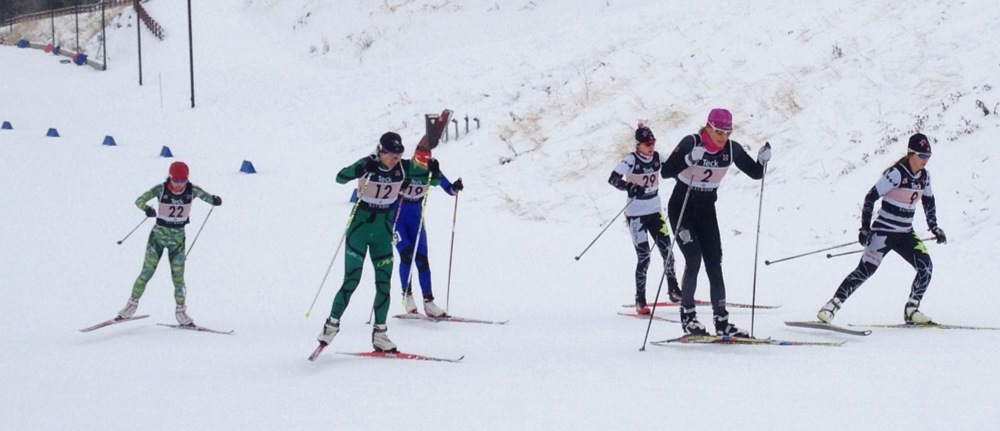
     The NorAm calendar has been reduced this season, with fewer races in the middle of winter when most will be focussed on what’s happening in Russia. This explains why there’s a heavy concentration of events early in the season, starting this weekend.

    Canadian nordic skiers getting some early on-snow time at the Sovereign Lake Nordic Centre on Nov. 7 in Vernon, B.C., the first NorAm stop of the season.
    Canadian nordic skiers getting some early on-snow time at the Sovereign Lake Nordic Centre on Nov. 7 in Vernon, B.C., the first NorAm stop of the season.

    Sovereign and Black Jack

    Following the trend of the last several years, many of North America’s best skiers will meet at Sovereign Lake in Vernon, B.C., for the first NorAm races of the season on Saturday and Sunday, which will be the first “real” races for most Canadians. The next weekend, the circuit heads south to Rossland, B.C., for two more races Dec. 14-15 before the holiday break. Normally, several American skiers make the trip up north to British Columbia for the NorAm openers, deepening the field, and Sovereign Lake’s powder conditions likely enticed many this year.

    These two weekends of races will be an opportunity to catch a glimpse of the shape of the skiers and identify those that might be capable of Olympic selection by mid January.

    For Heidi Widmer, an Alberta World Cup Academy (AWCA) and Canadian Senior Development (NST) skier, it is important to find her marks and have fun during the first part of the season.

    “The NorAms in Silver Star and Rossland before Christmas are a way to get back into the racing scene and build back that routine,” Widmer wrote in an email. “Also, we usually make gingerbread houses or cookies in Rossland and I missed that last year, so definitely looking forward to that.”

    “Having done the work, I am confident there will be some very good moments for me this upcoming winter,” Michael Somppi (AWCA/NST) wrote in an email. “The trick is to make those moments line up with the important races.”

    Olympics Trials in Canmore

    Ivan Babikov (l) leads fellow Canadian Graham Nishikawa (r) of the Alberta World Cup Academy during Wednesday's 15 k freestyle individual start at 2013 World Championships in Val di Fiemme, Italy.
    Graham Nishikawa (44) follows Canadian World Cup vetera Ivan Babikov (69) in the 15 k freestyle individual start at 2013 World Championships in Val di Fiemme, Italy. Babikov went on to place fourth, the best ever by a Canadian man in the event, and Nishikawa finished 39th for his best result at World Championships.

    Anyone with even the slightest chance of qualifying for Sochi has probably circled the Canadian Olympics Trials dates on their calendars: Jan 8-12 in Canmore, Alberta.

    Graham Nishikawa is certainly one of them. Four years after he narrowly missed his nation’s home Olympics in Vancouver, B.C., the 30-year-old Senior National Team member, who’s been working with Canada’s Para Nordic squad throughout the offseason, is ready for redemption.

    “My goal is to qualify for Sochi,” Nishikawa said in a phone interview. “The selection races are very important, whatever I need in those races to be in the best shape is what I’ll focus on. If I need more training and that means that I have to skip some NorAms, I will do that.”

    Veterans will certainly have some pressure on to perform, while many young skiers could catapult themselves into the mix. However, there are only about four Olympic spots available as all six World Cup Team members (Alex Harvey, Devon Kershaw, Ivan Babikov, Len Valjas, Dasha Gaiazova, and Perianne Jones) have already satisfied the Sochi-selection criterias with their results last season.

    Third in a FIS skate sprint in Idre, Sweden, on Nov. 30, Chandra Crawford (r) celebrates on the podium with Swedish winner Hanna Falk and runner-up Jennie Öberg (l). (Photo: Cross Country Canada)
    Third in a FIS skate sprint in Idre, Sweden, on Nov. 30, Chandra Crawford (r) celebrates on the podium with Swedish winner Hanna Falk and runner-up Jennie Öberg (l). (Photo: Cross Country Canada)

    Last weekend, Chandra Crawford, who declined her nomination to the team in April, earned her spot back on the World Cup team with third place in a FIS skate sprint in Idre, Sweden (which likely secured her Olympic prequalification as well).

    “We are taking a team size of 11,” Canadian National Team Head Coach Justin Wadsworth said in a phone interview last month. “That can be any combination; it can be six men, five women. It can be seven men, four women. It can be six women, five guys. We’ll just see how everybody’s racing and where our strengths and weakness are.”

    Many skiers will compete for the remaining tickets, which should be a close fight.

    “I expect my performance level to be reasonably consistent throughout the winter, however I will be aiming to peak for the Olympic Trials at the beginning of January,” Somppi explained.

    Note that these races also act as trials for the Junior and U23 World Championships in late January in Val di Fiemme, Italy. Needless to say, any skier who’s shooting for international starts will likely be in the best shape possible.

    “I have a chance to qualify for U23 Championships and the Olympic team based on domestic results so yep, I want to be racing well, especially at Olympic trials in Canmore,” Widmer wrote. “U23 Championships are a skate sprint this year, so that gets me really fired up and I know I have a good chance to perform well provided I do the work to get there.”

    The Rest of the Season

    For the rest of the best Canadian seniors not quite at the Olympic level, there are opportunities to race in Europe, either on the OPA Cup Tour with the national team in February, or by earning World Cup starts late in the season as NorAm leaders. Both options require skiers to excel on the domestic circuit first.

    The traditional mid-season meeting, the Eastern Canadian Championships at Nakkertok Ski Club near Ottawa, falls on the first weekend of February and remains the fourth and final NorAm stop before nationals. Top skiers will need to travel East for those races to contend for some important points.

    “I’m still going to fight for the place of NorAm leader, because my Plan B is to race in Europe,” Somppi explained.

    Nationals in Newfoundland

    Heidi Widmer 2013 Canadian Nationals 30 k freestyle mass start (Photo: Martin Kaiser)
    Heidi Widmer racing to fourth overall (and a Canadian bronze) in the 30 k freestyle mass start at nationals in Whistler, B.C. (Photo: Martin Kaiser)

    For the first time in over 10 years, Canadian Nationals will be held on the Atlantic Coast in mid-March. This will be a new destination for most skiers and certainly a new race site that will bring novelty and freshness to the annual event which concludes the Canadian domestic season.

    The races will be held at the Blow Me Down Trails in Corner Brook, Newfoundland, the site of the 1999 Canada Games.

    “I love the East Coast and am really looking forward to the races at the end of the season,” Kevin Sandau (AWCA/NST) wrote. “I think they will really be a unique experience for National Champs.”

    “I’m excited!” Widmer wrote. “I think it’s important to have the competition in different parts of the country to promote the sport in that area as well as save travel costs for those coming from the far-East for races all the time. I’ve never been to Newfoundland before but with a name like Blow Me Down, it’s gotta be a unique place!”

    It will require some long travel for athletes coming from West, but offers a chance for everyone to discover the skiing community in this part of the country.

    “I actually visited Newfoundland for the first time this past spring,” Somppi wrote. “My girlfriend spent a year at Memorial University in St. John’s, so I went out to visit her. The Newfoundlanders I met along the way were friendly and welcoming, so I’m expecting a warm reception for competitors at this year’s Nationals. I am very much looking forward to my second trip to Newfoundland!”

    Skiers to Watch 

    The reigning NorAm champions, Jesse Cockney (AWCA/NST) and Amanda Ammar (Team Ninja) have chosen to start their season differently from one another, with Cockney taking advantage of the early World Cup starts and Ammar opting to start racing at home in Canada while recovering from injuries in her back and foot.

    Jesse Cockney (Alberta World Cup Academy/Canadian Senior Development Team) after placing second in the Alberta World Cup 1.3 k skate sprint qualifier on Saturday in Canmore.
    Jess Cockney after finishing second in the Alberta World Cup 1.3 k skate sprint qualifier last December in Canmore. He went on to finish ninth for his best World Cup result.

    “My main focus is Olympic trials this year, and I want to do everything I can to be prepared and confident when I hit that start line, which for me, was staying here, doing the Canadian circuit, and getting in some prime training, ” Ammar, a 2006 Olympian, wrote in an email. “I would of missed all the Norams leading into trials, and this was not ideal for me. I want to know where I stand … during trials.”

    Last December, Cockney made a World Cup impression on home soil in Canmore, qualifying second and placing ninth in the freestyle sprint at the Alberta World Cup. With that result, the 24 year old is halfway to making the Olympic team. Starting the season on the World Cup will give him the opportunity secure his spot and gain more international racing experience. 
    Some top skiers will not return to the NorAm circuit after retiring at the end of last season, including Brent McMurtry, David Greer and Kate Brennan.

    The NorAm runner-up last season, Graham Nishikawa is best known as a distance racer, but can notch solid sprint results as well. Married in July, this could be his last push for the Olympics.

    Michael Somppi (AWCA/NST) racing to 48th in the World Cup classic sprint qualifier in Stockholm, Sweden, last season. (Photo: Fischer/Nordic Focus)
    Michael Somppi (AWCA/NST) racing to 48th in the World Cup classic sprint qualifier in Stockholm, Sweden, last season. (Photo: Fischer/Nordic Focus)

    Somppi finished third at the end of last season and is better at skating, but said he worked on his classic to make sure he was in fighting form for the 15 k classic at Olympic Trials.

    A little off his game last year, Sandau, a distance specialist and typical domestic favourite, is back to his old training routine that produced good results for him previously. He’s confident that his training will pay off and is one to keep an eye on in distance races.

    Making the Senior National Team as a first-year senior, Raphaël Couturier of the Pierre-Harvey Training Centre (CNEPH) is an all-round skier that shouldn’t be overlooked.

    Alysson Marshall (AWCA/NST) placed third overall last season despite missing the first part of the NorAm season to participate in the opening World Cups. She is a sprint favourite and could be a podium contender for distances races as well.

    Like her older brother, Emily Nishikawa (AWCA/NST) was a member of the Canada’s World Championships team last winter in Val di Fiemme, Italy, and started several World Cups throughout the 2012/2013 season. She is certainly one of the women in the running for a position the Olympic distance team.

    In her first full season back racing, Brittany Webster (Highland Trailblazers) also made it to 2013 World Championships, but sickness kept her from performing at her best in Italy. She ended the season with a fourth-place finish in the 30 k freestyle at Canadian Nationals and was the third Canadian behind Swiss winner Bettina Gruber, Canadian biathlete Zina Kocher, and Heidi Widmer.

    Considering that result, Widmer, known as a dangerous and talented sprinter, can clearly get top results in distance – even after rebounding from head injuries.

    Alana Thomas (Team Ninja) is an all-around skier who’s had consistently good results in the past couple years. She’s suffered some setbacks with injuries, but with the “Ninja” spirit, anything can happen!

    Keep an eye on Olivia Bouffard-Nesbitt (Rocky Mountain Racers) as well. At 21, she’s arguably one of Canada’s most promising up-and-comers.

    While most of the favourites come from national training centres, there are a few skiers from other clubs that could produce top results in NorAm sprint and distance races this season.

    2013/2014 NorAm Schedule

    1. Sovereign Lake: Vernon, British Columbia: Dec. 7-8

    10/15 k freestyle & classic sprint

    2. Black Jack: Rossland, British Columbia : Dec. 14-15

    10/15 k classic & freestyle sprint

    3. Canmore, Alberta: Jan. 8-12 (Trials for Olympics, Junior and U23 World Championships)

    15/30 k skiathlon, freestyle sprint x 2, 10/15 k classic

    4. Eastern Canadian Championships: hosted by Nakkertok Nordic in Cantley, Québec: Jan-Feb. 31-2

    Freestyle sprint, 10/15 k Freestyle, 15/20 k Classic mass start

    5.Haywood Ski Nationals: at Blow Me Down Trails in Corner Brook, Newfoundland: March 15-22

    Team sprint, 5/10 k Classic, 10/15 k freestyle, freestyle sprint, 30/50 k classic mass start

  • Canmore Weathers the Storm, Recovers from Flood

    Canmore Weathers the Storm, Recovers from Flood

    (Flickr photo: Steven Wong/silvernitratephoto)
    A look at the street scene after the flooding last week in Canmore, Alberta (Flickr photo: Steven Wong/silvernitratephoto)

    With just hours left in my first stay in Canmore, Alberta, I ventured out before dawn on a chilly December morning – my phone in hand.

    I had spent three whirlwind days covering all the excitement of the World Cup, and now, on my first day off, I wanted to see the town so many had raved about. “It’s the most beautiful place on earth,” someone once told me. “I can’t imagine living anywhere else.”

    Cougar Creek in Canmore, Alberta, December 2012
    Cougar Creek in Canmore, Alberta, December 2012

    As my gaze spanned over the low-lying buildings and up toward the mountains, I suddenly found myself taking photos of a boardwalk along a river – a wide and shallow waterway I had seen while driving through town to the Canmore Nordic Centre. I later learned it was called Cougar Creek, and just last week, I heard of its devastating overflow.

    Some 48-hours of heavy rain last week led to a state of emergency in the 12,200-population town and other riverside communities in and around Calgary. At least 100,000 people in southern Alberta were evacuated, 75,000 of which were in Calgary, and 120 Canmore homes affected. Washouts tore away parts of the Trans-Canada Highway and closed all roads in and out of Canmore.

    As the water finally started to recede on Monday, almost six days after it rose to destructive levels the night of June 19, residents could finally exhale. Sump pumps were still running, some people were still unable to return home, but the recovery process had begun.

    Tuesday morning, the Canadian World Cup team left for a three-week training cam in Bend, Ore. Travel had been restricted to emergency vehicles throughout the weekend, but as of Monday, national-team member Perianne Jones thought residents of Canmore could pass through.

    “No one on our team was really badly affected,” Jones wrote in an email. “There were a few skiers and biathletes who live in the part of town on the other side of the creek so they had to be evacuated, but their houses didn’t get wet. I don’t know 100% but I think everyone remained relatively unscathed.”

    Reports indicated that Canmore escaped loss of life, but others weren’t so lucky. Four people died as a result of the flooding, which Jones heard was caused by the region receiving nearly 50 percent of its annual rainfall in three days. As many as 1,300 military members rushed to the afflicted areas to help with search and rescue, provide aid, and help people return to their homes.

    Alysson Marshall and Alana Thomas training in Canmore, Alberta, after the recent flooding on June 20. (Photo: Amanda Ammar/http://amanda-ammar.blogspot.ca/2013/06/trail-swimming-new-canmore-workout.html)
    Alysson Marshall and Alana Thomas training in Canmore, Alberta, after the recent flooding on June 20. (Photo: Amanda Ammar)

    “Canmore is a pretty great community, and people have been helping out like crazy, and for sure in the coming weeks there will be more and more that people will be able to do,” Jones wrote. “The first few days everyone wanted to help, but there wasn’t really much to do, but now getting things back to normal will take some serious manpower.  There’s nothing like a flood to help you get to know your neighbours a little better!”

    Jones and her husband Joel Jaques live in a condo complex, where she said everyone “was zipping from one unit to the next making sure everyone was OK.”

    “We all look after each other, which is great, especially as I’m about to leave for 3 weeks with 8 inches of water still in the crawl space!” Jones continued.

    Canadian Olympic biathlete Megan Imrie woke up Thursday morning to an evacuation notice at her condo, about a block from Cougar Creek. Her home remained dry, but she was forced to leave because of road concerns.

    “We were cut off from all main roadways so I think the town wanted to make sure everyone still had access to emergency services, as well as food, water and places with power and gas,” Imrie wrote in an email. “No biggy!”

    Imrie’s upbeat attitude echoed that of skiers across town. They were safe and drying out with the rest of their neighbors. For workouts, they had to get a bit creative – moving to higher ground at the nordic centre rather than rollerskiing around town – but most didn’t let it slow them down.

    Canmore residents finding time to play after the flooding on June 20. (Flickr photo: Steven Wong/silvernitratephoto)
    Canmore residents finding time to play after the flooding on June 20. (Flickr photo: Steven Wong/silvernitratephoto)

    “We just ran, cause that’s all you could really do, and make the best of the situation,” independent skier and Team Ninja founder Amanda Ammar wrote in an email on Monday. “I mean, my house is still here, I have power and water, my life hasn’t been ripped from underneath me. So every run I did this week felt amazing in the sense that ‘we have absolutely nothing to complain about.’ ”

    Living just 500 meters from the river, Ammar explained she was lucky to end up with about an inch of standing water in her basement.

    “We’ve offered our place for people to stay if they need a dry spot,” Ammar wrote. “Canmore is an amazing, generous, hardworking, loving community. People are stepping up to help, and even the coffee shops were letting people hang out all day, give them free coffee, stuff like that. Fundraising has already begun, and food donations are being taken at the legion and union hall. Canmore will get through this with flying colours.”

    More photos

  • Meet the Ninjas: Four Independent Skiers Unite

    Meet the Ninjas: Four Independent Skiers Unite

    Canmore's crew of renegades: Team Ninja. From left to right: Zoe Roy, Alana Thomas, Amanda Ammar, Chandra Crawford (Photo: Amanda Ammar)
    Canmore’s renegade crew: Team Ninja (from left to right) Zoe Roy, Alana Thomas, Amanda Ammar, and Chandra Crawford (Photo: Amanda Ammar)

    It all started as a running joke. Amanda Ammar wasn’t actually a ninja, people just thought she was.

    Two seasons ago, the 2006 Olympian and former Canadian National Ski Team member decided to return to competitive nordic skiing after a year-and-a-half hiatus. She did so cautiously, balancing training with a secretarial job at the Rocky Mountain Rehab and Sports Medicine Clinic in Canmore, Alberta.

    “I want to get to a certain level again, but I can’t force it,” she said at the time. “I just have to do what I love doing.”

    That meant working out at odd hours with her boyfriend and coach, Chris Butler.

    “My first year back I was working every day,” Ammar said on the phone last week of her 2011/2012 season. “Me and Chris, we’re like, ‘Yeah, we’re just gonna do ninja training and keep it fun.’ ”

    That winter, she grabbed four NorAm podiums. Friends were supportive, but they didn’t quite understand. When did she train? They never saw her.

    “I was like, ‘Yeah, I’m a ninja,’ ” the 27-year-old said.

    That season, Ammar’s friend Anna Schappert made her a headband with a lightning bolt. She asked for another one – with a ninja – and raced in it last season, ultimately capturing the overall NorAm title.

    The appeal of Ammar’s independent and unorthodox method quickly caught on in Canmore. Friends Alana Thomas and Zoe Roy, formerly of training centres and clubs, joined her at Western Canadian Championships in Grande Prairie, Alberta. There, Ammar and Thomas each won a race and placed second in another, and Roy finished fourth twice at the three-day mini tour.

    Ninjas Amanda Ammar (l), Alana Thomas (c) and Zoe Roy having some fun with training. (Photo: Amanda Ammar)
    Ninjas Amanda Ammar (l), Alana Thomas (c) and Zoe Roy having some fun with training. (Photo: Amanda Ammar)

    Not bad for a band of ninjas.

    The three made the bond more concrete this spring, naming themselves “Team Ninja” and vowing to work hard while always having fun. It wasn’t long before they added a fourth member: Chandra Crawford, who decided to train independently of the Canadian World Cup Team in April.

    According to Ammar, Crawford asked her if she could join. The 29-year-old Olympic gold medalist had her own training plan and coach, Peter Larsson, but wanted some training partners.

    “I said, ‘Yes, but we have some big ground rules,’ ” Ammar said. “We have no bullsh*t on this team. We’re gonna have a ton of fun, be competitive, get together and have really good workouts.”

    Among the rules, as listed on Thomas’s blog: “You must swear to always have fun,” and “only be competitive at the appropriate times.”

    Rules of Team Ninja:
    You must:1. Swear to always have fun2. Promise to only be competitive at the appropriate times3. Be ready to throw down at all workouts3. Keep grumpiness to a minimum

    4. Never laugh at a teammate for wearing makeup during workouts

    5. Always wear your team bling proudly

    “You don’t need to win lunch,” said Thomas, who left the Alberta World Cup Academy early last winter in her first season with the national training centre.

    Like Roy, who raced for the University of Utah before pursuing a professional career with Rocky Mountain Racers last season, Thomas said the team structure wasn’t the right fit. With her own coach, Team Hardwood’s Jack Sasseville, writing her training plan out of Toronto, Thomas said the Ninjas’ work-hard-play-harder approach makes the arrangement work.

    “We’re all on the same page,” she said. “We’re all focused on skiing for at least one more year and skiing at a high level but we also need more flexibility. We each have our own coach so our training plans aren’t identical; we’re not going out holding hands every day.”

    Earlier this week, Thomas rollerskied with two other Canmore-based women, Brittany Webster and Rebecca Reid. There are times when her workout doesn’t jive with her teammates’ or anyone else’s, and she said that’s OK.

    “It’s kind of nice to go by yourself a few days a week,” Thomas said.

    So what makes the four independent skiers a team?

    “We genuinely want each other to succeed,” Thomas explained.

    Hula-hooping Ninjas Amanda Ammar (l) and Zoe Roy. (Photo: Amanda Ammar)
    Hula-hooping Ninjas Amanda Ammar (l) and Zoe Roy. (Photo: Amanda Ammar)

    If one of them makes the Olympics next year, Ammar, Thomas and Roy all said they’d be ecstatic for that person.

    “I don’t think you could really ask for better Canadian girls to train with,” said Roy, who’s in the process of finding a coach. In the meantime, she’s enjoying training with close friends.

    On Saturday, all four will compete in the 5 Peaks Trail Run at the Canmore Nordic Centre. They recently trained together at their first training camp in Bend, Ore., staying at Roy’s mom’s house to cut down on expenses. They’ve planned camps in Osoyoos, British Columbia, and potentially St. George, Utah, where they also have places to stay.

    “Being independent doesn’t mean it’s going to be more expensive by any means,” Ammar said. “A lot of ways you’re going to spend less money. … Non-carded athletes have team fees and a lot of those fees don’t cover travel, so they’re paying rent and team fees on top of it. We’re doing camps in places we have hookups.”

    “You just make it work,” she added. “Chandra’s so used to being on the national team. I said to her, ‘Dude, this is the great thing bout not being on a team. We don’t need to have camps all the time!’ Canmore is awesome. We have a sick setup.”

    And she’s thrilled her approach is affecting others.

    “For so long, I was on a structured program,” Ammar said. She moved to Canmore for her last year of high school, spent three years on the junior national team and three more on the senior squad.

    “It’s hard to work and do all that other stuff,” she added. “I think I just got too focused on one thing, and once I stepped back and I wasn’t skiing at all, I realized that if you have the right boss and setup like we have, you can have a life. I just had to see it for myself.

    “For me, just to go to work, it’s just something else other than skiing and it makes me appreciate skiing even more,” she added. “Mentally I think that all of us need that.”

    In addition to working at the clinic, Ammar has her own cleaning business. Thomas is the retail and event manager for Crawford’s company, Fast and Female, and works at the OutSide Bike & Ski shop. Roy splits her time between working at a coffee shop and the Paintbox Lodge, where she babysits for Sara Renner and Thomas Grandi in exchange for rent.

    As busy as they are, they’re still training full time.

    “We’re not just out here messing around,” Ammar said. “We have fun every day, but we’re working hard. We want to keep it how sport should be; sport should be fun.”

    According to Roy, the community’s already noticed.

    “It’s kind of funny how much it has grown,” she said. “We’ll hear people talking about it, like, ‘There are the Ninjas!’ We’ve got some really nice emails that, ‘You girls are inspiring to our kids on this junior team.’ … Those things make me happy.”

  • Notes and Quotes: Thomas and Killick Take Western Canadians in Grande Prairie

    Notes and Quotes: Thomas and Killick Take Western Canadians in Grande Prairie

    Graeme Killick (AWCA/CNT) racing earlier this season at the West Yellowstone SuperTours.
    Graeme Killick (AWCA/CNT) racing earlier this season at the West Yellowstone SuperTours.

    The Canadian Noram series wrapped up with the Western Canadians mini-tour in Grande Prairie, Alberta. Graeme Killick (AWCA) and Alana Thomas (Nakkertok) crossed the finish line first on Sunday to take the overall victory.

    Competition was intense despite the reduced field, with most of the racers from eastern Canada avoiding the travel and four of the usual suspects busy in Val di Fiemme.

    In Friday’s classic sprint, Heidi Widmer (AWCA) crossed ahead of Alysson Marshall (AWCA) and Kate Brennan (AWCA). Widmer was thrilled with the win; Marshall on the other hand was a bit frustrated crossing the line in second.

    Thomas (Nakkertok) leading Zoe Roy (RMR) and Emily Nishikawa (AWCA) in the 15 k skathlon at the Lappe Nordic NorAm on Jan. 3 in Thunder Bay, Ontario. (Courtesy photo)
    Thomas (Nakkertok) leading Zoe Roy (RMR) and Emily Nishikawa (AWCA) in the 15 k skathlon at the Lappe Nordic NorAm on Jan. 3 in Thunder Bay, Ontario. (Courtesy photo)

    “Friday went okay for me, I didn’t feel great in my qualifier but started feeling better as the heats went on,” she told FasterSkier. “I didn’t ski the final as tactically well as I wanted to but I was satisfied with the final result.”

    Jess Cockney (AWCA) outsprinted Brent McMurty (Foothills) and fastest qualifier Andy Shields (Thunder Bay NDC) in the men’s final. Michael Somppi (AWCA) narrowly missed out on the podium to shields after what he called “a mixup in the finishing lanes.”

    Saturday was classic distance interval starts in tricky waxing conditions.  Amanda Ammar (AWCA) finished in 31:56.0 to beat Thomas by 49 seconds, with Annika Hicks (AWCA) a further ten seconds back in the 10km event.

    “I was out on a mission,” Ammar told FasterSkier. “These trails were tailored perfect for me. Lots of striding, many exchanges, and technical downhills. I went out hard and made a gap early. It was a fantastic race, and I was pumped to have two classic podiums in a row.”

    Thomas, though, was happy with her race too.

    “I felt pretty good but had AMAZING skis thanks to help from the Foothills coaches, conditions were a little tricky so this played a big part,” she reported.

    Killick led the men’s 15km race in 40:27.1, with Kevin Sandau (AWCA) 41 seconds behind and Cockney at 1:01.

    Sunday’s 15km skate pursuit began with Ammar starting 12 seconds ahead of Thomas and 15 seconds ahead of Hicks.  Widmer skied the fastest in 43:24.46 to move from sixth to third and the final podium spot for the weekend.  Thomas quickly caught Ammar and won the sprint for the mini-tour title, with Thomas also taking the second fastest time for the day ahead of Ammar in third.

    The men closed out the weekend with a 30km skate pursuit.  Killick began the day with a 37 second lead and finished with 45 seconds, earning the second fastest time for the day with 1:14:06.6.  Cockney started in second and was caught by fourth starter Michael Somppi (AWCA).  Cockney edged Somppi at the line to take second overall with third starter Sandau sliding back to fourth overall while taking 5th for the day.

    FasterSkier contacted the podium finishers, and got comments about their races as well as the weekend on the whole and the wrap-up of the Canadian NorAm season.

    Overall Thoughts

    Widmer: I am really happy with the way my body responded this weekend. I haven’t done that much consecutive racing yet this season and have missed it! It’s such a fun and demanding format and having two skate races worked well for me. It is great to be able to stand on a podium again as well as traveling with the whole team together feels great. It’s been awhile since we’ve travelled with this big of a team this season and feels great – especially when everyone is doing so well!

    Hicks: As a whole, the weekend was really good. Two out of three races were really good, so I’m happy about that. I’m disappointed Sunday didn’t go better, because it would have been nice to fight for a podium position in the overall standings, but sometimes the body won’t let that happen. I was happy to hang onto 5th.

    Ammar: These mini tours are great fun! Obviously I would of liked to have done better in the sprint, but I’m so pumped about how good my classic race went. I’ve been feeling quite strong in this race, and it’s nice to see that it’s becoming consistent. Overall, this was a great weekend!

    Shields: Westerns was a great set of races for me. I wasn’t planning on making the long trip of Grande Prairie, but I decided to go around two weeks ago when I found out the flights were so cheap. Thunder Bay didn’t sent any coaches to this event so I got race support from the Augustana Vikings and their coach Les Parsons.

    Somppi: Overall it was a good weekend of racing. It felt good to be on the podium for the mini-Tour this time instead of finishing one step off in fourth like I did at Eastern Canadian Championships.

    Sprints

    Widmer: Sprint day was my focus and I wanted to put everything on the line in the qualification to see what would come of it – I was pleased to have it pay off on a speedy course. There was a lot of time between heats because there were a lot of racers to get through with the Juniors as well, so I did my best to conserve energy and not let my mind get too far from ski racing. The final was really fun – I just hammered from the gate and hoped I wouldn’t see anyone in my peripheral. My goal for the weekend was to take the win in the sprint and it’s my first NorAm title of the season so a great early birthday present!

    Thomas: I was pumped to make my first A-final of the year on Friday, unfortunately I crashed myself out of contention but felt awesome so was stoked for the rest of the weekend.

    Hicks: I had one of the best sprints of my life. I made the A final for my first time as a senior so that was exciting. I felt a little out of place standing on the start line in the final. I just tried to stay with the leaders as long as possible, but ran out of steam at the end. I can’t complain about a 5th place in a sprint though!

    Ammar: I was very disappointed with the sprint. I unfortunately fell in the qualification, and ended up having a high bib number, and since they weren’t timing heats, I ended up in a stacked first heat and didn’t even making it into the semi’s.

    Shields: The Mini-tours started off with one of my best sprint qualifiers of my career and I was able to make it to the A-final without too much trouble. In the final I was able to squeak onto the podium with a lunge. It was my first Senior NorAm podium of my career.

    Interval

    Widmer: The classic day was tough. It was really abrasive and transformed snow with a glazed track which meant a lot of running for me. Although it wasn’t my strongest race and didn’t play to my strengths, I came away with a lot of lessons learned about my ski selection as well as my body in classic skiing.

    Hicks: The 10km classic the next day went really well too. The conditions were really challenging. It was really icy and abrasive. I think everyone struggled a little with grip, but the Academy especially. Our glide was great, though. I was slipping a lot right off the start and thought “Oh no, this is not going to go well” but I just tried make it work and kept pushing. I crashed pretty hard on one of the downhills, which was unfortunately right when Amanda passed me, so I didn’t get a chance to ski with her. I was a little surprised I finished 3rd because I didn’t feel smooth at all, but I knew I put in a good effort.

    Marshall: Saturday was pretty rough, I was tired and struggled for kick on some sections so the race felt like a slog. I have been dealing with some ongoing health issues with my thyroid and have been tired and having trouble recovering. I decided not to race on Sunday to give my body a chance to get back on track and not get too beat down from three days of racing on tired legs.

    Somppi: The classic distance wasn’t great. I started well, skiing a strong opening 5km lap, but couldn’t hold the pace and crashed towards the end of my second lap.

    Pursuit

    Thomas: Sunday was just a total blast. I started 12 seconds down on my good friend Amanda and worked to catch her asap in the first few kilometers. From there we skied together and let it come to a sprint finish. I’ve never won a NorAM before so it was really great to do it on such a fun day!

    Widmer: The 15k Skate race went really well for me. I’ve done a lot of work on skating, especially one skate, this past training season and I have come to rely on it in the distance races. I started 6th, 1:08 back from the lead and after finding out Alysson was a scratch I knew I wanted to get Zoe and Annika in my sights as soon as possible on the winding race trails so that I would be motivated to catch them. It’s like hunting season in the pursuit races! A really fun format. After about 7km I caught Annika and Zoe, Annika had a crash so Zoe and I skied the second half of the race together and she gave me an awesome push. I put my head to the ground in the last 1.5km and did everything in my power to knock off as many seconds as possible to secure a 3rd place overall on the weekend and my first ever distance NorAm win.

    Hicks: The 15km skate was the biggest disappointment of the weekend. Usually, it’s my favourite race because I’m generally a stronger skater, and I was in a really good position (only 27 seconds back of Amanda in first). Unfortunately, my legs had nothing left in them, and I knew it right off the start. I really struggled to keep my turnover high, my legs were so heavy. I crashed on the downhill again, which really didn’t help matters. The whole race was just a struggle.

    Ammar: I’m happy with the skate race, with me skate races can go two ways, good or really really bad. Luckily Alana and I worked together kept the pace consistent, got a big enough gap that no one was a threat to catch us, then we battled at the last 100meters to the finish. I didnt race a gutsy race like the classic, but tried for a more tactical. Alana got me by a boot, and even though I was so close to winning, I still have to be happy with this result.

    Somppi: I started the final pursuit race in 4th place, much further behind the leader than I would have liked to be.  I had a tall task of making up 1 minute and 4 seconds on tour leader Graeme Killick.  Fortunately it was a skate 30km, which is a good race for me, so I figured I had a chance.  Graeme ended up skiing a very good race and held off all the challengers to win the mini-Tour.  I did my best to pace the 30km well and finish fast.  The final 6km I emptied the tank completely and was able to catch Jesse a few hundred metres from the finish line.  Knowing Jesse’s sprinting abilities I executed the best strategy I could think of, blowing by him on the final short climb and trying to hang on to a small gap to the finish line.  Unfortunately I didn’t get enough of a gap and he was able to tail me into the finish lanes then ski up beside me and win in an photo finish.

    Full results are at zone4, with separate sprint qualifying and heats results, individual-start results, and then final-stage times and overall standings.


  • Cockney Claims First Mini-Tour Title at Easterns; Emily Nishikawa Prevails in Pursuit

    Cockney Claims First Mini-Tour Title at Easterns; Emily Nishikawa Prevails in Pursuit

    Jesse Cockney
    Jess Cockney (AWCA/NST) at last season’s Sovereign Lake NorAm in Dec. 2011. Cockney won his first mini-tour title at the 2013 Eastern Canadian Championships on Sunday, edging teammates Brent McMurtry and Graham Nishikawa in the 30 k classic pursuit. (Photo: Jesse Winter / jessewinterphotography.com)

    Heading into Sunday’s NorAm 30-kilometer classic pursuit in Cantley, Quebec, Jess Cockney knew he’d have to rely on some pretty smart skiing to get him through. The 23-year-old Alberta World Cup Academy (AWCA) skiers had more than half a dozen teammates to contend with, and he really wanted the Eastern Canadian Championships mini tour title.

    Racing against guys who know your strengths and weaknesses is hard enough, but try outdueling them over a six-lap course. Traditionally known as a sprinter, Cockney started first, just 2 seconds ahead of distance specialist and AWCA teammate Graham Nishikawa. More of Academy men were close behind: Brent McMurtry started six seconds back in third and Michael Somppi went 12 seconds after Cockney in fourth.

    Skiing in a pack for much of the race, all the top guns wanted the same thing and predicted what it would come down to. Cockney executed as planned, winning the sprint finish by 0.4 seconds over McMurtry and 0.8 ahead of Nishikawa in second and third, respectively. Somppi was 2.3 seconds off Cockney’s winning time of 1:20:14.9, and another teammate, Graeme Killick, skied the fastest 30 k in 1:20.00.3. Killick crossed the line in fifth, 1:14.4 after Cockney, and helped the AWCA sweep the top seven with Chris Hamilton in seventh (+1:52.1).

    “It felt great today,” Cockney wrote in an email. Throughout the long weekend at Nakkertok Ski Club, he was fourth in Friday’s classic sprint and third in Saturday’s 15 k freestyle.

    “I’m so happy to put together three days and win a mini tour for the first time,” he continued. “The tactics were pretty straightforward today as I just wanted to make sure to help the pace of the group and be in a good spot for the sprint finish. Next thing for me is some training in Canmore and a few weeks from now we’ll face again at Westerns.”

    Canada’s next NorAm, the Western Canadian Championships will take place Feb. 22-24 at Wapiti Nordic in Grande Prairie, Alberta. The last mini-tour of the season, they’ll include skate sprints, 10/15 k classic interval starts and 15/30 k freestyle pursuits.

    While McMurtry couldn’t be reached for comment, Nishikawa – who made the podium twice at Easterns in both distance events – described it as “a very tactical race as the course was on the easy side.”

    Eleventh in the classic sprint and second in the 15 k, Nishikawa tried to push the pace at times, as did McMurtry (the third-fastest of the day), but neither had much luck. Ultimately, it came down to a sprint – which Cockney excelled at.

    Somppi posted the second-fastest time for fourth overall in the mini tour, which was just short of the podium he had hoped for.

    “I felt good skiing today and was able to close down the margin on the guys starting in front me pretty easily,” Somppi wrote in an email. “Unfortunately  I crashed on an icy corner just before starting the 3rd lap and used up some energy closing down the 10 second gap that opened. … I’m happy I stayed with the guys to the end and had the 2nd fastest time for the day, but I’m a little disappointed.”

    Fresh off a trip to U23 World Championships, Colin Abbott of the Yukon Elite Squad tied his a personal-best NorAm result in seventh and was the top U23.

    “I felt relaxed, smooth and powerful for the whole race,” Abbott wrote. “I’m really excited about this result! it’s one of a handful of races that I’ve really been competitive with the best guys in Canada. … To be top 6 in both a sprint and 30k was beyond my expectations. In retrospect, my time in Europe for the U23 championships felt like a good training camp for this weekend.”

    Raphaël Couturier of the Pierre-Harvey Training Centre (CNEPH) was the top junior in eighth. He and several other CNEPH juniors raced as seniors to garner more FIS points and secure better starting positions next year.

    David Greer (YES) placed ninth, and Patrick-Stewart Jones (AWCA) made the top 10 for the second time this week after placing second in Friday’s sprint.

    Men’s results

    Nishikawa Tops Brennan for Women’s Title

    In the women’s 15 k classic pursuit, Emily Nishikawa (AWCA/NST) came out on top despite battling a cold throughout the week. After starting in second, 14 seconds after mini-tour leader and teammate Kate Brennan, Nishikawa caught Brennan on the second of three laps with the help of Amanda Ammar (Canmore), who started nine seconds behind Nishikawa in third.

    The three skied together for the final lap, and Nishikawa attacked on the second-to-last climb to finish first in 45:30.3, 5.5 seconds ahead of Brennan in second. Ammar was third (+6.8), but posted the fastest time for the open 15 k win.

    “I am starting to feel better from my cold now, and I’m really happy with my result today!” Nishikawa wrote in an email. “I’m really excited to head to Europe now. I’m hoping to keep building momentum and have my best results at the world champs.”

    While Brennan could not be reached for comment, Ammar described the weekend as “really draining” in the cold weather with temperatures around -10 Celsius on Sunday.

    “I just tried to push as hard as I could without absolutely dying out there!” Ammar wrote.  “I can’t remember the last time I was first on a Senior Noram, so today is a great day! I’m happy with the overall weekend, I tried to ski smart, and just be consistent. The first day was unreal though, I’m not known for my sprinting abilities, and I’m really pumped about making the A-Final, that was another first in many many years.”

    Ammar was fifth in the classic sprint and fourth in Saturday’s 10 k skate.

    “Em put an amazing surge on the last hill, and I fought to keep her in sight, while Kate snuck up beside me in the double pole finish,” she explained Sunday. “But I was still able to claim the fastest time of the day, and that’s all I really wanted.”

    After placing 13th on Saturday, Alysson Marshall (AWCA/NST) made up some ground from starting seventh, improving to fourth (+1:21.3) with the fourth-fastest time.

    “It was really nice to have a solid distance race. I still want to be back fighting for gold but I feel like my body is coming around,” she wrote. “The skate race yesterday was rough for me but I was happy to finish the weekend as well as I did as I’ve been fighting a cold all weekend.”

    Zoe Roy (Rocky Mountain Racers) placed fifth (+2:15.1), and Cendrine Browne of CNEPH was the top overall U23 (another junior who raced as a senior) in sixth (+2:18.1).

    “I am really, really happy. I never had a good result like this in a classic race,” Browne wrote. “Classic isn’t my strength but maybe it’s becoming it! My coaches told me to find someone to ski with: it was a hard course and if you skied alone, you would get tired. So I stuck with a pack of girls, repeating to myself over and over again: don’t lose them, stick with them. That’s what I managed to do and it really helped me to stay focused and to have a great result.”

    Andrea Lee (NDC-Thunder Bay) placed seventh, Anne-Marie Comeau (CNEPH) finished ninth and Nakkertok’s own Alana Thomas notched her third top-10 of the weekend in 10th.

    After starting fourth, 33 seconds behind Brennan, Brittany Webster (Highlands Trailblazers) did not finish because of illness.

    “I came down with a bug,” she explained. “I felt pretty heavy and run down before I started today. Then in the warm up I started to feel dizzy and nauseous. Started the race and by 7.5 k I had to pull out- I felt just terrible. … Hopefully I won’t be sick for long. It’s going around though- there were 1/2 a dozen racers that came down with something. I’m optimistic some good rest will do the trick.”

    Women’s results

  • Somppi Wins Another 15 k Skate; Brennan Takes 10 k at Easterns

    Somppi Wins Another 15 k Skate; Brennan Takes 10 k at Easterns

    Michael Somppi (AWCA) en route to winning the 15 k freestyle interval start in his hometown of Thunder Bay, Ontario, last month. Unfortunately for him, the NorAm race was not a World Championships qualifier. (Photo: Martin Kaiser)
    Michael Somppi (AWCA) en route to winning the 15 k freestyle interval start in his hometown of Thunder Bay, Ontario, last month. Unfortunately for him, the NorAm race was not a World Championships qualifier. (Photo: Martin Kaiser)

    If any of the NorAm regulars felt like they were in a scene of the movie “Groundhog Day” on Saturday, you can’t blame them.

    For one, the second of the three-day Eastern Canadian Championships took place on the actual holiday, if you can call it that. There were no furry rodents, but Day 2 of racing involved an event that seems to be on repeat. In fact, the 10- and 15-kilometer freestyle has been in every NorAm this season.

    More often than not, like in three out of the four NorAms before Easterns, the race was an interval start. That’s exactly what was on tap Saturday in at Nakkertok Ski Club in Cantley, Quebec. What a surprise.

    Why so many interval-start skate races? Partly because it’s the opening event at Senior World Championships on Feb. 20, and as we all know, practice makes perfect.

    But racing is also unpredictable, and as it turned out, resulted in a few different faces atop the podium Saturday.

    In the men’s 15 k freestyle, Michael Somppi of the Alberta World Cup Academy (AWCA) came out on top after winning the same race two NorAms ago in Thunder Bay, Ontario. He was third in the most recent 15 k skate in Duntroon, Ont., which was qualifier for Canada’s World Championships team.

    Just short of a distance spot on the team, Somppi refocused for Easterns. Sixteenth in Friday’s classic sprint, he wasn’t exactly satisfied and came into the 15 k – his bread and butter – with added motivation.

    “I wanted to push myself hard from the start until I started to feel the lactate in my legs,” Somppi wrote in an email. “Then I focused on holding that effort level until the final km when I could give anything I had left in the tank.”

    As a result, Somppi led throughout the three-lap race, finishing the first loop 2.2 seconds faster than teammate Jess Cockney. By the end of lap two, he was 5.4 seconds up on Cockney and 7.1 seconds ahead of Graham Nishikawa (AWCA), who swept the most recent NorAm distance races/World Championships trials.

    “I was getting splits that I was the race leader, but Jesse and Graham were close,” Somppi wrote. “I know what both those guys are capable of so I was giving it my all in the final kms to try to secure the win.”

    Somppi captured it in 35:11.5 for his second NorAm victory of the season and his career. Nishikawa placed second, 9 seconds back, and Cockney was third (+18.9).

    Aside from Raphaël Couturier of the Pierre-Harvey Training Centre (CNEPH) in fourth (+35.3), the AWCA took six of the top-seven places with Chris Hamilton in fifth, Brent McMurtry in sixth and Kevin Sandau in seventh. David Greer of the Yukon Elite Squad was eighth, Graeme Killick (AWCA) ninth and Andy Shields (NDC-Thunder Bay) 10th.

    Through two races, Somppi, a 24-year-old Thunder Bay native, is currently fourth in the Eastern Championships standings and will start Sunday’s 30 k pursuit 12 seconds behind Cockney as the leader. Nishikawa will start second (+2.0) and Brent McMurtry ranks third (+6.0).

    “Tomorrow will be a real battle for the mini-Tour victory,” Somppi wrote. “I’m hoping I feel as good as I did today. My focus for the rest of the season is to continue to fight for the NorAm leader spot. There are potential opportunities for World Cup starts this spring and next fall for the NorAm leader so that is my motivation.”

    After starting last, a minute behind Somppi, Nishikawa finished the first lap ranked fifth and 7.6 seconds back. He reined in Somppi and Cockney slightly on the second lap, but lost some ground on the third.

    “Today was challenging,” Nishikawa wrote in an email. “It was been a difficult last few weeks with sickness leading into the trial races. I will try my best this weekend in the mini tour, then get ready for [World Championships]. … I am really optimistic about my upcoming opportunities.”

    Cockney started 1 ½ minutes ahead of Somppi and skied the first lap and half without splits. Even so, he knew things were going well.

    “I felt great so I knew I was in a spot for a good result,” he wrote. “Last week I skied a pretty disappointing 15km and I really wanted to pace this fast from the gun and try to hold on and see what would happen.”

    Last weekend in Duntroon, Cockney was eighth in the 15 k and second in the classic sprint.

    “I’m really happy with today’s race,” he added. “My distance skiing has been inconsistent over the last few years so I’m really hoping I can string together two good days in a row.”

    Men’s results

    Multi-stage standings

    Brennan Pushes the Pace 

    In the women’s 10 k, Kate Brennan (AWCA) notched her first NorAm victory of the season in 27:09.1 after placing third in Friday’s classic sprint. Almost exactly a year ago at Mont Orford in Quebec, Brennan captured her first NorAm win in the 5 k classic on what she considered home turf.

    Kate Brennan (AWCA) leads a pack in a NorAm 1.4 k freestyle sprint heat in Rossland, British Columbia, on Dec. 17, 2011. (Photo by Dan Roycroft/AWCA)
    Kate Brennan (AWCA) at last season’s NorAm freestyle sprint in Rossland, British Columbia. (Photo: Dan Roycroft/AWCA)

    While Brennan couldn’t be reached for comment, it seemed that racing not far from her hometown outside Ottawa once again didn’t hurt. However, in other NorAm distance races this year, Brennan’s been close: she was fourth in the Thunder Bay 10 k and fifth in the 10 k classic in Canmore, Alberta.

    Saturday’s runner-up by exactly 5 seconds, Brittany Webster (Highlands Trailblazers) was happy with her result after a whirlwind week in which she was named to the World Championships team along with Emily Nishikawa (AWCA) and Andrea Dupont of Rocky Mountain Racers (RMR).

    Last weekend, Webster won the 10 k skate ahead of Zoe Roy (RMR), Dupont and Amanda Ammar (Canmore), respectively. On Saturday, Roy was sixth, Dupont did not race while training in Canmore, and Ammar was once again fourth (after Nishikawa in third).

    “Today was tough, my legs were shot, but my shape is good,” Webster wrote in an email. “So I was able, with great skis and a wicked fast course, to ski to second even though my legs felt like bricks.”

    After starting two minutes behind Brennan, Webster knew she had some time to make up on the second and final lap: 9.7 seconds to be exact. Through the first lap, Brennan built a 7.2-second lead on Cendrine Browne (CNEPH), and while Browne finished 14.2 seconds back in sixth, Webster came within five seconds of the win.

    “I thought I could perhaps close the gap on the second lap so that motivated me to push hard,” Webster wrote. “Then the legs really started to blow so I think the first part of that lap was good, but the second part was tough.”

    Nishikawa wrote that she didn’t hear many specific splits, just that she was “really close.” Slower on the first lap than she’d hoped, she rebounded from trailing by 16.5 seconds to finish 5.8 seconds behind Brennan and just 0.8 seconds off Webster’s time.

    “I went as hard as I could because I knew it was going to be tight,” Nishikawa wrote.

    Still recovering from a cold that kept her from last weekend’s 10 k, Nishikawa was pleased with her result and looking forward to Sunday. She will start 14 seconds after Brennan as the mini-tour leader in the 15 k classic pursuit. Ammar ranks third (+23.0) and Webster will start fourth (+33.0).

    Ammar, for one, is excited to get through yet another skate race and move onto a classic distance event. At the same time, she was also encouraged by her recent results after placing fourth in Duntroon and sixth in the Thunder Bay skiathlon.

    “I’m super pumped about my skating the past couple of races,” Ammar wrote. “I’m feeling stronger in this technique. Skating is kind of my enemy, and we’ve unfortunately had 3 weekends in a row of the same races- classic sprints, skate distance.”

    However, she felt Nakkertok’s course suited freestyle. “There’s a lot of flat, which makes for tons of double pole in tomorrow’s classic,” Ammar wrote. “I love striding, so I’m a fan of big hills.”

    Looking forward, she’s hoping to ski more consistently after what she called “a tough start to the season.”

    “I feel like I’m getting my energy back, and I’m feeling stronger with each race,” Ammar explained. “I’m looking forward to this half of the season, and I’m trying to end my career with fun and hopefully a trip to the podium.”

    Rounding out the top 10, Alana Thomas (Nakkertok) was seventh, Frédérique Vézina (CNEPH) eighth, Andrea Lee (NDC-Thunder Bay) ninth, and Friday’s sprint runner-up, Rebecca Reid (AWCA) 10th.

    Women’s results

    Multi-stage standings

  • Bottomley Tries Training in Canmore, Seeking Top 30 in Québec

    Bottomley Tries Training in Canmore, Seeking Top 30 in Québec

    Australian Esther Bottomley (second from left) at the Canmore NorAm freestyle sprint on Dec. 2 in Canmore, Alberta. Bottomley qualified for the heats in 12th and went on to place ninth. (Courtesy photo)

    The idea struck Esther Bottomley in early October. If she wanted to break into the top 30 on the World Cup this season, why not start practicing at one of the venues she’ll compete at?

    The 29-year-old Australian National Ski Team member called up Perianne Jones, who was training with the Canadian national team in Park City, Utah. Jones spoke to her friend Amanda Ammar, who races for the Canmore Nordic Ski Club in Alberta and had an extra room back home. A couple weeks later, Bottomley was on snow training in Canmore, living at altitude and soaking up her surroundings.

    A month into her visit, Bottomley, who’s been on the Australian national team for the better part of a decade, talked to FasterSkier about what she’s been up to in Canmore and why she decided to train there in the first place. One of two women on her team and the only one competing in Canada this season, Bottomley opted to skip the early World Cup races in Europe to prepare for the Québec and Canmore sprints Dec. 8 and 15, respectively.

    Esther Bottomley (AUS) in the Canmore NorAm 10 k classic on Dec. 2, where she finished 17th. (Courtesy photo)

    FasterSkier: Why Canmore?

    Esther Bottomley: They’ve got the World Cups over in Canada so that’s sort of why I was going to come here, but mostly it was to try and get a big group of girls that are at a really high level and be able to train with them. So far I’ve trained with three different training groups [the Canadian NST, Alberta World Cup Academy and Rocky Mountain Racers], and it’s been great, like, really good skiers and very motivated.

    FS: How have you made it work with your training plan?

    EB: I have my own plan and when I can get information from other teams in advance it’s really good, which they’ve sometimes been able to do. My coach can accommodate some of their intensity sessions so I’ve been trying to do as many sessions as I can with other people but also stick to some of my own things as well.

    FS: How much time had you previously spent in Canada?

    EB: I’ve been for the World Cups before and a wedding [teammate Chris Darlington married former Canadian skier Brooke Gosling last winter], but I’ve never spent more than like a week here. It’s the first time I’ve been able to do a bit more exploring, which has been fun.

    (Note: Bottomley achieved her career-best World Cup result of 35th in a 2005 freestyle sprint in Vernon, British Columbia.)

    FS: What are your goals for this season?

    EB: This year, I guess the goal is to try to get into the top 30 in the sprints, focus on the sprints, and try and sort of cut back travel. I’d like to try and stay in one spot for a while, which has been really good here. I can train here the whole time then go to Quebec and back again. I’ll be in Europe for the rest of the season until March.

    FS: Why the change in travel?

    EB: I’d kind of like to be able to, if I can, sit in one spot for a little while and just cut back the amount of hours. I didn’t go to the early World Cups in Europe just so I could cut down the jet-lag time and the hours because we already have to do that big flight from Australia to get anywhere.

    FS: How has your training been?

    EB: Pretty good. … We did a sprint simulation on the World Cup track so that’s fantastic. You get to come here and they’ve opened up the sprint course like the last weekend so we can now get on it and see what we have to do to ski faster on it. I think that’s the really big advantage to be able to come somewhere and just be able to ski the course and know the course before you race it.

    FS: What’s the sprint course in Canmore like?

    EB: Canmore is a bit of a hill climb. It’ll be a hundred percent different I think than Québec, which is meant to be a long flat course to here, which is really just a big climb in the middle and flat into it and flat out of it and that’s it. It’s a tough course.

    FS: What do you know about the Québec course?

    EB: It’ll be interesting. I think it’s quite a long course for the women so it’ll be interesting to see how that goes. The NorAms will give us an idea of how things are going and then right straight into it.

    (In a follow-up after Bottomley placed ninth in the Canmore NorAm freestyle sprint and 17th in the 10 k classic Dec. 1-2):

    FS: How did the Canmore NorAm go?

    EB: Last weekend was good fun but didn’t quite go as well as I was hoping for the races. Looking forward to going to Québec and racing on Saturday to see if I can ski a bit faster there.

    FS: What kind of sprint course do you prefer?

    EB: I kind of like in between [hilly and flat], sort of just an undulating where you can climb hard and recover a bit in between, but we’ll see. I’ve been training I think well during [the offseason]. It’s always hard to know at the start of the season. Hopefully I’m a little bit fitter and hills are all right.

  • Nishikawa Puts on Strong Last Lap for Fifth NorAm Title

    Canmore
    Emily Nishikawa (r) chasing Alberta World Cup Academy teammates Heidi Widmer (l) and Alysson Marshall (center) and Emily Nishikawa (right) in the semifinal of the NorAm 1.2 k freestyle sprints at the Canmore Nordic Centre in Canmore, Alberta, on Jan. 21. Nishikawa went on to place fifth. Photo courtesy of Angus Cockney.

    Nearing the halfway point of the 10 k freestyle interval start at the Eastern Canadian Championships on Saturday, Emily Nishikawa heard a motivating split time: she was 10 seconds out of first.

    For different skiers under various circumstances, that might come as a surprise or a letdown. For Nishikawa, it told her exactly how to ski the second lap in order to beat Alberta World Cup Academy teammate Alysson Marshall. Hard.

    Nishikawa racing at Sovereign Lake, B.C., earlier this winter. (Photo: Jesse Winter Photography/jessewinterphotography.com)

    Fortunately, the 22-year-old Yukon native had prepared for the task ahead, keeping plenty of energy reserves for the second 5 k loop in Cantley, Quebec.

    In a phone interview, Nishikawa said she laid it on particularly thick in the last 2 k to win claim her first outright freestyle title in a NorAm this season. Starting one bib ahead of Marshall, Nishikawa skated to the fastest time of 27:00.4, beating Marshall by 8.2 seconds. It was her fifth victory of the season.

    “Toward the end of the second lap, I was still feeling really good so I just went as hard as I could up the last couple climbs and was able to get a lead there,” Nishikawa said.

    Knowing that Marshall started 30 seconds behind her kept her pushing forward.

    “I didn’t want to look back,” Nishikawa said. “I knew she was gaining on me after the first lap, just from the splits, but I just kind of focus on my own race. … I’m really happy with how my distance skiing is going and I’m looking forward to tomorrow. It should be exciting.”

    On the third day of the mini tour, Marshall as Friday’s freestyle sprint winner will start first in Sunday’s 15 k classic pursuit, 4 seconds ahead of Nishikawa. According to Zone4.ca, Andrea Dupont (Rocky Mountain Racers) put herself in the third spot after finishing seventh on Saturday and Kate Brennan (AWCA), who was ninth, will start fourth.

    On Saturday, Marshall used a different game plan that Nishikawa, racing harder rather than conservatively from the start. She had hoped to build a gap and keep it throughout the race.

    “The first lap went well but I couldn’t keep it going on the 2nd lap and lost time to Emily,” Marshall wrote in an email. “I saw her at a few parts of the course and got a few splits so I knew where I was standing most of the race.”

    She expected they would be close again on Sunday.

    “We will probably ski together most of the race,” Marshall wrote. “It will probably come down to whoever has the most energy left on the last lap!”

    The third-place finisher in Saturday’s 10 k, Amanda Ammar of Canmore/Track ’n Trail skied a significantly stronger second lap, making up five spots from ranking eighth at the midway point. She finished 55.7 seconds out of first.

    While the former national team member heard she was in third near the end of the race, she tried not to overthink it.

    “I just like to take [splits] and toss them as soon as they come in because I don’t like thinking about placing when I’m racing,” Ammar said. “I just want to race my race and see what the results are when I’m done.”

    When she found out she was third for the second straight time in a NorAm 10 k (with the other in a pursuit two weeks ago), Ammar said she couldn’t believe it. Several top racers, such as Nishikawa, Marshall and Brittany Webster (AWCA), started behind her, and she feared they’d catch her.

    Impressed with her improvements in skating this season, Ammar was also thrilled with third because of what she woke up to Saturday morning.

    “I’ve just been feeling kind of tired so I was staying positive, like ‘OK, this might be tough today, but I’m just gonna push through it,’ ” she said. “Once I started racing I felt good … I was just trying to push over every hill as much as I could and just stay strong throughout the whole race.  I had a second faster lap which is amazing, especially for me in skate, because usually I die out in the second lap.”

    Ammar was slated to start sixth in the pursuit behind friend Sara Hewitt (CXC), who was fourth on Saturday, 3.9 seconds behind Ammar. Andrea Lee (Strathcona) was fifth in the 10 k and Megan McTavish (XC Ottawa) was sixth. After Dupont, Erin Tribe (NDC Thunder Bay) was eighth, and Webster placed 10th behind Brennan.


    Women’s 10 k freestyle results

    Women’s 15 k pursuit start list

  • Once Burnt Out, Ammar Finds New Fire for Racing

    Once Burnt Out, Ammar Finds New Fire for Racing

    Amanda Ammar making her NorAm comeback during a 10 k classic interval start in Sovereign Lake in Vernon, British Columbia, on Dec. 11. She placed 10th for her best distance result in two years. Her boyfriend and coach, Chris Butler, can be seen running alongside her. Photo by Jesse Winter/JesseWinterPhotography.com

    When Amanda Ammar first saw the start list at the Sovereign Lake Nordic Centre in Vernon, British Columbia, she couldn’t help but think it was comical. Next to her name where her points total should have been was nothing – zero, zilch, nada – as if she had never raced before.

    Six years earlier, the Alberta native was one of the best cross-country skiers in Canada, making the 2006 Torino Olympics at age 19 and racing in several World Cups.

    In 2007, Ammar posted the second-best Canadian women’s result in the inaugural Tour de Ski, placing 45th between fellow national team members Chandra Crawford (43rd) and Perianne Jones (47th). Ammar finished despite back troubles, but the pain increased severely after the Tour to the point that she couldn’t put on boots or tuck while skiing.

    She made it through the U23 World Championships that year, but ended the season with a number of scratches. The DNS-pattern continued into 2008 and by December 2009, Ammar decided to take a break from racing. She was injured, run-down and just plain tired of the sport.

    “I remember actually laying in bed and getting up to go skiing and I was like, ‘Oh, I have to put on ski clothes,’ and I almost would start crying,” Ammar said in a phone interview from Canmore, Alberta. “It seemed like too much of a job to do. I was that exhausted that any little thing seemed impossible.”

    The time away from skiing made her miss the sport she excelled in since age 16. Last year, Ammar jumped into a couple of races at the Canadian national championships at the request of her former team, Canmore Nordic. There, she and teammate Annika Hicks finished second in the team sprint, giving Ammar her first senior nationals medal. She also posted the fastest lap times of the day.

    The surprising results made her want more. Well-rested and ready to get back to skiing, the 25-year-old reentered the NorAm scene in early December with a pair of races at Sovereign Lake.

    Once she saw her seeding for the classic interval start, Ammar knew that having zero points indicated exactly what she was in for. After two years away from racing, she was starting from scratch.

    Unsure how to analyze splits when the fastest racers started something like 15 minutes later, Ammar decided to throw out all expectations and just go for it. She had put so much pressure on herself in the past and wanted to focus on skiing fast while having fun.

    As it turned out, Ammar posted her best 10 k classic result in three years, finishing about a minute off the podium in 10th. Besides giving her some points for a slightly better position in the next race, the result confirmed she was on the right track.

    “I’m not seeded down there with the good ones yet, but I’m making my way down,” Ammar said. “I still have that 10-minute gap between me and when Emily Nishikawa starts.”

    A top racer at Canmore’s Alberta World Cup Academy (AWCA), Nishikawa serves as a sort of measuring stick for Ammar. At a recent NorAm in Whistler, British Columbia, Ammar placed second to the Canadian Senior Development Team member in a 10 k classic race on Jan. 15. Just 13.6 seconds out of first, Ammar realized her fitness was coming along sooner than she anticipated.

    “I could feel like things were getting better, but you just don’t know until you finally hit the podium, like, ‘OK this is solid. We’re good. We’re going in the right direction,’” Ammar said. “Thank God things are actually working out this year, too, because I’m doing something completely different than most people. I’m on my own. I’m not with a team.”

    She Knows Best

    To make for a gradual transition back, Ammar decided to approach the season independently without a team or coach, per se. Considering everything she had been through, including injuries, mental blocks and food allergies (she later discovered she had lactose and gluten intolerances), Ammar felt she would be the best person to monitor a training plan. But she wanted someone else to write it.

    Her longtime boyfriend and former racer, Chris Butler, volunteered. With his guidance and some preseason help from Mike Cavaliere, Canada’s 2006 Olympic coach and AWCA founder, Ammar embarked on her comeback.

    Amanda Ammar (Canmore/Track 'n Trail) racing to a third-place finish in the NorAm mini-tour 10 k freestyle pursuit in Canmore, Alberta, on Jan. 22. Photo courtesy of Angus Cockney.

    It wasn’t traditional, but Ammar believed it could work. She was surprised at the amount of others that believed in her as well. At a concert fundraiser in Canmore last fall, Ammar said the community helped her raise a good chunk of money to fund her season.

    Essentially on her own except for clothing provided by her main sponsor, Track ’n Trail, Ammar said not having team fees cut down expenses significantly. At the end of the season, she would pay the Callaghan Valley ski club for helping her out with travel and waxing, but other than that, she said the financial aspect wasn’t too straining.

    It helped that she spent the better part of the last two years working at Rocky Mountain Rehab in Canmore, where she still holds a part-time secretarial job. Last summer, Ammar said she worked most days, about 30-35 hours a week. That gave her time for one workout per day, which she said was key to helping her ease back into race form.

    “Most of my training was quality over quantity,” she said.

    While she scaled back her work hours and amped up her workouts last fall, Ammar made a conscious effort not to overdo it. After experiencing rapid weight loss in her younger years, she wanted to make sure she was healthy and strong.

    “I got really small, like, quite skinny at one point for my size. It was too small for me, which wasn’t natural,” said the 5-foot-2 (157-centimeter) Ammar. “I went from 17 percent body fat to 11 in a month the year that I went to the World Cup and made the Olympics. … That really messed a lot of things up by doing that.”

    While Ammar said she looks different now, her recent performances prove that her fitness and strength are developing as needed.

    “When I went to the Olympics, I looked fit. When you looked at me, I had the six-pack and I looked kind of jacked and what you think an athlete should look like,” Ammar said. “I’m healthier now and I feel like it’s probably better than what I was at. … You have this vision of what you think an athlete should look like, but that’s ridiculous.”

    The shift in mindset went deeper than looks; Ammar changed her approach to racing as well. Instead of putting a tremendous amount of pressure on herself, she resolved to take each race and result in stride.

    “I want to get to a certain level again, but I can’t force it,” she said. “I just have to do what I love doing.”

    So far, it’s working. Ammar recently placed third in a 10 k freestyle pursuit at the NorAm mini tour in Canmore. She typically excels in classic distance races.

    With her sights set on continuing to improve this season, Ammar hoped to make a team by next year. She said it’s difficult to make a training centre at her age, but hoped a team like Central Cross Country (CXC) of Wisconsin would pick her up. With her good friend Sara Hewitt on the team, Ammar was convinced training with a strong group of women would help her.

    “As fun as it’s been this year on my own, I do miss having training partners,” Ammar said.

    After that, she entertained the possibility of making a development squad and reclaiming her spot on the national team. Despite her history of overtraining and losing her passion for the sport, Ammar was excited about a fresh start. At the same time, she had no regrets.

    “I wouldn’t change it for the world, but I do wish it wasn’t so fast,” Ammar said. “It’s good to know what you had and really appreciate it for what it was.”

    When she was younger and “fried” with skiing, she said all she wanted to do was go to work. Once she started working full time and skiing on the side, she found herself longing for the latter.

    “Every day I was like, ‘I really want to go back. I really miss it,’ ” she said. “I’m sure once I’m done with skiing this time I can enjoy the real world, but it was just a shock to the system. … I just feel like I can push still harder and I have a long way to go. It’s definitely not the end.”