Tag: Amer Sports

  • Salomon to Join NNN Club, Slated to Reveal New Boots-and-Bindings Option on Jan. 1

    Salomon to Join NNN Club, Slated to Reveal New Boots-and-Bindings Option on Jan. 1

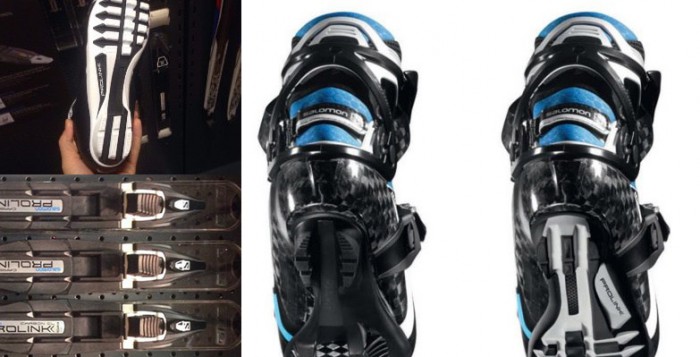
    Tomorrow, Jan. 1, 2016, Salomon is expected to announce its new NNN-compatable boot system, called Prolink. (Photo: Salomon Prolink/xc-ski.de)
    Tomorrow, Jan. 1, 2016, Salomon is expected to announce the release of its new NNN-compatable boot and binding system, called Prolink. (Photo: Salomon Prolink/xc-ski.de)

    The dueling alphabet soup of binding systems is about to get a whole lot simpler. For the past decade or so it’s been two camps: Salomon’s SNS system or NNN. On Jan. 1, Salomon plans to reveal a not-so-well-kept secret.

    Salomon, which is owned by the Finnish-headquartered sport conglomerate Amer Sports, will begin production of NNN-compatible boots and bindings. The new system, called Prolink, shares DNA with NNN.

    According to Amer Nordic Commercial Manager Isaac Wilson, some key differences remain.

    The Bindings

    “Starting with the easiest and the most obvious, the binding is lighter. It’s also lower and it’s thinner,” Wilson explained on the phone.

    SNS devotees often claim more sensitive ski-feel is obtained with as little material between the boot sole and the ski. (Modern NNN bindings slide onto a ski-mounted plate, called the NIS system. The binding slides onto the plate with, no drilling required, and provides some fore and aft adjustment.)

    Continuing Salomon’s direct-mount legacy, Prolink bindings will screw mount directly to the ski with no NNN plate in between. To allow for an easier transition from SNS to Prolink bindings, the new system will use an identical SNS screw-hole pattern. Converting skis with SNS bindings to Prolink will be simple.
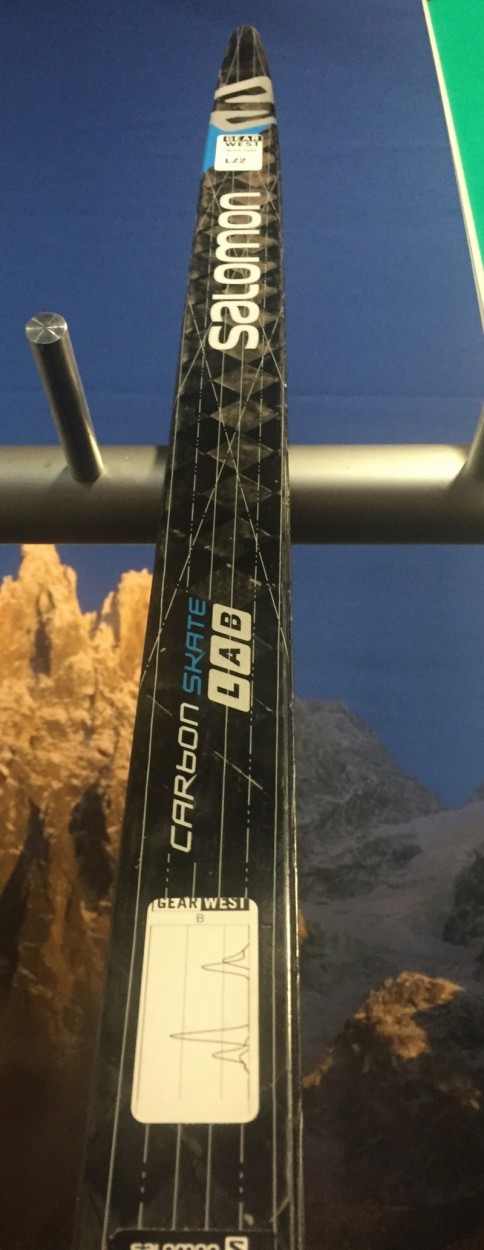
    New for 2015, Salomon’s Carbon Skate Lab features a ThinPly carbon construction and three different base setups, cold, wet and universal.
    New in 2015, Salomon’s Carbon Skate Lab featured a ThinPly carbon construction and three different base setups, cold, wet and universal.

    Amer Sports, which owns both Salomon and Atomic, has invested millions developing new ski technologies. Both brands helped introduce and innovate classic skis with built in skins. This year Salomon rolled out a top-end price point carbon skate and carbon classic ski.

    “All of our skis, from the cheapest kids ski to the most expensive carbon ski, will all come pre-drilled based on camber of where that ski should be mounted,” Wilson said of the new easy to use mounting system. “So it makes the mounting really quick. But it’s still a direct mount to the ski so you get a really direct connection.”

    Wilson asserts that differences between current NNN bindings and Prolinks don’t stop at what he claims is better snow-feel, but extend to a mechanically better connection between the boot and binding.

    Salomon claims its system, which compresses against the boot’s attachment point, a thin bar near the toe, is better than the NNN closure which uses a small hooks that grip and wrap around the top of the boot bar.

    “There is no compression on that system so that the bar of your boot is not actually held or pressed tightly, there is a lot more movement involved,” Wilson said.

    With the tighter connection, Salomon suggests its system will last longer and provide a more seamless interface between boot and ski.

    The Boots

    Salomon’s plan for the immediate future is to produce two runs of identical boots in each model, one with a SNS sole, the other a Prolink sole.

    “We will have starting with the S-Lab Pro all the way down to the Escape touring boot, everything in there will be offered in either option,” Wilson said. “We want the conversation to turn away from, ‘What system are you on?’ to ‘What boot fits you the best? What skis do you like the most? What are the most relevant technology for you?’ Not so much, ‘What is the system you are currently using?’ ”
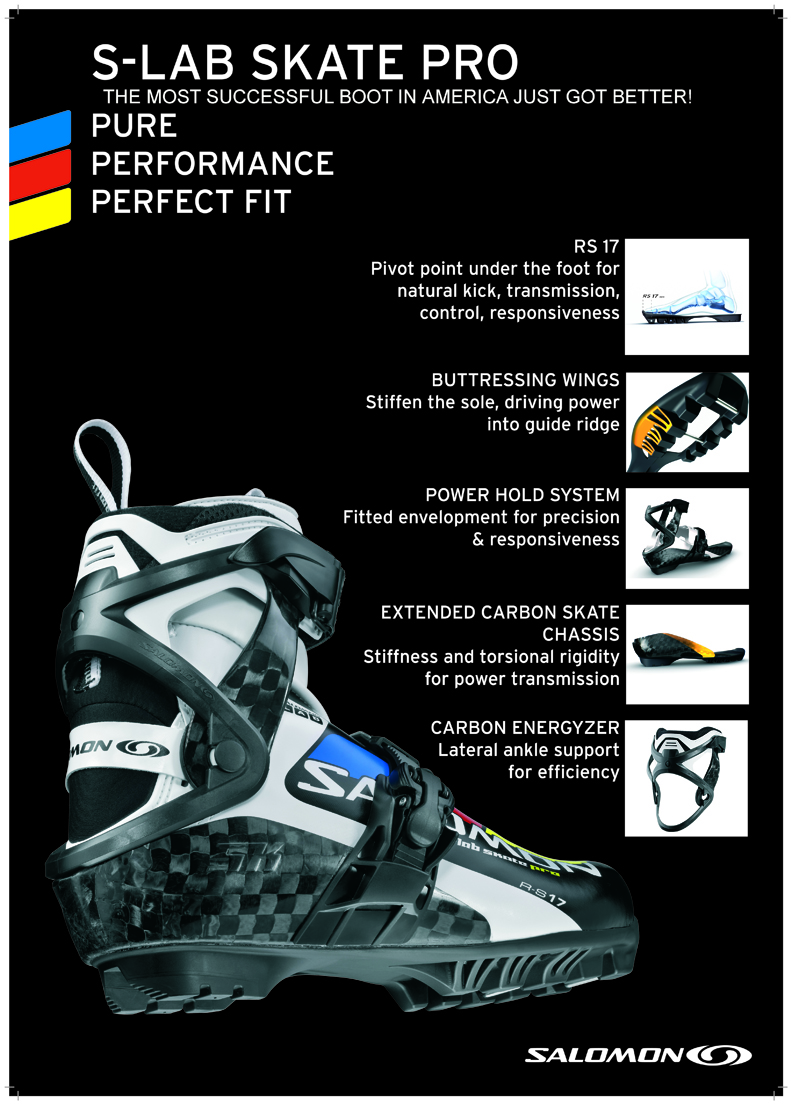
    Old model Salomon SLab Skate Pro with SNS compatible sole
    Older model Salomon S-Lab Skate Pro with SNS compatible sole

    In the long term, production runs of boots offering an “either or” option may not be cost effective. Salomon is already thinking ahead. It’s skyrocket price Carbon Skate Lab boot pushes beyond 1K for a pair. Yet it remains a way for Salomon designers to prototype modular boot systems.

    “When you go to our Carbon boot, and our new Carbon Classic boot, they will actually come with a shell with cleats … They will come with both cleats so you will have the ability to have both in the box. You’ll be able to have an SNS cleat and a Prolink cleat [that is NNN compatible] in the system,” Wilson said. “The goal will be like a cycling shoe where you never worry about what pedal you are using.”

    The Binding Wars and the Bottom Line

    Binding compatibility is downright unglamorous. But as the interface between ski and boot, binding compatibility is a gateway to greater profitability. For example, with the NNN system buyers have many brands to choose from to optimize fit; there’s Rossignol, Alpina, Madshus, and Fischer — just to name the major players. If your ski race quiver includes NNN bindings, it makes the most sense to purchase boots from these brands. If Salomon or Atomic boots are the most comfortable fit, then up to now, the SNS system was mandatory.

    Amer Sport’s business model worked for awhile. The SNS system held strong here in the U.S. Yet gradually, brand influencers, like coaches and their ski clubs, as well as top World Cup skiers, switched to NNN. At one ski club in Bend, Ore., you’re likely to see only a few pair of Salomon boots amidst a group of 30 to 40 skiers on any given day.

    Internationally, the SNS system is quite robust.

    “In Germany, it’s still 80 percent,” Wilson said. “But in the U.S. and a few other places we have four really strong competitors and we lost partnership with Fischer a few years ago. Our market share shrunk. We went from 65- to 70-percent market share in the U.S. to just about 35 percent.”

    In places like Norway, a major nordic-ski product consumer, SNS became an afterthought as well. Wilson said that despite Amer Sport’s investments in high end ski production, they simply were preaching to a smaller and smaller choir.

    “At the end of the day, in all the business meetings we were in, we were saying no matter how much we do this we are only speaking to 35 percent of the industry, and that we are spending an awful lot of money to talk to 35 percent of the people.”

    Salomon could have moved on this earlier, he added. “My biggest thing is, OK, we could have done it ten years ago, but I’m just really happy we are doing it now. … It’s hard to admit that we need to play across the full range of systems … so that we can be back to where we once were which is a much higher market share especially in boots where we are the most relevant brand still in the industry.”

    Salomon’s bottom line is likely to be bolstered by the Prolink system’s introduction. Wilson explained the system is an NNN upgrade, but it’s not revolutionary. Put simply, now Salomon can attract consumers who simply prefer their boots and don’t want to change binding systems from NNN to SNS.

    “Hopefully it allows people to open the ability for them to take Salomon or Atomic product and not close the door for us,” he added.

    “I am proud that Salomon was not too proud to do this … I think they were really globally not that worried about it and now I think especially if they ever want to play in the Norwegian market, if they ever want to play in the U.S. market in a real way, this was a move that they had to do. I think they came to that realization and they did it.”

    Wilson admitted he’s asked the question again and again — does this mean Salomon has lost the binding battle or lost the war? “For me, it’s a funny way to think about it. I feel like hopefully the consumer is the one who wins this in the end. So nobody has lost but the consumer comes out as a winner.”

  • From Vermont to Altenmarkt, Caldwell Gears Up for A New Season

    Caldwell (right) grinding skis in Boulder, fall 2009. Photo courtesy of Zach Caldwell and Erik Nilsson.

    Zach Caldwell’s role within the ski industry is hard to define. In trying to come up with a single phrase to describe his job, ‘ski technician’ isn’t nearly sufficient, as it doesn’t quite capture everything he is—structure designer, snow whisperer, wax chemist, engineer, ski evangelist, and occasional coach (he calls it his “hobby,” as if working with Kris Freeman and Noah Hoffman were as ordinary a pastime as fly fishing). Caldwell’s expertise in everything from kinetic friction to classic technique comes from his willingness to be a constant student of the sport. He is always designing and testing new structure patterns, wax combinations, binding placement—even wax bench efficiency.

    When it comes the companies producing the skis he spends so much time with, his attitude is no different. Caldwell recently returned his ski selection and grinding business, Caldwell Sport, to Vermont after a few years of partnering with Boulder Nordic Sport in Boulder, CO. In addition to the new locale, he’s introduced Salomon skis to his inventory, and recently returned from Europe for the second time this summer for his inaugural tour of Salomon’s factory. There he met with their design team, observed the production process, and picked skis from their race selection to take back to the shop.

    FasterSkier caught up with Caldwell a few weeks ago, while he was still in Altenmarkt, Austria and was scheduled to get his first Salomon factory tour the following day. He talked about what goes into building a relationship with a new company, why he’d made what seemed to be a complete 180 on his opinion of Salomon, and his perspective on the whole ski business after almost a decade in the industry.

    FasterSkier: First off, it’s been a few months now since you left Colorado. How is the settling in going back in Vermont?

    Zach Caldwell: It’s a little chaotic, as you might expect, especially with the timing. We packed up and started driving at the end of May, got back [to Vermont], unloaded the truck, and then four days later I flew over to Europe. We hadn’t even unpacked.

    Amy was back home looking for shop space, checking everything out, sending me real estate listings, and she started saying that we could either pay $1,000 a month for shop rent, or just buy a place where we can set up house and shop and do the whole thing under one roof.  We ended up getting a contract on a place in Putney that’s zoned appropriately, and we’re supposed to close on that about three days after I get back.

    We’re living out of boxes, but it’s been fun to be back east.

    FS: Are you worried that living and working in the same place will mean you never get a break?

    ZC: Actually, I think it’ll mean more and better time for myself and the family. It’s not a standard retail operation with set hours. We have flexibility. There are large chunks of time when we’re working really long days. But there’s also a lot of time when we get to have some fun, go skiing, etc. So I’m not too worried. Less time commuting, and less time working retail during the holiday season sounds pretty good to me!

    FS: Talk about your decision to start working with Salomon. You haven’t been their greatest fan in the past, and you explained on your website that working on Tad Elliott’s skis this winter brought you around. Was that all it took to change your mind?

    ZC: You’re right, I haven’t always been a huge fan of them. Salomon’s been one of my favorite companies to pick on in the ski industry, largely because they put so much energy into marketing their product, telling the story, and getting the word out, so it’s easy to look at them as a marketing-based company. But you have to respect their ski boot business; they’ve dominated the market in the U.S., and internationally I think they’re getting to better parity in terms of the binding systems. They’re a pretty major player, so you can’t really ignore them.

    When they first started making skis, it became apparent they weren’t going to do the manufacturing. They contracted Fischer to do it, and those were OK skis, but obviously Fischer had no incentive to develop a really good ski for Salomon.

    Then they got bought by Amer [Sports], which is also the parent company of Atomic, and all of a sudden they’re a fully-fledged ski company, because their parent company owns the means of production. Then the question is, who gets to call the shots inside Amer? Who’s deciding what’s what? What became apparent is that Salomon has their own design team and own design concept for skis.

    There’s no way to launch something from nothing and have it be successful right off the bat. In my opinion, to put it bluntly, that first generation of Salomon skis were bad; they just weren’t very good skis. This would have been three or four years ago. What I’ve seen is that Salomon’s stuff has gotten better, and it’s gotten better on the fly.  They’re making adjustments, and adjusting quickly.

    So, when I started working with Tad’s skis…I was prepared to tell him to drop the relationship and sign on with someone else. And over the course of working together a bit, I found that that wasn’t my take at all, in fact I found that the skis were quite good, very competitive.

    But a lot of companies make good skis. Its not like deciding to work with Salomon was a decision that their skis are better than, say, Rossignol. Rossi makes great skis as well. But from a business perspective, I’m looking at their whole company. Salomon is a very big, very capable company, with really good sales support, really good distribution support. You’ve got a lot of people working for you with a project with Salomon. I never would have made the decision to do it if I didn’t considered their skis to be good.

    That doesn’t mean they can’t improve; every company is looking to improve.  I’m looking at: what is the direction for developing the product further, and do they have control of the process? So this, for me, is a bet on the future for them. I feel they’ve reached a level that is undeniably good, I’ve got access to work directly with their racing department over here in Europe, so logistically they support my business model.  They’re very willing to hear criticism and take feedback, and they’re not defensive at all about critique.

    It’s an investment in a company that I believe is very serious about making good skis, and that’s coming from the point of view of not having [previously] been a fan. I feel like to take on their brand, I needed to take on a really good working partnership; these guys are eager to work with me, so it seems like a pretty good fit.

    FS: In working with Salomon, are you involved in any official capacity in the design process?

    ZC: No, not at all. My job is to learn the skis from the inside out. When I say “work with them,” I mean “hang around like a leech and try to suck information out of them”. On what they’re trying to do, what their design process is, how they produce the ski and, more importantly, reproduce it.

    My willingness to work with a ski company depends on their openness to showing me the design process, letting me ask questions, and becoming a workable expert in what they’re doing. Once I understand what they’re trying to do, it’s really easy to assess how successful they are in meeting their own goals.

    Generally, a ski company that meets its own goals is coming up with pretty good skis.

    FS: Where do you begin the process of learning their skis?

    ZC: It’s backwards on this trip because of everyone’s vacation schedules. Normally my preference would be to start with their R&D department and talk to the people who come up with the concept. You have to have an idea of how the ski will work, what the guiding philosophy is. How does the ski function? How is a classic ski going to kick and then glide? How is a skate ski going to be stable on edge and then supple when running? You’ve got to have an idea about how this will be accomplished.

    Then you have to understand the materials and production process. Ideally, I’d have someone explain the concept to me first, then let them explain the choice of materials and how they work with their production capacity to realize that concept, and then I’d actually look at the skis.

    This time around, I’m in Altenmarkt now, and on Monday I’ll go into the factory first with Jean-Marc Draeyer, a Swiss guy who speaks six languages, has worked with a bunch of companies in the industry, and just started with Salomon last year. Within the company, he handles the highest number of skis. He’s actually working in the factory directly with the production department to get what the racing department needs from them to put out into the world.

    FS: When you’re at the factory, how do you begin the process of sifting through everything, to get to what you want to bring back?

    ZC: Part of the reason for coming over to Europe is to get to skis that have already been selected by the racing department and to have their people there to work with, to guide you through the process of what they’re trying to do. There’s always sifting involved; you never take everything. I’ve got a good starting point from working with Tad last year, looking at a lot of skis and testing a bunch of stuff for him at the Tour de Ski, and then again at World Championships. I’ve got good ideas about the starting point. It’s pretty fast work once you start to identify the qualities you’re looking for.

    FS: What qualities are you looking for? Do Salomon skis fit a certain type of skier?

    Salomon skis are pretty universal. It’s easy when we’re talking about other brands to [generalize]. I feel that Madshus skate skis work really well for a skier who’s active in their motions, sets up in an active position, is on their edge early and always moving in their skiing. This, compared to Fischer or Rossi, which accommodate someone who glides for a long time on a flat ski. I don’t think [Salomon] is a pigeonholed ski at all.

    The interesting thing I found in working with Tad is that he has some skis that are really pretty low camber, and with the binding fairly far back in the bridge they’re really pretty slippery and surfboard-like. Then he’s got some other skis that are mounted further forward that are higher camber and more active, they ski really energetic and action-based. I think the company gives us materials to work with a broad range of skis.

    In the end, the materials and construction are a means to an end. It’s the control of those aspects and the mastery of the people who design the ski and use the materials and construction methods that really helps, so that’s what I’m betting on with the Salmon guys, is their control of that.

    FS: Taking a bit of a step back and looking at your involvement in this business for nearly a decade now, what have you learned? Are you setting things up differently this time around?

    ZC: I guess the learning curve is continuous­—it never stops. I’ve learned a ton since I’ve started, but I don’t know as much as I will a year from now, or even a day from now. The business model is structured to facilitate the continuation of the learning process. I don’t want this business to become stagnant. The core business is pretty much unchanged from when I first started—I provide services and add value to products. I don’t carry products where I can’t add value. It’s a small business, just Amy and myself, and so we have to use our time to best effect.

    This time around I’ll try to organize things a little more professionally, encourage people to make appointments so that I’m setting aside time for customers, but am also setting aside time for work on the skis.