From the FasterSkier archive — posts syndicated from athletes’ and coaches’ own blogs between 2004 and 2012, kept online as published. Current coverage is at fasterskier.com.

Tag: American Birkebeiner Ski Foundation

  • Racing to Save a Ski Season . . . Adaptations and Impacts of Virtual Racing: Part II

    Racing to Save a Ski Season . . . Adaptations and Impacts of Virtual Racing: Part II

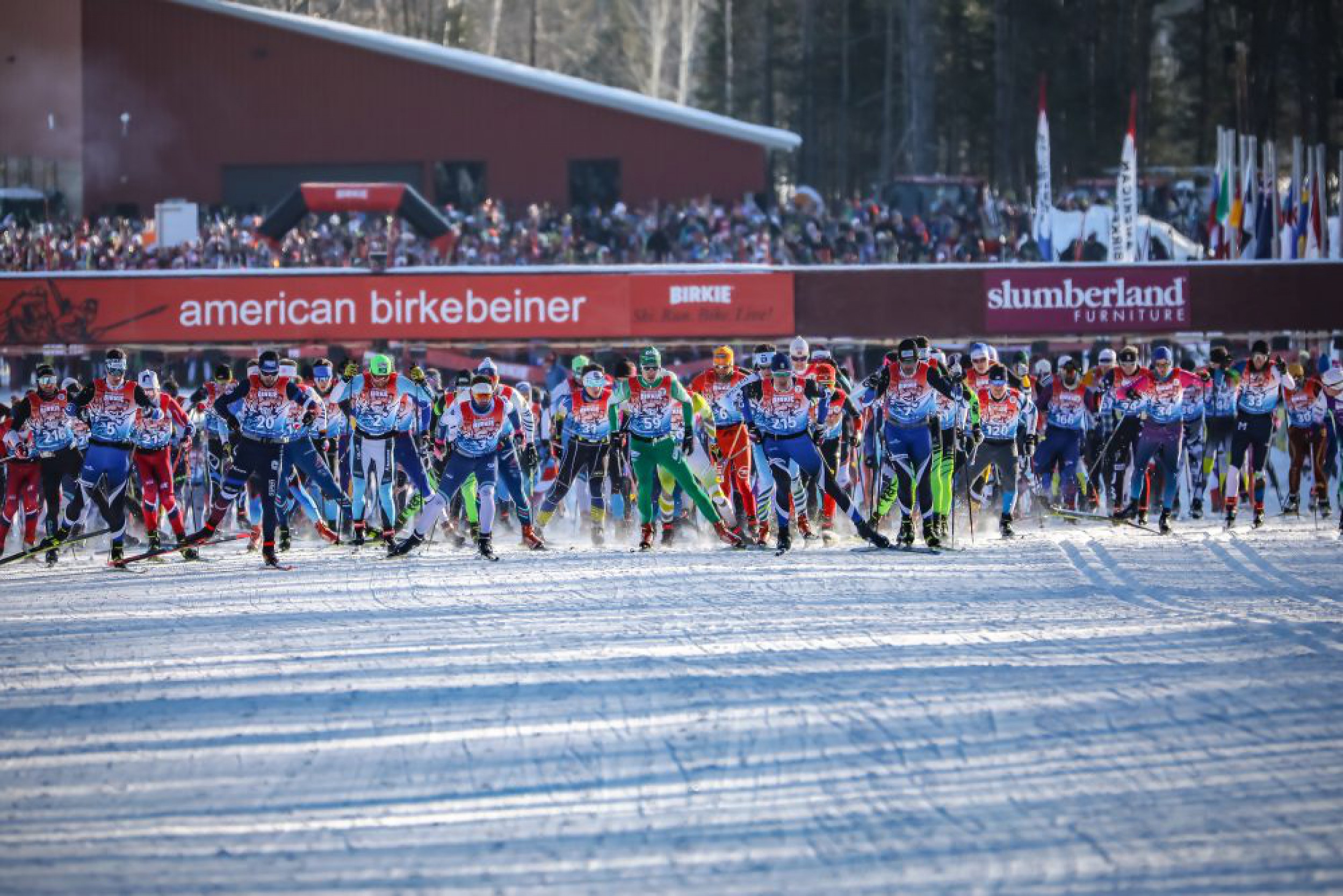
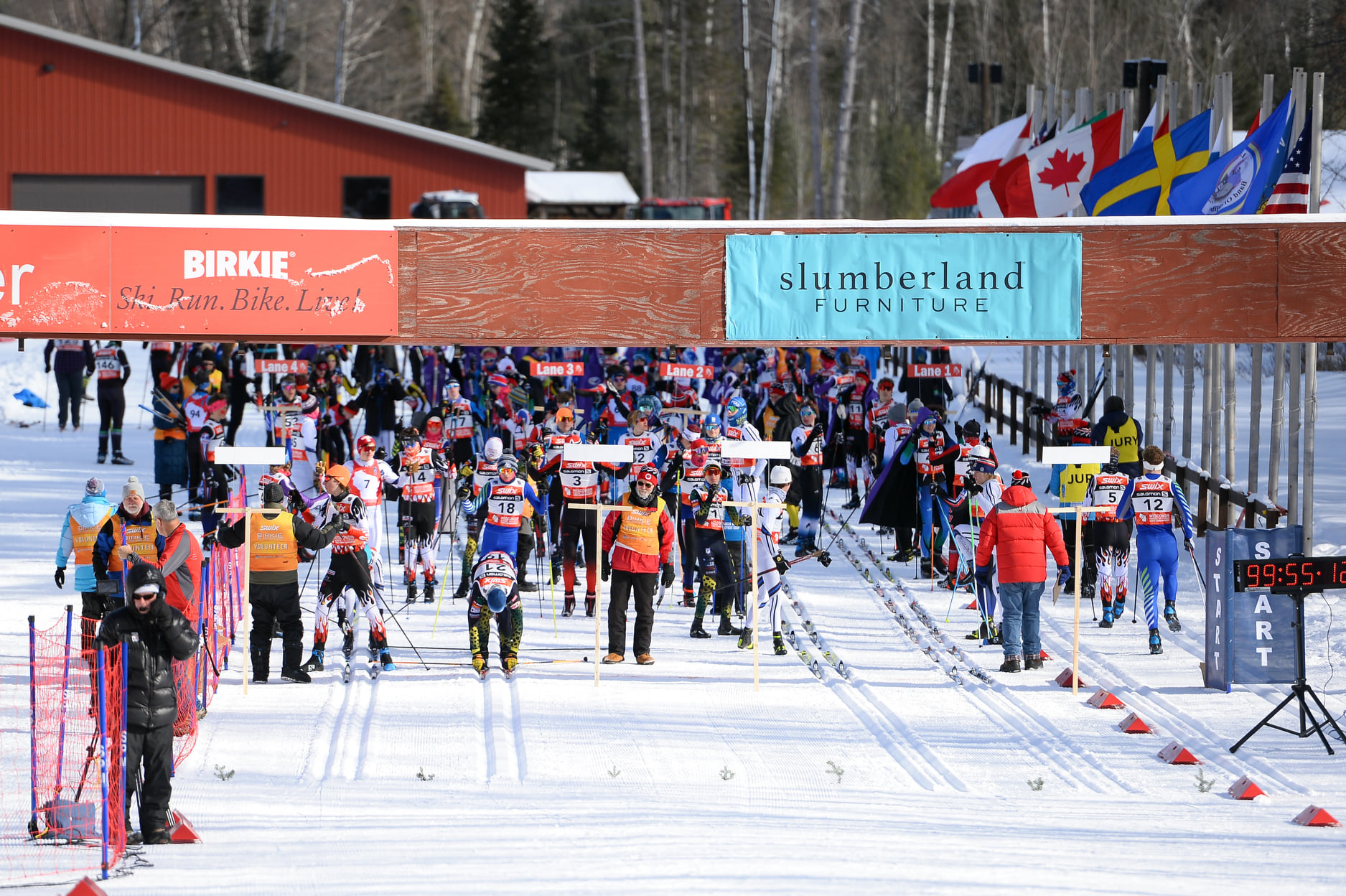
    Some times, the races couldn’t be held. Other times, not everyone could get to the races. Such was the case for Nordic skiing during the pandemic. If such limitations occur again in the future, will virtual racing become a viable alternative? (Photo: Tornow/Muniz, American Birkebeiner)

    White-knuckled, we caravanned down I-94 from St. Cloud to Minneapolis in the midst of a bomb cyclone of wind, snow, and ice. Braving the conditions, we crawled toward our destination: the 2021, hybrid City of Lakes Loppet at Theodore Wirth Park. Due to the COVID-19 pandemic—and a hearty desire to stay healthy for the remainder of the ski season—we decided to drive separately. Now, we were inching our way to a late start for our Thursday morning staggered start times of 9:00 and 9:02. There was no way we’d make it on time.

    As race directors presented various solutions for completing their races during the winter of 2020-2021, many Nordic skiers were scrambling to salvage a season that had been fractured by a global pandemic. Previously, we had gathered en masse at venues in Minneapolis, Hayward, Calumet and numerous other host towns for days of socializing, racing, and celebrating.  Now we found ourselves with virtual starts at different times and venues scattered across North America. Armed with smart watches, cell phones, or (in some cases) witnesses willing to testify to distance and time, cross-country skiers raced their way to another successful event completion. As we all uploaded our times and compared our performances, we were left wondering about the legitimacy of these “virtual” races: were we really racing? Against whom? These questions got us thinking whether these virtual race formats—including skiing different venues, at different times, or even substituting an activity other than skiing—are viable long-term solutions to hosting Nordic ski events in the face of climate change, where winters are getting warmer and the ski season is getting shorter with less predictable snowfall.

    To address these issues, we developed a survey to gather the insights of Nordic skiers across North America. With the help of the American Birkebeiner Ski Foundation, the Loppet Foundation, and Stearns and Wright County Parks, we received feedback from over 1,300 participants. In our first article, we addressed the question of how we self-identify as cross-country skiers and how this relates to culture, diversity, and opportunity in our sport. In part two, we focus on skiers’ perceptions of virtual ski events, our likes and dislikes, and whether these are legitimate forms of racing. To address these questions, we evaluated a subset of our survey participants: the 829 cross-country skiers who completed at least one virtual ski event during the 2020-2021 ski season. Thus, while our survey results aren’t necessarily a reflection of the entire Nordic ski community, they do represent the voices of skiers who experienced firsthand the pros and cons of virtual racing.

    Racing? Virtual?

    As we try to better understand how our cross-country ski community responded to the COVID-19 race schedule—and what it means as we move into a world of less predictable winters—two terms become particularly important: “virtual” and “racing.” Although we may all have a general idea about what these terms mean, neither is particularly straightforward as we look at the myriad opinions regarding the “virtual race” schedule of the 2020-2021 race season. For our own purposes, as skiers who practice anthropology, the two terms vary in how they are defined. Although countless articles have been published on the philosophy of racing and what constitutes a race, the term “racing” in our study is one that we left to our survey participants to define. This means that we are not going to provide a definition of “race” or “racing,” at least not yet. Instead, we teased the meaning of cross-country ski racing from the responses that our Nordic ski community provided in the survey. Thus, “racing” is defined internally, by the skiers. We own it.
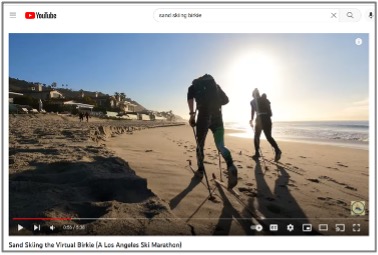
    Figure 1: Virtual Birkie skiers sand skiing on a Los Angeles area beach. (Photo/Video: youtube.com)

    On the other hand, the term “virtual” is one that was defined for all of us, at least as it applied to the COVID race season of 2020-2021. And the definition of “virtual” might have strayed a bit from what we normally think of as “virtual.” For the most part, the virtual options presented to us for completing our annual ski marathons didn’t involve pulling out the VR headsets or hopping onto the treadmill or trainer for a Zwift or Rouvy session—though in some cases, it might have. Instead, virtual options included such things as actually skiing on snow, but in a different location than the original race, or skiing at the official race venue but on a different day than the traditional start. For some races, such as the American Birkebeiner, other activities such as running, cycling, swimming, rowing, or roller skiing could be substituted for skiing on snow (Figure 1).  Regardless of activity choice, substrate, and location, distance and time were measured using a GPS watch or app, or the testimony of a witness who could verify time and distance. We got to choose how we completed our events given a range of “virtual” options that were made available to us.  Although COVID is not currently the threat it was two years ago, at least some event organizers are still offering virtual options this winter.  The virtual option could turn out to stick around longer than many of us anticipated.

    Do we dislike virtual events?

    As we perused our survey results, we were struck by the wide range of responses, both positive and negative, that skiers had with the various alternative cross-country ski formats subsumed under the term “virtual.” We noticed that, given the opportunity to discuss both their likes and dislikes of virtual racing, positive responses (n=864) outnumbered negative responses (n=613) by over 30%. A look at these results allows us to get a handle on how we, as a community, define racing as well as our attitudes about whether virtual cross-country ski events can be considered legitimate races. We’ll begin our discussion with the dislikes that virtual skiers expressed about the events they participated in.
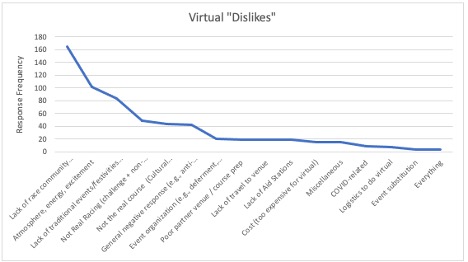
    Figure 2: Patterns of things virtual skiers disliked about virtual cross-country ski races.

    Figure 2 summarizes the 613 individual, negative responses that virtual ski participants provided. Overwhelmingly (> 55%) the dislikes about virtual cross-country ski events focused on the lack of social interactions, energy, and festivals that surround typical Nordic ski races. The single, most common dislike (n=165) that skiers expressed was that they missed the community and camaraderie that surrounds these events. This was followed by the lack of atmosphere, energy, and excitement (n=101), and lack of traditional events and festivities, including things like gear expos, after-parties, and “Main Street” finishes. Following these first three dislikes, we see a drop in responses.

    Coming in at number 4 in the list of dislikes, with 9% (n=49), was the critique that virtual events, in one way or another, are not real racing. Although only 17 of the 629 dislikes explicitly stated that virtual events used during the COVID-19 pandemic did not constitute real racing, we identified several additional responses that are closely related to this category. These additional “not real racing” responses do two things: 1) they provide valid critiques of virtual events; 2) they identify important elements of a ski race that allow us to tease out the definition. Fifteen respondents argued that virtual events lack competition. Additional critiques include non-comparable times (n=10), no official, mass start time (n=4), and that virtual event participants ski on different courses in different places (n=3). This mix of responses highlights some key elements that define a cross-country ski race: a competition between skiers where times are legitimately comparable because of a scheduled start time on a designated course using official timing.
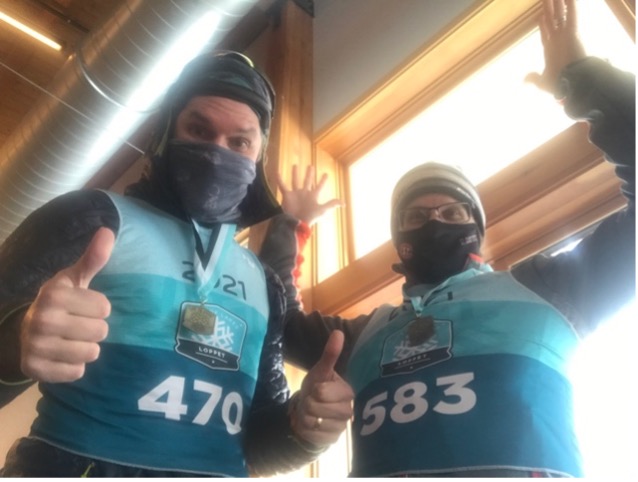
    Figure 3: The authors, Matt Tornow (left) and Mark Muñiz, celebrate their completion of the hybrid City of Lakes Loppet.

    So, when we (M&M; Figure 3) were slipping down I-94 to ski the hybrid City of Lakes Loppet, would we be racing? Technically, we missed our start times, so that criterion might be compromised. However, we were still allowed to race, and we certainly skied within the open window for the event. When we got to the start on Wirth Lake, it was empty except for a volunteer starter who explained the course, and particularly the finish, where we were instructed to do two laps around the stadium. We were competing with the clock, but also with other skiers that we might have seen on the course. We also compared our finishing times with those who completed the event at different times and on different days. Whether or not we skied the same course is a sticking point. By the time we got to the final 10k around the stadium, the conditions had degraded to the point where drifting snow and downed course markers had made identifying the intended course impossible. Tornow’s two laps differed slightly from each other, as evidently he missed a turn at some point. Muñiz did the same lap twice to finish his race. This resulted in different distances: 30.5k for Tornow and nearly 34k for Muñiz. While the official race distance was recorded as a 30k, other racers recorded different distances too. Maps posted to Strava show that Olympians Caitlin and Brian Gregg each skied 31.2k to complete their hybrid Loppets. While some differences in distance are almost certainly the result of different recording devices (e.g., watches, phones) and related apps, it’s also evident that Tornow, Muñiz, and the Greggs all skied slightly different courses for the same race. Without analyzing the maps of all participants in the 2021 hybrid City of Lakes Loppet, we really don’t know how our times compared with the other racers. Similar concerns might arise from skiing the same course at different times. Our late start on Thursday morning resulted in more accumulated snowfall on the course and more drifting. We’re not making excuses, but those who skied the race earlier in the week or the following day would have had very different (better) conditions.  Apply this complexity to events that allowed skiers to use entirely different courses (e.g., Virtual Birkebeiner and Virtual Vasaloppet) and we can quickly see that the race criteria of legitimately comparable times and distances are easily violated for virtual events.

    Rounding out the top five dislikes, skiers did not like the fact that they were not skiing on the real course. This is a sentiment that, like the top three responses, relate to the social aspects of the event by focusing on the traditional place and cultural landscape where cross-country ski events occur. These top five responses (72%; n=443) all focus on the social meaning of the event, whether it be interpersonal relationships, competition between ski racers, or interaction with a traditional, cultural landscape.

    Rather than focusing on the cultural meanings associated with cross-country ski events, the remaining 28% of dislikes shift the focus of critique to the mechanics of virtual racing. The sixth most common dislike was a general, “virtual stinks” kind of response. While not explaining why they disliked virtual events, these 42 responses express a general dissatisfaction with the substitution of virtual events for traditional, in-person, mass-start races.

    There is a sharp drop in the number of responses following the “virtual stinks” critique. Twenty virtual skiers were dissatisfied with the organization of their virtual events. These dislikes ranged from a lack of communication and dissatisfaction with virtual interaction to the inability to defer their registrations to future, in-person events. There was a three-way tie for the eighth most common dislike between: dissatisfaction with partner venues and course prep; the lack of aid stations; and a desire to travel to the host town for the event. Rounding out the dislikes were the high cost of virtual events (n=15), a general dissatisfaction with the situation surrounding COVID-19 (n=9), figuring out logistics (n=8), and event substitution (n=4). There were also fifteen “miscellaneous” responses that included things like not winning a raffle, missing foreign culture, and lack of motivation.
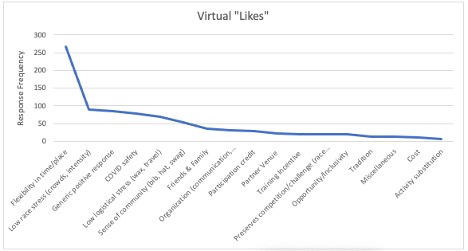
    Figure 4: Patterns of things virtual skiers liked about virtual ski races.
    What was there to like, then?

    With all of the negative feedback, we’re left wondering if there was anything we actually liked about these virtual events. It turns out, that there was a lot to like, and skiers had about 30% more good things to say about their virtual races than bad things. Figure 4 shows that about a third of survey participants (n=266) said that they liked the flexibility that virtual ski options provided regarding when and where the event could be completed. For virtual events offered during the pandemic, skiers could choose their own venue and could complete their races at any time. This was clearly a bonus to many skiers. The next most common like (n=89) was the lowered race stress that comes from virtual events. Although many skiers disliked the fact that virtual racing wasn’t real racing, a greater number of skiers indicated that they liked the lower stress, less-crowded trails, and lower intensity of virtual race formats. Following a general “virtual is great” response and an appreciation for COVID safety (which came in third and fourth, respectively), the lower logistical stress afforded by not having to travel, figure out wax, and get to the starting line on time rounded out the top five. Thus, three of the top five likes of virtual racing were related to the fact that the virtual events were fundamentally different than typical races and were generally less stressful.

    Although the top three dislikes of virtual events revolved around missing the sense of community that big cross-country ski events provide, not all virtual racers saw it this way. The sixth most common thing that skiers liked about virtual events was the sense of community that they created.  The sense of community resulted from seeing others skiing their virtual events in their race bibs or displaying the swag that comes with participation in hallmark ski events. For many racers, wearing Birkie swag publicly associates them with finishing one of the toughest ski marathons in North America.  Whether or not they finished the race on the course in Wisconsin or on a local trail in some other state is a secondary talking point.  Others also appreciated the opportunity to ski with friends and family who had different abilities (7th ranked). Thus, virtual options provided a real sense of community, albeit different from that found with traditional mass gatherings.
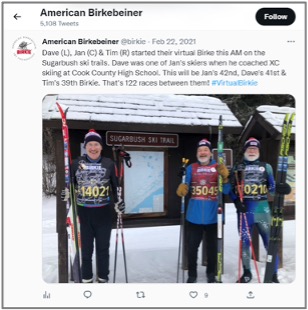
    Figure 5: Skiing virtually during the COVID-19 pandemic allowed many skiers, such as these long-time Birkie skiers, the chance to maintain tradition and share their experiences with others through social media.

    There were a number of skiers who were happy that, during the middle of the COVID pandemic, races were held at all, and many of these folks (n=31) gave ‘shout-outs’ to the organizers who pulled these virtual events together, maintained communications, and provided platforms for reporting results. In addition to praising the race organizers, 23 skiers also gave kudos to partner venues, who provided certified, groomed courses to use specifically in completing the virtual Birkie. Squeezed between organizer and partner venue shout-outs, the ninth most common like about virtual racing was getting credit for participating. This sentiment ties into the fourteenth ranked like (n=14): preserving tradition. For many skiers, participating in these events is steeped in tradition, and the chance to participate in a COVID-safe, socially distanced format provided skiers the opportunity to keep the tradition alive (Figure 5).

    Although very few positive responses explicitly called their virtual events “races,” the racing sentiment is expressed in some of them. Twenty-one skiers liked that the virtual options available to them provided impetus to continue their race training. An equal number of skiers liked that virtual events preserved the challenge and competition of a race experience. Thus, while about 9% of virtual participants thought of virtual racing as “not real racing,” 5% liked the racing aspects of virtual events.

    Just as virtual events provided skiers the opportunity to ski with friends and family with different abilities, they also provided opportunities for skiers to take part in events that they might not otherwise have been able to participate in. Our data indicate that about 10% of our total number of respondents (127/1300) had never completed a sanctioned, Nordic ski event prior to the COVID-19 pandemic. Of these 127 skiers, 42 (33%) indicated that they took part in a race during the 2020-21 season and 34 of them chose a virtual option. Whether the virtual option provided impetus for these first-time cross-country ski racers to participate in these events is unclear. What is clear is that 20 skiers indicated that they liked the opportunity to participate that the virtual options provided. Thus, for these 20 skiers at least, virtual races provided the opportunity to participate in ways that otherwise might not exist.

    Aside from cost and a number of miscellaneous responses such as adjusted, shorter distances, or positive memories associated with a chosen alternative venue, the likes are rounded out by those who appreciated the opportunity to substitute an activity other than skiing to complete their event. This was a big bonus to skiers who found themselves on a snowless landscape during the COVID-19 pandemic.
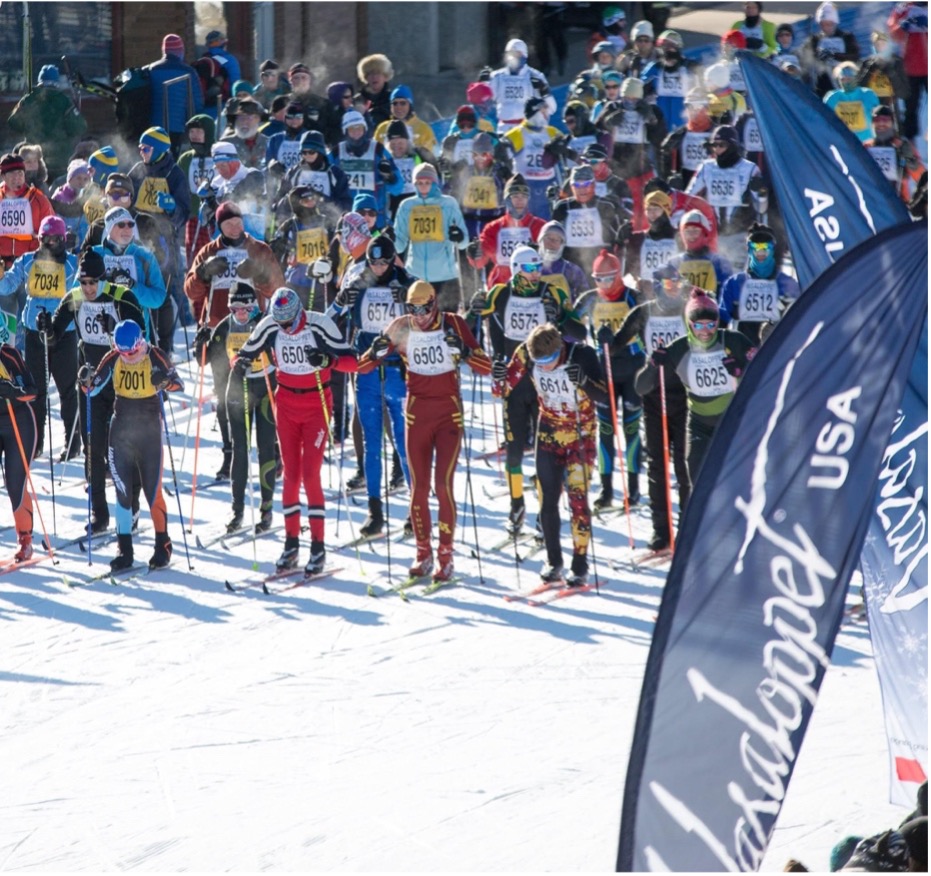
    Our questionaires revealed that gathering at the venue and socializing as cross-country ski athletes is perhaps an important part of race participation. How well will virtual races be able to fill that fundamental need?
    So where does this leave us?

    If we look at the sheer numbers of likes versus dislikes, it’s clear that virtual skiers had more good things to say about virtual events than bad. Does this mean that virtual skiers liked their respective events? Maybe. There were certainly things to like about the opportunities provided to “race” under the social distancing guidelines of COVID-19. Simply the fact that we could ski at all was enough to make many skiers happy. Add to that the flexibility, inclusivity, low stress, and opportunities to socialize and compete, and the virtual response to COVID seems like a success. Of course, the lack of community, excitement, and celebration seemed to weigh heavily on virtual ski participants.  While many skiers liked the lack of stressors and logistics that come with virtual racing, many of those same skiers disliked the fact that these virtual events weren’t “real races.” So, what is it about a “real race” that is so appealing and motivates us?  It’s something more than just legitimately comparable times because of standard starts on a designated course using official timing.  Real races require honest head-to-head competition between us as we strive to do our best, that pushes us to be even better than we could ever be on our own.  If virtual races cannot provide this, then they fall short for many people.

    Holding our ski events virtually during a time when hosting mass gatherings was neither practical nor safe was probably the best solution. As Ben Popp, Executive Director of the American Birkebeiner Ski Foundation, said “while it isn’t as good as an in-person event… it was still something that you planned around, talked about and went and did.  It kept you engaged in a larger community and working towards a goal.” But, as winters become more irregular, with warmer temperatures and less predictable snowfall, is this format something that skiers would accept on a more regular basis? What would a transition to virtual ski events do to our sense of community? To our desire to compete? These are questions that we’ll address next, as we explore the impact of virtual events on the Nordic ski community and culture and consider the ways that event organizers can maintain or even grow participation in our sport in light of climate change.
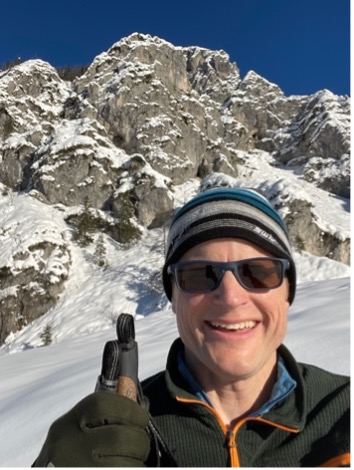
     

    Mark P. Muñiz, PhD, is a Minnesota transplant who grew up in Florida, but enjoys a cold snowy winter over a hot humid summer any time. His cross-country ski adventures have included loppet races and volunteer coaching for the Minnesota Youth Ski League. In the warm season he loves cycling and is still a little wary of jumping on rollerskis. He currently teaches as a Professor in the Dept. of Anthropology at St. Cloud State University, MN.
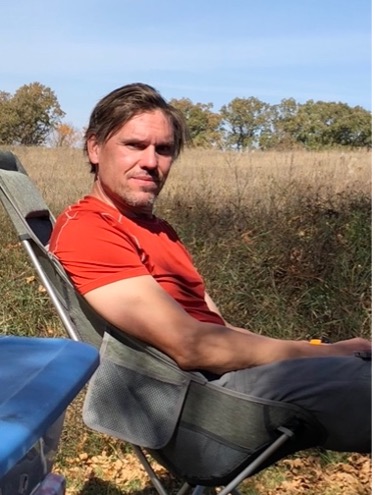
     

    Matt A. Tornow, PhD, is a Professor of Anthropology at St. Cloud State University in Minnesota. His research interests focus on primate adaptation and behavior, including that of humans. As a native of central Illinois, he spent much of his youth and early adulthood driving north to seek out the snow. Now he spends his winters skiing the local trails and doing a little racing. When there’s no snow on the ground, you can find Matt running through the woods somewhere.

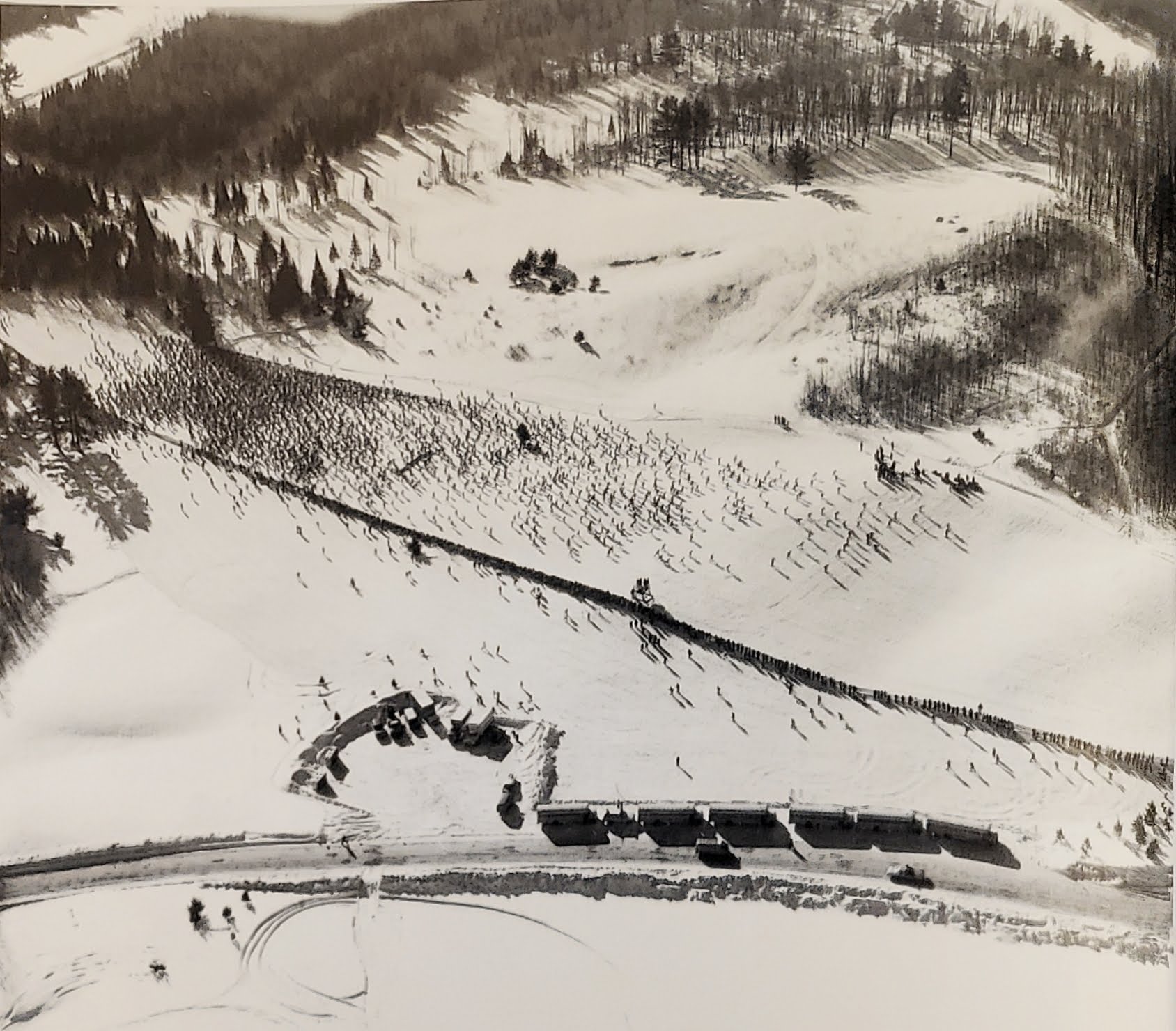
  • Tradition and Transformation: The Birkie Plans its 50th Anniversary

    Tradition and Transformation: The Birkie Plans its 50th Anniversary

    American Birkebeiner VI in 1979. The “Birkie” will celebrate its 50th anniversary next February. (Photo: Telemark Education Foundation).

    Tony Wise could see 10,000 years at once. The last ice age had sent a glacier down over Wisconsin, and then tore it back. In the process, the landscape and lilt of a place emerged. Deep-pocketed kettles, ridges, gentle and subtle rolling hills, all draped in the needly green of the pines. Gaze at it, and time didn’t seem like something that moved forward, but instead danced within the bounds of a whole epoch. A 400ft moraine that rose up from the Superior Upland outside of Cable, Wisconsin: the Ojibwe called it kawabaming—the place to look out from. Look out, and it kept going. Time stretched out and blurred, forward and back. Ten thousand years didn’t seem like much.

    Wise was a local boy who had just returned from serving as a tank commander overseas during World War II.  During his service in Europe, he’d found himself in the Bavarian Alps, where he’d been introduced to a way of moving across the Earth that filled the metaphysical space found on top of the local hill he now stood on. Skiing was an ancient way to front the winter, and a wholly new thrill in each and every turn. Hopes and histories were about to mix as Wise sought to purchase a piece of Wisconsin land to develop into a sking destination. Wise carved a number into one side of birch tree. Walt Kliszcz—a local railroad man who held the deed—carved a number into the other side. They met in the middle: $750.00. Wise renamed the hill Mt. Telemark, then built a ski hill, a lodge, a race, and a dream.

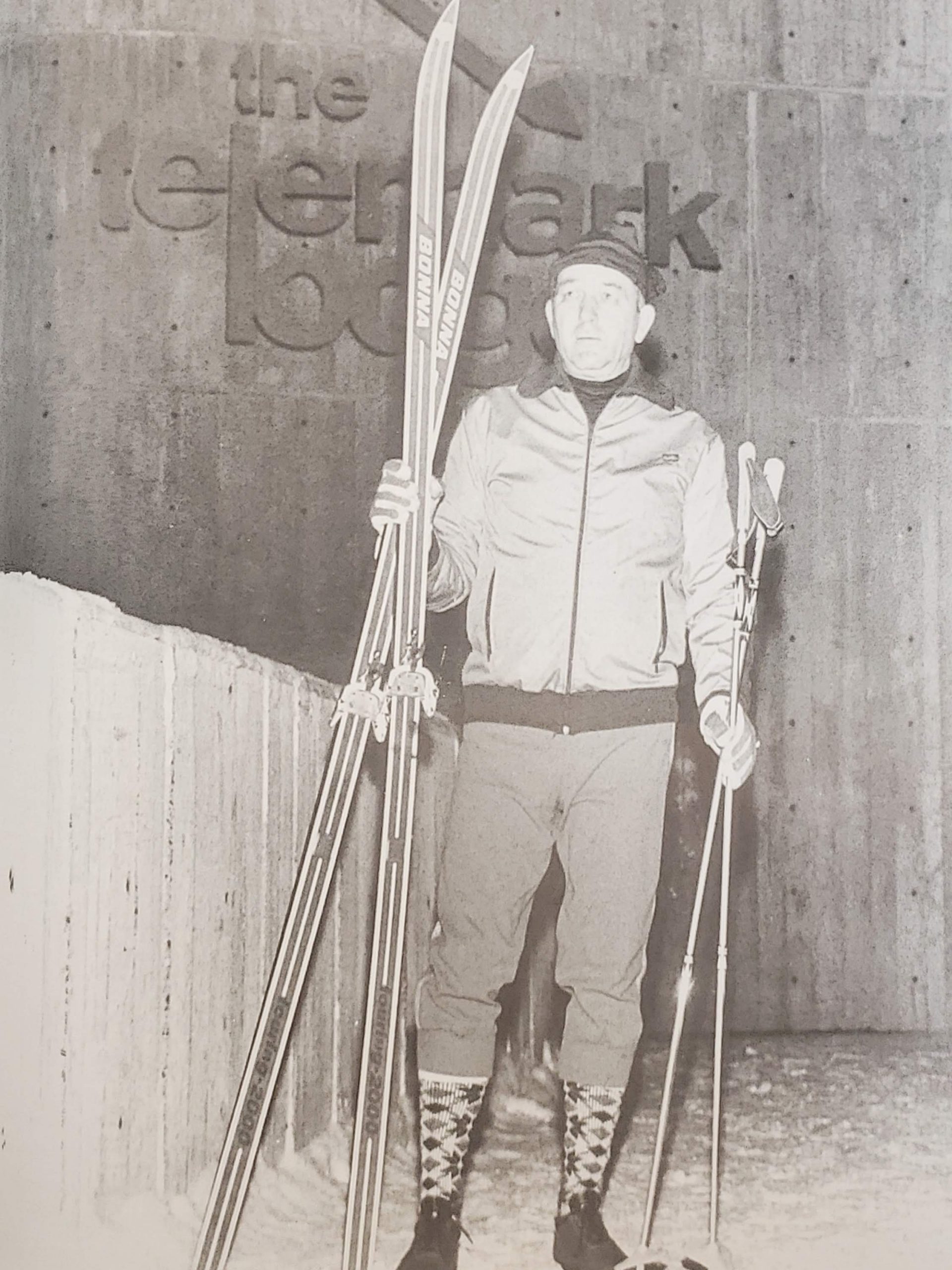
    Tony Wise in 1972 outside of the old Telemark Lodge in Cable, Wisconsin. (Photo: Telemark Education Foundation).

    Everything that successively unfurled was united by the understanding of time and place that Wise found at the top of Mt. Telemark. In transformation, there was always tradition. In 1973, when Wise set out to start a cross-country ski race, he simply adopted a Norwegian legend from 1206—the Birkebeiners—who saved the country by ushering the baby Prince Haakon to safety on skis. In its first year, the American Birkebeiner had 35 participants. In 2023, the “Birkie” was up to 13,000. In each ski stride over each glacial ridge and valley in the interim, the Birkie began to be interwound with the place Wise had set it in. The challenge was always there. Ski 50 kilometers. Like no other race out there though, people could find themselves having quickly done twenty or thirty Birkies over as many years. Soon, there were so many in that category they started a club for them all, the Birchleggers. It all added to the legend of Wise’s race, starting out there in the shadow of the place to look out from.

    Which all leads to the big irony for the American Birkebeiner in 2023. For a race in a place that has staked itself on blurring the very concept of time to match the place it exists in, there is one span that is all anyone around the Birkie can talk about these days: 50 years. The American Birkebeiner is starting out on its 50th anniversary year.

    Tony Wise himself now belongs to the realm of Paul Bunyan and the Birkebeiners—legends out there among the Northwoods. His careful balance of plotting out the new in the landscape is being heralded by a whole cadre of dedicated staff, volunteers, and skiers at the American Birkebeiner Ski Foundation (ABSF). At the helm is Ben Popp, ABSF Executive Director since 2013. He’s another homegrown local who has inherited Wise’s ebullient energy and community-focused spirit.

    When FasterSkier caught up with Popp to talk all things Birkie, he put the passage of fifty years right back into Birkie terms. “It’s been on the horizon for fifty years,” he said. “And yet, it feels like it came up super-fast!” Which is to say that the Birkie remains comfortable dancing within multiple timelines. While shovels hit the ground in one place, the groundwork is being laid out for the race’s biggest milestone yet come February 2024.

    Popp’s way of directing all that energy follows what he calls a “three-step filter: 1) what is the history behind what we want to do? 2) Does what we’re doing build on that history in a way that’s good for what we define as the “Birkie” community, and 3) Can we do it sustainably?” What that has yielded during the first ten years of Popp’s tenure is a bolstered Birkie Trail system, including a new start area, increased participation in the Birkie’s now year-round event schedule, and a larger staff, presence, and place for the Birkie in the Hayward, the Northwoods, and the ski community writ large.

    The filter is starting to be reflexive in time. The two big projects ahead for the Birkie in its semicentennial include looking back and figuring out the right way to mark the occasion at next year’s American Birkebeiner event, while also transforming Mt. Telemark and the remnants of the former resort into a world-class ski facility.

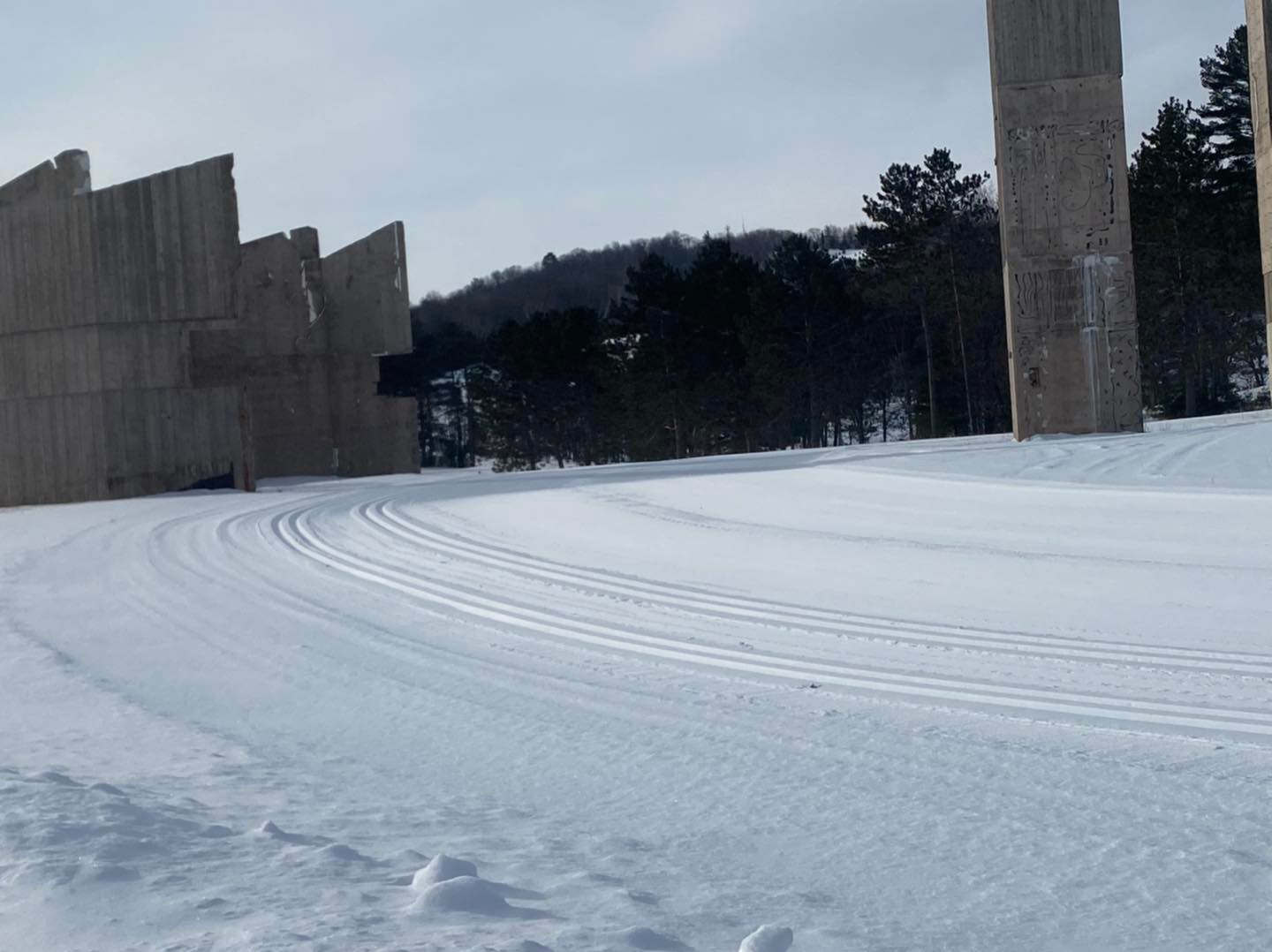
    The ski trail affectionately dubbed “Tele-henge,” the ABSF’s ski trail through the old lobby, and future site of Mt. Telemark Village. (Photo: ABSF)
    Telemark Looks Out Again

    It was the “only place where the Lodge is bigger than the hill,” said Olympic gold medalist Alpine skier Billy Kidd at the opening of Tony Wise’s Telemark Lodge in 1970. With 400 rooms, the hotel offered more rooms than the ski hill outside had vertical feet. The Lodge was an outstretched behemoth that was demolished in 2021. All that now remains are towering old brutalist walls, deemed “Tele-henge” by the skiers down the hill at the new Birkie start line area. The meandering tale of how the Telemark Lodge got to Stonehenge status though, had left specters that still glowed with life. Mainly, the Birkebeiner, and the sport of cross-country skiing that it had helped build in the United States.

    Which has got the Birkie Foundation dreaming big. After years of unstable ownership, the lodge was acquired by ABSF in 2018. Once the Lodge was condemned and demolished two years ago, the creative energies started to flow.

    “For Telemark, there’ll be three big pieces: the ski trails, the mountain bike trails, and the Base Camp building” says Popp. A partnership with Wisconsin-based Trek Bicycles, along with a major grant from the One Track Mind Foundation promises to build an additional 17 miles of single-track mountain bike trail on top of the existing Chequamegon Area Mountain Bike Association (CAMBA) trail network over the next three to four years. Rock Solid Trail Contracting, the builders behind the renowned trails in Copper Harbor, Michigan, are on the job. “Four miles are already done, and by the end of this summer, we’ll have nine miles added on,” says Popp.

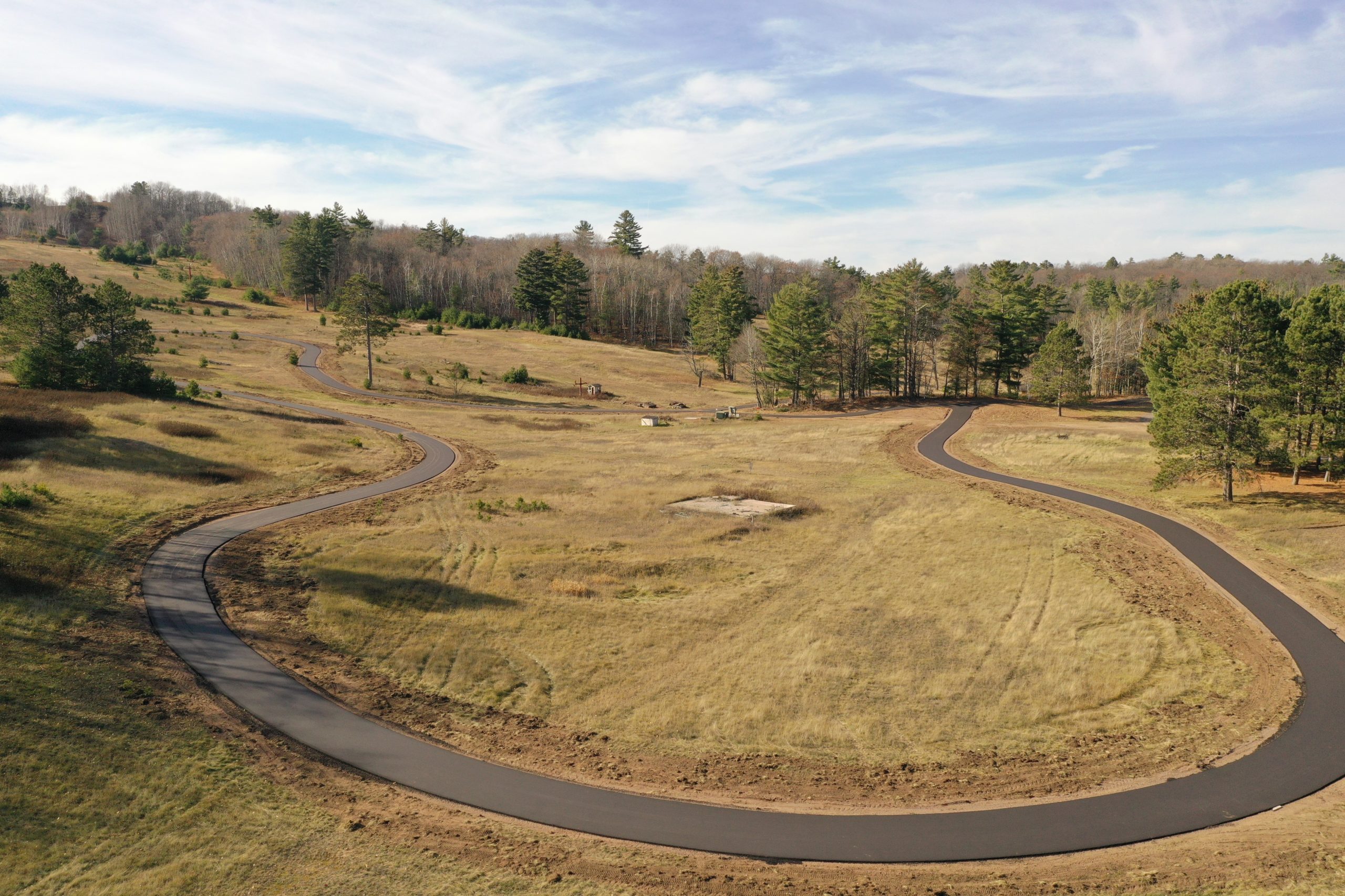
    The new rollerski loop at the base of Mt. Telemark, outside of Cable, Wisconsin. (Photo: ABSF)

    Over at the Birkie start-line, the pavement of a new 5-kilometer rollerski loop—the first of its kind in the Midwest—is “just now starting to cure,” says Popp. The loop is laid through the old remnants of the Telemark base area and is giving skiers from everywhere access to Birkie terrain year-round for the first time. The loop is slated to host Central Cross-Country Skiing’s (CXC) Regional Elite Group (REG) camp later this summer, and just hosted its first Igor Legacy U14 camp this summer. The trail also become a favorite multi-use trail. “We get some older folks just strolling out there,” said Popp. “Hard place for a walk!”

    As for the winter ski trails themselves, the ABSF’s focus isn’t so much on building new trails, but rather restoration of trails. Down at the base of Mt. Telemark, in view of abandoned Alpine ski lift towers, are the cuts and juts of a trail designed by American ski pioneers Marty Hall, Sven Wiik, and John Caldwell. These trails once hosted the Gitchee Gami Games with fields that included not just the best American skiers of the era, Bill Koch, Martha Rockwell, Stan Dunklee, Tim Caldwell, but notable names from ski history like Oddvar Bra and Arto Koivisto. A contemporaneous Sports Illustrated article on the 1977 edition reported that it was part of a then “controversial series” put on by the International Ski Federation (FIS), what would become the World Cup. An aged wooden sign between two tall maples identifies these as “The Telemark World Cup Trails.” With some clearing and modifications for grooming, skiers will be able to take to them again. The World Cup trails have an outsized place in the purpose of the whole Telemark Village project. While not the most resource-intensive, the project drives, or rather, skis, to the heart of the sport the Birkie community ultimately comes together around, and also represents the unique dance of making, and re-making, the energy of Telemark and all it stood for.

    The resource-intensive side is there though, in the form of the planned “Telemark Base Camp Building,” an estimated $3.5 million nordic center that will come fully equipped to welcome World Cup athletes and first-timers alike. “I think the heart of what Telemark represented could be captured by the idea that on a given afternoon back in the day, you might have Bill Koch and a kid who’d never heard of the sport an hour before in the same place, and we want to get back to that,” says Popp on the essence driving the Base Camp’s purpose.

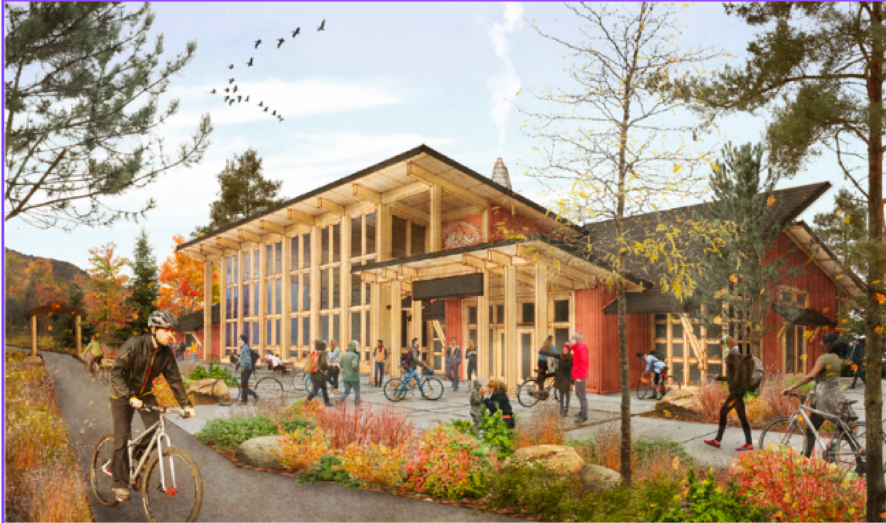
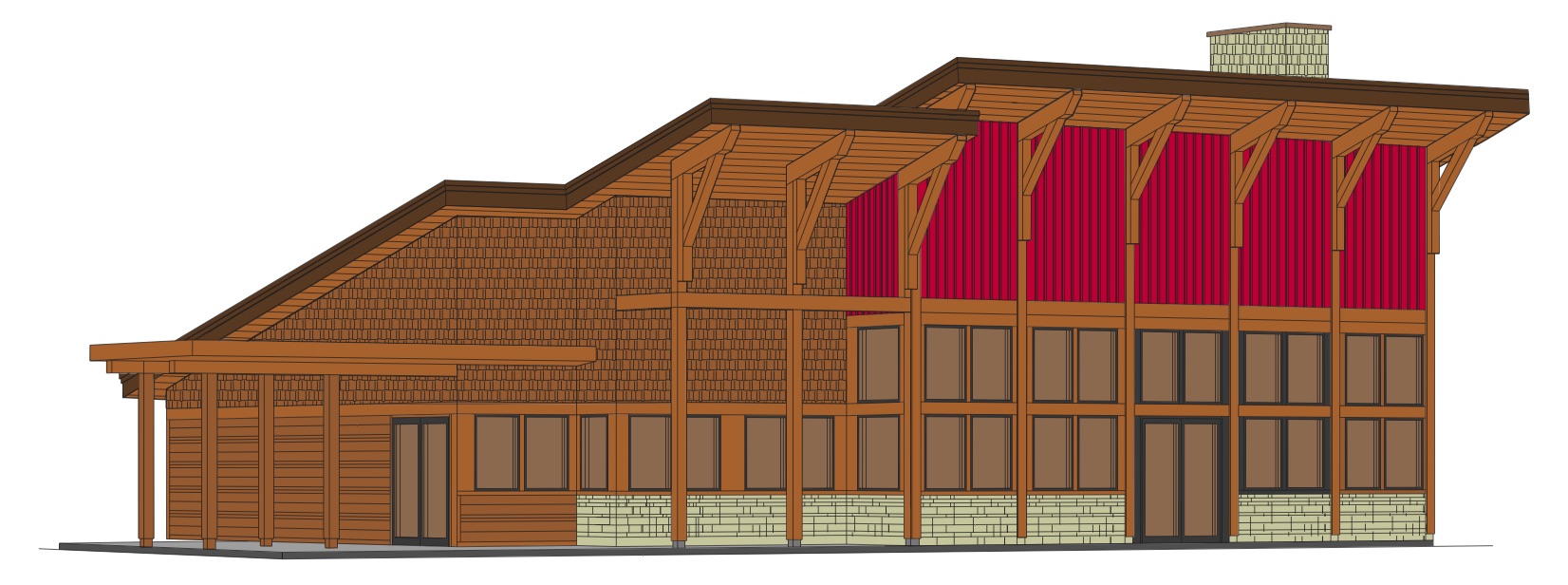
    The Telemark Village Base Camp building is the next priority in the Birkie’s major restoration of the former Telemark Lodge site. (Photo: ABSF)

    The plans call for a full-service nordic center—rentals, changing rooms, spaces for local business partners to sell coffee and food—while also acting as a jumping off point to experience the unique history of Telemark. Key to that is using the remnants of the Lodge to build a park-like plaza, where a collaborative project with the local Cable history museum will lay out Birkie history back to when Tony Wise carved his number into an old Birch tree.

    The final piece of the project is up at the top of Mt. Telemark where an observation tower is being built out of recycled lift towers from Wise’s original alpine ski operation. The tower will act as a capstone on the Telemark project that Popp says tells Birkie they’re doing things right, “There’s a throughline in that project that really reiterates how there really is a rootedness in the values of honoring our history, and the history of this place. There were two people down in Spooner, Wisconsin who donated to make the tower possible, which included the naming rights, and they asked that it honor the original Ojibwe name of the area. So how do we make that happen? Well, the person to naturally ask is an Ojibwe Tribal Historian, and it just so happens that the only guy to do all fifty Birkie races, Ernie St. Germaine, is the preeminent Ojibwe historian.”

    The former Telemark Lodge stadium hosts CXC’s U14 Igor Legacy Camp last weekend. (Photo: Ted Theyerl)

    In other words, the drive of this version Telemark is to keep all that was contained in the old Telemark going. The ABSF capital campaign around it totals $10.5 million, with Popp saying, “we’re about half-way there on fundraising, and we feel like have about half of what we want to build done.” The purpose though, remains clear, “ultimately, that money isn’t ours. It’s an amalgamation of a whole lot of people and communities that value what the Birkie is. When you think about all 250,000 people that have completed the race since 1973, plus many more who touch our trails, or volunteer, or touch us in some other way, it’s a lot of angles that we want to make sure we’re covering in any single project. It’s pretty cool to have that presence, and to have that responsibility.”

    “Celebrate in the Right Way” at the 50th Birkie

    Just how expansive the Birkie community has become in 50 years makes for a big proposition come next February: “With the 50th, we really want to do justice to the countless people that have taken part in anything we have done over the past half century” says Popp, “The guiding question is what is a meaningful way to make sure that we represent what this thing, the Birkie, really means?”

    The Birkie start line area in Spring 2023. (Photo: ABSF)

    For the Birkie Foundation, those preparations started well in advance of the coming anniversary year, and included, at least at first, a kind of disappointment. In keeping with the kind of full circle nature that the Birkie paints with time, plans were underway to make the 50th Birkie the first World Cup ski race in Cable since Wise’s Gitchi Gami Games in 1977. A joint bid was underway with the Loppet Foundation in Minneapolis, Minnesota to make the World Cup’s 2023 North American tour one that covered city style racing in the Twin Cities, paired with the US’ most prominent international ski event. “At some point though,” says Popp, “we had to make a decision that was best for the Birkie organization, and we decided we couldn’t take on that financial risk without it potentially leading to us not being able to do the community-oriented projects that are already underway.”

    The Loppet’s World Cup bid was accepted, which means the World Cup will visit the Midwest Friday February 17th to Monday, February 19th, one week before the 50th running of the American Birkebeiner on Saturday, February 27th. “It’s going to create an unbelievable atmosphere within the Midwest,” says Popp, “for ten days, no matter how you engage with cross-country skiing, all roads will lead here.” The Loppet Foundation, on its part, has also alluded that while the official World Cup joint bid may have passed, the spirit of the World Cup’s return to the United States will be bonded to the celebration of the Birkie’s 50th anniversary.

    If registrations are any indication, the roads leading to the Midwest will be busy come February. “The pace has been incredible, we’ve had Birkie start wave after wave fill so far,” says Popp. In planning out what those registrants will experience, there’s been an approach to plot out change carefully. After all, says Popp, “if what the Birkie is has gotten us to fifty years, we want to make sure that we’re not messing with it!” The overall approach to race planning then, is one that is looking to accentuate the best aspects of the Birkie, rather than change them wholesale.

    While no official announcement is expected until August, Popp says that the Birkie has “secured some agreements to keep some of the best World Cup athletes in the Midwest to do the Birkie.” It’s a step taken to help honor the marked competitiveness that has been set the race apart in American skiing throughout its history. “We’ve had Bjorn Daehlie, Vegard Ulvang, and what I’m willing to bet is the majority of American Olympic cross-country skiers, do the race, and we want to build on that legacy next year,” says Popp.

    The Men’s elite field starts at the American Birkebeiner in 2023. (Photo: ABSF)

    The Birkie is also looking to honor the kinds of characters and legends who have all added to the races lore. “One of the first groups we always go to plotting our next steps is the Birchleggers—those who have done 20+ races— because that really represents the beating heart of what we do” says Popp. In initial outreach, the Birchleggers returned a clear essence that the Birkie will key in on in the year approaching the 50th anniversary race. “What stuck out is that there was two paradoxical ideas which really play well together: they were saying, 1) My experience with the Birkie is unique to me, and that’s why I keep doing it, and 2) I want new people to be able to come to the race and form their own unique experience too.”

    What does that look like in practice? Popp finds anecdotal evidence in the king of the Birchleggers, Ernie St. Germaine. The only active “Birkie founder,” one of the original 35 racers in 1973, St. Germaine plans on being the only skier to complete all 50 races come next February. St. Germaine has dutifully made the fifty-kilometer trek every February, but in recent years, has done so sans the crowded field on race day as part of the Birkie’s “open track” option. “It was something that fell into our laps with COVID, right?” says Popp, “but we realized was one way to allow some of our most dedicated skiers to continue being part of the race. Yes, most are going to want to be part of Saturday, but for some, the time, the space, and the camaraderie afforded doing so on the Wednesday before opens up a whole new way to engage.”

    St. Germaine has continued on the spirit of inclusivity beyond just his racing as well. He has been a key part of the ABSF’s “Birkie One” initiative to “to reduce barriers and increase participation in skiing, running, and biking for marginalized groups in communities near and far.” An active member of the Ojibwe tribe, St. Germaine has helped bridge the Birkie with the local Anishinabeg people, including initiatives to restore trails on the Lac Courte Oreilles College campus outside of Hayward. The initiative has also helped the Birkie see where the existing infrastructure around the race, and the places people use to train for the race, can be more accessible. The paved rollerski loop at Telemark, for example, was officially designated mixed-use when it opened, to allow trail access to those who otherwise might not be able to access unpaved roads.

    And finally, there are plans for the 50th Birkie to be a Birkie. For thousands to front the powerlines, then climb to the high point, flow through “OO,” over and with the terrain. For each individual to take on climbing “B**** Hill,” and over Fish Hatchery, and the Lake, and the International Bridge onto Main St., Hayward, Wisconsin, before swapping the thousands of stories that form in the ridges and creases of the land between.

    It’s out there where the Birkie still dances within the bounds of some kind of glacial time, surrounded by glacial terrain. A new fixture of the place that Tony Wise once dreamed of among the tamaracks and pines. Over 50 years, the stories have multiplied, the time blurred and stretched, the particular feeling becoming something ever more complicated. Best not break its power into pieces. It’s all got coined under one tent, one community, this thing called the “Birkie.”  Best to keep it there, and say what has been said on Main St. Hayward, Wisconsin at the end of February a thousand times before: “Can’t wait for next year!”

    Birkie finishers celebrate in 1991. True to Birkie form, all three are still involved in the race in 2023. (Photo: Ted Theyerl)
  • The Pros & Cons of League-wide Wax Protocols: the Wisconsin Nordic Ski League

    The Pros & Cons of League-wide Wax Protocols: the Wisconsin Nordic Ski League

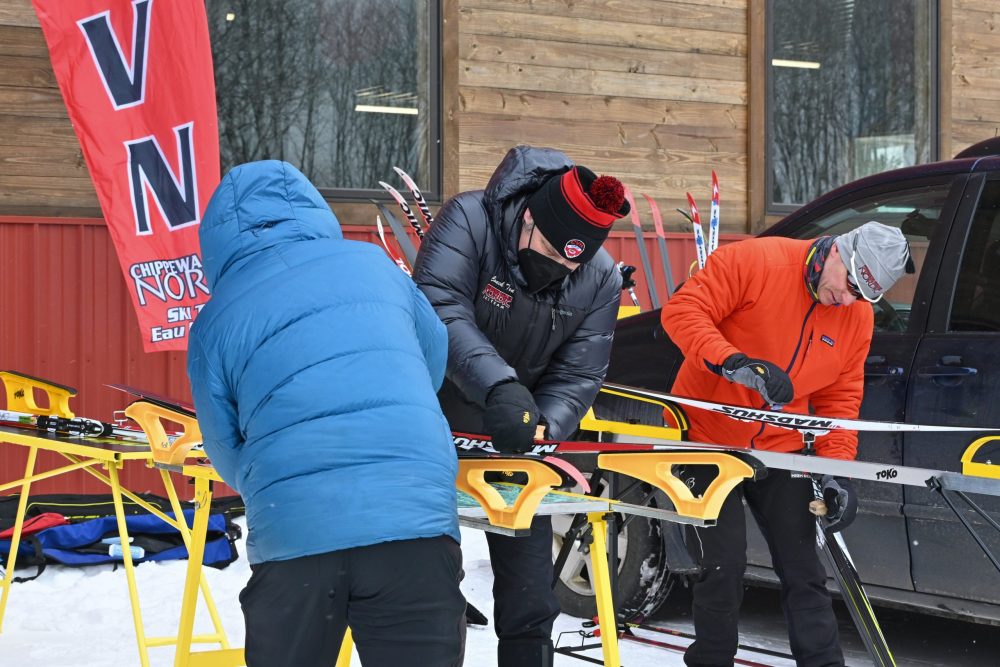
    Chippewa Valley Nordic coaches prep classic skis for their athletes at the 2022 Wisconsin Northern Conference meet. (Photo: Chippewa Valley Nordic)

    In case you missed it, here’s part 1 and part 2 of this series, in which industry representatives and expert ski technicians discuss ski performance theory and what impact a single-wax policy may have on competitive skiing. 

    What goes on inside the wax cabins and trucks at high-level competitions from the SuperTour to the World Cup seems, in equal parts, expertise, artistry, and alchemy. And, for those looking to understand to which conditions their pair of race skis might be best suited, the basic insights into ski performance provided in previous installments of this story provide ample fodder for consideration and experimentation on the ski track.

    However, these insights may not fully resonate at a meet where coaches are furiously corking in kick wax on benches set in the snow for skiers who only recently took up the sport. Or a league which simultaneously supports competitive racers and participation-based programs, and ultimately just wishes to see the sport grow and thrive at all levels. 

    In speaking with representatives from leagues that have implemented a single-wax protocol, it is clear that there are a myriad of factors involved in the decision making process beyond ski performance theory that might skew the cost-benefit analysis on any inequity in ski speed derived from putting all racers on Swix HS6. 

    Ben Popp – executive director at the American Birkebeiner Ski Foundation, Wisconsin Nordic Ski League President, and volunteer coach – discusses the wax policy and sponsorship package accepted by the league this season. (Photo: American Birkebeiner Ski Foundation)

    To unpack the counterpoints, we’ll begin again in Wisconsin, with a conversation with American Birkebeiner Ski Foundation Executive Director Ben Popp, who also sits as president of the Wisconsin Nordic Ski League (WNSL) and is a volunteer ski coach for the youth program in Spooner, 30 miles southeast of the Birkie finish line in Hayward. 

    Before jumping into the conversation, a nuanced reminder to readers that will be revisited in subsequent stories: the WNSL wax policy is unique in that the policy was included in a sponsorship proposal from Swix, which offered the league $10,000 per year over a three year period. Under the policy, all athletes would race on Swix HS5, HS6, or HS7 hard wax in cold or moderate temperatures, with HS7 and HS8 liquids used in warmer conditions. In other leagues, there may be special pricing available through this manufacturer, but this was not the origin of the policy.

    In what the single-wax policy implies: rather than spending money on a robust wax box, programs would only need to purchase the five aforementioned products for glide. The event hosts determine which wax is most appropriate for the conditions a few days prior to the race, allowing coaches and athletes to wax their skis accordingly before travel. 

    While questions of the financial impact on other wax manufacturers and the loss of experience for developing high-level wax technicians remain present, it’s also worth noting that this policy only applies to events that are organized by the WNSL; this small list of events includes only the northern, central, and southern conference meets, and the Wisconsin state championship – two races per year for each club or school. Regional Junior National Qualifiers (JNQs) and other local events not organized by the league remain open. Simply put, the wax protocol only applies to what Popp described as “a sliver of all of Wisconsin skiing.”

    According to Popp, in considering the proposal presented by Swix, there was one key word on the minds of WNSL board members: opportunity.

    “The checkbook for the Wisconsin Nordic league, before this year, never had more than $2,000 in it,” he stated matter-of-factly in the call.

    Wisconsin skiers line up at the Birkie Trailhead in Cable for the state championships. (Photo: Once in a Blue Moon Studio / Kelly Randolph Photography)

    Another key distinction is that the state of Wisconsin is among the few remaining states in which high school and club level programming fall under the same umbrella, without financial support from the high schools that offer skiing. This means small participation-based programs with volunteer coaches compete against well-established clubs who can support kids whose goals extend to representing the Great Lakes Division at Junior Nationals; it’s a state of vastly different programs with vastly different budgets. And it stands in contrast to Wisconsin’s neighbor, Minnesota, with whom Wisconsin used to compete against for spots on the Midwest regional team for JNs. It’s a nuanced structure that Popp explained has constrained the potential of the league historically.

    “Even though the league has been around for a while, I think it’s still in its real infancy. It’s completely volunteer run, but yet we’re in a climate that has metropolitan areas where there is snow, so we’ve got a ton of opportunity. But I think we have to look at, ‘How can we start to grow the league?’”

    Under the constraints of the previous budget, the WNSL was limited in its ability to promote development in programming state-wide, and Popp explained that primarily, the board only planned the state meet and agreed upon its rules. That leaves little room for supporting new teams, planning summer camps, and other initiatives that might grow the league and the sport more broadly. A 500% increase in funds would allow the WNSL to hire a part-time administrator, who could improve inter-team communication, oversee a league schedule, and perhaps most importantly, continue fundraising initiatives to support broader development. 

    “Our goal is to create opportunities for kids to cross country ski and race in the state of Wisconsin. So we have to look at, ‘What is the best way we can do that?’ And we’ve been doing the same thing for a long time, and we’ve gotten the same result. So if we now say, ‘We want to grow the sport in our state’, I think we have to look at a variety of options. We see what the results are in a couple years, and then we’ll readjust from there.” 

    Athletes from Rhinelander, WI compete at the frosty state championship meet in Cable. (Photo: Rhinelander Nordic Ski Team)

    While the WNSL is interested in supporting the upper tiers of youth racing, Popp explained that the main objectives remain at the participation level: improving access to ski programming and helping get more kids on skis.

    “I feel that we don’t necessarily have to focus on the high end of development. I think that happens organically and naturally rises… the bigger and broader a base that we can build, it’s just going to build that up much higher of a pyramid.”

    In his mind, implementing a wax policy fits with this initiative by removing a potential hurdle for smaller teams and coaches with limited background knowledge. 

    “In making it simple [to wax], it really makes a small team, the newer teams – it lowers the barrier to entry a little bit. Like, ‘Okay, now, me as a new coach, or as a new team, this waxing thing isn’t quite as overwhelming and doesn’t seem like such a heavy lift that I can actually now get into this without being completely overwhelmed.’ So I look at it as a tool for trying to create growth at the very basic level for newer teams.” 

    As the Swix sponsorship proposal was accepted in November 2021, last season was the first in which the conference and state championships operated under the wax policy. Popp reflected on the impact of the sponsorship and protocol through the first year. 

    “I personally think it was beneficial. Obviously, it helped from a sponsorship standpoint to help us grow our league and invest back in the skiers of Wisconsin. Again, personally, I think it helps sort of lower that barrier to entry for some of the newer and inexperienced teams. And whether it does or does not make it fair or unfair, if you will, to the skiers – I think you’re always going to have that in some way, shape or form. There’s a reason skiing is going to be different than track… there’s always going to be a set of variables.” 

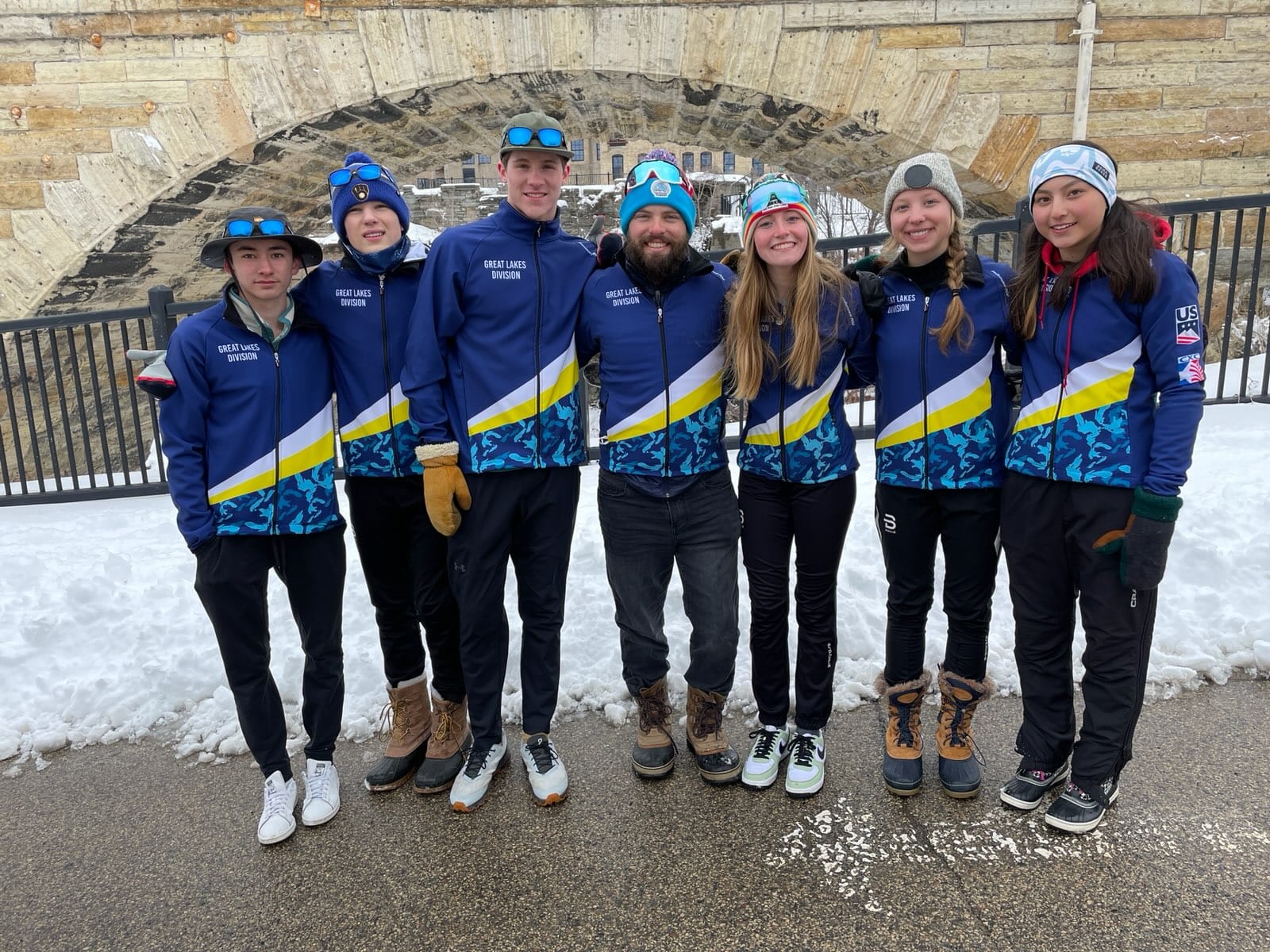
    Chippewa Valley Nordic skiers compete for the Great Lakes division team at the 2022 Junior National Championships in Minneapolis, MN. (Photo: Chippewa Valley Nordic)

    Speaking to the reception of the policy more broadly by WNSL teams, Popp expressed it was “overwhelmingly supported”. He indicated that a of the larger programs who had already put together well-equipped wax boxes were reluctant initially, but ultimately, those teams were still taking athletes to JNQs and other events where those waxes were fair game, so they would not go to waste. 

    Mostly, Popp felt that the results seen at the WNSL championship events were as expected, indicating that the wax call likely had minimal impact on the race outcomes. 

    “Because it was relatively benign in terms of the amount of races [where it was enforced], and then two: there weren’t some funky results at the state meet or the conference meets where [the policy was] used – the best kids still won, so there were no surprising results. And because the amount of wax that people had to buy and the cost level of it was really pretty low – I think the benefit of what this can bring in the future, ‘Let’s see.’ I would say the coaches that I’ve talked to certainly felt like, as a whole, it wasn’t detrimental. And if it leads to some growth and benefit for us in the league in the coming years then… we’ll just have to see.”

    Stay tuned for the next aspect of the league-wide wax protocol story, where we consider the evolution and outcomes of policies enacted at the club level by the Rocky Mountain Nordic (RMN), Pacific Northwest Ski Association (PNSA), and Intermountain Division (IMD).

  • Nordic Nation: Caitlin Gregg — Athlete, Mother, and Team Birkie Head Coach

    Nordic Nation: Caitlin Gregg — Athlete, Mother, and Team Birkie Head Coach

    In early July, the American Birkebeiner Ski Foundation announced the launch of the Team Birkie professional racing team. The elite post-graduate training group would pull from the three primary midwestern clubs, the Loppet Foundation, Central Cross Country Skiing (or CXC), and the American Birkebeiner Ski Foundation. While the midwest has a strong culture of cross country skiing with a breadth of strong youth and masters racing teams, it has been nearly a decade since the area has had a consistent robust training group that could support athletes at the elite level. In their words, this program fills this gap to allow “the next Jessie Diggins [to] stay home to train, inspire future generations, and win Olympic medals.”

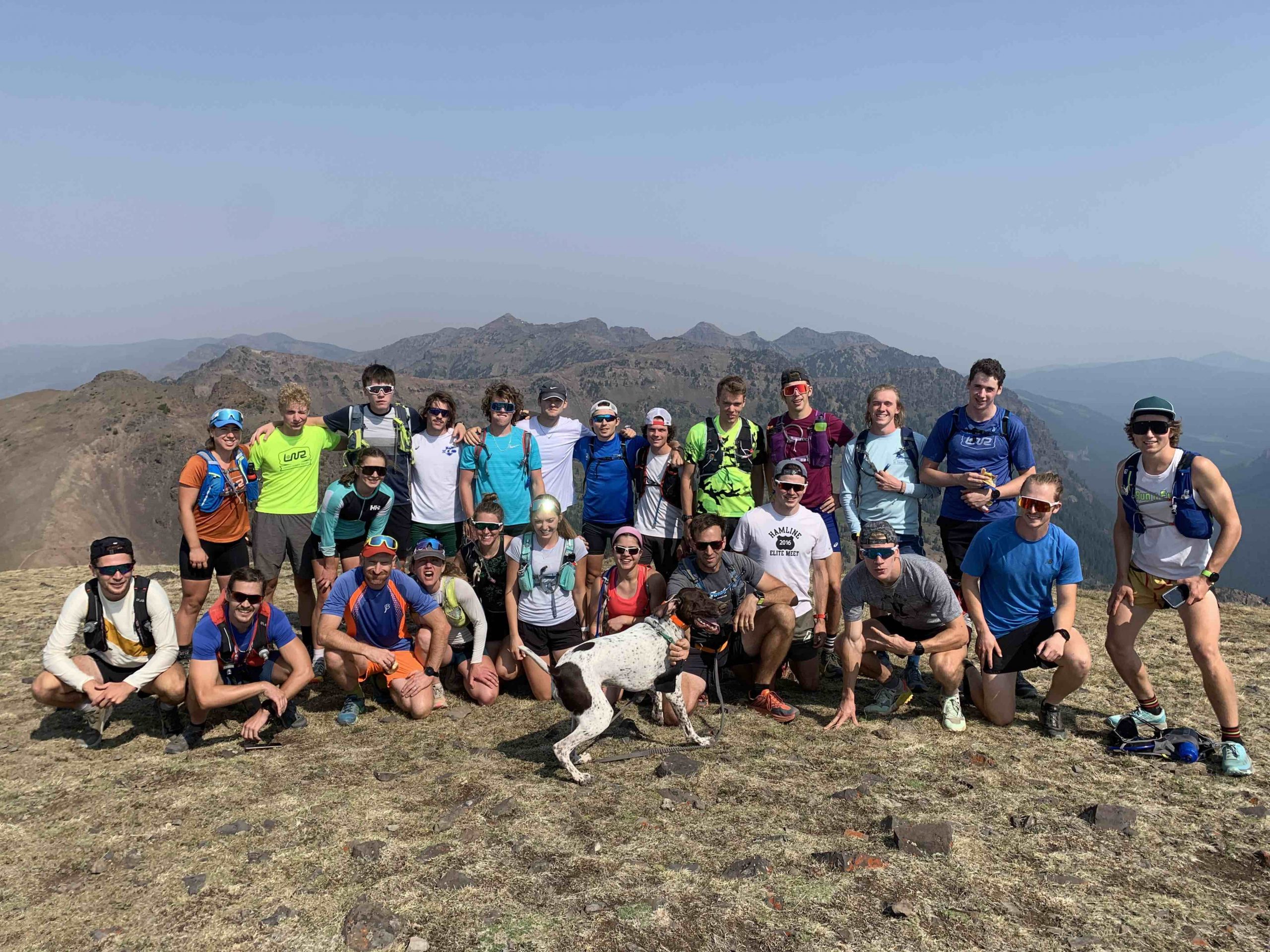
    Team Birkie elite and collegiate athletes enjoys the hazy summit of Hyalite Peak during a training camp in Bozeman, MT. (Courtesy photo)

    Team Birkie will be based from the Trailhead at Wirth Park in Minneapolis, headquarters of The Loppet Foundation, and led by Head Coach Caitlin Gregg, who will coach alongside co-coaches Leo Hipp and Jeremy Hecker.

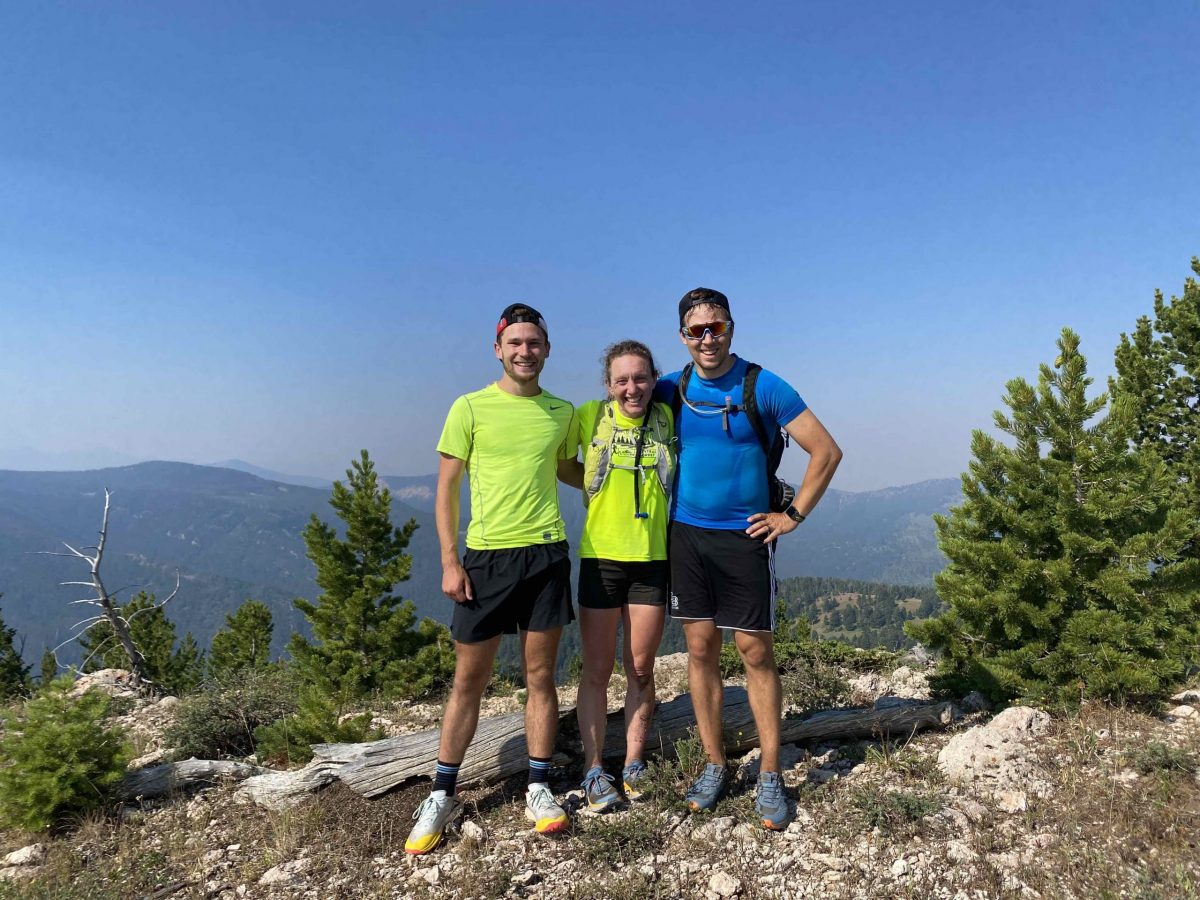
    Team Birkie Coaching Squad: from left to right, Leo Hipp, Caitlin Gregg, and Jeremy Hecker. (Courtesy photo)

    Gregg has spent her own career training in the area alongside her husband and fellow professional ski racer Brian Gregg. The duo — known as Team Gregg — forged their own path to the upper echelon of the domestic and international cross country race scene, gaining experience in writing their own training and supporting their careers along the way. [Find Team Gregg on a 2017 episode of Nordic Nation here.]

    For those unfamiliar with Caitlin, her resume spans more than a decade of elite level ski racing; Caitlin earned her first World Cup starts in Vancouver in 2009 and was slated to start at the Minneapolis World Cup and Canmore World Cup finals in March 2020 before they were cancelled because of the impending pandemic. Those recent starts would have been just over a year after the birth of her daughter, Heidi, who is now two and a half years old and can regularly be found tagging along for her parents training. 

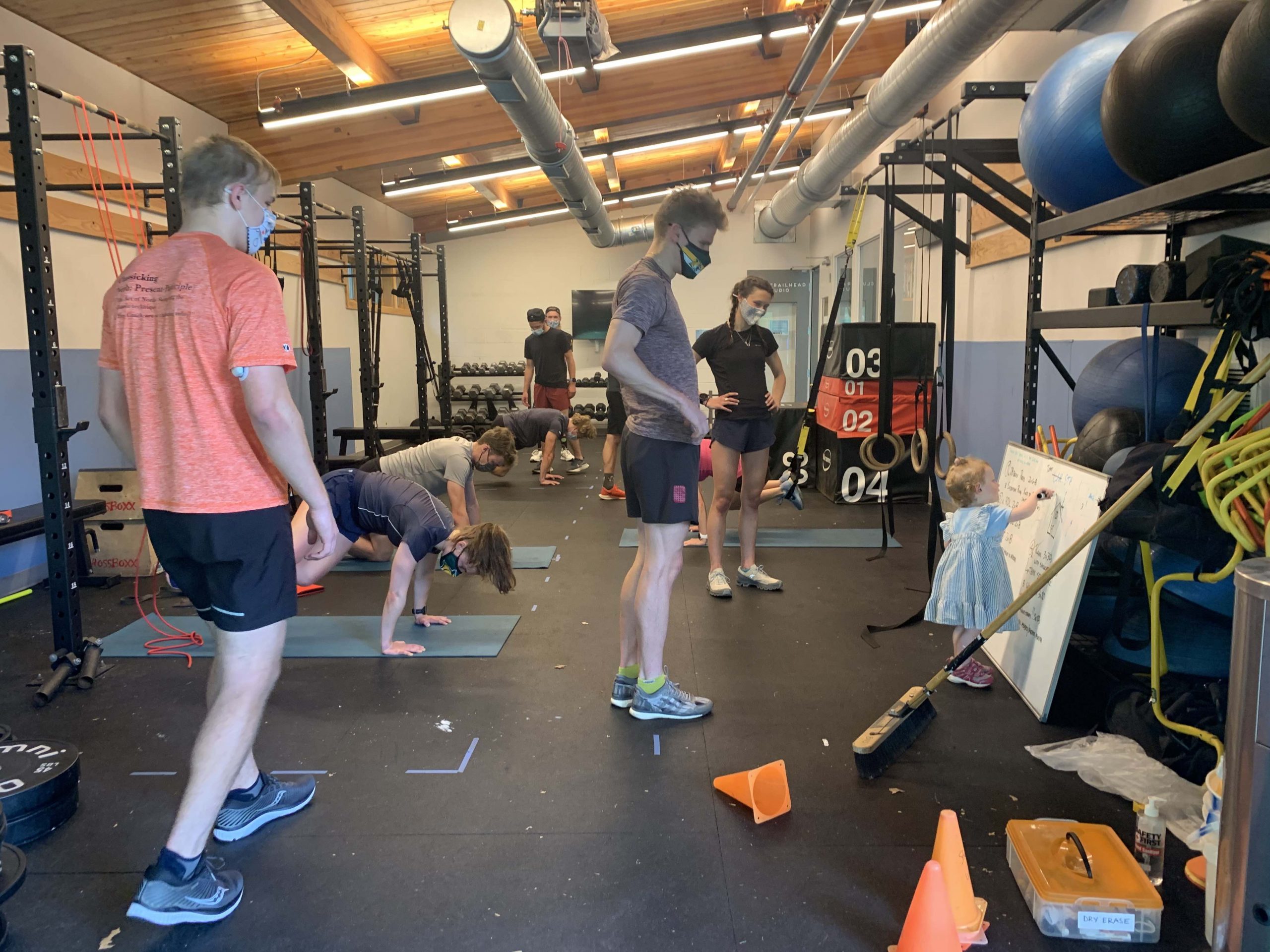
    Team Birkie mini-coach Heidi Gregg writes the prescription during a strength session. (Courtesy photo)

    Caitlin is a 2015 World Championship Bronze Medalist, a 2010 Olympian, and a 5 time winner of the American Birkie. She was also a member of five World Championship teams and won eight National Championship titles, with several more podium finishes. Gregg is also no stranger to disappointment; there have also been near misses for team selection, as was the case for the 2014 Olympics in Sochi and when the 2016 US Ski team nominations rolled out.

    While she does not yet consider herself retired as an athlete, this transition to leading the charge and growing Team Birkie does mark a shift in the focus of her overall ski career, as we discuss in this conversation. Caitlin also speaks to the evolution of the concept behind Team Birkie and the structure of the training group for the upcoming season. She is now one of only two female coaches at her level in the US — alongside Pepa Miloucheva of the Craftsbury Green Racing Project — and the only mother. Caitlin discusses the support this requires, and how her career as a whole has provided ample insights that allow her to be a role model for her athletes. 


    You can find Caitlin on Instagram @Caitlincgregg (with two G’s) and follow along with Team Birkie at @teambirkie. Thanks for listening.

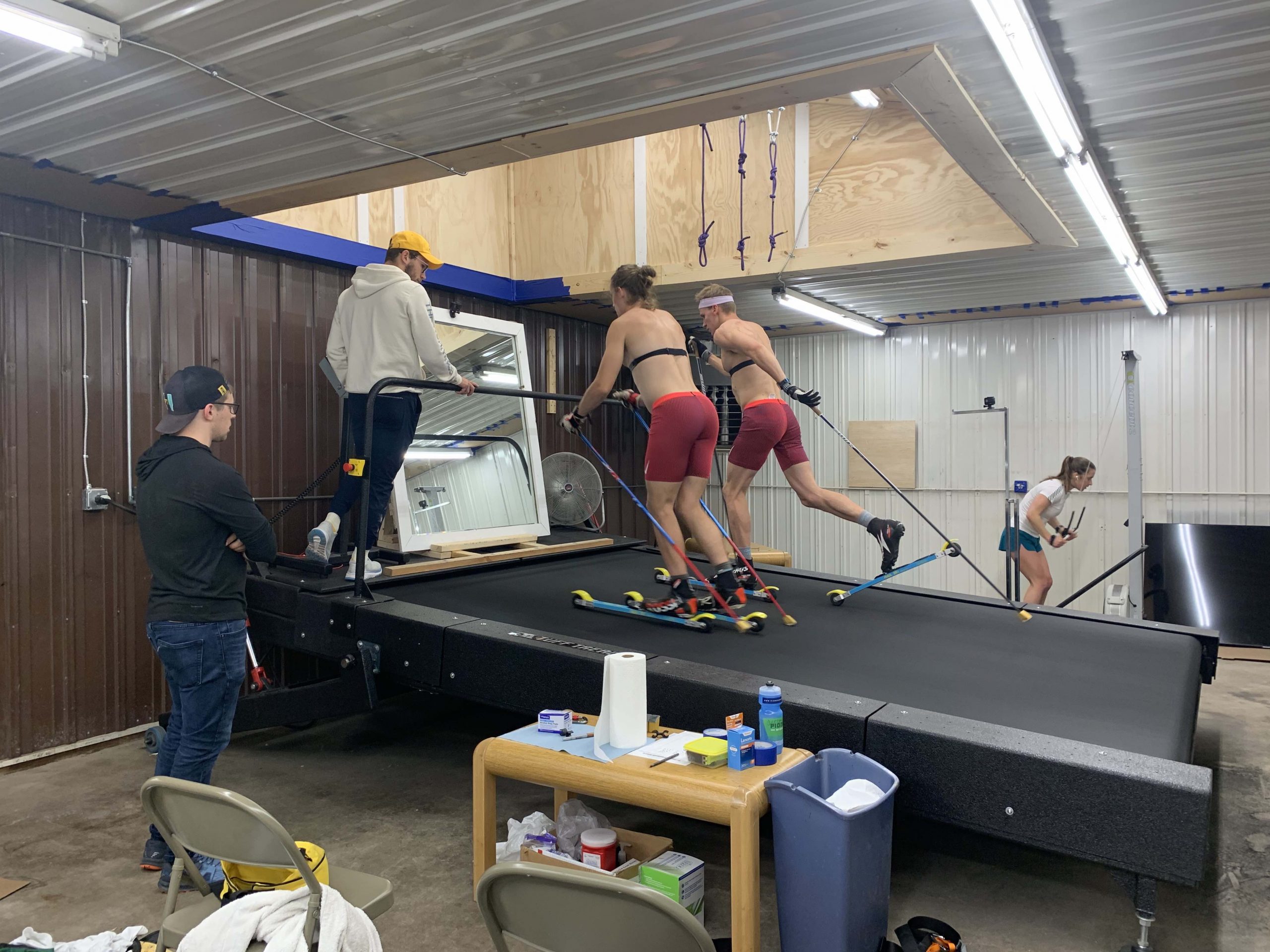
    Team Birkie athletes Zak Ketterson (R) and Xavier Mansfield (L) share the rollerski treadmill, while coaches Leo Hipp and Jeremy Hecker provide feedback. (Courtesy photo)
  • Borah Epic Donated to American Birkebeiner (Press Release)

    Borah Epic Donated to American Birkebeiner (Press Release)

    After nine years, the Borah Foundation is passing ownership of the Borah Epic to the

    American Birkebeiner Ski Foundation

    Hayward, Wi. – August 5, 2021 – The Borah Epic was founded in 2013 with the intent of hosting an unforgettable mountain bike race on the pristine singletrack trails between Cable and Hayward, Wisconsin. Since its start in 2013 with less than 200 participants to its most recent 2021 event with close to 1,000 riders, the Borah Epic has paid tribute to some of the Midwest’s best trails.

    The ABSF is flattered to be selected to take what the Borah Foundation has built and nurture that into the future.   Two very important parts of the ABSF mission are to host World Class Events and help people of all ages get outside and lead a healthy active lifestyle.

    Photo: James Netz/American Birkebeiner Ski Foundation

    “It is enormously flattering to be selected to nurture the Epic event into the future.  Our entire staff and events crew is ready to dig in to make sure that we propel the event positively.  We will endeavor to honor the past while providing an expanded future for the event,” noted Ben Popp, Executive Director of the ABSF.

    The ABSF is excited for the future of its Bike brand with the popular Fat Bike Birkie on the famous American Birkebeiner ski trail, the Telemark Ascent going into its 2nd year with a combination of singletrack and ski trails that expose riders multiple times to the incredible views from the top of Mt. Telemark, and now with the addition of the historic Epic event – one of the most important singletrack races in the Upper Midwest.

    “Ski, Run, Bike, Live are all equally important elements of the ABSF brand, and the Epic will be a foundational element of the Bike brand into the future,” says Joe Vadeboncoeur, COO of the ABSF. “Our family of cycling events and the MTB trails project at Mt. Telemark will all help expand the ABSF bike brand to it’s potential.”

    The Borah Foundation and the Epic event, have provided a donation to the CAMBA trails organization in the past, and as the new owners of the event, the ABSF intends to continue to contribute to the CAMBA trails via the proceeds from the Epic Singletrack event.

    Photo: James Netz/American Birkebeiner Ski Foundation

    “We could not be more excited about transitioning the Epic to ABSF, I’ve witnessed firsthand the ABSF’s ability to host world-class events,” Chris Jackson says of ABSF. “I am extremely confident in their ability to take the Borah Epic to even greater heights, continuing to build upon what we have started.”

    ABSF is currently preparing for the 10th annual race and will be releasing more details soon. Interested riders can find more information at www.birkie.com.

    ###

    About the American Birkebeiner® Ski Foundation and Birkie® Events
    Located near Hayward and Cable, Wisconsin, the American Birkebeiner Ski Foundation, a 501(c)(3) organization, is known for its signature American Birkebeiner Ski Marathon held each February. Today, the Birkie brand has grown to over 45 different events spread over 13 different weekends and to encompass a year-round lifestyle that provides healthy, active events for thousands of outdoor fitness enthusiasts of all levels. www.Birkie.com

    About Borah Teamwear

    Borah Teamwear is one of the leading custom sports apparel companies in North America, producing high-quality custom gear for cyclists, runners, triathletes, and skiers. All of Borah’s products are 100% custom-made at the company’s solar-powered headquarters in Coon Valley, WI, where the latest technological advancements in sustainable apparel design and production are utilized.

    Media Contact

    Kate Barido

    Marketing and Communications Director

    kate.barido@birkie.com


    Partnership Contact

    Jeff Hommes

    Sponsorship Director

    Jeff.Hommes@birkie.com

  • Team Birkie Launches (Press Release)

    Team Birkie Launches (Press Release)


    NEWS RELEASE

    Media Contact: Heidi Ledermann marketing@loppet.org


    TEAM BIRKIE LAUNCHES! Three of the largest cross country ski organizations in the Central Region combine forces to start a professional racing team Minneapolis (July 2, 2021) — Central Cross Country Skiing (CXC), the Loppet Foundation, and the American Birkebeiner Ski Foundation (ABSF) are teaming up to create a high performance racing team – so that the next Jessie Diggins can stay home to train, inspire future generations, and win Olympic medals. Team Birkie is based out of the Trailhead at Wirth Park, The Loppet Foundation’s headquarters in Minneapolis. The Team will conduct training camps in the Hayward/Cable Area and around the Central Region, as well as training and competition trips around North America. The name “Team Birkie” is an homage to one of the first clubs to promote high level training for juniors, seniors and masters in the 1990’s in the Twin Cities and Hayward area. Led by former US Ski Team Coach, Steve Gaskill, Team Birkie helped several athletes achieve World Cup and Olympic starts. Steve Gaskill’s most lasting legacy with Team Birkie was educating and mentoring a whole cadre of Midwest coaches who continue to coach and organize xc ski programs around the country. 

    Three organizations have been working closely together for the past year to launch this team, and this effort and sentiment is summed up by Ben Popp of the Birkie Foundation, “Affording these athletes an opportunity to strive to be the best in the world takes a village, and we are excited to be a part of it.”

    The theme of having the entire Central Region supporting Team Birkie athletes is the key to long term success of this program. Claire Wilson of the Loppet Foundation, “We are thrilled to be part of this regional collaboration – not only by our three organizations, but looking to all Central ski clubs, citizen ski races, and ski shops.”

    “High-performance team is a much-needed athlete development program for the region that will provide a platform for the regional best athletes to excel and play mentorship roles to clubs and coaches around the region.” – Yuriy Gusev, CXC Executive Director 


    The Coaching Staff

    Caitlin Gregg – Head Coach

    Leo Hipp – Assistant Coach

    Jeremy Hecker – Assistant Coach 

    The coaching staff will be led by the 2015 World Championships bronze medalist Caitlin Gregg. Caitlin will be supported by Leo Hipp and Jeremy Hecker. In addition to a great coaching staff, Team Birkie has two Midwestern legends of xc skiing who are mentors and training partners to our team athletes: Brian Gregg and Matt Liebsch regularly join the team for training sessions, and are able to share their years of race and training experience with the younger athletes.

    Head Coach – Caitlin Compton Gregg 

    Caitlin Compton Gregg (caitlincgregg@gmail.com) is a 2015 World Championship Bronze Medalist from Falun, Sweden and was a member of the 2010 Winter Olympic Team in Vancouver, Canada. She has also competed at 5 World Championships – four times for Cross Country Skiing and once for Biathlon. Caitlin has also won the American Birkebeiner more times than any other athlete, and has many City of Lakes Loppet wins under her belt as well. A US Ski Team Alum and an 8-time National Champion, Caitlin has been living and training in the Minneapolis area for over 15 years and knows how to maximize every inch of terrain in our urban playground. She has used her creativity to compete and succeed at the highest level in the sport of cross-country skiing. She and her husband Brian Gregg, also a 2014 Olympian, started Team Gregg in 2013 and have enjoyed pushing their limits to succeed in results and marketing on the World Stage. When not coaching or taking care of young daughter Heidi, Caitlin enjoys sharing her passion for health and the outdoors with the youth in her North Minneapolis community.

    Join Us

    We are still accepting applications for the 2021-2022 season. Email Caitlin Gregg, caitlincgregg@gmail.com, with a statement of your goals and a summary of your results. Team Birkie Website– for more information on Team Criteria, Training Camps and Race Schedule.

    Support Us

    Adopt an Athlete Program- Support the Team, and Train with the Team General Team Birkie Donations 


  • A Conversation with Ben Popp of the American Birkebeiner Ski Foundation

    A Conversation with Ben Popp of the American Birkebeiner Ski Foundation

    Start of the men’s elite 50 k skate wave at the 46th Annual American Birkebeiner. (Photo: ©2020 American Birkebeiner Ski Foundation)

    Last week, FasterSkier connected with Ben Popp, Executive Director of the American Birkebeiner Ski Foundation (ABSF) based in Hayward, Wisconsin. It’s mid-July and needless to say, some of our readers are already thinking about the 2021 Birkie. Amongst the topics we discussed were the possible modifications for that marquee race and how the organization is preparing for several possible scenarios. We also touch upon the ABSF’s agreement to purchase and develop Telemark Lodge.   


    FasterSkier: Can you describe how dependent the rural communities are in your region on cross-country ski events?  

    Ben Popp, Executive Director of the ABSF. (Photo: ABSF)

    Ben Popp: Talking in general, there was an economic study done back in 2014, and cross country skiing and mountain biking, in our two counties was estimated between 15 and 20 million dollars a year as the economic impact. That includes the Birkie and that week’s events. But during the winter there is a ski event here almost every weekend, literally every weekend. And then in the summer many mountain bike events as well. 

    Events are so critical to our area because it brings in those day travelers. And it has now created a second home buyer experience here in Hayward, especially people from the Twin Cities, Chicago, Milwaukee — for people that like to ski and bike this is like waterfront property.

    It has really driven a second home buyer market in the area that continues to evolve. So when you are not bringing people here to mountain bike and ski, it is not only just that daily traffic, that weekend traffic, then also there is the residual effect you get from second home buyers saying, ‘hey that was a really cool weekend trip we should buy a lot on the Birkie trail,’ or something like that. I think we are going to see a rippling effect here. 
     

    FasterSkier: Can you explain how you are trying to organize some small scale events and learn how to bring people together while still meeting standard protocols for Covid-19 avoidance?  

    BP: Now that all the events of course to this point have been cancelled, we are going to try to hold our first in-person event coming up on August 1st. It is a little 5 k run that we do every year as part of another festival in town, the Lumberjack World Championships. We have worked really closely with the state and a public health officer here on how we can create a safe experience.

    This is not something huge, this is 200 to 300 hundred runners and it is not drawing people from all over like a big Birkie event would. So it is very much a more local event. It is not maybe apples to apples, but still we learn how to create an event that people are going to come to and be safe, and volunteers, if you have any, are safe. 

    We created an event health-readiness document that race director Kristy Maki put together in collaboration with the public health officer here for the county. We are going to spread out the start, we’ll have a touch-less check in, and we are not going to have aid stations. There is no award ceremony. 

    The timers will have the wire set up, there will be a board there so you can see your time, and the time will upload and you will see live results online. 

    Athletes basically show up and run. 

    It is a lot of the things you technically would always do for a running event, but for all intensive purposes, really it is not nearly what a typical experience would be when you are running a 5 k or any event where you are hanging out and talking to people shoulder to shoulder, or going to bib pick up shooting the breeze. 

    Even though it is sort of a quote-unquote live event, it really will be much more of a skeleton of a live event. You have to start somewhere — baby steps as I like to say. We will see how it goes. 


    FasterSkier: That brings up the American Birkie of course, your marquee event. In a fast moving environment where the spread of the virus changes daily, how are you envisioning that event and preparing for several possible looks?

    BP: I think one of the really hard parts and I think everybody is realizing this, is that it is really really hard to plan into the future right now. Things are so dynamic and changing so quickly. I mean no joke, I bet we have 25 different scenarios that we have come up with for February, and then we kind of look at each and are like ‘well, ah who knows?’  

    The thing that is going to drive our hand are time lags. When we are ordering 11,000 or 12,000 bibs, when you are ordering 12,000 hats, when you are ordering all these things in volume, they do not get produced over night. And so for us, we are going to have to make some pretty serious decisions realistically just after Labor Day. We can push some stuff off to say November 1st, but by then we are going to have to start ruling out things simply because we won’t have time to react past that date. 

    So there will certainly be a lot of educated guessing going on, but it will be in some degree maybe helpful, because we can take certain options off the table at that point. And like a lot of events are trying to do, we are going to have this big long list of things that we can try knowing but eventually we are going to have to start ruling some out. 

    It will be interesting to say the least.


    FasterSkier: A few follow ups on that. First, you are a non-profit, and you rely on Birkie registrations to sustain your foundation. Have you discussed how you might motivate skiers to register despite the unknowns so that the foundation remains viable? And without perhaps running through all the options, which might include maybe only an elite wave with the top-30 ranked SuperTour skiers to a traditional look Birkie — I could imagine a spectrum of what the race might look like. What is your vision now, knowing that it will most likely change? 

    BP: We have been talking a lot about all of this, and even publicly saying, ‘listen your registration is what allows us to function year round and ultimately whether it is the funds that help groom the Birkie trail or help keeps the lights on in the nordic center, or make sure that you have staff to answer your call, that all comes from the events and the sponsors and registering. And  a lot of those expenses happen whether we do an event or not. 

    I think it is really important and an important part of what we are telling people is to say ‘listen, when you register for the event this year, there will be a Birkie of some kind.’ In other words, you will get your hat or your schwag, you will get a bib, and you will get credit for the race. We have even gone as far to say you are going to get credit for Birkie 2021.

    Now, the question is what does the Birkie 2021 look like? It might be that to your point, there is a normal Birkie on one end of the spectrum and on the other end of the spectrum is a sort of virtual Birkie in that you might have to ski it in Bend, Oregon or Milwaukee or Chicago or even Oslo Norway. We are in the process of developing some tools and an app type based thing so that you are not skiing the same 50 k, but the 50 k that you ski and record in West Yellowstone is going to be your Birkie – that could be the on the far end of the spectrum. 

    These are some of those bookends of the spectrum. But we really have to look at everything in between from aid stations, and all the possible hot spots in terms of person-to person contact. Those are going to have to be looked at first? Things like public transportation and aid stations. We obviously cannot have 11,000 people all touch the same things. 

    So, like I said, those are the variables in between, like doing a loop, or racing over multiple days, doing it with less support; those are all viable options that will be based on what the climate looks like as we get closer to the first of the year. 

    The other part that is interesting, that goes to the other part of that question, is we have anywhere from 11,000 to 13,000 skiers every year during those four days when we have the Birkie weekend. I would say half or three quarters are die-hards, they come back every year they do it, they love it, it is part of their lifestyle. So there are far more people that want to be part of something they do year after year, and they know it may not be a traditional race, but that has happened before where they had open track versions of the race or they shortened it down to 20 k. The die-hards understand that change. On the flip side, the other 30 percent, or whatever, and it is maybe their first Birkie, they might do it on and off, they are far less likely to say they are in no matter what.

    That also leads to a bunch of the financial uncertainty of moving into the future, or thinking about the appetite for people wanting to be part of an event. Do they feel safe? 

    Do people think it is not an event unless it is totally normal? You know, they finish in downtown eating brats, drinking beer, hanging out on main street. That experience could be different this year and that is one thing we want to convey to people: While Birkie 2021 will happen, how it is going to happen is really an unknown. 

    We are fortunate that unlike the Boston Marathon, New York City Marathon, the Twin Cities Marathon, events that have cancelled, a big part of that is because you cannot close down New York for two weeks to try and run an event and shut down traffic for two weeks. That is one of the beauties of the ski trail here and a lot of the infrastructure we have been able to put in place over the past five years, with bridges over roads and trail head buildings. From a safety standpoint we have some flexibility in how we run the event and when we run the event and the timeline in which we run it. 

    Some of these infrastructure pieces that we have been fortunate enough to put in place through the generosity of our entire community through fundraising, now it is going to give us a little leniency on saying we can only run the Birkie from 7:30 in the morning until 4 PM on this one day and that is it. We are really lucky in that regard. That might really save us this year in being able to have a few other options. 


    FasterSkier: I was going to ask a bit about the major marathons, Boston and New York etc., and what you have learned. They have all been cancelled. Can you learn from their organizational structure in terms of what might make your organizational more flexible and keep it safe? 

    BP: We learned a lot of medical information. Our medical director is amazing, but we are isolated here — we are this weird thing up here in Northern Wisconsin. But we were able to connect with those events and ask about their concerns from a medical standpoint. We could ask what were the things you were concerned about? We connected with the IIRM, the International Institute for Running Medicine. 

    The guy that started the IIRM is also the medical director for the Boston Marathon and he has been a huge wealth of knowledge for a lot of events. He could explain this is what we learned in Boston, this is what we are trying to do. He created a coalition through that institute to discuss best practices, and ask what can we do to help volunteers be safe and what can we do to look at modifications?

    There is a silver lining: it might really help all of the events big or small around the world to create some really good protocols for what are best practices and what are some resources that can be created whether you are a big event or scaling down into a 200 person 5 k. We will see, that is the goal or the hope. 

    The other part that I think could be helpful, might be the World Loppet. We just had our meeting, virtually like everybody else, and there was a lot of talk about OK, we are all going to be very different, they have cancelled the races, the summer races in Argentina, and New Zealand, and  Australia. But, maybe we can learn what is going to happen at the Birken in Norway or Vasaloppet in Sweden, to determine if there is anything we can do as a family of races to start creating best practices for ski events. Because if we can help out in any way, and the sooner we can get ski events back online, the better it is for the whole ski community. 

    Whether that goes somewhere or not I am not 100 percent sure. But again, trying to create some togetherness might really help us out. 
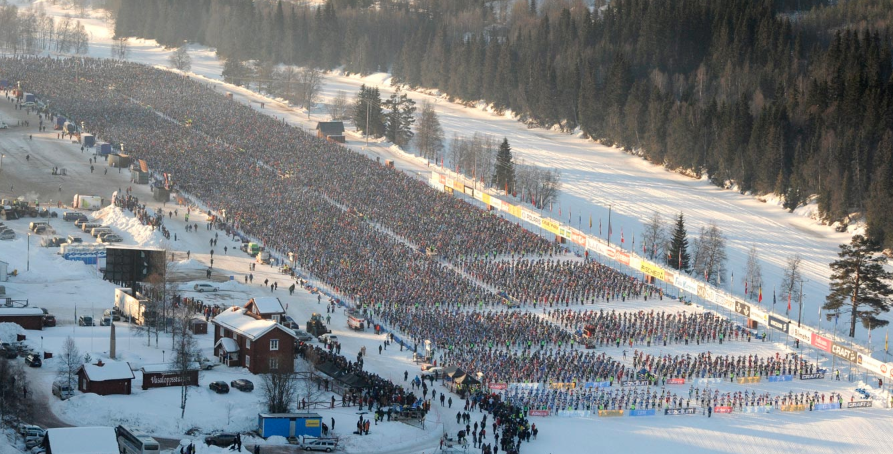
     

    FasterSkier: Let’s pivot away from the big race. Your foundation has been involved with the purchase and revitalization of Telemark Lodge. Can you fill us in on some of those details and what may be the long term vision for the property? 
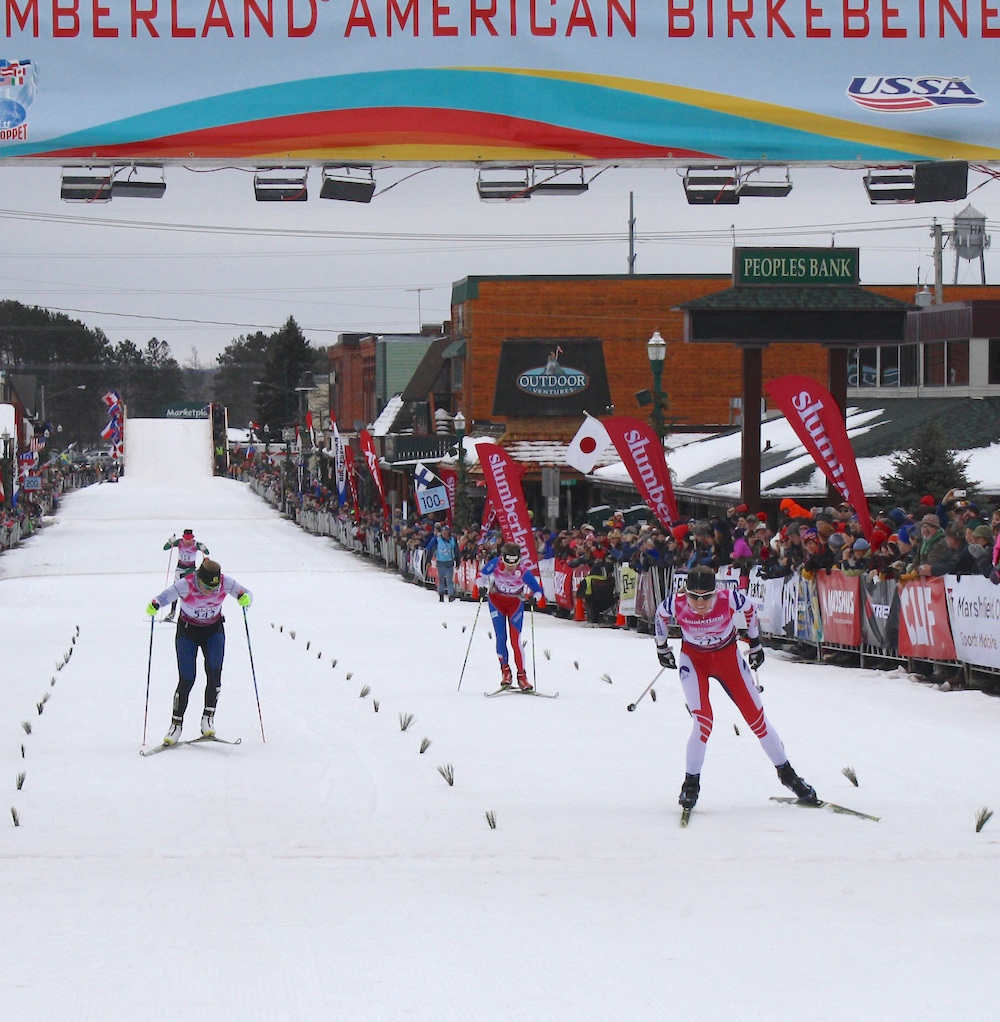
    BP: The lodge has been closed since 2013, and it obviously has been a really integral part of our history. Tony Wise, the person who helped get Telemark going, also started the Birkie in 1973. He started the World Loppet in 1978. So there is a historical component there. 

    Fast forward to now and the American Birkebeiner start line is adjacent to the Telemark property. We actually bought that property from the current owners of Telemark. And the Telemark property houses all of the original World Cup trails, I don’t think a lot of people realize that the very first World Cup ever was in 1978, at Telemark. 

    And so, the trails, the history and now all of our snow making trails are on a lot of that property. It really became that this property is really important to our future. And over the last seven years, since it has been closed, a bunch of entities have come and gone saying we are going to buy and we are going to put in a huge hotel and hey Birkie we want to partner with you.

    Everyone of them has come and gone. They promised huge things and nothing has happened. Eventually our organization decided we are going to take the lead on this and get it done because we know we can. 

    We signed an option back in 2019, a two year lease with an option to buy with the intent of buying it and redoing all of the trails and building out a new competition stadium, redoing a bunch of the snow-making loops. That was our goal. We also knew that other investors and developers would want to come in and put in a little burger joint, or a little brew pub, or a boutique hotel or a campground. That is not us, we want to stay in our lane, we want to do skiing and mountain biking and running events, 

    We dove into it and said we need to see if this is feasible and then, we had the fortune from our fundraising past and some donors come forward. A donor said we will guarantee the purchase price of this opportunity but you have to figure out what to do with the building. We know the building needs to come down. 

    That gave us the confidence to say, ‘alright, we are going to move forward with this.’ So now we are in the process of moving forward on closing on the property hopefully this fall. It is really a difficult title and convoluted because it has gone through bankruptcy so many times. But, we are hoping to close on the property this fall. 


    FasterSkier: You are talking about the entire 700 plus acre property, correct?

    BP: Yup, it is about 725 acres it will end up being the entire property. Working with the state of Wisconsin, we just submitted what is called an idle site grant that the state has from their economic development corporation. They have grants to help mitigate what they call idle sites — something that has been idle for five years or more. The money is meant to prepare the site for development. Basically this old lodge is completely decrepit and falling apart, it is full of mold. We can utilize that money to remove a majority of the lodge so it is attractive to developers.

    We have already had seven different developers come forward and say, ‘consider this idea, consider this idea.’ We do not want to put the cart before the horse here. We’ll finish the purchase, remove the lodge and then we’ll be excited to discuss the different opportunities. 

    We are excited. We have talked with US Ski & Snowboard a little bit about the concept of trying to bid for a 2024 World Cup. It would be our 50th anniversary and it would be bringing the World Cup back to where the first World Cup was. And again, that is obviously well, well, well down the road. But, there really could be this revitalization of that property from our community standpoint and from a skiing standpoint. 

    We have been working closely with Alan Serrano, he will be here tomorrow, on building out a new competition stadium, the snow making loops, the sprint course, a 2.5 k to 3.3 k loop. Building them so we can host not just the Birkie, and obviously we have been hosting JNQs here and those sorts of things, but the highest level of competition as well. 

    And I think it is really important not only for our organization and our future, but I think it could be really an important part of the ski community within the entire US.

    Right now in the Midwest we only have a couple of venues that can host big competitions. Whether it is at Michigan Tech, or the Loppet in Minneapolis, we just need more venues here that are really good and can host quality competitions. But also it can be a place on the weekends people can go with the family and they can tour around and have fun. 

    That is the goal and what’s in the pipeline. Stay tuned.


    FasterSkier: Your organization is set to host, as part of a larger trail running festival, the USA Track and Field 2020 Half Marathon Trail Championship on September 25 and 26. What is the current status of that event? 

    BP: Right now it is still a go. That is partly why we are doing this 5 k as well —  to test some of these protocols that the health officials have put in place. For us and our race director to determine if this works or not on a small scale. The trail running series of races is still not huge, it is about 1200-1500 runners. But it is bigger than 200 people on a 5 k course. We are already starting to look at modifications for that. We have been working closely with USATF and asking what do you want and what are your protocols? Things like separating it out so it is smaller waves of runners, 30-50 runners that are starting versus 350 in a half-marathon or something like that. 

    We are fortunate that there are bunch of events on that weekend, the 5k, the half marathon, the ultra, the relay, those are already spread out into waves. We have the fortune of being able, because it is all on trails, we don’t t have to worry about roads or shutting them down. 

    And  it is on the Birkie trail, so it is 40 feet wide. We feel like once people are on course they are really safe because there is plenty of room for passing. 

    We still have to determine what an aid station looks like. Does it become that there are no aid stations and it is a modification to be self-sufficient as a runner? What does it look like for bib-pickup, or in common spaces? Do we mail everybody their race packet ahead of time and have no bib pick up?

    We will have no after party. Literally you are coming to run.

    We will not provide a big warm common space – your car is your common warm space. We have the fortune to park 1500 cars here – your car is your safety zone because that is private and it is not a common space. Mask wearing will be required in all common areas.

    We are hopeful and confident in a lot of the modifications that we are looking to install, but there is still this huge unknown as we are seeing these hot spots and hiccups in different places. 

    If hot spots are boiling up everywhere, the likelihood of wanting to open up a bunch of travel and bring in 1500 people gets pretty low. Then we have to decide if it turns into just an elite race so you can have the national championships. That is a really small field, maybe 25 men and 25 women or something like that.

    The other thing that the public health officer looks at is how much time is spent here by the runners. For our trail run, there is a lot of day tripping versus the Birkie where people are often coming from a long way away and staying here. 

    They look at things like people that drive up for the day and leave are likely not going to a hotel, maybe not buying meals. So their touch points might be a whole lot less in the community. At the end of the day, we only have 15,000 residents here in the county. The whole county is 15,000 and we have not a single ICU bed in our hospital. 

    So the health of officials are conscious of that. We are really low right now for COVID, a low rate, which is great. We cannot afford high rates because we have no way to take care of them. 

    They, the health officials, are going to direct us, and if they give us the most conservative guidelines we will go with that. We can make that work great. We understand we may have to go to more of that quote unquote virtual option where people are having to run it from a distance. Or again, we can possibly do the elite race, and for the larger trail runs we can mark the trail run course and have it marked for a 10 day period and say come run the course over this 10 day period. Like I said before, we are developing a new app that will be utilized for timing. 

    I think there are going to be some fun things out of that weekend. It is really advantageous that we can set a course out for 10 days and not have to worry about shutting down cars or traffic because it is out on a ski trail and we are pretty darn lucky in that regard.


  • American Birkebeiner Becomes a Visma Ski Classics Challenger Race

    American Birkebeiner Becomes a Visma Ski Classics Challenger Race

    The view of the Main Street finish the day before the 2018 American Birkebeiner, as seen from the International Bridge. (Photo: Katie Miller)

    Back in June, the Worldloppet International Ski Federation announced the cessation of the FIS Worldloppet Cup. In short, that race series was a collaboration with the International Ski Federation (FIS) and the Worldloppet marrying elite level and popular marathon ski racing.

    The American Birkenbeiner was intermittently a stop on the FIS Worldloppet Cup.

    “It was just not getting traction attracting the elite athletes and tying those elite athletes to popular skiing,” said Ben Popp, the Executive Director of the American Birkebeiner Ski Foundation (ABSF) about the now defunct race series.”

    Enter the Visma Ski Classics, a two-tiered race series offering Pro Tour events and what it calls Challenger events. The Pro Tour is a 12 event European based series. It includes races like the Marcialonga in Italy, the Swedish Vasaloppet, and the Birkebeinerrennet in Norway. The Pro Tour has built in incentives to draw elite racers with bigger purses and more points on offer than Challenger races. The ten race Challenger series still offers points to any elite Pro Tour skier placing in the top-25. Challenger events, however, have fewer points on offer: Skiers earn 200 points for winning a Pro Tour event, 50 points for winning a Challenger race. The Challenger series is primarily a vehicle to  unify and promote longer distance cross-country ski races.  

    Citizen racers at Marcialonga in Italy, part of the Visma Ski Classics. (Photo: Visma Ski Classics Gallery)

    For 2020, the American Birkebeiner becomes a Visma Ski Classics Challenger race. Popp believes the Visma Challenger designation will strengthen what the American Birkebeiner has already captured and optimized — a world class experience for popular skiers. Popp also understands that elite racers are still drawn to the 50-kilometer freestyle event as it remains a part of the SuperTour. But he sees this as an opportunity to also attract both elite and popular skiers from Europe who are keen on racing and following the Visma Ski Classics. 

    Popp said no other Visma Ski Classics are scheduled the same weekend as the American Birkebeiner, which will run on February 22nd. Of the Pro Tour series, Popp said most elite skiers do not ski the full complement of races, so the opportunity is there for them to race the American Birkie. He also intends to capture non-elite skiers by helping to market neighboring ski events that might become a suite of ski races Europeans can seamlessly schedule around their American Birkebeiner adventure. 

    “As a race organization, we say ‘OK what do we do to maximize a racers experience?’” asked Popp.

    Part of the answer is marketing a multi-stop ski race vacation. The City of Lakes Loppet runs long distance classic and skate races on February 1 and 2 respectively. The Gatineau Loppet in Québec features a 50 k skate on February 17th. With the American Birkebeiner the following weekend, ski racing tourists have options for an extended race-cation. 

    “One of the thoughts being a Visma Ski Classic, is that something like 90 percent of the country of Sweden watches the Vasaloppet, and it is a Visma Ski Classic,” said Popp. “And you know why 90 percent of the racers in the Marchalonga in Italy are Norwegians? Because they want to go to a very different race experience. So the thought in our case as a Ski Classic, we can act as a medium to try and reach a lot of these European racers because we know a lot of the citizens racers are engaged in the Visma Ski Classics and are watching it on TV. Maybe this is a medium to reach them and say ‘hey, we have a super cool event in North America, make it a destination, travel over, experience America, experience ski racing which you love. We think this would be a really cool one that you will enjoy.’”

    According to the Visma Ski Classics website, event organizers do not pay a licensing fee for Challenger race designation. They are, however, required to meet minimum requirements for prize money and media distribution for race highlights.

  • The Worldloppet Cup Comes to an End; Ben Popp Discusses the Results of the Worldloppet Annual General Meeting

    The Worldloppet Cup Comes to an End; Ben Popp Discusses the Results of the Worldloppet Annual General Meeting

    On June 17th, an update was posted on the Worldloppet International Ski Federation website following the annual general meeting in Isafjordur, Iceland to announce the end of the FIS Worldloppet Cup series. While skiers will still be able to earn FIS points in each of the individual marathon races across the globe, the series will no longer be sanctioned by FIS, meaning cumulative points earned by the winners will no longer be totaled and there will no longer be an overall Cup champion each year. The Worldloppet Ski Federation believes that this will shift the focus away from the recruitment of elite skiers toward better serving the larger popular ski community.

    “In order to meet our vision of being the voice of popular skiing, we feel like we have to strengthen our focus on the popular skiers,” said Epp Pall, the CEO of Worldloppet in the announcement.

    Ben Popp (American Birkebeiner Ski Foundation courtesy photo)

    FasterSkier spoke with Ben Popp, the Executive Director of the American Birkebeiner Ski Foundation (ABSF), about the background of the Worldloppet Cup, the discussions that took place at the meeting and the impact this decision will have on the American Birkie and more broadly, on the Worldloppet. 

    The History

    Popp explained that twenty years ago, the Worldloppet Ski Federation was approached by FIS about running a marathon championship series, as FIS was responsible for running the shorter World Cup events. The FIS sanction did not include monetary resources, but Worldloppet accepted the proposal. It seemed to be an opportunity to unite popular skiing and elite skiing by having recreational skiers line up with World Cup level athletes at marathons around the world. 

    “The interesting thing about the Worldloppet is that it’s sort of the funding of skiing when you look at it,” explained Popp. “There are about 140,000 people that ski the different Worldloppet races a year that are paying full price for skis or watching [the World Cup] on TV. They really are the economy of skiing. So it was this concept of maybe this is the first step in marrying the elite World Cup skiers to the popular skiers, which are driving it financially.”

    However, despite a strong concept, the Worldloppet did not feel that the cup was achieving what it set out to do by taking that first step, partly due to the amount of money available to support the Cup. 

    “In concept it’s great, but in reality, the prize money is not that great,” stated Popp. “It varied anywhere between $25-40,000 euros per year based on how many teams were in it. Sometimes there were seven cup races, sometimes nine, so that fluctuated. And the reality was that it was a struggle to get athletes.”

    12,500 racers participated in the 90-kilometer classic race at the Vasaloppet in Mora, Sweden in 2019. (Photo: vasaloppet.se)

    Because each race had a limited budget and trade teams were unable to fund athlete travel to the different races, the race organizers were couldn’t draw sufficient depth in the elite field, in particular, for the overall cup standings which were a cumulative result of multiple races. Last year, only four women raced four or more of the seven World Loppet Cup races, and only eight did so for the men. Like the World Cup, the winner of a race earns 100 points, 80 for second, 60 for third, and so on. Because of the lack of depth, an athlete who won one event would place in the top-10 in the overall, as was seen in the men’s results this year. 

    “So the competition wasn’t there, and I think overall, the cup was not doing what it was designed to do, which was to draw high-level athletes to the popular ski races to try to marry popular skiing with the best skiing in the world,” Popp explained. “So that was the premise and it wasn’t really happening.” 

    Because of this, the Worldloppet decided it would be best to reallocate the resources focused on recruiting elite athletes and issuing prize money into better serving the popular ski community. Popp described this as “an evolutionary time for the Worldloppet” and an opportunity to reconsider the purpose of the federation. 

    “FIS does a great job of managing and overseeing World Cup skiing at the highest level,” stated Popp. “Which is awesome. What is that the Worldloppet does? We’re really good at popular skiing and marathons where there are lots of people. So maybe our role is not so much trying to manage and somehow marry elite level skiers who are the best in the world to popular skiing. Maybe we should just be the voice for popular skiing and the resource for popular skiing. Whether that’s calendars or travel or whatever it is to make those events more accessible for more people to travel around the world and ski. Maybe that’s our role.”

    He added that some of this reevaluation reflects adapting to the needs of a more modern ski community. When the Worldloppet was started in 1978, there was little opportunity for popular skiing, air travel was more difficult, and access to the internet was limited. 

    “It was a great first step at creating opportunity for popular skiing,” said Popp about the inception of the federation. “Now, travel and information is much more accessible and easy. I think the shift from the Worldloppet standpoint is going to be a good one because it allows the Worldloppet to focus its energy and resources on what kind of things can we provide for popular skiers around the world that will enable them to ski more races. And to really bring that ski community together, similar to what FIS does for the World Cup level of races.” 

    Erika Flowers of the SMST2 Team (r) racing to third in the 2016 American Birkebeiner in Hayward, Wis., ahead of Italy’s Elisa Brocard (l) and Klára Moravcová of the Czech Republic in fourth and fifth, respectively. (Photo: Worldloppet)

    The Impact on the American Birkie

    As the American Birkebeiner has not consistently been a member of the Worldloppet Cup Series, the cessation of the cup does not have a significant impact. Popp explained that ABSF was spending about $10,000 per year to be a member of the series on the years they were included, which he thinks could be better used to recruit domestic skiers.

    buy temovate online

    “If the goal was to bring elite level skiers here, we’re better off using our dollars to pay the Kikkan Randall’s and Alex Harvey’s and those athletes to come,” he said. “Because they are what really draw our tie to the [North American] popular skiers.” 

    Popp illuminated that the majority of Worldloppet Passport holders are in fact from the United States. 

    “So that tells us that at the Birkie what we need to do as part of the Worldloppet is: how can we educate the American skiers or give them the information they need to go ski overseas?” he questioned. “Whether that’s at the expo or by using our distribution list. So the loss of the cup wasn’t so important so much as it helped tell us what the skiers might want or need.”

    Further Discussions at the Worldloppet Meeting

    Participants in the 2019 Birkie had the option of purchasing this reusable gear bag as part of the American Birkebeiner Ski Foundation’s green initiatives. (Photo: birkie.com)

    Apart from the FIS Worldloppet Cup decision, participants in the Worldloppet Annual General Meeting collaborated on other topics including green initiatives to make the Worldloppet events more environmentally friendly. In recent years, the ABSF has introduced a custom reusable gear bag manufactured by SWIX which is available for purchase at registration for Birkie events. This bag can replace the plastic bags previously issued to hold participants warm up clothing and additional gear that needs to be transported from the start in Cable to the finish in Hayward. 

    The Worldloppet members are considering designing a Worldloppet gear bag for the same purpose, which could be used at any Worldloppet event. Not only would this reduce plastic usage, it would also be another way to unite popular skiers participating in the races.

    Popp concluded that he walked away from the meeting in Isafjordur inspired by the unity in the goals of the Worldloppet Ski Federation, despite the drastic differences between the size of different ski communities or number of participants in events. The Ushuaia Loppet in the Southern Patagonia region of Tierra del Fuego, Argentina drew approximately 250 racers to its races, while the Vasaloppet which finishes in Mora, Sweden hosted over 12,500 skiers in the 90-kilometer marathon alone (see second photo above). 

    “You have this huge disparity of infrastructure, business structure, and all those things, and yet, it’s pretty unanimous when everyone gets together,” said Popp emphatically. “’How do we get more people skiing and racing and loving the sport, knowing that it’s really still a small fragment of the population?’ So it’s always really energizing to come away from the meetings with that sort of excitement and new or different ideas.”

    The start line of the Ushuaia Loppet, a 50-kilometer classic race in Tierra del Fuego, Argentina (Photo: ushuaialoppet.com/)
  • ABSF Announces Groundbreaking of New Samuel C. Johnson Family Outdoor Center

    Rendering of the new Samuel C. Johnson Family Outdoor Center at the halfway point of the Birkie Trail near Seeley, Wis. (Photo: ABSF)

    (Press release)

    2500 Donors from 37 states & Canada Help ABSF to Reach Capital Campaign Goals

    Hayward, WI (May 25, 2018) — The American Birkebeiner Ski Foundation (ABSF) has been enhancing the quality of lives for nearly half a century. For generations, ABSF events and the award-winning Birkie Trail system have been motivating adventurous spirits to embrace an active, outdoor lifestyle. In support of providing the infrastructure, spaces, and places to keep that spirit alive, the ABSF is pleased to announce completion of the second and final phase of their Honoring the Legacy – Ensuring the Future capital campaign.The resulting initiatives will change the face of the Birkie Trail for participants, volunteers, visitors, and surrounding communities for years to come.

    At the heart of phase two of the capital campaign is the creation of the Samuel C. Johnson Family Outdoor Center. The new 4,000 square foot facility will be located at the halfway point of the Birkie trail at the WI County Highway OO Trailhead near Seeley, WI. With an estimated 100,000+ Birkie Trail users each year, the Samuel C. Johnson Outdoor Center will provide a gateway and year-round hub for people to access and utilize the world-class trail for hiking, biking, running, skiing, and year-round events. Facility amenities will include a gathering hall, heated restrooms, changing rooms, and a waxing and bike repair room. Named in memory and honor of Samuel C. Johnson, the Johnson family from Racine and Cable, WI, respectively, provided the lead gift for the structure through the Johnson Family Foundation. This is not the first philanthropic support the ABSF has received from the Johnson family over the years (SC Johnson Wax, Johnson Financial Group, Johnson Family Foundation). Johnson Financial Group (Johnson Bank) is the longest-standing Birkie event sponsor through their ongoing support of the Barnebirkie youth ski tour, while the Johnson Family Foundation and Johnson Financial Group supported the creation of the Tony Wise Museum of the American Birkebeiner, and the family was personally instrumental in assisting the ABSF with procurement of the land for the American Birkebeiner Trailhead, along with other philanthropic efforts.

    “We are extremely grateful to the Samuel C. Johnson Family and the many generous donors who helped us to reach our capital campaign goals,” said Ben Popp, ABSF Executive Director. “We’re humbled by the supportof the Birkie community, by their sustained belief in what we do, and are thankful we can continue to make theBirkie lifestyle dreams a reality for generations to come.”

    The groundbreaking ceremony for the Samuel C. Johnson Family Outdoor Center is slated for June 9, at 2:00pm, 3.3 miles East of Seeley, WI, at the County Highway OO Trailhead. The public is invited to attend.

    In addition to support from the Samuel C. Johnson Family, a grant for development of the trailhead was approved through Sawyer County and with the help of County Administrator, Tom Hoff. Funding will come from the Stewardship Acquisition and Development of Local Parks Grants program and the Recreational Trails program of the Department of Natural Resources (DNR). In addition, grant funding was made possible through the Huelsmann Foundation and the Judd Alexander Foundation. Funds will be received from the Johnson Family over three years, with DNR funds acquired throughout the construction process. In addition, over 2500 individual donors from 37 states and Canada supported the second phase of the Honoring the Legacy –Ensuring the Future capital campaign. Other donors playing an integral role in the Samuel C. Johnson Family Outdoor Center and associated Birkie Trail infrastructure enhancements include:

    • Brent Carlson, M.D. Great Room, Classroom, and Entry foyer – Supported by Brent Carlson, M.D., the rooms will provide gathering spaces for groups, clubs, families, and schools, before and after they embark on outdoor adventures on the Birkie Trail.
    • New Moon Ski & Bike Shop Ski Waxing & Bike Repair Room – Supported by New Moon Ski & Bike Shop of Hayward, WI, this tech room will enable skiers and bikers to prepare and repair their equipment for their Birkie Trail experiences.
    • Virkus Workout Room — Supported by Gus and Julie Virkus, this room will provide a year-round space for outdoor Birkie Trail users to learn and practice skills to encourage an active, outdoor lifestyle.
    • GymRage Outdoor Circuit Course — Supported by Thom and Utina Malnourie, this outdoor, multi-station fitness course will adjoin the Samuel C. Johnson Family Outdoor Center.
    • Key Log Rolling Crossing — Supported by Jay and Judy Hoeschler and located near the new Samuel C. Johnson Family Outdoor Center, this Birkie Trail connecting bridge will allow safe passage over WI County Highway OO for all users of the Trail system.
    • Becker Law Link — Supported by Becker Law Firm, this recreational tunnel will enable Birke Trail users to travel beneath WI County Highway 77, on race day and every day.

    Plans for all projects are underway with completion dates ranging from fall 2018 to spring 2019; final approvals, permitting, and plan revisions are currently in progress.

    Previously completed phase two capital campaign projects include an initial investment in snowmaking infrastructure for low snow years; procurement of a new dump truck, snowplow, skid steer, snow bucket, and Arctic Cat snowmobile; construction or renovation of trailside cabins including the addition of running water and solar-powered generators at each. Trailside cabin benefactors include Timber Trail Cabin (Anonymous Family, Cable, WI); Franzen Firetower Trail Cabin (Greg & Marilyn Franzen); Strand-Johnson Gravel Pit Trail Cabin (William Johnson); and Mandli Boedecker Trail Cabin (Mike & Jane Mandli). These gifts are in addition to thousands of donors who made the initial phase of the capital campaign a smashing success.

    The American Birkebeiner Ski Foundation is a 501(c)(3) non-profit organization with a mission to promote and conduct the finest international cross-country ski competition and healthy, active lifestyle events; to serve as good stewards of the American Birkebeiner Trail; and to support healthy and active lifestyles among people of all ages and abilities. As the sole steward of the over 100-kilometer Birkie Trail system, the ABSF spends an estimated $350,000 annually on ongoing trail maintenance, mowing, and grooming.

    About the American Birkebeiner® Ski Foundation and Birkie® Events

    Located in Hayward, Wisconsin, the American Birkebeiner Ski Foundation (ABSF), a 501(c)(3) organization, is known for its signature American Birkebeiner Ski Marathon held each February. Today, the Birkie has grown to encompass a variety of year-round, silent sport events that promote a healthy, active lifestyle for thousands of outdoor fitness enthusiasts. The ABSF also acts as steward of the legendary Birkie Trail, providing year- round grooming, mowing and maintenance to all 100+ kilometers. From the iconic American Birkebeiner ski race, to the Birkie Trail Run Festival, and Fat Bike Birkie, the ABSF and the Birkie Trail attract skiers, runners, bikers, trekkers, and hikers, from around the world. Learn more at www.birkie.com.

  • 2019 Birkie Registration Now Open

    (May 1 press release) 

    Who: American Birkebeiner Ski Foundation

    What: Registration opened for the 2019 American Birkebeiner Ski Foundation slate of events.

    When: As of noon today, well over 1000 registrations have already been received for the Slumberland American Birkebeiner race alone.

    Event Dates:

    Friday, February 22, 2019

    Saturday, February 23, 2019

    Saturday, March 9, 2019

    Sunday, January 13, 2019

    • BirkieTour
    • The BirkieTour, an untimed, aid station supported ski tour of the Birkie Trail

    Where: Events are in Hayward & Cable, Wisconsin. Registration for all events is open and available at www.Birkie.com.

    Why: “Silent sports, including Birkie events, provide an estimated over twenty-million-dollar economic impact to northwest Wisconsin alone,” said Ben Popp, American Birkebeiner Ski Foundation, Executive Director. “Birkie events provide year-round opportunities for people from around the world to join together for healthy, active lifestyle events in the great north woods of Wisconsin.”

    About the American Birkebeiner® Ski Foundation and Birkie® Events

    Located near Hayward and Cable, Wisconsin, the American Birkebeiner Ski Foundation (ABSF), a 501(c)(3) organization, is known for its signature American Birkebeiner Ski Marathon held each February. Today, the Birkie has grown to encompass a variety of year-round, silent sport events that promote a healthy, active lifestyle for thousands of outdoor fitness enthusiasts. The ABSF also acts as steward of the legendary Birkie Trail, providing year-round grooming, mowing and maintenance to all 100+ kilometers. From the iconic American Birkebeiner ski race, to the Birkie Trail Run & Trek, and Fat Bike Birkie, the ABSF and the Birkie Trail attract skiers, runners, bikers, trekkers, and hikers, from casual day-trippers to elite athletes. Learn more at www.birkie.com. BIRKIE Ski. Run. Bike. Live!

  • Birkie Tour Price Increase Fast Approaching

    (Press release)

    Skiers Encouraged to Register by Thursday at 11:59pm!

    HAYWARD, Wis. (January 3, 2018) – With flurries in the air and Birkie week festivities a mere 49 days away, skiers are more excited than ever to get some training time in on their skis. The Birkie Tour, hosted by the American Birkebeiner Ski Foundation (ABSF), is slated for January 14, 2018. The Birkie Tour is an untimed, non-competitive, “open-track” event where skiers choose their own distance while touring the world-class Birkie trail system. Friday, January 12, 2018, marks the next Birkie Tour price increase; skiers are encouraged to register by Thursday, January 11, at 11:59pm at www.Birkie.com.

    The Birkie Tour is a fun and casual event with a morning start time window, a variety of looped courses, warm trailside cabins, and aid stations along the legendary Birkie Trail course. Tour skiers are often skiers looking for a supported training day before February races; skiers thinking about the Birkie event, but unsure about being ready; skiers who simply love to ski with family and friends yet haven’t an interest in racing, or anyone interested in experiencing healthy, active, outdoor, winter activities. With 47, 27, or 16 kilometer looped course options available, skiers of all abilities will find a course to suit their needs. Skiers will park, start, and finish in the same location at the American Birkebeiner Trailhead, Cable, WI. The Après ski celebration in the heated Great Hall will include a Greek chicken pita meal, Birkie Brew-Ski, or soft drink for Tour participants. The first 700 Birkie Tour skiers will also receive a Birkie Dry Bag with their registration.

    Tour skiers can choose to ski either classic or skate techniques on one of the best cross-country ski trail systems in the World. As a Worldloppet event, skiers can also get credit and a stamp in their Worldloppet passport.

    Other Upcoming American Birkebeiner Ski Foundation Events

    February 22, 2018 – February 25, 2018: Birkie week festivities begin on Thursday, February 22, 2018 with the Birkie Adaptive Ski, Barkie Birkie Skijor, Barnebirkie, Junior Birkie, and Birkie Giant Ski events, all on Hayward’s snow-covered Main Street. Registration for Friday’s Prince Haakon (15K) race is still open, however, Slumberland American Birkebeiner and Kortelopet registration is closed. Registration for all other Birkie week events is open and available at www.Birkie.com.

    March 10, 2018 marks the Fat Bike Birkie, the world’s largest fat bike race, where riders choose between a 47K (The Big Fat) & 21K (The Chico) ride through the north woods on perfectly groomed trails. Now in its 6th year, the race has grown from fewer than 200 riders in 2013 to a capped registration of 1200 riders in 2018. www.Birkie.com.

    Registration for all ABSF events is available at www.Birkie.com.

  • Little Bellas Launches Birkie Weekend Camp

    (Press release)

    Little Bellas, a national organization dedicated to helping young women realize their potential through cycling, announces the Birkie Weekend Camp in Hayward, WI, Saturday, August 12th at the Highway 00 Trailhead.

    The Birkie Weekend Camp is an all-girls adventure  program designed to get girls hooked on the sport of mountain biking. The one-day program will focus on improving skills and having fun.

    “We’re so excited to be bringing the Little Bellas program to even more girls this year,” said Little Bellas executive director Sabra Davison. “Over the last ten years we’ve seen how learning to ride, and working with mentors and other girls can change girls’ lives. We can’t wait to get back on the bikes this summer. To be connected with the Birkie is a big deal and, as a nordic skier myself, I know the cultural weight anything around this trail bears. We can’t wait to bring more girls on bikes to such a well loved place.”

    Kristy Maki, American Birkebeiner Ski Foundation Operations Manager added, “The American Birkebeiner Ski Foundation is excited to partner with Little Bellas to bring the Saturday BirkieCamp to Hayward, WI.  The ABSF encourages everyone to live a healthy, active lifestyle and this program is a great step to getting more girls out on the trail.  We hope girls come from all over to learn from great female mentors what is possible and how much fun being active on bikes can be!”

    Registration for the weekend program is now open. More information can be found at LittleBellas.com.

    More info about Little Bellas: Little Bellas was founded by professional cyclist Lea and Sabra Davison in 2007, and is going strong into its tenth year. The program started in Middlebury, Vermont with the goal to help young women realize their potential through cycling. They aim to create a community that will empower girls through the sport, emphasize the importance of goal-setting, promote healthy lifestyles and recognize the benefits of strong female bonds. In the ten years since they have expanded to be a national organization with programs running in twelve states, ranging from Arkansas to California to Wisconsin. Throughout their ten years, their mentors have worked with over 2000 girls.

    About the American Birkebeiner Foundation: The American Birkebeiner Ski Foundation is a 501(c)(3) non-profit organization dedicated, as reflected in the Birkie Mission Statement, to hosting one of the world’s best cross country ski events, the American Birkebeiner, maintaining one of the nation’s premier recreation trails, and promoting healthy lifestyles for people of all ages. The American Birkebeiner is made up of several events in addition to the 51K and 55K Birkie marathon races and the 24K Kortelopet race (the second largest ski race in North America).

  • 2017 American Birkie: An Experience I’ll Never Forget

    2017 American Birkie: An Experience I’ll Never Forget

    The scene at 2017 BirkieFest on Feb. 25 at the American Birkibeiner trailhead near Cable, Wis. The iconic race was canceled this year due to a lack of snow and a casual ski on a 5 k loop and festival at the trailhead was held in its place. (Photo: American Birkebeiner Ski Foundation)

    The following firsthand account was written by FasterSkier intern Ian Tovell, who attended this year’s American Birkebeiner in February, which was canceled due to lack of snow. Instead, the 2017 BirkieFest was held on Feb. 25 at the new Birkie trailhead and start area near Cable, Wis., with an estimated 10,000 people coming out for a casual ski on a 5-kilometer loop, on-snow demos, live music, food and a beer garden. Photos from Ian, FasterSkier contributor Vince Rosetta, and the American Birkebeiner Ski Foundation.

    ***

    The 2017 American Birkebeiner will be a race that no one will ever forget. It will be remembered for a tremendous amount of effort from Ben Popp and his hard-working staff. Even though there was no race, it was a great event with 10,000 of likeminded friends and a lot of great food, live music, and the ability to check out the latest-and-greatest gear.

    I was very excited to race in my third Birkie after missing the race in 2016. Heading into Birkie week, I was obviously worried, like most racers were, as the weather did not look like it was going to corporate. With high optimism, I left Boston to head to Hayward, Wis., with my two travel companions in hopes the race would still happen.

    On Friday we headed to the OO trailhead to see if we could get some skiing in. As we were headed to the trail, we got the news the race was going to be canceled and turned into a non-competitive ski in Cable at the start. After traveling all that way, that wasn’t going to stop us from getting in some skiing.

    However, my friend forgot his boots that day. Knowing the skiing was not going to be that great, I offered to run the trail so he could ski. We were able to do about 10 k worth of skiing on icy and grassy trails, but it was great just to be out on the Birkie Trail. We were not the only ones that had the same idea as we saw a bunch of other hopeful skiers getting some kilometers in as well.

    On Saturday, we headed to Cable to join some 10,000 skiers that wanted to check out the 5 k loop and get some more skiing in. All things considered, the loop was in great shape. As the day went on and more people joined in, the trail became crowded to the point that it was difficult to ski with much speed.

    The famous 39K Club Shot Ski trailside at 2017 BirkieFest near Cable, Wis. (Photo: American Birkebeiner Ski Foundation)

    The highlight of the course was at 4.8 k, where the 39K Club was there with its shot ski, making sure that the Birkie spirit was alive and well and getting everyone excited just to be at BirkieFest.

    After a quick two-lap ski we were off to the food tent to get the famous on-course cookies and chicken-noodle soup. We were fortunate to test out some fat bikes at the demo, which was a ton of fun because we were able to ride them on the Fat Bike Birkie race trail. After listening to some live music, collecting our fair share of free ski ties and other goodies, we headed back to our hotel to start planning our trip for Birkie 2018.

    Though my 2017 Birkie experience was not the one I was hoping for, just being on the Birkie trail with 10,000 other people felt like any other Birkie. The atmosphere and camaraderie at this race is unmatched in my experience, and being a part of it is truly special. This year was such a great time even without skiing that I know that it will be the most memorable Birkie of my career. I am looking forward to returning to Cable and Hayward in 2018.

    ***

    Editor’s note: 2018 Birkie registration opened May 1. The 2017 event marked the second official cancellation in the Birkie’s 44-year history. An article in the Birch Scroll 2017 spring edition (page 15) confirmed that 2017 race fees will not be refunded and presented numbers to explain why. The total cost of organizing the 2017 Birkie Week amounted to more than $854,000 dollars. Read the article here.

  • Birkie Canceled; ‘BirkieStock 2017’ Offered as an Alternative

    Birkie Canceled; ‘BirkieStock 2017’ Offered as an Alternative

    The new Birkie trailhead as seen on Friday afternoon in Cable, Wis. The American Birkebeiner Ski Foundation announced Friday that it was canceling Saturday’s race due to a lack of snow. (Photo: Birkie webcam)

    (Press release)

    Hayward, WI (February 24, 2017) – After days of unseasonable weather, rain, and a predicted snow storm front missing the Hayward and Cable areas, the American Birkebeiner Ski Foundation regretfully announces the cancellation of the 2017 American Birkebeiner, Kortelopet, and Prince Haakon cross-country ski races.

    The American Birkebeiner is North America’s largest cross-country ski race which runs from Cable to Hayward, Wisconsin, finishing on the snow-covered Main Street of Hayward. After record high temperatures and over 1.5 inches of rain, race officials closed the Birkie Trail from Cable to Hayward 8-days ago to preserve the trail for this week’s originally planned races. Shortly thereafter, Lake Hayward was deemed unsafe for use in the ski-race which caused race officials to focus contingency plans on the Birkie Trail from the American Birkebeiner Trailhead, east of Cable, WI, to the OO Trailhead, east of Seeley, WI.

    After discussion with a wide constituency of key stakeholders including emergency and medical officials, trail crew, and others, the ABSF board determined the greater ski course was unsafe for a timed race. Areas of the Birkie Trail were lacking snow, icy, or simply unsuitable for use. As always, the safety of event participants is first and foremost in the minds of ABSF officials, followed by a goal of creating the best possible participant experience for all. Both things are weighed and considered with each and every decision the ABSF makes.

    “While we know Birkie, Korte, and Prince Haakon skiers are disappointed with this announcement, I am confident that the ABSF staff did everything within their power to preserve the trail for a safe race,” said Ben Popp, ABSF Executive Director. “We know that the Birkie is so much more than a race to so many. Birkie skiers are passionate about the overall experience. It is in that Birkie Fever spirit that we’re excited to celebrate the love of Nordic sports with skiers and spectators alike at the American Birkebeiner Trailhead. It’ll be a Birkie celebration like none-other!”

    In lieu of the annual iconic ski race, the ABSF looks forward to celebrating the inaugural use of the American Birkebeiner Trailhead and start area with BirkieStock 2017 – a Birkie celebration unlike any other!

    Skiers, spectators, friends, and the general public are invited! Beginning at 9:30am on Saturday, February 25, 2017, buses will begin transporting riders from the Como Parking Lot, off of Highway 63 and south of Cable, WI, to the American Birkebeiner Trailhead. For those anxious to get some time on their skis, the trail crew is creating an estimated 5K loop for skiers to ski once, twice or as many times as they’d like! Live music begins at 11:45am and plays to 5:00pm. Festival goers can visit the Birkie soup tent, try a Birkie Brew-ski, watch the Nordic World Championships on the jumbo screen, grab a brat, visit the Birkie Store, and more! Plus, we’ve moved the On Snow Ski & Bike Demo from Sunday, February 26, to Saturday, February 25, so guests can try out the latest ski gear and fat bikes!

    More details will be announced on www.Birkie.com at 1:00pm today.

  • Kortelopet Moves to New Day with Help from Tourism Grant

    The American Birkebeiner Ski Foundation received a $12,450 JEM Grant from the Wisconsin Department of Tourism. From left to right: Regional Tourism Specialist Julie Fox with Ben Popp, ABSF Executive Director, and Nancy Knutson, ABSF Director Marketing/Communication)

    HAYWARD, Wis. (Feb. 9, 2017) – The American Birkebeiner Ski Foundation is racing into the new year with a marketing campaign aimed at promoting its Kortelopet (Korte) cross-country ski race and the importance of a healthy, active lifestyle. With help from a $12,450 Joint Effort Marketing (JEM) Grant from the Wisconsin Department of Tourism, the American Birkebeiner Ski Foundation looks to increase participation in the 29 kilometer race slated for Feb. 23, 2018. This year’s will take place on Friday, Feb. 24.

    “This project clearly demonstrates that funding tourism marketing initiatives produces a sound return on investment for the local economy,” Governor Walker said. “Tourism is part of Wisconsin’s economic foundation and its continued growth is a priority for my administration because of the nearly 191,000 jobs it supports, the tax revenues it generates and the positive image it projects for the State.”

    The Korte is known as a half-marathon distance cross-country ski race. Traditionally held the same day as the world-famous full marathon Birkebeiner (Birkie), the Korte will now take place the day before the Birkie in order to provide Korte skiers with a unique race experience and to allow for the potential of doubling race participation from 3,000 to 6,000 over the next 7 to 8 years. Event organizers hope that moving the Korte to its own day will increase the number of participants by 10 percent each year. This year’s Korte event is expected to attract more than 10,000 participants and spectators to the Hayward area, generating an estimated $1.6 million in visitor spending.

    In 2016, the American Birkebeiner and Kortelopet races drew skiers from 46 states and 22 countries. The Kortelopet race provides yet another medium to speak to skiers, both domestically and internationally, about northwestern Wisconsin and the skiing opportunities available on the Birkie Trail. The American Birkebeiner Trail system was recently voted the No.1 cross-country ski destination in the United States by USA Today/10Best.

    “The American Birkebeiner is North America’s most prestigious cross country ski race, and each year Wisconsin’s Northwoods welcomes thousands of skiers and spectators from around the world,” said Tourism Secretary Stephanie Klett. “We’re thrilled to support the expansion of the Korte event so more athletes can participate and ultimately grow the overall economic impact of the Birkie weekend.”

    In 2015, the tourism economy in Wisconsin totaled $19.3 billion, a more than four percent increase from 2014. Since 2010, tourism activity in the state added 18,717 jobs to the economy, an 11% increase in travel and hospitality employment opportunities for Wisconsin residents. Visitors generated $1.5 billion in state and local revenue. Wisconsin taxpayers would need to pay $640 per household in order to maintain current government services. Total business sales in Sawyer County reached more than $113.7 million in 2015, supporting 971 jobs and $9.9 million in state and local taxes.

    “We are incredibly pleased to have been selected as a recipient of the Wisconsin Department of Tourism JEM Grant and the opportunity it affords us to grow the Kortelopet race. The grant provides us with the means to promote the race itself, helps us to encourage a healthy, active lifestyle, all the while increasing tourism in northwestern Wisconsin,” said Ben Popp, Executive Director, American Birkebeiner Ski Foundation. “We are grateful for the opportunity and excited to get started.”

    In fiscal 2016, the Department funded 57 JEM projects, awarding a total of more than $1.1 million. Visitor expenditures driven by the marketing from these projects will exceed $31 million. JEM grant funds are available to non-profit organizations for the promotion of Wisconsin tourism events and destinations. The state can fund up to 75 percent of a project’s first-year advertising and marketing costs, and provide support for second- and third-year projects with decreasing amounts for funding until projects become self-sustaining. For information on the JEM Program and application materials, visit http://industry.travelwisconsin.com.

    The mission of the Wisconsin Department of Tourism is to market the State as the Midwest’s premier travel destination for fun by executing industry-leading marketing programs and establishing strategic partnerships. The Department plays a significant role in generating greater economic impact and jobs for Wisconsin. The portal for traveler information can be found at: www.travelwisconsin.com.

  • As Birkie Outgrows Its Britches, New Developments for America’s Biggest Ski Race

    As Birkie Outgrows Its Britches, New Developments for America’s Biggest Ski Race

    During the construction of the new permanent start and American Birkebeiner Trailhead in Cable, Wis. (Photo: ABSF)
    A look at the new permanent start and American Birkebeiner Trailhead during construction this summer in Cable, Wis. (Photo: ABSF)

    It has been an exciting 2016 for the American Birkebeiner Ski Foundation (ABSF). After a successful completion of the Phase 1 fundraising program in 2015, the ABSF secured a land purchase that will give North America’s largest ski race, known as the Birkie, a permanent start area for events.

    The Phase 1 campaign also supported the construction of a warming shelter at the new start, which is open year-round, several aid-station buildings along the trail, which can be used throughout the year, and also the construction of brand-new Birkie offices and the Tony Wise Museum in Hayward, Wis.

    Just like in previous years, the ABSF has been busy in the offseason, making improvements to the American Birkebeiner (including the 50-kilometer skate and 55 k classic marathons, set for Feb. 25, 2017) and its trail system.

    In mid-December, FasterSkier checked in with Ben Popp, ABSF executive director, on the phone to discuss some of these changes and what future Birkie participants can expect.

    ***

    FasterSkier: First off, congratulations on the new start-line purchase and trailhead. That seemed to be a goal the Birkie had for years. Can you tell us why that was such an important piece of the Phase 1 fundraising campaign?

    The Derksen Family Trailhead Warming Shelter at the new American Birkebeiner Trailhead. (Photo: ABSF)
    The Derksen Family Trailhead Warming Shelter at the new American Birkebeiner Trailhead. (Photo: ABSF)

    Ben Popp: We are really excited for this new trailhead. We recently had the first event there, a youth biathlon camp and it was great to see the potential this new trailhead will bring. I skied up from Boedecker and when I got to the new trailhead, I had a warm place to change, people were hanging out, there were nice new bathrooms for people to use. Upstairs, the kids were meeting and getting lessons before they headed out to the trail.

    You finally see that when you have facilities like this it brings in other people as well as the skiers. There was a woman inside reading a book while her husband was out skiing longer. It’s that whole concept that I am excited to see at the start line. It is something that can be used for events other than the Birkie. It is going to be the start for a JNQ [Junior National qualifier] meet, the Wisconsin state championship and the newly announced race that the Hayward high school nordic team is putting on this winter.

    Phase 1 fundraising raised $715,000 dollars from more than 1,400 donors. They will all get to reap the benefits and be able to enjoy a first-class facility and help build the nordic community.

    During the week between Christmas and New Years, we will have the big building heated and have concessions inside to support the 300-400 high school kids who are up here to ski. Before they huddled up into buses and hung around Double OO. Now they will have a warm building to hang around at, wax skis and get something to eat.

    FS: Now that Phase 1 is complete, what does Phase 2 entail? How is the fundraising coming along?

    BP: It has been a very busy fundraising season for us. The Birkie staff has been all over promoting the Foundation and the new development phases. The feverish pace has picked up for sure. We’ve been out a lot, as far as Traverse City and everything in between. It is important to work with USSA [the U.S. Ski & Snowboard Association], The Loppet, and Endurance United to strengthen the nordic-ski message in this area. People expect us the be a leader in this movement because we are looked on to be the innovators and spokesperson for this community. The community is small but extremely passionate, and we as a group need to capitalize on this if we want the sport to grow. Our message is to support us, but in doing so you are supporting the community and the whole nordic industry. Having spokespeople like Kikkan [Randall and Jessie [Diggins] out there winning and supporting the USSA, it is, in turn, helping us grow.

    Phase 1 was the land purchase and trailhead. With that accomplished, we moved into Phase 2 and that focuses on improving the trail. The question always comes up about snowmaking and we finally have an opportunity to pursue this with power and water at the new start line.

    We are starting to explore the possibility of storing snow during the summer like they do in Canada and in Europe. Some of our staff just got back from Europe where they met with a bunch of people from the FIS [International Ski Federation] and World Cup venues to talk about this very topic.

    Between the skiers and the bike riders, we estimate that there are over 100,000 people using the trail all year long. That leads to a lot of erosion concerns and Phase 2 addresses these concerns. If we can improve the way the trail drains and stop erosion we could easily ski on just two inches of snow.

    The Timber Trail warming shelter. (Photo: ABSF)
    The Timber Trail warming shelter on the Birkie Trail. (Photo: ABSF)

    Another part of Phase 2 is the aid stations. Every aid station is now going to have heated buildings with water that are open year-round. The idea is that it’s a building that is open to the public year-round for water and shelter. For the 30 events that use the trail, they will provide a place to store race-day equipment and everything that gets used for the events.
    Other parts to Phase 2 include extending the classic trail south of Double OO. It’s not a full second trail but there are some places we can separate the skate and classic trail past Double OO.

    Other items include putting an underpass under [Route] 77 for skiers and bikers. We are working in conjunction with the Wisconsin DOT and using some grant money to find a way to not to have to block that road during our race and other races that use that intersection.
    We are also working on replacing some of our older pieces of equipment. Our oldest PistenBully is 17 years old, so with upwards of 100 k of trail, these machines really take a beating.

    We are looking to get wider PistenBullys to accommodate the width of the course better. Right now it takes us three passes to groom the trail. Wider PistenBullys will reduce that to only two passes. Fewer passes mean faster and more importantly, better grooming.

    We want to wrap up Phase 2 around December 2017. The fundraising goal for Phase 2 is right around $1.6 million dollars which is twice as high as Phase 1 was. We raised about 35 percent now and are close to $600,000 raised to this point. We are getting there and are excited about the response.

    FS: Recently the Birkie Trail got two very prestigious awards, being named the best cross-country ski trail in the U.S. as voted by USA TODAY’s 10 Best Readers’ Choice travel award contest and, in conjunction with the Hayward Lakes Visitors and Convention Bureau, earned a 2016 Champions of Economic Impact award. What do these two awards mean to the American Birkebeiner Ski Foundation, the towns of Hayward and Cable, and also for the trail itself?

    BP: We have the trail but also the community support to host the nordic community. The town’s “all-in” mentality of letting the Birkie Foundation take care of the trail, we (the community or Hayward and Cable) will take care of the people who are here to ski and make sure they have a great time outside of skiing. That was a huge part of us getting these two awards. The future is very exciting for us and the community. Being so close to the Twin Cities and their enormous nordic community makes us very lucky because we can be the destination that some of these other great cities and resorts have become. The area has turn into a four-season, all-year-round destination spot.

    In terms of what the Birkie means to the cities of Cable and Hayward financially was shown in a recent 2013 University of Wisconsin economic study that estimated the silent sports lifestyle in Hayward and Cable brings in close to $22 million dollars to the community. That is a huge number for a town of 3,000 people. That includes visitors coming up to ski, bike, ride ATVs, hunting, and fishing, etc. It also includes people renting hotel rooms and buying second homes here. That goes back to my point of the towns embracing this lifestyle because bars and restaurants realize that there are other things people want to do up here once they are done skiing.

    All the construction in Phase 1 and Phase 2 has been from local contractors in the Cable/Hayward area. Again, building that sense of community that helped us get these awards.

    FS: How did the decision to separate the 29 k Kortelopet race from the Birkie come about? Was it due to logistical problems and too much traffic, or something else?

    BP: Obviously, the biggest change is moving the Korte, America’s second largest ski race, to Friday. We started thinking about doing this about two years ago. The question is why? We knew two years ago that this race wasn’t the race experience we wanted to give participants. They missed out on the opportunity to see the crowds that lined Main Street and cross the finish line there. Starting at the airfield [jn Cable] and ending close to there just wasn’t the event experience we wanted. The current setup worked but didn’t give the experience we were proud of. People told us time and time again that they wanted to be a part of the atmosphere at Main Street, and not just be an afterthought of the Birkie.

    The biggest factor that prompted the move other that the atmosphere was demographics. The majority of the Korte participants are women and 40 percent are under the age of 23. Basically, its kids and women and those are two demographics that are vital to us and ones that we needed to get excited about the race. The concept was that if we can give these two groups and event experience that was as good as or better than the Birkie and then get them to get more kids and women involved in the events then it is a huge win for us. We were willing to take on the risk, extra costs and manpower to accomplish this because we felt it was important to get these two demographics excited about skiing.

    FS: With the Korte starting at OO, what changes did you have to make to that area to be able to hold that many racers at once, compared to previous years where the field was pretty thin by the time they got to OO?

    BP: We did a lot of work at Double OO for the new Korte start and for the Birkie. We will eventually have a new building there as a result of Phase 2, which will really help support or races as well as the mountain bike races in the summer.

    Since the Korte start is almost as big as the Birkie start we did a lot of work widening parts of the trail that leads from the start to “Picnic Table Hill”. The start line for the Korte will be on the south side of Double OO. If you skied from the current Double OO cabin and went left down the hill to that flat area, you will be right at the new start line. We widened that area by two acres and also added a walking path for spectators. They will walk from the building over the bump and through the nostalgic arches which is pretty cool because that part of the trail won’t be used for the Birkie anymore. (Basically, once you cross Double OO, Birkie racers in previous years went right up the hill, in 2017, we will cross the street and turn left.) Everyone will funnel through the new Korte start on Saturday since all the aid stations and infrastructure will be there from Friday’s race.

    We reworked that corner so it isn’t off-camber anymore and also worked on the descending hill into the Korte start area. Once the skiers cross the road both races will join at that point. in past years, the classic race didn’t join the skate race until Picnic Table Hill. Now they join once everyone crosses Double OO. The course is now 70-feet wide as it goes up the hill to the top of Picnic Table Hill.

    We also worked on the righthand turn from the Picnic Table Hill descent. That has always been a nasty hill so now it just flows straight instead of turning to the right. That should help with the flow of the race and support the large group of Korte skiers that will be coming down that hill.

    After all these course changes, the Birkie is just a bit shy of 51 k. Last year the race was a bit longer because of the added 2 k section at Fish Hatchery. This year, we are taking that section out for the skate race so it puts the skate race close to 50.5 k and the classic race is just shy of 55 k, sitting at 54.6 k.

    In the future, the classic race might get a bit shorter as we continue to work that trail south of Gravel Pit. There are a few places that we can put in a new classic trail as we go south but for now, the distances are staying very close to the advertised 50 k and 55 k distances.

    FS: What changes are being made to the expo and race weekend this year in order to support the racers who are entered in the Korte race?

    BP: Basically, everything is staying the same. The whole event weekend ends up just being four hours longer. The events on Thursday are just starting a little bit earlier. In the past, we started all the events around noon. This year we are starting at 8 a.m. Overall, the events are spread out a little more.

    We are turning downtown into a big festival over the race weekend. We are going to have live bands, food vendors and family events to help improve the excitement of the race and to support the spectators there waiting for their loved ones to finish.

    The expo will stay the same for this year. Feedback from most of the vendors we talked to said that the current setup is the extent of what they can handle in terms of manpower, product and race-weekend support. It will be interesting to see. After the race, we will ask for feedback and change things up and adjust things that happened or didn’t work. For now, we just ask everyone to go into it like they normally would and let us know your thoughts and feeling after the race.

    One of the Birkie's new kilometer markers on the classic trail. (Photo: ABSF)
    One of the Birkie’s new kilometer markers on the classic trail. (Photo: ABSF)

    FS: On a recent trail run, I noticed the new trail markers. What was the 15 k mark is now 37 k to Hayward mark?

    BP: All the signage on the trail has been redone this year. It now counts down to Hayward instead of counting up just like the race. Also, every sign is unique because they are now directional. The staff at Apple Awards designed the signs to tell you how may kilometers to Hayward, Firetower, Boedecker, Double OO etc. The classic trail signs will be blue and the skate trail signs will be red. It gets interesting when the two courses meet at Double OO because the race distance will be different. This just reflects the extra length for the classic race.

    FS: After last year’s warm weather and the warm lake conditions, have you considered reworking the finish to avoid the lake?

    BP: Downtown is critical for the race. We have to get into Hayward to finish the race. We have looked at a few worst-case scenarios if Lake Hayward is deemed unskiable. The alternative routes we looked at involving a few different turnoffs onto the snowmobile/ATV trail then go around the backside of New Moon into town.

    If we have snow to work with and the lake ice isn’t safe, then it is possible because we will have snow to move around and can activate the other backup plans we have talked about. If it is a warm year with no snow and no ice, then it becomes a little more challenging.

    Telemark Resort (Photo: Tom Held)
    Telemark Resort (Photo: Tom Held)

    FS: Visitors and guests to the old Telemark Resort will remember the hall of fame wall covered with past Birkie winners. Now with the opening of the new Tony Wise Museum of the American Birkebeiner, the hall of fame has an official home. What did it mean to the history of the race to get the hall of fame and museum established in a permanent location?

    BP: The museum provides the tradition and inspiration that the Birkie is all about. Having Kikkan here last year and Jessie being a Birkie Ambassador this year is great. They provide the inspiration and role models for kids and adults.

    The Birkie is all about tradition. With Telemark closing, we were going to lose a lot of that tradition with the Hall of Fame and other aspects of the race potential being lost forever. We were approached by an extremely qualified woman lives in Cable and worked for the Smithsonian and she wanted to take on the museum project. She helped raise the money to build the museum and to relocate the Birkie offices all under one roof.

    The museum far surpassed all expectations we had for it. Having so much history and tradition in one building is incredible. We have a lot of hands-on interactive displays, personal stories, and history of Tony Wise and his family. The is so much potential for the museum to grow in the future. We still have a storage room of archived pieces that was donated to us by the Lewis family from Telemark that we haven’t even begun to look at yet. It will be fun to see how the museum evolves in the future.

    It is great to see how many people have come from states that have never heard of the Birkie, who might be in town for vacation or visiting family, and see their reaction as the walk around the museum experiencing the Birkie history for the first time.

    The Birkie trail as seen this past weekend between Cable and Hayward, Wis. (Photo: Vince Rosetta)
    The Birkie trail as seen this past weekend between Cable and Hayward, Wis. The entire trail is covered, with less than a five-inch base, according to a groomer on Saturday, Dec. 31. (Photo: Vince Rosetta)

    ***

    Author’s note: The Birkie Foundation has been working hard to give fans, spectators and racers the best experience possible for this years race weekend. If you are interested in supporting the American Birkebeiner Ski Foundation all the information can be found on its website.

  • American Birkebeiner Ski Foundation Seeks Development Director

    American Birkebeiner Ski Foundation Seeks Development Director


    ABSF American Birkebeiner Ski Foundation

    Have a background in Development and interested in joining the Birkie Team?

    Job Title: A.B.S.F. Development Director

    Organization Summary:  The American Birkebeiner Ski Foundation is a 501(c)(3) non-profit organization dedicated, as reflected in the Birkie Mission Statement, to hosting one of the world’s best cross country ski events, the American Birkebeiner, maintaining one of the nation’s premier recreation trails, and promoting healthy lifestyles for people of all ages.

    Attributes: This position is responsible for facets of fundraising, membership, outreach, sustainer programs, honor wall, and grant submissions. The DD must be self-motivated, outgoing, organized and structured. A passion for sport and a strong team player is critical.

    Position Activities:

    • Create, oversee and execute ABSF fundraising initiatives and campaigns
    • Create, oversee and execute ABSF membership programs and related components
    • Create, oversee and execute Trail Friends and Birkie Honor Wall programs
    • Build, grow and further develop ABSF endowment and planned giving programs
    • Work with Executive Director to develop key organization messages for stakeholder audiences
    • Research, complete and submit grants that offer alternative funding sources to Birkie capital projects
    • Work with employment team on survey development and feedback mechanisms for foundation
    • General Foundation duties including taking notes at all ABSF Board of Directors meetings, acting as the primary point of contact for all Foundation related questions and coordinating all aspects of ABSF Board annual elections
    • Promote collaboration with other events and organizations, community stakeholders and foundations
    • Work with staff on integration of Foundation into all aspects of ABSF activities, events and programs
    • Data Management – Manage data of Foundation and fundraising audiences and messages
    • Content Distribution – Develop, manage and operate innovative content for foundation members and fundraising outreach
    • Work closely with Operations Team

    Required Skills: The following skills are required for the position, with a strong, proven work background in all areas.

    • Strong writing ability with a focus on message-oriented communications, including ability to both write and edit
    • Strong public speaking ability
    • Outreach and partnership building experience with a strong emphasis on audience and message management
    • Self-sufficient, with ability to develop long-term strategies and manage projects to completion
    • Business computer skills (Word, Excel, email, Web, etc.) with at least basic understanding of Web and graphic management applications (Basic HTML, WordPress, Photoshop, etc.)
    • Background in use of Web as communications tool including understanding of social networking (Twitter, Facebook, etc.), media distribution (YouTube, etc.) and blogging
    • Positive, upbeat presence with others, including both co-workers and outside contacts

    Compensation: Position will be salaried (based on experience) with a health insurance reimbursement, retirement benefits and paid vacation/holiday days available.

    Responsible to: The position reports directly to the Executive Director, but will have strong interaction with other team members.

    This job description outlines the primary roles and responsibilities of the position. Other duties may be assigned.

    Interested candidates should direct cover letter, resume, list of three references and at least one work example to:

    ben.popp@birkie.com

    Or mail to: 

    Ben Popp, Executive Director

    American Birkebeiner
    P.O. Box 911
    Hayward, WI 54843

    Complete applications are due by October 16, 2015, 4:00 p.m.

    Complete job description (PDF version)

  • Birkie Completes Phase I of First-Ever Capital Campaign

    (Press release)

    American Birkebeiner Ski Foundation Crosses the Finish Line in Phase I of First Ever Capital Campaign

    Phase I Capital Campaign Secures Start & Improves Finish Experience

    HAYWARD, Wis. (June 16, 2015) In just 7-months, the American Birkebeiner Ski Foundation (ABSF) has reached the $650,000 fundraising goal for Phase I of its first-ever major fundraising capital campaign.

    In November 2014, the ABSF announced a 5-year strategic plan to help “Honor the Legacy and Ensure the Future” of the American Birkebeiner ski marathon and to guarantee stewardship and protection of the iconic Birkie trail. “A huge thank you goes out to everyone who donated to this major effort. Your passion and spirit for the Birkie and our mission are evident through your generosity,” remarked John Garrett, ABSF Board President.

    The multi-year strategic plan includes:

    • Phase I – To secure a permanent trailhead and race start area in Cable, WI, near the old Telemark Lodge, as well as to improve safety, traffic flow, and participant experience at the finish line area in Hayward, WI (2014-2015/Completed)
    • Phase II – To implement comprehensive and sustainable trail improvements to the 107km American Birkebeiner trail system, a network of trails from Cable to Hayward, WI (2017)
    • Phase III – To develop an outdoor recreation center designed to support silent sports recreation activities (2019)

    “The support we’ve received from the Birkie family – skiers, bikers, and runners near and far, along with support from the surrounding communities – is unbelievable. Having a permanent start line near Telemark, as well as an enhanced finish venue, is critical to the participant experience, to our future as an event, and to our ability to promote a year-round active lifestyle,” said Ben Popp, ABSF Executive Director. “You made it happen! Now our team will get to work to complete it!” Many of the finish line improvements, such as the International Birkie Bridge over Wisconsin Highway 63, were in place for the 2015 February Birkie events and work is now underway on the new trailhead and start area.

    Last year alone, an estimated 15,000+ skiers, runners, trekkers, hikers and bikers, of all ages, participated in ABSF races and activities along the Birkie Trail. This does not include the thousands of recreational silent sports enthusiasts who utilize the Birkie Trail system each year.

    Birkie fever reaches far beyond Cable, Seeley and Hayward, WI with capital campaign fundraising events held in Eau Claire, WI; Minneapolis, MN; Iola, WI; Dousman, WI; and Fox River Grove, IL. “Each of these events was unique thanks to the diverse group of people who live and support the Birkie lifestyle. It was really great getting to meet so many Birkie participants in their own communities and on a more intimate level than during our ABSF events. Birkie Fever is definitely a family affair and a year-round affliction!” mused Amy Rowley, ABSF Development Director.

    While originally created to support a ski marathon, the ABSF has grown into much more than a singular ski race and now encompasses a series of year-round seasonal silent sports activities and events including skiing, biking, running, trekking and hiking. Throughout the year, the ABSF maintains the 107km Birkie Trail through ongoing maintenance, mowing and grooming, along with the upkeep of 5 trailside shelters. Perhaps most importantly, the ABSF inspires a healthy active lifestyle for all ages, promotes conservation, and aids in driving economic development throughout Northern Wisconsin.

    The ABSF, a 501(c)(3) not-for-profit organization, encourages continued donations to support the overall 5-year capital campaign. “While we have hit our Phase I $650,000* goal, projects like this inevitably have some cost over-runs, so please keep the donations coming! Donations can be made at www.birkie.com/future,” Rowley continued. Any funds received and unused during Phase 1 will automatically be transferred to Phase II which is focused exclusively on shoring up trail access and erosion, protecting and nurturing the corridor, as well as maintaining the sustainability of the trail infrastructure.

    Silent sports continue to positively impact the northern Wisconsin economy. In a 2014 University of Wisconsin – Madison/Extension, Department of Urban and Regional Planning case study, utilizing data gathered in 2012, results suggest that roughly $14.7MM in private sector stimulus was infused directly within Ashland, Bayfield and/or Sawyer counties by nonresident (visitor) silent sports enthusiasts1, supporting more than 222 jobs within the three counties2, in that year alone. This, does not include revenues generated through skiers, hikers, bikers, trekkers, and primary and secondary home owners in and around northern Wisconsin.

    About the American Birkebeiner® Ski Foundation and Birkie® Events

    Located near Hayward and Cable, Wisconsin, the American Birkebeiner Ski Foundation, a 501(c)(3) organization, is known for its signature American Birkebeiner Ski Marathon held each February. Today, the Birkie brand has grown to encompass a year round lifestyle that provides healthy, active events for thousands of outdoor fitness enthusiasts of all levels. From the iconic Birkie ski race to the Birkie Trail Run & Trek, and Fat Bike Birkie race, the ABSF and the Birkie Trail attract skiers, runners, bikers, trekkers, and hikers, from casual day-trippers to elite superstars. The Birkie embodies a healthy active lifestyle, is a fitness destination and mecca for outdoor sports enthusiasts, and offers a series of best-in-class race opportunities. Ski. Run. Bike. Live! Visit www.Birkie.com to learn more.

    -1 University of Wisconsin, – Madison/Extension, Department of Urban and Regional Planning, “The Economic Impacts of Active Silent Sports Enthusiasts: A Case Study From Northern Wisconsin,” January 2014
    -2 University of Wisconsin, – Madison/Extension, Department of Urban and Regional Planning, “The Economic Impacts of Active Silent Sports Enthusiasts: A Case Study From Northern Wisconsin,” January 2014

    ###

    Birkie Capital Campaign*

    Phase I – Estimated Budget

    Work at the Start

    • Purchase Portion of Telemark Land: $115,000
    • Building Start “Stadium” & Connector Trail:  $110,000
    • Permanent/Year-Round Trail Head:  $ 45,000
    • Power/Water:  $ 25,000
    • Storage & Race Morning Building:  $180,000

    Work at the Finish

    • Construction of International Ski Bridge: $175,000

    Estimated Campaign Total: $650,000

  • Slumberland Furniture Becomes Title Sponsor of the American Birkebeiner Ski Race

    (Press release)

    HAYWARD, Wisconsin (April 3, 2015) – The American Birkebeiner Ski Foundation and Slumberland Furniture are thrilled to announce an extended partnership with the signing of a three-year agreement naming Slumberland as Overall Title Sponsor of the American Birkebeiner, which encompasses the American Birkebeiner ski race and the Birkie’s year-round lifestyle brand.

    The grand opening of Slumberland’s new store in Hayward, WI, was underway last May when talks began in earnest about taking the existing relationship between Slumberland and American Birkebeiner to another level. How does the leading furniture retailer in the Midwest come to partner with the premier Nordic ski race in the United States?

    “The connection between the two brands is a natural fit,” says Kenny Larson, President of Slumberland. “Both organizations play a positive role in the health and lifestyle of their customers, and both emphasize giving back to the community.”

    Slumberland is more than just a place to buy a new mattress or sofa. Slumberland’s mission is to improve people’s lives by helping customers achieve the health and happiness benefits of a better night’s sleep, or find more enjoyment connecting with family and friends in a special space at home. Along with furniture sales comes a strong commitment to the community. Slumberland donates ten percent of its profits to organizations that assist others at the local, national and global level. Many of these organizations focus on the needs of youth and families.

    The Birkie has likewise evolved over time to become so much more than a ski race. Now under the umbrella of the American Birkebeiner Ski Foundation, the logo says it well: Ski. Run. Bike. Live!

    “The Birkie is about a healthy, active lifestyle,” says Ben Popp, Executive Director of the ABSF. “365 days a year. Events, family, community – they’re all important to our mission.”

    No stranger to the Nordic world, Slumberland has been a strong supporter of Nordic skiing and an active lifestyle for many years. Slumberland participated in sponsoring the creation of the Birkie Classic race, a major development in the American Birkebeiner race series.

    Most visibly, Slumberland has been the gold-level sponsor of World Champion and Olympian Jessie Diggins, who states “without the support of my major sponsors like Slumberland it would not be possible to be competitive at the World Cup level. They are amazing.”

    Ken and Barb Larson, the founders of Slumberland, are cross-country ski fans who travelled to Sochi, Russia in February of 2014 to cheer Jessie on in the Olympic games.

    “Being there in person to see Jessie and the other athletes compete at that level was incredible. Watching athletes give it their all, whether on Main Street in Hayward or in the mountains of Sochi, is inspiring,” says Ken.

    Birkie skiers are spread over many states, and there is a strong overlap with the communities that Slumberland serves. The vast majority of Birkie skiers have a Slumberland store within 20 miles of their home, along with website access, so the geographical connection between the brands is very strong.

    Slumberland was founded in 1967; about the time that Tony Wise was beginning to dream about a ski race that would put Telemark Lodge on the map. From humble beginnings as a mattress specialty store in the Twin Cities, Slumberland has grown to become a full line furniture chain carrying major brands like Sealy Posturepedic, Tempur-pedic, Simmons Beautyrest, La-Z-Boy, and Broyhill. Today Slumberland has locations in 126 markets, covering twelve states across the snowbelt. The stores are a combination of independently owned franchise locations along with corporately owned stores. This combination gives Slumberland the buying power of one of the nation’s largest home furnishing retailers along with the advantage of a family business ethic. The corporation is privately held by the Larson family who has been part of the Hayward community for decades, enjoying a recreational home in the area.

    Slumberland is especially proud to support the current direction of the ABSF. Creating the opportunity for people of all ages to participate in a healthy, active lifestyle year round demonstrates a perfect alignment of values for both organizations. As Ben Popp states, “We couldn’t be happier to have an organization like Slumberland support the ski community and, more broadly, the year-round Birkie lifestyle. Our shared vision and values will create a strong partnership that will allow the American Birkebeiner Foundation to continue to grow and flourish. We’re very much looking forward to the next 3 years with Slumberland as our Overall Title Sponsor.”

    As the Birkie looks forward, its history will continue to be a vital component of its success. While the Birkie partners with Slumberland to add a whole new level of support and involvement as year-round Overall Title Sponsor, the Birkie’s partnership with Swix as a long-time partner of the Birkie, and title sponsor in 2014-2015, also remains strong. The spirit of the new arrangements is that the Birkie and all its major partners build on what is to move forward and grow greater together. Swix becomes presenting sponsor of the race, but its presence at the Birkie Expo and role as official wax, pole, and technical ski apparel remains the same, ensuring participants a world-class Nordic experience at the Slumberland American Birkebeiner.

    For more information about the American Birkebeiner, its year-round events and lifestyle, visit www.birkie.com. contact the Birkie office at birkie@birkie.com or 715-634-5025.

    Birkie Sponsors include Slumberland Furniture, new Title Sponsor of the American Birkebeiner ski race and year-round Birkie lifestyle; Swix, Presenting Sponsor of the American Birkebeiner ski race; Marshfield Clinic, Presenting Sponsor of the Kortelopet, and other major sponsors: FITS, New Moon Ski & Bike, Madshus, Advantage Emblem, Life Link lll, Gu Energy, Nuun Hydration, the Cabin Stop of Hayward, and dozens of other leading companies and professional services.