Tag: Anchorage SuperTour

  • The U.S. Ski Team Star You Won’t See on Snow This Weekend

    The U.S. Ski Team Star You Won’t See on Snow This Weekend

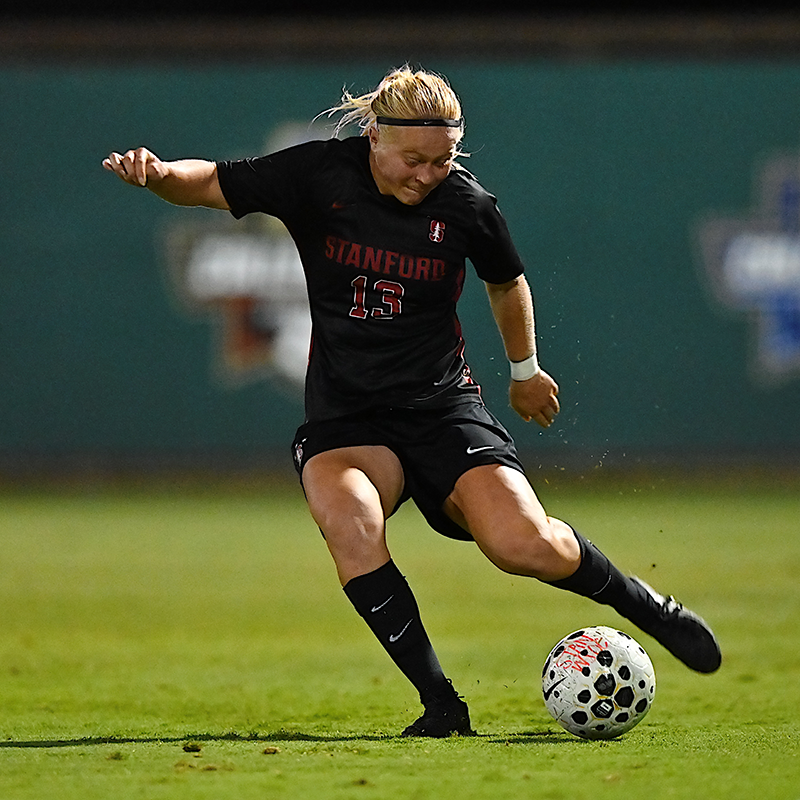
    On Friday afternoon, as World Cup sprinters snap into their skis in Trondheim and the SuperTour fields gather in Fairbanks, one of the United States’ most electrifying young Nordic athletes will step onto an entirely different stage. Stanford University, the No. 1 seed in the NCAA Women’s Soccer Tournament, is marching toward the College Cup—and at the center of it all is a player who, in just a matter of days, will also begin her bid for the U.S. Olympic Cross-Country Ski Team.

    The athlete is Sammy Smith: 20 years old, a national-team skier, an Environmental Systems Engineering major, and a starter for one of the most dominant college soccer programs in the country. The U.S. Ski Team views her as one of the most promising sprinters of her generation. And yet this weekend, instead of warming up on hard-packed snow in Norway or chasing early-season points in Alaska, she’ll be preparing to face Duke with advancing to the NCAA Championship Game on the line.

    “Get ready to cheer for one of the U.S. Ski Team’s top skiers this weekend,” you might tell Nordic fans. “Just… not on skis.”

    From the outside, the collision of seasons looks impossible to manage. For Smith, it is simply the life she has known since childhood.

    Idaho in Two Parts

    Smith grew up in a pattern that almost feels mythic now: winters in Sun Valley, summers and the rest of the year in Boise. Her family built the rhythm—her mom moving the kids north each winter so they could ski full-time and homeschool them in those snowy months.

    “I kind of grew up splitting time between Boise and Sun Valley,” Smith says. “My mom would move up to Sun Valley during the winter with my siblings and me so we could ski, and she would homeschool us up there… I did that all through high school.”

    In Boise, she was a typical public school student. In Sun Valley, she became a multi-sport anomaly. Her childhood was not just active—it was encyclopedic.

    “Growing up, I played about every sport one can imagine,” she says. “I ran track and cross country all through high school… I played hockey for a long time. Played football. Yeah, like, you name it, I pretty much did it.”

    Soccer was the constant. She started as soon as a child could sign up—though the Smiths occasionally bent age rules to make sure she could play with older kids. When her older sister started soccer, she was right behind her.

    “It’s probably like three years old when I started,” Smith says.

    And then there was freestyle skiing—a considerable part of her identity, something she expected to pursue more seriously than Nordic. Until one day, she couldn’t.

    “I ended up fracturing my tibia in my sophomore year,” she says. “And so I focused on Nordic that winter… I ended up having a great season, and then haven’t really looked back since.”

    The transition was abrupt, but the groundwork had already been laid: years of downhill confidence, years of skiing, years of learning to read terrain and push limits.

    “I’ve been on skis my entire life,” she says. “Very comfortable on downhills… I love to ski aggressively.”

    The athlete emerging in those years was already something unusual. The athlete she would become—balancing multiple sports at world-class levels—was still unimaginable.

    Against the Specialization Tide

    From the outside, Smith’s career appears to defy the common wisdom of modern youth sports. Increasingly, top athletes specialize early; by high school, many are all-in on one discipline.

    Smith resisted that. Not because she lacked ambition, but because multiple sports gave her joy—and made her better.

    “I think that’s something I’ve really thought a lot about,” she says. “There’s been more and more pressure to specialize… but growing up and doing so many different sports just kind of added to different components of skiing that I think are really important.”

    Soccer, for example, translates directly into sprint racing.

    “It’s a very high-paced game,” she says. “There’s a lot of change of direction, a lot of accelerating and decelerating. Particularly when you’re looking at heats, a lot of it is reacting to other people’s moves, trying to find little gaps and squeeze through.”

    The skill set becomes a competitive edge: quickness, agility, and decision-making under pressure.

    “That ability to shift gears really quickly and take openings when you can really emulates in soccer,” she says.

    Freestyle skiing contributed something else entirely: creativity and courage on skis, especially in chaotic or technical downhill sections.

    “At World Juniors last year,” she recalls, “everyone was in the track. I hopped out of the track, went far on the inside, and just double poled… It was a risky move, but it was something I saw.”

    She paused for only a moment before going all-in. It worked.

    The blend—soccer fuel, freestyle instinct, Nordic engine—gives her a uniqueness rarely seen in American skiing.

    U.S. Ski Team head coach Matt Whitcomb sees it clearly.

    “She’s a world-class athlete,” Whitcomb says. “She’s already exhibited the early signs of being a World Cup star.”

    That she is doing this while starting for Stanford’s soccer team? To him, it’s not a contradiction. It’s part of the magic.

    Why Stanford — and Why Now

    Choosing Stanford was not simple. Smith had options—many of them. But a few factors stood out.

    “I really value my education,” she says. “Stanford’s a great school. It’s where my mom went. And my sister is also on the soccer team, so the opportunity to get to play college soccer with her is pretty hard to pass up.”

    Her academic path—Environmental Systems Engineering with an energy concentration—fits a pattern among elite U.S. skiers. Many of the top men (Gus Schumacher, Ben Ogden, et al.) have gravitated toward engineering. Smith sees the overlap, too.

    “You look at a skier and the training that they do,” she says. “They’re very self-motivated, very committed. So I’m sure certain aspects translate pretty well.”

    The challenge, of course, is that Stanford is far from snow. It is not close to ski culture. It is not close to the European World Cup circuit. It is very near, however, to one vital piece of equipment:

    “Fortunately, I have a classic roller-ski treadmill… in a little office space,” she says. “That’s been an irreplaceable part of my training.”

    She uses it for high-quality sessions, often squeezed between classes, labs, or soccer obligations. Running remains a central component, helped by the demands of soccer conditioning.

    But she knows her preparation is different—less volume, more precision. Not ideal. Not textbook. Not expected. And yet:

    “I think I’ve tried to accept that,” she says. “I know that I am not at my best, but skiing is a sport you can do for a very long time. I don’t necessarily need to be the best skier I can be at 20 years old.”

    Again, Whitcomb backs the long view.

    “We’re willing to postpone that timeline,” he says. “We’re just happy for Sammy being happy in her current environment. We’ll take what we can get at this moment, but we want more down the road, and we’re excited for it.”

    This, in many ways, is the crux of the story: the U.S. Ski Team is betting on Sammy Smith not despite her dual identity, but because of it.
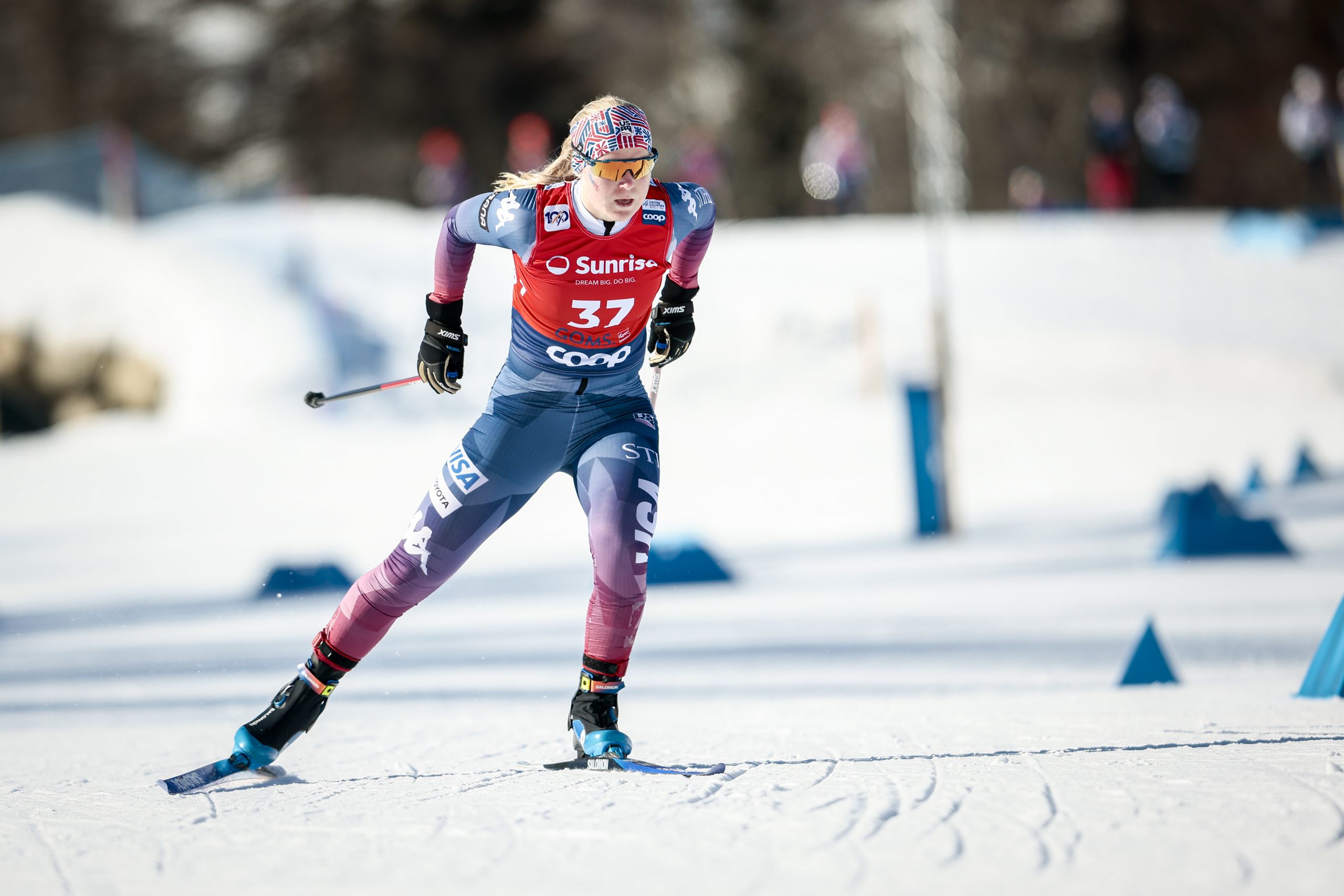
    Samantha Smith (USA) racing the World Cup individual sprint in Goms (SUI). (Photo: Modica/NordicFocus)

    The Final Four — and Then the Sprint Start Line

    The most astonishing part of Smith’s season is its timing.

    If Stanford beats Duke on Friday in Kansas City, they move directly to the College Cup championship game. The semifinal is December 5th; the final is December 8th, Monday. Smith has already mapped out the days that follow.

    “We’ll get back Tuesday night from Missouri… I have a final at 8 a.m. Wednesday morning,” she says. “I’m going to fly out right after my final, and then I’ll have one day of snow on Thursday in Alaska, and then I’ll be hitting that sprint on Friday.”

    She says this calmly, matter-of-factly, like someone describing a standard weekend trip.

    The Anchorage SuperTour sprint is not just any race—it is her re-entry into skiing, her first day on snow of the season, and a crucial tune-up before U.S. Nationals in Lake Placid, where she hopes to qualify for the Olympic team.

    The Anchorage races, she says, are not performance indicators—they are simply a way to “bust the rust off.”

    “Obviously, a lot of other skiers will have been on snow for well over a month, and I won’t, she says. “It’ll just be an opportunity to get on skis, do something fast.”

    Her real focus is the 10-day window between Anchorage and Lake Placid.

    “For me, as more of a sprinter, and the way the criteria is set up, I’ve got to target the qualifiers, she says. “So being really deliberate… knowing exactly what I’m going for.”

    The stakes are simple: she must race well at U.S. Nationals to have a shot at Milano-Cortina.

    The stakes are also massive.
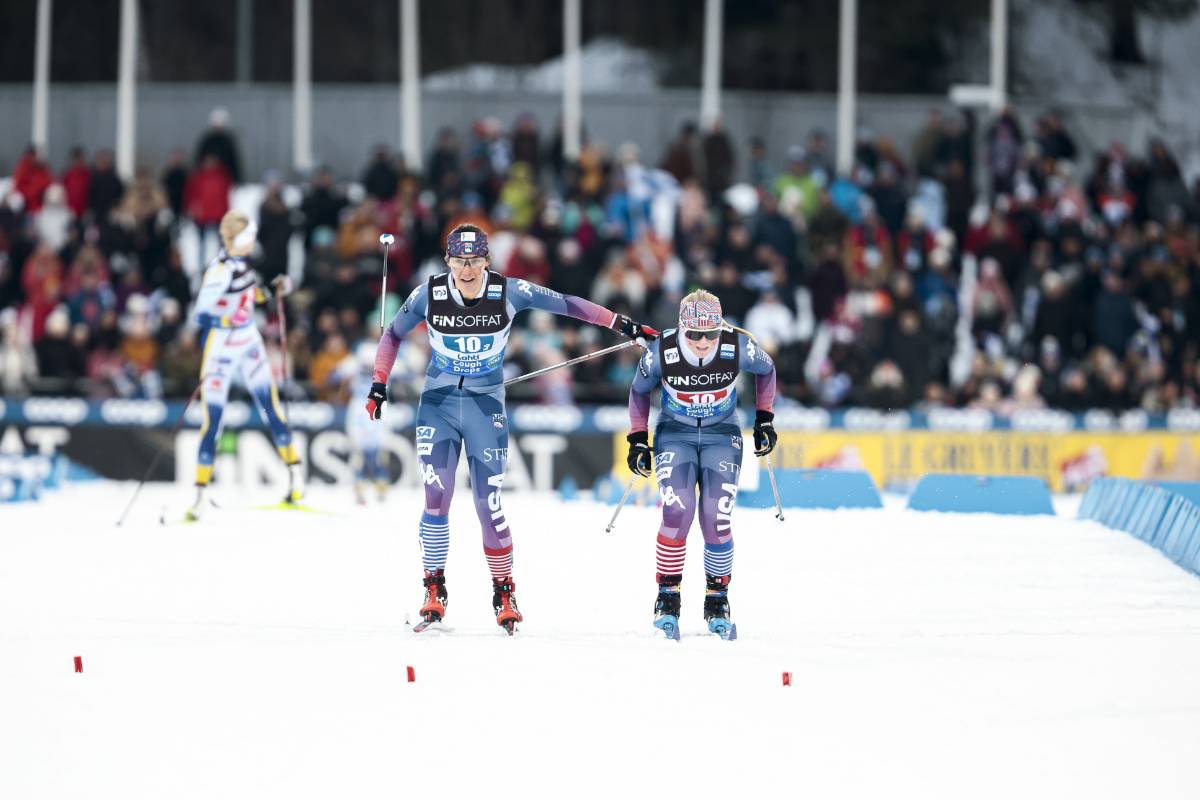
    Julia Kern and Sammy Smith paired up for the Team Sprint in Lahti (FIN). (Photo: Nordic Focus)

    The Domestic Gamble

    If Smith had a regular ski season—if she weren’t in the NCAA Tournament—she might have chased World Cup points, fought to crack the top 45, and used international racing to establish selection priority.

    But that route is closed.

    “If you’re only racing a few of the international races, it’s incredibly challenging to get into that top 45, she says. “Whereas if you were able to do all of them, it’s a lot more feasible.”

    She knows she has “had some really good World Cup sprints, and she wonders—without bitterness—what might be possible in a different academic or athletic setup.

    But this year, it is the domestic route or nothing.

    “That’s what I’m planning on, she says. “I need to have some killer races at U.S. Nationals.”

    What sounds like a gamble is, for her, simply the version of the sport she can access this season. And she is okay with that.

    “Just being consistent… being intentional, she says. “Doing what I can.”

    Who She Wants to Be

    Ask Smith what success looks like decades from now, and she doesn’t list medals or championships.

    “You look at Jessie’s legacy, she says, referencing Jessie Diggins. “The amount of skiers she’s inspired and how much she’s done for the sport… I want people to look back on my career and feel like I’ve done a lot for the sport, inspired the younger generation of skiers, and brought a lot back to my community.

    It is the kind of answer that feels too mature for her age, but entirely in character.

    She is not racing to avoid mistakes—she is racing toward something: possibility, growth, a long future. Maybe a future on the World Cup. Maybe a future in engineering. Maybe a future doing both.

    But first, she has Duke.

    Samantha Smith (USA) racing the World Cup individual sprint in Minneapolis (USA). (Photo: Modica/NordicFocus)
    Samantha Smith (USA) racing the World Cup individual sprint in Minneapolis (USA). (Photo: Modica/NordicFocus)

    The Athlete You’ll Watch Twice This Month

    When you tune in this Friday—whether you are a Nordic diehard refreshing live timing from Trondheim, or an American fan checking SuperTour results—remember that one of the most important U.S. prospects in cross-country skiing will be competing too. She just happens to be wearing soccer cleats instead of ski boots.

    And next week, she’ll be back on snow, sprinting against the country’s best, staking her claim for a place on the Olympic team.

    The duality is not a distraction for Sammy Smith.

    It is her identity.

    It is what built her.

    And it might be what carries her into the future of American skiing.

    “She’s been playing a ton this year, Whitcomb says. “Of course, we want her all to ourselves… but we want more down the road, and we’re excited for it.”

    This weekend, she wants one thing: a berth in the College Cup Final.

    Next weekend, another: a ticket to the Olympics.

    Two worlds.

    Two uniforms.

    One athlete.

    A lot of people will be cheering for Sammy Smith this month. Nordic fans just get to do it twice.


    *You can watch #1-ranked Stanford vs. #2-ranked Duke in the women’s College Cup semifinal tomorrow, Friday, December 5, at 8:45 p.m. EST on ESPNU. The game can also be streamed on the ESPN app, Fubo, or Hulu.


    Love Stories Like This? Help Keep Them Coming.

    Feature interviews like this one take time, access, and care to produce. If you value thoughtful storytelling and independent ski journalism, please consider becoming a Voluntary Subscriber. Your support directly fuels the work we do to cover the people, places, and moments that make our sport special.

    Join the FasterSkier community!


    Sammy Smith (USA) in the World Cup individual sprint in Tallinn (EST). (Photo: Modica/NordicFocus)
  • Novie McCabe’s Winding Trail to the Olympic-Season Start Line

    Novie McCabe’s Winding Trail to the Olympic-Season Start Line

    When Novie McCabe spoke with FasterSkier early last month, she was looking out the window of her place in Anchorage, waiting for winter to finally take hold. “We’re patiently waiting on snow,” she said. “But today might be the day.

    Outside, the ground was still in its in-between phase—too brown for grooming, just white enough that fish-scale skis could work if you were stubborn and optimistic about it. Alaska in November often asks skiers to hover in that liminal space: ready but not yet racing; fit but not yet tested; hopeful but not naïve.

    This week, the waiting ends—at least for the top domestic circuit. The U.S. SuperTour season opens in Fairbanks and continues in Anchorage next weekend, but McCabe hopes her body will allow her to join the field. After a long, uncertain stretch, simply lining up for even one race would mark a meaningful step forward. The timing makes this the right moment to trace how she has arrived at this threshold, and how the places she has lived—Methow Valley, Salt Lake City, Anchorage, Europe—continue to shape the skier she is becoming.

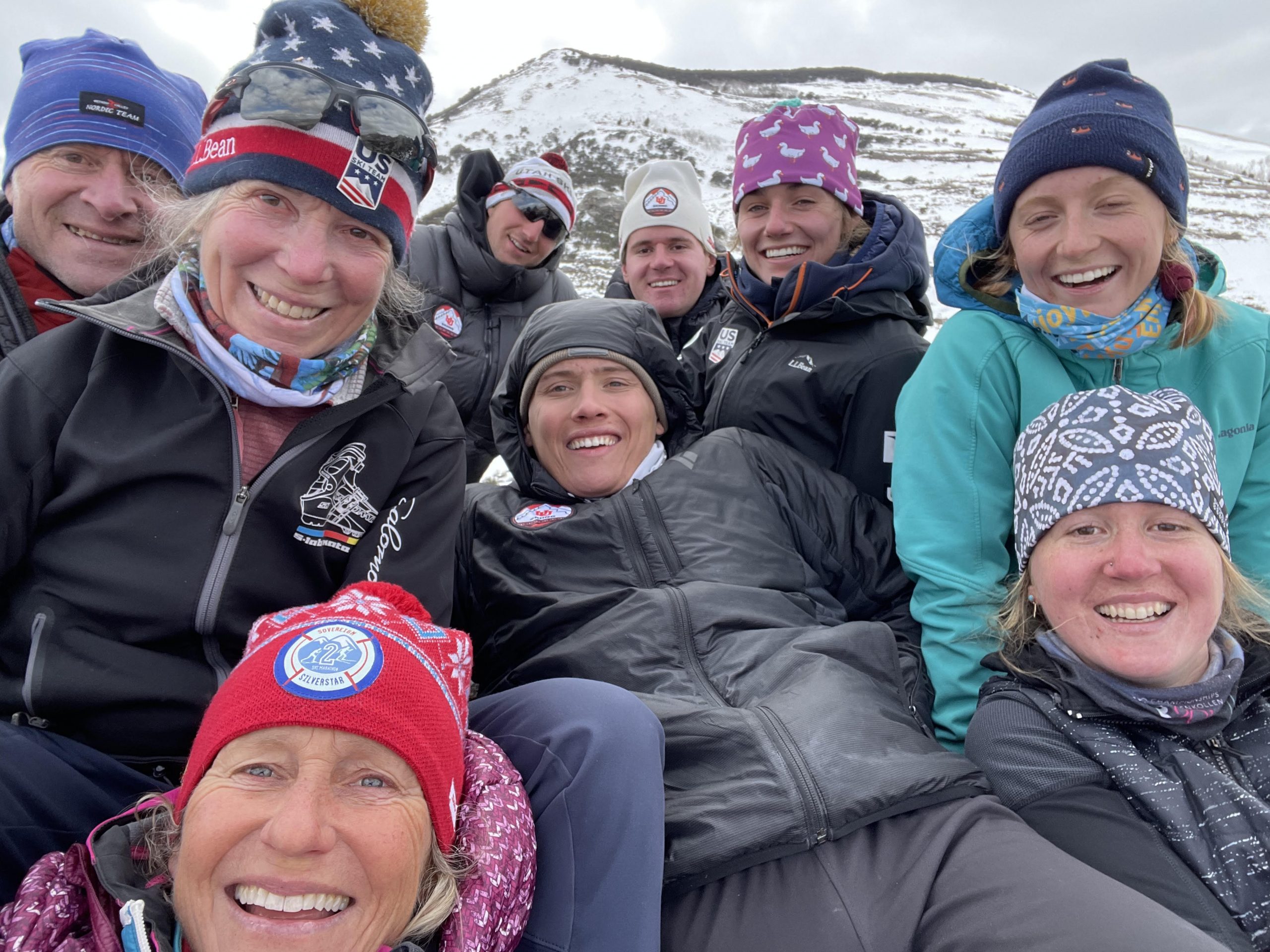
    Laura, Sean, and young Novie McCabe. (Photo: Courtesy Photo)

    The Valley That Built Her

    The story begins in the Methow, where winter is less a season than an identity. “I grew up in the Methow Valley, which is like a small valley in north central Washington with a pretty big ski community,” McCabe recalled. “I think we have the most Ks in North America or something when the skiing is good.

    Her mother, former U.S. Ski Team athlete Laura McCabe, and her mother’s longtime friend Leslie Hall helped build the Methow Valley Nordic Club from scratch. McCabe grew up inside the culture they created: open, community-driven, relentlessly outdoorsy, and—maybe most importantly—fun.

    “I was lucky enough to have a really big group of kids my age who all just kind of happened to be really close friends,” she said. “We would all just be active together and spend a lot of time outside… backpacking trips all the time together.

    Skiing was less a pursuit than a language. Practice might include ultimate frisbee on skis or just exploring terrain with no agenda beyond movement. “That was the main thing that got me so excited about skiing—the community,” she said. “It was just what all my friends did.

    These early years formed more than her fitness. They gave her a worldview: skiing should be joyful, shared, and balanced.

    “Stay Behind Us—It’s Supposed to Be Easy”

    That mindset came directly from her mother’s coaching style. “My mom… would do all the sessions with us,” McCabe said. The education was intuitive, rooted in feel rather than metrics.

    It was very feeling-based,” she said. “Like, in L3 you should be able to talk to me and give me a sentence back at least when I ask you how you’re feeling.

    Heart-rate monitors were used only sparingly—tools to complement the athlete, not dictate behavior. “We maybe did lactates once or twice the whole time I was in high school,” she said.

    One lesson, in particular, stuck with her. During easy sessions, her mom and Leslie Hall would say:

    “You guys have to stay behind us because it’s supposed to be easy.”

    The rule was simple, but the philosophy was profound: fundamentals come from awareness, not pressure.

    McCabe laughs that even today, in anything resembling an ultra-distance test, the result might still tilt toward her mom: “She might have the upper hand in anything longer than 50 k.

    Novie McCabe during the 20 k Classic at the NCAA Championship hosted by Saint Laurence University in Lake Placid in 2023.  McCabe controlled a pack that also contained her teammates, Sophia Laukli and Sydney Palmer-Leger. McCabe led the UU women, who finished 1st, 3rd, and 5th, on the day that propelled the Utes to their 4th consecutive NCAA Championship. (Photo: (c) Nancie Battaglia).

    Utah and the COVID Bubble

    By the time she left the Methow, McCabe was ready for a bigger arena. She chose the University of Utah for its coaching, competitive team environment, and growth opportunities.

    “At that stage in my life, I was pretty ready for it,” she said.

    Her first year unfolded in the disruptive isolation of COVID—a strange, surreal time that somehow fostered uncommon cohesion.

    It was the heart of COVID isolating, but honestly, kind of in a fun way,” she said. “We were just hanging out as a team all of the time.

    Despite Utah’s reputation as an NCAA powerhouse, she never felt crushed by expectations. “It didn’t feel like a high-pressure situation,” she said. “They were there to help us get the best out of ourselves.

    She balanced training with academics, majoring in political science and minoring in economics. Even then, she was thinking beyond skiing.

    Novie McCabe skiing for APU. (Photo: Courtesy Photo)

    Leaving Eligibility on the Table

    After her third year, she made a difficult decision: she left Utah with two years of NCAA eligibility remaining.

    I just felt kind of ready to move on from the NCAA,” she said. The experience had been positive—”I think everyone should go NCAA… It’s so fun and great for development,”—but the structure had become limiting.

    She wanted freedom: to race World Cups without constant travel back to the U.S., to pursue her development without logistical whiplash.

    I wanted the freedom to race as many World Cups as I wanted during the season and not fly back and forth so much.

    Once she accepted that her path needed to diverge, the next step was obvious.

    Novie McCabe and Luke Jager. (Photo: Courtesy Photo)

    Anchorage and the APU Reboot

    Anchorage had already become a meaningful place—she had been coming there every summer since her first year at the University of Utah. Her partner, Luke Jaeger, is from there. And she had trained with APU coach Erik Flora for years.

    It honestly wasn’t even much of a decision,” she said.

    Flora’s coaching became a stabilizing force. “Erik Flora is really awesome when things are going wrong,” she said. “He knows how to help athletes sort through challenges… It’s never a linear path to success in skiing or any sport.

    APU offered a training environment grounded in trust and peer excellence. “This year there is a pretty big girls’ group,” she said. “Kendall Kramer, Quincy Donley, Annabel Needham, Haley Swirbul, we have a big crew.

    Training with athletes like Rosie Brennan and Swirbul created a layered mentorship:

    They have been and are some of the best in the world.

    Anchorage became the center of her athletic and personal rebuild.

    Novie McCabe joined by family and friends for a climbing adventure. (Photo: Novie McCabe)

    The Year Without Racing

    McCabe didn’t race at all last winter, more or less. At the time, she explained this as part of a balance project—but in reality, the situation was more complicated.

    I have historically been kind of bad at the balance thing,” she said. “My happiness is sometimes quite dependent on skiing.

    That year became a forced reset, with significant emotional and physical consequences.

    I think I’ve gotten better at it,” she said. “I’ve found some things that I really do like to do outside of skiing.” She mentioned baking, cooking, reading, and spending time outside in ways that weren’t tied to training logs.

    Yet she was still searching for answers.

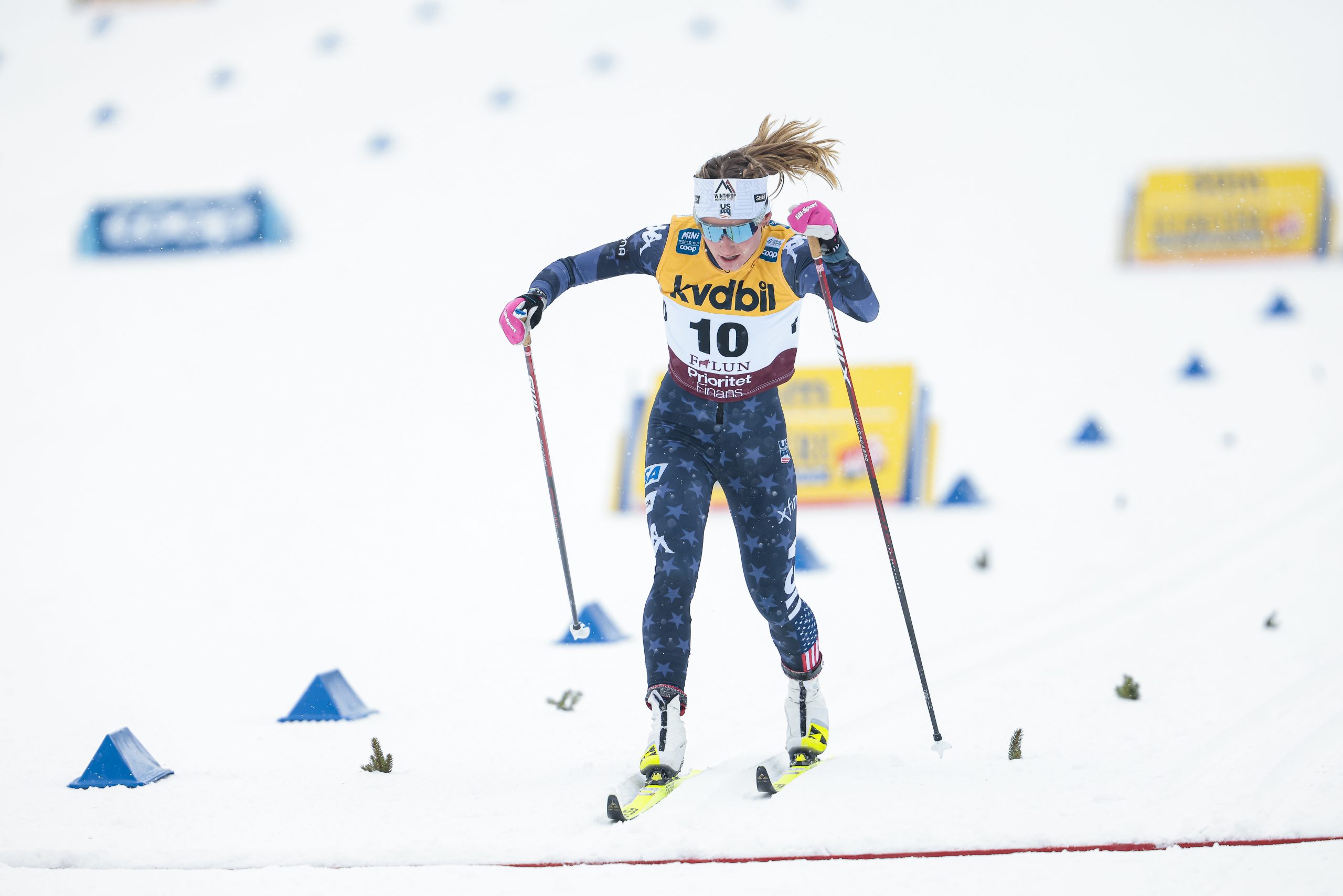
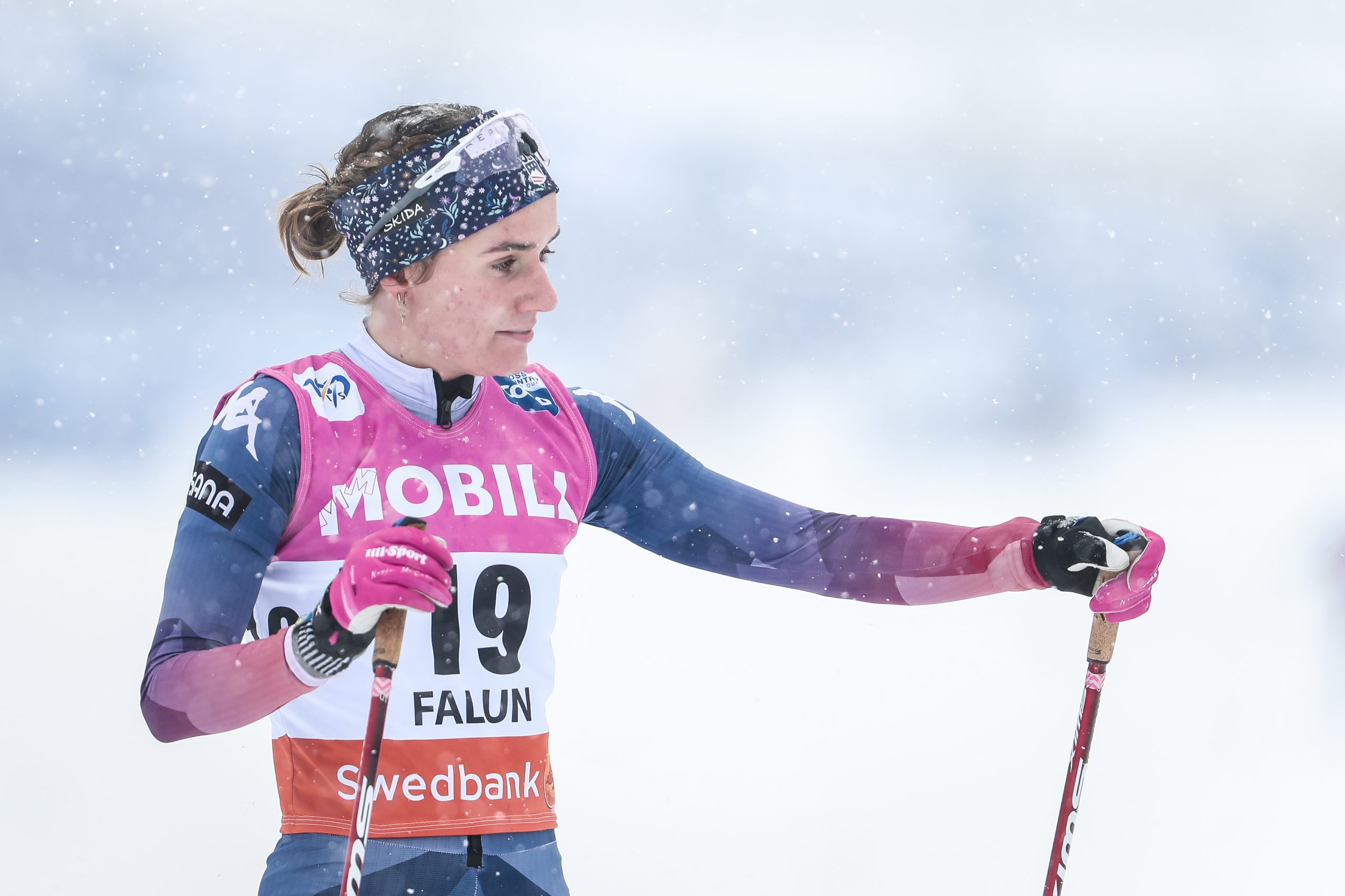
    One of Novie Mccabe’s (USA) career highlights was her top 15 finish in Falun, Sweden in a Classic race. (Photo: NordicFocus)

    A Quiet Battle Behind the Scenes

    After our original conversation, McCabe followed up with more context—an important layer we had not fully jumped into earlier. For the past two years, she has been navigating what she called “some mystery health challenges,” a swirl of symptoms that worsened last fall to the point where racing no longer felt possible.

    The best guess of most of the doctors I have seen is some sort of post-viral or chronic fatigue thing,” she wrote, “possibly combined with some issues keeping my celiac and Hashimoto’s in check, but I am still not really sure what is going on to be honest.

    She spent the winter searching for stability rather than start lines.

    I have taken a pretty cautious approach to training this year and just been trying to build back into it super slowly and give a lot of extra attention to rest and recovery,” she said. “And I do feel like I made some solid progress.

    Even now, she remains cautious. “The past two weeks have been a bit of a step backward,” she said. She’s not entirely sure she will race in Fairbanks. Her hope is modest: “One race there and one race in Anchorage, just to give myself a bit more recovery between hard efforts.

    Still, the optimism in her message is unmistakable.

    It means a lot to be back in a place where racing seems like more of a possibility.

    I will definitely consider it a win if I get to do some racing this year and make some more progress toward feeling like myself again.

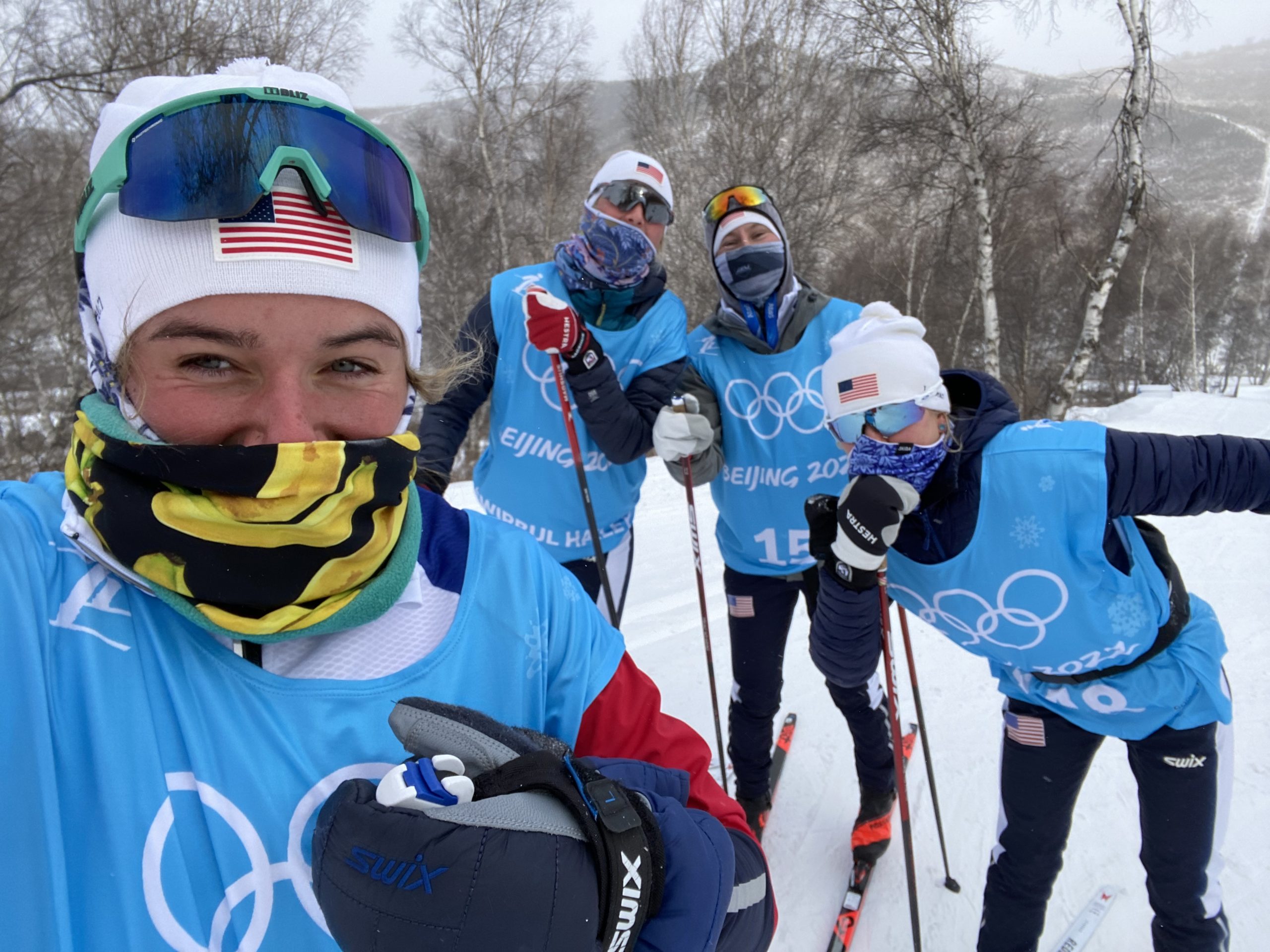
    McCabe credits her teammates with helping her develop the traits that won her recognition. Here she is training in Beijing with Hailey Swirbul, Hannah Halvorsen, and Sophia Laukli. (Photo: Novie McCabe)

    Team USA on the Road

    The U.S. Ski Team’s culture is widely celebrated—glitter, dance videos, and road-trip camaraderie. McCabe grew up watching those clips.

    I would see their dancing videos from the World Cup and be like, ‘That just looks like the best time ever.’”

    But she knows now that joy is a decision, especially when you’re far from home. “Sometimes you have to decide that it’s going to be a good time,” she said. “Everyone does an excellent job of being good teammates.

    That environment matters, especially in challenging seasons.

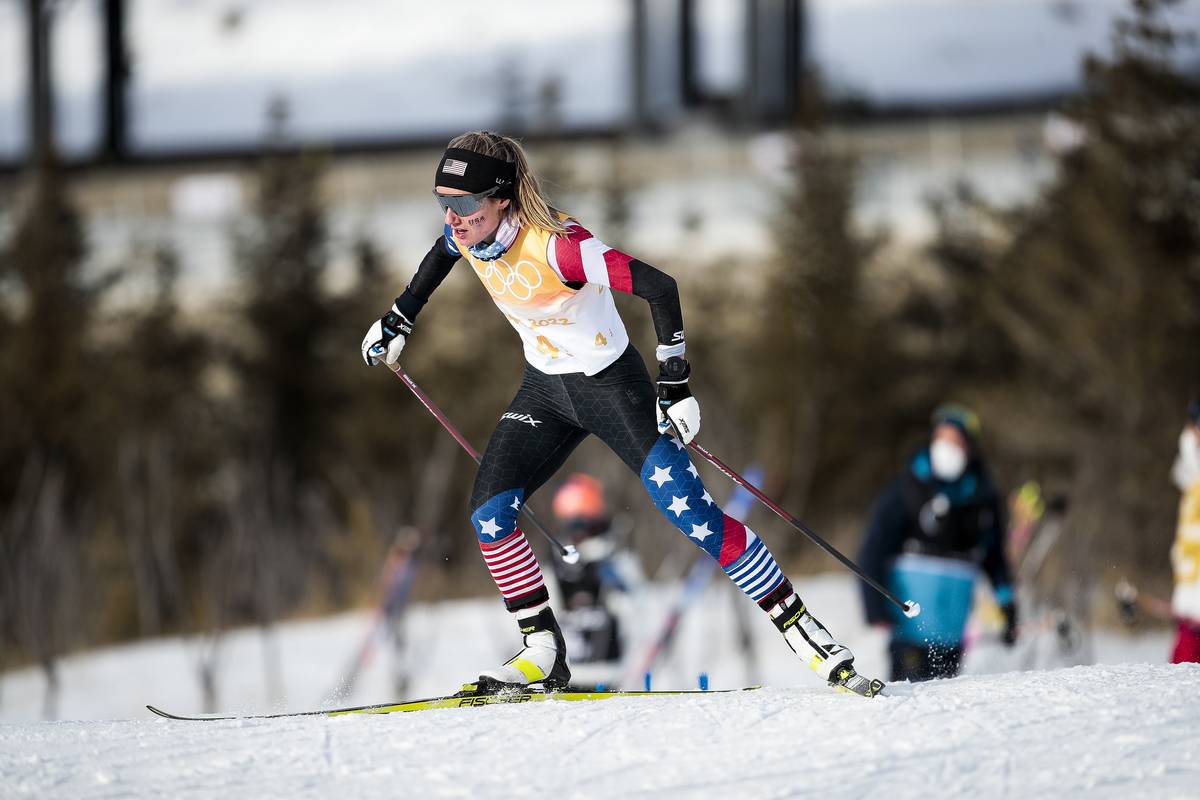
    Novie McCabe skates a strong third leg for Team USA in the 4 x 5 k relay at the Beijing Olympics in 2022. (Photo: NordicFocus)

    Europe: Brown Cheese, Ferris Wheels, and Perspective

    Her memories of Europe arrive in flashes of color rather than race results.

    I love brown cheese,” she said. “You can get it here, of course, but it’s not as good.

    She recalls Trondheim at Christmas—”Ferris wheel and everything“—and moments where she stepped outside the hotel room and let herself experience the place.

    These glimpses matter because they remind her of what she still wants from her career: a stable return to the World Cup, a chance to live in that rhythm again.

    And through all her travels, she keeps a single talisman:

    Katherine Ogden made me a crochet octopus one year… I’ve brought it along as a good luck charm ever since.

    Novie McCabe after the World Cup 10k in Falun, Sweden, in 2024. (Photo: NordicFocus)

    The SuperTour Returns — and She Hopes to Join It

    Which brings the story back to this week, and the opening races of the season. “I haven’t started a season domestically in like four or five years,” McCabe said. But she’s doing this season differently.

    She is hopeful she will race—one race in Fairbanks, one in Anchorage, if her body allows. More than anything, she wants to be thoughtful and patient.

    My main goal is to make the Olympics,” she said. But this winter, her priority is health. “Being able to race and stay healthy and recover… that would look like a win for me.

    The Olympic qualification system is, as she put it, “really complicated“—top-45 overall rankings, top-8 results, SuperTour contingencies. But she isn’t thinking that far ahead yet.

    She’s thinking about one start line. One bib. One race that feels like progress.

    Becoming Who She Meant to Be

    If you fast-forward five years, she still knows exactly where she wants to be.

    I, for sure, dream about being one of the best skiers in the world,” she said. “I hope to be able to compete with the best one day.

    She also knows this path no longer looks how she imagined it “four years ago.” But she has something she didn’t have then: perspective, patience, and a grounded sense of herself.

    Back in Anchorage early last month, the snow hadn’t fully arrived. It mirrored her season ahead—close, possible, not yet certain. The SuperTour begins this weekend, and McCabe is on the edge of stepping back into the environment she loves.

    Maybe in Fairbanks. Maybe in Anchorage. Maybe later.

    But the hope is real. The joy is returning. And somewhere in her bag, the crocheted octopus is still waiting.


    Love Stories Like This? Help Keep Them Coming.

    Feature interviews like this one take time, access, and care to produce. If you value thoughtful storytelling and independent ski journalism, please consider becoming a Voluntary Subscriber. Your support directly fuels the work we do to cover the people, places, and moments that make our sport special.

    Join the FasterSkier community!