From the FasterSkier archive — posts syndicated from athletes’ and coaches’ own blogs between 2004 and 2012, kept online as published. Current coverage is at fasterskier.com.
Perhaps this winter you skied 50-kilometers in a day. Maybe you’re a real go-getter and you logged 100 k in one go. Or maybe you’re Gus Schumacher and you recently clocked 200 k in a single outing. Regardless of your season or lifetime distance record, you can be sure that it pales in comparison to what Anders Aukland of Norway achieved this past weekend. Between Saturday morning to late Sunday night, a period of 41 hours, Aukland skied 700 k around Mylla Lake in Nordmarka, north of Oslo. For some reference as to this incomprehensible distance, it is roughly equivalent to starting at the Canadian border in Washington and skiing all the way to Oregon’s southern border, or traversing the entire state of Idaho from north to south. Or for an East Coast equivalent, skiing 150 k at the Craftsbury Nordic Center and then skiing all the way to New York City.
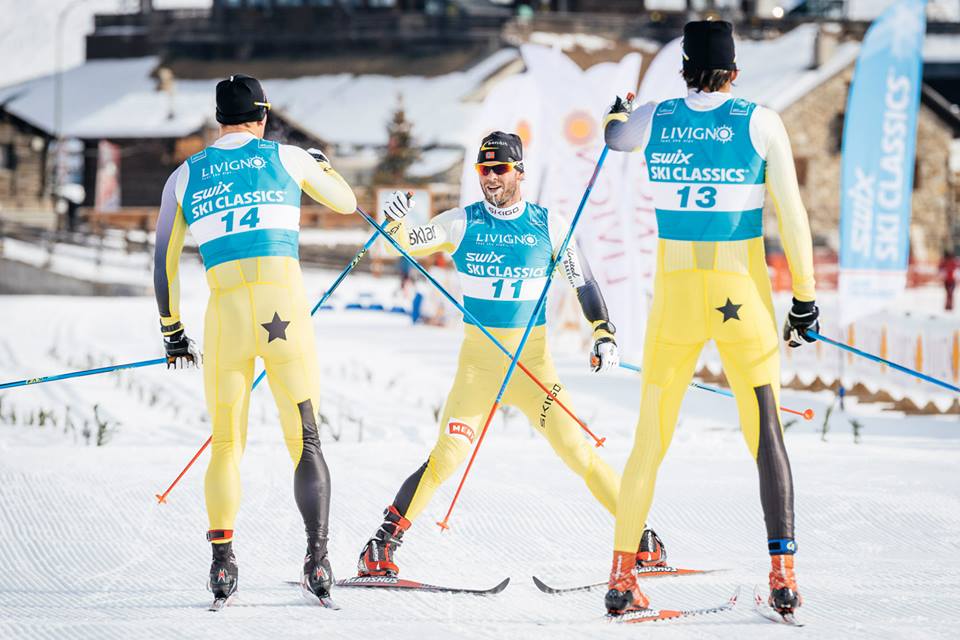
Anders Aukland, Joar Thele and Simen Østensen (left to right), ready for a long ski. (Photo: Joar Thele)
Aukland, who is 48 years old, has a lengthy list of career successes. He was a member of the Norwegian Olympic Gold medal relay team at the 2002 Salt Lake Games and holds three World Championship medals, a relay gold, a silver in the 30k classic and a silver in a 50k classic. Throughout his career on the World Cup, Aukland earned six victories and thirteen podiums. Besides his achievements at World Cup level, Aukland boasts major distance creds. In 2004 he became the second Norwegian to win the 90 k Vasaloppet in Sweden. In 2008 he won the 70 k Marcialonga and in 2010 he took top honors at the 54 k Birkebeinerrennet.
Anders Aukland refueling after a seriously long effort. (Photo: Team Ragde Eiendom)
This recent 700 k outing was a step up from last year for Aukland. In April 2020 he and his brother, Jørgen Aukland, along with Joar Thele skied 516 k in under 32 hours, only to have this record broken just days later by Henrik Sollie who skied 528 km in 32 hours.
Dusk? Dawn? They’re still skiing… (Photo: Joar Thele)
Aukland was accompanied on his effort this year by Simen Østensen who stopped after a mere 550 k and his companion from last year, Joar Thele, who completed 610 k. Together, they made it around 420 k within the first 24 hours, at which point it began snowing heavily, making the going tough.
Strava map from Joar Thele’s 610 k effort around Mylla lake. (Photo: Joar Thele’s Strava)
On Instagram, Aukland wrote, “Have always liked to go far on skis, and this weekend we got to feel a little on our own borders even though we gave while the game was good.” (Translated from Norwegian).
Not only was Aukland going for a distance record on this occasion, but he was also raising money for the “Right to Play” Foundation, an organization that works in developing countries to help keep children in school by fueling and amplifying the power of play. Through his effort he raised around 1.2 million Norwegian Krone, roughly 175,000 USD. “Absolutely fantastic with a collection of 1.2 million to “Right to Play,” wrote Aukland, “And thank you for all the positive messages both at Mylla and afterwards.”
A new 24-hour distance record was also set in Norway the same weekend by Eirik Asdoel who skied 476 k around a 5 k lake loop. This bests the previous record set in 2018 by Hans Mänpää of Finland by four kilometers.
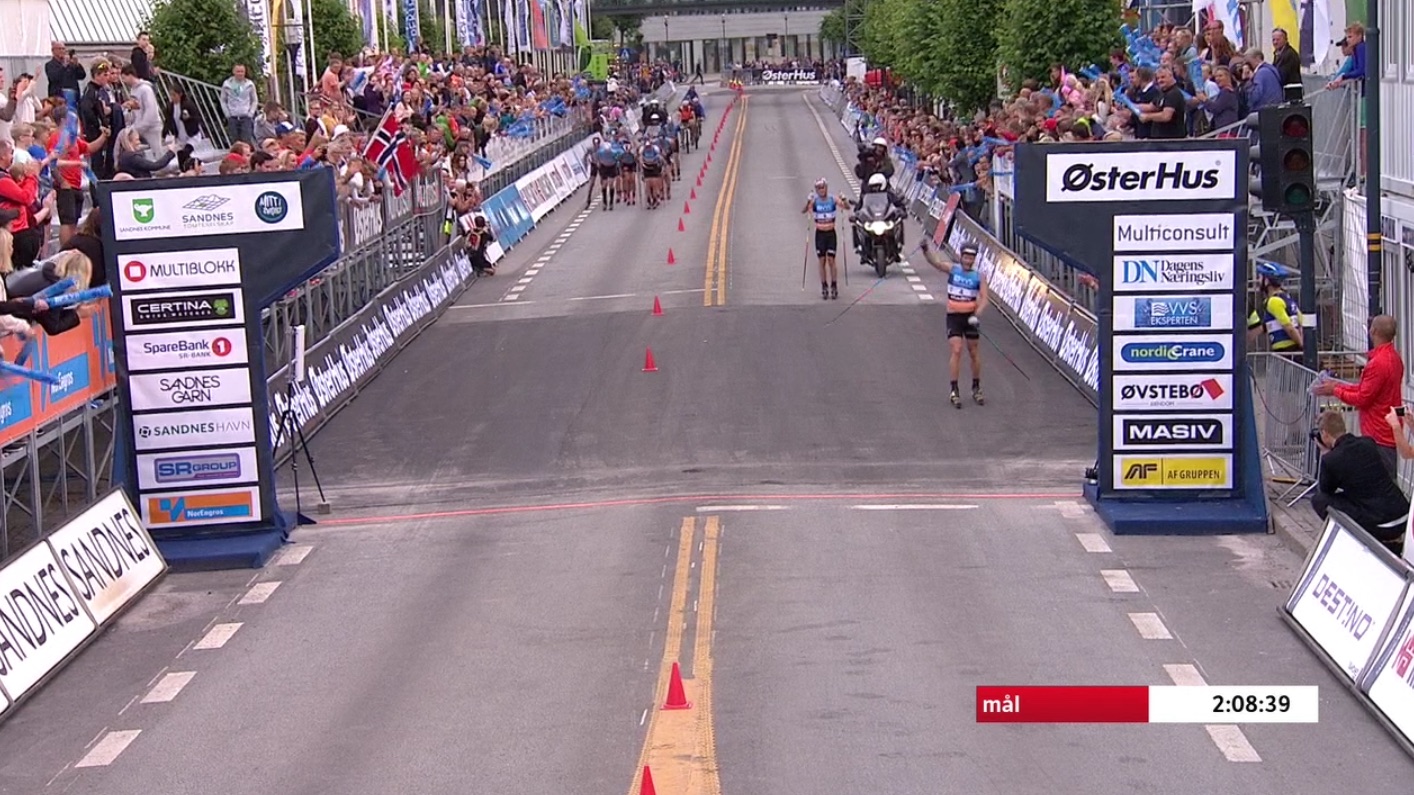
Defending Overall World Cup champion Martin Johnsrud Sundby won the first race of the 2017 Blink Ski Festival on Wednesday, finishing 2.6 seconds ahead of fellow Norwegian Simen Hegstad Krüger in the Blink Classics 60 k distance rollerski. (Photo: NRK screenshot)
Stands crowded with 50,000 cheering spectators. Bibbed athletes clad in shorts and T-shirts clicking by on rollerskis. Competitors representing various countries dousing themselves with bottled water as they cross the finish line.
These were among the sights and sounds of the world’s largest summer rollerski-race series, Norway’s Blink Ski Festival.
Celebrating its ninth year, racers and fans kicked off the 2017 four-day festival in Gjesdal and Sandnes, Norway, with men’s and women’s classic distance rollerski races on Wednesday.
Toeing the start line for the elite men’s 60-kilometer were well-known Norwegian World Cup racers, such as Martin Johnsrud Sundby, Petter Northug and Sjur Røthe, as well as Russia’s Sergey Ustiugov, Finland’s Iivo Niskanen, Germany’s Lucas Bögl, and American Andy Newell.
In the beginning, it appeared Ustiugov was gunning for the lead, charging the group of 58 rollerskiers with 46 k to go. But within another 9 k, a pack of six had broke off the front, including Sundby, Røthe, Niskanen, and Norwegians Øystein Pettersen, Simen Hegstad Krüger, Anders Aukland, and Simen Håkon Østensen. Ustiugov was now in the chase group close to 45 seconds away.
With less than 30 k of road left to race, the front group had dwindled to three Norwegians and a Finn: Sundby, Røthe, Krüger, and Niskanen. Newell had caught up to the chasing group, now almost two minutes back from the leaders.
Given 20 more kilometers, however, Sundby and Krüger had pulled away, Niskanen working to hold onto third 30 seconds back. The two Norwegians battled together until the final kilometer, when Sundby surged for the final city sprint to secure the victory in a time of 2:08:40.6.
Though some may see the win as a premature predictor of what’s to come this winter, Sundby was not one of them.
“We are talking about July. Everyone pretends like they don’t care, but this is important for everyone who is on the starting line,” Sundby told NRK, according to a translation. “There weren’t a lot of world-class athletes who was not on the starting line today.
“This is incredibly good practice,” he continued. “I greatly appreciate all of these competitions.”
Just 2.6 seconds behind Sundby, was Krüger crossing in second. Third went to Niskanen, who finished 36.7 seconds back from the winner.
Just 1.8 seconds outside of the top 15 was Newell in 16th overall (+5:25.1) in the elite men’s race, out of 58 finishers.
In the elite women’s 60 k, which started at the same time as the men, Norway’s Astrid Øyre Slind latched onto a few male racers from the start and broke away from her competition, which included just 10 women.
Slind took the win in a time of 2:20:04.2, while fellow Norwegian Kari Vikhagen Gjeitnes claimed second, 2:11.1 minutes back. Belarus’s Yulia Tikhonova completed the women’s podium in third (+2:23.4).
Racing continued Thursday with the men’s and women’s hill climb, the Lysebotn Opp, in Lysebotn, Norway. Sixty-five women came out for that race, with Sweden’s Charlotte Kalla taking the victory in 33:18.3. Norway’s Heidi Weng finished 40.3 seconds back in second, and Marit Bjørgen wearing bib 1 finished third, 1:50.5 minutes behind Kalla.
Liz Stephen of the U.S. Ski Team took sixth (+3:35.7) behind Norway’s Ragnhild Haga (+2:43.4) in fourth and Finland’s Krista Pärmäkoski in fifth (+2:47).
In the men’s race, Norway’s Hans Christer Holund took the win in 27:37.6. Krüger repeated in second place, 1:13.9 minutes back, and Finland’s Matti Heikkinen placed third (+1:25.6), while Sundby was sixth (+2:11.5) behind fellow Norwegians Henrik L’Abée-Lund in fourth and Røthe in fifth.
Out of 100 male starters, 99 finished. Newell did not compete.
Check back Friday for a more detailed recap of Thursday’s Lysebotn Opp.
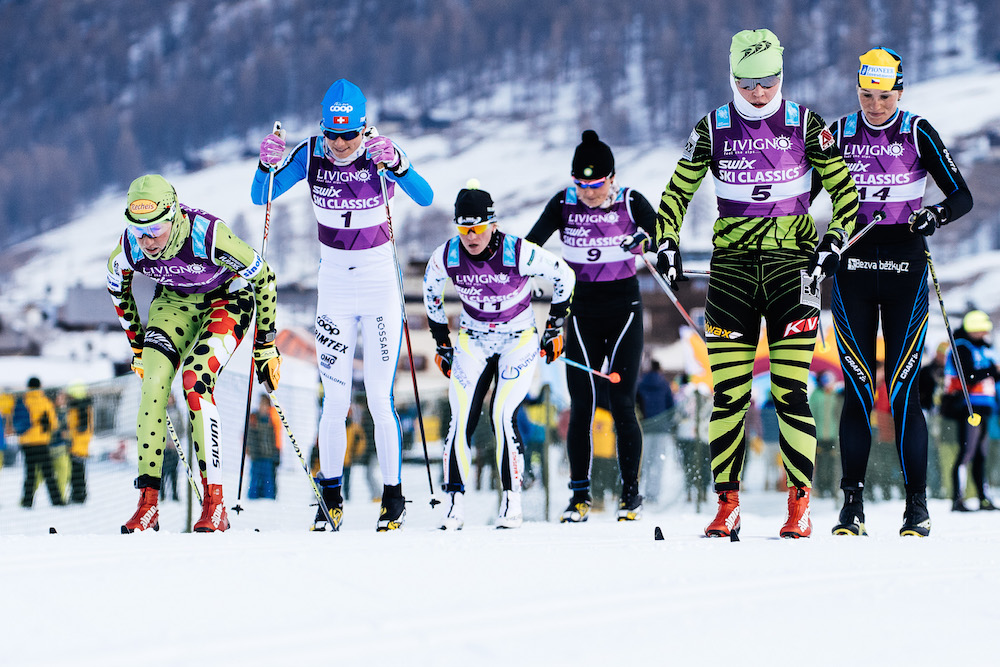
Last year’s Team Tempo Prologue in Livigno, Italy, which Team Coop (in bib 1) won. This year, the team prologue will again open the Ski Classics series in Livigno on Saturday, followed by the shortened La Sgambeda classic race on Sunday. (Photo: Visma Ski Classics)
The 2016 Ski Classics kicks off with a doubleheader in Italy on Saturday and Sunday, and the marathon regulars are chomping at the bit to get started with the long-distance race series.
The 15-kilometer Proteam Prologue in Livigno, Italy, on Saturday opens the show for the marathon series, now called the Visma Ski Classics (with a new title sponsor in place of Swix), which has been extended to nine venues this season.
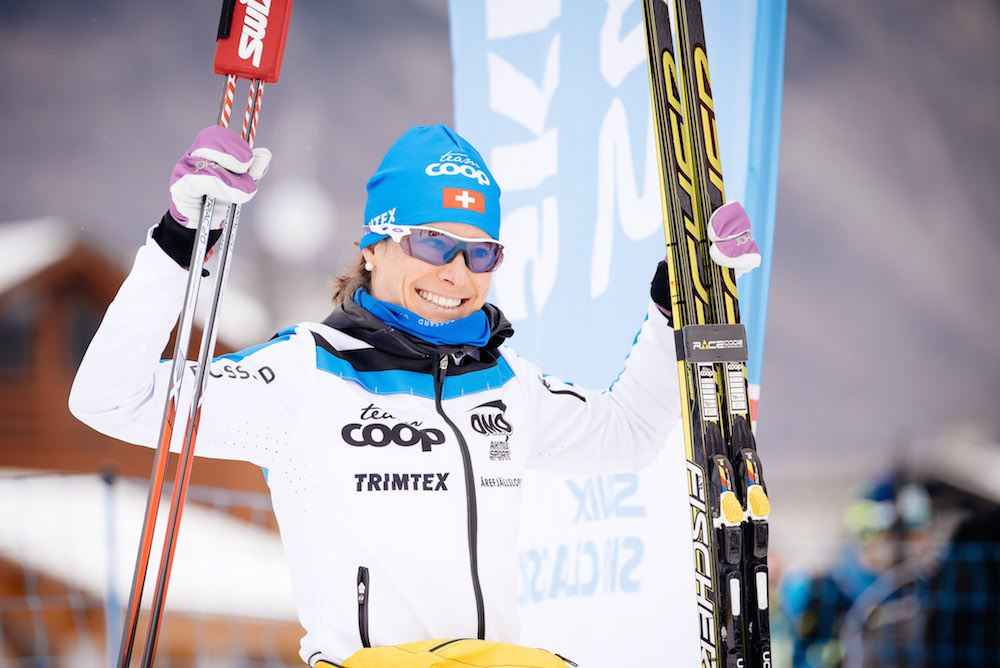
Seraina Boner of Team Coop (now called Team Exspirit) after winning the 2014 La Sgambeda in Italy last season. (Photo: Ski Classics)
On the women’s side, last season’s Ski Classics champion Katerina Smutna of the Czech Republic will be on the start line for the first races this weekend, but she will face plenty of competition. Team Exspirit’s Seraina Boner of Switzerland is eager to take back the overall title, which she has earned three times (2011, 2013 and 2014), beginning with La Sgambeda.
Poland’s World Cup star and the queen of the FIS Tour de Ski, Justyna Kowalczyk, will be doing several of the Ski Classics long-distance events this season with the Norwegian Team Santander headed by the Aukland brothers. And Britta Johansson Norgren of Sweden, who was on the podium at several of the Ski Classics events last season, is one to keep an eye on. Last season, she raced with the all women’s team Ski Pro Am, and this year she is a part of Sweden’s Lager 157 Ski Team, with teammates such as three-time Vasaloppet champion Jörgen Brink of Sweden.
Among the men, 2015 Ski Classics overall champion Petter Eliassen of Norway makes his season debut in Italy this weekend. He will have to fend off a large and deep field of competitors such as Norway’s 43-year-old marathon veteran Anders Aukland and his Santander teammates, including younger brother Jørgen Aukland, and former World Cup skiers Tord Asle Gjerdalen of Norway and Johan Olsson of Sweden.
Norwegian stayers such as Johan Kjölstad, Øystein Pettersen, Eldar Rønning, and John Kristian Dahl of Team United Bakeries, as well as Ski Classics veterans of Team Exspirit, including Daniel Richardsson, Anders Södergren and Jimmie Johnsson of Sweden and Norway’s Morten Eide Pedersen, will certainly do their best to make it a tough season opener from Day 1.
Two unique competitions in Livigno
The Prologue, in which the teams must field at least three racers to compete, was added last year, and is a team effort where the third person’s time determines the team result. The next day, on Sunday, the skiers embark on the first distance event, the now-24-kilometer classic technique La Sgambeda.
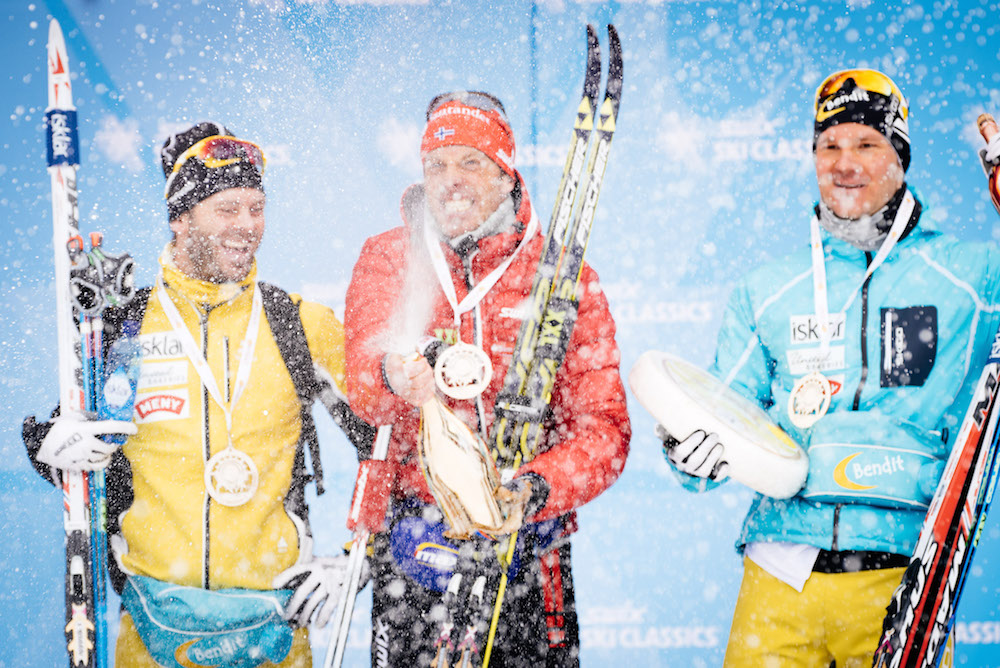
Team Santander’s Anders Aukland (c) after winning the 2014 La Sgambeda in Livigno, Italy. Johan Kjølstad (l) and Øystein Pettersen (r) both of Team United Bakeries, placed second and third, respectively. (Photo: Ski Classics)
Team Exspirit (previously known as Team Coop) won the prologue last year and is aiming to defend the title this year.
“We have had great preparations here in Livigno, skiing on the race course and acclimatizing to the high altitude,” team member Jimmie Johnsson said in a press release on Friday. “Of course, we’re aiming to defend our victory and we’re faster this season than ever before.”
Team Exspirit’s Seraina Boner won La Sgambeda last year after breaking away from the field on the hard climb at the turning point of the course. This year, the course is shortened to from 35 k to 24 k due to lack of snow and is also flatter. While Boner prefers more elevation gain, she was still optimistic before the race.
“The tougher course fits me better than the flatter one we have now,” she said. “But I will do my best, and I am really excited to finally start the long distance season together with my teammates.”
While the Team Prologue is only open to professional teams registered with the 2016 Ski Classics, La Sgambeda on Sunday is open to amateurs and pros alike.
Saturday’s Prologue will be held on the original course, but due to lack of snow in Livigno, the classic marathon on Sunday will be run on 6 k loops.
“Last season, seven of the nine Ski Classics events had to change their courses due to weather issues,” Ski Classics CEO David Nilsson in a press release earlier this week. “We can just cross our fingers that the political leaders at the environmental summit in Paris this week are able to make the right decision.”
For the 2016 season, there are 28 pro teams registered for the Ski Classics series.
After the season opener in Italy, the Ski Classics takes a break until the Jizerská Padesatka in Liberec, Czech Republic, on January 10, 2016. The race series concludes April 2 with Årefjällsloppet in Sweden as the season finale, as it has been for years. New this year is the Toblach/Dobbiaco Cortina, a 50 k classic race in Italy on Feb. 13.
Vasaloppet matters most
For Madshus racer John Kristian Dahl of Norway, who won the Vasaloppet two years ago, the 90 k race from Sälen to Mora in Sweden is the main goal for the 2016 season.
“It’s the longest and one of the oldest races in the circuit, and very special with the flats. That package makes it very unique, and difficult to win, too. In our world, it’s the championships in marathon skiing, and I’m happy that we have it every year,” Dahl said in an interview with Ski Classics earlier this fall.
Live streaming in English
In order for fans to follow the action live, Visma Ski Classics has launched the Live Streaming “Season Pass” available with English commentary on the app or the Tour Live Center at Visma skiclassics.com.
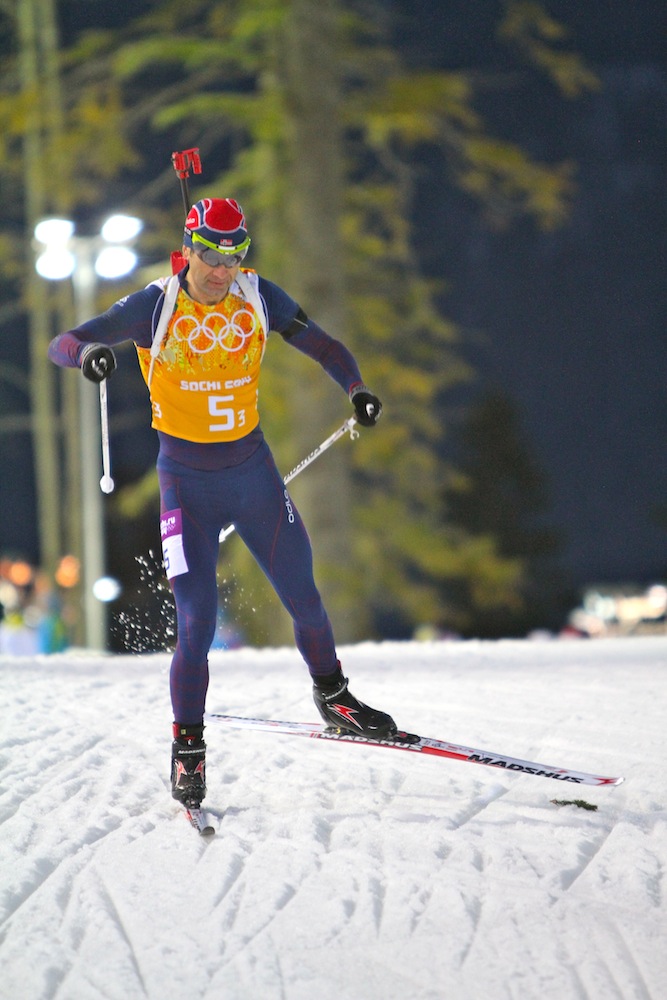
Norwegian biathlete Ole Einar Bjørndalen’s VO2max of 86 mL∙kg∙min-1 is higher than the 95% confidence interval of other Norwegian biathlon medalists. But it’s not the only thing that makes him the King of Biathlon – he shot 89% en route to four gold medals at the 2002 Olympics, and his mental focus and tough training are legendary.
The Norwegian Olympic and Paralympic Committee and Confederation of Sports has authorized the release of VO2max test data by its nordic Olympians – in the name of science.
VO2max, or maximal oxygen uptake, is an important physiological metric for endurance athletes. Coaches take note of the measurement and its development over time as an indicator of aerobic potential.
It’s also not a guarantee of athletic success. In all sports, including cross-country skiing, other aspects of athleticism like technique and mental strength are essential in determining a winner. The athlete with the highest VO2max is often beaten by those with lower maximal oxygen uptake.
But it’s certainly important to have a high VO2max , and several famously successful athletes like Bjørn Dæhlie, Gunde Svan, Harri Kirvesniemi, Ole Einar Bjørndalen, and Anders Aukland have among the highest measurements ever recorded.
Espen Tønnessen, who works for the Norwegian Olympic and Paralympic Committee and Confederation of Sports, was the recipient of this enviable VO2max dataset along with colleagues there and at the University of Agder.
The data included test results from 111 Olympians and World Championships competitors from cross-country skiing, biathlon, and nordic combined, over the years from 1990-2013.
All told, the group had won 62 Olympic and 198 World Championships medals, between one fifth and one third of all the medals available during that time period, depending on the sport.
Tønnessen and his co-authors compared the absolute (in liters per minute) and relative (corrected for body weight) VO2max test data between athletes in the different sports, between medal-winning and non-medal-winning athletes, and between men and women.
The study was recently accepted by the International Journal of Sports Physiology and Performance. You can see a poster version of the findings here.
The authors found a number of interesting patterns. For instance, VO2max wasgenerally higher for cross-country distance skiers than for sprinters, with biathletes somewhere in the middle and nordic combined athletes having a wider range of VO2max.
Just how high were the numbers? Cross-country distance skiers had a relative VO2max of84.3±5.2 mL∙kg∙min-1for men and 72.6±5.1 for women. The lowest male measurements belonged to non-medalist nordic combined athletes, at 73.5±2.9, and the lowest for women to non-medalist biathletes at 62.0±3.1.
In cross-country distance skiing, biathlon, and nordic combined, medalists had an higher average VO2max than non-medalists, although the difference was not statistically significant.
Notably, the range of VO2max values for female biathletes who won medals was much larger than the range for medalists in other sports. This may indicate the importance of the mental aspect of the sport, or that the women’s field is not as deep as the men’s field, perhaps because women’s biathlon was only accepted as an international competition sport much later than women’s cross-country skiing.
Along a similar vein, the difference in VO2max between medalists and non-medalists was biggest in nordic combined.
“This could be explained by the smaller number of athletes competing at the very top end in this sport discipline,” the authors wrote. “Another reason could be that the competition regulations favor athletes with well-developed aerobic capacity compared to ski jumping capabilities. Despite previous studies suggesting that VO2max does not reliably predict endurance performance amongst elite athletes, the current study indicates that in certain winter endurance disciplines high VO2max may differentiate medalists from non-medalists even at the very highest performance level.”
In cross-country sprinting, the averages were virtually identical between medalists and non-medalists. As short-distance races, aerobic fitness is clearly required, but pure speed and anaerobic fitness are also important determining factors for success.
By publishing the data and and the information about testing equipment used by the national teams, Norway is also setting benchmarks that can be used as a measuring stick by other athletes and researchers internationally.
The last time such data had been published was in 1967. Tønnessen found 2% higher relative VO2maxmeasurements for male distance skiers in the new dataset, 9-10% higher measurements for male biathletes, and 12-13% higher measurements for female distance skiers.
Is that because athletic training and performance have improved over the last half-century? Or because testing equipment and methods has also changed? Perhaps both are true.
But for women in particular, there’s evidence that top athletes are becoming more and more fit. Since the 1960’s, for instance, the difference in relative VO2max between men and women has dropped from 30% to 15%, the authors write.
And that difference is likely here to stay, they conclude.
“The current 15% difference in relative VO2max between male and female medal winning skiers is not related to gender differences in training loads, but is well explained by long-established physiological differences in hemoglobin mass, body composition, and relative heart size between males and females,” they write. “This difference seems therefore unlikely to narrow meaningfully over coming decades.”
For the nerds: here’s how the equipment the Norwegians use to do their tests
“A 200×70 cm ELG Woodway treadmill (Woodway Gmbh, Weil am Rhein, Germany) routinely calibrated for speed and incline was used for VO2max testing. During the test, participants breathed into a Hans Rudolph two-way breathing valve (2700 series; Hans Rudolph Inc, Kansas City, USA) connected to metabolic gas analyzers. Gas exchange and ventilatory variables were continuously sampled in a mixing chamber and averaged every 30 s. Oxygen uptake was measured using EOS Sprint (Jaeger-Toennis, Wurtzburg, Germany) from 1989 to 2002 (June), while an Oxycon Pro (Jaeger-Toennis, Wurtzburg, Germany) metabolic test systemwas used from June 2002.”
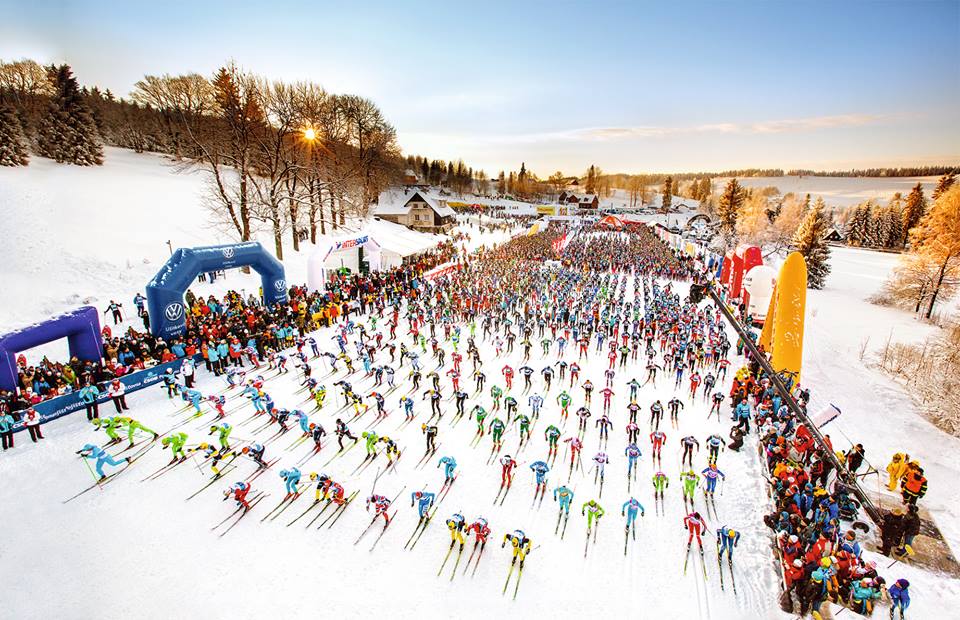
Start of the Jizerská Padesatka, a 50 k classic race near Liberec Czech, Republic. (Photo: Swix Ski Classics)
Sunday’s 50-kilometer classic race Jizerská Padesatka near Liberec, Czech Republic, is the next event in the 2015 Swix Ski Classics long-distance circuit and racers are eager to hit the tracks after a long break since the first races in Italy in mid-December.
Going into the third event in the Ski Classics (after the opening Pro Team Prologue and La Sgambeda), Norway’s Anders Aukland of Team Santander tops the overall ranking. Johan Kjølstad, who won the overall Ski Classics title last season, is second overall.
In the Ski Classics athlete ranking, 42-year-old Aukland tops the list in front of his younger brother Jørgen Aukland. Kjølstad, who races with Team United Bakeries, is in third place, three points ahead of Czech veteran Stanislav Rezac of Team Silvani Madshus, while Sweden’s Jörgen Brink of Team Lager 157 is fifth overall going into the Jizerská 50 k on Sunday.
In the overall sprint competition, Andreas Nygaard (Team Santander) is currently wearing the green points bib, while Team United Bakeries’ Øystein Pettersen is in second place, 10 points behind Nygaard.
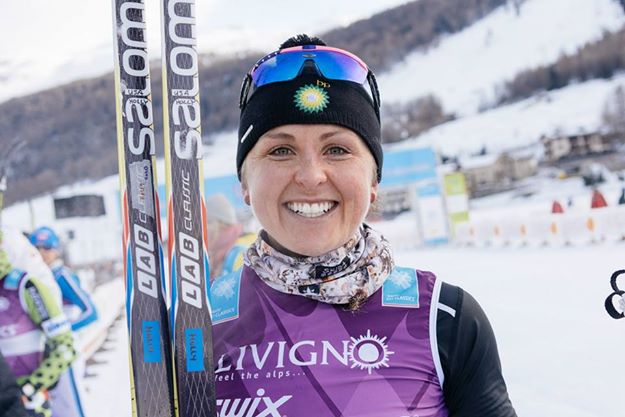
Holly Brooks at the Pro Team Tempo, which opened the Swix Ski Classics season in mid-December in Livigno, Italy. (Photo: Swix Ski Classics)
Brooks Skips the Jizerská
American Holly Brooks, who was picked up by the Aukland brothers’ Team Santander just a day prior to the start of the Ski Classics season, is in sixth place in the women’s overall competition. Seraina Boner of Switzerland, who races for Team Coop, tops both the overall standing as well as the athlete ranking.
However, Brooks is sitting out the Jizerská, returning to Europe for the Dolomitenlauf on Jan. 18, and joining her team for the Marcialonga a week later.
“I’m just trying to balance the FIS Marathon Cup, the Swix Ski Classics, and travel,” Brooks wrote in an email. “In years past I’ve done maybe three races 30K and longer spread out over a season, so I don’t know how my body is going to react and/or how the fatigue will build.
“My goal is to race as much as possible without a downgrade in performance,” she added. “I have a feeling I will be very, very tired by the end of the season.”
New Women Join Circuit
Prior to the Jizerská, the competition for the women’s overall Ski Classics title gets tougher. Three different Pro Teams have entered new female skiers into the long-distance series: Norway’s Hilde Landheim will race for Team Coop, Viktoria Melina joins the Russian Marathon Team, and Masako Ishida of Japan will race for Team United Bakeries.
In the Ski Classics, each professional team may enter a total of 10 skiers per season, male and female skiers included. Once entered, the teams may not unregister athletes, but they can enter additional athletes until they reach the maximum of 10 skiers.
Stellar Conditions
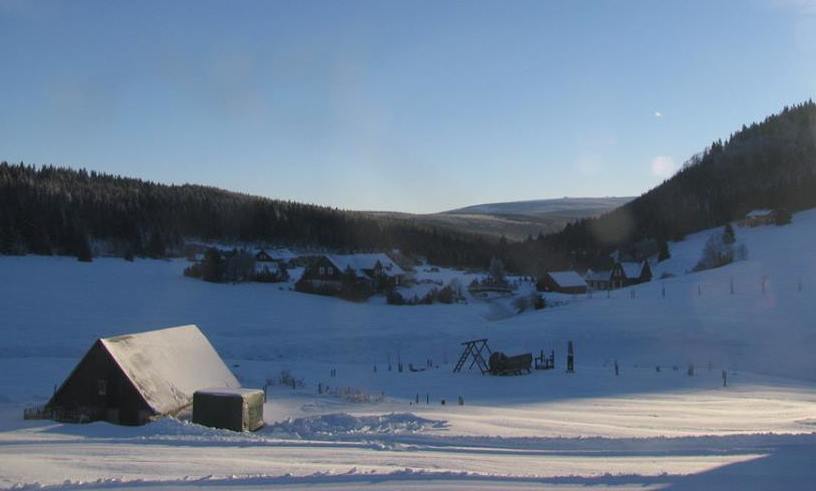
Czech Republich, home of the Jizerská 50, which will be held on Sunday, as pictured on Jan. 6.
Last year, the Jizerská races were canceled due to lack of snow, so event organizers are especially excited to put on the races this year and are proud to present stellar conditions on the race course. Promising weather forecasts, decent snowfall in the past week and cold weather have made it possible to produce enough artificial snow to cover the whole course, and the organizers are confident that they will be able to run the race as planned given the weather forecast, which predicted snow at the start and temperatures around freezing.
“We are happy to see that the weather has turned fine and the winter conditions have finally arrived,” Martin Koucky, a member of the Jizerská 50 Organizing Committee, said in a press release. “The whole Jizerská 50 track is now covered with snow while the race preparations continue to run along at full speed. There are some thirty centimeters of artificial and natural snow at potential critical points: at the Bedrichov stadium as
In addition to the 50 k Ski Classic on Sunday, the Jizerská race weekend opens with a 30 k skate race and a children’s race on Friday, and also offers a 25 k classic race as well as a corporate relay race on Saturday. New this year is a 1.5-kilometer double-pole sprint on Friday.
Six More Marathons on Tap
Team United Bakeries’ Pettersen (14), Berdal (11), and Kjølstad (13) at last month’s La Sgambeda in Livigno, Italy. (Photo Swix Ski Classics)
After the Jizerská 50 on Sunday, the Ski Classics moves to Switzerland for the brand-new La Diagonela on Jan. 17.
La Diagonela was introduced to the race series last winter as a replacement for the Jizerská 50, which was be canceled, but was such a success that the circuit included the race as a new, permanent installment on the Ski Classics calendar for the 2014/2015 season. This year, the 65-kilometer La Diagonela will be held on a picturesque new course through the villages of St. Moritz, Zuoz and Pontresina in the Engadin Valley.
After the stop in Switzerland, the Ski Classics moves to Italy for the Marcialonga in the valleys of Val di Fassa and Val di Fiemme on Jan. 25. The 70 k race is famous for its notorious final uphill climb, the Cascata, to the finish in Cavalese town square.
From Italy, the Pro Teams travel to Germany for the 50 k König Ludwig Lauf in Oberammergau, Bavaria, on Feb. 1.
After the König Ludwig Lauf, the athletes get a well-deserved break from competing until the legendary 90 k Vasaloppet from Saelen to Mora, Sweden, on March 8.
After Vasaloppet, the circuit moves on to Norway’s Birkebeinerrennet on March 21. The 54 k classic race starts in Rena, crosses to mountains to the finish line in Lillehammer, the host of the 1994 Winter Olympics.
The series once again ends with the season finale Årefjällsloppet in Sweden on March 28. The 75 k race offers stunning views from the in Vallbo to the finish line in Åre.
Jizerska Padesatka 2011 – Men's Podium – Oskar Svard, Anders Aukland, Stanislav Rezac
After a long and intense battle between Oskar Svärd, Team Exspirit, and Anders Aukland, Team Xtra Personell, the later turned out victorious in the Ski Classics event Jizerska Padesatka held this weekend in Bedrichov, Czech Republic.
The two broke away after the first 10k climb and stayed together until the Smedava climb at kilometer 30. In the climb Anders Aukland went all in and showed great climbing skills. Third came Stanislav Rezac, Team Patria Direct, and fourth Mathias Fredriksson, Team Exspirit, after a sprint against Audun Laugaland, Team United Bakeries, who finished in 5thplace.
The women’s race was won by Sandra Hansson, Team United Bakeries. Second was Seraina Boner from Engadin Skimarathon Team, and third and fourth place went to two Team Exspirit skiers, Susanne Nyström and Jenny Hansson.
In the Ski Classics Team competition, where the two best male and single best female skier count, the Swedish based Team Exspirit leads ahead of the two Norwegian teams – Team United Bakeries and Team Xtra Personell. Lars Ljung from Helsinge Ski Team is the current leader of the Ski Classics youth competition, the best skier under the age of 26.
Next Ski Classics race is the Marcialonga, Italy on the 30th of January.
OSLO, Norway – Joergen Aukland and fellow Norwegian Kjartan Roland were the original marathon specialists, who almost singlehandedly represented Norway consistently in the large international ski marathons outside of Norway.
But that was ten years ago. Today, thousands of Norwegians travel to marathons such as Italy’s Marcialonga, and the races now boast a number of high-profile athletes, including Aukland and his brother, Anders.
Both have fought for fame and glory, mostly for their own personal bragging rights, but with the launch of Ski Classics, they now have to consider their team – in this case, Team Xtra Personell. Ski Classics is a points-based competition running across all the season’s big marathons, with a Tour de France-style yellow jersey for the overall Ski Classic Champion, a pink jersey for the top racer under 25, a sprint jersey and a team jersey. Team points are awarded to the top two men and top two women in each race.
“It’s really exciting that we get something like this. I’ve dreamt about it for a decade. Now we can race even more like a team in the big marathons,” Joergen Aukland told Langrenn.com.
Sprint points will also count toward the overall team points throughout the season. One tricky issue for Team Xtra Personell is that they lack a strong female skier on their squad, who would have the potential to earn the women’s points. Both brothers Aukland and team manager Nils Marius Otterstad, exchanged furtive glances when Langrenn.com asked about who might step into that role during the formal launch of the Ski Classics in Oslo on November 29.
The races in Ski Classics 2011:
1 – Jizerska Padesatka, Czeck Republic, January 9, 2011
2 – Marcialonga, Italy, January 30, 2011
3 – König Ludwig Lauf, Germany, February 6, 2011
4 – Vasaloppet, Sweden, March 6, 2011
5 – Birkebeinerrennet, Norway, March 19, 2011
Final – Norefjellrennet, Norway, April 2, 2011
All six events will be televised live for Norwegian viewers via TV2, except for the Birkie, which can been seen live on NRK.
From Langrenn.com, November 30, 2010. By Geir Nilsen, translation by Inge Scheve
OSLO, NORWAY – Oslo’s local ski organization Skiforeningen and Thomas Alsgaard’s new distance initiative Team United Bakeries dish up a 10K classic suffer fest with more than 1,200 feet elevation gain. Start is Sørkedalen, Oslo, finish at Tryvann.
Jörgen Brink Photo: Madshus AS
According to the start list, both Team United Bakeries and Team Xtra Personell are well represented in the elite wave. Both current Vasaloppet champion from Team United Bakeries, Jörgen Brink (SWE), and 2008 Vasaloppet champion Jørgen Aukland (NOR) from Team Xtra Personell are registered and ready to duke it out for bragging rights. Add 2008 and 2009 Vasaloppet champion Sandra Hansson (SWE) in the women’s race to the mix for a total of three Vasaloppet champions on the start line.
“We’re really excited to have this kind of a marathon field. We think this event has potential, and next year, we’re planning to have the finish in the new roller ski arena at Holmenkollen,” Ole Kristian Sørland of Skiforeningen says to the Norwegian web site birken.no.
Team Xtra Personell: Anders Aukland, Jorgen Aukland, Jens Arne Svartedal
(translated from ski-nordique.net 11-4-09, “Northug et Cologna sous le même maillot ? ” and langrenn.com “Ulvang mener Northug må få sin del av landslagskaka” 11-4 09)
Leaders of the nordic ski world often look to cycling for ideas on how to advance the sport of skiing. Could the next similiarity come in the creation of more private teams ? With many national teams experiencing financial problems, the incentives to join a private team with larger funding could be very real. Perhaps if the top athletes join private teams, the national federations could then focus on the whole infrastructure of developing the younger athletes.
One example of a private professional team is Team Xtra Personell. Started in 2006, its team members consist of Jerry Ahrlin, Jens Arne Svartedal, Jorgen Aukland, and Anders Aukland. It is a team fully funded by sponsors and it provides structure through a full staff of founders, coaches, trainers, technicians, and others. But its relationship with the Norwegian Federation has not been good, and at times has brought penalties for the members of team Xtra.
Vegard Ulvang, head of the FIS, is a sworn supporter of the current model of national teams, wherein the best skiers in the nation are on one national team. He acknowledges the fact that some of the younger skiers, such as Peter Northug of Norway, do not feel they are fairly compensated by their national teams and so have recently considered joining private teams, but says to do this would be disruptive and very negative for the sport.
Ulvang thinks the Ski Federation needs to find a way for the top skiers to get compensated fairly by their national teams so that they are earning a bigger slice of the cake.
Of differing opinion is Fredrik Aukland, head coach of the Swiss national team and advisor to Team Xtra Personell, who firmly beleives in the future of private teams. He thinks it would not be unrealistic to see Swiss skier Dario Cologne and Northug on the same team in the future.
Peter Northug and Dario Cologne: future teammates?