From the FasterSkier archive — posts syndicated from athletes’ and coaches’ own blogs between 2004 and 2012, kept online as published. Current coverage is at fasterskier.com.

Tag: Andrea Henkel

  • Quick-Draw Wierer Outshoots Dorin Habert for Canmore Mass Start Win

    Quick-Draw Wierer Outshoots Dorin Habert for Canmore Mass Start Win

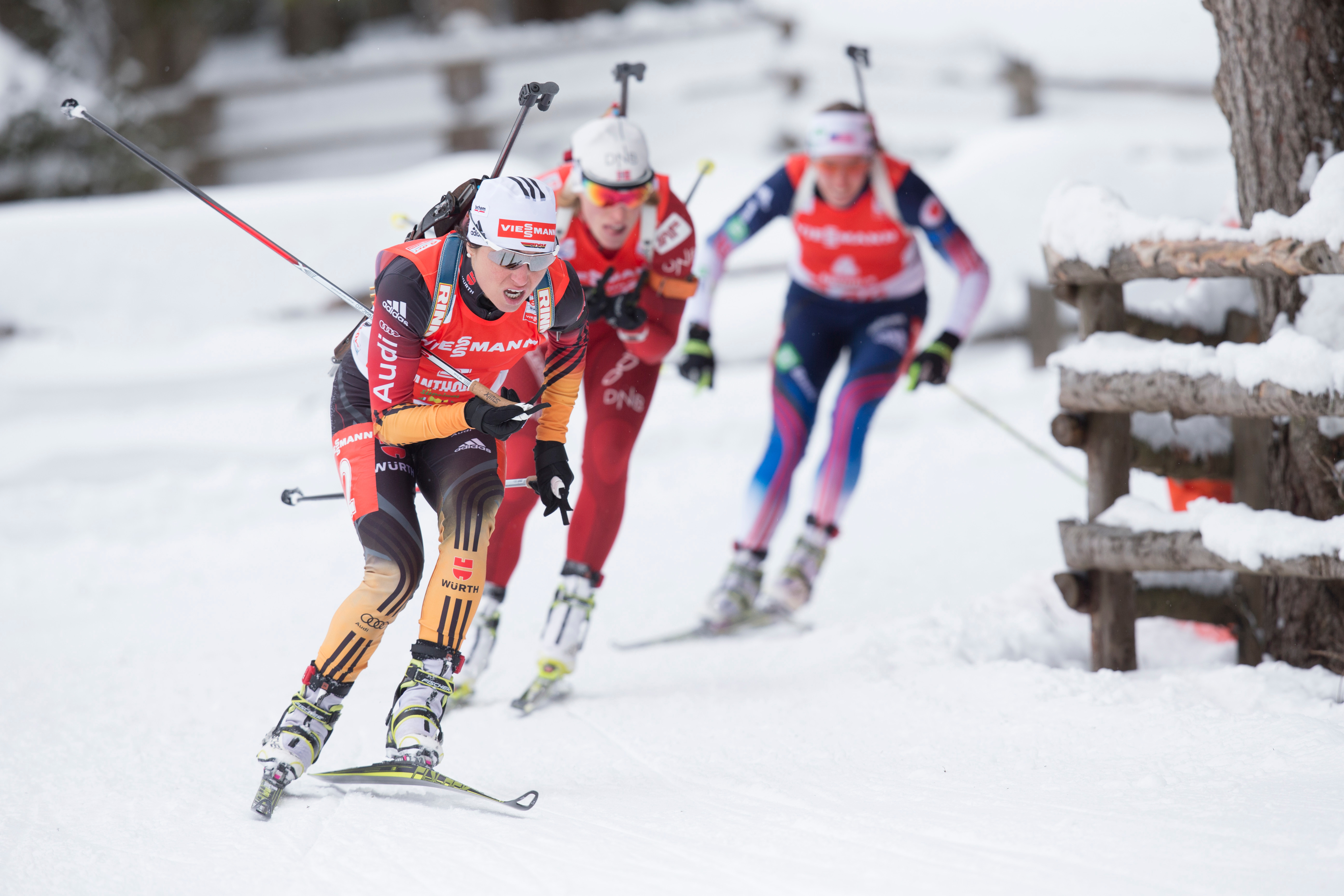
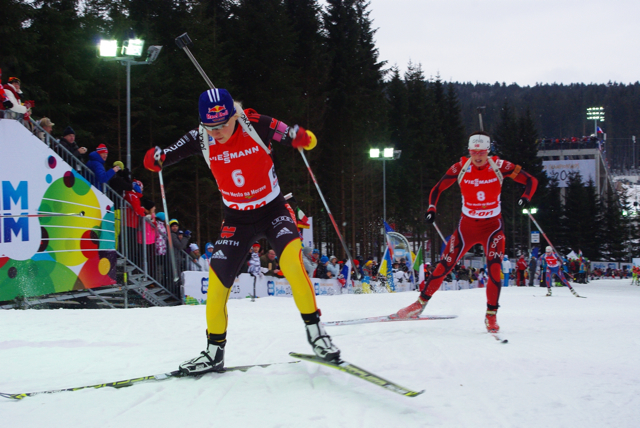
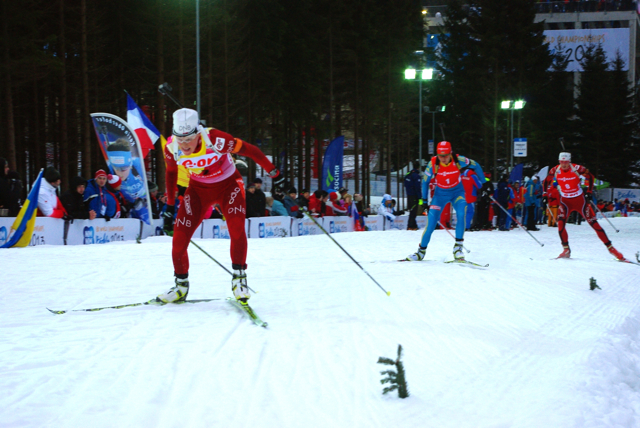
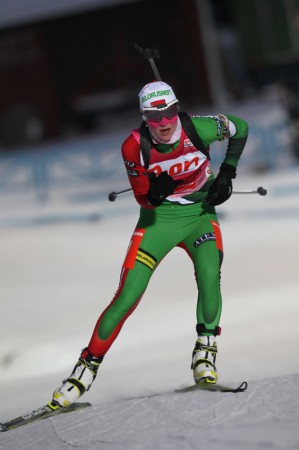
    Italy's Dorothea Wierer (2) leads out of the start of the women's 12.5 k mass start at the IBU World Cup on Saturday in Canmore, Alberta, along with Gabriela Soukalova (1) in the World Cup leader's bib. (Photo: Daniel S. Guay)
    Italy’s Dorothea Wierer (2) leads out of the start of the women’s 12.5 k mass start at the IBU World Cup on Saturday in Canmore, Alberta, along with Gabriela Soukalova (1) in the World Cup leader’s bib. (Photo: Daniel S. Guay)

    Let’s pretend, for a moment, that we’re in the gunslinging days of the Wild West — perhaps not so far off in Canmore, Alberta, where wide-brimmed cowboy hats are a trademark today.

    You meet Italy’s Dorothea Wierer — sans the modern-day mascara, flashy sunglasses and questions of how she got to Canada in the late 1800s — on the dusty road and it’s time for a draw. Bottom line, you should put your hands up.

    More than a couple times this season, the 25-year-old Wierer has proved that she can shoot under pressure. Just over three weeks ago, she cleaned the four-stage 15 k individual race at the IBU World Cup in Ruhpolding, Germany, to take the win. She pulled off a similar feat in the individual race at the early season World Cup in Östersund, Sweden, for her first career win.

    So when France’s Marie Dorin Habert took an extra breath or two to clean her final shot in the third shooting stage of the women’s 12.5-kilometer mass start on Saturday, Wierer pounced. She had followed Dorin Habert into the range, just a few seconds behind but enough to give the French skier enough time to start firing first. Wierer proceeded to clean her five targets with the fastest range time for the second-straight stage, then sped out of the range before Dorin Habert could react.

    The race leader's in Saturday's 12.5 k mass start during the third shooting stage, with France's Marie Dorin Habert (r), Italy's Dorothea Wierer (second from r), Germany's Franziska Hildebrand (c), France's Celia Aymonier (second from l), and Gabriela Soukalova of the Czech Republic (l). (Photo: Daniel S. Guay)
    The race leader’s in Saturday’s 12.5 k mass start during the third shooting stage, with France’s Marie Dorin Habert (r), Italy’s Dorothea Wierer (second from r), Germany’s Franziska Hildebrand (c), France’s Celia Aymonier (second from l), and Gabriela Soukalova of the Czech Republic (l). (Photo: Daniel S. Guay)

    Wierer took the lead by 1.8 seconds, overcoming an early penalty in her first prone by cleaning the next two stages, while Dorin Habert chased her into the fourth of five loops. Over the next 2.5 k, the two race leaders skied together, exchanging a few words at one point. Dorin Habert, 29, hadn’t lost the race, but she had lost her edge over the gutsy Italian. A day earlier, Wierer placed third in the 7.5 k sprint with 9-for-10 shooting, and Dorin Habert finished 29th with four misses.

    “I decided to attack today,” Dorin Habert told the IBU after the mass start. “My standing has not been very good at times this season, so I was more aggressive today.”

    Meanwhile, she and Wierer skied about five seconds ahead of Gabriela Soukalova of the Czech Republic, who, like Dorin Habert, had cleaned all three stages up to that point to put herself in third.

    The last time they entered the range, Wierer led Dorin Habert in to take the first shooting position. Dorin Habert stood on Point 2, and Soukalova on Point 3.

    Bang-bang-bang-bang-bang! Wierer rattled off her shots, hitting all five targets with the fastest range time once again. She flew out of the range, again in first, but this time, Dorin Habert and Soukalova each missed one behind her. The penalty loop put Dorin Habert 30.6 seconds back in second while Soukalova followed about eight seconds later in third.

    By that point, the race was essentially over. Barring any catastrophic last loop for Wierer, 30 seconds is simply tough for anyone to overcome in 2.5 k. And Wierer was racing to what ended up being the fourth-fastest overall course time.

    While Dorin Habert reduced the deficit to 22.7 seconds with 0.7 k to go (while Soukalova skied 39.6 seconds back in third), Wierer raced to the finish uncontested for her third-career World Cup win in 36:50. Dorin Habert finished 20.8 seconds later in second, and Soukalova was 50.3 behind in third.

    Italy's Dorothea Wierer celebrating her third career World Cup win and first mass start victory on Saturday at the IBU World Cup in Canmore, Alberta. (Photo: Daniel S. Guay)
    Italy’s Dorothea Wierer celebrating her third career World Cup win and first mass start victory on Saturday at the IBU World Cup in Canmore, Alberta. (Photo: Daniel S. Guay)

    The win was Wierer’s best mass start result after placing sixth in the event two seasons ago in Pokljuka, Slovenia. An hour earlier, Italy’s Dominik Windisch won the men’s mass start in Canmore, and Wierer completed the Italian sweep with the women’s victory.

    “I was so nervous for Dominik when I was watching his race,” Wierer told the IBU after her race. “This is a great day for the Italian team; this has never happened before. It is historic!”

    While the winds were nowhere near as troublesome as during Friday’s sprint (nor were they as prevalent as during the men’s race earlier Saturday afternoon), the women’s mass start wasn’t without occasional gusts and light snow. Wierer explained she had trouble with zeroing before the race.

    “I must have shot 10 times; I never do that, and it still was not very good,” she said. “So I went out there thinking it would either be good or horrible. I have never had a good mass start before, until today!”

    Wierer led set the pace for the field early on, leading much of the first loop with Kaisa Mäkäräinen and Germany’s Miriam Gössner following close behind. On the first prone shooting, 13 women cleaned; Wierer was not one of them. She missed one and left the range in 14th, 15.8 seconds behind Germany’s Franziska Hildebrand in first. Austria’s Lisa Theresa Hauser trailed Hildebrand by 1.3 seconds and Russia’s Daria Virolaynen left the range 3.7 seconds back in third.

    A color commentator for the IBU’s live online broadcast of the Canmore races, retired German biathlete Andrea Burke (formerly Henkel) noted that if you’re going to miss, it’s better to miss sooner than later.

    By the next shooting stage, the number of athletes without a miss was down to six. Dorin Habert, Hildebrand, France’s Celia Aymonier, and Soukalova were among them.

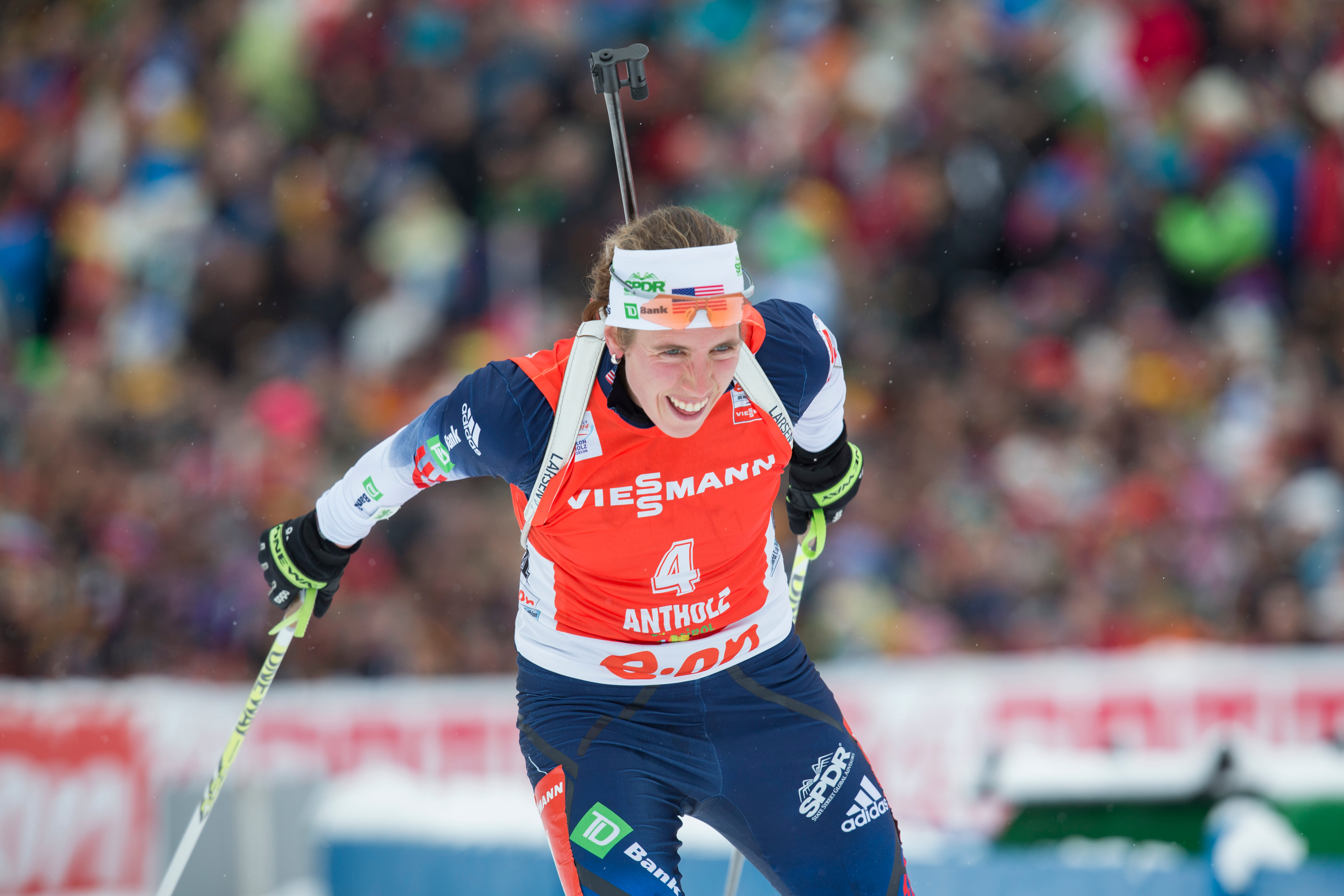
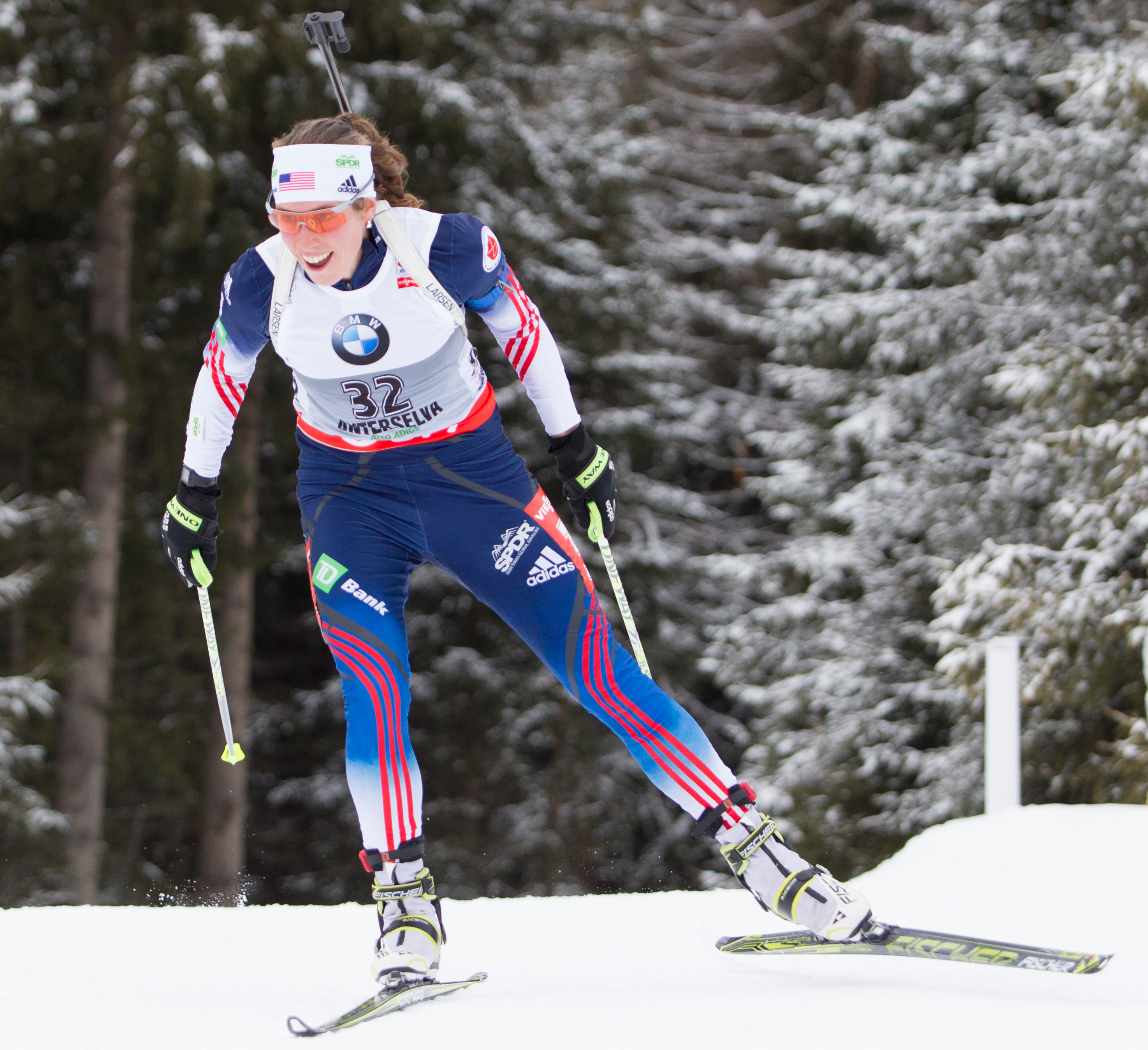
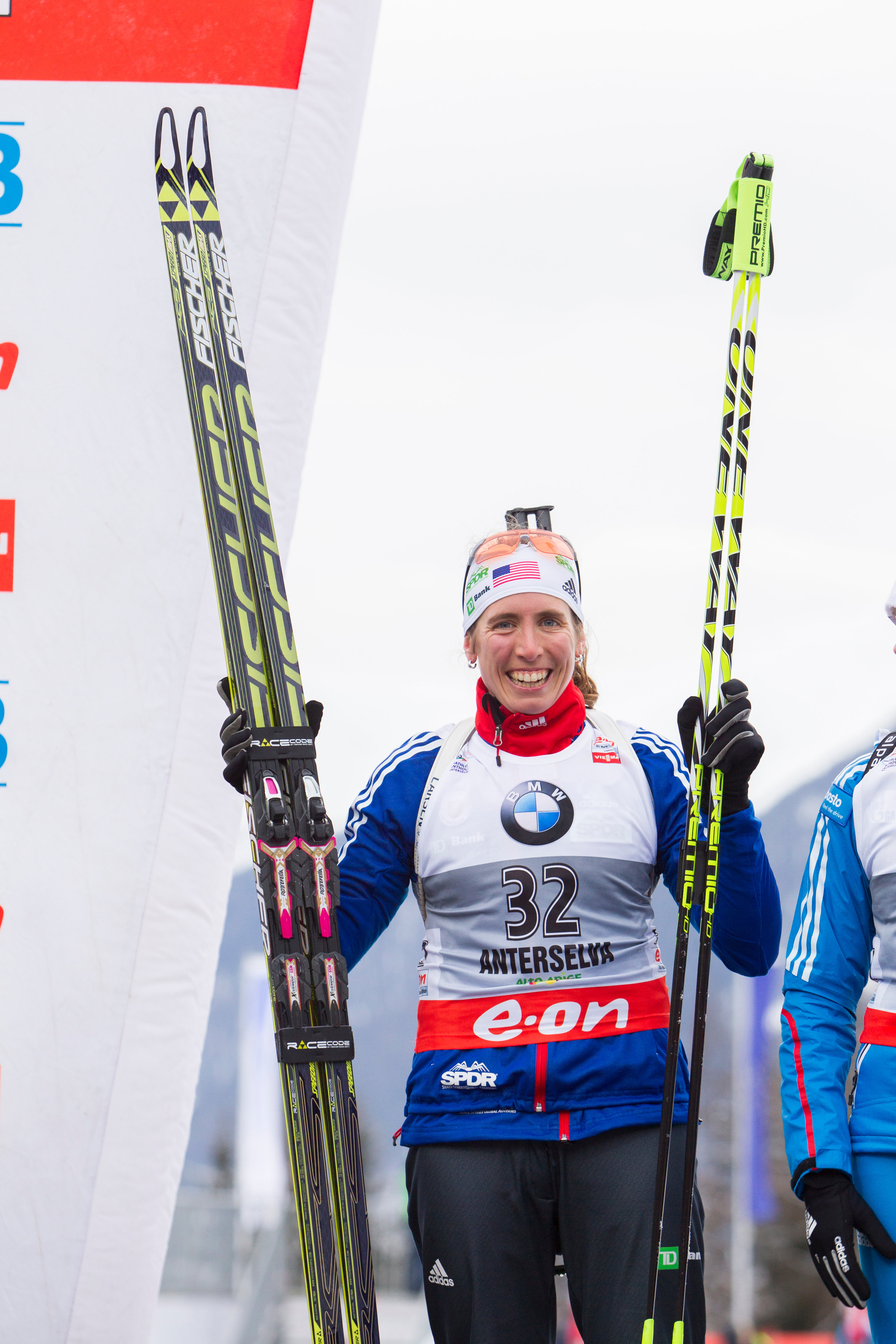
    Susan Dunklee (US Biathlon) finishing the women's 12.5 k mass start on Saturday at the IBU World Cup in Canmore, Alberta. She placed 30th with 10 penalties. (Photo Daniel S. Guay)
    Susan Dunklee (US Biathlon) finishing the women’s 12.5 k mass start on Saturday at the IBU World Cup in Canmore, Alberta. She placed 30th with 10 penalties. (Photo Daniel S. Guay)

    Meanwhile, American Susan Dunklee fell out of contention and into 26th place (1:52 behind the leaders) with three penalties in the second stage (on top of one miss in the first prone). In the third shooting, she missed all five to drop to 30th and 4 1/2 minutes back.

    “I’m not entirely sure what caused my shooting struggles today and why, but I don’t plan to analyze things too much yet,” Dunklee wrote in an email after finishing 30th, 6:24.9 back with 10 penalties (1+3+5+1). “Tomorrow is a new day and right now that is my focus.”

    As she came through the finish more than a minute after Switzerland’s Selina Gasparin in 29th, she looked up at the crowd and shrugged.

    “I was appreciative of all the North American fans still cheering me on as if I were winning the race,” Dunklee wrote. “It’s not every day that I get to race in front of a home crowd.”

    The overall World Cup leader, Soukalova smiled as skied toward the finish in third, and had enough time to turn around and ski backwards over the line.

    “A fairy tale,” she said of her season thus far. “I just try to focus on each race and have fun. That is the most important thing, to have fun.”

    Mäkäräinen recovered from three early misses in the first stage and one more in the second prone to place fourth (+1:11) and Hildebrand missed one on each standing and finished fifth (+1:13.5). The German was less than a second ahead of France’s Anais Bescond in sixth (+1:14.4) with three misses (2+0+0+1).

    For the final day of racing in Canmore, two different relays will be held: the single mixed relay (with Canada’s Julia Ransom and Nathan Smith, and for the U.S., Annelies Cook and Leif Nordgren) at 10:10 a.m. Mountain time, and the four-person mixed relay (with Canada’s Rosanna Crawford, Sarah Beaudry, Macx Davies, and Brendan Green; and for the U.S., Dunklee, Hannah Dreissigacker, Tim Burke, and Lowell Bailey) at 2:05 p.m. MT.

    In the men’s mass start, Burke notched a season best in seventh, Smith was 16th and Bailey 20th. Stay tuned for a separate report on that race.

    Results

    Photos

    Start lists: Single mixed relay | Mixed relay
  • Wednesday Workout: Gym Time with Andrea Burke (with Videos)

    Wednesday Workout: Gym Time with Andrea Burke (with Videos)

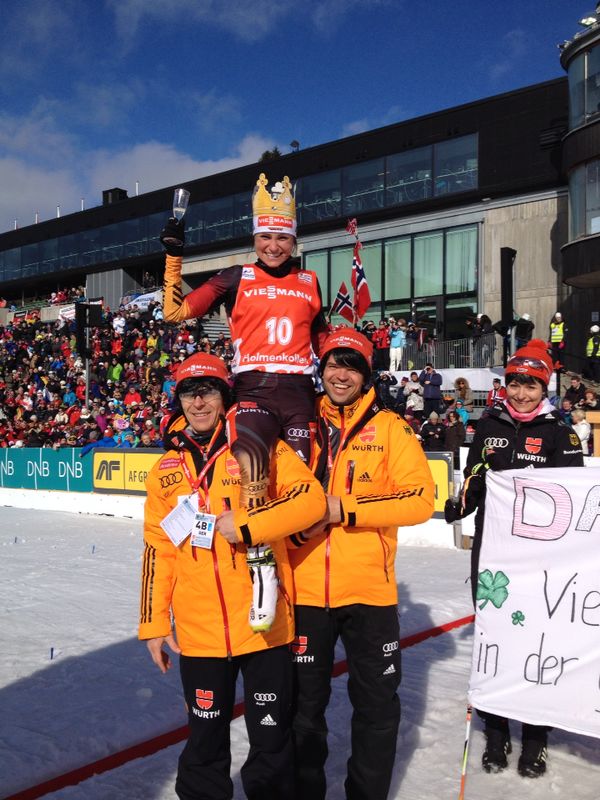
    Germany's Andrea Henkel, now Burke, after the last race of her career in March 2014 at Holmenkollen in Oslo, Norway. (Courtesy photo)
    Germany’s Andrea Henkel, now Burke, after the last race of her career in March 2014 at Holmenkollen in Oslo, Norway. (Courtesy photo)

    For Andrea Burke, formerly Henkel, retirement has meant embracing workouts in a new form. The 37-year-old German, who stopped racing a year ago and married Tim Burke in October, has found that in the time since she’s been able to enjoy mixed methods of exercise.

    A four-time Olympic medalist and the first biathlete to win every individual event at World Championships, Burke is currently transitioning to moving from Oberhof, Germany, to Lake Placid, N.Y., where her husband grew up. There, she aims to start a personal-training business, and has been taking classes and getting licenses to do so.

    In an email earlier this spring, she provided this strength workout as a cross-training option, “especially when you do not have so much time or the conditions are very bad outside,” she wrote. “I promise you some sweat and heart rate.”

    Burke added that she started doing gym sessions like these in the last two years, and more so when she finished biathlon.

    “I really like to do [these] kind of programs for staying in shape and get some heart rate between studying,” she wrote. “It’s a great possibility to work out by having not so much time but still feel I get a good workout done.”

    She recommends doing this kind of full-body workout twice a week.

    Warmup:

    • 10 minute jog or bike
    • Hand walk (10 reps) (see video)

    Workout:

    Part 1 (do 4 times in a row with 30 seconds rest in between)

    • 15-second stationary sprint (in place with knees up)
    • 5-second rest
    • 15 seconds of burpees (video)

    Part 2: Strength circle (do 2 complete sets with a deep breath between each exercise)

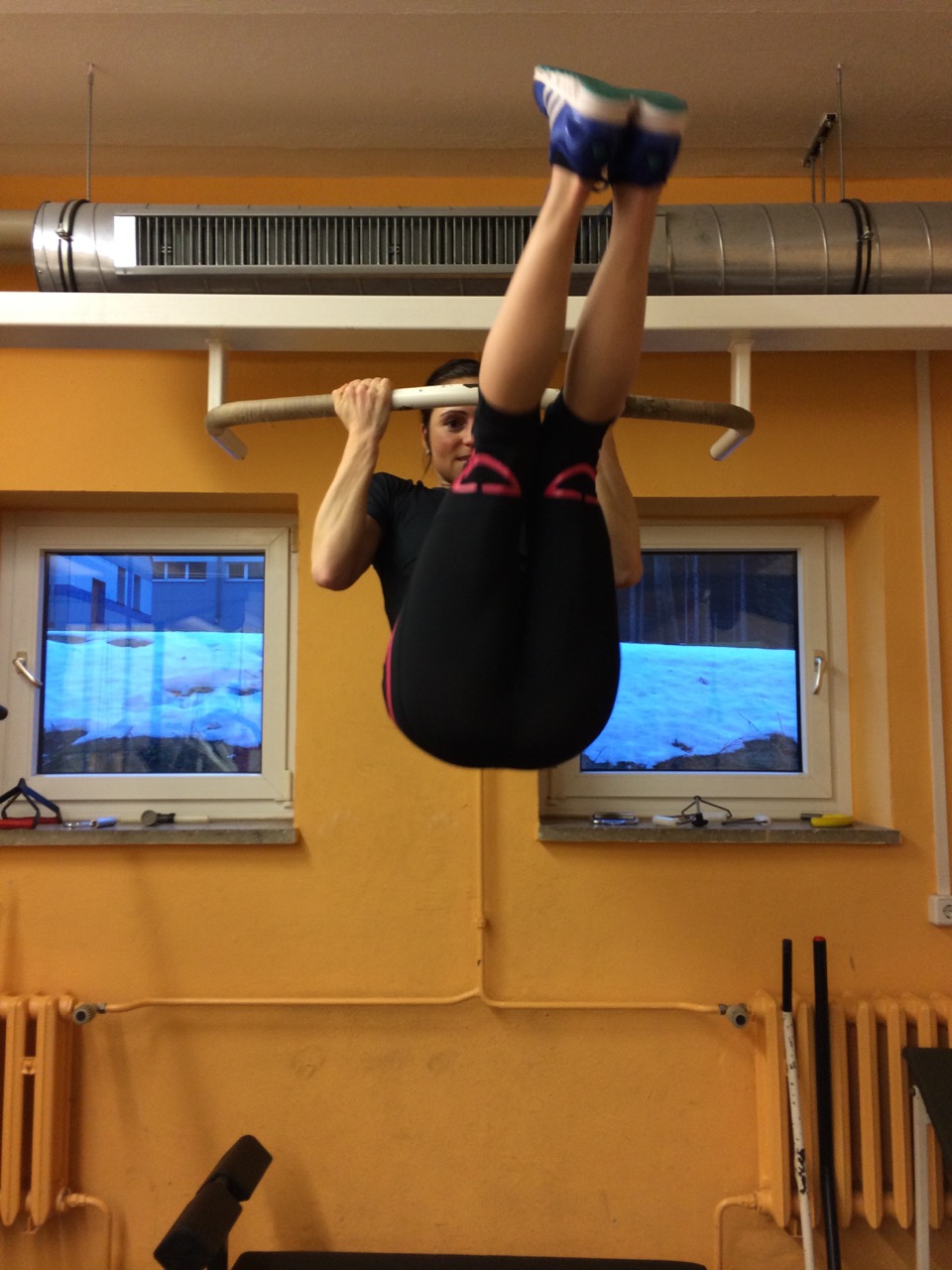
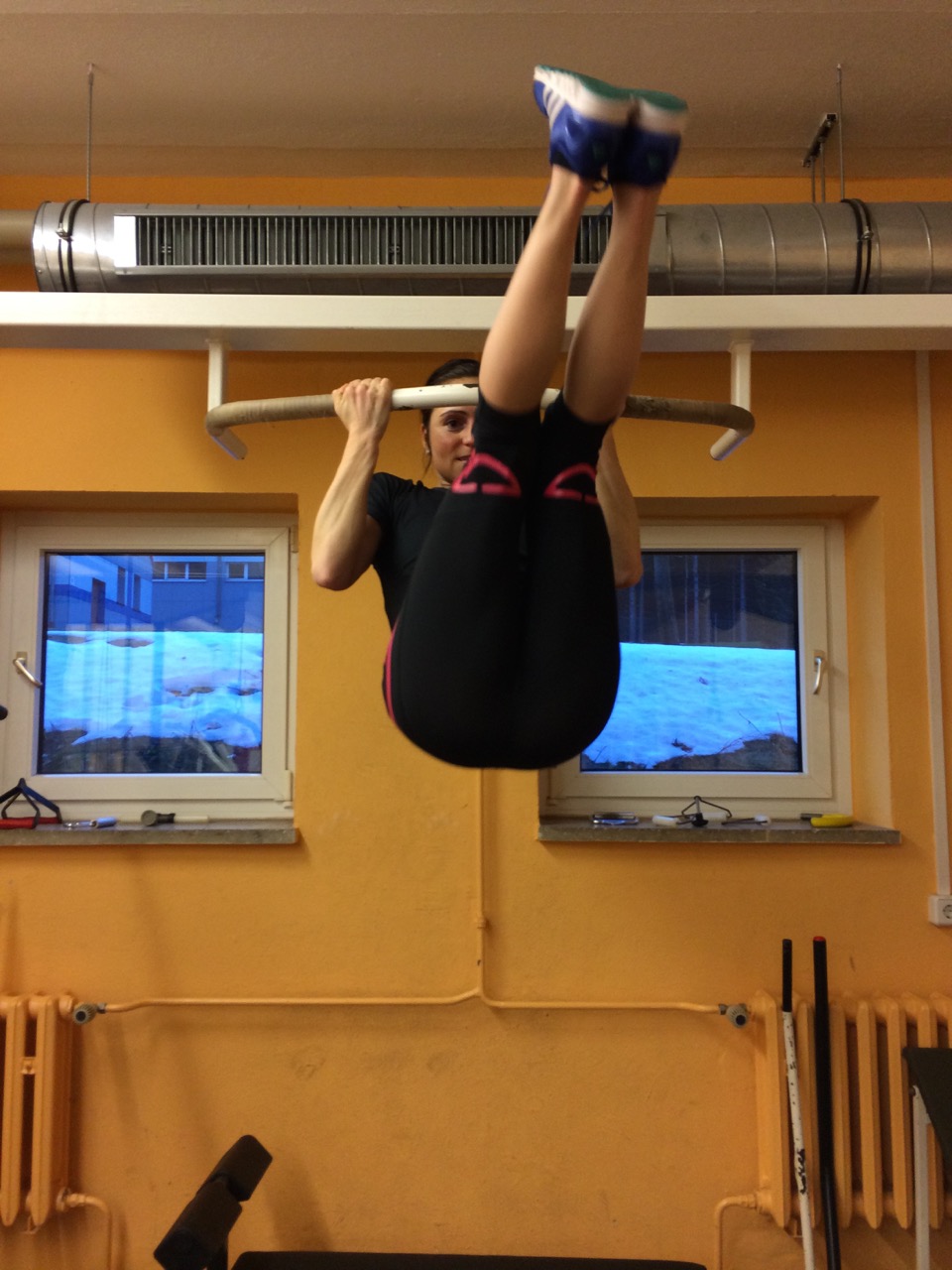
    Andrea Burke demonstrates a leg raise on a pull-up bar. Do as many as possible to improve core strength. (Courtesy photo)
    Andrea Burke demonstrates a leg raise on a pull-up bar. Do as many as possible to improve core strength. (Courtesy photo)
    • Step up (20 on each leg) (video)
    • Side plank on hand, small hip movements (50 on each side) (video)
    • Lunges with upper-body turn (video)
    • Plank on elbows, heels moving forward and backward (1 minute) (video)
    • Back exercise, with arm movements as big as possible (1 minute) (video)
    • Side plank on hand, elbow to knee (20 each side) (video)
    • Leg raise on pull-up bar (see photo at right)

    Part 3: (Do each exercise as fast as possible for 20 seconds for a total of 3 sets with 10-second rests in between)

    • Jumping jacks
    • Mountain climbers
    • Squats
    • Push ups

    Cool down:

    • 10-minute jog or bike
  • Why Did Germany Flame Out in Sochi – And Will They Be Back?

    Why Did Germany Flame Out in Sochi – And Will They Be Back?

    Screen Shot 2014-11-26 at 11.47.26 PMThe German nordic sports experience at the 2014 Olympics could perhaps be summed up on the last day of competition.

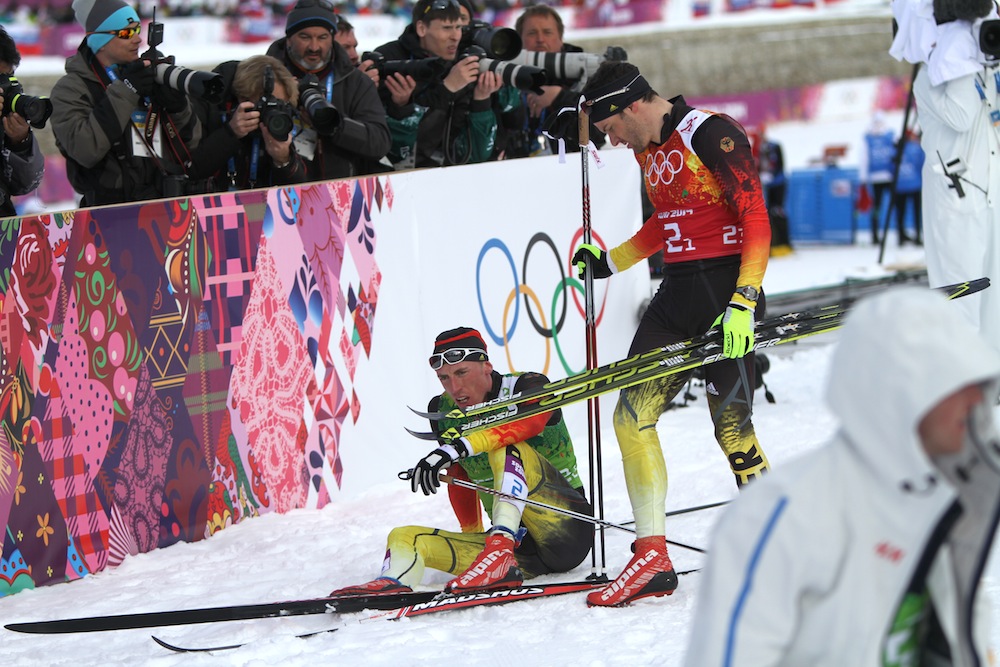
    In the men’s 50 k, Germany entered four men. The finishers were led by Thomas Bing, about to turn 24 years old, in 36th place.

    Next came Axel Teichmann, more than ten years Bing’s senior. Then two biathletes – Arnd Peiffer and Erik Lesser, in their 50 k debuts on the world stage and within a minute of Teichmann’s time.

    Four years earlier, Teichmann had captured silver for Germany in the same event, but on that day in February he labored to 39th place, more than four minutes behind the winning Russian skier. While Germany still had a few of their stars from days past on their roster, they were mostly stars no more.

    Peiffer and Lesser had teamed up for a silver medal in the biathlon relay the day before, but they surely were not on fire in the 50 k (understandably). While they treated the race as a fun way to end their Games – and some other biathletes and nordic combined skiers probably would have jumped at the chance to do the same thing – their participation brought up an uncomfortable question: can Germany find nobody else?

    To say that Sochi was a disappointment for Germany would be an understatement. While expectations were somewhat tempered by their team’s performance so far that year, it was hard not to remember Vancouver. There, biathlete Magdalena Neuner won two golds and a silver, Simone Hauswald shared the podium with her when she earned bronze in the mass start, and the relay also took bronze.

    Germany's Tim Tscharnke (l) after the finish of the 2014 Olympic team sprint with teammate Hannes Dotzler. The two finished seventh after Tscharnke fell a few hundred meters before the finish as a result of a tangle with Finnish anchor Sami Jauhojärvi. Finland took gold and Germany placed seventh.
    Germany’s Tim Tscharnke (l) after the finish of the 2014 Olympic team sprint with teammate Hannes Dotzler. The two finished seventh after Tscharnke fell a few hundred meters before the finish as a result of a tangle with Finnish anchor Sami Jauhojärvi. Finland took gold and Germany placed seventh.

    In cross country, Nystad and Evi Sachenbacher-Stehle had teamed up for gold in the Vancouver team sprint, Teichmann and Tim Tscharnke took silver in the men’s event, the German women were second in the relay, and the men won two individual silver medals.

    For a little perspective: in 2014, Germany came away with three medals, total, in cross country and biathlon combined.

    Where to start with the embarrassments? Was it Sachenbacher-Stehle testing positive for a banned stimulant? Or was it Tscharnke falling down in the final stretch of the team sprint and, instead of getting up and likely earning bronze, lying in a heap whimpering about how he missed out on gold?

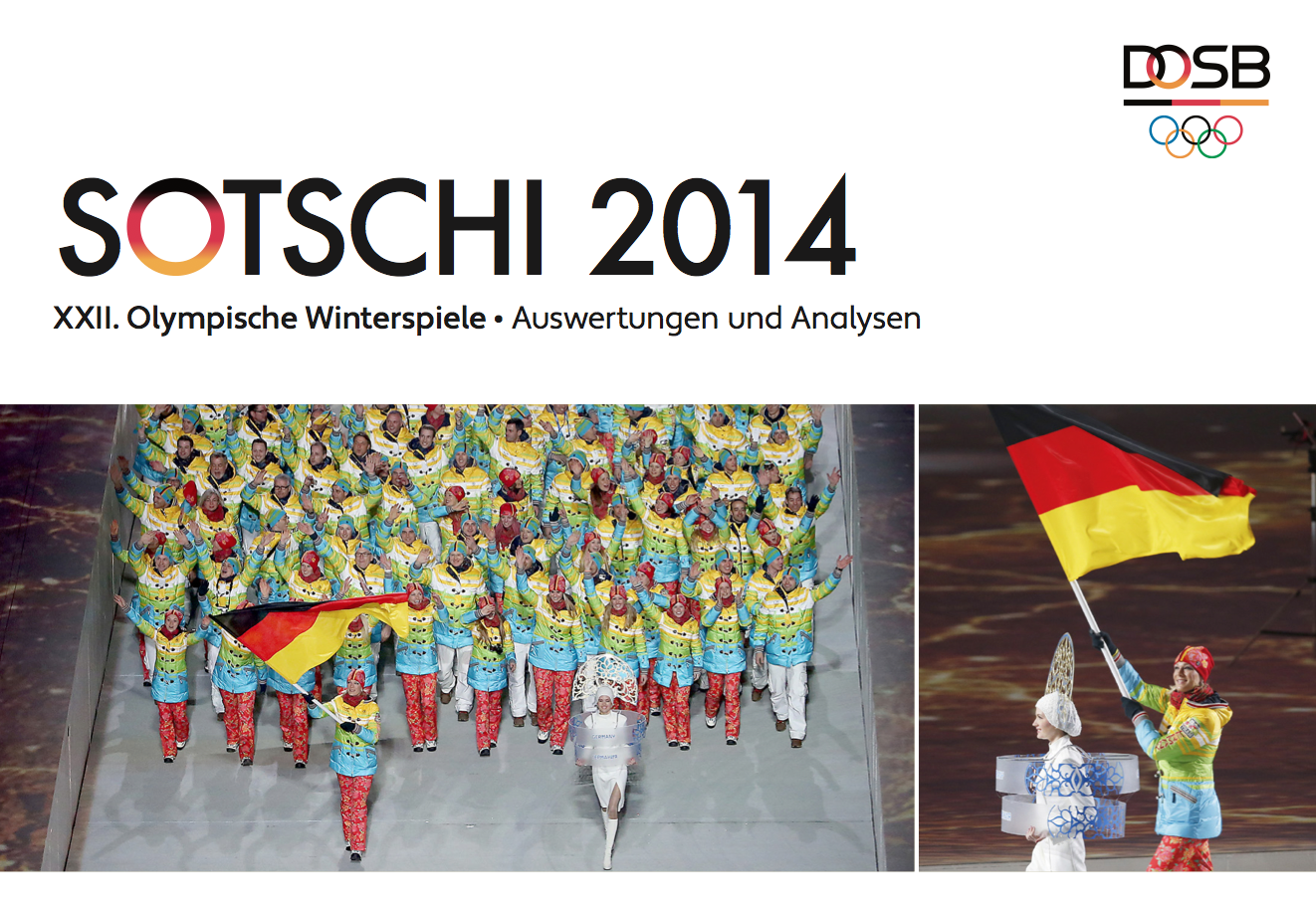
    In a Deutscher Olympischer SportBund report obtained by FasterSkier, the country’s Olympic committee assesses the success of each sport at the 2014 Olympics, and looks for actionable plans to move forward and upward. The document runs more that 230 pages and not only focuses on each sport individually, but also on funding partners, medical and logistical support, and what other countries are doing to succeed. It’s an impressive analysis of a huge and complex system.

    A Cross Country Team Too Old and Too Young

    “Denise Herrmann and Josef Wenzl improved in the world rankings in the 2013/2014 season and even at times led the Sprint Cup,” the report noted of young German skiers. “But the pre-Olympic season was marked by a disappointing World Cup, and the coaching change in 2012 didn’t bring the expected turnaround.”

    Herrman was one of the great hopes for Germany – a medal in the skate sprint seemed very possible for the 25-year-old (and if that doesn’t sound “young”, the report notes that the average age of a medalist was 28 for women and 29 for men). But like other favorites including Marit Bjørgen and Kikkan Randall, she didn’t make the final.

    That was symbolic of the single medal and three top-8 finishes by German skiers, their worst performance at an Olympic Games since 1998.

    While performances by the team’s young stars showed that maybe they weren’t ready for literally the biggest stage in the sports world, the squad was also filled with older athletes. The single medal came in the women’s relay, where 36-year-old Nystad was helped earn bronze and the team came into the sprint finish with the leaders.

    Kerttu Niskanen of Finland leading Claudia Nystad of Germany in the Olympic relay. Nystad completed her comeback from retirement with a bronze medal.
    Kerttu Niskanen of Finland leading Claudia Nystad of Germany in the Olympic relay. Nystad completed her comeback from retirement with a bronze medal.

    The report noted that Nystad was the oldest medalist in cross-country skiing. But they didn’t say what the rest of the team’s aging veterans accomplished: because Teichmann didn’t contribute much, nor did 36-year-old Tobias Angerer. None of the women who competed in the 15 k skiathlon were under the age of 30.

    Nordic sports are particularly difficult to analyze, the report noted, with different techniques and physiological demands of uphill and flat sections, aggression needed on downhills, transitions essential on rolling terrain, and equipment and ski service becoming increasingly important.

    But the best athletes, the report explained, are in general among the best at each of these different aspects, and having a weakness in one area can’t necessarily be compensated for by excellence in another area due to the high level of competition in the field.

    What do they recommend to get German skiing back on track? For once thing, they focus on a “long-term development structure” and suggest that the objectives and tasks be reworked after observing other country’s strategies for developing cross country skiers.

    Another recommendation is that while providing for an athlete’s development, not to treat them as machines: “An essential prerequisite of all participating institutions is to in close cooperation control the sport, but also the personal development of the athletes and to focus on the achievement of future excellence in high-performance.”

    Finally, the committee noted that the ski association’s current strategy of setting up different training groups seems to be effective, but that it should look towards biathlon and nordic combined for how to systemize development at the junior level.

    If there’s more talent coming up, there may finally be starts for them. Teichmann, Angerer, and Katrin Zeller retired. Nystad is back in action and had a strong race in Beitostolen, Norway, this weekend.

    What Happened to Biathlon?

    Erik Lesser of Germany en route to a silver medal in Sochi.
    Erik Lesser of Germany en route to a silver medal in Sochi.

    Biathlon was an unmitigated disaster for Germany at the Sochi Olympics. On the second page of the biathlon section of the report, the committee addresses an ugly truth: the medal rankings. Germany collected two medals, one silver and one bronze, which landed them in fourth place (although there were several ties; five teams were better, two the same). The Czech Republic surged past them with five medals.

    “Besides the established nations of Germany, France, Russia, and Norway, increasingly athletes from Austria,the Czech Republic, Slovenia, and Canada are gaining podiums and placing among the world leaders,” the report noted.

    Echoing a sentiment expressed by many of the sport’s observers, the committee crunched some numbers and showed that biathlon is, in fact, getting increasingly competitive: the same level of performance that might have won a medal in the past just doesn’t cut it anymore.

    “In order to achieve podium finishes, the men at maximum about 1.2 percent behind in skiing, and hit targets at a rate of of about 98 percent. The previously assumed requirement to be 1.5 percent back and a 95 percent hit rate are therefore obsolete now… in the women’s field, a hit rate of 96 percent and maximum ski speeds less than 2.0 percent back are needed to reach medal placings… the best individual performances in the opening contest, the sprint, were… clearly behind the world leaders in both skiing and hit rate as well as in the shooting times. Because they were immediately dependent on the sprint results, the prospects were thus low for the subsequent pursuit.”

    Forget medals – it didn’t get any better for Germany when considering top-8 performances: in other words, they weren’t even close to winning more medals. The team had only three top-eight finishes (discounting those from Evi Sachenbacher-Stehle after her doping ban). Norway and the Czech Republic led the way with 11, while France had 10. Germany’s three tied it with the United States, Canada, and Slovakia.

    The women’s team, the report noted, was highly variable. After the Vancouver Games, three stars retired (Kati Wilhelm, Martina Beck, and Simone Hauswald), while Magdalena Neuner called it quits after the 2012 World Championships in Ruhpolding, Germany.

    “[The team] ultimately consisted of two juniors (Franziska Preuss, Laura Dahlmeier); a very experienced senior athlete (Andrea Henkel); an experienced, former cross-country skier – with considerable training effort for the stabilization of the shooting performance (Evi Sachenbacher-Stehle); and an athlete who in comparison to previous years increased her experience but at events as big as Sochi still has far to go (Franziska Hildebrand). The challenging tracks in Sochi required a high level of competition experience with regard to the race schedule. Their could succeed in competition only on the basis of a high level of physical and mental performance. These parameters within the existing team structure are pronounced insufficient for an Olympic Winter Games.”
    Magdalena Neuner, a three-time World Cup champion, double Olympic gold medalist, and winner of 17 World Championships medals, has been critical of the DSV's biathlon program. Photo: NordicFocus/Fischer.
    Magdalena Neuner, a three-time World Cup champion, double Olympic gold medalist, and winner of 17 World Championships medals, has been critical of the DSV’s biathlon program. Photo: NordicFocus/Fischer.

    Since the Olympics, Neuner has publicly criticized the Deutscher Skiverband (DSV, the governing body for snow sports) and accused them of being behind the times and resistant to change.

    “Times have changed, and the level of the World Cup has increased,” she told Der Spiegel. “[They] didn’t want to think differently… the team needs someone who has a bit more sensitivity for the young girls. The World Cup is a tough business. And because they are currently not as successful, it is even harder. Now they need a coach who is fully behind them.”

    In a separate conversation with Sport1, Neuner said that far too much pressure had been put on the likes of Dahlmeier and Preuss, who just two years before had been competing at the Youth Olympic Games.

    Her leadoff leg of the women’s relay was tough to watch – she fell, and also had her rifle sight clogged with snow. Perhaps additionally discombobulated by Sachenbacher-Stehle’s doping result, Preuss tagged off three minutes behind the leader and in tears. She was 19 years old, and has since made it clear that she never wants to revisit the memory.

    “It’s always difficult in the first World Cup season, and especially at the Olympics for young athletes: the pressure is greater than they had ever imagined,” Neuner told Sport1. “You think you’re now relaxed on the World Cup, but it is different than before. The public attention is so high and the pressure as well.”

    She also said that the trainers did not sufficiently individualize training plans, and as a result many of the athletes were often exhausted and sick. Neuner trained more or less independently of the national team during her most successful years.

    Neuner has since been in contact with the DSV, and they have reportedly offered her a position to advise them.

    Henkel – who has medals from three Olympics and teamed up on relays with the strongest German biathletes ever, from Uschi Disl to Neuner – has since retired, married longtime boyfriend Tim Burke, and is planning a life in the U.S. German media is calling the very young German women’s team perhaps the most challenging squad since the reunification of East and West Germany.

    “You shouldn’t compare these girls to what was before, but give them some time to develop and not have a lot of worry,” the told news.de.

    What About Everyone Else?

    How does Germany apply the same logic to other countries? The report also contains information on each of Germany’s main rivals: France, Canada, Norway, Russia, and the United States. A few interesting assessments:

    France, it notes, won 15 medals – but all came in ski and snow sports, a “problem” noted by the head of the French effort and which will be targeted for expansion in coming years. How does France fund their efforts? Among other things, through the military, customs, and border patrol, which provides athletes with salaries. 60 percent of the medals won came from athletes in these programs, and only in jumping was the success unrelated.

    “There is a positive trend in the spending from 2010 to 2013, for the key role of competitive sports the Institute for French High-Performance Sports [INSEP] used 63 percent of its total expenditures, or about 21 million euros. The budget for research projects amounted in 2012 to about 18 percent or 5.8 million euros and in 2013, about 12 percent or 3.9 million euros. Research and development activities to support the development of competitive sports staffed 18 employees of the Research Department of the INSEP.”

    In assessing Canada, the report mentioned the governments Athlete Assistance Program (AAP) and discusses Own the Podium (OTP) at length. It concludes:

    “Given increasingly costly global funding for sports and declining sponsorship in Canada, it needs to be clarified whether Canada can afford wider sports funding at present. The summer sports have obtained more financial due to the larger number of sports, despite fewer medals. After Sochi there is again, as before in 2013, debate about the questions: is it important for the summer sports to be equally successful as the winter ones? Is success in some sports more important than others? Does Canada have to be equally successful in Olympic and Paralympic Games?”

    And how does the U.S. succeed? Germany marvels at the U.S. Olympic Committee’s very different funding strategy:

    “With the relaunch of the USOC site ‘Team USA,’ the creators succeeded with the new website and numerous promotions to make an increasingly patriotic, emotionally-tinged connection between the American ‘consumers’ and Team USA. According to the 2012 Annual Report of the USOC, 130 million Americans are ‘fans’ of the Olympic Movement and at the end of 2012, USOC social media sites had more than 3.5 million followers. Team USA is 34 business partners, sponsors and suppliers – including Coca Cola, Dow Chemical, Samsung, VISA and Nike. The message [is that] that all Americans are part of the team behind the team USA and that without the willingness to provide financial support for the athletes a successful performance in the international arena is not possible…”

    Can German nordic sports get their mojo back this season? We’ll have a hint at an answer this weekend: the FIS Cross Country World Cup kicks off in Kuusamo, Finland, and on Sunday the first IBU Biathlon World Cup will be held in Östersund, Sweden.

  • As Olympics Draw Near, Veteran Henkel Tops Biathlon Field Again; Dunklee 23rd in Antholz

    As Olympics Draw Near, Veteran Henkel Tops Biathlon Field Again; Dunklee 23rd in Antholz

    IBU world cup biathlon, pursuit women, Antholz (ITA)
    Andrea Henkel of Germany leads Norway’s Tora Berger and Susan Dunklee of the United States in today’s 10 k pursuit in Antholz, Italy. Photo: USBA/NordicFocus.com.

    Looking at the finish pen of the women’s 10 k biathlon pursuit in Antholz, Italy, today, you could be forgiven for thinking that a battle might have occurred.

    World Cup athletes staggered across the finish line, some nearly falling before their final time was clocked. Their ski technique, usually the best in the world, looked shortened and powerless; sprint finishes happened in slow motion. Exhausted athletes lay in the snow for minutes trying to recover some energy.

    “Every loop was pretty hard, and not just the last one,” winner Andrea Henkel of Germany said in the post-race press conference.

    At 2,000 meters of elevation – about 6.500 feet – Antholz is the first time most the World Cup field has encountered significant elevation in weeks. Coming in the third week of intensive racing in a row, that was particularly punishing.

    “I think the elevation got to everyone, and it was harder than usual,” American biathlete Susan Dunklee said in a phone interview. “Coming into standing, everyone’s legs were shaking a little bit. It was tough.”

    Henkel, a 15-year veteran of the German national team, did exactly what she needed to do to win after starting the pursuit in bib two, 6.7 seconds behind Anais Bescond of France.

    Calm and collected, Henkel cleaned each of her four stages, always taking a few seconds longer than her closest competitors to ensure accuracy. Darya Domracheva of Belarus, who had a sizeable lead coming into the first standing stage, missed two shots in each of the last two stages.

    “I took my time in shooting and I got lucky that the others did not hit as many targets as I did,” Henkel said. “It all just worked out for me.”

    She was clean again and again, as the group of skiers around her gradually shrank down. By the time she left the last stage, she had a ten-second lead on Nadezhda Skardino, also of Belarus.

    It was a nailbiter of a final two kilometers, with Skardino edging closer and closer to Henkel. The 36-year-old German grimaced in pain as she pushed with everything she had. With 900 meters to go, Skardino had closed the gap to five seconds.

    “I knew Skardino might come closer,” Henkel said. “I thought if I still had the lead at the Huberalm, then I had a chance.”

    Dunklee fighting through a painful ten kilometers at elevation. Photo: USBA/NordicFocus.com.
    Dunklee fighting through a painful ten kilometers at elevation. Photo: USBA/NordicFocus.com.

    She did: Skardino made contact coming into the stadium, but was unable to do any more than shadow Henkel to the finish line. Completely exhausted, Henkel managed to raise her fists in victory as she crossed with a 1.6-second advantage.

    “Of course I wanted to win, but Andrea was strong and I am happy to be second,” Skardino said in the press conference. “It was a hard competition today but my skis were good and I felt really good so this race was easier than some other times.”

    Tiril Eckhoff of Norway seemed to be headed to the second podium of her career when she left the final stage in third place, with 11 seconds of time on Domracheva, who was in fourth. But Norwegian teammate Tora Berger had no mercy and charged after the leaders, passing Domracheva immediately and overtaking Eckhoff in a finishing lane sprint. In her push for the yellow overall leader’s bib, she was uninterested in allowing her younger teammate to have any part of the glory.

    “I didn’t realize that it was Tiril that I was fighting against,” Berger told Norwegian broadcaster NRK. “I just did what I had to do, because I wanted the podium.”

    But the NRK commentators were having no part of it, calling her “relentless” and saying she doesn’t treat her teammates well on the trails.

    For her part, Eckhoff was gracious

    “I heard that she was coming, so it was very painful to get the seconds taken away from my lead,” she told NRK. “I tried my hardest, but the older athletes are still the best…. it was close. One day I will get there.”

    Domracheva finished fifth and Teja Gregorin of Slovenia sixth. The breakout performance of the day came from Chaoqing Song of China, who finished tenth; it was just the second top-ten of her career and her best result since 2010.

    Dunklee, who started the pursuit in fourth position just behind Domracheva and Henkel, finished 23rd. She cleaned the first stage but collected one penalty in the second prone, three in the first standing, and one more in the final standing.

    “One poor standing stage cost me a lot of places and suddenly felt very tired on the skis on loop four and lost a lot of places there,” she said.

    Early on, Dunklee had been skiing with Henkel in a top-five position.

    “It was comfortable, and things were going according to plan,” she said of her first-ever pursuit start in such a strong position.

    And it was a comfort to be skiing with Henkel, the girlfriend of Dunklee’s teammate Tim Burke.

    “Andrea comes and trains with us in the U.S. sometimes, so I know that my ski speed can be right up there with hers,” she said. “I consciously choose to catch a ride with her at the start of the race. We have very different ski styles but it is still relaxing to let someone else lead and I trusted she would choose a smart pace.”

    Even if the pair separated after Dunklee’s shooting woes began – they were compounded by a broken pole and losing some ammunition clips, which she estimated cost her about eight seconds on the range when an official had to bring her replacements – Dunklee found the German veteran’s win very motivating.

    “I know how hard she works, and for how long, so I was so happy to see her on top today,” Dunklee said. “And because I know I can ski her pace on a good day, that’s a good feeling too.”

    Next time, Dunklee hopes to be more “calm and in control” throughout the whole race, just like she said Henkel was today.

    “I have some of the parts, but the whole thing didn’t come together,” Dunklee said. “Each time you do this it gets easier, so I think when I’m in this position next time it will be even better.”

    Megan Heinicke, the lone Canadian to qualify for the 60-woman pursuit, did not start the race. Sara Studebaker, the other American who made the cut, finished 48th with four penalties, one in each shooting bout.

    Results

  • Dunklee Becomes First U.S. Female Biathlete to Place Fourth in World Cup Since 1994; Bescond Gets First Win in Antholz

    Dunklee Becomes First U.S. Female Biathlete to Place Fourth in World Cup Since 1994; Bescond Gets First Win in Antholz

    Susan Dunklee of the US Biathlon skied her way to a career best fourth place in Thursday's 7.5 k sprint in Antholz, Italy. (Photo: US Biathlon/Nordic focus)
    Susan Dunklee of the US Biathlon skied her way to a career best fourth place in Thursday’s 7.5 k sprint in Antholz, Italy. (Photo: US Biathlon/Nordic focus)

    It was a day of firsts in the women’s 7.5-kilometer sprint on the trails of Antholz, Italy.

    For Anais Bescond of France, it was not only her first International Biathlon Union (IBU) World Cup victory of her career, but also her first podium.

    For second place finisher Andrea Henkel of Germany, it was her first podium of the season.

    For American Susan Dunklee who finished fourth, it was her career-best finish.

    With near-perfect conditions in the Italian Dolomite mountains, the women skied three times around the 2.5 k loop, shooting prone at 2.5 k and standing at 5 k.

    Norway’s 2013 World Champion and 2010 Olympic medalist, Tora Berger was an early front-runner. She started out conservatively, skiing the 22nd fastest time in the first lap, but after shooting clean in the prone and obtaining one penalty in the standing, Berger catapulted herself into the lead by skiing the fastest time in the third lap.

    Anais Bescond of France leads a train of competitors in a 2012 World Cup in Ruhpolding, Germany.
    Anais Bescond of France (l) leads a train of competitors in a 2012 World Cup in Ruhpolding, Germany.

    While she crossed the finish line in first, there were still 91 women left in the field of 105, and all of them were hungry for a spot on the podium.

    Despite the strong field, Berger was able to hold her fist place position for a short time, as Franziska Preuss of Germany and Teja Gregorin of Slovenia were unable to topple the Norwegian biathlon queen.

    Unfortunately for Berger, who eventually finished in sixth, American Susan Dunklee was on course. Coming off an less-than-satisfying week in Ruhpolding, Germany, Dunklee skied a strong first loop and cleaned prone, boosting her into second position. From there she continued improve her standing, shooting clean in the standing and garnering the fastest time in the race so far.

    The 27-year-old and Vermont native crossed the finish line in first place to the cheers of the crowd, giving an exhausted, yet exuberant “yeah!” before collapsing to her knees. Topping Berger by 1.8 seconds, it was looking like an excellent day for Dunklee.

    The crowd loved the American’s effort and cheered especially loud as she blew past them.

    “At the finish, the crowd was cheering like crazy,” she wrote in an email. “I remember this from my 5th place at Ruhpolding a couple years ago too. They seem to get electrified when an underdog does well.”

    Another crowd favorite, Bescond, was not far behind.

    The Frenchwoman, whose previous best World Cup finish had been fourth in Oslo last year, held nothing back. She ripped out of the gate, clocking the fastest time for the first loop and cleaned prone.

    She wasn’t quite as sharp in standing, obtaining one penalty.

    Susan Dunklee (US Biathlon) is all smiles after her fourth place finish in Antholz, Italy. (US Biathlon/Nordic Focus)
    Susan Dunklee (US Biathlon) is all smiles after her fourth place finish in Antholz, Italy. (Photo: US Biathlon/Nordic Focus)

    “With one miss I thought it was not possible for the podium, but I gave my best,” Bescond said in an IBU press release.

    It became apparent that her best was enough to top the rest of the field, and she crossed the line in first, 10.7 seconds ahead of Dunklee.

    Looking at the leaderboard in disbelief, Bescond thought that the results were incorrect.

    “I thought it was a mistake, but I was happy to see my name up there,” she said.

    Starting just behind Bescond, was second place finisher Henkel. She skied a strong and efficient race as she pursued Bescond. With fast skis and a clean shooting record, Henkel was able to leave behind a lackluster season to finish second, 6.7 seconds behind Bescond.

    A large part of Henkel’s success in the sprint was her ability to shoot cleanly.

    “I know that it is important for me to hit all of the targets to be on the podium,” Henkel said in a press release. “Today it worked out and then all I was just fighting in the last loop.”

    After Henkel there weren’t few were able to challenge for a position on the podium until Darya Domracheva of Belarus took the course.

    Domracheva skied an incredibly fast race that was only hindered by the standing shooting, in which she received two penalties.

    “I was very disappointed in my standing shooting; I think it was maybe too fast. But I am still happy to make the podium,” she told IBU.

    Thursday’s results demonstrate that Dunklee is a force to contend with going into next month’s Olympics in Sochi, Russia. Her previous best World Cup finish was fifth, which she notched in an individual 15 k at the 2012 World Championships in Ruhpolding, Germany. While she had been unable to match the result earlier this season, her best-ever finish shows what she’s capable of and where she’s planning on going.

    “At the finish, the crowd was cheering like crazy. … They seem to get electrified when an underdog does well.” — Susan Dunklee, fourth in Antholz World Cup sprint

    Not only today was a personal best for Dunklee, it was also the best World Cup result for a U.S. female biathlete since 1994. According to US Biathlon, in March 1994, Joan Smith finished fourth a World Cup sprint in Canmore, Alberta, Anna Sonnerup was second in a World Cup in the early ’90s, and Kari Swenson placed in the top four in the ’80s.

    “I went into today feeling very relaxed and very confident,” Dunklee wrote. “Shooting had been fantastic the last couple days in practice and the ski times were coming down in the last few races.  I was ready for a good result without wanting it too much.”

    Despite achieving her career best finish, Dunklee was slightly disappointed to not be standing on the podium. However, she plans on using the result to help her in the future, writing, “Nothing could be more motivating than being half a second off.”

    Looking forward to the remaining World Cup races in Antholz, Dunklee is excited to for Saturday’s pursuit. “[It] is going to be a blast,” she wrote. “I will be in a tight pack off the start with Andrea and Darya.”

    Canadian Megan Heinicke wrote in an email that she was “super happy” to see Dunklee on the podium.  “I know all of us fellow North Americans were cheering and are stoked for her!” she wrote.

    Susan Dunklee of the US Biathlon skied her way to a career best fourth place in Thursday's 7.5 k sprint in Antholz, Italy. (Photo: US Biathlon/Nordic focus)
    Susan Dunklee of the US Biathlon skied her way to a career-best fourth  in Thursday’s 7.5 k sprint in Antholz, Italy. (Photo: US Biathlon/Nordic Focus)

    The Canadian finished 46th in the sprint, qualifying for Saturday’s pursuit. She did her best to ski a clean focused race, but had trouble tapping into her explosive power.

    “Overall I am still disappointed with the ski time,” Heinicke wrote. “I had expected to feel better today than I did, but there are some good things to take out of it.”

    She cleaned her prone, then had two standing penalties.

    “My main goal is to focus on the separate things that need to come together and to mentally ‘stay in the moment,’ ” the 25-year-old wrote about the next World Cup races and the upcoming Olympics. “I believe I have trained well and think being relaxed, confident and focused is the key to bringing everything together.”

    American Sarah Studebaker was happy with placing 57th with two total penalties, one in each stage, coming off last weekend’s IBU Cup in Val Ridanna, Italy, which doubled as Olympic trials. She was officially named to her second Olympic team last Sunday.

    “Not worrying about qualifying I was able to just race, which was nice,” Studebaker wrote. “I did not feel 100% today after trials, but it was exciting to make the pursuit and especially to ski better than before Christmas.”

    “I truly believe we are the strongest and most professionally mannered biathlon team in US history. I am honored to be part of this group heading into Sochi.” — Susan Dunklee

    The rest of the North American squad finished out of qualifying in the top 60, with Canadian Rosanna Crawford placing 68th, American Annelies Cook in 70th, and Canadians Megan Imrie and Zina Kocher finishing 73rd and 83rd, respectively.

    The World Cup races in Antholz mark the last before the start of the Sochi Olympics. The fourth-place finish will give Dunklee confidence on the Russian course she finished seventh on last season.

    “I truly believe we are the strongest and most professionally mannered biathlon team in US history,” Dunklee wrote. “I am honored to be part of this group heading into Sochi.”

    Studebaker expressed similar sentiments about the American team.

    “I am so excited to be a part of the Olympic team,” Studebaker wrote. “It’s great to be heading back to the Olympics and especially with such a great group of women.  These races are really training for us and getting one more chance on Saturday is great.  We definitely have work to do before Sochi, but things are going really well for our team and we’re all looking forward to seeing what we can do at the Olympics!”

    Results

  • Germans Gap Field for Relay Win; Canadian Women Capture Unprecedented Fourth, U.S. Repeats in Eighth

    Germans Gap Field for Relay Win; Canadian Women Capture Unprecedented Fourth, U.S. Repeats in Eighth

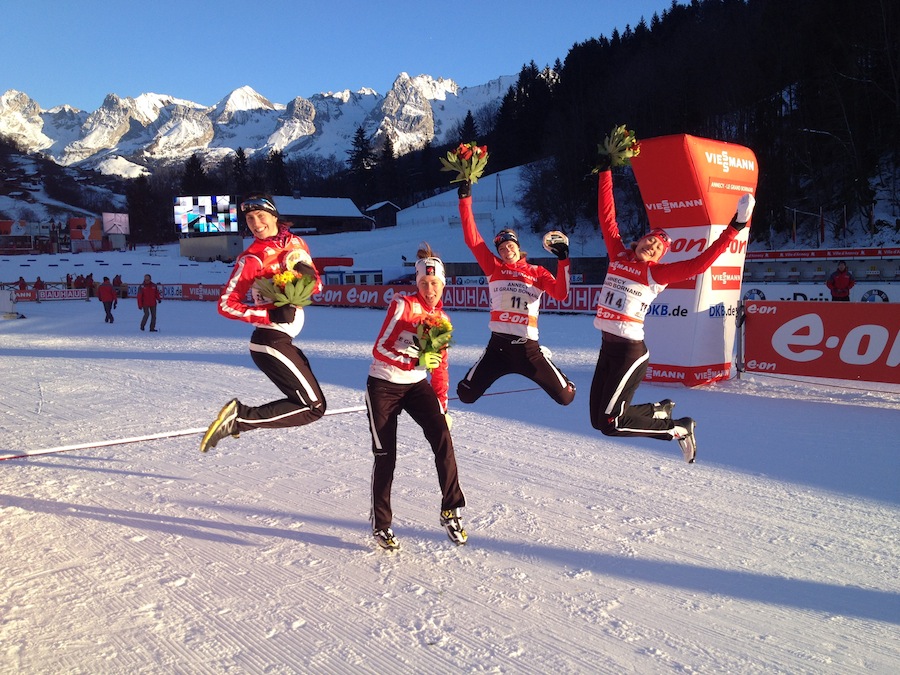
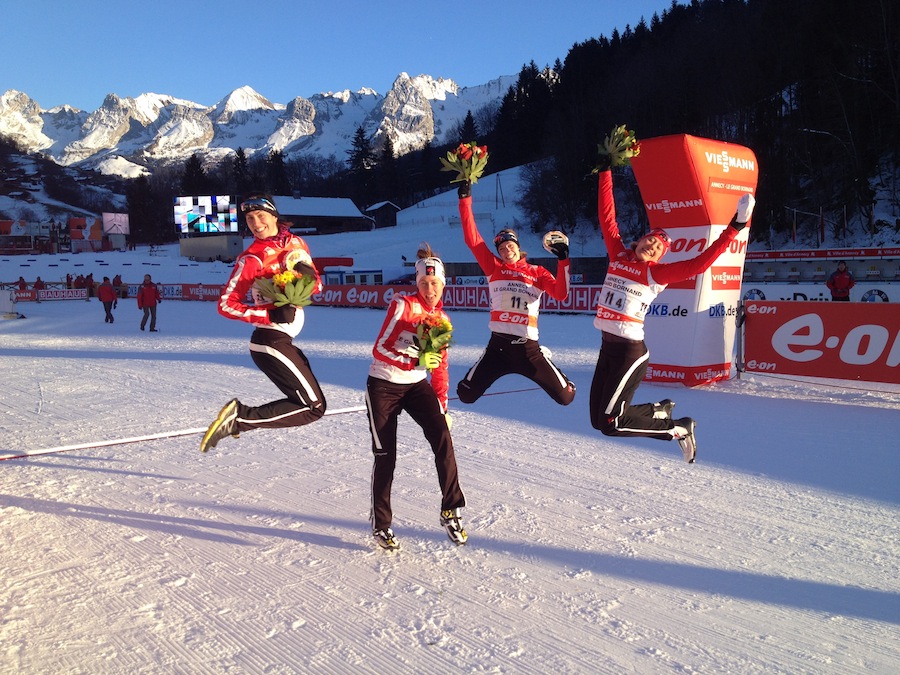
    The Canadian women jumping for joy after notching Biathlon Canada's best-ever finish in a relay. (Photo: Biathlon Canada/Matthias Ahrens)
    The Canadian women jumping for joy after notching Biathlon Canada’s best-ever finish in a relay. (Photo: Biathlon Canada/Matthias Ahrens)

    Note: The following has been updated to include quotes from Megan Heinicke.

    About halfway through the IBU World Cup women’s 4 x 6-kilometre relay on Thursday in Annency, France, it was pretty evident Germany had the race in the bag.

    Anything can certainly happen, but Andrea Henkel had opened a 10.5-second lead for the Germans by the end of the second leg, and after teammate Franziska Hildebrand’s third leg, they were up by 35 seconds on Norway. Laura Dahlmeier essentially had to go through the paces, shoot as clean as possible and ski strong to hold off Norway and Ukraine, both contending for the podium with somewhat of a surprise charging from behind – the Canadians.

    It wasn’t a surprise for Canada. Chris Lindsay, high-performance director for Biathlon Canada, has known for some time what his quartet of Rosanna Crawford, Megan Imrie, Megan Heinicke, and Zina Kocher were capable of. And on Thursday it was Canada’s best-ever relay result – in a female, male or mixed event. The nation’s previous best was sixth in a mixed relay in 2011 in Hochfilzen, Austria.
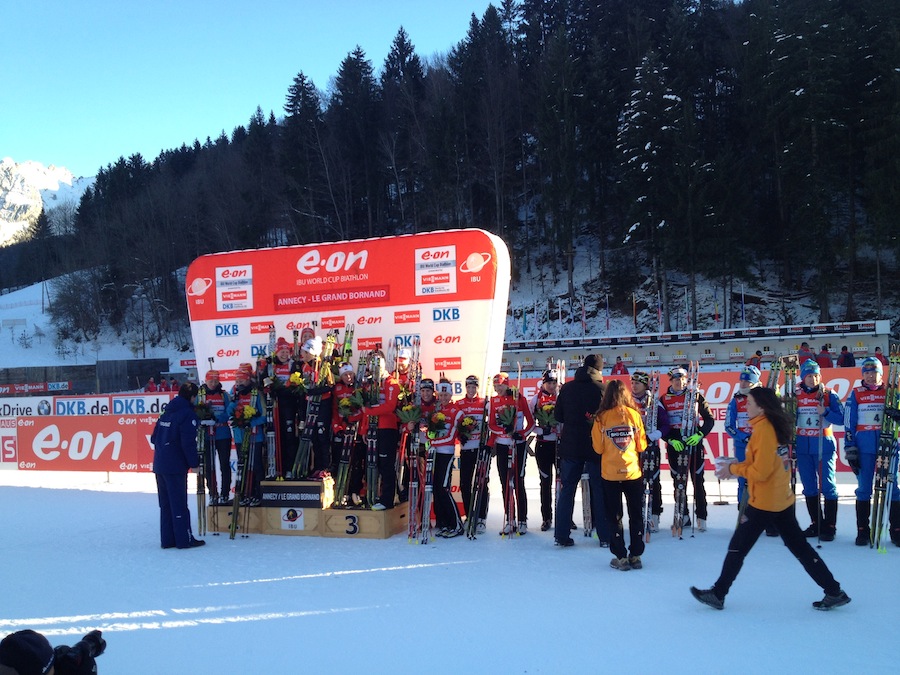
    The top teams in the 4 x 6 k women's relay gather around the podium Thursday at the IBU World Cup in Annency, France. Germany won, Ukraine was second, Norway placed third, and Canada notched a historic fourth. (Photo: Biathlon Canada/Matthias Ahrens)
    The top teams in the 4 x 6 k women’s relay gather around the podium Thursday at the IBU World Cup in Annency, France. Germany won, Ukraine was second, Norway placed third, and Canada notched a historic fourth. France placed fifth, Russia was sixth, Italy finished seventh, and the U.S. tied last week’s eighth place. (Photo: Biathlon Canada/Matthias Ahrens)

    The Canadian women placed fourth on Thursday behind Germany, Ukraine and Norway, respectively, with Germans Franziska Preuss, Henkel, Hildebrand, and Dahlmeier winning in 1:06:27.8, and using just three spare rounds in the process.

    Ukraine’s Juliya Dzhyma, Vita Semerenko, Valj Semerenko, and Olena Pidhrushna, placed second 23.3 seconds back with four spare rounds, edging Norway in third by 0.5 seconds with Tinril Eckhoff, Fanny Welle-Strand Horn, Synnøve Solemdal, and Tora Berger, who used a total of 10 spare rounds.

    The Canadians were 1:35.8 back in fourth after using nine spares.

    “Certainly holding the shooting together with the great skiing was the difference,” Lindsay wrote in an email. “Having a big result that is completely owned by the women helps to build an even stronger foundation upon which podiums will follow.”

    Heading out first with 22 other teams, Crawford cleaned her prone and used one spare on her standing to bring the team to fourth by the exchange.

    “I’ve learned from the past couple relays that being aggressive off the start and getting with the lead group will save you a lot of energy and make sure you don’t get tripped up most of the time!” Crawford wrote in an email. “I’ve got a strong double pole so I can usually be right behind the person in front of me and then it’s just a matter of [maneuvering] my way to the front group.”

    A fan of the range at Le Grand Bornand, Crawford explained she took advantage of the calm conditions and focused on one shot at a time. She left her first stage in second behind Switzerland’s Selina Gasparin, who cleaned both stages to tag off in first – but Gasparin wasn’t always in front (and her sisters Elisa and Aita, and teammate Patricia Josh ultimately dropped the lead on the second, fourth and third legs, respectively, so that Switzerland finished 13th).

    Italy’s scramble skier, Dorothea Wierer cleaned her prone and used one spare on her standing to put the team in third behind Germany’s Preuss, who used one spare on each stage to tag off in second.

    “Selina Gaspirin really didn’t want to lead, so we were able to catch up to her and then I passed her right before the range,” Crawford explained. “Standing was good, my hands were pretty cold so I had some trouble with my spares, dropping two, before I got one in and hit the target.”

    For the last loop, Crawford stuck with Preuss and Norway’s Eckhoff just behind the leaders, tagging off in fourth, 11.6 seconds after Gasparin in first and 3.2 behind Preuss in second. Italy tagged in third, Belarus was fifth, and Eckhoff came through in sixth for Norway, 15 seconds behind Gasparin and 3.4 behind Canada.

    With Susan Dunklee scrambling for the second-straight relay, the Americans started the second leg in eighth, 33.3 seconds behind Germany.

    From there, Imrie brought the Canadians to third with a clean prone and one spare in standing. Henkel took the lead for Germany with 10-for-10 shooting, and Imrie tagged just Heinicke 17.3 seconds behind Germany and 6.8 seconds behind Norway.

    Heinicke used three spare rounds – one in prone and two in standing – for the eighth-fastest third leg, but she managed to hold tight in fourth, a minute behind Germany, but just 10 seconds behind Ukraine.

    “I was disappointed about the prone miss because it really shouldn’t have happened, but in the moment I was just focused on doing my job which was loading that spare bullet calmly and efficiently,” Heinicke explained.

    In the second bout, she didn’t realize that her first spare didn’t hit and was partly out of position. “That was too bad, but I didn’t let it get in my head, didn’t hesitate and my second spare hit,” she wrote.

    As for her last lap: “I was feeling exhausted skiing and was just thinking to fight as hard as possible and not to give anything away,” Heinicke wrote. “I was already thinking about Zina and thinking that I just needed to keep that Ukranian within striking distance for her.”

    When Kocher received the final handoff, she tried to relax, focusing on her key words for shooting and most importantly, breathing.

    “I knew it was up to me to complete the task of the day and I felt that pressure,” Kocher wrote in an email. “I’ve been struggling with that a lot before today but I’ve been working all week on my shooting and staying with the process, not on the result and not on anyone else around me.”

    After using three spares in prone, Kocher found her team’s chance at a historic best slipping. France’s Marie-Laure Brunet cleaned both rounds, shooting especially fast on the standing and putting Kocher under pressure.

    “I was over cautious,” Kocher wrote of her first time in the range.

    Fighting for every shot the second time around, Kocher ended up using one spare round in standing and raced away on her final lap to catch Brunet from 20 seconds behind. Kocher passed her and finished 8 seconds ahead in fourth.

    Dahlmeier shot clean to hold off both Ukraine’s Pidhrushna, who also cleaned, and Berger, who used two spares on her standing but closed hard on the last lap to finish third, just a half second behind Pidhrushna.

    Knowing she’s a strong closer, Kocher explained she gave everything she had, but wasn’t sure it would be enough.

    “I did not know if I had enough to hold off the Russian or catch the French,” she wrote. “I just put my head down and focused on gliding.”

    While “a podium would have been incredible,” Kocher explained the team was thrilled to break through in fourth.

    “We are absolutely ecstatic and proud of each other that we all pulled it together what we knew was always possible,” she wrote. “I don’t think this is the last of us. Now we have this confidence and belief in ourselves and each other for the future.”

    In Hochfilzen last Saturday, Dec. 7, the Canadian women placed 11th and the men notched ninth, with JP Le Guellec, Scott Perras, Brendan Green, and Nathan Smith, in the World Cup relay.

    Two years ago in Hochfilzen, Imrie, Kocher, Le Guellec, and Green combined for Canada’s previous best of sixth in a mixed relay, according to Lindsay.

    “We’ve known for a long time that we are capable of a top 6 in a relay,” Crawford wrote.

    “The numbers have shown that we can be up playing with the best – but staying in the game is a skill in itself,” Lindsay explained. “Developing comfort at being in the ‘game’ takes some time.

    “Last weekend the women were mix for most of the race,” he added. “This week they were in it the entire race. There might be weaker races in the future but I have no doubt that we will continue to rack up time in the game and this will lead to medals.”

    U.S. Repeats Feat

    The U.S. women placed eighth in the Hochfilzen relay with Lanny Barnes subbing for one of their core national-team members, Annelies Cook. For all four skiers, it was a career best.

    On Thursday, they repeated the result with Dunklee, Sara Studebaker, Hannah Dreissigacker, and Cook, respectively. They placed eighth with six spare rounds, finishing 2:44.1 behind Germany.

    “Last week when we finished 8th, we were jumping up and down at the finish,” wrote Dunklee, who used just one spare on the second stage. “This week was also very exciting but more contained.  We know we can dream bigger now.  It was inspiring to see the Canadians do so well – if they can do that, we can do it.”

    In her first year on US Biathlon’s A-team, Dreissigacker was the highlight, cleaning both her stages in the third leg to bring the team from 12th to 10th.

    Dunklee got them off to a strong start, jetting out toward the front early to avoid getting stuck behind the pack on the course with several corners and short, steep hills.

    “In the past being so high up may have scared me, but today I felt relaxed and could still transition to the range with a calm focus,” she explained. “My last loop wasn’t great, no gas left in the tank, but I will be smarter pacing for the sprint.”

    Tagged in eighth, Studebaker started alone, nearly 10 seconds ahead of Ukraine in ninth but 22 seconds behind France in seventh. She used one spare in prone, then three in standing.

    “It was tough to ski that first loop mostly alone, and it definitely helped in the second loop to have people to ski with,” Studebaker wrote. “I had a little trouble in standing, missing one from the clip and then taking all three extras to get it.  It was certainly nerve-wracking!”

    Dreissigacker could see Sweden’s Asa Lif about 10 seconds ahead of her when she was tagged in 12th . She caught her and picked off one more place, bringing the team to 10th with fast-and-flawless shooting.

    “Fast shooting is a strength of mine, and when you don’t have to load spare bullets that also makes it a lot easier to pass people there!” Dreissigacker wrote. “I’m hoping that I can continue to shoot well in non-relay races too … and that it’s just that my last two races have gone well and they’ve happened to be relays.  … I think that I do well when I’m relaxed and having fun, and relays are good for that.  And I like to shoot well for my teammates!”

    Just two seconds behind Finland in ninth, Cook wasn’t sure where her team stood when Dreissigacker tagged her. After a close-call in the exchange, Cook was relieved to make it out unscathed, and didn’t see their place until she entered the range for the first time.

    She cleaned the prone and used one spare standing, putting her in prime position for the final lap.

    “I thought that maybe I could catch [Italy’s Karin Oberhofer] and bring us into 7th, but she skied well in her last lap and I couldn’t get her,” Cook wrote.  “I didn’t do anything special, I just tried to ski well and be relaxed when I got into the range – and luckily I hit my targets and the girls around me struggled.”

    Sensing Slovakia’s Anastasiya Kuzmina coming up from behind on that last lap, Cook focused on holding onto eighth.

    “Once I got to the last uphill, I knew I would be fine,” she wrote.

    “Sunday was our best relay in a while and we always try to beat our bib number,” Cook added, referring to their eighth seed. “It was fun to see Susan leading everyone and it’s really cool that Hannah cleaned. Sara also kept us right in the game and fought super hard. Everyone gave it. I was really glad that I could be part of a good result – because I only got to cheer last week!”

    “My lower legs have been feeling better,” she wrote of her bothersome shins, which kept her from last weekend’s competition. “But they usually don’t bother me until I go hard so I was definitely a bit nervous about how they would feel and they were the best they have been so far.”

    “We’re really in a good place right now and I think after two top-8s we’re getting hungry for more!” Studebaker explained. “It’s definitely an exciting place to be in this Olympic season.”

    Results

  • Biathlon Preview, Part I: The Big Four

    Biathlon Preview, Part I: The Big Four

    Let's look forward to more exciting finishes like this one from last season in Ostersund, Sweden, where Martin Fourcade (FRA) played cat and mouse with Andreas Birnbacher (GER) in the last lap of biathlon's 12.5 k pursuit before beating him to the line. Photo: Fischer/Nordic Focus.
    Let’s look forward to more exciting finishes like this one from last season in Ostersund, Sweden, where Martin Fourcade (FRA) played cat and mouse with Andreas Birnbacher (GER) in the last lap of biathlon’s 12.5 k pursuit before beating him to the line. Photo: Fischer/Nordic Focus.

    The IBU World Cup biathlon season kicks off on Sunday with a mixed relay in Östersund, Sweden. With everybody gearing up to have their best performances at the Olympics, it’s set to be an exciting season – and there are other unusual aspects, too. For instance Annency, France, will make its World Cup debut as the third venue the circuit travels to.
    What about the racers? Here’s our breakdown of what to expect from the top four teams, listed in order of their combined men’s and women’s World Cup scores from last season. Stay tuned in the next few days for the rest of the teams.

    Norway

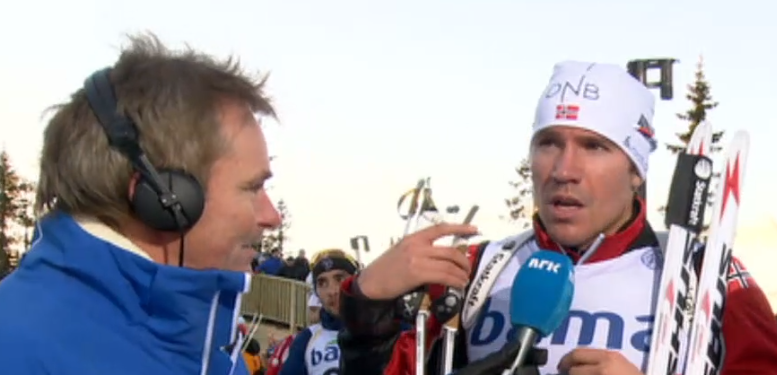
    At last year’s World Championships in Nove Mesto, the Norwegians won the mixed relay by 20 seconds, and it was no great surprise. Tora Berger was in the overall leader’s jersey for almost the entire season and took the title by a landslide; Emil Hegle Svendsen was in the fight for the men’s title all the way down to the wire, wearing the leader’s bib at times and ultimately finishing second. Both appear to be in good form already this year. Svendsen won a test race in Sjusjøen this weekend over a stacked field, and Berger had some shooting trouble but is certain to straighten that out before the season gets too far underway. She’s plenty fast.
    Tora Berger of Norway medaled - gold or silver - in every race of last year's World Championships, and dominated the World Cup Total Score. Photo: Fischer/NordicFocus.
    Tora Berger of Norway medaled – gold or silver – in every race of last year’s World Championships, and dominated the World Cup Total Score. Photo: Fischer/NordicFocus.

    On the men’s side, Norway looks even better than last year. Tarjei Bø, the 2011 overall World Cup winner, is back in good shape and was setting the pace in Sjusjøen; he struggled last year after missing a large chunk of the training season with illness, but managed a World Championship gold all the same. Ole Einar Bjørndalen didn’t always impress last year, but he also looks to be in better form, having won one of the Sjusjøen races and placed second in the other. The question is whether the 39-year-old can keep it together for a whole season all the way to the Olympics, but if anyone can do it, he can.

    This year the national team went with a decision to favor youth over experience. It seems to have paid off: Vetle Sjåstad Christiansen was second in this weekend’s mass start, while World Junior Champion Johannes Thingnes Bø was seventh in both races in his first year as a senior. The move came at the expense of Lars Berger and Alexander Os, veterans who were left off the team and had to train on their own. But they seem to have weathered the storm; the pair were invited to Font Romeu, France, this fall by the Fourcade brothers. Berger was third in the Sjusjøen mass start and Os sixth in the sprint. They will both likely see World Cup starts as well.

    On the women’s side, Synnøve Solemdal had a breakout year, winning her first World Cup race. But she had an up-and-down season, which may be partly attributed to her asthma; she says that she has now worked a lot on breathing techniques which help. Ann Kristin Flatland, a former World Cup winner, made her return partway through the season after having a baby, and is in good form again. Fanny Welle-Strand Horn broke into the top 10 for the first time and Elise Ringen and Hilde Fenne also provided support.

    Russia

    The Russian men edged Norway in the Nation’s Cup score with a variety of athletes who could hit the podium at any time. Anton Shipulin and Dmitry Malyshko each won two races, while Evgeniy Garanichev and Evgeniy Ustyugov were each twice second. Nobody can beat that depth in the men’s field, and yet Russia struggled when it counted: World Championships.

    Anton Shipulin was Russia's best performer at 2013 World Championships.
    Anton Shipulin was Russia’s best performer at 2013 World Championships.

    This past season, Shipulin was second in the mass start and third in the pursuit. Hardly bad results, but Russia expects medals, preferably gold, and preferably a lot of them. The pressure on the team for the home Games will be unbelievable. RBU Vice President for Elite Sport Viktor Maigurov told biathlonworld.com, “The Olympic Games is the competition, where only athletes with the best psychological resistance to stress and pressure, win. It will be twice as difficult for our biathletes to cope with this pressure, as these will be our Home Games.”

    The men’s team, like Norway, has a few tricks up its sleeve to make it better than last year. Ivan Tcherezov, seven-time World Cup winner and one of the senior leaders of the team, is finally back in shape after a horrendous accident that resulted in a broken leg. And Alexander Loginov, a World Junior Champion, is coming into the senior field. He had a successful World Cup debut last season, placing fifth in the sprint and third in the pursuit in Oslo.

    On the women’s side, it’s a familiar set of faces expected to be at the top. The Russian women’s team has been slipping a bit in the last years, with Olga Vilukhina and Olga Zaitseva leading the team in the Total Score in 12th and 13th. But each is more than capable to magical races and ended up on the podium several times last season. Zaitseva was practically guaranteed a medal in the World Championships pursuit, but was knocked down when Ann Kristin Flatland fell on the final lap.

    Germany

    Andrea Henkel en route to a podium finish last season in Ostersund. Photo: Fischer/NordicFocus.
    Andrea Henkel en route to a podium finish last season in Ostersund. Photo: Fischer/NordicFocus.

    Germany used to be the powerhouse of biathlon, and they can be again. But the team does not display the depth it once did: after veteran Andrea Henkel, who landed third in the Total Score, the next German was Miriam Gössner in ninth; the women nevertheless finished second behind Norway in the Nations Cup. On the men’s side, Andreas Birnbacher led the team in fifth and Erik Lesser was 16th, for fourth place overall in the Nations Cup.

    For the men, Birnbacher confirmed his status from the previous year as one of the most focused and dangerous men in the field, winning twice and collecting a few more podiums. Lesser picked up his first two podium finishes; can he build on that this year? The biggest disappointment of the team was probably Arnd Peiffer, who lost his mojo after several excellent seasons. He seemed to be off to a good start in Sjusjøen, however, so maybe things are coming back together. Florian Graf and Simon Schempp provide relay help.

    Henkel already seems on track for another excellent season, sweeping the Sjusjøen test races; she told FasterSkier in an interview this fall that she’s ready for her fourth and final Olympics. Gössner, meanwhile, has a tough road ahead. After her breakout season where she won three races (and also narrowly missed out on a medal at cross-country World Championships), she crashed her bike in Norway this spring and cracked three lumbar vertebrae. Franziska Hildebrand will replace her in the opening mixed relay. Germany also has high hopes for skiing Olympic gold medalist Evi Sachenbacher-Stehle and World Junior Champion Laura Dahlmeier, both of whom made their World Cup debuts last season with top-ten results.

    France

    When you think of France, you of course think of Martin Fourcade, who won the overall World Cup title last year over Emil Hegle Svendsen. Fourcade had nary a misstep the whole year; he was always in the fight, even if he didn’t win. It began to be unthinkable that he would lose, but he was eventually deprived on the biggest stage: World Championships. Unlike in 2012, where he swept the individual events, Fourcade won only the individual. Norwegians won the other three races. Fourcade has also been off to a tough start this year, bombing out of the Sjusjøen races.

    Marie Dorin Habert of France competing at 2013 World Championships in Nove Mesto, Czech Republic.
    Marie Dorin Habert of France competing at 2013 World Championships in Nove Mesto, Czech Republic.

    He seems certain to bounce back, and his supporting cast, while overshadowed, is impressive. After all, France was second in the men’s relay at World Championships. Martin’s brother Simon Fourcade and teammate Alexis Boeuf also had individual podiums, while Jean Guillaume Beatrix was six times in the top ten. Fourcade told biathlonworld.com that he thought Beatrix and Simon Desthieux had improved the most this year; Desthieux made the case for himself with third- and sixth-place finishes in Sjusjøen.

    The French women don’t get a lot of press, but that’s not fair. Marie Dorin Habert, the sprint bronze medalist from the 2010 Olympics, had three podiums and was one of the most consistent performers throughout the season; though she never won, she was always in the mix and finished fourth in the total score. Anais Bescond landed 17th in the total score, and Sophie Boilley and Marine Bolliet also had some good results. Marie Laure Brunet, who was bronze in the pursuit in Vancouver and once led the team, had a tough year and stopped her season short due to overtraining. She wrote a gut-wrenching blog post about how hard the decision was and her struggles to come back to top speed; hopefully she’s there now.


  • Henkel on Starting Strong, Going Out with a Bang (Exclusive Interview)

    Henkel on Starting Strong, Going Out with a Bang (Exclusive Interview)

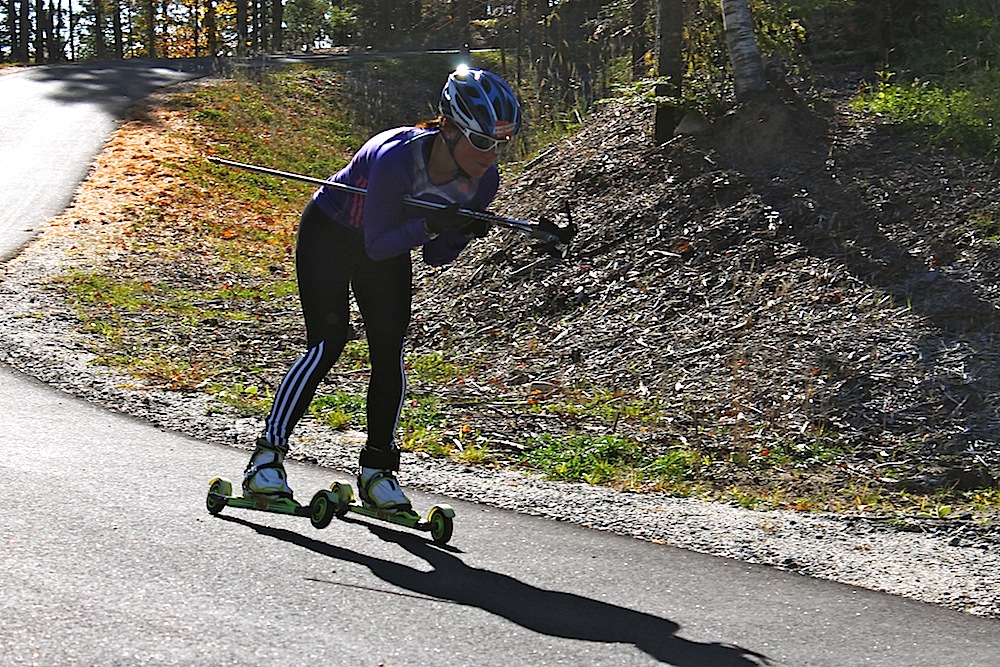
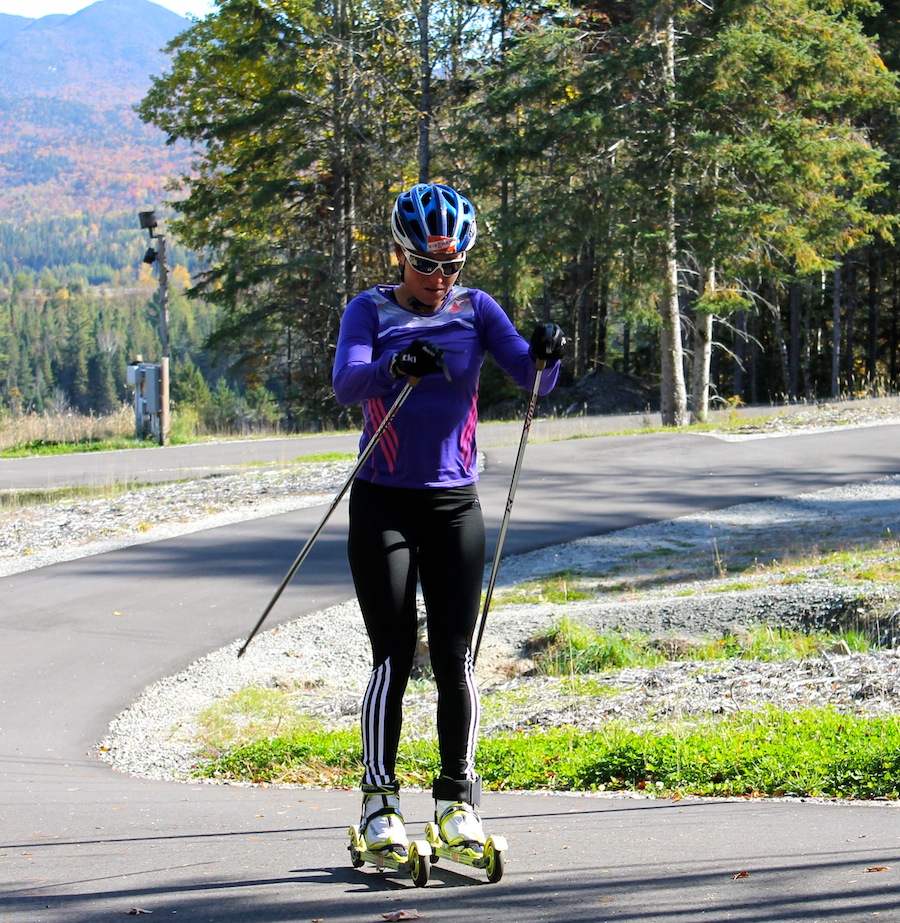
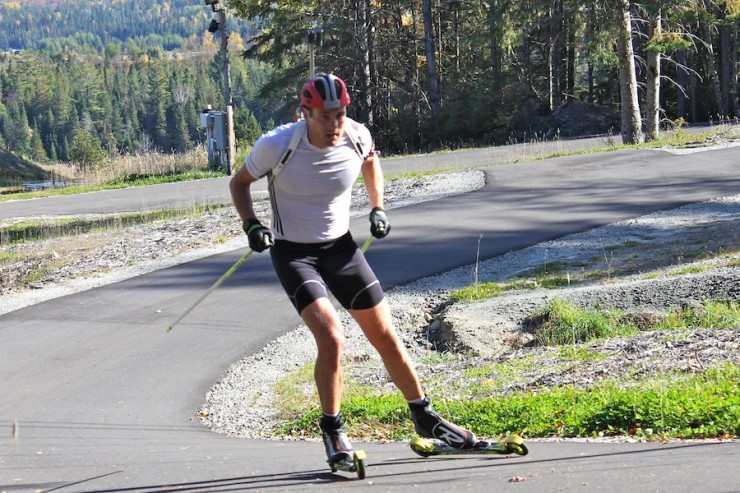
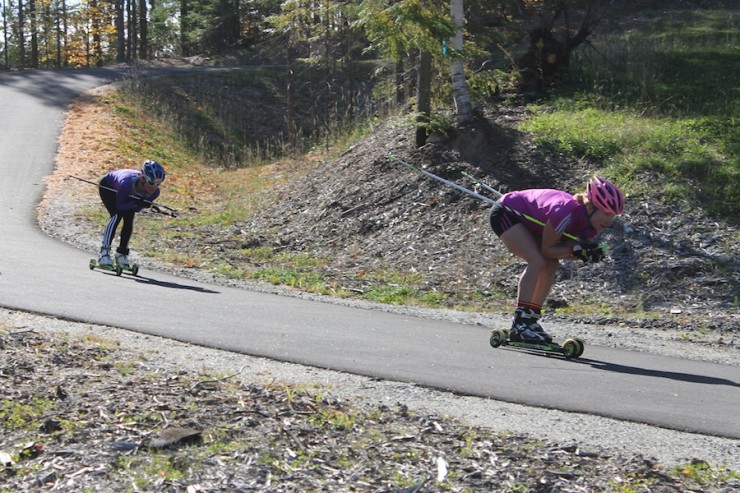
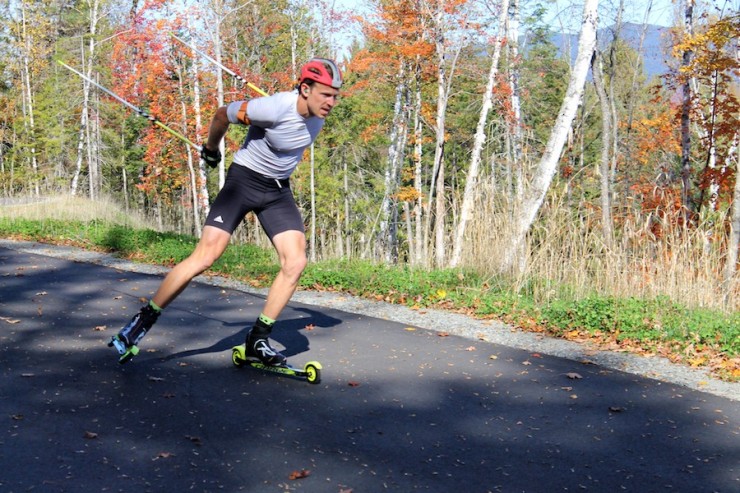
    Germany's celebrated biathlete and four-time Olympic medalist, Andrea Henkel cruises along the 1-year-old rollerski loop on Oct. 3 at the Olympic Jumping Complex in Lake Placid, N.Y.
    Germany’s celebrated biathlete and four-time Olympic medalist, Andrea Henkel cruises along Lake Placid’s 1-year-old rollerski loop at the Olympic Jumping Complex in northeastern New York.

    This might be Andrea Henkel’s swan-song season, but the 35-year-old German biathlete and multiple Olympic gold medalist showed she’s in the hunt for one of her best winters yet – sweeping the opening biathlon races last weekend in Sjusjøen, Norway.

    Before the start of her 15th World Cup season, Henkel completed Saturday’s 7.5-kilometer sprint with one penalty and a 27-second win over France’s Marie Dorin Habert. On Sunday, she missed just one target and won the 12.5 k mass start by 9.1 seconds over Ukrainian Valentyna Semerenko.

    Andrea Henkel en route to a podium finish earlier this season in Ostersund; today she turned in a strong relay performance.. Photo: Fischer/NordicFocus.
    Andrea Henkel on her way to the podium last season at a December World Cup in Ostersund, Sweden (Photo: Fischer/NordicFocus)

    “I have trained for a few years to get into this kind of shape!” Henkel said with a laugh to NRK on Sunday. “But actually I didn’t feel as good today as I did [Saturday]… I hope I am feeling better for the Olympics, but if I still win there then it doesn’t matter!”

    In early October, FasterSkier caught up with Henkel, who was third in last year’s overall International Biathlon Union (IBU) World Cup. The eight-time world champion – and first biathlete to win a world title in each individual event – was visiting her boyfriend, US Biathlon’s Tim Burke, in Lake Placid, N.Y., for just over two weeks. She said that marked her first time in upstate New York in the fall.

    “Usually, I come in summer,” she said while putting her classic rollerskis in Burke’s car after a double-pole workout on the team’s new rollerski loop. For the short stay, she left her rifle at home.

    Used to visiting in June and July, Henkel made the trip over earlier this year as well, staying April through May. Now she’s been to the U.S. almost every month except January and December, she said.

    “At first, I planned to go to Utah – that was last year – and then I decided in spring I would not go to Utah and would come back to here,” she explained of picking Lake Placid over Soldier Hollow.

    “In Utah last year, I felt pretty tired after the traveling and then this altitude and was there for a little bit over two weeks just, too,” she added. “Here I have a little set up already so I don’t have to plan so much. … Everybody is saying it’s so nice in fall.”

    After arriving on Sept. 26, she flew back to Germany later in October when the U.S. team left for Soldier Hollow for the final rollerski trials of the season.

    Here’s what else Henkel had to say while in Lake Placid:

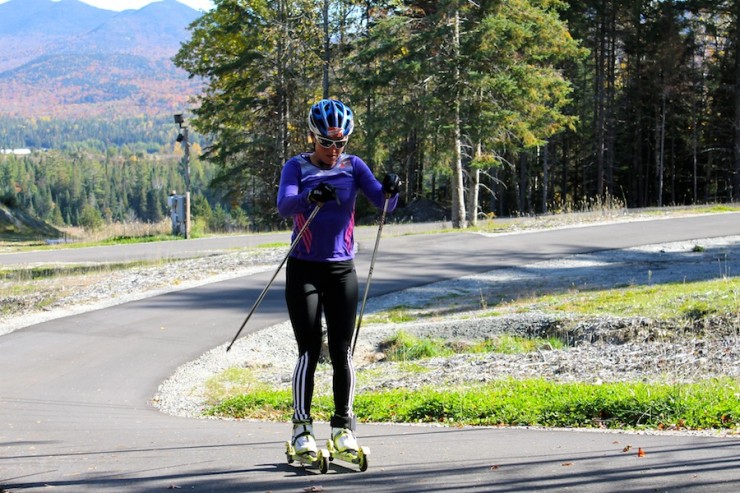
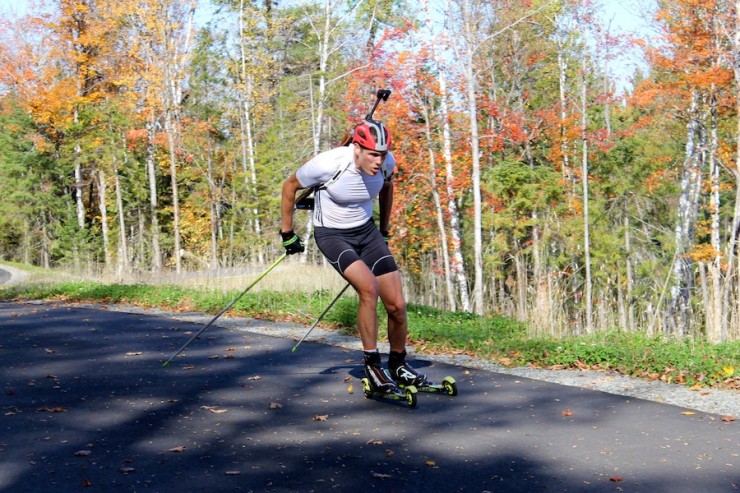
    Andrea Henkel double poles her way up the rollerski loop at the Olympic Jumping Complex on Oct. 3 in Lake Placid, N.Y.
    Andrea Henkel double poles her way up the rollerski loop at the Olympic Jumping Complex on Oct. 3 in Lake Placid, N.Y.

    FS: How have you been feeling, and what have you been working on?

    AH: Basically, I’m getting better faster. At the moment I did a lot of intensity, you know, I’m pretty tired doing this, and now I am working on my strength [with double poling], so everyday something to work on.

    FS: You had a big intensity block back home?

    AH: Already at home and then when I came I just continued and will have another few workouts doing this here. At the moment, I didn’t bring my rifle for this short time because it’s sometimes tricky [with airlines] so I took a shooting break. So I’m kind of [training] by myself. If something works out then I would like to be with the girls or sometimes with the guys to train, but yeah, two weeks is not so long and then I can handle it by myself, too.

    FS: Now that you’re gearing up for your fourth Olympics, how meaningful is this one?

    AH: This time will be my last time, but also I said last time already this will be my last one.

    FS: So you never know?

    AH: No. I know. Last time I knew that this will not be my last season. This time I decided that this will be my last season and so it’s a little bit different and more focused I think, and after this I know that it’s over.

    FS: How’s your health been and what is your hope for these Olympics?

    AH: I am healthy. Everything is working so far and I hope for another medal, of course.

    FS: As a team and individually, too? (She won gold in the 15 k individual and with the relay at the 2002 Salt Lake Games.)

    AH: The best thing would be both, so I see. At the moment, I just train and hope it works out again.

    FS: What is it like to be on a team with several promising younger women?

    AH: That’s good. I mean every time pushed the older ones by youngest ones. I was a few years ago, too, and pushed the older ones so this helped everybody and is a little bit congruent in their own team. It’s good to see the young ones are pushing again cause they had a little time – maybe two years – that it didn’t happen this way and now they are back and it’s good.

    FS: How did you like racing in Sochi?

    AH: I was once fourth [in the 15 k individual last season] … but the track is tricky and I had to change a little bit what I really should do because it’s pretty uphill – the uphills are great. I like that, but the downhills were a little bit too aggressive, I would say. For us girls, it was still fine, but in the guys’ race it was already, like, always night time as late afternoon and it got colder and was freezing and then the course was just not doable anymore for a lot of good skiers. So they should change something up.

    FS: Outside of Sochi’s course, what do you think of the whole area?

    AH: The area is beautiful.  It’s kind of sad to see how many trees just had to go for this. I am sure the athletes will have everything they need … I think for us, it will make a nice Olympics. Everything that’s coming with is maybe not be so nice.

    FS: So what’s next, after biathlon? What would you like to do?

    AH: I plan on moving one day to the U.S., but at first I have to get all when and how and … I think at first, I need my time to settle down a little and organize myself, my new life. Then I can tell you what I can do.

  • Focused Henkel Shoots Her Way to Second Sjusjøen Win; Clean Sweep for Norway in Men’s Mass Start

    Focused Henkel Shoots Her Way to Second Sjusjøen Win; Clean Sweep for Norway in Men’s Mass Start

    Andrea Henkel (GER) at 2013 World Championships, where she took silver in the 15 k individual.
    Andrea Henkel (GER) at 2013 World Championships, where she took silver in the 15 k individual.


    Today’s biathlon mass starts in Sjusjøen, Norway, were just a warm-up before the real season begins – but they had many trappings of a World Cup race.

    Live television coverage? Check. High-profile coporate sponsors? Check. Throngs of fans lining the trails, eating their picnic lunches and shouting “Heja Tora” for World Champion Tora Berger? Check, check, check. Pine boughs were laid on top of snow that had been shaped into benches around the course, and smoke drifted away from campfires next to tents. No matter what time of year it is, in Norway it’s time to watch a ski race.

    Teams even showed off their new uniforms, with Ukraine and Germany strutting redesigned Adidas duds and France a much-improved version of the OneWay suits. Austria, meanwhile, added some black to their traditional red-and-white getups. Let the games begin!

    Women’s 12.5 k Mass Start

    The races may have been lacking a few of the sport’s top competitors, but spectators were still treated to a classic showdown between two of biathlon’s greats: Berger, who won the World Cup total score last season, and Andrea Henkel, who was third last season and had previously won it in 2007.

    The race started out looking more like a team time trial. After the first shooting stage, only Anais Bescond of France could break into the top seven – the rest were all Norwegians, surging in a pack around her. Berger and teammates Ann Kristin Flatland and Hilde Fenne were able to break away for a small lead by the time they hit the second shooting stage. There, only Berger was clean.

    Meanwhile, Henkel had accrued a penalty in the first stage, and worked hard to battle her way back into the top ten. She cleaned in the second stage and was able to move into second place, albeit 27 seconds behind Berger. Over the course of the next two and a half kilometers, Norway’s Elise Ringen worked her way up to Henkel and the two entered the range together for standing.

    Berger had put a little bit more time on the chasers, but her luck began to turn. On her second shot, she split her bullet – part went into the wood surrounding the target, and a shard hit the target itself. The mechanical arm tipped slowly back…. and then righted itself, the half of a bullet not enough to knock it down completely. Berger headed for the penalty loop.

    Henkel cleaned and set off 13 seconds behind her. But honestly, she told Norwegian broadcaster NRK, she wasn’t expecting to ever regain the lead.

    “I actually thought the race was over,” Henkel admitted. “Tora is usually such a strong standing shooter. I thought I would be alone for the rest of the race, but I really focused because I still didn’t want to be on the penalty loop.”

    Berger put a few more seconds on her rival before they arrived at the final shooting. Then, the unexpected: Berger missed two shots.

    “I was very surprised when she missed two,” Henkel said. “I was just trying to be very concentrated. I didn’t feel so good today, so I really didn’t want to go to the penalty loop.”

    The focus paid off and Henkel sailed out onto the course while Berger was still stuck in the penalty loop. Valj Semerenko of Ukraine also cleaned, and hit the trails second, nine seconds behind the German. Berger left with a 26-second gap to close if she wanted the win – which she did, after a disastrous prone stage knocked her down to sixth in yesterday’s sprint.

    Henkel used her remaining energy to push hard over the first half of the loop, extending her lead on Semerenko. Berger seemed to be closing, but never quite made it. An exhausted Henkel crossed the line in first, pumping her fist. She had given up the time she gained earlier in the lap and Semerenko was again nine seconds behind; Berger was this close to gaining a spot, coasting across the line two seconds behind the Ukrainian.

    “It was too many penalties for me,” Berger told NRK. “I started out well, but I’m still getting used to racing again. I got upset at the penalties and didn’t do exactly as I should [after that]. I’m going to harp on the shooting from now on. Now I have something specific to work on for next week.”

    It was the second win of the weekend for Henkel, who dominated Saturday’s sprint with a 27-second victory over Marie Dorin Habert of France, who was fourth today.

    “I have trained for a few years to get into this kind of shape!” Henkel laughed when the NRK interviewer asked her how she was so fit early in the season. “But actually I didn’t feel as good today as I did yesterday… I hope I am feeling better for the Olympics, but if I still win there then it doesn’t matter!”

    Extras: In the women’s “B” race, Megan Heinicke of Canada was fifth, 1:38 behind Olympic bronze medalist Marie Laure Brunet of France.

    Men’s 15 k Mass Start

    The men’s race was a bloodbath, if you weren’t Norwegian. Heck, even if you were. It was vicious from the start, with fast-moving pack skiing that claimed Germany’s Erik Lesser in an early crash. And last year’s World Cup winner and World Champion Martin Fourcade was having a bad race and dropped out in the fourth lap; television cameras followed him as he walked through the woods back to the stadium.

    (“A bit disappointed about today’s feeling on the track!” he had tweeted after placing fifth in Saturday’s sprint. “Tomorrow race will give me more informations.” What did he learn?)

    Many of the pre-race favorites accumulated a penalty in the first prone stage, but Norway’s Lars Helge Birkeland took the lead and kept is almost all the way through the next lap. He was eventually passed by teammates Tarjei Bø and Emil Hegle Svendsen, who skied onto the range together with Carl Johan Bergman, a Swede who lives just a five minute drive from Sjusjøen in nearby Mesnali. Despite a different suit, these trails are as much his home turf as anyone’s.

    Bø seemed to take control of the race, as one of five men who cleaned the stage. He skied with Svendsen, two Austrians, and Arnd Peiffer of Germany for the entire next lap, then went out in front again after the first standing shooting. Again, there were many penalties. He skied the next lap with Andriy Deryzemlya of Ukraine and Julian Eberhard of Austria, while the chase pack moved within striking distance. Bø was frequently at the front of his groups, pushing the pace and setting the narrative.

    But despite seeming so confident, Bø lost control at the last minute, missing two shots in the last stage. The first two racers to clean were veteran Norwegian Ole Einar Bjørndalen, who had gradually worked his way up after two prone penalties, and young teammate Vetle Sjåstad Christiansen. 39-year-old Bjørndalen took the lead, until Christiansen passed him on an uphill. The Norwegian coaching staff looked on, amused, at the jumbotron in the stadium. A kilometer later, Bjørndalen attacked and left Christiansen in the dust, skiing easily to the win.

    Bjørndalen, who was second behind Svendsen in Saturday’s sprint, was glad to report that he felt stronger than just one day before. After this weekend, criticism that he’s too old for a heroic result at what will be his sixth Olympics seem moot.

    “Today I had completely different energy,” he told NRK. “Because of my penalties I had to push very hard to take the lead. It was a long way, but on the trails here it is possible. So I could push hard the whole way and was able to respond to pressure.”

    The battle for third place was even more exciting. Peiffer, Svendsen, and Bø’s younger brother Johannes Thingnes Bø had left the range together, but their group did not stay together long. Other racers dragging themselves towards the front, eager to prove their worth before the opening World Cup races next weekend.

    It was Lars Berger, the Olympic veteran who was not nominated to the national team for this season, who came charging through the fastest. Despite four penalties to Svendsen’s three – Bjørndalen and Christiansen each had two – he pulled Svendsen with him as the pair left Peiffer behind. They made it within two seconds of Christiansen, but could not overtake him. The two Norwegians battled it out in the finishing stretch but Svendsen eventually conceded, and Berger took the mini-victory for third.

    In all, Norway took nine of the top 12 spots. Peiffer was relegated to fifth, and Simon Desthieux was again the top Frenchman, snagging sixth after placing third in the sprint on Saturday.

    Results

  • Svendsen, Henkel Top Biathlon ‘Season Openers’

    Svendsen, Henkel Top Biathlon ‘Season Openers’

    Sprint winner Emil Hegle Svendsen (2nd from right) and Norwegian teammate Ole Einar Bjørndalen (2nd from left) are intereviewed by NRK commentators in Sjusjøen.
    Sprint winner Emil Hegle Svendsen (2nd from right) and Norwegian teammate Ole Einar Bjørndalen (2nd from left) are intereviewed by NRK commentators in Sjusjøen.

    Season start? Season started.

    The elite biathlon field hit the tracks in Sjusjøen, Norway, which hosted not only the Norwegian national team but the Germans, Austrians, Ukrainians, French, and others for the first international competitions of the season. The races were big: 103 men and 68 women toed the line in the sprint races, and half were from outside the host country. With the World Cup kicking off in Östersund, Sweden, next weekend, many of the teams will use these races to finalize team selections.

    On the men’s side, the Norwegian team came out winners – hardly unexpected, given their dominance in the last few years. Emil Hegle Svendsen had one penalty and skied the fastest course time to take the win in the 10 k sprint over teammate Ole Einar Bjørndalen by seven seconds. The “king of biathlon” shot clean, but was unable to match Svendsen’s speed. Simon Desthieux of France took third place, also with clean shooting.

    “I started out quite controlled, and it worked out fine,” Svendsen told NRK broadcasters. “It wasn’t top speed…. if I’d had a harder last round, I would have had more to go on. Instead it was an easy passage… especially the standing shooting was good. I’m happy.”

    Bjørndalen was also pleased with his efforts.

    “When Emil shoots clean, he is so fast that he beats me,” he told the interviewers. “Today I should have taken him, but he was fast and on a roll. I’ll try tomorrow…. I had expected to be skiing better today, but not to shoot clean. It was fun to go today and it meant a lot to me to shoot clean.”

    Last season’s overall World Cup winner, Martin Fourcade of France, was fifth with one penalty, just one second behind a clean-shooting Andreas Birnbacher of Germany. Alexander Os and Johannes Thingnes Bø of Norway were just behind, more good news for the home team.

    In the women’s 7.5 k race, Andrea Henkel of Germany opened with a bang: despite a penalty in standing, she sped to a huge 27-second win over Marie Dorin Habert of France. Norway’s Ann Kristin Flatland and Tiril Ekhoff were third and fourth, with the top four competitors all accumulating a penalty.

    Tora Berger, the Norwegian favorite who was so dominant last season, placed sixth after missing three shots in her prone stage.

    “Three penalties can happen to anyone,” Henkel told NRK. “Tora is just a human being.”

    Canada’s Megan Heinicke competed – the only North American to do so, as the rest of the Canadians haven’t left for Europe yet and the Americans are already in Östersund – but was disqualified for violating shooting safety rules.

    Racing continues in Sjusjøen tomorrow with mass starts.

  • U.S. Biathletes Hammer Hard in Placid (Photo Gallery)

    U.S. Biathletes Hammer Hard in Placid (Photo Gallery)

    LAKE PLACID, N.Y. — Nothing says the beginning of October like a grueling combo workout for the U.S. Biathlon squad. As if five to six repeats around their 3-kilometer rollerski loop wasn’t enough, they started Thursday with an all-out race to the top of the course.

    According to women’s coach Jonne Kähkönen, the prelude was something new this year after several of his athletes said they wanted a faster first lap in races. The answer: get the blood pumping and heart racing faster before you start.

    That meant starting at the bottom of the Olympic Jumping Complex — way down in the lower parking lot — and racing one another to the top (mass-start style). Four men (Tim Burke, Lowell Bailey, Leif Nordgren, and Russell Currier) and three women (Susan Dunklee, Hannah Dreissigacker and Annelies Cook) all started at once, along with special guest Andrea Henkel, a German biathlete and Olympic gold medalist (and Burke’s girlfriend). Henkel, 35, did the initial workout with the group, but without a rifle for this trip, opted to double pole around the rest of the morning.

    With a 10-minute rest beforehand, the combo workout (5 or 6 x 8-minute laps around the relatively new course, with prone and standing shooting in between) involved two to four lactate readings per athlete. It marked the end of a tough three-week training block, and Kähkönen said this workout is done once every intense training period. Next week, athletes can enjoy some rest before flying to Utah for the last set of rollerski races in Soldier Hollow Oct. 22-24.

  • Soukalova Overcomes Siberian Cold to Win Second World Cup; Dunklee Lands Top 30

    Soukalova Overcomes Siberian Cold to Win Second World Cup; Dunklee Lands Top 30

    Gabriela Soukalova of the Czech Republic soaking up her moment atop the podium of the IBU World Cup 7.5 k sprint on Thursday in Khanty-Mansiysk, Russia. The 23-year-old notched her second World Cup title of the season and her career.
    Gabriela Soukalova of the Czech Republic soaking up her moment atop the podium of the IBU World Cup 7.5 k sprint on Thursday in Khanty-Mansiysk, Russia. The 23-year-old notched her second World Cup title of the season and her career.

    Forgive Gabriela Soukalova for not being completely psyched about racing on Thursday in Khanty-Mansiysk, Russia. She was still on Czech-Republic time, five hours earlier than where she was in Siberia, and temperatures weren’t expected to rise above -15 degrees Celsius (5 Fahrenheit) for the IBU World Cup women’s 7.5-kilometer sprint that night.

    She didn’t sleep well, and on a short walk to breakfast that morning, the 23-year-old started rethinking this whole racing-at-night-in-the-winter thing.

    “I told one of my teammates that it was so cold that I did not want to race,” Soukalova told reporters. “She said, ‘You are going to win,’ and I told her she was crazy!”

    Thursday's IBU World Cup 7.5 k sprint winner, Gabriela Soukalova of the Czech Republic enjoys a reindeer-drawn sleigh ride with Germany's second- and third-place finishers in Khanty-Mansiysk, Russia.
    Thursday’s IBU World Cup 7.5 k sprint winner, Gabriela Soukalova of the Czech Republic enjoys a reindeer-drawn sleigh ride with Germany’s second- and third-place finishers, Andrea Henkel and Miriam Gössner (not shown), in Khanty-Mansiysk, Russia.

    Fast-forward to that evening, when Soukalova braved the frigid temperatures with more than 80 others. Starting 25th, the Czech cleaned both the prone and standing stages and rolled to a 17.2-second victory over Germany’s Andrea Henkel.

    It was her second World Cup win of the season – and her career – and couldn’t have been awarded a more suitable ending. Soukalova, Henkel and Germany’s Miriam Gössner in third (+23.6) hopped into separate sleighs while reindeer carted them around the stadium for a victory lap.

    “I did not expect it; this is wonderful,” Soukalova said.

    Her previous win came in December at a sprint in Pokljuka, Slovenia. A week ago, she was a solid eighth in the individual 15-kilometer World Cup in Sochi, Russia, and said her shooting’s been coming along ever since.

    “My shooting was not so good after Christmas,” she said. “I felt much stronger after relay in Sochi and had good training this week, so I had a feeling that would be more successful here.”

    Just how successful? She really had no idea until she finished. Clean shooting is always a good thing in biathlon, but when someone like Henkel (who started 22nd) does it first, it makes for one tight race.

    Gabriela Soukalova of the Czech Republic celebrating her IBU World Cup victory in Thursday's 7.5 k sprint in Khanty-Mansiysk, Russia.
    Gabriela Soukalova of the Czech Republic excited to finish first in Thursday’s IBU World Cup 7.5 k sprint in Khanty-Mansiysk, Russia.

    Soukalova relied on skiing fast, with the fourth-fastest course time just ahead of Henkel in fifth, to bump Henkel to second and Gössner to third. Gössner started 20th and briefly had the lead after missing one standing and skiing the third fastest ski time.

    Sixth-place finisher Kaisa Mäkäräinen of Finland was the fastest of the lot, but suffered two penalties on the second stage to finish 34.6 seconds out of first. Slovakia’s Anastasiya Kuzmina placed fifth (1+1) with the second-fastest course time, and Russian Olga Vilukhina, who started fourth and initially led despite one prone miss, ended up fourth (+30.4).

    With one miss apiece, Vita Semerenko of Ukraine was seventh (+42.5), and the first starter, Norway’s Tora Berger took eighth (+43.5).

    Two races remain for the women in Khanty-Mansiysk, the last World Cup stop of the season: Saturday’s 10 k pursuit and Sunday’s 12.5 k mass start. The top 60 in Thursday’s race qualified for the pursuit, which included two out of three Americans.

    U.S. Biathlon’s Susan Dunklee placed 29th on Thursday with two prone penalties. She was 1:52.3 behind Soukalova, but time back didn’t make so much of a difference. Dunklee was pleased with her top 30.

    “Missing two prone shots in my first stage was disappointing, but I knew it was important to refocus,” she wrote in an email, as she kept the pursuit in mind. “Then I got lucky – I left the penalty loop right behind Tora Berger, and was able to catch a ride with her for most of my second loop.”

    Racing in the cold was tough, Dunklee added.

    “Siberia is living up to its reputation with some cold weather, the likes of which we haven’t seen at all this season,” she wrote. “The snow was very slow.”

    Annelies Cook, who placed 36th for the U.S. with two standing penalties, described the conditions as “squeaky styrofoam.” Last week in Sochi, where she notched career bests, Cook wrote that it was considerably different, with “rock-hard skiing” on a much harder course.

    “Sochi was one of those courses that made itself hard and you had to be tough,” Cook explained in an email. “This course is relatively much easier, so you have to be able to push yourself to get to that level. Even though I felt good, the race kind of snuck up on me and I think I had more gas in the tank than I realized while I was in the moment. But it was a decent day and I am happy to make some points.”

    The third U.S. skier, Sara Studebaker placed 66th (1+1) in her last World Cup race of the season. Compared to Sochi, where temperatures soared around 10 Celsius (50 Fahrenheit), adjusting the cold wasn’t easy, she wrote.

    “I had pretty cold hands in prone, which was a little tough since you then have to be really careful with your shots,” Studebaker explained. “And it was especially hard since I haven’t had to deal with cold hands and cold races much this year at all!”

    The skis were great, she added, “definitely one of the best out there.” At the same time, she couldn’t help but be a little disappointed.

    “I feel like I did all I could with what I have right now, and am just in a bit of a slump, as happens to many athletes,” Studebaker wrote. “It’s hard to end on an off-note, but I hope it will serve as motivation for me to figure out what went wrong this season, and fix it so I can come back stronger next year for the Olympics. I know the potential is there for me to be a lot higher up on the results, we just need to find the right formula to get there!”

    Results

  • Germany’s New Biathlon Relay Is Plenty Fast, Takes Team Win on Olympic Course

    Germany’s New Biathlon Relay Is Plenty Fast, Takes Team Win on Olympic Course

    Andrea Henkel en route to a podium finish earlier this season in Ostersund; today she turned in a strong relay performance.. Photo: Fischer/NordicFocus.
    Andrea Henkel en route to a podium finish earlier this season in Ostersund; today she turned in a strong relay performance.. Photo: Fischer/NordicFocus.

    When Germany talked about having a “new” women’s relay team this season, it was assumed that they were talking about one thing: replacing Magdalena Neuner, their World Cup winner and many-time World Champion.

    But by the time the women made it to Sochi for the second-to-last World Cup of the season, the relay team had become even fresher. It included one newcomer who was still a junior, and had never expected to compete on the circuit this season – and another in her first year of biathlon, period.

    Joining veteran Andrea Henkel and teammate Miriam Gössner were newly crowned World Junior Champion Laura Dahlmeier and former cross country skier Evi Sachenbacher-Stehle. That might seem like a risk, but Germany skated through Sunday’s relay with one strong performance after another and ended up with an eleven-second victory.

    “I never imagined such a season,” Dahlmeier marveled in the post-race press conference. “I focused on the World Junior Championships, and I hoped to be good there. After that I heard that I could go to the World Championships in Nove Mesto and I started in the relay, and it was really great for me. Then I heard that I could go to the World Cups in Russia. But I never imagined that it would be possible to be a winner in the relay.”

    None of the newcomers were cut any slack, and neither were the veterans. Henkel started things off with one of her strongest efforts of the season. On the podium in Ostersund, Sweden, earlier this season, Henkel had told reporters that her coach had said she was too old to be strong all season. That seems to be an underestimation of the eight-time World Champion, who picked up silver in Nove Mesto and was still plenty quick today.

    Henkel used a single spare round and skied the fastest time among all the scramble legs to hand off in first place.

    Evi Sachenbacher-Stehle battling Charlotte Kalla of Sweden as she skied to a gold medal in the team sprint at the Vancouver Olympics.
    Evi Sachenbacher-Stehle battling Charlotte Kalla of Sweden as she skied to a gold medal in the team sprint at the Vancouver Olympics.

    “It’s always fun when you win, but we always put effort into our relay and our races,” she said in the press conference. “So it’s nice that it worked out today. Of course it’s hard work to win, but when it has this prize at the end, we are fine now.”

    Next up was Sachenbacher-Stehle, probably the biggest question mark in the lineup. The day before, she had stunned by shooting clean and placing sixth in the sprint. An Olympic gold medalist in skiing, it is her first year of biathlon. Could she repeat the performance?

    Not quite – Sachenbacher-Stehle used two spare rounds in standing. But her years of skiing on the World Cup circuit no doubt came in handy as she handled the pressure with aplomb and still tagged off in third.

    The deficit was not small; 46 seconds separated the team from the Czech Republic. Germany was right on the tails of Ukraine as they embarked on the third leg.

    But Czech racer Jitka Landova, after cleaning prone, had a disastrous standing stage and fell out of the picture completely. Instead, Valj Semerenko of Ukraine took the lead. Gössner hadn’t shot so well herself, skiing a penalty loop after standing, but managed to drag herself within five seconds of Semerenko by the time she tagged off.

    And from there, it was a race. Dahlmeier, the rookie, was anchoring for Germany, but the woman she was chasing wasn’t so experienced herself. Mariya Panfilova, like Dahlmeier, has only joined the World Cup circuit in the last few weeks. She placed 13th in the individual race in Sochi, but said that anchoring this relay team – which has done so well in the past – was a serious obstacle.

    “For me the biggest challenge in Sochi was not the tracks or the weather but the fourth lap today,” she said. “It was a very high burden for me, and not as successful as it could have been.”

    But you wouldn’t have guessed these women’s relative inexperience if you hadn’t been told. Both cleaned the first stage, with Dahlmeier trailing Panfilova out of the range by eight seconds. They battled around the loop; their ski times were separated by less than a second. Despite using a spare round, Panfilova left the range with a scant five second lead.

    But Dahlmeier soon charged past her, and went on to claim the win. The other thing that the young Ukrainian might have to worry about was a threat from further back: World Cup leader Tora Berger of Norway had moved into third place.

    As it turns out, Panfilova’s coaches made sure she didn’t worry about that.

    “To tell the truth I wasn’t aware of the fact that Tora was following me,” Panfilova said in the press conference. “I just knew that when I left she was thirty seconds behind me, and with thirty seconds I was sure to beat her.”

    At that point, teammate Olena Pidhrushna leaned over and whispered something in her ear. Panfilova laughed and kept talking.

    “Actually, it was twenty seconds!” she said. “I was told thirty seconds, so I felt quite confident.”

    Regardless, her lead was safe, and Ukraine took silver while Norway was stuck with bronze.

    It was better than they might have hoped for: after Hilde Fenne and Tiril Eckhoff had raced the first two legs, Norway sat in sixth, over a minute and 15 seconds back. Veteran Ann Kristin Flatland cut that deficit to 33 seconds before Berger took over.

    “I think it’s very important that every does a good race,” Flatland said. “If everyone has good races, then we can be on the podium. But I’m very glad that Tora is on our team, because she is really strong, especially on the last shooting and the last loop.”

    Dahlmeier, though, was almost as strong, skiing only eight seconds slower than Berger on her six-kilometer leg.

    “These were good races for me and I hope to be so strong in Khanty-Mansiysk also,” she said.

    Sachenbacher-Stehle, too, wondered at her success this weekend. Both hope that next year they can be a part of the Olympic team on these very trails.

    “Now I feel for the first time more like a biathlete than a cross country skier,” Sachenbacher-Stehle said. “I’m really happy to be part of the World Cup team now for the last races. I hope that I will be part of the World Cup team for next year too. I will work hard for that, and it will be my goal.”

    When that time comes around, Henkel admitted, “maybe we are one of the favorites now.”

    Results


  • Berger Ups the Ante, Defends 15 k World Title without a Single Miss

    Berger Ups the Ante, Defends 15 k World Title without a Single Miss

    Berger leading Olena Pidhrushna (UKR) and Flatland on the penultimate lap.
    Tora Berger leading Olena Pidhrushna (UKR) and Norwegian teammate Ann Kristin Flatland (r) on the penultimate lap of Sunday’s 10 k pursuit at the IBU World Championships in Nove Mesto, Czech Republic. Berger won the race for her second gold of the week (after the mixed relay) and followed up with her third victory on Wednesday in the 15 k individual.

    For 31-year-old Tora Berger, it just keeps getting better. Norway’s leading female biathlete took control at the International Biathlon Union (IBU) World Championships on Wednesday, cruising through the 15-kilometer individual race to not only defend her title, but do so without error in Nové Město na Moravě, Czech Republic.

    Starting 62nd of 118 women, Berger attacked the five-lap course to catch contenders like Ukrainian sisters Valj and Vita Semerenko. And while the freshly fallen snow was slow and a strong crosswind in the range made shooting difficult, Berger remained calm and collected, shooting clean through three stages to take the lead by more than 40 seconds.

    With one more stage and two laps to go, anything could potentially happen, even for Berger, the event’s defending world champion who already notched gold in Sunday’s pursuit and the opening mixed relay of this year’s World Championships.
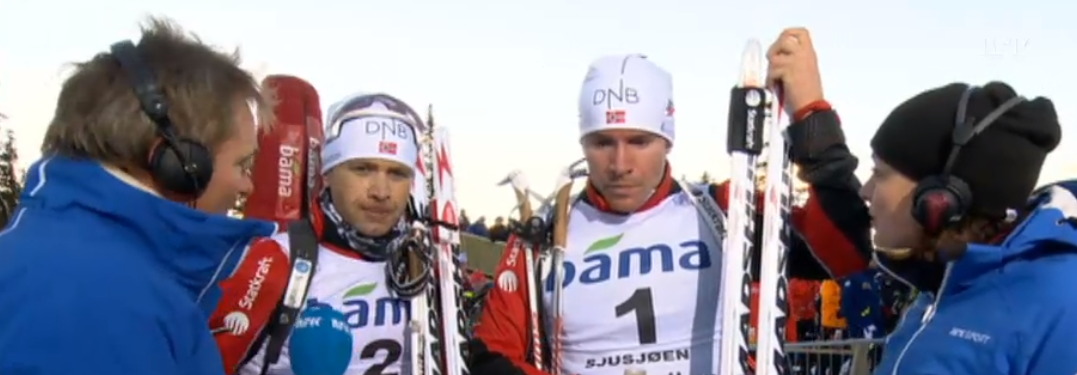
    Norwegian Tora Berger talking about her 15 k individual victory in a press conference on Wednesday at the 2013 IBU World Championships in Nove Mesto, Czech Republic.
    Norwegian Tora Berger talking about her 15 k individual victory in a press conference on Wednesday at the 2013 IBU World Championships in Nove Mesto, Czech Republic.

    “I knew that if I shot clean today I had a chance to be the winner,” Berger said in a post-race press conference.

    She did so – for her first time in a World Championships 15 k individual race – knocking down all five targets on the final standing en route to her third victory of the week and seventh world title.

    One of just three women to shoot to perfection on Wednesday, Berger didn’t let off the gas after last time in the range. With a lead of 1 minute and 25 seconds, she then clocked the second-fastest final lap and had the fifth-fastest course time of the day.

    Only Germany’s Andrea Henkel in bib 71 came close, finishing second, 52.7 seconds behind Berger’s winning time of 44:52.5. Along with France’s Marie Laure Brunet, who ended up 19th, Henkel shot clean for her 12th World Championships medal and first individual podium since 2008.

    “I knew how important the shooting range is,” said Henkel, 35. “I thought the individual race is the biggest chance for me to win another medal so I took this chance.”

    Out of all her medals, she said each is special. “Behind each medal there’s a little story, and I think this is another nice one,” Henkel said.

    Also on the World Championships podium for the first time since 2008, Valj Semerenko hung on after starting third and missing one shot on the first prone. She cleaned the next three stages and finished in the lead, but told her congratulators to wait; the best skiers were nearly 40 bibs back.

    She was right. Poland’s Magdalena Gwizdon in bib 42 led through the first three stages, with one penalty on the first standing, but fell out of contention with two more misses and ultimately placed 18th. Vita Semerenko then moved to first with three clean stages, but missed one on the last standing to end up fifth (+2:25.9).

    Slovakia’s Anastasiya Kuzmina cleaned the first two stages, but suffered a penalty on the second prone, losing 40 seconds to Berger. Kuzmina missed one more on the final stage to place fourth, just 12.5 seconds off the podium.

    And while the time penalties were costly – as they always are in individual races – Valj Semerenko managed to keep her head in the game.

    “The miss was quite a shock for me, but it was OK,” she said. “I told myself that every miss in this race puts you about 10 places behind so I [skied as hard] as I could and I hoped to lead the race.”

    For Semerenko, who finished 1:42.5 back from Berger, the medal was her first since her 2008 women’s relay captured second. Perhaps most notably, was her third in a non-team event at the World Cup level.

    “I told myself if I deserve a medal, I will win one, and I just tried my best,” Semerenko said.

    Results

  • Domracheva’s Late Charge Can’t Catch Gossner in Ruhpolding Sprint; Cook Career-Best 26th

    Domracheva’s Late Charge Can’t Catch Gossner in Ruhpolding Sprint; Cook Career-Best 26th

    (l-r) Darya Domracheva of Belarus, Miriam Gossner of Germany, and Kaisa Makarainen of Finland on the podium of the World Cup sprint in Ruhpolding on Friday. An early starter, Gossner held her lead all evening.
    (l-r) Darya Domracheva of Belarus, Miriam Gossner of Germany, and Kaisa Makarainen of Finland on the podium of the World Cup sprint in Ruhpolding on Friday. An early starter, Gossner held her lead all evening.

    When Miriam Gössner took to the trails in Ruhpolding, Germany, today, it was hard to believe that anyone could beat her.

    The diminutive German biathlete flew around the course, trademark high tempo boosting her up the hills and over the sticky, freshly-fallen snow. In bib 6, she made quite an impression in the 7.5 k sprint. Missing just a single shot in standing, she was clearly the woman to beat; these days, she needs many more errors to remove herself from contention.

    But Gössner didn’t inspire the same confidence in herself.

    “I did not expect to win after the penalty in standing,” she said in a press conference. “In Ruhpolding, the top finishers are always quite close. I expected someone to shoot clean and win.”

    Sara Studebaker (USA) placed 33rd after shooting clean in the sprint. Photo: USBA/NordicFocus.
    Sara Studebaker (USA) placed 33rd after shooting clean in the sprint. Photo: USBA/NordicFocus.

    While the Ruhpolding course often leads to strong shooting – the range approach is downhill and the range itself is built into a bit of a knoll – today the racers had an added challenge in tough skiing conditions. While it was icy and sugary in the women’s relay on Wednesday, and then snowed and dumped heavy slush on the trails during the men’s relay, Friday brought a new challenge: fresh, clumpy snow.
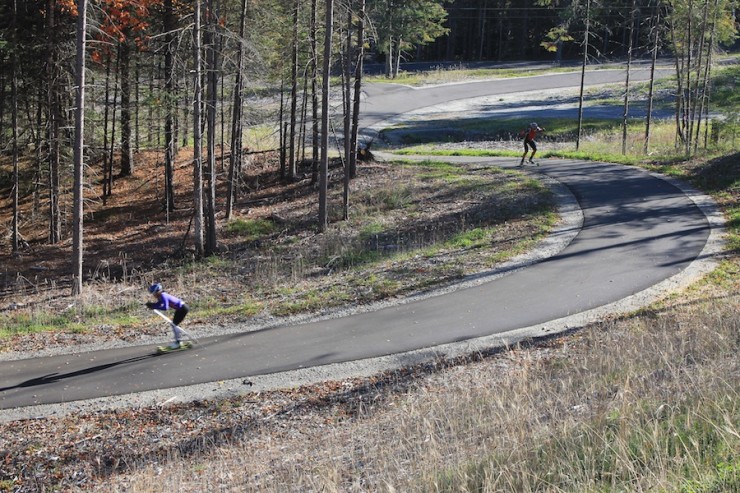
    “It was quite dry and sticky,” U.S. racer Annelies Cook said of the snow that fell during the day. “It was probably the worst skiing conditions that we have experienced racing so far, even though the course wasn’t that difficult and it was hard packed. Right down the middle of the track was a glazed section where everyone would ski and that was quite slippery, but as soon as your skis hit any new snow, then they would immediately slow down. So your balance muscles got completely tight immediately.”

    That may have added a bit of strain to racers legs because come standing, more and more were missing. It wasn’t just Gössner, but some of the others as well. Tora Berger of Norway, arguably the best standing shooter on the circuit, had two penalties. Olga Zaitseva of had one and Russian teammate Olga Vilukhina two.

    There were those who shot clean – teammate Andrea Henkel, for instance, who sat in second for a large part of the race – and those who could conceivably beat Gössner with ski speed. But it was a losing battle. Kaisa Makarainen of Finland came close, but her penalty prevented her from taking the win; she finished with a time 17 seconds slower than Gössner’s, and slipped in between the two German teammates on the results sheet.

    Annelies Cook led the American team with 26th place, a career best. Photo: USBA/NordicFocus.
    Annelies Cook led the American team with 26th place, a career best. Photo: USBA/NordicFocus.

    Darya Domracheva of Belarus was charging, too – with her long limbs and powerful skiing, the complete opposite of the German. The next fastest skier in the field behind Gössner, she actually had the lead coming into the standing stage. But after missing a shot, she had work to do. Domracheva was 9.3 seconds out after finishing her penalty loop and was only able to reel in two seconds on the final lap.

    No other racers were able to make a significant push towards the top, and so at the end of the day, Gössner was left victorious.

    “I was lucky and am quite happy about it,” she said of her third career win.

    After Henkel, who held onto fourth place, the next three finishers also shot clean: Marie Dorin Habert of France, Jana Gerekova of Slovakia, and Weronika Nowakowska-Ziemniak of Poland. Valj Semerenko of Ukraine placed eighth, undone by a penalty in standing; Fanny Welle-Strand Horn of Norway tied her career-best finish with ninth, and Mari Laukkanen of Finland set a new personal best in tenth.

    For Domracheva, who was the runner-up in the overall World Cup last year and also took a World Championship title, the 2012-13 season so far had been not quite what she was looking for. But with undeniably strong skiing today, she felt she was back on track.

    Susan Dunklee was 53rd with two penalties. Photo: USBA/NordicFocus.
    Susan Dunklee was 53rd with two penalties. Photo: USBA/NordicFocus.

    “I had some difficulties in the start of the season, but I think challenges like this make you stronger,” said Domracheva, who consistently shares a message of positive thinking and empowerment with her fans. “I feel like my shape is quite good now and I am strong on the tracks. My shooting is getting better and better – I am quite optimistic about the rest of the season.”

    For her part, Makarainen was boosted by well-wishers too. It was her 30th birthday and she said she had been receiving notes and messages since the morning.

    “I knew that it was going to be a good day no matter what happened,” the 2011 overall World Cup champion said in a press conference.

    It wasn’t a bad day for the Americans, either. Annelies Cook led the way with 26th place – a persona best and the first top-30 finish of her career.

    Lanny Barnes in action in Ruhpolding. Photo: USBA/NordicFocus.
    Lanny Barnes in action in Ruhpolding. Photo: USBA/NordicFocus.

    “Today was a performance I have been hoping to finally have!” Cook wrote in an e-mail to FasterSkier. “It was my personal best so far and that is always an awesome feeling. I have been a bit frustrated with shooting lately especially because I think there has been an improvement in skiing, so it felt wonderful to clean all my targets.”

    Clean shooting has eluded her so far this season, and she has had some disastrous races as well: six penalties in the sprint in Ostersund, five in the sprint in Oberhof. Today, she changed her mental approach to shooting.

    “Before the race, I told myself that I needed to hit all my targets to do well,” she explained. “Then I thought to myself, no that’s not right. I WANT to hit my targets and I am GOING to hit my targets.”

    Close behind was Sara Studebaker, who also cleaned. She ended up 33rd, just ten seconds slower than Cook.

    “This was one of the best races of the year,” Studebaker said. “I finally felt good on my skis and was happy with the outcome. Of course, I would have liked to stay in the top-30, but things were so tight right around me, and I did everything I could on the last loop, so I’m happy with the race.”

    Susan Dunklee had one penalty in each stage and placed 53rd; as one of the earliest starters she may have had some of the worst luck with the snow. Leaving the stadium in particular, there appeared to be parts of the track that were not yet skied in; Studebaker said she thought it was benefit to start in the middle of the field.

    It’s doubtful that any will qualify for the 30-woman mass start on Sunday, but if so, they will have to work on loosening up after a tense day on the skis.

    “Our balance muscles got completely tight immediately and there was no where to ski powerfully and relaxed,” Cook wrote. “I almost ate it so many times. Totally herky jerky skiing. The best were those who could be as relaxed as possible. My legs were killing me! A huge element in today was the fact that we had good skis. If we hadn’t had good ones, then there would have been no chance at all.”

    Though Lanny Barnes did not finish the race, the Americans are looking good.

    “Strong shooting day for team USA today with only 3 penalties between the 4 of us,” Dunklee tweeted after the competition.

    “I think our team is definitely on the up-swing and we’re all excited for Antholz and then World Champs,” Studebaker wrote. “This is the perfect time for us to be hitting our stride!”

    Zina Kocher and Megan Heinike each had two penalties to pace Canada in 52nd and 63rd; Rosanna Crawford limited herself to one, but was a few seconds behind Heinike in 65th. In her individual World Cup debut, Audrey Vaillancourt placed 81st.

    Results


    Cook on course. Photo: USBA/NordicFocus.
    Cook on course. Photo: USBA/NordicFocus.
  • After Early Leaders’ Blunders on Range, Strong and Steady Zaitseva Takes Reins in Oberhof

    After Early Leaders’ Blunders on Range, Strong and Steady Zaitseva Takes Reins in Oberhof

    A single penalty in the final stage would have allowed the chasers to catch Olga Zaitseva of Russia. But the veteran carefully hit her targets, and skied off for her first win of the season.

    The weather gods of Oberhof, Germany, had one last laugh on Sunday, as wind factored heavily in the fate of biathletes in the World Cup pursuits.

    After notching victory in Saturday’s sprint, Miriam Gössner set out in a quest to win again – and make progress toward cathing Norway’s Tora Berger at the top of the World Cup rankings. The fastest skier in the field, she extended her two-second lead from the start and was the first to hit the shooting range.

    But in her first prone stage, things went far from as planned. Try as she might, Gössner couldn’t hit a single target, and quickly picked up five penalties. While she has had a reputation in the past for squandering her ski speed by missing shots, Gössner seemed to be shooting more consistently this season. Then this.

    “To me, I thought that no longer happens, but I guess I misjudged the wind,” she told biathlon-online.de.

    She dropped to eleventh and ceded the lead to Berger, who had started second and cleaned the first stage. But when Berger entered the range for the second prone stage, she had a nearly identical experience: she entered all alone, but then missed four shots.

    “I can’t remember the last time I shot so badly,” Berger told Norwegian broadcaster NRK after the race. “It was sad, but I guess I must have some bad days too. I don’t know what happened. The shots went to the right, so I guess the wind was somewhat different and I wasn’t able to read it properly.”

    So Berger, too, dropped out of the lead.

    That left the woman who had started third, Andrea Henkel. With clean shooting in the first stage and a single penalty in the second, the German veteran was able to take the lead, 17 seconds ahead of Russia’s Olga Zaitseva. Marie Dorin Habert of France moved into third, another ten seconds back.

    Despite Gössner’s missteps – she had missed two more shots in the first standing stage – the Oberhof fans had something to cheer about. Henkel, who went to school there and is a hometown hero, skated into the stadium for her first standing stage hoping to turn things around for Germany.

    Instead, she picked up two penalties. She didn’t drop out of contention, just into second behind Zaitseva, who had a penalty of her own. Henkel was down 14 seconds and hit the trail just ahead of Veronika Vitkova of the Czech Republic and Valj Semerenko of Ukraine, who had started 16th and 14th but each only missed one shot to gradually climb through the field.

    On the last loop both caught Henkel, as did Ukraine’s Olena Pidhrushna; another chase pack loomed behind. With the top five women separated by less time than it takes to ski a penalty loop, the final stage was clearly going to determine the winner.

    But Zaitseva did not cave under the pressure. The 34-year-old, who has twice won Olympic relay gold, carefully dropped all five targets and skied away as the others were taking their first shots.

    “I think it was the final shooting stage both yesterday and today [that brought me success],” she said in a press conference. “I really concentrated on this both days; all during the loop before the last shooting, this was on my mind.”

    As she skated off toward victory, Vitkova and Semerenko cleaned as well. Henkel had one penalty and Pidhrushna three, dropping them out of contention. The Czech left the range just under three seconds ahead of Semerenko thanks to her quick shooting, and held that margin to the end.

    It was Vitkova’s first podium, and is helping the Czech’s assert themselves on the biathlon scene. Teammate Gabriela Soukalova had also never been on the podium before this year, but was in the top three in three separate races before the Christmas break, including when she won the sprint in Pokljuka, Slovenia. While Soukalova is sitting out this weekend of racing, she still helped Vitkova.

    “The training that I did with Gabriela Soukalova” was why she could finish second, Vitkova said.

    Meanwhile, Semerenko continued a string of success by her team this weekend after contributing to the winning relay effort on Thursday; the men’s team finished fourth on Friday.

    “I am very happy for our team and all of the fans in the Ukraine,” she said. “Each good result is like a bit of sunlight for us each day.”

    Berger managed to sneak into fourth despite missing a total of seven shots, while Darya Domracheva of Belarus was fifth with five penalties. Gössner finished tenth with ten missed shots.

    She probably has the same feeling that Berger does.

    “I think I’ll just forget this shooting as fast as possible,” Berger told NRK. “The positive thing is that I felt good physically.”

    The lone U.S. racer to qualify for the pursuit, Sara Studebaker, did not start because she felt like she was getting sick.

    For Canada, Zina Kocher had an impressive running, starting as the last woman in 60th place after a frustrating sprint but missing only four shots to move up to 34th. While four penalties isn’t usually impressive, given the blunders by almost every member of the field, it was a solid result. Megan Heinicke moved from 52nd up to 41st with just three penalties.

    Results (pdf)

  • Gössner and Henkel Give Rain-Soaked Oberhof Fans What They Want: Two Germans on the Podium

    Gössner and Henkel Give Rain-Soaked Oberhof Fans What They Want: Two Germans on the Podium

    Sara Studebaker led the North American delegation, shooting clean to finish 29th, her best result of the season. Photo: USBA/NordicFocus.

    After seeing conditions in Oberhof, Germany, it’s fair to spend a second wondering why the venue keeps getting World Cups.

    It was the third day of racing for biathletes and the third day of fog and rain. The third day of slush turning into ice on the sections of the course that had been salted. The third day of bare dirt on the side of the trail, since there’s no natural snow in the woods. The third day of winds on the range that couldn’t quite decide whether to blow or not, and in what direction. The third day of fog making it tough to see the targets.
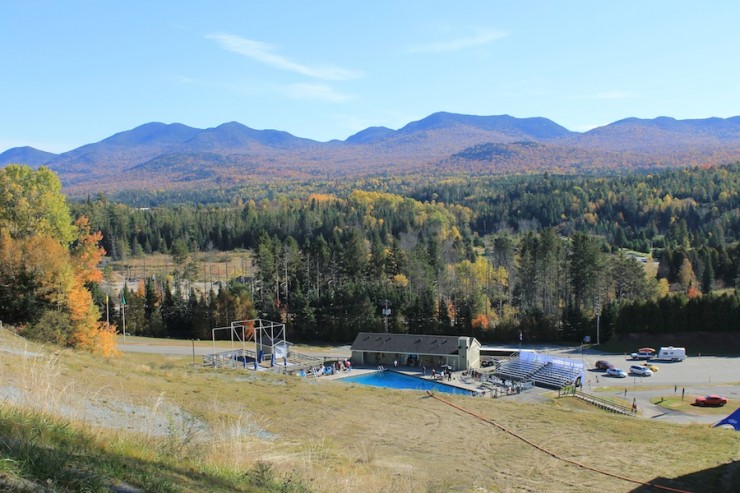
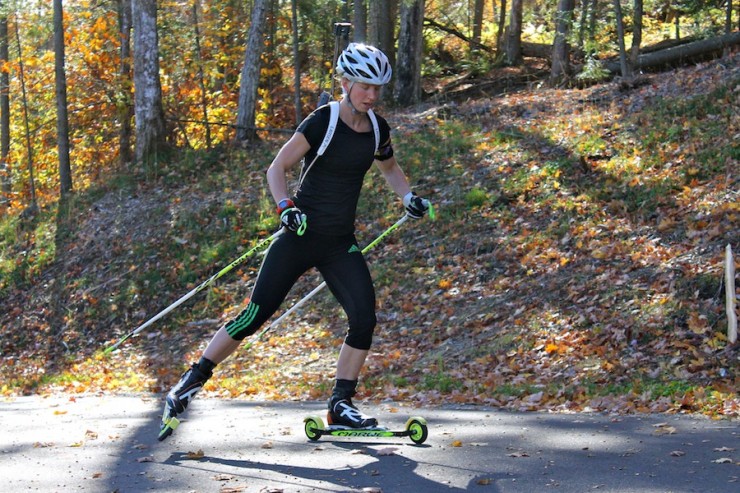
    But while these things might be annoying – and to the athletes, it’s certainly no picnic to compete in Oberhof – the venue is still a classic. Case in point: the 20,000 fans who show up despite the rain and despite being prevented by the fog from seeing very much at all, and cheer like there’s no tomorrow. Russian biathlete Dmitri Malyshko described the stadium as “a wall of noise” after the men’s relay yesterday.

    And nothing can delight the screamers more than when the Germans do well. They got their wish on Saturday, when their team placed two women on the podium in the 7.5 k sprint. 2013 was expected to be something of a rebuilding year for Germany after several retirements, but you’d never know it looking at the results.

    “I have said often enough that you’re not allowed to talk about the performance of the girls as being bad [now],” German women’s head coach Gerald Hoening told German site Echo online. “It was always attached to anything people say, that [Magdalena Neuner] has stopped and this team is not good enough. But that is to wrong them, especially Miriam [Gössner] and Andrea [Henkel].”

    The win came from 22-year-old Gössner, who hadn’t won a World Cup until earlier this season but now sits second in the overall standings.

    Light and quick on her feet, Gössner flew around the course despite snow conditions that were distasteful to many of the other competitors. After 2.5 kilometers and one clean shooting stage, she already had a lead of 17 seconds. And she extended it so much that even after missing two shots in standing and doing the required penalty loops, she was still second, much to her surprise.

    “I was not so confident after the two missed targets,” she said in a press conference. “I went to the penalty loop thinking maybe I could fight for a top five. But I tried to go fast on the last loop and it worked.”

    It shouldn’t be surprising that Gössner outpaced her rivals; she has been skiing fast for years, despite her young age, and her shooting is usually what holds her back. As early as 2009, at just 19, she competed in FIS World Championships, where she qualified for the sprint in 17th place and turned in the fastest time on her leg of the 4 x 5 k relay, earning a silver medal for her efforts.

    Because her misses on the range were holding her back in biathlon, she instead competed in the Olympics in skiing, where she was again part of a silver medal relay team. Then she returned to biathlon.

    This season, it seems she has only gotten faster, but also better on the range. And winning her second career World Cup in Oberhof, she said, was something else.

    “This is really an amazing feeling with this audience,” she told biathlon-online.de. “The race here was just plain fun, and I’m over the moon!”

    As excited as the fans were to see Gössner take a two-second win over Tora Berger of Norway – despite the penalties while Berger shot clean – they were just as thrilled to see Germany’s veteran, Andrea Henkel, take third place. These are her stomping grounds, and where she went to high school, and she is one of the most successful German biathletes of all time, having won 21 World Cups. To Germans, that means a lot.

    “I guess I shouldn’t expect so much from myself, and then I’ll do better,” Henkel told Echo online, a German site.

    She discussed in the post-race press conference how she had not been as aggressive on the trails today, and it worked out. Coming back from an illness that kept her off the relay team on Thursday, she was taking things a little easy.

    “To not race the relay was actually a good decision, because without the break I would not be here,” she said in the press conference. “It maybe helped that I could not train hard for a few days… maybe I should do that more often. It was actually nice to watch [the relay] from my couch at home.”

    In between the two Germans was Berger, who seemed to execute everything perfectly and be on her way to a win. Like Henkel, she didn’t miss a single target, but she also skied faster than Henkel. But Gössner was so fast that it didn’t matter. And the German was two bibs behind Berger, so she knew exactly what she had to do on the last lap.

    “I thought it would be easier if I shot clean,” Berger lamented in the press conference.

    But she has the consolation of retaining the overall leaders bib for World Cup racing. That, Gössner will have to work very hard indeed to take away. The two are separated by about 100 points; Henkel has moved into third, 26 points behind her teammate.

    Marie Dorin Habert of France was fourth, clean like Henkel and only four seconds behind her. Olga Zaitseva of Russia and Juliya Dzyhma of Ukraine were fifth and sixth.

    The U.S. was led by Sara Studebaker, who shot clean to place 29th, her first top-30 finish of the season.

    “I was very happy to clean; it’s nice in any race, but I got a little lucky with the fog and wind when I was in the range and didn’t have too much trouble,” Studebaker wrote in an e-mail. “I worked a lot on shooting speed and confidence over the break, so it was nice to see that pay off. I felt a little off skiing, and it definitely wasn’t my strongest day. This is a tough course for me.”

    Despite the intensive travel of journeying all the way back to Alaska for the Christmas break, the rewards were worth the difficulties and she said there was “good snow and great training.”

    In Sunday’s pursuit, Studebaker will start in a pack of twelve skiers within ten seconds. The goal, she said, was to “hook on to faster people, but also be smart and ski your own race.” With four shooting stages and short ski loops, repeating her shooting performance will go a long way towards getting a good result.

    And then? She’ll be done with the fog.

    “Being back on the World Cup is great, but we’re all hoping for some sun, or at least more “normal” skiing conditions the next couple weeks,” she concluded.

    The other American in the race, Annelies Cook, struggled on the range, missing five shots to place 72nd and will not be in the pursuit. The two Canadians snuck in by slim margins: Megan Heinicke placed 52nd and Zina Kocher 60th, the last woman to make the cut.

    Results

  • Norway’s Berger is the New Queen of Sweden after Three Wins, Three Races in Östersund

    Norway’s Berger is the New Queen of Sweden after Three Wins, Three Races in Östersund

    Tora Berger of Norway was nearly flawless on the range again, and today picked up her third victory in a row. She has swept the individual races so far this season. Photo: Fischer/NordicFocus.

    ÖSTERSUND, Sweden – To beat Tora Berger these days, you have to defeat her not only on the trails, but also on the range.

    And that has proved more or less impossible here in Östersund. In three races, the Norwegian has taken 50 shots and missed just two of them. That feat was matched by only four women: Andrea Henkel of Germany, Marie Laure Brunet of France, Nadezhda Skardino of Belarus, and Eva Tofalvi of Romania.

    None started particularly close to Berger in the pursuit – Henkel was 26 seconds back and Brunet 43 – so Berger took the 17-second lead she started with and ran with it. While Saturday’s second-place finisher, Olena Pidhrushna of Ukraine, missed three shots and the third-place finisher, Olga Vilukhina of Russia, missed two, Berger had a single penalty over four stages and was never threatened for the win.

    Berger came into the final stage with a lead so big that she left the range before the next three competitors even hit their mats; she was finished skiing her penalty loop far before they finished shooting. It gave her a third win in as many races – what’s more perfect than that?

    Hitting one more target, it turns out. For the perfectionist within, Berger’s performance was not good enough.

    “It was not so great on the tracks today, and not so great also on the shooting range,” she said in a press conference. “It was very good until my last shooting, but there I had a penalty there. It was a not so good day, but it was okay to have [a bad day] now. I was still number one.”

    Berger pumped for another victory. Photo: Fischer/NordicFocus.

    Despite having just the 17th-fastest ski time, Berger finished with a 29.8 second lead. She said that rather than worrying about the women chasing her, she focused on her own race.

    “That’s how you can do really well,” she explained.

    Well, that and shooting well: only two competitors in the 60-woman field shot better than Berger and hit all their targets. She also, as usual, had the fastest shooting times in the standing stages, clocking in at 24.1 and 23.5 seconds. Still, despite her recent excellence on the range, Berger takes nothing for granted.

    “I have to fight for all the targets,” she said. “It is not ever easy now.”

    So far, a revolving cast of characters has popped up in the quest to follow Berger. For the first time this season, the favorite reared her head: Darya Domracheva of Belarus, last year’s runner-up in the overall World Cup. With the 2012 champion, Magdalena Neuner of Germany, having retired, Domracheva was expected to be a main contender. But this week she has struggles with the cold this week: “It was a problem for me,” she said. Berger had no such concerns, saying that she wore wool.

    Today, she climbed from seventh up to second place while matching Berger’s shooting accuracy, if not speed. While her course time was 17 seconds faster than Berger’s, her shooting was 16 seconds slower. As long as she hits her shots, Domracheva is unconcerned about shooting times, saying that one penalty was just fine.

    “It was quite a good race,” she said in the press conference. “I was hoping for a bit better, but I have to work in the coming weeks – on all things.”

    En route to second place, Domracheva mainly had to overcome Henkel, who was one of the two women to shoot clean. But Henkel’s skiing is not exceptional at the moment, and despite heading out on the third loop thirteen seconds ahead of Domracheva, the two entered the range for the last time together.

    Domracheva moving her way through the field. Photo: Fischer/NordicFocus.

    Each hit all their targets, but Domracheva did so faster, and then put another ten seconds into the German on the last loop. Henkel finished 51.5 seconds behind Berger and more than 20 from Domracheva.

    “I had trouble taking my standing position because my ski every time was slipping away,” Henkel said in the press conference. “So I took my time, and that was worth it.”

    While she had “hoped quite hard” for a podium in the pursuit after finishing the sprint in fifth place, Henkel was realistic about her skiing ability.

    “We didn’t prepare for being in perfect shape here,” she said. “We want to have good shape at the beginning of next year, January, February. So far so good… My coach says that I should not think I can be in good shape for the whole four months anymore, because I am too old. So I’m taking my focus on the World Championships and hoping again for an individual medal.”

    As for the others, they are clearly aiming for both World Championships and the overall World Cup. Berger has stated that she hopes to win the World Cup this season after finishing third last year. First, she has to conquer Hochfilzen, Austria, next weekend, a venue that hasn’t historically been kind to her.

    “I will try to do my best in the next races,” she said. “I’ll try to do it better this year.”

    As for Domracheva, she has a new mark to match after spending so much of last season chasing Neuner around Europe.

    “For sure, Tora is the strongest right now,” she said. “But there are also some other athletes who can be fast.”

    A sampling of the possibilities: Vilukhina and Pidhrushna finished fourth (+1:10.0) and fifth (+1:15.2), followed by Brunet of France in sixth (+1:19.0). Veronika Vitkova of the Czech Republic moved from ninth up to seventh (+1:24.4), while Anastasiya Kuzmina of Slovakia and Ekaterina Glazyrina of Russia broke into the top ten after disappointing sprint races, placing eighth (+1:40.9) and ninth (+1:42.4). Jana Gerekova of Slovakia rounded out the top ten (+1:47.7).

    Results

    Andrea Henkel got the podium she had hoped so hard for. Photo: Fischer/NordicFocus.
  • For Germany’s Olympic Champion Andrea Henkel, Americans are “A Second Team”

    For Germany’s Olympic Champion Andrea Henkel, Americans are “A Second Team”

    Germany’s Andrea Henkel (second from right) with American biathletes (l-r) Sara Studebaker, Susan Dunklee, Annelies Cook, and Hannah Dreissigacker in Utah last week. (Dreissigacker courtesy photo)

    Soldier Hollow, the Utah venue that played host to the nordic events at the 2002 Olympics, is no stranger to big-name athletes. Just a few weeks ago, World Cup sprint champ Kikkan Randall was there training with the cross-country national team. The medal-winning nordic combined team skis there regularly.

    But last week, Utah had a visit from another of the nordic world’s most recognizable athletes: Germany’s Andrea Henkel, who joined the U.S. biathlon team for a part of their annual fall camp in Utah. Henkel, who enters the 2012 season as the most decorated woman currently on the World Cup circuit, hadn’t returned to Soldier Hollow since she won two gold medals back in 2002.

    “It’s nice to come back,” she told FasterSkier in an interview on Wednesday. “It has been lots of good memories, fun memories too, not just about the races. When you have a good time somewhere it’s nice to come back and just enjoy it.”

    Despite the high quality of the Soldier Hollow trail system, neither the FIS cross country World Cup nor the IBU World Cup have returned to Utah since those Olympics, a fate that seems likely to befall the Vancouver venues as well.

    “Biathlon is a European sport,” Henkel said. “I would like it if we came to the U.S. more, but you often get the question, ‘what is biathlon?’ They just have no idea of it, or that there was some [American] who was leading the World Cup, even.”

    Sara Studebaker (USA) and Andrea Henkel (GER) in the mixed relay at 2012 World Championships.

    Time recently spent with the Americans and at the former Olympic site has made Henkel muse on the support for programs in countries like the U.S., where biathlon doesn’t get top billing. In her own home country, it’s the most popular winter sport, and biathletes, especially those as successful as Henkel, are followed by the media as closely as if they were Hollywood celebrities.

    “It’s hard for teams who don’t get real respect,” she said of conditions on this side of the Atlantic. “Maybe having more World Cups in America would make it better for them. It would be nice to have more World Cups in America – maybe the future will bring it.”

    With the schedule often set far in advance, it seems unlikely that any World Cups will return to the States while Henkel is still competing. But by all appearances, the future is bringing the German star her a fourth Olympic appearance, which will give her the chance to see a venue in another surprising place: the Black Sea, where Sochi is situated.

    And the magic, and medal potential, is still there. Although the 2012 season was so often a battle between Henkel’s teammate Magdalena Neuner and Belorussian Darya Domracheva, Henkel took a win of her own in Oslo. It was her 16th regular-season victory to go with one individual Olympic gold, four individual world titles, and five relay wins at championship events.

    That longevity – and Henkel’s humble attitude about it – seems incredible to the U.S. women she was training with in Utah.

    “As we travel around Salt Lake and the Heber Valley, she has been reminiscing about that experience,” national team member Susan Dunklee, who now battles Henkel on the World Cup, wrote in an e-mail. “I am impressed not only at how long she has been competing in biathlon, but how long she has been competing at the highest level. During the Salt Lake Olympics, I was stressing about the upcoming Vermont State High School Championships… biathlon wouldn’t be on my radar for another six years.”

    U.S. as a Second Home

    More overdistance fun. Photo: Dreissigacker.

    Henkel estimates that she began visiting the U.S. four or five years ago, after she started dating American biathlete Tim Burke. At first, she would train on her own or with the men’s team. Back then, the women were intimidated and shy around Henkel, but that broke down in the coming years as the trips to Lake Placid began racking up and Henkel started to spend more time training with the women.

    “Before I met her, Andrea had seemed so larger than life, but when I met her, I couldn’t believe how small she actually was,” Dunklee wrote. After a few years, Henkel and her personality became part of the team: “She is known for blunt honesty. She tells it like it is, and it is refreshing to hear her opinions.”

    Things changed for Henkel in 2010, when her teammates Kati Wilhelm, Simone Hauswald, and Martina Beck all retired. Although she’s had plenty of teammates retire in the course of her career, Henkel said the post-Vancouver rush was the toughest: the four women were the same age and had trained and competed together for years. Between that and the impressive length of Henkel’s career, it’s easy to see why she began looking for new ideas to stay engaged in her training.

    “I have been doing this for a while, and I have to get my motivation from something,” she said. “It’s been so long that if I have the same focus year in and year out, I would be tired already or maybe I wouldn’t be doing it anymore, even.”

    Henkel says that the Americans are “like a second team,” and the feeling is mutual. Dunklee thought that the sense of camaraderie was one of the biggest benefits Henkel might get from training with her team. The German system is different in that there are multiple training centers around the country and the national team comes together mainly for camps, which are generally short – just one week.

    “The last couple years, the US women’s team has become very close,” Dunklee wrote. “Andrea fits right in with that. Besides training with us, she has joined us for shopping trips on rest days, volunteered her home kitchen for birthday cake baking, and shared an occasional bottle of wine with our team and staff. Of course I want to beat her on race day, but I am also psyched when she does well. Our whole team is.”

    Veterans Train Different

    And while the U.S. women have never been as strong as the Germans, they have improved over the last few years into a faster group that has more to offer Henkel in terms of training.

    Henkel skiing her way to a mass start win in Oslo, Norway on last season. Photo: NordicFocus/Fischer.

    “The team had started changing already when I started coming here,” Henkel said, noting that the hiring of dedicated women’s coach Jonne Kahkonen had helped substantially. “It’s good training.”

    Of course, it helps that biathletes like Dunklee have had one of the sport’s biggest stars to learn from. Initially, the American worried that if she spent too long skiing around behind Henkel, she would be annoying. As she has gotten to know the German better, she’s no longer as nervous about that. And besides trying to pick up specific technique, the U.S. women say that Henkel’s attitude in general is something to emulate.

    “She is one of the world’s most talented and most experienced biathletes,” Dunklee wrote. “She has high expectations for herself but also lots of perspective, which keeps her even keeled. Her professional attitude towards training and racing rubs off on our team and that has been a very positive thing… and having her around sets the bar higher and gives us a measuring stick. It’s awesome!”

    Henkel’s German coaches don’t mind when she travelled to the States: “they know that I train very hard, and they trust that I’m working,” she said. Henkel talks to them regularly while she’s gone to assess what she should be doing for training. Although her plan is different than the Americans’, she tries to jump in with them as much as possible if the day’s goals line up well enough, simply because it’s easier.

    But that doesn’t always happen. Henkel has been competing at the World Cup level since 1995, more than ten years longer than Studebaker and Dunklee have even been biathletes.

    “The German’s have a slightly different philosophy than we do, but Andrea’s training is different more just because she’s been training for a lot longer than most of us,” wrote Sara Studebaker. “She’s at the point in her career where she has the endurance and the volume, so speed and intensity are more important in her plan than the endurance piece.”

    As such, Henkel often jumps in interval workouts and time trials; last week she swept the two time trials at Soldier Hollow that were used to pick athletes to send to the World Cup. She told FasterSkier that she was surprised she did so well; even for such an experienced athlete, flying across eight time zones is no small thing, and she arrived recovering from a cold and initially struggled to adjust to the altitude.

    “I was shooting really badly in the beginning,” Henkel laughed. “It got better in the last few days, and skiing was okay I think. I didn’t prepare for the race, but not everybody could. For me it was good to race again, to go this speed. So it was good for my motivation and my mind.”

    2013: Still Nerves, Still Pressure

    Henkel flew home to Germany on Sunday, and in a week she’ll head to Muonio, Finland, for final World Cup preparations with her team. Then, she’ll fly to Ostersund, Sweden, and stay with the Americans again for a few days before the first World Cup races. When she hits the start line, she’ll have butterflies.

    “The first race is the one I’m the most nervous about,” she said. “You get to figure out what you have done already for the last year, and see where you are, what you can do and what you can’t do anymore.”

    Henkel crossing the line for gold as the anchor leg of the German relay at 2012 World Championships. Photo: NordicFocus/USBA.

    For instance, one thing that has changed over the years is Henkel’s shooting speed and accuracy. These days, she says, she’s less “comfortable” on the range, although she’s always working to change that. In big races, though, she still seems to have nerves of steel: at World Championships in 2012, it was Magdalena Neuner who had to hit the penalty loop in the women’s relay, while Henkel anchored the team to a 28-second win with perfect shooting.

    And for Germany, that’s important. At the end of last season Neuner retired at age 25, leaving a big gap in the roster. For so many years, the German women have been the team to beat in relays; Henkel grew up, athletically, in a climate where if you couldn’t podium, you wouldn’t even have a shot at making a relay team.

    “We had a very strong team in 2010, the strongest team we ever had,” Henkel said of the squad that hadn’t even included Neuner. “ At that time I think the coaches expected that every race, somebody would be on the podium. We shouldn’t expect this anymore so much. The new team is very good and we can still have some podiums and good relays, but it won’t be like it was in 2008 to 2010.”

    In terms of day-to-day life, Henkel said that Neuner’s retirement didn’t affect her much; even last year, Neuner was doing some training on her own with her coach. She’s more concerned with trying to minimize the pressure put on her by Germany.

    “I know that now, for sure, they expect that somebody will be [doing well] and they expect that person will be me,” she said. “Luckily there is also Tina Bachmann, who is able to go to the podium.”

    As Dunklee had said, Henkel has high expectations for herself, so the pressure is as much internal as anything else. But, the star explained, she’s just doing the best she can.

    “I don’t want to push myself too much in terms of pressure,” she said.

    Although the World Cup schedule is much the same from year to year, there are small changes that can break up the monotony for a career athlete, and this year has an extra special opportunity: the first chance to compete on the trails in Sochi, where Henkel will chase her fifth Olympic medal.

    “It’s not often that we see something new,” Henkel said. “But last year we saw something new with Nove Mesto, and this year we will see Sochi. I have seen some pictures already, and I’m really excited to go there and check it out. Hopefully the tracks there will be good for me!”

    What does that mean?

    “I’d like it to be more challenging than Vancouver was, for example,” she explained. “But still doable. And the range should be not too easy, but doable. You need to have a little challenge in both the shooting and the skiing.”


  • A National Team’s Question: How to Get to the Next Camp? Its Answer: Bike!

    A National Team’s Question: How to Get to the Next Camp? Its Answer: Bike!

    Like a lot of national teams, the U.S. biathlon squad has training camps at different facilities around the country throughout the year. And after a stint at the Camp Ethan Allen Training Site in Jericho, Vermont, this week, they needed to get home.

    Unlike most national teams, they solved the logistical challenge by biking there – all the way to the Olympic Training Center in Lake Placid, New York.

    Susan Dunklee training in Bend earlier this summer.

    “It’s funny because it sounds kind of long, but I don’t think it’s even 100 miles,” laughed A-teamer Susan Dunklee. “I feel pretty badass after I do it, but then I think what the Ironman participants are going to be doing this weekend and it doesn’t seem that impressive.”

    The team covered a large part of that distance on back roads. Their one major geographical obstacle was Lake Champlain, a 490-square mile behemoth that runs 125 miles along the Vermont-New York Border. Rather than take a ferry – a nice opportunity for a snack break – they rode south to a bridge, and after leaving Jericho at 8 in the morning, arrived home around 3:30. Dunklee said she didn’t bonk until about a mile and a half from the Training Center, and headed straight for the food to recover.

    After a week of hard training in Jericho, Dunklee appreciated something different.

    “Mixing it up is exciting,” she said in a phone call from Lake Placid. “We did it last year, and I think people liked it a lot – it was tough, but it was good, so we decided to do it again this year.”

    Plus, it fit with her training plan.

    “I wouldn’t say it would [have been] a wasted day because it’s only two hours to get there, so we easily could have done a workout or two,” Dunklee explained. “But it’s that time of year when we’re trying to put in a ton of volume, and it’s a really fun way to put in a good day of volume.”

    Volume hadn’t actually been the focus of the Jericho camp; the team had done a few time trials, while volume is still two weeks away on the schedule. One of the main things that exhausted them was actually the humid, muggy heat wave that has hit New England just like the rest of the country.

    “It cooled off a lot today compared to what it was before,” Dunklee said. “The heat was definitely getting to us doing combos and such on the range this past week, and living in the barracks where there’s no air conditioning [note: Camp Ethan Allen is an Army National Guard site that also houses the Mountain Warfare School].

    “But today felt pretty nice,” she continued. “It was still warm, but on a bike you get a lot more breeze.”

    The beginning of the camp also featured a guest appearance by German World Champion and Olympic gold medalist Andrea Henkel, who was at the end of a long stay in the States; she had also joined in some sessions in Lake Placid earlier. In Jericho, she was mostly training on her own, doing a series of intensity trials to make up for missing her own national team’s testing block. But the U.S. athletes still appreciated having her.

    Henkel crossing the line for gold as the anchor leg of the German relay at 2012 World Championships. She’s been in the U.S. visiting Tim Burke. Photo: NordicFocus/USBA.

    “It was great to see her on the range, and we did a few shooting drills and stuff when she was around,” Dunklee said. “She shoots really fast. It’s nice to have her there to remind us what we have to strive for.”

    It’s not the first time Henkel has joined in; as the long-time girlfriend of U.S. athlete Tim Burke, she has visited before. But Dunklee, who just completed her first season on the World Cup, says that this time around, she’s getting more out of the superstar’s presence.

    “I think having been on the World Cup, now I feel a lot more confident about being able to– I guess I just don’t feel as intimidated by her as I used to,” said Dunklee. “So that allows me to look at her a little more objectively, at what she does. I see a lot to learn.”