Tag: andrew gardner

  • After Two College Seasons, Pokorny Makes the Leap to Professional Skiing

    After Two College Seasons, Pokorny Makes the Leap to Professional Skiing

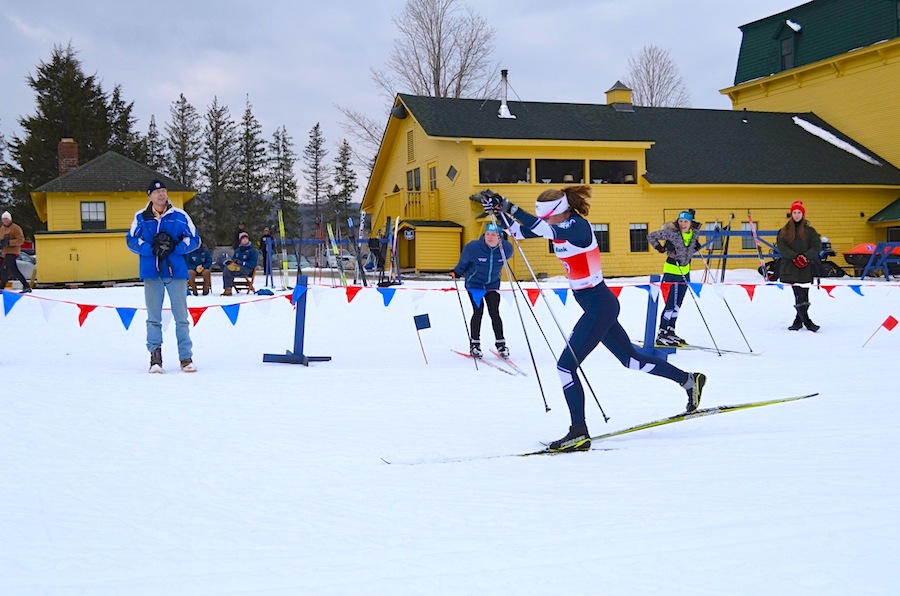
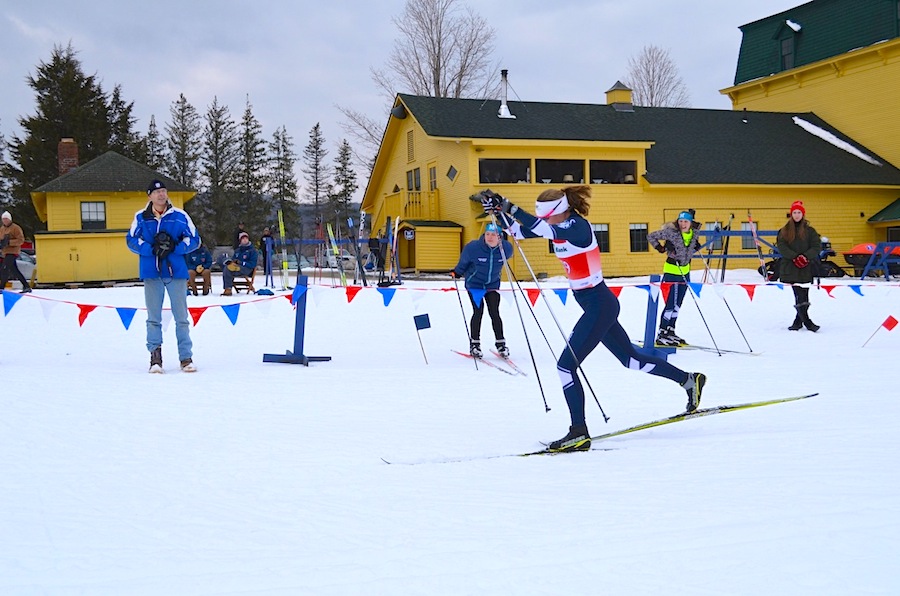
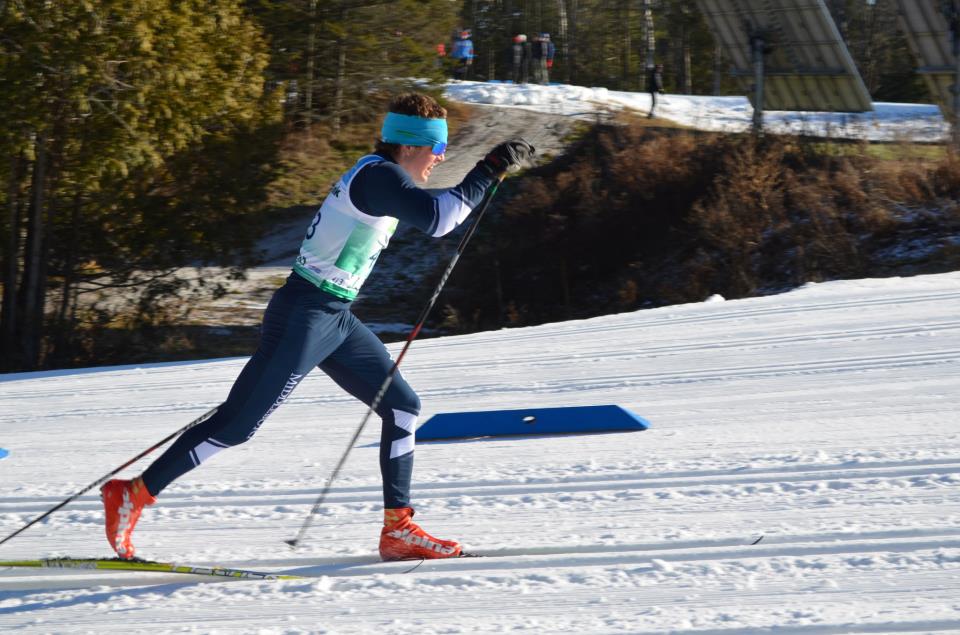
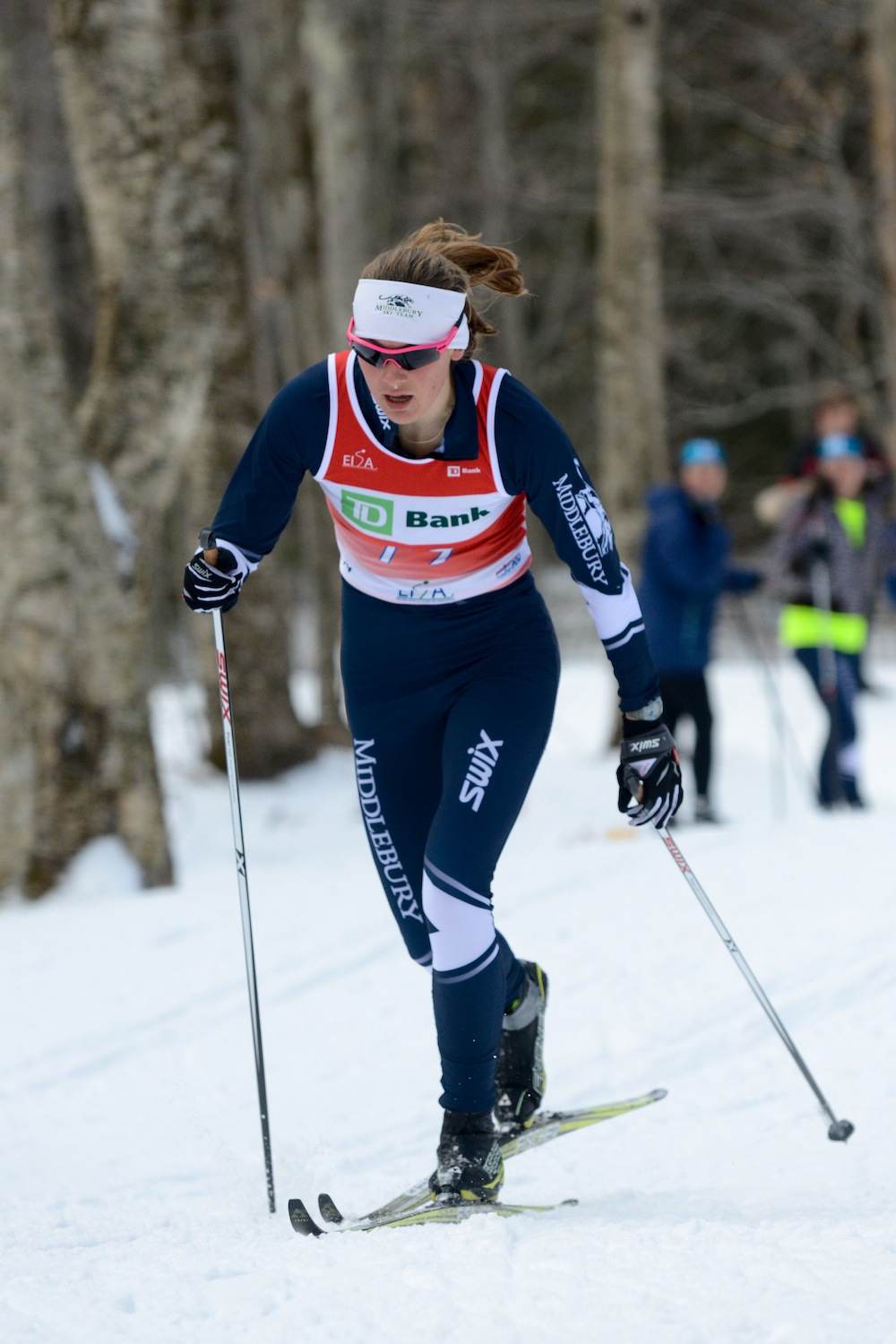
    Annie Pokorny took the top spot in Friday's 5k classic (photo: Cory Ransom)
    Annie Pokorny winning an EISA race this winter. Photo: Cory Ransom.

    This month, 20-year-old Annie Pokorny will embark on a path many skiers have walked before her in making the transition from college to professional skiing. The Middlebury College skier is one of the newest members of the Stratton Mountain School T2 Team, which officially announced its 2013-2014 roster Monday evening, and she will begin training with new teammates Jessie Diggins, Erika Flowers and Sophie Caldwell later this month.

    Spring is generally a time of transition and new team announcements in the ski world. Last week the Craftsbury Green Racing Project announced it added three new athletes to its roster, all of them new college graduates.

    But the unusual component of Pokorny’s move has to do with its timing. Rather than wait to begin a professional career until after she graduates and uses up her NCAA eligibility, she is disrupting her college career at the halfway mark — and at the height of an Olympic quadrennial, no less. It is a move resulting from no small amount of deliberation, but is one that Pokorny is enthusiastic about.

    “I think that I have been presented with a very unique opportunity, and I’ve never been one to turn those down,” Pokorny said in a recent phone interview from Vermont. “I’m excited to go for it and to take a chance. It’s exciting, it’s new — it’s going to be fun.”

    The factors that contributed to Pokorny’s move from Middlebury to SMS T2 are unique to her, but she believes many of her peers find themselves weighing the tradeoffs between college and full-time skiing at some point in their development, too, whether it’s during the college application process or later. College skiing is the subject of persistent discussion within the U.S. ski community, and Pokorny believes the choice to go to — or remain in — school is ultimately specific to the individual. In her own case, she wanted to strike while the iron was hot.

    “I’m really excited to join the Stratton group; they’ve got a really strong culture there, some really good girls and great coaches, and I wasn’t really sure if that opportunity would be there in two years,” Pokorny said. “There was a lot of deliberation that went into this one, as you can imagine.”

    Age and results played big roles in her decision-making process; Pokorny was a first-year U23 as a sophomore last season, which she considers “old for school.” Rather than wait until graduation to begin training full time at the age of 22, she wanted to give herself every development opportunity now, as she starts to come into her own.
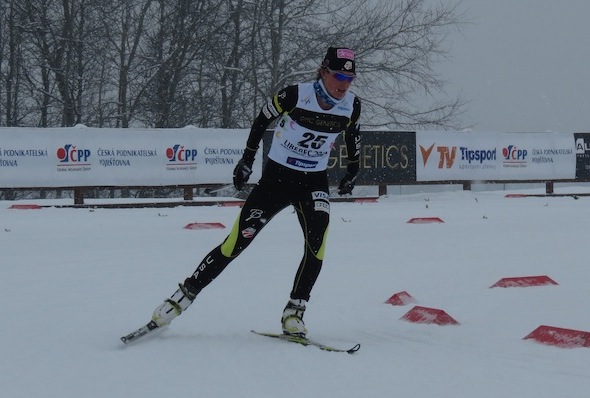
    Annie Pokorny, 29th. Photo: Gus Kaeding.
    Pokorny racing at U23 World Championships, where she was 29th in the 10 k freestyle and the 15 k skiathlon. Photo: Gus Kaeding.

    The Spokane, Wash., native and former Sun Valley skier just wrapped up a breakthrough sophomore season at Middlebury in which she scored two top-10s at U.S. Nationals and logged her first international races at U23 World Championships. Pokorny credits Middlebury with much of her athletic progress in the last two years, but decided as the year went on that skiing was what she wanted to do, and pursuing it full-time was what she needed to make another step forward.

    “I am very grateful that I went to college,” she said. “I feel that it has done so much for me, both as a skier and as a person, and I’m not sure that could have been replicated elsewhere. The Middlebury program, Andrew Gardner and Patty Ross — I have no doubt that they’ve made me a better skier. And there’s also no doubt that if I stayed here, I have the utmost confidence in Andrew Johnson and what he’s going to do to this program. It’s fairly bittersweet for me to leave, because I’d like to participate in that; I think he’s going to do great things here. But it was also a very personal decision that I made before we knew Andrew Johnson was coming here, and one that I’m confident in and am going to stick to.”

    Last December, Pokorny first entertained the idea of moving on from Middlebury ahead of schedule after watching some of the world’s best athletes compete in Quebec City. She watched the World Cup city sprints there with her college teammates and it was her first up-close exposure to skiing at the highest level.

    “Just seeing that level of competition and seeing how powerful that kind of competition can be was really mind-changing for me,” Pokorny said. “As a result of my seeing that, I think my skiing improved.”

    Less than a month after her experience in Canada, Pokorny finished fourth in the 10 k freestyle at U.S. Nationals, fewer than three seconds off the podium. She had been 47th in the same event the year before.

    Pokorny had already established herself as a freshman, placing ninth in the 15 k classic mass start at 2012 NCAA Championships, but this was a bigger step forward in 2013.
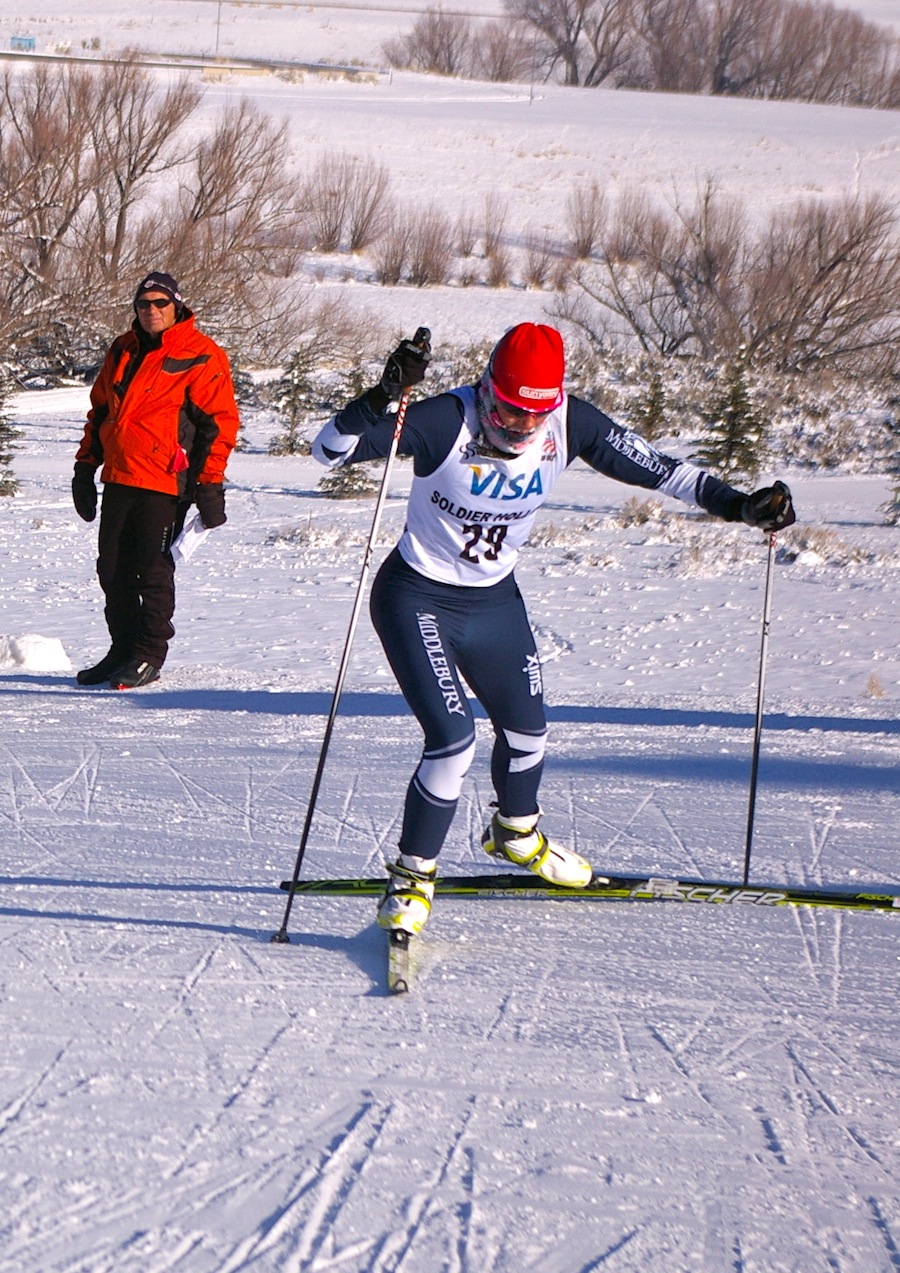
    Annie Pokorny (Middlebury) climbing Hermod's for the last time on Friday.
    Pokorny en route to a fourth-place finish in the 10 k freestyle at U.S. Nationals this January.

    Pokorny’s performances at nationals earned her a trip to U23 World Championships in Liberec, Czech Republic, where she notched two top-30s at her first international competitions. Upon returning to the U.S. she promptly claimed her first Eastern Intercollegiate Ski Association (EISA) win in Stowe, Vt., and went on to collect five podiums on her way to qualifying for NCAAs as second-ranked eastern skier. She crashed in both races at the championships and was forced to drop out of the mass start, but overall Pokorny took a big step forward this season.

    The good results were encouraging, but it was still January when Pokorny experienced another attitude-changing moment. During her first race in Liberec, a 10 k freestyle, the race-leader blew by her on the final climb. The moment reminded her of watching the Quebec World Cups, and instead of finding the experience discouraging Pokorny drew inspiration from it.

    “When I say she passed me I mean she really passed me,” Pokorny said. “It was like I was in slow motion. And I remember just thinking, ‘Wow. I’m in the same race as that kind of skier.’ And that was the coolest thing that I had experienced in a really long time. It kind of brought me back to that moment in December, when I saw firsthand what World Cup skiing was like. And I think from there it was over — it was something I really wanted to do.”

    Her decision to leave school partway through may be rare, but it is one that Pokorny has carefully considered over the past few months. She consulted with several coaches about her options and ultimately came to a final decision on her own. She believes a critical piece of her approach to the sport moving forward will be that she decided to pursue it independently of her results.

    “I think making that decision before I had any races this year was pretty pivotal, because it wasn’t as a result of any good result,” Pokorny said. “It was something that I had already chosen on my own, separate from numerical results… I think regardless I would have taken some time, because I really do enjoy skiing and want to spend more time doing it.”

    Pokorny sought advice from a number of coaches, including Gardner and SMS T2 head coach Gus Kaeding, and she had brief discussions with U.S. Ski Team coaches Matt Whitcomb and Bryan Fish. In each conversation, she says, she appreciated that no one tried to influence her decision.

    “Andrew [Gardner] was really supportive,” Pokorny said. “I think he, as a college coach, really believes in what college skiing can do, and he also knew me as an individual athlete… What he encouraged for me most was in deliberation and being confident in my decision, and really owning my decision and having it be mine. He was not going to sway me in either direction, which I really appreciate, because I think having that kind of autonomy will help going into this.”

    Pokorny emphatically believes her two years at Middlebury have been integral to her progress this year, and believes she would decide to attend college again if she were to go back in time.

    “I think what was really important for those kind of results to happen this year … is that I went to college,” Pokorny said. “There is so much to be learned freshman year of college. You’re forced to handle this huge transition of academic stresses and still keep cool on race day. And I think that kind of preparation really will help me going into more serious racing.

    “The collegiate field is very competitive,” she continued. “If you don’t show up with your game face on every Friday morning you don’t have a chance at a top-10. There aren’t any flukes in college racing… I definitely don’t think the college racing circuit gets the credit that it deserves, because it’s definitely competitive and definitely makes better skiers.”

    After finals are over Pokorny will head south to Stratton to begin the next phase of her career. Though she won’t be returning to Middlebury next fall she plans to continue taking part-time classes elsewhere and gradually work towards a degree. She has yet to finish finals this spring but she’s already started reaching out to potential sponsors to help support her training and racing next year.

    “I was just talking about owning my decisions, really owning my skiing — now I’m looking at places for support and sponsorships,” Pokorny said. “That’s been really fun, trying to find businesses I believe in and working with them, making connections. That’s the first major difference between college and full-time training, is funding yourself.”

    Pokorny doesn’t think there’s any cookie-cutter way to approach college and skiing, but she abides by the belief that carrying ownership into any decision it is the first step in making it work. She wants to continue getting faster and get back to Europe next winter, and to get there she is wholly invested in her new living and training environment.

    “Sophie Caldwell is an excellent example, or Rosie Brennan or Holly Brooks. There are so many women who’ve gone to college and do incredibly well after school,” Pokorny said. “I think it’s very much a personal choice, and there’s no right or wrong way to do it as long as you’re confident in what you’re doing and believe in your training and believe in your choices.”

    As to whether the approaching Winter Olympics affected her decision to go pro this particular spring, she was modest about her expectations.

    “I think that to be a female ski racer in the U.S. right now is really exciting,” Pokorny said. “It’s also very challenging. Just because I’m leaving school [it will] not auto-qualify me for the U.S. team. But that’s also what really fires me up. I think the group in the U.S. is really competitive right now… I’m not sure one year will boost me into that spot but I’m hopeful to make it there someday.

    “There’s so much good energy with the team competing internationally and in the U.S., and I think now’s just a great time to be a full-time female skier. I’d like to take advantage of it while I can.”
  • Johnson Comes Full Circle, Replaces Gardner at Middlebury

    Johnson Comes Full Circle, Replaces Gardner at Middlebury

    Andrew Johnson, a former assistant coach at the University of Vermont and University of Utah, recently accepted the position of head nordic coach at Middlebury College. (Courtesy photo)
    Andrew Johnson, a former assistant coach at the University of Vermont and University of Utah, recently accepted the position of head nordic coach at Middlebury College. (Courtesy photo)

    When you’re a collegiate skier with dreams of making the Olympics, it’s hard to imagine where you’ll end up after your competitive career. But Andrew Johnson thought about it during his three years at Middlebury College and resolved to return to his home state of Vermont.

    It might take some time to get there – a couple years in the US Ski Team’s residency program, five years on the national team itself, two Olympics and two years at the University of Utah – but he’d be back.

    After his third World Championships in 2007, the Greensboro native began assistant coaching at Utah. Johnson spent just over two years at the university and picked up a degree in environmental studies along the way, moving on in September 2010 to assistant coach at the University of Vermont (UVM).

    Back then, that new job was a dream come true for the three-time national champion. Johnson spent the next two-and-a-half years building a career and coaching style in Burlington with UVM head coach Patrick Weaver. Johnson described their approach as similar and simple at the same time, emphasizing team dynamics while creating an environment for any fundamentally solid skier to thrive in.

    Last year, UVM won the NCAA Skiing Championships. Earlier this month at NCAAs at Middlebury’s Rikert Nordic Center in Ripton, Vt., the Catamounts challenged the University of Colorado for the team title and ultimately took third behind Colorado and Utah, respectively.

    Andrew Johnson (Courtesy of Middlebury College)
    Andrew Johnson (Middlebury College courtesy photo)

    Fast-forward to Tuesday when Middlebury announced Johnson would be its nordic head coach for the 2013/2014 season. The 35-year-old would have to move about an hour south and leave an institution that helped cultivate his coaching aspirations, but he was back to Middlebury, where he spent three years skiing as a three-time NCAA All-American.

    “I feel pretty lucky,” Johnson said on the phone Thursday. “I spent a bunch of years out West, but I very much consider myself a Vermonter. This is where I want to live. … Even going back to when I skied at Middlebury, I always kind of had in the back of my mind that it would be cool to coach there.”

    Johnson skied for longtime Middlebury coach Terry Aldrich from 1997 to 1999 before relocating to Park City, Utah, to train with the US Ski Team. Meanwhile, Andrew Gardner of Bates College took over for Aldrich in 2006 and served as Middlebury’s head coach for the next seven years.

    At the start of this season, Gardner announced that he’d be leaving the college to start a communications business. It wasn’t an easy decision, Gardner said March 9 on the last day of NCAAs, but he was happy to time it with Rikert hosting the event, which had been in the works for several years.

    “You couldn’t sort of script a better movie ending to a career,” Gardner said after Middlebury, a Division III college, placed 10th in the team standings among D-I schools. On both days of racing, Middlebury junior Ben Lustgarten made the top eight.

    “There’s no manual on how to leave a job like this,” Gardner added. “It’s a siren song every year where you get to spring and you’re like, ‘Oh it’s easy,’ and then you get sucked in.

    Andrew Gardner, head nordic coach at Middlebury College from 2006 to 2013. (Photo: Stella Holt)
    Andrew Gardner, head nordic coach at Middlebury College from 2006 to 2013. (Photo: Stella Holt)

    “I think that happens for a lot of folks,” he continued. “I just know there are other things I want to do and if I don’t do them I won’t get to, so that was kind of the motivation to announce early, that and to give sort of the best possible options for a replacement.”

    That said, Gardner explained he’s not going anywhere and if the new head coach wants him around, he’ll be happy to volunteer while “leaving them enough room,” he said.

    “I’m not moving,” Gardner said. “I’ve got great relationships here so that’s my plan.”

    Johnson, whose last day at UVM was Friday, said he didn’t plan to make any drastic changes once he starts at Middlebury on May 1. He’ll initially get to know the team and said it was important to have consistency in longtime assistant coach Patty Ross.

    “I don’t think there’s anything easy about a coaching change,” Johnson said. “It’s something that needs to be treated kind of gingerly and come in and be sensitive and respectful of how things have been done in the past and not make too many changes right off the bat.”

    He said it was “hard to walk away from a good thing” at UVM, but the university understood the move. He was going back to Middlebury at an exciting time after the college invested in massive facility upgrades, like Rikert. His position would entail a different focus than that of D-I universities with distinct NCAA goals, but Johnson said his coaching wouldn’t change.

    “To me, you’re given a group of athletes … and your task is to help them achieve their goals,” he said. “I don’t think at the root of it that it changes things or changes my approaches or makes my coaching any different.”

    Also on the U.S. Olympic Committee Athletes’ Advisory Council, Johnson was recently elected to a second four-year term. This time around, he’s in the leadership group with five others who help direct the council. Fortunately, that means he gets more of a say with scheduling meetings — usually four or five a year — around his new full-time position.

    “[I] signed up for a bunch of projects a couple months ago thinking I’d have some down time,” he said with a laugh. “Right now I’m hoping to run a couple election processes. This week, it’s probably 15 hours of work, but that’s very high-end for me. … It’s all volunteer.”

  • Think You Know Rikert? Think Again: The Story Behind Its ‘Reconfiguration’

    Think You Know Rikert? Think Again: The Story Behind Its ‘Reconfiguration’

    Racers in action at Middlebury Carnival in mid-February at Rikert Nordic Center in Rikert, Vt. (Photo: Stella Holt)
    Racers in action at Middlebury Carnival in mid-February at Rikert Nordic Center in Ripton, Vt. (Photo: Stella Holt)

    RIPTON, Vt. – Nestled in the Green Mountain National Forest 12 miles up the hill from Middlebury, Vt., the Carroll and Jane Rikert Ski Touring Center lies behind an array of cheery colored yellow buildings that comprise Middlebury College’s Bread Loaf campus.

    A moderately sized sign directs nordic-skiing seekers inward, off Route 125 and toward a large barn – also yellow. Around the corner, one can find a recently remodeled rental shop and warming space with couches, cubbies and a woodstove.

    Outside, a large field is the gateway to some 50 kilometers of cross-country trails.

    With winding tracks through dense forests, Rikert’s a place people have grown attached to over decades. They love it for its character – humble, quaint – something recreational skiers might seek but doesn’t make a whole lot of an impression on racers.

    That’s where the challenge arose.

    In 2001, Rikert last hosted the NCAA Skiing Championships on its tried-and-tested trails. A community treasure, the traditional 7.5 k course wasn’t exactly suited to mass starts and some people weren’t thrilled with how the event played out there. Trails were too narrow and not hard enough, they complained.

    When Andrew Gardner became Middlebury’s nordic head coach in 2006, those same problems still existed.

    “We always had sort of issues around our mass start,” he recalled. “Somebody would get pushed into a stream. … It would be crazy narrow. People would be butting up against each other, and it was tricky.”

    It was also part of the reason why Rikert didn’t get awarded NCAAs two years ago. Middlebury submitted a bid for 2011 championships, but they went to the University of Vermont at Trapp Family Lodge in Stowe.

    “There were concerns about the trails and whether we were in a place to hold those races,” Gardner said. “When we didn’t get the 2011 championships, it went back to what was the story? Why didn’t we get this? Cross-country infrastructure was a big part of it.”

    Rikert needed a facelift – something efficient and tasteful without ruining its integrity. The general manager of Middlebury’s Snow Bowl alpine area and Rikert as its nordic counterpart, Peter Mackey got the ball rolling, reaching out to Middlebury alum John Morton, a former Olympic biathlete, coach and chief of course at the 2002 Salt Lake City Olympics at Soldier Hollow.

    A trail designer for his own company, Morton Trails, with more than 20 years of experience, Morton returned to the place he spent four years training at in college. Exploring Rikert’s trails on foot, the 1968 NCAA runner-up remembered the two Middlebury Carnivals he won there. Like so many of its loyal customers, he had ties to the area. At the same time, he knew it needed to change to keep up with the times.

    In 2010, when Rikert was awarded the 2013 NCAA Championships, the college hired Mike Hussey as a full-time, year-round director. Previously a sales manager for the Massachusetts-based HKD snowmaking manufacturer, Hussey came onto the scene with a wealth of ideas. Seeing through the trail reconfiguration Middlebury was already working on was one of them.

    First things first, Rikert needed a homologated system to meet the International Ski Federation’s requirements for width and climb level. Nobody wanted to make Rikert a highway, but the trails had to be widened and retooled to ascend tougher terrain.

    Homologation

    One of the initial challenges was making a 5-kilometer course that achieved these standards without putting the average skier into panic mode.

    “We went back and fourth with how much A-climb was needed,” Hussey explained, referring to the largest required incline that must have a grade between 9 and 18 percent.

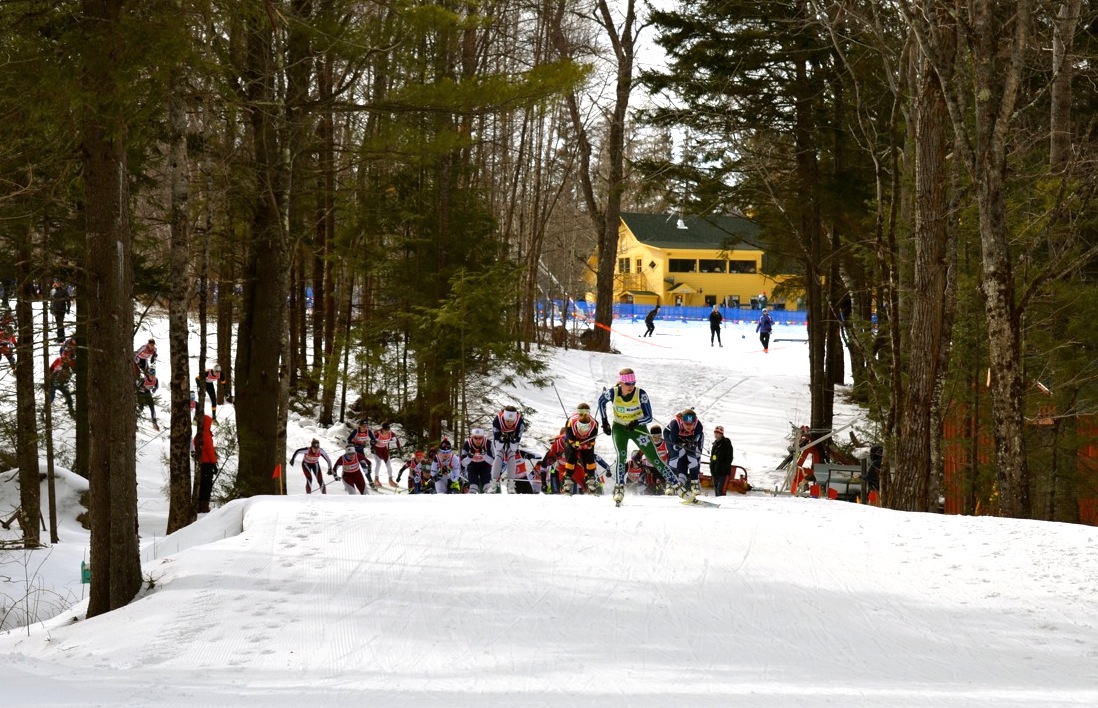
    The women's freestyle mass start at the Middlebury Carnival from Feb. 15-16 heads out on the new Tormondsen Family Race Course at Rikert Nordic Center in Rikert, Vt.
    The women’s freestyle mass start at the Middlebury Carnival from Feb. 15-16 heads out on the new Tormondsen Family Race Course at Rikert Nordic Center in Ripton, Vt. (Photo: Stella Holt)

    “Andrew was pushing for more, John Morton was pushing for less, I was somewhere in between,” he said. “Realistically, the course gets used as a homologated race course about one percent of the year. The rest of the year, the general public is using it to ski on.”

    Hussey wanted something that would work for both users, a hill that would be significant for a college racer but also something everyday skiers could ascend, taking a few breaks or a cutoff trail along the way.

    “I think we really came up with a pretty darn good solution to the whole thing,” Hussey said.

    That was the running theme to the entire project, from breaking ground in the fall of 2011 on what is now the homologated Tormondsen Family Race Course (click for map), with banked turns and what Hussey called a “screaming-fast downhill.” Finalized in early February, it also involved installing an integrated snowmaking system around the entire 5 k loop.

    “[Hussey] understood a few things; he understood the homologation and how that was basically changing the playing field,” said David Lindahl, a principal at Morton Trails who contributed to the upgrades.

    The process of changing a trail system is hardly ever easy, he explained. Venues have history and nostalgic ties. He and Morton started by asking Hussey what was possible, through permitting in the Green Mountains to property constraints, etc.

    “It’s a big puzzle,” Lindahl said. “Sort of the base line is: how do we create a really good 5 k course? Then, what else can you do from that? Well you can make 2 ½ k courses. So we’re always kind of thinking of different options, but from that core, let’s make sure there’s a really good 5 k, because that’s a standard that you need to have.”

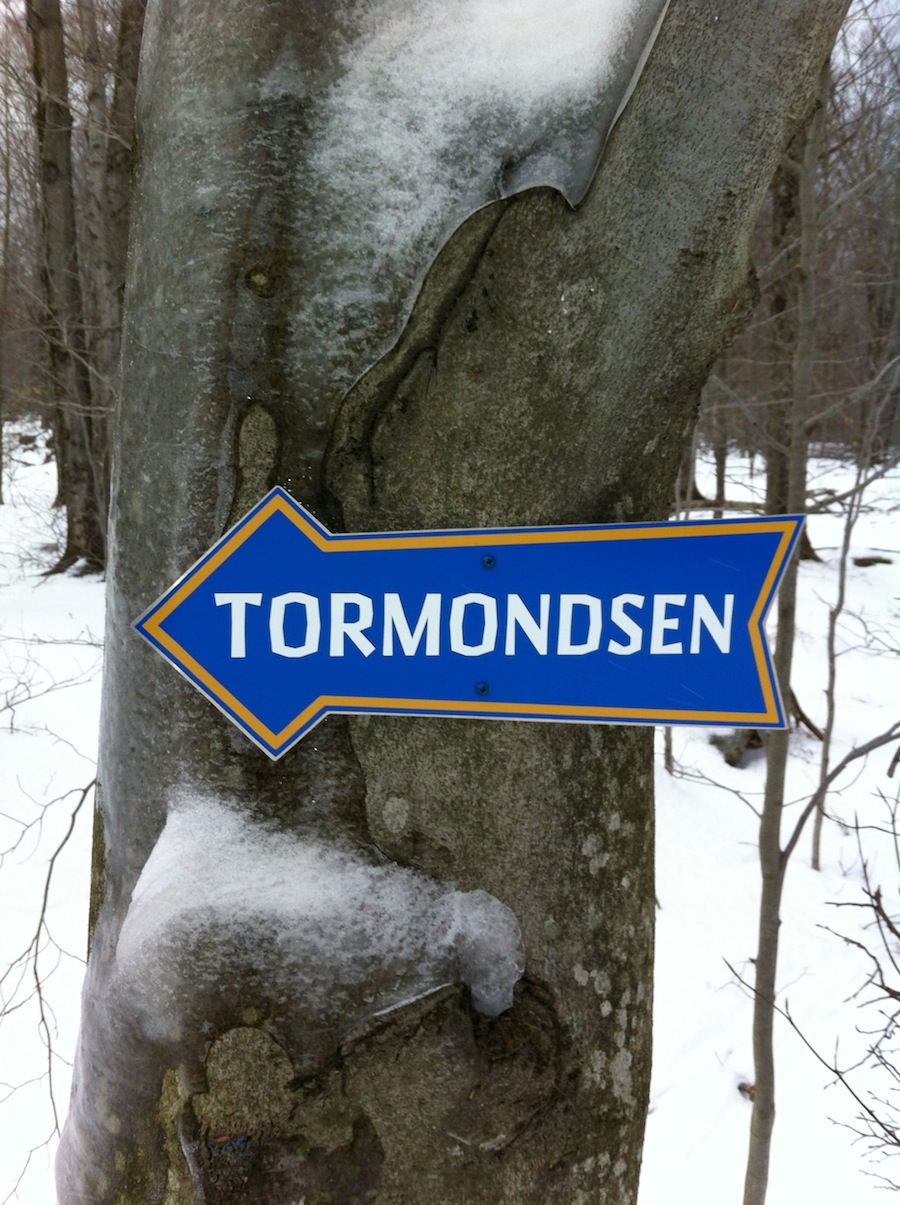
    New signage on the 5 k Tormondsen Family Race Course at Rikert Nordic Center in Rikert, Vt.
    New signage on the 5 k Tormondsen Family Race Course at Rikert Nordic Center in Ripton, Vt.

    By the time last winter rolled around, the 5 k course was complete with two 2 ½ k loops connecting in the field where the start, finish and spectators would be. After first seeking a D-homologation to hold freestyle mass starts, Morton and Lindahl came up with an E-homologation option as well for hosting skiathlons (half-classic, half-freestyle pursuits). According to Hussey, they’re one of two nordic areas in the country that are certified to hold such races (Soldier Hollow is the other one).

    “Turns out if you do it right and you put all the pieces together and you put two 2 ½ k’s together then you have an E-category,” Lindahl said. “One of the courses only has to be at a C-level and the other one has to be a D-level. Typically, what we’ve done is the D-level for both of them. Those courses worked out well; they were independent [and] both came back into the stadium area.”

    That made having a ski race with an equipment exchange, or transition, possible. It also draws crowds.

    “A big piece of what we do is spectator interest,” Lindahl said. “How can we create something that is going to bring people back to the start finish area so that friends and spectators will be as involved as the coaches and athletes are?”

    Based in Thetford, Vt., Morton Trails is the company that designed 15 k of trails at Colby College’s Quarry Road Trails in Waterville, Maine. Morton and Lindahl are behind the new 7.5 k course at Trapps, the expansion of an existing trail at the Jackson Ski Touring Center in New Hampshire and ongoing projects with Vermont’s Jay Peak and the Sugarloaf Outdoor Center in Carabasset Valley, Maine, to name a few.

    “The Middlebury site is blessed with a wonderful big field, ideal for all types of start/finish configurations, and great for spectators,” Morton wrote in an email. “A challenge was getting from that field out to the required hills and back within 2.5 kilometers to give the spectators a second view of the athletes midway through the loop. The second 2.5 k loop also had to access the required climbs and return to the stadium within in the 5 k distance target.”

    Ideally, the two loops would be close enough to share the proposed snowmaking piping system, an idea Hussey brought to the table.

    “Another objective was to make use of as much of the existing trail network as possible, and thus minimize the need for new trail construction,” Morton explained. “Finally, there was a desire to have the racing trail independent from some of the other popular trails at Rikert so that during event days, recreational skiers are still able to enjoy loops not closed for racing.”

    The end result: Rikert is one of two places in the country that are FIS certified for skiathlons, which could bolster its potential for international races down the road, Hussey said.

    “We’ve put at least a million and a half bucks into this place in the last three years, which is akin in the nordic industry to Jay Peak putting 300 million into the alpine area,” he said.

    “That is a huge investment … and yes, it’s a great event center, we’ve got homologated race trail, we’ve got snowmaking on that, but over and above that I’m very passionate about the fact that our region, what some people term the Addison [County] Alps, you’ve got Blueberry Hill 10 k by trail, you’ve got Rikert, we’ve got the Snow Bowl, we’ve got an amazing array of inns and hotels and restaurants and theater and art and hockey games at night. There’s all these things to do for folks to come in from out of town and enjoy the area.

    “That to me is another piece of it that goes beyond NCAAs and national championships,” he added. “I’d love to hold a World Cup here. There are a lot of parts to make that happen. That’s the kind of facility that I believe we have.”

    Snowmaking

    As Gardner put it, three big changes at Rikert in the last few years have raised it to a new level. “Getting Mike hired so there was a full-time, year-round director, getting the trail built, and having snowmaking,” he said.

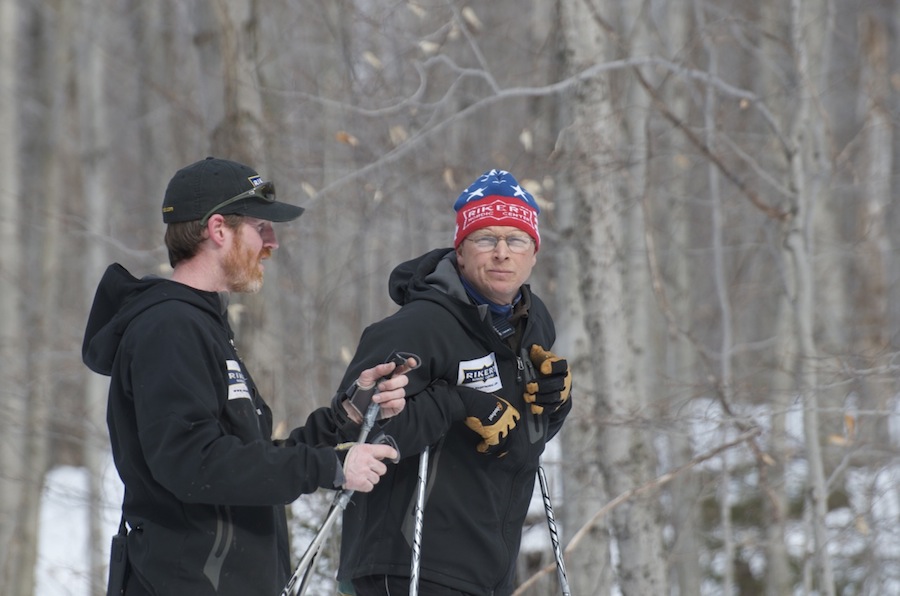
    Rikert Nordic Center Director Mike Hussey (r) overseeing the Middlebury Carnival in mid-February. (Photo: Stella Holt)
    Rikert Nordic Center Director Mike Hussey (r) overseeing the Middlebury Carnival in mid-February. (Photo: Stella Holt)

    Without Hussey, the snowmaking aspect – which cost upwards of $850,000 dollars – might not have been possible, Gardner said. Because of the confidence John Tormondsen, a Middlebury alum and first-team All-American nordic skier now on the college’s board of trustees, had in Hussey, he and his family donated a significant amount toward the total cost. Now in its initial months of operation, Rikert has the most snowmaking coverage of any nordic center in the Northeast.

    “It’s the largest system of its type in North America, the most-extensive piping system,” Hussey said.

    “I think Middlebury had the vision that we want to really put ourselves on the map,” Lindahl said. “The snowmaking thing, we weren’t the ones that suggested that, but obviously they went for it.”

    Most importantly for college teams, it promised snow for NCAAs, which start Thursday with nordic races and continue through Saturday. Three weekends ago at the Middlebury Carnival, Rikert held its first collegiate races on the course. Although its been completed for more than a year, natural snow wasn’t abundant enough to cover it last year. The installation of the snowmaking system with 20 snow guns began late last fall, and water-withdrawal permits weren’t in place until early February.

    As a result, Hussey and his crew have been pumping out the manmade stuff as much as possible in the last month. At 250 gallons per minute, they can potentially cover the 5 k loop in 200 hours. But they’re only allowed 90 gallons of inflow based on state regulations, which Hussey said was “very understandable” given their proximity to protected lands.

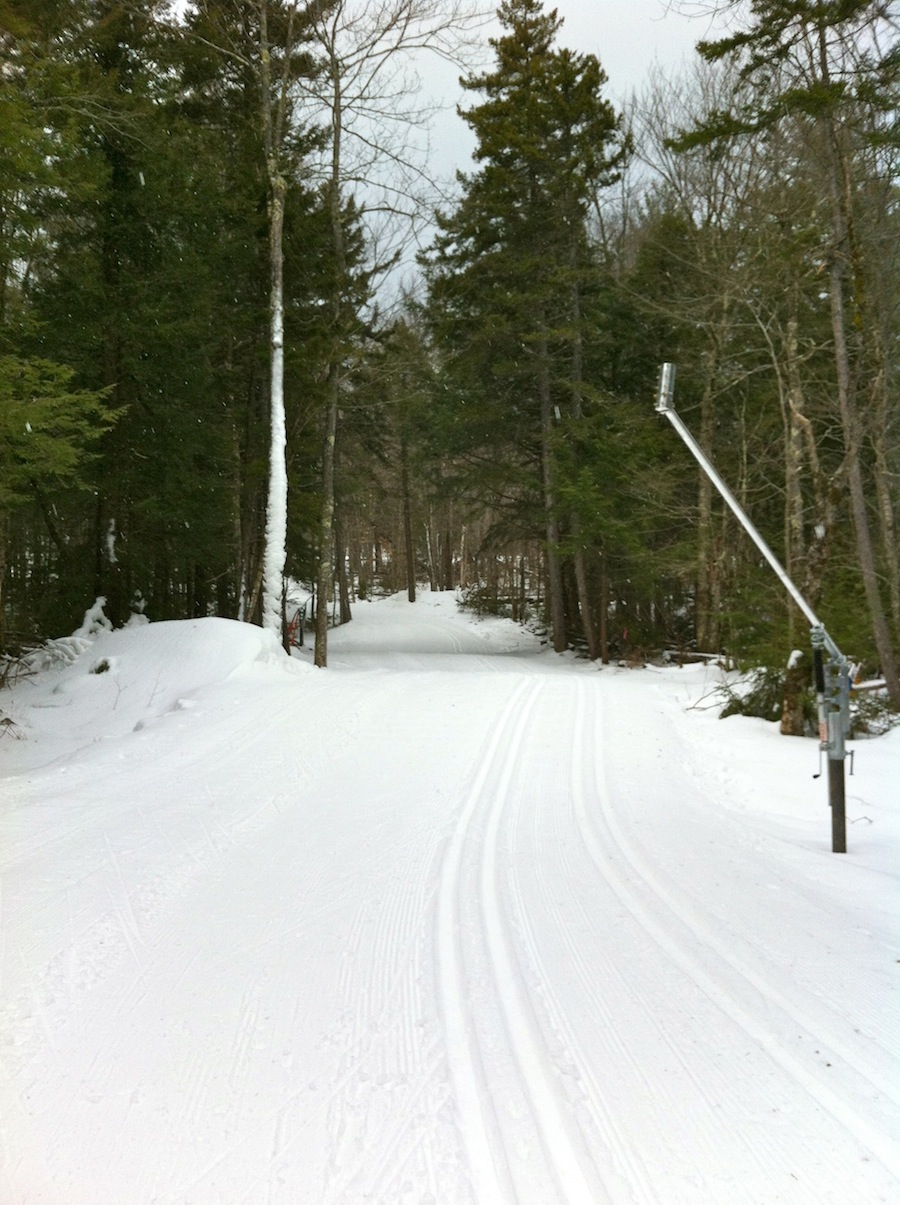
    A look at the trails and new snowmaking system in mid-February at Middlebury College's Rikert Nordic Center in Rikert, Vt.
    A look at the trails and new snowmaking system in mid-February at Middlebury College’s Rikert Nordic Center in Ripton, Vt.

    “Our holding pond is not that large and we get maybe 16 hours of operating time [from that],” Hussey said. “After that, it takes a day or more to recharge. So when we get windows of opportunity to make snow, it’s sort of herky-jerky because we can run for 16 hours, then we stop, and then we gotta start up again. So it’s not a consistent flow and efficient use of the good hours. Phase two of the operation is to add a larger holding pond if we can.

    “It’s been a little spotty early on as part of that permitting piece was challenging,” he added. “I think we’re through it now and all systems go.”

    As for the NCAA outlook, Hussey wrote in an email that “projected temperatures are to be in the mid to high 30’s during the day and below freezing at night. We will be able to do a good job with the grooming under those circumstances.”

    Asked what they learned from the Carnival races, he wrote, “We learned (confirmed) that this is a technical course and requires strategy as well as stamina.  There are hard climbs and fast twisting downhills, all of which makes for good racing.”

    “The course itself has definitely changed and the trail quality has improved a lot, especially the grooming quality,” said Hilary Rich, a senior on Middlebury’s nordic team. “Mike puts a lot of effort into [grooming] and it definitely shows.”

    “It’ll suit the people who like to grind it out; there’s not much rest,” junior Austin Cobb said. “It feels less like the middle of the woods now. It seems like it’s a legitimate place to ski … It’s the real deal.”

    ***

    See also: NCAA Championships Nordic Preview

  • Swix Sport Taps Press Forward Communications as Agency of Record

    HAVERHILL, MA – Snow sports industry leader, Swix Sport USA has signed Press Forward PR as its agency of record. The collaboration will focus on extending brand awareness for Swix ski wax, ski poles and sportswear through traditional and digital campaigns.

    “It’s a natural partnership for us,” explained Andy Canniff, marketing director for Swix Sport USA, “We know that Press Forward has expertise in our category and can support our media goals.”

    Swix Sport was founded in 1946 as the first producer of modern ski wax and has been a worldwide leader in ski service, a leading ski pole manufacturer and a cultural bellwether for the ski industry in the decades since.

    “Swix is an iconic brand with an incredibly loyal following,” explains Andrew Gardner, founder of Press Forward PR. “The progressive nature and unparalleled performance of Swix as a company puts them in a category by themselves and we’re thrilled to partner with them.”

    About Swix Sport USA:

    Swix Sport USA, based in Haverill, MA, is the American partner of Lillehammer-based, Swix Sport. Swix Sport is recognized as the worldwide leader in ski wax, ski poles and ski sportswear. For more information, visit www.swixsport.com.

    About Press Forward PR:

    Press Forward PR is a Vermont-based, strategic communications firm with a focus on sport, sustainability, health and wellness. Press Forward offers client support in public relations, content creation, media management, and social media strategy. For more information, visit www.pressforwardpr.com.

  • Post-Holiday College Workout: Endpoints

    Post-Holiday College Workout: Endpoints

    Middlebury freshman Jack Steele hitting endpoints in Craftsbury, Vt. (Photo: Andrew Gardner)
    Middlebury freshman Jack Steele hitting endpoints in Craftsbury, Vt. (Photo: Andrew Gardner)

    By Andrew Gardner, Middlebury College head coach

    Tasked with the charge of finding a light-hearted post-holiday workout, I was tempted to include some of the most relaxed days of training for the Middlebury Ski team in this space. These were workouts that included on-snow games of “stuck in the mud,” a team photo scavenger hunt using iPhones and near-by landmarks, or a game of dodgeball with our alpine team. (Which, in fact, wasn’t so light hearted.)

    The most important post-holiday workout, however, the piece that I think would be the most useful to share might also be the most straight-forward and the least revolutionary seeming. It’s a workout that I call “endpoints.” It is, basic, no-poles skiing. Here’s the rub.

    All coaches, worth their coffee, prescribe no-poles skiing. Countless high school students can be seen on trails throughout the country waddling dutifully sans poles. The trick is, from junior to professional, to hit the end points.

    Endpoints are the sharp ends of ski technique, the places where, if you’re a photographer, you try to capture in the frame. Most easily seen in V2 alternate (especially the well-known, hyper-extended, gradual downhill type, the arms extend back and forward as the legs fully complete a push off.) The force of the endpoints of technique are what define how fast a skier moves. In good no-pole skiing, there are no middling movements in the center of the stroke, no place to sit and rest. A skier hits the endpoints, driving from leg to leg in skate or classic technique. Arms are connected to the movement as though they had poles. Many junior coaches suggest skiing with poles held in place in front and while this is a fine basic teaching technique, it should evolve to clean arm movements as the skier progresses beyond learning basic upper body stability. The best place to employ no poles skiing: late in a workout. Deep in the space following a long ski that includes some depleting efforts.

    As a workout it is harder than it appears to do really well.

    Warm up: 30 minutes

    Threshold efforts: 2 x 15 minutes with 10 minutes rest in between

    Continue skiing: 30 minutes

    No poles with a focus on hitting the endpoints: 30 minutes

    Cool down: 15 minutes


  • Where Are They Now: Patty Ross

    Where Are They Now: Patty Ross

    Middlebury Colleges assistant nordic coach and 1984 Olympian Patty Ross at her desk inside the college field house in November. Last year, the team celebrated Ross’s 25 years with the squad.

    This profile is part of a ‘Where Are They Now’ series, made possible through the generous support of Fischer Sports. Learn more about their products at www.fischersports.com.

    MIDDLEBURY, Vt. – Thirty-five years ago, Patty Ross couldn’t wait to leave town. Born and raised Middlebury, central Vermont’s cozy college community with a few thousand year-round residents, she grew up with everybody knowing her business, including her father – the business administrator at Middlebury College.

    No way was she going to go there. Her grandfather offered her $100 to reconsider.

    “I was like, ‘Gramps, you gotta up it a little bit!’ ” she recalled with a laugh. Sitting at her desk inside the Middlebury College field house, Ross, now 53, grinned about the irony of where she ended up.

    One of five women to compete at the 1984 Sarajevo Olympics in nordic skiing, Ross went to the University of New Hampshire (UNH). Upon graduating in December 1982, she became a member of the U.S. Ski Team and jumped right into the World Cup circuit.

    The youngest of three siblings, she was the only one that didn’t go to Middlebury. Yet one afternoon last fall, about an hour before the Panthers’ nordic team practice, there she was. In her 25th straight season as Middlebury’s assistant coach, she couldn’t get enough of that place. And she couldn’t imagine leaving, either.

    With two kids of her own — Marley, who just finished up her first year at Barnard College in New York City and Bo, in the middle of his high-school years — Ross said she was perfectly content where she was. She also loved working at a college, assistant coaching cross-country running as well.

    Ross at the 1984 Olympic Trials in Lake Placid, N.Y. She was sick at the time, missing the last race because of asthma, but qualified for the 1984 Sarajevo Games.

    “I totally lucked into a great job that I love,” Ross said. “The love of the sport and the love of the skiers. It’s just so much fun, just to be around college skiers all the time.”

    Reflecting on her career and involvement with the sport, Ross kept referring to her luck and knack for falling into things. In her eyes, timing was everything – from making the U.S. Ski Team fresh out of college, to anchoring the women’s relay at the 1984 Olympics, and later coming home to a full-time job at Middlebury.

    Initially an alpine racer, Ross wasn’t interested in the cross-country skiing until her high-school coach and chemistry teacher insisted she try it.

    “One practice, he said, ‘You’ve got long legs, you should try this,’ and I was like, ‘No way, that’s way too hard,’ ” Ross said. “I was into the glory and glamour of alpine skiing.”

    She eventually followed the path paved by her brother, Peter, and sister, Lauren, who participated in both alpine and nordic. Once she got comfortable striding across flat ground, Ross decided cross-country wasn’t so bad and raced both disciplines in high school. On a given day, they’d have two downhill races in the morning followed by a cross-country competition in the afternoon.

    Once she started college in the late ’70s, Ross committed to nordic alone, mostly relying on her natural talents and slapstick personality to carry her through.

    According to current UNH head coach Cory Schwartz, one of her longtime friends and former college teammates, Ross brought fun to the team and focused more on skiing as her results improved.

    “Patty is a very talented person and was good in so many things that as she learned how to harness that focus towards skiing, she became one of the best women in the country,” Schwartz wrote in an email. “She wants to be the best and enjoy what she is doing.  At the same time Patty liked to question everything. This ‘rebel style’, I believe helped Patty learn what worked and what didn’t.”

    The summer of her junior year, Ross learned about offseason training. Under the wing of her college and eventual U.S. Ski Team (USST) teammate, Kelly Milligan, Ross traveled to Moose, Wyo., to work at a deli and hike around Grand Teton National Park on her days off.

    Milligan’s family lived close by and helped Ross find housing in the only private ranch inside the park. Ross referred to it as a dude ranch with dirt floors.

    “It was awesome,” she said. “Kelly outfitted me with a bicycle so I biked to work, but we did these amazing hikes, like 17- to 23-mile hikes in the Tetons. … It was an amazing experience and sort of fooled me into training.”

    After a few months of making sandwiches, Ross returned to UNH in Durham, N.H., where she found all that hiking paid off.

    “I came back and did well and I was like, ‘Crap, training actually works so I’ve got to keep doing it,” she said.

    On a partial athletic scholarship at UNH – with Middlebury paying half her tuition because of her father’s 37 years of employment there – Ross said she had “one or two good results” before she started training year round.

    “Patty was very, very talented,” wrote Schwartz, who coached Ross her senior year as an assistant coach. “In a way that was her problem. It took her some time to figure out the training would take her to the next level and commit to the daily routine that was needed to compete with the best in the country. The training allowed her not only be faster, but it made her mentally more confident and even hungrier.”

    The following summer, she returned to the Tetons, where then-USST women’s coach Peter Ashley lived in Jackson, Wyo. Not long after, the Wildcats’ team captain soared in her senior season, earning All-East collegiate honors and convincing the national team she was worthy of its ranks.

    She made it and never really tried out.

    Shortly after graduating college, Ross went to the 1983 World University Games in Sofia, Bulgaria, where she finished 17th in the 10 kilometer race (all classic technique back then) and 21st in the 5 k. That season, she also made her World Cup debut.

    “I was in heaven,” Ross said of making the national team. “My eyes were, like, this big. It was amazing. This is funny, but getting the uniform was like, ‘All right, I’ve made it. I can die tomorrow because I’ve made it.’ ”

    Ross smiled and related that to what first-year college skiers go through. At the beginning of each season, she and head coach Andrew Gardner laugh at the freshmen’s reaction to getting the Middlebury uniforms. But she knows what it feels like; it was a big deal.

    A Moment in Time

    Perhaps even bigger in Ross’s memory was her experience at the 1984 Olympics in Sarajevo, Yugoslavia (now Bosnia). Three weeks before, Ross qualified for the Winter Games at the U.S. Olympic Trials in Lake Placid, N.Y. Problematic asthma forced her to miss the last race, but Ross did well enough in three others to make the cut.

    Before she could process what was happening, Ross and her Olympic teammates boarded a bus to Long Island, where they were completely outfitted at a large hotel. Every floor, they picked up something new – all of which was Levi Strauss – down to the underwear.

    At the opening ceremony, she remembers organizers trying to usher the Americans in. They were all hanging around in cowboy boots, out of order and chatting up a storm. Every other team was arranged and ready.

    “Finally we went in,” Ross said. “You’d walk through this tunnel and all of a sudden it was like, ‘Oh my God.’ I’m not a flag-waving patriotic person, but boy, right there, you’re just like, ‘I’m pretty proud.’ ”

    While scanning the grandstand, she immediately spotted the parents of her teammate, Kelly Milligan.

    “We thought we’d never see them, but they were there,” Ross said. “We were just like, ‘That’s unbelievable.’ ”

    Once again, Ross was in the right place at the right time. Eight years later, Sarajevo fell victim to the Bosnian War for independence in 1992 and was under siege for nearly four years – the longest of any city in modern history. She saw the capital in its prime, and despite its gray decor because of burning coal, she said the people were anything but drab.

    “They were so welcoming and just happy. That’s what breaks my heart now and I’ll probably start crying,” Ross said. “After that, it just went into a mess, but at the time it was such a celebration for them, at least that’s what we saw.”

    1984 Olympian Patty Ross (r) in training. (Courtesy photo)

    She remembered one bus driver who badly wanted to trade pins. Reaching over her office shelf, she found the one he gave her.

    “He gave me this thing, a Firestone Tire [pin],” Ross said, laughing. “It ended up being my favorite pin because he was so thrilled.”

    As for the races, Ross recalled her shining moment in the 4 x 5 kilometer relay. Leading up to the Games, she hadn’t felt much pressure, probably because she was so naive, she said. Her asthma morphed into full-on bronchitis in the weeks before, but despite being sick for the Olympics, she had a blast.

    “Nothing could have brought me down,” she said.

    Her team’s seventh-place finish in the relay was the highlight, especially with Ross as its rookie anchor.

    “I was the weakest leg so they were just like, ‘If we go out hard, hopefully Patty can hang on,’ ” Ross recalled. “I was pretty nervous for that, mostly because Judy [Rabinowitz] and Lynn [Spencer-Galanes] were my heroes, my idols.”

    Susan Long was also on the team, but like Ross, she was new. Rabinowitz and Spencer-Galanes had top-10 results on the World Cup.

    “I was like, ‘Oh God, if I let them down, that would be bad. … I’d better go!’ ”

    So she went for it, beating East Germany and coming within 10 seconds of Switzerland in sixth place.

    “That was amazing; that was the best,” Ross said.

    Perfect Fit

    Ross laughs a lot. When she does, it’s whole hearted – her whole body moves and sometimes her eyes close. An assistant coach who has never wanted to take over the head responsibilities, she’s uncomfortable with talking about herself, but when she does, you wish she wouldn’t stop.

    “The whole winter we stayed in Europe until April,” Ross said, starting into a story about the period after the Olympics.

    She was sick and got sicker, but couldn’t get over how cool it was being on the World Cup. The U.S. team finished their season at the Polar Cup in northern Finland and Sweden, where some skiers first started using the skate technique.

    Ross remembers being in disbelief that they skied an entire race without wax. She didn’t try it back then, but by the time she retired in 1986, skating was part of the nordic mainstream.

    The equipment changed with it. Ross giggled when she recalled cutting off the ski tips and tails, and burst into laughter as she described the boots they raced in. No way could she ski in that stuff now, she said.

    Going back to the 1984 Polar Cup, Ross had one heck of a story about a plane ride. All the teams traveled together to those races, similar to the U.S. version of Spring Series, but held in different countries. They took an overnight cruise ship, which Ross called a “love boat” from Helsinki to Stockholm, and shared a charted jet to Oslo, Norway.

    On that flight, she asked the pilots if she could sit in the cockpit while they landed.

    Ross in action (Courtesy photo)

    “They said, ‘Yeah, come on in!’ and we’re in a 747 or whatever and buzzing the jumps at Holmenkollen,” Ross said. “The buzzers are going off to warn us that we’re going too close to things, and [the pilot’s] like, ‘Ah, shut up!’ ”

    She watched them safely land and walked off the plane with the rest of the skiers. Two years later, Ross decided she’d reached the end of her ski career when her frequent asthma became too discouraging, ending her USST tenure the winter of ’86. She returned to Middlebury and less than a year later in the fall of 1987, she started as an assistant ski and running coach.

    “I totally lucked into that,” she said. “It was full time, but I got paid $5,000 dollars for like nine months or something, but it was perfect, at the time anyway.”

    The next year, the college offered Ross a true full-time position with a salary to match, and she was able to leave her job at a downtown sports store and focus solely on Middlebury’s athletes.

    “I totally lucked out with all that timing,” Ross said. “I sort of lucked out all the way along.”

    Terry Aldrich, the Panthers’ longtime head coach before Gardner, explained on the phone that Ross was hired to fill an open position. Before he coached Middlebury skiers for 31 years (and cross-country runners for 36), Aldrich started at UNH without any coaching experience. He remembered that when he selected Ross to help him.

    “She was a former Olympian, and at the time, was one of the top female skiers in the country,” Aldrich said. “We knew her from the fact that she was a Middlebury girl, and the fact that her dad was a business manager of the college.”

    Not to mention, her father was the starter for more than 40 consecutive Middlebury carnivals and events. He also helped develop the Bread Loaf Mountain Campus and Snow Bowl, the college’s cross-country ski area with 110 kilometers and 17 trails.

    “Any time you have someone of Patty’s caliber come in, she brings in new ideas, new training methods, new ideas about waxing,” Aldrich continued. “That’s a good thing.”

    He also stressed the value of her interpersonal skills and ability to relate with athletes of both genders. In 1985, Ross coached at the Special Olympics World Games and received a Distinguished Service award in the regional category.

    She went to Italy as an assistant coach at U23/Junior World Ski Championships in 2008, and three years ago, brought the first adaptive sit-ski races the Rikert Nordic Center at Bread Loaf. The college has held such races at its annual carnival and citizen’s race every year since.

    “I think Middlebury has been very fortunate, very lucky to have her,” Aldrich said. “Obviously she’s been great for the program. We’ve had some phenomenal skiers come out of the program … and that comes directly from her ability to support them.”

    More Than a Coach

    On the back of Ross’s office door is a life-size poster of Simi Hamilton, shirtless and jumping in a pair of jeans, with the words: “I get knocked down, but I get up again.”

    Ross can’t read it all out loud without laughing. Before the current USST member and 2010 Olympian graduated Middlebury in 2009, one of Hamilton’s teammates made it as a joke, and Ross got it in a yankee swap.

    “The Middlebury alums that I’ve had just make me very proud,” she said.

    Photos like Hamilton’s and the framed ones that occupy her shelves are a tribute to the people she’s coached over the years. Upon listing some of them – including Vancouver Olympian Garrott Kuzzy, Bill Koch League directors Barney Hodges and John Ogden, and several coaches in Matt Whitcomb, Justin Beckwith, Kate Barton, Tim Weston and Chris “Flash” Clark – she didn’t want to leave anyone out.

    She was proud of them all, many of which are still involved in skiing.

    “That’s the beauty of the sport, you can do it forever in so many different forms,” she said. “It’s not just racing, there’s just so many ways to stay involved.”

    The accomplishments of athletes like those also help prove what she and Gardner tried to tell prospective college skiers: You can go to school and become a high-level competitor. She did.

    “There’s always been a controversy about college and ski racing, should you go to college or just focus on racing? Obviously, it’s very possible to go to college and be a good ski racer,” Ross said.

    Patty Ross (l) during a pre-workout meeting with Middlebury College Nordic Team last November.

    A few minutes before practice, Gardner walked into Ross’s always-open office and said they’d be explaining Middlebury’s J-term option – a semester’s worth of courses in one month – before heading out for a rollerski.

    Mostly in charge of the team’s administrative duties, such as accommodating 25 skiers on a trip to West Yellowstone, Mont., Ross also drives the van and meets with athletes on a regular basis.

    “As a person, Patty is pretty amazing,” Gardner said. “She’s one of the most honest, principle, kind people. … I’ve learned a ton from her.”

    When he became head coach nearly seven years ago, Gardner said he wasn’t given an option of choosing an assistant. Ross came with the job, and he was fine with that.

    “It was a big cultural shift for the program because Terry had driven the van for 31 years,” Gardner said. “There were elements of the transition made easier by having Patty there.”

    To this day, said he writes the training plans, but lets Ross see them before moving forward. He values her input, especially in adding strength and complementary work, and knows she’s in tune with external factors that might affect an athlete.

    “If a kid wants to sit down with her and talk about anything, she’s seen it all and been through that,” he said.

    And when she does speak up in front people, they listen. Gardner enjoys watching her work at team races, inspecting skis and making keen observations about the day. He often wonders what she’s thinking.

    In the lower-stress moments, which are common around Ross, she’s the one handing out packs of Bubblicious after a hard workout or at the top of a tough climb.

    “Patty came into my office today and she had a mailman-revolving light to put on the van,” Gardner said. “In a sport we take so seriously, she understands how to find that fun, which is really great.”

    Enjoying Every Minute

    Last winter, the Middlebury nordic team – one of the largest in years – celebrated Ross and her 25 years of service with a collection of old photos and quotes.

    She can’t believe how much time has gone by and doesn’t see it ending too soon.

    “It’s funny, before I took this job I didn’t do anything in my life for more than a couple of years at a time,” she said. “I feel sort of bad for saying I don’t have any huge aspirations or anything. I just love it. … No matter if you’re having the worst day ever, when you go to practice everything gets better.”

    She also can’t complain about the schedule. With summers off, she can spend time with her own kids and younger ones in need through Respite care, a short-term relief program for parents and foster parents. Last fall, Ross had a short list of children she took in regularly for overnights, weekends or sometimes just a few hours. She discovered the volunteer opportunity two years ago on a day off from practice.

    “Everything got me like that,” she said. “The timing when I graduated college, I made the U.S. Ski Team. I never had those in between years like kids have now, like, ‘Where do I go? Who’s going to support me?’ Everything, the timing has been lucky.”

    When she was in doubt after she stopped racing in ’86, Ross headed west to California for vacation. There, she let a friend talk her into buying a motorcycle. A few months later, she rode it to Mexico to get a leather jacket, up to Bend, Ore., for a training camp and then back across the country.

    Ross sporting her Yamaha 650 motorcycle. (Photo courtesy of Andrew Gardner)

    “I had short hair at the time so I think most people thought I was a guy, so that was sort of my protection,” she said.

    To keep people guessing, she wouldn’t take her helmet off. At one truck stop, she had to remove it while paying inside and several men immediately swiveled on their stools to look at her.

    “One guy goes, ‘It’s a chick!’ and I’m like, ‘Yep,’ ” Ross said. “But it was the best thing. [Riding across the country] was definitely the best therapy ever for just moving on.”

    She later sold the bike when she had kids, but rekindled her two-wheeled fire two years ago, buying a Yamaha 650 on impulse while driving through Rutland, Vt.

    “I love it,” she said.

    It’s also something she can do with Gardner – a road cyclist – in their spare time.

    “Last year, he did a workout and he was drafting behind my motorcycle. I had to go a certain speed,” Ross said, laughing as she remembered the sight. “I just don’t grow up. I think it’s partly this job.”

    Ross and the open road. (Courtesy photo)