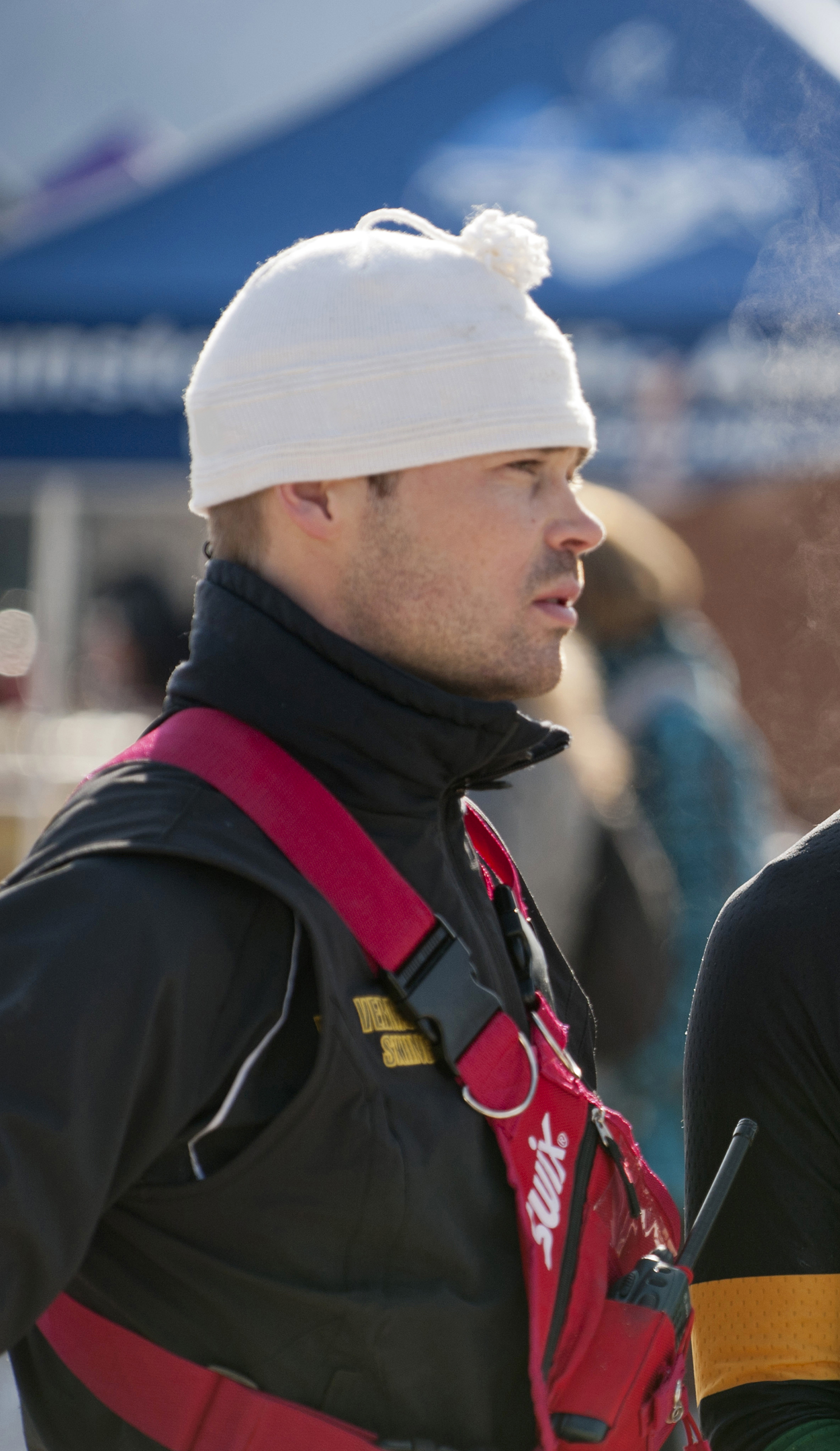
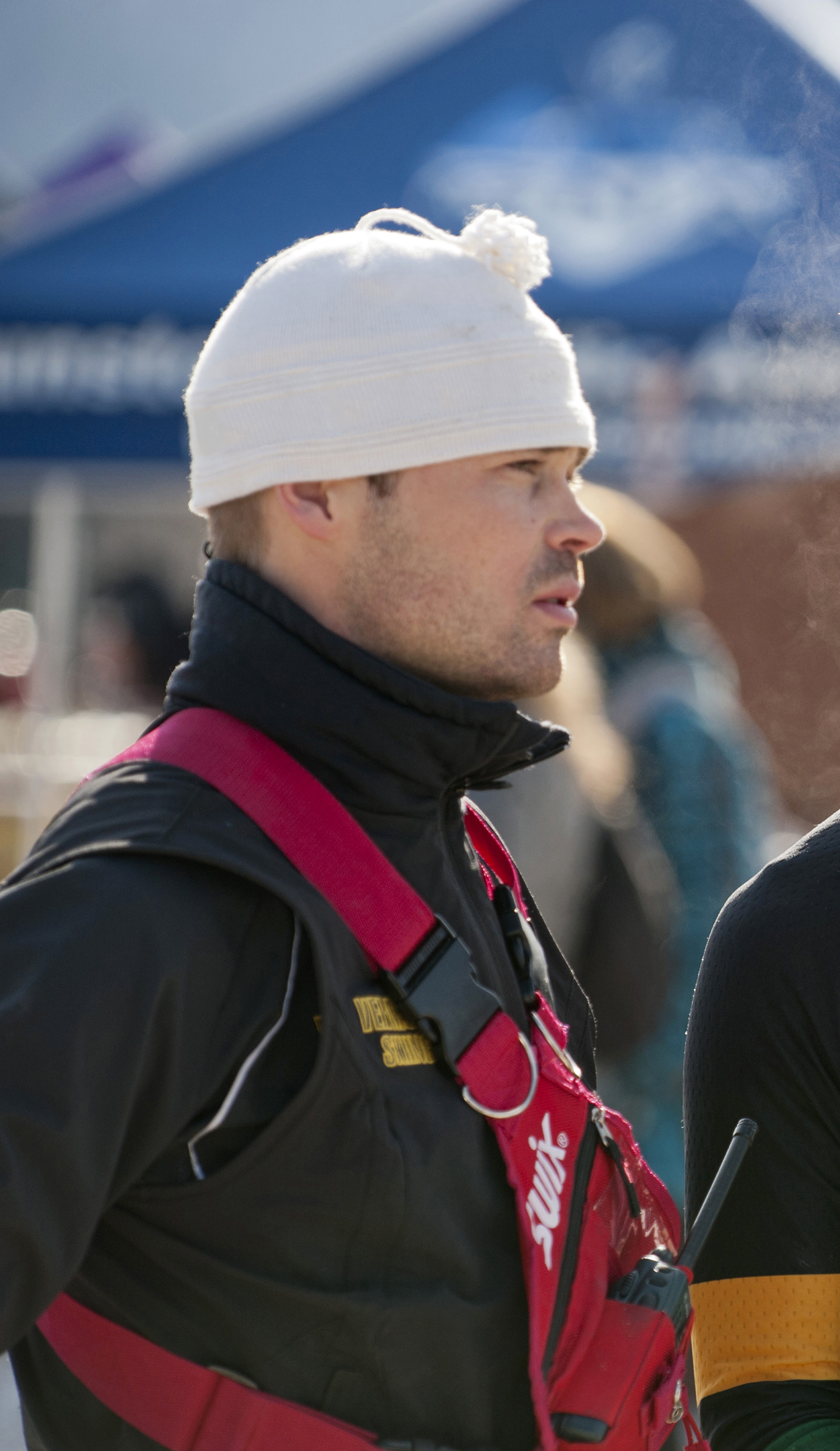
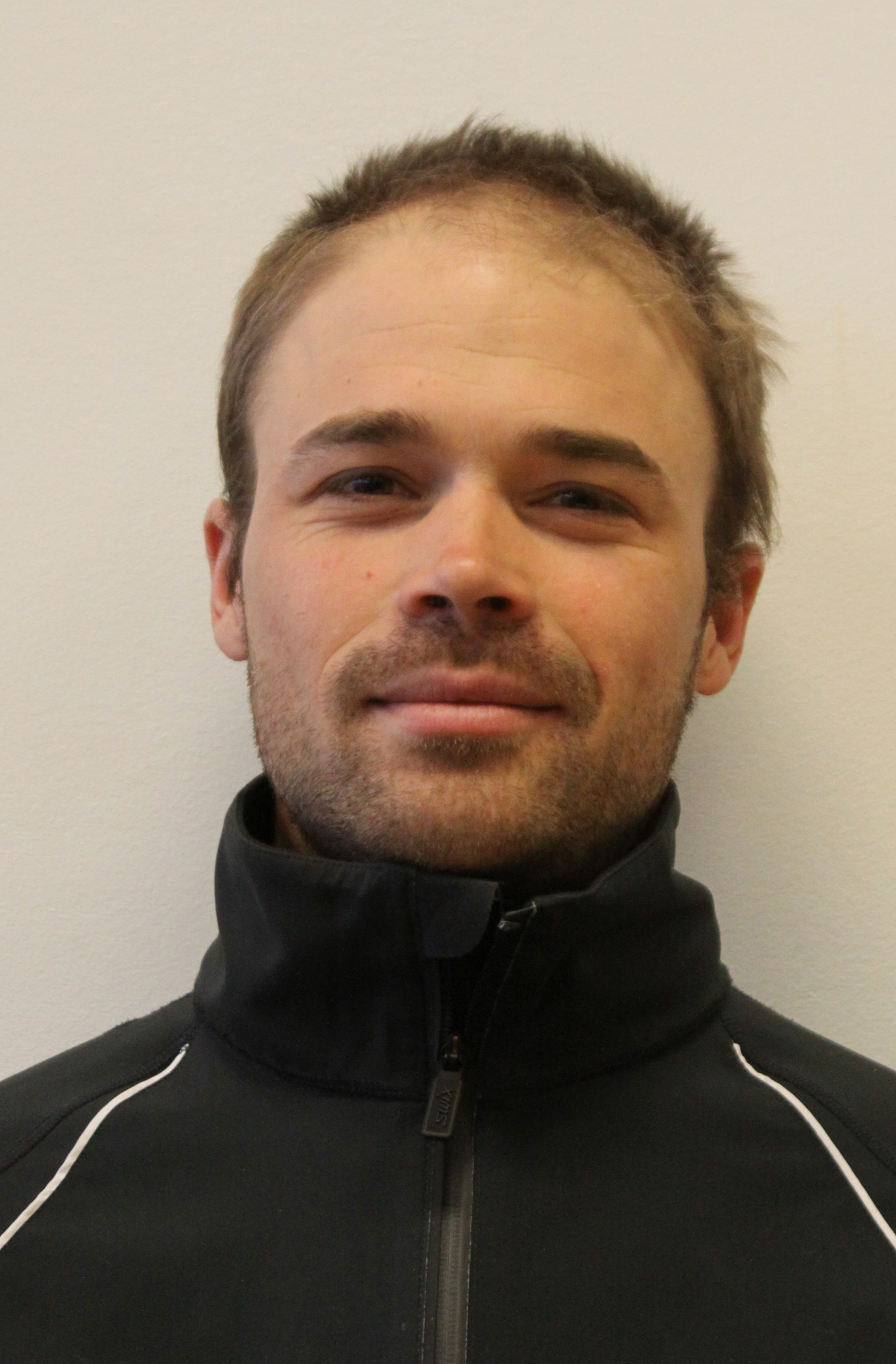
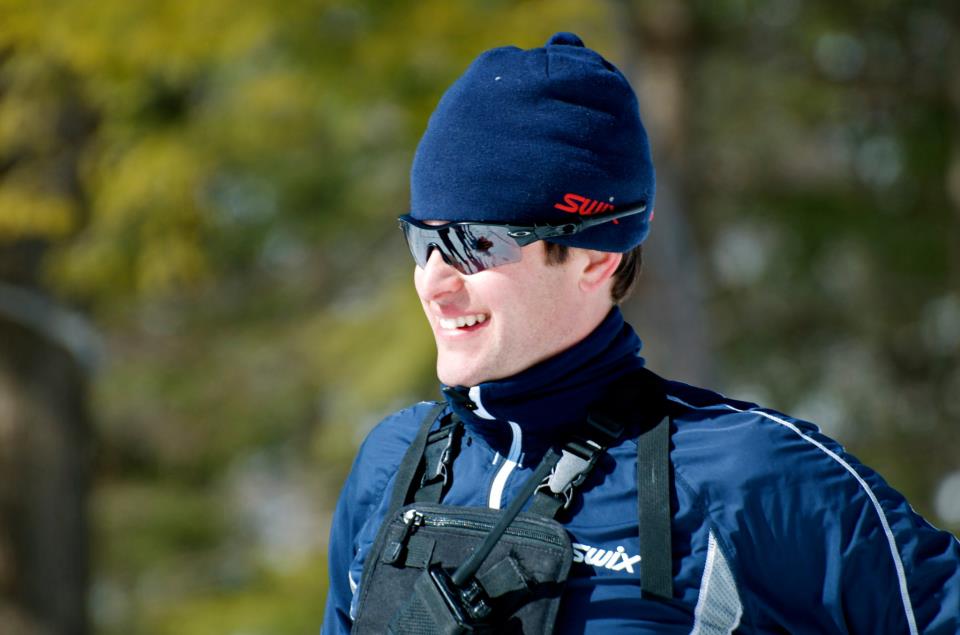
Tag: Andrew Johnson

  • From College to Pro and Back Again, Pokorny Primed for NCAA Championships

    Annie Pokorny racing to 33rd in the 10 k classic at the 2014 U23 World Championships in Val di Fiemme, Italy. (Photo: flyingpointroad.com/NNF)
    Annie Pokorny racing to 33rd in the 10 k classic at the 2014 U23 World Championships in Val di Fiemme, Italy. (Photo: Flyingpointroad.com/NNF)

    This week, the top collegiate cross-country skiers in the U.S. converged in Steamboat Springs, Colo., to wrap up the season at the NCAA Skiing Championships, which begin Thursday with the 5/10-kilometer freestyle individual starts and wrap up Saturday with the 15/20 k classic mass starts. One Middlebury skier has the unique opportunity to be reimmersed in the collegiate circuit after a glimpse at post-collegiate skiing and will race for the NCAA podium with a different appreciation for collegiate competition.

    Annie Pokorny, 23, returned to the collegiate racing circuit this season after a two-year hiatus while training and racing with the Stratton Mountain School T2 Team. Although this is a rare progression, it was a path that has allowed her a different depth of experience in the sport.

    Skiing for Middlebury College, Pokorny had a breakthrough season in 2013 as a sophomore where she netted two top-10 finishes at U.S. nationals in Midway, Utah, and finished in the top 30 twice at U23 World Championships in Liberec, Czech Republic. The season reflected a huge improvement over the previous year where she finished 47th in the 10 k freestyle at U.S. nationals.

    Although most collegiate skiers who continue onto the professional level exhaust their eligibility before moving on, Pokorny wanted take the sport to the next level sooner rather than later. In the spring of 2013, the Spokane, Wash., native made the difficult-but-measured decision to join the SMST2 team based out of Stratton, Vt. Pokorny was excited to be a part of the culture of success SMST2 built and join World Cup-level skiers such as Jessie Diggins and Sophie Caldwell. She also knew the opportunity might not present itself in another two years after she graduated and wanted to capitalize on her momentum by training and racing full time.
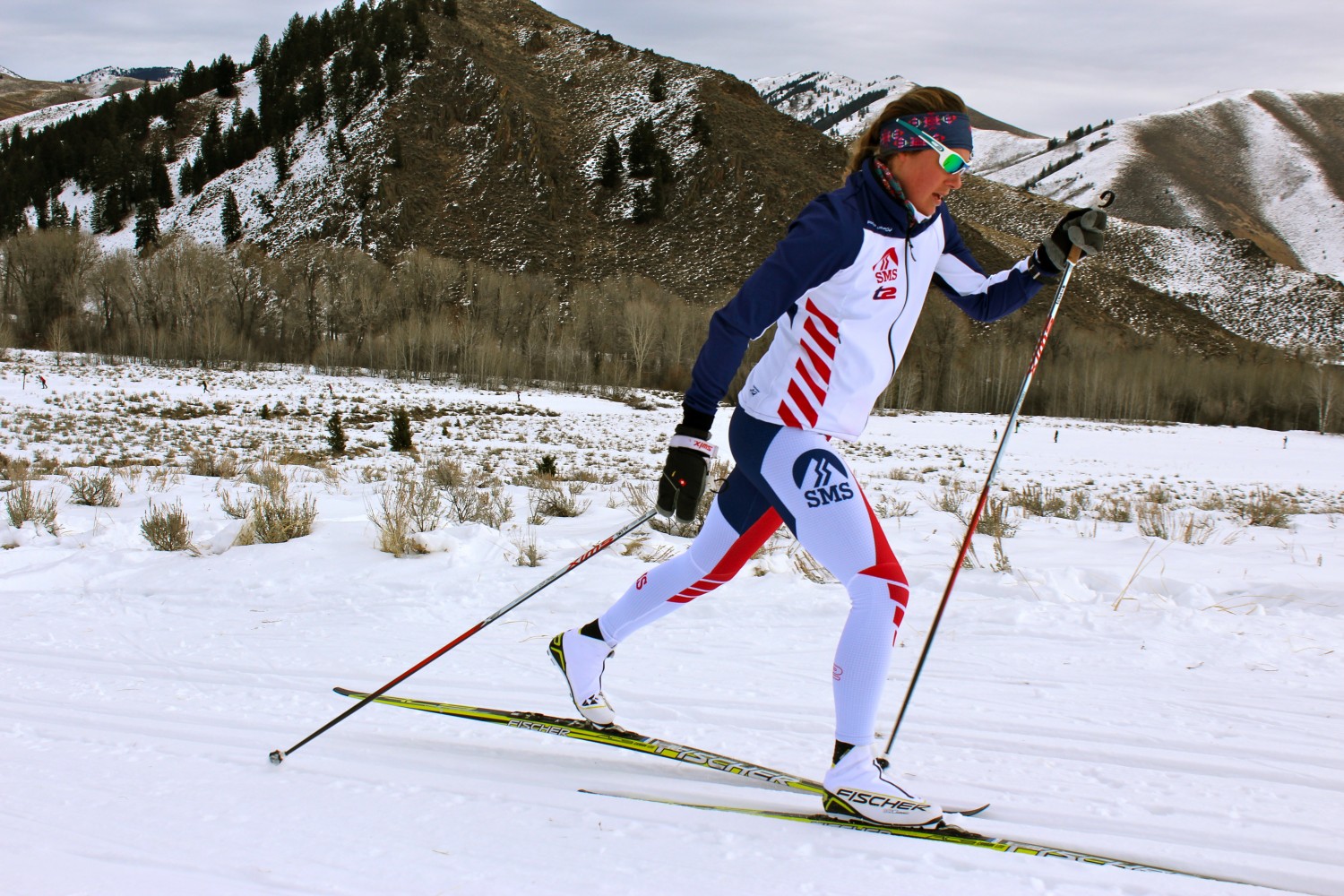
    Annie Pokorny  (SMST2) at the top of the coach's climb for the SuperTour 1.3 k  classic race course in Sun Valley, Idaho.
    Annie Pokorny (SMST2) at the top of the coach’s climb during a training day before the December 2015 SuperTour in Sun Valley, Idaho.

    While training and racing with SMST2, Pokorny continued to take classes at Middlebury and balanced coursework with an international race schedule. She would take the fall semester off when training volume was high and take classes full time in the spring.

    “The logistics have certainly been complicated, coordinating with professors to miss multiple weeks or months of class by Skyping into lectures (an idea inspired by Sadie Bjornsen), writing additional essays and navigating the black hole that is European village internet,” Pokorny wrote in an email. “However, I got to take advantage of the international racing available to me; finding balance never felt like a sacrifice.”

    While Pokorny has posted solid results the past two seasons with SMST2, another breakthrough season proved elusive. With both her skiing and academic goals in mind, Pokorny made another pivitol decision — to return to college racing.

    “I decided to return to college racing because it gave me the chance to have six weeks of consistent, competitive, comped racing while also allowing me the structure to take a full course load and graduate in the spring,” she explained.

    However, the process of returning to collegiate racing required more than just agreement from her coaches. Because collegiate cross-country skiing is an NCAA sport, athletes must abide by the NCAA amateurism rules and in the eyes of the NCAA, Pokorny was considered a professional athlete while skiing for SMST2.

    However, since Pokorny could prove she never made money from racing at SMST2, she was eligible to return to the collegiate circuit after being reinstated as a Middlebury athlete as a senior with junior eligibility. To ensure everything was in order before she put on a Middlebury suit, Pokorny sat out the first two carnival races.
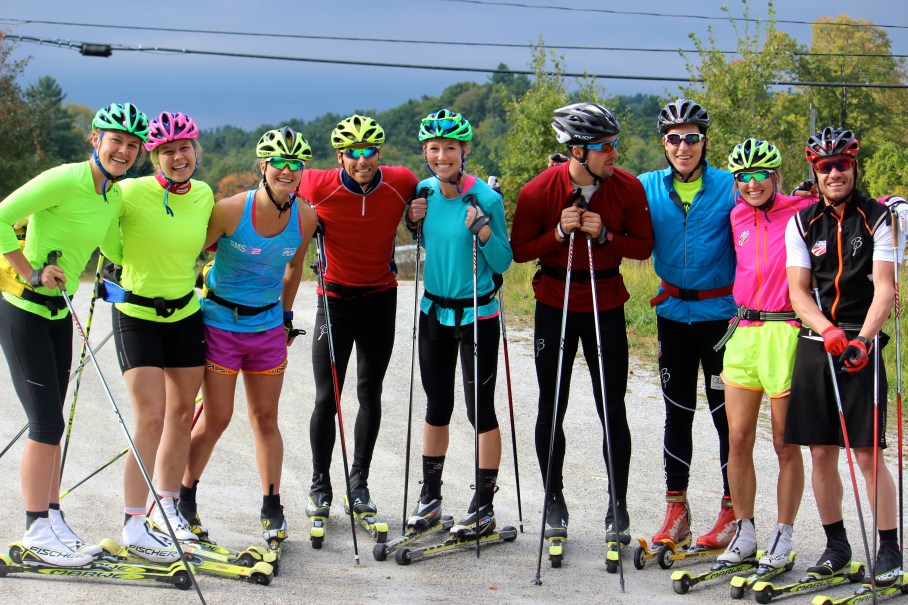
    The SMS T2 team at the 2014 100 k Ski-A-Thon. From left to right: Annie Pokorny, Annie Hart, Jessie Diggins, Andy Newell, Erika Flowers, Ben Saxton, Paddy Caldwell, Sophie Caldwell, and Simi Hamilton. (Photo: SMST2 Blog)
    Annie Pokorny (l) with several Stratton Mountain School (SMS) T2 teammates in 2014. (Photo: SMST2 Blog)

    Although it was a process, Pokorny said she felt supported in her decision from Middlebury, SMST2 and the ski community.

    “Patrick O’Brien and Sverre Caldwell at SMST2 showed an immense amount of support for me returning to collegiate racing, which I’m glad I had before starting the process of returning,” she wrote. “When we knew I had eligibility, the Middlebury program communicated that to the rest of the Eastern Intercollegiate Ski Association (EISA) circuit and I received nothing but support from every coach and competitor.”

    Pokorny describes her transition back as “nearly seamless.” In addition to being welcomed back to the team and collegiate racing, being on campus and attending lectures eliminated the stress of remote coursework.

    She has also returned as a force on the EISA circuit, winning the 5 k classic pursuit at the Williams Carnival, the 5 k freestyle at Middlebury Carnival, taking second in the 10 k classic at University of Vermont Carnival and earning a berth to NCAA Championships.

    “On the skiing side, I think one of the valuable lessons of skiing internationally is that it teaches you a certain flexibility and ability to navigate with new waxing, coaching and racing situations, so everything leading up to the races felt completely normal to me,” she wrote. “The Midd coaches, Andrew Johnson and Patty Ross, have worked to make sure that I felt supported on training and race days while the entire Midd team embraced my return like I was coming home.”

    The transition also illuminated the unique and constructive culture of collegiate racing and how it can pave the way for international racing.

    “I suppose one way my perspective has changed is that as an older, more experienced racer, I can appreciate the details that make racing NCAA a standout experience,” she explained. “In addition to the team culture and glitter and pride in representing your school, I can better see how what we learn on this circuit can transfer to international racing. The practice in mass starts, for one, and scoring points for and representing something greater than yourself, for another, are two things that will contribute to my racing after I graduate.”

    Although it is easy to think that skier development is a linear process, this is rarely, if ever, the case. Pokorny’s grounded thoughts on her journey illustrate this phenomenon. There are lessons that can be taken from every race, from every experience despite if an athlete is aware and open to growth.

    “I never considered returning to college racing a step back, but rather a step sideways, onto another incredibly competitive circuit that would contribute to my growth as a skier,” she wrote.  “In the past three seasons, I have had some incredible experiences and feel that I have grown as a skier in so many different ways. I would never choose a different path, circuitous as it was.”
  • Wednesday Workout: Bound Into Dryland with Andrew Johnson

    Wednesday Workout: Bound Into Dryland with Andrew Johnson

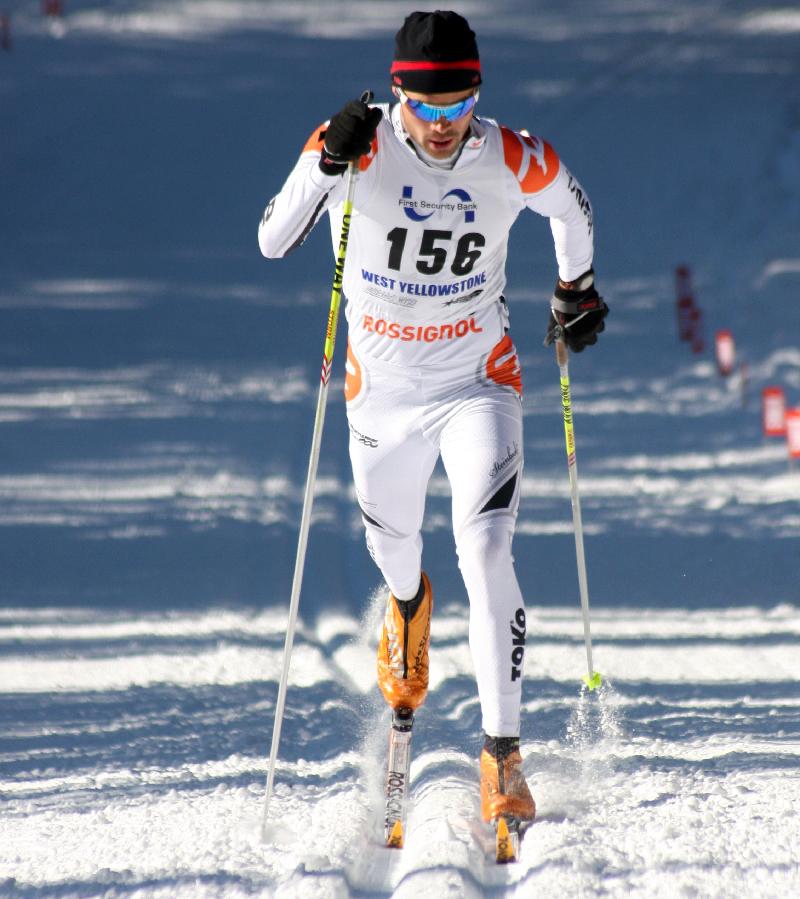
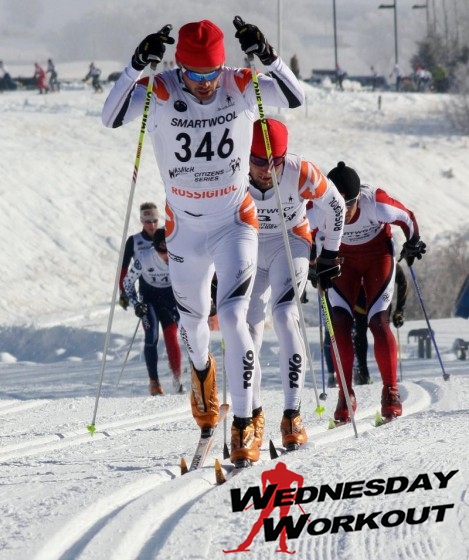
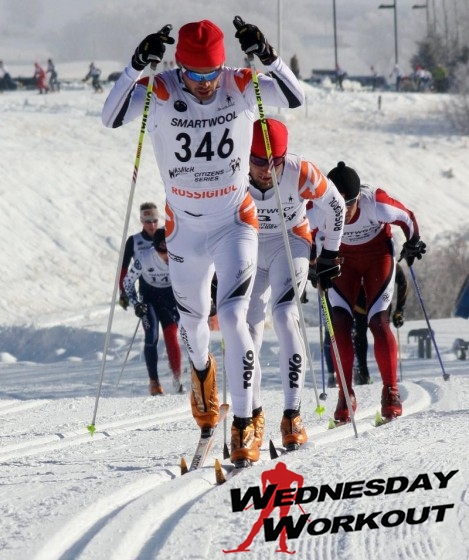
    Former Steinbock Racing skier Andrew Johnson dominating in 2009. (Photo: Toko)
    Former Steinbock Racing skier Andrew Johnson dominating in 2009. (Photo: Toko)
    Welcome to Wednesday Workout, our training series on FasterSkier. During the offseason, we’ll feature components of summer programs from top individuals and teams from throughout the U.S. and Canada at the high school, college and elite club levels. Now get outside and get to work!
    ***
    In the summer of 1996, a promising junior skier named Andrew Johnson attended a training camp in Marquette, Mich., and came away with a workout he would later call on during his eight years with the U.S. Ski Team.

    Now the new coach of the Middlebury College Nordic Team, Johnson continues to use the workout with the athletes under his direction.

    What you need: bounding poles, rolling terrain (ideally an 8-12 minute loop of a ski trail to monitor pacing).

    The workout:

    • 30 minute warmup
    • 25-60 constant L2 on rolling terrain, with poles
    • Cool down

    “The workout instruction is to run the flats and downhills at about a level 2 pace and ski-bound the uphills,” Johnson explained.

    After a 30-minute warmup, the duration of the workout for Johnson’s college skiers is 25 to 60 minutes, depending on time of year, athlete ability and level of exertion during the bounding portion. The length and grade of each hill dictates whether the bounding is at peak intensity or ski walking. The jog down the other side is recovery time, but Johnson stressed that one should maintain a steady effort and find a pace sustainable for the entire workout.

    “I think it simulates skiing quite well without having to be on rollerskis, which is a hard thing to find,” Johnson said. “Anyone who’s done much bounding knows that it’s a great simulation of trying to get up a steep hill in a classic race, and there aren’t many ways to experience that effort and pain without snow.”

    As a coach, Johnson appreciates the simplicity of the workout when he explains it to a large group of athletes. He also likes the infinite variability of the intervals; if the day’s goal is to not exceed Level 3 intensity, the athlete must adjust how they climb and descend accordingly. It can also be ramped up to maximum effort.

    Pete Vordenberg, the accomplished USST racer and eventual coach, was training on the Northern Michigan University campus the summer Johnson first learned of this workout 17 years ago. It was the subject for NMU coach Sten Fjeldheim’s “Continuous Bounding” session, and Johnson recalled a Fjeldheim story claiming the workout was “pivotal” for Vordenberg, too.

    “I can’t remember all the details from the workout that day [in 1996], but I remember it really resonating with me as a fun and quality workout that I knew I wanted to start using in my regular training,” Johnson said.

  • Johnson Comes Full Circle, Replaces Gardner at Middlebury

    Johnson Comes Full Circle, Replaces Gardner at Middlebury

    Andrew Johnson, a former assistant coach at the University of Vermont and University of Utah, recently accepted the position of head nordic coach at Middlebury College. (Courtesy photo)
    Andrew Johnson, a former assistant coach at the University of Vermont and University of Utah, recently accepted the position of head nordic coach at Middlebury College. (Courtesy photo)

    When you’re a collegiate skier with dreams of making the Olympics, it’s hard to imagine where you’ll end up after your competitive career. But Andrew Johnson thought about it during his three years at Middlebury College and resolved to return to his home state of Vermont.

    It might take some time to get there – a couple years in the US Ski Team’s residency program, five years on the national team itself, two Olympics and two years at the University of Utah – but he’d be back.

    After his third World Championships in 2007, the Greensboro native began assistant coaching at Utah. Johnson spent just over two years at the university and picked up a degree in environmental studies along the way, moving on in September 2010 to assistant coach at the University of Vermont (UVM).

    Back then, that new job was a dream come true for the three-time national champion. Johnson spent the next two-and-a-half years building a career and coaching style in Burlington with UVM head coach Patrick Weaver. Johnson described their approach as similar and simple at the same time, emphasizing team dynamics while creating an environment for any fundamentally solid skier to thrive in.

    Last year, UVM won the NCAA Skiing Championships. Earlier this month at NCAAs at Middlebury’s Rikert Nordic Center in Ripton, Vt., the Catamounts challenged the University of Colorado for the team title and ultimately took third behind Colorado and Utah, respectively.

    Andrew Johnson (Courtesy of Middlebury College)
    Andrew Johnson (Middlebury College courtesy photo)

    Fast-forward to Tuesday when Middlebury announced Johnson would be its nordic head coach for the 2013/2014 season. The 35-year-old would have to move about an hour south and leave an institution that helped cultivate his coaching aspirations, but he was back to Middlebury, where he spent three years skiing as a three-time NCAA All-American.

    “I feel pretty lucky,” Johnson said on the phone Thursday. “I spent a bunch of years out West, but I very much consider myself a Vermonter. This is where I want to live. … Even going back to when I skied at Middlebury, I always kind of had in the back of my mind that it would be cool to coach there.”

    Johnson skied for longtime Middlebury coach Terry Aldrich from 1997 to 1999 before relocating to Park City, Utah, to train with the US Ski Team. Meanwhile, Andrew Gardner of Bates College took over for Aldrich in 2006 and served as Middlebury’s head coach for the next seven years.

    At the start of this season, Gardner announced that he’d be leaving the college to start a communications business. It wasn’t an easy decision, Gardner said March 9 on the last day of NCAAs, but he was happy to time it with Rikert hosting the event, which had been in the works for several years.

    “You couldn’t sort of script a better movie ending to a career,” Gardner said after Middlebury, a Division III college, placed 10th in the team standings among D-I schools. On both days of racing, Middlebury junior Ben Lustgarten made the top eight.

    “There’s no manual on how to leave a job like this,” Gardner added. “It’s a siren song every year where you get to spring and you’re like, ‘Oh it’s easy,’ and then you get sucked in.

    Andrew Gardner, head nordic coach at Middlebury College from 2006 to 2013. (Photo: Stella Holt)
    Andrew Gardner, head nordic coach at Middlebury College from 2006 to 2013. (Photo: Stella Holt)

    “I think that happens for a lot of folks,” he continued. “I just know there are other things I want to do and if I don’t do them I won’t get to, so that was kind of the motivation to announce early, that and to give sort of the best possible options for a replacement.”

    That said, Gardner explained he’s not going anywhere and if the new head coach wants him around, he’ll be happy to volunteer while “leaving them enough room,” he said.

    “I’m not moving,” Gardner said. “I’ve got great relationships here so that’s my plan.”

    Johnson, whose last day at UVM was Friday, said he didn’t plan to make any drastic changes once he starts at Middlebury on May 1. He’ll initially get to know the team and said it was important to have consistency in longtime assistant coach Patty Ross.

    “I don’t think there’s anything easy about a coaching change,” Johnson said. “It’s something that needs to be treated kind of gingerly and come in and be sensitive and respectful of how things have been done in the past and not make too many changes right off the bat.”

    He said it was “hard to walk away from a good thing” at UVM, but the university understood the move. He was going back to Middlebury at an exciting time after the college invested in massive facility upgrades, like Rikert. His position would entail a different focus than that of D-I universities with distinct NCAA goals, but Johnson said his coaching wouldn’t change.

    “To me, you’re given a group of athletes … and your task is to help them achieve their goals,” he said. “I don’t think at the root of it that it changes things or changes my approaches or makes my coaching any different.”

    Also on the U.S. Olympic Committee Athletes’ Advisory Council, Johnson was recently elected to a second four-year term. This time around, he’s in the leadership group with five others who help direct the council. Fortunately, that means he gets more of a say with scheduling meetings — usually four or five a year — around his new full-time position.

    “[I] signed up for a bunch of projects a couple months ago thinking I’d have some down time,” he said with a laugh. “Right now I’m hoping to run a couple election processes. This week, it’s probably 15 hours of work, but that’s very high-end for me. … It’s all volunteer.”

  • What Skiing Can Take Away from Armstrong Saga

    What Skiing Can Take Away from Armstrong Saga

    Lance Armstrong and Astana team manager Johan Bruyneel in 2009. Photo: Paul Coster/Flickr Creative Commons.

    The U.S. Anti-Doping Agency (USADA) delivered a definitive indictment to the world on Wednesday morning with the release of its reasoned decision regarding seven-time Tour de France winner Lance Armstrong. In the 1,000-plus page document sent to the International Cycling Union and the World Anti-Doping agency, USADA found Armstrong guilty of using of performance-enhancing drugs throughout his career and of playing a central role in enforcing a systematic doping program on the U.S. Postal team.

    USADA obtained sworn testimony from over two dozen witnesses to the cheating that took place on Armstrong’s team between 1999 and 2005, including 11 former teammates, some of whom had never before admitted to doping. The agency also compiled a comprehensive set of bank statements and emails linking Armstrong to Italian physician Michele Ferrari, who was banned from cycling in 2010 for involvement numerous anti-doping violations.

    In short, USADA accomplished what no courtroom, journalist, lab technician or solitary confessor had been able to do in the 13 years since Armstrong began his storied comeback from cancer and ascent into the cycling stratosphere, and found compelling evidence demonstrating that the performances that turned Armstrong a globally recognized sporting icon were made possible by cheating.

    Armstrong has chosen not to contest USADA’s charges in an arbitration hearing, and is publicly acting as though nothing has happened since Wednesday morning. He tweeted on Wednesday night that he was “Hanging with my family, unaffected, and thinking about this,” with a link to Livestrong’s 15-year-anniversary celebration. Nike, which has helped Livestrong raise millions of dollars for cancer research, is publicly standing by Armstrong and his foundation in spite of the volume of evidence against the cyclist.

    VeloNews predicts that the fallout from USADA’s decision in the sport of cycling will be far-reaching and gradually realized. For athletes and fans of all sports who long held onto belief in his innocence, the report has already forced a wake-up to the reality of cheating in athletics. It’s unclear whether there will be any long-lasting effects on the Livestrong Foundation.

    To some of North America’s best past and present cross-country skiers, Wednesday’s decision is simply long-overdue proof for their belief that Armstrong’s winning streak exceeded what the unaided human body was capable of. The UCI and World Anti-Doping Agency have yet to respond to the decision, but for these athletes the real story is already USADA’s triumph in proving Armstrong’s doping violations.

    “I feel some vindication on behalf of USADA,” said two-time Olympian and University of Vermont assistant coach Andrew Johnson. “I’m happy and proud of their work. I think their ability to do in this case what other agencies haven’t been able to do or haven’t been interested in doing speaks volumes about our anti-doping movement in the U.S. and its ability to work on behalf of athletes. That’s what I’m excited about. We have a system that is working, even if it’s after the fact and has taken too long.”

    While there was cause for celebration in USADA’s achievement, there is also no ignoring the fact that Armstrong’s fall from grace leaves a permanent blight on cycling and, to some degree, American sports.

    “Most people who are involved in sport know how things work and have known of [Armstrong’s] guilt for a long time,” said U.S. Ski Team veteran Kris Freeman. “It’s an embarrassment for all American athletes. He’s one of the most mainstream athletes out there and what he has done is an embarrassment to just about every sport in the country.”

    Freeman says that he was once a fan of Lance and cycling, but has had to stop watching races like the Tour de France because it was clear to him that all of the top riders were cheating.

    “I’m pretty disappointed. I met Lance before my 2002 Olympics. I took a picture with him; I used to have a poster of him on my wall. To have someone that once inspired you turn out to be a complete fraud is very disappointing,” he said.

    The Armstrong case presents every sport the opportunity to examine drug use and the anti-doping movement. Justin Wadsworth, who before becoming the head coach of the Canadian national team competed on the World Cup and in three Olympics for the U.S., sees similarities between the way Armstrong’s performances and those of cheating skiers have stood out over the years: they were so abnormally good they were inherently suspect.

    “Of course these guys doped,” Wadsworth said. “When you’re at athlete at a high level, and of course I’ve never won World Cups, but you just know…what’s physically possible when you ski or bike or run… In a case like Lance it was obvious, and [in skiing] with Johann Muehlegg and the Russian women doping has been there and all of us have known it.”

    Doping has certainly been present in skiing. Recent examples include Estonia’s Andrus Veerpalu, who was caught cheating in 2011, Juha Lalluka (FIN), who tested positive for human growth hormone in the same year, and the 20 Russian athletes who received bans for doping rules violations between 2007 and 2010. In the women’s Olympic 5 k in 2002, initial winner Olga Danilova and runner-up Larissa Lazutina were found guilty of doping well after the Games. Beckie Scott (CAN), Wadsworth’s wife, was awarded the gold medal over two years after the race.

    No new doping scandals developed last winter, but Freeman and Wadsworth both think that the available testing methods are a step behind the cheating — “simply saying you haven’t tested positive doesn’t really mean anything any more,” Freeman said. They believe doping is still present on the World Cup, if to a lesser extent.

    “I don’t believe there’s doping going on in the U.S., but in the international field I believe there’s a lot of doping going on,” he said. Freeman declined to mention any athletes by name.

    “I’ve been beaten by suspected dopers in many races and it’s always frustrating. But it’s just a part of it,” he said. “And I’ve seen that people that I truly believe are clean [are winning] World Cups all the time, so it’s very possible to be the best in the world even when people are cheating. There are so many things that go into our sport. You can’t dope technique. You can’t dope ski feel. That’s one of the very cool things about our sport.”

    Wadsworth, too, thinks that cross-country skiing has yet to achieve complete purity. He also believes that the sport is cleaner now than it was in the late 1990s and early 2000s, pointing to greater variation amongst athletes achieving top results from week to week as proof. Canada’s own success in recent years, Wadsworth says, has been drug-free, demonstrating that wins like Devon Kershaw’s and Alex Harvey’s are attainable without doping.

    “Clean teams like ours can finally really reap the reward of doing things the right way, with hard work,” Wadsworth said. “I think North Americans for a long time got the short end of the stick because of doping…[so] it’s good to see it’s cleaning up.”

    Ultimately, Wadsworth and other coaches hope that when athletes get caught cheating it lets others who want to play by the rules know that they have a shot at winning.

    “I would hope that it would deter other people from [cheating] in the future and give the younger people a greater chance to actually succeed when they do compete,” said University of Vermont head coach Pat Weaver. “I hope the fact that people dope doesn’t deter people. If you love to compete, that should be the main force behind why you’re doing it, and the end result is the end result. The process is just as important as the end result.”

    Weaver went to the Olympics for the U.S. in 1998 and 2002. In the time that he’s been a coach at UVM he has often been asked by his athletes for his opinion on Armstrong’s career: was it clean or not?

    “I do remember seeing disappointment on the athlete’s faces when I said that he doped,” Weaver said. “You could see they wanted to believe that Lance could do this clean, that he was this hero… It’s hard to say to some athletes who maybe idolize Lance, but at the same time it’s not something I could lie about.”

    That fans had to wonder about Armstrong long before evidence came out against him is, for Wadsworth, representative of what it means to care about sports in 2012: that doubt might be a part of things from now on.

    “I never take away from clean performances by special individuals, because those are the things that make sport special,” he said. “[But] when you see something really amazing, you think, ‘Is that clean or not clean?’ Which is kind of sad. I do the same thing: I went to the London Olympics this summer and saw some amazing performances in sports where I don’t really know the background, and I was thinking to myself, ‘Is this a clean performance?’ It’s sad when you’re at that point, but that’s where we are.”

    For athletes like Freeman, the Armstrong saga reinforces his personal commitment to racing clean.

    “I know that I could never live with myself if I doped, and I know that no one on my team could ever live with themselves if they doped,” he said.

    This is all athletes can personally control when it comes to the purity of their sport: their own actions.

    “The biggest thing an athlete can do is start saying ‘I’m clean,’ and being proactive in going along with the testing,” Wadsworth said. “Hopefully the sport will clean up in the long run.”

  • USST Announces Coaches for 2011 JWC & U-23 Worlds

    This trip marks one of the premier steps of the elite athlete and coach development pipeline in the U.S.  The U.S. Ski Team is pleased to announce the 2011 staff:

    Matt Whitcomb, Trip Leader, Junior Head Coach U.S. Ski Team
    Bryan Fish, U23 Head Coach, U.S. Ski Team
    Randy Gibbs, Head Service, U.S. Ski Team
    Andrew Johnson, Service, University of Vermont
    Casey Fagerquist, Service, Alaska Pacific University
    Justin Beckwith, Service, Green Mountain Valley School
    Amy Caldwell, Coach, Boulder Nordic Sport
    Daniel Weiland, Coach, Ski and Snowboard Club Vail

    The trip will launch on January 16th. The team will live in Vierumaki, Finland at a pre-camp from January 17th-23rd, and will then drive and ferry to the race venue in Otepaa, Estonia for six days of competitions. The team will depart from either Tallin, Estonia, or Helsinki, Finland on February 1st. Qualification criteria for this trip can be found at: www.ussa.org and by clicking “sports” – “cross country” – “advancement”.

    This trip receives a combined $20,000 in support from the NCCSEF and the U.S. Ski Team.

  • Chris Cook – The Lone Goat

    Chris Cook – The Lone Goat

    Photos courtesy of Chris Cook/Steinbock Racing

    Despite stellar race results for the team last season, Chris Cook is the only goat left in the Steinbock herd for the 2010-11 season, and he has moved back to his hometown of Rheinlander, Wisconsin. Two others are off the elite racing circuit: Zack Simons went back to school, and Andrew Johnson took a coaching position with the University of Vermont.

    That leaves Cook to tend to the business side of the organization as well as his race efforts, which will get underway with nothing less than World Cup level events. As the overall winner of the 2009-2010 SuperTour and the leader of the SuperTour sprint series, the 30-year-old qualified to race in Europe as a part of the U.S. Ski Team for the first World Cup races of this season.

    The team was well on its way to growing its herd last spring. They applied for funding and targeted sponsors. But with the economy still sluggish and some major grant applications falling through this year, Steinbock Racing was unable to offer the level of support that they needed to commit to the team. The result was that athletes who had showed interest in joining for 2010-2011 opted to stay with their local clubs for the season, Cook explained, adding that he is still hopeful that this will change in the future.

    However, Cook is a glass-half-full kind of guy. He sees their choice to stay with their clubs as a sign that the club structure and support for cross-country skiing in North America is improving.

    “The clubs and organizations across the United States have gotten good at raising funds and support for senior skiers, and that’s good for the sport,” Cook said, noting that when he graduated from college in 2003, there were only two or three teams nationwide. Now, they have multiplied, he added.

    Ready to race

    Being a one-goat herd is no picnic, but Cook feels confident going into the racing season. He comes off one of his best mountain biking seasons, and feels as fit as ever despite not having trained on snow during the summer. On November 15, he leaves for Sweden, where he will join the US Ski Team for the World Cup season opener in Gällivare, Sweden on November 20.

    “I’ve been training hard, and I think I’ll get dialed in quickly once I get on snow,” Cook said.

    There are no hitches in Cook’s motivation, and he has no problem getting the workouts done. With a decade of experience training and racing at the international level, including the 2006 Olympics and more than 30 World Cup starts, Cook knows the drill – and he knows how to design his own training plan.

    “When you’ve been around this level for this long, you know what works for you and what doesn’t,” Cook said, adding that he still works closely with his former coach, U.S. Ski Team Head Coach Chris Grover.

    Ambitious schedule

    With the 2011 World Championships in Oslo as his overall season goal, Cook is ready to get down to work. In order to make the Worlds team, Cook knows he’ll have to deliver solid results both at the U.S. National Championships in January, and in the early season races.

    The World Cup opener in Gällivare features a 15-kilometer skate race and a relay. Cook hopes to make the relay team, but doesn’t have great expectations for the 15 k.

    “The 15 k freestyle event is not one that has been a great success for me so far,” he said, explaining that his biggest goal for the Gällivare races is to regain the feel for the snow and just get the routine down.

    The following weekend, Cook moves on to Kuusamo, Finland, with the U.S. Ski Team. The Finland stop features events more to Cook’s taste: a 15-kilometer classic race and a classic sprint.

    But his final World Cup stop, in Davos, Switzerland, December 11 and 12, is what Cook is looking forward to the most: a 15-kilometer classic and a freestyle sprint.

    “By then, I should be fully changed over and dialed in on the snow. And I’m a fan of the 15K classic. It’s always been one of the most enjoyable races for me,” Cook said.

    He considers his former experience with World Cup racing a major advantage.

    “Especially on the sprint courses, it’s a lot different going to a venue for the first time. A huge part of the racing is getting to know the courses. When you’ve got the experience and you’re comfortable with the course, that’s one more thing you can cross off the list and not have to worry about,” Cook said.

    As for his chances to make the Worlds team, Cook said there are a lot of unknowns, but he’ll give it his best shot.

    “I’m not sure of the team selection process or how many they’ll even take. I try not to think about those things,” Cook said. “I know I have to race hard and do well. I’ll just have to let the chips fall where they may.”

    Long-term goal: growing the herd

    “I really wanted to continue the team and keep the name out there, even if it’s only me. It has been so much fun running it and being accountable for everything the team puts out there. I maintain the web site, do the Twitter and have a Facebook page,” Cook said. Over time, he said that his goal is to grow Steinbock racing back into a team. Whether that happens next season or over time is still too early to predict, Cook said.

    To attract more athletes, Cook is pursuing different avenues. This year, he is getting involved with skiers at the high school level and trying to extend an arm to juniors and younger skiers. That is exactly the kind of attitude that his sponsor Ian Harvey with Toko USA admires in Cook. He has worked with Cook as a sponsor for five years, on and off.

    “Cook is a representative for Toko, he has a good personality and we’re proud to sponsor him,” Harvey said, explaining that results are only one of the factors he looks for when deciding to sign an athlete.

    “I look for results, but more importantly, I look for a person with enthusiasm for cross-country skiing and who enjoys working with other people. Chris is that kind of guy. I think he could easily grow his team,” Harvey said.

    Cook is also doing more online community outreach, putting a lot of effort into the Steinbock Racing web site and promoting the team on social media.

    The transition to a one-man show has definitely been a learning experience, but Cook said he is enjoying the team management part of the job as well, noting that he feels like he has plenty of resources to draw on when he needs to. Time is the bigger issue, but he sees light in the end of the tunnel there too.

    “I still have Zack and Andrew to help me when I have questions about the web site. There are only so many hours in a day to take care of everything, but once we’re racing and traveling and staying in hotels, you’re searching for things to do, so I think it will be just fine,” Cook said.

  • UVM Hires Johnson as Assistant Coach

    Andrew Johnson in a race last year. Photo, Toko.

    Former Olympian and U.S. Ski Team member Andrew Johnson is heading to the University of Vermont as the new assistant coach of the school’s cross-country ski program.

    Johnson did not respond to a request for comment, but UVM Head Coach Patrick Weaver confirmed on Monday morning that Johnson had accepted a position with the university.

    “We’re really excited to have him,” Weaver said.

    The assistant coaching job is full-time, but Johnson will also be able to take classes at the university and work towards his master’s degree, which was one of his goals, Weaver said.

    Johnson’s hiring completes a reshuffling of the UVM coaching staff, which began this spring when former head coach Paul Stone was demoted and replaced by Weaver, who had been the assistant coach.

    Stone was to continue with the program as the assistant, but he left this summer to take the head coaching job at the University of Maine, Presque Isle.

    Long one of the east’s top ski program’s, UVM has five NCAA championships to its name–all of which came in the 1980s and 1990s. The school placed second at NCAA’s in 2005, but has finished no better than fifth since then.

    The addition of Johnson to the UVM program makes the team’s coaching staff the fastest in the nation—at least among collegiate programs. Both Johnson and Weaver are two-time Olympians, Johnson in 2002 and 2006, and Weaver in 1998 and 2002.

    Hailing from Greensboro, Vermont, Johnson competed for Middlebury College before leaving in 1999 to race full time with the U.S. Ski Team. He collected multiple national championships over the course of his career.

    On the World Cup, Johnson’s only individual top-30 result came in a 30 k freestyle race in 2001 at Soldier Hollow, while his best finish at the Olympics was 21st in the same event at the same venue a year later.

    After the 2006 Games, Johnson scaled back his competitive career, with stints working as an assistant coach at as the University of Utah and attending school there. Last year, Johnson competed under the aegis of the fledgling Steinbock Racing squad, finishing 19th at the American Birkebeiner and 33rd at the 15 k freestyle at U.S. Nationals.

  • Gelso and Grafnings Take Gold Rush Titles

    Gelso and Grafnings Take Gold Rush Titles

    Gold Rush 2010 (Photo: MacBeth Graphics)

    Over 260 racers ranging in age from 3 years old to 81 years old skied either the Gold, Silver, Bronze, or Junior Rush on a warm, sunny day at Royal Gorge. Snow conditions began with very firm tracks in the morning, leading to some exciting downhill turns, but as the day warmed up the snow slowly began to soften up.

    The 45 km Gold Rush was won by former Far West Nordic Junior Matt Gelso of the University of Colorado, fresh off of his NCAA National Championship win of 2 weeks ago, with a time of 1:57:53. Steinbock Racing’s Andrew Johnson and XC Oregon’s Marshall Greene were 2nd and 3rd. A lead pack of 7 formed on the back stretch of the first lap, including University of Reno, Nevada Head Coach August Teague, former UNR athlete Lutz Preussler, Williams College athlete Alex Taylor of Truckee, and local hero Tav Streit of Sacramento. By the end of the second lap, however, it was Johnson breaking up the pack, with Green and Gelso close on his heels, building a 20 second lead. The third lap, however, was Gelso’s, who used his local trail knowledge (and his recent spate of heavy-duty kayak training during Spring Break) to the fullest to cruise to a 20 second victory over former U.S. Ski Teamer Johnson, with Green another 15 seconds behind.

    The lead pack (Photo: MacBeth Graphics)

    The women’s top racers were a bit more split up, with many of the local athletes choosing the 30 kilometer Silver Rush, part of the prestigious Fischer Cup Series for Far West Nordic. In the 45 kilometer Gold Rush distance, UNR’s Maria Grafnings won for the women with a time of 2:06:44, dueling it out in an 8-person chase pack with second place Beth Reid of Palo Alto. The two top women placed 10th and 11th overall. Finally, former U.S. Olympian Laura McCabe of Winthrop, WA and 2000 Gold Rush champion made a rare California appearance after a 10-year hiatus, placing 3rd (17th overall) in the women’s division.

    Maria Grafnings on her way to a 5-second victory (Photo: MacBeth Garphics)

    The 30 kilometer Silver Rush was dominated by the Far West Nordic junior contingent, with Austin Meng first overall in a time of 1:24:33, with Justin Ondry and Carl Reid 2nd and 3rd, over a minute behind. Palo Alto’s Joanne Reid of the Colorado University ski team was the first women at 1:28:18, 5th overall, while Truckee’s Kara LaPoint and Cathy Howard took 2nd and 3rd.

    In the 15 km Bronze Rush Adele Espy of Freeport, Maine was 1st overall with a time of 43:35.9. Debbie Hakansson and Raylene Chew were the 2nd and 3rd women. Jackson Rohlf was 1st man at 45:30.5, and John Munger and Joe Piercy were 2nd and 3rd.

    In the 3km Junior Rush, Truckee’s Lizzie Larkins of the Alder Creek Middle School Nordic Team was 1st overall, while Wesley Romer of Rocklin, CA was the 1st boy, second overall.

    The California Gold Rush is a benefit for the Far West Nordic and Auburn Ski Club Junior Programs, with Royal Gorge Cross Country donating all of the proceeds to those organizations. More race photos can be found at http://macbethgraphics.smugmug.com/NORDIC-RACING/Nordic-Races

    Complete Results

    Gelso (Photo: MacBeth Garphics)
  • Andrew Johnson and Marshall Greene weigh in on Engadin

    Andrew Johnson and Marshall Greene recently returned from Switzerland, where they placed 31st and 34th, respectively, in the Engadin Ski marathon.  The Engadin, a 42km skate race, is a Worldloppet which is part of the FIS Marathon Cup series and therefore draws a very competitive field. This year’s winner was the Vancouver Olympic 15m skate champion, Dario Cologna, from Switzerland.

    Johnson, former Olympian and U.S. Ski team member, now competes for Steinbock Racing out of Park City, Utah. He was the winner of this year’s Marquette, Michigan Noquemenon Ski Marathon.

    Greene races for XC Oregon, out of Bend, Oregon. He recently took third in the Boulder Mountain Tour and is soon looking to defend his 4-time title at Bend’s coveted Pole-Peddle-Paddle event.


    Andrew Johnson, Steinbock Racing (Photo: Win Goodbody)

    What made you decide to race the Engadin? Anyone else from the U.S. over there with you?

    AJ: Zack Simons and I had the opportunity to go. The Engadin is such a great race – and the largest skate race in the world – so it was hard to pass up. Unfortunately Zack got sick and was unable to race. The Engadin Valley is essentially the motherland of the Steinbock, so it was nice to get over there and rep’ the Goat.

    MG:  I raced the Engadin last year and had a great time.  The Engadin Valley is a beautiful place with a huge network of ski trails.  I knew that I’d be racing the OPA cups the weekend before and really wanted to give the Engadin another go.

    I met Andrew and Zach Simons at the Engadin after being with the American crew at the La Feclaz OPAs.  Unfortunately Zach got sick in the two days leading up to the race and didn’t end up starting.  Felice Bietzel, an Australian who has been skiing with XC Oregon for a number of years, also joined us.

    Have you competed in a Wordloppet race before (besides American Birkie)?

    AJ: I raced the Marcialonga several years ago when it was a World Cup. But that’s about it…

    MG: Of course I’ve done the American Birkie and as I mentioned before, the Engadin last year.  A couple of years ago I started the Norwegian Birkie but that was the year that high winds forced the cancellation of it mid-race, so I haven’t actually finished that one.

    What were conditions like, were they a factor in racing? Any tough parts to the course, or was it relatively mild?

    MG: Beautiful crisp day with fairly dry, abrasive snow.  Conditions probably didn’t affect the race too much.  The course is fairly flat except for one set of uphills that crest at about the halfway point of the race.  Frequently the elite pack splits up at this climb (last year I got gapped here and I finally chased back to the leaders after 6km of skiing with one other guy)

    AJ: Conditions were basically perfect. Cold, fast snow, and sunny skies with just a bit of headwind. Very typical Engadin conditions. The course is very mild – lots of flat and slightly downhill terrain, reminiscent of the Boulder Mountain Tour. There’s about 5 kilometers of rolling climbing starting at about 15 K, and some more rolling climbs in the last few K’s.

    Marshall Greene, XC Oregon (photo: Win Goodbody)

    It looked like there was a huge pack that raced together and the finish was very close – How did the race play out: where did the top racers make their moves?

    AJ: As always, there was a pack of several hundred racers for the first 12 K or so, going across the lakes. Over the one big climb on the course the pack was whittled down a little, and the second half of the race saw a lead pack of about 35. With about 4 K to go, the pace ramped up pretty significantly and the pack broke up some more. I didn’t have much left at that point and lost a bunch of time in the last few kilometers.

    MG: The first 10km were actually fairly relaxed with not very many crashes or broken poles, considering the size of the elite field. Because of the width of the trail and since no one wants to lead for long, the pack is constantly being reshuffled like a bike peloton.  So staying towards the front requires some vigilance. When the climbing starts at around 15km, the race truly begins.

    After losing the lead pack on the climb last year, I made sure to position myself closer to the front of the group, in hopes that I would stay in front of the split.  As expected, as soon as we hit the first pitch the effort went up a lot.  Everyone was skiing hard and I was definitely near my limit by about 2/3 of the way up the 3km of climbing.  I was still in around 25th at this point but was well within sight of the leaders and feeling pretty good about where I was.  Glancing back, there were only about 5 people behind me before a gap was starting to form.  Unfortunately, right about that time the leaders relaxed quite a bit, slowing the pace, and allowing the front group to grow quite a bit.

    From there the pace was steady but never too hard.  I crashed once trying to move up by skating through the classic tracks (guess I deserved that) but easily re-joined the group of 40ish leaders.  I correctly assumed that we would take it fairly easy until about 5km to go when there is one short climb followed by some 30 second rollers.  Even though I felt decent across the flats, as soon as we hit those rollers, I knew I was done for.  My legs had nothing left and I quickly watched the leaders ski away, leaving a trail of individuals just struggling to finish.  It’s a testament to the winners finishing speed that I managed to lose 2 minutes from 4.5km to the finish after skiing with the leaders for the first 38km.

    Engadin Marathon course (photo: worldloppetskier.com)


    You had a fantastic result –   were you feeling in top form the whole race?

    AJ: I felt OK. The nature of the Engadin is that it’s generally not too hard to hang with the leaders til the last few K’s. There are several rolling climbs in the last 4 K’s and my lackluster training of the past few months became rather apparent at that point.

    MG:  I felt like my race was actually only average for me.  At the mid-point, I was definitely expecting better based on how I was feeling.  I just had nothing left when the going got hard.

    Did anything wild happen: were there any crashes, broken equipment, swearing and yelling, other drama? Anything else unusual?

    AJ: It’s the Engadin, so there’s always crashes and broken equipment. Nothing happened to me though, and the lead pack skiers are generally pretty respectful.

    MG: The first half of the race I actually was struck by how un-exciting the race was.  Not many crashes or broken poles.  As I said, I crashed once which didn’t really affect my race except that it knocked my water bottle out of its holster so maybe I didn’t feed as much as would have been ideal.

    One thing that was cool that helped several racers was that one of the snowmobiles following the lead pack had spare poles with them. So if you broke one, the snowmobile would drive up beside you and swap with you until you found the right size.

    Was there a great party afterward?

    AJ: I think so…

    MG: We had a good time that evening post race, but we stayed in the small town of Samedan (as opposed to St. Moritz) so we didn’t really find any big celebrations.

    Are you racing anything else while you are over there – what is next?

    AJ: Nope. Came straight home – got too much to do! Hoping to get over to the Gold Rush at the end of the month.

    MG: In terms of serious ski racing, I’m pretty much done.  Considering doing the Gold Rush and I’ll probably do The Great Nordeen here in Bend.  Other than that, it’s time to start thinking about the Pole, Pedal, Paddle.

    Race recap and results

  • Liebner Wins in a Close Finish at the Minnesota Finlandia

    Liebner Wins in a Close Finish at the Minnesota Finlandia

    The 9th race in the 2010 American Ski Marathon Series took place on Saturday February 20 with the 50 km freestyle Minnesota Finlandia. This was the 29th running of the event, held in Bemidji, Minnesota at the Buena Vista Ski Area. The weekend of racing featured close to 200 athletes in four events vying for the coveted big axe.

    The men’s race was incredibly tight, with Andy Liebner (Anchorage, AK) taking the win with a time of 2:10:30.2. Zack Simons (Park City, UT), the 2009 and 2010 Boulder Mountain Tour winner, finished just a little over a second later, followed closely by his Steinbock Racing teammate Andrew Johnson in third. This marked Liebner’s 4th win at 2010 American Ski Marathon Champion’s Cup races.

    Only four women entered the 50 km race. Diana Liu Munger (Minneapolis, MN) won with a time of 3:09:11.3, while Montana Foulke (Laramie, WY) repeated her second place finish from last year. Hometown racer Muriel Gilman grabbed third place. 2009 winner Anne Ellefson (Park Rapids, MN) won this year’s 25 km skate race with a time of 1:18:51.7.

    Full results from the weekend can be found here.

    American Ski Marathon Champion’s Cup standings can be found here.

  • Simons, Dong Take Boulder Mountain Tour Titles

    Sun Valley, ID — Zack Simons successfully defended his Boulder Mountain Tour title, while Evelyn Dong improved on her third place finish in 2009 to take the title in 2010.

    Simons captured the title in a tight race that saw the top four places separated by less than three seconds. Edged to second place was Didrik Smith, finishing just three-tenths of a second behind Simons. Marshall Greene, 1.4 seconds off Smith’s pace, finished third.

    The Steinbock Racing Team had reason to celebrate, placing three athletes in the top eight with Simons in first, Andrew Johnson in fifth, and Carl Swenson taking eighth.

    In the women’s race, Dong skied away from the field, putting a 27 second gap on second place finisher Zoe Roy at the finish. Chelsea Holmes finished third, eight seconds off Roy’s pace.

    In both the men’s and women’s races, three junior racers skied to solid results in the top ten. 19-year-old Erik Fagerstrom, originally from Eden Prairie, MN, found himself just short of the podium with a fourth place finish, while Marshall Opel, 18, from Bozeman was nipped at the line by Swenson and took ninth. Liza Goodwin, 19, from Keene, NY skied to an impressive sixth place result in a competitive women’s field.

    The 30km Boulder Mountain Tour is one of the classic American ski races. Starting up at Galena Lodge, the point-to-point course winds for 32km down the valley to finish at the Sawtooth National Recreation Headquarters, 1100 feet lower. Because the significant elevation drop makes for fast skiing, the field usually stays tightly bunched, with a large pack of elite skiers at the front.

    Nearly 700 racers completed the 35th Boulder Mountain Tour, with an additional 130 racers taking part in the “Half Boulder” 15k event.

    Complete Tour Results

  • Johnson and Patzer win Noquemenon Ski Marathon

    Johnson and Patzer win Noquemenon Ski Marathon

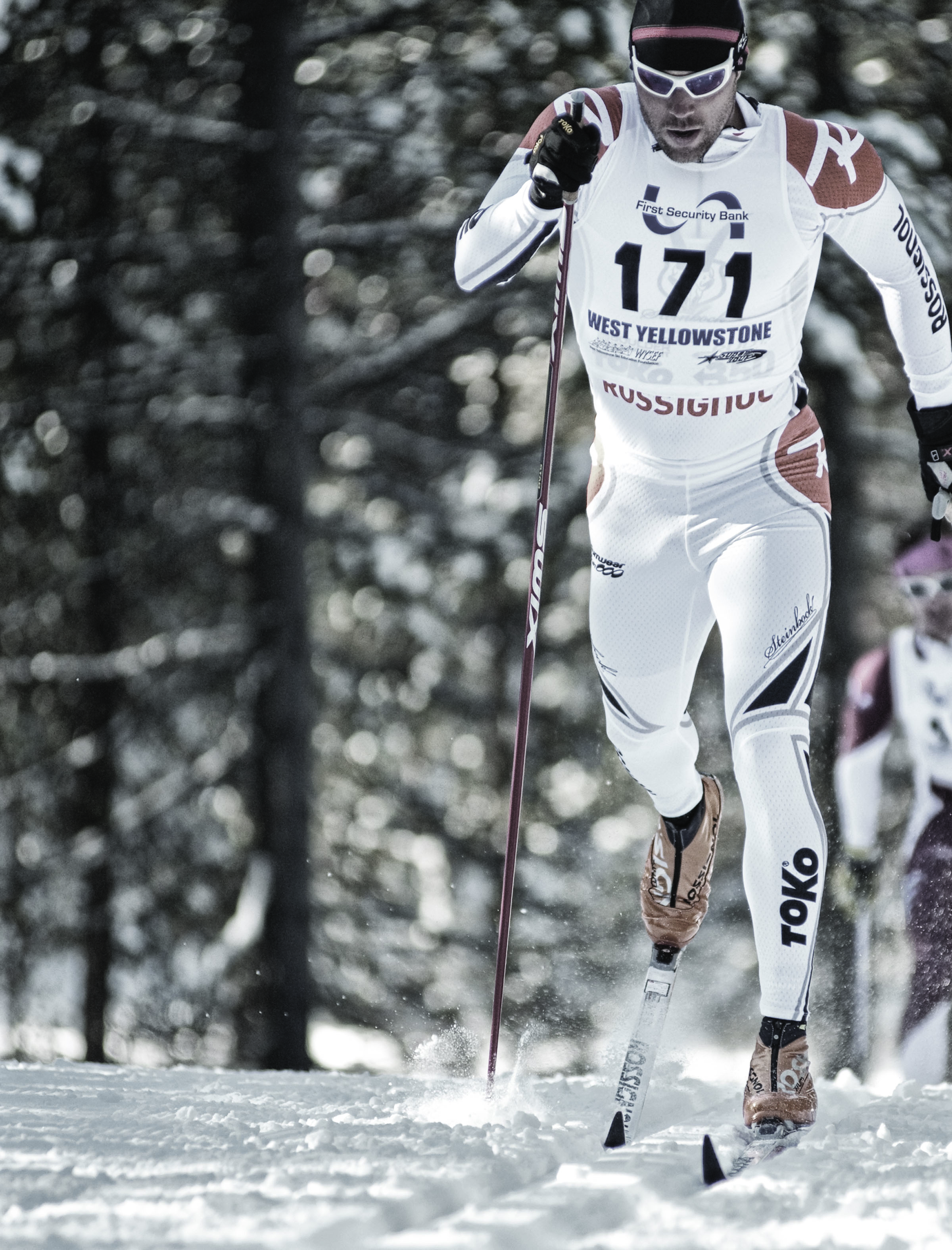
    Andrew Johnson (Steinbock Racing) photo: Toko
    Andrew Johnson (Steinbock Racing) photo: Toko

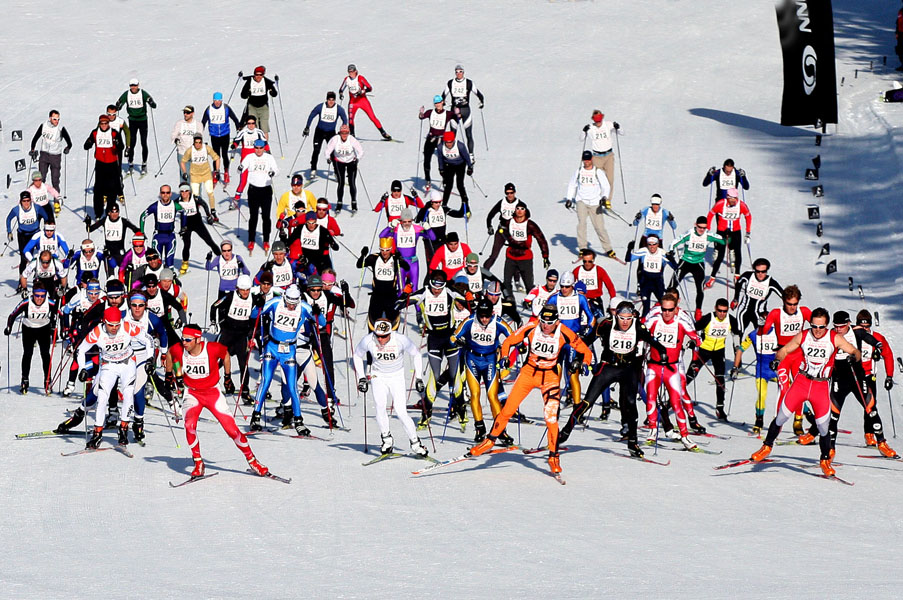
    The Noquemenon Ski Marathon starts at the Al Quall Ski Recreation Area in Ishpeming, Michigan, and winds through beautiful forests and hills for 30 miles until ending at the Superior Dome on the campus of Northern Michigan University (NMU) in Marquette, MI.

    The 50K classic event is the featured event for the American Ski Marathon Series and the FIS North American Marathon Cup.

    Andrew Johnson (Steinbock Racing) won the men’s event and Hilary Patzer (Rossignol) won the women’s race.

    Johnson had nothing but praise for the “Noque” in his recent article on kick-double pole technique, saying, “The terrain, excellent snow, technical and demanding trails, and the one-of-a-kind U.P. scenery all combine to create a memorable weekend.”

    Johnson also wrote that although the conditions were great, the snow was very abrasive, and “even with green klister binder the talk in the front pack of the race was all about how long our kick would last.”

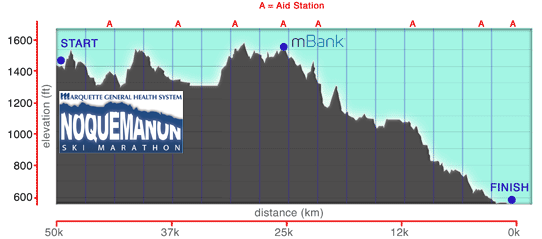
    “ Fortunately,” added Johnson,  “most of the climbing on the Noque course happens in the first 25 kilometers of the race, and the second half of the course is much flatter, with significant elevation loss. It’s quite possible to double pole almost all of the second half of the race (if you have to!), making good classic kick a little less important.”

    Noquemenon 51km profile
    Noquemenon 51km profile

    Johnson, who finished with a time of 2:27:13 was followed across the finish line less than a minute later by Bjorn Batdorf of Minneapolis, MN who clocked 2:28:04.  Andy Leibner of Anchorage, AK, finished third, in 2:28:26.

    Hilary Patzer (Rossignol)
    Hilary Patzer (Rossignol)

    Hilary Patzer and Lindsey Dehlin,  both of whom had raced for NMU and skied on the trail many times during their college careers, battled for first. It was Patzer, with a time of 2:59:11, who crossed the finish line first.  Dehlin, who now lives in Marquette and had the current home-course advantage, finished 42 seconds later.  Kelly Killicorn or Winona, MN rounded out the podium with a time of 3:06:59.

    Full Searchable Results

  • Use Your Experience

    Use Your Experience

    Andrew Johnson (Steinbock Racing)
    Andrew Johnson (Steinbock Racing)

    Andrew Johnson has won multiple US National Champion and is currently a member of Steinbock Racing.

    This past weekend I competed in my first classic race in about 2 years. I had no idea what to expect, since I had also not yet had a chance to do any classic intensity, and I had had only very limited testing time on my new fleet of Rossignol skis. I knew that I had a lot of things to figure out in the 75 minutes I was to spend at the race venue prior to my start.

    To make matters a little more stressful, the race course was closed for my warm-up, and the race tracks seemed to be significantly harder and faster than the trails we were warming up on. So, I had to first make an educated guess as to what kind of ski I wanted to use for the race, and then try and determine which of my 3 pairs of race-waxed boards would best fill the need.

    At times like these, it’s all too easy to over think things a little, get stressed out, and ultimately make decisions that end up being too conservative and costing you once the race begins. At a couple times that morning, I felt myself sliding towards the ‘safe choice’; a powder ski with a thick layer of wax. This would have been the easiest decision, as it would have guaranteed good kick and helped me carry a little more confidence to the start-line.

    In the end, I chose a hard-track ski, applied only a moderate amount of wax, and had awesome skis for the race. I “re-learned” a valuable lesson; experience and instincts are often the most powerful tool a racer has at his disposal. It’s easy to complicate all things skiing (training, ski selection, waxing, racing, etc.)  But this need not be the case as, at its core, ski racing a just a series of relatively simple and straightforward processes and decisions. If you can manage to focus on the most immediate problems and disregard those over which you have no control, you’ll be more successful for it. The other morning I was able to control my emotions and make simple, common-sense decisions that lead to a great race. Never underestimate your experience and decision-making ability; they’re your biggest asset!

    Toko Structurite
    Toko Structurite

    Product Highlight

    Toko was the first company to come out with a hand tool that could apply an offset structure on a ski base (the Toko Structurite). This tool has now been improved with a new generation of the Toko structurite. The new Structurite is wider and works with three structure bits, Blue, Red, and Yellow which correspond to the Blue, Red, and Yellow glide waxes. The Structurite costs $85 and comes with the Red bit. The Blue and Yellow bits are available separately for $35.

    Matt Liebsch (CXC Team Vertical Limit)
    Matt Liebsch (CXC Team Vertical Limit)

    Photos of West Yellowstone SuperTour Races

  • Steinbock Racing – North America’s Newest Pro XC Team

    Steinbock Racing – North America’s Newest Pro XC Team

    Steinbock Racing is proud to announce the arrival of North America’s newest professional cross-country race team.

    Steinbock Racing is a small team with big ambitions. Athletes Chris Cook, Zack Simons, and Andrew Johnson have a combined 12 years of US Ski Team experience, 3 Winter Olympics, 5 National Titles, and a win in virtually every major ski race in America, including the Birkebeiner, Boulder Moutain Tour, and the Owl Creek Chase.

    Steinbock Racing athletes will focus on the SuperTour and marathon schedules this winter, as well as the 2010 Vancouver Winter Olympics. Steinbock Racing will be a presence at nearly all major races in America. “Between Chris Cook, Andrew Johnson and myself, we have the horsepower to be a real force in any race we enter”, says Steinbock Racing co-founder and director Zack Simons.

    “Steinbock Racing sprung out of a desire to build a team and support structure in which we will have total independence. Zack, Chris, and I have all skied for lots of different teams at a lot of different levels; being able to race, train, and live in the ways that we know works best for us is vital at this point in our careers,” says co-director Andrew Johnson. Zack Simons echoes these sentiments: “When AJ and I started talking this spring we realized that we both wanted to control our own destinies within the sport. Ultimately, our goals are to win ski races and provide a continually valuable product to our partners.”

    Chris Cook (age 28) has spent most of the summer training in his hometown of Rhinelander, Wisconsin. Zack Simons (27) lives in Park City, UT and his summer was spent road bike racing. Andrew Johnson (31) is from Greensboro, VT, and lives in Park City, UT. The Steinbock Team will train together in Park City starting later this month in preparation for the fall race schedule. “I’m real excited for the season to get underway and to race with Steinbock.  A new team, a new attitude, and new look for 2010. I’m looking forward to getting back out to Park City to train and get ready for the fall SuperTour schedule,” said Chris Cook, from a training camp in Lake Placid. You can follow Steinbock Racing’s progress through the season on the team website (www.steinbockracing.com), on Twitter  (http://twitter.com/steinbockracing), and on Facebook (search “Steinbock Racing”).

    Steinbock Racing is proud to be partnered with premier nordic companies Rossignol Skis-boots-bindings, Oneway poles, Toko clothes and wax, Rudy Project Eyewear, Podiumwear and Boulder Nordic Sport. Through a variety of unique marketing strategies Steinbock Racing will provide valuable marketing tools for its partner companies. Steinbock Racing still has room for a title sponsor and will entertain all possibilities. Contact Steinbock (steinbockracing@gmail.com) for more information.

    Steinbock Racing