
Tag: Andrew Musgrave

  • In Davos, the Second Lap Always Tells the Truth

    In Davos, the Second Lap Always Tells the Truth

    This coverage is made possible through the generous support of Marty and Kathy Hall and A Hall Mark of Excellence Award. To learn more about A Hall Mark of Excellence Award, or to learn how you can support FasterSkier’s coverage, please contact info@fasterskier.com.

    Davos doesn’t reward urgency.

    It tolerates it, sometimes — lets it flirt with the clock through the opening kilometers — but it never forgets. Like a mysterious, wispy cloud, the altitude sits quietly above the stadium, thinning the air just enough that the consequences arrive late, not immediately. The first lap can feel generous. The second is where Davos asks what you’ve really brought with you.

    On Sunday, in the men’s 10-kilometer freestyle interval start at the World Cup in Davos, Switzerland, that truth arrived right on schedule. Athletes who attacked early were gradually called back. Athletes who waited found themselves moving forward without ever appearing to accelerate. And one skier — patient, smooth, and increasingly inevitable — turned the second lap into a private demonstration.

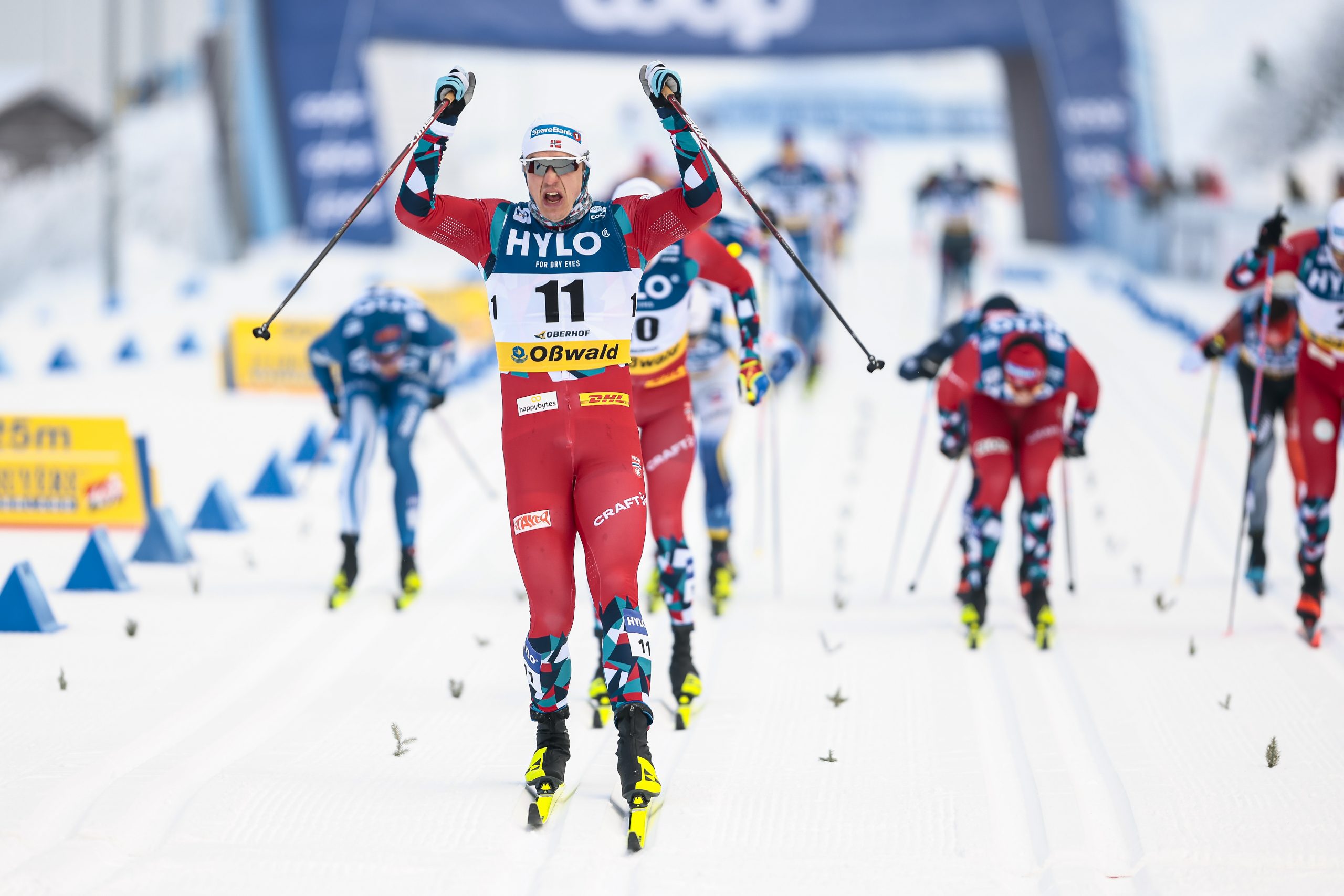
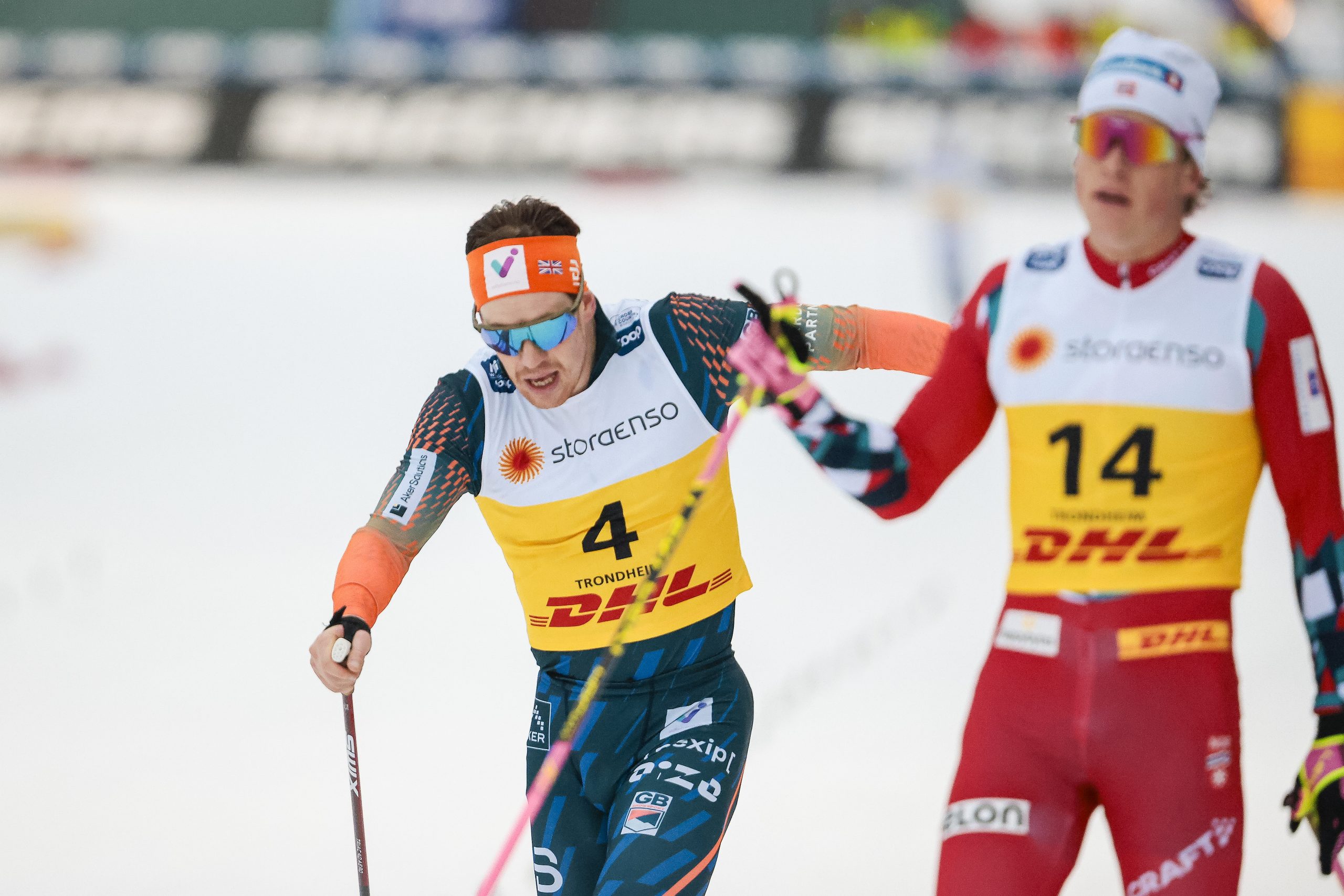
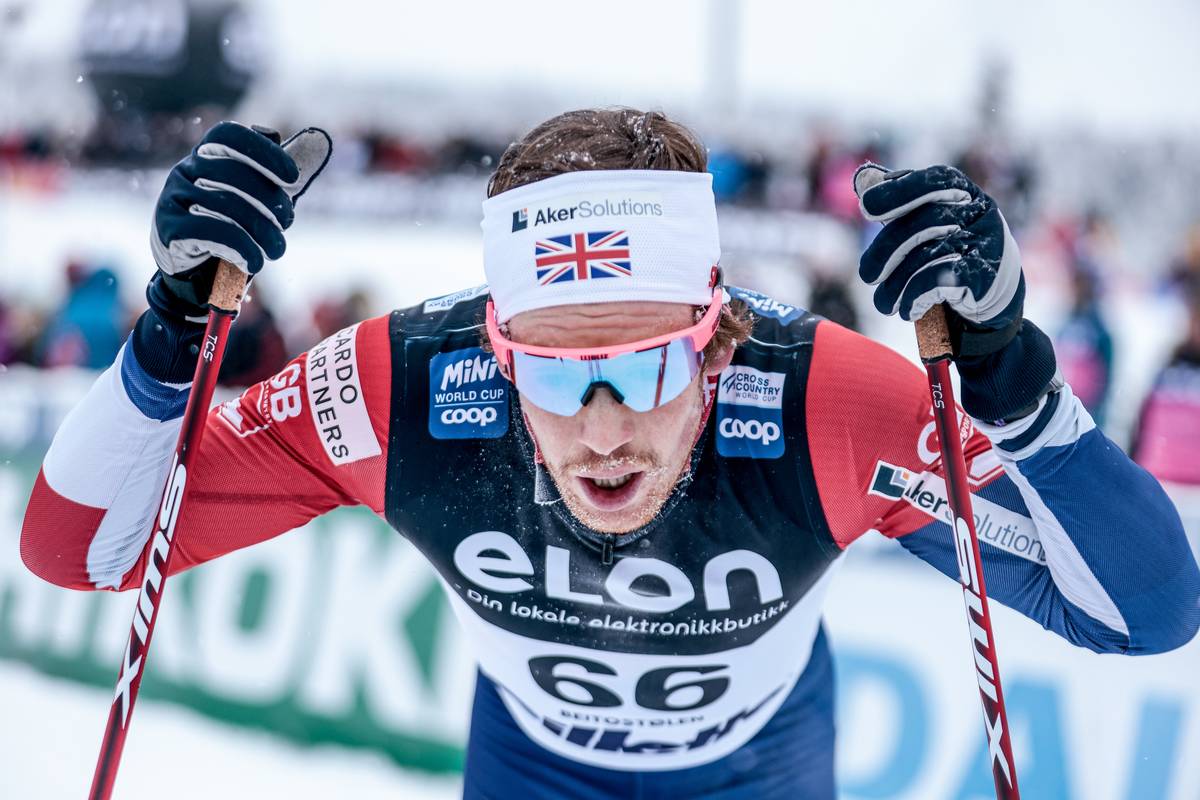
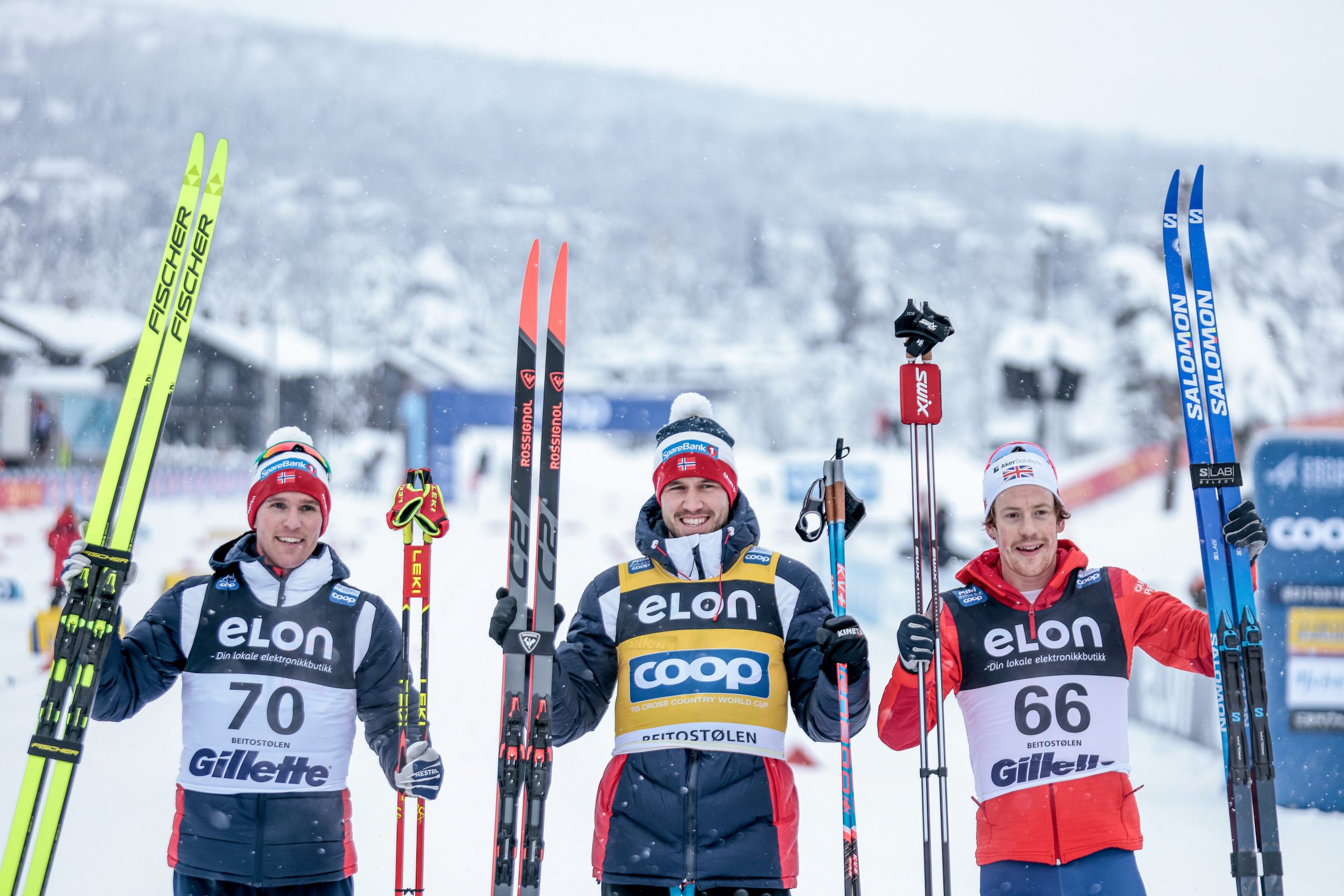
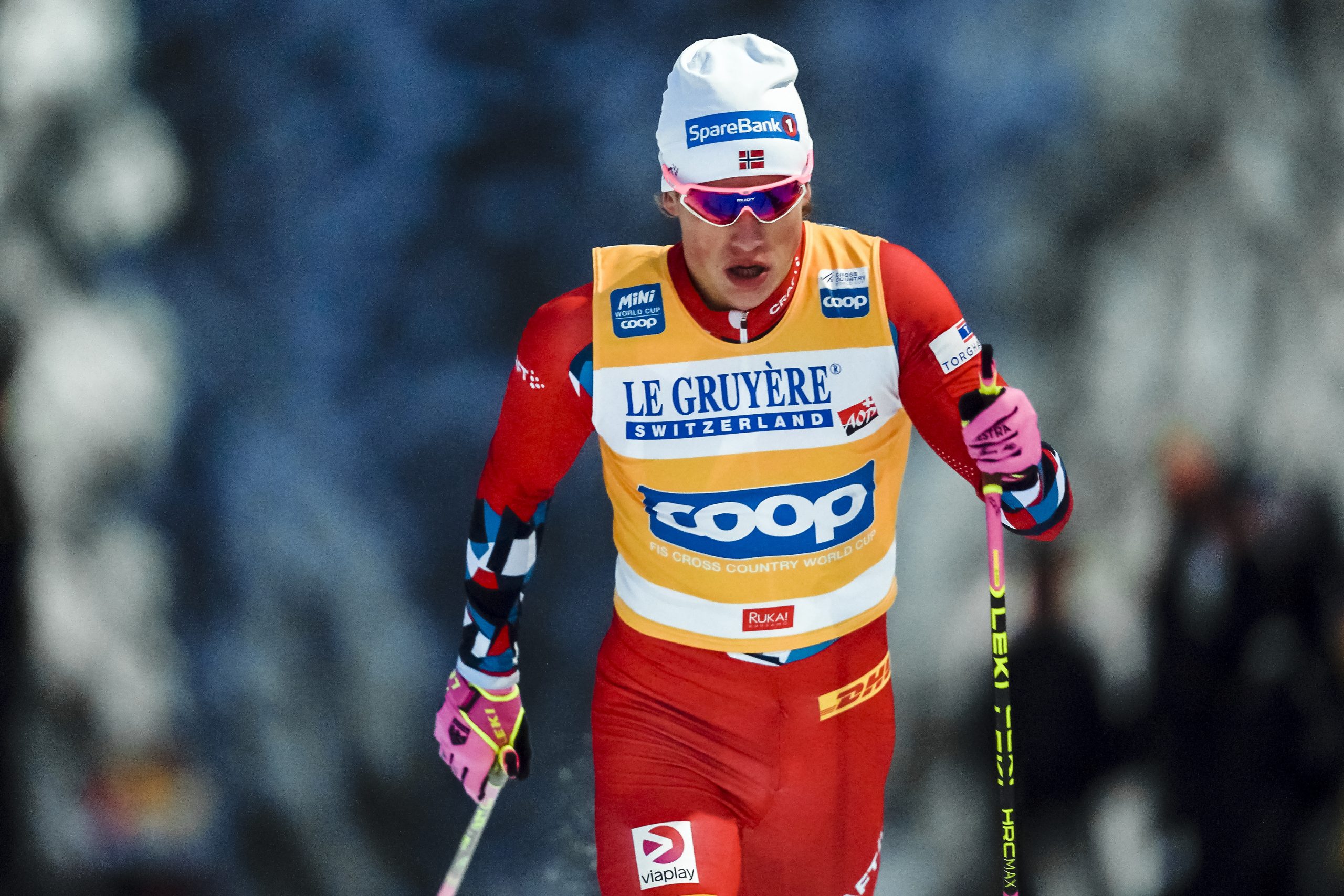
    Einar Hedegart of Norway won in 22:40.7, earning his second straight World Cup victory, this one built not on surprise but on control. Behind him came Harald Østberg Amundsen (NOR) at +11.7 seconds, Mattis Stenshagen (NOR) at +18.8, Johannes Høsflot Klæbo (NOR) fourth (+24.1), and Martin Løwstrøm Nyenget (NOR) fifth (+30.6). Andrew Musgrave (GBR) led the non-Norwegians in sixth (+31.1).

    Five Norwegians in the top five — but only one skied the race the way Davos prefers.

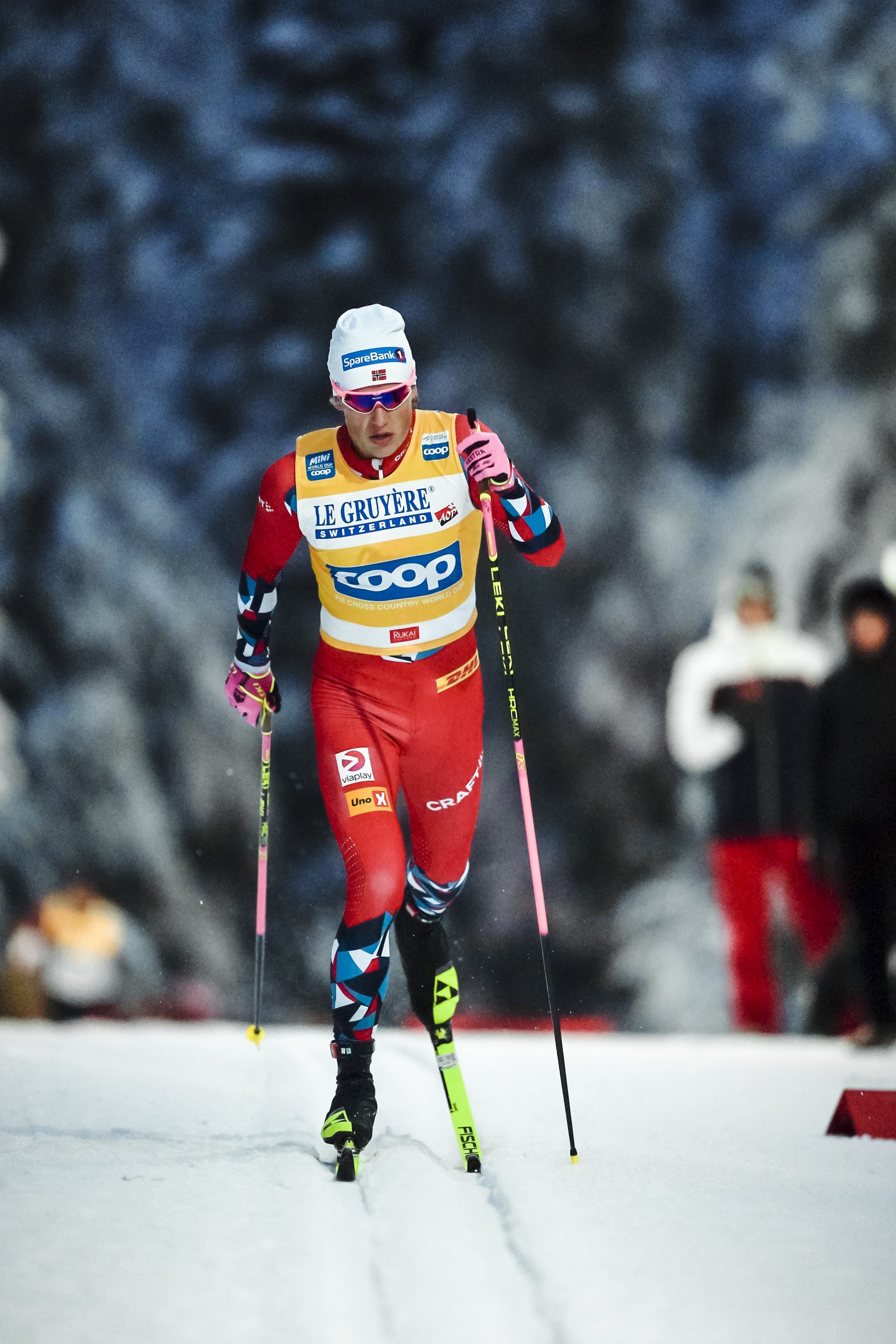
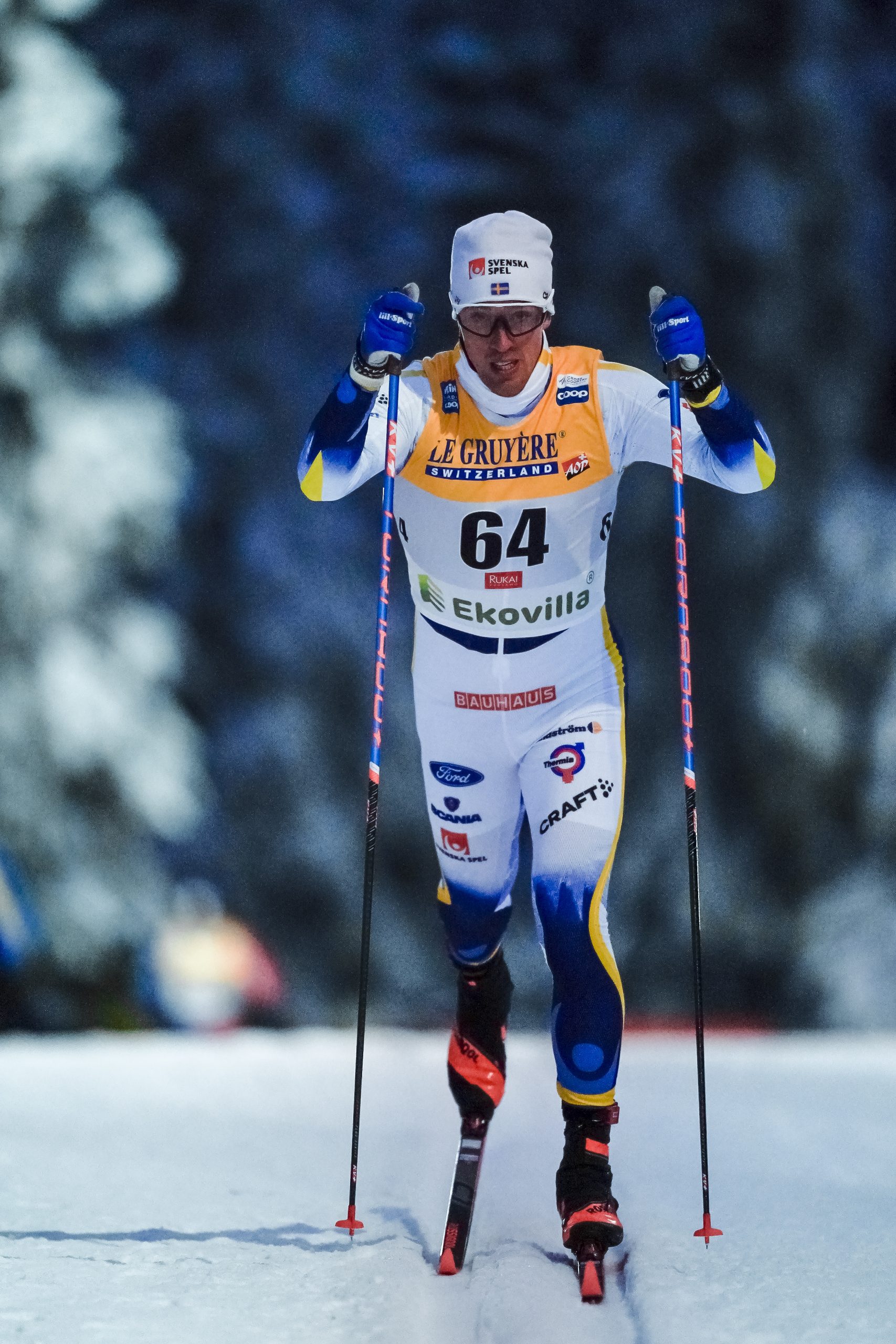
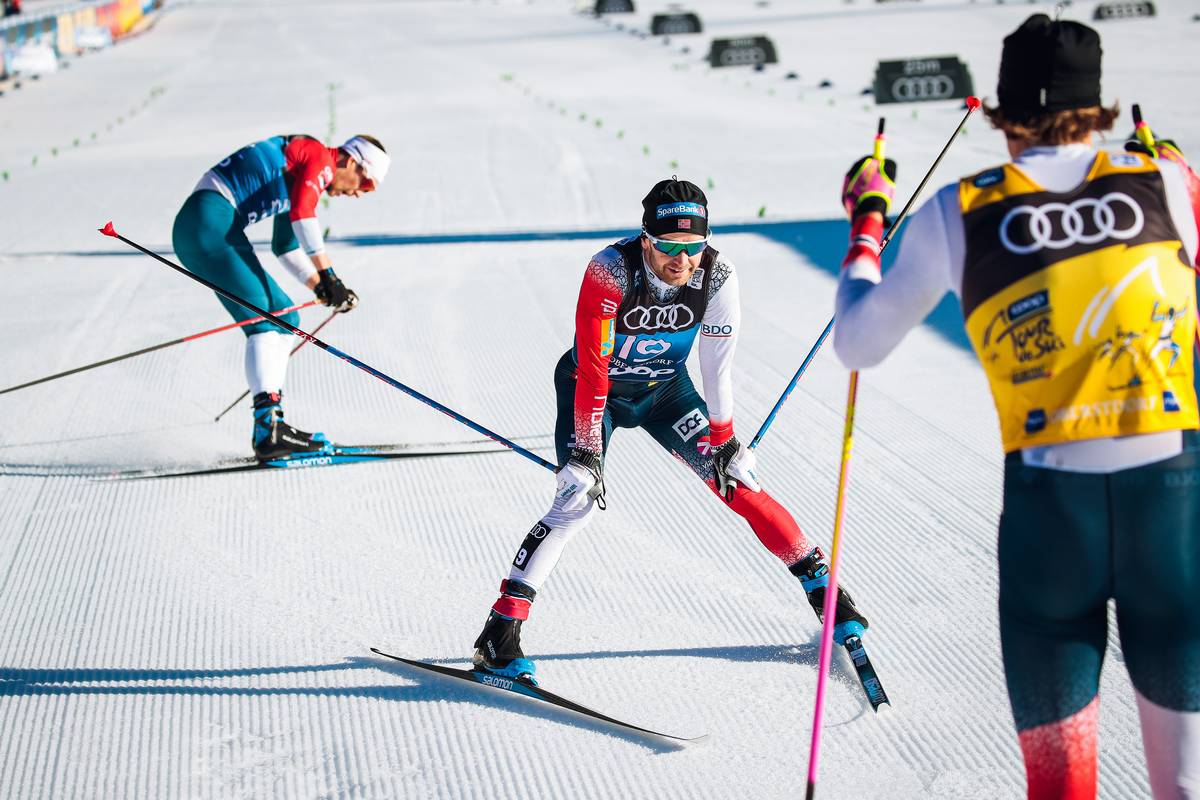
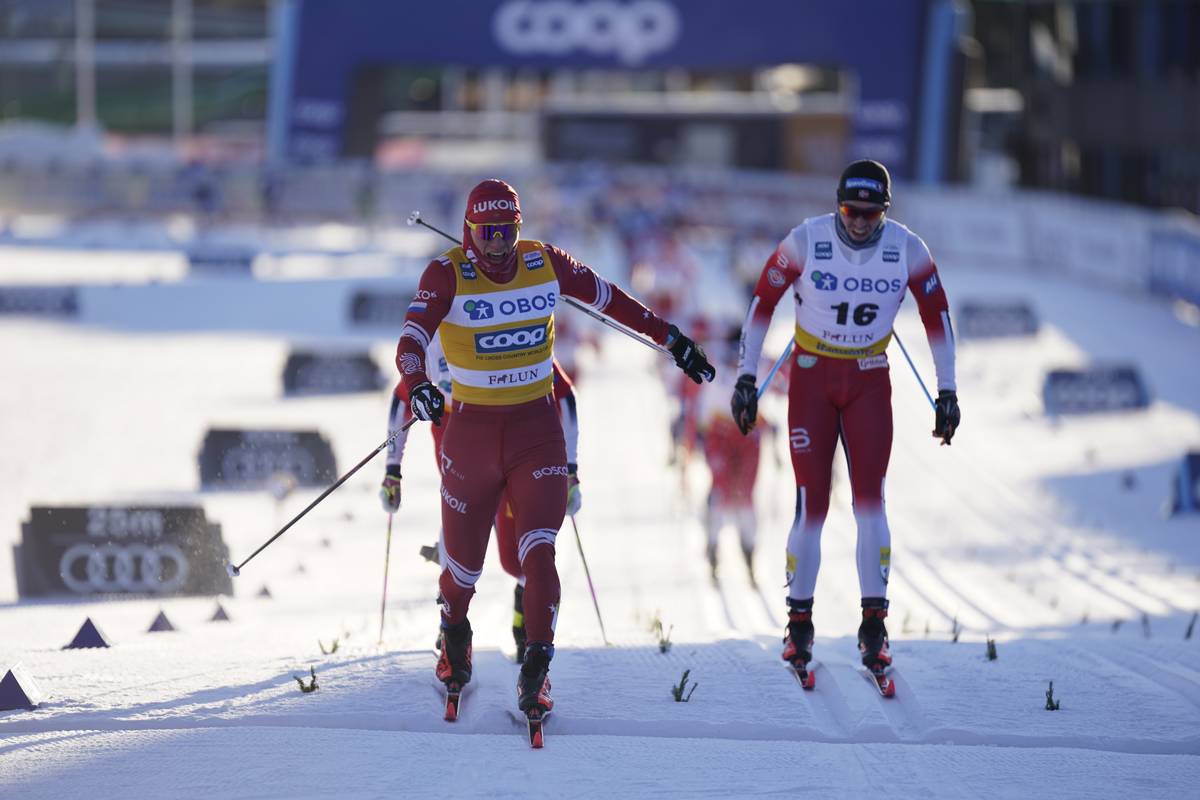
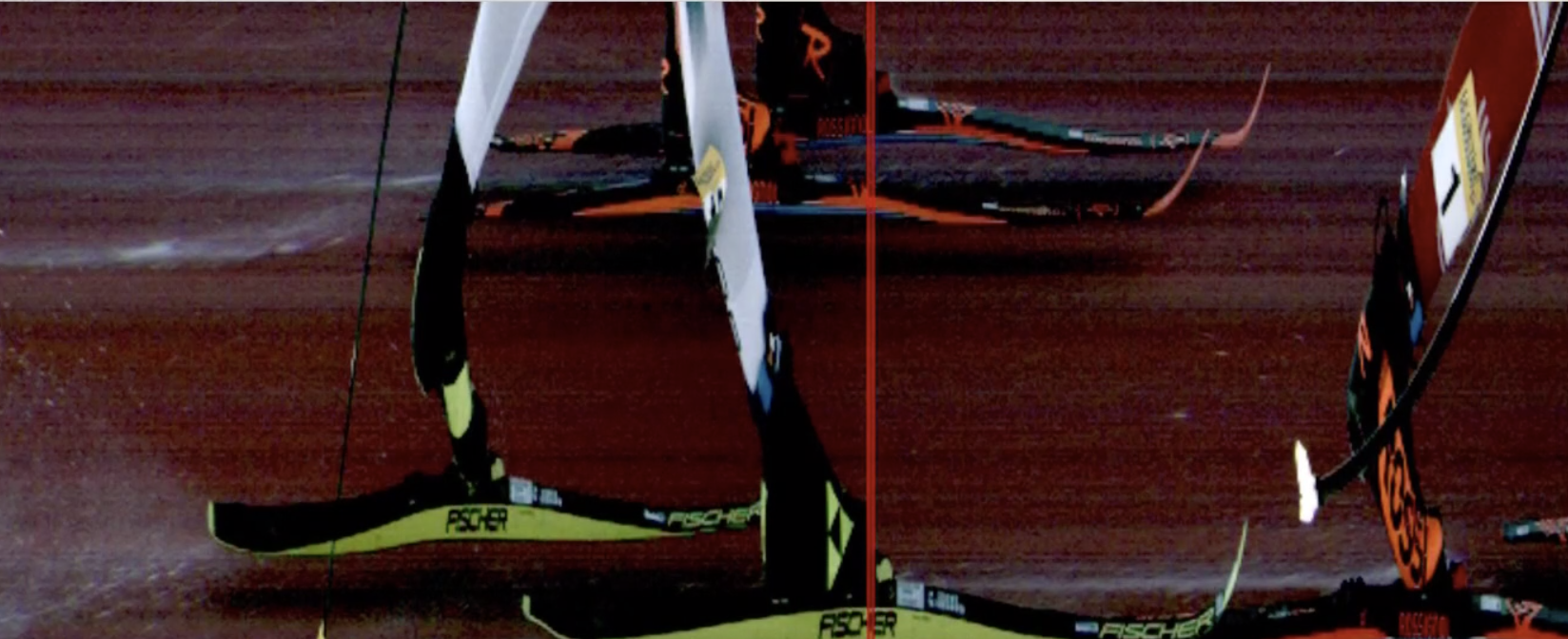
    Mattis Stenshagen (NOR) comes to the 10 k Interval Start Freestyle finish in Davos (SUI). (Photo: Modica/NordicFocus)
    The Temptation of the First Lap

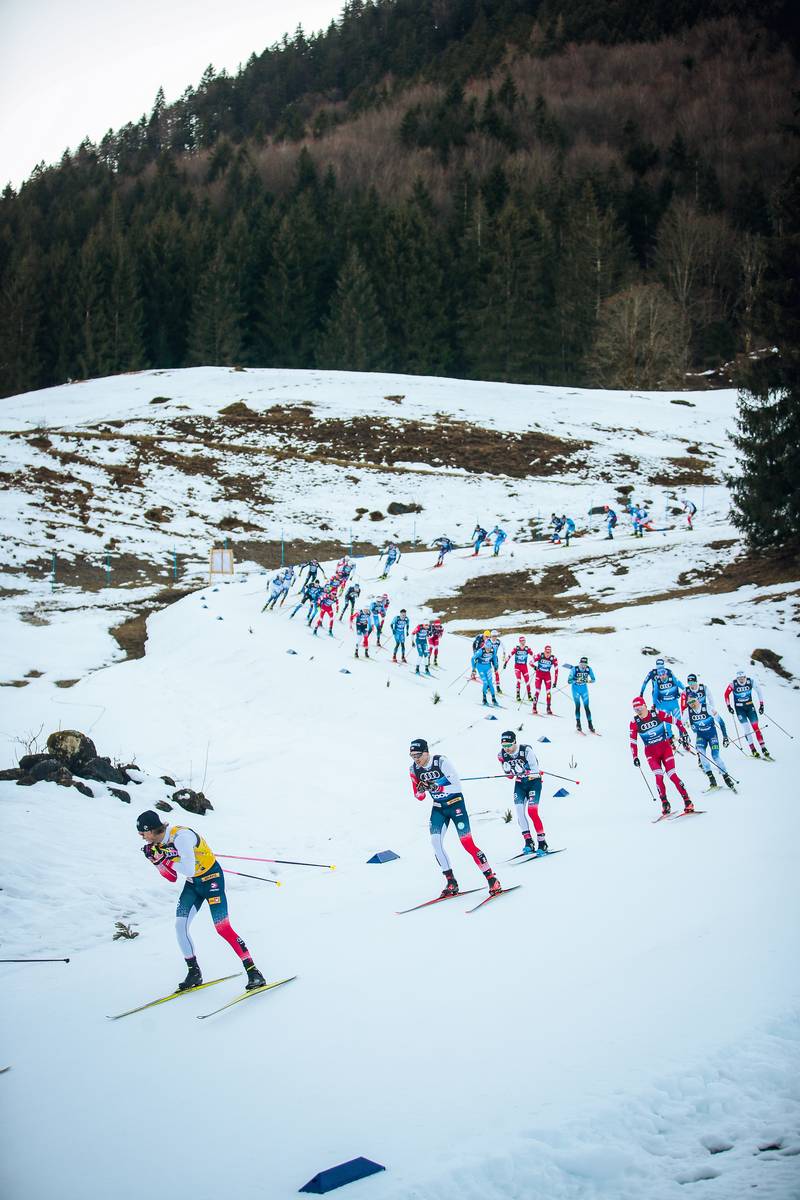
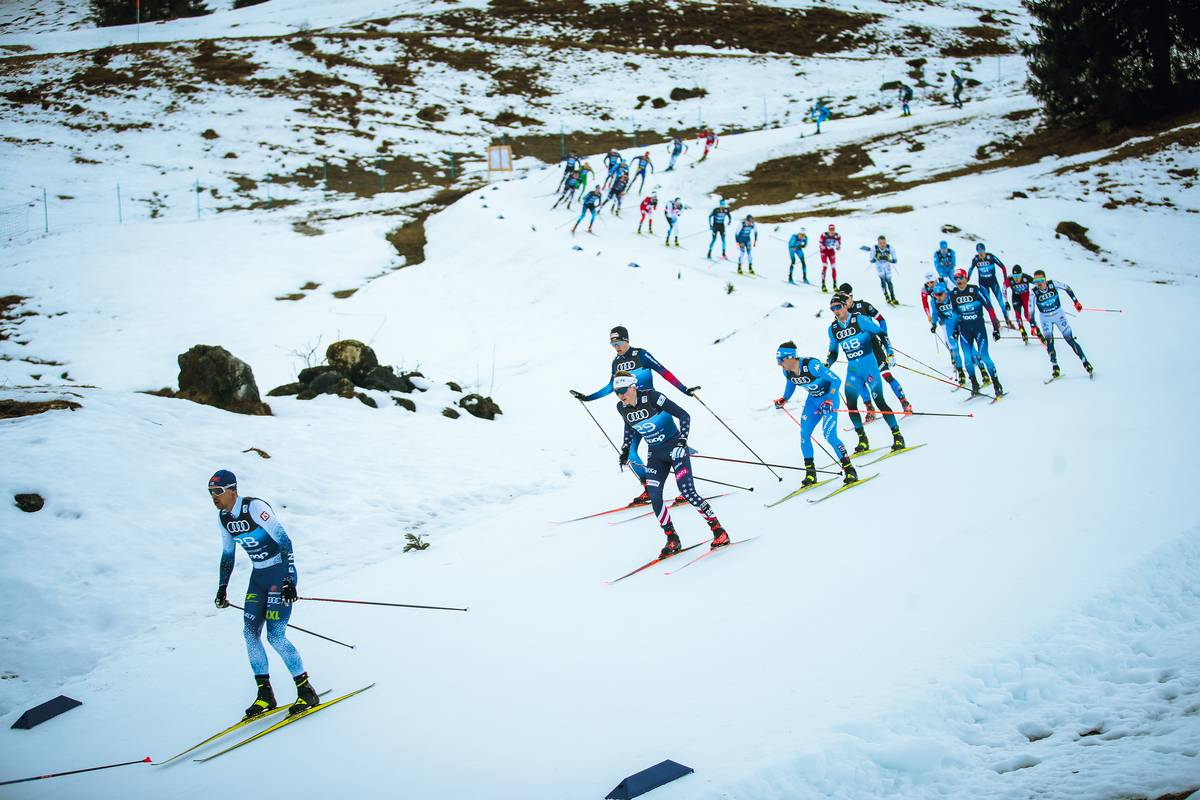
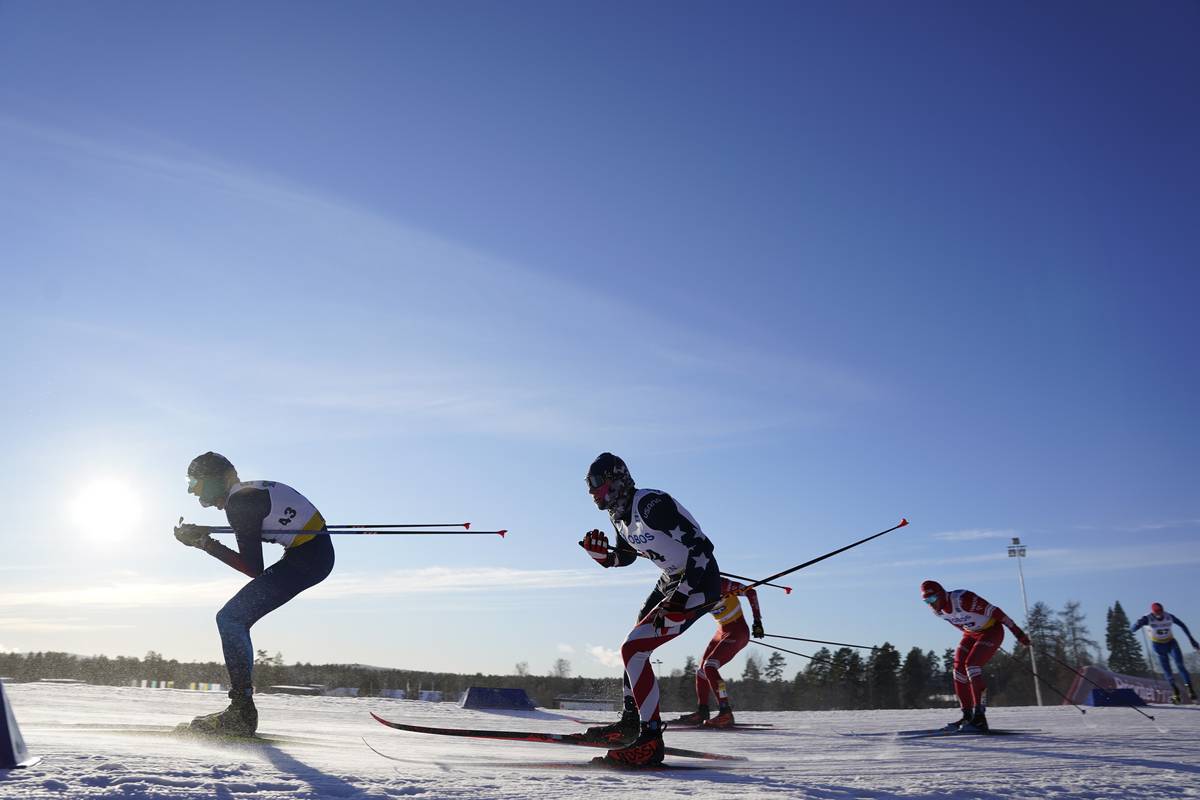
    Interval starts strip racing down to decisions. No drafting. No cover. No negotiation. In Davos, those decisions begin almost immediately because the course invites speed from the start. The opening kilometers flow. The snow was hard and fast after an overnight freeze. Skis hummed. Breathing felt manageable.

    Several athletes took the invitation.

    Early time checks were brisk, and for a moment the race appeared to be tilting toward the skiers willing to press from the gun. Harald Østberg Amundsen, the reigning overall World Cup champion, was among them — assertive, controlled, but unmistakably on the front foot. At the first major checkpoint, Amundsen held a small advantage over Hedegart, exactly the kind of margin that feels reassuring on paper.

    Others followed similar scripts. Strong starters carved seconds in the opening loop, skiing as if Davos were simply another mid-altitude venue rather than one of the circuit’s quiet physiological traps. It all looked reasonable — until the course turned upward again.


    Why Davos Punishes Impatience

    At roughly 1,560 meters above sea level, Davos sits just high enough to distort pacing instincts. Red-lining a climb here doesn’t always feel catastrophic in the moment. The cost arrives later, when recovery never quite comes, and the second lap begins to feel longer than the first.

    That dynamic defined the race.

    Athletes who went hard early found themselves defending, not attacking, once the second lap began. Speed leaked away on the longer climbs. Transitions dulled. The ability to change gears — so critical in freestyle skating — started to fade.

    Hedegart, meanwhile, was doing something else entirely.

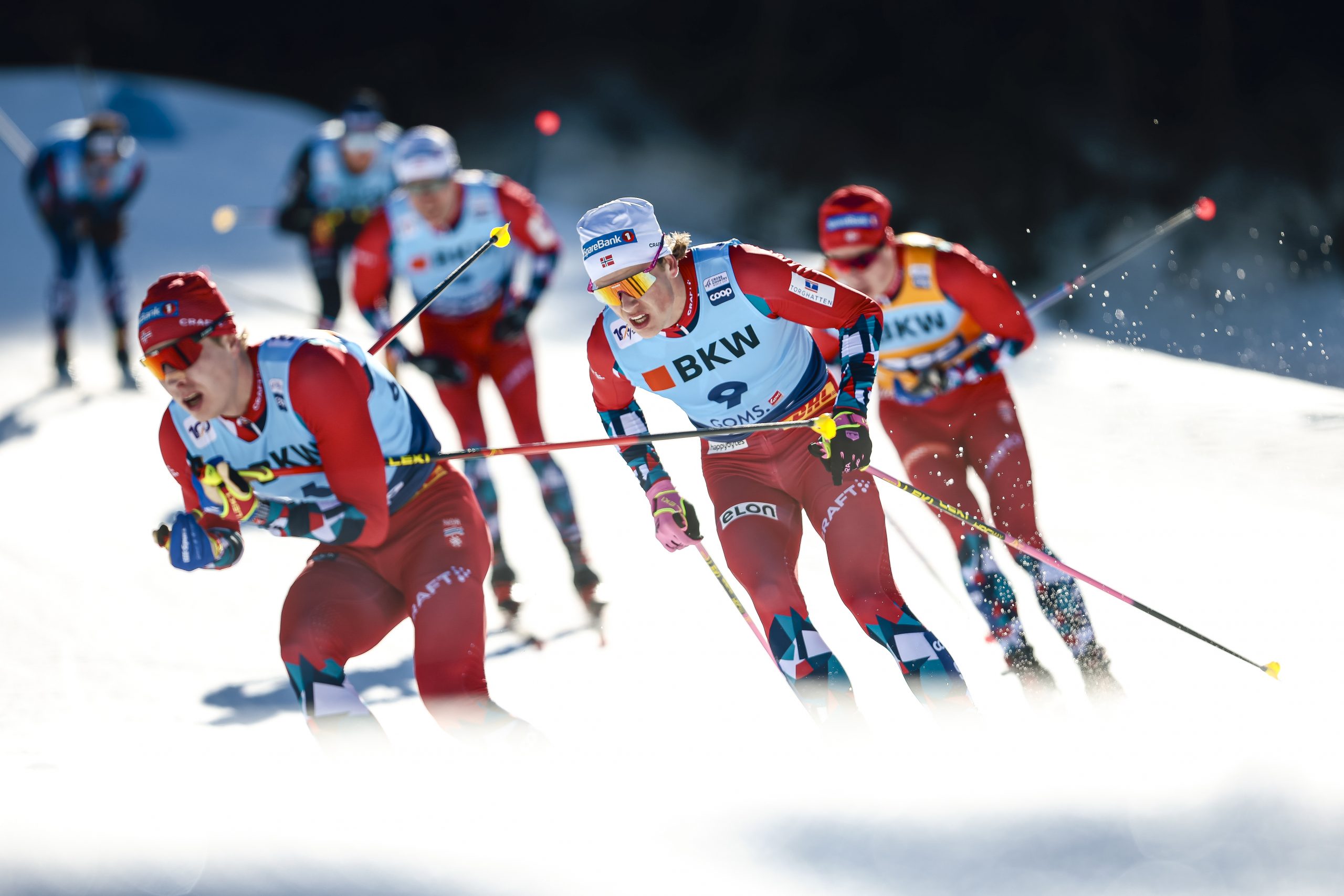
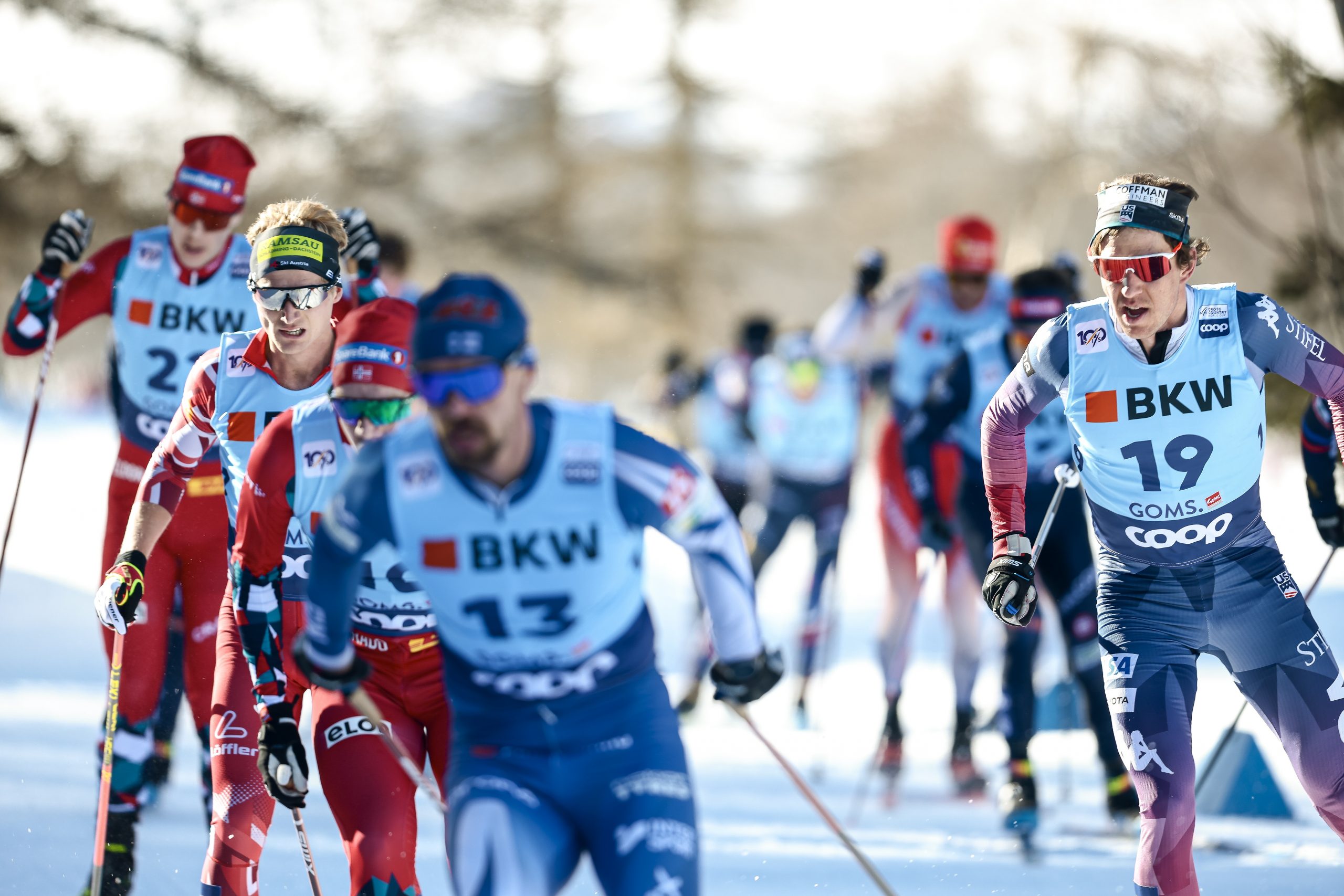
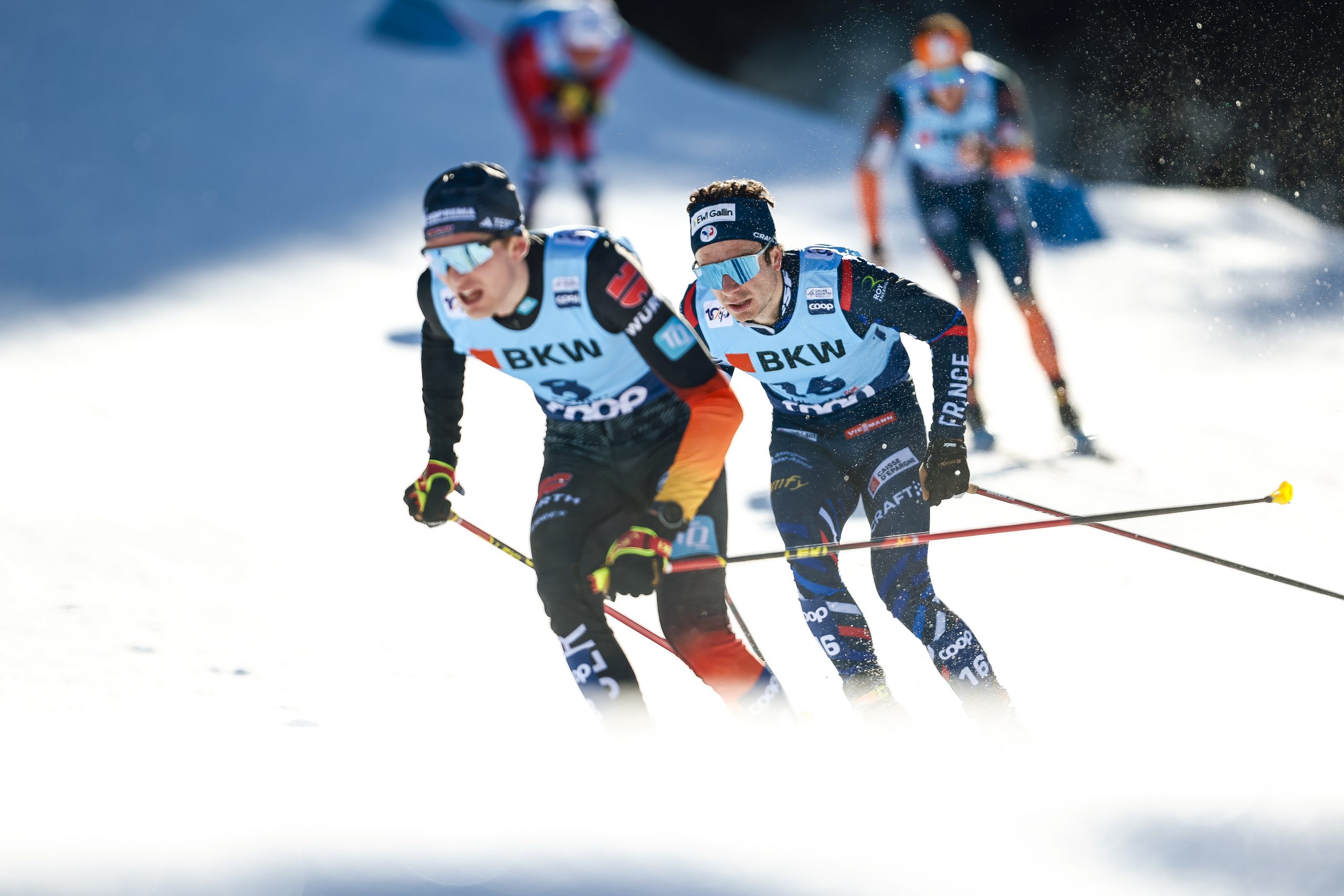
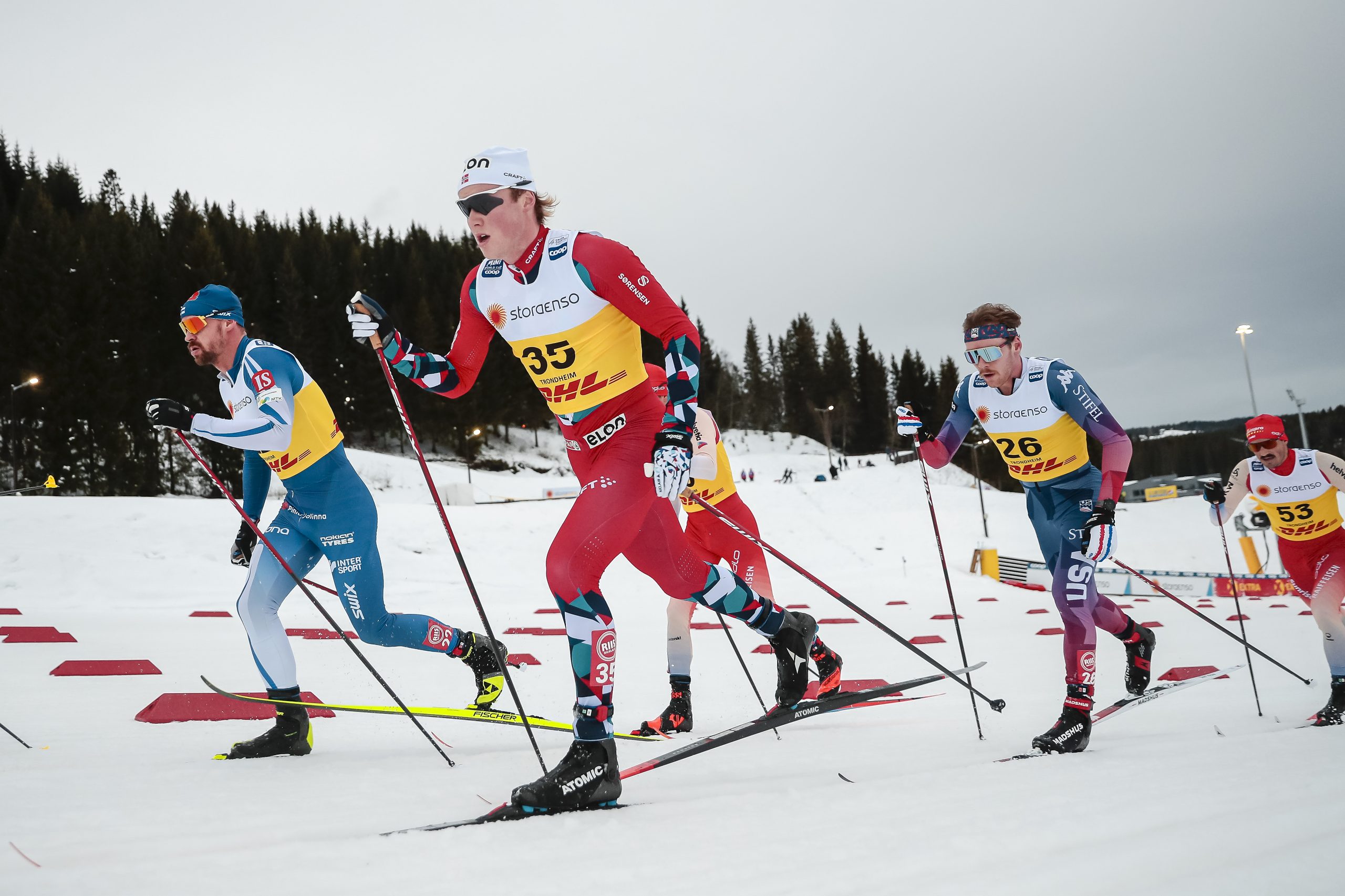
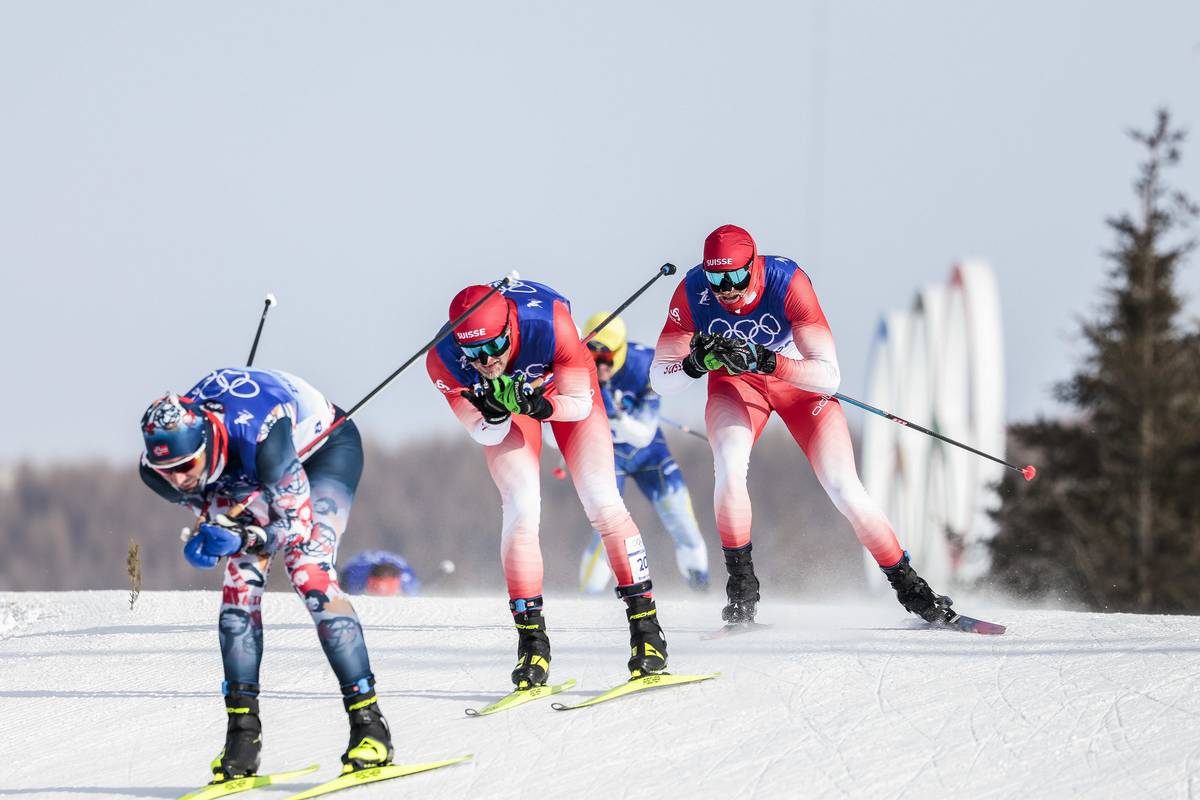
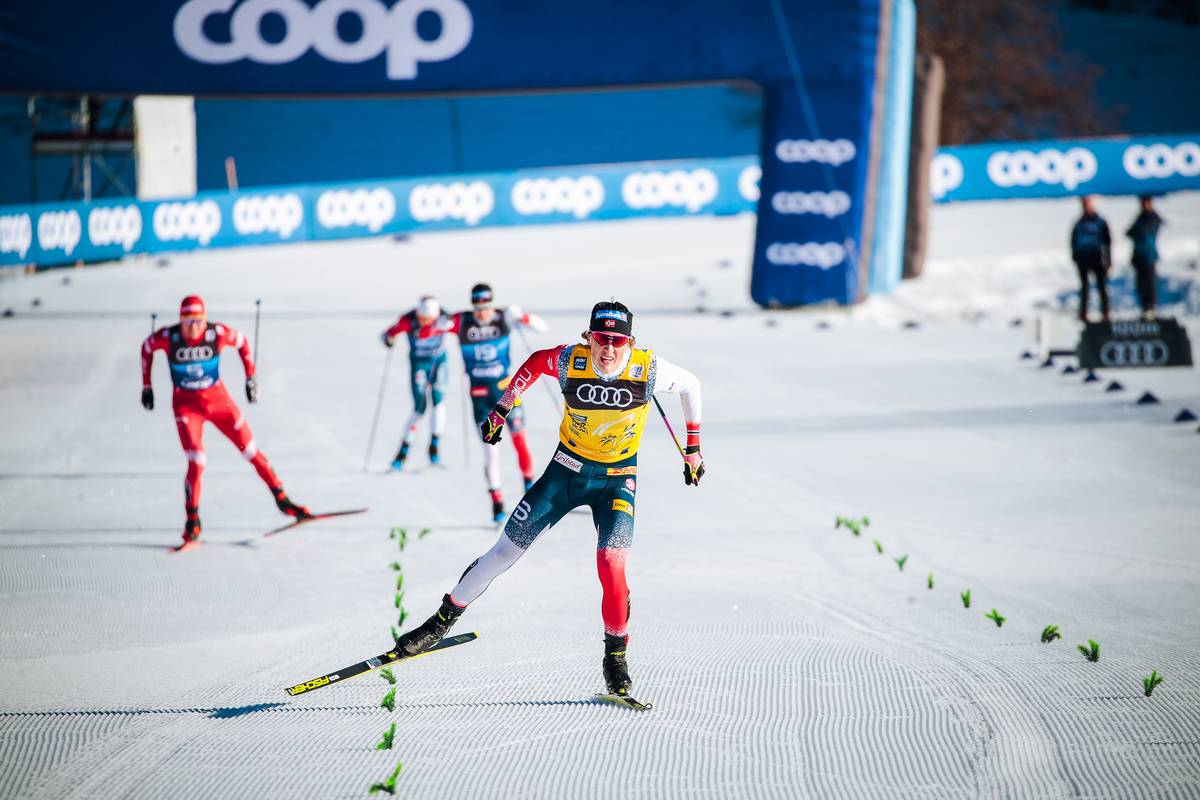
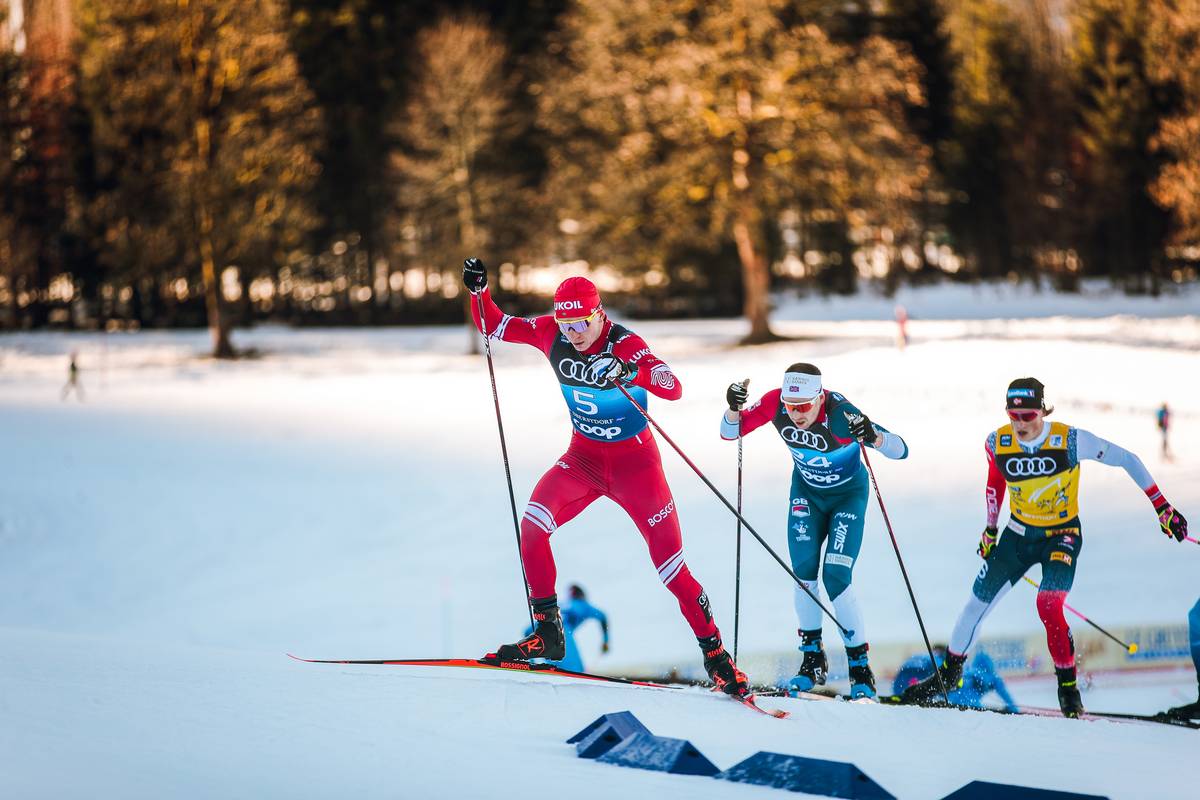
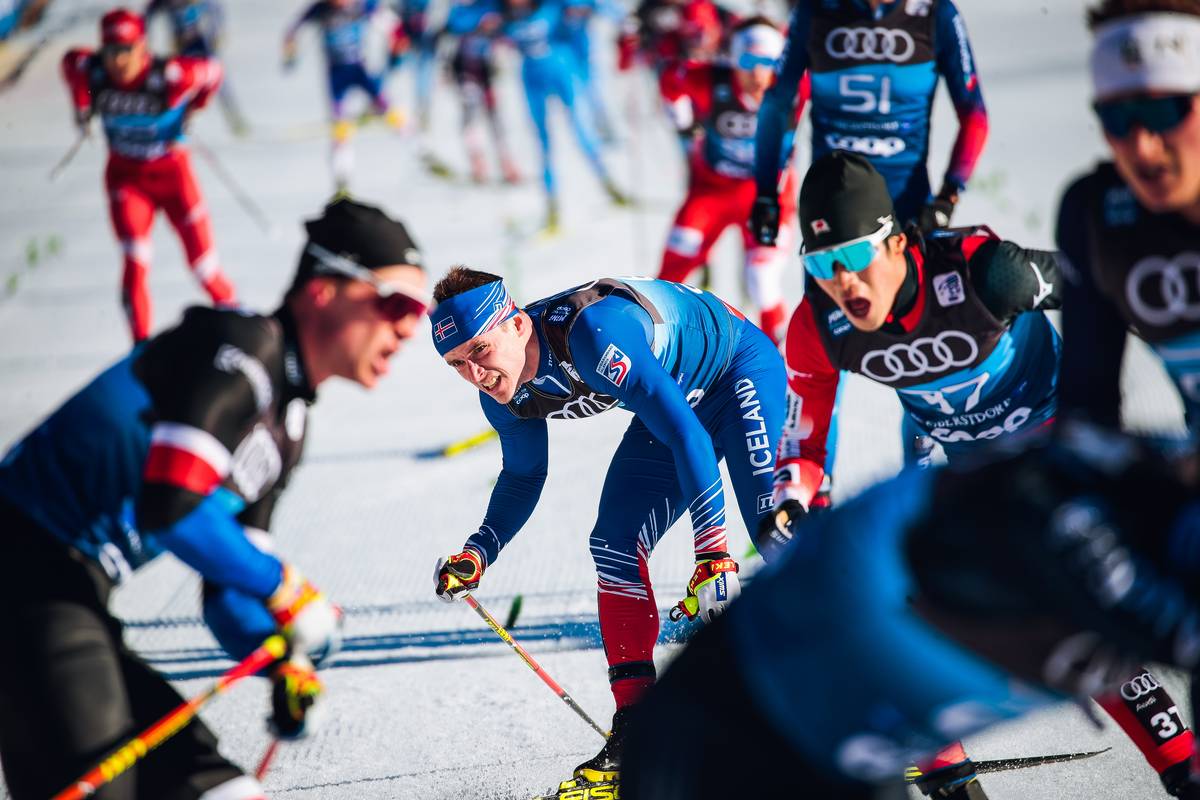
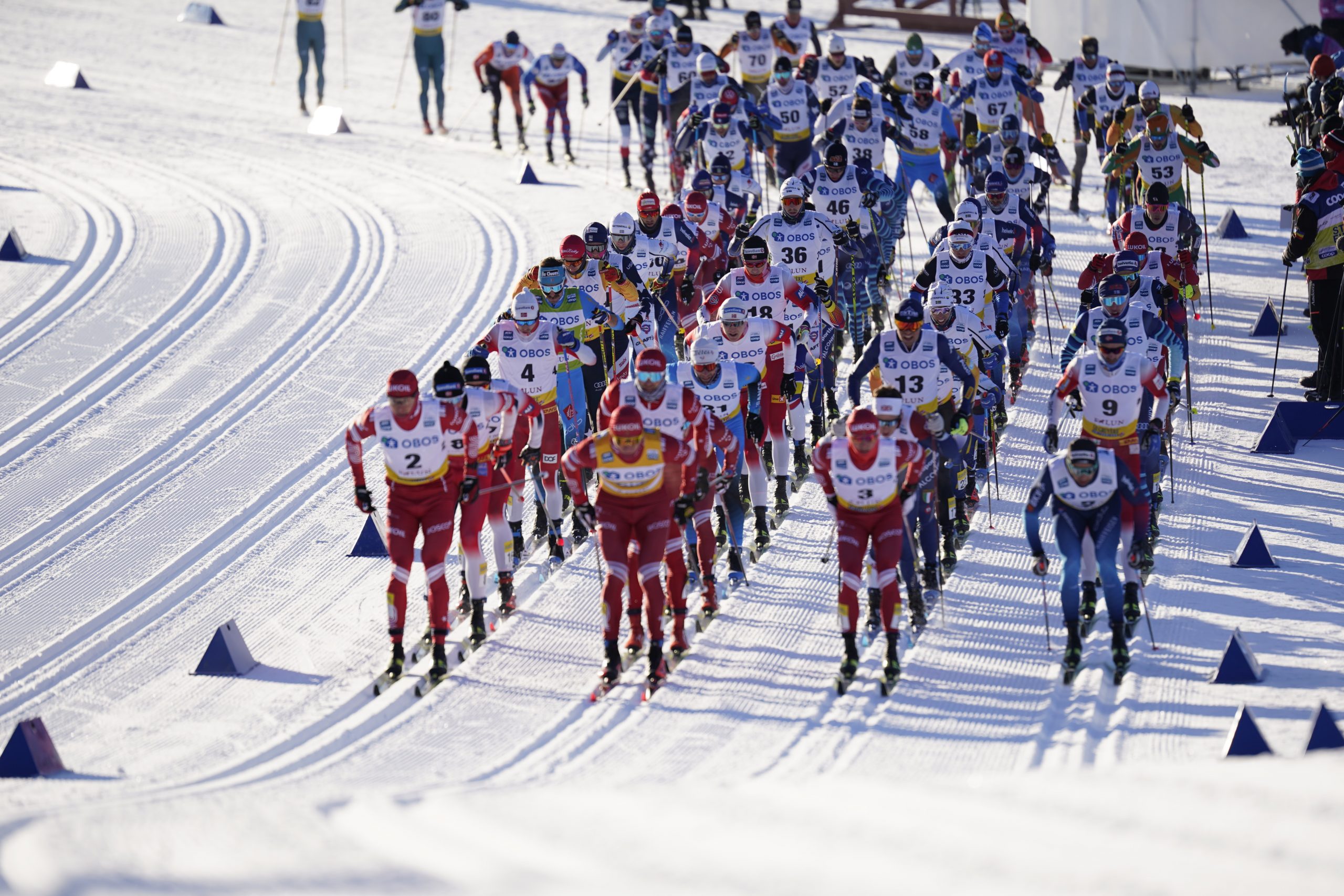
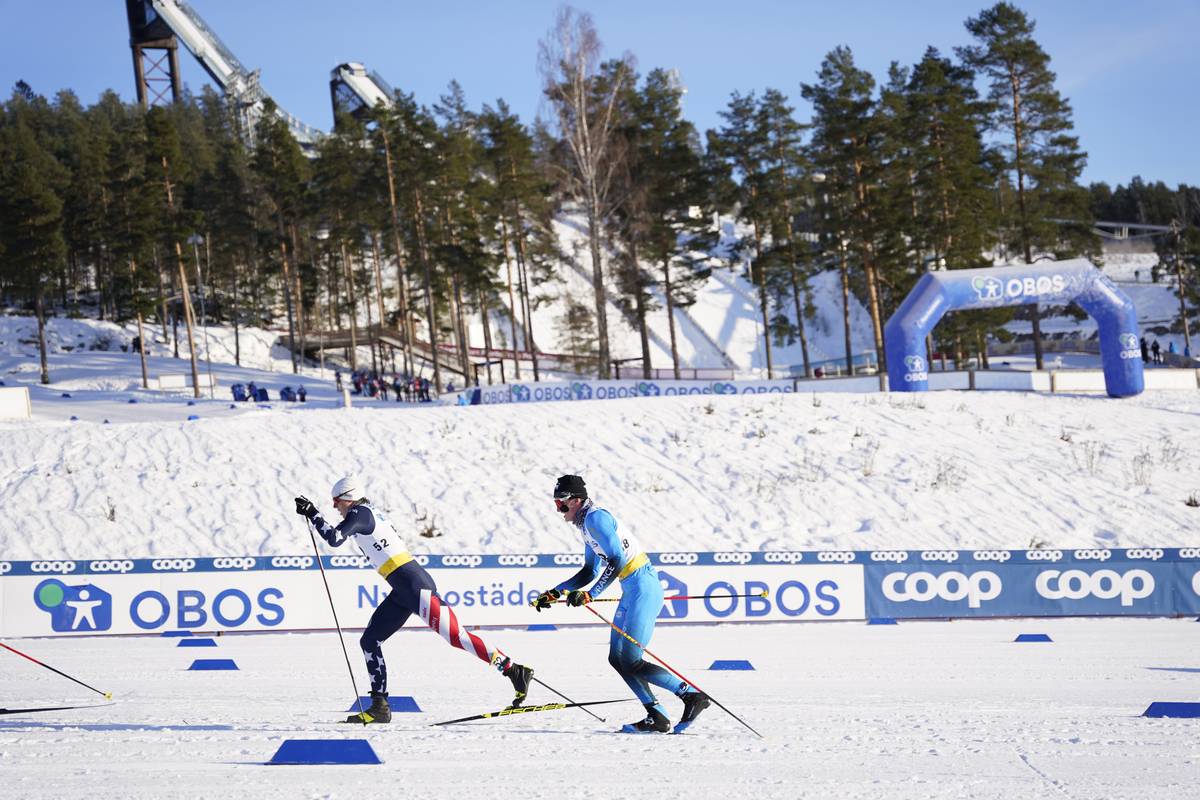
    Einar Hedegart (NOR) with Vili Crv (SLO) trailing during the 10 k Interval Start Freestyle in Davos (SUI). (Photo: Vanzetta/NordicFocus)
    Hedegart’s Patience — and the Moment it Mattered

    Hedegart did not lead early.

    That point matters.

    He allowed seconds to slip away in the first lap, skiing smoothly but without urgency, keeping his effort under control on the steepest sections. At altitude, that restraint isn’t passive — it’s strategic. Backing off even a few percent on the climbs can preserve a system that stays responsive later.

    When the race entered the second lap, the difference became apparent.

    Hedegart didn’t surge so much as continue. While others plateaued, he maintained tempo. While early leaders fought to hold speed, he quietly increased his advantage, taking time not through dramatic accelerations but through the absence of slowdown.

    By the 7.4-kilometer mark, the race had clarified. The seconds Hedegart had conceded early were gone — and then some. His advantage over Amundsen had grown decisively. The course was no longer offering second chances.

    The finish confirmed what the splits already suggested: Hedegart’s second lap was the fastest in the field, and it wasn’t close.

    Harald Amundsen (NOR) on his way to second place in Davos (SUI). (Photo: Vanzetta/NordicFocus)
    Amundsen, Stenshagen, and the Norwegian Sorting Hat

    Behind Hedegart, the Norwegian internal race unfolded in layers.

    Amundsen’s early aggression kept him close, but the cost was unavoidable. He remained solid — this was not a collapse — yet the final kilometers belonged to Hedegart. What had been a narrow early lead turned into an 11.7-second deficit at the line.

    Mattis Stenshagen, by contrast, skied one of the day’s most even races. Never flashy, never panicked, he moved steadily forward as others drifted back, finishing third and reinforcing his reputation as one of Norway’s most reliable distance technicians.

    Johannes Høsflot Klæbo offered another useful case study. After a frustrating sprint the day before, Klæbo looked sharper and more composed, staying in contention through the middle of the race. But Davos demands distance-specific economy, not just efficiency, and he lost ground late, finishing fourth — competitive, but never truly threatening Hedegart.

    Martin Løwstrøm Nyenget, wearing the red distance bib, rounded out the Norwegian sweep of the top five, steady as ever but unable to match the winning pace in the final lap.

    Five Norwegians, five slightly different races — and one clear template emerging at the top.

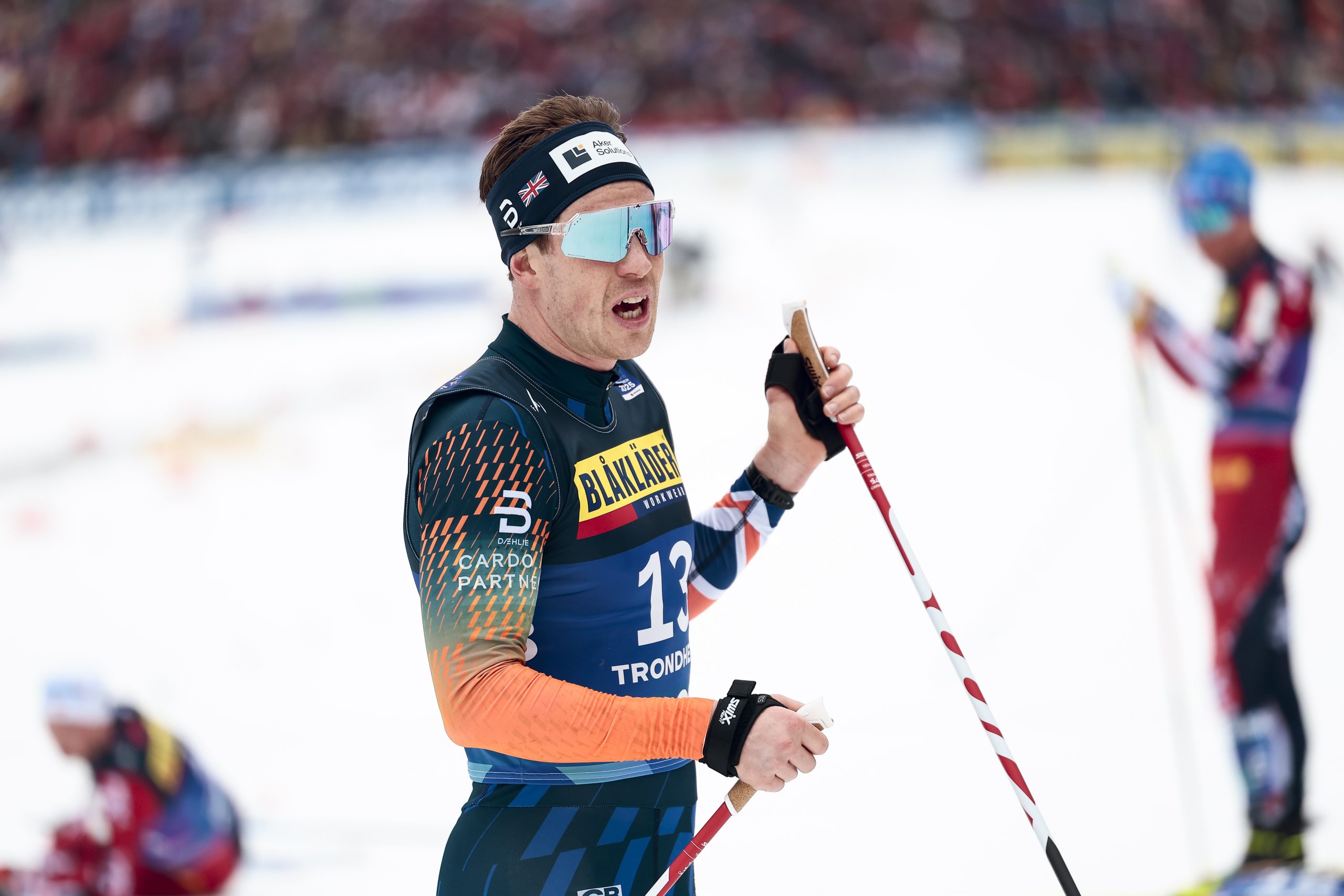
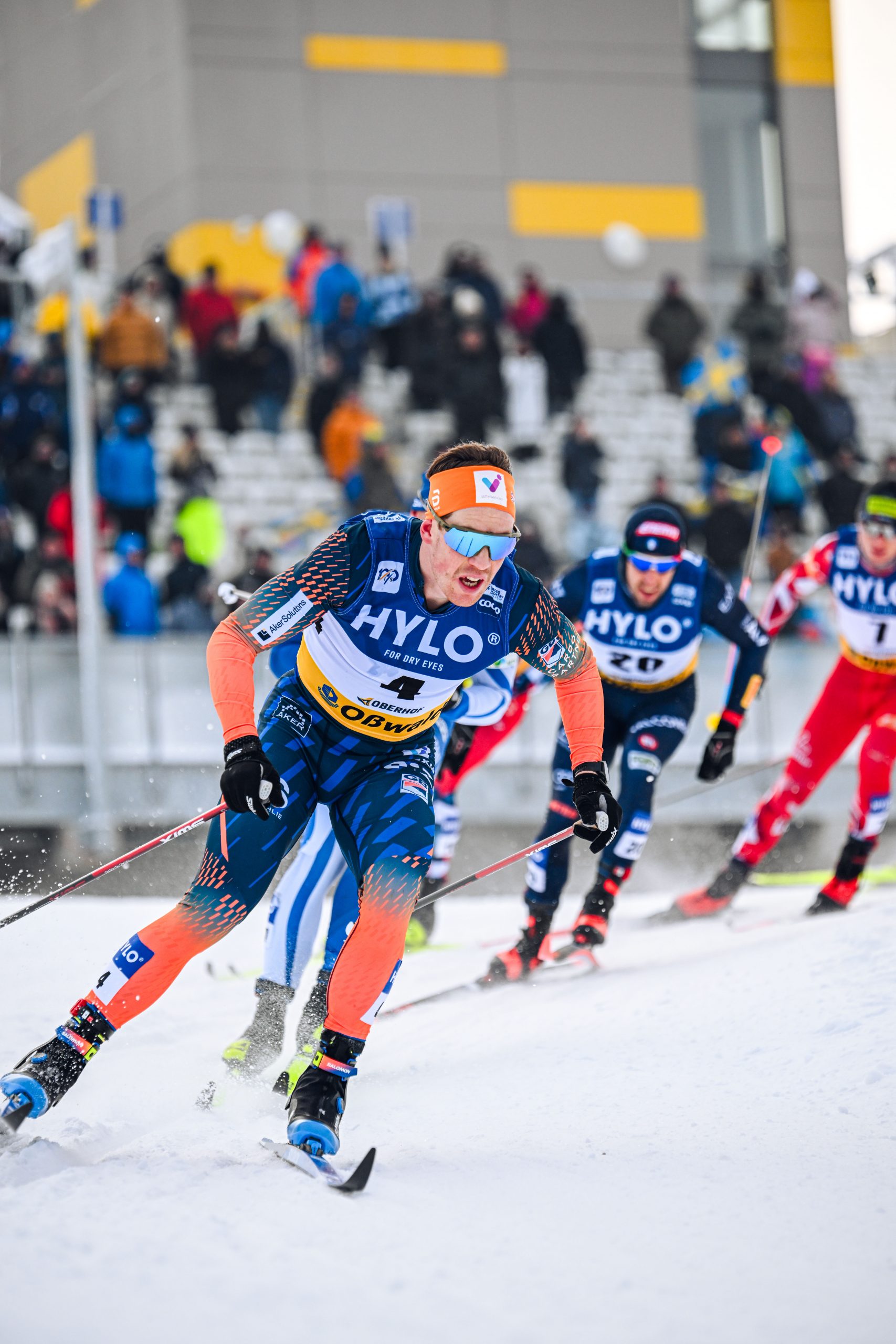
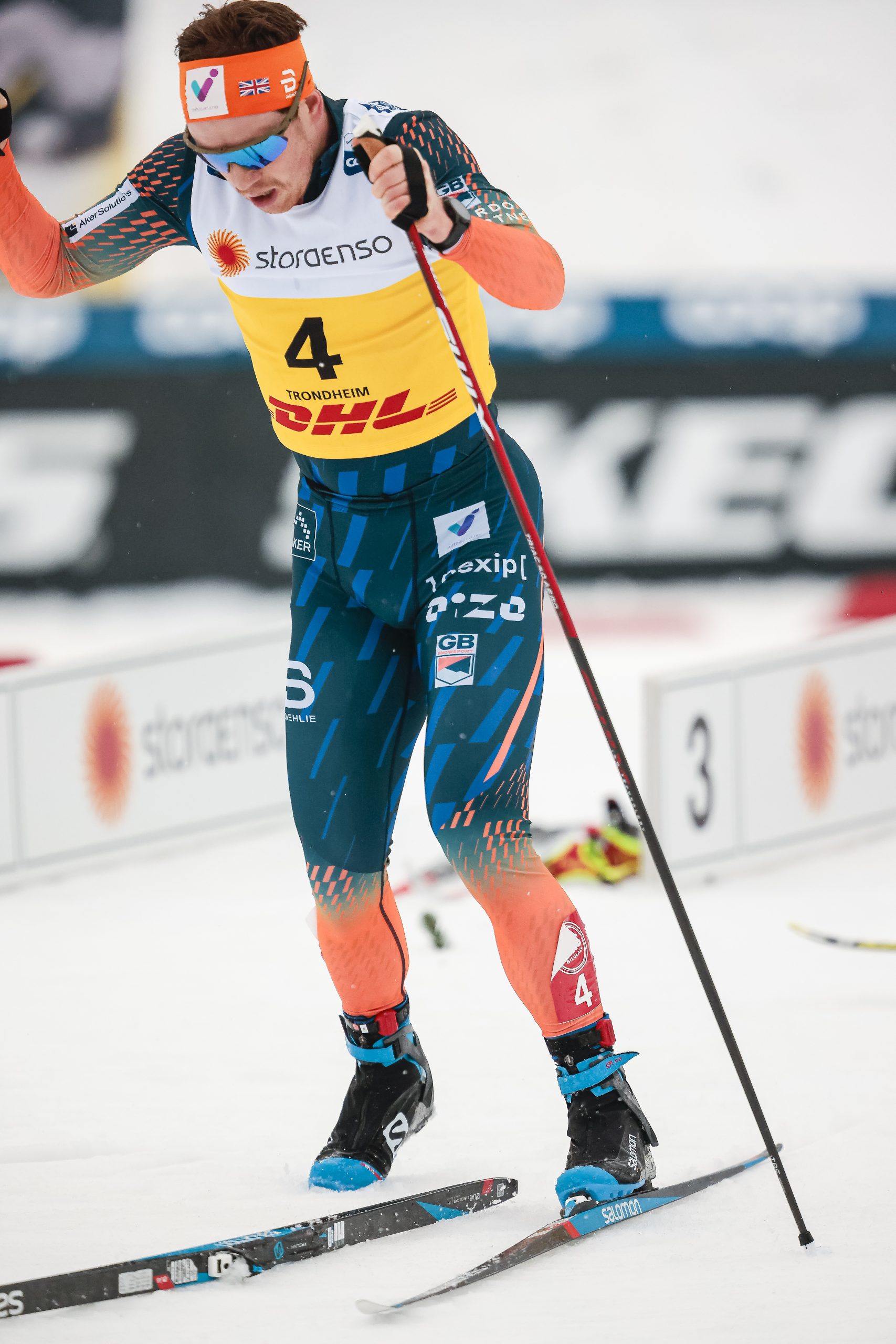
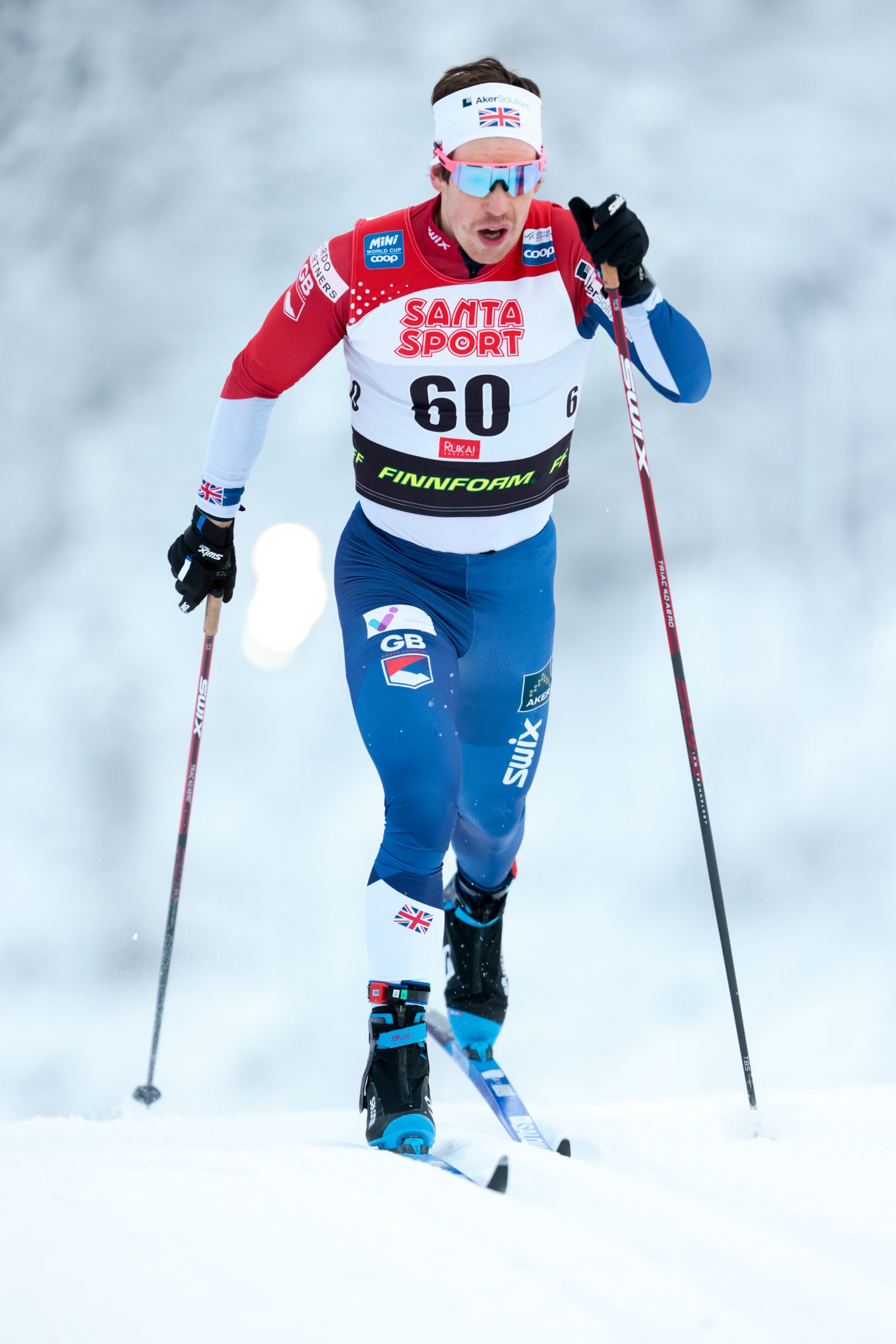
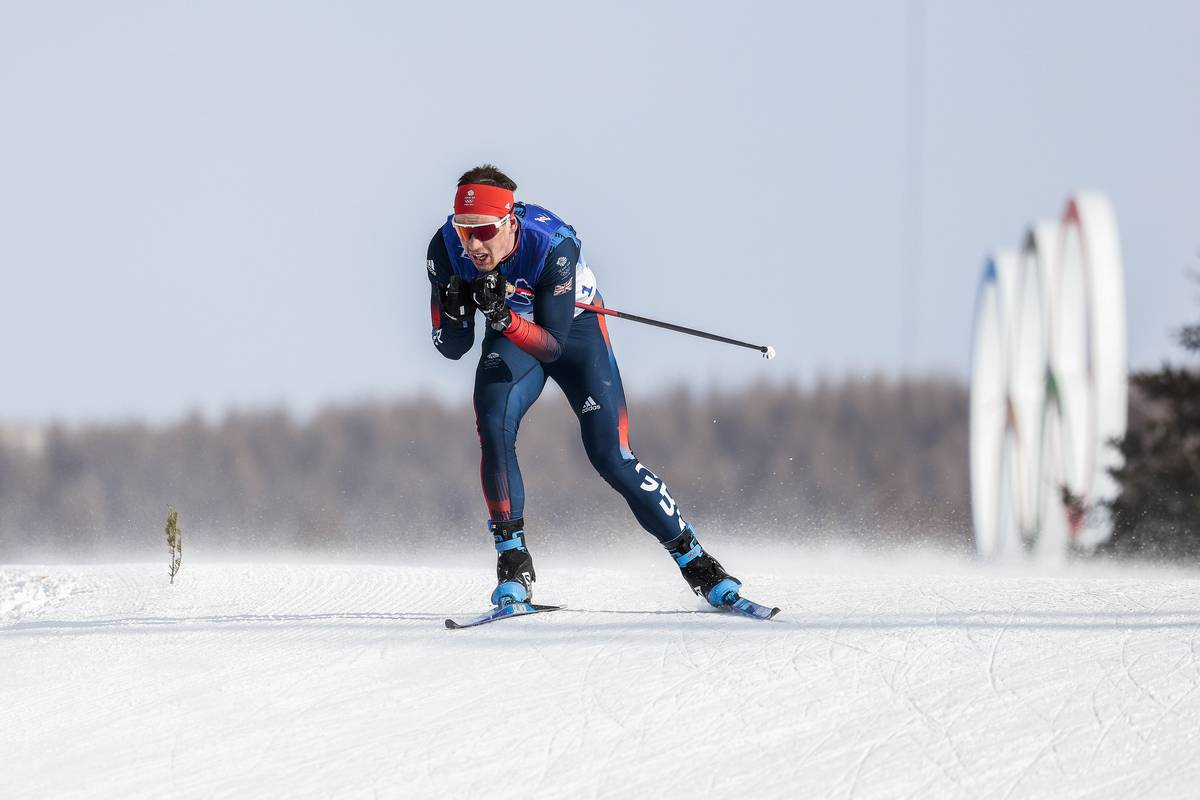
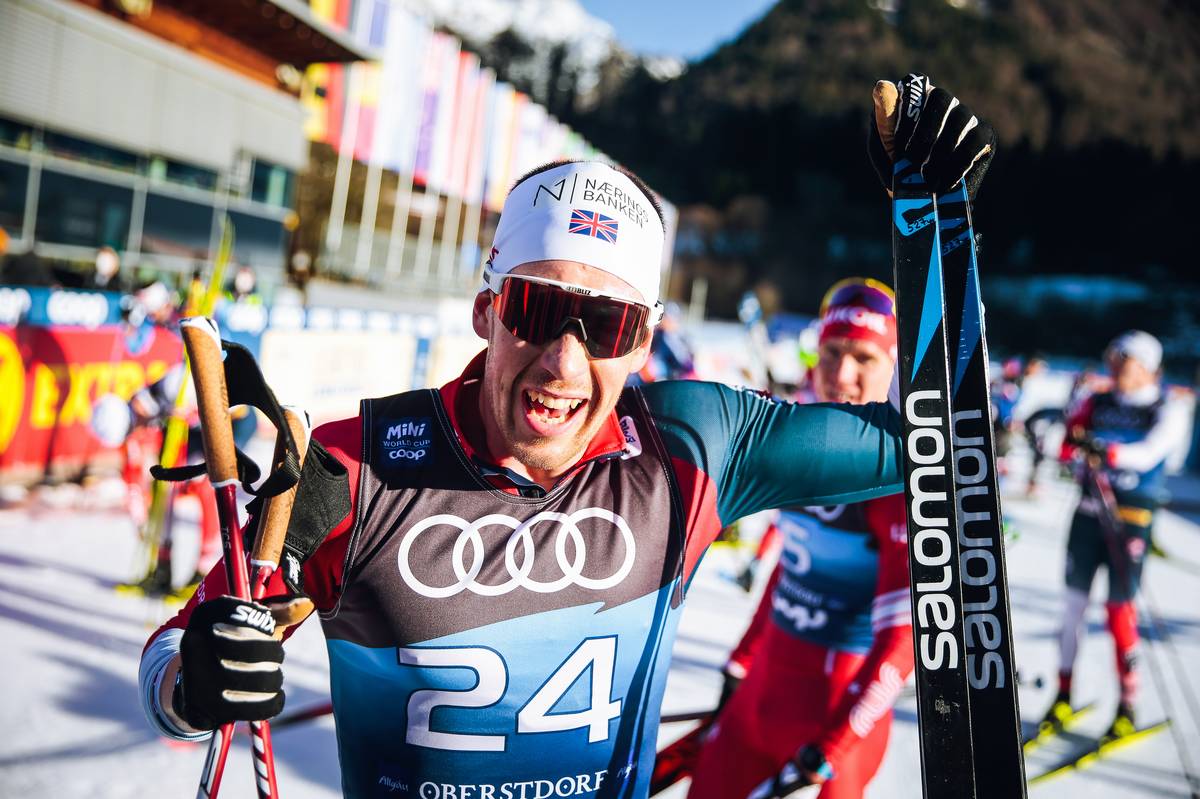
    Andrew Musgrave (GBR) was the fastest non-Norwegian skier in Davos (SUI). (Photo: Vanzetta/NordicFocus)
    The International Picture: Holding On vs. Moving Up

    Outside Norway, the same altitude logic applied.

    Andrew Musgrave (GBR) skied a disciplined race, managing his effort well enough to stay competitive throughout. He was rewarded with sixth place — not by attacking late, but by avoiding the fade that claimed others. In Davos, survival is often the first victory.

    France’s Mathis Desloges and Hugo Lapalus hovered near the top ten, their early speed gradually neutralized by the second lap. Italy’s Federico Pellegrino, so dangerous in sprint formats, found the sustained demands of the 10 km Interval Start less forgiving, finishing outside the top 30.

    The pattern repeated down the results list: strong early checkpoints followed by diminishing returns. Davos was collecting its debts.

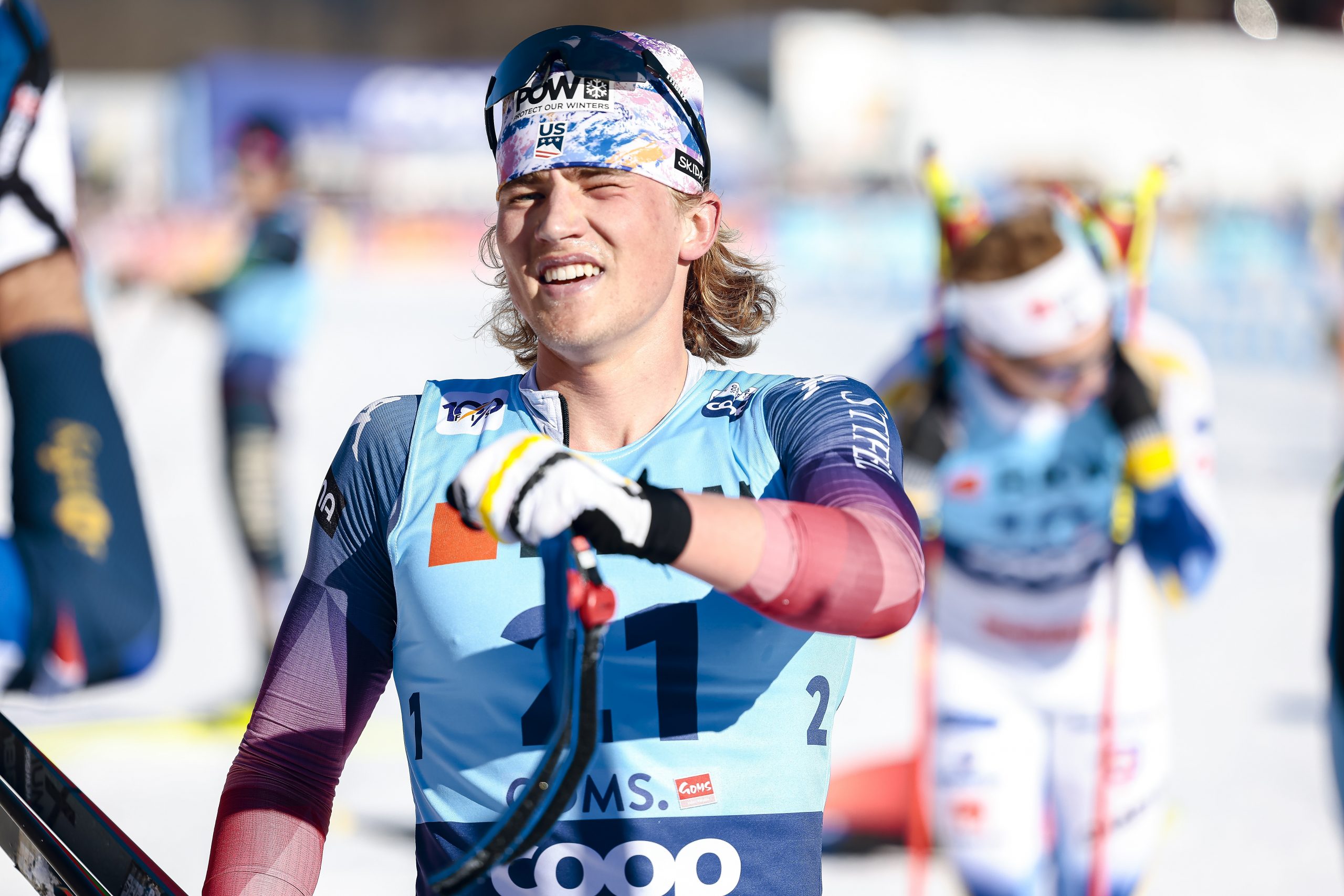
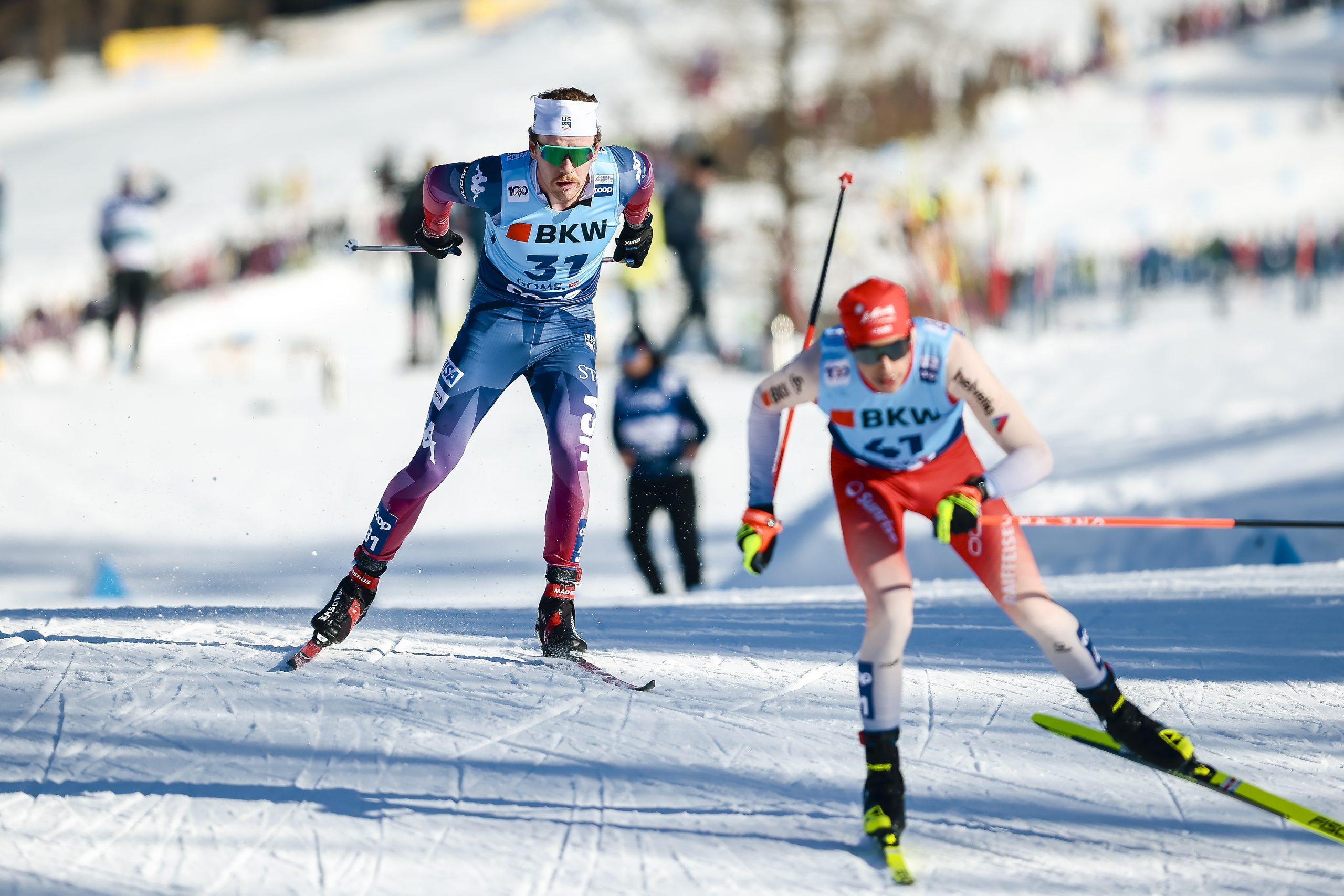
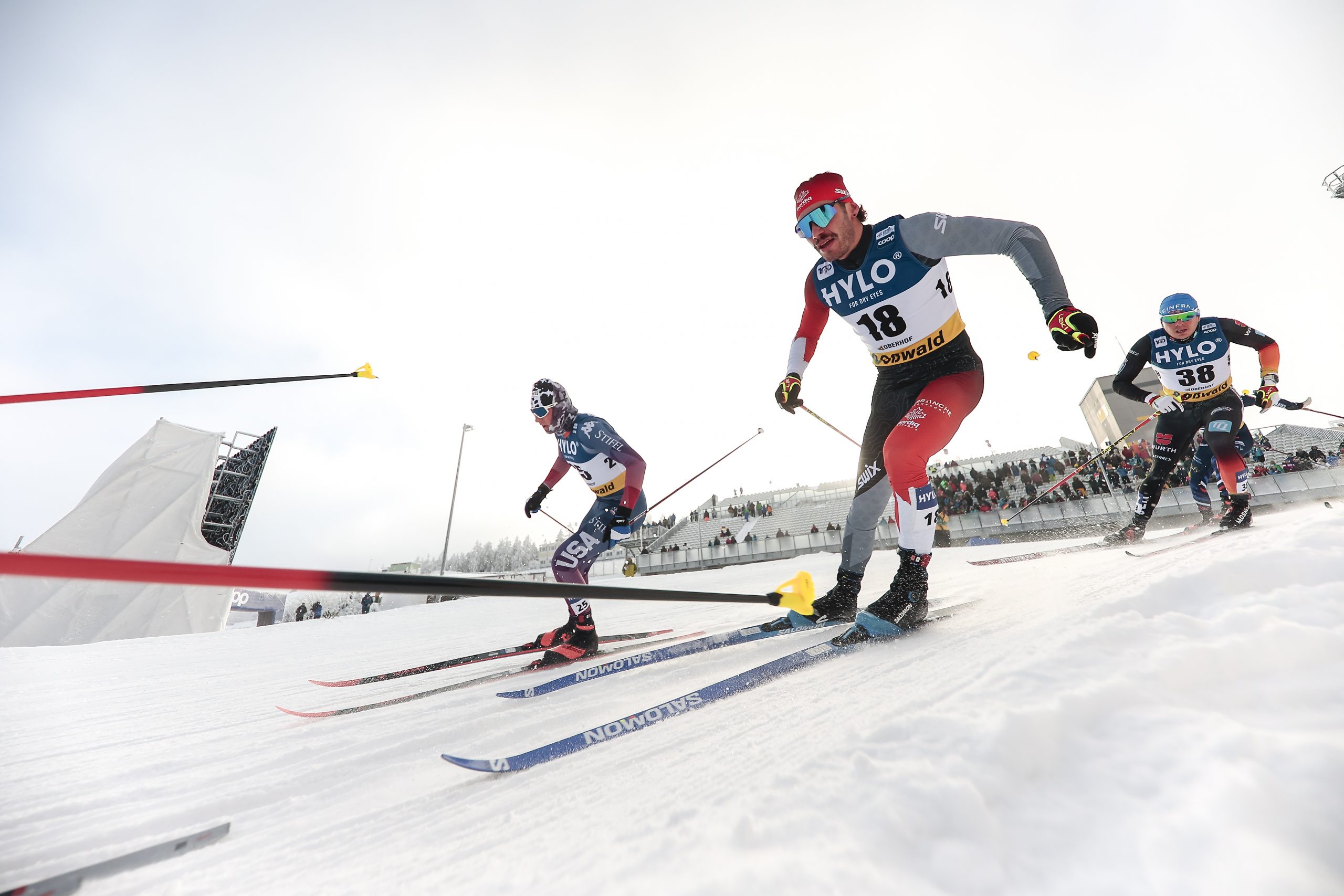
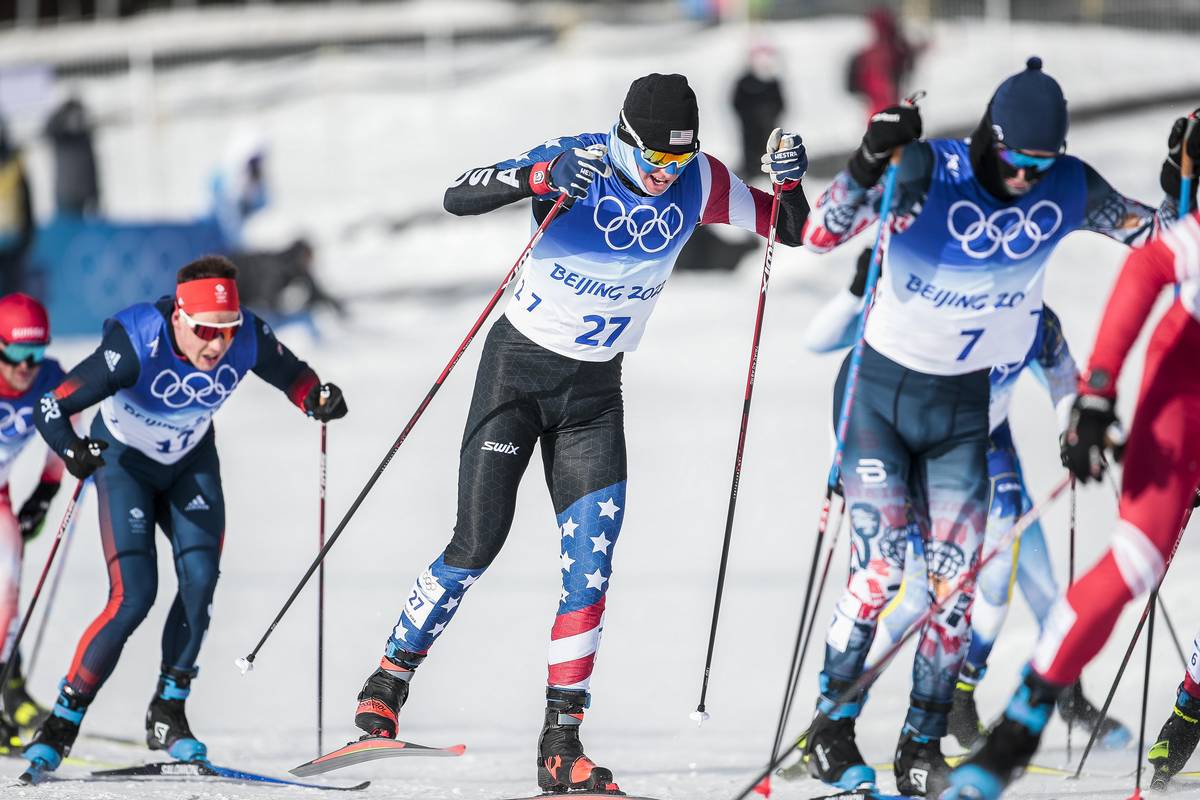
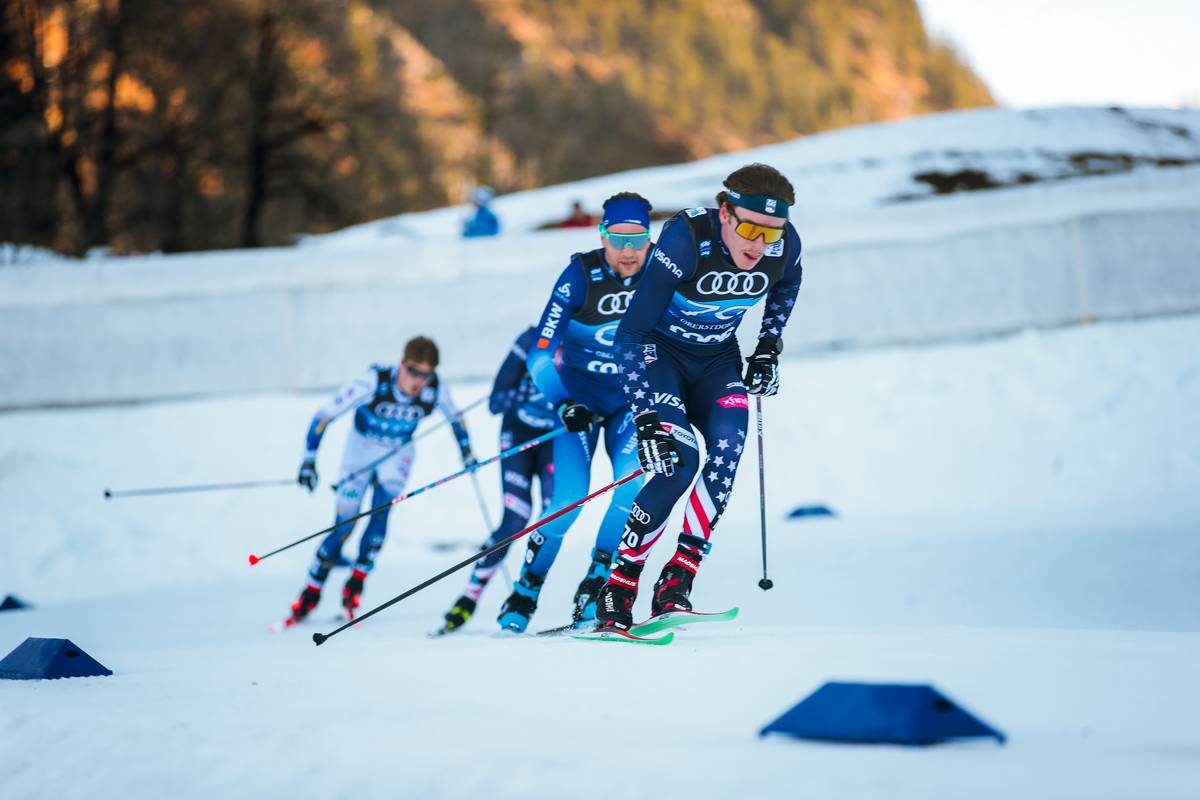
    On his way to 30th place, John Steel Hagenbuch (USA) follows teammate Ben Ogden (USA). (Photo: Vanzetta/NordicFocus)
    The American View: Learning in Familiar Air

    For the U.S. team, John Steel Hagenbuch finished 30th, the top American on the day — a result that only hints at how complicated his Davos race really was.

    Hagenbuch has never considered himself particularly sensitive to altitude, a fact that quietly shaped both his expectations and his pacing plan.

    “I’m maybe not the best authority to say how altitude feels, as I usually don’t feel affected by it much,” Hagenbuch said. “I typically start slow and then pick up speed through races, and this pacing strategy is typically rewarded at altitude.”

    That approach aligned neatly with what Davos demanded. And while Hagenbuch is quick to downplay any physiological advantage from growing up and training in Sun Valley, Idaho, he did note a different kind of familiarity.

    “I think being from altitude can help with racing at altitude, but it’s certainly not a decisively significant factor — I was still plenty far behind the sea-level Norwegians today,” he said, with a laugh. “Speaking of familiarity, however, I remarked at how much Davos reminded me of home — the trails and the surrounding mountains strongly resemble Galena.”

    The race itself marked his best feeling of the opening World Cup block — even if the result came under less-than-ideal circumstances.

    “This Davos Skate 10 km was the best I’ve felt so far in Period 1,” Hagenbuch said. “But it unfortunately came only a day after I crashed hard on the infamously icy slalom downhill coming down from Flüelapass and subluxed my right shoulder for about the tenth time.”

    By race morning, the pain hadn’t gone away.

    “Even with a few thousand milligrams of acetaminophen down the hatch, every single pole stroke hurt,” he said. “So while it was nice to finally — barely — be top 30, I can’t help but think that without the injury and the stress associated with it, I could have done better. Alas, that’s life, and that’s skiing. I am not the only one to have had some bad luck in important races.”

    Zooming out, Hagenbuch remains confident in his trajectory, even if the opening block didn’t fully reflect it.

    “I feel confident in what I can achieve this winter — even if I didn’t necessarily show it during Period 1,” he said. “With this being an Olympic year, the competition was even higher than normal. For example, Per-Erik Bjornestad, one of our Norwegian wax techs, said that the Trondheim 10 km skate was the highest level of skiing he had ever witnessed.”

    Looking ahead, Hagenbuch’s plans are clear — and pragmatic.

    “Pretty much regardless of how today’s race went, I was going to go home to Sun Valley for Christmas,” he said. “I don’t think it makes sense for me to do the Tour de Ski, given how my health has been this fall and the start of the winter. I’m excited to go home and to compete at U.S. Nationals in Lake Placid.”

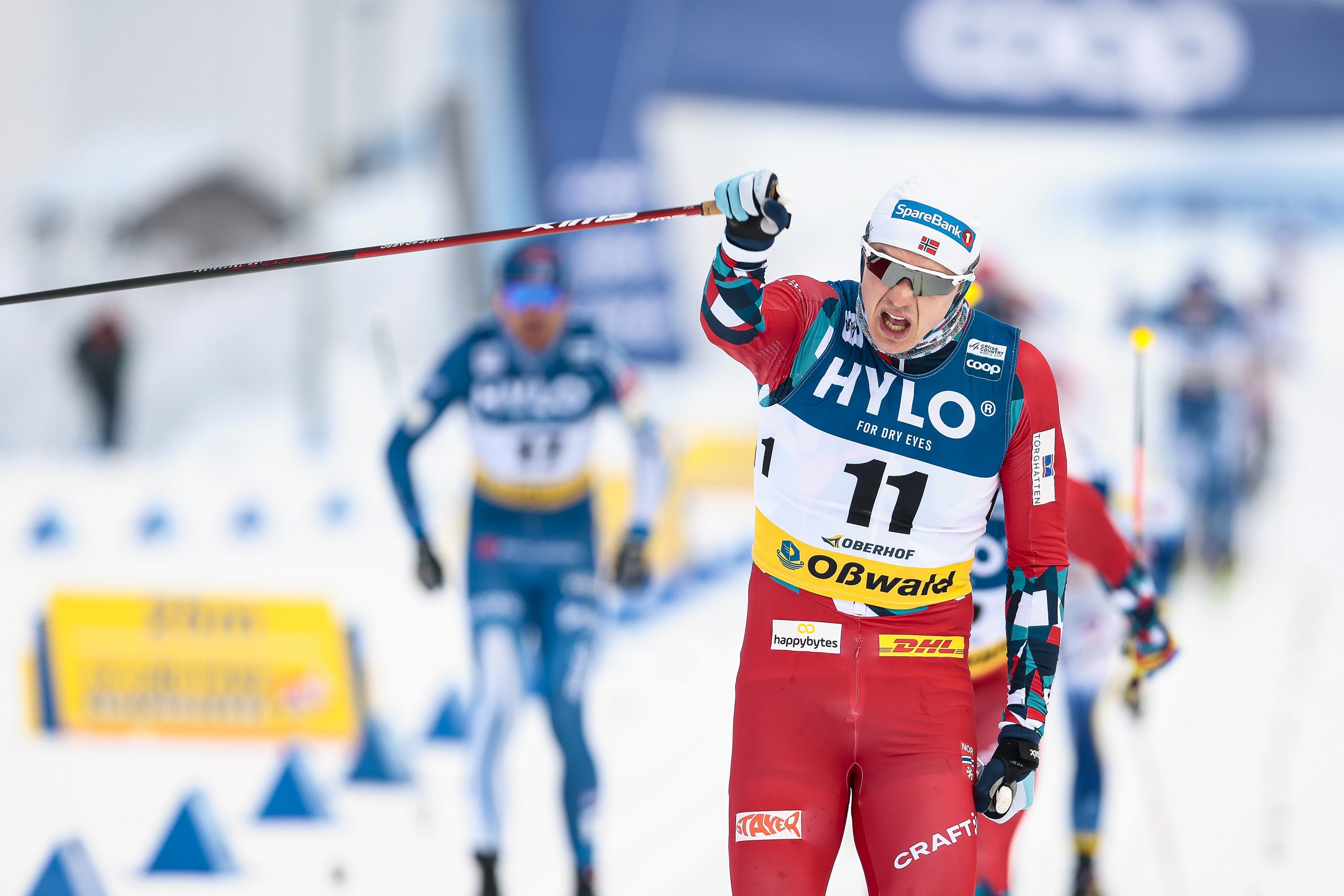
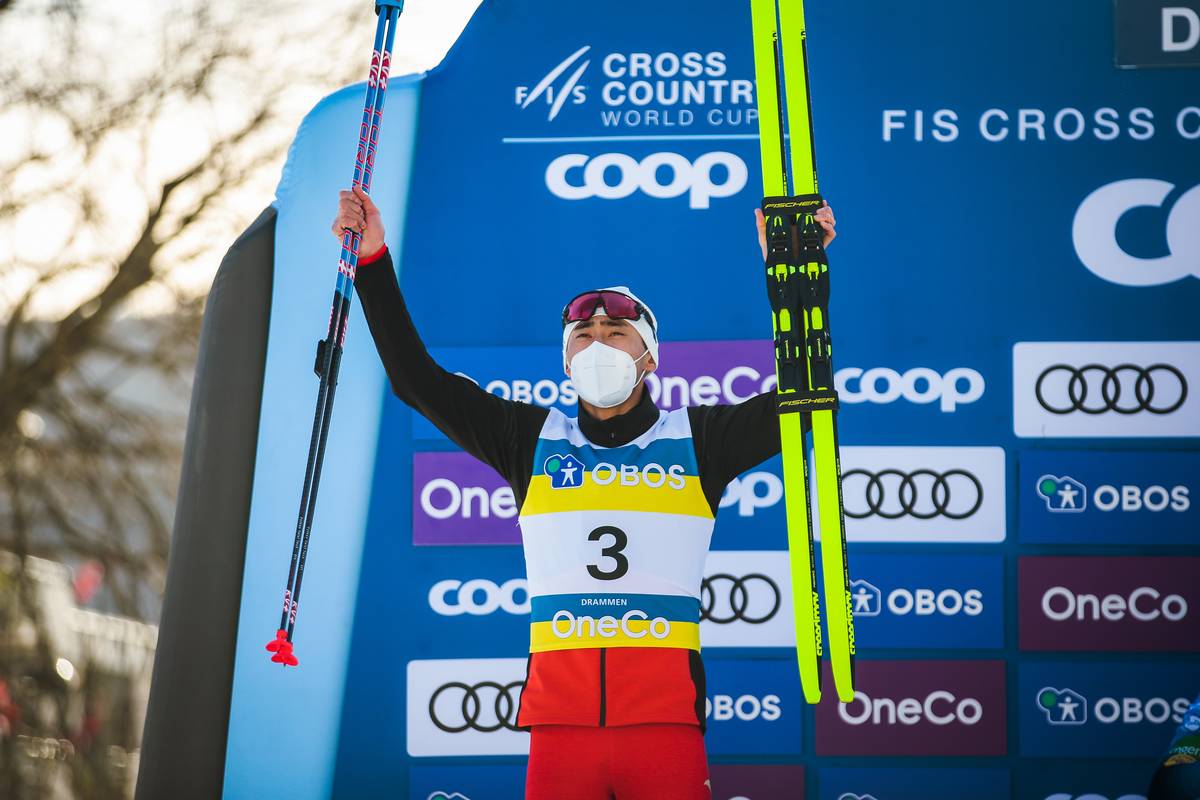
    Einar Hedegart (NOR) celebrates with a fist pump to the camera in Davos (SUI). (Photo: Modica/NordicFocus)
    Why this Race Matters More than it Looks

    It’s easy to treat Davos as an outlier — scenic, elevated, a little unique. The athletes don’t.

    The men’s 10 km Freestyle Interval Start is an Olympic format. It’s a race without shelter, without drafting, and without excuses. Davos amplifies all of that. Pacing errors are magnified. Aerobic limits are exposed. The second lap becomes a referendum.

    Hedegart passed that referendum emphatically.

    This was not a perfect-day fluke. It was not a tactical accident. It was the same pattern, repeated under different conditions, at a different altitude, against the deepest field in the sport. Ski patiently. Protect the climbs. Let others make the race hard early — then make it impossible late.

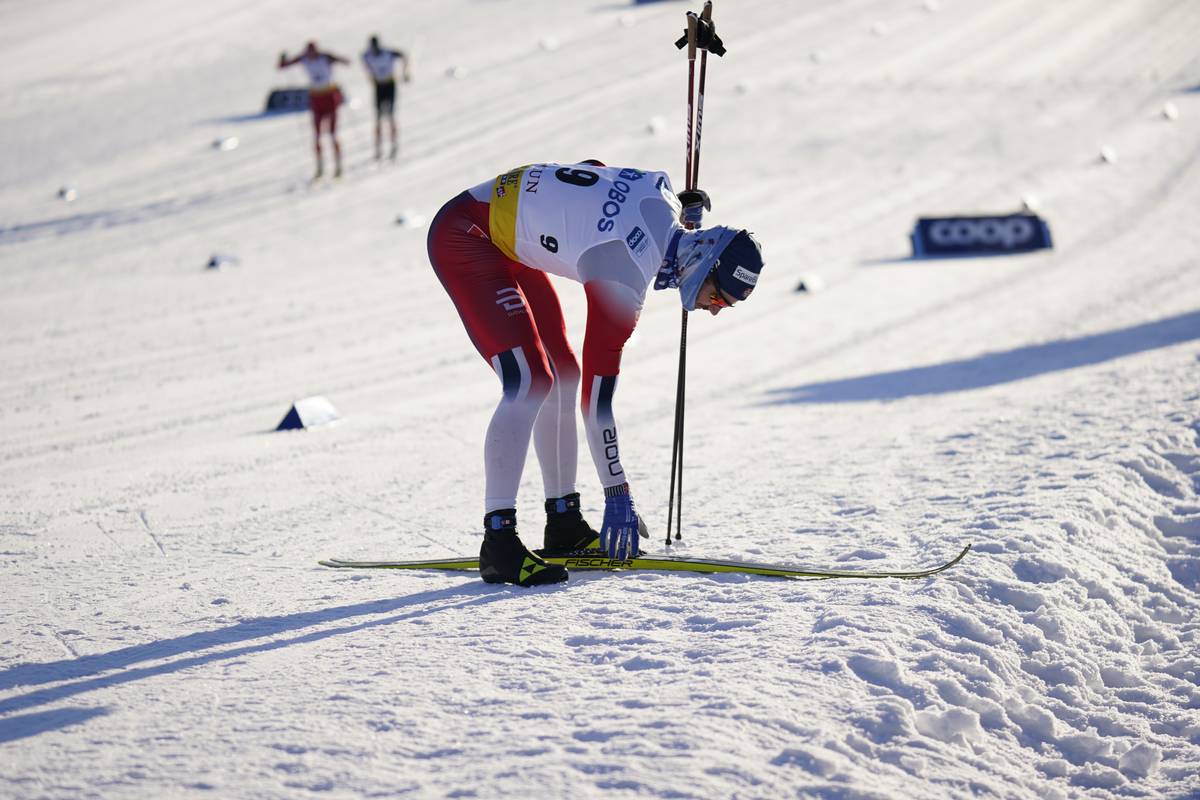
    Einar Hedegart (NOR) remained on the snow for several minutes after crossing the finish line in Davos (SUI). (Photo: Modica/NordicFocus)
    A Quiet Finish, a Louder Message

    There was no spectacle at the finish line. No disbelief. No chaos. Hedegart crossed, collapsed, and recovered — another man undone by thin air, but this time by his own effort.

    Two races. Two wins. Two second laps that separated him from everyone else.

    Davos didn’t raise its voice. It didn’t have to.

    It simply told the truth — the same one it always tells — and this time, Einar Hedegart listened better than anyone else.


    Men’s 10 k Individual Start Freestyle RESULTS


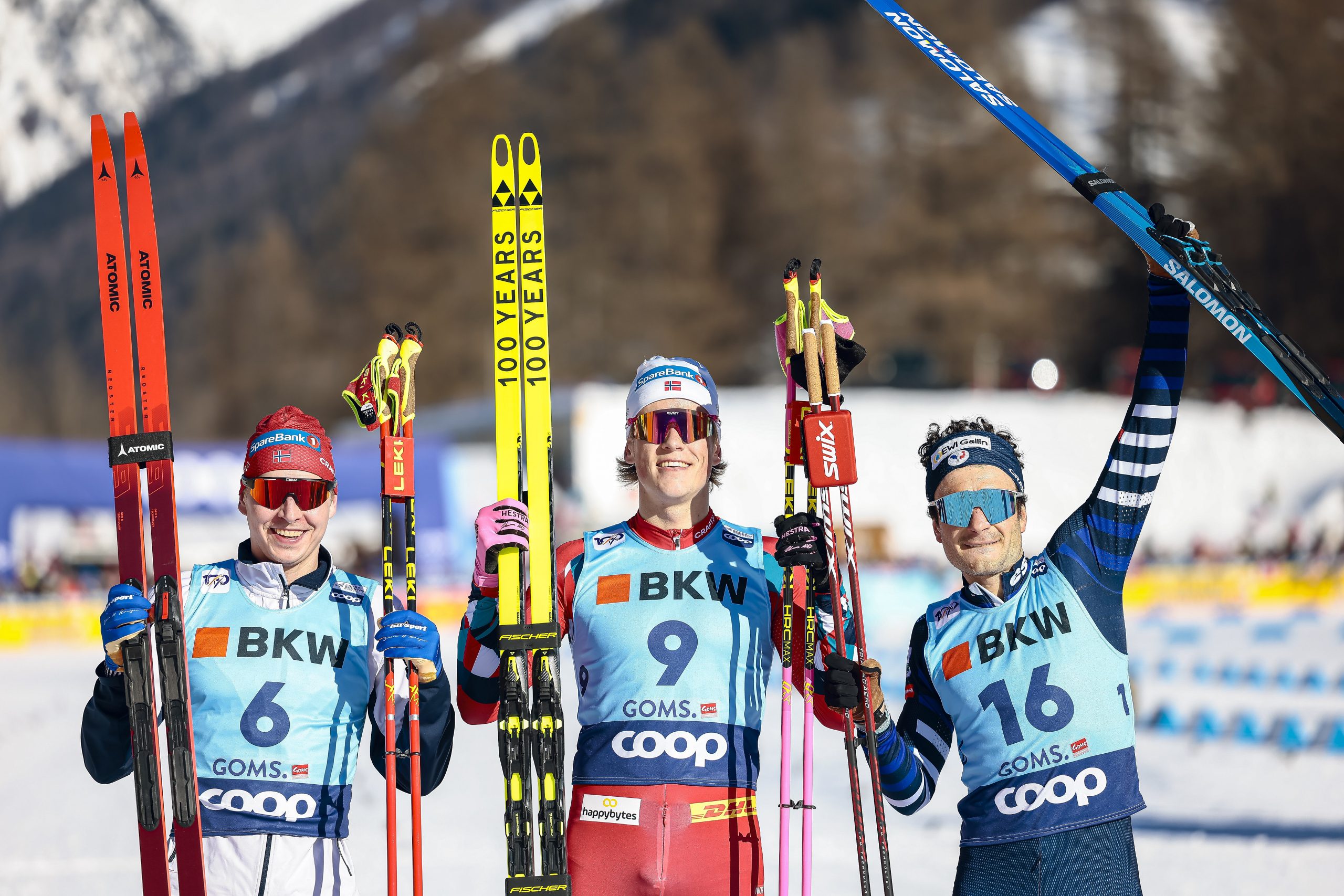
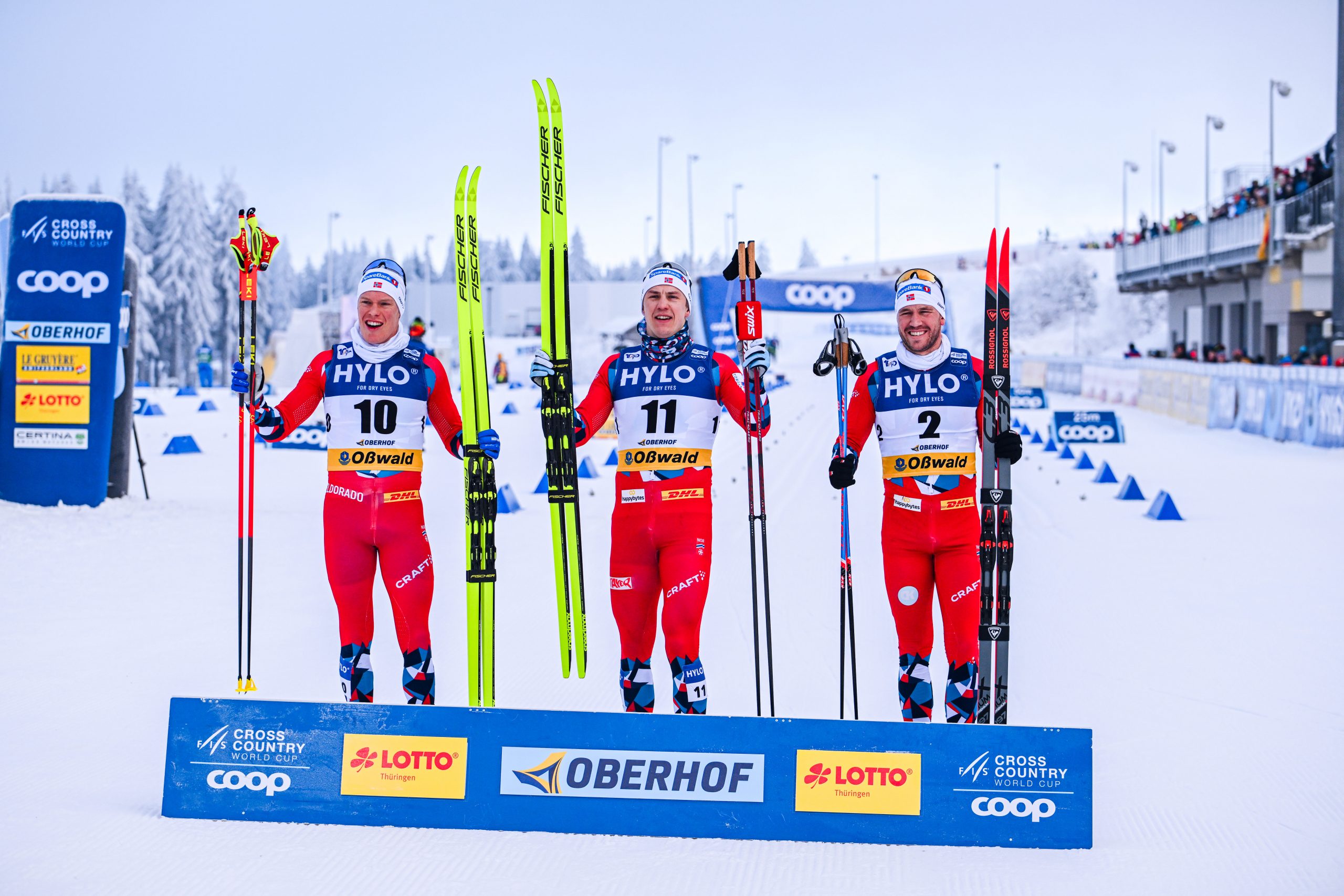
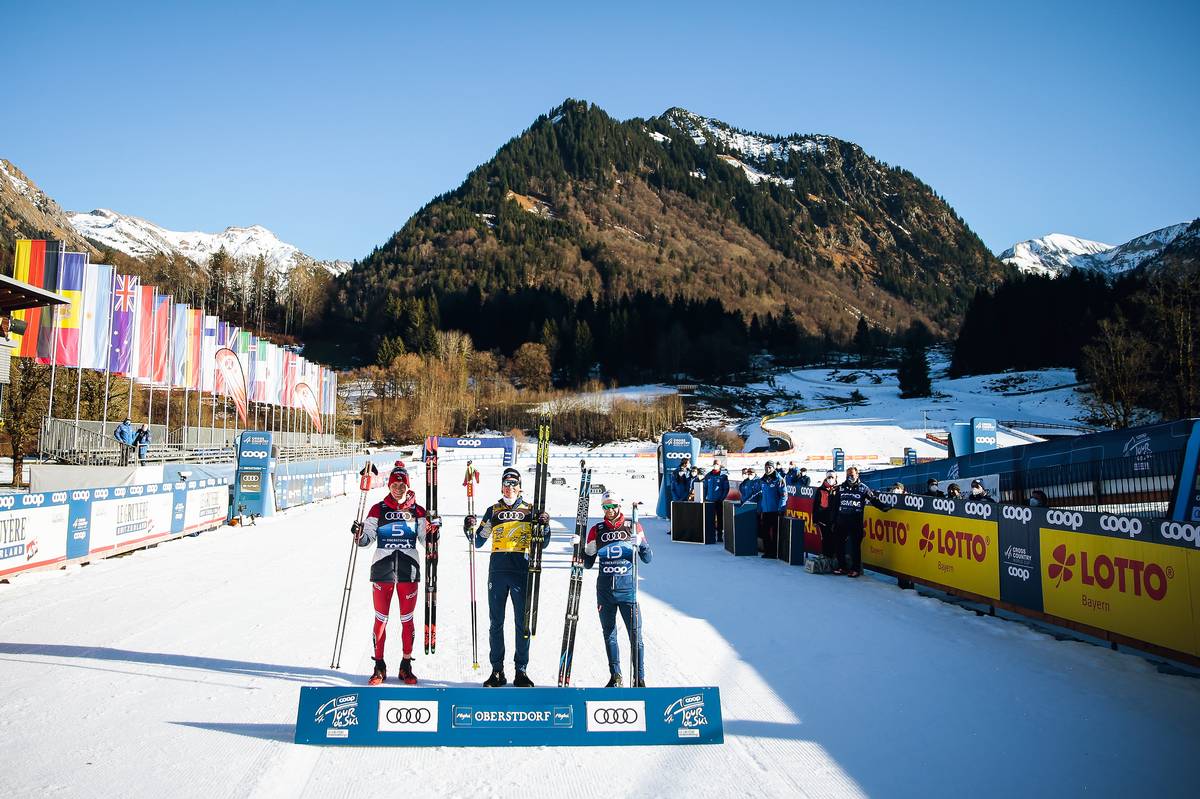
    Harald Amundsen (NOR), Einar Hedegart (NOR), and Mattis Stenshagen (NOR), (l-r) take the 10 k Freestyle podium in Davos (SUI). (Photo: Modica/NordicFocus)

    Love Stories Like This? Help Keep Them Coming.

    Feature stories like this one take time, access, and care to produce. If you value thoughtful storytelling and independent ski journalism, please consider becoming a Voluntary Subscriber. Your support directly fuels the work we do to cover the people, places, and moments that make our sport special.

    Join the FasterSkier community!


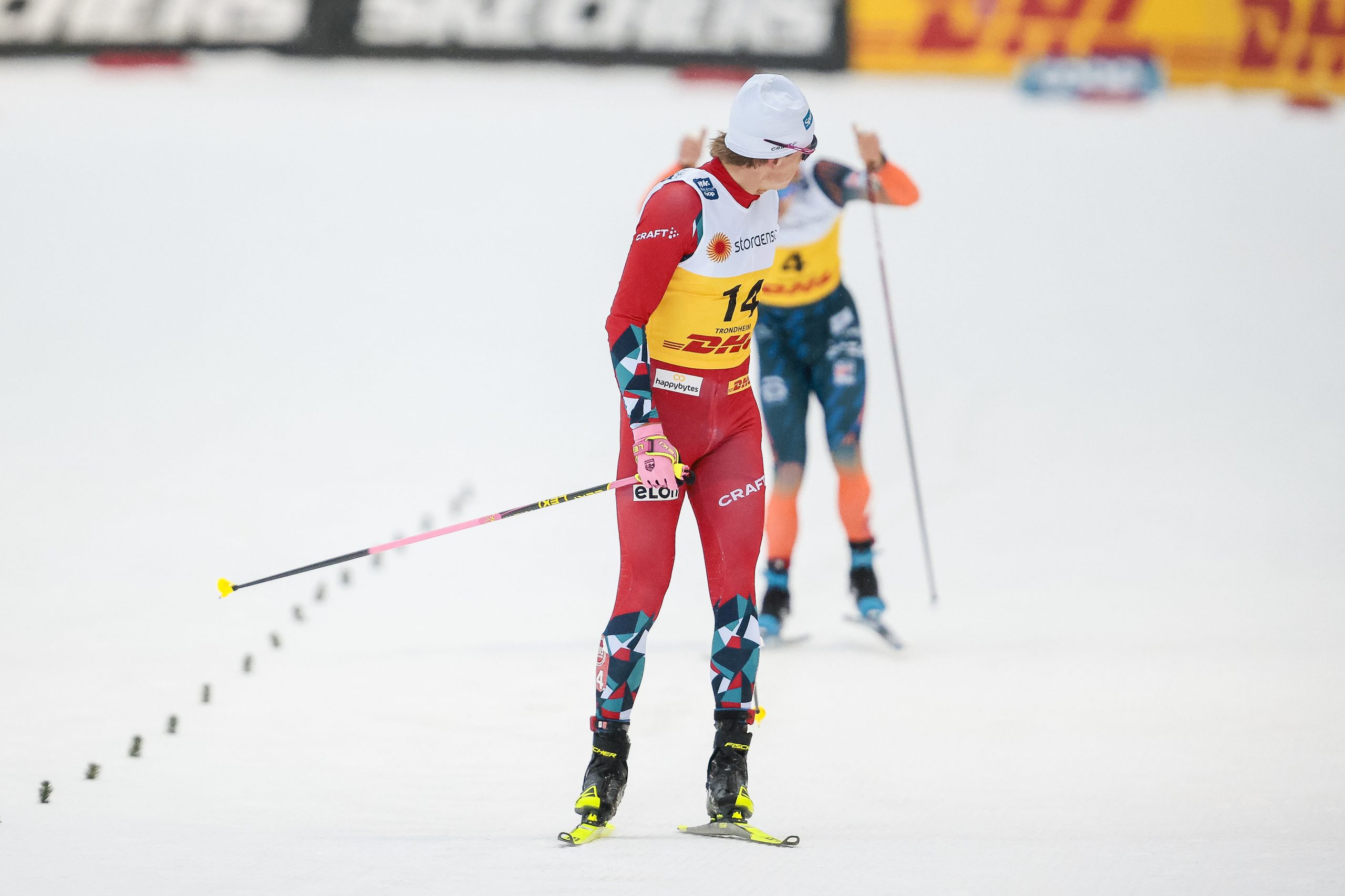
    Andrew Musgrave (GBR) gives the race winner Einar Hedegart (NOR) a sleigh ride after the pair had excellent days in the 10 k Freestyle in Davos (SUI). (Photo: Vanzetta/NordicFocus)


  • The Trial in Trondheim

    The Trial in Trondheim

    This coverage is made possible through the generous support of Marty and Kathy Hall and A Hall Mark of Excellence Award. To learn more about A Hall Mark of Excellence Award, or to learn how you can support FasterSkier’s coverage, please contact info@fasterskier.com.

    The men’s 20-kilometer Skiathlon at Granåsen never felt like an ordinary World Cup. From the moment the athletes stepped into the start pen, there was a tension in the air that didn’t match an early-December race. The stadium filled slowly; the fog sat low; the snow clung wetly to the klister underfoot. Yet the energy was unmistakable. It felt charged, anticipatory, almost uneasy.

    You could see it most clearly in the uniforms. Twelve Norwegians stood in the field of 91, and every one of them carried something heavier than usual race nerves. This wasn’t just about points. It wasn’t just about winning. It wasn’t even about bragging rights.

    Today, for Norway, was about the Olympics.

    Earlier that morning, Austria’s Mika Vermeulen summed it up bluntly when asked what he expected:

    “The Norwegians need to go fast to qualify for the Olympics.”

    It was the truth that everyone else was dancing around.

    On paper, this was a World Cup Skiathlon. On snow, it became something else entirely: an unofficial Olympic sorting ceremony, shaped by weeks of controversy, public criticism, and a federation under scrutiny.

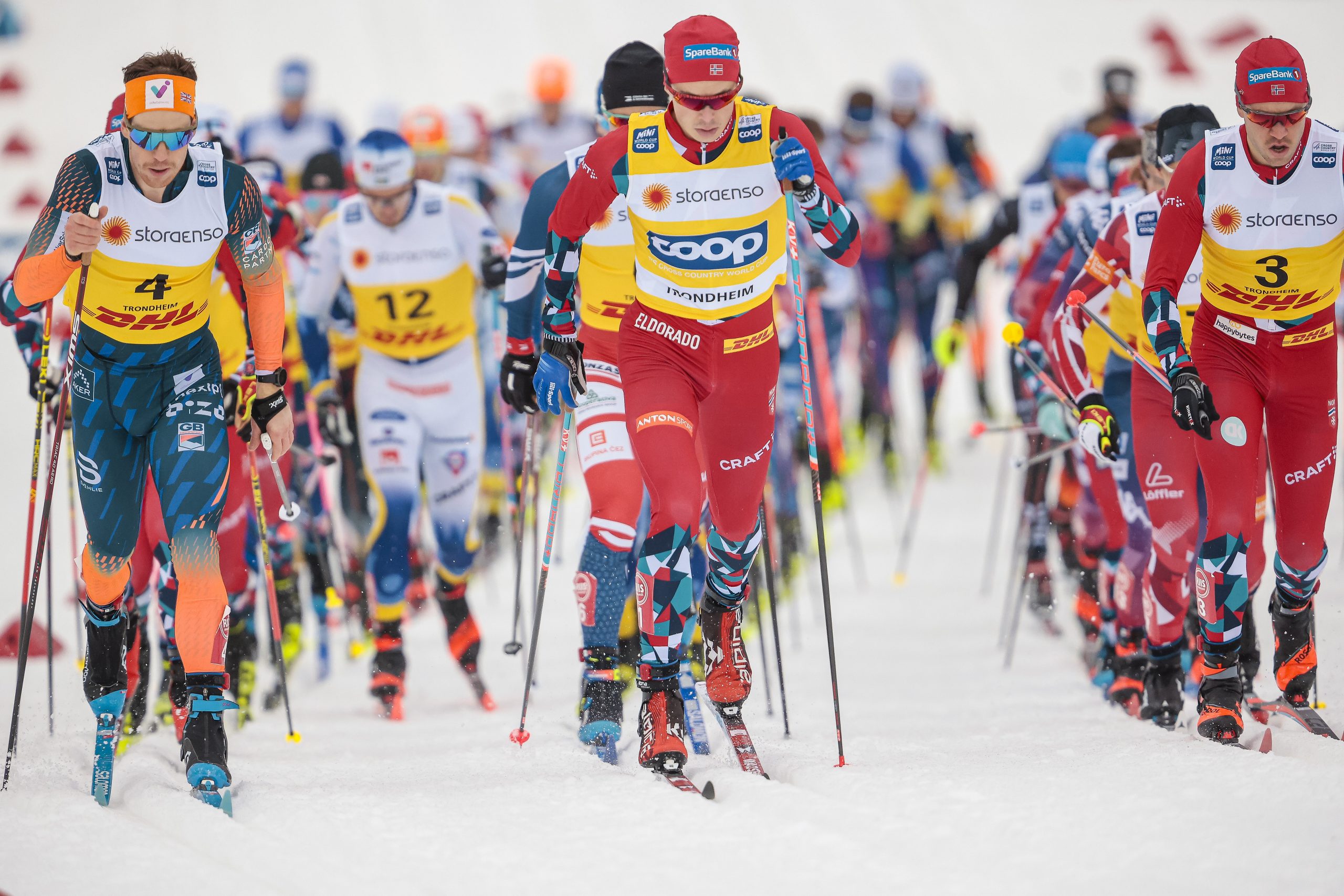
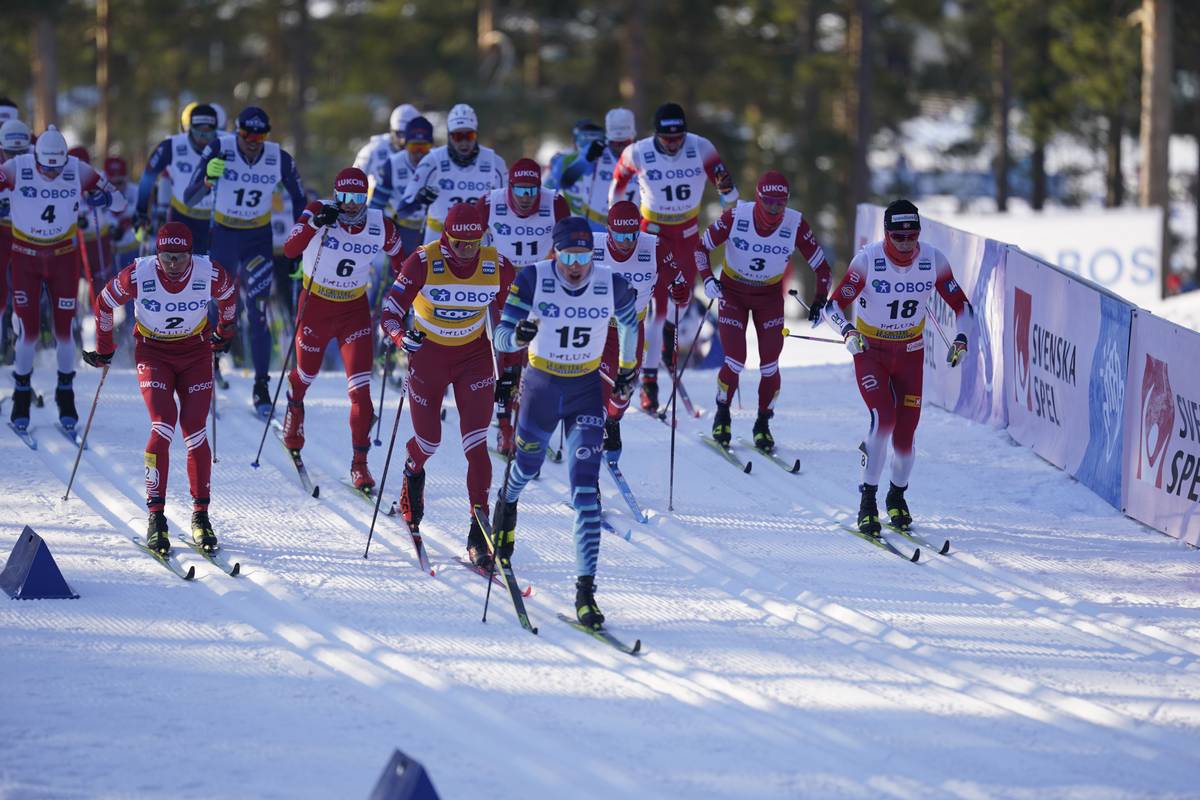
    The start of the Men’s 20 k Skiathlon Trondheim (NOR). (Photo: Modica/NordicFocus)
    A Race Run Under a Shadow

    The tension surrounding this race didn’t begin in Trondheim. It started with a roster decision — or, in the eyes of many Norwegians, an omission. Emil Iversen, the veteran racer with a World Championship gold and a decade of elite podiums behind him, was left off the opening World Cup weekend in Ruka.

    The decision rippled across Norwegian media.

    The loudest voice belonged to Johannes Høsflot Klæbo.

    In a widely circulated VG article, Klæbo called the decision “dårlig håndverk”poor workmanship — and argued that if the goal was to send the fastest athletes, Iversen had earned his seat on the plane.

    “If you are good enough, you should get to go,” he told VG.

    Former national-team director Espen Bjervig fired back in Stavanger Aftenblad, criticizing both Klæbo and Iversen for speaking publicly about selection practices, arguing that it “creates noise and negativity.”

    Suddenly, what is typically a quiet, internal Norwegian debate had spilled into full public view. Selection wasn’t just a technical matter — it was a national storyline.

    And this Skiathlon, the only one before the Olympics, sat squarely in the center of that storm.

    Iivo Niskanen made his way to the front during the classic leg, but ultimately faded to 25th place on the day. (Photo: Modica/NordicFocus)
    The Classic Leg: A Tense, Measured Beginning

    When the field set off into the opening 10 k of classic skiing, the pace was high but controlled. Nobody wanted to take on the risk of an early break. The lead shifted lightly — Finland’s Iivo Niskanen testing, Norway’s Martin Loewstroem Nyenget responding — but the main pack stayed dense, the elastic never stretching too far.

    What stood out was not who led, but how closely the Norwegians watched one another. Every surge drew an immediate answer. Every gap in the pack was filled. There was a vigilance to their movements: unspoken, but unmistakable.

    Behind them, American Gus Schumacher skied with patience, always hovering near the front third, avoiding trouble. Ben Ogden played the elastic back-and-forth of the pack, feeling the surging, slowing, and reshuffling that characterizes Skiathlon racing.

    Nothing broke the race open. But everything pointed toward what was coming.

    Emil Iversen (#37, white hat), Zanden McMullen (#26 USA), Andrew Musgrave (GBR), Gus Schumacher (#18 USA) and Ben Ogden (#24 USA) navigate the pack during the classic leg. (Photo: Modica/NordicFocus)
    The Transition: When the Real Race Began

    At the stadium, skis were neatly arranged in assigned pens; in the grandstand, the crowd pressed forward on their seats, and the atmosphere shifted. The transition from classic to skate is always an inflection point in a Skiathlon. But today’s felt like the release of a held breath.

    As athletes stepped out of classic skis and into skate gear, the pace vaulted. The race’s character changed instantly — no longer steady, but sharp. No longer patient, but aggressive.

    Within seconds of leaving the exchange zone, the field stretched into a long, thin line—athletes who had looked comfortable in the first half suddenly fought to hold contact. The front swallowed the course in powerful V2 tempo, and what had been a race of restraint transformed into a race of revelation.

    From this point on, the Skiathlon resembled more of a Norwegian internal selection trial than a World Cup.

    With Johannes Hoesflot Klaebo (NOR) and Emil Iversen (NOR) at the front, Federico Pellegrino (ITA), Elia Barp (ITA), (l-r) and the rest of the lead pack try to match pace during the initial kilometers of the skate leg. (Photo: Modica/NordicFocus)
    The Skate Leg: Norway Sorts Itself Out

    With 10 kilometers to go, the lead group had thinned to about twenty athletes. By the next climb, it was closer to fifteen. And among those fifteen were eleven Norwegians — each racing not only the field but each other.

    Every shift in tempo felt deliberate.

    Every climb tested hierarchy.

    Every acceleration seemed to ask a quiet question:

    If this is for a trip to Milan–Cortina, who survives?

    Nyenget pushed the climbs with authority. Harald Østberg Amundsen pressed from the front like a man intent on staking a claim. Mattis Stenshagen floated with the leaders, unfazed by the fire around him. And somewhere in that pack, Emil Iversen — overlooked just one week earlier — had battled from the 37th starting position and was skiing with a visible urgency, a visible hunger.

    The pace was unrelenting. When Andrew Musgrave surged near 15 km, the field snapped back immediately. No one would be allowed to disrupt the internal Norwegian calculus.

    This was not a race that welcomed outsiders.

    Behind them, Schumacher held position just beyond the front group, skiing an intelligent and confident race on a day that didn’t cater to anyone not wearing red. Ogden fought through the volatility of the middle pack as the front repeatedly drove the pace into the threshold.

    Ben Ogden (USA) finding his skate legs in his first freestyle race of the season during the 20 k Skiathlon in Trondheim (NOR). (Photo: Modica/NordicFocus)
    American Reactions: Schumacher and Ogden Describe the Chaos

    Schumacher, who had circled this Skiathlon as a key Olympic-learning opportunity, said the day unfolded exactly as he expected:

    “I’m still kind of building into the season… but I’ve got some good skiathlon experience, and they don’t feel so crazy now. Treat it like a race, try to do my best, and definitely learn some stuff.”

    He found those lessons quickly — particularly in the transition to skate:

    “The pace was definitely hot… right out of the start of the skate, they went hard. A lot of those fitness guys are trying to put some distance to the faster people. It’s tough on this course. I felt ready for it, but struggled a little bit with the skis. They were digging too much in the hills.”

    And he could feel the intensity radiating from the Norwegians:

    “It absolutely was their Olympic trial. There’s definitely some intensity from their side. A lot of those guys are really nervous — and to be honest, they don’t seem to be having that much fun right now. It’s a tough fight for those four spots.”

    Ogden, who finished 35th, echoed the shock of the pace — especially coming off a demanding classic leg:

    “The pace today was probably the hardest thing for me. The classic was just so fastand I haven’t skated a lot this year. It came after the world’s hardest 10k classic.”

    He battled through the skate leg, trying to recalibrate on the fly:

    “I don’t think I skated very well. I didn’t push into the downhills very well, and I was just tired. You can go hard in the classic and still be competitive in the skate, but you have to be a little more tactical.”

    And, like Schumacher, he found himself needing to rewrite his goals mid-race:

    “Reevaluating your plan on the fly is always the hardest part. Once your plan falls apart, it’s easy to lose a little bit of grit mentally. Today, the goal just became to hang onto the back and try to beat a couple of them.”

    Maybe it isn’t in focus, but what is clear is Harald Oestberg Amundsen (NOR), Mattis Stenshagen (NOR), Johannes Hoesflot Klaebo (NOR), Emil Iversen (NOR), Jan Thomas Jenssen (NOR), Erik Valnes (NOR), Martin Loewstroem Nyenget (NOR), (l-r) all charging up the final climb of the 20 k Skiathlon in Tronheim, Norway. (Photo: Modica/NordicFocus)
    The Final Kilometers: A Reckoning on the Last Climb

    With three kilometers left, the stadium roar began to build. The final climb hovered ahead — long, grinding, decisive. The pack tightened—the Norwegian national and club team suits clustered near the front. And then the sorting began in earnest.

    Amundsen drove up the hill with power.

    Klæbo hovered, always exactly where he needed to be.

    And Iversen — the man left off the Ruka start list — refused to yield a single meter, emerging along the outside edge of the trail toward the front of the pack.

    The race crested the final hill, swept through the big left turn, and spilled into the descent where Skiathlon medals — and today, Olympic dreams — are so often decided.

    Klæbo did what only Klæbo does: timed the moment flawlessly, slid into open snow, and glided away with the control and confidence that has defined his career. Behind him, Amundsen locked up second.

    But all eyes were on third.

    There, straining every muscle, skiing with unmistakable desperation and defiance, was Emil Iversen.

    He crossed the line in third place — a podium on the only Skiathlon before the Olympics.

    For him, it was not just a race result.

    It was a reclamation.

    Johannes Hoesflot Klaebo (NOR) leads a Norwegian train down the home stretch. (Photo: Thibaut/NordicFocus)
    A Sweep That Spoke Volumes

    Norway swept the top eight.

    The best non-Norwegian — the always-impressive Mika Vermeulen — finished ninth.

    The top nine were separated by five seconds.

    The top fifteen by fifteen seconds.

    It was depth displayed as dominance, and dominance displayed as a message.

    For Klæbo, the picture is clear.

    For Amundsen, clearer still.

    For Stenshagen, it was a breakthrough.

    And for Iversen, it was a revival that carried the weight of the last two weeks on its shoulders.

    For the American men, Schumacher’s 21st showed consistency and smart racing in a field that spent much of the day executing internal warfare—Ogden’s 35th offered lessons in reading a volatile race and surviving wave after wave of pace changes.

    Harald Oestberg Amundsen (NOR), Johannes Hoesflot Klaebo (NOR), Emil Iversen (NOR), (l-r) take the Skiathlon podium in Trondheim (NOR). (Photo: Thibaut/NordicFocus)
    What This Means for the Olympic Picture

    Klæbo, with a smirk on his face, didn’t hesitate after the race:

    “I think I made the team now for sure.”

    He wasn’t wrong.

    Amundsen likely solidified his place as well.

    Stenshagen made himself hard to ignore.

    And Iversen forced the federation to confront the conversation it had hoped to avoid.

    Performance is supposed to matter.

    And Iversen delivered the clearest performance of anyone not named Klæbo.

    In the eyes of fans, teammates, and media, he didn’t just earn consideration — he demanded it.

    Emil Iversen may be the happiest person in Trondheim (NOR) today. (Photo: Thibaut/NordicFocus)
    A World Cup in Name Only

    As the sun faded over Granåsen and crews raked the sugary snow from the corners, it became apparent that what we had just witnessed was something far larger than a World Cup.

    This race was a referendum on form.

    A public test of internal politics.

    A stage where the world’s strongest skiing nation sorted itself out in real time.

    The stadium announcer called it the men’s 20 k Skiathlon.

    But everyone who watched, coached, raced, or cheered knew better.

    This was the reckoning.

    This was the day Norway began choosing its Olympic distance team.

    This was ‘The Trial in Trondheim!’


    Men’s 20 k Skiathlon RESULTS


    Love Stories Like This? Help Keep Them Coming.

    Feature stories like this one take time, access, and care to produce. If you value thoughtful storytelling and independent ski journalism, please consider becoming a Voluntary Subscriber. Your support directly fuels the work we do to cover the people, places, and moments that make our sport special.

    Join the FasterSkier community!


    Emil Iversen (NOR) was so happy to be back on the World Cup podium, but clearly his smiles were about something even bigger. (Photo: Thibaut/NordicFocus)
  • Inside — okay, actually, outside — Johannes Høsflot Klæbo’s Trondheim victory party

    Inside — okay, actually, outside — Johannes Høsflot Klæbo’s Trondheim victory party

    Johannes Høsflot Klæbo enters Søstrene Karlsen, the club where he celebrated his medal winning performances at the World Championships in Trondheim, Norway. (Nathaniel Herz/FasterSkier)

    TRONDHEIM, NORWAY — Johannes Høsflot Klæbo, the Norwegian gold-medal winner of all six competitions at this year’s World Championships here, was refreshingly blunt when asked about his plans to celebrate.

    “You need to remember that I’m allergic to gluten, so I don’t drink much beer,” he told an audience of reporters at a news conference following his last race. But, he added: “If you ask me about vodka-Red Bull, it’s a little bit different.”

    The 28-year-old went on to describe his monk-like lifestyle in the leadup to the highlight of his career: a World Championships in his home city.

    Traveling with his manager-father 150 days a year. No partying since last spring. Two-and-a-half months eating chicken and rice.

    “I have really been putting all the energy into these six races,” Klæbo said. “So, I think I will find something else to eat, and I will find something else than water to drink.”

    I didn’t think much more about those comments until 9:45 p.m. that evening, when I was walking to the tram home from a (single, non-alcoholic) beer with some friends in Solsiden, a trendy Trondheim neighborhood of shops and bars in a redeveloped shipyard. 

    Half a block into my walk, I recognized a Norwegian reporter, posing for a portrait on a dimly lit pedestrian bridge over the harbor — a decidedly strange image for a Saturday night. Herman told me that Klæbo’s publicist had informed him and a few other Scandinavian reporters of the location of the victory party. And he and his photographer were testing the lighting while they waited for Klæbo’s arrival at 10 p.m.

    Scandinavian reporters and photographers stand outside Søstrene Karlsen on Saturday night. (Nathaniel Herz/FasterSkier)

    I quickly checked the tram schedule: There was another one in an hour. So I decided to stick around for what was starting to feel like a bit of a stakeout in front of Søstrene Karlsen — a club that, one of the reporters told me, is a hangout for Trondheim finance bros and, occasionally, some celebrities. 

    A thudding bass line played from the second floor; 50 sharply dressed Norwegians waited for a bouncer to let them in.

    “The drunkest one is up there already,” one of the reporters said, pointing to a second floor balcony where Erik Valnes, one of Klæbo’s medal-winning Norwegian teammates, swayed unsteadily.

    While we waited, I discussed the post-championships party vibe with the assembled Scandinavian press corps, which numbered about a dozen. One of them, whose newspaper forbids him from being quoted by name, told me that he completely understood why the athletes would want to unplug after the races, which had drawn wall-to-wall media coverage and tens of thousands of Norwegian fans.

    “So much adrenaline, so much running through their head for so long. It’s best to just get drunk and not think about anything,” the reporter told me. “Think about the pressure they’ve been under.”

    A few minutes later, Klæbo’s father, Haakon, arrived, looking ebullient in jeans and a puffy blue Craft jacket. Then came a group of former Norwegian superstars: retired Olympic gold medalist Martin Johnsrud Sundby looking dapper in a black felt jacket; marathon racer-turned TV commentator Fredrik Aukland.

    But, as the clock ticked past 10:30, still no Klæbo — even as the crowd of waiting reporters grew.

    The Scandinavian press follows cross-country skiing with a fervor much like the American media’s enthusiasm for professional football, and the end-of-season athlete celebration is a subplot that draws particular fascination. 

    Norwegian and Swedish athletes seem to be an especially hard-partying bunch, as do the Brits.

    “I’m going to find some beer and drink a lot of it,” Andrew Musgrave, a United Kingdom skier, told the Swedish tabloid Expressen after his last race of the championships.

    A Haitian skier, Stevenson Savart, even stopped on the side of the trail in the middle of Saturday’s men’s 50-kilometer event to take a drink from a beer offered by fans, then dropped out of the race.

    Not everyone on the World Cup circuit, though, was ready to let loose, with members of the U.S. team in Trondheim exercising notable restraint.

    “This is the extent of the partying,” American Gus Schumacher, 24, said Sunday, holding the single empty can of the beer he consumed while watching the last event of the championships, the women’s 50-kilometer race. His teammate, Luke Jager, said his primary method of celebration was playing three hours of a video game, Call of Duty.

    “Right now, all I can think about is laying in bed,” an exhausted Julia Kern, one of Schumacher’s teammates, said just after finishing the 50-kilometer event. Heavy drinking, she added, seemed off the table. “I’ve been having really tricky stomach issues, so I can’t even fathom putting anything like that in my body right now,” she said. “I’m so far gone that it’s not even appetizing at this point.”

    American Julia Kern at the end of Sunday’s race. (Federico Modica/Nordic Focus)

    Kern said she didn’t have time to celebrate her silver medal earlier in the week that she won in the team sprint event, where she was paired with U.S. star Jessie Diggins.

    “You don’t really have time. You get funneled from media to straight to the awards ceremony,” she said. “I think we really had our eye on all the future competitions to come.”

    Kern said she does hope to take time to commemorate the medal with Diggins, likely with some non-alcoholic ginger beer, in the coming week. 

    But the Norwegians wasted no time in moving on to the stronger stuff.

    Just before 11 p.m. Saturday, Klæbo finally showed up at Søstrene Karlsen, arriving on foot with his girlfriend, Pernille Døsvik.

    There were screams from the assembled crowd; the scramble for photos was so intense that a reporter got knocked over into a fence.

    Klæbo and Døsvik were allowed to cut the line and were shown inside. A few seconds later, they emerged, led by Valnes, on a staircase leading to the second floor. A door opened, they entered, and a few seconds later, a huge cheer erupted.

    That was all the reporters would get. Except for me.

    The next morning, I awoke to a selfie sent by one of the friends I was staying with.

    They’re a group of avid ski fans who traveled to Trondheim that I’ve been referring to as the “unleashed dads” of Anchorage. Unbeknownst to me, one of them, Andrew Kastning, had gained entrance to the club and, in the early hours of Sunday morning, had captured a dimly lit photo of himself with Klæbo just over his shoulder.

    Andrew Kastning’s selfie with Johannes Høsflot Klæbo at Saturday night’s victory party.

    On my way out of the house and up to the competition venue for the women’s 50-kilometer race, I busted into Kastning’s room, where he was still groggily tucked under a duvet. He recounted his time at the club, where he’d arrived with some Norwegian friends he made during Saturday’s race.

    “I didn’t know where they were taking me, really. But then we showed up and Jan Thomas Jenssen was there,” Kastning said, referring to one of the Norwegian competitors at the championships. “And then they all just started rolling in.”

    What was your feeling? I asked him.

    “About being there, in the scene of greatness? It was fucking amazing,” Kastning said. “It was so goddamn cool. I had to snap a fan selfie just to make sure I remembered it.”

    As for Klæbo? The hero of Norway was “less excited than I would be if I’d won six gold medals,” Kastning said. Sober, with some smiles at times.

    Valnes was perhaps having a little more fun. Kastning said his new Norwegian friend, Sondre Elvebakk, had dressed up as Valnes — wearing a hat from the skier’s hometown of Tromsø, with a vest and a speed suit. 

    As Elvebakk was asserting his feigned identity to a woman at the club, Valnes himself “rolled right around the corner.”

    “I’m like, ‘Sondre might have a problem here,’” Kastning said. “The real Erik Valnes just stood up.”

    Erik Valnes, standing, parties Saturday night with Sondre Elvebakk and an unidentified woman at Søstrene Karlsen. (Courtesy Andrew Kastning)
  • Fast Tracks: World Champs—Andrew Musgrave says there was just a wall of people and it was just absolutely wild

    Fast Tracks: World Champs—Andrew Musgrave says there was just a wall of people and it was just absolutely wild

    This reporting costs money. Please support this coverage with a voluntary subscription (below) so FasterSkier can provide this level of access to the sport we all love year-round.

  • The Devon Kershaw Show: Minneapolis magic with Muzzy, Benny and an extra special guest

    The Devon Kershaw Show: Minneapolis magic with Muzzy, Benny and an extra special guest

    What a weekend. If you weren’t able to make it to Minneapolis, we had the good fortune of taping this episode of the podcast in front of a live audience at a local brewery, and we think it brings through a little of the amazing atmosphere. British skier Andrew Musgrave joined us in-person, Ben Ogden zoomed in from mono jail and a very special guest whose name ends with Schumacher joined us mid-pod.

    The audio quality from this episode is…..mixed, but it seems to be workable. Thanks for sticking with us all season — we’ll be back with some bonus episodes in the next week before the World Cup resumes. Email us at nat@fasterskier.com and devon@fasterskier.com.


  • Klaebo Rules 20 k Mass Start. Schumacher-Patterson Top Twenty

    Klaebo Rules 20 k Mass Start. Schumacher-Patterson Top Twenty

    This coverage is made possible through the generous support of Marty and Kathy Hall and A Hall Mark of Excellence Award. To learn more about A Hall Mark of Excellence Award, or to learn how you can support FasterSkier’s coverage, please contact info@fasterskier.com.

    As the eyes of cross-country World Cup competitors begin to turn their gaze toward North America, one task remained for them before they could begin to focus on packing their bags for the long journey west. That task was the 20 k Mass Start Freestyle contested today in Goms, Switzerland. In the men’s competition, none of the leaders could afford to look too far down the road. Harald Oestberg Amundsen (NOR) still led the Overall Crystal Globe competition by 201 points over Erik Valnes (NOR) going into today’s race. And while it’s a sizeable lead, he certainly wasn’t in the position to put things on cruise control just yet.  Valnes wasn’t racing today, but always lurking was the ever-present Johannes Hoesflot Klaebo (NOR) who, after an up and down season marred by illness, was looking to reassert his dominance on the World Cup scene.

    Ever the master technician, Johannes Hoesflot Klaebo (NOR) (number nine) was able to reassert his dominance today. (Photo: NordicFocus)

    The race for the Distance Championship has some interesting twists and turns going on. Amundsen also leads that competition, but his lead was only 78 points over Paal Goldberg (NOR). More intriguing is that Andrew Musgrave (GBR) was in third place in the Distance Cup, but his lead was only one point over Hugo Lapalus (FRA). A podium finish in any of the Cups for Musgrave would be a huge feather in his cap, but he would need to be extra vigilant to try to fend off the surging Lapalus.

    For the Americans, it was time to sharpen the sword and get ready to come home in good form. The regular duo of Ben Ogden and Gus Schumacher would be joined by Scott Patterson, Peter Wolter, Zak Ketterson, and Kevin Bolger for the final tune-up before the return to North America.

    Mass Start Freestyle races can be very tactical affairs; racers will often remain grouped in a moderately-paced pack for much of the race. FIS has tried to reduce this strategy by introducing bonus points into distance races. In today’s race, there were bonus points at 9.5 and 14.5 kilometers. First place at a bonus section gains a racer an additional 15 points toward the Distance and Overall standings. Musgrave or Lapalus might try and steal a page from Jessie Diggins’ playbook in the Oberhof 20-kilometer race and push hard at the bonus section sprints.

    There was a little bit of rain overnight in Goms that froze and made the conditions fast as it mixed into the snow. Today, FIS didn’t have to worry about skiers dawdling on the course. The finishing times revealed just how fast the conditions were, and how willing racers were to take advantage of the conditions as Klaebo claimed victory in a time of 39:25—for a race of 20 kilometers! Klaebo’s countryman, Simen Hegstad Krueger, was second, with Jules Lapierre (FRA) taking third. Amundsen was able to protect his Cup standings by finishing fourth. Musgrave finished 12th and his podium rival Lapalus was 13th, allowing Musgrave to maintain his slim margin in the Distance competition. But now there were four skiers within 16 points of him; Klaebo is one of them.

    Gus Schumacher (USA) was the top American finisher: 14th, only 12 seconds from the podium. (Photo: NordicFocus)

    After the race Klaebo, said that “it was fun and [I] felt really strong.” When asked about his chances for the Overall Cup, he admitted that he was too far back to contend for the Overall competition but was happy to be feeling good again, feeling normal, and going to Canada with a good feeling.

    The top American was Gus Schumacher in 14th place in a time of 39:49. He was followed by Patterson in 18th, Ogden 35th, Bolger 42nd, Ketterson 43rd, and Wolter 49th.

    Antoine Cyr was the top Canadian, only 37 seconds off the lead in 22nd. Sasha Masson finished 36th, Xavier McKeever 55th, Thomas Stephen 57th, and Derek Deuling 61st. Max Hollmann did not finish.

    After the race, Schumacher revealed that his strategy was “to try to relax in the pack as long as possible so I could have the energy to move up when it got hard. . . . Also, I wanted to ski the downhills well to take places where it was a bit easier. Honestly, I struggled to maintain a good position in the first couple of laps, so that part didn’t go super well, but I had energy when it started to string out and made those said ‘money moves’ into some bonus points.”

    Men’s 20 k Freestyle Mass Start

    Amundsen and Musgrave went to the front early and set a quick pace. Skiers stayed together in one large pack, spreading out as they proceeded down the first technical downhill turn. Even though the skiers looked relaxed, the conditions made the pace fast as everyone was clearly working hard through the tight, high-speed corners.

    At 4.5 kilometers, Friedrich Moch (GER) pushed to the front keeping the pace brisk and didn’t give the group a chance to let up.

    Ben Ogden (USA) (number 31) had a good start but couldn’t quite keep up with the fast pace. Ogden would finish 35th. (Photo: NordicFocus)

    Ben Ogden had been pushed down to 23rd but was only six seconds off the lead as all of the top skiers were fighting for position.  The racers continued in one large pack with Amundsen never straying far from the front. But the standings were a little deceptive as only 14 seconds separated first from 44th.

    The speeds were fast as skiers struggled to stay on the marked course as they worked through the fast tight corners. As the pack approached the first time bonus, the pace quickened even more and the pack spread out. Klaebo then did what he does best: put in a quick sprint to head to the front, easily taking the winner’s 15 bonus points.

    After the fight for bonus points was over, Musgrave went back into the lead. All of the jockeying back and forth for points had little additional effect on spreading out the field. There were still 39 skiers within 16 seconds of the lead.

    At the next bonus section Klaebo again went to the front to claim the full 15 points. As it turned out, it was Klaebo, not Musgrave who would utilize the bonus points tactic. As Klaebo surged, he was joined by Schumacher who took a run to the front crossing the bonus line sixth. Beda Klee (SUI) was also cheered on by the hometown crowd as he shot into the lead for a brief time after the bonus sprint.

    Scott Patterson (USA) (number 19) had a strong day finishing 18th. (Photo: NordicFocus)

    At 16 kilometers the intensity ratcheted up as skiers without a big finishing sprint knew that they would need to create a gap to have a chance at the finish. Joining that group was Scott Patterson who had moved up to 15th, still only ten seconds off the lead. Patterson had been looking to rebound after what he called “a tough weekend in Oberhof.”

    “I tried to ski smooth but stay near the front,” Patterson said. “That worked well until the leaders started really pushing the last lap. I didn’t quite have the speed and energy but [I’m] still quite satisfied with a strong result to finish off this European block.”

    As the intensity continued to increase, Krueger, Amundsen, Klaebo, and Golberg began to assert their dominance. They quickly broke the lead pack into a group of six skiers that included Jules Lapierre (FRA) who was coming off his recent triumph up Alpe Cermis in the Tour de Ski. It was then Krueger and Klaebo who went to the front, and the pair separated from the lead pack. As the duo hit the final kilometers, they skied in tandem with Krueger taking the lead and Klaebo marking his every move. Going into the final hill before the stadium, Krueger desperately tried to make a break, but couldn’t separate himself from Klaebo. Klaebo never panicked and stayed on Krueger’s tails the entire way. Entering the stadium Klaebo switched on the after-burners; in a flash he was past Krueger. Klaebo had put on such a quick intense burst that he was able to slow down at the finish and take a look around to enjoy the sights.

    Jules Lapierre (FRA) (number16) continued to roll, having won the Alpe Cermis climb in the Tour de Ski, and taking third in today’s race. (Photo: NordicFocus)

    While the two Norwegians were battling for the victory, Jules Lapierre (FRA) had moved to the front of the chase group and held on to finish third.

    Schumacher finished strong to claim 14th, but the placing was a little deceptive as he was only 12 seconds off the podium.

    Klaebo’s finishing time of 39:25 was testimony to the fast conditions, and to the willingness of the racers to take advantage of the speedy course and keep the pace fast the entire way.

    Next stops on the World Cup: Canmore, Alberta, followed by Minneapolis, Minnesota. Be sure to continue to visit FasterSkier for our in-depth coverage as the world of cross -country skiing comes to North America.

    20 k Freestyle Mass Start RESULTS

    World Cup Standings

    Simen Hegstad Krueger (NOR), Johannes Hoesflot Klaebo (NOR), Jules Lapierre (FRA), (l-r) were the Goms podium finishers. (Photo: NordicFocus)
  • Second Day in a Row—Valnes Emerges at the Front

    Second Day in a Row—Valnes Emerges at the Front


    This coverage is made possible through the generous support of Marty and Kathy Hall and A Hall Mark of Excellence Award. To learn more about A Hall Mark of Excellence Award, or to learn how you can support FasterSkier’s coverage, please contact info@fasterskier.com.

    Celebrating his second World Cup victory in as many days, Erik Valnes (NOR) punches through the finish line of the 20 k Classic Mass Start in Oberhof, Germany. (Photo: Modica/NordicFocus)

    For World Cup racers, mass start racing is always tense, nervous, high-risk, rough-and-tumble. Long skinny skis and long fragile poles make close-quarters racing—on courses seldom more than four tracks wide—a bit of a crap shoot. Contenders constantly press forward to secure spots near the front. Everyone wants to be near the leaders, out of trouble, in range of whatever breakaways may be attempted, but no one really wants to lead. Much can happen, opportunities can present themselves, disasters can occur. Just ask Scott Patterson (USA) who fell on one of the opening downhills and was forced to spend the rest of the day playing catch-up. On the other hand, on a day when the best skiers appeared to have well-matched skis (no apparent advantages in waxes, bases, or structure), and when the field is content to simply match pace and remain together, then mass start racing can seem a bit, well, boring.

    Fans hope for action, for dominance, for breakaways. for chases, for well-orchestrated sprints. So when we witness a ho-hum race, it’s relatively disappointing. Even comments made to reporters in the winner’s circle described tactics that served to make today’s racing less than exciting.

    “It was all about position, and staying in the top ten,” said race winner, Erik Valnes (NOR). “I was feeling very strong and just waiting for the finish.”

    “Staying in the top ten:” not exactly bumper-to-bumper NASCAR-style racing out there . . .

    While the pace was set by representatives of numerous nations—Finland, Italy, Sweden, Norway, Great Britain—the international field ultimately succumbed to Norwegian pressure in the closing meters. With his second victory in as many days, Valnes showed off the form that has propelled him to numerous wins this season. Behind him finished a string of his Norwegian teammates: Martin Loewstroem Nyenget, Paal Golberg, and Matti Stenshagen. Federico Pellegrino’s (ITA) fifth place finish was the first of the non-Norwegians, just ahead of Perttu Hyvarinen (FIN), William Poromaa (SWE), and Antoine Cyr (CAN).

    Gus Schumacher (USA), Antoine Cyr (CAN), Lucas Boegl (GER), (l-r) navigate one of the many technical downhills on Oberhof’s 3.3 kilometer loop. (Photo: Modica/NordicFocus)

    North Americans were led by Cyr’s excellent eighth place finish, another top ten in his season of quality finishes. Other Canadian finishers included Olivier Leveille 33rd, Xavier McKeever 43rd, Max Hollman 49th, and Julien Locke 66th. American finishers included Zak Ketterson 40th, Gus Schumacher 44th, Scott Patterson 51st, Peter Wolter 55th, and JC Schoonmaker 60th. Perhaps recovering from his sixth place finish in Friday’s Classic Sprint, Ben Ogden chose not to start Saturday’s 20 k Classic Mass Start.

    Andrew Musgrave (GBR) was one of the contenders who consistently pushed the pace throughout the six laps of Oberhof’s 20 k Classic Mass Start. (Photo: Authamayou/NordicFocus)
    20 k Classic Mass Start

    Action in the 20 k Classic Mass Start was epitomized by conservative tactics and measured efforts, with different leaders setting the pace in each lap. After a season interrupted by illness, Iivo Niskanen (FIN) returned to the 20 k Class Mass Start, the race in which he is Olympic champion. He led much of Lap 1 ahead of a host of Norwegians who marked his pace. By the end of lap two, Niskanen had been absorbed by the group as Paal Golberg (NOR) led through the 6.6 kilometer checkpoint.

    Andrew Musgrave (GBR) led most of Lap 3, but the lead group was still a tightly assembled pack of 30+. The field came through the halfway point with Nyenget and Musgrave leading the way.

    During Johannes Hoesflot Klaebo’s (NOR) recent absence from World Cup racing, Erik Valnes (NOR) has begun to appear like the primary contender for World Cup race wins. The 20 k Classic Mass Start represented his second World Cup victory in as many days. (Photo: Modica/NordicFocus)

    Returning from illness that prevented his competing in the Tour de Ski, Johannes Hoesflot Klaebo (NOR) spent the day hovering in the middle of the lead pack. During Klaebo’s mid-season absence, Valnes—winner of Friday’s Sprint competition in Oberhof—has begun to appear like the man to beat in both sprint and distance events. Staying near the front throughout the day, Valnes led lap four while Niskanen also returned to the front of the field.

    Musgrave again pressed the issue in lap five, closely marked by Nyenget, Stenshagen, Valnes, and Klaebo. The field thinned to 20+; still, no significant breaks had occurred among contenders.

    Niskanen pressed forward to push the pace in the final lap. He knew he would need to shake off the sprinters if he had a chance of winning. The field did begin to string out, but Niskanen was marked closely by Valnes who showed no reluctance to trade leads at the front. In the end, Valnes simply pushed a pace that no one else could better. He extended his lead by a few meters as he crossed the finish line, his Norwegian teammates scrabbling for podium positions in his wake.

    20 k Classic Mass Start RESULTS

    Another all-Norwegian podium in Oberhoff, Germany. (L-R) Martin Loewstroem Nyenget (NOR) second, Erik Valnes (NOR) first, Paal Golberg (NOR) third in the World Cup 20 k Classic Mass Start. (Photo:  Authamayou/NordicFocus)
  • Aker Daehlie: A Measured Approach

    Aker Daehlie: A Measured Approach

    One of the rising stars on Team Aker Daehlie, Sophia Laukli (USA) stormed to victory in Val di Fiemme, Italy on the final climb of the Tour de Ski. (Photo: Modica/NordicFocus)

    Sophia Laukli’s dominant win in the final stage of the Tour de Ski catapulted her into the spotlight. She has been racing fast for a while, but this result was on another level from her past performances. As the world gets to know her better, it’s interesting to look at the training philosophy of her club, Aker Daehlie. Training is sometimes secretive, but Aker Daehlie puts their training philosophy online for all to see. This transparency is great to see; there’s little complete information about what teams are doing for training. They often talk about a workout they love or a great coach but rarely an overall philosophy for their program.

    In a world being shaped by Tick Tock, it’s easy to get small pieces of information. We see a video of someone doing something that is most likely part of their training, but we perceive it to be an integral part and that becomes something we base our training around. The more of these little pieces we put together, the further away from real sport science we get. Aker Daehlie’s success is probably based on many things, but one of them is that in their training philosophy they sight many well-respected sport science publications and books. By using this science as their foundation, they can bring in some pieces of pop culture training if they wish to try to improve on their results, but they don’t stray from their core principals because they are rooted in the science. I would guess that this science is really the foundation of their success.

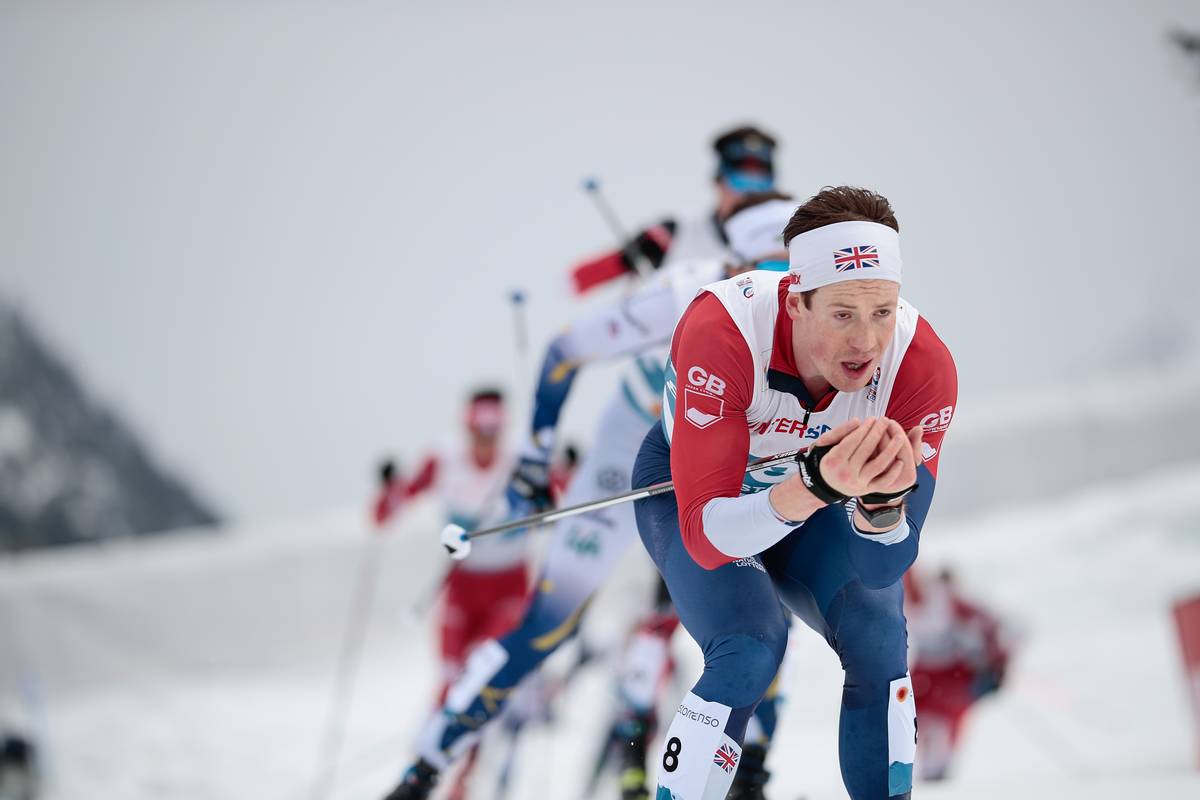
    Briton, Andrew Musgrave (GBR)—seen here competing in the World Cup Skiathlon in Trondheim, Norway—is one of the high-profile international athletes benefitting from the training and coaching available to members of Team Aker Daehlie. (Photo: Modica/NordicFocus

    One thing that resonated with me in their philosophy was that training a certain number of hours doesn’t deliver the best performances. Skiers rely on training based on hours because we can’t reliably compare performances. Some runners and cyclists do this with miles, but it is not as universal as it is in skiing. There are great examples of this in history, for example Roger Bannister. Nobody cares that he only trained 30 minutes over his lunch break, he ran a sub four minute mile. There is some conjecture that he would have been better if he had more time to train. But maybe 30 minutes a day was the perfect amount of training for him. It allowed him to achieve his goal, so it was extremely successful.

    Training hours and the culture of more is better is hard to break. To be clear, the philosophy stated by Aker Deahlie is not that more is bad. The team’s philosophy does hold that more for the sake of more is not necessary: more for the sake of speed is the desired outcome. As a coach I have grouped my athletes by the number of hours they plan to train this year. It seems like a logical place to start as a ski coach; however, the culture and training for coaches is based on more is better. Runners often talk about junk miles, but the idea of junk hours does not seem to be used by cross country skiers or coaches. The Aker Daehlie training philosophy simply reminds us that more for the sake of more is not useful.

    Patricija Eiduka (LAT)—Team Aker Daehlie—competes in the Tour de Ski Classic Mass Start in Val di Fiemme, Italy. (Photo: Barbieri/NordicFocus)

    It’s easy to lose sight of the goal: ski as fast as possible. Strides have been made with tools like the SkiErg to simulate skiing and create metrics. The CCC Strength test is also a useful proxy metric, but these tests are not skiing. We often use roller skis as a substitute for skiing, and roller ski time trials can have times associated with them but those are also impacted by temperature, rain and traffic. Running can be a good measure of an individual’s motor, but again it’s not skiing; it doesn’t correlate perfectly for all athletes.

    Keeping the eye on the prize is hard without good metrics, but it’s important to make sure all the work being done is for the purpose of skiing faster.

  • Musgrave! Brit Takes Second in Trondheim Skiathlon

    Musgrave! Brit Takes Second in Trondheim Skiathlon

    This coverage is made possible through the generous support of Marty and Kathy Hall and A Hall Mark of Excellence Award. To learn more about A Hall Mark of Excellence Award, or to learn how you can support FasterSkier’s coverage, please contact info@fasterskier.com.

    On Saturday in Trondheim, Norway, the first Skiathlon of the year was held. Competitors skied a 10 kilometer Classic leg followed by a 10 kilometer Freestyle leg. In the men’s race, the prevailing question was which Norwegian would win? The last time a non-Norwegian male won a distance World Cup competition was 24 races ago going back to February 2022. The Norwegian winning streak has gained a kind of life of its own with spectators and pundits wondering when, and if, it will end. The other big question was how would Joannes Hosflot Klaebo (NOR) perform? When there’s a Sprint race, everyone expects Klaebo to win—a distance race— not so much. This year his best distance finish was seventh place. His Skiathlon performances have been erratic. The last time he raced a Skiathlon in the World cup, he failed to finish. However, he did have a second place finish in the World Championships last year. So, the range of predictions were quite diverse.

    The weather was a factor with mist and temperatures in the mid-40s leading to klister becoming the only option for the Classic leg. The weather notwithstanding, form was maintained today as Klaebo took the top spot on the podium. A non-Norwegian was able to fight to the podium with Andrew Musgrave (GBR) taking second. Didrik Toenseth (NOR) was third.

    Andrew Musgrave (GBR) was able to overcome a bad ski exchange to pull out a second place finish. (Photo: NordicFocus)

    The Americans threw everything they could at the race, fielding seven skiers: the second largest representation by country in the race— behind only Norway. The top American finisher was Ben Ogden in 17th, 1:30 off the lead. Gus Schumacher was 32nd, Scott Patterson, 41st, Zanden McMullen, 45th, JC Schoonmaker, 50th, Luke Jager, 52nd, and John Steel Hagenbuch 56th.

    The top Canadian finisher was Antoine Cyr in 21st. He was followed by Olivier Leveille in 43rd.

    Ben Ogden (USA) (bib 26) was the top American, finishing 17th (Photo: NordicFocus)
    Men’s 20 k Skiathlon

    The men began at a somewhat aggressive pace with Andrew Musgrave (GBR) and Johannes Hoesflot Klaebo (NOR) setting the early pace. Very early on it was clear that some racers were going to have a long day, having missed the kick wax. U.S. coach Chris Grover was able to add some insight into the kick wax scenario.  “We had gotten some rain and things were beginning to transform,” he said. “It was tricky because there was a colder snowpack underneath. The guys ran into some klisters that were icing and some that were going pretty good, so hats off to the service team. It was an absolutely huge day for the service team in terms of ski preparation.”

    At a relatively early point, 2.1 kilometers into the race, the pack began to get strung out a little, Calle Halfvarsson (SWE) moved to the front with Klaebo. Halfvarsson would make himself a presence toward the front for much of the race.

    The course had several spots where World Cup overall bonus points were awarded. Klaebo pushed to the front to take the lead at the first bonus point marker at 3.9 kilometers, which put the rest of the field under additional stress. Awarding bonus points seemed to have had its desired effect of keeping the field motivated to race hard the entire way.

    After the bonus point sprint, things settled back down a little and Musgrave went back to the lead. Musgrave has definitely become a fan favorite over the years having taken on the role of the plucky underdog. But today, he was determined to prove that he was more than that. At 4.7 kilometers he had pushed to the front and looked very strong. At this point the top American was Ben Ogden in 17th.

    Ogden continued to hang with the main pack, and at 7.2 kilometers he was only nine seconds off the leaders. But at the front it was Klaebo and Musgrave continuing to force the pace jockeying back and forth for the lead. The hard pace continued to string out the field even further. At this point, other than Musgrave, the only non-Norwegians at the front were Halfvrasson and Jens Burman (SWE). Ogden was still going strong, hanging with the lead pack.

    When the skiers were a kilometer from the ski exchange the leaders turned up the pace even more. Klaebo clearly wanted to lead entering the stadium ski exchange. As they entered the stadium, there was a group of about 14 skiers in the lead, with Klaebo going to the front of the pack. Klaebo was first out of the ski exchange along with about half a dozen countrymen. Ogden was in 18th, 21.5 seconds off the lead.

    Andrew Musgrave (GBR) lost valuable time in the ski exchange when he couldn’t get his boot into the binding. However, he refused to let that stop him on his march to the podium. (Photo: NordicFocus)

    Musgrave had a troublesome ski exchange, and it almost cost him dearly. He fumbled the switch from Classic to Skate skis struggling to get his foot into the binding. This cost him precious seconds. The lead group left the ski exchange without him.

    Grover provided some insight to FasterSkier about how the new fluoro rules could cause ski exchange problems. He said that, “the Skate skis can be placed in the transition up to ten minutes before the start of the Skate leg. In the past, athletes placed their own Skate skis in their pits for the exchange, and now coaches or technicians do that after they’ve already started.” He pointed out that this could lead to unintended consequences, “it’s the first time [Musgrave] hasn’t placed his own skis in the exchange. Athletes have different styles in how they set up their skis, whether they straddle one of them and they move right to right, or they come in and they straddle both on the outside and jump to the Skate skis on the inside.” There is time to practice the transition, but it’s a format the athletes don’t often encounter. Also, it’s a challenge for smaller staffed teams like Great Britain. Grover noted that the U.S. has the resources to fine tune the transition to a great extent. He said that, the American athletes coordinate with their coaches ahead of the race. “Last night, we had a fun homework assignment during the team meeting. Everyone who was racing drew a diagram of how they like their skis positioned. Jason Cork processed everybody’s [preferences], so it was in one place digitally. So we had a digital file of how every athlete wanted their pit set up.” He observed that smaller teams might not have the resources to prepare in such detail.

    Freestyle Leg

    Musgrave’s troubles meant that he had come out of the ski exchange ten seconds off  Klaebo’s lead, and was forced back to the second chase group. By the time the leaders reached the 12.1 kilometer mark, it was a red Norwegian wave with Klaebo and Didrik Toenseth (NOR) leading. Burman and Halfvarsson were still in the top ten to break up the sea of red uniforms. The early pace had definitely taken its toll. The group of fourteen skiers was now down to eight with Toenseth and Klaebo setting the pace at the front. Musgrave had used the two kilometers since the ski exchange wisely and done an admirable job of working his way back to join the lead group, but he had clearly expended a lot of energy doing so.

    Johannes Hoesflot Klaebo (NOR) stayed near the front the entire race. He didn’t take any chances as he surged at the finish and had enough time to look over his shoulder and wave to the crowd. (Photo: NordicFocus)

    At 13.3 kilometers a small crack in Norway’s armor began to show as Burman and Halfvarsson were skiing fourth and fifth, refusing to let the Norwegians completely dominate. Musgrave had efficiently clawed his way back into contact with the lead group and was gathering himself as the Norwegians continued to set the pace at the front. Ogden was still skiing well, in 20th, but only 42 seconds off the front.

    Musgrave continued to push and at 15.4 kilometers had worked to put himself into the lead. It was an impressive comeback for the British skier as he had worked hard to overcome his earlier mistake. He was now working with Klaebo and Toenseth to keep the speed high. At 16 kilometers there was another bonus sprint which increased the tempo again. Now the pack had broken into a group of five: three Norewegians, plus Musgrave and Halfvarsson.

    With 3.3 kilometers left, Harald Oestberg Amundsen (NOR) went to the front, knowing that he had to establish a gap over Klaebo to have a chance at the finish. The back and forth was relentless with Musgrave then moving to the lead with the three Norwegians on his tail. Halfvarsson had been gapped and couldn’t keep with the group, though he gamely tried to rejoin it. It was now the three Norwegians at 18 kilometers chasing Musgrave!

    With one kilometer left, the back and forth continued with Klaebo moving to the front. It was still the three Norwegians and Musgrave. Simen Hegstad Krueger (NOR) and Klaebo now traded places at the front with all four skiers forming one pack. In the final climb leading into the stadium it was three skiers spread across the front; Musgrave, Klaebo, and Krueger. All the racers knew that unless they had a gap on Klaebo their chances were slim in a sprint finish. Coming into the stadium Klaebo put in one of his trademark moves and tried to bury the field using the big downhill into the stadium to create a gap. As usual, his strategy was successful and he created separation between himself and the other contenders. On the final turn, Musgrave went wide and lost some speed. It probably didn’t matter as Klaebo had established a big enough lead to wave to the crowd as he crossed the finish. Musgrave had been able to fight forward for second place, with Toenseth taking third. It was a dramatic finish that thrilled the local crowd and kept Norway’s winning streak intact. But Musgrave had proven that there was at least an opportunity for a non-Norwegian to fight for the top spot.

    Andrew Musgrave (GBR)(number four) turned what could have been a disastrous ski exchange into a glorious podium finish. (Photo: NordicFocus)

    Ogden’s sixteenth place was the highlight for team USA. It was a very exciting race; as the Skiathlon often is. The hometown crowd came away pleased, and the Americans saw promise in it’s future with Ogden continuing to ski well.

    Disaster during the race was barely averted when climate protesters attempted to string a barrier across the course. “On the Classsic loop, a couple of guys tried to stretch a chain or a wire across the course, but luckily some locals tackled them, American coaches told FasterSkier. “I’m very sympathetic to climate change, but I’m also sympathetic to the athletes having a safe competition and being able to compete . . . “They tried to interrupt it just as the skiers were about to get to that point, and the protesters were pushed aside, so it didn’t impede the race.” It was a close call for skiers, and FIS will have to do something to address this situation.

    Men’s 20 k Skiathlon RESULTS


  • The Devon Kershaw Show: Recapping a frigid weekend in Gallivare

    The Devon Kershaw Show: Recapping a frigid weekend in Gallivare

    More smashing results from U.S. women, boring-on-paper but fun-to-watch racing from the Norwegian men’s distance team and some interlopers wearing similar colors, and a poorly-attended relay. Devon and Nat break it all down.

    Keep the feedback and questions coming: nat@fasterskier.com and devon@fasterskier.com. We’ll see you next week.


  • The Devon Kershaw Show: U.S. rocks Ruka as 2024 season kicks off

    The Devon Kershaw Show: U.S. rocks Ruka as 2024 season kicks off

    Damn. What a weekend for the U.S. Ski Team, with three podiums in three days of racing at the World Cup opener in Finland.

    Erik Bråten, a Norwegian who coaches the Swiss ski team, joins Devon and Nat to recap and share his experiences across a range of international ski cultures. Send us questions, feedback and anti-vax screeds to: devon@fasterskier.com and nat@fasterskier.com — we’ve already got some questions stacking up for a mailbag episode in a few weeks. We’ll be back in a few days after the next World Cup weekend in Sweden.

  • The Devon Kershaw Show: Summer break’s over, with Team Aker Daehlie’s Jostein Vinjerui

    The Devon Kershaw Show: Summer break’s over, with Team Aker Daehlie’s Jostein Vinjerui

    We know, we know…we’re way overdue for the promised summer content. Is it even summer any more?

    Anyway: We’re excited to bring you this episode with Jostein Vinjerui, one of the coaches with Team Aker Daehlie, the international squad that boasts athletes from Great Britain, Latvia and, for the first time this upcoming season, the U.S., in Sophia Laukli.

    We actually will be back soon, with at least one episode on our schedule for recording in the next week. Send us your questions, comments and hate mail to devon@fasterskier.com and nat@fasterskier.com.

  • Musgrave Victorious at Blink 23

    Musgrave Victorious at Blink 23

    This coverage is made possible through the generous support of Marty and Kathy Hall and A Hall Mark of Excellence Award. Learn more about A Hall Mark of Excellence Award—or about supporting FasterSkier coverage—by contacting info@fasterskier.com

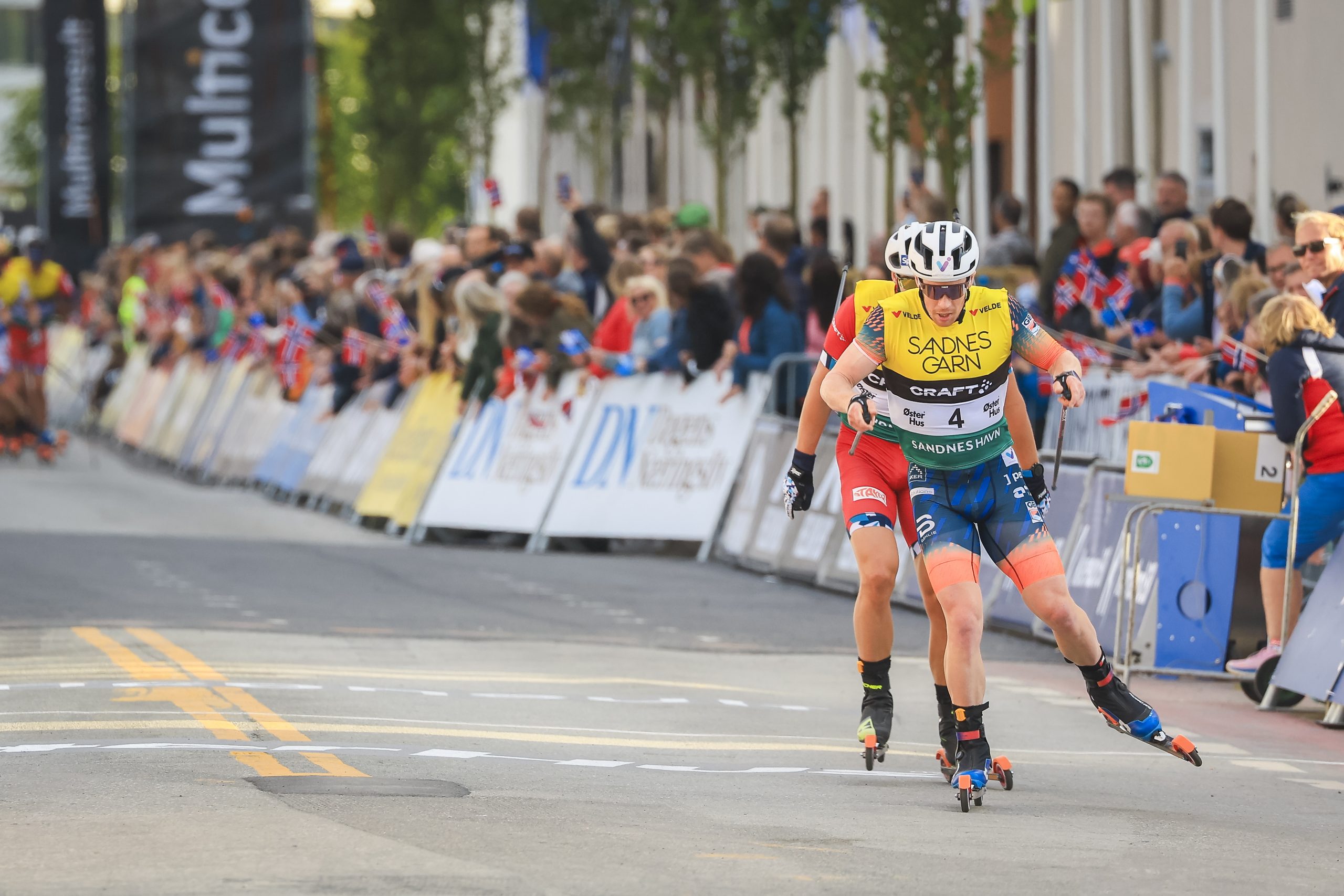
    Andrew Musgrave (GBR) gave his fans reason to cheer in the long Blink 23 race. Here he is shown in a skate race the next day. (Photo: NordicFocus)

    The Blink 23 roller-ski competition is this weekend. It’s most famous for the giant uphill climb known as the Lysebotn Opp. On the other end of the spectrum are the distance events. On Thursday the men and women competed in a 50 kilometer roller ski race.

    In the men’s race, perennial World Cup crowd favorite Andrew Musgrave (GBR) took first place by sprinting away from the field. Thomas Joly (FRA) was 25 seconds behind Musgrave, followed closely by Petter Northug (NOR).

    Astrid Oeyre Slind (NOR) took first place in the 50 kilometer race at the Blink 23 Festival. (Photo: NordicFocus)

    The women’s race was won by Astrid Oeyre Slind (NOR), who won by over a minute. In second was Lotta Udnes Weng (NOR), and in third was Anikken Alnaes(NOR)


  • A Chinese athlete took cross-country skiing by storm last year. But as World Championships kick off, he’s stuck at home.

    A Chinese athlete took cross-country skiing by storm last year. But as World Championships kick off, he’s stuck at home.

    Wang Qiang became the first Chinese athlete to podium in a World Cup last year, finishing 2nd in a classic sprint in Norway. This year, political turmoil has stranded him at home and kept him out of the World Ski Championships in Slovenia. (Photo: NordicFocus)

    This World Championship coverage is made possible through the generous support of Marty and Kathy Hall and A Hall Mark of Excellence Award. To learn more about A Hall Mark of Excellence Award, or to learn how you can support FasterSkier’s coverage, please contact info@fasterskier.com.

    PLANICA, SLOVENIA – Wang Qiang was cross-country skiing’s Next Big Thing.

    Wang, 29, was the product of a colossal investment from his home country to identify and train potential medal winners in the lead-up to the 2022 Beijing Olympics. Communist Party leaders saw cross-country skiing as a prestige sport and poured hundreds of millions of dollars into their national team, building an indoor ski tunnel and recruiting top coaches from Europe.

    The effort didn’t produce medals at the Olympics. But a big payoff came just weeks later, when Wang cracked his first podium on the World Cup circuit, a huge accomplishment that came against some of the same competitors he faced in Beijing.

    In a sport typically dominated by Europeans, Wang’s podium was a breakthrough — an announcement of a rising power in cross-country skiing.

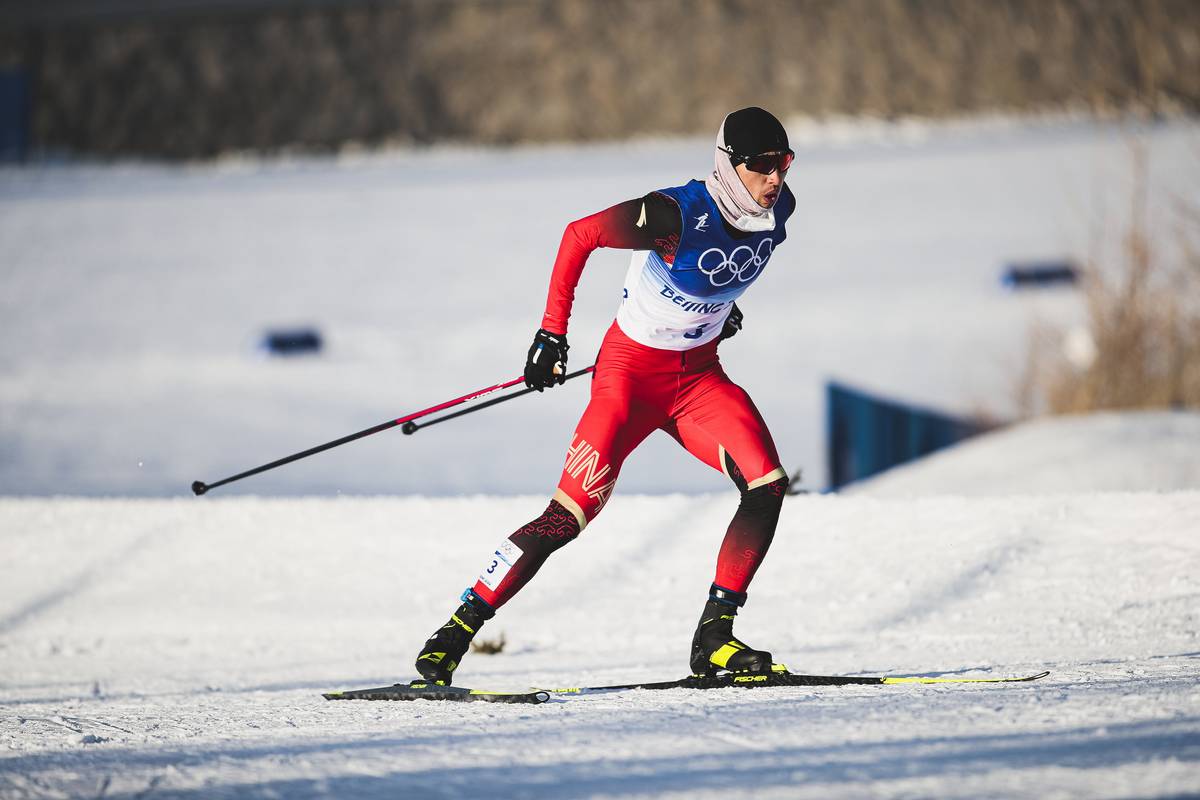
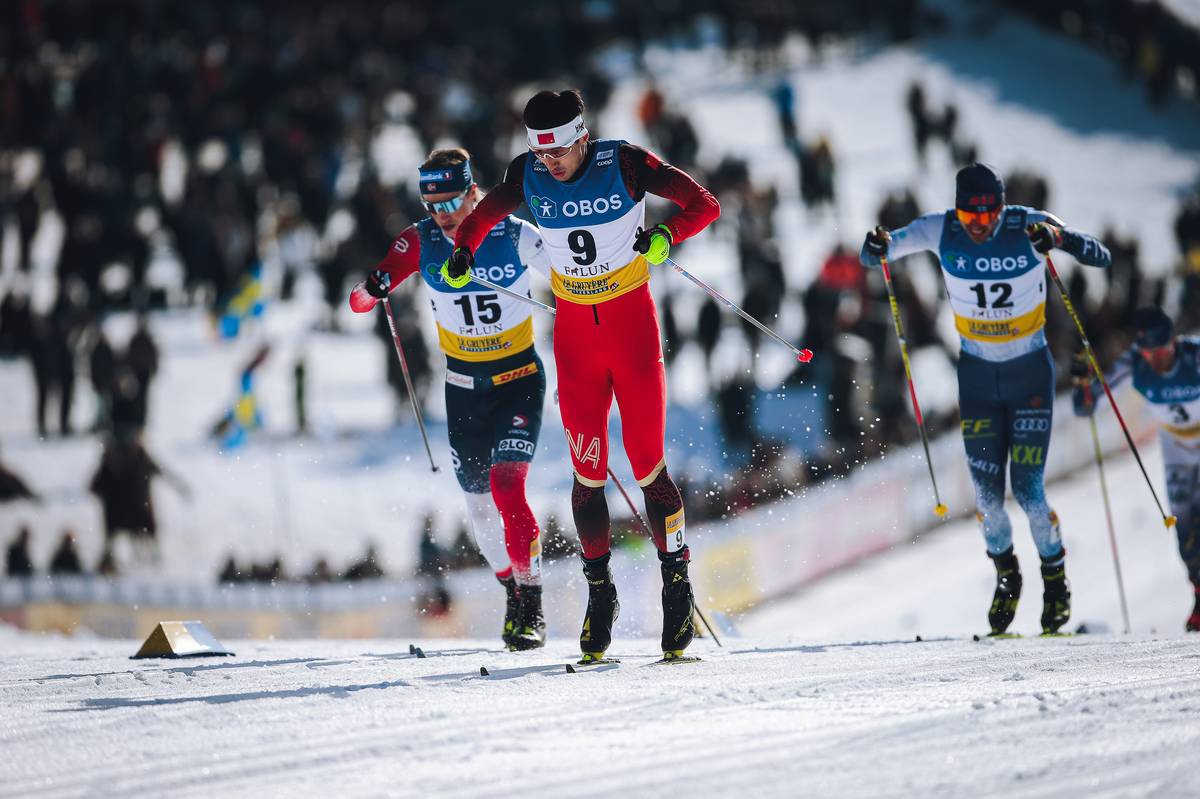
    Wang Qiang was fifth in the skate sprint qualifier at the 2022 Beijing Olympic Winter Games. (Photo: NordicFocus)

    Team leaders said the program would continue after the Games, and over the summer, Wang trained in Norway, with European support staff and a Chinese interpreter and physical therapist. In September, he told a Norwegian television station that he would compete at the 2023 World Championships in Slovenia.

    But when Wang’s best event, the sprint, was held at those championships Thursday, he was missing — apparently back home, in China, where he’d been forced to watch the entire World Cup season from the sidelines. On social media, he published a screenshot of a Norwegian news story about his absence, the latest in a string of posts expressing regrets about his departure from Europe.

    The tale of Wang’s unexplained disappearance has become something of a tragedy and a mystery among his friends and competitors on cross-country skiing’s World Cup circuit, who say he’s one of the few athletes with the raw talent to challenge Norway’s superstar sprinter, Johannes Høsflot Klæbo.

    “They’ve got this one guy that could be the world’s best skier, and he just doesn’t get to race. I don’t quite understand it,” said Andrew Musgrave, a British cross-country skier who lives and trains in Norway. “It just seems bizarre.”

    Wang’s experience is emblematic of what’s happened in Chinese snow sports since the end of the Beijing Olympics: turmoil, without a clear explanation.

    The country’s national cross-country ski team has been shut down, and it hasn’t fielded athletes in top-level competitions this year. Its nordic combined team is also missing from the World Championships in Slovenia.

    China’s Olympic alpine skiers haven’t competed internationally since Beijing. And the country’s biathlon squad, after its own substantial investment in the lead-up to the Games, has also largely disappeared, skipping World Cup competitions and sending a skeleton crew to recent World Championships races in Germany.

    In a strange twist, though, China’s best ski jumpers have been consistently present on the World Cup circuit since January, and are competing at World Championships in Slovenia this week.

    In a brief interview outside the team’s wax cabin Friday evening, the Finnish coach who leads China’s jumping squad, Jani Klinga, said the group has a step-by-step, four-year plan building toward the 2026 Olympics.

    A nordic combined team is forming some time later, Klinga added, but he said he has no information about the fate of China’s cross-country skiers.

    “I don’t know about the cross-country athletes, the situation over there,” Klinga said. “But on our side, everything is moving forward.”

    International snow sports leaders also appear to be largely in the dark about China’s plans.

    In biathlon, contracts with the foreigners hired to coach the national team were not renewed, and a plan to buy 3,000 laser training rifles each year also has not been carried out, said Max Cobb, the International Biathlon Union’s secretary general.

    “They were really making progress as a nation and had some really decent results from their athletes,” Cobb said in a phone interview Friday. “It’s really hard to know what the plan and leadership structure is, and who’s ultimately responsible. We certainly hope that they’ll come back — there’s just, at the moment, not a lot of activity, and it feels like the momentum’s been lost.”

    International Ski Federation President Johan Eliasch said his organization is in close contact with the Chinese Ski Association and that “everything we hear is aligned with their stated commitment to proliferate winter sports in China.”

    FIS President Johan Eliasch speaks with reporters Wednesday before the start of the World Ski Championships in Planica. (Nathaniel Herz/FasterSkier)

    But in remarks to reporters in Planica this week, Eliasch said he couldn’t comment on the Chinese cross-country ski team’s absence from World Championships other than citing the nation’s restrictive coronavirus protocols — which were lifted in December.

    The leader of China’s defunct cross-country ski team, Zhang Bei, didn’t respond to an emailed request for comment.

    But in phone interviews, two sources close to China’s cross-country program described Wang’s absence as a symptom of a larger realignment in the nation’s sports regime after the 2022 Olympics.

    In the lead-up to the Beijing Games, they said, China’s sports minister, Gou Zhongwen, was not actually a sports expert: He was a well-connected Communist Party insider, who used those connections to secure ample budgets for his programs.

    The nation’s cross-country ski team was among Gou’s most favored projects, the sources said, because of European countries’ longstanding dominance in the sport: If China could win a medal, it would be a major triumph over the West.

    But the massive investment in cross-country skiing didn’t produce any hardware: Wang, the country’s top prospect, was disqualified from the Olympic sprint race when he crashed into a Norwegian competitor.

    Once the Games were over, Gou retired. His replacement, Gao Zhidan, is a sports specialist who lacks the same level of political support, and the same interest in cross-country skiing, the sources said.

    “After the Olympics, the cards have been reshuffled. And cross-country lost its aces,” said one of the sources, who worked in Chinese sports in the lead-up to the Games.

    Around the same time as the change in ministers, Norwegian media reported, Wang was returned home from Europe to China. The national cross-country ski team was also disbanded, the sources said, and its athletes were sent back to their regional teams.

    Those regional teams, the sources said, prioritize Chinese national championships over international racing because there’s substantial prize money at stake.

    An internal audit of the cross-country program is also underway, according to the other source, a Chinese resident.

    There’s a good chance the national ski team will be rebuilt in time for next winter, said the Chinese source, who requested anonymity because of “internal struggles” in their home country. But even insiders don’t really know what will happen, the source added.

    “Even if you’re in the Communist Party, you don’t know,” the source said. “You need to be connected with the right people. Otherwise, forget about it.”

    During his involuntary break from international-caliber competition, Wang has continued training and stayed relatively optimistic, avoiding direct criticism that could put him in conflict with the political leaders who control his future.

    “I am aware that I am missing out on a fantastic season. But I have to accept the situation,” he told a Swedish newspaper recently. “I want to concentrate on training this summer and be in the World Cup next season. I think I’ll make it.”

    Wang Qiang races in a World Cup classic sprint last year in Falun, Sweden. (Photo: NordicFocus)

    But his friends and fellow competitors said they’re worried about the effects of isolation on Wang and his Chinese teammates, who haven’t done much of the kind of tight, close-quarters racing that happens on the World Cup. There’s also Wang’s advancing age: He turns 30 this year.

    “It’s difficult when they are not here, because they need the experience in every World Cup race,” said Finnish skier Remi Lindholm, who trained with some of the Chinese athletes for several months in the lead-up to the Olympics.

    Like Musgrave, Lindholm said Wang “absolutely” has the potential to beat Klaebo, the Norwegian superstar. Which makes it sad, Lindholm added, that Wang is stuck in his home country.

    “He’s a good guy,” Lindholm said. “And he knows that he has to do the job every day to get to the World Cup.”

  • Beitostolen 10 k Classic: Golberg Dominates, Musgrave Podiums, Wonders and Ogden Top 20

    Beitostolen 10 k Classic: Golberg Dominates, Musgrave Podiums, Wonders and Ogden Top 20

    Norway in midwinter can take on the appearance of a snow globe: quaint little cabins covered in snow, drooping pines coated in layers of white, skiers trailing through the woods. That was the scene in Beitostolen, Norway for day two of the FIS Cross Country World Cup. Skiers awoke to withering cold with low temperatures creating squeaky snow on the race course. Waxing for kick would not be a problem, but enduring the cold for ten kilometers of classic ski racing was a daunting prospect, indeed. Buffs, heavy gloves or mittens, protective face tape: that was the fashion of the day inside the Beitostolen snow globe.

    Paal Golberg (NOR) drives toward the finish in his World Cup 10 k Classic victory in Beitostolen, Norway. (Photo: NordicFocus)

    While racing in such cold conditions would prove to be a challenge, Norwegian favorites Paal Golberg and Didrik Toenseth did not disappoint their loyal followers, finishing first and second on the day. Great Britain’s Andrew Musgrave—something of an adopted son for the Norwegian fans—also turned in a thrilling performance, finishing third.

    North American skiers also celebrated great racing success today: Hunter Wonders was 16th, Ben Ogden, 19th, Gus Schumacher, 30th, Scott Patterson, 32nd, and Zak Ketterson, 38th. Canadians were led by an impressive finish from Antoine Cyr in 20th, followed by Olivier Leveille in 32nd, and Graham Ritchie, 40th.

    Beitostolen 10 k Classic

    While the Beitostolen facility lacks a notable ski stadium, this is where Team Norway spends a good portion of its training time. Only a few hours from Oslo, Beitostolen is where the most reliable snow in southern Norway can be found.

    It’s especially difficult to earn high finishing places when racing in Norway: for this World Cup race in Beitostolen, the host nation was granted twelve starting positions, meaning that many non-Norwegian contenders were likely to be pushed even farther down the results. For Norwegians, themselves, just qualifying to enter a World Cup is a Herculean task. Even last week’s World Cup 10 k skate winner—Iver Tildheim Andersen (NOR)—was not granted a starting position in today’s 10 k classic event. With early-season World Cup favorite Johannes Hosfloet Klaebo (NOR) and classic skiing specialist Iivo Niskanen (FIN) both absent due to illness, Saturday’s Classic 10 k was marked as much by who is absent as by who is racing.

    Andrew Musgrave (GBR) shows the effort of earning a place on the World Cup 10 k Classic podium. (Photo: NordicFocus)

    Light snow began falling soon after the start. Pre-race favorite, Golberg, started 42nd with snow already beginning to accumulate lightly in the tracks. A lap into his race, Golberg found himself shadowed by the British veteran, Musgrave, who cagily slotted in behind Golberg, benefitting from both the draft and the effort of the skier ahead of him. Obviously, Golberg would’ve preferred to step in behind the later-starting, fresher Musgrave, even pointing out in post-race interviews that he was dreaded giving Musgrave an advantage. “[I was worried that I might] drag Musgrave to the victory,” Golberg said. “But in the end I was stronger than him.”

    Golberg voiced disappointment in yesterday’s fourth place finish in the sprints. “A really frustrating day yesterday,” he said. “But that’s a part of the game.” Golberg shed his glasses midway through the race, and drove on through the finish with the determination of man bent on revenge. In Klaebo’s absence, Golberg has been become the dominant force in men’s World Cup Cross Country, contending in sprints and distance races, alike. Today was no exception as he proved too tough and too fast for the field to challenge. “Today was another good day,” he said. “[I] tried to ski a steady pace, and I had some power at the end.”

    Hunter Wonders (USA) tucks the downhill in brutally cold conditions at Beitostolen, Norway. Wonders would finish the day as top American in 16th place. (Photo: NordicFocus)

    Ogden (USA) sat in the leader’s chair through the first fifteen finishers until supplanted by Janosch Brugger (GER) whose finishing time was positioned atop the standings for quite a while. Top American, Wonders, also skied to a terrific 16th place finish. Ultimately, Golberg topped them all, finishing in 23:55.6, 7.6 seconds ahead of Toenseth in 2nd, and 10.7 ahead of Musgrave in 3rd.

    With two Americans in the top 20, there was much to celebrate. “For many Americans the threshold for an average race is starting to change,” said Ogden. “That said, we are still hungry and place emphasis on the process rather than the result.”

    Ogden also spoke of his confidence in American skiers during tough days of racing like these in Beitostolen. “The US skiers are fighters,” he said. “We are accustomed to adversity and challenge so when the cards are down and the thermometer is hovering right around the legal limit you can expect to see some American flags a little higher up the list. ”

    Like Ogden, Wonders had much to say in praise of his teammates, and the American team system that encourages their success. “I’m beyond stoked with the race. And It’s a big confidence boost for the rest of the season,” he said. “The team dynamic has been great this season. Lots of support in all sorts of ways, and seeing your teammates crush gives you some encouragement each day.”

    British fans must be thrilled to see Musgrave’s efforts rewarded. Saturday’s announcers spoke of Musgrave as a breakthrough performer on the day, but he’s been steadily chipping away at the results for years, with his results often hovering near the podium. Racing buff-less, and in his signature headband, Musgrave seemed unaffected by the cold in Beitostolen. And his willingness to latch on to a speeding Golberg displayed a confidence that worked to his advantage in this ten kilometer test. Throughout his career, Musgrave has been known to race bravely—even rashly—but that is the sort of attitude that can pay off at 10k. It paid off for him today.

    World Cup Men’s Classic 10 k, RESULTS

    Didrik Toenseth (NOR), Paal Golberg (NOR), Andrew Musgrave (GBR), (l-r) – FIS world cup cross-country, 10km, Beitostolen, Norway. (Photo: NordicFocus)


  • Ruka Men’s 10 Kilometer Classic Individual Start:  It’s all Team Norway.

    Ruka Men’s 10 Kilometer Classic Individual Start: It’s all Team Norway.

    A_Hall_Mark_of_Excellence_Award-logo-300.png (300×244)This World Cup coverage is made possible through the generous support of Marty and Kathy Hall and A Hall Mark of Excellence Award.  To learn more about A Hall Mark of Excellence Award or to learn how you can support FasterSkier’s coverage please contact info@fasterskier.com.


    Ruka Men’s 10K Classic Individual Start

    Ruka presented less challenging conditions this year compared to last year for the athletes.  Temperatures were in the high teens (-8.0 Centigrade) with racers running on green cold waxes. Humidity was 100 percent, which posed the possibility of tracks glazing during the race. The racers competed on a 5-kilometer course with 30 seconds between the start of each racer.

    Johannes Hoesflot Klæbo (NOR) on his way to victory in the 10k in Ruka (FIN). (Photo: Nordic Focus)

    Results:

    The Norwegians dominated the field.  Johannes Klæbo finished first, besting countrymen Paal Golberg by 20.5 seconds followed by Martin Nyenget who was 28 seconds behind Klæbo.  An outstanding performance was turned in by Andrew Musgrave of Great Britain, who finished in fifth, 40.3 seconds behind Klæbo. Norweigans took six of the top ten spots.

    The top American was Ben Ogden, finishing 28th, 1:23.9 back.  He was closely followed by Zak Ketterson who finished 31st, 1:24.6 out of first.  Rounding out the field for the Americans was Hunter Wonders, who is also a competitive canoe racer, finishing in 39th. 2020 Junior World Champion in the 10 kilometer, Gus Schumacher, finished 48th. Scott Patterson finished 54th.

    The top Canadian was Graham Ritchie, finishing 35th.  He was followed by Olivier Leveile who finished 44th.

    Hunter Wonders (USA) on his way to 39th place in the 10k classic. (Photo: Nordic Focus)

    The Race:

    The steep climbs of Ruka proved challenging for the men who consistently jumped out of the tracks early on climbs, preferring to run up the loose snow on the sides of the course.  Prior to the race there had been much discussion about Klæbo’s health.  Questions continued to swirl when he hit the one-kilometer split in 21st place and still trailed at the 3.1- kilometer split.

    Calle Halfvarsson (SWE) on his way to 4th place in the 10k in Ruka (FIN). (Photo: Nordic Focus)

    Calle Halfvarsson of Sweden gave many of the Swedish fans in the crowd a thrill as he led the race at the first three splits.  Ogden was in the hunt at the one-kilometer mark, only 12.5 seconds out of the lead, but by the 3.1 checkpoint, his trailing margin had widened to 22.4 seconds.

    Starting at about the six-kilometer mark, Klæbo removed any doubt about his nagging injury when he jumped into the lead establishing a six second advantage over countryman Halfvarsson.  Meanwhile, Musgrave had pulled himself from 23rd to sixth place, only seven seconds away from a podium spot.  Musgrave turned in the fastest time from the 3.1 to 5.0-kilometer split.


    Andrew Musgrave (GBR) – FIS world cup cross-country, having an outstanding weekend in Ruka. (Photo Credit: NordicFocus)

    However, because of the start order, Klæbo was never really able to relax since he had started the race ahead of Golberg.  When Klæbo finished he had a 28 second lead over the next best finisher.  But most of the contenders were still on course, so he was uncertain as to where he would finish.  However, the writing was on the wall as Golberg entered the stadium and it became apparent that he wouldn’t be able to catch Klæbo.

    The only remaining question was would Norway capture all of the podium positions?  The question was only partially answered when Halfvarsson crossed the eight-kilometer checkpoint in fourth but was only 0.2 seconds behind Nyenget.  At the finish it appeared that Halfvarsson was struggling mightily but was able to hang on for a fourth place finish.  The results; Norway 1-2-3.

    Complete Results

    Paal Golberg (NOR), Johannes Hoesflot Klaebo (NOR) and Martin Loewstroem Nyenget (NOR) share the 10k classic podium in Ruka (FIN). (Photo: NordicFocus)
  • Behind the Great Britain xc ski phenomenon with Andrew Musgrave

    Behind the Great Britain xc ski phenomenon with Andrew Musgrave

    Andrew Musgrave is a mainstay of the World Cup cross-country skiing circuit and a two-time podium finisher, racing for a surprisingly strong British team. Devon and Nat chatted with him this week about a major budget cut for the British team that’s forced team members to fundraise; Muzzy also talks about his training, his life in Norway, his diet and his plans to start feuds on the World Cup.


    You can email us at devon@fasterskier.com and nat@fasterskier.com.

    Andrew Musgrave races in the 2021 World Ski Championships in Germany. (Photo: NordicFocus)
  • Organizers cut Saturday’s Olympic ski marathon in half. Now they’re facing a backlash.

    Organizers cut Saturday’s Olympic ski marathon in half. Now they’re facing a backlash.

    ZHANGJIAKOU, CHINA — The 28 kilometers that Alexander Bolshunov raced Saturday was only enough to take him just past the halfway point of the race he’d entered at the Winter Olympics.

    But Bolshunov, who competes for Russia, is still going home with the gold medal.

    That development is the result of a decision by race organizers to shorten the Olympics’ iconic 50-kilometer marathon event in the face of brutal wind and cold.

    But they’re now facing harsh criticism from some competitors, coaches and fans of the sport, who denounced the decision — made just one hour before the start — as avoidable and unnecessary.

    “It was an absolutely ridiculous decision,” Andrew Musgrave of Britain, a long-distance specialist, told reporters after finishing 12th. “If you can race 28.4 k, I don’t see why on earth you can’t race 50 k. Cross-country skiing’s meant to be the ultimate test of endurance.”

    Andrew Musgrave (GBR) races the abbreviated Olympic marathon, cut to 28-kilometers due to weather conditions in Zhangjiakou. (Photo: NordicFocus)

    The International Ski Federation (FIS), which oversees Olympic cross-country skiing, would not comment beyond their statement announcing the change, saying the officials responsible for the change were in meetings after the race. 

    “The decision was taken in regards to the athletes’ safety, to reduce the time of exposure of athletes in those conditions,” the announcement said.

    Conditions at the cross-country skiing venue in Zhangjiakou, the mountain resort area outside Beijing that’s hosting the Olympic races, were extreme Saturday.

    Strong winds shuddered windows and blew clouds of snow through the stadium and across the trails; a weather bulletin posted two hours before the race pegged temperatures at 3 F, with winds gusting at 30 mph to produce a wind chill of -21 F. Athletes ended up racing in neck warmers and layers of tape covering their cheeks to protect from frostbite.

    Cheeks protected with tape, Scott Patterson (USA) follows Sjur Røthe (NOR) during the men’s 28 k skate. (Photo: NordicFocus)

    But forecasters from the Beijing Games’ organizing committee had been predicting difficult conditions for days. The International Biathlon Union moved up its race scheduled for Saturday to Friday, citing low temperatures and strong winds in the forecast.

    Athletes in Saturday’s 50-kilometer cross-country race, which was scheduled for 2 p.m., were still girding for a tough race in the cold when organizers sent a bulletin to teams at noon. The update said all options were on the table: “cancellation, rescheduling, shorter distance” or a course change.

    The 28-kilometer distance, plus a one hour delay, were announced 45 minutes later.

    Reactions were mixed, and a number of athletes and coaches said they understood the decision.

    “It’s not ideal. But what is ideal about a day like today?” said Matt Whitcomb, the U.S. Ski Team’s head coach. 

    Organizers, he added, have athletes’ best interests in mind. “They’ve got a lot riding on their wise choices, and to be a little bit conservative because of the cold and exposure is not a bad thing,” he said.

    Scott Patterson, who placed eighth as America’s only competitor, said it felt like a “half-measure” to reduce the race’s length, adding that he would have preferred a delay to Sunday. 

    Polish cross country skier Dominik Bury races the men’s marathon, shortened to 28 k due to extreme weather at the venue. (Photo: NordicFocus)

    But he was also skeptical that running the race at its original distance would have substantially changed the results.

    “Those top guys were strong, and they would have been strong with 20 more k,” he said in an interview. “No fault to the organizers. I think they had a tough decision and made a decent call with it.”

    Others, though, fell on a spectrum from frustrated to irate.

    “Everyone wants to run 50 kilometers. Not 30,” Markus Cramer, one of the coaches for the Russian team, told Norwegian media. “Most teams are not happy.”

    Musgrave, the British athlete, called the decision a “f@*king joke” on Twitter, and raced in a headband — not even a hat. Retired Norwegian superstar said the race should have either been postponed or canceled outright. And Petter Skinstad, a Norwegian ski racer and television commentator, said the decision destroyed years of training for athletes that specialize in longer distances.

    “Why on earth is a 30 k okay and not a 50 k, and why on earth didn’t they do as biathlon and do the race a day in advance?” he said in a message — a point echoed by Hans Christer Holund, one of Norway’s top finishers in the race.

    Norway’s Hans Christer Holund tucks into the downhill during the men’s 28 k mass start freestyle. (Photo: NordicFocus)

    Biathlon officials said discussions about moving their race earlier started several days beforehand, with the forecast released by the Beijing Olympics organizers, said Max Cobb, a member of the International Biathlon Union’s executive board and president of the U.S. Biathlon Association.

    Cobb, who stressed that he was not commenting on the ski federation’s decision Saturday, said the change in the biathlon schedule was not made lightly.

    That’s because Olympic events are carefully sequenced to minimize conflicts in television broadcasts between different sports — and because of the risk that a forecast changes and renders a schedule change unnecessary.

    “We really relied on the strong track of the meteorology team. And they’ve been nailing it,” he said.

    In the end, and perhaps because the hour-long delay gave the winds a chance to subside, competitors said they didn’t end up feeling especially cold — and could have survived another 22 kilometers of racing.

    “In retrospect, we could have raced all 50 kilometers, because the weather improved,” Bolshunov, the winner, said at a news conference after the race. “I didn’t get cold. It was only waiting for the awards ceremony that I got just a little shivery.”

    Ivan Yakimushkin, the Russian who won the silver medal in the event, said he didn’t freeze during the race, either.

    “I even broke a sweat,” he said.

    The ROC’s Alexander Bolshunov (center) and Ivan Yakimushkin (right) race to gold and silver in the men’s 28 k freestyle in Zhangjiakou. (Photo: NordicFocus)
  • Klæbo Skates Away With the Win in TdS Stage 3 15k Mass Start Free; Schumacher 25th

    Klæbo Skates Away With the Win in TdS Stage 3 15k Mass Start Free; Schumacher 25th

    An aerial view of the icy track in Oberstdorf, Germany, where winter looks to ebb and flow. (Photo: NordicFocus)

    This World Cup coverage is made possible through the generous support of Marty and Kathy Hall and the A Hall Mark of Excellence Award.  To learn more about A Hall Mark of Excellence Award or to learn how you can support FasterSkier’s coverage please contact info@fasterskier.com.

    Traveling Northeast from Lenzerheide, Switzerland to Oberstdorf, Germany, home to last year’s FIS World Ski Championships, athletes lined up for Stage 3 of the Tour de Ski for a mass start 15-kilometer skate. Once again encountering conditions altogether different from those in the previous stage, the tracks in Oberstdorf were lightning fast, and icy, with bare earth scarring the landscape between the ribbons of white. 

    Given the conditions and the winding nature of the 3.75k loop, there was little separation in the first three laps of the four-lap race. Johannes Høsflot Klæbo (NOR) and Alexander Bolshunov (RUS) surged to the front to collect the Tour bonus points at the 4.4k checkpoint, with Klæbo keeping putting in just enough effort to slide his boot over the line 0.3 seconds ahead of the Russian’s, earning them 15 and 12 points, respectively. Ivan Yakimushkin (RUS) was next in line at the checkpoint for 10 points, followed by Pål Golberg (NOR) for 8, and Calle Halfvarsson (SWE) for 6.

    The pack stayed tight through the first two laps of the men’s 15k freestyle mass start in Oberstdorf, Germany. (Photo: NordicFocus)

    Once the checkpoint was crossed, the men stood up, returning to a calm and relaxed state at the front of a massive pack of racers with little opportunity, or need, to break away just yet. Given the density of skiers on the course and the speed of the track, downhills were taken with care, with the leaders standing up, putting arms to the sides to indicate they were all on the same page – take it easy, keep everyone’s equipment intact, no unnecessary crashes. 

    The leaders wind through icy curves as they descend toward the stadium in Stage 3 of the Tour de Ski in Oberstdorf. (Photo: NordicFocus)

    This theme continued through the third lap, where the race for the podium finally began. 

    At 9.6k, just 12 seconds separated the top 30, who moved like a slinky through the woods, compressing on the climbs, stretching on the descents. Repeat, repeat. 

    However, by 12k, five men had dropped the masses, and by 13.4, this had dwindled to three. Led by Klæbo in the yellow bib, Bolshunov, Sjur Røthe (NOR), and Andrew Musgrave (GBR) quickly gapped the field to fight for the podium. 

    Alexander Bolshunov (RUS) leads Andrew Musgrave (GBR) and Johannes Høsflot Klæbo (NOR) as the leaders begin to break away in the final lap. (Photo: NordicFocus)

    While one might expect Klæbo in such conditions to wait until the final meters to show off his acceleration, he started his kick much further out, pushing into the final descent and trusting his ability to race the following icy curves. Though his chasers began to catch him as they navigated tight bends that led into the stadium, Klæbo hop-skated over the final roller and held the others at bay, skiing into the finish lanes with plenty of space to earn a clear victory.

    Racing all the way to the line, Bolshunov pushed to claim second place (+3.4) with Røthe securing the final podium spot just behind in third (+4.0). 

    Johannes Høsflot Klæbo (NOR) powers to the line for the win in Stage 3 of the Tour de Ski, while Alexander Bolshunov (RUS) and Sjur Røthe (NOR) fight to the line for second and third. (Photo: NordicFocus)

    Lacking the closing speed for a podium spot but still putting together a season-best day, Musgrave closed for 4th (+5.6). Perhaps well-suited to the style of racing in Oberstdorf, the Brit had been tenth in the event on the same tracks during last year’s World Championships in similar conditions. The 2021 World Championships 15k free had an all-Norwegian podium, led by Hans Christer Holund, Simen Hegstad Krüger, and Harald Østberg Amundsen, with Bolshunov disappointed at the line in 4th, and Røthe nearly a minute off the lead in sixth.

    Johannes Høsflot Klæbo (NOR) welcomes teammate Sjur Røthe (NOR) across the line in third, while Andrew Musgrave (GBR) takes fourth. (Photo: NordicFocus)

    “It was a wee bit annoying to let a podium finish slip through my fingers on a day when I was feeling good and had amazing skis,” wrote Musgrave in a post-race email to FasterSkier. “It was definitely nice to be back racing better after a very tough start to the season though!”

    Musgrave continued with a comment on a start to the season he deems sub-par, ending with some optimism.

    “I’ve had a rough season so far, struggling to take World Cup points, and just generally not feeling in form. I took a week completely off training between Lillehammer and Davos, and that seems to have got me back on track.”

    Though from afar, the race looked congested with the field of men staying tightly grouped through the first 11k, Musgrave painted a different picture, speaking to his approach to the course in fast conditions.

    “The race today was a bit less chaotic than I thought it might be. With such fast, icy conditions I thought there would be a big group still together sprinting for the win at the end. My plan was to keep as far forwards as possible, to avoid any falls that might happen in the pack. It ended up being a good call- the group ended up splitting up quite a bit on the technical, icy downhill. I was far enough forward to keep myself on the right side of any gaps that opened up.”

    Though just-shy of the podium, Andrew Musgrave (GBR) looked thrilled with his season-best fourth place result in Oberstdorf. (Photo: NordicFocus)

    As for Klæbo, today marks his 47th World Cup victory, tying the legendary and notorious Petter Northug, but remarkably, only his second win in a freestyle distance event. His last win in the 15k skate also took place in Oberstdorf, during the 2018/19 Tour de Ski. Of his five wins in the 15k classic, four have taken place in mass start races. 

    “The first round was pretty slow, then on the third lap it was starting to pick up a little bit,” Klæbo told FIS of his strategy after the race. “I was trying to be near the front today, the downhills were pretty sketchy. For the finish, I didn’t want to take the chance to be [second] in the last turn there, so I went for it.” 

    The men’s podium of the 15k mass start freestyle in Oberstdorf: Johannes Høsflot Klæbo (NOR) took the win ahead of Alexander Bolshunov (RUS) in second and Sjur Røthe (NOR) in third. (Photo: NordicFocus)

    Asked what was the determining factor in the race, and where he found his advantage, Klæbo affirmed his plan of making a move on the winding downhill in the last kilometer. 

    “I was just trying to push really, really hard in the downhill, and just come through the downhills [safely] because, like I said, it was pretty sketchy.”

    Surviving amongst the masses, Gus Schumacher led the American men, breaking into the top-30 to place 25th (+53.3) on the day. Bouncing back from a cold that he feels has impeded him in the first two stages, Schumacher explained he is feeling stronger and more energetic by the day, contributing to his improvement from his first two finish positions. 

    “[It was] super icy, and I was a little nervous about the dynamics of the first mass start of the year,” Schumacher told U.S. Ski & Snowboard cross country communications manager Tom Horrocks on-site after the race. “But the guys at the front were pushing the pace well enough that it sort of strung out, so it was actually fairly good skiing, except for some of those corners where you’d toss it into a power slide and just keep going forward.”

    Gus Schumacher navigates an icy downhill amongst a pack of men, each looking to stay upright with equipment intact through the race. (Photo: NordicFocus)

    Though he felt the pace was faster than it appeared from the live stream, he acknowledged that the pack did begin to spread significantly over the final lap and a half, which he identified as an “ideal mass start” situation for him in most circumstances. 

    “As it strung out, I didn’t quite have the gas that I’ve had before to keep jumping up to the next person, but I think it went well.”

    Full audio clip from post-race interview with Gus Schumacher, hosted by Tom Horrocks.

    Just off the mark for Top-30, Zak Ketterson skied to 36th (+1:02.6), just 5 seconds shy of 30th. As this year’s Tour de Ski are the first World Cup starts 24-year-old Ketterson has earned, this result marks an international career best at the senior level. Having been pulled up to the World Cup as SuperTour leader following the opening races in Duluth, MN and Cable, WI, the Team Birkie athlete is using this opportunity to vie for a widely-desired sixth spot for American men, which currently is not guaranteed to exist, on the 2022 Olympic team

    “I’m really happy with that. The goal for anyone is to be in the top-30, that’s just the first stepping stone, so for me to be close to that, it’s kind of a dream come true,” Ketterson told Horrocks post-race. “Especially with some rough races at the start of this Tour, it’s nice to have some positive feedback.”

    Chaos and carnage at the finish line as athletes chase the final spots in the Top-30. Gus Schumacher, who was 25th, is out of focus in the top right. (Photo: NordicFocus)

    “What’s led to me performing my best in the past is just to focus on things I can control and just the process,” Ketterson explained in response to how he is mentally handling these circumstances. “I think that’s what got me here from the SuperTour, I didn’t think about trying to be in the top SuperTour spot, I just thought, ‘Let’s have a good race, and if that gets me where I want to go, great. If not, that’s life.’ So I just try to give myself the best chance everyday and the rest takes care of itself.”

    Full audio clip from post-race interview with Zak Ketterson, hosted by Tom Horrocks.

    Ben Ogden was the next American in 64th (+1:59.0), crossing the line with his teammate, Kevin Bolger, in 65th (+2:00.4). Luke Jager skied to 70th (+2:19.7), while Logan Hanneman rounded out the men’s squad in 75th (+3:54.1).

    Ben Ogden races Stage 3 of the 2021/22 Tour de Ski in Oberstdorf. (Photo: NordicFocus)

    Looking to the overall Tour standings, with a one-minute time bonus for his sprint win, coupled with 4th in the 15k classic and a second win today, Johannes Høsflot Klæbo leads the overall standings by both time and points. By time, he is 45 seconds ahead of his teammate Pål Golberg, with Bolshunov moving into third with a 47 second deficit. By points, Klæbo has earned double that of the next athlete with 51, followed by teammate Erik Valnes with 26, and Bolshunov with 24.

    Racing continues tomorrow with a classic sprint, where Klæbo will again be a favorite. Quarterfinals begin at 12:00 CET / 6:00 EST.

    Johannes Høsflot Klæbo (NOR) out for a training ski after arriving in Oberstdorf, Germany. (Photo: NordicFocus)

    Stage 3 Results | Overall Tour Standings by Time | Overall Tour Standings by Points

  • Even with a Tumble, Bolshunov Prevails; Klaebo and Golberg go 2-3 (updated)

    Even with a Tumble, Bolshunov Prevails; Klaebo and Golberg go 2-3 (updated)

    After tumbling earlier in the race, Russia’s Alexander Bolshunov clawed back for another World Cup win. (Photo: NordicFocus)

    This World Cup coverage is made possible through the generous support of Marty and Kathy Hall and their A Hall Mark of Excellence Award. To learn more about A Hall Mark of Excellence Award or to learn how you can support FasterSkier’s coverage please contact info@fasterskier.com. 

    Another clear, cloudless, and frigid day of racing for the men in Falun, Sweden as they completed three laps of a 5 k loop for Saturday’s classic mass start event. Even the perpetually bare-handed Andrew Musgrave of Great Britain was wearing gloves, a sure sign of cold temperatures. This made for fast and firm conditions, resulting in several high-pace crashes, perhaps abetted by the v-board placement on some of the sharper corners. 

    Tightly packed skiers after the start of the men’s 15 k mass start classic in Falun, Sweden. (Photo: NordicFocus)

    The Lycra color of the day was again red as Alexander Bolshunov of Russia took his 9th individual victory of the season (including the Overall Tour de Ski) in a time of 35:16.3. It was a race to the wire with challenges coming from the other men-in-red, the Norwegians. Directly behind Bolshunov in the final standings were Norway’s Pål Golberg and Johannes Høsflot Klæbo – who were given the same race time (35.16.7), effectively tying for second place in an extremely tight photo-finish. The silver medal, however, was awarded to Klæbo, and Golberg was given bronze. There was lingering confusion as the top-three lined up for the awards ceremony where Klæbo was heard asking, “am I third?” and he was told he had just out-lunged his teammate for second place. 

    Photo-finish between Johannes Hoesflot Klaebo (foreground, Fischer) and Pål Golberg (background, Rossignol) of Norway for 2nd and 3rd place. (Screenshot: FIS/Eurosport)

    As the race kicked off, four tracks across and two lanes deep a wall of red suits composed of Russians and Norwegians stormed ahead- a pronounced theme through the first 1.8 k and for that matter, much of the race. A bonus trophy sprint at 5.8 k brought Iivo Niskanen of Finland through the lineup for a brief time as he gathered 15 bonus points for his effort. 

    A long-striding Iivo Niskanen (FIN) out front. (Photo: Nordic Focus)

    At the base of the sprint hill, just before the 8.9 k split came the first of the big crashes. Cornering tightly, Musgrave tangled with Ilia Poroshkin of Russia and the two went down, taking Bolshunov and a Swiss skier with them. As the rest of the pack crested the hill to descend into the fast sweeping corner, a second crash ensued, with Andrew Young of Great Britain busting through the sponsor boards and Erik Valnes of Norway losing a ski. Young (GBR) received first aid on-site and according to FIS was taken to the hospital for further medical care.

    Norway’s Hans Christer Holund pulling out of competition after crashing during the men’s race on Saturday. (Photo: NordicFocus)

    Despite the crash, a charge-ahead Bolshunov was soon back to the front, making a decisive move around 13.5 k. He was shadowed by Golberg. With a bit of a gap, those two began the descent into the stadium chased by a fast-closing Klæbo. Down the finish straight, Bolshunov looked to have it in the bag, yet the Norwegians were hot on his tails. Golberg seemed unaware of the close proximity of his teammate and didn’t make a lunge for the line, looking surprised to see Klæbo so close and ultimately loosing the photo-finish.

    After the race Bolshunov said, “I am really happy to win this race in Falun. It is my fourth year in a row to have a victory here. It was a fast and hectic race and I had a fall but luckily no equipment was broken and I was able to catch up and take the victory.” 

    Alexander Bolshunov poling for the win as Norway’s Pål Golberg (bib 16) and Johannes Høsflot Klæbo (behind Bolshunov) fight for second and third. (Photo: NordicFocus)

    For much of the race, a duo in stars and stripes sporting matching camo buffs could be seen at the back of the pack. Gus Schumacher and Hunter Wonders, both U-23 skiers from Alaska, were the top finishers for the American men. Schumacher, who placed 28th, +14.8 back from Bolshunov, said of his race, “as the pace picked up, I didn’t have much spare energy, as I spent a lot of it trying to ski in the middle of the pack. In hindsight, trying to ski up in 10th-20th would’ve been a lot easier. I’m not super happy with my result today, it would’ve been nice to be able to attack in the last 5km, but I am happy with not falling or breaking any equipment. I’m sure some of the chaos was visible on TV, but there was a lot more that was going on the whole time, in terms of falls and tangles. It was a good day to practice group skiing, and I’m glad I had yesterday to show that if I ski well, I have that energy in the end!”

    Hunter Wonders finished 37th (+24.9). “This is in fact my 2nd week on the WC and it’s pretty surreal to be side by side all the best in the world that I’ve been watching on TV for years,” emailed Wonders after the race. “Last week in Lahti wasn’t my best weekend of racing and I knew I could do better and just tried to keep it off my mind and look forward to these races in Falun. I try to go into every ski race with the mentality of it being just that, another ski race that I’ve done hundreds of times.

    “Gus and I skied a good portion of the race together today and that was awesome to me, it reminded me of high school skiing in a way. The race was crazy hectic and there were lots of crashes so I think Gus and I are both just happy to have stayed on our feet!”

    Also for the U.S., Adam Martin finished 57th, David Norris 60th, Ian Torchia 64th and Scott Patterson 65th. 

    Ueli Schnider (SUI), and Gus Schumacher (USA), (l-r) during the men’s 15 k mass start classic in Falun, Sweden. Schumacher was the top North American finisher in 28th. (Photo: NordicFocus)

    The Canadian men were led by Remi Drolet who finished 47th, followed by Russell Kennedy in 54th and Philippe Boucher in 70th. Antoine Cyr did not start. 

    Adam Martin (USA) on a lap through the stadium. (Photo: Nordic Focus)

    The weekend of racing wraps up tomorrow with a classic sprint.

    Post-race comments from U.S. Head Coach Matt Whitcomb.

    Results: Men’s 15 k