Tag: Andy Shepard

  • Maine Winter Sports Center Changes Name, Broadens Mission

    Maine Winter Sports Center Changes Name, Broadens Mission

    Not just winter sports, MWSC becomes OSI. (OSI Website photo)
    Not just winter sports, the Maine Winter Sports Center (MWSC) becomes the Outdoor Sport Institute (OSI). (Photo: OutdoorSportInstitute.com)

    Sometimes change is due to a slow drip, other times it’s a tsunami.

    In July, Andy Shepard, founder and president of the nonprofit Maine Winter Sports Center (MWSC), announced a name change. MWSC was rebranding as the Outdoor Sport Institute (OSI). Although the new name is without its homegrown “Maine” roots, OSI will remain very Maine-centric.

    OSI Program Director Mike Smith explained in a phone interview that OSI’s name change was the result of the slow-drip kind of change. Smith has worked for the MWSC since 2009. He began as a community development coach, was promoted to community development director, and in the spring of 2014, became program director and chief operating officer (COO).

    “The evolution that is being seen now is really an evolution that started years ago and especially about two years ago — we started going through some big changes,” Smith said. “And now the name and brand change is reflecting the things that already started to evolve several years ago and that we have been working on. We reached the point where it really became necessary to update the name to better reflect everything we were doing.”

    The changes Smith spoke about are twofold. First, MWSC lost major funding back in April 2014. That was the tsunami type of change. But almost immediately, the center began trying to raise money. Shepard spearheaded a fundraising campaign with seed money from Mary Barton Smith, a Presque Isle, Maine, native and philanthropist. Barton Smith (no relation to Mike Smith) also pledged to match significant dollars to an ongoing $20-million endowment campaign — in a recent Mainebiz article, Shepard said Barton Smith’s contribution could be upwards of $8 million, as the endowment process continues to build momentum.
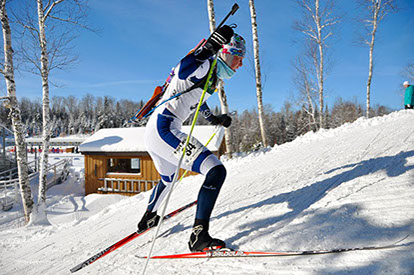
    OSI will support junior level biathlete development as well as biathletes in their gap year program. (OSI website photo)
    OSI will support junior-level biathlete development as well as biathletes in its gap-year program. (Photo: OSI)

    The second aspect of MWSC’s change, also precipitated by funding limitations, is something that intially alarmed the U.S. nordic community. In the past, a select group of emerging and national-team biathletes and cross-country skiers could count on some financial, housing and logistical support from MWSC.

    “We recognized a couple years ago that the current model of ski clubs in the U.S. was not one that I think where we are going to be strongest,” Mike Smith said. “We wanted to focus more on juniors, more on developing kids at that youth and high-school level up through and into their post-high-school careers since we simply don’t have the funding to support athletes for three to four — five years into their adult career … I know a concern in the cross-country world has been, ‘Oh now we are losing this program and we don’t care about competition.’ I would just reiterate that that is definitely not the case. We have moved ourself out of the same category as an APU [Alaska Pacific University] and Sun Valley Ski team, but we are connected as ever to the ideas of outdoor sport and what you can do with it. I think big picture, what we can offer in competitive sport will grow beyond nordic sport, but it will continue with nordic sport.”

    At this point, OSI will not attempt to challenge the Stratton Mountain School (SMS) T2 elite teams of the world. But according to Smith, those initials — OSI — will have a lasting imprint on the future of Maine as both the state’s rural communities and OSI define their new possibilities.

    Simply put, the institute is a four-season organization.

    Winter may be last seemingly forever in Maine, but the earth spins and spring and summer inevitably come. For the past few years, under the MWSC banner, and now OSI, the organization branched out beyond winter sport.

    antabuse

    “We have moved ourself out the same category as an APU [Alaska Pacific University] and Sun Valley Ski team, but we are connected as ever to the ideas of outdoor sport.” — Mike Smith, OSI program director and chief operating officer

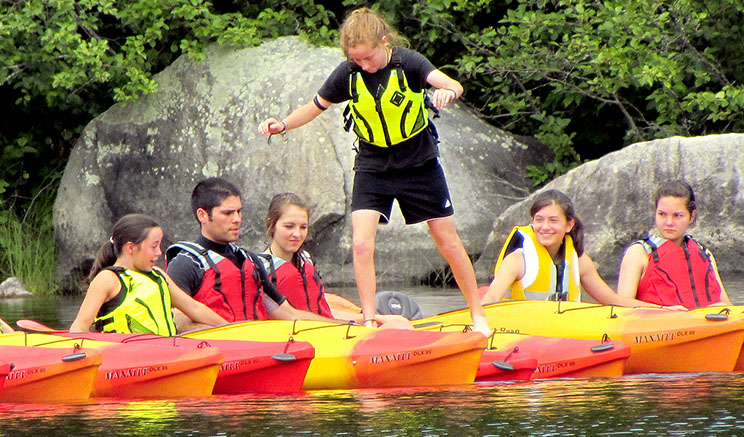
    Since its inception in 1999, MWSC’s core mission was to provide wellness opportunities through sport for some of Maine’s most rural and economically depressed communities. Beyond the nordic sports, primarily biathlon and cross-country skiing, OSI will offer resources and classes in whitewater kayaking, trail running, stand-up paddling, and mountain biking — activities MWSC had already begun offering.

    “The mission of the Maine Winter Sports Center was originally based on using skiing to create a model of sustainability for rural communities in northern Maine,” Shepard explained in an interview with Mainebiz. “That model included an economic development component based on the building of Nordic venues and redevelopment of alpine ski areas, as well as a full range of programs intended to empower kids through a world-class curriculum of outdoor sport education. Over the years, paddle sports, mountain biking, hiking and climbing were added and our scope became statewide.”

    Yet bringing opportunities to a vast region mandated a rethinking of how the nonprofit was organized. Smith explained that OSI is decentralized despite MWSC’s name being historically linked with nordic facilities in Fort Kent and Presque Isle.

    “Here in Maine you talk to people about Maine Winter Sports Center and they assume that you are talking about a specific facility and specific facility in a specific town which isn’t the case,” Smith said of how OSI will branch out in the state. “We don’t own those nordic venues in Fort Kent and Presque Isle. We still work with them and we have athletes training there, but those facilities are managed by local nonprofit organizations. And we felt it was important that people recognize that and don’t assume that those places are ours and that we are taking care of them because those folks are looking for support as well.”

    For now, although he is on the road most days, Smith’s office is based in Caribou, Maine, just north of Presque Isle at the northeastern tip of the state. Shepard, OSI’s CEO, keeps his office at the other end of Maine, nearly 300 miles south in Freeport. OSI maintains its adventure director in western Maine, development directors in the mid-coast region, its head biathlon coach in Fort Kent, and a head nordic coach positioned in southern Aroostook County. Mid-state, OSI stores its equipment and trailers to more efficiently deliver gear to communities engaging in its programs.

    With its tentacles throughout the state, Smith explained that OSI is better positioned to foster long-term healthy lifestyle choices among Maine’s residents. The state’s past reliance on natural resource extraction — the bread and butter of many rural communities —  is having its day of reckoning.

    That leaves many towns struggling to maintain a positive self image. By more fully realizing its mission of increased participation in outdoor sport, Smith believes OSI is a resource for those places.

    “From my experience, it’s not from an economic place first, it’s from a wellness place,” Smith said. “It’s a, ‘Jeez, we have this awesome spot, how can we get our community out here?’ Because we know it is good for our community.

    “Our focus is for programming and engaging people in outdoor sport and then what they [the community] can do to help facilitate. It’s not like we are showing up and saying if you all learned to mountain bike, your entire community’s economy is going to change. We are saying, if you engage in this, the same tool that makes you successful in engaging in this are the tools that can help you be successful in forging out where you want to go and what you want to do with your life and with your community.”

    Supporting a community, according to Smith, can have different looks: OSI can rent equipment like mountain bikes, stand-up paddleboards, and cross-country skis so a summer class can be offered, an after-school program, or a two-week physical-education unit. OSI also offers classes for educators so they, too, can run outdoor sport programs. Adults will have the opportunity to participate in local OSI clinics or participate in more complex adventure or athletic trips.

    “We are not just there to just show up for two days and run this camp, we are there to work with that community to figure out how this can work long term for them,” Smith explained.
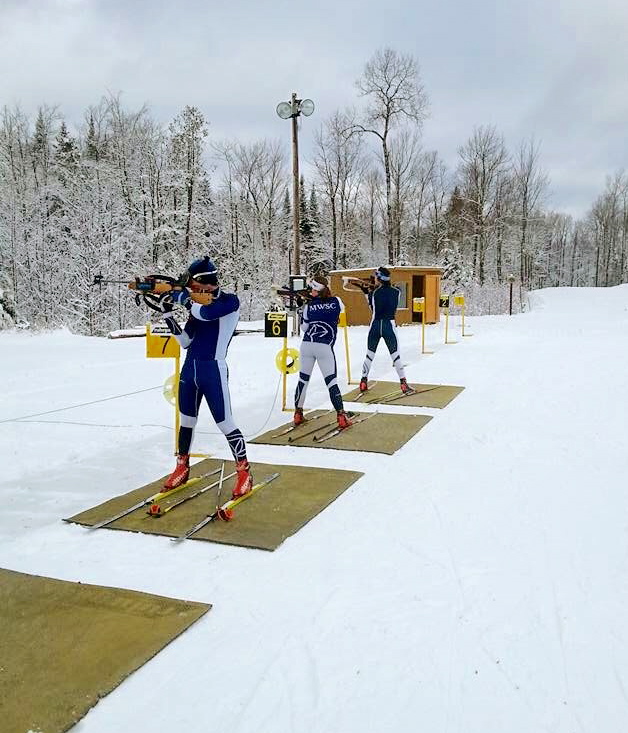
    Left to right: MWSC Biathletes Brendan Cyr, Mikaela Paluszek, and elite athlete Russell Currier during a head-to-head shooting workout in late December at the Fort Kent Outdoor Center in Fort Kent, Maine, Dec., 2015. (Courtesy photo)
    Left to right: MWSC biathletes Brendan Cyr, Mikaela Paluszek and Russell Currier during a head-to-head shooting workout last December 2015 at the Fort Kent Outdoor Center in Fort Kent, Maine. (Courtesy photo)

    Back to the earth spinning — winter comes early to Maine. And OSI will compliment what MWSC has done in the past with regards to biathlon and cross-country skiing, but not at the post-collegiate level. OSI is still interested in podiums, but its place is in fostering, what Smith referred to in an email as, “participation and performance” at the junior levels of the sport.

    OSI will offer what it is calling “gap-year support” to nordic athletes between the ages of 17-20, up to two years out of high school.

    “We have realized that, especially here in Maine, at the junior level if we want more folks on the podium at an upper level, we want more folks engaged at a lower level. And I think everyone understands that wherever they are,” Smith said about promoting nordic sports at the highest levels. “And we recognize that we need to figure how to help more young people self identify first as an active person that wants to go outside let alone someone who is interested in competing in nordic sport. And we are lucky in that we have a diverse array of programs under the OSI umbrella that is pulling a lot more kids in starting at ten years old,  then up through high school. And we have made structural changes in high school racing programs so that now we have more OSI coaches on the ground in more parts of the state working to get more new faces out there.”

    Several athletes, including Russell Currier, Kelsey Dickinson and Casey Smith, had already lost their funding due to MWSC funding cuts in 2014. Dickinson left biathlon (at least for now) and returned to the College of St. Scholastica, where she was the runner-up in the 5-kilometer freestyle at 2016 NCAA Central Regional Championships. Casey Smith (no relation to Mike nor Mary Barton Smith) joined the Craftsbury Green Racing Project to continue his biathlon career.

    Mike Smith explained that OSI is currently without any collegiate or post-collegiate cross-country skiers. They will begin recruiting athletes for their 2017 gap-year cross-country program this fall. The biathlon racing team will consist of two gap-year athletes and three University of Maine-Fort Kent biathletes.

    Seth Hubbard, sport development director and biathlon head coach for OSI, said in an interview that 2014 Olympic biathlete Currier continues to train with OSI and his assistance from OSI is limited to training-site support. As for potential gap-year athletes in biathlon or cross-country that would like to transition into the elite levels of their respective sports, “We can set them up for that,” Hubbard said.

    Although not involved with the highest end of competitive nordic sport, OSI is committed to building toward the future. There’s a name change and a bigger umbrella when considering the scope of their mission.

    “All that is about building capacity for everybody. We recognize that no matter how many coaches we have at the high-school level, no matter how many adventure programs we have at a high-school level, no matter how many kids in our gap-year programs both in competitive sport and in adventure, we have a finite number,” Smith said. “But if we can work with communities through youth development through education, through equipment rental, though trail development, the impact we can have is exponential. And everyone wins.”

  • Fereshetian Takes the Reins as Maine Winter Sports Center Cross Country Coach

    Fereshetian Takes the Reins as Maine Winter Sports Center Cross Country Coach

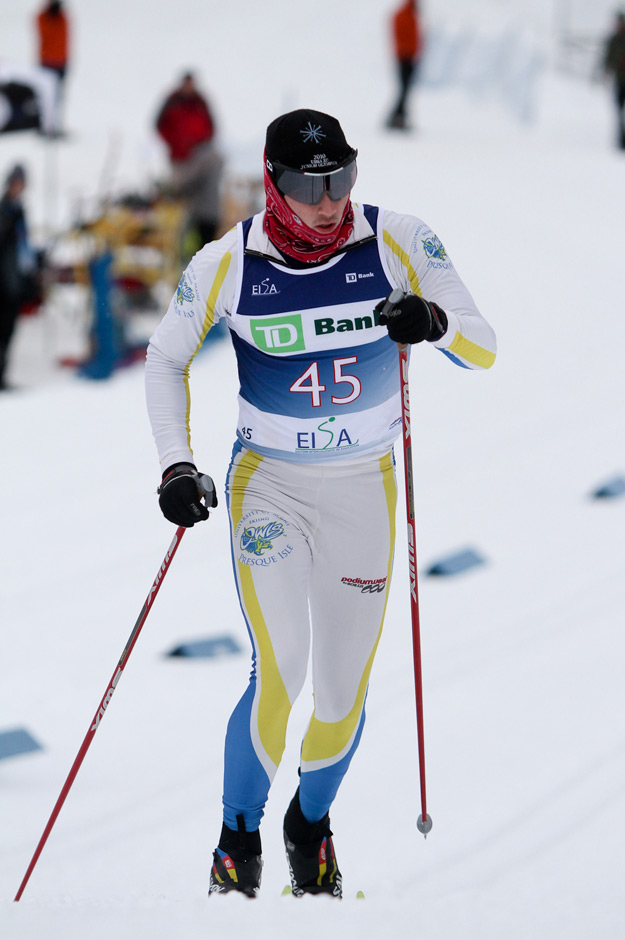
    Justin Fereshetian representing the University of Maine Presque Isle at the Lake Placid SuperTour in 2011. While at UMPI, he trained with the Maine Winter Sports Center and so knows their program from both an athlete's and a coach's perspective.
    Justin Fereshetian representing the University of Maine Presque Isle at the Lake Placid SuperTour in 2011. While at UMPI, he trained with the Maine Winter Sports Center and so knows their program from both an athlete’s and a coach’s perspective.

    Justin Fereshetian knew from a young age that he wanted to coach.

    “I knew that once I was finished racing, I wanted to be a coach,” the Turner, Maine, native said in a phone interview on Tuesday. “I’ve grown up just going to track meets, going to cross-country meets, and helping out. I was getting to be around that atmosphere all the time and I really enjoyed it. Then I got really into skiing, and I wanted to continue that avenue.”

    After attending the University of Maine, Presque Isle, Fereshetian took his first step down the coaching path when he worked as an assistant for the Maine Winter Sports Center (MWSC) last season.

    This spring, with a reorganization of the nonprofit and the dismissal of head coach Will Sweetser, Fereshetian was handed the opportunity to go one step further: to become the head cross country coach in a program where he had trained and raced himself.

    “I was a part-time assistant, and I really loved it,” Fereshetian said. “Now that I will be full-time, I’m really pumped.”

    He may be just 25 years old, but Fereshetian already impressed fellow MWSC staff last season with his approach to coaching. Sweetser said he had been working to create a full-time position for his mentee, maybe not this year but next year, and encouraged Fereshetian to apply for the new position after his own departure.

    “He’s pretty self-aware,” Sweetser said. “He knew that he would like to have another year or two to work with a more experienced coach to get his legs fully under him. I think that’s pretty cool to have a younger coach with that kind of awareness… I’m pretty impressed with his ability to be humble and open to suggestions. And if you talk to the athletes, he has a great rapport.”

    Fereshetian is now less than a month into his tenure, and still learning what his role is in the organization. With the disappearance of funding for MWSC’s Olympic Development program, most of the senior athletes who were formerly in the cross country team have now left.

    “We don’t really have any nordic postgrads that are staying throughout the fall,” Fereshetian said. “We have a couple who will be here for part of the summer before heading off to college in the fall.”

    He’ll try to rally the experience of those older athletes, while they are around, to motivate and inspire the high school crew which will form the core of the MWSC cross country program this season.

    “It’s really helpful having those guys around, because I can give them advice on what to do but then they can have someone who’s had experience with success and be able to look at what they are doing,” he said. “To have someone there racing and doing a really good job, it’s great to have good role models.”

    MWSC is coming off one of its best years ever for junior cross-country skiing.

    “We had six athletes in attendance at Junior Nationals last year, and we had even more than that qualify,” Fereshetian explained. “That was the most kids that Maine Winter has sent to one JN’s, I believe. That was really special.”

    Three of the athletes (Austin Huneck, Daniel Streinz, and Lance McKenney) turned in top-10 performances in individual races; so did former MWSC athlete Kamran Hussein, who had moved to the Stratton Mountain School.

    “My goal is to continue their development and try to help be able to reach their goals again,” Fereshetian said. “We definitely want to send multiple kids back to JN’s again.”

    Fereshetian is mostly sticking to the MWSC training script that has been written by Sweetser and biathlon coach Seth Hubbard, saying that it has been proven to work. He’ll add his own little twists, though.

    To do that, he has a lot of inspiration to draw on. Fereshetian’s father, Al, is the track and field and cross country coach at Bates College in Lewiston, and has earned Coach of the Year honors in multiple different athletic leagues, including in his previous tenure at Appalachian State University.

    “I definitely learned a lot from my dad,” Justin Fereshetian said. “And I also learned a lot from the great coaches that I’ve had: Paul Stone, Alexei Sotskov, Will. I had a lot of really influential people to gain knowledge and resources from.”

    According to MWSC CEO Andy Shepard, taking young coaches with passion and a good work ethic and turning them into experts has always been the organization’s strategy.

    “A lot of the coaches we’ve hired over the years have been young, and just getting started,” Shepard said. “We’ve given them access to resources and a support network that has helped them turn into some of the best coaches in the country… We believe that we’re capable of developing these coaches with the right attitude and work ethic, into world class coaches. I think our track record would suggest that we have success with that too.”

    Right now, the summer group is training five days a week, and Hubbard has been helping Fereshetian through the process of learning the ins and outs of the job.

    “Right now we have kids all over the place, and the training group is a little bit small right now,” Fereshetian said. “But once we get further into the summer we will get more closer to normal.”

    And Fereshetian is also helping out with a training camp that draws athletes from all across the state: any athlete who qualified to represent Maine at the U16 or Eastern High School Championships, or to represent New England at Junior Nationals, or to represent the U.S. at World Junior Championships, is invited. The camps happen four times a year and this time edition is at Sugarloaf.

    “We work with coaches from around the state to bring shared best practices together, and then all of that is applied to the kids who show up at this camp,” Shepard said. “It’s an awesome bunch of kids. We’re working not only on technique, but there’s also a lot of classroom stuff, nutrition and hydration and physiology. It’s one of my favorite times of the year.”

    In that atmosphere, Fereshetian is being shaped into a leader.

    “Definitely, there are big shoes for me to fill,” the 25-year-old said of his new job. “I in no way expect to be the type of coach that Will Sweetser was right off the bat. He had a lot of experience, and I learned a lot from him this last season. It was great working with him. But I feel confident in my abilities as a coach, and I’m really excited. It’s a little bit daunting, but I’m definitely a lot more excited than nervous.”

  • End of an Era: Sweetser Leaves MWSC After 15 Years; Club Focus Shifts from ODT to Juniors

    End of an Era: Sweetser Leaves MWSC After 15 Years; Club Focus Shifts from ODT to Juniors

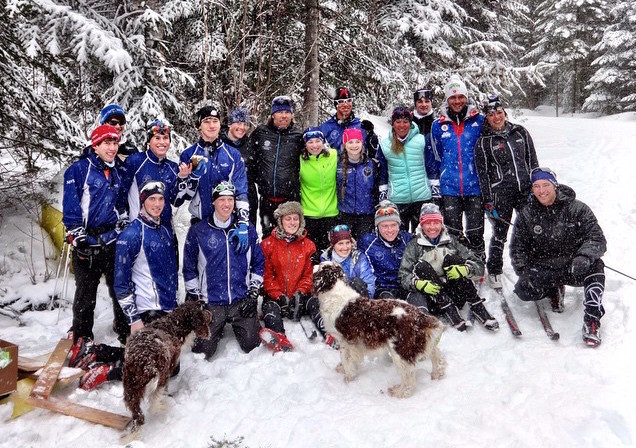
    Members of the Maine Winter Sports Center cross-country and biathlon teams on one last ski of the 2014/2015 season in early April in Fort Kent, Maine. (Photo: Facebook/Katrina Howe)
    Members of the Maine Winter Sports Center cross-country and biathlon teams on one last ski of the 2014/2015 season in early April in Fort Kent, Maine. (Photo: Facebook/Katrina Howe)

    Earlier this month, Will Sweetser, competitive sports director at the Maine Winter Sports Center (MWSC), revealed on his Facebook page that his 15-year term with the program had drawn to a close:

    “I can’t thank all of you who’ve made Maine Winter Sports Center and Maine Winter Sports Center Athletes such a success enough. Wish that I could give another 15 years to establishing my dream in Maine,” he wrote.

    “Don’t know yet where I’ll be,” Sweetser, 44, added in a comment. “Sudden news.”

    While the Maine native said in a phone interview he wasn’t able to elaborate on the departure at the time, he noted, “The leadership of Maine Winter Sports Center is shifting a little and we’re moving a different direction. I’m on to my next adventure; I have no idea what that’s going to be be…”

    On April 13, Sweetser was vacationing at a family residence in Florida with his wife Sarah Dominick, an assistant nordic coach at Bowdoin College in Brunswick, Maine. The two live nearly 300 miles north of Brunswick in Stockholm, Maine, between the MWSC’s base in Caribou and Fort Kent.

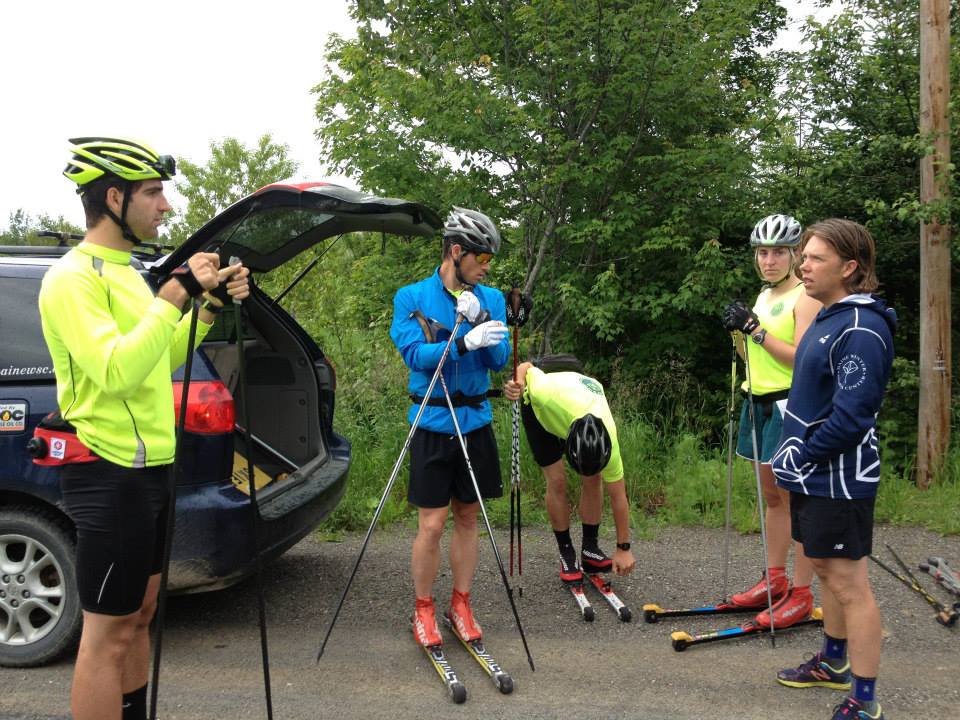
    The Maine Winter Sports Center Cross-Country Olympic Development Team (ODT) gets ready for a rollerski in northeastern Maine, with Kris Freeman (in blue), Welly Ramsey, Hilary McNamee and competitive programs director Will Sweetser (r). (Photo: https://www.facebook.com/maine.Winter.Sports.Center)
    The Maine Winter Sports Center Cross-Country Olympic Development Team (ODT) getting ready for a rollerski in northeastern Maine in 2013, with Kris Freeman (in blue), Welly Ramsey, Hilary McNamee and competitive programs director Will Sweetser (r). (Photo: Facebook/MWSC)

    Originally from Auburn, Sweetser skied for Dartmouth, and Dominick was an All-American skier at Bates College and former MWSC coach. Sweetser has coached at Bates, the Jackson Hole Ski Club in Wyoming, and Carrabassett Valley Academy and Rangeley Lakes Ski Club in Maine.

    “We were committed to raising a family in Maine and it came as a surprise,” Sweetser said of the recent news, adding that he and Dominick “will be searching for something new to do while we’re expecting a baby.”

    Their first child is due in October.

    “I’m really proud of the work that the organization has done in the field of competitive skiing [and] biathlon and I’m very thankful for all the time that I had with fantastic young athletes in the state of Maine,” Sweetser added.

    He started the position as head of the cross-country team in 2000. Along with Sweetser’s departure, the Olympic Development Team (ODT) program is being restructured, according to MWSC President and Chief Executive Andy Shepard.

    That means that ODT athletes, including Welly Ramsey, and biathletes Casey Smith, Russell Currier and Katrina Howe, will have to finance their travel for the coming 2015/2016 season.

    “In the short term — this coming season — the program will be more of a Training Center program,” Shepard wrote in an email. “We will continue to offer coaching for the athletes who want to train with us. We are also looking at opportunities to provide part-time coaching positions to provide some funding for them.”

    For the coming season, the MWSC, which has an annual total budget of $1.1 million, according to Shepard, will shift its focus to its junior and postgraduate programs. In 2013/2014, the center operated with about a $1.4 million dollar budget, supplied by the Libra Foundation.

    “The staffing structure we have had historically is set up to support those [junior and postgraduate] programs effectively,” Shepard wrote. “We have had a lot of success over the years placing kids from our programs on Olympic Teams. We are very proud of that heritage and are committed to continuing that tradition in the future. We just need to find a way to do so in a sustainable way. We hope to have a coach on board soon and will work with that coach to create a new vision for that program.”

    He explained that they were looking to fill Sweetser’s position in the “next couple weeks.”

    “While racing is a part of a much larger outdoor education program structure, we’re very proud of our role in racing in Maine and it will remain a critical part of our programming moving forward,” Shepard wrote. “Maine has some of the top skiers and biathletes in the country and we want them to be able to stay at home to pursue their Olympic dreams.”

    Currier described the ODT cuts as “unfortunate, but it isn’t necessarily unfair,” he said in a phone interview. “Getting athletes on the World Cup is a goal for MWSC, but it’s not the primary goal. If anything, it’s sort of an indirect goal. … Ultimately, the primary goal is to build a skiing community, not just a few fast athletes. So when the budget got stretched a little thin, they had to re-prioritize what is important.

    “While we still have training sessions for really good athletes, most of the resources and development will go toward that younger, local group,” he added. “It’s kind of a double edged sword. It’s fair, but it’s difficult for me.”

    Cash Flow

    In February 2014, MWSC discovered it would lose its funding from the Libra Foundation in April 2014. The program immediately launched two fundraising efforts, the first of which involved asking Maine-based foundations and corporations for three years of support with a goal of raising $550,000 by March 2014. The second spawned from an initial matching gift from Presque Isle native Mary Barton Smith, who pledged $100,000 plus a $400,000 matching grant.

    A few months later, Smith donated another $2 million with an additional $3 million in matching to kick off the program’s $20-million endowment campaign for the long-term sustainability of the MWSC.

    In the last 14 months, Shepard noted that the center has made “significant progress in our fundraising,” raising $3.9 million dollars. Two million of that was toward the program’s $20-million endowment and another $3 million would come from Smith’s pledged matched funding.

    “We still have a lot of work to do, but we are off to a great start,” he wrote.

    This season, the MWSC is increasing its Adventure Initiative Program from five sessions last year to 10 sessions this year, “including the possibility of a month-long program in the Patagonia region next fall,” Shepard explained. “We are increasing our budget for the Junior Race program and we are working on an exciting new biathlon program that we plan to announce in May. We have also launched a new initiative, collaborating with land trusts in Maine to provide trail design, programming, gear and leadership development.”

    But for the program’s highest-level skiers, funding cuts to the ODT (specifically to travel outside the East) and the cross-country coaching void have led many to reconsider their futures at Maine Winter Sports.

    The Initial Shock and What’s Next

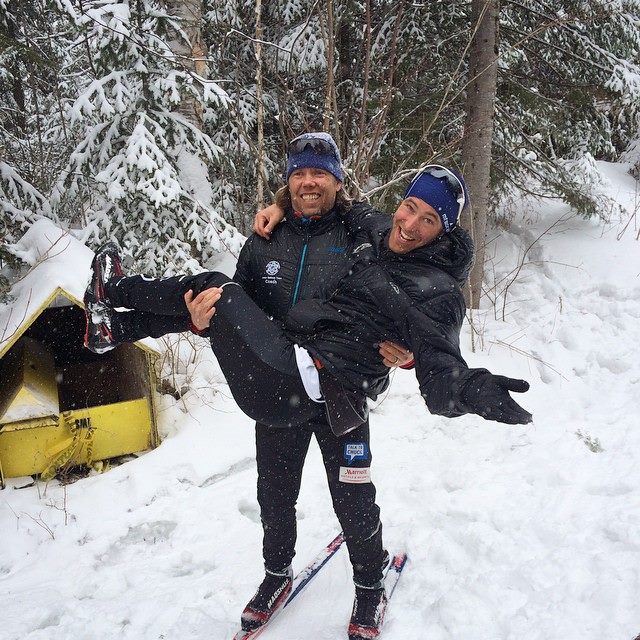
    Welly Ramsey (r) in the arms of MWSC Competitive Programs Director Will Sweetser, his coach for the last six years, during a season-ending team ski in Fort Kent, Maine, in early April. (Photo: Facebook/Welly Ramsey)
    Will Sweetser, former competitive programs director at the Maine Winter Sports Center (MWSC), holds athlete Welly Ramsey during a season-ending team ski in early April in Fort Kent, Maine. Sweetser had been Ramsey’s coach for the last six seasons. (Photo: Facebook/Welly Ramsey)

    When Ramsey, one of seven members on the 2014/2015 MWSC cross-country team, heard his coach of six years was leaving, he described it as “quite a shock,” in an online message to FasterSkier.

    “We came close to a breakthrough this season, and I hope any future success of mine will be rightfully attributed to him,” he wrote. “The man has had an amazing impact on my life, playing coach, friend, co-worker, mentor, employer, disciplinarian, and much more. He always went the extra mile and I can unequivocally say that I wouldn’t be here without him.”

    Ramsey added that Sweetser was “responsible for nearly every Maine skier developed in the past 15 years,” and helped propel MWSC’s junior team to one of its most successful seasons last winter despite the loss of its development coach, Amber Dodge. In an email, Dodge explained that she took a job as youth program manger with the New England Nordic Skiing Association (NENSA) last fall after moving in with her boyfriend and ski racer Kris Freeman in Thornton, N.H., last summer.

    “I learned so much as a coach, thanks to Will and [biathlon director] Seth [Hubbard],” she wrote of her three years with the MWSC. “I miss the athletes I worked with dearly as we were able to spend so much time with them year round.”

    Ramsey explained he was “currently in negotiations with the Maine Winter Sports Center about my future with the program, and have contacted other clubs with whom I can see my career excelling.”

    He would like to stay in Maine “and continue helping develop the next generation of athletes, but I do need to make the choices which are best for my career,” he added. “Whether I stay or go will hinge largely on how effectively I fundraise this spring. Later this month, I’ll lay things out and assess my move based on fundraising potential, race and wax support, and training group. I have a big year of training planned and I’m excited for the opportunities this seemingly precipitous event has yielded, both in Maine and elsewhere.”

    His teammate, Austin Huneck described the news about Sweetser as “a huge shock to everyone.” Huneck started as a postgraduate under his guidance two years ago and felt he had made major gains in the time since.

    “It’s very sad for me to see him go after everything he has done to help MWSC and athletes across the state,” Huneck wrote in an online message. “It’s hard to put into words how much Will has done for the ski community during his years with Maine Winter. He has helped me grow so much as an athlete and a person, and I’m not sure I would be were I am today without him. I know whatever he goes on to do next will be a great adventure. I’m grateful to have known him as not only my coach but as my friend.”

    While he had initially planed to return to MWSC for his third season, Huneck explained that his plans are “very up in the air.”

    “Will being gone does have an impact on my decision to return, but I know Seth Hubbard and [program director] Mike Smith at Maine Winter will do a great job to hire a new coach to fill his shoes,” he wrote. “MWSC has seen a loss of funding for the elite level athlete support going into next year, and this is also going to have a big impact on my decision. I am currently looking into attending college next season, and speaking with coaches at other clubs around the country. But at this time, I cannot say what my plans are for sure.”

    For the last two summers, Omar Bermejo of the U.S. Paralympics Development Team has spent his summers training with the cross-country team in Maine. He currently lives in Casper, Wyo.

    “Will Sweetser is a great coach, without him in my corner the year before the Sochi Paralympics I don’t think I would have been as happy as I am with my performance and progression in the sport of Cross Country skiing,” Bermejo, a MWSC cross-country team member, wrote in an email. “It was a shock to me and to other athletes the sudden departure of Will from MWSC.

    “As far as my career, I had spoken to Will about the possibility of returning to MWSC this year but I will not be going due to his departure,” he added. “Lucky for me he will be moving closer to me here in Wyoming, where I intend to seek his help to improve my technique.”

    Sweetser did not say whether he and his wife planned to move from Maine.

    Howe, a biathlete with the program, wrote in an email that she was “devastated to hear about his departure from MWSC. Although he wasn’t my coach … I got to work with him quite often and thoroughly enjoyed it. I haven’t worked with many coaches who love skiing as much as Will does.

    “For Will and his wife Sarah it’s truly a lifestyle, not just a job,” she added. “They will be sorely missed at MWSC … As with the departure of any coach, good or bad, it’s an opportunity for growth and change in the program. Hopefully the position will be filled by someone who shares the love and enthusiasm for skiing that Will has.”

    In the aftermath of the ODT cuts, Howe explained she was unsure of her plans going forward.

    “Ideally I’ll be in a position to continue with biathlon but if that doesn’t happen my backup plan is to get reacquainted with my classic skis and jump into some cross country races this coming winter,” she wrote. “At some point I see myself becoming a coach, but I can’t say how soon that will be.”

  • Maine Winter Sports Center Kicks off $20 Million Dollar Endowment Campaign with Major Gift

    (Press release)

    Presque Isle native, Mary Barton Smith, has given a gift that, when matched, will generate $8,000,000.

    CARIBOU, Maine — Mary Barton Smith, whose $500,000 matching gift in February of 2014 kicked off a successful $1.4 million dollar fundraising campaign and gave the Maine Winter Sports Center (MWSC) new life, has given a $2,000,000 gift and an additional $3,000,000 matching gift to kick off MWSC’s $20-million-dollar endowment campaign. Fully matched, Smith’s gift will represent $8 million dollars in endowment contribution.

    When it was announced in February of 2014 that the MWSC would be losing its funding in April of that year, the future of the organization was in serious doubt. The MWSC immediately launched a campaign intended to secure the funding necessary to continue operations beyond April and give it time to develop a more sustainable and diversified funding model to move forward.

    “Mary’s belief in the Maine Winter Sports Center and its impact on the health and well-being of Maine residents has been transformative,” said Andy Shepard, President and CEO of the MWSC. “She has put us in a position to ensure that we can continue to have that impact by challenging others who share her commitment to Maine to join the campaign and give to the endowment fund.”

    Currently, the MWSC has two fundraising efforts running simultaneously. The first has been ongoing since February of 2014 and is reaching out to Maine’s foundations and corporations to support operations over the next three years. This campaign, with the ongoing support of best-in-class Maine brands, LL Bean and Emera Maine, will give the MWSC a bridge to our endowment-driven long-term sustainability. The second campaign-to generate the $20 million dollar endowment, will ensure that long-term sustainability-and is being kicked off today.

    “The endowment campaign will engage the help of individuals and organizations that share the MWSC’s commitment to a healthier Maine and to the effective stewardship of our remarkable natural resources, which serve as the classroom for MWSC’s programming,” said Dick Trafton, Chairman of the MWSC board.

  • After Funding Loss, the Maine Winter Sports Center Looks to the Community for Help

    After Funding Loss, the Maine Winter Sports Center Looks to the Community for Help

    Maine Winter Sports Center logo
    The Maine Winter Sports Center announced that come April it’s largest sponsor, the Libra Foundation, would cease funding. The Center is now working to raise enough funding so that it can continue operations in the coming years.

    It was quite the shock when the Maine Winter Sport Center lost its biggest sponsor, the Libra Foundation, this past February. The Foundation, which had supplied roughly $1.4 million of the Center’s revenue in past season and over $33 million since the Center’s start 15 years ago, decided it was simply time to part ways and let the Center find success on its own.

    While the pull of funds followed the guidelines to the Libra Foundation’s model facilitating the growth of community organizations, the suddenness of the withdrawal threw many within the Center into shock and jeopardized its ability to secure funding for the next fiscal year. Since then, the organization has been scrambling to gather donations for the coming year.

    For those who haven’t been apart of the Maine Winter Sports Center it’s easy to think of the organization as another ski club that makes up part of the nordic community in the U.S. In reality, it is much more.

    In providing the means for areas like Black Mountain and Rumford (site of the 2011 and 2012 Cross Country Championships) and the Nordic Heritage Center (host of the 2014 IBU World Youth/Junior Biathlon Championships) MWSC has established an infrastructure for nordic skiing to flourish in the state. In addition, with well over 4,000 youths involved in the Center’s programs, MWSC has been making an impact on its surrounding community.

    In order to make sure that impact continues, Andy Shepard, President and CEO of MWSC, has been on an all-out blitz to secure as many donations as possible before the end of April.

    His efforts have proven successful thus far, as the Center has raised roughly $810,000 since the February announcement.

    “It’s not enough for us to run our full range of programs for the year. It’s enough to get started, but we have an ongoing funding campaign that ends this month,” Shepard said in a phone interview. “The sense of urgency around this is the fact that the fundraising campaign ends at the end of the month.”

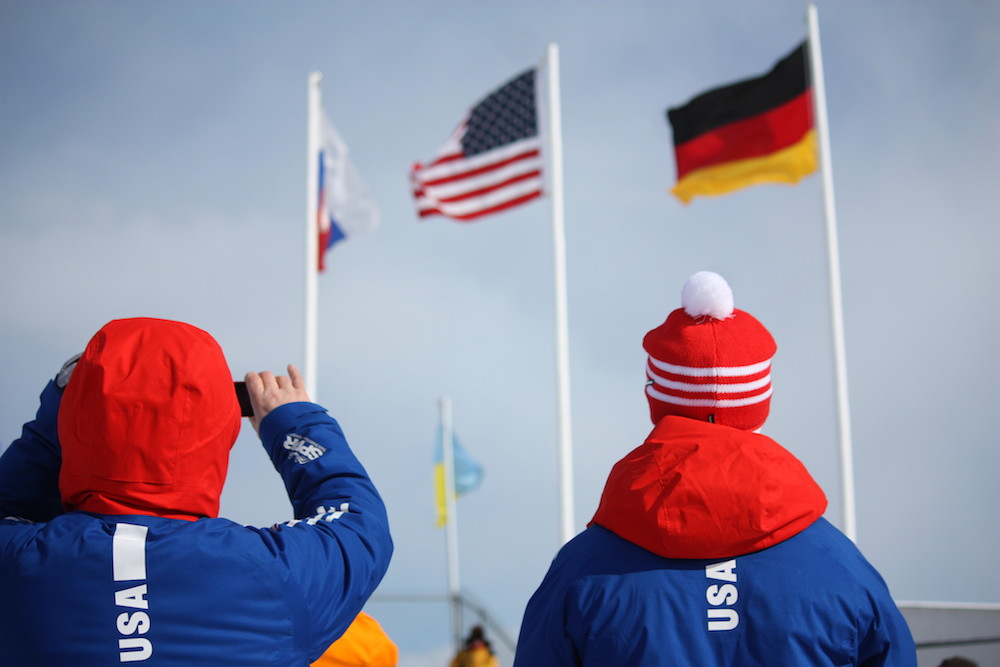
    US Biathlon staff snap a photo of the youth men's podium on Friday in Presque Isle, Maine, as represented in flags after Sean Doherty topped Germany by 1.7 seconds and Russia by nearly 19 seconds for the win. (Photo: Craig Cormier)
    US Biathlon staff snap a photo of the podium in Presque Isle, Maine at the 2014 IBU Youth/Junior World Championships. The Nordic Heritage Center, which hosted the event, was supported by the Maine Winter Sports Club. The Nordic Heritage Center will now be part of the newly formed Aroostook Nordic Inc. which will continue to be supported by the Libra Foundation. (Photo: Craig Cormier)

    Fortunately, the Center may have found some luck in a local benefactor. Mary Barton Smith, a Presque Isle, Maine native with ties to the origins of Silicon Valley, has offered a $400,000 matching gift that must be met by April 30th.

    “[Smith] appreciates the work of the Maine Winter Sports Center,” said Shepard. “Her primary focus is on the health of Maine’s youth and realizes the role that the Maine Winter Sports Center is playing across the state, but particularly in Aroostook County on trying to address childhood obesity and create a healthier lifestyle.”

    Smith has agreed to match any donations up to $400,000 by April 30th. Currently the Maine Winter Sports Center has raised $210,000 since the start of the matching campaign, most of which has come from donations of $5 or $10 from the local community. “[The gifts are] from individuals and families that have been a part of our program around the state or who respect the work that we do.”

    “That’s encouraging to us because they’re coming from all over the state and other countries.”

    In addition, several five-digit donations have been gifted, including a $25,000 from an anonymous donor.

    As of now, the Maine Winter Sports Center is focused on securing as much funding as possible for next year. However, as soon as the money is secured, the emphasis will shift towards long-term sustainability.

    While still in the initial phases of implementation, Shepard has about $310,000 in long-term sponsor agreements. He believes he can get that number up to $500,000 or $600,000.

    “And then the focus beyond that is creating a foundation and focusing on creating an endowment to secure the long-term sustainability of the Center for generations to come,” he said.

    With this major shift in its budget, the Maine Winter Sports Center will have to undergo some changes, but not enough for anyone affected by the Center’s programs to notice. One such change will be the split of the company into two separate organizations. Programming across the state will remain as the Maine Winter Sports Center and will be run by Shepard and a new operating board. The 10th Mountain and Nordic Heritage Centers will become Aroostook Nordic Inc., which will continue to be supported by the Libra Foundation.

    Kris Freeman (Maine Winter Sports Center) heading into the lond descent down Whale's Tail on the fifth of six laps in the U.S. nationals 30 k freestyle mass start
    Four-time Olympian Kris Freeman, who skied for the Maine Winter Sports Center in the 2013/2014 season, races in the 2014 U.S. Nationals 30 k freestyle mass start this past January. Freeman is leaving the center for the upcoming season.

    “The takeaway of all of this, is that from the perspective of those in the community we don’t anticipate that they will see a change in what we’re doing. We’re going to continue to offer the programs that we have and in fact we have some plans on expanding some of our programs like the youth racing program that we’re looking to expand across the state,” said Shepard of the restructuring process.

    “The question is with our resources how do we scale these programs to meet the emerging needs of the state of Maine in a sustainable way as possible. That’s what we need to figure out.”

    Shepard has faith that everything will happen as it should, at the very least because of his excellent staff. “If anyone can figure out how to do this, it’s these guys,” he said.

    One such staff member is Will Sweetser, Competitive Program Director and Cross Country Coach at the Center. According to the Dartmouth graduate, not much will change in regards to the competitive side of the Center. Most competitive team skiers will remain, such as Welly Ramsey and Omar Bermejo, with the exception of those headed to National Team for biathlon, like Russell Currier and Annalise Cook.

    The only real change to the membership of the competitive team will be the departure of Kris Freeman, who joined the team this past season after leaving the U.S. Ski Team.

    “[Kris] is pretty confident in his funding abilities and is stepping away from the program requirements that would have him in Maine. He’s going to stay closer to home for the rest of his training,” said Sweetser. “The relationship with Kris is still really good. He and I still talk quite a bit and there is no negativity on either side.”

    Despite a history of hosting top-tier athletes, further recruitment to the Maine Winter Sports Center’s elite team seems unlikely and as the organization continues forward they plan on finding their talent from within Maine.

    “We were some of the first to recruit so-called elite-level athletes to the full-funded club program. We started that 12 years ago, but in the years that have come we have built a strong enough structure in Maine that we seem to be able to generate enough national level and beginning international level athletes. It’s not really necessary for us to look outside state borders,” said Sweetser. 

    With a successful fundraising campaign and a continued plan to grow the Center’s capacity, Sweetser believes the development program will continue to mature.”We’ll see the Maine Winter Sports Center evolve in a more robust Olympic development program for the state of Maine. It’s my contention that you’ll see other sport clubs follow our lead when we’re able to do that.”

    “We really do capture the imagination of young Maine athletes looking to go beyond the high school ranks, and they see kids and young adults in their neighborhood who are able to pursue their dreams in college and after college right here at home. I think that’s a really valuable tool for our state. I look forward to seeing that continue.”

    At the end of the day, Shepard believes that the Maine Winter Sports Center is an essential centerpiece to the Maine’s sports culture and society. With programs in 140 communities across Maine, it’s hard to imagine the loss that Center would not only have on the Maine community, but the nordic ski community across the country.

    “The Maine Winter Sports Center has a 15 year track record of making a difference in Maine. Our programs have been recognized around the country and around the world. There’s a tremendous amount of respect for what we do and how we do it and the past eight weeks have demonstrated in a most profound way how important what we do is to the people of Maine.”

    To donate to the Maine Winter Sports Center access their website here, or send to Maine Winter Sports Center, 552 Main St. Caribou, ME 04736.

  • Black Mountain to Remain Open With Historic Gift from Maine Winter Sports Center

    Black Mountain to Remain Open With Historic Gift from Maine Winter Sports Center

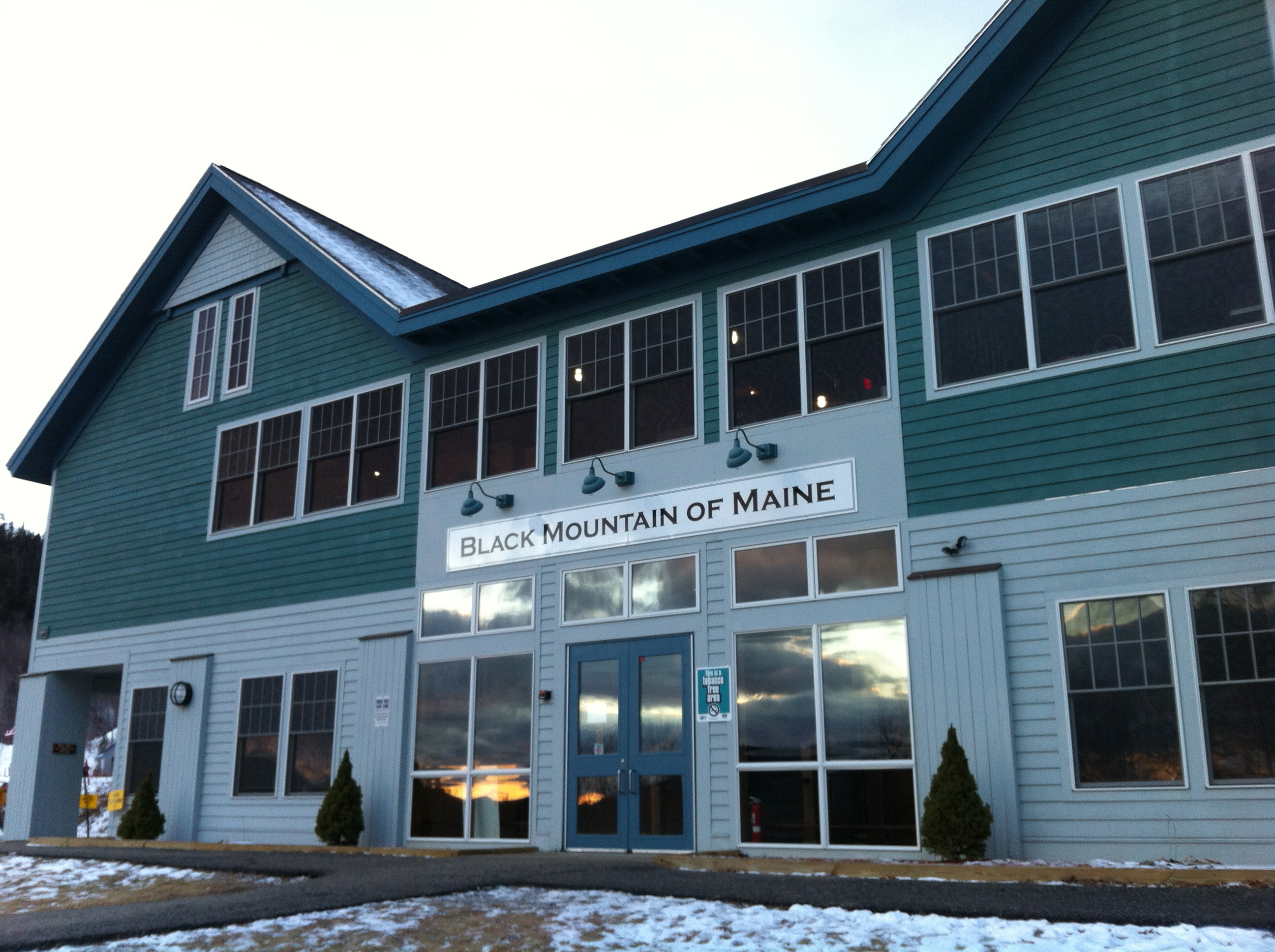
    The lodge at Black Mountain in Rumford, Maine.
    The lodge at Black Mountain in Rumford, Maine.

    Press release:

    Black Mountain will now be owned by the non-profit volunteer board, which has run the mountain for the past 10 years. With the new ownership structure, strong community support and sustaining the current fundraising campaign will be even more important.

    The Maine Winter Sports Center, with the support of the Libra Foundation, has announced its intention to make an historic gift of Black Mountain ski area in Rumford, Maine and all its assets to the community based non-profit corporation, which has operated the mountain since 2003. The completion of the gift remains subject to the parties reaching agreement on terms of the transfer document. The gift, when completed, combined with demonstrated strong fundraising potential, and the support of partners like Bangor Savings Bank, Franklin Savings Bank and Sunday River Resort, will allow the mountain to open this season.

    “In just three weeks since plans to close the mountain were announced, Black Mountain of Maine has raised over $125,000, toward a goal of $200,000,” said Andy Shepard, President and CEO of the Maine Winter Sports Center. “Given the rapid progress toward the goal, we felt it important to make known our intentions to donate the mountain and let the community begin the important work of planning for the future.”

    Black Mountain changed its business model radically last year, looking to make skiing more accessible and to reach profitability. It reduced day tickets to $15 and season passes to $150, added a new snowmaking system, website and retail shop and expanded the Last Run Lounge. It also added a new 1.5-mile intermediate trail, Allagash, which quickly became a major new attraction. The result was a dramatic increase in new skiers and revenue, which has put the mountain on a positive trajectory.

    “When the Libra Foundation got involved in 2003, Black Mountain was 470 feet of vertical, had a T-bar, an aging lodge and was struggling to make a difference in the region,” said Craig Denekas, President and CEO of the Libra Foundation. “We believed we could make a difference for these communities and invested significant resources into the project because we believed in Rumford. The mountain is now Maine’s 4th tallest ski area, has a beautiful post-and-beam day lodge, four paved parking lots and, I believe, honors the proud skiing heritage in western Maine by making community skiing accessible to all. We are very pleased to complete our phase of involvement by making this gift to the western Maine communities supporting Black Mountain.”

    Bangor Savings Bank, Franklin Savings Bank and Sunday River Resort have been instrumental in leading the fundraising effort. Sunday River, which has also been an invaluable partner to Black Mountain over the years, will continue to provide expertise to the new ownership.

    To help the new Black Mountain reach its fundraising goal, visit: www.gofundme.com/3eyo8c. Donations will be matched on this site by Bangor Savings Bank until this online campaign reaches $50,000. You can also go to any Bangor Savings Bank branch with your donations.

  • Shepard Campaigning to Save Black Mountain

    Shepard Campaigning to Save Black Mountain

    The lodge at Black Mountain in Rumford, Maine.
    The 13,000-square-foot lodge at Black Mountain in Rumford, Maine.

    After announcing Wednesday that the Maine Winter Sports Center (MWSC) is closing Black Mountain Ski Resort in Rumford, Maine, six-time host of the U.S. Cross Country Nationals, President/CEO Andy Shepard is hoping a buyer will step forward soon.

    “At this point, I am completely focused on finding a way to keep Black Mountain operating next year,” Shepard wrote in an email. “While MWSC won’t be involved, there has been too much progress and the mountain is too close to making money to stop now.”

    Maine Winter Sports Center President and CEO Andy Shepard (l) with two-time Olympic nordic skier Chummy Broomhall at Black Mountain in Rumford, Maine. Broomhall designed the mountain's 17-kilometer trail system in the 1960s. (Photo: flyingpointroad.com)
    Maine Winter Sports Center President and CEO Andy Shepard (l) with two-time Olympic nordic skier Chummy Broomhall at Black Mountain in Rumford, Maine. Broomhall designed the mountain’s 17-kilometer trail system in the 1960s. (Photo: flyingpointroad.com)

    Shepard told the Lewiston Sun Journal that is has not been decided whether its nordic trails will also be closed.

    In the meantime, Shepard has started the Black Mountain of Maine Fund in an effort to find a nonprofit to transition ownership to and a group of individuals or corporations willing to provide economic stability. In its first day, the fundraiser brought in $2,300 dollars and was up to nearly $9,000 dollars on Friday. It has a goal of $100,000 dollars.

    A Rumford town vote to eliminate funding to the mountain made Shepard’s decision to close the resort after 10 years of ownership “untenable.” The Portland-based Libra Foundation supports the MWSC, and its partners knew when they purchased the mountain in 2003 that they couldn’t sustain it without a supportive community.

    The new owners would inherit a 13,000-square-foot lodge less than 10 years old, an internationally certified nordic venue, a snowmaking system, and Maine’s fourth-highest vertical mountain with a 50-year history. Two-time Olympian Chummy Broomhall (who competed at the ’48 and ’52 Games) designed its 17-kilometer trail system, along with the Olympic nordic trails in Lake Placid, N.Y., and Squaw Valley, Calif.

    The volunteer-driven Chisholm Ski Club has hosted nationals at Black Mountain, along with the 1950 World Championships, NCAA Championships (1976, 1999, 2009), 1996 Junior Olympics and 1991 U.S. Biathlon Championships.

    The venue is not a primary training site for the MWSC Olympic Development Team. The club’s office is in Caribou, a five-hour drive north of Rumford. Its athletes train on world-class trails at the Nordic Heritage Center in Presque Isle and the 10th Mountain Ski Center in Fort Kent.

    A longtime host of high-school state championships, Black Mountain also regularly holds Maine’s largest high-school race, the Jon Sassi Memorial Classic, which doubles as the state’s J2 team qualifier. It’s also the home course of the Bates College Nordic team, which hosts a carnival for the Eastern Intercollegiate Ski Association (EISA) circuit.

  • Maine Winter Sports Center to Close Black Mountain Alpine Operation

    Maine Winter Sports Center to Close Black Mountain Alpine Operation

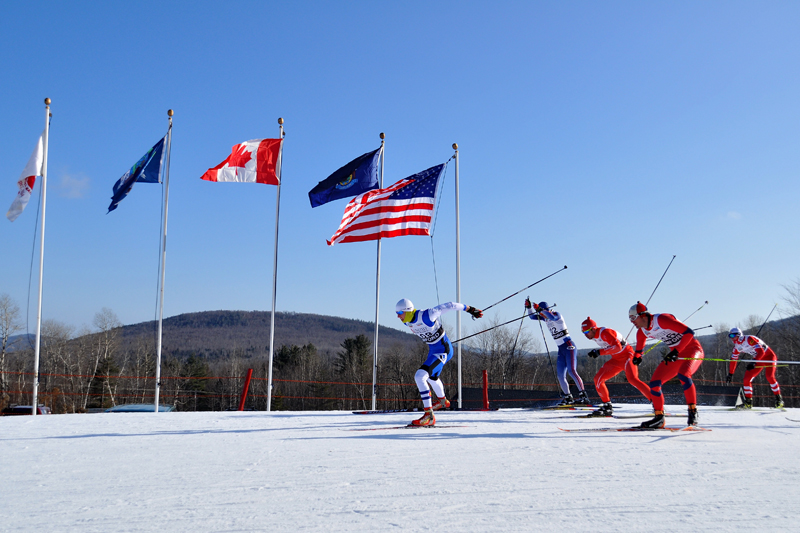
    The second men's semifinal gets out on the course.  Photo: James Doucett.
    Black Mountain in Rumford, Maine, host of the 2012 U.S. National Championships, announced this week that it plans to close down its alpine operations. Photo: James Doucett.

    Maine Winter Sports Center Press Release:

    The Maine Winter Sports Center, which has owned and operated Black Mountain in Rumford, Maine since 2003, has announced its intention to close the alpine mountain, effective immediately.

    “The timing is unfortunate coming off our best season ever,” said Andy Shepard, President and CEO of the MWSC, “Several years ago we took on the challenge of turning Black Mountain around with an understanding that we needed strong community support to make the economics work.”

    “I know the mountain still has a lot of support within some sectors but the electorate told us clearly that there are other priorities and we absolutely respect that,” Shepard added, referring to the recent town vote not to fund Black Mountain as a recreational resource by a nearly 2-1 margin.

    Black Mountain had changed its business model radically last year, looking to make skiing more accessible to the region and to also reach profitability. It reduced day tickets to $15 and season passes to $150, adding a new snowmaking system, expanding the Last Run Lounge, adding a retail shop and a new, upgraded website. It also added a new 1.5-mile intermediate trail, Allagash, which quickly became a major new attraction.

    “Day Ticket sales last season were up 197%, rentals were up 93% and lessons up 426%,” said Shepard. “Overall revenue was substantially up and the mountain was making progress. That said, the nonprofit community mountain still posted a loss, which required outside sources to cover.”

    After a careful review of the financials and discussions with financial backers, Maine Winter Sports Center was contemplating future operations but the town vote to eliminate funding to the mountain made the tenuous decision untenable.

    “We invested in the operation of Black Mountain for 10 years because we saw the mountain as an important part of the economy and skiing heritage in the region,” said Craig Denekas, President and CEO of the Libra Foundation. “That partnership has been a success for many seasons and we were pleased to play some role in that. But we also understand that the people have spoken and we simply have to recognize that,” Denekas added.

  • The First to Take MWSC Program from Hometown to World Cup Top 10, Currier Focuses on Consistency

    Russell Currier (USBA/Maine Winter Sports Center) pushing through the final stretch of a sixth-place effort in Nove Mesto, Czech Republic, this winter. Photo: USBA / NordicFocus.

    Last winter, a number of relatively young American athletes catapulted their way to top-ten World Cup results in nordic disciplines – often very much to their own surprise, and certainly to the surprise of European commentators. One of those was Stockholm, Maine’s Russell Currier, who, joining the biathlon circuit halfway through the season, had a breakout performance in his second race of that weekend.

    In a sprint in Nove Mesto, Czech Republic, 24-year-old Currier started more than half an hour after eventual winner Emil Hegle Svendsen of Norway finished – but the announcers couldn’t coast through the back half of the field, because, out of the blue, Currier charged his way towards the podium, ultimately missing it by nine seconds and placing sixth. He repeated that result a few weeks later in Kontiolahti, Finland.

    This summer, Currier had reason to gain a little spring in his step – and so did his home club, the Maine Winter Sports Center.

    “Russell has been with us literally from day one,” said MWSC President Andy Shepard. “When we started our Healthy Hometowns program in 1999, we decided to start off small with one or two or maybe three communities, to really figure it out and nail it and then we’d start to expand it. One of the first communities we were in was Stockholm, Maine. Russell was in that very first class.”

    MWSC has had plenty of standout athletes in the past, but Currier is the first to go all the way through the program from Healthy Hometowns to the first page of World Cup results – something that Shepard says he wouldn’t have believed a decade ago.

    “Nobody who knew Russell at the time would have imagined he would grow up to be a world-class biathlete,” he laughed in an interview from Park City. “He was your typical middle school kid. He didn’t look like a world-class athlete and he didn’t act like a world-class athlete. But he started skiing to and from school, he spent a lot of time hanging out with our coaches, and really from day one he has embraced this notion of living a healthy, active, outdoor lifestyle, and it has changed his life as a result.”

    Currier at the finish of the Nove Mesto sprint. Photo: NordicFocus/USBA.

    Shepard said that Currier’s recent success was another boost to the program, which uses its elite athletes to inspire younger kids to get outside and be active. Having one of the most successful of those athletes come from just down the road? It helps.

    FasterSkier caught up with Currier to check in about his summer training, whether the 2012 results have changed his approach, and what he’s working on for 2013.

    FasterSkier: How has your summer gone?

    Russell Currier: It’s pretty busy. I’ve spent a lot of time over here at the Olympic Training Center in Lake Placid, based out of there. I spent a few weeks back at home, but not too much. It’s a good training group and a good system – a little repetitive at times, but it works pretty well.

    FS: Northern Maine and Lake Placid are a pretty long drive apart, so how does it work to try to split your time like that?

    RC: If I’m going to be in one place, I try to be in one place. In the past I have spent the low weeks back home, but this summer even in the rest weeks I would stay in Lake Placid because it’s a solid eight- to ten-hour drive back home, and it’s not very exciting. If I can dodge that, it’s almost always worth it. It’s been like this for I’d say the past three years.

    FS: With Kris Freeman and Annelies Cook coming on board at MWSC, has the training dynamic changed there at all?

    RC: It’s hard to say, just because I haven’t spent enough time at home. The cross country team has its own schedule, so we’re not all in the same place at once. I think for sure it has been great to have those guys, but I wish I could say that I spent more time with the group as the whole to see. With this kind of lifestyle, everybody is on different pages.

    FS: It’s definitely a lot of travel. Was last year the most continuous time you had spent on the European circuit?

    RC: Yeah. That was by far the longest. It wasn’t too hard on you, bouncing around central Europe, but at the same time, if you can do it then that means you’re on the circuit and you’re on the team, so it’s a fair trade. It’s going to set the bar higher for next year, and I think it was a good confidence booster.

    FS: Have you thought more about why you had such a pickup in results, and whether it has changed anything?

    Currier training in Ruhpolding, Germany, this summer, where the U.S. team had a training camp.

    RC: We’re always trying to find where to make up time, by any way. Last year the coaches and I just sat down and basically did that – we said, what can we do to up my shooting percentages and to keep ski speed going? This year we have done the same thing. We have worked on transitions a little, improved technique, done all sorts of mechanical work on the rifle and really pushed that whole process, both prone and standing. So it’s the same formula, just constantly trying to move forward with it I guess.

    FS: Do you have any goals for this season – big events? Consistency?

    RC: Nothing too specific, unfortunately. I would just like to get as close to having a little more consistency as I can, being safely on the circuit, and jumping into that top-40 points range as much as I can, instead of past years just trying to stay on the World Cup circuit and going back and forth – being home for February, then being gone. This year I want to be in a more consistent, safer spot.

    FS: Are you pre-qualified for the Sweden trip, or do you still have to go through trials for that?

    RC: No, I actually got my plane ticket yesterday.

    FS: Is it a relief to at least know that you’re starting over there with the team?

    RC: Yes, absolutely. Last year there was pressure going into the races in Jericho and Utah. You have to switch up your training a little bit. This year, to not have that stress is a nice bonus. You can just train right through it and it’s not an issue if you’re tired on the day of a time trial in October.

    FS: Since your results this winter, do you have any more resources at your disposal? More sponsorship?

    RC: Not that much. Nothing financially, at least not from up north. But it’s nice coming from a small town, because everybody was more than excited whenever I had good results. Whatever time I spent home was great just to be able to catch up with everyone.

    FS: I would imagine that finally coming home after that trip, you must have had quite the welcome.

    RC: It was. I wish we’d had some more snow.

    FS: In terms of current events, one big thing that has happened is obviously the Lance Armstrong case. What has that meant to you?

    RC: I think we all had our suspicions. When we were younger, he was definitely one of our sport heroes, and then in the last few years, at least from my perspective, that has kind of changed and now this certainly backs up that change in perception. But it’s interesting – unless you’re right in that mix, you’ll never get the full scope of what’s going down. All we have is what we can read from media and the articles. You kind of have to take it with a grain of salt. It’s interesting to watch and try to keep up with it.

    FS: Do you think it has any implications for your own sport?

    RC: It makes you wonder. The general assumption is that it is much cleaner – we’re in a good place. But for sure, we’re not perfect, and there’s people getting busted here and there. There was a pretty good bust a few years ago. It’s there, and it sucks, but I guess I’m optimistic to think that it’s fairly clean, and certainly cleaner than it used to be back in the 1990’s.

    FS: It seems like a big problem in that case was the cycling federation’s refusal to do serious testing. How does biathlon compare?

    RC: There was a strong push with how strict it was and how much energy there was going towards catching dopers and that whole testing process. That actually helped out a lot. They caught a lot. With the Russians, there was a new method of EPO they were using that was so hard to detect, that finally when the standards went up they were able to bust them. Long story short, I think that testing with the IBU is better than it was, but it’s hard to say if it’s good enough or not.


  • L.L. Bean Donates $1 Million to MWSC For Healthy Hometowns Program

    L.L. Bean Donates $1 Million to MWSC For Healthy Hometowns Program

    L.L. Bean's CMO Steve Fuller (r) presenting Maine Winter Sports Center President Andy Shepard (l) with an engraved canoe paddle commemorating the company's donation to MWSC's Healthy Hometowns program on Tuesday morning in Freeport, Maine. Photo: L.L. Bean.

    On Tuesday morning at its headquarters in Freeport, Maine, L.L. Bean presented Maine Winter Sports Center with a $1 million commitment to its Healthy Hometowns program. The gift is part of the outdoor company’s 100th anniversary celebration, which also included a $1 million grant to the National Parks Foundation and $500,000 that has already gone towards the creation of new athletic fields in Freeport.

    The goal of all three gifts is to make enjoyment of the outdoors more accessible to everyone. With its donation to MWSC, it focuses that goal on Maine youth. The gift will be paid out annually to MWSC in $200,000 increments over the next five years, and will allow what was once a ski-oriented program that existed primarily in northern Maine’s Aroostook County to expand to the entire state, be active in all four seasons, and offer access to a multitude of outdoor sports.

    “We wanted to do something for the state of Maine, and the theme of this 100th anniversary is getting more kids outside,” said Steve Fuller, the company’s Chief Marketing Officer. “We know Andy [Shepard, MWSC President], and we like what they’re doing in northern Maine. Anyone who has spent a little time with those folks knows they’re doing very cool things.”

    L.L. Bean has given away comparably sized donations in the past, but they are relatively few in number. This grant will rank up among the highest the company has ever given, said Fuller.

    Shepard, who worked in product development at L.L. Bean before leading MWCS, expressed enthusiasm for the coming partnership between the company and his organization.

    “L.L. Bean is respected around the globe for their 100-year commitment to their customers and the state of Maine,” he said. “They probably have one of the strongest brand reputations in the world, and for Maine Winter Sports Center to be associated with that now is an extreme honor.”

    The Healthy Hometowns Ski Program began 13 years ago with the inception of MWSC. It represents the community development component of an organization that also has a competitive ski program and owns several ski areas throughout northern and western Maine.

    Healthy Hometowns operates on a model of educating volunteer organizations across the state to be able to sustain their own outdoor programs, with the aim that that empowerment translates into leadership in other areas within the community from both its ambassadors and its youth participants. The program has received awards in recognition of its efforts from both the U.S. Ski and Snowboard Association and the International Ski Federation.

    As of this year, Healthy Hometowns had reached 106 communities throughout Maine. With L.L. Bean’s donation, the hope is to quadruple that reach.

    “Four years ago we started the process of developing outing clubs instead of just ski clubs,” said Shepard. “We had outdoor leadership programs, and canoe and kayak trips in the spring, summer, and fall. But really our limitation was: we didn’t have any gear. We had to find communities that could round up gear from friends and family.”

    “Now, the outreach can be more strategic, larger scale, and accessible to every kid in the state of Maine.”

    The partnership between L.L. Bean and MWSC to push for an increase in the accessibility of outdoor sports for Maine youth is in response to the state childhood obesity rate, which has worsened along with the nationwide rate in recent years.

    “Maine’s a great place, but the health statistics aren’t great,” said Fuller. “This project goes towards something that is near and dear to the entire state.”

    Shepard expanded on that notion: by introducing kids to an active lifestyle, you not only create a healthier population — you prepare those kids for success later in life.

    MWSC’s competitive program and its race venues throughout Maine play a role in that overall vision alongside Healthy Hometowns.

    “The competitive program assumes that when you have thousands of kids on skis or mountain biking, inevitably those kids will want to see who’s fastest,” said Shepard. “We believe in a commitment to excellence, setting high goals, going about accomplishing those goals, and holding yourself accountable for the results.

    “Those are the same attributes required for success in life, and that’s what we’re trying to prepare these kids for.”


  • Rain Delays U.S. Nationals, Black Mountain Adjusts

    2012 U.S. Nationals
    An empty stadium Monday morning.

    RUMFORD, Maine — The old adage “If you don’t like the weather, wait a minute,” was overheard many times at Black Mountain on both Sunday and Monday, but waiting around all morning didn’t change the fact that Sunday night’s rain put a serious damper on U.S. Nationals.

    News broke early Monday morning that an overnight downpour had soaked the artificial snow at Black Mountain and forced race organizers to postpone the scheduled freestyle sprint indefinitely. From 6:00 am to mid-day, coaches, athletes and wax techs waited around in uncertainty while the race jury discussed their options, inspected the entire sprint course, and reconvened to finalize the revised schedule.

    At noon, the second meeting broke and program speculation was put to rest. Monday’s skate sprint was moved to Tuesday, Wednesday’s 10/15 k freestyle shifted to Thursday, and the second half of this week’s races — a 20/30 k classic and a classic sprint — remained on the schedule for Friday and Sunday as originally planned.

    The snow in the stadium was a sheet of ice on Monday morning, and remained slick through stretches of both sun and flurries into the afternoon when temperatures approached freezing. Further from the stadium, where snow hadn’t been spread as deeply, patches of dirt were visible.

    According to Chief of Competition Carlie Casey, the trail crew begin making repairs Monday evening after the weather was comfortably below 32 degrees F and the snow had had all day to dry out. The plan was to use snow from what was already stockpiled to spread over thin spots on the 1.4 and 1.6 k sprint courses, and turn on the snow guns to make the snow still needed to cover the distance course.

    “It’ll get icy [at night], but once it gets hard it’ll be groomed over,” said Casey just after the final jury meeting dispersed at midday on Monday. “We just need to let it dry out as much as we can.”

    Andy Shepard, President and CEO of Maine Winter Sports Center (MWSC), which owns Black Mountain, said that it was the high temperatures and moisture in the snow, not the amount of snow available, that ultimately pushed the decision to postpone Monday’s sprint. He attended the later jury meeting that made the final decision. Manmade snow in particular soaks up water, and if a Pisten Bully were let loose on the course in such a state, the machine leaves behind a sheet of boilerplate ice.

    “Today wasn’t an issue of snow; we had plenty of snow,” Shepard said in a phone interview on Monday evening. “It would have been possible to hold the race today probably, but I think the race organizers made the right call given the moisture that was on the course and the difficulty with grooming trails with that much wetness in the snow.”

    The snow that was being saved for the distance course would have to be remade.

    Though the announcement of the rearranged race schedule let coaches know how to begin rewaxing their athletes’ skis, questions still remained about the level of priority given to U.S. Nationals over regular alpine operations at Black Mountain. The chairlift on the northernmost hill at was still running on Monday, and the boarders and skiers carving turns all day stood in stark contrast to the closed sprint course.

    Shepard said alpine obligations had not detracted from preparations for nationals. He said 100 percent of the venue’s snowmaking efforts had been focused on the nordic event up until they thought they had made enough snow to last them the week.

    None of the weather reports predicted the amount of rain Rumford ended up getting on Sunday night, and instead Black Mountain lost a lot of the saved snow they’d been counting on.

    “I know there’s been frustration out there,” Shepard said. “I’ve heard people say we’re trying to get guns off the nordic trails to make money for the alpine area.”

    That notion, he continued, was inaccurate. “We got to the point where we thought we had enough snow to do the event, and then we moved our snow guns back to the alpine hill.”

    He estimated that MWSC had put $85,000 to $100,000 into preparations for nationals before Sunday’s rain hit.

    “We went into [hosting nationals] knowing that if it came down to choosing between nordic and alpine, we’d prioritize nordic,” Shepard said. “It has not been the hand-wringing, controversial challenge that people might think it has been.

    “After last year’s event, we needed to do everything we could so that if we found ourselves in this situation again…we had everything we needed to make snow.”

    Competition resumes on Tuesday at 9 a.m. U.S. Ski Team Development Coach Bryan Fish, who is observing the week’s racing in order to select the J1 Scando, Wold Junior, and U23 Championship teams, thought the hairy weather conditions and the need for athletes to adjust to them was good preparation for racing in Europe.

    “It’s something that we need to adapt to as athletes and coaches,” he said.

    Fish also emphasized that, though the conditions were not ideal, at least everyone had the same challenge.

    “Is it fair? I think so. Everyone has the same shot, the same opportunity to get on the snow, albeit limited,” he said.

    As the course was closed Monday to skiers, few athletes made the trek to the venue and instead went running in preparation for competition to resume.

    The athletes, and the development of skiing in the state of Maine, is ultimately the reason Maine Winter Sports Center decides to host Nationals, Shepard said. As a nonprofit organization, MWSC does not aim to make money off the event and given the amount of snowmaking the past two years has required, they don’t break even at the end of the week.

    “We don’t go into this because it will make or lose money, we do it because it’s important in the U.S calendar and Black Mountain has historically been a top nordic venue in the country,” Shepard said. “It’s important to the community, to our organization, and [we] want to continue to be a part of national racing.”

  • Maine Lands Second Biathlon World Cup As Lake Placid Bows Out

    Casey Simons racing at the 10th Mountain Ski Club in Fort Kent, Maine, last winter. Fort Kent will host World Cup biathlon races in February, 2011, along with Presque Isle.

    AUGUSTA, Maine – Presque Isle, Maine, will get a World Cup weekend of its own next winter, officials announced Wednesday morning.

    In a press conference at Maine Governor John Baldacci’s office, Nordic Heritage Sport Club Chairman Tim Vernon said that his organization would be stepping up to the plate to host a second World Cup weekend in Northern Maine, to go along with a previously-scheduled race in Fort Kent.

    The competition now set for Presque Isle was originally planned for Lake Placid, at the Mt. Van Hoevenberg venue, but Vernon said that organizers there withdrew their name from consideration.

    According to U.S. Biathlon Association Executive Director Max Cobb, the Olympic Regional Development Authority in Lake Placid would have had to make numerous upgrades to its facilities in order to host the event, and with its finances uncertain due to a state budget crisis in New York, “they’re trying to be conservative about the obligations that they get themselves under.”

    Presque Isle has never hosted a World Cup before, but with the 2006 World Junior Biathlon Championships and the 2010 U.S. Junior Olympics under its belt, the International Biathlon Union offered them the chance. The Nordic Heritage Sport Club’s trustees subsequently voted to take on the races, Vernon said.

    With just eight months to prepare, Presque Isle will have its hands full to pull off the events.

    The biggest challenge for the organizers, Cobb said, will be to line up local sponsors over the next two months, which would enable the club to go into its fall planning phase with a good sense of its budget.

    In addition, Vernon said that his club would need 500 volunteers. But that infrastructure is already in place after holding the Junior Olympics there this spring, he added.

    “We’re just going to put those folks right back to work,” Vernon said.

    The physical facility in Presque Isle is already close to world-class. Cobb said that only slight changes will be necessary, to make more room in the stadium for spectators.

    The club will hold three races on February 4th, 5th, and 6th: a sprint, a mixed relay (two men and two women from each country), and a pursuit, in that order.

    Teams will then compete in three more races in Fort Kent the following weekend: another sprint and pursuit, as well as a mass start.

    Logistically, Cobb said, switching the Lake Placid races to Presque Isle should be easier on the athletes, although organizers had previously arranged for a charter flight to go from New York to Northern Maine.

    Officials in Maine see the events as a prime opportunity to market the state’s tourism industry to the millions of Europeans that will watch the races on TV. The magnitude of the announcement was underscored by the fact that it took place at the governor’s office.

    “We’re looking at somewhere in the neighborhood of 60 million TV impressions per World Cup,” said Andy Shepard, CEO of the Maine Winter Sports Center, which oversees the Presque Isle venue. “Adding another World Cup in Presque Isle—what we’re talking about now is 120 million impressions.”
    “A two-week dialogue…allows us to present to [viewers] all the reasons why coming to Maine is a great idea,” Shepard said.

    Cobb said that his organization has no plans to bid for bigger events in the U.S., like World Championships. But he said that they do have a goal of bringing the World Cup to the country twice every four years, and Presque Isle is also seeking to host another World Junior Championships in 2014.

    To ensure that the Europeans are willing to make the trip back again, Cobb said he wants to make sure that the two events this winter are “outstanding from the athletes’ perspective.”

    “We want to try [to] put our best foot forward here,” he said.