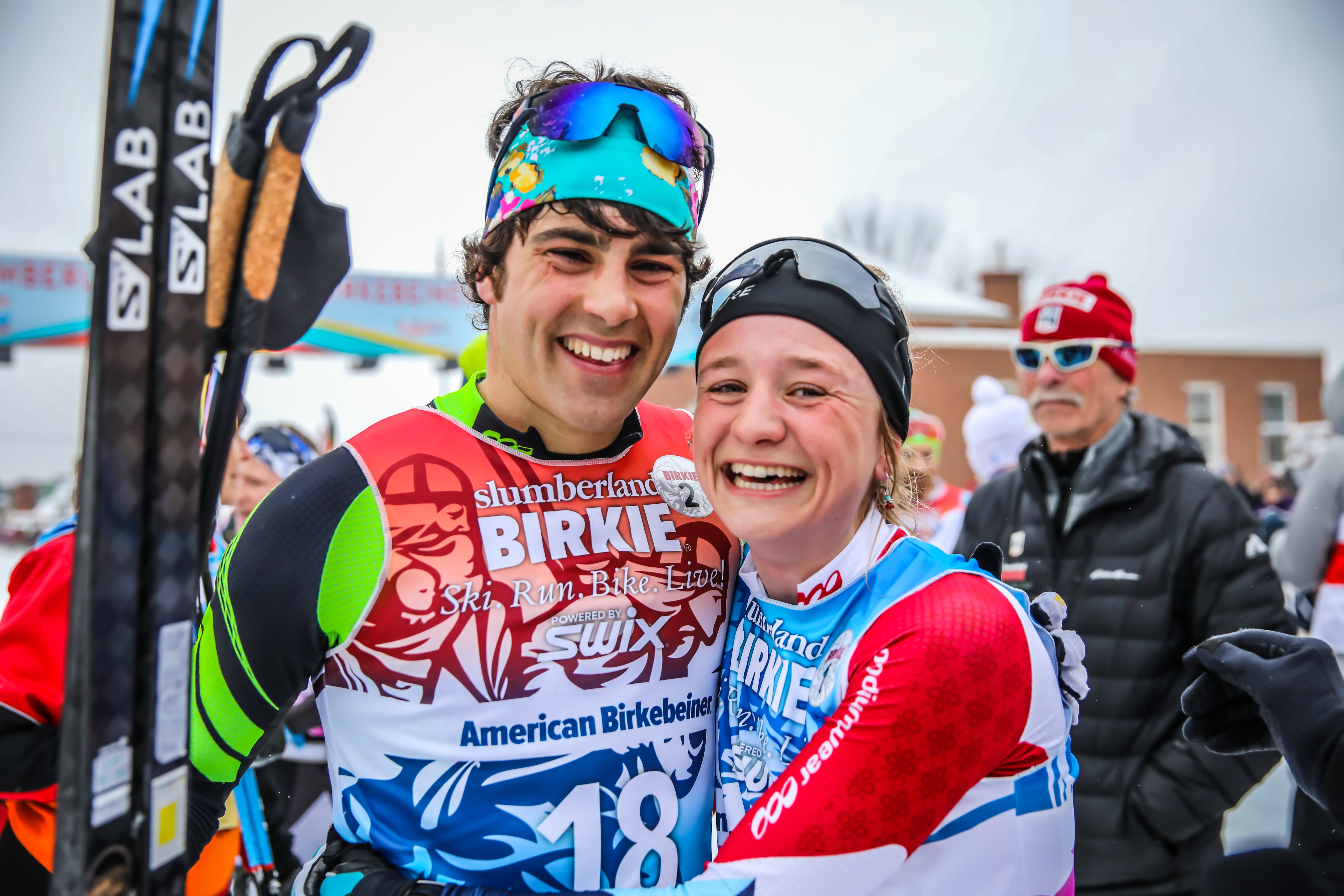
Tag: Anja Gruber

  • First Time American Birkebeiner Winners: Alayna Sonnesyn and Akeo Maifeld-Carucci

    First Time American Birkebeiner Winners: Alayna Sonnesyn and Akeo Maifeld-Carucci

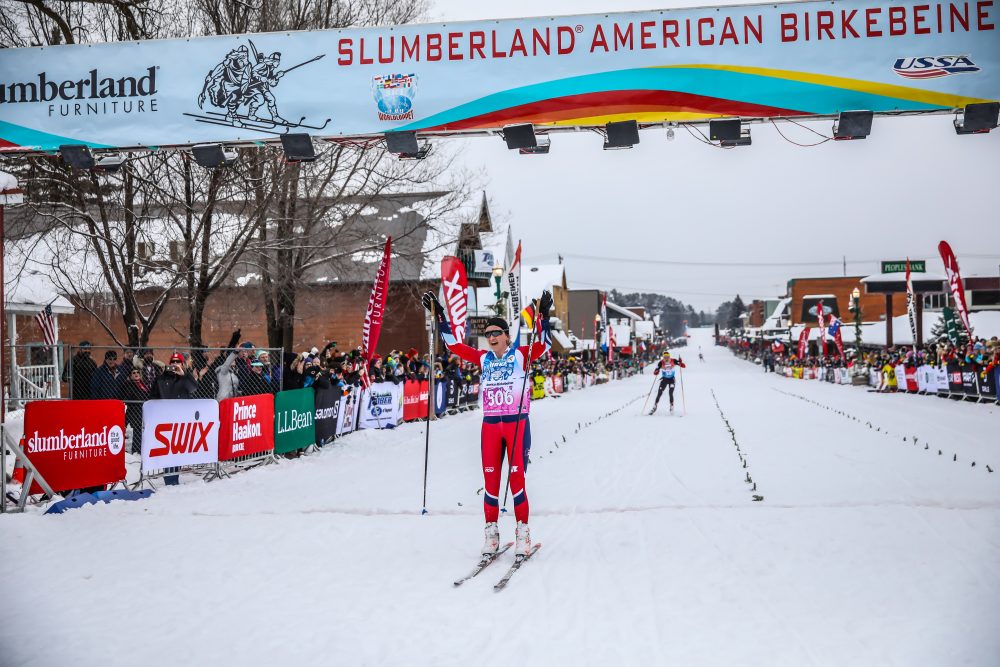
    SMS T2 skier Alayna Sonnesyn with the 2019 American Birkebeiner win. (Photo: James Netz)

    FasterSkier’s American Birkebeiner coverage is made possible through the generous support of New Moon Ski & Bike in Hayward, Wisconsin. While you are at the Birkie be sure to visit New Moon Ski & Bike for all your local expertise.

    Falling snow. Not too frigid temps. And a layer of fresh snow overlaying the 50 kilometers of undulating terrain for the 2019 American Birkebeiner. Perhaps no matter the conditions, it is cross-country ski racing paradise. The event marks a gathering of nordic skiers from across the continent there to partake in an event boasting serious on-the-verge-of-leg-cramp racing and a double dose of Wisconsin culture. Norwegian sweaters and Birkebeiner chotschi aside, the famed point to point race defines head to head tactics and fitness.  

    Amidst the infamous trail lined with deciduous trees that eventually opens up onto Lake Hayward in the event’s closing kilometers – the 50 k skate saw a new winner in the elite men’s and women’s categories.

    In her first year training full time after graduating from the University of Vermont last spring, twenty-two-year-old Alayna Sonnesyn took the overall win in the women’s race. Sonnesyn now trains fulltime with the SMS T2 based at the Stratton Mountain School in Vermont.

    But she is to the bone Midwest and understands the import of the win.     

    “There is definitely so much excitement and enthusiasm in the state of Wisconsin right now for this race and so it is pretty cool to be a part of it,” Sonnesyn said in call after her win. “This was my first time racing up Main Street and to hear those thousands of people cheering was pretty unforgettable and my whole body kind of went numb when I heard that. It is amazing to be part of an event that has so much passion and love for this sport. It was pretty fun.”

    For those not partaking in the event but wanting to know how each k went down for the winner. Where the screws were turned. Where the skis felt silky. Where they felt like the wax tech corked in a top coat of 40 grit sandpaper.

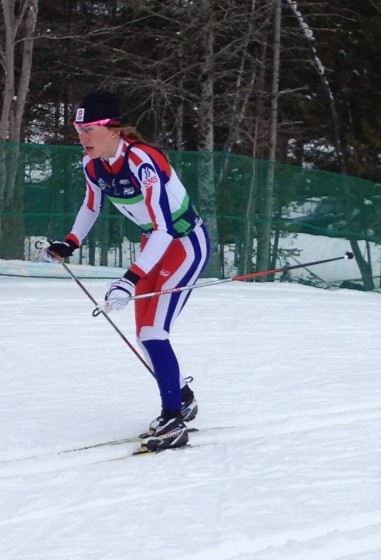
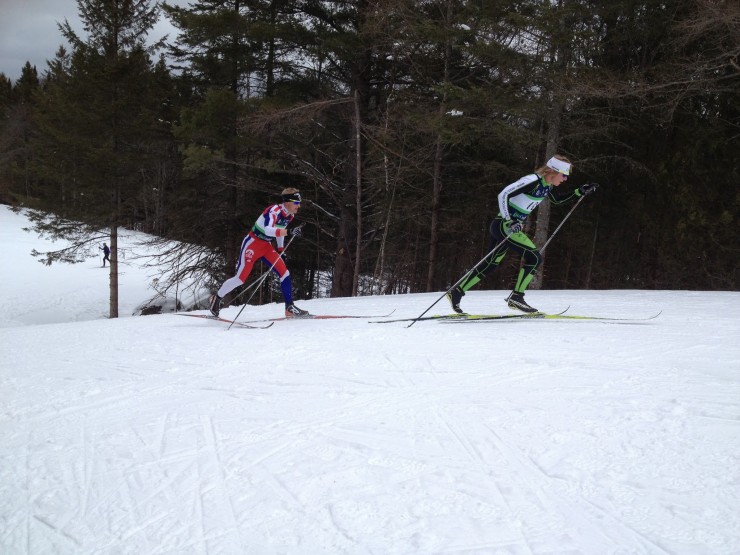
    In Sonnesyn’s exuberant retelling, the 10 k to go mark was the ah-hah. Until then, a foursome of skiers had broken away to make the elite selection of the elite wave: APU’s Becca Rorabaugh, Katie Feldman (SVSEF Gold Team), Anja Gruber (Salomon), and Sonnesyn. In the midst of the 10 k and 9 k markers, Rorabaugh began to peel little by little off the back. The three remaining skiers kept the strong pull going to separate themselves.

    “Anja, Katie and I were definitely picking up the pace and really working hard,” Sonnesyn said. “And I had been taking plenty of feeds the entire race and I still felt really energetic. My muscles were definitely getting pretty tired. but I still felt like I had a lot in me.”

    As the k’s began to click past, Sonnesyn passed over route 77 where she took another feed.

    “As soon as I crossed 77 I just felt this jolt of energy,” said Sonnesyn. “I think from a coke feed that I got or from some of the cheering there and also just realizing that I have got 5 K left. If I want to go I have got to go.”
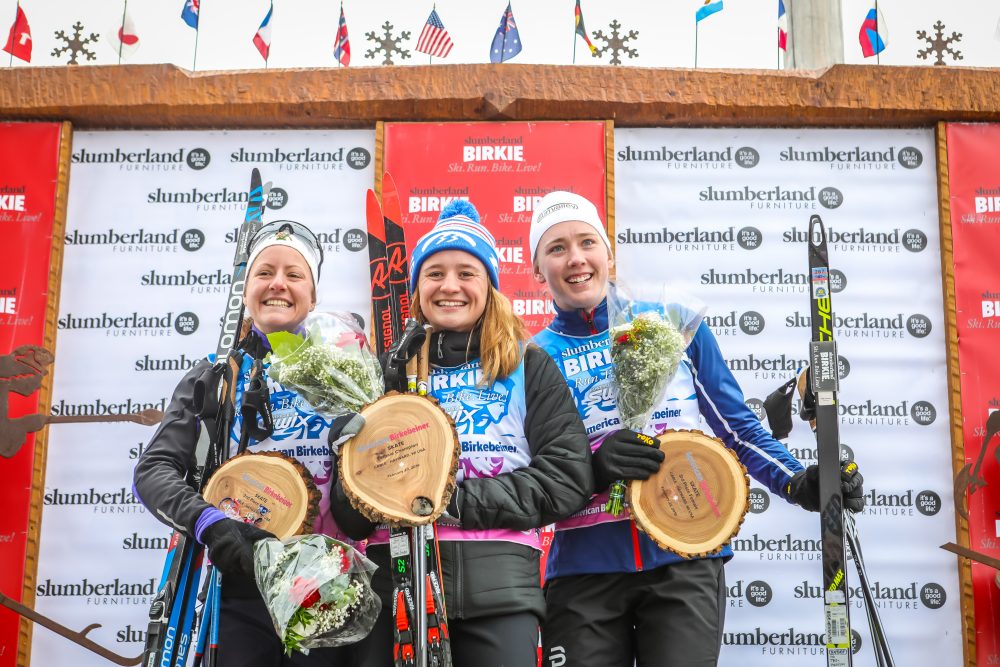
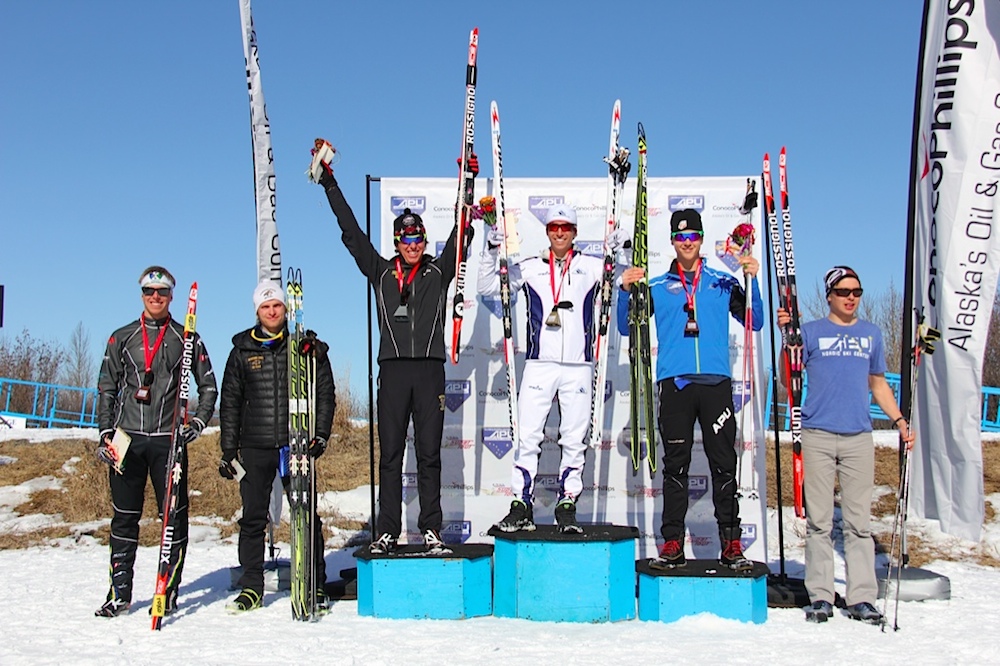
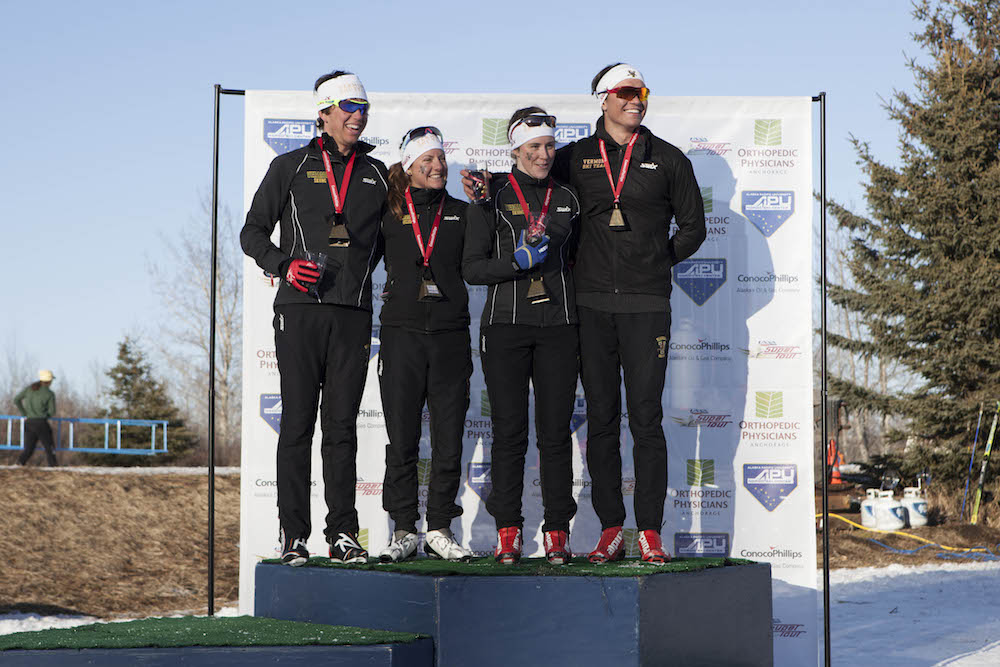
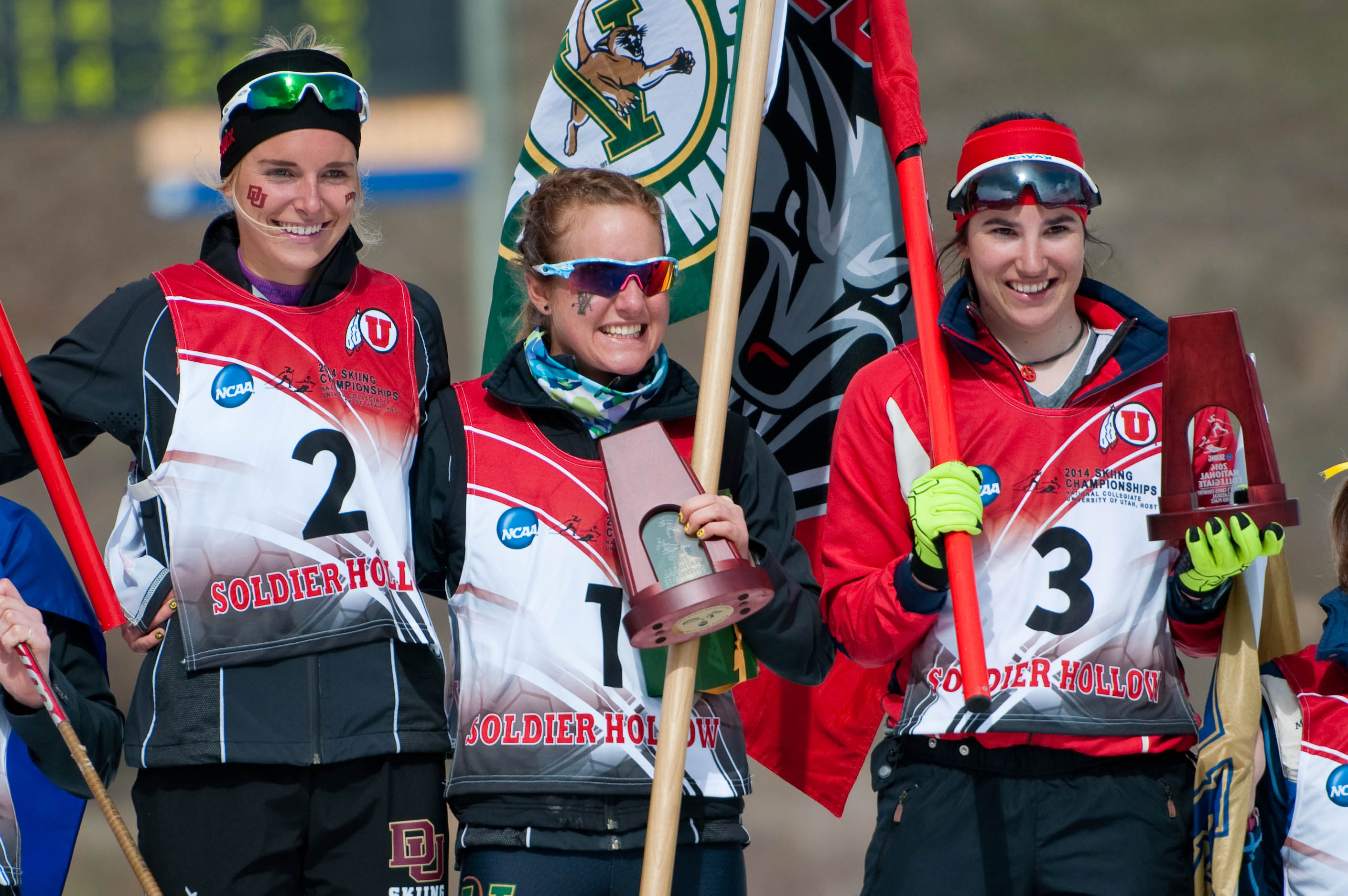
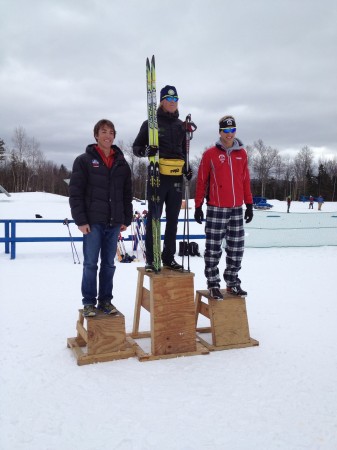
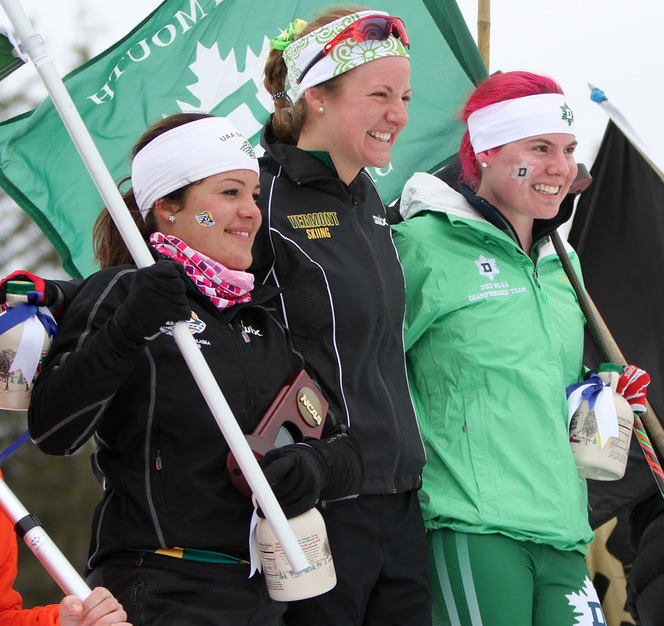
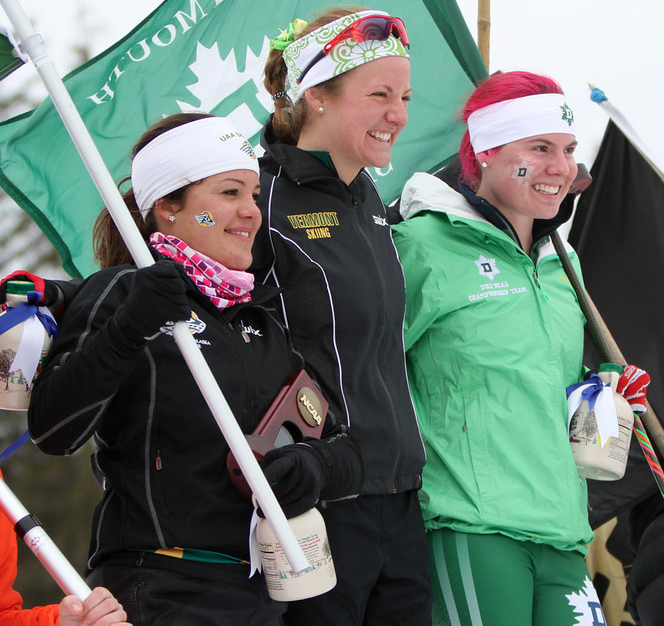
    2019 American Birkebeiner women’s podium from left to right: Anja Gruber in second, Alayna Sonnesyn in first, and Katie Feldman third. (Photo: Sally Krueger)

    In a race like the American Birkie, the mental stamina to stay in it can rattle some and embolden others. With so many K’s to ski, it always seems safe to wait. Wait until a bit closer to the finish to make a move. With 50,000 meters to race, late can never seem too late. That is until the opportunity is abruptly snagged away.

    tizanidine, buy lioresal, zanaflex online


    “I thought in the back of my mind, ‘you know I could go for it here and win or I could just be patient and maybe not even make the podium,’” she said. “To me, I thought it was worth it to go for it and take that risk and take the chance to break away.”

    The moment was for real. A groomed Hayward main street. A cacophony of cheers. And Sonnesyn, alone amongst her elite wave peers, won in a time of 2:34:01 hours.

    “I did keep looking across my shoulder but once I got onto Main Street up and over that bridge it was surreal. All the cheering just hit like my entire body went numb. I was overcome with emotion and definitely by the time I crossed the finish line and realized I had actually done it I broke down.”
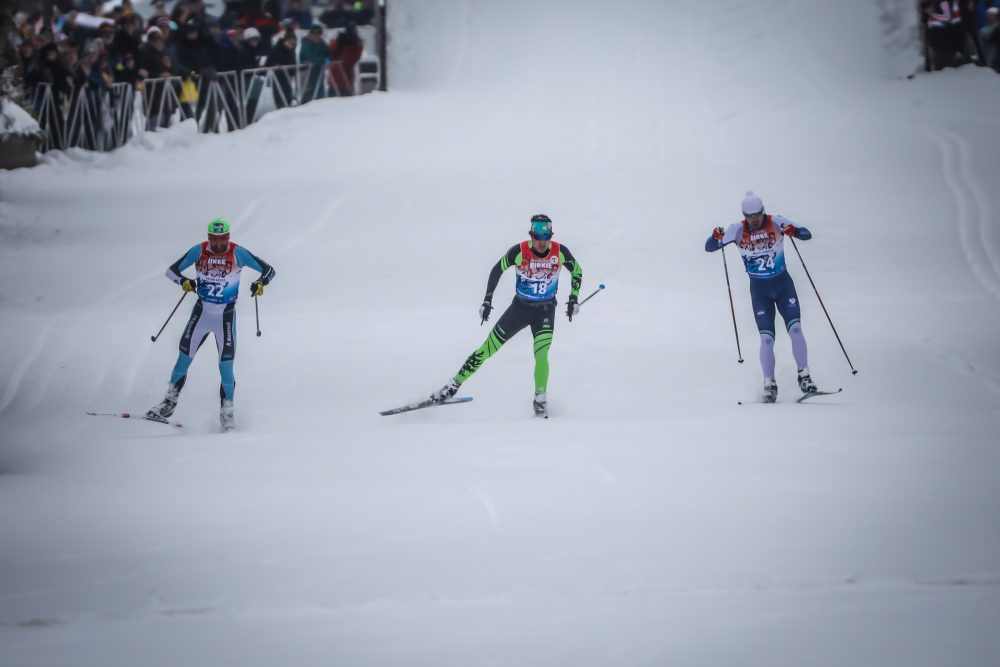
     

    Akeo Maifeld-Carucci in green, Brian Gregg (left), and Matt Liebsch (right) down Main Street in Hayward, WI. (Photo: James Netz)

    Phonetically, it is a unique name, but a simple one. Say it: “Ahh-key-oh” … Akeo. The first name has Marshall Island roots, the last name possess a Euro core. It’s Akeo Maifeld-Carucci.

    The twenty-ski-year Maifeld-Carucci can ski.

    But let’s dial the time machine back a bit and be a bit less formal and go with the first name. Akeo skied at Harvard, then spent stints training in Bozeman (his hometown) and Bend before settling in with the Craftsbury Green Racing Project last June.

    He is a mechanical engineer. As much as he is an endurance junkie, he is a fastidious analyzer. Not a bad trait in the world of design and build, but on the race course, analyzing can help only to a point. On some occasions, the over-analysis can see the make-your-move-moment lost.

    “We were at Double OO, which is 28 k from the finish or so is when Brian Gregg really put in a move,” Maifeld-Carucci said in a phone call. “There is a prime there and he went for the prime. And there is this hard gradual uphill section right after the prime and he maintained, he put a gap on us. No one really chased him and he maintained that gap for a little bit and I was like, ‘Brian is really strong we should probably try and close down on that’. So I just went to the front. Closed down. Then I looked back and saw that Matt Liebsch was on me. So it was the three of us and we had maybe a twenty-meter gap back to the rest of the pack.”

    Closing the gap right then and there was the first of several clinching moves. The analysis worked. It was Maifeld-Carucci and two of the American Birkebeiner’s most knowledgeable elders in Liebsch and Gregg. As the trio raced on, according to Maifeld-Carucci, Liebsch went to the front and stated this was the time to separate from the chase.

    “And I was sitting there and thinking ‘well, there is a little downhill after this and usually, it is really early to go and usually the pack can close on that downhill stretch because they move faster,’” Maifeld-Carucci said as he reflected on a moment of doubt. “I had heard a couple of guys before the start saying, ‘oh a break at OO never lasts, people always close it on the k-and-a-half of rolling downhill after that. The pack moves faster on that downhill stretch so the gap never lasts at OO.’”

    The real-time analysis at OO made Maifeld-Carucci hesitate.

    “I was nervous but then when they said, ‘I think we can make it’ and I knew Matt and Gregg are strong and they know the course really well, so I was considering that,” said Maifeld-Carucci.

    Considering. Computing. Sensing the energy reserves and the stamina left in his legs. Again, like closing down Gregg’s pulse, Maifeld-Carucci’s endurance calculus told him to trust in Gregg, Liebsch, and himself.

    SMS T2 skier Alayna Sonnesyn with the 2019 American Birkebeiner win. (Photo: James Netz)

    “It was nerve-wracking,” said Maifeld-Carucci. “I felt my legs starting to tighten up maybe on the edge of cramping even from 20 k out. So I was a little nervous about that, because you know that is a lot of race left. I was trying to flirt with the line of how fast I can go without pushing too hard and using too much power and making the legs cramp. I was dealing with that and it only got worse.”

    But not bad enough. Across the lake, and over the American Birkebeiner International Bridge with 400 meters to go the sprint was almost on. Not before the path to victory was thoroughly analyzed did his motor truly rev.

    “We dropped into the finishing stretch, 400 meters of just straight away gradual uphill and I kept telling myself, ‘’you don’t want to lead and you don’t want to go too early.’ I was trying to wait. But the crowd was so loud and so explosive I just couldn’t wait any longer I saw the finish line, felt the noise and I was like ‘screw that, we have got to go.’”

    As precise a win as can be over 50 k, Maifeld -Carucci won by 0.9 seconds over Gregg in second. Liebsch placed third (+8.5). The winning time was 2:12:34.9 hours.

  • Saturday Rundown Starting with Seefeld and Ending in Hayward, WI. (Updated)

    Saturday Rundown Starting with Seefeld and Ending in Hayward, WI. (Updated)

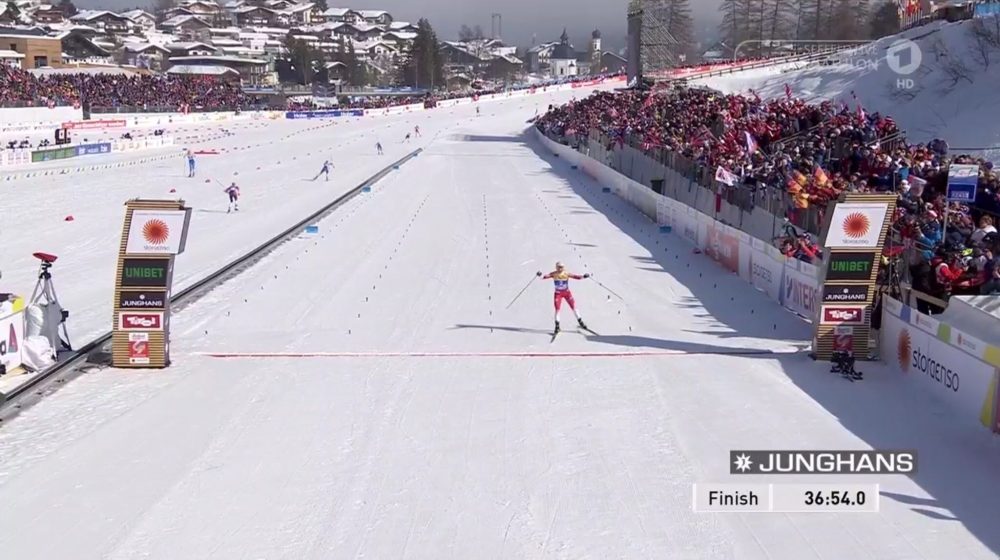
    Therese Johaug of Norway crossing the line solo as she won Saturday’s World Championship 15 k skiathlon in Seefeld, Austria. (Photo: ARD screenshot)

    FIS Nordic World Ski Championships Seefeld, Austria 15 k/30 k Skiathlon

    Men’s Race Report | Women’s Race Report

    Between 3.75-kilometers and 4.85 k on Saturday, Norway’s Therese Johaug began to pull away in earnest during the women’s World Championship 15 k skiathlon — by then she had built a near 15 second lead.

    The time back to the Norwegian would only grow. Johaug powered into the classic to skate transition zone in control with a lead padded by 26.2 seconds. At the finish, Johaug crossed the line with no other skiers in sight and a winning time of 36:54.5 minutes. It was Johaug’s fourth World Championship medal in the skiathlon.

    Ingvild Flugstad Østberg, also of Norway, placed second (+57.6), with Russia’s Natalia Nepryaeva third (+58.7).

    Rosie Brennan of the U.S. was the top North American in tenth (+2:01.8). Also for the U.S., Julia Kern placed 19th (+2:55.5), Rosie Frankowski 24th (+3:00.6), and Caitlin Patterson 34th (+3:54.5).

    Canada’s Katherine Stewart-Jones skied to 39th (+4:19.8), Cendrine Browne 40th (+4:25.2), and Maya Macisaac-Jones 54th (+8:53.4).

    Women’s Skiathlon Results

    The men’s 30 k skiathlon featured no off the front  winner like Johaug. As the pace setting screws tightened well into the men’s race, with Russia’s Alexander Bolshunov often taking charge, the pack was winnowed to five skiers at the 26 k mark. Along with Bolshunov, France’s Clement Parisse, Norway’s Sjur Røthe and Martin Johnsrud Sundby, and Iivo Niskanen of Finland were the skiers vying for the win.

    By the final half-k, only Sundby, Bolshunov, and Røthe remained up front. Down the final straight Røthe possessed the strongest reserves as he won in a time of 1:10:21.3 hours. Bolshunov placed second (+0.1), and Sundby third (+0.7).

    Canada’s Alex Harvey paced himself to sixth overall (+58.9). Evan Palmer-Charrette placed 45th (+6:12.4), and Scott James Hill 56th (+9:58.8).

    For the U.S., Scott Patterson raced to 32nd (+4:40.6), David Norris 38th (+4:54.4), Kyle Bratrud 49th (+6:19.6), and Adam Martin 54th (+7:47.4).

    Men’s Skiathlon Results

    ***

    SuperTour/American Birkebeiner Hayward, WI. 50 k Freestyle

    Full Race Report

    The plotline thickened on Saturday in the elite men’s freestyle 50 k at the American Birkebeiner when Akeo Maifeld-Carucci (CGRP), Brian Gregg (Team Gregg), and Matt Liebsch separated themselves from the field. The three skiers fended off any chasers and charged onto main street three across in their final effort towards the finish line.

    Maifeld-Carucci took the win in 2:12:35 hours, with Gregg second (+0.93), and Liebsch third (+8.50).

    Alayna Sonnesyn (SMS T2) won the overall women’s 50 k skate in 2:34:01. By the time Sonnesyn passed the time check on Lake Hayward, she had gapped Anja Gruber (Salomon) in second by 29.60 seconds. Gruber took second overall finishing 54.60 seconds back from the winning time. Third place went to Katie Feldman (SVSEF Gold Team) crossing 1:08.63 minutes back.

    FasterSkier will be posting race reports on the 2019 American Birkebeiner later today.

    Men’s Overall Skate Results | Women’s Overall Skate Results

    ***

    (Friday) FIS Nordic World Ski Championships Seefeld, Austria Individual Gundersen 10 k

    U.S. athlete Taylor Fletcher on his way to placing 35th overall during Friday’s individual Gundersen 10 k at the Seefeld, Austria World Championships. (Photo: John Lazenby/lazenbyphoto.com)

    On Friday in Seefeld, the first nordic combined event, an individual Gundersen 10 k was won by Germany’s Eric Frenzel. The German was the best ranked jumper and won the ski in a time of 24:43 minutes. Jan Schmid  of Norway, the day’s third ranked racer after the jump, placed second (+4.3). Austria’s Franz-Josef Rehrl placed third overall (+8.7).

    Americans Taylor Fletcher skied to 35th (+4:05.5), Ben Loomis 44th (+5:29.7), Jasper Good 47th (+6:25.1), and Grant Andrews 48th (+6:52.8).

    Nathaniel Mah of Canada was 50th (+7:12.3).

    Results


  • Wednesday Workout: Uphill Double-Pole, Specific Strength with MSU (with Video)

    Wednesday Workout: Uphill Double-Pole, Specific Strength with MSU (with Video)


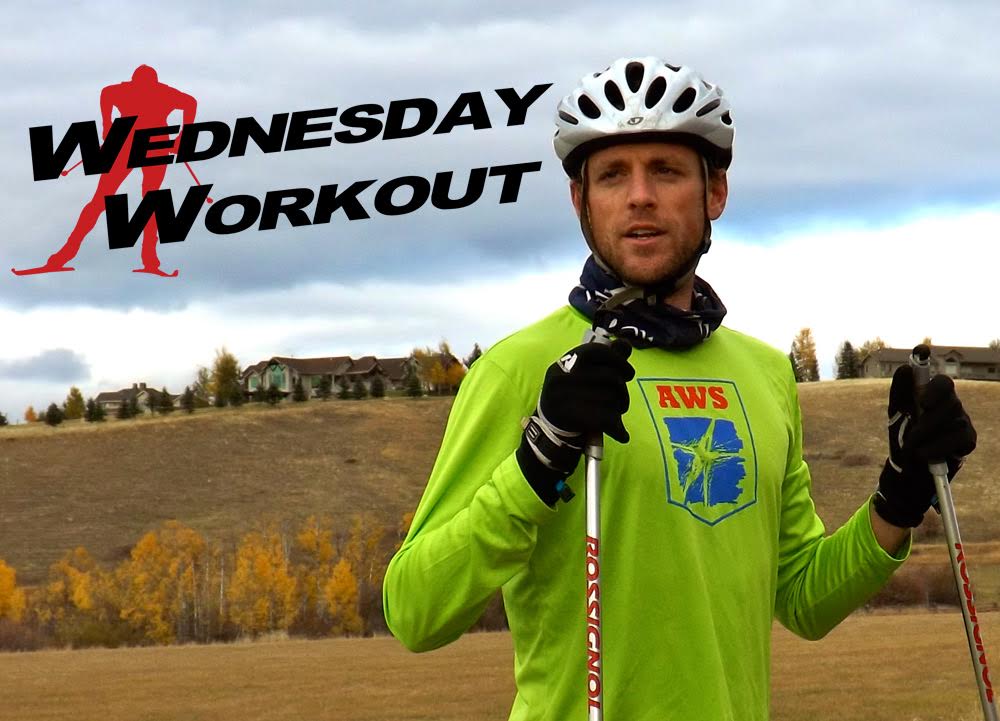
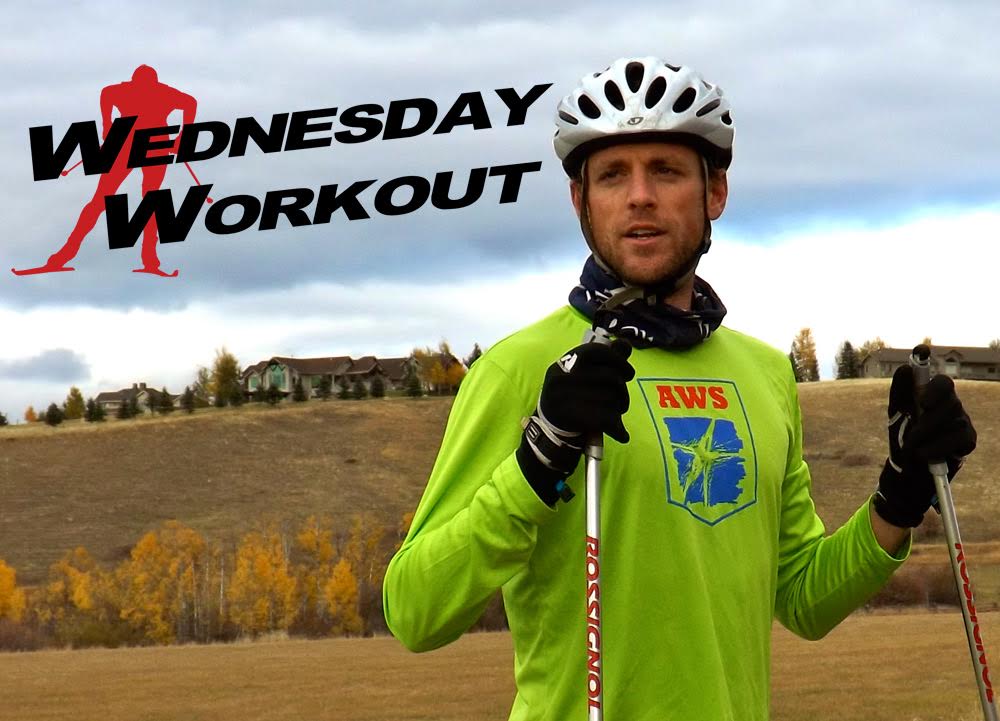
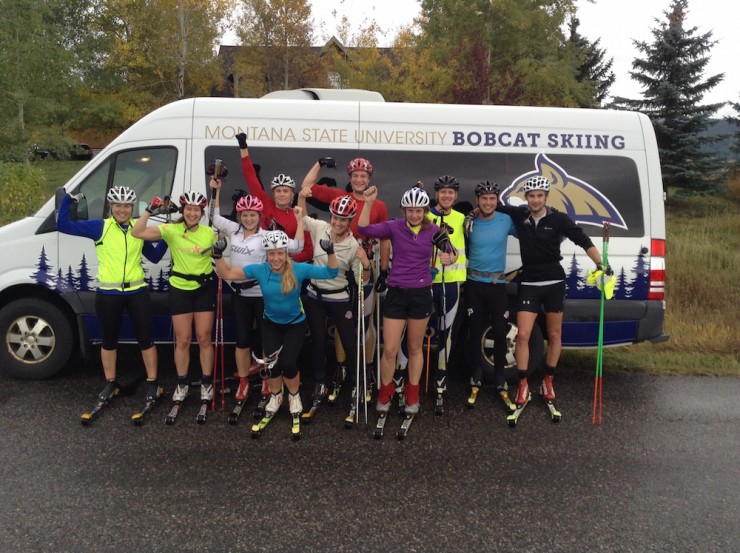
    Montana State University (MSU) Nordic Head Coach Matt Johnson before an uphill double-pole strength session in late October at Triple Tree Ranch in Bozeman, Mont.
    Montana State University (MSU) Nordic Head Coach Matt Johnson before an uphill double-pole strength session in late October at Triple Tree Ranch in Bozeman, Mont.

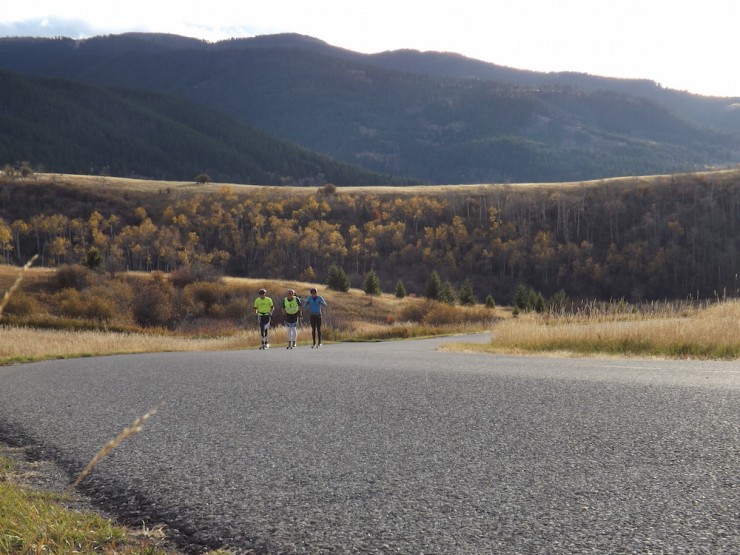
    For this week’s workout, FS tagged along during an uphill double-pole session with the Montana State University nordic team on Oct. 27. Reporter Gabby Naranja did a few sets on bike, which she found equally fun and thrilling.

    ***

    BOZEMAN, Mont. — The one workout no skier should sacrifice? Specific strength. At least, according to Matthew Johnson, head coach of the Montana State University (MSU) nordic team.

    “We try to do a specific arm strength workout once a week,” said Johnson, who joined the MSU Bobcats in June after the resignation of former head coach Kristina Trygstad-Saari.

    The importance of a double pole, specific-strength workout, Johnson explained, goes beyond just grinding your arms to a pulp in order to climb up a hill. These workouts are about “figuring out how to use the technique and the strength that you’re finding in the gym and applying it to your poling motions out here in varying types of terrain,” he said during an MSU training session last week.

    Of course, that in no way negates the noodle-arm effect brought on by most double pole, strength-specific workouts.

    “Sometimes it is about getting a consistent steep grade and working it, making your arms tired and then just being able to hold it [while] keeping your technique together and keeping your core strength together,” he said.

    As a cross-country skier, arm strength is just part of the game.

    “Rollerskis are great imitations of skis, but they’re not perfect,” Johnson said. “[Therefore] a lot of our classic skiing is going to be arm specific, strength specific, because that’s a really important thing with actual skiing.”

    For MSU skiers at least, the arms do not go neglected.

    “We want to develop a team that trains together and races together,” Johnson said. “We also want to see an upward result trend for every athlete right through [U.S. SuperTour] Spring Series [in March]. Since our college season doesn’t start until the 10th of January or so, we’re really pushing the fitness aspect of this all the way through November into December.”

    According to Johnson, it’s workouts like this that will lead to better ski performances, particularly with the college race schedule in mind.

    “It’s really easy to waste time rollerskiing,” he said. “[When] you do a double pole or a ski session you’re doing the same motion thousands of times. Every single time you practice that motion you’re either making yourself better at it or you’re ingraining bad habits. Like they say in music, practice makes permanent, so we try to practice good permanence.”

    Especially for a college athlete with limited time to ski, “practicing good permanence” is important.

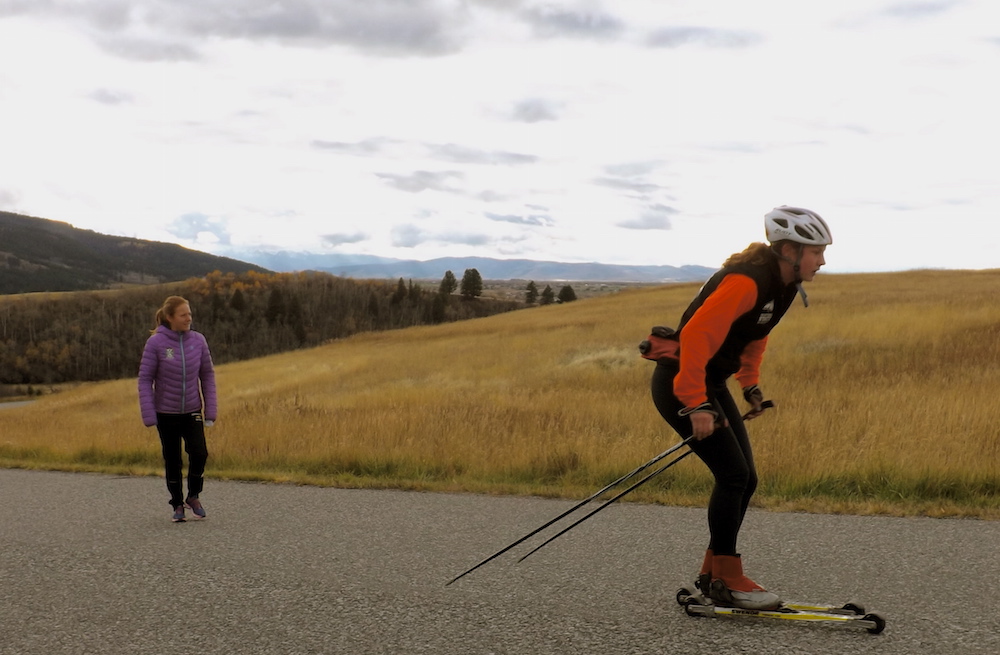
    MSU assistant coach Anja Gruber (l) with MSU skier Maria Gesior during an uphill double-pole workout.
    MSU assistant coach Anja Gruber (l) with MSU skier Maria Gesior during an uphill double-pole workout.

    “College skiing is so incredibly hard sometimes because there’s a huge time constraint with school and social life,” explained Anja Gruber, former University of Vermont (UVM) college ski racer, two-time NCAA champion, UVM business-school valedictorian, and current assistant coach for the MSU nordic team. “I don’t think anybody could get through college racing on their own. It’s really important to be part of a team with good energy.”

    And despite a recent high turnover of coaches, the MSU nordic team maintains an upbeat outlook.  Super-senior Sawyer Kesselheim of Bozeman, Mont., indicated that he would like to see MSU men’s nordic “consistently have three guys place in the top ten at races.”  When asked about Johnson, Kesselheim spoke favorably of the new coach.

    “I really like Matt,” he said. “He’s super focused, organized, and professional. He has good workout plans and keeps the workouts exciting.”

    This enthusiasm extends into MSU’s newer team members as well. “It’s been great having Matt coach us,” said freshman Sarah McCandless from Jackson Hole, Wyo. “He’s got great positive energy.”

    Whether or not Johnson’s athletes actually have fun during these workouts, the benefits are undeniable.

    “We’re dealing with a group of athletes who are here to work hard,” Johnson said. “It’s a big responsibility being on a team at a school like this and as they expect a lot of us, we expect a lot of them. There are a lot of moving parts, so you have to be creative, flexible, and on top of things, motivated.”

    The Workout

    Warmup: 25-30 minutes easy Level 1 skiing double pole and double-pole kick

    The Set: 2-4 times double pole up a 3 k hill. Johnson suggests “finding something with some rest so you can recover and feel the difference between the different [transitions].”

    Purpose: To figure out how to apply gym strength to double pole motions in varying types of terrain

    Goal: Rather than speed, focus on maintaining correct double pole body position throughout the hill while in a fatigued state

    Cool Down: 25-30 minutes easy Level 1 skiing

  • Video: Freeman Makes it a Three-Peat, Rorabaugh Comes from Behind to Win Craftsbury Mass Starts

    Video: Freeman Makes it a Three-Peat, Rorabaugh Comes from Behind to Win Craftsbury Mass Starts

    Having trouble viewing the video? Watch here

    CRAFTSBURY, Vt. — Kris Freeman earned his third win of the weekend Sunday, with a 20.4-second lead in the men’s 15-kilometer classic mass start on the snowy trails of the Craftsbury Outdoor Center. With snow falling throughout the entirety of the three-lap course, Freeman overcame the elements to create a large gap over his competitors at the 10 k mark in the SuperTour and Eastern Cup race.

    He skied alone for the final 5 k of race, plowing through the fresh snow with ease and strength.With a time of 42:46.4 Freeman crossed the line with no one else in sight.  He raised his hands above his head, celebrating his many wins in Craftsbury. Freeman’s success comes before his eighth career World Championships which will take place in Falun, Sweden Feb. 18. Freeman travels to Europe Thursday to prepare for the event.

    In a battle for second, Gordon Vermeer of the Craftsbury Green Racing Project and Lex Treinen of Alaska Pacific University charged down the finishing stretch, lunging to see who would claim the second rung of the podium. In the end it was Vermeer who would come out on top, besting Treinen by 0.01 seconds. The two finished 20.4 and 20.5 seconds behind Freeman.

    In fourth and fifth were Eric Packer of APU and Justin Freeman skiing for Holderness. Packer finished 27.1 seconds back from the first Freeman. The victor’s brother, Justin Freeman, finished 28.6 seconds behind his training partner.

    Women’s 10 k Classic Mass Start:

    Having trouble viewing the video? Watch here.

    In the women’s 10 k classic mass start it was Becca Rorabaugh who rocketed to the top of the podium to earn her first SuperTour win. After skiing the seventh-fastest split at the 5 k mark, she accelerated to make contact with the lead pack of Anja Gruber of Far West Elite, Chelsea Holmes of APU, and Mary Rose of the Sun Valley Ski Education Foundation. With roughly a kilometer to go, Rorabaugh was sitting in with the lead pack but took command into the stadium after utilizing a strong double-pole. She crossed the the line with a time of 33:24.0.

    Close behind was Mary Rose who earned her second podium of the weekend after winning Saturday’s 10 k freestyle. She trailed Rorabaugh by 0.9 seconds. Third went to Gruber, who came across the line 4.1 seconds back from the leader.

    Rounding out the top-5 were Kaitlynn Miller and Caitlin Patterson, both of the Craftsbury Green Racing Project. The two

    In the junior women’s 5 k Mae Chalmers won with a time of 17:51.2. Her male counterpart, Adam Gluek of Ford Sayre, won the junior men’s 5 k. He crossed the line in 15:03.4.

    Sunday’s races concluded the three-day weekend of the Craftsbury SuperTour, Dartmouth Carnival, and Eastern Cup. SuperTour racing continues Feb. 21 in Haywood, Wisconsin at the American Birkebiener.

    Results: Women | Men | Girl’s 5 k | Boy’s 5 k 

    Junior 5 k Classic Mass Starts: 

    Having trouble viewing the video? Watch here.

  • U.S. SuperTour Preview: Anyone’s for the Taking

    U.S. SuperTour Preview: Anyone’s for the Taking

    The men's 15 k freestyle individual start podium at SuperTour Finals in Anchorage, with winner Noah Hoffman (c), runner-up Scott Patterson (third from l) and Erik Bjornsen (second from r) in third.(Photo: Rob Whitney)
    The men’s 15 k freestyle individual start podium at the 2014 SuperTour Finals in Anchorage, with (from l-r) Patrick Johnson (6th), David Norris (4th), Scott Patterson (2nd), winner Noah Hoffman, Erik Bjornsen (3rd), and Lex Treinen (5th). (Photo: Rob Whitney)

    Note: This article has been corrected to describe the race women’s SuperTour leader Caitlin Gregg is shooting for at World Championships: the 10 k skate.

    WEST YELLOWSTONE, Mont. — National racing begins Friday as the SuperTour kicks off in West Yellowstone, Mont., and the excitement on the Rendezvous trails couldn’t be higher. The best skiers from around the country have been training for at least a week in the little Montana town as they prepare to compete for American dominance and possible positions on World Cup and World Championship teams.

    With several departures from the racing scene including, Olympian Torin Koos (BSF), Rose Kemp (SVSEF), and Kate Fitzgerald (APU), and a multitude of up-and-coming racers on the cusp of success, the 2015 SuperTour will be anyone’s game.

    When the USST selected four men (Erik Bjorsen, Brian Gregg, Koos and Kris Freeman) and no women from outside the regular World Cup team, it left many skiers hungry to show that they could perform well on the international level.

    This year they’ll have another shot with the 2014 Nordic World Championships in Falun, Sweden.

    While the U.S. is allotted 12 spots for each gender in Falun, USST head coach Chris Grover explained that he and his staff would select eight skiers per gender at most.

    World Championship team selection will be based on several criteria. Those skiers ranked in the top 50 in the World Cup sprint or distance standings as of January 18 will be named to the team. After that coaches’ discretion kicks in. If coaches feel that the World Championship team could benefit from additional skiers after their discretionary picks, they will then begin selections from the USSA points list.

    The selection is identical to last year’s Olympic process, with the exception of the USSA points. When making selections for the Olympics, coaches picked three non-USST skiers from the FIS points list to fill in the gaps.

    According to USST Head Coach Chris Grover, the reason for the switch to USSA points is to emphasize domestic racing so that potential candidates for the championships will be racing against each other, rather than chasing FIS points across the globe like many did last season.

    Due to the emphasis on USSA points this season, the SuperTour will be where non-World Cup team athletes will have the chance to prove they have what it takes.

    The Veterans

    Brian Gregg (USA).  Photo: flyingpointroad.com / NNF.
    Brian Gregg (Team Gregg) will be a top competitor in 2015. Photo: flyingpointroad.com.

    On the men’s side, 2014 overall SuperTour champion Reese Hanneman (APU) will be competing in the first period World Cup races and will return to the national circuit in Houghton, Mich. for the 2015 U.S. Cross Country Championships. While the benefits of early-season World Cup racing are considered mixed, Hanneman can expect his chances of racing in Falun to increase if he demonstrates that he can keep up with the Europeans and his fellow American teammates.

    With Hanneman out of the picture in West Yellowstone and Bozeman, the men’s SuperTour favorites are the remaining two non-USST members to attend the 2014 Olympics – Brian Gregg and Kris Freeman.

    Freeman, a 34-year-old former USST member, will be racing in West Yellowstone for the first time in nine years. Freeman, who lost his position on the USST in 2013, was one of three non-USST members to qualify for the 2014 Olympics. Despite high hopes of his best olympics yet, he struggled in Sochi. This season he is looking to turn around his skiing and earn a spot on the World Championship team. As one of most experienced skiers on the SuperTour circuit he will have an advantage over much of the competition.

    Gregg, like Freeman, will also enter the 2015 SuperTour with a multitude of experience. The 2013/2014 season saw Gregg on the SuperTour podium several times, most notably with his two second place finishes in the 2013 West Yellowstone 15 k freestyle and in the 2014 U.S. Nationals 30 k freestyle. At the Olympics, he constantly finished in the 40s and 50s.

    As he starts the season, Gregg acknowledged that the first races of the season would be challenging.

    “Kris is in really good shape so I think there are going to be some very competitive races. I’m excited,” Gregg said from West Yellowstone Tuesday.

    Joining Freeman and Gregg as veterans of the SuperTour are Matt Gelso of the Sun Valley Gold Team and Dakota Blackhorse-von Jess of the Bend Endurance Academy. Gelso will be looking to build on past results while Blackhorse-von Jess will pursue success in sprinting, especially since U.S. sprint champion Torin Koos retired from competition.

    After disappointment in the freestyle sprint at the 2014 U.S. Cross Country Championships and a failure to qualify for the 2014 Olympics, Blackhorse von-Jess said that nothing has changed in his career trajectory.

    “I’m re-energized after the disappointment of the Olympics with the reaffirmation that I still want this and believe I have what it takes… My career/goal trajectory hasn’t changed in the least: I’m focused on racing my best in the biggest international competitions and just need to make sure I do what is necessary to make those trips and come to the starting line in Falun prepared to light it up,” he wrote in an email.

    Matt Liebsch of Team XC United will also be returning to racing after missing out on Olympic qualification. However, Liebsch, who works near full time for Gear West, has lightened his training load as is looking to “maximize fun and earning potential ” rather than qualify for international events.

    “I’m not going to be chasing FIS points around the world or country necessarily. If they fall in my lap because I’m racing well, that’s great, but I’m not going to be stressing about it… It’s not really a change for me. I’m still going to try to race as fast as I can only I won’t be training as much,” he said in a phone interview.

    Ryan Scott, living and training independently in Boulder, Colo., will also return to competition, but, like Liebsch, has cut back his training as a result of work.

    For the women, one name has particularly dominated the domestic circuit for years – Caitlin Gregg.

    Gregg, like Hanneman, will start her season on the World Cup after earning the women’s overall title at the SuperTour finals in Anchorage last season. Gregg said earlier this fall that she is as motivated as ever and has her sights set on a particular race: the 2015 World Championships 10 k skate. To get to Sweden, however, she’ll need to demonstrate that she’s on par with USST and dominate when she returns for the U.S. championships in January. In the meantime, she’s excited for the 5 k next weekend in Lillehammer and aims to earn a start in that race.

    With the absence of Gregg, the West Yellowstone and Bozeman SuperTours are anyone’s for the taking.

    Rosie Brennan (APU) leading her semifinal in the 2014 U.S. Cross Country Championships. (Photo: http://bertboyer.zenfolio.com) All proceeds from photo sales will be directly donated to NNF.
    Rosie Brennan (APU) leading her semifinal in the 2014 U.S. Cross Country Championships. (Photo: http://bertboyer.zenfolio.com).

    Always a strong skier, APU’s Rosie Brennan will once again attempt to demonstrate her mettle as she makes a bid for World Championships. Last year Brennan started her season on the World Cup and returned to the U.S. exhausted, but earned a national title at U.S. Nationals in addition to several podiums. This year she will enter the season with fresh energy despite a turbulent fall after loosing her father in August.

    Joining Brennan at the top of the SuperTour expectations are APU teammates Chelsea Holmes and Becca Rorabaugh.

    Holmes demonstrated her strength throughout the 2013/2014 season with a win in the 10 k classic mass start in Bozeman, a second to Gregg in the 20 k at the 2014 U.S. Nationals, and several other strong performance throughout the entire SuperTour season.

    Rorabaugh won the 10 k interval start classic at the 2014 U.S. Cross Country Championships for her first national title, and is looking to have even more time upon the podium as she continues through the season.

    Last year Bridger Ski Foundation’s Jennie Bender repeated a national title in the freestyle sprint. While she’s dealt with illness and injury for the past two years, Bender told FasterSkier that her summer training this year was her best to date, and that she is looking to find success domestically and qualify for World Championships.

    The Wild Cards

    Miles Havlick (Sun Valley Ski Education Foundation) tucking down the high point of the course on the fifth of six laps at U.S. nationals in the 30 k freestyle mass start at Soldier Hollow. While the veterans of the 2015 SuperTour are names we’ve seen at the top of the result sheets for years, there are several skiers who have an excellent opportunity to shake up the status quo and make a name for themselves on the domestic circuit.

    Sun Valley Ski Education Foundation’s Miles Havlick didn’t have the season he wanted in 2014, but has come back with a vengeance in 2015. While he has yet to face his competitors on-snow, Havlick has won a slew of time trials including the USST1o k freestyle rollerski time trial in Park City, Utah against the country’s best. He also broke a 25-year-old record in the Baldy Hill Climb this year.

    According to Havlick, he has the all the ingredients for a breakout season. Now it’s only a matter of time.

    “I think on any given day – when I am mentally competent, carrying confidence from previous races, focused, and my wax is good – I can be the best skier out there. The college skiing is when I was really able to prove that to myself. Last year was kind of tough because I felt like I was spinning my wheels by the end, but I think I’ve made some adjustments this year that can fix that,” he said in a phone interview in October.

    Havlick also has gained the attention of Grover and the USST.

    Erika Flowers racing to the fastest women's time in the inaugural Tim Burke Uphill Run Test at Whiteface Mountain.
    Erika Flowers racing to the fastest women’s time in the inaugural Tim Burke Uphill Run Test at Whiteface Mountain this fall.

    “I’m excited to see how Miles Havlick is going to ski. He’s had a great fall. He won our US ski team time trial that we did in Soldier Hollow. He set a new course record on the Baldy Hill climb that stood for 26 years or something. There’s some new emerging faces to keep an eye on,” he said.

    For the women, a possible 2015 wild card is a less well known. However, despite her lack of national attention Stratton Mountain School T2’s Erika Flowers has all the makings of an up and coming skier.

    Flowers has always been a strong and consistent skier with the majority of her SuperTour results landing in the top-ten. However, when she traveled to Europe in the spring of 2014 she demonstrated her potential, wining a 10 k mass start in Silvapalana, Switzerland. Several weeks later she placed 14th in the Alpen Cup mini-tour. She finished the tour as the second American behind Holmes and had the fifth-fastest time in the final 10 k pursuit.

    While Flowers has struggled with sprinting in the past, she demonstrated that she could stick with the best of them at the 2014 Frozen Thunder races in Canmore, Alberta ending the day in 7th.

    The following day she finished 7th in the 7.2 k freestyle at Frozen Thunder. She was the 3rd American, and placed ahead of several notable Olympians including Jessie Diggins.

    The Rest 

    In addition to Havlick, there are several other men who could make the domestic season anyone’s game.

    Recent college graduates Ben Lustgarten of SVSEF, David Norris of APU, and David Sinclair of Green Mountain Valley School will be looking to take their success from NCAA racing to the SuperTour.

    Scott Patterson (APU) is another notable graduate who had success on the SuperTour both at the 2014 Nationals and 2014 SuperTour finals. According to his family, Patterson will not be starting his season in West Yellowstone due to a skiing accident that occurred Oct. 31st in which he was impaled by a broken ski in his upper leg. While the leg wound healed, Patterson developed a pulmonary embolism (blood clots in his lungs) which has limited his exercise to walking. However, according to his family, Patterson is optimistic that he will return to racing at U.S. Nationals.

    Ben Saxton (SMST2) and Paddy Caldwell (SMST2/Dartmouth) will be the sole USST members starting the season in West Yellowstone. Saxton who was second in the freestyle sprint at U.S. Nationals last year, is aiming perform well in Friday’s sprint. Caldwell, who has yet to decide whether or not he will ski for Dartmouth this year is a strong distance skier and will be vying for top results amongst the country’s best.

    “They need to prove themselves and make those teams just like any other athlete that is on the domestic scene. Obviously those guys are younger guys and they’re still focused on the U23 World Champs,” Grover said of the two USST D-Team athletes.

    Welley Ramsey (MWSC), Tad Elliott (SSCV), and a slew of other men from APU and Craftsbury will also look to challenge the national favorites as the season gets underway.

    On the women’s side recent graduates Anne Hart (SMST2), Rosie Frankowski (APU), and Anja Gruber (Far West Elite) are new to full-time racing on the national circuit after having successful college careers. While the adjustment from college skiing to professional racing is often difficult, these women will still be a strong force to contend with.

    Annie Pokorny (SMST2), Caitlin Patterson (CGRP), Liz Guiney (CGRP), and Mary Rose (SVSEF) are shaping up to be strong competitors in the 2014/2015 season after a productive summer and fall trainings with their respective teams.

    [See the Super Tour schedule here]

  • Far West Elite Team: Four Years in the Making

    Far West Elite Team: Four Years in the Making

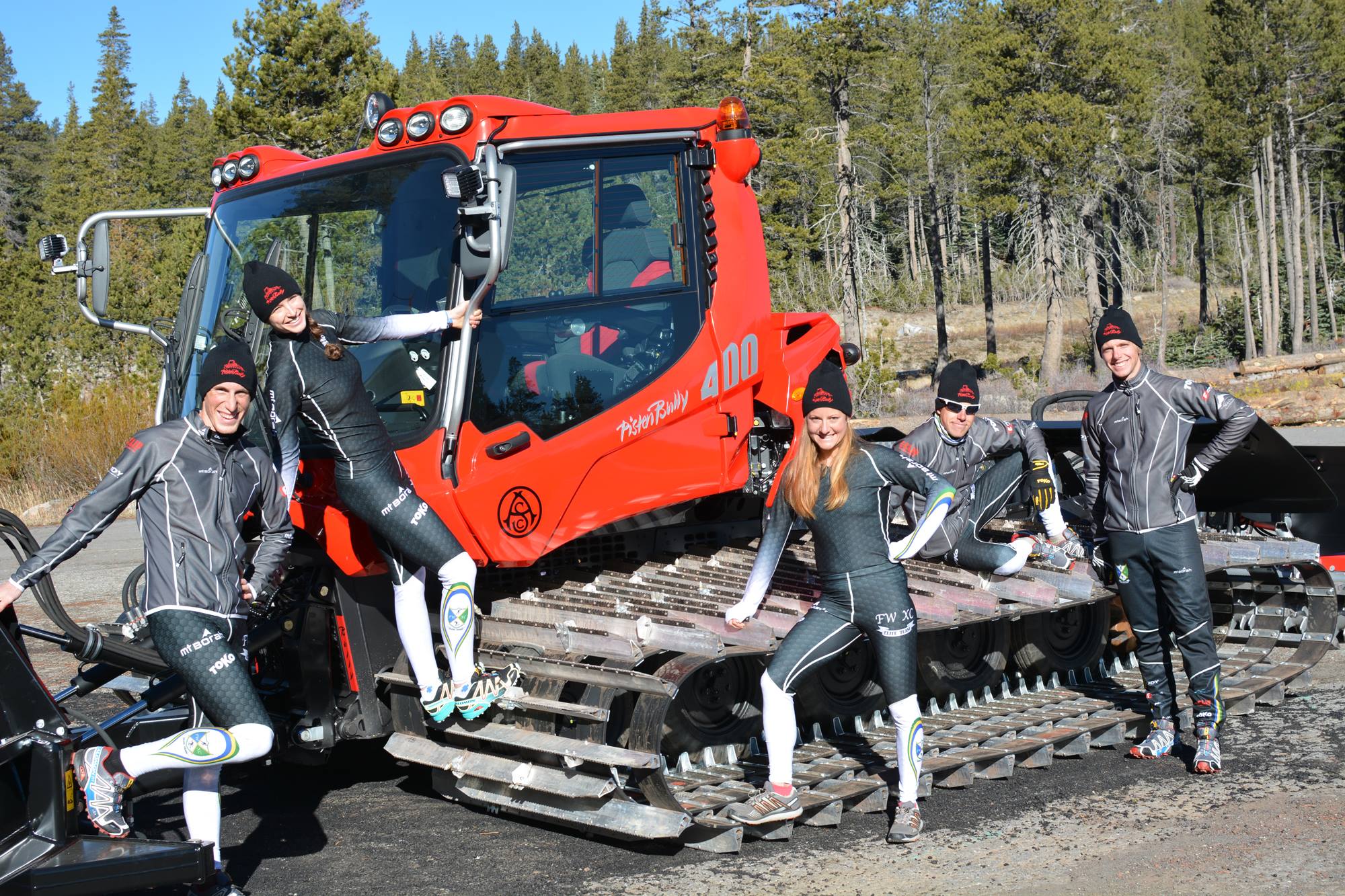
    The 2014/2015 Far West Elite Team (Photo: Auburn Ski Club/Facebook)
    The 2014/2015 Far West Elite Team (Photo: Auburn Ski Club/Facebook)

    When the University of Nevada-Reno (UNR) announced that its ski team would be dismantled in 2010, the nordic-ski community in the greater Tahoe region realized it was in trouble.

    Although the region, also known as Far West, was competitive at the junior level, it was lagging behind the rest of the country in terms of development post-high school. A relatively small number of juniors extended their skiing careers once they graduated while the majority looked for opportunities outside of the ski community.

    UNR had been a clear representation of the path young athletes could take upon the completion of their junior years. However, with the loss of the program, the ski community needed to take action.

    Martin Benes (Photo: MacBeth Graphics)
    Martin Benes (Photo: Mark Nadell/MacBeth Graphics)

    That’s when Ben Grasseschi stepped in and created the Far West Farm Team. With the help of August Teague and Martin Benes, Grasseschi looked to create a program that rivaled the best elite teams in the country. There was also the hope that the addition of an elite team would create a strong foundation for youth skiers and beyond.

    “[What happened at UNR] was an indication that we needed to do more in this area, and we didn’t want to see that happen to other programs,” Benes said in an interview. “Obviously it was a huge loss … but it made us realize that we needed to do something.”

    Even though the program found success with several skiers, such as current APU athlete Chelsea Holmes, the Farm Team never gained a foothold in domestic elite racing. However, its creation helped encourage the further development of nordic skiing in the Sierra Nevada.

    A major part of that development can be attributed to Benes.

    Benes, a native of the Tahoe area, returned to Truckee, Calif., in 2011 after coaching for both the Dartmouth and Bates College Ski Teams. He became head nordic coach of the local Sugar Bowl Academy and worked with the Farm Team when he could.

    While he gained valuable coaching experience on the eastern collegiate circuit, one of the biggest assets Benes brought with him to Truckee was his ability to recruit.

    Roger Cheney (Photo: MacBeth Graphics)
    Roger Chaney (Photo: Mark Nadell/MacBeth Graphics)

    He used his connections to recruit numerous college skiers who were looking for a summer training program. While its beginnings were small, the summer program grew at a steady rate as skiers from Bates, Bowdoin, Dartmouth, Middlebury, Colby, the University of New Hampshire and University of Vermont journeyed across the country to take advantage of what Far West had to offer.

    With copious amounts of skiers coming to Truckee each summer, the elite program began to attract more interest.

    As a result, the 2013/2014 season marked a new beginning for the program. It had a new look and a new name – the Far West Elite Team.

    The team had no official coach (Grasseschi and Teague had left the program to pursue other endeavors), so Benes took on the duty of creating training plans and taking care of each skier’s athletic needs. He also recruited Patrick Johnson, a former NCAA standout at Middlebury, who skied for both the Sun Valley Ski Education Foundation and Alaska Pacific University.

    While the team’s most notable moment of the season was Johnson’s aggressive start to the men’s 30-kilometer mass start at 2014 U.S. nationals in Midway, Utah, the addition of high-achieving athletes and a new professional look caught the eye of many on the national circuit.

    Spencer Eusden (l) and Patrick Johnson (r) racing at the Auburn Ski Club in 2013. (Photo: Mark Nadell/MacBeth Graphics)
    Spencer Eusden (l) and Patrick Johnson (r) racing at the Auburn Ski Club in 2013. (Photo: Mark Nadell/MacBeth Graphics)

    Soon, it became apparent that the combination of the summer program and the increased visibility of the team meant that further development was inevitable for the 2014/2015 season.

    To speed up the process, the Far West Elite Team hired Reno, Nev., resident and Toko sales representative Roger Chaney to fill the newly created position of team manager. As team manager, Chaney takes care of the logistical needs of the Far West Elite Team athletes and aids them in their fundraising efforts.

    “There has to be accountability for the athletes in terms of fundraising. That became the bigger beast than originally was expected … and there’s definitely a value in making sure that everybody’s expectations are being acknowledged and met,” Chaney explained of his position.

    Benes agreed, stating that, because the team had no official director or coach, it lacked a necessary organizational component that Chaney now fulfills. Additionally, he said that due to his status as the head coach of Sugarbowl Academy it is valuable to have Chaney organize the logistics of training with other local clubs in the region.

    “Because I’m affiliated with a club, it’s nice to have someone who is not affiliated with a club to take that on,” he said.

    For the 2014/2015 season, the Far West Nordic Elite Team consists of six athletes: Johnson, Spencer Eusden, Wyatt Fereday, Anja Gruber, Emily Blackmer, and Sabra Davison.

    Anja Gruber in the 2014 Donner Turkey Trot. (Photo: Mark Nadell/MacBeth Graphics)
    Anja Gruber in the 2014 Donner Turkey Trot. (Photo: Mark Nadell/MacBeth Graphics)

    This winter, Johnson will seek out success on the biathlon circuit while jumping into a SuperTour here and there. His goal was to make the U.S. IBU Cup squad this season.

    Gruber, a German standout from UVM and 2013 NCAA Champion, will start her season on the SuperTour and later travel to Europe for the OPA Cup series with the goal of earning a spot on the German National Team.

    Benes explained the strength of the team demonstrates how far both the program and the region have come since UNR cut its ski team.

    “Four years ago, the majority of our athletes were based here for the winter, maybe one would go to U.S. nationals, but now we’re looking at a group where five if not all six will be headed there. We’re getting people who are committed to elite racing and elite results,” he said. 

    As the program develops, both Benes and Chaney are looking beyond season goals to future developments of the club.

    “We’re looking at a vision that goes beyond one season. Ultimately we need to continue to develop that foundational presence,” Chaney said.

    While there are still a few obstacles in the way, like the lack of a full-time coach, their main hope is that the Far West Elite Team will one day be a program that inspires local skiers to continue their athletic pursuits long after their junior years.

  • Pros of Tomorrow: Two-Time NCAA Champion Gruber Aims to ‘Blow Them Away’

    Pros of Tomorrow: Two-Time NCAA Champion Gruber Aims to ‘Blow Them Away’

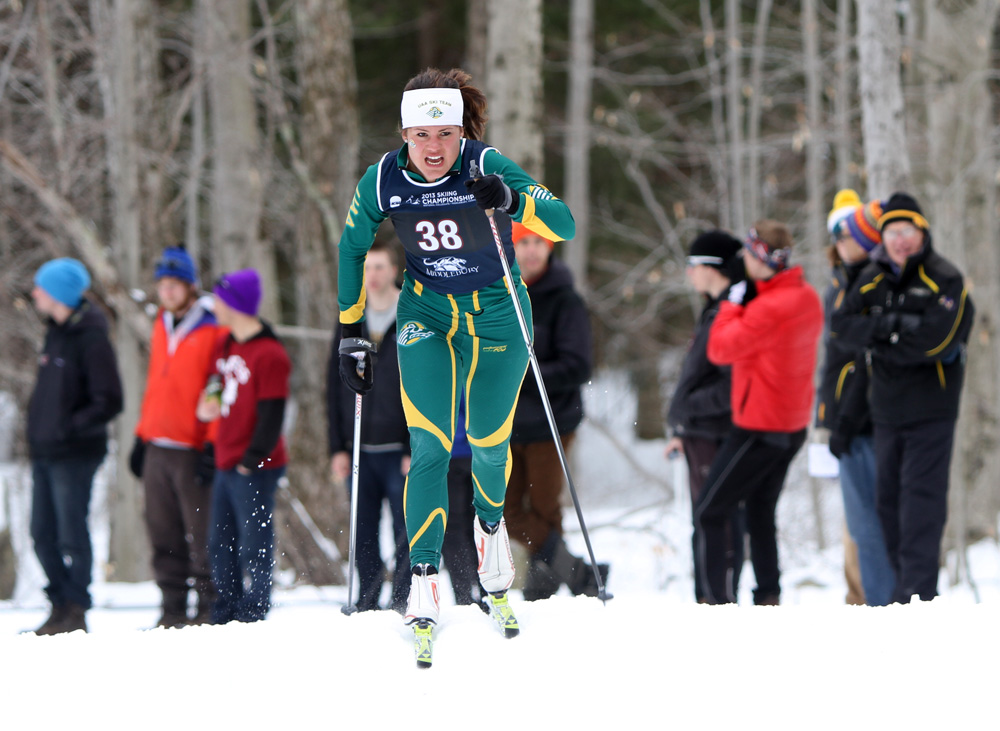
    Anja Gruber en route to an 11.1-second win in the 2013 NCAA Championships 5 k classic.
    Anja Gruber en route to an 11.1-second win in the 5 k classic at the 2013 NCAA Championships in Ripton, Vt.

    This ‘Pros of Tomorrow’ series, brought to you by the generous support of Fischer Sports, aims to highlight some of the most notable up-and-coming athletes around the world. If you have an idea for a top-notch skier you’d like to read more about, please email info@fasterskier.com with the subject line: Pros of Tomorrow. We’re also looking for stories about intriguing juniors, collegiate skiers, or lesser-known athletes; please email us with names — subject line: From the Pack.

    ***

    When Anja Gruber didn’t make the Junior World Championships during her last year of high school in Leutkirch, Germany, she knew that her heart was no longer in the sport and she was ready to move on. Her plan was to apply to school in Germany and see where a life without skiing took her — even after making the German junior national team in 2009.

    But then she received a call from Patrick Weaver, head nordic coach at the University of Vermont (UVM).

    Gruber knew of Germans who had gone to school and skied in the U.S., but many of them went to Alaska, which didn’t exactly appeal to her. She also wasn’t sure she wanted to continue with her higher education in the U.S.

    However, after talking with Weaver, or “Weav” as she now calls him, a move to the states sounded more and more tempting.

    “I had never really heard of Vermont before,” Gruber, 23, explained in a phone interview. “But somehow he made it sound really good. Then I decided I was going to come.”

    Gruber began school at the UVM in the spring of 2011, but was still not sold on college skiing in the U.S.

    The University of Vermont skier's Jorgen Grav, Anja Gruber, Linda Danvind Malm, and Scott Patterson won the collegiate category and placed ninth overall in the mixed relay at 2014 U.S. Distance Nationals in Anchorage, Alaska. (Photo: Chris Hodel)
    The University of Vermont’s Scott Patterson, Anja Gruber, Linda Danvind Malm, and Jorgen Grav (l-r) won the collegiate category and placed ninth overall in the mixed relay at 2014 U.S. Distance Nationals in Anchorage, Alaska. (Photo: Chris Hodel)

    “When I started at UVM I wasn’t super excited about skiing,” she said. “It was more of an opportunity for me to go to school without paying full tuition. I also had this misperception that college skiing wasn’t that great.”

    Her experiences in Vermont soon dispelled those notions, as she realized that her fellow competitors were strong skiers extremely committed to the sport. Her freshman year was filled with some ups and downs, but overall she described her skiing as mediocre.

    Reenergized and determined to rise to the level of the other women on the college circuit, Gruber went home to Germany and trained with more focus and intent.

    She returned her sophomore year to a team that was one of the strongest women’s nordic squads in UVM history. While she was unable to qualify for the 2012 NCAA Championships in Bozeman, Mont., she was inspired by her teammates’ 1-3-5 finish in the classic mass start.

    Whether it was her renewed training, team inspiration or a rekindling of a love for the sport, Gruber returned to the collegiate racing with a vengeance her junior and senior years. In 2013 and 2014, she won back-to-back NCAA titles in the 5 k classic and in 2014, she placed fourth in the U.S. nationals 10 k classic.

    Since graduating from UVM this spring, Gruber has nothing but appreciation and admiration of college skiing in America.

    “I just think college skiing is such a good way to develop as a skier,” she said. “It’s such a great opportunity; you get all the support you need with a little bit less pressure.”

    “I just think college skiing is such a good way to develop as a skier. … You get all the support you need with a little bit less pressure.” — Anja Gruber, 23, former UVM skier and two-time NCAA champion from Germany

    She explained the fun-natured environment of the college circuit taught her how to love the sport again.

    “I think college skiing is the best thing you can do,” she added. “I wish I could keep doing it.”

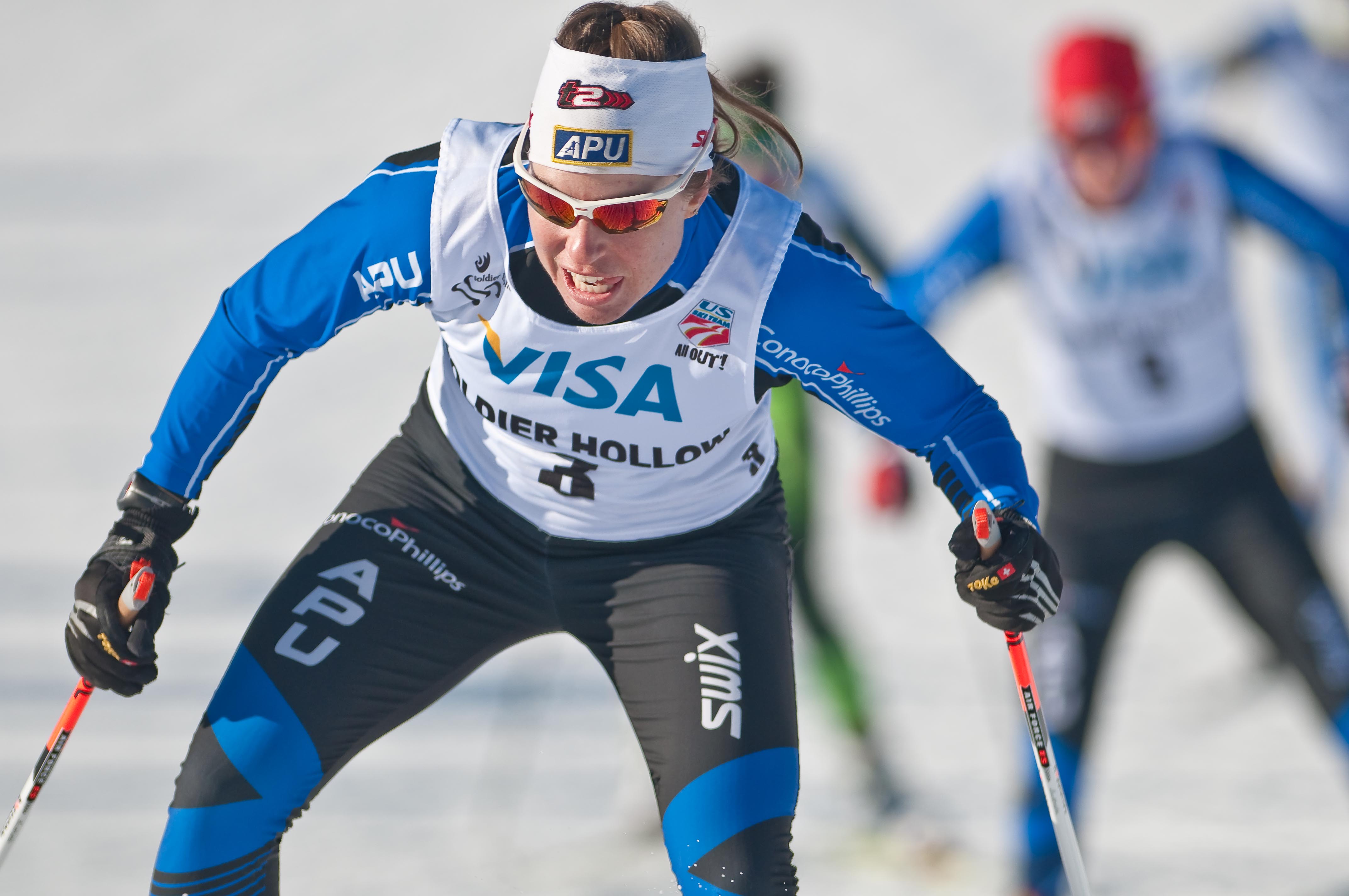
    Anja Gruber (University of Vermont) racing to fourth in Saturday's 10 k classic mass start at Soldier Hollow for her best U.S. nationals result by more than 20 places. (Photo: Bert Boyer/http://bertboyer.zenfolio.com/) All proceeds from photo sales will be directly donated to NNF.
    Anja Gruber racing to fourth in the 10 k classic mass start at Soldier Hollow for her best U.S. nationals result by more than 20 places. (Photo: Bert Boyer/http://bertboyer.zenfolio.com/) All proceeds from photo sales will be directly donated to NNF.

    Gruber was also successful in her endeavors in UVM’s classrooms. Upon graduating in 2014, she was named valedictorian of the UVM Business School.

    When asked how she was able to be both successful in school and skiing, Gruber pointed to her organized nature. She also said that the environment on the UVM ski team was one where academics were of the utmost importance.

    “It makes it so much easier to do a good job if your teammates are trying to do the same thing,” she said.

    After graduating UVM, Gruber had initially planned to stop racing because of her imminent return to Germany. However, she couldn’t imagine a life without the sport and started to look around the U.S. for an elite team to join.

    In the end she decided to join the Far West Elite Team. Gruber said her choice was an easy one, as she had spent several summers training in Truckee, Calif., in the later half of her college career and liked the coaching style of Martin Benes.

    As far as future goals, Gruber has a unique plan for the upcoming ski season.

    She will continue to train with Far West this summer, fall and early winter. After competing in the SuperTour in West Yellowstone, Mont., Gruber plans to travel home to Germany where she will compete in several OPA Cups.

    While Gruber has competed in several international races in her career, they have always been after a challenging finals schedule and draining travel. This year, she’s excited to see her results now that she can fully rest and avoid other outside stress.

    Gruber’s ultimate goal is to ski fast enough to earn a spot on the German World Cup Team. While she is not sure of the exact criteria, her best plan at the moment “to get really fast and then go to Europe and blow them away.”

  • Photos: 2014 NCAA Championships

    Photos: 2014 NCAA Championships

    The University of Denver won the 2014 NCAA Championships for the 22nd time this past weekend in Park City, Utah. Check out some amazing photos of the event taken by superstar photographer Bert Boyer. All proceeds from photo sales will be directly donated to NNF. Buy them here: http://bertboyer.zenfolio.com

    2014 NCAA Championships: women’s 5 k classic reportmen’s 10 k classic report | 15 k and 20 k freestyle mass start report

  • Gruber Returns to Top of 5 k Classic Podium at NCAA Championships

    Gruber Returns to Top of 5 k Classic Podium at NCAA Championships

    The women's podium in today's 5 k classic at the 2014 NCAA Championships in Soldier Hollow. In first is Anja Gruber (UVM), second is Sylvia Nordskar (DU) and third is Eva Severrus (UNM). (Photo: Bert Boyer http://bertboyer.zenfolio.com) All proceeds from photo sales will be directly donated to NNF.
    The women’s podium in today’s 5 k classic at the 2014 NCAA Championships in Soldier Hollow. In first is Anja Gruber (UVM), second is Sylvia Nordskar (DU) and third is Eva Severrus (UNM). (Photo: Bert Boyer) All proceeds from photo sales will be directly donated to NNF.

    FasterSkier’s coverage is made possible through the generous support of Madshus.

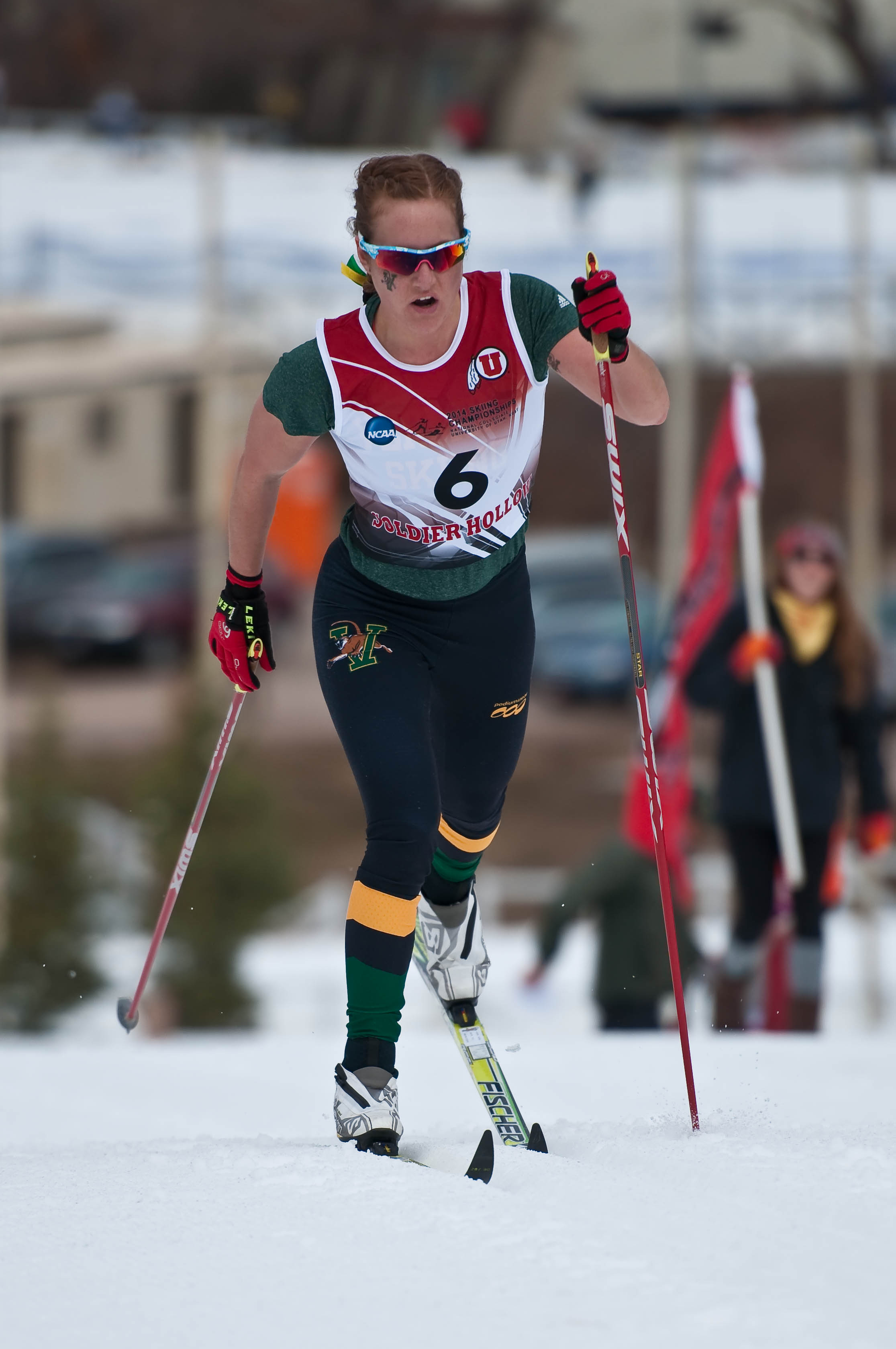
    Anja Gruber didn’t surprise anyone but herself when she claimed the top spot in today’s 5-kilometer classic NCAA Championships at Soldier Hollow, Utah, hosted by the University of Utah. The humble 22-year old junior at the University of Vermont (UVM) repeated her victory from last year by skiing the course in 13:38.4.

    Conditions on the course were fickle, with only bare ground to be seen around the course, which was composed entirely of artificial snow. Temperatures were in the 50’s, with many skiers racing in shorts and short sleeves. That didn’t put a damper on Gruber’s enthusiasm, however.

    Anja Gruber (UVM) skis her way to the win in the 5 k classic at the 2014 NCAA Championships. (Photo: http://bertboyer.zenfolio.com) All proceeds from photo sales will be directly donated to NNF.
    Anja Gruber (UVM) skis her way to the win in the 5 k classic at the 2014 NCAA Championships. (Photo: Bert Boyer) All proceeds from photo sales will be directly donated to NNF.

    “It’s pretty exciting,” she said, without a trace of her native German accent. “After last year I wouldn’t have expected that I could do this again. I knew I was in good shape and I knew my classic skiing was pretty good, and I like this course and I knew that if my skis are good and I have a good day I can have a good race. But having a good race and winning are two different things, so it’s really really exciting.”

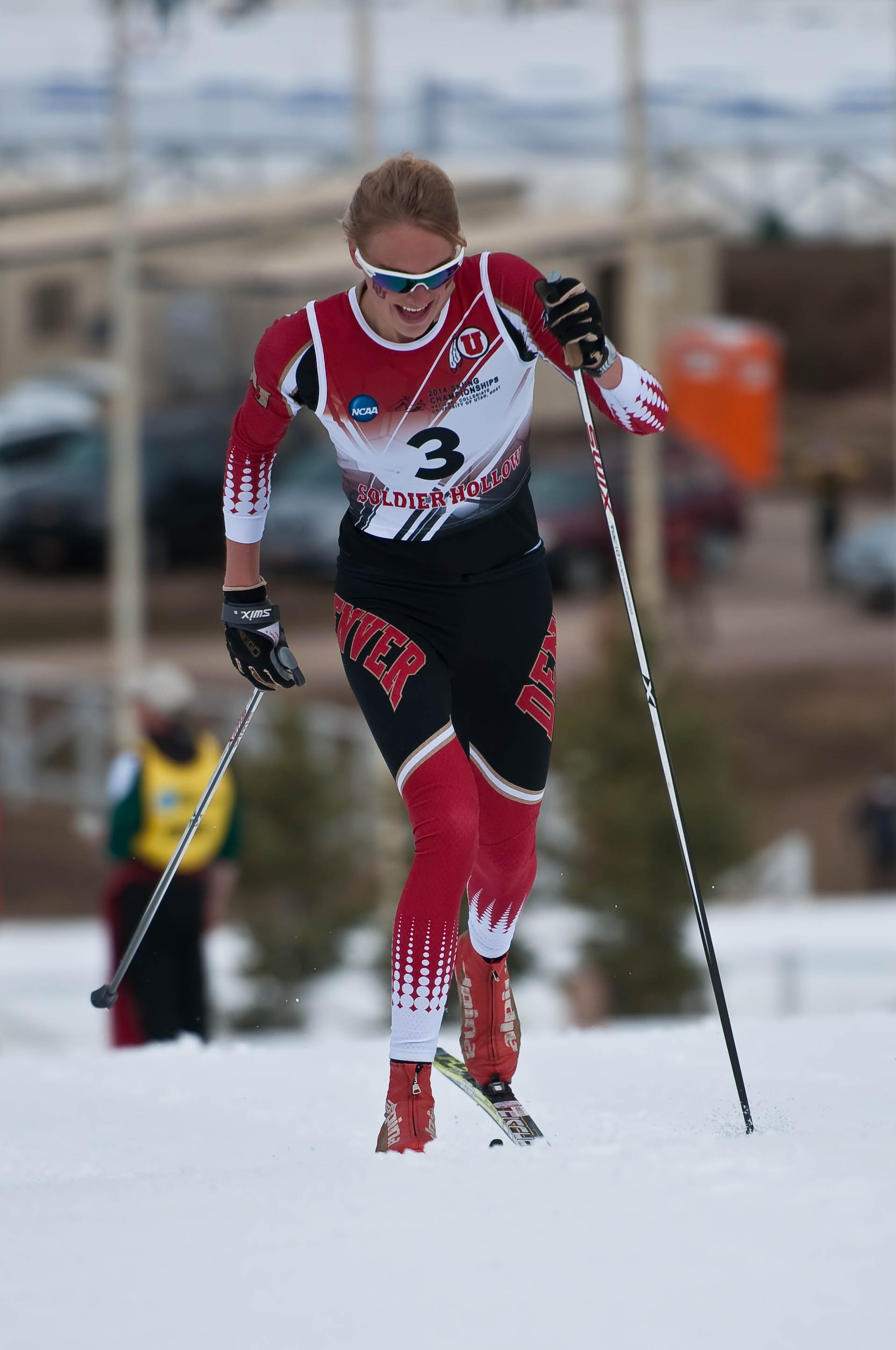
    Her performance allowed her to best 20-year old Sylvia Thorson Nordskar (+9.3), originally from Norway and a freshman at the University of Denver (DU), and 21-year old Eva Severrus (+22.6), originally from Slovenia and a freshmen at the University of New Mexico (UNM). Nichole Bathe, an 18-year old freshman at the University of Alaska Fairbanks (UAF) finished fourth (+29.3). Bathe is originally from Madison, Wisconsin.

    Nordskar said she wasn’t feeling that well, coming off of illness.

    “It was an okay race but not perfect because I’ve been sick for two weeks, and in those conditions I did a good race and I’m very happy with a podium,” she said. Her team is also in the lead, something that Nordskar could hardly be happier about.

    “I think both the [DU] guys and girls won today, so that is so cool! So fun! I really enjoy skiing here – we are a team and we have so much fun together.”

    Severrus only arrived at UNM in the beginning of 2014, and has obviously already made her mark in the ski program there. It has also made its mark on her.

    “Awesome result, awesome season behind me. I’m real happy with these results,” she said. The race was an interval start, and she skied the course alone.

    “Hammering all the time.” She said.

    Gruber’s race strategy was a bit more nuanced, but even after the race she seemed a little unsure of what she did.

    “I though that it was going to be a really fine line between pushing it too hard on that first hill and being too cautious. I tried to go out pretty hard but maybe not that hard,” she said, her tone indicating equivocation. “I guess it worked.”

    Sylvia Nordskar (DU) skis her way into 2nd place in the 5 k classic at the 2014 NCAA Championships. (Photo: http://bertboyer.zenfolio.com) All proceeds from photo sales will be directly donated to NNF.
    Sylvia Nordskar (DU) skis her way into 2nd place in the 5 k classic at the 2014 NCAA Championships. (Photo: Bert Boyer) All proceeds from photo sales will be directly donated to NNF.

    “Honestly, I felt really good,” she added, “which doesn’t happen so often, and so it’s really exciting [when it does]. I caught the girl in front me pretty fast, so I was like ‘whoa whoa whoa, watch out,’ but then you get a whole lot of rest [on the downhill] and I was being pretty careful [so I just decided to keep going].”

    Asked about her plans for Saturday, Gruber aimed high.

    “I think we didn’t have the best day as a team [today], and I think we’re gonna want some redemption for that. I know we’ve had really good skate races as a team and I think it’s the most exciting thing to race with my two favorite teammates.”

    Nordskar, for her part, felt the same as Gruber. But in classically Norwegian fashion, she was direct:

    “I want to win!” She blurted, but quickly adopted a more cautious tone. “But first I have to be healthy, and relax now. I’m glad there’s no race tomorrow so we have one day. But just to go and have fun and hopefully we have three girls in the front.”

    Women’s 5 k Classic Results

    Combined Team Results

  • 2014 NCAA Preview: Colorado, Utah, Vermont, and Others Hungry for Title

    Photo: Flyingpointroad.com (All proceeds benefit NNF)
    An NCAA banner hangs at the 2013 NCAA Skiing Championships in Vermont. The 2014 Championships are set to begin Wednesday in Park City Utah. Photo: Flyingpointroad.com (All proceeds benefit NNF)

    FasterSkier’s coverage is made possible through the generous support of Madshus.

    One-hundred and forty-eight. That’s the number of skiers who have descended upon the ski town of Park City, Utah, to participate in the 2014 NCAA Skiing Championships. The championships will be hosted by the University of Utah, who last had the honor in 2000. The four day event, which consists of two alpine and two nordic races, begins Wednesday and continues through Saturday.

    The cross country portion of the event will take place at Soldier Hollow in Midway, Utah, the site of the 2002 Olympic Games and many national events, including the 2014 U.S. Cross Country Championships.

    The weather in Utah looks to be warm and wet with highs in the mid 40s to lower 50s and precipitation expected on Thursday and Friday, making for tricky waxing and racing conditions. 

    Given the nature of course, sloppy conditions, the field, and the stakes, the competition is set to be fierce. Several schools will be in the hunt for the title of america’s fastest skiing school, but only one will walk away with the championship title.

    Last year at the 2013 NCAA Championships in Ripton, Vt., it was the University of Colorado that came out on top followed by the University of Utah and the University of Vermont. Colorado’s chances in Utah seem a more slim in 2014, as they were unable to win a collegiate weekend all season. However, with a strong showing for men’s nordic, the Buffs may be able to make up for their other weaknesses.

    The University of Utah is hungry to break a three-year-streak of finishing second at NCAAs. After winning last weeks Rocky Mountain Intercollegiate Ski Association (RMISA) Championships, Utah goes into this week’s races with confidence and energy. Having the home advantage should certainly help Utah as well. However, if they want the title that’s slipped out of their hands the past three years, they’ll have to rely less on their alpine team and see better results from their nordic squad.

    It would be asinine to discount the University of Vermont, whose skiers have been looking especially strong this year. In the 2012 Championships they demonstrated that they could tackle western altitudes with ease in Bozeman, Mont. And with Soldier Hollow looking to be warm and wet this week, the conditions may favor eastern skiers who are used to rough easter weather.

    The East

    The eastern skiers are as strong as ever this year with the undefeated University of Vermont setting its sites on another NCAA victory. The 2012 champions have a strong team in both alpine and nordic which has contributed to their uncontested dominance this season.

    Anja Gruber (University of Vermont) racing to fourth in Saturday's 10 k classic mass start at Soldier Hollow for her best U.S. nationals result by more than 20 places. (Photo: Bert Boyer/http://bertboyer.zenfolio.com/) All proceeds from photo sales will be directly donated to NNF.
    Anja Gruber (University of Vermont) racing to fourth in the 10 k classic mass start at Soldier Hollow for her best U.S. nationals result by more than 20 places. (Photo: Bert Boyer/http://bertboyer.zenfolio.com/) All proceeds from photo sales will be directly donated to NNF.

    The east finds its greatest strength in its women. Anja Gruber, a native of Germany, has been UVM’s shining star this year, and finishes the regular season as the top-ranked skier in the Eastern Intercollegiate Ski Association (EISA). Last year’s NCAA 5 k classic champion, she placed fourth at the 2014 U.S. nationals at Soldier Hollow on the same course where the NCAAs are being held. Throughout the season the senior has been a top contender in the EISA circuit, consistently winning all but one classic race and finishing in the top three in every freestyle race.

    UVM’s talent doesn’t stop there, with sophomores Linda Danvid-Malm of Umea, Sweden and Stephanie Kirk of Anchorage, Alaska, showing that Gruber isn’t the only catamount with claws. Danvid-Malm has been dominant in freestyle, winning three out of six EISA races this season. Kirk, who competed in Italy as part of the U23 World Championships, has been a consistent performer as well highlighted by a spectacular win in the 15 k skate mass start at the EISA Championships at Middlebury College last weekend.

    Annie Hart of Dartmouth College has been the only real threat to Vermont’s dominance all season, having been the only non-UVM woman in the east to win a scored collegiate race this season. Consistently on the podium in classic races, Hart finally saw her hard work pay off at the EISA championships when she won the 5 k classic. With the same event being held on Thursday, Hart is hungry for a national championship title. Corey Stock, also of Dartmouth, has had a decent season as well, ranking fifth in the eastern points standings.  

    While not as dominant as their women, the UVM men shouldn’t be taken lightly. Their lead skier, Scott Patterson of Fairbanks, Alaska, has won three of the six collegiate races he’s participated in this season. Patterson made the headlines earlier this year when he riskily tried to break away from the men’s field in the 30 k mass start. Unsurprisingly, the move failed on the national level, but a similar move with in a collegiate field may be what Patterson needs to secure a title..

    Sophomore Jorgen Grav is another UVM skier to watch in Soldier Hollow. The Oslo, Norway native finished fifth in the EISA rankings, followed by teammate Rogan Brown of Durango, Colo., in sixth.

    Silas Talbot (DAR)
    Silas Talbot of Dartmouth racing in the 2013 NCAA Championships at Middlebury, Vermont.

    Two Dartmouth College skiers have the chance to dethrone the dominant catamounts. Paddy Caldwell and Silas Talbot have both been atop the results this year both winning multiple carnival races. Caldwell skied to a convincing win in the men’s 20 k freestyle at the ESIA Championship and was named 2014 rookie skier of the year for the region.

    A notable emission from this year’s NCAA Championships will be Ben Lustgarten of Middlebury College. Lustgarten had a spectacular year which started with strong skiing at the 2014 U.S. National Championships, continued with racing at the U23 World Championships, and finished with a win in the 10 k classic (by 50 seconds!) at the EISA Championships. Lustgarten would have been a top contender in Soldier Hollow this year but due to an knee injury he sustained in the 20 k mass start at the EISA Championships the senior will be on the sidelines.

    The West

    Unlike the east, there has been no clear contender for the top spot in the west. At the beginning of the season it looked as if the University of Denver might be ready for another NCAA Championship, but by the time the RMISA Championships was over last week, Denver had finished fourth, roughly 60 points behind the winner, the University of Utah. Despite the end-of-season falter, Denver still held the top spot in the regular season standings demonstrating their potential.

    Sylvia Nordskar (University of Denver), fourth
    Sylvia Nordskar of the University of Denver racing in West Yellowstone, Montana earlier in the 2013/2014 season.

    Sylvia Nordskar of Bærum, Norway, is the most-likely woman from the West to capture an NCAA title. The University of Denver freshman has either won or placed second in every collegiate race that she has competed in this season and has no signs of stopping.

    Senior Makayla Cappel, a Sun Valley native skiing for Denver, became a late-season standout after winning the 5 k classic and taking third in the 15 k freestyle mass start at the RMISA Championship in Minturn, Colo. After dealing with illness upon her return from the World University Games in Italy, Cappel recovered from a slow start to her season to rocket herself onto the first team All-RMISA. Rounding out the Denver women is Silje Benum, who has also had many top finishes this season.

    Only two non-Denver skiers have been able to top Nordskar this season. The first is Marine Dusser of the University of Alaska Anchorage, who was third in the women’s 15 k in 2013 and has had several wins in the RIMSA circuit this year. The second is Slovenian Eva Severrus of the University of New Mexico, a freshman who has helped New Mexico improve its standings in the west.

    Sloan Storey of the University of Utah is another western woman to watch. Storey joined the U.S. contingent at the Junior World Championships in Italy earlier this year and made first team All-RMISA after and exemplary collegiate season.

    Rune Oedegaard (CU) 8th place classic
    Rune Ødegaard racing in the West Yellowstone Super Tour.

    Like its women’s team, the Denver men were the top team in the west during the regular season. The trio of Moritz MadlenerPierre Guedon and Trygve Markset made the Pioneers proud in 2014 and hope to continue the trend into the NCAA Championships. However, they’ll need to have a better performance than they did at the RMISA Championships, where they garnered only 46 points compared to the University of Colorado’s 93.

    Norwegians Rune Ødegård and Mads Strøm, a junior and freshman, have been the top skiers from Colorado throughout the latter half of the 2014 collegiate season. After sitting out the first two weekends of collegiate racing the duo has consistently been in the top five. Ødegård won last year’s 10 k classic at the 2013 NCAA Championships and looks to continue that success into 2014.

    The University of Utah men have shown that the best skiers in the west aren’t just based in Colorado. Niklas PerssonOscar Ivars, and Noe Bellet have all performed well this season, garnering spots on the second team All-RMISA. However, all three will need to up their game if they want to outpace the Catamounts and the Buffs.

    Colorado, Denver, and Utah have had steady competition from the 2013 RMISA skier of the year, Lukas Ebner of the University of Alaska Anchorage. The senior, who hales from Germany, hopes to build on a season that has included multiple podiums.

    Central

    The Central Collegiate Ski Association (CCSA) has traditionally trailed the east and west in terms of results at past NCAA Championships, which is reflected in the small numbers of qualifiers from the region. Despite that fact, there are several top performers who have a chance at an NCAA podium in Utah. 

    Rosie Frankowski of Northern Michigan University in the 20 k freestyle mass start at U.S. Nationals at Soldier Hollow.
    Rosie Frankowski of Northern Michigan University in the 20 k freestyle mass start at U.S. Nationals at Soldier Hollow.

    Rosie Frankowski, a senior of Northern Michigan University, has had an excellent season and looks to continue her speed into her time in Utah. Frankowski finishes her regular season as the top skier in the CCSA.

    Freshman Nicole Bathe of University of Alaska Fairbanks has turned out to be quite the powerhouse in classic races. Bathe has had excellent start to the season after finishing third in the classic sprint at the 2014 U.S. Cross Country Championships.

    Fellow Fairbanks  teammate Logan Hanneman looks to be the top male competitor for the CCSA in Utah. The junior finished fifth in the freestyle sprint at U.S. Nationals earlier this season.

    Whether Colorado can reclaim its title, Utah can snap its second place curse, or Vermont use the sloppy conditions to their advantage, the NCAA Championships will be an exciting display of talent from the fastest skiers in the country.

    The 5 k and 10 k classic will take place this Thursday at 10 a.m. and 12 p.m. MST. The Championships will conclude with the 15 k and 20 k freestyle mass starts on Saturday, also at 10 a.m. and 12 p.m, MST. Watch the action unfold live on the NCAA site and check FasterSkier for reports.

  • Rorabaugh Rocks Women’s 10 k Classic for First National Title

    Rorabaugh Rocks Women’s 10 k Classic for First National Title

    Alaska Pacific University's Becca Rorabaugh (l) takes on Dartmouth's Anne Hart (r) the first of two times up Hermod's Hill on a challenging Olympic course at 2014 U.S. Cross Country Championships. Rorabaugh won the 10 k classic individual start on Saturday in Midway, Utah, by 14 seconds.
    Alaska Pacific University’s Becca Rorabaugh (l) takes on Dartmouth’s Anne Hart (r) the first of two times up Hermod’s Hill on a challenging Olympic course at 2014 U.S. Cross Country Championships. Rorabaugh won the 10 k classic individual start on Saturday in Midway, Utah, by 14 seconds.

    FasterSkier’s coverage of the 2014 U.S. Cross Country Championships is brought to you through the generous support of The Memory Clinic in Bennington, Vt.

    MIDWAY, Utah — The seventh starter of 152 women in Saturday’s 10-kilometer classic individual start, Becca Rorabaugh had a few things to think about in the first race of U.S. Cross Country Championships.

    Becca Rorabaugh (APU) racing to a national title in the 10 k classic individual start on Sunday at Soldier Hollow in Midway, Utah. (Photo: Bert Boyer/http://bertboyer.zenfolio.com/) All proceeds from photo sales will be directly donated to NNF.
    Becca Rorabaugh (APU) racing to a national title in the 10 k classic individual start on Sunday at Soldier Hollow in Midway, Utah. (Photo: bertboyer.zenfolio.com) All proceeds from photo sales will be directly donated to NNF.

    One, try to catch the seven A-seeds in front of her, and two, stay well ahead of the 13 other top-ranked skiers behind her.

    But above all, don’t bonk out there. Racing at 5,500 to 5,900 feet above sea level is tough. Add two laps around a Soldier Hollow’s 5 k Olympic loop to that and you’re getting into dangerous territory.

    An Alaska Pacific University (APU) skier based out of Anchorage, Alaska (and originally from Fairbanks), Rorabaugh mostly trains at sea level. But she and the APU Elite team know what hard efforts are all about, training at Eagle Glacier some 5,000 feet high throughout various summer camps. They also utilize Hatcher Pass about 1 1/2 hours from Anchorage — more accessible than a helicopter ride — at nearly 4,000 feet.

    “The whole time I was just trying to keep it together, try to keep consistent skiing and good glide and good transitions and ski really smooth,” Rorabaugh said.

    Starting a minute and 30 seconds behind Caitlin Gregg (Team Gregg/Madshus) in bib 1, Rorabaugh took advantage of the 15-second intervals and started picking people off — but with caution.

    “I was just trying to make sure I didn’t really tank it over the top of any of the hills on the first lap,” she said. Her goal was to come on strong the second lap, but she ended up skiing the first one faster than anybody.

    Rorabaugh led from start to finish, clocking the first lap 15.3 seconds faster than Gregg in second. Tucking down toward the stadium before the start of her second lap, Rorabaugh had already passed two people: Dartmouth’s Anne Hart and Erika Flowers (Stratton Mountain School T2), who ended up 17th and 11th, respectively.

    While Rorabaugh’s second lap was one second slower than Gregg’s, it didn’t matter. The 24 year old had jumped out to an untouchable lead and ended up winning in 29:09.9, 14.2 seconds ahead of Gregg in second.

    “I haven’t had a great classic race in a couple years so I wanted to feel like I could stride out like that again.” — Becca Rorabaugh, U.S. nationals 10 k classic winner

    For Rorabaugh, it was her first national title in the first of four races over the next week.

    “I have no idea what it’s gonna mean … I guess it means I get to go to OPA’s if I want to, so that’s good,” Rorabaugh said of the opportunity to race the OPA Cup Tour this season in Europe.

    Doing well enough at U.S. nationals could prompt internal U.S. Ski Team discussion about whether she’s worthy of making the 2014 Olympic team, which will be named later this month. However, the spots remain tight with so many dominant U.S. Ski Team women currently competing or training in Europe.

    “Mostly it’s a good little boost of confidence,” Rorabaugh said. “I haven’t had a great classic race in a couple years so I wanted to feel like I could stride out like that again.”

    Caitlin Gregg (Team Gregg/Madshus) pushes up Hermod's Hill in the 10 k classic individual start at Soldier Hollow on Saturday. She placed second for her best classic result at nationals.
    Caitlin Gregg (Team Gregg/Madshus) pushes up Hermod’s Hill in the 10 k classic individual start at Soldier Hollow on Saturday. She placed second for her best classic result at nationals.

    Gregg joked about the odds of both her and her husband, Brian, being randomly selected to start first in both the women’s and men’s races. It a was 1-in-400 chance, and they ended up leading the A-seeds* on a clear-and-sunny morning with temperatures in the mid-20s.

    “There was probably a higher probability of that than me winning U.S. nationals, although I did a dang good job of trying to get in there,” Gregg said after notching her best U.S. nationals classic result.

    Third halfway through Saturday’s 10 k behind Caitlin Patterson (Craftsbury Green Racing Project) in second, Gregg posted the fastest second lap to finish 25.6 seconds ahead of Patterson, who placed third.

    Gregg laughed about starting first at the first race of nationals, with her last race a week earlier on Dec. 28 at the Wasatch Citizens Series in nearby Park City, Utah. There at the White Pine Touring Center, she and Brian set course records on the 5.4 k loop.

    “We did a time trial last weekend, but it was a lower-key citizens’ event,” she said. “Nothing like starting off with a hard 10 k at altitude. I think working into it was key.”

    Without any splits to go off throughout much of the race, especially her first lap, Gregg had to rely on the cheers of spectators to indicate where she stood.

    “During the first lap, I’d be skiing by and they’d be like, ‘Go Rosie!’ ” she said of Rosie Brennan (APU), who placed sixth (+1:30.8). “I was like, ‘Oh, that means she’s clearly right there.’ ”

    Laughing as she visualized people softly clapping for her, Gregg said she reminded herself not to “freak out” on the first lap. “I swear I always magnify when I’m racing, and i can hear Rosie’s skis behind me, like ,’Oh gosh, she’s coming.’ I kind of just had a plan to really ski consistently.”

    “I wish there was a couple more laps in there. I feel like I was just getting goin’.” — Caitlin Gregg, second

    With her heart set on making the upcoming Winter Olympics and specifically racing the 30 k in Sochi, Russia, Gregg said she’s been looking forward to proving herself in longer races.

    “Man, I wish there was a couple more laps in there,” she said. “I feel like I was just getting goin’. That second lap felt really good, which I think was key.”

    Ski speed also made a difference on a morning (and afternoon) that turned warmer than expected, with sub-zero wind chills expected early. From what Rorabaugh could tell, her skis were solid on both the climbs and descents, and Gregg was grateful for the help University of New Mexico Head Coach Fredrik Landstedt leant both her and Brian with waxing.

    “I had Fredrik doing my skis and I had Grethe [Hagensen] from MSU out on course and she gave me the best information ever,” Gregg said of the Montana State University head coach. “She said, ‘Now you’re doing it, your dropping those girls off and you’re moving up.’ That was exactly what I needed to hear.”

    Caitlin Patterson (Craftsbury Green Racing Project) striding to third in the women's 10 k classic individual start at 2014 U.S. nationals in Midway, Utah. (Photo: Bert Boyer/http://bertboyer.zenfolio.com/) All proceeds from photo sales will be directly donated to NNF.
    Caitlin Patterson (Craftsbury Green Racing Project) striding to third in the women’s 10 k classic individual start at 2014 U.S. nationals in Midway, Utah. (Photo: bertboyer.zenfolio.com) All proceeds from photo sales will be directly donated to NNF.

    The 18th starter, Patterson said she tried to refine her pacing strategy to start a little faster than usual, but not too fast.

    “I have a tendency to start slow so I wanted to not lose too much time at the beginning,” she said. “I did lose a little bit of time, but still … I felt pretty well in control.”

    Fourth fastest after 5 k (trailing Rorabaugh, Gregg and Brennan) and getting splits that she was in fifth at one point thereafter, Patterson clawed back the time to place third.

    “To move up during the second lap to third I’m really happy with that,” she said. “Obviously there’s room for improvement, but I think it’s a really good start.”

    In her previous 10 k classic races this season, Patterson placed second in the SuperTour mass start in Bozeman, Mont., and seventh in the NorAm individual race in Rossland, B.C.

    “I think this one was a lot more solid,” she said.

    Forty-two seconds behind Patterson and 1:27.3 out of first, University of Vermont junior Anja Gruber placed fourth, improving from the sixth-fastest time at 5 k.

    “I’m really happy,” Gruber said. “It’s kind of like the first real race for us and we just came out here on Monday, and I was home over Christmas training by myself.”

    A member of the German national team in 2009, Gruber returned to Germany for the holidays, then picked up in her first race of the season before the Eastern Intercollegiate Ski Association (EISA) circuit starts Jan. 17**.

    “It’s really nice for me because there’s really no pressure this week,” said Gruber, 22, after posting her first top 20 at U.S. nationals. “It’s more just fun and checking out the course in case I make NCAA’s here.”

    Anja Gruber (University of Vermont) racing to fourth in Saturday's 10 k classic mass start at Soldier Hollow for her best U.S. nationals result by more than 20 places. (Photo: Bert Boyer/http://bertboyer.zenfolio.com/) All proceeds from photo sales will be directly donated to NNF.
    Anja Gruber (University of Vermont) racing to fourth in Saturday’s 10 k classic mass start at Soldier Hollow for her best U.S. nationals result by more than 20 places. (Photo: bertboyer.zenfolio.com) All proceeds from photo sales will be directly donated to NNF.

    After Rorabaugh, Kate Fitzgerald and Brennan helped APU put three women in the top six, with Fitzgerald finishing 5.4 seconds after Gruber and 1:27.3 back from first.

    A fan of the 15-second intervals***, Fitzgerald said it helped to see people ahead of her to try to catch and ski with others at times. “You could get a bit of a pack going,” she said.

    The eighth starter, she mostly heard that she was in eighth, but she took the splits with “a grain of salt” and aimed to ski consistently strong.

    “[I was] stoked to hear Becca doing so well,” Fitzgerald said. “She started right ahead of me and she just took off. I was like, ‘Woo! She’s having a good one.’ ”

    Third in the 10 k skate individual start at nationals last year (behind APU teammates Brennan in first and Sadie Bjornsen of the U.S. Ski Team in second), Fitzgerald was glad to get this one out of the way.

    “I was super nervous this morning, like, ‘Oh man, nationals, here we go!’ but I’m excited for the rest of the week,” she said, with her focus on the 20 k freestyle mass start. “I think it’s gonna be awesome.”

    *A-seeds started first to give them the most “advantageous” conditions, according to technical delegate John Estle. Snow was initially forecast in the morning, and organizers considered moving the A-seeds back behind the B’s, but the chance for snowfall became less likely so they kept the top women at the front of the pack.

    **The western collegiate Rocky Mountain (RMISA) circuit starts a week from Saturday on Jan 11.

    ***Estle said race officials decided to cut the time between intervals in half from the usual 30-seconds to speed up the day and give the athletes several additional hours to recover before Sunday’s skate sprint. Had they been dealing with 80 athletes, they would’ve stuck with 30 seconds, but with nearly 360 skiers between the women’s and men’s races, starting them 15 seconds apart was more efficient.

    Results

    — Lander Karath contributed reporting

    Kate Fitzgerald looks up as she begins the climb up Hermod's in the women's 10 k classic individual start at 2014 U.S. Cross Country Championships in Midway, Utah. Fitzgerald placed fifth.
    Kate Fitzgerald looks up as she begins to climb up Hermod’s in the women’s 10 k classic individual start at 2014 U.S. Cross Country Championships in Midway, Utah. Fitzgerald placed fifth.
  • Local Teams Sweep Craftsbury Spring Tour as Eastern Skiers Prepare for California Finale

    Local Teams Sweep Craftsbury Spring Tour as Eastern Skiers Prepare for California Finale

    As the rest of the women's field waits for a full minute for their chance to start, SMS T2's Sophie Caldwell sets out en route to the tour title in Craftsbury on Sunday. Photo: Judy Geer.
    As the rest of the women’s field waits for a full minute for their chance to start, SMS T2’s Sophie Caldwell sets out en route to the tour title in Craftsbury on Sunday. Photo: Judy Geer.

    The best skiers in the East are getting ready to head to California for Spring Series, but first, they had some business to clear up: namely, the final pursuit of the Craftsbury Spring Tour in northern Vermont.

    In Sophie Caldwell’s, it was mostly a formality. After dominating both the prologue and the sprint, she started the 10 k classic pursuit with more than a minute of time on the next skier, Elizabeth Guiney of the University of New Hampshire.

    Still, she tried her best, eager to have the opportunity for a distance race.

    “I hadn’t done a distance race against any of the other girls in a long time and thought I might be plowing a little slow snow the first lap of the course so I didn’t want to start too relaxed!” she wrote in an e-mail to FasterSkier. “I think I was able to pace it well and was psyched with the win because I really had no idea how close behind me people were.”

    As it turned out, not very close. Both Guiney and University of Vermont’s Stephanie Kirk faltered, losing well over another minute to the Stratton Mountain School T2 skier. Instead, it was Craftsbury’s own Hannah Dreissigacker and UVM’s Anja Gruber who gave chase. But while they passed Guiney and Kirk, there was no catching Caldwell, who crossed the line with two minutes and six seconds to spare.

    Caldwell on course. Photo: Judy Geer.
    Caldwell on course. Photo: Judy Geer.

    “I was definitely excited to do a distance race, and I was definitely feeling a little fatigue building up from the previous couple days of racing,” she wrote. “But overall it felt good.”

    Dreissigacker, a national team biathlete who competed in her first World Championships this year, showed her chops by beating Gruber to the line. After starting three seconds behind this year’s NCAA champion, Dreissigacker secured second place by a margin of four seconds. Guiney finished the tour in fourth and UVM’s Linda Danvind-Malm was fifth.

    The men’s race was much closer, and much more eventful. Craftsbury’s Pat O’Brien started the day with a 12-second lead on Stratton’s Eric Packer and UVM’s Scott Patterson, and he knew immediately that he’d see them out on the trails.

    “I knew that with only a 15 second lead Scott and Eric would ski up to me at some point on the first lap,” he told FasterSkier. “I planned to start conservative and bleed that time away over the first few kilometers then try to stay with the pack and either wait till the sprint finish  or attack on the start of the last climb if my body was feeling good. The three of us skied together part way through the second lap when we hit the big climb right as the sun came out and everybody lost their kick.”

    Weather be damned: Packer and O’Brien soldiered on, although Patterson was a casualty. The two former Dartmouth teammates didn’t pull any punches as they tried to beat each other to the line. What’s worse, Stratton’s PG Paddy Caldwell was closing in on them; O’Brien said that the younger skier still seemed to have kick, so he and Packer were trying not to get caught.

    “At that point it was a matter of double poling, herringboning, and trying to make slick skis work,” he said. “I knew the last time up the big climb that I was able to work my skis a little bit better than Eric and get some kick out of them, so I just kept throwing in accelerations to take something out of his double pole and not let it come down to a drag race of a finish. We kept fighting it out all the way to the end and I was happy to take the win at home and have those two SMS boys to push me the whole way.”

    Packer (left) and O'Brien fighting it out. Photo: Judy Geer.
    Packer (left) and O’Brien fighting it out. Photo: Judy Geer.

    Packer, who won the sprint, had no complaints with how things turned out: O’Brien ahead at the finish by just 1.9 seconds.

    “On the second lap Pat and I dropped Scott, and it was a two-way battle for the rest of the race,” he told FasterSkier. “I was really happy with the race today, and it was awesome to duke it out with Pat.  He was just a bit stronger in the end today. Pat’s a good friend and ex-teammate from Dartmouth, and I was stoked that he skied so well.”

    Caldwell collected his second podium of the weekend, 19 seconds behind O’Brien, while Patterson slipped back to fourth place, a minute out. Justin Freeman skied his way from 17th up to fifth over the course of the 15 kilometers.

    All in all, it was a good way for many of the skiers to get back into the swing of racing on U.S. soil. Caldwell and Packer, for instance, had been in Europe for weeks. And even for those skiers who had more or less stayed home, it had been a slow month.

    Men's podium for the Tour: Pat O'Brien, Eric Packer, and Paddy Calwell. Photo: Judy Geer.
    Men’s podium for the Tour: Pat O’Brien, Eric Packer, and Paddy Calwell. Photo: Judy Geer.

    “It was nice to have these races as a good tune up before heading west,” O’Brien said. “There hasn’t been much on the FIS calender domestically for March, and its a little weird having Spring Series even later in the year, but fortunately the snow here has been great and its been nice to have some time to train at home after being on the road since racing started in West Yellowstone.”

    As did nearly everyone else, O’Brien, who has seen plenty of Craftsbury in the last few years, drew the inevitable contrast with one season ago when the staff was frantically working to pull off Spring Series as the snow disappeared. These races were low key, but in some ways, he said, even tougher.

    “It was very nice to finally race on our homologated 5 k course,” he said. “Despite all the time I have spent doing trail work, hauling snow, and training on that course, I hadn’t raced on it until this year… there’s lots of striding and stair-stepping uphills that you have to work the whole way though. The rest mostly comes at the beginning of the course, which means from 2 k on its pretty much constant work. Looking back to last year, the men’s 50k race would have had a very different feel if we had to do 10 laps of that course!”

    Also on Sunday, Craftsbury hosted their 15 and 30 k Spring Fling mass starts. The 30 k races were won by Middlebury’s Ben Lustgarten and Craftsbury’s Hannah Miller; the 15 k titles went to Saint Lawrence’s Adam Terko and Colby’s Alice Hotopp.

    Results


    Nils Koons (Craftsbury) had some sweet duds en route to 15th place in the tour. Photo: Judy Geer.
    Nils Koons (Craftsbury) had some sweet duds en route to 15th place in the tour. Photo: Judy Geer.
  • Gruber Crowned NCAA Classic Champion; UVM Leads Championships After Two Events

    Gruber Crowned NCAA Classic Champion; UVM Leads Championships After Two Events


    University of Vermont junior Anja Gruber won the 5 k classic race at NCAA Championships on Thursday by 11.1 seconds over Dartmouth's Mary O'Connell. Marine Dusser (University of Alaska, Anchorage) took third.
    University of Vermont junior Anja Gruber won the 5 k classic race at NCAA Championships on Thursday over Dartmouth’s Mary O’Connell. Marine Dusser (University of Alaska, Anchorage) took third in the second event and first nordic race of the NCAAs.

    RIPTON, Vt. — In the world of college skiing, a lot can change in a year — just ask newly crowned NCAA 5 k classic champion Anja Gruber. The University of Vermont junior was her team’s fourth woman last season and had never competed at NCAA Championships before Thursday. But in her first appearance at the most important race of the college season Gruber bested the entire 40-woman field and won the first nordic event at Rikert Touring Center by 11.1 seconds.

    Dartmouth College freshman Mary O’Connell finished second and University of Alaska, Anchorage, freshman Marine Dusser took third. With the completion of the giant slalom and classic events at NCAAs, UVM sits in the lead at the halfway point of the championships with 389 points to the University of Colorado’s 368.5 points.

    Gruber en route to an 11.1-second win.
    Gruber en route to an 11.1-second win.

    “It’s pretty unbelievable right now,” Gruber said after the podium ceremony made her national title official. “I’m not sure if this actually just happened!”

    The 21-year-old from Leutkrich, Germany, stepped from the beginning of the carnival season to make up the hole left by three senior women who graduated from the 2012 championship squad. It was a big void to fill, but UVM nordic coach Patrick Weaver says Gruber rose to the occasion spectacularly, and particularly on Thursday at NCAAs.

    “Anja was the clear number four skier for us last year, always in fourth, kind of like the domestique of the team,” Weaver said. “With everyone graduating last year I think she realized this was her opportunity. She came back in great shape and I always had it in the back of my mind that she had as good a chance as anybody in this race, so [I’m] just super-excited to see that happen. Really happy for her.”

    Between six regular-season competitions Gruber tallied two classic victories, one freestyle win and helped lead UVM to an undefeated EISA season headed into Thursday. And once NCAA competition began at Middlebury, team was everything. UVM’s alpine squad drew first blood in the giant slalom on Wednesday and the nordic athletes wanted to do their part to maintain the momentum.

    “It’s really great to have a good result for yourself, but more important than that is that you get those points for the team,” Gruber said. “Our alpiners are definitely pulling their weight and we want to do that, too. Everyone knows they have to do their very best in order to make this work and that’s what we all do.”

    When she lined up as 37th starter out of 40 on Thursday, Gruber’s goal was a simple one: ride the energy of a successful 2013 campaign and ski the best race she could for the Catamounts.

    “I came here and — we were joking, this is just the strawberry on the frosting on the cake,” Gruber said. “But we also knew that this whole season, it worked out great, so we were just saying, ‘Why shouldn’t it work today?’ I definitely wanted to have a good race and you can’t really influence how the other people will do, so as long as you ski your best…yeah. That worked.”

    The second, third and fourth-place finishers on Thursday all ended up being the only three skiers behind Gruber on the start list. It was a finicky day for kick wax at Rikert and some teams appeared to struggle with the grip, but Gruber said she and her teammates had great skis, which helped her on the deceptively challenging course.

    “I went out really hard, I think,” Gruber said. “I was telling myself, ‘You fell good, this is good,’ and then when the hills started my skis were working and I said, ‘Oh, my skis are working, this is good.’ And then I was starting to hurt pretty bad, like, ‘Oh, I’m dying.’”

    Spurred up the last hill by a slew of Catamount fans, teammates and coaches, Gruber finished hard on Rikert’s newly-homologated trails put a few more seconds of space between herself an the remaining competitors. O’Connell got a final split saying she was only five seconds down, but in the end Gruber won by over 11 seconds.

    “Anja made up quite a bit of time in the finishing stretch,” O’Connell said.

    Mary O'Connell (Dartmouth College) brings it home for silver.
    Mary O’Connell (Dartmouth College) brings it home for silver.

    The Dartmouth freshman from Steamboat Springs, Colo., put together an impressive race in her own right. Like Gruber, 2013 is also O’Connell’s first NCAA Championship appearance, and with a goal of reaching just the top-10 on Thursday she finished ahead of nearly everyone on the stacked start list. As the final starter, O’Connell left the gate 30 seconds behind CU’s Joanne Reid, a pre-race favorite, and set out to use the position to her advantage.

    “I had the last starting position, which I was both excited and nervous about,” O’Connell said. “It’s a good position, because then your splits are very accurate. I started right behind Joanne Reid and I guess she was one of the favorites to win, so I just wanted to keep her in my sights. And it’s a 5 k, so I pretty much just went hard the whole time and tried to ski the down hills really well.”

    When she crossed the finish line, O’Connell bumped Dusser out of second by just 0.8 seconds. The result has her looking forward to Saturday’s freestyle race, particularly since she won the 15 k at Rikert earlier this season at the Middlebury carnival.

    “I don’t want to jinx myself, but I’m much better at distance skating, and the last time we did a 15 k skate here I won the race,” O’Connell said. “So I have good confidence going into it — you know, a top 5, a top 10, would also be great.”

    As Dusser is former French National Biathlon Team member, she wasn’t too upset at the last-minute demotion from silver to bronze. The UAA freshman from Villard de Lans, France, only began training for races in the classic technique this year, and as the third-ranked RMISA skier at NCAAs this year she had top-5 expectations for Thursday’s race.

    “It’s my first championship and I’m a biathlete, so I wasn’t really good in classic before,” Dusser said. “So I didn’t really know what to expect but this season was pretty good, so yup — I’m happy.”

    Marine Dusser (University of Alaska, Anchorage), third.
    Marine Dusser (University of Alaska, Anchorage), third.

    For the 24-year-old, cross-country races are generally more enjoyable experiences that what she’s used to on game day.

    “Biathlon is really stressful with the shooting, so I enjoy and feel it’s more fun, but at the same time I feel [NCAAs] is really important, so I’m happy,” Dusser said. “When I see all the people around me…I think it’s a really important race, so I’m glad to be here and to try.”

    Under two seconds behind Dusser, Reid placed fourth for CU. Sloan Storey (University of Utah) was fifth (+31.0) and Maria Nordstroem (CU) placed sixth (+32.2). UVM leads CU in the team standings by a slim twenty points headed into Friday’s slalom events at the Snow Bowl. The fourth and final event of the NCAA championships is the 15/20 k mass start freestyle, which takes place at Rikert on Saturday.

    Does UVM feel any pressure to maintain their lead and repeat their 2012 title?

    “We try not to think about defending, we just want to win this one,” Weaver said. “We try not to look back and we like to look forward, so we’re just taking this one day a time… We did our job today and I think we’re still in the lead, so we’re going to send good vibes to the alpine team tomorrow and hopefully they can do what they do best. And then we’ll see what happens Saturday.”

    Results and team standings

    — Matt Voisin contributed reporting.