From the FasterSkier archive — posts syndicated from athletes’ and coaches’ own blogs between 2004 and 2012, kept online as published. Current coverage is at fasterskier.com.

Tag: Anna Kubek

  • Doherty Silver in World Youth Individual, Five North Americans in Top Ten

    Doherty Silver in World Youth Individual, Five North Americans in Top Ten

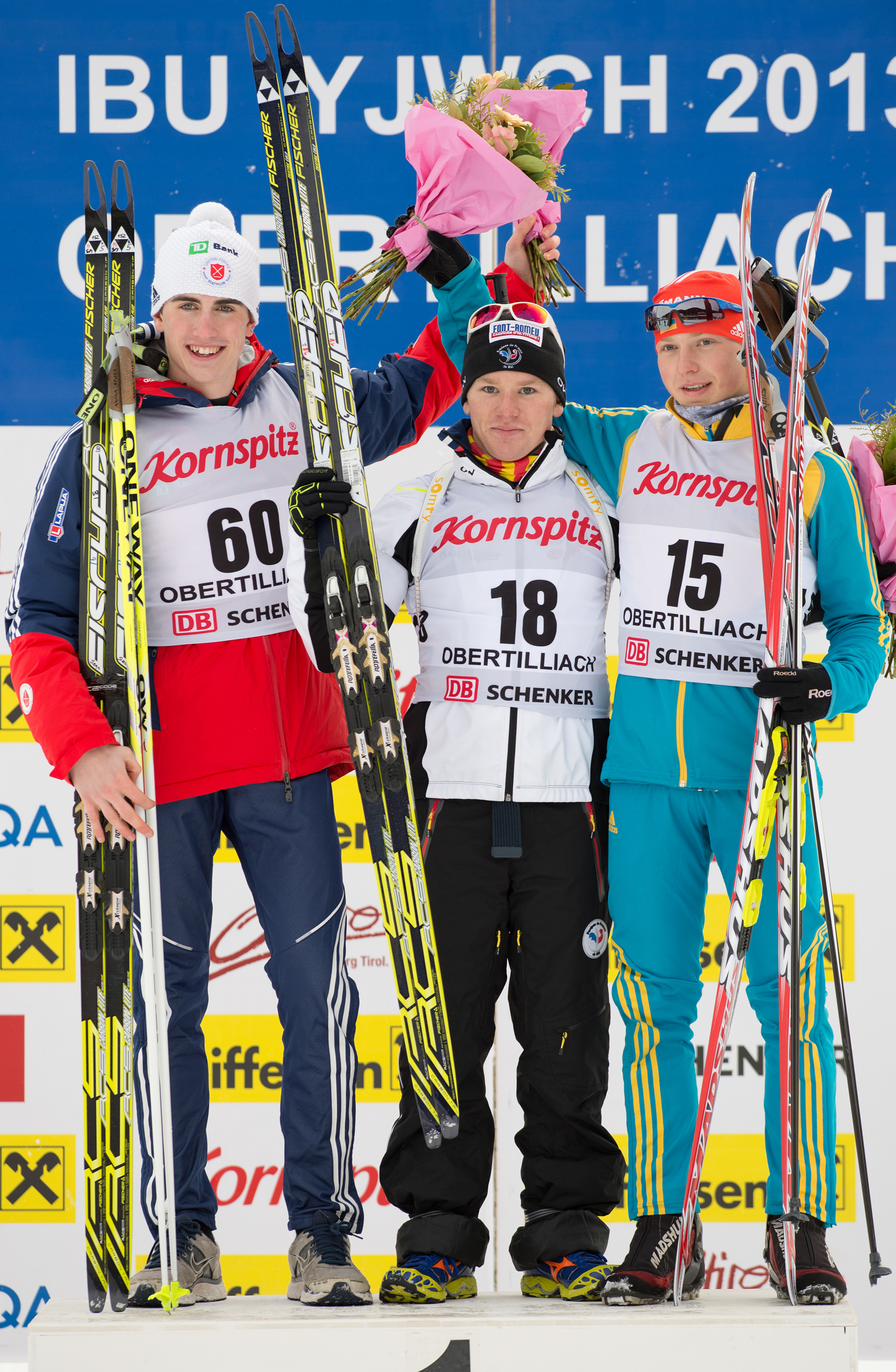
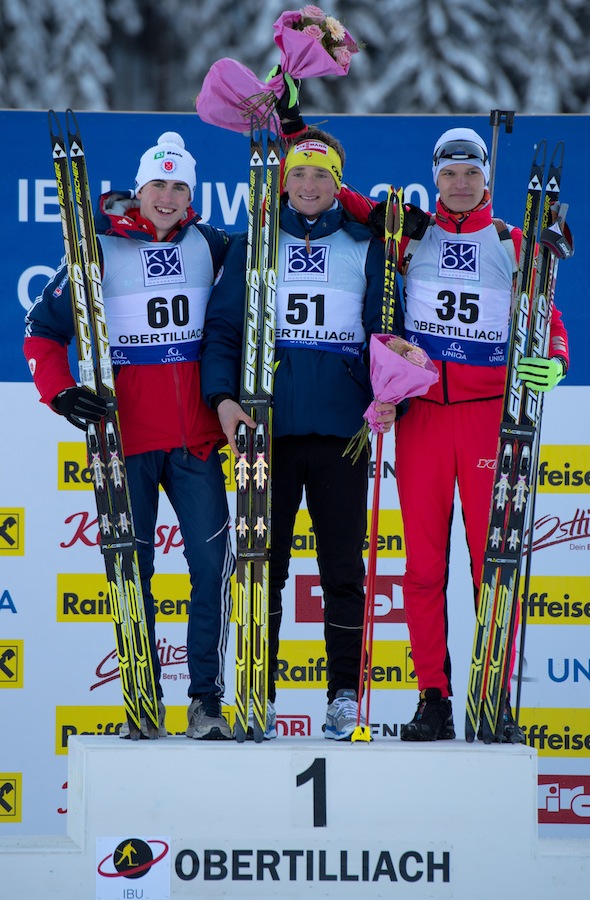
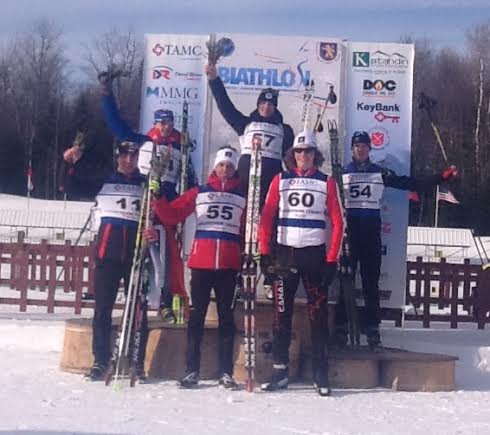
    Flower ceremony for the 12.5 k youth individual competition: Sean Doherty (USA) in second, Alexandre Dupuis and Jules Burnotte (CAN) in fifth and sixth. Photo: Biathlon Canada.
    Flower ceremony for the 12.5 k youth individual competition: Sean Doherty (USA) in second, Alexandre Dupuis and Jules Burnotte (CAN) in fifth and sixth. Photo: Biathlon Canada.

    Sean Doherty, an 18-year-old New Hampshire native who had just returned from appearing in the Olympic relay in Sochi, started off World Youth Championships in Presque Isle, Maine, right: two gold medals in the sprint and pursuit competitions, both over Marco Gross of Germany.

    Tuesday’s 12.5 k individual competition was setting up to be another battle. Doherty comes from Center Conway, a town of just a couple thousand people and no biathlon team. Gross, on the other hand, comes from biathlon royalty. His father is Ricco Gross, a longtime German star who won nine World Cup competitions, four Olympic gold medals, and 20 World Championships medals in total.

    Starting just one bib apart, the who traded the lead back and forth. Gross was winning after the third of four shooting stages, when he had a 25-second lead over Doherty. In the final stage, Doherty collected the last of his four penalties, but Gross missed three shots to bring his total to five penalties – and five minutes of penalty time. Doherty was in the lead, and crossed the finish line with over a minute on Petyo Ivanov of Bulgaria.

    But the race wasn’t over yet and later starters had something to say. Yaroslav Kostyukov of Russia had the best shooting of the day, collecting only two penalties. He crossed the line with a time 6.3 seconds faster than Doherty’s and stole the gold.

    “Last night, I went to bed and tried to forget about everything before,” Kostyukov told the IBU press. “I woke up refreshed and ready to win…Before the competition, I spoke to my father and he told me to focus on the tracks and shooting range, I did that and I won.”

    Emilien Jacquelin of France had three penalties to bump Ivanov out of bronze.

    Doherty nevertheless brought his medal haul to three, matching his results from the previous year’s competition and now owning six World Youth Championships medals, extending what is by far an American record.

    It was a good race for Canada, too, with Alexandre Dupuis finishing fifth and Jules Burnotte sixth, each with three penalties and only three seconds apart in time.

    “Alexandre has had a great year on the NorAm circuit and is known as a strong shooter and skier,” Biathlon Canada High Performance Director Chris Lindsay wrote in an e-mail. “Jules Burnotte is a new talent and first-year youth. We are very pleased with the ski speed he put together yesterday and we look forward to seeing him continue to develop his natural talent.”

    In the youth women’s 10 k individual, Maine Winter Sports Center’s own Maddie Phaneuf followed up on her fourth place in the sprint with another strong showing, placing eighth with three penalties.

    “I was pleased with my shooting, as opposed to the previous race,” Phaneuf wrote on her blog. “I only missed 3 out of 20 targets, which is good because shooting really matters in the Individual race! The winner of the day, from Austria, missed none of her targets! My skiing felt a little slow, but I tried to keep my skiing technique good and relaxed.”

    Teammate Anna Kubek of Minnesota missed four shots to place tenth, her best result of the series so far.

    results:

    youth men

    1

    KOSTYUKOV Yaroslav RUS 0+1+0+1

    2

    35:22.6

    0.0

    2

    DOHERTY Sean USA 0+2+1+1

    4

    35:28.9

    +6.3

    3

    JACQUELIN Emilien FRA 0+2+1+0

    3

    36:06.5

    +43.9

    5

    DUPUIS Alex CAN 1+1+0+1

    3

    37:08.2

    +1:45.6

    6

    BURNOTTE Jules CAN 0+2+0+1

    3

    37:11.0

    +1:48.4

    18

    HALLIGAN Brian USA 2+1+1+1

    5

    38:52.7

    +3:30.1

    22

    MILLAR Aidan CAN 1+2+2+1

    6

    39:30.5

    +4:07.9

    34

    EVERETT Paul Thomas USA 1+3+1+1

    6

    41:14.5

    +5:51.9

    41

    HANNA Pearce CAN 2+2+2+1

    7

    42:12.1

    +6:49.5

    51

    HUSAIN Kamran Muneer USA 2+3+1+3

    9

    44:10.5

    +8:47.9


    youth women

    1

    SCHWAIGER Julia AUT 0+0+0+0

    0

    32:58.7

    0.0

    2

    VITTOZZI Lisa ITA 0+1+1+0

    2

    34:04.4

    +1:05.7

    3

    DAVLETSHINA Liliya RUS 1+1+0+0

    2

    34:24.6

    +1:25.9

    8

    PHANEUF Madeleine Grace USA 0+1+0+2

    3

    37:14.7

    +4:16.0

    10

    KUBEK Anna USA 2+0+2+0

    4

    37:22.8

    +4:24.1

    30

    DICKSON Emily CAN 0+2+1+1

    4

    39:25.2

    +6:26.5

    33

    TAM VON BURG Leilani CAN 2+1+1+1

    5

    40:03.3

    +7:04.6

    41

    PALUSZEK Mikaela USA 1+2+1+2

    6

    41:32.4

    +8:33.7

    42

    BANKES Megan CAN 0+4+0+1

    5

    41:39.7

    +8:41.0

    43

    ELLINGSON Siena May Rose USA 0+2+1+3

    6

    42:12.7

    +9:14.0

    46

    VRIELINK Danielle CAN 1+3+2+4

    10

    44:07.4

    +11:08.7


  • Kubek Sixth in Opening Day of Open European Championships

    Kubek Sixth in Opening Day of Open European Championships

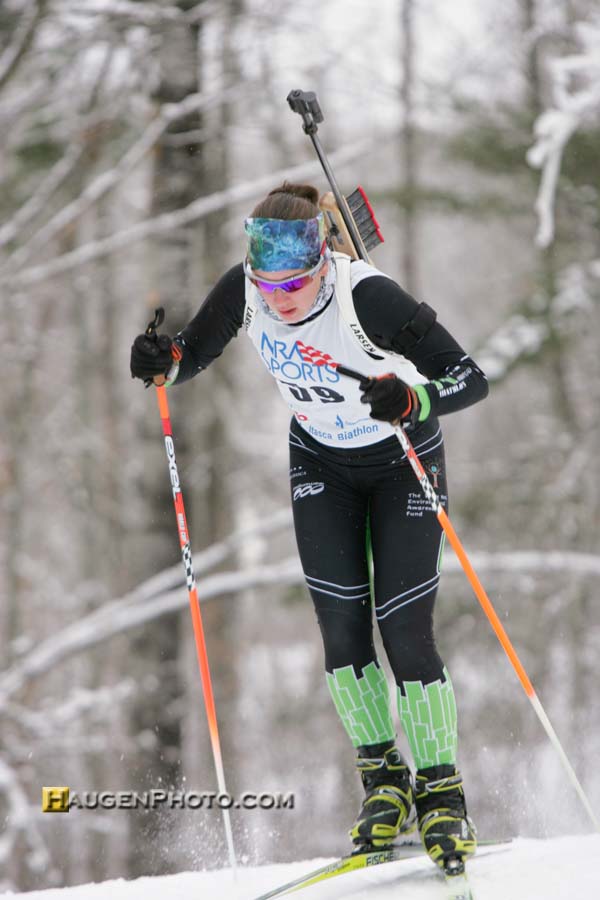
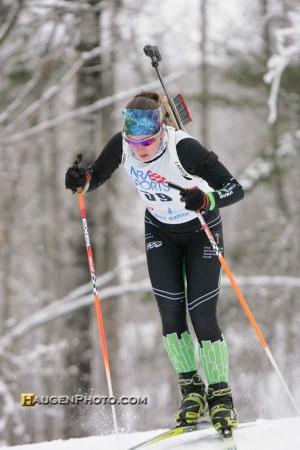
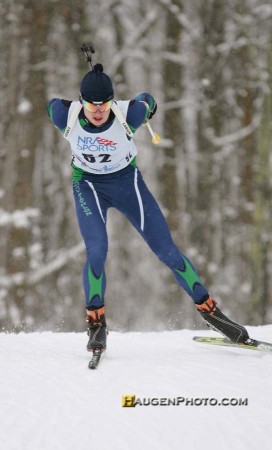
    Anna Kubek (Mount Itasca) racing in the United States last year. Photo: Gregory Haugen/HaugenPhoto.com.
    Anna Kubek (Mount Itasca) racing in the United States last year. Photo: Gregory Haugen/HaugenPhoto.com.

    It has been a busy few days for Anna Kubek and the rest of the American biathletes competing at Open European Championships. Ten days ago, they were still in the United States, getting ready for their first international tour of the year. Then they headed to Inzell, Germany, to train at the biathlon complex in Ruhpolding, which just hosted World Cup and then IBU Cup races.

    “I really enjoy being in Europe again,” Kubek, who has raced on World Junior Championships and European Championships tours before, wrote in an e-mail. “We were in Inzell, Germany, from Jan. 21 through Jan. 26 and training in Ruhpolding. The day before we left for the Czech Republic, we raced in British Champs. It was good training to prepare us for Open Euro Champs.”

    Two days ago, they moved to Nove Mesto, Czech Republic, and today Kubek and the other junior racers got their first starts. The senior (in this case, under-26) racers will start tomorrow.

    Kubek started off strong, accumulating only two penalties in the 12.5 k individual competition today, where each missed shot is penalized by a minute of added time. And those two misses could easily have been hits: U.S. coach Vlad Cervenka reported that they were both splits, where part of the bullet hit the edge of the target and part hit the surrounding background.

    As it was, Kubek placed sixth in the junior women’s race, just 14 seconds off the podium.

    The two misses came in the second of four stages, after Kubek had cleaned the first stage; she kept her focus and hit the next ten targets in a row.

    “The race today went great,” she wrote. “I stayed calm the whole race and after I missed two, I kept in mind that in biathlon, it’s not over until you cross the finish line. Shooting conditions were good with a slight wind.”

    Her last clean shooting stage moved her from the teens into fifth place. As she headed back out onto course, she knew that she could earn a medal.

    “I was told I was 5 or 6 seconds out of third,” she wrote. “It really motivated me and I don’t think I could have pushed much harder. The lactate in my legs burned and my heart rate was through the roof, but I knew I couldn’t stop fighting until I crossed the finish line.”

    Russia’s Anastasia Evsyunina was the only competitor to shoot clean through all four stages and won by a landslide, racking up 1:51 over second-place Anastasiya Merkushyna of Ukraine, who had two penalties. There was another big gap to third-place Lisa Vittozzi of Italy, who had three penalties and finished 3:52 behind Evyunina. Kubek was 14 seconds behind that.

    “Two split misses in the first standing cost her a medal,” U.S. coach Vlad Cervenka wrote in an e-mail. “But that is a biathlon. The level of competition in the junior category is very high and Anna skied well against older juniors – she is still youth. I’m excited to see how well Anna will do in sprint and pursuit this weekend.”

    Kelsey Dickinson, the other U.S. competitor, placed 50th, closely followed by Erin Yungblut of Canada.

    In the junior men’s 15 k, Christian Gow placed 23rd with five penalties. He was followed by teammates Brett Davie in 25th, Arthur Roots in 49th, and Matthew Hudec in 52nd.

    For the Americans, Jacob Ellingson placed 51st with eight penalties. Brian Halligan finished 57th and Paul Everett 65th.

    Results: junior men / women

  • U.S. Team to Biathlon World Youth and Junior Championships Picked: 13 Athletes on Roster

    U.S. Team to Biathlon World Youth and Junior Championships Picked: 13 Athletes on Roster

    After the conclusion of a three-race trials series, the U.S. Biathlon Association has picked 13 young athletes to represent America at the World Youth and Junior Biathlon Championships this winter. The event will be held in Presque Isle, Maine – where the trials also took place – from February 28 to March 8. The trials featured a sprint on Saturday, a pursuit on Sunday, and a sprint on Monday. Athletes were given a percent-back score for each race and the best two of three results were averaged together. Up to four athletes were chosen for each age category and sex, if they met a minimal percent-back threshold; discretionary picks were also possible.

    The team is actually headlined by an athlete who didn’t attend the trials: Sean Doherty, who won gold in the youth division last year. He started the season on the IBU Cup and World Cup and will be competing on the IBU Cup circuit in January, in hopes of earning an Olympic spot. Instead of attending trials, Doherty crushed the competition at the Mt. Hor Hop, a 10 k skate race in Westmore, Vermont, this weekend, to prepare for his next tour.

    In Doherty’s absence, Brian Halligan of the Maine Winter Sports Center won both of the sprint competitions, while Paul Everett of Methow Valley took top honors in the pursuit. Halligan was the top scorer in percent-back computations, and Everett and Kamran Husain of the Maine Winter Sports Center were also chosen based on their results.

    For the junior men, Jakob Ellingson of Loppet Nordic Racing won both sprints and was the automatic pick. Jake Dahlberg of National Guard Biathlon, who won the pursuit, was also selected based on his points, along with Tyler Gustafson of Mount Itasca, who was a discretionary pick.

    In the youth women’s category, Anna Kubek of Mount Itasca dominated both of the first two competitions (sprint and pursuit) and was so far ahead in points that she was obviously going to win the automatic nomination. She opted to sit out today’s sprint, which was won instead by Maddie Phaneuf of the Maine Winter Sports Center. That gave Phaneuf enough to meet the automatic percent-back threshold. Mikaela Paluszek of Maine Winter Sports Center and Siena Ellingson of Loppet Nordic Racing were discretionary picks.

    Finally, in the junior women’s divison, Kelsey Dickinson of Methow Valley swept all three competitions and nabbed an automatic spot. Tara Geraghty-Moats fo Vermont Biathlon was a discretionary pick.

    In addition, Doherty, Halligan, Ellingson, Everett, Kubek, and Dickinson were nominated to represent the U.S. in the junior races at Open European Championships in Nove Mesto, Czech Republic, January 21-30.

    World Youth and Junior Championships Team

    Youth Men: 

    -Sean Doherty- North Conway, NH, Vermont Biathlon, prequalified athlete

    -Brian Halligan- Saratoga, NY, Maine Winter Sports Center- qualification on points

    -Paul Everett- Tacoma, WA, Methow Valley Biathlon, discretionary selection

    -Kamran Husain – Ft Kent, ME,  Maine Winter Sports Center- discretionary selection


    Junior Men:

    -Jakob Ellingson- Minnetonka, MN, Loppet Nordic Racing- qualification on points

    -Jake Dahlberg- Ely, MN, National Guard Biathlon-qualification on points

    -Tyler Gustafson- Grand Rapids, MN, Mt Itasca Biathlon- discretionary selection


    Youth Women:

    -Anna Kubek- Duluth, MN, Mt Itasca Biathlon, qualification on points

    -Maddie Phaneuf-  Old Forge, NY, Maine Winter Sports Center, qualification on points

    -Mikaela Paluszek- Farmington, NH, Maine Winter Sports Center- discretionary selection-

    -Siena Ellingson-  Minnetonka, MN, Loppet Nordic Racing- discretionary selection-


    Junior Women:

    -Kelsey Dickinson, Winthrop, WA, Methow Valley Biathlon- qualification on points

    -Tara Gerahty-Moats- Fairlee, VT, Vermont Biathlon- discretionary selection-

  • Doherty’s Silver in Individual Brings Medal Tally to Three; 17-Year-Old’s Focus is ‘A Gift,’ Says Coach Shalna

    Doherty’s Silver in Individual Brings Medal Tally to Three; 17-Year-Old’s Focus is ‘A Gift,’ Says Coach Shalna

    Sean Doherty (USA) had the third-fastest course time of the day, which coupled with strong shooting in the second half of the race brought him a silver medal. Photo: US Biathlon/NordicFocus.
    Sean Doherty (USA) had the third-fastest course time of the day, which coupled with strong shooting in the second half of the race brought him a silver medal. Photo: US Biathlon/NordicFocus.

    Just as he had in Sunday’s sprint race, Sean Doherty of the U.S. got off to an inauspicious start in Tuesday’s youth individual race at World Youth and Junior Championships in Obertilliach, Austria. After earning silver and gold in the previous two races, Doherty quickly collected two penalties.

    Missing two shots in the first stage is especially punishing in the individual format, where each target that doesn’t turn which is penalized with a minute of additional time. Just 2.5 k into the 12.5 k competition, Doherty was already in a hole, 1:48 behind the leader, at that time Aslak Nenseter of Norway. (Penalties later piled up for Nenseter, who finished 26th.)

    Ranked 52nd after that initial prone stage, Doherty was quick on his skis and made up some of the time. But a stage later, he missed another shot and fell to 2:13 behind the new leader, Aristide Begue of France. At this point, however, other racers had also begun missing, and the American’s fast skiing pulled him up to 24th.

    It wasn’t great, but it was something.

    “It’s not uncommon to have first or second or any stage go wrong for top competitors at any level,” Doherty’s coach Algis Shalna wrote in an e-mail to FasterSkier. “Sean is especially good at not giving up or losing confidence. After first two shooting stages I was nervous – I thought a few times the medal is gone, but believed he will stay focused and shoot well last stages and he did. Just watching him on the course after he missed those first shots he looked like he felt he is still in the game, but just had a late start.”

    Doherty on the podium for the third time this week. Photo: US Biathlon/NordicFocus.
    Doherty on the podium for the third time this week. Photo: US Biathlon/NordicFocus.

    Doherty, who was unavailable for comment, put his head down and got it done. Over the next two stages he was flawless, not only hitting all ten targets but doing so more quickly than anyone else in the field. By the time he left the range the last time he was sitting in second, 18.5 seconds behind Begue.

    “We coaches tell athletes before every race to focus until last stage of shooting because the game is not over until everyone is through the range and done shooting and results are posted,” Shalna said. “There is always a case someone misses targets at the begging of the race and someone at the end.”

    Doherty nearly did the impossible and snagged the win, making up 12 seconds on Begue in the final 2.5 kilometers. But he was left with his second silver of the weekend, while Begue claimed his second title in this event in as many years.

    It was an emotional day for Begue, whose coach Matthieu Rouveix died this summer at age 32. The sharpshooting Frenchman missed a single shot out of 20 to claim his title.

    “I competed for my late coach Matthieu today and dedicate this gold medal to him,” Begue told the IBU press service after the race. “I was happy at the finish because I had a good race. If Sean was faster or not was not so important, there is always next year.”

    Anton Myhda of Ukraine earned bronze, like Begue missing only one shot. He was 35 seconds behind Doherty in the first podium of his international career.

    It was a strong day for the Americans across the board, with Jakob Ellingson finishing 21st with three penalties, Jordan McElroy 46th with six, and Brian Halligan 54th with seven. That’s a huge improvement over earlier in the week, when Doherty was the only American to make the 60-man pursuit.

    Depth on the team and excellence at the top: that’s something that the U.S. can celebrate. So is the fact that Doherty became the first American biathlete ever to earn three medals in youth and junior racing.

    After the hubbub surrounding his first silver medal and the subsequent gold in the pursuit, it would be easy for a 17-year-old athlete to get distracted. But Shalna marveled at Doherty’s resolve.

    “Overall his confidence is very stable,” he wrote. “It’s a gift… the emotions are high and me, personally, I am trying not to think what just happened but think what is the next thing I need to get done and do everything the same way, to stay on track for preparation for the next race. I know Sean does pretty much the same thing. He makes the plan in his head and sticks with it until it’s done.”

    Focus like that is what can bring an athlete back from such an early deficit – and it’s what Shalna has been trying to teach Doherty to do in the off-season, through hard work at shooting ranges in northern Vermont.

    “When we do shooting drills, I teach athletes not to think about what happened but focus on the next task,” he explained. “I say whether you had good shooting or bad, keep your  focus on the next task and just forget what happened before, positive or negative, in order to have the next task done good quality. I believe worrying too much becomes distraction and lowers the confidence.”

    That’s no problem for Doherty, who has taken the words of Shalna – who, as a relay gold medalist in the 1984 Olympics, knows a thing or two about pressure himself – to heart.

    “I thought of nothing, really,” Doherty told the IBU press service of his time on the course. “The coaches told me that I was doing okay, that I should not give up on the competition. So I focused on the second half of it.”

    * * *

    In the youth women’s 10 k individual, Anna Kubek of Mount Itasca again led the U.S. team, placing 38th with six penalties. Aleksandra Zakrzewska and Mikaela Paluszek finished 72nd and 79th.

    results: men / women


  • Led By Ransom’s 15th, Five Canadian Women Improve in Youth and Junior Pursuits

    Led By Ransom’s 15th, Five Canadian Women Improve in Youth and Junior Pursuits

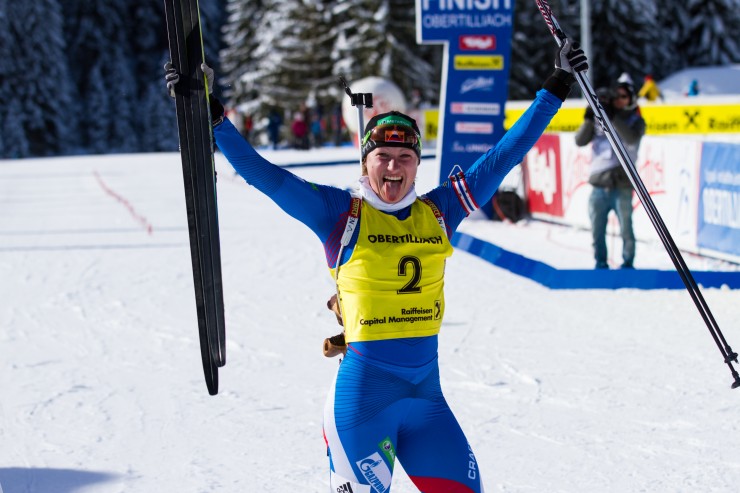
    Olga Podchufarova (RUS) after winning the junior women's pursuit. Photo: Mario Danzl/Obertilliach 2013.
    Olga Podchufarova (RUS) after winning the junior women’s pursuit. Photo: Mario Danzl/Obertilliach 2013.

    With Sean Doherty stealing the show in the youth pursuit, there was plenty for North America to be excited about in the third day of racing at World Youth and Junior Championships for biathlon in Obertilliach, Austria.

    “It was great day for all of us here and biathlon fans,” Doherty’s coach Algis Shalna wrote in an e-mail to FasterSkier.

    But with the gold medal heading to the United States, it was perhaps easy to forget that the youth men were actually the fourth group to race on Sunday, and there were many other strong North American performances before that. Canadians Stuart Harden, Julia Ransom, and Christian Gow each scored their second top-20 finish of the Championships, while American Casey Smith had a phenomenal pursuit, jumping up about 20 places based on strong shooting.

    * The first race of the day was the youth women’s 7.5 k pursuit, where Uliana Kaisheva of Russia thoroughly crushed the field, expanding her lead from the sprint into a 1:15 victory over Galina Vishnevskaya of Kazakhstan despite four penalties.

    This race generated the least buzz for the U.S. and Canada. Both teams had big hopes in this division, with U.S. biathlete Anna Kubek and Canadian Sarah Beaudry coming off strong seasons last year that included trips to the Youth Olympic Games.

    After placing 34th and 36th in the sprint, the pair broke into the top 30 in the pursuit, with Kubek moving up to 25th with just two penalties in the 20-shot race. Beaudry improved to 28th with one more penalty.

    “Sarah Beaudry is still young, but she has been to this last year and she also went to the Youth Olympics last year,” Canadian team leader and Biathlon Alberta Training Centre Head Coach Richard Boruta told FasterSkier. “She is still fighting with jet-lag and not feeling best on skis. The expectation is that she will possibly improve her ranks as the week will move on.”

    * Next up were the junior women. While no Americans qualified for the 60-woman, 10 k pursuit, Canada was impressive in placing all four of its team members in the race. Furthermore, all four improved.

    They were led by Julia Ransom, who started in 16th position after the sprint. With a penalty early and then two clean stages, she moved into the top ten before slipping back to 15th after two missed shots in the final standing stage.

    Ransom was ultimately 3:09 behind the winner, Olga Podchufarova of Russia, who swept summer biathlon World Championships this past season and won by 17 seconds after sprint winner Laura Dahlmeier of Germany collapsed in the final stage, missing two shots to Podhufarova’s one. It was still a good day for Germany, though: Franziska Preuss earned bronze and Vanessa Hinz was fourth.

    After earning silver in the youth pursuit last year, Ransom was up against some tougher competition this time around.

    “The competition in Junior seems to be a little more competitive than Youth,” she wrote in an e-mail. “There are a lot of fantastic athletes looking to make it to IBU/World Cup and you can tell they are hungry! I was happy with my race both yesterday and today. I thought my shooting was solid in the sprint and may have lost a little focus in my pursuit (missed 2 on last bout). The sprint was a good wake up for my legs as I felt a lot better skiing today.”

    Boruta, who coaches Ransom year-round in Canmore, said that her races so far were solid performances.

    “Performance wise, I think Julia and Christian [Gow] as first-year juniors are right on target, they didn’t have any extraordinary races, but they did perform at the current level of their abilities and this is were they are in the world right now,” he wrote in an e-mail.

    Emma Lodge and Rose-Marie Côté started 41st and 43rd, and improved a few places to 36th and 38th. But they couldn’t actually work as a team as they moved up on the trails.

    “Rose and I both started in the wave start 4:00 min behind the leader, but didn’t spend much time together as I only hit 3 on the first prone when she cleaned so I spent much of the race playing catchup,” Lodge explained in an e-mail. “It wasn’t until the last lap when I left the penalty loop just ahead of her that I saw her again, so that was helpful having her chasing me down to the finish line!”

    Lodge had five penalties after that frustrating first stage, while Côté limited herself to three. She had climbed up to 33rd before taking two penalties in the final stage; both were over seven minutes behind Podchufarova, having lost an additional three minutes in the pursuit.

    “Today’s race felt better than yesterday, with more spark in my skiing,” Lodge wrote. “I guess I needed a really hard effort to get my legs going! My prone was a bit off today which is frustrating as usually I can count on it, but I am happy with my 8 standing hits. We have two days off before the Individual on Wednesday and I’m feeling really prepared for the next races as I had a great training season and both my skiing and shooting improved. I’m excited for the next races, it’s awesome racing here under the sun and with so many competitive athletes around.”

    Erin Yungblut, the only one of Canada’s junior women to come to Obertilliach as a first-timer on the international scene, improved from 59th to 52nd with four penalties.

    Results: youth women / junior women

    continued with men’s reporting here.


  • Doherty Races to Silver in Biathlon Youth Worlds Opener

    Doherty Races to Silver in Biathlon Youth Worlds Opener

    Sean Doherty (Center Conway, N.H./Vermont Collegiate Biathlon) skis to a career-best second place, 3.6 seconds out of first, at the IBU Youth World Championships on Friday in Obertillach, Austria. (Photo: USBA/Nordic Focus)
    Sean Doherty (Center Conway, N.H./Vermont Collegiate Biathlon) skis to a career-best second place, 3.6 seconds out of first, at the IBU Youth World Championships on Friday in Obertillach, Austria. (Photo: USBA/Nordic Focus)

    Sean Doherty knew exactly what he was in for heading into his third International Biathlon Union (IBU) Youth World Championships. The 17-year-old New Hampshire resident had been to two junior world championships before: first in 2011 in Nove Mesto, Czech Republic, and again last year in Kontiolahti, Finland.

    His best individual result had been 13th, which he took in the 2012 sprint and pursuit. Pretty good, but Doherty wanted more. Last year, he won bronze in the mixed relay at the Youth Olympic Games in Innsbruck, Austria.

    Back in Austria – this time in Obertilliach – Doherty proved to himself and everyone else that he was capable of not only a podium, but nearly a win, in the 2013 youth worlds opener. The Vermont Collegiate Biathlon member raced to silver in Friday’s 7.5-kilometer sprint, finishing just 3.6 seconds behind winner Fabien Claude of France.

    Doherty skied the fourth-fastest time of more than 100 competitors in the men’s youth race, rising five places on the last of three laps to place second. Seventeenth after the first lap, he finished in 21:16.0 with two misses – one at each stage.

    The youth men's sprint podium at the IBU Youth and Junior World Championships on Friday. American Sean Doherty (l) was second, 3.6 seconds behind winner Fabien Claude of France (c). Rene Zahkna of Estonia was third.  (Photo: USBA/Nordic Focus)
    The men’s 7.5 k individual sprint podium at the IBU Youth World Championships on Friday in Obertilliach, Austria.
    American Sean Doherty (l) was second, 3.6 seconds behind winner Fabien Claude of France (c). Rene Zahkna of Estonia was third. (Photo: USBA/Nordic Focus)

    Claude, who won in 21:12.4, shot clean on the first stage and missed two on the second. Estonia’s Rene Zahkna took third, 14.9 seconds behind Claude, with one penalty.

    And while Doherty’s ability to fight for first was hardly a surprise, he was still taking it all in. For U.S. Biathlon, it was the best result at IBU Youth and Junior World Championships since national-team member Jay Hakkinen won gold in the 1997 sprint.

    “It is hard to believe that I have worked all of this time towards this goal,” Doherty said in a U.S. Biathlon press release. “Now it is here I am still a little bit in shock.”

    His game plan had been relatively simple: start in control then pick up the pace. He felt good throughout the race, but expected that after starting conservatively, he wrote in an email.

    “The shooting went well but not flawlessly,” Doherty explained. “The last lap came around and I got a split from our coach [Vladimir Cervenka] that I was very close to medal contention and I just really turned up and went as hard as I could.”

    While the sprint went exceptionally well, it wasn’t an event Doherty had especially eyed.

    “Honestly I try very hard to go into every race I do without expecting a number result,” wrote Doherty, who lives in Center Conway, N.H. “But I am extremely satisfied with this result. … I am focused on all of these events equally. I mean it is the Junior world championships so I am focusing every race.”

    Doherty said he’ll try to “keep calm” in Sunday’s 10 k pursuit and approach it like he would any other race, aiming to have a good one.

    “We are very exited about Sean’s race today,” Cervenka said in the press release. “He did great and according his plan he saved his best for the last loop. It will be fun to watch the pursuit on Sunday.”

    Also notching a top result on Friday, Canadian Stuart Harden made it into the top 20 in 20th, 1:02.6 behind the winner with two misses, both on the second stage. Harden had the fourth-fastest time after the first lap. Also for Canada, Carsen Campbell was 30th (+1:31.7/0+2), Arthur Roots was 59th (+3:07.3/1+2), Matthew Strum was 69th (+3:40.3/2+3).

    For the U.S., Jakob Ellingson was 62nd (+3:25.5/3+1), Jordan McElroy was 79th (+4:08.0/2+3), and Brian Halligan was 88th (+5:09.2/4+5) of 108 finishers.

    In the women’s 6 k sprint, American Anna Kubek of Duluth, Minn., was the top North American in 34th. She had two penalties, both on the first stage, and was 3:18.2 back from Russian winner Uliana Kaisheva, who completed the course in 18:08.7 (0+1).

    Canada’s Sarah Beaudry was 36th with three misses (+3:24.2/1+2). Teammates Leilani Tam Von Burg was 71st (+5:34.3/1+1), Emily Dickinson was 75th (+6:05.7/2+1) and Charlotte Hamel was 80th (+6:50.4/1+1).

    For the U.S., Mikaela Paluszek was 65th (0+4), and Aleksandra Zakrzewska was 84th (2+4).

    Men’s results | Women’s results

    — Audrey Mangan contributed reporting

  • Ten American Biathletes Selected for World Youth and Junior Championships

    Ten American Biathletes Selected for World Youth and Junior Championships

    Aleksandra Zakrzewska (Ethan Allen Biathlon) is part of a very Polish-sounding youth women’s squad, comprising herself, Anna Kubek, and Mikaela Paluszek. Photo: Gregory Haugen/Haugenphoto.com.

    After a series of three trials races (which FasterSkier blogged the results of earlier), the United States Biathlon Association (USBA) has selected ten athletes to represent its cause at the World Youth and Junior Championships in Obertilliach, Austria, in late January.

    In contrast to the selection system used by USSA for sking’s World Junior, J1, and U23 events, USBA does not fill all four possible quota spots in every division. Instead, they use a percent-back calculation to compare performances to the top three finishers in each race and have cutoff values for automatic qualification: a 99 % average in the best two of three races for juniors, or 97 % for youth.

    While some choices were obvious – for example Anna Kubek of Mount Itasca and Sean Doherty of Vermont Collegiate Biathlon swept all of the races and topped the combined youth and junior standings, despite being youths – others were not.

    Anna Kubek (Mount Itasca) decimated the women’s fields. Photo: Gregory Haugen/HaugenPhoto.com.

    For example in the women’s division, youths Aleksandra Zakrsweska and Mikaela Paluszek (Ethan Allen Biathlon) were close enough to Kubek to make the 97 % cutoff, and Tara Geraghty-Moats, also of Vermont Ethan Allen, was ranked ahead of them. But as a junior, Geraghty-Moats had the higher, 99 % cutoff, and did not automatically qualify. A top-20 finisher in the youth division at the 2012 Championships who is now training at a ski gymnasium in Solleftea, Sweden, Geraghty-Moats was added as a discretionary selection, but will be the only junior woman representing the U.S.

    “Whenever we have a fairly small field of juniors, we combine them with the youth in order to get a better perspective on the quality of field,” USBA Director of Athlete Development Piotr Bednarski wrote in an e-mail to FasterSkier. “We feel it’s important that we send athletes that have a legitimate chance of making the top 60 in the sprint (so they can qualify for the pursuit).  We consider this an appropriate level of performance, and even if someone is the top athlete in their category, it doesn’t necessarily mean they are ready for the WJCH level of competition.”

    In the men’s races, Doherty dominated, but not quite as thoroughly as Kubek had – while his female counterpart notched three and five minute victories, Doherty was limited to two and three minutes over a longer distance. As such, one junior, Casey Smith of Biathlon Elite, was able to sneak into the 99 % range for automatic selection. A top-30 finisher at previous Championships, Smith has also competed at Open European Championships and joined Doherty and Geraghty-Moats for a trip to Swedish National Championships last spring.

    In the youth men’s division, National Guard Biathlon’s Jordan McElroy was the only athlete to qualify based on points. But Jacob Ellingson of TC Biathlon and Brian Halligan of the Saratoga Biathlon Club were also added as discretionary selections. Using the same reasoning, Jake Dalberg of National Guard Biathlon will join Smith in the junior races.

    Sean Doherty (Vermont Collegiate Biathlon) led the men. Photo: Gregory Haugen/HaugenPhoto.com.

    “In general one would expect the juniors to be stronger than the youth,” Bednarski wrote. “Of course, in this case, we have two very exceptional youth athletes in Sean and Anna.  As you can imagine, we have some high hopes for WJCH’s (both Sean and Anna have one more year in the youth category!)… A junior athlete must be really close to the objective criteria, and exhibit really good ski speed, otherwise we won’t generally recommend a discretionary selection. With youth athletes, because they are younger, we give them more leeway, especially if they are showing some good ski speed. Most of the youth competitors are in their first or second year of shooting, so we expect a high level of variability in their shooting results.”

    While it’s notable that only one segment of the squad, the youth boys, will have a full roster, this is certainly not the first time a dominating performance has left the rest of the American juniors out of the running. In 2010, Leif Nordgren crushed the trials field and was the only representative in the junior division, where he collected two top-ten performances. He’s gone on to World Cup success.

    And that’s what Bednarski is hoping for with this next crop of young athletes.

    “With WJCH in the United States next year, we really want to have a good team in all categories,” he concluded.

    Honors are due to Algis Shalna, who coaches both the Vermont Collegiate Biathlon team and the Ethan Allen Biathlon club; of the ten athletes selected, four train with him in Jericho, Vermont. The National Guard biathlon program also made a strong showing, placing two athletes on the roster, showing their increasing focus on young biathletes.

    The roster:

    Junior Men

    Casey Smith, Methow Valley, WA (Methow Valley Biathlon/Biathlon Elite)

    Jake Dalberg, Ely, MN (National Guard Biathlon)

    Junior Women:

    Tara Geraghty-Moats, West Fairlee, VT (Ethan Allen Biathlon)
    Youth Women:
    Anna Kubek, Duluth, MN (Mount Itasca)
    Aleksandra Zakrzewska, Burlington, VT (Ethan Allen Biathlon)
    Mikaela Paluszek, Farmington, NH (Ethan Allen Biathlon)

    Youth Men:
    Sean Doherty, Center Conway, NH (Vermont Collegiate Biathlon)
    Jordan McElroy, Truckee, CA (National Guard Biathlon)

    Jakob Ellingson, Minnetonka, MN (TC Biathlon)

    Brian Halligan, Gansevoort, NY (Saratoga Biathlon Club)


    For results and points rankings, go to Minnesota Biathlon.


  • Doherty and Geraghty-Moates Top-Twenty in Youth Biathlon Sprints; Turning Point for U.S. Team?

    Doherty and Geraghty-Moates Top-Twenty in Youth Biathlon Sprints; Turning Point for U.S. Team?

    Sean Doherty fighting for seconds at the end of his 13th-place sprint effort. Photo: Judy Geer.

    In the first four days of racing in Kontiolahti, Finland, American hopes for its biathletes just hadn’t panned out. In race after race at the World Youth and Junior Championships, the U.S. racers were held back by one thing after another. They notched a few finishes in the high 20’s and 30’s – and mostly placed far lower on the results sheet.

    On Friday, two Americans broke out of the slump and raced into the top-twenty, collecting the best results of their careers so far.

    “Just got back from the venue and definitely with more of a smile on my face,” U.S. coach Algis Shalna told FasterSkier after the race.

    Sean Doherty of Conway, New Hampshire placed 13th in the youth men’s 7.5 k sprint and Tara Geraghty-Moates of West Fairlee, Vermont placed 18th in the youth women’s 6 k sprint.

    Geraghty-Moates clocking in the ninth-fastest ski time of the day. Photo: Judy Geer.

    “I’m stoked,” Geraghty-Moates told FasterSkier in an e-mail. “Everything has been going smoothly: the coaching staff here has been completely on their game, the wax has been fast, the weather is warmer than we predicted… I’ve just been having a stellar week so far, and I’m hoping to keep the trend going.”

    Doherty, who could not be reached for comment, missed a single shot and finished 1:48 behind winner Johannes Thingnes Bø of Norway. Bø, whose older brother Tarjei won the overall World Cup last season,  raced to a colossal 50-second victory. Behind him, the field was tightly packed; Doherty was 56 seconds from the podium and eight from the top ten.

    “Great shooting and fast skiing put him in a competitive position for pursuit race,” Shalna said of Doherty’s performance. “The pursuit will be very challenging for all of them and will require a lot of effort to control the emotions on the range and speed control on the skiing course.”

    The result was reminiscent of Doherty’s other successes this year, including 12th– and 14th-place finishes and a strong relay leg at the Youth Olympic Games.

    For Geraghty-Moates, the 18th-place finish is a big improvement. She had placed 44th in Monday’s individual race, and her top finish at 2011 World Youth Championships was 57th. In those races, she had been plagued by poor shooting, but on Friday she only missed two of ten targets.

    Sam Dougherty, 35th place. Photo: Judy Geer.

    “I’ve been pretty happy with my shooting so far,” Geraghty-Moates wrote. “All my races are consistent with the results I’ve been having so far this year – all way better than last year.”

    A former standout nordic combined athlete who has a cross-country background, Geraghty-Moates picked up biathlon in 2010. Shalna, who is one of the Vermonter’s coaches back in the States, was impressed with how far she’d come in a short period of time.

    “Tara had an excellent performance that exceeded my expectations,” he said. “Most importantly her shooting performance was beyond my goals for this race. Considering the level of competition and being only her second year in biathlon, 80 % shooting is a very solid performance.”

    Predictably, Geraghty-Moates, who has a history of top-five finishes at cross country junior national championships, was quick on her skis.

    “She had 9th-fastest course skiing time, and it was only 54 seconds from the winner and nine seconds from the [second-fastest skier],” Shalna said. “This is a pretty good example how a competitive former skier can get among the best in the world in biathlon if you have skiing speed, even with the the short amount of time for shooting.”

    Of course, things didn’t go perfectly. After being thrilled to clean her prone stage, Geraghty-Moates succumbed to pressure in standing.

    “I was in sixth coming in to the standing, but I made the mistake of looking at the result board coming into the range before standing and realizing that if I cleaned I had a shoot at the medals,” she wrote. “Of course then I proceeded to miss two shots, but that was predictable.”

    Nick Proell, 40th place. Photo: Judy Geer.

    Both Doherty and Geraghty-Moates have had to get creative with their training this year, given the lack of snow in New England (as with many other parts of the U.S.). While competing against the best biathletes in the world might be intimidating when on-snow training has been scarce, Geraghty-Moates said that in a way, it had prepared her well.

    “I think the shitty conditions we’ve had back east actually ended up helping me because I’ve been skiing up Storrs Hill [alpine] ski area for a lot of my training,” she explained.  “This means that the hills here don’t look über huge even when they’re half a kilometer long.”

    Geraghty-Moates had said after the relay that the course suited her, and that the hills “kept me on my toes.” Friday’s conditions made her even happier.

    “Today it was warm and a little icy which made the fast course even faster, a plus in my book,” she said.

    The rest of the U.S. team struggled to keep up with Doherty and Geraghty-Moats. Anna Kubek, who had led the U.S. women in the individual with a 30th-place result, missed half of her shots and placed 67th, missing the 60th-place cutoff for Sunday’s pursuit. The result was an unexpected blow to the American squad.

    “The race did not go well for Anna, who is a great young athlete,” Shalna lamented. “Her shooting was not as good what she is capable of, but biathlon can be a roller coaster and the less experienced you are, the more roller coaster rides you get.”

    Mikaela Paluczek and Melissa Manning will be joining Kubek as spectators on Sunday after placing 65th and 71st. Both are first-time international competitors.

    “None of the last three girls made the pursuit race on Sunday, but for all of them the races over the last week were a priceless experience for becoming better biathletes in the future,” Shalna said.

    On the men’s side, Sam Dougherty and Nick Proell placed 35th and 40th after missing two and one shots respectively. They are separated by just 12 seconds – less than the time it takes to ski a penalty loop – and Dougherty is just 13 seconds from the top thirty and less than a minute from the top fifteen going into Sunday’s pursuit.

    Jake Prince rounded out the squad, placing 80th with five penalties.

    Results: youth men’s sprint / youth women’s sprint

    Melissa Manning, exhausted after her final effort of the championships. Photo: Judy Geer.
  • French Men, Ukrainian Women Post Big Victories in Youth Biathlon Relays

    French Men, Ukrainian Women Post Big Victories in Youth Biathlon Relays

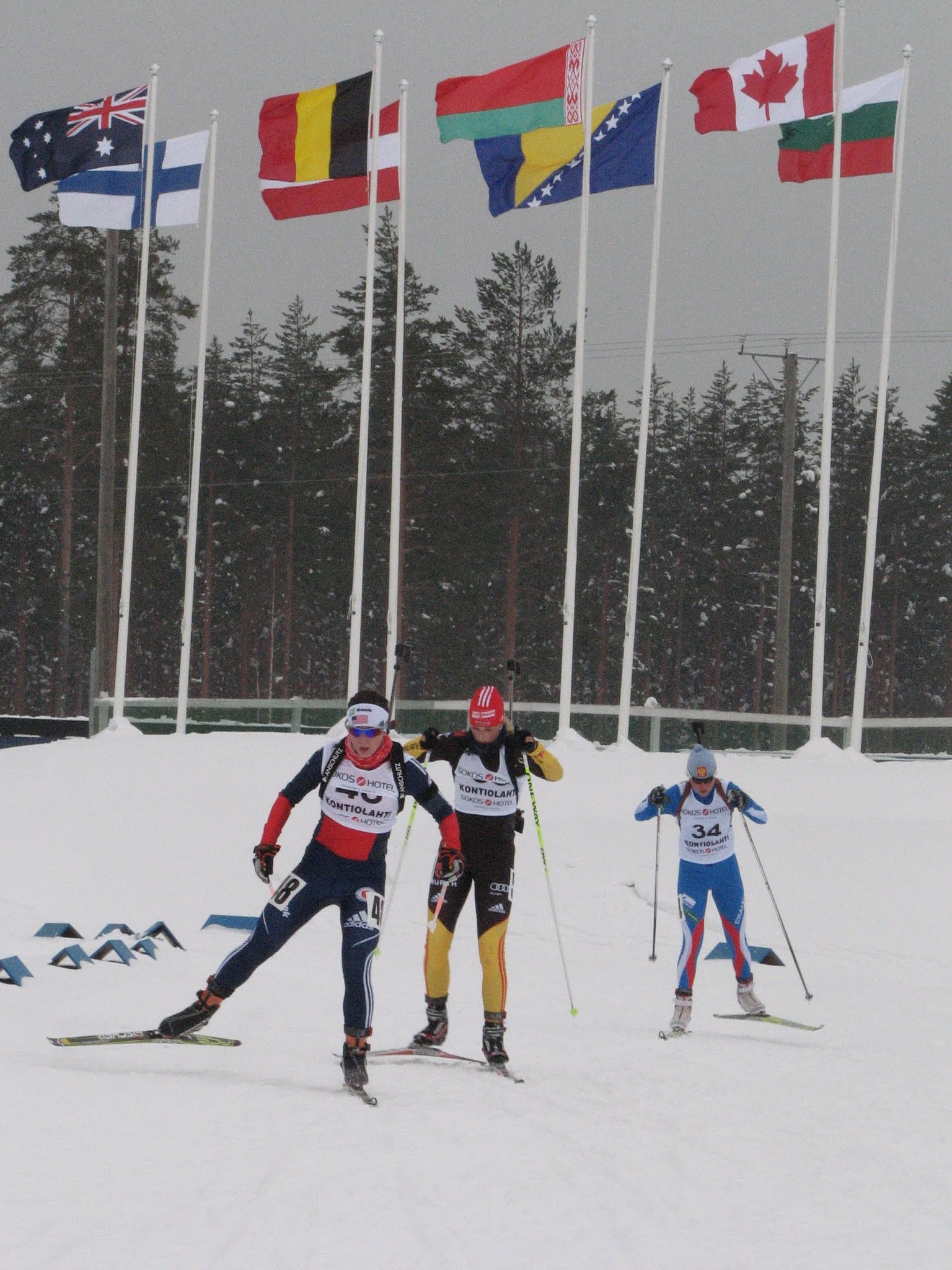
    The start of the youth men's 3 x 7.5 k relay in Kontiolahti, Finland on Wednesday. Photo: Judy Geer.

    On Wednesday, Kontiolahti, Finland, became a venue that was hospitable for biathlon for the first time in perhaps several weeks.

    After the bitter cold of the World Cup races two weeks ago, a general lack of sunlight, and a persistent wind that has dogged even the best shots at World Youth and Junior Championships this week, today’s balmy sunshine was a welcome reprieve.

    Geraghty-Moates in action. Photo: Judy Geer.

    “Today was an amazing bluebird day and there was almost no wind,” U.S. racer Tara Geraghty-Moates told FasterSkier in an e-mail. “We couldn’t really have asked for better conditions. My favorite thing about Finland so far is the snow – unlike at home we have a ton of it here!”

    No team capitalized more on the relative calm than the Ukrainian youth women, who over eight shooting stages, or a total of forty shots, missed just four and thanks to the use of spare rounds avoided the penalty loop completely. Yuliya Zhuravok, Yuliya Bryhynets, and Anastasiya Merkushyna raced to a 58-second win in the 3 x 6 k relay, besting runner-up Sweden by a landslide.

    Bryhynets took the lead after her first shooting stage, and by the time she tagged off to anchor Merkushyna had amassed a lead of almost a minute – which actually intimidated her teammate.

    “It was very difficult to go with such a big lead,” Merkushyna told the IBU news service after the race. “My legs were shaking; that is not normal. My hands were shaking and my head stopped working. I only thought ‘please shoot as normal as possible.’”

    Good shooting was the order of the day for the women’s race: the Swedes used six spare rounds and the third-place Austrians five. The same could not be said of the youth men’s  x 7.5 k relay, where only three of the 22 teams used fewer than ten spare rounds and most ended up in the penalty loop at least once.

    While the French led the men’s relay from start to finish and ultimately won by 38 seconds, that outcome didn’t seem certain when the racers entered the range the final time. French anchor Aristide Begue, who won the individual competition on Monday, needed all three spare rounds to clean his targets, and almost all of the leaders missed with at least one bullet.

    That was what saved Begue, who was able to leave the range with a 22-second lead and then extend it in the last loop of skiing to hang onto the win for teammates Clement Dumont and Florian Rivot.

    The Swedish youth men’s team placed second and the Germans third; the most exciting finish of the day came when Kazakhstan, Italy, and Belarus sprinted to the line for fourth-place honors, with the Kazakhs beating out the Italians by just 0.1 seconds.

    Top-Ten Finishes For Both Canadian Teams

    Sarah Beaudry anchoring the Canadian women to eighth place. Photo: Judy Geer.

    The Canadian women placed eighth today and the men ninth; coach Richard Boruta was satisfied with the results, but no more.

    “I think it has been a relatively good day, probably reflecting our current position in this category in the world,” he told FasterSkier in an e-mail.

    The women used only six spare rounds, all in prone. Rose-Marie Cote used two in the opening leg, and tagged off in 13th, roughly a minute and a half behind the leadrs.

    “Rose-Marie had a good shooting day, but her ski speed this week is not quite there,” Boruta said.

    The performance of the day came from Julia Ransom, who is fresh off a top-ten finish in the individual race. Using a single spare round in prone and cleaning her standing stage, Ransom also excelled on the trails, turning in the third-fastest time for second-leg skiers and moving the team up to eighth. Sarah Beaudry held the team’s position despite hitting the penalty loop once.

    “Julia actually had a really good race,” Boruta said. “She was third overall in her leg and she had a good shooting performance as well. And for Sarah, her ski speed is fine, but her shooting seems to suffer this winter a little bit.”

    Albert Bouchard. Photo: Judy Geer.

    In the youth men’s race, both Stuart Harden and Christian Gow turned in strong performances, and after two legs the Canadians were sitting in sixth place, just 30 seconds behind the winning French team – despite having already used eight spare rounds. After anchor skier Albert Bouchard was stuck skiing three penalty loops, the team dropped to ninth.

    “It was a very interesting race for first two legs and both Stuart and Christian raced up to their potential,” Boruta said. “Christian has been skiing really well and he has a good chance to do very well in the sprint race.”

    Gow placed 11th in the opening individual race, and after that effort told FasterSkier that he was looking forward to races that placed more of an emphasis on skiing rather than shooting.

    “Looking at the results though I am happiest at the potential I see moving foward into the upcoming races,” Gow explained. “I now know that I am very competitive with the top of the competition. I think that in the sprint, pursuit, and relay to come I will be able to really push on the skis, and I would consider my skiing to be my strength in biathlon.”

    Gow mixes straight cross country races into his competition schedule in Canada, so he knew that he’d be ready in that regard.

    “I have done more biathlon than cross-country races [this year], but not much more,” he said. “I find that doing the ski races helps to keep myself in check with my ski speed; they are the best test to see how fast I am going at any point in the season.”

    Young Americans Gain Experience With Relay Finishes

    Anna Kubek kicking things off for the U.S. Photo: Judy Geer.

    If the Canadians were lukewarm about their relay results, then the Americans were luke-cold after placing 13th in the women’s relay and 15th in the men’s.

    “I can’t say we are happy with their results, but we are happy seeing kids racing hard and giving their best,” U.S. coach Algis Shalna told FasterSkier.

    The women’s team matched their result from the 2011 event, but second-leg skier Geraghty-Moates pointed out that the Americans had actually skied a better race, despite being comparatively younger than last year’s squad.

    “There was a much larger field from last year, so I think our overall performance was much better,” she wrote. “Last year we were close to 13 minutes off the pace, this year we were only 6:53 off the pace. When Anna tagged me she was a minute back. I was able to hold her tenth place, but I lost some more time off of the leaders.”

    In Shalna’s view, that’s not bad given that leadoff racer Anna Kubek and Geraghty-Moates are both relatively new to the sport, having started in 2010, and anchor Melissa Manning is at her first World Junior Championships.

    Kubek coming in for the tag to Geraghty-Moates. Photo: Judy Geer.

    “Two girls had good performances, especially Anna, who shot well – no penalty loops – and skied well, tagging to Tara in tenth place one minute back from the leader,” Shalna said. “Tara skied very strong but had a penalty in prone, but she is second year in biathlon and this is a very respectable performance. Her range times were slower than top biathletes in the world, but she just needs more practice time and experience racing.”

    Manning also hit the penalty loop, and dropped the team to 13th.

    “Melissa, as a first year on the team, worked hard to keep us where we were,” Shalna said. “Is not easy to compete at this level the first time, with a lot of excitement and a fair amount of pressure.”

    Geraghty-Moates was honest in her assessment of the team’s performance, but still positive.

    Sean Doherty awaiting the handoff. Photo: Judy Geer.

    “We are definitely off the European pace but we’ve made huge progress from last year,” she said. “For me it’s important to keep it all in perspective and just focus on making improvements one at a time.”

    The youth men finished 15th after a promising start by Sam Dougherty, who hovered around tenth place for most of his leg.

    “The boys could have done a little better and placed around tenth to twelfth place, but few penalties did not favor them,” Shalna said. “The best race was for Sam who had good start, them cleaned his prone shooting and used only one extra round to clean the targets. It was solid performance for him skiing and shooting.”

    Sean Doherty kept the momentum going and lost only one place over the course of his leg despite hitting the penalty loop twice; Nick Proell replicated Doherty’s shooting errors, and the team eventually slipped to 15th.

    “Sean skied well but struggled on both shooting staged and had one penalty on each,” Shalna said. “He was making time on skiing, but the extra time on the range to use spare rounds kept us from getting any closer [in the last two legs].”

    Results: youth women’s relay / youth men’s relay

  • Canada’s Julia Ransom Returns to Form with Career-Best Eighth in World Youth Championships Individual

    Canada’s Julia Ransom Returns to Form with Career-Best Eighth in World Youth Championships Individual

    Anna Kubek leads two other racers through the stadium. Photo: Judy Geer.

    The top Canadian and American women in the youth individual race at biathlon World Junior Championships on Monday couldn’t have had more different attitudes coming into the event.

    Canada’s Julia Ransom, for instance, was looking for payback. After a strong showing in 2010 in Torsby, Sweden, Ransom struggled in 2011, producing a top result of just 36th place in Nove Mesto, Czech Republic.

    “Last year was definitely a frustrating year for me,” she told FasterSkier in an e-mail. “I went into Nove Mesto looking for top tens and just couldn’t seem to pull it together.”

    Ransom on her way into the top ten. Photo: Judy Geer.

    Looking to recapture the magic in 2012, Ransom arrived in Kontiolahti, Finland, with those same hopes.

    “My goal of the day was to get back to the basics and just enjoy what I came here to do: test my limits and put on a good race,” she said.

    For Ransom, it was mission accomplished on Monday, as she notched her first World Juniors top-ten by placing eighth in the 10 k individual. Over four shooting stages, she missed three shots, tying her for the best shooting of the day.

    At this level, women are often more accurate on the range than men, but none of the field could overcome the Kontiolahti wind.

    “I knew that with the blowing wind there wasn’t going to be a lot of clean shooting,” Ransom said. “That being said, the wind really did die down from the weekend.”

    Ransom was pleased to have achieved on goal, and has now adjusted her sights slightly higher, bolstered by a result that placed her just over a minute out of the win. Ransom said that she’s set a new goal of a top-six finish.

    “I felt much more confident than previous year; my shooting has really improved this year and our team really put in the work through out the summer and fall,” she said. “I am feeling really motivated for the rest of the races, knowing I was just one shot away from second place. My outlook this year is to enjoy what I am doing and see how far I can push my body. When this comes together, the results will follow.”

    While the Canadian had the experience, the Americans were led by someone still wide-eyed regarding the international scene: Anna Kubek, for whom results were not the first thing to come to mind when asked about her experience so far.

    Kubek on course. Photo: Judy Geer.

    “I am so excited to be here!” Kubek gushed in the first line of an e-mail to FasterSkier.

    It’s the Minnesota native’s first year on the world circuit, and she’s had plenty of chances to learn. After strong performances at senior trials in Minnesota in December, Kubek moved on to Innsbruck, Austria, where she competed at the Youth Olympic Games.

    Although the Youth Olympics gave her experience, Kubek didn’t know what to expect in Kontiolahti.

    “I think the Innsbruck trip definitely prepared me for these races since it was one of my first international races, not including the German Cups we did a week before Innsbruck,” she wrote. “There are more competitors here than there were in the Youth Olympics. It’s more of a challenge to compete against older people, but a great opportunity.”

    Because she wasn’t familiar with the level of competition, Kubek didn’t set results-oriented goals; she just wanted to “do my best and push myself beyond my limits.”

    Like Ransom, she accomplished what she set out to do, placing 30th in her first-ever World Youth Championships race despite being two years younger than the most mature racers.

    “Today’s race went pretty well,” she told FasterSkier. “I hoped to do better with shooting, but considering the wind, it was average.”

    And in closing? That same enthusiasm she showed to start her missive.

    “It was awesome to ski with some of the best youth biathletes in the world!”

    For Canada, Ransom was followed by Sarah Beaudry in 33rd, Rose-Marie Coté in 47th, and Erin Oliver-Beebe in 50th.

    The U.S. finishers after Kubek were Tara Geraghty-Moates in 44th, Melissa Manning in 58th, and Mikaela Paluczek in 72nd.

    Full results

  • YOG Women’s Biathlon Pursuit: Perfect Conditions, Tricky Racing—Kubek Leads North Americans in 10th

    YOG Women’s Biathlon Pursuit: Perfect Conditions, Tricky Racing—Kubek Leads North Americans in 10th

    SEEFELD IN TIROL, Austria–

    Every Nordic race director is well versed in Murphy’s Law. Today, Seefeld Stadium was more or less the Titanic—the unsinkable race venue. Temps were cold, the loops were covered with a meter and a half of perfectly groomed snow, thousands of cowbell clanging Tyroleans lined the course, and the IBU’s finest were on hand to supervise. The Women’s 7.5km Pursuit event at the Youth Olympic Games was to go off without the slightest hitch. But halfway through the event, things suddenly became quite hectic.

    Anna Kubek of Duluth powers her way to a top ten finish.

    The women’s field competed four loops of a lightning fast, 1.8km loop, interspersed with four shooting stages—two prone and two standing. In pursuit format, the 47 top junior biathletes left the stadium based on their results from the previous day’s sprint. But fast lap times, combined with the fact that lapped racers weren’t pulled before they entered the range (as is traditionally done on the World Cup), meant that by the second and third shooting stages, some racers were already shooting standing while others were still shooting prone.

    Piotr Bednarski, coach of the US Biathlon squad, elaborated, “Now you have athletes who are on different shooting stages coming in at the same time, and the officials obviously got confused. They were sending people to the wrong targets.”

    Canadian Sarah Beaudry touches base with Coach Chris Lindsay during her zero. The effort paid off– Beaudry moved up from 22nd to 14th place overall.

    Confusion broadened with so many athletes in the range at one time, and there were numerous reports of cross-firing. Coach Chris Lindsay of the Canadian squad told FasterSkier, “It [cross firing] happened to one of our skiers, Danielle Vrielink. She was lucky, in a way. One of her targets went down. Then, she missed her fourth target. She still had a black target to shoot at without having to alert the officials, reset the target, shoot a single round, and then be done with it then. It probably cost her a few seconds, but not enough to have a significant impact on the race. To their credit, the officials took care of it quite well.”

    Despite the chaos, many of the top skiers were able to avoid the confusion. Avoiding absolutely any chaos whatsoever was Russia’s Uliana Kaysheva, who was one of three female skiers to clean all four shooting rounds. Starting in 3rd at 33 seconds back, Kaysheva powered her way to a substantial victory of nearly 28 seconds ahead of yesterday’s Sprint victor Franziska Preuss of Germany. Galina Vishnevskaya of Kazachstan, who was yesterday’s Silver medalist, ended up third, 1:43 off the lead.

    Uliana Kaysheva of Russia employed a useful Biathlon tactic to snag the win: hit all the targets, ski fast.

    American Anna Kubek of Duluth led the North American contingent on the day with a strong 10th place finish, besting 11th placed Canadian Danielle Vrielink by six seconds. Asked if the chaos on the range interfered with her concentration, Kubek succinctly told FasterSkier, “Nope. It didn’t affect me. I just focused on my race, and everything went pretty well.”

    Canadian Sarah Beaudry had an excellent day, moving up from 22nd place to 14th. Aleksandra Zakrzewska, from South Burlington Vermont, struggled on the shooting, slipping to 41st place.

    US Coach Piotr Bednarski was very impressed with the overall quality of the women’s field, particularly on the range.

    “The women’s field is quite professional. You see the girls in the top 15 in the range and they’re shooting very smooth, very well—much better than the men. Of the top 15, I think 12 of them shot clean on the second prone. Lots of clean shooting today,” Bednarski told FasterSkier.

    Chloe Chevalier of France leads Anna Kubek down the first descent.

    Bednarski also implied that such a stiff level of competition can put additional pressure on the young athletes, especially when the conditions so perfect and wind-free on the range. Yet again, the challenging level of competition did little to derail Kubek’s state of mind.

    “I’ve been training hard, and my shooting has been getting better. I can compare myself, and I knew I could be up there with the top athletes as well,” said the Minnesota native. When asked if it was the tasty Wiener Schnitzel served in the Olympic Village that got her into the top ten, Kubek replied, “No. I’ve just been training really hard and it’s been paying off.”

    Anna Kubek leads Austria's Julia Reisinger on the ascent to the range.

    All in all, 8 athletes were awarded time credits by the Race Jury, as per IBU Rule 8.7.4. The highest ranking finisher to receive a time credit was Austrian Julia Reisinger, whose credit of 33 seconds bumped her from 7th to 6th overall.

    Action continues for the Biathletes in Seefeld on Thursday with the four person, mixed gender relay.

    Lots of students from a local Volksschule came out to cheer on the races, which was great to see. They were fluent in cowbell.


    Harvard Nordic skier Tony Ryerson and Harvard alum Andy Moore stand next to a large pile of Tyrol's freshest, finest Schnee. It looks like there's a house in there, somewhere.

    Complete results for the Women’s Biathlon 7.5km Pursuit

  • U.S. Finalizes Biathlon World Cup Roster for Period Two, Adds to IBU Cup Squad (Photo Gallery)

    U.S. Finalizes Biathlon World Cup Roster for Period Two, Adds to IBU Cup Squad (Photo Gallery)

    Anna Kubek (Mount Itasca) on her way to victory in the mass start. Photo: Roy Kjorlien.

    For the World Cup athletes, Thursday’s announcement by the U.S. Biathlon Association of team nominations for the second period of racing brought no surprises. Just as in the last weekend of World Cup racing in December, three women (Sara Studebaker, Annelies Cook, and Susan Dunklee) and four men (Lowell Bailey, Jay Hakkinen, Tim Burke, and Leif Nordgren) will represent the U.S. on the trails.

    But the real excitement of the day came from the selection of the IBU Cup team. After a series of trials races in Mount Itasca, Minnesota, in which two different men and three women picked up victories, it was unclear which athletes would be picked to join the U.S. team for races in Forni Avoltri, Italy and Haute Maurienne, France in January.

    Russell Currier (Maine Winter Sports Center) racing in the pursuit. Photo: Roy Kjorlien.

    On the men’s side, Russell Currier of the Maine Winter Sports Center made the cut after winning the pursuit competition by a minute and the mass start by more than two. Despite finishing third in the initial sprint – in which he had seven penalties out of only ten shots – Currier was able to clean up his shooting and make the team. He will be joining Bill Bowler and Jeremy Teela on the IBU Cup.

    Other impressive performances at the trials came from Mark Johnson (Mount Itasca), who beat out national team member Wynn Roberts by 17 seconds for the title in the sprint, and from Sean Doherty, a New Hampshire junior who will be attending the Youth Olympic Games this year, who competed in the senior mass start and placed second.

    On the women’s side, Hannah Dreissigacker of the Craftsbury Green Racing Project won the opening sprint, and appeared in good position to snag the trip to Europe. But after faltering on the range in the next two races, she left space for BethAnn Chamberlain (Maine Winter Sports Center) to win the pursuit and 16-year-old Anna Kubek (Mount Itasca) to claim the mass start.

    Kubek, who like Doherty will be representing the U.S. at the Youth Olympic Games at the beginning of the month, ended up with the nomination, meaning that she will extend her time in Europe. She will join Tracy and Lanny Barnes and Laura Spector.

    Katrina Howe (Maine Winter Sports Center) also picked up three podium finishes at the races in Minnesota, but was unable to translate any of them into a win.


  • U.S. Biathletes: Home on the Range at Soldier Hollow Camp (with Photo Gallery)

    U.S. Biathletes: Home on the Range at Soldier Hollow Camp (with Photo Gallery)

    The women's national team skiing through the range at Soldier Hollow. Photo courtesy of Susan Dunklee.

    The U.S. biathlon community may be small, but one benefit of its size is that almost everyone can gather each year in October for a training camp at Soldier Hollow.

    This year, the senior national team is joined in Utah by the junior national team as well as biathletes from the Maine Winter Sports Center, Durango and as far as Canada.

    Inviting everyone brings training quality up, said national team women’s coach Jonne Kahkonen, who also supervises training for all resident national team athletes in Lake Placid. He was pleased by the work he had seen in Soldier Hollow so far.

    “I’d say that in general, the summer has been good for the athletes training with the team, and for sure there are going to be a few athletes from outside the team who will be pushing hard as well,” Kahkonen told FasterSkier between training sessions on Monday. “So I’m sure that with all this competition within our nation it’s just going to bring the level up even more. And hopefully it’s good for the team members to remember that there are athletes outside the team, pushing.”

    The group was taking advantage of Soldier Hollow’s shooting range and paved rollerski loops to concentrate on biathlon-specific training. There are few venues in North America as conducive to dryland training for biathlon, and with the race season fast approaching, locking down shooting procedures is especially important.

    Dunklee honing her standing shooting. Photo: Jonne Kahkonen.

    “For me, this time of year tends to be about putting together all the different pieces I’ve been working on rather than finding new focuses,” said national team member Susan Dunklee. “I have a couple positional and breathing concepts in shooting that I’ve been working on for the last month, and I’m trying to solidify these so they become automatic.

    “One of the best things about training at the Soldier Hollow venue is having a full range with a rollerski loop. This camp is a good time for us to check in on our range approach and exit and make sure all are transitions are smooth and efficient.”

    Kahkonen also said that the elevation of just over 5,000 feet was a training benefit – even though the World Cup only has one weekend of racing at any significant altitude this season.

    “Personally, I enjoy coming to Utah, especially here in Midway, because it’s high enough that you get a little boost from that but it’s not too high that we’d have to compromise the intensity,” Kahkonen explained.

    A major focus of the camp is to select athletes for another training camp, which will take place in Sweden before the opening World Cup races. “A” team members Tim Burke, Lowell Bailey, Leif Nordgren, Jay Hakkinen, Sara Studebaker, and Laura Spector are prequalified for the Sweden trip, but additional athletes will be selected based on two sprint time trials to be held today and Thursday.

    The maximum team size for the Sweden camp is six men and six women, and from that group the team for the first period of World Cup races will be selected; the rest of the athletes would then be sent to the IBU Cup, a coordinated race series at a level just below the top.

    “We can take up to six [women] and…. well, never say never, but that’s what it looks like right now, that we would end up doing that,” Kahkonen said.

    Last year the team took five men but only two women (Studebaker and Spector) to the first period of European racing. Kahkonen said that the expanded women’s team for this year was made possible by a bigger budget and their success on the trails last winter.

    “For sure one of the biggest things to make a change for this year is the level that they showed last year,” he said. “Both in the IBU Cup – they had some really good results there – and obviously on the World Cup as well.”

    Dunklee, one of the athletes hoping to be added to the Sweden roster, said that the looming time trials had made her more cautious about the camp’s earlier workouts.

    “For the last few days, I’ve been trying to be smart, take it easy, and adjust to the altitude,” she explained.

    But that didn’t mean she wasn’t having fun. Like most of the athletes, Dunklee loves the scenery in Utah.

    “My favorite things about being out here?” she asked. “Warm sunshine, brisk frosty mornings with snow on the peaks, hiking up canyons, juicy fresh peaches at the store, golden aspens and red oak leaves, and an amazing caterer that cooks for the team.”

    While several members of the men’s team had brought their fly fishing gear out to Midway and spent several afternoons on the water, Dunklee had brought her shotgun and gone grouse hunting with Olympic veterans Tracy Colliander and Lanny Barnes.

    “We’ve been twice, but haven’t got any yet,” she lamented.

    And though the camp is designed for senior athletes, the juniors have been taking advantage of the larger community as well – albeit with their rifles, not shotguns or fishing rods.

    Anna Kubek, a Minnesota high school student who recently qualified to represent the U.S. at the inaugural winter Youth Olympic Games, is one of the juniors who has been training at Soldier Hollow.

    “Until now, we have had our own training schedule apart from the seniors,” Kubek said in an e-mail. “But the times we do see them train is amazing. It is great to see how they train and what it takes to be at their level. It’s really fun and a good experience to be around people close to my age.”

    Kahkonen said that for better or for worse, it was difficult to have juniors and seniors training alongside one another.

    “We have basically our own schedules because we don’t want to push the juniors too hard,” he explained. “The juniors are still in the developing phase and they need to do a little bit different kind of training, a little bit less hours and a little bit less intensity – a little bit less in general. But wherever we can it’s good to combine stuff and at least expose them to the training that the best athletes are doing.”

    It’s symptomatic of the team’s more general approach for trying to develop athletes. Kahkonen believed that exposing the younger biathletes to the senior team’s workouts would help them improve even if they weren’t actually participating.

    “It’s good for an athlete to see better athletes, and to see the best athletes in the country and even in the world,” he said. “That’s one of the reasons we do a training camp in Europe for the best athletes, just to expose them to the training that the other nations are doing.”

    Next year, the team is hoping that the camp might be even more inclusive. While the group overlapped with a U.S. Ski Team camp at Soldier Hollow, they were unable to coordinate training because the biathletes were focused on using the range. In the future, however, that might change.

    “We met with Chris Grover so we are already planning for next year so we can do even more, maybe even camps and not just single workouts together,” Kahkonen said. “We want to be ahead in the game and be planning already.”

    The coach indicated that small collaborations between the two teams had gone well so far, and there was no reason not to strengthen the connection.

    “This year we only really had one chance to match the workouts, which was in Lake Placid, when we had Climb to the Castle and training around that, so we ended up doing three intensity sessions together with the ski team,” he said.

    “It seemed like both the skiers and the biathletes really liked doing something different, and so that’s definitely something we want to push for next year.”

    (Photos in gallery below by Jonne Kahkonen)


  • Youth Olympic Games Presents: Anna Kubek

    Youth Olympic Games Presents: Anna Kubek

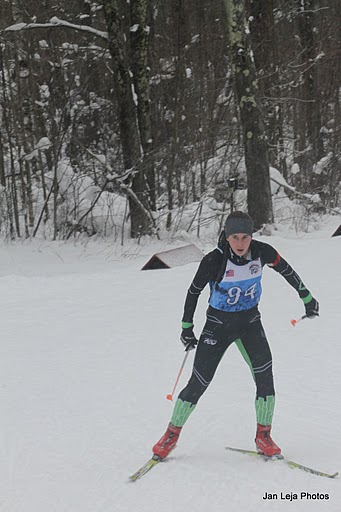
    Anna Kubek (Mount Itasca) racing at World Junior trials in Jericho, Vermont, December 2010. Photo: Jan Leja.

    (Note: This is the second in a series of interviews with athletes who will be competing at the first-ever winter Youth Olympic Games in Innsbruck, Austria this winter. The first interview was with Sean Doherty.)

    Of all the biathletes set to compete at the Youth Olympic Games in January, Anna Kubek of Duluth, Minnesota, might have the least experience: she only picked up biathlon in 2010, and hadn’t even skied before that point.

    But to count her out because of her late start in the sport would be a mistake, says coach Vlad Cervenka.

    “Anna is clearly the best talent that I  have ever coached,” he told FasterSkier in an e-mail.

    That’s high praise from a man who has coached the junior national team for years, including Junior World Championships medalist Leif Nordgren, who anchored the sixth-place U.S. relay at senior World Championships this winter.

    “Anna knows her body very well, so she can correct her ski technique quickly,” Cervenka wrote. “It is fascinating to see her improving so fast. What is probably the most impressive is her motivation and drive to train. She always likes when practice is hard and more challenging.”

    Besides gaining experience on the trails, Kubek revealed herself to be a naturally good shot.

    “Last summer when she started, after only one month of training she missed one target out of ten in the sprint competition in the Summer Festival in Jericho,” Cervenka explained. “I can say after a few shooting practices whether an athlete is talented or not, but Anna exceeded all my expectations.”

    Kubek gave FasterSkier a quick interview from Minnesota last week.

    FasterSkier: What made you want to take up biathlon?

    Anna Kubek: I was a gymnast for almost 10 years, but continuous injuries forced me to stop. So one of my good friends invited me to a biathlon practice and I really enjoyed it.

    FS: Did your family ski together when you were growing up?

    AK: I started to learn the basics how to ski when I was first introduced to biathlon in May of 2010.

    FS: When did you start shooting, and how is that portion of the sport coming along?

    AK: I started shooting in May of 2010. My biathlon rifle was the first firearm I had ever shot. It took awhile to get used to shooting with a high heart rate and being accurate at the same time, but it is coming along very well. Every practice I feel I have progressed.

    FS: What club do you train with now?

    AK: I train with Mount Itasca Biathlon which is based in Grand Rapids, MN.

    FS: You are probably very strong from your days as a gymnast; are there any other physical advantages you think you’ve had because of your past training?

    AK: My previous high intensity gymnastics training has definitely helped me in areas of balance, endurance, and upper and lower body strength.

    FS: What about mental issues – does the focus you need to have as a gymnast to do difficult or scary moves translate at all to the focus you need for shooting?

    AK: Yes, it is comparable. I need only to focus on what I have been trained to do and be oblivious to what is going on around me.

    FS: Would you say you’re a stronger skier or shooter at this point?

    AK: They are both pretty equal. It seems as my skiing technique improves, my shooting speed and accuracy increase as well.

    FS: Have you ever raced internationally before?

    AK: I have never raced internationally before.

    FS: Has making the team changed your plans for the summer, fall, and early winter at all?

    AK: It has just put more training sessions in my schedule and I have been traveling to different states for training camps. I will be away more for races this coming winter than last. We also tried to accommodate my school schedule so I can remain a full time student at Duluth East high school.

    FS: Not all of the teams have been announced yet, but both of the Canadian girls raced at World Juniors last year and many of the other competitors will probably be quite experienced on the international stage as well. Is that scary?

    AK: I do not feel intimidated. I have been training very hard and my practices and training camp races are preparing me to face any future competitions. I also have confidence in my coaches for teaching me the skills required to perform well on an international level.

    FS: What are you looking forward to most about the trip?

    AK: I am looking forward to the international racing experience, getting to know more athletes my age, and traveling to different countries. I am very excited and honored to represent the United States at the Youth Olympic Games.