From the FasterSkier archive — posts syndicated from athletes’ and coaches’ own blogs between 2004 and 2012, kept online as published. Current coverage is at fasterskier.com.
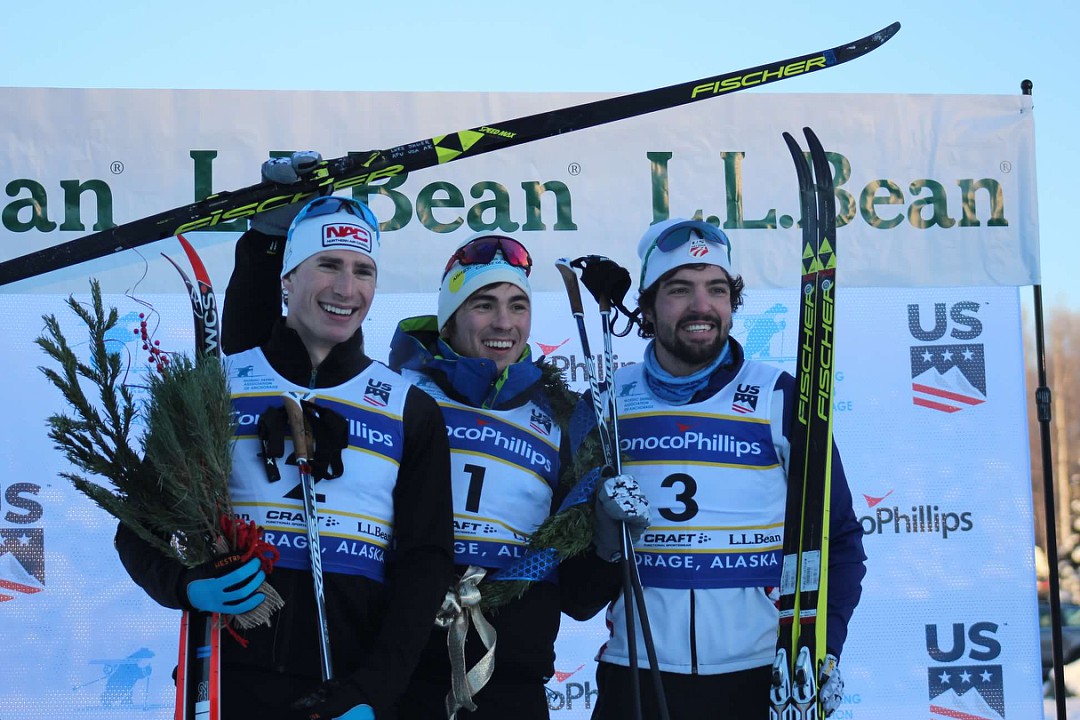
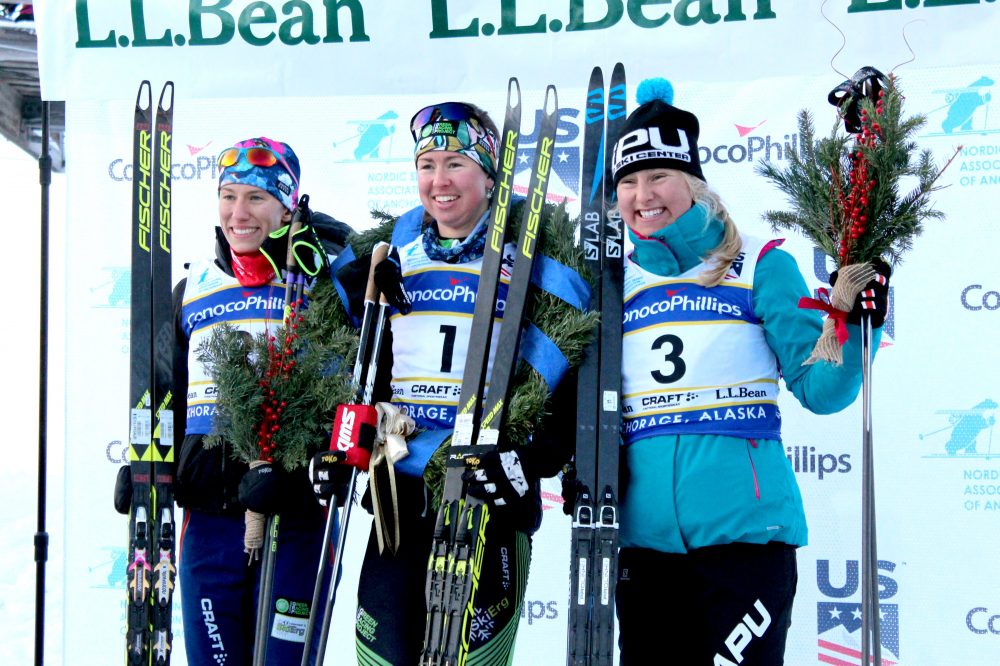
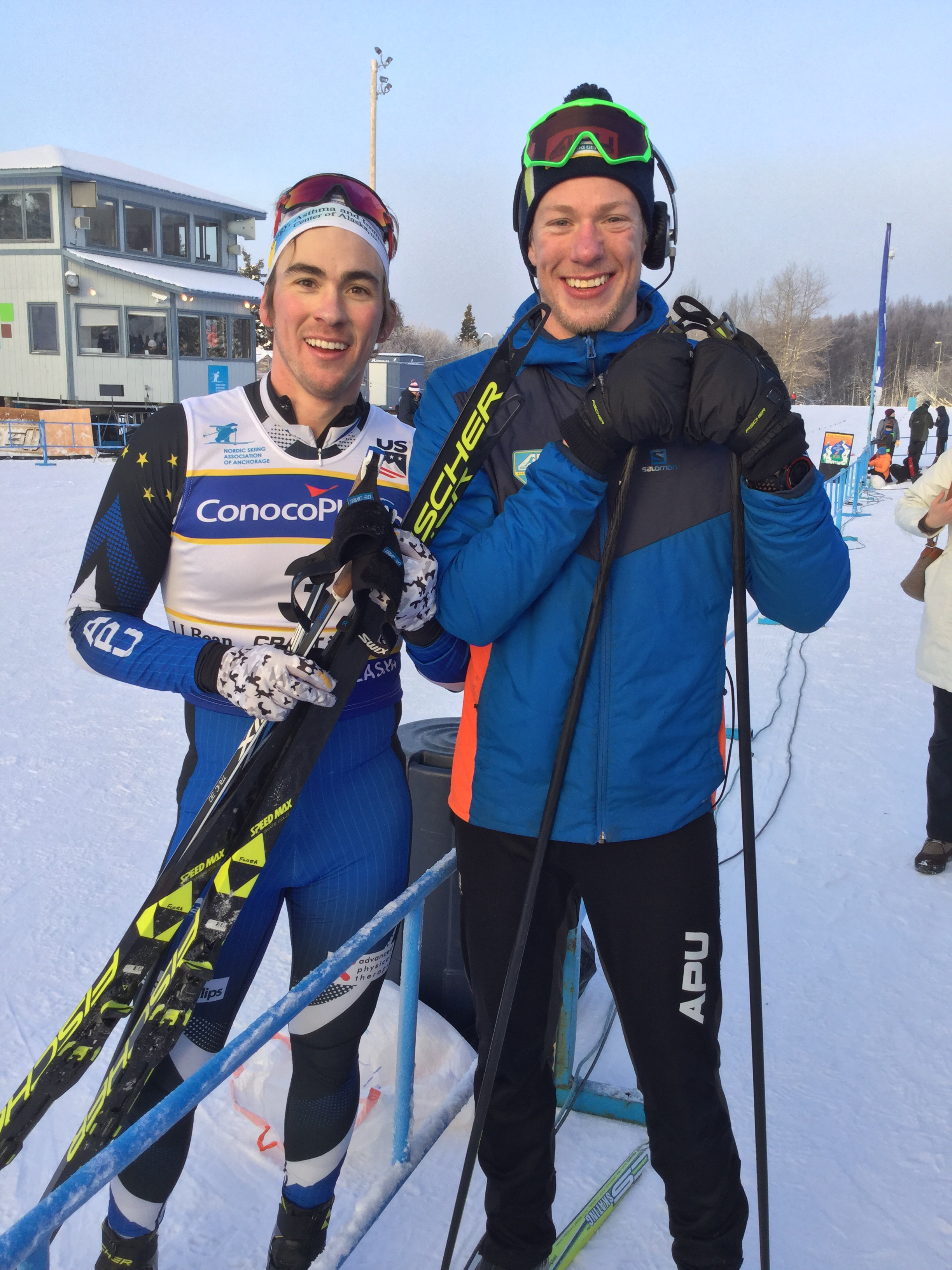
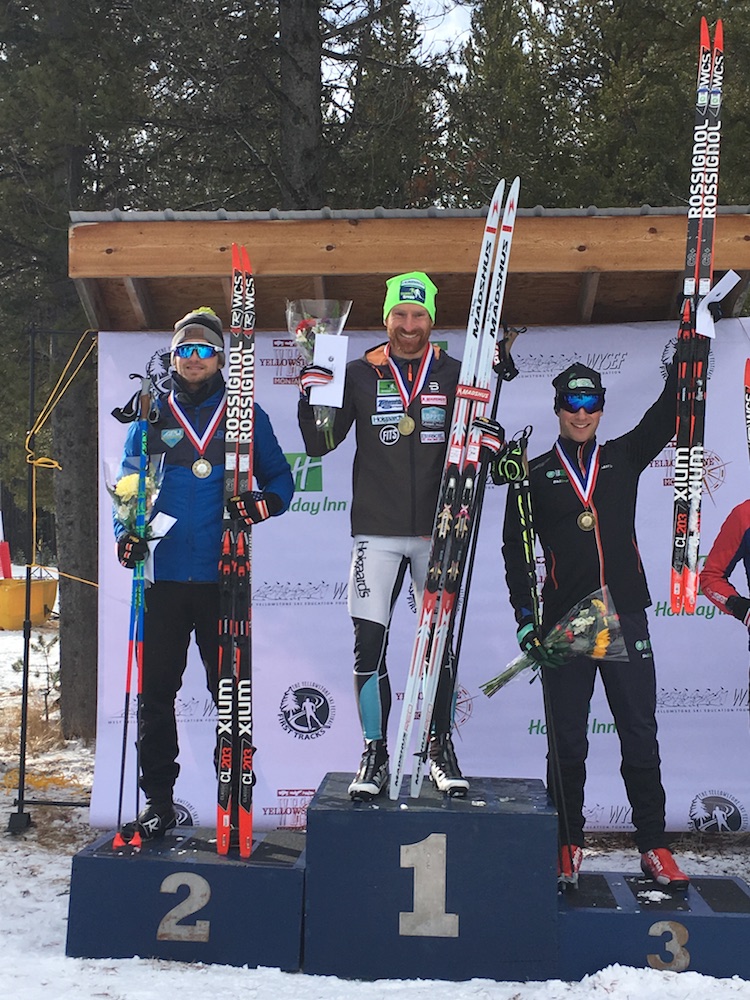
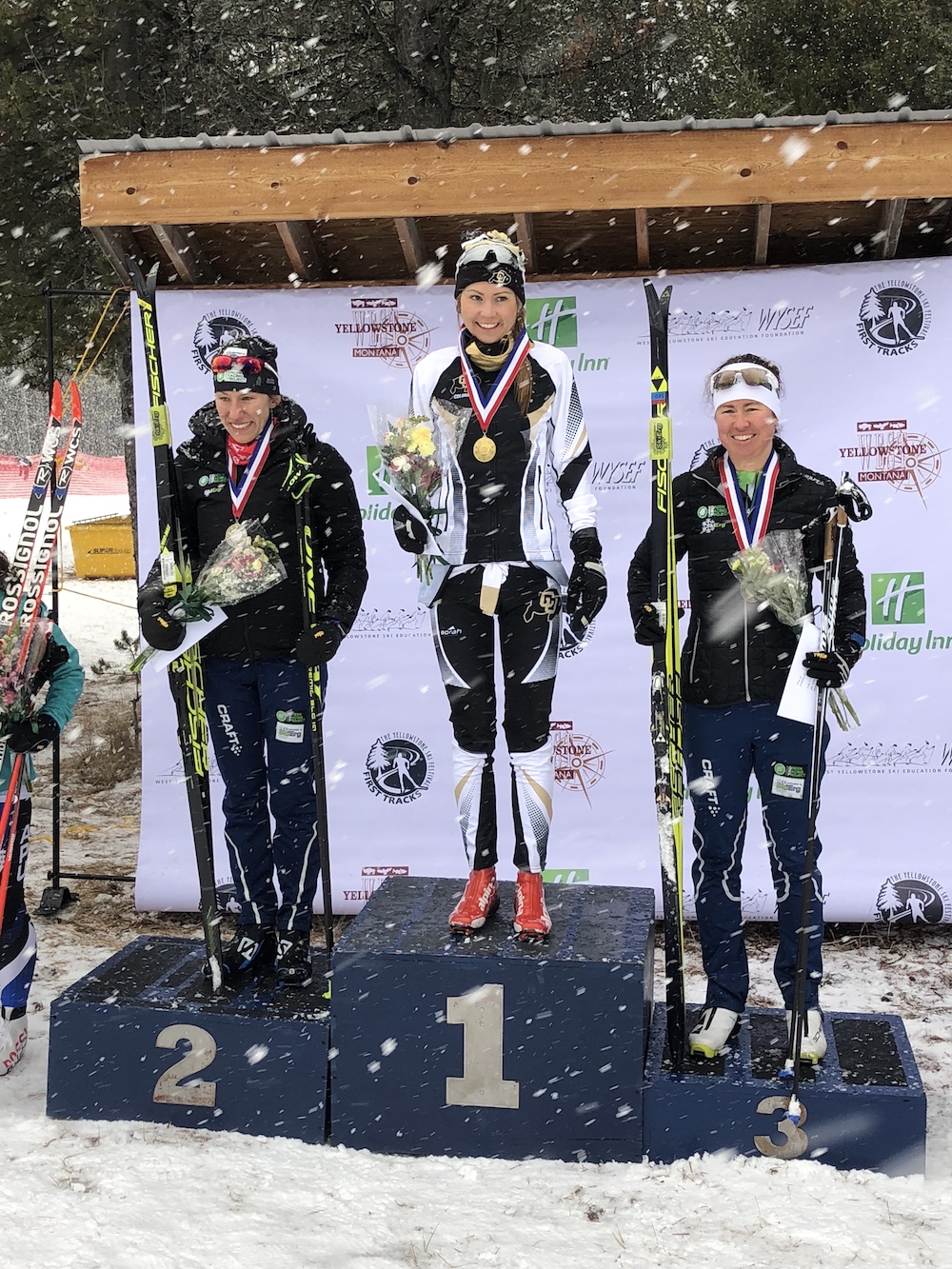
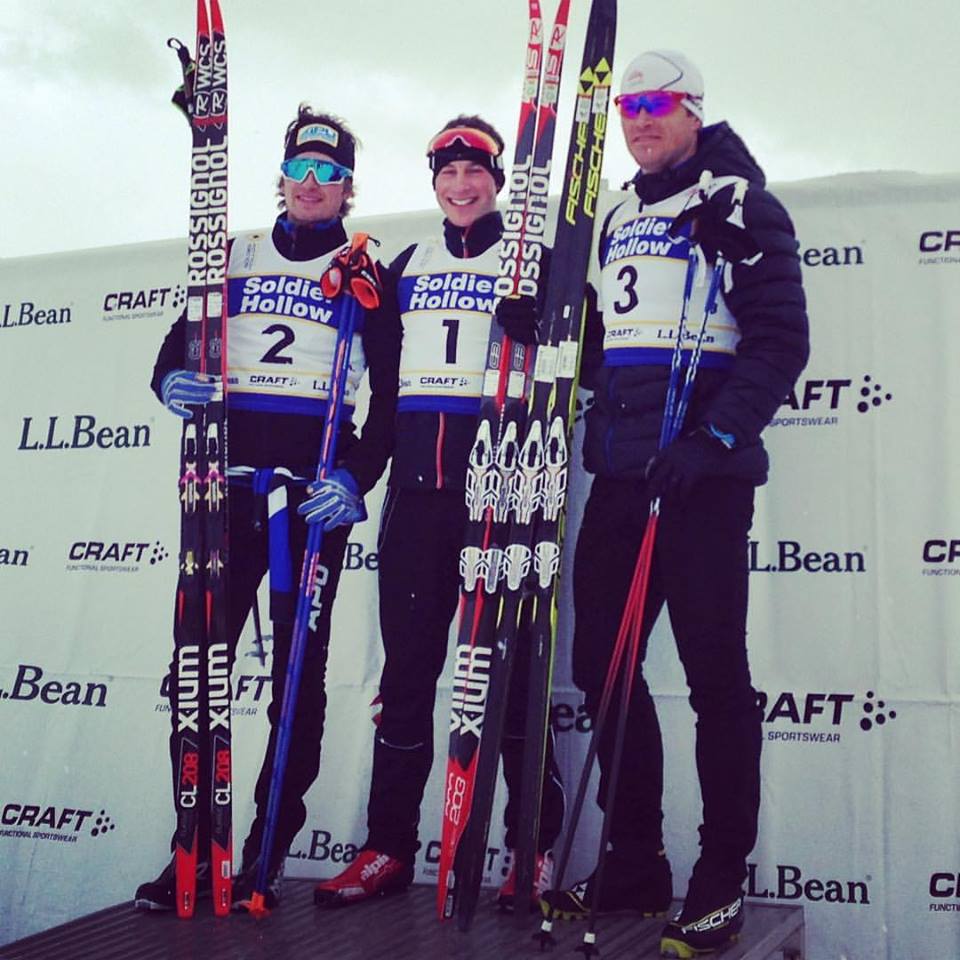
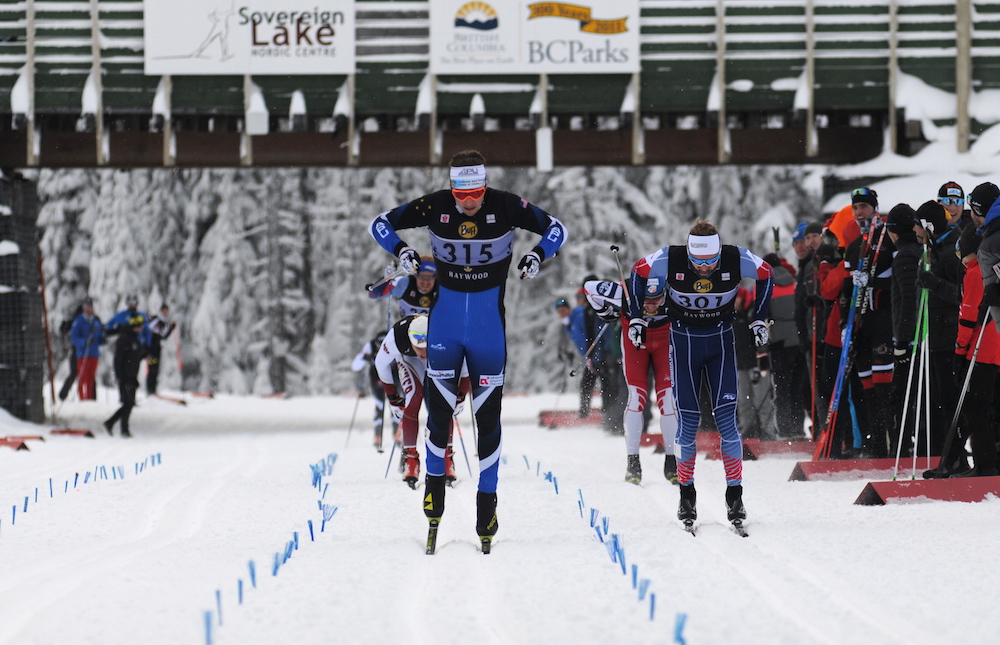
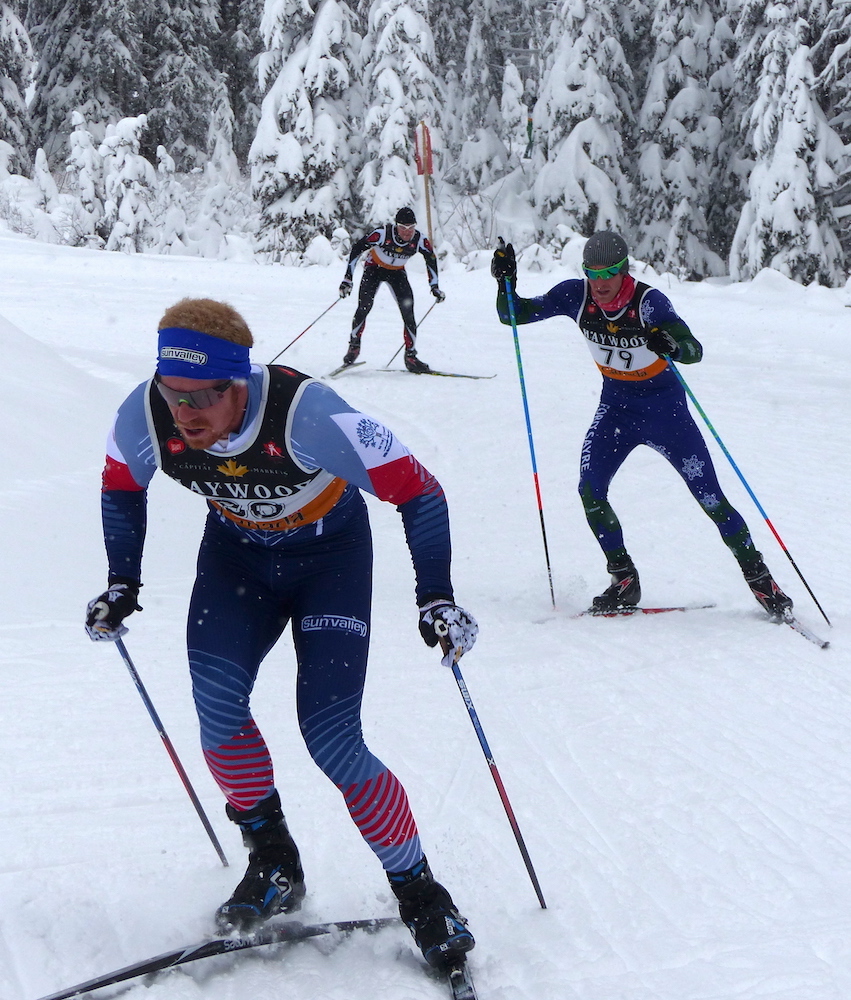
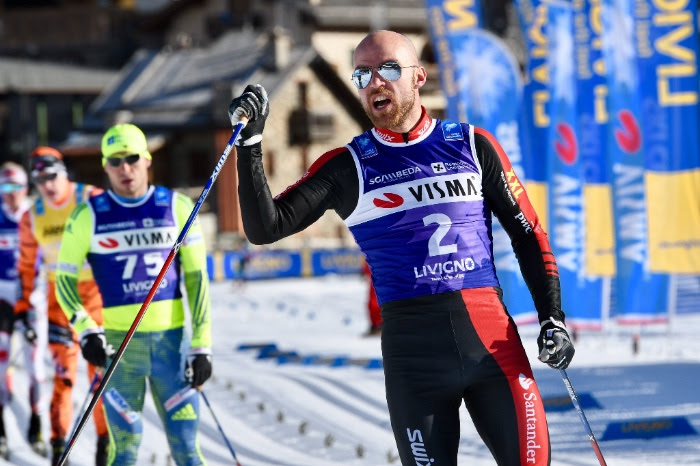
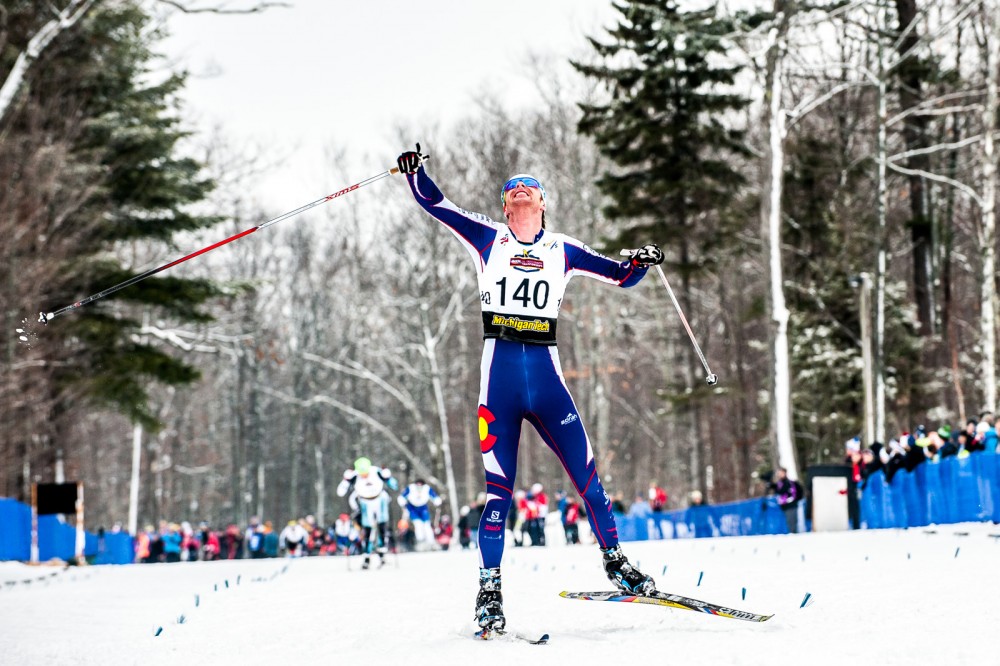
Left to right: Tyler Kornfield (APU), Reese Hanneman (APU) and Ben Saxton (SMS) the top three Americans in the men’s 1.6 k classic sprint final on Monday, the last day of 2018 U.S. Cross Country Championships in Anchorage, Alaska.
U.S. Cross Country Championships (Anchorage, Alaska): Classic sprint
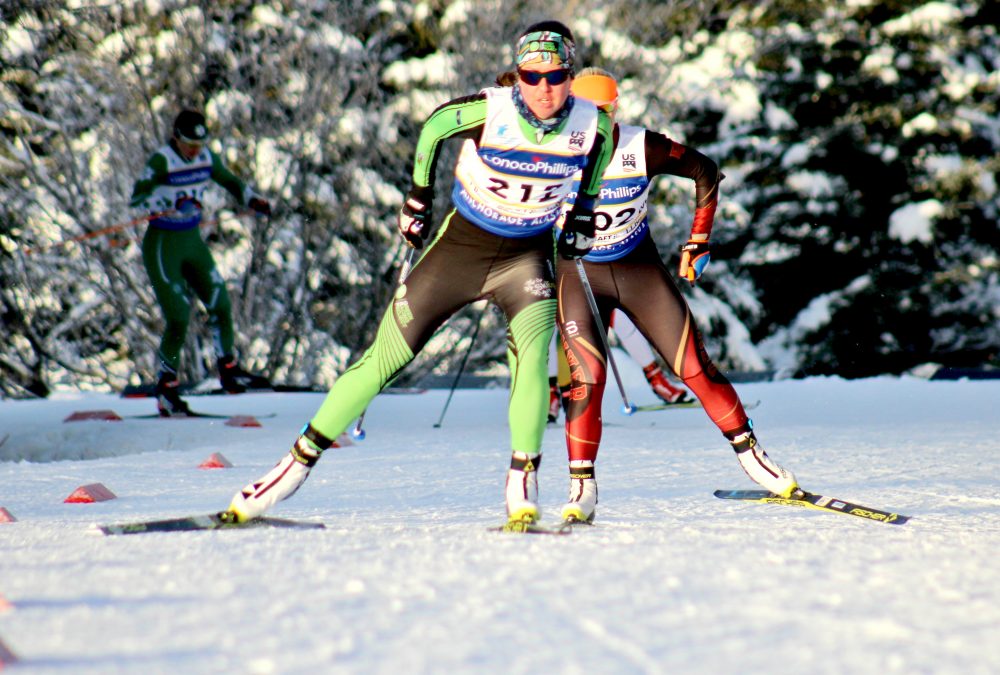
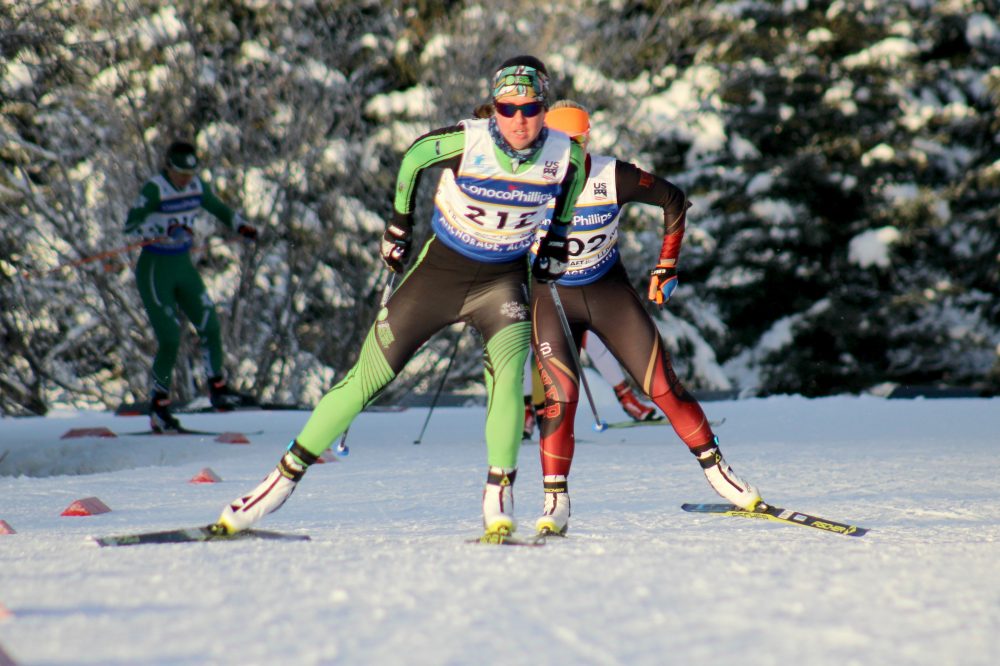
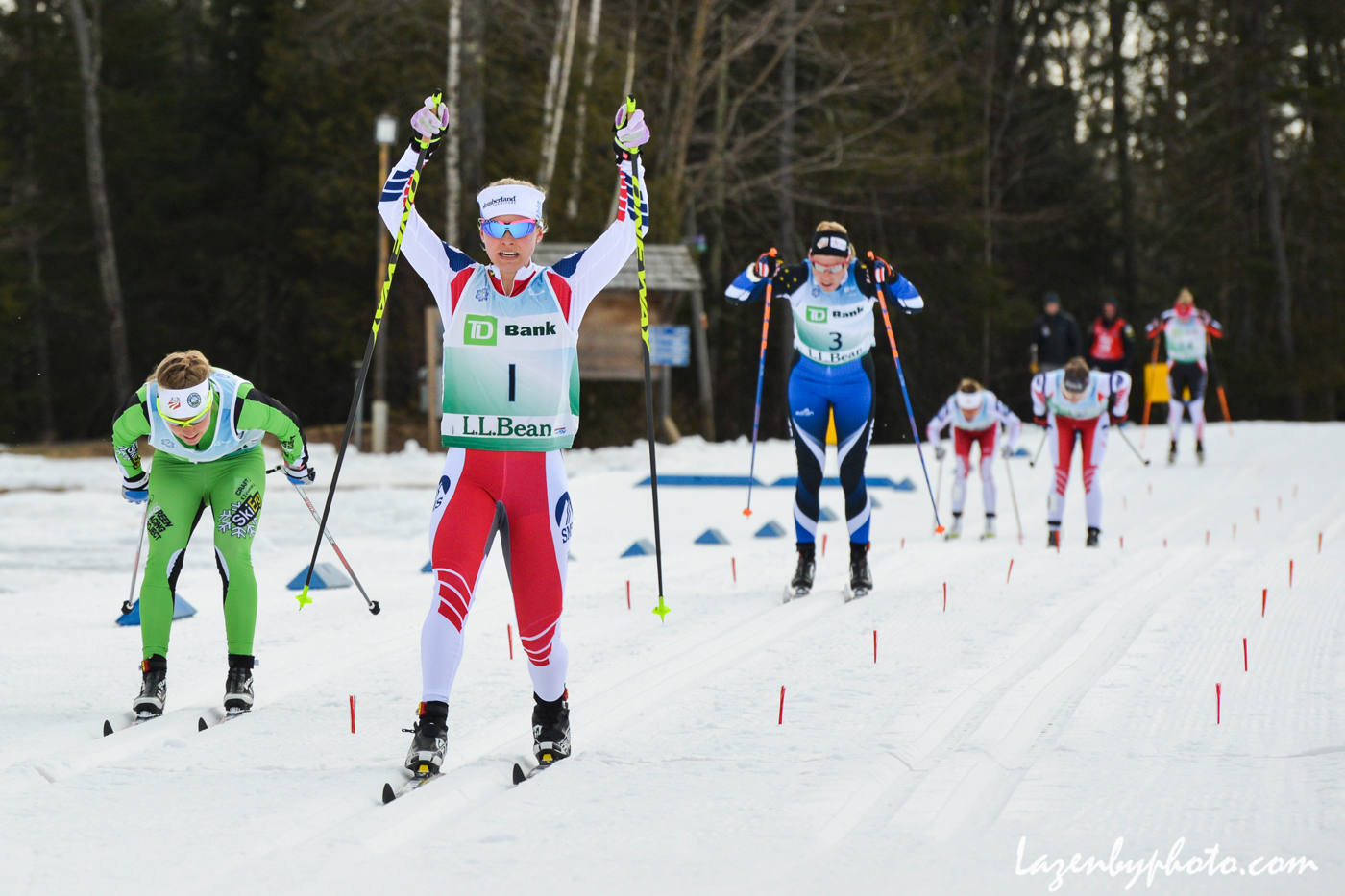
Caitlin Patterson did it. With a classic-sprint win on Monday, she successfully capped off an undefeated 2018 U.S. Cross Country Championships, as the top American woman in all four races over the past week in Anchorage, Alaska.
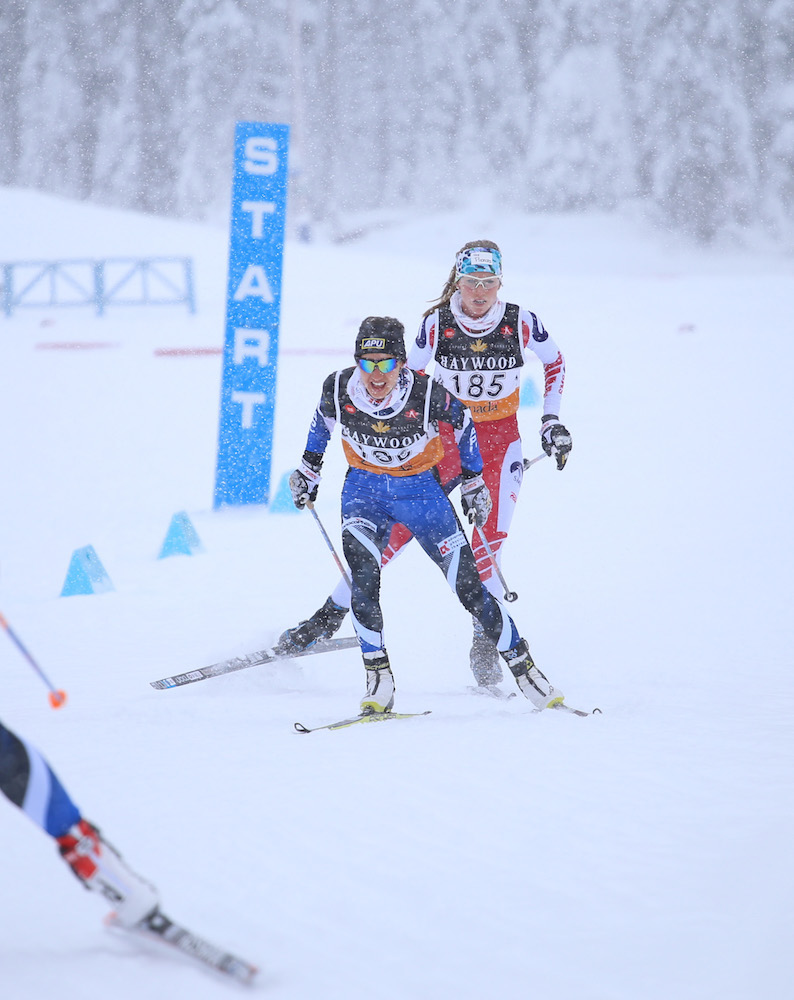
Patterson, of the Craftsbury Green Racing Project, qualified seventh then won the women’s 1.5-kilometer final by more than 2 seconds in 3:39.58 minutes. Finland’s Jasmi Joensuu, a junior at the University of Denver (DU), won the qualifier and ultimately finished second in the final, 2.36 seconds behind Patterson.
Craftsbury once again had two on the podium with Kaitlynn Miller placing third overall (+3.9) as the second American. Becca Rorabaugh, of Alaska Pacific University (APU), was the top American in the qualifier in second overall, then placed fourth in the final (+9.92) and reached the U.S. podium in third.
Petra Hyncicova, a University of Colorado Boulder (CU) senior from the Czech Republic, placed fifth overall (+10.03), and Lydia Blanchet, a Dartmouth College U23 skier, finished sixth (+11.21) and was the fourth American woman.
Joensuu, 21, of Kuortane, Finland, started the day by winning the qualifier in 3:41.4, while Rorabaugh followed in second, 1.31 seconds back. Hyncicova qualified third (+1.85), CU’s Hedda Bångman (who won Sunday’s 20 k classic) qualified fourth (+2.92), and Miller qualified fifth (+2.93). Anne Hart of the Stratton Mountain School (SMS) Elite Team clocked the sixth-fastest qualifying time (+3.88), and Patterson followed in seventh (+4.77).
From there, Patterson won both her quarterfinal and semifinal, besting Miller and Joensuu in the latter by 0.66 seconds and 2.63 seconds, respectively. Blanchet placed fourth in that same semifinal (+5.15) and advanced to the final as a lucky loser with a fast-enough time, along with Joensuu (Patterson and Miller automatically advanced in first and second).
With her 4-for-4 record at 2018 nationals, Patterson is the most successful woman at U.S. Cross Country Championships since U.S. Ski Team member Jessie Diggins was the top American in all four races at 2012 nationals in Rumford, Maine.
In the men’s classic sprint final, Reese Hanneman (APU) captured his second title in as many sprints this week (after winning the freestyle sprint on Friday). He won the qualifying round by 2.84 seconds in 3:21.93, and later the final by a 0.2 seconds in 3:20.62. Kornfield placed second, and Ben Saxton (SMS Elite Team) rounded out the podium in third (+4.78).
Logan Hanneman, the winner of Friday’s freestyle-sprint qualifier, finished second to his older brother Reese in Monday’s classic-sprint qualifier, then went on to reach the final and place fourth overall (+5.42). Kevin Bolger (Sun Valley Ski Education Foundation) placed fifth (+5.52), and Zak Ketterson (Northern Michigan University) was sixth (+6.83).
NorAm Trials (Mont Sainte-Anne, Quebec): 15/30 k skiathlons
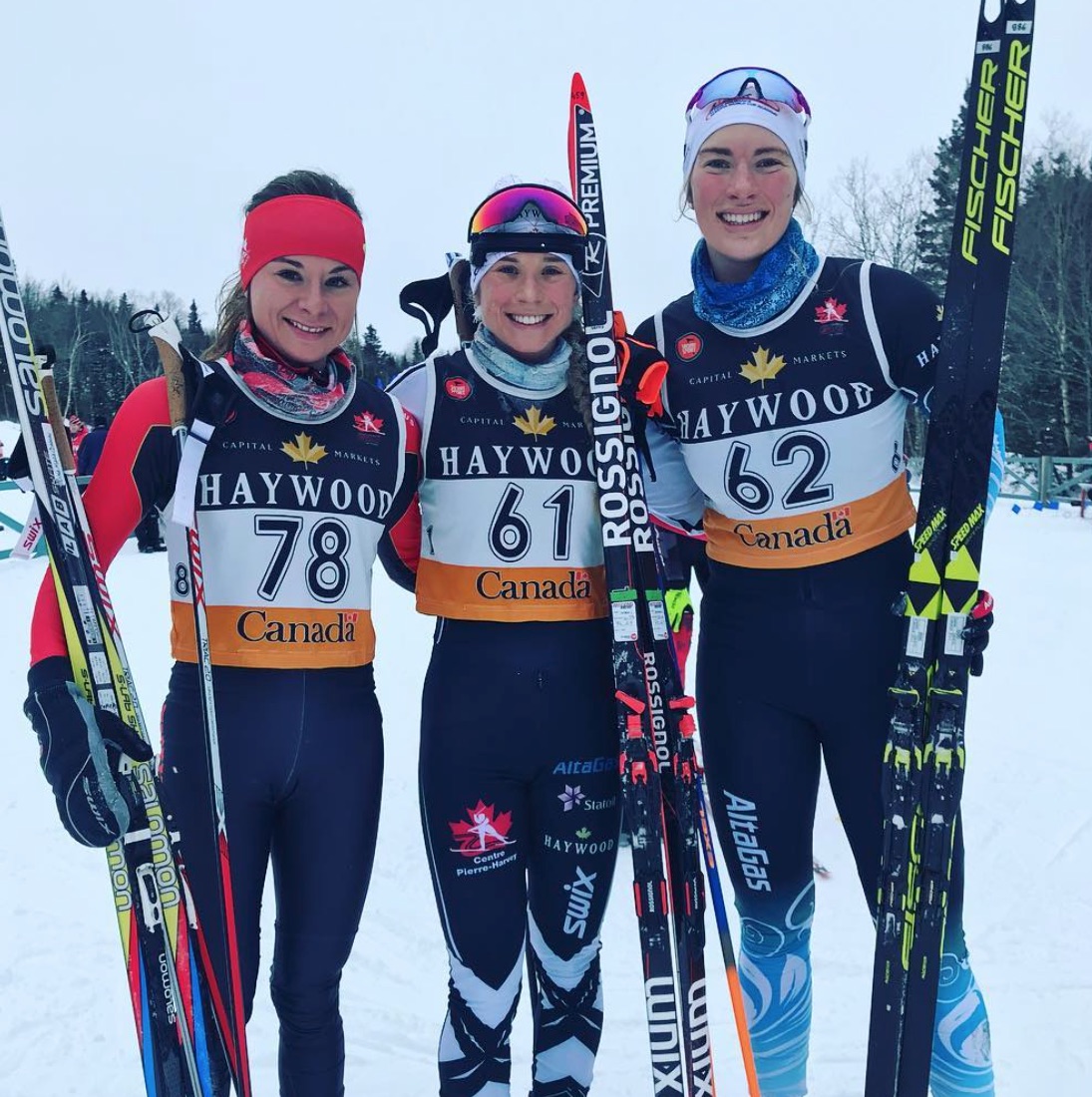
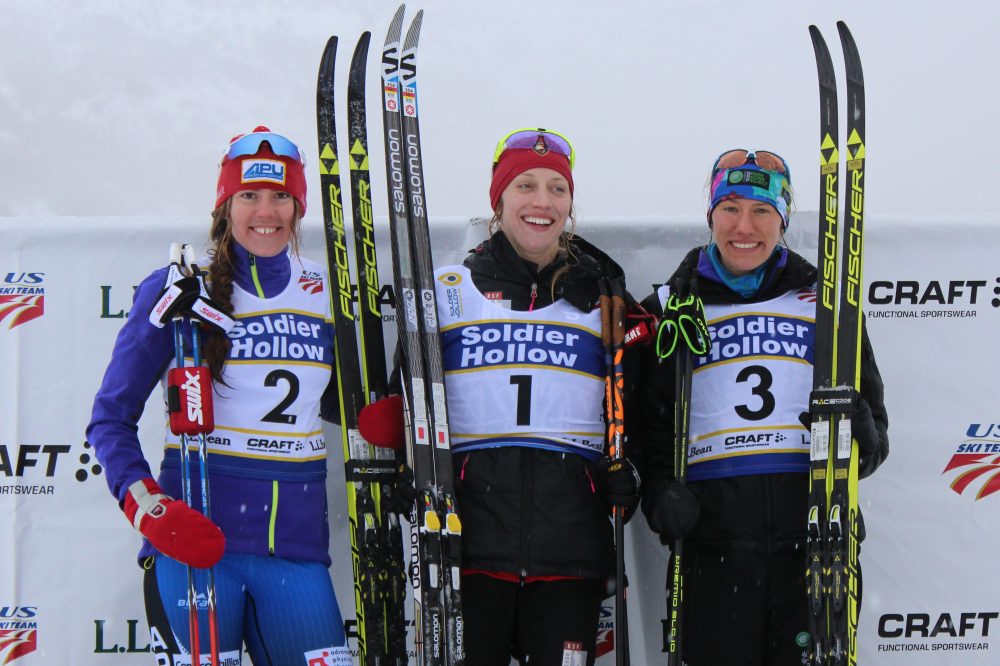
The women’s 15 k skiathlon podium on Monday at NorAm trials at Mont Sainte-Anne, Quebec, with Cendrine Browne (c) of the Pierre-Harvey National Training Centre (CNEPH) and Canadian U25 Team in first, Anne-Marie Comeau (l) of Laval University in second, and Dahria Beatty (Alberta World Cup Academy/Canadian World Cup Team) in third. (Photo: Cross Country Canada/Instagram)
Cendrine Browne won the women’s 15-kilometre skiathlon in 43:01.9 minutes on Monday at the Mont Sainte-Anne (MSA) ski trails to put an exclamation point on her presumptive selection for the PyeongChang Olympics. Browne, of the Centre National d’Entraînement Pierre Harvey (CNEPH)/Pierre-Harvey National Training Centre, which is based in nearby Saint-Ferréol-les-Neiges, broke away with Laval University’s Anne-Marie Comeau during the classic leg to take a 20-second lead that she held to the finish.
Comeau faded slightly to take second, 11.9 seconds back, qualifying for U23’s and putting her name in the hat for the upcoming 2018 Olympics. Either Comeau or the winner of Wednesday’s classic interval start should take that potential Olympic berth as Canada’s top female distance skier not already qualified. Browne has theoretically earned a spot as the top women’s sprinter, besides Dahria Beatty, who won the sprint and already met Canada’s Olympic qualifying criteria.
“It now has to go before the selection committee,” Cross Country Canada’s High Performance Director Thomas Holland wrote in an email on Friday.
After trials races were shuffled around due to extreme cold, with temperatures near -20 Celsius on Sunday at MSA, it warmed up to a balmy -8 degrees Celsius (17 Fahrenheit) by mid-afternoon on Monday. Both the women’s and men’s skiathlons were held, which not only served as one of two distance races for Olympic selection, but for Junior and U23 World Championships as well.
In the race for third place,Beatty outsprinted a group of four to take the final podium spot, 19.9 seconds behind Browne and 0.3 seconds ahead of their fellow Canadian National Team member Maya MacIsaac-Jones, of Rocky Mountain Racers (RMR) and U25 Team. Just 0.2 seconds out of fourth, Katherine Stewart-Jones, of the National Training Development Centre (NTDC) Thunder Bay and national U25 Team, placed fifth (+20.4) and CNEPH’s Laura Leclair was another second back in sixth (+21.4).
Almost 55 seconds passed before the seventh-place finisher came across the line, which was Zina Kocher (Foothills Nordic) skiing alone (+1:15.8). Another 49 seconds later, Jaqueline Mourao of Brazil’s national team placed eighth (+2:04.9), ahead of Zoë Williams (Carleton University) in ninth (+2:11.3), and Andrea Dupont (RMR) in 10th (+2:11.5).
In the junior women’s 10 k skiathlon, Whitehorse’s Natalie Hynes won in 30:19.8 to punch her ticket to Junior Worlds in Goms, Switzerland, from Jan. 28-Feb. 3. India McIsaac (RMR) finished 0.7 seconds back in second and Orford’s Alexandra Racine completed the podium in third (+32.8).
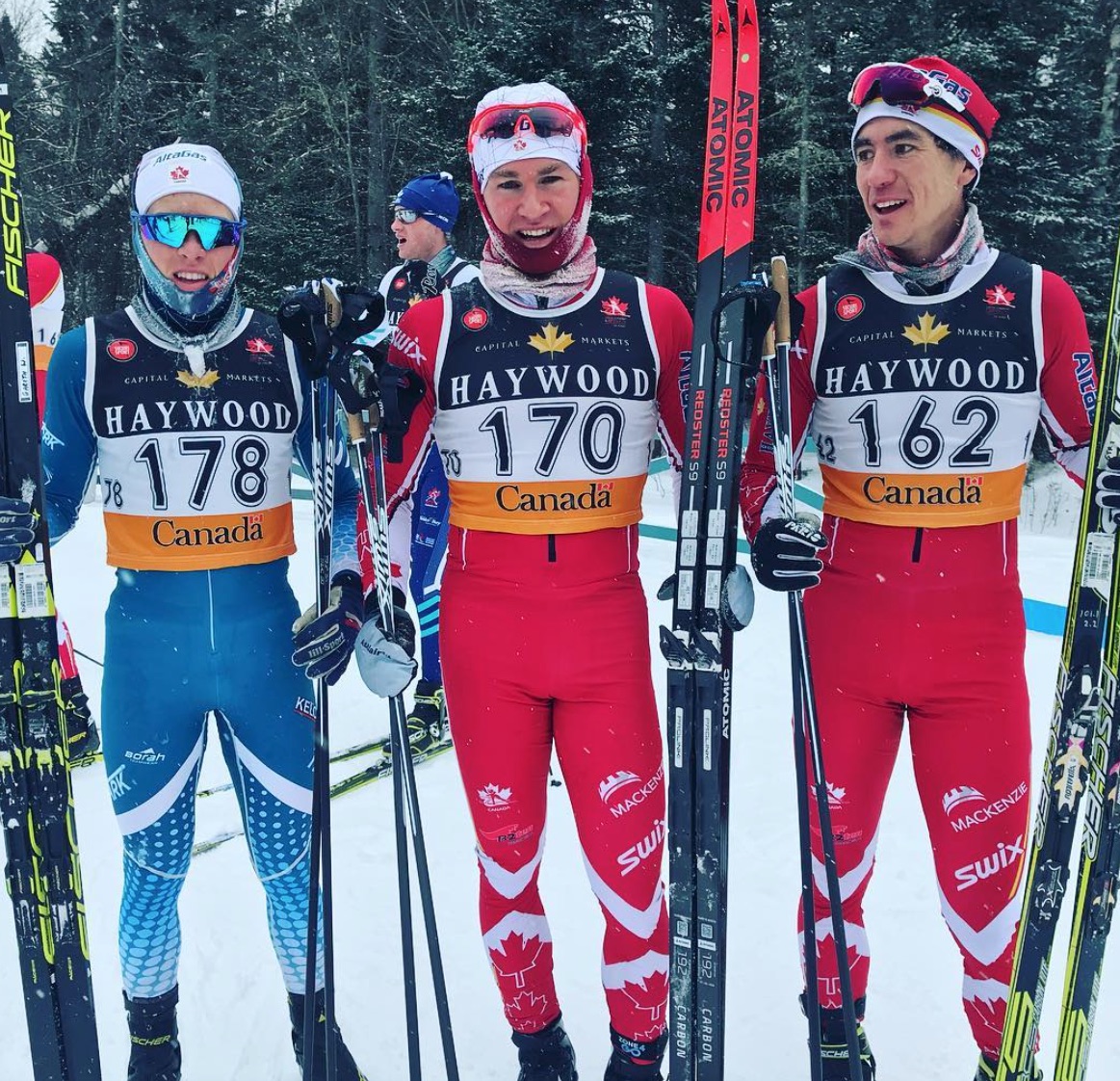
The men’s 30 k skiathlon podium at NorAm trials at Mont Sainte-Anne, Quebec, on Sunday, with Knute Johnsgaard (c) of Canada’s World Cup Team in first, Graham Nishikawa (r) of the Canadian Para-Nordic Team in second and Gareth Williams (Telemark Nordic/Canadian U25 Team) in third. (Photo: Cross Country Canada/Instagram)
On the men’s side, Canadian World Cup Team member Knute Johnsgaard, who met qualifying criteria for PyeongChang last season, shook off a slow start to the World Cup season with a win in the NorAm trials men’s 30 k skiathlon, finishing in 1:13:30.9.
Graham Nishikawa, who’s already destined for the PyeongChang Paralympics as a guide on the Canadian Para-Nordic Ski Team, finished 1 second back for second place. The 34-year-old Nishikawa edged out first-year senior national-team member Gareth Williams, 20, of Telemark Nordic and the national U25 Team, by 0.5 seconds. Williams was the top U23 athlete to qualify for this year’s U23 World Championships.
The top 6 finished within 41 seconds of the podium, with Jack Carlyle (AWCA) in fourth (+5.8), Philippe Boucher (CNEPH) in fifth (+13.9), and Scott Hill (BXC) in sixth (+40.7). World Cup Team member Len Valjas led the next group across the line in seventh (+1:28.6), followed by Bob Thompson (NTDC Thunder Bay) in eighth (+1:29.4), Alexis Dumas (CNEPH) in ninth (+1:35.5), and Ricardo Izquierdo-Bernier (CNEPH) in 10th (+1:35.7)
CNEPH’s Antoine Cyr won the junior mens 15 k skiathlon in 50:13.1 to earn a spot at Junior Worlds. Félix Longpré, of the local M.S.A. ski club, finished second (+15.7) and Thomas Manktelow was third (+49.0), just ahead of his Alberta World Cup Academy teammate Étienne Hébert in fourth (+49.3).
After Sunday’s racing was postponed due to temperatures well below the legal race limit, the remaining trials schedule includes freestyle sprints on Tuesday (for Junior and U23 World Championships qualifying purposes only), and classic interval starts on Wednesday.
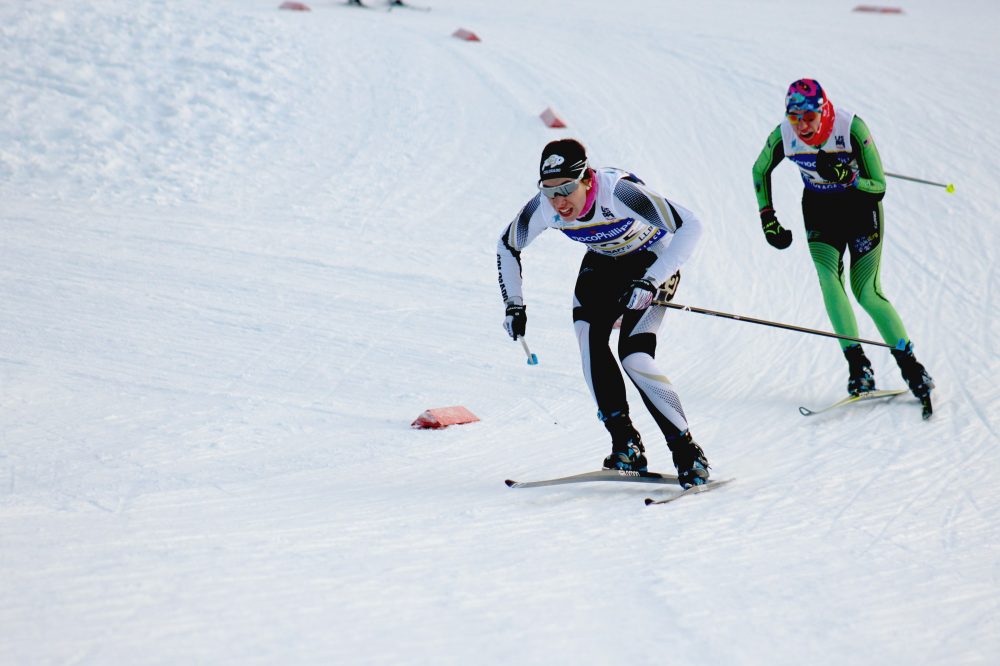
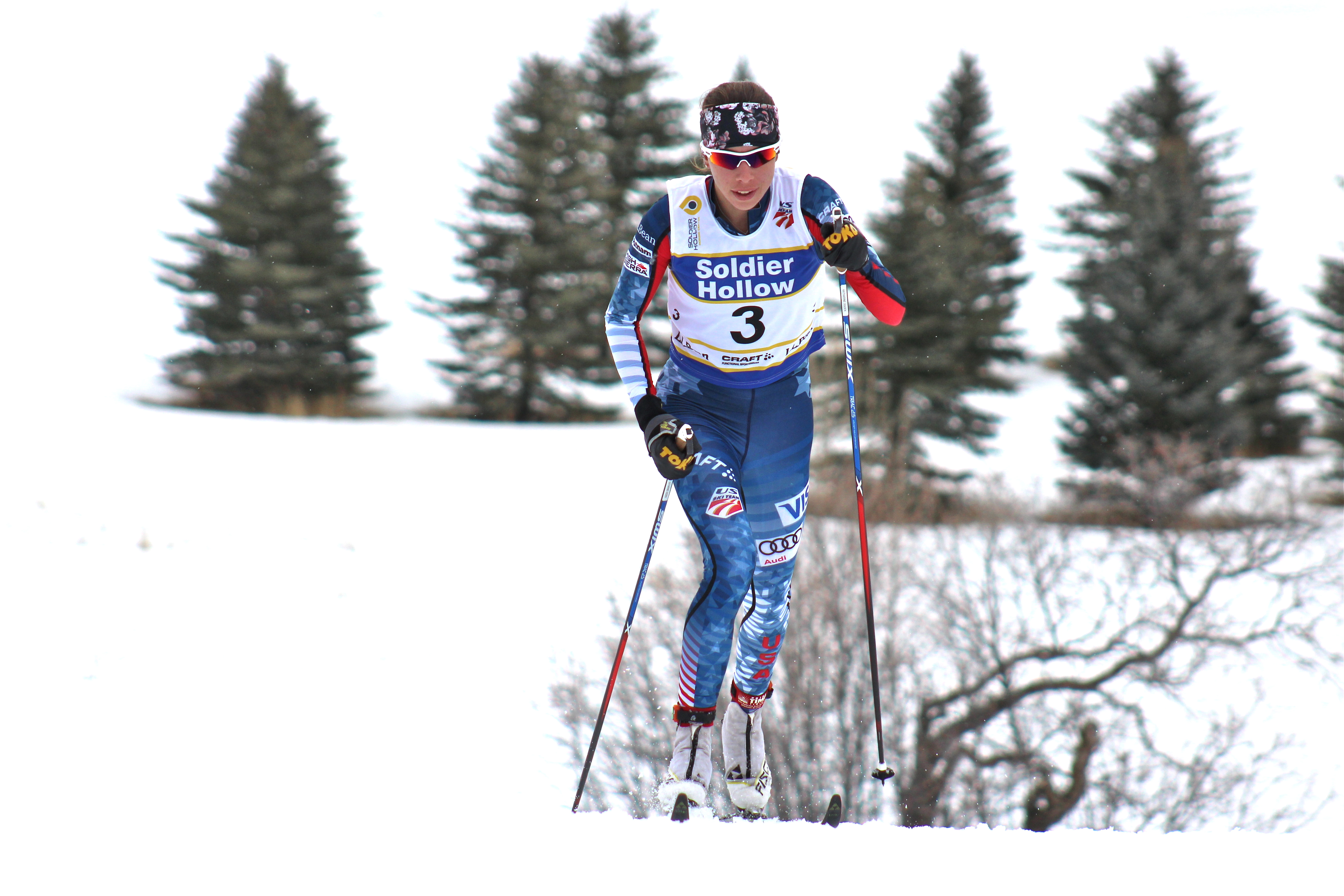
Caitlin Patterson of the Craftsbury Green Racing Project leads Jasmi Joensuu (University of Denver) during their semifinal of the women’s 1.5-kilometer freestyle sprint on Friday at the 2018 U.S. Cross Country Championships in Anchorage, Alaska.
ANCHORAGE, Alaska — For the throng of spectators who lined up along the colorfully flagged sprint course at Kincaid Park on Friday, Mother Nature had donned a new look: an earl-gray sky and a rising sun, making the white snow-dusted base of the state’s Tordrillo Mountains (known locally as the “Ghost Range”) if ever so faintly distinguishable to the southwest.
Less than 48 hours had passed since the opening race of the 2018 U.S. Cross Country Championships at Kincaid Park, but the slushy trails and snowy skies that had prevailed Wednesday were tucked away in the closet.
The second day of racing found athletes and onlookers embracing the end of the sun’s bereavement; a few blinking in wonder and questioning if it was indeed, the same place they had ventured to two days before.
While the weather had transposed into an alter ego, one competition-day facet remained virtually unchanged: the name of the eventual winner.
Caitlin Patterson, who races for the Craftsbury Green Racing Project (CGRP) and grew up in Anchorage, is proving herself a force to be reckoned with this week; the event weather and discipline may change, but her desire to finish first apparently does not.
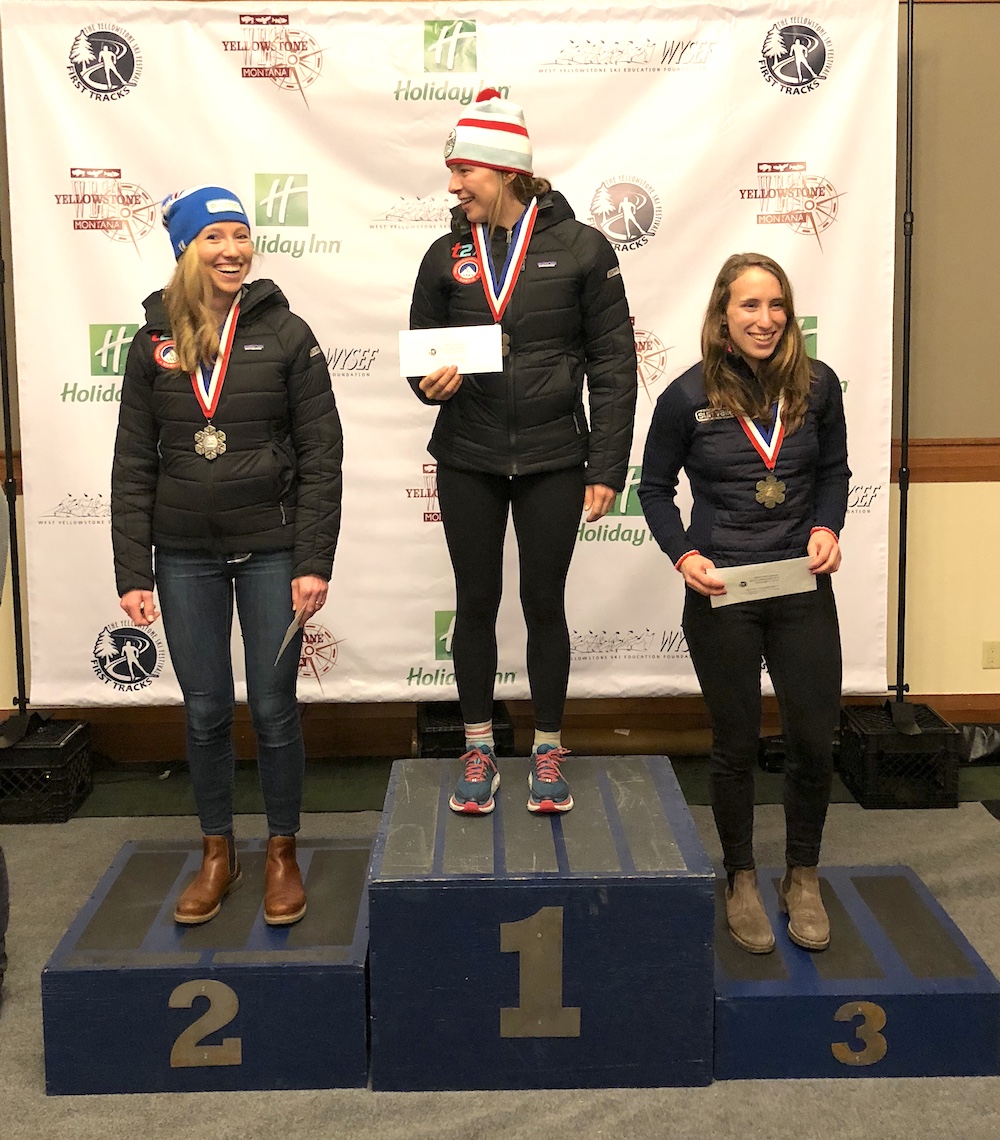
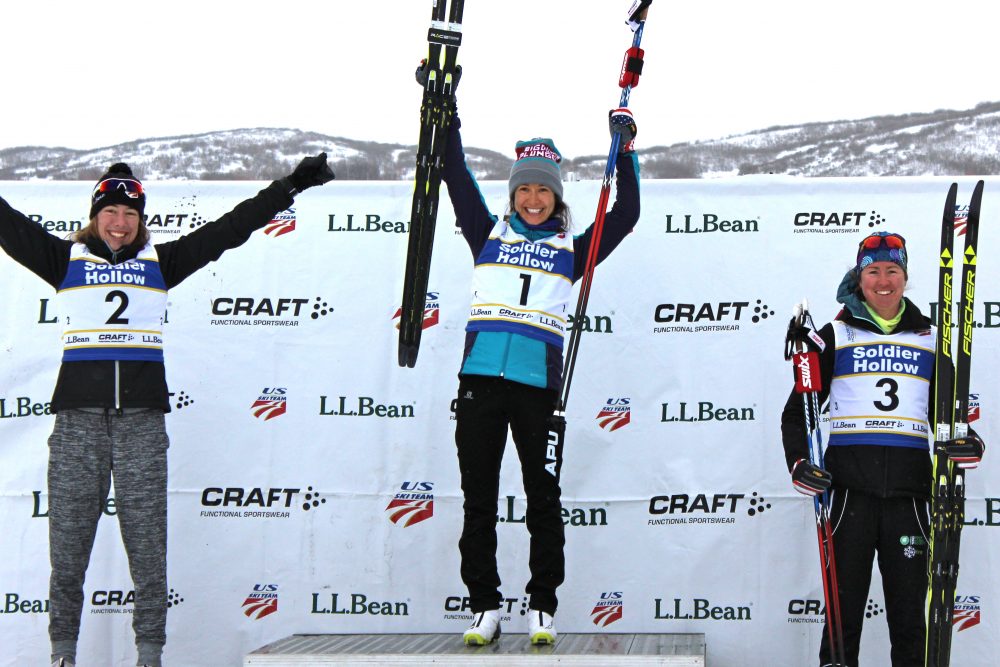
From left to right: Kaitlynn Miller (Craftsbury Green Racing Project), Caitlin Patterson (CGRP) and Hannah Halvorsen (APU) on top of the American women’s 1.5-kilometer freestyle sprint podium on Friday at the 2018 U.S. Cross Country Championships in Anchorage, Alaska.
The 27 year old won Friday’s 1.5-kilometer freestyle sprint final in a time of 3:20.9 minutes and now holds four U.S. national titles. One of those came in Wednesday’s 10 k freestyle and the other two from 2016 U.S. nationals, in the 10 k classic individual start and 20 k freestyle mass start races. Friday’s victory was her first sprint national title.
Though she has been on a U.S. nationals sprint podium once before — she finished third in the 2016 freestyle race — Patterson was slightly surprised with the margin by which she won Friday. She finished the final with a definitive win, the next closest finisher 3.56 seconds behind.
“I expected, especially in the final, that someone would really have a push on the top of that hill, but maybe everyone was getting a little bit tired or maybe I just went for it a little harder than I realized I could,” Patterson reflected after.
But she was especially wary of Finland’s Jasmi Joensuu, the University of Denver junior who had finished second right behind Patterson in both the quarterfinal and semifinal.
“In our quarterfinals [Joensuu] was extremely strong at the top of the major uphill, hop skating, really putting a push over that I could barely match,” Patterson said.
Joensuu, 21, had been punching the pace in the front through the first climb for most of the day, leading Patterson out during both their quarterfinal and semifinal. In the early heats, the CGRP skier tended toward the back through the first third of the course.
“I was really strong in the uphill. That’s what I think was my strength today,” Joensuu said after.
“I’m a slow starter,” Patterson explained. “In the semifinal I found myself in the very back of the heat.”
It was in the downhill returning to the stadium and the final uphill hook back toward the finish that Patterson tended to regain ground; that is how she held off Joensuu in the finish of both the quarterfinal and the semifinal (they went one-two in both heats, respectively).
The final was not much different. Joensuu was still at the front of the charge off the start, but this time alongside the University of Colorado Boulder (CU) senior Petra Hynčicova, a 2017 NCAA double champion, who hails from the Czech Republic.
The University of Colorado Boulder’s (CU) Petra Hynčicova leads Craftsbury Green Racing Project (CGRP) skier Kaitlynn Miller back into the stadium during their semifinal of the women’s 1.5-kilometer freestyle sprint on Friday at the 2018 U.S. Cross Country Championships in Anchorage, Alaska.
“The first part was definitely the best part for me,” Hynčicova said after. I knew I had really good skis … I tried to go in the beginning. I think it was the right move.”
The two international college skiers continued in the front through the first descent running along the backside of the course. There, Patterson made her move. Tucking for speed, she slungshot her way from fourth to second, moving around Joensuu and her CGRP teammate Kaitlynn Miller, heading into the major climb side-by-side with Hynčicova.
Through the climb, Patterson tried to stay as quick as possible, reaching the top before the rest of the finalists. Pressing to keep up were Joensuu, Hynčicova, Miller, Hannah Halvorsen, of Alaska Pacific University (APU) and the U.S. Ski Team D-team, and Kelsey Phinney of the Sun Valley Ski Education Foundation (SVSEF).
“I was pretty tired by the final and didn’t have the legs to vie for a top spot but so it goes sometimes,” Phinney wrote in an email.
“I’ve still got to work on getting my extra sprint gear,” Phinney continued. “But it was great to have a really competitive final with everyone holding their own and jockeying for spots at different parts of the course, that’s always fun!”
As Phinney and the rest raced to catch up, Patterson focused on maintaining a gap. Now that she was in front, there was no turning back.
“I could feel people behind me but I was never looking back,” Patterson said. I knew that since I was going to be in front, I was not going to be drafting anyone on the downhill, so I better get out of there as fast as I could and then I just sent it on the downhill.”
Patterson cruised down back toward the stadium, Joensuu now the only one within proximal striking range, about five meters behind. Following Joensuu was Hynčicova and Halvorsen, then Phinney and Miller. The group looped into the final incline to the finish Patterson still leading the way, Miller having moved around Halvorsen during the course of the corner.
“I think you can always look at where you can improve and a lot of those girls were skiing that final U-turn a lot better, carrying more speed out of it than I did, so I’d like to work on that in the future,” the 19-year-old Halvorsen said.
Joensuu and Hynčicova had carried speed, but not enough to catch Patterson. The Finn claimed second 3.56 seconds behind, while Hynčicova earned third, 4.19 seconds back. In fourth, was Miller as the second American, 4.35 seconds out of from the win and 0.16 seconds out of third.
“It’s always exciting in the heats to keep moving up, especially when you feel like you gave it your all in the qualifier,” Miller said after the final.
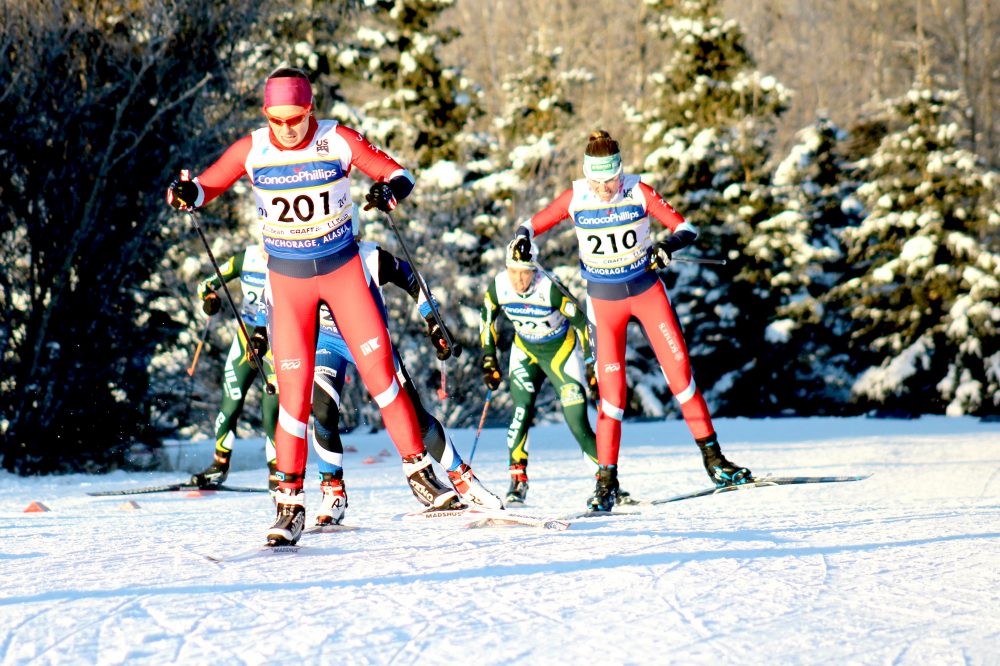
Stratton Mountain School (SMS) Elite Team member Anne Hart (201) leads her teammate Erika Flowers during their quarterfinal of the women’s 1.5-kilometer freestyle sprint on Friday at the 2018 U.S. Cross Country Championships in Anchorage, Alaska.
“I definitely tend to have better results in classic, so for me, I just like to see improvement in my results, feel like I’ve done well,” added Miller, who was the 2016 classic sprint national champion and placed third in last year’s classic sprint. She also placed second in the 2016 classic 10 k individual start.
“I’m pretty happy with it,” she added of earning her first freestyle podium as the second American woman across the line.
Just missing the final and the winner of Friday’s qualifier was Anne Hart of the Stratton Mountain School (SMS) Elite Team in seventh. Earlier this season, Hart raced the opening International Ski Federation (FIS) races in Beitostølen, Norway, where she finished in the top 20 in the 10 k freestyle. She also won this year’s opening SuperTour freestyle sprint in West Yellowstone, Montana.
“I’m feeling overall good about the race, with a little bit of regret for what could have been.” Hart wrote in an email. “I had a really disappointing 10 k skate race for me — I had been hoping for a much better result, but unfortunately the course and conditions ended up not suiting my style of skiing.
“Both Pat O’Brien (SMS coach) and Max Lipset (strength coach) were talking to me after the 10K, and encouraging me to bring my best possible self to today’s effort, and throw a metaphorical punch that I would be proud of,” Hart continued. “With that mindset, some good energy, and great skis I was able to put together probably my best qualifier to date. I’ve never won a high-level full field qualifier, so while they don’t give flowers for that I am counting it as a definitive personal victory, and an affirmation in the training I’ve done.”
Hart won the qualifier in a time of 3:22.10 (Patterson qualified in 12th, 5.76 seconds back, and later won in a time of 3:20.9). The SMS skier advanced to the quarterfinals before getting eliminated in her semifinal after finishing third behind Miller and Hynčicova.
“My quarterfinal was good, although in retrospect I think I may have burned a little too much energy early on leading from start to finish,” Hart wrote. “I took a different tact in the semi-final to try and utilize the draft into the finish, but unfortunately followed the wrong person up the big hill and got a little further back than I would have liked to be.”
“So I put in my best effort to close the gap to the top two women, and came up less than a hundredth of a second short.” Hart continued. “So that stings a little bit to be so close to the final on a day when I know I could have been competitive in that last effort, but that is ski racing— for better or for worse— and I’m excited for the two races yet to come!”
Two races remain with a 20 k classic mass start on Sunday and a classic sprint on Monday.
In the junior women’s freestyle sprint on Friday, the win went to Sydney Palmer-Leger (SVSEF) in a time of 3:36.05. Callie Young of the Craftsbury Nordic Ski Center claimed second, while Kathleen O’Connell skiing for Montana State University took third.
Also in the junior’s final was Annika Hanestad in fourth, Sarah Morgan of Wasatch Nordic in fifth, and Kelly Koch of Loppet Nordic Racing in sixth.
The Hanneman brothers after Friday’s skate sprint at 2018 U.S. Cross Country Championships in Anchorage, where they live and train with Alaska Pacific University. Reese Hanneman (l) won the men’s final and younger brother Logan (r) won the men’s qualifying round.
U.S. Cross Country Championships (Anchorage, Alaska): Freestyle sprints
Caitlin Patterson racked up her second-straight national title at this year’s 2018 U.S. Cross Country Championships and Reese Hanneman topped the men’s freestyle sprint final on Friday at Kincaid Park in Anchorage, Alaska.
In the first of two sprints at 2018 U.S. nationals, Patterson, the Craftsbury Green Racing Project (CGRP) skier who won the women’s 10-kilometer freestyle on Wednesday, posted a 3.56-second win in the women’s 1.5 k freestyle sprint final on Friday.
After qualifying 12th, 5.76 seconds back from Anne Hart of the Stratton Mountain School (SMS) Elite Team, who won the qualifier in 3:22.10, Patterson won both her quarterfinal and semifinal, both times ahead of University of Denver (DU) junior Jasmi Joensuu in second.
The two advanced to the final, where Patterson reached the finish line first once more in 3:20.93, about 3 1/2 seconds ahead of Joensuu in second and 4.19 seconds ahead of Petra Hyncicova, a senior at the University of Colorado Boulder, in third. Craftsbury had two in the final with Kaitlynn Miller placing fourth (+4.35). U20 skier Hannah Halvorsen of Alaska Pacific University (APU) and the U.S. Ski Team (USST) finished fifth (+7.66), and Kelsey Phinney of the Sun Valley Ski Education Foundation (SVSEF) placed sixth (+9.78).
Hart won her quarterfinal then placed third in the first semifinal, behind Miller, who won that heat, and Hyncicova in second, to miss advancing to the final. Hart had won the qualifier by 1.78 seconds over Joensuu in second.
In the men’s 1.6 k skate sprint, Logan Hanneman (APU) won the qualifier in 3:07.4. Kevin Bolger (SVSEF) qualified in second (+0.48), and older brother Reese Hanneman (APU) was third (+1.13).
In the quarterfinals, Reese won his heat by 0.19 seconds ahead of his teammate Tyler Kornfield, and Logan finished second, 0.42 seconds behind U18 skier Gus Schumacher (Alaska Winter Stars), as the winner of the first quarterfinal. Bolger won the fourth quarterfinal.
Reese raced to another win in the second semifinal, 0.17 seconds ahead of Bolger in second. APU’s Eric Packer won the first semi, 1.66 seconds clear of Zak Ketterson of Northern Michigan University (NMU) in second. Logan finished fifth in that semifinal, 4.48 seconds out of first, trailing Dakota Blackhorse-von Jess (Bend Endurance Academy) in third and Schumacher in fourth.
In the final, which included three APU athletes out of six total, Reese nipped Bolger by just eight-hundredths of a second for the win in 3:11.33. APU had two on the podium with Kornfield in third (+0.88). Ketterson finished fourth (+1.92), Packer was fifth (+2.34), and DU sophomore Eivind Romberg Kvaale was sixth (+14.08).
U.S. nationals racing continues Sunday with the 20/30 k classic mass starts.
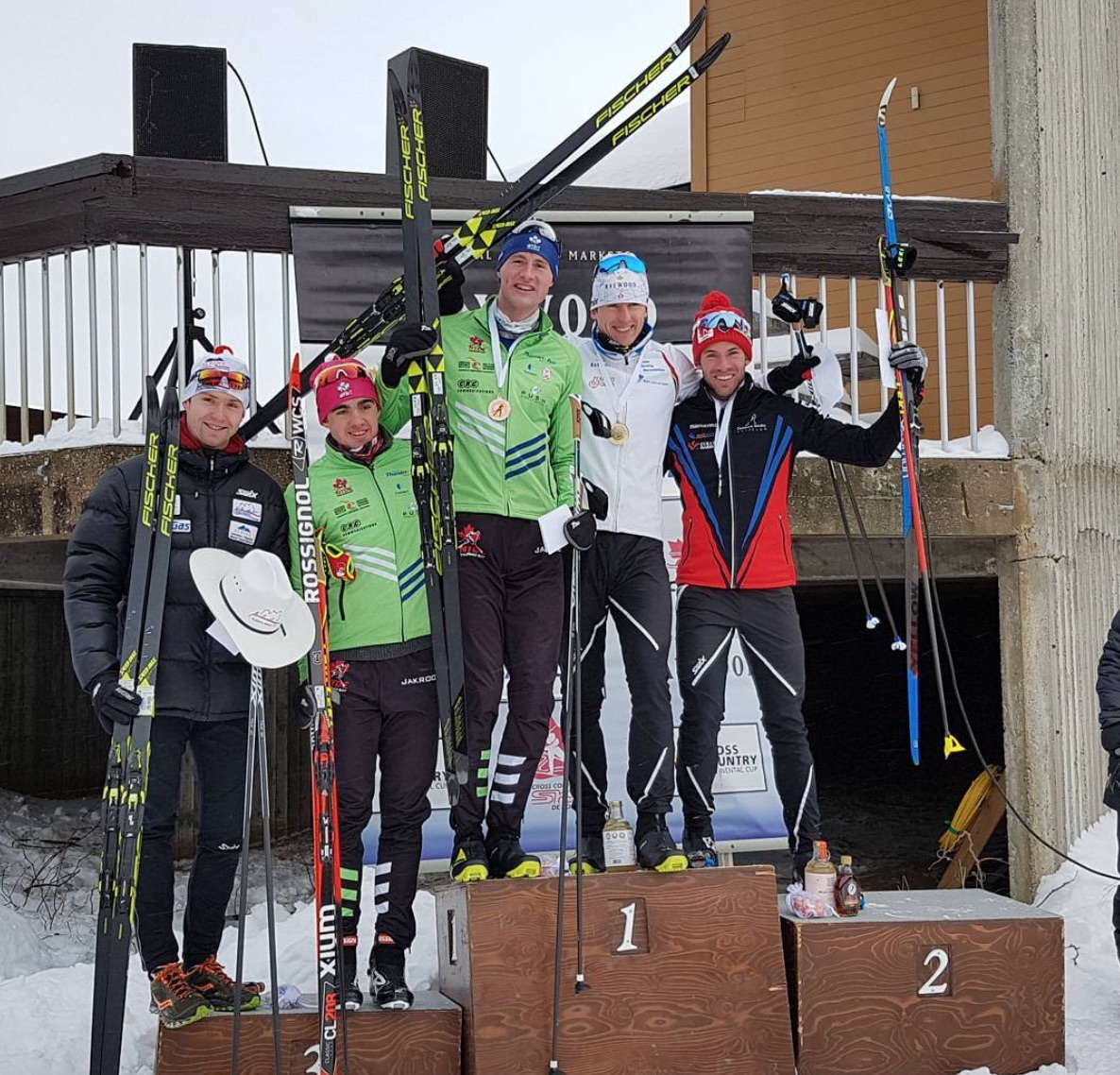
The men’s classic sprint podium at 2018 Canadian NorAm Trials on Friday at Mont Sainte-Anne, Quebec, with Julien Locke (second from r) in first, Russell Kennedy (r) in second, Bob Thompson (c) in third, Evan Palmer-Charrette (second from l) in fourth, and Dominique Moncion-Groulx (l) in fifth. (Photo: Canmore Nordic Ski Club/Instagram)
Canada’s NorAm Olympic trials opened Friday at Mont Sainte-Anne in Beaupré, Quebec, with Dahria Beatty (Canadian World Cup Team/Alberta World Cup Academy) winning the women’s 1.35-kilometer classic sprint and Julien Locke (Canadian U25 Team/Black Jack) topping the men’s 1.35 k classic sprint final. While Beatty has already secured her spot at the 2018 Olympics in PyeongChang, South Korea, Locke has not — but the win didn’t ensure he’ll be selected to the team. In a tiebreaker, it looks like he is second on the men’s sprint list at trials to Russell Kennedy, of Canmore Nordic/Team R.A.D.
Based on its published nomination procedures for the 2018 Olympic Games, Cross Country Canada (CCC) will consider both qualifying and final results in its “sprint selection ranking process”. In the men’s qualifying round on Friday, Kennedy qualified first (in 3:02.81 minutes) and Locke followed in second (3.06 seconds back). Kennedy later placed second to Locke in the men’s final. Effectively, that meant they were tied, should CCC select another male sprinter to its Olympic team. But the tiebreaker is the qualifying round, which Kennedy won.
To reach the final, Kennedy placed second in his quarterfinal, behind Ricardo Izquierdo-Bernier of the Pierre-Harvey National Training Centre (CNEPH), and Locke was second in his quarterfinal as well, behind Andy Shields of Lappe Nordic. All four automatically advanced to the semifinals, where Kennedy posted a 1.12-second win over Bob Thompson, of the National Team Development Centre (NTDC) Thunder Bay, and Locke edged Jess Cockney (of the Canadian World Cup Team, who prequalified for PyeongChang) by 0.34 seconds.
In the final, Locke notched a 1.17-second win over Kennedy, crossing the line first in 3:04.16. Thompson took third (+2.49), Evan Palmer-Charrette (NTDC Thunder Bay) was fourth (+5.74), Dominique Moncion-Groulx (AWCA) was fifth (+7.2) and Cockney sixth (+55.97). Len Valjas, who is recovering from a shoulder injury and is prequalified for PyeongChang, won the men’s B-final for seventh overall.
In the women’s race, Beatty qualified first in 3:41.55, then won both her quarterfinal and semifinal before topping the final as well in 3:45.02, 0.64 seconds ahead of Maya MacIsaac-Jones (U25 Team/Rocky Mountain Racers) in second. Katherine Stewart-Jones (U25 Team/NTDC Thunder Bay) finished third (+1.2) in the final, Cendrine Browne (U25 Team/CNEPH) was fourth (+4.58), Annika Hicks (AWCA) fifth (+10.21), and Andrea Dupont (RMR) sixth (+12.18).
Browne posted the second-fastest qualifying time, 3.13 seconds back from Beatty. Olivia Bouffard-Nesbitt (RMR) qualified third (+8.08), but was disqualified in her quarterfinal. MacIsaac-Jones qualified fourth (+8.49), putting her total points for the day — based on CCC’s selection ranking — at 6. Browne scored 6 points as well (for qualifying second then finishing fourth overall), but with the better qualifier, Browne is expected to be deemed the winner of that Olympic sprint spot. Laura Leclair (CNEPH) qualified fifth (+10.57), and Stewart-Jones ranked fifth (+13.8) in the qualifying round.
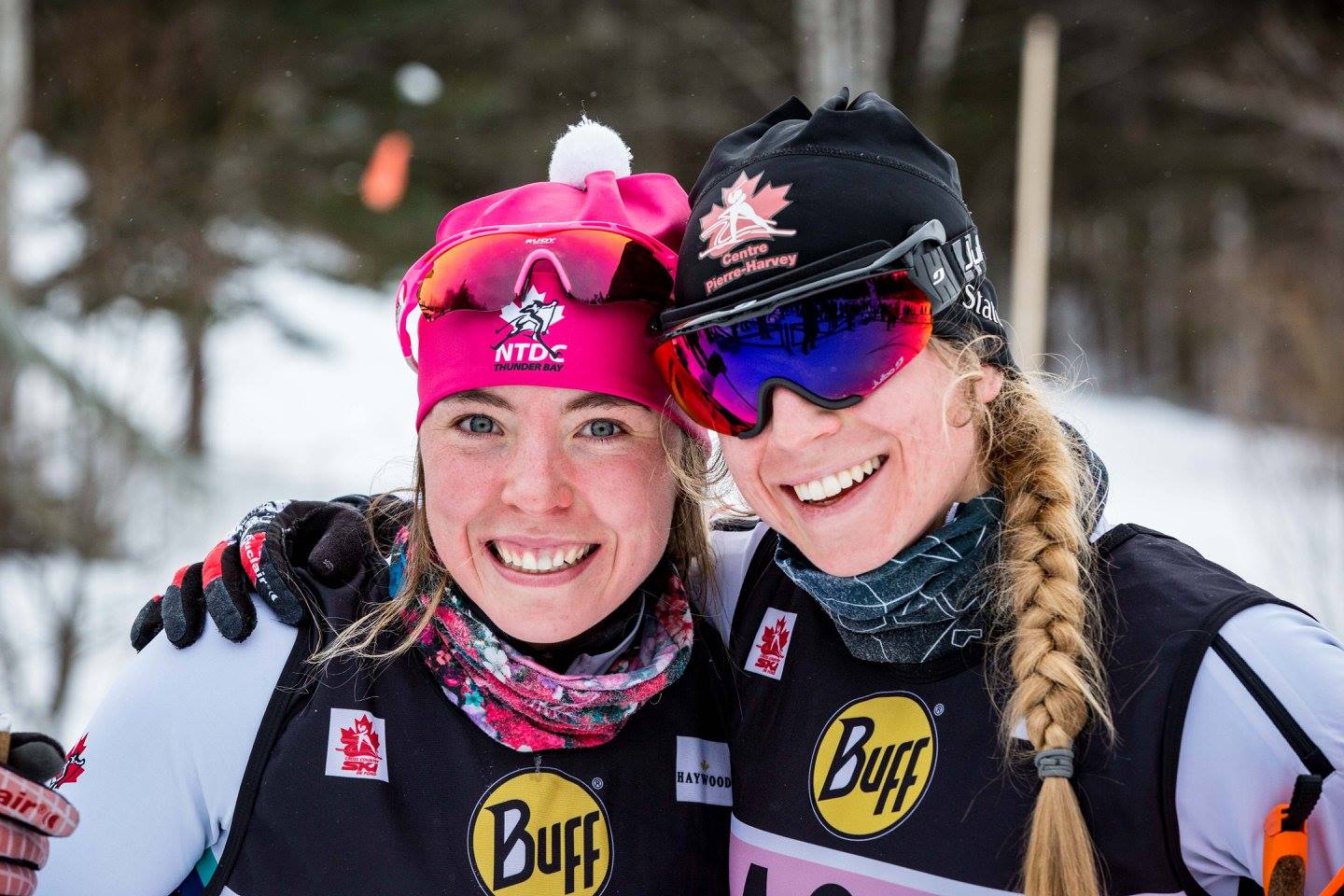
NTDC Thunder Bay’s Katherine Stewart-Jones (l) and CNEPH’s Cendrine Browne, both the Canadian U25 Team, after the NorAm Trials classic sprint at Mont Sainte-Anne, Quebec. (Photo: Mario Walker/NorAm MSA 2018 Facebook)
Browne won her quarterfinal by 1.5 seconds over Hicks, and the two met again in the semifinal, which Browne also won, this time by 2.81 seconds over Hicks. MacIsaac-Jones posted a 0.25-second quarterfinal win over Dupont, then finished second in her semifinal, 0.22 seconds behind Beatty.
Fresh off racing Period 1 of the World Cup, Browne, 24, is best known as a distance skier, but she’s been on the NorAm sprint podium before. She last won a sprint qualifier and finished second overall at two years ago at the Canmore NorAm in December 2015.
In an email, CCC High Performance Director Thomas Holland confirmed Browne and Kennedy were the sprint-selection winners next in line for Olympic quota spots.
“Cendrine has officially been named the winner of the Olympic sprint selection event.
The only catch is that Cross Country Canada’s official selection cannot be announced until FIS (the international ski federation) announces its final quota re-allocation at the end of January.
The most recent version of the FIS quotas, dated yesterday morning (Friday) allocates only eight quotas for Canada. IN THEORY, that quota could be lowered further still, in which case certain named athletes could be left out.
Which is why Cendrine will have to wait until late January to shout her news from the rooftops!
Her victory in the sprint selection is doubly important as it puts her in the Number 3 spot on the women’s team, behind Dahria Beatty and Emily Nishikawa, according to Amendment #2 of Cross Country Canada’s Olympic selection criteria.
If the FIS quota were to be lowered to 7, for example, it would be the women’s distance winner who would lose out.”
The NorAm trials for Olympics as well as Junior and U23 World Championships resume Monday with skiathlons, followed by skate sprints on Tuesday. Sunday’s 10/15 k classic individual starts were postponed to Wednesday.
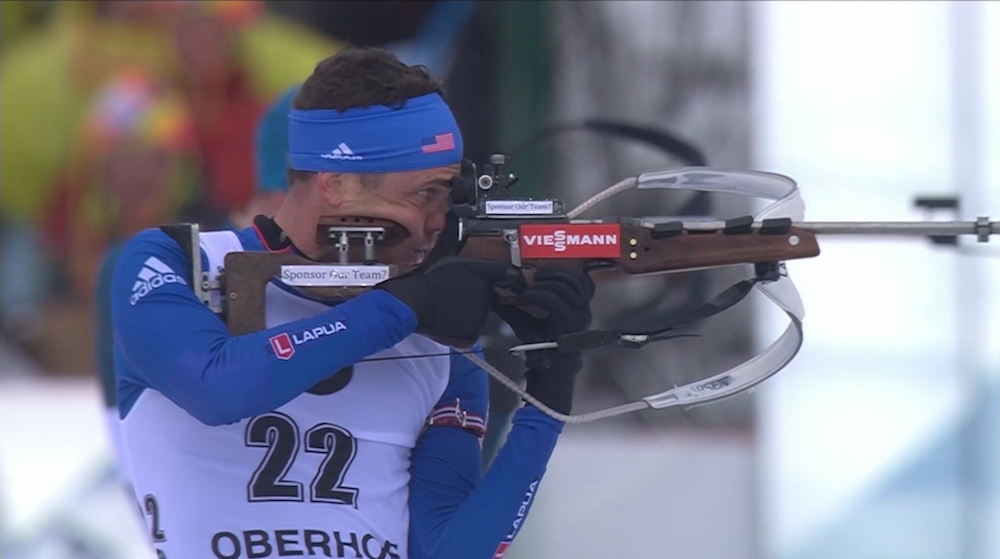
Tim Burke shooting clean in standing for his second-straight stage en route to a fourth-place finish in the men’s 10 k sprint on Friday at the IBU World Cup in Oberhof, Germany. (Screenshot: ARD broadcast)
In his first race of the new year, Tim Burke raced to fourth — his best result in four years — in the men’s 10-kilometer sprint at the International Biathlon Union (IBU) World Cup in Oberhof, Germany.
The 35-year-old American started 22nd out of 103 and shot clean to cross the finish line in third, 20.1 seconds behind France’s Martin Fourcade, who also shot clean and finished in 25:03.3 minutes — a time that would hold up against the entire field as the fastest and give the Frenchman his second win of the season.
Fourcade had bumped early race leader Norway’s Johannes Thingnes Bø to second, after Bø missed two targets on his initial prone stage then cleaned standing (2+0), but skied the fastest overall course time to reach the podium. Burke’s time was 9.9 short of Bø’s.
Ultimately, Norway’s Emil Hegle Svendsen as the 58th starter bumped Bø to third and Burke off the podium, finishing second, 8.1 seconds behind Fourcade, also with clean shooting.
Canada was led by Scott Gow in 32nd (+1:48.7), who had a single standing penalty (0+1), and his brother Christian Gow finished 36th (+1:50.3) with one standing miss as well (0+1). Brendan Green was 57th (+2:30.4) with three penalties (1+2), and in his first European World Cup race, Carsen Campbell finished finished 94th (+4:05.3) with two misses (2+0).
The U.S. started two men on Friday, with Sean Doherty finishing 84th (+3:24.4) with four penalties (3+1).
The Oberhof IBU World Cup continues Saturday with the men’s and women’s pursuits.
“I haven’t straight out won a highly competitive race in two years, so winning on my arch nemesis course of West Yellowstone was huge,” Hart, 25, wrote in an email last week about her Dec. 2 sprint win. “I know that the period one altitude is not my best friend, and am really working on keeping a positive and confident mentality. The race for period two World Cup starts is tight (I think right now there are five or six women all within three points), so I’m trying not to focus on that too much. It would obviously be wonderful to lock those up, but more than anything I just want to set myself up physically and mentally well for a stellar nationals in Alaska.”
The day after her win in the 1.3-kilometer skate sprint, Hart finished 15th in West Yellowstone’s 10 k classic mass start on Dec. 3. Last weekend up at Sovereign Lake in British Columbia, Hart finished seventh both in the NorAm-opening skate sprint and 10 k skate, which counted toward SuperTour standings.
She started her season with a training block in Sjusjøen, Norway, then at the Beitostølen races, with a goal of racing on snow before it really counted at this month’s SuperTour and U.S. nationals. In Beitostølen, she told FasterSkier she was mostly focused on recovering, feeling fresh, and above all, having fun.
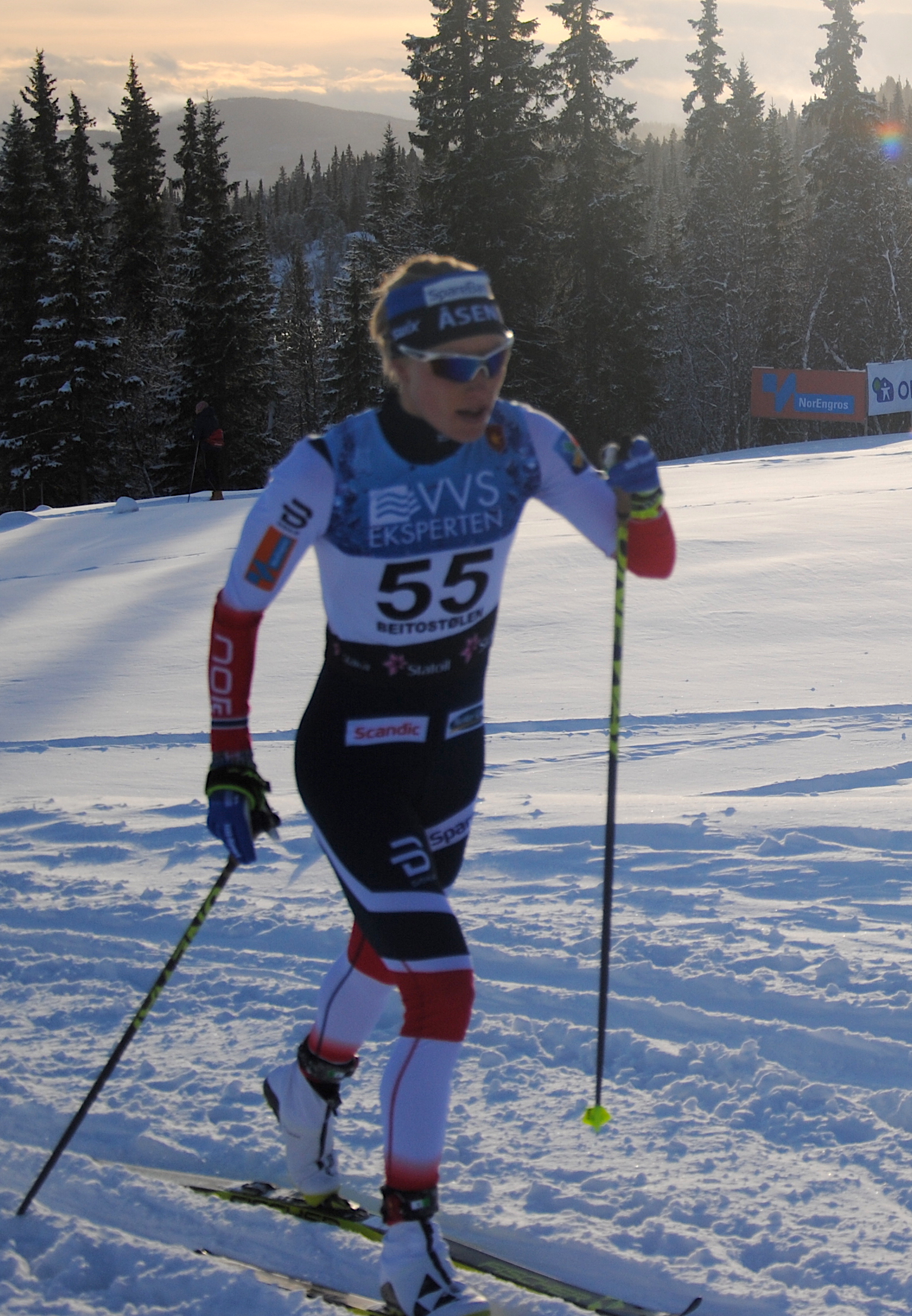
Anne Hart (SMS Elite Team) racing in last month in Beitostølen, Norway. (Courtesy photo)
“I’ve just been doing way less training this year and paying attention with my strength coach, saying that you’re trying to be an athlete first and then the skiing comes,” she said on Nov. 17, after placing 31st in the 10 k classic in Beitostølen (she raced all three races there, repeating in 31st in the classic sprint, then 19th in the 10 k skate). “So this whole summer I’ve been working on my general athleticism and I’m just now starting to hone in on the skiing intensity of that.”
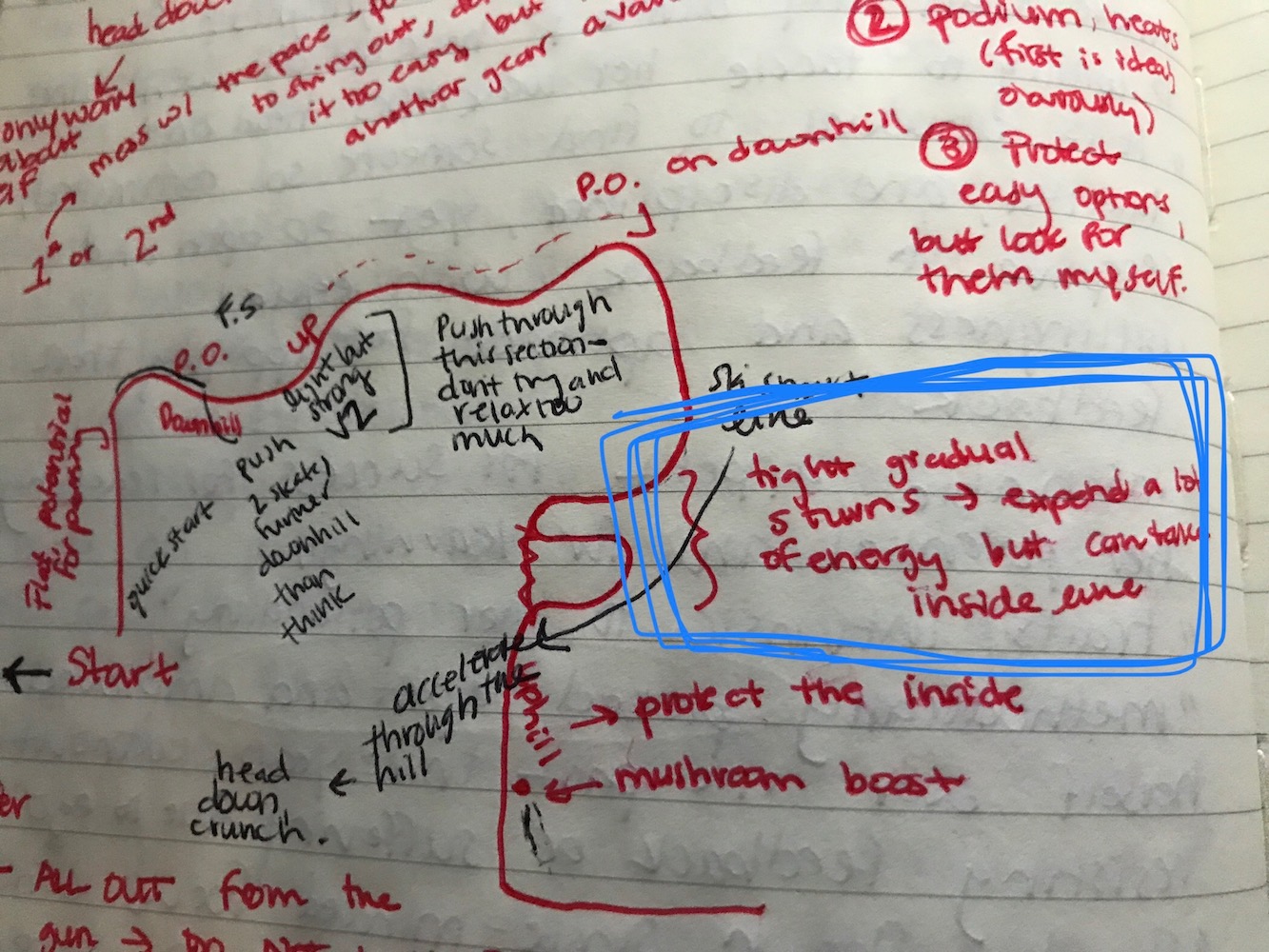
In West Yellowstone, she talked about using her journal to map out the sprint course, point pointing areas to focus on.
“In my journal last night I actually had part of the course labeled ‘mushroom boost,’ which is right over the top of that last hill,” Hart said after her sprint win, alluding to the speed burst featured in the Mario Kart Nintendo game.
“So I was able to do my planned mushroom boost at the end, came across with the win and I couldn’t be more thrilled,” she said.
That mushroom-boost reference got us thinking: what kind of journal does Hart keep? It’s nothing like a training log, she explained, but rather a tool she picked up from a mental trainer she’s been working with since the summer, at the suggestion of her strength coach Max Lipset.
“I had been doing all of this physical training, but had been struggling a bit with how to wrap my mind around all the variables inherent in ski racing,” Hart wrote in an email. “This past season I had a really hard time shaking off bad races, and ended up carrying negative feelings from one weekend to the next. And I can tell you that there is no amount of physical training that can surmount that.”
She started speaking with John D’Agostini of Invictus Leadership, a “mindset and personal leadership coaching” company based out of the Twin Cities, according to D’Agostini’s Linkedin profile. Hart grew up in Stillwater, Minnesota, attended Dartmouth College in New Hampshire, and now trains out of Stratton in southern Vermont.
Hart explained that they initially spoke twice a week and are now in contact about once every 10 days.
“The Invictus program is a bit unique in that John is not a sports psychologist — he is just an individual with a lot of experience in the arena of mental fortitude, and has developed a curriculum that has helped me immensely,” Hart wrote. “As part of my ‘homework’ he suggested I start keeping a journal. I’m the only one who looks at it (although I’ll give you a sneak peak), and it has been a great way for me to critique myself without being negative.”
Here are the key aspects of Hart’s journaling:
1. Don’t think of it as a training log. It’s for everything else that’s on your mind.
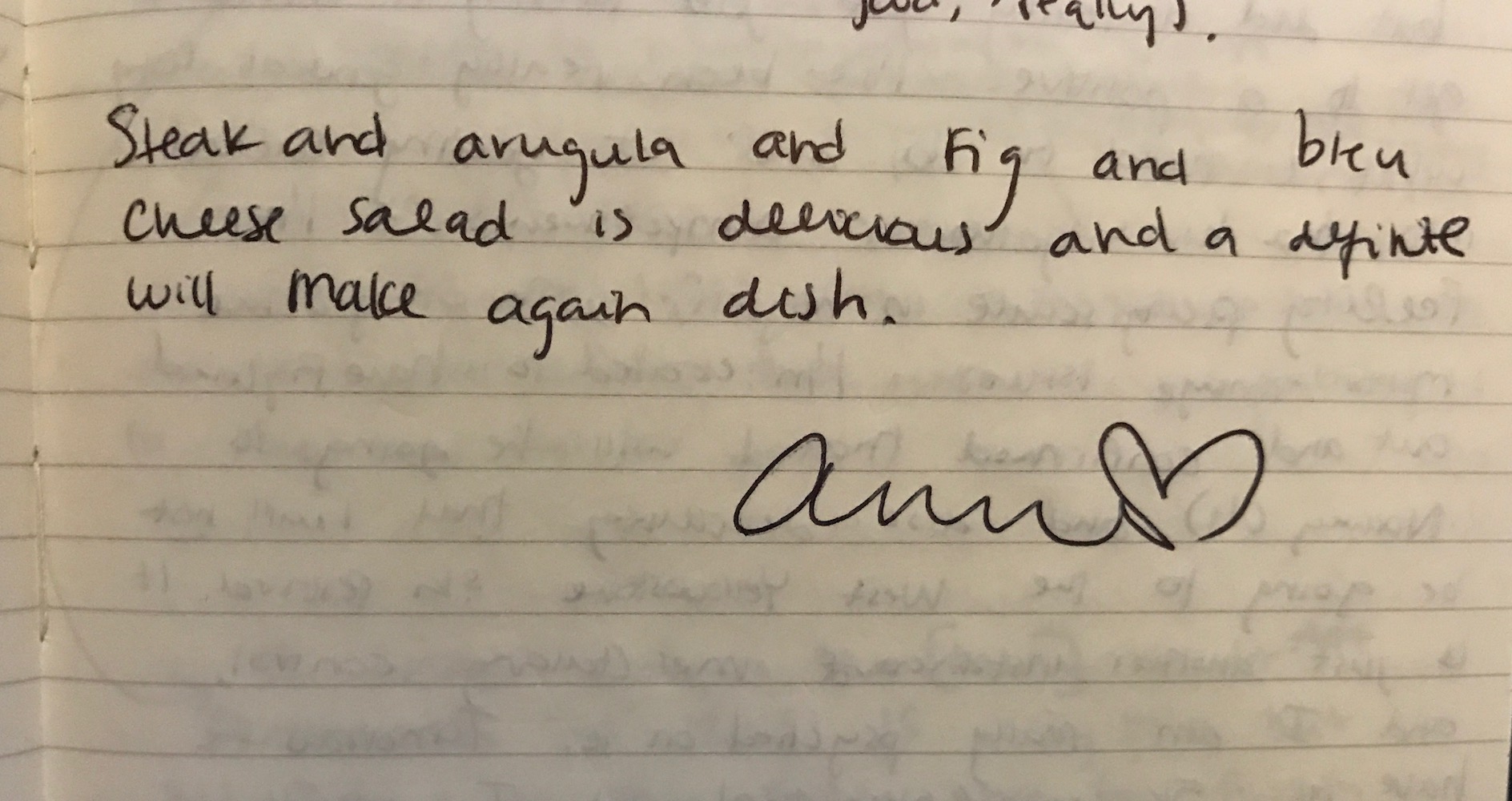
“It has absolutely nothing to do with a training log (I have a big old google spreadsheet for that), but is instead a place I write down random thoughts, anything that is bothering me, things that are empowering me, and even recipes I want to try,” she explained.
2. It can include drawings, or more specifically, course maps for pre-race, mental training.
In West Yellowstone, Hart “drew a very loose representation of the sprint course, noting how I wanted to ski different sections and places I should look for passing opportunities (to either pass or be passed),” she explained. “This ended up being a huge help, as when it came to the final of the sprint and I found myself in the back, I had already figured out four or five different places I could attempt a pass as long as I kept my head cool and my wits about me. I ended up being able to use one of my pre-planned places and come out with the win.”
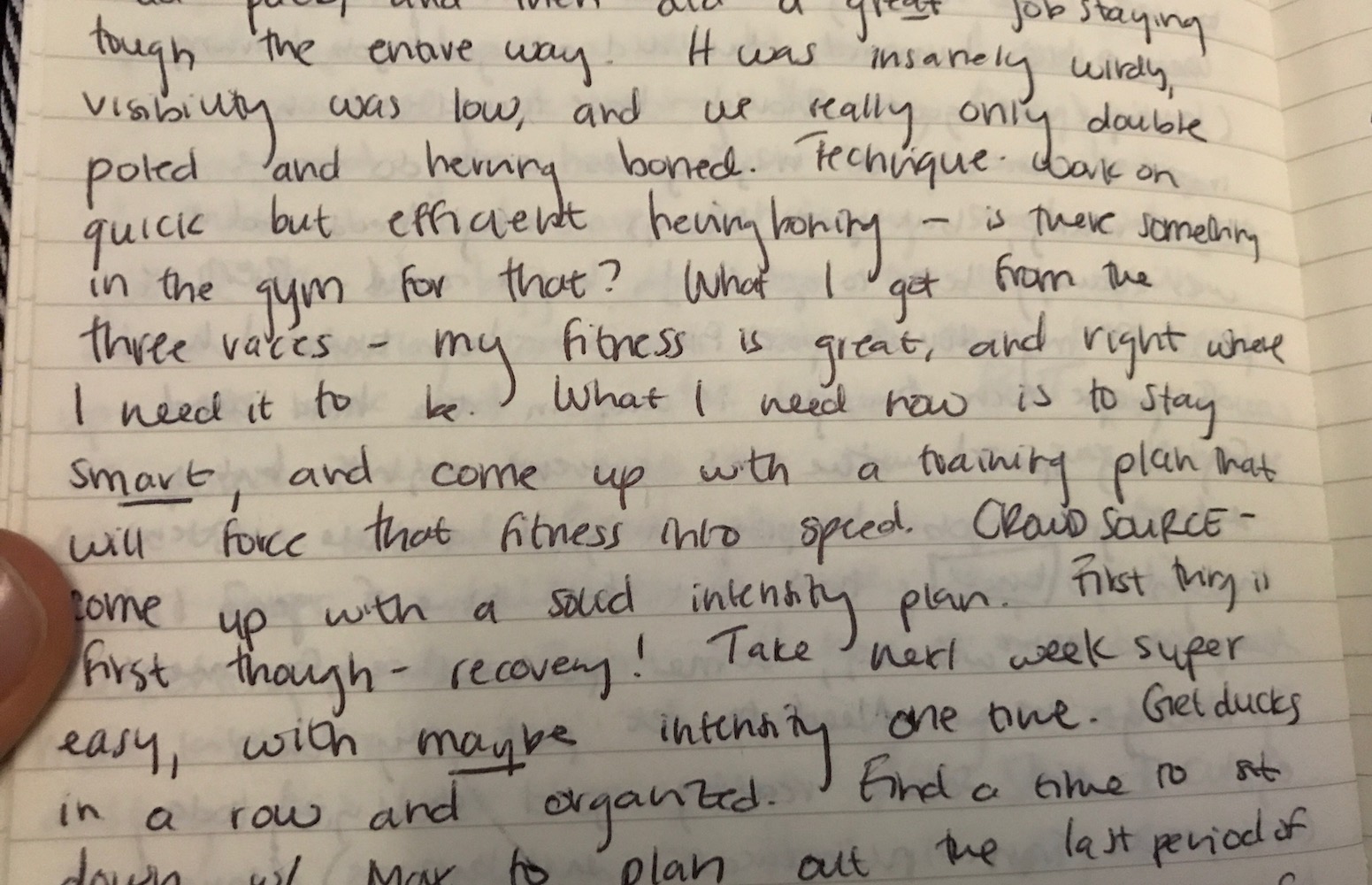
3. It’s your journal. Nobody else needs to see it. Although Hart did share a few excerpts (below) as examples:
Anne Hart’s course map, as she drew it in her journal, of the SuperTour sprint course in West Yellowstone, Montana.An excerpt from Hart’s journal entry after racing in New Zealand in this past September.Recipe notes as seen in Hart’s journal.
In terms of a physical workout, here’s one Hart recommended:
“Late last winter I did a workout with the Craftsbury team that I really loved,” she wrote. “It is designed to prepare for a hard but somewhat paced 10-kilometer race, and I did it once while I was in Norway to get ready for individual start distance races.”
The Workout: 2 x 5 k time trial
Warmup: 30 minutes of easy skiing, plus 3-6 minutes of threshold
The workout: On a measured 5 k loop, time yourself while completing 5 k at threshold with an occasional Level 4 pace.
Rest for five minutes, then try to complete the same loop 15-30 seconds faster.
“It is WAY harder than I would have initially thought, but is an awesome way to find a hard but sustainable pace, and a good way to pay off part of the mortgage on your own personal pain house :)” Hart wrote.
Another SuperTour season opened in West Yellowstone, Montana, one weekend later than usual this year but with a lot of the old standbys, including a twisty, technical freestyle sprint course and puzzling conditions for the classic distance race.
In a crash-marred women’s final on Saturday, Dec. 2, Anne Hart of the Stratton Mountain School (SMS) Elite Team avoided a tangle between Caitlin Gregg (Team Gregg) and Caitlin Patterson, of the Craftsbury Green Racing Project (CGRP), and skied to the win. According to Hart’s teammate, Erika Flowers, who also raced in the final, the two Caitlins collided in the final winding section before the last big uphill.
The women’s skate sprint podium at the first race of the 2017/2018 SuperTour season on Dec. 2, with the SMS Elite Team’s Anne Hart (c) in first and Erika Flowers (l) in second, and Sun Valley’s Kelsey Phinney in third. (Photo: FBD)
“They went down and some people were just ahead of them and were able to ski around,” Flowers said.
Hart was one of them.
“In my journal last night I actually had part of the course labeled ‘mushroom boost,’ which is right over the top of that last hill,” Hart said with a laugh in a post-race interview.
One of her goals for the day had been to save her “best burst for the end,” she continued. “So I was able to do my planned mushroom boost at the end, came across with the win and I couldn’t be more thrilled.”
She won the women’s 1.5-kilometer freestyle sprint final in 2:52.49 minutes, just 0.88 seconds ahead of Flowers in second and 0.92 seconds ahead of Kelsey Phinney, of theSun Valley Ski Education Foundation (SVSEF), in third.
Alaska Pacific University (APU) and U.S. Ski Team Development (“D”) Team member Hannah Halvorsen followed in fourth (+2.16), while Gregg finished fifth (+6.99) and Patterson was sixth (+7.22).
“I was fortunate not to go down,” Flowers said, “but I was stuck behind [the crash] so by the time I got kind of untangled from Caitlin Patterson, I was maybe 20 meters back from the group. I was feeling good and I really wanted to win today so I just hammered and was happy to sneak into second place at the end there.”
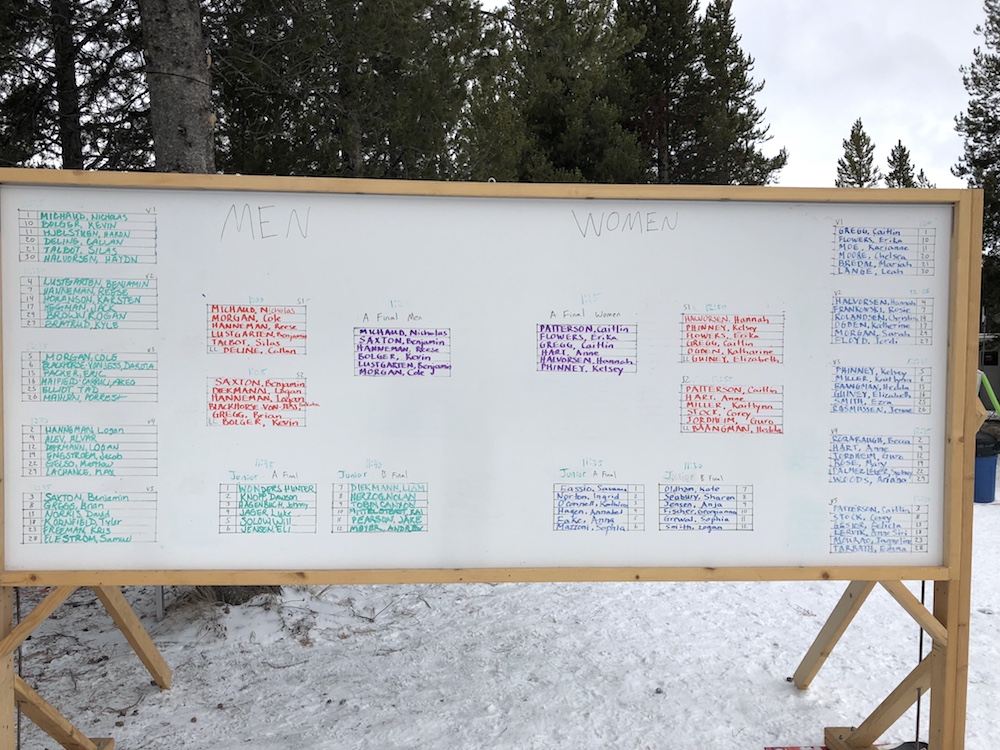
A look at the SuperTour sprint lineups for the heats on Dec. 2 in West Yellowstone, Montana. (Photo: FBD)
The sprint day began with Gregg winning the women’s qualifier in 2:50.79. Becca Rorabaugh (APU) qualified second (+2.7) and Patterson was the third-fastest qualifier (+3.0), ahead of Halvorsen in fourth (+5.64) and Phinney in fifth (+6.12). Hart qualified ninth (+8.98), just ahead of Flowers in 10th (+9.03) out of 58 in the women’s race.
“It’s a weird, fast and very tactical sprint course at high elevation,” Hart said of the Rendezvous Ski Trails’ race course some 6,800 feet above sea level. “So my qualifier wasn’t maybe exactly what I’d hoped but it wasn’t terrible, it wasn’t way off the mark, and I just tried to go through each round skiing in the front and in control. That didn’t happen in the final, but it turned out my being in the back and being sort of tactically aware allowed me to pass a crash.”
Hart won her quarterfinal and finished second to Patterson in their semifinal. Flowers won the other semifinal to advance to the final, and also won her quarterfinal. Phinney, who ultimately placed third, made it to the final as a lucky loser after finishing fourth in her semifinal, 1.88 seconds behind Flowers in first. Phinney had previously won her quarterfinal.
“You never really know what to expect for the first sprint of the season,” Phinney said. “I had a pretty good qualifier and then I led my quarterfinal and [that] ended up being the faster quarterfinal so I was feeling pretty good.”
Phinney’s winning quarterfinal time was more than 3.5 seconds faster than the winning times of the four other quarterfinals.
“The final was a little bit of mayhem,” Phinney added. “It was kind of just staying on your feet, being able to jump over people’s poles and hope for the best.”
While most of the top women planned to continue racing at the next SuperTour at the NorAm season-opener this weekend, Dec. 9-10, in Sovereign Lake (a.k.a. Silver Star), British Columbia, most are focused on U.S. Cross Country Championships from Jan. 3-8 in Anchorage, Alaska. And beyond that, some are hoping to get selected to the U.S. team for the 2018 Winter Olympics in PyeongChang, South Korea.
“I’d really like to win that skate race at U.S. nationals,” Flowers said. “That’s definitely been a goal of mine for the last few years and I haven’t made it happen yet, but I’ll definitely try this year.”
Michaud’s First Win
In the men’s 1.5 k skate sprint the same day, Nick Michaud of the Bridger Ski Foundation (BSF) won the qualifier and every heat thereafter to capture his first-career SuperTour win (and podium) with a winning final time of 2:30.69. He previously won the qualifying round in 2:29.5, just 0.08 seconds ahead of Logan Hanneman (APU) in second.
Ben Saxton (SMS Elite Team) qualified third (+0.63), Ben Lustgarten (CGRP) followed in fourth (+0.98) and Cole Morgan (SVSEF) was fifth (+1.3).
Michaud, a 25-year-old who has been jumping into SuperTours since 2010, then won his quarterfinal by 0.13 seconds over his BSF teammate Silas Talbot and his semifinal by just 0.05 seconds over Reese Hanneman (APU).
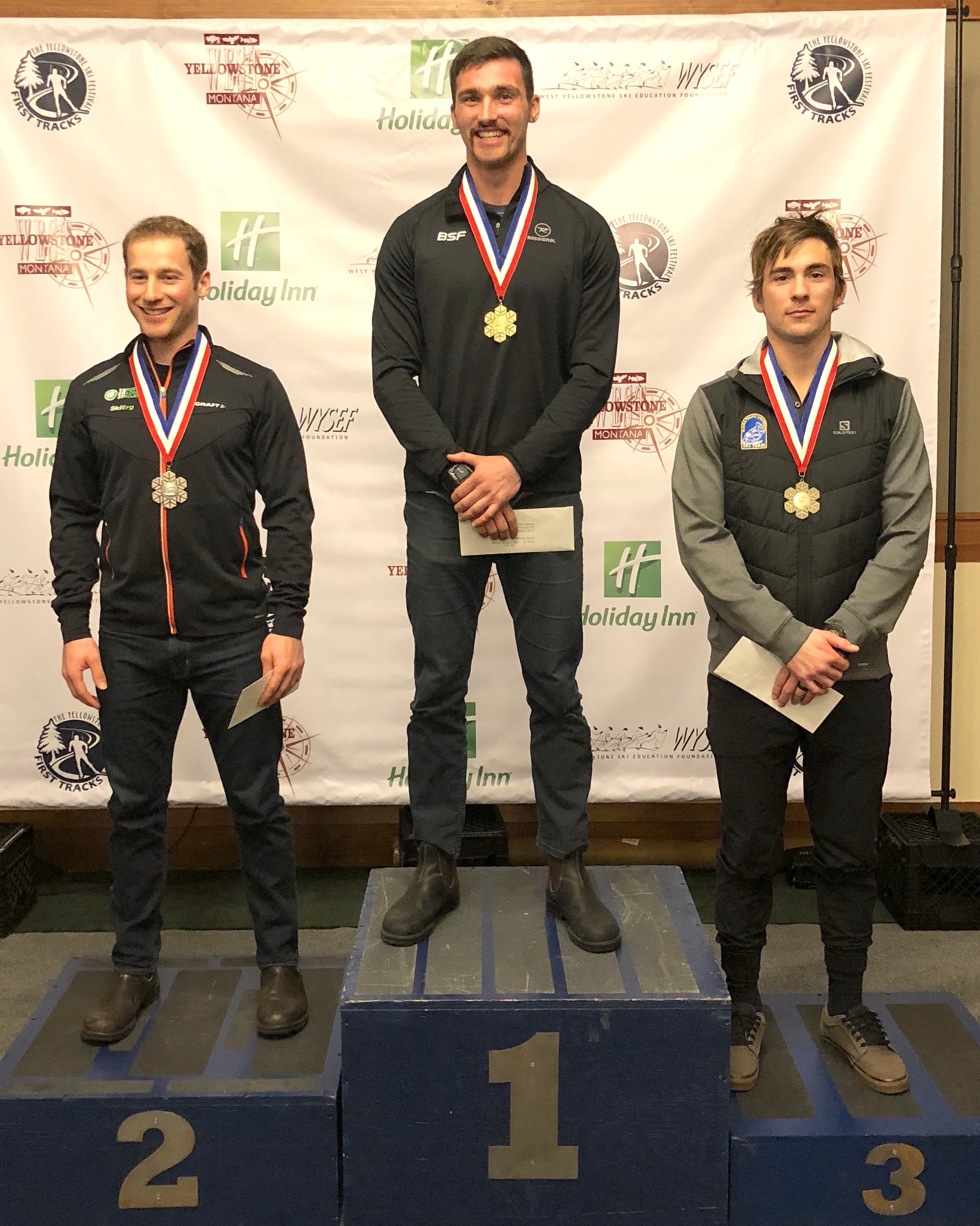
The men’s skate sprint podium at the first race of the 2017/2018 SuperTour season, with Nick Michaud (c) in first and Ben Lustgarten (l) in second, and Reese Hanneman in third. (Photo: FBD)
In the final, Michaud skated to a 0.17-second win over Lustgarten in second, while Reese Hanneman crossed the line in third (+0.84).
“It was just so fun,” Michaud said after. “Conditions were great. Everyone was out here. Great skis, great support; it was just so fun to race.”
Like many of his competitors, Michaud was looking for another standout result in the classic sprint at Sovereign Lake and had his sights set on U.S. nationals beyond that.
Hanneman had similar goals.
“The qualifying criteria for the sprint for the Olympics this year is just on the qualifier and obviously it’s a classic sprint at the Olympics so I think the classic sprints are going to be more important,” Hanneman said. “We have two classic sprints coming up between Silver Star next weekend and nationals in Anchorage [where both a skate sprint and classic sprint will be held] so I’m focusing on throwing down some good classic sprints.”
After qualifying in seventh then winning his quarterfinal and placing second to Michaud in his semifinal, Hanneman described the heats as “crazy fast.”
“This is probably the fastest I’ve ever seen it in West so that just means really high speeds and people weren’t really separating much, so you had to be really strong to make moves to pass people at those speeds,” Hanneman reflected. “In the final, everybody was just going for it, and I was able to find a hole and double pole by people going into that final hill there and kind of throw it down there. I burned up some of my matches trying to make that big move to go from the back of the pack into second so I faded a little bit in the final 100 meters, but other than that I was happy with it.”
Lustgarten, who advanced to the final after placing second in his quarterfinal and third in his semifinal (behind Michaud and Hanneman) described the rounds as “a bit sketchy with the corners. There’s a lot of turns out there; people trying to take insides, going out, going in,” he said.
“So that was pretty fun and also pretty sketchy and I just had to have really strong finishes because I kept getting boxed out in the back,” Lustgarten added. “But I managed to make my way through the pack on the hills.”
Also in the final, Kevin Bolger (SVSEF) finished fourth (+2.11), Saxton placed fifth (+2.86), and Morgan took sixth (+3.42).
Brian Gregg, Bångman Strike Late for Distance Win
On Day 2 of the SuperTour-opening weekend, racers faced freshly falling snow for the distance races: the women’s 10 k and men’s 15 k classic mass starts.
While a large group of men stuck together on the first of three laps, by Lap 2, the race leaders, including Brian Gregg, had started to break away. By the third and final time up Telemark Hill, the distance course’s signature climb, David Norris (APU) recalled that they were down to about eight.
“It was super snowy starting out,” Norris said. “… The pack actually ran really smooth. Every lap on Telemark, I think the pack got smaller. … [The last time up it] I led into Telemark, the big climb, and got to the top of there just with Lustgarten and Brian Gregg, and it was kind of a single-file drag race to the finish. On the last pitch, Brian got up next to me and just kind of pulled away a little bit into the finish.”
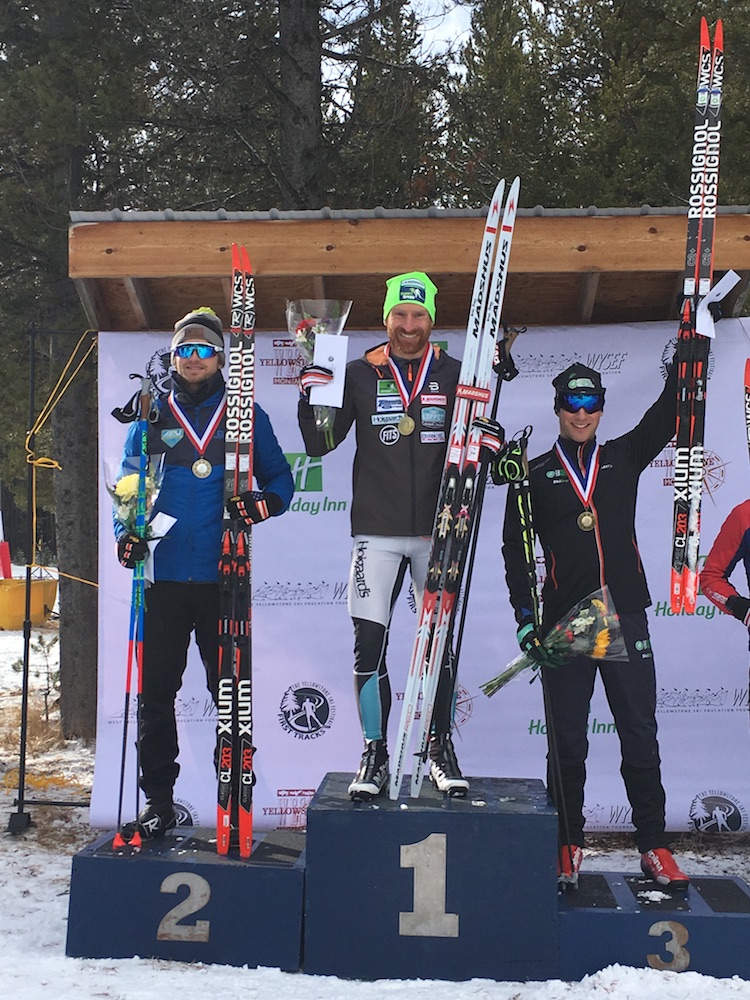
The men’s 15 k classic mass start SuperTour podium on Dec. 3 in West Yellowstone, Montana,with Brian Gregg (c) of Team Gregg in first, David Norris (l) of APU in second, and Ben Lustgarten (CGRP) in third. (Photo: FBD)
Gregg, of Team Gregg and Loppet Nordic Racing (LNR), captured the first SuperTour distance win of the season in 41:30.3, just 1.9 seconds ahead of Norris in second. Lustgarten notched his second-straight podium in third place (+4.6), while Kyle Bratrud (CXC Team) finished fourth (+10.9) and Kris Freeman (Caldwell Sport) was fifth (+12.6).
Tad Elliott (Ski & Snowboard Club Vail) followed in sixth, Eric Packer (APU) was seventh, Ian Torchia, of Northern Michigan University (NMU) and the USST D-Team, was eighth, Hunter Wonders (APU) ninth, andMartin Bergström (University of Utah Ski) 10th.
Gregg explained that after some pre-race deliberation, he chose to ski on zeros to ensure he had enough kick and avoid icing on the bottom. He was happy with his decision and noted that the he had waxing help from a group composed of several Midwest teams, including LNR, NMU and Central Cross Country (CXC).
“Our [lead] group of skiers out there all had really good skis so that was really fun,” Gregg said. “It was kind of a tactical race in the sense that it was really hard, like, [you’d] maybe get a little gap on the climbs, but then everybody would bunch back together, so I just tried to conserve energy and really focus on the last kilometer or two kilometers.”
When Norris attacked on Telemark Hill, Gregg said he followed Norris and Lustgarten over the top.
“… I was last, then we came in and I just had a little bit more in the end,” he said. “I was really happy with that. I haven’t won a classic SuperTour race since my first SuperTour win in 2010 so there was a few years in between there, but I’ll take it.”
Gregg, 33, is a 2014 Olympian, who, like his wife (2010 Olympian) Caitlin Gregg, is looking to qualify for a second Olympics this season in PyeongChang. He was pleased with his tactics on Day 2 in West Yellowstone after finding himself too far behind on the sprint’s last climb to contend (he made it to the semifinals and finished ninth overall in the sprint).
As for Sunday’s distance race, in which Gregg conserved his energy and struck at the right moment, Gregg said he learned from others, too.
“It’s fun to see other skiers — Tad Elliott is a really good tactician out there so I actually skied a lot with him watching where he’d spend the energy to move up in the pack and where he was just sort of relaxing,” Gregg said.
“It was definitely faster to be in the draft behind people so the leaders were kind of at a disadvantage,” Lustgarten observed after. “I was kind of mixing it up in the top 20 for the first two laps, and it felt pretty chill, but this is the kind of course where it can go from easy to hard in, like, 50 meters.”
He explained that Rogan Brown (SVSEF) led for most of the second lap. Brown ultimately tied Adam Martin (CGRP) for 11th place (+28.6).
“On the third lap I took the lead to do some work myself and then kind of was stuck in the lead unfortunately for most of the lap,” Lustgarten said. “It went from going to pretty easy to really hard in about a k.”
While he responded to Norris’s attack on Telemark Hill, he couldn’t match Gregg in the meters that followed.
“Brian Gregg came out of nowhere and I thought I could kind of sneak into second but I just didn’t have it today,” Lustgarten said. “That’s what I want to do with the race. He did it right. I think the best way to do it was to sit in the pack, kind of play the field, see how everyone goes, and just hammer the finish. He did really well today.”
In the women’s 10 k classic mass start, Hedda Bångman, new to the University of Colorado Boulder (CU) Ski Team this year, double poled to the win in 30:24.8 over two Craftsbury’s Kaitlynn Miller and Caitlin Patterson, respectively.
“It was really hard conditions today, and I decided just one minute before the start to switch skis,” said Bångman, a 22-year-old Swedish student. “I took my zero skis and I think it was a good decision. I knew before I started I was forced to do double poling because my grip wasn’t the best on the skis so it was hard but … it felt good, except the technique zones [where double poling is not allowed], of course.”
The West Yellowstone SuperTour women’s 10 k classic mass start podium, with Hedda Bångman (c) of the University of Colorado Boulder in first, and Craftsbury’s Kaitlynn Miller (l) and Caitlin Patterson (r) in second and third, respectively. (Photo: FBD)
Bångman is new to the U.S. in her freshman season with CU.
“My shape is good. Everything was good today. It was fun to race and fun to be here to race,” she said. “It’s a little bit different compared to Scandinavia, but I like it. … It feels like it’s more relaxed here, but maybe it’s just my feeling.”
Miller raced to second place, 1.3 seconds back, ahead of her CGRP teammate Patterson in third (+3.4).
“It was a nice big group of us for a while there and the conditions were kind of lose and powdery, which I enjoy, so I was having fun with that,” Miller said, noting the APU’s Rosie Frankowski carried a lot of the load of setting the pace up front. “There was a nice group of us for a while that slowly just kept kind of stringing out until there were maybe four or five of us left, and then it was sort of just a sprint to the end there. Hedda kind of came in from third or fourth and just had a really good push to the finish…”
Frankowski finished 10 seconds after Patterson for fourth place (+13.5), Katharine Ogden (SMS/USST D-team) was fifth (+17.2), Caitlin Gregg sixth, Felicia Gesior (CXC Team) seventh, Anne Siri Lervik (CU) eighth, Flowers ninth, and Corey Stock (BSF) 10th.
“I want to commend Rosie Frankowski for really pushing the pace middle of the race,” Patterson said. “I think a lot of us out there had fairly slick skis so we were double poling a lot, but they had two technique zones per lap so that was interesting. We had to run those — a little striding, running, herringbone, whatever works to get the diagonal stride. … By the finish we were down to about three of us, and [Bångman] was first and my teammate Kaitlynn Miller had strong double pole into second and I was right behind them in third, so pretty solid day.”
The SuperTour circuit now moves to Canada to join up with the Sovereign Lake NorAm, with a classic sprint on Saturday, Dec. 9, and 10/15 freestyle individual starts on Sunday, Dec. 10.
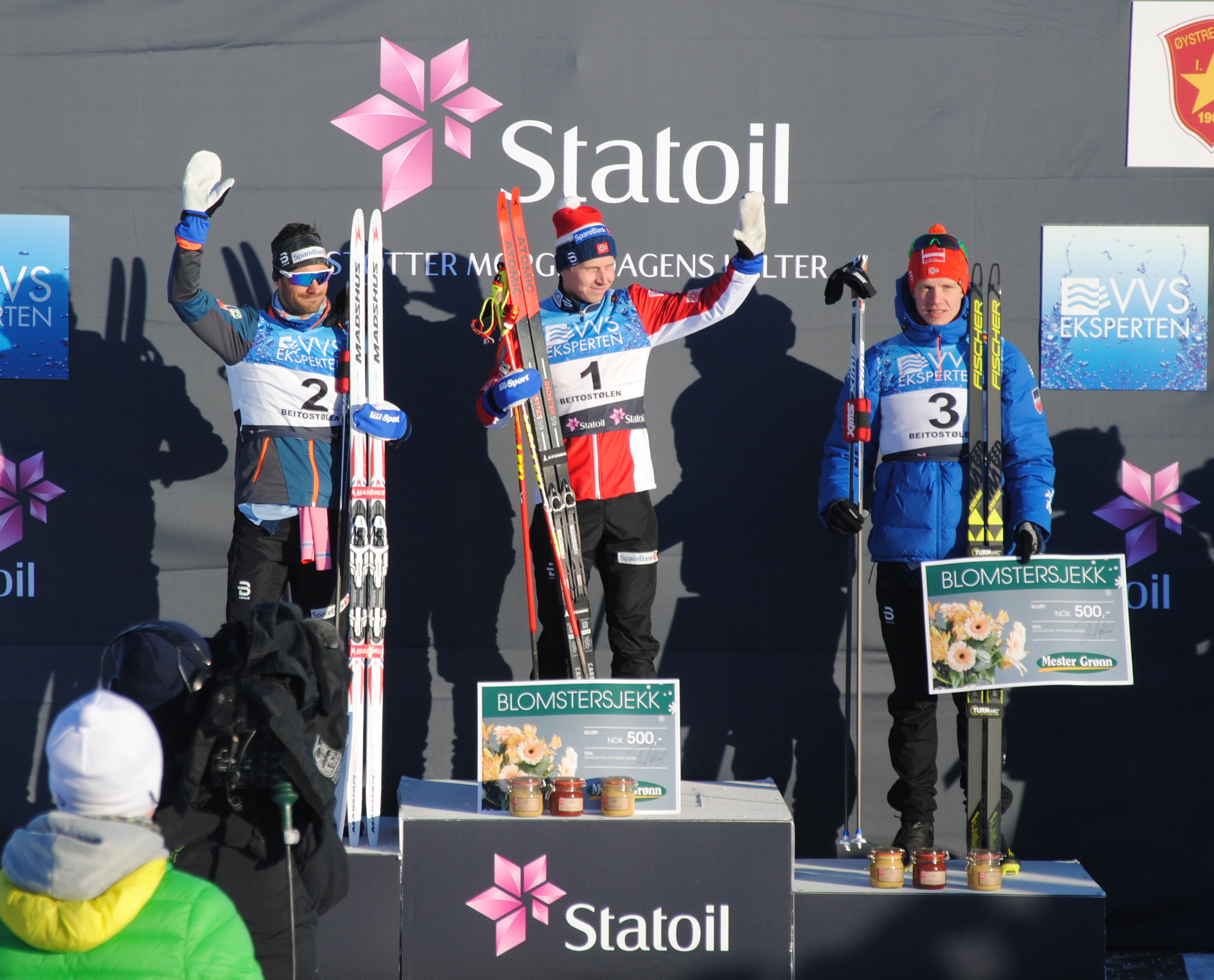
The men’s skate sprint podium at the first race of the 2017/2018 SuperTour season, with Nick Michaud (c) in first, Ben Lustgarten (l) in second, and Reese Hanneman in third. (Photo: FBD)
US SuperTour (West Yellowstone, Montana): Freestyle sprints
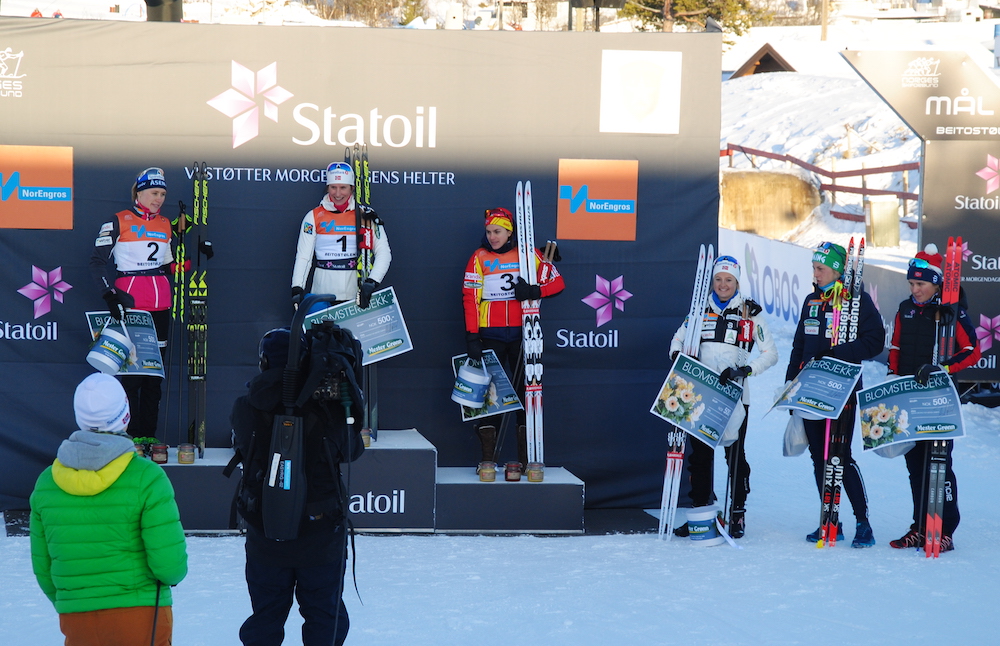
The women’s skate sprint podium at the first race of the 2017/2018 SuperTour season, with the SMS Elite Team’s Anne Hart (c) in first and Erika Flowers (l) in second, and Sun Valley’s Kelsey Phinney in third. (Photo: FBD)
Anne Hart and Nick Michaud were the big winners on opening day of the US SuperTour season at the Rendezvous Ski Trails on Saturday, taking individual victories in the women’s and men’s freestyle sprint finals, respectively.
Hart led into the finishing straight to take the win in 2:52.49 minutes, 0.88 seconds ahead of Erika Flowers, her teammate on the Stratton Mountain School (SMS) Elite Team, who placed second, and Kelsey Phinney, of theSun Valley Ski Education Foundation (SVSEF))in third (+0.92).
Hannah Halvorsen, of Alaska Pacific University (APU) and the U.S. Ski Team D-team, finished fourth (+2.16), Caitlin Gregg (Team Gregg) was fifth (+6.99), and Caitlin Patterson, of the Craftsbury Green Racing Project (CGRP), sixth (+7.22).
The win was Hart’s second on the circuit after winning a SuperTour 5 k skate two seasons ago. Last year in West Yellowstone, she placed third in the skate sprint (behind Jennie Bender, of the Bridger Ski Foundation, and Flowers, respectively).
Michaud, of the Bridger Ski Foundation (BSF), won the men’s final in 2:30.69 for his first SuperTour podium, just 0.17 seconds ahead ofBen Lustgarten (CGRP) in second and Reese Hanneman (APU) in third (+0.84). Rounding out the final, Kevin Bolger (SVSEF) finished fourth (+2.11), Ben Saxton (SMS Elite Team) fifth (+2.86), and Cole Morgan (SVSEF) sixth (+3.42).
FIS Cross Country World Cup (Lillehammer, Norway): Classic sprints
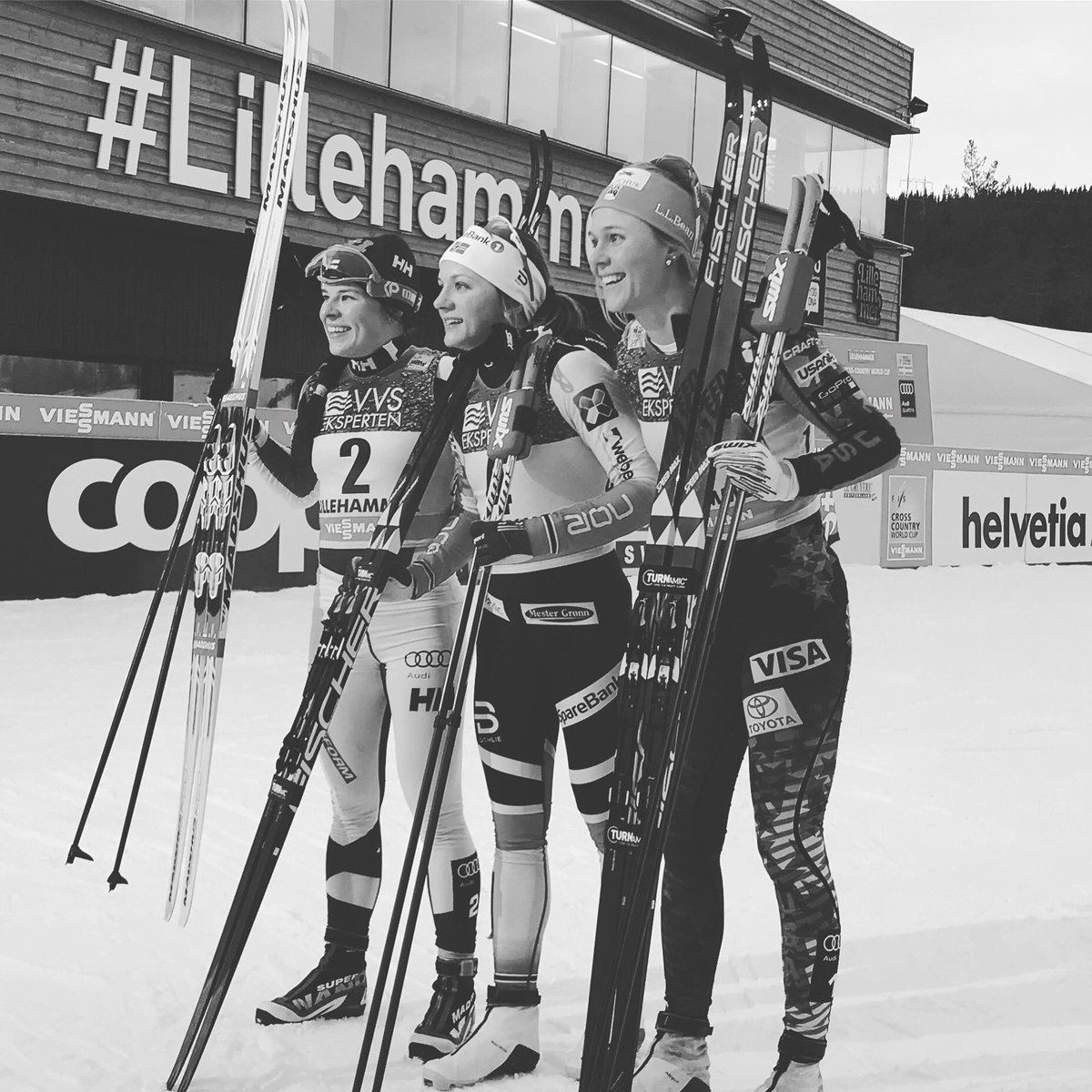
From right to left: American Sadie Bjornsen, Norway’s Maiken Caspersen Falla and Finland’s Krista Parmakoski after placing third, first and second, respectively, in the women’ 1.3 k classic sprint at Friday’s World Cup in Lillehammer, Norway. (Photo: FIS Cross Country/Twitter)
American Sadie Bjornsen returned to the World Cup podium for the second time in as many classic sprints this season on Saturday, placing third in the women’s 1.3-kilometer classic sprint behind Norway’s Maiken Caspersen Falla in first and Finland’s Krista Parmakoski in second.
Bjornsen started the day by winning the qualifying round by one-hundredth of a second over Parmakoski and Russia’s Natalia Nepryaeva, which were listed as qualifying in second and third, respectively (despite having the same time).
The U.S. Ski Team (USST) member who placed second in last week’s classic sprint in Kuusamo, Finland, Bjornsen won the qualifier in 3:22.45 minutes. She went on to advance in second out of her quarterfinal and then won her semifinal by 0.46 seconds over Sweden’s Stina Nilsson — who beat her in last week’s sprint.
While Falla won Saturday’s final in 3:19.98 (after qualifying in fourth, then winning her quarterfinal and semifinal as well), Parmakoski followed in second overall (+2.07) and Bjornsen achieved her second podium of the season in third (+5.01). Norway’s Ingvild Flugstad Østberg was just behind in fourth (+5.28), Nilsson finished fifth (+6.09), and the second American in the final, Jessie Diggins was sixth (+7.81).
Diggins previously qualified in seventh, finished second in her quarterfinal then advanced as a lucky loser in fourth place out of her semifinal (which Falla won).
Three American women raced in the heats, with Sophie Caldwell qualifying in ninth and ultimately placing ninth overall. She advanced in second out of her quarterfinal then finished fifth in the semifinal behind Diggins.
Also for the USST, Rosie Brennan finished 33rd in the qualifier, missing out on the top 30 needed to qualify by 0.26 seconds. Kikkan Randall finished 42nd, Ida Sargent was 44th, and Chelsea Holmes 64th.
Canada started four women, with Emily Nishikawa placing 58th, Dahria Beatty 59th, Cendrine Browne 63rd, and Katherine Stewart-Jones 65th.
Klæbo Still Undefeated, Ustiugov 2nd
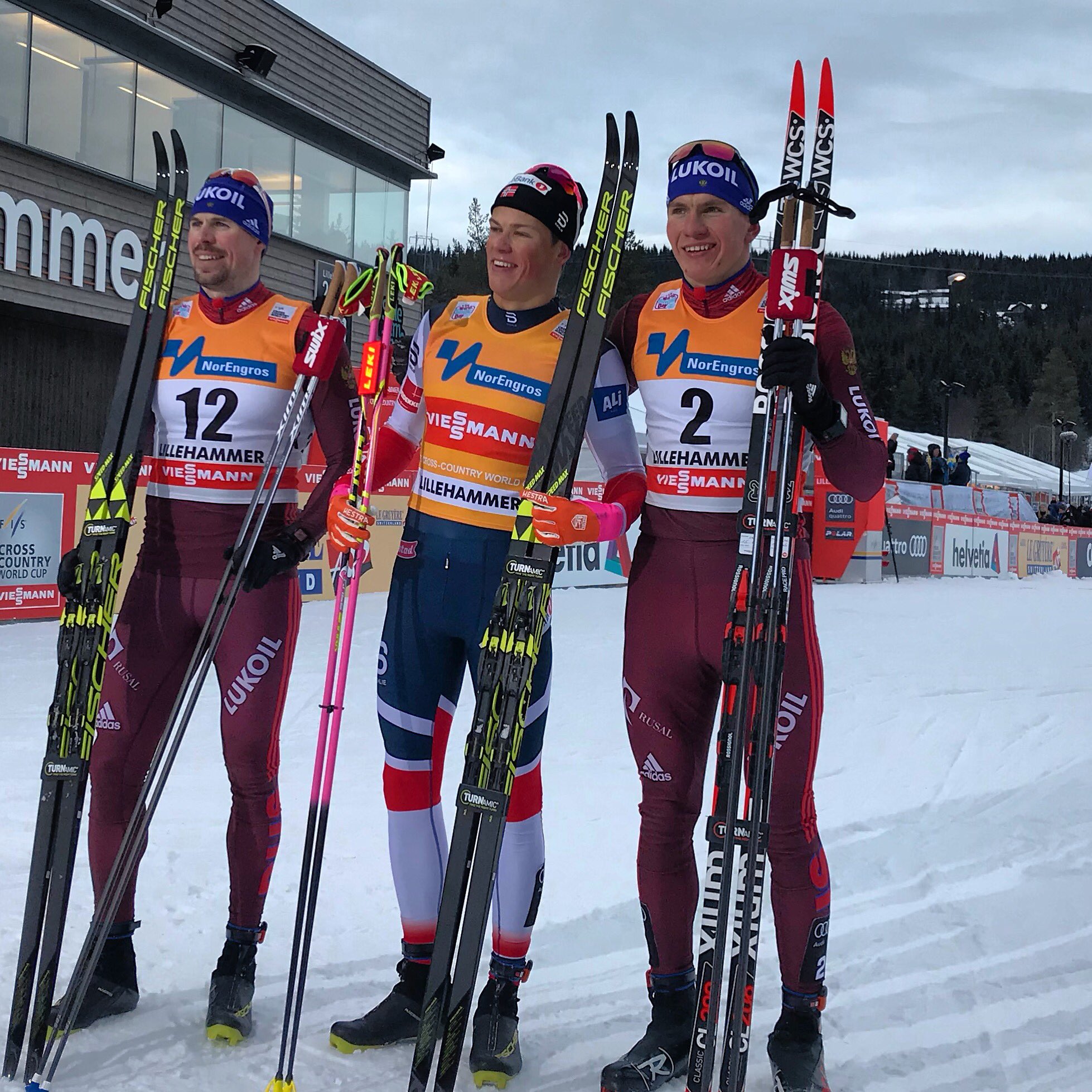
The men’s 1.5 k classic sprint podium with Norway’s Johannes Høsflot Klæbo (c) in first, Russia’s Sergey Ustiugov (l) in second and Russia’s Alexander Bolshunov (r) in third. (Photo: FIS Cross Country/Twitter)
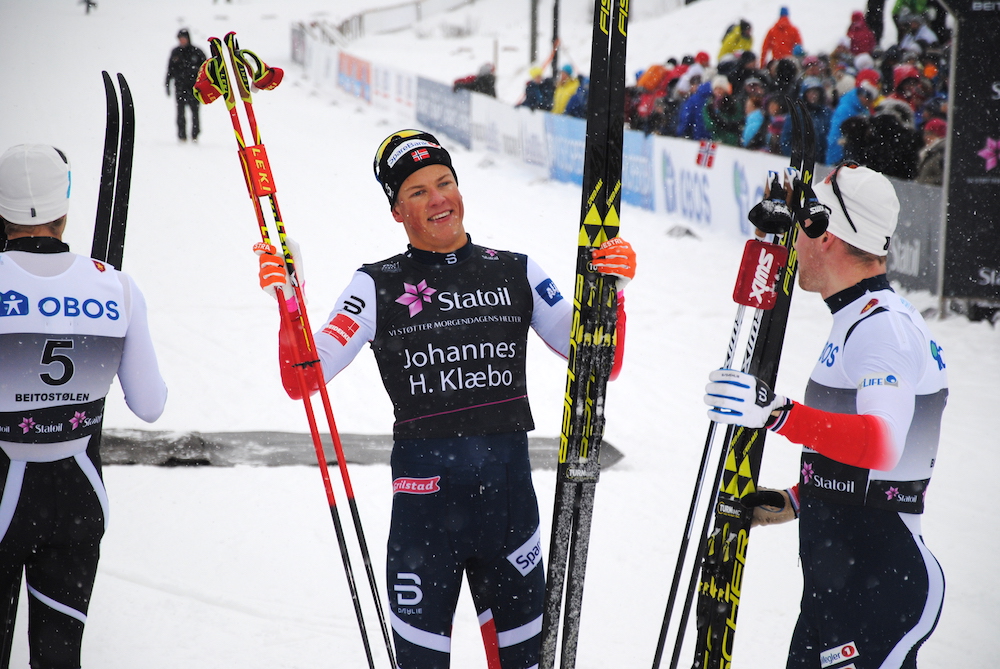
In the men’s 1.5 k classic sprint, Norway’s Johannes Høsflot Klæbo continued his undefeated World Cup streak with his fourth win in as many races this season.
He started off by winning the qualifier in 3:40.79, then his quarterfinal by 0.17 seconds over Russia’s Sergey Ustiugov. Klæbo and Ustiugov met again in the semifinals, where Ustiugov beat the Norwegian by 0.25 seconds, but in the final, where it really mattered, Klæbo again had the edge, winning in 3:33.88. Ustiugov finished 0.83 seconds back for second place, and Russia had two on the podium with Alexander Bolshunov in third (+1.29). Sweden’s Calle Halfvarsson finished fourth (+1.64), and Norway had two more in the final with Emil Iversen in fifth (+8.2) and Sondre Turvoll Fossli in sixth (+17.3).
Canada’s Alex Harvey was the lone North American to qualify for the men’s heats after racing to 22nd in the qualifier, 11.89 seconds out of first. Harvey’s day ended in the quarterfinals, where he finished sixth, 3.06 seconds behind Norway’s Pål Trøan Aune in first. Norway’s Even Northug took second in that heat (+0.26), Finland’s Ristomatti Hakola was third (+0.36), Norway’s Håvard Solås Taugbøl fourth (+0.67) and France’s Maurice Manificat fifth (+1.72) in that heat. Overall, Harvey placed 28th on the day.
Erik Bjornsen was the top American man in 35th and missed qualifying by 1.06 seconds. Andy Newell finished 38th and Scott Patterson was 74th for the U.S. Ski Team.
Jess Cockney was the second Canadian man in 57th, Len Valjas followed in 59th, Julien Locke was 61st, Russell Kennedy 63rd, and Knute Johnsgaard 67th.
IBU World Cup (Östersund, Sweden): Men’s 10 k sprint
Norway’s 29-year-old Tarjei Bø wins his first World Cup race in four years and three Canadians land in the top 26, led by Scott Gow with a career-best 16th that puts him one step closer to securing his place on Biathlon Canada’s Olympic team. Of the nine men that cleaned the two-stage race, four of them were North Americans (Gow, American Lowell Bailey in 22nd, and Canada’s Nathan Smith in 24th and Christian Gow in 26th).
Anne Hart (SMST2) racing at last year’s 5 k classic FIS race in West Yellowstone, Montana, where she finished 12th. A year later, Hart placed 19th in the Beitostølen, Norway, 10 k freestyle race. (Photo: Ian Harvey/Toko)
In one weekend of racing, Anne Hart has already learned a lot, the types of things you can only learn from careful observation and reflection. And for Hart, a 25-year-old member of the Stratton Mountain School (SMS) Elite Team, the season doesn’t truly begin until Dec. 2.
After racing to 19th in the women’s 10-kilometer freestyle individual start on Sunday in Beitostølen, 2:41.9 minutes behind Norwegian winner Marit Bjørgen, Hart talked about being inspired by numerous speedy Norwegians there — many of which are gunning for a spot on Norway’s World Cup team.
Hart ventured to Norway earlier this month to jumpstart her season before heading back to the U.S. to race the SuperTour opener in West Yellowstone, Montana, Dec. 2-3. In two previous races in Beitostølen on Friday and Saturday, she finished 31st in both the 10 k classic and classic sprint.
On Sunday, she resolved to leave it all out there, just as she’d seen Norwegian World Cup regular Finn Hågen Krogh do.
“Today we were watching the men’s race [before our race], and we watched Finn Hågen Krogh halfway up the hill the last time, the third time. I kid you not, he just stopped, bent over and he went on and finished fifth,” Hart reflected. “He went out hard, he blew up, but he made up so much time at the beginning that he just had to make it in.”
That’s precisely what Hart’s been working on.
“I really just pushed it from the go,” she said of her race. “After watching the [top] women start the classic race [on Friday], and then watching how fast they go in the sprints [on Saturday], there is just no easy pace out there … You just keep on going, and you suffer. But the harder you suffer the faster it is over.”
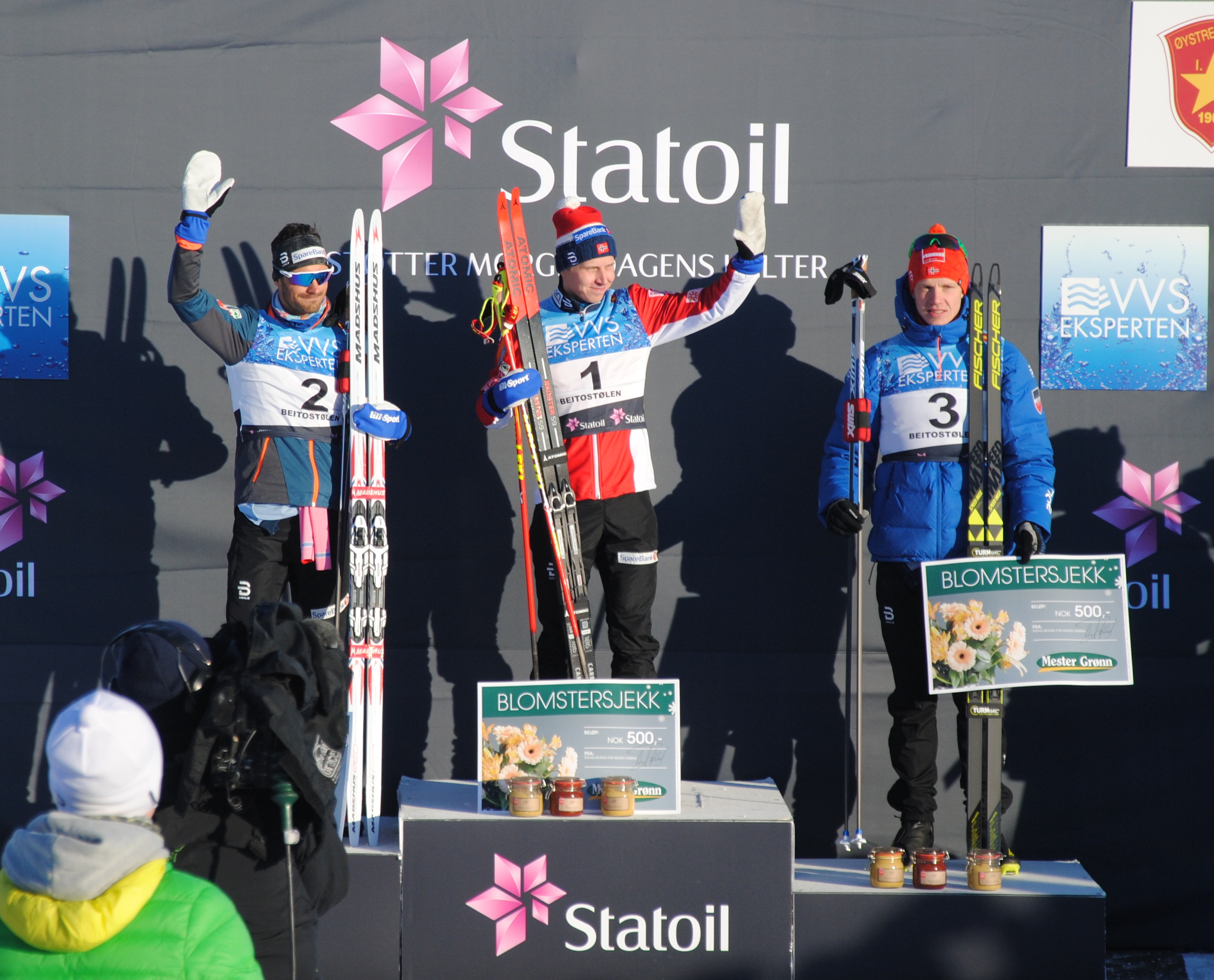
The women’s podium (and top six) after Sunday’s 10 k freestyle in Beitostølen, Norway, with Norway’s Marit Bjørgen (1) in first, Ragnhild Haga (2) in second, Heidi Weng (3) in third, Ingvild Flugstad Østberg in fourth, Astrid Uhrenholdt Jacobsen in fifth, and Tiril Udnes Weng in sixth. (Photo: Aleks Tangen)
Hart finished her 10 k, in what she described “beautiful skiing” conditions, in 26:37.1. Bjørgen raced to first for her second distance win of the long weekend in 23:55.2, 12.6 seconds ahead of Ragnhild Haga in second place. Norway once again swept the podium with Heidi Weng in third, 30.1 seconds behind Bjørgen.
“It’s a course that doesn’t have a lot of rest in it … basically I was just trying to V2 as much as I could, because I noticed that’s another thing they do over here,” Hart said. “It’s like riding a bike; it’s easier to go in a lower gear. … I know I am a stronger V2-er, and the longer I can V2 up the hills, I figured the better I would do overall. Then [I] backed off, worked on quick turnover, and then really tried to push the V2-ing.”
For much of the race, her split times hovered between 19th and 20th. But after a strong effort from 7 to 9.8 k, where she clocked the 15th fastest time in 7:58.2, Hart secured 19th, 8.5 seconds behind 18th-place finisher Silje Theodorsen, of the Norwegian National U23 Team, and 12 seconds ahead of 20th, which went to Norway’s Magni Smedås (Lillehammer Ski Club).
That stands as Hart’s best international finish outside of an Alpen Cup last season in Seefeld, Austria, where she notched two top 20’s. Each year, Norway’s season-opening FIS races in Beitostølen attract most of Norway’s top skiers and upcoming talent.
So 19th in Beitostølen is a big deal.
At the time of her post-race interview with FasterSkier, Hart wasn’t sure where she ended up. But she knew she pushed herself to the limit.
“I think last year I suffered from over-pacing, and it’s gonna hurt no matter what you do,” she said. “And I am very much of the mentality, for me anyways, to just go all in, no fear. And the worst thing that happens is you blow up.”
In terms of how her results in Beito will affect her moving forward, she said it was about building confidence with each race and “having faith in my training and my fitness. The worst feeling in the world is when you finish and are like, ‘Damn, I could have gone harder.’ I would much rather literally collapse out on the course.”
Great Britain’s Annika Taylor, who grew up in Truckee, California, and raced at the University of New Hampshire, placed 23rd (+3:09.9). Taylor, 24, finished 29th in the 10 k classic two days earlier
At the front of Sunday’s race, the final time between Bjørgen and runner-up Haga was what made the news. One Norwegian journalist asked Norwegian women’s team coach Roar Hjelmeset if “this was almost like a victory since the gap was so small”. He replied “no” but added that it was “a very good performance” for Haga.
Bjørgen started last in bib 63 and, as she typically does, clocked the fastest times through essentially every checkpoint and put more time into her competition with each passing kilometer. Haga’s time from 4.9 to 6.1 k was actually 2.5 seconds faster, but Bjørgen later told reporters that she expected a strong performance from her 26-year-old teammate.
“The race was acceptable,” she told NRK. “I was prepared for Ragnhild’s approach since she’s better at skating, but I felt like I was somewhat in control.”
Haga was pleased to hold on to second ahead of fellow World Cup Team members Weng (who ended up third) and Ingvild Flugstad Østberg in fourth (+32.3).
“I had hoped to kick harder from the start so that Ingvild wouldn’t catch up to me,” Haga told NRK. “I didn’t tighten up and was able to keep pushing. I couldn’t really do anything about Marit, but I was closer than normal.”
Both Weng and Østberg told NRK how impressed they were with Haga’s performance.
“Ragnhild has shown strength over a lot of years,” Østberg said.
Weng added that she was impressed Haga gave Bjørgen a fight for first place.
“[Haga] does this because she’s been able to train well over the course of long time, and she has done very well leading up to this season,” Hjelmeset explained to a group of reporters.
Krüger: ‘It’s a big deal’
In the men’s race, Norway’s Simen Hegstad Krüger took advantage of the optimal conditions — with temperatures between -6 and -9 degrees Celsius, firm tracks and a clear blue sky — to win the 15 k freestyle by 16.5 seconds in 32:59.6.
He did so after starting in bib 122 of 124 and taking control of the race at 2.1 k. Krüger led from that point on, clocking the fastest splits in every stretch except from 11 to 11.9 k. At the finish, he beat out the likes of fellow Norwegian World Cup Team members Hans Christer Holund in second, Hågen Krogh in fifth (+42.1), Sjur Røthe in sixth (+42.8), and Martin Johnsrud Sundby in seventh (+52.9).
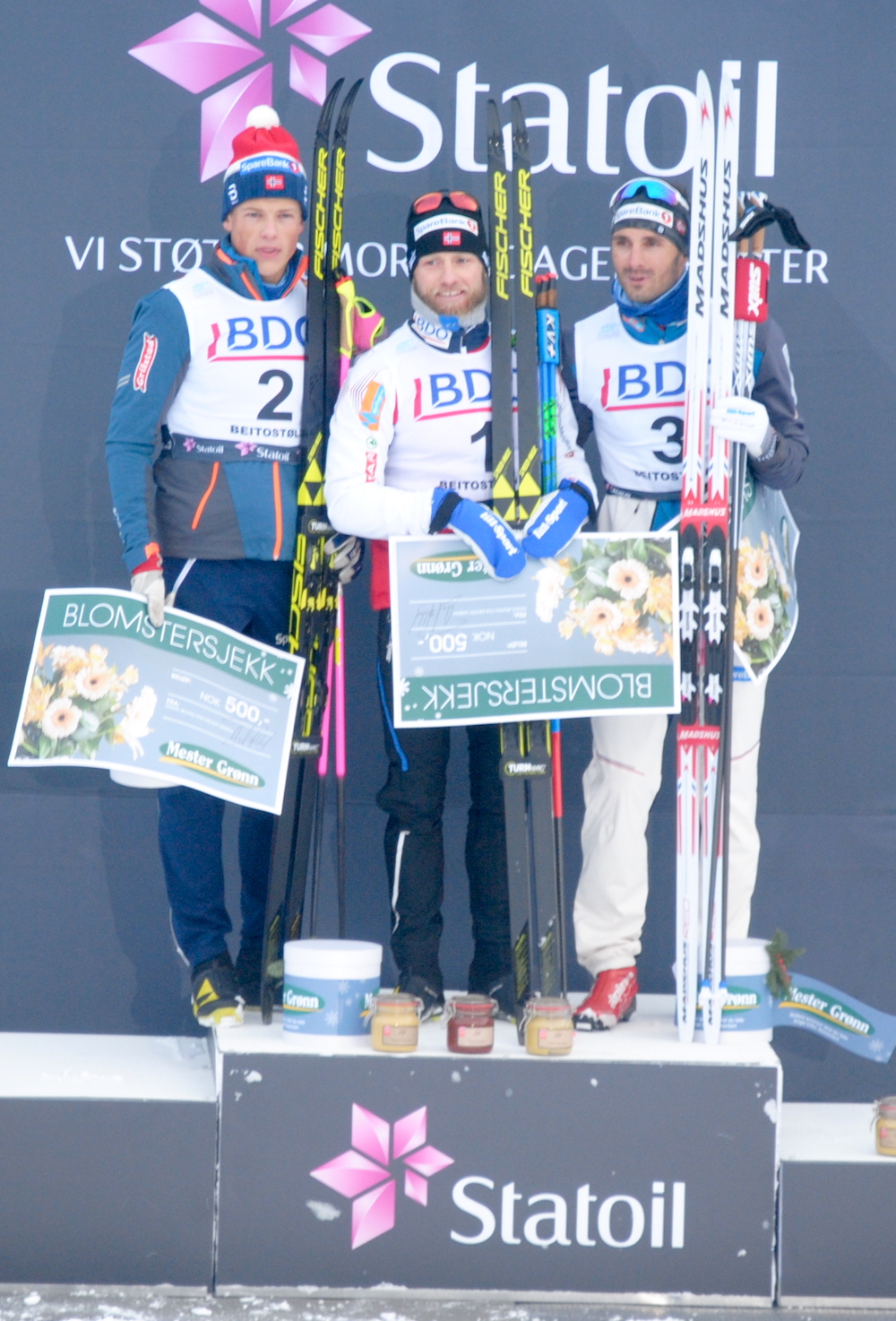
The men’s podium after Sunday’s 15 k freestyle FIS race in Beitostølen, Norway, with Norway’s Simen Hegstad Krüger (1) in first, Hans Christer Holund (2) in second and Jan Thomas Jenssen (3) in third. (Photo: Aleks Tangen)
“This is incredibly cool,” Krüger told NRK. “Even if it’s early in the season, it’s not common to win at this level. It’s a big deal when entire Norwegian elite is here.”
Notably, 21-year-old Norwegian Jan Thomas Jenssen, of Hommelvik Il, placed third (+30.7). He’s never raced on the World Cup.
“What should I say? This is amazing,” he told NRK, adding that the experience was “indescribable.”
Great Britain’s Andrew Musgrave raced to fourth place (+37.1) as the only non-Norwegian in the top 24. American Noah Hoffman was next in 25th (+2:09.6), and Andy Newell (U.S. Ski Team) finished 52nd (+2:56.0).
“It was better than the other day, a step in the right direction and I feel pretty good and looking forward to next weekend,” Hoffman, who finished 29th in Friday’s 15 k classic, told FasterSkier on Sunday. “Part of it is just having a race under my belt, but beyond that, I think on these more gradual courses I’m better at skating than I am classic, and the conditions were better for me today.”
While he was able to navigate traffic on the course by picking off several racers, Hoffman was frustrated with his “lapse of concentration” that caused him to clip a V-board on the biggest downhill and fall on his second lap.
“[I] went down really hard, lost my glasses, but at least I didn’t hurt myself,” Hoffman said. “Got a little bit of whiplash, I think I might be sore from it. … I probably lost 10 seconds. It was just silly. It still was a good effort and it doesn’t make too big of a difference.”
Andy Newell (c) racing to 52nd in the men’s 15 k freestyle FIS race on Sunday in Beitostølen, Norway. (Photo: Aleks Tangen)
Newell started out skiing around 70th and made his way up to 38th mid-race, but lost time over the final three kilometers to finish 52nd. When he spoke with FasterSkier immediately after, he was unsure of how he placed.
“I don’t think my time will be great, but it was a good workout and my body felt good despite being a little tired and sore from yesterday,” said Newell, who placed 16th in Saturday’s classic sprint. “It was a good training race, and these guys are so fast, and since skating is not my best, I just looked for a good feeling in the body. …. I think I have a little more in the tank. I can save that for next weekend.”
The World Cup opens next Friday, Nov. 24 with the three-day Ruka Triple in Kuusamo, Finland.
Of the four Canadian men that raced on Sunday, Scott James Hill of Barrie Cross Country (BXC) led them in 64th (+3:09.8).
“Today was good, a lot better,” said Hill, who placed 84th in Saturday’s sprint and 99th in Friday’s 15 k classic. “The classic race was kind of my first race and time trial of the year so I wasn’t expecting much, but today I felt like I was ready to race.
“I think everything worked out well,” the 23 year old continued. “I was never skiing alone other than maybe the first half lap, so I was always being pushed, which was really good.”
Ryan Jackson (Team Asker) followed in 102nd, Maks Zechel (Team Asker) was 113th, and Joey Foster (BXC) finished 118th.
Norway’s Johannes Høsflot Klæbo celebrates his first win of the season on Saturday in the men’s 1.5 k classic sprint FIS race in Beitostølen, Norway. (Photo: Aleks Tangen)
BEITOSTØLEN, Norway — A year ago, 20-year-old Johannes Høsflot Klæbo leapt onto the scene with a season-opening skate-sprint win in Beitostølen. Before that, he made waves at 2016 U23 World Championships, winning gold in the skate sprint, 10-kilometer classic and 4 x 5 k relay. But until last season, Klæbo, a member of Norway’s national U23 team, was hardly a household name to those outside of Norwegian skiing circles.
That all ended in Beito. Klæbo landed on the podium in the first World Cup sprint of the 2016/2017 season, placing third in the classic sprint in Kuusamo, Finland, and accumulated half a dozen podium finishes throughout last winter. He capped the season as the men’s U23 World Cup champion as well as the Sprint World Cup winner.
Now a full-fledged member of the Norwegian Sprint World Cup Team, Klæbo, who turned 21 last month, returned to Beitostølen to post a second- and first-place finish so far in two International Ski Federation (FIS) races there. He started his season off by taking second in Friday’s 15 k classic, 18 seconds behind reigning Overall World Cup champion Martin Johnsrud Sundby.
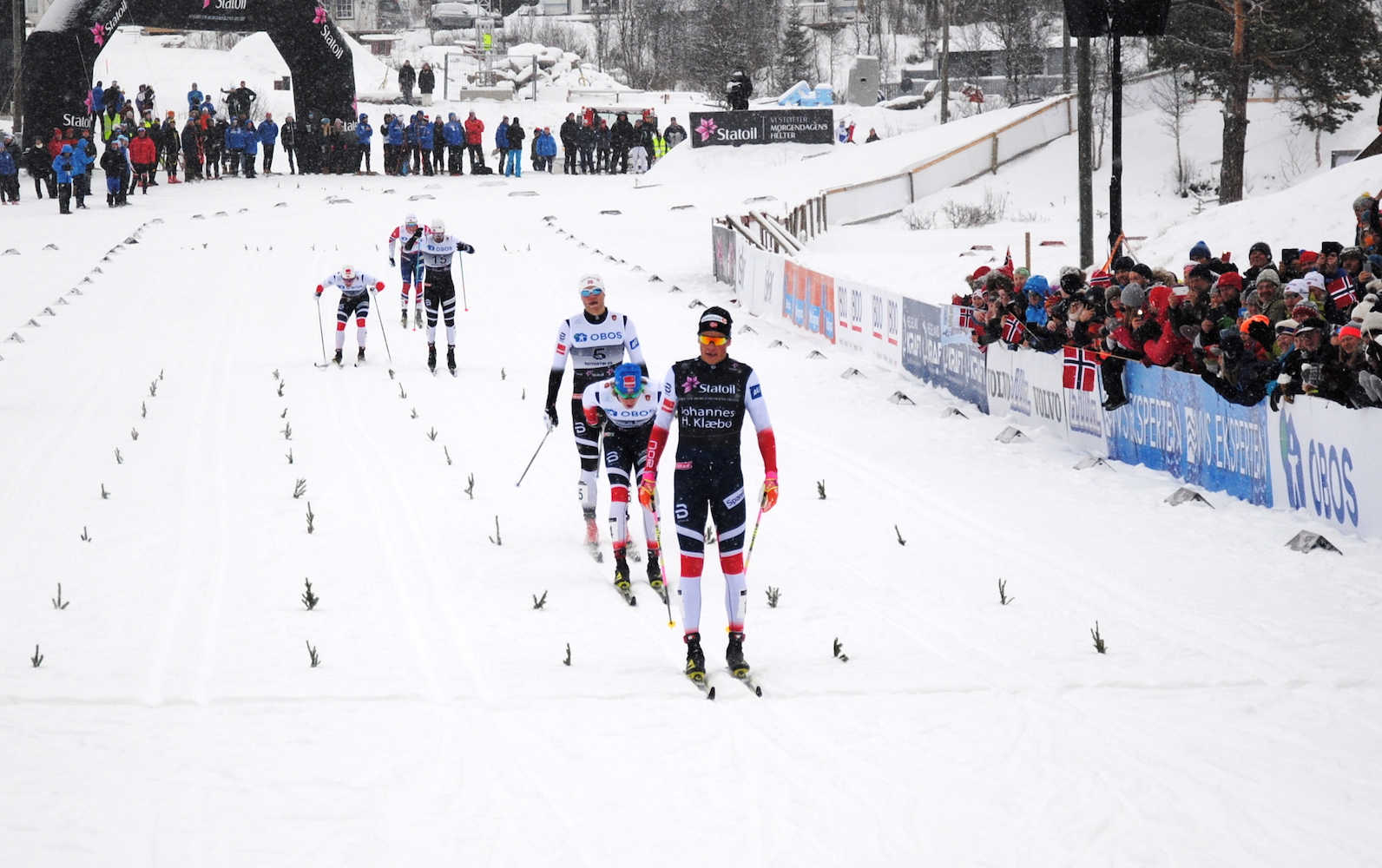
On Saturday, Klæbo won the 1.5 k classic sprint in Beitostølen without so much as a blemish, winning the qualifier to start the day then topping each of his heats en route to the final.
Norway’s Johannes Høsflot Klæbo crossing the line first for the win in the men’s classic sprint final on Saturday at the FIS season-opener in Beitostølen, Norway. (Photo: Aleks Tangen)
Up against five other Norwegians in the final, Klæbo raced to first once more in 3:50.4 minutes, finishing 1.1 seconds ahead of runner-up Kasper Stadaas. World Cup sprinter Eirik Brandsdal followed in third (+1.8), Fredrik Riseth was fourth (+6.4), Sondre Turvoll Fossli crossed in fifth (+6.7), and Emil Iversen was sixth (+9.2).
“My goal was to ski a good race,” Klæbo told a group of reporters after. “I wanted to get away from the pack towards the end and luckily the gap remained until the end.”
Iversen called attention to the young Norwegian while speaking with reporters after the race. “There has never been a talent like him,” Iversen said.
With snow starting to fall just before the men’s qualifier, Klæbo fared best on the course, racing to a 3.07-second qualifying win over Riseth with a time of 3:39.76.
Norwegian sprint coach Arild Monsen emphasized Klæbo’s ability to accelerate in and out of turns.
“Cross-country skiing has seen some development in recent years with specific techniques in specific zones, and Johannes has developed an ability to take advantage of that,” Monsen told a group of reporters. “We saw that very clearly today. The trick is to technically skilled when you’re tired and he’s able to do that almost to point where we don’t understand how.”
Klæbo went on to win his quarterfinal by 0.5 seconds over Norway’s Gjøran Tefre, then his semifinal by 0.2 seconds over Brandsdal. U.S. Ski Team member Andy Newell faced him in the quarterfinal, where Newell finished fourth in the heat, 3.7 seconds behind Klæbo and 2.6 seconds behind Norway’s Emil Nyeng in third. Newell missed advancing to the semifinals and finished the day in 16th overall.
“I knew we were going to have a fast heat because Klæbo had set a pretty strong pace from the first hill on, so we were really close to lucky losers,” Newell told FasterSkier in a post-race interview. “The second heat was just barely faster.”
With his second Beitostølen sprint victory, Klæbo told NRK that he was glad to get this race under his belt.
“This felt good, and I’m glad that sprint is up and running,” he said. “This was a good race considering what will happen next weekend.”
The World Cup kicks off next weekend in Kuusamo with a classic sprint on Nov. 24, followed by 15 k classic and 15 k freestyle races for the men on Nov. 25 and 26.
The lone American man in Saturday’s race, Newell qualified in 11th, 10.86 seconds off Klæbo’s time.
“Felt good in qualification, skis weren’t perfect because it started snowing just before,” Newell told FasterSkier after. “Skis were fast, but not quite enough grip, so we did a little re-wax for the heats.”
He noted that he’s been working with Fischer in Beitostølen as he’s there without his team (the rest of the U.S. Ski Team is currently training in Rovaniemi, Finland).
For the first 300 meters of his quarterfinal, six skiers started at a relaxed pace with Klæbo and Newell at the back of the pack leading into the the first downhill. While both were able to work their way to the front on the first climb, Newell lost steam on the second-to-last hill, “Danskebakken” (Danish hill).
“I was stuck in the back up the first hill, so I had to burn a match to get to the front, which probably made me a little tired for the last hill,” Newell reflected.
With what he called “great grip” up the big climb, he felt like he was dragging a bit over the top.
“I was definitely getting a little tired on the flat part over the top,” he said. “Because it’s the first sprint, maybe I wasn’t aggressive enough in the transitions, maybe it’s because the skis were a little draggy, but it seemed like I would get passed by somebody or two people going into each hill.”
With enough grip on the climbs, he would pass those racers back.
“So tried to finish strong but not quite there, but it’s a long season and hopefully the body will feel a little better in Kuusamo,” Newell said. “It’s all good, just training so looking forward to the World Cup.”
Out of the 30 men who qualified for Saturday’s sprint heats, only two were not Norwegian: Newell and Great Britain’s Andrew Young (who qualified 22nd). Young went on to finish the day in 23rd overall after finishing fifth in his quarterfinal.
Falla Stuns with Late Attack
Maiken Caspersen Falla (l) leading the women’s final up a climb, along with fellow Norwegian national team member Astrid Uhrenholdt Jacobsen (in green) during the women’s 1.5 k classic sprint FIS race on Saturday in Beitostølen, Norway. (Photo: Aleks Tangen)
In the women’s race, Maiken Caspersen Falla controlled the women’s race in a similar fashion to Klæbo, winning the qualifier, quarter, semi, and ultimately, the final.
In the final, Falla, who won last year’s Beitostølen skate sprint as well as her second-straight Sprint World Cup Crystal Globe, skied with the pack until the final climb where she made her move before entering the final stretch alone. Falla, 27, finished 3.7 seconds clear of anybody in 3:01.1. In another all-Norwegian final, Mari Eide placed second and Astrid Uhrenholdt Jacobsen claimed third (+4.8). Tiril Udnes Weng placed fourth (+6.7), Kari Vikhagen Gjeitnes was fifth (+11.1) and Ane Appelkvist Stenseth was sixth (+18.5).
Falla started the morning with a qualifying win in 2:54.86, 1.77 seconds ahead of Slovenia’s Katja Visnar in second. She didn’t slow down much for the heats, racing to first in each in 3:01.7, 3:02.3 and 3:01.1, respectively.
“I felt that it went better and better and it’s wonderful to have that feeling when you’re sprinting,” Falla told NRK after.
After watching her attack and pass three women on the final hill, NRK commentator Fredrik Aukland called her “the best sprinter in the world”.
When asked if this performance was good enough to win any race in the future, she told a group of reporters, “I hope so, of course. There is finishing hill already next weekend that is kind of similar to this one and I have practiced running up hills a lot so it’s obviously fun to test it in a race.”
Teammates with Newell on the Stratton Mountain School (SMS) Elite Team, Anne Hart raced to 31st for the second day in a row, missing qualifying in the top 30 by 0.28 seconds.
“I am happy about my qualification,” she told FasterSkier immediately after her race, before she knew whether her time was fast enough for the heats. “The course is a lot faster than yesterday, good condition.”
Hart started the qualifier third out of 58 women, just ahead of Visnar in bib 4. Her time was 17.55 seconds back from Falla’s.
“I skied with Katja Visnar and she is really good classic sprinter,” Hart said. “… It feels really good to be able to ski with all these World Cup skiers.”
Nichole Bathe, who was born in the U.S. but is racing for Great Britain, finished 33rd (+19.26), about 2 seconds out of the top 30.
Canada’s Isabella Howden of Barrie Cross Country (BXC) finished 58th (+57.28) in the qualifier. In the men’s qualifier, her teammates Joey Foster and Scott James Hill finished 74th (+32.45) and 84th (+36.64), respectively, and fellow Canadians Ryan Jackson and Maks Zechel (who are training in Norway with Team Asker) finished 97th (+43.99) and 102nd (+48.48), respectively, out of 109.
The Beitostølen weekend concludes with 10/15 k freestyle individual starts on Sunday.
Norway’s Marit Bjørgen racing to a 29-second win in Friday’s 10 k classic FIS race in Beitostølen, Norway. (Photo: Aleks Tangen)
(Note: This article has been updated to include comments from Nichole Bathe.)
BEITOSTØLEN, Norway — The question of whether Bjørgen or Weng will be the bigger name this season went in the favor of the former on Friday at Norway’s first big matchup of the season. Marit Bjørgen, now 37 and in her 20th World Cup season, won the first race of the three-day International Ski Federation (FIS) weekend in Beitostølen, starting last out of 56 women and finishing first in the 10-kilometer classic individual start, with 29.4 seconds between her and Weng in second place.
On a morning that marked the start of the 2017/2018 season in Norway, with temperatures just below zero and a snow squall during the women’s pre-race warmup, the snow covering the course appeared loose but ample.
Weng, the 26-year-old reigning Overall World Cup and Distance World Cup champion who started 30 seconds behind fellow Norwegian national-team member Bjørgen, told reporters after the race that she was satisfied with her performance, but could have skied better and “could have had better grip”.
For the first 2 kilometers of the race, Bjørgen’s pace was comparable to that of another one of her teammates, Ingvild Flugstad Østberg, who started just ahead of Weng. But halfway through the race, Bjørgen was nearly 22 seconds up on Østberg and 28 seconds ahead of Weng.
While Bjørgen continued to put seconds into her teammates in the final 5 k — blowing through the 7 k checkpoint 28 seconds faster than anyone else — Weng and Østberg battled for second. Weng clocked through 6.1 k just 2.7 seconds faster than Østberg and skied 5.1 seconds faster than her over the next 900 meters. Despite crossing the finish 11.6 seconds faster than Østberg, Weng’s time in the leader’s chair was short-lived, as Bjørgen finished 29.4 seconds faster with a winning time of 29:30.9 minutes.
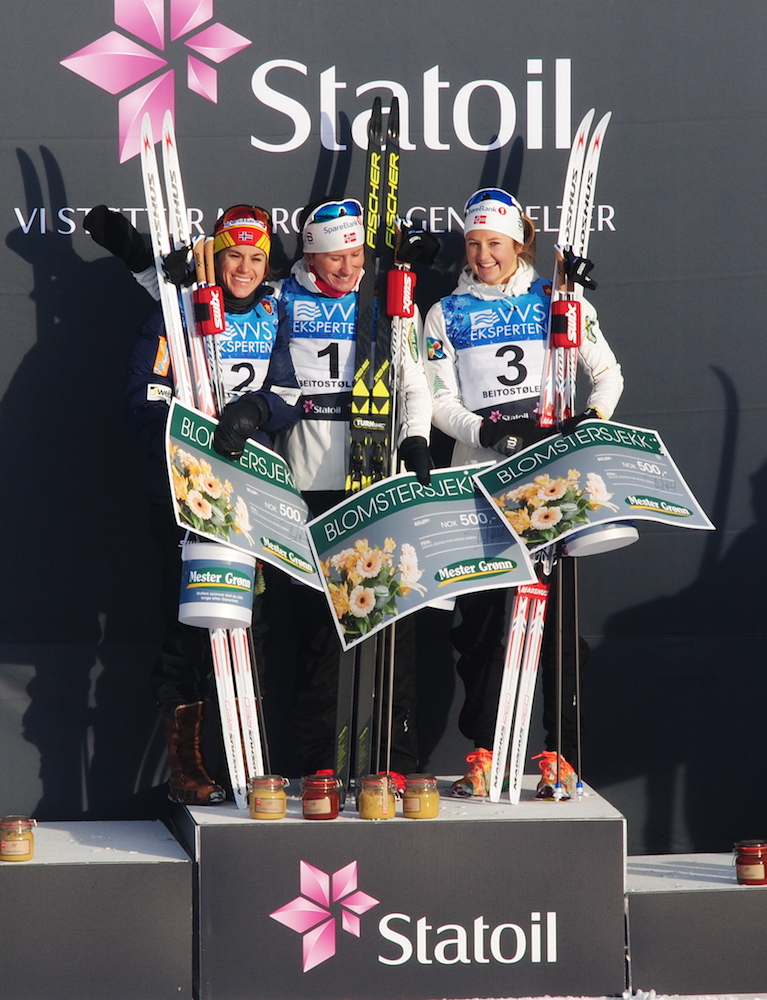
The women’s 10 k classic all-Norwegian podium at Friday’s FIS race in Beitostølen, Norway, with Marit Bjørgen (c) in first, Heidi Weng (l) in second and Ingvild Flugstad Østberg in third. (Photo: Aleks Tangen)
Østberg claimed third, 41 seconds back and 10 seconds ahead of another Norwegian national team member Ragnhild Haga in fourth (+51.0). Norway swept first through 13th place with Kathrine Rolsted Harsem in fifth (+1:08.1), Astrid Øyre Slind in sixth (+1:27.5) and notably, sprint specialist Maiken Caspersen Falla in ninth (+1:54.3).
“Marit is superior,” Weng said in a post-race interview with NRK. “This is top level and I have to step it up.”
She added, “29.4 and 41 seconds is a lot, but Marit is not invincible.”
But even Bjørgen has to tell herself to ski relaxed for the first race of the season.
“I tried to stay calm and ski my way up to Weng,” Bjørgen told NRK. “Considering that she held the yellow bib [as the World Cup leader] last year, I think that’s pretty good.”
Bjørgen reflected that she could have skied the flatter parts of the course better.
“Heidi did well there, and it was fun to ski behind here and learn from her,” she said.
Norwegian national-team member Ragnhild Haga racing to fourth in the women’s 10 k classic FIS race on Friday in Beitostølen, Norway. (Photo: Aleks Tangen)
Fourth-place finisher Haga told reporters that she was pleased with her technical improvements in classic, which she has been working on for three years.
“It was fun, and I’m glad I was able to race at such a high level,” Haga said.
Three Americans, two of which race for Great Britain, finished 29th, 30th and 31st: Annika Taylor (+3:48.2) Nichole Bathe (+3:51.3) and Anne Hart (+3:51.4), respectively. Taylor was born in California and is a member of Great Britain’s women’s team, as is Bathe, who hails from Wisconsin and is also a member of the CXC Team. Hart, originally from Minnesota, races for the Stratton Mountain School (SMS) Elite Team in Vermont.
Since mid-September, Bathe, a recent University of Alaska Fairbanks graduate, has been living in Lillehammer, Norway, while training with the British national team.
“It’s been quite the transition especially from college racing but it has been such a great learning experience and makes me really exited for the season!” Bathe wrote in an email. “That was my first race of the season and I thought it went okay. I went out pretty hard which caught up to me in the end but overall I think it was a good start to the season.
“Typically I am more of a sprinter but in general I like classic more than skate and 5k classic is my absolute favorite race,” she added. “This winter I am focusing on U23s [World Championships] and skiing fast there especially in the sprint. I will mainly be racing in Europe this year. I am racing the Kuusamo World Cups and then heading onto the OPA and Scando Cup races!”
In an in-person interview with FasterSkier, Hart explained that she made a point to get on snow earlier this season and spent the last two weeks training in Sjusjøen, Norway. After this weekend, she’ll return to the U.S. for the first SuperTour races in West Yellowstone, Montana, Dec. 2-3.
“I’ve been told by just about everyone that this is more competitive than a World Cup in part because these are [the Norwegians’] major qualifying races [for the World Cup], or their only ones I think,” Hart said of Beitostølen. “So I just went out hard. I had great kick on my skis so I just was really working on skiing well because last year that was an area I think I just got really frantic.”
During training on Thursday, Hart skied one lap with Bjørgen.
“Yesterday I actually skied with — stalked — Marit on an easy lap, and I was just trying to imitate her skiing,” Hart said. “So I was just trying to think of her out there and obviously not quite as fast, but I was really psyched with how I skied everything well. I felt a little tired on the last bit, but again, I didn’t fall apart and I’m really pleased with that.”
American Anne Hart (SMS Elite Team) racing to 31st in the women’s 10 k classic FIS race on Friday in Beitostølen, Norway. (Photo: Aleks Tangen)
For Hart, the biggest difference she noticed in this initial race of the season was the fact that she was having fun.
“Last year I was just struggling the whole season to find that ‘fun’ gear, I guess, and today I was really enjoying the whole time and really pushing and not looking forward to the end,” she said. “Instead of thinking, ‘I have to make it another kilometer,’ it was like, ‘Oh my god, I only have a kilometer to go. I’ve gotta really give it all I’ve got.’ ”
For Canada, Isabella Howden, of the newly formed Barrie Cross Country (BXC), finished 53rd (+7:18.2). Afterward, Howden, who started 16th, recalled being passed by the five fastest women on her second lap, which she said was beneficial.
“That was pretty cool, seeing them and getting to stay with them on the downhills and copy their technique for as long as I could see them,” she said.
For Howden and some of her Canadian teammates, Beitostølen is familiar territory; they raced there last year. Regardless, she was in awe of the atmosphere.
“It’s so cool … all the kids up there cheering and there’s a whole crew around the corner with all their cowbells, like 10 of them,” she said with a laugh.
Sundby Pulls It Together
The men’s 15 k classic all-Norwegian podium at Friday’s FIS race in Beitostølen, Norway, with Martin Johnsrud Sundby (c) in first, Johannes Høsflot Klæbo (l) in second and Hans Christer Holund in third. (Photo: Aleks Tangen)
In the men’s 15 k classic individual start that followed, defending World Cup champion Martin Johnsrud Sundby took the win by 18.2 seconds over Norwegian teammate Johannes Høsflot Klæbo, who won last season’s Sprint World Cup at the age of 20.
Now 21, Klæbo is recognized as more of an all-around force, and on Friday, he led the men’s race up until the 4.9 k checkpoint. Sundby started last out of 158 men and trailed Klæbo until 6 k. But from that point on, the race was Sundby’s; at 9.8 k, he was 12.3 seconds faster than Klæbo in second place.
“I had to pull myself together,” Sundby told reporters after the race, explaining that he felt tired around 6 k. While the rest of his race required some extra effort, Sundby expressed contentment with his performance.
“This was something positive that I will take with me going into the season,” he said. “This was the first race of the season and it could have gone both good and bad. … It was so-so, I felt goofy skiing today, but that was also the case for everyone else.”
He attributed that awkward feeling to challenging conditions, “but that is also good practice,” he said. “I didn’t feel all that well in the first 5 k, but after that I was able to speed up and I felt that was able to control the race.”
And he did so without going too far into the pain cave.
“I didn’t have to dig as deep as I have done sometimes in the past,” Sundby said.
Sundby’s winning time of 38:57.2 was 18.2 seconds faster than Klæbo in second and 37 seconds clear of Hans Christer Holund in third. The top-seven men — all Norwegian — finished within 59 seconds of first. The women were a bit more spread out, with the seventh-place woman, Silje Theodorsen (Kvaløysletta Skilag), finishing 1:36.3 behind Bjørgen.
Holund clawed his way into the race after his 4.9 k time ranked 11th. With about 5 k to go, the Norwegian national-team member was up to fifth, and by 11.9 k, he was within reach of the podium in fourth place.
Didrik Tønseth ended up just 1 second off the podium in fourth (+38.0), while Johan Hoel (Åsen IL/Team Veidekke Oslofjord) placed fifth (+42.2), ahead of Simen Hegstad Krüger in sixth (+44.1) and Emil Iversen in seventh (+59.0).
Noah Hoffman (r) passes Norway’s Torstein Bu during the men’s 15 k classic FIS race season opener on Friday in Beitostølen, Norway. Hoffman went on to place 29th, while Bu finished 75th. (Photo: Aleks Tangen)
The lone American in the race, Noah Hoffman placed 29th, 2:25 minutes behind Sundby. After a slow opening that put him in 47th at the 2.1 k mark, the former U.S. Ski Team member settled into a pace that put him within the top 30.
Afterward, he told FasterSkier that his performance was a good starting point. He started the race toward the back of the field in bib 145, just ahead of several top Norwegians.
“It was a little unfortunate that there was a big train that formed right behind me, and those guys didn’t catch me until less than a k to go,” Hoffman reflected. “I was hoping they’d get me a little sooner or not get me at all, but it was good.”
In terms of a race plan, he explained that he tried to ski with energy and build throughout the entire 15 k, which he felt he did.
“I got a little excited the second time up the big hill and maybe burned a little too much, but for the most part it was a good effort and I’m looking to build this for Sunday and then obviously into next weekend,” he said.
After Sunday’s second set of distance races in Beitostølen, the 10/15 k freestyle individual starts, Hoffman will race four weekends of World Cups as an invited member of the U.S. Ski Team (USST) for Period 1. He missed the objective qualifying criteria for renomination to the USST by one place (he ranked 51st in the World Cup at the end of last season) and is thus skiing independently this year, paying his own way (and paying his own wax technicians, Zach Caldwell and recently retired USST tech Peter Johansson) so that he can race in Europe.
“The early season is important for me this year because I don’t have guaranteed start rights for the whole winter, so I need to ski well,” Hoffman, 28, said. “And I believe I’ve done everything I can to prepare and I hope to see the results from that.”
Several Canadian juniors raced the men’s 15 k as well. Ryan Jackson led them in 97th (+5:16.8), followed by Scott Hill in 99th (+5:19.1), Joey Foster in 124th (+6:45.3), and Maks Zechel in 143rd (+8:25.5).
“It was hard out there today,” said Foster, a 21-year-old member of BXC, noting that he was still feeling the effects of travel after arriving in Europe a week ago. “Considering how I felt, the race was pretty good. … I started with what I thought was a pretty conservative pace and I got in with a good train of people, and I skied with them for almost the whole first lap, and from there I just kind of fell off pace. … I think my leadup to the race just wasn’t as good as it could’ve been, so I wasn’t feeling as crisp as I would’ve liked.”
The Beitostølen FIS races continue through the weekend with classic sprints on Saturday, which U.S. Ski Team member Andy Newell plans to race, and 10/15 k skate races on Sunday.
Caitlin Patterson (front) racing to fourth place in the women’s 10 k at 2017 USATF Mountain Running Championships on June 3 in North Conway, N.H. That qualified her for the 2017 World Mountain Running Championships in July in Italy. (Photo: Michael Scott/miscottrunningphoto.shutterfly.com)
Just over 24 hours before race day, Caitlin Patterson’s mind was made. The pre-registration deadline for the 2017 USA Track & Field (USATF) Mountain Running Championships in North Conway, N.H., was up and she was going to spontaneously do it. Written down in her summer plan was to enter few footraces, and this one promised both a challenging field and relatively short, two-hour drive from her training base in Craftsbury, Vt.
The competition also offered an opportunity to tune up her race tactics. Patterson, 27, had raced to eighth in last year’s U.S. Mountain Running Championships uphill-only edition at Loon Mountain and was curious how she’d fare in a race with downhills (U.S. Mountain Running Championships alternate between uphill-only courses and ones that feature both ascents and descents).
While the Craftsbury Green Racing Project (CGRP) skier planned on getting a lot out of the race, she hadn’t planned on getting selected to the U.S. World Mountain Running Championships team. But by the end of the women’s 10-kilometer run — a two-lap course which featured nearly 2,500 feet in total elevation gain — that’s just what she got. Patterson finished fourth overall, qualifying her for the 2017 World Mountain Running Championships in late July in Premana, Italy.
Caitlin Patterson during a trail run this spring. She recently qualified for the 2017 World Mountain Running Championships, scheduled to take place July 30 in Italy. (Courtesy photo)
“That was definitely a shock and not something I was expecting, to be able to run into fourth place,” Patterson said on the phone last week, three days after racing in North Conway. “That’s part of why I put myself in there, though, is because the race atmosphere can get you to do things you maybe wouldn’t otherwise.”
The three women that finished ahead of Patterson were all World Championships team veterans: Addie Bracy (last year’s U.S. Mountain Running champion) in first, Allie McLaughlin (2014 U.S. champion) in second, and Kasie Enman in third (2011 U.S. champion).
Patterson was the final woman to qualify, finishing in 56:42, 2 minutes and 46 seconds off Bracy’s winning time. Though perhaps a rookie in comparison to her competitors, Patterson didn’t let that detract her from racing how she wanted to.
“I did a lot of power walking in that race, just on the steep stuff,” Patterson said. “I could see the top-three women in front of me and I would say most of them were running it. But walking worked better for me and the way I’m built.”
With World Mountain Running Championships slated to take place on July 30, and the time coinciding with a rest week for Patterson, she plans to make the trip to Italy. The trip’s flights, food, and four days of lodging will be funded through the World Mountain Running Association and running organizations such as U.S. Track and Field and the All American Trail Running Association. In the weeks leading up the race, she hopes to do some training runs with Enman, who also lives in Vermont. The weekend before to the U.S. championships, Enman won the Vermont City Marathon.
“If nothing else, [I want to] chat with her about what to expect over there,” Patterson said. “I was entering this race partially … so I could run with some other women and learn from them.”
With those World Championships on the horizon, Patterson’s main focus this season remains skiing. She planned to enter a few more running races this summer before heading to New Zealand with her team in August.
“The Olympics are on the radar for this coming winter, but we’ll see what I can do,” Patterson said.
Scott Patterson (Alaska Pacific University/USST) during a crust-skiing adventure with his sister, Caitlin Patterson (not shown) this spring in Anchorage, Alaska. (Photo: Caitlin Patterson)
Beyond making the 2018 Winter Olympics, she also is hoping to eventually make her way onto the U.S. Ski Team (USST). Her younger brother, Scott Patterson, was nominated to the USST B-team last month, and the news hit her as somewhat bittersweet.
“I was really happy to hear he made the team,” Patterson said. “Of course, I wish that I could be there, too, but I know the rationale behind that I haven’t quite made that jump yet.”
Breaking that bubble, as she acknowledged, is no easy task. There’s the nine-hour time change between her and her coach, Pepa Miloucheva, when she’s in Europe. There’s also the physical toll traveling takes on her body.
“I feel like every year I should get better at traveling, and I do to some extent … going back and forth to Korea [for the PyeongChang World Cup] was great,” Patterson explained. “But for some reason the travel going from Period 1 back to the U.S. — so that was France back to Montana — that went really badly and I got very sick. That was very difficult, borderline devastating, for nationals racing.”
In a way, Patterson’s description of being an on-the-cusp athlete is somewhat of a catch-22: the only way to improve her international racing is to race internationally, but doing so can make domestic racing difficult, with certain domestic races being the ones she needs to do well in if she is to continue racing at an international level.
“I actually probably got the most nervous I’d been the entire season before U.S. nationals,” Patterson said. “After I’d been in Europe, where the racing is extremely tough and such a high level of competition, my expectations were, if I have a really great race, I can crack into the [World Cup] top 30 or so. Whereas coming back to nationals, I felt like I was the person who was in Europe and I’m one of the favorites.”
Caitlin Patterson leading her Craftsbury teammate Kaitlynn Miller during the women’s 10-kilometer freestyle at 2017 U.S. nationals in Midway, Utah.
Another point Patterson made was the idea of creating more opportunities for U.S. national-team and non-national-team members to compete against one another. This spring, Patterson received an email invitation to an athlete meeting led by athlete reps, Rosie Brennan (USST B-team member), Dakota Blackhorse-von Jess (Bend Endurance Academy), and Anne Hart (Stratton Mountain School). Topics discussed included: SuperTour Calendaring, SuperTour Points, Seeding, Pole Length Rule, and Selection Criteria. Close to 30 athletes–from both the SuperTour circuit and USST–were in attendance, according to Patterson who also attended the meeting. Many present agreed with the following:
“We as a ski community, as much as possible, would like for the U.S. Ski Team athletes who don’t make the criteria to race upcoming World Cup races or don’t make the criteria to race the Tour de Ski, to be sent back and have to race U.S. nationals,” Patterson said. “Maybe that will happen, I won’t really believe it until I see it.
“It’s tricky,” Patterson continued. “Of course I’m still trying to figure it out myself. Kris Freeman made some good points that maybe the system of qualification isn’t working so well if so much has to be decided by discretion. But I guess in the end, the best way to do it is manage to race so fast, that it puts all doubt aside and show you just belong on there. Get off the bubble for sure, because there’s a lot of us trying to make that jump.”
Even if last season didn’t earn her a nomination to the USST, Patterson is happy with the progress she’s witnessed in her skiing over the past few seasons, last year’s being particularly gratifying.
“I really enjoyed my time in Europe during Period 1 this past winter,” she said. “It was a very positive experience and everyone was so excited to be there. And I think in many ways, it was a more positive experience than when I’ve been over there later in the season, when a lot of those athletes who have been racing in Europe really start to want to come home.
“I respect the coaches’ decisions and I think they have good rationale on their side,” she continued. “I’ve been making good progress with my skiing, but I know that I need to prove unquestionably that I belong there on the ski-team ranks. There’s an extremely strong women’s team right now, which of course is great, but makes it really hard to get onto it. So I’ll keep trying and keep doing everything I can. Luckily I have a very supportive team here in the CGRP. So I can keep pursuing skiing, but hopefully make it to the Olympics one way or another.”
Currently, CGRP sponsors, especially Concept2 and the Craftsbury Outdoor Center, cover CGRP athletes’ in season race and travel expenses. In the summer, lodging and food at the Craftsbury Outdoor Center are also paid for by CGRP financial supporters. For other outside expenses, Patterson relies on prize money she earns throughout the season.
“No one in the US is in cross-country ski racing for the money, we’re in the sport because it’s an amazing way to stay fit and get outside, push your limits and compete, and inspire and help others along the way,” Patterson wrote in an email on Thursday. “I’m really not sure how long I’ll keep skiing at this competitive level. I have no definitive plans to stop, but I also don’t plan to keep going forever, as there are many other meaningful things I know I can do with my life. For now I’m living in the moment and the immediate future, giving everything I have to the pursuit of skiing my best, and enjoying the process and the journey.”
Though perhaps headed to World Championships in a different sport than she would have expected, Patterson indicated that for now, her nordic ski career is where she will stay.
“I’m really not sure, I haven’t given that any thought before.” Patterson wrote of a future in mountain running. “Mountain and trail running has always been something that I’m fairly good at because I’m training to be a skier, and I have a natural tendency towards an aerobic body type. I enjoy the races, and would like to improve my speed and consistency at running races, but I can’t really imagine continuing to be a competitive athlete but not focusing on skiing.”
Katharine Ogden (SMS/USST) finishing third for bronze in the women’s 10 k skiathlon on Friday at 2017 Junior World Championships at Soldier Hollow in Midway, Utah. She is the first American to reach the podium in a Junior World Championships. (Photo: FlyingPointRoad.com)
FIS Nordic Junior World Championships (Midway, Utah): 10/20 k skiathlon
A Junior World Championships medal has been on Katharine Ogden’s mind for some time — two years, to be exact.
“Every day in training, it’s kind of something that I think about. It’s the little thing that helps me push myself,” Ogden, a 19-year-old member of the Stratton Mountain School and U.S. Ski Team D-team, said in a post-race interview with the U.S. Ski Team on Friday. “Even in the middle of June, I’ll be like, ‘You know what I want to be? On the podium at World Juniors.’ ”
She did just that on Friday, racing to third in the women’s 10-kilometer skiathlon at 2017 Junior World Championships at Soldier Hollow in Midway, Utah. In doing so, she became the most successful American at World Juniors, surpassing Lindsey Williams’s previous best of fourth place in 2003.
Ogden finished 10.4 seconds behind the winner, Norway’s Marte Mæhlum Johansen, who finished first in 27:17.3 minutes. Sweden’s Ebba Andersson took second, 6.6 seconds back. Behind Ogden, Italy’s Anna Comarella placed fourth (+51.6) ahead of Finland’s Eveliina Piippo in fifth (+58.7).
Hailey Swirbul (University of Alaska Anchorage) was the second U.S. woman in 24th (+2:21.0), while Natalie Hynes (Whitehorse) led Canada in 28th (+3:11.3).
Also for Canada, India McIsaac (Rocky Mountain Racers) finished 30th (+3:13.8), Lisle Compton (NTDC Thunder Bay) was 33rd (+3:45.5) and Annika Richardson (NTDC Thunder Bay) 41st (+4:49.3).
Also for the U.S., Lauren Jortberg (Dartmouth) finished 37th (+4:04.5) and Taeler McCrerey (University of Denver) 38th (+4:07.5).
[UPDATED] In the men’s 20 k skiathlon that followed, Russia’s Vladislav Vechkanov notched his second gold of the week in 49:40.5, outlasting Norway’s Thomas Helland Larsen by 1.9 seconds. Norway had two on the podium with Harald Østberg Amundsen in third (+2.2).
Canada’s Gareth Williams (Telemark Race Team) was the top North American in 11th (+1:24.0) for his best result at his first Junior Worlds.
American Wyatt Gebhardt (Steamboat Springs WSC) followed in 12th (+1:42.7) for his second-straight top 20 and Hunter Wonders (Alaska Pacific University) also finished in the top 20 for the second-straight race in 18th (+1:57.9).
Canada’s Philippe Boucher (CNEPH) was 22nd (+3:15.7), Ryan Jackson (Team Hardwood) 31st (+3:52.5), and Remi Drolet (Black Jack) 49th (+6:57.3).
Also for the U.S., Kam Husain (SMS) placed 50th (+6:59), and Logan Diekmann (University of Utah) was 53rd (+7:47.3).
NorAm Eastern Canadian Championships (Cantley, Quebec): Classic sprint
The NorAm series resumed at the Nakkertok Nordic Centre on Friday with Eastern Canadian Championships with classic technique sprints.
Alberta World Cup Academy’s Maya MacIsaac-Jones returned from U23s in time to win the 1.3 k A-final in 3:42.06, after qualifying sixth. Top qualifier Sophie Carrier-Laforte was second for CNEPH at her home event, 0.66 seconds behind. SMS Elite’s Anne Hart rounded out the podium at 3.40 seconds back.
On the men’s side, AWCA’s Dominique Moncion-Groulx qualified first before winning every heat on his way to victory in 3:14.84 on a slightly longer 1.4 k course. NTDC Thunder Bay’s Angus Foster was a close second, 0.09 seconds behind. Team R.A.D.’s Russell Kennedy was a comfortable third, 2.75 seconds back, on a day marked by some surprising eliminations.
The elite field is slightly smaller than usual with some athletes away in Soldier Hollow and PyeongChang. As many younger racers were stuck in school for the day, there are only about 500 starters for what is usually the largest FIS event in Canada.
FIS Cross-Country World Cup (PyeongChang, South Korea): Classic sprint
The women’s 1.4 k classic sprint podium on Friday at the pre-Olympic PyeongChang World Cup in South Korea, with Slovenia’s Anamarija Lampič (c) in first, Norway’s Silje Øyre Slind (l) in second, and American Ida Sargent (r) in third. It was the first time on the World Cup podium for all three athletes. (Photo: FIS Cross-Country/Twitter)
In the last month, we’ve seen two U.S. Ski Team members — Jessie Diggins and Sadie Bjornsen — on the World Cup podium. Add Ida Sargent to that list.
On Friday, the Vermont native raced to third in the women’s 1.4-kilometer classic sprint at the first-ever World Cup in PyeongChang, South Korea. It was the first of three days of racing in PyeongChang, which will host the 2018 Winter Olympics next season.
Sargent qualified fifth (4.76 seconds behind her teammate Sophie Caldwell, who won the qualifier in 3:40.89 minutes) and went on to win her quarterfinal in a photo finish, then placed second her semifinal (also in a photo finish), edging Russia’s Alisa Zhambalova in third by less than 0.01 seconds.
Both advanced to the final, where Sargent ultimately finished third, 1.79 seconds behind Slovenia’s Anamarija Lampič, who won in 3:41.97. Norway’s Silje Øyre Slind took second (+1.6), just 0.19 seconds ahead of Sargent. For all three women, it was their first time on a World Cup podium.
Sargent beat out Poland’s Justyna Kowalczyk for third by 0.56 seconds. Zhambalova finished fifth and Slovenia’s Katja Visnar was sixth (+17.1).
“I’m really excited about the podium and it hasn’t really set in yet,” Sargent wrote in an email on Friday. “It has been a goal of mine for a long time to be on the podium so it was a very special day! I’ve been inspired by so many fast teammates so happy to follow in their footsteps!”
All five U.S. women racing on Friday finished in the top 30 to qualify for the heats. Caldwell won the qualifier by 1.84 seconds over Kowalczyk, Caitlin Patterson qualified 22nd, Liz Guiney 25th and Liz Stephen 29th (Stephen’s first time making the heats in three years).
Jessica Yeaton, who races for Australia but trains with Alaska Pacific University, took the last qualifying spot in 30th (+26.29).
Canada’s Annika Hicks and Sadie White missed qualifying in 32nd (+32.96) and 34th (+38.96), respectively, out of 36 women.
Caldwell won her quarterfinal but finished fourth in her semifinal (behind Slind, Kowalczyk, and Sweden’s Maria Nordström, respectively) to miss advancing to the final. She placed eighth overall.
Guiney placed 24th overall after finishing fifth in her quarterfinal, Stephen was 25th after taking fifth in the same quarterfinal as Sargent (where Yeaton finished sixth for 30th overall), and Patterson was 27th after finishing sixth in her quarterfinal.
***
Both Canada’s Len Valjas and American Andy Newell reached the final in the men’s 1.5 k classic sprint on Friday, where they raced to fourth and sixth, respectively.
Valjas started the day by qualifying in second, 1.97 seconds behind Russia’s Alexander Panzhinskiy, who topped the qualifier in 3:26.78. The Canadian went on to advance in second from his quarterfinal and fourth as a lucky loser from the first semifinal. In the final, he missed out on the podium in a photo finish with Russia’s Andrey Parfenov, who took third, 0.01 seconds ahead of him.
Meanwhile, Newell qualified seventh (+5.18) and took second in both his quarterfinal and semifinal (finishing the second semifinal 0.34 seconds behind Panzhinskiy in first).
In the final, Russia’s 25-year-old Gleb Retivykh pulled off his first World Cup victory and podium with a 0.3-second win over Norway’s Sondre Turvoll Fossli in 3:30.79. Retivykh qualified sixth (+4.53) then won his quarterfinal and placed third in the same semifinal as Valjas, advancing as the other lucky loser.
“I had wait six years for my first victory and it is great,” Retivykh said, according to an International Ski Federation (FIS) press release.
Russia had two on the podium with Parfenov in third (+0.73), just ahead of Valjas. The third Russian in the final, Panzhinsky ended up fifth (+1.49), ahead of Newell in sixth (+17.19)
Three Canadian men qualified for the heats, with Jess Cockney in 16th (+10.24) and Simon Lapointe in 25th (+14.15). Bob Thompson missed 30th by one-hundredth of a second in 31st (+16.95), and Julien Locke was 36th (+17.9).
Three Americans qualified as well, with Simi Hamilton in 12th (+8.26) and Matt Gelso in 29th (+16.66). Distance skiers Scott Patterson and Noah Hoffman finished 44th (+24.21) and 48th (+25.28) out of 55.
Cockney reached the semifinals after winning his quarterfinal. In the second semifinal with Newell, he placed fifth, 5.44 seconds behind Panzhinskiy, for 10th overall.
In Cockney’s quarterfinal, Hamilton crashed and finished fourth (+41.9) for 17th overall.
Canada’s 23-year-old Lapointe finished sixth in his quarterfinal to place 27th, besting his previous World Cup best by 43 places. Gelso took 29th for his first-ever World Cup points after placing sixth in his quarterfinal.
Chelsea Holmes of Alaska Pacific University crossing the finish line first in the women’s 20-kilometer classic mass start on Tuesday at 2017 U.S. nationals in Midway, Utah.
MIDWAY, Utah. — As she headed up Soldier Hollow’s infamous Hermod’s Hill for her fifth and final time, there wasn’t another skier in sight. At least none of the ones she started with.
Chelsea Holmes, of Alaska Pacific University (APU), was fine with that. She never liked sprints to the finish, and on Tuesday, Holmes would have it her way.
Of course, there was still the possibility that she would slip and skid to a stop, or slow down drastically from a serious bonk. But those were all chances Holmes was willing to take. In the 29-year-old Alaskan’s mind, ski racing is about taking risks.
Chelsea Holmes (4) leads Katharine Ogden (3) and Caitlin Patterson during the women’s 20-kilometer classic masst start on Tuesday at U.S. nationals in Midway, Utah.
Tuesday’s 20-kilometer classic mass start was no different. Especially with it being the last distance event of the 2017 U.S. Cross Country Championships series.
“There are countless races that I’ve lead only to be passed and blown out in the last half kilometer,” Holmes said after Tuesday’s race. “But even those days, I don’t think I would do anything different other than say I should have gone harder, earlier. … I know that, more than anything, I will be disappointed if I don’t put it all out there.”
Go hard or go home it was, and within the first of five laps, Holmes was charging the front along with Katharine Ogden, of the Stratton Mountain School (SMS) and U.S. Ski Team Development Team, Caitlin Patterson, of the Craftsbury Green Racing Project (CGRP), and Erika Flowers (SMS Elite Team).
Hunting Holmes down in a chase group was her APU teammate Becca Rorabaugh — who place second in Sunday’s classic sprint and just off the podium in fourth in Saturday’s individual start — Liz Guiney (CRGP), Canada’s Dahria Beatty, and Anne Hart (SMS Elite Team).
As the squad of women in front descended back toward the lap lane, Holmes continued to work through the stadium’s flat section. Ogden did not. The 19 year-old was relaxed, following close to Holmes’s lead until the group made their way out into lap two.
Skiing under the bridge that spanned the course’s first major climb, Ogden strode to the right of Holmes, seeking the front spot for herself.
Katharine Ogden (Stratton Mountain School/USST D-Team) during the final lap of the women’s 20-kilometer classic mass start on Tuesday at U.S. nationals in Midway, Utah.
“KO is like me, she likes to push the pace,” Holmes said of Ogden. “Even though the stadium is not super-long, I could tell … I would get sucked back in. On the climbs, I felt myself breaking away.”
Though Holmes hadn’t necessarily peg-pointed a place on course to start her surge, by the end of Lap 2, she was feeling it. Climbing up the last hill before cornering back through stadium, it was only Ogden and Patterson who were able to hold onto Holmes.
“[Holmes and Ogden] have really amazing turnover on the uphills,” said Patterson, who strode roughly 10 meters behind the leaders on the hill. “It was sort of hard for me to ski relaxed and comfortable and follow them but, I was trying to follow them.”
Close to 25 seconds ticked by before the next group of women made their way up, including Rorabaugh, Hart, Flowers and APU’s Rosie Frankowski, who had maneuvered around three more skiers since the start — she started in bib 14 — and now sat in seventh.
Yet, as Patterson point out, with two laps to go, no podium or position was firmly in place. Especially at altitude, on a course that features some 700 meters of climbing, anything could happen. Patterson was predicting, or hoping, something would.
“I think your mind kind of naturally goes to like, ‘Ah, OK, here I am in third,’ ” said Patterson who had lost close to 30 second on the leaders by the end of Lap 3.
“But I was telling myself that it’s not over until it’s over,” she added. “People blow up and or get stronger again and with these big downhills and flats. You just never know what’s going to happen.”
Something did happen. Holmes hammered even harder.
Heading into her fourth lap, the Alaskan was bringing the hurt. Ogden, who had been fairly relaxed for three-fourths of the race, slowly faded from the APU suit’s sight.
“I was definitely chilling a little bit the first few laps,” Ogden explained. “Then [I] kind of died a little, actually a lot.”
Admittedly for Ogden, the race soon became about holding onto her spot rather than the finding first place position.
“I could tell that she was dropping me pretty hard,” Ogden added. “And I was just trying stay ahead of Caitlin [Patterson], to be honest.”
But Holmes hadn’t won yet. Even for a seriously adept climber, racing for the win is far from a glamour gig. It’s gritty. It’s grueling. But, according to Holmes, glamorous? Far from it.
“You hear stories about people feeling amazing, I don’t think I’ve ever felt that,” Holmes said. “If someone feels it’s easy, I don’t know I believe them.”
With one lap to go, the potential to bonk was still present. But botching the win because of that wasn’t what Holmes was worried about. For Holmes, it was whether she’d cross the line knowing she’d gone hard enough.
The women’s 20 k classic mass start podium on Tuesday at 2017 U.S. nationals at Soldier Hollow, with winner Chelsea Holmes (c), runner-up Katharine Ogden (l), and third-place finisher Caitlin Patterson.
“It’s a waste to think about that,” Holmes said of worrying about going too hard, too soon. “If I blow up, I blow up. I have to believe that I blow up less than everyone else.”
By the final 100 meters, with none of the skiers she had started with around, Holmes proved she wasted no time worrying about blowing up, crossing first for the win in time of 1:01:33.5 hours.
Taking second place, in her second 20 k ever, was Ogden, 49.2 seconds behind Holmes.
The final podium spot went to Patterson in third, (+1:10.4). Just missing the podium spot in was Frankowski in fourth (+2:13.9), while Canadian World Cup Team member Emily Nishikawa rounded out the top five in fifth overall (+2:26.6).
With the final U.S. nationals distance race done and just one race left, a freestyle sprint qualifier on Thursday, Holmes is happy to have taken the win for herself and for her APU team.
“Our techs, they work so hard…and the coaches,” Holmes said. “To do this for them, to give back to them, is amazing.”
Left to right: David Norris of Alaska Pacific University, Ben Lustgarten of the Craftsbury Green Racing Project and Kris Freeman of Team Freebird standing on the podium after the men’s 30-kilometer classic mass start on Tuesday at 2017 U.S. nationals in Midway, Utah.
U.S. Cross Country Championships (Soldier Hollow): 20/30 k classic mass starts
After a day of rest, racers returned to the Soldier Hollow (SoHo) trails on Tuesday for the men’s 30-kilometer and women’s 20 k classic mass start competitions.
Two laps into the the men’s eight-lap event, a front group began to form, with Kris Freeman of Team Freebird, Ben Lustgarten of the Craftsbury Green Racing Project (CGRP), Scott Patterson of Alaska Pacific University (APU) and his APU teammate David Norris among those leading the charge. Lustgarten soon took over the lead and with three laps to go, it was he and Norris pushing the pace.
Lustgarten continued his drive from the front, eventually crossing first in a time of 1:26.06 for the win. Norris crossed second (+38.0), while Freeman took the final men’s podium spot in third (+1:43).
Rounding out the men’s top five finishers were Patterson in fourth (+1:56) and Brian Gregg of Team Gregg in fifth (+2:04.0).
In the women’s 20 k event, it didn’t take long for a lead pack to break free, with Katharine Ogden of the Stratton Mountain School (SMS) and U.S. Ski Team D-Team, APU’s Chelsea Holmes and Caitlin Patterson of the CGRP commanding the front. A chasing group led by SMS Elite Team’s Anne Hart and Erika Flowers, along with APU’s Rosie Frankowski, followed a little less than a minute behind.
Ultimately, it was Holmes who hammered home to a decisive win, crossing first in a time of 1:01:33.5. Second place went to Ogden (+49.2), while Patterson rounded out the women’s podium in third (+1:10.4).
Also finishing in the women’s top five were Frankowski in fourth (+2:13.9) and Canada’s Emily Nishikawa in fifth (+2:26.6).
Stay tuned for complete race recaps and results. Only men’s live results were available at the time of publication.
Left to right: Alaska Pacific University’s Becca Rorabaugh, Bridger Ski Foundation’s Jennie Bender and Craftsbury Green Racing Project’s Kaitlynn Miller on top of the podium for the women’s 1.3-kilometer classic sprint on Sunday at U.S. nationals in Midway, Utah.
MIDWAY, Utah — There was a dampness in the room, and an odor that clung to the walls like plastic. Yet athletes continued to enter, with one after another pulling open the doors to the Soldier Hollow venue (SoHo) volunteer building. Once inside, many made a beeline for the race committee’s makeshift front desk. Race bibs and start lists, however, were not what they sought.
Close to an hour had passed since the final female starter had finished Sunday’s 2017 U.S. Cross Country Championships classic sprint qualifier; most bibs were stretched inside out over warmup jackets and start lists tucked away in side pockets.
Alaska Pacific University’s Becca Rorabaugh during the qualifier for the women’s 1.3-kilometer classic sprint on Sunday at U.S. nationals in Midway, Utah.
Athletes who did work their way to the race committee counter requested something else: trash bags.
Stepping outside and surveying the stadium at U.S. nationals, it didn’t take long to realize why.
Rain was falling heavily down, turning the prior day’s powdery trails into moisture-rich snow. Spectators were sporting ponchos and raincoats, as were a few athletes who had them on hand. Those who did not were settling for a synthetic alternative.
“I had on four jackets and a trash bag,” Jennie Bender of the Bridger Ski Foundation (BSF) told FasterSkier on Sunday. “It warmed up by almost 40 degrees [Fahrenheit] since Saturday’s race.”
Sunday’s warmer race temperatures created anything but consistency for the women’s 1.3-kilometer classic sprint. Though snow fell prior to the women’s qualifier, by the time Bender, who was the first of the 264 women to start, the precipitation had stopped.
Yet many women, including Bender, still ran into trouble near the top of the last hill on the women’s sprint course.
“At the top of that hill, I had to come to a stop and stomped the snow off,” Bender said.
Numerous others had similar difficulties. A few even fell, including U.S. Ski Team Development Team member Hannah Halvorsen (racing for the Sugar Bowl Ski Academy), who still qualified 14th (and advanced all the way to the semifinals before finishing in 11th overall).
Bender qualified ninth, 6.23 seconds back from the top winning qualifying time of 3:24.45, posted by Kaitlynn Miller of the Craftsbury Green Racing Project (CGRP).
Miller, who is now based out of Crafstbury, Vt., and spent four years prior racing for Bowdoin College in Brunswick, Maine, jokingly indicated that the weather wasn’t anything she couldn’t handle, coming from the East Coast.
Kaitlynn Miller of the Craftsbury Green Racing Project leading her semifinal during the women’s 1.3 k classic sprint on Sunday at U.S. nationals in Midway, Utah.
“I was thinking, ‘U.S. nationals in Park City, it’s going to be sunny and powdery, right?” Miller said during a post-race phone interview.
“Not quite,” she added with a laugh.
Another party who found herself somewhat bemused by the conditions was Becca Rorabaugh, of Alaska Pacific University (APU), who qualified in 22nd overall. The Fairbanks, Alaska, native has spent plenty of hours on Eagle Glacier, where the weather she’s encountered makes Sunday’s soppy, snowy ones look like paradise to her.
“I have to give some credit to Eagle Glacier,” Rorabaugh said. “Dealing with sleet and rain mix is something we practice every time we’re out there, inadvertently.”
Rorabaugh further indicated added that the conditions created less pressure to perform.
“It’s kind of a crazy thing that we were all hanging out in the rain, waiting to ski a one kilometer lap over and over again,” Rorabaugh said. “The situational humor of the weather, I think it takes the stress out of a race day.”
Bender said that learning to ‘roll with the punches’, particularly on sprint days, is a skill set she’s learned over the years.
“You can’t control the weather,” Bender said. “[Today] was about figuring out what I could control: my warmup, what I was wearing to stay warm … just staying calm, but mentally engaged.”
Bender’s calm-and-controlled approach appeared to carry her through the heats. She went head to head with the University of New Mexico’s (UNM) Krista Niiranen in her quarterfinal, eventually taking the win. Also in her quarter was Rorabaugh, who crossed third behind Niiranen earning one of two lucky loser spots.
In her semifinal, Bender once again went up against Niiranen, but for a while, was not in the front.
“She was skiing really strong,” Bender said. “I think she was gripping really well, but my skis were working a little better on the downhills and that ended up working in my favor.”
Bender passed the UNM skier by the end of the final downhill that curved into the finishing stretch, taking the semi win as well. Another racer who took the wins in both her quarter and semi was Miller.
“My forte within classic skiing is the running-up-the hill thing,” Miller said. “So having two running uphills [on the course] definitely played to my advantage for sure.”
Miller’s fast-paced semi also helped Anne Hart of the Stratton Mountain School (SMS) Elite Team and Rorabaugh earn the two lucky loser spots in the women’s sprint final.
“It’s kind of a crazy thing that we were all hanging out in the rain, waiting to ski a one kilometer lap over and over again. The situational humor of the weather, I think it takes the stress out of a race day.” — Becca Rorabaugh (APU) on Sunday’s conditions
It was Bender, Niiranen, Hart, Rorabaugh, Miller, and Canada’s Dahria Beatty who made it all the way to the start of the final. Bender, Niiranen and Miller took it out hard off the gun, taking the front through the first major climb. Beatty and Hart sat in fourth and fifth, while Rorabaugh clung onto the group in sixth.
By the time the group had rounded descended and cornered into the second major course climb, Bender had broken off the front by a slight margin, while Miller charged furiously behind followed by Niiranen, Hart, Rorabaugh, and Beatty.
At the bottom of the final downhill, however, the six racers had merged back together, with Bender only a couple meters ahead. Rorabaugh had maneuvered her way into third alongside Beatty, while Miller tucked in second, and Niiranen motioning to double pole in fourth.
Jennie Bender (l) of the Bridger Ski Foundation during her semifinal of the women’s 1.3-kilometer classic sprint on Sunday at U.S. nationals in Midway, Utah. She went on to win the final for her fourth national sprint title.
Since the course was new to the venue, Rorabaugh explained that “everyone is thinking on their feet. There’s nobody who’s got any tried-and-true tactics, you’re all just going with your gut.”
Rounding into the final stretch, Bender moved into the inside track, while Rorabaugh took the one just behind to her left. Miller jumped in behind Rorabaugh and Niiranen the far outside right.
However, Bender was able to hold off any attacks for the overall win — her fourth-career national sprint title — in a time of 3:30.7. Bender won the freestyle sprint at nationals last year in Houghton, and the freestyle sprint the last time U.S. nationals were held at Soldier Hollow in 2014. The year before that, also in SoHo, she won the 2013 nationals classic sprint.
Crossing second was Rorabaugh and Miller took third.
Miller, who won her first U.S. national title in last year’s classic sprint indicated that if anyone would have told her she’d be standing on a national classic-sprint podium two years in a row, she “wouldn’t have believed them.”
“Now, it shows it wasn’t a fluke,” Miller said of her national podiums. “There’s a little bit of consistency with it being the second year in a row and that’s exciting to see.”
Bender, who had her eyes specifically set on today’s classic race, will now turn her focus to the week’s races.
“I did today what I really wanted to do here,” Bender said. “I feel strong in my distance also. I feel a lot more put together as a whole athlete this year, which is pretty exciting.”
Women return to the SoHo trails for a 20 k classic mass start on Tuesday, Jan. 10.
APU’s Reese Hanneman (315) leading down the finishing stretch of the Sovereign Lake NorAm/SuperTour men’s classic sprint final on Dec. 10, with Sun Valley’s Cole Morgan (r), the University of Denver’s Moritz Madlener (behind Hanneman), Stratton’s Ben Saxton (behind Morgan), and Sun Valley’s Matt Gelso (behind Madlener) chasing. (Photo: Doug Stephen)
VERNON, B.C. — It might’ve been the first Canadian NorAm of the season, but the Americans made it all about themselves in what also doubled as their second stop on the U.S. SuperTour circuit this past weekend at the Sovereign Lake Nordic Centre.
U.S. skiers kept Canada off the podium in the classic sprints and freestyle intervals starts on Saturday, Dec. 10, and Sunday, Dec. 11, with Olivia Bouffard-Nesbitt, of the Alberta World Cup Academy (AWCA) and Canadian U25 Team, coming closest in fourth on Day 1.
On Saturday, Bouffard-Nesbitt started off the very first NorAm race, a 1.2 k classic sprint, with a qualifying win. She went on to advance in second in her quarterfinal and third in her semifinal, before finishing fourth in the A-final, 1.49 seconds out of first.
American Julia Kern of the Vermont-based Stratton Mountain School (SMS) Elite Team (formerly the T2 Team) won the women’s final in 3:17.04, after qualifying fifth and placing second in both her quarterfinal and semifinal. Kern led two Craftsbury Green Racing Project (CGRP) teammates, Liz Guiney and Kaitlynn Miller, in second (+0.67) and third (+0.91) on the podium, respectively.
Olivia Bouffard-Nesbitt (AWCA) leads the Americans through the bridge turn in the women’s classic sprint A-final on Saturday, Dec. 10, at the Sovereign Lake NorAm/SuperTour. Stratton’s Julia Kern (second from r) made a tactical choice more than a minute earlier, which gave her the inside position on Craftsbury’s Kaitlynn Miller (l) and the advantage she needed to win. (Photo: Peggy Hung)
Bouffard-Nesbitt led the six finalists into the finishing straight after opening up a wide gap at the top of the second climb.
“Yeah, those Americans,” Bouffard-Nesbitt told FasterSkier after the race. “I was in first until we hit the final finishing straight, and then I just got out-double poled by three of the girls.”
Kern, a U.S. Ski Team Development Team member and Dartmouth student, credited tactical choices for her victory.
“In the quarterfinal, I made the mistake of not taking the outside, which turned into the inside turn on the second downhill,” Kern said.
The second downhill on Sovereign’s sprint course has a gentle right turn leading into a high-speed left, followed by the long climb and then two sharp left turns to the finish. Keeping control of the inside for the last three turns gave Kern the ideal position to take the second skied-in finish lane to cross the line first.
Guiney followed Kern to second, leaving Miller with the fresh snow in lane three.
“I was in third the first half of the course, just stayed in the mix,” Miller said of the final. “I really like the striding hill at the end.”
Despite being slowed in the final straight, Miller loved the conditions.
“This course is really nice, the conditions are awesome,” she said. “I love all the fresh snow. We had really great skis today, so that always helps.”
While Bouffard-Nesbitt was disappointed that there wasn’t a Canadian on the podium, she was happy with her day.
“I haven’t really sprinted this year,” she said, referring to a stress fracture in her foot that put her on crutches for several months this summer. “The intensity I’ve done since I’ve been back on my feet has been almost exclusively controlled Zone 3.”
The fourth American in the top five, Jennie Bender of the Bridger Ski Foundation (BSF) qualified third and finished fifth overall (+3.8). The SuperTour leader after West Yellowstone’s first two races of the season, she was disappointed with fifth.
“It was a tough field out there,” Bender said. “It’s a really short course, lots of turns, three different 180-degree turns. I kind of got swallowed up on the last downhill and lost a little gusto.”
Asked if she was tempted to double-pole the course, Bender laughed and said, “I was! I might of been interested to do it during the qualifier, but I was third, and yeah, I’ll keep the striding.”
A third Craftsbury skier in the A-final, Heather Mooney qualified ninth and went on to finish sixth in the final (+19.84).
“It’s a really fun course, fun with lots of transitions,” Mooney said. “Off the start of the final, I was really excited that we had three from our team. I just didn’t quite have it at the beginning, caught back up a little bit, but I was definitely on and off the back of the pack. Came in last, but it was a good day.”
All six of the women’s B-finalists were American, with Becca Rorabaugh of Alaska Pacific University (APU)ultimately placing seventh, Erika Flowers (SMS Elite) eighth, Mary O’Connell (CGRP) ninth, Jessica Yeaton (APU) 10th, Mary Rose of the Sun Valley Ski Education Foundation (SVSEF) 11th, and Anne Hart (SMS Elite) 12th.
“I definitely wasn’t skiing as fast as I would like to be,” MacIsaac-Jones said, “but I am definitely just happy to be racing and on snow.”
She was eliminated after placing fifth in her quarterfinal and skipped the 10 k freestyle on Sunday for a distance training session instead.
***
The men’s final on the first downhill at the Sovereign Lake NorAm/SuperTour on Dec. 10 near Vernon, B.C. Sun Valley’s Cole Morgan leads Denver’s Moritz Madlener, CNEPH’s Antoine Briand, Sun Valley’s Matt Gelso, and Stratton’s Ben Saxton Saxton in pursuit of APU’s Reese Hanneman (not shown). (Photo: Peggy Hung)
The men’s classic sprint shared the same 1.2 k course and the same American domination of the podium after a semifinal crash took three Canadians out of contention.
Reese Hanneman (APU) double poled to the win in 2:38.08 after qualifying 15th. Cole Morgan (SVSEF) and Ben Saxton (SMS Elite) rounded out the podium in second (+0.87) and third (+1.92), respectively.
“I had a really bad qualifier, for me. I chose a classic ski,” Hanneman said of his qualification round. “But I think [grip wax] was much slower, as the heats showed.”
He described the A-final as fast from the start.
“I had a decent start; I was in second behind Cole up until the top of the first climb. I made a pass, double poled by him, and I was kind of leading into the big climb,” Hanneman recalled.
“Then he and I were side by side, one and two, with a little gap. Then up the steep pitch, he took the lead and I tucked in behind him and just followed him over the bridge. I was able to close down the gap and then pass him and then turn on the jets coming in the final double-pole section.”
Morgan, who won the qualifier and was one of the four others on skate skis in the final, was also pleased with his tactics.
“I did the same tactic as I did in every heat, try to be in second place coming into the big downhill before the last hill,” Morgan said. “[I] was able to lead over the top, but didn’t have the same finish as Reese did.”
Saxton double poled all four laps, as did Hanneman, Morgan and many of the top men.
“I think that was the faster call, but it was definitely a physical task those last heats there,” Saxton said.
Another double poler in the final, the University of Denver’s Moritz Madlener ended up fourth (+1.92) after qualifying third.
“Considering how much we trained the last couple of weeks, it was a great result,” he said.
For Madlener, who is originally from Germany, this marked his first visit to Canada.
“This is German territory. The last time there was a World Cup here, the first five were Germans,” he said, probably not realizing that it was 11 years to the day since that 30 k pursuit event.
The lone finalist on grip wax, Matt Gelso (SVSEF) finished fifth (+3.88) after winning his crash-marred semifinal. Antoine Briand of the Pierre-Harvey National Training Centre (CNEPH) was the lone Canadian in the A-final, with a lucky loser time that was faster than Gelso’s winning time from the other semifinal.
Angus Foster (309) untangles himself after a semifinal crash at the Sovereign Lake NorAm/SuperTour on Dec. 10, as his NTDC Thunder Bay teammate Evan Palmer-Charrette tries to get his breath back. The ski through the bib belongs to Simon Lapointe. (Photo: Shelley Woodman)
For a few Canadian athletes, the crash in the second semifinal was the defining moment of the day. Only 50 metres into the race, Gelso used his inside position in the tight pack to pull in front of Angus Foster, of the Thunder Bay National Team Development Center (NTDC), but Gelso skied over Foster’s ski, triggering a chain reaction.
“[Gelso] got through, but I went down, had two other Canadians go down with me,” Foster said after. “Probably the hardest crash we’ve ever had.”
Foster fell sideways in front of NTDC teammate Evan Palmer-Charrette.
“I just got unlucky, [Foster] fell right in front of me, and I just pitchforked over him, got the wind knocked out of me pretty bad,” Palmer-Charrette said. “Unfortunate, but that’s racing.”
CNEPH’s Simon Lapointe was the third skier in the tangle. Lapointe got up quickly, but a broken binding required him to wait for a coach to run over with a spare ski.
Palmer-Charrette was slow to get up, leaving Foster pinned in place. Foster finished the heat with three holes in the back of his race bib and likely a few ski-shaped bruises underneath.
Lapointe, one of the top Canadians sprinters, was the most frustrated with the semifinal crash. He left the finish area with a quick French-language “nothing to say” before going on to win the B-final by 1.06 seconds over Palmer-Charrette in 2:43.31.
None of the three Canadians protested to the jury member at the finish. Asked directly about whether there was cause for a protest, Foster said “That wasn’t a clean move, but that happens. People make mistakes. Still frustrating, but….”
Gelso was surprised to find only one skier with him at the top of the second climb. “We both went for a track at the same time, and I don’t know what happened,” Gelso said later, “but I’ve been on both ends of that.”
Everyone interviewed spoke favorably of the combined NorAm/SuperTour weekend.
“It’s really nice to get some deeper fields, to get the Americans and Canadians racing together,” Foster said. “It wasn’t so fun to watch the podium here.”
APU’s Scott Patterson leading Canadian junior Ty Godfrey (Team R.A.D.) during the men’s 15 k freestyle interval start on Sunday, Dec. 11, at the Sovereign Lake NorAm/SuperTour. (Photo: Peggy Hung)
Day 2 at Sovereign proved to be more populated with Americans sweeping the top five and nearly the top 10 in the men’s and women’s distance freestyle interval starts.
In the men’s 15 k, Scott Patterson (APU) topped the field by 13.2 seconds with a winning time of 40:00.2. Gelso reached the podium in second — his third this season in four SuperTour races — and Tad Elliott (Ski Club Vail) placed third (+26.6).
The U.S. swept the top eight with Brian Gregg (Team Gregg) in fourth (+54.8), Paddy Caldwell (SMS Elite/Dartmouth/USST) in fifth (+1:20.5), Ben Lustgarten (CGRP) in sixth (+1:27.4), Madlener in seventh (+1:31.3), and Kyle Bratrud (CXC Team) in eighth (+1:33.5).
Russell Kennedy of the Canmore-based Team R.A.D. was the top Canadian* in ninth (+1:38.8), and John Hegman (SVSEF) finished 10th (+1:44.2).
(*While Kennedy lives and trains in Canada, he is originally from Truckee, Calif.)
Out of 112 finishers in the men’s race, nearly 50 were American, and two were Australian national team members.
“Gelso’s definitely in good shape so it was good to hear splits out there that I was leading,” Patterson said. He started in bib 94 behind Gelso in bib 80.
“Fifteen k skate’s kind of been my game, one race I can always fall back to and know I can ski pretty fast,” Patterson added.
Asked about the event doubling as a SuperTour, he said it added competition.
“I would have loved to see the Canadians in West [Yellowstone], but it’s a weird course, makes sense to skip it,” he said of the SuperTour’s usual first stop on the circuit (one of the few places in the U.S. with reliable early season snow) at the Rendezvous Ski Trails in West Yellowstone, Mont. The SuperTour opener was originally scheduled for Bozeman, Mont., which would have been a NorAm as well, but moved because of low snow.
“It’s always fun to have a bunch of people that you don’t know all that well,” Patterson added. “This is my first time in Silver Star and it’s been great. Real winter, and we’ve been lacking that in Anchorage [Alaska].”
After spending a good chunk of last season in Europe on the World Cup, Patterson noted that even those venues tend to rely on manmade snow.
“It’s nice to have dumping snow out here,” he said.
“I think the third lap, things started to slow down,” Patterson added about the race itself. “I was getting ice through my glasses and eyes. It made things feel a little more closed in, feel like it’s snowing harder. I think it slowed down a little bit, but maybe that’s just getting tired, too.”
Sun Valley’s Matt Gelso (front) charging a false flat on his first lap of the men’s three-lap 15 k freestyle on Dec. 11 at the Sovereign Lake NorAm/SuperTour, followed by Welly Ramsey (Ford Sayre). (Photo: Peggy Hung)
Gelso recalled a slower last lap as well, but was pleased with his effort.
“It’s a great course, and it was fun,” he said.
Gelso was strongly in favor of combining the two North American circuits whenever possible, recalling a conversation he had with some U.S. and Canadian national-team members at 2015 World Championships.
“Devon Kershaw and a bunch of the Canadians and Americans were staying in the same hotel, and we were talking about how cool … instead of having one Canadian, one American that goes to the World Cup on the Continental Cup, why [doesn’t the International Ski Federation] give North America three spots for Canada and the US, and all of our races are together?” he said. “Sometimes it will be three Americans, sometimes it will be three Canadians, sometimes it will be two and one, whoever’s racing fast. The more we are racing together, I think the better we’re going to fare internationally.”
“I mean, we’re friends with these guys, we know who they are,” Elliott said of racing with Canadians. “Michael Somppi, Kevin Sandau, they’ve been visited us at U.S. nationals last year. Silver Star’s gorgeous, great skiing, great course, well-run races, so it’s always a pleasure to visit here.”
Elliott, a former U.S. Ski Team distance skier, described feeling surprised with his effort on Sunday after what he called a “great sprint” in West Yellowstone (in which he placed 14th) followed by a head cold, which forced him to skip the West Yellowstone distance race.
“I rested all week indoors, and I felt incredible today,” he said.
Kennedy in ninth called his race a solid start, but had hoped to finished a “little higher up.”
“The U.S. guys are skiing super-strong right now, you could just see it out there,” Kennedy said. “I thought I was skiing pretty well, and then got some splits off of Gelso, and OK, they’re moving. I am hoping when we have [World Championships] trials in Park City, we’ll be a little bit more up there, but we’ll see. It’s good to have that competition, too. You can’t rest anywhere, you have to push everywhere, so that’s good.”
Asked about the NorAm/SuperTour combo, he was also positive.
“It’s good for us to have the extra competition and it’s good to race new faces,” Kennedy said. “Especially in sprints, you get used to the same tactics from the same people. When you have someone new, it’s nice to have to adjust your tactics and be prepared for what they’re going to do when you don’t know them as well. In distance, it’s really cool to have new guys to chase. I can kind of know the Canadians, what’s happening with them, but I was chasing down David [Norris] today, and he kind of surprised me how strong he was on the last lap, it was good to have that extra push, for sure.”
The second-fastest Canadian man of the day, Alexis Dumas (CNEPH) placed 15th (+2:13.1).
“I feel really fast on the one-skate, and the uphill was good, too,” Dumas said after. “I improved a lot my offset this summer, so it was good for this course.”
In terms of season goals, he’s looking to qualify for U23 World Championships, where he’d like to achieve a top 20.
***
Chelsea Holmes leads Erika Flowers at the 5 k mark of the women’s 10 k freestyle interval start on Sunday, Dec. 11, at the Sovereign Lake NorAm/SuperTour. (Photo: Marie-Éve Bilodeau-Corriveau)
In the women’s 10 k, Chelsea Holmes (APU) took the win in 30:42.9, topping the time of the race’s previous leader, Katharine Ogden (SMS Elite) by 13.4 seconds. Stratton had two on the podium with Flowers in third, 36.4 seconds back from Holmes.
“The course was really hard, but my techs and coaches gave us really good skis,” Holmes said after. “Today, I had the most amazing team, all the boys finished and they were cheering so hard.”
Holmes started 30 seconds after Flowers and 1 minute behind her APU teammate Rosie Frankowski.
“Chelsea started right behind me, and her and Frankie [Frankowski] and I all skied together for most of it, which made it a lot more fun cruising through the snow,” Flowers recalled. “We had a good little crew going, so it was hard, but hard with friends.”
Frankowski finished with Holmes and 59.9 seconds off her winning time in sixth place, behind Gregg in fourth (+40.8) and Rose in fifth (+51.7). APU had three in the top seven with Rorabaugh in seventh (+1:09.8). Craftsbury’s Guiney placed eighth (+1:17.9), Deedra Irwin (SVSEF) was ninth (+1:18.4), and Kern, Saturday’s sprint winner, 10th (+1:24.8).
For the second day in a row, Bouffard-Nesbitt was the top Canadian woman, placing 13th (+1:51.8). Of the top 20, the U.S. swept all but three places: 13th, 18th with NTDC’s Annika Richardson, and 20th with Sovereign Lake’s own Hannah Mehain. (Both Richardson and Mehain belong to Canada’s Junior National Team.)
“I’ve never had an easy race at Silver Star,” Bouffard-Nesbitt said after Sunday’s 10 k. “It was really hard as usual. To be honest, all morning, I feel pretty wrecked from yesterday’s race. Whole body, that sprint really took a toll on me. I was kind of just trying to play the hand I was dealt the best I could, make the most of it. I think I’m happy with it.”
Asked how she felt about being the top Canadian for the second-straight day, albeit outside the top 10, she replied, “Let’s say, bittersweet. Obviously, we want to have Canadians represented at the top of these fields, among the Americans, but of course I’m happy to be top Canadian.”
Regardless, she was glad to have the competition.
“We not coming here to have easy wins; we’re coming here to be challenged,” Bouffard-Nesbitt said. “I’m very happy to have them here, and I’m very happy when they can show us what fast racing looks like.”
Sixty-two women finished the distance race, and about half were American. Most of the NorAm field is headed to Rossland, B.C., for next weekend’s NorAm, which is not a SuperTour and will not count toward the U.S. Ski & Snowboard Association’s (USSA) national ranking list.
Jessie Diggins (U.S. Ski Team) won the second individual World Cup of her career on Saturday in the women’s 5 k freestyle in Lillehammer, Norway, beating four Norwegians by 4.8 seconds or more. (Photo: USSA Nordic/Twitter)
Welcome to The Rundown, your quick primer of need-to-know information about the day’s racing. We’ll be updating this digest as the day goes on with additional results, photos and quotes. The Rundown is NOT a race report; stay tuned for complete race reports later today with interviews from the day’s top racers.
***
U.S. SuperTour opener in West Yellowstone: Freestyle sprints
[UPDATE] The U.S. domestic season opened in West Yellowstone, Mont., with 1.3-kilometer freestyles on Saturday, and Matt Gelso and Jennie Bender emerged as the day’s winners.
Gelso, of the Sun Valley Ski Education Foundation (SVSEF) Gold Team, won the men’s final, and two Alaska Pacific University (APU) skiers, Tyler Kornfield and Reese Hanneman, joined him on the podium in second and third, respectively.
In the women’s final, Bender, of the Bridger Ski Foundation (BSF), held off Stratton Mountain School (SMS) T2 teammates Erika Flowers and Anne Hart, who placed second and third, respectively.
[UPDATE] Americans Lowell Bailey and Susan Dunklee led their teams in 13th and 27th, respectively, and five North American men and four women finished in the top 60 of Saturday’s sprint to qualify for Sunday’s pursuits in Östersund, Sweden. Oh, and France’s Martin Fourcade won his third-straight race (in as many races this season) and his second individual race for his 51st career victory. France made it a double with Marie Dorin Habert winning the women’s sprint.
There aren’t many 5-kilometer skate races on the World Cup schedule. But when they do come around, Jessie Diggins makes sure to capitalize.
The 25-year-old U.S. Ski Team member and Minnesota native rocketed to the second victory of her World Cup career on Saturday, winning the women’s 5 k freestyle in Lillehammer, Norway, in 12:40.3 minutes and by nearly 5 seconds ahead of anyone else.
After winning her first individual World Cup last season in a 5 k freestyle in Toblach, Italy (then reaching the podium three more times in individual races through March 2016), Diggins achieved her first podium of the season in the fourth race of 2016/2017.
She started 34th of 76 finishers, with top-dog Norwegians like Heidi Weng (who won Friday’s classic sprint) and Marit Bjørgen behind her. Diggins trailed slightly at the first 0.8 k checkpoint, but she drew the race’s attention at 2.2 k, where she overtook Norwegian Astrid Uhrenholdt Jacobsen’s time by 2.1 seconds. At the finish, Diggins bumped Jacobsen out of the leader’s chair by 16.4 seconds, and the American would sit in that seat for the rest of the day.
Except she didn’t sit much. Diggins chatted with teammates and team staff, smiled and waved at cameras, and bustled about the finishing area. After her closest challenging, Weng in bib 60, finished 4.8 seconds off her time in second place, Diggins knew she had done it. Bjørgen had already finished and was third (+15.8), Jacobsen fourth (+16.4), and yet another Norwegian, Ingvild Flugstad Østberg fifth (+17.2).
She hugged Weng and told her she had a great race at the finish.
“Before I started, I knew it!” Weng said to her of Diggins’s win.
Diggins smiled, and later stood on the podium between Weng and Bjørgen.
“I’m so happy with my day today. I’m so lucky to have the most amazing team,” Diggins said in a televised interview with FIS. “When you get to train with such cool people, that belief, that confidence, it opens up opportunities. And I had such a great opportunity.
“My coaches and staff work so hard. so when they gave me this opportunity I really had to take it,” she continued. “… It means a lot that when everything goes right you can ski with the best in the world. Hopefully this will mean a lot back home because I’m not special or different in any way. If I can do it, all the little kids back home, they can do it, too!”
While Norway occupied four of the top five, the team had six in the top 10, with Ragnhild Haga in eighth (+31.2) and Kari Øyre Slind in ninth (+32.0). Finland’s Krista Parmakoski placed sixth (+26.9) and Laura Mononen was 10th (+36.1), and Russia’s Yulia Tchekaleva placed seventh (+27.7).
The second U.S. woman in the top 15, Sadie Bjornsen broke through her pattern of 17th in the last three races and place 14th (+41.8). Liz Stephen (USST) scored points in 26th (+51.2) in her first “distance” race of the season.
Caitlin Patterson placed 38th for the U.S., Rosie Brennan (USST) was 48th, and Sophie Caldwell (USST) 59th, and Ida Sargent (USST) 67th.
Canada’s Cendrine Browne (NST U25 Team) 50th, Emily Nishikawa (World Cup B-team) 52nd, and Dahria Beatty (NST U25 Team) 62nd.
Diggins is now third in the mini-tour standings through two days of racing (21.6 seconds behind Weng in first and 0.9 seconds behind Østberg in second), with just Sunday’s 10 k classic pursuit to go, and Bjornsen improved to 12th.
Calle Halfvarsson (c) gets the win for the second day in a row, while teammate Marcus Hellner (l) is pleased to be on the podium for the first time this year. Russia’s Sergey Ustiugov third in the 10 k skate in Lillehammer. (Photo: FIS Cross Country/Twitter)
In the men’s 10 k classic to start the day, Calle Halfvarsson of Sweden made it two in a row, winning the first distance race of the mini tour by 0.8 seconds over teammate Marcus Hellner. The competition is the second day of the World Cup mini-tour, which will conclude on Sunday with a classic pursuit. Halfvarsson also won the classic sprint on the first day of racing. For Hellner, it’s a strong result for the former World Champion after two straight seasons where he only stood on the podium once a apiece.
Russia’s Sergey Ustiugov slotted into third with a hard closing kilometer, moving from fifth place and nearly nine seconds back at 8.3 k to the podium and only 6.7 seconds behind Halfvarsson at the finish.
That left Norway off the podium, but the home team swept the next three places with Finn Hagen Krogh (+7.4), Simen Hegsted Kruger (+13.2), and Martin Johnsrud Sundby (+13.5).
Alex Harvey was the top Canadian in 10th place (+23.5). Devon Kershaw and Lenny Valjas finished 40th (+1:16.7) and 42nd (+1:19.1), respectively, with Graeme Killick 64th (+1:46.6) and Knute Johnsgaard 73rd (+2:22.0). Bob Thompson and Andy Shields rounded out the Canadian roster in 88th and 89th.
Noah Hoffman led the way for the U.S. men, just outside the points in 33rd (+1:08.6). Erik Bjornsen was 45th (+1:22.2), followed by Simi Hamilton 69th (+1:55.8) and Eric Packer 78th (+2:28.7).
Visma Ski Classics: La Sgambeda 30 k Classic in Livigno
Tord Asle Gjerdalen (Team Santander) crosses the finish line first in Sgambeda in Livigno, Italy, on Dec. 3, 2016. (Photo: Visma Ski Classics)
The Visma Ski Classics series began last weekend in Pontresina, Switzerland, with 8 k time trials. Racing continued this weekend just down the road in Livigno, Italy, where racers competed in the second race in the series, La Sgambeda. Skiers encountered superb conditions and firm tracks following cold temperatures the night before.
In the women’s race, a mass start over five laps of a 6 k course, Britta Johansson Norgren of Team Lager 157 took the narrow victory over Katerina Smutná of Team Santander, reversing their finishing positions from Pontresina a week before. Norgren finished 1.3 seconds ahead of Smutná after the two of them broke away from the main pack on the course’s final hill. Sara Lindborg of Team Serneke secured third, 17.4 back of Norgren.
The men raced on the same five-lap, 30 k course as the women. The men’s race also came down to a breakaway on the final climb. Tord Asle Gjerdalen of Team Santander took the narrow victory, rebounding from his sixth-place finish in the Pontresina prologue. Ilya Chernousov of Team Pioneer Investments was 1.3 seconds back. Team Leaseplan’s Petter Eliassen was third (+2.7) after leading most of the race.
Norgren and Gjerdalen are now leading the individual standings, with Gjerdalen’s Team Santander the top team, as the Ski Classics series approaches a month-long holiday break. Racing resumes in early 2017.
Katharine Ogden (SMS/USST) racing to an 11-second win in the women’s 5 k freestyle FIS race on Friday in West Yellowstone, Mont. (Photo: Ian Harvey/Toko)
The first official cross-country ski races of the season in the Lower 48 were held Friday in West Yellowstone, Mont., and for the first time in a long time, they weren’t U.S. SuperTour races.
But they were International Ski Federation (FIS) sanctioned and once again a big part of the West Yellowstone Ski Festival, which has been known to attract 3,500 skiers and has been an early season tradition for more than 30 years.
Paddy Caldwell, of the U.S. Ski Team’s D-team, Dartmouth College and the Stratton Mountain School (SMS) T2 Team, won the men’s 10-kilometer freestyle on Friday at the Rendezvous Ski Trails. He bested nearly 90 in the men’s race, putting down the fastest time in 20:32.4 minutes, which was 26.7 seconds ahead of runner-up Rogan Brown, of the Sun Valley Ski Education Foundation (SVSEF). Mads Strøm, a Norwegian-born University of Colorado-Boulder (CU) senior and two-time NCAA champion, placed third, 31.1 seconds behind Caldwell.
Just 0.2 seconds off the podium, Sun Valley’s Jack Hegman placed fourth (+31.3), and Ben Lustgarten, of theCraftsbury Green Racing Project (CGRP), was close behind in fifth (+32.4), as was Silas Talbot, of the Bridger Ski Foundation (BSF) Elite Team, in fifth (+37.4).
Rounding out the top 10, Karsten Hokanson (Montana State University) placed seventh (+53.6), Patrick Johnson (Far West) was eighth (+56.7), and Norway’s Petter Reistad (CU) and Welly Ramsey (Farmington Ski Club) tied for ninth (+57.6). Oscar Ivars (University of Utah) took the next spot in 11th (+1:01.5).
In the women’s 5 k freestyle, Katharine Ogden, another U.S. Ski Team (USST) D-team member who trains with SMS, took the win. She beat out CU’s Petra Hyncicova, originally from the Czech Republic, by 11.8 seconds with a winning time of 11:45. One of Ogden’s training partners, Erika Flowers (SMST2) placed third (+13.3).
Craftsbury’s Liz Guiney took fourth (+19.4), Jennie Bender (BSF) was fifth (+22.4), Mary Rose (SVSEF) sixth (+27.0), Anne Hart (SMST2) seventh (+32.8), Christina Rolandsen (CU) eighth (+34.7), Kaitlynn Miller (CGRP) ninth (+36.5), and Hannah Halvorsen (Sugar Bowl Elite Team/USST D-team) 10th (+36.8) in a tighter women’s field, which included 76 finishers.
FIS racing continues at the Rendezvous Trails on Saturday, with 5/10 k classic races scheduled.
In related news, the first SuperTour races of the season — which were supposed to take place next weekend, Dec. 3-4 — were canceled. At the top of the Bridger Ski Foundation’s SuperTour event page, it now reads: “Bozeman SuperTour Cancelled: Due to lack of snowfall the races are not able to be run.” The SuperTour opener doubled as the first races of the Canadian NorAm season as well.
Just like in the U.S., Cross Country Canada (CCC) intended to use Bozeman as part of its selection races for 2017 World Championships and the Continental Cup leader (COC) World Cup spots. Now instead of considering an athlete’s best three results out of seven race days, CCC will consider three out of five.
“Bozeman was part of our NorAm COC series selection process; however now that Bozeman is cancelled it’s not in the picture,” CCC High Performance Director Thomas Holland wrote in an email to FasterSkier on Friday night.
“Are you ready for some more West Yellowstone fun? ‘Cuz we’re hosting the SuperTour next weekend December 3 & 4,” the post read. “Saturday Freestyle Sprints, Sunday 15k/10k Classic; 5k U16 Classic. Registration site is in progress but will be on ysfraces.athlete360.com. And can you volunteer? Send us a message at info@skirunbikemt.com to give us your info. Thanks!”
“The altitude at West Yellowstone is too high to use it as a selection race for the Canadian team – will not count for the FIS COC series,” Holland wrote.
We’ll post more information as it becomes available.
Twenty-three days ago, Hannah Halvorsen hit the send button in her email, delivering 60 messages to cross-country skiers across the U.S. and worldwide. The subject line read: “Just two sentences!” Recipients who opened the message were greeted with two prompts: 1) “What’s one way that you’ve been affected by eating and body image in cross-country skiing?” and 2) “What’s one thing you tell yourself or perspective that you use that has been healthy or helped you?”
Twenty responses, numerous follow-up emails and 15 videos later, Halvorsen, an 18-year-old U.S. Ski Team rookie, had acquired enough footage to compile a video titled “Breaking The Silence”. Published last Saturday, Oct. 22, the video had already acquired over 3,000 views by early Wednesday. According to Halvorsen, it was a month-long project she created with the intention of raising awareness and opening discussions about disordered eating and body image among nordic skiers.
This fall wasn’t the first time the topic had crossed her mind. The issue was one she had mulled over during much of her junior skiing career and during the past season, she began brainstorming ways to bring it into nordic skiing’s spotlight.
“I decided a video would be better than doing an article because I’ve seen articles out before and I wanted to do something a little bit different and more emotional,” Halvorsen, of Truckee, Calif., said on the phone Monday while at a U.S. Ski Team (USST) training camp in Park City, Utah. “I’ve been wanting to do a project on this topic for a long time because the longer I’ve been skiing the more I realize this is a huge issue. Even traveling internationally I’ve talked to kids from other countries and it’s the exact same thing.”
Hannah Halvorsen (far left) with some of Team Norway’s junior athletes while competing for the National Nordic Foundation’s U18 team at the 2015 Scandinavian Cup in Ornskoldsvik, Sweden. (Photo: usaj1team.blogspot.com/)
Halvorsen’s video includes responses from junior and collegiate skiers, current and former USST members, as well as American and international athletes, all sharing their thoughts on the issue.
“I told people to keep it light,” she explained. “I wasn’t asking people to confess. I didn’t want to be super personal or controversial because I’m not a professional and I didn’t want to make something that could offend people or hurt people. I just wanted to bring awareness.”
Halvorsen is a U.S. development team member who races for the Sugar Bowl Nordic Team, has qualified for two Junior World Championships and competed in three Scandinavian Cups as well as the 2016 Youth Olympic Games. It took her roughly four to five follow-up emails per person to obtain enough footage for the video, but by the time she arrived to Park City last week on Monday, Oct. 17, she’d received enough material to put together “Breaking The Silence”.
“I knew that I was coming to this U.S. camp, so if I didn’t end up getting any footage I was just going to pester the girls at the camp and film them myself, but I ended up getting plenty beforehand,” Halvorsen said.
“The longer I’ve been skiing, the more I realize this is a huge issue. Even traveling internationally I’ve talked to kids from other countries and it’s the exact same thing.” — Hannah Halvorsen on body image issues and disordered eating in skiing
The compilation is five minutes long and provides a montage of women’s perspectives on how body image and eating have affected female cross-country skiers, with World Cup race footage interspersed throughout the video as well. Though all of the featured interviews are of women, Halvorsen points out that disordered eating and body image may also be an issue among men who cross-country ski, even if manifested in different ways.
“I had a lot of discussion on whether I should include males [in the video],” she said. “It’s tricky because it’s almost seen as a woman’s issue, so men are more sensitive about being asked about it. … I did ask a few men and they weren’t comfortable with it, so then I thought maybe I should just direct my focus on women because that’s the issue I understand. I know what it’s like for women; I don’t know if it’s slightly different for men and if I’d be tackling something totally different [by asking them], but I do think men are struggling with it, too.”
So far, Halvorsen said the responses to the video had all been positive, with many commenting that more conversation about issues like these need to happen.
She also pointed out that the video is not the solution to disordered eating and body image amongst nordic skiers, but rather a step in the right direction.
“I know that not everyone who watches it is going to be perfect and never struggle with body image, but there might be something in there that resonates with someone no matter how small of an impact it is,” Halvorsen said. “It helps people believe that they’re not alone because it’s so unspoken I think people think they’re the only ones thinking about it.”
Halvorsen also asked Truckee-based nutritionist and health coach Natalie Boggs how to best support those struggling with disordered eating or body image. Her response was fairly short and simple: “If you notice someone who seems to be struggling, you can ask them if they are feeling OK and if there is anything you can do to help.”
David Norris (l) and Kaitlynn Miller (r) are FasterSkier’s Breakthrough Skiers of the Year for the U.S. (Photos: Tom Kelly/USSA and Flying Point Road)
The 2015/2016 awards continue this week, chosen by the FasterSkier staff based on performances from last season. While not scientific, these points of recognition are intended to reflect a broader sense of the season in review.
American Breakthrough Skiers (Canadian award winners will follow)
Kaitlynn Miller, Craftsbury Green Racing Project
If Craftsbury’s Kaitlynn Miller had been told at the beginning of last season that she’d be spending some her last few races on the World Cup at the Ski Tour Canada (STC), she might not have believed them.
By the end of the 2016 season, Miller had pushed any doubt aside. The 24-year-old Elmore, Vt., native not only qualified for the STC in March, but also left 2016 U.S. nationals in January in Houghton, Mich., with a string of personal bests.
Prior to this year, she had never reached the podium at nationals. In her second season as a CGRP athlete, Miller podiumed twice in Houghton — first in the women’s 10 k classic individual start and again in the classic sprint — the latter of which she won for her first national title. She finished the week within the top 10 in every race. Last season, her best result at U.S. nationals was 13th in last year’s 20 k classic mass start.
“To come away from Nationals with two podium finishes, including a national championship, was incredibly exciting, a bit overwhelming, and definitely unexpected,” Miller wrote on her blog after nationals.
Kaitlynn Miller (front) on her way to 39th in the Ski Tour Canada women’s 10.5 k classic mass start, the second stage of the Tour, in Montreal, Quebec. She went on to place 41st overall in her first World Cup Tour. (Photo: Flyingpointroad.com/NNF)
Along with breakthrough performances in Houghton, Miller raced to her best-ever SuperTour result earlier last season in Sun Valley, Idaho, finishing second in a classic sprint in December.
She also finished sixth in the Sun Valley 10 k classic and second in another 10 k classic SuperTour race in Lake Placid N.Y., fifth in the 30 k classic at U.S. Distance Nationals in Craftsbury, Vt., and 41st in her first World Cup multi-stage tour.
“I’ve never raced a World Cup before, or even an international race for that matter (unless you count North American Midget Championships),” Miller blogged after the initial stages of the STC. “With each race I finish I have more confidence in myself and I’m very grateful to have this amazing opportunity to compete against the fastest women in the world.”
David Norris, Alaska Pacific University
Even after back-to-back victories in two SuperTour races this season, it was the third time at the top of the podium that left David Norris of Alaska Pacific University (APU) without words.
For 25-year-old Norris, of Fairbanks, Alaska, some wins can only be summed up with a whoop.
That included his victory in this year’s American Birkebeiner in Hayward, Wis., in his first-ever Birkie. Norris’ breakthrough result also made him the first American male to win the Birkie since Tad Elliott did so in 2012.
“Crossing the line Saturday was the first time in my life where I threw up my hands and screamed in excitement!” Norris wrote on his blog after winning the 51 k Birkie skate race. “Taking the win, having the confidence to lead the last 800 meters of the race, and to pull it all off was an incredible feeling.”
Leading the last 800 meters of the race for Norris included holding off France’s Ivan Perrillat Boiteux, of team Houte-Savoie, Frenchman Benoit Chauvet, Frenchman Adrien Mougel, Switzerland’s Candide Pralong (all of GEL intérim Rossignol), France’s Mathias Wibault, and the 2014 Birkie champion from Italy, Sergio Bonaldi (Team Salomon Italia).
Norris had a number of other season firsts beyond his Birkie win. He also won his first ever SuperTour races at the Lake Placid SuperTour, topping the men’s freestyle sprint and posting the fastest time in the 10 k classic individual start. He finished on the U.S. Distance Nationals podium for the first time in two years by placing third in the men’s 50 k classic mass start in Craftsbury, Vt.
“The highlights to my season would have to be my American Birkie win and picking up my first Super Tour wins ever,” Norris wrote in an email after the 50 k, his last race of the season.
“I always want more from myself when any season comes to to an end,” he added. “I don’t think my results have put me in a different position that last year but I’m going into the summer with excitement knowing that some really great results are possible for me.”
Honorable Mentions
Tad Elliott, Ski & Snowboard Club Vail
Although Tad Elliott of Ski Club Vail is not a new name to the top of U.S. distance results, this past season saw a re-breakthrough for the 27 year old from Durango, Colo.
Tad Elliott of Ski and Snowboard Club Vail crosses the line in first for the men’s 30 k freestyle mass start on Thursday at U.S. nationals in Houghton, Mich. (Photo: Christopher Schmidt)
“In the months leading up to the race, I could only dream of the podium,” Elliott said in an interview after his 30 k win. “Hell, I didn’t know if I was going to be healthy enough to even start, but as you know, once the gun goes off, it really is anyone’s race.”
Elliott also raced to second place in the Craftsbury SuperTour 10 k classic in February, as well as a second place in the men’s 50 k classic mass start at U.S. Distance Nationals in Craftsbury in March. Before that, he qualified for the STC World Cup races in March, finishing the tour in 51st overall.
“This season was a step in the right direction,” Elliott wrote in an email after his last race of the season. “To come off Ski Tour Canada, and a long week in Craftsbury and to ski like this after all the health issues the last two years shows that I am in a really good place. I am excited for the future.”
Annie Hart, Stratton Mountain School T2 Team
Hart is another skier that’s been a regular contender in recent years, but a few personal bests at U.S. nationals — second in both the women’s freestyle sprint and classic sprint, fifth in the 20 k freestyle mass start, and eighth in the 10 k classic — make the 23-year-old SMS T2 Team skier our pick for female honorable mention.
American Annie Hart leads the start of the women’s 10 k freestyle at Stage 7 of the Ski Tour Canada in Canmore, Alberta. She placed 39th and would later finish the Tour in 43rd overall. (Photo: Fischer/NordicFocus)
She won her first SuperTour race in February, posting the fastest time in the in the women’s 5 k freestyle in Craftsbury. She also placed third in the Lake Placid SuperTour freestyle sprint and competed in her first World Cup races at STC (finishing the tour in 43rd overall).
After starting in bib 1 for the first time in the 10 k freestyle individual start in Canmore, Alberta, Hart raced to 39th in Stage 7. She previously placed 36th in the Stage 5 classic sprint, narrowly missing her first World Cup points.
“With eight races in twelve days on the most elite and competitive cross country ski stage in the world, I was most certainly in for a lot of surprises,” Hart bloggedafter the STC. “I didn’t know what race day would bring, I didn’t know how the travel would go, and I really had no expectation results-wise. But [my strength coach Max Lipset’s] words reminded me that I could also be the surprise — it didn’t have to be other things surprising me, I could be surprising myself.
The top-three women in the SuperTour Finals classic sprint jump for joy, with winner Jessie Diggins (c), runner-up Ida Sargent (l) and third-place finisher Rosie Brennan (r). All three women are on the U.S. Ski Team but raced for their respective clubs on Tuesday in Craftsbury, Vt. (Photo: John Lazenby/Lazenbyphoto.com)
Note: This article has been updated to include comments from Sophie Caldwell and Dartmouth Nordic Assistant, Hilary McNamee.
While the glamour of racing in a suit sporting the American stars and stripes at a World Cup is a tough experience to beat for many U.S. cross-country skiers, racing at home amidst friends and family in the club suit that started it all makes for a pretty close second.
While U.S. Ski Team (USST) members have to leave their club tights behind during World Cup competitions, they’re quick to don them again when they return to domestic racing in the U.S.
This holds especially true for Jessie Diggins, of the Stratton Mountain School (SMS) T2 Team and USST. Diggins raced to her second-straight SuperTour Finals win this week in the women’s 1.5-kilometer classic sprint on Tuesday in Craftsbury, Vt.
“It was fun skiing in those red, white and blue SMST2 suits again and especially awesome to have half the final with my club teammates!” Diggins wrote in an email. “The atmosphere here is definitely more relaxed than a World Cup, with less pressure, which makes it just a lot of fun. And spring series is supposed to be fun!”
After Diggins won the qualifier in a time of 3:30.60, she continued to dominate all three heats, ultimately winning the final in a slightly faster 3:30.27.
Ida Sargent and her mother, Lindy, after Sargent finished second in the classic sprint final at 2016 SuperTour Finals in Craftsbury, Vt. (Photo: John Lazenby/Lazenbyphoto.com)
Her USST teammate, Ida Sargent, of the Craftsbury Green Racing Project (CGRP) finished second in the final, 0.73 seconds behind. On the phone after, Sargent said that being club-proud before a home-crowd fueled her.
“After all the World Cup racing it’s really fun to end the season here altogether, racing against club teammates and my U.S. Ski Team teammates and friends,” Sargent said. “ I live in Craftsbury, so … from the starters, to the timers, to the jury, I knew all of the [volunteers] …[including] my dad, who was one of the course control people out on course.”
Third-place finisher, Rosie Brennan — also on the USST — said that racing the sprint for her club Alaska Pacific University (APU) also provides a visual of how domestic teams create opportunities toward the World Cup.
“I’ve been on the other side of it, too, being on the SuperTour all year and doing really well and anxious to see how I do against the World Cup skiers,” Brennan said. “It’s important for us to come back and do these races because it … shows that path [towards other levels of racing] to everybody that’s here.”
This seems to be true, for athletes and coaches alike.
“[I]t’s always a blast to hop in with the fastest ladies in the country (and WORLD!!), just to know how FAST fast is,” Dartmouth Nordic assistant, Hilary McNamee, who qualified for the first quarterfinal, wrote in an email. “That quarterfinal with Jesse Diggins, Annie Hart and Caitlyn Patterson… whoa. They don’t mess around. I like to keep in touch with what it feels like to train and race– the soreness, the nerves, the feeling of accomplishment because it allows me to better relate to the athletes I work with. ”
The Final
The club team charm continued in the final, at least for SMST2, with three Stratton skiers advancing through the quarterfinals and semifinals into the final heat.
“[A]ny day the final has three SMS T2 suits in it is a good day,” Stratton’s Annie Hart, who finished fourth, wrote in an email.
Rosie Brennan (3) of APU leads Stratton’s Sophie Caldwell (8) during their quarterfinal in the women’s classic sprint at SuperTour Finals on Tuesday in Craftsbury, Vt. (Photo: John Lazenby/Lazenbyphoto.com)
The third SMST2 skier to toe the start line of the women’s final, alongside Diggins and Hart, was Sophie Caldwell, also of the USST.
While SMST2 comprised the first half of the final start list, Brennan and Sargent as well as Jennie Bender, of the Bridger Ski Foundation, made up the second half.
“In the final with so many talented ladies and World Cup winners, I just felt so excited,” Hart wrote. “Regardless of result, it is just such a great opportunity.”
Out of the start, Caldwell and Diggins set the pace into the first downhill, according to Sargent.
“Their skis were gliding faster I think and so I just kind of tucked in behind them,” she said.
While Sargent pinpointed the lead pace pushers as Caldwell and Diggins, Brennan attributed the first race attack as one from Diggins and Sargent.
“Jessie and Ida went off pretty hot on the start,” Brennan said. “I kind of made my move on the uphill to try and to get up to them.”
After double poling the qualifier on skate skis for the first time, Bender qualified in 14th, 20.6 seconds behind Diggins. She then won her quarterfinal and advanced as a lucky loser from the first semifinal, and found her body fighting to keep pace in the final with Brennan, Diggins and Sargent up the first major climb.
“I slipped a bit on the hill and just kind of ran out of gas,” Bender said on the phone. “I’ve never double poled a qualifier before, but I think it was a good experience … and I was happy to be in the final with this crew of girls. I just wanted to be more a bit more in that top five.”
As the top five rounded into the finishing stretch, Diggins emerged in first, but Sargent refused to let her out of her sight.
“Jessie and I were just drag racing up the climbs,” Sargent said. “And we were neck and neck in the last climb.”
Jessie Diggins (1), racing for the Stratton Mountain School T2 Team, winning the women’s classic sprint final at SuperTour Finals on Tuesday by 0.73 seconds over Ida Sargent (l) of the Craftsbury Green Racing Project. (Photo: John Lazenby/Lazenbyphoto.com)
However, in the final lunge to the line, Diggins took first by 0.73 seconds over Sargent.
“[Diggins] is just such a strong double poler,” Sargent said. “She poled just a little ahead on the last double pole to the finish, but I was psyched to be close to her.”
Finishing third, 2.85 seconds back, was Brennan.
“These were the first rounds of the year for me, basically actually since nationals last year.” explained Brennan, after spending the entire season on the World Cup. “I was definitely a little rusty … but it was fun to be able to ski the heats with [my World Cup teammates], especially Ida and Sophie and Jessie because they have been skiing heats all year. So to see how they do it, for sure, helps you learn how to ski different sections of the course better and, hopefully, not lose as much time.”
About 3 1/2 seconds off the podium, Hart took fourth (+6.36), a result she was “psyched” about.
“I think it was a testament and a good finale to all the hard work I’ve put into fitness and lasting through three very fast rounds,” Hart wrote. “The most important thing I’ve learned, and where I’ve improved my sprinting and distance, is skiing with the confidence that I can compete. With each heat I had more and more confidence, and I think that showed in my racing [today].”
Caldwell, who also celebrated her 26th birthday on Tuesday, finished the day in fifth (+8.85).
“Yesterday was a fun day of racing with friends,” Caldwell wrote in and email on Wednesday. “I was really proud to have three SMS T2 skiers in the final and to watch Jessie win once again. I’m feeling the effects of a long season and am pretty tired and not skiing as fast as I would like to be, but it’s a great atmosphere and fun to be in the same place as the rest of the skiing community.”
“Huge thanks to the outdoor and all the volunteers who have helped make this happen!” she added.
Rounding out the final was Bender in sixth (+13.14).
“Spring Series every year is always a bit more of a mental challenge,” Bender said. “But I’ve been enjoying the process.”
So have a number of others, including McNamee.
“In the last two years of working at Dartmouth and jumping into races, I’ve found that I actually race MUCH better than when I was an athlete,” McNamee wrote. “I think that is 100% mental. I’m no longer emotionally attached to my race results, which takes the pressure off entirely. Before, ski racing was so entangled with my self-worth, every bad result, every mediocre interval session was so corrosive to my self-confidence. Now, I don’t give a crap. I just appreciate the sport for all it’s ups and downs.”
McNamee raced to 22nd overall, after qualifying in 20th, 24.53 seconds back from Diggin’s first place qualifing time of 3:30.6.
“I come out of retirement about once a year, to throw down– mostly to preserve my street cred among the Dartmouth squad,” McNamee wrote in an email. “I’m very selective about the races…I try to time it for the end of the season when everyone else is tired and burnt out, so I look relatively good by comparison.”
Racing picks up again Thursday with the mixed team relay event, with four members per team (two male, two female) racing 2 x 5 k classic followed by 2 x 5 k freestyle.