From the FasterSkier archive — posts syndicated from athletes’ and coaches’ own blogs between 2004 and 2012, kept online as published. Current coverage is at fasterskier.com.

Tag: Annie Hart

  • Caldwell, Bjornsen Lead U.S. with Top 10s in U23s Sprint

    Caldwell, Bjornsen Lead U.S. with Top 10s in U23s Sprint

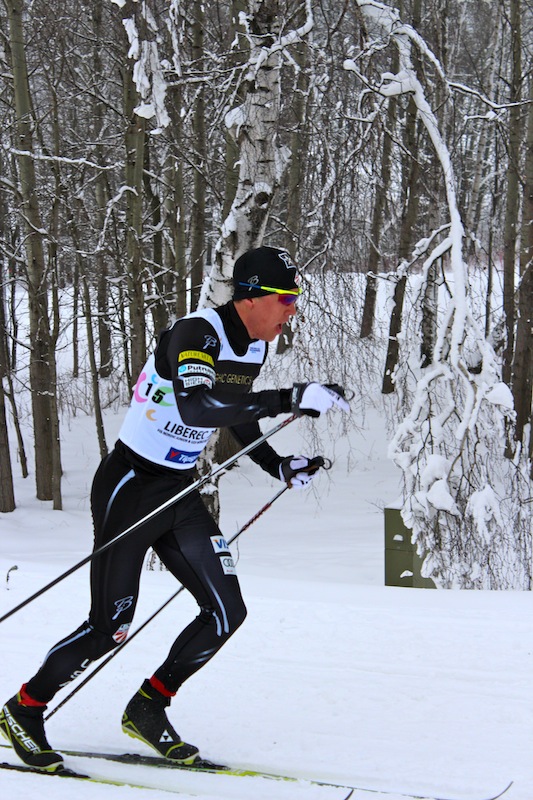
    Sophie Caldwell (USA) on her way to ninth place in the classic sprint at U23 World Championships in Liberec, Czech Republic. Photo: Liberec2013.
    Sophie Caldwell (USA) on her way to ninth place in the classic sprint at U23 World Championships in Liberec, Czech Republic. Photo: Liberec2013.

    To follow up a strong first day of junior racing at the 2013 Junior and U23 World Championships in Liberec, Czech Republic, the U.S. team posted another set of personal-best results in the U23 classic sprint. Sophie Caldwell (SMS T2) and Erik Bjornsen (Alaska Pacific University/U.S. Ski Team) made the semifinal round to finish ninth and tenth, respectively, in strong fields that included several regular World Cup skiers.

    “They looked really good,” said USST development coach and trip leader Bryan Fish. “Erik and Sophie both in the top 10, that’s awesome.”

    Caldwell and Bjornsen have both been to the World Junior/U23 championship event several times before. More importantly to them, however, they have each qualified for the sprint heats on multiple occasions but were always stopped in the quarterfinals. That track record that didn’t sit well with either of them going into Tuesday’s race in Liberec. With another chance to get the monkey off their backs the Americans set the record straight: they can compete with the best sprinters in the world.
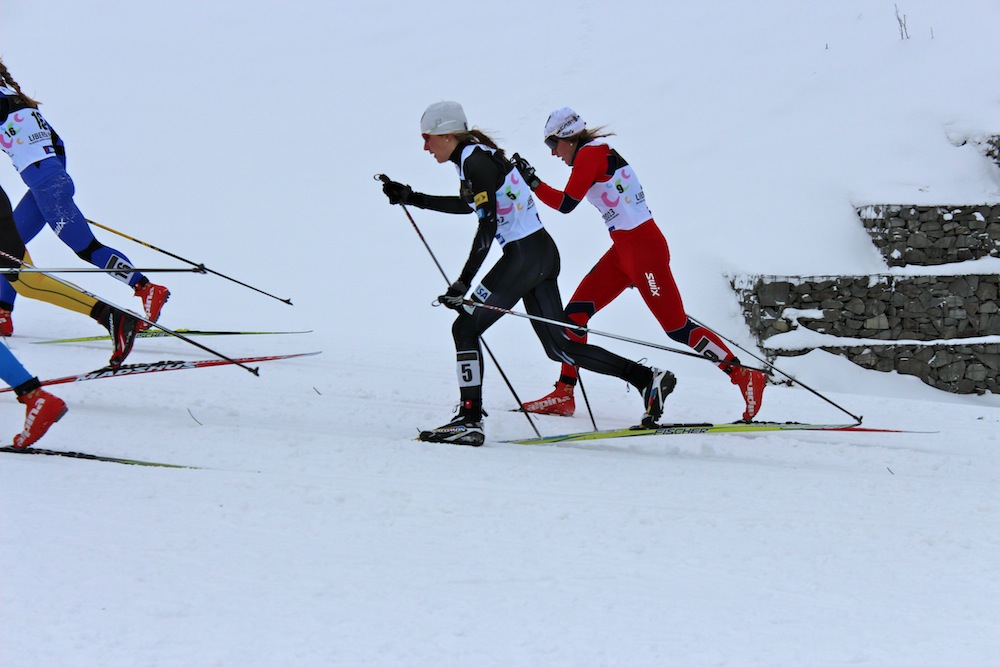
     

    Caldwell skiing through the semifinals. Photo: Annie Hart.
    Caldwell skiing through the semifinals. Photo: Annie Hart.

    Caldwell has been to three World Juniors before but has never attended the championships as a U23. Her previous best at was 17th in the sprint in 2009, but as she has already shown throughout the first half of the season, Caldwell is skiing on another level this year. With a ninth place now in the bag in her first race of the week at U23s, she’s feeling pretty good.

    “I’ve very happy with the result,” Caldwell said. “I wasn’t sure what to expect going into the day but saw that I was ranked tenth so I thought top-10 could definitely be a possibility.”

    Qualifying tends to be her strong point in classic sprints and Tuesday was no exception; she started off in fifth place in the prologue and knew after that she had a good shot at doing well in the heats.

    “I’m better at striding than I am at double-poling but Gus [Kaeding] and I worked a lot on double-poling the other day and my double-pole finish felt pretty good in the quarterfinal so I was psyched about that!” Caldwell said. “I had qualified in the top 30 all three times I went to World Juniors but never made it past the semis, so once I had a good qualifier I really, really wanted to make it to the semis.”

    To leave no doubt she would make it to the second round Caldwell pushed hard in the quarters, winning the heat outright. The effort, combined with the qualifier she’d just completed, nearly made her sick.

    “I basically went as hard as I could go in my prelim and I was really tired after both my prelim and my quarterfinal,” Caldwell said. “Like, ‘I think I might throw up’ tired (but I didn’t).”

    In the semifinals, she positioned herself well in the beginning against women like Hanna Kolb (GER), who ended up third, but ran out of gas in the end to finish fifth in the heat.

    “I wished I had relaxed a little more [earlier] because it was easy to tense up and waste energy that way,” she said. “There were three pretty big hills so it was easy to get tired.”

    At the end of the day, Caldwell couldn’t complain about a top-10.

    “My confidence is good right now — I’ve had a lot of solid results this year that I’ve been really excited about,” she said. “But I definitely still want to build off them. I’m thrilled about the World Champs nomination and feel very lucky and honored, so I want to do everything possible to try to be as fast as I can in late February.”

    After Caldwell, three women finished just outside the top-30 cutoff. Liz Guiney (University of New Hampshire) was 36th in the prologue, 2.5 seconds out of the heats, Caitlin Patterson (Craftsbury Green Racing Project) was 38th and Annie Hart (Dartmouth College) was 39th, five seconds out of 30th.

    Guiney, in her first U23s appearance, had mixed feelings about 36th.

    “I was pretty happy with my result today,” she said. “It was for sure a little frustrating to be within 3 seconds of qualifying, but I’m happy with the way I skied… I didn’t really know what to expect going in, and there are some really fast girls here!”

    Hart was also happy with the way she raced, even if it didn’t produce a top 30.

    “I feel pretty content I think with the result,” she said. “Results wise I was only a little bit out of qualifying so that’s encouraging for sure. You know, it’s kind of weird to feel good about a race where the whole point is to make the heats, but coming over here and racing against the very best U23s I think it’s really important to focus on how the race felt and not so much on the result (although obviously getting a good result is better than not).”
    Women’s results


    Erik Bjornsen (USA) in qualifying. Photo: Annie Hart.
    Erik Bjornsen (USA) in qualifying. Photo: Annie Hart.

    On the men’s side, the history leading up to Bjornsen’s performance was almost a mirror of Caldwell’s. He, too, had been to the championships many times but never made the semifinals. Bjornsen, like Caldwell, has come on strong in the U.S. this year to establish himself consistently as one of the best in any given distance.

    With a 10th place at U23s, he feels he can confidently ski with the best in the world, too.

    “I was pretty excited,” Bjornsen said. “I’m feeling good right now, I keep surprising myself as the weeks go by and I keep getting fitter, it seems like. It finally feels like I have my finish speed back.”

    Bjornsen began the heats wearing bib 16 after qualifying with a time four seconds behind Federico Pellegrino’s (ITA) winning mark. To leave no doubt he belonged in the next round Bjornsen his quarterfinal by half a second.

    “I just went into it with the mindset that I’ve been in three quarterfinals at these championships and I got knocked out there, and I wasn’t going to let that happen today,” he said. “I felt like I was in a good mindset, like I was going to go out there and fight.”

    It actually turned out to be a bit of a real fight, as some aggressive skiing by his competitors in the quarterfinal forced him to be aggressive right back. Many athletes commented on how important positioning and choosing the right track was to the outcome, and Bjornsen had to defend his right to his line.

    “I kind of got pushed around by an Italian kid who took my position, so I went over the top of the second hill really hard,” Bjornsen said. It happened twice, but the second time Bjornsen was ready. “He tried to ski right into me but [that] time I didn’t let him do it. I pushed back and it was really crucial.”

    Perhaps on the adrenaline of the jockeying, Bjornsen wanted to win the heat decisively.

    “I hammered out into front, just like, ‘I’m gonna do this, not gonna let this get away from me,’” he said. “So I pinned it the whole way to the finish. If it was at a US Nationals race I would have tried to be more conservative, but I think these races here you just have to hammer every heat you’re in. I threw up my arms; I was really excited. I think I won it by a solid five to ten feet. That was sweet.”

    He beat the eventual runner-up, Juho Mikkonen (FIN), by half a second.

    In the semis Bjornsen was matched up with Evgeniy Belov (RUS), who wound up third, and Tomas Northug (NOR), Sindre Skar (NOR), Alexander Wolz (GER) and Amund Bygland (NOR) — a group Fish described as “a really solid field.”

    Bjornsen started up the first steep climb in second postion, but got unlucky with positioning on the descent down the other side. Belov and Bjornsen both wanted the inside track and as they both moved to take it they lost the opportunity to double-pole off the top of the hill, and the lost momentum cost them at the bottom. Belov won the best line while Bjornsen was left on the outside, and Bjornsen finished fifth in the heat.

    “The guys like to push around out there, I don’t know what the best thing to do is,” Bjornsen said. “You’ve got to choose times where you think you can win that little — I don’t know — conflict, and sometimes skip it and maybe take the slower track if you have to.”

    Though slightly different positioning could have moved him to the final round, the 21-year-old was happy to have made it further than he had before and to learn over the course of the day that he could ski competitively with some of the guys who were in the final.
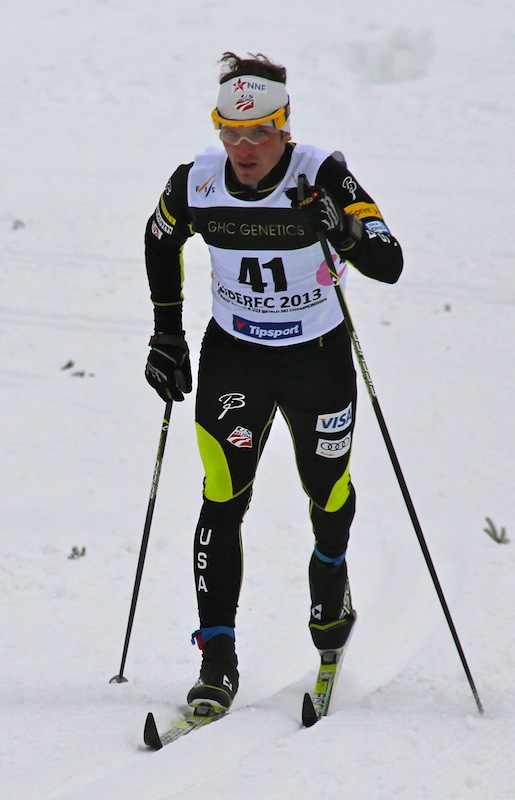
    David Norris (USA). Photo: Bryan Fish.
    David Norris (USA). Photo: Bryan Fish.

    “I feel like I could ski with any of the guys out there, so it’s sweet,” Bjornsen said. “Pellegrino and that Finnish kid, they were looking really good and Pellegrino is a great sprinter, but [Belov] I was skiing with in my semi so that was really cool.”

    After Bjornsen, Eric Packer (SMS T2) was the first American to just miss qualifying for the rounds. He was 34th, 2.68 seconds out of 30th. David Norris (Montana State University) was in 36th and Skyler Davis (SMS T2/USST), who was sick, was 53rd.

    Packer, who was 26th in the freestyle sprint in Turkey, was not quite happy with the result.

    “I’m definitely bummed to have missed out on qualifying,” he said. “I was hoping for a top-15, and I feel like I could have been in there on a good day, but just didn’t piece it together quite right. You have to be on form and ski the course well to qualify in this field. I knew the pace I needed to ski to qualify, and was on track until the last 45 seconds when the wheels started to come off.”

    The men’s course as particularly brutal. At 1.6 k it was slightly longer than the women’s, with an addition over the very top of the first climb to make a hard hill even harder.

    “The hills were definitely bigger than anything we’ve raced in a sprint domestically this year,” Packer said.

    To put the biggest climb in context, Fish said, “the guys were able to diagonal stride right up it, but candidly, it was the type of hill that I couldn’t, physically.”

    Men’s results

  • U.S. Nationals Notes and Quotes: That Just Happened

    U.S. Nationals Notes and Quotes: That Just Happened

    Waiting to see who had won.
    Sadie Bjornsen and Sophie Caldwell, waiting for the outcome of their photo finish to come through in the freestyle sprint at U.S. Nationals.

    FasterSkier’s coverage of the 2013 U.S. Cross Country Championships is brought to you through the generous support of The Memory Clinic in Bennington, Vt.


    MIDWAY, Utah — Skis cleaned, bags packed, flights boarded. The hundreds of athletes, coaches, parents and fans that camped out at Soldier Hollow for the past week have all either gone home to recuperate or are on their way to the next race. As usual, athletes were so verbose in describing their races we couldn’t fit it all into our race reports. The final edition of notes and quotes from U.S. Nationals: skate sprint style. Dakota Blackhorse-von Jess (Bend Endurance Academy), the men’s victor, had particularly interesting things to say about the unusual dynamics of Tuesday’s race.


    On the beginning of a ski career:

    “I was living in Pocatello, Idaho, and I chased a girl into [skiing]. And when I left Pocatello I kept doing it and I liked it, I don’t know why. I wasn’t especially good at it. I was already a two-sport athlete, I ran cross-country and track, and it just fit really nicely in the winter. It was better than wrestling; I didn’t like wrestling all that much.”

    — Dakota Blackhorse-von Jess (Bend Endurance Academy), 1st.

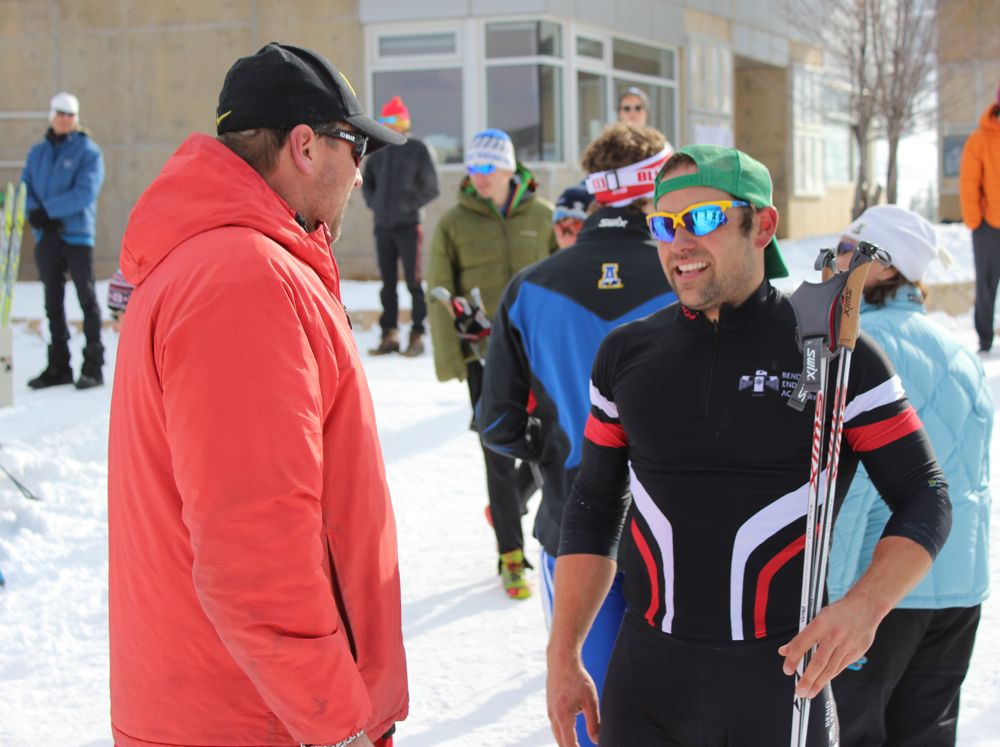
    Blackhorse-von Jess and BEA coach Ben Husaby.
    Blackhorse-von Jess and BEA coach Ben Husaby.

    “[Dakota] came to skiing very late. He basically decided his junior year of high school that he wanted to be a ski racer, and I continued to work with him a little when he was at Dartmouth.

    “Just in the last few years we decided to make a run at it. We’re a pretty small team on the high-end level; we don’t have a lot of athletes or a ton of resources, but we work well together. Dakota’s unique in the way he approaches racing and training… It’s just been really fun to watch him move from fifth place few years ago to first place this year. He was always fast at qualifying. Most amazing to me was he showed he can ski consistently all the way through heats today on very challenging sprint course. It was obvious the distance skiers fared well and the sprinters had a harder time. This is a testament to his preparation and his commitment.”

    — Ben Husaby, Bend Endurance Academy head coach 


    On the longer men’s course:

    “Today was a much different sprint than we’re used to. It was longer course and it starts with a long climb. That’s a lot longer than you can ski maximally… Watching others race and also from my experience out there [I learned] this course is suited towards the distance skiers, especially based on the qualifying results. I knew that the pure distance guys were going to go for it and they did in the semifinal, and I knew if I just went for it and stuck with them everything would be OK.

    “But it also changed the race dynamics because if you’re not a, quote, sprinter, you have to take it there [at the start] as we saw with Tad and with Erik to a certain extent — although Erik’s, you know, a good sprinter. But Tad is certainly not known for that, and in the classic race as you probably saw it was very slow, very tactical, because the guys with strong double-pole finishes were just waiting. That’s what it wound up being. But today it was very, very different because no matter how good your V2 is, if you’re not in the race you’re not in the race… And that’s what those guys without — and it’s really not fair to say they don’t have V2s, because Tad is a good skier. But it’s not the same.”

    — Blackhorse-von Jess


    On strategy:

    “Erik told me right before the start, ‘You have to kick extra hard right at the end of the bridge,’ so I tried to think about that.

    Sadie Bjornsen skiing through the semifinals. Photo: Sarah Brunson/USSA.
    Sadie Bjornsen skiing through the semifinals. Photo: Sarah Brunson/USSA.

    “It’s not necessarily the slingshot so much as just being in the right place. You need to find a place to ski and if you’re behind then it’s hard to move around, so it’s more just positioning coming into the final line. But there’s a lot of time between that final corner and there so there’s places to make it up if you were in the wrong place.”

    — Sadie Bjornsen (Alaska Pacific University/U.S. Ski Team), 1st

    “I worked on some tactics … I was right behind Tad and then over the top hill I kind of let him get a couple feet and just slowed up to kind of get Dakota to bunch up a little bit. I just hammered over the top, and I’ll be interested to see some pictures and see if that kind of worked. And then he had some momentum in the finish, but I think I had three or four strokes where I just relaxed and that’s where I lost it. As soon as I got out of my tuck I needed to just hammer with all I had left.”

    — Erik Bjornsen (APU/USST), 2nd

    “Caitlin Gregg took it out pretty fast. I talked to her after and she said she wasn’t as confident in her final sprint. She thought her chance was kind of taking it out from the start and dropping some people, but we stuck with her. I tried — I wanted to be in second or third coming into the downhill because I knew there was a draft. It wasn’t the end of the world if you were in that position but I was just getting really flustered on the downhill and the heats before then because it was harder to pass.”

    — Sophie Caldwell (SMS T2), 2nd

    Alex Howe coming around the final bend in the quarterfinals. Photo: Sarah Brunson/USSA.
    Alex Howe coming around the final bend in the quarterfinals. Photo: Sarah Brunson/USSA.

    “I really just wanted to hang in and get a good position in the downhill. It really came down to whoever was in 2nd, 3rd, 4th, and if you got enough of a draft you could just slingshot around the corner. So I was just looking for that spot. It worked out pretty well in the quarters and semis and in the finals it was a little rougher because we had to make up a little bit of a gap that they built on us, with Tad hammering off the front.”

    — Alex Howe (Craftsbury Green Racing Project), 3rd

    “I think I may have been fourth and then I wanted to take the inside of this corner because it’s been working for me so far. I think as long as you assert yourself you usually get it so I kind of made a point of getting in there and tried to hit it really hard going over the top [before the finish].”

    — Becca Rorabaugh (APU), 4th

    “Every heat it just waited ’til the hill underneath the bridge — the steep one — and I seemed to be able to close some people on that. So I just kinda waited until the end, passed a few and then it was just a drag race to the finish. A little tight in the finishing chute, but that’s racing.”

    — Logan Hanneman (University of Alaska, Fairbanks), 4th

    “Like this course always does, we all ended up down there again together… All the quarter and semi I was just trying to play it easy in the back here and then really go and make sure I had a good slingshot. Our skis were so fast today, and it was advantageous to be in the back and move slowly through the pack. So that’s what I did every quarter and semi, until the final. For the final I just found myself a little bit further back.”

    — Sylvan Ellefson (Ski & Snowboard Club Vail/Team HomeGrown), 5th

    “I think it was really key, at least in the qualifier, to just ski so smooth. Especially when you’re at altitude or whatever, the higher tempo, the harder you work and the gains aren’t that significant. So in the qualifier I just tried to stay super smooth and then in the heats just not leading on that downhill was pretty clutch.

    “It’s funny, because no one wants to lead on the downhill and I’d just start gaining and I think the further and further into the heats, when everyone starts realizing that’s a really bad idea, it gets kind of funny because everyone’s got the same game plan. So it’s more of a mental battle. Just like, all right, who’s gonna go? Because someone has to. You can’t just like stand on the top of the hill for five minutes and be like, ‘After you.’ ‘No, after you (laughs). I was just so glad and everyone’s awesome and I love Sophie and she did great.”

    — Annie Hart (Dartmouth College), 5th


    On the final lunge:

    “I wanted to be in a good position to take the inside corner, but then Sadie and Jennie came by me and I got even more flustered. I ended up going way outside on the corner but the finish stretch is so long that there is still time to make up. Sadie and Jennie came around, then I think I was in third going into the final stretch. I think I was slowly gaining and tried to do a big lunge.”

    — Caldwell

    “I didn’t feel as good as I did in the classic, so I’m definitely a little disappointed in myself for not lunging. I think I’m going back and realizing I don’t think I lunged at the finish, but that’s going to be a good finishing picture at least.”

    — Jennie Bender (Central Cross Country), 3rd

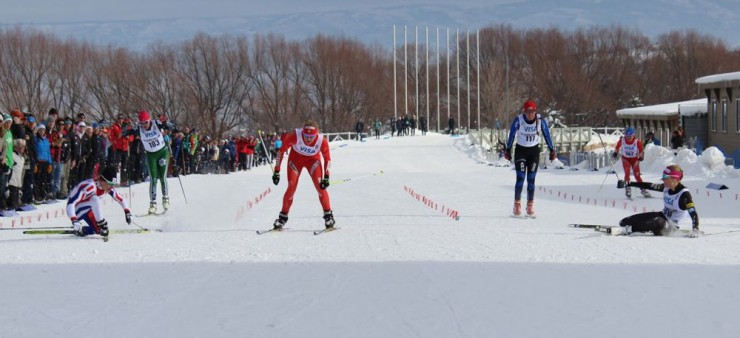
    Bjornsen and Caldwell lunge.
    The lunge.
    Post-lunge.
    Post-lunge.

    “I got lucky in the lunge in the semi and then I got kinda the other end of the lunge in the final. But yeah, it was pretty sweet.”

    — Hanneman

    On that distance guy in the A-final:

    Elliott leading the A-final before the downhill.
    Elliott leading the A-final before the downhill.

    “I feel like I was skiing super relaxed all day, and I knew in our quarterfinal I’d have to outkick some of those guys. And it happened! I can’t believe I out-kicked some of those people! It was partly that our skis were really good. It was sweet — I’m a tiny guy, so…

    “In the semis, like, those guys are such good sprinters. Like Skyler, Mikey, Tim, Dakota. So I was like, ‘Oh man, I can’t out-kick any of these guys,’ so I just tried to go from the gun and it ended up working good.”

    — Tad Elliott (SSCV Team HomeGrown/USST), 6th

    “I was really hoping Tad was just going to gun it from the start. I pulled up beside him, which I don’t know if it was kinda like, ‘You go for it Erik,’ type thing. Maybe I just should have sat in from the start.”

    — Bjornsen, 2nd

    “Tad went really hard up the hollow. He was telling me, ‘That’s my only chance!’ So yeah, he went hard and then I was kinda out the back.”

    — Hanneman

    “It was good, fast racing. It was awesome having Tad pushing the pace today; it totally different. In my quarter and semi we weren’t going the fastest sprint pace I’ve gone. So in the final he was doing a good job of pushing that pace. Which I think, if he wanted to win today, was what he needed to do. So it was a great tactic by him.”

    — Ellefson

    “It makes it more — it makes it more like bigger races, more like the World Cup. Because these races here are — they don’t feel the same because everyone’s just siting there waiting for the next guy to do something, because nobody’s gonna, quote, get away. Whereas at a higher level, absolutely they will. And it’s easy for the top five of us or so, over the course of the day, to sit in and do very little and then kick it down at the end. Whereas on the bigger stage I would have to guess that that’s not the case, based on our results. So it actually made it a lot more fun in some ways.”

    — Blackhorse-von Jess 


    On making improvements:

    “I think it’s just the stress-free way of life. I might have done a bit too much socializing in college, lets call it that. So I think the laid-back life in Craftsbury is much more suiting to my personality and everything. I grew up on a farm, so Craftsbury is right at home for me out in the backwoods, no cell phones — it’s perfect. So with less distractiosn and a quieter lifestyle I think I do a lot better, apparently.

    “For this season, I mean, I’d like to continue. Just use this as a builder and keep racing fast and try to race the whole sason as fast as I can. I’ve had seasons in the past where I race fast at certain points and I’d like to just stay consistent and keep building up. Hopefully that’ll happen.”

    — Howe

    “Two podiums: I don’t know what that means. It means I’m starting to get better so that’s a plus. It’s better than last year, which surprises … me, that that happened.

    “My whole kind of approach is trying to keep a neutral mentality and to leave the option open for anything positive to happen. I definitely was going into this clueless of how things would go, especially after I was disappointed in November about how I was racing. But everyone was like, just — patience. I’m really happy that I’m sprinting well. Distance is my next measure of health comeback so I’ve been kind of saying that if I — when there was a lot of negative possibility or negative mentality, that I would not let that creep in and kind of stay neutral and that’s worked out OK.”

    — Bender

    “The quarter went pretty well and people relaxed a little on that first turn. So then that went well and then just an avalnche from there. You get feeling better.”

    — Hanneman

    “It’s funny because in my qualifier, I felt so terrible. But I honestly think it was like a jump start for the day, probably for the rest of the season, who knows.”

    — Ellefson

    “This is my best finish ever at U.S. nationals. It’s super exciting. I think it helps to be so relaxed.”

    — Rorabaugh

    “I’m really excited. I really worked on my turnover and hopefully it’ll get working in distance races. I think it was a good step forward.”

  • Bjornsen Keeps Calm in Skate Sprint, Saves Kick for Second Straight National Victory

    Bjornsen Keeps Calm in Skate Sprint, Saves Kick for Second Straight National Victory

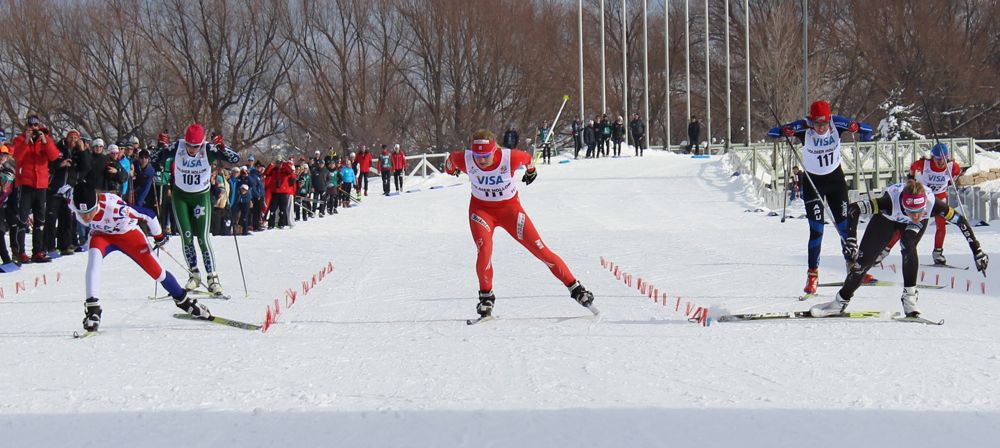
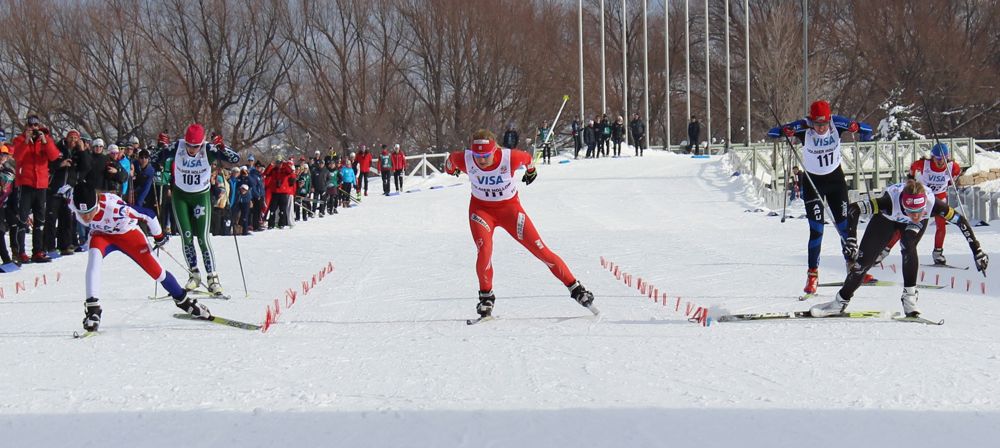
    Sadie Bjornsen of APU/USST (r) edges Sophie Caldwell (SMST2) and CXC's Jennie Bender (c) in the 1.3 k freestyle sprint final at U.S. nationals on Tuesday in Soldier Hollow. Caldwell was second and Bender placed third.
    Sadie Bjornsen of APU/USST (front right) edges Stratton’s Sophie Caldwell (l) and CXC’s Jennie Bender (c) in the 1.3 k freestyle sprint final at U.S. nationals on Tuesday in Soldier Hollow. Caldwell was second and Bender placed third while Becca Rorabaugh (117) was fourth, Annie Hart (103) fifth and Caitlin Gregg (r) sixth.

    FasterSkier’s coverage of the 2013 U.S. Cross Country Championships is brought to you through the generous support of The Memory Clinic in Bennington, Vt.

    MIDWAY, Utah – The whole tactics and ‘let’s see if I can outsmart you’ game was pretty much out the window by the start of the women’s freestyle sprint final at U.S. Cross Country Championships on Tuesday.

    Or so it seemed.

    With every passing quarterfinal and semifinal, six competitors per heat shared the task of completing the 1.3-kilometer course the fastest and smartest way possible. Play your cards right – getting in any fighting position except first on the long downhill – and you could make the final. Do that in the final, and you should make the podium.

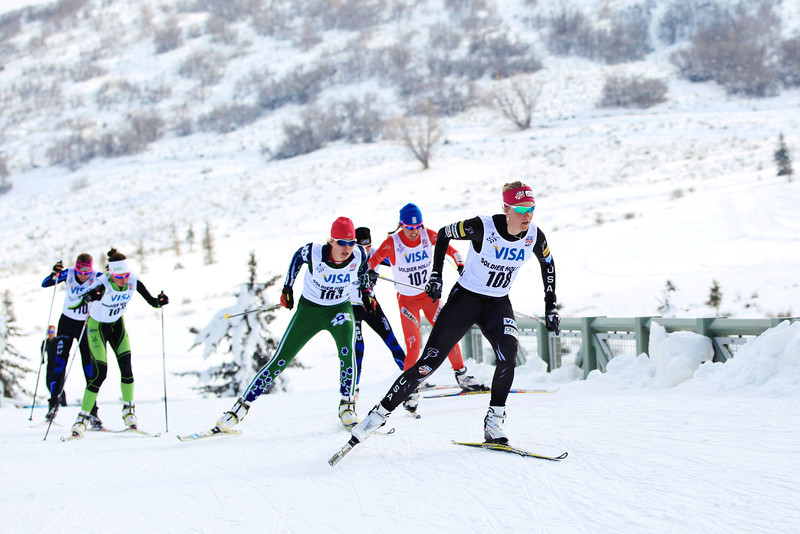
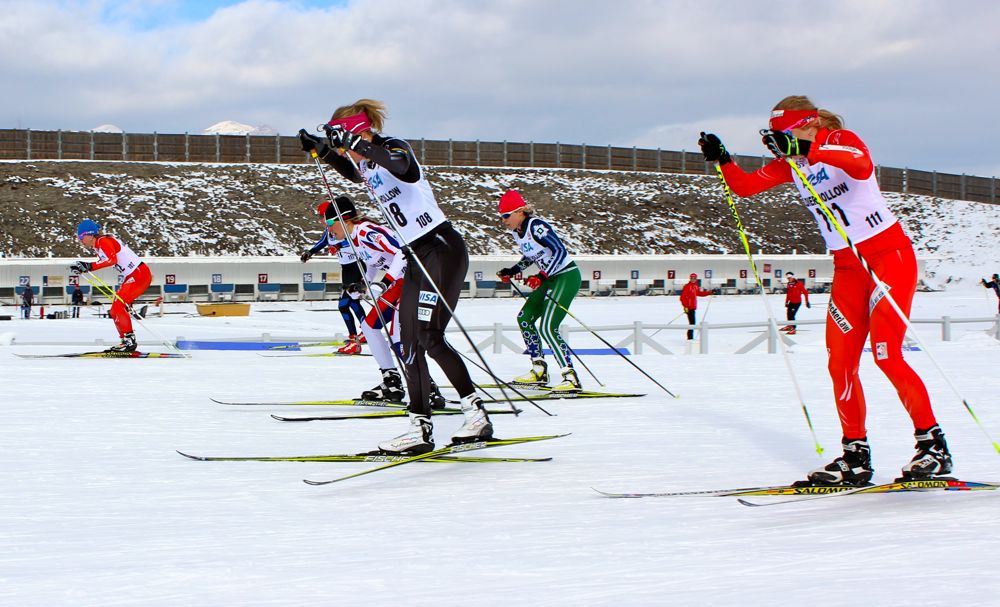
    Caitlin Gregg (CXC) leads from the start of the 1.3 k skate sprint final at U.S. nationals in Soldier Hollow. She ended up sixth behind Sadie Bjornsen (in black), who captured her second straight victory.
    Caitlin Gregg of CXC (l) leads the start of the 1.3 k skate sprint final at U.S. nationals in Soldier Hollow. She ended up sixth behind Sadie Bjornsen (in black), who captured her second straight victory.

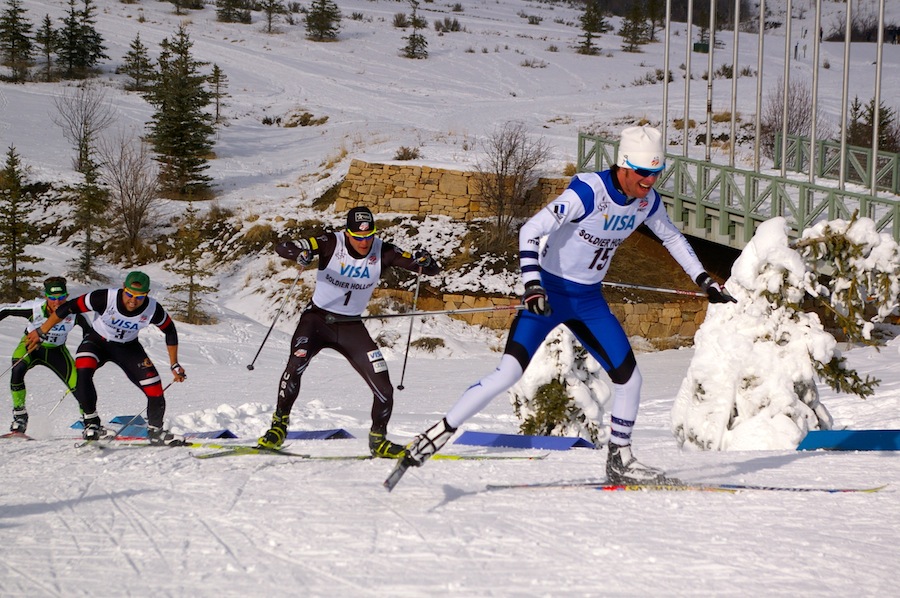
    It was too easy, and Caitlin Gregg – one of the shorter ones in the bunch – knew it wouldn’t work for her. The 32-year-old Central Cross Country (CXC) skier had watched US Ski Team (USST) member Tad Elliott use his small stature to his advantage in the men’s final just before. He stormed out of the gate and tried to drop the field, building a gap by the first straightaway. But Gregg never saw the finish.

    Oh well, she thought. Might as well go for it, too.

    “Look at how much taller are these girls are than me,” Gregg said. “I’m a little [makes sound effects] meep, meep, meep. I had to go where my strengths were. I pretty much just hammered as hard as I could.”

    The rest of the women’s finalists simply followed her lead. The pace was much different than they were used to, but it was a welcome change to the typical jockeying game that came about later in the heats.

    Sadie Bjornsen, of Alaska Pacific University (APU) and the USST, didn’t stress.

    “Kudos to Caitlin for charging from the start,” Bjornsen said. “That’s a scary thing with this course. … I was afraid it was gonna be a cat-and-mouse again.”

    Instead, she followed Gregg and Sophie Caldwell (Stratton Mountain School T2 Team) up the short, steep climb known as the horseshoe at Soldier Hollow, putting herself in third for the downhill.

    Meanwhile, Caldwell just ahead in second was getting nervous.

    “It’s just really stressful coming down the hill because positions could change so much and always felt very flustered,” said Caldwell, who placed third in the preceding classic sprint at nationals.

    “The position I came into the stadium wasn’t ideal,” she added. “It wasn’t terrible, but Jennie [Bender] and Sadie [Bjornsen] both flew by me in the draft on the downhill.”

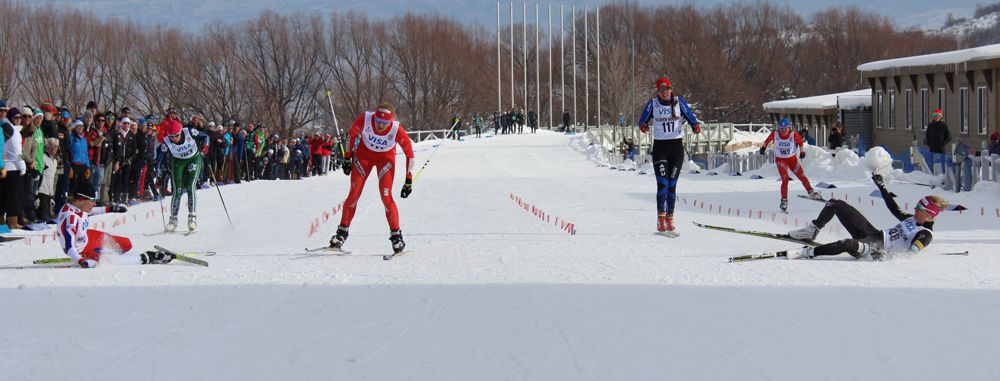
    Rounding the corner into the stadium, it was all Caldwell could do to challenge Bjornsen to the line. The two lunged in a photo finish, and Bjornsen took the win for her second straight national title and first in a sprint. Caldwell was second, and Bender finished just behind in third.

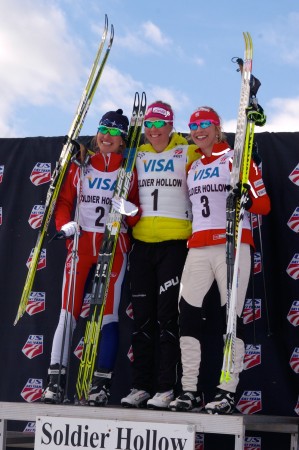
    Women's freestyle sprint podium at 2013 U.S. nationals: 1. Sadie Bjornsen (APU/USST), 2. Sophie Caldwell (SMST2), 3. Jennie Bender (CXC)
    Women’s freestyle sprint podium at 2013 U.S. nationals: 1. Sadie Bjornsen (APU/USST), 2. Sophie Caldwell (SMST2), 3. Jennie Bender (CXC)

    “This time, I remembered to lunge at the finish,” Bjornsen said, after taking second to Bender in the classic sprint last week.

    Caldwell also lunged, but longed for a few extra meters to catch up.

    “I was pretty sure when I finished that Sadie had gotten the win,” Caldwell said. “I don’t know if I looked over or just felt that she was a little ahead.”

    For Caldwell, it was her best finish at nationals this year (following two third-place finishes) and tied her skate-sprint result from last year’s U.S. championships, where she was second to USST member Jessie Diggins.

    For Bjornsen, 23, two victories and two silvers in four races were as much as she could’ve asked for following an injury filled offseason.

    “For all of us who got a win this week, it’s a dream come true of course,” Bjornsen said. “But this wasn’t even in my hopes and plans two months ago before the season. Today was a real test of my fitness because I was exhausted, as was everybody … It’s just a good feeling to be able to finish a fourth race in a big week like that strong.”

    One step behind a repeat sprint victory, Bender (CXC) nearly made it into the mix for first or second after winning the classic sprint last week. After the finish, she couldn’t remember if she lunged or not, but was wishing she did.

    Regardless, she was excited about her national showing after a bout with mono and Lyme disease last summer.

    “The podium definitely gives me hope for the rest of the season,” Bender said. “I had no idea how today would go really.”
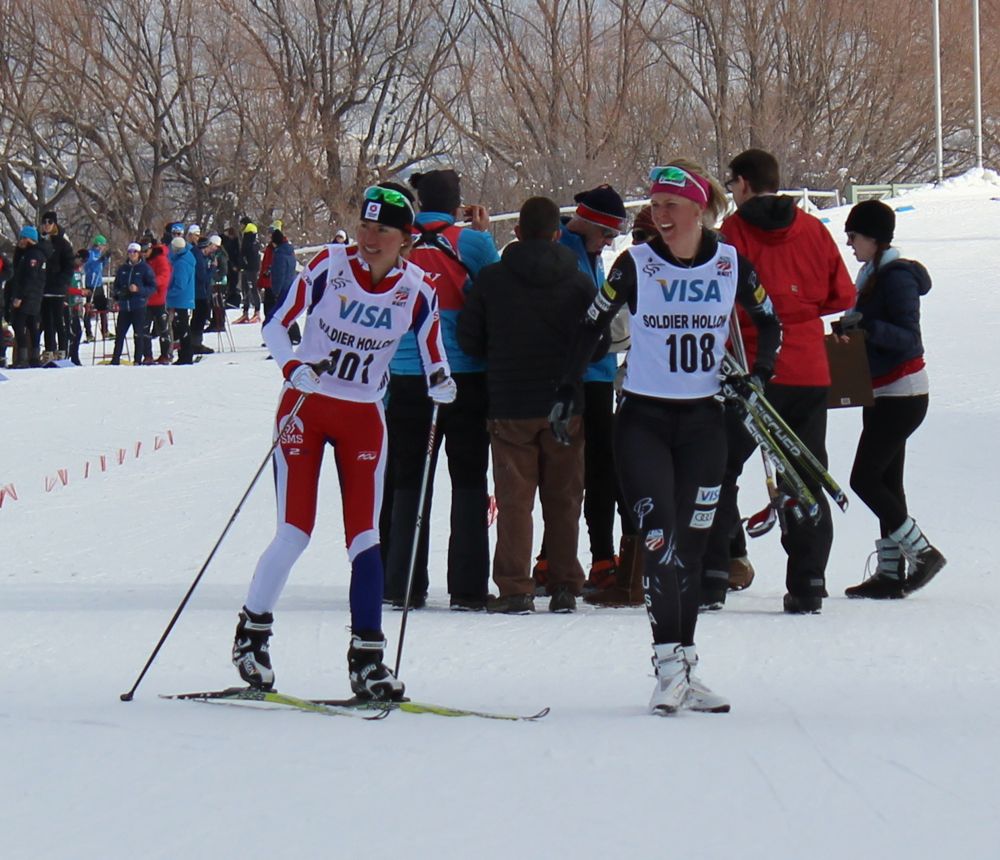
    Given the women’s course was identical to the classic sprint, she knew what was coming. For her, it was perfect.

    “It’s definitely a super-tactical course and you never really knew what was going to happen,” Bender said. “I had to go into it with that mindset that whatever happens, happens. Each race is different.”

    In the semifinal, she fell behind on the final climb and was nearly out of contention to advance. Making up time on the downhill, she slingshot back into position and won the heat. For the final, she worked her way up on the outside of the hill, scooting into fourth for the descent. There, she passed Caldwell and Becca Rorabaugh (APU), who ended up fourth.

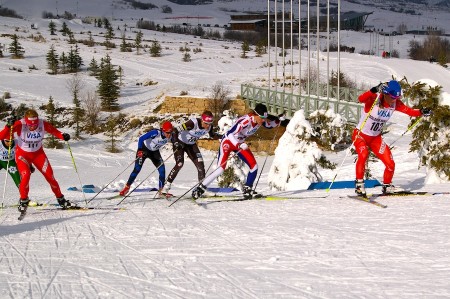
    Caitlin Gregg (r) leads up the "horseshoe" climb in Tuesday's U.S. nationals skate sprint final at Soldier Hollow in Midway, Utah. Sophie Caldwell (second from r) hangs in second, Sadie Bjornsen sits in third, and Jennie Bender (l) makes her way up the outside.
    Caitlin Gregg (r) leads up the “horseshoe” climb in Tuesday’s U.S. nationals skate sprint final at Soldier Hollow in Midway, Utah. Sophie Caldwell (second from r) hangs in second, Sadie Bjornsen sits in third, and Jennie Bender (l) makes her way up the outside.

    “I was like, ‘OK, just stay in the pack, just stay there, just stay there … I’m lost again,’ ” Bender recalled thinking. “Coming down this hill I just got super low and made sure I pushed really hard off so that I could catch up and it worked. Each time I came flying around the outside and I was like, ‘Sweet! All right, let’s go for this!’ ”

    Following Rorabaugh in fourth, Annie Hart (Dartmouth College) also slipped by Gregg for fifth. Gregg ended up sixth, but remained satisfied with her effort. Earlier in the day, she had qualified in second just 0.63 seconds behind Caldwell, who won in 2:55.07.

    Gregg thought that was great considering she suffered a mild concussion a few days before when she hit her head on a beam.

    “I didn’t do the classic 20 k because I’ve been having a lot of concussions this year,” she said, referring to one suffered in the Engadin ski marathon in March. “[Monday] I felt better and today I felt fine. I’ve kind of learned the drill with how bad it is and how long it takes now [to recover]. It’s probably not great, the doctors say, but it’s kind of a low-risk sport.”

    Looking back, she’s not sure she would’ve changed her strategy for the final.

    “Every other heat I went out in the pack and I did that signature slingshot, but then I was like, ‘Gosh these girls are so good,’ ” Gregg said. “I just thought, ‘What if? I gotta just try it I guess. Why not?’ ”

    The third-fastest qualifier, Hart was regret-free after notching a career best at nationals. Two years ago, she was 17th in a classic sprint.

    “I’ve been having an OK week, nothing bad by any stretch of the imagination, but also nothing that was just like, ‘Yeah, that’s really what I wanted,’ ” Hart said. “And today was just so perfect. I could not have asked for a better day, just like, skis were great, course was great. I just stayed really relaxed, and it was just a blast.”

    After falling slightly behind on the last climb, Hart reunited with the group on the descent.

    “We were just all in this huge glomp coming around the turn and then it was just like, everyone’s yelling and you’re just zoned into the lane you want and someone’s in your lane,” she said. “But it was just so much fun. I would not have done, I don’t think, anything differently.”
    Rorabaugh was also thrilled with a nationals best of fourth after notching two sixth-place finishes earlier this week. Not feeling well to start the day, she considered calling it quits after qualifying in 17th.

    “I’ve been kind of sick the last couple races and I was like, ‘Man, this just isn’t smart. I’m not trying to make U23’s,’ ” Rorabaugh said. “This morning I was pretty sure I wasn’t racing, coughing stuff up, total mess and so then I was like, ‘I’ll try the prelim, see what happens.’ Debated after that for a long time and then I was like, ‘Whatever I’ll just ski, it’ll be fun,’ and it was!”

    In the heats, Rorabaugh stuck with a similar tactic: don’t lead.

    “It works out better to try to come from behind at the end with the big corner and the fast finish,” she said after advancing second in her quarterfinal and third in her semi.

    Rorabaugh took the inside lane to the finish, edging Hart on the outside behind Caldwell.

    “So now I’m fourth!” Rorabaugh said of breaking her streak. “Now of course I’m like, ‘Oh, I was so close to top three.’ ”

    — Audrey Mangan contributed reporting

    Qualifier results | Heat results

    U.S. nationals skate sprint women's final finish: post-lunge with Sadie Bjornsen (r) in first, Sophie Caldwell (l) in second and Jennie Bender (c) in third.
    U.S. nationals skate sprint women’s final finish: post-lunge with Sadie Bjornsen (r) in first, Sophie Caldwell (l) in second and Jennie Bender (c) in third.
  • Caldwell Reigns Again in Bozeman Sprint

    Caldwell Reigns Again in Bozeman Sprint

    Sophie Caldwell (SMS T2) en route to her second sprint win in the last five days, this time going head-to-head at Bohart Ranch. Sadie Bjornsen (right) and Caitlin Gregg (left) took second and third, respectively.

    BOZEMAN, Mont. — Let it be known, there’s a new queen on the SuperTour. On a sunny morning at Bohart Ranch, Sophie Caldwell (SMS T2) handily won the freestyle sprint from early morning qualifier through to the finish, putting herself on top of the sprint rankings halfway through the Quebec World Cup qualifying period. Sadie Bjornsen (Alaska Pacific University/USST) skated to second place and Caitlin Gregg (Central Cross Country) took third.

    “I never know what to expect,” Sophie said after her race. “I was happy with my prelim and just hoped to hang on to the final.”

    Her competitors, many of them good friends and former teammates, made up for Caldwell’s modesty in the mixed zone.

    “Sophie is just the best. She’s a rock star,” said Annie Hart (Dartmouth), who was fifth.
    “To watch Sophie crush it, that was insane,” added Parker Tyler (Univeristy of Utah), who was sixth. “She skis better than anyone in my opinion, she can ride a ski like no one. I’m so stoked for her.”

    Caldwell cruising to victory.

    Caldwell said she simply skied to her strengths over the course of the morning.

    “I knew my strength was the sprint finish,” she said. “I wanted to try to hop in behind whoever was leading, stick with them, and save a little energy for the final sprint. And that’s what I did, so it played out well.”

    Such a strategy is actually quite cunning, and easier said than done. Bjornsen clearly showed an advantage out of the double pole zone when the final got going and held onto it with the rest of the field breathing down her neck for much of the race.

    “I wanted to lead from the start and control it, but there was no controlling it,” Bjorsnen said. “We just went as hard as we could.”

    Gregg, who tucked into third behind Caldwell at the start, agreed that the pace was blistering in the final heat. Since she’d led her two preliminary heats outright, Gregg decided to change tack and see whether she could catch a ride by skiing from the middle of the pack.

    “Those two girls are tough to sit behind because once they decided to go, they go,” Gregg said. “You can’t sit there and coast on by them and surprise them.”

    The start and finish area sat on an elevated plateau, and the course thereafter swung down, up another short hill into the biathlon stadium, and up another sharp climb to the high point before horseshoeing back towards the finish for a total of 1.5 k.

    By the time the field reached the final turn, Caldwell moved to the outside and around Bjornsen, and from there the race was nearly decided. By the time Caldwell, Bjornsen and Gregg reached the last stretch, Caldwell had built a comfortable gap.

    Hart and Bjornsen easing off the gas in the quarters.

    “I think that she probably skied a tactically better race, and Sophie’s known for that,” Bjornsen said, but concluded that she was happy with how the day went for her since it gave her a chance to practice sprinting before heading back to the World Cup circuit with the U.S. Ski Team.

    “Last year I didn’t really ski heats because I only made it in once on the World Cup, so it’s fun to go back and remember how to ski a bunch of hard times again and again,” she said.

    Some distance separated the podium from the rest of the field. Caitlin Patterson (Craftsbury Green Racing Project) finished by herself in fourth after starting in the seventeenth qualifying spot. The Alaska native was happy with the effort and grateful for the chance to finally ski rounds.

    “It was a fun day, and it was really fun to do the sprint heats,” she said.

    Hart and Tyler sprinting in the finals.

    At the back of the pack, two college skiers duked it out to finish the best sprint races of their lives; Hart and Tyler finished fifth and sixth. Hart had never made it as far a the final before, and Tyler hadn’t even contested a sprint since 2009 at the Junior Olympics.

    “It was all my favorite people, minus some, at the start,” Hart said. “It was just good vibes, I was really happy, and I think the happier we are the faster we ski.”

    Tyler appeared slightly shocked several minutes after the finish. “It was pretty much amazing,” she said. “I was not expecting that at all. I had a blast.”

    Given the above-freezing conditions on Wednesday night and Thursday morning, it’s a marvel that the races could even take place. Gregg thanked the organizers for pulling off the feat with less that a week’s advance notice that Bohart would host the sprints that West Yellowstone couldn’t.

    “The snow is obviously not abundant, but I thought the courses were totally fair and totally fun,” Gregg said.

    Official results.

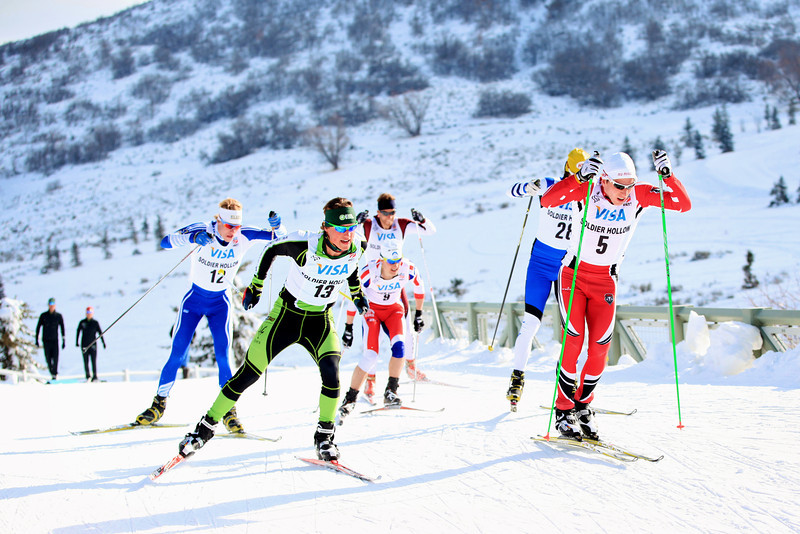
    The A-final start.
  • Hart Takes Advantage of Dartmouth D-Plan, Hangs with SMS

    Hart Takes Advantage of Dartmouth D-Plan, Hangs with SMS

    Dartmouth junior Annie Hart (left) with her training partners from the Stratton Mountain School T2 Team: Sophie Caldwell (second from l), Jessie Diggins and Erika Flowers (r). Before starting the USST dryland camp in Park City, Utah, the women participated in a Fast and Female event in Park City on Oct. 7. (Erika Flowers photo)

    Annie Hart has been hanging out with the Stratton Mountain School (SMS) T2 Team for a couple months now, but don’t get it wrong, she’s still a Dartmouth skier.

    A 20-year-old junior, Hart spent most of the summer studying and training at Dartmouth College in Hanover, N.H. That way, come late August, she could take the fall off.

    Annie Hart (r) rollerskiing with SMS skier and former Dartmouth teammate Erika Flowers. (Austin Caldwell photo)

    In an email from Park City, Utah, where she’s been training with the U.S. Ski Team (USST) for the last week, Hart explained she’s taking advantage of Dartmouth’s D-Plan. Typically, it allows sophomore or juniors to take one term off after attending summer classes.

    “I decided to take the fall off, which works great with skiing because the fall is a super important time to work on technique and fitness and going fast,” Hart wrote.

    Once she made her decision, which her parents and college coach Cami Thompson fully supported, Hart needed a team to train with. A Minnesota native, she was familiar with Vermont’s new SMS elite team since her former teammates Sophie Caldwell and Erika Flowers were on it.

    “I figured it would be an easy transition, given that I’d spent the past two years training and racing with Soph and Erika and thought this would be a good way to spend the fall,” Hart wrote. “One of the things that is sort of scary with taking a fall off to focus solely on skiing is the very good possibility of overtraining.”

    She knew Stratton’s nordic program director, Sverre Caldwell, and worked with its head coach, Gus Kaeding, with Central Cross Country (CXC) last summer in the Midwest. Given her past experiences with those them, as well as her college teammates, Hart chose Stratton without giving much thought to other programs.

    Stratton skiers Sophie Caldwell (l) and Erika Flowers (c) having fun with Dartmouth junior Annie Hart, who has been training with the SMS team this fall. (Erika Flowers photo)

    Still on the university racing circuit, she had to keep the arrangement training-based without being a member. Kaeding said on the phone from Park City that he didn’t hesitate to invite her to join workouts and USST camp trips (Hart also went to Lake Placid, N.Y.), but she paid her own way.

    “I thought it would be good to have one more good skier around that fits in well with the group,” Kaeding said. “She’s an excellent cook, which makes up for my inability there. So she’s been with us and she’s not officially on the team. We’ve given her a few of the shirts and stuff, but she pays for everything on her own.”

    On Wednesday, Hart will travel to Canada with the team for the USST on-snow camp at Frozen Thunder in Canmore, Alberta, through Oct. 27. She’ll stick with Stratton through the SuperTour races in Bozeman, Mont., Dec. 1-2.

    Last summer, Kaeding said Hart proved she was at another level while training with CXC. She went on to finish fourth at NCAA Championships in the 15-kilometer classic and was eighth at the SuperTour Finals in the 10 k classic.

    “I think she got in a lot better shape last summer,” Kaeding said. “I’d like to think that was some of the reason she improved her results last year.”

    Hart explained her time spent with Kaeding and Jessie Diggins (SMS/USST) at CXC made the decision even easier.

    “He obviously knows his stuff, and seeing him work with Jessie and then watching her progression to being completely and totally amazing also helped me make my decision,” she wrote.

    Regarding her thought process in taking this fall semester off, Hart had a couple of reasons.

    “One of them is to sort of test drive what my future beyond college skiing will look like,” she wrote. “I like having a lot to do and one of my biggest worries is that if I didn’t have anything to do besides ski I would go crazy and not in a good way. So by taking off this fall, I could sort of practice what it would be like to do nothing but ski. And so far so good! I don’t find myself rotting away in a basement or just waiting for training sessions to happen.

    “What helps this is that I really love the SMS team and we all keep each other busy,” she added. “The other main reason is that last year I had a pretty good season, and I would like to see what I could do if I didn’t have school as a distraction in the fall. I’ve come to realize how much time school can take up, and how it definitely plays a limiting factor. That said, I think that by having to deal with school and skiing at the same time, I have proven to myself that I can do it (both school and skiing), and that I really do love school and I have no regrets about going to Dartmouth.”

    At the same time, it’s nice taking a break from homework, she wrote. This winter, she’s going in with some high expectations coming off several personal bests last season. No. 1: she wants to make the U23 World Championships in Liberec, Czech Republic. Also, she wants to improve her performances at NCAAs.

    “Once I get back to Dartmouth and on the carnival circuit, I want to help our team to some team carnival victories, and then hopefully carry that on to NCAAs,” she wrote. “In terms of measuring progress, I just go by how I’m feeling. I understand that there are ups and downs in training, but as long as the general trend in terms of feeling good is at an upward slope, then all systems go.”

    ***

    Extras: USSA photos from Oct. 7 Fast and Female event in Park City, which Hart participated in.

  • Both Speed and Smarts Make One Athlete Successful

    Both Speed and Smarts Make One Athlete Successful

    Annie Hart of St. Paul, Minnesota is the 2009 Minnesota State High School Champion, 2010 State runner-up, a three-time All State recipient, 2010 Junior 5k champion, three-time Junior Olympian, and a U.S. World Junior team member.

    Hart takes the lead for a section during the 2010 State Meet. Photo: Bruce Adelsman/skinnyski.com

    But skiing isn’t all that Hart can do well. She also ran on the St. Paul Academy cross-country and track teams and excelled academically throughout her high school career, earning her the honor of being named 2010 Star Tribune Scholar-Athlete of the Year. The Minneapolis Star Tribune selected Hart and male counterpart Eric Satterthwaite, a swimmer, for having “reached the peak of high school athletic achievement” in having won a state championship in addition to their enviable academic records.

    Hart at Senior Nationals.

    While not on the ski trails, Hart worked hard at her academic pursuits, earning a 3.85 GPA, two Distinguished Honors for Excellence in science and English, and winning an award in the Minnesota High School Press Association sportswriting competition as three-time editor of her student newspaper. “I’d say the most challenging part about so being involved was finding a way to stay relaxed, rested, and happy through it all. It is a skill that I think will help me no matter where I end up going.”

    “I think the best lesson I learned is to never give up,” Hart told FasterSkier of her experiences. “There were so many times when it would have been so much simpler to move on and say well maybe next time, but I have achieved things that I never would have had I taken the easy path.” She will certainly not be taking the easy path now that the challenges of high school are over. Dartmouth College is expecting another high-caliber addition to their already impressive Nordic team. Dartmouth “would be a difficult place to turn down,” Hart said. “Not only do they have amazing academics, but the ski team is equally stunning.”

    After a summer living at home and working with Minneapolis Ski Club (MSC) and with the Central Cross-Country Ski Association (CXC) at a regional camp, Hart will begin her training with Dartmouth coaches and team. “I think I will miss some of it,” she admits, referring to the unique atmosphere of the Minnesota high school Nordic circuit. But, “I’d say that I am in fact ready to move out and move on.”

  • Distance Races on the Classic Boards at Junior Nationals – Photos Added

    Distance Races on the Classic Boards at Junior Nationals – Photos Added

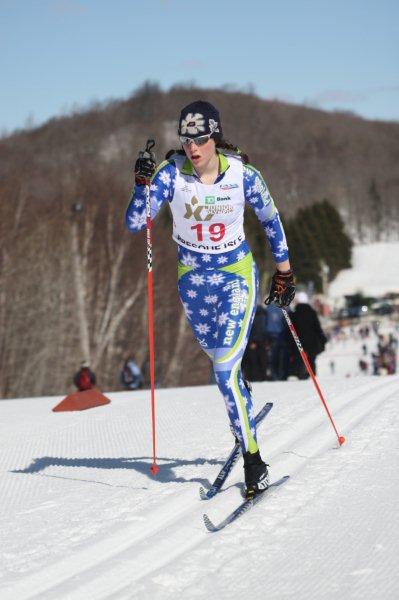
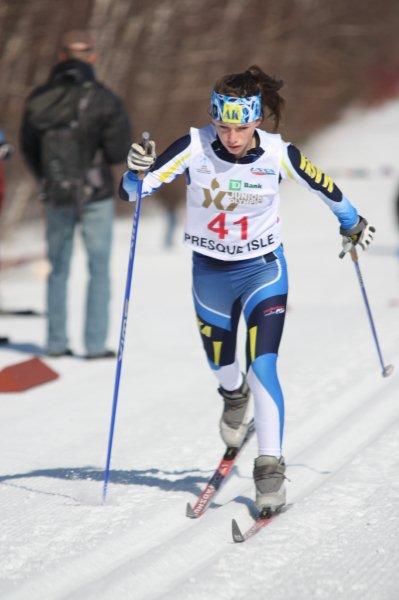
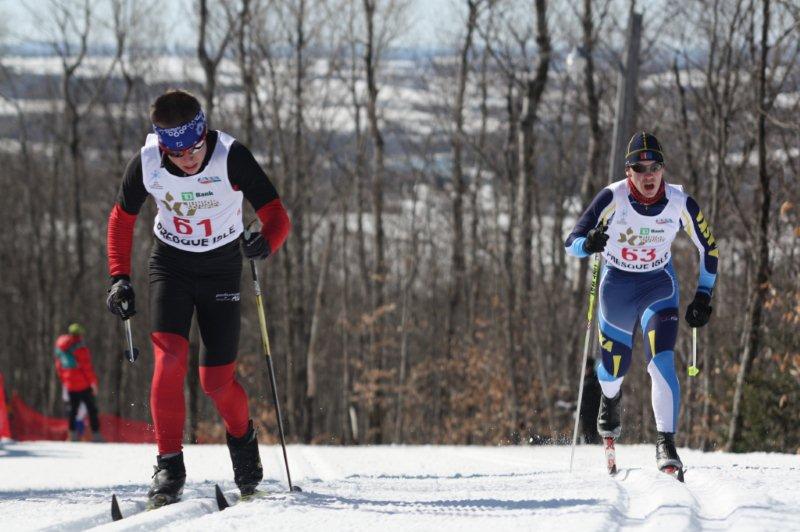
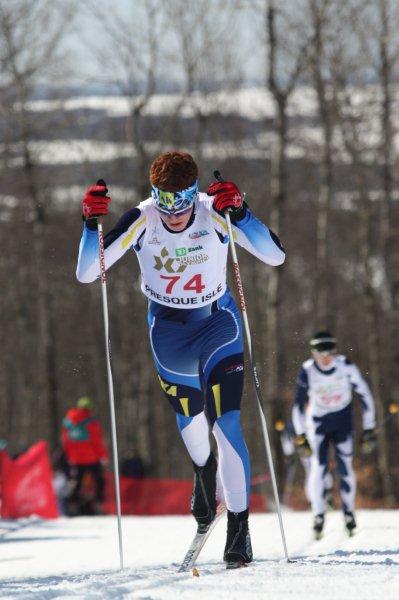
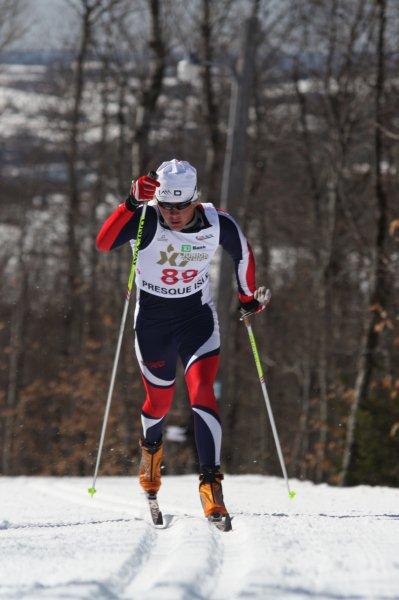
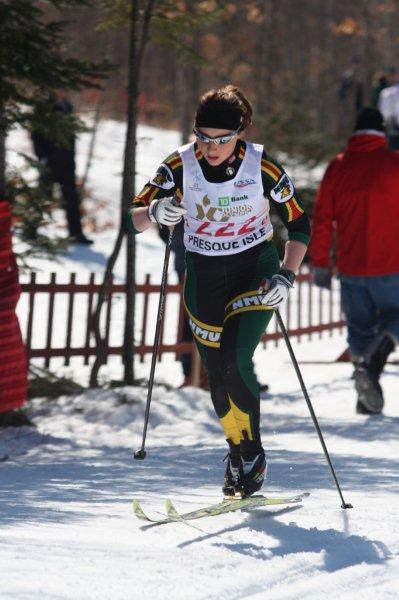
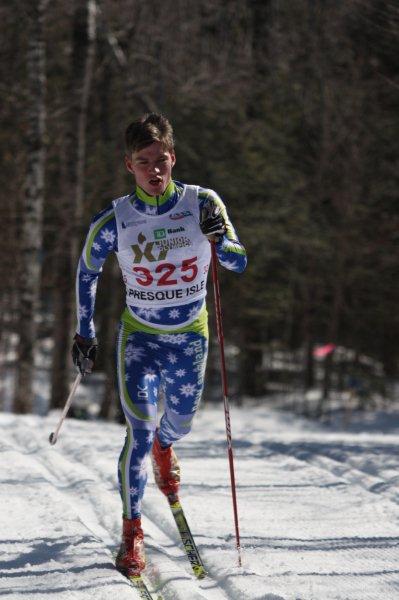
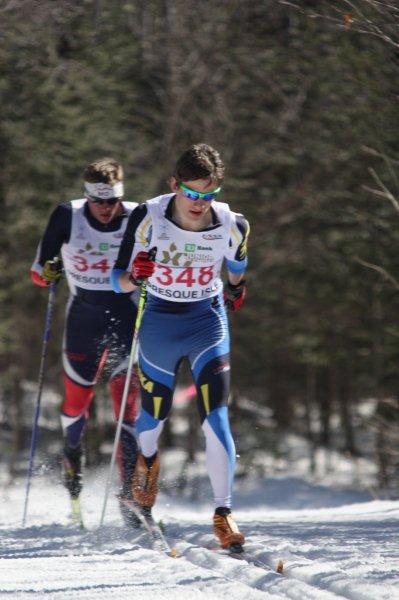
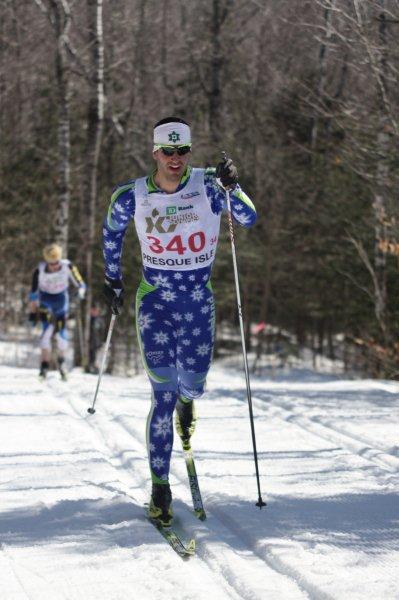
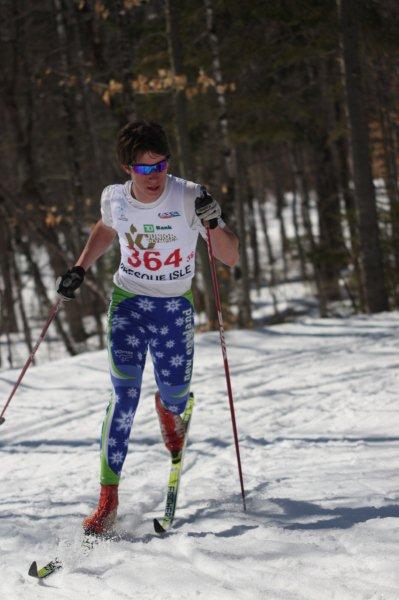
    Today was the second day of racing here in Presque Isle and was the first day of distance, with the J2’s skiing classic 5ks, while the J1/OJ women and men skied 10k and 15ks. The J2 girls started at 10a.m and the boys at 10:30. The conditions for this race were hard and fast making the race very interesting.

    Corey Stock of New England and Cole Morgan of Intermountain (who also celebrated a birthday today) each repeated their championship performances from Mondays sprint races. Stock won her race by 13.5 seconds over teammate Heather Mooney, while Morgan barely squeaked out another victory by .6 seconds over New England’s Jack Hegman.

    The J1/OJ girl’s races were equally as entertaining with PNSA skier Annie Pokorny coming out on top for J1 girls by 7.8 seconds over Midwest racer Annie Hart. The OJ women also had a very close race with only 30 seconds between the winner Kaitlynn Miller of New England claiming her second title and fifth place Corrine Prevot of New England. This only leads one to wonder how close the race would have been if it had stayed a mass start.

    “I was pretty disappointed that it wasn’t a mass start”, said Prevot “I think I could have skied well in the mass start”.

    This was the general feeling of many of the athletes who were very excited about a mass start this year at JO’s.

    A couple of the athletes that didn’t mind having an individual start were among the J1/OJ boys field.

    One of these athletes is second place David Sinclair of New England who finished 12.9 seconds behind Alaska’s Scott Patterson. Instead of being let down by having no mass start, Sinclair used the individual start to his advantage.

    Sinclair explained “I saw the start list and noticed that Dave Norris (OJ boy’s winner from Alaska) was starting 30 seconds behind me, so when he caught me at 6k I just stayed on his tails and tried to match his rhythm until he lost me at 13.5k”.

    Two other boys that were happy for the individual start were Dave Norris and Sam Tarling of New England.

    “The individual start didn’t matter”, said Norris “I just wanted to go out hard and see if anyone else could match me”.

    Tarling was also excited to have the individual start as he felt it “favored him in a 15k classic race”.

    For both of these athletes the race style worked out very well for them as they both skied away from the field by almost a minute while only 3.3 seconds separated Norris and Tarling.

    Today didn’t show the same dominance from team New England, as the results showed a much more even distribution of teams throughout each of the age groups. The hunt for the prestigious Alaska cup is still on and the fight will continue Friday here in Presque Isle, Maine with the distance skate race.

    Complete Results.

  • World Junior Videos: Post Race with Scott Patterson and Annie Hart

    World Junior Videos: Post Race with Scott Patterson and Annie Hart

    FasterSkier’s Nat Herz is at the World Junior and U23 Championships this week and was able to catch up with Scott Patterson and Annie Hart for a little video interview just after they finished their races today.

    Scott Patterson

    Annie Hart

    A Bonus Clip – From within the crowd