Tag: Anti-Doping Norway

  • Johaug Receives 13-Month Ban for Positive Doping Test

    Johaug Receives 13-Month Ban for Positive Doping Test

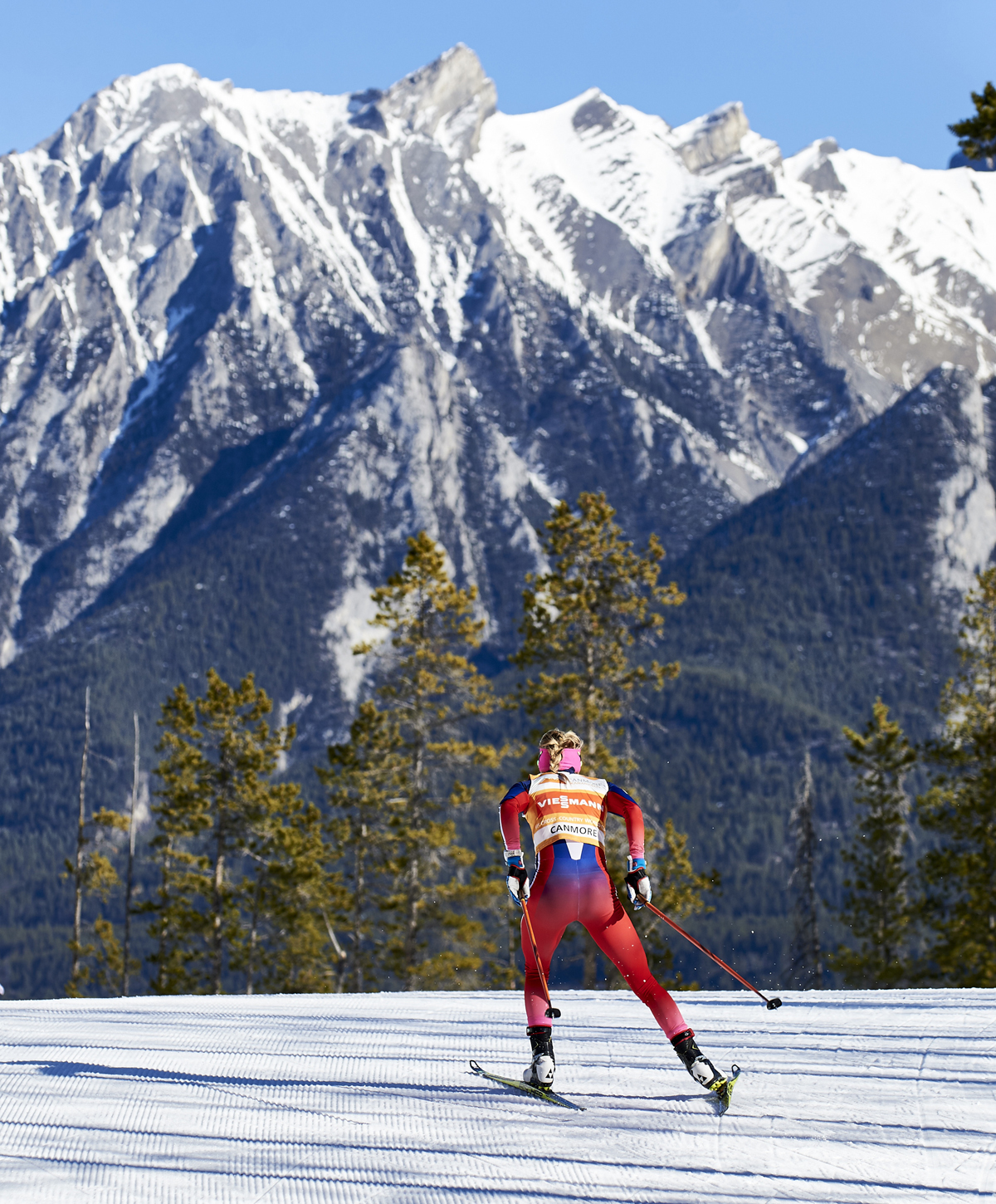
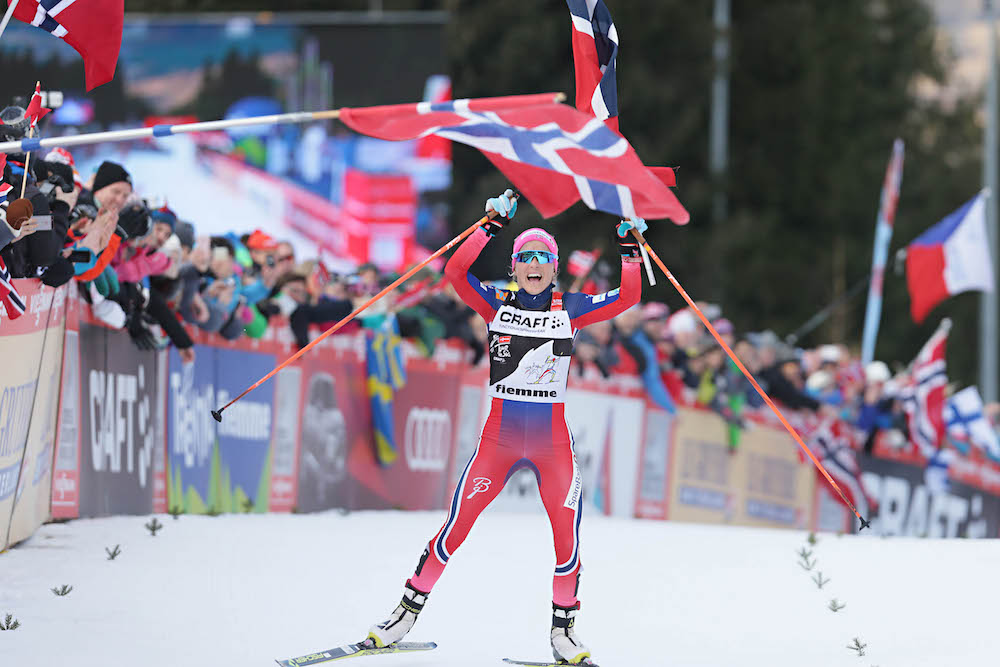
    Norway’s Therese Johaug approaches the finish of the 9 k final climb at the last stage of the 2016 Tour de Ski with enough time to grab a Norwegian flag and celebrate her win. The Norwegian is now serving a 13-month ban for doping. (Photo: Fiemme World Cup)

    The Norwegian Olympic Committee today issued its ruling on Therese Johaug, the cross-country ski star who tested positive for the steroid clostebol.

    “Therese Johaug… loses the right to participate in competitions and organized training, and the right to be an elected or appointed officer, for a period of 13 months, effective from the date the suspension was imposed, 18 October 2016,” the Committee posted in a statement on its website, according to a translation

    Johaug, Anti-Doping Norway (the organization which collected the doping sample), the International Ski Federation, the International Olympic Committee, and the World Anti-Doping Agency could each appeal the ruling to the Court of Arbitration for Sport if they find the penalty to be inappropriate.

    The standard penalty for a positive test is a four-year ban. This length may be reduced in cases where no significant fault by the athlete is identified: athletes have “strict liability” for any prohibited substance which enters their bodies, but the length of the punishment is somewhat adjustable.

    Johaug used a lip cream containing clostebol to treat a severe sunburn. Anti-Doping Norway recommended a 14-month ban.

    Martti Uusitalo, a board member of the International Ski Federation, told Finnish paper Ilta Sanomat that while the federation has not yet made a decision, he thinks they are likely to appeal.

    This 13-month penalty doesn’t come from the WADA or CAS rules for how decisions should be made,” he said, according to a translation. “Therefore it is best for all parties that the [Court of Arbitration for Sport] professionals examine the process.”

    If the 13-month ban stands, the timeframe would see Johaug ready to compete for the 2017-2018 World Cup season and the 2018 Olympics in PyeongChang, South Korea. While she has not participated in any official national team activities during her suspension, Johaug did go to PyeongChang to train around the time that the World Cup swung through last weekend.

    Suspended athletes are allowed to return to official training two-months before their bans are complete. Norwegian team head Vidar Løfshus told NRK that it will be beneficial for Johaug to be able to rejoin the team starting next September.

    She had been hoping to be able to compete in this season’s World Championships in Lahti, Finland, a scenario that now seems impossible.

    https://www.instagram.com/p/BP8m2bYBHG-/
  • Anti-Doping Norway Seeks 14-Month Suspension for Johaug, Case Ongoing

    Anti-Doping Norway Seeks 14-Month Suspension for Johaug, Case Ongoing

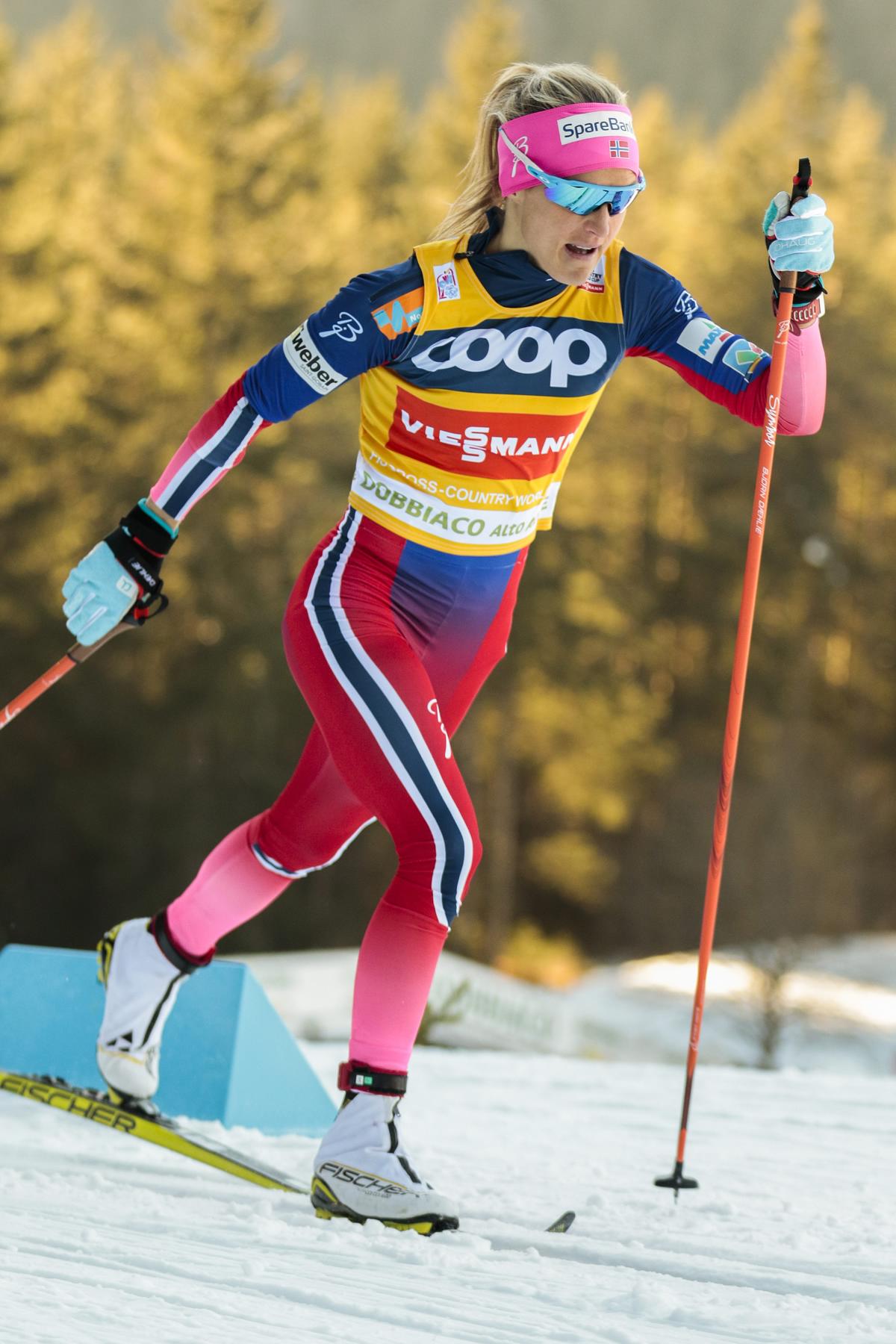
    Norway's Therese Johaug racing to a 28.2-second win in the Toblach World Cup 10 k classic in December 2015. (Photo: Fischer/NordicFocus)
    Norway’s Therese Johaug racing to a 28.2-second win in the Toblach World Cup 10 k classic in December 2015. (Photo: Fischer/NordicFocus)

    The doping case of Norwegian cross-country skier Therese Johaug has come to at least a temporary conclusion, with Anti-Doping Norway recommending a suspension of the star athlete for 14 months.

    Johaug tested positive for the steroid clostebol in a urine sample taken in mid-September. She explained in a press conference that she had been using a lip cream to treat a severe sunburn, and the drug — purchased and provided to her by a team doctor from a pharmacy in Livigno, Italy — contained the banned medication, which is a common ingredient in skin treatments.

    “We have recommended a 14-month ban and that will be sent to the disciplinary panel of the Norwegian Olympic Committee,” Anti-Doping Norway official Niels Kiaer told Reuters. “I expect they will have a hearing in February.”

    The proposed ban would be retroactive to Oct. 18 and last until Dec. 18, 2017, two months before the Winter Olympics in PyeongChang, South Korea.

    NRK reports that the casefile and the recommendation from Anti-Doping Norway will be sent to the Norwegian Olympic Committee, and that Johaug has three weeks to provide her own comment and defense to the disciplinary panel.

    Until that panel issues a decision, Johaug will retain her provisional suspension. It is appearing increasingly unlikely that she will compete at World Championships in Lahti, Finland, in February.

    Johaug had tried to defend herself by saying that she had trusted the judgement and knowledge of the team doctor, Fredrik Bendiksen, and thus had not felt the need to check the ingredients of the medication against the World Anti-Doping Agency (WADA) Prohibited List herself.

    But Anti-Doping Norway was not convinced that she was blameless. Kaier told the Associated Press that “she could have avoided the case by checking the medicine,” since the product is required to be marked with a sticker indicating that it contained a banned substance in order to be sold in Italy. The World Anti-Doping Code has a requirement of ‘strict liability,’ meaning an athlete is responsible for whatever enters their body, whether it is intended to enhance performance or not.

    However, Anti-Doping Norway didn’t completely reject Johaug’s story. The 14-month ban they recommend is a reduction compared to the four-year ban which is standard in intentional doping cases. Anstein Gjengedal, the head of Anti-Doping Norway’s prosecution panel, told NRK that the reduction was because they believed Johaug had not intended to dope.

    Johaug indicated in a Norwegian Ski Federation press release that she will fight the recommended suspension.

    “I take this with a heavy heart, but I accept the circumstances as they are right now,” she said. “I am focused on whats most important, which is working toward a full acquittal. I look forward to a thorough and full treatment of this case as quickly as possible.”

    Anti-Doping Norway wrote that the Bendiksen might be guilty of “negligence,” and that the investigation against him would proceed.

    “So far in this process I have focused on being thorough and honest,” Bendiksen said in the Norwegian team press release, noting that he had been expecting an investigation. “I have already given a detailed statement both to Anti-Doping Norway and during the Ski Federation’s press conference last Thursday. I will continue to be available for Anti-Doping Norway so that all sides of the matter receive adequate attention.”

    The Associated Press translated a reaction from Poland’s Justyna Kowalczyk on Twitter, saying she looked forward to responses from the International Ski Federation (FIS) and WADA, and ending with a hashtag that translates to opening a bag of popcorn.

  • Johaug Handed 2-Month Provisional Suspension While Investigation Ongoing

    Johaug Handed 2-Month Provisional Suspension While Investigation Ongoing

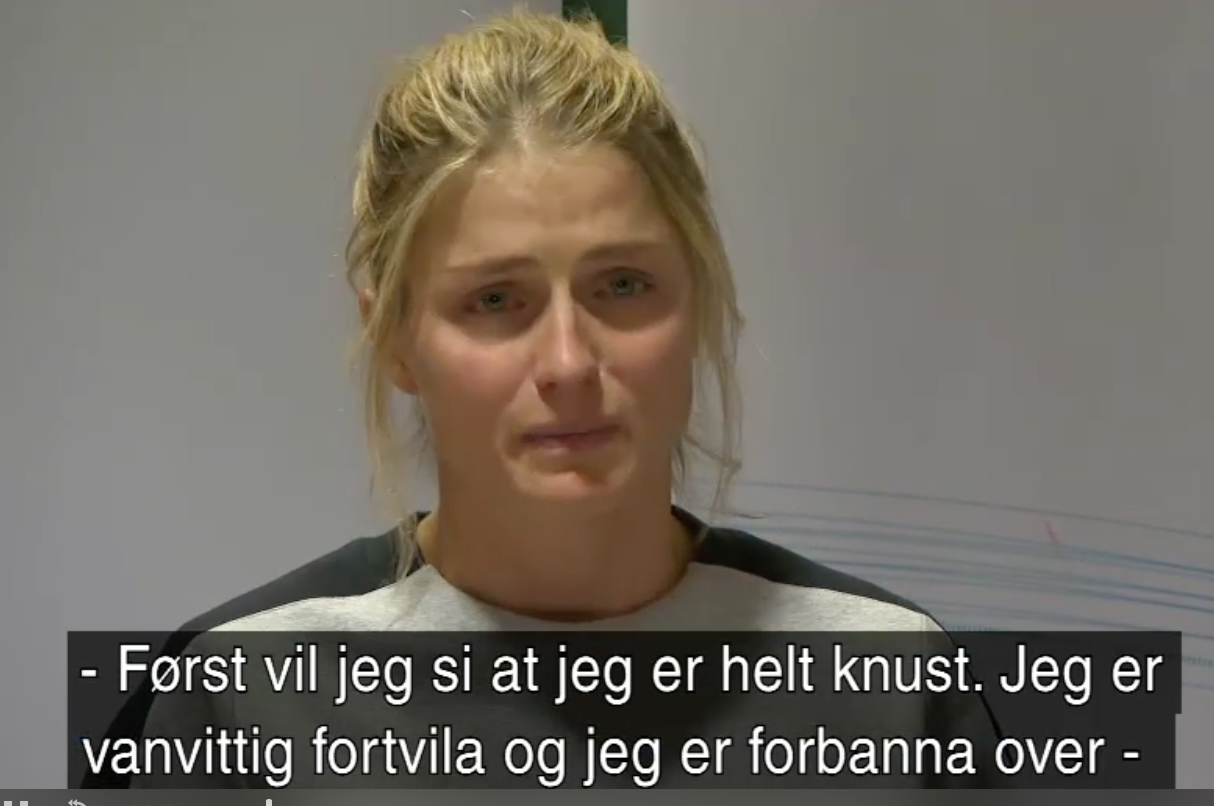
    Therese Johaug during a press conference on Thursday announcing her positive doping test.
    Therese Johaug during a press conference last week announcing her positive doping test.

    Norwegian cross-country ski star Therese Johaug has been handed a two-month provisional suspension over her use of the banned steroid clostebol.

    Anti-Doping Norway, who ordered the out-of-competition doping test on Sept. 16, has completed its initial assessment of the case and confirmed that Johaug’s ‘B’ sample also showed the presence of the steroid. It has referred the case to a Norwegian Olympic Committee hearing panel, and in the meantime issued Johaug a two-month provisional suspension.

    Johaug, the winner of two overall World Cup titles as well as several Olympic and World Championship gold medals, had initially declined a voluntary provisional suspension. Her lawyer said at the time that she was completely innocent.

    Johaug admitted to using a lip cream containing the drug to treat a sunburn, but said that she had asked her team doctor whether it contained any banned substances and that he had replied ‘no’. Thus she felt that the blame should be on the doctor, not herself.

    Her refusal to take a voluntary suspension signaled that she would be fighting the charges completely.

    Anti-Doping Norway, however, disagreed with her assessment of blame. The head of its Prosecution Committee, Anstein Gjengedal, said in a press release that Johaug “cannot be said to have acted without fault.”

    Though the team doctor, Fredrik Bendiksen, apparently gave her faulty information, athletes are completely responsible under the World Anti-Doping Agency Code for all substances which enter their body.

    She has ingested a banned substance,” Genjedal told state broadcaster NRK. “And an athlete has a rather strict liability for it… It’s in the [Norwegian Olympic Committee] statutes that one is obliged to investigate what one takes…. And we believe that should have been done better than it was in this case.”

    Because the Prosecution Committee decided that Johaug bore some of the responsibility for using the medication, she is subjected to a provisional suspension while the investigation is ongoing.

    “The suspension means that the athlete can not participate in competition and organized training,” Gjengedal said in the Anti-Doping Norway’s press release.

    The role of the Prosecution Committee, according to the press release, is only to decide whether a case should be shelved or be sent to a hearing panel. Gjengedal, the head of the committee, served as a prosecutor before becoming Oslo’s chief of police for 12 years. Also on the committee are a professor of endocrinology and a professor of pharmacology.

    Gjengedal asserted in the press release that the Prosecution Committee had no position on the ultimate suspension which should be given, and would wait for the adjudication committee to submit its recommendation. He told NRK that he hoped the Norwegian Olympic Committee investigation would be completed by the time the provisional suspension expires, on Dec. 18.

    But sports lawyer Gunnar-Martin Kjenner told Norwegian state broadcaster NRK that because of the complexity and high profile nature of the case, the final recommendation may take months. He predicted that it would not arrive until the new year. Until then, Johaug may be issued further provisional suspensions, two months at a time.

    Johaug will be able to appeal the suspension to the Norwegian Olympic Committee’s appeals board.

    Meanwhile, Anti-Doping Norway has also opened a case against Bendiksen, as it is also against their code for doctors to prescribe banned substances to athletes.

  • Norwegian Ski Team Recommended Nebulizer Use by Healthy Athletes, Say Anonymous Skiers

    Norwegian Ski Team Recommended Nebulizer Use by Healthy Athletes, Say Anonymous Skiers

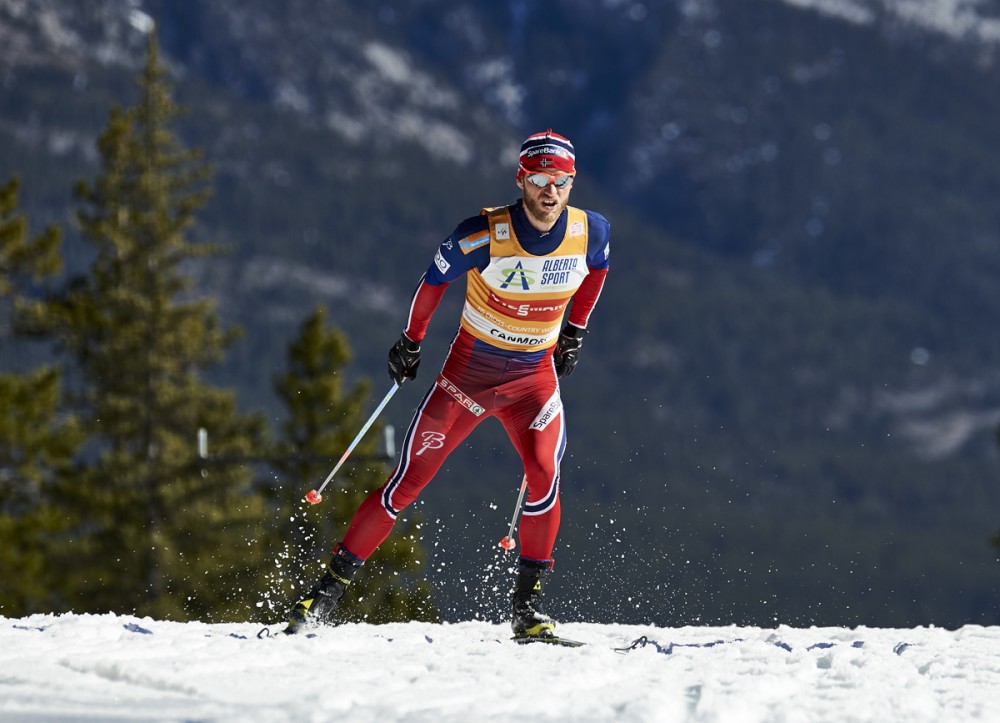
    Norway's Martin Johnsrud Sundby during the men's 15k skate leg of the Ski Tour Canada in Canmore, Alberta. Sundby may not be the only Norwegian athlete who used a nebulizer to take asthma medication - even healthy athletes were apparently recommended to do so. (Photo: Fischer/Nordic Focus)
    Norway’s Martin Johnsrud Sundby during the men’s 15 k skate leg of the Ski Tour Canada in Canmore, Alberta. Sundby may not be the only Norwegian athlete who used a nebulizer to take asthma medication — even healthy athletes were allegedly recommended to do so. (Photo: Fischer/Nordic Focus)

    As Norwegian skier Martin Johnsrud Sundby has decided to appeal his doping ban to the Swiss Supreme Court, stories have emerged suggesting that the Norwegian Ski Federation recommended that healthy skiers use salbutamol nebulizers – the same drug and method Sundby was issued a two-month ban for – as preventative therapy to maximize performance.

    That suggests that a number of Norwegian athletes might have engaged in the same behavior which got Sundby in trouble in the first place. No other doping cases are known to exist from the Norwegian team. However, the International Ski Federation (FIS) rules mean that if an athlete had been caught with high levels of salbutamol like Sundby, it may have been kept quiet.

    After Sundby’s ban, men’s national team coach Tor Arne Hetland told FasterSkier that “we will not do the same mistake again.”

    But what of the past? Norway’s TV2 talked with several cross-country skiers who say they were told by the national team to use nebulizers, even though they did not have asthma. A nebulizer delivers beta-2 agonists, drugs which help relax muscles in the airways. Such medications are banned for use by athletes up until a threshold dose.

    TV2 would not reveal the identity of the athletes, but reported that one said they were “mildly surprised” to be offered the drugs even though they were not having difficulty breathing.

    In the same piece, national team director Vidar Løfshus said that this constituted “preventative care” to make sure that no athletes had airway obstructions.

    Evidence suggests that salbutamol cannot help breathing for athletes who are not having an airway constriction, such as that caused by asthma. But beta-2 agonists, as a class of drugs, can also be used as masking agents for other drugs, and can have androgenic effects (like steroids) when used in high doses.

    The Norwegian Ski Federation announced on its website that it would be conducting a full review of medication use policies in the wake of the scandal.

    Erik Røste, the president of the federation, said that he expected that healthy athletes would not have been prescribed medication, but sought to clarify whether his assumption was true. The investigation will be carried out by people not affiliated with the federation in order to maintain independence. Anti-Doping Norway has been consulted about assisting.

    Røste also said that he was concerned that the stories could damage the reputation of the federation.

    That seems to be already happening. Swedish national team doctor Per Andersson told Swedish media that prescribing medication to healthy athletes was a “dangerous path”.

    Meanwhile, Sundby had been sanctioned for using high concentrations of salbutamol via a nebulizer. FIS had initially not suspended him, but the World Anti-Doping Agency (WADA) appealed the case to the Court of Arbitration for Sport (CAS), which banned him from competition for two months. Because some results were invalidated, Sundby lost his 2015 overall World Cup title as well as the overall Tour de Ski win.

    CAS is the highest governing body in sports, and decisions cannot be appealed or overturned. However, Sundby decided to appeal the case to a non-sports body, the Swiss Supreme Court, because he felt that the judgement was unfair. He told Norwegian media that he was “not guilty.”

    Based on WADA rules, the maximum amount of salbutamol that is allowed to be inhaled is 1600 micrograms over 24 hours. Sundby’s samples taken Dec. 13, 2014 after the 15-kilometer classic in Davos, Switzerland, and Jan. 8, 2015 after the 25 k freestyle pursuit at the Tour de Ski in Toblach, Italy, and analyzed by a WADA accredited laboratory exceeded those limits.

    His case hinges on a few words, as Sundby and the Norwegian medical team believe that the WADA limit applies only to medication taken in an inhaler, while Sundby used a different device, a nebulizer.

    As an athlete with a documented history of asthma, Sundby likely could have received a therapeutic use exemption (TUE), which may have allowed the nebulizer use. But he did not apply for one, and such exemptions cannot be obtained retroactively.