From the FasterSkier archive — posts syndicated from athletes’ and coaches’ own blogs between 2004 and 2012, kept online as published. Current coverage is at fasterskier.com.

Tag: antidoping

  • Nordic Nation: Clean Sport, Testing Gaps, and Virtual Sample Collection with Noah Hoffman

    Nordic Nation: Clean Sport, Testing Gaps, and Virtual Sample Collection with Noah Hoffman

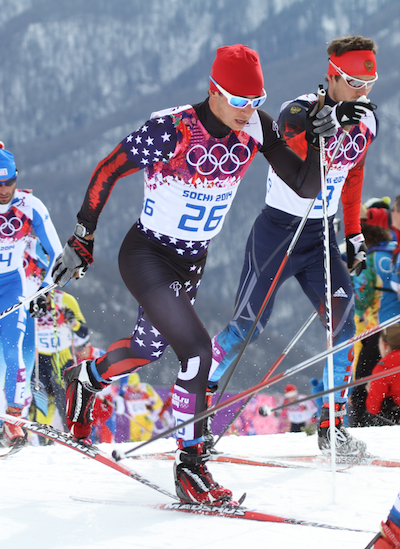
    Noah Hoffman (U.S. Ski Team) racing to 35th in the 30 k skiathlon at the Olympics in Sochi, Russia.

    As we all know, the COVID-19 global pandemic has left the world scrambling to adapt to the many challenges of slowing the spread of the virus. In the world of Olympic sports, the ripple effect has disrupted the efforts of anti-doping agencies worldwide to conduct the athlete testing normally relied upon to hold athletes accountable to abiding by the rules surrounding banned and controlled substances. Most international antidoping agencies have halted testing since mid-March as the invasive and close-contact nature of collecting samples posed a threat to both athletes and testers. 

    This causes concern that athletes inclined to cheat might abuse the situation, taking advantage of the opportunity to use illegal substances to improve their performance potential when competition is able to resume. 

    To address the lack of testing, the US Antidoping Agency (USADA) rolled out a pilot virtual testing program called Project Believe 2020 where athletes could provide a urine sample and blood spot test with an antidoping agent present on a zoom or FaceTime call. 

    For further insight into this topic, FasterSkier connected with two-time Olympian and long-time US Ski Team Member Noah Hoffman, who has become involved with USADA’s antidoping education program since retiring from skiing. Hoffman also recently wrapped up his second year at Brown University and we discuss his academic interests and the experience of being a college student during the COVID shutdown. Thanks for listening.


  • Klemen Bauer on How It Feels When a Teammate Dopes

    Klemen Bauer on How It Feels When a Teammate Dopes

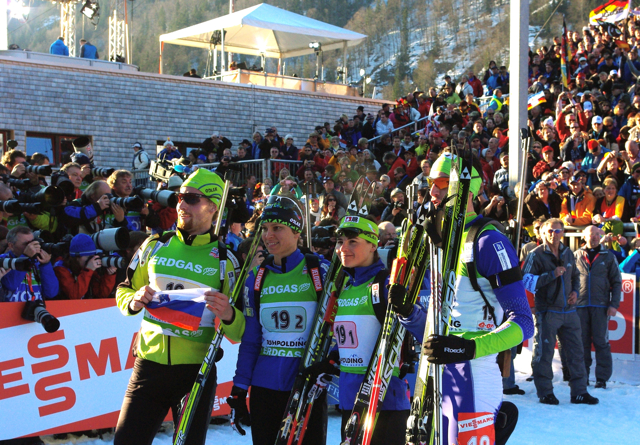
    The Slovenian biathlon team of Klemen Bauer, Teja Gregorin, Andreja Mali, and Jakov Fak after winning silver in the 2012 World Championships mixed relay in Ruhpolding, Germany.

    Slovenian biathlete Klemen Bauer has competed in nine World Championships and three Olympics, landing just one spot away from a medal in the sprint in Vancouver in 2010. He has a handful of top-10 World Cup finishes to call his own.

    Bauer has also been a prominent voice for fair and ethical sport, speaking out in support of the anti-doping process and more recently participating in a campaign to eradicate sexual abuse from sport.

    But a few weeks ago, he learned that a longtime teammate, Teja Gregorin, had used a banned growth hormone promoter at the 2010 Olympics, where she had also come very close to a medal. (Four years later, she won a bronze medal in the pursuit at the Sochi Olympics.)

    Bauer tweeted cryptically when the International Olympic Committee (IOC) announced that one athlete had been caught doping when samples from the 2010 Olympics were re-tested this year using up-to-date analytical methods. When it was announced that Gregorin was the athlete in question, he tweeted, “Sad, mad, & disappointed.”

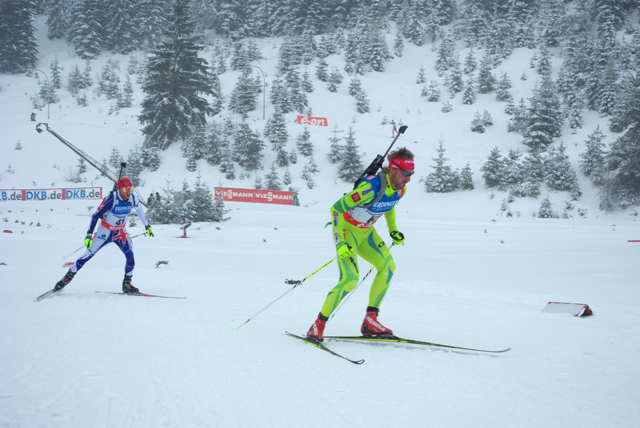
    Klemen Bauer of Slovenia (right) racing at an IBU World Cup in Hochfilzen, Austria, in 2013.

    In a press conference after the news was released, Gregorin said, “I sincerely apologize to all who have been affected my actions in any way.”

    Among those affected are, obviously, Gregorin’s competitors, some of whom have voiced their own anger. But her teammates are also affected. Bauer, along with Andreja Mali and Jakov Fak, won mixed relay silver at 2012 World Championships. It remains to be seen whether that result will be invalidated.

    Besides that, the Slovenian team’s reputation is affected.

    “I feel bad for her other teammates, like Klemen, who has been at this for a long, long time, and it would seem that he will be the victim of speculation surrounding the case,” said U.S. veteran biathlete Lowell Bailey. “That’s just the natural tendency. ‘Well, if there’s one case, then how did she do it? Why did she do it? Who was helping her?’ All those questions come up.”

    Bailey has known Bauer for almost his entire biathlon career, and said that Bauer supported his efforts to get other World Cup biathletes to sign a petition to the International Biathlon Union (IBU) to hold a meeting with athletes to discuss anti-doping policy and in particular the McLaren report.

    “Klemen is like a lot of other athletes – he is really a really hard-working, motivated, determined athlete,” U.S. veteran Lowell Bailey said in an interview last week. “He has always been a person that understands the seriousness of what it takes to be a career biathlete, but also understands that there’s a balance there. He has a son, Axel, and a family, and he has that personal balance that is important for a lot of the elder statesmen of the biathlon world. He’s a great guy and I have always enjoyed competing against him and with him.”

    Bauer agreed to answer some questions about the Gregorin case and how it is affecting him and his team. The lightly edited interview is presented below, followed by more context from Bailey.

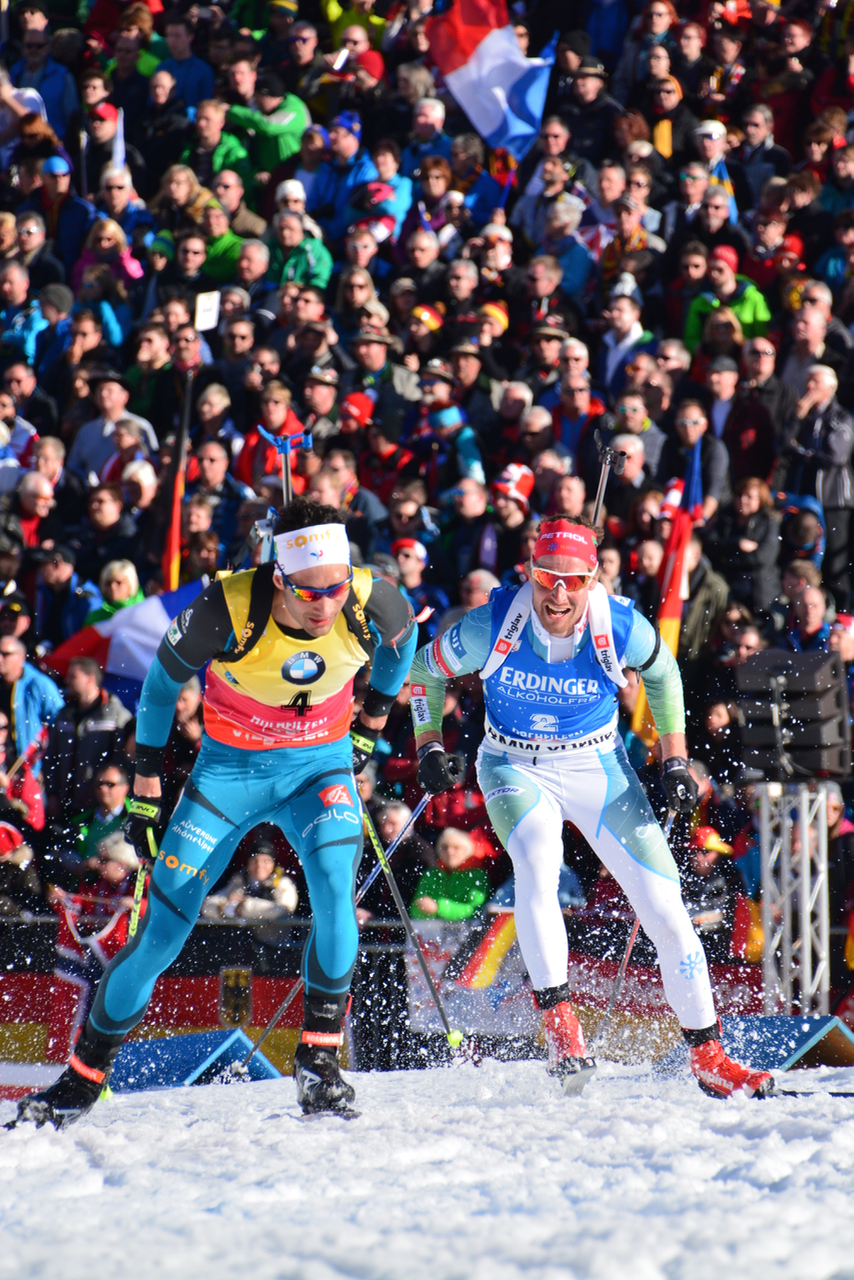
    Klemen Bauer of Slovenia (right) chasing Martin Fourcade of France in the 20 k individual at 2017 IBU World Championships in Hochfilzen, Austria. (Photo: Glen Crawford)

    FasterSkier: When did you hear about this case and what was your reaction? Were you with the team at the time, or did you have to process this all on your own?

    Klemen Bauer: We (athletes) were informed a week before the public announcement. First reaction was shocking and frustrating. Then I was really mad and sad about it. I was on my own at the time. We were all back home.

    FS: I guess you have known Teja for a long time.

    KB: Yeah. I’ve known her since I was a little kid. She started in the same local club, training with her father. We were training mostly together (at training camps) for the past eight years.

    FS: Would you have thought someone could do something like this with nobody else finding out?

    KB: I think it’s an easy job to do it without anybody knowing it — as long as it’s a matter of an individual, which it was in Teja’s case.

    FS: Do you think or do you worry that this violation by Teja will also affect your reputation? Slovenia’s reputation?

    KB: Absolutely. That was actually one of my first biggest concerns. All the good stories we [Slovenian biathlon] have created in the past 8-10 years were destroyed in a moment. Well, hopefully it won’t be that cruel as I think — At this point I find it crucial to expose that it was an act of a single individual athlete. Me personally, I don’t like teams who were involved into doping scandals, so I can imagine the response of the athletes after this. But as I said, I really hope they will realize the rest of us are far away from what happened.

    FS: Have you talked to any athletes from other teams/countries since the news came out?

    KB: Not really.

    FS: What about Teja, have you talked to her?

    KB: Not at all. I have no intention to. I will wait for her to come in and explain (apologize).

    FS: Has this affected your training for the upcoming season?

    KB: It was hard to fall asleep first few couple of days after the news, but the training went well. Sometimes I even got an extra boost, when thinking about it – my anger came out.

    FS: What about your attitude?

    KB: In general after any doping scandal, my morale goes down. I would rather give up right away. But let’s say I still kind of believe in fair, clean sport (which is very naive), and probably that’s what still keeps me in sport. After recent events I’m even more determined to prove that a good result can be done in a fair, clean way.

    FS: Is there anything else you would like to say about this situation, to fans of the sport for instance?

    KB: I’d like to emphasize to have faith in our small team — most of other athletes are still young — and not to judge us by the act of one individual.

    FS: Is this something you would have said in the past, when an individual from another team was caught?

    KB: There are countries doing it [doping] on national level (supported by their government), and there are individuals. Of course a single act usually leads to suspicion of the whole rest of the team even if not so. I might be a little more careful about my judgment after this incident.

    Bailey could sympathize with Bauer to some extent – the American had no idea that Gregorin had been doping, and he did not indicate that he’d ever had suspicions of the Slovenian team, who he called “always really friendly and open.”

    It got more personal for Bailey when he pulled up that athletes’ petition during the interview and realized that Gregorin had signed it, adding her voice to demands for stronger anti-doping policies.

    “That’s troubling to see from someone who had three positive tests – that, in my mind, represents knowingly committing an anti-doping rule violation,” he said. “To be quite honest, she was an athlete who I had a lot of respect for. She came from a smaller country in terms of biathlon and had some really impressive results. I always looked at her as an example of an athlete who was working hard within the rules. So it’s a feeling of betrayal to have something like this come out.”

    Bailey emphasized that Gregorin deserves due process. When the case is over, competitors and fans may know more about how and why she decided to dope.

    “I stand steadfastly behind every athlete having due process – there has been a lot of discussion about just treatment of alleged doping cases,” Bailey said. “I totally support that. I support due process and quick and fair and just proceedings. I hope that her case is treated that way. But it’s really sad. It’s really unfortunate to see that happen.”

  • IBU President Besseberg Explains Olympic Blood Screening Decision, But Reveals Lack of Communication with Medical Director

    IBU President Besseberg Explains Olympic Blood Screening Decision, But Reveals Lack of Communication with Medical Director

    IBU logoAfter the International Biathlon Union (IBU) Executive Board published a sparsely-worded change to its Olympic blood screening procedures in the minutes of its last meeting, many in the biathlon world have been perplexed about why the organization would stop doing blood screening at the Games.

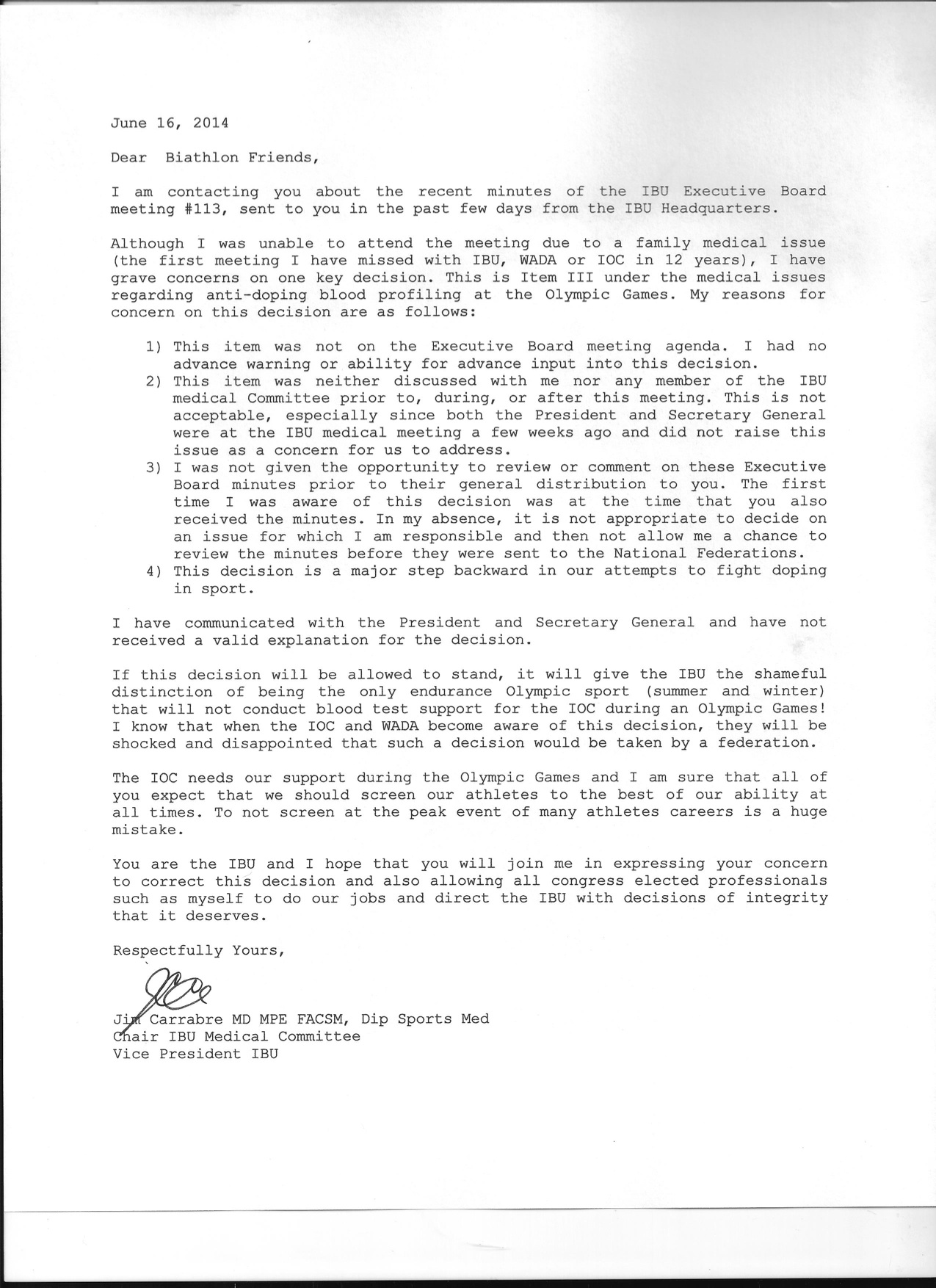
    It also led the IBU’s Vice President for Medical Issues, Dr. Jim Carrabre, to send out a letter explaining that he was not present at the meeting (due to a family health emergency), was not consulted about the decision, and was not told about it until he received the Executive Board minutes along with the rest of the IBU members. The Medical Committee is responsible for overseeing antidoping efforts.

    Reached by phone on Thursday evening, IBU President Anders Besseberg defended the decision, explaining that there are two reasons for the change, which will see the IOC taking over all blood screening. He also claimed that Carrabre had never tried to contact him about the issue before sending out his letter to the members, although e-mail archives show otherwise.

    Rationale for the Change

    The first reason that the IBU will no longer do its own Blood screening at the Olympics, Besseberg explained, is that in Sochi the IBU’s testing equipment was not functioning at the beginning of the Games, due perhaps to being jostled in transport. Instead, the organization had to use the World Anti-Doping Agency (WADA) lab. This was also the case four years earlier, in Vancouver.

    “In Sochi we had to use the WADA laboratory because our machine was not functioning for the second time in four Olympic Games,” said Besseberg, who is a member of the WADA board. “We cannot go on like this. We must react and take action so that it can be effective… The alternative is that for 2018 we have to send the machines by plane and we risk not being able to do what we can.”

    The IBU board decided that the best way to do this would be to hand all testing over to the IOC at Olympic Games, but “that we will help them with our experience and intelligence.”

    Carrabre confirmed that the equipment had not been functioning at the beginning of the Games, but said that he didn’t believe that halting the IBU’s own testing was the right solution.

    Besides the equipment problems, Besseberg said that another, larger factor was at play. The second reason to change the protocol was a request from the IOC to “harmonize” the procedures and testing standards between the different international winter sports federations which do their own blood screening. This includes The International Ski Federation (FIS) and the International Skating Union.

    “It could even be a situation where an athlete could start in one discipline and not in another one,” Besseberg said. “It is important that this is harmonized. I have been tasked by the two other federations to bring this to the IOC. And the IOC also supports this. This is the wish of everybody who is involved in either blood testing or blood screening.”

    For instance, FIS still employs “no-start” rules based on hemoglobin cutoff values, while the IBU does not do this at Olympic Games.

    Lack of Communication

    What the situation shows more than anything else is a troubling lack of communication between Besseberg, the IBU’s highest-ranking member, and Carrabre, who is responsible for its medical and antidoping efforts.

    The two men are running against one another for the presidency of the IBU, to be voted on at the federation’s congress in September. Internal accord or even discussion of antidoping protocols may be a casualty of this competition.

    For instance, Carrabre wrote in his June 17th letter (which you can see here) to the member federations that he was never consulted about the issue and that Besseberg had not responded to his requests to explain the decision and where the proposal came from.

    Besseberg, on the other hand, claims that Carrabre misunderstood the situation when he sent out the letter, and that furthermore he never tried to contact the president.

    “He should get educated and explain it, instead of sending out this letter,” Besseberg said.“He was not at the meeting and it’s a complete misunderstanding from his side. He has absolutely not been communicating with me after the board meeting or even after the minutes were sent out. I am very surprised and disappointed that he has been sending this letter along… there is absolutely no telephone call, no e-mails, nothing has been going between us. I am very disappointed because he has created a lot of misunderstandings.”

    Besseberg even said that someone could “look at his phone” to see that this was true.

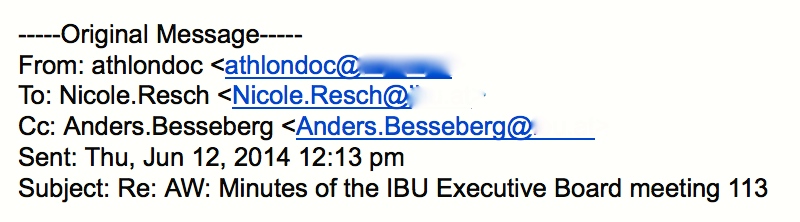
    However, Carrabre showed FasterSkier an e-mail which was addressed to both Besseberg and IBU Secretary General Nicole Resch dated June 12, in which he asked “who initiated the idea to discuss the Olympic blood testing at this meeting and why? What led to this proposal and decision?”

    Screen Shot 2014-06-27 at 3.32.46 PM

    The next day, Resch replied to the e-mail saying she was forwarding the message on to Besseberg.

    This followed earlier e-mails to Resch asking why the issue was not brought up at a Medical Committee meeting a few weeks earlier, where both Besseberg and Resch were present, before being presented to the Executive Board. Resch asked him to address questions to Besseberg.

    The IBU President evidently did not respond to Carrabre’s questions.

    But on Thursday he told FasterSkier that he did not consider the decision about blood screening to be a “medical issue”.

    “He is not the one responsible for this,” Besseberg said of Carrabre. “It is the Executive Board which is responsible for biathlon issues.”

    The Vice President for Medical Issues is a position elected by IBU Congress and which has a seat on the Executive Board.

    Furthermore, although Resch did not answer Carrabre’s questions about who proposed the change of protocol or why, an internal Executive Board memo obtained by FasterSkier shows that the proposal was included, in great detail, in Resch’s report to the Executive Board at the meeting. Carrabre claims that this document was never sent to him.

    For his part, however, Carrabre did not include Besseberg in the recipient list for his letter.

    “I personally have not had it in my hands, but so many have called me like you and told me what it says,” Besseberg said. “I’m very surprised. I haven’t seen it myself. But I asked someone and they will copy me on this e-mail sometime in the next few days.”

    Yet the letter was sent to over 100 other recipients (federations and individuals), and it seems hard to believe that in the nearly ten days since its initial release none of these people would have passed it along to Besseberg had he asked to see it.

    Regardless of whether the decision turns out to be the correct one, when pressed Besseberg admitted that it should be better explained. Members of both the U.S. Biathlon Association and Biathlon Canada had told FasterSkier that they were perplexed and worried when they saw the Executive Board minutes, and did not understand the decision since it came with no justification.

    “This I can understand,” Besseberg said when asked why the change was never explained clearly to members. “Usually we publish new protocols without explanations, but I see clearly that it’s necessary to have more here.”

  • Sub-Par Russian Antidoping Lab Creates Sochi Headache (Updated)

    Sub-Par Russian Antidoping Lab Creates Sochi Headache (Updated)

    Sochi's nordic-combined jumps, which will be used in competitions leading up to the 2014 Winter Olympics, as seen in July. (Dave Jarrett photo)
    Just one part of Russia’s $50-billion dollar budget for the 2014 Sochi Winter Olympics, the ski jumps, which cost about $265 million (more than six times their estimate), as they appeared in July 2012. (Photo: Dave Jarrett)

    Note: On Saturday, WADA decided to discipline the Moscow Antidoping Center in the form of a pending six-month suspension, according to Play True Magazine.

    The World Anti-Doping Agency (WADA) discovered a major snafu this week in the leadup to the 2014 Winter Olympics when it rendered Moscow’s antidoping laboratory — responsible for testing Olympians via its satellite lab in Sochi — sub-standard.

    According to the New York Times, “a team of laboratory experts reported those findings to officials at the antidoping agency and recommended that the lab be stripped of its accreditation.”

    While WADA President John Fahey didn’t explain specifics on Friday, antidoping officials familiar with the Moscow lab said it produced false-positive tests during a routine evaluation process, and failed to identify samples with banned drugs, the Times reported.

    Fahey told reporters he would decide whether or how to discipline the lab, the only one capable of administering such tests in Russia. If WADA revokes its accreditation, the agency, International Olympic Committee and Sochi Olympic organizers will have to come up with an alternate plan — quick.

    Arne Ljungqvist, chairman of the International Olympic Committee’s medical commission and a vice president of the antidoping agency, told the Times it would be impossible for the drug tests from Sochi to be sent out of the country and processed fast enough. The Washington Post reported that if they were able to do so, the financial burden would likely be on local organizers.

    For Rio de Janeiro, the host of next year’s FIFA World Cup, being stripped of their antidoping accreditation means FIFA will have to send samples to Lausanne, Switzerland, next summer.

    (Ljungqvist told the Times that Rio’s case is different because so few players are tested after each game, compared to the Olympics, where a higher number of athletes will tested. The IOC plans to administer 2,457 tests before and during the Games.) Regardless, Fahey aimed to ease concerns.

    “Look, I am very confident that irrespective of what is in that report, there will be a very effective anti-doping program associated with the winter Olympics in Sochi next year,” Fahey told the Post. “I have no doubt that will occur.”

    With the Sochi Games estimated to cost Russia upwards of $50 billion, if the nation invests more than $16 million in an antidoping facility like London did for the 2012 Summer Olympics, there’s not enough time to get it up and effectively running.

    “People would need to be in place there well in advance of the Games,” former WADA chairman Dick Pound told the Times. “A problem like this cannot be solved overnight.”