From the FasterSkier archive — posts syndicated from athletes’ and coaches’ own blogs between 2004 and 2012, kept online as published. Current coverage is at fasterskier.com.

Tag: Anya Caldwell Bean

  • Stepping Up to the Plate, Austin Caldwell New BSF Elite Head Coach

    Stepping Up to the Plate, Austin Caldwell New BSF Elite Head Coach

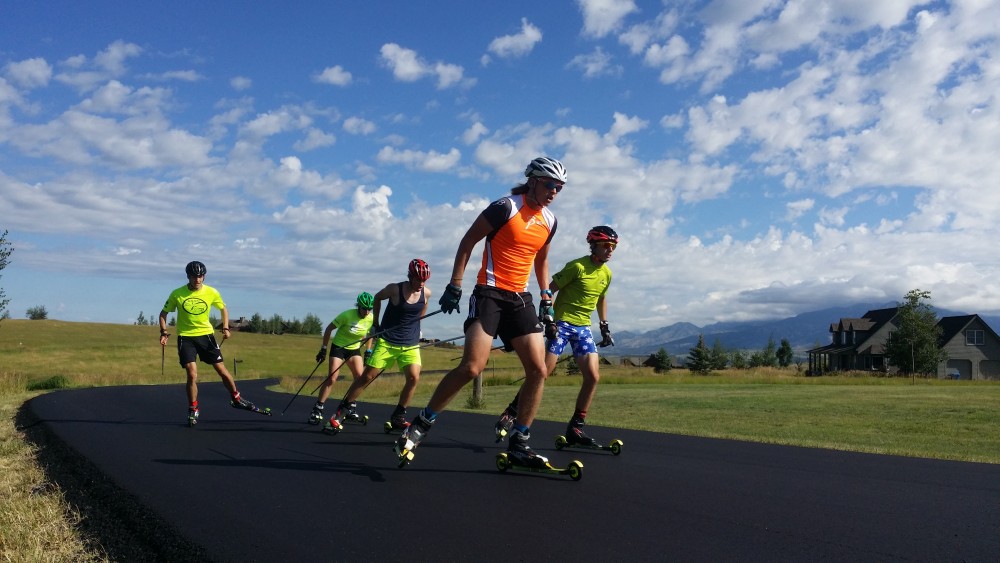
    From left to right: Silas Talbot, Jennie Bender, Paul Everett, Logan Diekmann and Max LaChance during a roller ski with BSF in Bozeman, Mont. (Courtesy Photo)
    (From left to right) BSF skiers Silas Talbot, Jennie Bender, Paul Everett, Logan Diekmann, and Max LaChance during a rollerski in Bozeman, Mont. (Photo: Austin Caldwell)

    The pale wood grain of a wax trailer’s interior walls and the sound of a power-tool firing up can only hold one’s attention for so long, especially if that someone has the coaching gene. As the grandson of John Caldwell, a former U.S. Ski Team (USST) head coach, and son of Sverre Caldwell, the Stratton Mountain School (SMS) nordic director and head coach, it may be no surprise that John — who goes by his middle name of Austin — Caldwell, also heard the call to coach.

    After spending this past winter working for Caldwell Sport as a wax technician, Austin, a 24-year-old Dartmouth grad, wanted a challenge and change. Not only in his work, to include a greater focus on interactions with athletes, but in his whereabouts as well.

    “I really enjoyed working with Zach and Amy [Caldwell] wax-teching last year,” Austin said on the phone while in Bozeman, Mont. “But part of me wanted to spread my wings a bit and try some new place outside of the east and outside of Vermont where I’ve lived all my life.”
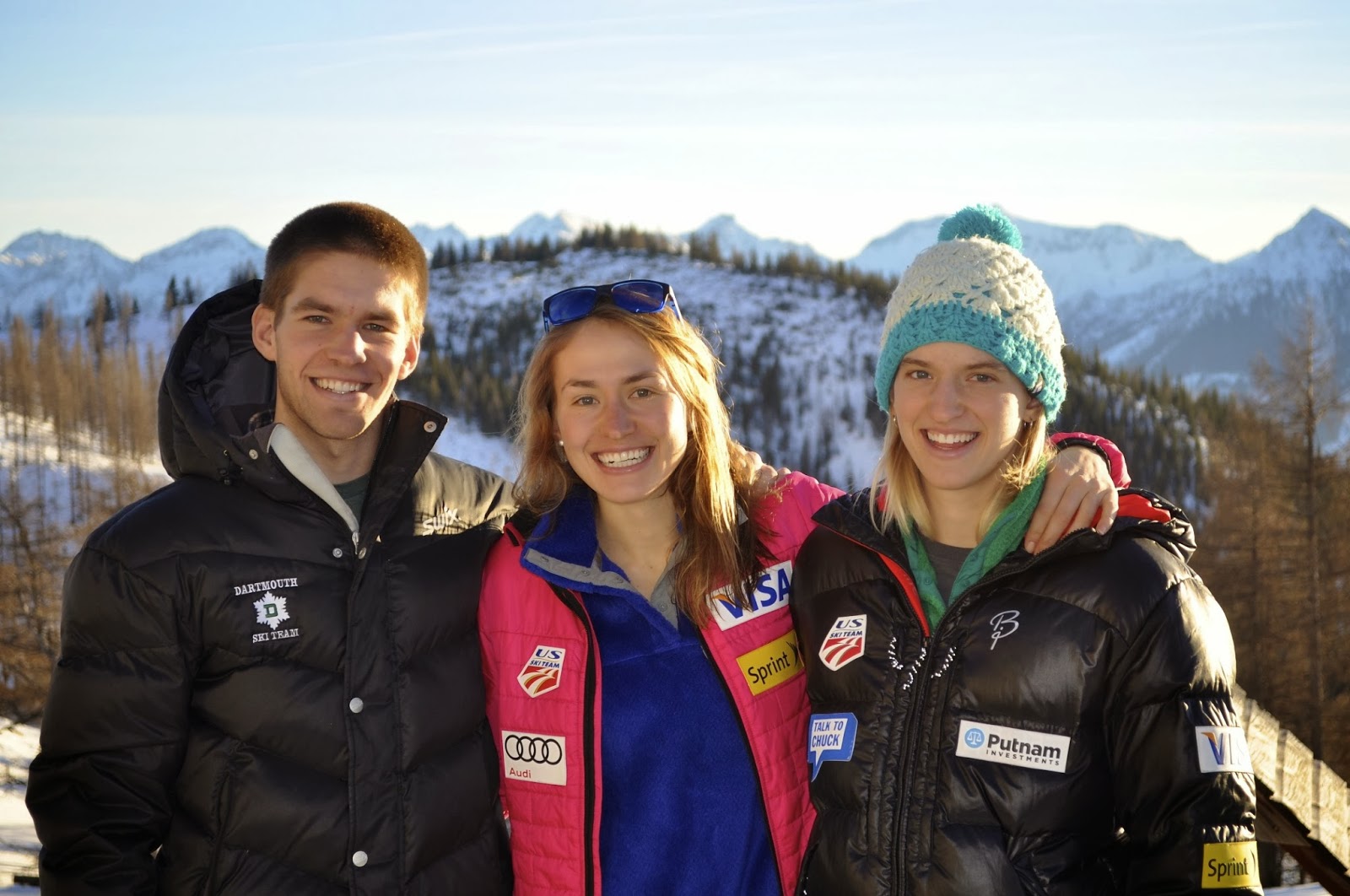
    Austin, Sophie, and Isabel Caldwell (l-r) during their Christmas visit to Europe in 2013 to see Sophie race on the World Cup circuit. (Photo: Sophie Caldwell/sophiecaldwell.blogspot.com)
    Austin, Sophie and Isabel Caldwell (l-r) during their Christmas visit to Europe in 2013 to see Sophie race on the World Cup circuit. (Photo: Sophie Caldwell/sophiecaldwell.blogspot.com)

    Growing up in Peru, Vt., alongside his two sisters Isabel and Sophie Caldwell (the latter of which is a USST member), skiing was not just what Austin spent his spare time doing. It was the family mealtime topic of choice; it was how vacations were spent with relatives — his uncle Tim Caldwell, a four-time Olympian, and cousins are all avid nordic skiers as well.

    Surrounded by skiing his entire life, Austin did not want to give it up anytime soon. When the head coaching position for the Bridger Ski Foundation (BSF) elite nordic program opened up and his cousin, Anya Caldwell-Bean, BSF’s U18/U20 junior coach, told him of the opening, he saw an opportunity to not only stay involved with skiing, but further himself and his experiences in it. 

    “I loved wax-teching last year, that was really fun, but I also enjoyed coaching in the past for junior skiers,” Austin said. “My dad is a coach and I’ve always been interested in coaching … so now I get to coach and wax tech.”

    Stepping into his new role and responsibilities as the head coach for the BSF elite team — his first coaching position of this caliber — Austin is aware of the challenges that rest ahead for himself and his athletes. Prior to this year, his work with athletes involved coaching juniors last year in Putney, Vt., and at SMS youth summer camps over the past five years. 

    “I have gained most of my understanding of coaching from my relationships with Sverre, Ruff Patterson, and Zach and Amy Caldwell,” Austin wrote in an email, referring to his father, college coach, and first cousin once removed (and his wife), respectively. “Those four have been great mentors and in the process they have taught me almost everything I know about skiing.”

    Bridger Ski Foundation (BSF) 2016/2017 Roster:
    Elite Team
    Jennie Bender
    Silas Talbot
    Nick Power
    PG/Collegiate

    Paul Everett
    Max LaChance
    Nick Matelich
    Summer Collegiate
    Noah Anderson
    Logan Diekmann

    Currently eight athletes will work with him during the summer and throughout the season. Three athletes, Jennie Bender, Silas Talbot and Nick Power comprise the elite team, and five others make up the post-graduate crew, with a few of them heading to college in the fall and being replaced with new post grads for the upcoming school year.

    “We’ll have some kids taking classes and then partway through the winter, people will be going different ways depending on how they do [during the season],” Austin explained. “So that will be, as far as managing at that point, that will be one of the bigger challenges.

    “But I think it’s something all teams face,” he added. “Just having kids at different levels and different age groups as well.”

    On a personal level, Austin admits one of his biggest adjustments so far has been learning Bozeman’s trails and rollerskiing roads, as well as not getting the team or team van lost in Montana’s mountains.

    “For me, I guess the biggest challenge that everyone has been helping me with is finding my way around Bozeman and finding new routes for rollerskiing,” Austin said. “Every week I’ve been trying kind of to add a new place to rollerski … because it’s important to switch it up.”

    “I plan on staying in the ski world for as long as I can, so far BSF and Bozeman have been great and I plan on remaining here for the coming years.” — Austin Caldwell on becoming BSF’s elite head coach

    But even if navigating Bozeman has been a bit of a learning process during the beginning stages of his coaching career, the city and a well-established elite program were two of the draws that pulled Austin to apply and eventually take the position.
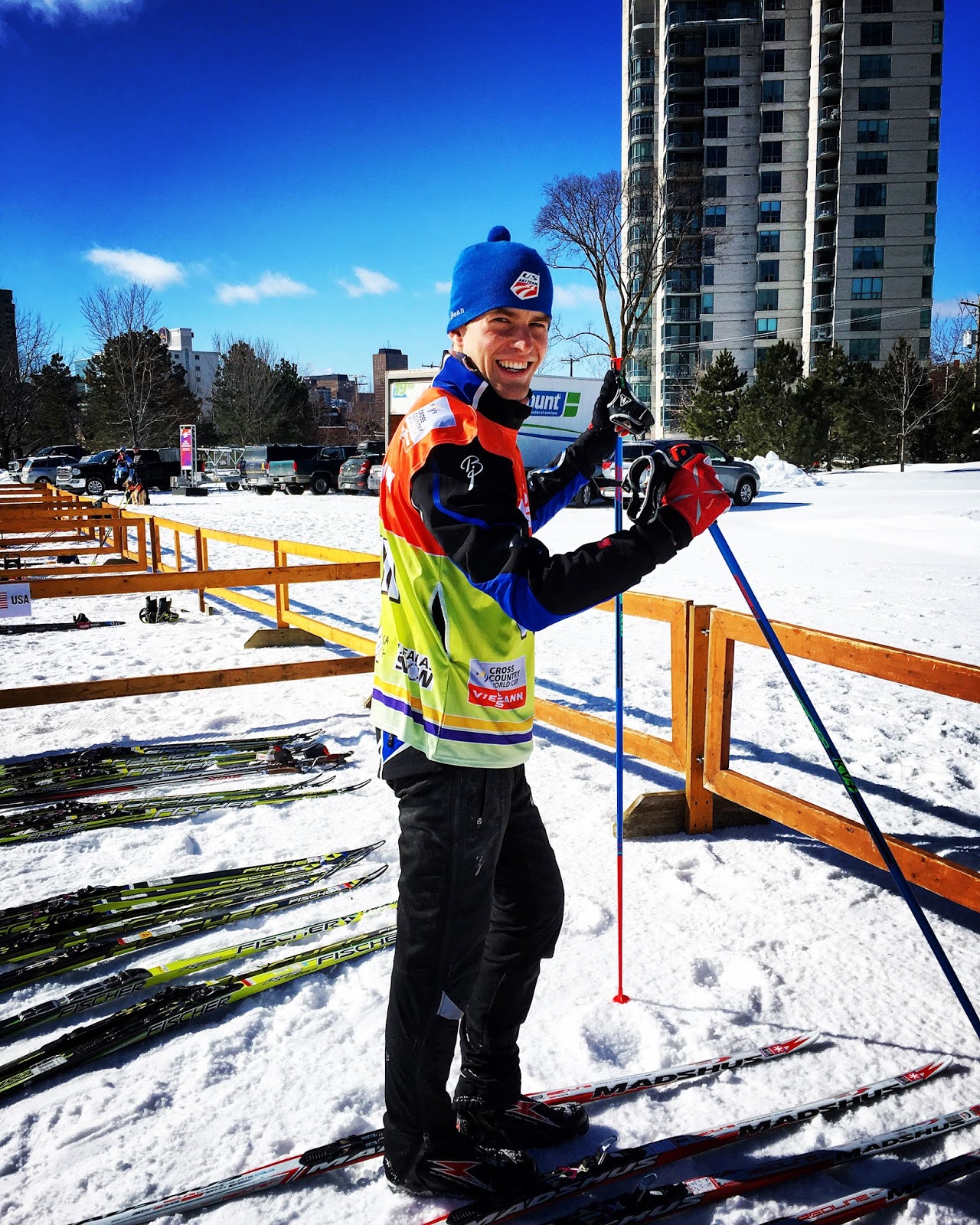
    Austin Caldwell on the World Cup circuit last season. (Photo: Sophie Caldwell/sophiecaldwell.blogspot.com)
    Austin Caldwell on the World Cup circuit last season. (Photo: Sophie Caldwell/sophiecaldwell.blogspot.com)

    “Having a strong program in place and being in Bozeman were the two main factors [why I considered working with BSF],” Austin said. “I also talked with Dragan [Danevski, BSF’s head coach and program director] and with my cousin Anya and it just seemed like it would be a good fit.”

    With the goal to remain involved with skiing for as long as possible, Bozeman and BSF struck Austin as the ideal program and place to be a part of.

    “I plan on staying in the ski world for as long as I can, so far BSF and Bozeman have been great and I plan on remaining here for the coming years,” he wrote in an email.

    Danevski respectfully declined to comment on Austin’s hiring. In the last two years, the BSF elite team has weathered several coaching transitions, most recently with the departure of Bernie Nelson — the team’s coach since the fall of 2014.

    In his first season as an elite head coach and with eight athletes to oversee, his greatest ambition involves pushing his athletes to their full potential. Talbot, 23, Austin’s former classmate, co-captain and fraternity brother at Dartmouth College, and now an athlete for the BSF elite team, saw the transition to having Austin as a coach as uniquely strong.

    “For myself, it has been hugely beneficial to have Austin coaching because he knows my athletic background so well,” Talbot, originally from Anchorage, Alaska, wrote in an email. “He already knows my strengths and weaknesses (which are especially prevalent in the dryland season), and so there is no need to build up the trust and/or understanding between us from scratch. In short, having someone I know well as a coach makes the adjustment to the new program — something that for many after college is a tough step — much easier.”
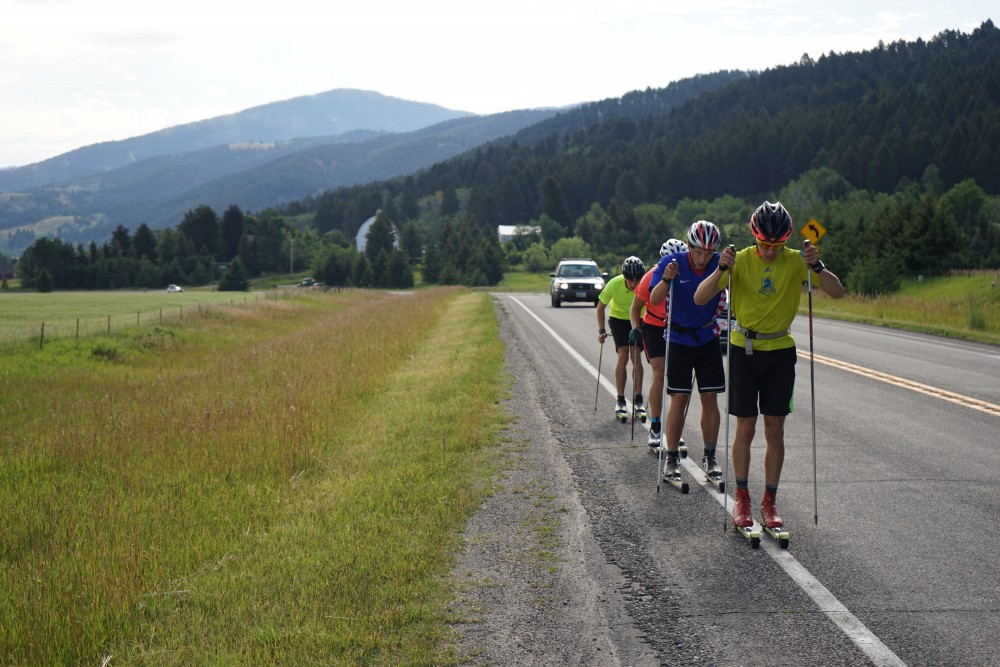
    From right to left: Max LaChance, during a classic roller ski with BSF in Bozeman, Mont. (Courtesy Photo)
    Bridger Ski Foundation elite and post-graduate athletes during a classic rollerski in Bozeman, Mont. From left to right: Max LaChance, Nick Power, Logan Diekmann, and Silas Talbot. (Photo: Austin Caldwell)

    Entering her fourth year on the BSF elite team, Bender also found Austin a positive addition to BSF and the greater Bozeman area.

    “Austin waxed for me during the last few World Cups at the Canadian Tour this past March, and I was instantly impressed with his professionalism,” Bender wrote in an email. “Austin taking the head Elite/PG coach position is a great attribution to not only BSF, but to the Bozeman ski community as a whole.”

    So far, Austin too, cannot ask more of his athletes and training group. The higher level of focus and preparation he finds evident with the BSF elite and PG level athletes gives him confidence in the season and performances to come.

    “I think the key to success is having a group that motivates each other and pushes each other,” Austin said. “And I’m very excited about this training group we have going into the summer. They’re all working very hard and they’ve come together really well. It’s like they’ve been training together a lot longer than three weeks … everyone in this group is always trying to push the limits and do everything they can do to get better.”

  • Movember in West: Skiers Share ‘Stache Stories and Race Goals

    Movember in West: Skiers Share ‘Stache Stories and Race Goals

    WEST YELLOWSTONE, Mont.– While the Yellowstone Ski Festival crew is plenty busy grooming the trails with the fresh snow fall Wednesday, many skiers are also busy grooming their upper lip. In the spirit of no-shave “Movember,” FasterSkier decided to rank the top mustaches found out on the trails. Ranking decisions were made based off the official rules according to the Movember Foundation, as well as an individual’s responses, and overall look. 

    The photo gallery shows our picks for the Top 10 Movember Men. This is followed by the Top Five Movember Women*, abbreviated because of the number of women who participated*. The gallery is rounded out with the top-three Bearded Honorable Mentions.

    *Cutout mustaches provided by FasterSkier.

    Along with getting the history behind the facial hair, FS asked athletes about their race goals for the weekend and beyond:

    Annie Pokorny (SMST2): “Be one of the top girls going into the season.”

    Sloan Storey (University of Utah): “Just getting back into it, waking my body up, and having fun.”

    Liz Guiney (CGRP): “Get the first races out of the way and have fun.”

    Miles Havlick (SVSEF): “Should be a good weekend to get into the racing routine.”

    Chris Parr (Unaffiliated): “To try and not to shave … I’m hoping I can hold off, it’s tempting.”

    Joe Dubay (Unaffiliated): “I’m going to try not to let the icicles on my beard get too out of control.”

    Nicholas Michaud (BSF): “Have the best mustache in the A-final on Friday.”

    Eric Packer (APU): “First race of the year you’re always trying to put down a good effort and practice all of the things you worked on over the summer. My biggest goal is to go out there and ski really well.”

    Akeo Maifeld-Carucci (BSF): “Make sure my mustache is looking real good at the finish.”

    Reese Hanneman (APU): “I’m focusing on the sprint and hoping for an elite podium.”

  • Interview: Sophie Caldwell Reflects on Her Groundbreaking Season

    Interview: Sophie Caldwell Reflects on Her Groundbreaking Season

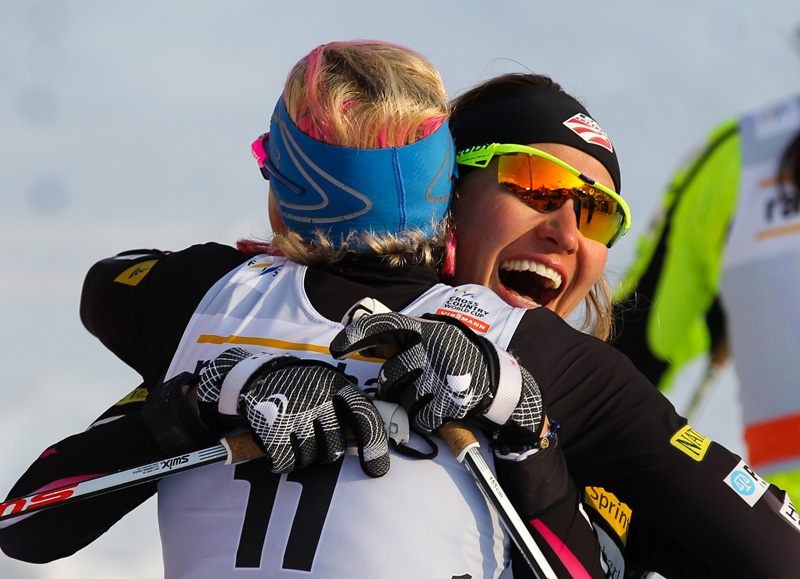
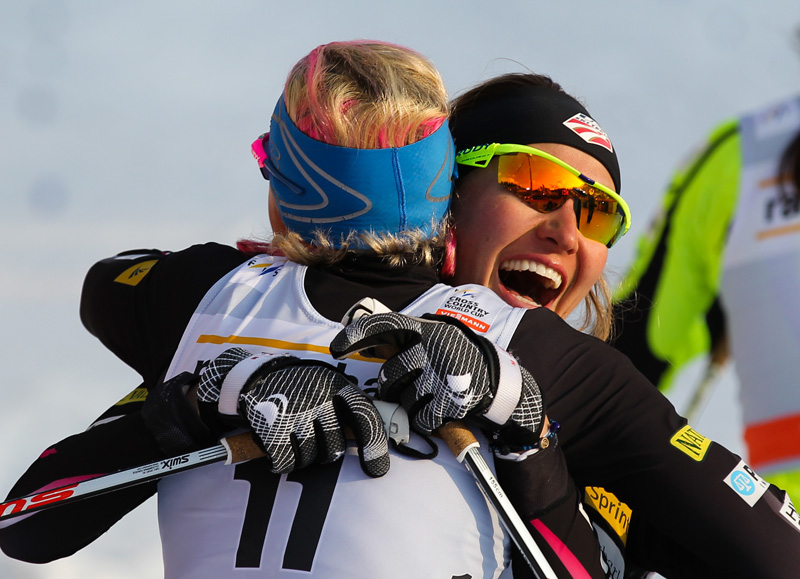
    U.S. teammate Kikkan Randall (l) and Sophie Caldwell celebrate the first U.S. women's double podium in a 2014 World Cup skate sprint in Lahti, Finland. (Photo: Fischer/Nordic Focus)
    U.S. teammate Kikkan Randall (l) and Sophie Caldwell celebrate the first U.S. women’s double podium in a 2014 World Cup skate sprint in Lahti, Finland. (Photo: Fischer/Nordic Focus)

    BOZEMAN, Mont. — When talking with the Sophie Caldwell, her humble demeanor would never reveal that she claimed the highest Olympic finish by a U.S. woman in cross country skiing at the 2014 Games. From her simple goals of increased experience and continued enjoyment of the sport, it would be hard to guess that she was part of the first U.S. women’s double podium with Kikkan Randall in the Lahti, Finland World Cup this past season.

    Both she and her sister, Isabel, are alumni of Dartmouth College and come from a family that has been a major part of the American nordic ski in recent decades. While the Caldwell name is often associated with success, they both agree that they’ve never felt pressure because of their family legacy.

    During their recent trip to Bozeman, Mont. to visit their cousin and former UNH skier Anya Caldwell Bean, FasterSkier was able to sit down with Sophie and Isabel to reflect on last year’s racing season and talk about their future plans.

    FasterSkier: This past season you obviously found a lot of success on the international circuit. Was this something you knew you could do? Were you expecting to achieve the accomplishments you did?

    Sophie Caldwell: My success and results from last season were certainly unexpected. I wasn’t expecting that at all going into the season. I had set some goals but none were super concrete. I don’t like to set results-based goals, but making the Olympics was a big goal, and I wasn’t sure if that was realistic or not. When we found out that we had qualified for the Olympics pretty early on, that took a lot of pressure off. Once that happened I was like ‘I’ve accomplished all my goals for the season. Let’s just have fun with it.’ It was a really exciting place to be and it was really fun.

    I trained well last season, but a lot of it was being excited, being in a good place mentally, and having a good team. I think that’s what I owe a lot of the results to. I definitely wasn’t expecting to have a season like that.

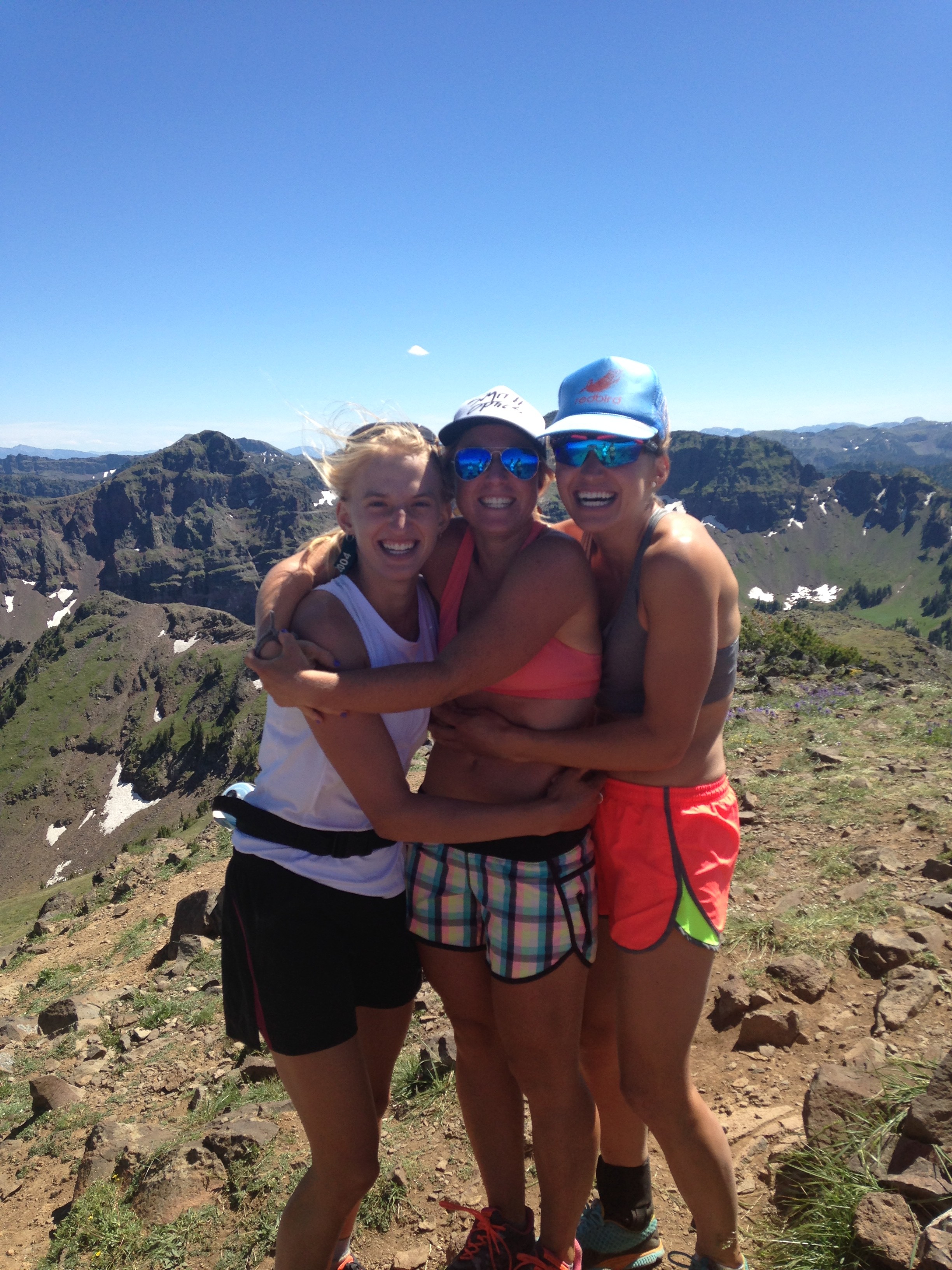
    Isabel Caldwell, Anya Caldwell Bean, and Sophie Caldwell (l-r) pose on the top of Mount Blackmore in Bozeman, Mt. during the sisters recent trip to visit Anya.
    Isabel Caldwell, Anya Caldwell Bean, and Sophie Caldwell (l-r) pose on the top of Mount Blackmore in Bozeman, Mt. during the sisters recent trip to visit Anya.

    FS: How was it adjusting to your first full season on the World Cup?

    SC: It was easier adjusting than I thought it would be. That being said, it’s never easy being home away for that long. Living out of a duffle bag and going from hotel to hotel is exciting because you get to see a lot of new paces but sometimes you miss coming back to a real home.

    FS: What was the most memorable moment of the season for you?

    SC: Everything about the Olympics, especially the sprint day. It was memorable, but it’s also all a blur. Those few weeks were pretty incredible.

    Having my family over for Christmas was pretty fun as well. That was a nice break because we had been bouncing from World Cup to World Cup each weekend so it was nice to tone things down and spend time with my family.

    Some other highlights were Davos, because that was my first top ten. That was really cool because I could see that I could compete with the big girls. That gave me a boost of confidence. Also, Lahti was obviously a highlight when I shared the podium with Kikkan.

    FS: Izzy, how was it visiting your sister during the season this year?

    Isabel Caldwell: Christmas was wonderful! We went to Asiago (Italy) and watched the sprints, then we went to Ramsau (Austria) for Christmas, and then Davos (Switzerland) for the first stage of the Tour (de Ski). It was really fun to see Sophie race and spend time with her.

    FS: How was your experience at your first Olympics? Was it overwhelming?

    SC: It was definitely a little overwhelming going to the opening ceremonies. The fact that we got on TV was pretty cool and we heard from everyone at home. Because we were in the endurance village, which was full of Nordic skiers and biathletes, it was easier because most people you saw there were with you every weekend on the World Cup. You could definitely focus on racing. It was a tough place to get to and a tough place to leave, so it was pretty easy to calm down there.

    After the sprint day I felt like I heard from just about every person I had ever met in my life. That was a little overwhelming. After the race I looked at my phone saw all the texts and emails. I was on my way to dinner and I just pulled out my phone, looked at it and turned it off. I took a deep breath and decided to take in the moment and pay attention to it after dinner.

    FS: Did you feel any pressure at the Olympics?

    SC: I didn’t feel any pressure at the Olympics because, as I said, my biggest goal was to qualify for the Olympics. Up to that point I had qualified for all the skate sprints and it was a skate sprint at the Olympics. At that point I made another goal to make the heats. After that it didn’t really matter what happened.

    Of course, at the same time, there was a little more pressure and I was more nervous than I ever had been on the start line, but I wasn’t worried about results.

    “As far as having the best finish, that was really cool, but I feel that on any given day it could have been any one of us. I’m proud, but having that below my name isn’t defining me or the team.” – Sophie Caldwell on having the best female finish of an American at the Olympics.

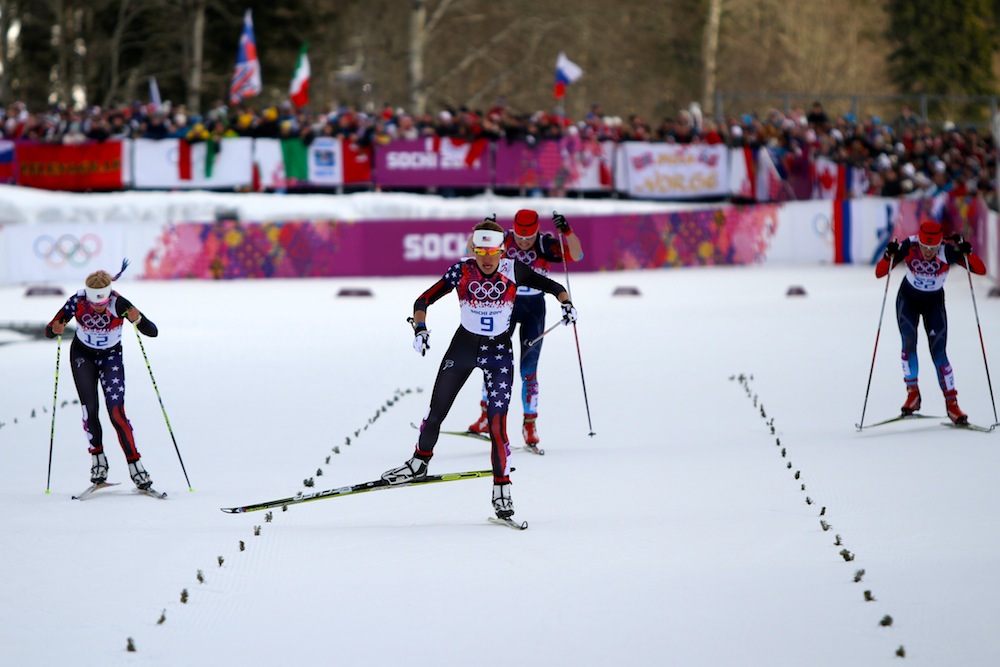
    Sophie Caldwell (bib 9) heading for the finish in her Olympic quarterfinal heat in February, where she placed second to advance automatically to the semifinals.
    Sophie Caldwell (bib 9) heading for the finish in her Olympic quarterfinal heat in February, where she placed second to advance automatically to the semifinals.

    FS: Now that you’ve had time to reflect, how does it feel to have the best finish of any American female at the Olympics? 

    SC: It is still sinking in. I was talking to Anya (Caldwell Bean) today about that and she was saying that it all happened so quickly and before the Olympics nobody thought it was that big of a deal and then you get there and it was a big deal. It was a huge deal, but I still think it’s sinking in.

    As far as having the best finish, that was really cool, but I feel that on any given day it could have been any one of us. I’m proud, but having that below my name isn’t defining me or the team.

    FS: How did Kikkan failing to advance from the quarterfinals affect your race?

    SC: It was bittersweet because we were all broken-hearted when she didn’t make it past the quarterfinals. We had to regroup and focus on the race again. That was definitely some extra motivation. On any given day Kikkan could have gotten a gold medal there and that was some motivation to do it for Kikkan and do it for the team.

    FS: Izzy, you watched the Olympics from Dartmouth? What was it like seeing your sister advance to the A-final?

    IC: Yeah it was amazing. I woke up for every single one of her races this year. For the Olympics the whole Dartmouth team was watching on campus at the big televisions. Everyone was going wild. Meanwhile there was a big group text going on with about 20 family members all screaming their heads.

    It was pretty fun because everyone on the Dartmouth team feels a special connection with Sophie, and also with Ida. There’s definitely a lot of pride coming from Dartmouth. Everyone gets pumped up when they do well, and everyone is watching every morning.

    FS: Sophie, what are your general goals for next season?

    SC: I’ll be racing in the full World Cup season again and I’d obviously like to be competing at World Championships and do well there. Right now it’s hard to tell who is going to be racing which race, I mostly just want to get more World Cup experience under my belt. Last season I felt like each weekend I was becoming more and more confident on the World Cup, but in no way am I a veteran or expert. That’s my big goal, to just keep enjoying the experience and keep learning.

    I haven’t made any large adjustments in my training plan. I have been training a little more but I had some injuries (broken elbow and twisted ankle) but those seem to be fine now.

    FS: What are you most looking forward to?

    SC: I’m just excited to be back on the road with the team, but I’m definitely still enjoying my time at home right now. It’s hard to think about heading over to Europe just yet but it was a blast being over there with such a supportive group and hopefully the team will continue to grow and we’ll get some good results. I think it’s really cool to see the relays where we have started to pop out and do well. Hopefully, as a whole, the U.S. Team will continue it’s upward trend.

    “Our dad in particular did a really good job of balancing being a dad and being a coach. Dad always came before coach, which was really helpful. I think it has just been a pressure free environment from day one. We all have different relationships with skiing but I think we all want to do it for the rest of our lives.” – Sophie Caldwell

    FS: What are you up to these days, Izzy?

    IC: I am officially done with ski racing. I think I want to become a teacher and I have a teaching internship at home for the year at the Burr and Burton Academy Mountain Campus. I’m very excited. It’s a semester program about science and sustainability.

    Austin, Sophie, and Isabel Caldwell (l-r) pose during the Caldwell's visit Europe during Christmas to see Sophie race on the World Cup circuit. (Photo: Sophie Caldwell, http://sophiecaldwell.blogspot.com/2013/12/christmas-and-tour.html)
    Austin, Sophie, and Isabel Caldwell (l-r) pose during the Caldwell’s visit Europe during Christmas to see Sophie race on the World Cup circuit. (Photo: Sophie Caldwell/sophiecaldwell.blogspot.com)

    FS: Do you see yourself continuing to be involved in the sport in any capacity in the future? 

    IC: I have always loved skiing and will continue to in the future, but I’m not that excited about racing anymore. I can live vicariously through Sophie (Laughs). I’ll probably hop in some races this year. I want to do Craftsbury Marathon for Torin (Tucker, a Dartmouth skier who passed away earlier this year) and then maybe do the Berkie if David Sinclair is doing it.

    FS: Finally, you both come from a family that is well known in the nordic ski community. How has that influenced both of you? 

    SC: It’s funny because when people ask us that question the follow-up is usually ‘that must be a lot of pressure.’ It really isn’t. I’m definitely proud to be a Caldwell but I’ve never felt any type of pressure. We grew up skiing but that was just because it was a lifestyle that my parents enjoyed. They did a really good job in raising us to learn to appreciate skiing, love it, and have a healthy relationship with it.

    Our dad in particular did a really good job of balancing being a dad and being a coach. Dad always came before coach, which was really helpful. I think it has just been a pressure free environment from day one. We all have different relationships with skiing but I think we all want to do it for the rest of our lives.

    Izzy and I were on a team together for two years at Dartmouth and three years at Stratton and we got along really well as teammates. It wasn’t a competitive thing. I was just saying to Anya this morning, that in college I said that if anyone is going to beat me I want it to be my sister. I think we are each other’s biggest fans. It was never competitive. A lot of that comes form having a healthy relationship with sports and competition from a young age.

    IC: That pretty much sums it up!

    Sophie currently skis for the Stratton Mountain School T2 Team and is a member of the USST A-Team. Follow her training, travels, and racing through her blog. 

  • Wednesday Workout: Recovery-Week Adventuring with Sophie Caldwell

    Wednesday Workout: Recovery-Week Adventuring with Sophie Caldwell

    Sophie Caldwell (r) and Anya Bean (l) make their way down from the summit of Sacajawea Peak in Bozeman, Mont.
    Sophie Caldwell (r) and Anya Bean (l) make their way down from the summit of Sacajawea Peak in Bozeman, Mont.

    As nordic skiers we are extremely ambitious, especially when it comes to our training plans. While there’s nothing wrong with aiming for many hours filled with intensity and distance during our volume weeks, it’s important to remember to be just as enthused with our recovery weeks.

    Recovery weeks are meant to allow our bodies to absorb the volume or intensity we’ve worked so hard for. By taking it easy we not only help our muscles soak up our hard work, but we also can allow ourselves to do things we might not be able to whilst in the middle of an intensity block.

    I was reminded of this fact when U.S. Ski Team member Sophie Caldwell came to Bozeman, Mont., after an intense two weeks in Alaska where athletes logged 25-plus-hour weeks both in Anchorage and on-snow at Eagle Glacier.

    While the 24-year-old Caldwell is gearing up for another season on the World Cup circuit, the main thing she wants to achieve during the next few weeks is recovery.

    “I think the most important thing is to rest,” she said. “We were all exhausted after that camp. It’s easy to trick yourself into thinking ‘one day off and I’m ready to go again,’ but it takes more than that.

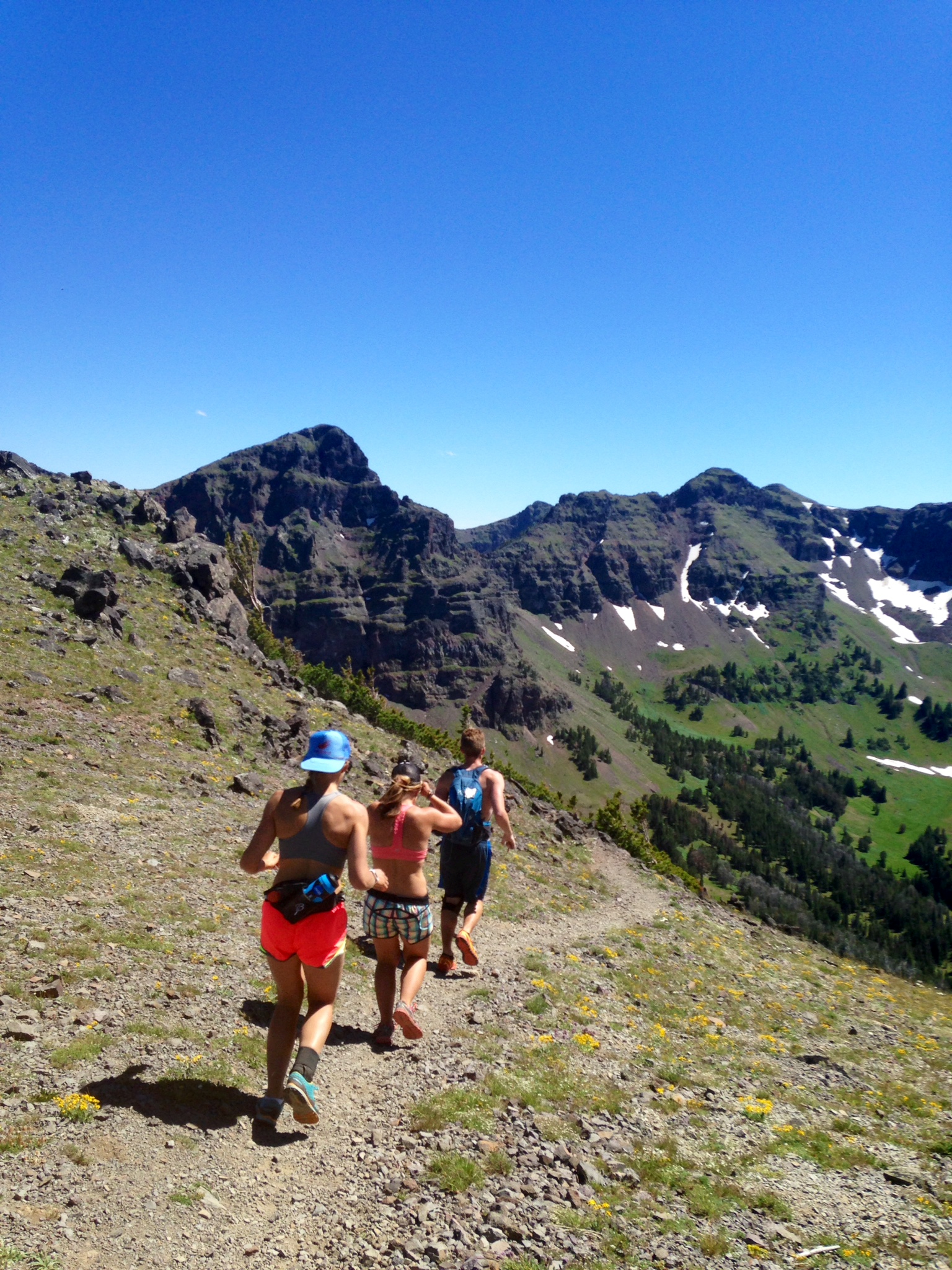
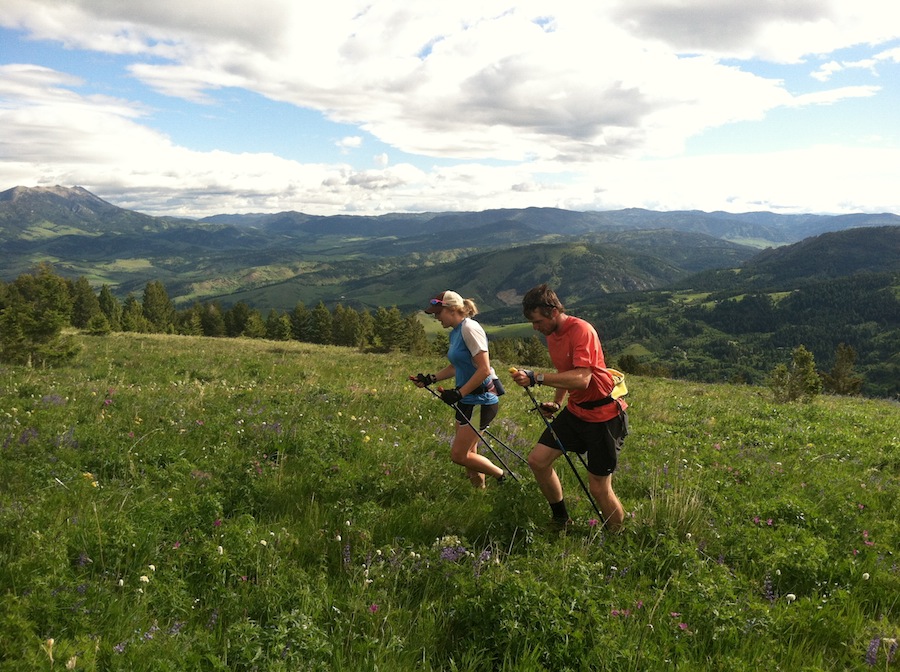
    Sophie Caldwell, Anya Bean, and Tanner Wiegand (l-r) run down the Mount Blackmore trail in Montana's Gallatin Range.
    Sophie Caldwell, Anya Bean, and Tanner Wiegand (l-r) run down the Mount Blackmore trail in Montana’s Gallatin Range.

    “I took off some time at home and let the training sink in,” she added. “These next couple weeks I have adventuring on my training plan. The idea is to get a lot of easy hours which is perfect for coming out here because we’ve been going on big hikes every day.”

    Since arriving in Bozeman, Caldwell and her sister Isabel have joined their cousin Anya Bean, myself, and group of other adventurers in climbing iconic Bozeman mountains including Mt. Blackmore, Garnet Peak, Sacajawea Peak, Hardscrabble Peak, and the Sphinx.

    While someone like myself may have to work a little harder to keep up, these hikes serve as the perfect form of active rest for the 2014 Olympian.

    It is important, however, to remind your legs what intensity feels like during a resting period. According to Caldwell, a key component of these recovery week adventures is to add a little Level-3 interval for 10 minutes into her adventures.

    “It wakes the body up and helps it remember how to go hard,” Caldwell explained. “After you do a lot of easy distance it starts to feel good but you get a little flat and forget how to push. So every once and a while you want to try something like that to remind yourself that you know how to go hard.”

    Regardless of where you are in the world, you too can find some great recovery adventures to make sure that you’re taking in some active rest. Whether it’s hiking a nearby peak, riding your favorite route or trail, or swimming in a local lake, active recovery is always accessible. Just make sure to include some Level-3 intensity every now and then to keep the legs fresh.

    A key component of these recovery-week adventures is to add a little Level-3 interval for 10 minutes. “It wakes the body up and helps it remember how to go hard.” — Sophie Caldwell, 2014 Olympian and U.S. Ski Team member

  • Bozeman SuperTour: Photo Gallery

    Bozeman SuperTour: Photo Gallery

    Photos from the second set of SuperTour races at Bohart Ranch in Bozeman, Mont., with 10/15 k classic mass starts taking place in temperatures just above the legal limit of -4 degrees Fahrenheit last Sunday. All photos by Anya Caldwell Bean.

    Dec. 8: Women’s 10 k and men’s 15 k classic mass starts (Race report | women’s results | men’s results)

  • The 12: Bridger Ski Foundation

    The 12: Bridger Ski Foundation

    Members of the Bridger Ski Foundation elite and post-grad teams celebrating the fruits of their training session near Bozeman, Mont. (Photo: Anya Caldwell Bean)
    Bridger Ski Foundation elite and post-grad team members Jennie Bender (front) and Akeo Maifeld-Carucci (l) celebrate the fruits of their training session with coach Andrew Morehouse (r) near Bozeman, Mont. (Photo: Anya Caldwell Bean)

    Note: This is the fifth preview in our series on U.S. elite teams, which we’ve dubbed the “The 12.” We asked coaches to tell us what’s new and whom to look out for in the coming season and will publish additional previews in the coming weeks in no particular order.

    Team: Bridger Ski Foundation (BSF) Nordic Elite Team

    Coaches: Dragan Danevski (program director/head coach), Andrew Morehouse (competitive team/elite/post-grad coach, service tech), Tim Baucom (competitive team/junior coach, service tech)

    A BSF skier working hard in the offseason near Bozeman, Mont. (Photo: Anya Caldwell Bean)
    A BSF skier working hard in the offseason near Bozeman, Mont. (Photo: Anya Caldwell Bean)

    Elite roster:  Torin Koos, Tyler Reinking;

    Jennie Bender, Anya Caldwell Bean, Corrine Malcolm

    Post-grads: Sawyer Kesselheim (Montana State University), Patrick Madden (MSU), Will Meyer (University of New Hampshire), Akeo Maifeld-Carucci (Harvard), Ketchum Wilt (formerly of Sun Valley Ski Education Foundation);

    Natalie Flowers (Dartmouth), Lizzie Gill (UNH), Katie Gill (University of Denver), and Cambria McDermott (MSU junior, red-shirting to pursuit some non-NCAA skiing goals)

    Who’s new: Reinking (MSU Master’s student), Bender (formerly of Central Cross Country, a.k.a. CXC), Bean (2013 UNH graduate), Malcolm (former US Biathlon member)

    Who’s missing: Leif Zimmermann (retired)

    Top results last season: Seasoned veteran Torin Koos, who turns 33 on Friday, pulled out impressive performances in January at Soldier Hollow, winning two national titles in the freestyle sprint and 30-kilometer classic mass start in Midway, Utah. A couple weeks later, the U.S. Ski Team did not name the former Olympian to its World Championships squad, stirring up some controversy, but you can expect Koos, who’s nearly finished with his Master’s in communication at Westminster College in Salt Lake City, to be back this season – hungry for his fourth Olympics.

    Torin Koos celebrating his overall Tour de Twin Cities win in late January.
    Torin Koos celebrating his overall Tour de Twin Cities win in late January.

    Later last season, Koos won the Tour de Twin Cities (five stages of SuperTour races) and led the overall SuperTour standings for World Cup Period 3. He traveled to Whistler, British Columbia, in late March and won the 50 k freestyle mass start before coming down sick at SuperTour Finals in California.

    Newcomers to the BSF elite team, Bender won the classic sprint at SoHo for her first national title and Bean achieved All-American status at NCAA Championships in Ripton, Vt., where she was sixth in the 15 k freestyle mass start.

    At age 19, Kesselheim cracked the top 30 at the Junior World Ski Championships in Liberec, Czech Republic, placing 29th in the 10 k skate.

    Coach’s comment: In an email, Morehouse explained that most of the elite team has been at their base in Bozeman, Mont., since May. “With the combination of a good group of college skiers, energy has been high and there has been a great atmosphere for training,” he wrote.

    Jennie Bender (l) working out with her new team, the Bridger Ski Foundation, in Bozeman, Mont. (Photo: Anya Caldwell Bean)
    Jennie Bender (l) working out with her new team, the Bridger Ski Foundation, in Bozeman, Mont. (Photo: Anya Caldwell Bean)

    BSF opted out of its annual training camp in Bend, Ore., because of a lack of snow, but is off to Canmore, Alberta, on July 25 for about two weeks of dryland training. In September, the team plans to head back up to Alberta, about a nine-hour drive, for an on-snow camp on the Haig glacier.

    According to Baucom, the team is excited to expand its elite and post-graduate programs (from the three elite-team members last year, all of which were men). The post-grad team has yet to be finalized, but a large group of college skiers have been training with BSF this summer.

    “With the opportunities that Bozeman has to offer, I think the potential for growth is huge,” Baucom wrote. “We have a great community of skiing enthusiasts here who are excited to support these athletes. … With Montana State University in town, BSF also gives athletes the opportunity to develop as postgraduate skiers and gain in-state status before pursuing a college ski career.”

    In terms of goals, Baucom expects his athletes to commit to long-term individual objectives and BSF aims to create a positive atmosphere to make those possible.

    “Individual goals range from medaling at international championships, to qualifying for junior and U23 worlds,” he added.

    ***

    Other previews: Alaska Pacific University | Craftsbury GRP | SSCV/Team HomeGrown | Stratton Mountain School T2

  • After Rollercoaster Year, Bender Joins Bridger Ski Foundation

    After Rollercoaster Year, Bender Joins Bridger Ski Foundation

    Bender in qualifying. Photo: Bert Boyer.
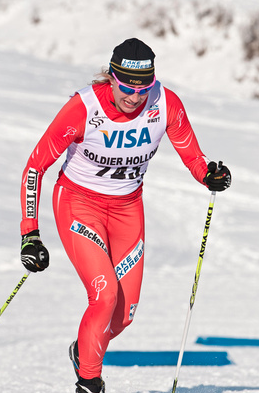
    Jennie Bender at 2013 U.S. Nationals, where she won the classic sprint. Photo: Bert Boyer.

    On the last day of the season in April, national champion Jennie Bender finished dead last in a race. Out of the 33 women who contested the 30 k classic at U.S. Distance Nationals, Bender crossed the finished line over nine minutes behind the second-to-last athlete and a full 30 minutes behind the race-winner.

    “I never want to see myself last ever again,” Bender said in a recent phone interview. “That was horrible and embarrassing. The good thing is, now I know I can…do better and I know I have things I haven’t tapped into yet.”
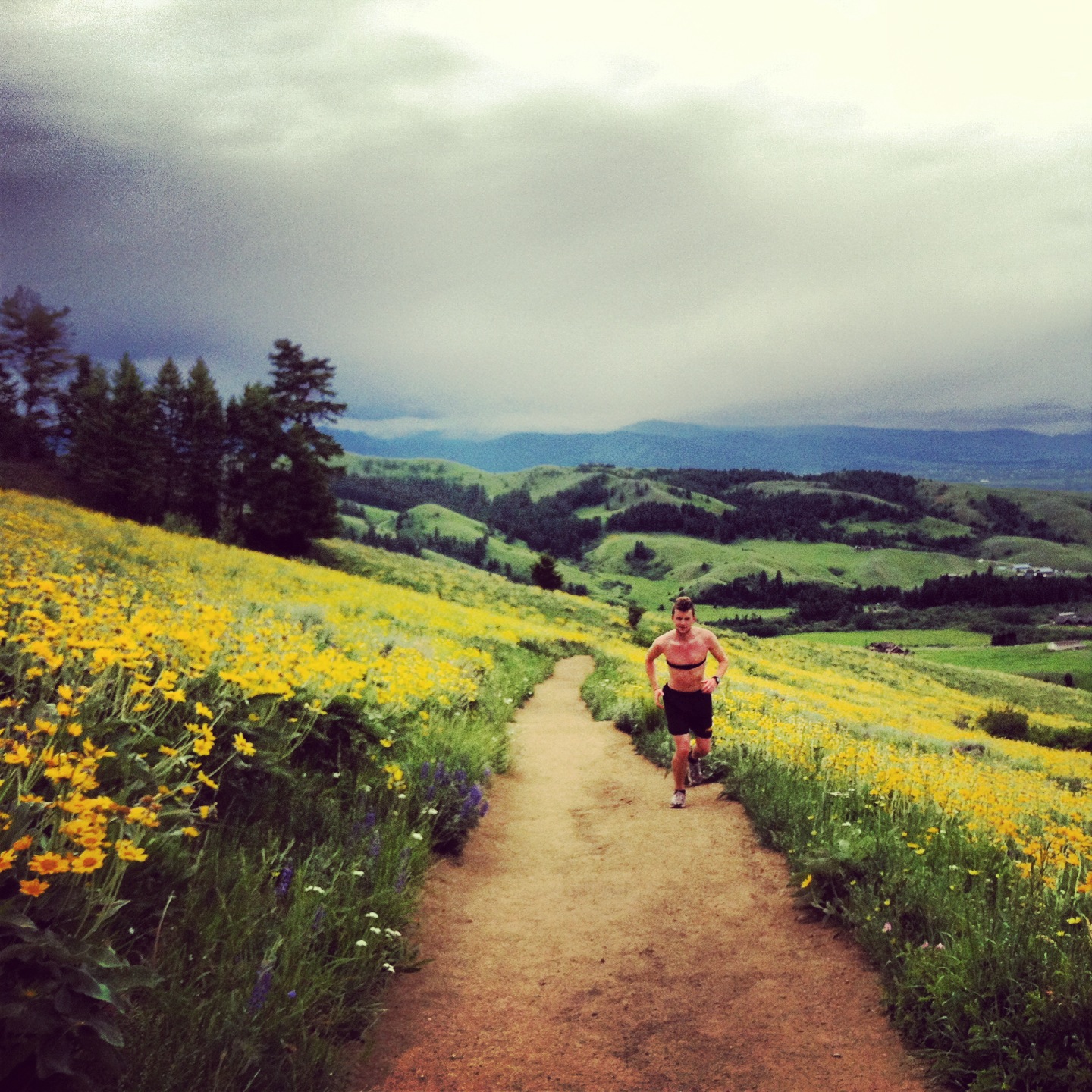
    For Bender, 25, finishing last in California taught her once more how to swallow her pride in a season filled with both trying and triumphant moments. She won her first national championship, the classic sprint, and dropped out of her first race in the span of the same week in Soldier Hollow, Utah. The summer before, she missed months of training while she fought off lyme disease and mono at the same time. At Canadian Nationals in the spring she got strep throat and entered SuperTour Finals on fumes.

    Despite the setbacks, the win at nationals taught Bender never to count herself out. That lesson is coming in handy now that she’s facing another physical hurdle: a herniated disk in her back. She thinks the misalignment may be the result her fall in the finish lanes at U.S. Nationals in 2012 and two years of subsequent overcompensation. After making several trips to the doctor, Bender decided not treat the injury with surgery and will instead bring herself back to fitness with physical therapy.

    “Obviously it’s disappointing and I’d rather not have this, but it could be a lot worse, I guess,” Bender said. “I’m just going to have to deal with it.”
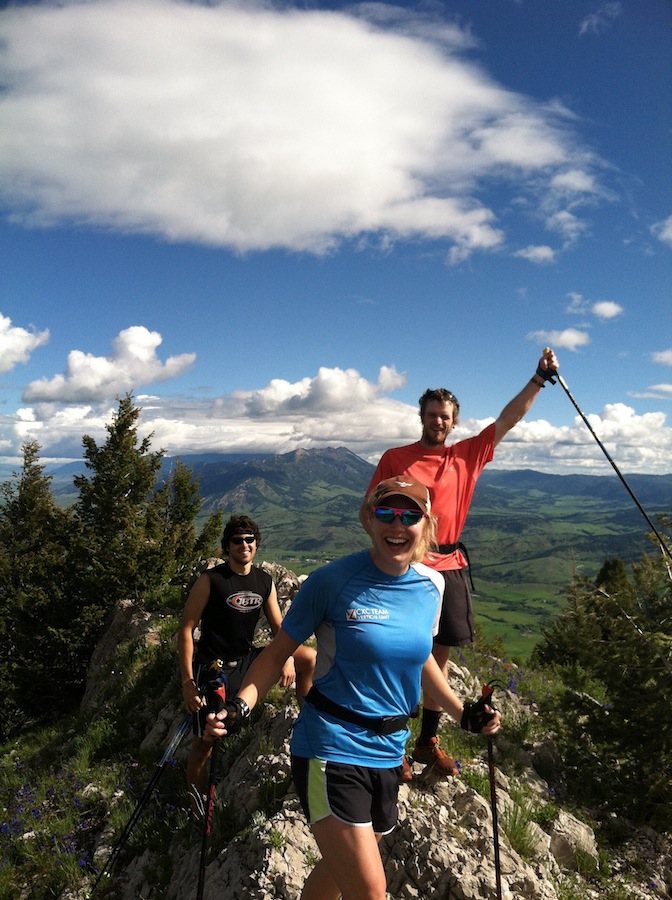
    She can’t run or rollerski at the moment, so Bender is doing the majority of her endurance training on an elliptical, in the pool and with nordic walking. She doesn’t know exactly when she can return to rollerskis, but is confident the problem can be fixed in time to be ready to race in November as long as she’s careful with her physical activity throughout the summer.

    The uncertainty comes at a time of transition for Bender. At this moment, she is driving from her home of the past three years with Central Cross Country (CXC) in Minneapolis, Minn., to Bozeman, Mont., to begin skiing for Dragan Danevski’s program at the Bridger Ski Foundation (BSF).

    Bender, a Vermont native and University of Vermont graduate, says her decision to leave the Midwest was motivated in part by her unpredictable season and a need for something new.

    “I’ve thought a lot this summer about where I want to be and why I’m doing what I’m doing, and I realized that the fire is burning very strongly still,” she said. “I still don’t feel like I’ve reached my potential, which bothers me. It all comes down to personal drive, which is what kept me going this year. Everyone is like, ‘I don’t know how you did what you did this winter,’ and I’m like, ‘I don’t really know, either.’”

    At BSF, Bender hopes to reenergize her training.

    “I’m excited, because I think…the Bridger Ski Foundation seems to be a very big organization with lots of supporters and it’s a big, enthusiastic ski community with one club,” Bender said. “I’ve only heard good things about the program and about Dragan.”

    In addition to Bender, BSF is growing by two other women this season. University of New Hampshire graduate and NCAA All-American Anya Caldwell Bean is headed for Bozeman soon and MSU’s Cambria McDermott will ski in the BSF suit while she red-shirts a year from the NCAA.

    “Dragan Danevski is very happy with the acquisitions, and combined with a great group of Post Graduate skiers, is excited about the future of BSF skiing at the top level,” said BSF assistant coach Tim Baucom.

    With three elite women on its roster, BSF carries a bigger women’s squad into next season than it’s ever seen.

    “It’s bigger than we have had in the past, and the first time that we feel we have several women who will be competitive nationally and internationally,” Baucom said. “Besides Kristina Trygstad-Saari, we have not had many senior women who have been competitive.”

    On the men’s side, Torin Koos will again be on the BSF squad and is joined by NCAA All-American Tyler Reinking from MSU. Leif Zimmermann, four-time national champion and 2006 U.S. Olympic team member, is retiring from competition after 15 years of racing.

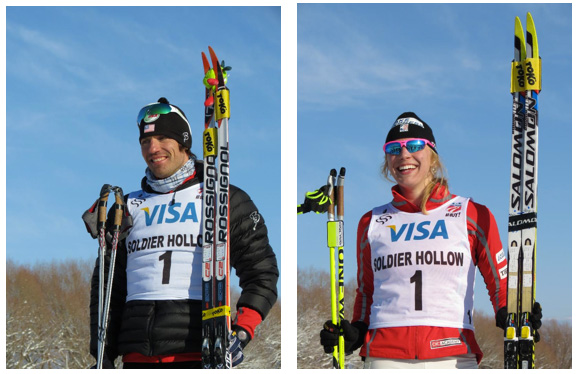
    2013 US National Classic Sprint Champions Torin Koos and Jennie Bender
    Bender in Soldier Hollow waiting to climb the podium at 2013 U.S. Nationals with men’s classic sprint champion Torin Koos. Bender and Koos will be teammates at the Bridger Ski Foundation next season.

    For Bender, the move to BSF gives her more group training opportunities, as her workout partners in Minneapolis last year often included masters and juniors.

    “I’ve been training a lot on my own in Minneapolis and I think I’ll be around more girls my age who will be eager to go out and rollerski,” Bender said.

    “It’s important to be around, in general, a really active environment and that’s what Bozeman is. It’s very outdoorsy, very active, people are always doing something even if it’s not nordic skiing. As long as there’s people willing to go outside and do something active, that’s very motivating for me to go do the same.”

    Bender’s back injury will limit her training options as she settles into her new life in Bozeman. Injured is not the ideal way she would like to be joining a new team, but she is enthusiastic about the change of scene.

    “It’s hard to leave the midwestern ski community and the friends I’ve made there the last three years, for sure,” she said. “Developing a healthy environment is all part of life; all part of being a successful athlete is surrounding yourself with positivity. But this is a change I think will be good and I’m excited for some mountains.”

    Bender’s goals, she added, are the same as they ever were.

    “The moral of the story is, you never know what’s going to happen,” she said. “Obviously my hopes are still high; I [am] out to make the next Olympics… [I’m] strongest in classic sprinting and the [U.S. Ski Team] is already heavy on sprinters, but because women’s sprinting is a big focus this year I think I could contribute to an already stellar lineup.”

    And after a rollercoaster season, Bender thinks her inconsistency in the past might work to her advantage in the future.

    “It’s a new year; you never know what I’m going to do,” she laughed.