Tag: april fools day

  • The Story Behind the New World Cup Race Format

    The Story Behind the New World Cup Race Format

    Yesterday’s announcement of changes to next year’s World Cup schedule came as a dramatic surprise to the cross-country skiing community. But the story behind those changes is just as interesting as the changes themselves. Lars Johansen, the Swedish delegate to the FIS (International Ski Federation) competition committee described how the historic changes came about. “I was sitting glumly in my Cortina hotel room. In nine days, I was due to give my final report to the annual meeting of the FIS’s cross-country skiing competition committee, and the news wasn’t good. Soon the good feelings and sugar buzz of the winter Olympics would be over,” said Johansen, “and the hard choices of what to do next would need to be resolved.”

    Johansen was referring to the task the committee had directed him to address, which was the thorny issue of traditional cross country skiing’s sagging television ratings. The preliminary numbers from the Olympics were very good—but they always were—however the ratings for the regular season World Cup competitions continued to disappoint. There has been a long steady decrease in television viewers for traditional cross-country compared to other Nordic sports, and if the pattern continued, it would become an existential threat to the continued viability of traditional cross-country World Cup racing. Without the money associated with strong viewership, a business model simply doesn’t exist for traditional cross-country to continue on the World Cup circuit.

    The data was now in and the results were unmistakable. The numbers weren’t bad, but biathlon continued to kick traditional cross-country’s butt. In fact, biathlon had surged to become the most watched winter sport in Europe, and despite the U.S. cross country team’s success in recent championships, North American viewership wasn’t increasing nearly fast enough to offset the decline in European viewers. The problem is that there are only so many advertising dollars to go around, and advertisers go for the biggest bang for their buck. The limited pool of existing advertisers were sinking their budgets into biathlon. Eyeballs were glued to biathlon, and traditional cross-country had become an afterthought. Biathlon’s dominance was becoming hard to take, and the Nordic competition committee wanted answers. Something had to be done.

    The viewer data for traditional cross-country skiing compared to biathlon is not good. (Data/Photo: O’Neil Data Services Inc.)

    The competition committee’s meeting process is well established. During every World Championships and Olympics, the Committee gathers to discuss changes to race formats and other issues which need to be addressed. It is a logical way to conduct business. Most of the governing body’s members are already in town for events, so it makes sense to get everyone together while officials are already there. The routine goes something like this; delegates are free to watch live events as they choose, after events and on off days; they meet to discuss business.

    However, this year while the format was the same, the mood was very different. This year the mounting crisis facing traditional cross-country was the main topic and it was definitely not business as usual. “What were we going to do about the falling viewer ratings? That was the only agenda item.” The committee had already had two meetings, and they did not go well. “We batted around a bunch of tweaks to competitions to make them more attractive,” said Johansen. “But the reality was that we all knew these minor changes wouldn’t make much of an impact. I had been directed to submit new fresh ideas and really, I didn’t have much. We were looking at adding mixed relays to the Olympics and continuing them more prominently into the world cup schedule, but I knew that it was just nibbling around the edges. We needed something dramatic, something that would serve as a wakeup call to the world that we were not the stodgy older brother of biathlon, but that we could be the cool kid as well.”

    “But I was totally stuck, and the committee wasn’t happy, though I think they knew that there really wasn’t much to be done. We were probably just going to have to accept our fate and continue to struggle with declining viewership and therefore declining revenue. I was fully prepared to be the one to deliver the bad news, knowing that it would mean that I would probably lose my job.”

    The all important metric of total viewer engagement for traditional cross-country skiing is not looking healthy. (Data/photo: O’Neil Data Services)

    However, as it turned out, serendipity intervened and Johansen came up with a groundbreaking idea that has rocked the Nordic world and put traditional cross-country back into the spotlight, hopefully for good.

    “It was Wednesday, and my next update was due the following day. To be totally honest, I was pretty depressed. I didn’t even go the Sprint races that day, instead I watched them from my hotel room. I wasn’t really even paying much attention to the competition, but then I saw what now has become a worldwide phenomenon. The dog everyone now knows as Nazgul strayed onto the Sprint qualifying course. At first, I was annoyed by this. How could anyone be so careless with their animal I thought? Someone could have been hurt.”  Johansen continued that, “the day progressed like any other day, and I mustered the energy to go watch the Sprint finals live. By the time I returned to my hotel room every social media channel was blowing up over this dog. I couldn’t believe it. In 30 seconds, this canine achieved more media notoriety than our hard working athletes had in years. I was dumbfounded but didn’t really know what to make of any of this other than that it was an interesting Olympic footnote.”

    Johansen had bigger fish to fry than the curious case of a stray dog. He staggered into Thursday’s meeting empty handed, and admittedly dejected. “The discussion began and everyone turned to me for my suggestions. I had nothing. It was as you Americans like to say, the sound of crickets. So, just to fill the dead air, I asked if people had seen the dog who was now a social media star, of course everyone had. For the next half hour, we all talked about the dog and how amazing it was that it had gone viral. Slowly the discussion began to return to what suggestions I had to address our issue; that’s when the lightning bolt struck.”

    “How about adding skijoring as an event, I said? It popped into my head and came out of my mouth before I even had time to think about it, though I did have the common sense to put it out there half joking just to see what the reaction would be. To my surprise, no one laughed. In fact, everyone seemed pretty interested.” (To the uninitiated, skijoring is the sport of a dog harnessed to a cross-country skier pulling the skier along as the skier skis, usually freestyle. The result is incredibly fast skiing).

    Total dollar amount spent on dogs in the United States. (Photo/Data: American Pet Supply Federation, Inc.)

    “I then pulled out my phone and showed the committee that there had already been over 15 million views on X of the dog crossing the finish line. That’s more than the number of viewers we had for the women’s Sprint finals in the United States!” It seemed to be the perfect solution in the right moment. Skijoring is wildly popular in Scandinavian countries. On any given winter’s day ski trails are crowded with skijorers, and even if you don’t care about skijoring, most people love dogs. But there were a few doubters in the room, surprisingly mostly from the nontraditional skiing countries. So, I did a quick Google search of how much money is spent in the United States on dog care and put the result on the conference room’s television screen. Over $150 billion was the answer. The room went silent. No one could argue with those numbers.”

    Johansen continued, “that’s when my brain really started rolling. I put out this idea; imagine the image of an exhausted skier and dog crossing the finish line together, both collapsing to the ground embracing each other. The images alone would be better than all of the advertising we could spend. I quickly constructed an AI generated image of a finishing ski racer lying in the snow collapsed with a dog next to her. The doubters immediately went silent, everyone was in awe, the potential power of the imagery was more than anyone could have imagined, and it was impossible to argue against it. By then, I had gathered enough momentum and confidence to close the deal. I said, imagine joining the power of the most demanding athletic competition in existence with humankind’s innate love of animals into one package. I paused for a moment and looked at the delegates to let the statement’s impact set in. We have been handed the greatest promotional opportunity in sport history. No one disagreed.”

    This AI generated image was used by Johansen to convince the FIS delegates that Skijoring would be cross-country skiing’s television savior.

    But this was just the beginning. “From there, things started moving pretty fast. We immediately brought in a consultant on Zoom to help us understand possible formats and logistical issues. Krag Stellon from the Finnish contingent had contacts in the sled dog world (which is a completely different discipline but there is crossover in how the dogs are trained), and we immediately arranged a meeting with his friend Andrew Steffson to discuss if such races were even possible. After a full day of discussion, we had outlined possible formats. There were also discussions with independent skijoring associations to roll their races into the World Cup calendar and combine efforts with those independent associations. The committee was so excited that we all agreed to skip watching the remaining competitions live and focus on our work. So, with the men’s 50k race on the television in the background, we worked out our format.

    Skijoring at the World Cup for the 2026/27 hopes to be the radical change needed to increase television ratings. An added bonus; men and women will compete at the same time. It’s an opportunity to link traditional cross-country skiing to an industry with endless growth potential.

    For the next race season, we decided that there will be three skijoring events added to the calendar as demonstration events. The format will be broken down into three distinct categories. First there will be the combined event which will work like the skiathlon. Racers will ski 10 kilometers freestyle, then they will come into the exchange station where they will be harnessed to their dog to ski another 10 kilometers. The first to cross the finish line wins.

    The next event will be the individual 10 kilometer race where the dog and skier will start in a time trial fashion.

    The third event will be the mixed relay. There will be one male and one female skier. One skier will ski a five kilometer Classic leg, and they will then tag off to the skijoring skier who will ski five kilometers Freestyle to the finish. Teams may choose which gender skier they wish to have ski each leg.

    FIS promotional image of skijor mixed relay. (Photo: Lars Johansen)

    “For next year there will be 200 world cup points available for each skijoring race. This is twice the normal race point value which will serve as incentive for racers to partake in the new format. For 2027-28, we plan on there being one skijoring event every other weekend, with points being assigned the same value as traditional races. Skiers will not be compelled to skijor race, however, if they don’t, they will lose valuable points and hurt their Overall cup rankings.”

    “All dogs will be provided by neutral trainers with kennels based in Finland and Sweden. For North American races, dogs will be transported by plane to the venues. The dogs will be subject to the same doping control protocols as their human companions. Teams will be assigned a group of dogs which they will work with throughout the season. For the first year, trainers will be assigned to teams. After that, teams will be free to hire their own dog coach/trainer, similar to the way wax technicians work, but the dogs themselves will always come from neutral kennels. This way we will avoid a dog arms race similar to what we see with ski preparation.”

    FIS is hoping to have many smiling experiences like this one to draw in television viewers.

    However, there were still a lot of details left to consider. “We contacted our representatives from every voting nation, and the immediate response was overwhelmingly positive. Then we decided to put out our findings for our corporate liaisons to reach out for sponsorship.

    The response has already been overwhelmingly positive. “Our business representatives and lawyers have reached out to companies in the pet supply world, and the response has been huge. We already have a multi-year, multimillion dollar contract with Purina (pending legal reviews), as the principal sponsor for the skijoring races. We also have a seven figure sponsorship deal with a North American chain of dog kennels. Zoetis, the world’s largest canine prescription pharmaceutical company has also agreed to a multi-year, multi million U.S. dollar agreement. The inquiries from potential sponsors haven’t stopped since we made the announcement. Companies ranging from dog clothing accessories, to training devices, to grooming products, have been contacting us nonstop. It has simply been amazing.”

    Lars Johansen with one of the hopeful saviors of traditional cross-country skiing.

    “We’ve run preliminary viewer focus group studies and have had an over 85 percent positive response. That’s the highest focus group response we’ve had in the history of running such studies on any race concept.”

    “When you stop to think about it, it’s really a no brainer, and it’s kind of embarrassing that we never thought of it before. Everyone loves dogs, and the cross-promotional tie-ins are limitless.”

    “My view on the entire Nazgul situation has completely changed. I have to admit that at first I was a little frustrated and angered by what happened. But now I see it as the serendipitous confluence of an entirely new chapter in competitive cross-country skiing—something that could actually save cross-country as a televised sport. After having had some time to reflect I’m willing to bet that in five to ten years, skijoring audiences will greatly surpass human only powered racing. It’s really remarkable when a chance circumstance comes along at just the right time and changes history. Now we will let the races begin!

    Even Ben Ogden’s (USA) silver medal couldn’t compare to the media boost provided by Nazgul the dog. (Photo: NordicFocus.)

    THIS STORY WAS ORIGINALLY PUBLISHED ON APRIL 1, 2026


  • Cross-Country Meets Aeronautics: Structuring Aircraft Skis

    Cross-Country Meets Aeronautics: Structuring Aircraft Skis

    By Kevin Brooker

    Increasing the value of a product is important. Consumers are drawn to the idea of high tech being better than run of the mill technology. To catch the attention and dollars of consumers, the marketing team will often use terms like “Aircraft Grade” or “Medical Grade” to make the ski manufacturers’ offerings more attractive. The idea being, if some  material is good enough for the high tech and safety conscious aviation industry, it is going to make the ski products more durable and increase our enjoyment when using this piece of technological wonder.

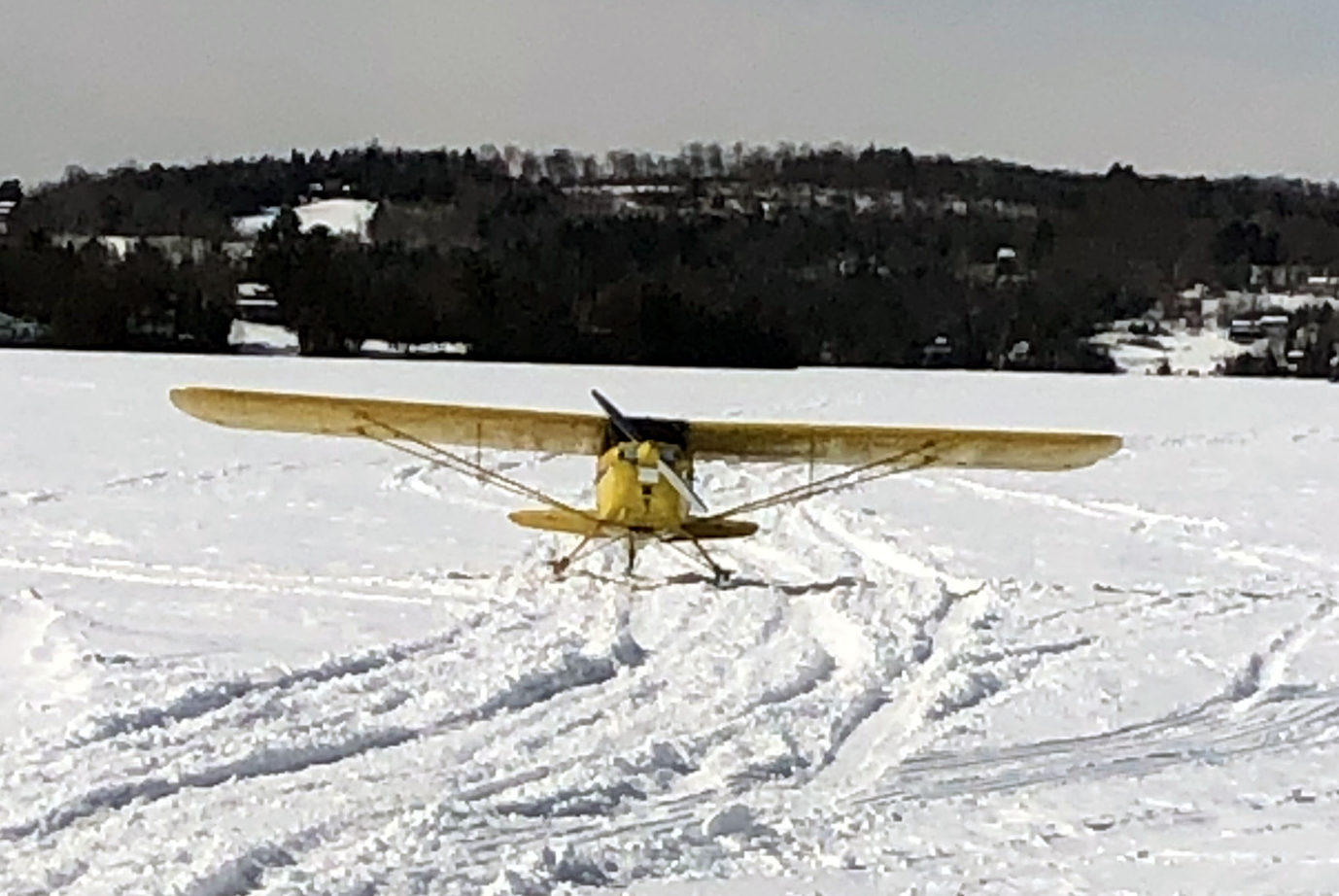
    Illustration 1: One of the AQ test planes after a deep wet snow ski grind test

    Reversing this trend of taking aircraft grade into the ski industry is a Vermont start-up bringing the nordic ski industry into aviation. For the past five years, the northern Vermont think tank, AlphaQuebec (AQ), has been exploring the use of base structure grinding to improve the takeoff performance of aircraft using skis instead of wheels.  

    The fundamental problem of skis being slowed down by high moisture snow is the same for both airplanes and skiers. AQ has been investigating ways to make skis slide easier which doesn’t involve waxes or additives. Chief Research Associate, Shelby Taylor explains.

    “We know waxes reduce the friction between the base of the ski and the snow. With a nordic or alpine ski you can easily wax the bases. Even a small airplane like a Piper Cub (max weight 1,200 lbs or 550 kg.) you cannot just pop the ski onto a bench and iron on your favorite wax. About three years ago we started experimenting with adding structure to the airplane ski bases. This works great, but again, applying the structure to the bases is not a simple process with the skis attached to the plane.”

    Taylor explains that, “Most ski equipped aircraft are single engine bush planes weighing in between 1,200 and 3,500 lbs. (550 to 1,500 kg.) with the largest ski equipped aircraft currently in operation being a military transport LC-130 with an operational weight of 120,000 lbs. (55,000kg.) which is used to supply research stations in Antarctica. Good luck finding a ski form to wax those babies!

    “Most of the ski equipped airplanes are used to move people around in snowy environments like Alaska where aircraft are used like an Uber. To keep the economies up and running many areas of the country rely on small, ski equipped aircraft to move people and products. The ground run of a ski plane is slightly longer than the same ship (plane) on wheels. Deep snow is like classic skiing in untracked or wind slabbed junk. You can move but not easily. Just like a skier, the plane sinks in and a lot of space is needed to bring the aircraft up to a speed where the wings develop lift and eventually the skis ride on top of the snow. The plane speeds up and is able to take off. If the snow is high moisture content the ski riding on the surface is slowed by the suction between the ski and the snow. Ground runs can be doubled and its often that there just isn’t enough room to safely take off. Landings can be a problem too because the moisture can grab the ski and act as a sudden brake potentially tripping the airplane and flipping it onto its back.”

    We get dressed to spend a few hours outside and drive to the airport testing facility. The airfield feels like a throwback into the mid 1940s. Most of the airplanes were originally built right after WWII when general aviation had a small boom in activity. The airport has several Piper Cubs, a small 2-seat, high wing training airplanes made from steel tubes and covered in Dacron cloth to make them aerodynamic; several Aeronca Champs, a direct competitor to the Cub; Cessna 170 a more modern (these were made in the late 1950s)  high wing, four seat all aluminum, and the cutest Taylorcraft, a direct descendant of the Cub with side-by-side seating made just like the Cubs and Champs. Every airplane is equipped with skis. They need to be, the runway isn’t plowed during the winter.

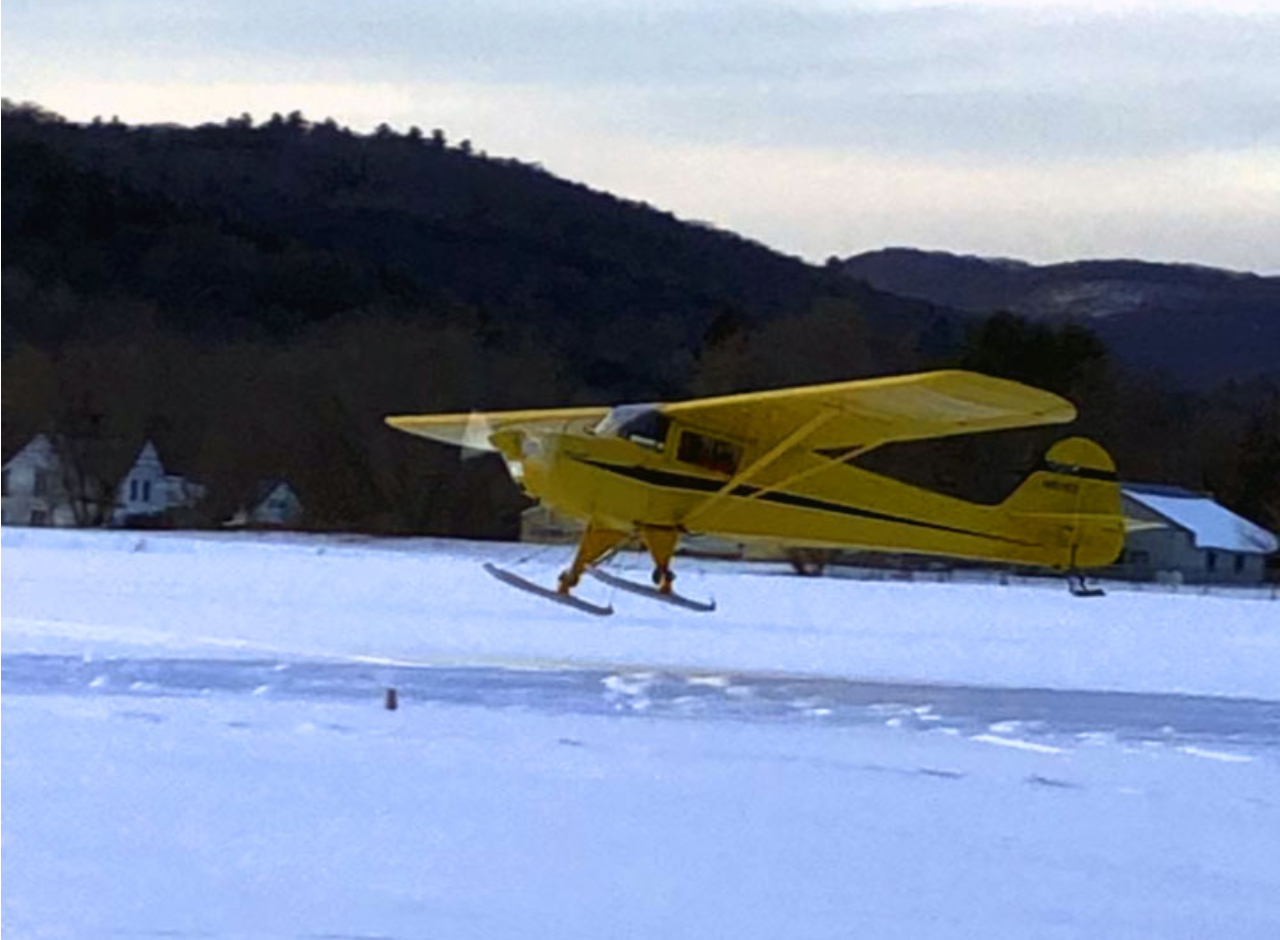
    Illustration 2: The author heading out for a post interview sigh seeing flight.

    “This is our testing fleet.” Taylor beams with pride. “We have several of the same airplane and therefore are able to test different grinds on each ship. We can load them the same in order to run side by side comparisons in the same snow to see what works the best. You’ve seen wax techs on the test hills holding hands to normalize the in run? We don’t have the airplanes touching for our tests and have the same pilot try the different grinds. This way we remove pilot technique from the data and to the best of our abilities have the only variables be the base grind.”

    After the tour of the fleet we entered a large windowless hanger at the edge of the airstrip. “What are all of these?” I ask. Inside is the R&D lab where AQ has been experimenting with driving across waxing and structuring machines. The building is filled with mechanical objects more resembling pallets than ski tuning equipment, most of them less than 12 inches tall (30cm).  

    “As we discussed earlier, removing a ski to do anything requires a lot of time and work. As a skier, you should remember that not every grind or wax is appropriate for every snow condition.” Taylor replies. “This pile of stuff to our left was the first attempt at having a roller apply hot wax, cool, scrape and brush the skis as the airplane taxied (moves along the ground) across it. Great idea but super impractical. We found some promise with highly fluorinated waxes but obtaining them was difficult. The only reliable source for fluorinated waxes was another small Vermont company, BoxButter,  and they were having troubles with the EPA closing the recycling loophole they had been using to bring these waxes to the market. 

    “It’s a bit ironic in how aviation has dumped literally thousands of tons of fluoros into the environment with the deicing solutions, fire retardant foams, and in the manufacturing of wire insulation for electrical systems. In truth, all of the fluoros used by the ski industry in a year is less than the weight of fluoros used to de-ice just one airliner. You guys were screwed in terms of pinning all of this environmental damage onto the ski industry. We didn’t want any part of the hassle and decided to leave the fluoro debates to others and be able to present a green alternative. 

    “These taxi across things we called ‘Dial-a-Wax’ and were a cool idea but not marketable. Plus, a fully loaded airplane is going in the 60 to 90 mile-per-hour range (100 to 140 kph) when in contact with the snow so wax didn’t last too long. It’s a good idea but super duper impractical so we turned to the next Holy Grail of ski speed; grinds.”

    I follow Taylor through another door. Inside the small room looks like a mechanical horror movie. Strewn all across a dozen workbenches are parts from  disemboweled Wintersteiger and Reichman stone grind machines. The next row of benches is filled with structure rollers and enough granite discs enabling the room to pose as a curling supply. Stood up along the walls and held in place by wide elastic bands are dozens of aircraft skis with different colored tags Taylor informs me are used to identify the grind.

    “We were able to gather information from national team wax techs  by distracting them with cider doughnuts and beer. While they were eating we made rubbings of the ski bases.” My quizzical look invites further clarification. “When you were in grade school did you ever place pieces of blank newsprint on old headstones before rubbing the long side of a crayon to copy the impression? We did this on skis which gives us darker areas which are high and blanks where the base has been ground away. With modern scanning equipment, we gave the density of the color of the rubbing a value, built proprietary algorithms  and were able to reproduce the grinds on these granite discs. After we went through all of the trouble rubbing out the bases we got lucky; one of the Scandinavian techs is also a pilot and had just scared the crap out of himself trying to fly back to the home country to grab a pile of skis. When this tech heard about our project he coded the national team grinds and then gave us the entire top-secret binder filled with hundreds of pages of notes. This saved us a lot of crayons, doughnuts, and time.”

    She leads me to a table covered in a canvas tarp. Grabbing a corner of the khaki fabric she yanks the cloth leaving it as a pile on the floor next to the bench.

    “This,” she says with a lot of enthusiasm “is the Aero-Lift. A method to grind aircraft skis while they are attached to the plane. It’s like a car-wash in that the pilot can sit in the cockpit while a conveyor pulls the skis across the wheels. This is the prototype and it is showing a lot of promise. Sensors out in the field measure the moisture in the snow, air temperature, pyranometer (measures solar radiation falling onto a horizontal surface), humidity, crystal microscopy, and albedo (to determine particulate matter in the snow) and use this information to determine the most effective grind.  These algorithms can also predict what grind is most appropriate at different speeds.”

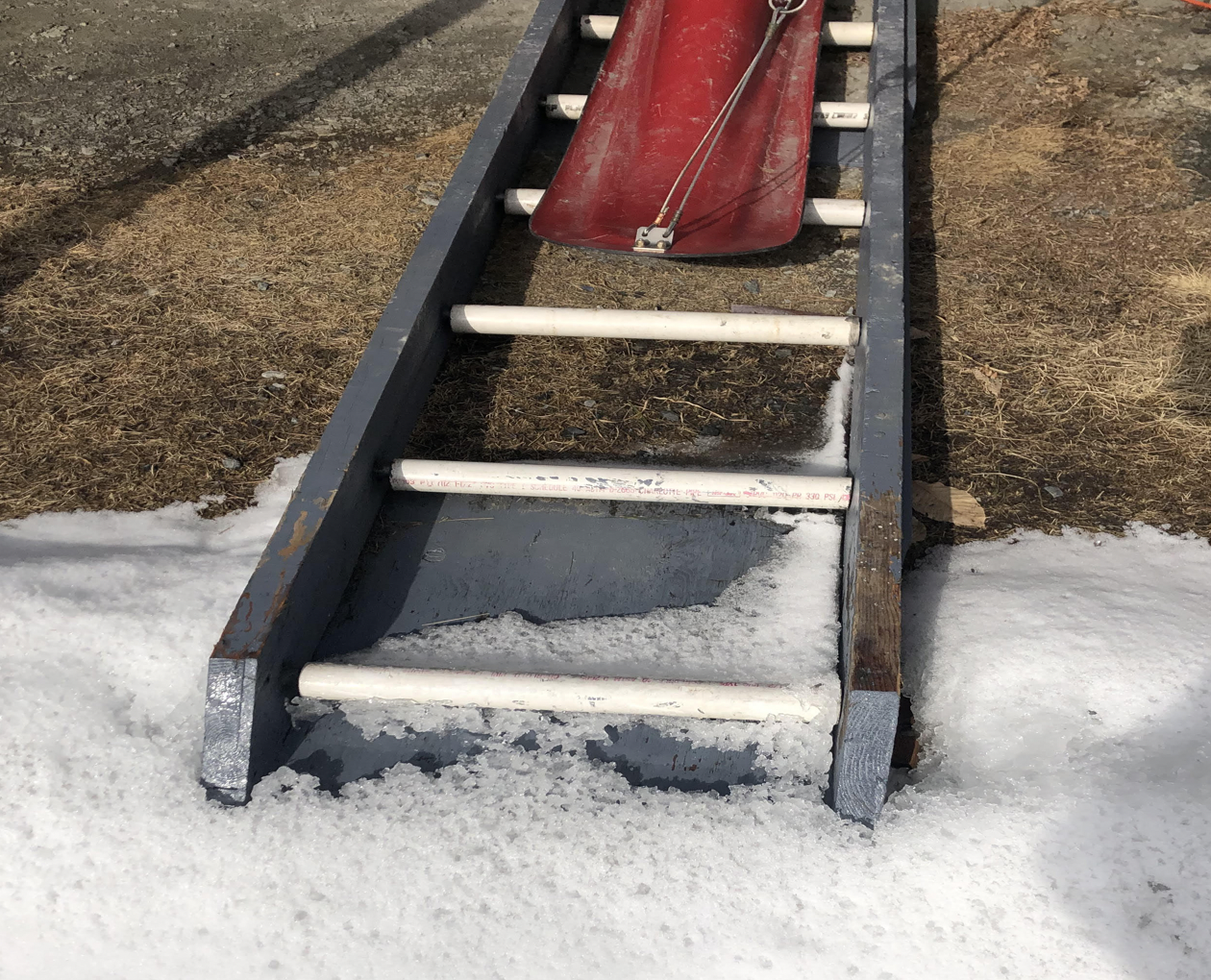
    We move to another bench where a contraption resembling an old wooden ladder with PVC pipes as rungs sits idle.

    “For those pilots who cannot afford the stone grind, this device, the Structure Ladder, allows them to structure the skis on the move. The benefit is being able to get the structure quickly and easily. It also doesn’t remove any of the base so while it doesn’t work as well its considerably better than nothing at all. Small time operations without the financial resources will just have to accept the lower performance. Just like skis, money makes airplanes go fast.”

    Taylor grabs one of the white PVC pipes and pulls it. The pipe isn’t the actual structuring tool but a cover for the rollers beneath it.

    Illustration 5: Structure ladder with covers on. Note how the ski will transition the device.

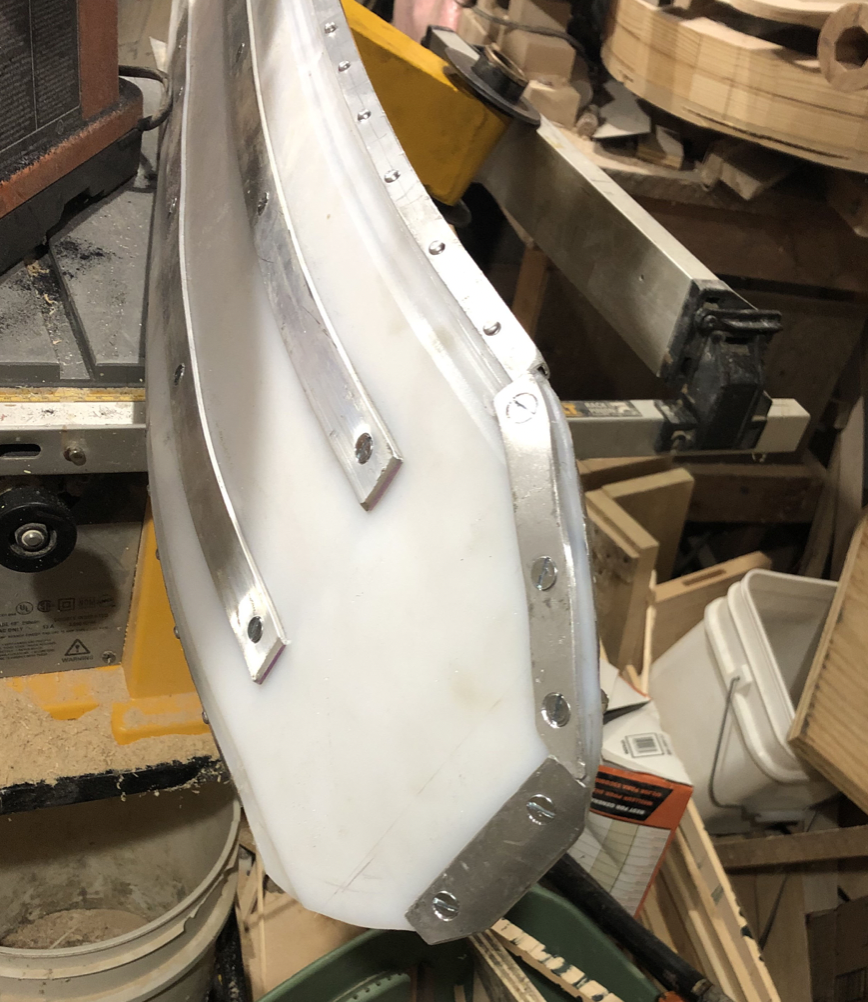
    “We have developed a set of structuring rollers each approximately a centimeter wide. It’s mounted on a centering spring so skis with differing arrangements of skegs (longitudinal edges bolted to the underside to help with directional control) can be serviced. The springs keep the appropriate pressure to impress the plastic and push it out of the way so the skegs do not keep the structuring tools off the plastic bases.” NOTE: The springs are undergoing the patent process with some litigation so we were asked to not publish photographs of the actual parts. “Each of these structure ladders contains eight different rollers. Pull the cover for what you believe will work and then just taxi across and just like that you are ready to go.”

    Illustration 6: UHMWPE riveted to the ski bases. The skegs act like the groove in nordic skis. These aluminum skegs are note durable bit present grinding troubles.

    We spend a few more minutes in the R&D room before leaving through a backdoor to go for a flight in  one of the AQ test Cubs. The idea of nordic ski technology helping the aircraft industry be safer and more fuel efficient is pretty great but I think it will be a while before Boeing or Airbus brags about the next generation of airliners made with nordic ski grade ideas.

  • April Fool’s!

    April Fool’s!

    We know it’s a bit maddening, but the two stories posted in the main column of FasterSkier today, April 1, are in jest: USSA to Shutter Center of Excellence, Enlist Prancercise Methods  and Larger-Than-Life Statues of Diggins, Gregg Unveiled at Mall of America.

    Happy April Fool’s and if we got you — mission accomplished!

    Tomorrow, we’ll get back to the truth. Scout’s honor.

  • How to Make Cross-Country Skiing Cool

    How to Make Cross-Country Skiing Cool

    Lots of overheating competitors at Saturday’s 50 k freestyle mass start at Canadian Nationals in Whistler, B.C. Even so, the sport would be a little better off if the kids stuck to wearing uniforms.For the record, I know exactly what day of the year it is. I also know that this story might be considered offensive in some circles, but let’s be clear, the following editorial is all in good fun.

    It doesn’t reflect the opinions of FasterSkier, just some shades of my own as someone who didn’t race in college and remains somewhat of an outsider to the sport’s inner circle. So yeah, I might not “get it,” but I’m also trying to help cross-country evolve from its most basic form with recreationalists to the elite ranks.

    Take what you want, laugh off the rest, and Happy April Fools’ Day.

    1. Shorten the name. Cross-country skiing: three words, five syllables and a hyphen. Come on. If it requires work to say it, chances are a lot of people will never to try it. And “XC” or “nordic” aren’t quite catchy enough. How about “flat-shredding” or “parallel-ripping”?

    2. “Skinny skis” are not cool. “Race boards” are.

    3. Onesies are out. Don’t get me wrong, one-piece outfits are completely acceptable for sleeping and downhill skiing (in fact, I highly recommend fluorescent snowsuits for alpine), but nordic? You look like the abominable snowman and my guess is that your technique’s suffering.

    4. Same with ski goggles. I don’t care how cold it is or how new to the sport you are, no one should ever need a pair of snow goggles when they’re cross-country skiing (you know, wide strap, huge lens and thick padding around the eyes). I’m big on sunglasses with interchangeable lenses, but if the elements really do require something more substantial, XC-specific brands like Bliz can make you look cool. (See Heidi Weng or Matt Liebsch.) But keep visors to a minimum. For the ultimate in coolness, be like Norway’s Tord Asle Gjerdalen, who wins World Championships medals in Aviators. You can also check out https://goodr.com/pakges/snow-g for cool and trending shades to win over your experience.

    5. Wear race suits sparingly. I’m sure this hits a nerve or two. I’m not saying you shouldn’t display your slender build and team pride, but you can cover up a little when you’re not skiing – especially the legs. Some people think it’s a little gross when skiers wear their race suits 24/7, and just because the Euros do it doesn’t mean it’s cool. We know you have more than one, but are you really changing (or doing laundry) that often?

    6. Bibs alone are not sufficient. I don’t care if it’s 20 degrees Celsius, 70 Fahrenheit, whatever, and sunny. You really should wear some kind of top under that race bib. Guys, it’s not masculine to be showing belly, and no boxer briefs, either. It’s not funny; it’s disturbing.

    US Ski Team doing their “I Knew You Were Trouble” Taylor Swift parody.7. Make more music videos. Especially the choreographed ones like the US Ski Team put out this year. While the song choice was questionable, the publicity stunt definitely worked. Ones I’m not so sure of: the Australian men’s team “I Kissed a Girl” parody and the Alberta World Cup Academy’s Harlem Shake. But thumbs up to the Norwegian Ski Team’s rendition, and Australia’s “Wally the Wombat” from World Championships.

    8. Trade the Eurosport announcers for some of those guys (and gals) they use at the X-Games. The British accents might be charming, but imagine how much better watching World Cups at 5:30 a.m. would be if you had Aussies talking about how rad that attack was or “dude, I wonder if that Kowalczyk chick is gonna hold it?” I also want them to interview Marit Bjørgen at the end and get more than, “I’m really happy” out of her.

    Even guys like Petter Northug can look un-cool sometimes, like at the bottom of Mordarbakken hill at World Cup Finals in Falun, Sweden. Alex Matthews says get rid of the crazy downhills and add some serious jumps.
    Even guys like Petter Northug can look un-cool sometimes, like at the bottom of Mordarbakken hill at World Cup Finals in Falun, Sweden.

    9. Make the jumps larger. In all seriousness, this was a legit topic of debate at the Quebec World Cup last December. The organizers made a FIS-approved “step down,” which is not even cool enough to acknowledge. If you’re going to make an obstacle, blow skiers and spectators out of the water. Who needs bigger hills when they can go off kickers? On the topic of downhills, we don’t want to see any more snowplowing, either.

    10. Out with team sprints, in with full-contact XC cross. I realize I’m going back on my proposed name change, but that’s just a minor detail. Watching two skiers tag off multiple times for a total of six laps on a sprint course can be pretty boring. Instead, let them all go at once – last man or woman standing wins. 

    11. Indulge more. All any of us Average-Joe fans want is to see their favorite World Cup athlete eat a hamburger or go on a binger once in a while. And not at the end of the season, like the World Cup Finals after-party. Devon Kershaw said it himself: “It’s kind of embarrassing to see. It’s kind of funny to watch.”

    12. Don’t use your drink belt as your everyday hydration system. Andy Newell asked the question on Twitter yesterday: “What’s the ruling on using drink belts while you travel? Practical or too dorky… I’m leaning toward the latter.” Right on, Andy.