From the FasterSkier archive — posts syndicated from athletes’ and coaches’ own blogs between 2004 and 2012, kept online as published. Current coverage is at fasterskier.com.

Tag: arianna follis

  • Team 4: Italy

    Italy

    2009-2010 Nations Cup Ranking: 5th (4956 pts)

    2010-2011 Nations Cup Ranking: 4th (6106 pts)

    Men: 5th (2571 pts)

    Women: 3rd (3535 pts)

    2011/2012 World Cup Team

    Men

    Pietro Piller Cottrer

    Giorgio Di Centa

    David Hofer

    Valerio Checchi

    Roland Clara

    Thomas Moriggl

    Dietmar Noeckler

    Giovanni Gullo

    Renato Pasini

    Fabio Pasini

    Federico Pellegrino

    Fulvio Scola

    Loris Frasnelli

    Women

    Marina Piller

    Virginia De Martin Topranin

    Silvia Rupil

    Melissa Gorra

    Elisa Brocard

    Gaia Veurich

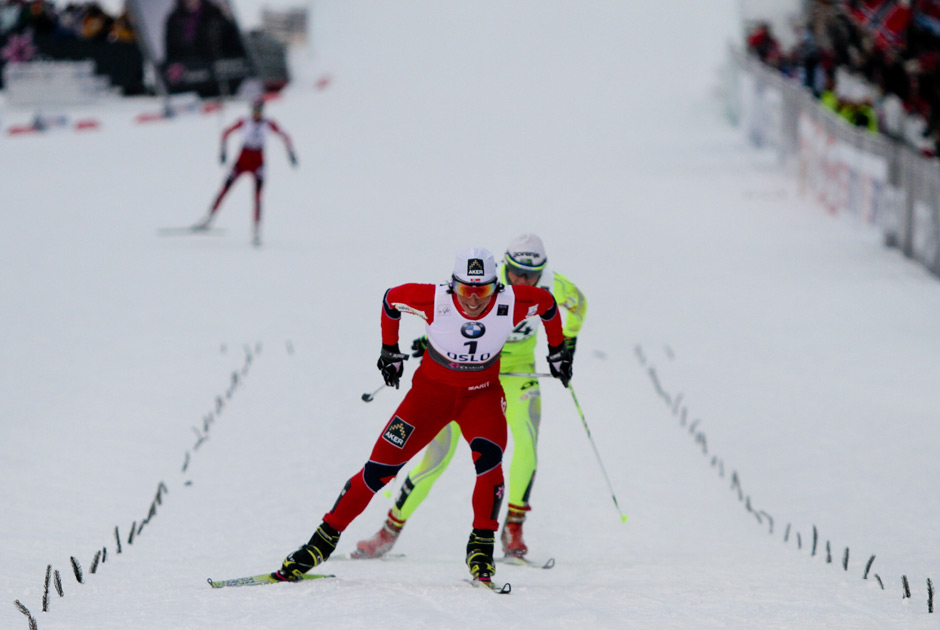
    Pellegrino qualfiying second in Drammen, Norway.

    What You May Have Missed Last Season

    The Italian men’s sprint team emerged as a force in 2010-2011. With a few exeptions (Christian Zorzi, for one) the Italian men have never really been thought of as strong sprinters, probably because big names such as Pietro Piller Cottrer and Giorgio Di Centa qualify for sprints about as often as Petter Northug loses a sprint finish.

    But Fulvio Scola stepped up his game significantly, Renato Pasini regained some of his former glory, and  Federico Pellegrino did not disappoint in his first full World Cup season.

    Scola was the biggest contributer, as the 29 year old who has never really made a splash on the circuit qualified for every sprint he competed in this winter – except the one at World Championships (missed peak, perhaps?). He finished 5th in the Sprint Cup rankings, and apparently likes running in one-piece suits.

    Renato Pasini turned back the clock to 2009, and finished in the top 10 three times on his way to 9th in the Sprint Cup.

    But it was young Pellegrino who punched his way onto the World Cup in style, winning qualification during the skate sprint in Davos, Switzerland, before ending his day last in the final. He qualified in the top 15 four other times, and also picked up his first career World Cup medal in Liberec, Czech Republic, after he tried to pull a fast one on Ola Vigen Hattestad and was taught a lesson by the elite Norwegian.

    What You Need To Know for This Season

    The Italian women’s team was gutted at the end of last season, and if it isn’t dead, it is now on life support. Arianna Follis pulled the plug after her best World Cup season ever, as did Marianna Longa, who might actually stay retired this time. Magda Genuin waited an extra month or so, but then followed her teammates rather than hang around for one more seaon.

    It was the skiing of all three that pushed Italy from a second-tier nation into a battle with the Russians for a Nations Cup podium spot. The departure of sprinters Genuin and Follis, and distance heavyweight Longa will be extremely costly for the women’s program, and the Italians across the board.

    While FasterSkier always likes a surprise, the chances of any of the Italian women having the kind of breakout campaign needed to replace the over 2600 World Cup points produced by their top three women last season is nil.

    Giorgio Di Centa stands happily with an Italian flag draped over his shoulders at the Canmore, Alberta, World Cup in 2010. (Photo: Win Goodbody)

    As a result, the Italian men must step up, or the country will drop in the Nations Cup ranking like skiers during Stage 3 of the 2010 Tour de Ski…

    Italian hopes are pretty much centered on one man – Pellegrino. The sprint phenom who helped the country massively last season will be called on to do everything once again – generate excitement, score points, and probably wax skis as well.

    But don’t be surprised if the men don’t start off the season in top shape. The Italians suffered from a brutal summer of injuries, as Pellegrino had shoulder surgery, Di Centa injured his thigh, Piller Cottrer fell off his bike and banged up his shoulder and hip, and Roland Clara got sick.

    Who You Should Watch

    FasterSkier knows that Silvia Rupil isn’t exactly a young gun in the pipeline, but here’s the deal – someone has to step up to replace the departed women, and Rupil is in the perfect position to do so.

    She will be given all the opportunities possible to succeed;  at 26 she is now one of the team leaders, she is entering just her third World Cup season, and we have seen flashes of elite ability, including two top tens and being a part of three World Cup medal winning relay teams last season.

    If you speak Italian, check out this video, and let FasterSkier know how she’s progressing!

  • Longa, Zorzi Join Follis on the Sidelines of Italian Skiing

    Longa, Zorzi Join Follis on the Sidelines of Italian Skiing

    Marianna Longa posing with her son. Photo: Fiemme2013.

    Before the 2011 World Cup season was even finished, the ski community knew that the Italian team would be losing one of their biggest stars.

    Arianna Follis, who had been racing on the circuit since 1995, saved the best part of her career for last. She was the World Champion in the sprint in 2009, and in 2011 placed third in the overall World Cup rankings and second in the sprint standings. But at 33 years of age, she said told SkiTime.it that “at some point in life, we need to make a change, and it’s time for me.”

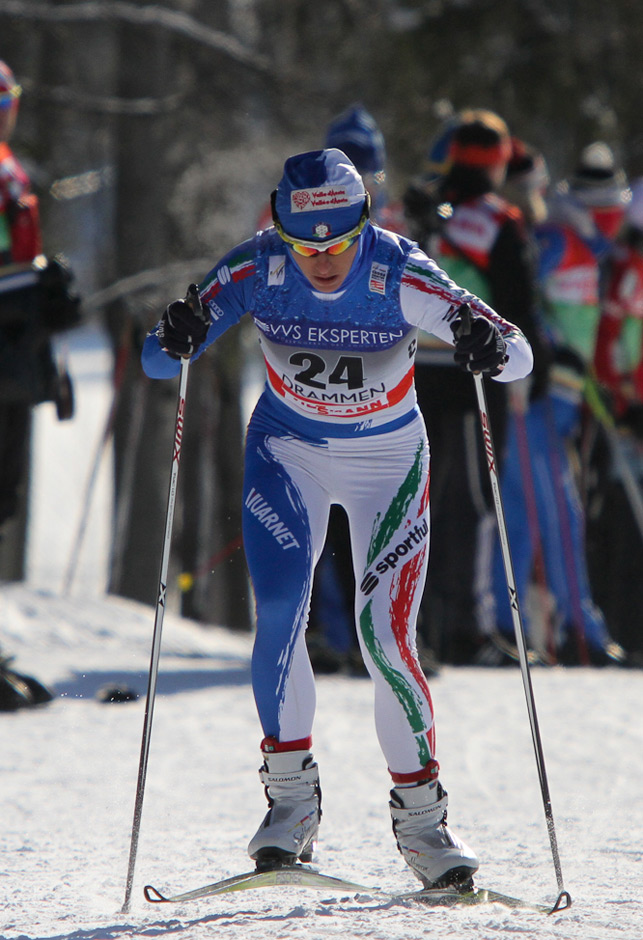
    Follis in Drammen this year.

    Follis had inherited the spotlight from Stefania Belmondo and Gabriella Paruzzi, each of whom won individual gold medals in the Salt Lake City Olympics, and she was part of a cohort of equally strong Italian women, including Magda Genuin and Marianna Longa. Partway through the 2011 season she made her decision, which she said allowed her to enjoy the last races of the year.

    Longa had paired up with Follis for bronze in the 2009 World Championships team sprint and just missed the podium in the same event at 2011 World Championships in Oslo, where she had three individual top-ten finishes. It looked like she and Genuin – who had considered not finishing the 2011 season after sustaining a calf injury before World Champs – would be the team’s leaders going into 2012.

    But two months after Follis had retired, Longa decided to follow her example.

    In 2005, Longa only raced twice due to a pregancy. Now, six years later, she wants to spend more time with her son, and the 32-year-old is ready to be a full-time mother.

    Like Follis, Longa’s career was on the upswing. Besides her recent success at championship events, she had more than 20 top-ten finishes in World Cups, Tour de Ski stages, and mini-tour stages this season. She finished third overall in the 2011 Tour de Ski, and her success added up to a seventh-place ranking in the overall standings and fourth place in the World Cup distance rankings.

    Follis and Longa, along with Genuin, who sometimes joined them in sprint finals, put Italy back on the map, and made it one of the few non-Scandinavian countries which could field more than a single all-around female star. With no significant

    Follis being interviewed after her medal in the World Championship sprint.

    retirements from the Norwegian, Finnish, or Swedish women, the disappearance of the Italian pair will almost certainly make the lead pack at World Cup races much less diverse.

    Genuin, who had voiced doubts about racing as the 2011 season ended, hasn’t done anything to suggest that she wouldn’t stay on the national team. She finished the year ranked eleventh in the sprint cup. Silvia Rupil, Italy’s next-best woman, was 48th on the overall list; the team will now struggle with depth.

    Another Italian star recently announced his retirement, as well: Cristian Zorzi, the two-time Olympic relay medalist who also picked up bronze in Salt Lake City in the individual sprint. After racing in his third Olympic Games last year, Zorzi did not compete in a single World Cup race in the 2010-2011 season. In fact, after a busy early-season campaign, he only raced four times in 2011 – one weekend in February, and twice in March.

    While Zorzi, who would have turned 39 next year, was no longer a contributing member of Italy’s robust national team, the retirement of a highly symbolic star – Zorzi had his biggest successes when sprinting was still relatively new – will change the landscape of Italian skiing. SkiTime.it reported that he would be moving into a technical role in the ski world.

    Zorzi cresting the final climb in the 2006 Olympic 4x10km relay. He anchored the Italian team to gold.
    Marianna Longa in the 10km World Championship classic race


  • Bjoergen Takes Gold To Thrill Capacity Oslo Crowd

    Bjoergen Takes Gold To Thrill Capacity Oslo Crowd

    Marit Bjoergen (NOR) pleases the home crowd earning the first gold medal of these 2011 World Championships.

    They arrived on foot, mostly—a three meter-wide river of fans snaking up from the nearest subway station, the cowbells around their necks clinking softly.

    By 12:30, with an hour still to go before the start of the freestyle sprint, the Norwegian faithful had already packed the stands at the Holmenkoll venue in Oslo—in anticipation of the first event of the 2011 World Ski Championships.

    Numbering 20,000, they were awaiting their country’s 100th World Championship gold, and it didn’t take long for them to get it. Capitalizing on a course and conditions that suited her, Norway’s Marit Bjoergen brightened a grey day by taking the first medal awarded in Oslo.

    Arianna Follis (ITA) takes home the silver.

    Italy’s Arianna Follis, the defending champion, was second, and Slovenia’s Petra Majdic was third. But Bjoergen was in control of the final nearly the whole way, wresting the race from Justyna Kowalczyk (POL) on the course’s big climb and never relinquishing it.

    In a press conference, Bjoergen said that it had been her aim to win a single individual gold in Oslo, despite the fact that she was favored in all four events.

    “Now, I have my goal,” she said. “The rest of the championships, I can really have fun.”

    Coming into the race, Bjoergen’s chances were by no means bad—she’d already won two sprints this year. But the discipline is the most erratic event on the championships program, as was demonstrated when the other favorite, American Kikkan Randall, got tangled up in her quarterfinal heat and spun out of contention.

    Furthermore, in her last two World Cup sprints, Bjoergen had been far from dominant—she was eliminated in the semifinals in Estonia in January, and placed third behind Randall last weekend in Drammen.

    Both of those races, though, were held on faster, flatter courses, which favored quickness over fitness. The latter Bjoergen has in spades, while her speed is merely exceptional—not superhuman.

    Thursday’s loop, and its conditions, were much more demanding. With temperatures struggling to break 20, the skiing was still relatively slow; there was a big climb, and even the descents didn’t provide many opportunities for recovery. When Bjoergen emerged as the winner of qualifying, it was clear that she was in line for a good day.

    Bjoergen celebrates.

    “I know that for me, it was a good track,” Bjoergen said. “It was three minutes…longer than it was in Drammen, and also, the speed in the snow was not so fast.”
    It also doesn’t hurt to have a sellout crowd of 20,000 shouting your name. There were some legimate, World Cup soccer goal-style roars that went up from the stadium throughout the day, and before the start of the finals, two big sections of bleachers traded off chants of “Marit!”

    Even Vegard Ulvang, a Norwegian cross-country legend in his own right, told FasterSkier that the atmosphere at Holmenkollen was unprecedented.

    “Cross-country has never experienced such a stadium,” he said. “People have usually been to the forest…It’s [the first time] that they gathered so many cross-country people in the stadium in Norway.”

    Despite the festive atmosphere, Bjoergen was all business. She didn’t leave much to chance, controlling her first two heats and winning both. Each time, she had her skis off as soon as she came to a stop, then beelined out of the finish chute, stone-faced, before the rest of the women could pick themselves up off the ground.

    The finals saw Kowalczyk use a nifty move to take the reigns on the initial descent. But she couldn’t match Bjoergen on the big climb, and the Norwegian took the lead on the way back into the stadium.

    She had almost every fan on pins and needles as she headed up the final, smaller climb. Bjoergen’s teammate Astrid Jacobsen had died hard after skiing at the front of her semifinal early on, and in this heat, Follis and Majdic were in hot pursuit.

    But Bjoergen still had enough left, or, at the very least, the others had emptied their own tanks trying to keep up. She held a clear gap into the finish, with enough time to pull up in the last few strides and raise both arms—the sign for the crowd to let out screams of unmitigated glee.

    “It has been my best sprint this season,” Bjoergen said.

    Follis, meanwhile, claimed an improbably silver medal—she had to fight her way back from a crash in her semifinal, after which she said she thought “the race was finished.”

    At 33, this is likely Follis’s last season, though the Italian team staff will probably try to convince her to stick around for longer. She said she’ll compete in all the rest of the competitions, except for Monday’s 10 k classic.

    Bjoergen hasn’t yet decided whether she’ll start in all six events—she said that she’ll make a call on whether or not to drop the team sprint after the 10 k. The way she’s going, though, six gold medals are a real possibility. Majdic was asked in the press conference if she thought anyone would knock off the Norwegian.

    “With her shape? No,” Majdic said.

  • Oslo 2011 Women’s Sprint Preview: Randall, Bjoergen Favorites

    Oslo 2011 Women’s Sprint Preview: Randall, Bjoergen Favorites

    The crescendo of hype and excitement that has been building for the last few months in Norway will finally begin to crest on Thursday, as the 2011 World Ski Championships kick off in Oslo with a freestyle sprint.

    With the race comes North America’s best chance for a medal. Canadians Devon Kershaw and Alex Harvey and the U.S.’s Andy Newell have all collected podiums in the discipline, and have legitimate medal hopes. But their

    Verdens Gang's page predicting a Kikkan Randall victory.

    female counterpart, Kikkan Randall (USA), has done the guys one better: she represents her country’s first legitimate gold medal favorite in 30 years.

    Lest you think that last statement is pure jingoism, consider this: the Norwegian tabloid Verdens Gang tipped Randall to win the women’s event in its Wednesday edition. And after her victory in last weekend’s World Cup, Norwegian sprint legend Tor Arne Hetland proclaimed Randall, the defending silver medalist, as his pick.

    Kikkan Randall (USA) in qualifying in Drammen. Randall went on to win.

    “Kikkan will for sure be good here,” Hetland said from the stadium on Wednesday, where he was working as a coach for the Swiss team. “She’s my favorite for this race.”

    Like the rest of the World Championship events, the sprint will be held on the trail system at Holmenkollen—the massive network that serves as an endurance playground for Oslo’s ski-crazy citizens when it’s not being used for elite events.

    The course is a tough one, with the men heading out of the stadium and into a descent, then tackling a stiff climb with 25 meters of vertical rise that takes them back towards the crowd. The women’s loop—200 meters shorter—spits them out a third of the way up the climb.

    After cresting the hill, there’s a flat stretch across from Holmenkollen’s big ski jump. Then the athletes re-enter the stadium and climb a short rise that takes them up behind some of the stands, skiing perpendicular to the homestretch.

    A hard right and a short, steep, downhill pitch build up enough speed that despite having to roll up and over a small bridge in the stadium, the final sprint is very quick—no more than 15 strokes.

    By contrast, at last weekend’s World Cup in Drammen, Randall used a very long homestretch to come past a fading Maiken Caspersen Falla.

    Maiken Caspersen Falla (NOR), qualifying 1st in Drammen.

    The whole of that course was different—flat and fast—with the women taking just over two and a quarter minutes to complete it. Holmenkollen’s loop is longer and harder, and will demand more fitness, especially since there’s little time to recover after the initial downhill.

    “Lots of courses give you a break, especially towards the end, and this one has no break. If you really want to ski fast and be there for the win, it doesn’t provide any rest,” said Justin Wadsworth, the head coach of the Canadian National Ski Team. “It’s not that the hills are bigger than other sprint course hills—it’s just the way the gradual downhills and the flats, the way they’re situated in the race, they’re kind of at strategic spots.”

    For Falla, another favorite, that might be a problem. At 20 years old, she doesn’t have quite the same slow-twitch credentials as, say, her teammate Marit Bjoergen, who has won every individual start distance race she’s entered this year.

    But it shouldn’t be a big deal for Randall, who skied to second place in the test sprint in Oslo last year—just a few feet behind Bjoergen after losing her lead on the homestretch.

    In that race, Randall said, she made the simple mistake of pushing her free skate too long, allowing Bjoergen to slip past.

    “I’ve watched footage from the race a few times, and she just had a better strategy. Coming off the bridge, she started V2ing earlier,” Randall said Wednesday. “Definitely an easy thing to correct, and something I’ll be doing a little differently tomorrow.”

    Randall said that the key to her race is to make sure that she comes back into the stadium and up that last small climb in good position, so that she can enter the final straightaway “with some room to work.”

    “I’d like to be, ideally, in first or second coming into that final straightaway, and just hold that position there,” she said.

    After her final training session on Wednesday morning, Randall said she was healthy and ready to go. While she didn’t say she was expecting a gold, she acknowledged that “all the signs are indicating that the body’s in great shape—the fitness is there.”

    To win, though, Randall will have to overcome the efforts of a familiar, seasoned cast of characters. The women’s field isn’t as deep as the men’s, but it contains some veteran challengers in Bjoergen, Justyna Kowalczyk (POL), Petra Majdic (SLO), and Arianna Follis (ITA).

    After taking another distance win on Saturday, Bjoergen is clearly still in great shape, and if the cold snow in Oslo stays that way on Thursday, she’ll be tough to beat, along with Kowalczyk and Majdic.

    Petra Majdic (SLO) racing in Drammen last weekend.

    Majdic has been off-and-on this year after sustaining a brutal injury at the 2010 Olympics. She struggled early, then reeled off three wins in January, but was derailed by some contact and equipment mishaps in Drammen last weekend.

    She’s looking forward to the sprint in Oslo, though, according to Ivan Hudac, her coach.

    “The snow is not very fast, and the track is not very easy. Even harder tracks are better,” Hudac said.

    Italy’s Follis, the defending champion, is also a threat, though she told FasterSkier on Wednesday that she isn’t a fan of the finish.

    “[The course] is nice, but I don’t like, very much, that downhill in the final. But that is the track, so I have to do my best,” she said.

    There are plenty of others who could figure into the final, including three Swedes: Hanna Falk, Ida Ingemarsdotter, and Charlotte Kalla. There are the non-Petra Slovenians—Vesna Fabjan and Katja Visnar—along with Magda Genuin (ITA) and Celine Brun-Lie (NOR).

    Then, there a couple of Canadians who could be contenders, in Chandra Crawford and Dasha Gaiazova.

    Crawford won gold in the skate sprint in 2006 in Italy, and has shown promising signs this season after an injury set her back over the past two years. But she still hasn’t appeared in the finals of a World Cup sprint since 2008, so it will take a spectacular day for her to crack the top six. Same with Gaiazova, who set a career-best when she finished eighth in a classic sprint in Estonia in January.

    Follis in Drammen

    That leaves the focus on Randall, who will slip on bib 25 and set out for her qualifier at 1:36 p.m. in Oslo on Thursday, just after 3:30 a.m. in her native Alaska.

    To win, she’ll need her very best, but not more than that—though to take a major championship medal, especially in a sprint, one has to have their luck.

    “There’s skis and poles involved, positions,” she said. “I’m just hoping I can stay on my feet, and it’s a fair race.”

    Women’s racing gets underway at 1:30 local time Thursday – that’s 7:30 EST.  There are eight North Americans competing, including Sadie Bjornsen, Ida Sargent, and Jessie Diggins for the U.S., and Brooke Gosling and Perianne Jones for the Canadians.

    A men’s preview will follow this afternoon.

    The sprint will not be televised in the U.S., but there are plenty of places to find a live broadcast online – we’d publish them here, but likely face the wrath of Universal Sports.

    Link to women’s start list.

  • Kowalczyk First to Repeat in Tour, Johaug Stunning in Second

    Kowalczyk First to Repeat in Tour, Johaug Stunning in Second

    Justyna Kowalczyk (POL) Celebrates her Tour de Ski win (Photo: Fiemme2013)

    Justyna Kowalczyk (POL) became the first skier, male or female, to win back-to-back Tour de Ski titles when she staggered across the finish line at the top of the Alpe Cermis on Sunday morning.

    Starting with a lead of 2:08 over Marianna Longa (ITA), Kowalczyk was in no danger of being caught, but the big cushion did not make her complacent, especially with World Cup points and prize money available for the “Woman of the Day” standings – the results for the stage.

    The Polish superstar pumped her arms at the finish and then collapsed into a ball on the snow. Exhausted, any further celebration would have to wait.

    Kowalczyk used a breakaway with Therese Johaug (NOR) in Saturday’s mass start to cement her hold on the overall lead. After winning that race and claiming all the bonus sprints, Kowalczyk was well set for the brutal final climb.

    But while the overall belonged to Kowalczyk, the big story of the day was all about Johaug.

    The energetic Norwegian started the Tour in solid form, but turned on the jets in the mass start, leading Kowalczyk on the break, and climbing to fifth overall.

    But as impressive as that performance was, Johaug had more to give. She wasted no time, charging out of the start today, and abusing her competition.

    Petra Majdic (SLO) was the first to fall, Johaug overtaking the Slovenian before the 1.5km mark. Arianna Follis (ITA) was next up the trail. The Italian finished third in last year’s Tour, and she held a full 50-second lead on Johaug.

    Johaug celebrating her second place finish (Photo: Fiemme2013)

    It wouldn’t be enough – not nearly. Once the climb started Johaug ate her up and spat her out, Follis not even attempting to hang. The reaming Italian hope, Marianna Longa, started 1:12 ahead of Johaug, but on the steep climb of the Alpe Cermis, seconds disappear like the snow during a New England thaw.

    Longa had more to give than Follis on this day, and she made a valiant effort to stay with Johaug. But drafting gave no advantage and she too was left in the dust, and the television announcers started talking about a battle for first.

    That may not have been realistic, but Johaug never let up. She sprinted across the line, collapsing in exhaustion and screaming her joy at the same time.

    She finished a stunning one minute ahead of the next fastest woman over the nine kilometer course, and nearly two minutes ahead of third. Overall she took two minutes out of the Pole, and her only regret can be her inability to capture bonus seconds earlier in the Tour.

    “It was a really great race today, my shape is really good and I had great skis,” Johaug said after the race. “I had a dream about finishing second today, and I was really happy when I saw Longa up the hill. Overtaking those girls was a really great moment, and this is the best I have done in my career so far.”

    Kowalczyk was drained by her effort, but had some in reserve if Johaug closed further.

    “I was tired, my legs were in pain and all I could think of was the finish line,” Kowalczyk said. “I heard Therese was attacking, but I was not afraid of her winning… if the time gap was smaller I would have gone faster. I was not giving 100% in the last hill.”

    Longa stayed strong, and gave the Italians third place for the second year in a row. She celebrated across the line and was quickly joined by her young son as she hugged coaches and servicemen in the finish corral.

    “It was a very hard race today,” Longa said. “The climbing is really really tough. I am so tired right now.”

    Longa posing with her son after the finish (Photo: Fiemme2013)

    The Italian was impressed with Johaug saying, “Therese Johaug was really strong yesterday, and she was even more dangerous for me today. I am really satisfied with winning third place today, and I am happy with my race.”

    Follis unpressured in fourth, was clearly disappointed. She had an up and down Tour, but did not have enough to give on the climb. She was the only woman near the top who did not fall to the snow upon finishing.

    Charlotte Kalla (SWE) a pre-Tour favorite, moved up one position to finish 5th, taking down Majdic on the climb. Majdic, who struggled in the distance races during the Tour, was surprisingly strong. Regardless of her form, she never lets up, and was completely spent at the end.

    She heads home with two sprint victories in addition to her strong overall ranking, and cannot be disappointed despite her inability to repeat her second place overall finish from a year ago.

    The Norwegians dominated the day, taking the top three places. After Johaug came Marte Elden, who also skied very well in the mass start. Elden moved up into ninth overall.

    Marthe Kristofferssen rounded out the day’s podium edging Kowalczyk by 5.4 seconds. She ended her Tour in seventh, and with Marit Bjoergen and Kristin Stoermer Steira both watching from home, the Norwegian women’s team is looking exceptionally strong.

    Astrid Jacobsen placed 10th in the overall, and Ingvild Oestberg 14th, giving Norway five of the top-14.

    Finn Krista Lahteenmaki held her position, placing eight overall, a breakthrough performance for the 20-year-old, who showed good form in all events.

    She was the top Finn as both Aino Kaisa Saarinen and Ritta Liissa Roponen had disappointing Tours.

    American Kikkan Randall placed 23rd on the day, and finished her first Tour in 21st.

    Only 32 women managed to survive to the top of the Alpe Cermis, as illness and fatigue took a major toll in this test of endurance.

    Women’s Tour de Ski “Woman of the Day”

    Women’s Tour de Ski Final Standings

    Women's Podium (Photo: Fiemme2013)
  • Follis, Longa, Kalla Close on Kowalczyk in Tour Stage 6

    Of the three Tour de Ski stages remaining this morning, it had to be the 16km freestyle that frightened leader Justyna Kowalczyk (POL) the most.

    A stronger classic skier, and a ferocious climber, Kowalczyk should be confident with the last two stages – a 10km classic mass start, and the famous final climb.

    But the handicap start event in Toblach was an excellent opportunity for her competiton to make up ground.

    And they did just that. The Pole held on to her first place overall, but her lead has dropped to under 30 seconds, with Arianna Follis (ITA), Marianna Longa (ITA), and Charlotte Kalla (SWE) all cutting into the margin.

    While one cannot say the Kowalczyk “struggles” in skating, it is her weaker technique. According to her personal blog, she often suffers pain in her legs while skating, and had issues today. She still looked plenty strong, charging up the climbs with her usual unorthodox style.

    Petra Majdic (SLO), winner of Wednesday’s skate sprint, predicted she would pay a price for that victory. She was quickly reeled in by the trio of Kalla, Follis and Longa who started within a few seconds of each other in fourth through sixth position.

    Majdic was hurting, but she hung tough as is her wont, refusing to back down. She was finally sprung at the 10k mark, but kept pushing to maintain position.

    The Italians and lone Swede continued to work together, and slowly pulled in Kowalczyk. With 5k to go, it was clear they would not catch the leader, but they could narrow the gap as much as possible.

    Kalla took over the lead with one kilometer to go, and dropped the hammer. Follis and Longa latched on, and were able to outsprint a spent Kalla in the homestretch.

    Majdic came across in 5th, and with a recovery day, will have an opportunity to bounce back for the classic.

    There were few other changes in the top-10, with several skiers moving just a place. Unlike the men’s race where three large packs formed, the women in the top-12 skied alone or in small groups.

    American Kikkan Randall starting in 17th, locked in with the one large pack, and finished strongly to move up to 15th overall.

    With a continuing rash of withdrawals, the Tour field is now down to just 39 women.

    Racing continues on Saturday, following a rest day, with the 10km classic mass start.

    Women’s 16km Freestyle Handicap Start – Complete Results

    Women’s Tour de Ski Overall Standings

  • TDS Preview: No Bjoergen Means Women’s Tour Title Kowalczyk’s for the Taking

    Norwegian superstar Marit Bjoergen is sticking to her guns, and will not be racing the 2011 edition of the Tour de Ski.

    The winner of every single World Cup race this year, Bjoergen announced at the beginning of the season that she would follow the same plan that resulted in five medals at the 2010 Olympics.

    And that plan means no Tour de Ski.

    Since coming back from several down years thought to be caused by overtraining, Bjoergen has carefully picked her spots, resulting in impressive results. With the World Championships in Oslo this year, she won’t be taking any chances, good news for the rest of the women competing in the Tour.

    The Best…

    The women’s World Cup field features a very strong group at the head, with a handful of athletes usually dominating the top of the results sheet. This has been somewhat less so in the early part of the 2011 season as several of the big guns have struggled with their form, either due to injury or illness.

    Still, a quick scan of the start list reveals only a few names that have a legitimate chance at winning the overall Tour title.

    Justyna Kowalczyk, Olympic Champion

    The obvious favorite at this point is indefatigable Polish World Cup overall defending champion, and last year’s Tour winner, Justyna Kowalczyk.

    Kowalczyk skied away from arch-rival Petra Majdic (SLO) on the final climb of the 2010 Tour, and with Bjoergen out, this year’s event is hers to lose.

    Despite being overshadowed by Bjoergen so far, Kowalczyk is actually off to a better start this season compared to last, with four podium appearances to three, and all but once placing in the top-7.

    She can win in any distance and any discipline. Her only weakness is raw speed, but she makes up for that with an engine that few can rival.

    Like Kowalczyk, Majdic has not been dominating, but that is nothing new for the early season. She is coming back from serious injuries suffered at the Olympics, and appears to be still searching for top form.

    As always the key for her is her distance racing, even more so in the distance-heavy Tour. She will be hard-pressed to challenge Kowalczyk again this year, but should be in the battle for the podium.

    Arianna Follis (ITA) is an all-rounder of the type that has become common on the top of the women’s World Cup rankings. Third in last year’s Tour, Follis currently leads the Sprint Cup standings, and is third in the overall.

    She can sprint, she can ski distance, and she can do both in either technique. Off to a great start with four top-4 finishes, split evenly between sprint and distance, Follis may have the best chance of taking down Kowalczyk.

    The big question mark is Finland’s Aino Kaisa Saarinen. Consistently one of the bestskiers in the world, Saarinen suffered a shoulder injury early in the season, and missed significant time. Fourth last year in the Tour, and second in 2009 after a thrilling battle with teammate Virpi Kuitunen, Saarinen has only three World Cup starts under her belt this season, with two finishes well below her usual standards.

    Charlotte Kalla (SWE), thrilled the crowd and cemented her place in the hearts and minds of the Swedish public when she sprinted away from Kuitunen in the 2008 Tour as a 21-year-old.

    But mainly due to illness Kalla has not completed a Tour since. Off to a good start in 2011, Kalla certainly has what it takes to battle for the podium, and a repeat of her stunning victory is not out of the question.

    And the Rest…

    After the top group, there are any number of women who will battle for the top-10, and could join the fight for the podium if all goes well.

    Norwegians Therese Johaug and Kristin Stoermer Steira are both skiing strong. Neither is a sprinter, but as Lukas Bauer has proven on the men’s side, sprint results are not necessary in the Tour.

    Therese Johaug racing in the Olympics last February.

    But Stoermer Steira is not on the entry list for Norway, so will not be defending her fifth place result from the 2010 Tour.

    Johaug, however, is a brilliant skater  and if she can make it to the final climb, will be a force on the Alpe de Cermis.

    Their teammate, former World Cup overall runner-up, Astrid Jacobsen appears to have finally returned to the top level. A better sprinter, she is also capable of top-10 distance results, and could surprise over the ten day Tour.

    And don’t count out yet another Norwegian – Marthe Kristoffersen placed a quiet 10th in the Tour last season, but has not shown much in her few World Cup starts this year.

    Sticking with the Scandinavians, Anna Haag (SWE) will join Kalla at the head of the Swedish team. Haag is not a sprinter, but has had success at the prologue distance, and when skiing well, can compete with the best, as her silver medal in Vancouver proved.

    German Nicole Fessel and Italian Marianna Longa are currently ranked fifth and sixth respectively in the overall World Cup. Both are experienced veterans, and both can handle the sprint and distance events, with Longa holding the edge in the longer races. A podium appearance is a stretch, though not an impossibility, and the two women should be in the thick of things for the duration of the Tour.

    Another German, Katrin Zeller placed ninth in the 2010 Tour, but has not shown great form this year. Fessel will likely lead the team.

    Despite embarrassing results in relays, the Russian women can never be counted out. Yulia Tchekaleva is currently 8th in the overall World Cup, and placed 12th in last year’s Tour. With veterans Olga Saviaolova and Evgenia Medvedeva out of the picture, it is up to Tchekaleva to lead a young Russian squad.

    A top-10 finish would be an excellent result for the 26-year-old.

    Finally, Finland’s Riitta Liisa Roponen, always consistent, will look to improve on her sixth in the 2010 Tour.

    Who Else?

    The Tour format leaves plenty of room for surprises. With eight races in ten days, health is a major factor and withdrawals are common. And unique distances, including the prologue, the final climb and short pursuits make for interesting competition.

    Prochazkova

    There are plenty of other women who could make their way into the top-10, including German veteran Evi Sachenbacher Stehle, Slovakian Alena Prochazkova – who has shown stronger distance skiing of late, and Valentina Schehchenko (UKR) – a former final climb victor.

    And for the first time, an American woman will take part in the Tour de Ski. Kikkan Randall won’t just be showing up either. With top-20 distance skiing chops, and sprint speed that ranks her among the best, Randall will be a strong contender for a top-20 overall result.

    With the retirement of Sara Renner, Canada will not start any women this year.

    The Races

    Competition gets started on the 31st with a 2.5km freestyle prologue in Oberhof, followed the day after by a 10km classic handicap start..

    The Tour then heads south to Oberstdorf for a classic sprint, and a 10km pursuit on consecutive days.

    Following the first rest day, action continues in Toblach, Italy with the second sprint and then another handicap – this time a 15km freestyle affair.

    The final rest day falls on the seventh before the final push with a 10km classic mass start and the famous final climb up the Alpe de Cermis.

  • Norway Women Dominate World Cup Relay

    At the end of World Cup period I, Norway sits on top of the Nation’s Cup standings, and in a shift from the recent past, it is the women leading the way.

    The 4x5km relay in La Clusaz demonstrated exactly how the Norwegians built their points lead, with four women putting on a virtual clinic on their way to a 56 second victory over Italy.

    Three of the four Norwegians posted the fasted times on their respective legs, and the only one who didn’t was Therese Johaug, who virtually tied for second with Italy’s Marianna Longa, 18 seconds behind the always-strong Justyna Kowalczyk.

    Sweden finished third, +1:24.

    Vibeke Skofterud led the way for Norway I, pairing with Astrid Jacobsen of Norway II to open a 15 second gap on the field.

    Johaug took over and held position on the second classic leg before handing off to Kristin Stoermer Steira.

    “The victory for our team is great,” Steira said following the race. “We all know a relay is a relay and anything can happen, but today all of us were very strong.”

    Steira kept the pressure on, adding another 17 seconds to the lead, an insurmountable margin with the undefeated Marit Bjoergen anchoring.

    And the Norwegian star did not disappoint, winning the 5km leg by 20 seconds, to keep her perfect record for the season.

    Italy, with the inexperienced Virginia de Martin Topranin scrambling, skied a strong race, and never slipped below second place after the first lap. The team was led by veterans Marianna Longa and Arianna Follis, both second in the second and fourth legs.

    “It is a hard course but I could ski without the pressure from behind and skied my own race,” Follis said. “Second place is great for this young team!”

    None of the Swedes had sensational days, but all were solid, which was good enough for the final podium spot.

    Charlotte Kalla skied away from Finnish youngster Krista Lahteenmaki in the final 2.5 kilometers to secure third for Sweden.

    The Swiss women could not match the performance of the men’s team, and did not even finish the race after second skier Ursina Badilatti lost two minutes.

    Norway II also dropped out despite sitting in third after three legs. While Kristine Skeie was scheduled to anchor, but according to Langreen.com, she was not actually present, and there was never any intention of finishing.

    No North American teams entered.

    Women’s 4x5km Relay – complete results

  • Randall Takes Second Straight Skate Podium, as Bjoergen’s Run Continues – Updated

    With 100 meters to go in Sunday’s skate sprint in Davos, Kikkan Randall flew into the stadium in fourth place. A few strong strides brought her close to even with third, and second place even seemed to be within reach.

    Enter Justyna Kowalczyk—the wiry Pole with a reputation for provocative statements and questionable tactics. Just as Randall was about slide past, Kowalczyk made an aggressive move to her right, forcing the American to switch lanes and costing her a spot on the podium.

    To anyone who was watching, the move was egregious. And the race jury agreed, relegating Kowalczyk to last place in her heat after concluding that she was guilty of obstruction. The decision elevated Randall to third place—her latest inspired result in an muscular early-season campaign, and her second podium in two weekends of racing.

    “[I’m] definitely replaying that last 100 meters in my mind over and over, because I felt so strong, and I saw an open lane and I was going for it, and all of a sudden, Kowalczyk came out of nowhere,” Randall told FasterSkier in an interview. “I could have at least fought for second—but that’s sprint racing, and overall, I’m just pretty excited.”

    A few seconds after the Kowalczyk-Randall fiasco, Norwegian Marit Bjoergen again crossed the finish line unchallenged, taking her fifth win in six starts this season. Italy’s Arianna Follis was second.

    Bjoergen was dominating all day, winning both her quarter- and semifinal heats before dropping the hammer on the course’s big climb in the final, leaving behind a star-studded final that included fellow Norwegian Astrid Jacobsen and Slovenia’s Petra Majdic.

    Majdic was the only woman to come within 2.5 seconds of Bjoergen’s qualifying time. Randall was eighth in her preliminary round—the same as her qualifying place in the Dusseldorf sprint last weekend, where she ultimately finished second.

    The eighth place on Sunday morning was a good sign, according to U.S. Ski Team Head Coach Chris Grover.

    “Whenever you see her in the top 10 in qualifying, I think that’s a really good indicator that she has…quite a good chance that day of reaching the podium,” he said.

    In the heats, Randall was in command, using flawless tactics to win both her quarter- and semifinal rounds. Kowalczyk did most of the hard work each time, with Randall slotting into the draft whenever there was a headwind, using a crisp V1 technique to hold her position on the course’s steep uphill.

    “Kowalczyk played beautifully—she took the lead each time. I was able to kind of sit behind her and relax, and make sure I came over the top of that hill strong, to put myself in a good position,” Randall said. “I knew that the steep climb was going to be my advantage if I had clear snow.”

    While Randall had to contend with Kowalczyk, last year’s overall World Cup winner, in her first two rounds, the final was another challenge entirely. In addition to Kowalczyk, the heat also featured Bjoergen, with five medals from the Vancouver Olympics; Follis, the 2009 sprint world champion; Majdic, the World Cup sprint champion in 2008 and 2009; and Jacobsen, the 2007 sprint world champion.

    “It couldn’t have been any more stacked with experienced women,” Grover said.

    Randall had a decent start, coming through the first corner in fourth place, behind Majdic, Follis, and Bjoergen. That order held until the women passed through the stadium after completing their first of two laps. Faced with a long, open straightaway with a headwind, Randall opted to stay in the draft rather than make an attack.

    “You saw a lot of people earlier in the heats take the lead, and then fade at the end, so I wanted to conserve and be ready to go hard at the finish,” she said.

    Kowalczyk took the opposite approach, making a hard move on the inside that Bjoergen matched, subsequently pulling into the lead. Majdic dropped off as the women turned up the steep hill for the last time, leaving Randall in fourth, still just behind Follis.

    On the righthand side, Bjoergen hammered up the climb, with Kowalczyk in her wake. Randall was on the left, ready to try to match Bjoergen’s acceleration—but Follis was in the way.

    “I was really surprised. Arianna is usually a really good climber, so as I came into position and got behind her, I had some hopes,” Randall said. “I just felt like I ran into the back of her right away, and I wasn’t able to use my speed right there…I should have made a better move before that, to get myself some clear snow, because it would have been really sweet to go side-by-side with Bjoergen on a V1 climb like that.”

    Over the top, Bjoergen pulled away, leaving Kowalczyk, Follis, and Randall to fight for the final three spots on the podium.

    As those three descended into the stadium, Follis moved to the far left for the homestretch, with Kowalczyk in the middle and Randall on the right. And as Randall drew even with Kowalczyk, the Pole closed the door, hard.

    “It felt like she came right into me,” Randall said. “I tried to fight her for position for a stride or two, but she was able to kind of force me off…She definitely has a reputation as one of those racers that makes questionable moves, and will play kind of dirty, so it’s not surprising that she tried to pull that.”

    Randall said she had to check her speed, then switch lanes, by which point she had lost too much momentum to make another surge before the finish line. She said that she might even have been able to pick off Follis for second place if not for Kowalczyk’s antics.

    It didn’t take long, though, for the jury to conclude that Kowalczyk had broken the rules—Grover said that officials informed Randall of her improved finish while she was still in the finish pen.

    Randall’s podium isn’t final yet: According to Jurg Capol, the cross-country race director for the International Ski Federation, the Polish Ski Association (PSA) still has a 72-hour window to appeal the ruling, after which a three-member appeals commission would have an additional 72 hours to make a ruling.

    On Kowalczyk’s official site, a story was posted Sunday night quoting her coach, Alexander Wierietielny,  as saying that the PSA would be filing an appeal.

    “We have a record of television that confirms our words,” Wierietielny said. “We do not intend to turn tail and leave with our head down.”

    However, Capol said it was unlikely that the decision would be overturned in such a case.

    “I have no doubt about this,” he told FasterSkier in an interview. “Even if there is an appeal, the appeal commission will confirm the decision of the jury.”

    If the result stands, Randall will have three podiums in her last three World Cup skate sprint starts—and regardless, she has her best-ever start to the season.

    “It’s fun to just be in the mix, and to know that every year, I just keep getting closer and closer to ultimately where I want to be,” she said.

    Watch the women’s final.

    Link to full results.

  • After Slow Start, Randall Skis to Second in Dusseldorf

    After Slow Start, Randall Skis to Second in Dusseldorf

    Bring on Marit Bjoergen.

    That was the message Kikkan Randall sent with her skiing in Dusseldorf, Germany on Saturday, racing to a sensational second place in a freestyle sprint on a short course that doesn’t even suit her strengths.

    After qualifying in eighth and blazing through the first two rounds, Randall overcame a poor start in her final heat, flying past Slovenian Vesna Fabjan on the homestretch to take her fifth-ever podium finish, just behind winner Arianna Follis (ITA).

    Kikkan Randall (r, in black) chasing Vesna Fabjan (middle, in neon) and Arianna Follis (l) in the women's sprint final in Dusseldorf.

    With a longer skate sprint on tap in Davos, Switzerland next weekend, Randall said that she is ready to take on Bjoergen, the undefeated Norwegian who has dominated the World Cup circuit this fall—and who was the only woman to get the better of Randall in a sprint race in Norway last March.

    “I’ve been wanting a chance with her in the skate sprint since Oslo last year,” Randall said.

    Randall wasn’t the only American who had a strong race on Saturday. Canadian Chandra Crawford was eighth, finishing fourth in the preliminary round and then leading her semifinal heat before fading late. The result was enough to pre-qualify Crawford to compete at the 2011 World Championships in March.

    For Follis, the victory was her first in an individual sprint since she won a world title in the event in 2009.

    She has raced every single edition of the Dusseldorf World Cup since its inception in 2002, but in nine tries, Saturday was the first time she cracked the podium in the individual sprint. (She won the team event last year, with Magda Genuin.)

    “A podium that seemed haunted to me here—this time, I really enjoyed it,” Follis told the Gazzetta dello Sport.

    But Follis was unchallenged over the last 200 meters, which meant that the real excitement was behind her, with Randall pinballing her way back to the front of the pack after a poor start.

    After jetting to an early lead in her first two heats—crucial on the Dusseldorf sprint course, which at 828 meters is one of the flattest and shortest on the World Cup circuit—Randall was glacial off the line in the final, heading to the first corner sitting fifth in a field of six racers.

    “My poles slipped a little bit, and so I was a little slower coming out. And then I kind of panicked—kind of got my weight a little too far forward, so I didn’t build the momentum on that first stretch that I had in the earlier rounds,” she said.

    With the women taking just two minutes to complete a circuit, Randall didn’t have much time to make up ground. But while she knew that she would have to be “really aggressive,” Randall also didn’t panic.

    “You…don’t want to be too frantic and too aggressive, because then you might end up getting tangled up with someone and going down,” she said. “You’ve gotta be smart.”

    On the back side of the course, heading up the tiny hill known as “Mount Dusseldorf,” Randall said she was getting ready to follow Hanna Falk, the 21-year-old Swedish phenom who won the Dusseldorf sprint last year in a breakout performance.

    But, Randall said, she could tell that Falk was starting to flag, so instead, she snuck into a narrow opening behind Follis and Fabjan, who were working their way up the climb on the opposite side.

    “I could definitely feel another skier right there, and I barely got into the spot,” she said.

    The move left Randall in third place going into the final turn, still trailing Follis, who was leading, and Fabjan, the Slovenian who had set the fastest time in qualifying.

    One of the tricks that Randall had learned on the Dusseldorf course, she said, was that cornering is crucial. “If you can accelerate out of a turn really well, then that can give you some space,” she said.

    And accelerate she did, passing Fabjan on the final straight, and even making up ground on Follis before running out of room. After a tough race last weekend in Finland, where she failed to qualify for the heats in the classic sprint, Randall said that the result was a relief.

    “All I could think was, ‘that’s more like it!’” she said. “This is really where I want to be—I want to be challenging for the

    Kikkan Randall in one of Dusseldorf's many corners.

    podium every time in a skate sprint.”

    Randall said that she was especially satisfied with her finish given that her big moves in past sprints have typically come on tough climbs—which were nowhere to be found on Saturday. In her two previous races in Duesseldorf, she had never placed higher than 28th.

    “It was a big question mark,” Randall said. “I was really excited today to feel so strong and powerful on the flats, because I think that’s where I’ve really been trying to improve my skate sprinting.”

    While Randall kept her cool during Saturday’s final round, her composure had already been tested numerous times over the last 48 hours.

    After a few days of training in Finland, the U.S. Ski Team (USST) was supposed to arrive to Dusseldorf on Thursday. But a strike by Finnair’s flight attendants left the Americans marooned in Helsinki for a night, and they didn’t arrive in Germany until Friday.

    Snowy weather then forced the USST to do their typical pre-race tune-up workout on foot, rather than on rollerskis. Even more problematic, the athletes were without their baggage.

    Fortunately, Head Coach Chris Grover had been around long enough to know not to depend on baggage handlers.

    “Before we left, we told [the athletes], ‘in your backpack that you carry on, have your skate boots, have your race suit, have your warm-ups,’” he said.

    The USST also had all of its skis, thanks to a cargo van that had already driven from Finland to Germany earlier in the week. As a result, Randall had everything she needed for Saturday’s race—except for her poles, which the USST shipped on the airplane with the rest of its baggage.

    While Andy Newell was forced to borrow a pair of poles from the Swedish team, Randall had a spare set—although they were a centimeter too short. But they worked well early in the day, Randall said, and she stuck with them, even though the Americans’ bags showed up in time for the finals.

    From Dusseldorf, Randall will now head to the resort town of Davos, Switzerland, for a distance classic race and another skate sprint. Ida Sargent headed home after last weekend’s races in Finland, so the U.S. women will not start Sunday’s team sprint.

    While Randall was disappointed to miss another day of racing, she said she was also looking forward the Davos sprint course, which suits her better than Dusseldorf’s. The women will be racing 1.4 kilometers—400 meters longer than last

    Kikkan Randall (r) congratulating Arianna Follis on her win in Dusseldorf.

    year, and the same distance as the men.

    That event will give Randall her first shot at Bjoergen in a skate sprint since Oslo, and according to Grover, the Alaskan is firing on all cylinders.

    “She’s proven all fall that her fitness is unbelievable,” he said. “She probably needed a skate sprint to be able to demonstrate how good in fact it was.”

    Before Davos, though, will come at least a little merriment, with help from the 10,000 Swiss francs (just over $10,000) that Randall earned for her second place.

    “It’s a good day at the office,” she said. “[I’ll] definitely be taking the team out and celebrating tonight.”

    —Topher Sabot contributed reporting.

    Link to full results

  • Bjoergen Crushes Gallivare 10 K Over Kalla and Follis; Randall 19th

    Look familiar? Marit Bjoergen on her way to Olympic gold last year.

    If there were any doubts left after last year, they’re gone now: Marit Bjoergen has it figured out.

    Bjoergen, who won five medals at the Vancouver Olympics, annihilated the women’s field in the 10 k freestyle in Gallivare, Sweden on Saturday morning, winning by more than 40 seconds over Charlotte Kalla (SWE) and Italy’s Arianna Follis.

    “She’s the queen right now,” said Kikkan Randall, who was the top American finisher in 19th.

    Kalla, the winner of this event at the Olympics last year, started a minute ahead of Bjoergen and set best times at each intermediate checkpoint, just ahead of Follis and Norway’s Kristen Stoermer Steira.

    In the post-race press conference, Kalla said that the “fantastic” home crowd buoyed her along, and that the “atmosphere in the stadium and tracks was amazing.”

    But any excitement that had a chance to build among the Swedes was short-lived, as Bjoergen led wire-to-wire. Her time at the first checkpoint, just two kilometers into the race, was already 12 seconds ahead of Kalla, while at seven kilometers, Bjoergen was half a minute up.

    Kalla ended up 41.1 seconds adrift, with Follis another 10 seconds behind. Steira was fourth, 58 seconds back, ahead of her teammates Marthe Kristoffersen and Vibeke Skofterud, which made for four Norwegians in the top six, and six in the top 11.

    “The Norwegian women were just impressive today,” Randall said.

    The victory was the 38th of Bjoergen’s World Cup career, and her sixth in the last nine season-opening races, including last year’s in Beitostolen, Norway.

    Justyna Kowalczyk, a pre-race favorite and last year’s overall World Cup winner, was seventh, over a minute behind Bjoergen.

    Kowaczyk had two wins at this distance last year, but she was never close on Saturday. Before the start, Kowalczyk had said that she would like to finish in the top five, but noted that the course “was not my favorite one.” She never challenged Bjoergen—at the first checkpoint at two kilometers, Kowalczyk was already 20 seconds down, and she ended up more than a minute back at the finish.

    In the past, Kowalczyk has expressed her preference for courses with lots of vertical, but according to Randall, the demands of the loop at Gallivare were more technical, with tight downhill corners that allowed for minimal recovery.

    “It’s a deceptively challenging course,” she said in an interview Friday. “You don’t have monster climbs, but at the same time, there’s not a lot of really good rest.”

    Kowalczyk, a notoriously poor descender, may have struggled to find her top gear, but Randall was up to the challenge. She skied the whole race by herself, but still held a relatively consistent pace, sitting in 23rd and 20th at the time checks before stopping the clock in 19th—1:45 behind Bjoergen and two places better than her finish at last year’s season opener.

    “It was a good one,” she told FasterSkier after the race. “I think it was a really good effort.”

    Kikkan Randall racing last year.

    However, Randall added that she still has room for improvement, having done few hard 10 k-type efforts this year.

    “I got to the finish line and was definitely tired, but I definitely know that I had some more in the tank,” she said. “I felt like maybe if I’d had someone right next to me…I could have definitely responded and gone with it.”

    After mixed results at tune-up races last weekend in Muonio, Finland, Liz Stephen started her season off with a bang, crossing the line in 25th, just ahead of Germany’s Evi Sachenbacher-Stehle.

    With just that one race, Stephen has already topped the number of top-30 World Cup finishes that she had last year, when she struggled with injury and overtraining. The race was tight—ten seconds would have netted her five places.

    Morgan Arritola, the third member of U.S. squad in Gallivare, started slowly and never got going—she ended up 60th, nearly than three minutes back. Randall said that Arritola “wasn’t satisfied,” and that “she still feels like she’s getting that race gear.”

    Along with Ida Sargent, the three Americans will all compete in tomorrow’s relay—the first time the U.S. women have contested the event on the World Cup in some 10 years.

    In her first-ever World Cup start, the 22-year-old Sargent will scramble, giving her one heck of an introduction to the circuit before she tags off to Randall.

    “She’s a good sprint skier, she’s scrappy,” Randall said.

    Arritola will ski the third leg of the relay, while Stephen will be the anchor.

  • Team 4: Italy

    Italy

    Nations Cup Ranking: 4th (4956 pts)

    Men: 5th (2226 pts)

    Women: 5th (2730 pts)

    2010/2011 A Team

    Men

    Valerio Checchi

    Roland Clara

    Giorgio Di Centa

    Giovanni Gullo

    David Hofer

    Thomas Moriggl

    Dietmar Noeckler

    Pietro Piller Cottrer

    Cristian Zorzi

    Loris Frasnelli

    Fabio Pasini

    Renato Pasini

    Fulvio Scola

    Women

    Elisa Brocard

    Virginia De Martin Topranin

    Arianna Follis

    Marianna Longa

    Silvia Rupil

    Antonella Confortolla

    Magda Genuin

    What you may have missed last season:

    Just how old the Italian National Team mainstays are. In the Olympic relay, the Italians ran three of the same four guys they used not just in their home Olympics in Torino four years ago, but eight years ago in Salt Lake City. There is something to be said for keeping a team together, but there is a massive difference between having Pietro Piller Cottrer, Georgio Di Centa and Cristian Zorzi all in their prime, and what happened in Vancouver.

    Di Centa is 38. Zorzi is 38. Piller Cottrer, or ‘Killer Piller’ as he is better known in the skiing world, is 36. If you add in the fourth man, the practically-in-diapers 30 year-old Valerio Checchi, the average age of the Italian men’s relay team is 35.5 years old! And it showed on the results sheet, as the Italians finished far back in ninth. Zorzi, who was known for his anchor-leg relay antics before Petter Northug began churning out highlight reel finishes, didn’t have any magic left for Vancouver.

    Also, in a fairly surprising move, Di Centa won his first ever World Cup this year, a 15 k freestyle in Canmore, Alberta. Surprising, because there are very few skiers of Di Centa’s caliber (16 straight years of scoring World Cup points, eight top-20 Overall finishes) who have failed to ever win a race. However, he still lags behind his elder sister Manuela, whose seven Olympic medals and five Olympic Games appearances are doubtlessly driving Giorgio to improve on his mere three Olympic medals.

    As for the women, the Italians had three top tier skiers. Arianna Follis was extremely competitive regardless of the distance or technique, one of the very few truly elite all-around women. Her teammate Marianna Longa was a solid distance skier, but like Di Centa, she struggled to find the podium. As a pure sprinter, Magda Genuin has emerged as a legitimate podium threat, but was no more than that last season, as her only podium was a silver in Rybinsk, Russia.

    What You Should Know For This Season

    The Italians need help on the World Cup, and bad. Di Centa finished 10th Overall, and Piller Cottrer finished 16th, but neither are all-around skiers at their current age. The next Italian in the pecking order was Checchi, in 31st, who like the other two cannot sprint. Between the three best Italian men, they managed to amass a grand total of five sprint points. In today’s World Cup, where being an all-around skier is becoming more of a necessity due to the prevalence of Tour-type events, the Italians are starting to look like dinosaurs.

    The younger crowd, relatively speaking, are all good skiers: sprinters Fabio and Renato Pasini, David Hofer, Thomas Moriggl and Roland Clara. But none of those athletes approach the level of Di Centa or Piller Cottrer, who have quarterbacked Italy to success for the last 10 years or so.

    Sabina Valbusa, after a long and illustrious career that included nine World Cup podiums and an Olympic bronze medal, joined many other top women and retired.

    If you’re struggling to pick out the Italians in a race, check the hat. They seem to go in for fancy hats that often include sparkles, big pom-poms and bright colours.

    Who You Should Watch

    While most of the buzz is about Federico Pellegrino, mainly because he had some decent World Junior results (and probably because his name is fun to say), FasterSkier would like to direct your attention to Gaia Vuerich.

    The 19 year-old Italian finished fourth at the World Junior Championships, and while it wasn’t behind Petter Northug’s little brother, it was behind Swedish sprint-superstar-in-the-making Hanna Brodin – and Vuerich still has another year of competing in junior competitions.

    Like Pellegrino, Vuerich scored World Cup points this past season, nipping Pellegrino’s total by 2. Sure, her amassing of 14 points from the one sprint race in Dusseldorf, Germany, isn’t earth-shattering, but she also managed to have some late-season success against some top tier competition.  Vuerich edged out none other than Justyna Kowalczyk in a downhill sprint event in the Russian sprint tour last spring – so if FIS manages to bring the new format to the World Cup, Vuerich could have potential.

  • Freeman Second in Muonio, Follis wins Wins Women’s Race

    Freeman Second in Muonio, Follis wins Wins Women’s Race

    Kris Freeman on his way to his second podium of the weekend.

    While Kris Freeman couldn’t quite match his winning performance from yesterday, he made a strong effort in the 10 k skate at Muonio today and was rewarded with a second-place finish, showing impressive consistency early in the season.

    “I’m always more comfortable in classic than skate,” he told FasterSkier after the race.

    As usual, the women competed first, also in a 10 k race. The temperature had dropped overnight and thanks to the humidity of the last few days, the snow was fast. Competitors also had their first day of skiing in the Arctic sun after several gloomy, overcast races. The sun peeked over the mountain at Olos resort at approximately 11:30 – well after most of the women had finished – but even in the morning, the neighboring hills were lit up in stunning fashion.

    With Petra Majdic of Slovenia choosing not to race and Justyna Kowalczyk of Poland staging a protest over the change of race length, it was up to someone else to take the win today. The race had originally been slated as 5 k for the women, and Kowalczyk started, caught Aino-Kaisa Saarinen (who had started 20 seconds in front of her ), put 15 seconds on her in the first lap, and then stopped, refusing to race a second lap of the course.

    Freeman.

    Who knows what would have happened if Majdic and Kowalczyk had raced, but in their absence, Arianna Follis of Italy skied to a nine-second win over Olga Mikhailova of Russia. Follis looked smooth and effortless on the trails, and spectators weren’t surprised that she took the victory.

    Riita-Liisa Roponen of Finland rounded out the podium, 13 seconds behind Follis, and was followed by Evi Sachenbacher-Stehle of Germany and Krista Lahteenmaki of Finland.

    Liz Stephen, skiing for the U.S. Ski Team (USST) led the American squad with a 22nd-place finish, a major improvement from yesterday’s classic race. Her time was 1:13 back from the leader. She was followed by teammate Morgan Arritola in 29th place. The first non-USST American was Hannah Dreissigacker of the Craftsbury Green Racing Project, who finished 60th.

    But just like yesterday, the real excitement for the Americans came in the men’s race. Freeman skied strongly from start to finish, and ended up second, just over seven seconds behind Sergey Shiriaev of Russia. Shiriaev, who finished fourth in yesterday’s classic race, was banned for a doping violation in 2007. Last season season he returned to racing, and represented Russia at the Vancouver Olympics.

    Tim Tscharnke of Germany and Alexey Slepov of Russia were just two seconds behind him in third and fourth places.

    Hoffman.

    “Sometimes when I tried to go hard I would kind of spaz,” he said. “But it was a good race.”

    Several other Americans had excellent performances. The USST’s Noah Hoffman finished 25th, 50 seconds behind Shiriaev, and Leif Zimmerman of the Bridger Ski Foundation was 0.4 seconds behind him in 27th place. Glenn Randall, also skiing for the Bridger Ski Foundation, finished 36th. All three beat a number of World Cup regulars like Axel Teichmann of Germany and Martin Koukal of the Czech Republic.

    Tim Reynolds again led the Craftsbury Green Racing Project contingent, this time with a 79th-place finish.

    From here, the U.S. Ski Team is splitting into the World Cup squad and the Continental Cup team. The World Cup skiers will head to Gallivare, Sweden for the opening races next weekend, while the Continental Cup athletes will be driving south to Rovaniemi, Finland, for more FIS races, where they will be joined by the Craftsbury Green Racing Project and the Maine Winter Sports Center group.

    Results

    Eventual winner Sergey Shiriaev (RUS) leads Valerio Checchi (ITA).
    Tim Tscharnke (GER) grimaced his way to third place.
    The USST's Noah Hoffman (left) begins his second lap of the course.