
Tag: arrhythmias

  • What Weird Heart Rate Monitor Numbers Mean (or Don’t) About Arrhythmias

    What Weird Heart Rate Monitor Numbers Mean (or Don’t) About Arrhythmias

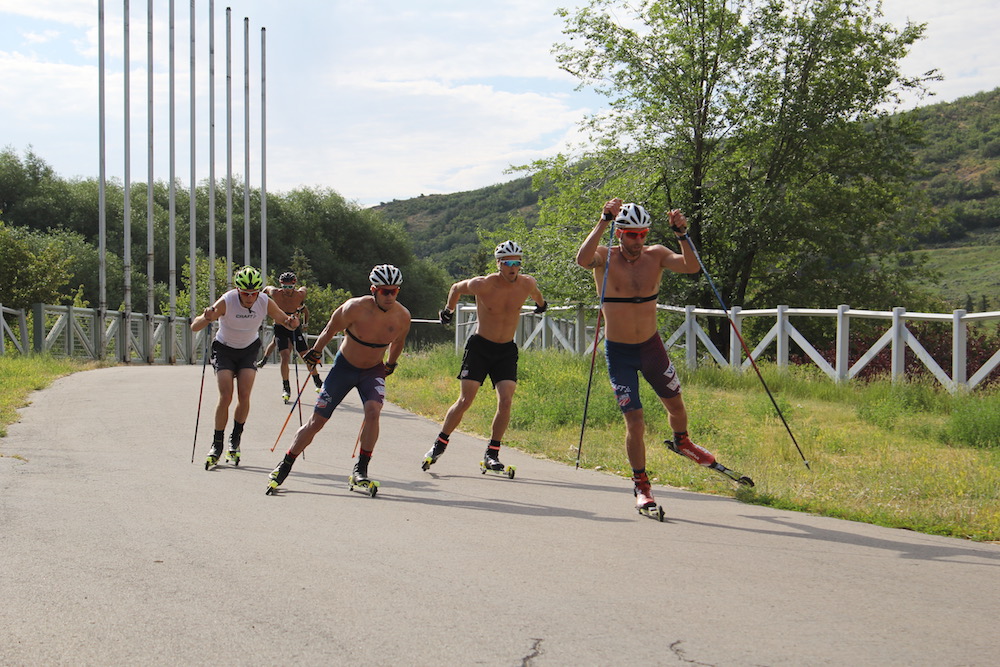
    Do you use a heart rate monitor for training? Has it ever given you a seemingly implausible reading? Here’s why, and whether you should worry. (Photo: Pat O’Brien)

    Athletes engaging in big volumes of endurance exercise are at some increased risk of heart problems – in particular, arrhythmias – compared to those who do moderate exercise. The level of that risk is under debate.

    At the same time, recreational athletes using heart rate monitors during their training will sometimes see numbers go up as high as 220 or 225 beats per minute (bpm). Such racing heartbeats are called tachycardia, and some of the possible underlying causes can be life-threatening.

    But does a high heart rate reading on a heart rate monitor equate to this dangerous condition?

    That’s what Polish doctor Robert Gajda and colleagues set out to investigate. They suspected that the super-high heart rate readings were errors, but knew that they did cause anxiety for some of the athletes in question. Even if a reading seems crazy, it can sow a seed of doubt about an athlete’s health. And that makes them important.
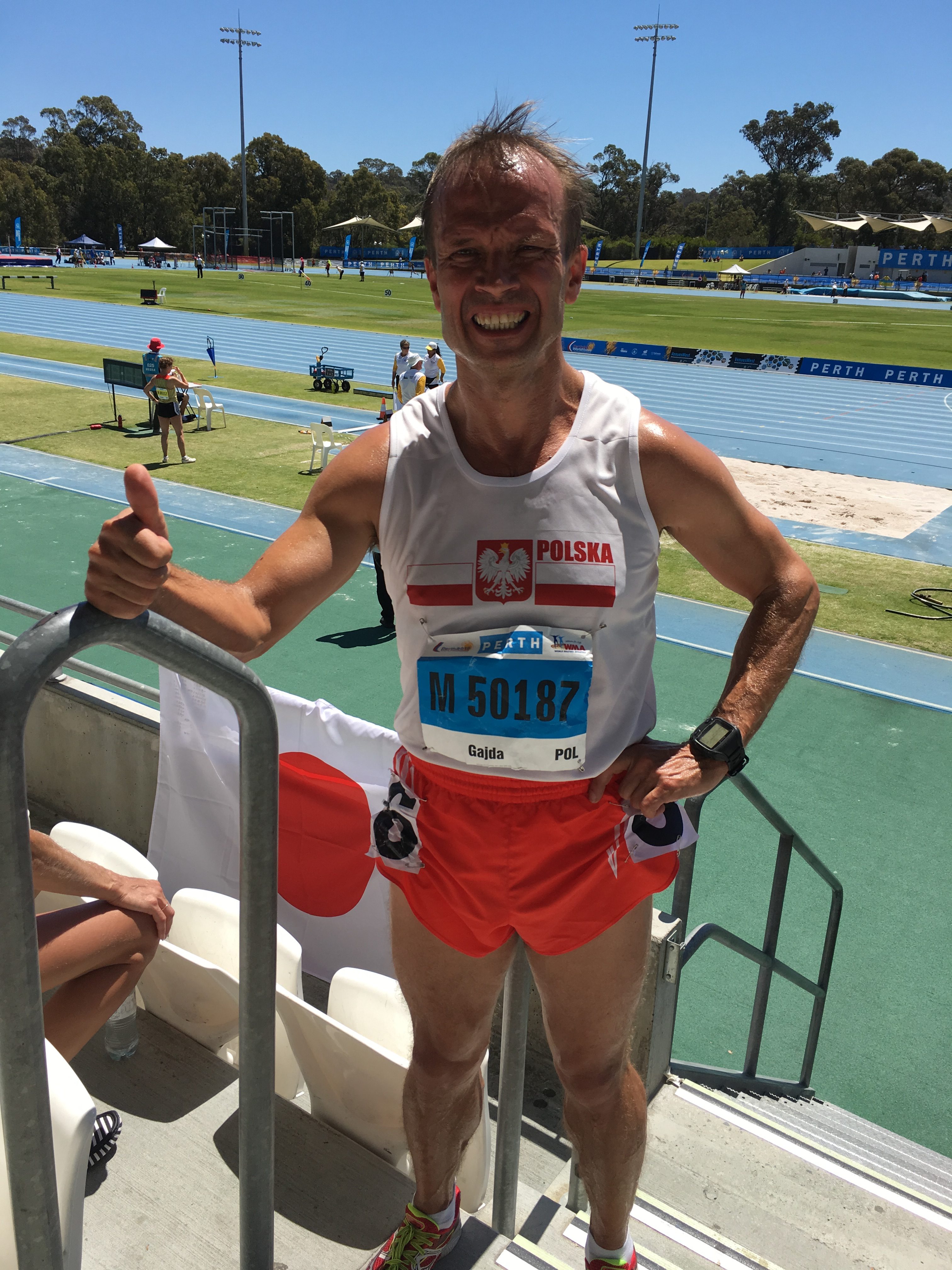
    The author of the study, Dr. Robert Gajda, before competing in the 1500m run at 2016 World Masters Athletics Championships in Perth, Australia, where he finished seventh in the M50 division with a time of 4:39.45. (Courtesy photo)

    “I assure you, we do not get seriously sick during training and not notice it,” Gajda wrote in an email. “More than the [heart rate monitor] indications, clinical symptoms are important and should worry us … we need to inform people about the occurrence of artifacts in heart rate monitor readings, instead of sending them for senseless diagnostic procedures or abstaining from physical activity.”

    They also had a second question. Regardless of whether the high readings were correct, if athletes had any other kind of heart arrhythmia, would an off-the-shelf heart rate monitor detect it and thus provide them information they could use to protect themselves?

    In a paper recently accepted by the Scandinavian Journal of Medicine and Science in Sports, Gajda worked with 142 runners and cyclists who came to his Center for Sports Cardiology because they were suspected to have heart arrhythmias. All of the athletes had seen sudden, large increases in the heart rate readings on their monitors while exercising.

    Under the researchers’ watchful eyes, the athletes tried to replicate these readings, this time wearing not only a heart rate monitor but also a Holter Electrocardiogram (ECG). This small device uses electrodes and provides a detailed picture of electrical signals.

    “The Holter ECG is a professional device recognized worldwide by doctors as the gold standard for assessing arrhythmias in patients,” Gajda explained. “It accurately records the heart rate at a given moment of measurement, the average value of the whole record, as well as its minimum and maximum value … we see not only the heart rate but also its possible abnormalities, such as extra ventricular and supraventricular beats.”

    A heart rate monitor, on the other hand, simply “detects the main electrical field produced by the heart muscle.” Instead of seeing the whole heartbeat as one would on an electrocardiogram performed at a hospital, or from a Holter ECG, a heart rate monitor simply counts what it detects as heart beats and displays that as an average rate.

    “Some [heart rate monitors] with ‘beat-to-beat’ measurements and data storage capabilities do permit accurate heart rhythm analyses,” Gajda wrote. “However, these devices are also prone to artifacts that are often similar to a ‘beat’… we still do not know whether we observed the R-R distance (QRS to QRS) or only the ‘artifact peak to artifact peak’.”
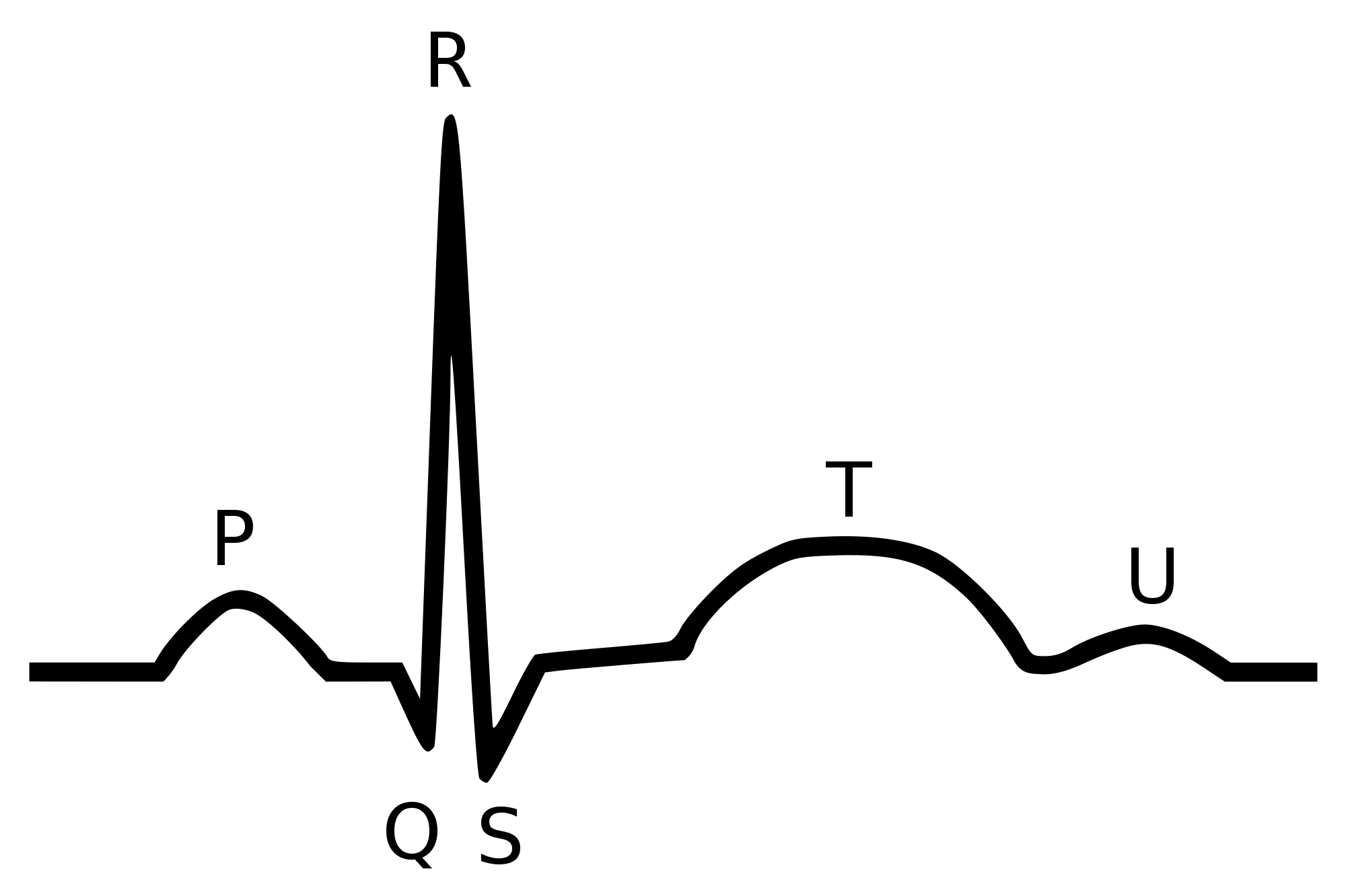
    The phases of a heartbeat. (Image: SKvalen via Wikimedia commons)

    (The QRS is a phase of the heartbeat when the ventricles are depolarized before contraction, and the R wave – the middle of the QRS – is the biggest wave or peak on an electrocardiogram, as seen in the diagram at right.)

    Wearing both their own normal heart rate monitors – such as the Suunto Ambit3 or a wide variety of Garmin Forerunner models – and the Holter ECG’s, the athletes were told to head out on their usual training for about an hour.

    Of the group, 39 percent failed to replicate the earlier high readings. Neither their heart rate monitors nor the Holter ECG’s picked up anything abnormal, and there was also no difference between the readings provided by the two instruments in terms of average, maximum, or minimum heart rate.

    A second group of athletes, about 15 percent of the total pool of subjects, picked up signs of arrhythmias on the Holter ECG but not on their heart rate monitor. These were single ventricular or supraventricular heartbeats, and, in the absence of other symptoms, don’t really indicate major heart problems.

    “Every healthy person has supraventricular and ventricular beats during the Holter ECG record,” Gajda explained. “Arrhythmias have been observed in athletes with ‘healthy hearts,’ but it is not a negative prognostic factor and does not constitute grounds for abstaining from sporting activities … athletes in this group should not be concerned about these irregular beats, especially if there are no other connected clinical symptoms, for example chest pains.”

    If there are those other symptoms, then it’s another story.

    Most off-the-shelf heart rate monitors do not detect such single beats, because they “average out the rhythm” by counting electrical stimuli. So if an athlete has some indication that they should worry about heart disease and wears a heart rate monitor, they will not find out about these extra beats. An actual ECG would be needed.

    “The value of [heart rate monitors] for detecting arrhythmias in runners and cyclists is not supported by the results of this study,” the authors wrote in the paper.

    Finally, for 45 percent of athletes, an arrhythmia was indicated by the heart rate monitor: on average, a reading of 199 bpm for roughly a minute, but in the most extreme case a reading of 236 bpm for three minutes.

    In only one athlete was this reading accompanied by the detection of an arrhythmia on the Holter ECG. For that athlete, it was quite clear that something serious was happening as the heart rate rose from 167 bpm to 227 bpm.

    “The athlete was forced to cease training due to clinical symptoms and the sudden decrease in exercise capacity,” Gajda explained.

    After resting, the rhythm went back to normal.

    For the other 64 athletes, the high reading on their heart rate monitors was not accompanied by either clinical symptoms or high readings on the Holter ECG. Those athletes were not having arrhythmias. The readings were just errors.

    “It is not possible to have a HR of 200-220 bpm and feel good,” Gajda wrote. “Such arrhythmia ‘cuts off’ the athlete suddenly, and even if he or she does not lose consciousness, they cannot continue to exert at the same level of intensity. Such tachyarrhythmia forces you to stop. You can’t catch your breath. You think about the worst. This is the feeling of person with severe tachyarrhythmia. You can’t miss it.”

    The fact that so many athletes can encounter these faulty readings, Gajda believes, is something of a public health issue. The numbers are alarming and cause some athletes to dial back, either in that particular exercise session or in terms of how much they exercise at all.

    “A physically active lifestyle is widely promoted for healthy individuals and large groups of patients,” Gajda wrote. “Millions of physically active individuals worldwide use heart rate monitors to control exercise intensity. False ‘arrhythmias’ or surprisingly high bursts of heart rate during exercise can induce fear in physically active individuals and might cause them to reduce or even abstain from training, or to seek unnecessary, time-consuming, and costly medical diagnostics. So we can say: this is a public health issue.”

    The reason such anomalous readings are generated has to do with electricity. Heart rate monitors are just meant to pick up the electrical field of the heart, but many of these “artifacts” come from other electrical signals.

    “Sometimes it is enough to change the position of the belt and the pulse values will return to normal,” Gajda explained. “Sometimes we run alongside the high-voltage line and the heart rate monitor goes ‘crazy’. A few meters further it returns to normal.”

    A few other factors can lead to more frequent errors in the readings. For example, carrying a cellphone with you training provides additional electromagnetic waves that can disrupt transmission from the chest strap to the watch. Sometimes other athletes’ heart rate monitors create interference and errors as well.

    Another source of artifacts is additional clothing either around the chest strap or the watch. For winter sports athletes, this could be a particular issue.

    “There is no doubt that thicker winter clothing is conducive to the development of more artifacts,” Gajda wrote. “A thick glove on the ‘watch,’ too. Sometimes this occurs in the form of a complete disappearance of the connection between the belt and the watch … It is likely that synthetic materials that are easier to electrify may produce more distortions.”

    And women, wearing sports bras, have an extra layer they have to worry about.

    “The idea is for the chest strap to stick well to the body,” Gajda wrote. “This problem is beginning to be noticed by manufacturers of heart rate monitors. Today there are already some on the market that use a sports bra or shirt as the strap of a heart rate monitor (equipped with integrated electrodes). I think further development in this area will solve this problem completely.”

    Then, there’s simple body movement. There are fewer artifacts in heart rate monitor data for cyclists than for runners, indicating that having a steady upper body position reduces the error rate. Gajda wasn’t sure what the cross-country skiing motion would mean in terms of these erroneous readings.

    If an athlete carefully adjusts for all these factors – repositioning the chest strap, wetting the sensors so they stick to the skin better, re-arranging clothes, replacing batteries and other parts, and avoiding other sources of electrical interference – but the high readings keep coming, then they should seek out a physician even if they don’t have other symptoms, Gajda and his colleagues suggested in their paper.

    But overall, his message is clear. Heart rate monitors are valuable for monitoring and controlling the intensity of training, but for detecting arrhythmias, they aren’t as great. Very high heart rate readings shouldn’t alarm athletes in the absence of any other symptoms of discomfort. The way to check whether the number is real, Gajda reminded, was to stop what you’re doing for a minute and take your pulse.

    The biggest problem with anomalous readings from heart rate monitors is one of annoyance, he posits, because such artifacts make it harder to accurately track the intensity of exercise. Sure, your heart rate isn’t actually 220, which is a relief – but what is it?

    “We should be upset that you do not record the training in accordance with its actual reality,” Gajda wrote. “For me, still an active runner, it is an extremely important part of the training, which informs me not only about the quality of the effort but also my form – overtraining or lack of training.”

    Robert Gajda, MD, PhD, director and owner of Center for Sports Cardiology (CSC) at the Gajda-Med Medical Center in Pułtusk/Poland, is a cardiologist and sports medicine physician. His main area of research interest is physiological adaptation to endurance training as well as to extreme endurance efforts. He cooperates with Polish scientific institutes in this field. Dr Gajda is an active runner and the record holder of Polish doctors in the marathon.

  • We’re Not Invincible: More Heart Arrhythmias in Endurance Athletes (Book Review)

    We’re Not Invincible: More Heart Arrhythmias in Endurance Athletes (Book Review)

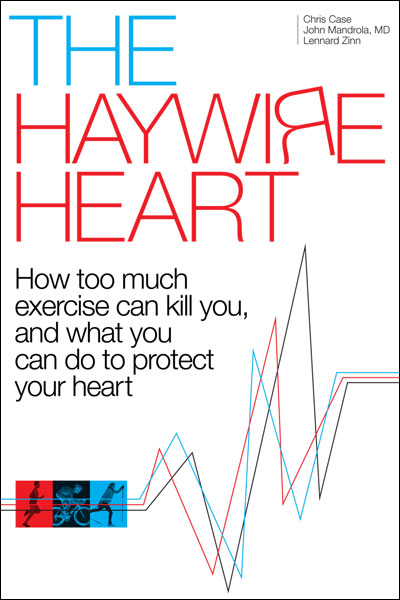
    The Haywire Heart by Lennard Zinn, Dr. John Mandrola and Chris Case, is available for purchase directly from the publisher at VeloPress, or at Amazon and other booksellers.

    When I heard that there was a new book coming out about heart arrhythmias in endurance athletes, I was interested.

    Several years ago, I read some of the research papers that the book’s authors refer to. One was a cohort study on participants in the Vasaloppet, the 90-kilometer ski marathon in Sweden. Those researchers found that skiers who competed in more Vasaloppets had more heart arrhythmias – as did those who finished the race the fastest.

    I wrote a piece about the findings at the time. The FasterSkier commenting system has changed, so original comments no longer appear at the bottom of the article, but I remember them clearly. Multiple commenters found the study hard to believe. One commenter was so sure that the findings were impossible that he wrote multiple angry comments arguing that exercise is good for you, so it couldn’t possibly cause heart problems.

    As a scientist, I was flabbergasted.

    There are a lot of crappy studies out there in sports science — and science in general, but I’m used to reading sports science papers with sample sizes of eight athletes. It’s hard to defend a lot of conclusions made from such studies. But this one? The researchers had following thousands and thousands of individuals and, well, numbers are numbers. An individual is either diagnosed with an arrhythmia or they aren’t. This was pretty straightforward.

    Scientists go out and measure a phenomenon, and then we present numbers as an estimation of the world. There are many legitimate reasons to question the data or interpretation, and this is actually built into the scientific process. Before publication, other scientists will rip a a study apart as part of “peer review”, suggesting ways to make it better or even recommending it not be published.

    That doesn’t mean that all published research is perfect. After publication, scientists continue to raise important points about whether the data collected represents reality (due to potential flaws like bias or study design), whether the statistical techniques are appropriate and correctly performed, whether alternative mechanisms could explain the patterns shown, and more. The public should absolutely engage in this process — and scientists should do better about engaging with the public. Anyone outside the study itself can ask questions that the researchers might not have seen, illuminating important aspects and leading to new research questions or repeating the study in a different way. In the end, this leads to gradually more and more accuracy in that estimation of the world.

    Asking good questions is different than arguing that data is wrong simply because of a gut feeling or belief. The reaction to the Vasaloppet article was a frustrating moment for me but, I would come to realize, not an unusual one. When presented with facts that do not support our worldview, we tend to just discount them. It’s human nature.

    All of which is to say that I was very interested to read The Haywire Heart by Chris Case, John Mandrola and Lennard Zinn.

    First, I wanted to get more background on the topic, and I wanted it to be explained to me in clear, straightforward language instead of the scientific jargon of research papers.

    Second, I wondered if the book would get the same reaction as my old writeup of the Vasaloppet study.

    And third, I was interested to see whether, when presented with some scary narratives, I had the same reaction as those few FasterSkier commenters. After all, as much as I tout that I’m a scientist, I, too, have knee-jerk reactions — and I spend a lot of time exercising. I guessed that I might find the conclusions of the book plenty threatening.

    The book opens with the story of Zinn, who is a former national team cyclist and a staff writer for VeloNews. Zinn is riding his bike outside of Boulder, Colo. He feels his heart skip a beat, and his heart rate “had jumped from 155 to 218 beats per minute (bpm), and stayed elevated.”

    Zinn initially takes some rest and dials his training back, but ultimately he tries to keep riding and training. The incidents become more and more frequent until his heart actually stops at one point.

    After that, Zinn radically changes his lifestyle. He does no hard efforts and much less training volume, period. Because of that, he’s still around to write the book today. His life is richer now, he writes (although it sometimes sounds like he is trying to convince himself as much as the reader). He has developed more different hobbies and can spend more time with his family. But it took him a long time to come to that understanding.

    It’s a transfixing story about what can happen to a seemingly fit, healthy person. Because Zinn is an author on the book, you know that he will make it out alive. But how far will he go before he stops training? What will happen to him? Could that happen to me?

    As we say in research, the plural of anecdote is not data.

    While the authors include “case studies” at the end of every chapter (several of which feature cross-country skiers who nearly died on the side of Colorado ski trails), they also bring the data.

    The book presents a compelling argument that we should be thinking more about our hearts – and particularly, the heart’s “electrical system,” as the authors call it. Endurance exercise doesn’t seem to increase the prevalence of problems with the “plumbing system,” or how the blood is pumped.

    That’s not to say that athletes don’t have heart attacks (or, more accurately, myocardial infarctions). Risk factors are risk factors, and don’t completely disappear with exercise. High blood pressure, high cholesterol, a family history of heart disease, being male rather than female – these increase the risk of a myocardial infarction. In particular, athletes who came to endurance sports later in life and previously smoked or were overweight still carry those risks with them.

    But the unique risk associated with long and intense bouts of exercise seems to be in the electrical system. Studies across multiple sports and countries, as well as in animal models like mice, rats and goats, have shown that the electrical impulses that keep the heart in rhythm can be made, well, haywire, by a lifetime of endurance training.

    There’s a wealth of observational, epidemiological data suggesting that a long-term habit of endurance exercise can cause atrial fibrilliation, a rapid and irregular heartbeat originating in the atria. (Atrial fibrillation was the type of arrhythmia mentioned in the Vasaloppet study.)

    Other arrhythmias seem to occur more frequently in athletes, too, like ventricular fibrillation. Premature ventricular contractions are common in trained athletes and don’t necessarily lead to bad outcomes; complex ventricular arrhythmias are also common, and can lead to cardiac arrest.

    Exercise can also make genetic diseases like arrhythmogenic right ventricular cardiomyopathy (ARVC) more dangerous, and can lead to the disease even in the absence of genetic markers.

    Some causes are straightforward. One symptom of “athlete’s heart,” as it is called, is enlarged chambers in the heart. And this is associated with atrial fibrillation: patients with atrial fibrillation tend to have larger left atria than those without.

    Exercise also leads to inflammation of muscles. The heart is a muscle; inflammation can lead to scarring, which can then disrupt the transmission of electrical signals across cells.

    The logic and evidence go on and on. The authors explain all of this much better than I can, even when paraphrasing. I’ll let you read the book and just say: it’s convincing. And if you haven’t studied human anatomy since high school, don’t worry. It’s clear and well-explained.

    As to the second question, the authors tackle that, too. Mandrola, a doctor, notes that when many athletes receive a diagnosis of a heart problem, they go into denial. Many decide not to change their behavior. There’s a sort of cognitive dissonance to being told that something you have always believed is healthy is actually putting you at eventual risk of death.

    “It is completely natural to go into denial for a while,” Zinn writes. “I don’t know of any masters athletes diagnosed with non-life-threatening arrhythmias who didn’t go back to pushing it hard in training or racing in hopes that the incident that sent them to a cardiologist was just a fluke.”

    If you do have a problem with heart rhythm, the authors provide several chapters as a guide for when to go to the doctor, what to ask and tell them, and what treatment options might be available. Getting a correct diagnosis is key, and as cross-country skiers, that is not a trivial ask.

    “Even doctors who run marathons don’t quite get the intensity thing,” Mandrola writes. “Marathons are a different sort of affair. There is no question that they are hard, but they generally have an even pace and don’t involve the competitive crises that flare up repeatedly in a bicycle race or a cross-country ski race or triathlon.”

    Women, too, are often misdiagnosed. The authors explain that women are more likely to be assessed as having an anxiety disorder than men, even when suffering from the same underlying heart problems: “Women younger than 55 were seven times more likely to be misdiagnosed and turned away from the ER than their male counterparts.”

    But the main advice, when confronted with a heart arrhythmia, is first to go to the doctor, and second to back off of training. It might save your life – and it might also make the problem disappear. That doesn’t necessarily mean stopping completely, but it might mean going slower and for shorter sessions. “Detraining” is a good therapy for several diagnoses.

    “In the end, I believe that all that denial and continued racing and training hard with the hopes of retaining some portion of my former life either damaged my heart or trained it so that it now goes into arrhythmia more easily,” Zinn writes of his own situation.

    Detraining might seem horrible, like an unacceptable lifestyle adjustment. But as the authors point out, once you know the other options – medications with scary side effects, procedures with non-trivial rates of complications, death – training a bit less might seem like a much better option.

    As for me? I definitely reacted to the book, but not by going into denial. Instead, I was scared.

    “The day before he died, he had gone for a six-hour run,” the authors wrote of Micah True, a barefoot- and distance-running legend.

    I read that the day after I had done a four-hour overdistance running workout. It hit home: none of us are invincible.

    That said, the one thing I found missing from the book was a real estimate of the prevalence of these heart problems. I could easily follow why they would develop, based on the physiology of the heart and what we do to it. And I found the research cited credible. But how many people does this happen to? Just what is the risk, statistically?

    One reason the answer might be lacking is simply that it’s hard to do comprehensive research on such a topic. As the authors point out, you can’t really do a randomized, controlled, double-blind trial – the gold standard for scientific studies – about the effects of lifelong exercise.

    Nevertheless, it’s clear that such health issues are common enough to give one pause.

    I’m just 30 years old, and I am probably not going to change my exercise habits after having read this book. But it reinforced a lot of peripheral behaviors that I should know are important anyway.

    For instance, in some patients, arrhythmias pop up only when they are stressed. Leading a high-stress life and sleeping too little are major risk factors. Burning the wick at both ends: that’s the sort of life I lead – and the sort of thing I always know I should work to address, but here’s another good reason to do so.

    Likewise, making sure to get enough electrolytes when training, to avoid dehydration, to get good rest and recovery, and to listen to your body – these are important.

    “You have probably been training for many years, if not most of your life,” Mandrola writes in one chapter. “Those years of training have given you a good sense of what ‘normal’ feels like. What you are looking for is anything that falls outside the boundaries of normal.”

    If I do ever feel a flutter in my chest, I’ll now know not to ignore it.