From the FasterSkier archive — posts syndicated from athletes’ and coaches’ own blogs between 2004 and 2012, kept online as published. Current coverage is at fasterskier.com.

Tag: Aspen

  • Ute Mountaineer Seeks Manager for Aspen Cross Country Center

    Ute Mountaineer Seeks Manager for Aspen Cross Country Center

    The Aspen Cross Country Center logo: crossed skis and columbines above the words Ute Mountaineer Aspen, with Aspen Cross Country Center beneath.

    Ute Mountaineer has owned and operated the Aspen Cross Country Center since 1985. The center sits on the Aspen Nordic Trail System, one of the largest free trail systems in the country, connecting Aspen, Snowmass Village and Basalt. It is the only full-service cross-country ski center in Aspen, offering rentals, retail, lessons, ski tuning and repair, a public waxing room, locker facilities, and expert advice on local trails and Nordic equipment.

    Ute Mountaineer is heavily involved in the Nordic community. It partners with the Aspen Valley Ski Club and organizes a free demo and lesson day, the Ute Nordic Cup race series, junior seasonal rentals, and a Team Night where local juniors buy equipment at discounted prices.

    Ute Mountaineer is now hiring a Manager for the Aspen Cross Country Center to oversee its winter operations.

    Position Overview

    The manager hires, trains, schedules and motivates a team of Nordic enthusiasts and instructors. The role also covers the ski school, rentals, retail and shop operations, working with the landlord on facilities issues, and organizing and working local Nordic events.

    The Details

    • Full-time seasonal, October 20 through March 31, five days per week
    • Starting pay $32 to $35 per hour, based on the candidate
    • Multi-season commitment preferred
    • Year-round employment also available by working at Ute Mountaineer from April through October
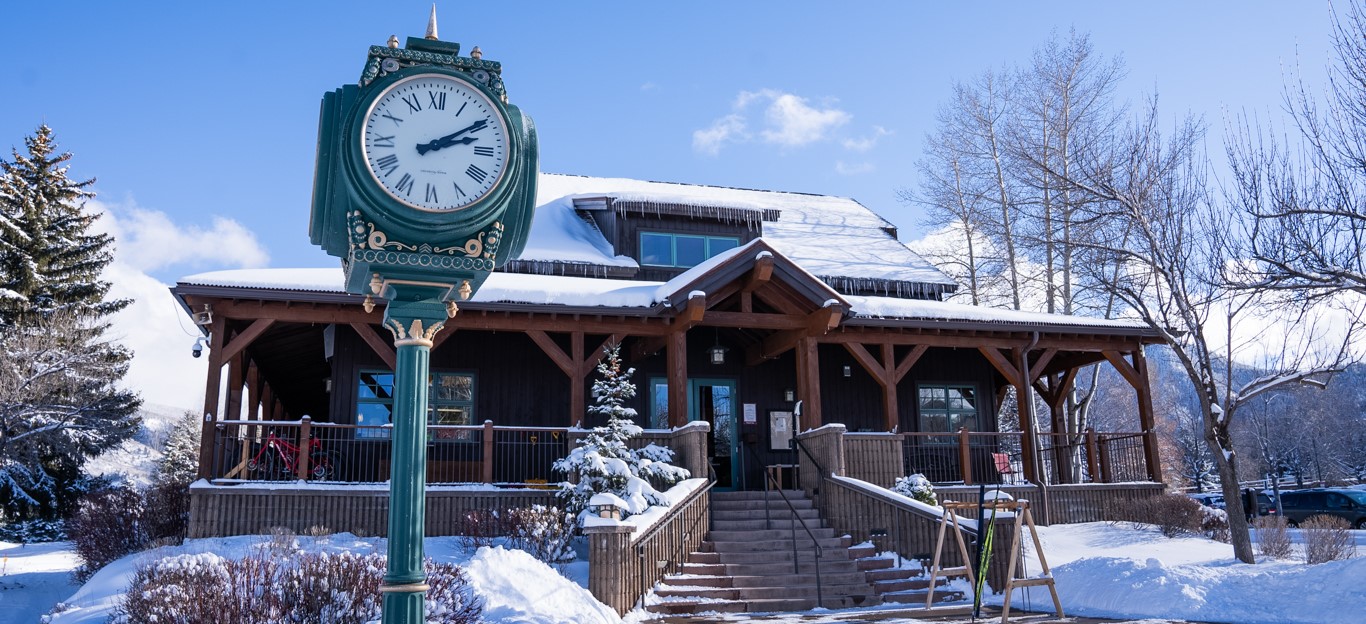
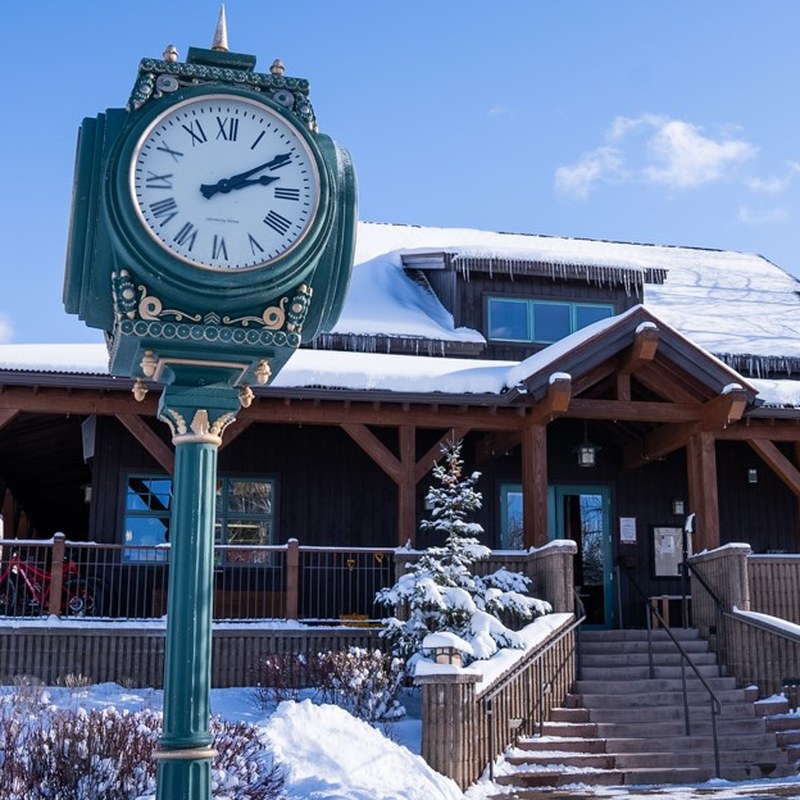
    A timber lodge with a snow-covered roof behind a green cast-iron clock tower, with steps leading up to the entrance on a clear winter day.
    The Aspen Cross Country Center, on the Aspen Nordic Trail System. (Photo: Ute Mountaineer)

    Key Responsibilities

    Staffing

    • Hire achievement-motivated, Nordic-loving staff using established interview processes
    • Create a work environment that listens to, and is responsive to, employee needs and ideas
    • Schedule and budget payroll according to store needs, weekly, hourly and seasonally
    • Provide and organize ongoing training on Nordic product, store procedures, policies, skills and sales
    • Evaluate employees and give feedback based on specific behavior and performance, and use it to motivate staff through further training and collaborative behavior modification
    • Lead by example in performing all sales associate duties

    Sales and Customer Experience

    • Listen to and identify customer needs, and sell products that fit those uses, abilities, tastes and budgets
    • Provide an engaging in-store and instructional experience that shares the shop’s passion for the sport
    • Coach staff on sales training that joins customer needs with the shop’s experience
    • Learn Nordic product technology, features and benefits
    • Perform retail sales, rentals, shop work and possibly instruction
    • Find solutions to customer needs, problems and objections

    Store Presentation and Operations

    • Create, coordinate and maintain the store merchandising plan and standards, working with staff, buyers and the general manager
    • Delegate and oversee retail, rental, repair shop and ski school operations
    • Organize and assist in local Nordic events

    Requirements

    Required characteristics and skills

    • Nordic skiing experience
    • Commitment to helping people
    • Enjoys creating, working with, training and motivating a team
    • Comfortable making decisions, asking for help and raising company concerns
    • Able to prioritize tasks and follow up to see them completed
    • Able to observe behavior, skills and performance, and use those observations to improve the staff and the retail experience
    • Flexible with time and tasks
    • Patient with, and approachable for, all staff

    Preferred

    • Prior retail sales experience, ideally in the outdoor industry
    • Knowledge of local Nordic trail systems
    • Demonstrated managerial experience

    What Ute Mountaineer Offers

    • Extensive ongoing training on managerial skills, product, procedures, policy and customer service
    • Seasonal sales bonus program
    • Exclusive employee pricing on outdoor equipment
    • Access to rental equipment at Ute Mountaineer and the Aspen and Snowmass cross-country ski centers
    • Profit sharing after two years for those who move into year-round full-time employment
    • Vacation pay
    • Full ski pass
    • Subsidy toward Ute Mountaineer group health insurance
    • Possible subsidized housing in the Roaring Fork Valley for year-round employees

    How to Apply

    Download an application at utemountaineer.com/employment. Send the completed application or a resume to paul@utemountaineer.com and maile@utemountaineer.com.

  • Nordic Nation: A Backcountry Ski Race on Skinny Skis – Simi Hamilton and Ben Koons Take Second at the 2022 Montane Grand Traverse

    Nordic Nation: A Backcountry Ski Race on Skinny Skis – Simi Hamilton and Ben Koons Take Second at the 2022 Montane Grand Traverse

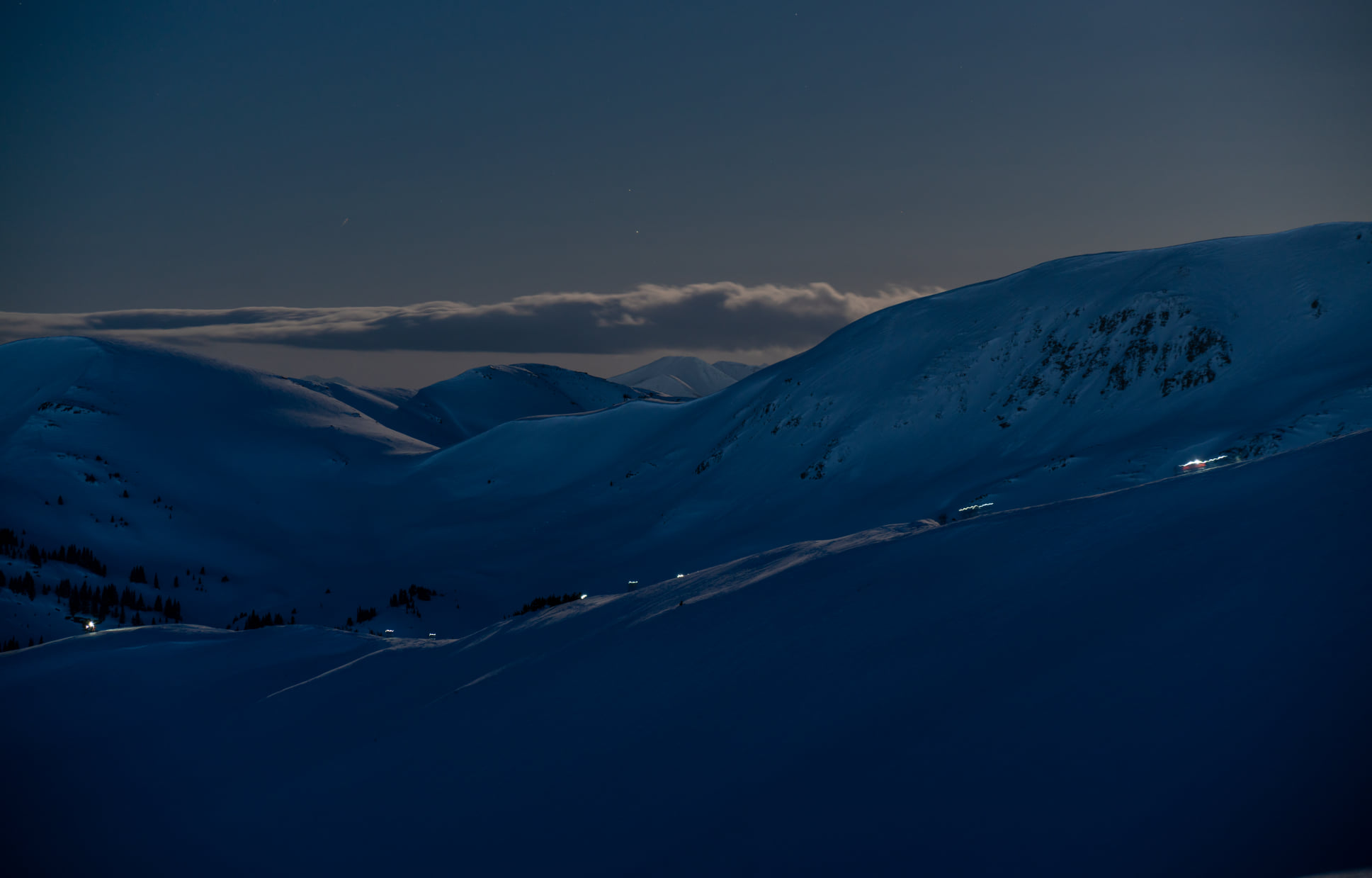
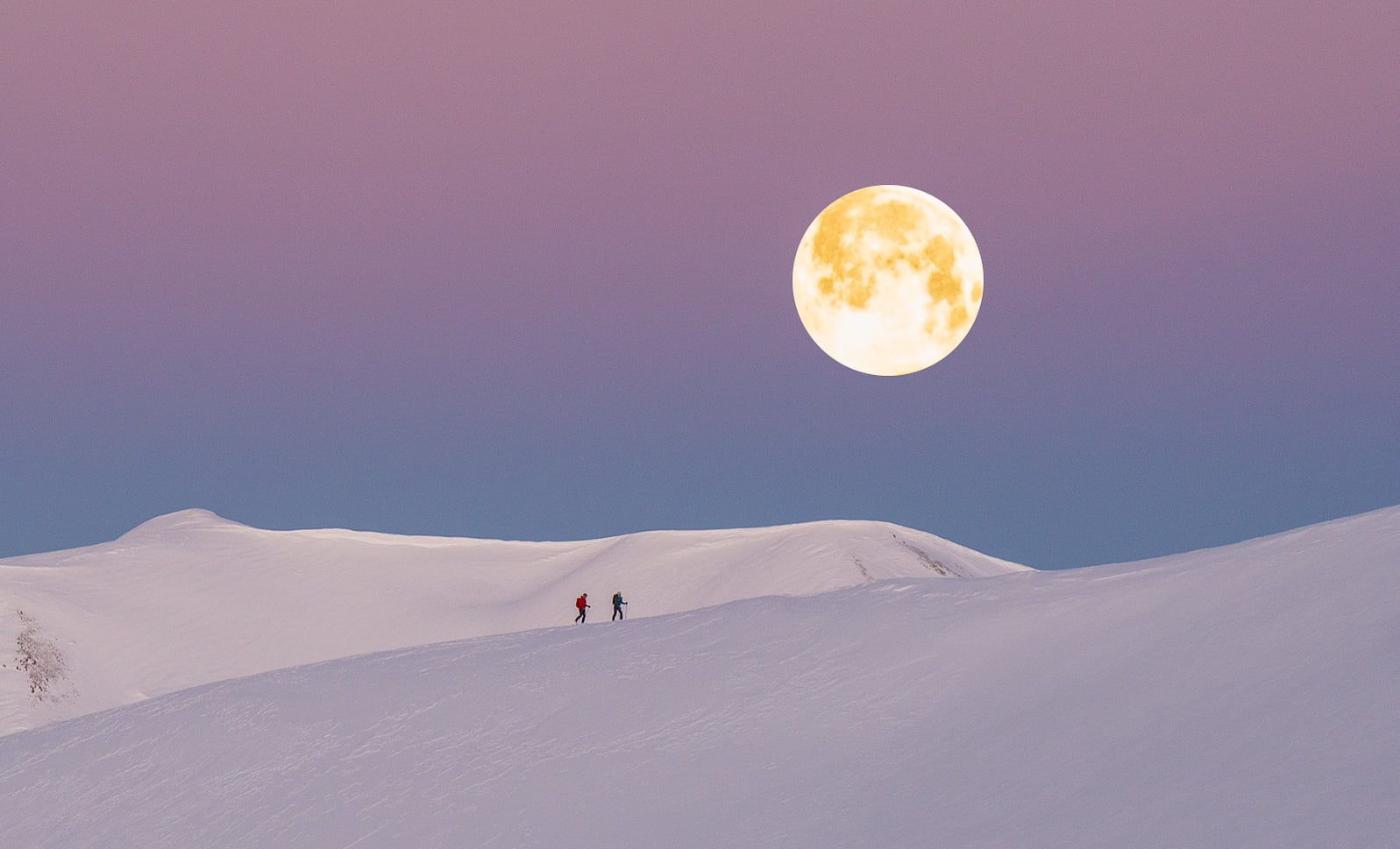
    The 2021 Grand Traverse saw a magical full moon under clear skies and mild temperatures. (Photo: Jesse Levine / Crested Butte Nordic)

    Tucked deep into snowy valleys, the tiny iconic Colorado mountain towns of Aspen and Crested Butte are separated by a mere 40 miles by foot, but roughly 200 miles by car in the winter. Separating the two is the expanse of the rugged Elk Mountain range, which features six of Colorado’s 14’ers, peaks that reach above 14,000’. 

    Now meccas of outdoor recreation, the two towns were historically established as profitable coal and silver mining sites, following the forced removal of the native Ute residents in the late 1800’s. In those days, communication between towns during the winter relied on the fortitude and alpine savvy of mail carriers, who skied back and forth between towns through burly terrain across a notoriously unstable snowpack. 

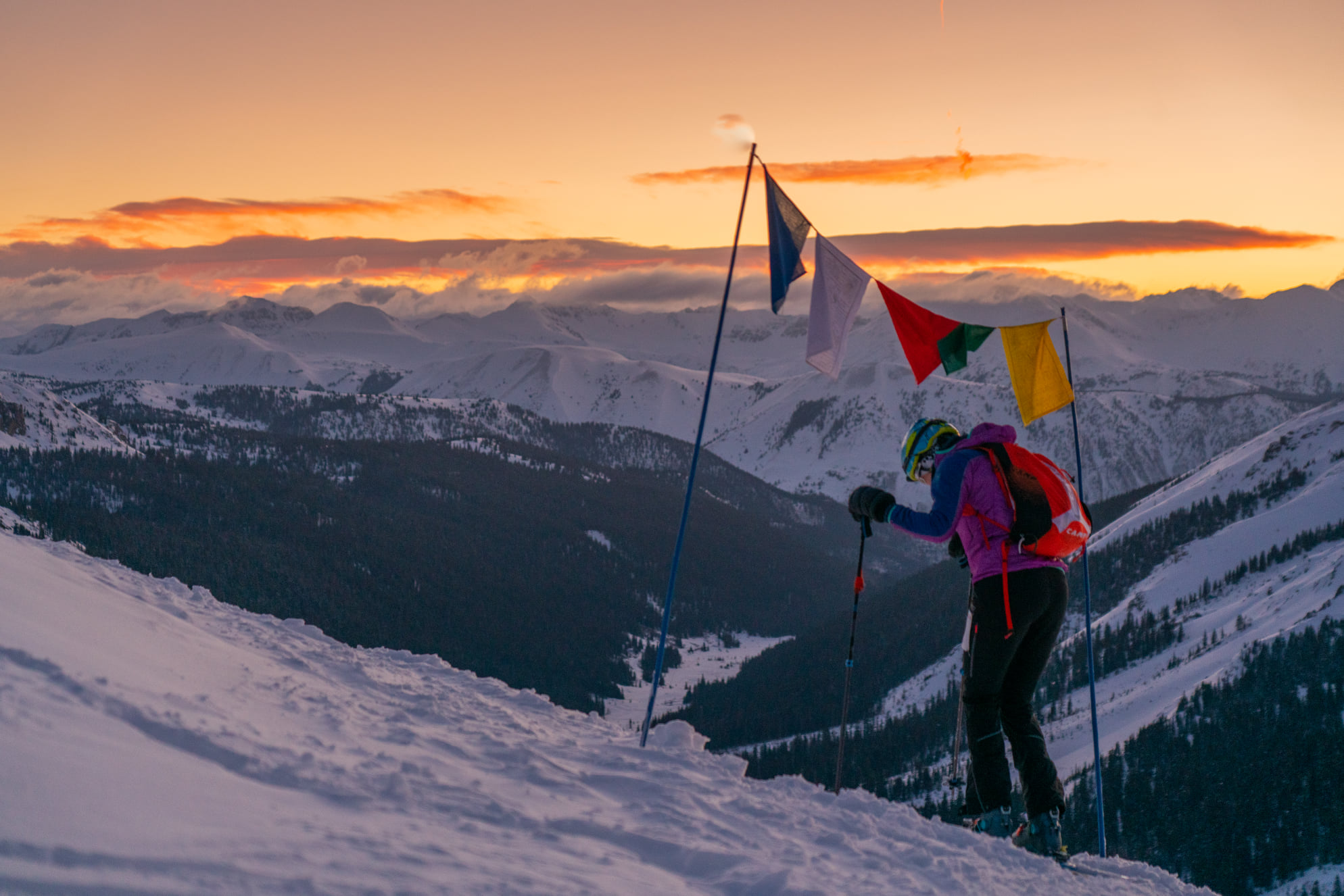
    A 2021 Grand Traverse racer descends off of Star Pass at sunrise. (Photo: Jesse Levine / Crested Butte Nordic)

    In 1998, this historic route was revived as a backcountry ski race called the “Grand Traverse”, which begins at the base of the Mt. Crested Butte ski resort and travels north over two 12,000-plus foot passes, with roughly 8,000 feet of elevation gain spread over the roughly 40 mile route. The inaugural winners (athletes must race in pairs), racing on metal edged cross country skis, were Aspen’s Travis Moore and Pierre Wille, local legends, and accomplished cross country skiers and alpinists. Moore, who taught at Aspen High School for more than 20 years and continues to coach the cross country ski program, eventually became the coach of a young Aspen resident, Simi Hamilton. 

    For many living in the Roaring Fork or Gunnison river valleys, the Grand Traverse (GT) is a storied annual pilgrimage, respected for the unique and burly nature of the route and its local lore as a rite of passage for endurance enthusiasts. Adding to the mystique, the race begins at midnight, allowing racers to cross the highest avalanche risk sections while snow is presumably frozen, firm, and at its most stable. The avalanche safety arsenal of beacon, shovel, and probe are part of a long list of items athletes must carry for safety, along with extra layers, an emergency shelter, and other items that reflect how deep into the backcountry the route leads and what it might take to survive a night out in the elements should something go awry. 

    A 2021 Grand Traverse racer receives instructions for the descent off of Star Pass from the safety dispatch stationed there. (Photo: Jesse Levine / Crested Butte Nordic)
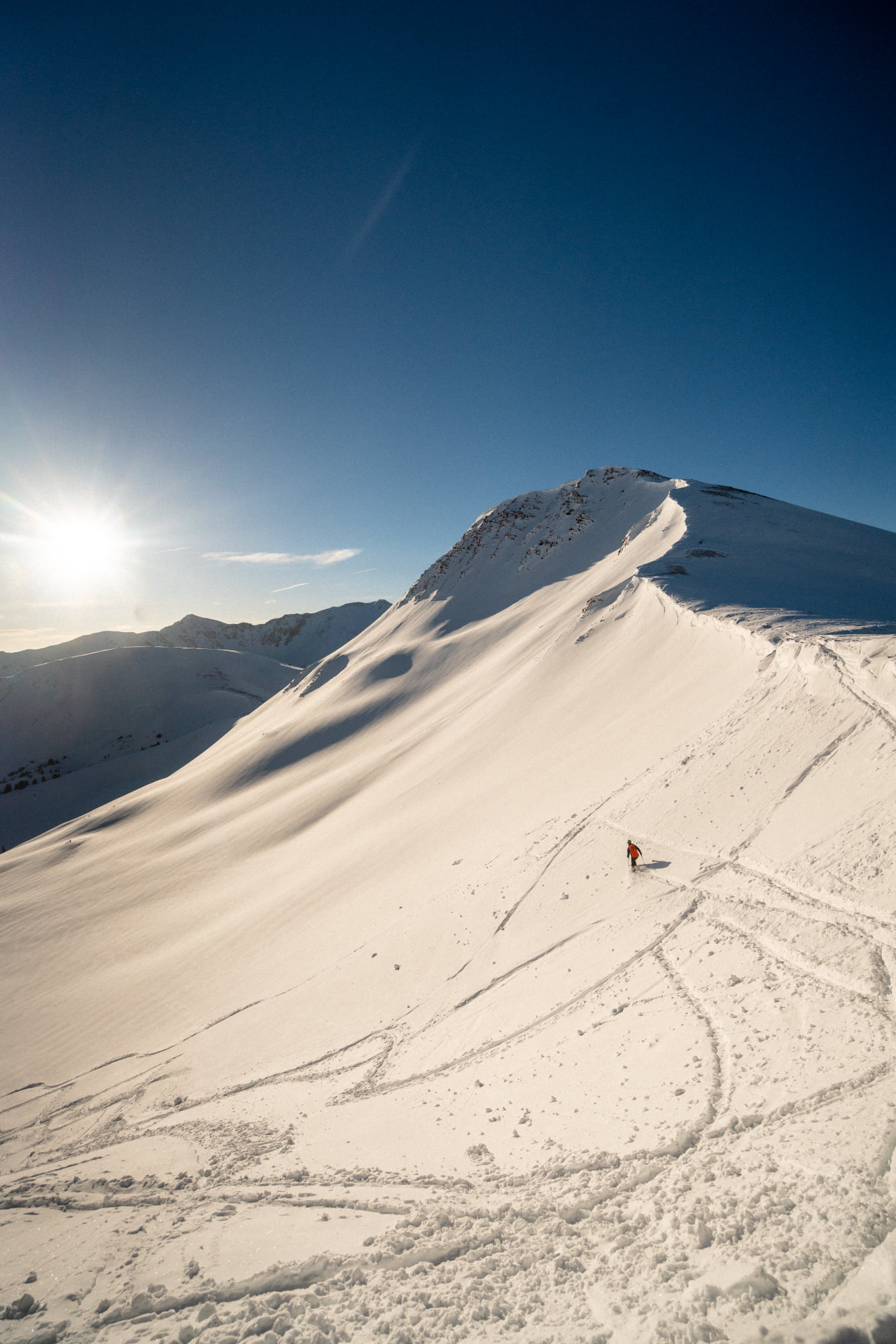
    A racer descends off of Star Pass during the 2021 Grand Traverse ski race. (Photo: Jesse Levine / Crested Butte Nordic)

    With the rapid advancements in ski mountaineering technology, few still commit to cross country skis for the GT – SkiMo race skis with AT bindings or lightweight backcountry or telemark gear are more stable and typically handle better descending off the passes. But this year, the team of “Yeah, but we can skate” showed skinny skis aren’t yet an antiquated option for success at the GT, particularly if you’ve got the skills of two Olympians who have continued to foster their love for mountain adventures on boards less than 43 mm underfoot. 

    The duo was Simi Hamilton and Ben Koons, who lined up on Fischer skate skis. After a fast start skating out of Crested Butte, the team leapfrogged with eventual winners and top SkiMo athletes Cam Smith and John Gaston, who eventually broke away as conditions favored wider skis and metal edges. Smith and Gaston made it to Aspen in 6:13:15.4, just over 36 minutes ahead of Hamilton and Koons. (Results here)   

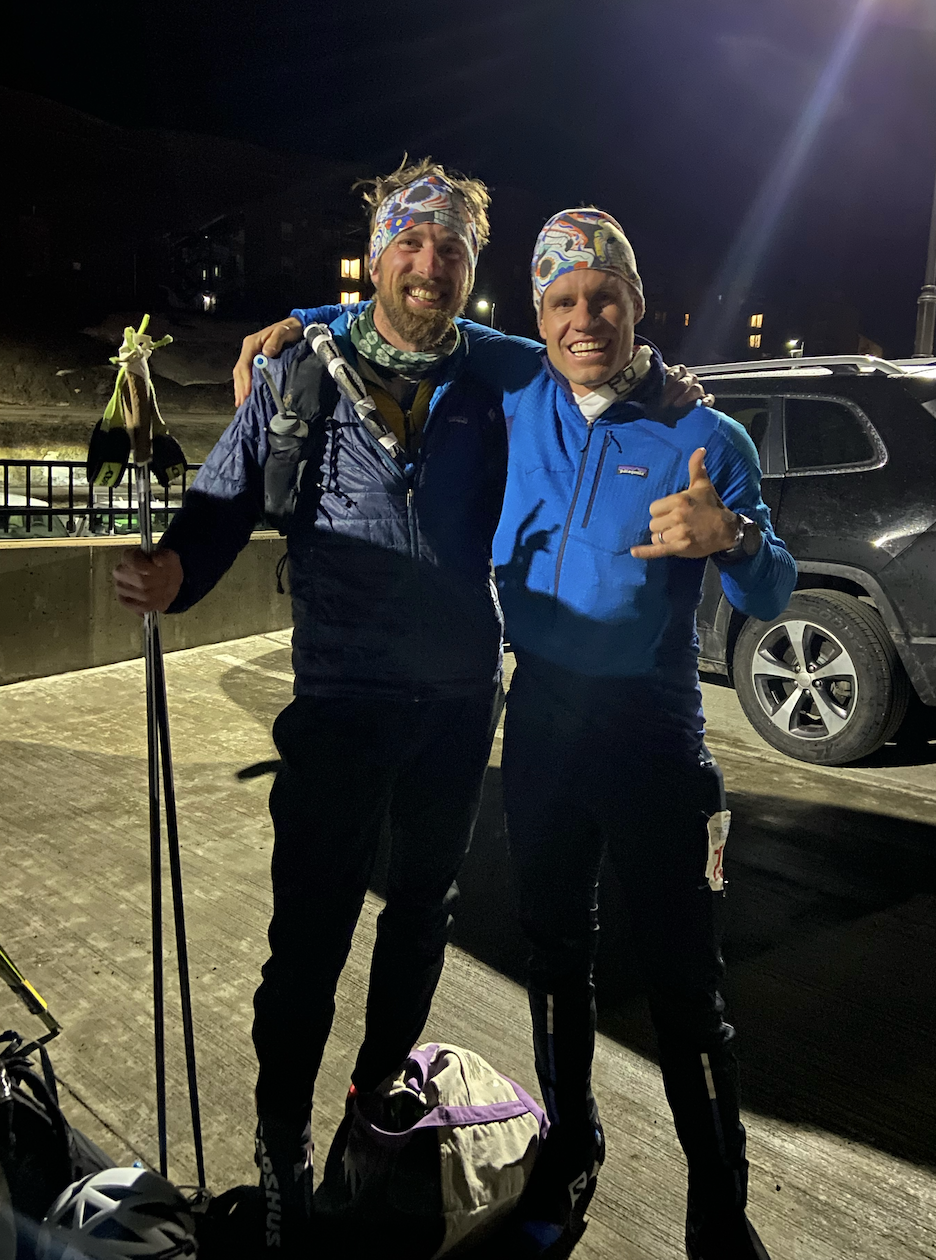
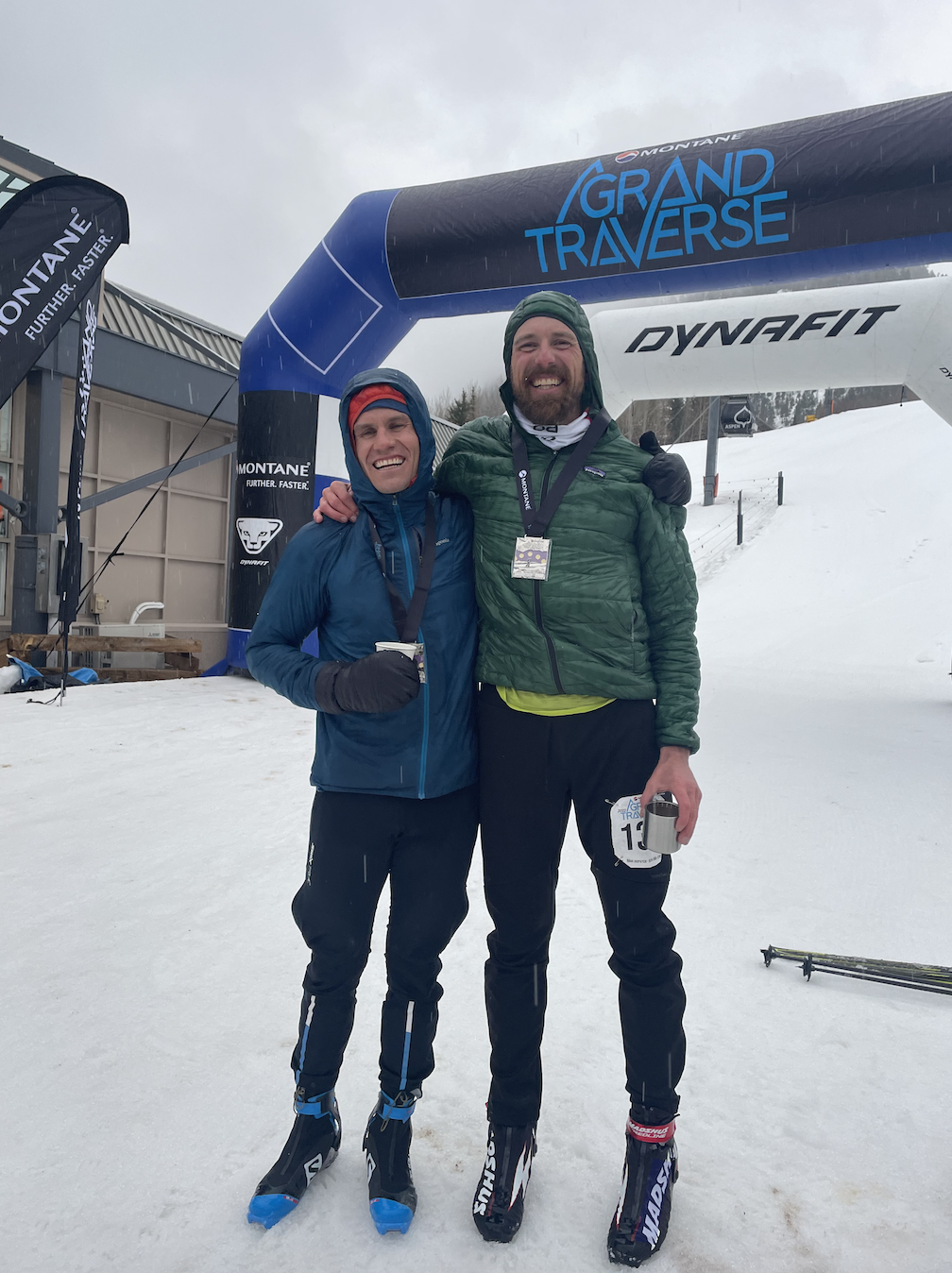
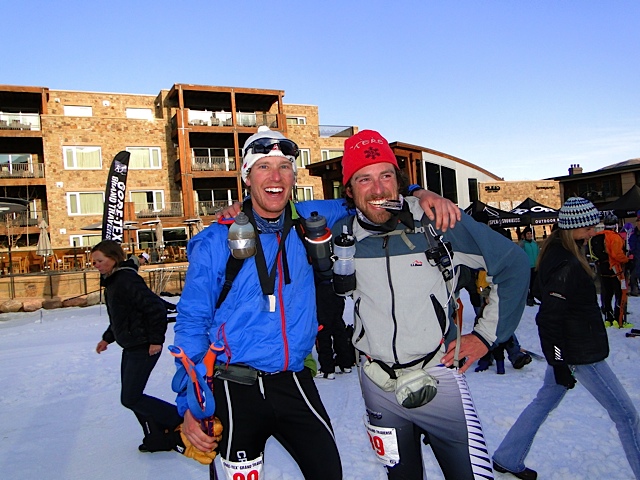
    Before and after: still smiling. (Photos: Sophie Caldwell Hamilton)

    Though Hamilton won the GT running race in early September, 2021, it was his first crack at the storied winter event. For Koons, it was his sixth crack at chasing the ideal crust cruising conditions that might allow a strong skater with some backcountry experience under their belt to smash the course record and take the win on skinny skis. The two have shared a number of big adventure days in the mountains on ski, foot, and bike, often with a third friend, Linden Mallory, who grew up in Aspen with Hamilton and raced on the Dartmouth ski team with Koons, and later became one of his GT partners. 

    While last year boasted perhaps the most ideal conditions, with athletes racing on firm and stable snow under a full moon in mild temperatures with minimal wind, this year, mother nature had a few twists up her sleeve. The week leading into the race saw a little bit of everything springtime in the mountains has to offer: warm sunny days, heavy wet snow, rain, wind, and plenty of freeze-thaw cycles. Consequently, this was shown in the snowpack, leaving Hamilton and Koons with far less skateable conditions, lots of breakable crust, some “spicy” downhills. Nevertheless, with only one broken pole, they were still smiling at the finish, and seemingly aren’t ready to accept defeat just yet. 

    A train of headlamps climbs Star Pass during the 2021 Grand Traverse. (Photo: Jesse Levine / Crested Butte Nordic)

    For more with Hamilton and Koons, you can head to the Grand Traverse Instagram account, where the duo was interviewed pre and post-race, along with a video capture of their finish, in the rain, at the base of Aspen Mountain. For those interested in testing their mettle in next year’s Grand Traverse ski, registration opens at midnight on December 1st and spots fill very quickly. For those looking to explore the route in the summer, there is also a Grand Traverse run and bike race happening Labor Day Weekend. The events are among the primary fundraisers for the Crested Butte Nordic Center.

  • AVSC Seeks Assistant Nordic Coach

    AVSC Seeks Assistant Nordic Coach

    Aspen Valley Ski & Snowboard Club (AVSC) in Aspen, Colo., is seeking a assistant Nordic coach for the 2017-18 season. This is a full-time position running from June-March. AVSC offers programs for student-athletes throughout the Roaring Fork Valley, in grades 1-12 as well as a Post-Graduate program.

    AVSC was founded in 1937 by a group of passionate skiers who wanted to spread the sport to the local community. Eighty years later, as the valley’s oldest and largest youth non-profit, AVSC has taught generations of local children the very sports that revitalized the Aspen/Snowmass area. Through AVSC, children and teens experience the mountains in winter, build character, challenge themselves and make new friends.

    AVSC Nordic has a rich tradition of success. Recent alumni include U.S. National Team athletes, two Sochi Olympic team members, and hundreds of exceptional alumni. Our team programs are designed to develop, challenge, and engage athletes of all ability levels. All team programs are offered in Aspen at the Aspen High School Trails and in Carbondale at the Spring Gulch Trails.

    The ideal candidate has a Bachelor’s Degree or equivalent, college/elite racing experience, and some coaching experience. They will be willing to work with the entire AVSC staff to develop athletes and programming.

    Job duties will include, but not be limited to, the following:

    • Assist in the day-to-day running of the AVSC Nordic Ski Team including practice planning, budgeting, team communication, etc.
    • Assist in weekly/yearly training plan writing and development.
    • Along with Nordic staff, assist in support of long-term athlete development model for the AVSC programs.
    • Assist Head Coach in developing camp and race schedule.
    • Assist in recruiting and retention of AVSC Nordic Athletes.
    • Attend regional, national, and international race and camp opportunities as necessary.
    • Other duties, as they arise, given ample notice.

    Salary/Compensation: Salary DOE, Aspen Ski Co Season Pass.

    If interested, please send resume, cover letter, and three references to August Teague, Nordic Program Director, ateague@teamavsc.org. The position will remain until filled.

  • Stuber Takes Over at St. Scholastica: Program is ‘On the Verge of Something Huge’

    Stuber Takes Over at St. Scholastica: Program is ‘On the Verge of Something Huge’

    Maria Stuber has spent the last three years coaching at the Aspen Valley Ski and Snowboard Club in Colorado. (Courtesy photo)
    Maria Stuber has spent the last three years coaching at the Aspen Valley Ski and Snowboard Club in Colorado. (Courtesy photo)

    Ever since the College of St. Scholastica began its NCAA ski team, the face of the program has been one man: head coach Chad Salmela. Over the last decade, his squad notched its first men’s and women’s team wins and saw its first NCAA Skiing Championship qualifiers. And on the way, he changed the lives of dozens of young athletes.

    Now Salmela is shifting roles at the college and will coach the cross-country running team. Taking the reins of the ski team is a new coach coach who is just as excited to build on the program’s burgeoning legacy in Duluth, Minn.

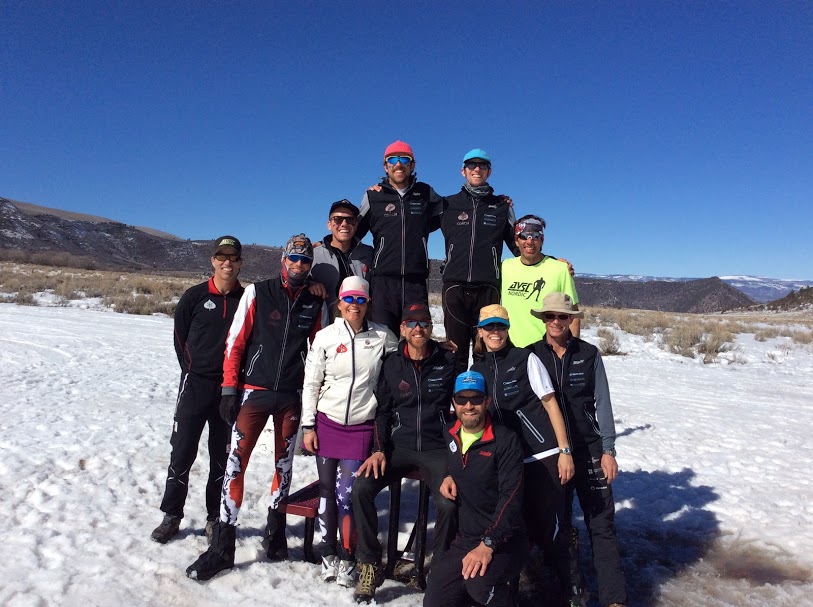
    Maria Stuber, a Wisconsin native, has developed her coaching chops over several assignments, most recently in Colorado with the Aspen Valley Ski and Snowboard Club (AVSC). In three seasons with the club, Stuber increased the size of the team and worked with a variety of athletes, from those who just picked up skiing in high school to those who competed in Europe.

    “At AVSC, coaches made sure we were encouraging brand new skiers to jump into the sport at any age,” she wrote in an email. “If you decided to join our high school team you get to train right alongside the best athletes in the country… This environment gives every athlete the opportunity to make a quick jump and be the best skier they can be. It can be so fun when it works, as our top male skier last year didn’t get into the sport until he was a sophomore in high school.”

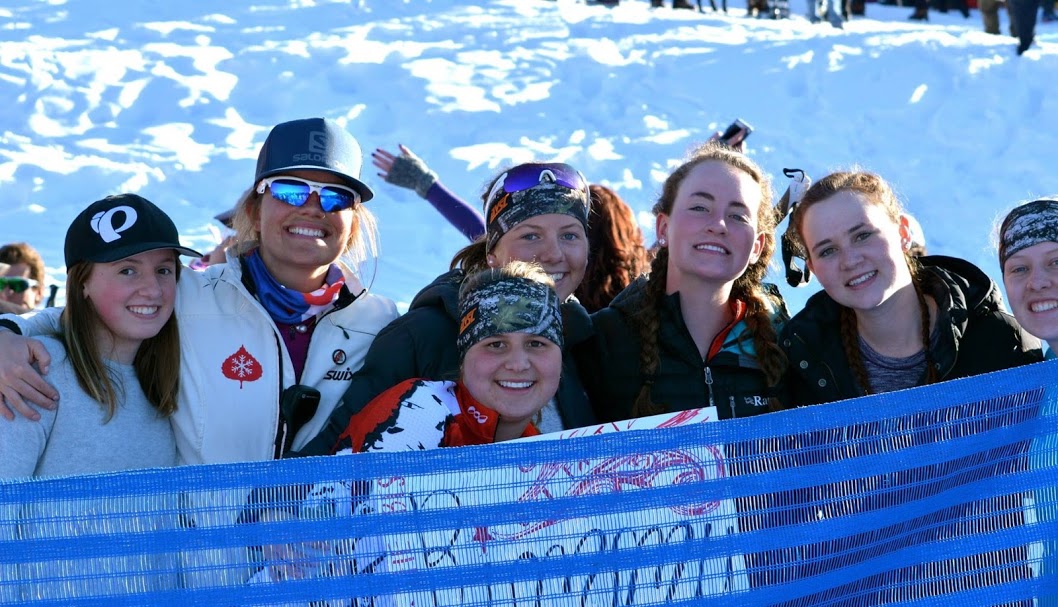
    Stuber (second from left) with AVSC athletes. (Courtesy photo)
    Stuber (second from left) with AVSC athletes. (Courtesy photo)

    That attitude seems to be a perfect match for the College of St. Scholastica (CSS), a school which sent two men to NCAA’s in 2012 and two women in 2015 – but which also has a development team and provides growth opportunities for skiers coming in with a variety of backgrounds.

    “Chad didn’t really impact my ski career, he started it,” Paul Schommer, an NCAA All-American in 2014 now pursuing elite biathlon, told FasterSkier this spring.

    “CSS is unique in that it has a development team serving this purpose at the college level,” Stuber wrote. “Kids with college skiing aspirations that are not quite ready to make that jump can come and work hard, get faster, and have the opportunity to reach the same level as the top junior national athletes we recruit.”

    Taking athletes from those two tracks, Saint Scholastica has built teams that compete with the best in the NCAA Central division.

    And international success is on the radar too: grad Anita Kirvesniemi made the sprint heats in season-opening FIS racing in Muonio, Finland, last season; Schommer has caught the eye of the U.S. biathlon team; and current team member Kelsey Dickinson, who pursued biathlon full time for a year at the Maine Winter Sports Center, was back competing again at U.S. Rollerski Biathlon Championships.

    “CSS wants to be a competitive team in the Central Collegiate Ski Associaion conference,” Stuber explained. “In order to do that, we need to be competitive at the national level. What’s really cool about skiing in 2016 is that you need to have international ambitions to be competitive at the national level.”

    Salmela used sports science and lab testing to make that happen, and it’s one of the opportunities that drew Stuber to the program. She received a masters degree in exercise science from Northern Michigan University and relishes a data-based approach.

    Tuber with the rest of the AVSC staff last year. "I love these people!" she wrote. (Courtesy photo)
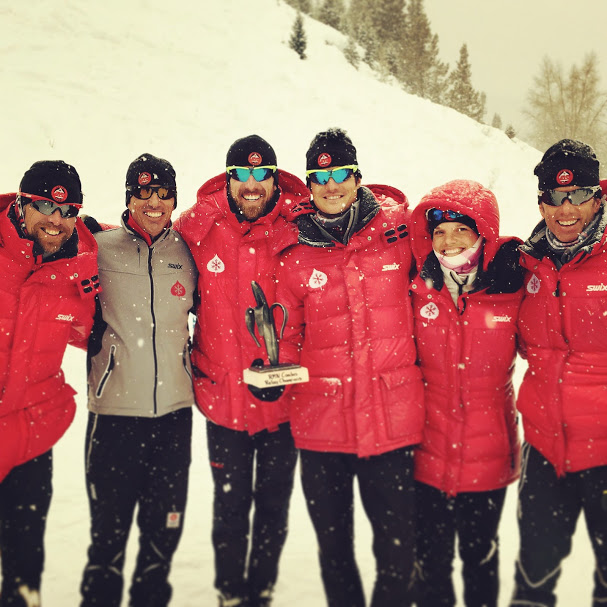
    Stuber with the rest of the AVSC staff last year. “I love these people!” she wrote. (Courtesy photo)

    “I love that St. Scholastica’s training is all based on science and sound research,” Stuber wrote. “The college has an exercise science lab and the professors are willing to share the space and knowledge with coaches to give the student-athletes more opportunities for success.”

    But more than anything, she is pleased to be part of a framework which will make it possible to integrate running and skiing into a cohesive college athletic career. In explaining his job shift, Salmela was clear that he wanted to see more – and smoother – crossover between the two sports at St. Scholastica, for those athletes who have dual ambitions.

    “The biggest program draws for me at CSS are Chad & Don Olson’s (athletic director’s) vision to create a collegiate endurance sport epicenter where student-athletes can choose to pursue xc running, skiing or both at a very high level,” Stuber wrote. “Linking endurance sports together will create well rounded, big picture athletes that have the support of a bigger peer group and more coaches and resources. I think CSS is on the verge of something huge.”

    Stuber has seen how a variety of teams achieve success. First, as an athlete: she captained the Northern Michigan University (NMU) ski team for three years.

    “My time at NMU had a huge impact on my life path and decision to pursue a career in ski coaching,” Stuber explained. “The running and skiing coaches there, Sten Fjeldheim and Jenny Ryan, have both contributed significantly to my coaching philosophy, training methodology and personal values. They have continued to be mentors, advocates and references for me as I find my way. I will feel extremely proud to consider Sten and Jenny peers and to go up against the Wildcats in December and I hope that they feel like a part of our success at CSS. They both know me well enough to not expect any mercy from us on the trails.”

    Hailey Swirbul of the Aspen Valley Ski Club races the anchor leg while guiding the American team to eighth place in the 4 x 3.3 k relay at the Junior World Championships in Almaty, Kazakhstan, in 2015. (Photo: Logan Hannneman)
    Hailey Swirbul of the Aspen Valley Ski Club races the anchor leg while guiding the American team to eighth place in the 4 x 3.3 k relay at the Junior World Championships in Almaty, Kazakhstan, in 2015. (Photo: Logan Hannneman)

    After college, Stuber raced for the Central Cross Country (CXC) Elite Team and then the Craftsbury Green Racing Project. In her senior career, Stuber was a runner-up at U.S. National Championships in 2009.

    But since retiring from competition, Stuber has been consumed by coaching. She began her career at Alverno College in Wisconsin, before taking over as head men’s and women’s cross-country running coach for Southern Vermont College for two years. Under her leadership, the men’s squad had their best team results ever.

    At AVSC, where the roster eventually neared 200 skiers, Stuber led a team of other coaches. Every year the club sent skiers to Junior National Championships as well as to World Junior Championships or the J1 Scandinavian Cup trip.

    “I will never forget our amazing coaching staff at AVSC that welcomed me to the community that they had carefully built over the past 20+ years,” Stuber wrote. “There is no other ski club in the country with the amazing mix of background, knowledge, energy, perspective and compassion. Working with this group of people will be a life-long career highlight for me… I am so proud of the club’s growing numbers and participation in Carbondale, Glenwood Springs and Aspen.  The way these three communities work together towards a common goal in Nordic skiing is phenomenal.”

    AVSC runs summer training programs and last season organized an end-of-winter race event called Tour de Sea which drew junior skiers from all over Colorado, as well as rave reviews.

    Stuber and Cook (second and third from right) with AVSC staff at a competition this winter. (Courtesy photo)
    Stuber and Cook (second and third from right) with AVSC staff at a competition this winter. (Courtesy photo)

    It was difficult for her to decide whether to uproot herself from the Roaring Fork Valley, where she and husband Bryan Cook had just bought a condo. They had been “very happy” in the Elk Mountains.

    “We were not feeling 100% certain that we had made the right call until Monday when the CSS announcement was made,” Stuber wrote. “For days straight my phone and email were pinging and beeping non-stop with messages from friends, family, former teammates, fellow coaches and upcoming Midwest skiers and parents from clinics past. The Midwest ski community is a truly special group of people that we are incredibly proud to be a part of. During our racing careers, we leaned on this community for support and they delivered for us big time. I think we missed the Midwest ski culture more than we knew.”

    The couple will move in the first week of September and Stuber is looking forward to getting started with her new team; Cook will enter an MBA program at St. Scholastica.

    And besides the general homecoming, Stuber knows that the athletes she will be working with in Duluth – as well as those on the teams her skiers compete against – embody the same characteristics of the community which is welcoming her back.

    “The CCSA is definitely a powerhouse Nordic conference…. consistently dominating at the US National Championship and NCAA Championship,” Stuber wrote. “The CCSA attracts down-to-earth athletes that want to be great skiers and are willing to work hard to get there. This intrinsic motivation is a recipe for making fast cross country skiers. Midwest kids are tough and they are backed by outstanding club coaches that are looking at the big picture. I can’t imagine a better atmosphere for athlete development.”

  • Aspen Valley SC Hiring Nordic Program Manager & Base Camp Directors

    Aspen Valley SC Hiring Nordic Program Manager & Base Camp Directors

    AVSC logo

    The Aspen Valley Ski & Snowboard Club is looking for a Nordic Program Manager and one or two Nordic Base Camp Directors (one in Aspen and one in Carbondale). All positions are part time and seasonal. For the right candidate, positions could be combined into a part-time/year-round or full-time/6-month position.

    See job descriptions and links to applications below.

    Applicants should send cover letter, resume, and references to Maria Stuber at mstuber@teamavsc.org.

    Position Title: AVSC Nordic Program Manager

    Reports To: AVSC Nordic Program Director

    Job Objective: The AVSC Nordic Program is designed to support the AVSC mission with a focus on athlete centered programs inspiring EXCELLENCE, creating OPPORTUNITY and instilling AVSC VALUES.

    The Nordic Program Manager will support the Nordic Program Director by managing and administering Nordic program fundraising, special events, communications, merchandise ordering, venue projects, and enrollment.

    Scope: The Nordic Program Manager works under the general supervision of the Nordic Program Director. The position is a seasonal part-time position with approximately 30 hours per week from September to March.  This position is not entitled to AVSC benefits.

    Duties and Responsibilities: 

    • Participate in venue development meetings, take notes and complete specific venue related tasks as they arise.
    • Manage the race sign-up form on the AVSC Nordic blog
    • Promote AVSC special events and fundraisers
    • Update the Nordic Calendar
    • Recruit and manage Nordic event volunteers
    • Manage the AVSC Nordic Facebook Page and WordPress Blog
    • Oversee all aspects of AVSC Nordic Fundraisers, special events and races
      • Ski Swap & Fit Night, Sept 16th
      • Bonfire Dinner
      • Nordic Fest/Rocky Mountain Nordic Finals
      • Night of the Norseman
    • Design and order AVSC uniforms and merchandise
    • Develop systems to facilitate better communication with the Nordic community
    • Participate in designated staff meetings and training sessions
    • Assist with and participate in Club-wide functions
    • Assist with Nordic participant recruitment and community development ideas
      • Free Ski Days
      • Luminary Skis
    • Special projects as assigned

    REQUIRED SKILLS

    • Background screened and cleared for interaction with youth.
    • Full endorsement of AVSC Core Values – Commitment, Teamwork and Integrity
    • Competence with essential computer applications including: MS Office, Google Calendars, Outlook, WordPress website applications.
    • General understanding of competitive Nordic ski racing logistics
    • Communication skills – written and oral – personable and well spoken.
    • Enthusiastic, conscientious and respectful.
    • Strong organizational skills with ability to prioritize tasks and to meet deadlines.

    Click here for complete description/application

    Position Title: Nordic Base Camp Director

    Reports To: AVSC Nordic Program Director

    Job Objective: The AVSC Nordic Program is designed to support the AVSC mission with a focus on athlete centered programs inspiring EXCELLENCE, creating OPPORTUNITY and instilling AVSC VALUES.

    The Nordic Base Camp Director is responsible for developing fun and exciting base camp curriculum that will engage children ages 5-12, and foster a love for winter sports.  The Director will work with four or more coaches and several parent volunteers to run Base Camp programs out of Aspen or Carbondale.  The Base Camp Director will lead all practices and coordinate staff so that practices are organized and run smoothly.  The Base Camp Director must have excellent communication skills and be comfortable instructing a large coaching staff and talking to parents.  The position is best suited for a ski coach with a gregarious, fun, creative, adventurous personality and also strong managerial, organizational, and marketing skills.

    Scope: The Base Camp Director/Head Coach works under the general supervision of the Nordic Program Director. The position is part time, with 3 months (January, February, and March) of practices where the person will spend about 15 scheduled hours per week working with 5-10 year old athletes in Aspen and Carbondale.  In addition, the Base Camp Director will be expected to work during the month of December to promote the Nordic programs, recruit from local schools, and host “Free-Ski Days.”  The position will have a significant amount of flexible prep, planning, and event hosting hours that are more flexible and can be year round.  The position is compensated on an hourly basis and is not entitled to AVSC benefits.

    Duties and Responsibilities:

    • Organize and coordinate all Base Camp activities including scheduled practices (Monday & Wednesday) and some weekend events emphasizing skill development, safety, fair play, sportsmanship and FUN
    • Work with AVSC Nordic Director to develop a fun and engaging Base Camp curriculum
    • Ensure equal participation time for all athletes regardless of ability
    • Understand, agree and integrate AVSC’s vision, mission and core values into all areas of programming
    • Develop ways to best record and track attendance and athlete progress for all Base Camp programs
    • Implement program design and technical progressions throughout Base Camp programs
    • Lead set up and tear down of Base Camp program gear and Nordic Fun Park equipment
    • Manage and lead Base Camp coaching staff and parent volunteers
    • Coordinate recruitment of athletes to Base Camp programs and beyond
    • Provide Nordic Program Director with incident statistics for Base Camp programs
    • Provide Nordic Program Director with weekly Base Camp staff payroll numbers
    • Ensure base camp news is submitted to the Nordic Manager for publication in a timely fashion
    • Attend Nordic equipment night and provide guidance to Base Camp athletes and parents
    • Be able and prepared to fix small equipment issues at practice
    • Attend all staff training exercises and orientation opportunities and set the pace with a willingness to improve at the job
    • Continued development as a sport professional – coaches certification, first aid training, concussion certification, child protection training, etc
    • Assist Nordic Program Director with Base Camp staff training
    • Arrange and participate in parent and athlete coach conferences as necessary
    • Create a positive work environment for staff to grow and improve

    Required Skills:

    • Background screened and cleared for interaction with youth
    • Current First Aid and CPR certification
    • Certification in recognition and response for concussion injuries
    • Safe Sport Practice training
    • Enthusiasm and positive spirit
    • The ability to make every child feel like a winner at practice every day
    • Patience, maturity, and dependability
    • Ability to think outside the box, dream, plan, prioritize and follow through on projects
    • Recognized by others of sound character, strong moral values and personal ethics
    • Make good decisions and always err on the side of caution
    • Be constantly aware of risk management issues with our own athletes, coaches and public near our training space
    • Good organizational and communication skill
    • Age appropriate coaching experience capable of engaging various ability levels
    • Must have or be willing to obtain USSA Level 100 Coaching Certification
    • Be proficient in MS Office, Google Calendars, E-Mail and Website applications
    • Other desirable characteristics: strong work ethic, accountability, good leaderships skills, a positive attitude, being a team player, personable, well spoken and respectful

    Nordic Base Camp Program Objective: AVSC’s Base Camp programs aim to make children LOVE being on skis and to teach them basic athletic skills that will prepare them for participation in future AVSC programs.  At the beginner, athletes will play games, have fun, and do absolutely no “training.”  Coaches will encourage participation in all sports and develop a game based curriculum that helps develop basic motor sills, balance, and coordination to create general non-specific athletic ability.   The advanced curriculum will be similar, with the addition of some fun, short races and drills to develop suppleness and speed.  All Nordic Base Camp athletes will be introduced to skiing fundamentals with the main focus remaining on general athletic body movements, games, and fun.

    Click here for complete description/application

  • Olympic State of Mind: Hoffman ‘Introspective’ Before First Games

    Olympic State of Mind: Hoffman ‘Introspective’ Before First Games

    Noah Hoffman at his first Olympics in Krasnaya Polyana near Sochi, Russia. (Photo: Noah Hoffman) http://noahhoffman.com/olympic-life-day-3/
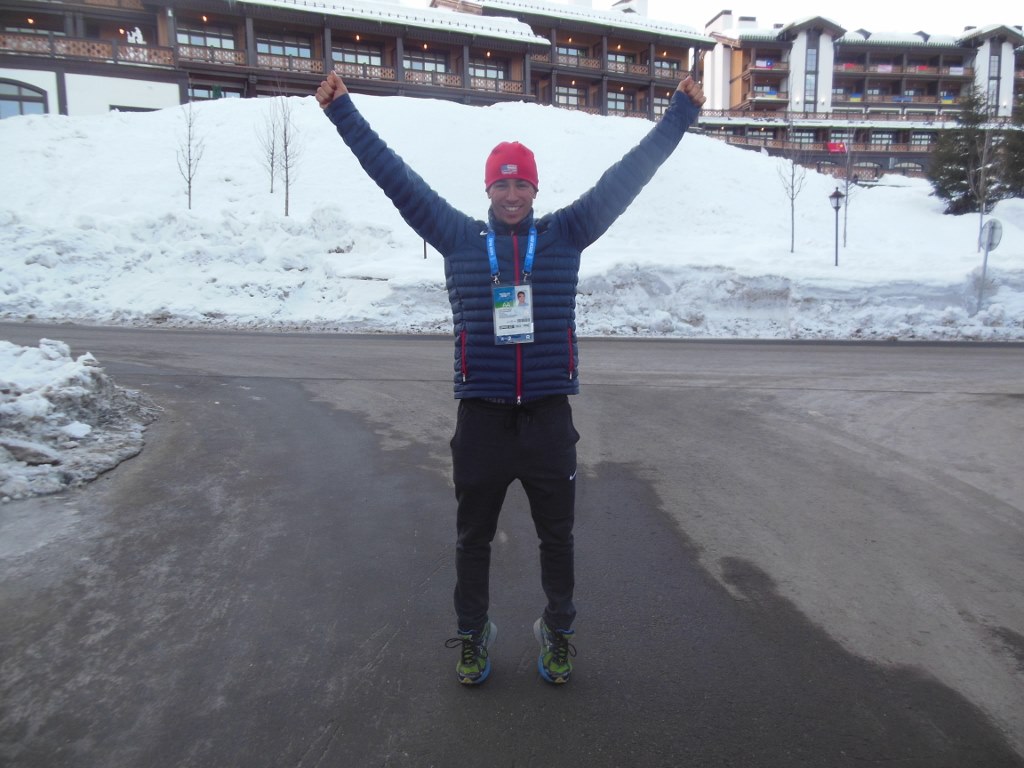
    Noah Hoffman two days before his first race at his first Olympics in Krasnaya Polyana near Sochi, Russia. (Photo: NoahHoffman.com)

    A week ago, Noah Hoffman was in Toblach, Italy, nearly 3,000 kilometers away from the site of the 2014 Winter Olympics in Sochi, Russia, resting up and recouping for one last weekend of World Cup racing.

    After his last pre-Olympic race on Feb. 1, the 24-year-old Aspen, Colo., native would have seven days to gear up for his first Games. One of seven Olympic rookies on the U.S. cross-country team’s 14-athlete roster (along with Erik Bjornsen, Sadie Bjornsen, Sophie Caldwell, Jessie Diggins, Ida Sargent, and Brian Gregg), Hoffman wasn’t alone in the nuance and whirlwind of the massive leadup, which intensified after the athletes flew to Munich on Monday for processing, where they received their credentials and uniforms.

    “Uniforming was like shopping in a giant apartment store with really helpful employees where everything was free and you can’t say no,” Hoffman wrote on his blog. “We were handed checklists of all the stations we had to visit, and we could go in any order we liked. The whole thing was in a big warehouse.” The next day, the team arrived in Russia.

    FasterSkier caught up with Hoffman, of Ski & Snowboard Club Vail/Team HomeGrown, on Jan. 30 to talk about everything from his training to his mentality and goals before the Olympics. Hoffman plans to compete in four events: the 30-kilometer skiathlon, 15 k classic individual start, 4 x 10 k relay, and 50 k freestyle, respectively.

    Noah Hoffman (r) chases the the overall World Cup leader,  Martin Johnsrud Sundby of Norway, during training at the 2014 Winter Olympics at the Laura cross-country center on Friday. "I tucked by him going at least 30 mph," Hoffman wrote on his blog. (Photo: NoahHoffman.com)
    Noah Hoffman (r) chases the the overall World Cup leader, Martin Johnsrud Sundby of Norway, during training at the 2014 Winter Olympics at the Laura cross-country center on Friday in Krasnaya Polyana near Sochi, Russia. “I tucked by him going at least 30 mph,” Hoffman wrote on his blog. (Photo: NoahHoffman.com)

    FasterSkier: So the taper has begun?

    Noah Hoffman: Oh yeah, I’ve hardly trained at all. I took the last two days off and today [last Thursday] I think I skied for 30 minutes. It is definitely that time of year.

    FS: How does that feel? Are you restless?

    NH: I’m pretty restless, for sure. I’m glad to be out of Seiser Alm [Italy] because there was not a lot going on up there. It was actually a tough place to be tapering, but it would be a great place to train five hours a day and be really tired when all you want to do is eat, sleep and ski, but when you don’t have much going on I was struggling to stay happy just because there was so little to do and so little going on.

    FS: When did the Olympics start to feel real?

    NH: I read a bunch of stuff to get psyched about the Games. Until then I’d been stockpiling it and putting it off to the side. I went through and looked at the maps of the villages … and it’s coming right up … it’s crazy.

    FS: How are you keeping nerves in check?

    NH: Honestly, I don’t feel like getting too excited has been an issue for me. Like I said, I was dealing with staying happy in Seiser Alm which means that I wasn’t worrying. I was being a little more introspective. I honestly haven’t been that focused on the Games. I’ve been working on a little trip I’m taking after the Games, like a little vacation. Looking beyond them has helped a little bit in terms of not taking them totally out of proportion in my own mind. I think that the best thing I can do is treat them as another race, because I give it my all in every race. I just need to go there and execute my plan. The reason I should ski better in these races is because my training plan is tailored to them, not because I do anything different once I’m on the start line.

    FS: How do you feel about where you’re at?

    NH: It’s up and down, as always. There are many, many races that I wish I had back. There are some races where I just didn’t have it, but the true standouts: the best time of the day in the last race of the Kuusamo Triple and the second-best time of the day in the point-to-point race in the Tour. Those are really high, highs, those are better races than I anticipated coming into this season. It gives me a ton of confidence, especially in my skate skiing. I continue to be frustrated in my classic skiing and I believe I’m a better classic skier than I’ve shown this year. But I’m really excited about my skate skiing, and I think it’s an indicator that my fitness is really good and that the work that I did through my surgery last spring was really good, and that the work that I’ve done with Zach Caldwell on my skate technique has gone really well.

    I’m really excited to take confidence in the process because I have clear indicators that it’s going in the right direction and I really believe that anytime I’m on the start line I can be top-10 in the World Cup, which is something that I have not had in the past. I haven’t had a really disappointing skate race all season. There haven’t been that many skate races … There’s basically been three: two that I was top three in and the one in Davos where I was good, but not great. And so there’s a lot of skating coming up in the Olympics, the second half of the [skiathlon] pursuit next week and then the 50 k and I’ll probably do a skate leg of the relay. I feel like I’m on track in my goals being among the best skiers in the world in a couple of years.

    FS: Which of those events are you most focused on?

    NH: [The skiathlon and 50 k skate] bookend the games; they’re two weeks apart. I am confident in my classic skiing. I feel like it’s not that far away and I believe I can easily stay with the group through the classic portion of that skiathlon, and then it just becomes a mass start skate race. At that point, I’ve proven this year that I’m one of the best skaters in the world and I think that’s a really, really good opportunity for me. And then of course the 50 k skate is on the hardest course in the world, it’s a long distance race, it’s at a little bit of altitude [around 6,000 feet], all of which plays right to my strengths. That is gonna be an amazing experience and I’m really looking forward to that race. I feel like the 15k classic; I can accomplish other goals in that race. I have an outside chance at a medal in the two mass start races but not in the classic race.  A top 15 or top 20 result is very achievable in that race and if I achieve something along those lines I’ll be very happy.

    FS: How did prequalifying for the Olympics affect your confidence?

    NH: I was happy with my results last season, and going into this season, making the Olympic team was never on my mind. Not making the Olympic team would have been a step in the wrong direction. That probably would have made me question my sole focus on skiing and so I’ve really just been looking forward. Doing well in Sochi was always a step towards my bigger career goals. It’s really nice to be in that position, but there is still a long, long way to go to accomplish my goals, and so I’m just looking forward.

    FS: How has it been being the lone distance guy on the team for most of the season, until now?

    NH: I like to train by myself anyway and I have a lot of faith and trust in my personal coaches and I really believe that working with them, especially working with [1992 Olympian] John Callahan out of Aspen has been critical to my success. So I think it would actually be more challenging if I were on a team with more really high-end distance skiers because I would feel definitely torn – do we want to train more in a German style as a big group and really push each other, or do we want to train more in a Norwegian style and hope that we all each do well independently? And so I’m not really left with that choice, but I think that doing it independently is my choice anyway.

    Having guys like Newell and Simi on the team is really, really good for me to be able to work on my weaknesses and I can learn a ton from them and I respect them and their skiing immensely and I really enjoy spending time around them as well, but I think that not having them be directly competitive with me in most races and having them be on slightly different schedules works really well and is a really nice balance. I’m looking forward to having more distance guys in the future to push me, you know having Erik Bjornsen and Brian Gregg and of course [Kris] Freeman who’s been a mentor for me on the distance side of things. Really important to have those guys around for me I can learn a lot from them also.

    FS: And your parents will be watching you at the Olympics from home? 

    NH: They came to the last few days of the Tour de Ski and we took a little vacation afterwards, but it was just a little too expensive and a little too logistically challenging to get to Sochi. They’re very excited to be able to follow it from home and I think NBC is gonna have good coverage.

    Note: Hoffman broke down the Olympic TV schedule on his blog.

    Also on his blog, Hoffman confirmed Friday that he would walk in the Opening Ceremony, two days before his first race and the eve of the women’s 15 k skiathlon.

    “I decided to attend, and I’m really excited. I am going to return on the early shuttle departing after we walk in,” he wrote. “I’m bummed to miss the show, but I’m hoping to be in bed by midnight. The bus that stays for the whole ceremony is scheduled to return at three in the morning.”

  • 7 Things You Didn’t Know About Noah Hoffman

    7 Things You Didn’t Know About Noah Hoffman

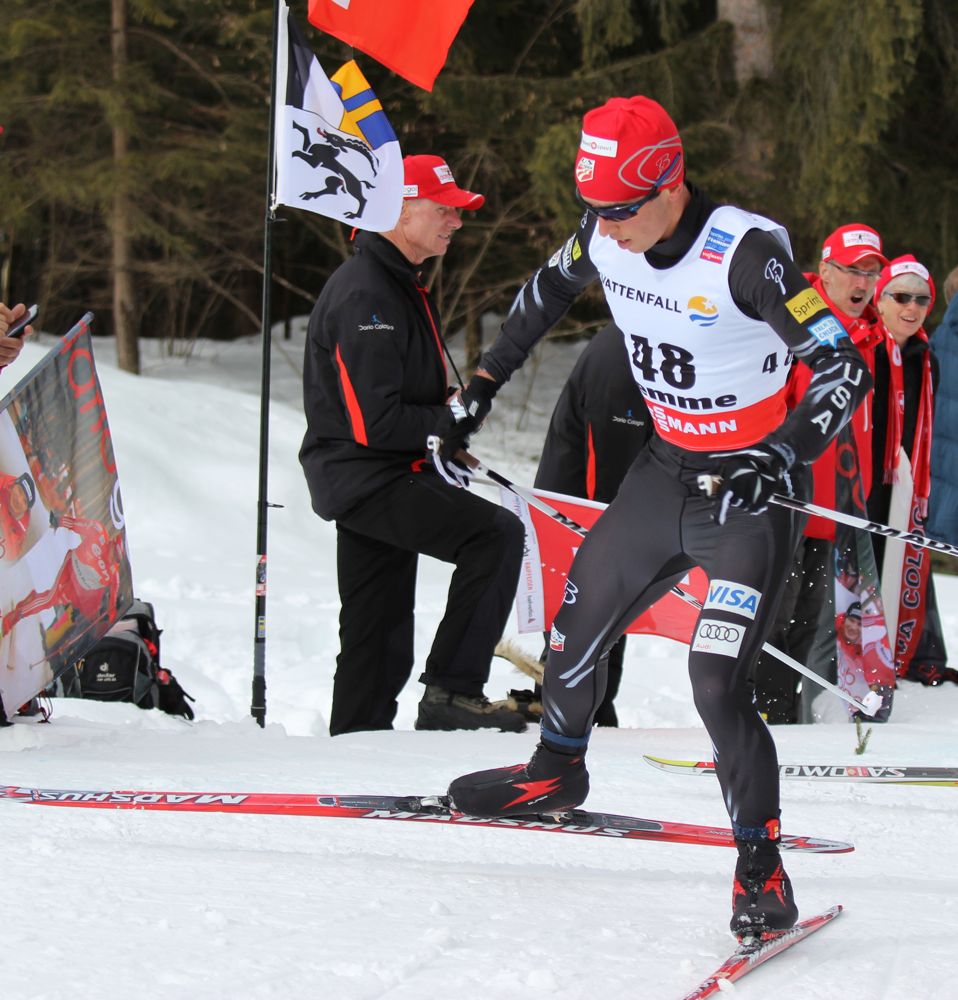
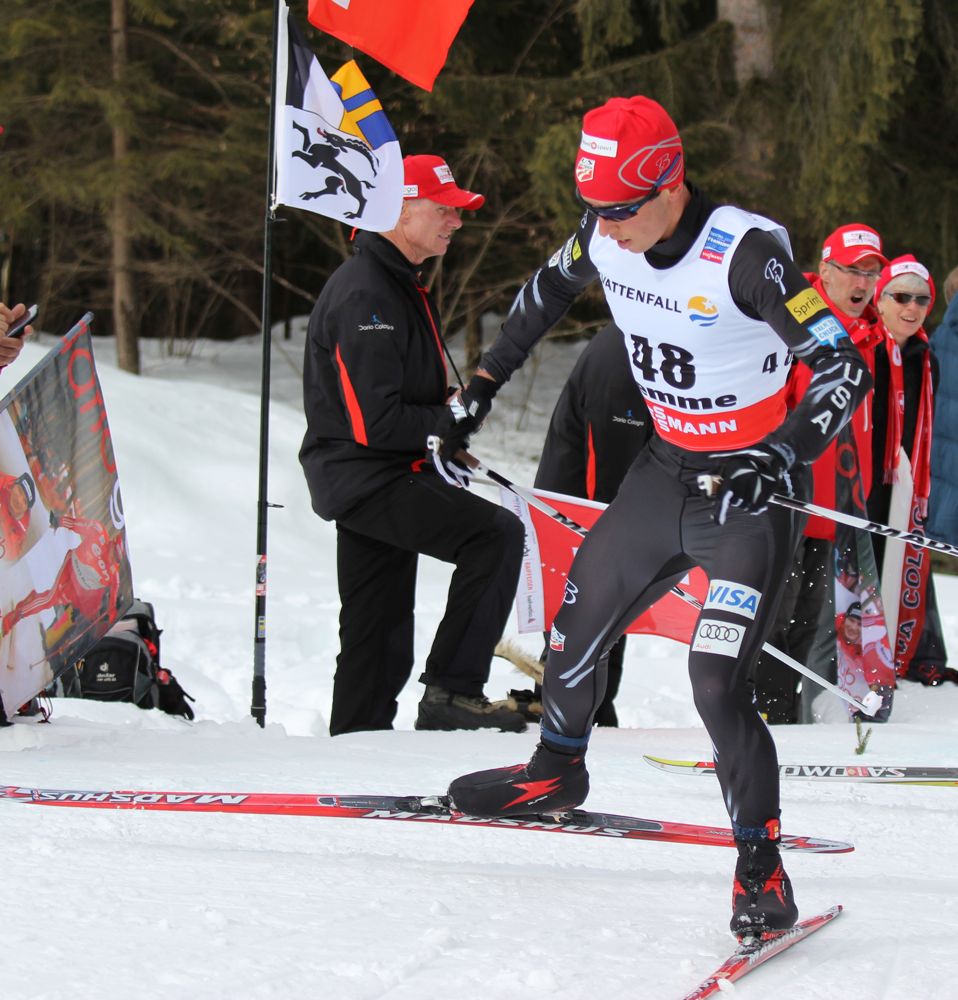
    Noah Hoffman (USA) climbing to the high point of the 15 k freestyle course on Wednesday at World Championships, where he finished a career-best 15th overall.
    U.S. Ski Team member Noah Hoffman climbing during the 15 k freestyle individual start at 2013 World Championships in Val di Fiemme, Italy, where he finished a career-best 15th. On Sunday at the 2013/2014 World Cup opener in Kuusamo, Finland, Hoffman had the race of his life with the fastest 15 k pursuit time for ninth overall.

    Continuing with our series on pointless knowledge about professional North American racers, we bring you some insight on Noah Hoffman, who posted the fastest 15 k freestyle pursuit time on the opening World Cup in Kuusamo, Finland. Das Hoff. 

    Athlete: Noah Hoffman

    Team: U.S. Ski Team (sixth season); Ski & Snowboard Club Vail/Team HomeGrown

    Age: 24

    Hometown: Aspen, Colo.

    7 Things:

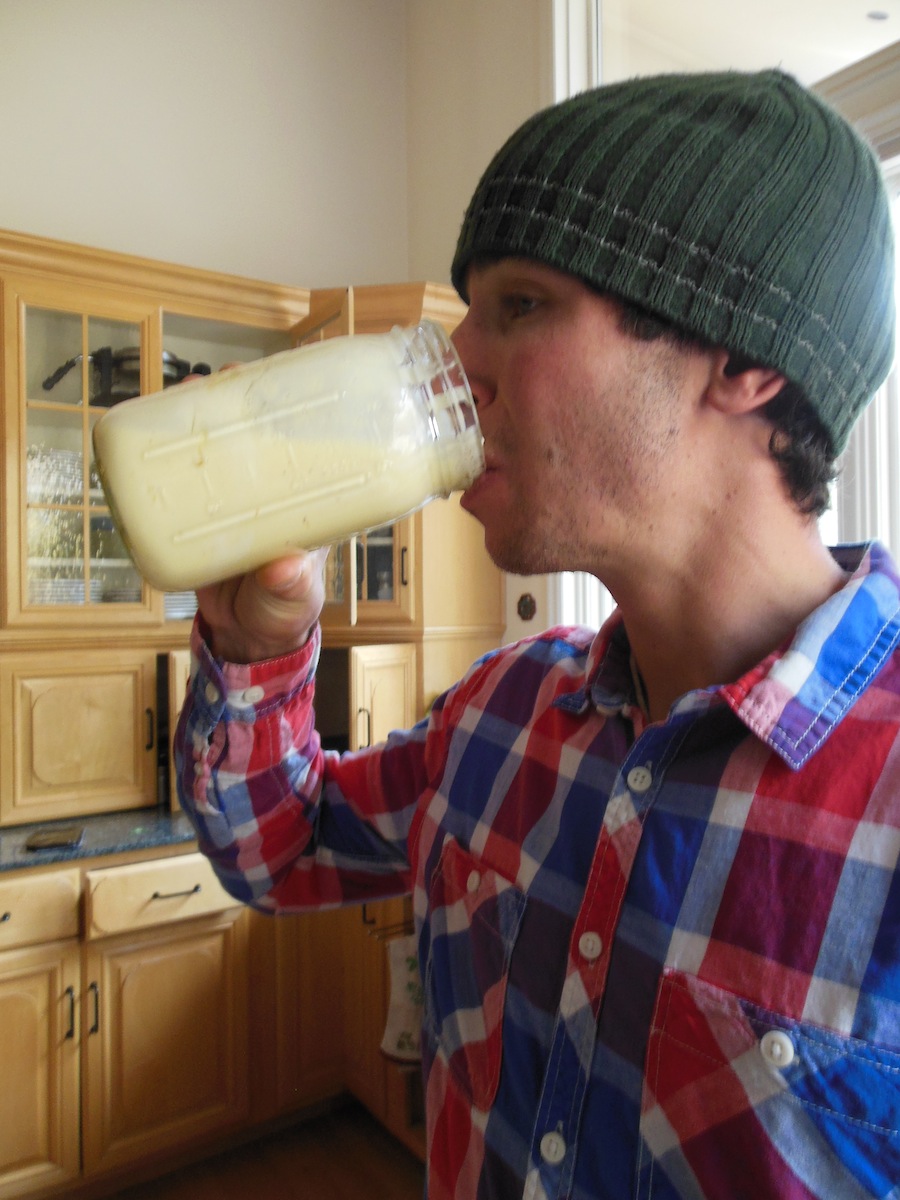
    Noah Hoffman enjoys a homemade raw-egg smoothie during a recent family vacation in Utah. (Courtesy photo)
    Noah Hoffman enjoying a homemade raw-egg smoothie. (Courtesy photo)
    1. I can’t stand olives.
    2. I want to live in a big city, maybe Manhattan. I want to live somewhere that I don’t have to own a car.
    3. I love taking public transit.
    4. I have unusually large hands.
    5. My pinkie finger on my right hand has an extra crease so it looks like I have an extra knuckle.
    6. I have extremely wide and flat feet. Duck feet.
    7. I eat raw meat and raw eggs.

    Bonus Round:

    • What do you miss most while on the road (besides family and friends)? Good Mexican food, free water and fast internet.
    • Best part about being a pro athlete: Meeting lots of motivated and successful people.
    • 3 travel essentials: Computer, hot sauce, book
    • Go-to travel meal or food: In the U.S.: Burrito or sandwich. In Europe: Whatever has the most calories for the least amount of money
    • Song that you could listen to non-stop: “Old Man” by Neil Young
    • Song you wouldn’t mind never hearing again: “What Does the Fox Say”

    ***

    See also: Sadie Bjornsen | Sophie Caldwell | Andy Newell

  • Grand Traverse’s Fabled ‘Nordic Guys,’ Koons and Mallory Notch Fifth

    Grand Traverse’s Fabled ‘Nordic Guys,’ Koons and Mallory Notch Fifth

    Former Dartmouth nordic teammates, Linden Mallory (l) and Ben Koons stand together at the finish of 2013 Grand Traverse on March 30 in Aspen, Colo., where they placed fifth. (Courtesy photo)
    Former Dartmouth nordic teammates, Linden Mallory (l) and Ben Koons stand together at the finish of 2013 Grand Traverse on March 30 in Aspen, Colo., where they placed fifth. (Courtesy photo)

    Miles into the wilderness of west-central Colorado last Saturday, two men kept things interesting, accelerating to take the lead in the 16th annual Elk Mountain Grand Traverse then fading when the climbing got too tough or conditions too rough for their skinny skis.

    To some 170 other two-person teams in the co-ed field, they were simply the nordic guys. They had no team name, no celebrity status, just freestyle racing skis. Ben Koons and Linden Mallory were like that little brother you can’t drop. It doesn’t matter how many gears you have, he’ll catch you on his one-speed bike.

    Annoying, maybe, but several top competitors in the 40-mile ski mountaineering race from Crested Butte to Aspen considered it impressive.

    Three years ago, Koons, New Zealand’s leading 2010 Olympian and 2011 World Championships skier, did an altered version of the race because of high winds and too much new snow. At 38 miles, the Grand Reverse was only slightly shorter, but the top finishers clocked in 1 ½ to three hours faster than usual.

    He estimated that half the racers wore cross-country skis back then; the other half went with ski-mountaineering gear. Oh, how times change.

    The conditions did as well. What looked to be perfect snow for XC this year turned out to be challenging for everyone on breakable crust, even the backcountry skiers. Early in the race, which started at midnight, a fast and tuck-able descent abruptly switched to unforgiving knee-high snow.

    Eventual winners Marshall Thomson and Tom Goth were the first to slam into it in the darkness, with Thomson breaking his pole upon contact. The two trekked through the wee hours of the morning to win in 7 hours, 40:54.8 minutes, about 4 ½ minutes ahead of the runners-up.

    Ben Koons (l) and teammate Linden Mallory finishing the 2013 Grand Traverse from Crested Butte to Aspen, Colo., on March 30, where they placed fifth. (Courtesy photo)
    Ben Koons (l) and teammate Linden Mallory finishing the 2013 Grand Traverse from Crested Butte to Aspen, Colo., on March 30, where they placed fifth on skate skis. (Courtesy photo)

    Koons, 26, and Mallory, 27, finished fifth, 26:24.4 after Thomson and Goth. It was the best result for two Aspen skiers in the race’s history and they had done it to the surprise of many.

    Heading out with the leaders, the first two hours of the race turned into a single-file slugfest through the cumbersome crust. Some 340 participants moved along together at a walking pace, their headlamps bobbing in the night.

    When the frontrunners hit the snowmobile track, the race opened up again. Six teams broke away, including Koons and Mallory.

    “At first the nordic team was in the lead but we all figured they’d be a non factor since their gear is so incredibly hard to ski,” third-place finisher Jason Dorais wrote on his blog. “They ended up 5th – amazing. Turns out olympic nordic guys can rip some steep descents on their gear.

    Former Dartmouth teammates, Koons and Mallory casually signed up for the race, deciding to take their chances on their college skis rather than spend the big bucks on new equipment. Both new to ski mountaineering, they knew how to ski fast, but were unsure how they’d stack up.

    Shortly before the race, competitors were briefed in a series of meetings about the exact course. This year it ascended a total of 7,800 feet, but that was about all they knew. Little would prepare for what was ahead except acute awareness, driving grit, and a good teammate.

    “All day you’re gearing up with these meetings, like eight hours ’til the start of this race, so by the start you’re pretty tired,” Koons said on the phone. “It’s a struggle to try and eat and drink enough through the race ’cause it’s dark and it’s 4 in the morning.”

    “It was like a long day in the mountains; you’re just going at a higher intensity because it was a race,” Mallory said. “I think that’s where Ben and I had an advantage. Being on XC skis, being comfortable in the mountains makes a big difference.”

    Graduating one year apart, Koons left Dartmouth a year after Mallory in 2008 and moved to Aspen this past December to work for anarchitecture firm while coaching juniors on the side.

    Mallory (’07) continued his tenure as a longtime climbing guide for a Washington-based company, Rainier Mountaineering, Inc. He spends about two-thirds of the year in Aspen and guides in places like Alaska, Russia, Africa, South America and Nepal.

    Back in Aspen, he and Koons started talking about the Traverse, the town’s celebrated event. Mallory usually wasn’t around when it took place; this year he was. They decided to try it, and once they caught a glimpse of gold, it was hard to race for anything else.

    After a rough start (Koons had some ski and pole-basket troubles then ripped his pants upon hitting the breakable crust), the two surged to the front on the flatter snowmobile track. With skins on their skate skis, they started to gap the field.

    “[We] were able to kick and glide, full-on classic skiing up there,” Mallory said. “As it got higher and steeper, that advantage became a disadvantage.”

    Around the halfway point at Star Pass, Thomson and Goth took off on the descent, leaving them and the rest of the teams behind for good.

    “Those guys on alpine skis were much, much faster,” Mallory explained. “Ben and I just tumbled our way down the pass.”

    The two finished shortly after 8 a.m., 2.4 seconds ahead of sixth place.

    “It’d be nice to win, but it’s OK,” Koons said. “We were really hoping for crust-skiing conditions. … Most conditions we’d have had an advantage.”

    Thrilled by the scenery and challenge of the race itself, they resolved to come back – probably on cross-country skis again.

    “I’d encourage more cross-country racers to race it, and do it on skate skis with skins,” Koons said. “You can still be really competitive even if you don’t have the setup. If you’re strong, have good endurance, good on your feet … it’s kind of crazy terrain, ice, whatever, and it’s so fun.”

    “You’re not sure what to expect because it’s so unexpected,” Mallory said. “It’s helps having a partner you’re on the same page with. … We struggled in the same places and were able to move well. You get to go on a pretty epic adventure with a good buddy, and when you’re having a tough time, they’re there to touch you forward and vice versa.”

    “Honestly I’d like to do more races like it,” Koons said. “Maybe not as long or involved where you’re going with 350 others into backcountry in middle of night; it’s pretty wild. It’s just fun to go out and thrash around the mountain.”

    Another Dartmouth alum, Brett Palm (’09), who’s studying to earn his PhD in chemistry at the University of Colorado in Boulder, teamed up with former Colby College skier Anders Wood (’07). Under the team name the “Big Green Nordorks,” they finished 121st, seven hours and five minutes behind the winners, on telemark skis.

    “It was exhausting, for sure,” Palm said. “Definitely should not have done it on tele gear. It was great though, a challenge. I guess that’s why we did it did it.”

    Within the first five or six hours of the race, the two realized they picked the wrong equipment. Too heavy on the inclines and not fast enough on the descents, they dropped toward the back of the pack, focusing on good turns rather than a top finish.

    Like Koons and Mallory, they had heard nordic was the way to go, but hadn’t gotten around to finding the right gear. Ultimately, more people chose backcountry race skis, which made all the difference.

    “The race didn’t involve that much skiing or technique, more just an endurance sport,” Palm said. “Definitely one of the top five hardest things I’ve ever done, mentally as well as physically.”

    He recalled his days on Dartmouth’s nordic team when they’d talk about three strong urges to quit long-endurance activities. Palm said the first one came too early in the Traverse – around six hours in. The two recovered over Star Pass, but started to fade again during the final six miles along Richmond Ridge.

    “We got to the third strong urge for sure,” Palm said. “But we did it. Fortunately, the word ‘quit’ is not in a nordic skier’s vocabulary and everything was OK.”

    Results

  • In Colorado, Communities Rally Behind Local Skiers

    In Colorado, Communities Rally Behind Local Skiers

    The Rocky Mountain Nordic Angel Fund held a fundraiser in Aspen, Colo., on Saturday for Aspen athletes Simi Hamilton, Noah Hoffman and Michael Ward. Photo: RMN Nordic Angel Fund.

    On Saturday, a fundraiser was held in Aspen, Colo., to help support local U.S. Ski Team cross-country athletes Simi Hamilton and Noah Hoffman and nordic combined skier Michael Ward in their quest for international success. A few hundred community members came through the doors over the course of the evening, the sense of pride in their hometown practically tangible. It’s rare, when covering a sport largely from afar, to witness the inspirational power athletes have so clearly, but for the Aspen locals in the room it was a simply another example of friends supporting friends.

    “I know 95 percent of the people who came tonight, which is a testament to the type of community we grew up in,” Hamilton said. “It’s nice to be reminded it’s still the town where it takes two hours to bike home on a Saturday afternoon because you see so many people you know.”

    The event was put on by the Rocky Mountain Nordic Angel Fund, a branch of Rocky Mountain Nordic that was created in 2011 in response to the USST budget cuts that effectively left sub-A-Team level athletes to find a way to pay for up to $25,000-worth of competition-related travel costs.

    Simi Hamilton.

    Different communities and organizations around the country have found ways in the last year and a half to help pick up the slack in the national team budget. The most visible example is the National Nordic Foundation, which is currently in the middle of its annual Drive for 25 campaign. NNF raised over $160,000 in 2011/2012 to help the defray the costs of competing in Europe for both junior skiers and USST members.

    “The NNF and grassroots ski clubs are taking over the job that used to be performed by USSA,” RMN chairman Mike Elliott said.

    The RMN Angel Fund works in concert with NNF and is a more local example of fundraising at work. Last year the Fund raised enough money to fill in the uncovered racing expenses for Colorado nordic athletes Hoffman, Hamilton, Tad Elliott and Sylvan Ellefson. Hoffman, for example, estimated that fund ended up covering 90% of his travel costs last winter.

    On Saturday, the Fund came $15,700 closer to its 2012/2013 goal, a number that Mike Elliott characterized as a “very busy, very successful event.” The Fund will hold another event in Durango on November 9 for Mike’s son Tad and local biathletes Tracy and Lanny Barnes. For the season, the Fund hopes to raise $50,000.

    The process by which these fundraisers come together reflects both the scope of the financial problem skiers face and the willingness local communities have to address it. The positioning of separate event in Aspen and Durango, for example, was based on the assessment that people will more naturally get behind hometown athletes. Successfully communication of the need for donations is something the Fund has to think about with an audience not intimately familiar with the sport.

    “Fundraising is difficult for skiers who are going to these romantic-looking destinations in Norway and Sweden; athletes who people think are privileged to live that lifestyle,” Elliott said. “But they’re incredible role models to their communities, and the community gets behind them.”

    Hoffman (USA) at U23s. Photo: Logan Hanneman.

    The message may be a difficult one to convey, but based on the turnout at Saturday’s event, there are people out there who understand the problem and want to help.

    “This is just about friends helping friends,” said Dylan Johns. “It’s got to be frustrating to reach that level and then have to figure out how to afford it. People realize that here and want to help; enough people ski and appreciate [the sport]. There’s a strong sense of community here, and this town definitely rallies around the people who need help.”

    The event was billed as part fundraiser and silent auction, part send-off party for Hoffman, Hamilton on Ward on the eve of their departure for the first races of the season. With a line of kids sitting rapt on the floor in front of them, the trio took to the stage partway through the evening with emcee Mike Trecker to talk about their sport, their inspiration and their goals for the coming year.

    Ward talked about the power role models have had in his own ski career. “I have teammates like Billy Demong who are gold medalists that I can now train with and learn from every day, and I hope it’ll make me the best as well,” he said.

    Hamilton echoed the sentiment. “Role models play huge roles in where we are right now. And we all realize we want to become those people for the kids below us. We all care about the development of athletes in this community and in others as well.”

    All three athletes thought that part of being those role models, especially in a town where Lance Armstrong owns a home, means taking a firm stand on purity in sport. Each spoke out against doping, and Hoffman in particular expressed strong intolerance for it.

    “I have no interest in competing if I have to cheat to win. I get tested once a month and I wish it were more,” he said. “It’s going to kill endurance sports if we let it persist.”

    With the ensuing applause, the message clearly resonated with the audience. “These kids represent Aspen,” said Susan Spalding after the athletes left the stage. “People here love the outdoors, and here are these awesome, wholesome athletes. Noah’s doping speech really reflects that. I completely want to support these role models for our kids.”

    Though neither Hoffman, Hamilton nor Ward have much time to spend in Aspen any more, the turnout on Saturday clearly meant a lot to them.

    “To see these people here — with their support it makes me more determined,” Ward said. “Their support makes a huge difference.”

    The ideal that the podium is blind to income has always been complicated in skiing. Equipment alone costs several hundred dollars for beginners and thousands for the more experienced. The RMN Angel Fund and campaigns like those at NNF attempt to bridge the financial gap between success and opportunity for skiers in the U.S., a problem that doesn’t seem to be going away any time soon. Saturday’s event in Aspen showed that people are out there who want to help hometown athletes reach their goals.

    “I think it’s about more than just the money,” Hoffman said after the event was over. “Having this presence in Aspen makes a big difference when you’re in Europe, travelling around, and maybe not thinking that anybody cares about what you’re doing. Seeing these people behind us as people rather than just as skiers is really important.”

  • Aspen Valley Ski/Snowboard Club Seeks Coaching Interns

    Aspen Valley Ski/Snowboard Club Seeks Coaching Interns

    The Aspen Valley Ski/Snowboard Club (AVSC) in Aspen, Colo., is accepting applications for intern nordic coaching positions. Housing is provided. Interested applicants should contact Toby Morse, attmorse@teamavsc.org.


    The mission of the Aspen Valley Ski/Snowboard Club is to provide all youth in the greater Roaring Fork Valley the opportunity to develop as athletes and as people through winter sports.

    We believe in opportunity, excellence and values.

    Opportunity – All children growing up here should have the chance to ski or snowboard.

    Excellence – We have to help those who want to reach their full potential – they should not have to leave Aspen to find the training they need.

  • Aspen Nordic Festival Featuring Owl Creek Chase Set for Feb. 11-12

    Aspen Nordic Festival Featuring Owl Creek Chase Set for Feb. 11-12

    ASPEN, CO – Fresh snow blankets the trails and anticipation builds for the annual festival of cross country skiing in the Roaring Fork Valley, The Aspen Nordic Festival featuring the Owl Creek Chase. Set for Feb. 11-12, the Aspen Nordic Festival features several events for aspiring Olympians as well as Colorado citizen skiers, but it’s Sunday’s grueling 21km freestyle event, the Owl Creek Chase, that is the highlight of the weekend.

    “The Owl Creek Chase is one of the toughest races in the world.” said race announcer Mike Trecker. “But it’s also one of the most fun; it’s a true cross country race that starts in Snowmass and finishes in Aspen. The scenery is visually stunning and the flow of the race is enhanced by the challenges of the tough climbs and speedy downhills. There are usually packs of skiers racing together and the finish at the AVSC is one of the best in the sport, offering many prime viewing spots for spectators.”

    Several new features highlight this year’s Aspen Nordic Festival, the first of which is a new classic sprint qualifier early on Saturday morning.

    “This year’s festival will be the first on FIS sanctioned and standardized trails at the AVSC courses.” Trecker explained. “Holding one additional points race opportunity was something the national governing body wanted to add to the program since Sunday’s Owl Creek Chase is not FIS sanctioned. Rather than holding an additional event on a separate day, the organizers and the USSA decided to hold a short, sprint time trial on Saturday in addition to the standard 5/10k classic races.”

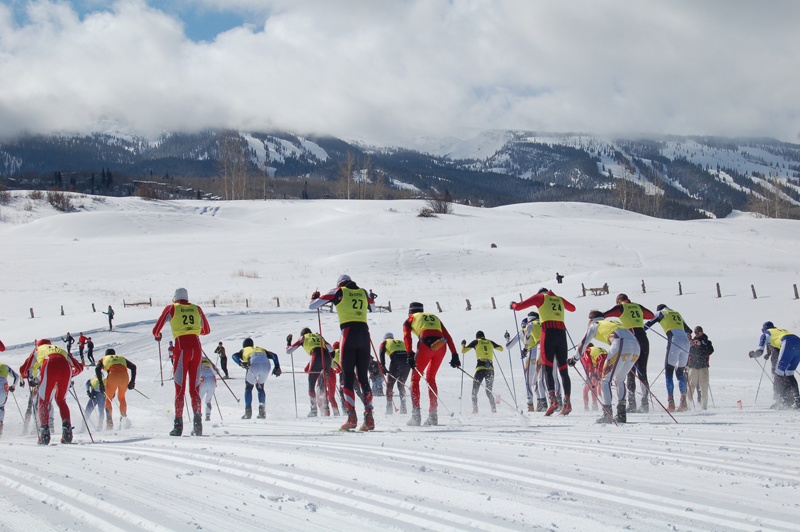
    Sunday’s Owl Creek Chase will once again be a wave start and this year’s race will be the first edition to offer two separate wave starts for the citizen skiers. Wave 1 which starts at 11am will be the SuperTour and Elite Citizen Men’s wave. Skiers in this wave will have a FIS or USSA license and compete for USSA points and cash prizes but will also allow the fastest citizen men up to 50 racers total. Skiers in this wave need to be able to finish in 1:15 or less and seeding will be based on FIS/USSA points for the SuperTour racers and previous results for citizen racers. Wave 2 starts at 11:05am and will be the Women’s version of Wave 1. The recommended finish time for Wave 2 is 1:25 or better.

    “The big college teams are not coming to Aspen this year due to a conflict in the schedule.” said Trecker “We wanted to encourage some of Colorado’s fastest citizen skiers to jump into the elite Waves 1 and 2 to make the competition a little deeper in the front and to give additional room for the citizen skiers back in waves 3 and 4. We’ve had some people wish there was more room in the start area and the hope is that these new waves will help with that.”

    Wave 3 starts at 11:10 and will be open to citizen men and women who can finish in under 1:40 and who tend to be more competitive and aggressive in their skiing. Thus, Wave 3 is called “Competitive Citizens” and will be limited to a maximum of 75 skiers.  Wave 4 starts at 11:15 and is dubbed “Recreational Citizens”.

    Early Owl Creek Chase registration is now available for $40 through Jan. 21 with standard $50 registration closing on Feb. 8. There is no race day registration.


    2012 Aspen Nordic Festival Schedule of Events

    Sat. Feb. 11, 9am – AVSC USSA SuperTour Classic Sprint Qualifier, Active USSA/FIS license holders only

    Sat. Feb. 11, 11am – AVSC USSA SuperTour and Citizens 5/10k classic

    Sun. Feb. 12, 11am – Aspen Parks and Recreation Owl Creek Chase, USSA SuperTour and Citizens 21km freestyle


    www.owlcreekchase.com for more information on events and registration

  • Owl Creek Chase – This Sunday

    Owl Creek Chase – This Sunday

    Aspen, CO – Elite athletes from around the country make their way to Aspen to participate in Colorado’s premier cross-country ski race, the Owl Creek Chase. Part of the Aspen Nordic Festival, the Owl Creek Chase presents the very best that Colorado nordic skiing has to offer; tough climbs, scenic views, thrilling descents and excellent snow conditions.

    The 21k race, held this year on February 13, was started as a means to showcase the outstanding trails in the Aspen/Snowmass area and the Owl Creek Trail is the crown jewel of over 90km of free skiing often referred to as Aspen’s 5th mountain.

    Started in 1985, the Owl Creek Chase has a rich history of diverse participation. Bjorn Sateroy from Norway, a former collegiate racer from the University of Colorado was the first winner of the Owl Creek Chase. Canadian Olympian Pierre Harvey, winner in 1989, is probably the most notable of the early international champions of the Owl Creek Chase. And the Owl Creek has been a coronation for up and coming talents Noah Hoffman, Tad Elliott and Matt Gelso, perhaps the three most gifted young distance skiers in the country today. The Owl Creek Trail is always tough, but the field that assembles for the Owl Creek Chase makes it the ultimate.

    The Owl Creek Chase also continues to work closely with such groups as the RMN and the RMISA to help ensure future participation in the Aspen Nordic Festival by the best skiers around including the up and coming juniors, collegians and national level elites.

    For more information or to register: www.owlcreekchase.com