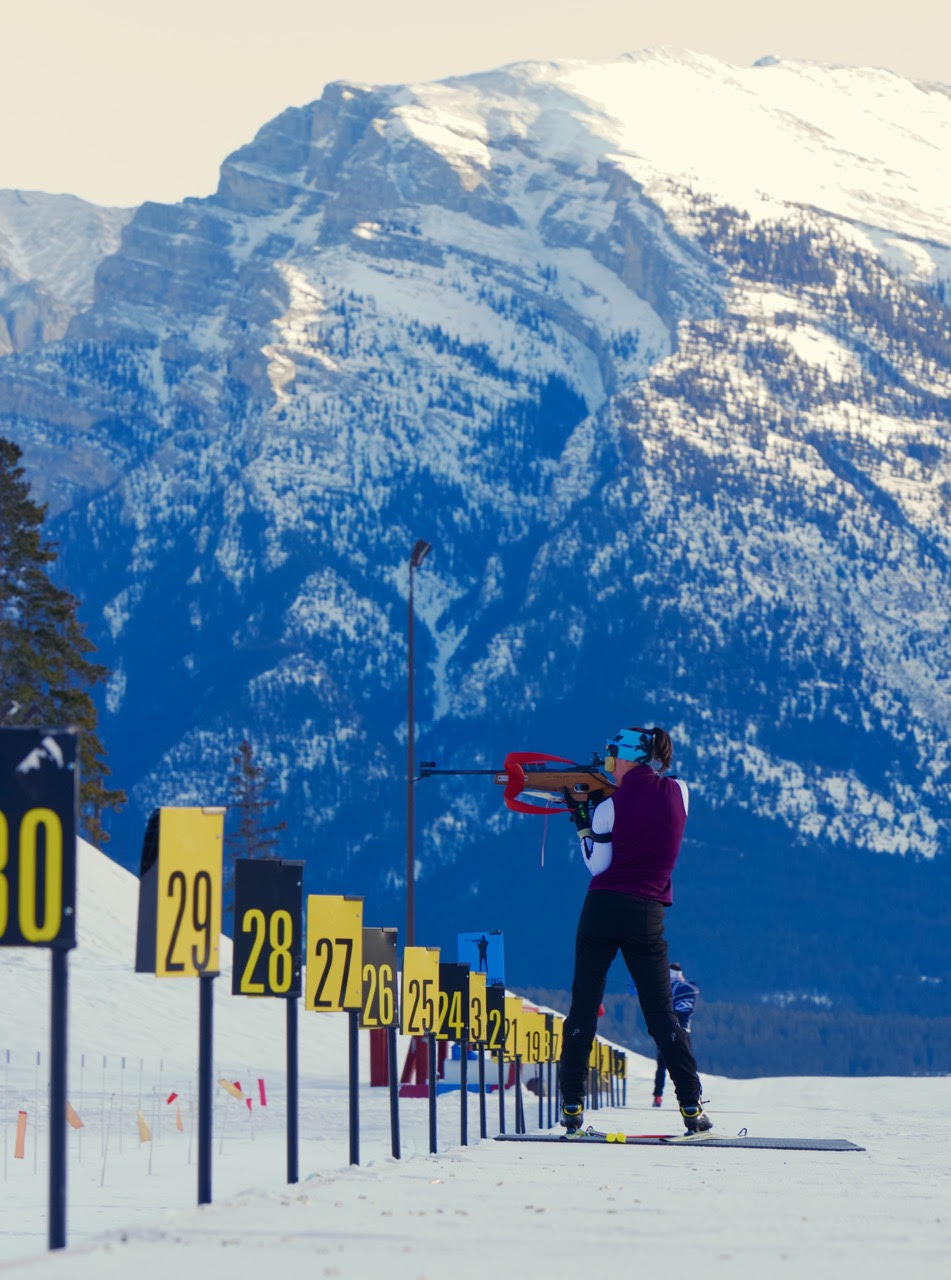
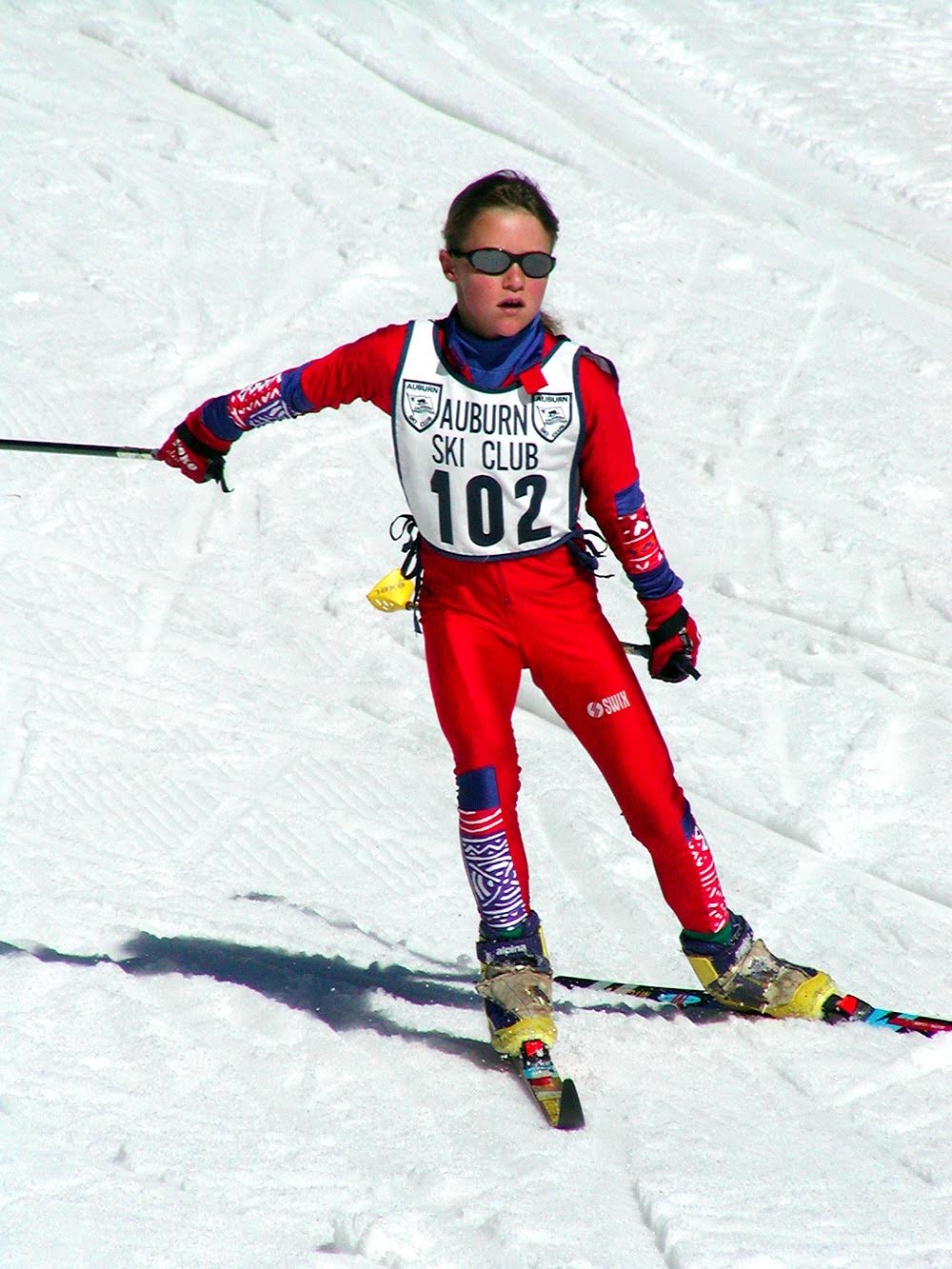
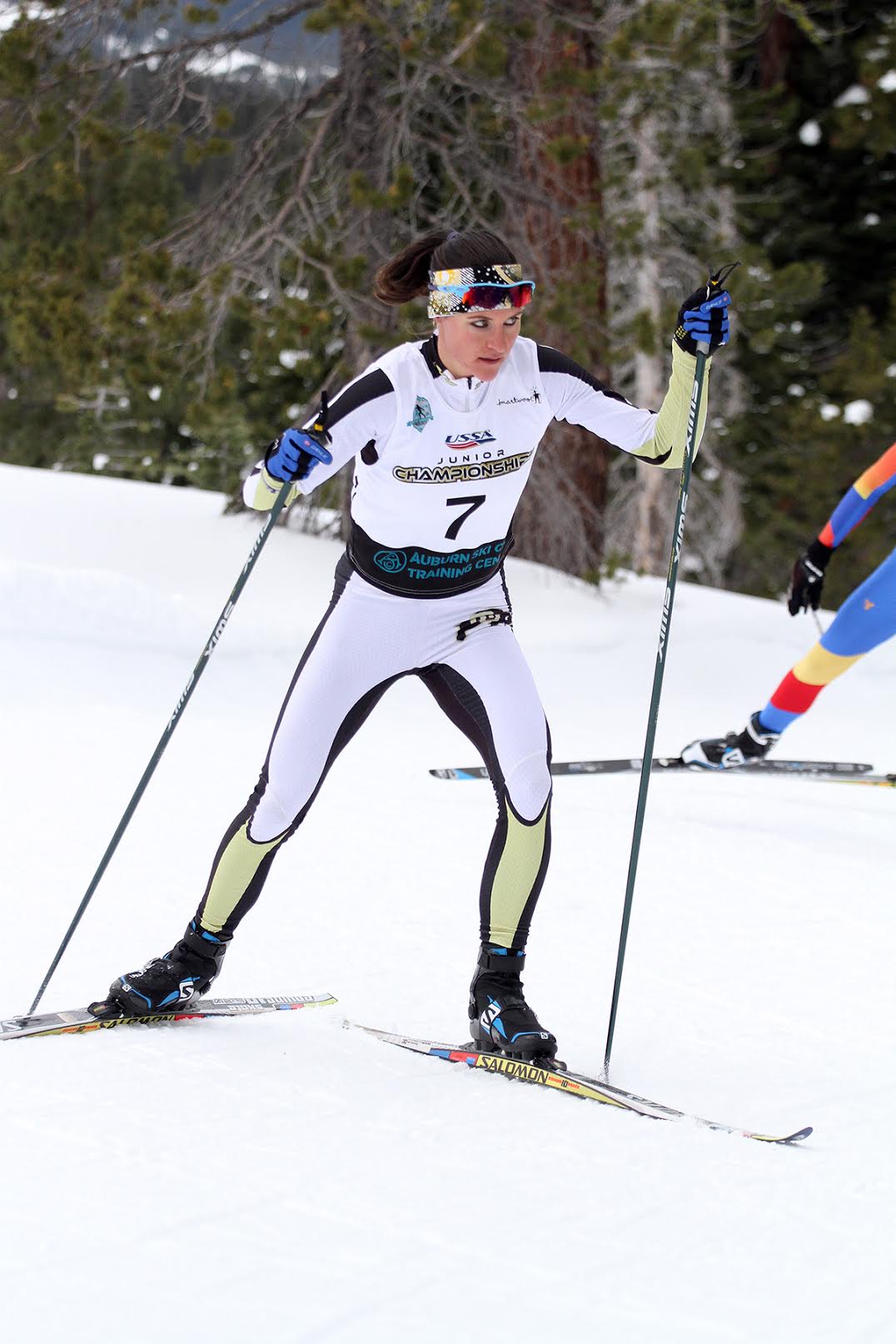
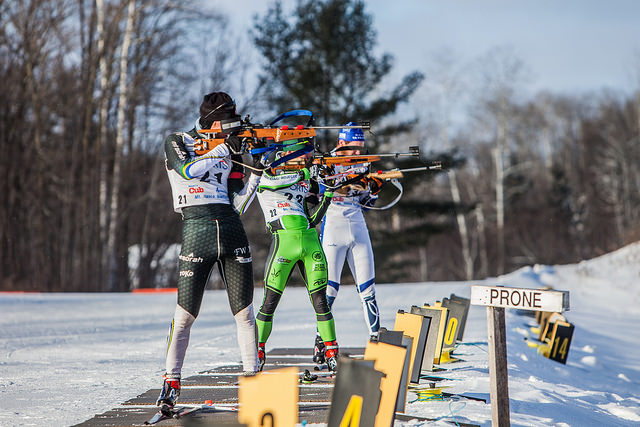
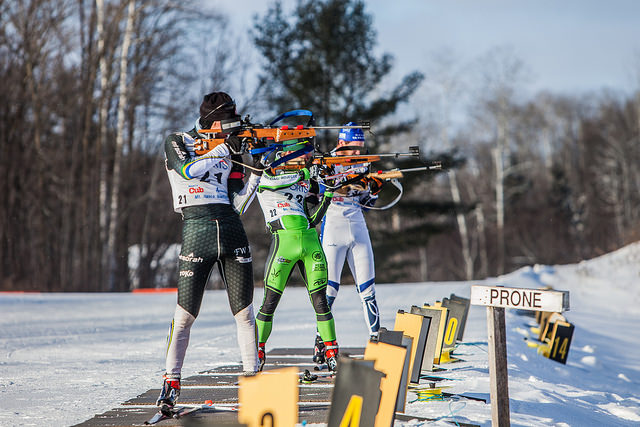
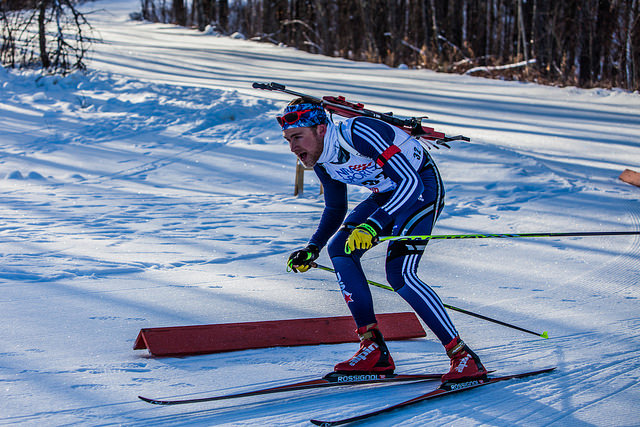
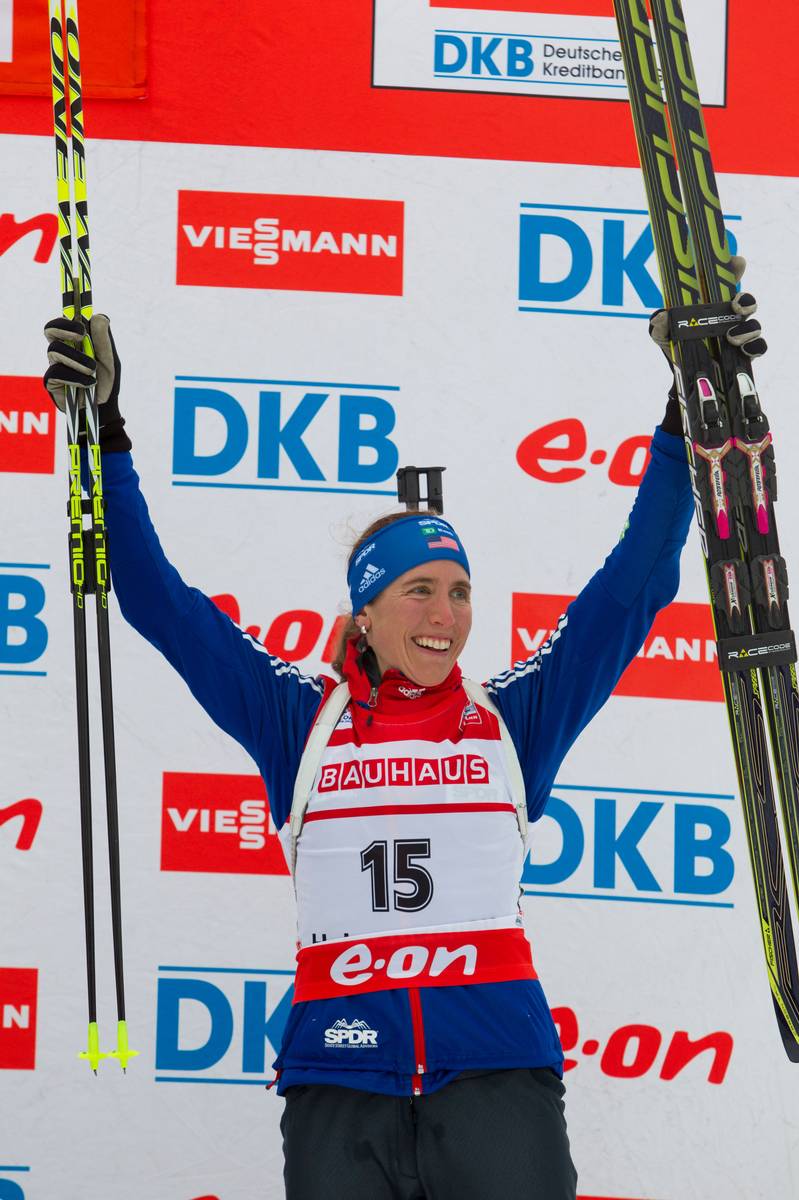
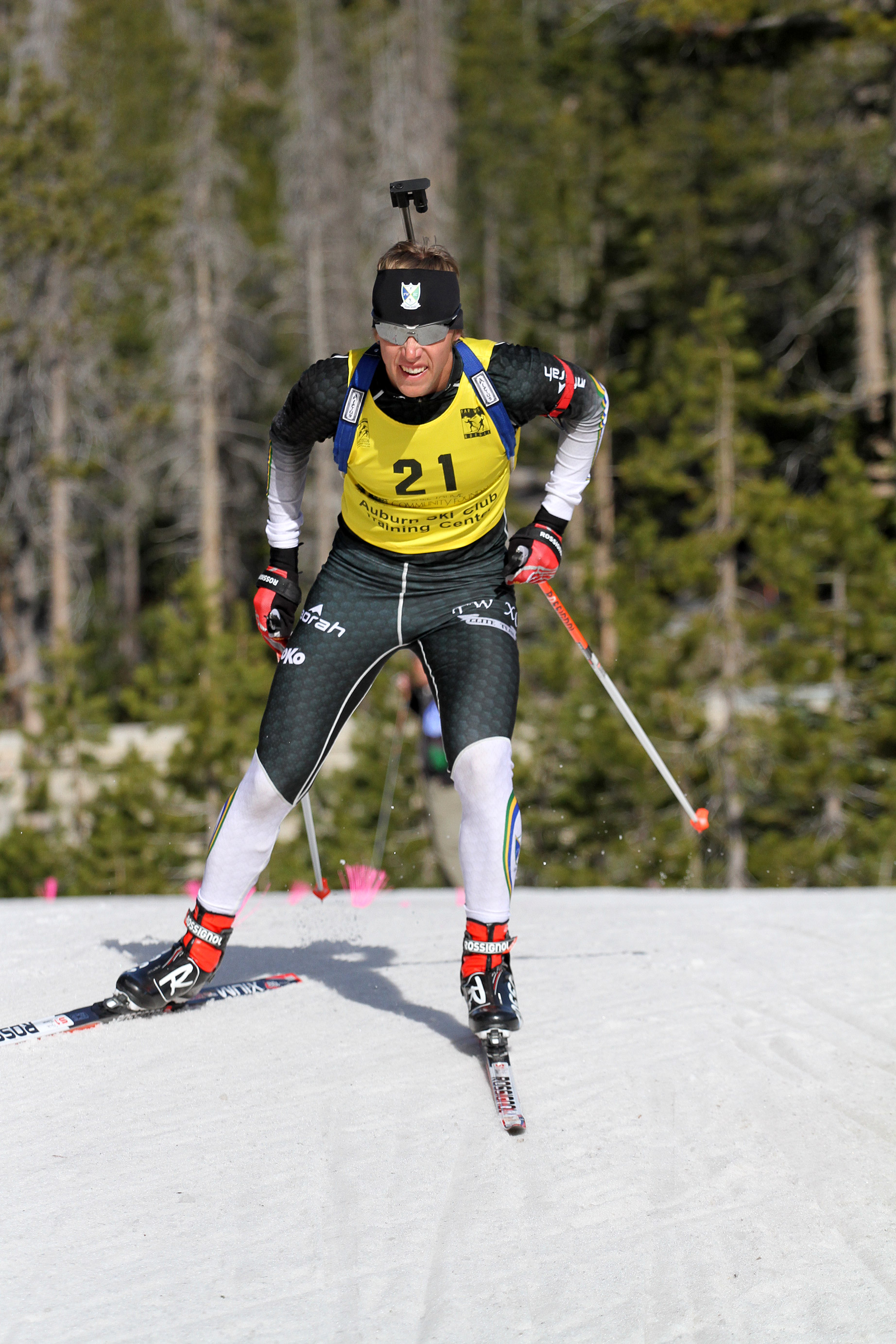
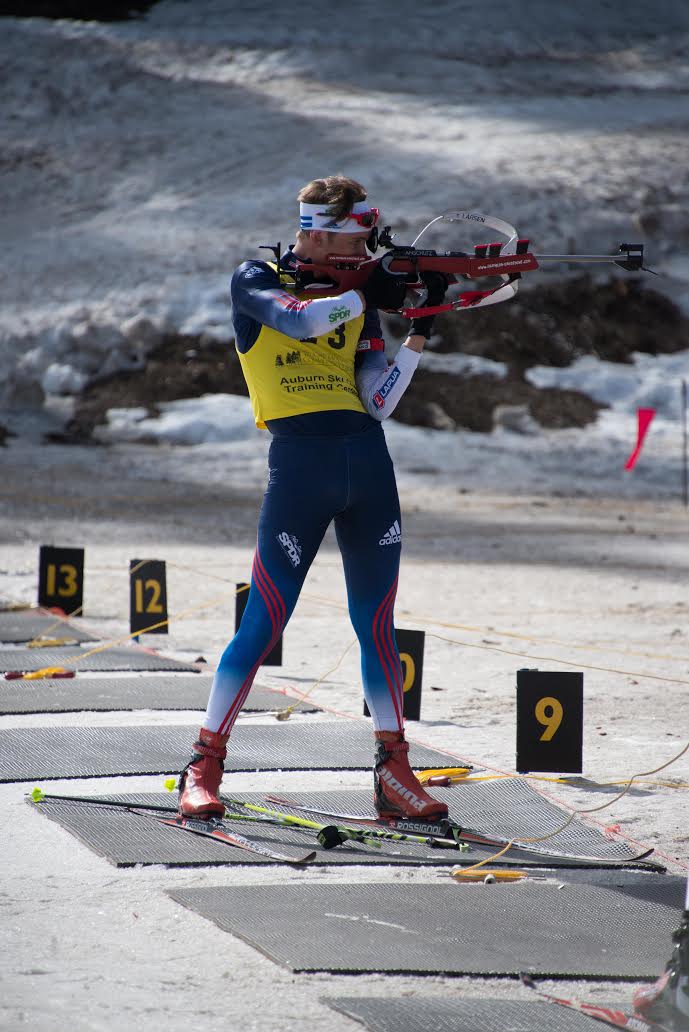
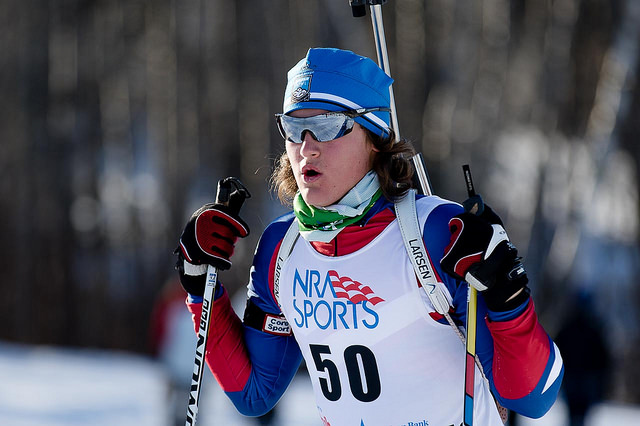
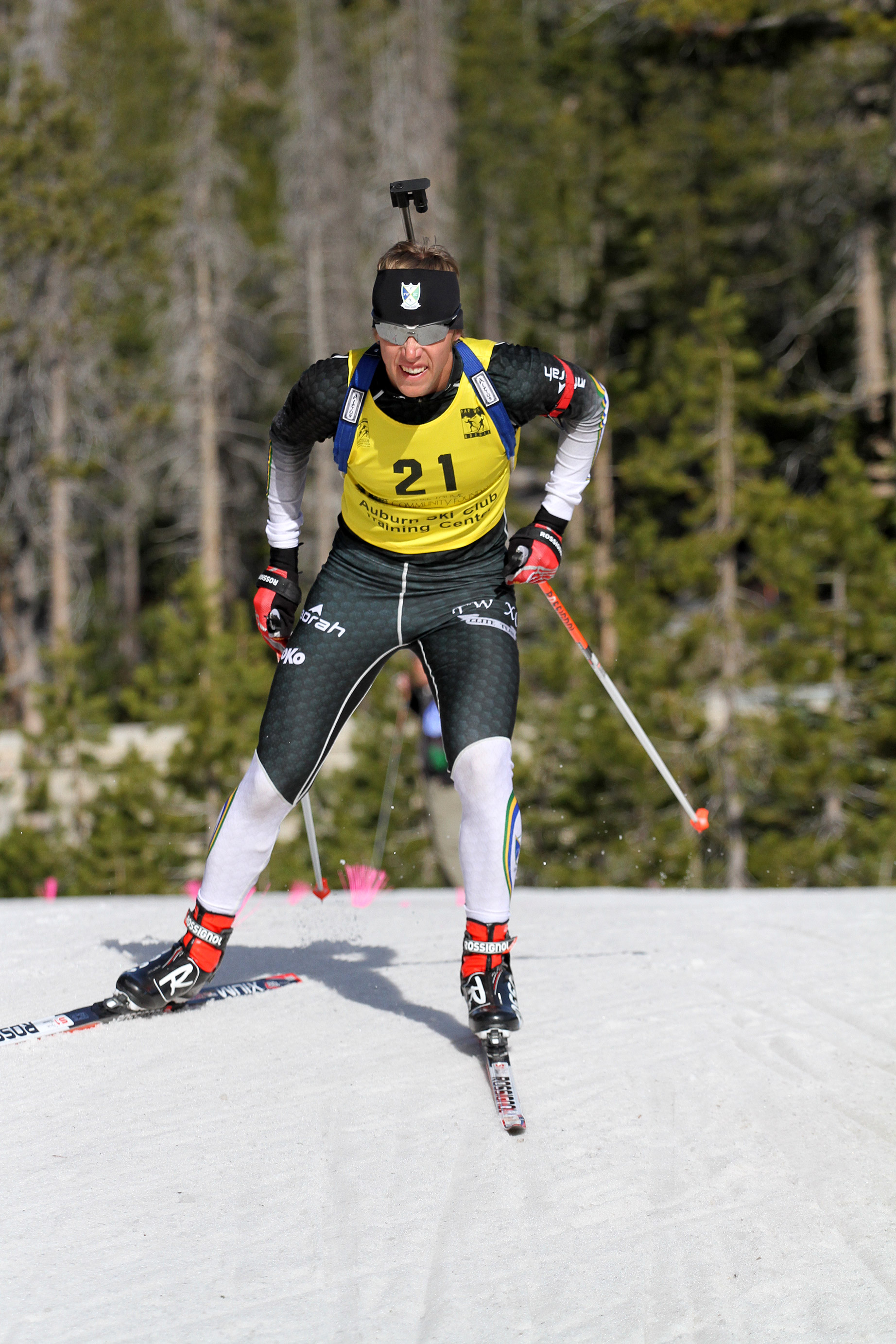
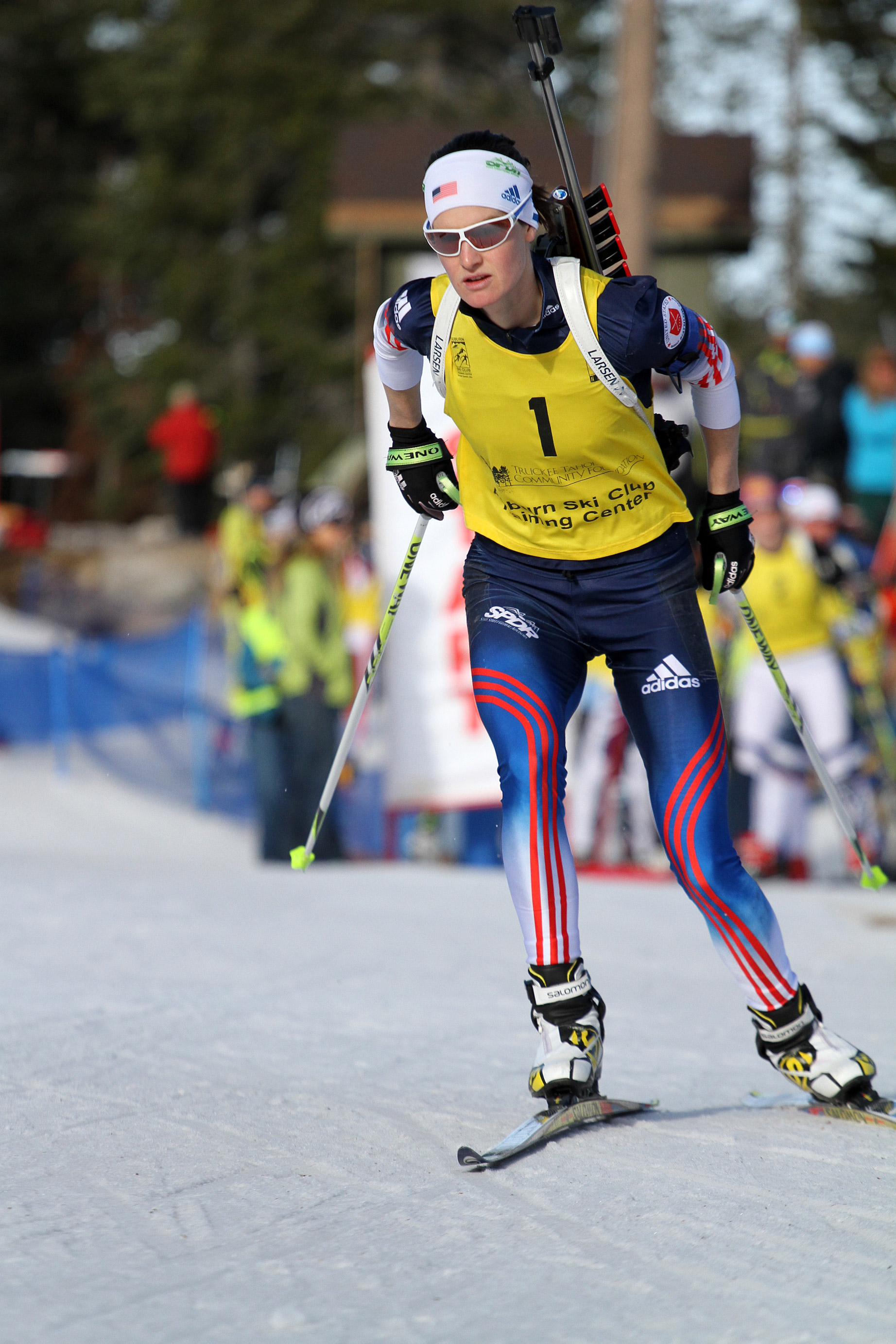
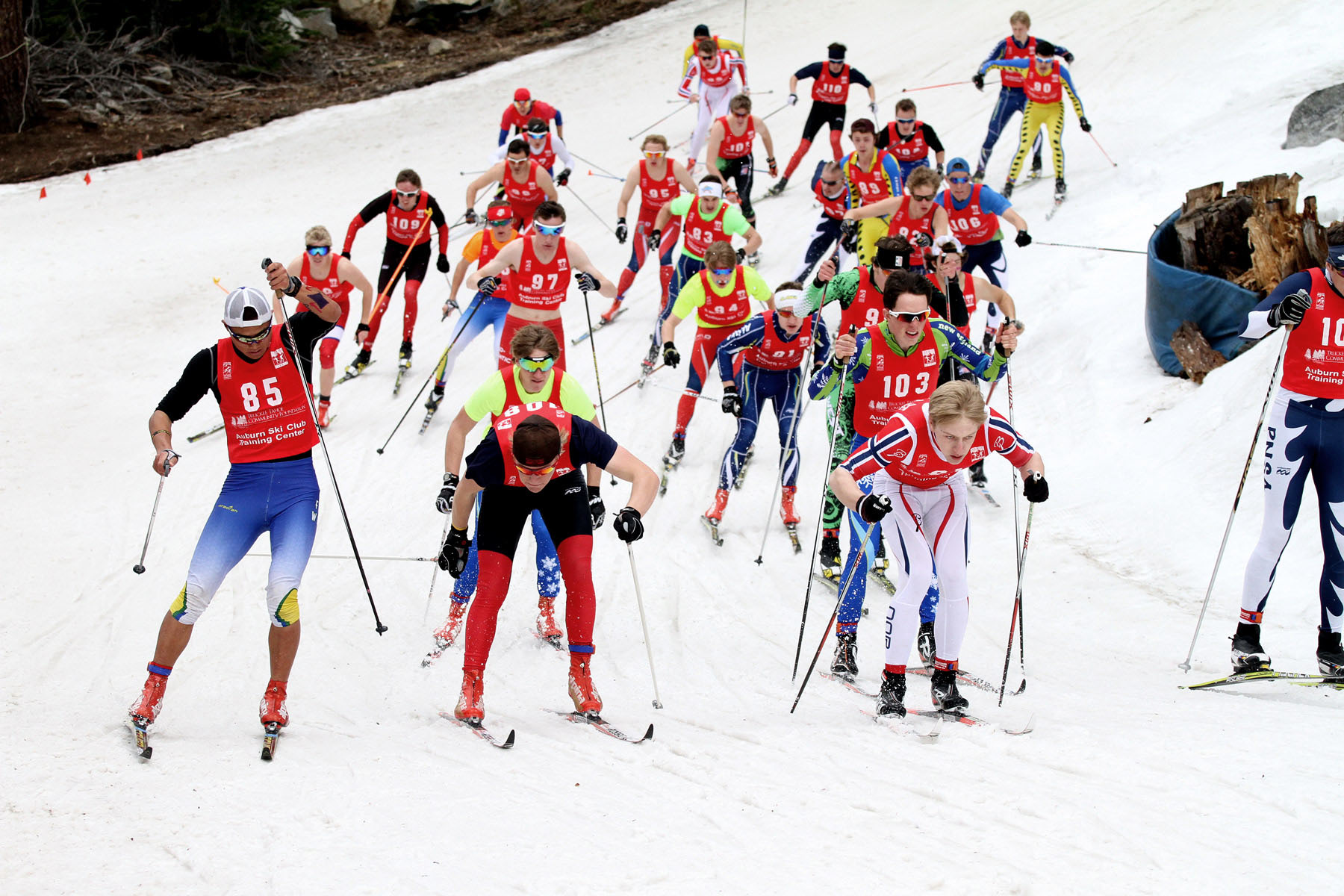
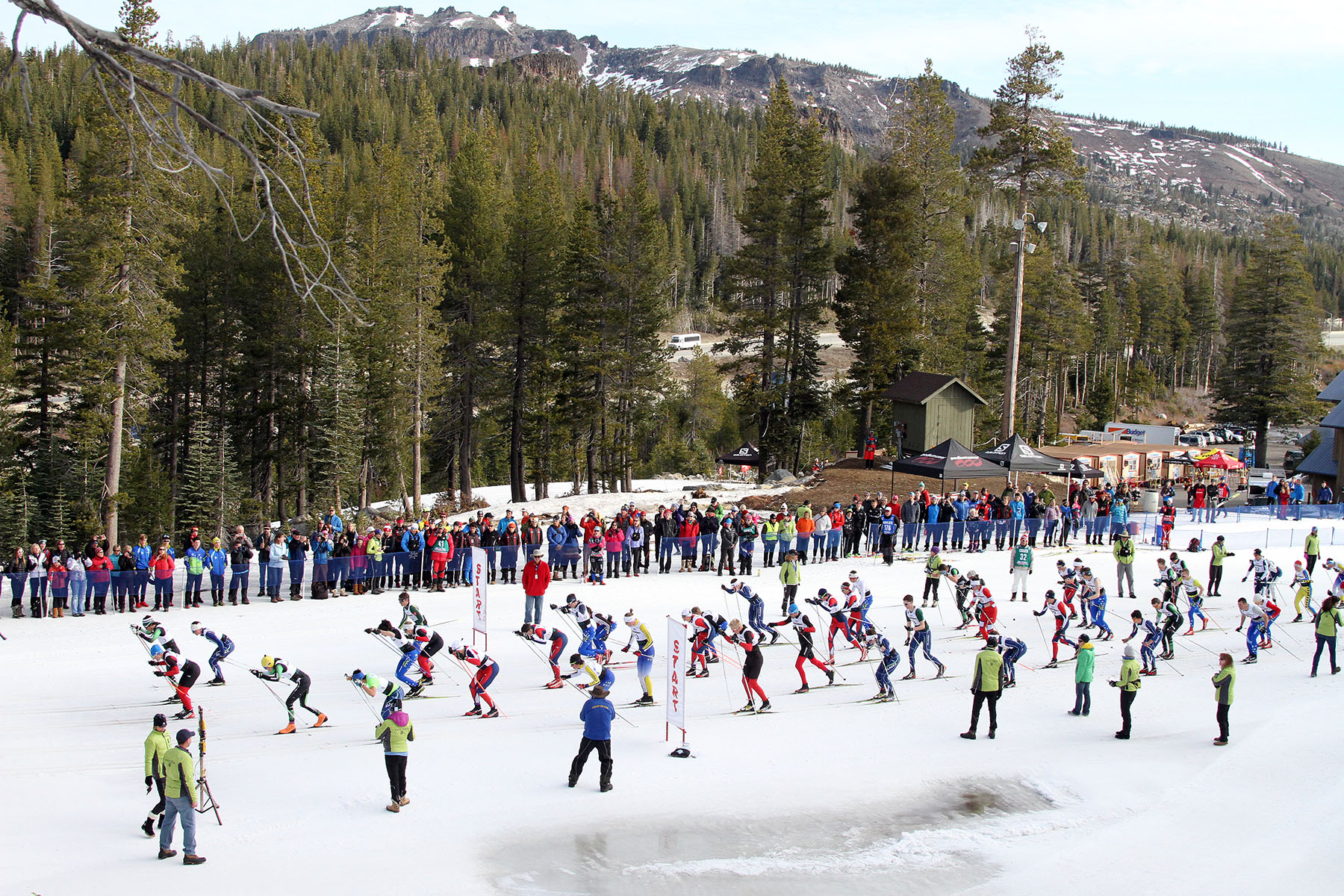
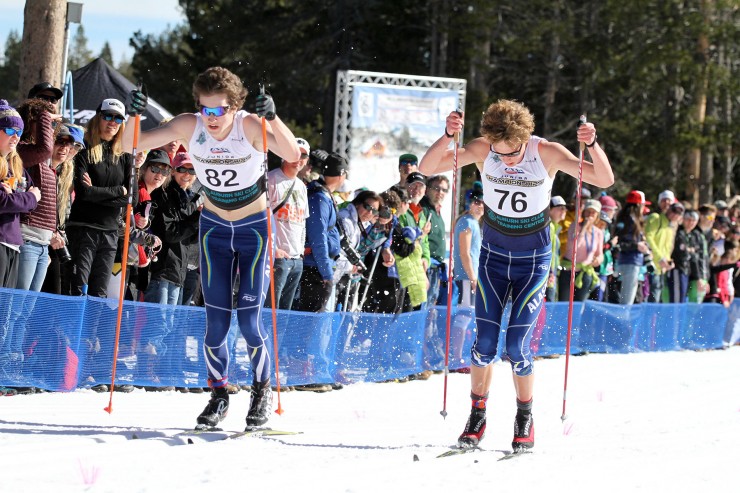
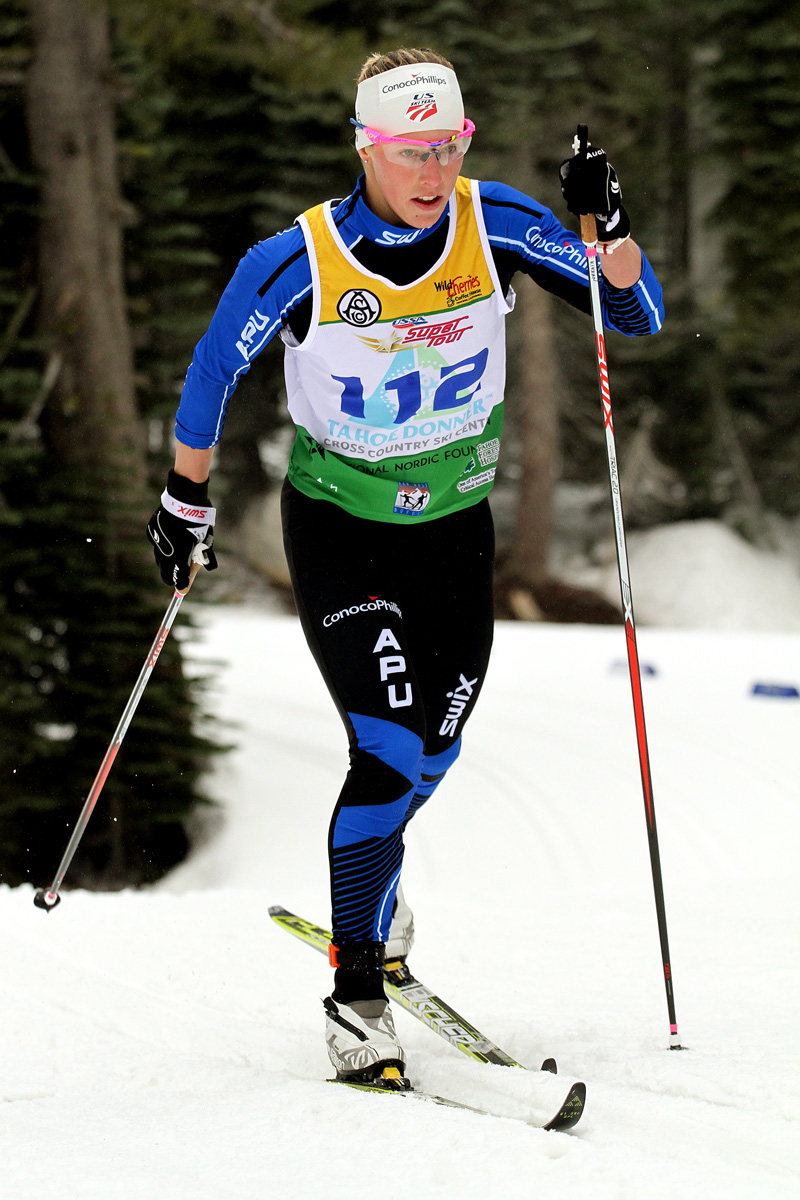
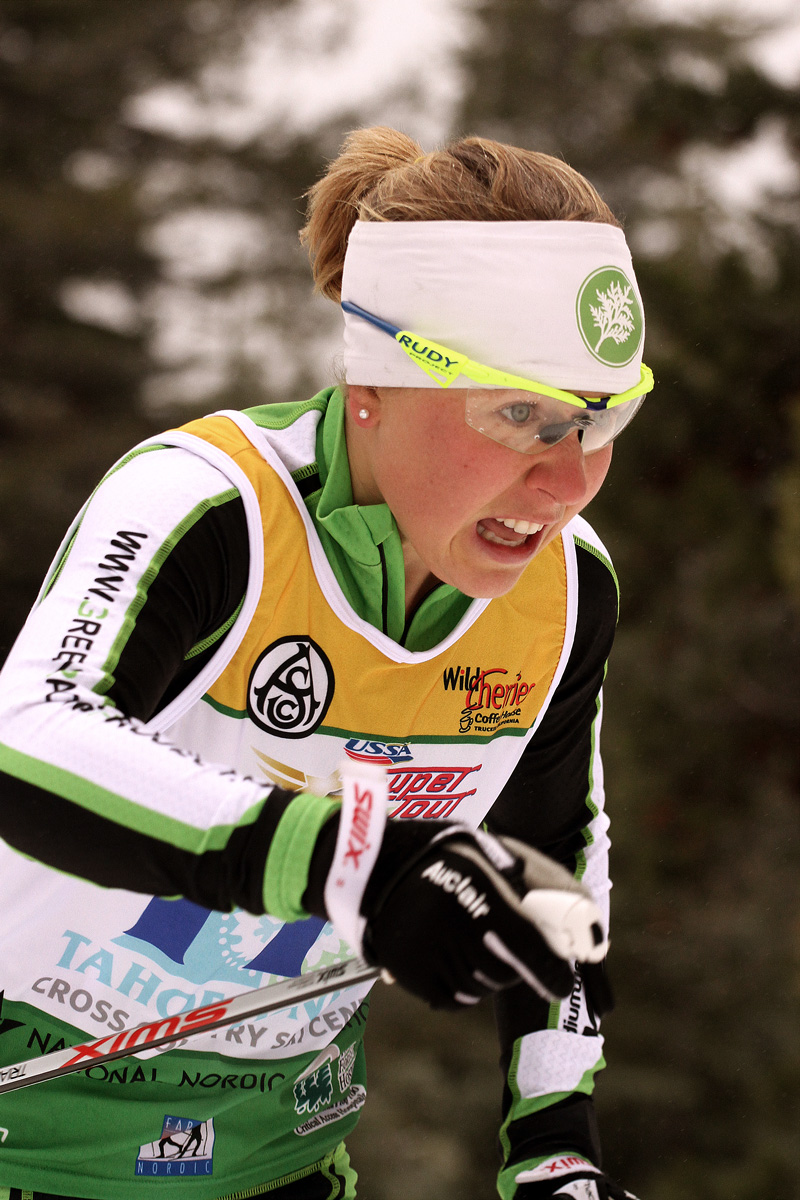
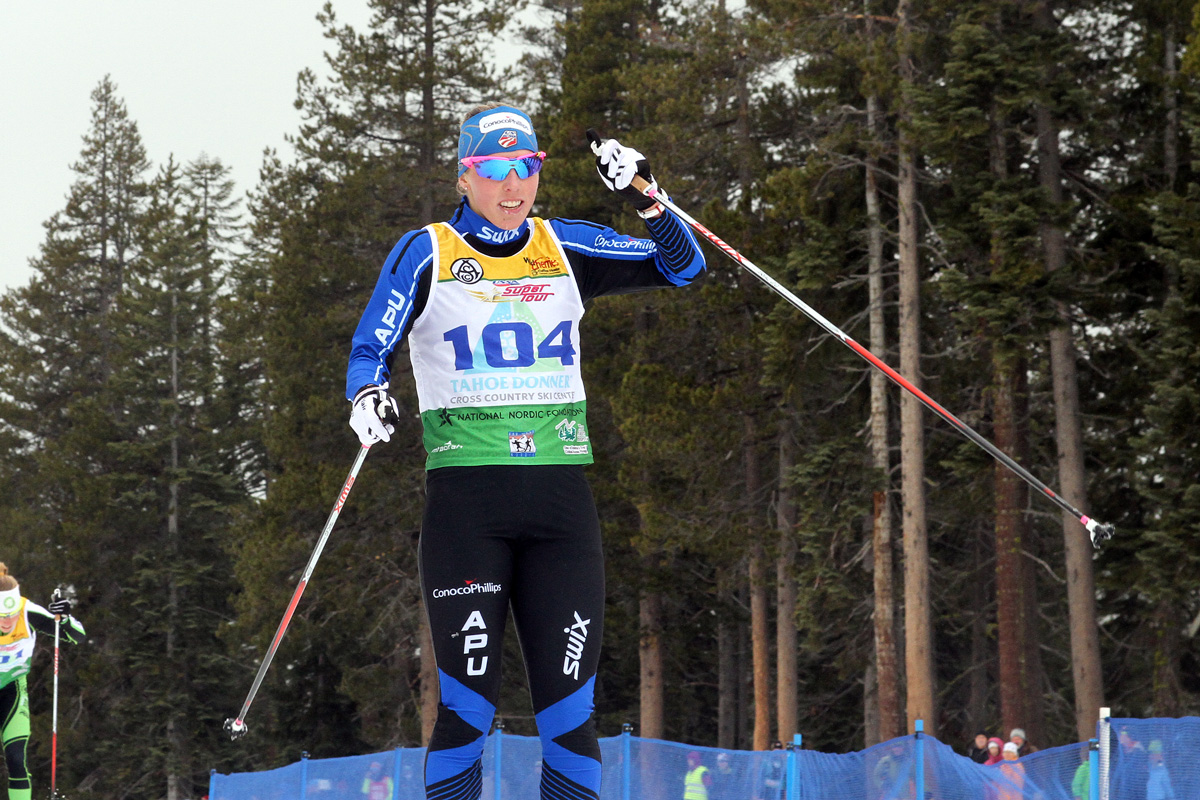
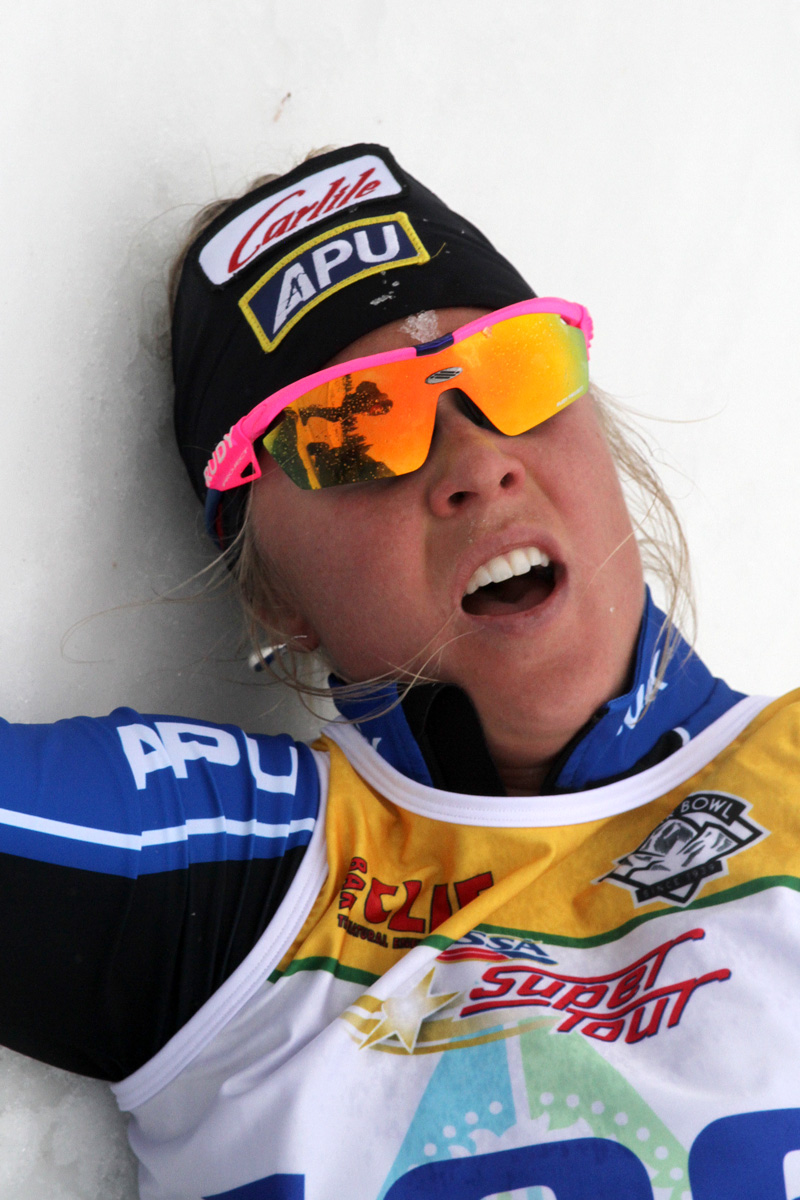
Auburn Ski Club (ASC) is a historic non-profit organization dedicated to providing snow sports opportunities to the greater Northern California region since 1928. Today, ASC operates a snow sports Training Center on Donner Summit that provides athletic programs, USSS/FIS competition and training venues, and youth snow sports teams ranging from entry-level to elite for Alpine, Snowboard, Nordic, and Biathlon. The Training Center’s cross-country venue also operates as a 25-kilometer Nordic Center open to the public.
ASC is now hiring a Head Coach for its Nordic Development Program.
Position Overview
The Head Coach of the Nordic Development Program leads the Devo 1 and Devo 2 teams, where U10 through U14 athletes move from learning to ski toward learning to train. This is the stage of the pipeline that determines whether a young skier stays in the sport. ASC is looking for a coach who understands that skill, confidence, and enjoyment at this age build better racers than early specialization does.
The Head Coach takes graduates of the Super Sliders program and prepares them, technically and personally, for the Competition Team. The role covers session planning and on-snow coaching, technical progression across both Devo groups, support and training of assistant coaches and parent volunteers, and steady communication with families. It suits a coach who wants ownership of a program rather than a set of practices, and who is comfortable being the person a nine-year-old remembers as the reason they kept skiing.
The Details
Annual salary based on experience
Salary structure includes coaching hours, administrative responsibilities, and flex time off
Health insurance offered
ASC 401(k) program with annual 3% salary match
Key Responsibilities
Coaching & Athlete Development
Lead the Devo 1 and Devo 2 programs year-round, on snow and in dryland
Plan and deliver weekly training across the Devo schedule, including weekday afternoon sessions under the Nordic Center lights and Saturday mornings
Build technical progressions appropriate to the age group: classic stride with coordinated pole use, skate skiing with and without poles, V1, step turns, hockey stops, terrain reading, pacing over varied distances, and smooth transitions between techniques
Run Devo 1 as a train-to-learn environment and Devo 2 as a learn-to-train environment, with a clear and deliberate step between them
Teach athletes to take care of their own equipment as they approach the Competition Team, including ski selection, basic tuning, and hot waxing
Introduce racing as something athletes look forward to, supporting Devo skiers at local and Far West Nordic events without making competition the price of admission
Identify athletes ready to move up, and prepare both the athlete and the family for that step
Keep retention and long-term participation as measures of the program’s success alongside results
Program Leadership & Collaboration
Work with Super Sliders staff so athletes arriving in Devo 1 meet a familiar teaching language and a consistent standard
Coordinate with Competition Team coaching staff to keep one continuous progression across the Nordic pipeline
Recruit, train, schedule, and support assistant coaches and parent volunteers, including the volunteer sessions Devo families are asked to fill
Support ASC-hosted racing, including Far West Nordic qualifying events held on the Training Center trails
Contribute to registration, retention, and program growth planning with Nordic program leadership
Build a culture of mentorship and sportsmanship across the ASC Nordic community
Community & Regional Engagement
Serve as a visible and positive presence in the Far West Nordic community
Work with regional programs on development events, clinics, and youth racing opportunities
Support initiatives that create access and opportunity for athletes at every level, including needs-based scholarship efforts
Potential leadership role representing ASC at the FW Junior Committee or FW Board
Communication & Family Engagement
Maintain consistent, proactive communication with athletes and families
Lead parent education on what development looks like at this age, and on what it does not need to look like
Guide families through equipment decisions, including fall meetings ahead of the season
Help families understand the pathway ahead while keeping expectations honest and athlete-centered
What ASC Offers
Leadership & Professional Growth
ASC is committed to investing in coaching development and leadership growth. The Head Coach will receive:
Support identifying and attending regional and national camps
Increased investment in coaching certifications and continuing education
Opportunities for leadership development within a growing organization
Athlete Support Philosophy
ASC believes opportunity and access are critical to athlete success. Coaches work within a system that actively supports:
Needs-based scholarships
Athlete development scholarships
Offseason camp and training support opportunities
Long-term athlete development pathways
Benefits
Use of the CA Gold pass
Opportunity to shape the foundation of Nordic skiing in the Far West region
Support for professional growth and development opportunities
Auburn Ski Club (ASC) is a historic non-profit organization dedicated to providing snow sports opportunities to the greater Northern California region since 1928.
Today, ASC operates a snow sports Training Center (TC) on Donner Summit that provides athletic programs, USSS/FIS competition and training venues, and youth snow sports teams ranging from entry-level to elite for Alpine, Snowboard, Nordic, and Biathlon.
The Training Center’s cross-country venue also operates as a 25-kilometer Nordic Center open to the public.
Position Details
Position: Nordic Sports Program Director Employer: Auburn Ski Club Inc. Reports to: Executive Director Employment: 11 Months, Full Time Compensation: $65,000 – $80,000 salary per year Benefits: Per employee handbook and employment offer
Function
The Nordic Sports Program Director is responsible for Nordic and Biathlon programming at the ASC Training Center. This role ensures that Nordic and Biathlon programming, scheduling, and competitions align with the ASC Training Center’s mission, vision, and strategic plan.
The Nordic Sports Director is also a member of the leadership team, which includes the Executive Director, Program Directors, and administrative and accounting staff.
Responsibilities and Duties
Program Management and Coaching
Plan, manage, coach, and execute Nordic programs at the ASC Training Center, ranging from entry-level programs through development teams, varsity school teams, and high-level competition ski teams. Responsibilities include managing year-round training schedules, hosting competitions, organizing travel to competitions, running clinics and camps, and supporting participation in Far West Nordic, USSS, FIS, and CNISSF events. Work with the Competition Services Department to host and execute competitions.
Athlete Development and Program Operations
Develop and execute technical progressions that provide athletes with a pathway to reach their full potential while fostering a lifelong passion for snow sports in alignment with the ASC Training Center’s mission and strategic plan. Work with the leadership team on recruitment strategies, program communications, Training Center operations, coordination of the overall Training Center schedule, and production of website, social media, and printed content.
Staff Leadership and Program Coordination
Recruit, hire, train, and schedule paid coaching staff and volunteer coaches to meet the needs of the program and athletes. In coordination with HR, ensure all employee onboarding requirements are completed prior to employment. Coordinate with and oversee the Biathlon Program Director to conduct joint ski training sessions, share trail and training space, maintain race equipment, and support shared development goals for cross-country and biathlon athletes. Develop and implement staff risk management training and athlete safety protocols in accordance with ASC operational policies and procedures.
Budgeting and Strategic Planning
Develop an annual budget in coordination with the Executive Director. Participate in capital improvement planning and strategic planning with the leadership team and Board of Directors. Prepare reports for the Executive Director and Board of Directors.
Leadership Team Participation
As a member of the leadership team, assist with additional tasks and special projects as needed. These may include website management, social media, email newsletters, advertising, collateral materials, registration, public relations, and HR support.
Qualifications
Extensive proven technical knowledge of Nordic racing and a passion for the sport
Ability to positively inspire athletes of all ages and skill levels
Strong organizational, communication, and writing skills
Proven customer service experience working with athletes and families
Ability to work in a fast-paced team environment and remain productive when unsupervised
Computer proficiency and strong administrative skills
Ability to safely use hand tools and equipment as required
Ability to work in winter weather and across varied snow surfaces, both on and off skis
Ability to lift up to 50 pounds on and off snow
Submission of a motor vehicle record acceptable to ASC insurance
USSS Certification
Successful completion of company and state employment requirements
American Lexie Madigan getting some air during summer training. (Courtesy photo)
In an effort to showcase the North Americans competing at this past week’s International Biathlon Union (IBU) 2018 Youth and Junior World Championships in Otepää, Estonia, we asked those qualifying athletes several questions about themselves — actually, we had them fill in the blanks. Here we have 16-year-old Lexie Madigan, who represented the United States at her first Youth World Championships.
Over the last week, Madigan placed 70th in the youth women’s 6 k sprint, 83rd in the 10 k individual and 18th with the 3 x 6 k relay.
***
My full name is Margaret Lexie Madigan but you can call me Margie.
I was born and raised in Nevada City, California, and I learned to ski at the Auburn Ski Club.
Lexie Madigan racing (Courtesy photo)I spent the time between World Youth/Junior trials and Worlds training at home in California and competing on the Junior IBU Cup circuit.
The funnest workout I did in the last training year to prepare for this was when I played speedball at the beach with the Sugar Bowl Nordic Ski Team.
One thing I’m working on this season to improve my biathlon is learning to shoot in the cold weather.
This is my first time in Estonia and seventh time racing internationally, and so far it’s been the greatest experience!
One difference I’ve noticed between Estonia and the United States is that it is a lot colder (at least colder than California).
One of the things I’m most excited about for World Youth/Junior Championships in Otepää is all of the fast skiers and hard competition!
One race I’m especially targeting there is the sprint.
Watching the Olympics in the leadup to my own races was inspiring. One of my favorite moments of the Games was when Jessie and Kikkan won the Cross Country Team Sprint. I want to be like Jessie Diggins, because she showed that the race isn’t over until you cross the finish line and never gives up.
At Worlds, I really hope I can chat/make friends with someone from France and ask them if they know Martin Fourcade’s secrets.
The Auburn Ski Club Training Center (ASCTC) is seeking to fill the position of Biathlon Program Director. ASCTC is a non-profit organization located in California on Donner Summit and is dedicated to providing competitive programs for Alpine, Snowboard, Nordic and Biathlon athletes from across the region. ASCTC also operates a 25km Nordic Center open to the public.
The Biathlon Program director/head coach (Biathlon PD) oversees and manages the Biathlon program at the Training Center. The program is described at www.auburnskiclub.com/asctc/ biathlon.
Functions and responsibilities:
Develop, plan, coach and execute a year-round biathlon program that currently consists of an mid-October to mid-April winter session and a summer/fall session from mid-June through mid-September. Program includes 50 athletes, 3-4 training days a week, hosting competitions (USBA and citizen), clinics, camps and travel to competitions.
Establish seasonal and long term program goals and technical progressions that strive to provide each athlete, from entry to elite levels, an opportunity to reach their fullest potential and enjoy a life-long passion for winter sports. Develop recruitment strategies, manage program participant communication, website content, social media and printed publications.
Hire and train paid coaching staff, volunteer coaches and race crew to meet the needs of the program and athletes. Develop and implement risk management and safety protocols for range, athlete safety and coaching staff.
Create an annual Biathlon program budget in coordination with the Executive Director and Accounting Manager. Work as a team with the Race Director and Nordic Director to plan and produce up to four existing off-season fundraising events.
Maintain biathlon equipment, schedule and manage use of the range in coordination with the overall Training Center operation.
As a key member of the ASCTC management team, participate in the operation of the Training Center.
Qualifications and requirements:
Extensive technical knowledge and passion for Biathlon and XC racing.
Proven ability to positively inspire athletes of all ages and skill levels.
Ability to work as part of a team and be productive when unsupervised.
Proven organization, communication, computer and writing skills
Submission of a motor vehicle record acceptable to ASC insurance.
Completion of background screening.
Position is 11-months, full-time. Compensation DOE. Includes health benefits. For confidential consideration, more information, or to submit a resume and cover letter no later than May 1, contact executive director Bill Clark at bclark@inc.auburnskiclub.org or 530-426-3313×101
Kikkan Randall leading the 2017 Alaska Run for Women with a smile on June 10. (Photo: Scott Broadwell)A little U.S.-based news to get your Tuesday going:
— Watch out, World Cup, Kikkan Randall is feeling good. The longtime U.S. Ski Team (USST) and Alaska Pacific University (APU) skier took first place in the 25th annual Alaska Run for Women road race, held over Anchorage streets and bike trails this past Saturday. Randall led the field of several thousand women to the finish in 28:41, a pace of 5:44 per mile for the 5-mile, largely flat-road course.
Mid-5:40s for five miles (in June) is nothing to sneeze at on its own, but let’s let the 34-year-old Randall put it in context: “I’m in the best shape of my life now,” she told the Alaska Dispatch News. This is so even though Randall was a few seconds per mile off her previous best on this course, a 28:18 that she clocked while winning this race in 2012. That winter, she went on to win her second of three consecutive Sprint Crystal Globes.
“I’m in the best shape of my life now.” — Kikkan Randall in a recent interview with the Alaska Dispatch News
Finishing just over a minute back for second place on Saturday was recent local high-school graduate and multi-time state track champ Briahna Gerlach, who will race Division I track and cross-country running this fall in the Lower 48. “I didn’t even know it was Kikkan Randall,” Gerlach told the Dispatch News of her competition over the first mile before Randall pulled away. “When I found out I said, ‘OK, she can go.’ She’s crazy. She didn’t even look tired.”
Other skiers in the top 10 included Mandy Vincent-Lang (formerly University of New Hampshire) in third, Becca Rorabaugh (APU) in fourth, and Lauren Fritz (APU) in 10th.
https://www.instagram.com/p/BVLNwkqDp3i/
— If it’s summer, the rest of the APU Elite Team must be running up mountains. APU skiers took nearly every race in the seven-stage Alaska Mountain Runners Grand Prix last summer, highlighted by David Norrissetting the course record at Mt. Marathon, the insanely steep climb and descent outside the harbor town of Seward, Alaska, that was first run as an organized race in 1915 and is believed to be the oldest mountain race in the country. (Norris took the record back from Kilian Jornet, a man widely acclaimed as the world’s best mountain runner.)
This summer, they’re at it again. On the evening of Thursday, May 25, Norris took first place in Kal’s Knoya Ridge Run, ascending an uphill-only course in the Chugach foothills on the eastern edge of Anchorage. (Runners had to descend under their own power, but the clock stopped when they crossed the finish line.) Norris weathered an early-summer snowstorm to cover 8.5 kilometers, and 4,500 vertical feet of elevation gain, in 58:08 for a substantial margin of victory. First place among the women went to Jessica Yeaton (APU/Australian National Team).
In a shorter version of the race (5.6 k and 2,900′ of climbing), APU skier Forrest Mahlen was the first across the line. Marine Dusser (formerly University of Alaska Anchorage (UAA), currently affianced to USST skier Erik Bjornsen) was the first woman, less than 90 seconds behind him. Other top-10 skiers included APU junior Maggie Meeds in third, APU junior Aubrey LeClair in fourth, and Jaime Bronga (formerly UAA) in seventh. In the long race, Kate Fitzgerald (formerly APU) was fourth among the women, while Kenny Brewer (formerly University of Alaska Fairbanks) was third and Mark Iverson (formerly APU) was sixth.
— Nine days later, on the morning of Saturday, June 3, it was newly minted U.S. Ski Team memberScott Patterson edging out his APU teammate Erik Bjornsen (also of the USST) by the slimmest of margins, 0.3 seconds, after slightly more than 42 minutes of racing up 3 miles and 3,500′ of elevation gain in the uphill-only Government Peak Hill Climb outside of Palmer, Alaska. “I led the whole thing till maybe a minute to go, then we duked it out as I tried to come up with a little bit of a sprint,” Patterson told the Alaska Dispatch News after the race. “With three feet to go, Erik would have won. Even with two feet to go. He seemed to stumble a little when it was down to one step and I got him.”
APU junior Hamish Wolfe was 8th.
Dusser once again took the victory in the women’s division, in a time that would have placed her 12th among the 105 men in the field.
— So who’s still skiing? More people than you might think, thanks to an epic winter in the western U.S. that brought dozens of feet of snow to the High Sierra and has the Squaw Valley alpine area making noises about running at least one chairlift all summer long. For example, here’s fresh grooming (!) on the Auburn Ski Club trails on June 6 (!!):
https://www.instagram.com/p/BVBZo3GAt-A/
Here’s Paul Kovacs (Australian National Team) on the ASC trails on the morning of June 7:
Here’s FasterSkier contributor Jon Schafer with a Steamboat Springs Winter Sports Club junior camp, driving up to the nordic trails at Mt. Bachelor in Bend, Ore., in a June 10 snowstorm:
https://www.instagram.com/p/BVKdwcMhDYL/
Finally, farther north, the APU Elite Team arrived at Eagle Glacier earlier this week for their first Glacier Camp of the summer:
https://www.instagram.com/p/BVQYFY1lGOo/
– And earlier this month in Albuquerque, N.M., the University of New Mexico (UNM) announced that athletic director Paul Krebs will retire on June 30. The university’s press release did not indicate a reason for his departure, but the news came two days after the state auditor informed UNM Interim President Chaouki Abdallah that its athletic department would be the focus of a special audit, according to Deadspin.com. The Office of the State Auditor reportedly “received information raising concerns related to athletic fundraising activities and expenses of the University of New Mexico.” Krebs, who was UNM’s athletic director for 11 years, was criticized for spending nearly $65,000 dollars in taxpayer money on a 2015 golf trip to Scotland and was at the heart of the heated proposed discontinuation of the UNM ski team.
* * *
This article has been updated to reflect the correct historical status of the Mt. Marathon Race as believed to be the oldest mountain race in the country, not as “the second-oldest footrace in the country behind the Boston Marathon.”
Peter Carroll (Auburn Ski Club) exploring the back roads of Park City, Utah, during a training camp in October. (Photo: Maddie Morgan)
In another 20-something-question, fill-in-the-blanks series, we checked in with the world-class U.S. and Canadian biathletes that will be competing at 2017 International Biathlon Union (IBU) Youth & Junior World Championships Feb. 22-28 in Osrblie (also known as Brezno-Osrblie), Slovakia.
Here’s Peter Carroll, of the Auburn Ski Club, who celebrated his 20th birthday on Friday and is representing the U.S. at his second Youth/Junior Worlds. On Thursday, he finished 79th in the junior men’s 15-kilometer individual and was 82nd in the 10 k sprint on Saturday.
***
“My full name is Peter Myung-Ho Park Carroll but you can call me Galactic President Superstar Freaking McAwesome, Hot Pants, or Peter… Whichever you prefer…. Or can say the quickest…
I was born in Daejeon, South Korea, raised in Truckee, Calif., aka, The Coolest Place on Earth, and one thing you should know about my hometown is that yes, even though it’s in California, we get some of the best snowfall in the US, you know, when we get snow…….
I started cross-country skiing when I was 13 and started biathlon when I was 15, thanks to Sam Zabel, one of my best friends and training partners, and Glenn Jobe, former Olympian and a straight-up awesome, awesome coach. I also owe a huge debt to Mark Nadell, to whom many in my hometown know as Marky Mark, or Captain Nordic. I owe a lot to Mark, thanks Coach. Mark Nadell recently passed away from a battle with cancer. Thank you Mark. Rest easy, this ones for you.
American Peter Carroll leaving the range after a clean shoot during the 10th Mountain Division race on Jan. 5 at Auburn Ski Club near Truckee, Calif. (Photo: Paige Derdowski)
I currently train in Truckee at Auburn Ski Club.
If I’m not skiing, you might find me watching ‘How I Met Your Mother’ and dry firing. I find its really hard to keep good position and have a good trigger squeeze when I can’t help but laugh at that show. It’s great training, but whenever I tell my mom what I’m doing she just rolls her eyes at me.
If I had to pick a favorite book, it would be ‘The Power of One’. Or the encyclopedia, I’ve never had a book that made me enjoy other books as much as the encyclopedia.
One of the things I’m most excited about for Youth/Junior World Championships in Brezno-Osrblie is my birthday on the 24th, I’ll be turning 20! Oh and I’m really excited to race against some fast skiers, too! This will be my second Youth/Junior World Championships, and this year, I’m competing as a junior.
One race I’m especially targeting there is the individual. Hopefully I can ride off of some of Lowell Bailey’s recent success and deliver a solid race with good shooting!
The best advice anyone ever gave me about skiing and racing was my first day on skis, my first coach Mark Nadell, told me that I ski like my pants were on fire. He gave me the nickname Hot Pants. He then told me that I actually need to focus on the technique behind the sport and said, ‘A flat ski, is a fast ski’, I repeat that to myself every time I ski, over and over and over and over.
One of the best race memories I have was my third year of ski racing, I qualified first overall for U18s at the Super JNQ in Soldier Hollow, Utah. It was a classic sprint and I had to wear a bike helmet because I had a couple concussions within a year. I called it my speed bucket, it was where I kept my extra speed! I didn’t work very well because I ended up finishing 4th overall in the sprints, but I had a blast the entire day, and got a lot of weird looks for racing around in a pink and blue helmet.
If I could meet one World Cup skier, it would be Justine Braisaz. I have a celebrity crush on her.
If I don’t end up being a professional skier, I’ll probably be a professional travel bum, I love going to new places. I’d buy a van and turn it into a miniature home and travel as far and as wide as I could! Either that or I would pursue a career as a coach, I love getting out on snow with younger athletes and showing them how much fun this sport can be. I mean, who doesn’t love dashing through powder on nordic skis? Or making up silly rules while you ski, like say, you see a skier who is wearing blue and everyone has to ski backwards until either everyone falls over or you see another skier?
I’m missing about -500 days of school to be here, and my old teachers/professors are probably thinking, ‘Why in the heck hasn’t this kid gone to college already?’
You can follow me on Instagram if you’d like to see poorly edited photos and bad shaky video clips @partyxc_pete.”
Ben Lustgarten (Craftsbury Green Racing Project) with his $750-dollar check for winning the men’s SuperTour classic sprint on Saturday near Truckee, Calif. Stratton’s Ben Saxton (l) placed second and APU’s Reese Hanneman (r) was third.
Lustgarten, of the Craftsbury Green Racing Project, raced to a 1.58-second victory in the men’s A-final at the Auburn Ski Club in Soda Springs, Calif., finishing in 3:03.4. Ben Saxton, of the Stratton Mountain School (SMS) Elite Team, placed second, and Reese Hanneman, of Alaska Pacific University (APU), was third (+2.77).
Hannenman’s younger brother Logan also reached the final and placed fourth (+4.5), Dakota Blackhorse-von Jess (Bend Endurance Academy) was fifth (+5.86), and the third APU skier in the final, Tyler Kornfield sixth (+18.69).
Blackhorse-von Jess started the day off as the fastest qualifier in 2:58.8. Saxton qualified second, 4.1 seconds back, Logan Hanneman qualified third (+4.2), and Lustgarten fourth (+6.5). Blackhorse-von Jess went on to win his quarterfinal and place second in his semifinal, while Lustgarten and Saxton both won their quarterfinals and semifinals.
Jennie Bender (3) of the Bridger Ski Foundation leading Stratton’s Julia Kern (2) and Sun Valley’s Deedra Irwin (5) during the second women’s classic sprint semifinal at Saturday’s SuperTour near Truckee, Calif. Bender went on to win the semifinal, as well as the final.
In the women’s A-final, Jennie Bender of the Bridger Ski Foundation, coming off a classic sprint win at nationals, scored another victory in 3:29.07. She edged Craftsbury’s Kaitlynn Miller by just seven-hundredths of a second, and Stratton’s Julia Kern placed third (+3.42). Racing at home, Hannah Halvorsen (Sugar Bowl Academy) finished fourth (+3.88). Craftsbury had three in the women’s final with Caitlin Patterson in fifth (+3.93) and Heather Mooney in sixth (+27.35).
Miller proved to be the woman to beat throughout the day, winning the qualifier in 3:30.9, along with her quarterfinal and semifinal. Kern qualified second (+3.2) and Bender third (+4.6). Bender went on to win her quarterfinal and semifinal as well before facing off with Miller in the final.
NorAm Western Canadian Championships (Whistler, B.C.): 10/15 k classic
It was interval-starts day at Western Canadian Championships at Whistler Olympic Park and national-team veteran Emily Nishikawa completed the four laps of the women’s 10 k classic in 30:35.5 to win ahead of teammate Dahria Beatty, 16.5 seconds behind. Maya MacIsaac-Jones completed the national team and Alberta World Cup Academy (AWCA) sweep in third (+1:36.5).
Sovereign Lake’s Hannah Mehain, of the national junior team, was the top junior for the second-straight day in eighth overall (+3:22.1).
In the men’s 15 k, Lappe Nordic’s Andy Shields won the six-lap race in 40:34.2, showing some of the form that won him the NorAm overall last season. National-team member Jess Cockney collected his second-straight podium, finishing second, 4.3 seconds behind Shields. Evan Palmer-Charrette (NTDC Thunder Bay) completed the podium in third (+55.1).
FIS Cross-Country World Cup (Ulricehamn, Sweden): 10/15 k freestyle
The men’s 15 k freestyle podium at Saturday’s World Cup in Ulricehamn, Sweden, with Canadian winner Alex Harvey (c), Norwegian runner-up Martin Johnsrud Sundby (l), and Sweden’s Marcus Hellner (r) in third. (Photo: FIS Cross Country/Twitter)
First individual win of the season (second straight, after winning last weekend’s team sprint), fifth individual victory of his career. That’s the latest news on Canada’s Alex Harvey, who won the World Cup men’s 15-kilometer freestyle individual start on Sunday in Ulricehamn, Sweden, for his first victory in a 15 k skate race and fourth individual podium of 2016/2017.
To say Harvey is on a roll is an understatement. On Saturday, he beat Norway’s Martin Johnsrud Sundby by 6 seconds after starting a minute behind the Norwegian defending World Cup champion. Harvey’s fastest time across the line in 32:46.2 held up through 76 finishers, with Sweden’s Marcus Hellner coming somewhat within range after starting a minute behind him. Hellner ended up 14.3 seconds back from Harvey at the finish for third place, behind Sundby.
Switzerland’s Dario Cologna missed the podium by 0.5 seconds in fourth (+14.7), and Norway’s 24-year-old Daniel Stock broke through in fifth (+16.2) for his first World Cup top 20.
Great Britain’s Andrew Musgrave placed sixth (+18.7), Sweden’s Daniel Rickardsson was seventh (+25.0), Norway’s Finn Hågen Krogh eighth (+32.2), Russia’s Petr Sedov ninth (+33.9), and Japan’s Keishin Yoshida 10th (+34.2).
American Erik Bjornsen landed in the points as he tied Norway’s Simen Andreas Sveen for 28th (+1:09.2), leading fellow U.S. Ski Team members Noah Hoffman, who placed 41st (+1:28.8), and Simi Hamilton in 53rd (+1:56.2). Also for the U.S., Matt Gelso, the Period 1 SuperTour leader from the Sun Valley Ski Education Foundation (SVSEF) Gold Team, finished 68th (+3:00.3).
Harvey’s Canadian World Cup teammates Len Valjas finished 35th (+1:17.7) and Devon Kershaw 38th (+1:22.2). Knute Johnsgaard (Canadian U25 Team) did not start.
The women’s 10 k freestyle podium on Saturday in Ulricehamn, Sweden, with Norwegian winner Marit Bjørgen (c), Finland’s Krista Parmakoski (l) in second and Sweden’s Charlotte Kalla (r) in third. (Photo: FIS Cross Country/Twitter)
In her first World Cup race in over a month and at a brand-new World Cup venue, Norway’s 36-year-old Marit Bjørgen returned to her winning ways, topping the women’s 10 k freestyle on Saturday in Ulricehamn.
Bjørgen started 40th out of 61 finishers and took the lead from Finland’s Krista Parmakoski at the finish with a time of 23:46.3 minutes. Parmakoski, who started a minute ahead of her in bib 38, ended up second, 10.7 seconds back. Sweden’s Charlotte Kalla reached the podium for the second time this season in third (+24.9).
“It is always great to win,” Bjørgen said, according to an International Ski Federation (FIS) press release. “I stayed at home for five weeks and was training. It is great to come back with a victory. I know that the training I had done was good. It was an amazing atmosphere today by the course. There were people cheering everywhere.”
Norway swept fourth through sixth with Astrid Uhrenholdt Jacobsen in fourth (+25.7), Ragnhild Haga in fifth (+32.3) and Heidi Weng in sixth (+34.0).
American Jessie Diggins raced to seventh (+34.9), ahead of Sweden’s Hanna Falk, who recorded her best distance result in eighth (+36.4). Norway’s Ingvild Flugstad Østberg finished ninth (+44.8), and Germany’s Sandra Ringwald was 10th (+56.6).
“I didn’t have the snappy good feelings I was hoping to have in my body today, but it was a solid race,” Diggins wrote in a post-race email to FasterSkier. “It’s always hard when you know that on your best days you are capable of more, but at the same time we had great skis, and it was really fun for me to be able to ski with my teammates today!”
The U.S. had three in the top 20 and four in the top 30 with Sadie Bjornsen in 12th (+1:00.5), Liz Stephen in 16th (+1:07.3) and Rosie Brennan in 24th (+1:30.7).
Cendrine Browne as Canada’s lone woman in the race achieved 35th (+1:52.0) for her career best in an individual race. Also for the U.S., Kikkan Randall placed 40th (+1:59.6) and Liz Guiney of the Craftsbury Green Racing Project 52nd (+2:33.2).
The photo finish of the men’s 4 x 7.5 k relay on Saturday at the IBU World Cup in Antholz, Italy, with Germany’s Simon Schempp outlunging Norway’s Emil Hegle Svendsen. (Photo: ZDF broadcast screenshot)
For the U.S. men, top six was a target for the 4 x 7.5 k relay on Sunday in Antholz, Italy, according to US Biathlon Men’s Coach Jonas Johansson.
Mission accomplished. In the final team event before 2017 World Championships, Lowell Bailey, Leif Nordgren, Tim Burke, and Sean Doherty combined for sixth, finishing 1:04.9 minutes behind the German winners. The Americans used a total of 10 spares but avoided the penalty loop, as did the Germans who used seven spares to clean the eight-stage race and won it in 1:13.57.2.
Germany’s Simon Schempp narrowly outlasted Norway’s Emil Hegle Svendsen in the finishing stretch to secure the victory for Germany (with teammates Erik Lesser, Benedikt Doll and Arnd Peiffer) by one-tenth of a second. Norway finished second with nine spares and no penalties (with Lars Helge Birkeland, Henrik L’Abee-Lund, Johannes Thingnes Bø, and Svendsen), and Russia secured third (+33.6) with nine spares and zero penalties as well (with Maxim Tsvetkov, Evgeniy Garanichev, Dmitry Malyshko, and Anton Babikov).
Ukraine used a total of just five spares and had zero penalties for fourth (+46.7), and Austria took fifth (+49.2) with eight spares and no penalties, after Austria’s Dominik Landertinger skied away from Doherty on the final loop and finished 6.9 seconds ahead of him for fifth place.
For the U.S. men, sixth was close to their team-best fifth with the same lineup in last year’s World Cup relay in Presque Isle, Maine. The same group also took sixth in Ruhpolding, Germany, last year as well.
With all four making US Biathlon’s World Championships team, announced Saturday, they will likely be aiming for a best championships result early next month in Hochfilzen, Austria.
Canada (Christian Gow, Scott Gow, Macx Davies, and Brendan Green) finished 16th (+4:13.8) on Saturday with two penalties and 11 spares. Scott Gow skied them up to 15th by the second exchange but they dropped to 18th after Davies had two penalties on the third leg. With Green anchoring and using just one spare, they recouped two places before the finish.
In the women’s race, Germany’s Nadine Horchler achieved a lifetime dream with her first World Cup win, after starting in bib 30 and earning her start as a reserve athlete. Germany took first and second with Laura Dahlmeier in second, and the Czech Republic’s Gabriela Koukalova placed third. Susan Dunklee of the U.S. was the lone North American starter and finished 24th after leading at the start of the second loop.
FIS Nordic Combined World Cup (Chaux-Neuve, France): Individual large hill/10 k
Saturday’s Nordic Combined World Cup podium in Chaux-Neuve, France, with German winner Johannes Rydzek (c), German runner-up Fabian Rießle (l) and Japan’s Akito Watabe (r) in third. (Photo: FIS Nordic Combined/Twitter)
The first part of Saturday’s Nordic Combined World Cup individual large hill/10 k competition was a shining moment for U.S. Nordic Combined skier Ben Berend, who jumped to second for a total of 127.5 points, trailing only Norway’s Jarl Magnus Riiber with 139 points in Chaux-Neuve, France.
Berend flew farther than Germany’s Eric Frenzel, who jumped to third on the Chaux-Neuve large hill.
Later in the day, they started the 10 k Gundersen in that order, with Riiber heading out first, followed by Berend 46 seconds later, then Frenzel 53 seconds back in third.
Germany’s Johannes Rydzek started 1:15 minutes back in 12th and skied the fastest 10 k to take the victory at the finish (in 23:01.7). He held off his German teammate Fabian Rießle by 2.8 seconds for the win, after Rießle started sixth and 1:01 back. Japan’s Akito Watabe reached the podium in third (+5.7) after jumping to seventh and starting the race 1 second behind Rießle.
Frenzel ended up fourth (+8.3), and the fourth German in the top five, Björn Kircheisen improved to fifth (+22.6) after starting 11th.
Riiber dropped to 15th (+54.0), and Berend fell outside the top 30 to end up 32nd (+2:26.0) with the 39th-ranked course time.
Berend finished 12.2 seconds ahead of his U.S. teammate Taylor Fletcher, who placed 34th (+2:38.2) after the jump put him in 48th.
Bryan Fletcher was 49th after the jump but did not start the 10 k.
The Nordic Combined World Cup continues Sunday in Chaux-Neuve with another large hill/10 k.
Ski Classics #5: La Diagonela (Zuoz, Switzerland): 50 k classic
[UPDATED] Under “blue skies, no wind and perfect track conditions” in the Swiss Engadin Valley on Saturday, according to a Ski Classics press release, Russia’s Ilya Chernousov and the Czech Republic’s Kateřina Smutná won the men’s and women’s La Diagonela, respectively, in Zuoz, Switzerland.
Chernousov, of Team Pioneer Investments, and Tord Asle Gjerdalen (Team Santander) led a large pack of men into the final major climb on the 50 k course. There, Gjerdalen attacked and Chernousov matched him, accelerating away from his competitors up the last steep pitch to the finish, according to the press release. He finished in 2:03:39.6 hours, holding off Gjerdalen by 1.5 seconds, while Øystein Pettersen (Team BN Bank) finished third (+3.0).
In the women’s race, Smutná (Team Santander) pushed to break up the field around the halfway point, where the men caught the women. Britta Johansson Norgren (Lager 157 Ski Team) hung with Smutná, but lost contact over the last 5 k. After finishing second in the last two Ski Classics races, Smutná took the win by 1:03.2 minutes in 2:20:49.2. Nordgren finished second, ahead of Sara Lindborg (Team Serneke) in third, who finished more than three minutes later (+4:17.4).
The ASC Training Center is a non-profit organization located on Donner Summit, adjacent to Boreal Mountain Resort. ASCTC provides a variety of programs for 1000 members. Activities include Junior Alpine, Snowboard, Nordic and Biathlon programs; recreational XC skiing and clinics on club trails; competitions and social events.
Position: Biathlon/Nordic Development Coach
Employer: Auburn Ski Club Associates
Reports to: Biathlon and Nordic Head Coaches
Employee period: June 1 –Nov. 15 (avg. 25 hours a week). Nov. 15– April 15 (avg. 40hrs/week).
Compensation: DOE
Benefits: Continuing education, USSA Level 100 Coaching Certification and CPR/First Aid Training Available
Functions and Responsibilities:
The Biathlon/Nordic Development Coach is a key member of the coaching staff. The ASCTC team operates the Training Center for the enjoyment of participants and guests and to meet the athletic goals and objectives shared by ASC, Inc. and Auburn Ski Club Associates. Responsibilities include, but are not limited to:
1. Essential Functions:
Attend racing events on the direction of head coaches (local races, JNQs, national championship events, training camps, etc.)
Work across multiple program areas with weekly training sessions in the various programs at Auburn Ski Club Training Center.
Ability to work with individuals and athletes of all ages including kids, teen, young adults, parents, and other instructors and coaches at various levels of development
Conduct safe and appropriate training sessions for ASC Training Center Biathlon and Nordic programs.
Operate vehicles for the safe transportation of athletes.
2. Work closely with ASCTC membership and program administrator to recruit and enroll participants. Work with the Nordic and Biathlon Head Coaches for scheduling between the disciplines and to achieve program goals.
3. Provide content for newsletters and media/advertising ventures.
4. Work with ASC staff, board members, and parents to help fundraise for ASC.
5. Assist as needed, day-to-day TC operation, snow removal, opening and closing, staff meetings, risk management training, etc.
Qualifications and requirements:
– Passion and extensive knowledge of XC racing and training for the development of ASCTC Athletes
– Submission of a motor vehicle record acceptable to ASCA insurance.
– Completion of a background screening.
– Previous Biathlon experience preferred, but not a requisite. Willingness to learn biathlon programming and management crucial.
– USSA Level 100 Coaching Certification and CPR/First Aid (training available at ASC)
– Friendly, outgoing personality with proven communication, writing and organizational skills.
– Ability to work as part of a team and be productive when unsupervised
– Computer competency – word processing, spreadsheets, email and internet Call if you have questions, 530-426-3313. Resume can be submitted to email gjobe@gotsky.com
Annika Taylor, formerly of UNH, on her way to winning the women’s 5 k at the 2013 Snowshoe Thompson Classic at the Auburn Ski Club in Truckee, Calif. (Photo: Mark Nadell/macbethgraphics.com)
Although much of the focus of World Cup racing is on the stars from powerhouse skiing countries, the World Cup fields are filled with skiers who are working towards goals that don’t necessarily entail a podium. Racing on the World Cup is not always about the pursuit of medals but the experience itself.
For Annika Taylor, the World Cup experience hasn’t quite sunk in yet. Just six months after graduating from University of New Hampshire (UNH), Taylor, 22, found herself on the starting line of her first World Cup race in Kuusamo, Finland, in late November as the sole female representative of Great Britain.
A native of Truckee, Calif., Taylor holds dual British citizenship as her father is originally from the United Kingdom (her family now lives in Truckee). As a junior, she skied for California’s Auburn Ski Club and the Far West Ski Association, winning three California State Championships and notching three top-10 finishes at Junior Nationals. Taylor continued her ski career at UNH in Durham, N.H., under the guidance of head coach Cory Schwartz.
Annika’s first taste of international racing came in 2014 when she raced with the British national team at U23 World Championships in Val di Fiemme, Italy. Although she had inklings of future opportunities to race for Great Britain at that time, she realized she would need to continue to see improvement to make competing post-collegiately worthwhile.
These gains were realized in a breakthrough season her senior year, highlighted by a seventh-place finish in the 15 k classic at 2015 NCAA Skiing Championships. Earlier last season, she placed ninth in the 20 k classic mass start at U.S. nationals.
Upon graduating in the spring of 2015, Taylor was armed with both a chemistry degree, and the opportunity to continue skiing for Great Britain. Racing for the British team would mean more international competition and the chance to compete with the best skiers in the world on the World Cup — an opportunity she couldn’t pass up.
In May, Taylor joined the newly established Sugar Bowl Academy Elite Team based out of the Truckee/Tahoe region. The 2015/2016 season is the team’s debut as it aims to fill the gap left by the recently dissolved Far West Elite team and provide financial support, coaching, and training opportunities to its athletes.
After a summer training with the Sugar Bowl Elite Team as well as the British team in Scotland, Taylor started her first World Cup season in November with British Cross Country Head Coach Roy Young. Britain’s other female skiers opted not to race in Period 1 of the World Cup, leaving Taylor as the sole woman on the team. She joined a men’s contingent on the circuit, including recent World Cup bronze medalist Andrew Young.
FasterSkier caught up with Taylor about her World Cup experience over the holiday break. She spent the holidays training in Davos, Switzerland, sharing an apartment with U.S. Ski Team member Caitlin Gregg. The two met several summers ago, as Gregg visits Truckee in the summer to train at altitude and visit family.
After the holiday break, Taylor raced the first three stages of the Tour de Ski in Lenzerheide, Switzerland, before traveling to Östersund, Sweden, to compete in Scandinavian Cup races.
Annika Taylor racing for Great Britain in the World Cup freestyle sprint qualifier in Toblach, Italy. She placed 54th. (Courtesy photo)
FasterSkier: What is your favorite World Cup venue so far?
Annika Taylor: I really enjoyed Toblach [Italy]. They have a two-lap sprint course and I like V2 technique and I felt like it played to my strengths. And it was beautifully sunny so that always helps.
FS: What do you consider your best races so far on the World Cup?
AT: My best race was my first race: the classic sprint in Kuusamo [where she placed 50th in the qualifier]. It was best result so far and the whole experience came to fruition at that moment, too, so I’ll never forget that day. For everything to come together in the first race, I was really pleased with that.
The other races I was most pleased with were the opening races in Beitostølen, Norway. That’s where the Norwegian team started their season as well so it was World Cup caliber racing just with fewer countries. That was my very first taste of racing the best in the world so I was definitely a little star-struck that weekend.
FS:Do you prefer the sprints or the distance races?
AT: I would say distance has become my cup of tea. When I was a junior I was more of a sprinter but being at university for four years, I didn’t train much for sprinting. If I have a bit more sprint training in the next couple years I think I’ll really grow to enjoy it. Right now I do like distance racing a bit more. You can push yourself longer and harder and there is more time for tactical fixes. I like having that opportunity to turn things around.
FS: How is the intimidation factor racing the best skiers in the world?
AT: There’s definitely intimidation, but there’s also more a respect and awe for them. I am also just excited to be racing because I don’t have much pressure to perform this year. Obviously I want to ski fast, but I have to adjust to so many factors that I don’t have the energy to be nervous because I have to focus my energy on skiing the best I can technically, tactically, and physically in every race. But at the same time, there’s that moment that you think, “Woah, we are on the World Cup circuit, this is crazy.”
Annika Taylor (Great Britain) competed in the first three stages of the Tour de Ski In Lenzerheide, Switzerland.
FS: What was your favorite part of the Tour de Ski?
AT: My favorite part of the TDS has to have been the atmosphere and just the general excitement from both the fans and the athletes! You could sense the nervous energy bouncing around the wax cabins, and then going out to warm up on the race track with 12,000 fans (equipped with flags and cow bells) on the sprint day, with the sun shining down was a feeling I’ll never forget! Throughout the weekend fans and athletes enjoyed food vendors, opening ceremonies, performances from bands and dancers, and free swag. Cross-country skiing can feel a bit like an under-appreciated sport at times, but this was the polar opposite!
FS: What was the biggest difference racing the Scandinavian Cup races vs World Cup races?
AT: The Scandinavian cup races in Östersund were quite different from the World Cup races mainly in the sheer amount of racers competing in the Scandinavian cup (and the blisteringly cold -20 C temperatures compared with the mild temps felt at the World Cup venues recently). The level of competition is impressive in the Scandinavian cups as well, with the race leaders most likely fit enough to achieve a top-10 in a World Cup race.
FS: What race did you enjoy the most since the holiday break?
AT: I was quite pleased with how I skied the 10k freestyle race in Östersund! [She placed 21st.] Being back at low altitude made racing just that little bit “peppier,” and it was encouraging to be back in a field where I can be more competitive and “catch a ride” mid-race with the ladies racing around me.
FS: What are your goals for the season?
AT: My main goal this season is to race well at U23 Worlds because that’s where I can be the most competitive. But there are always goals week to week, even weeks I don’t have races I will focus on skiing technically well during each workout so that when my technique comes under pressure in a race, the foundation has been laid and I can ski technically well. I always have result based goals but this year is hard not really knowing what is going to happen competing against the best in the world. I can’t really measure success against them just yet.
At the Toblach 10 k classic Heidi Weng of Norway started behind me (in the interval starts) so my goal was to catch a ride with her when she passed me and match her technique, tempo and pace. The Norwegians know how to ski efficiently, ski fast and charge. That’s what I’m trying to learn this year is to find that extra level of intensity in a race necessary to do well at the World Cup level.
FS: Have you been enjoying the lifestyle?
AT: I wasn’t sure how I’d do because I chose not to go home for Christmas and I believe it will be a total of five and a half months on the road. I’m learning to be fine wherever I’m at with whomever I’m with, but also not feed into the ups and downs that go along with being an elite athlete. I’m actually addicted to the lifestyle because every weekend is a new experience. I’ve really enjoyed meeting new people and it has motivated me to learn bits of different languages.
FS: What is your schedule for the remainder of the season?
AT: Following the Scandinavian Cup, I will head to Ramsau, Austria to train for a few weeks. My next World Cup race in Lahti because Worlds will be there next year and I can get a feel for the course and the area. After that U23 Worlds in Rasnov, Romania then the day after fly out to Canadian Tour. Then I will race the Spring Series in Craftsbury, Vermont and finally home.
Joanne Reid of Colorado Biathlon racing at IBU Cup trials in December in Canmore, Alberta. (Courtesy photo)
After bringing only part of their team to the first World Cup weekend in Ruhpolding, Germany, the U.S. Biathlon Association has promoted two athletes from the second-tier IBU Cup to come compete at the highest level and fill out their relay rosters.
For one the move is no surprise: Leif Nordgren, a World Cup veteran who had strong early-season races but struggled once the World Cup began. After a bounce back to the IBU Cup where he finished 25th twice, he’s ready to try again.
Leif Nordgren (US Biathlon) racing to 19th place in the sprint in Sjusjøen, Norway, in December. “For the whole first trimester I felt like I was struggling [with skiing], Nordgren wrote in an email. “It’s a new year now… there’s a lot of season left and we’re not even into the most important races yet! I’ll just be looking to improve from the beginning of the season and hopefully things will fall into place.” (Photo: Jonne Kähkönen)“I had come into the season really strong but maybe a little too far along in process and was starting to come down off a peak,” Nordgren wrote in an email. “Of course it’s always a bummer to miss a World Cup weekend, but I wasn’t overly disappointed. The course in Nove Mesto is probably my favorite track that we race on, and the atmosphere is very relaxed on the IBU Cup, so sometimes its nice to go back and just have fun.”
Joining him on the trip from Nove Mesto, Czech Republic, to Ruhpolding was an athlete with a very different backstory: Joanne Reid, a California native and NCAA Champion skier who is finishing her masters degree at the University of Colorado in Boulder, in the ATLAS program for technology, media, and society.
Reid’s World Cup start on Thursday in the 15 k individual will be her first. It will also be just her eighth biathlon race, ever. She started shooting in August.
“It has been a really short, quick adventure,” Reid laughed in a phone interview on Tuesday. “This year I just wanted to go to IBU Cup trials and see what happened.”
Reid took a year off after graduating from the CU bachelors program in 2013, then resumed training in 2014 but not at a full-time capacity while she worked on her masters. Still, she earned a nod to the U.S. Ski Team’s squad for Under-23 World Championships, where she was the top American skier in both the 10 k skate and the 15 k skiathlon.
“I definitely needed the year off that I took,” Reid said.
When her family found themselves in possession of a biathlon rifle, something clicked in Reid’s head.
Reid training on the range in Canmore. (Courtesy photo)
“My grandfather, who was diagnosed with Alzheimers a couple years ago, had a biathlon rifle that he got when he was a master,” she explained. “It was repossessed because you can’t have a firearm if you have Alzheimers. It passed into my family, so I got my hands on this biathlon rifle. And I don’t particularly like to sprint, and I don’t particularly like to classic ski. So it was kind of like all the pieces fell together for me and I just went for it.”
Over the summer, Reid got in touch with the U.S. national team.
“I met up with her in Colorado Springs to discuss this and find a way to help her get started,” Chief of Sport Bernd Eisenbichler wrote in an email. “Obviously the interest from my side was huge to get her over to biathlon, because she has the skiing performance level we look for. I was impressed at the first meeting, as she already had organized a rifle and a laser shooting system to train with and was highly motivated to get started as a biathlete.”
Reid quickly found plenty of support: from the Auburn Ski Club biathlon program when she was home in California, from Colorado Biathlon when she was at school, and from the national team, who invited her twice to train in Lake Placid with Head Development Coach Jean Paquet and his group.
“Everyone in the entire community is just so great, and so excited for up-and-coming biathletes that they just really want to help you,” Reid said. “So the problem isn’t finding people to help you, it’s filtering through the giant mass of information coming at you. But for the most part it has been the national team who have really stepped up for me, really helped me and taken me under their wing and taught me all the important things, like how you get the rifle back on your back after shooting.”
After IBU Cup trials in Canmore, Alberta, Reid found herself on the team. Then when she got to Nove Mesto, she finished 16th with a single penalty in her first race, then followed that up with a clean-shooting 23rd-place finish in the second.
Reid at an Auburn Ski Club race in 2002 – which photographer Mark Nadell reports was even a biathlon race. (Photo: Mark Nadell/MacBeth Graphics)
“It was so fun,” Reid gushed. “And it was really great to start out there, in Nove Mesto, because it’s somewhere that I’ve raced before. So the course was at least familiar- the layout of where the stadium is, where the range is, and that helped a lot. I’m also just not a person that gets easily flustered or really nervous. So that has been really helpful as I have been trying to learn biathlon.”
In fact, the promise that Eisenbichler and his staff saw in Reid doesn’t have to do only with her ski speed, but also with her mental attitude.
Her approach to racing might be perfect for biathlon.
“I tend to be a very rational skier,” Reid said. “That’s really important in biathlon because you have to remember all the little pieces, you can’t forget anything. You have to come into the range with a really cool head and be very focused.”
Reid still has plenty to learn though, and at the time of this interview her rifle was in pieces after it stopped working in morning training.
“I’m having an exciting time trying to repair my rifle because it’s old and full of a lot of weird parts that my dad built for me,” Reid explained. “None of the mechanics have ever seen anything like it and they don’t know how to put it together! And I don’t even know how to take the barrel off my rifle yet.”
Over the holidays, Reid won Paco’s Fun Race, a 10 k skate on her home turf at Auburn Ski Club. (Photo: Mark Nadell/MacBeth Graphics)
The stock needed to have a riser block – the piece where right-handed biathletes place their left hand while shooting – added, and it has an older style magazine holder which slows things down.
But it obviously shoots straight, and, Reid said, “It’s mine!”
When her family got the rifle, her mother, speedskating Olympian Beth Reid, decided to give it a name. Because of its provenance she settled on “Forget-Me-Not.”
“The flowers are woodburned, by her, all along the stock, as well as the word forget-me-not,” Reid wrote in a later message. “Equipment check counted it as a sponsor on my rifle and made me tape over one of the Anschutz labels. I tried to explain it’s just a flower, but hey, they’re German.”
A very strict equipment check? That’s just one of the new things Reid will encounter on the World Cup.
“Usually a rookie in biathlon should stay a little longer first on the IBU Cup to gain more international experience there before being promoted to the World Cup,” Eisenbichler said. “But in her case and with these performances compared to the other American starters, we had and wanted to take her, knowing that she is still here for learning and development and improvement work even between the World Cup races. The coaches have a good plan for that.”
Reid has been selected for both Ruhpolding and the next weekend’s World Cups in Antholz, Italy, and an additional U.S. woman may or may not be called up for Antholz as well.
And once the racing begins on Thursday, in one of the most packed venues on the whole World Cup circuit (you can hear audio of the stadium here), what’s Reid’s plan?
“I’m really excited!” she laughed. “I hope I don’t miss too much. They said the range is really, really, really loud. So I hope I can just keep it together out there… It’s great to see the whole culture. It’s really inspiring and I’m absolutely thrilled.”
Patrick Johnson of the Auburn Ski Club (foreground) shooting at IBU Cup Trials in Mount Itasca, Minnesota, in December. (Photo: Jake Ellingson/flickr)
After the 2014 Olympics, the U.S. Biathlon Association (USBA) decided to sink some of its budget back into the development pipeline, which had taken a hit to bolster high performance in the run-up to the Games.
The juiced-up development program had multiple tenets, but one was a return to a strategy that had worked once before: recruiting high-level senior skiers, and turning them into biathletes.
Last summer, USBA hosted its first Talent ID Camp, including 11 ski racers from Stratton Mountain School in Vermont to Alaska Pacific University and everywhere in between. Some ended up focusing on biathlon in the subsequent season; others didn’t.
Only two of the recruits snagged repeat nominations to the U.S. National Team this spring. Max Durtschi, a former professional cyclist from Sun Valley, Idaho, got nominated a second time to the “X” team, a residential development program based at the Olympic Training Center in Lake Placid which allows full access to USBA coaches and resources. And Patrick Johnson of the Auburn Ski Club in California was promoted from the National Development Group, which offered only periodic exposure to national team coaches, to the “X” Team.
Sun Valley’s Max Durtschi was off the bike and back on skis this winter, here competing at IBU Cup Trials for biathlon in Mount Itasca, Minnesota. (Photo: Jake Ellingson/flickr)
Both men spent considerable time on the NorAm circuit last season and represented the United States at IBU Cup competitions in Canmore, Alberta – the level just below the World Cup, where 18 different countries sent teams.
“I think it was for both of them really overwhelming I guess,” USBA Chief of Sport Bernd Eisenbichler said of the Canmore experience, where Durtschi finished last in one of the races. “But the goal from our side was to give them as many racing opportunities as possible… They need these experiences internationally too, to see where the level is and I think it will make them work really hard.”
And Durtschi may have had it hard at the IBU Cup, but he bounced back, placing third in the sprint and second in the pursuit at U.S. National Championships; Johnson won both races.
Several years ago, USBA ran a larger program to recruit college skiing talent to biathlon. That yielded Olympians Sara Studebaker and Susan Dunklee, as well as several others who got IBU Cup experience. More recently, Craftsbury Green Racing Project cross-country skier Clare Egan shifted her focus to biathlon. Last season, her second with any degree of biathlon focus, she moved from the IBU Cup to the World Cup to a top-40 finish at World Championships and was recently named to the “A” team.
So it’s clear that, with the right skier, the strategy can be a success.
“That she would make the World Cup team, that was kind of forseen as we don’t have so many women right now in the United States fighting for these spots,” Eisenbichler said of Egan. “But for the ‘A’ team you have to have a remarkable result. It’s not that we just fill up the team by numbers… she made this 40th place at World Champs, and that’s a remarkable result for your first year on the World Cup.”
Susan Dunklee, a standout skier who was recruited to biathlon in 2008, celebrating the first World Cup podium of her career in Oslo in March 2014. USBA is hoping they can replicate her story. (Photo: USBA/NordicFocus)
Johnson has said before that his goal is to compete in biathlon at the 2018 Olympic Games. A winning collegiate skier for Middlebury College and a World Junior Championships competitor for the U.S., Johnson picked up shooting quickly, according to Auburn Ski Club coach Glenn Jobe, himself an Olympic biathlete from the 1980 Games. Johnson’s season culminated in two national championship titles, including clean shooting in the sprint.
“It is extremely unusual to see the type of success Patrick had in his first year of biathlon, however with his work ethic and motivation to improve it did not surprise me,” Jobe wrote in an email. “He’s got the ‘right head’ for biathlon and approaches the sport with a calm and steady demeanor. It takes someone who mentally can turn it ‘on/off’ or ‘switch gears quickly’, to succeed in this sport.”
Jobe noted that Johnson had to deal with some changes to his rifle throughout the last year, but finally got comfortable with a good configuration. USBA Head Development Coach Jean Paquet watched those changes in real time, and took note.
“We worked together in October at a camp in Salt Lake,” Paquet wrote in an email. “At the time it seemed to be difficult for him to get the right [shooting] position and get the shots in the target. The following first snow camp in Canmore I did notice a nice improvement in his shooting ability, as he was able to do 5 for 5. I was impressed as he was able to do some clean shooting bouts and a perfect score at the National sprint in Truckee.”
The timing of having some breaks to go back to the drawing board in between bouts with the national team coaches proved to be a good strategy, said Johnson, who made making the “X” team one of his season goals.
Patrick Johnson of the Auburn Ski Club won two 2015 National Championships titles on home turf in Truckee, California. (Photo: Mark Nadell/Macbeth Graphics)
He worked hard to get to as many races as possible, which can be challenging given the miniscule domestic biathlon scene in the U.S. He also won a NorAm mass start in Lake Placid by over a minute over “B” team member Casey Smith, and another biathlon race in Soldier Hollow, Utah.
“I got 16 biathlon races in last year, which I think was a good number for my first year in the sport,” Johnson wrote in an email. “My racing last season came mostly in two blocks, one at the beginning of the year at the Canmore NorAms and IBU Cup Trials and one at the end of the season at the Canmore IBU Cups and at US Nationals. This actually worked out really well since it gave me a period in the middle of the season where I could spend some time back in Truckee training and incorporating what I learned from my first racing experiences with the sport.”
As part of the “X” team from the beginning, Durtschi spent more time in Lake Placid working closely with Paquet. Durtschi had skied at a high level as a junior, but then turned his attention to professional cycling. As such, he had to not only master shooting but also hone his ski technique to a greater extent than Johnson.
“Max coming from a cycling background, we have been working on biathlon training periodization,” Paquet explained. “Mainly learning how to shoot and combining the two. It is a process that usually takes two years before the athlete begins to be in control and start being more consistent. Max is a hard worker and learns pretty quickly, but he has to go through a full year of training in order to get the stability and the technique needed to ski fast.”
But if he had a lot to learn, Durtschi, who moved to Lake Placid in November, says that he was given the full resources needed to do so.
Max Durtschi competing at U.S. National Championships in Truckee, California, where he placed third in the sprint and second in the pursuit. (Courtesy photo)
“I have been provided everything an athlete could ever ask for: remarkable coaches, outstanding facilities, and motivating teammates,” he wrote in an email. “I did have a chance to train with my teammates throughout the fall and winter, which was great. I learned a lot from them, and they were very generous with their knowledge of the sport… [and] this past fall Jean would often take his off-day and work with me; that really motivated me to train even harder.”
Another motivation? Durtschi was given the rifle that formerly belonged to Willie Neal, a biathlete who died after being hit by a car while rollerskiing in northern Maine. Durtschi now represents the Willie Neal Environmental Awareness Fund, and said that holding the rifle day in and day out “means the world to me.” Biathlon rifles are typically an investment that costs thousands of dollars, and can be a setback to athletes looking to join the sport.
Both Paquet and Eisenbichler noted that Durtschi had the highest testing numbers at the Talent ID Camp last summer, which meant that he was their top recruit. Although Johnson seemed to be making faster progress, Eisenbichler had little doubt that Durtschi was also on the right track.
“For us it’s clear that an ‘X’ Team nomination is not meant for three months and then you take it away again,” Eisenbichler said. “It needs a period of time like 16 or 17 months where you have a really good chance to learn biathlon. Max is one example for sure – we have to see some indicators for a complex biathlon performance where we say, okay, it was worth the investment. Max has a super physical capacity.”
So what comes next? It’s clear to both athletes and coaches that much hard work remains to be done for them to be World Cup ready.
“It will be interesting for Patrick and Max to do a full training season starting in May to see how can they improve,” Paquet wrote.
After the IBU Cup experience, Johnson has some tangible goals for what to improve on.
“A goal for next year is definitely to have some success on the IBU Cup, and to do that I’ll need to keep improving my skiing and shooting,” Johnson wrote. “I still have the biggest gains to be made in shooting, and the progress I made in this first year is definitely motivation to keep working hard at it. I think the effort I put into picking up shooting conflicted with my ski training at times over the past year, and though I was still skiing well, I don’t think my speed was quite at the level it had been in my most recent seasons. But I still had a few promising ski times on the IBU Cup, so with the increased support I’ll be getting from USBA and the training base I already have, I’ll be looking to take a big step up in ski speed this next year.”
Eisenbichler is also hoping to partner more closely with regional clubs to provide better development opportunities for athletes already in the sport.
“We also have to go out to the clubs and be present there as much as we can with the small staff that we have,” Eisenbichler said. “That’s what we will try to do this year,to come up with a concerted camp schedule for all different regions and to do some testing there to also find the young talents early. I also had the idea to have a USBA development summit in Lake Placid in September, and invite the best talents that we find from each region in these regional development camps.”
In that sense, Johnson’s example seemed to perfectly marry the different strands of development opportunity. And for Jobe, whose ASC Biathlon Training Center is in just its third year of existence, seeing Johnson leave for Lake Placid will be sad, but also an affirmation and advertisement of his mission.
“We are definitely sorry to see Patrick move to Lake Placid, however I feel that we’re doing our job well when we’ve provided any athlete that’s come through any of the ASC ski programs with the skills and opportunity to move on to the next level,” he wrote. “We are primarily a grass roots biathlon program, supported by volunteers and donations, so all of us are super excited to see the success Patrick is having.”
Patrick Johnson of the Auburn Ski Club won two biathlon national titles on home turf in Truckee, California, last week. (Photo: Mark Nadell/Macbeth Graphics)
In spite of the extremely low snow conditions in California for the US Biathlon Championships March 20th-22nd, the Auburn Ski Club Training Center was able to host three successful championship races. Due to the limited snow cover and warm temperatures, all the races had to be run on a groomed 1.5 km loop. The week following hosting the Junior XC Nationals, held at ASC March 7th-14t,h, all nearby and remaining snow was stock piled along the 1.5 km loop and distributed after each biathlon race to maintain the loop through the three races.
Although the loop was limited in length it had plenty of undulating terrain with an uphill approach followed by a short flat section prior to the shooting range. The uphill approach to the range combined with the 7200 foot elevation provided the participants with some challenging shooting (read, breathing) conditions.
Clare Egan (Craftsbury Green Racing Project/U.S. National Team) racing to a big win in the 7.5 k sprint. (Photo: Mark Nadell/MacBeth Graphics)
In the sprint race on Friday, Patrick Johnson from the Auburn Ski Club won the senior men’s division with clean shooting. A recent convert to biathlon, Johnson was named to the U.S. Biathlon Association’s Development Team in October. He notched a minute and a half win on home turf in the 10 k sprint over Mike Gibson of the Craftsbury Green Racing project, who had five penalties. Third place went to Max Durtschi, a former professional cyclist who was named to USBA’s X Team this fall. Durtschi had six penalties and finished three minutes and 14 seconds behind Johnson.
In the women’s 7.5 k sprint Clare Egan of the Craftsbury Green Racing Project won with only three misses out of 10 shots. Egan had hopped a plane home from Europe after a successful World Championships stint, where in her first appearance on the sport’s biggest stage she finished 40th in the sprint. In Truckee, that equated to a one minute, 49 second win over Kelsey Dickinson of the Maine Winter Sports Center, who also had three penalties. Katrina Howe, also of the MWSC, finished third.
On Saturday, Patrick Johnson and Clare Egan again won their respective 12.5 and 10 k pursuit races, becoming two-time National Champions. Johnson picked up eight penalties in 20 shots, but still cruised to a one minute, 50 second win over Durtschi, who had seven penalties of his own. Gibson placed third, 37 seconds behind Durtschi with nine penalties.
Egan accrued seven penalties in the pursuit, but finished 32 seconds ahead of Dickinson. Maddie Phaneuf, racing up from the junior division, had a strong race until the last bout, shooting clean for the first three stages. In the last standing stage, however, the Maine Winter Sports Center athlete picked up four penalties and ultimately finished third, 33 seconds behind Dickinson.
On Sunday the race series ended with a mixed relay. The teams were made up by the organizers based on results from the previous races in an effort to make the teams as evenly balanced and competitive as possible. It turned out to be an exciting and fun race to end the nationals on. The mixed team of Phil Violett (Senior Men, Auburn Ski Club), Phaneuf, and Scott Waichler (Master Men, Methow Valley) won this mixed relay.
The top shooter award sponsored by Altius Handcrafted Firearms in West Yellowstone, MT, went to Maddie Phaneuf from Old Forge, NY, with 5 misses out of 30 shots over the first 2 days of racing.
Peter Carroll racing to a win in the youth men’s sprint. (Photo: Mark Nadell/MacBeth Graphics)Maddie Phaneuf (Maine Winter Sports Center/USBA “X” Team) won the junior women’s sprint, earned bronze in the senior women’s pursuit, and raced the second leg of the winning mixed relay. She was also the most accurate shooter of the series. (Photo: Mark Nadell/MacBeth Graphics)Auburn Ski Club’s own Phil Violett was part of the winning mixed relay team at U.S. National Championships. (Photo: Mark Nadell/MacBeth Graphics)
The U18 men’s 3 x 2.5 k classic relay on the last day of 2015 U.S. Junior Nationals at Auburn Ski Club in Soda Springs, Calif. (Photo: Mark Nadell/MacBeth Graphics) All profits from photo sales will be donated to the National Nordic Foundation.
The 2015 U.S. Junior Nationals came to a close Saturday with the 3 x 2.5-kilometer classic relays at Auburn Ski Club in Soda Springs, Calif., where New England and Midwest both tallied two relay wins. At the end of the weeklong series of races, New England took the overall team title, the Alaska Cup, by 167 points over Midwest. Intermountain placed third overall, 43 points out of second.
Photos from Saturday’s relays and a complete gallery, courtesy of Mark/Nadell/MacBeth Graphics. All profits from photo sales will be donated to the National Nordic Foundation (NNF).
(Photo: Mark Nadell/MacBeth Graphics)
The U16 women’s podium from Saturday’s 3 x 2.5 k classic mass relay at 2015 U.S. Junior Nationals at Auburn Ski Club in Soda Springs, Calif. (Photo: Mark Nadell/MacBeth Graphics)
(Photo: Mark Nadell/MacBeth Graphics)
The U16 men’s podium from Saturday’s 3 x 2.5 k classic mass relay at 2015 U.S. Junior Nationals at Auburn Ski Club in Soda Springs, Calif. (Photo: Mark Nadell/MacBeth Graphics)
The U18 women’s podium from Saturday’s 3 x 2.5 k classic mass relay at 2015 U.S. Junior Nationals at Auburn Ski Club in Soda Springs, Calif. (Photo: Mark Nadell/MacBeth Graphics)
The U18 men’s podium from Saturday’s 3 x 2.5 k classic mass relay at 2015 U.S. Junior Nationals at Auburn Ski Club in Soda Springs, Calif. (Photo: Mark Nadell/MacBeth Graphics)
The U20 women’s podium from Saturday’s 3 x 2.5 k classic mass relay at 2015 U.S. Junior Nationals at Auburn Ski Club in Soda Springs, Calif. (Photo: Mark Nadell/MacBeth Graphics)
Thomas O’Harra won the day after his 19th birthday, and Brooke Dunnagan, Katharine Ogden and Emily Hyde repeated as 2015 champions on the third day of racing at U.S. Junior Nationals, in which the 5-, 10- and 15-kilometer classic mass starts took place on Friday at Auburn Ski Club in Soda Springs, Calif.
Below are some podium and race photos, courtesy of Mark Nadell/MacBeth Graphics (minus the U18 and U20 women). Check out his complete gallery here.
Junior Nationals wrap up Saturday with the women’s 3 x 3 k and men’s 3 x 5 k classic relays. Live timing | Live stream
The U16 women’s podium from Friday’s 5 k classic mass start at 2015 U.S. Junior Nationals at Auburn Ski Club in Soda Springs, Calif. (Photo: Mark Nadell/MacBeth Graphics)
The U16 men’s podium from Friday’s 5 k classic mass start at 2015 U.S. Junior Nationals at Auburn Ski Club in Soda Springs, Calif. (Photo: Mark Nadell/MacBeth Graphics)
The U18 men’s podium from Friday’s 10 k classic mass start at 2015 U.S. Junior Nationals at Auburn Ski Club in Soda Springs, Calif. (Photo: Mark Nadell/MacBeth Graphics)
The U20 men’s podium from Friday’s 15 k classic mass start at 2015 U.S. Junior Nationals at Auburn Ski Club in Soda Springs, Calif. (Photo: Mark Nadell/MacBeth Graphics)
The second day of 2015 U.S. Junior Nationals featured the 5- and 10-kilometer freestyle individual starts, with the U16 men and women skiing two laps of a 2.5 k course, and the U18 and U20 men and women racing four laps.
Racing resumes again on Friday with the 5/10/15 k classic mass starts. Race schedule
Below are some podium shots from Wednesday at Auburn Ski Club in Soda Springs, Calif., courtesy of Mark Nadell/MacBeth Graphics. View his complete gallery here.
The U16 women’s podium from Wednesday’s 5 k freestyle at 2015 U.S. Junior Nationals at Auburn Ski Club in Soda Springs, Calif. (Photo: Mark Nadell/MacBeth Graphics)
The U16 men’s podium from Wednesday’s 5 k freestyle at 2015 U.S. Junior Nationals at Auburn Ski Club in Soda Springs, Calif. (Photo: Mark Nadell/MacBeth Graphics)
The U18 women’s podium from Wednesday’s 10 k freestyle at 2015 U.S. Junior Nationals at Auburn Ski Club in Soda Springs, Calif. (Photo: Mark Nadell/MacBeth Graphics)
New England’s Katharine Ogden (Stratton Mountain School) racing to a 26.8-second win at the 2015 U.S. Junior Nationals in Wednesday’s 10 k freestyle at Auburn Ski Club in Soda Springs, Calif. (Photo: Mark Nadell/MacBeth Graphics)
The U18 men’s podium from Wednesday’s 10 k freestyle at 2015 U.S. Junior Nationals at Auburn Ski Club in Soda Springs, Calif. (Photo: Mark Nadell/MacBeth Graphics)
Mid-Atlantic’s Karl Schulz (New England Ski Educational Foundation) racing to a 5.3-second win at 2015 U.S. Junior Nationals in Wednesday’s 10 k freestyle at Auburn Ski Club in Soda Springs, Calif. (Photo: Mark Nadell/MacBeth Graphics)
The U20 women’s podium from Wednesday’s 10 k freestyle at 2015 U.S. Junior Nationals at Auburn Ski Club in Soda Springs, Calif. (Photo: Mark Nadell/MacBeth Graphics)
The U20 men’s podium from Wednesday’s 10 k freestyle at 2015 U.S. Junior Nationals at Auburn Ski Club in Soda Springs, Calif. (Photo: Mark Nadell/MacBeth Graphics)
The 2015 U.S. Cross-Country Junior Nationals kicked off Monday at Auburn Ski Club in Soda Springs, Calif., with the freestyle sprints on a 1.3-kilometer course. Below is a collection of photos from the flower ceremonies. Check out MacBeth Graphics for a complete gallery.
Races continue Wednesday with the 5/10 k freestyle individual starts. Complete race schedule
The U16 women’s podium from Monday’s freestyle sprint at 2015 U.S. Junior Nationals at Auburn Ski Club in Soda Springs, Calif. (Photo: Mark Nadell/MacBeth Graphics)
The U18 women’s podium from Monday’s freestyle sprint at 2015 U.S. Junior Nationals at Auburn Ski Club in Soda Springs, Calif. (Photo: Mark Nadell/MacBeth Graphics)
Julia Kern (New England/Cambridge Sports Union) won the U18 women’s freestyle sprint A-final on Monday at 2015 U.S. Junior Nationals at Auburn Ski Club in Soda Springs, Calif. (Photo: Mark Nadell/MacBeth Graphics)
The U20 women’s podium from Monday’s freestyle sprint at 2015 U.S. Junior Nationals at Auburn Ski Club in Soda Springs, Calif. (Photo: Mark Nadell/MacBeth Graphics)
The U16 men’s podium from Monday’s freestyle sprint at 2015 U.S. Junior Nationals at Auburn Ski Club in Soda Springs, Calif. (Photo: Mark Nadell/MacBeth Graphics)
The U18 men’s podium from Monday’s freestyle sprint at 2015 U.S. Junior Nationals at Auburn Ski Club in Soda Springs, Calif. (Photo: Mark Nadell/MacBeth Graphics)
The U20 men’s podium from Monday’s freestyle sprint at 2015 U.S. Junior Nationals at Auburn Ski Club in Soda Springs, Calif. (Photo: Mark Nadell/MacBeth Graphics)
Caitlin Gregg setting a course record at the Drifter Time Trial last summer in Truckee, Calif. She and her husband Brian spent some time in the Sierras last year training with juniors and college students. “It was awesome,” coach Mark Nadell says. (Photo: Mark Nadell/MacBeth Graphics: Gallery 1 | Gallery 2)
This week’s workout comes from Far West coach Mark Nadell on the very day that his athletes will be doing the “Drifter Time Trial” at Tahoe Donner XC in Truckee, Calif. Course records have some weight; they were set by Noah Hoffman in 2007 and Caitlin Gregg just last year in 2013.
***
Wednesday’s nickname is “Hump Day,” and that will have special meaning today for a large group of Nordic athletes training in the Sierra Nevada. Park City has it’s famed Agony Hill, but Truckee has the “Drifter Time Trial,” a 2 kilometer, 200 meter climb (that’s 1.3 miles and almost 700 feet in elevation, for you metric-impaired) to a high point on the Tahoe Donner Cross Country ski trails — the Drifter Hut.
“If someone actually took the time to look around (without their eyes being blurry from the effort), they’d see some of the most beautiful scenes in the Truckee Tahoe area, with views of Castle Peak and the Sierra Crest unfolding before them.”
Part of the incredibly scenic Donner Rim Trail, the Drifter TT begins its warm-up just off of Interstate 80, about halfway to Auburn Ski Club from Truckee, at the Donner Lake Interchange Exit. You begin by hiking up Negro Canyon, starting at the 6,400 foot elevation, and warm up by ascending the Rim Connector Trail to the beginning of the real climb, where you meet the actual Rim Trail.
Drifter Time Trial in Truckee: – Warmup: start at the Donner Lake Interchange Exit. Hike up Negro Canyon (starts at 6,400 feet), ascend Rim Connector Trail to beginning of “real” climb – The TT itself: go out at 15-second intervals, fastest first, for 2 k and 200 meters of climbing to nearly 7,500 feet. – Cool down: easy jog or hike back down, then jump in Donner Lake on the way back to Truckee. – Bonus: Try to beat the course records, set by Noah Hoffman (in 2007) of 10:07, and Caitlin Gregg (2013) of 12:18.
From the start of the TT, coaches usually send out the athletes at 15 second intervals in order to spread things out, fastest going first, so that passing is at a minimum. The trail switchbacks through the trees, up and up, eventually coming out into the open slopes, and if someone actually took the time to look around (without their eyes being blurry from the effort), they’d see some of the most beautiful scenes in the Truckee Tahoe area, with views of Castle Peak and the Sierra Crest unfolding before them. The trail tops out at almost 7,600 feet, so not only is it tough, the altitude alone can turn those visiting flatlanders inside out.
The cool down is simple: an easy jog or hike back down the way you came up, with the added bonus of an incredibly refreshing dip in Donner Lake on the way back to Truckee.
The Drifter Time Trial has a long history of accurate times, so that athletes can compare themselves to some of the top racers in the area, and even the country. The course records were set by none other than Noah Hoffman (in 2007, here for a Regional Elite Group camp), with a time of 10 minutes and 7 seconds, and Caitlin Gregg (just last year in 2013), with a time of 12 minutes and 18 seconds. Top local junior boys are generally in the 12 to 14 minute time frame, with the girls completing the course in 13 to 16 minutes. You can view a complete list of times, dating back to 2005, on the Far West Nordic website.
Today marks the first summer Time Trial of the season for our group of Junior and Senior athletes, from the Auburn Ski Club Development and Competition Teams, the Sugar Bowl Academy Nordic athletes, and Far West’s Summer College Residency program skiers here from points east. We’ll see if anyone will challenge Noah or Caitlin’s time!
***
From Far West: It’s Summer Training Season! Far West Nordic has a crew of College Summer Athletes in town, and along with Sugar Bowl Academy and Auburn Ski Club Nordic Team skiers, they can be seen all over the roads and trails of Truckee. Check out these pics from Sunday’s rollerski interval session: http://macbethgraphics.smugmug.com/Training/SBAASCCOLLEGE-ROLLERSKI-2014/
Noah Hoffman setting the Drifter Time Trial course record in 2007 at Tahoe Donner Cross Coutnry in Truckee, Calif. (Photo: Mark Nadell/MacBeth Graphics)Spencer Eusden (Far West Nordic Elite) and Austin Meng (St. Lawrence Univ.) during the Drifter Time Trial in June 2013 at Tahoe Donner XC in Truckee, Calif. (Photo: Mark Nadell/MacBeth Graphics)
Auburn Ski Club Training Center on Donner Summit, CA is currently seeking to fill the year-round position of Training Center programs manager.
ASC-TC is a nationally recognized club that offers a wide range of Cross-Country, Alpine, Snowboarding, Freeride and Biathlon programs with a competition schedule in all disciplines. ASC-TC operates its own facilities that include a 20K XC trail system, biathlon range and Alpine race arena at the adjacent Boreal Mt. Resort.
The TC Programs Manager is a key member of the TC staff devoted to providing winter sports opportunities and athletic achievement to club members. Interested applicants should submit a resume, references and cover letter to Bill Clark at bclark@inc.auburnskiclub.org. Deadline is June 1, 2013. More information and the full job description below and by clicking here.
Position: Training Center Programs Manager
Employer: Auburn Ski Club, Inc.
Reports to: Executive Director
Compensation and benefits: Competitive compensation, full-time salaried September through May, half-time June through August. Includes health plan (after waiting period) and 2 weeks’ vacation.
Job responsibilities and duties:
Work closely with executive director and staff to manage the Training Center athletic programs, events, activities to meet the goals and objectives as established by boards and discipline committees.
Coordinate the development of annual program descriptions and implementation plan to create a healthy athletic environment with a focus on achievement and safety.
Work closely with accounting staff to oversee and manage program budgets, reports and projections
Administer program registration and membership process
Assist in recruiting, training and supporting a coaching staff of 20+
Coordinate and communicate a schedule of training sessions, venues and competitions
Manage race events, volunteers, results and scoring
Oversee program outreach communication, published materials and social media
Plan marketing and athlete recruitment goals.
Work closely with TC staff and volunteers to plan and organize fundraising events
Participate in general TC operations as needed.
Qualifications:
Experience in one or more winter disciplines of Alpine, Nordic, Snowboarding, Biathlon or Freeride
Working relationship with USSA, Far West Alpine, Far West Nordic, USASA or CNISSF preferred.
Experience in youth sports, preferably snow sports
Experience with Ski and snowboard competitions, timing and race administration
Strong organizational and proven communication skills
Organized, with attention to detail and ability to handle multiple projects
Proven ability to work as part of a team and be productive when unsupervised
Computer competency – word processing, spreadsheets database managment, email and internet
Ability and willingness to work in an outdoor winter environment, ability to ski or snowboard, lift up to 50lbs, operate snowmobiles.
Interested applicants should submit a resume, references and cover letter to Bill Clark at bclark@inc.auburnskiclub.org. Deadline is June 1, 2013.
The women’s classic sprint podium at 2013 SuperTour Finals on Saturday at Auburn Ski Club. From left to right: Ida Sargent (CGRP/USST) in second, Kikkan Randall (APU/USST) in first, and Sadie Bjornsen (APU/USST) in third. (Photo: Mark Nadell/MacBeth Graphics)
FasterSkier’s coverage of SuperTour Finals and U.S. Distance Nationals is brought to you by the generous support of Concept2, the leading manufacturer of indoor rowers, racing oars, and the SkiErg.
SODA SPRINGS, Calif. – Kikkan Randall is quick to note her weakness in classic sprinting, but few at SuperTour Finals wouldn’t have picked her to win Saturday’s 1.5-kilometer classic sprint.
That made Ida Sargent’s underdog run to the final even sweeter.
Kikkan Randall (APU/USST) in Saturday’s 1.5 k classic sprint qualifier at 2013 SuperTour Finals. She posted the fourth-fastest qualifying time behind USST teammate Ida Sargent in first. (Photo: Mark Nadell/MacBeth Graphics)
Both U.S. Ski Team members, Sargent, of the Craftsbury Green Racing Project (CGRP), is six years younger and in her second season on the national team.
Alternatively, Randall, an Alaska Pacific University (APU) staple, has been racing World Cups since 2001. At 30, she’s coming off her second-straight World Cup sprint crown and entered Saturday’s sprint undefeated in the first two races of the series.
But on an above-freezing afternoon at Auburn Ski Club with a mixture of rain and snow falling sporadically, anything could happen. Fortunately, Sargent had adrenaline and top-notch wax technicians on her side.
For Spring Series, Craftsbury enlisted the help of U.S. Ski Team (USST) service techs Randy Gibbs and Cory Wubbels, along with Eli Brown and the team’s own Nick Brown. On Saturday, two CGRP women and two of its men (Pat O’Brien and Tim Reynolds) made the finals. Sargent toed the line with teammate and U.S. Biathlon A-teamer Susan Dunklee.
To get to that point, Sargent won the qualifier and successive heats thereafter. Suddenly, Randall wasn’t a shoe-in favorite in the final, and the attention turned to Sargent.
“Ida’s a legit classic sprinter,” Randall said. “She’s been top ten on the World Cup; she’s knocked on the door of the podium. When she puts it together, she can be better than me. I knew I had my work cut out for me.”
Sargent kept her energy high as she cruised through the rounds, winning the qualifier by 1.35 seconds, then commanding both her quarterfinal and semifinal.
In her last race of the season, it was the kind of day the Vermont native envisioned. Facing off against two USST teammates in the final, including Sadie Bjornsen (APU), would be the perfect ending despite not feeling well.
Sargent had been fighting a cold since she arrived in Truckee, Calif., and coming off more than four months on the World Cup circuit, she booked an early flight home. She would leave Sunday, giving her all in the classic sprint.
Ida Sargent (CGRP/USST) en route to winning Saturday’s 1.5 k classic sprint qualifier at 2013 SuperTour Finals at Auburn Ski Club in Soda Springs, Calif. She went on to place second to Kikkan Randall (APU/USST) in the final. (Photo: Mark Nadell/MacBeth Graphics)
“I think when you have that last little bit of energy, you’re like, ‘You’ve got to go, this is it,’ ” Sargent said. “You can see the finish line.”
Shooting to front of the six-person final from the start, she had every intention of finishing first. Randall tucked behind her, followed by Dunklee and the rest of the field, and they soared down out of the stadium. There, she and Randall took charge and gapped the others.
“My strategy was to try to hang onto her at the start and try to stay close,” Randall said.
Sargent had already beaten her once, in the semifinals, where she led Randall and Bjornsen respectively across the line. Randall made some mental notes for the final, then executed accordingly.
“I saw that Ida had really fast skis and got away early,” Randall recalled. “I knew the key to being able to stay with her in the final was just work really hard at the beginning to get in her draft, otherwise it would be too much gap to make up at the end.”
After qualifying in fourth behind Sargent, Sophie Caldwell (Stratton Mountain School T2 Team) and Bettina Gruber (Swiss National Team), respectively, Randall asked her wax techs for more kick.
“I felt a little bit like a fish flopping around on the deck,” Randall said. “But we got the skis dialed in for the rounds.”
She won her quarterfinal ahead of Sweden’s Maria Nordström (University of Colorado) and fellow USST member Liz Stephen (Burke Mountain Academy). Randall and Nordström advanced to the semis, where they met Sargent, Rosie Brennan (APU), Jessie Diggins (SMST2/USST), and Sophie Caldwell (SMST2).
“It was kind of crazy how our semifinal was basically as U.S. Ski Team time trial,” Randall said. “It was a good success just to make it past the semifinal, really.”
That kind of challenge, especially with Sargent, fueled her. Drafting Sargent for the first half of the final, Randall attacked on the last climb. Sargent switched to another track, attempting to hold on as Randall accelerated to the finish. Winning by several seconds, it was Randall’s third-straight victory of SuperTour Finals. Sargent took second ahead of Bjornsen, who was a few more meters back in third.
“To be chasing someone down in the final … it’s gonna make us all better,” said Randall, referring to her USST teammates. “[We’ll] have a better chance of getting a medal in a team sprint in classic and just being more competitive on the World Cup.”
Kikkan Randall casually celebrates her classic-sprint victory over USST teammate Ida Sargent (l) on Saturday at SuperTour Finals in Soda Springs, Calif. (Photo: Mark Nadell/MacBeth Graphics)
The win puts Randall 1 minute and 19 seconds ahead of Bjornsen for the last race of SuperTour Finals: Monday’s freestyle hill-climb pursuit at Sugar Bowl Resort.
“Classic sprints are really hit or miss for me, especially today with challenging waxing conditions, I just never quite know,” Randall said. “The feeling so far the week have been pretty good so I was optimistic and positive.”
To start the week, Sargent placed 13th in Thursday’s freestyle prologue and sixth in Friday’s 10 k classic mass start.
“It was tough going up against the sprint World Cup champion, but I’m happy to be there,” Sargent said of Saturday’s silver. “It was a fun way to end the season.”
After notching her third podium of the week, Bjornsen said the hill climb would be “interesting.”
“I’m not much of a climber, let alone on skate skis, so we’ll see,” she said.
An exhausted Sadie Bjornsen (APU/USST) after notching her third podium in as many races at SuperTour Finals. She was third in Saturday’s classic sprint. (Photo: Mark Nadell/MacBeth Graphics)
As for the sprint final, Bjornsen said she made a poor lane choice out of the start and fell off the back early.
“It was so wet,” Bjornsen said of the snow in the stadium. “From there, I just tried to catch back up to these girls. … I wish I could’ve really been up there or started with them. I was catching them but there wasn’t enough time.”
With the two steep climbs near the end, she said the course was challenging, but fair.
“It’s more about the strongest person on the top of the hill instead of who has the fastest skis,” she said. “It’s fun in that regard.”
Brennan, who finished fourth in the final, noticed the difference in ski speed as she watched Randall and Sargent take off. Unable to catch them on the downhill, she and teammate Bjornsen battled for third.
“Sadie put on a nice move on the [last] uphill and that was sort of that,” Brennan said.
Plagued by a back injury, Brennan said she lacked some confidence heading into the sprint.
“I skied probably way too aggressively in my quarter and semi just because I didn’t know if I could do it or not,” the former USST member explained. “I didn’t have as much in the final as I would’ve liked, but it was really good to be able to ski with Kikkan and Ida and those girls that I haven’t raced against this year.”
Fifth-place finisher Maria Graefnings, who graduated from the University of Utah last year and returned to Sweden for her first World Cup top 30 this season, was also happy to have made the final. A two-time NCAA champion who placed 28th in the 10 k freestyle World Cup opener in Gällivare, Sweden, the 27-year-old said sprints weren’t usually her thing.
“I was like, ‘Oh man, just go for it,’ ” she said. “I was debating klister or zeros. It was a little bit tricky waxing today, but I’m super happy with the result. I was like, ‘OK, I better hold on, try to stick to them as long as I can.’ ”
Dunklee followed Graefnings into the finish for sixth, completely drained by the back-to-back heats. Like her quarterfinal and semi, the biathlete charged hard to lead out of the start. In the final, she said that tactic didn’t work.
“I fell off fast,” Dunklee said. “I didn’t have much left in the tank at that point. I think I overdid it a little in the semis, but I made it to the final so I’m pretty damn excited about that.”
Excited to be among a strong showing of U.S. biathletes, with Annelies Cook and Hannah Dreissigacker racing in her semifinal as well, Dunklee was also thrilled at the chance to race Randall.
“It was a very special moment standing on that start line … and thinking, ‘Man this is a moment I can be proud of,’ ” Dunklee said.
Tracing her success to her running career at Dartmouth College, she was thankful the course involved a lot of striding and that her skis aided her along.
“Our techs just nailed it today,” she said. “I had some of the fastest skis going down that hill and then I also had plenty of kick to get up so it can’t really get much better than that.”




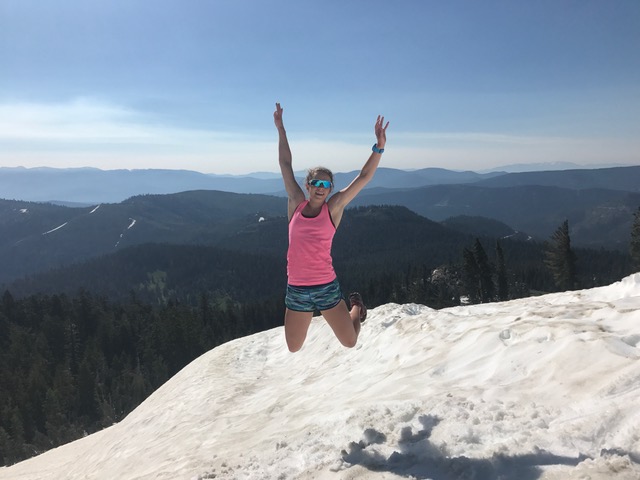



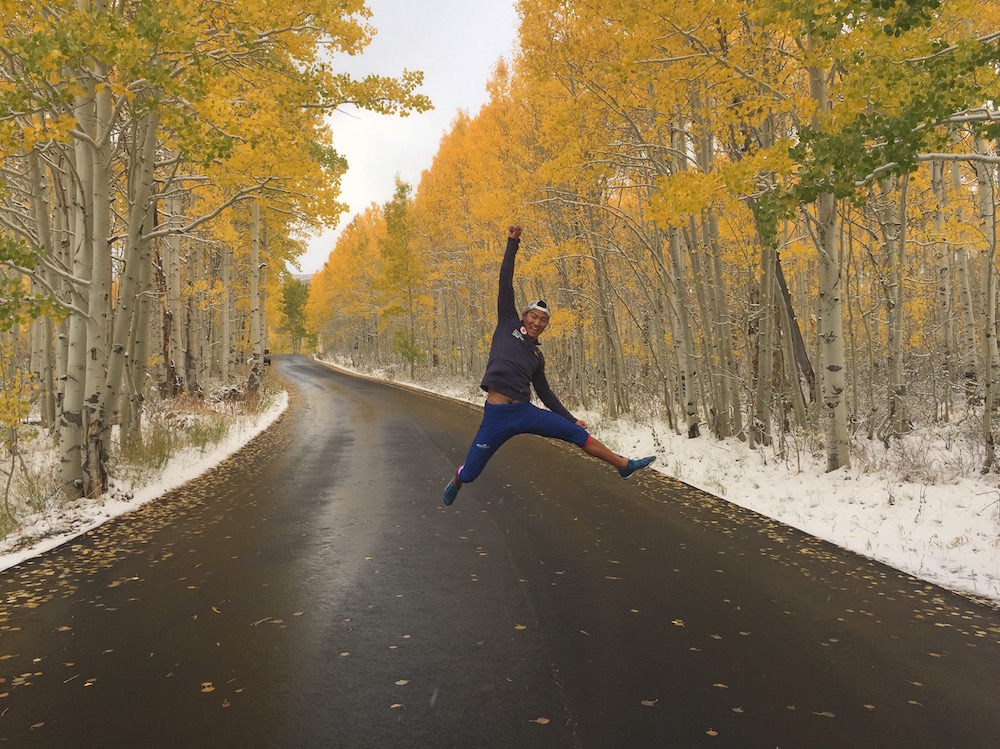
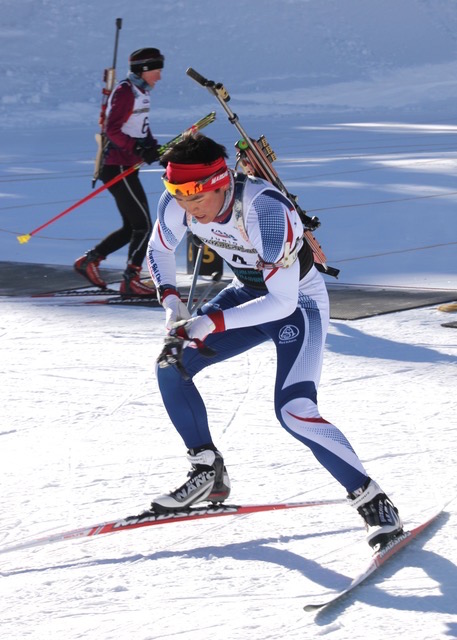
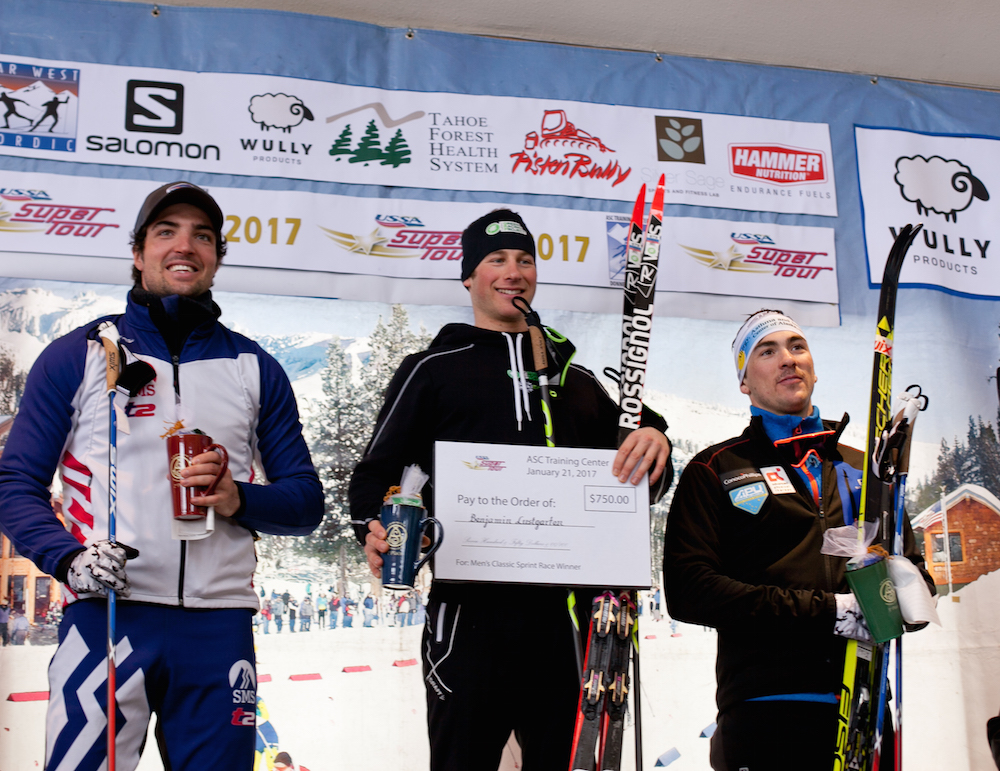
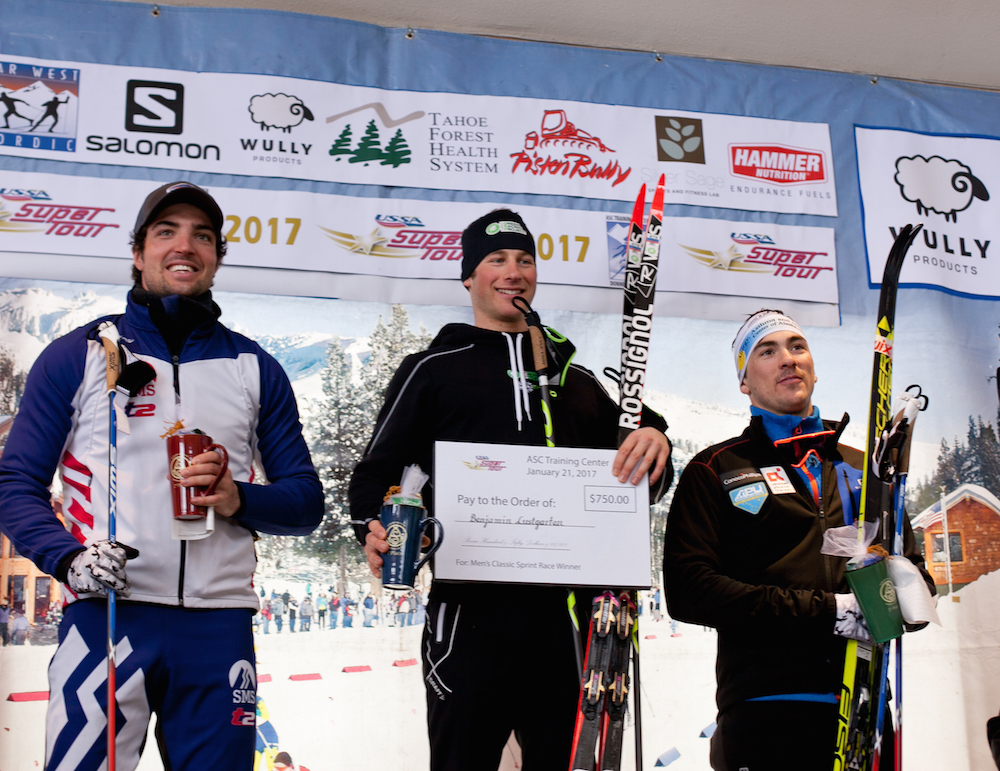
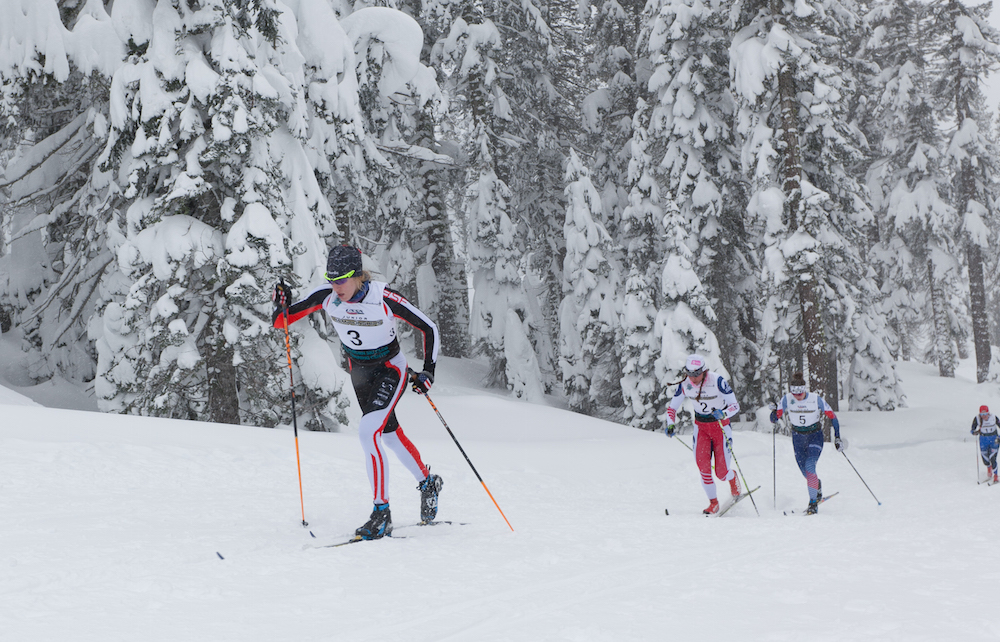
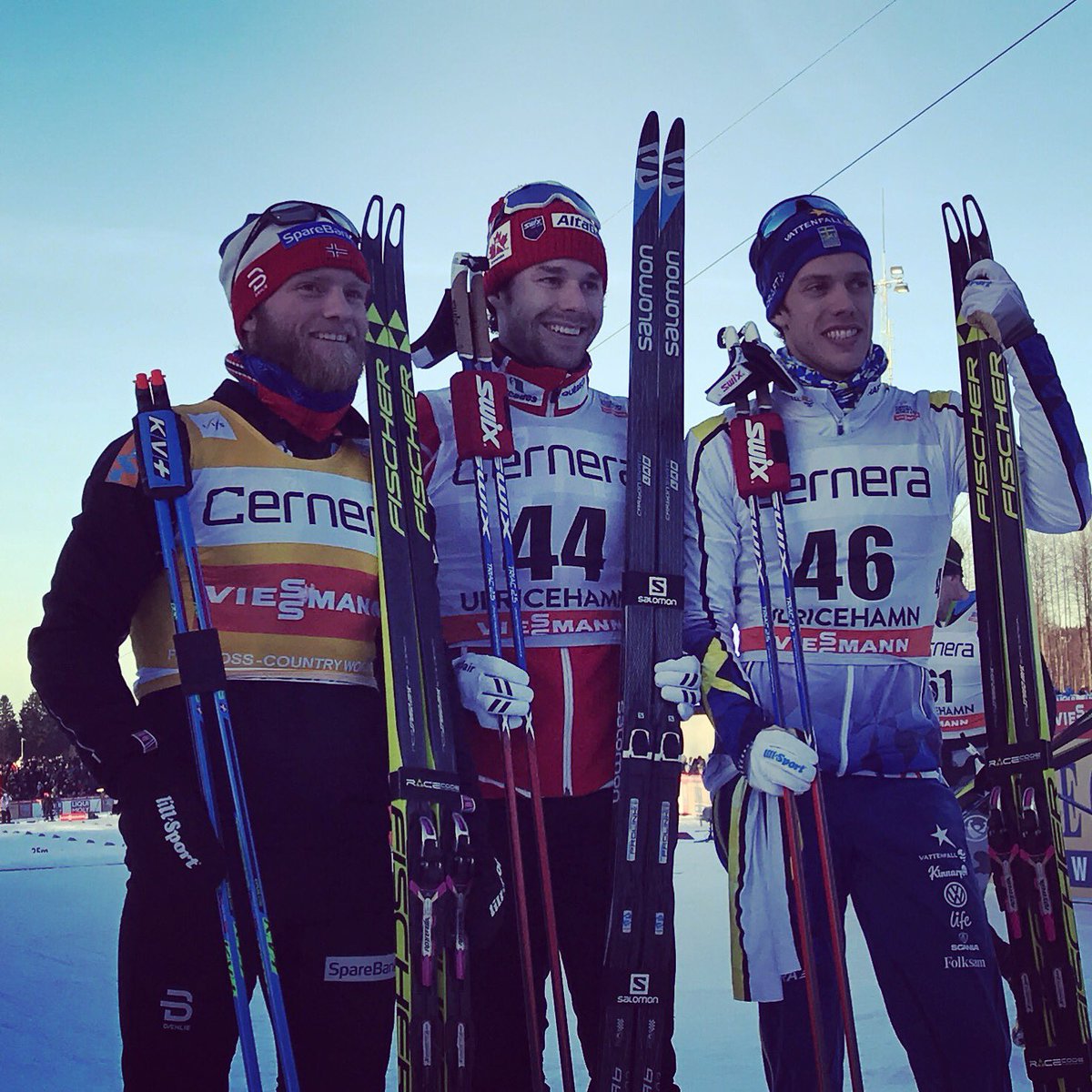
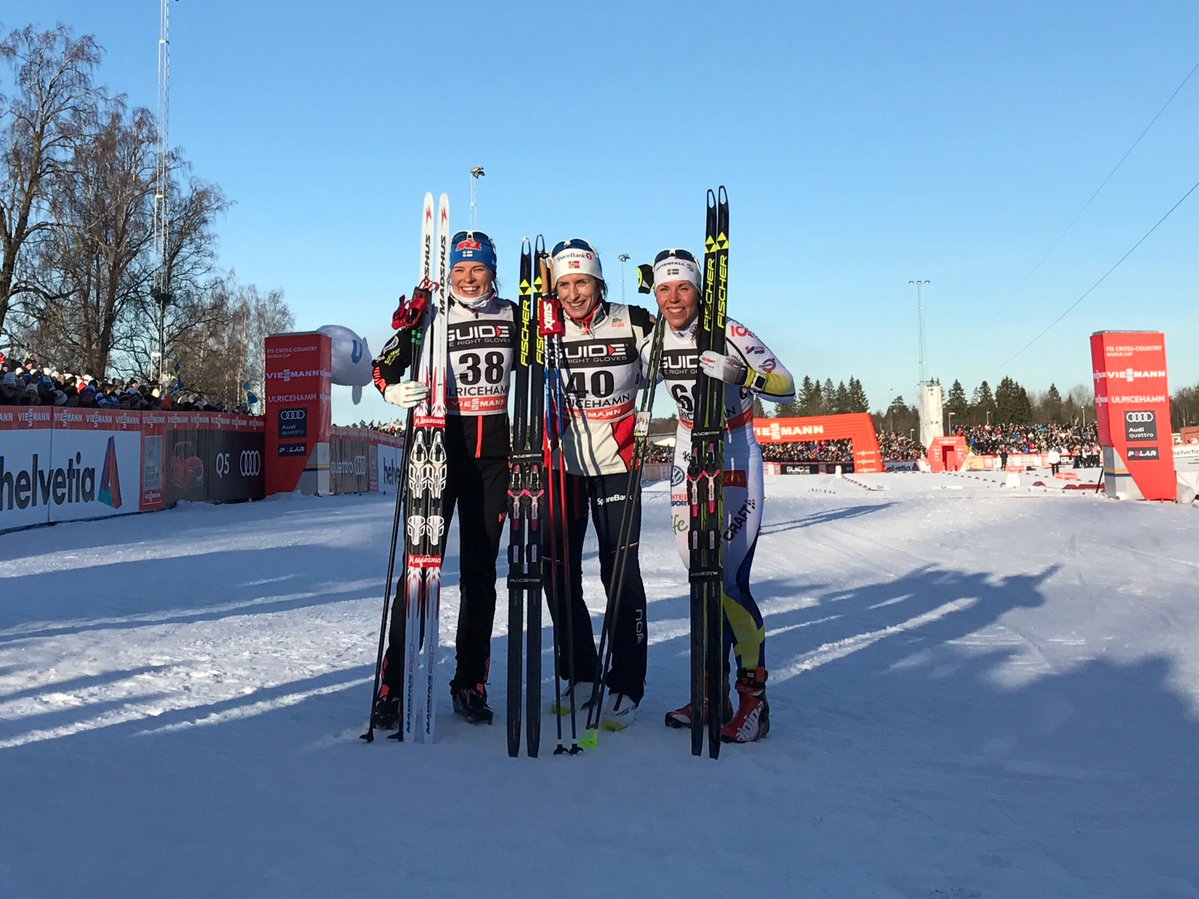
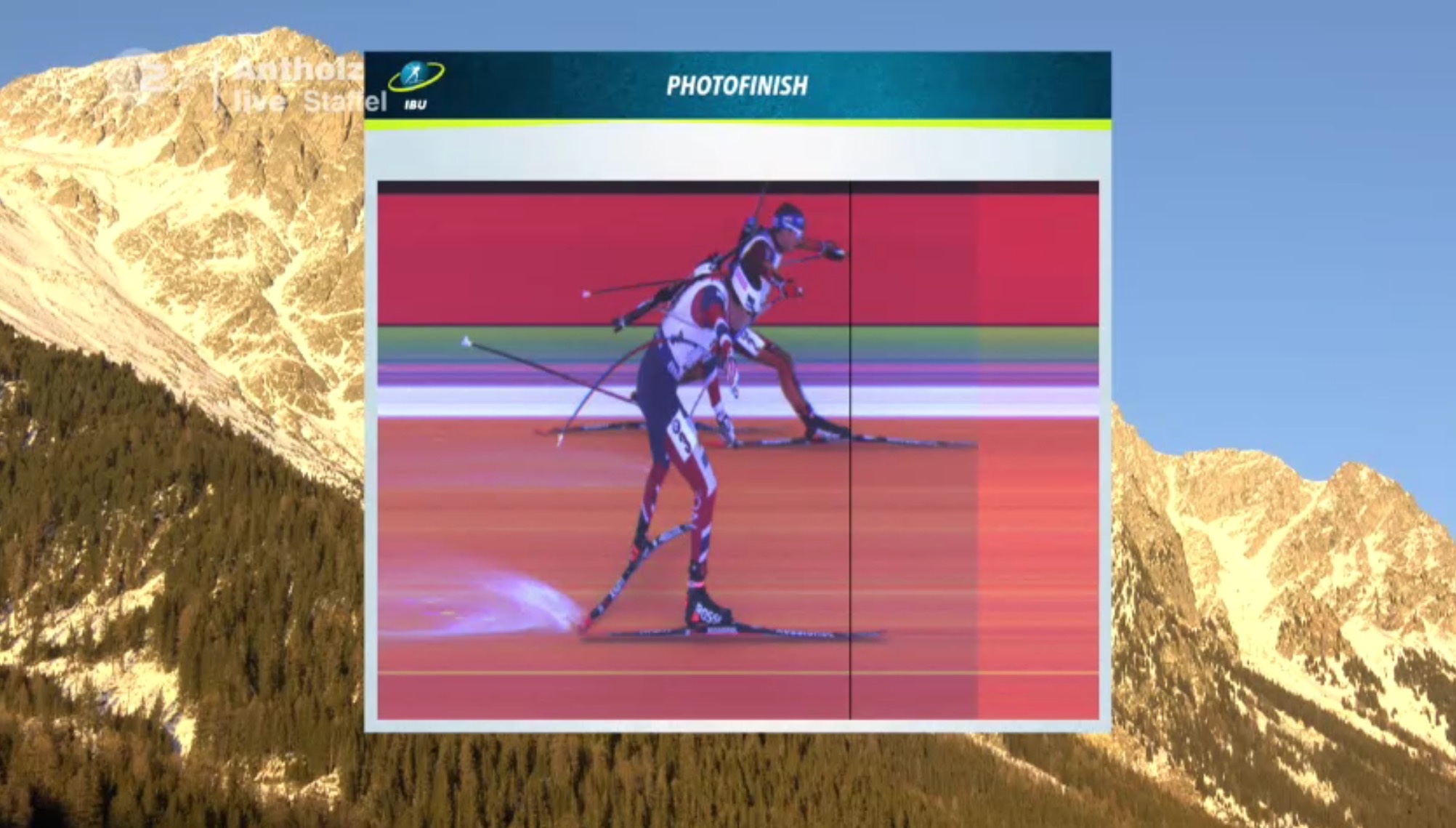
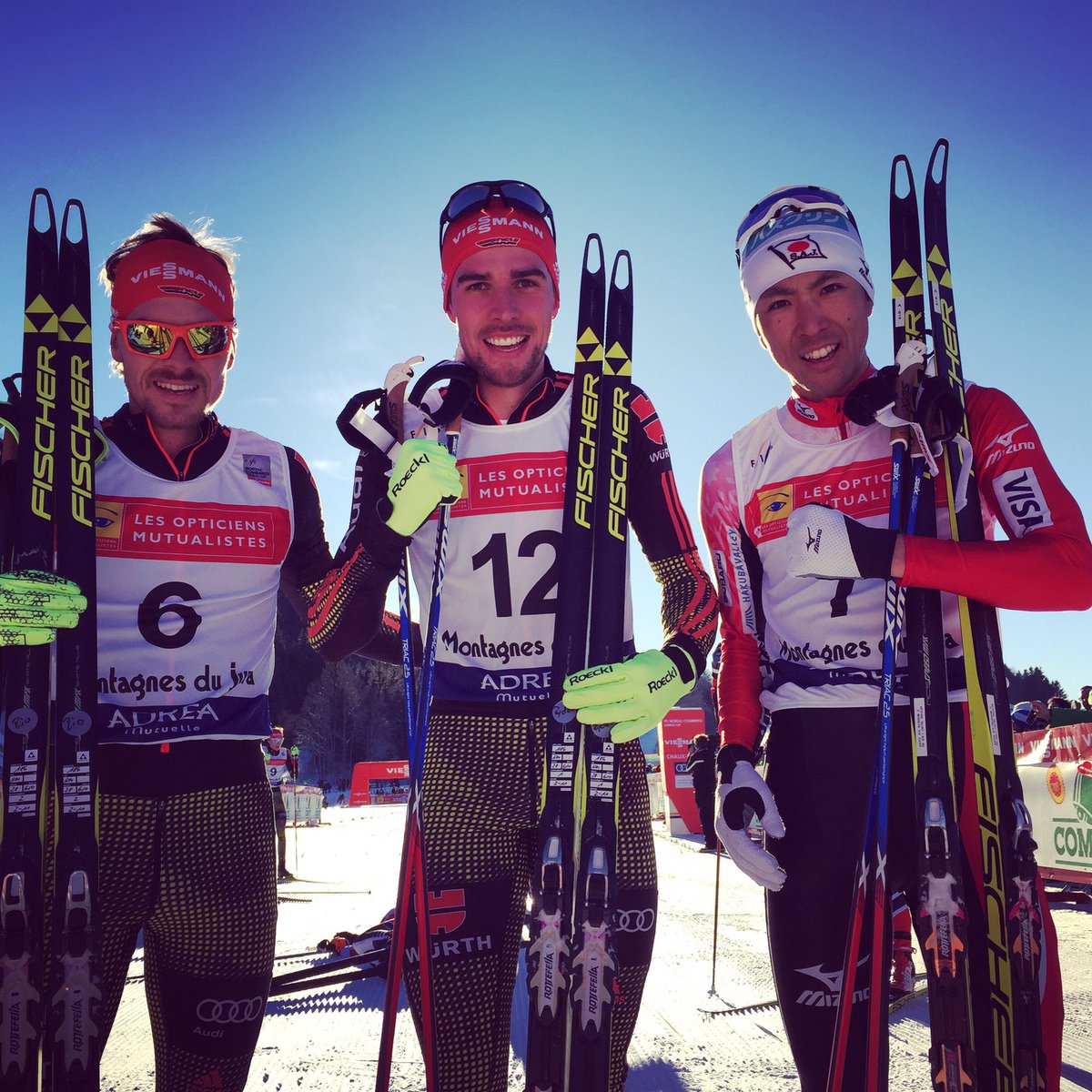


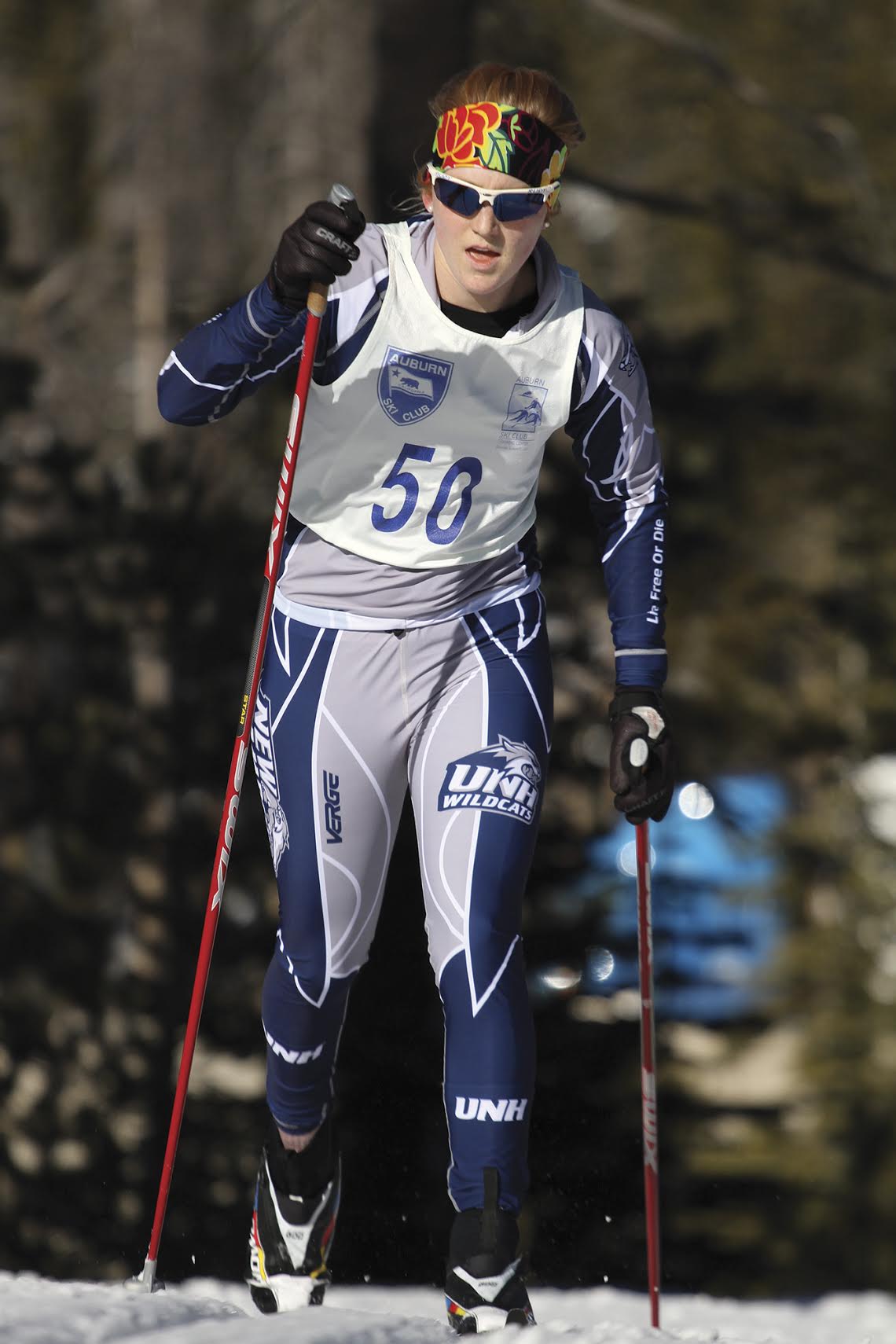
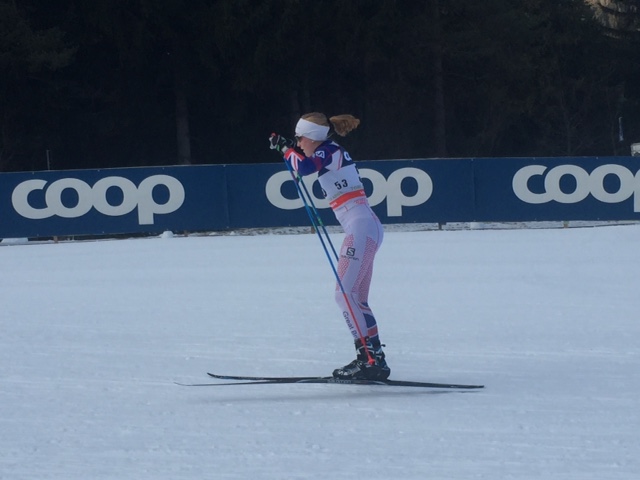
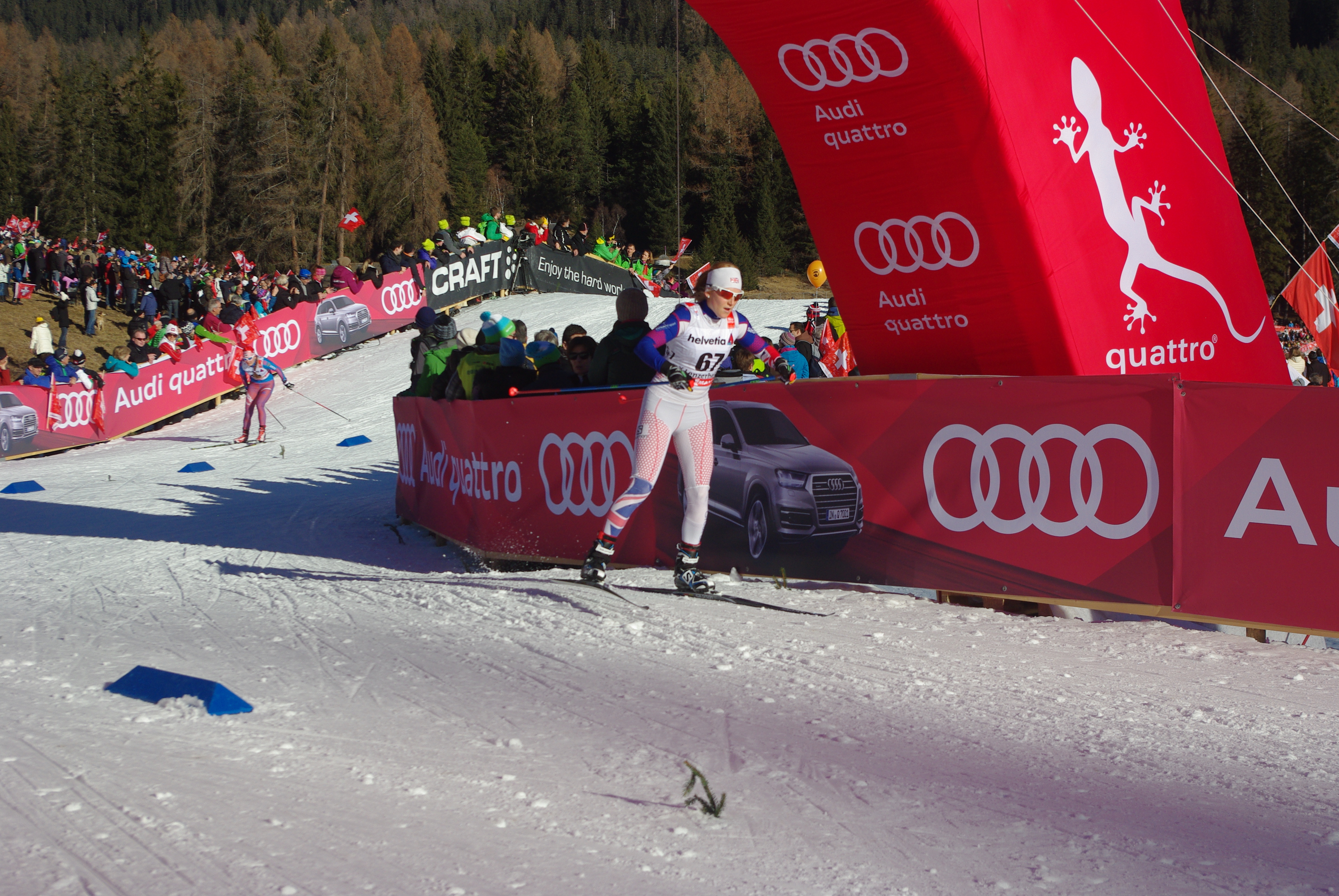
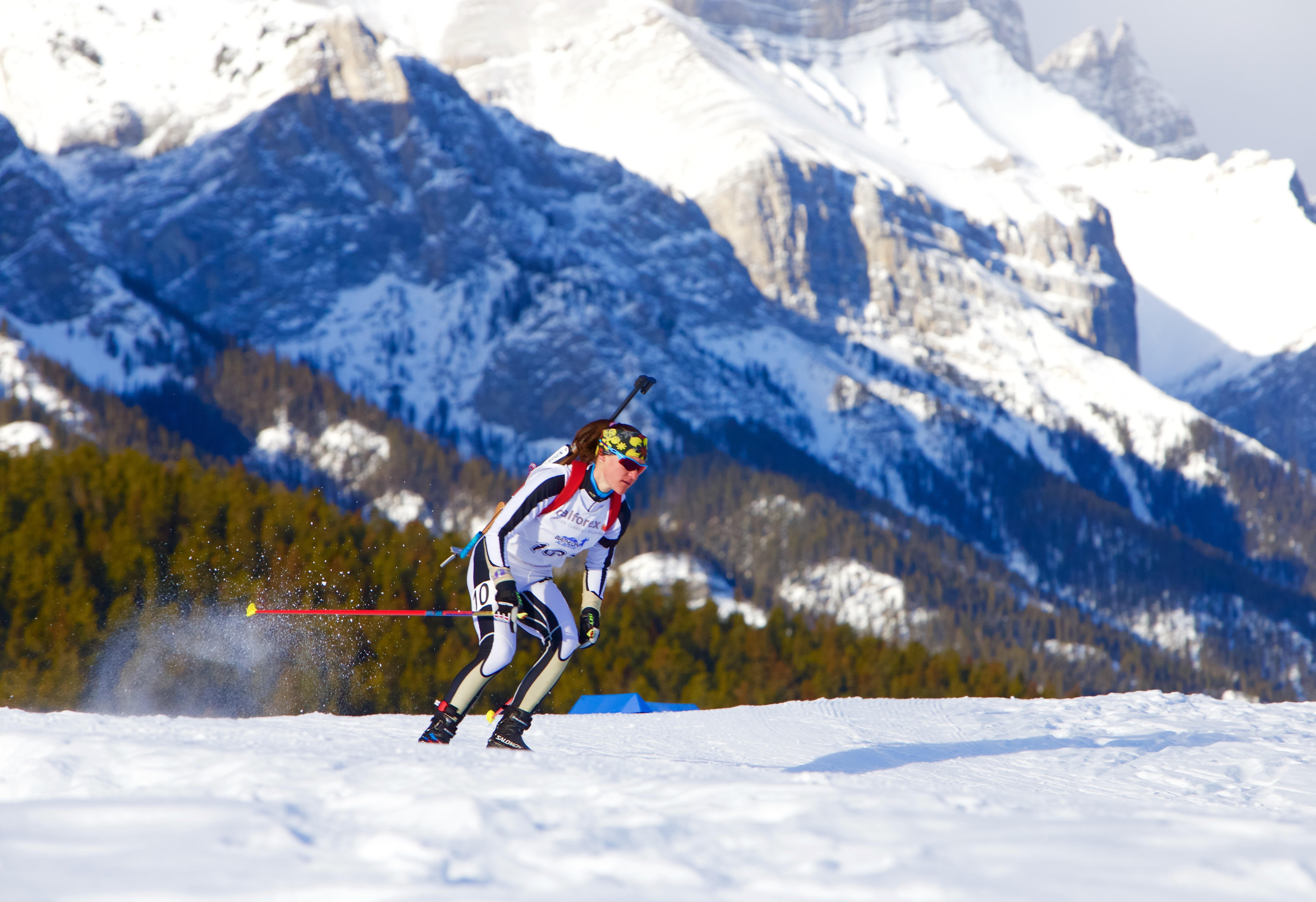
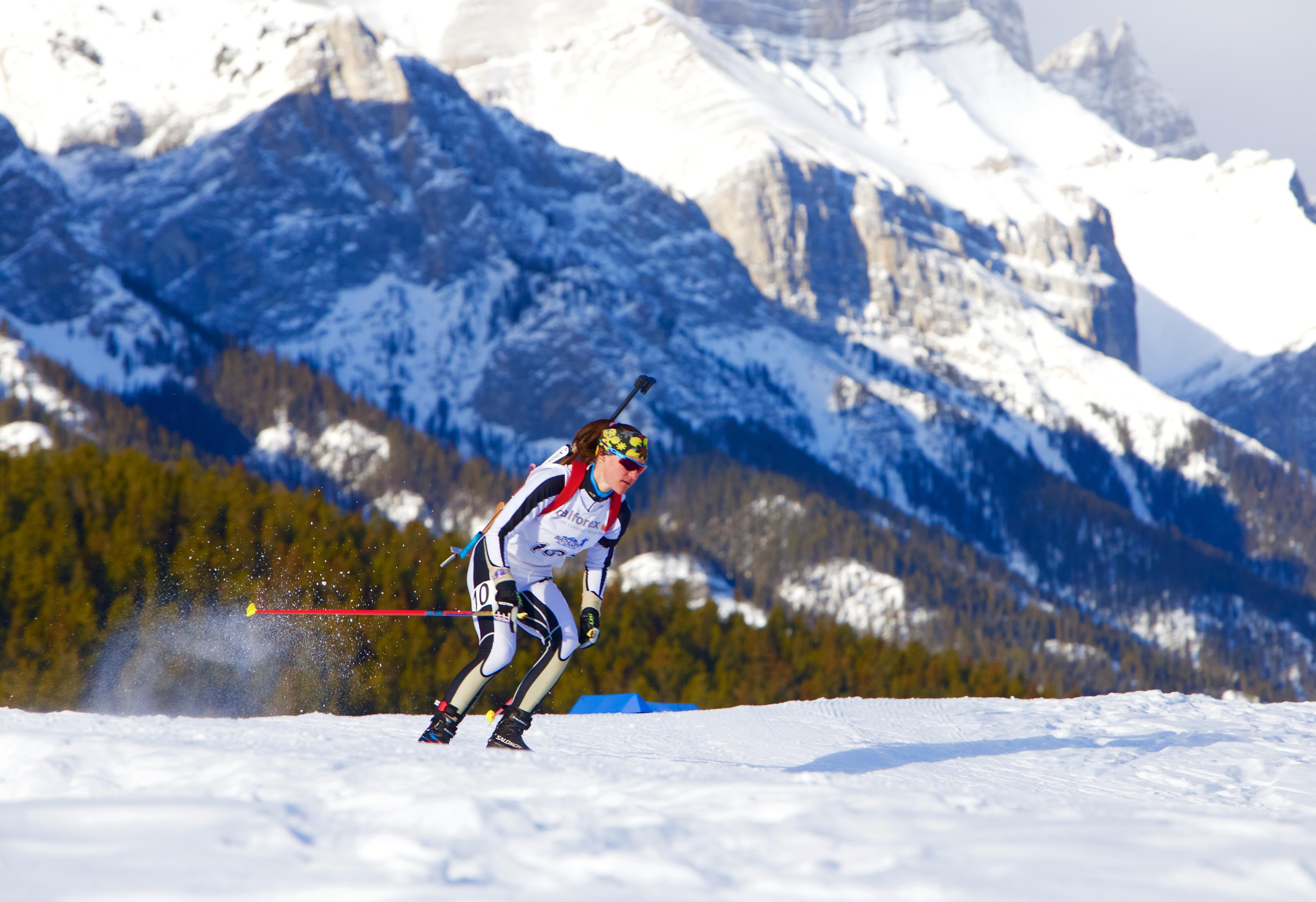
![Leif Nordgren of the United States racing to 19th place in the sprint in Sjusjøen, Norway, in December. "For the whole first trimester I felt like I was struggling [with skiing], Nordgren wrote in an email. " Its a new year now and there's no saying what will happen, of course I'm hoping for the best, there's a lot of season left and we're not even into the most important races yet! I'll just be looking to improve from the beginning of the season and hopefully things will fall into place." (Photo: Jonne Kähkönen)](http://fasterskier.com/wp-content/blogs.dir/1/files/2015/11/Leif-Nordgren-Sjusjøen.png")