Tag: august Teague

  • Corners and Confidence: Kate Oldham’s Steady Rise to the U.S. Ski Team

    Corners and Confidence: Kate Oldham’s Steady Rise to the U.S. Ski Team

    At the World Championships last winter, a slushy, rutted corner near the finish line became a proving ground for precision and poise. The turn was taking down skiers all week — an icy edge here, a soft patch there — the kind of technical trap that can shake even the most seasoned racers.

    On the U.S. team’s final course preview, Jessie Diggins, Julia Kern, Rosie Brennan, and newcomer Kate Oldham took turns testing different lines. It was part of their customary pre-race ritual — playful, low-stakes, but essential.

    “And you know,Kern recalls,when we do race prep, we make sure anyone who wants can join. I think those moments are really cool. Like this year, Kate [Oldham] at World Champs — we did race prep together, Jessie, her, and I, and maybe Rosie too. We were practicing that final corner because it was so slushy and tricky, and Kate ended up being the best one out of all of us in that corner.”

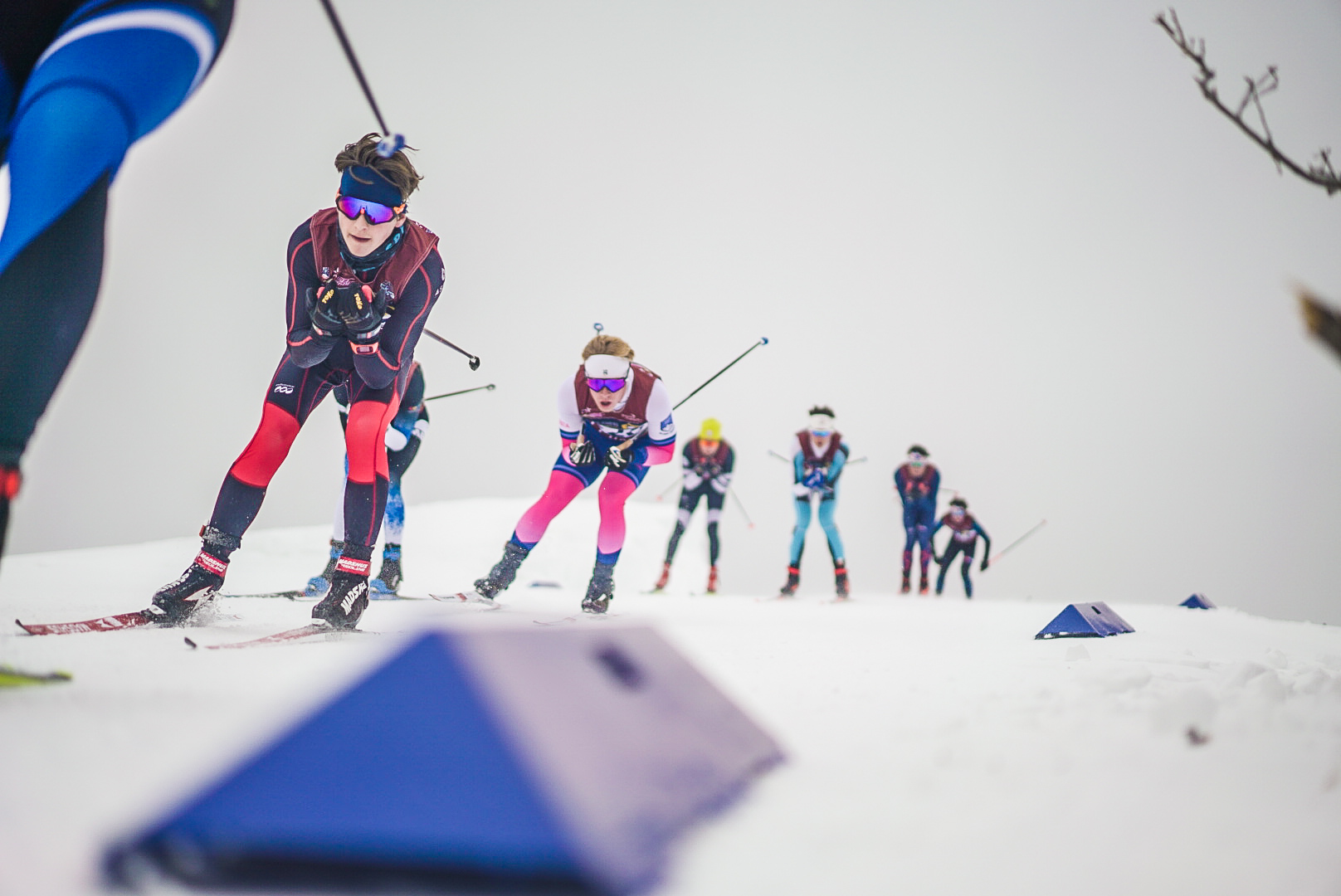
    Kate Oldham (USA) during the Individual Sprint at the FIS Cross-Country Ski Championships in Trondheim (NOR) last season. (Photo: Modica/NordicFocus)

    It was a small moment, but it spoke volumes — the rookie demonstrating to her mentors not through bravado but through calm instinct and feel. For Oldham, it was proof that she belonged.

    “Pre-race days are really fun,she says.It’s a time to try stuff out in a low-stakes way. You don’t necessarily want to be experimenting once the heats start, so we’ll trade off who goes in front and see how different approaches work. That corner was taking people down left and right — and none of them were Americans, so that was cool.”

    For the team, it was just one corner on one course. For Oldham, it was the quiet confirmation that her precision and poise could stand alongside the best in the world — that she could carve her own line through the sport.

    From Carbondale to the World

    Oldham, who was recently named to the U.S. Ski Team, grew up in Carbondale, Colorado. In this mountain town, Nordic skiing runs through the community as naturally as snowmelt through the Roaring Fork Valley.My parents just introduced me to it as a little kid,she recalls.We played sharks and minnows on skis.She skied with the Aspen Valley Ski Club (AVSC) development team, more for fun than ambition—until a trip to West Yellowstone changed everything.

    Her dad was helping the high-school team with meals, and Kate got to tag along.I thought they were the coolest kids ever,she laughs.I got a little taste of what it was like to train more seriously—but in a really low-stress way. I could ski when I wanted to, hang out with my dad when I didn’t. I just started liking it more and more.”

    By freshman year, she had joined AVSC’s National Comp Team, with coach August Teague guiding her progression.He had a big hand in shaping my love for training and the structure that cross-country skiing brings to your life,she says.I love being able to map things out and plan.”

    Teague’s wife, Kara LaPoint, became another key influence.She’s a pro triathlete and just a really badass person,Oldham says.We love training together when I’m home.From the AVSC coaches to her parents to the national-team staff she works with now, Oldham has always been surrounded by people who bring joy and perspective to the grind of elite sport.The whole community fuels my fire,she says.

    Oldham recharging back home with good friend Kara LaPoint. (Photo: Courtesy Photo)

    The College Shift

    Oldham began her college career at Middlebury but transferred to Montana State after two semesters, drawn by the environment and energy of Bozeman. She completed a degree in environmental studies with a minor in sustainability.I absolutely loved MSU,she says.Being in Bozeman just fit me.”

    The NCAA circuit gave her a crash course in balancing intensity and independence.It’s extremely competitive now—good skiers in every region,she says.You’re racing against Scandinavians, Europeans, all kinds of strong athletes. It’s a great way to get better.”

    Equally valuable was learning to juggle priorities.That balance between school, life, and skiing teaches you communication and time management,she says.It’s the same skill set you need later, navigating different coaches and support staff.”

    Oldham’s affection for the Bobcats remains strong.I’m still really close with the team. Sometimes I’ll text my old coach, Sam Benzing—’Hey, do you remember what we were doing at this time last year?They’re always willing to help, and I’m super grateful for that.”

    Oldham celebrates making First Team All-American at the 2024 NCAA Championship. (Photo: Courtesy Photo)

    A Pro’s Life in Bozeman

    When she graduated, Oldham decided to stay in Bozeman and train with Andy Newell and the Bridger Ski Foundation.Andy’s a great mix of laid-back and professional, she says.He’s flexible with what I want to do but still really on top of things.”

    Without classes or side jobs, Oldham has ramped up her training—but carefully.We’ve been cognizant not to make big changes when what I’ve been doing has been working, she says.There’s already a lot of change in an Olympic year. I wanted to keep what I could the same.”

    Her days follow a rhythm familiar to many full-time athletes: morning training, lunch, laptop chores, a second session, and quiet evenings.I like to have a routine, but I also adjust based on life, she says.That’s a good skill, especially once you’re on the World Cup. Travel, fatigue, sickness—you have to be adaptable.”

    This summer included a mix of Bozeman training and U.S. Ski Team camps.It’s nice to get new perspectives, new venues, and then come home for family time, she says.I love riding my bike, hanging out with my family—just that balance.”

    Oldham’s focus on recovery is equally pragmatic.A lot of my body care happens in the gym—PT and strength work. Tschana [Schiller], our strength coach, does a great job keeping us balanced and mostly injury-free, she says.Then it’s good food, good sleep, and time to unwind. It’s simple, but it adds up.”

    Oldham and BSF teammate Emma Albrecht. (Photo: Courtesy Photo)

    Lessons from the Veterans

    One of the most significant changes this past year was joining a national team full of skiers she grew up watching on TV.It’s wild, she admits.They’re all so different in great ways. Seeing them up close, you realize—they’re real pros. It’s their job. But they’re also incredibly humble and welcoming.”

    She has learned as much from how Diggins, Kern, and Brennan think about training as from what they do.They all pay close attention to what they need on a given day, Oldham says.At a camp, they might all have slightly different plans. Not because they’re doing something special, but because they know what works for them. They balance that with the team sessions so everyone gets what they need.”

    It’s a lesson she wishes she’d known earlier.Even though it’s scary sometimes, it’s okay to be confident in yourself and your plan, she says.Doing what you need is a huge asset. Trusting yourself can be hard, but it’s worth it.”

    That self-trust carries into her goals for the season.Obviously, I’d love to make the Olympic team, she says.That would be an incredible experience. But I’d also be really happy with some top-30s on the World Cup.”

    After spending time with Kate, it quickly becomes apparent that she is cooler than most of us. (Photo: Courtesy Photo)

    More importantly, she wants to manage the grind.I learned a lot last year, and I’m still figuring out what I need to stay happy and motivated through a long season of travel, she says.That’s a big process goal—dialing in what works for me.”

    She’s also been working on how she handles the inevitable rough patches.My tendency can be to isolate when something goes wrong, she says.But I’m learning to use my support team. There are people who want to help, and when I let them in, they always have a great perspective. Sometimes it’s just someone saying,What did you learn today? That can shift the whole mindset.”

    Looking Ahead

    Oldham envisions a long career—but only if she keeps loving it.I want to love skiing forever, she says.As long as my body’s healthy and I’m enjoying it, I’ll keep going. But not at the expense of that joy.”

    Her advice to the younger version of herself, and to the next generation coming up through AVSC, is simple.Don’t count yourself out, she says.So much can happen in a race that you don’t expect. Sticking with it is the only way to find out. Enjoy it, and pay attention to the relationships you build along the way—they’re what you take with you.”

    Kate and her father, Nelson, out on a hike. (Photo: Courtesy Photo)

    The Roots That Keep Her Grounded

    When she’s not training or racing, Oldham gravitates back to Carbondale, where her family’s restaurant—Dos Gringos Burritos—is about to turn twenty-five. She’s been part of it since before she can remember.I’ve been around it my whole life, she says.It’s a pretty important staple in our town, and my parents are huge role models for me.”

    Working at the restaurant keeps her connected to real life.The service industry teaches you a lot, she says.Everyone should do it once—how to deal with people, how to work hard behind the scenes. It grounds you.”

    Her go-to order?The summer salad wrap, she says instantly.But after twenty-three years of hanging around the place, you have to keep it fresh.”

    Outside the restaurant, she finds calm in the same things that shaped her childhood: horses, bikes, and the Colorado mountains.I grew up around horses and hope to return to that life after skiing, she says.Being outside, cooking, baking—it’s all part of keeping balance.”

    That balance, she’s learning, is the fundamental foundation of confidence. It’s not just about speed through a corner or times on a results sheet—it’s about knowing where you came from and who you are when the racing stops.

    Oldham loves getting outside, especially on horses. (Photo: Courtesy Photo)

    Love Stories Like This? Help Keep Them Coming.

    Feature interviews like this one take time, access, and care to produce. If you value thoughtful storytelling and independent ski journalism, please consider becoming a Voluntary Subscriber. Your support directly fuels the work we do to cover the people, places, and moments that make our sport special.

    Join the FasterSkier community.


  • The Pros & Cons of League-wide Wax Protocols: Western Clubs Consider the Evolution and Impact (Part 2)

    The Pros & Cons of League-wide Wax Protocols: Western Clubs Consider the Evolution and Impact (Part 2)

    Here are links to earlier installments in this five-part series. The first two parts (part one; part two) spoke to the perspectives of high level wax technicians and industry representatives, while part three focused on the Wisconsin Nordic Ski League. To read the beginning of this article on the wax protocols of Western clubs, part four, click here

    Leveling the Playing Field

    In regard to the question of whether the policy widens the gap in equity because of equipment differences, coaches expressed that the opposite has been observed.

    “It probably has a little bit to do with what level we’re talking about,” said Teague. “But certainly, club or high school wise, I’ve only seen it take down one of the barriers of entry to our sport, and decrease costs for both programs and individuals.”

    Speaking on behalf of RMN, Teague added that this removal of barriers has opened up opportunities for smaller clubs, and the support expressed among coaches speaks for itself. 

    “My opinion is – of everybody that’s gone to [a wax protocol], no one has said: ‘That’s a mistake. We’re gonna go back,’” said Teague. “Yes, there is some advantage that can be gained for an athlete or a program that has the capacity to go and invest in a quiver of skis to try and overcome the playing field, but more often than not, what we’re seeing is that small programs, or athletes without a program at all, [such as one of my former skiers who lived on Colorado’s Grand Mesa in the Southwest corner of the state], all of a sudden can be competitive.” 

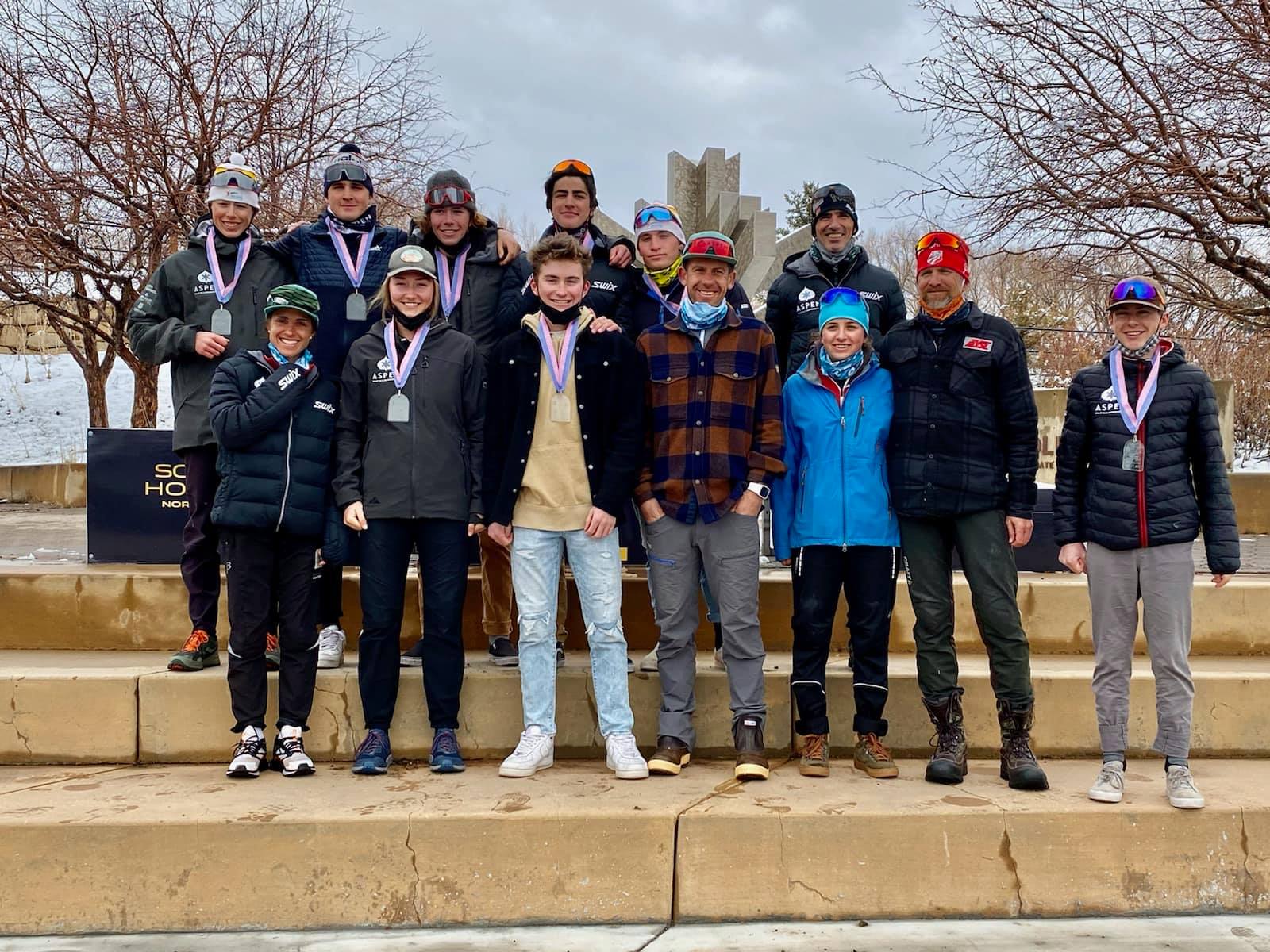
    AVSC nordic athletes compete at the Western Regional Championships, held in Soldier Hollow, UT in place of the 2021 Junior National Championships due to the COVID-19 pandemic. (Photo: Aspen Valley Ski and Snowboard Club)

    This phenomenon could be attributed to the aforementioned power previously held by larger clubs; when glide testing is no longer a priority, perhaps smaller clubs can finally find a seat at the table. 

    “We have 14 clubs in the division,” Kapala said of Intermountain. “Last year, 13 of them placed a kid on the Junior National team. Prior to that, we were running more like seven or eight [clubs]. So what was going on was Sun Valley, Bozeman, Jackson, and to some extent Park City – the bigger clubs – were rolling in, and to put it bluntly, we were steamrolling the small programs. It wasn’t a fair fight. And fortunately, the larger clubs in our division say, ‘Clearly, that’s not good for skiing.’” 

    Kapala spoke specifically of an athlete who hailed from Whitefish, MT, which is “way at the far flung edges of the realm. They’ve gotta drive forever to get to races.”

    This athlete raced for the Glacier Nordic Club under the guidance of head coach Jennie Bender, who he described as “a huge asset and we’re so fortunate to have her come to our division.” Clarifying that Bender is as skilled and capable as any other coach on a wax bench, he acknowledged that she was largely on her own at races with roughly 12 kids. This ratio is not equivalent to the SVSEF team which might have 35 kids with five to seven coaches at a JNQ. 

    “It’s just not a fair fight.”

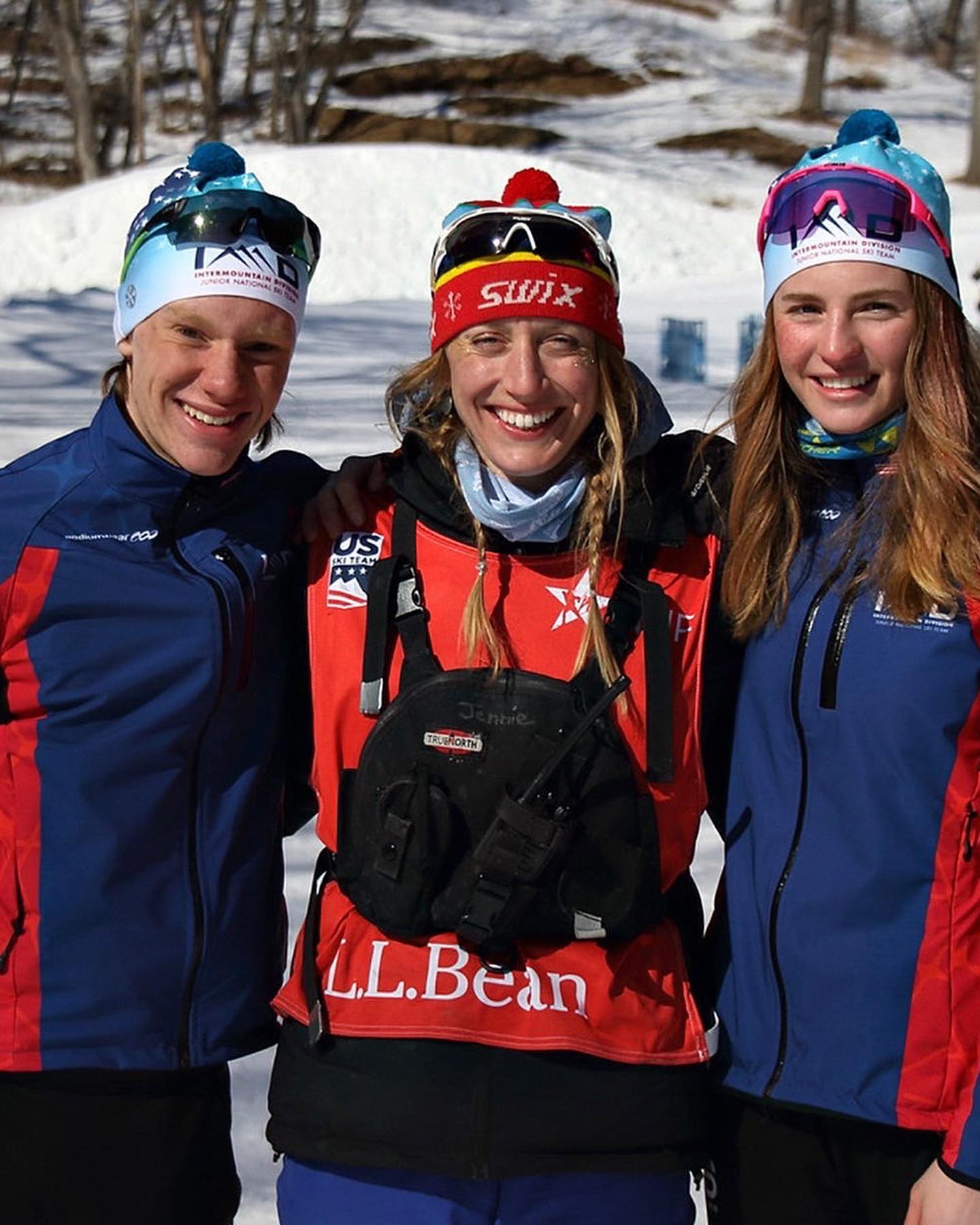
    Glacier Nordic Club head coach Jennie Bender with the two athletes, Jacob Hansen and Maeve Ingelfinger, who earned spots on the 2022 Intermountain Division team at Junior Nationals. (Photo: Glacier Nordic Club)

    Despite less support on the waxing front, the athlete grew into the season and was regularly finishing between fourth and sixth at JNQs, which earned her a spot on the IMD team at Junior Nationals. 

    “So what happens is: we go to JNs, we leverage all of the Intermountain resources on behalf of her and the other kids and what does she do? She’s on the podium. And so our policy afforded her the opportunity to at least be in the conversation to make sure she assuredly got through… she was good enough in that setting of fair and equitable ski service, that – what else was going on? She believed. ‘Oh wow. I’m actually not that far away.’”

    Once this seed was planted, the athlete thrived. In Kapala’s mind, it’s an intangible, but nonetheless vital, component of the development process for that age group.

    “None of this stuff happens in a vacuum, and athlete development is this really, really – I don’t want to say funky – but really nuanced process… This girl has gone from we didn’t even know who she was, to one of the best U16 girls in the country. And I contend that our wax policy, while it wasn’t more important than Jennie’s great coaching, certainly didn’t hurt. She was on a level playing field as level as we can make it in those formative JNQs where she started believing [in herself]. And that’s the whole game.”

    Teague also acknowledged the apples-to-oranges capacity of programs, relating it to his experience with the Australian national team, whom he coached and supported through two World Championships surrounding the 2014 Olympics in Sochi. While Australia now typically partners with the U.S. team on the World Cup for waxing, the capacity of this small program pales in comparison to a robust and well-funded nation like Norway, which has been supported by technician Knut Nystad who was quoted in the first two parts of this series. While Teague emphasized his respect for Nystad’s expertise both as a coach and tech, he felt the understanding club level coaches have of the specific challenges of their leagues might offer a different lens with which to consider these issues. 

    “Knut was my coach [when I was racing collegiately at Denver University], and worked on the Norwegian wax team when I was coaching in Australia. What they were able to do and the testing they were able to do, versus what I could do with Australia – it’s not even comparable. And sometimes we could be competitive with them, but often, they were able to test significantly more. Now, would a waxing protocol make it fair in that situation? Absolutely not. Because they could have every different grind, and a grinder going, and along the continuum.

    “But at the high school level, an AVSC can send four coaches over early to test [glide] wax and at least apply wax on site, rather than make a guess. Whereas [a small program like the Colorado Rocky Mountain School (for whom the author is a former head coach)], or even Battle Mountain where there’s two coaches and 70 or 80 kids, there’s no way they could do that.” 

    An Arms Race for Skis and Grinds

    But what about the arms race for equipment that was cited as a concern in the first two installments of this series? Have these policies induced higher demand to increase the size of an athlete’s fleet of skis? Across the board, the coaches with whom this topic was discussed expressed that this was not a trend that they had observed in the years that a policy has been enforced.

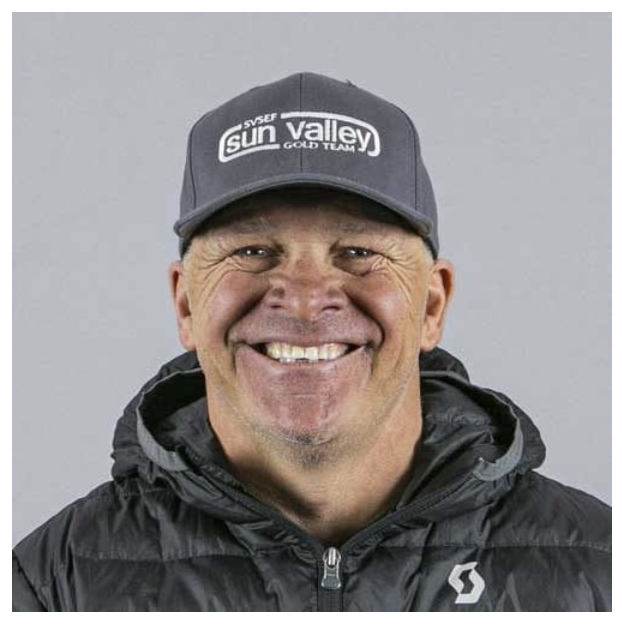
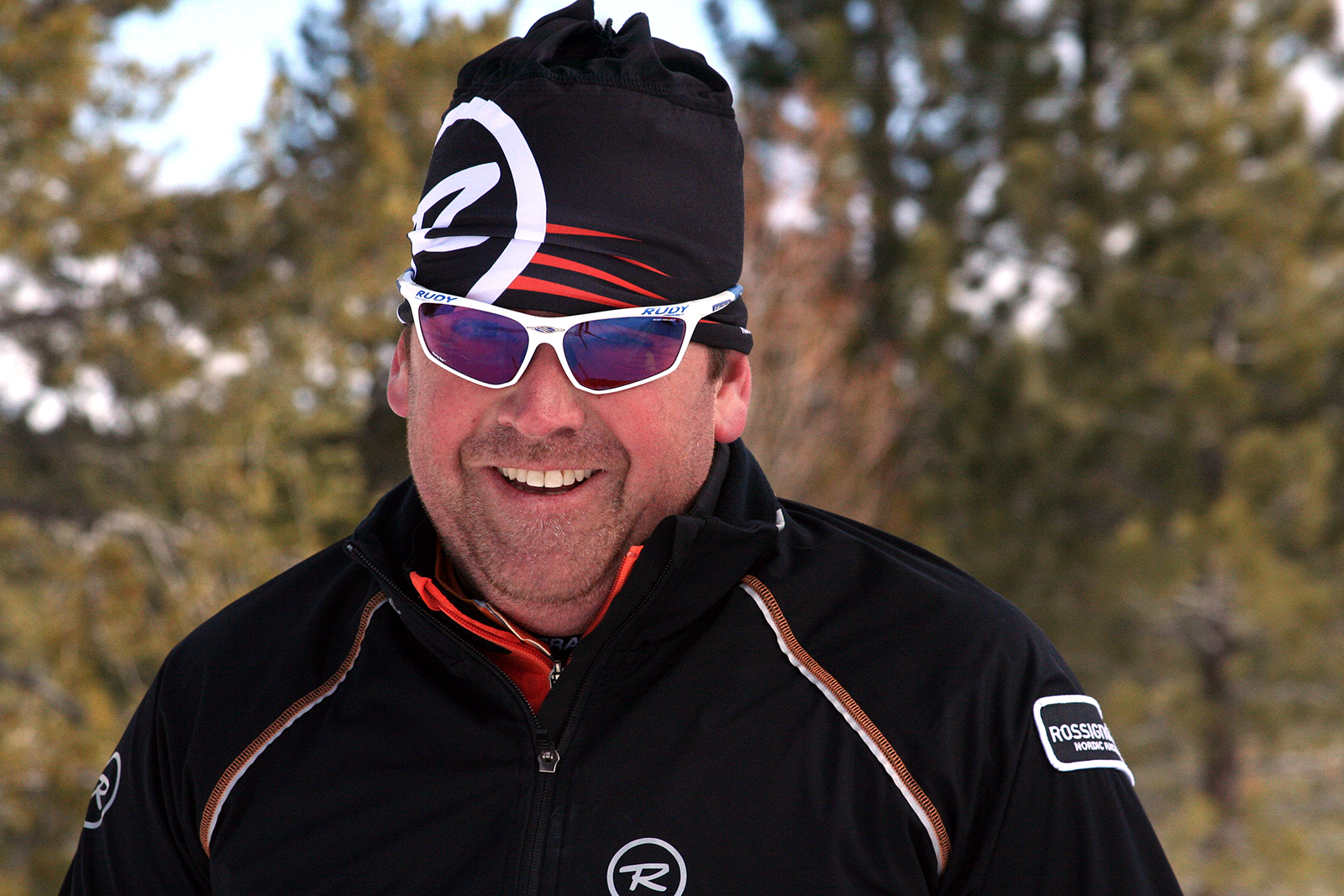
    Aspen Valley Ski and Snowboard Club head coach August Teague provides insights into the evolution and impact of the Rocky Mountain Nordic Wax Protocol. (Photo: teamavsc.org / Matt Power)

    “There are probably exceptions, just like every rule,” said Teague. “But we really aren’t seeing people going out and investing in 30 pairs of skis. We’re still seeing athletes start off with a pair of skate and a pair of classic, and slowly expand upon that fleet.”

    Leonard explained that PNSA coaches are not seeing an increase in ski purchasing either, nor does the level of competition at divisional events necessarily warrant that level of specificity in an athletes ski fleet. 

    “The field density is such at our [JNQs] that the wax is not the deciding factor so much,” Leonard explained regarding clubs in the Pacific Northwest. “And having multiple pairs of skis – most of the kids, I’d say, have one pair of race skate and one pair of race classic and some of the higher-end kids who have been at it a little longer or are a little more involved or or whatever – have a little more means – maybe have a couple pairs of skis that they’re deciding between. But you know, they’re growing kids too, and skis are expensive, so a lot of times it’s sort of like, it’s one pair that fits and one pair that’s a little bit softer from when they were a little smaller a year or two ago. So it’s not such a huge factor.”

    Shift in Focus Toward Structure and Ski Selection

    While programs aren’t seeing athletes rapidly investing in equipment, coaches did observe a shift in focus toward the application and testing of structure on race day.

    “My test fleet, instead of testing glide and structure, is now focused pretty much just on structure at, say, an RMN [race weekend],” Teague explained. “When I show up at Senior Nationals, then I’ve got to be able to test glide and structure and everything else as it unfolds. 

    “So structure has become more and more important. That probably, again, depends a little bit on the level. If we’re talking about high school kids, there are high school kids that ski club and ski high school, who have the ability to get their skis ground every year and have the ability to have skis that are for specific conditions. But for the most part, we’re talking about kids that own one pair of skate skis, or even don’t own a pair of skate skis and rent or borrow them from the program. And they’re getting whatever [base] is on those and then we’re adjusting the structure by hand structures a little bit to try and improve them.”

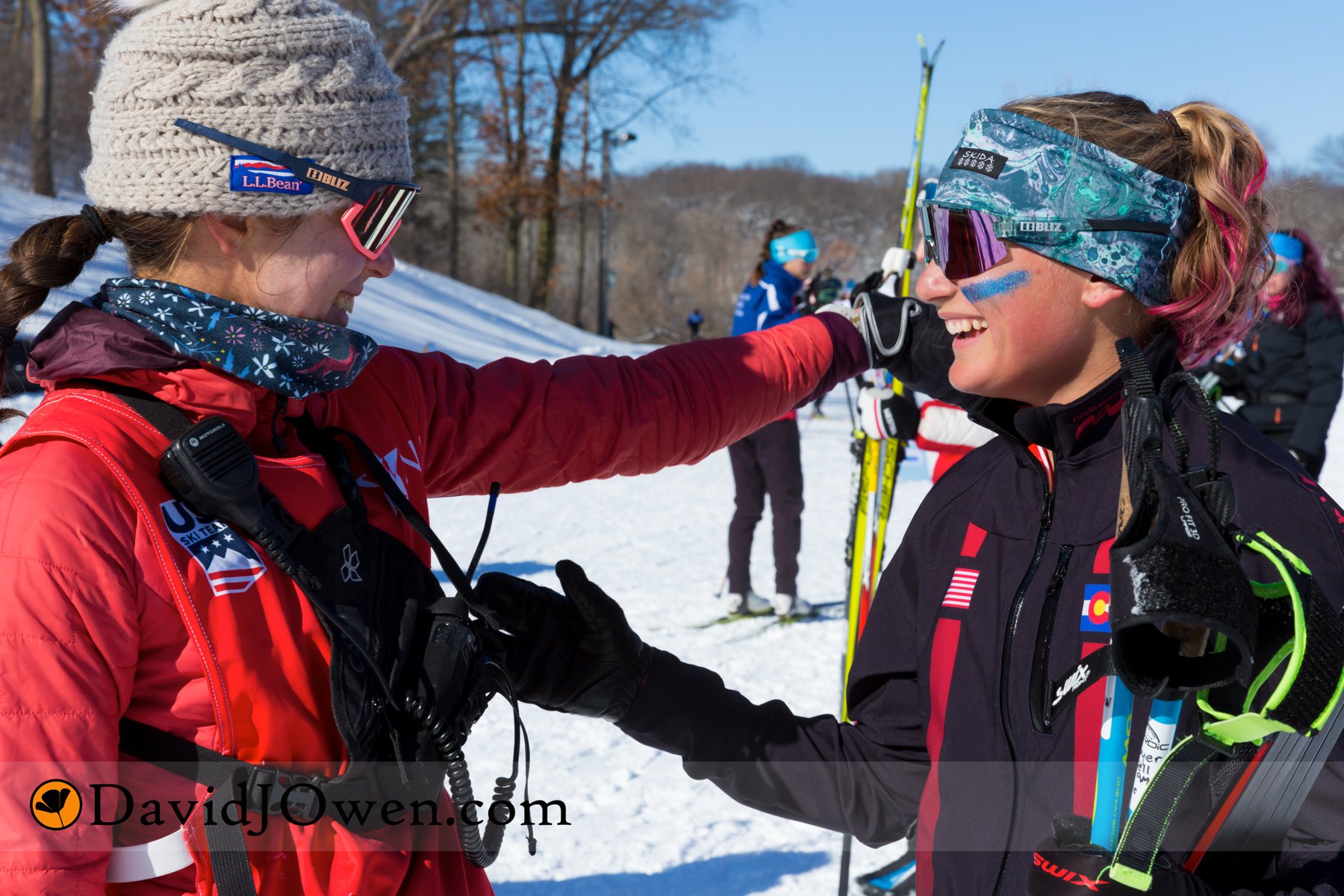
    Crested Butte Nordic Team head coach Molly Susla supports athlete Sawyer Ezzell during the 2022 Junior National Championships in Minneapolis. (Photo: David J Owen Photography)

    Reception of Wax Protocol Among Teams

    As far as how these policies might evolve with time, coaches expressed that the specific brand being used would always be open for discussion, provided that equivalent availability could be guaranteed and cost per gram remained comparable. With the increase in liquid waxes, which might offer versatility on race day without the encumberment of the full glide waxing setup, there may be an evolution that includes more liquid wax options as well. 

    For the time being, coaches expressed that the addition of these protocols has been net-positive, with no member clubs looking to steer the trajectory back toward open waxing. 

    “We’re at least two years through this experiment of running this policy,” said Kapala for IMD. “And I am 100% certain, because I’ve asked… we have 14 clubs that are saying, ‘No way are we going back.’ There is uniform agreement and acceptance of the policy.” 

    In Leonard’s concluding statements, he acknowledged the inherent equipment-based inequity in the sport, while also offering ways to problem solve, and confirming that PNSA has also been well-served by the protocol.

    “You might get beaten at some point by someone who has better skis than you or something like that,” he said. “And when that becomes a factor, you figure out a way to make it work. With the advent of zeros, for instance, suddenly those became a ski that was like – in those conditions, man, you needed to have that. When I was in Alaska, teams were starting to procure fleets of zeros that they could hand out to their kids and maybe rotate through a few kids on a given race day. [Now,] if we have a race coming up that we know is potentially a zero day, we’re working through our community [in the Methow Valley] to grab some zeros for our kids so hopefully, they have a decent option there. 

    “So there are ways to make those things happen and work, and hopefully still remain competitive in the sport. There are a lot of trade-offs with all of it, but people are feeling like, for our division right now, it has been a good decision to go this direction.”

    Junior athletes race during the 2022 U.S. Cross Country Championships in Soldier Hollow, UT. (Photo: Tobias Albrigtsen / @untraceableg)
  • The Pros & Cons of League-wide Wax Protocols: Western Clubs Consider the Evolution and Impact (Part 1)

    The Pros & Cons of League-wide Wax Protocols: Western Clubs Consider the Evolution and Impact (Part 1)

    In speaking with representatives from each of the leagues featured in this series, a few main points rose to the foreground in this discussion: the level of competition matters, how the policy came about matters, and how a program can enhance athlete support holistically by relieving wax-related expenses – measured both in time and dollars – matters. 

    Before jumping into discussions for club level programs across the West, here are the links to view the details of each wax policy specifically: Intermountain Division (IMD); Rocky Mountain Nordic (RMN); Pacific Northwest Ski Association (PNSA)

    Also note that these conversations took place in late-April, prior to further discussions at the U.S. Ski & Snowboard spring congress sessions in May where subsequent conversations among leadership may have occurred. Should significant changes occur, FasterSkier will continue to follow the story. 

    Here are links to earlier installments in this five-part series. The first two parts (part one; part two) spoke to the perspectives of high level wax technicians and industry representatives, while part three focused on the Wisconsin Nordic Ski League. 

    University of Colorado head coach Jana Weinberger waxes skis for her athletes during an 2022 RMISA/US SuperTour race weekend in Sun Valley. (Photo: Tobias Albrigtsen / @untraceableg)

    The Evolution of Western Club Wax-Protocols 

    There’s a lot to unpack surrounding the impact of wax policies on the sport, and it is not reasonable to project that what makes sense for junior club programs can be extrapolated to the sport as a whole, which includes everything from the recreational level to masters racing to the World Cup. However, as a major player in the U.S. development pathway and a collective that encompasses a large volume of the nation’s athlete base, considering the evolution and impact of wax policies at the club level provides valuable insight into what the objectives and outcomes may be more broadly. 

    Conversations on this subject began long before any official policies were accepted, and their initial aim was to uniformly address the use of fluorocarbons at Junior National Qualifiers (JNQs). With both the health of athletes and coaches, and the inequity of buying power among clubs, the goal was to reduce spending and expensive fluorinated top coats.

    Timelines are now blurred, but long-time Sun Valley Ski Education Foundation Program Director Rick Kapala indicated that Rocky Mountain had perhaps been the division who got the ball rolling. Though the policies have since converged on a single wax call made in advance by host coaches depending on forecasted conditions, Kapala explained that at the onset, Intermountain’s policy was only focused on the elimination of pure fluoros. 

    Long-time SVSEF XC Program Director Rick Kapala explains the evolution and impact of IMD’s wax protocol. (Photo: SVSEF.org)

    “Initially, Intermountain had what we could call ‘wax policy-lite’… Our policy was: you can use any wax as long as it wasn’t pure-fluoro. You can use a high-fluoro, a low-flouro, or non-fluorinated version, and of course, in different brands, that meant different things. But basically, we went for a number of years with a no powder, no liquid and no rub-on policy. And that had some effect on trying to mitigate the arms race, if you will.”

    Executive Director at Methow Valley Ski Education Foundation Pete Leonard explained that the Pacific Northwest Ski Association, for whom he is the Nordic Director, was developed with a similar progression.

    “It initially started in the fluorocarbon era, moving away from powdering skis to just having blocks and liquids – the top coat type of applications – and then to a base paraffin application… I think we had a year of that and then [the policy] went to fluoro-free – the same basic, simple base paraffin called several days out.”

    Further motivation to align policies stemmed from  “cross-pollination” between these three leagues, which with the addition of the California-Nevada Far West division and Alaska, encompass the Western region as defined by U.S. Ski & Snowboard. In particular, these divisions overlap during the Junior National Super Qualifier Event held in January at Soldier Hollow, hence landing on a very similar model.

    “There’s a little bit of a cascade effect, and it’s just simpler for us to match what IMD has,” Leonard explained. 

    Kapala felt strongly that it was important to emphasize that this slow progression happened organically, which he felt was in stark contrast to the Wisconsin Nordic Ski League, where a sponsorship proposal made by a corporate entity included stipulations on waxing at league events. 

    “It’s a wholly different thing when a grassroots community, like a bunch of clubs in a division, promulgates a policy that they think results in the best athletic outcomes,” he said. “And it is very important to differentiate the genesis of a given policy… the order in which you arrive at a policy really informs a lot of the motivations about why you’re doing what you’re doing.” 

    Kapala said IMD would have “given the Heisman” to a wax company that required a policy; however, Swix products have been selected based on trust in the availability for all programs.

    “We settled on Swix without getting into the specifics of brand value,” he said. “I.e., Swix is better than Start, and Start is better than Toko, or whatever – it’s just simply because virtually everybody knew they had enough access to that wax.”  

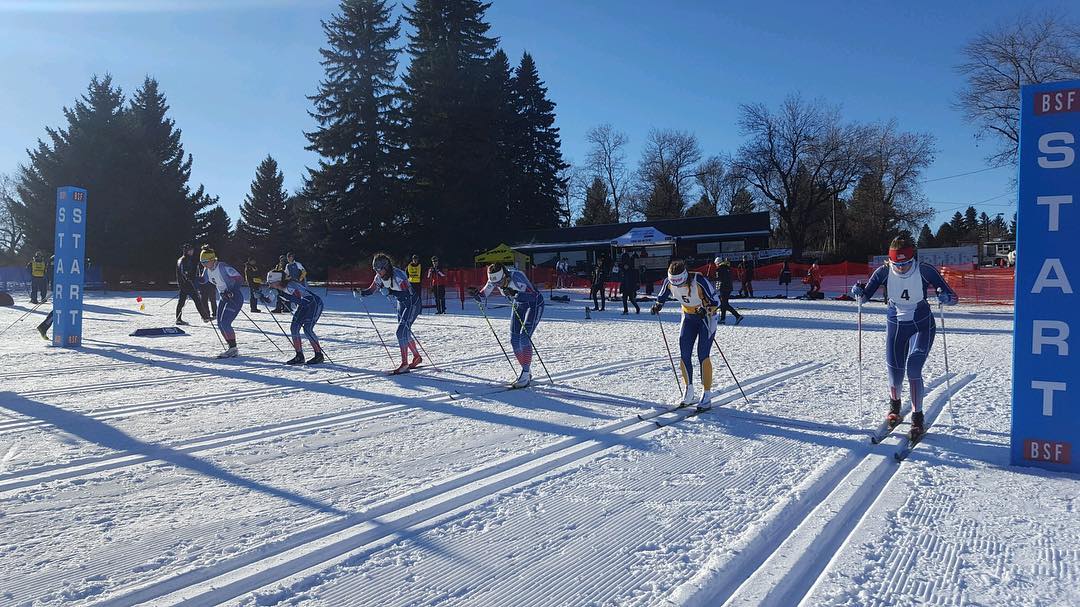
    A scene from the start line of a 2018 Intermountain JNQ in Bozeman, MT. (Photo: Sun Valley Ski Education Foundation Facebook)

    Observed Program Benefits 

    There’s a sizable jump between eliminating fluoros and further reducing a wax box to a small array of products, but Kapala emphasized that these “athletic outcomes” are the central tenet around which discussions regarding changes take place within Intermountain. How does the protocol impact the opportunity and capacity for athletes from clubs of all sizes to be successful on race day and have a positive experience in the sport?

    We’ll start with the impact to a program’s budget, which on its own is a source of inequality among clubs in a given region. Speaking specifically for Intermountain, but also the West more broadly, Kapala pointed out that there are a number of “super clubs” whose financial means and staff power made it hard for smaller clubs to compete in an open wax environment. 

    “They’re usually clubs that are in these mountain towns that are part of [larger] ski foundations or clubs that are multi-discipline, really big clubs. And so they have a lot of administrative function, a lot of underpinning financial security, and so on.”

    He was quick to include SVSEF in that pool, saying cost was not a primary concern when it came to his wax purchasing or race staffing prior to the enactment of IMD’s policy. 

    He went on to explain that within Intermountain, there are six JNQs which are subject to the wax policy, plus an Intermountain opener. However, what he called the “lion’s share” of races, including U.S. Nationals, SuperTours, and any Canadian-based races, remain open wax events where the policy does not apply. Still, with IMD’s policy in place, Kapala said SVSEF has been able to shave $5,000 dollars annually off its spending on wax, equating to a reduction of 30-40%. 

    “The question then is: ‘What am I doing with that $5,000?’” posed Kapala. “Well, what I’m really doing with it now, in my particular case, we have put that money into our merit scholarship program. So instead of me spending money on just making sure I have every wax in the universe in my wax box, I’m actually leveraging those dollars to help kids get to training camps or to go to competitions they wouldn’t normally be able to afford. And that’s huge.” 

    Rather than ignoring the impact this reduction in spending has on the landscape for suppliers, he acknowledged that this could be detrimental, as other clubs are likely reducing their spending by similar percentages. But bringing the focus back to the athletes, he said, “what we’re really spending less of is human capital on things other than coaching.”

    For Kapala, this makes the cost-benefit analysis check out.

    “We think being available to coach kids – that are especially young in their developmental process – at events like JNQs, is actually what the [coaching] game should be all about. So while it’s true that there can be impacts regarding the finances, it is also undoubtedly true that athletic outcomes – true athletic outcomes, the actual ones that we should be concerned about – are actually being serviced way more effectively. And if those two competing interests are both true, we have to pick one. And the one we’re picking is we’re making it more fair for athletes.”

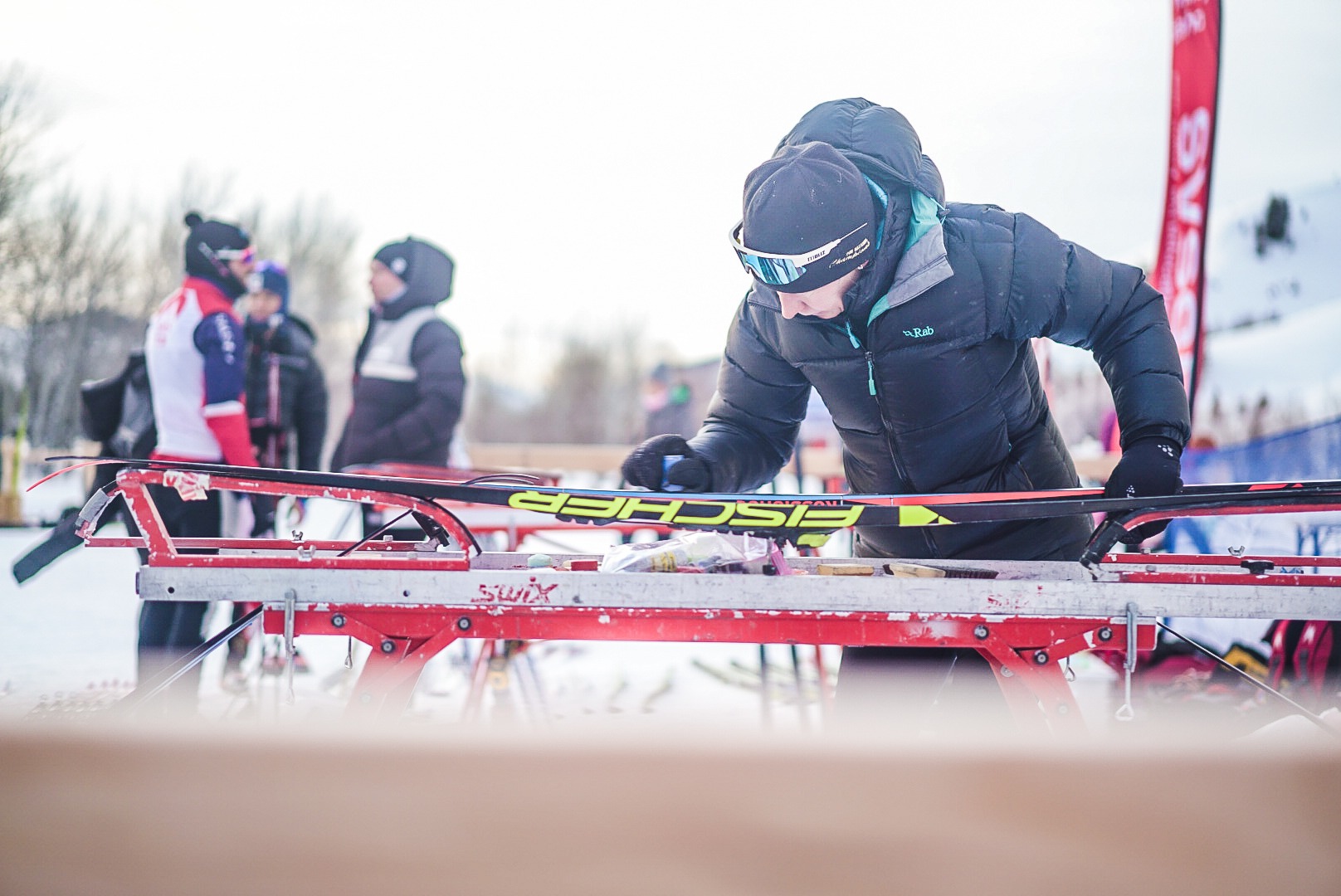
    August Teague supports AVSC alumna Kate Oldham while teching at the 2022 FIS World Junior Ski Championships in Lygna, NOR. (Photo: flyingpointroad.com)

    Speaking for what he has observed within his own program and the Rocky Mountain Nordic division more broadly, August Teague – Cross-country Program Director at the Aspen Valley Ski and Snowboard Club (AVSC) – shared similar sentiments. 

    “I guess the real question to me becomes: ‘What is the purpose of a waxing protocol and at what level and why? And I certainly believe that barriers to entry in sport are a real good reason to have a waxing protocol, and time allocation or time management.”

    Adding specificity to the statement, he said, “The biggest thing that I see is that I can spend more time coaching instead of teching. And there certainly is an argument as to the need for better wax techs both from this country and elsewhere, but I think that’s a separate discussion than the coaching discussion and where my time is best served.”

    While the AVSC nordic program is significantly smaller than that of SVSEF, Teague also noted differences in how his monetary budget is allocated. “We have started to explore structures more than we ever have. So money that was being spent on product is now being spent on different structure devices and/or ways to test that structure.”

    Similarly, Steamboat Winter Sports Club U16/U18/U20 head coach Josh Smullin wrote to FasterSkier that the protocol has supported a safer environment for both coaches and athletes while on the road. In particular, he cited driving – there are roughly 3,200 serious injuries and 600 fatalities on average annually in Colorado – as a place where some relief in the toll on coaches during a race weekend has shown value.

    “It used to be that we coaches were up late waxing,” he explained. “Waking up the next morning to go set up at the venue, and then would drive many hours home after the race. A waxing protocol has helped us to be safer drivers, less sleep deprived, and more present with the athletes.”

    Smullin also commented on ventilation, which remains important for the health of waxers even without fluorinated products.

    At many of our home clubs we have some sort of ventilated wax facility. We do not have that on the road [while staying in hotels] unless the weather is nice and we are able to wax outside. Regardless of the fluoro ban, [proper] ventilation is healthier for coaches and athletes.”

    Methow Valley Nordic skiers take to the course during the December 2021 Ski Rodeo event. (Photo: Methow Valley Nordic Ski Education Foundation Facebook)

    “Everybody’s got their opinion…” said Leonard on behalf of PNSA. “There’s no overarching study on these things, and costs, and whether there’s a major difference [in ski speed], but I think what is clear to the coaches is that there’s less time spent testing glide products at races and there’s less of an incentive to do that, especially with the calling it [a few days] prior. There’s also more time that they can focus during that weekend on other things, like with the athletes and their preparation, instead of testing wax, waxing skis and leaving [coaching and direct athlete support] right up to the race time.”

    For Leonard, the question of whether the policy widens the gap for skiers based on the quality or condition specificity of their skis was not a priority when it came to identifying how the policy has served PNSA teams. For a club based in the Methow Valley which travels to regional competitions across Oregon and Washington, as well as to the Super Qualifier in Utah, the policy has reduced the toll of travel. 

    “I don’t know that it’s necessarily a parity – it’s really difficult to get that down.. but I think for us, calling the wax several days out just makes it simpler for people, and there is less [equipment and product] to travel with, one less thing to think about when you’re booking hotels, and all those details. It makes it simpler for teams.”

    He said he has also found it quicker and easier to apply structure on race day without the variable of glide wax testing. And without the need to cart around as much product and equipment, getting his athletes’ skis race ready has been “way easier to manage”.

    “Rather than bringing a wax box with several waxes in it, irons, enough benches that you can get your whole team through, scrapers, brushes, etc. – already, you’re packing the van to the ceiling and then, sometimes it’s driving eight hours, or for the Super Q for us, it’s driving four hours to the airport, [hauling our skis and gear through the airport on both ends], then driving another hour-plus to SoHo, and then doing it all again on the way back.”

    Stay tuned for the final installment, where you can read more on leveling the playing field, the arms race (or lack thereof) for skis, and the reception among Western Division coaches.

  • AVSC Seeks Assistant Nordic Coach

    AVSC Seeks Assistant Nordic Coach

    Aspen Valley Ski & Snowboard Club (AVSC) in Aspen, Colo., is seeking a assistant Nordic coach for the 2017-18 season. This is a full-time position running from June-March. AVSC offers programs for student-athletes throughout the Roaring Fork Valley, in grades 1-12 as well as a Post-Graduate program.

    AVSC was founded in 1937 by a group of passionate skiers who wanted to spread the sport to the local community. Eighty years later, as the valley’s oldest and largest youth non-profit, AVSC has taught generations of local children the very sports that revitalized the Aspen/Snowmass area. Through AVSC, children and teens experience the mountains in winter, build character, challenge themselves and make new friends.

    AVSC Nordic has a rich tradition of success. Recent alumni include U.S. National Team athletes, two Sochi Olympic team members, and hundreds of exceptional alumni. Our team programs are designed to develop, challenge, and engage athletes of all ability levels. All team programs are offered in Aspen at the Aspen High School Trails and in Carbondale at the Spring Gulch Trails.

    The ideal candidate has a Bachelor’s Degree or equivalent, college/elite racing experience, and some coaching experience. They will be willing to work with the entire AVSC staff to develop athletes and programming.

    Job duties will include, but not be limited to, the following:

    • Assist in the day-to-day running of the AVSC Nordic Ski Team including practice planning, budgeting, team communication, etc.
    • Assist in weekly/yearly training plan writing and development.
    • Along with Nordic staff, assist in support of long-term athlete development model for the AVSC programs.
    • Assist Head Coach in developing camp and race schedule.
    • Assist in recruiting and retention of AVSC Nordic Athletes.
    • Attend regional, national, and international race and camp opportunities as necessary.
    • Other duties, as they arise, given ample notice.

    Salary/Compensation: Salary DOE, Aspen Ski Co Season Pass.

    If interested, please send resume, cover letter, and three references to August Teague, Nordic Program Director, ateague@teamavsc.org. The position will remain until filled.

  • August Teague Accepts Position with AVSC

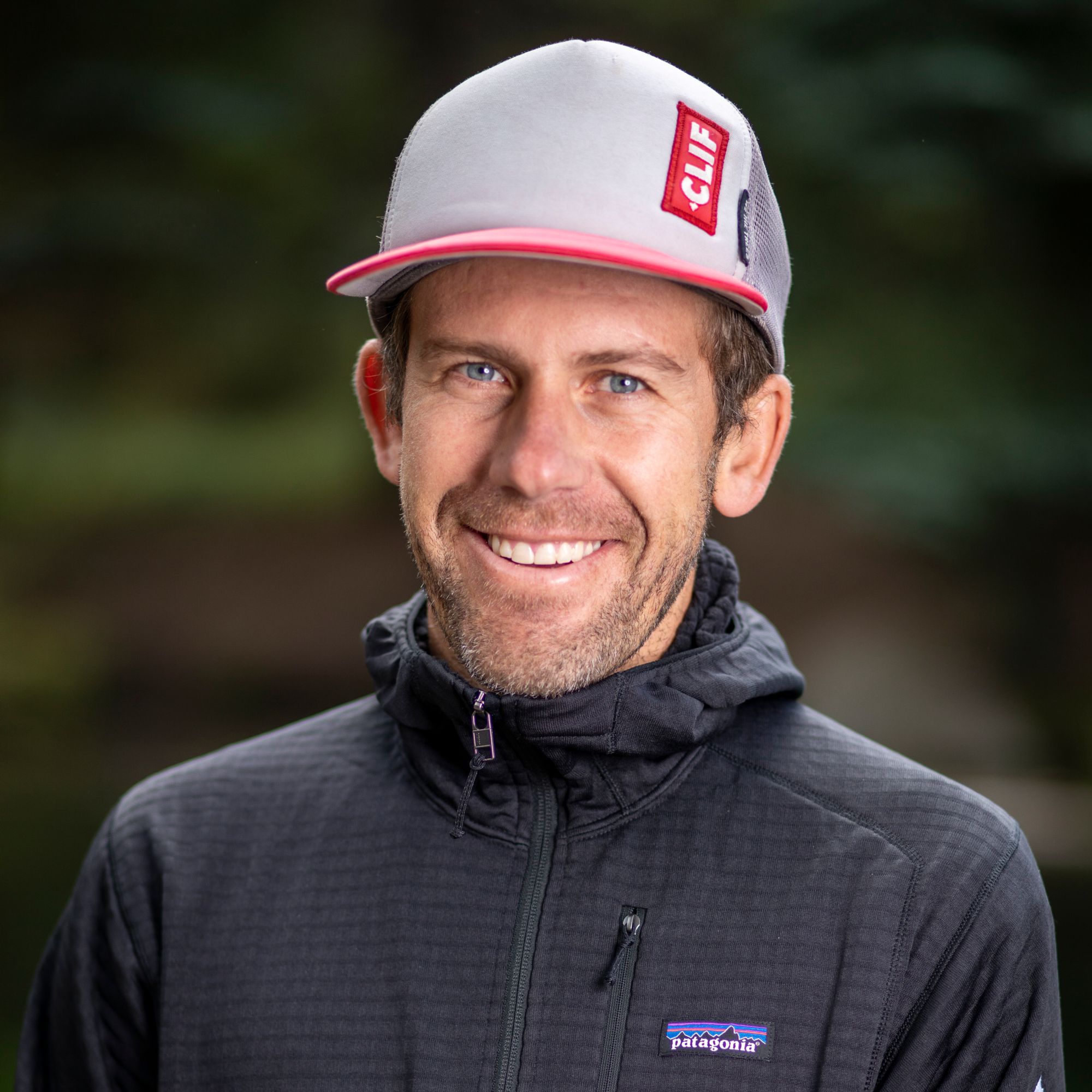
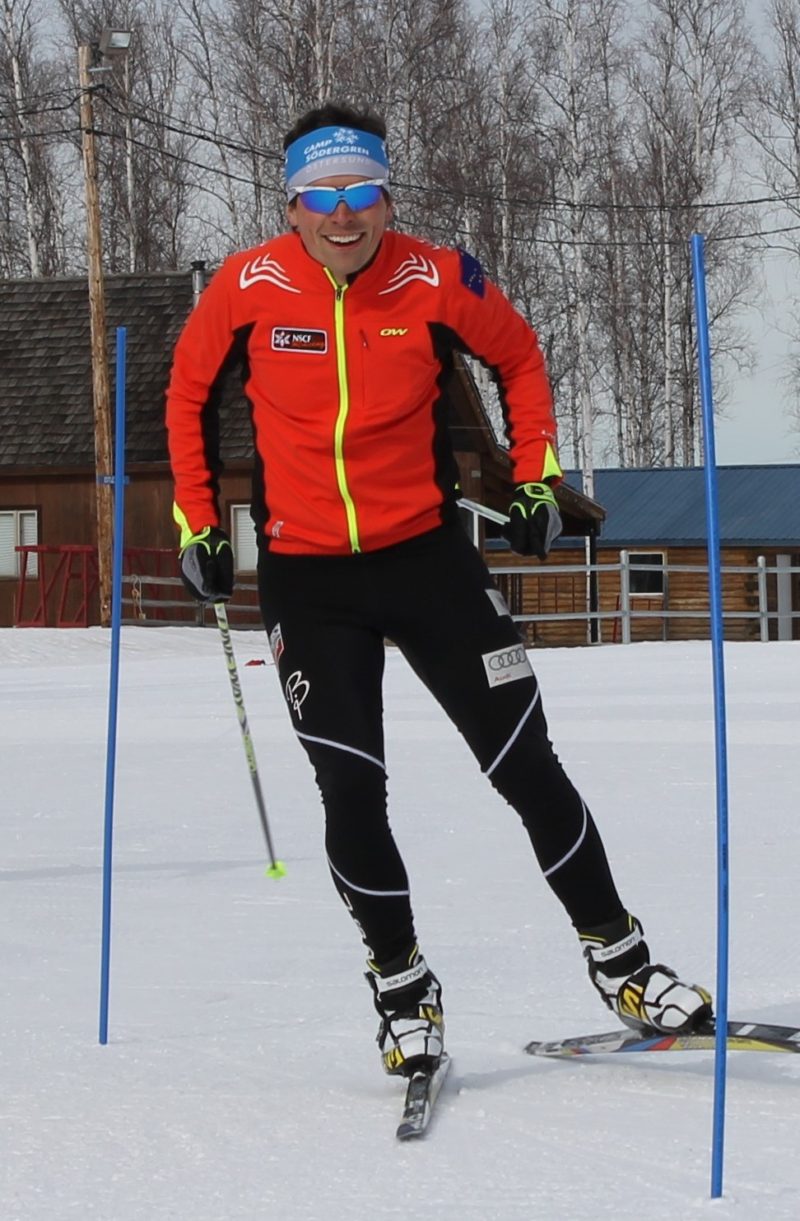
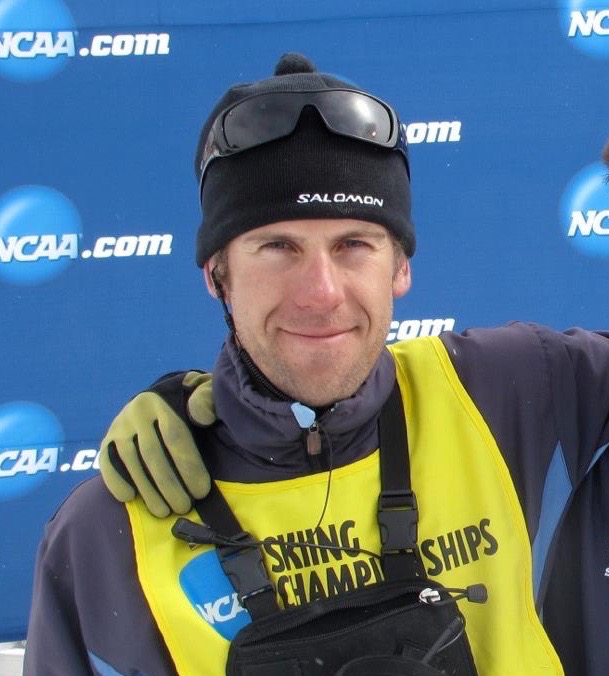
    August Teague (Photo: AVSC)
    August Teague (Photo: AVSC)

    (Press release)

    (Aspen, CO – September 16, 2016) Aspen Valley Ski & Snowboard Club is excited to announce that August Teague will be joining their program as Nordic Program Director. August’s qualifications were unmatched for the program’s needs; he has an impressive 14-year coaching history, helping athletes of all levels achieve their goals while developing a passion for Nordic skiing. August led the Nordic programs at both Whitman College and University of Nevada, Reno, before becoming the Director of Skiing at the University of Nevada, Reno. He then spent 4 years with the Australian Ski Team, leading them through two World Championships and one Olympic cycle. Most recently, August has run his own junior club in Truckee, CA.

    August is no stranger to Aspen or AVSC: his passion for Nordic skiing was cultivated at the club. From AVSC, he went on to ski for Colorado Rocky Mountain School and eventually the University of Denver. He’s thrilled to return to the Roaring Fork Valley and share his expertise with a club that was so integral to his own growth as an athlete, and later, a coach. AVSC’s Executive Director, Mark Godomsky, is excited to welcome August to the team, sharing his confidence that “August will be an outstanding leader and foster a supportive, competitive, and fun environment for our Nordic athletes.”

  • In Their Eyes: A Norwegian Junior Team’s International Exchange with Sugar Bowl

    In Their Eyes: A Norwegian Junior Team’s International Exchange with Sugar Bowl

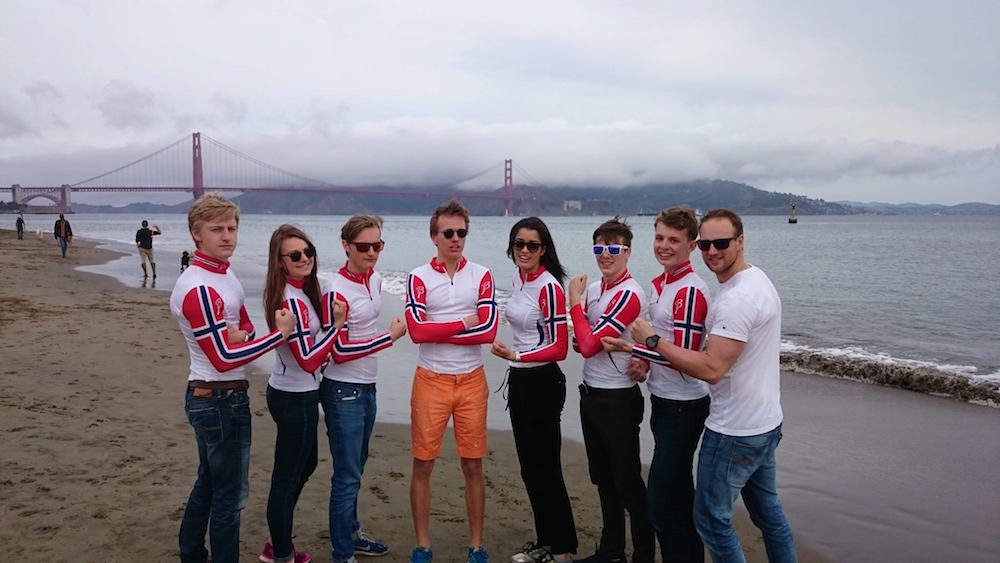
    A team photo of the Heming IL junior contingent that competed at 2015 Junior Nationals in Truckee, Calif.., taken in front of Golden Gate Bridge in San Francisco. (Courtesy photo)
    A team photo of the Heming IL junior contingent that competed at 2015 Junior Nationals in Truckee, Calif.., taken in front of Golden Gate Bridge in San Francisco. (Photo: Björn Ilsemann)

    Note: The following was submitted by Björn Ilsemann, a coach with the Norwegian College of Elite Sports and Heming IL. If you have a team camp or training recap that you’d like to share, please email info@fasterskier.com

    ***

    Earlier this year, U.S. junior nordic skiers from Sugar Bowl Academy competed in the Norwegian Cup and Sprint Junior Nationals, and then welcomed a team from the Oslo ski club of Heming IL to U.S. Junior Nationals in Truckee/Tahoe, Calif.

    It was at the U16 camp last summer when Sugar Bowl Academy coach Martin Benes and Björn Ilsemann from the Norwegian College of Elite Sports and the ski club of Heming decided to do an exchange to race both countries’ junior nationals (JNs). Martin had a lot of experience travelling and racing, both as a skier and as a coach. Björn had done similar exchanges before, leading a group to JNs in Fairbanks in 2013 and hosting several groups of US skiers for Norwegian JNs.

    The plan was easy: The participating  skiers from Sugar Bowl would live with families and train with Heming skiers for a week, and then race a Norwegian Cup weekend and the Junior Sprint Nationals. The Norwegians from Heming would then come over to Truckee and race USJNs.

    During the earlier winter months, the dream became a plan, and in the first week of February, five excited skiers and two coaches embarked a plane heading to Oslo. After being picked up at the airport, the group of skiers from Sugar Bowl and coach Caitlin Bernstein were quickly becoming familiar with how Norwegian skiers in Oslo live and train. Hundreds of kilometers of lit tracks, a five minute subway ride to freshly-groomed tracks and hot chocolate at cabins far out in the backcountry became daily business.

    After an easy Monday recovering from the inevitable jetlag, Björn took the group on three-hour-plus ski in the backcountry on Tuesday morning, followed by a strength and coordination training with his group of skiers at the Norwegian College of Elite Sports. After a quick shower, we headed to town for pizza and the arrival of the last two members of the group who came in from the J1 trip in Sweden, Hannah Halvorsen and coach Martin Benes.

    On Wednesday, the gang did an easy morning ski in the World Cup tracks at Holmenkollen, and met with the junior skiers from Heming for a short-but-hard sprint training session in the evening. Thursday was easy again, the U.S. kids watched a race of the Biathlon World Cup at Holmenkollen and did a rest ski before the Norwegian Cup races on Friday.

    The venue of the Norwegian Cup was pretty close to Oslo — about an hour by car. While the skiers and coaches were shuttled early that morning, you could feel the excitement build up in everybody. But still, no one had expected such a circus of countless wax trailers, big tents and wax cabins, and the intimidating number of close to 1,000 participating junior skiers.

    No one had expected such a circus of countless wax trailers, big tents and wax cabins, and the intimidating number of close to 1,000 participating junior skiers.

    The tracks were really hard and the competition was even harder, but the athletes from Sugar Bowl put up a good fight! To be fair, jetlag and maybe a little nervousness can be blamed a little bit, and the skiers finished in the second halves of their fields. A well-organized race and a lot of help from the wax techs from Heming made the day a good experience anyway.

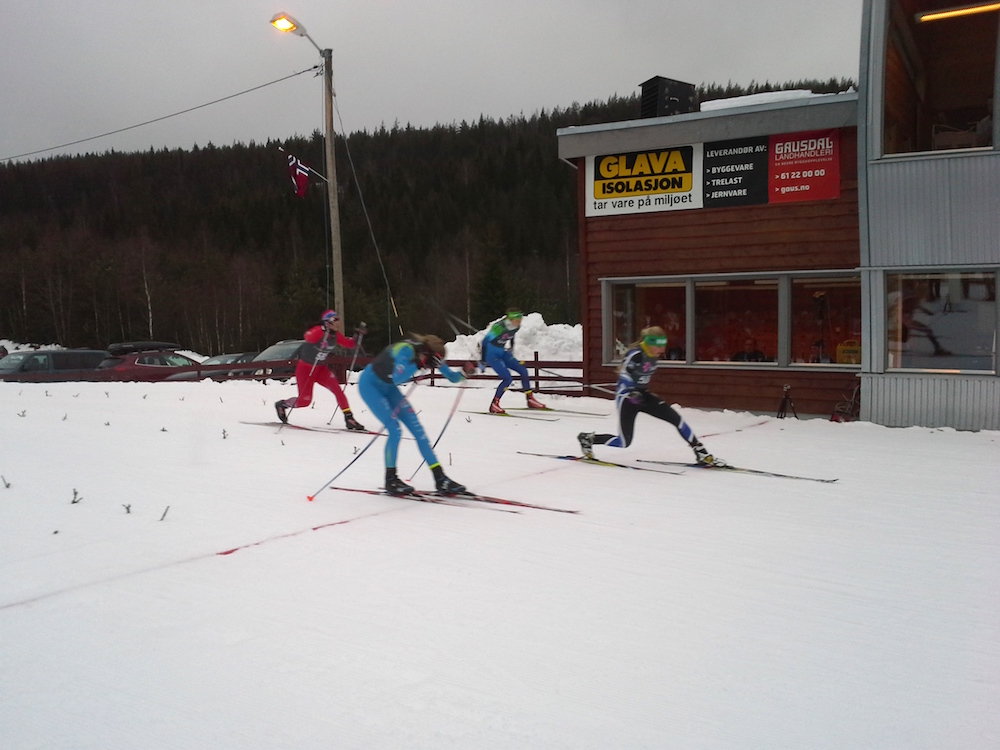
    Hannah Halvorsen (Sugar Bowl Academy) winning the final at Norwegian Junior Sprint Nationals at Nes Skianlegg in Norway. (Photo: Björn Ilsemann)
    Hannah Halvorsen (Sugar Bowl Academy) winning the freestyle-sprint final at Norwegian Junior Sprint Nationals at Nes Skianlegg in Norway. (Photo: Björn Ilsemann)

    On Saturday, the Norwegian Junior Sprint Nationals went underway. With good skis again from the Heming techs, the Sugar Bowl athletes did an amazing job racing and were close to advancing from the prologue.

    Halvorsen, who didn’t race on Friday, didn’t seem very nervous or intimidated by the strong field and managed to win the prologue by two seconds! She didn’t stop there, dominating her quarterfinal and semifinal as well. In the end she stormed into the finish and crashed over the line to win the Norwegian Junior Sprint Nationals!

    On Sunday we raced a classic distance, again as part of the Norwegian Cup. The gang was still excited and had a great day at the venue, which was crowned by a sixth-place finish by Hannah!

    Everyone among the U.S. and the Norwegian skiers who participated in this first part of the project agreed that the trip was a great success. The athletes from Sugar Bowl Academy really got a taste of how it is to live a World Cup-athlete’s routine, and I’m sure they want more of that!

    Almost exactly a month later, the Norwegian skiers and coaches packed their bags and set out on the 20-hour journey to USJNs. With a van crammed full of skis and a joyful gang of seven skiers we drove on highways five-times bigger than at home, but managed to arrive safely but late at night at Truckee.

    With a van crammed full of skis and a joyful gang of seven skiers we drove on highways five-times bigger than at home.

    After having slept way too little, as we felt, we skied our first time on West Coast-snow on Tuesday. The plan was to acclimate to altitude (at home we ski at sea level) and the heat (it was over 25 degrees Celsius warmer than in Norway), and to ski easy with some tiny intervals. That worked nicely, and we felt very welcome by absolutely everybody.

    We considered the first distance race of the JNs on Wednesday as “too dangerous to race hard” in terms of altitude, and decided to ski in a Level 2-3 pace and just do what feels right. All of the skiers felt good, and we had great skis thanks to the help of the Far West test team and our “local,” Martin Benes.

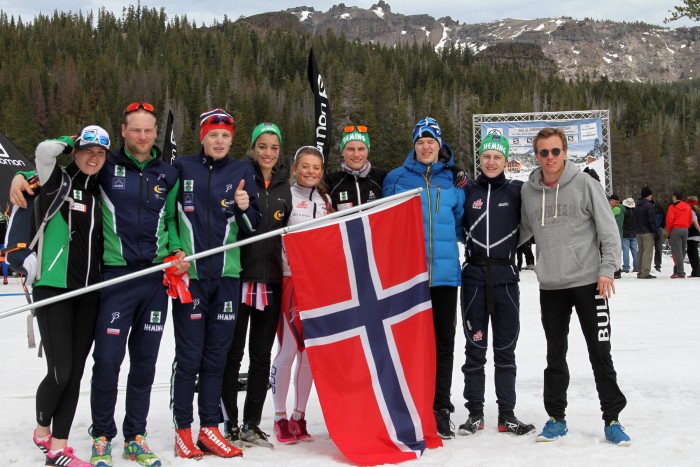
    A Norwegian team photo from 2015 U.S. Junior Nationals in Truckee, Calif., taken after the relay. (Photo: Petter Anderssen)
    A Norwegian team photo from 2015 U.S. Junior Nationals in Truckee, Calif., taken after the relay. (Photo: Petter Anderssen)

    Thursday was easy again, with intervals a little harder than Level 3 and close to a 5 k race pace. The Norwegian athletes used the evening to shop and discover the local food, while the coaches did a presentation on how Norwegian skiers progress from junior to senior skiing, followed by an interesting discussion. The evening ended with a big feast of Mexican food and fun at one of the parents’ houses.

    Friday was the day of the mass start race. The Norwegians had good skis and skied in the front part of the field for the two first loops. Then the altitude and heat took its toll, and one of the Norwegian skiers had to quit and even seek medical attention. The others plowed on, and finished on first and seventh in the U18 field. For the U18 girls, our sole competitor that day Ellinor Høgberg put up a good fight against the U.S. girls, and finished seventh in a really strong field.

    On Saturday, relay day arrived. We gave our best and raced hard, but the U.S. skiers were too strong and we finished sixth for both the U18 boys and the U20 girls.

    Maybe that was because my skiers were already looking forward to the banquet? The evening came, and everybody enjoyed the food and the talks with fellow skiers and new friends.

    The trip home went well, and after some days with jetlag we were back on our skis and racing again. Every single one of my skiers, including us coaches, will remember the trip as an experience for life.

    Every single one of my skiers, including us coaches, will remember the trip as an experience for life. 

    We have to thank Martin Benes and Caitlin Bernstein from Sugar Bowl, as well as all the parents and skiers who participated and helped with this project. Special thanks go to Bryan Fish from USSA and James Southam from NNF, for all your help and support! We also have to thank Joey Caterinichio from USSA for making things work and the discussion, the organizing committee at JNs for letting us participate, and August Teague from Far West for invaluable help and advice in the wax cabin.

    In the end, we want to give a big thank you to U.S. skiing for having us over, for skiing with us and for showing us how much joy and pleasure skiing gives you. Thanks also to Sugar Bowl for coming to Norway, and especially to Hannah for kicking [butt] while you were over here!

    The Norwegian junior team at 2015 U.S. Junior Nationals in downtown Truckee, Calif. (Photo: Ellinor Høgberg)
    The Norwegian junior team at 2015 U.S. Junior Nationals in downtown Truckee, Calif. (Photo: Ellinor Høgberg)
  • Far West Elite Team: Four Years in the Making

    Far West Elite Team: Four Years in the Making

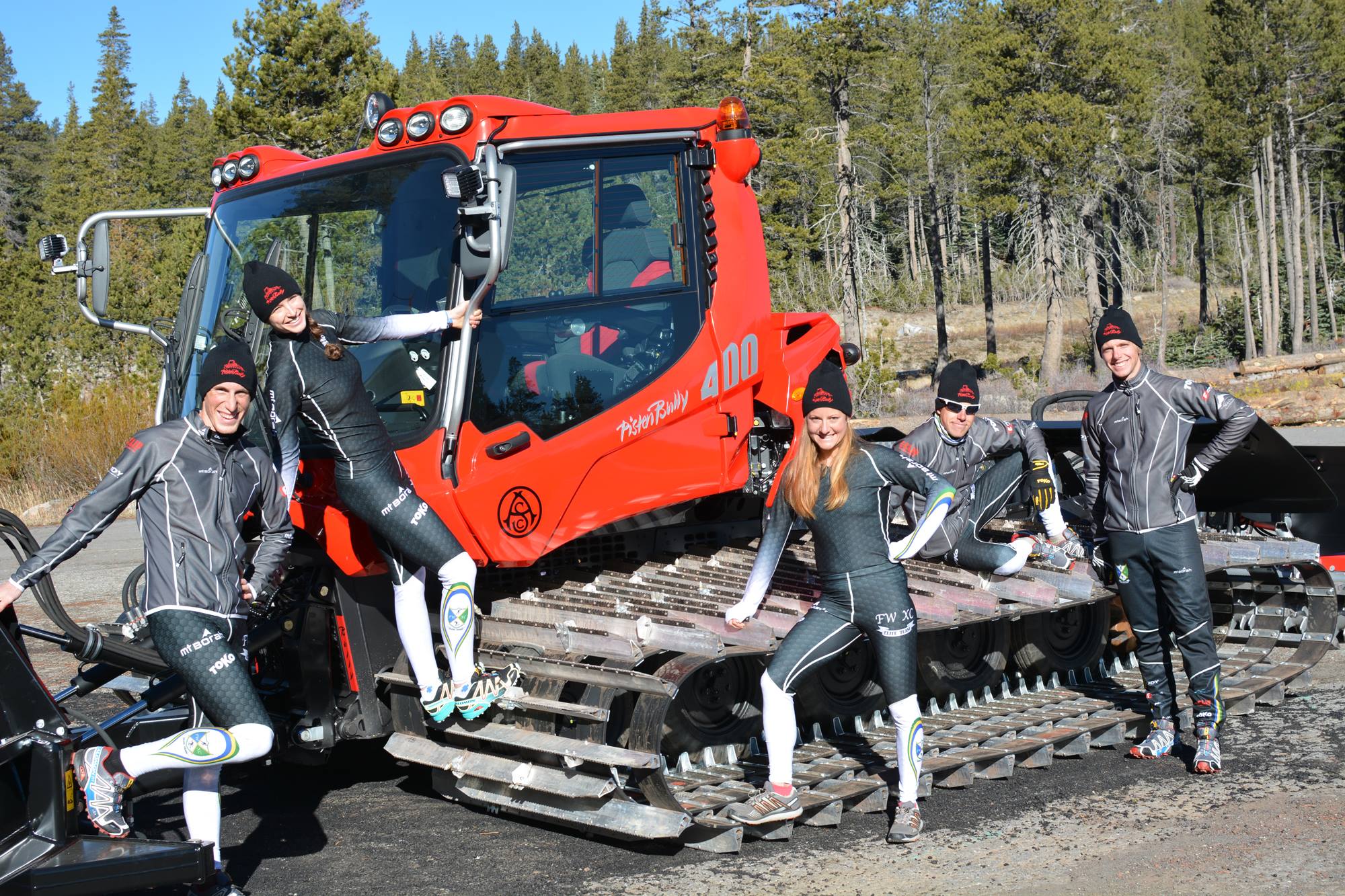
    The 2014/2015 Far West Elite Team (Photo: Auburn Ski Club/Facebook)
    The 2014/2015 Far West Elite Team (Photo: Auburn Ski Club/Facebook)

    When the University of Nevada-Reno (UNR) announced that its ski team would be dismantled in 2010, the nordic-ski community in the greater Tahoe region realized it was in trouble.

    Although the region, also known as Far West, was competitive at the junior level, it was lagging behind the rest of the country in terms of development post-high school. A relatively small number of juniors extended their skiing careers once they graduated while the majority looked for opportunities outside of the ski community.

    UNR had been a clear representation of the path young athletes could take upon the completion of their junior years. However, with the loss of the program, the ski community needed to take action.

    Martin Benes (Photo: MacBeth Graphics)
    Martin Benes (Photo: Mark Nadell/MacBeth Graphics)

    That’s when Ben Grasseschi stepped in and created the Far West Farm Team. With the help of August Teague and Martin Benes, Grasseschi looked to create a program that rivaled the best elite teams in the country. There was also the hope that the addition of an elite team would create a strong foundation for youth skiers and beyond.

    “[What happened at UNR] was an indication that we needed to do more in this area, and we didn’t want to see that happen to other programs,” Benes said in an interview. “Obviously it was a huge loss … but it made us realize that we needed to do something.”

    Even though the program found success with several skiers, such as current APU athlete Chelsea Holmes, the Farm Team never gained a foothold in domestic elite racing. However, its creation helped encourage the further development of nordic skiing in the Sierra Nevada.

    A major part of that development can be attributed to Benes.

    Benes, a native of the Tahoe area, returned to Truckee, Calif., in 2011 after coaching for both the Dartmouth and Bates College Ski Teams. He became head nordic coach of the local Sugar Bowl Academy and worked with the Farm Team when he could.

    While he gained valuable coaching experience on the eastern collegiate circuit, one of the biggest assets Benes brought with him to Truckee was his ability to recruit.

    Roger Cheney (Photo: MacBeth Graphics)
    Roger Chaney (Photo: Mark Nadell/MacBeth Graphics)

    He used his connections to recruit numerous college skiers who were looking for a summer training program. While its beginnings were small, the summer program grew at a steady rate as skiers from Bates, Bowdoin, Dartmouth, Middlebury, Colby, the University of New Hampshire and University of Vermont journeyed across the country to take advantage of what Far West had to offer.

    With copious amounts of skiers coming to Truckee each summer, the elite program began to attract more interest.

    As a result, the 2013/2014 season marked a new beginning for the program. It had a new look and a new name – the Far West Elite Team.

    The team had no official coach (Grasseschi and Teague had left the program to pursue other endeavors), so Benes took on the duty of creating training plans and taking care of each skier’s athletic needs. He also recruited Patrick Johnson, a former NCAA standout at Middlebury, who skied for both the Sun Valley Ski Education Foundation and Alaska Pacific University.

    While the team’s most notable moment of the season was Johnson’s aggressive start to the men’s 30-kilometer mass start at 2014 U.S. nationals in Midway, Utah, the addition of high-achieving athletes and a new professional look caught the eye of many on the national circuit.

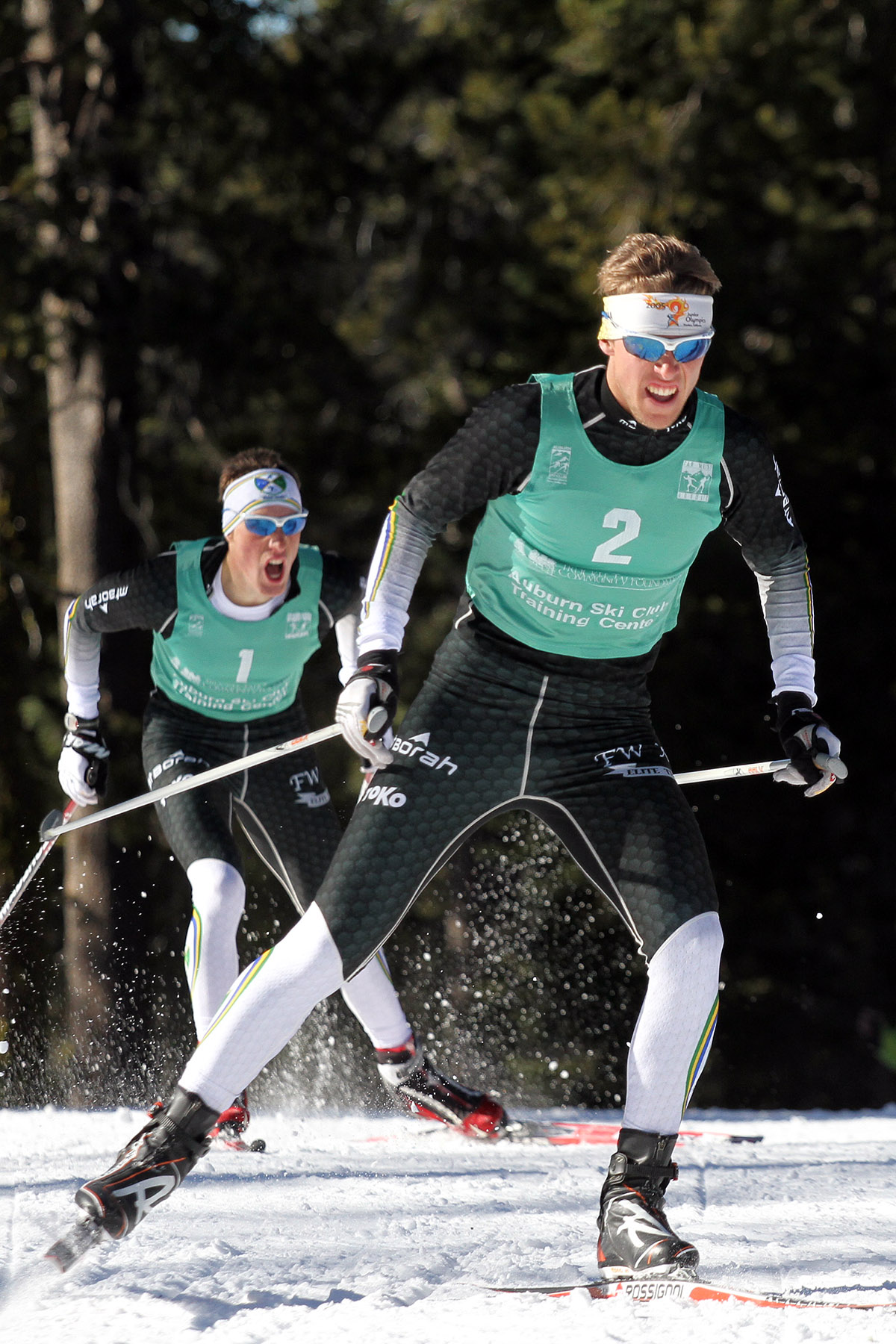
    Spencer Eusden (l) and Patrick Johnson (r) racing at the Auburn Ski Club in 2013. (Photo: Mark Nadell/MacBeth Graphics)
    Spencer Eusden (l) and Patrick Johnson (r) racing at the Auburn Ski Club in 2013. (Photo: Mark Nadell/MacBeth Graphics)

    Soon, it became apparent that the combination of the summer program and the increased visibility of the team meant that further development was inevitable for the 2014/2015 season.

    To speed up the process, the Far West Elite Team hired Reno, Nev., resident and Toko sales representative Roger Chaney to fill the newly created position of team manager. As team manager, Chaney takes care of the logistical needs of the Far West Elite Team athletes and aids them in their fundraising efforts.

    “There has to be accountability for the athletes in terms of fundraising. That became the bigger beast than originally was expected … and there’s definitely a value in making sure that everybody’s expectations are being acknowledged and met,” Chaney explained of his position.

    Benes agreed, stating that, because the team had no official director or coach, it lacked a necessary organizational component that Chaney now fulfills. Additionally, he said that due to his status as the head coach of Sugarbowl Academy it is valuable to have Chaney organize the logistics of training with other local clubs in the region.

    “Because I’m affiliated with a club, it’s nice to have someone who is not affiliated with a club to take that on,” he said.

    For the 2014/2015 season, the Far West Nordic Elite Team consists of six athletes: Johnson, Spencer Eusden, Wyatt Fereday, Anja Gruber, Emily Blackmer, and Sabra Davison.

    Anja Gruber in the 2014 Donner Turkey Trot. (Photo: Mark Nadell/MacBeth Graphics)
    Anja Gruber in the 2014 Donner Turkey Trot. (Photo: Mark Nadell/MacBeth Graphics)

    This winter, Johnson will seek out success on the biathlon circuit while jumping into a SuperTour here and there. His goal was to make the U.S. IBU Cup squad this season.

    Gruber, a German standout from UVM and 2013 NCAA Champion, will start her season on the SuperTour and later travel to Europe for the OPA Cup series with the goal of earning a spot on the German National Team.

    Benes explained the strength of the team demonstrates how far both the program and the region have come since UNR cut its ski team.

    “Four years ago, the majority of our athletes were based here for the winter, maybe one would go to U.S. nationals, but now we’re looking at a group where five if not all six will be headed there. We’re getting people who are committed to elite racing and elite results,” he said. 

    As the program develops, both Benes and Chaney are looking beyond season goals to future developments of the club.

    “We’re looking at a vision that goes beyond one season. Ultimately we need to continue to develop that foundational presence,” Chaney said.

    While there are still a few obstacles in the way, like the lack of a full-time coach, their main hope is that the Far West Elite Team will one day be a program that inspires local skiers to continue their athletic pursuits long after their junior years.

  • The 12: Far West Elite Team

    The 12: Far West Elite Team

    Note: This is the 12th preview in our U.S. elite-team series, the “The 12.” We asked coaches to tell us what’s new and whom to look out for this season. We will be publishing Canadian training-centre profiles in the coming weeks.

    Team: Far West Elite Team

    Coaches: Martin Benes, August Teague

    Roster: Franz Bernstein, Spencer Eusden, Wyatt Fereday, Patrick Johnson; Holly Whitney

    Who’s new: Bernstein heads west after a standout career at the University of Vermont, where he was an NCAA champion in  2010. Bernstein remained in Vermont after graduating, as he pursued his MBA from UVM. With Masters degree in hand, the former member of the German Junior National Team will race in Far West colors for the first time 2012-14.

    Eusden on the run this summer (Photo: Mark Nadell)
    Eusden on the run this summer (Photo: Mark Nadell)

    Joining Bernstein as a Far West rookie is Johnson, who wrapped up four impressive years at Middlebury College in 2012, before stepping right on to the professional circuit with the Sun Valley Gold Team. Johnson won his first SuperTour last season, and will join the Far West squad this fall after spending the summer at home in Anchorage, Alaska.

    Who’s missing: Beth Taylor; Noah Brautigam, Phill Violett, Gus Johnson

    All four of the above have moved on from competitive ski racing. Johnson and Brautigam are coaching, in California and Utah respectively, while Violett has shifted his focus to summer biathlon. Taylor, following a breakout season, has opted not to train full time or travel this year.

    Back for more: Both Eusden and Whitney started with the Far West EliteTeam as part of the summer college training program. Obviously they found the mountains of California to their liking, and returned for more.

    They attended East Coast colleges, Bowdoin and Williams respectively, and are heading into their second seasons with Far West.

    The longest tenured member of the squad, Wyatt Fereday, just completed his master’s thesis at the University of Nevada, Reno, and is looking to build on strong results his third year racing out of California.

    Whitney and Fereday after claiming victory on Valentines Day (Photo: Mark Nadell)
    Whitney and Fereday after claiming victory on Valentines Day. (Photo: Mark Nadell)

    Top results last season: Fereday placed an impressive 16th in the SuperTour Finals Hill Climb and 49th at the American Birkebeiner while consistently placing at the top in local events.

    Eusden took 2nd at the Great Ski Race, 11th at the Aspen SuperTour in the 10k classic, 22nd at the Boulder Mountain Tour, and 21st in the SuperTour Finals Prologue.

    The final returning member of the team, Whitney, won the local Tahoe Rim Tour and just missed the podium in the Great Ski Race, placing 4th.

    Johnson did not race for Far West last season, but his results are impressive nonetheless,  earning the victory at the Aspen SuperTour in the 10k classic, along with a 5th at US Nationals in the 15k freestyle, and 8th in the American Birkebeiner, where he was the top American finisher.

    Bernstein, for his part, placed 8th in the Craftsbury Marathon.

    Coach’s Comment: Benes is looking forward to the 2013-14 season with new faces joining the solid returning cast.

    “This year’s edition of the team is definitely one of our strongest,” Benes said. “On the men’s side, adding Patrick Johnson and Franz Bernstein will be a big boost not only in training, but also by increasing the size of our travel squad.”

    Both Bernstein and Fereday will be more focussed on local racing, though Fereday does plan to hit West Yellowstone, the American Birkebeiner and the Boulder Mountain Tour.

    Benes expects Eusden to build off some strong results from last year, and should reap the benefits of some tough training.

    “We had a big planned jump in terms of training volume last year, which combined with a move to altitude left him feeling pretty tired at times during the race season,” Benes explained. “This was to be expected, and he ended up with some big fitness gains. This year, we have leveled off his training a little and we should see payoff come winter.”

    Like Fereday and Bernstein, Whitney will mainly race locally as she will also be coaching part-time after spending the summer in New England.

    Johnson should be battling for top spots on the domestic circuit, and the team looks forward to his imminent arrival.

    Other previews: Alaska Pacific University | Bend Endurance Academy |Bridger Ski Foundation | Craftsbury GRP | Maine Winter Sports Center | Methow OD | SSCV/Team HomeGrown | Stratton Mountain School T2 | Sun Valley SEF Gold Team | XC Oregon | Central Cross-Country

    — Alex Matthews contributed reporting.

  • For Graefnings, College Jump-Starts Focus on Skiing

    For Graefnings, College Jump-Starts Focus on Skiing

    Maria Graefnings (University of Utah) skiing to her second career NCAA title this season. A native of Falun, Sweden, Graefnings graduated this spring and is pursuing a professional ski career back home.

    This past March, Maria Graefnings capped off a hugely successful college career in winning her second NCAA title in the 5-kilometer freestyle at Bohart Ranch in Bozeman, Mont. In her two years at the University of Utah, the Swede dominated the Rocky Mountain region with eleven total RMISA wins. She once gave Kikkan Randall a run for her money in Idaho at SuperTour Finals.

    But instead of riding off into the sunset after graduation, as many European recruits have done before her, 26-year-old Graefnings returned to Europe this spring with more ambitious racing goals than when she first left.

    “I really want to represent Sweden in some World Cups,” Graefnings said. “I haven’t been home for three years or raced that much at home, so we’ll see how it goes… I just know I’m a lot better now compared to when I started studying in the U.S.”

    That’s saying something when you consider Graefnings already had a handful of World Cup starts under her belt before she enrolled at an American university. The Falun native raced at a high level for four years while she worked towards a degree at the University of Östersund part-time. Graefnings took sixth in the classic sprint at World U23 Championships in 2007 and was fifth at Swedish Nationals in 2008.

    Overall she had moderate success in Sweden, never quite making it past the bubble in securing a place on a World Cup roster. Feeling her career start to stagnate, Graefnings decided to make a change.

    Graefnings competing in the Australia Cup this August. Courtesy photo.

    “I was at a point where I didn’t develop as much as I wanted, and my friend said, ‘You should come to the U.S. and ski for the team one semester,’ and I was like, ‘Yeah, why not,’” she said. Seeking to recharge her skiing, Graefnings crossed the Atlantic and enrolled at the University of Nevada in 2010.

    Her friends in Sweden thought the move was a sure sign she was done. “They said, ‘Oh, so you’re going to quit skiing now, Maria?’ And I’m like, ‘No, not at all, I just need to do something else.’”

    Graefnings was fourth that winter at NCAAs, and enjoyed herself so much she decided to stick around to finish her degree.

    “I think it was good for me just to race against other people and see new places, see a new culture, learn English” Graefnings said. “All the pieces just came together. I started skiing really fast.”

    Nevada’s ski team was cut from the athletic department after that season, however, and Graefnings was left to figure out where to go next. “I was like, ‘Oh shit, what do I do now?’” She wound up transferring to Utah while maintaining the working relationship she’d established with the head coach at Nevada, August Teague. In her first year with the Utes she won eight regular-season races and her first NCAA title.

    The following winter Graefnings got more ambitious; with two successful college seasons under her belt she wanted to test how she’d stack up at home. With the blessing of her coaches at Utah she traveled back to Europe in December to try to earn World Cup starts. Illness held Graefnings back in Scandinavian Cups and Swedish nationals, but she was “definitely glad I went back” even though the trip didn’t turn out like she’d wanted. She hardly had time to dwell on it, as she only a few days between nationals and her next college race in the U.S.

    By the end of the 2012 season Graefnings was back to full form, and at NCAAs she won the 5 k freestyle by 20 seconds over UVM’s Caitlin Patterson. It would be easy to imagine college results being trivial to a Swedish athlete raring to get her career going again outside the U.S., but this is not the case with Graefnings. “I won NCAAs two years in a row. I have goose bumps when I think about it; it’s special,” she said.

    Graefnings in Australia. (Courtesy photo)

    Her thoughts on her college experience are equally positive: “The team and the coaches there were great. I had a great time, I continued to develop as a skier and there was no doubt that I wanted to go back [to Sweden] and try to ski. I just love to ski.

    “I think being at altitude for a long period of time, having good teammates — the whole package with school. When you feel good you have fun, you have a good social life, you know? You get in a good flow. That’s definitely important to develop as a skier, too.”

    Teague, who has been Graefnings’ coach throughout her transition from Nevada to Utah and now back to Sweden, noted that her approach to college was somewhat unique among other European athletes who come to the U.S. to compete in college. A few skiers before Graefnings have successfully made the transition back to skiing at a high level internationally — fellow Utah alum Snorri Einarsson is a prime example — but the trajectory is altogether rare.

    “A lot of athletes come to the U.S. because they haven’t achieved their goals in Europe and they’re ready to retire,” Teauge said. “Maria came here seeing it as a pathway to that next step, saying, ‘I need a change with my training here at home. I’ve gotten to the level I’ve gotten to and I need to change something.’ She thought of the U.S. as a positive change in helping her get onto the Swedish national team and potentially ski at the Olympics, where other athletes in the past have seen it more as a retirement party.”

    With a degree in exercise physiology in hand, Graefnings is now training and skiing full-time in Sweden. Her support comes from both the Swedish military and the Falun Borlänge Skiclub, and she’s currently working on adding personal sponsors. Her racing season has already begun; in August she traveled to Australia to compete in the Australia/New Zealand Cup and bank a full month of training at altitude with Teague, who also coaches the Australian national team. Graefnings podiumed twice at Falls Creek, winning the final 10 k freestyle over Russia’s Marina Chernousova.

    “It was perfect,” Graefnings said. “We were at altitude and I got some good training and racing.”

    Graefnings is currently training with her club in Ramsau, Austria, doing everything she can to log the work necessary to meet her goals. Beyond the World Cup she’s set her sights on World Championships and, maybe, the Olympics.

    “[The Olympics] are a dream, that would be so cool,” Graefnings said. “Of course, I’m aware it’s super competitive and a lot of girls are really good. I think if I get everything together, maybe some luck, I’ve been training really hard — you never know!”

    Taking a break in Australia to enjoy the view. (Courtesy photo)
  • Far West Launches Senior Farm Team, Looking to Grow

    Far West Launches Senior Farm Team, Looking to Grow

    TRUCKEE, California – “The hope is that in the future, this can become a team on par with the Sun Valley Ski Education Foundation, CXC and XC Oregon,” said Ben Grasseschi, the head coach of the newly established Far West Senior Farm Team based in Truckee, California.

    The squad’s mission, to create a premium senior race team, is partly a personal goal for Grasseschi, who himself was left dangling after his collegiate skiing career.

    “I see there is a gap there, after college. A lot of skiers still want to continue to skiing, and now as a coach with the Far West division, I have an opportunity to create a niche team like that,” he said. Additionally, as a junior coach, Grasseschi understands the benefits that younger athletes can reap by just being around elite skiers – both learning from them, and knowing that opportunities exist when they graduate.

    “In the future, we hope to be a team on par with the Sun Valley Ski Education Foundation (SVSEF), and be a competitor to those bigger teams. I believe that more competition brings up the level of the athletes in the nation,” Grasseschi said. “We hope to be able to compete for athletes, and be a real option – where skiers can say, ‘I will choose Truckee,’ because they have great coaches and tons of snow and 333 days of sun per year.”

    Hosting the USSA SuperTour

    The Farm Team skiers will travel some, but their focus is mostly on local events. However, Far West and Truckee are hosting a SuperTour race at Northstar in March, which will be a great opportunity to show off the area and the program, Grasseschi said. He hopes SuperTour racers will stay for the Gold Rush marathon a couple of days later, as well.

    “This is a big thing for us and our program,” he said.

    Additionally, the Farm Team is planning a residency program next summer.

    “We will provide free housing to athletes who want to stay with us, train with us and see what we are about. Hopefully, they will then want to become a part of the team,” Grasseschi said.

    Impressive and varied roster

    The young team, which was officially launched in the beginning of November, has a roster that features a mix of homegrown skiers and athletes who have made Truckee and the Tahoe area their home. Most live, train and compete locally, but the Farm Team will be represented with two racers at the US Nationals: Matt Gelso and Chelsea Holmes.

    Gelso, a former U.S. Ski Team member, is a Far West skier who wanted to represent the Farm Team but was offered a better package with SVSEF. But through a regional deal with SVSEF, where the Farm Team shares the responsibility for coaching and funding, Gelso is able to race and represent both teams while living in Sun Valley.

    Holmes is originally from Alaska, but now lives in Truckee and works as an assistant coach at the Sugar Bowl Academy.

    Kara LaPoint is a Truckee native who recently graduated from college and now races with the Farm Team.

    Elias Bucher is a transplant from Switzerland who came over in 2008 to join the ski team at the University of Nevada-Reno (UNR), which was cut last year. Now, he wants to pursue his degree at UNR and continue competing, so he is a part of both the new UNR Winter Sports Club and the Farm Team.

    Gus Johnson is also a UNR Winter sports Club member, and Michael Collins is a former Colby College skier who moved to the area a few years ago, and wants to see how far he can go in the sport.

    Looking for sponsors

    Currently, the Far West Farm Team is funded mainly by grants from the Far West division. That means skiers get very little direct financial support this season.

    “We might be able to give a skier 750 dollars over the whole season, whereas those with SVSEF have access to maybe five or ten times as much as that,” Grasseschi said.

    But the team is still very fresh, and over time, Grasseschi hopes to attract more local sponsorship, and go after the big fish.

    “The title sponsor for the team is still available,” Grasseschi said.

    “We will try to attract more corporate sponsors. But for the time being, we are trying to get our name out there locally,” he said, adding that in athletes’ contracts, team members agree to give back to the local community through service-oriented projects like junior coaching.

    Several of the Farm Team athletes have also expressed interest in creating a community outreach project that would target Hispanic kids.

    “We have quite a few Hispanic kids in the community, and we would like to get them involved,” Grassechi said. “Part of their deal with Far West is that we’re not just here to be ski racers, but also to give back to the community.”

    Ben Grasseschi

    In addition to Grasseschi, who has more than 15 years of experience as a coach, the Farm Team coaching staff includes co-Head Coach August Teaugue, and assistants Glenn Jobe and Jeff Schloss.