Tag: austin caldwell

  • Once A Buffalo, Always a Buffalo: Jana Weinberger on Her First Season as Head Nordic Coach at CU

    Once A Buffalo, Always a Buffalo: Jana Weinberger on Her First Season as Head Nordic Coach at CU

    Jana Weinberger takes over as head nordic coach at Colorado University in Boulder, CO. (Photo: Screenshot CUBuffs.com)

    At the end of the 2017-2018 season, Bruce Cranmer stepped away from his position as the head Nordic coach at Colorado University in Boulder after 18 seasons with the team. During his tenure, the team was the top nordic team a remarkable seven times at the NCAA national championships, with four of those victories also earning the overall win with their points combined with those earned by the CU alpine team. However, throughout all of these championship wins, there was another key player by his side.  

    Jana Weinberger, then Rehemaa, first became a Buffalo in 2003 when she was recruited by Cranmer to train with their program. Hailing from a legacy of outstanding skiers in Russia and Estonia, Weinberger went on to sweep the NCAA nordic national titles in 2006, claiming the victory in both the classic and skate individual races. Weinberger was recognized as CU’s most outstanding skier that year and was presented the Dick Schoenberger Memorial Award. Her time at CU as an athlete has been a highlight of her career, and is part of the reason she chose to rejoin the program as a coach.  

    You kind of become a fan of the program and it’s who you are,” Weinberger told FasterSkier in a call. “Once you become a Buffalo, then it’s hard to quit.”

    Her success as an athlete was a testament to both her character and an upbringing that fostered high-level skiing.

    She was basically national team level in Estonia, and she has a brother who skied on the World Cup for a long long time, so she came from a great tradition,” said Cranmer in a call.

    Weinberger’s aunt, Rutt Rehemaa, was one of the most successful female skiers in Estonia, and her uncle acted as her coach before she moved to the US.

    “Estonians, in general, were always really good classic skiers, so she came with good technique, and she was fit, and a hard worker,” Cranmer added. “Coming from Eastern Europe, I think they just are a little bit tougher in some ways, so she was strong that way. She never complained or thought things were too hard or whatever… she was tough and she knew how to go hard and push herself. She always was willing to step it up, so I think she was a good mentor for other people coming along.”

    Her experience as an athlete helped her develop her coaching philosophy and to connect to the athletes she later guided when she became Cranmer’s assistant coach in 2008.
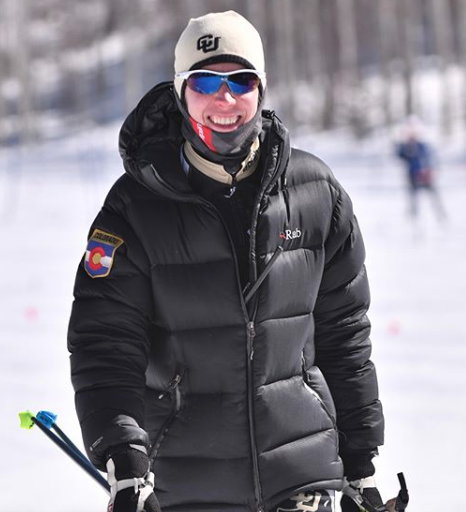
    Colorado University Head Coach Jana Weinberg smiles as she carries spare poles during a race. (Photo: Instagram screenshot @cubuffsskiing)

    A lot of what I learned was from being an athlete myself,” Weinberger explained. “Learning from my mistakes and trying to teach my athletes not to repeat the same mistakes. What I try to do with my athletes is to approach every athlete individually and see what they need and go from there. I try to make them the best that they can be.”

    Weinberger’s background in the sport meshed well with the training program Cranmer crafted at CU, which helped the two connect in both their athlete-coach and collegial relationship.

    “She came from Europe, and I had European coaches, not from Estonia but from Norway,” explained Cranmer. “Their approach is a little bit different than your standard American model, but that’s not to say that there is one model that fits all either.”

    Throughout the ten years they spent working together, coaching was a collaborative effort as they continued to fine-tune an incredibly successful program.

    “I think we worked together well and supported the team in different aspects,” said Cranmore. “Usually, you start ending up with little niches, and as we went along I started sending more things her way that I thought she could do which freed me up to do some other things, so we each kind of found our own niche a little bit and that evolved as we went along.

    “Certainly, she brought professionalism, coming from a high place race-wise from Europe to America,” he added.

    Transitioning from athlete to coach went smoothly for Weinberger. Cranmore appreciated her ability to take on new responsibilities with confidence, even in the tasks that are beyond the realm of wax bench or training plan, such as driving the team van long distances, sometimes late at night and in inclement weather – not for the faint of heart. He added that her toughness as an athlete also helped her as a coach to encourage others to step it up on tough days.

    “’It’s always cold like this!’ or ‘Sometimes the wax isn’t perfect!’ or whatever it might be,” Cranmer laughed. “So from that standpoint, I think she brought that to the team and she was open and got along well [with everyone].”

    Winning national championships with Weinberger was a highlight of Cranmer’s career and he described it as “always a special experience.” When he decided to retire, both he and alpine coach Richard Rokos, who is also the head coach of the overall CU ski program, felt that the decision to offer Weinberger his position was an easy choice.  

    “It was a pretty easy step. I knew that as long as she was interested, she would be a logical choice,” he explained. “The head coach, Richard [Rokos], who is the alpine coach, he’s been at CU for almost 30 years, so he knew Jana well also and thought that was an easy logical step. She knew everything, knew the program, she had been there for 10 years with me.”

    As Weinberger had already been contributing to the program for some time, she was able to transition smoothly into her new role without needing to alter the structure she and the athletes were accustomed to.

    “It’s been a very successful program so far, so there are not that many things that need to be changed,” she explained. “Probably more of me being a different coach than Bruce was. I definitely learned a lot from him and try to incorporate whatever I learned from my previous coaches into my own coaching.”
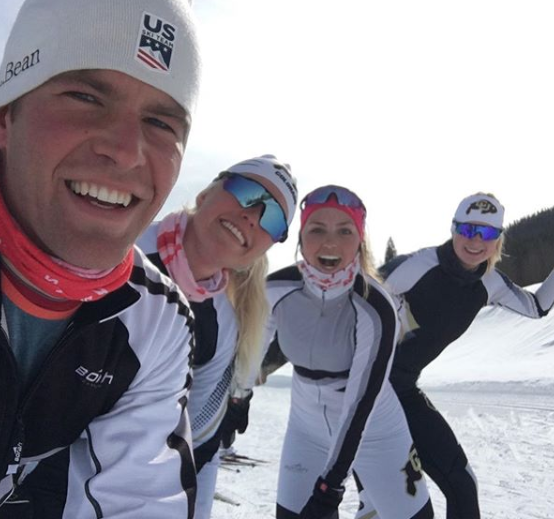
    Colorado University Assistant Coach Austin Caldwell poses with his skiers during a training session in Winter Park, CO. (Photo: Instagram screenshot @cubuffsskiing)

    Following Weinberger’s promotion, Austin Caldwell joined the Buffaloes as the assistant coach. Caldwell was team captain at Dartmouth University, then coached junior athletes at the Putney School in Vermont and post-graduate skiers at the Bridger Ski Foundation in Montana.

    The transition has been relatively seamless so far,” Caldwell wrote about Weinberger’s promotion in an email. “Bruce has an impressive legacy with the team and he set up a proven system that works for the college. Jana has great relationships with the athletes and has been at CU for many years as a skier and coach making the transition as simple as possible.”

    As Weinberger takes on new responsibilities as the team’s leader, Caldwell is finding his own niches to fill in helping to guide the team.

    “Jana and I come from different coaching backgrounds,” said Caldwell. “She has been coaching collegiate racing for many years and I have been on the Super Tour the last few years. She has a system in place that works very well and I support that and can hopefully add useful insights from my past experience.”

    The team has continued to be a powerhouse in the Pac-12 division, regularly placing athletes on the podium and in the top ten for both men and women.

    “One of the highlights [of the season] just happened in the races in New Mexico where our girls went 1 – 2 – 3 [in the 7.5k classic race] – Anne Siri [Lervik], Hedda [Bangman], and Ezra [Smith], so that was pretty cool to experience as a coach,” said Weinberger. “And overall, this season is different for me because I am the head coach and I feel more responsibility, so I’m trying to take care of the team as best to my abilities as I can. That is exciting for me.”

    Looking ahead, Weinberger aspires to lead the team to more national championships and to help other athletes achieve what she sees as the highlight of her athletic career, winning both races at the NCAA’s.
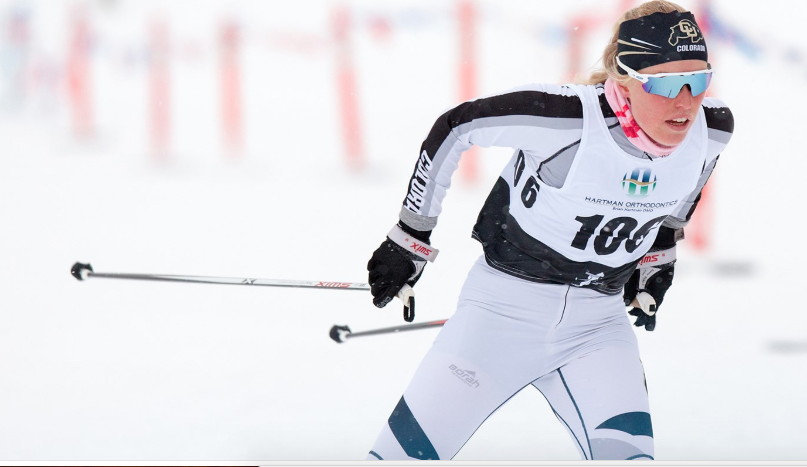
    Christina Rolandsen of the Colorado University nordic team on her way to a third place finish in the 10-kilometer freestyle race in Anchorage, AK. (Photo: Screenshot CUBuffs.com)

    “I guess I had Petra Hyncicova a couple of years ago when I was an assistant coach, she won both races, but I’m hoping in the next couple of years, one of my athletes will win both races as well.”

    She continued, “We always try to win championships, that is our goal every year. What I want to do with our nordic team is I want them to be the best collegiate nordic program in the country. So that is one of my main goals.”

    The CU Team is wrapping up their regular season racing in Anchorage, AK, and will head to Stowe, VT for the NCAA Championships at the beginning of March.

  • Stepping Up to the Plate, Austin Caldwell New BSF Elite Head Coach

    Stepping Up to the Plate, Austin Caldwell New BSF Elite Head Coach

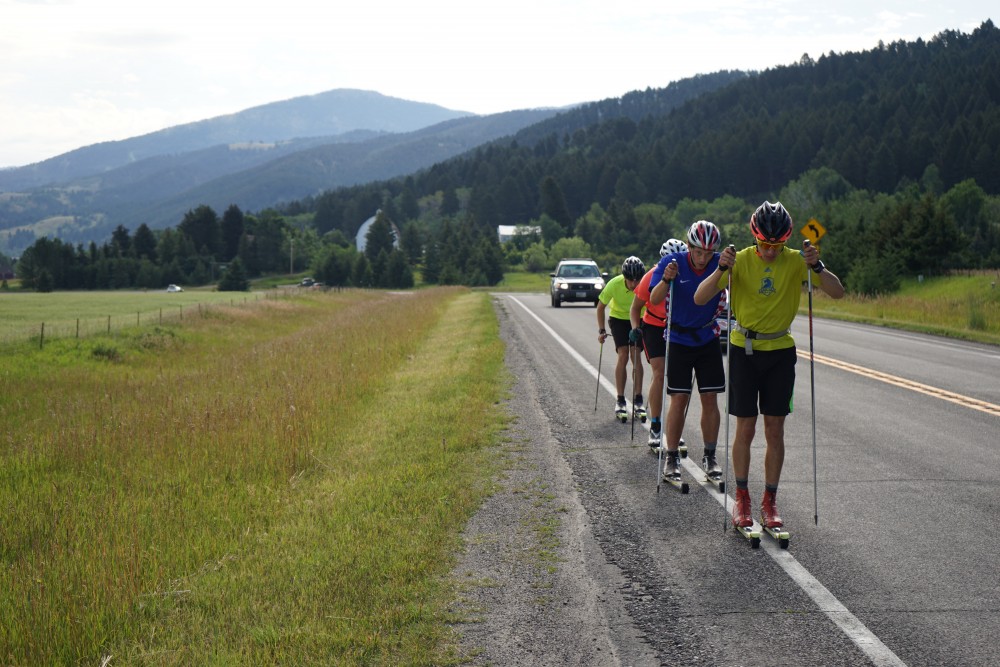
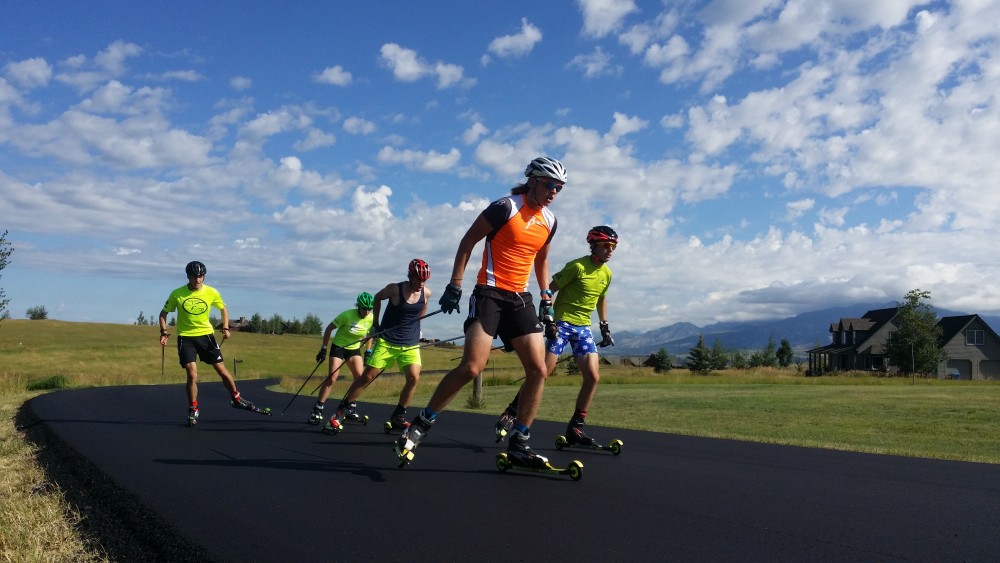
    From left to right: Silas Talbot, Jennie Bender, Paul Everett, Logan Diekmann and Max LaChance during a roller ski with BSF in Bozeman, Mont. (Courtesy Photo)
    (From left to right) BSF skiers Silas Talbot, Jennie Bender, Paul Everett, Logan Diekmann, and Max LaChance during a rollerski in Bozeman, Mont. (Photo: Austin Caldwell)

    The pale wood grain of a wax trailer’s interior walls and the sound of a power-tool firing up can only hold one’s attention for so long, especially if that someone has the coaching gene. As the grandson of John Caldwell, a former U.S. Ski Team (USST) head coach, and son of Sverre Caldwell, the Stratton Mountain School (SMS) nordic director and head coach, it may be no surprise that John — who goes by his middle name of Austin — Caldwell, also heard the call to coach.

    After spending this past winter working for Caldwell Sport as a wax technician, Austin, a 24-year-old Dartmouth grad, wanted a challenge and change. Not only in his work, to include a greater focus on interactions with athletes, but in his whereabouts as well.

    “I really enjoyed working with Zach and Amy [Caldwell] wax-teching last year,” Austin said on the phone while in Bozeman, Mont. “But part of me wanted to spread my wings a bit and try some new place outside of the east and outside of Vermont where I’ve lived all my life.”

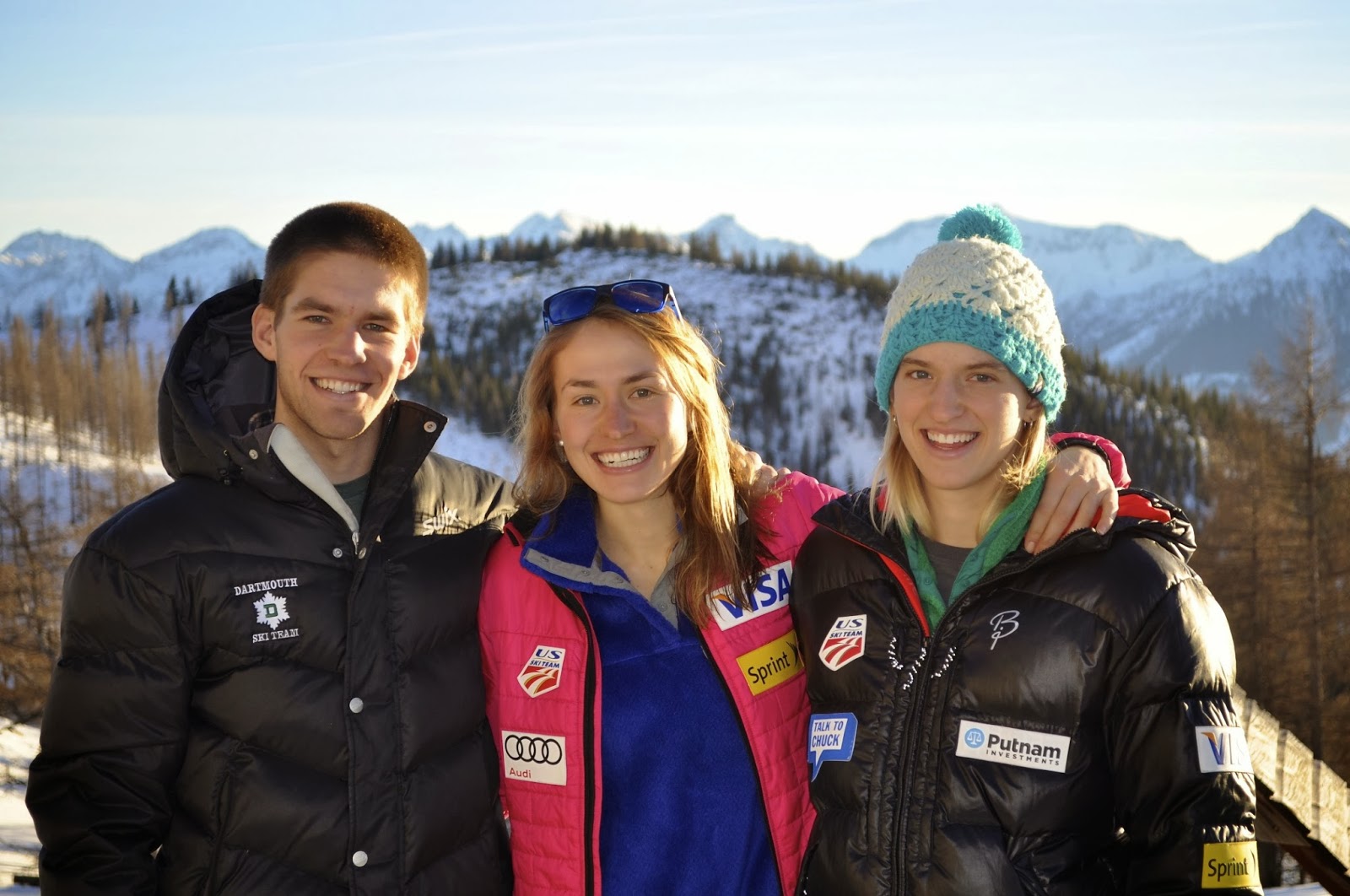
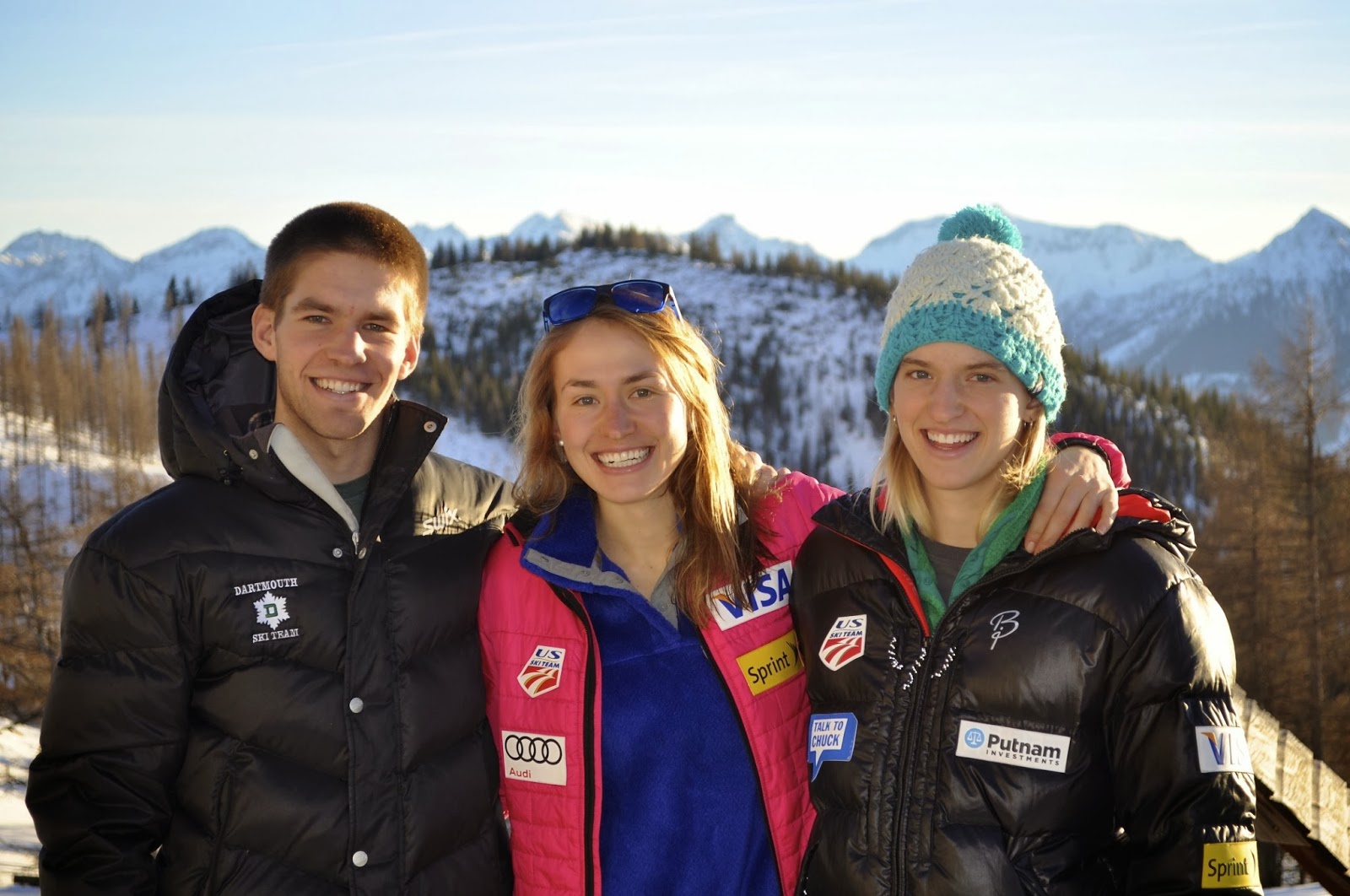
    Austin, Sophie, and Isabel Caldwell (l-r) during their Christmas visit to Europe in 2013 to see Sophie race on the World Cup circuit. (Photo: Sophie Caldwell/sophiecaldwell.blogspot.com)
    Austin, Sophie and Isabel Caldwell (l-r) during their Christmas visit to Europe in 2013 to see Sophie race on the World Cup circuit. (Photo: Sophie Caldwell/sophiecaldwell.blogspot.com)

    Growing up in Peru, Vt., alongside his two sisters Isabel and Sophie Caldwell (the latter of which is a USST member), skiing was not just what Austin spent his spare time doing. It was the family mealtime topic of choice; it was how vacations were spent with relatives — his uncle Tim Caldwell, a four-time Olympian, and cousins are all avid nordic skiers as well.

    Surrounded by skiing his entire life, Austin did not want to give it up anytime soon. When the head coaching position for the Bridger Ski Foundation (BSF) elite nordic program opened up and his cousin, Anya Caldwell-Bean, BSF’s U18/U20 junior coach, told him of the opening, he saw an opportunity to not only stay involved with skiing, but further himself and his experiences in it. 

    “I loved wax-teching last year, that was really fun, but I also enjoyed coaching in the past for junior skiers,” Austin said. “My dad is a coach and I’ve always been interested in coaching … so now I get to coach and wax tech.”

    Stepping into his new role and responsibilities as the head coach for the BSF elite team — his first coaching position of this caliber — Austin is aware of the challenges that rest ahead for himself and his athletes. Prior to this year, his work with athletes involved coaching juniors last year in Putney, Vt., and at SMS youth summer camps over the past five years. 

    “I have gained most of my understanding of coaching from my relationships with Sverre, Ruff Patterson, and Zach and Amy Caldwell,” Austin wrote in an email, referring to his father, college coach, and first cousin once removed (and his wife), respectively. “Those four have been great mentors and in the process they have taught me almost everything I know about skiing.”

    Bridger Ski Foundation (BSF) 2016/2017 Roster:
    Elite Team
    Jennie Bender
    Silas Talbot
    Nick Power
    PG/Collegiate

    Paul Everett
    Max LaChance
    Nick Matelich
    Summer Collegiate
    Noah Anderson
    Logan Diekmann

    Currently eight athletes will work with him during the summer and throughout the season. Three athletes, Jennie Bender, Silas Talbot and Nick Power comprise the elite team, and five others make up the post-graduate crew, with a few of them heading to college in the fall and being replaced with new post grads for the upcoming school year.

    “We’ll have some kids taking classes and then partway through the winter, people will be going different ways depending on how they do [during the season],” Austin explained. “So that will be, as far as managing at that point, that will be one of the bigger challenges.

    “But I think it’s something all teams face,” he added. “Just having kids at different levels and different age groups as well.”

    On a personal level, Austin admits one of his biggest adjustments so far has been learning Bozeman’s trails and rollerskiing roads, as well as not getting the team or team van lost in Montana’s mountains.

    “For me, I guess the biggest challenge that everyone has been helping me with is finding my way around Bozeman and finding new routes for rollerskiing,” Austin said. “Every week I’ve been trying kind of to add a new place to rollerski … because it’s important to switch it up.”

    “I plan on staying in the ski world for as long as I can, so far BSF and Bozeman have been great and I plan on remaining here for the coming years.” — Austin Caldwell on becoming BSF’s elite head coach

    But even if navigating Bozeman has been a bit of a learning process during the beginning stages of his coaching career, the city and a well-established elite program were two of the draws that pulled Austin to apply and eventually take the position.

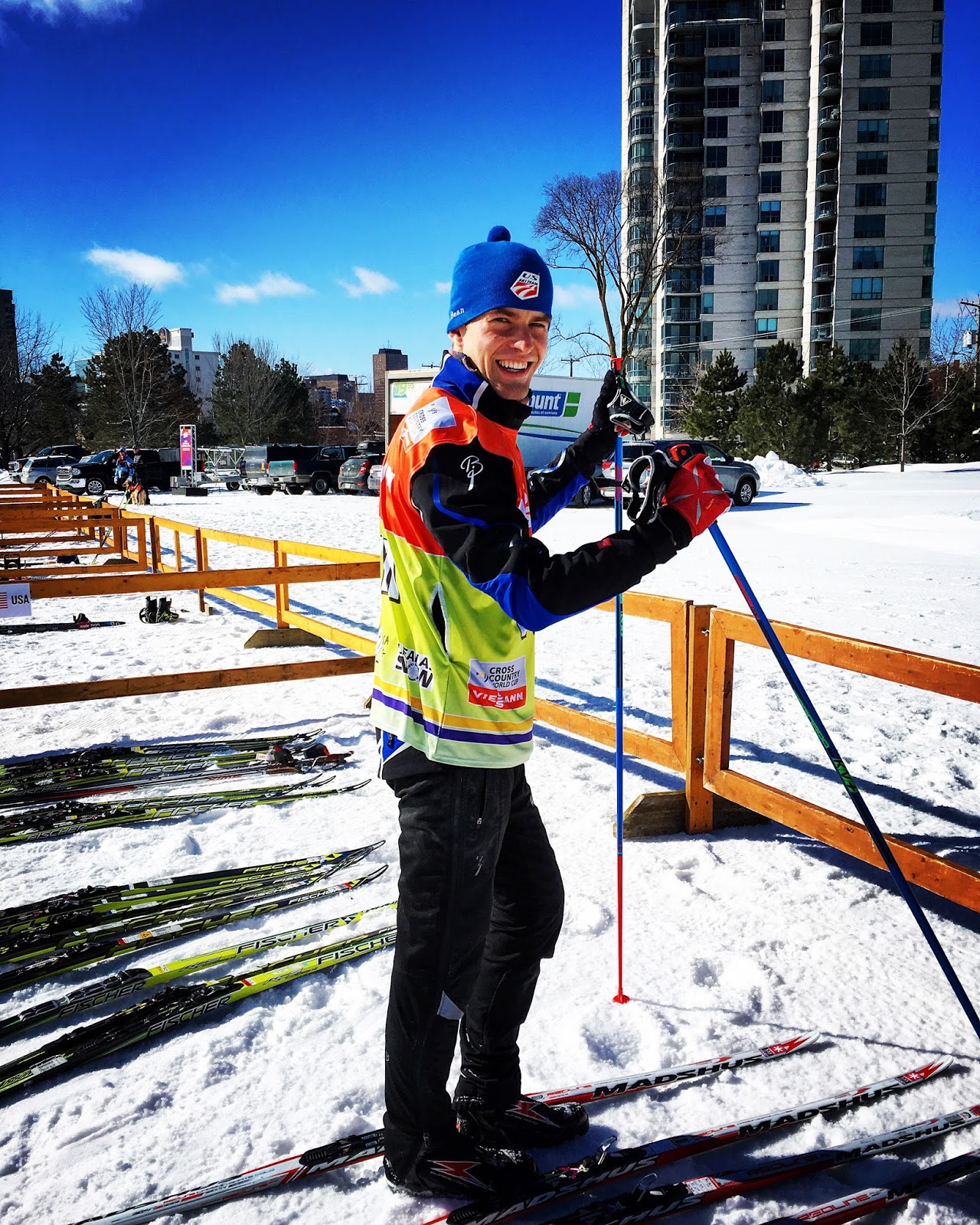
    Austin Caldwell on the World Cup circuit last season. (Photo: Sophie Caldwell/sophiecaldwell.blogspot.com)
    Austin Caldwell on the World Cup circuit last season. (Photo: Sophie Caldwell/sophiecaldwell.blogspot.com)

    “Having a strong program in place and being in Bozeman were the two main factors [why I considered working with BSF],” Austin said. “I also talked with Dragan [Danevski, BSF’s head coach and program director] and with my cousin Anya and it just seemed like it would be a good fit.”

    With the goal to remain involved with skiing for as long as possible, Bozeman and BSF struck Austin as the ideal program and place to be a part of.

    “I plan on staying in the ski world for as long as I can, so far BSF and Bozeman have been great and I plan on remaining here for the coming years,” he wrote in an email.

    Danevski respectfully declined to comment on Austin’s hiring. In the last two years, the BSF elite team has weathered several coaching transitions, most recently with the departure of Bernie Nelson — the team’s coach since the fall of 2014.

    In his first season as an elite head coach and with eight athletes to oversee, his greatest ambition involves pushing his athletes to their full potential. Talbot, 23, Austin’s former classmate, co-captain and fraternity brother at Dartmouth College, and now an athlete for the BSF elite team, saw the transition to having Austin as a coach as uniquely strong.

    “For myself, it has been hugely beneficial to have Austin coaching because he knows my athletic background so well,” Talbot, originally from Anchorage, Alaska, wrote in an email. “He already knows my strengths and weaknesses (which are especially prevalent in the dryland season), and so there is no need to build up the trust and/or understanding between us from scratch. In short, having someone I know well as a coach makes the adjustment to the new program — something that for many after college is a tough step — much easier.”

    From right to left: Max LaChance, during a classic roller ski with BSF in Bozeman, Mont. (Courtesy Photo)
    Bridger Ski Foundation elite and post-graduate athletes during a classic rollerski in Bozeman, Mont. From left to right: Max LaChance, Nick Power, Logan Diekmann, and Silas Talbot. (Photo: Austin Caldwell)

    Entering her fourth year on the BSF elite team, Bender also found Austin a positive addition to BSF and the greater Bozeman area.

    “Austin waxed for me during the last few World Cups at the Canadian Tour this past March, and I was instantly impressed with his professionalism,” Bender wrote in an email. “Austin taking the head Elite/PG coach position is a great attribution to not only BSF, but to the Bozeman ski community as a whole.”

    So far, Austin too, cannot ask more of his athletes and training group. The higher level of focus and preparation he finds evident with the BSF elite and PG level athletes gives him confidence in the season and performances to come.

    “I think the key to success is having a group that motivates each other and pushes each other,” Austin said. “And I’m very excited about this training group we have going into the summer. They’re all working very hard and they’ve come together really well. It’s like they’ve been training together a lot longer than three weeks … everyone in this group is always trying to push the limits and do everything they can do to get better.”

  • Wednesday Workout: Looping L3 Rollerski Intervals with BSF

    Wednesday Workout: Looping L3 Rollerski Intervals with BSF

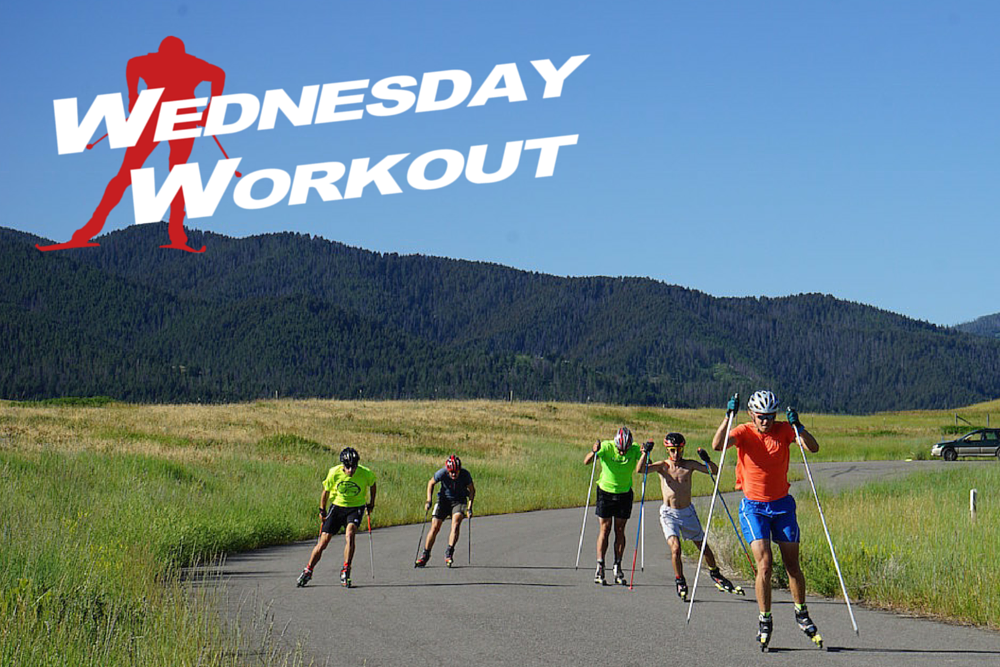
    The Bridger Ski Foundation summer elite and post-graduate crew from left to right: Nick Power, Paul Everett, Silas Talbot, Max LaChance, and Logan Diekmann during a rollerski in Bozeman, Mont. (Photo: Austin Caldwell)
    The Bridger Ski Foundation summer elite and post-graduate crew from left to right: Nick Power, Paul Everett, Silas Talbot, Max LaChance, and Logan Diekmann during a rollerski in Bozeman, Mont. (Photo: Austin Caldwell)

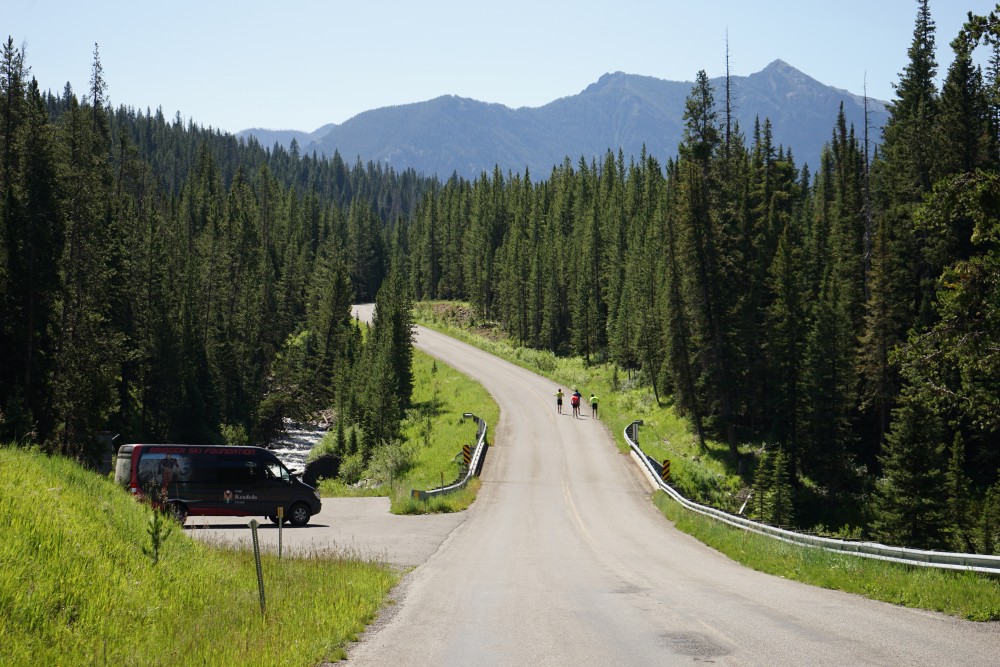
    Along with fleeting daydreams of snow-covered fields, the summertime for many nordic skiers and coaches brings the search for another surface: perfect pavement. After living in Bozeman, Mont., for the past two months working as the new head coach for the Bridger Ski Foundation (BSF) elite program, Austin Caldwell deemed the newly paved roads running past Triple Tree Ranch his rollerski route of choice.

    The best part about the route for Caldwell, however, is not just that his athletes do not have to dodge potholes or endure the consequential leg gyrations from rollerski wheels passing over pebbles. It’s also the interval loop the location provides.

    Performing interval pieces on the same loop, to Caldwell, offers athletes an opportunity to track their improvements not only through one workout, but over the course of many. Caldwell’s workout of choice is done at threshold on the same loop so that athletes can track improvements as the workout progresses.

    The Bridger SKi Foundation summer elite and post-graduate crew during a roller ski in Bozeman, Mont. (Photo: Austin Caldwell)
    The Bridger SKi Foundation summer elite and post-graduate crew during a roller ski in Bozeman, Mont. (Photo: Austin Caldwell)

    Caldwell says that the athletes should then return to the same location and perform the same workout a grand total of four times in the summer and twice in the fall. In order to track performance gains, Caldwell has his athletes calculate their average heart rate during each interval piece, along with the amount of time it took to complete.

    “The main thing that I like about this workout is that people can look back at it over time and see improvements,” Caldwell explained on the phone. “We look at the average heart rate and look at the times down for each interval and it’s a workout we’ll come back to a few times throughout the summer and a couple times in the fall as well, so you can see improvements throughout the year and I think that that is very motivating in the long run.”

    The Workout: L3 Rollerski Intervals on a Loop

    Find: A smoothly paved loop that takes 13-15 minutes to complete. Use this for the intervals.

    Warmup: 30 minutes skiing easy Level 1 (L1) with one Level 2-Level 3 piece

    The set: 4 x 15 minutes

    Each interval piece should be done on the same loop

    5 minutes recovery between each 15-minute interval

    Cool down: 30 minutes easy L1

    Total time: 2:15

    Paving the Way to Better Performances: Caldwell’s Top Two Tips

    1. Summertime = strategy testing. According to Caldwell, summer is the time to test different pacing strategies, transitions, and technique work, especially during longer threshold workouts such as the one outlined above. “I like this workout because it gets people to actually think about where they’re going hard, where they’re pushing themselves and where they can recover,” he said. “In a workout like this at this time of the year, I tell [my athletes] to try different things and see what’s working for them, what’s making it easier? Focus on a certain up hill or relax until the top of the hill and hammer the flat … hop in behind people, stuff like that.”

  • Interview: Sophie Caldwell Reflects on Her Groundbreaking Season

    Interview: Sophie Caldwell Reflects on Her Groundbreaking Season

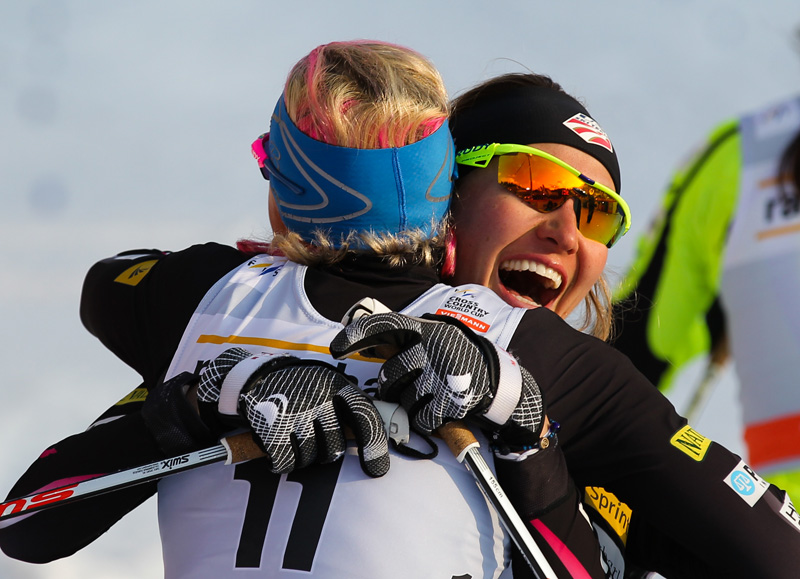
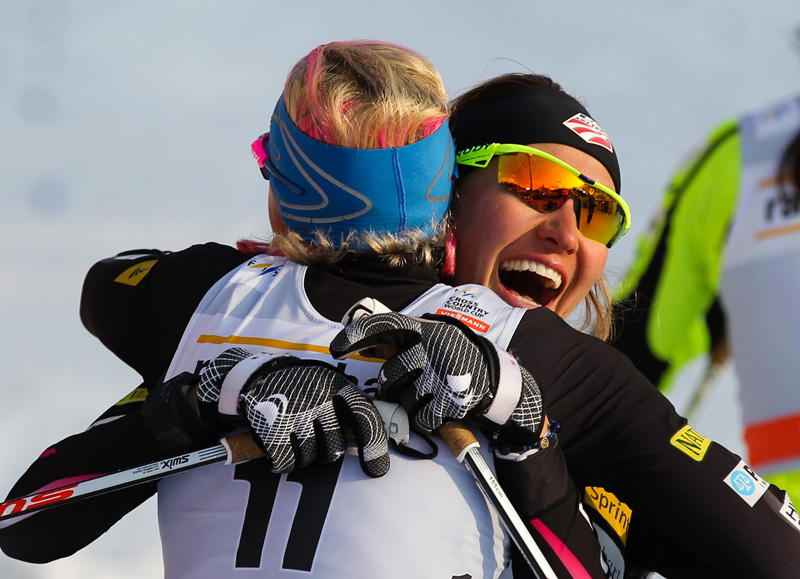
    U.S. teammate Kikkan Randall (l) and Sophie Caldwell celebrate the first U.S. women's double podium in a 2014 World Cup skate sprint in Lahti, Finland. (Photo: Fischer/Nordic Focus)
    U.S. teammate Kikkan Randall (l) and Sophie Caldwell celebrate the first U.S. women’s double podium in a 2014 World Cup skate sprint in Lahti, Finland. (Photo: Fischer/Nordic Focus)

    BOZEMAN, Mont. — When talking with the Sophie Caldwell, her humble demeanor would never reveal that she claimed the highest Olympic finish by a U.S. woman in cross country skiing at the 2014 Games. From her simple goals of increased experience and continued enjoyment of the sport, it would be hard to guess that she was part of the first U.S. women’s double podium with Kikkan Randall in the Lahti, Finland World Cup this past season.

    Both she and her sister, Isabel, are alumni of Dartmouth College and come from a family that has been a major part of the American nordic ski in recent decades. While the Caldwell name is often associated with success, they both agree that they’ve never felt pressure because of their family legacy.

    During their recent trip to Bozeman, Mont. to visit their cousin and former UNH skier Anya Caldwell Bean, FasterSkier was able to sit down with Sophie and Isabel to reflect on last year’s racing season and talk about their future plans.

    FasterSkier: This past season you obviously found a lot of success on the international circuit. Was this something you knew you could do? Were you expecting to achieve the accomplishments you did?

    Sophie Caldwell: My success and results from last season were certainly unexpected. I wasn’t expecting that at all going into the season. I had set some goals but none were super concrete. I don’t like to set results-based goals, but making the Olympics was a big goal, and I wasn’t sure if that was realistic or not. When we found out that we had qualified for the Olympics pretty early on, that took a lot of pressure off. Once that happened I was like ‘I’ve accomplished all my goals for the season. Let’s just have fun with it.’ It was a really exciting place to be and it was really fun.

    I trained well last season, but a lot of it was being excited, being in a good place mentally, and having a good team. I think that’s what I owe a lot of the results to. I definitely wasn’t expecting to have a season like that.

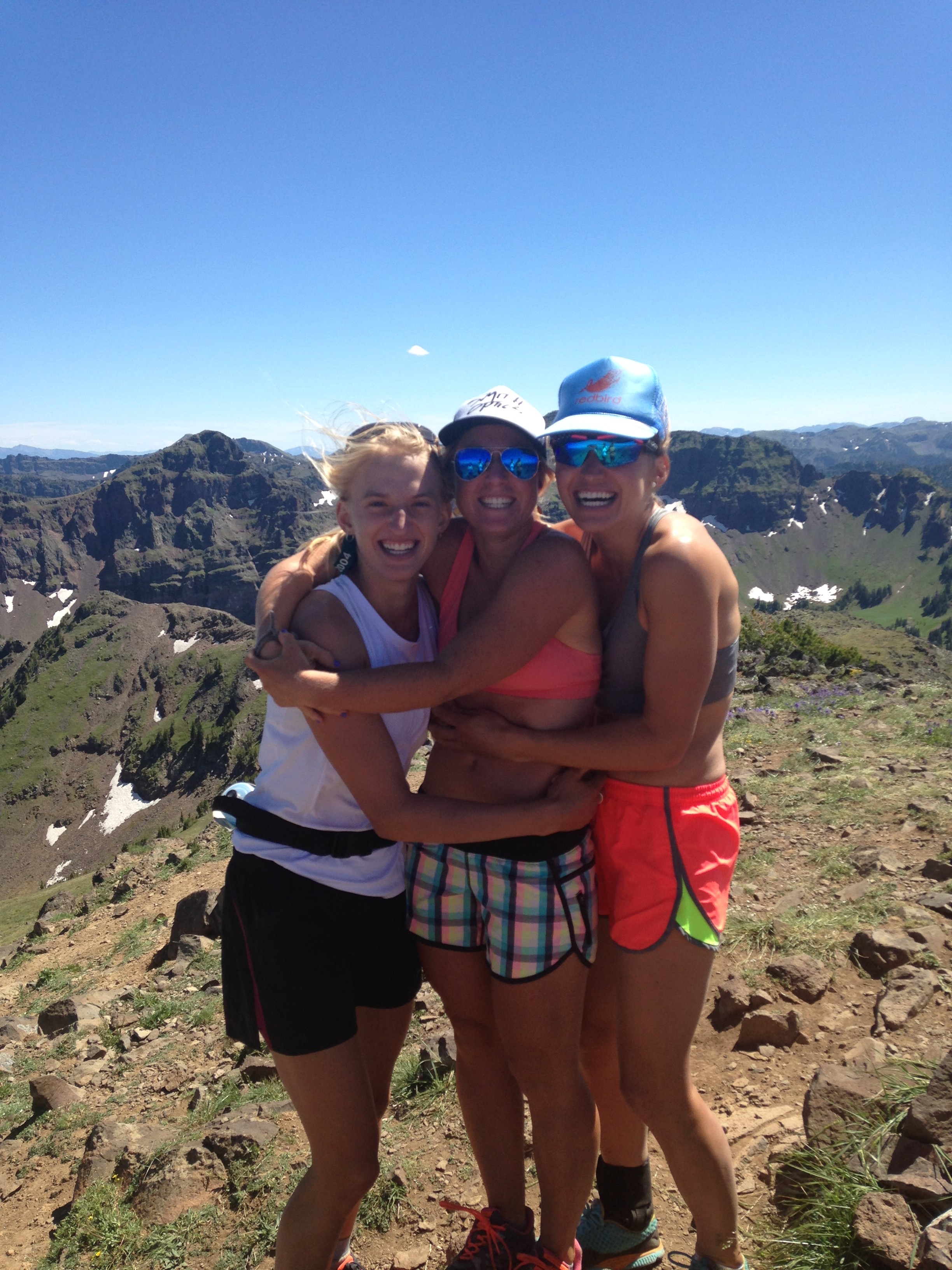
    Isabel Caldwell, Anya Caldwell Bean, and Sophie Caldwell (l-r) pose on the top of Mount Blackmore in Bozeman, Mt. during the sisters recent trip to visit Anya.
    Isabel Caldwell, Anya Caldwell Bean, and Sophie Caldwell (l-r) pose on the top of Mount Blackmore in Bozeman, Mt. during the sisters recent trip to visit Anya.

    FS: How was it adjusting to your first full season on the World Cup?

    SC: It was easier adjusting than I thought it would be. That being said, it’s never easy being home away for that long. Living out of a duffle bag and going from hotel to hotel is exciting because you get to see a lot of new paces but sometimes you miss coming back to a real home.

    FS: What was the most memorable moment of the season for you?

    SC: Everything about the Olympics, especially the sprint day. It was memorable, but it’s also all a blur. Those few weeks were pretty incredible.

    Having my family over for Christmas was pretty fun as well. That was a nice break because we had been bouncing from World Cup to World Cup each weekend so it was nice to tone things down and spend time with my family.

    Some other highlights were Davos, because that was my first top ten. That was really cool because I could see that I could compete with the big girls. That gave me a boost of confidence. Also, Lahti was obviously a highlight when I shared the podium with Kikkan.

    FS: Izzy, how was it visiting your sister during the season this year?

    Isabel Caldwell: Christmas was wonderful! We went to Asiago (Italy) and watched the sprints, then we went to Ramsau (Austria) for Christmas, and then Davos (Switzerland) for the first stage of the Tour (de Ski). It was really fun to see Sophie race and spend time with her.

    FS: How was your experience at your first Olympics? Was it overwhelming?

    SC: It was definitely a little overwhelming going to the opening ceremonies. The fact that we got on TV was pretty cool and we heard from everyone at home. Because we were in the endurance village, which was full of Nordic skiers and biathletes, it was easier because most people you saw there were with you every weekend on the World Cup. You could definitely focus on racing. It was a tough place to get to and a tough place to leave, so it was pretty easy to calm down there.

    After the sprint day I felt like I heard from just about every person I had ever met in my life. That was a little overwhelming. After the race I looked at my phone saw all the texts and emails. I was on my way to dinner and I just pulled out my phone, looked at it and turned it off. I took a deep breath and decided to take in the moment and pay attention to it after dinner.

    FS: Did you feel any pressure at the Olympics?

    SC: I didn’t feel any pressure at the Olympics because, as I said, my biggest goal was to qualify for the Olympics. Up to that point I had qualified for all the skate sprints and it was a skate sprint at the Olympics. At that point I made another goal to make the heats. After that it didn’t really matter what happened.

    Of course, at the same time, there was a little more pressure and I was more nervous than I ever had been on the start line, but I wasn’t worried about results.

    “As far as having the best finish, that was really cool, but I feel that on any given day it could have been any one of us. I’m proud, but having that below my name isn’t defining me or the team.” – Sophie Caldwell on having the best female finish of an American at the Olympics.

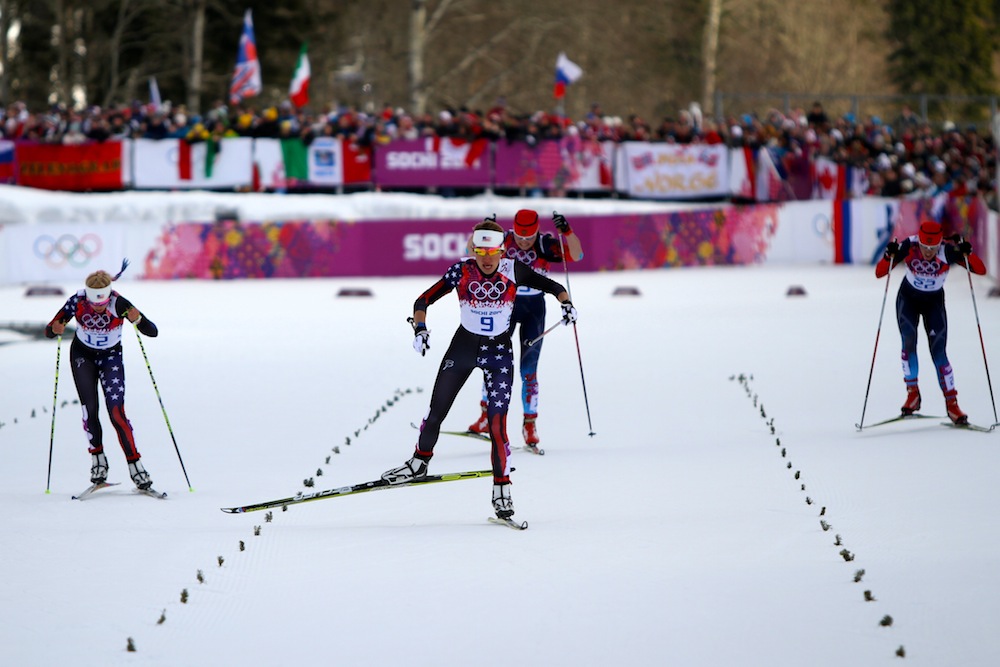
    Sophie Caldwell (bib 9) heading for the finish in her Olympic quarterfinal heat in February, where she placed second to advance automatically to the semifinals.
    Sophie Caldwell (bib 9) heading for the finish in her Olympic quarterfinal heat in February, where she placed second to advance automatically to the semifinals.

    FS: Now that you’ve had time to reflect, how does it feel to have the best finish of any American female at the Olympics? 

    SC: It is still sinking in. I was talking to Anya (Caldwell Bean) today about that and she was saying that it all happened so quickly and before the Olympics nobody thought it was that big of a deal and then you get there and it was a big deal. It was a huge deal, but I still think it’s sinking in.

    As far as having the best finish, that was really cool, but I feel that on any given day it could have been any one of us. I’m proud, but having that below my name isn’t defining me or the team.

    FS: How did Kikkan failing to advance from the quarterfinals affect your race?

    SC: It was bittersweet because we were all broken-hearted when she didn’t make it past the quarterfinals. We had to regroup and focus on the race again. That was definitely some extra motivation. On any given day Kikkan could have gotten a gold medal there and that was some motivation to do it for Kikkan and do it for the team.

    FS: Izzy, you watched the Olympics from Dartmouth? What was it like seeing your sister advance to the A-final?

    IC: Yeah it was amazing. I woke up for every single one of her races this year. For the Olympics the whole Dartmouth team was watching on campus at the big televisions. Everyone was going wild. Meanwhile there was a big group text going on with about 20 family members all screaming their heads.

    It was pretty fun because everyone on the Dartmouth team feels a special connection with Sophie, and also with Ida. There’s definitely a lot of pride coming from Dartmouth. Everyone gets pumped up when they do well, and everyone is watching every morning.

    FS: Sophie, what are your general goals for next season?

    SC: I’ll be racing in the full World Cup season again and I’d obviously like to be competing at World Championships and do well there. Right now it’s hard to tell who is going to be racing which race, I mostly just want to get more World Cup experience under my belt. Last season I felt like each weekend I was becoming more and more confident on the World Cup, but in no way am I a veteran or expert. That’s my big goal, to just keep enjoying the experience and keep learning.

    I haven’t made any large adjustments in my training plan. I have been training a little more but I had some injuries (broken elbow and twisted ankle) but those seem to be fine now.

    FS: What are you most looking forward to?

    SC: I’m just excited to be back on the road with the team, but I’m definitely still enjoying my time at home right now. It’s hard to think about heading over to Europe just yet but it was a blast being over there with such a supportive group and hopefully the team will continue to grow and we’ll get some good results. I think it’s really cool to see the relays where we have started to pop out and do well. Hopefully, as a whole, the U.S. Team will continue it’s upward trend.

    “Our dad in particular did a really good job of balancing being a dad and being a coach. Dad always came before coach, which was really helpful. I think it has just been a pressure free environment from day one. We all have different relationships with skiing but I think we all want to do it for the rest of our lives.” – Sophie Caldwell

    FS: What are you up to these days, Izzy?

    IC: I am officially done with ski racing. I think I want to become a teacher and I have a teaching internship at home for the year at the Burr and Burton Academy Mountain Campus. I’m very excited. It’s a semester program about science and sustainability.

    Austin, Sophie, and Isabel Caldwell (l-r) pose during the Caldwell's visit Europe during Christmas to see Sophie race on the World Cup circuit. (Photo: Sophie Caldwell, http://sophiecaldwell.blogspot.com/2013/12/christmas-and-tour.html)
    Austin, Sophie, and Isabel Caldwell (l-r) pose during the Caldwell’s visit Europe during Christmas to see Sophie race on the World Cup circuit. (Photo: Sophie Caldwell/sophiecaldwell.blogspot.com)

    FS: Do you see yourself continuing to be involved in the sport in any capacity in the future? 

    IC: I have always loved skiing and will continue to in the future, but I’m not that excited about racing anymore. I can live vicariously through Sophie (Laughs). I’ll probably hop in some races this year. I want to do Craftsbury Marathon for Torin (Tucker, a Dartmouth skier who passed away earlier this year) and then maybe do the Berkie if David Sinclair is doing it.

    FS: Finally, you both come from a family that is well known in the nordic ski community. How has that influenced both of you? 

    SC: It’s funny because when people ask us that question the follow-up is usually ‘that must be a lot of pressure.’ It really isn’t. I’m definitely proud to be a Caldwell but I’ve never felt any type of pressure. We grew up skiing but that was just because it was a lifestyle that my parents enjoyed. They did a really good job in raising us to learn to appreciate skiing, love it, and have a healthy relationship with it.

    Our dad in particular did a really good job of balancing being a dad and being a coach. Dad always came before coach, which was really helpful. I think it has just been a pressure free environment from day one. We all have different relationships with skiing but I think we all want to do it for the rest of our lives.

    Izzy and I were on a team together for two years at Dartmouth and three years at Stratton and we got along really well as teammates. It wasn’t a competitive thing. I was just saying to Anya this morning, that in college I said that if anyone is going to beat me I want it to be my sister. I think we are each other’s biggest fans. It was never competitive. A lot of that comes form having a healthy relationship with sports and competition from a young age.

    IC: That pretty much sums it up!

    Sophie currently skis for the Stratton Mountain School T2 Team and is a member of the USST A-Team. Follow her training, travels, and racing through her blog

  • 7 Things You Didn’t Know About Sophie Caldwell

    7 Things You Didn’t Know About Sophie Caldwell

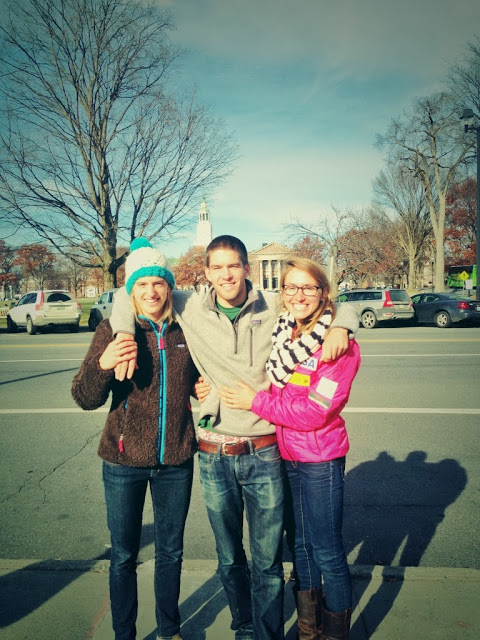
    Sophie Caldwell saying goodbye to her brother and sister before a winter of racing with the U.S. Ski Team in Europe. Did you know her siblings are twins?(Photo: sophiecaldwell.blogspot.com/http://sophiecaldwell.blogspot.com/2013/11/beito-update.html)
    Sophie Caldwell (r) says goodbye to her brother, Austin, and sister, Isabel, before spending the next four month racing with U.S. Ski Team in Europe. Did you know her siblings, two years younger, are twins? (Photo: sophiecaldwell.blogspot.com)

    Yes, we’re going there – but only because we know you’re interested! To get you excited for 2013/2014 racing season, we asked the skiers you’ll be reading most about from the U.S. and Canadian national teams to tell us seven things about themselves that most people don’t know. To top off the randomness, we also asked a couple questions related to skiing (well, sort of) and the life of a pro athlete.

    ***

    If I’m struggling in a race or a workout, a lot of the time I’ll say … “Sophie, get your butt up that hill right now.” But it’s not usually put that nicely. — Sophie Caldwell, U.S. Ski Team member

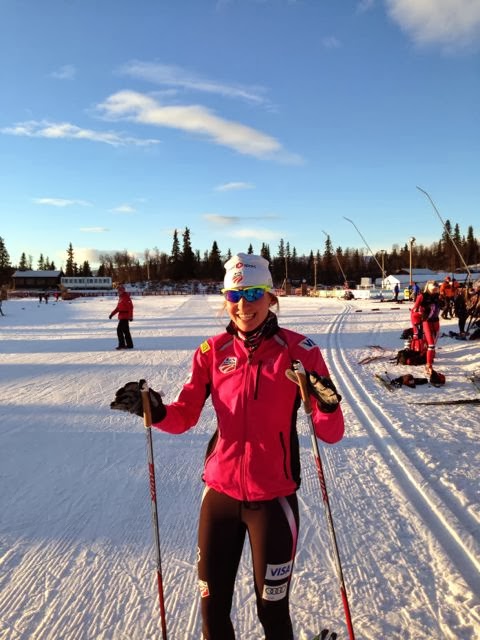
    Sophie Caldwell training in Beitostølen, Norway, before this weekend's FIS races. (http://sophiecaldwell.blogspot.com/2013/11/beito-update.html
    Sophie Caldwell training in Beitostølen, Norway, before this weekend’s FIS races. (Photo: sophiecaldwell.blogspot.com)

    Athlete: Sophie Caldwell

    Team: U.S. Ski Team (first season); Stratton Mountain School T2 Team

    Age: 23

    Hometown: Peru, Vermont

    7 Things:

    1. I love jelly beans
    2. I’m scared of cold water
    3. I went for my first ski when I was 10 months old!
    4. My sister and brother are twins
    5. I grew up with two dalmatians named Daisy and Douglas. They were around my age, so I thought I was a dog for the first couple years of my life.
    6. I was bald until I was 2!
    7. The only food I don’t like (to date) is olives.

    Bonus Round:

    • First races of the season? The FIS sprint in Beitostølen, Norway!
    • Go-to mantra or motto: If I’m struggling in a race or a workout, a lot of the time I’ll say something along the lines of, “Sophie, get your butt up that hill right now.” But it’s not usually put that nicely. I don’t really swear out loud, but sometimes self-talk swearing can go a long way!
    • What do you miss most while on the road (besides family and friends)? Double beds and knowing what everything in a grocery store is
    • Best part about being a pro athlete: Travel!
    • 3 travel essentials: Sleepy Bunny (my stuffed animal), sweatpants, liquid iron (gross)
    • Go-to travel meal or food: Eggs in the basket!
    • Song that you could listen to non-stop: “Can’t Go Home” – Good Old War
    • Song you wouldn’t mind never hearing again: “Work B****” by Britney Spears