Tag: Australian National Team

  • The Road from Albuquerque to Beijing: A Check-In with Jessica Yeaton

    The Road from Albuquerque to Beijing: A Check-In with Jessica Yeaton

    The women’s 20 k skate podium at the 2019 U.S. Cross-Country Nationals at Craftsbury, VT. From left to right, Jessica Yeaton (APU/Australian National Team) in third, Caitlin Patterson (CGRP) first, and Rosie Frankowski (APU) second. (Photo: John Lazenby)

    In the fall of 2018, on the heels of a season that included representing Australia at the PyeongChang Olympics, Jessica Yeaton applied to physical therapy programs. What she did not expect as she focused her lens on a new goal is that the 2018-2019 season would include some of the top results of her career, which reinforced the vision that she was not quite ready to fully hang up her skis. 

    During that season, Yeaton secured her first podiums at U.S. Nationals with a second place finish in the 10-kilometer classic behind Caitlin Patterson, followed a few days later by a 3rd place finish in the 20k freestyle, which was also won by Patterson. (Yeaton’s APU teammate Rosie Frankowski took second.) Later in the season, she earned her first SuperTour win in a 5k skate, and achieved a career best finish at the FIS World Ski Championships in Seefeld, AUT with a 22nd place finish in the 15k skiathlon. 

    Despite the upward trajectory of her skiing, Yeaton enrolled full time in the physical therapy program at the University of New Mexico in Albuquerque. Six months later, she won the 2020 American Birkie as a relative dark horse considering infrequent racing and significantly less time on snow than her previous training cycles. Yeaton explained in her post-race interview that she was only able to get on snow a few times a week in her Birkie build up, and that she had been listening to recordings of the lectures and her own notes while driving or training to ensure her training was not cutting into the study hours she needed to log. 

    Then the pandemic hit, making traveling to races more complex — increasing her risk of exposure not only threatened her own health, but the health of the patients she saw during clinical rotations. The university imposed its own set of quarantine rules, and as parts of New Mexico were severely impacted by COVID outbreaks, Yeaton was primarily restricted to the Albuquerque area. Out of state racing was out of the question.

    Between the Birkie in February 2020 and the beginning of the 2021-22 season, she competed in only one FIS race in December 2020 — a 10k skate at Kincaid Park in Anchorage, which happened to coincide with an extended winter break from school. Yeaton took third in this event behind Sadie Maubet Bjornsen and Rosie Frankowski.
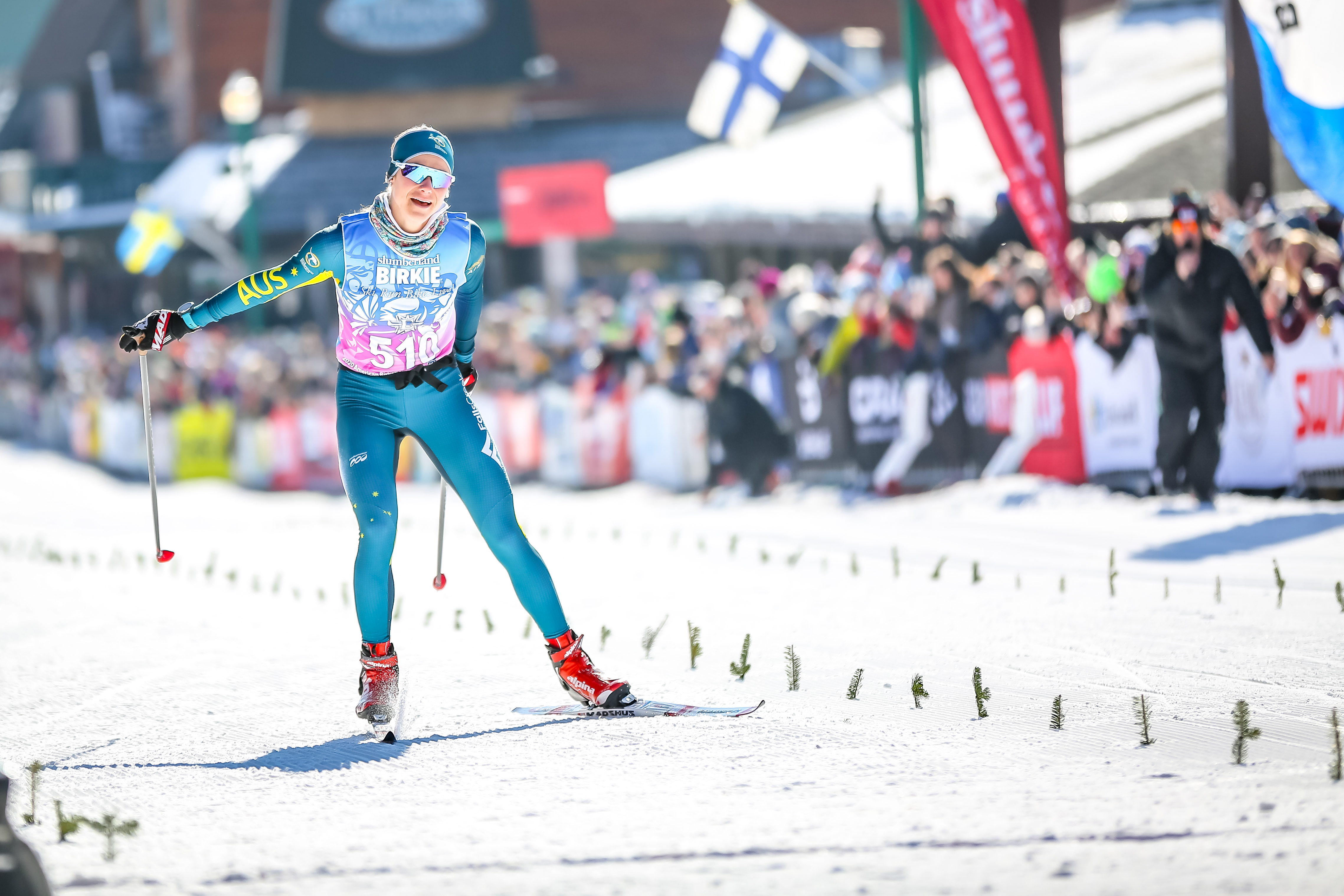
    Jessica Yeaton takes the women’s overall win in the 50 k skate at the 2020 American Birkebeiner in Hayward, Wisconsin. (©2020 American Birkebeiner Ski Foundation)

    Flashforward to fall 2021, Yeaton is on a leave of absence from PT school, delaying her completion of the program by roughly five months, to chase down a spot on the Australian Team in Beijing. She’ll still walk with her cohort in the spring, but is putting off her final three clinical rotations to put on a bib and some skinny skis.

    FasterSkier connected with Yeaton on a call in early November shortly after she had returned to Anchorage and plugged back in with her APU Teammates. At the time, Yeaton was making the trek from Anchorage to Hatcher Pass almost daily to take advantage of early-season snow in preparation for the upcoming season. 

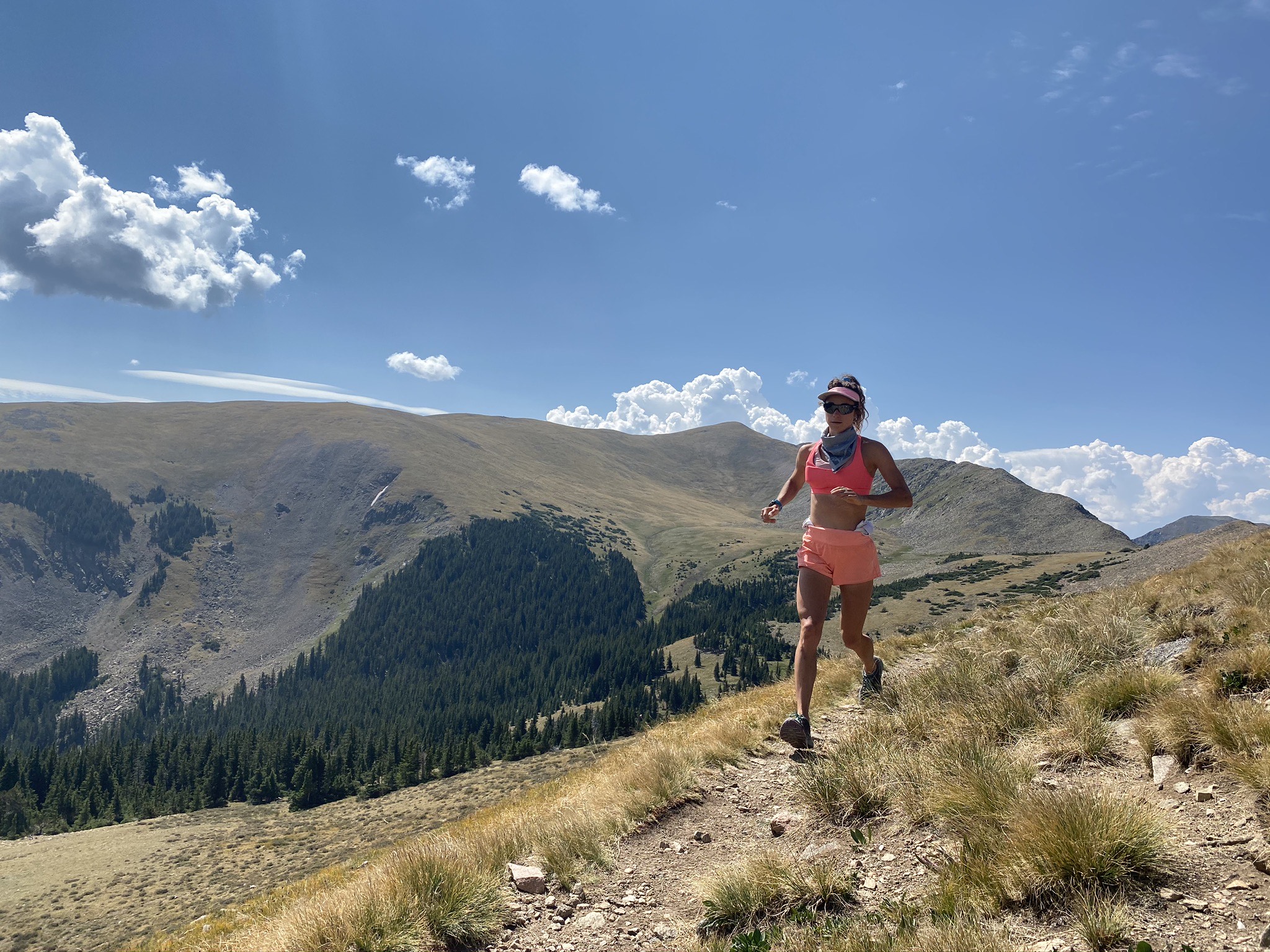
    While Albuquerque may not immediately incite mental imagery of pristine corduroy and crisp classic tracks, Yeaton explained the area has been an excellent place for her to train. The city’s elevation is roughly a mile high, but thanks to a geological anomaly, the nearby Sandia Nordic Center sits atop the rim of a massive uplifted fault block” at an elevation of over 10,600 feet. While this makes breathing all the more difficult, Yeaton applauded the local ski community’s dedication to keeping these trails well-maintained and was grateful to have access to the venue during her time at UNM. 

    A silver lining of the pandemic for Yeaton was online classes, which allowed her to make the 45-minute drive from town to the trails four to five times a week, nearly doubling her time on snow the previous season. 

    “I was able to train super well,” Yeaton explained. “And in the back of my head, I was always focused on this [upcoming] season. I had asked for the time off last winter, so I knew I was going to be taking the leave of absence and could focus on qualifying for the Olympics this year. So I think having that goal just made me better able to not worry about last season, but just stay focused on building base fitness and putting in quality training. Just focusing on the Olympic goal.”

    Jessica Yeaton puts in high-altitude training at the Sandia Nordic Center above Albuquerque, NM. (Courtesy photo)

    As previously mentioned, Yeaton’s success in the season before she began full-time school included many of her career highlights. She explained that knowing her potential helped her stay hungry, even when she was busy with schoolwork and watching races from afar.

    “In the back of my head, I’m like, ‘Man, I want to have a shot at that 30k skate at the Olympics.’ And there are other goals that I still have. So that has made it hard for me to just sit back and be like, ‘Oh, I’m okay not doing the ski season,’ because I do really want to race and I want to see how fast I can ski this year. So that’s played a really big role. I think without some of those results that last season, and without the Birkie, maybe I wouldn’t be so motivated, but it’s been pretty easy to stay motivated to train just because of some of those results.”

    Yeaton said that it was easy to stay motivated to take a break from school to rollerski, and she enjoyed getting more into mountain biking on the plentiful trails in the area. She also enjoyed the contrast of the high desert climate compared to what she had grown accustomed to in Anchorage. 

    “I don’t even check the weather anymore,” she laughed. “I worry about thunderstorms in the afternoon, but you’re never like ‘Oh man. It’s  raining out, I don’t really want to go do this workout.’ It’s always a beautiful day, so you’re just like, ‘Of course I want to get out there and train today.’”

    Yeaton also enjoyed getting to know the small but very supportive local ski community surrounding Sandia Nordic. 

    “There’s so many people in Albuquerque that are stoked on cross country skiing, and it was really cool getting to know some of them. They’ve been really welcoming and supportive of me as a skier. I did the virtual Birkie last year [with some other local skiers], and there were people out cheering and one guy brought a bunch of food for us and set up a feed station and things like that. I’ve met a few people that will train for the Birkie [or other marathon races], so I’ve had people to ski with up there… It’s been cool just to see that there is this great community in New Mexico, and it’s sort of hidden.”
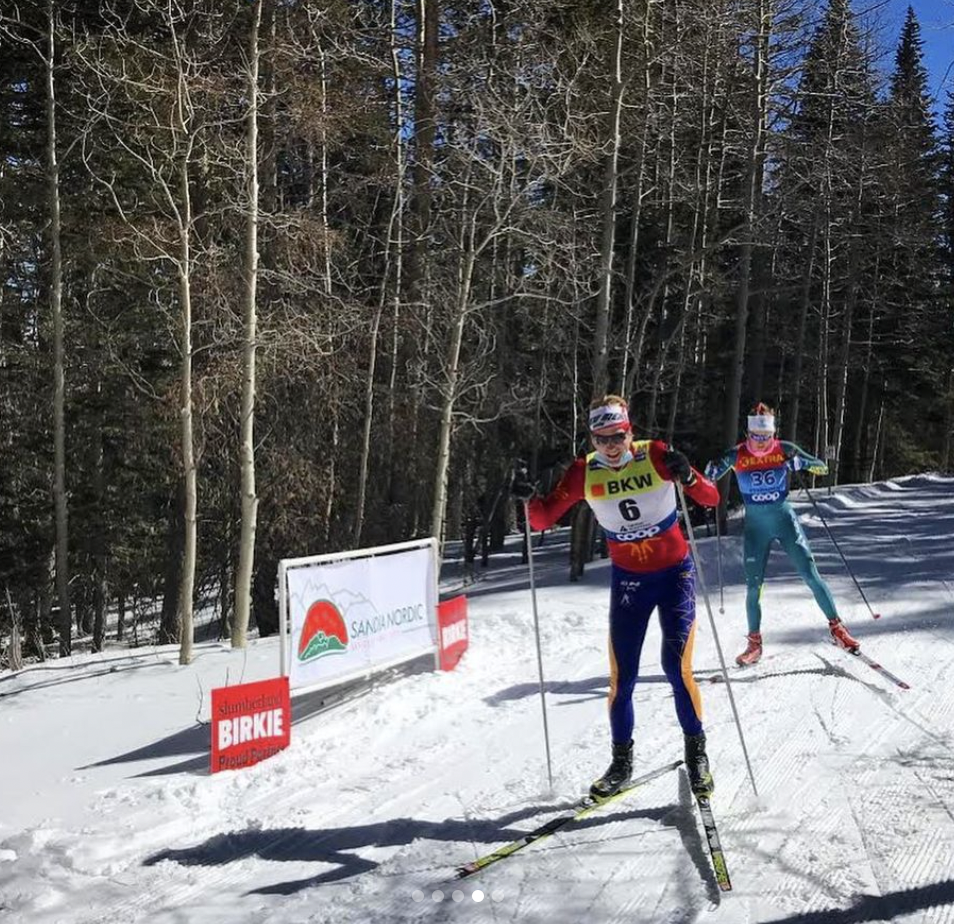
    Jessica Yeaton skis the “Virkie” — the 2021 virtual Birkie — at the Sandia Nordic Center. (Photo: Instagram @jjyeaton)

    Though the training has been good, it can be hard without races to keep a finger on the pulse with fitness relative to your competition. Yeaton had hoped to enter some mountain bike races this summer, but this was prevented by a significant setback in April. While on a mountain biking and camping trip in the Utah desert with her partner, David Norris, Yeaton slipped while navigating her way down an embankment to a creek in crocs. She fractured her pelvis and had to significantly modify her usual training. 

    “It took a really long time to get back to full training and I didn’t want to rush or risk anything.”

    Instead of races, Yeaton tracked her progress using times on Strava segments. 

    “Which was a little dangerous at first, because if you’re not meeting those segments, you can just be really hard on yourself. But I would use that, really just to see how I’m measuring up against myself.”

    She explained that there were only a couple of options for rollerski venues, and she would typically do intervals at the same location. This made it easy to directly compare her results from similar sets of intervals.
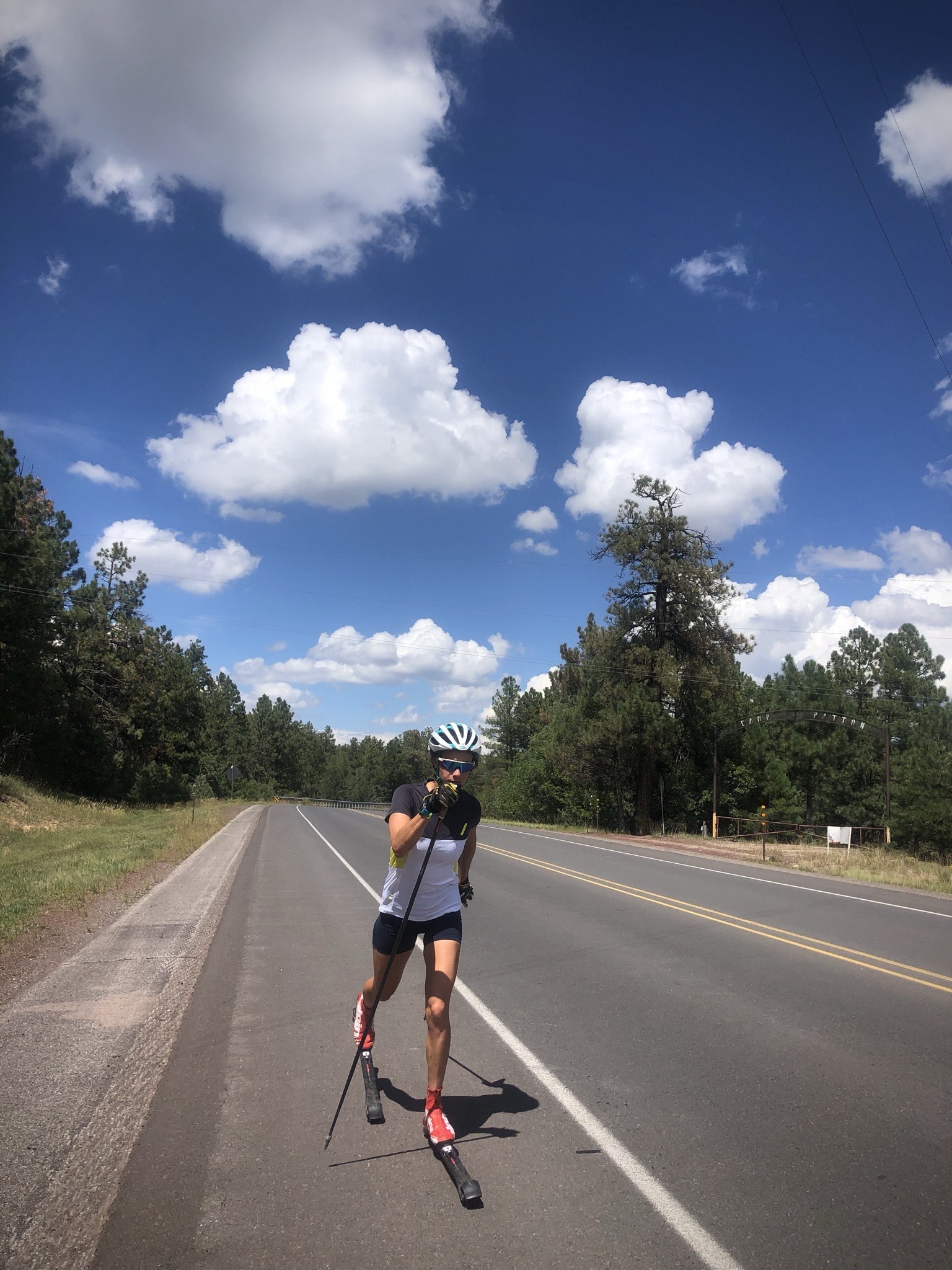
    Despite full time schooling toward a doctorate in physical therapy, Jessica Yeaton has maintained her training base in hopes of qualifying for the Beijing Olympics. (Courtesy Photo)

    Yeaton also found it encouraging and invigorating to rejoin her APU teammates upon her return to Alaska, as she knows these women have been working hard and are in excellent shape. 

    “I think one thing people on teams forget is that it’s so valuable — even if the point isn’t to measure yourself against each other, you do have that feedback from teammates. I’ve really valued just being here and doing intervals [with the team].”

    On one hand, she recognizes that, compared to doing level four on her own, she can tap into a different gear when chasing another skier down. Even if it meant “getting [her] butt totally kicked”, Yeaton recognized her teammates would help elevate her fitness and sharpness before the season began. On the other hand, having respect for the talent and strength of her teammates, she also gained confidence from being able to complete these workouts alongside them. 

    “All these girls are so fast. And I’m like, ‘Man, if I can keep up with these girls, then that’s a good sign.’”

    At the moment, Australia’s quota for the Beijing Olympics is limited to three men and two women. To earn a spot, Yeaton will need to perform well in early-season races that fall during the qualification period, roughly the month of December. 

    In terms of outlook, Yeaton expressed that she believes she has “a decent shot”; however, she recognizes that a lot can change during the 18 months she has been away from racing. 

    “I’m hoping it goes well, but I’m definitely nervous, just not having really raced last season.” 

    She explained that she trusts the quality of the training she has been putting in, but even pros experience self-doubt. 

    In preparation for the season ahead, she headed to Davos, SUI in late November to begin training with the Australian national team. World Cup support was not available to the team until the third race weekend in Davos, beginning December 11th, but she will be able to use results from nearby Alpen Cup races toward qualification instead.

    Yeaton kicked off her season last weekend in Goms, SUI  and also plans to race in St. Ulrich am Pillersee, AUT December 18-19th. After that, she will head back to the World Cup to start in the Tour de Ski. 

    In the opening 10k classic in Goms on December 3rd, Yeaton skied to 8th place. The next day, she took 10th in the 1.3k freestyle sprint, which she followed with a 14th place finish in the 10k skate the following day. In each of these days, Yeaton was the top Australian skier.

    From the outside, it looks like Yeaton is well on her way from Albuquerque to Beijing.
    Jessica Yeaton enjoys training in new terrain near Albuquerque, NM. (Courtesy photo)
  • Globetrotting Fritz & Kovacs Take Titles, Cash in Snowy Qaniq Challenge

    Globetrotting Fritz & Kovacs Take Titles, Cash in Snowy Qaniq Challenge

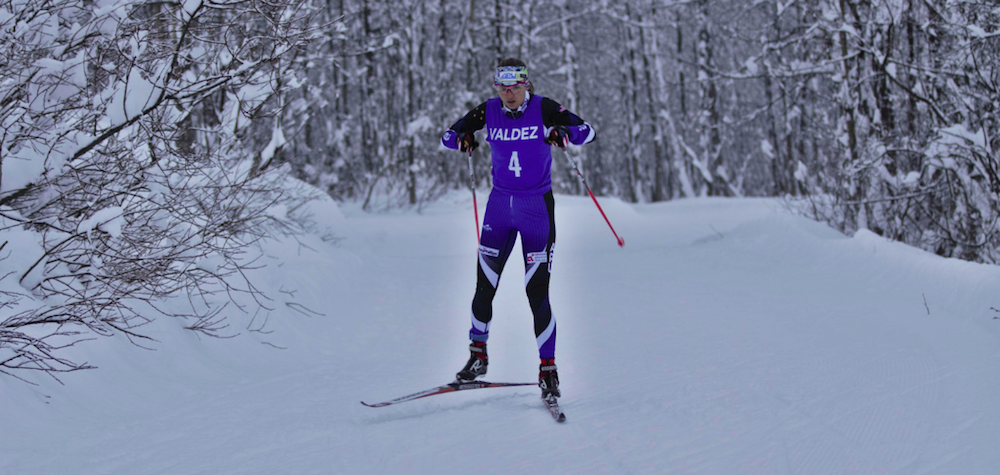
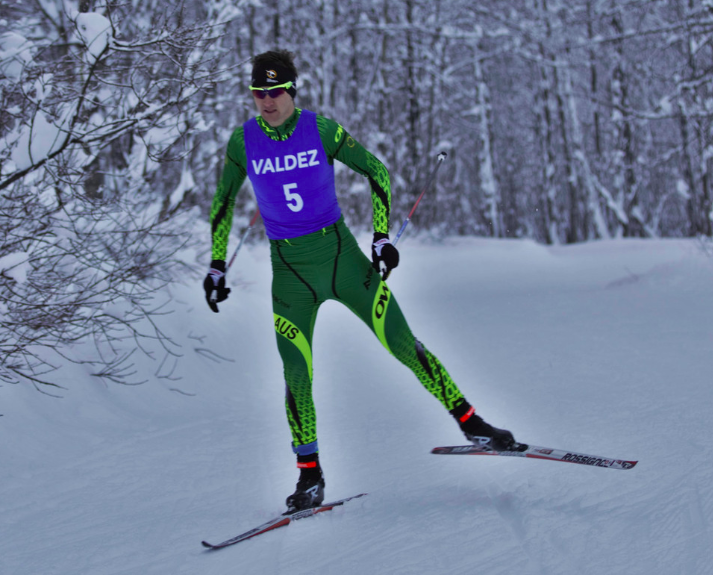
    Women's winner Lauren Fritz (APU) races in the 15 k freestyle in the Qaniq Challenge in Valdez, Alaska, Jan. 14, 2017. (photo: Calvin J. Fifarek)
    Women’s winner Lauren Fritz (APU) races in the 15 k freestyle in the Qaniq Challenge in Valdez, Alaska, Jan. 14, 2017. (Photo: Calvin J. Fifarek)

    VALDEZ, Alaska — Official Winter Storm Warnings for the state of Alaska are graded on a curve. In Fairbanks, which has a relatively dry winter climate and low snowfall totals, a forecast eight inches of snow in 24 hours are required before the National Weather Service (NWS) will issue a warning. In moister maritime Anchorage, that figure becomes 12 inches in 12 hours. But in Valdez, world-famous for its deep snowfalls and epic backcountry skiing in the Chugach Mountains, the standard is a full 24 inches in 12 hours before a warning will issue. It’s forecast to snow 18 inches before noon? Three feet by the end of the day? NWS doesn’t want to hear about it.

    All of which is to say that it was snowy in Valdez over the weekend for the third-annual Qaniq Challenge, but not historically so. Like, it only snowed roughly eight inches during the day on Friday, 14 inches Friday night, a few more inches Saturday, six or eight more inches on Saturday night into Sunday, and another foot or so on Sunday through Monday.

    Paul (PK) Kovacs of the Australian National Team and Lauren Fritz of Alaska Pacific University (APU) romped through the fresh snowfall to pick up victories in the third-annual Qaniq Challenge, a two-day, roughly 35-kilometer total classic and freestyle race series. Notably, first place earned each of them $2,000 dollars, the second-richest prize in domestic cross-country skiing, behind the American Birkebeiner. The Qaniq’s total purse, $10,000, also trails only the American Birkie.

    The Qaniq, whose name comes from the Alutiiq word for “falling snow,” has been held in a variety of formats during its three years of existence. This year’s race saw a 15.7 k freestyle individual start on Saturday, followed by an 18.6 k classic pursuit on Sunday. First racer to cross the finish line on Sunday wins.

    Men's second-place skier Jack Novak (APU) races in the 15 k freestyle in the Qaniq Challenge in Valdez, Alaska, Jan. 14, 2017. (photo: Calvin J. Fifarek)
    Men’s second-place skier Jack Novak (APU) races in the 15 k freestyle in the Qaniq Challenge in Valdez, Alaska, Jan. 14, 2017. (Photo: Calvin J. Fifarek)

    On Saturday, that racer was Kovacs. The Australian national, who lives and trains in Anchorage but is a member of the Australian National Team, started in bib 5, 90 seconds behind APU skier Jack Novak and a minute behind APU skier Andre Lovett. But roughly 16 kilometers later, it was Kovacs who was the first to return to the starting area plowed out of the 14 inches of fresh snow near the Coast Guard Housing on the western edge of a residential Valdez neighborhood.

    Kovacs’s time for 15.7 k was a laborious 46:51.7. Novak (+2:11.7) and Lovett (+5:04.2) followed.

    In the women’s division, Fritz (APU) skied to victory in 55:51.7. Kate Backstrum (citizen racer, formerly of Montana State University) in second (+5:49.5) and Krista Heeringa (citizen racer, formerly of University of Alaska Anchorage) in third (+7:57.3) made up the rest of the Day 1 podium. Fritz started somewhat ahead of them in bib 4, then skied by herself for nearly the entire course.

    Saturday’s race was not easy for anyone, as a snow/rain/sleet mix falling on top of nearly two feet of recently groomed fresh snow, and temperatures around 34 degrees Fahrenheit with close to 100-percent humidity, made for slow going no matter how many fluoros were applied. Kovacs’s winning time on Saturday, for a 15.7 k skate race including 9 k of pancake-flat trail, was nearly 47 minutes. The previous month, at a Besh Cup race in Anchorage, he covered a much hillier, International Ski Federation (FIS)-certified 15 k course in 37:15. Last year he skied a World Cup 15 k in 39:10. Novak, in second, clocked a 35:40 for the Besh Cup skate, and a 49:03 in Valdez. Saturday was slow for everyone.

    Sunday brought somewhat less fresh snow, down to eight inches or so (plus more falling during the race), but more of the same on the results sheet, as both Kovacs and Fritz maintained their lead in the classic race to win the overall title.

    Novak had the fastest time on day on Sunday, pushing through the fresh snow in the classic pursuit start to finish in 56:52.0, 16 seconds faster than Kovacs. Lovett (+2:32.1) was again third. Those margins were not enough to change the overall podium based on combined times for both races: first Kovacs, then Novak (combined +1:55), then Lovett (combined +7:20).

    Sunday was once more all Fritz in the women’s race. The APU skier fought through jetlag and energy issues to ski the classic race in 1:06:12.4. Backstrum (+5:31.9) and Heeringa (+11:24.7) again followed. The final podium was the same: Fritz, Backstrum and Heeringa.

    If it’s Saturday, this must be Valdez

    Despite Fritz’s large lead throughout the weekend, she never felt that her victory was guaranteed. Fritz had raced in China from Jan. 1-9, completing six races in nine days. Then she played tourist in Beijing for a few days. Then she made the not-short trip back to Alaska, arriving at the Anchorage airport at 4 p.m. on Thursday. Then she woke up on Friday and drove more than 300 miles to Valdez.

    “I literally hadn’t skied in almost a week,” Fritz told FasterSkier of Saturday’s race.

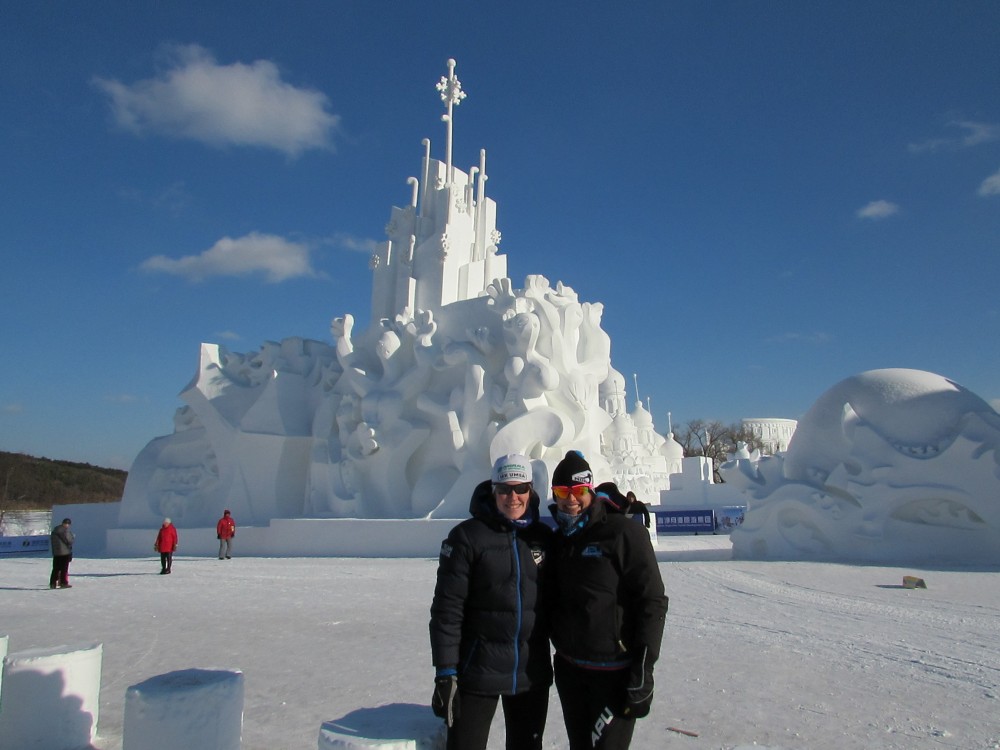
    Swedish skier and former University of Vermont athlete, Linda Danvind-Malm (l) and American Lauren Fritz (APU) stand in front of one of the many snow castles that line the lap lane to the 50 k classic Vasaloppet marathon during the 2016 China Tour de Ski in Changchun. (Photo: Lauren Fritz)
    Swedish skier and former University of Vermont athlete, Linda Danvind-Malm (l) and American Lauren Fritz (APU) stand in front of one of the many snow castles that line the lap lane to the 50 k classic Vasaloppet marathon during the 2016 China Tour de Ski in Changchun. (Photo: Lauren Fritz)

    I think my last race in China was like the 9th, which would have been the 8th here, and then after the race I spent a few days in Beijing, touring around, being a tourist, and didn’t run, didn’t ski. Didn’t have time when I got home. So literally [Saturday] testing skis, warming up was the first time I had been on skis or worked out in a week. And then with the delayed start, that kind of sucked, because I got kind of cold again. And I started, and I felt like I flooded on the first hill that was 500 meters out of the start, so I thought it was going to be a really, really rough race. But I think just having really good base fitness helps you keep it together.”

    Base and experience and a six-minute lead notwithstanding, Fritz was taking nothing for granted on Sunday. Not in some Bill Belichick coach-speak sense of anodyne platitudes about taking all competitions seriously and not celebrating too early, but rather in the very real sense that her international travel schedule and recent nutrition issues left her honestly concerned about her ability to complete a flat 18 k double pole course.

    “Don’t pass out on the side of the trail,” a relieved-but-tired Fritz said after Sunday’s victory. “That was pretty much my only strategy, because I was actually legitimately worried about something like that. Because I’ve been super low energy, because I lost a lot of weight in China, because it was like hard to eat a lot of stuff. So my energy stores are probably very much in a negative balance. So it was a legitimate concern, running out of energy, just falling over. But that didn’t happen.”

    Fritz was able to complete Sunday’s race despite a second day of challenging conditions – with two minutes between her and the preceding racer in the pursuit start, enough snow would fall in those two minutes to make it difficult to discern which track the leading skiers had taken – and the effects of international travel.

    “I definitely go through periods during the day where I get really, really tired and kind of, almost like dizzy and spacey, just really out of it,” Fritz said. “And then there will be like times in the middle of the night where I wake up wide awake for a like a couple of hours. So, this is definitely some pretty severe jetlag, I think.”

    While the jetlag was pronounced, Fritz was unphased by Friday’s 300-mile drive to get to the race start.

    “The, like, 5 1/2 hour drive from Anchorage to Valdez was – well, we did two five-hour drives, a 16-hour drive, and a 10-hour drive in China,” Fritz recounted of her recent travels for the China Tour de Ski. So “this was like pretty easy. It went by fast.”

    (Men’s second-place finisher Novak went from China to Anchorage to Valdez on the same schedule. Novak’s father drove him from Anchorage on Friday, while Novak fils slept the whole way.)

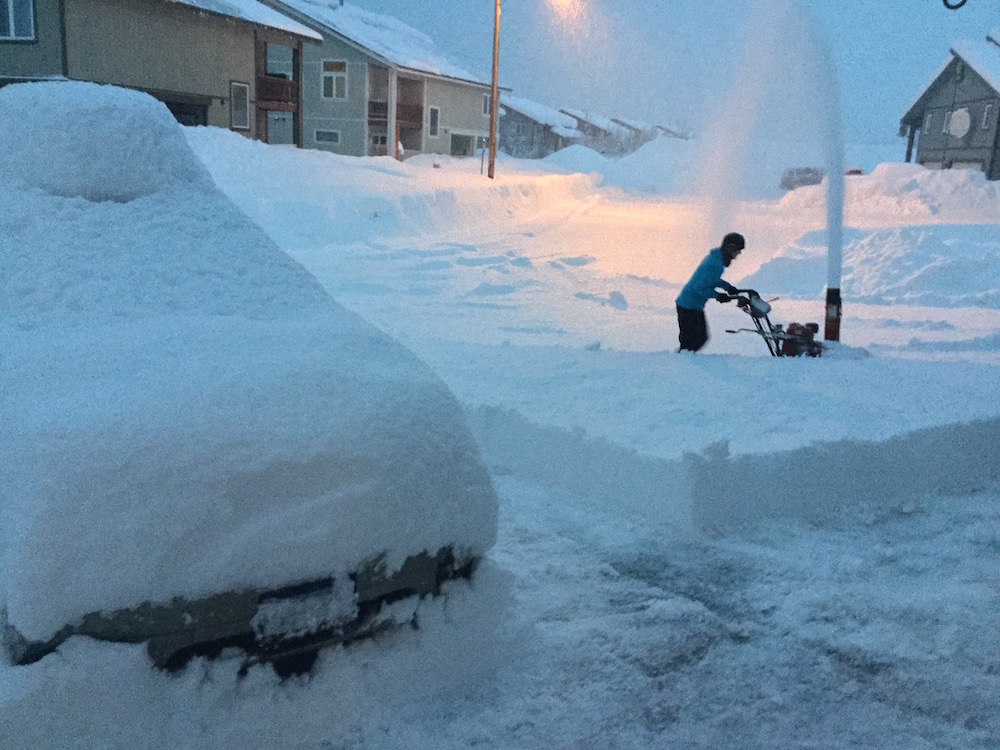
    This used to be a rocket box: digging out on Saturday morning after 14 inches of snow fell overnight in Valdez, Alaska, in January 2017. (Photo: Gavin Kentch)
    This used to be a rocket box: digging out on Saturday morning after 14 inches of snow fell overnight in Valdez, Alaska, in January 2017. (Photo: Gavin Kentch)

    Fritz is the only skier to make the podium in all three years of the Qaniq Challenge, logging a cumulative first, second, and third since 2015. That’s $4,000 combined lifetime winnings from this race, including $2,000 this year.

    So what does it mean for an American skier to win $2,000 in a ski race?

    “It’s pretty big money,” Fritz said. “It’s more than a national championship. So that’s sweet. I mean, it’s such a cool race; I really hope that it can grow over the years.”

    For Backstrum, meanwhile, a thousand dollars for second was apparently going to aid her with more quotidian concerns. “It  feels like I have a good amount of beer money now,” Backstrum joked. “No,” she continued, “I didn’t get my PFD this year, so it will be a nice replacement.”

    (The reference is to the Permanent Fund Dividend check, the payout given to all eligible Alaskans representing their share of the state’s sovereign wealth fund.)

    Backstrum had graduated from Montana State in 2014, and had trained sporadically since then. “This was a good inspiration to start training again” for ski racing, she said.

    For Kovacs, who also earned $2,000 for his victory in the men’s race, the cash prize was “huge.” It marked “the biggest paycheque I’ve ever received in any ski race,” Kovacs said. “It’s really helpful. I mean, that’s like four months’ rent back in Anchorage, or that will pay for all my flights to Europe and all my other flights in Europe for the season this year, which is just massive. So it’s a big help.”

    Kovacs surveyed other races in which he had won money, and concluded that he had not quite won $2,000 in all other races in his career combined. “Maybe,” he said. “Probably just under. So this has probably, like, doubled my entire career earnings.”

    The payout came in a race that Kovacs nearly did not enter. He had done some of the races at last week’s U.S. nationals, leaving Utah on Wednesday and returning to Anchorage only at 5 a.m. Thursday.

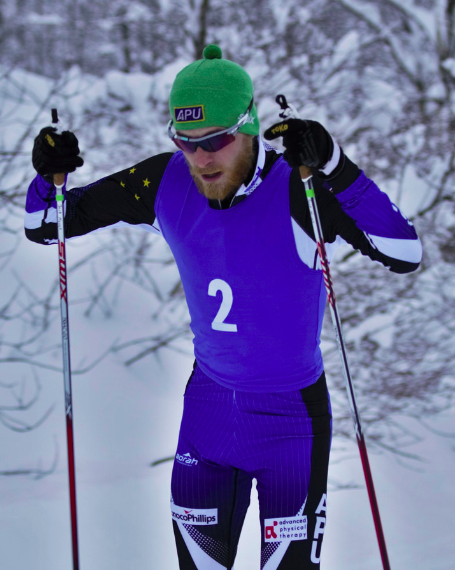
    Men's winner Paul (PK) Kovacs (Australian National Team) races in the 15 k freestyle in the Qaniq Challenge in Valdez, Alaska, Jan. 14, 2017. (photo: Calvin J. Fifarek)
    Men’s winner Paul (PK) Kovacs (Australian National Team) races in the 15 k freestyle in the Qaniq Challenge in Valdez, Alaska, Jan. 14, 2017. (Photo: Calvin J. Fifarek)

    “I then picked up Lauren [that afternoon],” Kovacs said, “And she said, ‘Hey, I’m going to go to Valdez,’ and I said, ‘OK, well I guess I’ll come.’ Because up until that point I wasn’t even coming. I had originally planned to just have a few days at home before I fly to Europe. … It was a very last-minute decision, and we kind of just got up the next day, after doing a bunch of washing the night before, and just packed gear and went.”

    Kovacs and Fritz have been an item for some time; on this trip, Kovacs was the more functional of the two. “I’ve been holding it together pretty well,” he said. “I’ve managed to get a lot more sleep than Lauren has. I know that Lauren’s been up at like midnight, and a few hours in the middle of the night the last few nights. But I definitely took a couple naps, for sure. We’ve been holding it together all right, but it’s definitely like, once we’ve finished today and tonight I think we’re going to take it easy for the next few days.”

    “This has probably, like, doubled my entire career earnings.” — Paul (PK) Kovacs on his 2017 Qaniq Challenge victory

    But not for too long – Kovacs flew to Europe today, for two weeks of training in Falun. He had World Cup starts lined up after that across Europe and Asia (Falun, Pyeongchang, and Otepää) before planning to race World Championships in Lahti.

    Back in Alaska, Kovacs found conditions for Saturday’s race “really challenging. I mean, we’d had a lot of fresh snow, almost two feet of fresh snow. And they’d done a fantastic job to pack it and groom it, but it still was pretty aerated pack, so it was pretty spongy. And then we’d had almost torrential rain on top. And so it was just kind of that mashed potato sludge.”

    Despite the trying conditions, Kovacs said, “I was fortunate, I had some really solid skis, and maybe coming from altitude … I was able to really attack it a lot harder, I think, than the other two guys. Who also had I think pretty bad skis.”

    In a gracious gesture, following Saturday’s race Kovacs formed “a gentleman’s agreement” with the two APU skiers immediately behind him, “and they all came over and waxed the same wax at my house, which was good.”

    Kovacs didn’t want to claim too much credit for nailing the wax on Saturday, saying, “Honestly, it wasn’t like I was a mastermind and figured it out.” (He then explained that he and Fritz had, in their jetlagged state, packed “just one or two” warm waxes, making their options easy to work through.)

    Rather, Kovacs credited his grind, a Caldwell VDF, which he called “exceptionally good – that’s a chevron grind, and it was able to, I think, flush out the liquid in the snow much easier.”

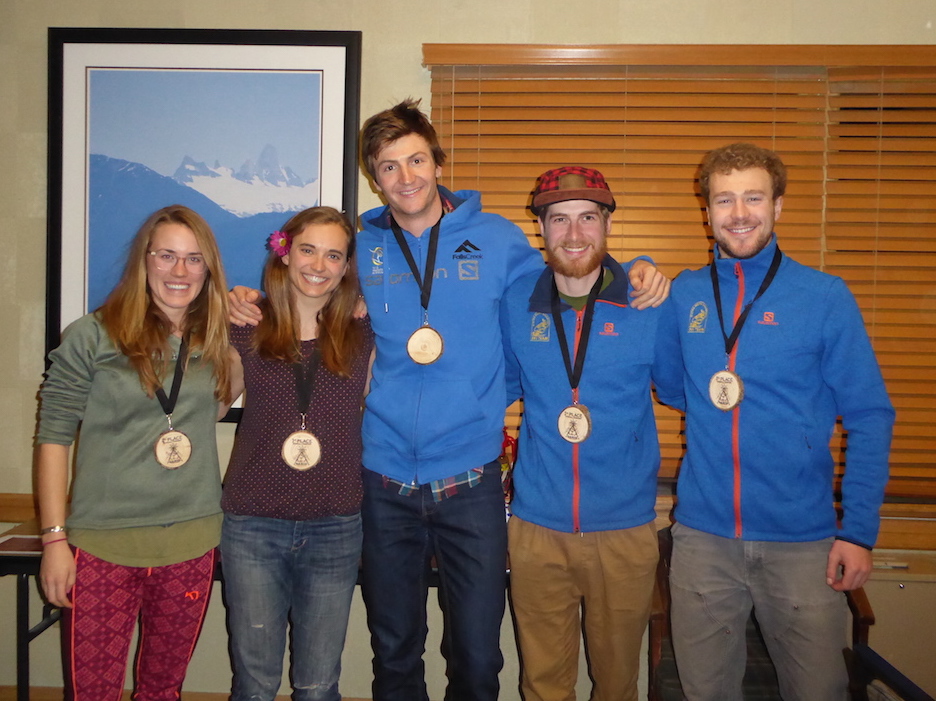
    The overall podium for the Qaniq Challenge in Valdez, Alaska, in January 2017: left to right, Kate Backstrum (former Montana State University), Lauren Fritz (APU), PK Kovacs (Australian National Team), Jack Novak (APU), Andre Lovett (APU). (Photo: Gavin Kentch)
    The overall podium for the Qaniq Challenge in Valdez, Alaska, in January 2017: left to right, Kate Backstrum (former Montana State University), Lauren Fritz (APU), PK Kovacs (Australian National Team), Jack Novak (APU), Andre Lovett (APU). (Photo: Gavin Kentch)

    Kovacs’s approach for Sunday, when he had a two-minute lead in the pursuit, was simple: “Basically the strategy was to go out as hard as I could. … With double poling you don’t quite blow up, or I find I don’t blow up, aerobically so much as my arms just blow up. And so I just wanted to see how hard I could go.”

    Being the first starter was disadvantageous in the fresh snowfall, but Kovacs benefited from a snowmachine that passed through moments before the race began, creating a firmer and less snowed-in platform than in either of the two set classic tracks. “My strategy was just to try and find fast snow,” Kovacs said, “And luckily a snowmobile had driven out some volunteers, and so I just skied on that.”

    Kovacs appreciated the chance to see Fritz during one of the loops of the course.

    “In a race like this, I definitely think about how Lauren is doing. I definitely was curious to see what was going on, and even just the fun things like racing against the master skier, and seeing how they’re going, because you know they knew each other, and how that was going duking it out, that’s fun. In other races I normally wouldn’t consider it; I do really try to just focus on my own race. But I guess in this race, because it just has more of a relaxed atmosphere, I let myself just think about other things a little bit more. So yeah, I was definitely curious to see how she was going. I mean, being so far out there, if you break a pole or lose a basket it’s a complete game-changer compared to a normal FIS race, where there’s a lot more people on the course that are able to give you equipment. So there’s more variables I guess here.”

    Looking to the future

    The Qaniq is universally beloved by those skiers who have made the trip to Valdez to race, reflecting quality organization and overwhelming community embrace of the event. But not that many skiers have made it: 31 in 2015, 37 in 2016, 33 this year.

    So will there be a fourth year? Maybe. Hopefully. Not certain. Race organizer Darryl Verfaille is nothing if not optimistic.

    The status of next year’s race is “truly undecided,” Verfaille told FasterSkier at the Sunday awards banquet, “but I’m going to do everything I can, even if I have to morph the format a bit. And we’re going to reach out – I’m going to do everything I can, including maybe seeking some external sponsors, maybe fundraisers. Some may change again with the political winds of Valdez, come next election, but I think we’ve got the city itself – the executive staff of the city of Valdez is in favor of this, because they recognize the true value, which is just exposing folks to Valdez in the winter. So I can’t say for sure we’re going to have it, but I’m going to do everything I can to make it happen for the fourth year.”

    Both Fritz and Kovacs addressed the room at the awards banquet in brief unscheduled remarks, praising the race organization and experience and hoping for its continued success.

    They also expressed similar sentiments in their comments to FasterSkier. “I think it’s a great race, and I hope they can keep it going,” Fritz said.

    “It’s an extremely fun event,” Kovacs echoed. “And I heard next year with U.S. nationals being in Anchorage that a lot more people will make the choice to come down here and really give this race kind of what it deserves. Because the volunteers put in a phenomenal effort, and it’s probably one of the best atmospheres of any race I do anywhere in the world. It just is really fun, and people should get involved.”

    The trip home

    Back in Valdez in January 2017, the APU skiers and Kovacs spent Monday morning after the race conducting a free clinic for the Valdez High ski team. The remainder of the field began their journey home on the only road out of town, where they were treated to an official NWS Blizzard Warning for their drive home through Keystone Canyon and Thompson Pass, including another 12 to 18 inches of snow and winds to 40 miles per hour. In a bit of meteorological ecumenicalism, the criteria for a blizzard warning (snow reducing visibility to less than a quarter-mile and winds gusting to 35 mph for four hours or more) are the same throughout the entire country.

    Results

  • Irwin and Gelso Win Australian Hoppet; USST Goes 1-2 in New Zealand Marathon

    Irwin and Gelso Win Australian Hoppet; USST Goes 1-2 in New Zealand Marathon

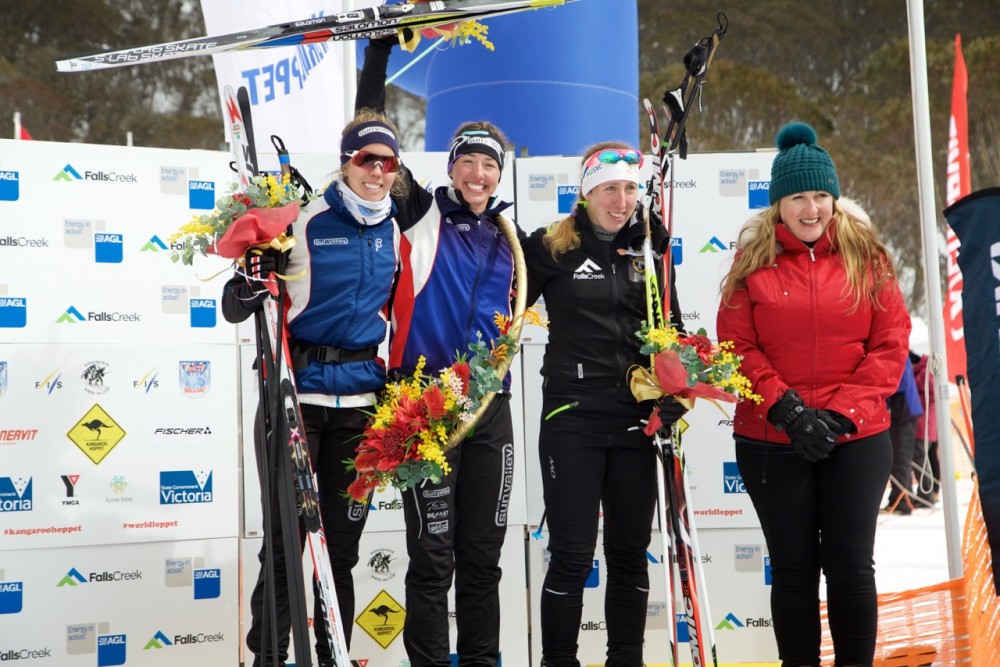
    Left to right: Americans Mary Rose and Deedra Irwin, both of SVSEF, along with Australian Aimee Watson on the podium for the women's Kangroo Hoppet 42-kilometer maration,, on Saturday Aug. 27 in Falls Creek, Australia. (Photo: Kangroo Hoppet)
    Americans Mary Rose (l) and Deedra Irwin (second from l), both of the Sun Valley Ski Education Foundation (SVSEF), along with Australian Aimee Watson on the podium at the women’s Kangroo Hoppet 42-kilometer freestyle marathon on Saturday, Aug. 27, in Falls Creek, Australia. (Photo: Kangroo Hoppet)

    Note: This article has been updated to include official results from the Merino Muster.

    In their first ski marathon south of the equator, a few Sun Valley Education Foundation (SVSEF) Gold Team team members founds themselves on the podium two weekends ago at the Kangaroo Hoppet on Aug. 27. 

    After spending nearly a month training on snow in the land down under, SVSEF teammates Deedra Irwin and Matt Gelso finished their Australian training camp on top of the podium, winning the respective women’s and men’s 42-kilometer Hoppet, part of the Worldloppet marathon race series, in Falls Creek, Australia.

    “Not many people can say that they’ve skied and raced a marathon in Australia,” Irwin wrote in an email. “The Nordic ski community down there is also really supportive and was excited to have us there. There were lots of people cheering for us along the way.”

    Irwin skied most of the 42 k freestyle race alongside her Sun Valley teammate Mary Rose. From start to finish, Irwin explained it was predominately a race between the two of them, with Irwin outlasting Rose by 0.6 seconds with a winning time of 2 hours, 8 minutes and 15.6 seconds. Finishing more than 12 minutes later, Aimee Watson was the leading Australian in third place (+12:17.7).

    “The competition was mostly just Mary and I from the start,”  Irwin wrote. “The race came down to a sprint … I got in front of her at the right time and was able to push through the finish first. Skiing with her during the Hoppet taught me a lot about marathon racing. She is a really strong skier and it was fun to be with her during the race and try to match her moves.”

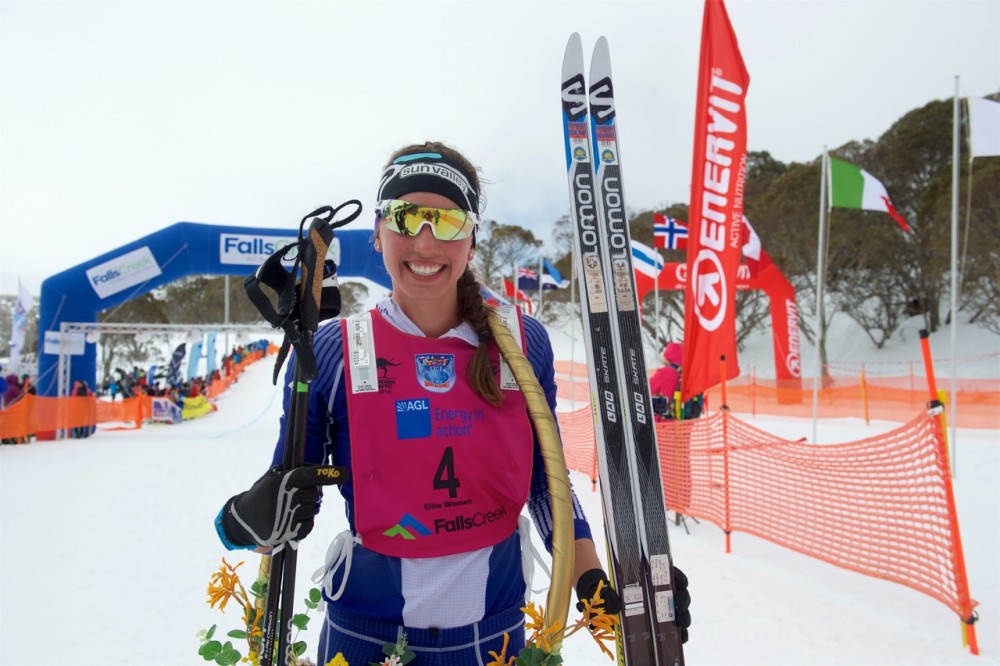
    Sun Valley's Deedra Irwin after winning the 2016 Kangaroo Hoppet on Saturday Aug. 27, in Falls Creek, Australia. (Photo: Kangaroo Hoppet)
    Sun Valley’s Deedra Irwin after winning the 2016 Kangaroo Hoppet on Saturday Aug. 27, in Falls Creek, Australia. (Photo: Kangaroo Hoppet)

    Rose pointed out that there was plenty of competition besides her teammate.

    “Most of the Australian National Team competed, along with some AUS legends like Esther Bottomley,” Rose wrote in an email.

    Both Irwin and Rose plan to race another marathon this coming winter, the 2017 American Birkebeiner in February, which is also part of the Worldloppet marathon series. And next summer, Rose indicated that she might return to the Kangaroo Hoppet.

    “I don’t have any marathons on my race schedule for this coming year, except the Birkie,” Rose wrote. “I will for sure be returning to Australia to compete in this event, hopefully next year!”

    First across the line in the men’s race, Gelso beat out Australian national-team athletes Phillip Bellingham and Nick Montgomery, who finished in second and third, respectively. Just over the halfway point, Gelso explained the front group gradually began to dwindle.

    “It split up into five guys, maybe with 20 k left,” he said on the phone from Australia. “At 5 k I kind of blew off the front … and in the last 4 k it turned into, like, three separate people.”

    Gelso has raced at least two marathons before, finishing seventh in the 2014 American Birkie and 16th at the 2014 Engadin in Switzerland.

    For winning the Hoppet, both Irwin and Gelso received $1,300 Australian dollars, as well as a wooden plaque, compression socks and a mug. More than 230 men competed, and 64 women finished this year’s edition of the race. 

    “The organizers of the events and the volunteers involved put on a race that I will never forget,” Irwin wrote. “Thank you to the Australian ski community for having us there and letting us enjoy their beautiful winter.”

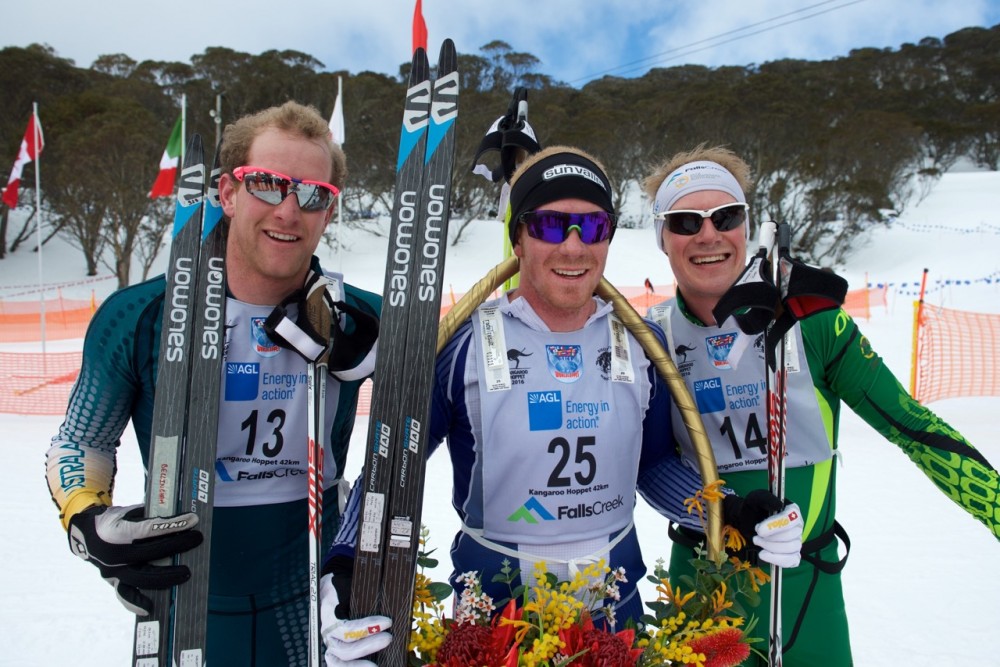
    American winner Matt Gelso (c), runner-up Phillip Bellingham (Australia), and third-place finisher Nick Montgomery (Australia) on the podium at the men's Kangaroo Hoppet 42-kilometer maration, on Saturday Aug. 27 in Falls Creek, Australia. (Photo: Kangaroo Hoppet)
    American winner Matt Gelso (c) with Australian runner-up Phillip Bellingham (l), and third-place finisher Nick Montgomery (r), also from Australia, after the men’s Kangaroo Hoppet 42-kilometer maration, on Saturday Aug. 27 in Falls Creek, Australia. (Photo: Kangaroo Hoppet)

    After the Hoppet, most of the SVSEF skiers headed back to the U.S. for a recovery week in Sun Valley, Idaho, before resuming training. Gelso and Rose opted to take their recovery week exploring Sydney and Melbourne, Australia, prior to flying home this coming Wednesday.

    “Everybody else is back, it’s just Mary and I here now,” Gelso said. “We’re kind of doing a recovery week right now, but when we get back, we’ll obviously have to get back into time zone … That’s kind of the plan: get back, get recovered and then get back into full training before we head to Frozen Thunder [in Canmore, Alberta].”

    Soaking up the Southern Hemisphere sun and a few last days of rest were also a part of Rose’s schedule.

    “I am hanging out in Sydney for a week visiting a friend,” she explained. “So I am putting in some beach time and being a tourist.”

    2016 Kangaroo Hoppet results: Women | Men

    Hoffman, Diggins Win Merino Muster 42 k

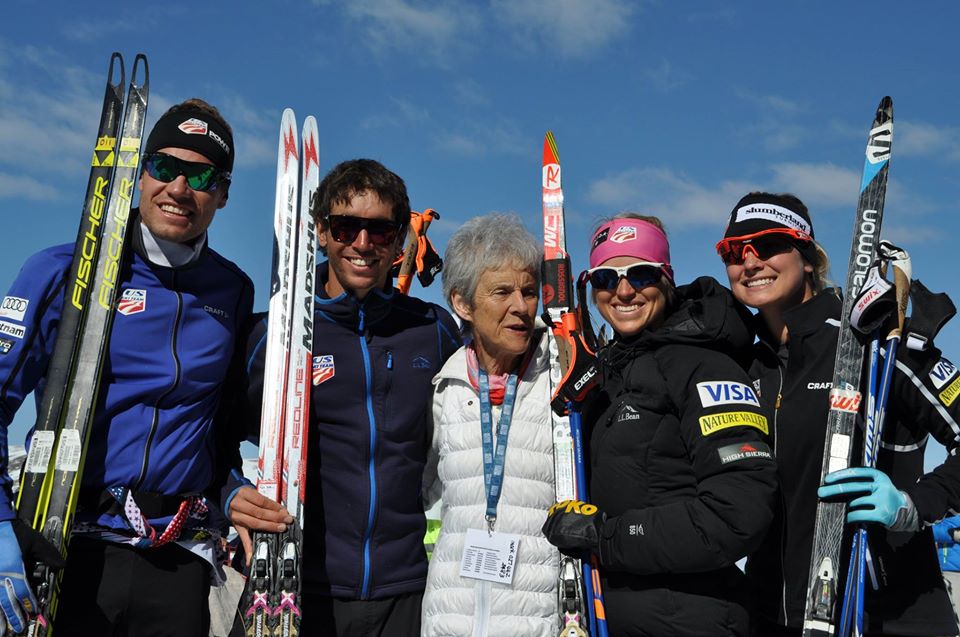
    The U.S. Ski Team took first and second in both the men's and women's races at the 22nd Merino Muster 42 k freestyle, with Noah Hoffman (second from l) winning the men's race over Simi Hamilton (l), and Jessie Diggins (r) outlasting Liz Stephen (second from r) for the women's win. Here, those top finishers pose with Wanaka's Mary Lee at the Snow Farm in Wanaka, New Zealand. (Photo: USSA Nordic/Facebook)
    The U.S. Ski Team took first and second in both the men’s and women’s races at the 22nd Merino Muster 42 k freestyle, with Noah Hoffman (second from l) winning the men’s race over Simi Hamilton (l), and Jessie Diggins (r) outlasting Liz Stephen (second from r) for the women’s win. Here, those top finishers pose with Wanaka’s Mary Lee at the Snow Farm in Wanaka, New Zealand. (Photo: USSA Nordic/Facebook)

    This past weekend in New Zealand, the U.S. Ski Team (USST) swept the overall top four in the 42 k Merino Muster at the Snow Farm in Wanaka. Noah Hoffman beat out his USST teammate Simi Hamilton for the overall victory, and Jessie Diggins was the fastest woman in third overall, 12 seconds ahead of teammate Liz Stephen in fourth.

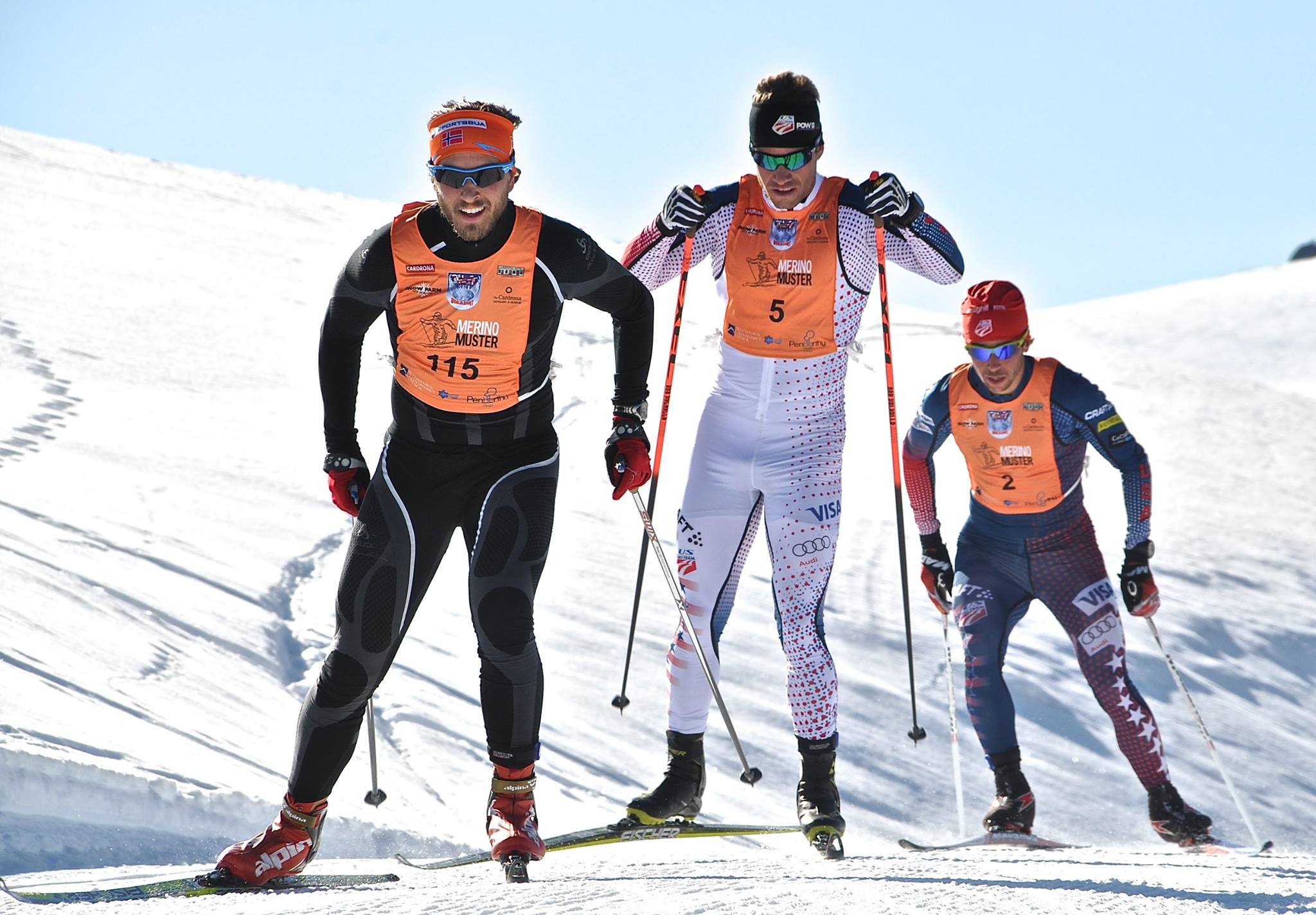
    U.S. Ski Team members Simi Hamilton (c) and Noah Hoffman during the 2016 Merino Muster at the Snow Farm in Wanaka, New Zealand. Hoffman won the 42 k freestyle race, and Hamilton placed second. (Photo: USSA Nordic/Facebook)
    U.S. Ski Team members Simi Hamilton (c) and Noah Hoffman during the 2016 Merino Muster at the Snow Farm in Wanaka, New Zealand. Hoffman won the 42 k freestyle race, and Hamilton placed second. (Photo: USSA Nordic/Facebook)

    Hoffman won the skate race in 1:45:08 and Hamilton finished 23 seconds later in second place. U.S. coach Matt Whitcomb told the Otago Daily Times that Hoffman, the team’s leading distance skier, was working to improve his sprinting, while Hamilton, who has podiumed in World Cup sprints, wanted to improve his distance skiing.

    Two years ago, Hoffman placed second in the 2014 Merino Muster behind Poland’s three-time race champion Maciej Kreczmer. Canadian Para-Nordic visually impaired legend Brian McKeever won last year’s edition (as well as 2010 and 2011), ahead of his teammate and guide in Paralympic events, Graham Nishikawa.

    Clocking in third at 1:59:12 was Diggins and Stephen followed 12 seconds later as the second woman.

    Of 10 USST members in New Zealand, four raced — finishing first or second in their respective men’s and women’s races. Whitcomb told the Otago Times that the U.S. has held training camps at the Snow Farm for more than 16 years.

    This year, all but six of its athletes are there. Of those six, at least four — Alaska Pacific University skiers Kikkan Randall, Rosie Brennan, and Sadie and Erik Bjornsen — are training at home in Alaska on snow at Eagle Glacier.

    2016 Merino Muster results

  • Ski & Snowboard Australia Seeks Head Coach

    Ski & Snowboard Australia Seeks Head Coach

    Ski & Snowboard Australia

    The Ski & Snowboard Australia Cross Country Committee (SSA XC) is seeking expressions of interest for a Head Coach with the Cross Country Skiing High Performance Program. The intention is for this to be a full-time year-round position.

    The Head Coach will primarily be responsible for coaching and leading athletes on the Australian National Team. This includes at major international events, during international tours, on-snow during the Australian winter, and during dryland training periods between winters. Coaching of athletes includes overseeing year-round physical, technical and psychological development.

    A significant part of the Head Coach role will also include working with SSA XC and state sporting bodies to develop cross country skiing in Australia, including providing direction to underpinning programs, promoting the sport domestically, and supporting athlete/coach development pathways.

    The key roles of the position and desired skills and qualifications are provided in this linked PDF:

    Remuneration will be dependent on the experience of the successful applicant and whether the position ends up being full-time year round. All travel and living expenses will be covered during training camps and on international tours, as well as other negotiated expenses. Intended to be a two-year contract initially through to April 2018.

    For additional details or any questions contact SSA Cross Country Skiing High Performance Manager Finn Marsland on finn.marsland@gmail.com or +61 408147940. Interested persons should apply via email to jobs@skiandsnowboard.org.au by Friday March 18, 2016, briefly addressing the key selection criteria. Applicants may be invited to supply additional information and/or to attend an interview. The appointment will be made by a panel appointed by SSA XC.

  • Bottomley Tries Training in Canmore, Seeking Top 30 in Québec

    Bottomley Tries Training in Canmore, Seeking Top 30 in Québec

    Australian Esther Bottomley (second from left) at the Canmore NorAm freestyle sprint on Dec. 2 in Canmore, Alberta. Bottomley qualified for the heats in 12th and went on to place ninth. (Courtesy photo)

    The idea struck Esther Bottomley in early October. If she wanted to break into the top 30 on the World Cup this season, why not start practicing at one of the venues she’ll compete at?

    The 29-year-old Australian National Ski Team member called up Perianne Jones, who was training with the Canadian national team in Park City, Utah. Jones spoke to her friend Amanda Ammar, who races for the Canmore Nordic Ski Club in Alberta and had an extra room back home. A couple weeks later, Bottomley was on snow training in Canmore, living at altitude and soaking up her surroundings.

    A month into her visit, Bottomley, who’s been on the Australian national team for the better part of a decade, talked to FasterSkier about what she’s been up to in Canmore and why she decided to train there in the first place. One of two women on her team and the only one competing in Canada this season, Bottomley opted to skip the early World Cup races in Europe to prepare for the Québec and Canmore sprints Dec. 8 and 15, respectively.

    Esther Bottomley (AUS) in the Canmore NorAm 10 k classic on Dec. 2, where she finished 17th. (Courtesy photo)

    FasterSkier: Why Canmore?

    Esther Bottomley: They’ve got the World Cups over in Canada so that’s sort of why I was going to come here, but mostly it was to try and get a big group of girls that are at a really high level and be able to train with them. So far I’ve trained with three different training groups [the Canadian NST, Alberta World Cup Academy and Rocky Mountain Racers], and it’s been great, like, really good skiers and very motivated.

    FS: How have you made it work with your training plan?

    EB: I have my own plan and when I can get information from other teams in advance it’s really good, which they’ve sometimes been able to do. My coach can accommodate some of their intensity sessions so I’ve been trying to do as many sessions as I can with other people but also stick to some of my own things as well.

    FS: How much time had you previously spent in Canada?

    EB: I’ve been for the World Cups before and a wedding [teammate Chris Darlington married former Canadian skier Brooke Gosling last winter], but I’ve never spent more than like a week here. It’s the first time I’ve been able to do a bit more exploring, which has been fun.

    (Note: Bottomley achieved her career-best World Cup result of 35th in a 2005 freestyle sprint in Vernon, British Columbia.)

    FS: What are your goals for this season?

    EB: This year, I guess the goal is to try to get into the top 30 in the sprints, focus on the sprints, and try and sort of cut back travel. I’d like to try and stay in one spot for a while, which has been really good here. I can train here the whole time then go to Quebec and back again. I’ll be in Europe for the rest of the season until March.

    FS: Why the change in travel?

    EB: I’d kind of like to be able to, if I can, sit in one spot for a little while and just cut back the amount of hours. I didn’t go to the early World Cups in Europe just so I could cut down the jet-lag time and the hours because we already have to do that big flight from Australia to get anywhere.

    FS: How has your training been?

    EB: Pretty good. … We did a sprint simulation on the World Cup track so that’s fantastic. You get to come here and they’ve opened up the sprint course like the last weekend so we can now get on it and see what we have to do to ski faster on it. I think that’s the really big advantage to be able to come somewhere and just be able to ski the course and know the course before you race it.

    FS: What’s the sprint course in Canmore like?

    EB: Canmore is a bit of a hill climb. It’ll be a hundred percent different I think than Québec, which is meant to be a long flat course to here, which is really just a big climb in the middle and flat into it and flat out of it and that’s it. It’s a tough course.

    FS: What do you know about the Québec course?

    EB: It’ll be interesting. I think it’s quite a long course for the women so it’ll be interesting to see how that goes. The NorAms will give us an idea of how things are going and then right straight into it.

    (In a follow-up after Bottomley placed ninth in the Canmore NorAm freestyle sprint and 17th in the 10 k classic Dec. 1-2):

    FS: How did the Canmore NorAm go?

    EB: Last weekend was good fun but didn’t quite go as well as I was hoping for the races. Looking forward to going to Québec and racing on Saturday to see if I can ski a bit faster there.

    FS: What kind of sprint course do you prefer?

    EB: I kind of like in between [hilly and flat], sort of just an undulating where you can climb hard and recover a bit in between, but we’ll see. I’ve been training I think well during [the offseason]. It’s always hard to know at the start of the season. Hopefully I’m a little bit fitter and hills are all right.

  • Australian Ski Team Reports: Better than X-Men

    Australian Ski Team Reports: Better than X-Men

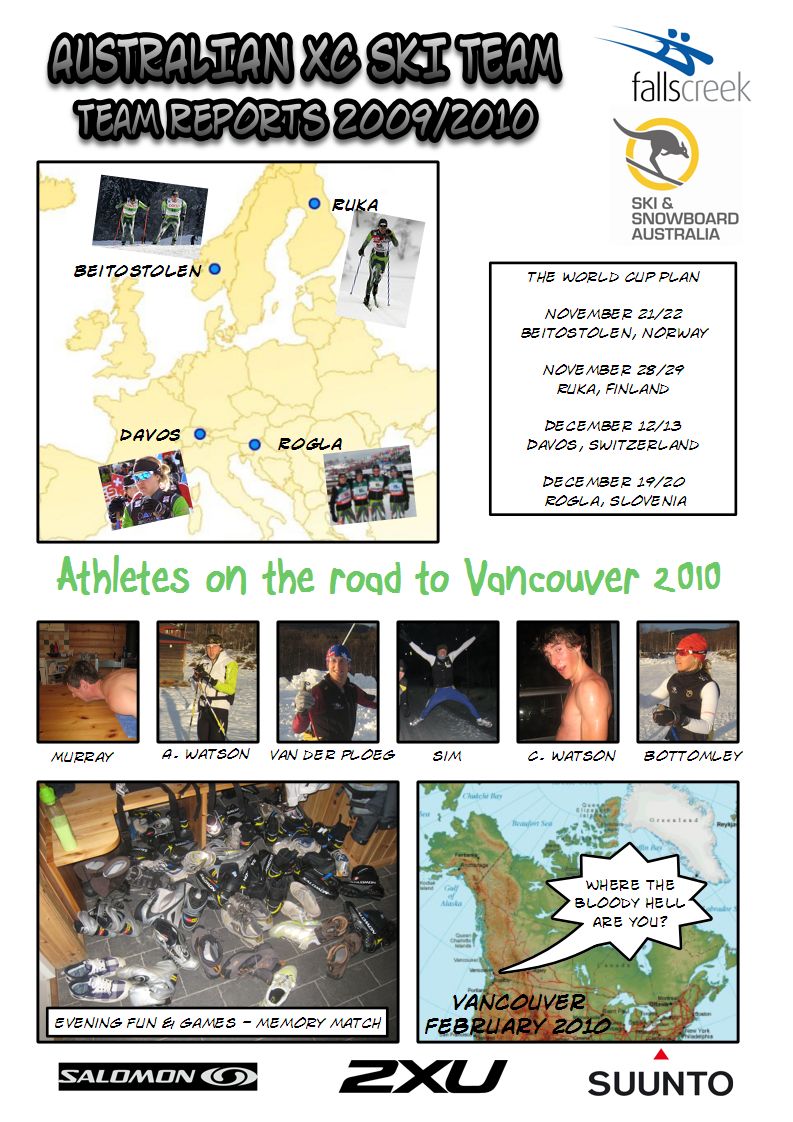
    The Australian National team wins the prize for most creative press releases.  We missed the first two, so here are all three 2009/2010 reports, with the most recent first.  Click on the image for a larger version, and check back soon for the next exciting installment!

    Australian Race Report 3 - 2010
    Australian Race Report 3 – 2010
    Australian Race Report 2 - 2010
    Australian Race Report 2 – 2010
    Australian Race Report 1 - 2010
    Australian Race Report 1 – 2010
  • Australian National Team Reports on the Winter Down South

    Australian National Team Reports on the Winter Down South

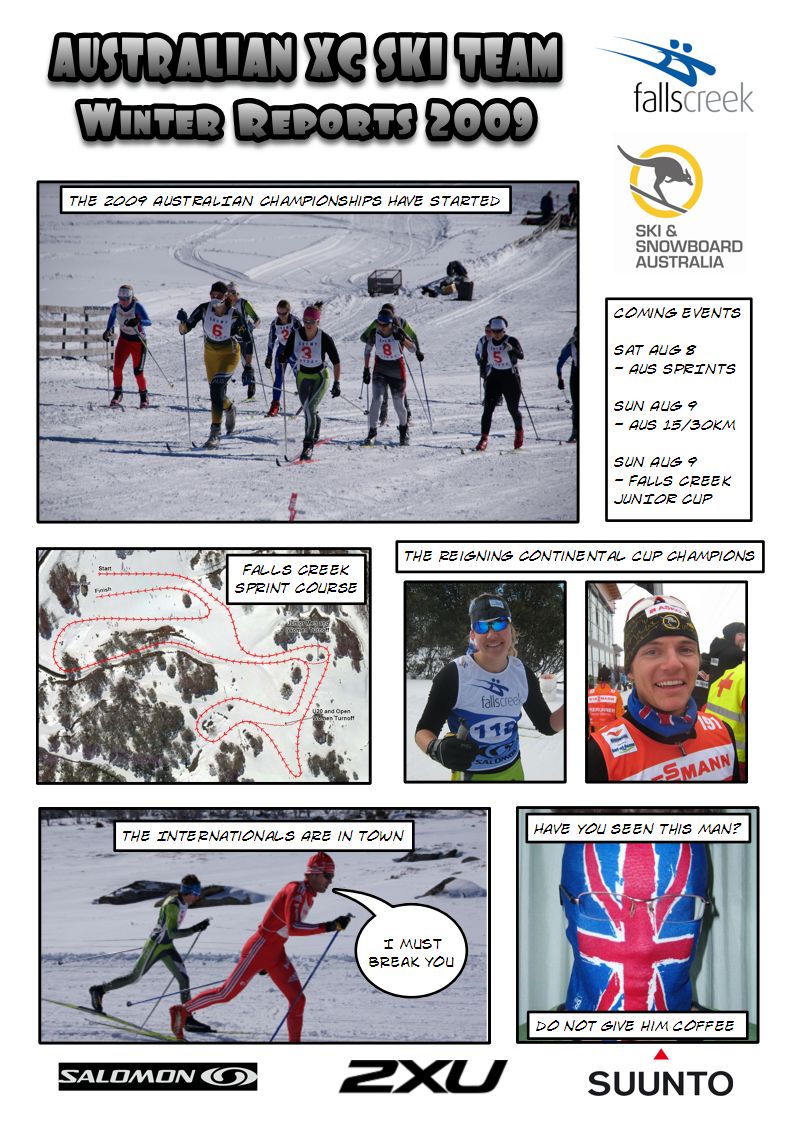
    This is the first of National Team Email Reports during the 2009 Australian winter. The intention is to provide a summary of team activities and competitions during the season, and in particular to report on progress in the Australia – New Zealand Continental Cup Series. This and other news will also be available on the Australian Cross Country Skiing Website. A new addition to these reports is the attached ‘Comic Report #1″, which includes more images than this email report. Please feel free to forward to other interested readers and to send in feedback or any suggestions about how the reports can be improved.

    – Finn Marsland, National Team Coach

    Coming Events

    Australian Sprint and 15/30km Championship, Falls Creek, August 8-9

    This coming weekend Falls Creek is host to the Australian Sprint Championship and Australian 15-30km Championship. The Sprint event on Saturday August 8 has Open and Junior categories, while the Women’s 15km Freestyle and Men’s 30km Freestyle on Sunday August 9 has Open and Masters categories. The Falls Creek Junior Cup will also be held on Sunday, and while it is not a championship event it is a junior selection race. The Open class events also count towards the FIS Australian – New Zealand Cup, and international skiers have already arrived to provide extra competition for the Australian Team. 

    Paul Murray has just returned from New Zealand where he was training with the US Sprint Team, and will be gunning to add one more Australian Sprint title to his belt before his planned retirement in 2010. Murray will have tough international competition, including Valerio Leccardi of Switzerland who narrowly missed the finals of the 2009 World Championship Sprint by 0.01 of a second. Other Australian men sprinting fast this season include Mark van der Ploeg, Ben Sim and Nick Grimmer. In the women’s field reigning Australian Champion Esther Bottomley will likely have her biggest challenge from former team-mate KT Calder who is now skiing for New Zealand. 

    In the women’s 15km Freestyle Calder will likely be strong, with the main Australian contenders Bottomley, Aimee Watson from NSW and recent Australian Pursuit Champion Clare-Louise Brumley from Victoria. Watson has struggled with some minor injuries this last month however skied solidly in her first distance race at Perisher last weekend. The men’s 30km Freestyle is very hard to pick. 2008 Australian 30km Champion Ben Sim is in good shape, though ranked only 4th for the event after Thomas Diezig from Switzerland and Japanese skiers Tomio Kanamaru and Wataru Omori. NSW Juniors Alex Almoukov and Callum Watson have been skiing well this winter, with Victorian contenders led by Andrew Mock the recent winner of the Hotham to Dinner Plain 12km Freestyle.

     Reports and results from the weekend will be posted on the Australian Cross Country Skiing Website 

    FIS Australia – New Zealand Continental Cup 

    The FIS Australia – New Zealand Cup (ANC) is the only Continental Cup for cross country skiing in the southern hemisphere. There are 10 events in the series; seven in Australian and three in New Zealand, with nine of these giving points towards the overall series. The winner of the series receives all their expenses paid at World Cup events at the end of the year. Last year Ben Sim and Esther Bottomley won the ANC, but this year the international competition will be tougher. Strong skiers from Japan and Switzerland are contesting many of the men’s events, while former Australian KT Calder now skiing for New Zealand will be the one to watch out for in the women’s events. After the first round of events last weekend Bottomley and Mark van der Ploeg will be wearing the yellow leader bibs at Falls Creek this weekend.

     After this weekend the ANC moves to Perisher Valley and then to New Zealand on consecutive weekends, before returning to Falls Creek for the final event the Kangaroo Hoppet on August 29.

    Full standings and schedule of the ANC on the Australian Cross Country Skiing Website 

    Recent Events

    Australian Pursuit Championship and Other Sprint Events, Perisher Valley, July 23-25

    On July 23 Ben Sim from NSW and Clare-Louise Brumley from Victoria became the inaugural Australian Pursuit Champions. The Pursuit was added to the Australian Championship schedule after the calendar review that was conducted in 2008. With the Pursuit event now a staple of the major championship events worldwide it was decided that our athletes should be able to gain more experience in this event format at home. Sim had a close battle with NSW junior Callum Watson on the classic leg of the men’s 15km Pursuit then made a clear break just after the equipment change. For Brumley it was her 10th Australian title and her first since she competed for Australia at the 2006 Winter Olympics in Torino. 

    Mark van der Ploeg and Esther Bottomley won the individual time trials and the respective A-finals of the ACT Sprint Championship on July 24. This was the first event of the 2009 FIS Australia – New Zealand Cup. Van der Ploeg won the Classic Sprint A-final ahead of Ben Sim and Thomas Diezig from Switzerland, while Bottomley won ahead of KT Calder from New Zealand and Aimee Watson from NSW. 

    In the Australian Team Sprint Championship on July 25 the NSW duo of Ben Sim and Alex Almoukov were too strong for Victorians Nick Grimmer and Mark van der Ploeg in the men’s final. In the women’s team sprint final Esther Bottomley and Lescinska Fackerell teamed up to win for Victoria ahead of NSW juniors d’Arcy Baxter and Lucy Glanville. 

    More details on the Australian Cross Country Skiing Website.

    aussiecomic