Tag: back injury

  • On the Mend: Valjas Back for More with Eyes on Seefeld

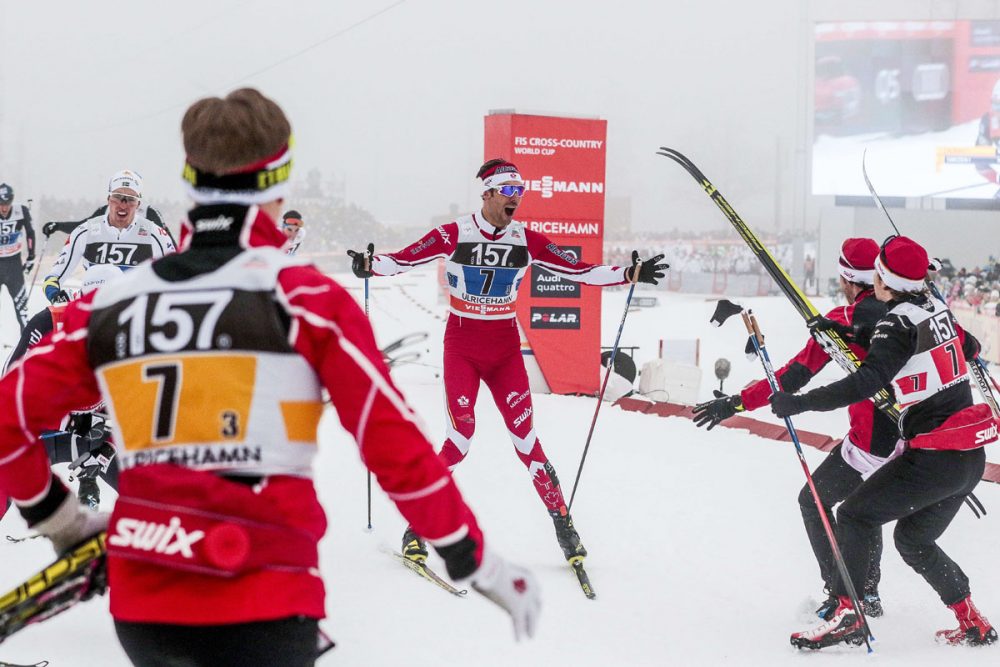
    Len Valjas (c) spreads his arms to greet his teammates Alex Harvey (far right), Knute Johnsgaard (far left) and Devon Kershaw after he crossed third in the 2017 men’s 4 x 7.5-kilometer team relay on Jan. 22, 2017, in Ulricehamn, Sweden. (Photo: Fischer/Nordic Focus)

    Back on Jan. 15, 2017, current Canadian World Cup B-team member, Len Valjas was beaming. Valjas, along with podium-regular teammate Alex Harvey, had won a World Cup team sprint in Toblach, Italy. The next weekend, Valjas and three teammates (including Harvey) rocketed to third in the men’s relay at the World Cup in Ulricehamn, Sweden. The results, at the time, looked to be a good indicator for the ensuing 2017 World Championships in Lahti, Finland.

    Days before the Lahti events, during a gym session, Valjas felt his upper back between his shoulders give out. He felt little initial pain, but with compromised breathing, his results fell flat in Finland. As the remaining 2016/2017 World Cup season came to pass, Valjas hadn’t yet determined the exact cause of his physical ailments. His fitness and confidence suffered.
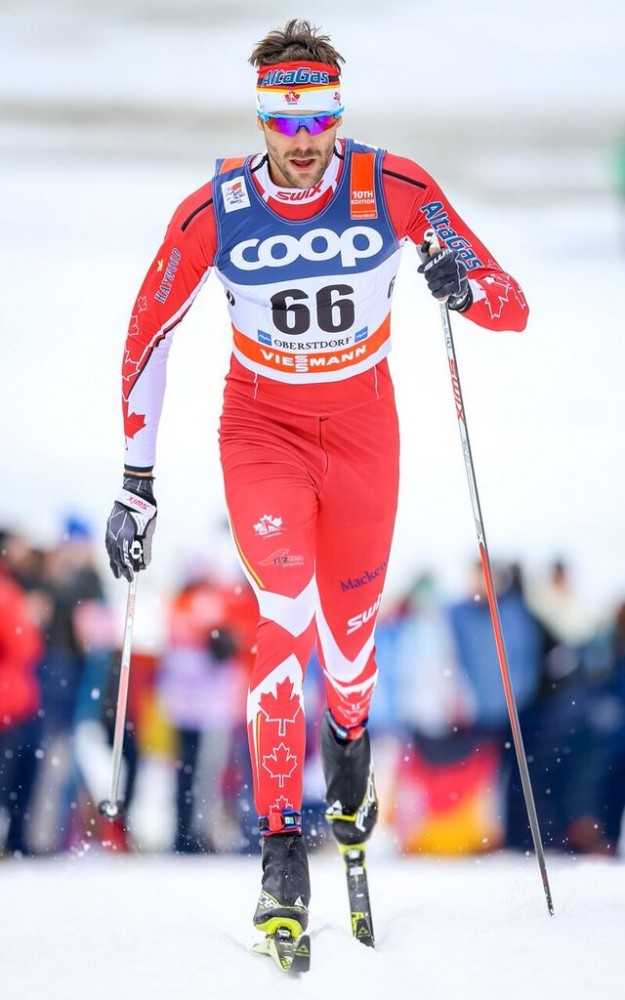
    Len Valjas (Canadian World Cup Team) en route to 10th overall in a classic-sprint stage at the 2016 Tour de Ski in Oberstdorf, Germany. (Photo: Marcel Hilger)

    Prior to Lahti, Valjas was ranked 13th overall on the sprint list. By season’s end, he had dropped to a very respectable 16th in the sprint standings.

    Coming into the 2018 Olympic season, Valjas remained frustrated. He knew something was off. A pattern of poor performances continued through his most recent World Cup campaign. In the big picture, this past World Cup season left a bad taste for Valjas.

    “Last year, I had so many bad feelings from the year,” Valjas reflected on the phone on May 22. “I could never train in the summer because I was always injured and compensating. I could not double pole on rollerskis. My back would hurt. All these little things … The last season obviously wasn’t by any means a good smooth season for me. I did have a good Olympic race which I am super proud of, but, overall, other than that one good day, I had one of my worst and least-fun seasons I have ever had. I was dealing with an injury for the last year and a half in my back.”

    At the Olympics in PyeongChang, South Korea, Valjas reached the semifinals in the individual classic sprint and ended the day in seventh for his best result at his second Olympics.

    Canada’s Olympic sport-funding system emphasizes championship medals and results. Harvey and Valjas set new Olympic benchmarks this February for Canadian men’s cross-country skiing, with Valjas’s contribution being seventh overall in that classic sprint.  

    “It is what they wanted,” Valjas said of Cross Country Canada’s priorities. “The end goal they wanted — Olympic results this season. Alex and I set records in the individual races anyway, three new Canadian records. Alex had two of them. I had one. It was one of our most successful Olympics ever. They should be extremely proud, especially when the season wasn’t going very well for a lot of us. We had an off-year and still were able to beat three of the Canadian records at the Olympics. I think they should have been very proud.”

    Valjas, 29, hasn’t felt healthy since before Lahti 2017. The year and a half he endured at less than 100 percent has literally sapped him. During his most recent interview with FasterSkier, there was a tone of lament in his voice — not anger, just a simple melancholy from an athlete known to have a mellow demeanor. From Valjas’s telling, the wires between getting a full diagnosis from the Canadian team for his original back ailment and the pressure to continue training and racing got crossed.
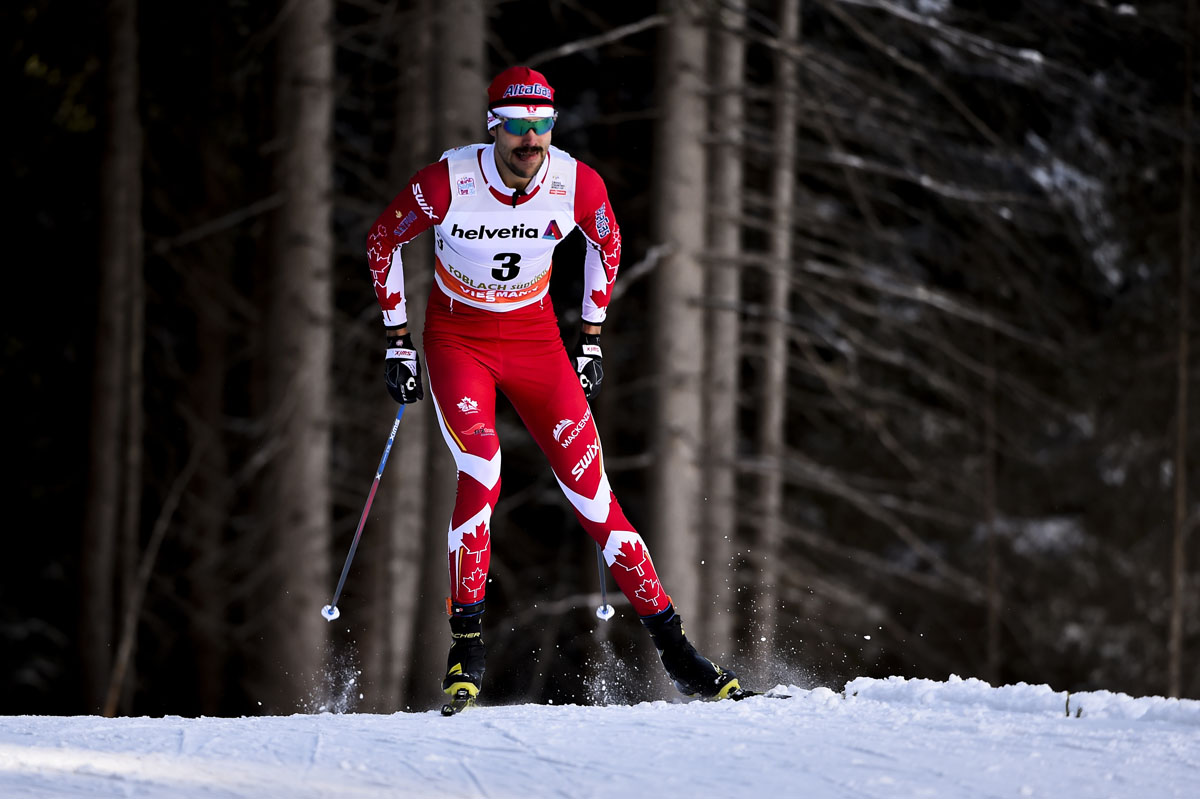
    Canada’s Len Valjas on his way to 20th overall in a January 2017 World Cup freestyle sprint in Toblach, Italy. (Photo: Fischer/Nordic Focus)

    “At World Champs [in 2017], I was begging for an MRI or some sort of check just to see what I did,” Valjas said. “But I kept getting turned down because my symptoms weren’t so bad. I didn’t have weird nerve feelings in my hands. It was kind of frustrating for the rest of that season.”

    According to Valjas, he asked again in the spring of 2017 for an MRI.

    “We should check to see if it is nothing, at least we will see that it is nothing,” Valjas remembered saying at the time.

    Again, Valjas said, he was denied the test. He trained all summer with frequent setbacks. His 2017/2018 World Cup season began in Kuusamo, Finland, with him finishing 44th overall in the three-day mini tour. The next weekend he placed 59th in a classic sprint in Lillehammer, Norway. Valjas said he had been working with a U.S. Ski Team physiotherapist in Lillehammer due to shoulder discomfort and nerve pain.

    The pair continued their work together through the rest of December 2017. After their conversations regarding the pain, physical limitations and sensations, they linked what Valjas was experiencing to the moment in the gym before Lahti 2017 when he felt the “pop” in his upper back. 

    “[The physio] said, ‘I don’t think this is a shoulder injury. I think this is in your back,’ ” Valjas recalled. “And that is when he kind of tied in my mind to, OK, we are dealing with the same thing when I hurt it before Lahti if he thinks it is in my back. It all made sense. … And finally, I told the team I am leaving. I am going home and getting this checked out myself.” 
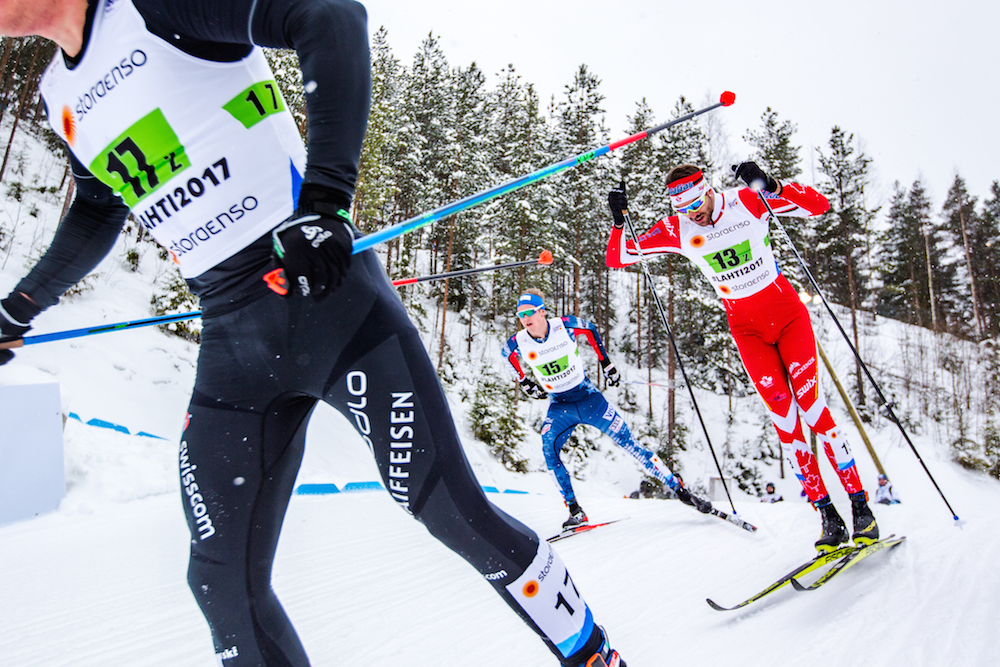
    Switzerland’s Jovian Hediger leads Canada’s Len Valjas (r) and American Erik Bjornsen (c) during the classic team sprint at 2017 FIS Nordic World Ski Championships in Lahti, Finland. The U.S. men placed fifth and Canada finished sixth in that race. (Photo: John Lazenby/Lazenbyphoto.com)

    Valjas clarified that the shoulder pain was in fact referred pain originating in his back.

    Upon his return to Canada, Valjas received an MRI authorization from a trusted physician he had worked with in the past.

    “Turns out it was a herniated disc at T2-T3. And I fractured a vertebra at T4,” Valjas explained. “So it was quite a bit worse than I thought at first.”

    The T4 fracture Valjas incurred was not a threat to his spinal cord. The break occurred where the rib meets the vertebrae rather than along the spinal cord. The personal physician consulting Valjas also explained he had signs of arthritis in several joints around the injury zone. A consequence of working through the injury, Valjas was told, rather than taking time off. His doctor ultimately cleared him for racing since it was an Olympic year.

    But, according to Valjas, it was a grim six-week buildup to PyeongChang. There was little effective training, scores of physio sessions, and the rare on-snow intensity effort to “salvage shape”. Then there was his seventh place at the Olympics. After his herculean effort in PyeongChang, he pulled the plug on the season. Time for rest, rehab, and reflection.

    “To be totally honest, I kind of thought after the Olympic cycle I would be done, too,” Valjas said of the rumors swirling about his potential retirement. “That is why I probably started my own rumors, just saying that I was planning to retire.”

    Several times Valjas mentioned how proud he was of his Olympic result. But the season-long canvas of results, he felt, was not reflective of his World Cup racing capacity.

    “I just didn’t feel like I was finished this last year,” Valjas said. “I only raced, I don’t know, 13 races or something. Crazy low. I didn’t have the results I wanted in the end beyond the single Olympic one. It wasn’t the season I was hoping for. So I am hoping to get healthy and have a last season that I am proud of. I might not have the seventh-place result, but I just want to race well and be pain free.”

    The path to pain-free racing will initially involve building up his strength while delaying his rollerski-specific training. With expected massive financial cuts looming across the board for Cross Country Canada (CCC), Valjas explained he will be based out of Canmore, Alberta, this summer with bare-bones support. Canadian World Cup coach Ivan Babikov will be writing his training plan, but according to Valjas, CCC has eliminated its physiologist and strength-trainer positions.

    “It is me and Ivan, which, for what I am going through right now, is actually good,” Valjas said. “Through all this, he would fight for me. He believed me, let’s just say. There are only a couple of people who trusted what I said and the rest kind of left me out to dry there. I am happy to work with Ivan this year because, he actually knew all along. He did what he could. But at the same time, he doesn’t want to lose his job. He was working on my side for sure.”

    Valjas is still processing how his medical condition was handled and how he responded. An athlete going against team wishes can have repercussions.  

    “It is hard to go against the team right away,” Valjas said. “If I got the MRI and there was nothing there, they might not be too happy with me either.”

    Valjas hung on to the party line for months. Not exactly a “suck it up” directive, but messaging from the team that didn’t correlate with the distress and inability to rebound that Valjas experienced.  

    “When I told them my symptoms, the answer was always, ‘Oh, you have anxiety, your back is healthy. You have anxiety,’ ” Valjas said.

    He also mentioned that he endured numerous back manipulations under the recommendation of team health care providers. Procedures, he said, that he’s now been banned from at the risk of inflaming his injury.

    “It is just unprofessional how they just assume that it is anxiety and they get me manipulated probably 30 times in that year,” Valjas commented. “It could have been way worse. I feel lucky that … my spinal cord is totally fine.

    “I am more worried about the future. If you break your leg, it is pretty obvious you broke your leg. It is more straightforward. If someone has a nagging spine injury, I hope that they learn from this,” he continued. “But so far I don’t feel like they have. I hope they learn you need to take these very seriously. Because you can have your athlete back in half the time if you don’t jeopardize their whole career over it. If I knew right away that it was herniated and broken, I probably could have taken a few months and gotten stronger. But the way I did it, it was a year and a few months of constant atrophy in my back and spine. I can feel it. I am weaker in the upper body than I have ever been.”
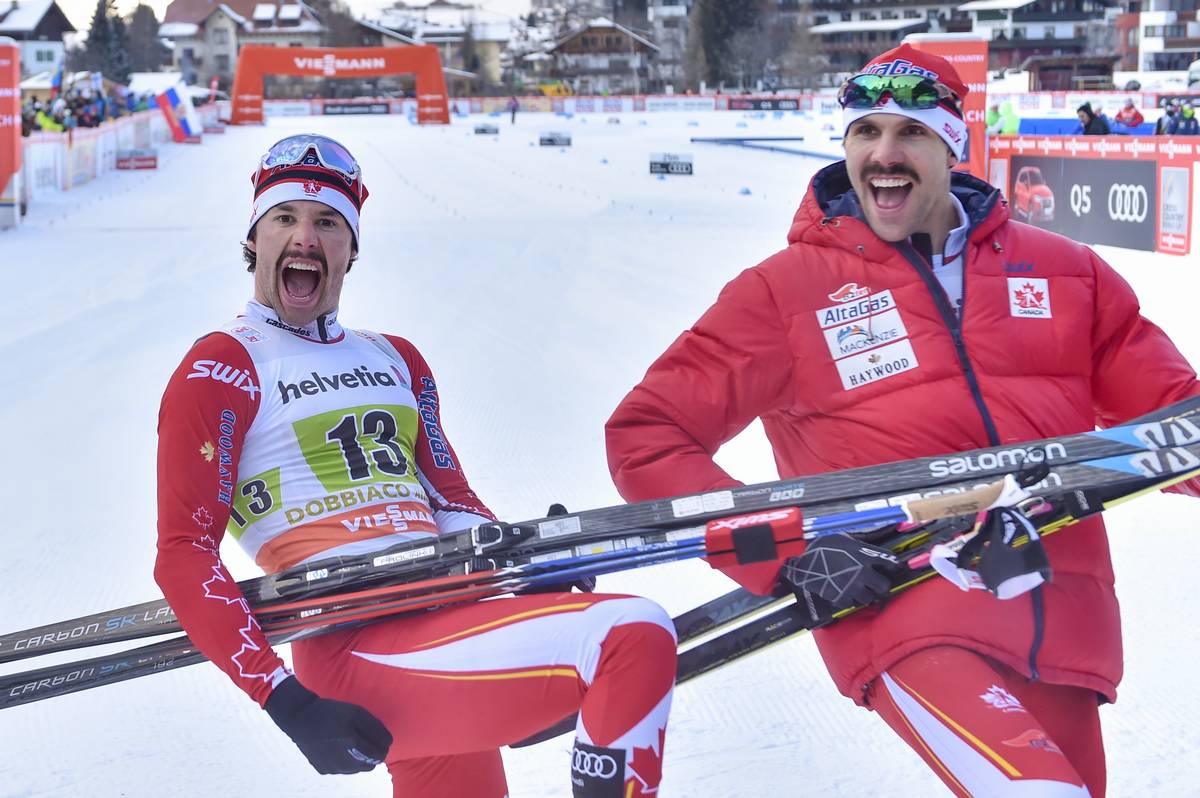
    Canada’s Alex Harvey (l) and Len Valjas celebrate their 2017 World Cup freestyle team sprint win in Toblach, Italy. It was the first team-sprint victory for Canada since 2011 World Championships. (Photo: Salomon/NordicFocus)

    Valjas remains focused. His new competition singularity is the upcoming freestyle team sprint at the 2018 World Championships in Seefeld, Austria. The plan is to contest the race with Harvey. A healthy Valjas could allow the tandem to revisit the emotions of their former World Cup team sprint win.

    “I am doing it really just as much for me as I am for [Alex],” Valjas said of continuing in the sport and supporting his longtime friend and teammate. “It for sure helps to have a race to look forward to, even if it is a team race. It is going to help me in the rehab and the training to have something to train after, an end goal.”
  • Despite Back Injury, Newell Recovers to Win Bozeman Running Race

    Despite Back Injury, Newell Recovers to Win Bozeman Running Race

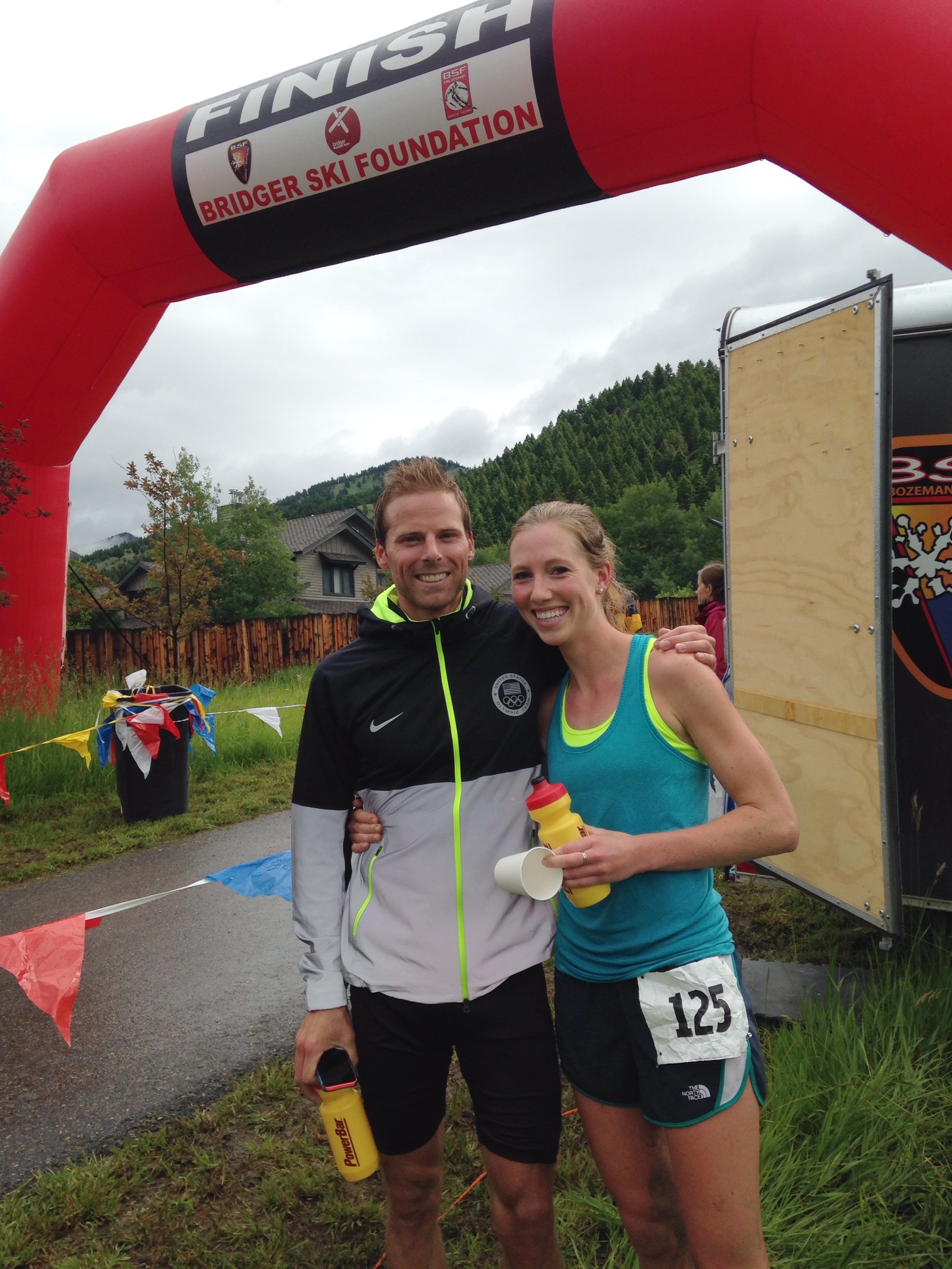
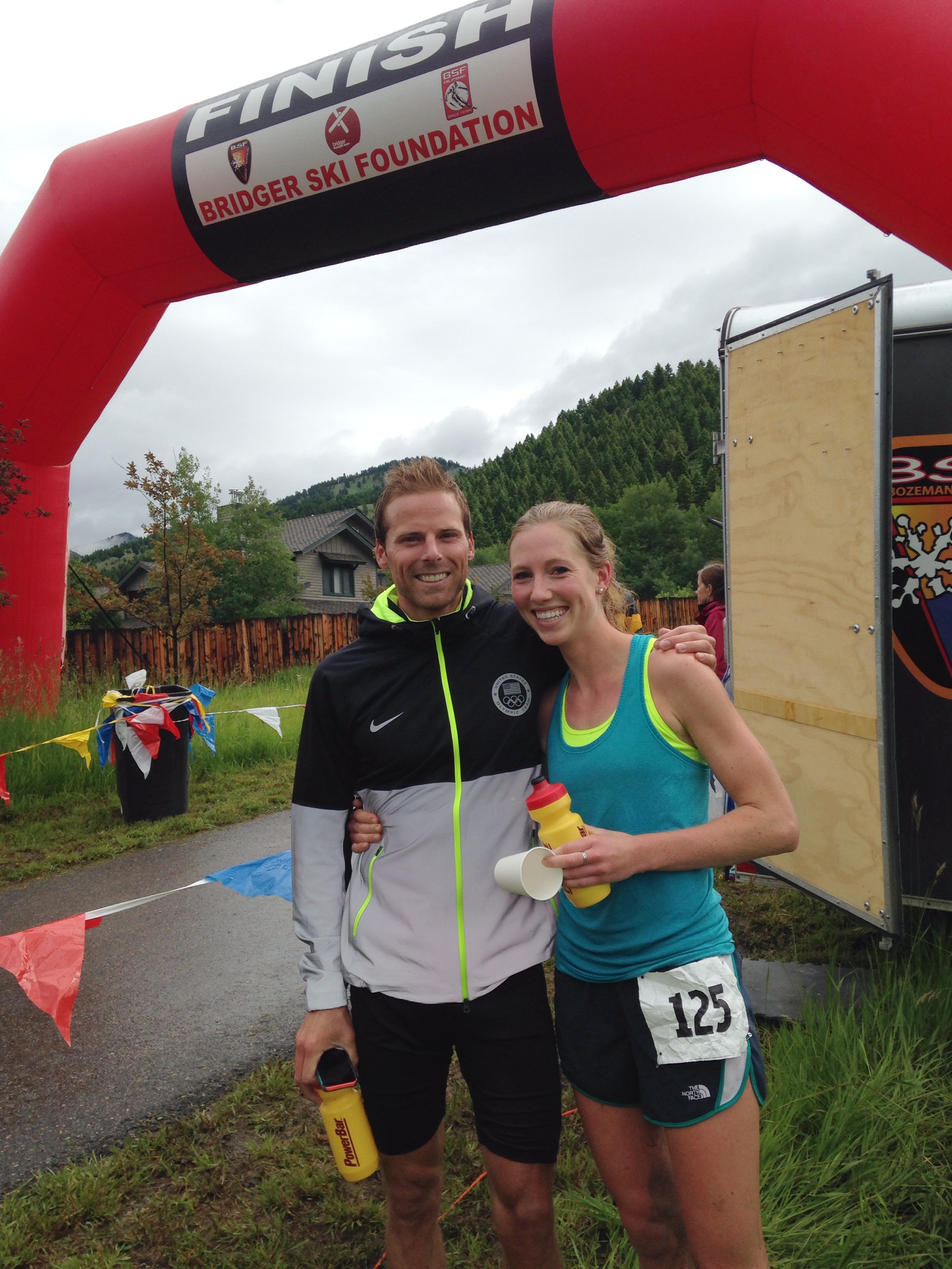
    Andy Newell and Erika Flowers, both of the Stratton Mountain T2 Elite Team, pose after both won the Jim Bridger Trail Run in Bozeman, Mont. for their respective genders.
    Andy Newell and Erika Flowers, both of the Stratton Mountain T2 Elite Team, pose after both won the Jim Bridger Trail Run in Bozeman, Mont. for their respective genders. The two skiers were in Bozeman for the wedding of Flowers’ father.

    As Andy Newell flew down the drenched foothills of Bozeman, Mont., during the Jim Bridger Trail Run last Saturday, there was no guessing that the U.S. Ski Team member had been unable to run only a few days before.

    Having thrown out his back two weeks earlier while doing power-cleans, the 29 year old had neither run nor weight lifted since the incident.

    With a strong start to this year’s training, including a trip to Oregon for the U.S. Ski Team’s Bend training camp, the injury was disappointing.

    “It was a bummer,” Newell said.

    Despite his injury, he came to Montana with teammate and former Bozeman resident Erika Flowers for the wedding of her father, Pat. Upon their arrival from Vermont, Pat brought Newell to a local physical therapy practice where he received care for his back.

    After some much-needed adjustments, Newell was quickly healing, and by the time the Jim Bridger Trail Run rolled around on Saturday, he decided that his back was ready for the challenge.

    It appeared that the combination of the physical therapy and the crisp mountain air served Newell well as he crossed the finish line of the 10-mile race first in 1:20:03. Former biathlete, Dan Campbell finished the race roughly a minute and a half behind him in second.

    Flowers also seemed to benefit from her trip home, finishing first for the women with a time of 1:30:52, almost six minutes ahead of the next competitor. Having competed in the race as a junior with the Bridger Ski Foundation, she was happy to find success at home especially on the day of her father’s wedding.

    According to Newell, the race, which boasts over 2,000 feet of elevation gain, was an excellent way for both him and Flowers to train during an otherwise extremely busy trip to Bozeman.

    “We’re here in town for the wedding, but we need to train too,” Newell said. “Doing a running race is a lot more fun than doing intervals. This was a great chance to say hi to the ski community here.”

    After the race Newell and Flowers rushed home to prepare for the wedding and its numerous activities that took place later that the day. Newell and Flowers were later recognized for their efforts in the run by the race-organizer during the wedding reception.

    Newell and Flowers will continue their summer training in Alaska at the U.S. Ski Team’s on-snow training camp in July.

  • U.S. Ski Team Starts Anew at Annual Bend Training Camp

    U.S. Ski Team Starts Anew at Annual Bend Training Camp

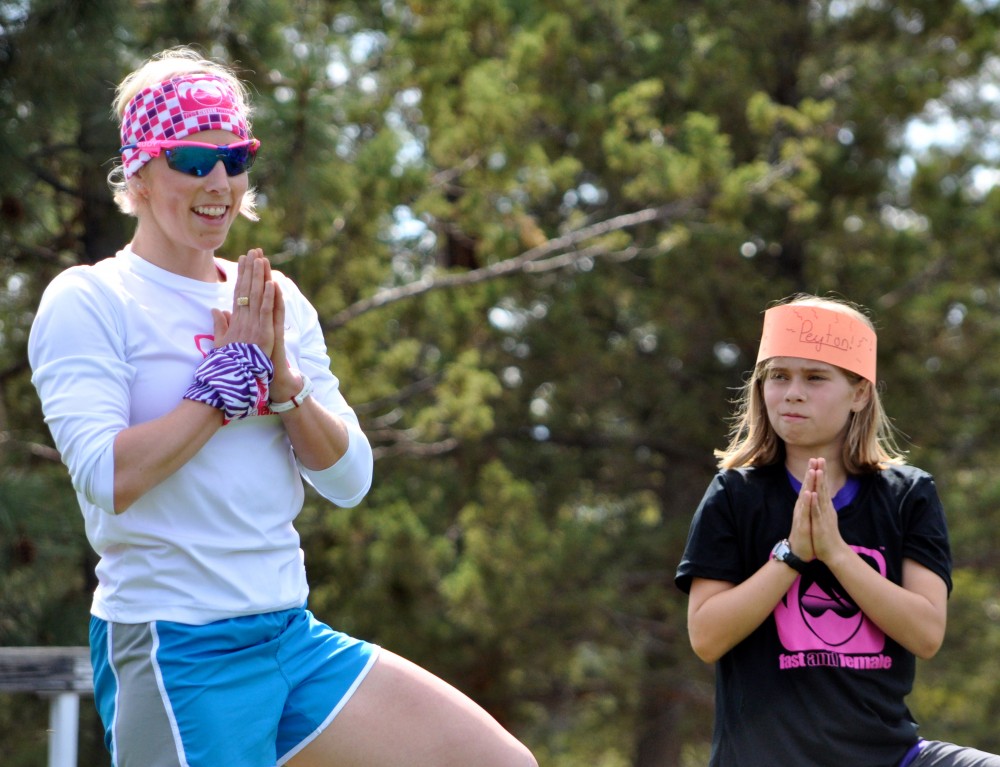
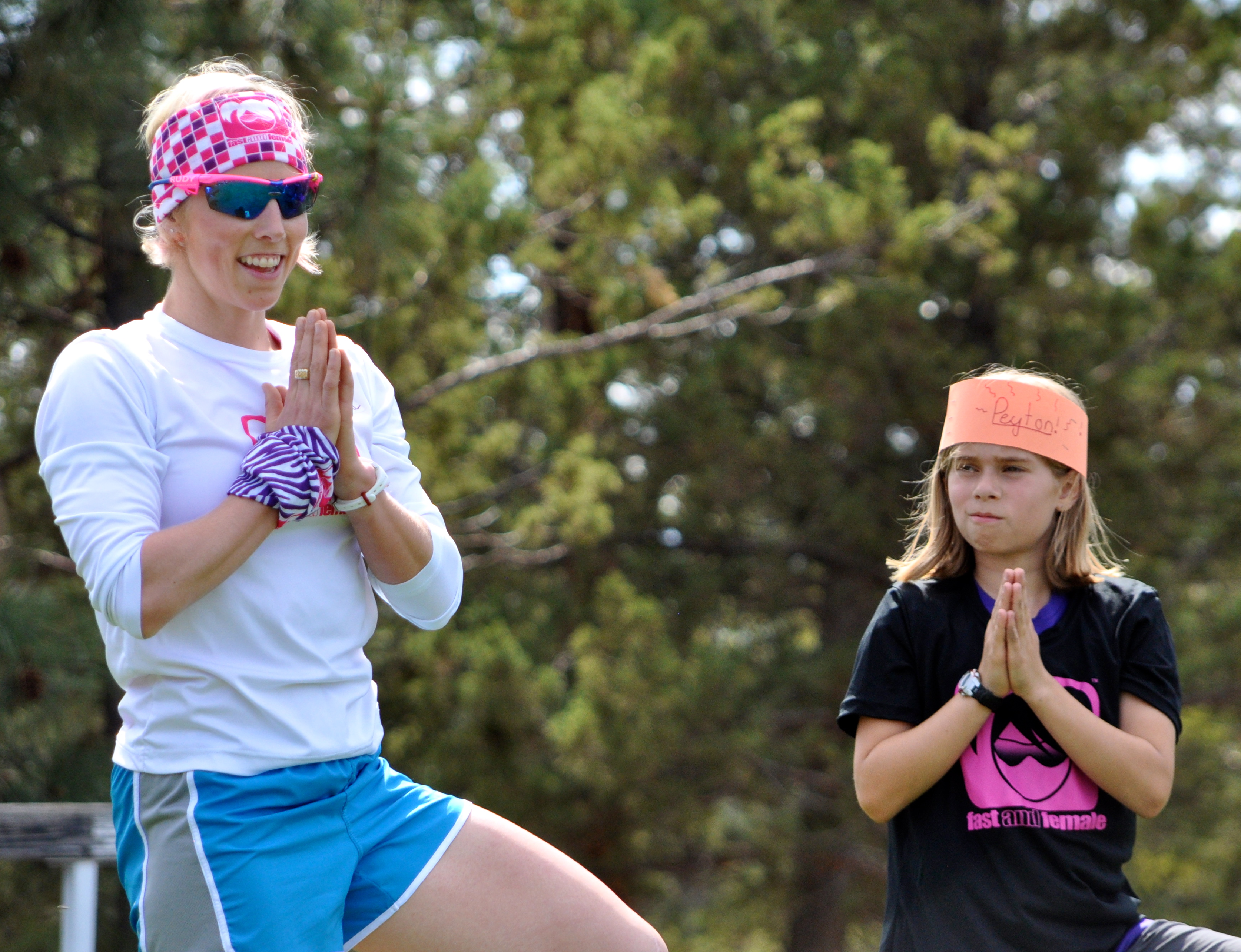
    Kikkan Randall leading Fast and Female in Bend, Or. as part of the Annual Bend training camp in May. (Photo: Matt Whitcomb)
    Kikkan Randall (l) leading a Fast and Female event in Bend, Ore., as part of the annual Bend training camp in May. (Photo: Matt Whitcomb)

    When the U.S. Ski Team rolled into Bend, Ore., for their annual spring training camp in May it felt like home. With outstanding support from Mount Bachelor and its staff, excellent conditions, and a welcoming community, the team and their coaches were more than comfortable in what many would call the contiguous United States’ spring-skiing mecca.

    Despite the usual volatility of the weather in Bend, the 2014 camp held only one day of significant snowfall for the team which included 2014 Overall World Cup Sprint Champion Kikkan Randall, 2014 Olympic standout Sophie Caldwell, and veteran Andy Newell.

    According to U.S. Ski Team (USST) Women’s Coach Matt Whitcomb, the conditions were the best that the team had seen in four to five years. The crust cycle this past May, which had been unfavorable in the past, allowed the team to complete the tradition an over-distance ski in the Broken Top meadows on the camp’s last day.

    “That workout alone is reason enough to cross country ski,” said Whitcomb of their workout in an email.  “If you can ski well enough to get up there safely, it’s just something you need to do. That’s a direct order.”

    Andy Newell tests pair of Fischer boots while training with the U.S. Ski Team last month in Bend, Ore. In a post Olympic year, the camp serves as an opportunity to try new equipment and sign new contracts. (Photo: Matt Whitcomb)
    Andy Newell tests pair of Fischer boots while training with the U.S. Ski Team last month in Bend, Ore. In a post Olympic year, the camp serves as an opportunity to try new equipment and sign new contracts. (Photo: Matt Whitcomb)

    The Bend camp served as fresh start for the U.S. Ski Team as it begins its quest for even stronger results in the 2014-2015 season. However, that doesn’t mean the camp consisted of nonstop intensity and endless over-distance skis. Rather, it was an opportunity to regroup and establish plans for the coming year. As part of this strategy, USST Head Coach Chris Grover, articulated his plan for each athlete and asks for feedback in return so that all parties are on the same page.

    The Bend camp also served as an opportunity for team building. While it’s hard to imagine the U.S. Ski Team getting any closer than they already are, the Bend camp cemented their bonds as both the women’s and men’s team developed team goals that involve training, racing, and community involvement.

    The actual training in the 2014 camp was comprised of less intensity this year, and focused on bolstering technique early on in the season. Using a visualization practices involving video, U.S. Ski Team coaches aided athletes in their technical skiing.

    “It’s a new quadrennial and we want to enter the World Cup season having the most technically improved team. We ski well but can do better,” said Whitcomb.

    In order to enter their new era of technical advancement, the U.S. ski team coaches reviewed every World Cup race from the 2013-2014 season. They then converted these races into accessible clips that featured foreign competition so that the year’s evolutions in technique could be studied.  These clips were then used for specific workouts so athletes could visualize the technique they were working towards. An example of a visualization workout involving striding can be found in this week’s Wednesday Workout.

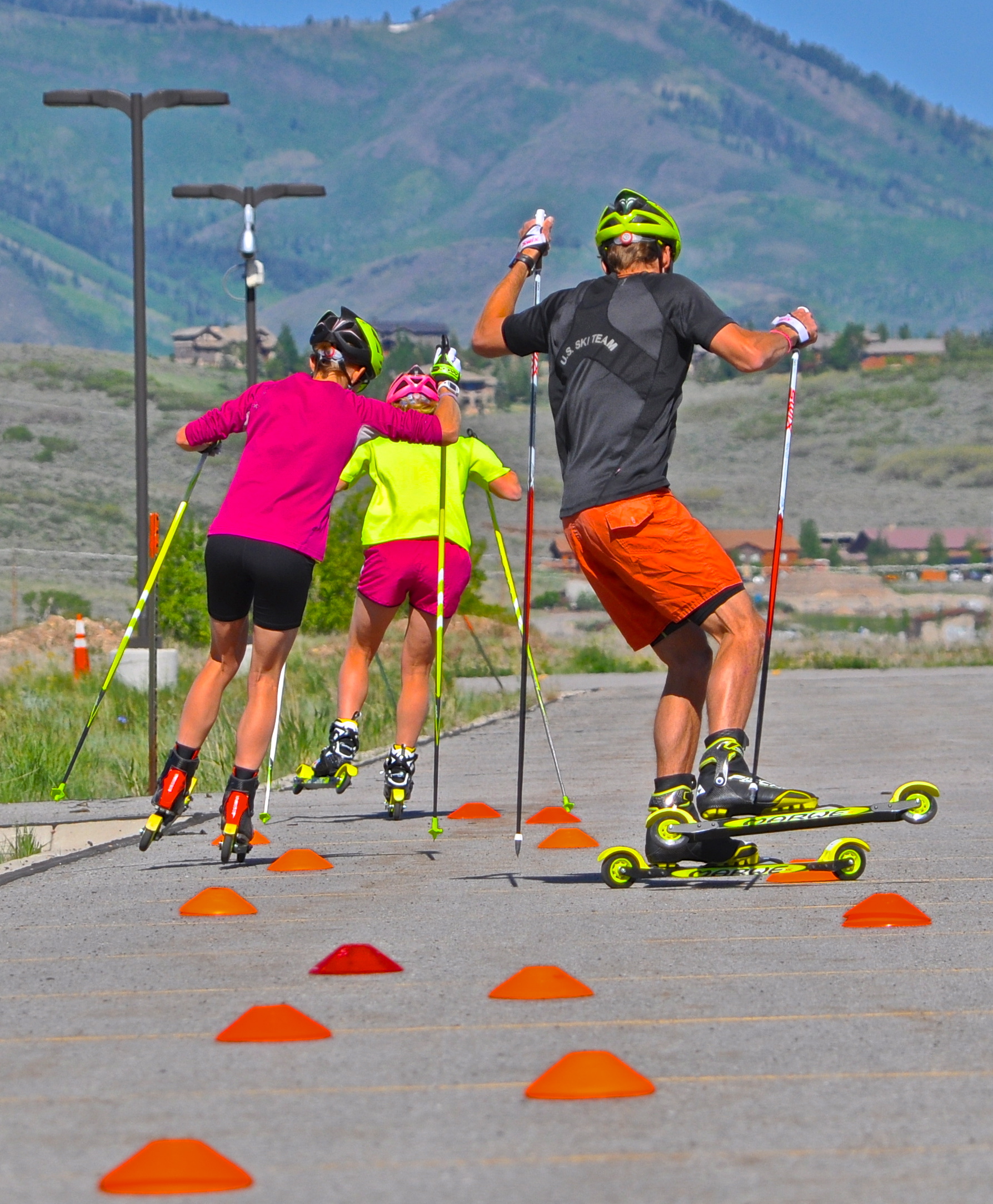
    Andy Newell (r) chases Liz Stephen and Jessie Diggins in a post-Bend agility training involving skiing a slalom course with one foot. (Photo: Matt Whitcomb)
    Andy Newell (r) chases Liz Stephen and Jessie Diggins in a post-Bend agility training involving skiing a slalom course with one foot. (Photo: Matt Whitcomb)

    According to Whitcomb, athletes found the visualization practice productive as well as challenging, especially once it was applied on snow. However, the exercise involved some amusement as well.

    “I think the team had some fun with it,” said Whitcomb. “Some of the drills included skipping on skis in classic tracks, downhill striding, one ski slalom followed by a 2-ski GS course, and various cornering exercises to improve comfort while skiing on the outside edge of the ski.”

    Despite the camp’s success, the Bend also brought some challenges to the team. These troubles came in the form of injury to both Sophie Caldwell and Erik Bjornsen.

    “It’s definitely a bummer to have couple injuries during a camp,” said Whitcomb.  “It’s tough for everyone because Erik and Sophie are such great personalities to have at training. In elite sport we do our best to push the physical envelope in smart, creative ways to gain fitness while trying to remain injury free. Sometimes it isn’t enough.  It can be that we pushed too hard, and it can sometimes be a matter of chance.”

    According to Bjornsen’s support staff in Alaska, he irritated his L3/4 disc during a double pole interval session as a result other discs being so tight.

    “A strong guy like Erik can put down a lot of force and he got unlucky,” Whitcomb said. Despite his injury, Bjornsen is predicted to return to training in a matter of weeks.

    Caldwell’s status, on the other hand, is still up in the air. After a mountain-bike tumble in Bend, the rising star fractured her elbow. While remaining upbeat, she has begun a training regimen that isolates her legs and protects her arm with activities such as skating without poles, hiking, and spinning.

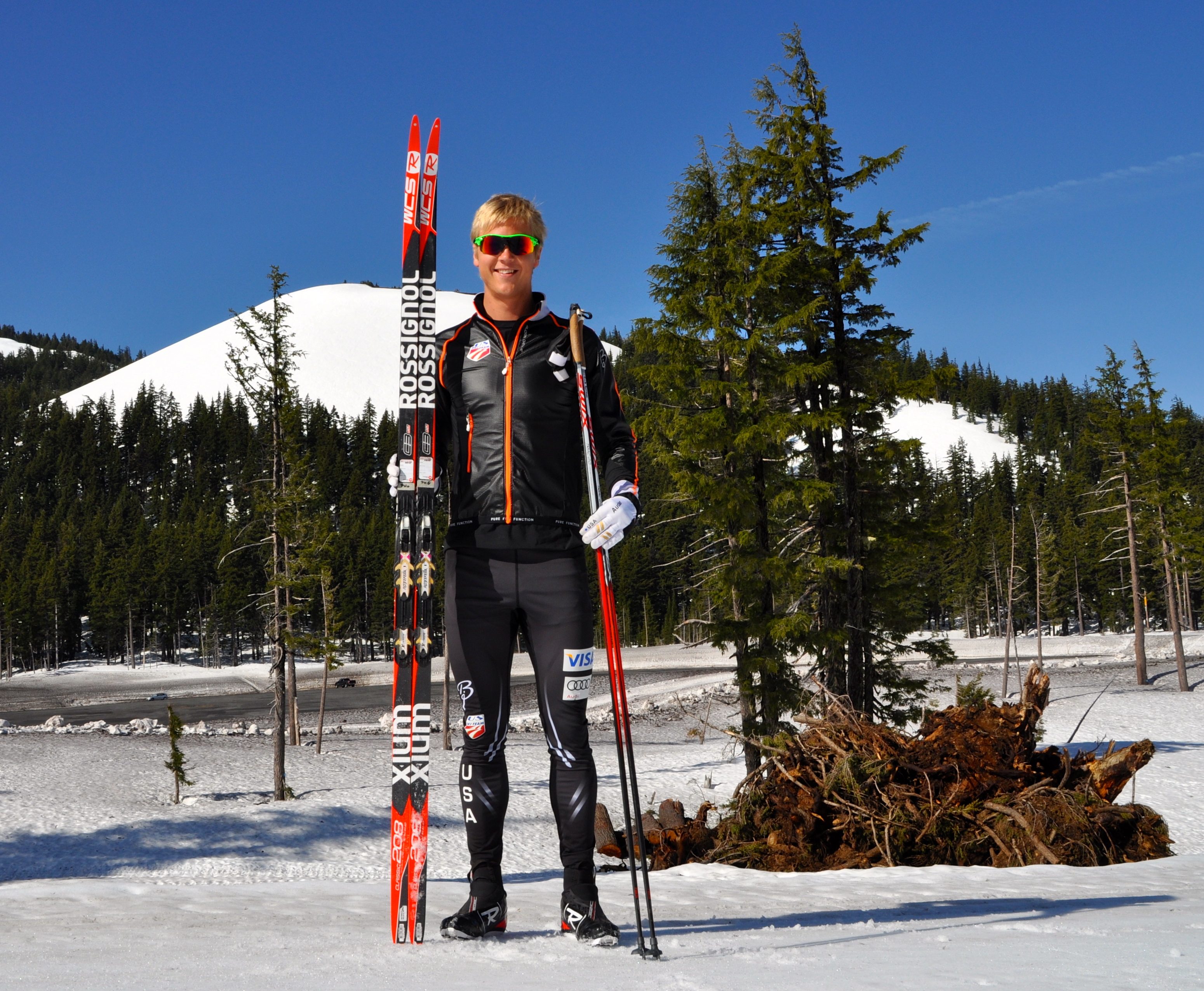
    Erik Bjornsen showing off his new Rossignol equipment in Bend. Bjornsen suffered an injury to his back during a double pole interval session, but will be back to full training in a matter of weeks. (Photo: Matt Whitcomb)
    Erik Bjornsen showing off his new Rossignol equipment in Bend. Bjornsen suffered an injury to his back during a double pole interval session, but will be back to full training in a matter of weeks. (Photo: Matt Whitcomb)

    After her second MRI in Park City, Utah, on June 2, specialists had yet to give a full prognosis. According to Whitcomb, there is a possibility that Caldwell’s radius may have been injured in addition to the humorous. There is also a chance that several floating bone flecks may not absorb naturally, thus requiring surgery to remove them.

    While injuries are always unwanted, Whitcomb stressed that sometimes it is impossible to avoid injury while training 800-plus hours a year. In the wake of Caldwell’s accident, he believes mountain biking can be useful for training.

    “Mountain biking will always be a risk, but we’re also aware it is fun and has some important application to what we do,” he said. “We try to add things like swimming and biking that are low impact and allow for more volume. I suspect it’s something we’ll continue to do for those that like to bike, but at the moment we’re kicking ourselves.”

    Injuries aside, the U.S. Ski Team will continue their work towards improved technique, speed, and strength throughout the summer months. Their next summer training camp will take place Alaska next month.

  • Injured APU/USST Teammates Randall and Bjornsen Keep Kicking

    Injured APU/USST Teammates Randall and Bjornsen Keep Kicking

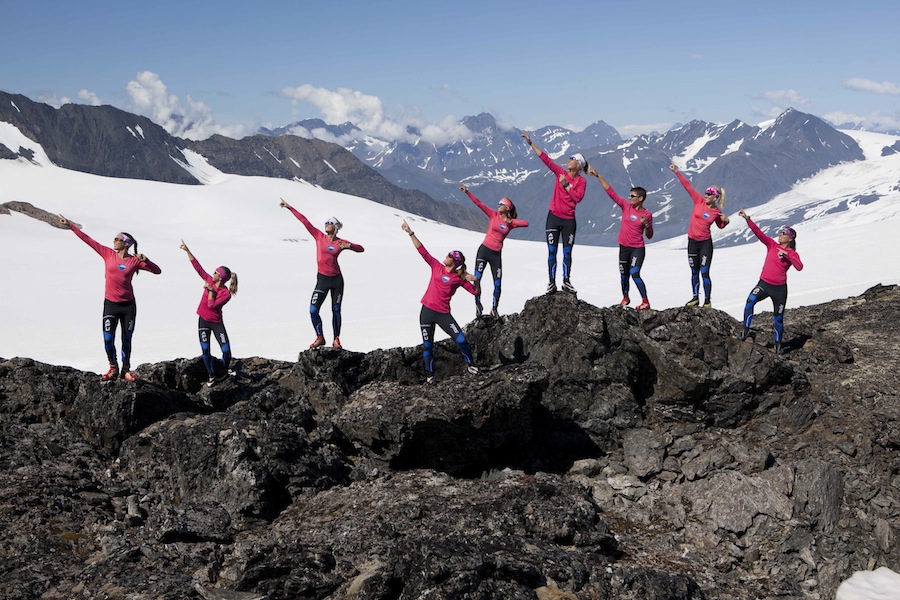
    Sadie Bjornsen (fourth from right) and her APU teammates pose like Jamaican sprinter and six-time Olympic gold medalist Usain Bolt on Eagle Glacier near Anchorage, Alaska. (Photo by Chris Hodel)

    Last week in Anchorage, a freak windstorm rolled through that would have devastated most mainland Americans. Gusts estimated at 130 miles per hour spewed trees across Alaska’s largest city, leaving at least a thousand residents without power through Saturday – almost four days after the storm hit Tuesday night.

    In a phone interview, U.S. Ski Team member Kikkan Randall said the electricity and all the lights at her home came on at 2:15 a.m. Saturday. One tree took out part of their backyard fence, but Randall’s husband, Jeff Ellis, repaired it in no time. Their biggest concern was their refrigerator and freezer, so the two went out and got a generator.

    Elsewhere in the city, Randall’s teammate on the U.S. Ski Team (USST) and Alaska Pacific University (APU), Sadie Bjornsen said the power at her on-campus housing was restored Wednesday morning. On the phone, Bjornsen laughed about how she didn’t even know the storm was coming.

    A professor in one of her classes warned students about its potential effects. She hadn’t heard anything about it otherwise.

    “I was like, ‘What are you talking about?’ I came out of the house and I was like, ‘What is going on? There’s a hurricane!’ ” she recalled with a laugh. “[My APU teammate Rosie Brennan and I] were driving and there were road signs ripping out and flying across the road and all this stuff flying around, and all the stoplights were out. I’m like, ‘Whoa, this is wild!’ ”

    When she got home Tuesday evening, Bjornsen moved her car to avoid falling trees. Later that night, the 22-year-old had trouble falling asleep.

    “I was freaking out because I’m like, ‘I’m going to wake up with a tree in my lap,’ because I’m on the corner where all the trees were blowing,” she said. “But then when I looked out the next day, I was like, ‘Oh those are all aspen or birch trees, and they aren’t that heavy.’ ”

    Reports indicated that nobody was seriously injured, and Bjornsen was relieved. “Only in Alaska,” she said.

    On Saturday, Randall said the weather was back to normal with the sun shining and slightly chilly temperatures. That morning they received their first frost. That was Alaska, all right.

    Bjornsen’s Back/Foot Troubles

    Sadie Bjornsen (APU/USST) working out on Eagle Glacier in July. (Photo by Reese Hanneman)

    Way up north, the two Anchorage skiers have endured more than extreme weather in the last few months. Bjornsen’s been coping with back and foot injuries since the spring, and Randall is in a walking boot and training at 50 percent to heal a stress reaction in her foot.

    While both joked about doing aqua-jogging sessions together, they also shared some of their frustrations and ways of staying positive through adversity. FasterSkier spoke with Bjornsen and Randall separately: Bjornsen while she was home studying before strength training, and Randall while she cheered on her husband at a local cyclocross race.

    Bjornsen’s back injury started nearly a year ago in November, but by the time the racing season started, it disappeared, she said. After two and a half weeks of discomfort, she didn’t feel it again until this past April, just in time for the beginning of training season.

    Kikkan Randall (APU/USST) donning a walking boot to relieve a stress reaction on her right foot. If left untreated, the reaction could magnify to a fracture, which is why Randall is training at 50 percent and not skiing or running for five weeks. (Courtesy photo)

    She’s had the overuse issue since and initially remedied it by skate skiing. Classic skiing – her strength – seemed to irritate her facet joints the most, so she decided to skate only.

    “Originally I was like, ‘Well, OK I’m just going to skate every single workout. I have a weakness with skating anyways so this is great,’ ” Bjornsen said. “That’s what I did and then I got tendonitis in my foot because of it. That’s when I have to stop and say, ‘I need to actually address this problem.’

    “It’s challenging because you have a back and a foot injury so then you have to find exercises that are not stressing both of those things because they’re kind of opposites,” she added. “It’s just been hard to find ways to progress.”

    Bjornsen discovered her tendonitis at the USST camp in Bend, Ore., in May. With the USST/Canadian women’s joint camp (also known as the North American Women’s Training Alliance) two weeks later in June, she pushed through the injury and raced to get into shape.

    “I knew [Finland’s] Aino-Kaisa Saarinen (Auku) would be coming [to the Alaska training camp] and since I first started watching her ski, I have dreamt about classic skiing behind her,” Bjornsen wrote on her blog. “I over-jumped my limitations, skiing a two hour skate through the hills chasing Auku and Kikkan. Again, I was back at the bottom with my heart hanging low. At that point I had to make the difficult decision to leave the National Team Camp in my own town and get away from the excitement and motivated girls to truly get my body back to order.”

    Since then, Bjornsen’s let her body recover for the better part of the last three months. She recently started doing some intensity on her feet, which she was excited about. It was a long summer without it, she said.

    “I was just doing my intervals running in the pool,” she said with a laugh. “People in the pool will just look at me, like, ‘Why are you breathing so hard, for one, and what are you doing?’ ”

    Not to mention, it’s a community pool.

    “It’s been a bit humiliating, but it’s fun,” Bjornsen said. “It’s the world’s most boring thing you could ever do, but it makes you appreciate when you go out and do ski intervals, it’s like, ‘Oh my God, this is why I do this sport.’ ”

    This summer, Bjornsen has been to the glacier twice to ski and said she’s making progress. As far as she can tell, her back is almost in the clear and her tendonitis is practically gone.

    “The thing about tendonitis and stuff like that is you want it to just go away in two days,” she said. “But it’s just kind of something that you always have to look out for a little bit. I’ve just been working through strengthening it.”

    As for her fitness, she said it’s hard not to imagine where she should be.

    “You feel like you’re so far behind when you have these setbacks, you know? It’s hard to not only focus on that,” she said. “The most challenging part about it is there’s not really an answer to how to make it better. It’s like, ‘You need to work on not having muscle spasms.’ … [I’m trying to think] about where I’ve progressed from two months ago and thinking about the season’s really long. You kind of have to think about the end of the season as well as the beginning.”

    Her coach, Erik Flora, has been one of her biggest advocates and sources of support, she said. He’s shown her ways to be creative with training, even if it is in the pool.

    “Erik’s like, ‘If you stay positive through these sections is when you decide if you’re in it for the long run or if you’re going to wuss out or something,’ ” Bjornsen said.

    She’s decided to stick with it.

    “It’s been a really challenging summer, for sure,” she said. “It was challenging to have to leave the national-team camp here in Alaska, and it was challenging to have to say no to [the USST camp in] Sweden because I wasn’t healthy enough to be there.”

    “It’s just been a rollercoaster of making progress this summer,” she added. “I don’t know where I am, I guess we’ll see, but probably not where I would have hoped to be. Maybe in two months I will be somewhere I hope to be. The cool thing about our sport is your racing is not only based on your year of training, it’s also based on what you’ve done and what you’ve done in the past and what your strengths are. The best you can do is be really positive and do what you can do.”

    In about a month, Bjornsen will join Randall and the rest of the USST for their final dryland camp in Park City, Utah. She plans to use the time to practice on the sprint course at Soldier Hollow and nail the slingshot descent into the stadium.

    “Somehow I’m always at the wrong place on that last corner, so hopefully I’m going to learn that one this year,” she said.

    Looking ahead, that venue is where Bjornsen hopes to podium at the upcoming U.S. nationals in January. Last year, a sinus infection kept her from racing for a national title in Rumford, Maine, which led to another goal: staying healthy.

    “That even means paying attention more when I’m sick, to really admit that I’m sick and sort of jump on it rather than just pretend that you’re superman and it’s never going to get to you,” she said.

    Throughout the next few weeks, Bjornsen will increase her intensity training. Meanwhile, most of her USST teammates (except those from APU) will do something similar throughout the next two weeks at a camp in Lake Placid, N.Y.

    Heading into Park City, Bjornsen said she’d continue to build her base and intensity on skis.

    “I still have two and a half months [until the racing season] and the progress I’ve made in the last month has been super encouraging,” she said “I still have hope for the season; there’s a lot to be trained still.”

    Randall Healing Both Feet

    Without too many injuries in her storied career, Randall feels the same way. She took her foot injury in stride during the Swedish joint camp in early August, wearing a walking boot between workouts.

    Randall playing golf in late August with her walking boot. (Courtesy photo)

    However, toward the end of camp, things started to get painful for the reigning World Cup sprint champion. She realized that what she was doing – training normally and keeping pressure off her right foot when she wasn’t skiing – wasn’t enough. USST women’s coach Matt Whitcomb convinced her to see a specialist and let it heal before this winter.

    About two weeks ago, Randall flew south to see Dr. Tom Clanton at The Steadman Clinic in Vail, Colo. A world-renowned foot and ankle specialist, Dr. Clanton treated former professional basketball player, Yao Ming, the tallest man in the NBA at the time, when he had foot trouble. “We figured he was a good guy to talk to,” Randall said.

    There, an MRI showed some fluid around the bone in her right foot, which meant it was starting to weaken, but it didn’t indicate a fracture. That was a good thing, Randall said. The doctor advised she train at a 50-percent effort for five weeks, which meant no skiing or running, but she could swim, bike and do double-pole workouts with APU.

    Randall is also healing an Achilles injury in her left foot, which started early last March at the World Cup skiathlon in Lahti, Finland.

    “The boots are a little bit different than what we’re used to and it didn’t get better through the spring,” she said. “We had a lot of classic races the last part of the season and I didn’t probably rest it enough, so it’s been nagging.”

    While in Vail, physical therapists at Howard Head Sports Medicine taught her strengthening exercises for both feet, and she planned to return to Colorado in early October for a follow-up MRI. After that, she will head to Park City, where she probably won’t participate in the USST tests, but hopes to take advantage of the high altitude and transition back into regular training.

    “The frustrating thing with both these injuries is they’re so subtle I can train through them, but it’s a matter of should I train through them,” Randall said. “Eventually the Achilles could get worse and you can get into some serious problems with that, and of course with bone fractures, that could be a serious problem, too. It’s the one time in your life when you have to not be tough and take signs and rest a little bit.”

    Since discovering a massive blood clot in her leg in April 2008, Randall hasn’t had too many medical problems, she said.

    “I’ve been really fortunate through my career,” she said. “The blood clot happened in the spring when it was the absolute best time when I was taking some time off anyway. I was able to bounce back [and win a World Championship]. This is almost my first time going through something kind of chronic and in the middle of the season. I had a few things when I was in high school but nothing quite like this.”

    Still, she’s managed to keep her head up.

    “I’m enjoying being at home for an entire month and I have a little extra time. I have a ton of school visits lined up and get to work on some of my community projects and see family and friends before the long winter in Europe,” she said. “Just fill your time with other thoughts and things. I’m focusing on what I can do and I’m using this time to work on some small weaknesses that I probably would’ve just let go. So, yeah, it might be a blessing in disguise in the end.”

    In mid-August, Randall did an open-water swim in Ontario, Canada, where Ellis’ parents live. Her husband originally signed them both up for the Bala Falls Triathlon, but Randall decided she shouldn’t run so Ellis left her wetsuit at home in Anchorage.

    Race fever caught up with Randall, and she changed her mind – she wanted to swim and bike. Without a wetsuit, she swam anyways and finished third in the swim-bike category.

    “It was my first time [competing without a wetsuit]. It was a good, challenging experience,” she said. “It was pretty funny because I had the boot on, and I walk into the transition area to put my bike in the rack. Then I walk around the rest of the day, I’ve got the numbers on my arm with the boot on. It looked pretty ridiculous, I’m sure.”

    If she wants to be a serious triathlete someday, Randall joked that she needs to work on her swimming.

    “The bike was fun, kind of chasing after people,” she added. “It was actually quite hard not to go out on the run and finish off the race.”