Tag: backcountry skiing

  • Nordic Nation: A Backcountry Ski Race on Skinny Skis – Simi Hamilton and Ben Koons Take Second at the 2022 Montane Grand Traverse

    Nordic Nation: A Backcountry Ski Race on Skinny Skis – Simi Hamilton and Ben Koons Take Second at the 2022 Montane Grand Traverse

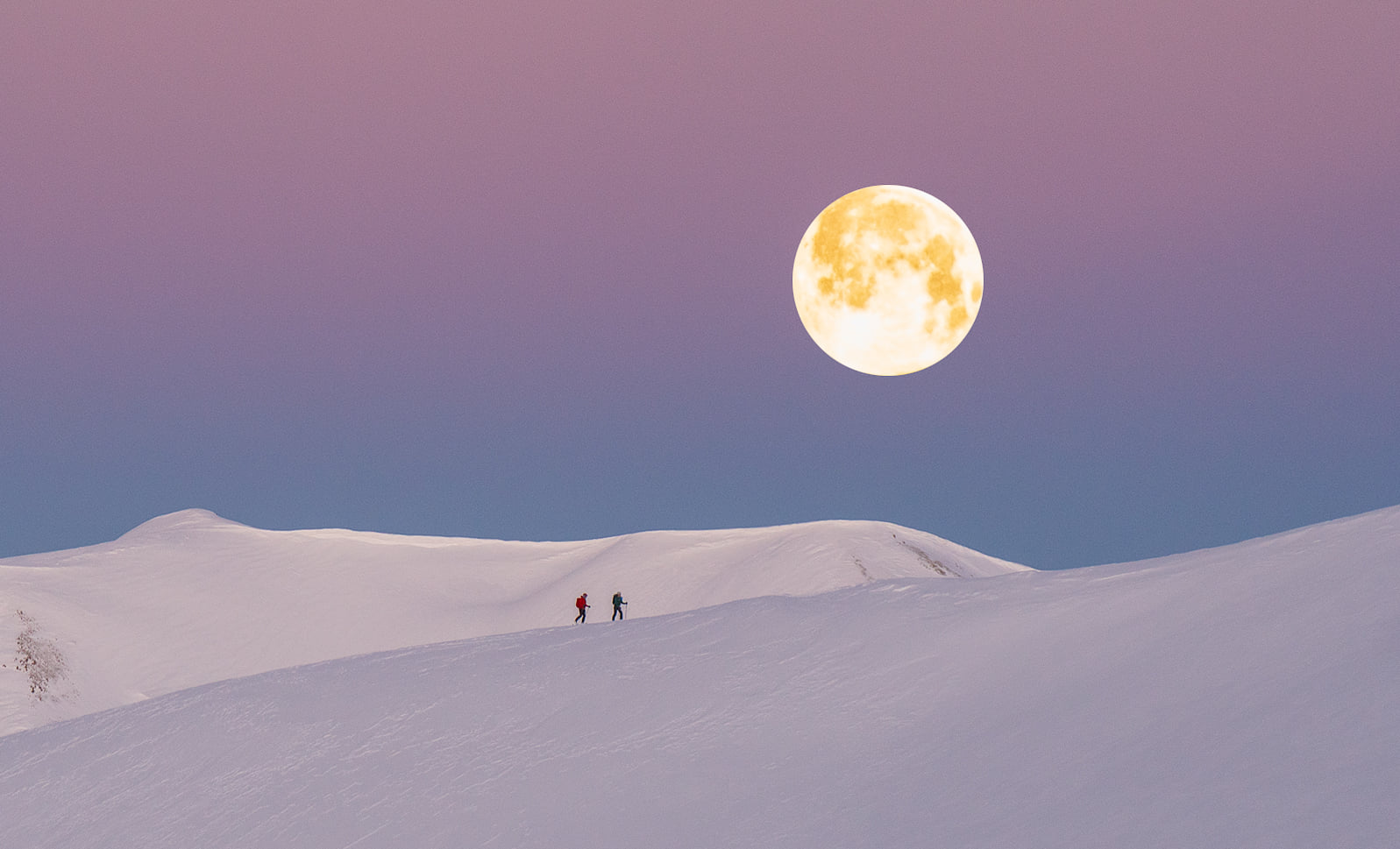
    The 2021 Grand Traverse saw a magical full moon under clear skies and mild temperatures. (Photo: Jesse Levine / Crested Butte Nordic)

    Tucked deep into snowy valleys, the tiny iconic Colorado mountain towns of Aspen and Crested Butte are separated by a mere 40 miles by foot, but roughly 200 miles by car in the winter. Separating the two is the expanse of the rugged Elk Mountain range, which features six of Colorado’s 14’ers, peaks that reach above 14,000’. 

    Now meccas of outdoor recreation, the two towns were historically established as profitable coal and silver mining sites, following the forced removal of the native Ute residents in the late 1800’s. In those days, communication between towns during the winter relied on the fortitude and alpine savvy of mail carriers, who skied back and forth between towns through burly terrain across a notoriously unstable snowpack. 
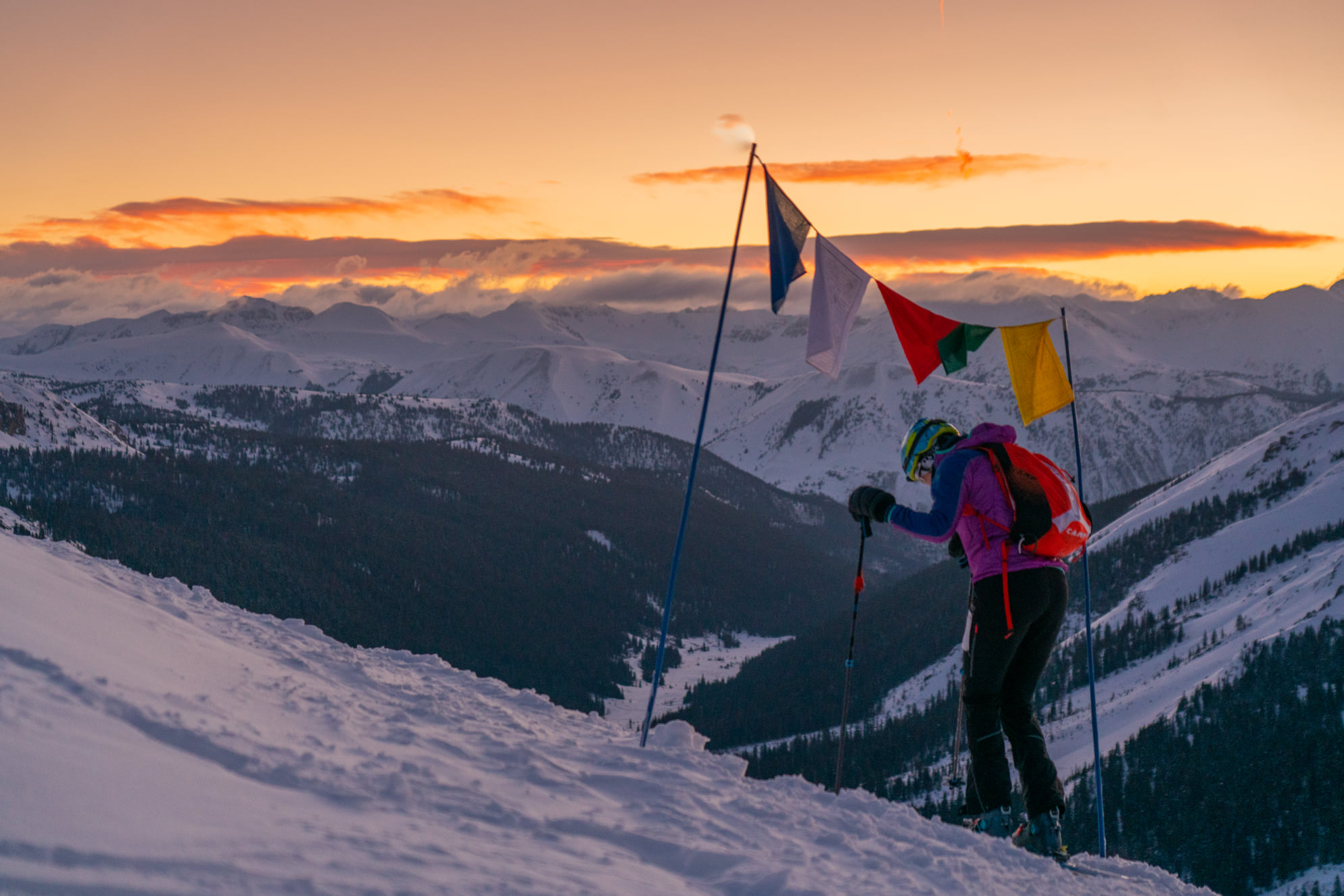
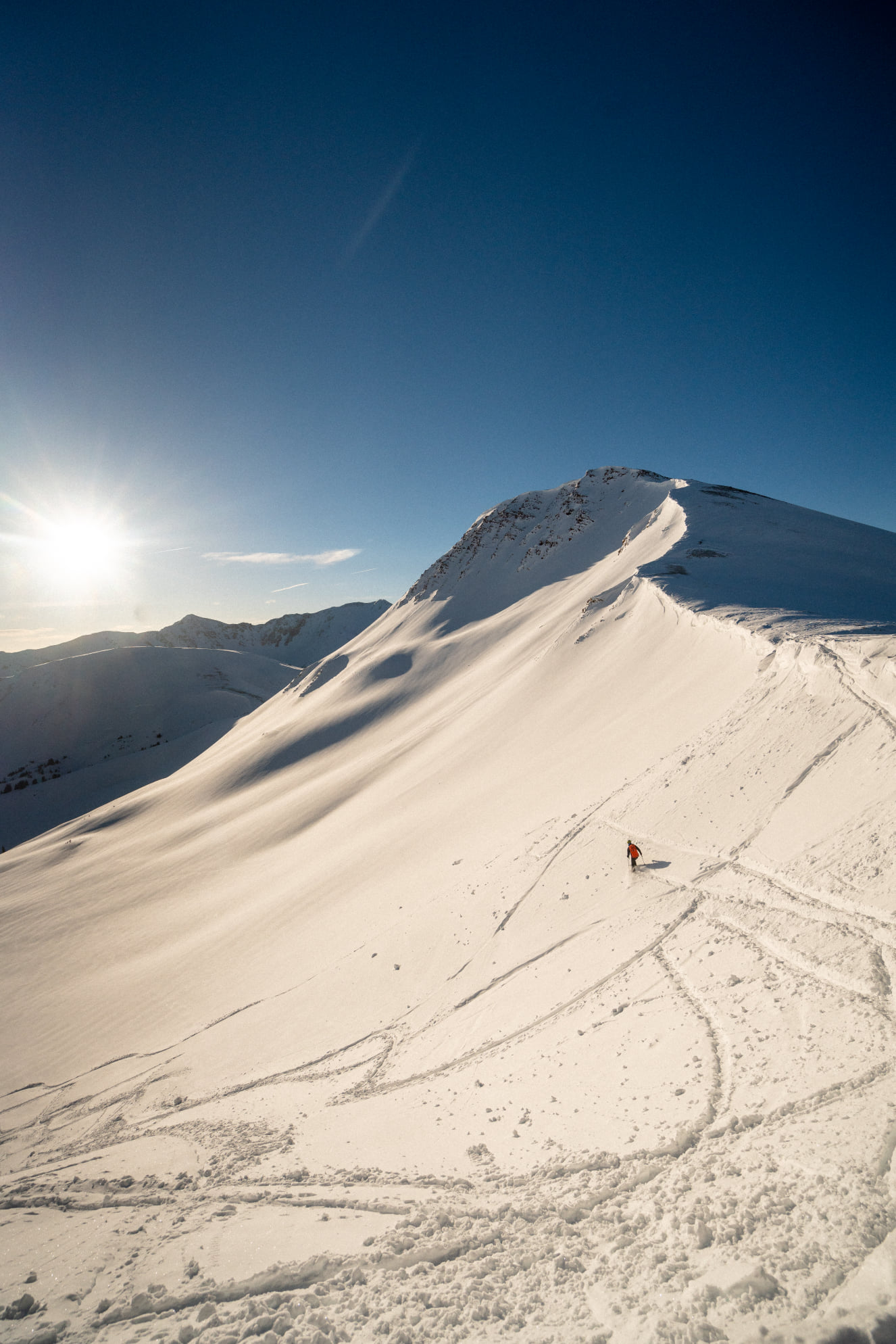
    A 2021 Grand Traverse racer descends off of Star Pass at sunrise. (Photo: Jesse Levine / Crested Butte Nordic)

    In 1998, this historic route was revived as a backcountry ski race called the “Grand Traverse”, which begins at the base of the Mt. Crested Butte ski resort and travels north over two 12,000-plus foot passes, with roughly 8,000 feet of elevation gain spread over the roughly 40 mile route. The inaugural winners (athletes must race in pairs), racing on metal edged cross country skis, were Aspen’s Travis Moore and Pierre Wille, local legends, and accomplished cross country skiers and alpinists. Moore, who taught at Aspen High School for more than 20 years and continues to coach the cross country ski program, eventually became the coach of a young Aspen resident, Simi Hamilton. 

    For many living in the Roaring Fork or Gunnison river valleys, the Grand Traverse (GT) is a storied annual pilgrimage, respected for the unique and burly nature of the route and its local lore as a rite of passage for endurance enthusiasts. Adding to the mystique, the race begins at midnight, allowing racers to cross the highest avalanche risk sections while snow is presumably frozen, firm, and at its most stable. The avalanche safety arsenal of beacon, shovel, and probe are part of a long list of items athletes must carry for safety, along with extra layers, an emergency shelter, and other items that reflect how deep into the backcountry the route leads and what it might take to survive a night out in the elements should something go awry. 

    A 2021 Grand Traverse racer receives instructions for the descent off of Star Pass from the safety dispatch stationed there. (Photo: Jesse Levine / Crested Butte Nordic)
    A racer descends off of Star Pass during the 2021 Grand Traverse ski race. (Photo: Jesse Levine / Crested Butte Nordic)

    With the rapid advancements in ski mountaineering technology, few still commit to cross country skis for the GT – SkiMo race skis with AT bindings or lightweight backcountry or telemark gear are more stable and typically handle better descending off the passes. But this year, the team of “Yeah, but we can skate” showed skinny skis aren’t yet an antiquated option for success at the GT, particularly if you’ve got the skills of two Olympians who have continued to foster their love for mountain adventures on boards less than 43 mm underfoot. 

    The duo was Simi Hamilton and Ben Koons, who lined up on Fischer skate skis. After a fast start skating out of Crested Butte, the team leapfrogged with eventual winners and top SkiMo athletes Cam Smith and John Gaston, who eventually broke away as conditions favored wider skis and metal edges. Smith and Gaston made it to Aspen in 6:13:15.4, just over 36 minutes ahead of Hamilton and Koons. (Results here)   
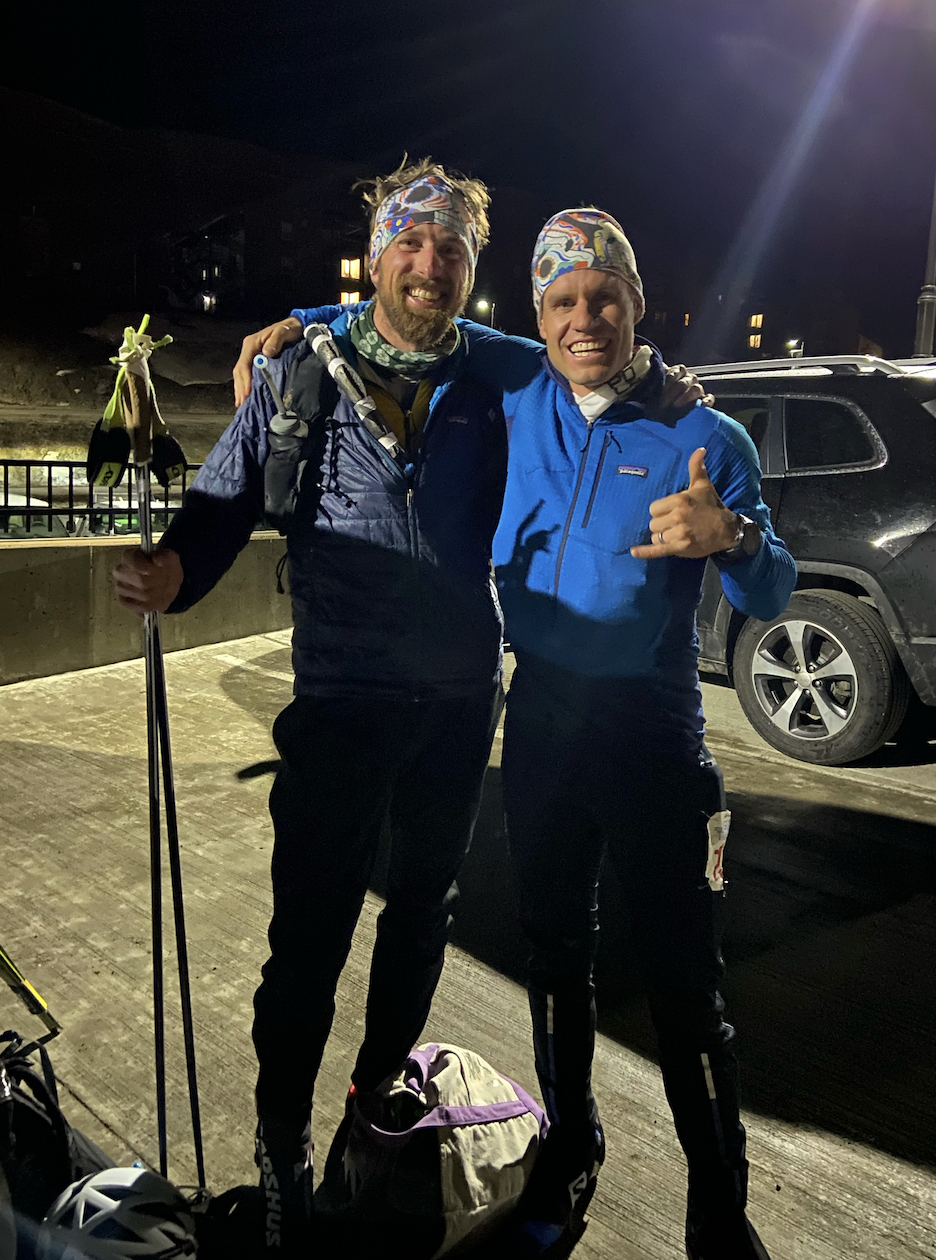
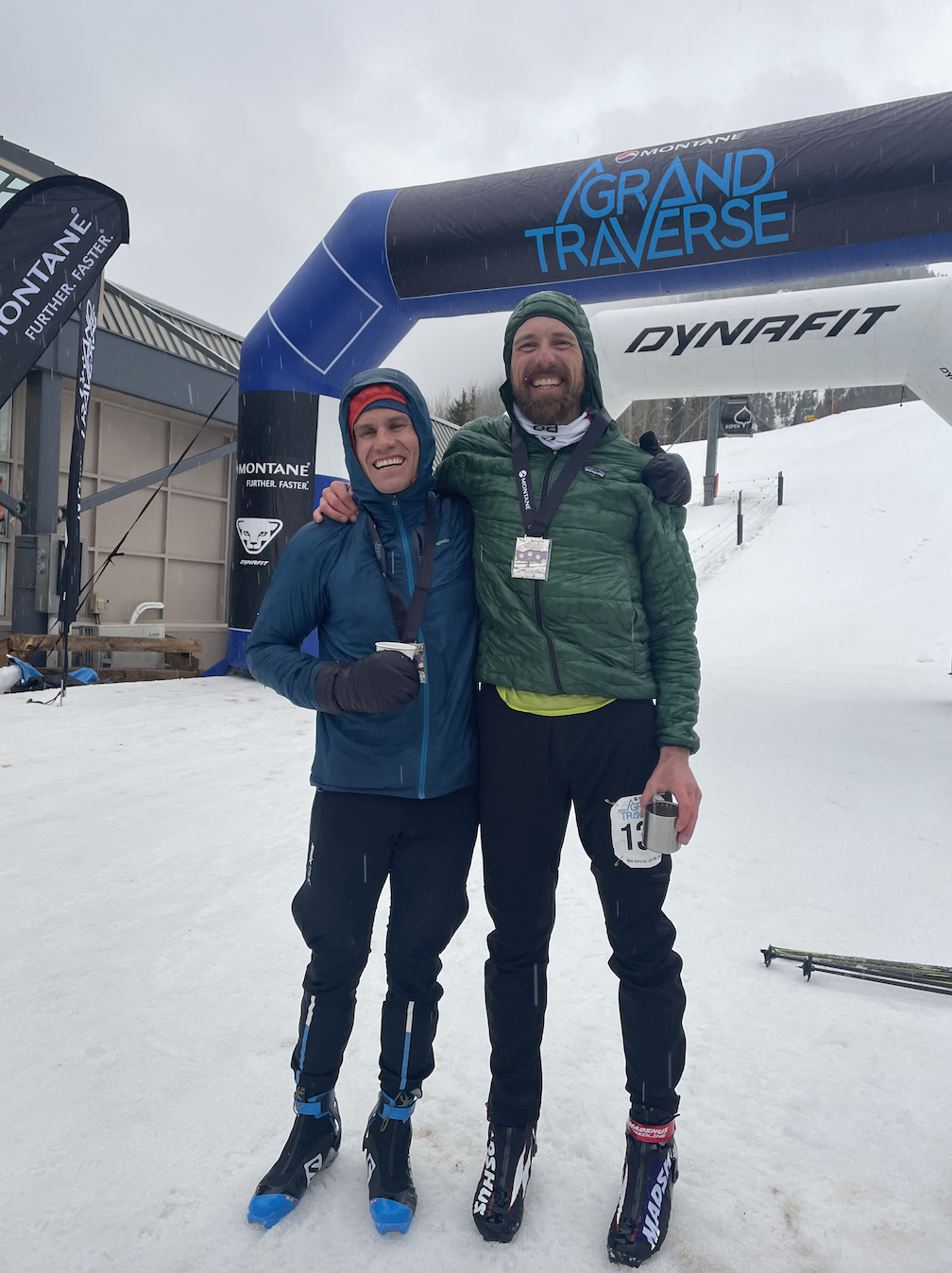
    Before and after: still smiling. (Photos: Sophie Caldwell Hamilton)

    Though Hamilton won the GT running race in early September, 2021, it was his first crack at the storied winter event. For Koons, it was his sixth crack at chasing the ideal crust cruising conditions that might allow a strong skater with some backcountry experience under their belt to smash the course record and take the win on skinny skis. The two have shared a number of big adventure days in the mountains on ski, foot, and bike, often with a third friend, Linden Mallory, who grew up in Aspen with Hamilton and raced on the Dartmouth ski team with Koons, and later became one of his GT partners

    While last year boasted perhaps the most ideal conditions, with athletes racing on firm and stable snow under a full moon in mild temperatures with minimal wind, this year, mother nature had a few twists up her sleeve. The week leading into the race saw a little bit of everything springtime in the mountains has to offer: warm sunny days, heavy wet snow, rain, wind, and plenty of freeze-thaw cycles. Consequently, this was shown in the snowpack, leaving Hamilton and Koons with far less skateable conditions, lots of breakable crust, some “spicy” downhills. Nevertheless, with only one broken pole, they were still smiling at the finish, and seemingly aren’t ready to accept defeat just yet. 
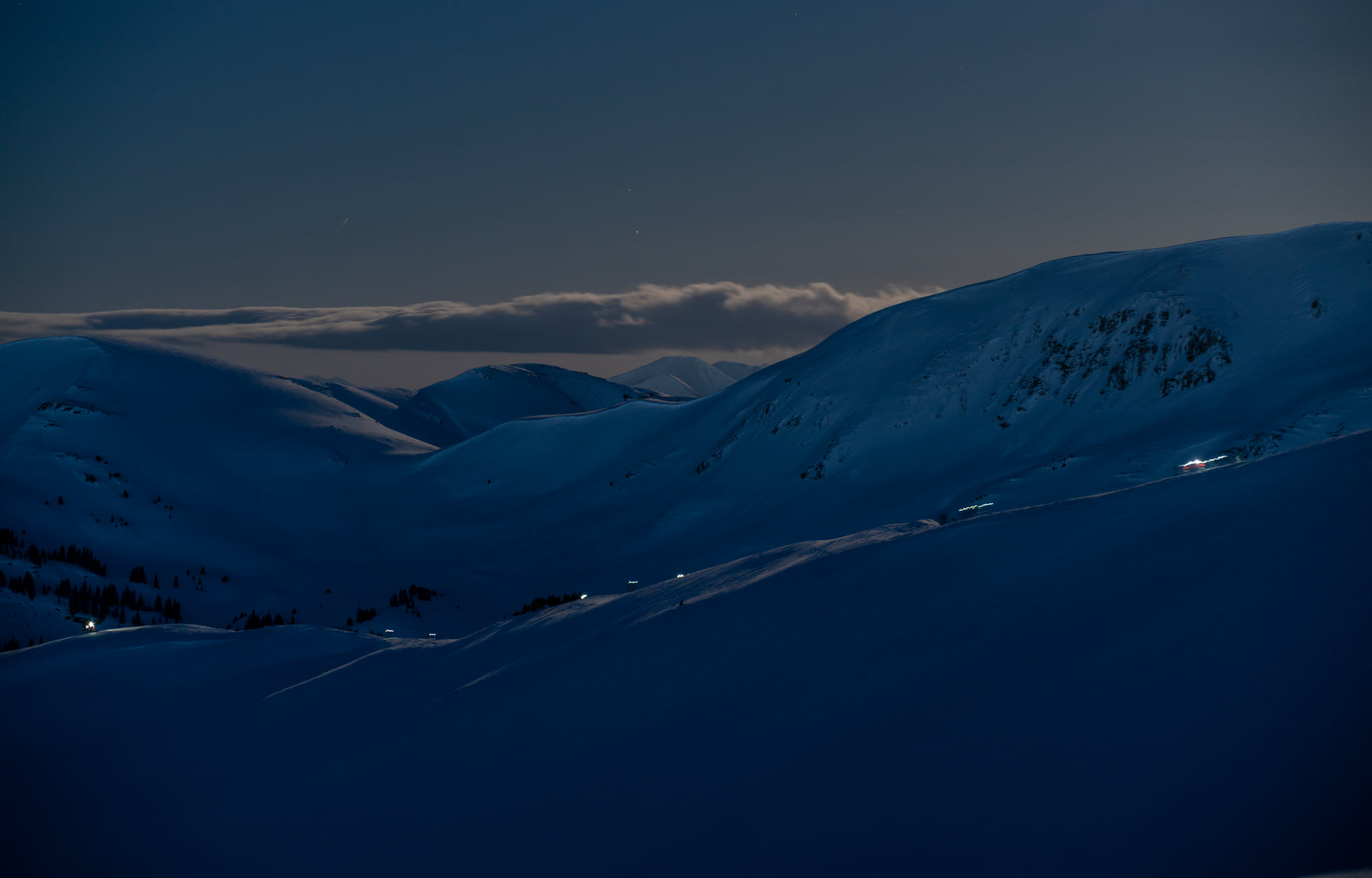
    A train of headlamps climbs Star Pass during the 2021 Grand Traverse. (Photo: Jesse Levine / Crested Butte Nordic)

    For more with Hamilton and Koons, you can head to the Grand Traverse Instagram account, where the duo was interviewed pre and post-race, along with a video capture of their finish, in the rain, at the base of Aspen Mountain. For those interested in testing their mettle in next year’s Grand Traverse ski, registration opens at midnight on December 1st and spots fill very quickly. For those looking to explore the route in the summer, there is also a Grand Traverse run and bike race happening Labor Day Weekend. The events are among the primary fundraisers for the Crested Butte Nordic Center.

  • Recharging the Batteries: The World Cup Squad Does April

    Recharging the Batteries: The World Cup Squad Does April

    For most serious ski racers, the training calendar begins anew somewhere around the first of May. As such, the weeks between the final World Cup races (or Spring Series in a typical year) and the beginning of May is regarded as “off-season”. 

    The primary goal is not necessarily to remain sedentary, rather to fill up your cup. To enjoy the activities that a full training and racing load might prohibit, to (safely) spend time with the friends and family after months away, and to savor the simple pleasures an unstructured life offers. 

    The author enjoys fast tracks in Crested Butte in March, before the thaw.

    Given the energy and capacity required for elite level cross country skiing, as you might expect, they grow no moss. Rather than scenes of vegging out watching Netflix, social media has shown epic backcountry skis, mountain bike rides, crust cruises, late season racing, and logging big kilometers on skinny skis. 

    To take a closer look, FasterSkier posed the following question to an assortment of other World Cup racers. 

    Q: How do you fill up your cup and recharge all the batteries physically, mentally, etc., so you’re ready come May to dive back in?

    A quick glance at Instagram shows Jessie Diggins diving directly into home renovations with her fiancé in their apartment in the Boston area, followed shortly thereafter by trail running in an undisclosed tropical looking destination. When sent the email for this article, an automatic reply indicated she would not be checking email during her vacation. Enough said, and very well deserved. 

    Here’s a look into the remainder of the squad. ** Warning: Jaw-dropping photos that leave you jonesing for big days on fat skis or in the saddle below.**

    Hailey Swirbul:

    “Oof, what a loaded question for me here! I felt super drained at the end of this season—mentally, emotionally, physically. I have been on a good-old-fashioned soul search a bit this season and into the spring where I am trying to find the right ratio of skiing to normal life that works for me. Because the winter pendulum swings fully to the “ski” side, my April pendulum has swung completely to the “normal life” side, which means packing in a year’s worth of what I would be doing if I wasn’t a Nordic skier into one month! I love the off season because it’s the one time of year where I’m not restricted in my activities. For example, if I want to go backcountry skiing or fish-scale ski tromping through the woods for 8 hours, great! If I want to build a jump in the backyard and learn how to do a 360 on skis, great! If I need to stay at home all day and catch up on the school work I’ve been putting off because of all those other fun things, also great. I don’t have to feel guilty if I don’t follow a strict training plan during this month, and that is something I really cherish.”

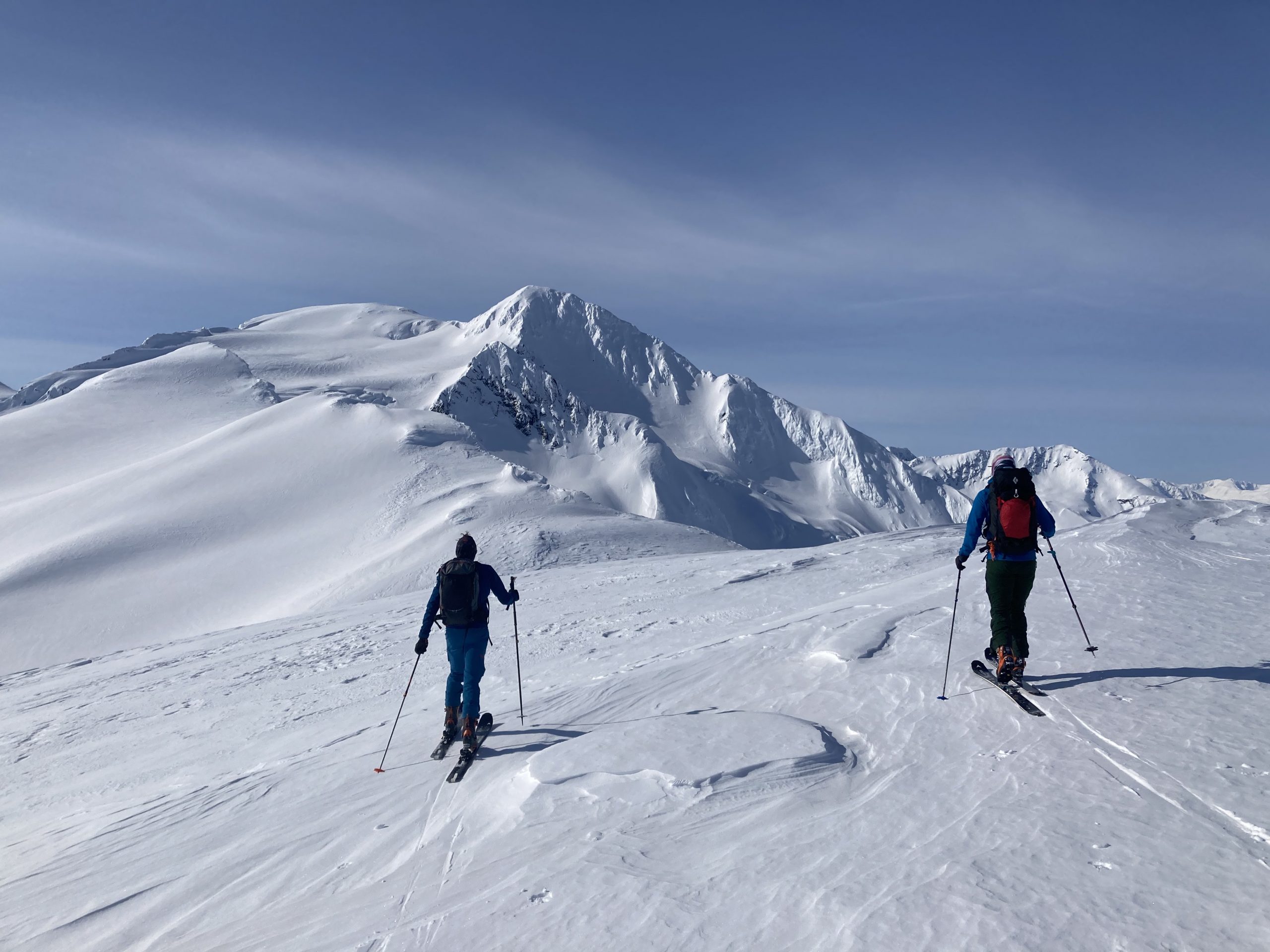
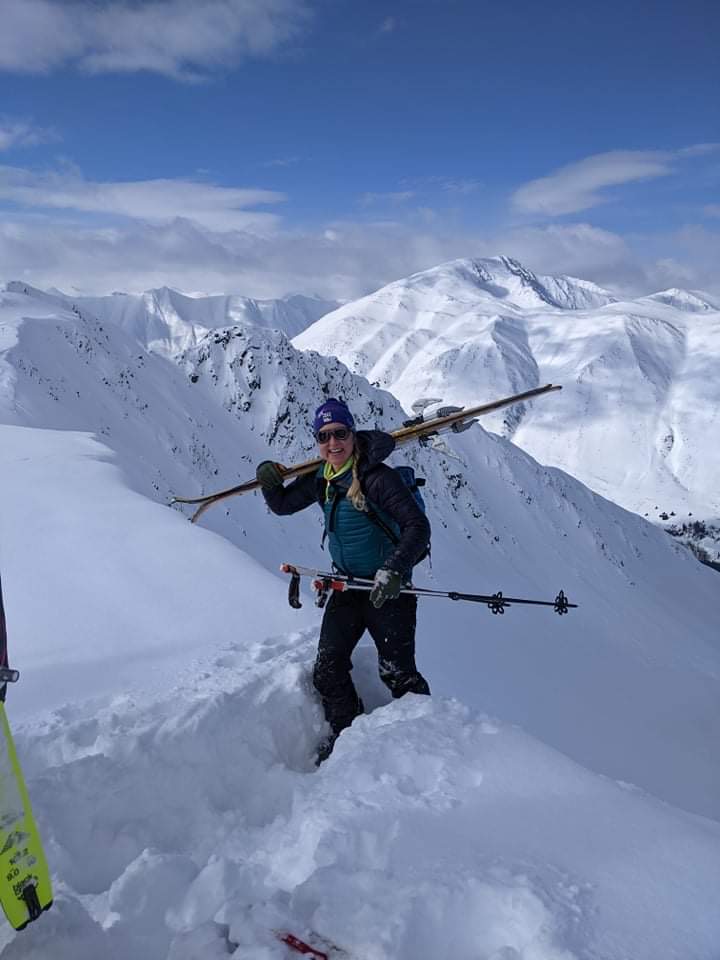
    To recharge mentally and physically, Hailey Swirbul enjoys skinning and skiing with friends near Girdwood, AK. (Courtesy photo)

    “I have been getting outside as much as I can, mostly on fat skis! I have Nordic skied 3 times (not including fish scale adventures), and one of those times was a FIS race on April 10th. It was actually pretty fun to put on a bib in a low pressure setting like that and be in the AK community with my teammates. My favorite adventure of the year so far was a 4 day hut trip glacier traverse called the Eklutna Traverse with my two friends and teammates, Hunter Wonders and Chip Schoff. I can certainly see how a mountaineering lifestyle could be quite addicting! After our recent FIS race weekend, I am actually more recharged than I could have hoped for! It was a great way to end the race season with a race that was FUN, instead of that horrendous 30k at Engadin for me! Yikes! I know I will be ready to add structure again when the season comes around, but that’s only because I have completely gotten rid of it during this off season. I’ve learned a lot about myself this year that I hope to carry with me.”

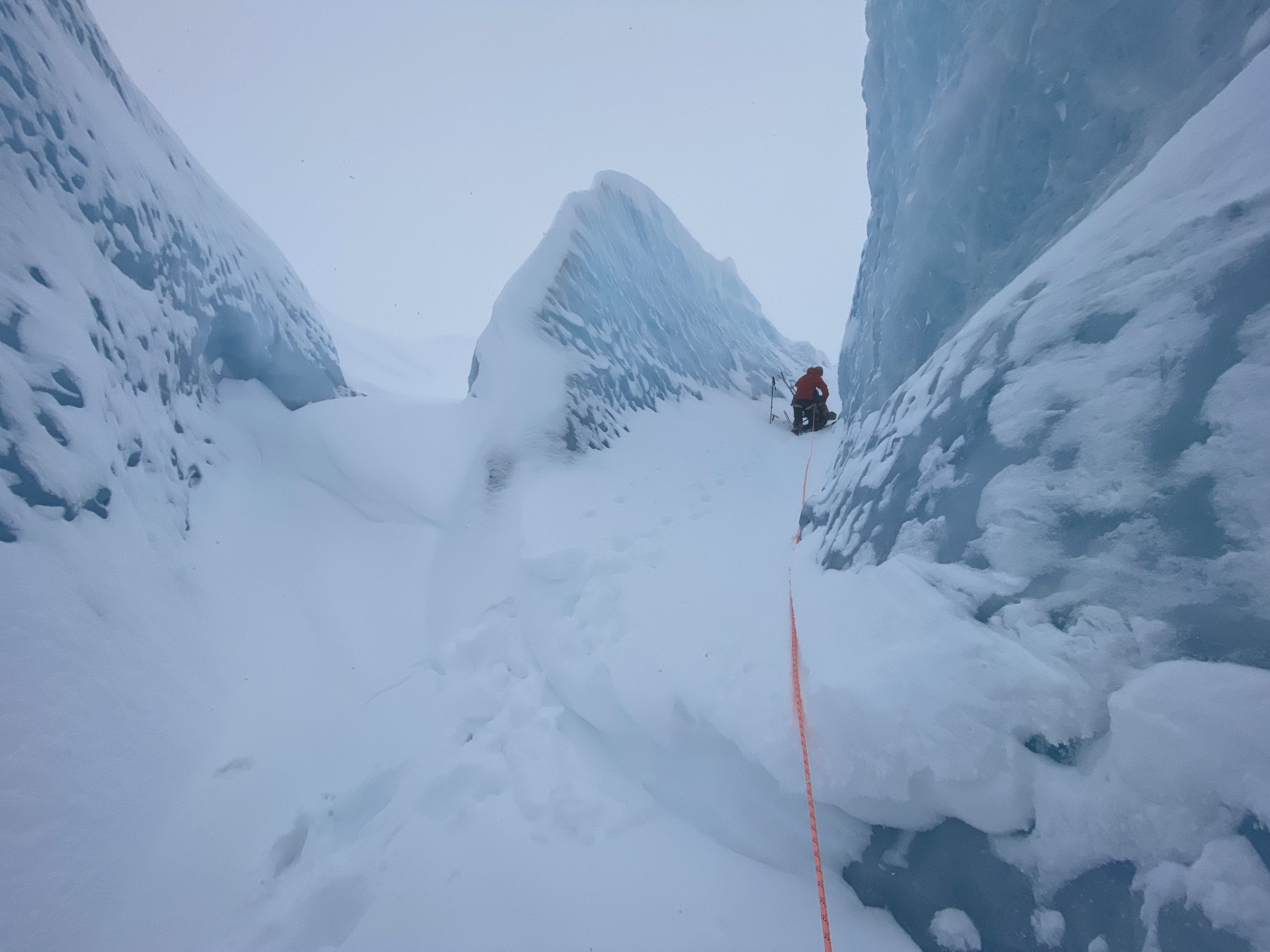
    Hailey Swirbul’s mental reset included an epic multi-day backcountry adventure, the Elkutna Traverse, which included navigating spectacularly blue glacial ice. Teammate Hunter Wonders is seen taking the lead here. (Courtesy photo)

    Scott Patterson: “We have had quite a cold and snowy spring up here in Alaska so I have been doing a lot of skiing both nordic and backcountry. The last few weeks I have really enjoyed the flexibility of going skiing wherever and whenever I want. Sometimes that involves full day excursions in the mountains and others it is more restrained to a lap or two around the groomed trail systems. We even had two FIS races this last weekend out at Kincaid in mid-winter conditions. 

    “Outside of skiing, I already enjoy the return to cooking my own food and having flexibility with meals.  I have also plugged back into my work (engineering) since I have been back to keep my middays occupied. My spring recharge is less lack of activity then more modification, but I will also be dialling things back for the next two weeks to make sure I have good energy and enthusiasm going forward. Now is one of the few times of year where I can sit back and enjoy not being out in nasty weather.”

    In addition to plugging back into his engineering job, Scott Patterson has been squeezing epic backcountry tours into his off-season reset. (Courtesy photo)
    Wider boards, heavier boots, and beautiful turns. Scott Patterson enjoys the Alaska backcountry during the off-season. (Courtesy photo)

    Hannah Halvorsen: “I’ve been using the off season to enjoy being outside with friends and teammates in a less structured way. Most of the year our training is focused on executing specific workouts so in the spring I love going for a nordic ski, backcountry ski, or a hike with no agenda other than to enjoy the outdoors and time with people I care about.”

    Hannah Halvorsen enjoys a ski with her mom, Julie. (Courtesy photo)
    Hannah Halvorsen gains an enviable ridge line on a backcountry powder tour. (Courtesy photo)

    David Norris: 

    “April is always a bit crazy for me. I try to take advantage of the final weeks of groomed trails while also fitting in all the fun activities that aren’t possible while on the road. Right after the season I got three great weeks of mountain biking and touring in New Mexico with Jessica before returning to Anchorage to catch up on work, get vaccinated, and ski a ton until the snow melts.”

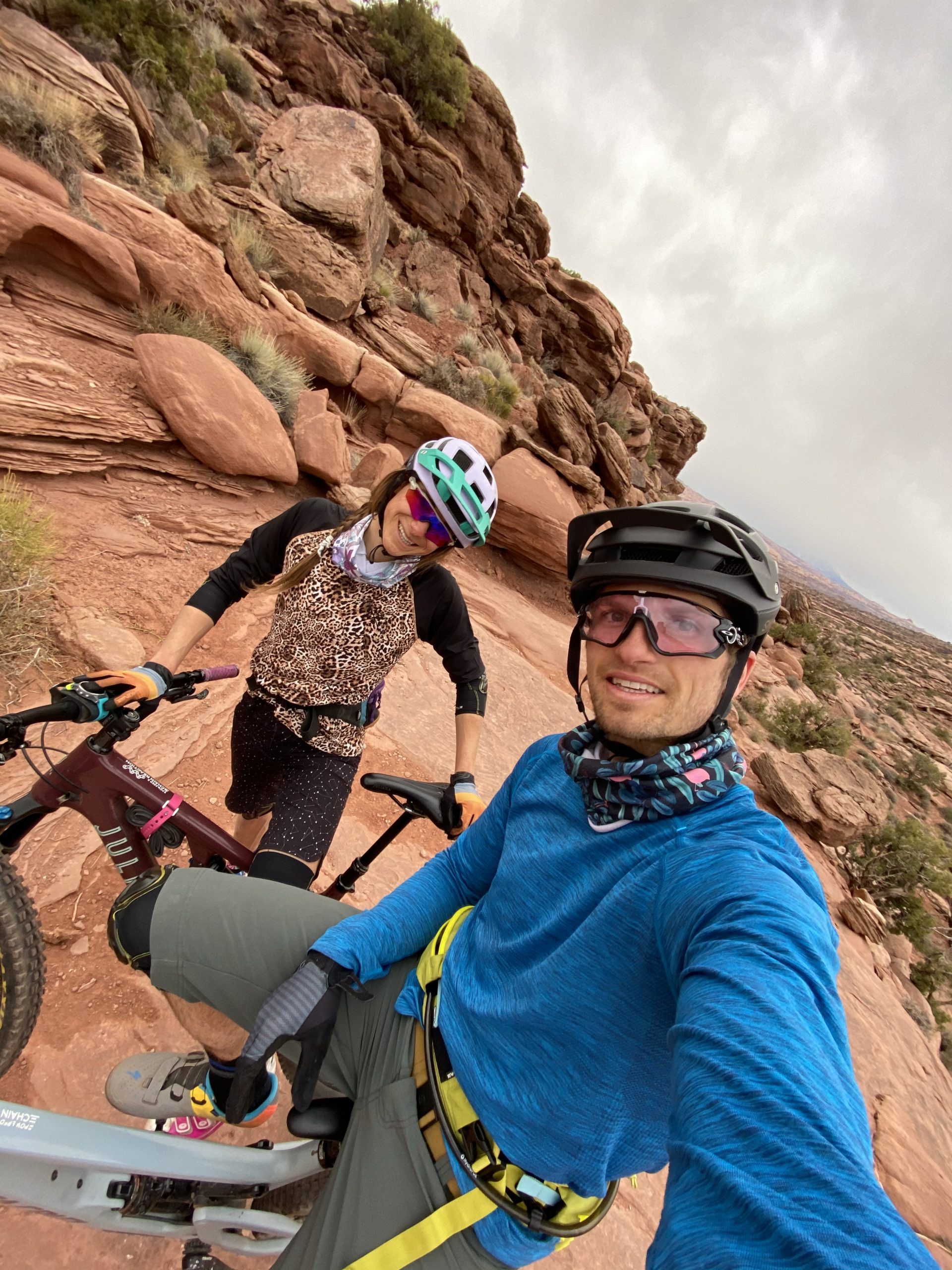
    David Norris headed to the Southwest for some desert riding with his girlfriend, Jessica Yeaton. (Courtesy photo)
    David Norris trades skinny skis for an AT setup to embrace the unstructured spring season. (Courtesy photo)

    Julia Kern:

    “The springtime is my adventure and social season. I recharge in the spring by getting outside on non-cross country ski adventures with friends, such as climbing, backcountry skiing and downhill skiing. It is important for me mentally to connect with friends outside of skiing and do activities I don’t always have time and flexibility for in the training season. I think it is really important for me to get outside and do things only when I feel like, and lay low and do other things such as classes, design work or photography on the days I don’t feel like exercising. The spring is the time for unstructured activities where I can play outside when it is fun, but also make sure to take a step back and not see anything as ‘training’ but for a way to socialize with friends.”

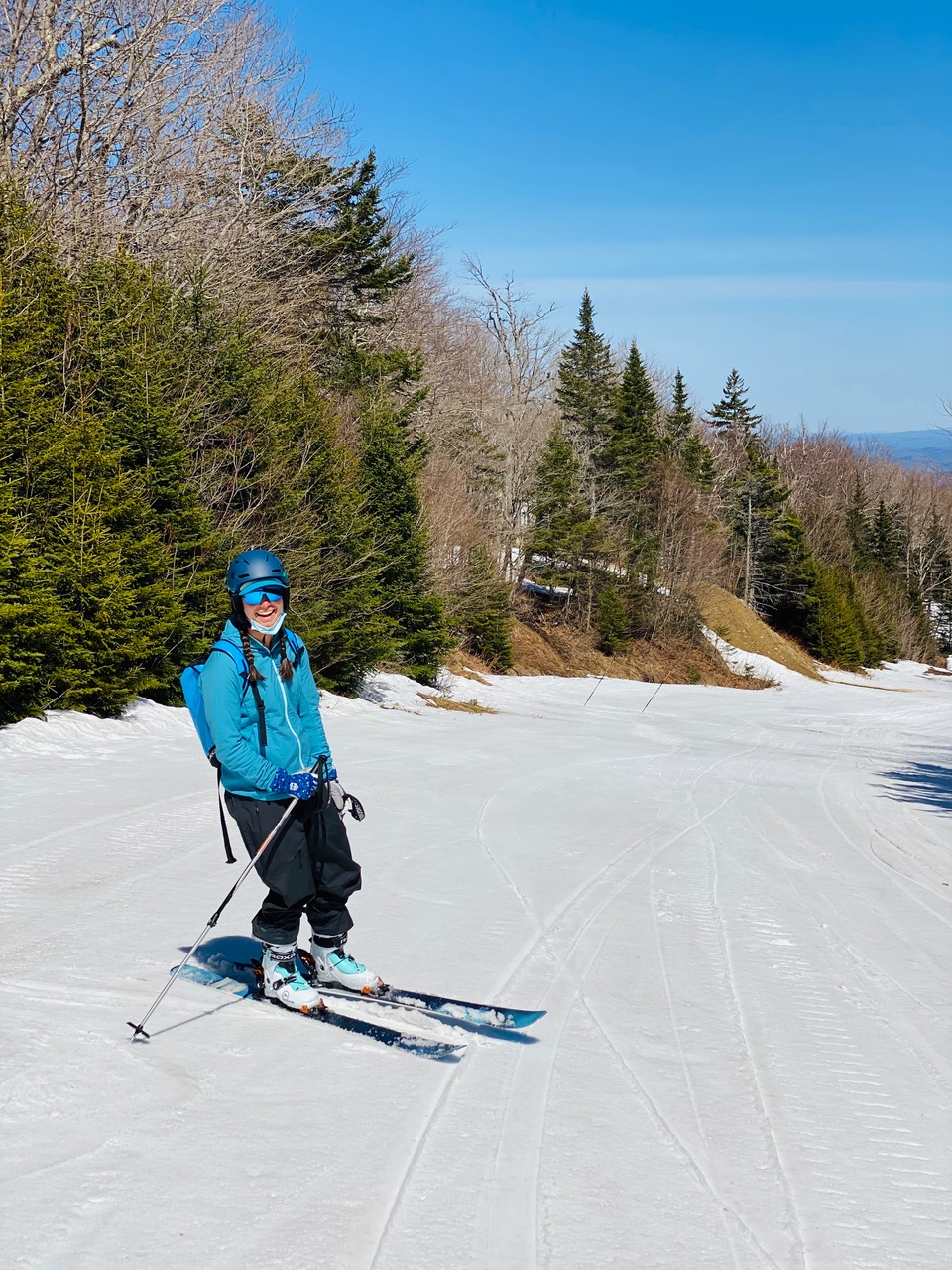
    Julia Kern takes advantage of late season snow in the Northeast during the off-season. (Courtesy photo)
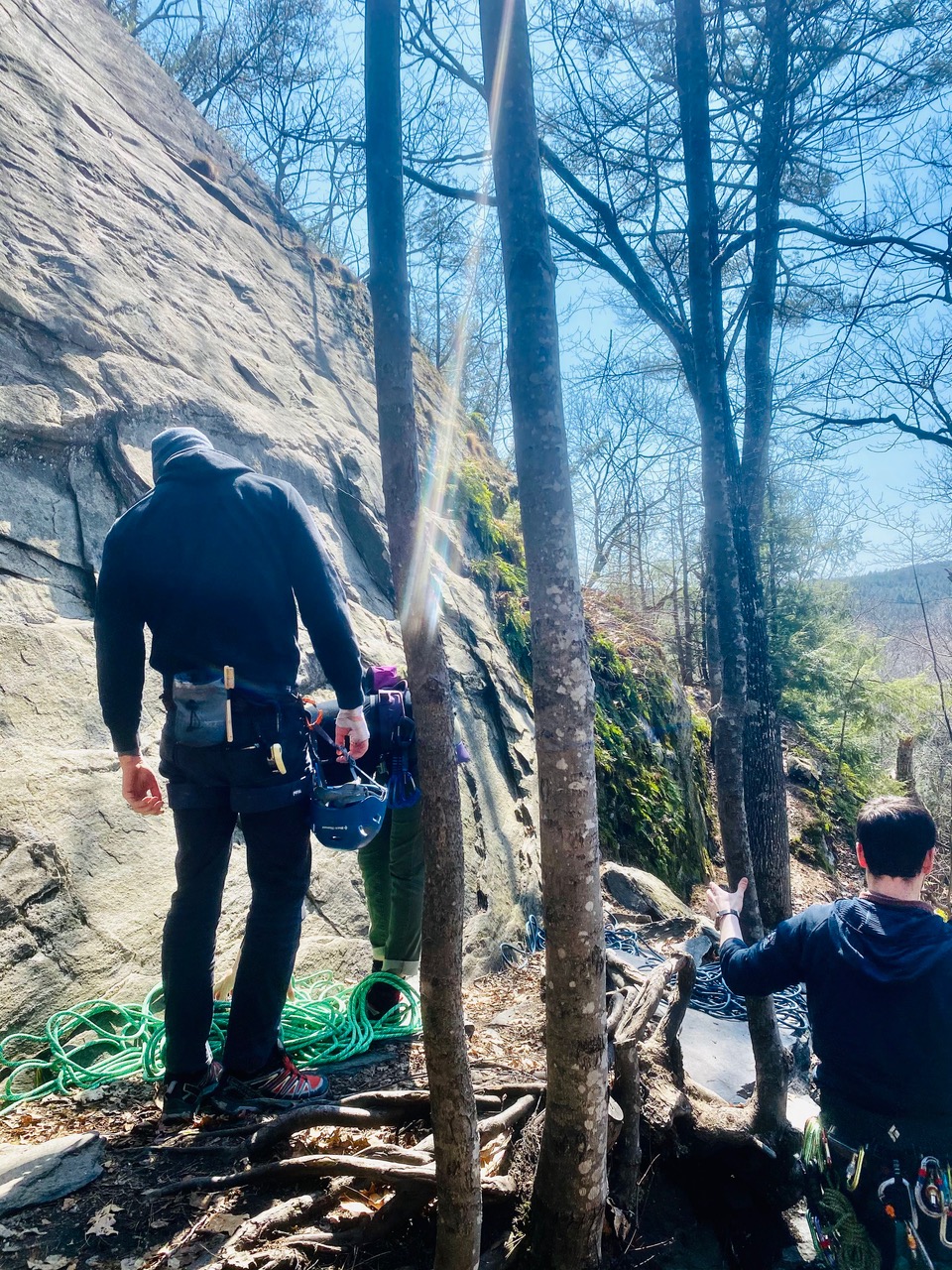
    Fitting in the activities that often don’t fit within the normal training grind, Julia Kern gets in some spring rock climbing sessions with friends. (Courtesy photo)

    Gus Schumacher: “I’ve been doing a lot of nordic skiing still, actually, because the snow in Anchorage is still so good. It fits into the ‘spring recharge’ goal by being very unstructured skiing, basically just doing whatever I want, whenever I want to do it. We had some races last weekend that were fun to do a little prep for, and I did a 200k ski on Wednesday, so I haven’t shut it down in any sense. Just doing what makes me feel happy and have fun. I’ve also been doing other things like backcountry skiing and some hockey, but more nordic than anything. Once the snow gets a little worse, I’ll chill out more and take some time, but for now it’s been fun to just keep the ball rolling!”

    Gus Schumacher takes his skinny skis off piste in the spring to complete the Arctic to Indian traverse. (Courtesy photo)
    Not hanging it up just yet, Gus Schumacher and JC Schoonmaker take advantage of the excellent late season conditions in Anchorage. (Courtesy photo)

    Alayna Sonnesyn:

    “This past season was one of the toughest seasons mentally I’ve gone through. By mid-season, I was already feeling burnt out and in need of a break. That being said, this spring I’ve been bouncing around out west, living out of my car and visiting friends and family. I would say it’s the first time I’ve really been able to appreciate springtime in the west and have been loving the sunshine and mountains. I recently invested in a backcountry ski setup and have absolutely loved getting outside to skin up a resort, adventure through the woods, and explore some new terrain. I also had my first experience going to Moab for some fun mountain biking, hiking, and spring skiing. All of these activities are refueling my ski tank and making me fall back in love with cross country skiing. Can’t wait to get the next season started!”

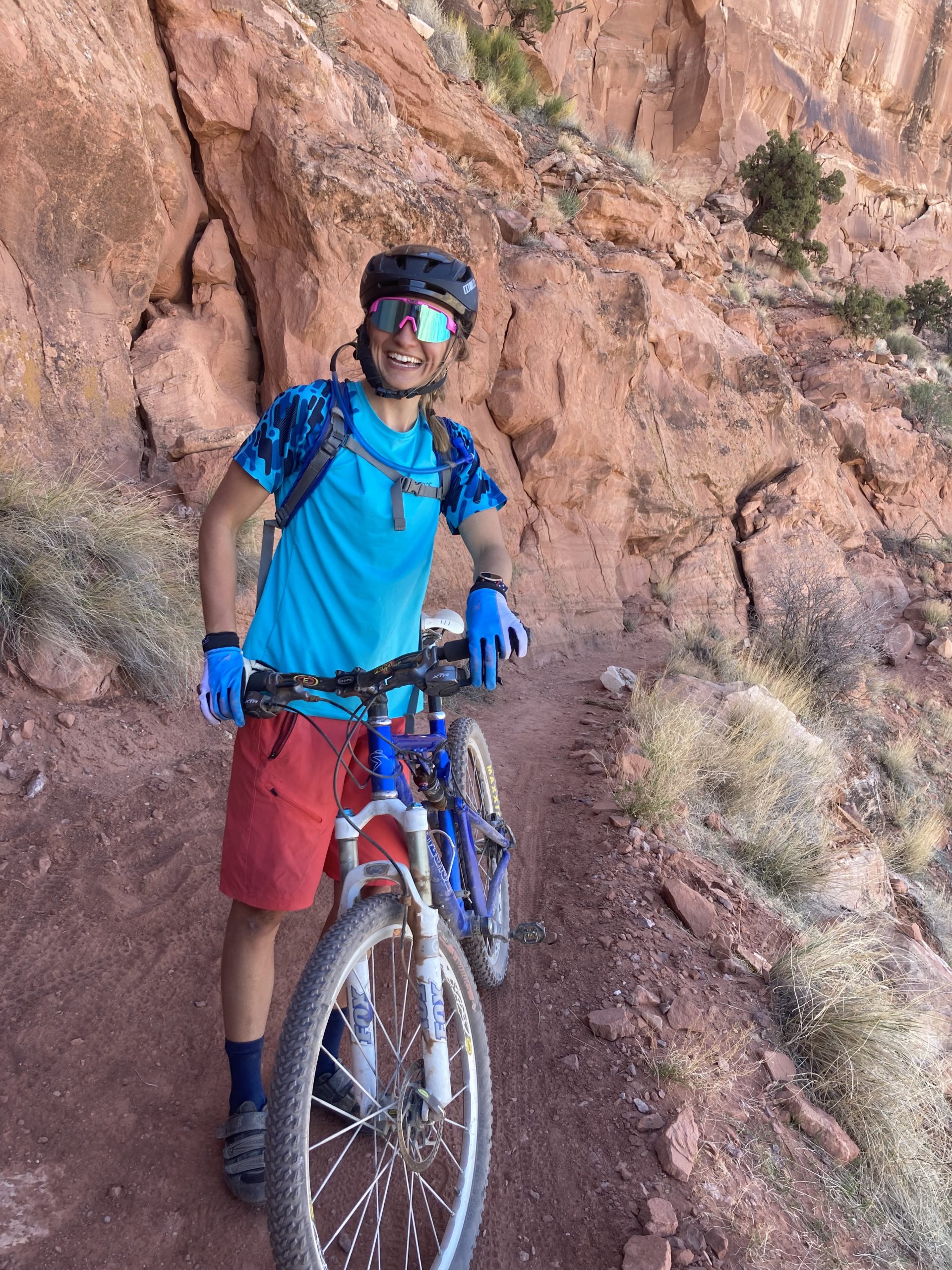
    Alayna Sonnesyn took a vacation out west for some mountain biking in Moab with friends. (Courtesy photo)
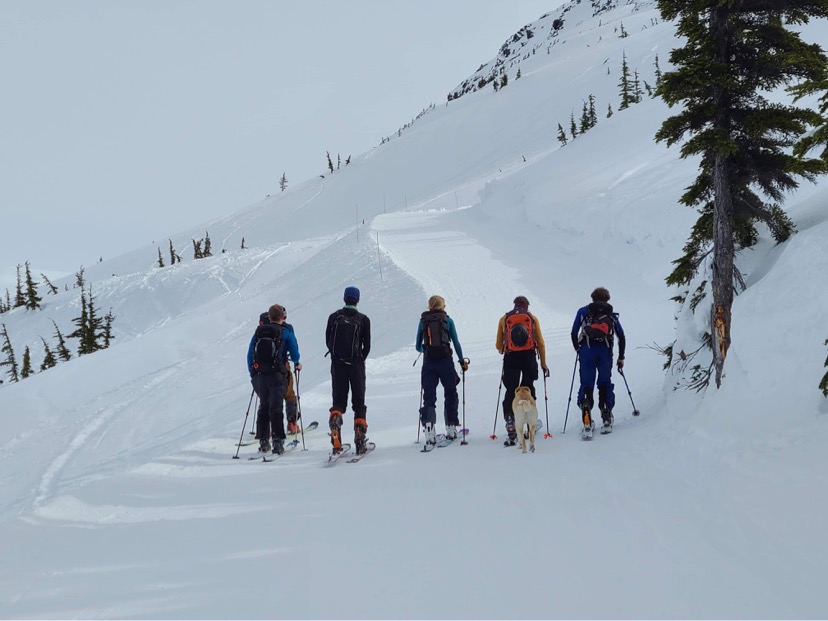
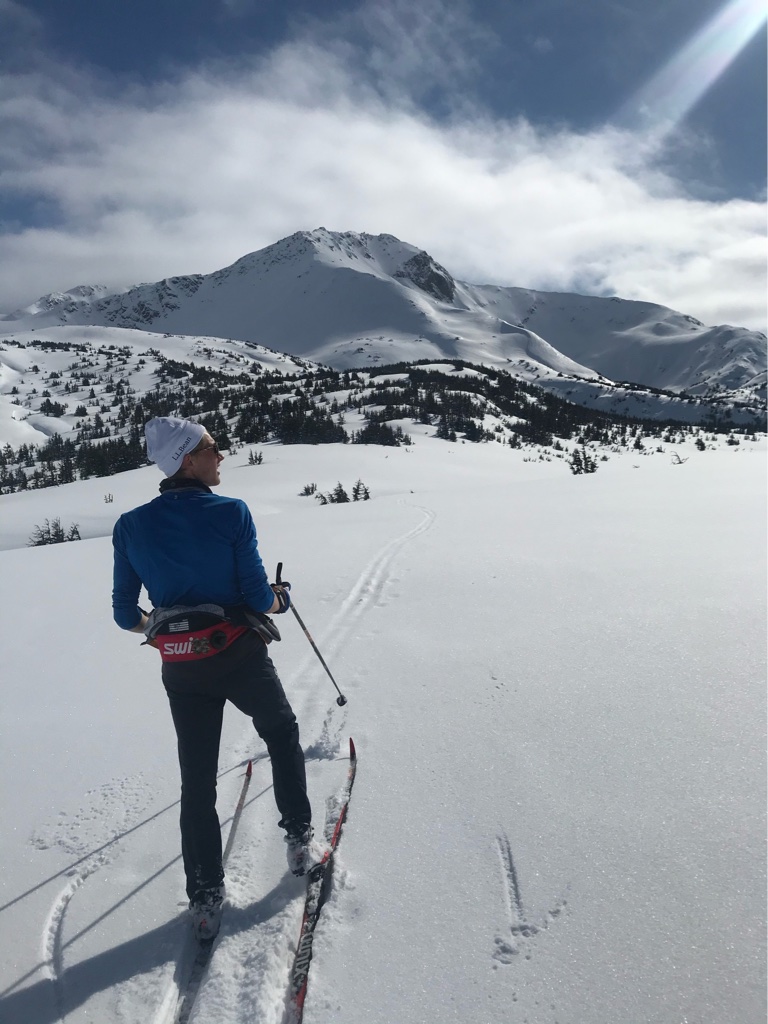
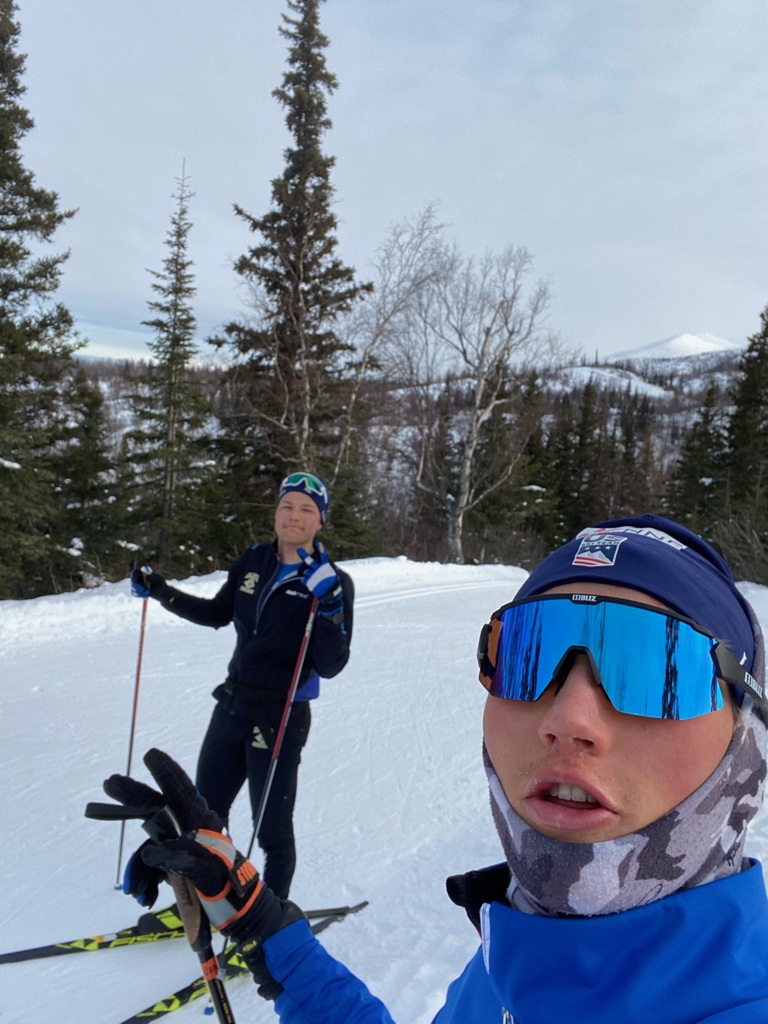
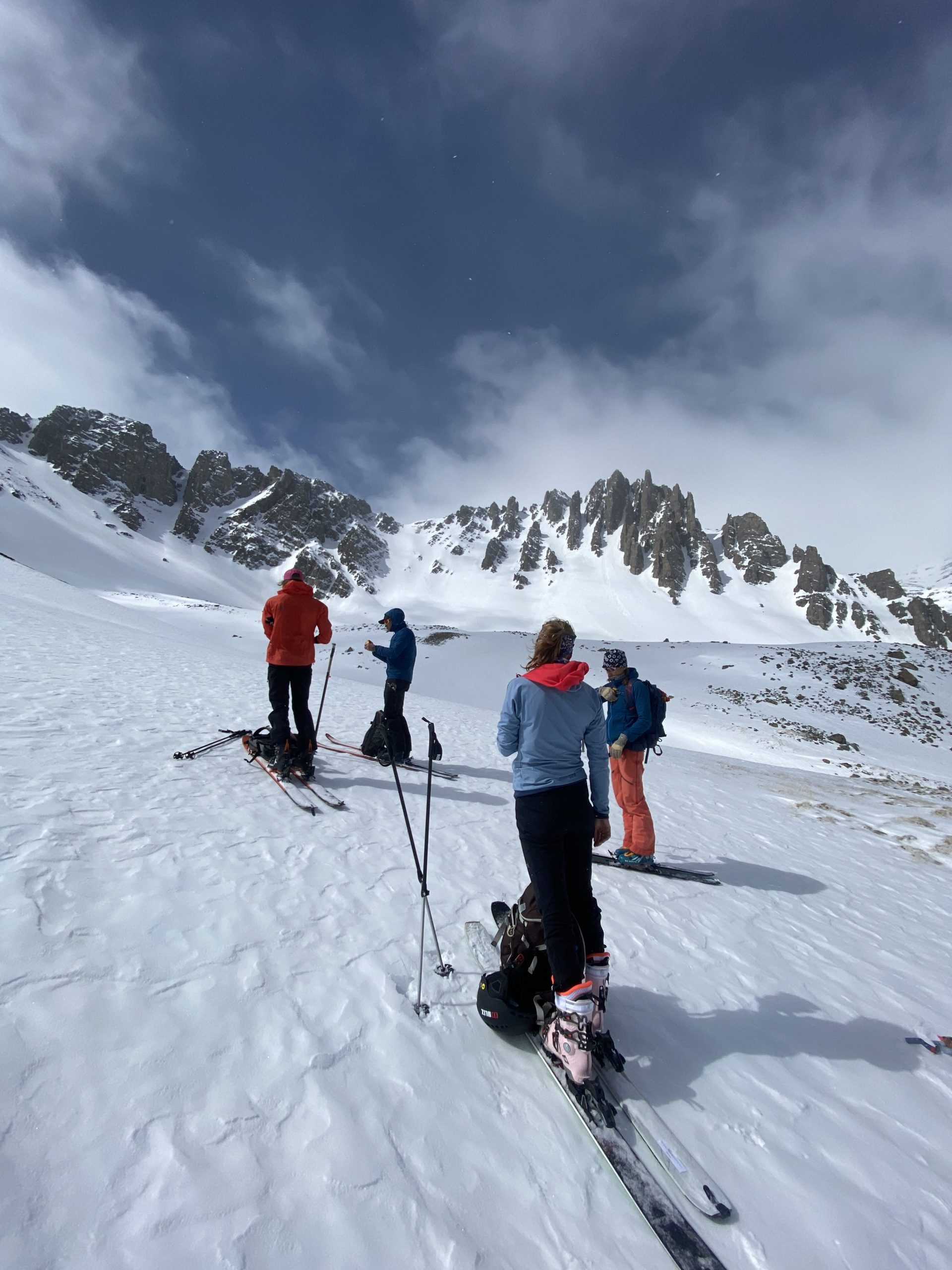
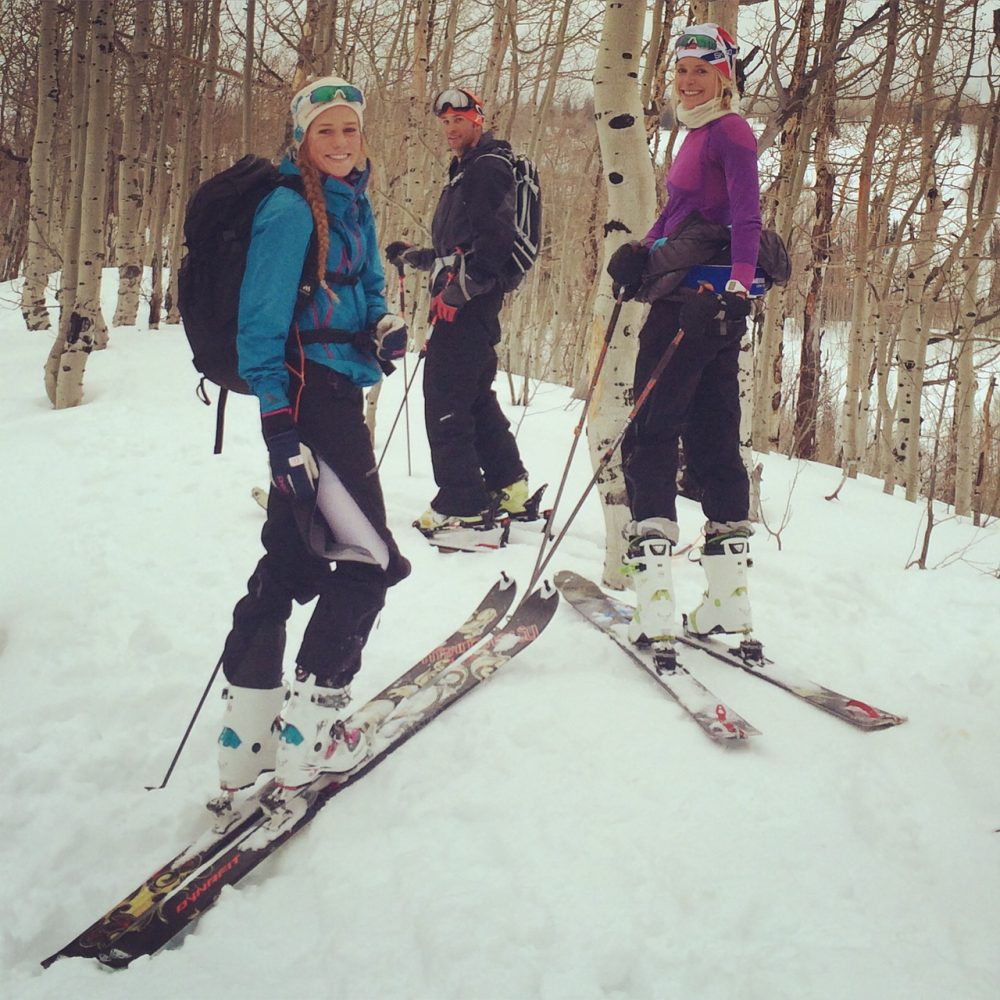
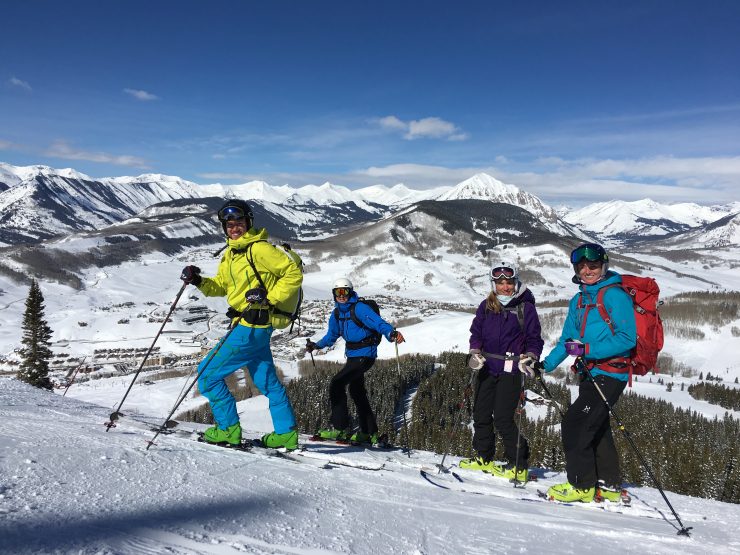
    Out for a backcountry ski in Colorado with former UVM teammate Lina Sutro, as well as Simi Hamilton and Sophie Caldwell Hamilton. (Courtesy photo)
  • Wednesday Workout: ‘Exceptional Off-the-Couch Fitness’ with Zoë Roy

    Wednesday Workout: ‘Exceptional Off-the-Couch Fitness’ with Zoë Roy

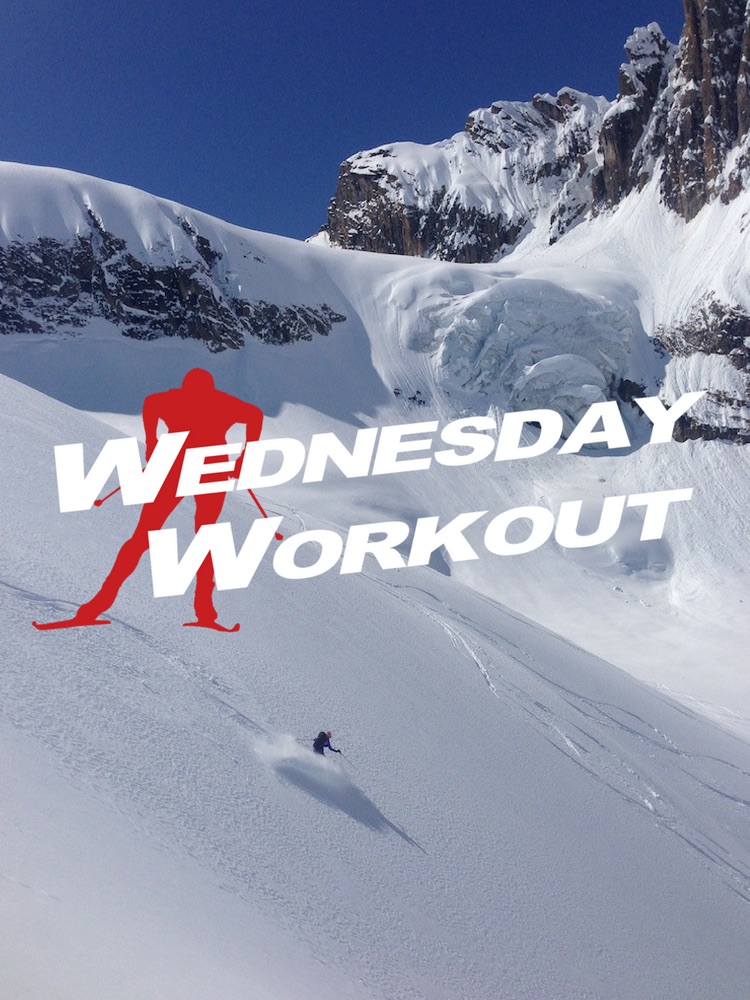
    Zoë Roy tapping into her “exceptional off-the-couch fitness” somewhere above Mistaya Lodge in British Columbia. (Photo: Florian Jungen)

    BEND, Oregon — Zoe Roy.

    OK, OK. First things first. Don’t forget the umlaut.

    So it’s Zoë Roy. (Zoeeeee. Not Zo.)

    If you don’t know Roy and you’ve been to Bend, Oregon, well then, maybe you haven’t exactly been to Bend. Roy is at once keen, kind, clever, artistic, athletic, and nine parts out of ten fun. She is an icon of fun here.

    But let’s cut to the chase. We cover nordic sport and Roy has a history there, too. She skied at the U of U (University of Utah), raced a few World Cups having earned start rights on Canada’s team, and skins and shreds many peaks and slopes when the snow is prime. (Note: the snow must be prime. Like powder. No sun cupping. No ice. Corn snow will suffice.)
    If you were wondering how she skied for Canada (as well as Team Ninja for a season) and resides in Bend during the current low point in bilateral U.S.-Canadian relations, she’s a dual citizen with pure maple leaf DNA. Her parents are both Canadian, yet she had the good fortune of being raised in Bend. With the combo of a Bend upbringing and possessing way above-average athletic talent, she, of course, has participated in the venerable local multi-sport race known as the PPP, or Pole, Pedal, Paddle.

    She is a three-time overall winner of the women’s race. She’s competed in nearly every category, too — pairs, teams and onward — her only career PPP blip being a defeat to her own mother, Muffy Roy, when Zoë was 18 years old. On her 31st trip around the sun, Zoë (who turns 31 next month) remains spry.

    But honestly, she’s sort of like Peter Pan in a good way.

    This is a Wednesday Workout after all. And for that reason, we are going to focus on how Roy trained for this year’s PPP. She said it best herself.

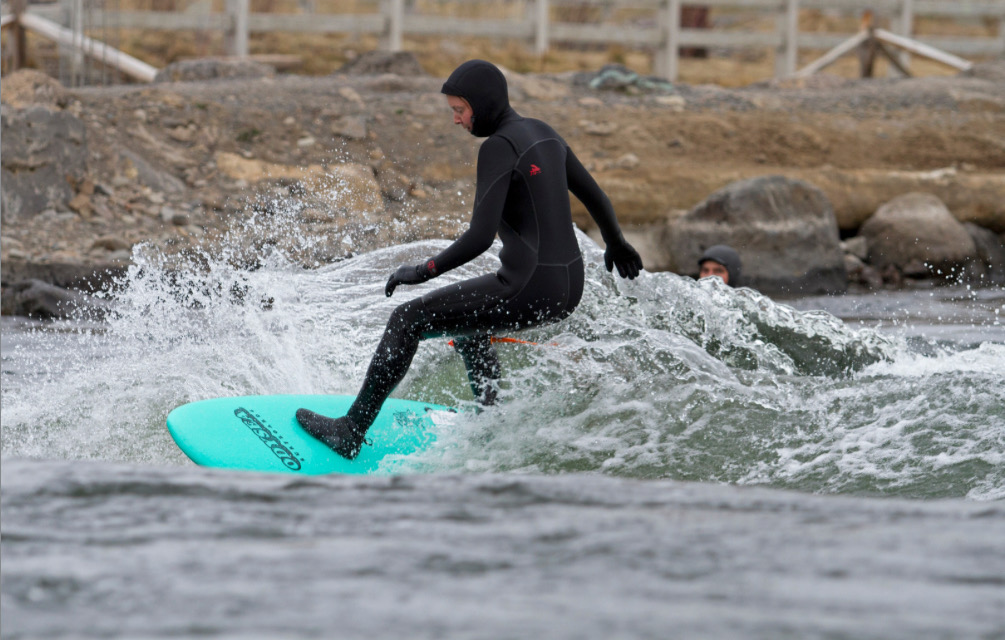
    Surfing the river wave in Bend, Oregon — Zoë Roy. (Photo: Jon Tapper)

    “Training for the PPP involved a lot of time not training for the PPP,” she said as she sipped an Italiano a few weeks back. (In fact, this reporter learned during the interview that an Italiano has less water than an Americano. Good to know when seeking the in-between of an espresso and an Americano.)

    Bottom line: Roy has a huge base of fitness and is still highly trained. Or it appears that way if you run, ride, ski, paddle, skin, or cook with her.

    “Essentially I want to have exceptional off-the-couch fitness,” Roy explained. “To be able to hang with my friends on adventures.”

    As mentioned, that exceptional off-the-couch fitness brought Roy her third consecutive PPP title this year. In other words, as U.S. Ski Team member Simi Hamilton referred to the PPP while in Bend this May, that’s three consecutive “World Championships of the World”. 

    How did she do it?

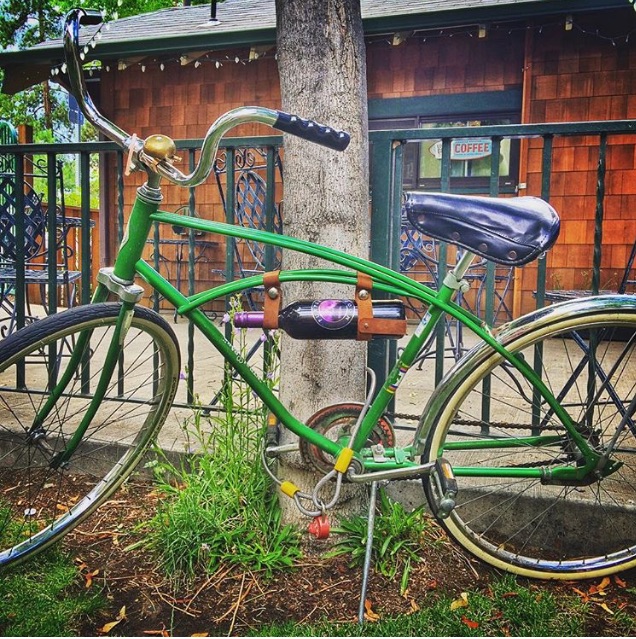
    A prized possession: the Z-Roy edition single-speed townie. Although this Schwinn is Grinch green, Zoë Roy is no Grinch. Her other bike has more travel. (Photo: Zoë Roy)

    Most often, in good weather, which we see plenty of here in Bend, Roy commutes on a single-speed townie bike. Noteworthy is the bottle of wine in lieu of a water bottle affixed to a frame tube. Our guess is that the single-speed builds leg strength while cruising uphill. It was a pretty mild winter here in town so let’s assume Roy commuted on her bike 10 miles per week. Don’t be fooled though. The townie isn’t her only bike. She was an invitee to Bend’s Blitz to the Barrel — a high-octane, enduro-bike race. She placed second.  

    Roy also committed to immersing herself in the local surf scene at the Colorado Avenue river-surfing wave here. The surfing itself builds jedi-balance. The swim into the eddy after a nasty flush from the wave builds upper-body strength.

    “I surfed the wave all the time after I picked up surfing this winter,” Roy said. “And that will pretty much trump all other activities if someone asks me to go to the wave.”

    Questioned whether she nordic skied much this winter, the reply was blunt and a little disappointing to fans of the skinny skis. “I didn’t really nordic ski this winter since my friend Elliott Heath wasn’t around,” Roy said. “I did coach a few XC Oregon master’s clinics though.”

    Roy divulged that she engaged in a trifecta of sweet-sounding trips where the fitness was brought from “meh” to almost Norwegian-style “the shape is good” before the big race.

    Level 5 scenery on the Cinque Terre trail in Italy. (Photo: Zoë Roy)

    In April, she visited Italy where she ran the Cinque Terre trail north of Tuscany. She ran 25 kilometers on Day 1. For that stretch, Roy ran along the coast, then spent the night in Levanto. In the morning, she returned along the ridge for a 28 k jaunt, making for a tidy running loop.

    She then rebounded with a backcountry ski trip to Mistaya Lodge in British Columbia. No name dropping here, but allegedly Roy was on the trip with some likely still pretty fast former Canadian XC skiers and maybe an American one, too. Lots of vert in BC kept Roy’s engine trending towards PPP-primed.

    Then two weeks before the PPP, she climbed and skied Mount Hood. Not shabby. Again, evidence of how above-average, off-the-couch fitness can be a game changer.   

    Here’s also something Roy didn’t mention — she often runs socially with a burly group of runners. Maybe it’s L1 running. Who knows. There’s no training log. No Strava we are aware of. But she runs early mornings on some days.

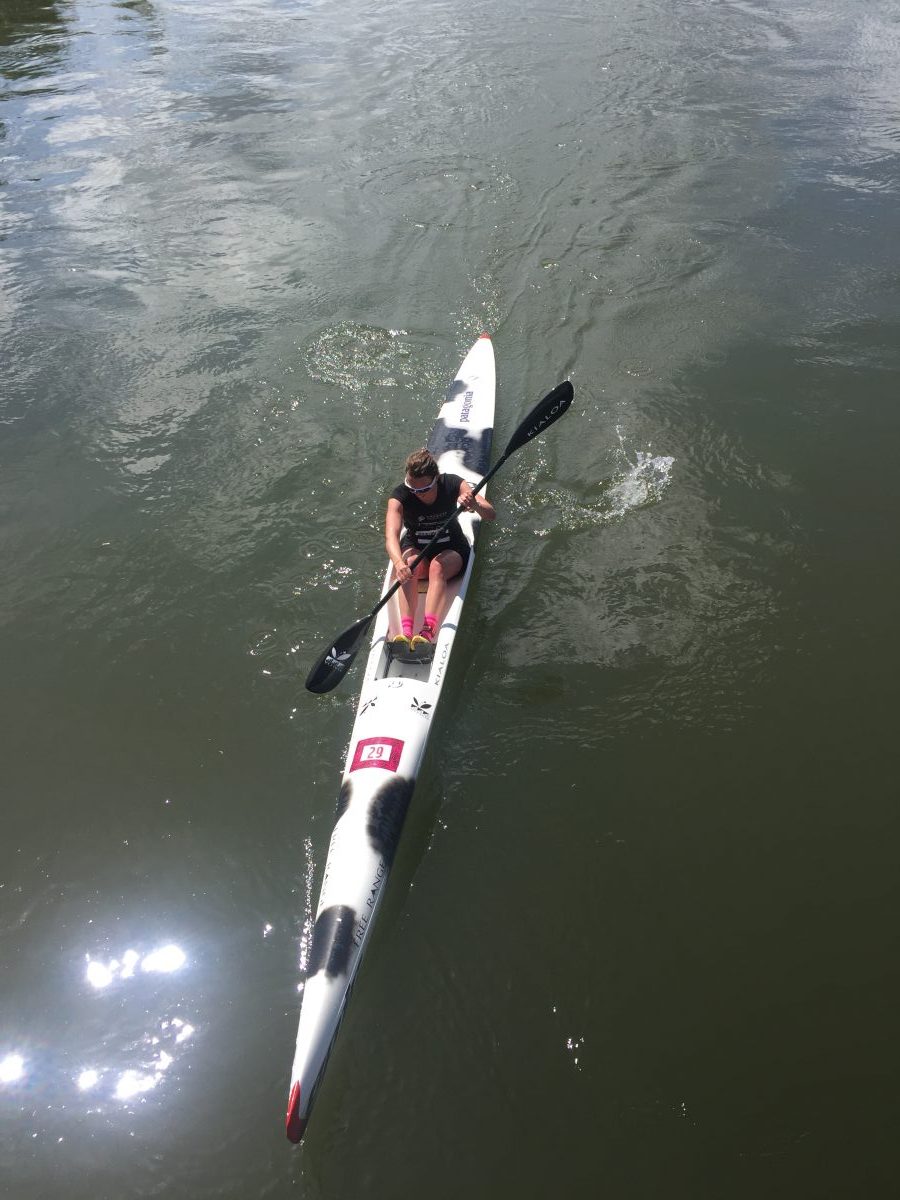
    Zoë Roy paddles “Daisy” the boat on her way to PPP victory. (Courtesy photo)

    She also jumps in and paddles her borrowed surf ski, a boat that resembles a Holstein cow, a few times prior to race day. (Our guess though is she paddles more than a few times pre-PPP.) The boat was salvaged from a dumpster and is white with large patches of carbon fiber and black spray paint here and there from the repairs. Roy calls the boat “Daisy” because it truly appears to have some Holstein lineage.

    Let’s also be real. Roy is a crusher. We’re not exactly calling her out as a sandbagger. However, if you go adventuring with Roy, most likely you’ll be huffing and puffing gaining vertical. So we in town knew she wasn’t rolling over for this year’s PPP when in mid-May she was seen screaming down Century Drive from Mount Bachelor on a TT bike after her morning XC-ski session. Yup, that’s called official “training” for the PPP. Sort of late in the game perhaps.

    To balance life, Roy holds down some pretty interesting jobs. She is the director of development for the Central Oregon Avalanche Association (COAA) and helps coordinate workshops for Wilder Retreats.

    More true facts: Roy makes and sells handcrafted ice cream. She’ll cater a party, too. She also organizes perhaps the toughest ticket in morning dance parties here in Bend. Here’s the hashtag if you’re ever game for 7 a.m., L4 weekday dancing fueled by coffee, chai and Picky Bars: #daybreakerbend. Roy says crashers are welcome. And hey, we’re calling it, the daybreak dancing helped her peak.

    Asked what the Wednesday Workout was exactly as we concluded the interview, Roy savored her Italiano on that lovely June morning and simply noted that the workout will find you.

    https://www.instagram.com/p/Bgkvm9lBR6w/?tagged=daybreakerbend

  • Under 23 Questions with Wyatt Gebhardt

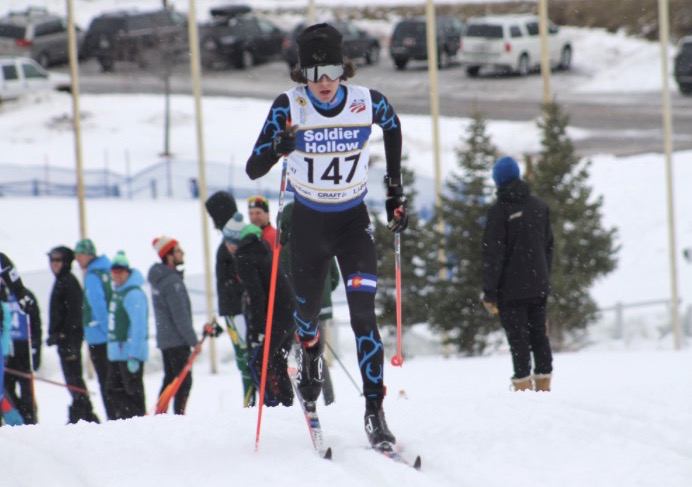
    Wyatt Gebhardt (Steamboat Springs Winter Sports Club) racing to 19th in the men's 10 k freestyle on Wednesday in his Junior World Championships debut at Soldier Hollow in Midway, Utah. (Photo: FlyingPointRoad.com)
    Wyatt Gebhardt (Steamboat Springs Winter Sports Club) racing to 19th in the men’s 10 k freestyle on Wednesday in his Junior World Championships debut at Soldier Hollow in Midway, Utah. (Photo: FlyingPointRoad.com)

    In an effort to showcase the North Americans competing at this week’s International Ski Federation (FIS) 2017 USANA Nordic Junior World Championships and U23 Cross Country World Championships at Soldier Hollow in Midway, Utah, we asked those qualifying athletes several questions about themselves — actually, we had them fill in the blanks. Here we have 17-year-old Wyatt Gebhardt, of the Steamboat Springs Winter Sports Club, who’s representing the U.S. at his first Junior Worlds.

    On Wednesday, Gebhardt placed 19th in the men’s 10-kilometer freestyle at Junior Worlds.

    ***

    “My full name is Wyatt Gebhardt, but you can call me Wyatt. I was born in Greeley, Colo., raised in Steamboat Springs, Colo., and one thing you should know about my hometown is we shot the biggest firework off in North America at the winter carnival.

    Wyatt Gebhardt (Steamboat Springs Winter Sports Club) racing to eighth in the junior men's 10 k classic mass start at 2017 U.S. nationals last month at Soldier Hollow in Midway, Utah. (Courtesy photo)
    Wyatt Gebhardt (Steamboat Springs Winter Sports Club) racing to eighth in the junior men’s 10 k classic mass start at 2017 U.S. nationals last month at Soldier Hollow in Midway, Utah. (Courtesy photo)

    I started cross-country skiing when I was two, thanks to Mom and Dad. I currently train in Steamboat Springs with SSWSC.

    If I’m not skiing, you might find me backcountry skiing. If I had to pick a favorite book, it would be ‘A Long Way Gone.’

    One of the things I’m most excited about for Junior Worlds at Soldier Hollow is the skiathlon race. One race I’m especially targeting there is 10 k freestyle.

    The best advice anyone ever gave me about skiing or racing was always be sure to have fun. One of the best race memories I have is racing in Steamboat.

    If I could meet one World Cup skier, it would be Stina Nilsson.

    If I don’t end up being a professional skier, I’ll probably be a mechanic.

    I’m missing seven days of school to be here.

    You can follow me on Instagram @wyattcrosscountry.”

  • Wednesday Workout: Skiing Fat-Bike Singletrack (Like Eli Brown)

    Wednesday Workout: Skiing Fat-Bike Singletrack (Like Eli Brown)

    Fat biking and skiing coexist, with Eli Brown skiing. (Photo: Jake Ellis)
    Fat biking and skiing coexist, with Eli Brown skiing alongside his son Leland on the Vasa trail in Traverse City, Mich. (All photos: Jake Ellis)

    If you are craving a challenging ski workout that will train your agility, boost your strength, and add variety to your skiing, you should look no further than your local fat-bike, singletrack ride.

    Have you ever tried to keep up with the fat bikes? On their trail?

    “Hardest workout out there!” said Eli Brown, a longtime U.S. Ski Team volunteer wax tech from Michigan, who is doing the majority of his skiing this season on singletrack.

    Bikes and skis have different advantages in different conditions, but most often you’ll be desperately chasing your pedaling friends. This activity will burn off that second helping you had at Christmas dinner, and/or open up a caloric deficit for your New Year’s Eve indulgences.

    Another bonus is that the different features of a fat-bike trail will increase your skiing dexterity. There will be berms, bumps and ruts that you won’t encounter on the typical ski trail. After a few singletrack skis, you’ll be a lot more likely to stay upright the next time you’re surprised by less-than-perfect trail conditions that would have taken you down before.

    This is a fun activity that can help you make a breakthrough with your smiling technique; it’s a lot of fun.

    The Workout: Join your local fat-bike singletrack ride, and try to keep up!

    Warmup: 15-20 minutes. Get ready to go out hard!

    Be careful to not smile TOO hard too early, save some for the finish 🙂

    Cool down: Have a beer with your cycling buddies and recount the joyful tales of skiing singletrack with a group of fat bikers.

    If you don’t have a local winter singletrack trail, or want to work up to it, you can get a lot of the same benefits from any off-piste (ungroomed) skiing. No-wax classic rock skis and poles with big baskets are a good start, and more advanced adrenaline junkies can try faster ski setups.

  • Wednesday Workout: Alpine Touring & Backcountry Skiing with NCAA Champs DU

    Wednesday Workout: Alpine Touring & Backcountry Skiing with NCAA Champs DU

    University of Denver (DU) Head Nordic Coach Dave Stewart during a backcountry ski on Berthoud Pass in the Colorado Rockies in 2015. (Courtesy photo)
    University of Denver (DU) Head Nordic Coach Dave Stewart during a backcountry ski on Berthoud Pass in the Colorado Rockies in 2015. (Courtesy photo)

    Looking for a workout that’s been known to produce both NCAA Championship skiers AND a national title? After winning the overall at 2016 NCAA Skiing Championships in March in Steamboat Springs, Colo., the University of Denver (DU) shares a workout that — perhaps to no surprise — combines an alpine skier’s agility and strength along with the cardio fitness and adventure-loving attitude often exhibited among nordic athletes.

    ***

    Who says backcountry skiing and alpine touring are only workouts for the post-season springtime? For a little more than three years, the University of Denver nordic ski team has taken full advantage of the Rocky Mountain Range’s summits, not only as a way to work off the post-season blues, but as a means of in-season training as well.

    Denver University nordic skies Maja Solbakken, Josh Smullin, Sylvia Nordskar during a back-country ski on the Buffalo Pass in 2015 (Courtesy photo)
    University of Denver nordic skiers Maja Solbakken and Sylvia Nordskar with Steamboat Springs Winter Sports Club coach Josh Smullin (c) during a backcountry ski on Buffalo Pass in 2015. (Courtesy photo)

    DU Head Nordic Coach Dave Stewart (who helped lead the Pioneers to two individual NCAA titles as well as the overall team title last season) indicated that when packing for training camps, or even ski races, slipping a set of skins into duffel bags and an extra set of touring skis is a must.

    “A few years ago, some of our skiers got really fired up about alpine touring and backcountry skiing,” Stewart wrote in an email. “So we started to bring equipment with us to training camps and race trips as well as getting in some more skinning close to Denver when at home.”

    Taking the opportunity in between race weekends, or even training sessions, to venture up and off-trail on alpine skis also prevents from getting bogged down with the regular routine of training, according to Stewart.

    “Getting out on the backcountry equipment, off the trails and in the mountains is a mini-adventure and a break from the routine,” Stewart wrote. “It’s also outstanding training and adds some more variation, something we are always looking for.”

    The tours combine strength during descents with a low intensity cardio during the climbs. As Stewart pointed out, what makes backcountry skiing a beneficial workout for cross-country skiers is the way it brings together exploration and exercise.

    “We always have a few people on the team who love spending time adventuring in the mountains, so backcountry is a way for us to combine this with race training,” Stewart wrote. “It’s good for the body and mind.”

    Denver University nordic skier Trygve Markset during a back-country ski at Fish Creek, Steamboat Springs in 2014. (Courtesy photo)
    University of Denver nordic skier Trygve Markset during a backcountry ski at Fish Creek, Steamboat Springs, Colo., in 2014. (Courtesy photo)

    The Workout

    Purpose: Low-intensity workout that doubles as a break from the occasional routineness of in-season training

    Step 1: Pick a time

    • DU Head Coach Dave Stewart suggests melding alpine touring/backcountry skis into midweek training camps or even as a post-race day recovery workout.
    • “Find a good time for a tour, either the day after a race, on an afternoon midway through a training camp or on a sunny spring morning,” Stewart notes.

    Step 2: Get a Guide

    • Gathering information from someone knowledgeable about the safety of conditions is a priority for DU athletes looking to complete the workout.

    Step 3: Skin and Ski Up

    Stick your skins on and begin the uphill trek. Stewart suggests “see[ing] what you find over the next few hours,” as you work the ascent.

    Step 4: Ski Down

    After a few hours of uphill, dig into the descent.