Tag: Barbro Kvåle

  • Halfvarsson, Weng Top Toppidrettsveka; Newell and Bolger Compete

    Halfvarsson, Weng Top Toppidrettsveka; Newell and Bolger Compete

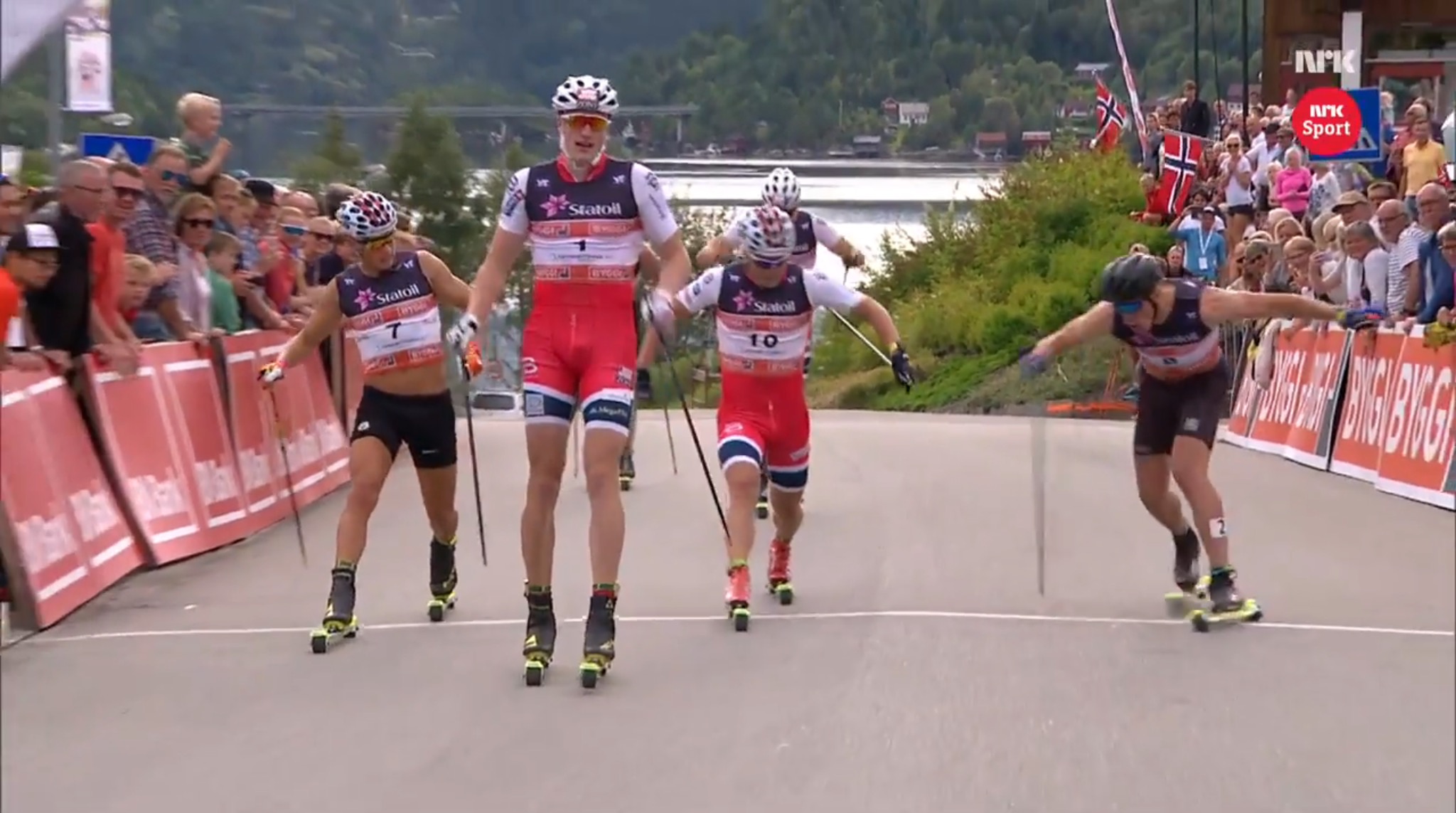
    In the men’s classic sprint on Day 1 of the three-day 2017 Toppidrettsveka mini tour, Norway’s Aune Pål Trøan (1) crosses the line ahead of his countrymen Johannes Høsflot Klæbo (7) and Eirik Brandsdal (10) while Sweden’s Calle Halfvarsson (r) placed fourth. Halfvarsson went on to win the tour, ahead of Klaebo in second. (Screenshot: NRK broadcast)

    This past weekend was once again the time of the year for the Toppidrettsveka ski festival, a three-day rollerski mini tour held annually since 2005 in the region of Trondheim, Norway. In addition to the individual stages, points for the top-30 finishers were awarded to compile an overall ranking similar to the Tour de Ski.

    The elite field of athletes was mostly comprised of Norwegian and other Scandinavian skiers active on the International Ski Federation (FIS) World Cup and European Continental Cup level, as well as a handful of international starters, including two Americans: U.S. Ski Team member Andy Newell, who raced at last month’s Blink Ski Festival in Norway, and Kevin Bolger, who is coming off his senior season at the University of Utah.

    Day 1: Aure Sprint
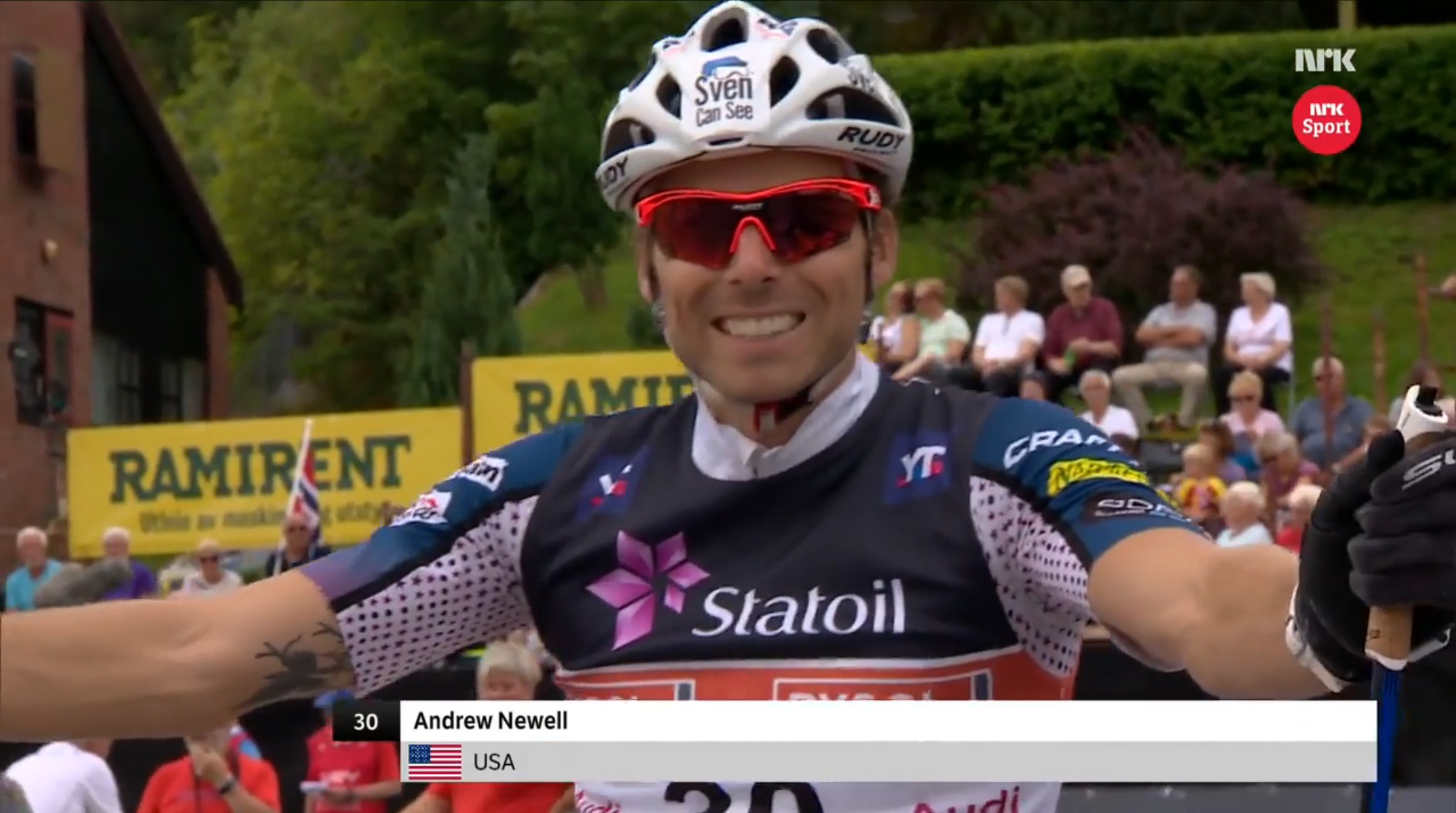
    American Andy Newell (U.S. Ski Team) at the start of the men’s sprint in Aure, Norway, on Day 1 of the 2017 Toppidrettsveka rollerski mini tour. (Screenshot: NRK broadcast)

    The festival started last Thursday with a classic sprint in the small town of Aure, on a fairly long course with a steep downhill and a roundabout at the bottom, after which the athletes had to ski up the same hill toward the finish.

    In the men’s race, Norway’s Aune Pål Trøan took the win in the final with a time of 2:46.46, narrowly edging Norwegian World Cup skiers Johannes Høsflot Klæbo by 0.41 seconds and Eirik Brandsdal by 0.43 seconds. Just another tenth of a second back, Sweden’s Calle Halfvarsson placed fourth (+0.44).

    Newell’s run ended in the quarterfinals, where he finished sixth in his heat, just half a second from advancing. His heat was a tight race that featured the eventual winner Trøan, who along with World Cup regular Emil Iversen, advanced as a lucky loser behind Brandsdal and his teammate Aleksander Ek. Bolger did not reach the quarterfinals.

    In the women’s final, Sweden’s Linn Sömskar prevailed with a time of 3:03.94, edging out five Norwegians, including Kathrine Rolsted Harsem in second and 2016 Toppidrettsveka title-defender Heidi Weng in third. Earlier in the day, Sömskar also won her quarterfinal and semifinal heats decisively.

    Two weeks ago, Sömskar won three races at the 2017 rollerski world championships in Solleftea, Sweden — the 18-kilometer freestyle, 16 k classic, and team sprint with Maja Dahlqvist.

    Day 2: Brekka Mass Start and Trondheim Sprint

    On Friday, athletes competed in two events: a mass start followed by a sprint later in the evening.

    Switzerland’s Dario Cologna topped the men’s 24 k mass start, a point-to-point race from Aure to Brekka, finishing in 59:11.3 after breaking away on the long final climb. Halfvarsson claimed second (+10.8), followed by Finland’s Iivo Niskanen in third (+17.2) ahead of Norway’s Niklas Dyrhaug in fourth (+27.4).

    “Great to win here,” Cologna told Norwegian broadcaster NRK in an interview in the finish. “Many good skiers, the best in the world, so it’s a good feeling. Good to see that everything is working well [in preparation] for this important season.”

    Bolger finished 51st (+4:48.6) and Newell crossed 15 seconds later in 54th (+5:03.9) in the large field of 124 finishers.

    In the women’s mass start over the same 24 k course, the race was even closer and came down to a finishing sprint. Weng took the win in 1:07.30.3, just 3.5 seconds ahead of her teammate Astrid Uhrenholdt Jacobsen, while Sweden’s Anna Haag finished 7.8 seconds back in third. Another Swede, Ebba Anderson placed fourth (+22.0), while the rest of the field crossed the line more than four minutes later. Haag and Anderson are just coming off a training camp in Sweden, where they were joined by U.S. Ski Team members Liz Stephen and Kikkan Randall.

    For Stage 3 on the same day, athletes raced a 1 k sprint in the center of Trondheim, Norway’s third-largest city. There, Klæbo won the men’s final after a decisive attack on the finishing stretch in a time of 2:19.56 minutes, ahead of fellow Norwegian Ragnar-Kristoffer Braqvin Andresen in second (+0.23) and Even Northug in third (+2.85), the younger brother of 2016 Toppidrettsveka winner Petter Northug Jr. Halfvarsson finished fourth (+2.94), thereby taking the lead in the intermediate tour standings on Day 2, ahead of Klæbo, Cologna and Trøan.

    Both Newell and Bolger missed qualifying for the sprint heats and did not score additional points.
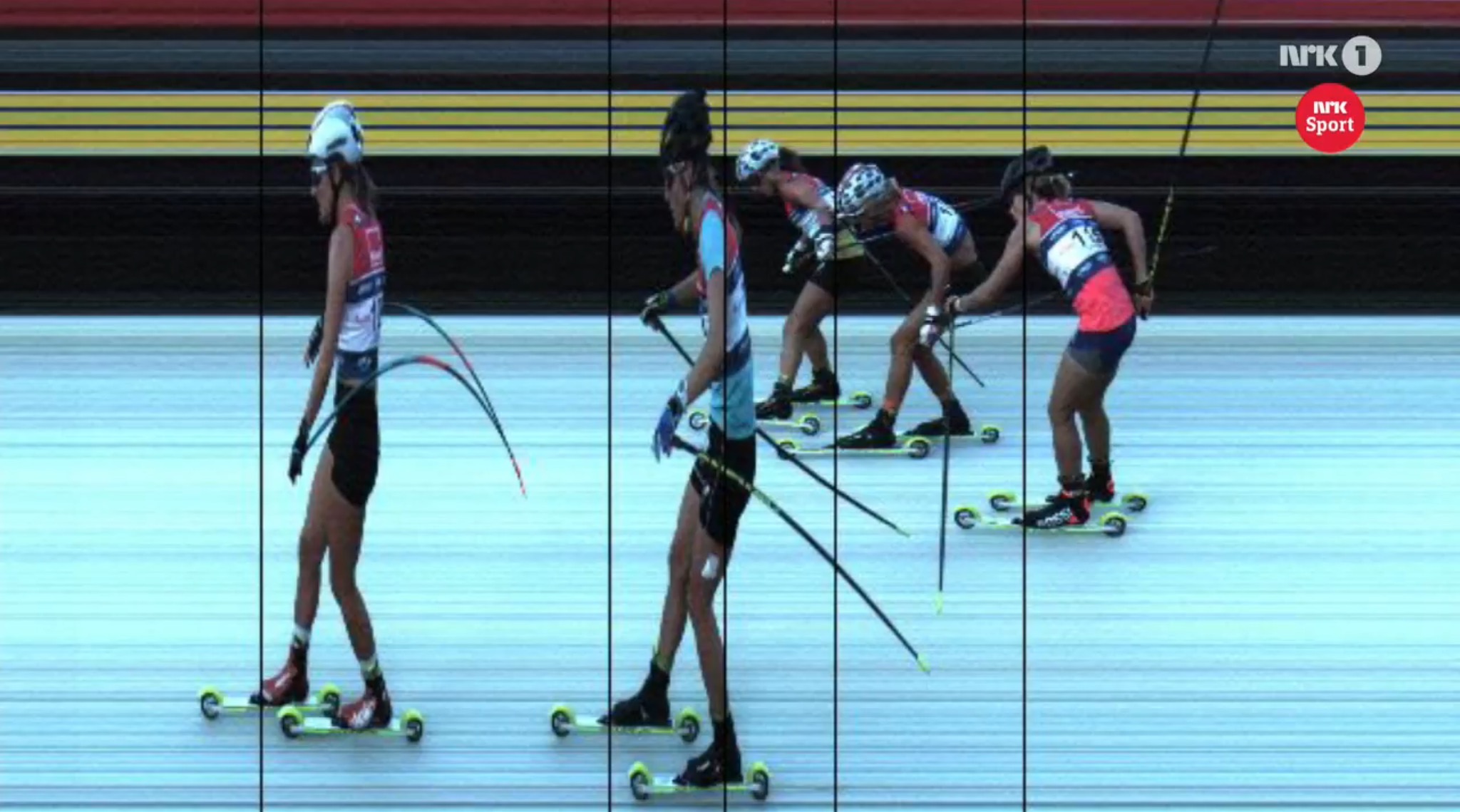
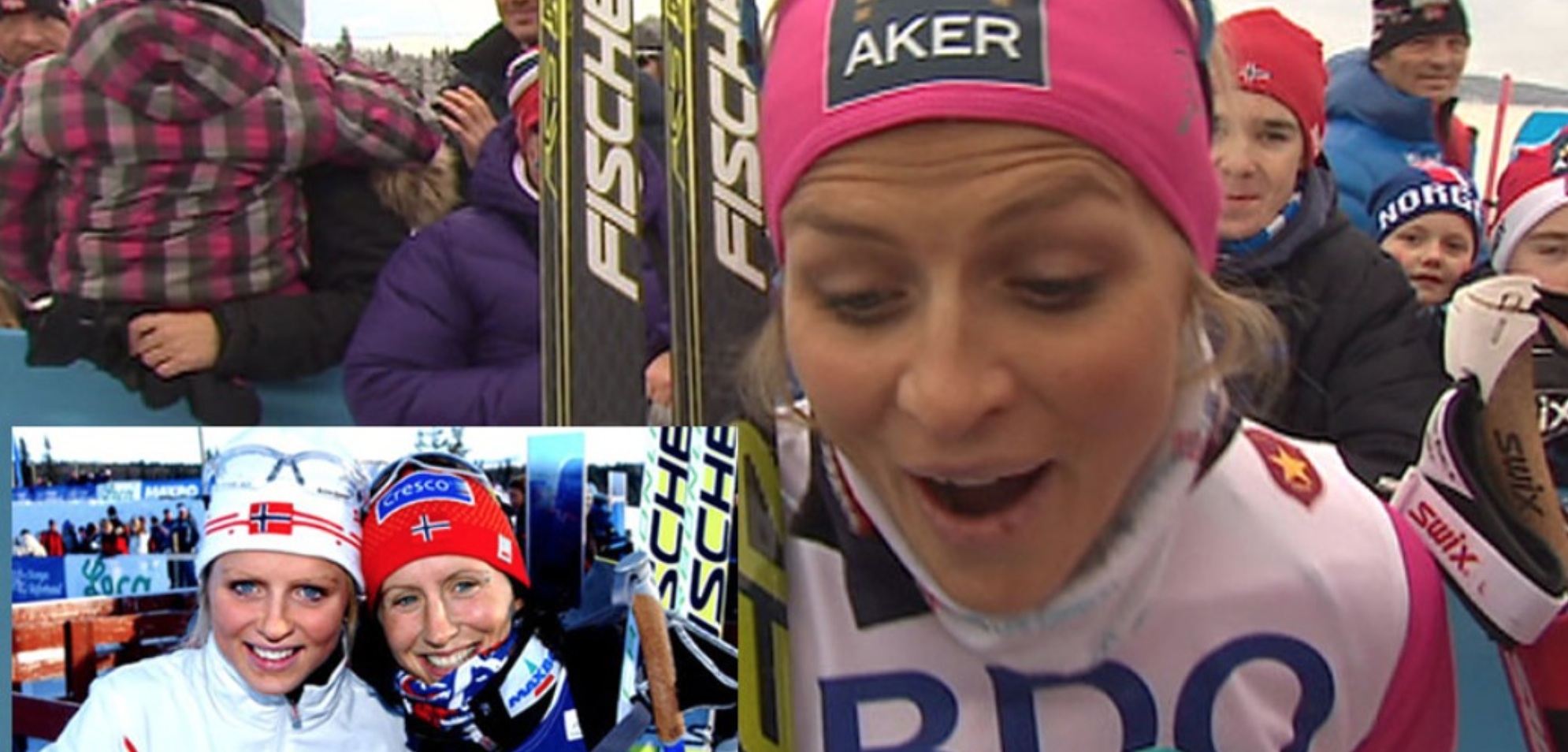
    In a true photo finish (left to right) Norway’s Barbro Kvaale won the women’s sprint on Day 2 of the 2017 Toppidrettsveka rollerski mini tour in Trondheim, Norway, ahead of Sweden’s Linn Sömskar in second, Norway’s Heidi Weng in third, Norway’s Kathrine Rolsted Harsem in fourth, and Switzerland’s Laurien Van Der Graaff in fifth. (Screenshot: NRK broadcast)

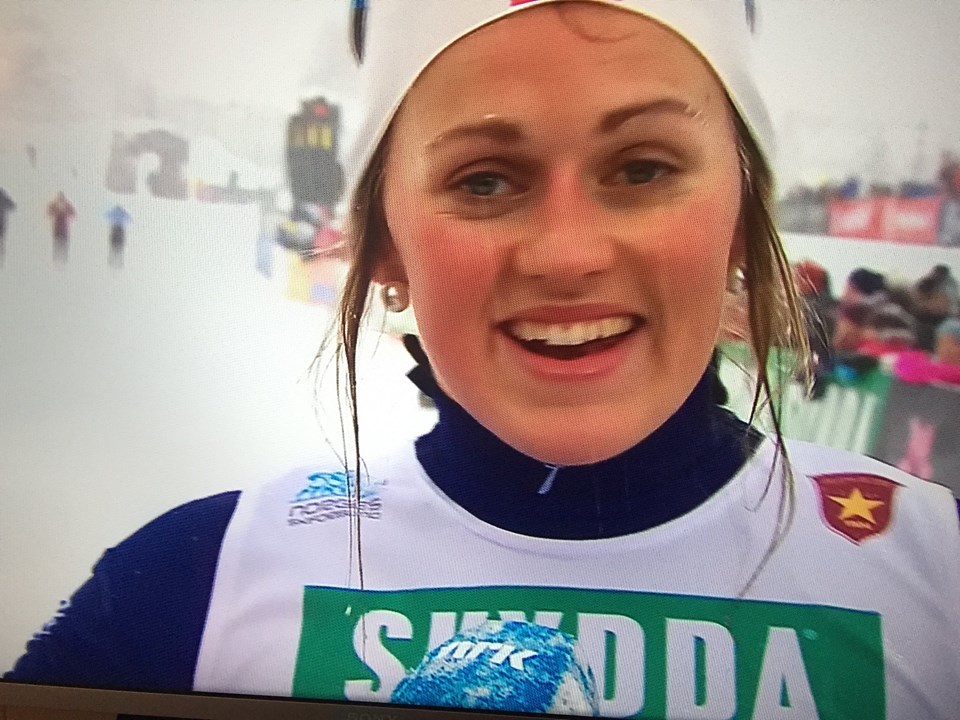
    The women’s sprint final went to Norway’s Barbro Kvåle in a time of 2:46.04, who placed sixth in the final the day before. She edged Sömskar by just 0.08 seconds and Weng was another hundredth of a second back in third (+0.09). Harsem placed fourth (+0.25), and Switzerland’s Laurien Van Der Graaff, who led until the final meters of the race, finished fifth (+0.37). In the overall standings, Weng spent the night in the lead, ahead of Sömskar, Jacobsen and Harsem.

    Day 3: Trondheim Pursuit/Mass Start

    The mini tour concluded Saturday with classic races in Trondheim. However, with a smaller field of 37 athletes for the last women’s race, the points collected in the prior three events were not converted into time gaps before the final stage. Instead, athletes started together for a 12-kilometer mass start and the overall results and time back from the winner were computed after the race.

    In rainy weather (with many of the spectators sporting ponchos), the short-sleeved athletes persistently circled their laps around the city course. The top group got smaller and smaller, and after 7.5 k, only 10 women remained within three seconds of the lead. That group dwindled to six by the finishing stretch, where Haag outlunged Jacobsen by 0.2 seconds for the win and Sömskar crossed another 0.4 seconds back in third (+0.6). Three Norwegians followed, with Harsem in fourth (+1.2), Weng in fifth (+1.5) and Lovise Hemdal in sixth (+2.0). Fifteen seconds later, Kvåle in seventh (+16.7) led the next four finishers across the line.

    After computing the overall Toppidrettsveka standings, Weng was deemed the winner for the second-straight year. Sömskar placed second, 34.1 seconds back (she only had one weaker stage in the long mass start where she finished 11th, almost six minutes behind Weng), and Jacobsen was just another 1.6 seconds back in third (+35.7). Harsem finished the tour in fourth (+46.7), and Haag placed fifth (+59.5).

    “I was impressed with myself actually,” Weng told NRK in a finish-line interview, according to a translation. “That I managed to keep up so well despite some very stiff arms … I don’t know if I am on a better way than last year, but yes, I feel really quite good.”

    On the conditions, which Jacobsen called “dangerous“, Weng was pleased everyone played it safe.

    “We took it very easy, and it was good that we all kept it a bit safe, there were some very slippery spots, but it went well,” Weng said.

    With more in the men’s field, the men raced a 15 k pursuit, with Halfvarsson starting first, 12 seconds ahead of Klæbo in second, and 50 seconds ahead of Cologna in third. Trøan left the gate 1 minute back and Brandsdal started 2 seconds later.

    Despite the heavy rain, which had worsened since the women’s race, Halfvarsson increased his lead on Klæbo. By 5.1 k, the Swede was more than 40 seconds clear of Klæbo, and Cologna came through the checkpoint 1:13 back. Having to ski through puddles of standing water at times, Halfvarsson extended his lead on Klæbo to over a minute by 11.2 k. Another 30 seconds behind Klæbo, Northug led a large chase group of about 20 racers after the pack had caught Cologna.

    Halfvarsson held his comfortable lead through the finish, completing the final stage in a time of 34:08.4 for the overall victory. Klæbo had to fight a lot harder to hold onto second place, crossing the line 1:14.7 back and only a few meters ahead of the chase group. Northug outlasted the pack in a finishing sprint for third place (+1:18.5), while Bransdal missed the podium by half a second in fourth (+1:19.0), as did Niskanen in fifth (+1:19.0) and Trøan in sixth (+1:20.0).

    https://www.instagram.com/p/BX–n2hD61y/?hl=en&taken-by=toppidrettsveka,

    “Today, it was pretty easy,” Halfvarsson told NRK, according to a translation. “I had the goal to go out hard, and knew I was going to get it when Johannes had problems to follow.”

    “[My] days are over, there is a new kid in town,” 13-time world champion Northug said in English in a finish-line interview with NRK, referencing Klæbo standing next to him.

    “He is the one who is absolutely the fastest of all of us,” Halfvarsson agreed in his interview with NRK when asked about the upcoming season. “Petter will be strong if he can find the shape for the winter, but it’s Johannes who I fear the most.”

    “He is just saying that,” Klæbo told NRK. “I think there are many Norwegians that are going to go fast this winter.”

    The best time of the final stage was posted by Great Britain’s Andrew Musgrave in 33:33.8, while Halfvarsson’s time ranked 25th. Musgrave finished eighth overall (+1:20.4).

    For the stage, Newell placed 53rd and Bolger 64th. Overall, Newell finished the tour in 56th (+2:28.7) and Bolger placed 67th (+3:01.2).

    https://www.instagram.com/p/BYAMQlkBwkn/?hl=en&taken-by=andynewellskier
    Complete results

  • Falla Impedes Her Buddy Østberg, Leaving Matveeva with Beitostølen Sprint Win

    Falla Impedes Her Buddy Østberg, Leaving Matveeva with Beitostølen Sprint Win

    The women's podium (from l-r): Natalia Matveeva (RUS)  second, Jennie Öberg (SWE) first, and Laurien van der Graaff (SUI) third.
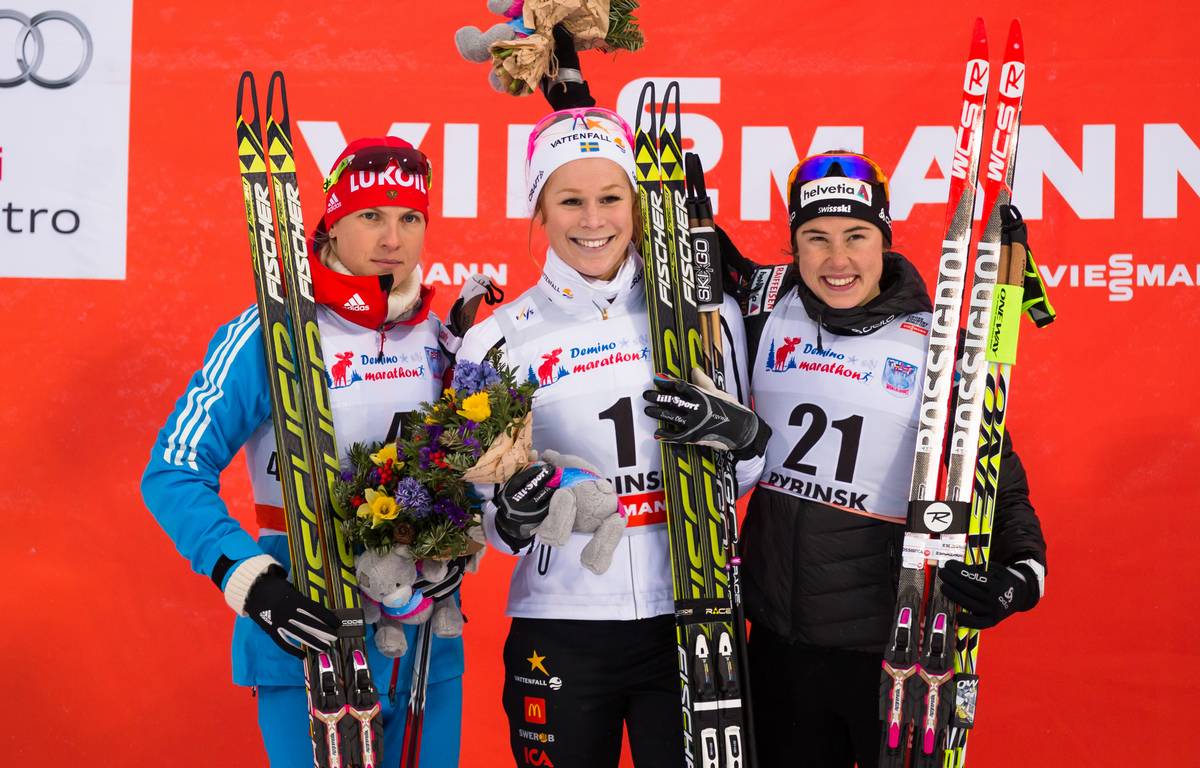
    Russia’s Natalia Matveeva (l)  on the podium last season at a World Cup skate sprint in Rybinsk, Russia, with Swedish winner Jennie Öberg and Switzerland’s Laurien van der Graaff in third. On Sunday in Beitostølen, Norway, Matveeva won a FIS classic sprint after Norway’s Maiken Caspersen Falla (not pictured) was disqualified. (Photo: Fischer/NordicFocus)

    For the second time this weekend, a Norwegian skier was disqualified from an International Ski Federation (FIS) race in Beitostølen, Norway, and missed out on a victory because of it.

    Despite a strong opening to Sunday’s 1.2-kilometer classic sprint, in which she won the qualifier by 2.22 seconds over Norwegian teammate Ingvild Flugstad Østberg and topped every heat thereafter, Maiken Caspersen Falla was ultimately at the hands of the jury by the end of the final.

    Norwegian teammates and friends Maiken Caspersen Falla (l) and Ingvild Flugstad Østberg celebrate gold and silver, respectively, in Tuesday's Olympic skate sprint in Sochi, Russia.
    Norwegian teammates and friends Maiken Caspersen Falla (l) and Ingvild Flugstad Østberg celebrate gold and silver, respectively, at the 2014 Olympic skate sprint in Sochi, Russia.

    Facing off against Østberg, Russia’s 22-year-old Polina Kovaleva — who was third in the qualifier (6.44 seconds behind Falla) — another Russian Natalia Matveeva, and two more teammates, Astrid Uhrenholdt Jacobsen and Barbro Kvåle, the 25-year-old Falla ran into trouble in the final when she moved to change tracks on a technical turn.

    Due to the sharpness of the turn and traffic around her, Falla explained she had no choice but to ski over her good friend Østberg’s skis.

    “I saw that I [cut off] Ingvild in the bend, but what else could I have done?” Falla said in a post-race interview with Langrenn, according to a translation. “I was either running up the back of Astrid or into Ingvild.” 

    While she finished first in the final, Falla was ultimately relegated to last because of the move. She didn’t regret her decision, telling NRK“I would do it again, because I did not have anywhere else to go.”  

    She added that the DQ should give her some added fuel moving forward, especially two weeks out from the World Cup opener in Kuusamo, Finland.

    “It’s too bad to be disqualified” she told Langrenn. “It was one of best races I’ve done in three or four years. I can use this as extra motivation when I go [to the] World Cup.”

    With Falla out, the women’s sprint victory went to the second racer across the line: Russia’s 29-year-old Matveeva, who finished second in both her quarterfinal and semifinal. Skisport.ru noted classic isn’t usually Matveeva’s strength. In 2007, she won a World Cup skate sprint in Duesseldorf, Germany, and last season, she reached the World Cup podium for the first time in three years when she placed second in a skate sprint in Rybinsk, Russia. 

    Despite the mishap with Falla, Østberg was two-tenths of a second from the win on Sunday, finishing just behind Matveeva in second. After reaching the final as a lucky loser from her semifinal, Jacobsen led out of the start, but slipped back on the climbs and ended up 2.9 seconds back in third. Kovaleva placed fourth (+8.3) and Kvåle was fifth (+12.1). The winner of last year’s classic sprint in Beitostølen, Kvåle, 23, was a lucky loser twice over, narrowly advancing from both the quarterfinals and semifinals with fast-enough times.

    Results: Qualifier | Heats

  • Two Times the Fun at Toppidrettsveka Day 1: Stephen and Hoffman Third in Hill Climb; Caldwell Fifth in Sprint

    Two Times the Fun at Toppidrettsveka Day 1: Stephen and Hoffman Third in Hill Climb; Caldwell Fifth in Sprint


    Noah Hoffman (U.S. Ski Team) racing to third in the Fonna Opp, the hill climb footrace that opened the 2015 Toppidrettsveka in Aure, Norway. Norway's Didrik Tønseth was first to the top in 28:53.5, and Sweden’s Martin Johansson placed second, 13 seconds back, while Hoffman was 1:02.5 back in third. (Photo: USSA)
    U.S. Ski Team member Noah Hoffman (r) racing to third in the Fonna Opp, the hill climb footrace that opened the 2015 Toppidrettsveka in Aure, Norway, on Thursday. Norway’s Didrik Tønseth was first to the top in 28:53.5, and Sweden’s Martin Johansson placed second, 13 seconds back, while Hoffman was 1:02.5 back in third. (Photo: USSA)

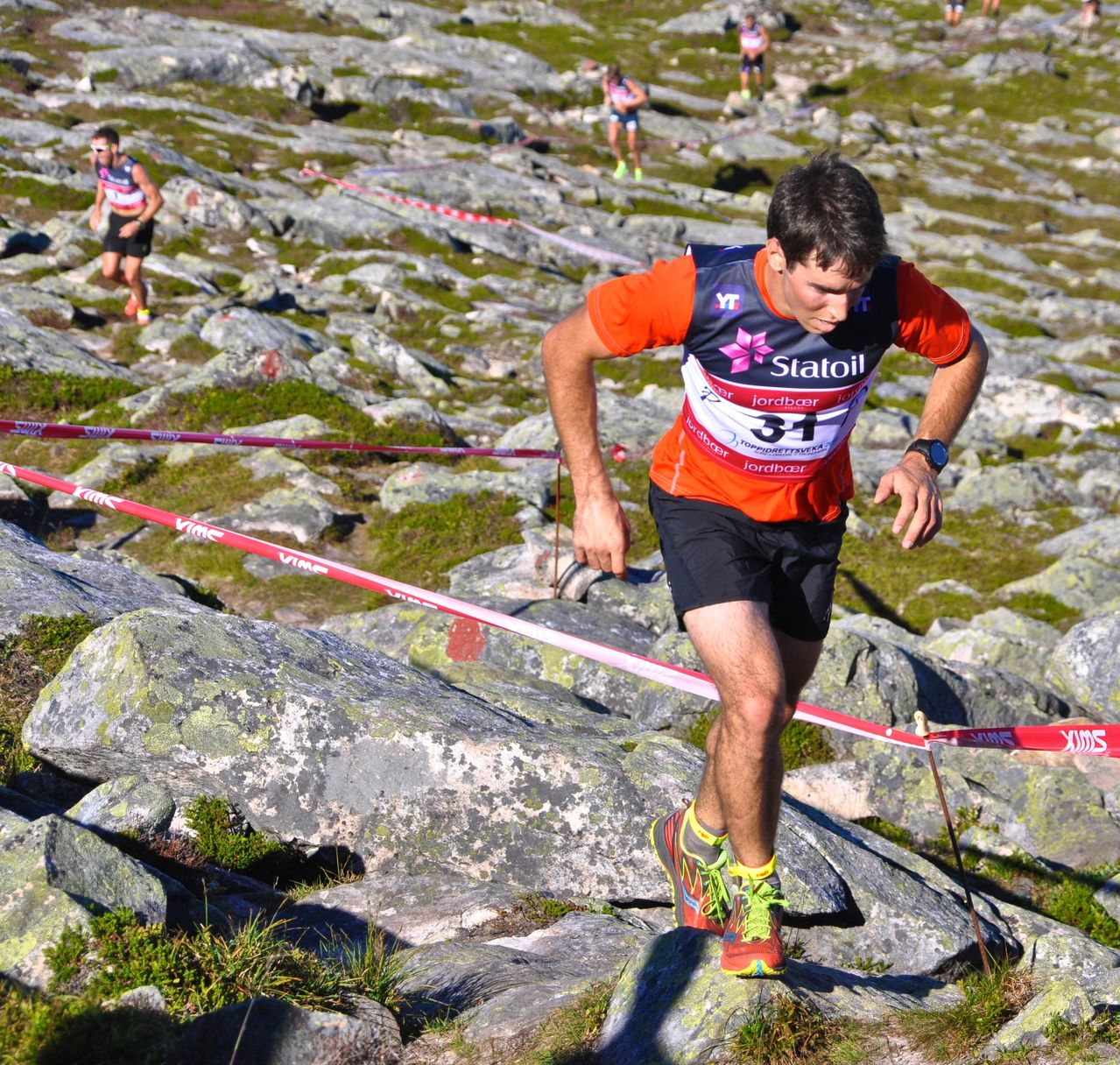
    The first day at the Toppidrettsveka race festival brought something rarely seen in cross-country ski racing: two events is one day. Thursday morning featured the Fonna Up — a 5.3-kilometer uphill running race that ascended 650 meters — in Aure, Norway, and two Americans were the third fastest to the summit.

    Liz Stephen and Noah Hoffman, both of the U.S. Ski Team (USST), placed third in the women’s and men’s hill climb races, respectively, after starting together: the entire field left the start at once.

    “The hill climb started on a fairly flat/gradual up road for 400 meters or so before taking a hard left hand turn and heading up a steeper pitched gravel road for the first 3k,” Stephen explained in an email. “Then the trail took a left onto a technical and rocky, steep trail for another 2.2k to the top of the mountain.”

    Crossing the line first overall was Norwegian climbing specialist Didrik Tønseth with a time of 28:53.5. His effort was fast enough to break the course record by nearly a minute. Thirteen seconds after Tønseth was Martin Johansson, an orienteering competitor from Sweden. Johansson injured his collarbone earlier in the summer in a bike crash, but recovered enough to race to second overall.

    Hoffman crested the top third, 1 minute and 2.5 seconds after Tønseth, and 34.1 seconds ahead of France’s Maurice Manificat in fourth. U.S. assistant coach Jason Cork posted a video of Hoffman racing to third; he also posted one of women’s winner Therese Johaug of Norway, who was 10th overall, reaching the Fonna Opp summit as well.

    Johaug clocked in at 31:18.8, beating most of the men and finishing more than a minute and a half ahead of second-place finisher and fellow Norwegian Heidi Weng. Stephen was 2:42.3 back in third.

    “It’s fun to be here and give the guys a little [run],” Johaug told NRK at the finish, according to a translation. “I’m made for uphills and have always been good at it.”

    Johaug also put down a dominating performance in the Storsylen Up earlier this summer, but said she didn’t plan to switch to elite mountain running anytime soon as she remains committed to skiing.

    Stephen explained that the race required finding the most efficient route through rocky sections.

    “I pushed hard on the road, knowing I would not be as fast on the trail as others, but pushed the whole way, for sure,” she wrote. “I was so nervous before it, so I am happy to have it behind me now!”

    The five USA women after the Fonna Opp hill climb (l-r Jessie Diggins, Kikkan Randall, Liz Stephen, Sophie Caldwell, Caitlin Gregg). (Photo: USSA)
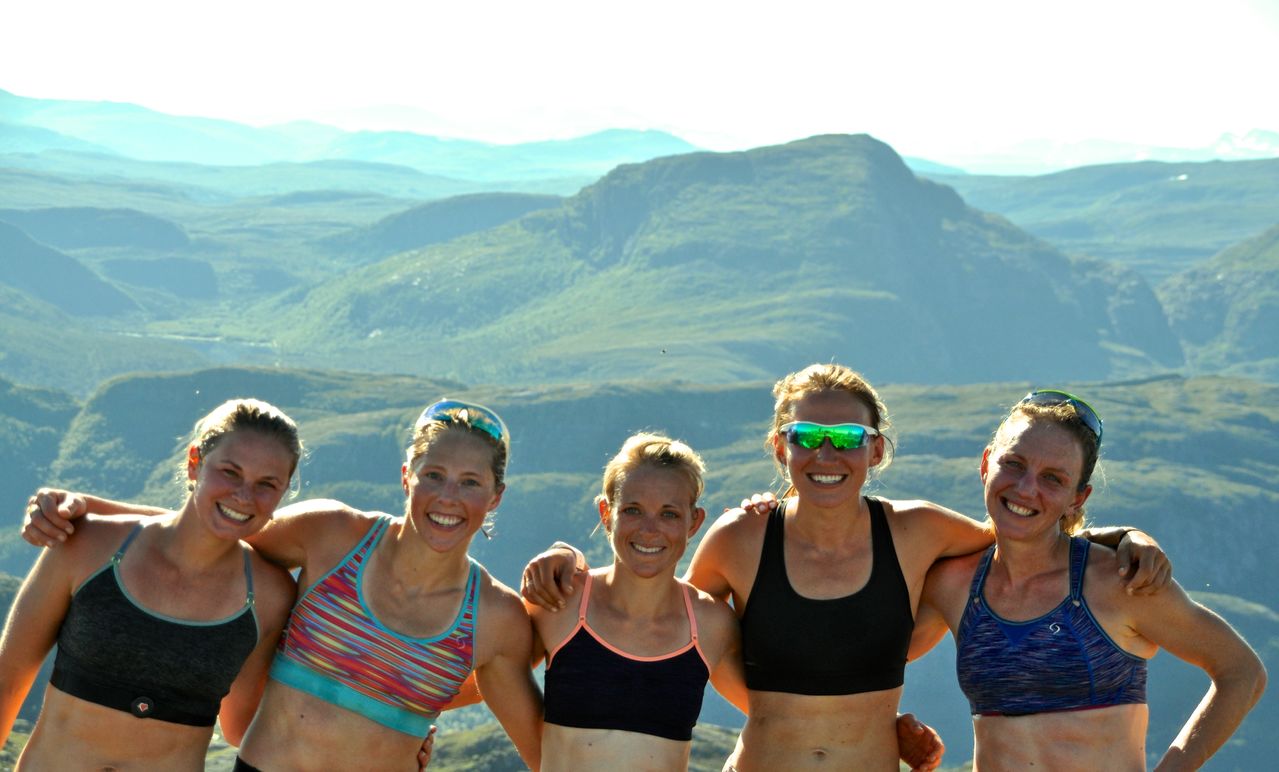
    The five USA women after the Fonna Opp hill climb (l-r Jessie Diggins, Kikkan Randall, Liz Stephen, Sophie Caldwell, Caitlin Gregg). (Photo: USSA)

    After the morning competition, athletes had just enough time to return home, eat some lunch, take a quick nap, and then depart again for the classic rollerski sprints in Aure. All of the USST women competing — Stephen, Sophie Caldwell, Kikkan Randall, Jessie Diggins, and Caitlin Gregg — went on to qualify for the heats, as did U.S. men Andy Newell and Simi Hamilton. Caldwell went the farthest in the heats, all the way to the women’s A-final, where she finished fifth for the best American result.

    “I had some trouble pushing through the tired feelings in my prologue,” Caldwell explained in an email. “I was still pretty exhausted from the uphill run and did not feel great, but I was happy to qualify.”

    She qualified 21st and went on to edge Germany’s Denise Herrmann in the quarterfinals, advancing in second behind behind Norway’s Kathrin Harsem, the prologue winner. Caldwell was fourth in her semifinal, just ahead of Johaug, and earned a lucky loser spot in the finals.

    “I felt significantly better in my quarter final most likely due to the added time to rest and the hard effort of the prologue to wake me back up,” Caldwell wrote. “I knew my strength was the final uphill into the finish, so my strategy was to try to maintain contact with the leaders while conserving as much energy through drafting on the double pole sections and downhills early on. This left me in a good position to attack at the end of each heat and it paid off.

    “It was fun to be in a place where I was fighting for the podium,” she continued. “I was really happy with how the day ended up and am psyched to come away with it knowing what I need to improve on before the season starts.”

    After winning her quarterfinal, semifinal and ultimately, the final, Weng led a Norwegian sweep of the women’s podium. Harsem placed second and Barbro Kvåle was third.

    “It was really fun to win. It is not often that happens,” Weng told Dagbladet after her race.

    In the men’s sprint, Norwegian Petter Northug made up for his 81st-place finish in the hill climb (out of 86 men) by finishing first ahead of teammate Eirik Brandsdal. In the morning, Brandsdal finished 50th, nearly 7 minutes behind the winner, while Northug was almost 12 minutes back. Six men comprised the sprint A-final and Simen Lanes rounded the podium in third. His Team Jobzone teammate, Timo Andre Bakken was fourth, national-team member Ola Vigen Hattestad rebounded from last in the hill climb to place fifth, and Simen Østensen (Team United Bakeries) was sixth.

    Among the Americans, Randall finished 15th overall after qualifying 18th and placing third in her quarterfinal. The top U.S. female qualifier in 11th, Diggins placed fourth in Caldwell’s quarterfinal for 16th overall. Stephen and Gregg were sixth in their quarterfinals for 26th and 29th, respectively.

    Newell placed 15th in the men’s sprint and Hamilton was 39th, after Hamilton finished 13th in the morning hill climb (where Newell was 40th). Canadian Devon Kershaw placed 16th in the climb and narrowly missed qualifying in 34th in the sprint.

    “Today was a tiring day to say the least,” Newell told USSA. “I think this is one of the few times in my life when I’ve had to do two races in the same day. I tried to take the uphill running stage slightly easier in order to save some energy for the sprint in the afternoon. It was a tough race but I tried to do more hiking than running on the steep sections in order to save the body. A lot of guys were doing that.”

    He also noted that this was the first time that most of the USST members had competed in an highly competitive, international rollerski race.

    “It takes a little getting used to,” he said. “I was happy with my energy and my sprint fitness is as good as it ever was last season so I’m excited to keep building. I was close to moving on to the semi finals, but was just on the losing end of a lunge.”

    The Toppidrettsveka continues Friday in Orkdal, Norway, with a 15 k skiathlon for both the men and the women, and finishes Saturday in Trondheim with 15 k pursuits.

    Results:

    Fonna Opp: Men’s Hill ClimbWomen’s Hill Climb

    Men’s Classic SprintWomen’s Classic Sprint

  • Kvåle Racks Up 10 k Freestyle Title at U23 Worlds; Bouffard-Nesbitt Cracks Top 20

    Kvåle Racks Up 10 k Freestyle Title at U23 Worlds; Bouffard-Nesbitt Cracks Top 20

    The women's 10 k freestyle podium on Thursday at U23 World Championships in Almaty, Kazakhstan: with Norwegian winner Barbro Kvåle (c), Russia's Daria Storozhilova (l) in second, and Switzerland's Nathalie von Siebenthal (r) in third. (Photo: FIS)
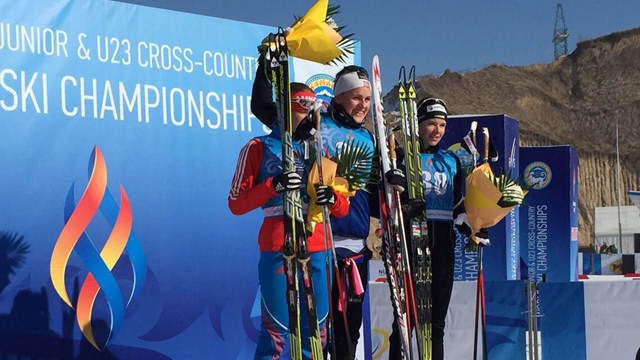
    The women’s 10 k freestyle podium on Thursday at U23 World Championships in Almaty, Kazakhstan: with Norwegian winner Barbro Kvåle (c), Russia’s Daria Storozhilova (l) in second, and Switzerland’s Nathalie von Siebenthal (r) in third. (Photo: FIS)

    Does the name Barbro Kvåle ring a bell? If you’ve been following international skiing since late November of last year, you might recall the day when the 22-year-old Norwegian won the classic sprint in Beitostølen, Norway.

    Yes, it was a pre-season tuneup International Ski Federation (FIS) race and not a World Cup event, but she beat fellow Norwegians Kari Vikhagen Gjeitnes and her best friend Kathrine Harsem to do so.

    Kvåle was also known as a junior world champion in ski orienteering. On Thursday, she added a FIS Nordic U23 World Championships title to her list.

    With her 23rd birthday coming at the end of the month, Kvåle of the Lillehammer Skiklub bested Russia’s Daria Storozhilova by 5.8 seconds to win the women’s 10-kilometer freestyle at U23 World Championships in Almaty, Kazakhstan.

    Kvåle started 28th out of 41 women, and by the first 1.7 k checkpoint, her time ranked 10th. She was up to fourth by the halfway point and clocked the fifth-fastest time at 6.7 k. There, Storozhilova ranked second behind Switzerland’s Nathalie von Siebenthal, who was fastest through every timing point on the two-lap course until the finish.

    Siebenthal started 38th and couldn’t match Kvåle’s finishing kick despite having an 11.4-second lead on the Norwegian, and 2.6 seconds on Storozhilova, with 3.3 k to go. She finished third, 6.4 seconds back from Kvåle and 0.6 seconds behind Storozhilova.

    “I am on the podium today and happy with it,” the 21-year-old Siebenthal told FIS after the race. “I would say the race was not hard to me.”

    It was her first podium at a U23 or Junior World Championships, besting her previous best of eighth in the 15 k skiathlon at 2014 U23 worlds in Val di Fiemme, Italy.

    For Kvåle, the victory also marked her first podium at a cross-country World Championships after placing seventh in the classic sprint earlier this week.

    “I am very happy with the race despite the fact that it was very difficult,” she told FIS. “This is my second victory in international championships and I am very happy to be here in Almaty.”

    Storozhilova, 22, was also pleased with her performance in her first race at an international championships.

    “The slopes are dangerous and sharp, but I am satisfied with my result,” she said.

    Olivia Bouffard Nesbitt leads a pack of women in the Frozen Thunder classic sprint in late October 2014. (Photo: Angus Cockney)
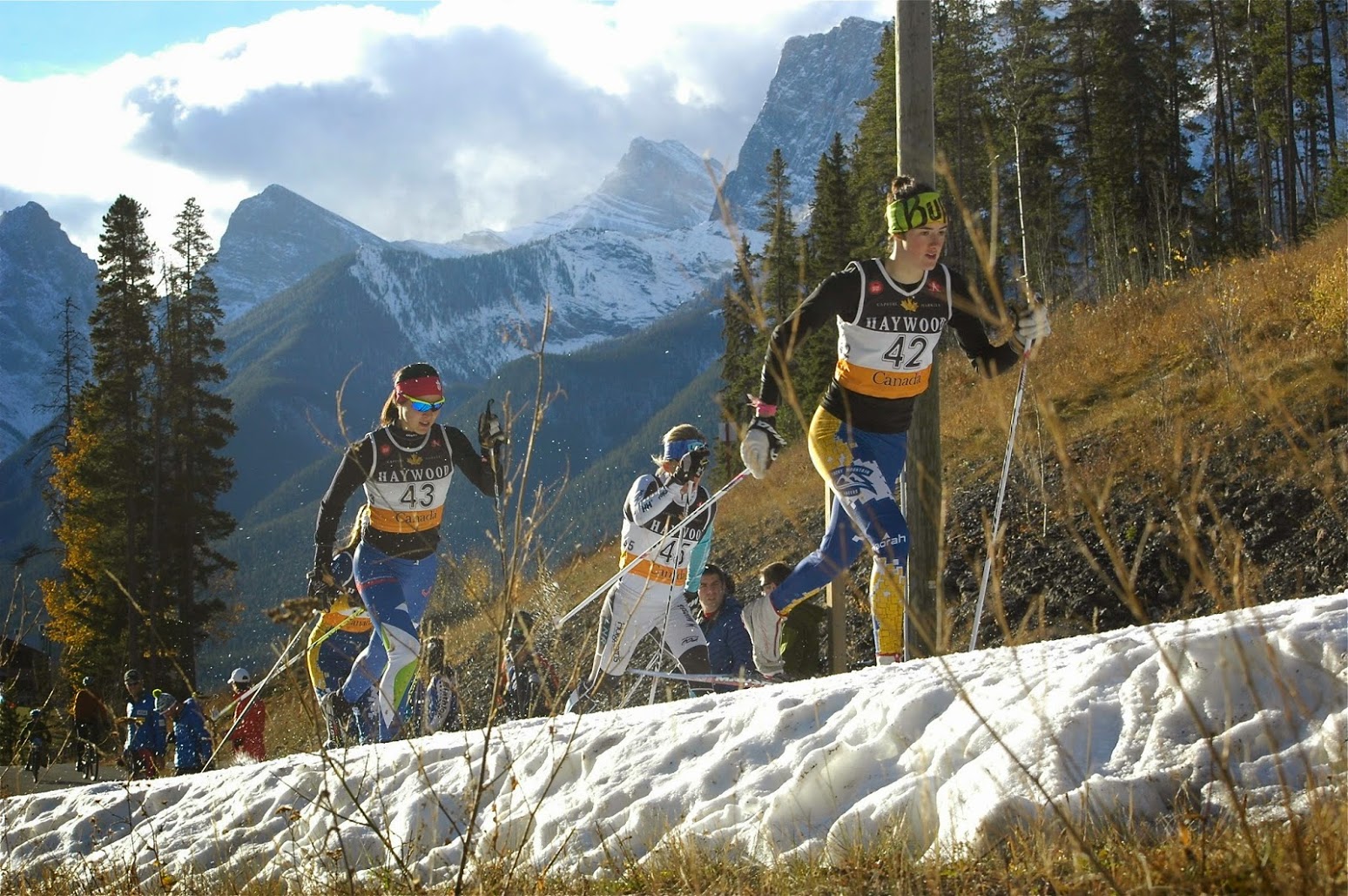
    Olivia Bouffard-Nesbitt (42) leads one of the heats in the Frozen Thunder classic sprint in late October 2014 in Canmore, Alberta. (Photo: Angus Cockney)

    Despite falling on the last downhill, Canada’s Olivia Bouffard-Nesbitt, 22, of Rocky Mountain Racers posted the top North American women’s result in 17th, 1:18 behind Kvåle’s winning time of 27:20.3. In her second U23 worlds, it was Bouffard-Nesbitt’s career best, improving on her 21st from Tuesday’s classic sprint.

    “I was sooo stoked about today’s race,” Bouffard-Nesbitt wrote in an email. “It was unlike any distance race I’ve done this season. Normally I feel really good early in the race and have a fast first lap and then die on the second lap.”

    On Thursday, she found that she wasn’t moving too fast on the first lap, sitting in the middle of the pack in 25th at 5 k, but had the energy to push the pace her second time around. The terrain required a “decent amount of one skate,” or V2, she explained, so she used that to her advantage to power through it.

    “I was caught by a Slovenian who was on her first lap near the end of my race and pushed as hard as I could from that point on to the end and stayed with her, and I was stoked that I felt really good the whole time,” Bouffard-Nesbitt wrote. “I fell on the very last downhill on the course unfortunately, but I don’t think I lost more than five seconds. It felt so good to feel so strong at the end of a race, it was a ton of fun.”

    Cendrine Browne of the Pierre-Harvey Training Centre (CNEPH) and Canadian National U23 Team placed 23rd, 1:45.4 behind the winner.

    Joanne Reid, a 22-year-old graduate student at the University of Colorado Boulder (CU) and former Buffs skier and NCAA champion, led the Americans in 25th (+1:47.4). After taking last season off following her senior year at CU, Reid returned to the U.S. SuperTour scene in November and went on to place ninth and 11th at U.S. nationals last month in the 10 k freestyle and freestyle sprint, respectively. Thursday’s race marked her first at a U23 World Championships after racing at two junior worlds in 2010 and 2011.

    “It was definitely a bit jarring to be back into the international scene, but also a great experience,” Reid wrote in an email. “The most fascinating thing about racing in Almaty is the army lining the course!! It looks like a really boring job for them but makes you feel like you’re in a really big deal race.”

    Reid explained that she ramped up her training, which she does solo, in late August/early September.

    “It’s certainly a building year for me, I didn’t have many expectations for this year, since I just didn’t know how I would stack up,” she wrote. “Hoping to do better in the next race, now that I got the experience of this one. We’ll see!”

    “The most fascinating thing about racing in Almaty is the army lining the course!! It looks like a really boring job for them but makes you feel like you’re in a really big deal race.” — Joanne Reid, 25th in U23 World Championships 10 k freestyle

    Canada’s Dahria Beatty of the Alberta World Cup Academy (AWCA) and national U23 team finished 30th (+2:12.2), and Americans Cambria McDermott (Montana State University) and Annie Pokorny (Stratton Mountain School T2 Team) placed 32nd (+2:22.4) and 36th (+2:51.4), respectively.

    “Kazakhstan has been a whirlwind of new experiences,” McDermott wrote in an email. “We were so lucky to be able to spend a full week here before the races began. Almaty is a beautiful, though smokey city and all of the people here have been incredibly warm and welcoming.

    “The level of competition here has been the most eye-opening component of this trip,” she added.

    The U23 World Championships wrap up with the 15/30 k skiathlons on Saturday.

    — Chelsea Little contributed reporting

    Results: Women | Men

  • Barbro Kvåle, 22, Breaks Through in Beitostølen Classic Sprint

    Barbro Kvåle, 22, Breaks Through in Beitostølen Classic Sprint

    A stunned Barbro Kvåle after winning Sunday's FIS classic sprint by 0.3 seconds in Beitostølen, Norway.  (Photo: Photo NTG Lillehammer)
    A stunned Barbro Kvåle after winning Sunday’s FIS classic sprint by 0.3 seconds in Beitostølen, Norway. (Photo: Photo NTG Lillehammer)

    Barbro Kvåle, a 22-year-old Norwegian junior world champion in ski orienteering, joined the ranks of national-team stars Therese Johaug and Marit Bjørgen, who won the Beitostølen distances races this weekend. On Sunday, Kvåle, now on Norway’s U23 cross-country team, came from behind to win the women’s 1.2-kilometer classic sprint by three-tenths of a second.

    With meters to go in the final, she passed Norway’s Kari Vikhagen Gjeitnes to seize the early season International Ski Federation (FIS) victory in 2:56.8. Gjeitnes, 29, took second and Kvåle’s best friend Kathrine Harsem was third just 0.2 seconds later.

    She’s a really laid-back personality,” Harsem said of Kvåle to NRK. “She’s a really good friend, and we can talk about everything, or nothing at all. As a skier, she’s just amazing on the mental level.”

    Norwegian Olympic gold-and-silver medalist Ingvild Flugstad Østberg finished fourth, 0.9 seconds after Kvåle. A previous winner of Beitostølen’s classic sprint (in treacherous conditions), Slovenia’s World Cup sprinter Katja Visnar placed fifth (+4.9), 1 second ahead of Germany’s Victoria Carl.

    Kvåle, who qualified 15th out of 42 women — nearly 6 seconds behind Visnar as the qualifier winner (in  2:48.91) — had never been in a sprint final before, and certainly not with an Olympic champion or World Cup favorite.

    “This was insanely fun. I just wanted to go for it,” Kvåle told NRK. “I know I have a strong sprint finish, but I never imagined that I would actually win.”

    When asked if she could describe the feeling, she simply said, “No.”

    “I know I have a strong sprint finish, but I never imagined that I would actually win.” — Barbro Kvåle, 22-year-old Norwegian U23 team member, after winning Sunday’s classic sprint in Beitostølen

    In her last season as a U23, her larger goals this season involve U23 World Championships in Kazakhstan.

    A member of Norway’s rookie team, she said she’s always playing catchup with the veterans.

    “In all the hard sessions, I’ve gotten beaten,” she told NRK. “But I have come closer and closer in autumn..”

    Asked if this was her biggest win so far, she said: “Yes! Are you crazy?”

    One of Barbro Kvåle's Instagram selfies from last week. (Photo: Instagram/barbrokvale)
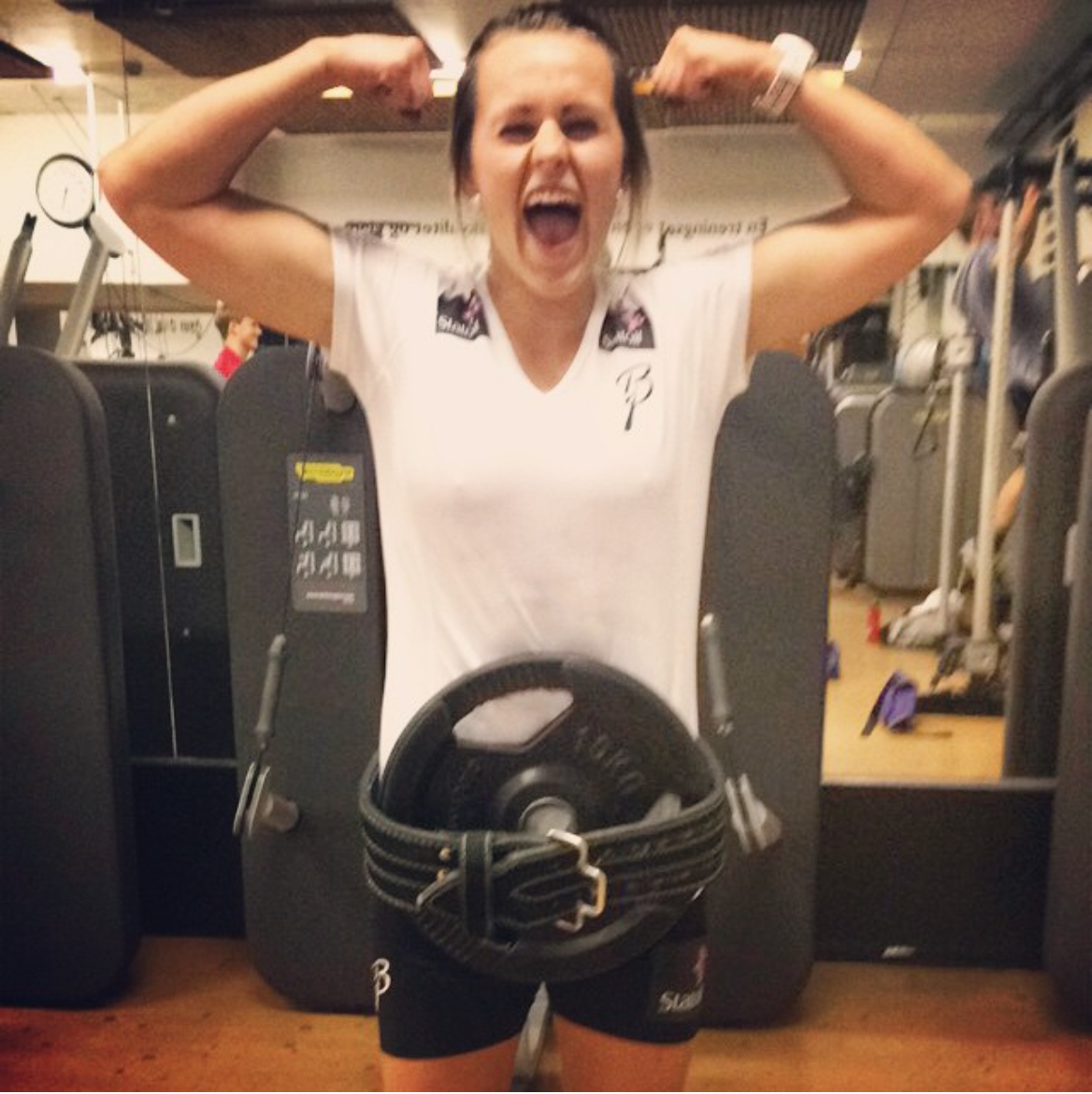
    One of Barbro Kvåle’s Instagram selfies from last week. (Photo: Instagram/barbrokvale)

    Harsem said Kvåle likes putting herself out there on social media.

    “She posts a lot of self-promoting stuff on Instagram and Twitter, which people in general thinks is really stupid. But I kind of like it, because she dares to be herself,” Harsem said. “She’s honest and loyal, not your typical girly-girl. She’s a bit tomboy-ish, and I like that.

    Østberg, who dominated all the heats and looked like she had the victory in the bag leading the final six women into the stadium, was outsprinted on the final meters. She was less than a second behind Kvåle, but ended up fourth and couldn’t disguise her disappointment.

    “I have to admit that I’m a bit disappointed,” Østberg said. ‘The three other girls were stronger than me. I guess I’m not meant to be on the podium at Beitostølen.”

    She placed fifth in Saturday’s 10 k freestyle — her first FIS race of the season.

    “I haven’t usually been in perfect sprint shape early in the season, so I have to look forward,” Østberg added. “There are new races next week. I will have to try to dig deeper and find that little extra as the season progresses.”

    Results | Complete results

  • Johaug Bests Bjørgen in Beito FIS Opener

    Johaug Bests Bjørgen in Beito FIS Opener

    Therese Johaugs reacts when reporters show her a photo of herself and Marit Bjørgen from eight years ago in Beitostølen, the same place where Johaug won the opening race of the season on Friday. (Photo: NRK)
    Therese Johaugs reacts when reporters show her a photo of herself and Marit Bjørgen from eight years ago in Beitostølen, the same place where Johaug won the opening race of the season on Friday. (Photo: NRK)

    Therese Johaug started cracking up when reporters at Friday’s International Ski Federation (FIS) race in Beitostølen, Norway, showed her a photo of herself and Marit Bjørgen from eight years ago, also in Beitostølen.

    The Norwegian national-team member was 18 at the time.

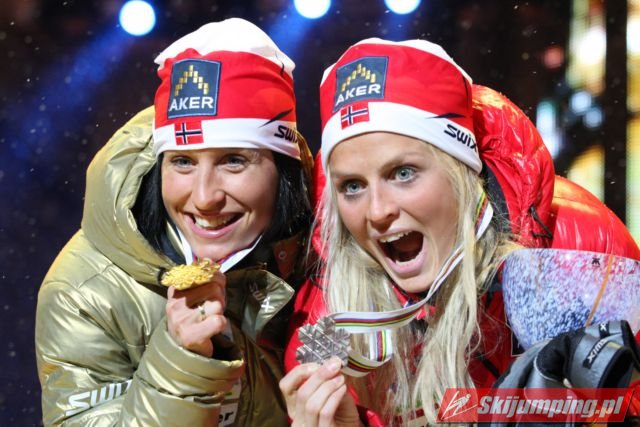
    Marit Bjørgen (l) and Therese Johaug with their gold and silver medals from the 2011 World Championships 15 k in Oslo, Norway. (Photo: Wikimedia Commons)
    Marit Bjørgen (l) and Therese Johaug with their gold and silver medals from the 2011 World Championships 15 k in Oslo, Norway. (Photo: Wikimedia Commons)

    “Oye … a lot has happened since then,” Johaug told NRK with a laugh. Now they’re not only best friends, they’re each other’s fiercest competitors.

    On Friday, Johaug, 26, won the 10-kilometer classic in 26:36.1 minutes, 24.7 seconds ahead of Bjørgen in second. Like fellow Norwegian Martin Johnsrud Sundby, she won last season’s Tour de Ski as well as the overall World Cup title.

    Six years ago, she was a junior competing in Beitostølen for the first time. She told reporters she had the same photo hanging on her wall at home.

    Now she’s won the Beito distance opener for three consecutive years. Last year, Bjørgen didn’t compete; Johaug beat another teammate —Astrid Uhrenholdt Jacobsen — by more than 54 seconds for the win. In 2012, Johaug topped Bjørgen by 52.2 seconds. This was her fourth-straight time winning Beito’s 10 k classic, according to VG.

    On Friday, Bjørgen led through 2 k, 2.7 seconds ahead of Johaug. By 6 k, Johaug took hold with a 5.3-second lead over Bjørgen and stayed in front to secure the first win of the season.

    “It felt good; I managed to calm myself down and think, time and power,” Johaug told NRK, according to a translation. “It was fun to get it when I have worked so much this fall and along.”

    We have talked a lot about calming down … and trust that I’m fast enough, rather than skiing with my shoulders at the ear level and increasing the turnover. That doesn’t make you fast.” — Therese Johaug, after winning Friday’s 10 k classic FIS race in Beitostølen

    Norway's Therese Johaug pushes for bronze in the women's 10 k classic individual start on Thursday at the 2014 Olympics in Sochi, Russia.
    Johaug racing to bronze in the women’s 10 k classic at the 2014 Olympics in Sochi, Russia.

    Since last season, she’s been working on her upper-body strength and spent long hours in the weight room and on the rollerski treadmill, she told VG. She also credited her psychologist, Britt Tajet-Foxell, for helping her progress.

    “[The training] is paying off, and that’s really fun,” she said, according to a direct translation. “We have talked a lot about calming down and taking time to complete each kick and each pole plant, and trust that I’m fast enough, rather than skiing with my shoulders at the ear level and increasing the turnover. That doesn’t make you fast. Today I felt like I managed to do that, and that I was rewarded all the way.” 

    “Today, Therese was impossible to beat,” Bjørgen told VG.

    As for how she felt: “It hurt, but that is somewhat expected,” Bjørgen said to NRK, adding that she felt normal, like in recent years.

    “It’s not just anyone I measure myself against, so I know what I did today is good,” she told NRK.

    “Next weekend it can be turned upside down,” Norwegian women’s coach Egil Kristiansen said. “Therese skied great today.”

    Norway’s Heidi Weng took third, 44.8 seconds behind Johaug and 20 seconds back from Bjørgen. Germany’s Stefanie Böhler placed fourth and Martine Ek Hagen of Norway was fifth.

    Rounding out the top 10, Katerina Smutna (Austria) was sixth, Claudia Nystad (Germany) finished seventh, Barbro Kvåle (Norway) emerged in eighth, Victoria Carl (Germany) was ninth, and Kari Vikhagen Gjeitnes (Norway) took 10th.

    Jacobsen finished 14th.

    “I’m not in good shape,” she told NRK. “It was hard all the way, and I feel half-empty. … There is a way to go forward; I know that it is there.”

    Racing continues with 10/15 k freestyle races on Saturday and a classic sprint on Sunday.

    Women’s results

  • Blink Festival Recap: Some Top-Notch Competition, Plenty of Fun

    Blink Festival Recap: Some Top-Notch Competition, Plenty of Fun

    Sondre Turvoll Fossli (NOR) skis into the lead of the cross country sprint final on Saturday in Sandnes, Norway. (Photo: blinkfestivalen.no)
    Sondre Turvoll Fossli (NOR) takes the lead in the cross-country rollerski sprint final at the 2013 Blink Ski Festival on Saturday in Sandnes, Norway. (Photo: blinkfestivalen.no)

    A freestyle sprint through the downtown streets of Sandnes, Norway, on Saturday wrapped up the three-day Blink rollerski festival, a selective event for both cross country skiers and biathletes.

    Ann Kristin Flatland on her way to winning the biathlon sprint on Saturday. (Photo: blinkfestivalen.no)
    Ann Kristin Flatland on her way to winning the biathlon sprint on Saturday. (Photo: blinkfestivalen.no)

    A tenth of a second separated Norwegian Barbro Kvåle from Ida Ingemarsdotter of Sweden, giving Kvåle her first win of the week after placing 14th in Thursday’s hill climb and fourth in the 10-kilometer mass start on Friday.

    “I know that I have good top speed,” Kvåle told NRK, according to a translation. “Now I’m approaching the best.”

    Sondre Turvoll Fossli pulled away from fellow Norwegian Øystein Pettersen to win the men’s cross country sprint, avenging Pettersen’s 1.1-second win in Friday’s 15-kilometer mass start.

    “In the winter it is valid, but it’s fun to win with so many people here and a good atmosphere,” Fossli told Langrenn.

    On the biathlon side, misses in the standing portion cost Norway’s Hilde Fenne the lead and ultimately the win, which Norwegian Ann Kristin Flatland claimed.

    The Boe brothers from Norway went 1-2 in the men’s race, with Johannes winning the final that included International Biathlon Union (IBU) World Cup champion Martin Fourcade of France.

    The biathletes and cross country skiers united for Thursday’s hill climb. First to the top were Switzerland’s Curdin Perl and Kaisa Mäkäräinen of Finland. Mäkäräinen also won the women’s biathlon mass start.

    Curdin Perl (SUI) celebrates atop the podium after winning the 7.5-kilometer hill climb at the Blink rollerski festival in Lysebotn, Norway on Thursday. (Christian Stahl- on FIS website)
    Curdin Perl (SUI) celebrates atop the podium after winning the 7.5-kilometer hill climb at the Blink rollerski festival in Lysebotn, Norway, on Thursday. (Photo: Christian Stahl via FIS)

    “It is great to win,” Perl told Langrenn. “In the years before I was number 4, 3 and 2.”

    Carl Johan Bergman of Sweden won the men’s biathlon mass start and Norway’s Maiken Caspersen Falla took the women’s cross-country mass start. Led by Falla, Norway placed five women in the top six.

    “I had never won here,” Falla told Langrenn. “This was cool.”

    The event included children’s activities, entertainment and a free brunch for the entire city. Blink attracts about 50,000 spectators annually. A record crowd of 5,000 lined the Lysebotn hill climb.

    Complete results

    Kaisa Mäkäräinen (FIN) climbs to victory in the Lysebotn hill climb on Thursday. (Photo: blinkfestivalen.no)
    Kaisa Mäkäräinen (FIN) climbs to victory in the Lysebotn hill climb on Thursday. (Photo: blinkfestivalen.no)