From the FasterSkier archive — posts syndicated from athletes’ and coaches’ own blogs between 2004 and 2012, kept online as published. Current coverage is at fasterskier.com.

Tag: BBC

  • Beckie Scott Describes “Disrespect” and “Laughter” From WADA Colleagues, Steps Down From CRC

    Beckie Scott Describes “Disrespect” and “Laughter” From WADA Colleagues, Steps Down From CRC

    Canadian Beckie Scott during an interview with the BBC following her decision to resign from the Compliance Review Committee. (BBC Screenshot)

    On September 20th, this year, the World Anti-Doping Agency’s (WADA) Executive Committee made the decision reinstate the Russian Anti-Doping Agency (RUSADA). WADA’s 12 person Executive Committee had met in Seychelles to vote on a recommendation from the Compliance Review Committee (CRC) that RUSADA’s suspension be lifted. Nine Executive Committee members voted in favor of the CRC’s recommendation, two voted against, and one abstained.

    Days before WADA decided to reinstate RUSADA, former Canadian cross-country skier, Beckie Scott, stepped down from her position on the CRC. Scott, one of the most outspoken athletes on anti-doping, was one of six members on the CRC panel. Scott remains the chair of WADA’s Athlete Committee.

    On October 12, the BBC posted a video interview with Scott during which she explained her decision to leave the CRC. The three-minute video interview–which can be accessed by clicking here–reveals that Scott felt she was “treated with a level disrespect” by her WADA colleagues at the meeting. Scott departed her position due to a “fundamental disagreement” with the decision to reinstate RUSADA and the way she was treated at the meeting.

    “There was laughter when I read the list of athlete committees who had produced statements and who were confronting the decision,” Scott told the BBC. “It was all, it was a combined effect that left me feeling as though there is very little respect, there is very little appreciation, and there is very little value for the contribution that the athletes have at this table.”

    In 2004, Scott was awarded a long-awaited Olympic gold medal after two Russians were stripped of their medals from the 2002 Salt Lake City Olympics for failed drug tests.

    At WADA’s meeting this September, Scott said the “comments and gestures that were inappropriate” and directed toward her when she produced statements from those opposing the reinstatement went unchallenged from WADA’s president and director general.

    “I was disappointed by that,” Scott said. “I think it is indicative of two things: One is the lack of regard for the athlete’s voice generally. I think that there has…been an attitude of dismissal, of belittling, and marginalization; sidelining of the athlete’s voice. I think it is also indicative of the leadership of WADA’s alignment with the Olympic movement.”

    Scott described the tactic as one meant to “bully” her.

    “I think that there has been an incredible loss of confidence and faith in the organization as a result of this,” Scott said. “I think all the athletes have been galvanized by this. They have seen fit to express their frustration on a level that I have never seen before. I think we are seeing an unprecedented level of outcry, of outrage, of mobilization of the athlete voice as a result of this.

    buy ventolin online

    ”

    The alleged behavior from members of WADA has the Canadian Centre for Ethics in Sport (CCES) and AthletesCAN pushing for an independent review of the incident.

    A full transcript of Scott’s interview with the BBC is presented below.

    ***

    Beckie Scott (BS): I made the decision based on the fact that I fundamentally disagreed with it. I felt that this was a compromise that was unacceptable. I would say I was treated with a level of disrespect and with comments and gestures that were inappropriate. And indicative of a general attitude of dismissal and belittling of the athlete voice at the table.

    BBC: From whom?

    BS: That was behavior directed at me by the members of the Olympic movement who are members of the WADA Executive Committee.

    BBC: So members of the Olympic movement in the form of an Executive Committee meeting said things that were designed to denigrate, intimidate, dismiss?

    BS: Bully.

    BBC: To Bully? They tried to bully you?

    BS: Yeah.

    BBC: Can you tell me now that was done?

    BS: I mean just through comments, through gestures. There was laughter when I read the list of athlete committees who had produced statements and who were confronting this decision. It was all, it was a combined effect that left me feeling as though there is very little respect, there is very little appreciation, and there is very little value for the contribution that the athletes have at this table.

    BBC: What about WADA’s president and Director General, did they step in or say anything?

    BS: There was no confrontation or challenging of that behavior at the time it took place.

    BBC: You disappointed by that?

    BS: I was disappointed by that. I think it is indicative of two things: one is the lack of regard for the athlete’s voice generally. I think that there has, there has been this um, attitude of dismissal, of belittling, and marginalization, sidelining of the athlete’s voice. I think it is also indicative of the leadership of WADA’s alignment with the Olympic movement.

    BBC: Is WADA’s reputation at an all-time low among athletes?

    BS: I think that there has been an incredible loss of confidence and faith in the organization as a result of this. I think all the athletes have been galvanized by this. They have seen fit to express their frustration on a level that I have never seen before. I think we are seeing an unprecedented level of outcry, of outrage, of mobilization of the athlete voice as a result of this.

    buy ventolin online


    BBC: Is WADA’s future on the line here do you think?

    BS: I think something needs to change. And I think that the time is now. We need a return to integrity based decision making. A return to a place where athletes are valued and contributing members of the organization and a return to what sport is fundamentally all about.

  • Crosscut Mountain Sports Center to Carry On Ski Legacy at Bohart Ranch

    Jean MacInnes with Erika and Lowell Bailey at Bohart Ranch

    (Press release)

    BOZEMAN, Mont. (March 3) — Local non-profit Bridger Biathlon Club (BBC), in partnership with another community non- profit, the Crosscut Mountain Sports Center (CMSC), today exercised an option to purchase the 270-acre Bohart Ranch Cross-Country Ski Center property in Bridger Canyon. BBC and CMSC aim to carry on the Nordic ski legacy established by Bohart Ranch owner, Jean MacInnes.

    The iconic Bohart Ranch property has been operating as a cross-country ski center since the 1980’s, and along with neighboring Bridger Bowl Ski Area, has helped define Bozeman as a mountain ski town. MacInnes established the Bohart Biathlon Club in 1994, and hosted the U.S. Summer National Biathlon Championships in 1995. This history is rooted in the present-day Bridger Biathlon Club, which MacInnes has generously supported by helping renovate Bohart’s biathlon venue with new state-of-the-art targets, installing a storage building for training equipment, and leasing the facility to BBC for $1 per year.

    Lowell Bailey (center) receiving Gold Medal at Biathlon World Championships

    BBC is working with the Crosscut Mountain Sports Center to raise the funds required for the Bohart Ranch acquisition. CMSC’s board is comprised of four Bozeman locals – Cliff Montagne, Hal Stanley, Stuart Jennings and Eric Love – and led by Lowell Bailey who serves as its Executive Director. Bailey is a member of the U.S. Biathlon Team and has been competing on the World Cup circuit and internationally since 1999. In February 2017, Bailey won a gold medal at the Biathlon World Championships in Hochfilzen, Austria, making him the first American to win a World title in the sport of biathlon. He has competed in the last three Winter Olympic Games and as the defending World Champion, was the first U.S. athlete from any sport named to the 2018 U.S. Olympic Team in PyeongChang, South Korea.

    As an Athlete Representative for the International Biathlon Union, Lowell was appointed to the advisory
    committee on anti-doping and has been a leading voice in advocating for clean sport in the fight
    against doping.

    “Over the past two decades I’ve had the opportunity to experience some of the best recreation centers in the world, and the Crosscut Mountain Sports Center site has the potential to rival all of them,” said Bailey. “The beauty and wildness of the Bridger Mountains, combined with the proximity to Bozeman’s beloved Bridger Bowl, make for the perfect venue for the Crosscut Mountain Sports Center.”

    Former biathlete and life-long Bozeman resident Stuart Jennings said, “Our vision is to work with the community to build a recreational asset that will provide easy access to the trails and mountains for outdoor enthusiasts of all ages and athletic abilities. CMSC is committed to providing families with top-notch outdoor education and environmental programs that connect kids with nature, and where children can learn and develop outdoor skills to last a lifetime, as well as provide a world-class Nordic and biathlon venue for everyone from energetic novices to Olympic hopefuls.”

    Crosscut and Bohart Ranches labeled red; Bridger Bowl blue; USFS green

    After the Winter Olympics next year, Bailey will be relocating to Bozeman with his wife Erika and daughter Ophelia to lead the Crosscut Mountain Sports Center and continue his service on the Bridger Biathlon Club board, alongside volunteer board members Carol Smith, Kari Swenson, Stuart Jennings, Brian Wadsworth, Jim Sites and Eric Love.

    The Crosscut Mountain Sports Center also maintains an exclusive purchase agreement providing for the acquisition of the 259-acre Crosscut Ranch located directly between Bridger Bowl and Bohart Ranch, and envisions unifying the Bohart and Crosscut properties into a single 500+ acre recreational asset on behalf of the Bozeman community. Bailey is working with the BBC and CMSC boards to raise the remaining funds needed to complete this ambitious project, and is committed to working closely with community leaders to create a mountain sports venue that will attract and sustain healthy families for generations to come. To learn more or to make a tax-deductible contribution, please contact CMSC at info@crosscutmt.org.

    ***

    Crosscut Mountain Sports Center is a non-profit community organization committed to conserving the 500+ acres adjacent to Bridger Bowl Ski Area to provide year-round recreational access and athletic opportunities for human-powered mountain sports, with a special focus on empowering youth in skiing and biathlon. To learn more, visit: www.crosscutmt.org

  • A Potential ‘Legacy Transaction’: Bridger Biathlon Club Aims to Merge Bohart and Crosscut

    A Potential ‘Legacy Transaction’: Bridger Biathlon Club Aims to Merge Bohart and Crosscut

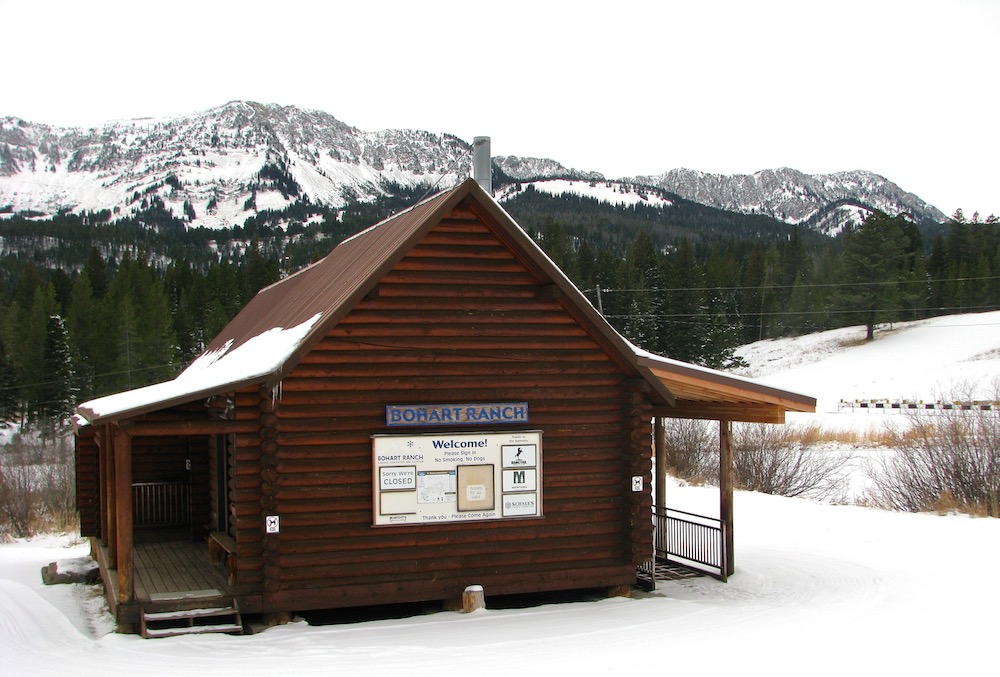
    One of the trailside cabins at Bohart Ranch in Bozeman, Mont.
    One of the trailside cabins at Bohart Ranch in Bozeman, Mont., as seen early last winter.

    If the deals go down, two legendary ski areas in Bozeman, Mont., could merge into a single, state-of-the art nordic center that would also offer dryland recreation opportunities as soon as fall 2017. The Bridger Biathlon Club (BBC) has acquired exclusive options to purchase both the 276-acre Bohart Ranch and the adjacent, long-dormant 259-acre Crosscut Ranch.

    All it takes is money — and a vision. Established in February 2014, the non-profit BBC will launch a fundraising campaign later this year with a goal of raising $10 million dollars over the next three years to buy the two properties. Once raised, a portion of the funds will go toward renovating existing facilities and upgrading infrastructure to make these historic ranches more accessible to the public, according to BBC Director Eric Love.

    “This [would be] a legacy transaction,” Love said in a phone interview. “We’re aiming to unite those two properties into a single expanded recreational resource.”

    BBC Marketing Director Katie Smith cited the 2014 Winter Olympics in Sochi, Russia, as a spur to interest in biathlon in Bozeman. Smith added that biathlon has deep roots in Bozeman, as it is the home of Kari Swenson, a bronze medalist with the U.S. women’s relay team at 1986 Biathlon World Championships.

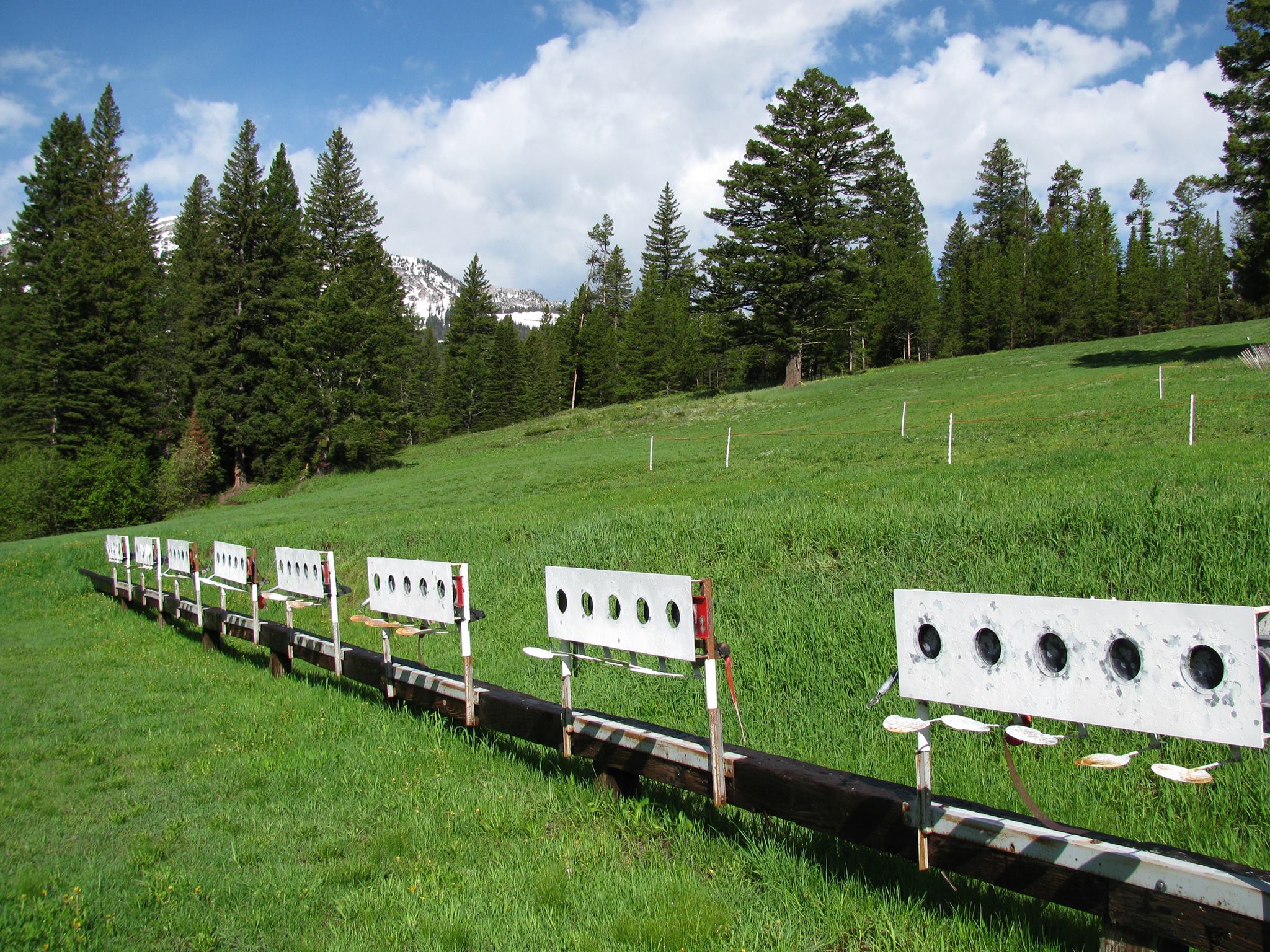
    The biathlon range at Bohart Ranch in Bozeman, Mont. was installed in 1989 at the height of the sport in the small mountain town. The Bridger Biathlon Club is attempting to bring biathlon back to Bozeman and is starting by installing new targets from Norway. (Photo: Bridger Biathlon Club)
    The biathlon range at Bohart Ranch in Bozeman, Mont. was installed in 1989 at the height of the sport in the small mountain town. In 2014, the Bridger Biathlon Club upgraded its 12-point range by installing new targets from Finland. (Photo: Bridger Biathlon Club)

    In a year, Smith said the BBC was able to raise enough money to renovate its biathlon range at Bohart. According to Love, the new Kurvinen range, made and shipped from Finland, cost about $36,000 dollars.

    Smith credited generous donors and volunteers who helped assemble the 12-station range when it arrived. BBC’s fundraising success got them thinking big. The club’s goal is to raise enough money to exercise the options on Bohart and Crosscut in three years.

    If and when BBC buys the two ski centers, the purchase prices will remain confidential, Smith said.

    Sixteen miles from Bozeman, Bohart Ranch has 30 kilometers of trails on 276 acres of fee-title land. Situated between Bohart and the Bridger Bowl alpine ski area, Crosscut Ranch is an additional 259 acres. The combination of the two could make for 50 to 60 kilometers of total trails.

    Last December, Bohart was the scene for the second weekend of the U.S. SuperTour, hosting a classic sprint and distance race. Bohart has also hosted NCAA events and the 2002 U.S. nationals prior to the 2002 Winter Olympics in Salt Lake City, Utah.

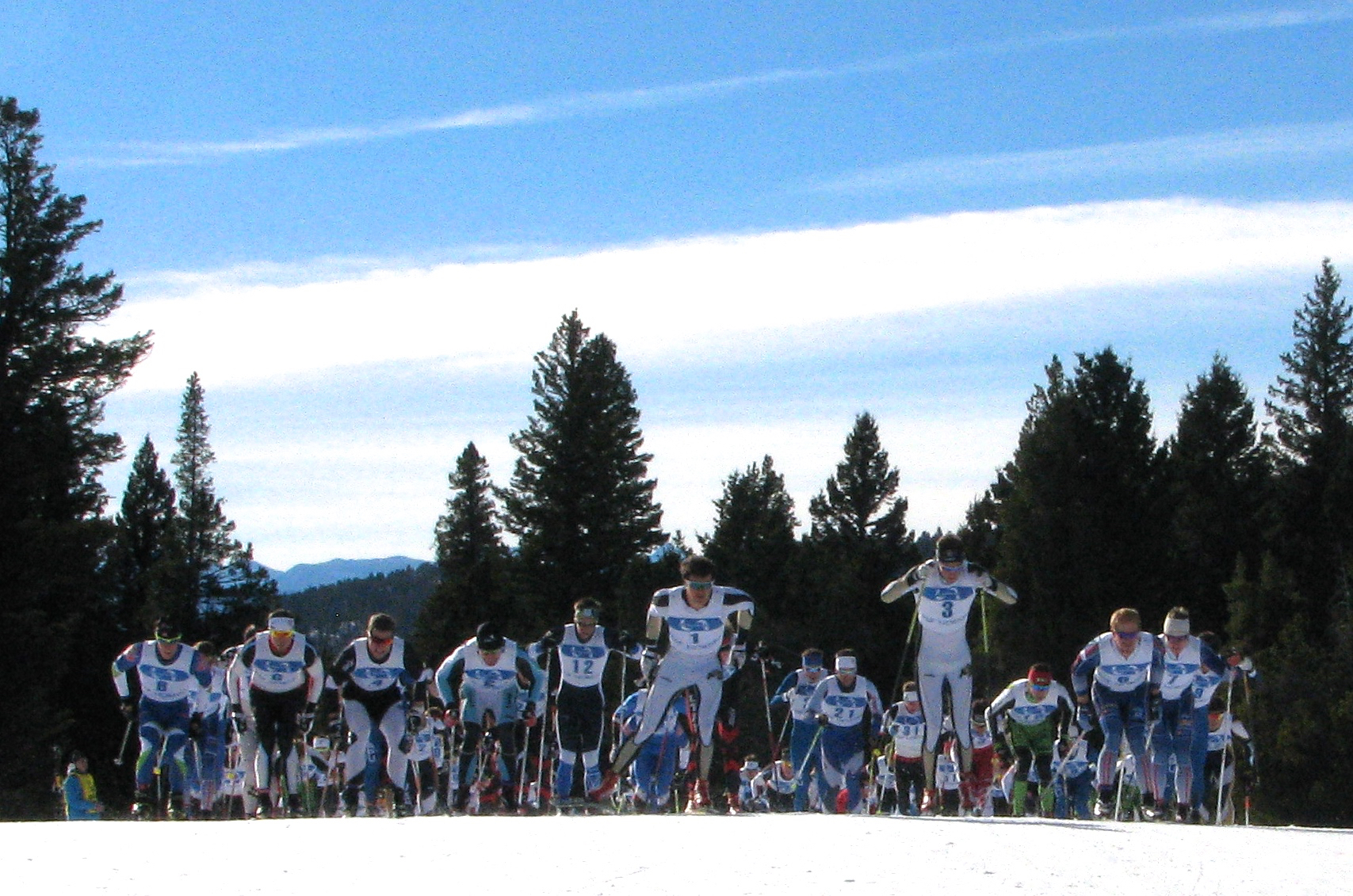
    With temperatures above 40 degrees, the men take off in their SuperTour 15 k classic mass start at Bohart Ranch near Bozeman, Mont.
    The start of the men’s SuperTour 15 k classic mass start at Bohart Ranch near Bozeman, Mont., last December.

    “Various people approached us, but we were waiting to find the right person to carry on our vision and philosophy,” said Bohart co-owner Jean MacInnes. She and her son, Chris Myers, have co-owned and run Bohart Ranch for 27 years.

    “It’s a community service,” she continued. “We have excellent trails here. We help the MSU [Montana State University] ski team, Bridger Ski Foundation. We have something called Eagle Mount that takes place here.”

    According to Eagle Mount Executive Director Mary Peterson, Eagle Mount is a Bozeman-based nonprofit that “provides therapeutic recreation to people with disabilities and children with cancer.” Two seasons ago, 37 participants and 46 volunteers took part in cross-country skiing and snowshoe programs at Bohart.

    MacInnes said that the original Crosscut Ranch ski center was about 80 acres and went out of business in 1987 after five years. What is now referred to as Crosscut Ranch is the original ski area packaged with additional land parcels to attract developers, she said.

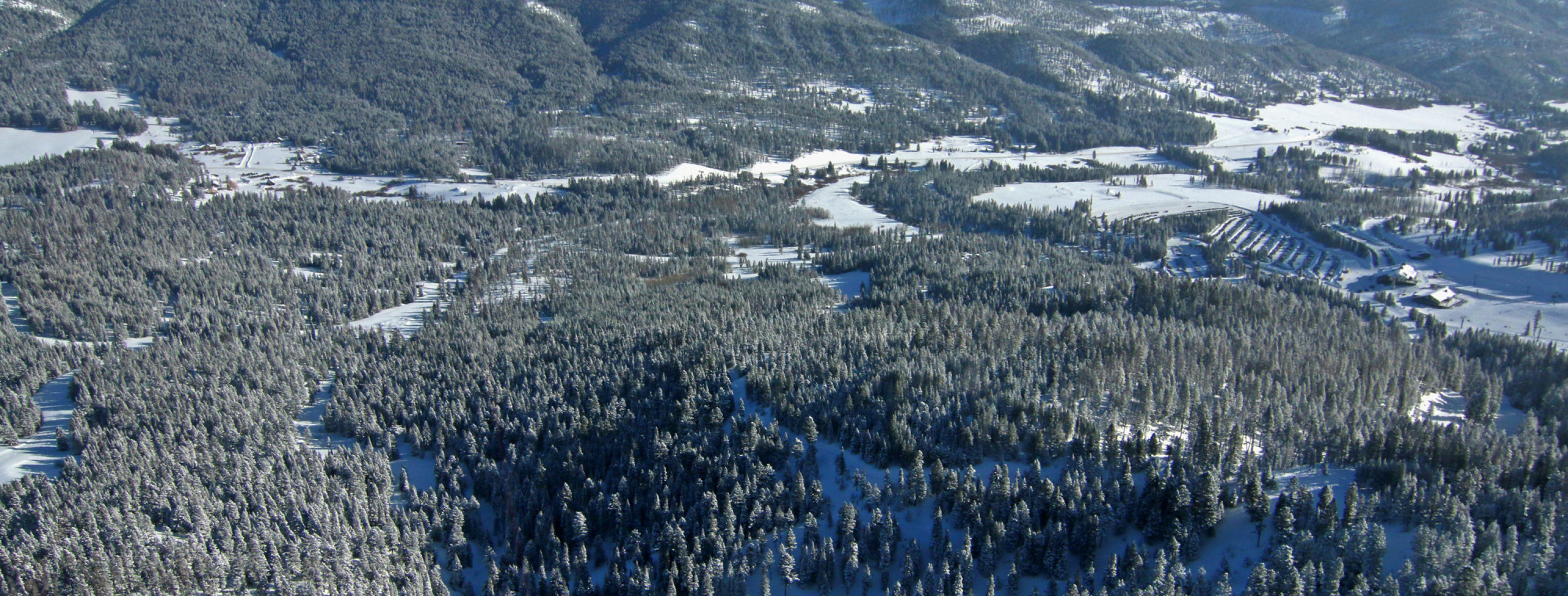
    An aerial view of Crosscut Ranch in Bozeman, Mont. (Photo: Concierge Auctions)
    An aerial view of Crosscut Ranch in Bozeman, Mont. (Photo: Outlaw Partners/Concierge Auctions)

    “It’s a bit of a misnomer,” she said of the Crosscut name that now includes the entire 259-acre tract.

    Unsuccessfully marketed by a realtor with an asking price of $16 million, Crosscut was sold at auction to the Jackson Financial Group in March 2014. The Bozeman Daily Chronicle cited a local person who speculated that it sold for $4.1 million dollars.  That figure is unconfirmed.

    More Than a Nordic Center

    In December 2014, Myers opened about 15 k of Crosscut’s trail system, which hadn’t seen grooming or maintenance in more than 20 years. While these trails were wide enough for skating, some needed additional work in order to accommodate a snow cat.

    A groomed trail at Crosscut Ranch in Bozeman, Mont. (Photo: Concierge Auctions)
    A groomed trail at Crosscut Ranch in Bozeman, Mont. (Photo: Outlaw Partners/Concierge Auctions)

    For 2015/2016, BBC hopes to reopen additional Crosscut trails and establish connectors between the two networks. Last winter, it re-established and groomed about five kilometers of Crosscut trails, and is currently aiming to add at least another 5 k next season. According to Love, the trails will be open to the public for activities like mountain biking this summer.

    “There’s really interesting terrain at Crosscut,” Smith said. “It’s perfect for beginners and for experienced skiers who want to train a specific skill.”

    By contrast, Bohart is hilly. “Combined, the two ski centers will give a lot of terrain variation,” Smith said.

    “Historically, this [Crosscut] area has been used as a nordic center,” Love said. “The bones are all there.”

    Asked about possible improvements, Love explained that the stadiums could be expanded. “On the Crosscut property, there’s potential to put in a world-class stadium,” he said.

    In a follow-up email, he wrote, “We recognize the potential of re-locating BBC’s current new 12-point range at Bohart to Crosscut and perhaps even expanding it to 24 or 30 points.”

    At present, BBC is studying options for improving the combined ski centers. Its board, made up of Swenson, Carol Smith, Stuart Jennings, and Brian Wadsworth, assembled a design team to illustrate what a green venue would look like. The team consists of nationally renowned architect Jonathan Foote, sustainable-green-building designer Kath Williams, and Ben Lloyd and Trip Lewton of Comma-Q Architecture in Bozeman.

    Love expects the design study to be complete in late May, after which BBC will reach out to the Bozeman outdoor community for input and finalize a fundraising plan.

    The properties will be available for more than just skiing: BBC is looking to provide year-round recreation opportunities. Some of these are already in place: Bohart already offers Frisbee golf and mountain biking in the summer. Love was excited about the possibility of offering side-by-side cross-country and alpine venues within 30 minutes of a major airport.

    While Smith acknowledged that $10 million is an ambitious number, she’s optimistic because of BBC’s success in raising money to purchase the biathlon range.

    “We’re going to rely on more than the cross-country community,” she said. “People see a lot of value in preserving these two pieces of land that are so important to Bozeman’s culture.”

    “Once assembled, this will be a nordic ski destination unlike anywhere else in the U.S.,” Love said.