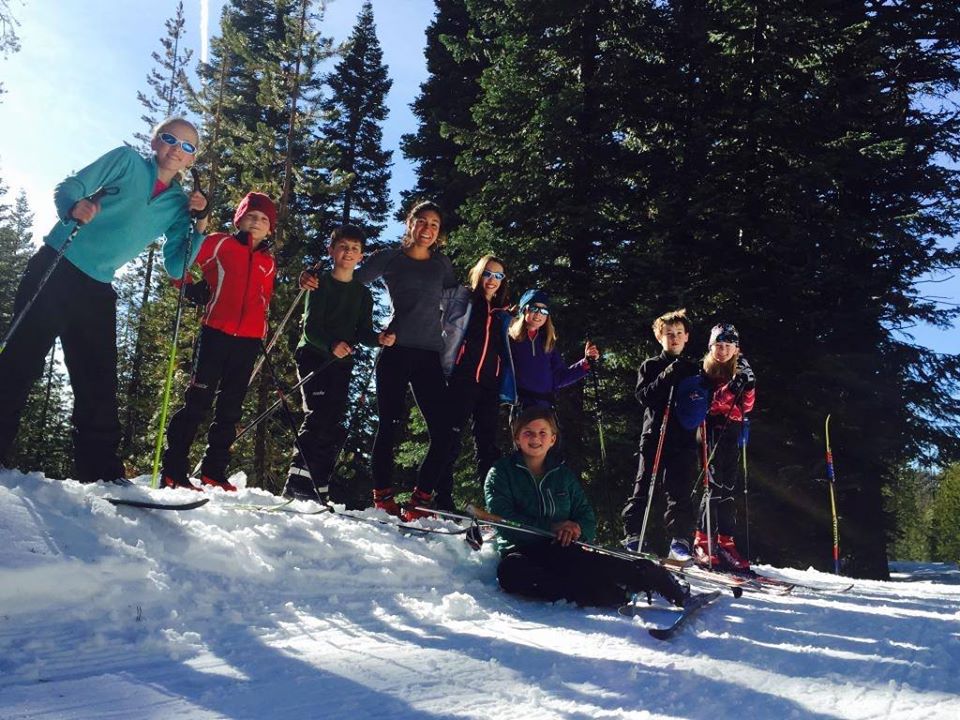
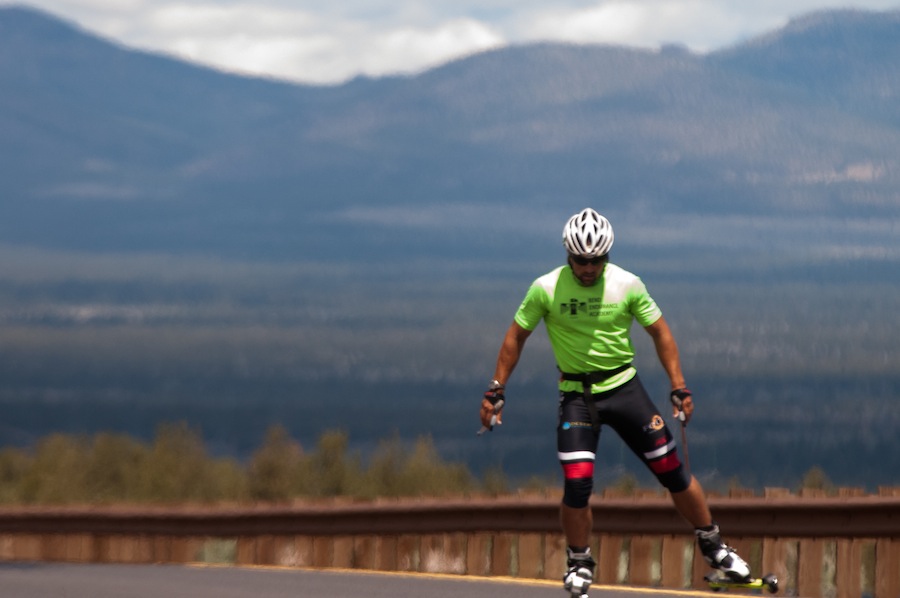
The Bend Endurance Academy has an immediate opening for the Nordic Program Director position located in beautiful Bend, Oregon. This position is primarily responsible for coordinating and supervising all aspects of our growing Nordic Program and supports the general operations of the organization.
The Bend Endurance Academy is a 501(c)(3) non-profit organization with a mission to promote healthy living through active, outdoor experiences. We emphasize teamwork, personal growth and community responsibility. The Academy currently features development programs for youth and juniors in Rock Climbing, Cycling and youth, juniors and adults in Nordic Skiing. Since 2009, we have been teaching kids core values that will serve them throughout their lives including perseverance, resilience, confidence, and respect for the environment. We teach kids the joys of endurance sports.
The Bend Endurance Academy Nordic Program is a member club of the United States Ski Association (USSA) and a member of the Pacific Northwest Ski Association (PNSA). We are one of the largest clubs in the region. While we cater to myriad ages and abilities, all programs are centered on exploration, self-discovery and social interaction. From introductory skill development to competition based training, the Nordic team strives to instill a love of being active.
We offer the following Nordic programs:
Mini Nordies: Ages 4-6
Youth Program: Ages 7-11
Development Program: Ages 11-14
Competition Program: Ages 14+
Masters Programs: Adults
Trips and Camps
School Partnership Programs: REALMS, Montessori Center, Cascades Academy
Position Summary: The primary duties of this position include designing and implementing a structure that fits the needs of the Nordic community, delivering a product true to mission, and supporting staff to provide a safe and fun environment for learning. The Nordic Director will manage and develop a staff of Head Coaches for our Competition, Development and Youth Nordic programs and help oversee their management of assistant coaches.
Key Responsibilities:
Develop and implement all aspects of youth Nordic programs for beginner, intermediate, and competition level athletes.
Provide opportunities to engage Bend Endurance Academy athletes in community events to promote personal growth and instill a sense of responsibility to the community.
Provide input in planning and business development for the organization.
Assist in the development of organizational goals and objectives consistent with the mission and vision of the organization.
Develop and monitor annual budget, ensuring targets are consistently met.
Work with Academy staff to develop and implement fundraising strategies and events to support the Nordic Program and the organization.
Design and implement developmentally appropriate training programs and competition strategies.
Organize and conduct races, events, trips, and travel to camps and competitions.
Hire and supervise paid and volunteer coaches.
Train and support paid and volunteer coaches.
Requirements:
Bachelor degree in related field
Extensive technical knowledge and passion for Nordic skiing and XC racing
3-5 years of experience in program management, Nordic coaching, supervising employees
Proven ability to positively inspire athletes of all ages and skill levels
Ability to work as part of a team and be productive when unsupervised
Proven organizational, communication, computer and writing skills
Clean motor vehicle record
Completion of background screening
Ability to travel
Compensation: $40,000 – $43,000 annually. This position is full time, year-round, salaried, and exempt from overtime.
Bend, OR – Sandy Visnack of Bend, Oregon, has been named the next Executive Director of the Bend Endurance Academy (BEA) by the organization’s governing board. Ms. Visnack will assume this new role on January 8, 2018.
“We are excited to announce the selection of Sandy Visnack to be our next Executive Director,” says Ellen Grover, BEA Board President. “In 2018, as BEA celebrates its 9th year serving youth in Central Oregon, we need a leader who has the vision, skills, and capacity to strategically guide our organization forward. Our board has great confidence that Sandy will build upon the strong foundation BEA has created, further engage youth and families in our programs, and develop rich and meaningful relationships with our donors, sponsors and nonprofit partners.”
Ms. Visnack’s background uniquely positions her to assume the role of Executive Director. With significant experience working with youth and families, in senior management roles in the education and non-profit sectors, and a passion for outdoor sports, Visnack will advance the organization’s current strategic priorities and guide BEA’s future contributions to serving youth, maintaining high quality programs, and promoting active, healthy lifestyles. Visnack shared, “I am honored to serve the BEA community and support the program directors, coaches and staff. BEA has a rich history of offering quality programs and activities for youth of all ages and abilities and is poised to grow in even more in upcoming years. I want to help BEA strengthen the framework of the organization and develop the resources necessary to meet the needs of our growing community in Bend and across Central Oregon. Joining this group of highly skilled, thoughtful, and hardworking people is an opportunity I could not pass up.”
Visnack has a Master in Nonprofit Management degree from Regis University in Denver, Colorado, and a Bachelor of Science degree from the University of Vermont. She also has over 20 years of experience working in education and in the nonprofit sectors. Past roles have included the Coordinator of Residence Life at Colorado Mountain College, Executive Director of Grand Futures Prevention Coalition, Development Director for Big Brothers Big Sisters, as well as Grant Writer and Director of Communication for NeighborImpact.
For more information about the Bend Endurance Academy or the selection of Sandy Visnack as Executive Director, please contact Ellen Grover at 541-410-3231 or via email at ellengrover@bendenduranceacademy.org. To contact Ms. Visnack directly, email sandy@bendenduranceacademy.org.
About Bend Endurance Academy: Since founded in 2009, Bend Endurance Academy (BEA) has grown from humble beginnings to serving more than 1000 youth in 2017. BEA is a public benefit 501(c)(3) that organizes and operates endurance activity programs in Central Oregon, concentrating in three core disciplines: Nordic Skiing, Cycling & Climbing.
Mission: The Bend Endurance Academy promotes healthy living through active, outdoor experiences. All programs offered emphasize teamwork, personal growth, and community responsibility.
Vision: A world with active, inspired and more engaged people.
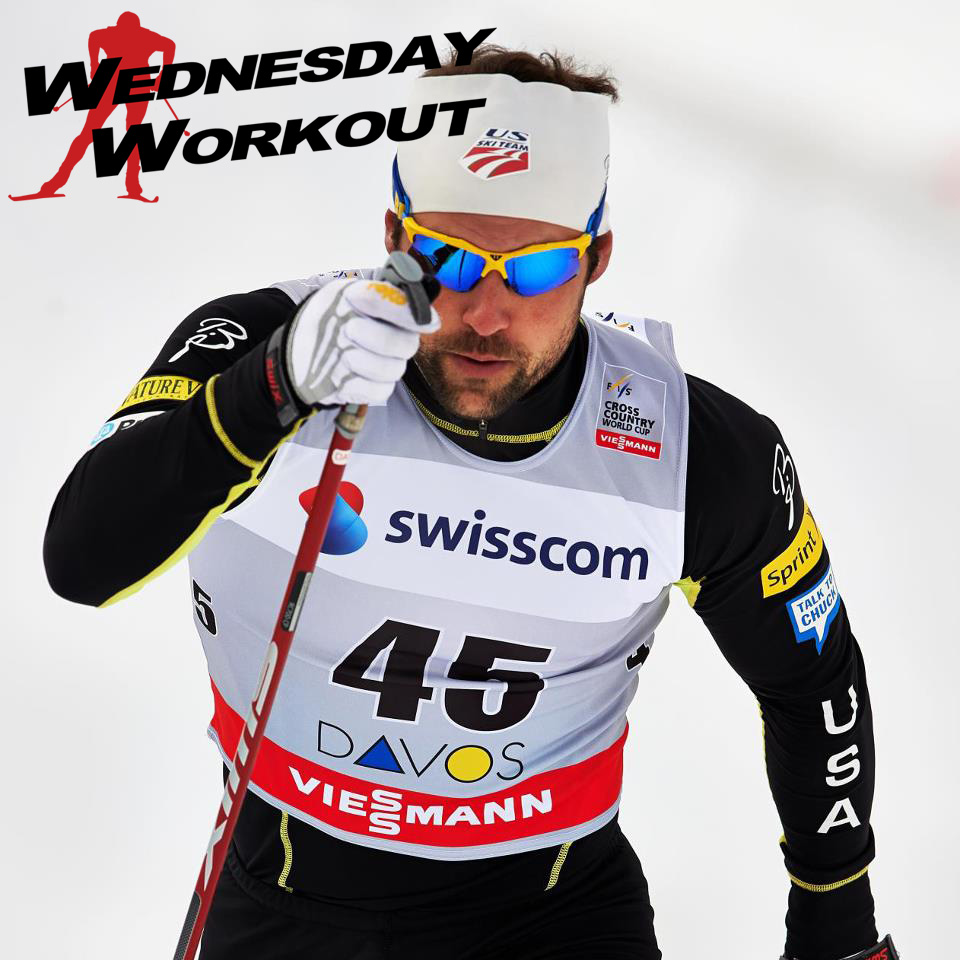
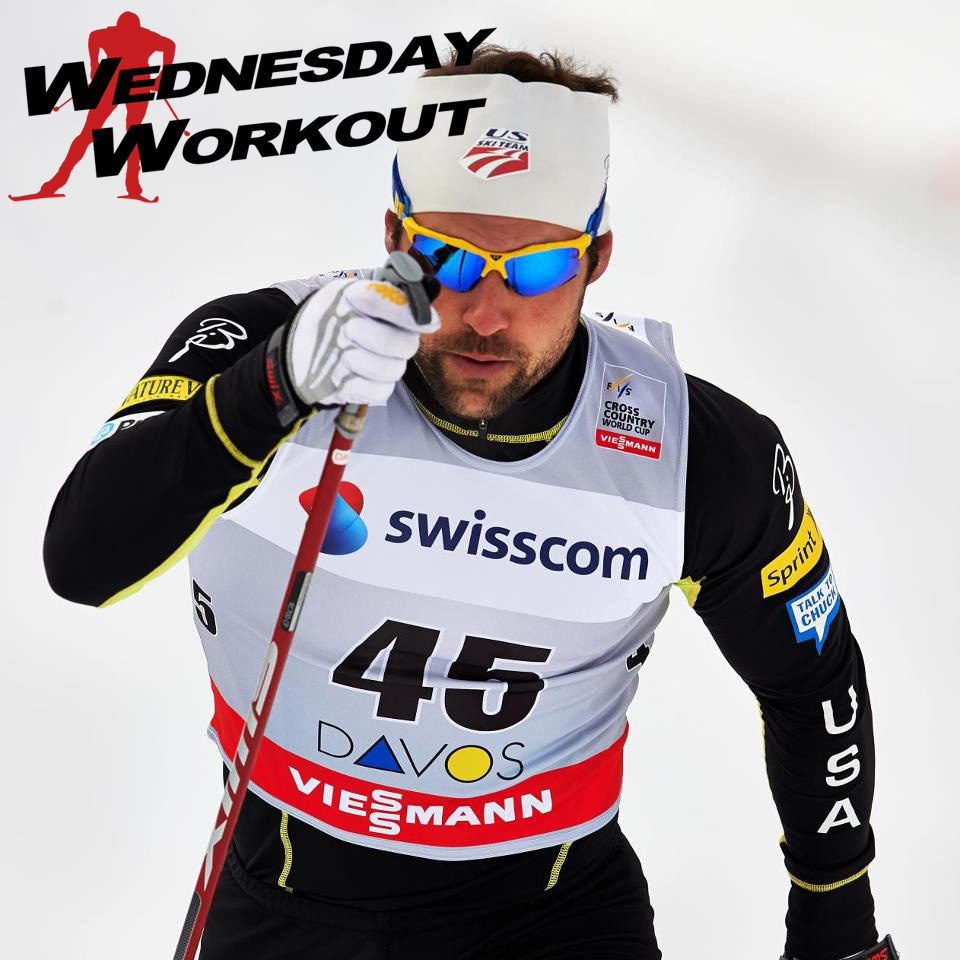
Dakota Blackhorse-von Jess (Bend Endurance Academy) racing a World Cup classic sprint in February 2013 in Davos, Switzerland. (Photo: Felgenhauer/NordicFocus)
For this Wednesday Workout, we’re bringing back a speed-inducing bounding session Dakota Blackhorse-von Jess shared with us four years ago. These days, Blackhorse-von Jess, 31, is still racing out of the Bend Endurance Academy under the guidance of Ben Husaby. Read the original workout here.
***
[circa October 2013]
This edition of Wednesday Workout was submitted by Dakota Blackhorse-von Jess, the man who dominated the coveted Frozen Thunder classic sprint last week in Canmore, Alberta, and had time to take names: beating U.S. Ski Team members Andy Newell and Simi Hamilton in the process (to be fair, they were on skate skis, but hey, that’s racing). The Norwegian website Langrenn even gave him a shout out on Facebook (translation, “Dakota Blackhorse, lovely name for a cross country runner”).
Upon catching up with Blackhorse-von Jess, who flies solo under coach Ben Husaby at the Bend Endurance Academy in Oregon, we asked him what gives and why he’s so fast this time of year.
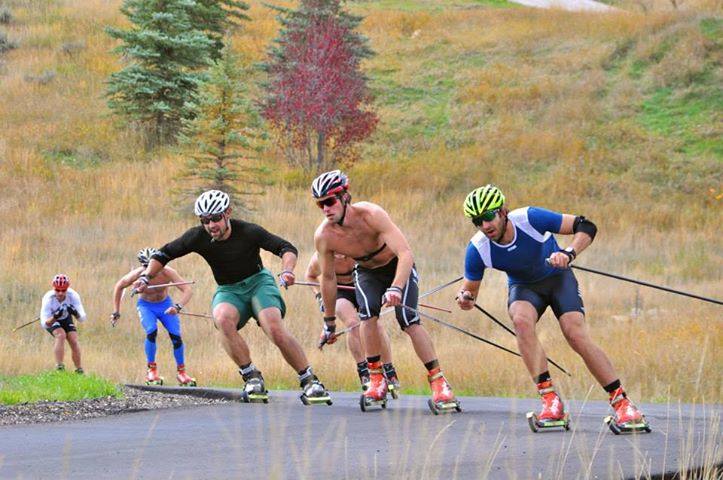
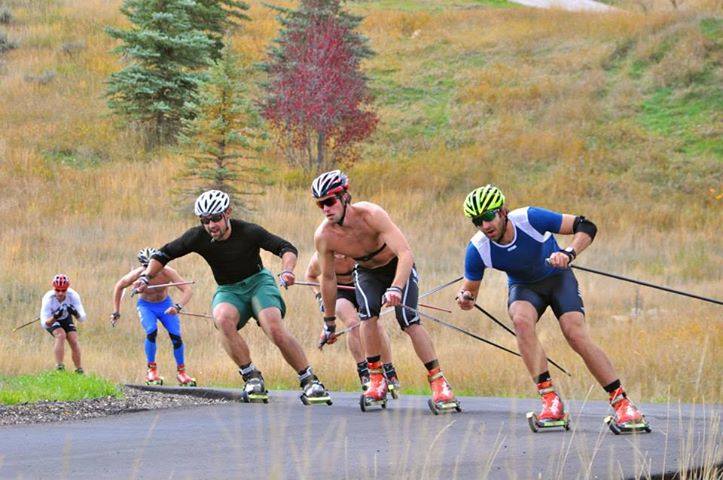
Dakota Blackhorse-von Jess (l) gets the inside line while rollerskiing head-to-head with Skyler Davis (c) and Sam Tarling earlier this month at Soldier Hollow in Midway, Utah. (Photo: Tom Kelly/U.S. Ski Team)
“We’ve really been focusing the last 4 years on systematically building my aerobic fitness,” Blackhorse-von Jess, 27, wrote in an email. “Coach Ben and I started with a focus on volume on base training and through the years have progressed to a level where I can sustain high levels of quality work – and clearly it’s paying off.
“All of the indicators in training have been pointing to increased aerobic capacity and efficiency at sustained intensity efforts, so the takeaway is validation of the success of our model thus far,” the Dartmouth grad added. “Racing is so much fun, being back on the road and seeing all my friends and getting back in the wax room with Scott Johnston and Sam Naney of MOD, and for sure being in the mix with Andy and Sim who set the bar for the rest of us was awesome.”
Well said, Blackhorse-von Jess.
Now here’s what he does:
The Workout: Threshold Plus (bounding in mixed terrain)
Explained: The transition into fall training for us means a change in the level of intensity. For the first time since the training year started in May, I get to play in the area of threshold – and threshold plus. Over the 10 years Coach Ben and I have worked together, we’ve developed both long term (year-to-year) and short term (month-to-month) training progressions. As with all things in life, experience is the best teacher and we have learned so much over the years by constantly adding new pieces cherry picking the best ones. This organic and highly collaborative style of training functions, in no small part, because of the way we have grown to understand the work we’re doing.
I mention this because feeling the workout is hands down the most important part. Yes, I use a heart rate monitor when I’m training – especially in intervals. It’s primary function, however, is actually post-workout where we can better determine if we are achieving our goals. There is a whole lot more than goes into creating a training plan that I’ve gone into here, not the least of which is understanding the science. The what and the why of different types/styles of workouts are important for Nordic skier development, but once those have been decided the how makes all the difference.
Wednesdays we hit the trails: pole bounding in mixed terrain.
Warmup: Approx. 30 minutes with 10 minutes or so of bounding specific warmup: ski walking, moosehoofing, and full on explosive bounding in addition to some muscle memory/technique drills
Intervals: 5 x 4-“ish” minutes over set terrain, with the primary goal being to spend as much time as possible at or above threshold without slowing down from interval to interval.
Recover 4-“ish” minutes between. “Active” recovery is key, but how active a person can be in recovery is totally individual – just try to keep the heart rate down in Level 2 or below and work out the lactate best you can. I walk/jog between… once I get my breath back.
(While I dearly love the flowing nature of intervals over constantly varying ground, it’s easier to measure the workout over set terrain. We found a perfect place to work on mid-interval acceleration and then survival, which was a big goal of Ben’s for me this fall as it has been a piece missing in my racing. I say 4-ish minutes because my finishing marker was just a hair over 4 minutes when I started… and I was about 15 seconds faster by the end.)
Doing It Right: Bounding in the woods is not necessarily a function of speed – you can almost always make the work harder by doing it “more correctly.” Just pushing harder usually means a breakdown in technique, which has huge application to ski racing where technique breakdown under duress can have catastrophic consequences.
That said, measuring time over set terrain really helps me understand the changes in feeling my body goes through as I fatigue. Keeping even splits, or dropping negative splits, over the intervals is still the goal.
The first couple intervals are usually about holding myself back (although not everyone experiences training the way I do, so take this with a grain of salt), I get to push a little bit in the third, push more in the fourth, and then dig deep in the last interval to keep getting faster.
By appropriately using the first couple intervals and the first minute or two of each interval to prime your system, there is a natural flow into anaerobia. We try to structure one workout a week to maximize the time spent anaerobic, and this one has been a real gem for us.
Cool down: 15 minutes-“ish.” However long it takes to get moving again and get some of the junk out of your body.
The Bend Endurance Academy (BEA) is a public benefit 501(c)3 that organizes and operates endurance activity programs in Central Oregon, concentrating in three core disciplines: Nordic Skiing, Cycling & Climbing. The mission of BEA is to “promote healthy living through active, outdoor experiences. We emphasize teamwork, personal growth, and community responsibility.” BEA envisions a world with active, inspired, and more engaged people. Since its founding in 2009, BEA has grown from humble beginnings to serving more than 1000 kids in 2017.
Where You Get To Live!
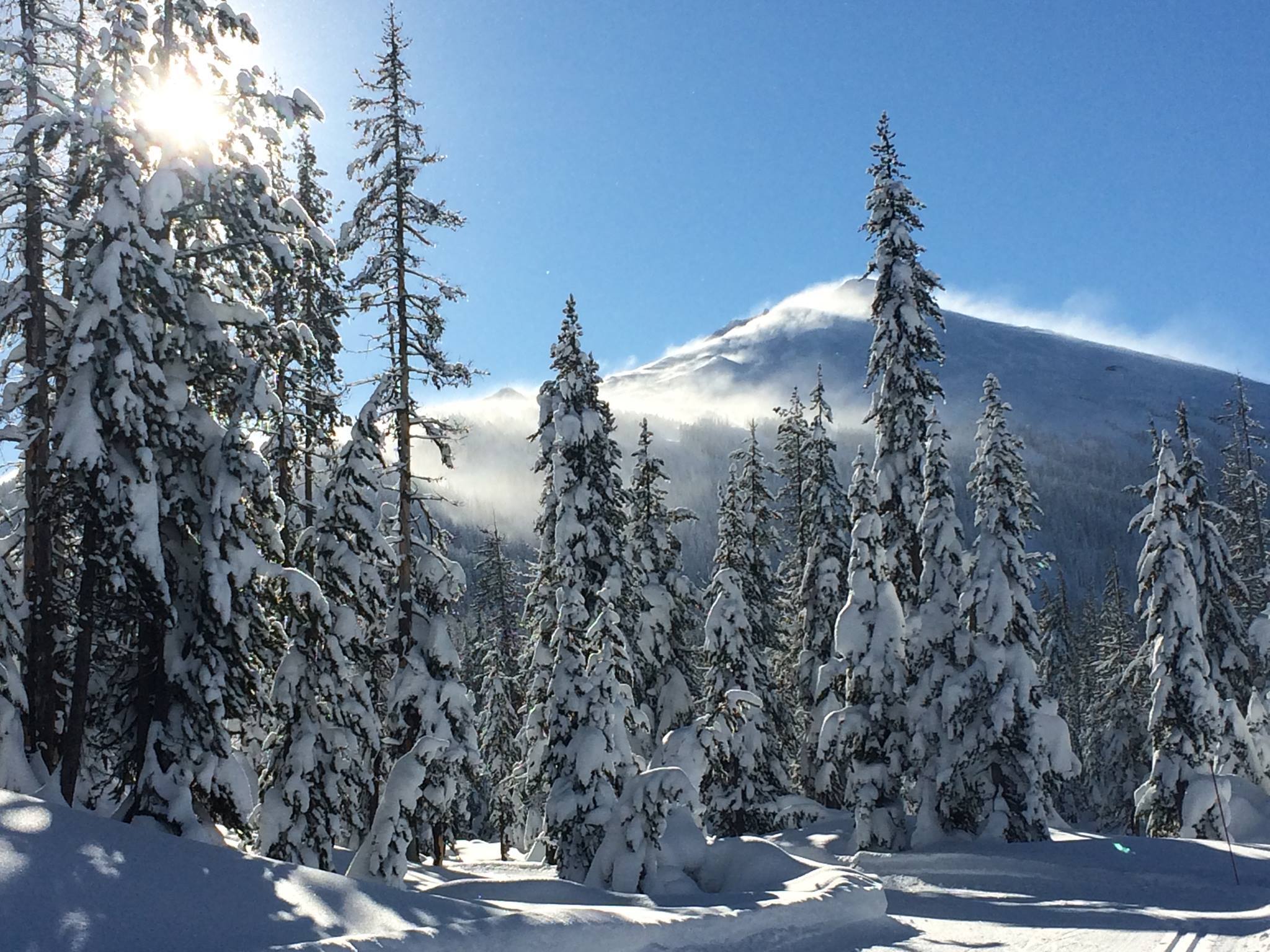
Bend, Oregon, is the mountain town that has it all! Located in the in the shadows of the Cascade Mountains and surrounded by numerous lakes and rivers, Central Oregon is an outdoor enthusiast’s paradise. Check out the sights and sounds of Bend at: https://vimeo.com/200038114
What You Get To Do!
Reporting to the Board of the Directors the Executive Director (ED) has full responsibility for the daily operations of BEA corporate office and programs in accordance with BEA strategic plan, operating/business plans, Board policies, and annual budgets as approved by the Board. The operational and development activities of BEA include fundraising events, strategic planning, facility and vehicle maintenance, communications and marketing, staff training and compliance, personnel management, risk assessment and management, transportation and safety, program offerings, and financial management.
The Executive Director provides executive leadership to BEA to advance its mission and vision in part through strategic priorities adopted by the Board. The current priorities include the following:
Strategic Priority #1: Programs
Manage growth of current programs to retain our strong commitment to quality programs for young participants at all levels of their athletic development and to build a strong platform for meeting growing demand in the future.
Strategic Priority #2: Culture
Build a professional, collaborative, problem-solving team culture at all levels of the organization that honors the fun and joy of what we do.
Strategic Priority #3: Staff
Retain and recruit the best staff to lead, develop and support programs
Strategic Priority #4: Revenue
Grow and ensure diversified and sustainable revenues.
Strategic Priority #5: Communications
Promote BEA’s vision for a “world with active, inspired and more engaged people” by communicating consistent messages about our mission (what we do) and our philosophy (why we do it) to key audiences.
What You Will Need:
Bachelor’s degree in business, public administration, planning, recreation management, or related field
Demonstrated experience in a management role, preferably in business or nonprofit leadership and/or management of multi and diverse program environments Demonstrated experience with the successful development and management of new programs or business enterprises
Direct experience in working with recreation and/or youth sports education or relatable fields
Direct experience in the supervision of senior level management staff
Working knowledge and understanding of GAAP (generally accepted accounting principles) and developing business financial pro formas
Demonstrate excellent interpersonal, people management, and verbal and written communication skills
Possess a high level of conceptual and analytical skills, judgment and decision-making, and negotiation skills
Demonstrate the ability to lead and foster innovation and initiative in others, work cooperatively and effectively in a team environment, develop relationships based on honesty, integrity and trust, work well under pressure, and prioritize work effectively
Have or develop an ability to understand and deal effectively with the policy environment in which BEA operates
Demonstrate success in strategic and business planning, implementation, management, and financial management skills
Demonstrate a willingness and ability to work and build relationships with industry, government, and other stakeholders to achieve goals and objectives of BEA
Demonstrate success in promoting business outcomes to industry, government, and the community;
Proficient in Word, Excel, Power Point, and Outlook
Have or develop proficiency in social media and traditional media platforms
Must have a valid Driver’s license and be insurable under the BEA’s insurance requirement
Successful completion of a criminal background check and a pre-employment drug test may be required.
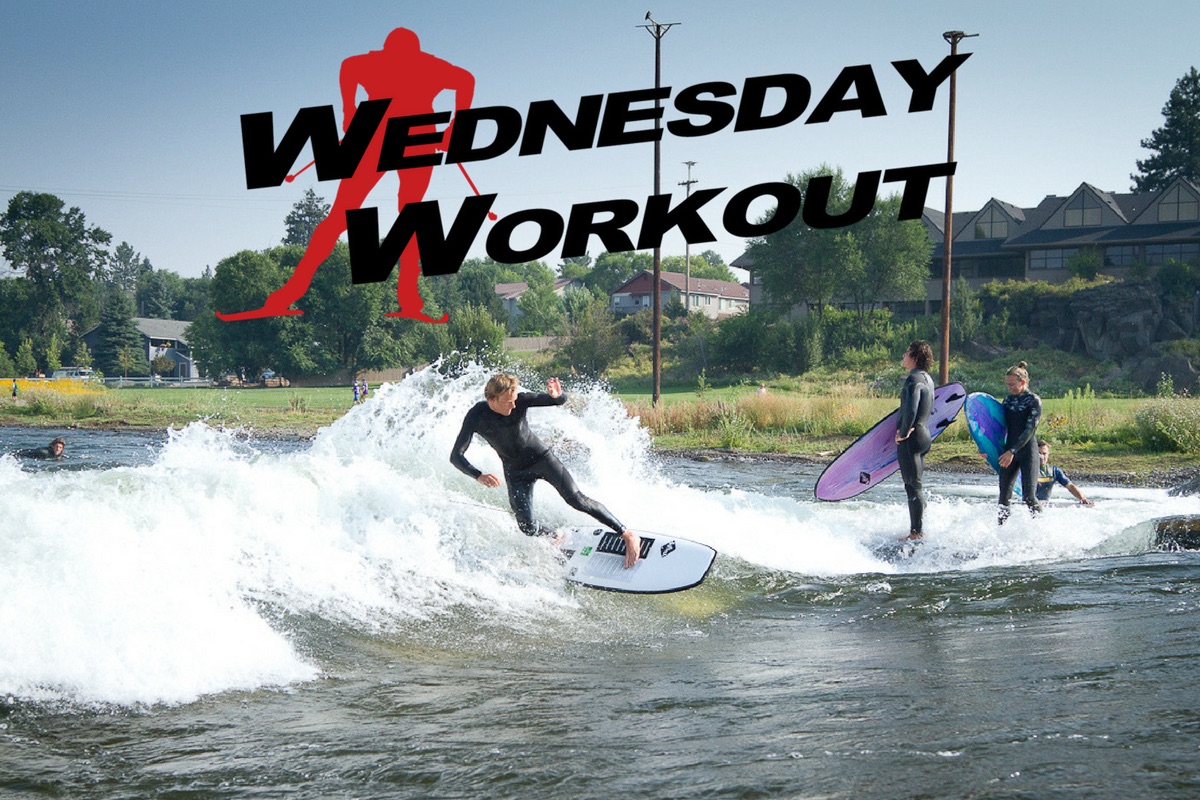
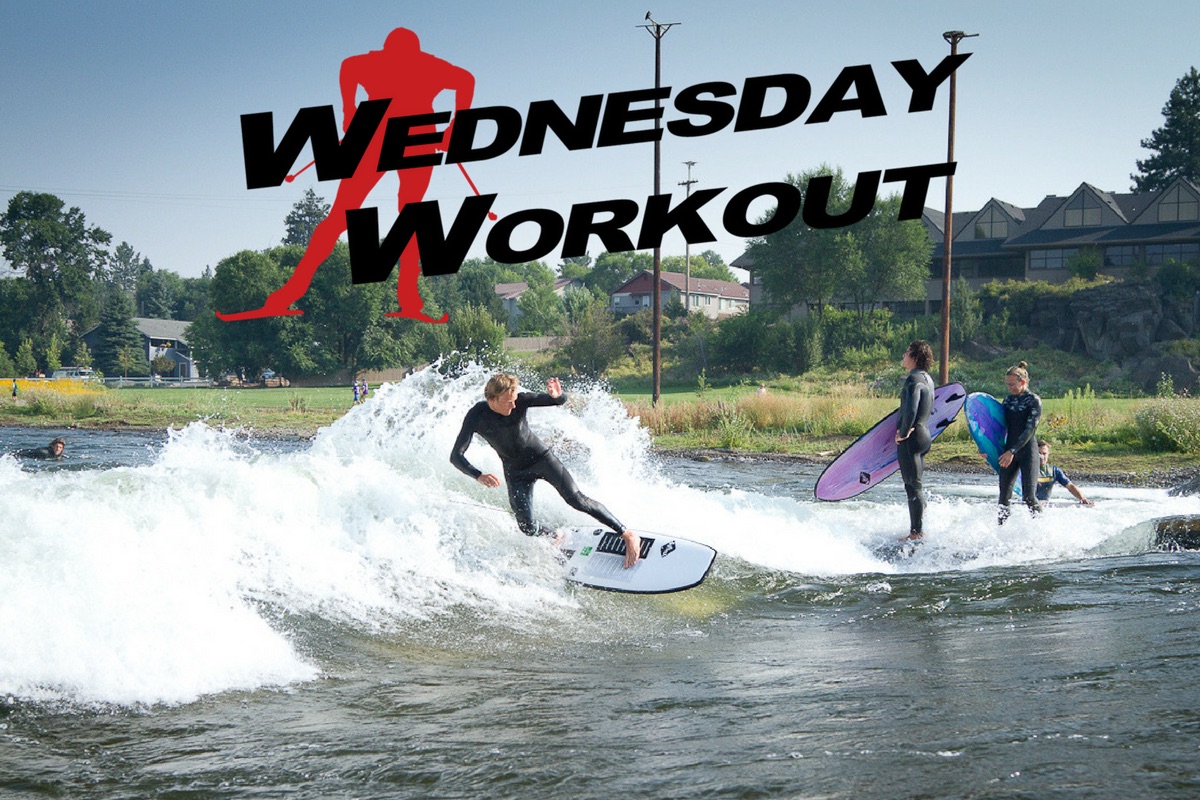
Jake Ajax, a senior on the University of Wisconsin-Green Bay nordic ski team, catching some waves in Bend, Ore. (Photo: FasterSkier)
BEND, Ore. — It’s August. That means a few things to keep in mind. Out West, it’s been hot and dry. Mid-90 temps have been the norm and in places like Bend, it’s in the teens for humidity. Don’t forget to top that with smoky air from surrounding wildfires.
On the East Coast, high humidity can turn an early morning workout into a tropical death march. Left or right coast, even in the Rockies and Midwest, the phrase “hydrate or die” remains relevant.
It’s enough to tap the brakes on traditional forms of dryland training.
That brings us back to Bend. Despite recent claims, Bend isn’t paradise, and it may not be where you want to be. Some downsides here in Bend are the busy traffic circles and dusty mountain-bike trails in summer. (Yeah, all first-world problems.) If that’s not enough to dissuade you, then there’s this not-so-well-known fact: Bend’s river surfing wave isn’t always firing with a green face; sometimes a pillow of aerated water blemishes an otherwise everlasting standing wave.
The upside (yes, there’s a big upside) is that the surfing wave at Bend’s Whitewater Park serves up a great option to diversify the off-snow training.
Sun-bleached blond. With a look like that, 21-year-old skier Jake Ajax, in Bend, Ore. for summer training, exudes the xc skier/surfer stoke. (Photo: FasterSkier)
It took a 21-year-old named Jake Ajax from Minneapolis, Minn., who currently skis for the University of Wisconsin-Green Bay, to show the light.
Jake actually goes by Ajax.
Ajax ended up in Bend for the summer to train with the Bend Endurance Academy (BEA) college training group. But surfing? That seems a bit off the radar from a nordic skier in the Midwest. Like any semi-landlocked kid, he dreamed big.
“My obsession with surfing started last summer when I read the book Barbarian Days by William Finnegan,” Ajax explained in an email. “I’ve always been interested in the sport but being from Minnesota there’s no easy way to get into it. Barbarian Days was my gateway that pushed me to give it a try and I love it. I have a sister that lives near Orange County, CA so that’s a great resource to have. I even managed to surf Lake Michigan last spring a couple times when storms hit.”
(If you think Barbarian Days sounds like some fluff surf book, think again. Finnegan won a Pulitzer for his cerebral surfing memoir.)
“I told myself, ‘I’m going to be good at that by the end of the summer,’ ” Ajax wrote. “When I first got here I bought a board and was surprised by the steep learning curve of surfing. For about the first week all I could do was ride the wave for a few seconds before face planting and getting flushed down the rapids.”
Ajax is not alone. Not to name names, but some of Bend’s most stout endurance athletes, some of them nordic skiers, have been seen flushed over the Whitewater Park’s drops after a split-second surf.
Including this guy:
Ajax admits he’s now a regular at the wave in between his morning and evening workouts.
“I usually try to make it to the wave about six days a week,” he wrote.
For those logging hours, Ajax noted he doesn’t include the surfing in his log book, since there’s a bit of standing around and his heart rate remains low. But Ajax asserts the surfing has put grins on his face and benefited his ski training.
“Physically, the basic surfing stance is fairly similar to skiing,” he wrote. “You press through the arch of your foot relaxing the toes and keep your ankles loose so you can turn back and forth on the wave. You press through the surfboard similarly to how you press through a ski. It definitely helps with balance. Mentally, ski training, especially in the off season, is always great to keep fresh. It’s been great mastering this new sport over the summer. Rollerskiing the same roads every week can get old so it’s nice to keep things fresh with the whitewater park.”
Ajax has been the pied piper of river surfing for the collegiate nordic crowd. It’s now not uncommon to see surfers/NCAA skiers at the wave from the University of New Hampshire, Colby College, University of Vermont, and a certain Harvard Ski Team alum on occasion.
“River surfing is a pretty cool sport so I think most skiers are compelled to try it,” Ajax wrote. “I’m just the one who drags them down to the wave to give it a try.”
Newell Says…
If you don’t take FasterSkier’s and Ajax’s word for it, how about the word from cross-country skiing’s answer to Kelly Slater: longtime U.S. Ski Team member and longtime surfer Andy Newell? (Seriously, shave Newell’s locks, swap out the lycra for board shorts and you’ve sort of got a Slater doppelgänger.)
“I’ve never surfed any standing waves but I try to get into the water as much as I can throughout the summer to surf in the ocean,” Newell wrote in an email.
Here are some of the ways Newell believes surfing can benefit skiers:
Mental: “There is the obvious, surfing is fun, engaging, and addicting so it is a perfect mental break for a winter sports athlete. But I think there is much more to it than that since sports like surfing practice a different type of mental/ physical connection. Skiing is a speed-based sport, it’s all about how fast you can go. Surfing is a style-based sport that is more about muscle memory and how your body moves. I think it’s great when athletes with a background in speed-based sports practice something like surfing or skateboarding because it forces us to have different mental/physical connection that is focused more on proprioception. body movement, and is 100 percent skills based. It’s good for the brain:)
Physical: “On the pure physical side, surfing is great for balance, core strength, and upper-body strength. The paddling motion of surfing is awesome for skiers because it is a similar motion that recruits a lot of the same muscles as poling but it’s also very different in a good way. Paddling and swimming where you are bringing your arm up above your head and shoulder is great for strengthening external rotation in the shoulders which is something most skiers need. Paddling a surfboard and strengthening all those small muscles around the outside of your shoulder and back will help a skier stay injury free from a repetitive poling motion. Also, when you are laying on your stomach and paddling on a board it will improve thoracic mobility (upper-back mobility) which is another weak point for a skier.”
Jake Ajax, who’s training with the Bend Endurance Academy this summer in Bend, Ore., dials in his skinny-ski balance as he carves a turn on Bend’s river-surfing wave. (Photo: FasterSkier)
In Bend, the wave is close to downtown. If you’re busy logging hours on the computer, you can multitask and check out the live streaming surf scene.
The Gear
Although we’re no experts, river surfboards are short. Some are in the 4-foot range for more experienced surfers. A stable learner board on the local Bend wave runs anywhere from 5-feet-2-inches to 5′-7″. Most surfers here use soft boards since board dings from rocks are a reality of river-wave surfing. That said, some local shapers will handcraft a pricey glass and carbon board for your liking.
This writer makes his child wear a helmet and board leash with a hand-activated break away mechanism — it’s a river, after all, meaning natural hazards exist that may snag a leash. Better safe than sorry. Some river surfers in Bend wear a personal floatation device (PFD).
Hardy folks wear board shorts as if the Cascade’s were found at 19.8968° N, 155.5828° W (a rough approximation of Hawaii’s location). Otherwise, most folks wear wetsuits. At roughly 65-degrees Fahrenheit in summer, the water in the Deschutes River as it flows through Bend isn’t shiver-inducing, but a wetsuit makes it cozy.
The Workout: Surfing
Focus on de-stressing
Smile
Have fun
Get on the wave
Try to surf
Maintain a Level 0.5 heart-rate zone (if your post-workout data indicates you were in L1, you are doing it wrong.)
Smile
Repeat
Jake Ajax paddling while river surfing. According to Andy Newell, this can improve functional shoulder strength. (Photo: FasterSkier)
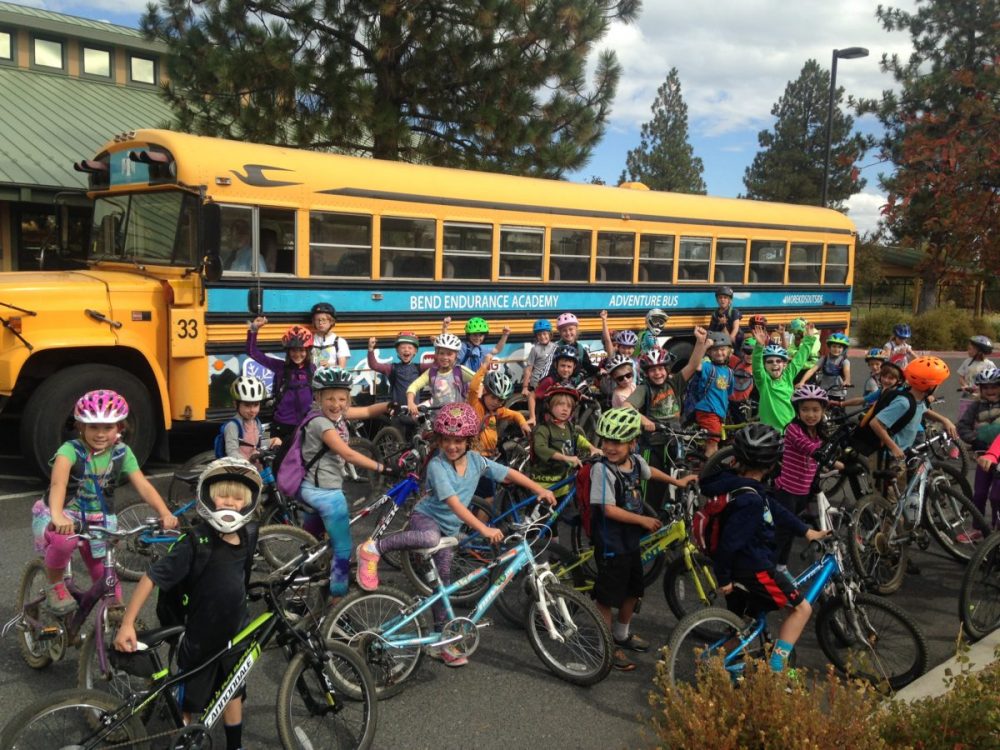
Bend Endurance Academy (BEA) athletes ready for a ride while standing in front of their “Adventure Bus”. (Photo: Mike Rougeux)
In the summer of 2013, Bend Endurance Academy (BEA) Executive Director Ben Husaby made what some may have considered a strange company purchase. The two-time Olympic cross-country skier bought an old yellow school bus, painted a pale-blue stripe lengthwise down its side and inscribed the organization’s moniker where an educational institution name once was.
Why? Was he planning to shuttle BEA student-athletes to and from school during his spare time?
Not quite. When Husaby founded the nonprofit organization in Bend, Ore., in 2009 alongside Brenna and Bill Warburton, he and BEA advocated for the affordability and accessibility of sport to kids. The addition of a bus to the organization created a means of free transport and the potential to incorporate youth who might otherwise miss out. In the summer, the bus would run daily, with BEA athletes boarding from various pickup spots and being transported at no extra cost to practice venues. In the winter, bus pickups and drop-offs would move to three times a week.
It largely symbolized what he and BEA wanted to do: get a greater number of kids outside and active, without breaking the bank.
“We have figured out how to run the organization through program fees, and our program fees are on par with [Bend] Parks and Rec,” Husaby recently said on the phone. “Even though [BEA] is nonprofit and we have a board of directors, we try really hard not to fundraise … the entire organization is really pushed by program revenue. I think people appreciate that.”
Ben Husaby (second from left) smiling with some of Bend Endurance Academy’s finest. (Photo: Mike Rougeux)
While Husaby didn’t drive the oversized, yellow-and-blue streaked bus — he left that to retired school-bus driver Steve Delery — he valued providing a greater number of families with the option to participate in BEA’s programs. The bus was just one physical example.
The mission of BEA is another. With the primary goal of providing its members a resource in “teamwork, personal growth and community responsibility,” Husaby hoped the program he created eight years ago would attract an audience beyond just the superstar athlete.
In keeping with this model, the organization has grown from 20 youngsters in its startup years to just under 1,000 unique enrollments this year. Husaby attributed this participant surge to the affordability and accessibility BEA promotes.
“We’re not performance driven,” Husaby said. “It allows for a horizontal platform. All kids need to spend more time outside. All kids need to put their screens down. All kids need to have interactions with quality mentors and you can do all of those things without necessarily being competition focused.
“It’s not a top-down organization,” the 51-year-old Minnesota native continued. “It’s mostly about teaching kids to enjoy endurance sports and that message has worked all the way through.”
Even if Husaby prefers the Academy to remain less performance driven than other clubs, its program still puts out national-caliber athletes. In the realm of nordic skiing, Dakota Blackhorse-von Jess is one of them.
For close to 17 years, Blackhorse-von Jess and Husaby have worked together, originally while Husaby was still a coach for the Mt. Bachelor Sports Education Foundation (MBSEF) in the early 2000s — he was let go from MBSEF in December 2008 and started BEA the following month.
Prior to that, skiing came in the form of racing for Husaby. After moving to Bend in 1991, he qualified for two Olympics — 1992 and 1994 — and tried one final time in 1998 before focusing on marathon racing, including the American Birkebeiner, for the next two years.
“I was working for a friend in an automotive restoration shop when that fall [of 2000] the director of MBSEF contacted me asking if I wanted to coach the nordic program,” Husaby said of his start in coaching.
Husaby accepted the position, and while sitting in his office one afternoon, he met a visitor that ultimately influenced the rest of his coaching career. A stocky high schooler entered his room, voicing goal that made Husaby’s eyebrows go up.
Ben Husaby (l) and Dakota Blackhorse-von Jess. (Photo: Mike Rougeux)
“[Blackhorse-von Jess] walked in and said, ‘I want to win Junior Nationals,’ ” Husaby recalled. “I sort of laughed because he was kind of a pudgy little kid … I mean I didn’t even know who he was. But I said, ‘OK,’ kind of laughing, and ironically, two years later, he was at World Juniors.”
The two went to World Juniors in 2006, before Blackhorse-von Jess headed east to attend Dartmouth College for four years, earning a degree in computer science. Upon returning to Bend in 2011, Blackhorse-von Jess rejoined Husaby and BEA. He earned a job as the organization’s associate director, a position in which he was responsible for bookkeeping, building the enrollment system and managing the program’s website.
However, as Husaby admitted, being Blackhorse-von Jess’s boss and coach proved to be difficult. Blackhorse-von Jess had an intense training schedule, but the work he needed to complete for BEA was equally important. Husaby was caught in the delicate position of understanding his employee’s outside stressors and their significance while also being charged with overseeing Blackhorse-von Jess’s salaried work.
Though not the singular reason, this is one point Husaby brought up as he discussed his recent decision to leave his post as executive director. Though he will continue to coach Blackhorse-von Jess through this Olympic season, he plans to leave BEA by Sept. 1 of this year.
“I think me leaving is actually going to make [Dakota’s] ski career a little bit easier as he winds it down,” Husaby said.
According to the 31-year-old Blackhorse-von Jess, this will most likely be his final competitive season and he hopes to end with a bang by qualifying for the 2018 Winter Olympics in PyeongChang, South Korea.
“I’m looking forward to doing something different this season,” Blackhorse-von Jess said earlier this week on the phone. “I mean, I know in many ways what we do this year is the same, but it’s our last year and it’ll be, farewell tour isn’t the best way to put that, but I think there is something special and different about it. I’m just excited to see what it holds.”
Though Husaby considers BEA his “phoenix”, he departs the head position with a sense of respect for what’s been accomplished and an excitement to spend the final months of his ski career back on the ground doing what he loves most: coaching.
“I’ve already noticed that for me, it’s going to be a lot easier to coach [Dakota] if I’m not his boss any longer,” Husaby said.
“I think the organization is ready for a manager that perhaps doesn’t have as personal of a connection as I do to Bernie [Nelson, BEA’s nordic director], Dakota, Bill [Warburton, cycling director] and Mike [Rougeux, climbing director],” he continued. “I’m leaving now because I’ve been either an athlete, or a coach, or a leader, or a supporter for 30-some years and it’s just time … it’s taken a lot to build this organization and I really honestly believe that I’ve taken it as far as I can.”
The organization is certainly a far cry from the volunteer-run, single-sport (nordic skiing) nonprofit it was in the beginning. Since its inception, cycling and climbing programs have been added to the academy, 45 seasonal, as well as two more full-time employees added to the original staff of three, and program participation has reached capacity.
“It’s big now and it needs someone that perhaps has a little more experience with growing the organization fiscally,” Husaby said. “We’re kind of through the whole founders’ phase. We were a scrappy, scrappy startup, and I was comfortable leading that, I think I just reached my capacity with the organization.”
Husaby will continue to aid BEA with coaching and moving into a new leased facility through the summer. Though no particular candidate has been singled out as of yet, the BEA’s Board of Directors is looking for someone who supports Husaby’s original mission and vision for youth.
“The biggest contribution Ben gave is defining a culture of the organization that is really long-lasting,” BEA Board President Cris Himes said on the phone. “What Ben has really done for BEA is to emphasize fun and joy and getting outside for kids at all levels, making it fun for them and helping them find their intrinsic drive.
“Really that’s been his number one contribution and that’s not going to go away,” she continued. “We are all expressing gratitude to Ben for what he has given this community and organization. It’s quite a legacy and a gift.”
On Wednesday, the Bend Endurance Academy announced Bernie Nelson as its new head coach. (Courtesy photo)
(Bend,Ore) — Bend Endurance Academy (BEA) is pleased to announce Bernadette Nelson as the new Head Nordic Coach. Nelson joins BEA after a two-year coaching stint at Bridger Ski Foundation (BSF) where she was the Post Graduate and Elite Team Nordic Coach. Prior to her time at BSF Nelson was the Assistant Nordic Coach for Montana State University for three years.
“We’re really excited to be bringing Bernie on as Head Nordic Coach,” states Nordic Program Director Ben Husaby.
“She has a ton of experience coaching athletes. She has shown herself to be energetic, knowledgeable and approachable,” Husaby elaborated.
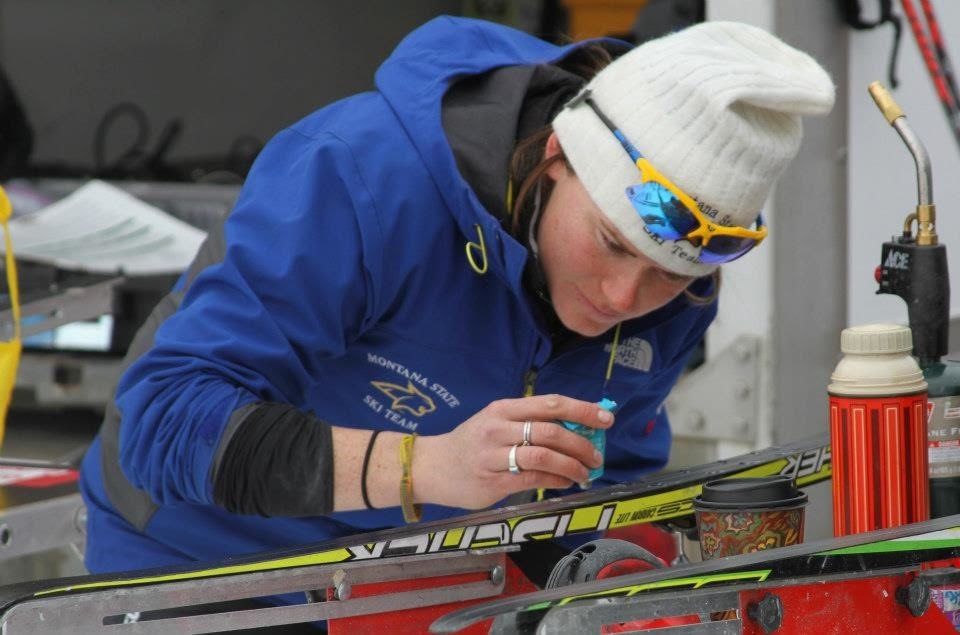
Bernie Nelson, new head coach of the Bend Endurance Academy, seen here during her time with the Montana State University Ski Team (Courtesy photo)
Bend Endurance Academy is a Bend based non-profit offering programs in cycling, rock climbing and Nordic skiing. Most of the program participants are in grade school to high school with a small handful of collegiate skiers.
“I’m looking forward to working more in the junior development areas of coaching. Working with juniors allows the opportunity to lead the athletes to be better skiers as well as better people,” Nelson stated about her transition to the junior development side of coaching.
Nelson will be replacing Jordan Buetow who has been BEA’s Head Nordic Coach for the past two seasons. Buetow will be moving back to his native Alaska to pursue a graduate degree. Bernadette will be taking the reigns of the Nordic program starting this June with Bend Endurance Academy’s summer competition and collegiate training program.
“I’m looking forward to collaborating with Ben this summer to build on the success and momentum of BEA’s summer training program,” she said.
Last summer BEA saw close to 30 collegiate Nordic skiers make the move to Bend for a summer of Nordic specific training.
“I think having someone like Bernadette, with her experience with collegiate and elite skiers, is going to be a great addition to the summer program,” says Husaby.
About Bend Endurance Academy
The Bend Endurance Academy is a 501 (c) 3 non-profit organization. The Academy organizes and operates programs that promote health and wellness within Oregon. The Academy provides athletic coaching, mentorship, educational experiences, volunteer opportunities and events for a diverse group of youth, young adults, and other individuals who desire to excel at endurance sports. Our programs are innovative, affordable and inclusive. We work to encourage participants to succeed throughout every step of their athletic and individual development.
The Academy’s mission is to “promote healthy living through active, outdoor experiences. We emphasize teamwork, personal growth and community responsibility.”
Bend Endurance Academy currently offer programs for Nordic Skiing, Cycling, and Rock Climbing.
New Year’s Eve at the Mt. Bachelor Nordic Center near Bend, Ore. (Photo: Rion O’Grady/Mt Bachelor Nordic Center Facebook)
Is there room at one ski center to support two junior development programs? In central Oregon, it depends on who you ask.
Mount Bachelor, 22 miles outside Bend, Ore., is a touchstone for nordic skiers. Located in Deschutes National Forest, Mt. Bachelor operates with a special use permit from the US Forest Service (USFS). The U.S. Ski Team has run training camps here and they’ve hosted national championships. In addition, there’s an extensive alpine mountain. With a base lodge at 6,300 feet above sea level, the venue boasts generally good snow conditions.
Mt. Bachelor has a longstanding relationship with the Mt. Bachelor Sports Education Foundation (MBSEF), a nearly 30-year-old nonprofit which has development programs for nordic, alpine and freestyle skiing. MBSEF runs its ski programs on the trails at Mt. Bachelor.
The much-newer Bend Endurance Academy (BEA), a nonprofit founded in 2009, would like to share the trails — at least, in low snow years. Except for a couple of rare occasions, BEA has not had permission to run its programs on Mt. Bachelor.
Since its inception, BEA has used Meissner Nordic, a nonprofit ski center also located on Mt. Bachelor. Run by volunteers, Meissner Nordic grooms 40 kilometers of ski trails on US Forest Service land.
It’s all good, until the weather doesn’t cooperate. Located 1,500 feet lower on Mt. Bachelor than the eponymous ski area, the previous two winters, 2013/2014 and 2014/2015, were difficult for Meissner, while Mt. Bachelor enjoyed better conditions higher up the mountain.
In February 2015, BEA approached Mt. Bachelor resort officials about using public lands at the Mt. Bachelor Nordic Center. They denied BEA’s request, except for the last two weekends of the season.
A group of Bend Endurance Academy youth skiers in February 2016. (Photo: Ryder Utrecht/Bend Endurance Academy Facebook)
This year, the academy has circulated a petition called Let the Kids Ski, calling for more access to Mt. Bachelor.
“There are two places in central Oregon that have groomed nordic trails,” said BEA Board President Cris Himes. “Meissner Nordic and Mt. Bachelor. Meissner has worked very well until recently due to ski conditions.
“What we’re looking for is equal and reasonable access,” Himes continued. “Equal to any other paying customer and community group.”
According to Dave Rathbun, Mt. Bachelor’s former president and general manager who resigned in mid-March, the resort had existing relationships with four businesses “to run their businesses sort of inside our own,” he said. “We still have to get approval from the Forest Service for these concessionaires.”
MBSEF, whose board Rathbun also sat on, is the designated concessionaire for nordic and alpine ski programming. Rathbun is no longer a member of that board.
In a December interview with the Bend Bulletin, Rathbun characterized BEA’s interest in Mt. Bachelor as a desire to use the resort as “a home base for their business.”
“[BEA] want to operate their business within ours, and in most cases at a time when we’re already at capacity,” Rathbun told FasterSkier. “It’s very busy at the times they want to have access.”
Rathbun added that Mt. Bachelor is “at capacity” for instruction in both in nordic and alpine skiing. “We’re not going to open it up to any other concessionaires.”
In addition to its own paying customers, Mt. Bachelor’s agreement with the USFS requires the resort to accommodate people who want to access backcountry skiing via a “common corridor.”
According to Rathbun, “that’s another 10,000 visits per year,” in addition to about 30,000 visitors per year skiing Mt. Bachelor.
Himes feels that the lodge might be crowded, but believes that the trails are not. For her, the primary issue is ensuring that kids have access to skiing. The lack of decent snow is a barrier to participation, and this is reflected in the numbers. Although BEA’s competition team is larger than last year, the enrollment in its youth club and nordic development programs is down 38 percent and 28 percent respectively from the 2014/2015 season.
“Last year Mt. Bachelor did a remarkable job of keeping their snow,” Himes said. “When we can’t run our programs at Meissner, we need to be able to take our kids to groomed trails somewhere else. The only option is Mt. Bachelor Nordic Center.”
New Year’s Day 2016 at the Mt. Bachelor Nordic Center near Bend, Ore. (Photo: Lew Becker/Mt Bachelor Nordic Center Facebook)
During the snow drought two seasons ago in 2014/2015, Rathbun reflected, “I wanted to be a good neighbor. We gave BEA access to nordic center in afternoons, the last couple of weekends in March. I think it worked out well and they appreciated being able to get on snow.”
In a July email to BEA, Rathbun offered the academy access on Tuesday and Thursday afternoons and weekends after 12 p.m., with certain blackout dates during peak periods. These times apparently didn’t match BEA’s program schedule, and according to Himes, left only three weekends out of the winter for training. In September, Himes met with Rathbun to negotiate more favorable access times, to no avail.
“I’m really sorry about that, but that’s the only way we feel it can work, based on how crowded we are,” Rathbun told FasterSkier.
“I can see both sides,” said Alan Watson, the Pacific Northwest Ski Association (PNSA) nordic program director. “My interest is in promoting the success of all these programs. I would like Mt. Bachelor to let BEA train on their trails. It would be good for skiing in the northwest.”
Is trail crowding a red herring? Rathbun said that BEA skiers were welcome to come up and ski so long as they had a pass, but that organized training with a coach wouldn’t be permitted – except at the times listed above.
Does Mt. Bachelor wield trail access as a cudgel? From a distance, it’s hard to tell. But FasterSkier obtained three documents sent anonymously to Himes. One was Oregon School Ski Association’s (OSSA) participation policy. OSSA is one of the two governing bodies for high-school alpine skiing in central Oregon, and holds race meets at Mt. Bachelor. Circulated in December 2014, the policy required students on high school ski teams to participate in four training sessions each week, including races.
OSSA Race Director Matt Cutter said that there were students that participated in both high school and club programs, and that OSSA’s goal with this policy was to instill team unity.
“We don’t want ringers,” Cutter said of athletes who only show up for race meets. “We needed to get something in writing.”
The other two documents, both dated Jan. 8, 2015, are responses from Rathbun and John Scheimer, MBSEF’s executive director, to OSSA. Rathbun’s letter decried OSSA’s participation policy, stating that it would negatively impact “students who club race with MBSEF and have other extracurricular interests.” The letter concluded, “…with our strategic partner MBSEF, we [Mt. Bachelor] will be reviewing all elements of OSSA activities occurring on Mount Bachelor. … Any changes in these privileges will be communicated to you as soon as possible.” Scheimer’s letter to OSSA was written in a similar tone.
Scheimer declined an interview request for this article.
In response to the letters, Cutter said that OSSA rescinded its policy. “That was not our intention at all” to exclude anybody, or force a student to choose between a club program and the high school team, Cutter explained.
Cutter viewed the disagreement as minor, adding, “I can’t stress enough how much support Mt. Bachelor gives us.”
Rathbun said that his letter was actually in response to scheduling conflicts between OSSA and OISRA, a second governing body for Oregon high school alpine skiing. However, neither his letter nor Scheimer’s make any reference to OISRA. Cutter said that while Rathbun discussed scheduling with OISRA, it was in correspondence from August 2015.
“The kids know each other, the parents know each other, we support each other’s kids,” said Himes of BEA and MBSEF. “I am really hoping that we will be working cooperatively with MBSEF.”
With good conditions this winter, trail access at Mt. Bachelor wasn’t as crucial. Next year may be a different story.
Dakota Blackhorse-von Jess (Bend Endurance Academy) on his way to placing 52nd in the World Cup classic sprint last February in Davos, Switzerland. (Photo: Felgenhauer/Nordic Focus)
This edition of Wednesday Workout was submitted by Dakota Blackhorse-von Jess, the man who dominated the coveted Frozen Thunder classic sprint last week in Canmore, Alberta, and had time to take names: beating U.S. Ski Team members Andy Newell and Simi Hamilton in the process (to be fair, they were on skate skis, but hey, that’s racing). The Norwegian website Langrenn even gave him a shout out on Facebook (translation, “Dakota Blackhorse, lovely name for a cross country runner”).
Upon catching up with Blackhorse-von Jess, who flies solo under coach Ben Husaby at the Bend Endurance Academy in Oregon, we asked him what gives and why he’s so fast this time of year.
Dakota Blackhorse-von Jess (l) gets the inside line while rollerskiing head-to-head with Skyler Davis (c) and Sam Tarling earlier this month at Soldier Hollow in Midway, Utah. (Photo: Tom Kelly/U.S. Ski Team)
“We’ve really been focusing the last 4 years on systematically building my aerobic fitness,” Blackhorse-von Jess, 27, wrote in an email. “Coach Ben and I started with a focus on volume on base training and through the years have progressed to a level where I can sustain high levels of quality work – and clearly it’s paying off.
“All of the indicators in training have been pointing to increased aerobic capacity and efficiency at sustained intensity efforts, so the takeaway is validation of the success of our model thus far,” the Dartmouth grad added. “Racing is so much fun, being back on the road and seeing all my friends and getting back in the wax room with Scott Johnston and Sam Naney of MOD, and for sure being in the mix with Andy and Sim who set the bar for the rest of us was awesome.”
Well said, Blackhorse-von Jess.
Now here’s what he does:
The Workout: Threshold Plus (bounding in mixed terrain)
Explained: The transition into fall training for us means a change in the level of intensity. For the first time since the training year started in May, I get to play in the area of threshold – and threshold plus. Over the 10 years Coach Ben and I have worked together, we’ve developed both long term (year-to-year) and short term (month-to-month) training progressions. As with all things in life, experience is the best teacher and we have learned so much over the years by constantly adding new pieces cherry picking the best ones. This organic and highly collaborative style of training functions, in no small part, because of the way we have grown to understand the work we’re doing.
I mention this because feeling the workout is hands down the most important part. Yes, I use a heart rate monitor when I’m training – especially in intervals. It’s primary function, however, is actually post-workout where we can better determine if we are achieving our goals. There is a whole lot more than goes into creating a training plan that I’ve gone into here, not the least of which is understanding the science. The what and the why of different types/styles of workouts are important for Nordic skier development, but once those have been decided the how makes all the difference.
Wednesdays we hit the trails:pole bounding in mixed terrain.
Warmup: Approx. 30 minutes with 10 minutes or so of bounding specific warmup: ski walking, moosehoofing, and full on explosive bounding in addition to some muscle memory/technique drills
Intervals: 5 x 4-“ish” minutes over set terrain, with the primary goal being to spend as much time as possible at or above threshold without slowing down from interval to interval.
Recover 4-“ish” minutes between. “Active” recovery is key, but how active a person can be in recovery is totally individual – just try to keep the heart rate down in Level 2 or below and work out the lactate best you can. I walk/jog between… once I get my breath back.
(While I dearly love the flowing nature of intervals over constantly varying ground, it’s easier to measure the workout over set terrain. We found a perfect place to work on mid-interval acceleration and then survival, which was a big goal of Ben’s for me this fall as it has been a piece missing in my racing. I say 4-ish minutes because my finishing marker was just a hair over 4 minutes when I started… and I was about 15 seconds faster by the end.)
Doing It Right: Bounding in the woods is not necessarily a function of speed – you can almost always make the work harder by doing it “more correctly.” Just pushing harder usually means a breakdown in technique, which has huge application to ski racing where technique breakdown under duress can have catastrophic consequences.
That said, measuring time over set terrain really helps me understand the changes in feeling my body goes through as I fatigue. Keeping even splits, or dropping negative splits, over the intervals is still the goal.
The first couple intervals are usually about holding myself back (although not everyone experiences training the way I do, so take this with a grain of salt), I get to push a little bit in the third, push more in the fourth, and then dig deep in the last interval to keep getting faster.
By appropriately using the first couple intervals and the first minute or two of each interval to prime your system, there is a natural flow into anaerobia. We try to structure one workout a week to maximize the time spent anaerobic, and this one has been a real gem for us.
Cool down: 15 minutes-“ish.” However long it takes to get moving again and get some of the junk out of your body.
Dakota Blackhorse-von Jess (Bend Endurance Academy) skating to a career-best 38th at the Quebec World Cup freestyle sprint last December. (Photo: FlyingPointRoad.com)
Note: This is the eighth preview in our U.S. elite-team series, which we’ve dubbed the “The 12.” We asked coaches to tell us what’s new and whom to look out for in the coming season and will publish additional previews in the coming weeks in no particular order.
Team: Bend Endurance Academy (BEA) a.k.a “The Dirty Ravens,” according to coach Ben Husaby.
Coach: Ben Husaby (Executive Director and Nordic Director as well as van driver, cook, DJ and pop psychologist).
Support: “J-Beck,” Justin Beckwith (Green Mountain Valley School) for testing, Scott Johnston (Methow Olympic Development) for application, and “J-Nice” (New England Nordic Ski Association) for top-tier resource procurement at major competitions. “Although we have decided that all of this will not be necessary in the future after reading this study, this might be the advantage we have been looking for,” Husaby wrote in an email.
Roster: This guy: What could he be thinking?
Bend Endurance Academy’s lone elite-team athlete: Dakota Blackhorse-von Jess (Photo: Ben Husaby)
Who’s new: No one for winter, but the BEA has “a ton of new and returning ravenettes that have come around for summer training,” Husaby explained. “They have done a fine job of pushing the lead bird.”
Notables include Rogan Brown (University of Vermont), Jordan Buetow (Bates), Bella Smith (Montana State University), Elena Breed (University of Denver), Reitler Hodgert (The College of St. Scholastica), Tony Squallace (Gustavus Adolphus College), and Joel “The Filth” Bransky (St. Olaf College), as well as Ben Grodner (Wasatch Nordic Ski Academy), and Pat Madden is on loan from the Bridger Ski Foundation.
Who’s missing: Lars Ellefson. “He has embarked on a long desired (secret) passion; body building,” Husaby wrote.”(This is not a joke).” Well, sort of. He’s a big-time gym rat and works at the Central Oregon Community College club sports department, Husaby explained. “We have lost him for the time being.”
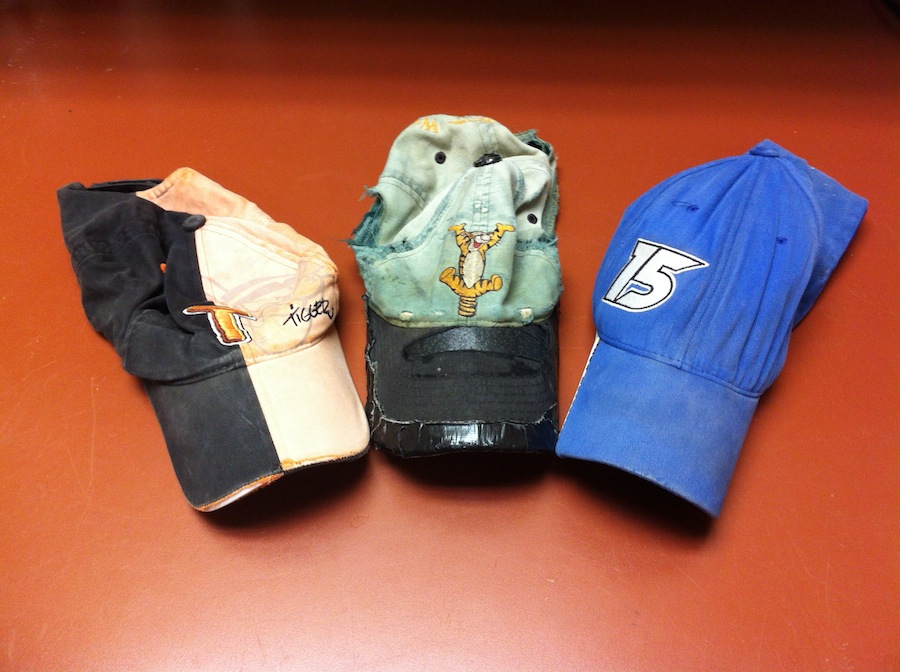
“For the future, we would like to offer this once in a lifetime opportunity,” Husaby added. “If you choose to hang out with us we will give you one of these as a token of our appreciation.” (See below)
VonBallCap (Photo: Ben Husaby)
Top results last season: According to Husaby, it’s a tie for Blackhorse-von Jess between “getting the opportunity to compete with ‘our’ awesome Americans on the World Cup. And being given the play by play from Halsey at US Nationals, Classic Sprint Semi, where the commentary went from ‘Dak is down!’ at the start to ‘Dak is in the lead!’ down the finishing stretch. I have a hard time watching sometimes.”
Dakota Blackhorse-von Jess and coach Ben Husaby, the two main components of the Bend Endurance Academy in central Oregon. (Photo: Ben Husaby)
Blackhorse-von Jess, 27, won the freestyle sprint at U.S. nationals in Midway, Utah, following a bronze-medal finish in the classic sprint at Soldier Hollow. After placing 38th in the Quebec World Cup skate sprint in early December, he went on to qualify for the World Cups in Switzerland (Davos), Finland (Lahti), and Norway (Drammen).
Coach’s comment: “I would like to think that we offer a very comprehensive and complete training atmosphere where everyone can reach their personals goals,” Husaby wrote. “We had great success last year with Pat, Bella and Rogan making it to the NCAA championships. In the future we would certainly like to entice skiers to consider Bend and BEA as their place to roost. It certainly is taking shape during the summer months. I buy a lottery ticket every week hoping to hit it big so I can underwrite it all. But in the meantime Dakota and BEA’s great supporters will focus on trying to get him to the highest level.”
Dakota Blackhorse-von Jess of the Bend Endurance Academy rollerskiing in June in Oregon. He increased his training hours this offseason in an attempt to build a bigger aerobic base. (Photo by Curt Hawkinson / curthawkinson.smugmug.com/Nordic)
When Dakota Blackhorse-von Jess shows up at a race, he’s hard to miss. If his backward baseball cap doesn’t give him away, his bubbly personality, bearded face or black, red and white-striped spandex will.
One of the staples of Bend Endurance Academy’s nordic program, the 26-year-old Blackhorse-von Jess grew up in Bend, Ore., and skied for Dartmouth College before returning to his native state – and town.
Dakota Blackhorse-von Jess (third from right) and other Bend Endurance Academy athletes during a rollerski session in June near Bend, Ore. (Photo by Curt Hawkinson / curthawkinson.smugmug.com/Nordic)
Back in Bend, Blackhorse-von Jess trains mostly with his coach, Ben Husaby, and the three-man BEA elite team (including Reitler Hodgert and Lars Ellefson), while joining the Methow Olympic Development (MOD) program for workouts.
Known as a sprinter on the U.S. domestic circuit, the short-statured Blackhorse-von Jess typically uses his aggressive style to blast through the heats and into the finals. He captured silver at the U.S. nationals skate sprint last season and was the runner-up at the SuperTour classic sprint in Madison, Wis.
The next day at the skate sprint in Madison on Feb. 19, Blackhorse-von Jess failed to qualify for the quarterfinals for the first time that he could remember in his pro-racing career. It was a blow that set him back in the last SuperTour sprint of the season and one he attributed to missing the wax while prepping his own skis.
Moving on, he planned to race at the SuperTour Finals in Craftsbury, Vt., but come late March, health issues kept him from it. The Madison sprint ended up being his last race of the season.
Overall, Blackhorse-von Jess finished 24th in the SuperTour standings and fifth in the sprint category for his best career ranking. Still, the man with the three-part, four-syllable last name wanted more and he’s been working all summer to achieve it.
FasterSkier recently emailed Blackhorse-von Jess after he tweeted about paddleboarding with the musician Michael Franti. Turns out, he didn’t actually hang out with Franti, but saw him from a unique vantage point.
***
FasterSkier: Please explain this tweet: “Paddle boarding and Michael Franti? Yeah. That happened. And it was awesome.”
Dakota Blackhorse-von Jess: Ha, not actually paddleboarding WITH Franti (although a friend of mine who teaches lessons did actually give him a lesson), but I’ll explain: The big concert venue in Bend is right along the river. My roommate came home … and said “hey – I’m headed down to the river to paddleboard, I hear Franti is playing. Wanna go?” so we grabbed some boards and paddled around and listened (and actually got to watch) the concert. Pretty fun times, but it’s sort of a reference you have to understand Bend to get right away.
FS: How has the rest of your summer been?
DBVJ: Great. The camps were awesome, training is going well, I’ve been working my a** off so I can pay for ski racing this winter, and I even managed to have some awesome surf days during our PNSA/Far West training camp in NorCal. Getting ready for fall though … I think everyone is looking forward to West [Yellowstone, the SuperTour opener in November], especially since that’s the next time I get to see all my college friends that have taken off for school already.
FS: Whom have you mostly trained with?
DBVJ: As of Monday, a week ago most of our college/older kids went back to school or are taking a couple weeks at home (technically the program is on “vacation” for two weeks) so it’s just me and Reitler Hodgert for the moment, but Lars Ellefson will be back soon, and our high school and post grads will be filling the van up once we get back on normal schedule. The fall is the loneliest time here, but it’s also hands down the best time for training and it works better in a small group. I’m psyched.
Our summer group was fantastic, as always. Keep your eyes on Bella Smith (now skiing for MSU). I predict she’s gonna make some waves. But it’s definitely a big void with all of them gone: we have 8 or 9 skiers from our summer group back off to college and a bunch more going back to high school, so instead of two vans going to training, we could take a single car … It’s different for sure. But it means less fighting over surfboards at the coast camps!
FS: What have you been focusing on?
DBVJ: The focus this summer has been, as it has been for the last couple years, on developing my aerobic base. Logging some hours. This year we’ve done a little more intensity work than last summer and have tried some cool new training methodologies (especially after the success the MoD Squad demonstrated using them last year) that we think are going to show some pretty neat results this fall. But the focus is definitely on continuing to build on my biggest weakness: a lack of years and years of base training.
FS: How does your training plan compare to last year?
Dakota Blackhorse-von Jess doing some non-ski-specific training last spring. (Courtesy photo)
DBJV: The biggest difference between this year and last year is the amount of non-ski work I’ve done. If things go well, I’ll be dropping some serious dough on travel and racing. So … saving up for that while having all the normal expenses of an adult living on his own with student loans and training full time has actually been the biggest focus of the summer. Training isn’t very hard – managing the rest of life so that it doesn’t impact training is the hard part.
FS: What are some of your goals?
DBJV: Goals for the coming season are pretty straightforward (and I expect a lot of people have this same list): first is to qualify for the world cups. Then, and more significantly, is to score some World Cup points in Quebec/Canmore. Second, I want to win a national championship.
If things go as planned, hopefully I’ll wind up at World Champs and maybe get to race some of the regular season European World Cups. But the plan is to do what I need to do so I can qualify for the World Cups in West and Bozeman, and then really be hitting high gear for the World Cups and US Nationals. It’s hard to know what’s gonna happen after that.
FS: How did you feel last season went?
DBJV: Last season was, like it seems all my seasons are, both up and down. I did more racing last season than usual (which was awesome), but learned some hard lessons it would have been awesome to have figured out years ago. Madison especially was a tough end to the season (although I didn’t know at the time it would be my last race).
FS: You mentioned financial struggles, which most skiers face. How do you manage to support yourself?
DBJV: I have an incredible support network here in Bend: somebody always knows somebody who needs some work done. I’ve done so many different jobs over the years and I own enough tools (or know people with tools) that I can do a really wide array of things. That helps a lot. Periodically I pick up web programming gigs, and I’ve been working super part-time as the systems administrator for a local dental office for something like 8 years. Odd jobs, 🙂
The amazing part is that everyone I work for is super respectful of my training schedule and actually wants to help me succeed in ski racing. It’s not that I don’t work a lot, because I do, but I get to be really flexible with it. There aren’t very many hours in the day when you pack all that stuff in, but it really makes you appreciate your days off (when I try to stay on top of the rest of my life … like laundry and mowing the lawn).
The takeaway is that people care a lot and WANT to help me out – I’m not unemployed or working minimum wage somewhere awful. Yeah, I don’t have money for, well, anything other than the basics and ski racing, but really? I’m living the dream. Who else gets to legitimately justify playing in the mountains?
Members of the Bend Endurance Academy rollerskiing in June near Bend, Ore. (Dakota Blackhorse-von Jess courtesy photo)