Tag: Beitostølen

  • Hunter Wonders, Flying by Instrument

    Hunter Wonders, Flying by Instrument

    This article was made possible through the generous support of our voluntary subscribers.  If you value coverage like this, please support FasterSkier with a voluntary subscription.  

    Hunter Wonders (USA) racing the Skiathlon at the 2023 World Championships in Planica, Slovenia. (Photo: Modica/NordicFocus)

    When U.S. Ski & Snowboard released its roster for the 2026 Olympic Winter Games, Hunter Wonders’ name appeared without emphasis. No asterisk. No parenthetical explanation. Just another line in a list that had already absorbed months of speculation, anxiety, and arithmetic.

    To most readers, the name represented a straightforward outcome: an athlete peaking at the right moment, a season resolved by results. But the roster line masked a career that did not move in a single direction. Wonders’ path bent, paused, and restarted. At one point, it appeared to end entirely.

    Understanding how he arrived at the Olympics requires starting far from the Games themselves — in a place where progress is quiet, repetition matters more than recognition, and development happens long before it is visible.

    Hunter canoe racing with his dad in Michigan. (Photo: Courtesy Photo)

    Alaska, Not Michigan

    Hunter Wonders is sometimes misidentified as a Midwestern skier. His parents are from Michigan — his father from Grayling, his mother from Traverse City — and the family returned there most summers to visit grandparents. Wonders spent long stretches canoe racing in Michigan and maintaining close ties to extended family.

    But Alaska is home.

    “My parents were originally from Michigan… And yeah, they moved to Alaska. It was supposed to be like a two-year thing for my dad’s work,” Wonders said. “And he just knew, like, nope, we’re not going back. I’m staying here.”

    That decision happened decades before Wonders had any agency of his own. By the time he was born, Alaska was already permanent.

    “I’m definitely from Alaska and have lived there my whole life,” he said.

    In American cross-country skiing, place is not just a backdrop. It is infrastructure. Alaska exists at the edge of the domestic system — geographically distant from centralized camps, expensive to travel from, and easy to overlook. Athletes there develop without constant reference points, often without external validation.

    For Wonders, that isolation became formative.

    Hunter Wonders, Hailey Swirbul, and Chip Schoff (former APU skier and wax tech) on a multi-day hut trip. (Photo: Courtesy Photo)

    Alaska, Off the Circuit

    In Alaska, training is often solitary. Progress is built through lifestyle and repetition rather than comparison, and improvement is measured internally long before it is confirmed externally.

    The winters matter. So does the darkness. Training extends into hours when daylight is no longer guaranteed, when motivation cannot depend on atmosphere or audience. You go out because it’s how you choose to live and enjoy your life.

    That rhythm shaped Wonders’ relationship to skiing early. He did not grow up racing for recognition. He learned to train for alignment — the quiet sense that body, terrain, and effort were moving together. Alaska not only accelerated his trajectory. It birthed it.

    Hunter Wonders (APU/Alaska) takes the lead in the U16 Boys Mass Start Freestyle race at the US Junior National Championship in Stowe, Vermont in 2014. (Photo: Voisin/FasterSkier)

    A Childhood of Rotation

    Wonders grew up chasing his older siblings — twin brother and sister, five years ahead — through a constantly shifting landscape of sports. Alpine skiing. Motocross. Soccer. Ski jumping. Biathlon. Mountain biking.

    “Anytime I started getting into a sport, my family shifted away from that one,” he said.

    The pattern was not neglect, but necessity. Supporting multiple competitive sports for multiple children eventually became unsustainable.

    “My parents were like, all right, we can’t do all this stuff. We gotta limit it. And they chose to Nordic ski. And so naturally, I was kind of dragged into that scene.”

    Nordic skiing, at least initially, was not a calling. It was what remained once the family consolidated its energy.

    Wonders’ first encounter with skis reflects that informality.

    “It was my dad playing with me on my back deck in 2001. And I’m not really skiing that much, but that was kind of my first encounter with it.”

    There was no mythology attached to that moment. No sense of destiny. Skiing entered his life as play, then habit, then gradually — almost without announcement — as a central structure.

    Hunter Wonders (APU/Alaska) winning the U16 Boys Mass Start Freestyle race at the 2014 US Junior National Championship in Stowe, Vermont. (Photo: Voisin/FasterSkier)

    Stowe, Vermont

    The first moment when that structure revealed competitive meaning came far from Alaska.

    Wonders qualified for Junior Nationals in Stowe, Vermont, in 2014. He did so narrowly, selected as the fifth or sixth skier on Team Alaska.

    “I barely made Team Alaska. But it was a big goal for me as a U16,” he said.

    What followed surprised nearly everyone, including Wonders himself.

    “And just out of nowhere, I ended up getting a second place in the individual start race and first place in the mass start. And that was just like, whoa, where did that come from?”

    The results did not instantly rewrite his trajectory. But they altered his internal calculus.

    “I think it kind of clicked for me that, okay, I can do this. I can be competitive.”

    The significance of that realization was not the result itself, but permission. Permission to imagine a longer horizon.
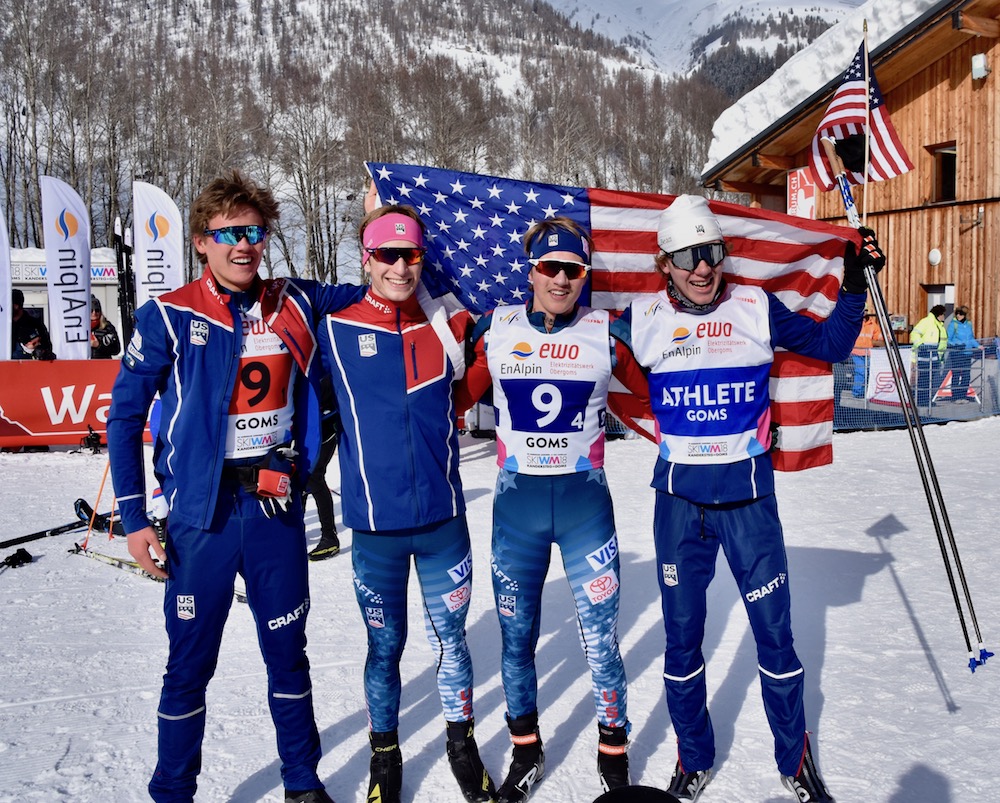
    The U.S. men’s silver-medal relay at the 2018 Junior World Championships in Goms, Switzerland, with (from left to right) Luke Jager, Hunter Wonders, Gus Schumacher, and Ben Ogden. (Photo: Julia Kern)

    The Long Middle Begins

    What followed was not a rapid ascent, but a prolonged middle years defined by steady development, incremental gains, and results that suggested promise without announcing arrival.

    On the World Cup, Wonders often raced from the margins. Finishes in the 50s and 60s gave way slowly to finishes in the 30s. The progress was real, but it did not demand attention.

    In American men’s skiing, where depth is both strength and complication, that middle can be unforgiving. Selection is rarely guaranteed. Criteria shift. Opportunity compresses.

    Wonders responded the way he had learned to respond in Alaska: by focusing inward. Training remained central.

    “For me, training has always been kind of the fun part… The training and living that lifestyle is really, really big to me.”

    That orientation would become essential later — when the question was no longer how to improve, but whether improvement was still worth pursuing.
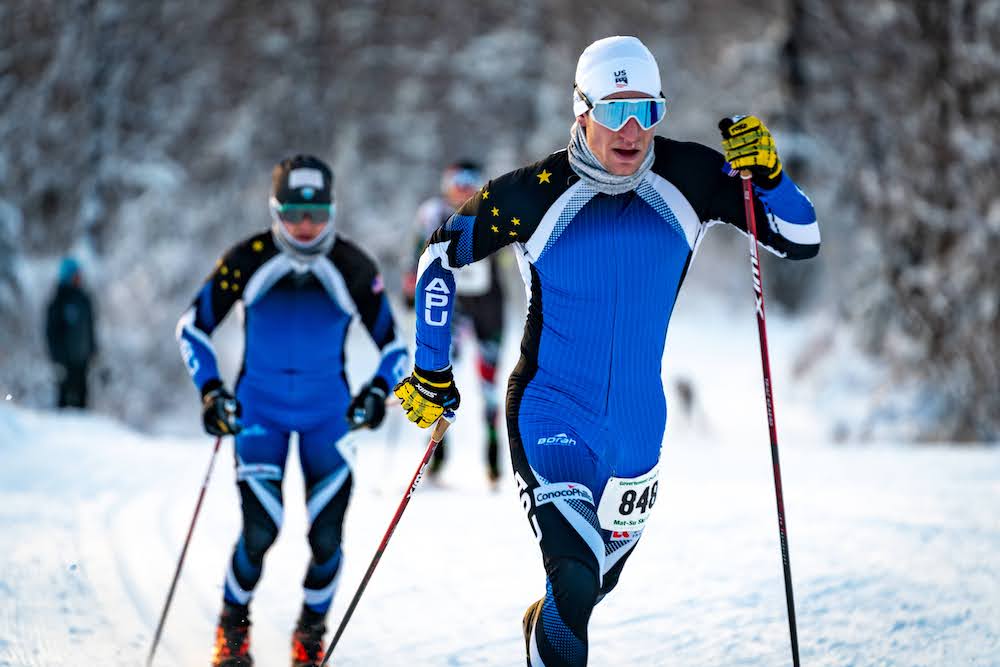
    Hunter Wonders races at Government Peak Recreation Area, Palmer, Alaska, Nov. 14, 2021, in the season-opening Race to the Outhouse #1. (photo: Eric Strabel for APUNSC)

    APU and Staying Put

    Alaska Pacific University provided continuity during those years. It was neither a junior factory nor a national-team satellite. Its athletes often arrived through unconventional paths and stayed longer than expected.

    For Wonders, APU offered stability without stagnation. Coaching relationships endured. Autonomy was preserved. Expectations were internal before they were external.

    Progress was allowed to be slow.

    That patience would later prove critical — because when Wonders eventually left the sport, and then considered returning, there was no system to rebuild, no trust to reestablish. The ground remained where he had left it.

    Hunter Wonders (USA) on his way to 16th place in the 10 k Classic in Beitostolen, Norway in 2022. (Photo: NordicFocus)

    Proof, Finally

    The breakthrough season arrived quietly, without spectacle or announcement.

    During the 2022–23 World Cup season, Wonders recorded the strongest international results of his career: a 16th-place finish in Beitostølen, Norway an 11th-place finish in Oberstdorf, Germany and a 23rd-place finish at Holmenkollen. The trajectory was unmistakable, even if it did not demand attention.

    “For me, that was a big jump from spending my time in the 50s, 60s,” he said.

    The significance of those results was not external. They did not alter his standing overnight or change how the sport viewed him. Their impact was internal.

    “It felt good. To prove to myself that I could ski with some of the best out there.”

    For years, that belief had existed as conviction rather than certainty. Now it had evidence. The question of whether he belonged — the one that had quietly governed training blocks, selections, and seasons — no longer needed answering.

    What remained was not ambition, but choice.

    Hunter Wonders (USA) on his way to 23rd place in the Holmenkollen 50 k Freestyle in Oslo, Norway in 2023. (Photo: Modica/NordicFocus)

    Leaving Without Collapse

    Retirement in endurance sport is often framed as inevitable. Bodies fail. Results decline. Motivation erodes. The decision arrives trailing visible causes.

    Hunter Wonders’ retirement did not follow that pattern.

    When he stepped away from World Cup racing in the spring of 2023, his career was not unraveling. It was consolidating. The season behind him had not forced his hand; it had freed it.

    “My planned last World Cup… it was right after a really good season for me,” he said.

    The timing mattered. He was not leaving with questions unanswered. He was leaving with a sense of completion.

    For a long time, Wonders had believed he could compete at that level. Now he knew it. And that knowledge altered the logic of staying.

    With the central doubt resolved, the future opened in unexpected ways. Instead of sharpening ambition, success created space to consider what life beyond skiing might look like, and whether the cost of continuing still made sense.

    “I thought I was content. I thought I was, you know… ready to move on.”

    The decision was not driven by exhaustion or dissatisfaction. It was driven by certainty — and by the rare freedom that certainty can bring.

    Crust ski in the spring time (Wonders’ all time favorite form of skiing). (Photo: Courtesy Photo)

    What It Means to Leave While Improving

    Leaving while things are going well carries a specific psychological weight. There is no obvious decline to explain the decision. No external force to blame. The athlete leaves not because the door is closing, but because it remains open.

    Improvement, once experienced, does not fade quietly. The body remembers what alignment feels like — when training, racing, and confidence converge. Walking away at that moment does not resolve ambition; it suspends it.

    Wonders framed his retirement as closure. But closure in elite sport is rarely permanent. The unanswered questions tend to return first, often in subtler forms.

    In his case, the unresolved question was not whether he could ski at the highest level. That had been answered. The question was whether he wanted to continue building a life that revolved so completely around it.

    From Seasons to Paychecks

    After stepping away, Wonders entered a different rhythm entirely.

    “That whole following summer, I worked construction, learned a lot of new skills. That’s when I got my pilot’s license.”

    The change was not symbolic. It was practical. Construction offered tangible progress — work that produced visible results and predictable compensation.

    “Even when skiing was going well, I just wanted to get out of it and work a normal job, get the normal paycheck, things like that.”

    The appeal of normalcy was not rooted in dissatisfaction with skiing. It was rooted in adulthood. After years of living season to season, the idea of stability carried weight.

    At the same time, Wonders had recently completed his degree at Alaska Pacific University.

    “I graduated with a bachelor’s in business administration,” he said.

    What followed was a transition many elite athletes experience but rarely articulate.

    “I found a really hard transition when I graduated from being a student athlete to just an athlete. I felt like I wasn’t progressing elsewhere in life. And that was pretty hard for me.”

    Without coursework, semesters, or academic milestones, skiing existed in isolation. Progress on snow no longer corresponded to progress in life. The imbalance unsettled him.

    The Second Discipline

    Aviation entered that gap not as a hobby, but as a parallel discipline.

    “I have my pilot’s license now, and I’ve been working on my instrument rating,” Wonders said.

    He described the training with precision.

    “Being able to fly only using what’s on the dashboard of the plane. Basically, no looking outside the plane.”

    Instrument flight is unforgiving. It demands trust in systems over instinct, procedure over perception. For Wonders, it offered a structure that mirrored elite sport without duplicating it.

    “It’s been giving me something to work on outside of skiing, which has been really nice.”

    More importantly, it offered psychological margin.

    “It’s a very important thing for me, I think, to not feel trapped.”

    The word matters. Trapped implies more than fatigue or burnout. It implies a loss of agency — the sense that leaving would erase identity rather than expand it.

    Aviation gave Wonders a way to be committed to skiing without being consumed by it.

    A Life That Almost Fit

    For a time, the other life worked.

    Construction days were long and direct. Progress was visible. Paychecks arrived on schedule. Flight training offered complexity, mastery, and forward motion.

    The pace was different. The stakes were different. The feedback was immediate.

    Skiing receded into the background — not as a regret, but as a completed chapter.

    Yet even in that distance, the sport did not disappear entirely. It remained embedded in routine, in memory, in the body’s sense of what effort felt like.

    Wonders did not describe missing racing. He described missing the calendar.

    In November of 2022 Hunter Wonders (USA) was on his way to 30th place at the opening World Cup weekend in Ruka, Finland, but a year later he was home in Alaska. (Photo: NordicFocus)

    November

    “When everyone started peacing out to go race, I was like, man, what am I doing?”

    November arrived the way it always does in elite skiing — as a turning point. Training blocks gave way to travel. Preparation became exposure.

    For athletes still inside the system, November is movement. For those who have stepped away, it is absence.

    The routines disappear first. Then the shared language. Eventually, the calendar itself feels unfamiliar.

    Wonders’ realization was not emotional. It was logistical.

    “I can always be installing insulation in some random house someday, but I can’t be skiing forever.”

    November clarified something Wonders had not fully confronted while working construction or studying flight manuals: skiing was not just a job he had left. It was a window with an expiration date.

    The question was no longer whether another life was possible. That had been answered. The question was whether he was prepared to let the skiing life close while it remained viable.

    APU Head Coach Erik Flora, Chip Schoff, and Oscar Flora after getting the PistenBully running on Eagle Glacier last spring. (Photo: Courtesy Photo)

    The Conversation That Changed the Direction

    Wonders began talking again with his APU coach, Erik Flora. The conversations were not urgent.

    “He was very enthusiastic about my getting back into skiing. And so that just made that step a little easier.”

    There was no pressure to return immediately. No demand for proof. The space remained open.

    What followed was not an impulsive comeback, but a deliberate reconstruction.

    Fishing trip on the Gulkana river this last September with close friends. (Photo: Courtesy Photo)

    A Three-Year Calendar

    Rather than simply resuming his previous life, Wonders built a framework designed to prevent the same tension from reemerging.

    “I just planned out this three-year calendar kind of to right now,” he said.

    The calendar was not about training volume or race targets.

    “I blocked off weeks that I was like, okay, these chunks of time, I’m not going to be thinking about ski racing.”

    Those blocks were non-negotiable.

    Moose hunting with his father and brother. Fishing weekends on the Kenai Peninsula. Commitments that anchored him to a life beyond snow.

    “There are certain things I was willing to give up and certain things I wasn’t.”

    The decision to return was conditional. Skiing would be central again, but not all-consuming.

    Moose hunting camp with his dad and brother in interior Alaska. (Photo: Courtesy Photo)

    The Return, Without Announcement

    When Hunter Wonders returned to full-time racing, there was no formal reintroduction. No narrative reset. No expectation that the sport should receive him differently than it had before.

    He did not return as a project. He returned as a person who had already tested the alternative.

    The first season back was uneven by his own account — fitness arriving in pieces, rhythm coming and going — but the framework held. The calendar he had built remained intact. The boundaries were not abandoned under pressure.

    “Coming back from retirement wasn’t the easiest. Not… not the most productive thing,” he said.

    The difference this time was not performance. It was posture. He no longer treated each result as a referendum on identity. He had already stepped outside the system once and learned what waited there.

    That knowledge altered how he handled uncertainty.

    Hunter Wonders (USA) during the 10 k Freestyle in Les Rousses, France of January of 2025. (Photo: Authamayou/NordicFocus)

    Progress Without Urgency

    As the return season unfolded, improvement came incrementally — the way it always had for Wonders. There was no single race that announced transformation. Instead, there was accumulation: training blocks completed, races absorbed, effort normalized.

    The quiet confidence that had once been provisional now appeared settled. Racing no longer felt like a test of belonging. It felt like execution.

    That distinction matters in Olympic years, when urgency can distort judgment. Athletes often feel pressure to force form, to manufacture moments that prove readiness. Wonders did not describe that impulse. He described a narrowing focus.

    “I really tried to narrow the focus. And limit some distractions in the last year. I just wanted to go all in.”

    The phrase carried none of its earlier desperation. “All in” now meant presence rather than sacrifice — committing fully to skiing while refusing to let it consume everything else.

    Hunter Wonders (#369 – APU) on his way to winning the opening race, a 10 k Individual Start Classic, at the US National Championships in Lake Placid, New York, at the beginning of January. (Photo: Nancie Battaglia)

    The Olympic Winter, Reframed

    Olympic selection seasons tend to magnify everything. Results are scrutinized more closely. Criteria are parsed more aggressively. Small margins carry exaggerated meaning.

    For athletes who have never stepped outside the system, that pressure can feel total. For Wonders, it did not.

    He had already lived the other version of his life — the one with construction hours, flight manuals, and normal paychecks. He knew that version was viable. He also knew it was incomplete.

    That knowledge changed how the Olympic Winter Games landed.

    The selection process did not define him. It tested him.

    Hunter Wonders (USA) racing the 10 k Classic in Oberhof, Germany on the final weekend of racing that was considered for making the US Olympic Team. (Photo: Authamayou/NordicFocus)

    Selection as Consequence

    When the Olympic team was named, Wonders’ response did not resemble arrival. It resembled recognition.

    “My parents are coming over. I’m very excited about that,” he said.

    Their presence mattered more than the announcement itself.

    “Regardless of whether I made the Olympics or not, they were going to be supportive and proud.”

    That certainty allowed the moment to settle without drama.

    Still, the meaning was clear.

    “To me, making the Olympics is kind of like paying them back… like, I finally made it.”

    The phrasing was not triumphant. It was relational. The Olympics were not framed as destiny fulfilled, but as acknowledgment earned — proof that the years of logistics, travel, and patience had resolved into something concrete.

    Hunter Wonders (USA) during the 20 k Classic Mass Start in Goms, Switzerland, the weekend after he had been named to the US Olympic Team. (Photo: Authamayou/NordicFocus)

    After the Goal

    The days after selection often reveal more than the selection itself. For many athletes, the achievement creates a vacuum. The central question disappears, replaced by a quieter one: Now what?

    Wonders articulated that shift immediately.

    “Now it’s hard. I’ve been kind of thinking about now, what are my goals going forward?”

    Qualification had resolved the season’s largest uncertainty. It also removed the shelter of pursuit.

    “I don’t want to look like a bum at the Olympics… that’s not why I came here.”

    The bluntness mattered. Making the team had never been the end of the story. It was a threshold — one that demanded a different kind of clarity.

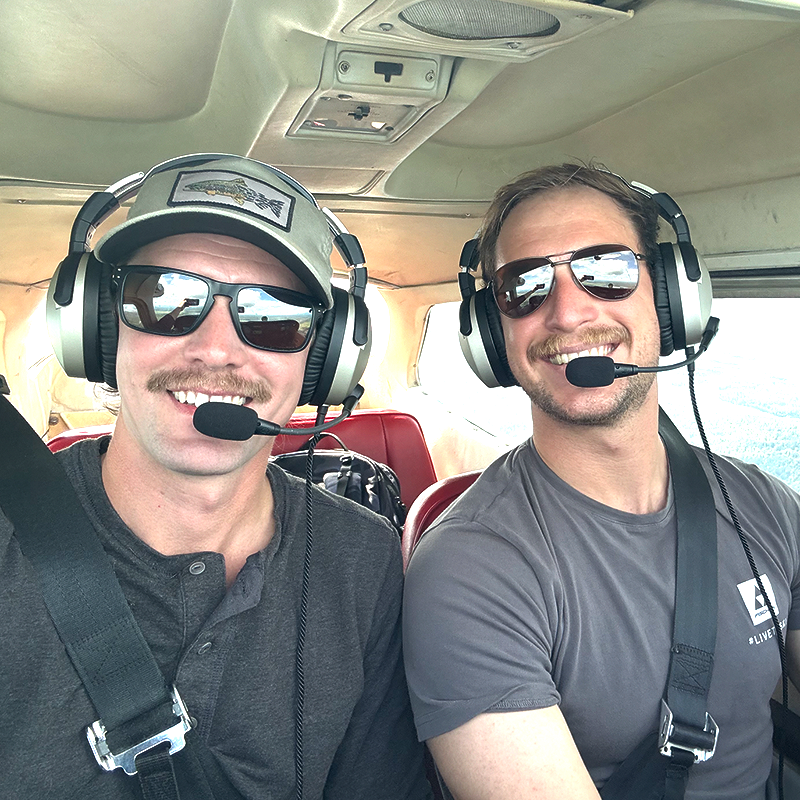
    Wonders taking his friend, who’s also a pilot, on a flight while he visits Alaska. (Photo: Courtesy Photo)

    Flying by Instruments

    The metaphor that runs quietly through Wonders’ story — though he never names it as such — is aviation.

    “Being able to fly only using what’s on the dashboard of the plane,” he said, describing his instrument rating.

    Instrument flight requires a specific discipline. When visibility disappears, instinct becomes unreliable. The pilot must trust systems rather than sensation, training rather than impulse.

    That discipline mirrors the way Wonders has navigated his return. He has learned not to chase feelings — not to react to noise — but to trust the structures he has built.

    In an Olympic year defined by margins, criteria, and scrutiny, that trust is rare.

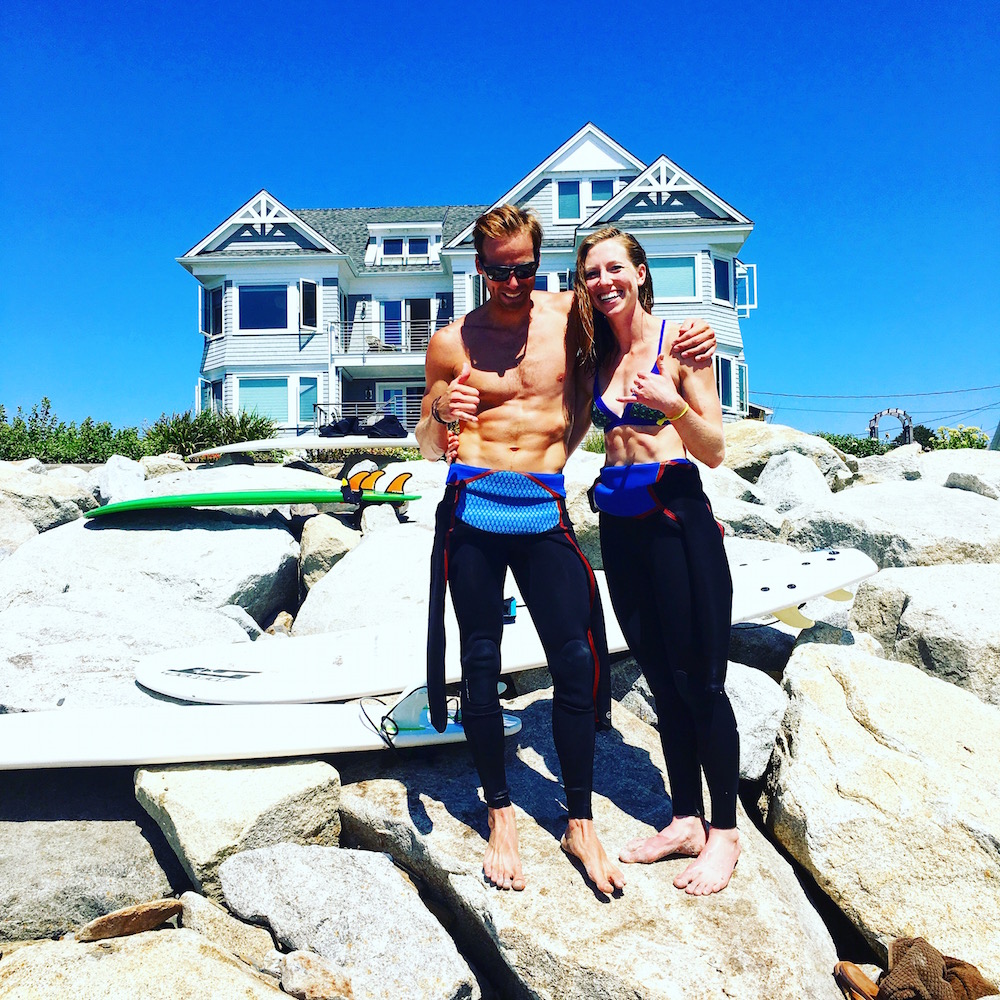
    When these two embrace each other next, they will have gone from this first ski on the back deck all the way to the Olympics. (Photo: Courtesy Photo)

    A Different Kind of Olympic Story

    Hunter Wonders will arrive at the Olympic Games as a first-time Olympian. He will not arrive as someone who chased the Olympics at all costs.

    He has already lived the alternative. He knows what it means to step away, to build another life, to find meaning beyond the sport. That knowledge changes how the Olympics function in his story.

    The arc matters because it resists simplification. It does not fit neatly into the narratives elite sport prefers — prodigy, burnout, comeback. It occupies a quieter space: adulthood.

    Wonders did not return because he had nothing else. He returned because he chose skiing again — deliberately, with boundaries intact, with the instruments checked and trusted.

    In endurance sport, where careers are often defined by urgency and fear of loss, that choice may be the rarest qualification of all.


    Help Support Our Olympic Coverage!

    FasterSkier will have our own Nat Herz on the ground at the Olympics, which, to be honest, is a very big financial lift for us. If you value the thoughtful work and access FasterSkier provides at championships like this one, please consider becoming a Voluntary Subscriber. Your support directly fuels the work we do to cover the people, places, and moments that make our sport special.

    Join the FasterSkier community!


    If Hunter Wonders (#302) earns an Olympic start this February, hopefully, it will be a little less chaotic than the start of the US Junior National Championship in Stowe, Vermont, in 2014. (Photo: Voisin/FasterSkier)
  • News Roundup: TV Viewing, West Yellowstone Ski Festival Cancellation, Results From FIS Races in Beitostølen and Gällivare

    News Roundup: TV Viewing, West Yellowstone Ski Festival Cancellation, Results From FIS Races in Beitostølen and Gällivare

    Broadcast Updates:

    We have a quick update to the information we published last week regarding cross country broadcast schedules from Tom Horrocks, Communications Manager for the Davis U.S. Cross Country Ski Team. After finalizing schedules, NBC will have all World Cup events available for streaming through their PeacockTV platform.

    As mentioned in the first post, there is also a new streaming platform, Ski and Snowboard Live, which is owned by the production company InFront. This platform will have all World Cup events available, except those taking place in Austria and Switzerland. These broadcasts will have English commentary, whereas NBC typically will not have commentary.  

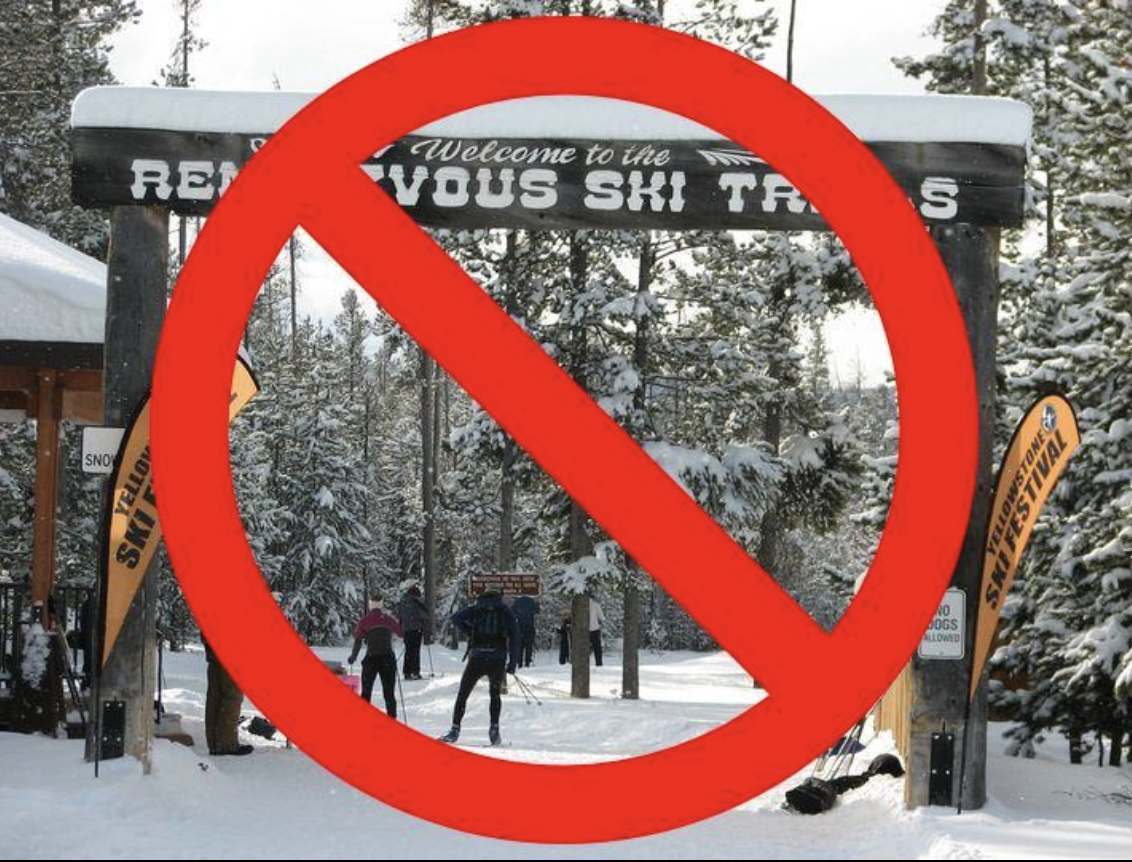
    The 2021 West Yellowstone Ski Festrival has been cancelled due to lack of snow. (Photo: Instagram @yellowstoneskifestival)

    West Yellowstone Ski Festival Cancelled:

    It has been a dry start to the winter across much of the West. Ski, Run, Bike Montana announced yesterday that the annual West Yellowstone Thanksgiving ski festival on the Rendezvous Ski Trails has been cancelled due to lack of snow. This cancellation includes the FIS races scheduled on the 27th. Typically, elite athletes use this race as a tune-up before the SuperTour begins the first weekend of December, this year in Duluth, MN. 

    To those who have already registered for clinics, passes, or events, expect an email from organizers. Additional updates can be found on Facebook and Instagram

    Spending Thanksgiving in West Yellowstone has also become an annual tradition for many club skiers and cross country ski enthusiasts looking to kick off their season with a week of sliding on well-groomed snow. Let’s hope this, the first cancellation in 32 years of the event, is an anomaly. 

    Kevin Bolger took second in the freestyle sprint in Gällivare, Sweden. (Photo: www.fis-ski.com)

    FIS Races in Sweden and Norway:

    Piggybacking on Devon Kershaw’s discussion of opening FIS races in Scandinavia and Finland, we’ll take a look at results from two primary events this weekend, first in Gällivare, Sweden and second in Beitostølen, Norway.

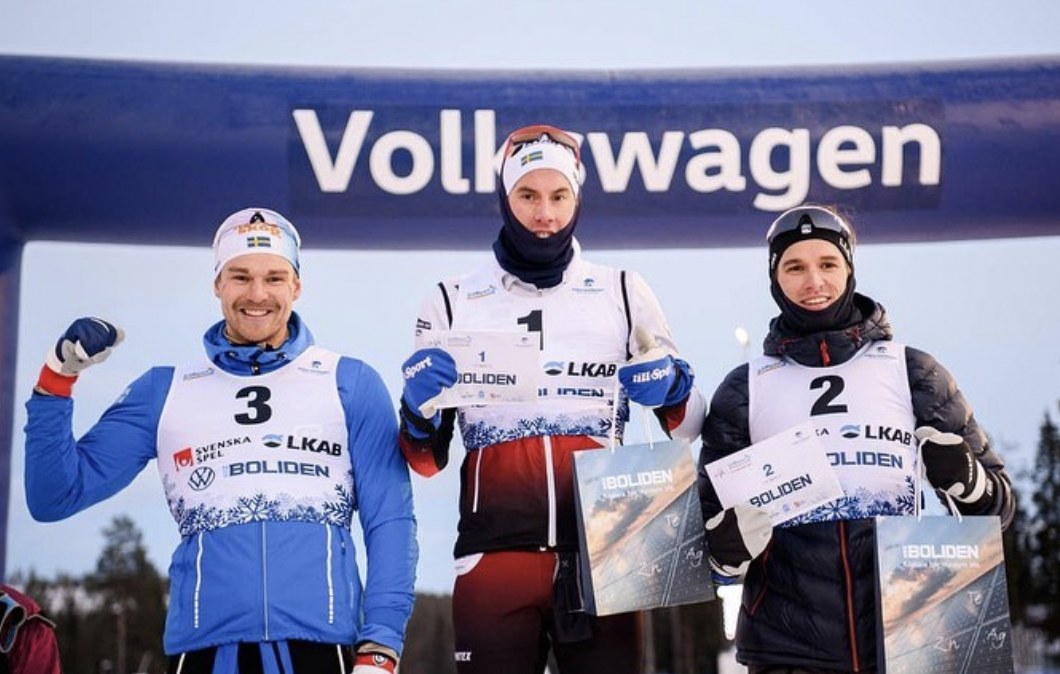
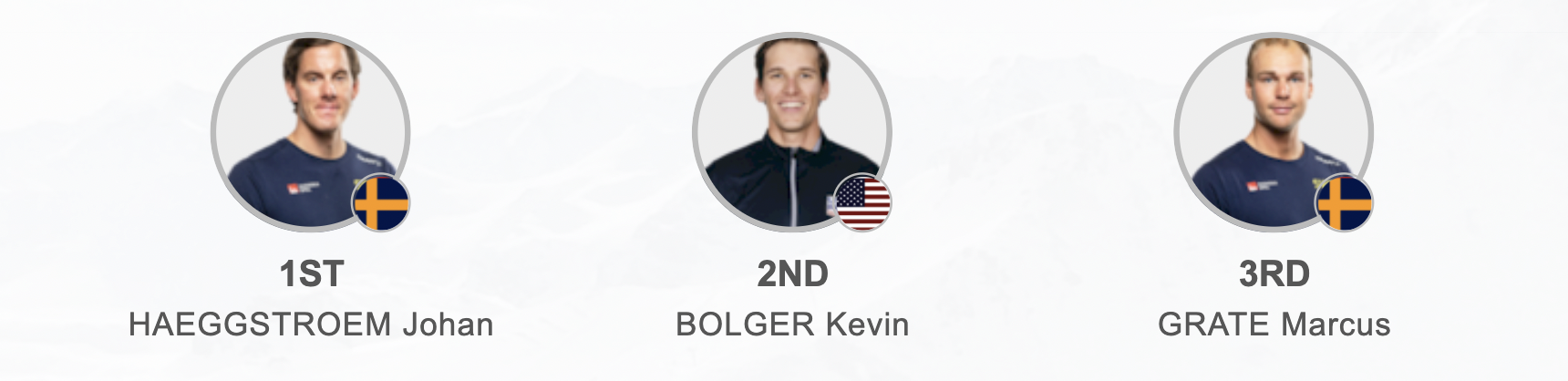
    Perhaps the most important result to highlight took place in the men’s freestyle sprint on November 19th. After placing 14th in the qualifier, Kevin Bolger raced his way onto the podium for a second place finish behind Johan Haggström (SWE). Marcus Grate (SWE) took third. Bolger also raced the 15k classic on the 20th where he finished 37th (+2:23). 

    Kevin Bolger took second in the freestyle sprint in Gällivare, Sweden. (Photo: Instagram @kevinbolger)

    Bolger spent much of his summer training in Sweden alongside his partner, top Swedish athlete Maja Dahlqvist. Bolger will join the U.S. Ski Team for the opening World Cup races this weekend in Ruka, Finland. 

    (Find full results from the races in Gällivare here.)

    Moving on to Beitostølen where most of the Norwegian National Team showed up to throw down, vying for World Cup starts and foreshadowing their readiness to contend. Though other top international racers were in the field, Norway swept all four podiums. 

    For the women — no surprises here — Therese Johaug won both the 10k classic and skate distance races by a significant margin. Teammate Heidi Weng took the second spot on the podium both days, finishing 43 seconds back in the classic and 35 seconds back in the skate. Silje Theodorsen was third in classic (+1:18.9) and Ragnhild Haga was third in skate (+45.1).

    Also posting strong results for USA, Sophia Laukli of the U.S. Cross Country D-Team placed 7th in the 10k skate (+1:24.0). Laukli caught a ride on Weng’s tails, which she credits for her strong result. We just noticed how well she was able to match the Norwegian. Laukli also placed 15th in the 10k classic (+2:28.3).

    Sophia Laukli raced to 7th place in the 10k skate in Beitostølen. (Photo: Instagram @sophialaukli)

    On the men’s side, racing was a bit tighter. In the 15k classic, Hans Christer Holund took the win ahead of Emil Iversen (+17.3) and Håvard Moseby (+24.5). In the 15k freestyle stage, Harald Østberg Amundsen, who took third (despite a late crash) in the event at his first senior World Championships last year, edged out Sjur Røthe who finished 2.4 seconds back. Emil Iversen, on back-to-back podiums, was third (+13.4). 

    Harald Østberg Amundsen skis his way onto the podium in his first senior World Championships. (Photo: NordicFocus)

    (Find full results from the races in Beitostølen here.)

    The World Cup kicks off on Friday November 26th with a men’s and women’s classic sprint. 


  • Day Three in Beitostølen: Men’s 15 k Freestyle (Updated with Audio Interviews)

    Day Three in Beitostølen: Men’s 15 k Freestyle (Updated with Audio Interviews)

    The men’s all Norwegian 15 k skate podium. Simen Hegstad Krüger (c), Martin Løwstrøm Nyenget (l) placed second and Hans Christer Holund (r) was third. (Photo: Aleks Tangen)

    The third and final day of the Norweigan opening races Beitostølen, Norway  — during which the conditions hovered around freezin — saw Simen Hegstad Krüger win the 15-kilometer freestyle in 30:16.4. Martin Løwstrøm Nyenget of Norway placed second (+3.7), and Hans Christer Holund was third (+8.7). 

    Martin Johnsrud Sundby, having a rough reentry to the racing season, did not finish the race.

    The U.S. Ski Team, recently arrived in Norway, used the Beitostølen races as a tune up before starting the World Cup season next week in Ruka, Finland. 

    David Norris (APU) was the top ranked American in 34th (+1.27.5). Scott Patterson (USST) placed 48th (+1:57.6), Simi Hamilton (USST) 51st (+2:02.8), and Kyle Bratrud (SMS T2) 60th (+2:21.2).

    David Norris’ mixed zone interview

    Scott Patterson’s mixed zone interview

    Simi Hamilton mixed zone interview

    Andrew Musgrave’s mixed zone interview

    Andrew Young’s mixed zone interview

    Men’s Results


    Simi Hamilton of the USST racing the 15 k skate in Beitostølen. (Photo: Aleks Tangen)

    Sports betting on bilbet in India

  • Norway’s Ingvild Flugstad Østberg Pulls from Beitostølen Races

    Norway’s Ingvild Flugstad Østberg Pulls from Beitostølen Races

    Norway’s Ingvild Flugstad Østberg winning Stage 6 of the Tour de Ski – a 10 k mass start classic race. (Photo: Fischer/Nordic Focus)

    With the season-opening national races in Beitostølen, Norway staged to begin a three race stint on Friday, Ingvild Flugstad Østberg announced she will not be competing. Østberg was last season’s overall World Cup winner. She also stated in a press conference that she will miss next week’s World Cup opener in Ruka, Finland.  

    “I’ve ended up in a situation where I can’t ski. There are health reasons behind this. All the requirements in the health certificate are not met,” said Østberg according to a translated article from Langrenn.com. Langrenn reported Østberg was “healthy and injury-free, but that her body needs rest to recover.” There is speculation in the Norwegian media that Østberg is not meeting certain minimum body-weight requirements for competing. 

    Racing weight has been mainstream news in the U.S. with the recent revelations from former Nike runners Mary Cain and  Amy Yoder Begley.

    The twenty-nine-year-old Østberg was one of several pre-season favorites to take the overall World Cup title. 

    Racing begins tomorrow in Beitostølen with a classic sprint. The U.S. Ski Team is settled in Beitostølen and will use these races as a tune-up prior to the Ruka Triple beginning next Friday. bonus 20bet prvi depozit 


  • Masters World Cup Wraps up in Beitostølen

    Masters World Cup Wraps up in Beitostølen

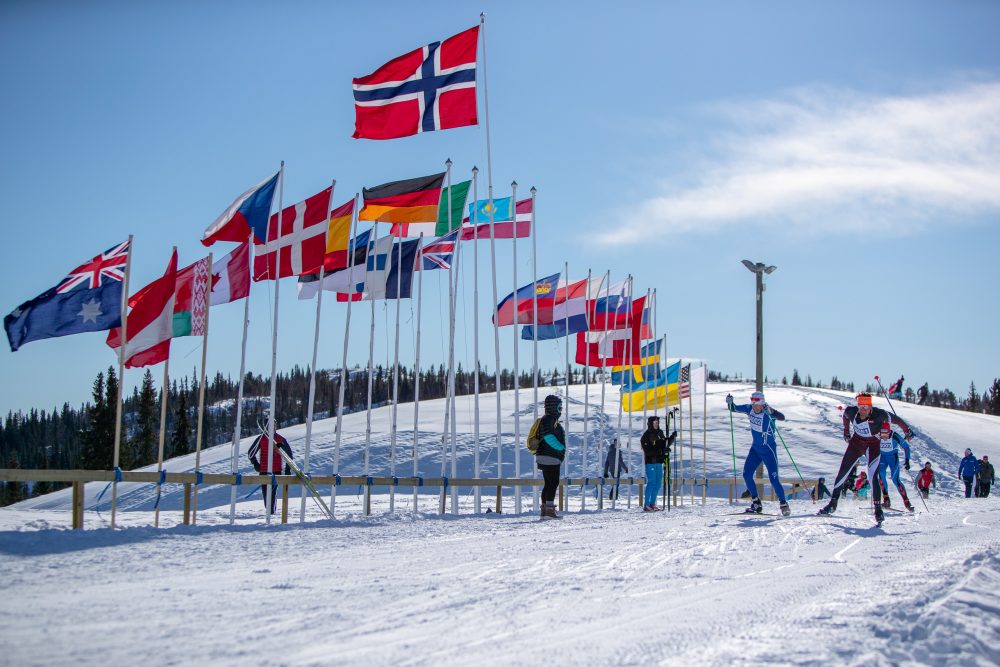
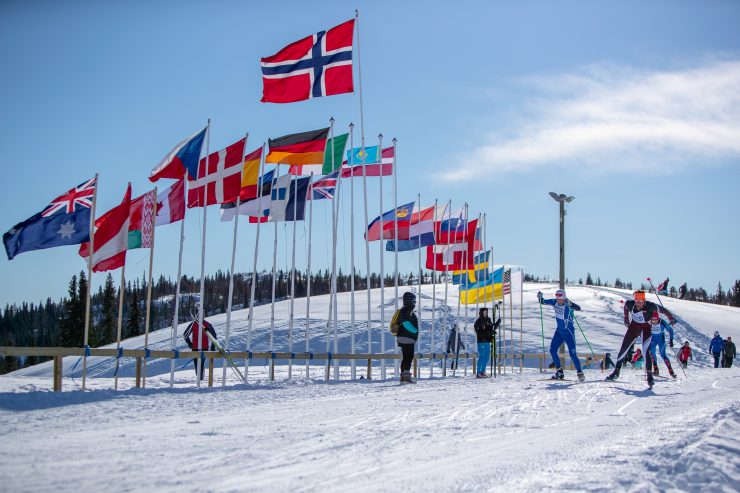
    Winner Aleksandr Pushkarev of Russia (left) leads fellow podium finishers Marco Mosconi of Italy (right) and Christophe Blanchet Nicoud of France (rear) past the flags at the edge of the stadium as they approach the finish line in the M4 10 k freestyle race at World Masters in Beitostølen, Norway, in March 2019. (photo: courtesy MWC 2019)

    BEITOSTØLEN, Norway — Team USA led the participation numbers while Russia topped the medal table in the 2019 Masters World Cup, the annual competition for skiers aged 30 and over that wrapped up in this mountainside hamlet on Thursday. Roughly 1,000 skiers from 26 different nations, from the predictable (Norway, Finland) to the unexpected (Thailand!), made their way to the Oppland region for seven days of competition and up to four races per athlete, three individual races plus potentially the relay.

    To say that the competition had an effect on Beitostølen is an understatement. The resort community has an official population of only a few thousand; Mayor Kjell Berge Melbybråten, who was also the Chief of Stadium, welcomed visitors and noted that the town’s population was increasing by nearly thirty percent during the races. Athletes in matching team jackets walked the city streets, bought out the entire stock of yogurt at the SPAR grocery store, and washed their hands incessantly. It was like being at a scaled-down Winter Olympics, if everyone involved were older and slower.

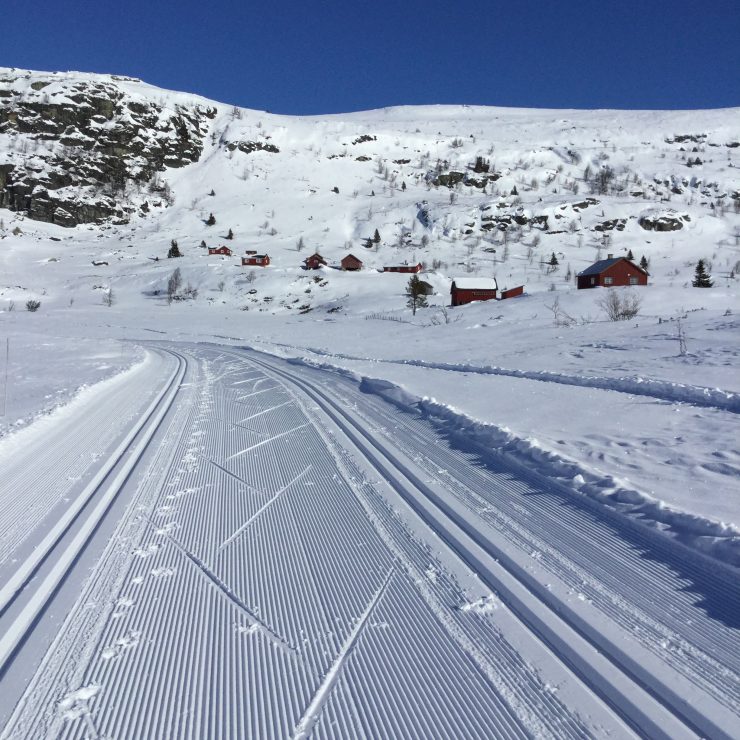
    Mountains and farmhouses on the ski trails above Beitostølen, Norway, in March 2019. (photo: Gavin Kentch)

    But not that much slower. The need to set courses that would be suitable for the oldest athletes (an M13 skier, Charles French, competed this year; he was born in 1926, during the Coolidge Administration), combined with fast conditions for several of the middle days of competition, led to some eye-catching times. The fastest time for the 10-kilometer freestyle race was 21:48, which will win virtually any World Cup 10 k. Heck, the fastest women’s time, 25:44, would be competitive in some men’s World Cup races.

    (It should go without saying that the Beitostølen courses were substantially easier than a homologated FIS course. This reporter finished the 10 k skate in Beitostølen in 24:29. He completed 10 k skate races on homologated courses earlier this season in 32:08 and 33:13, albeit in relatively slow snow conditions that each time slowed winner Gus Schumacher’s time to 26 minutes and change. This reporter is not a faster skier than Gus Schumacher.)

    An M7 skier finished the 15 k skate in 37:34. An F5 skier covered the same distance in 43:51 (albeit after several hundred men had already tracked up the course; race organizers put men on the course first in nearly all of the races).

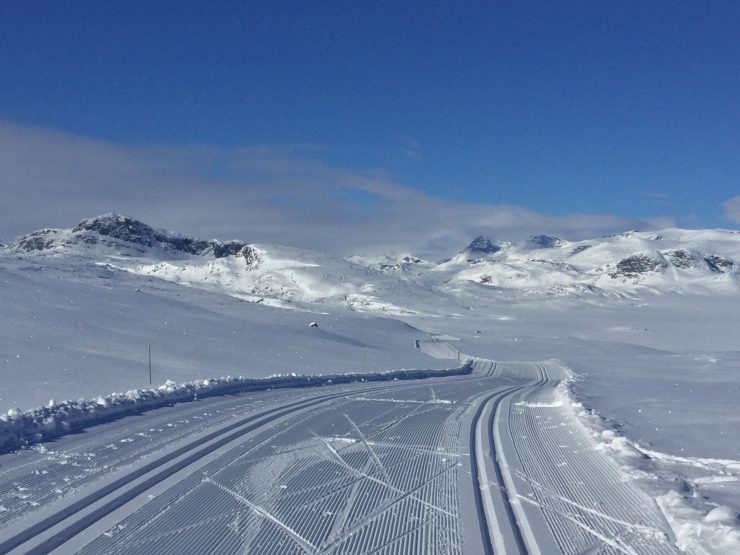
    Mountain views on the ski trails above Beitostølen, Norway, in March 2019. (photo: Gavin Kentch)

    All that said, it snowed roughly a foot between the relays (last Tuesday) and the distance classic races (Wednesday), leading to markedly slower times in fresh snow and soft courses. Up to half the field either did not start or did not finish some divisions of Wednesday’s races.

    The organization was generally impeccable throughout the competition, with some exceptions. The decision to forego bringing in additional portable toilets, and to host roughly 500 athletes per day at a venue with only five permanent toilets, fell somewhere between noteworthy and puzzling.

    antabuse


    American medalists are listed below for all races over seven days of competition. Simple results are available here; live timing with detailed splits is currently available here. All races were held in a mass start format.

    The 2020 Masters World Cup will be in Cogne, Italy, from March 5–14. Spring 2021 gives Canmore its chance to shine.

    Middle distance classic (March 8, 2019)

    F4 15 k classic, Shannon Brockman, 3rd

    F7 15 k classic, Magdalena Bowen, 3rd

    F11 10 k classic, Patricia Kaald, 2nd; Barbara Lewis, 3rd

    M1 30 k classic, Paul Allison, 1st

    M13 10 k classic, Charles French, 1st


    Middle distance skate (March 9, 2019)

    F2 15 k skate, Lindsey Bengtson, 1st; Sonja Johnsen, 2nd

    F4 15 k skate, Molly Zurn, 2nd

    F5 15 k skate, Laura McCabe, 1st

    F6 15 k skate, Betsy Youngman, 1st

    F9 10 k skate, Trina Hosmer, 1st

    F11 10 k skate, Joanne Davis, 2nd

    M8 15 k skate, David Johnston, 2nd

    M10 10 k skate, Bob Gray, 3rd


    Shannon Brockman (USA) on course for the second leg of the relay for Team USA in the F3/F4 division at World Masters in Beitostølen, Norway, Looking for the best deals on ammunition? You will find the top selling, best ammo of the past year here: from the best 9mm, 45 ACP, to 22LR, and .30-06, by the box, bulk ammo, flip-top ammo boxes, surplus ammo, the best home defense ammo, and shotgun shells: find the top sellers of the past year. Updated daily! Shop online best ammo for cheap prices at AmmoFire – find out which online Ammo Shop has the best price, in-stock, right now. How does AmmoFire.com work? We visit numerous online ammunition retailers every day and keep track of who has the cheapest ammo in stock. Are you an online ammo retailer? in March 2019. (photo: Keith Sides)
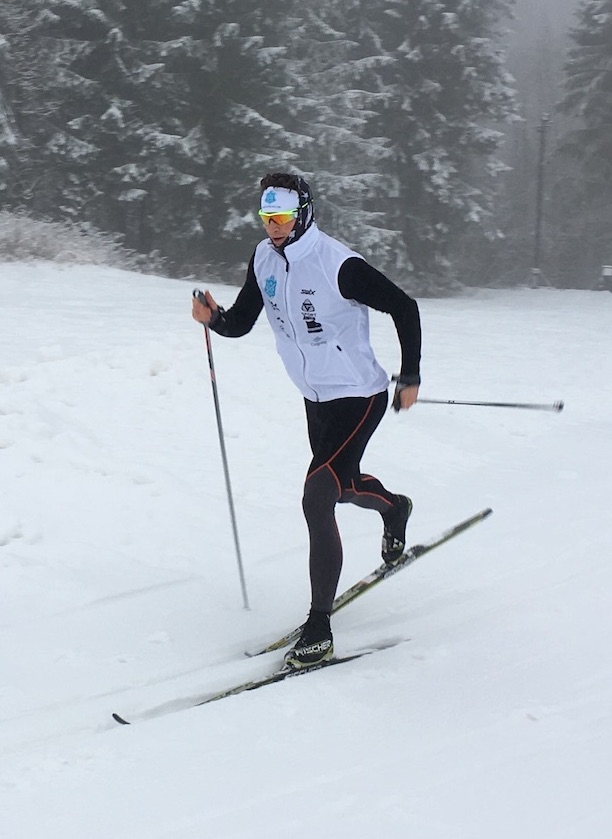
    Short distance classic (March 10, 2019)

    F3 10 k classic, Inge Scheve, 3rd

    F5 10 k classic, Laura McCabe, 3rd

    F6 10 k classic, Betsy Youngman, 1st

    F7 10 k classic, Magdalena Bowen, 3rd

    F9 5 k classic, Trina Hosmer, 1st

    F11 5 k classic, Patricia Kaald, 2nd

    M1 10 k classic, Phillip Violett, 2nd

    M13 5 k classic, Charles French, 1st


    Short distance skate (March 10, 2019)

    F2 10 k skate, Lindsey Bengtson, 1st; Sonja Johnsen, 3rd

    F8 10 k skate, Carolyn Tiernan, 3rd

    F11 5 k skate, Joanne Davis, 1st

    M8 10 k skate, David Johnston, 1st

    M10 5 k skate, Odd Osland, 3rd


    4 x 5 k relay (classic–classic–skate–skate, March 12, 2019)

    F1/F2, Team USA (Donna Difolco, Emily Lovett, Cynthia Decker, Lindsey Bengtson), 2nd

    F5/F6, Team USA (Betsy Youngman, Magdalena Bowen, Tricia Swartling, Laura McCabe), 1st

    F7/F8, Team USA (Muffy Ritz, Mary Heller Osgood, Dorothy Childers, Katie Meyer), 3rd

    F9/F10, Team USA (Trina Hosmer, Nancy Bauer, Sharon Crawford, Carol Monteverde), 3rd

    M1, Team USA (Phillip Violett, Rune Harkestad, Gavin Kentch, Karl Walczak), 3rd

    M6, Team USA (Barry Makarewicz, Odd Bersvendsen, Milan Baic, Kent Murdoch), 3rd


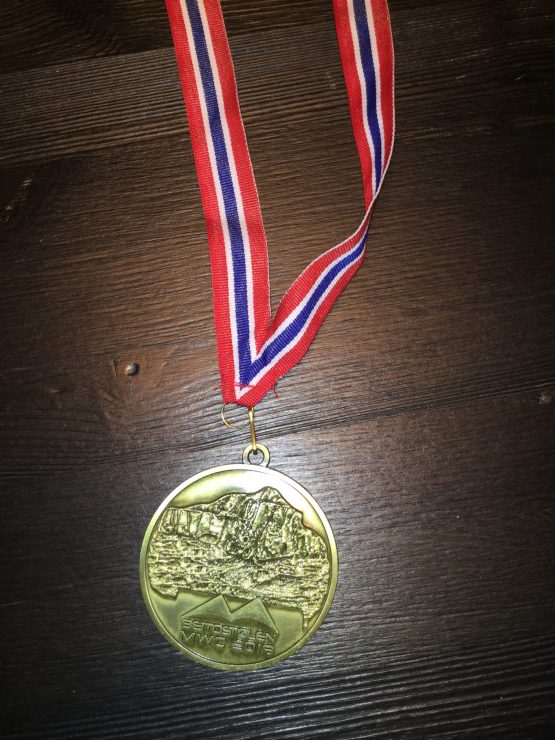
    Medal from 2019 World Masters, Beitostølen, Norway, in March 2019. (photo: Gavin Kentch)

    Long distance classic (March 13, 2019)

    F3 30 k classic, Inge Scheve, 3rd

    F6 30 k classic, Betsy Youngman, 1st

    F9 15 k classic, Trina Hosmer, 1st

    F11 15 k classic, Patricia Kaald, 2nd

    M1 45 k classic, Phillip Violett, 2nd

    M13 15 k classic, Charles French, 1st


    Long distance skate (March 14, 2019)

    F2 30 k skate, Lindsey Bengtson, 1st

    F4 30 k skate, Molly Zurn, 3rd

    F5 30 k skate, Laura McCabe, 1st

    F8 30 k skate, Ginny Price, 2nd; Carolyn Tiernan, 3rd

    F11 15 k skate, Joanne Davis, 2nd

    M1 45 k skate, Matthew Rossman, 3rd

    M6 45 k skate, Barry Makarewicz, 2nd

  • Norway Holds Off Russia for Another Relay Win; Americans in 12th

    Norway Holds Off Russia for Another Relay Win; Americans in 12th

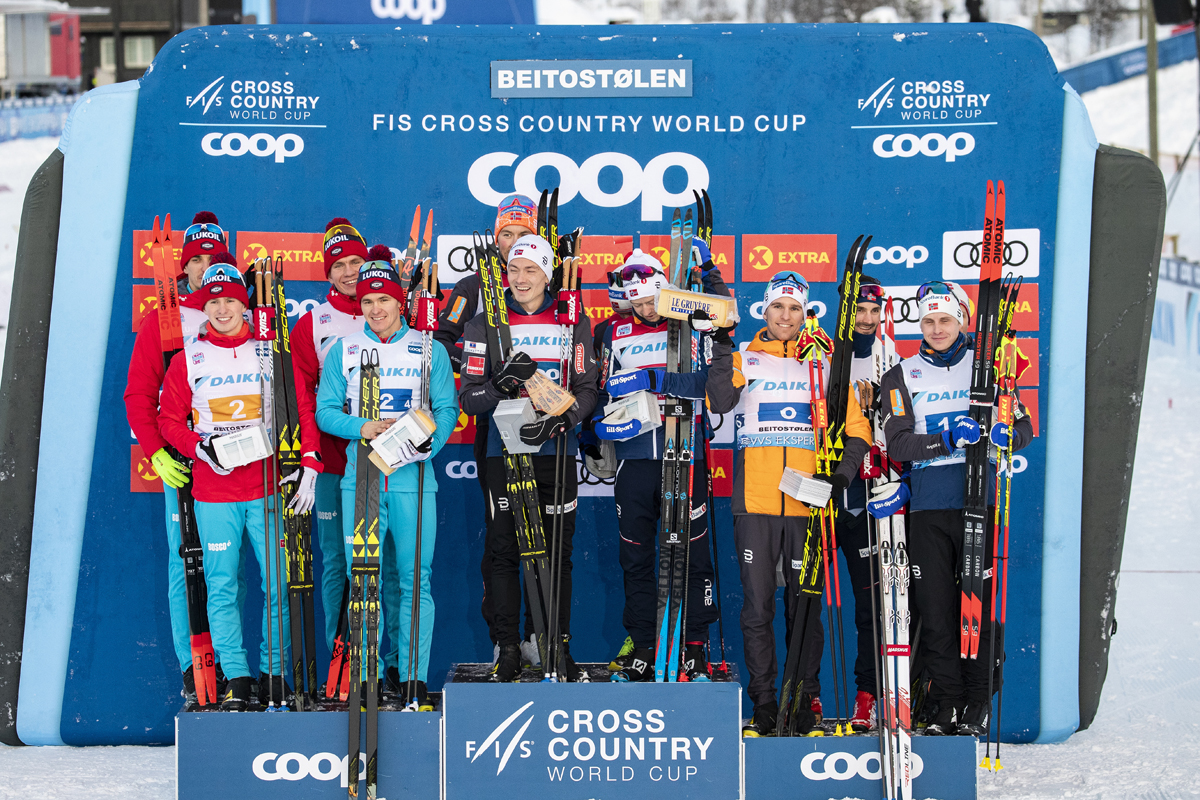
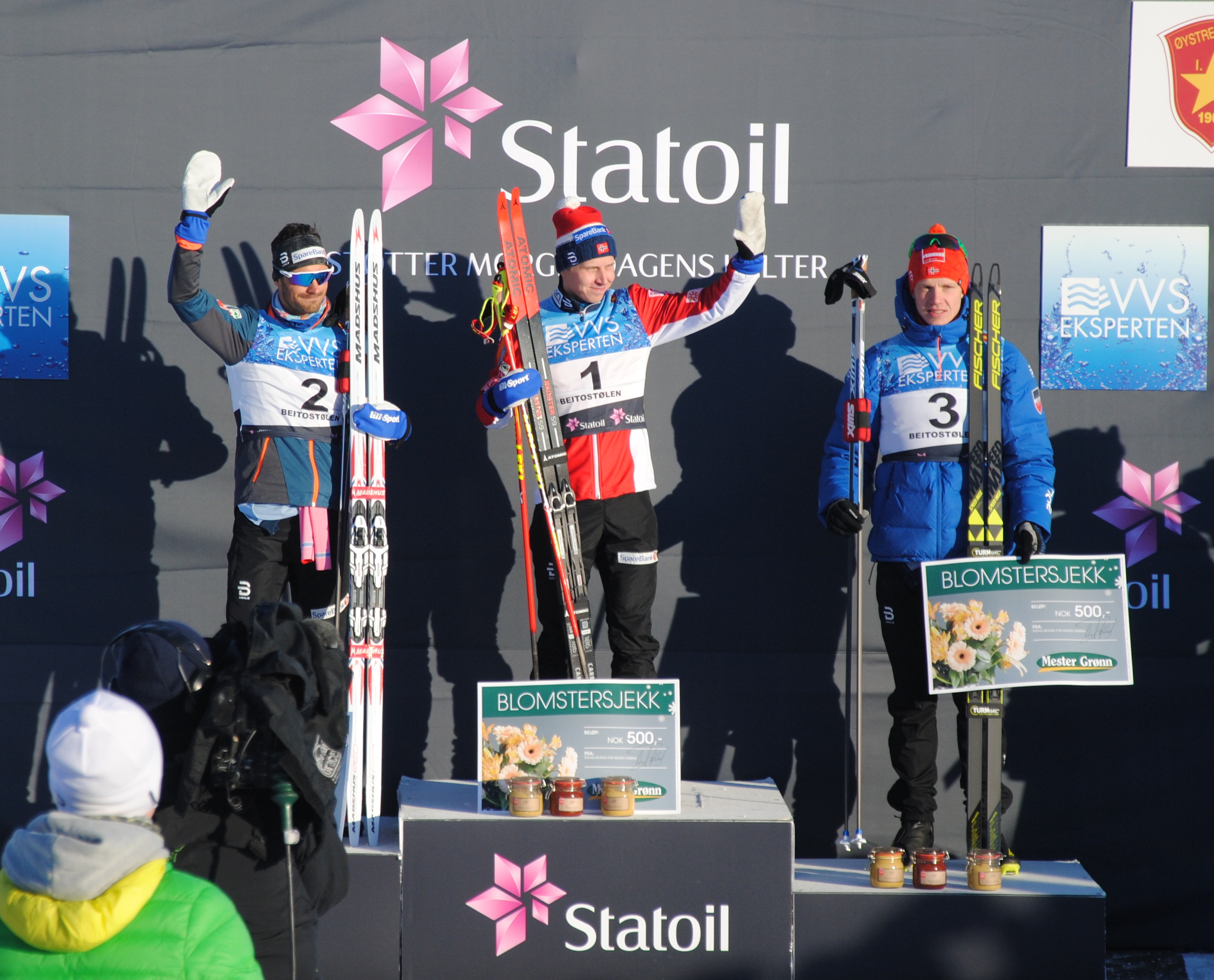
    The men’s 4 x 7.5 k relay podium from Beitostølen, Norway. Norway I (center) won, Russia I (left) placed second, and Norway II (right) third. (Photo: Fischer/Nordic Focus)

    As Emil Iversen took command of the field from the gun during the men’s relay in Beitostølen, Norway, striding smoothly up the first climb in the lead, the question quickly became, can anyone take down Norway?

    The team of Iversen, Martin Johnsrud Sundby, Sjur Røthe, and Finn Hågen Krogh must have liked their odds. Norway has claimed eight of the last nine men’s relay victories on the World Cup, falling only to Russia in Lillehammer’s 2013 men’s relay. Norway’s last time missing a podium in a relay occurred in 2007. While historically, the race has been a 4 x 10-kilometer event, the men’s relay on Sunday consisted of four 7.5 k legs.

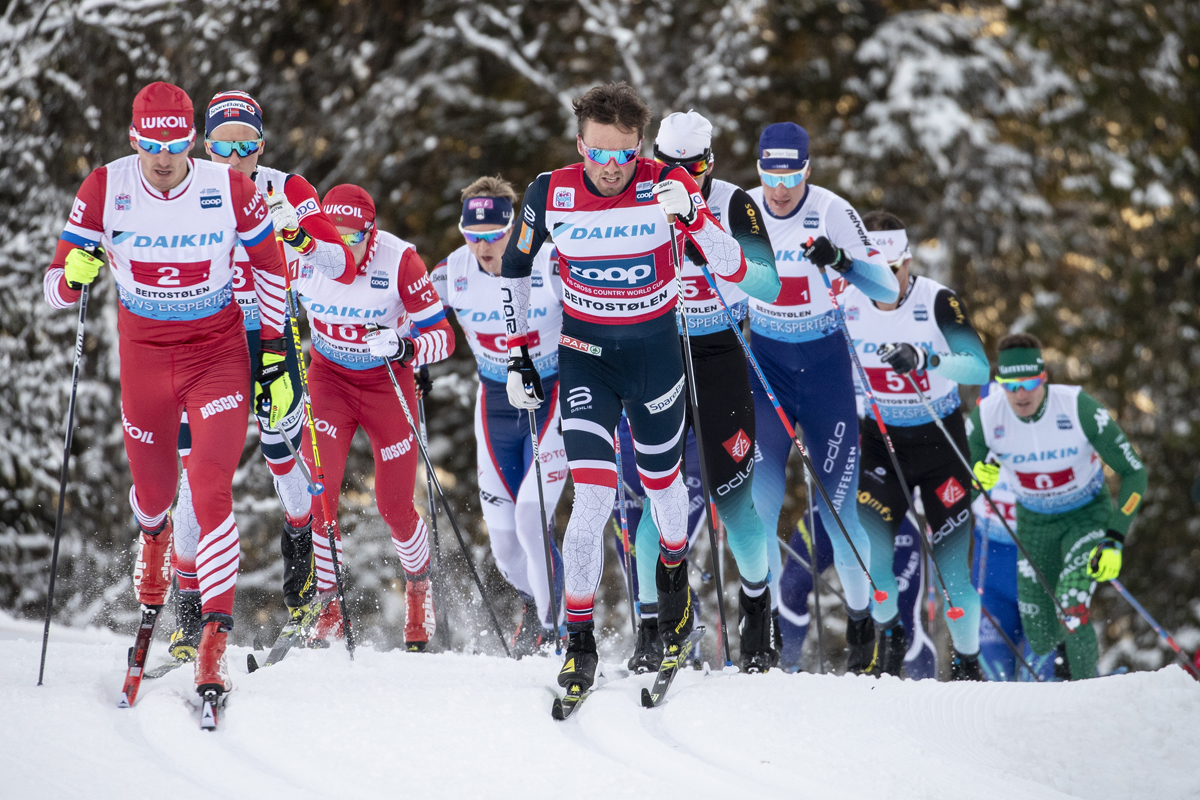
    Norway’s Emil Iversen and Russia’s Evgeniy Belov lead the pack on the first leg of the men’s 4 x 7.5 k relay in Beitostølen, Norway. (Photo: Fischer/Nordic Focus)

    At the first exchange, Iversen had a sizeable lead over second place Norway II team, who tagged 7.7. seconds back. Russia 1 came through with a gap of 16.1 seconds. The first leg of the relay, called the scramble leg, most often doesn’t break the pack apart. It’s part gamesmanship, part high-tempo effort to shake off any non-contenders.

    As the second leg began, this much was clear: Russia wouldn’t let Norway run away with the race. Russia’s second leg skier, Alexander Bolshunov quickly caught Sundby during their first lap of the 3.75 k course. Before the end of their first lap, Bolshunov played his hand, upping his effort, and taking control of the second leg. By the time he tagged off for the third leg skier, Bolshunov had put nine seconds on Sundby and his Norway I mates.

    Norway II fell off the back, tagging off 33.7 seconds back.

    Røthe, winner of  

    At the final exchange, Norway was Russia’s heels, trailing by a mere 0.4 seconds. Third place Norway II was a distant 50 seconds behind the leaders.

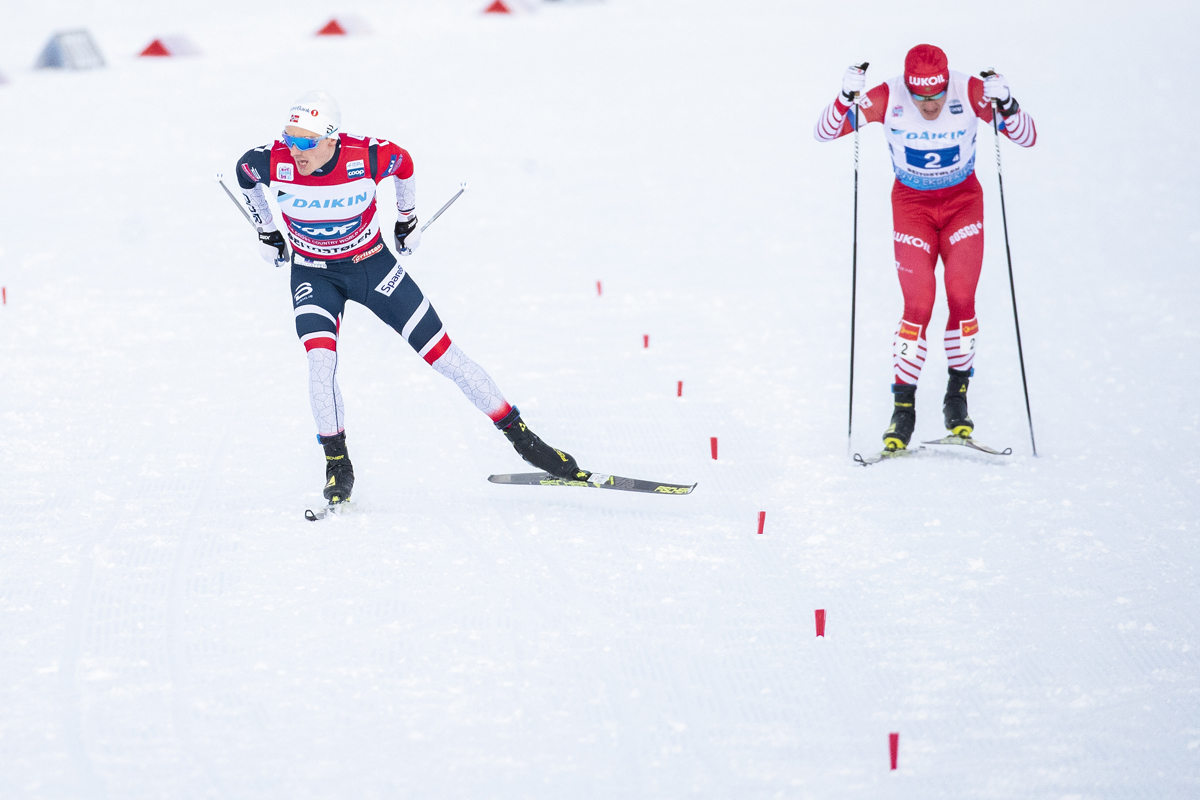
    Norway’s Finn Hågen Krogh is the master-closer. Here he crosses the line for first place over Russia’s Andrey Melnichenko in the men’s 7.5 k relay in Beitostølen, Norway. (Photo: Fischer/Nordic Focus)

    Krogh, who has a history of being a strong closer, stayed calmly on the heels of Russia’s Andrey Melnichenko, matching his pace on climbs and tucking into his draft on descents. As the tempo accelerated for the final kilometer, Krogh edged around Melnichenko at a turn and held off the Russian through the final moments of the race. In the final stretch, it was clear that Krogh’s strategy had paid off as he glided through the finish with Melnichenko 0.7 seconds behind.

    The third-place Norway II team of Didrik Tønseth, Hans Christer Holund, Magne Haga, and Simen Hegstad Krüger crossed the line 53.4 seconds behind the leaders.

    “We are used to the tough race against Russia now,”, Sundby told the International Ski Federation (FIS) at the finish. “For the last relays, it has been the same way. They have a really strong team, with different skiers, but every time they have four strong guys. Same procedure today. Today we have back our last leg finisher with Finn [Krogh] and it was really nice for everyone to see him back in good shape. I think the last time was Lahti [World Championships in 2017]. And he’s back again now. So, it’s good for us and we hope for a nice race against for sure Russia.”

    While the podium positions seemed to be locked up early on, the remaining top ten positions were in contention as a large chase pack had formed behind the leaders. During the first leg, the U.S. Ski Team’s (USST) Erik Bjornsen was in the mix. At times Bjornsen led the chase pack. In a tightly packed group, Bjornsen tagged off to Kevin Bolger in fourth position, 33.1 seconds back.

    The U.S. Ski Team’s Erik Bjornsen (bib 9) during the first leg of Sunday’s 4 x 7.5 k relay in Beitostølen, Norway. (Photo: Aleks Tangen)

    “It’s always fun to do a relay with the boys, so it was a good day, working out the cobwebs and getting ready for Seefeld,” Bjornsen told FasterSkier at the finish. Bjornsen was happy with his classic leg. When asked how he felt, he expressed, “Just great! It was really fun! Good crew out there.”
    “On the men’s side, all four of our guys took a step forward today,” Matt Whitcomb told FasterSkier in an email. “While Erik isn’t quite in form yet to stay with the break, he controlled and drove a very competitive chase group. His performance was impressive.”

    Bolger, the leg skier for the U.S., maintained his position in the chase pack for his first lap. He skied through the exchange/lap zone in ninth place. As the decisive moves were made, Bolger could not maintain pace. The group split in two, and he fell back with the second chase pack.

    Unfortunately, the relay is a contact game, and we lost that late in the second lap,” said Whitcomb. “Kevin dug deep, and was so close to keeping contact over the top of the last big climb, but once it opens slightly, it tears open.”

    Bolger eventually tagged third leg Scott Patterson (USST) in 10th (+1:52.4).

    “I’m happy with it,” said Bolger about his leg. “I wish I could’ve stuck together with the guys all the way through the finish but just to stick in and ski with some of those guys was good… I wish I could’ve skied it harder toward the finish, but I just got tired, went out a little hard maybe, but overall I’m happy, a lot of takeaways, so I’ll learn a lot from it.”

    Scott Patterson took the first skate leg for the U.S., skiing with Italy and Sweden in the second pack. He tagged off to closer Simi Hamilton (USST) in 12th position, with a 2:19.6 minute deficit to the leaders.

    “It was pretty good,” Patterson reflected on his race. “Kind of had a slow start to my season, today felt pretty good, skiing with Italy and Sweden, able to hang pretty well, so it was a fun one. … With these short relays, it’s so easy to hammer the first lap, the second is kind of hang on, and that’s a lot of what it felt like today.”

    When asked how the 7.5 k legs, compared to the traditional 10 k distance, affected their pacing during the race, Patterson was adamant that the shorter course was an added challenge for distance skiers.

    tizanidine online, buy lioresal online, zanaflex buy online

    “Absolutely harder,” he said of the change. “We’ve had so many 15k’s that you’re kind of used to that pace, and this is… I mean for me, it’s almost sprint qualifier pace. You just gotta’ go and hang in.”

    Though Hamilton was ultimately unable to gain any positions for the U.S., he was pleased with his performance and enjoyed the relay environment as the U.S. finished 12th (+3:22.7).

    The U.S. team for the men’s 4 x 7.5 k relay in Beitostølen, Norway. From left to right, Erik Bjornsen, Simi Hamilton, Scott Patterson, and Kevin Bolger. (Photo: Aleks Tangen)

    “I was happy with it,” Hamilton shared. “It wasn’t my best distance feeling ever, but it was a fun course, Scott tagged me in a great spot, just, right off of the tail of Viktor Thorn [of Sweden] and DeFabiani [of Italy] there, and those guys are really good skaters. B I tried. I didn’t really want to try to ski just dangling off the back the whole time, so I put in [a quick effort] there at the start, just to get in a draft behind them. And I feel like a relay is a kind of race where you kind of have to take the risk sometimes, especially later on in the race for the last couple of legs. So in that sense, it’s really fun. You just kind of throw caution to the wind and see what happens. But it was fun and I’m feeling like I’m kind of coming into better shape as the season progresses. I’m psyched for the sprint next weekend and everything else coming up this winter.”

    “It was an impressive relay debut,” concluded Whitcomb. “Watching this men’s team fight hard for contact today made us all incredibly motivated.  I think I share the sentiment with the rest of our staff and athletes – seeing the U.S. men’s relay hit the podium in a World Cup would rival the excitement of the Olympic gold.  We’re not there yet, but we can see it from where we are. And we plan to close.”

    The Canadian team did not field a men’s relay team.

    Racing continues next weekend in Davos, Switzerland.

    Results

  • Røthe Beats Sundby in Beitostølen; Harvey 13th

    Røthe Beats Sundby in Beitostølen; Harvey 13th

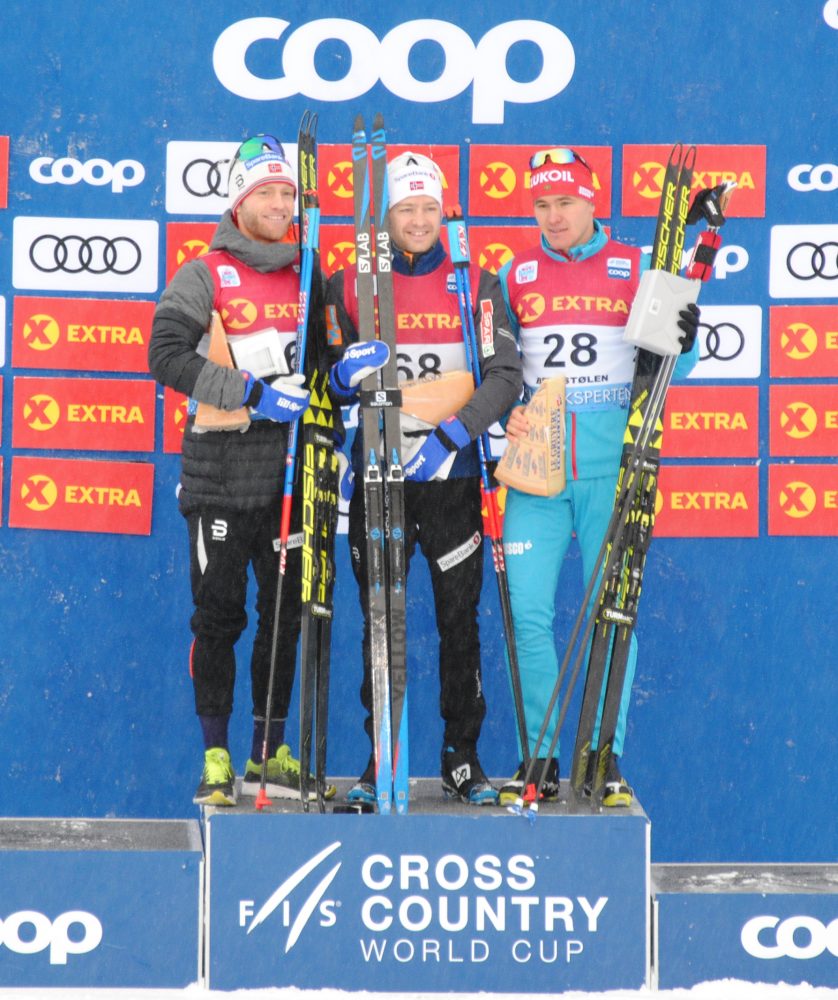
    The men’s podium from the 30 k freestyle individual start in Beitostølen, Norway. Sjur Røthe (center) of Norway placed first, teammate Martin Johnsrud Sundby (left) second, and Russia’s Andrey Melnichenko (right) third.

    It snowed continuously throughout today’s 30-kilometer freestyle individual Start in Beitostølen, Norway. There was already a  great deal of accumulation on the race course by the time the men started. This made the already challenging distance race even more grueling as the fresh snow created more resistance for skiers.

    Norway took the top two spots as Sjur Røthe won the with a time of 1:09:53.5. His teammate, Martin Johnsrud Sundby, was close behind in second (+35.2).

    This is Røthe’s third podium of the season. Last weekend, in Lillehammer, Norway, he won the 15 k freestyle individual start and placed second in the 15 k classic pursuit the following day

    “I was pretty proud of myself today,” Røthe told FIS at the end of the race. “I felt pretty good at the start. I was few seconds behind Martin [Sundby] and Didrik [Tønseth] out from the start and it looked like they are doing a sprint today. I felt very confident at the beginning of the race but looking at them taking up a high pace right from the start, I was unsure if I should change my pacing strategy.”

    Sundby set the tempo for the first 10 k, outpacing Røthe by just seconds. After the 15 k mark, Røthe took the lead and continued to put time between himself and Sundby. By 25 k, Røthe had a 30-second gap which he preserved for the remainder of the race.

    vteabp.org


    “I had a strong start but felt that between 10 and 20 k, it would be surprising, if some of the other nations would be much better than us,” Sundby told FIS. “We know the course, we have competed here for 10 years so we sure have some seconds in our favor.”

    It was Sundby’s best result of the young season and his first World Cup podium of the year. Sundby placed fourth in Ruka’s 15 k classic, missing out on a podium by 10 seconds. Last season, Sundby was the third-ranked World Cup skier in the distance overall.

    Russia’s Andrey Melnichenko took third (+49.2). At twenty-six-years-old, this was Melnichenko first career World Cup podium.

    “During the race in different splits, I got some information that I was around the sixth place and actually did not expect anything more than that,” Melnichenko told FIS.

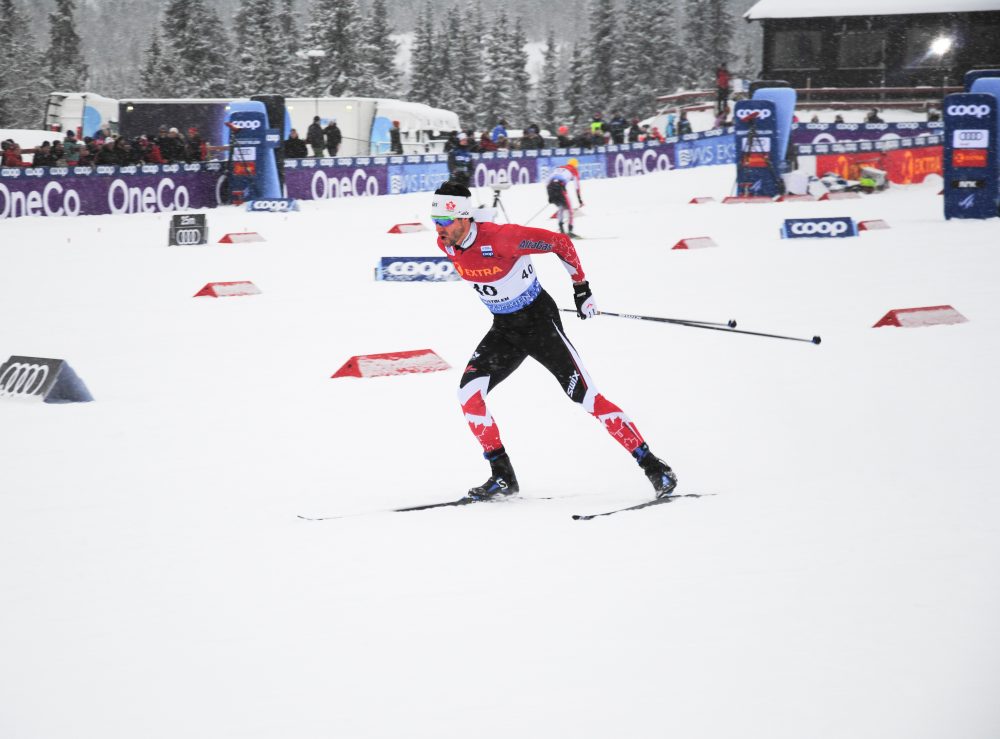
    Canada’s Alex Harvey during the World Cup’s 30 k skate individual start in Beitostølen, Norway. Harvey placed 13th.

    Alex Harvey of Canada was the first North American to cross the finish line. Harvey finished in 13th (+1:49.8). Harvey has been known to come into form later in the season for distance races, this year he came on strong early in sprinting, placing third in the skate sprint last weekend in Lillehammer. 

    After 10 k today, Harvey was sitting in 15th, but he continued to fight and was able to gain five places in the next 15 k, putting him in 10th going into the last lap. But, he was unable to hold on as he faded slightly down the final stretch.

    ainhalers


    Harvey talked with FasterSkier after the race about the tough conditions. “The course doesn’t have much recovery, you have to work the whole time and then the conditions with the snow…there was resistance in the snow the whole way so you have to push on the flats, and on the gradual downhills so you’re always working,” Harvey explained. 

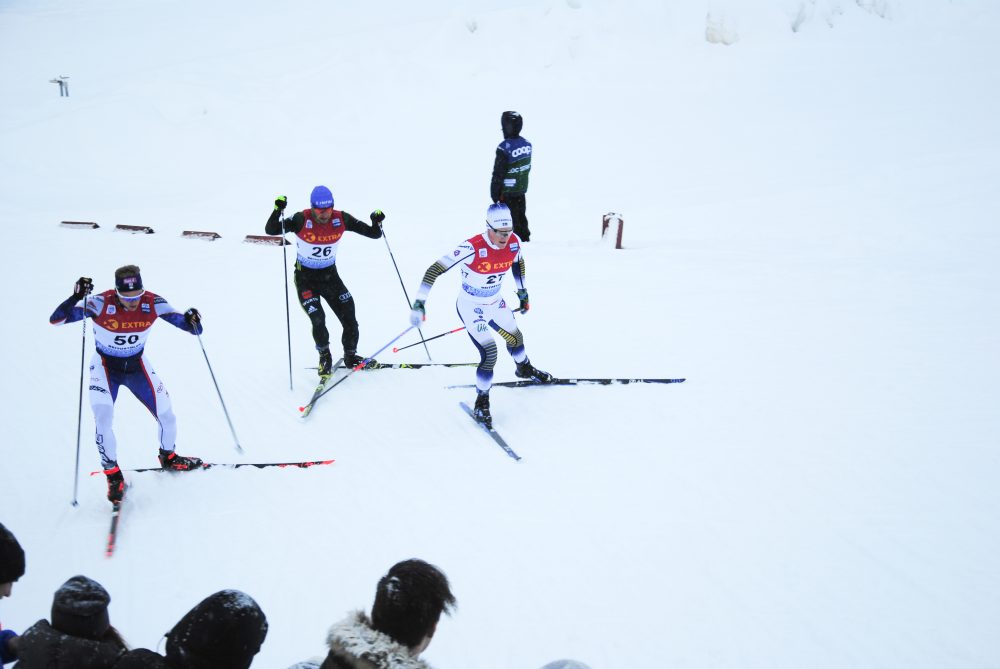
    Erik Bjornsen of the U.S. Ski Team (bib 50) during the men’s 30 k skate in Beitostølen, Norway. Jens Burman of Sweden (bib 27) and Jonas Dobler of Germany (bib 26) skied alongside Bjornsen for a portion of the race.

    Scott Patterson (USST) was the first American, finishing in 47th (+4:32.7). David Norris (APU) followed shortly behind in 51st (+5:13.3) and Erik Bjornsen was right on his heels, finishing 52nd (+5:14.9). Adam Martin (CGRP) finished 59th (+6:14.8).

    After the race, Norris commented on his strategy going into the race,

    ainhalers

    My strategy was to put in the first two laps well and then just try to ski smooth and then get on the heels of some fast guys and try to hang in there,” Norris said. “I did that in certain points and struggled to do that at others. I felt like my first lap I went out well and then from lap two to lap five I kind of like hung in there. And then on the sixth lap, felt I like I charged pretty well and finished strong.”

    Racing continues tomorrow for the men with a 4 x 7.5 k relay.

    Men’s Results

    — Aleks Tangen contributed


  • Johaug and Røthe Wrap Up Beitostølen with Wins

    The women’s 10-kilometer podium at Sunday’s FIS cross-country in Beitostølen, Norway. L to R: Norway’s Ingvild Flugstad Østberg, Therese Johaug and American Sadie Bjornsen. (Photo: Aleks Tangen)

    The FIS opener races in Beitostølen, Norway, came to a close on Sunday as competitors capped off the three day race weekend with a men’s and women’s freestyle distance event.

    Forty-nine athletes raced the women’s 10-kilometer skate race, with Norway’s Therese Johaug taking the victory in a time of 24:21.5.

    The FIS win is Johaug’s second in a row (she won Friday’s Beito classic race before skipping Saturday’s sprints) since her return to the circuit after an 18-month ban from competition. Earlier this summer, Johaug proved her form when she won the Blink Ski Festival’s famed Lysebotn Opp hill climb in record time.

    In Sunday’s 10 k, the closest competitor to Johaug was Norwegian Ingvild Flugstad Østberg, who finished 26 seconds back from the winning time. Østberg is coming off the 2017/2018 season having been ranked third in the overall, behind American Jessie Diggins and Norway’s Heidi Weng.

    Sadie Bjornsen (U.S. Ski Team) racing to ninth in last year’s 10 k freestyle at the World Cup in Toblach, Italy. (Photo: Fischer/Nordic Focus)

    Planning to use the Beitostølen competitions as a chance to test race skis, American and U.S. Ski Team (USST) member, Sadie Bjornsen, entered Sunday’s skate race and finished third (+1:45.9).

    Along with Bjornsen, Scott Patterson of the men’s USST, was the only other American to race in Beitostølen. Most of the USST is currently in Rovaniemi, Finland prepping for the upcoming World Cup races slated to be held in Ruka. Both Patterson and Bjornsen, as well as their wax technician JP, will fly to Rovaniemi on Monday.

    “It was definitely different to venture off from the team and come here on my own, but I’m really happy I’m here,” Bjornsen told Fasterskier. “It was a great week of testing and a great week of checking out the Beitostølen courses before we come here again in two weeks.”

    Beitostølen is set to host the December 8 and 9 World Cup races, which include a 15 k and a 30 k event.

    Beyond testing skis and previewing the Beitostølen race course, Bjornsen also indicated that Sunday’s 10 k was a good reminder of how a longer race effort feels.

    “In the summer we do so many intervals that are around three or four minutes long, or we do kind of an easier pace for 30 minutes,” Bjornsen said. “Today, my goal was just to try to push my mind through 30 minutes straight; not having any moments out there where I was just like settling in or chilling, I wanted to push the whole time.”

    Though the conditions were soft on Sunday, Bjornsen explained that was not an unfamiliar challenge.

    “It kind of felt like I was skiing in the middle of the summer on the glacier,” said Bjornsen, who trains with the Alaska Pacific University based out of Anchorage, Alaska outside of the race season.

    “I’ve done a lot of training like that on Eagle Glacier in Alaska, so I was trying to channel my summer Glacier skills,” Bjornsen said. “t was nice that I got to ski with Ingvild for a brief amount of time and remember what it looks like to be pushing hard and what it feels like to be pushing that hard.”

    Great Britain’s Andrew Musgrave during the men’s 15-kilometer freestyle race on Sunday in Beitostølen, Norway. (Photo: Aleks Tangen)

    ***

    Røthe Wins Men’s 15 k

    Norwegian Sjur Røthe held off 132 competitors on Sunday to win the men’s 15 k race in a time of 33:45.7. Simen Hegstad Krüger finished in second (+11.1), seven tenths of a second ahead of Martin Johnsrud Sundby in third (+11.8).

    Great Britain’s Andrew Musgrave placed seventh on Sunday (+1:07.8) while his teammate, Andrew Young placed 11th (+1:11.8).

    Young, who considers himself more of a sprint focused skier, called the Sunday’s 15 k “one of the best distance races [he’s] ever done.”

    Part of that, he explained may have been the course layout. Though much of the course featured what Young referred to as “easy terrain” there were plenty of corners to test skiers technical skill and ability to conserve energy for when it counted.

    “There’s one big hill on course here that’s pretty hard, the rest of it is actually pretty easy terrain,” Young said “…you have to make sure you have energy and fresh legs in corners, because if you’re tired going through those, you lose a lot of time.”

    “It’s actually quite good for sprinters, this course, because there’s a lot of acceleration in the corners so you can kind of use that to your advantage,” he added. “That definitely played a role for me.”

    U.S. Ski Team member, Scott Patterson crosses the finish line of the men’s 15-kilometer freestyle race on Sunday in Beitostølen, Norway. (Photo: Aleks Tangen)

    According to Young, the British team will not be traveling to Rovaniemi for the season’s opening World Cup races. They will instead use this upcoming week for recovery, turning their focus to the World Cups following Ruka in Lillehammer, Norway and Davos, Switzerland.

    buy voltaren online

    buy voltaren online

    buy voltaren online

    “It’s really expensive to go up t[o Rovaniemi] and with the races being a classic 15 k and a classic sprint, those are not favorable distances by anyone on the British team, we’re just going to get ready for the Lillehammer and Davos World Cups,” Young said. “For me, this was a really important intensity block to get ready for those.”

    The lone U.S. men’s skier in Sunday’s 15 k, Patterson placed 22nd (+1:45.2). Patterson explained that he felt strong during the first lap before “starting to bog down” in the later two.

    “I mean, that’s early season racing,” Patterson said of his sensations.

    “I just wanted to ski well, ski smooth, really get that race effort in and push myself a little past if that’s what I needed to do,” he continued. “It wasn’t quite the result I wanted but it was solid.”

    Patterson referred to the race performance as a “step in the right direction”, indicating that the idea behind the Beito races for him was warming up to the World Cup season.

    “I think I’ll kind of be building into race form a little bit,” Patterson said. “I think my fitness is good. I’ve still got some things to figure out…shifting from that training gear into racing.”

    Following Patterson, were three Canadians, Russell Kennedy in 24th (+1:53.2), Maks Zechel in 85th (+4:07.5) and Brian McKeever 91st (+4:16.3).

    – Aleks Tangen contributed from Beitostølen, Norway

    Results: 15 k | 10 k

    Great Britain’s Andrew Young during the men’s 15-kilometer freestyle race on Sunday in Beitostølen, Norway. (Photo: Aleks Tangen)
  • Closing the Gap: Racing in the Dark

    Closing the Gap: Racing in the Dark

    Soft Scandinavian Cup track as seen last weekend at the Dec. 15-17 Scando Cup in Vuokatti, Finland, “the same conditions for Sundby all the way down to me,” author Maks Zechel writes.

    Editor’s Note: The following is part of a series proposed by Maks Zechel, a 20-year-old Canadian cross-country skier embarking on his first season training abroad. In August, he made the big move to Norway, where he’ll be training and racing with Team Asker for the entire winter. Through these updates, Maks hopes to share his personal “observations, stories and lessons learned” to help close the gap between North American and Scandinavian nordic skiing. Previous posts: #1, #2, #3#4#5#6, and #7.

    ***

    Part 1: Vuokatti

    It’s Thursday morning and I’m in the Oslo airport, waiting to catch a flight to my second Scandinavian Cup race weekend of the winter. I haven’t seen the sun yet and, from what I’ve heard, my destination of Vuokatti, Finland, doesn’t look much like a Caribbean postcard either.

    Two flights and an hour on a bus later, we arrive in Vuokatti. There is something about 3 p.m. total darkness that I suspect I will never grow accustomed to; it’s the impending sense of urgency that I need to go to bed soon. Or maybe that’s just coming from the fact that I still have to check into the hotel, ski the race loop, test skis, eat dinner, and then write my final exam for my online university course. By the time I start my exam, and reboot my laptop after it crashes, it’s 8 p.m. … classic.

    We wake up before the first race in the dark. The sun allegedly rises into the cloudy, snowy sky at 9:59 a.m. and sets at 2:07 p.m. Despite our noon start time, the trails remain cast in dusky shadows, and the entire race loop, and ski jumps overlooking the stadium, remain lit 24/7. For the record, I spent approximately 72 hours in Finland, and I can’t confirm that the sun actually touches that part of the world; for all I witnessed they might just brighten the streetlights every morning.

    We jog a few hundred meters from the hotel to the race site, located by the Vuokatti Olympic training center. All the racers are staying in two large hotels within walking distance of the race site, which creates an exciting “athlete village” atmosphere. Vuokatti is an epic training and racing location with 7.5 k+ of lit world class ski trails, early season snow making, a ski tunnel, and ski jumping and biathlon venues. Nordic countries don’t seem to like hosting races anywhere with a big chalet, or with any chalet at all, so we set up base in the snow. Luckily for us, the infamous Finnish cold weather decided to leave for the weekend. The stadium is tiny, hardly wide enough for a finishing straight, miniscule individual start corral, and a lap lane. It’s easy to feel lost amongst the tall, uniform pines of a snowy Finnish forest, but the Vuokatti course has something for everyone. Each day, 200-250 participants are on the senior men’s start line, with Norway, Sweden and Finland well represented; the top 100 doesn’t get more competitive than this anywhere in the world.

    As I’m warming up for my 15 k skate race, I have never recognized so many people that I’ve never seen before in real life: “Oh hey random Norwegian skier, congrats on beating your 3000-meter track PB this summer! By the way, say hi to your dog for me.” The potential for a seriously awkward conversation with one of my idols is too high, so I try my best to avoid in-awe-eye-contact…

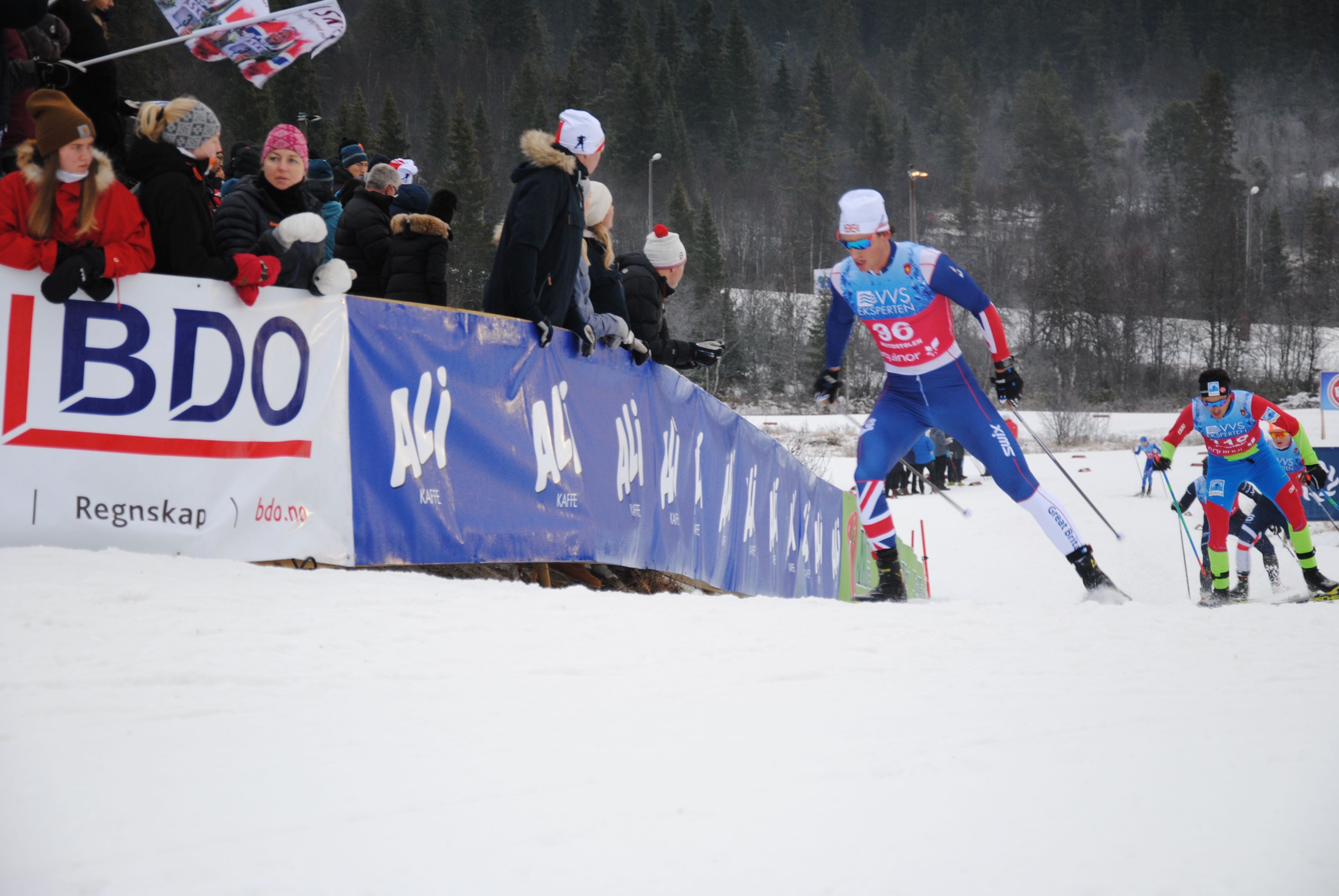
    Norway’s Johannes Høsflot Klæbo in his debut race of his record-setting 2017/2018 season. In eight World Cup starts so far, he’s won seven of them. Here he’s shown racing at Norway’s FIS season opener in Beitostølen last month. (Photo: Maks Zechel)

    At the end of the first day our teammate, Erland, placed 19th, with Ryan and I at 107th and 132nd. After racing in the Beitostølen Scandinavian Cup and Gålå Norwegian Cup race weekends in November, it remains hard to swallow our pride as we race better than we ever have, but still fall far short of our lofty goals.

    However, the lessons that we learn in every international race that we compete in are crucial to our development. During the 15 k classic race in Vuokatti, my teammate, Eirik, was caught by the eventual top-two skiers of the day, Ristomatti Hakola (Finland) and Martin Nyenget (Norway). Eirik is a strong double poler, so he was impressively able to stay with them until the set of steep hills in the last 2 k of the course, where they put around 50 seconds into Eirik per lap. What he was unable to match, was the insane power that Hakola and Nyenget were kicking their skis with, giving them big glides on even the steepest pitches where I had to run out of the tracks

    Racing with athletes who are able to ski at this level creates an unforgiving racing environment if you are unable to push yourself to new heights. After a poor race, the performance is reflected by a drop of dozens of spots down the results sheet. Scandinavians respect the high level of these races and they know that there are hundreds of skiers working just as hard as them, ready to take their place if they don’t race fast. Poor races by even the best cause them to disappear down the results (Petter Northug finished 17th in a Norwegian Cup race this winter). Although Erland is an incredible skier who is capable of top-20 Scandinavian Cup results, he had placings of 89th and 47th in Beitostølen. This is nothing to be ashamed of, but the results clearly represented that he was not in top form at the time. Good performances are rewarded in the opposite manner. That is the nature of these races, where 1 minute gained or lost can mean 30-50 spots. In the Vuokatti sprint, the top-30 men in qualifying were all within 5.87 seconds, with the top 58 within 10.55 seconds, and top 84 within 15.15 seconds. The reality is harsh, but it feels productive to know exactly where I stand against the best.

    World Cup racing is ridiculously hard, and that is a lesson that should be experienced as early as possible. When I was 132nd in the 15 k skate race in Vuokatti, a good race for me, it felt like a smaller reward than I was used to for my efforts. It’s easy to feel overwhelmed by the sheer number of competitors, but it helps to look at the time gap when looking for achievable next steps. In this race I was 4:38 minutes behind race winner, Daniel Stock (Norwegian skier with a World Cup podium from last year). It’s a lot over a 38-minute race, but if I can shave off 1 minute by the end of the season, then I’m in the top 100. Wherever I place, at the end of the day I know how far away I am from top World Cup contenders. Doing these races doesn’t make getting fast easier, but it does put into perspective exactly how much my efforts and improvements mean on an elite level.

    Every weekend these races feel a little more familiar, a bit more like home. The competition is intimidating, but every race still has the same enthusiastic community of athletes, volunteers, coaches, wax techs, friends, and families that we are used to in Canada. In Beitostølen, a stressed Ryan was enthusiastically interviewed four minutes before his race start and the NRK commentators talked about our goals in Norway and this FasterSkier blog for over a minute on national television. In Vuokatti, the race announcer introduced us as the two Canadians living in Asker, Norway, with their goal of becoming two of Canada’s best World Cup skiers. It’s flattering to be known like this, despite struggling to come even close to the top 100, and it makes us feel like we belong. Soon enough we will make sure we are known for more than just booking a couple of plane tickets to Norway.

    Part 2: Getting to the Top

    Author Maks Zechel repping the Asker Skiklubb white and blue.

    Racing in Scandinavia is like getting on the freeway out of the city at 5 p.m. on the Friday of Thanksgiving weekend; everyone is heading in the same direction, and no matter who you are, you have to be patient and observant in order to seize the opportunities that will bring you to the front of the never-ending queue. In Canadian racing, we often lack this traffic, and this causes skiers to race at their own level, because there aren’t enough skiers of similar abilities to push each other to the top. I believe that it is still possible to become a great skier from racing in North America, but we have to be prepared to take even bigger risks than our Scandinavian counterparts, as we can be sure that they are encountering far more opportunities than us.

    From my experiences watching NorAm, SuperTour, Scandinavian Cup, and World Cup results, the best skier of the day will often win a three-lap 15 k with a certain order of lap times: the first lap is the fastest to take advantage of fresh legs, the second lap is the slowest, and the the third lap is the second fastest. These margins are small, but they indicate a skier who has skied a smart and controlled race, riding the edge of blowing up in order to expend energy perfectly and close fast where weaker skiers tire. This is how a winner skis a race. The skiers who don’t win the race ski differently because they are not at the same level. If they ski in the same controlled manner, they fall short of the win because they cannot maintain the same pace/execute the same pace changes. A dark horse who is trying to win, or merely trying to break through the ranks, gives everything in an effort to ski at a level that is higher than they can actually maintain. They may try to go out as hard as possible, risking blowing up early with the hope that they will be able to maintain a “suicide pace”. The skiers who don’t control the race usually ski with positive splits, becoming slower each lap on a good day, because if their splits are negative it means they will lose too much time at the start of the race.

    In North America, we get comfortable skiing like winners. The shock comes when we try to make the jump to World Cups, and we suddenly have to relearn how to ski like developing skiers, to ski like we are trying to break through to the top.

    Here’s a fact: nobody comes to World Cups from North America and starts winning right away. The jump is too big to make all at once. Scandinavians can sometimes go straight to the top, because they had to grow up skiing like losers, or at least skiing like winners who had to fight against 30 other winners every race. The issue is that North Americans begin to relearn the lessons of devastating time gaps at an important point in their careers, when ideally they would be fighting competitively for coveted World Cup top 30s. We’re not developing as much as we could at home, because we’re not desperately fighting just to come top 50 or top 100 as juniors and U23s. Not to say that you can’t develop hugely between the ages of 25 and 35 (many do), but we rarely see this happen in North America because the attrition rate of skiers in that age range is so high. Many skiers never see their full potential realized.

    In North America, we get comfortable skiing like winners. The shock comes when we try to make the jump to World Cups, and we suddenly have to relearn how to ski like developing skiers, to ski like we are trying to break through to the top.

    In Vuokatti, numerous small skiing nations were well represented, countries that we North Americans would see as “lesser” skiing nations, when in fact they’re doing things better than us. The Vuokatti Scandinavian Cup saw a large contingent of Chinese national-team skiers compete, and at Beitostølen, Japan was well represented. I even saw a couple of Mongolian skiers in Finland. These national-team skiers are consistently starting Scandinavian Cups in their pursuit of becoming competitive on the World Cup (zero Chinese skiers started the Toblach World Cup, while 10 Chinese men and women started in Vuokatti the same weekend). These small skiing nations recognize that they cannot develop all of their athletes through World Cup starts, so they send their remaining skiers to the next best thing. This mentality has led Japan to produce podium-capable World Cup skiers such as Masako Ishida and top 15 contenders such as Keishin Yoshida.

    We need to fill up our quota spots on the World Cup, but for the rest of us, Scandinavian Cups are an equally good opportunity to develop. A month of World Cup racing can cost a Canadian National Team member upwards of $5,000 Canadian dollars (not including flights). Last winter Team Hardwood Elite ran a one-month trip from Canada to Norway for $2,700 CAD (flights included) per athlete, where they raced nine Scandinavian- and Norwegian Cup-level races. We shouldn’t scoff at local-level Norwegian races either, which can be found all over the country every weekend of the winter. Sondre Turvoll Fossli, a World Cup medalist, won a local race, with a senior men’s field of 12, in Lier, the same weekend as Toblach and Vuokatti. At a local race in Konnerud the weekend before, I was bib number 1051 as the last starter of the day. Only 17 senior men raced, but the winner has placed top five in Norwegian Cups.

    Many North American skiers want to break through on the World Cup, but there are limited World Cup starts that offer a small and difficult opportunity for us to impress on a stage that we have never experienced before. The chances of breaking through this way have proven nearly impossible for numerous talented North Americans. For the countless incredible skiers who didn’t even receive those World Cup opportunities, the chance of World Cup success is a long-dissolved dream. This builds the impression that only a select few North American skiers can ever be great. This is untrue. The truth is that only a select few will ever break through when offered a handful of World Cup-level racing opportunities. The truth is also that us remaining North Americans have the ability to achieve that same level, but we must do so more patiently and down a less traditional path. If you truly want a chance at becoming competitive on the World Cup, you don’t have to fight for years to qualify for a World Cup development experience that most of us cannot afford. Instead you can race as many Scandinavian/Norwegian Cups as you like, every year, at a far cheaper cost, which will allow you to race against skiers who are already at the World Cup level that many of us dream to achieve. These skiers are no more talented than our skiers, they just have had the time and the countless opportunities to race at a level that most of us never have the chance to see.

    This leaves an important question: who is left to race in North America? It is hard to develop our best senior athletes to become World Cup podium contenders, it is harder still to do this in such a way that will allow all of our younger skiers to develop, too. My experience in Norway has been a positive one so far, and I will continue to promote what I am doing. But I should not have to come to Norway to develop. The simplest way for an individual to learn to race like the Scandinavians is to come to a country like Norway, but by individually developing overseas, we put a stop to the widespread development that we could be doing back home.

    Norwegians are successful at skiing because they love it; skiing is everywhere in Norway, and for that reason Norwegians never have to go far from home to ski fast. Top Norwegian skiers race in local races because they know that good racing is great development, no matter who you’re racing against. If we want races to be competitive, then it’s up to us to race fast.

    Youth and masters alike getting some early season ‘ k’s in on Nakkertok Nordic’s “Nakkertrak” on opening day Nov. 11, 2017. (Photo: Nakkertok Ski Club)

    My home club, Nakkertok Nordic, was able to purchase snowmaking equipment last year. Due to the enthusiasm and incredible dedication of the parents and volunteers who are the backbone of Nakkertok, they were able to host two early season race weekends this year, just outside of Ottawa (a city of 900,000 people). Ottawa is in an excellent central location for Eastern Canadians and Americans. The same weekend as the Dec. 15-17  NorAm race weekend in Rossland, over 200 people raced the Candy Cane Cup on the “Nakkertrak” early season snow loop. In the future, I see this becoming a main event in an early season racing series, where athletes race in Craftsbury, Vermont, at their annual early season races, then drive the mere four hours to Ottawa for two back-to-back high level FIS races. Eastern Canada and the U.S.A. are full of the skiing culture that makes Norway so great, our issue is that we fail to coordinate to create the fantastic race opportunities that we could have. Many top Canadian skiers already travel to Craftsbury at the beginning of the winter to be in a race where Patrick Caldwell takes the win and the field is deep with professional, university, high-school, and part-time racers of all levels. There is a fear in Canada of burning young athletes out by letting them race up. I agree, we shouldn’t just allow our “prodigies” to race up; I think that everyone from age 16 and up should race together. Development as a skier is only loosely correlated to age, and I am grateful at every training session with Team Asker for the young junior skiers that kick my butt in workouts. Our egos have to be thrown aside, because the more we segregate our racing categories, the less we can help each other get faster in the way that the Norwegians do.

    The simplest way for an individual to learn to race like the Scandinavians is to come to a country like Norway, but by individually developing overseas, we put a stop to the widespread development that we could be doing back home.

    Many Norwegian skiers race almost every weekend, all winter long. We have to create these same local racing opportunities, and if we make them accessible, they will soon turn into world-class events. Nakkertok took a race, which has simply been a club time trial in past years, and turned it into a CPL (Canadian Points List) level race with a field of 68 open men and 45 open women in one year (that is a bigger field than the Rossland NorAm). The depth of such events, with their diverse assortment of competitors, creates an environment where both our top racers and our developing racers can grow. An athlete is much less likely to quit skiing if they are regularly racing in a field with dozens of skiers at their level and with similar ambitions of going to university or working full time, all while skiing as fast as they can. Because you know what, racing is really fun, but only if it is a commodity made accessible to every North American skier, not just our Olympic hopefuls.

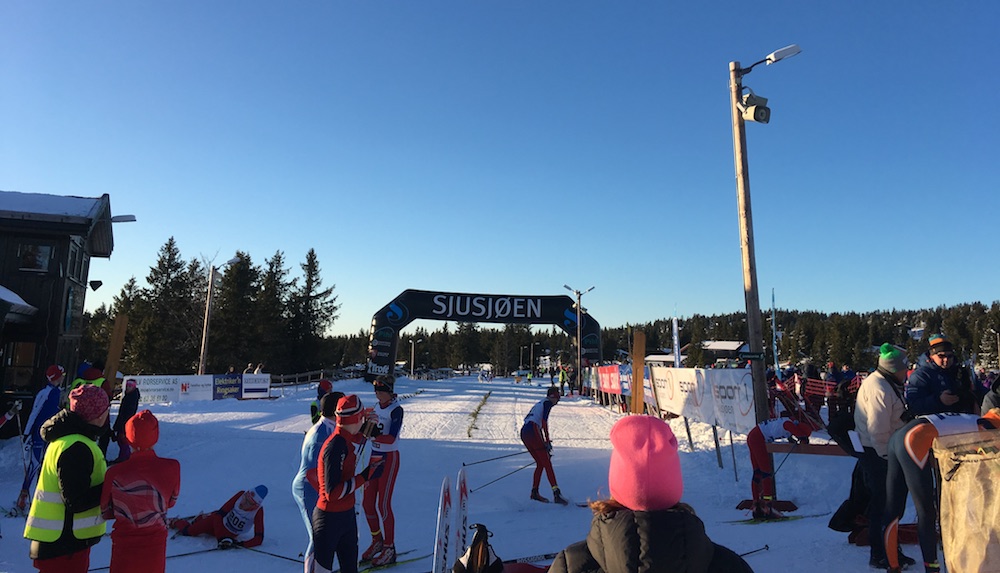
    A local race in Sjusjøen, Norway, with hundreds of racers of all ages. (Photo: Maks Zechel)

    About Maks: Maks Zechel is a competitive cross-country skier who secretly wants to become a professional mile runner. He loves hiking and going on canoe trips with his family, as well as peanut butter cups in ice cream. Johan Olsson is his favourite skier and he hopes to race the Cortina-Toblach stage of the Tour de Ski one day. He enjoys writing about his experiences. Follow him on Instagram @makszechel.

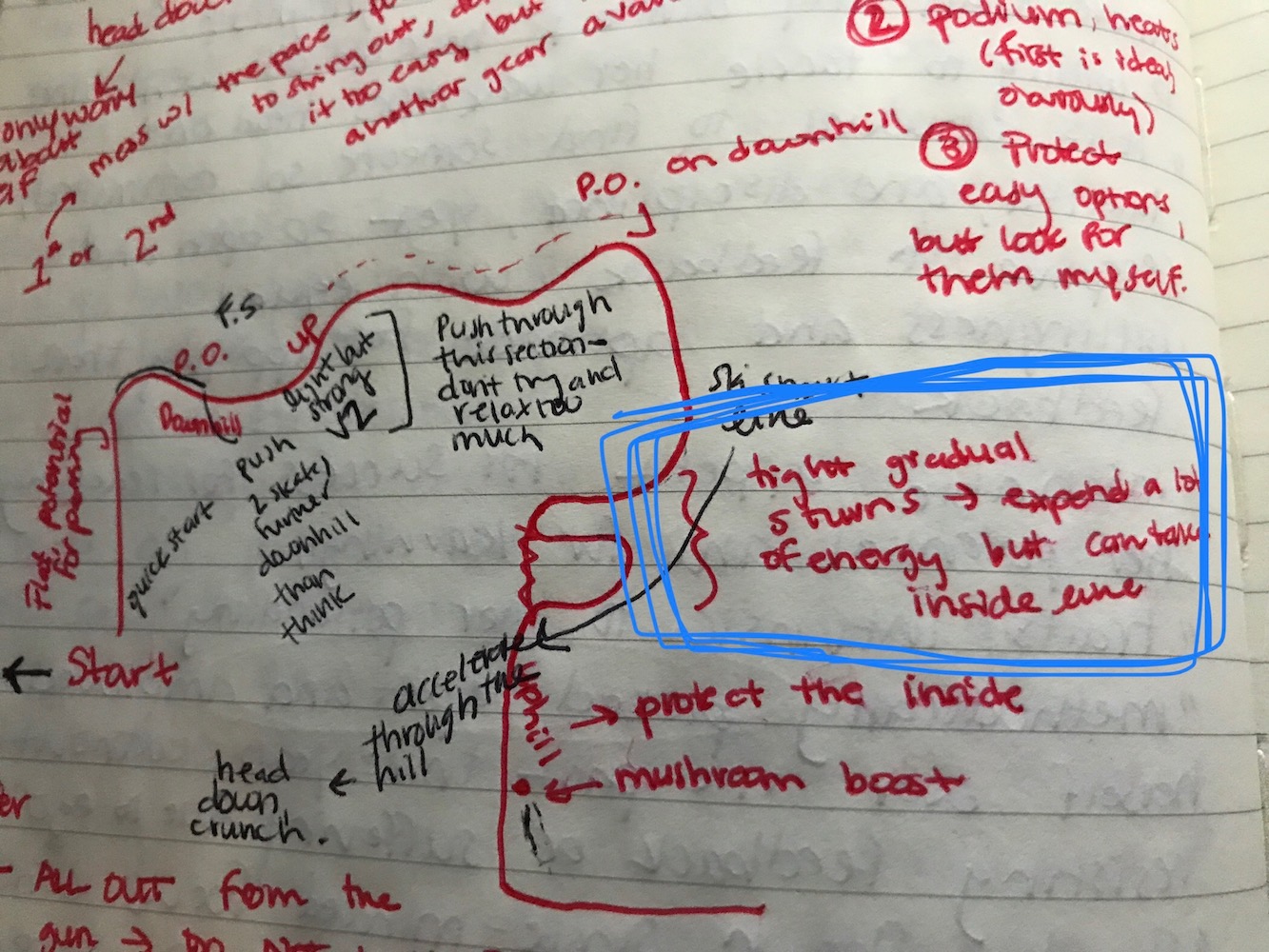
  • Wednesday Workout: Journaling and Time Trials with Anne Hart

    Wednesday Workout: Journaling and Time Trials with Anne Hart

    Anne Hart getting on early season snow in Sjusjøen, Norway. (Courtesy photo)

    Coming off a top-20 distance result during Norway’s season-opening International Ski Federation (FIS) races a little less than a month ago in Beitostølen, Anne Hart, of the Stratton Mountain School (SMS) Elite Team, jetted to a victory in the first SuperTour race of 2017/2018 — the freestyle sprint in West Yellowstone, Montana.

    “I haven’t straight out won a highly competitive race in two years, so winning on my arch nemesis course of West Yellowstone was huge,” Hart, 25, wrote in an email last week about her Dec. 2 sprint win. “I know that the period one altitude is not my best friend, and am really working on keeping a positive and confident mentality. The race for period two World Cup starts is tight (I think right now there are five or six women all within three points), so I’m trying not to focus on that too much.  It would obviously be wonderful to lock those up, but more than anything I just want to set myself up physically and mentally well for a stellar nationals in Alaska.”

    The day after her win in the 1.3-kilometer skate sprint, Hart finished 15th in West Yellowstone’s 10 k classic mass start on Dec. 3. Last weekend up at Sovereign Lake in British Columbia, Hart finished seventh both in the NorAm-opening skate sprint and 10 k skate, which counted toward SuperTour standings.

    She started her season with a training block in Sjusjøen, Norway, then at the Beitostølen races, with a goal of racing on snow before it really counted at this month’s SuperTour and U.S. nationals. In Beitostølen, she told FasterSkier she was mostly focused on recovering, feeling fresh, and above all, having fun.

    Anne Hart (SMS Elite Team) racing in last month in Beitostølen, Norway. (Courtesy photo)

    “I’ve just been doing way less training this year and paying attention with my strength coach, saying that you’re trying to be an athlete first and then the skiing comes,” she said on Nov. 17, after placing 31st in the 10 k classic in Beitostølen (she raced all three races there, repeating in 31st in the classic sprint, then 19th in the 10 k skate). “So this whole summer I’ve been working on my general athleticism and I’m just now starting to hone in on the skiing intensity of that.”

    In West Yellowstone, she talked about using her journal to map out the sprint course, point pointing areas to focus on.

    “In my journal last night I actually had part of the course labeled ‘mushroom boost,’ which is right over the top of that last hill,” Hart said after her sprint win, alluding to the speed burst featured in the Mario Kart Nintendo game.

    “So I was able to do my planned mushroom boost at the end, came across with the win and I couldn’t be more thrilled,” she said.

    That mushroom-boost reference got us thinking: what kind of journal does Hart keep? It’s nothing like a training log, she explained, but rather a tool she picked up from a mental trainer she’s been working with since the summer, at the suggestion of her strength coach Max Lipset.

    “I had been doing all of this physical training, but had been struggling a bit with how to wrap my mind around all the variables inherent in ski racing,” Hart wrote in an email. “This past season I had a really hard time shaking off bad races, and ended up carrying negative feelings from one weekend to the next. And I can tell you that there is no amount of physical training that can surmount that.”

    She started speaking with John D’Agostini of Invictus Leadership, a “mindset and personal leadership coaching” company based out of the Twin Cities, according to D’Agostini’s Linkedin profile. Hart grew up in Stillwater, Minnesota, attended Dartmouth College in New Hampshire, and now trains out of Stratton in southern Vermont.

    Hart explained that they initially spoke twice a week and are now in contact about once every 10 days.

    “The Invictus program is a bit unique in that John is not a sports psychologist — he is just an individual with a lot of experience in the arena of mental fortitude, and has developed a curriculum that has helped me immensely,” Hart wrote. “As part of my ‘homework’ he suggested I start keeping a journal. I’m the only one who looks at it (although I’ll give you a sneak peak), and it has been a great way for me to critique myself without being negative.”

    Here are the key aspects of Hart’s journaling:

    1. Don’t think of it as a training log. It’s for everything else that’s on your mind.

    “It has absolutely nothing to do with a training log (I have a big old google spreadsheet for that), but is instead a place I write down random thoughts, anything that is bothering me, things that are empowering me, and even recipes I want to try,” she explained.

    2. It can include drawings, or more specifically, course maps for pre-race, mental training.

    In West Yellowstone, Hart “drew a very loose representation of the sprint course, noting how I wanted to ski different sections and places I should look for passing opportunities (to either pass or be passed),” she explained. “This ended up being a huge help, as when it came to the final of the sprint and I found myself in the back, I had already figured out four or five different places I could attempt a pass as long as I kept my head cool and my wits about me. I ended up being able to use one of my pre-planned places and come out with the win.”

    3. It’s your journal. Nobody else needs to see it. Although Hart did share a few excerpts (below) as examples:

    Anne Hart’s course map, as she drew it in her journal, of the SuperTour sprint course in West Yellowstone, Montana.
    An excerpt from Hart’s journal entry after racing in New Zealand in this past September.
    Recipe notes as seen in Hart’s journal.

    In terms of a physical workout, here’s one Hart recommended:

    “Late last winter I did a workout with the Craftsbury team that I really loved,” she wrote. “It is designed to prepare for a hard but somewhat paced 10-kilometer race, and I did it once while I was in Norway to get ready for individual start distance races.”

    The Workout: 2 x 5 k time trial

    Warmup: 30 minutes of easy skiing, plus 3-6 minutes of threshold

    The workout: On a measured 5 k loop, time yourself while completing 5 k at threshold with an occasional Level 4 pace.

    Rest for five minutes, then try to complete the same loop 15-30 seconds faster.

    “It is WAY harder than I would have initially thought, but is an awesome way to find a hard but sustainable pace, and a good way to pay off part of the mortgage on your own personal pain house :)” Hart wrote.

    Cool down.

  • Bjørgen, Krüger Top Distance Skate Races in Beito; Hart 19th

    Bjørgen, Krüger Top Distance Skate Races in Beito; Hart 19th

    Anne Hart (SMST2) racing at last year’s 5 k classic FIS race in West Yellowstone, Montana, where she finished 12th. A year later, Hart placed 19th in the Beitostølen, Norway, 10 k freestyle race. (Photo: Ian Harvey/Toko)

    In one weekend of racing, Anne Hart has already learned a lot, the types of things you can only learn from careful observation and reflection. And for Hart, a 25-year-old member of the Stratton Mountain School (SMS) Elite Team, the season doesn’t truly begin until Dec. 2.

    After racing to 19th in the women’s 10-kilometer freestyle individual start on Sunday in Beitostølen, 2:41.9 minutes behind Norwegian winner Marit Bjørgen, Hart talked about being inspired by numerous speedy Norwegians there — many of which are gunning for a spot on Norway’s World Cup team.

    Hart ventured to Norway earlier this month to jumpstart her season before heading back to the U.S. to race the SuperTour opener in West Yellowstone, Montana, Dec. 2-3. In two previous races in Beitostølen on Friday and Saturday, she finished 31st in both the 10 k classic and classic sprint.

    On Sunday, she resolved to leave it all out there, just as she’d seen Norwegian World Cup regular Finn Hågen Krogh do.

    “Today we were watching the men’s race [before our race], and we watched Finn Hågen Krogh halfway up the hill the last time, the third time. I kid you not, he just stopped, bent over and he went on and finished fifth,” Hart reflected. “He went out hard, he blew up, but he made up so much time at the beginning that he just had to make it in.”

    That’s precisely what Hart’s been working on.

    “I really just pushed it from the go,” she said of her race. “After watching the [top] women start the classic race [on Friday], and then watching how fast they go in the sprints [on Saturday], there is just no easy pace out there … You just keep on going, and you suffer. But the harder you suffer the faster it is over.”

    The women’s podium (and top six) after Sunday’s 10 k freestyle in Beitostølen, Norway, with Norway’s Marit Bjørgen (1) in first, Ragnhild Haga (2) in second, Heidi Weng (3) in third, Ingvild Flugstad Østberg in fourth, Astrid Uhrenholdt Jacobsen in fifth, and Tiril Udnes Weng in sixth. (Photo: Aleks Tangen)

    Hart finished her 10 k, in what she described “beautiful skiing” conditions, in 26:37.1. Bjørgen raced to first for her second distance win of the long weekend in 23:55.2, 12.6 seconds ahead of Ragnhild Haga in second place. Norway once again swept the podium with Heidi Weng in third, 30.1 seconds behind Bjørgen.

    “It’s a course that doesn’t have a lot of rest in it … basically I was just trying to V2 as much as I could, because I noticed that’s another thing they do over here,” Hart said. “It’s like riding a bike; it’s easier to go in a lower gear. … I know I am a stronger V2-er, and the longer I can V2 up the hills, I figured the better I would do overall. Then [I] backed off, worked on quick turnover, and then really tried to push the V2-ing.”

    For much of the race, her split times hovered between 19th and 20th. But after a strong effort from 7 to 9.8 k, where she clocked the 15th fastest time in 7:58.2, Hart secured 19th, 8.5 seconds behind 18th-place finisher Silje Theodorsen, of the Norwegian National U23 Team, and 12 seconds ahead of 20th, which went to Norway’s Magni Smedås (Lillehammer Ski Club).

    That stands as Hart’s best international finish outside of an Alpen Cup last season in Seefeld, Austria, where she notched two top 20’s. Each year, Norway’s season-opening FIS races in Beitostølen attract most of Norway’s top skiers and upcoming talent.

    So 19th in Beitostølen is a big deal.

    At the time of her post-race interview with FasterSkier, Hart wasn’t sure where she ended up. But she knew she pushed herself to the limit.

    “I think last year I suffered from over-pacing, and it’s gonna hurt no matter what you do,” she said. “And I am very much of the mentality, for me anyways, to just go all in, no fear. And the worst thing that happens is you blow up.”

    In terms of how her results in Beito will affect her moving forward, she said it was about building confidence with each race and “having faith in my training and my fitness. The worst feeling in the world is when you finish and are like, ‘Damn, I could have gone harder.’ I would much rather literally collapse out on the course.”

    Great Britain’s Annika Taylor, who grew up in Truckee, California, and raced at the University of New Hampshire, placed 23rd (+3:09.9). Taylor, 24, finished 29th in the 10 k classic two days earlier

    At the front of Sunday’s race, the final time between Bjørgen and runner-up Haga was what made the news. One Norwegian journalist asked Norwegian women’s team coach Roar Hjelmeset if “this was almost like a victory since the gap was so small”. He replied “no” but added that it was “a very good performance” for Haga.

    Bjørgen started last in bib 63 and, as she typically does, clocked the fastest times through essentially every checkpoint and put more time into her competition with each passing kilometer. Haga’s time from 4.9 to 6.1 k was actually 2.5 seconds faster, but Bjørgen later told reporters that she expected a strong performance from her 26-year-old teammate.

    “The race was acceptable,” she told NRK. “I was prepared for Ragnhild’s approach since she’s better at skating, but I felt like I was somewhat in control.”

    Haga was pleased to hold on to second ahead of fellow World Cup Team members Weng (who ended up third) and Ingvild Flugstad Østberg in fourth (+32.3).

    “I had hoped to kick harder from the start so that Ingvild wouldn’t catch up to me,” Haga told NRK. “I didn’t tighten up and was able to keep pushing. I couldn’t really do anything about Marit, but I was closer than normal.”

    Both Weng and Østberg told NRK how impressed they were with Haga’s performance.

    “Ragnhild has shown strength over a lot of years,” Østberg said.

    Weng added that she was impressed Haga gave Bjørgen a fight for first place.

    “[Haga] does this because she’s been able to train well over the course of long time, and she has done very well leading up to this season,” Hjelmeset explained to a group of reporters.

    Krüger: ‘It’s a big deal’

    In the men’s race, Norway’s Simen Hegstad Krüger took advantage of the optimal conditions — with temperatures between -6 and -9 degrees Celsius, firm tracks and a clear blue sky — to win the 15 k freestyle by 16.5 seconds in 32:59.6.

    He did so after starting in bib 122 of 124 and taking control of the race at 2.1 k. Krüger led from that point on, clocking the fastest splits in every stretch except from 11 to 11.9 k. At the finish, he beat out the likes of fellow Norwegian World Cup Team members Hans Christer Holund in second, Hågen Krogh in fifth (+42.1), Sjur Røthe in sixth (+42.8), and Martin Johnsrud Sundby in seventh (+52.9).

    The men’s podium after Sunday’s 15 k freestyle FIS race in Beitostølen, Norway, with Norway’s Simen Hegstad Krüger (1) in first, Hans Christer Holund (2) in second and Jan Thomas Jenssen (3) in third. (Photo: Aleks Tangen)

    “This is incredibly cool,” Krüger told NRK. “Even if it’s early in the season, it’s not common to win at this level. It’s a big deal when entire Norwegian elite is here.”

    Notably, 21-year-old Norwegian Jan Thomas Jenssen, of Hommelvik Il, placed third (+30.7). He’s never raced on the World Cup.

    “What should I say? This is amazing,” he told NRK, adding that the experience was “indescribable.”

    Great Britain’s Andrew Musgrave raced to fourth place (+37.1) as the only non-Norwegian in the top 24. American Noah Hoffman was next in 25th (+2:09.6), and Andy Newell (U.S. Ski Team) finished 52nd (+2:56.0).

    “It was better than the other day, a step in the right direction and I feel pretty good and looking forward to next weekend,” Hoffman, who finished 29th in Friday’s 15 k classic, told FasterSkier on Sunday. “Part of it is just having a race under my belt, but beyond that, I think on these more gradual courses I’m better at skating than I am classic, and the conditions were better for me today.”

    While he was able to navigate traffic on the course by picking off several racers, Hoffman was frustrated with his “lapse of concentration” that caused him to clip a V-board on the biggest downhill and fall on his second lap.

    “[I] went down really hard, lost my glasses, but at least I didn’t hurt myself,” Hoffman said. “Got a little bit of whiplash, I think I might be sore from it. … I probably lost 10 seconds. It was just silly. It still was a good effort and it doesn’t make too big of a difference.”

    Andy Newell (c) racing to 52nd in the men’s 15 k freestyle FIS race on Sunday in Beitostølen, Norway. (Photo: Aleks Tangen)

    Newell started out skiing around 70th and made his way up to 38th mid-race, but lost time over the final three kilometers to finish 52nd. When he spoke with FasterSkier immediately after, he was unsure of how he placed.

    “I don’t think my time will be great, but it was a good workout and my body felt good despite being a little tired and sore from yesterday,” said Newell, who placed 16th in Saturday’s classic sprint. “It was a good training race, and these guys are so fast, and since skating is not my best, I just looked for a good feeling in the body. …. I think I have a little more in the tank. I can save that for next weekend.”

    The World Cup opens next Friday, Nov. 24 with the three-day Ruka Triple in Kuusamo, Finland.

    Of the four Canadian men that raced on Sunday, Scott James Hill of Barrie Cross Country (BXC) led them in 64th (+3:09.8).

    “Today was good, a lot better,” said Hill, who placed 84th in Saturday’s sprint and 99th in Friday’s 15 k classic. “The classic race was kind of my first race and time trial of the year so I wasn’t expecting much, but today I felt like I was ready to race.

    “I think everything worked out well,” the 23 year old continued. “I was never skiing alone other than maybe the first half lap, so I was always being pushed, which was really good.”

    Ryan Jackson (Team Asker) followed in 102nd, Maks Zechel (Team Asker) was 113th, and Joey Foster (BXC) finished 118th.

    Results: Women | Men

  • Klæbo, Falla Defend Beito Sprint Titles; Newell 16th, Hart 31st for U.S.

    Klæbo, Falla Defend Beito Sprint Titles; Newell 16th, Hart 31st for U.S.

    Norway’s Johannes Høsflot Klæbo celebrates his first win of the season on Saturday in the men’s 1.5 k classic sprint FIS race in Beitostølen, Norway. (Photo: Aleks Tangen)

    BEITOSTØLEN, Norway — A year ago, 20-year-old Johannes Høsflot Klæbo leapt onto the scene with a season-opening skate-sprint win in Beitostølen. Before that, he made waves at 2016 U23 World Championships, winning gold in the skate sprint, 10-kilometer classic and 4 x 5 k relay. But until last season, Klæbo, a member of Norway’s national U23 team, was hardly a household name to those outside of Norwegian skiing circles.

    That all ended in Beito. Klæbo landed on the podium in the first World Cup sprint of the 2016/2017 season, placing third in the classic sprint in Kuusamo, Finland, and accumulated half a dozen podium finishes throughout last winter. He capped the season as the men’s U23 World Cup champion as well as the Sprint World Cup winner.

    Now a full-fledged member of the Norwegian Sprint World Cup Team, Klæbo, who turned 21 last month, returned to Beitostølen to post a second- and first-place finish so far in two International Ski Federation (FIS) races there. He started his season off by taking second in Friday’s 15 k classic, 18 seconds behind reigning Overall World Cup champion Martin Johnsrud Sundby.

    On Saturday, Klæbo won the 1.5 k classic sprint in Beitostølen without so much as a blemish, winning the qualifier to start the day then topping each of his heats en route to the final.

    Norway’s Johannes Høsflot Klæbo crossing the line first for the win in the men’s classic sprint final on Saturday at the FIS season-opener in Beitostølen, Norway. (Photo: Aleks Tangen)

    Up against five other Norwegians in the final, Klæbo raced to first once more in 3:50.4 minutes, finishing 1.1 seconds ahead of runner-up Kasper Stadaas. World Cup sprinter Eirik Brandsdal followed in third (+1.8), Fredrik Riseth was fourth (+6.4), Sondre Turvoll Fossli crossed in fifth (+6.7), and Emil Iversen was sixth (+9.2).

    “My goal was to ski a good race,” Klæbo told a group of reporters after. “I wanted to get away from the pack towards the end and luckily the gap remained until the end.”

    Iversen called attention to the young Norwegian while speaking with reporters after the race. “There has never been a talent like him,” Iversen said.

    With snow starting to fall just before the men’s qualifier, Klæbo fared best on the course, racing to a 3.07-second qualifying win over Riseth with a time of 3:39.76.

    Norwegian sprint coach Arild Monsen emphasized Klæbo’s ability to accelerate in and out of turns.

    “Cross-country skiing has seen some development in recent years with specific techniques in specific zones, and Johannes has developed an ability to take advantage of that,” Monsen told a group of reporters. “We saw that very clearly today. The trick is to technically skilled when you’re tired and he’s able to do that almost to point where we don’t understand how.”

    Klæbo went on to win his quarterfinal by 0.5 seconds over Norway’s Gjøran Tefre, then his semifinal by 0.2 seconds over Brandsdal. U.S. Ski Team member Andy Newell faced him in the quarterfinal, where Newell finished fourth in the heat, 3.7 seconds behind Klæbo and 2.6 seconds behind Norway’s Emil Nyeng in third. Newell missed advancing to the semifinals and finished the day in 16th overall.

    “I knew we were going to have a fast heat because Klæbo had set a pretty strong pace from the first hill on, so we were really close to lucky losers,” Newell told FasterSkier in a post-race interview. “The second heat was just barely faster.”

    With his second Beitostølen sprint victory, Klæbo told NRK that he was glad to get this race under his belt.

    “This felt good, and I’m glad that sprint is up and running,” he said. “This was a good race considering what will happen next weekend.”

    The World Cup kicks off next weekend in Kuusamo with a classic sprint on Nov. 24, followed by 15 k classic and 15 k freestyle races for the men on Nov. 25 and 26.

    The lone American man in Saturday’s race, Newell qualified in 11th, 10.86 seconds off Klæbo’s time.

    “Felt good in qualification, skis weren’t perfect because it started snowing just before,” Newell told FasterSkier after. “Skis were fast, but not quite enough grip, so we did a little re-wax for the heats.”

    He noted that he’s been working with Fischer in Beitostølen as he’s there without his team (the rest of the U.S. Ski Team is currently training in Rovaniemi, Finland).

    For the first 300 meters of his quarterfinal, six skiers started at a relaxed pace with Klæbo and Newell at the back of the pack leading into the the first downhill. While both were able to work their way to the front on the first climb, Newell lost steam on the second-to-last hill, “Danskebakken” (Danish hill).

    “I was stuck in the back up the first hill, so I had to burn a match to get to the front, which probably made me a little tired for the last hill,” Newell reflected.

    With what he called “great grip” up the big climb, he felt like he was dragging a bit over the top.

    “I was definitely getting a little tired on the flat part over the top,” he said. “Because it’s the first sprint, maybe I wasn’t aggressive enough in the transitions, maybe it’s because the skis were a little draggy, but it seemed like I would get passed by somebody or two people going into each hill.”

    With enough grip on the climbs, he would pass those racers back.

    “So tried to finish strong but not quite there, but it’s a long season and hopefully the body will feel a little better in Kuusamo,” Newell said. “It’s all good, just training so looking forward to the World Cup.”

    Out of the 30 men who qualified for Saturday’s sprint heats, only two were not Norwegian: Newell and Great Britain’s Andrew Young (who qualified 22nd). Young went on to finish the day in 23rd overall after finishing fifth in his quarterfinal.

    Falla Stuns with Late Attack 

    Maiken Caspersen Falla (l) leading the women’s final up a climb, along with fellow Norwegian national team member Astrid Uhrenholdt Jacobsen (in green) during the women’s 1.5 k classic sprint FIS race on Saturday in Beitostølen, Norway. (Photo: Aleks Tangen)

    In the women’s race, Maiken Caspersen Falla controlled the women’s race in a similar fashion to Klæbo, winning the qualifier, quarter, semi, and ultimately, the final.

    In the final, Falla, who won last year’s Beitostølen skate sprint as well as her second-straight Sprint World Cup Crystal Globe, skied with the pack until the final climb where she made her move before entering the final stretch alone. Falla, 27, finished 3.7 seconds clear of anybody in 3:01.1. In another all-Norwegian final, Mari Eide placed second and Astrid Uhrenholdt Jacobsen claimed third (+4.8). Tiril Udnes Weng placed fourth (+6.7), Kari Vikhagen Gjeitnes was fifth (+11.1) and Ane Appelkvist Stenseth was sixth (+18.5).

    Falla started the morning with a qualifying win in 2:54.86, 1.77 seconds ahead of Slovenia’s Katja Visnar in second. She didn’t slow down much for the heats, racing to first in each in 3:01.7, 3:02.3 and 3:01.1, respectively.

    “I felt that it went better and better and it’s wonderful to have that feeling when you’re sprinting,” Falla told NRK after.

    After watching her attack and pass three women on the final hill, NRK commentator Fredrik Aukland called her “the best sprinter in the world”.

    When asked if this performance was good enough to win any race in the future, she told a group of reporters, “I hope so, of course. There is finishing hill already next weekend that is kind of similar to this one and I have practiced running up hills a lot so it’s obviously fun to test it in a race.”

    Teammates with Newell on the Stratton Mountain School (SMS) Elite Team, Anne Hart raced to 31st for the second day in a row, missing qualifying in the top 30 by 0.28 seconds.

    “I am happy about my qualification,” she told FasterSkier immediately after her race, before she knew whether her time was fast enough for the heats. “The course is a lot faster than yesterday, good condition.”

    Hart started the qualifier third out of 58 women, just ahead of Visnar in bib 4. Her time was 17.55 seconds back from Falla’s.

    “I skied with Katja Visnar and she is really good classic sprinter,” Hart said. “… It feels really good to be able to ski with all these World Cup skiers.”

    Nichole Bathe, who was born in the U.S. but is racing for Great Britain, finished 33rd (+19.26), about 2 seconds out of the top 30.

    Canada’s Isabella Howden of Barrie Cross Country (BXC) finished 58th (+57.28) in the qualifier. In the men’s qualifier, her teammates Joey Foster and Scott James Hill finished 74th (+32.45) and 84th (+36.64), respectively, and fellow Canadians Ryan Jackson and Maks Zechel (who are training in Norway with Team Asker) finished 97th (+43.99) and 102nd (+48.48), respectively, out of 109.

    The Beitostølen weekend concludes with 10/15 k freestyle individual starts on Sunday.

    Results:

    Men’s qualifier | Men’s brackets

    Women’s qualifier | Women’s brackets

  • Bjørgen, Sundby Win Big in Beito Opening 10/15 k; Hoffman 29th

    Bjørgen, Sundby Win Big in Beito Opening 10/15 k; Hoffman 29th

    Norway’s Marit Bjørgen racing to a 29-second win in Friday’s 10 k classic FIS race in Beitostølen, Norway. (Photo: Aleks Tangen)

    (Note: This article has been updated to include comments from Nichole Bathe.)

    BEITOSTØLEN, Norway — The question of whether Bjørgen or Weng will be the bigger name this season went in the favor of the former on Friday at Norway’s first big matchup of the season. Marit Bjørgen, now 37 and in her 20th World Cup season, won the first race of the three-day International Ski Federation (FIS) weekend in Beitostølen, starting last out of 56 women and finishing first in the 10-kilometer classic individual start, with 29.4 seconds between her and Weng in second place.

    On a morning that marked the start of the 2017/2018 season in Norway, with temperatures just below zero and a snow squall during the women’s pre-race warmup, the snow covering the course appeared loose but ample.

    Weng, the 26-year-old reigning Overall World Cup and Distance World Cup champion who started 30 seconds behind fellow Norwegian national-team member Bjørgen, told reporters after the race that she was satisfied with her performance, but could have skied better and “could have had better grip”.

    For the first 2 kilometers of the race, Bjørgen’s pace was comparable to that of another one of her teammates, Ingvild Flugstad Østberg, who started just ahead of Weng. But halfway through the race, Bjørgen was nearly 22 seconds up on Østberg and 28 seconds ahead of Weng.

    While Bjørgen continued to put seconds into her teammates in the final 5 k — blowing through the 7 k checkpoint 28 seconds faster than anyone else — Weng and Østberg battled for second. Weng clocked through 6.1 k just 2.7 seconds faster than Østberg and skied 5.1 seconds faster than her over the next 900 meters. Despite crossing the finish 11.6 seconds faster than Østberg, Weng’s time in the leader’s chair was short-lived, as Bjørgen finished 29.4 seconds faster with a winning time of 29:30.9 minutes.

    The women’s 10 k classic all-Norwegian podium at Friday’s FIS race in Beitostølen, Norway, with Marit Bjørgen (c) in first, Heidi Weng (l) in second and Ingvild Flugstad Østberg in third. (Photo: Aleks Tangen)

    Østberg claimed third, 41 seconds back and 10 seconds ahead of another Norwegian national team member Ragnhild Haga in fourth (+51.0). Norway swept first through 13th place with Kathrine Rolsted Harsem in fifth (+1:08.1), Astrid Øyre Slind in sixth (+1:27.5) and notably, sprint specialist Maiken Caspersen Falla in ninth (+1:54.3).

    “Marit is superior,” Weng said in a post-race interview with NRK. “This is top level and I have to step it up.”

    She added, “29.4 and 41 seconds is a lot, but Marit is not invincible.”

    But even Bjørgen has to tell herself to ski relaxed for the first race of the season.

    “I tried to stay calm and ski my way up to Weng,” Bjørgen told NRK. “Considering that she held the yellow bib [as the World Cup leader] last year, I think that’s pretty good.”

    Bjørgen reflected that she could have skied the flatter parts of the course better.

    “Heidi did well there, and it was fun to ski behind here and learn from her,” she said.

    Norwegian national-team member Ragnhild Haga racing to fourth in the women’s 10 k classic FIS race on Friday in Beitostølen, Norway. (Photo: Aleks Tangen)

    Fourth-place finisher Haga told reporters that she was pleased with her technical improvements in classic, which she has been working on for three years.

    “It was fun, and I’m glad I was able to race at such a high level,” Haga said.

    Three Americans, two of which race for Great Britain, finished 29th, 30th and 31st: Annika Taylor (+3:48.2) Nichole Bathe (+3:51.3) and Anne Hart (+3:51.4), respectively. Taylor was born in California and is a member of Great Britain’s women’s team, as is Bathe, who hails from Wisconsin and is also a member of the CXC Team. Hart, originally from Minnesota, races for the Stratton Mountain School (SMS) Elite Team in Vermont.

    Since mid-September, Bathe, a recent University of Alaska Fairbanks graduate, has been living in Lillehammer, Norway, while training with the British national team.

    “It’s been quite the transition especially from college racing but it has been such a great learning experience and makes me really exited for the season!” Bathe wrote in an email. “That was my first race of the season and I thought it went okay. I went out pretty hard which caught up to me in the end but overall I think it was a good start to the season.

    “Typically I am more of a sprinter but in general I like classic more than skate and 5k classic is my absolute favorite race,” she added. “This winter I am focusing on U23s [World Championships] and skiing fast there especially in the sprint. I will mainly be racing in Europe this year. I am racing the Kuusamo World Cups and then heading onto the OPA and Scando Cup races!”

    In an in-person interview with FasterSkier, Hart explained that she made a point to get on snow earlier this season and spent the last two weeks training in Sjusjøen, Norway. After this weekend, she’ll return to the U.S. for the first SuperTour races in West Yellowstone, Montana, Dec. 2-3.

    “I’ve been told by just about everyone that this is more competitive than a World Cup in part because these are [the Norwegians’] major qualifying races [for the World Cup], or their only ones I think,” Hart said of Beitostølen. “So I just went out hard. I had great kick on my skis so I just was really working on skiing well because last year that was an area I think I just got really frantic.”

    During training on Thursday, Hart skied one lap with Bjørgen.

    “Yesterday I actually skied with — stalked — Marit on an easy lap, and I was just trying to imitate her skiing,” Hart said. “So I was just trying to think of her out there and obviously not quite as fast, but I was really psyched with how I skied everything well. I felt a little tired on the last bit, but again, I didn’t fall apart and I’m really pleased with that.”

    American Anne Hart (SMS Elite Team) racing to 31st in the women’s 10 k classic FIS race on Friday in Beitostølen, Norway. (Photo: Aleks Tangen)

    For Hart, the biggest difference she noticed in this initial race of the season was the fact that she was having fun.

    “Last year I was just struggling the whole season to find that ‘fun’ gear, I guess, and today I was really enjoying the whole time and really pushing and not looking forward to the end,” she said. “Instead of thinking, ‘I have to make it another kilometer,’ it was like, ‘Oh my god, I only have a kilometer to go. I’ve gotta really give it all I’ve got.’ ”

    For Canada, Isabella Howden, of the newly formed Barrie Cross Country (BXC), finished 53rd (+7:18.2). Afterward, Howden, who started 16th, recalled being passed by the five fastest women on her second lap, which she said was beneficial.

    “That was pretty cool, seeing them and getting to stay with them on the downhills and copy their technique for as long as I could see them,” she said.

    For Howden and some of her Canadian teammates, Beitostølen is familiar territory; they raced there last year. Regardless, she was in awe of the atmosphere.

    “It’s so cool … all the kids up there cheering and there’s a whole crew around the corner with all their cowbells, like 10 of them,” she said with a laugh.

    Sundby Pulls It Together

    The men’s 15 k classic all-Norwegian podium at Friday’s FIS race in Beitostølen, Norway, with Martin Johnsrud Sundby (c) in first, Johannes Høsflot Klæbo (l) in second and Hans Christer Holund in third. (Photo: Aleks Tangen)

    In the men’s 15 k classic individual start that followed, defending World Cup champion Martin Johnsrud Sundby took the win by 18.2 seconds over Norwegian teammate Johannes Høsflot Klæbo, who won last season’s Sprint World Cup at the age of 20.

    Now 21, Klæbo is recognized as more of an all-around force, and on Friday, he led the men’s race up until the 4.9 k checkpoint. Sundby started last out of 158 men and trailed Klæbo until 6 k. But from that point on, the race was Sundby’s; at 9.8 k, he was 12.3 seconds faster than Klæbo in second place.

    “I had to pull myself together,” Sundby told reporters after the race, explaining that he felt tired around 6 k. While the rest of his race required some extra effort, Sundby expressed contentment with his performance.

    “This was something positive that I will take with me going into the season,” he said. “This was the first race of the season and it could have gone both good and bad. … It was so-so, I felt goofy skiing today, but that was also the case for everyone else.”

    He attributed that awkward feeling to challenging conditions, “but that is also good practice,” he said. “I didn’t feel all that well in the first 5 k, but after that I was able to speed up and I felt that was able to control the race.”

    And he did so without going too far into the pain cave.

    “I didn’t have to dig as deep as I have done sometimes in the past,” Sundby said.

    Sundby’s winning time of 38:57.2 was 18.2 seconds faster than Klæbo in second and 37 seconds clear of Hans Christer Holund in third. The top-seven men — all Norwegian — finished within 59 seconds of first. The women were a bit more spread out, with the seventh-place woman, Silje Theodorsen (Kvaløysletta Skilag), finishing 1:36.3 behind Bjørgen.

    Holund clawed his way into the race after his 4.9 k time ranked 11th. With about 5 k to go, the Norwegian national-team member was up to fifth, and by 11.9 k, he was within reach of the podium in fourth place.

    Didrik Tønseth ended up just 1 second off the podium in fourth (+38.0), while Johan Hoel (Åsen IL/Team Veidekke Oslofjord) placed fifth (+42.2), ahead of Simen Hegstad Krüger in sixth (+44.1) and Emil Iversen in seventh (+59.0).

    Noah Hoffman (r) passes Norway’s Torstein Bu during the men’s 15 k classic FIS race season opener on Friday in Beitostølen, Norway. Hoffman went on to place 29th, while Bu finished 75th. (Photo: Aleks Tangen)

    The lone American in the race, Noah Hoffman placed 29th, 2:25 minutes behind Sundby. After a slow opening that put him in 47th at the 2.1 k mark, the former U.S. Ski Team member settled into a pace that put him within the top 30.

    Afterward, he told FasterSkier that his performance was a good starting point. He started the race toward the back of the field in bib 145, just ahead of several top Norwegians.

    “It was a little unfortunate that there was a big train that formed right behind me, and those guys didn’t catch me until less than a k to go,” Hoffman reflected. “I was hoping they’d get me a little sooner or not get me at all, but it was good.”

    In terms of a race plan, he explained that he tried to ski with energy and build throughout the entire 15 k, which he felt he did.

    “I got a little excited the second time up the big hill and maybe burned a little too much, but for the most part it was a good effort and I’m looking to build this for Sunday and then obviously into next weekend,” he said.

    After Sunday’s second set of distance races in Beitostølen, the 10/15 k freestyle individual starts, Hoffman will race four weekends of World Cups as an invited member of the U.S. Ski Team (USST) for Period 1. He missed the objective qualifying criteria for renomination to the USST by one place (he ranked 51st in the World Cup at the end of last season) and is thus skiing independently this year, paying his own way (and paying his own wax technicians, Zach Caldwell and recently retired USST tech Peter Johansson) so that he can race in Europe.

    “The early season is important for me this year because I don’t have guaranteed start rights for the whole winter, so I need to ski well,” Hoffman, 28, said. “And I believe I’ve done everything I can to prepare and I hope to see the results from that.”

    Several Canadian juniors raced the men’s 15 k as well. Ryan Jackson led them in 97th (+5:16.8), followed by Scott Hill in 99th (+5:19.1), Joey Foster in 124th (+6:45.3), and Maks Zechel in 143rd (+8:25.5).

    “It was hard out there today,” said Foster, a 21-year-old member of BXC, noting that he was still feeling the effects of travel after arriving in Europe a week ago. “Considering how I felt, the race was pretty good. … I started with what I thought was a pretty conservative pace and I got in with a good train of people, and I skied with them for almost the whole first lap, and from there I just kind of fell off pace. … I think my leadup to the race just wasn’t as good as it could’ve been, so I wasn’t feeling as crisp as I would’ve liked.”

    The Beitostølen FIS races continue through the weekend with classic sprints on Saturday, which U.S. Ski Team member Andy Newell plans to race, and 10/15 k skate races on Sunday.

    Results: Women | Men

  • Sunday Rundown: Ruka, Östersund, Pontresina & Beitostølen (Updated x6)

    Sunday Rundown: Ruka, Östersund, Pontresina & Beitostølen (Updated x6)

    The Norwegian mixed relay team celebrates after its win in the first IBU World Cup race of the 2016/2017 season on Sunday in Östersund, Sweden. (Photo: ZDF screen shot)
    Two members of the Norwegian mixed relay, Johannes Bø and Marte Olsbu, celebrate their win in the first IBU World Cup race of the 2016/2017 season on Sunday in Östersund, Sweden. (Photo: ZDF screen shot)

    Welcome to The Rundown, your quick primer of need-to-know information about the day’s racing. We’ll be updating this digest as the day goes on with additional results, photos and quotes. The Rundown is NOT a race report; stay tuned for complete race reports later today with interviews from the day’s top racers.

    ***

    IBU Cup in Beitostølen: 7.5/10 k sprints

    [UPDATE] With the second set of men’s and women’s sprints canceled Saturday and moved to Sunday in Beitostølen, Norway, the first IBU Cup relays of the season were bumped off the schedule, and no North Americans competed on Sunday. (American Russell Currier placed 44th in the IBU Cup sprint on Friday.)

    In the women’s 7.5 k sprint, Marketa Davidova of the Czech Republic pulled out a 3.6-second win over Germany’s Nadine Horchler, and Germany had two on the podium with former cross-country skier Denise Herrmann in third (+29.9). Davidova hit 9 out of 10 targets (1+0) en route to the victory in 24:18.3. Horchler missed just one target as well (0+1) and Herrmann (who won the IBU Cup women’s sprint two days earlier) had three penalties (1+2) but skied fast enough for the podium.

    In the men’s 10 k sprint, Russia’s Matvey Eliseev edged his teammate Dmitry Malyshko by just 3.2 seconds for the win in 26:16.8. More than a minute later, Norway’s Henrik L’Abee-Lund placed third (+1:15.9) with four penalties (1+3). Both Eliseev and Malyshko had one miss apiece, with Eliseev missing one in prone (1+0) and Malyshko missing one standing (0+1).

    The next IBU Cup is set for Dec. 6-11 in Ridnaun, Italy.

    Sunday’s sprint results: womenmen

    Friday’s sprint results: women | men

    ***

    IBU World Cup in Östersund: Mixed and Single Mixed Relays

    Single Mixed Relay report | Mixed Relay report

    The first race if the International Biathlon Union (IBU) World Cup season went to Norway, which won Sunday’s co-ed mixed relay (2 x 6 k + 2 x 7.5 k) by nearly 34 seconds over Germany in Östersund, Sweden.

    The Norwegian team of Marte Olsbu, Fanny Horn Birkeland, Ole Einar Bjørndalen, and Johannes Thingnes Bø used a total of six spare rounds to get to the finish line first in 1:10.57.1.

    Germany, with Franziska Hildebrand, Laura Dahlmeier, Benedikt Doll, and Arnd Peiffer, used the same amount of total spares for second place (+33.7), and both teams avoided the penalty loop.

    Italy took third (+44.2), with Lisa Vittozzi, Dorothea Wierer, Lukas Hofer, and Dominik Windisch using a combined 12 spares and having one penalty loop during Hofer’s standing stage.

    The Italians narrowly held off Russia (Olga Podchufarova, Tatiana Akimova, Maxim Tsvetkov, Anton Shipulin) by 0.3 seconds for the final spot the podium.

    France placed fifth (+1:13.3), Sweden was sixth (+1:20.9), the Czech Republic seventh (+1:20.9), and the U.S. eighth (+2:38.5).

    Susan Dunklee started first for the Americans using three spares to clean (0+1, 0+2), then tagging off to Clare Egan, who didn’t need any spares for prone, but had to use all three and skied two penalty loops in standing. Lowell Bailey used just two spares (0+1, 0+1), and Tim Burke locked up eighth for the team with a flawless prone and three spares in standing (0+0, 0+3). In all the team used 13 spares and had two penalty loops.

    Of 24 teams in the race, Canada (Julia Ransom, Megan Tandy, Scott Gow, and Brendan Green) was among the four that were lapped. In seven out of eight stages, the team combined for 11 spares and two penalties.

    Results: Mixed relay | (Single mixed relay, see race report)

    ***

    FIS Nordic Combined World Cup in Ruka: Individual Large Hill/10 k

    Germany’s 24-year-old Johannes Rydzek celebrating his first of two wins on Saturday at the Ruka Nordic Combined World Cup in Kuusamo, Finland. He now has eighth career individual World Cup victories. (Photo: FIS)
    Germany’s 24-year-old Johannes Rydzek celebrating his first of two wins on Saturday at the Ruka Nordic Combined World Cup in Kuusamo, Finland. He now has eighth career individual World Cup victories. (Photo: FIS/NordicFocus)

    Germany’s Johannes Rydzek can do the Usain-Bolt-victory stance all the way to the next Nordic Combined World Cup after winning the first two competitions of the 2016/2017 season, with another individual large hill/10 k win on Sunday in Kuusamo, Finland.

    After winning by 34 seconds over his teammate Eric Frenzel on Saturday, Rydzek took a 14.7-second win over Wilhelm Denifl of Austria, while Japan’s Akito Watabe was just 0.3 seconds back in third.

    Rydzek posted the fifth-best jump after Norway’s Jarl Magnus Riiber, Watabe, Denifl, and Austria’s Mario Seidl, respectively. Rydzek started the 10 k Gundersen 1:04 minutes after Riiber and posted the seventh-fastest course time to capture first. Riiber slipped to 10th (+1:07.5) at the finish, with the 37th-ranked course time of 42 in the cross-country race.

    Of note, Frenzel improved from 27th in the jump to 17th (+1:32.4) at the finish with the second-fastest course time.

    Bryan Fletcher was one of two Americans in the race, finishing 31st (+3:40.7). His jump ranked 40th, but he skied the fourth-fastest course time to pick off nine places. Taylor Fletcher placed 40th (+6:24.4), improving slightly from 43rd in the jump.

    The Nordic Combined World Cup now moves to Lillehammer, Norway, for a team and two individual competitions Dec. 2-4.

    Final results

    ***

    Visma Ski Classics Prologue in Pontresina: 8 k Classic

    Petter Eliassen of Team Leaseplan Go (left) and Katerina Smutna of Team Santander (right) celebrate after winning the Visma Ski Classics 8 k prologue in Pontresina, Switzerland. (Photo: Visma Ski Classics)
    Petter Eliassen of Team Leaseplan Go (left) and Katerina Smutna of Team Santander (right) celebrate after winning the Visma Ski Classics 8 k prologue in Pontresina, Switzerland. (Photo: Visma Ski Classics)

    The Visma Ski Classics series started off in Pontresina, Switzerland, with 8-kilometer time trials for both men and women.

    In the women’s race, an individual interval start seeded last to first, Kristin Antonsen of Team Synnfjell set an early best mark. But as the previous season’s top women hit the course times began to come down, and the race ended as a battle between Britta Johansson Norgren of Team Lager 157 and Katerina Smutna of Team Santander. Smutna ended up with the win by just 0.66 seconds over Johansson Norgren, with Sara Lindborg of Team Serneke third (+20.66).

    The men’s race was a team interval start, with the teams separated by five minutes and with skiers at 15 second intervals within that span. Last year’s Visma Ski Classics Champion, Petter Eliassen of Team Leaseplan Go, came out on top with a time of 19:42.66. Bastien Poirrier of Team Gel Interim Rossignol was second (+8.53), leading five members of his new France-based team into the top ten and turning heads along the way. Morten Eide Pedersen of Team BN Bank was third (+15.80).

    Results

    ***

    FIS Cross-Country World Cup in Ruka: 10/15 k Classic

    Women’s report | Men’s report

    Twenty-four-year-old Finnish A-teamer Iivo Niskanen notched his second-career World Cup victory the men’s 15-kilometer classic on Sunday, Day 2 of the Ruka World Cup in Kuusamo, Finland.

    The men's podium in Sunday's 15 k classic at the Ruka World Cup in Kuusamo, Finland: with Finnish winner Iivo Niskanen (c) and Norway's Emil Iversen (l) in second and Martin Johnsrud Sundby (r) in third. (Photo: NBC Sports screen shot)
    The men’s podium in Sunday’s 15 k classic at the Ruka World Cup in Kuusamo, Finland: with Finnish winner Iivo Niskanen (c) and Norway’s Emil Iversen (l) in second and Martin Johnsrud Sundby (r) in third. (Photo: NBC Sports screen shot)

    Niskanen started 21st of more than 90 in the men’s field and finished in 35:27.6, which stood as the fastest time all day. After the finish, he paced between the leader’s chair and the finishing pen, even jogging around the stadium and course. But every time he looked the Finnish crowd, he was all smiles.

    Niskanen held off three Norwegians in the top four, with Emil Iversen 10.2 seconds behind him in second, Martin Johnsrud Sundby 11.2 seconds back in third, and Didrik Tønseth missing the podium by about six seconds and tying Sweden’s Johan Olsson for fourth (+17.0). Norway’s Finn Hågen Krogh placed sixth (+18.3), Sweden’s Calle Halfvarsson was seventh (+21.2), Russia’s Alexander Bessmertnykh was eighth (+24.3), Finland’s Matti Heikkinen ninth (+32.0), and Great Britain’s Andrew Musgrave 10th (+33.8).

    Canada’s Alex Harvey was close behind in 11th (+35), and was the lone North American man in the points on Sunday. His teammate Devon Kershaw missed the top 30 by 4.5 seconds in 33rd (+1:23.4).

    Erik Bjornsen led the U.S. men in 41st (+1:37.2). Canada’s Graeme Killick was 53rd (+2:12.9), American Noah Hoffman was 64th (+2:42.6). For Canada, Len Valjas was 76th (+3:19.8), Jess Cockney 78th (+3:26), Knute Johnsgaard 85th (+3:53.4), and Andy Shields 91st (+4:26.1), and for the U.S., Eric Packer 87th (+4:01) and Andy Newell 88th (+4:17.4) out of 96.

    In the women’s 10 k classic earlier in the day, Marit Bjørgen of Norway picked up her first win of the season, a 4.6-second win over Finland’s Krista Parmakoski.

    Marit Bjørgen of Norway (center) collected her first World Cup win of the season in the 10 k classic in Ruka, Finland, ahead of Finland's Krista Parmakoski (left) and Norway's Heidi Weng (right). (Photo: FIS Cross Country/Twitter)
    Marit Bjørgen of Norway (center) collected her first World Cup win of the season in the 10 k classic in Ruka, Finland, ahead of Finland’s Krista Parmakoski (left) and Norway’s Heidi Weng (right). (Photo: FIS Cross Country/Twitter)

    It is the 103rd World Cup win for the 36-year-old Bjørgen, who took last season off to have a baby. Norway followed up Bjørgen’s win with third and fourth place finishes by Heidi Weng (+12.7) and Ingvild Flugstad Ørtberg (+36.8).

    Parmakoski also led a good day for the Finnish team, with Laura Mononen coming in seventh (+50.0). She was just behind sixth-place Nicole Fessel of Germany (+42.4).

    Jessie Diggins led the U.S. women’s team with a 13th-place finish (+1:09.0), one of her best distance classic races ever outside of Tour and mini-tour stages. Sadie Bjornsen followed in 17th (+1.14.9), and 2016 SuperTour champion Caitlin Patterson of the Craftsbury Green Racing Project scored points in 28th (+1:45.4). The U.S. Ski Team rounded out its results with Rosie Brennan 39th (+2:22.2), Kikkan Randall 43rd (+2:29.7), Ida Sargent 44th (+2:30.4), and Sophie Caldwell 61st (+3:13.4)

    Cendrine Browne and Emily Nishikawa slotted into 58th and 59th for Canada, +3:04.8 and +3:07.1, respectively. Dahria Beatty finished 74th (+3:54.4).

  • Saturday Rundown: Ruka, West Yellowstone & (Not) Beitostølen (Updated x4)

    Saturday Rundown: Ruka, West Yellowstone & (Not) Beitostølen (Updated x4)

    The Ruka stadium from above in Kuusamo, Finland. (Photo: Toko)
    The Ruka stadium from above in Kuusamo, Finland. (Photo: Toko)

    Welcome to The Rundown, your quick primer of need-to-know information about the day’s racing. We’ll be updating this digest as the day goes on with additional results, photos and quotes. The Rundown is NOT a race report; stay tuned for complete race reports later today with interviews from the day’s top racers.

    ***

    West Yellowstone FIS Races: 5/10 k classic 

    Scott Patterson (APU) double poling to the win in the men's 10 k classic FIS race on Saturday in West Yellowstone, Mont. (Photo: Ian Harvey/Toko)
    Scott Patterson (APU) double poling to the win in the men’s 10 k classic FIS race on Saturday in West Yellowstone, Mont. (Photo: Ian Harvey/Toko)

    Scott Patterson of Alaska Pacific University (APU) continued his winning streak on Saturday, topping the 10-kilometer classic FIS race at the Rendezvous Ski Trails in West Yellowstone, Mont. (In the two FIS races he’s competed in — the other being a 7.5 k freestyle last weekend in Fairbanks, Alaska — Patterson is undefeated.) He won Saturday’s classic race in 22:12.2 minutes, more than 20 seconds ahead of runner-up Matt Gelso, of the Sun Valley Ski Education Foundation (SVSEF), who placed second (+20.8). Ben Lustgarten, of the Craftsbury Green Racing Project (CGRP), improved on his fifth-place finish in Friday’s 10 k freestyle, reaching the podium in third (+23.4).

    David Norris (APU) placed fourth (+30.0), Kevin Bolger (University of Utah) was fifth (+33.1), and Ben Saxton, of the Stratton Mountain School (SMS) T2 Team, was sixth (+38.9). Petter Reistad, of the University of Colorado-Boulder (CU), finished seventh (+45.7), Daniel Streinz (Mountain Endurance Sports) took eighth (+49.9), Friday’s winner Paddy Caldwell, of SMS, Dartmouth College and the U.S. Ski Team (USST), was ninth (+56.0), and Martin Mikkelsen (Utah) placed 10th (+1:00.8) out of 70 male finishers.

    In the women’s 5 k classic, Craftsbury’s Liz Guiney took the win in 13:06, edging Utah freshman Merete Myrseth by just 0.3 seconds. Friday’s 5 k freestyle winner, Katharine Ogden (SMS/USST) reached the podium again in third (+11.1), Jesse Knori (CU) was fourth (+13.5), and Erika Flowers (SMST2) fifth (+18.2) on her 27th birthday.

    Kaitlynn Miller (CGRP) took sixth (+21.8), Christina Rolandsen (CU) was seventh (+21.9), Petra Hyncicova (CU) eighth (+24.1), Guro Jordheim (Utah) ninth (+28.9), and Jennie Bender, of the Bridger Ski Foundation, 10th (+31.2), out of 74 female finishers.

    While this weekend’s FIS races are over, West Yellowstone will host again next weekend, as Bozeman SuperTour organizers announced Friday afternoon that it was moving its races to West, its southern neighbor, because of a lack of snow. Next weekend’s SuperTour races will be the first of the season, featuring the originally planned freestyle sprints on Saturday, Dec. 3, and 10/15 classic races on Sunday, Dec. 4.

    Results

    ***

    FIS Cross-Country World Cup in Ruka: Classic sprint:

    Women’s report | Men’s report | Kikkan Randall interview

    Sweden's Stina Nilsson (top and bottom center) won her first World Cup classic sprint on Saturday in the first race of the 2016/2017 World Cup season. Norway's Maiken Caspersen Falla (bottom right) placed second and Heidi Weng (bottom left) was third. (Photo: FIS Cross Country Twitter)
    Sweden’s Stina Nilsson (top and bottom center) won her first World Cup classic sprint on Saturday in the first race of the 2016/2017 World Cup season. Norway’s Maiken Caspersen Falla (bottom right) placed second and Heidi Weng (bottom left) was third. (Photo: FIS Cross Country Twitter)

    Sweden’s Stina Nilsson and Norway’s Pål Golberg emerged as the big winners on Saturday in the first race of the 2016/2017 FIS Cross-Country World Cup season, winning the women’s and men’s 1.4-kilometer classic sprint finals, respectively, in Kuusamo, Finland.

    After qualifying second, Nilsson won both her quarterfinal and semifinal before dethroning Norway’s Maiken Caspersen Falla in the final. Falla had not lost a World Cup classic sprint since February 2015 (two seasons ago in Östersund, Sweden). Falla won her quarterfinal and placed third in her semifinal, advancing to the final as a lucky loser with Finland’s Krista Parmakoski. There, Nilsson held off Falla by 0.17 seconds and won the final in 3:21.61. Heidi Weng was the second Norwegian on the podium in third (+0.69), finishing ahead of two Russians, Natalia Matveeva (4th, +3.18) and Yulia Belorukova (6th, +8.94) and Parmakoski (5th, +5.12).

    “This is also my first victory in classic so I’m very, very happy,” Nilsson told FIS in an on-air, post-race interview.

    Norway's Pål Golberg crossing the finish line a few ski lengths ahead of his competition in the men's classic sprint final on Saturday at the World Cup opener in Kuusamo, Finland. Sweden's Calle Halfvarsson placed second, and Norway's Johannes Klæbo edged Sweden's Teodor Peterson for the final podium spot in third. (Photo: NRK screenshot)
    Norway’s Pål Golberg (r) crossing the finish line a few ski lengths ahead of his competition in the men’s classic sprint final on Saturday at the World Cup opener in Kuusamo, Finland. Sweden’s Calle Halfvarsson placed second, and Norway’s Johannes Klæbo edged Sweden’s Teodor Peterson (l) for the final podium spot in third. (Photo: NRK screenshot)

    In the men’s final, Golberg surged past his competitors on Ruka’s infamous final climb and held off Sweden’s Calle Halfvarsson by 0.75 seconds for the win. Golberg found out on Wednesday of this week that he had been tapped for the sprint, after fellow Norwegian Petter Northug opted out of this weekend.

    “I knew my shape was good, but the skiers from the national team are good skiers so that’s why I wasn’t supposed to be here but Petter got sick so that’s why I’m here,” Golberg told FIS in a post-race interview. “In the quarterfinals, I had a pretty bad climb [on the final hill]. I lost a few spots so I decided to stay more in the back in the semifinals and that worked out.”

    The men's classic sprint podium in the first World Cup race of the season on Saturday in Kuusamo, Finland: Norway's Pål Golberg (c) placed first, Sweden's Calle Halfvarsson (l) was second, and Norway's 20-year-old Johannes Klaebo (r) was third. (Photo: FIS Cross Country Twitter)
    The men’s classic sprint podium in the first World Cup race of the season on Saturday in Kuusamo, Finland: Norway’s Pål Golberg (c) placed first, Sweden’s Calle Halfvarsson (l) was second, and Norway’s 20-year-old Johannes Klaebo (r) was third. (Photo: FIS Cross Country Twitter)

    After placing fourth in his quarterfinal, Golberg advanced as a lucky loser. In the semifinals, he placed second to ensure his spot in the final. He won the final in 2:54.12, Halfvarsson was second (+0.75) and Norway’s 20-year-old Johannes Klæbo captured his first World Cup podium in his second-ever World Cup in third (+0.87). Sweden’s Teodor Peterson narrowly missed the podium in fourth (+1.06), Russia’s Alexander Panzhinskiy was fifth (+8.22), and Norway’s Finn Hågen Krogh finished more than a minute later in sixth (+1:12.58).

    In her comeback season after having a baby last December, Norway’s Marit Bjørgen placed 10th after finishing fifth in her semifinal (she qualified in 10th and was second in her quarterfinal). Another top Norwegian, Ingvild Flugstad Østberg placed seventh on the day after placing third in the Bjørgen’s semifinal.

    The top American, Sadie Bjornsen posted the seventh-fastest qualifying time then finished the day in 17th overall. She placed fourth in her quarterfinal. Also for the U.S. Ski Team, Sophie Caldwell placed 20th (after qualifying in 30th then placing fourth in her quarterfinal), Ida Sargent was 23rd (qualified 23rd and was fifth in her quarterfinal), and Jessie Diggins 26th (13th in the qualifier, sixth in her quarterfinal).

    The lone North American man in the heats, Alex Harvey of Canada placed 25th overall after qualifying in 28th then placing fifth in his quarterfinal. The two men directly ahead of him in his quarterfinal, Russia’s Anton Gafarov and Golberg, placed third and fourth respectively, and advanced to the semifinals as lucky losers.

    In the morning’s sprint qualifier, Parmakoski and Klæbo posted the top times.

    Parmakoski notched a 1.14-second qualifying win, ahead of three Swedish sprinters. Nilsson and Ida Ingemarsdotter finished second and third, +1.14 and +2.40 respectively. Their teammate Hanna Falk qualified in fourth (+3.70) ahead of Justyna Kowalczyk of Poland (+3.93). Østberg was the top Norwegian, qualifying in sixth (+4.05).

    Sadie Bjornsen led the U.S. team by qualifying in seventh (+4.41). Three teammates joined her in the quarterfinals: Diggins (13th, +6.27), Sargent (23rd, +10.28), and Caldwell (30th, +11.84).

    A fifth U.S. Ski Team (USST) member, Rosie Brennan missed the heats in 44th (+15.28), and in her return to the World Cup after a year of maternity leave, Kikkan Randall (USST) finished 52nd, tied with Craftsbury’s Caitlin Patterson (+19.75). For Canada, U25 Team skiers Dahria Beatty raced to 50th (+18.80), followed by Cendrine Browne in 62nd (+26.05).

    Klæbo eked out a narrower victory in the qualifier, edging Russia’s Panzhinsky by just 0.81 seconds. Marko Kilp of Estonia qualified third, +2.01, followed by two Finns: Ari Luusua (+2.18) and Anssi Pentsinen (+2.22). Peterson of Sweden rounded out the top six (+2.31).

    The lone North American qualifier was Harvey in 28th (+6.94). His Canadian teammates were left out of the heats: Len Valjas 54th (+11.28), Devon Kershaw 63rd (+12.28), Knute Johnsgaard 69th (+13.46), Bob Thompson 80th (+17.64), Jesse Cockney 83rd (+19.52), and Andy Shields 91st (+25.07).

    Simi Hamilton did not start for the U.S., and according to U.S. coach Matt Whitcomb, he is fighting a small cold. Andy Newell led the team in 40th (+7.74), shortly followed by Erik Bjornsen in 42nd (+7.81). SuperTour leader Eric Packer of Alaska Pacific University finished 78th (+17.30).

    The World Cup continues Sunday with the 10/15 k classic individual starts in Ruka.

    Qualifier results: men | women

    Final results: men | women

    ***

    FIS Nordic Combined World Cup in Ruka: Individual Large Hill/10 k

    In the first Nordic Combined World Cup competition of the season, also in Kuusamo, Akito Watabe of Japan won the jumping round with a total of 145 points. Johannes Rydzek of Germany jumped into second. After jumping Bryan Fletcher was sitting in 32nd place for the U.S. and Ben Berend in 38th. The Americans started the cross-country race 3:54 and 4:08 behind Watabe.

    In the 10 k Gundersen start, Fletcher improved to 23rd and Berend did not start. Fletcher finished 4:06.5 behind the winner of the day, Rydzek, who won in 27:31.7. Germany took the top two spots on the podium with Eric Frenzel in second (+34.1). Frenzel skied the fastest course time in 26:52.8, moving up six spots after ranking eighth in the jump.

    Norway’s Jørgen Graabak placed third (+45.6) and Watabe ultimately finished seventh (+1:23.5). The World Cup continues Sunday in Kuusamo with another large hill/10 k individual competition.

    Final results

    ***

    IBU Cup Beitostølen: 7.5/10 k sprint

    The IBU Cup in Beitostølen, Norway, has been canceled for the day due to strong winds. The men’s and women’s sprints are rescheduled for Sunday.

  • Falla Doesn’t Miss a Beat in Beito Sprint Opener

    Falla Doesn’t Miss a Beat in Beito Sprint Opener

    Norway's Maiken Caspersen Falla (pink headband) leads out of the start of the women's 1.2 k freestyle sprint final on Sunday in Beitostølen, Norway. (From left to right) Norway's Mari Eide, Slovenia's Vesna Fabjan, Falla, Norway's Heidi Weng, Slovenia's Anamarija Lampic, and Norway's Silje Øyre Slind all reached the final. (Photo: Aleks Tangen)
    Norway’s Maiken Caspersen Falla (pink headband) leads out of the start of the women’s 1.2 k freestyle sprint final on Sunday in Beitostølen, Norway. (From left to right) Norway’s Mari Eide, Slovenia’s Vesna Fabjan, Falla, Norway’s Heidi Weng, Slovenia’s Anamarija Lampic, and Norway’s Silje Øyre Slind all reached the final. (Photo: Aleks Tangen)

    BEITOSTØLEN, Norway — For the reigning Sprint World Cup champion who never lost a classic sprint last season (and placed first or second in all but one World Cup skate sprint), Sunday’s 1.2-kilometer freestyle sprint was about starting where she left off.

    Norway’s Maiken Caspersen Falla did just that, qualifying first then cruising through the heats to win the women’s freestyle sprint on Sunday in Beitostølen. Part of a three-race series, it was held on the final day of Norway’s International Ski Federation (FIS) season-opening weekend — one weekend before the World Cup starts in Finland.

    Falla, 26, took control of the day early, winning the prologue in 2:47.79 minutes. Afterward, she told NRK that she was satisfied with the result and that it was fun to race the sprint prologue. She carried her momentum through her quarterfinal and semifinal, advancing in the top two in each round, before beating Slovenia’s Vesna Fabjan in the final with a time of 2:42.3. Fabjan finished 0.2 seconds later in second, and Norway’s Mari Eide outlasted Heidi Weng for the final spot on the podium in third (+1.6). Weng, one of Norway’s top women who placed second in both distance races on Friday and Saturday, placed fourth (+2.4), while Slovenia’s Anamarija Lampic finished fifth (+3.2) and Norway’s Silje Øyre Slind was sixth (+5.2) in the final.

    In an interview with FasterSkier on Saturday, Weng pointed that she didn’t qualify for the heats at last year’s sprint opener in Beitostølen. On Sunday, she qualified soundly in seventh, 4.2 seconds behind Falla.

    Falla skated every heat with good control and technique, and kept her challengers from posing any real threats. Out of the start, the six finalists darted off the line at a high pace, and Falla immediately took control. Fabjan tried to challenge her in the final stretch, but Falla proved to be stronger. Her winning time in the final was the fastest of the day.

    The prologue began at 8:30 a.m. and temperatures around -4 Celsius (25 degrees Fahrenheit). The highest-ranked athletes started first and the final standings already began to develop as the prologue came to an end. Falla, Eide and Fabjan clinched the first three qualifying places, just as they did in the final.

    “I’m satisfied with the result and I’m happy to be in a sprint race again,” Falla told NRK after the race.

    Of the 30 qualifiers, Norway’s 22-year-old Renate Bergset Tjetland was right on the edge in 30th (+18.26). Annika Taylor, who is originally from California but competes for Great Britain (while training with Norway’s Lillehammer Skiklub/Team Coop Talent), qualified in 27th, (+17.14). She started in the second heat and placed fifth, 12.1 seconds behind Weng, who won that quarterfinal.

    “I’m happy about qualifying for the quarterfinal,” Taylor told FasterSkier afterward. “I feel like I got off to a good start and I tried to find the right lines, but I wasn’t able to follow in the final climb.”

    The five quarterfinals starting at five minute intervals were won by Falla, Weng, Slovenia’s Katja Visnar, Eide and Fabjan, respectively. Slovenia’s Alenka Čebašek crossed the finish in second after Visnar, but was disqualified for an illegal lane change that impeded Norway’s Lotta Udnes Weng. Čebašek was relegated to last in the heat and 30th overall, while Lotta Weng advanced to the semifinals in second (where she went on to place fifth for 10th overall). Falla started out faster than everyone in her quarterfinal, but slowed down considerably in the final stretch, opening the door for teammate Astrid Uhrenhold Jacobsen to win the heat in 2:45.4, while Falla finished with the same time in second.

    Falla seemed just as relaxed in her semifinal, which she won by 0.9 seconds over Heidi Weng.

    “I thought it was a lot of fun and I’m really happy because I’ve never been in the final in Beito before,” Weng told journalists immediately after advancing to the final in second. “But I’m going to have to start better and work on keeping my speed up all the way when we get to the World Cup.”

    Eide won the second semifinal by 0.2 seconds over Fabjan, while Lampic and Slind qualified for the final as lucky losers from the second semifinal in third (+0.6) and fourth (+1.0), respectively.

    Canada’s Madison Fraser and Isabella Howden, both of Team Hardwood, placed 43rd (+29.12) and 45th (+43.07), respectively, in the qualifier.

    Results: Women’s qualifier | Women’s heats

  • Junior World Champ Johannes Klæbo Pulls Beito Upset

    Junior World Champ Johannes Klæbo Pulls Beito Upset

    (From right to left) Johannes Høsflot Klæbo (Norwegian U23 Team) leading his heat with Finn Hågen Krogh, Even Northug and Kasper Stadaas on Sunday at the 1.7 k freestyle sprint FIS race in Beitostølen, Norway. (All photos: Aleks Tangen)
    (From right to left) Johannes Høsflot Klæbo (Norwegian U23 Team) leading his semifinal with Finn Hågen Krogh, Even Northug and Kasper Stadaas on Sunday at the 1.7 k freestyle sprint FIS race in Beitostølen, Norway. (All photos: Aleks Tangen)

    BEITOSTØLEN, Norway — On the final day of International Ski Federation (FIS) preseason racing in  Beitostølen, one 20 year old stood above the rest of the nearly 90-man field. Johannes Høsflot Klæbo, who won three gold medals at the 2016 Junior World Championships in Rasnov, Romania, held off several household Norwegian names in the men’s freestyle sprint final.

    Klæbo, a Norwegian U23 Team member, won the final after rounding the men’s 1.7-kilometer course in 3:18.5 minutes. He nipped national-team member Pål Golberg by 0.5 seconds at the line, Finn Hågen Krogh was 3.3 seconds back in third, Emil Iversen 4.7 seconds back in fourth, Kasper Stadaas 4.9 seconds back in fifth, and Even Northug 7.4 back in sixth in the all-Norwegian final.

    Johannes Høsflot Klæbo (Norwegian U23 Team) leading Finn Hågen Krogh to the finish of Sunday's freestyle sprint FIS race in Beitostølen, Norway. Klæbo was 0.2 seconds fasters in first, and both advanced to the final. (Photo: Aleks Tangen)
    Johannes Høsflot Klæbo (Norwegian U23 Team) leading Finn Hågen Krogh to the finish of Sunday’s freestyle sprint FIS race in Beitostølen, Norway. Klæbo was 0.2 seconds fasters in first, and both advanced to the final.

    Afterward, Klæbo told a large group of journalists that he didn’t hold back in the initial heats and described the semifinal as “really fast”. After qualifying for the heats in second, behind 0.15 second behind Golberg (who rounded the course in 3:19.34), Klæbo won his quarterfinal in 3:22 and his semifinal in a lightning-fast 3:18.7.

    “I felt that I had an extra gear going into the final and I’m glad I did,” he said.

    Klæbo took control of the race going into the second to last climb and attacked the hill with a high-frequency V1-technique that gave him a slight lead. Golberg and Krogh followed him, but Klæbo maintained his powerful technique into the final climb and entered the stretch with Golberg, who didn’t stand a chance. Klæbo crossed the finish line with his arms stretched out to his sides, reminiscent of another Norwegian Petter Northug, who skipped Sunday’s sprint. Golberg settled for second and Krogh crossed the line in third.

    The fastest qualifier of the morning, Golberg won his quarterfinal and placed second in his semifinal, 0.1 seconds behind Iversen. He told told FasterSkier that he had warmed up well before the prologue and concentrated on staying warm in between heats. Norway’s Martin Løwstrøm Nyenget joined him in the first heat while fellow Norwegians Sindre Bjørnstad Skar and Vegard Bjerkreim Nilsen qualified from the second quarterfinal. The third quarterfinal included brothers Thomas and Even Northug. After placing second in his quarterfinal, 1 seconds behind his older brother, Even told NRK that “it went as I had planned.”

    Johannes Høsflot Klæbo, of Norway's U23 Team, talking to reporters after winning Sunday's classic sprint in Beitostølen, Norway. (Photo: Aleks Tangen)
    Johannes Høsflot Klæbo, of Norway’s U23 Team, talking to reporters after winning Sunday’s classic sprint in Beitostølen, Norway. (Photo: Aleks Tangen)

    Klæbo won the fourth quarterfinal by 0.4 seconds over Stadaas. Krogh won the fifth quarterfinal by 0.1 seconds over Norway’s Sindre Odberg Palm.

    The first semifinal, with Iversen, Golberg, Skar, Thomas Northug, Nilsen, and Nyenget, took off at a slow pace, but the drama was waiting just around the corner. Thomas Northug fell at the top the second-to-last climb, which caused Golberg to lose a pole, but he quickly received a new one and was able to finish in 0.1 sec behind Iversen in second to advance to the final.

    Four people qualified from the second heat after Klæbo took charge from the start and led Krogh, Even Northug and Kasper Stadaas through the finish. All within 1.3 seconds of Klæbo’s fast semifinal time, the four men advanced to the final.

    In the qualifier, Canadians Joey Foster ranked 53rd (+17.52), Scott James Hill was 81st (+26.47), Ryan Jackson 85th (+30.81), and Kieran Jones 89th (+48.21) in a field that included nine nations. Jack Carlyle did not start.

    Check back for women’s report.

    Results: Men’s qualifier | Men’s heats

  • Bjørgen Wastes No Time With Beito Comeback; Tønseth Wins Again

    Bjørgen Wastes No Time With Beito Comeback; Tønseth Wins Again

    Marit Bjørgen racing to first in the women's 10 k freestyle FIS race on Saturday in Beitostølen, Norway. It was her first FIS race since March of 2015. (Photo: Aleks Tangen)
    Norway’s Marit Bjørgen racing to first in the women’s 10 k freestyle on Saturday in Beitostølen, Norway. It was her first FIS race since March of 2015. (All photos: Aleks Tangen)

    BEITOSTØLEN, Norway — Saturday’s 10-kilometer freestyle individual start was, from the start, all about Marit Bjørgen. Her previous race was 603 days earlier on March 27, 2015 in Harstad, Norway, but that didn’t seem to affect Norway’s six-time Olympic gold medalist one bit.

    “I’ll admit that I have had my doubts,” she told Dagbladet about returning to competition. “And I’ve been tired, but I made it through it and I’ve appreciated the good times.”

    Norway's Marit Bjørgen with her baby, Marius, and fans in Beitostølen, Norway, following Bjørgen's first race since having a child in December 2015. Saturday marked Bjørgen's first race back since March 2015. (Photo: Aleks Tangen)
    Norway’s Marit Bjørgen with her baby, Marius, and fans in Beitostølen, Norway, following Bjørgen’s first race since having a child in December 2015. Saturday marked Bjørgen’s first race back since March 2015. (Photo: Aleks Tangen)

    The 36-year-old Bjørgen led Saturday’s International Ski Federation (FIS) race at every split mark and crossed the finish line in 24:40.3 minutes.

    Fellow Norwegian national-team member Heidi Weng followed in second, 11.7 seconds behind. After  placing second to teammate Ingvild Flugstad Østberg in Friday’s 10 k classic, Weng told VG that Bjørgen, who sat out the race with a cold, was “probably sitting at home and laughing at how slow it went went. She will race fast and I think will see Marit Bjørgen as good as she has been in the past. She’s done great during the summer and fall training.”

    After her second-straight second-place finish, Weng told Dagbladet that she opened fast on Saturday, but her muscles tired as the race progressed.

    “It’s irritating, but I really had no chance toward the end, and it’s not that bad, really, because I don’t think I’ve ever had a better season opener. I’m a little surprised by that really,” she said.

    When asked by FasterSkier if she thought she could match her performances in Sunday’s skate sprint, Weng said, “I didn’t make it through from the prologue last year so I’m hoping that I can do better than that, but we’ll see.”

    The race for third place proved to be the most exciting with Østberg crossing the finish line 28.2 seconds behind Bjørgen and just 1.7 seconds in front of Norway’s Astrid Uhrenholdt Jacobsen, who finished fourth. Norway swept the top eight as Kari Øyre Slind followed 2.9 seconds later in fifth and her sister Silje Øyre Slind was sixth, another 17.5 seconds behind.

    Østberg told FasterSkier that she will not be competing in Sunday’s sprint. “If the World Cup weekend had been two weeks away then maybe, but after doing two tough races in two days and since sprints takes a lot of energy rest is probably the best,” she said.

    Nonetheless, a first and third place finish in Beitostølen is Østberg’s best start to a season yet.

    “It is without a doubt my best season opener, and I’m super happy,” she told both FasterSkier and Oppland Arbeiderblad, a regional newspaper from her hometown of Gjøvik.

    Astrid Uhrenholdt Jacobsen (Norway) racing to fourth in the women's 10 k freestyle FIS race on Saturday in Beitostølen, Norway. (Photo: Aleks Tangen)
    Astrid Uhrenholdt Jacobsen (Norway) racing to fourth in the women’s 10 k freestyle FIS race on Saturday in Beitostølen, Norway. (Photo: Aleks Tangen)

    Jacobsen narrowly missed the podium after crossing the finish line 1.7 seconds slower than Østberg.

    “I feel like I’m not quite there yet,” Jacobsen told FasterSkier after. “I still have some work to do in order to be in top shape, but I still ski relatively fast and I feel like I have a very good base condition so I think it can be a good year.”

    Asked what it was like to have Bjørgen back, Jacobsen replied, “She wins as expected. I skied with her on my second lap and I definitely think she can ski faster. This race wasn’t Marit in her top shape.”

    When asked about Bjørgen’s ability to perform as well as she did on Saturday, considering she hasn’t raced since 2015, Jacobsen smiled and waited a moment before she answered, “That’s something only Marit can do.”

    Eighteen-year-old Norwegian Mathilde Myhrvold finished 27th (+3:49.7) of 48 finishers on Saturday. In 2014, she competed in the track and field World Junior Championships in Eugene, Oregon, and last season she won the Norwegian Cup. Saturday stood as her first race this season.

    “Slightly after finishing the first lap I started feeling a little tired and then I skied a little slower, but I improved toward the finish and I’m happy about that,” Myhrvold said. “I may have started a little too fast and maybe that’s why I was tired.”

    She figured a few races would help her return to top shape, and for the rest of the season, she’s focused on improving her conditioning for FIS Junior World Championships trials.

    One spot ahead of her on the results sheet, American Cambria McDermott, who is living and training in Norway, finished 26th (+3:33.6). Canada’s Isabella Howden and Madison Fraser, both of Team Hardwood, placed 45th (+6:19.6) and 47th (+6:59), respectively.

    (Story continues below)


    Another ‘W’ for Tønseth

    Norway’s Didrik Tønseth repeated his podium-topping performance from Friday’s 15 k classic and won Saturday’s 15 k freestyle in 33:20.9. But the biggest surprise of the men’s race was second-place finisher Simen Hegstad Krüger, who crossed the finish line in a time that was only six seconds slower than Tønseth.

    Norway's Didrik Tønseth racing to his second-straight win of the weekend in the 15 k freestyle FIS race on Saturday in Beitostølen, Norway. (All photos: Aleks Tangen)
    Norway’s Didrik Tønseth racing to his second-straight win of the weekend in the 15 k freestyle FIS race on Saturday in Beitostølen, Norway. 

    “I had nothing more to give, but this podium finish is incredibly satisfying,” the 23-year-old Krüger, who won the 15 k freestyle at U23 World Championships last season, told NRK after Saturday’s race.

    “I’m hoping for a spot on the team for the World Cup in Lillehammer, but it might be too late for that,”

    Norwegian men’s coach Tor-Arne Hetland seemed open to placing Krüger on the team for Lillehammer in two weeks.

    “We’ll be choosing the team on Monday and I think the mini tour will suit him well, so he may  receive a positive message in the coming week,” he told NRK.

    Tønseth had the advantage of starting five bibs after Krüger and told NRK that he felt like he was in good shape and that he was ready to start the season. The 2017 World Championships in Lahti, Finland, are his main focus.

    Norway swept the top five after a close fight for third, which Simen Andreas Sveen took, 32.6 seconds behind Tønseth. Anders Nøstedahl Gløersen was another 1.9 seconds back in fourth (+34.5), Mathias Rundgreen placed fifth (+36.9) and Andrew Musgrave of Great Britain finished sixth (+37.0).

    Norway's 25-year-old Mathias Rundgreen (130) leads Chris Jespersen (107), a 33-year-old Norwegian World Cup regular, in the men's 15 k freestyle FIS race in Beitostølen, Norway. (Photo: Aleks Tangen)
    Norway’s 25-year-old Mathias Rundgreen (130) leads 33-year-old Chris Jespersen (107), also of Norway, in the men’s 15 k freestyle FIS race in Beitostølen, Norway. Rundgreen placed fifth and Jespersen finished eighth on Saturday.

    “I feel good about the race, but I felt a little limply in the beginning,” Musgrave told FasterSkier after. “Though I was able to close some of the gap toward the end, but not enough.”

    Like most World Cup skiers, Musgrave’s goal for the season is World Championship and he’ll be in both Kuusamo, Finland, and Lillehammer over the next two weekends to compete in the World Cup.

    One place behind Musgrave was Norwegian Sjur Røthe in seventh (+37.2), who told FasterSkier that he felt “heavy during the start.” In a post-race interview with NRK, Røthe said he’s focused on the World Championships 50 k. He planned to skip Sunday’s sprint to recharge for the World Cup.

    Petter Northug (Norway) approaching the finish of Saturday's 15 k freestyle FIS race in Beitostølen, Norway. (Photo: Aleks Tangen)
    Petter Northug (Norway) approaching the finish of Saturday’s 15 k freestyle FIS race in Beitostølen, Norway. (Photo: Aleks Tangen)

    Petter Northug finished Friday’s race like it was a workout, and during the start of Saturday’s race, it appeared that he was on the path to a podium, but such was not the case. Northug led the race at the 1.2 and 2.1 k marks, but for the rest of the race, he was unable to maintain the same speed as the other top finishers and ended up 15th (+1:02.6). However, Northug didn’t seem to be affected by his fading speed, telling Dagbladet, “I am where I want to be. I’ve had two good workouts now and I’m confident that the job is done. I am excited for the important races that are approaching.”

    But he did offer some explanation for what happened.

    “I opened too hard and during the second lap I felt like it would be too much to maintain the tempo,” Northug told NRK.

    Out of 123 male finishers, Jack Carlyle (NDC Thunder Bay) led several Canadian juniors in 90th (+3:48.4). His NDC teammate Scott James Hill finished 101st (+4:25.6), Joey Foster (Pierre-Harvey Training Centre) was 103rd (+4:31), and Team Hardwood skiers Ryan Jackson was 106th (+4:50.4) and Kieran Jones was 115th (+6:11.5).

    Results: Women | Men

    Jack Carlyle (NDC Thunder Bay) racing to 90th to lead the Canadian men in the 15 k freestyle FIS race in Nov. 19 in Beitostølen, Norway. (Photo: Aleks Tangen)
    Jack Carlyle (NDC Thunder Bay) racing to 90th to lead the Canadian men in the 15 k freestyle FIS race in Nov. 19 in Beitostølen, Norway.
  • With Biggest Names Out, Østberg & Tønseth Top Beito Opener

    With Biggest Names Out, Østberg & Tønseth Top Beito Opener

    Ingvild Flugstad Østberg (Norway) out of the start in her country's first FIS race of the 2016/2017 season: the 10 k classic in Beitostølen. (All photos: Aleks Tangen)
    Ingvild Flugstad Østberg (Norway) out of the start in her country’s first FIS race of the 2016/2017 season: the 10 k classic in Beitostølen on Friday. (All photos: Aleks Tangen)

    BEITOSTØLEN, Norway — Friday’s International Ski Federation (FIS) season opener in Beitostølen, with most of the Norwegian cross-country team participating, became a demonstration of strength by Norway’s Ingvild Flugstad Østberg.

    With Therese Johaug suspended for the first part of the season and Marit Bjørgen out with a cold, Østberg led the race from start to finish and completed the 10-kilometer classic individual start in 26:47.4 minutes. She progressively increased her distance over teammate Heidi Weng, who started just 30 seconds ahead of her, leading her by 6.2 seconds at 2.1 k and 13.2 seconds at the finish.

    Heidi Weng at the start with Norwegian teammate Ingvild Flugstad Østberg behind her in the FIS season-opening race in Beitostølen, Norway. (Photo: Aleks Tangen)
    Heidi Weng at the start with Norwegian teammate Ingvild Flugstad Østberg behind her in the FIS season-opening race in Beitostølen, Norway. (Photo: Aleks Tangen)

    After the race, Østberg told Aftenposten that Johaug gave her some valuable advice just a day earlier. She said they spoke Thursday and Johaug offered some tips, encouraging her to focus on technique rather than worry about her form at this point in the season. Østberg said she told her to go for it and see how things turn out.

    She took that advice to heart and came away with a victory. Østberg said it was strange not having her at the races, but she channeled her inner Johaug and focused on a strong start.

    “It tends to work for her here, then I thought that I should try, too,” Østberg said, according to a translation.

    “I’m usually a little slow in Beitostølen, but not today,” Østberg told NRK. “I had good skis and a body that played along. It was a good day. I’m very happy that I was able to ski well. Of course I got tired toward the end and consequently my technique deteriorated, but I felt that had good control over my opening so I’m happy.”

    Notably, Østberg became the first woman other than Johaug or Bjørgen to win an opening race at Beitostølen since 2003.

    “They would have probably been strong had both been here, but one cannot do anything about those who aren’t here,” she said.

    The Norwegian national-team women swept the top nine, with Astrid Uhrenholdt Jacobsen coming on strong in the final third of the race for third place, 1:06.4 behind Østberg. Throughout much of the race, her split times ranked fourth of 55 finishers, behind Østberg, Weng and Kathrine Harsem.

    Afterward, Jacobsen told Aftenposten that she thought she would finish farther back, noting the first races of the season are often the hardest.

    “Third is far above my expectation; I had not thought that I would start there,” she said, according to a translation.

    Ingvild Flugstad Østberg (Norway) out of the start in her country's first FIS race of the 2016/2017 season: the 10 k classic in Beitostølen. (All photos: Aleks Tangen)
    Ingvild Flugstad Østberg (Norway) double poling out of the start in her country’s first FIS race of the 2016/2017 season: the 10 k classic in Beitostølen on Friday.

    At just one point in the day, Østberg’s time ranked second: at 1.2 k, where Harsem was 1.5 seconds faster.

    “I’m a little surprised it worked this well,” Østberg told NRK after the race. “I’ve felt good all through the summer and fall, but during the last week I’ve felt kind of heavy, but then I suppose I just fooled myself.”

    American Cambria McDermott, a former Montana State University skier who graduated this spring, finished the race in 44th, 5:05.3 behind Østberg. After spending the summer training with Henning Skilag and representing the Norwegian club during the race, she told FasterSkier afterward that “it was really cool to see so many fast women. I felt slower by comparison, but it was really fun. It’s an awesome course.”

    McDermott, 23, is currently taking classes at Nord University in Meråker, a small town near Trondheim. When asked about the level of competition in U.S. collegiate skiing compared to Norway’s first FIS race of the season, she said, “I think NCAAs was really good preparation for these kinds of races. There are a lot of international racers at NCAAs and they bring a lot of competition to those races, but here, there are the best skiers in the world in this race, so I think it’s hard to find a race that matches that.”

    She’ll continue to race for Henning Skilag in Europe for most of the season, competing in most of the Norwegian and Scandinavian Cups before heading back to the states for U.S. nationals in early January.

    “I’m excited for tomorrow,” she said of Saturday’s 10 k freestyle in Beitostølen. “I like skating and it’s a little less complicated than classic skiing with the wax and everything.”

    Madison Fraser (Team Hardwood) racing to 50th in the women's 10 k classic FIS race on Friday in Beitostølen, Norway. (Photo: Aleks Tangen)
    Canada’s Madison Fraser (Team Hardwood) racing to 50th in the women’s 10 k classic FIS race on Friday in Beitostølen, Norway. (Photo: Aleks Tangen)

    Canadians Madison Fraser (50th place, +6:33.8) and Isabella Howden (55th, +8:21.6) also competed on Beito’s opening day. After the race, Fraser, of Team Hardwood, said she felt good about her effort.

    “It was the first race I’ve done at this level,” she said. “So, really cool to see my name on the same list as Weng and Østberg, but it was hard, but nice course, really flowy. It felt good to get some intensity in. This is our first race over here.”

    Reflecting on how she tackled the course, the 20-year-old, first-year senior described two big hills at the back of the course.

    “I think that gritting down that extra bit and I was able to stride up the whole thing,” Fraser said. “Some people would hop out and start stepping, which is slower and more energy, so I was happy with that and stepped all the corners, so yeah, I was happy with how I handled everything.”

    When the Cat’s Away… Tønseth Wins

    In the men’s 15 k classic, Norway’s Didrik Tønseth capitalized in the absence of his team’s leading skier, Martin Johnsrud Sundby (out with a sore throat), beating out 140 men while double poling the entire three-lap course to win in 37:31.9.

    Tønseth told NRK after that he was in “disbelief” at the conditions, with a heavy snowfall blanketing the course after the women’s race. He switched to skate skis one minute before the start, and said it worked well.

    “It’s awesome to win … it’s good to put others in their place,” he said, according to a translation.

    Starting 12 minutes earlier than Tønseth in bib 125, Norway’s Tord Asle Gjerdalen also double poled the entire course and rose from the seventh-ranked time at 4.9 k to second at the finish, 15.7 seconds back.

    “It snowed a lot, but I think it was the right decision to skate,” Gjerdalen told NRK, according to a translation.

    “When the cat’s away, the mice will play,” he added, taking a playful dig at Sundby.

    All of the eventual top-six men double poled, with Norway’s Morten Eide Pedersen finishing third (+24.5) after opening with the fastest 4.9 k split, then ranking second at 9.8 k. A fourth Norwegian, Sjur Røthe took fourth (+33.2), Great Britain’s Andrew Musgrave broke up the sweep in fifth (+40.0), and Petter Eliassen (Norway) placed sixth (+45.4).

    Meanwhile, Norwegians Pål Golberg and Petter Northug chose grip wax. While Golberg cracked the top 10 in ninth (+1:19.4), Northug ended up nearly four minutes back in 74th, approaching the finish line with a sedative pace that seemed more like a conscientious choice than a consequence of low physical conditioning.

    After the race, an NRK interviewer said to Northug, “You look very smart for someone who finished 74th.”

    Northug, looking as calm as he did during the final part of the race, answered, “You can interpret that the way you want. I believe I have good control even if it doesn’t look like it.”

    A number of Canadian juniors competed on Friday, with Jack Carlyle, of the Thunder Bay National Development Centre (NDC), leading them in 116th (+5:32.4).

    “The competition is super-fierce, which is super cool to see, but it’s not like they’re super human,” the 23-year-old Carlyle said. “It’s just that they’re very fit and fast, but it’s nothing untouchable, it’s cool to see and be a part of that.”

    “The competition is super-fierce, which is super cool to see, but it’s not like they’re super human.” — Jack Carlyle (Thunder Bay NDC), after placing 116th in Beitostølen

    His NDC teammate, Scott James Hill placed 131st (+6:25.1). Behind him, Ryan Jackson, of Team Hardwood, finished 135th (+7:06.3), Joey Foster (Pierre-Harvey Training Centre) was 139th (+8:17.5), and Kieran Jones (Team Hardwood) was 140th.

    Scott James Hill (NDC Thunder Bay) racing to 131st in the FIS season-opening 15 k classic in Beitostølen, Norway. (Photo: Aleks Tangen)
    Canada’s Scott James Hill (NDC Thunder Bay) racing to 131st in the FIS season-opening 15 k classic in Beitostølen, Norway. (Photo: Aleks Tangen)

    Like his Canadian teammates, Jackson chose kick wax and explained that too much grip probably affected his overall performance.

    “I unfortunately lost a little bit of time on each downhill, which I really couldn’t afford to do,” the 19-year-old from Midhurst, Ontario, said. “I need to be on top of my game to compete with these guys. It’s a tough competition, but when things don’t come together, you lose a couple of seconds here and there, it’s too bad.”

    Asked how he liked the course, Jackson said he loved it.

    “I really liked how balanced it is. There’s a lot of spectators around the course so you’re always seeing people,” he said. “My favorite parts were probably the climbs.”

    Foster described his race as a “real hard one”.

    “My skis weren’t running nearly as quick as I needed them to be,” he said. “I think I went with too much grip and they just started dragging a lot. People were making up big time on me in the downhills.”

    Results: Women | Men

  • Newell Treated for Elbow Infection, Will Likely Miss Beito Races

    Newell Treated for Elbow Infection, Will Likely Miss Beito Races

    Andy Newell (l) with fellow Americans Cambria McDermott (c), who's training with the Norwegian team Henning Skilag this winter, and Andrew Morehouse. "Finding snow ❄️and some other Americans 🇺🇸 during today's ski in Beitostølen🇳🇴" Newell wrote on Instagram on Tuesday, Nov. 15. (Photo: Andy Newell/Instagram)
    Andy Newell (l) with fellow Americans Cambria McDermott (c), who’s training with the Norwegian team Henning Skilag this winter, and Andrew Morehouse. “Finding snow ❄️and some other Americans 🇺🇸 during today’s ski in Beitostølen🇳🇴” Newell wrote on Instagram on Tuesday, Nov. 15. (Photo: Andy Newell/Instagram)

    Day 2 of Andy Newell’s return to Europe for another race season entailed an elbow the size of an orange and an ensuing trip to the hospital in Beitostølen, Norway. Twenty-four hours later, the pain in his elbow hadn’t improved and the swelling had spread through his forearm, leading the U.S. Ski Team veteran to drive to a bigger hospital two hours away.

    He spent the night there, receiving an antibiotic through an IV to make sure his condition didn’t worsen.

    “The infection is not a staph infection but just a bad bacterial infection in the fascia of the skin that started right at the tip of the elbow,” Newell, 32, explained in an email on Friday. “Last week when I was doing a long core strength workout in Vermont I opened up a very small cut on my elbow from leaning on the hard gym floor. It took about a week for the infection to kick in which is why now in Norway I’m having to deal with it.”

    Andy Newell had to drive himself from a hospital in Beitostølen to a larger hospital in Gjovik, Norway, about two hours away. (Photo: Google Maps)
    Earlier this week, Andy Newell had to drive himself from a hospital in Beitostølen to a larger hospital in Gjovik, Norway, about two hours away. (Photo: Google Maps)

    While he had planned to start his season with Norway’s opening International Ski Federation (FIS) races this Friday through Sunday in Beitostølen, Newell had to skip Friday’s 15-kilometer classic and wasn’t sure whether he’d race Sunday’s freestyle sprint.

    “I have had a few easy days of skiing with one pole and should be able to start skiing normally with two poles tomorrow [Saturday] now that the pain is going away and the swelling is getting better,” he wrote. “So I had to pull out of the 15k classic today and will probably be right on the fence for the sprint but will probably not race that either just to be safe and prepare the best I can for the world cups next weekend in Kuusamo.”

    He planned to head to Kuusamo, Finland, on Monday and wrote that he was “confident I’ll feel good to go by the weekend” for the World Cup opener Nov. 26-27.

    “I came here with the intention of racing so that sucks, but it still gave me a good chance to ski on real snow, adjust to the time change, and gear up for Kuusamo,” he wrote.

    In terms of the hospital care in Beito and Gjovik, he said it was good even in small hospitals. While he had arrived in Europe before most of his team (except Ida Sargent, who’s racing with Craftsbury teammate Caitlin Patterson in Finland), Newell had been staying with Team BN Bank skiers, but had his own car.

    Alone and in need of an antibiotic, Newell explained he consulted his team doctors.

    “When something like this happens I am always in contact with the US Ski team docs the whole time so that everyone is in the loop and they help me make sure I’m making the write decisions with medications and stuff like that,” he wrote. “With antibiotic for an infection you don’t need to be too worried about there being a banned substance to treat it, we are talking about very ordinary antibiotics like penicillin and apocicilin but regardless I double check everything with them.”

    While Kikkan Randall is training in Rovaniemi, Finland, the rest of the U.S. team will depart Saturday, Nov. 19, for Kuusamo.

    ***

    Well before Newell’s arm infection, we asked him to tackle our ’17 Questions for 2017.’ Here’s what the three-time Olympian who recently signed on with the Vermont Bread Company had to say: 

    1. Biggest change in your life in the last five or so months since the ski season ended?

    Getting engaged! No surprise there, but it’s been a really fun summer and I’ve just been enjoying life a lot more… Erika and I are excited about the future.

    Andy Newell (U.S. Ski Team) with his finance and Stratton Mountain School T2 teammate Erika Flowers during a ski at the Snow Farm in Wanaka, New Zealand, this summer. (Photo: Andy Newell)
    Andy Newell (U.S. Ski Team) with his finance and Stratton Mountain School T2 teammate Erika Flowers during a ski at the Snow Farm in Wanaka, New Zealand, this summer. (Photo: Andy Newell)

    2. Biggest change in your training?

    I actually changed up my training a lot this year in order to really block out distance and intervals. This spring I didn’t even know if I wanted to continue skiing just because I was tired of feeling so crappy during the season so I took a huge break from training and tried to get out of shape. Then slowly built back up starting in May and tired to block my training a lot more than in the past so that volume weeks are big and intensity weeks are packed with a lot more intensity back to back and more L4. I didn’t train more intensity than in previous off seasons I just grouped it all together more which I think has been a really productive change for me.

    3. Major areas of improvement you’ve seen so far?

    Much better fitness than last year, and I obviously worked on double pole a lot which is why I went over to Norway in July, so I’ve improved there. It’s funny because I really tried to focus more on DP and classic this year but in the process started to like skate skiing again haha and my power and technique is feeling better than it ever has skating! weird.

    4. Whom you’ve been working closest with this offseason (coaches or training partners)?

    For sure the SMS group Simi, Paddy, Ben we put in a lot of good workouts together this summer. For coaching I still work directly with Chris Grover to come up with a macro training plan but we collaborate a lot with other coaches for ideas. I worked a lot more with Jason Cork this summer because Jessie’s plan is built out very similar to mine and he’s been a great resource to have in the Stratton area during intensity and volume blocks. Pat Obrien is also the person there working hard every day to support most workouts. It’s really a team effort.

    5. Best trip in the last five months (and why)?

    New Zealand! because the skiing was awesome there this year but mostly because Erika came down and it was fun being at the same training camp as her and showing her all the rad views and epic skis and runs and all that.

    6. Favorite cross-training?

    Can I say double-poling? … double-poling. I know that sounds super dorky and weird but I enjoy good roller skiing on nice pavement. This summer when I was training with the boys in Lillehammer we would go for 3+ hours just straight double-pole, and moving at a good clip. You just kind of fall into this rhythm thats hard to explain, and you get into this groove where all your muscles; core, upper body, lower body are all working together they way they should, it’s a unique feeling.

    7. Favorite non-athletic activity or pastime this summer?

    Surfing with Erika, we went to Costa Rica and Maine this year.

    Andy Newell and his finance Erika Flowers during a surf trip this summer. (Photo: Andy Newell)
    Andy Newell and his finance Erika Flowers during a surf trip this summer. (Photo: Andy Newell)

    8. Song that was your jam this summer?

    Howling At Nothing – Nathaniel Rateliff & The Night Sweats

    9. All-time favorite race moment?

    Being on the podium in Drammen, I love that venue. I also love beating Norwegians in Norway.

    10. First thing you pack in your bag when you leave for Europe?

    Guitar, The little Martin. I don’t get to play as much when I’m home in the summer just because there’s so much stuff going on. But in the winter on the road is when I play and tend to write songs.

    11. Venue/event you’re most excited to visit this season?

    PyeongChang – I’m excited to check out the Olympic venue! Definitely looking forward to World Champs and other world cup weekends as well but I’m trying to steer clear of focusing on any concrete performance goals this year. I just want to stay strong and healthy and things will be all good.

    12. Who will win the World Cup title this year?

    Devon Kershaw and Jessie Diggins

    13. Biggest sacrifice you feel you’ve made choosing this career path?

    I don’t really think about sacrifices like that. Maybe financial stability? But we get by, money’s not everything.

    14. If you could change one thing about your sport, what would it be?

    How about some regular World Cups in America! damn we got to make that happen.

    15. What did you have for breakfast this morning?

    Some eggs, brown cheese and toast, but thats because I’m in Norway. Normally I’m munching on some Vermont Bread Company english muffins of course!

    16. In 5 years, I’ll be ____?

    In 5 years, I’ll be ____? Possibly still racing, probably coaching in some way and hanging out with Erika.

    17. In 50 years, I’ll be ____?

    In 50 years, I’ll be ____? Possibly still racing, probably coaching in some way and still hanging out with Erika.