From the FasterSkier archive — posts syndicated from athletes’ and coaches’ own blogs between 2004 and 2012, kept online as published. Current coverage is at fasterskier.com.

Tag: ben lustgarten

  • Supporting Norris Strengthens the Ski Racing Community

    Supporting Norris Strengthens the Ski Racing Community


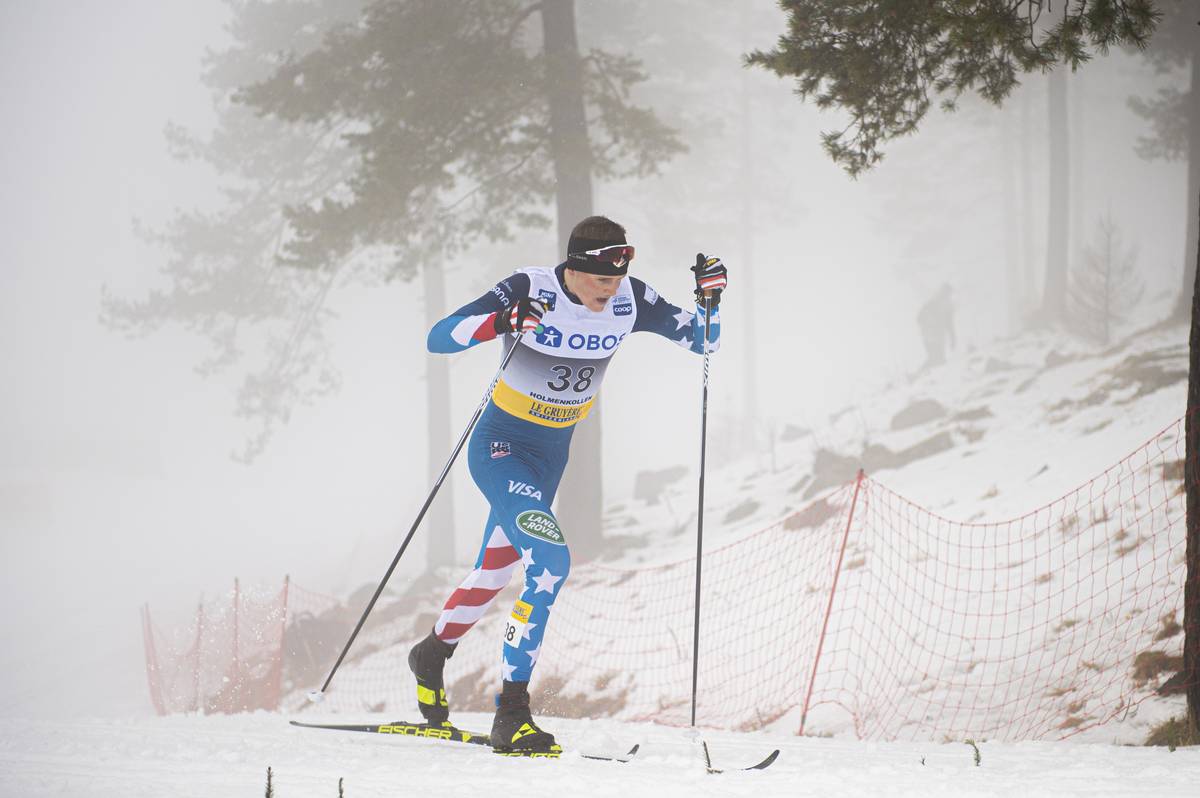
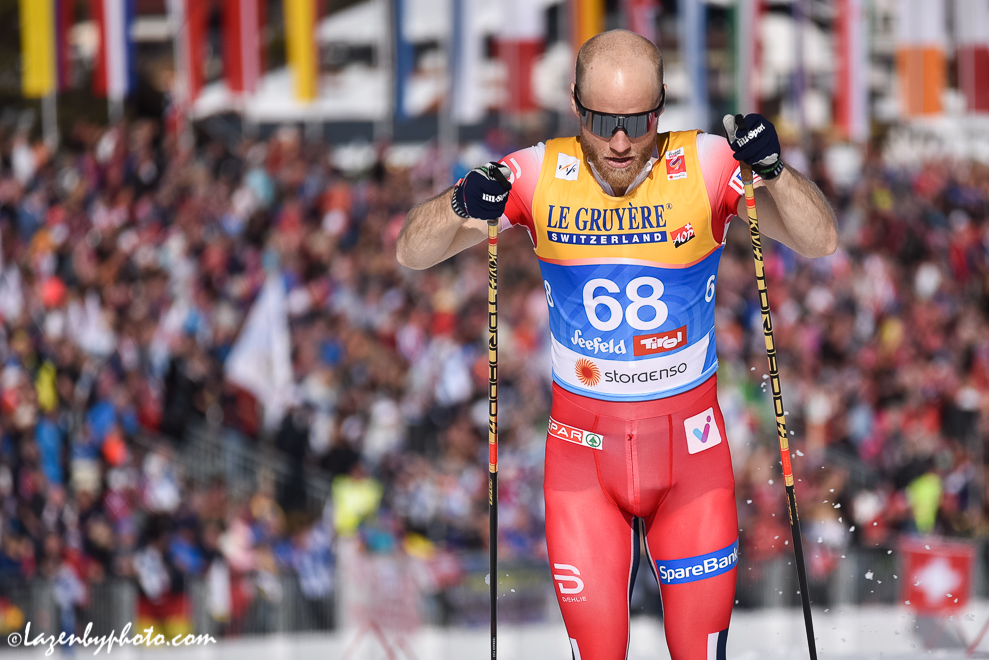
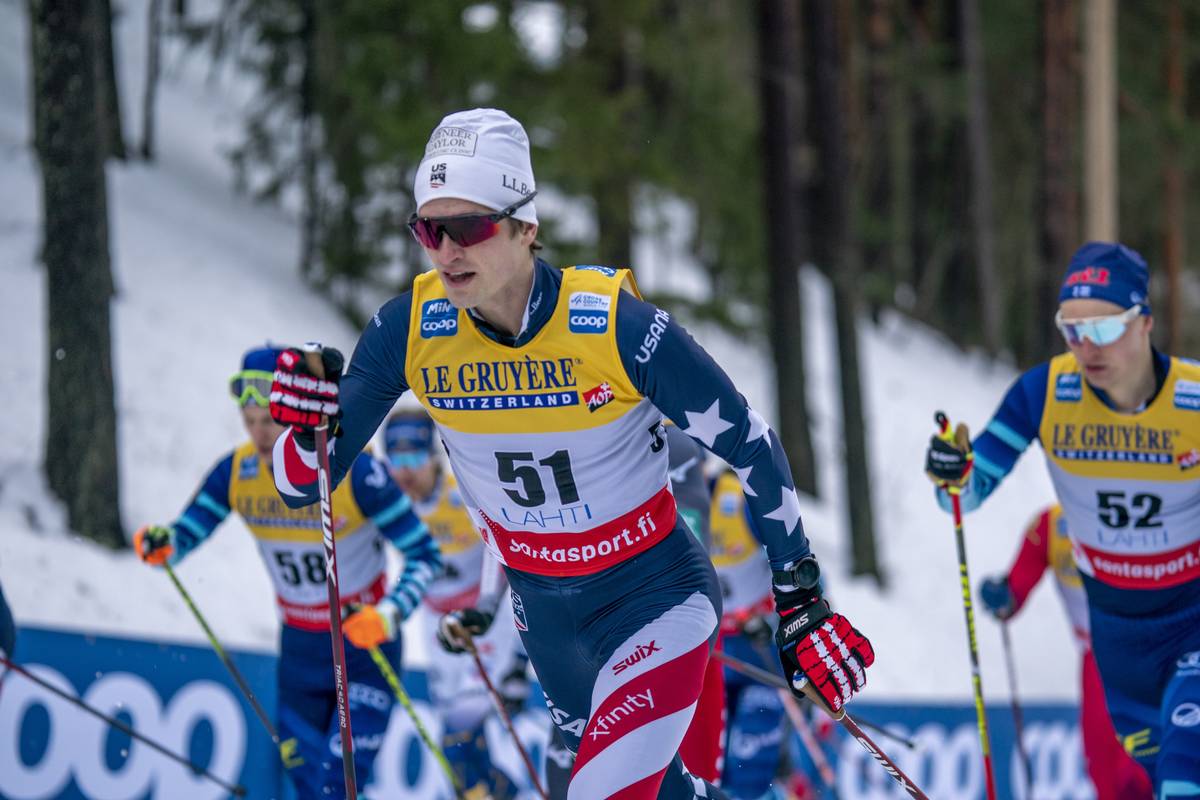
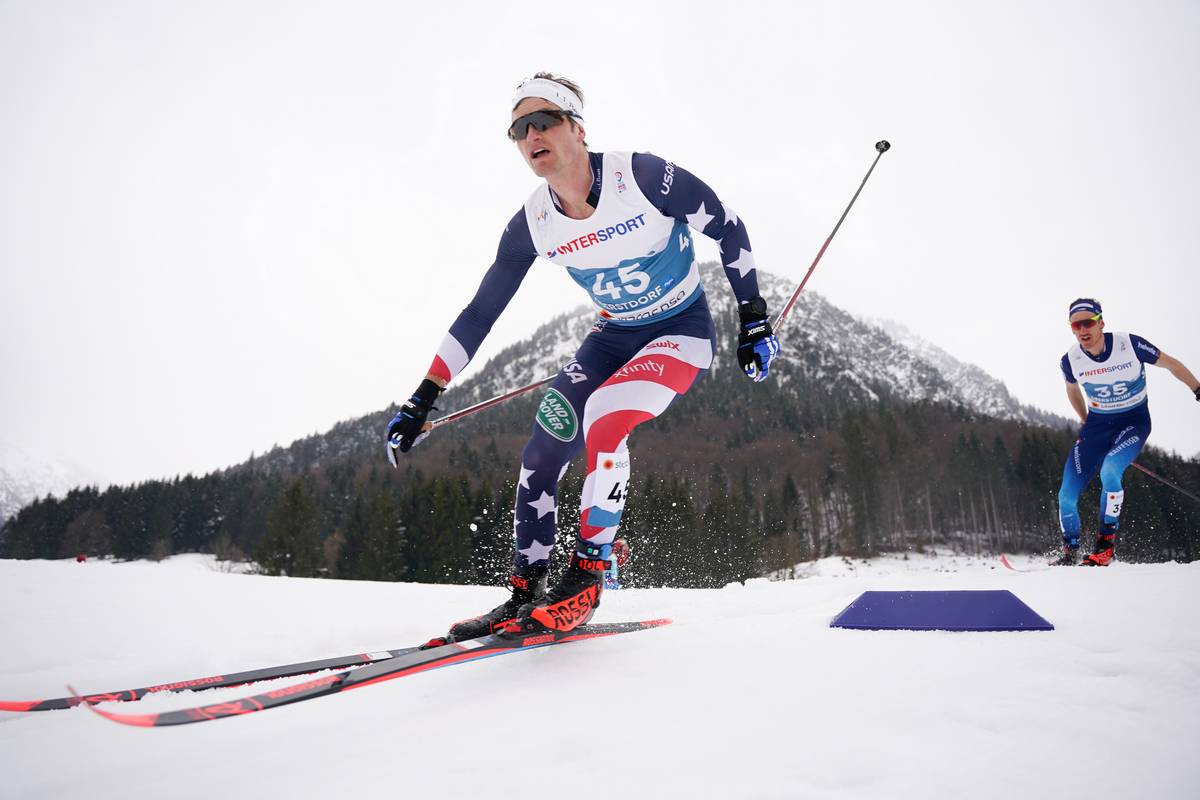
    David Norris skied to 16th overall in the men’s 50 k classic at the 2021 World Championhsips. Norris was not nominated to the U.S. Ski Team. (Photo: NordicFocus)

    I have been racing against David Norris for the past 10 years. We have battled head to head trying to crush each other. The end game was to earn valuable points on the domestic SuperTour circuit to qualify for World Cups. There have been many times we have swapped podium places at U.S. National Championships and U.S. SuperTours. As a one-time peer of David’s, I understand the need for funding and support to compete effectively at the elite level. I am trying to spread awareness and cultivate support among the U.S. cross-country ski community to persuade the U.S. Ski Team that David deserves to be a member for 2021-2022. He needs the support and expertise of the national team to realize the next step in his progression.

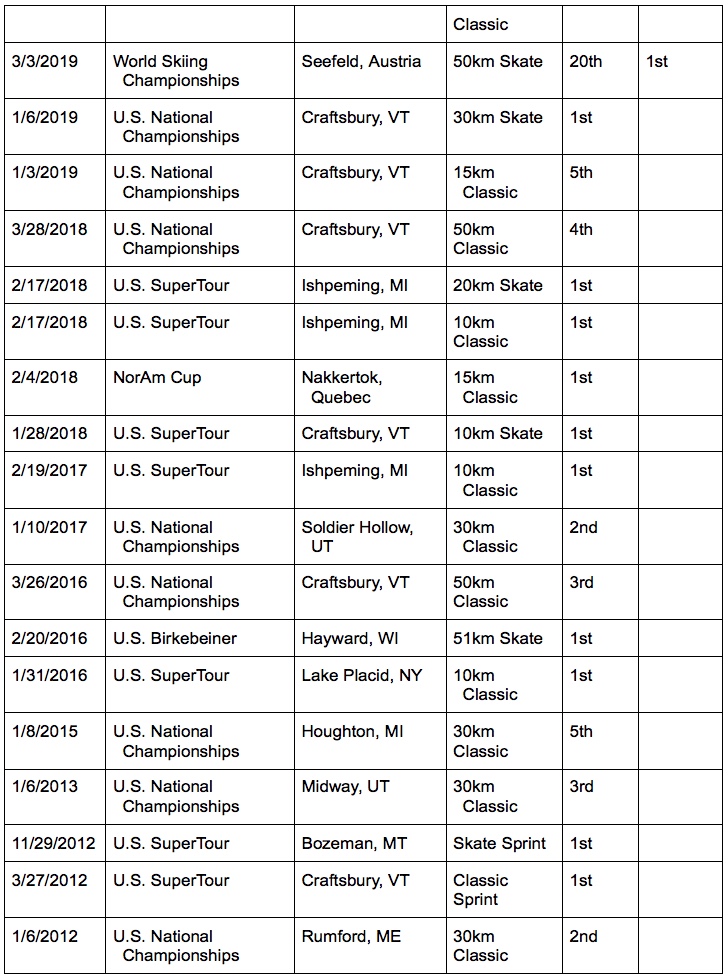
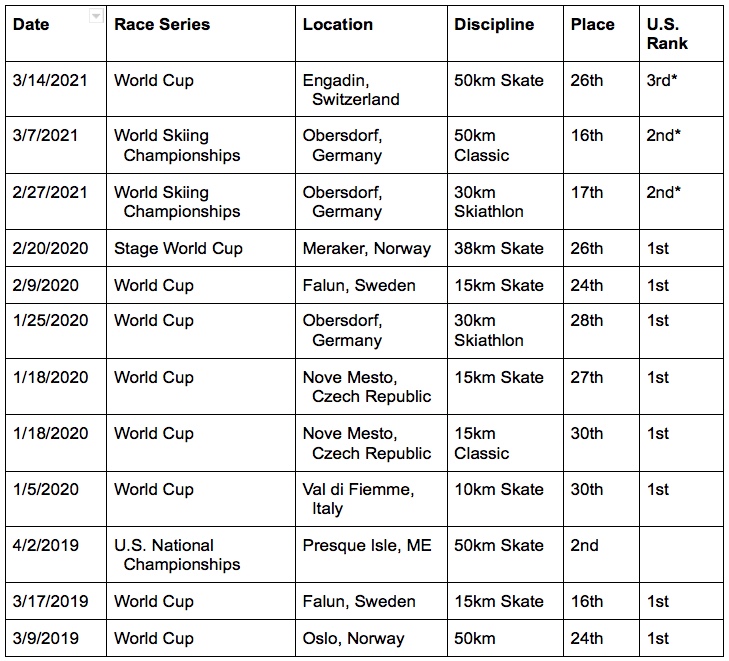
    The team looks incredibly strong. With the clear trend of capturing young and accomplished skiers, the 2021-2022 U.S. team is full of potential. However, many athletes and coaches were surprised when the U.S. Ski Team announcement recently dropped. The team roster lacked a key athlete: David Norris. David has been one of the most consistent and top-performing distance skiers in the United States since 2010. There is data to prove this claim and you can see the results spreadsheet I’ve organized at the end of this piece. 

    I know this is a merciless pursuit. As does David. Let’s get this point out of the way – David is thirty years old. As the U.S. Team’s objective criteria trends, Norris has many tree rings. There’s also this undeniable truth, in addition to his strong domestic consistency, David has been improving on the World Cup since his debut in 2017. He has achieved an astounding 12 top-30 individual World Cup results. In 75% of those races, he ranked as the best U.S. male finisher. In his first FIS World Skiing Championships in Seefeld, Austria in 2019 David placed 20th in the 50km skate; again, crossing the line as the first U.S. athlete. In his second FIS World Skiing Championships in Oberstdorf, Germany in 2021 David placed 17th in the 30km skiathlon and 16th in the 50km classic. With these two recent top-20s, he crossed the line as the second U.S. athlete in both races behind Scott Patterson.

    This is a small sample size, two World Champs. But trends are trends. In Seefeld, he posted a 20th in the 50 k skate. Two years later he improved four places to 16th in the 50 k classic. That’s a 20% improvement in place. It also demonstrates David’s all-around capacity in the dual techniques. It’s the same in the skiathlon — a bump from 36th in Seefeld to 17th in Oberstdorf can only be spun one way: promise, potential, and the ability on a special day to nail a top-10 or better.  

    It would seem clear to any outsider or cross-country ski enthusiast that an athlete consistently achieving top-20 results in World Championships and is the first or second U.S. athlete deserves a spot on the U.S. Ski Team. This puzzles many athletes, coaches, and fans. David did miss the team’s objective criteria. But, what adds to the confusion is that seven of the 21 U.S. Ski Team nominations this year were used with discretion, meaning they did not meet the objective criteria. Why would discretion not be used for the case of David Norris? 

    I am aware that no criteria will ever be “perfect” and there will always be arguments and disagreements for every criteria and selection qualification process. There’s always at least one skier on the wrong side of the equation. I think the U.S. Ski Team selection is strong for 2022. I do have a serious concern, however, and I think we should be asking the question, why are such great criteria missing one of our best athletes? 

    There is a clause in the 2022 U.S. Cross Country Team Nomination Criteria under the Discretionary Selection Policy: “… the staff may consider any factors including… Illness or injury during the selection period.” 

    It is crucial to know and publicize that David Norris suffered from Covid-19 during the fall of 2020. This may come as a surprise to many readers because David is not one to be dramatic or complain about any factors that negatively affect his performance or racing. He quietly recovered and worked into his training as his body allowed. He still went on to earn two top-20 World Championship finishes. 

    To be blunt, he is lucky to be alive. And the fact that he was able to achieve such outstanding results is embarrassingly overlooked and underappreciated. Elite cross-country ski racers have to be extremely cautious of the common cold or the flu, but to take on one of the most severe respiratory diseases in a century should be covered by “illness or injury during the selection period.”

    Due to Covid, David missed his fall World Cup starts. He lost valuable points and arguably the most important part of the season for hard-effort training and obtaining race fitness. He lost chances for more potential top-30 finishes and FIS points, thereby effectively erasing any opportunity to objectively qualify for the U.S. Ski Team. This is exactly what the discretionary clause was designed for: to give an opportunity to athletes who have been affected by factors well outside of their control, yet who still show talent and drive and results to be recognized by the U.S. Ski Team. 

    So then we have the question again: why was he not selected for the U.S. Ski Team? 

    Age comes into the equation as many have noticed. The U.S. Ski Team is developing an impressively talented and young team. While this will play a key role in improving our results as a nation in years to come, we cannot lose sight of the talent and abilities of some current older athletes. David is not an athlete knocking on the doors of top-30 World Cups. He is not the 4th or 5th U.S. skier at World Cups. Two other U.S. distance skiers can do what he does. Both skiers were nominated for the 2022 U.S. Ski Team (Gus and Scott). 

    Qualifying for World Cups as a non-team member and racing as a member of the U.S. Ski Team are starkly different experiences. David has proven that he can compete against the best in the world, and the best distance skiers from the U.S. while being self-supported and coordinating his own wax technicians. (As a non-team member on the World Cup, the responsibility for funding a wax tech falls to David.)

    As background actors, wax technicians are chronically overlooked, but I think they are as important as the athlete to earning strong World Cup results. Having a consistent wax technician who knows the athlete, the ski fleet, European race conditions, grinds, flexes, cambers, and wax is more important than the average viewer realizes. The relationship and knowledge of a wax technician to their athletes’ skis can make or break races. I think we as a country are all curious and excited to see the day that David is a fully supported U.S. Ski Team athlete with a consistent wax technician and without the burden of coordinating sponsorships, funding, and his wax tech needs for upcoming World Cup races. Last season Norris employed four different wax techs between the end of January and mid-March.

    There’s only an upside to Norris’ potential. Imagine his potential if he were fully funded with access to the full arsenal of national team resources. 

    As a fellow distance skier, I can attest to the challenge of going from winning U.S. SuperTour races to trying to crack a top-30 on the World Cup. It is not an easy task. I feel like I came from a sort of “middle generation” of U.S. distance skiers between the legendary Noah Hoffman, Kris Freeman, and Erik Bjornsen and the new guns like GU.S. Schumacher, Luke Jager, Ben Odgen, and Johnny Hagenbuch just to name a few. I count myself proud and lucky to have raced with such talented distance skiers like Kyle Bratrud, Adam Martin, Ian Torchia, Paddy Caldwell, Scott Patterson, David Norris, among many others, all of whom were on and off the World Cup circuit. I obtained the SuperTour leader position for at least one period per year for four years in a row from 2016-2020. 

    I had ample opportunities to prove myself worthy of the U.S. Ski Team. I raced 32 World Cups and two World Championship starts. I was one of many U.S. distance skiers who dreamed of cracking that top-30, earning World Cup points, and making the U.S. Ski Team. It was incredibly hard for all of us to make that break. I cannot stress enough the increase in difficulty for U.S. men from winning a U.S. National Championship or SuperTour to popping a top-30 individual World Cup result. Only two of our generation were able to consistently make that break into the top-30: Scott Patterson and David Norris. Scott was selected to the U.S. Ski Team. David deserves it as well. I know they both belong in Europe representing the U.S. because they are the best we have. 

    I do not feel that the United States has the luxury to not name David Norris to the U.S. Ski Team. We are a small and tightly knit community in a country that does not appreciate nor endorse cross-country skiing as a national sport. It is imperative to support our best skiers especially on the men’s team, not only for achieving top results at the 2022 Winter Olympics but also to develop and establish a strong team for the future.

    Helping keep David in the game benefits a generation of younger skiers. They learn that when you are one of the top three distance skiers in the country, a top-20 skier at World Championships, the national team has your back.   

    The current scenario is a bit of déjà vu for Norris. Last season he missed meeting the team’s objective criteria by 0.88 points. He was not discrentioned to the team for 2021.

    If you would like to learn more about David Norris and his situation, please visit this link to a petition: https://www.change.org/p/U.S.-ski-and-snowboard-nominate-david-norris-to-U.S.-ski-team-2021-2022


    Appendix I: David Norris’ Top Results Since 2010. 

    I limited these results to 1st place at U.S. SuperTours, top 5 results at U.S. National Championships, and top 30 at the World Cup or World Championships.

    (Results pulled from https://www.fis-ski.com/)

    *Results after recovering from Covid-19.

  • A PT in Norway: By Ned Dowling

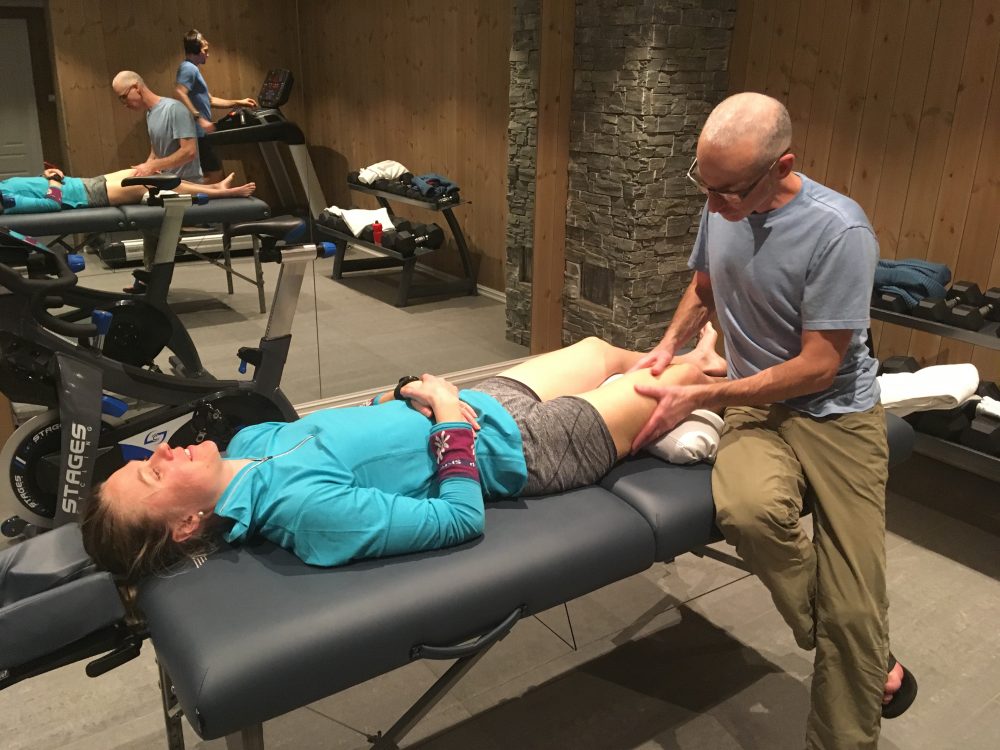
    Ned Dowling working on Sadie Maubet Bjornsen. (Photo: Ned Dowling collection)

    “Get whatever you want. I’m buying.”

    “It’s ok. I’ve got a card with me.”

    “No. You’re over here working for us. The least I could do is buy you a coffee and a bun.”

    Conversation over. Jessie Diggins bought my cinnamon bun and cappuccino. The same Jessie Diggins who won Gold at the last winter Olympics and is a regular on World Cup podiums just refused to let me buy my own snack at the café stop while skiing in Sjusjøen, Norway. If I didn’t already feel accepted, I did then.

    The email from U.S. Ski and Snowboard had arrived two months earlier. The Physical Therapist who was scheduled to work with the U.S. Cross Country Ski Team during races in March was unable to travel. Would I be able to cover for her? My jaw dropped. My pulse quickened. I’d just been asked to travel with the U.S. Ski Team to Norway—the Mecca, the Motherland. 

    I didn’t sleep a wink that night.

    This was not my first gig as a PT working with elite athletes. I’d had a stint as a part-time soigneur with a U.S. based, pro cycling team. In French, soigneur means “helper.” In every other language, it means “worst job in sports.” The hours are long, the tasks are menial, and the actual “physio” role is often limited to recovery massages (aka Rubs). I found myself exhausted, unappreciated, and wondering why I’d left my “easy” PT job in the clinic to work twice as long for half the pay. Like most experiences that become teachable moments and help us grow in life, my time as a soigneur was the sort of arduous misery that, once survived, opened doors to better things. While grateful, I was still more than a little burned.

    The burned feeling was felt even more by my wife. I’m pretty sure she could still smell the smoke when I asked her how she felt about a redo in Norway for two weeks. During my time with the cycling team, while I was off babysitting professional athletes, she was single-momming it with our toddler son. And she was not happy about it. Proving how wonderful she really is, my permission slip to Norway was signed. The other signature required was from my boss at work. That proved to be easier than imagined as my manager in the PT clinic at the University of Utah’s Orthopaedic Center gave me her full support. Permission granted, passport renewed, and official team logo wear issued, I was ready for Norway. 

    But I still wasn’t sure if this was going to be heaven or hell.

    I was used to communication from the cycling team management being brief, procrastinated, and severely limited to an “as needed” basis. Don’t call me, I’ll call you … maybe, sometimes a couple of days before you deploy. So I was quite surprised when I started getting timely and detailed emails from the ski team coaches, which included sentences like “Looking forward to working with you Ned!” and “Thanks again for joining us.” Maybe these folks are going to be different. Maybe they know how to feed themselves and do their own laundry. Maybe I won’t be working 14 hours a day with my face coated in a mixture of sweat, sports drink powder, and massage lotion. Maybe I’ll be appreciated. 

    After 21 hours of travel and 21 minutes of sleep, my train pulled into Lillehammer, site of the 1994 Winter Olympics. I had arrived! And I was greeted trackside by Matt Whitcomb and Jason Cork, two of the ski seam coaches. I did not have to send a text and wait for a ride. I did not have to catch a bus to some hotel I couldn’t pronounce. I was riding shotgun while Jason was wedged in the back of the van, imprisoned by duffel bags and pole cases. Severely jet-lagged, I tried to make sense of my surreal surroundings as Matt briefed me while we ascended the winding road to the cross-country heaven that is Sjusjøen.  

    The plan for the next two weeks looked something like this: The first week was to be a “training camp” for four of the top skiers. Then we would head to Drammen for the famous city sprint. After that would be the even more famous World Cups at Holmenkollen—the Super Bowl of cross country ski racing, typically attracting over 50,000 fans.

     As all plans are subject to change, so did this one. Multiple times. But one thing stayed consistent—everyone’s positive attitude. 

    That first week turned out to be more about recovery than training. The athletes in Sjusjøen were coming off of Ski Tour 2020, a new addition to the World Cup calendar with six races in nine days and no shortage of travel in between. Exhausted was an understatement. I felt like a jet-lagged zombie, but I met the cast of Night of the Living Dead when Simi Hamilton, Sadie Maubet Bjornsen, Jessie Diggins, and David Norris arrived at the cabin. We were surrounded by a few hundred kilometers of perfectly groomed ski tracks literally right outside of our door and not a single one of them wanted to ski. At least for a day. While I did my best to resuscitate their muscles and joints with daily manual therapy treatments, they slowly returned to the land of the living. 

    The silver lining for me was they all skied slowly enough that I could keep up. The days began to take on structure for me: wake up at a normal time (versus the jet-lagged pattern of undersleeping one night then oversleeping the next), eat, ski, eat, treat athletes, eat, sleep. Their days resembled mine except for being on the other side of the treatment table. Remarkably to me, the athletes and coaches took turns grocery shopping, cooking meals, and doing dishes. Everyone even did their own laundry! I was so used to working in the world of cyclists where “self-sufficient” wasn’t even in their dictionary. (We used to have a duffel bag labeled “DA” that was taken to the start of every bike race. It was full of extra jerseys, bib-shorts, and socks for the inevitable rider who forgot something. “DA” stood for Dumb Ass.) But these skiers were elite athletes, winners of medals, the best in America, and yet they could take care of themselves. 

    Despite the fatigue, a respiratory infection that was eventually passed to all of the athletes, a couple of days with sideways blowing snow, barley flour (“that’s all the grocery had!”) that left the baked goods flat as matzo, and the increasing presence of coronavirus in the news, the team just seemed to roll with the punches, make lemonade, and keep on keepin’ on.

    Just before we left Sjusjøen for Drammen, it was announced that, due to a lack of snow, the race would be moved to Konnerud. The race in Drammen is one of the coolest venues on the calendar with skiers sprinting up and down the main street through the old city center and around the Bragernes Church. Instead, it was moved to a small ski venue that had not hosted a World Cup caliber race since 2011. That 2011 race, it turns out, was the first World Cup start for both Jessie and Sadie. Now, veterans of the race circuit, they were excited for the venue change out of nostalgia, and the media loved the silver lining story.

    With the next day came the news that the weekend of races in Holmenkollen, the biggest party in Norway, would be closed to spectators due to fears over the spread of the coronavirus. While utterly disappointing, this made sense on two levels. For one, most of the 50,000 fans arrive packed like sardines in the trains from Oslo. Secondly, as pointed out by one of the health ministers, drunk people tend to make poor hygiene decisions. And the fans lining the Holmenkollen course are known to party.

    The next round of bad news came when Sadie, one of the top skiers and a front pack contender, did not start due to the bug that had made its way around the Sjusjøen cabin. (David would end up dropping from his race from the same cold). Saturday morning at the often raucous Holmenkollen began with an eerie quiet in the ski stadium and a little less chaos in the wax truck since only three women were starting the 30 k classic. 

    The race, at least on the front end, turned out to be one of the more exciting in recent years with the strongly favored Norwegian, Therese Johaug, getting caught and passed in the last kilometer by a young Swede, Frida Karlsson. 

    There was more bad news on the back end of the race as the American women struggled to keep pace  — like your local marathon hero trying to toe the line with Eliud Kipchoge. They fought hard for a grueling 90 minutes and finished at the bottom of the standings in what would turn out to be the last race of the season. But there was a remarkably bright spot in that foggy, ghost town of a ski stadium as I watched Kaitlynn Miller wait for Becca Rorabaugh. Exhausted and disappointed, they hugged and walked together past the podium presentation that was already starting. Seeing that display of kindness and friendship, my mood was immediately uplifted. I was proud to walk with these women, heads held high, past vacant looks from the media and other skiers. The results don’t always matter as much as the comradery of the team. 

    On Sunday, the men raced 50 k. At least those who finished. It was cold, wet, foggy, windy,  and – we’ll mention again — cold and wet. For over two hours the men slogged around an increasingly slow and sloppy track. David abandoned due to illness and anticipation of upcoming races that would eventually be canceled (had he known that he was in his last race of the season, he would have surely soldiered on). Ian Torchia dropped out after throwing up his breakfast and every ounce of liquid he tried to take in at the feed zones. Ben Lustgarten and Adam Martin persevered and crossed the finish line; both later suggested it was one of the more miserable races of their lives. 

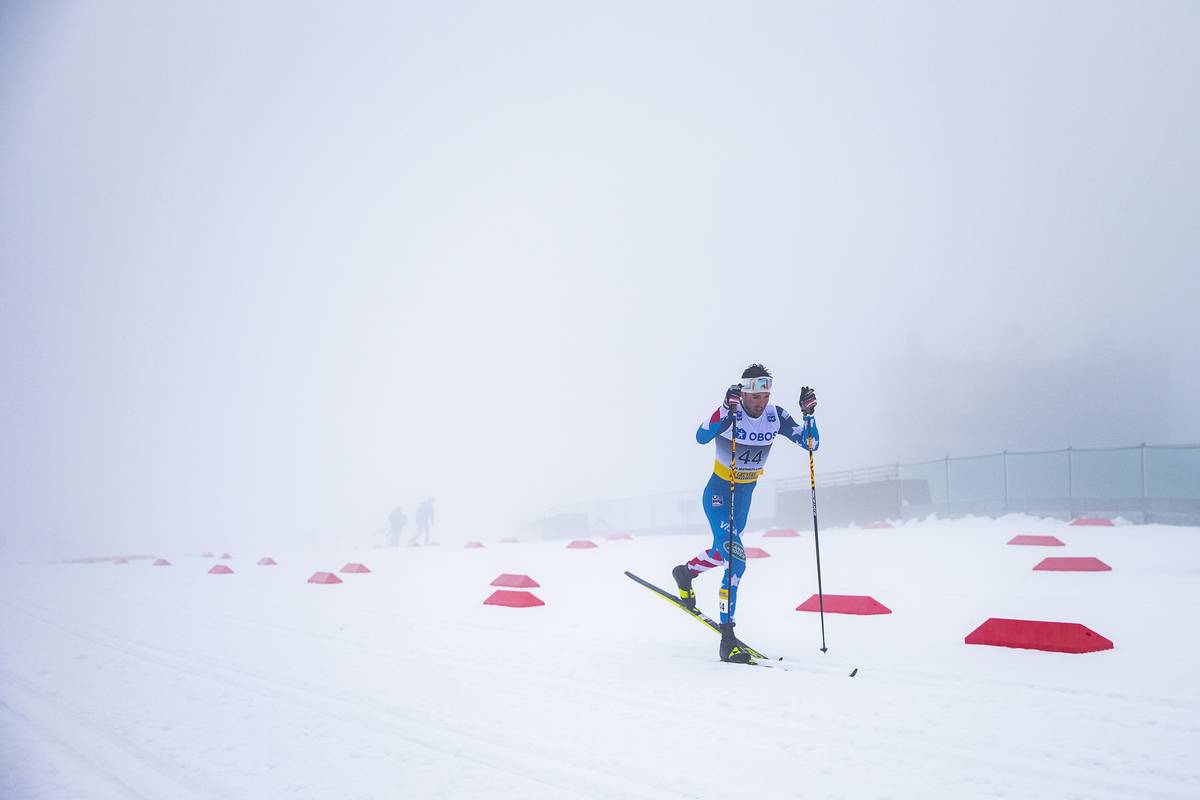
    Ben Lustgarten (front) during the Oslo 50 k classic. (Photo: NordicFocus)

    At the team meeting that night, there might have been feelings of disappointment but no one showed it. As Matt spoke to the team, he emphasized that he was proud, not embarrassed, by the performances that weekend. There is no shame in showing up and trying your best, even if your best leaves you at the bottom of the results sheet. There’s much more to it than the results sheet. Gratitude and appreciation were reiterated with not a mention of anger or blame. 

    A rising tide lifts all boats is an idiom often used to describe a setting where one person’s success or positive attitude inspires others to push the limits of their own performance. Sadly there were no podium celebrations during my two-week stint, but that did not deter me from doing whatever I could to help, whether fetching coffee for wax techs (an errand that used to irritate the hell out of me when I was a soigneur) or tactfully (I hope) ushering Jessie away from admiring fans when she was needed elsewhere.

    And I was especially motivated to put my energy into the well-being of the athletes, simple as my role was: to methodically push on a joint here and a muscle there in hopes of giving the athletes the physical and psychological confidence to charge into battle with their skinny skis, carbon fiber poles, and Lycra armor. I’d like to think that I channeled my years of Physical Therapy practice and experience into their muscles, joints, and fascia to make them more resilient in the fight, whether that was 2 ½ minutes at full gas in a sprint or 2 ½ hours in the 50 k pain cave. My simple role was to help them perform at their best. 

    What I know I accomplished during these two weeks in Norway was an education in the meaning of team spirit. They cheered each other’s victories and consoled each other in defeat. They cooked each other meals and volunteered to do the dishes. They said thank you after every PT session. I would call my time with the U.S. Cross Country Ski Team a once in a lifetime experience, except that I want to go back next year.

  • Attrition in the Fog: Bolshunov pips Krüger for the Oslo 50 k Classic Win

    Attrition in the Fog: Bolshunov pips Krüger for the Oslo 50 k Classic Win

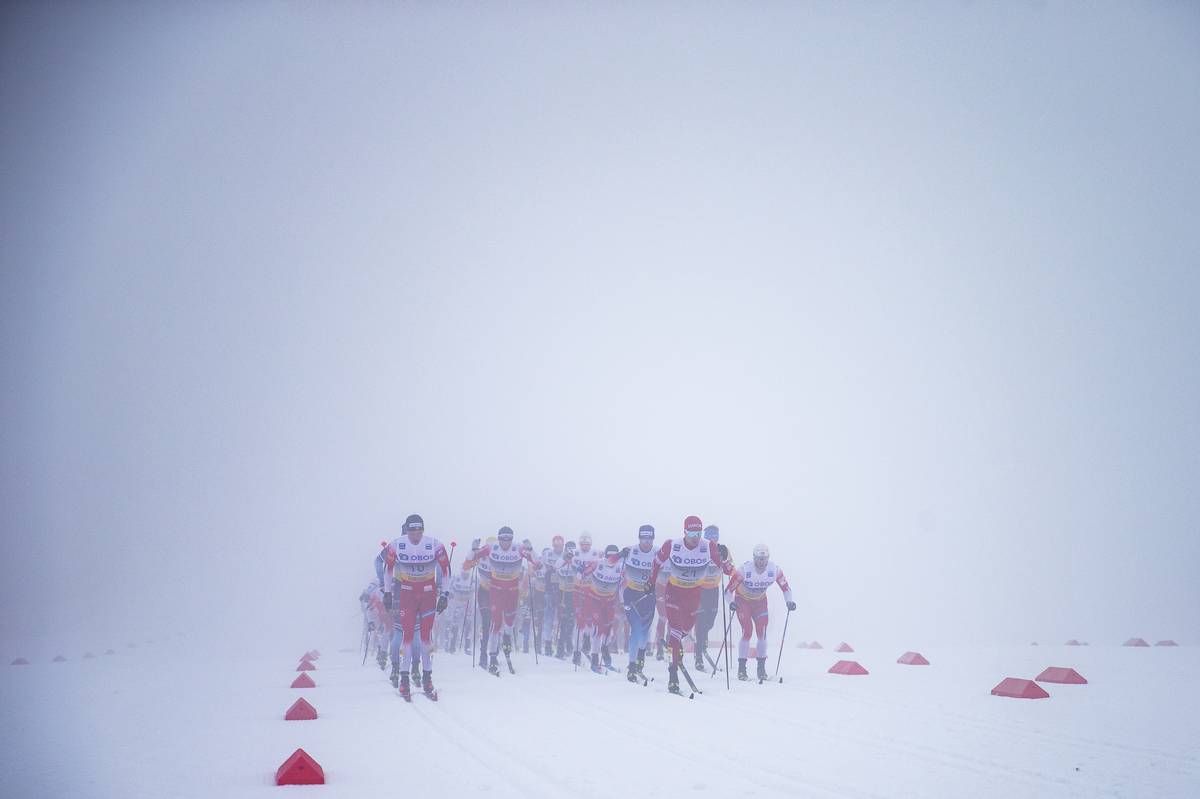
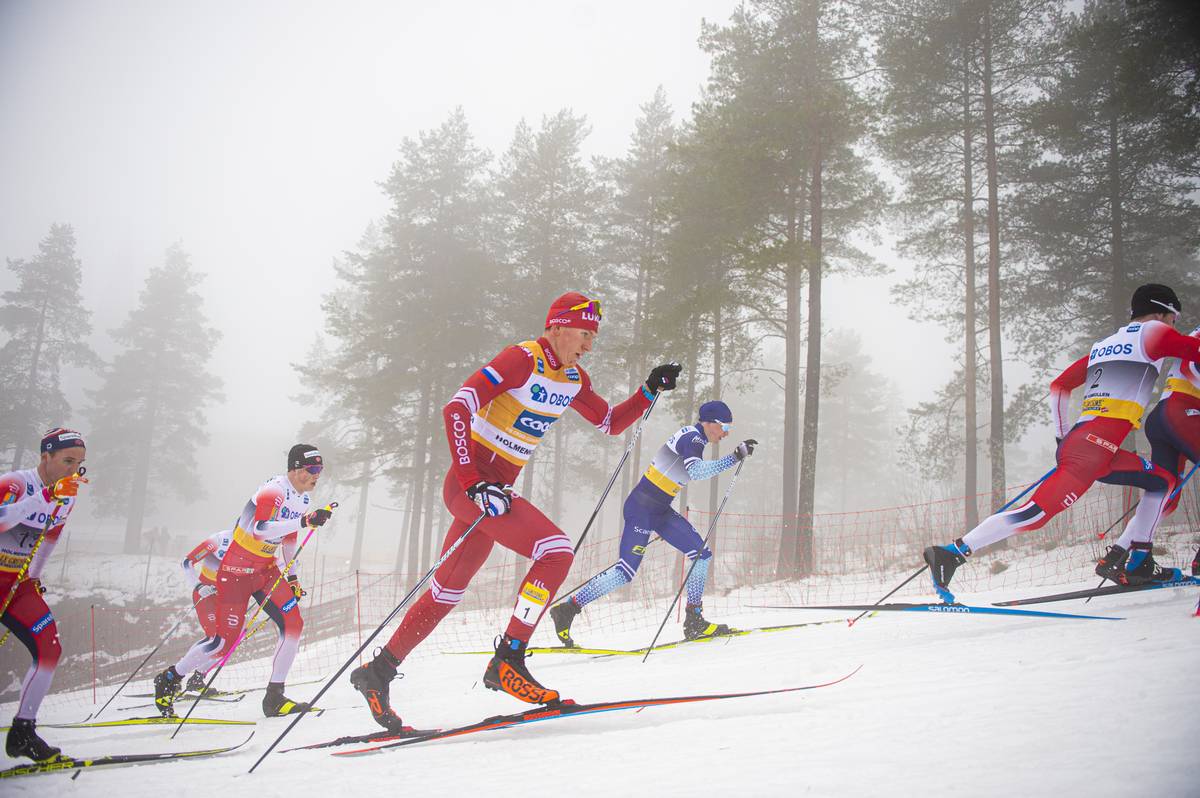
    En mass: early in the Oslo 50 k classic. (Photo: NordicFocus)

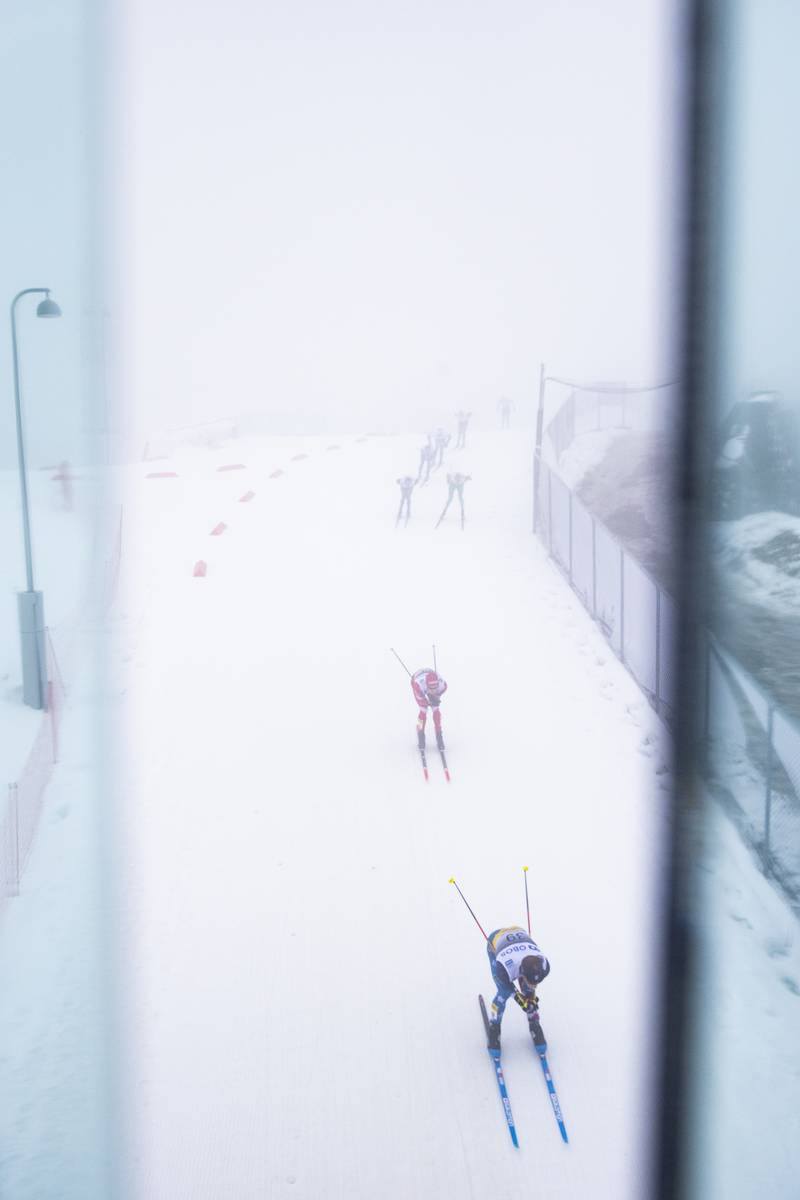
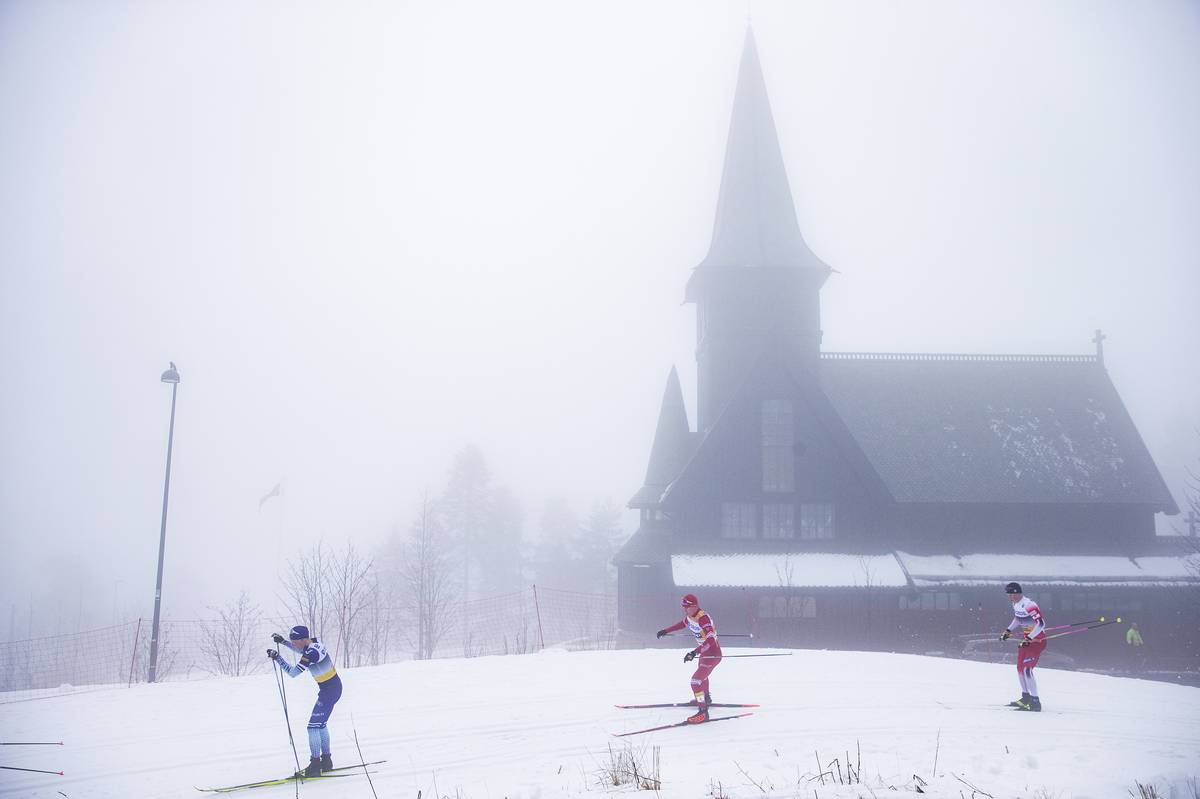
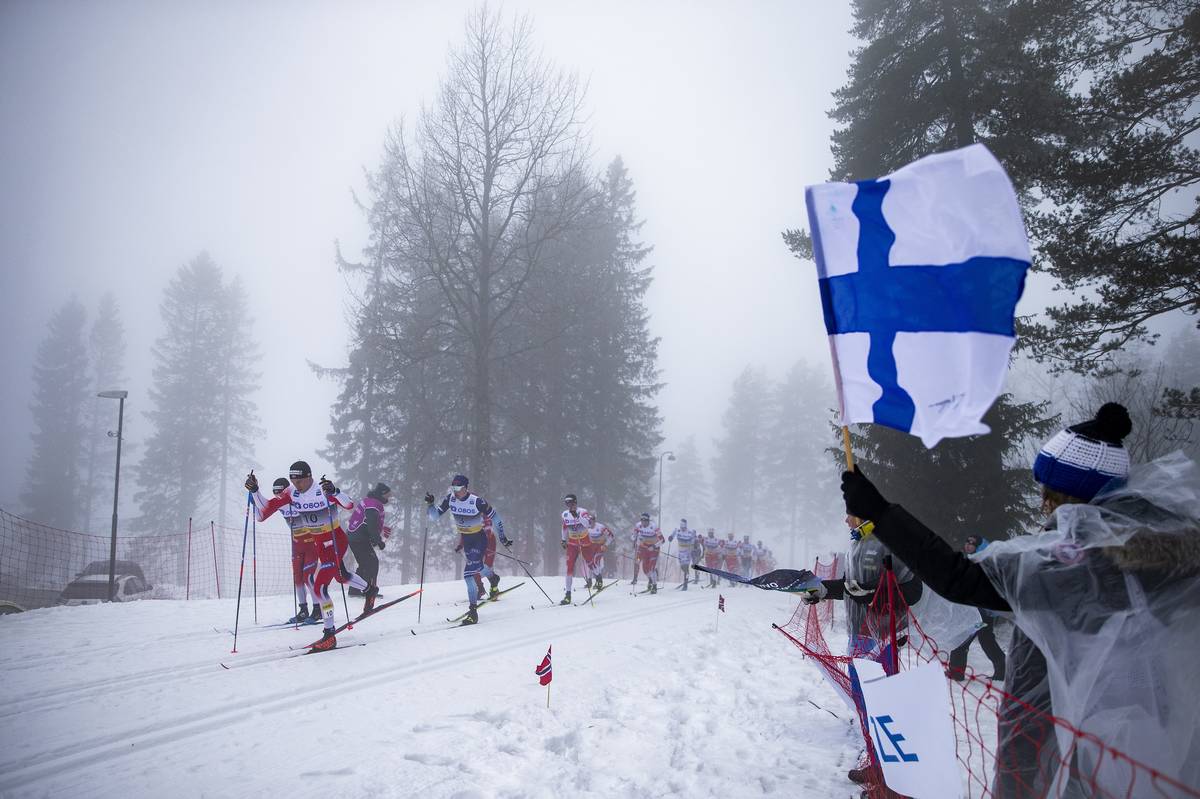
    Oslo in late winter – it’s be hit or miss. Fog. Bluebird. A maritime climate, with plentiful moisture in the air, a slight drop in temps can morph the Holmenkollen ski complex into a ping-pong-ball-world. Athletes were mere shadows striding into and out of view on a foggy- drizzly day at the Holmenkollen. As spectators were limited to trail side spots as the main stadium was closed due to the Covid-19 virus, for some concerned, it was a slog for the 50-kilometer classic to close out the European portion of the World Cup. (That’s right- it’s ocean hopping time for the entourage post-race as the World Cup moves to North America.)

    Sunday church along the Holmenkollen course: Iivo Niskanen (FIN), Alexander Bolshunov (RUS), Johannes Høsflot Klæbo (NOR), (l-r). (Photo: NordicFocus)

    Let’s cut to the chase. The main action over 50 k involved main pack attrition. The sharp end pack remained robust with skiers through 18 k, as skiers passed through the main stadium as Sjur Røthe of Norway came through first. That much didn’t matter beyond a minor foot note in the day’s narrative, as a handful of Norwegian’s took pace leading chores throughout the race. 

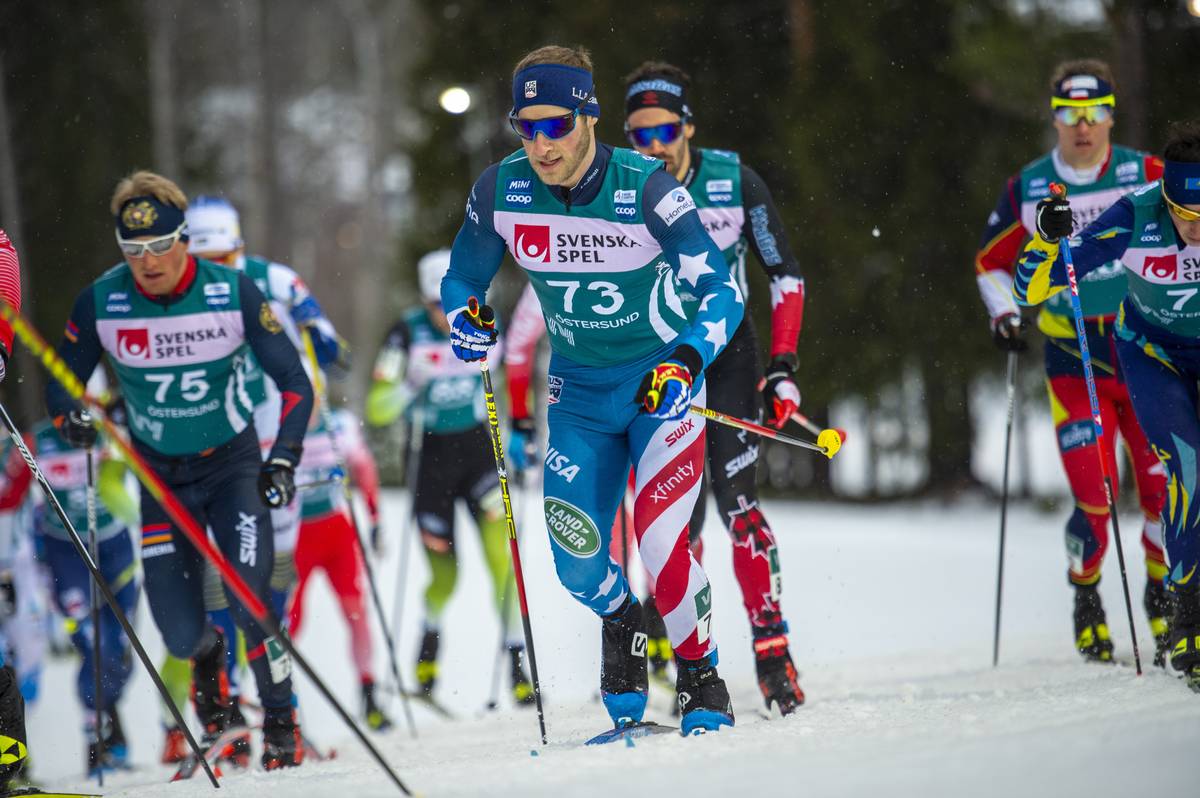
    On a day that many would have preferred to practice their own personal art of hygge, the main pack remained 20 deep at 30 K. The top-20, which contained all the key skiers, was separated by a scant 5.6 seconds. A group that big surely provided its own sense of Norwegian coziness despite the high heart rates. Of those 20 athletes, four were Russian, two Swedes, one Finn, one Swiss — the rest Norwegians. Charging through was overall World Cup leader Alexander Bolshunov. There was Emil Iversen, Pål Golberg, Martin Johnsrud Sundby, Simen Hegstad Krüger, Didrik Tønseth, Hans Christer Holund, and Johannes Høsflot Klæbo. Bundled in there was Dario Cologna of Switzerland, and Iivo Niskanen of Finland, who was lucky enough to have fans and there chanting “Iivo-Iivo”. 

    With so many skiers clustered together, and the tactics less explosive than simply see who could hang on, the camera shots at each turn of the race through the main stadium turned to the spare classics skis racers had the option of swapping into. The lure of fresh kick or speed, seemed like tempting race candy. Halfway through, at roughly 25 k, it appeared that Golberg was one of a few of the main contenders opting for a fresh pair. The rest skied through the ski exchange zone, at least content for another lap with their boards.

    Lapping through at 30 k, scores of skiers opted for fresh kick and glide. Post-ski-exchange,  the front pack soon coalesced into two orderly lines, like marching soldiers, as they crested a hill roughly an hour twenty into the race. 

    No matter any skiers herculean efforts to pop off the front, this was a simply a group affair. Any potential burst of speed, or pulse for bonus points, was absorbed. Ski speed or kick, seemingly equalized among the scrum. The question simply was this: which human engine would last the longest? Forty kilometers in, and the front group had winnowed 13 skiers separated by about seven seconds. Bolshunov led, followed by Røthe and Cologna. 

    Pål Golberg (NOR), Sjur Røthe (NOR), Iivo Niskanen (FIN), and Johannes Høsflot Klæbo(NOR), (l-r). (Photo: NordicFocus)

    Then it was two — barely. Just after the two hour mark, Krüger spiced up the pace. Striding and double poling in earnest, at 47.7 k. Krüger was only shadowed by Bolshunov, as the Norwegian’s late in the race move stuck. Røthe, Cologna, and Holund fell off in third, fourth, and fifth, respectively, to just over 11 seconds back. 

    Two stallions double poling into an eerily silent stadium. That was probably not such a bad thing (although fans present are always better), as one can imagine the fans falling silent had they been there in droves. Russia’s Bolshunov out sprinted Krüger to win in 2:08:05.3, 0.9 seconds better than the second place Norwegian. 

    “I knew that Bolshunov is strong on the final 100m so I tried to get rid of him before that,” Krüger  told FIS. “I felt really good today so I knew that I could really push myself before that. But he is strong and it’s hard to get rid of him. I almost made it but I am really happy to be on the podium. It’s an amazing feeling.”

    “Me, the team and the skis were all working together perfectly today and I am very happy to win here,” Bolshunov said after the race. “Because compared to Trondheim, where I had no possibility to do something with my skis, it was more important for me to win here today.”

    That Trondheim race mentioned by Bolshunov was the final stage of the SkiTour 2020 in which he lost the overall due to poor skis.

    For Bolshunov, this made for back-to-back 50 k classic wins in Oslo. Last season he won in a final sprint that saw Russia sweep the podium. And for Krüger, this was a career best in a 50 k race. He was seventh in last season Oslo 50 k. Lastly, when it comes to classic skiing, this has been a breakout year for Krüger – he is an athlete we had often considered a skate specialist. 

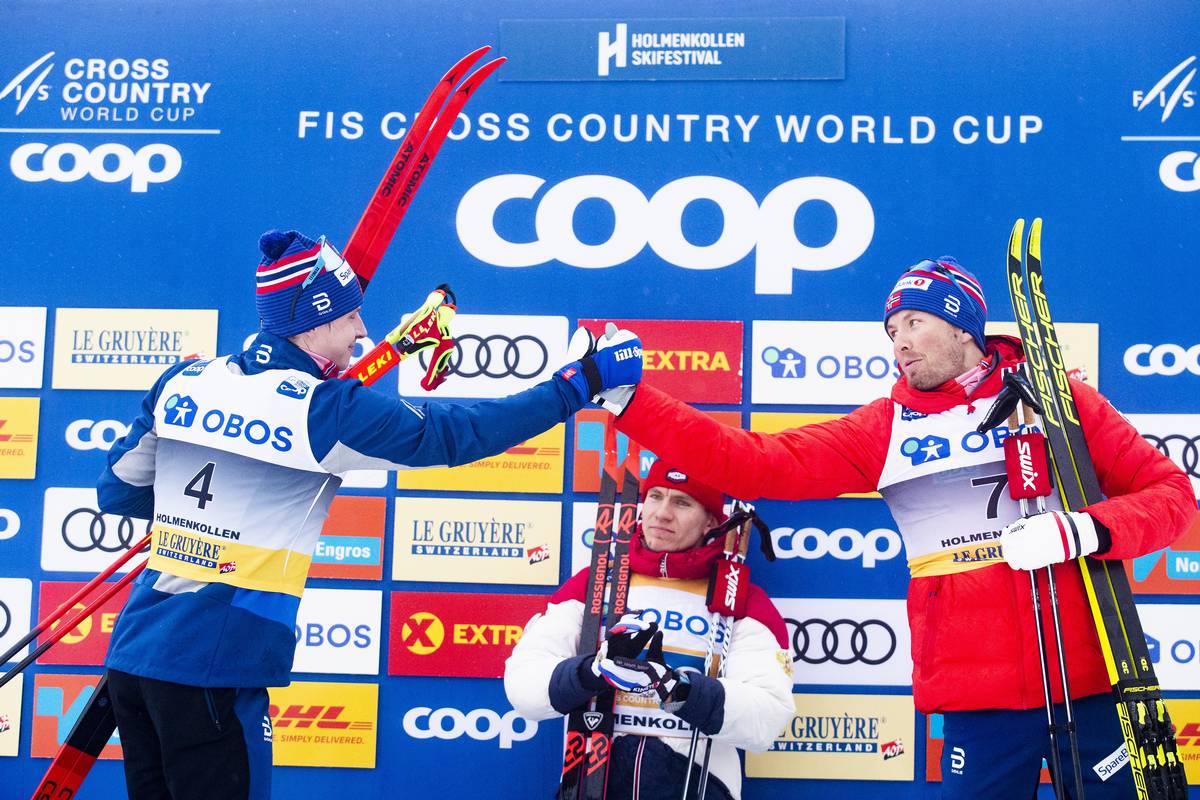
    For the final podium spot, Iversen placed third (+19.5). Norway claimed seven of the top-10 spots. 

    “In the last lap I heard that I can fight for the podium and this is where I got some more energy,” Iversen said to FIS. “So I am really happy to stay 50km all in because I am not known as the best athlete in our team so it is nice for me to show the coaches and all that I can stand a hard and long 50km. I am really proud of that.”

    Emil Iversen skiing to third overall in the 2020 Oslo 50 k classic. (Photo: NordicFocus)


    The Oslo 50 k classic podium: Simen Hegstad Krüger (NOR) second, Alexander Bolshunov (RUS) first, and Emil Iversen (NOR) third, (l-r). (Photo: NordicFocus)

    This was a tough day for the Americans, who started four athletes. Ben Lustgarten (CGRP) finished in 47th (+13:20.1), and Adam Martin (CGRP) 50th (+15:10.1). David Norris and Ian Torchia did not finish as they pulled due to illness.

    “It was one of the toughest races I’ve been in,” Martin emailed. “I made a blunder by selecting zeroes and paid for it in the first lap. I used my one ski exchange as soon as I could at 6k with 44k to go. I spent a large majority of the race skiing by myself in windy conditions with no racers in sight. I am thankful for the spectators that cheered me on many k’s.
    Adam Martin during the Olso 50 k. (Photo: NordicFocus)
    Lustgarten reiterated the day’s difficultly.
    “The race today was absolutely brutal,” Lustgarten explained in an email. “The conditions were not as tricky as we thought because it was just rain and super saturated wet tracks, instead of the new snow they called for in the morning. Still the tracks were glazed wet and breaking down, and also got really slow after a lap or so because of the fluoros fading from the skis. I had amazing skis for my first pair.
    “I was able to stick with the lead pack for about 1.5 laps (we did 8 laps of 6.2km). I felt really good, my skis were amazing, fast and great kick. I started to fade a bit on the steep climbs and lost contact with the main front pack. Basically after that I skied alone or around a few other skiers for the rest of the race. The wind was tough being alone, and just forcing myself to ski well and try to keep my pace up. I swapped skis after 4 laps and unfortunately had a bit less kick on my second pair, in addition to fatigue and glazed tracks I found myself herring boning most of the steep climbs, but they were nice and fast for a few laps. My triceps started cramping about 20km earlier than most 50s, with about 30km to go. That was uncomfortable and not a great sign. My second half of the race was more about holding on and trying to finish the race instead of racing as hard as I could. I find at Holmenkollen it takes everything I have to just try and ski ok and finish the race because of how hard the course is. I was proud to finish today in such challenging conditions, even though my fitness didn’t feel amazing. Overall I was really happy with the skis and our wax techs deserve a shout out for that!”
    Ben Lustgarten (front) fog bound and Oslo 50 k determined. (Photo: NordicFocus)

    “This was a very tough weekend for our team, but I’ll say this first: We’ll be back next year to swing again,” U.S. World Cup Coach Matt Whotcomb explained. “Whether we are coaches or athletes, the process of figuring out this race is why we do this job. It’s just so difficult here, and we love it. We’ve been near the top and the bottom on the same weekend, and in each of those cases, the result is always over-shadowed by the experience with the crowd. This is a major-league sporting event in these woods, with crowds in the tens of thousands, strapping speakers to trees, screeching trumpets, blazing fires, and cheering for everyone. In fact, they cheer extra-loud for athletes who aren’t having a good race. In terms of uncracking the Holmenkollen, the courses, conditions, and 30/50k race formats are so difficult that anything but near-perfect skis, fitness, and health will put an athlete way off the mark. We just didn’t pull any triple cherries this weekend. We were also hit by a cold that caused us to scratch Sadie on the morning of her race, and it lead to David pulling out after three laps. I had the chance to talk to David in the feed zone as things were starting to go sideways, and I told him to pull out. He said, “But that’s not what I do.” It’s not my style either, frankly, but it would’ve been a season-ender for him to finish the race ill. There was no other way; he was pale green. Just behind David on the course, Ian was puking (on his birthday), so he had to drop out, too. So, like I said, it was a tough weekend. And while I support David and Ian in their need to drop out of today’s race, I’m also very proud of Ben and Adam for finishing this beast.”

    Results


    Simen Hegstad Krüger of Norway, post-race. (Photo: NordicFocus)


    A Bolshunov power surge. (Photo: NordicFocus)


    A lonely day at the Holmenkollen for some: Germany’s Jonas Dobler. (Photo: NordicFocus)


    Ian Torchia: Oslo 50 k classic. (Photo: NordicFocus)
  • Predictable? Maybe. Niskanen Wins 15 k Classic in Lahti

    Predictable? Maybe. Niskanen Wins 15 k Classic in Lahti

    A perfect match: The 15 k classic in Lahti, Finland and Iivo Niskanen. (Photo: NordicFocus)

    Some patterns in Lahti, Finland remained the same as it ever was: the top-11 positions in the men’s 15-kilometer classic were populated by Norway and Russia except for a lone Finn. On manmade tracks laid down through the snow-free woods of Lahti’s famed stadium, Iivo Niskanen stuck to his roots. 

    When the World Cup comes to Finland, Niskanen remains the king of the 15 k interval start classic. Prior to Saturday’s race, the twenty-eight-year-old Niskanen had won four World Cup races, all 15 k classic events; three in Ruka, Finland, and a win in Otepää, Estonia. 

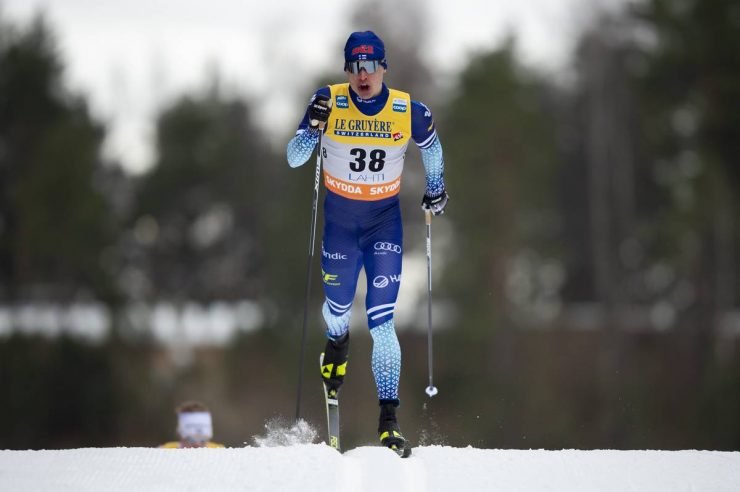
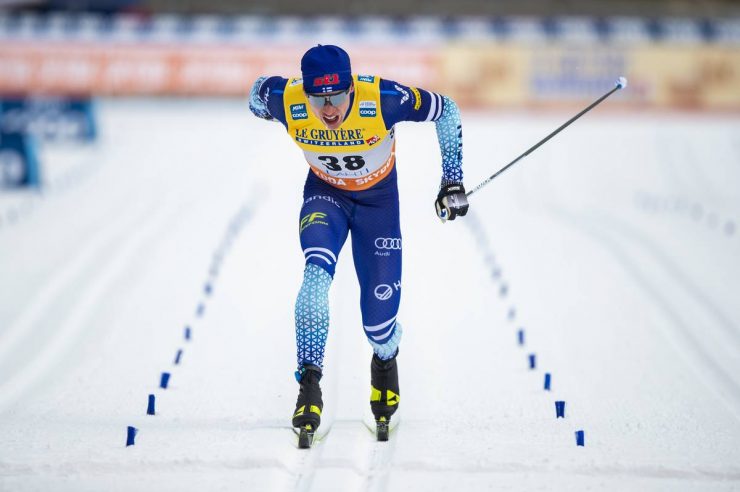
    Over the entirety of the Lahti course, the home fans, and their hero, were in the fight. Starting in bib 38, Niskanen went unrivaled for much of the day as skier after skier was unable to knock him from the leader’s chair. Yellow bibbed as the leader of the overall World Cup and the day’s 60th starter, Alexander Bolshunov ultimately was the only athlete to challenge the seemingly unchallengeable Finn in his niche.

    At 5 k, with the knowledge of Niskanen’s pacing strategy, Bolshunov clocked a crisp tie of 10:33.3 for the split. Meter by meter, the striding and double poling put Niskanen ahead by only 4.7 seconds at the 10 k mark. Although a supreme closer, and certainly the cream of the crop for this year’s distance World Cup, Bolshunov ceded precious time to Niskanen as the race progressed. Just over seven seconds at 11.5 k, became 10.1 seconds at the finish. Niskanen won in 32:15.5 for his second World Cup win of the season and the fifth of his career.

    Norway’s Hans Christer Holund placed third (+28.8).

    Bolshunov was denied the opportunity to set a distance win record Saturday. He’s the winner of seven distance races this season. According to FIS, only one other skier, Martin Johnsrud Sundby of Norway, has won more than seven distance events during a single  World Cup season. Sundby won 11 distance events during the 2015-2016 season.

    Cresting a Lahti hill for a close second place in Lahti, Finland for Alexander Bolshunov (RUS). (Photo: NordicFocus)

    The king of the 15 k classic in Finland remains the king  Let the record skip once again; all of Niskanen’s wins on the World Cup have come in the 15 k interval start classic. Also of note, and along this theme, Niskanen won the 2017 World Championship 15 k classic here in Lahti – record skip, repeat.  

    “I waited this race a lot since Ruka and of course today I had a really nice day and it went the way I hoped for,” Niskanen told FIS after the race. But I have to say that we had a lot of pressure from the Finnish media talking about our service team and that we were struggling with our skis. But there is no fight and nothing between us and I want to say that this victory goes to a big part to our service team as I had extremely good skis today and so they showed that they are still number one in the World Cup circus at their job. It’s been also a lot of cheering out there and it was a little bit like when I won the World Championships three years ago.

    “It was like usually here in Lahti where we have raced many times so it was easy to make tactics before the race and it was like I expected. I started not too hard and skied the easiest parts fast and I expected to ski together with Bolshunov in my second lap. I saved a little bit of energy behind Bessmertnykh so I was quite sure in the finish that the beginning of the last lap was fast enough to win this race.”

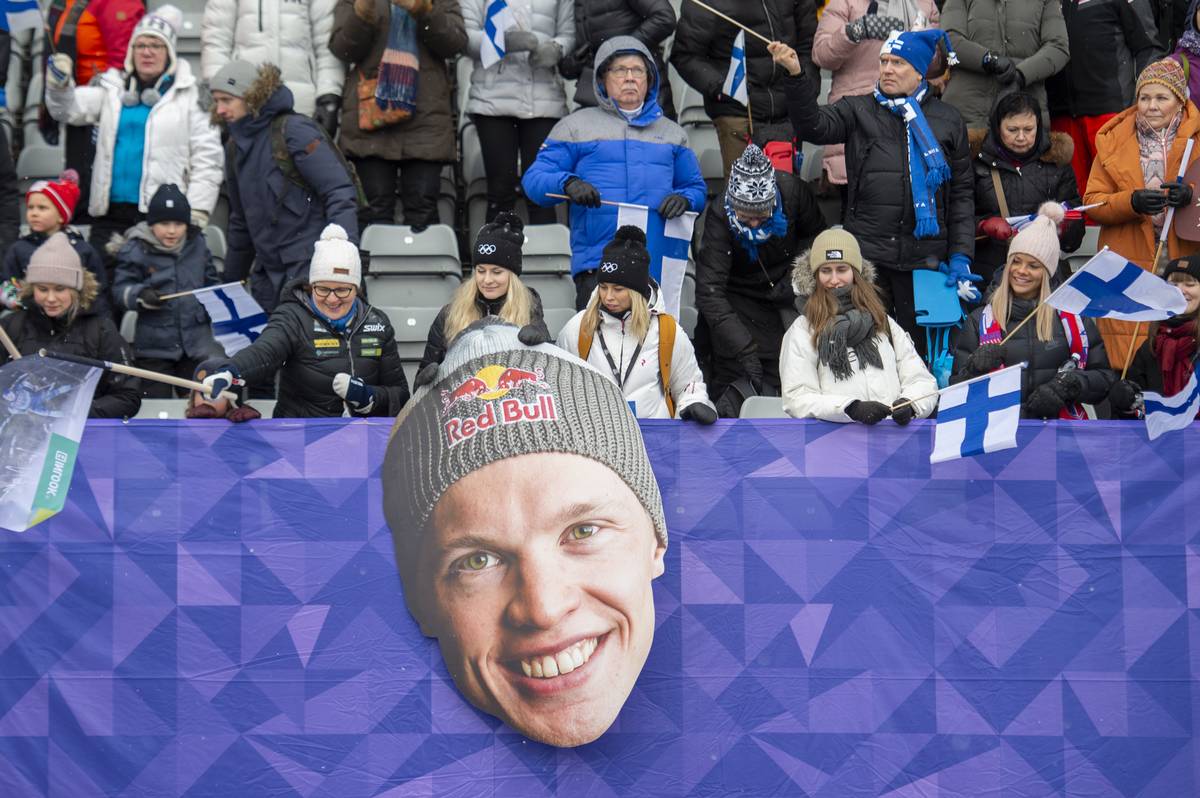
    The fan favorite in Finland: an image of Iivo Niskanen during the 15 k classic in Finland. (Photo: NordicFocus)

    With his second place, Bolshunov commands the overall distance standings with 1145 points – Norway’s Sjur Rothe, the winner of last week’s Ski Tour 2020, is second with 776 points. Niskanen is third with 766 points. The Russian also leads the World Cup overall with 2028 points, with Johannes Høsflot Klæbo in second with 1563. Klæbo placed eighth (+54.7) in Saturday’s race, falling just a bit further back in the overall standings.  

    Russia’s Alexander Bolshunov, shown here finishing second in the men’s 15 k classic in Lahti, Finland leads the World Cup overall. (Photo: NordicFocus)

    “I am pretty happy with the second place today because its a small gap to Iivo today,” said Bolshiunov to FIS. “Maybe it’s because the gliding on the last lap was not the best one but especially after the race one week ago, I am happy that I am able to fight for the podium. The main goal was to reach Iivo and to ski together two laps but on the last lap I was by myself and that was hard work.”

    The U.S. started two skiers in the men’s race, with much of the U.S. World Cup contingent recovering after the six stage Ski Tour 2020. Adam Martin of the Craftsbury Green Racing Project finished in 46th (+3:10.0). His Craftsbury teammate, Ben Lustgarten, was 47th (+3:14.3). No other North Americans were entered. 

    Ben Lustgarten during the 15 k classic in Lahti, Finland. (Photo: NordicFocus)


    Adam Martin during the 15 k classic in Lahti, Finland. (Photo: NordicFocus)

    And a bit of a story behind the story, Dual Norwegian and Irish citizen – but skiing for Irleand – Thomas Maloney Westgård (24), placed 16th overall (+1:23.7) in Saturday’s race. This is his second career World Cup in the points (top-30). He placed 22nd in last season’s 50 k classic in Oslo.

    Thomas Maloney Westgård  (IRL) skiing to 16th overall in Lahti. (Photo: NordicFocus)

     Racing continues tomorrow with a 4 x 7.5 k relay for the men and a 4 x 5 k relay for the women. 

    Results | World Cup Distance Standings | World Cup Overall Standings 

    The Lahti, Finland 15 k classic podium: Alexander Bolshunov (RUS) second, Iivo Niskanen (FIN) first, and Hans Christer Holund (NOR) third, (l-r). (Photo: NordicFocus)


  • All Norway: Pål Golberg takes the Ski Tour Overall as Bolshunov Stymied by Tricky Conditions

    All Norway: Pål Golberg takes the Ski Tour Overall as Bolshunov Stymied by Tricky Conditions

    Yellow bibbed as the overall leader of the World Cup, out first on Sunday’s 30 k classic pursuit in Trondheim, and Norway’s Pål Golberg starting 34 seconds back: this was the situation Russia’s Alexander Bolshunov found himself in as he pulsed from the start. Thrown into this mix of tension was a helter-skelter mish-mash of weather. On and off again snow, blustery winds, and temps hovering right near that wax tech’s no man’s land of 0 °C.

    We are not used to seeing Bolshunov falter. He has been a beast this season having won the Tour de Ski and hammering away from the field solo during this tour’s Stage 4 34 k mass start skate. Those are simply two highlights. But there he was, perhaps humbled by less than stellar skis on Sunday; the big Russian bear faltered. 

    Alexander Bolshunov of Russia — the hunted on Stage 6. (Photo: NordicFocus)

    This was Golberg’s day. By 2.2 k he had nearly halved the gap to Bolshunov. Two k later, Golberg was on the Russian’s ski tails, with Bolshunov’s metaphorical tail beginning to droop between his legs. A Russian down — Golberg on his own solo quest for the win. 

    For the next 26 k, Golberg’s job was no longer to fend off Bolshunov, but to keep a motivated crew of Norwegian’s from gapping up. We’ll get to that piece of the story in a bit. Golberg won with a polite bow to the crowd in 1:23:51.6. This was the twenty-nine-year-old Golberg’s second win of the season. He won a classic sprint in Falun, Sweden earlier this month. His effort, and lovely skis on a day that saw several skiers stop and scrape ice off their kick zones, earned him the Ski Tour overall win. 

    “It’s surreal and something I did not expect before the Ski Tour and before the season,” Golberg told FIS after the race. “The crowd started to congratulate me on the third round so I had to stay focussed until the finish.”

    Back to the chase – which was really a Norwegian hunt for that Russian bear. We’re going to begin with the hunters: Martin Løwstrøm Nyenget, Simen Hegstad Krüger, Johannes Høsflot Klæbo, Hans Christer Holund, Emil Iversen, and Sjur Røthe. (Imagine having that crew team trialing behind.) Maybe grotesque in their spoils, but certainly dogged in their pursuit, this all Norwegian chase was symbolic of a country’s ability to foster otherworldly endurance talent, and keep them fresh enough to crush the field in a six-stage tour. It was literally a train of Norwegian skiers who had likely been shadowing one another at the elite level since their late teens. 

    They slowly reeled Bolshunov in. At 13.9 k, the Russian kept a 14-second buffer between he and the Norwegians. Ultimately, this was no catch and release scenario. Bolshunow was swallowed near the 16 k mark. Another three k later, all but Røthe kept pace, the others gapped Bolshunov by nine seconds.

    The Norwegians forged ahead, while Bolshunov, digetsing the inevitable, tried to minimize losses. Krüger, known for his skating, took strong pulls in the closing kilometers. He crossed the line in second (+28.9). Holund placed third (+30.1), Iversen fourth (+32.3), Nyenget fifth (+32.9), and Klæbo sixth (+34.2). 

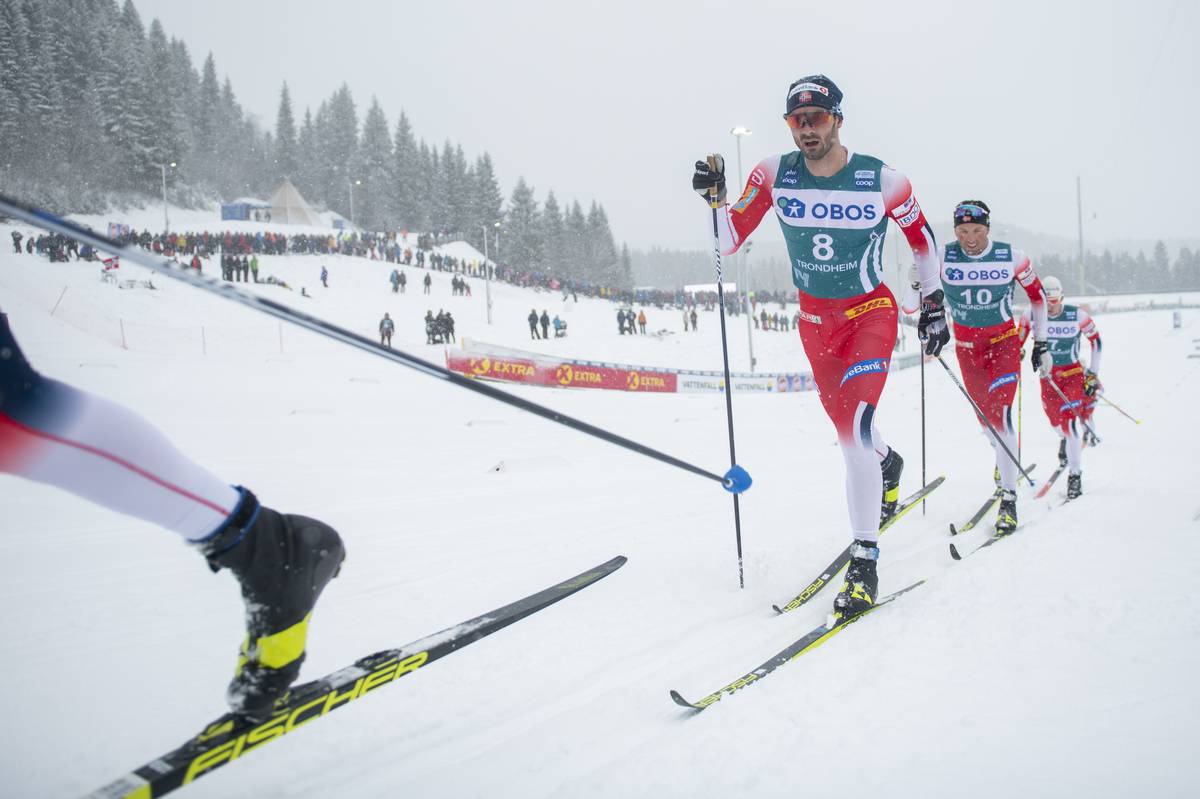
    The Norwegian train during Stage 6 of the Ski Tour 2020. Hans Christer Holund (bib 8), Emil Iversen (bib 10). (Photo: NordicFocus)


    Sjur Røthe leading out: State 6 Ski Tour 2020. (Photo: NordicFocus)


    Simen Hegstad Krüger (front) down the finish straight to take second overall. (Photo: NordicFocus)


    Bolshunov settled for seventh place (+1:41.0), ceding roughly 1:10 to that lead Norwegian group, as he lost grip on the Ski Tour overall. His demeanor across the line matter of fact: he unlocked his bindings as he glided across the line, stepped out his skis, then proceeded through the finish area without acknowledging the all-Norwegian scrum in the finish pen.

    As for time of day efforts, the fastest time goes to Iversen in 1:21:25.9. Finland’s Iivo Niskanen notched the second-fastest time 10.9 seconds back. Niskanen placed eighth on the stage (+1:48.2). For his troubles, Bolshunov skied the 23rd fastest time, 4:06.7 off of Iversen’s best of day mark. 

    The look of missing out: Alexander Bolshunov after finishing Stage 6 of the Is Tour 2020. (Photo: NordicFocus)

    David Norris led the day for the U.S. ending the day and the Ski Tour ranked 34th (+11:30.7). Ben Lustgarten placed 54th (+19:29.5). The remaining U.S. skiers who began the tour, dropped from competition after Stage 6. They include Logan Hanneman and Kevin Bolger who both have mild colds. Simi Hamilton dropped after Stage 4 with a mild illness as well. 

    Canada’s Russell Kennedy placed 39th (+12:50.5), Evan Palmer-Charrette 43rd (+14:33.2), Alexis Dumas 55th (+20:12.5), and Ricardo Izquierdo-Bernier 56th. 

    This concludes the epicness from Norway, as the Ski Tour closes out. Racing begins again in Lahti, Finland next Saturday.     

    Results | Overall Standings | Winner of the Day

    The men’s Ski Tour 2020 overall podium: Simen Hegstad Krueger (NOR) second, Pål Golberg (NOR) first, and Hans Christer Holund (NOR) third, (l-r). (Photo: NordicFocus)


  • Klæbo Hop Skates to a Stage 3 Win; Hamilton Settles into 14th as he Returns to World Cup Sprinting

    Klæbo Hop Skates to a Stage 3 Win; Hamilton Settles into 14th as he Returns to World Cup Sprinting

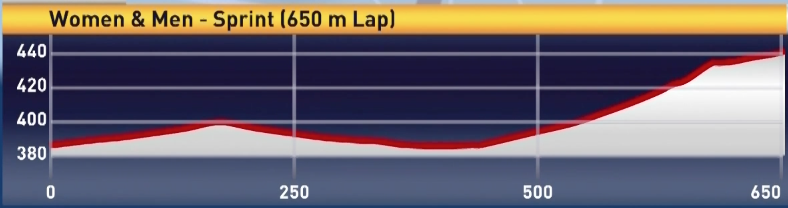
    Let’s explain. The format was basic, a freestyle sprint. Otherwise, that’s where sprints as we know it ended. The 0.66-kilometer course shot off from the start up a gradual V2-able climb. It then rounded a left-hander where athletes descended what looked like a salted banked turn found in a X-Games terrain park. Down to the course’s bottom zoomed the skiers. Then things turned skyward. The course ascended a mini-Alpe Cermis lasting around one-minute for the men, to the finish atop the climb. The climb was the defining characteristic of the terrain: athletes suffered up a downhill ski slope gaining roughly 60 meters in altitude before the finish line. Calling the final ascent punchy would be an understatement. Grinding. Grueling. Leg-cement-inducing is more appropriate. 

    The Åre sprint hill climb in profile. (Photo: Screenshot FIS Broadcast)

    Perhaps a sprint sideshow? That could be argued. But hosting an event at the base of the Swedish National Alpine hill with amenities for fans, of which there were plenty, and bountiful options for climbing terrain, we’ll let others debate the merits of hosting a climb-fest sprint.

    Johannes Høsflot Klæbo of Norway in Åre, Sweden on his way to winning Stage 3 of the Ski Tour 2020. (Photo: NordicFocus)

    But some things haven’t changed: Johannes Høsflot Klæbo qualified in first covering the course in 1:49.64. That’s right, a quick and snappy 0.66 k, despite the big vert. Klæbo continues to deal with broken fingers and a thus far lackluster Ski Tour 2020. He placed 31st in Stage 1 and 25th in Stage 2. He came into Stage 3 ranked 25th overall in the Ski Tour, 2:05 behind the leader, Norway’s Stage 2 winner, Pål Golberg. 

    For his part, Golberg laid down the second-fastest time in qualification, 2.58 seconds back. Alexander Bolshunov of Russia, by all measures the pre-Ski Tour favorite, qualified in 23rd (+8.59).  

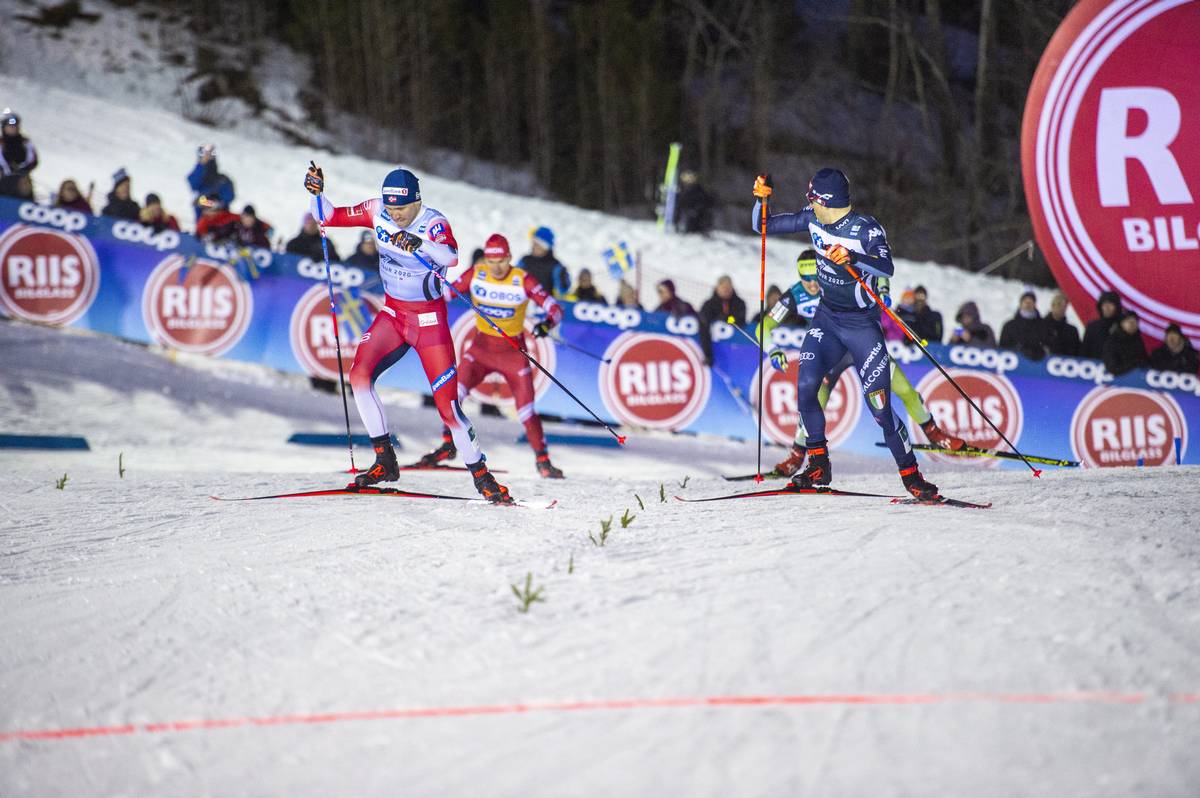
    Pål Golberg of Norway and Italy’s Federico Pellegrino into the finish. (Photo: NordicFocus)

    In the second semifinal, rounding the corner on the first and notably mild climb, Italy’s Federico Pellegrino took the inside line over the top. In bib 11, Norway’s Simen Hegstad Krüger came through in second, followed closely by Bolshunov who had advanced as a lucky loser.

    Krüger took an aggressive line and cut off the advancing Russian. As this transpired, Krüger tumbled as their skis crossed. Bolshunov continued with Krüger going between his legs. Bolshunov now sat in fifth as he crested the hill. Krüger snapped a pole and grabbed a spare just prior to the descent. (He eventually received a yellow card for his cut-off move.) 

    Golberg won the semi, with Pellegrino in second. Bolshunov never recovered and placed fourth, 1.92 seconds behind Golberg. Bolshunov finished the day in eighth after being eliminated.

    Although 8th on the day, Russia’s Alexander Bolshunov sits second overall in the Ski Tour 2020 after three stages. (Photo: NordicFocus)

    Outside of the peculiar course, a stumble here and there, Klæbo and his astounding pull away acceleration in the final was the story. He advanced by winning the first quarterfinal and the first semi. He won that semi by only 0.52 seconds over France’s Jay Renaud. What became evident was that Klæbo was holding back and had not dialed his tactics. 

    In the final that featured Klæbo, Pellegrino, Renaud, Golberg, Lucas Chanavat of France, and Norway’s Erik Valnes the charade was over. 

    Chanavat led into the final climb with Pellegrino off to his right, a meter back, with Klæbo shadowing on the other side. Then Pellegrino upped the pace and pulled ahead with Klæbo settling into his draft. Chanavat took charge of the climbing lane to the left. For a moment, Klæbo must have been inhaling extra oxygen, as he fell slightly back. 

    But as the trio passed under the red sponsor arch, Klæbo shot off. For every single V1 cycle Pellegrino completed, Klæbo threw in two hop-skates. As he rounded to the left atop the climb, Klæbo looked back on a 20-meter gap. “Mamma mia” they must have been saying in Italy. 

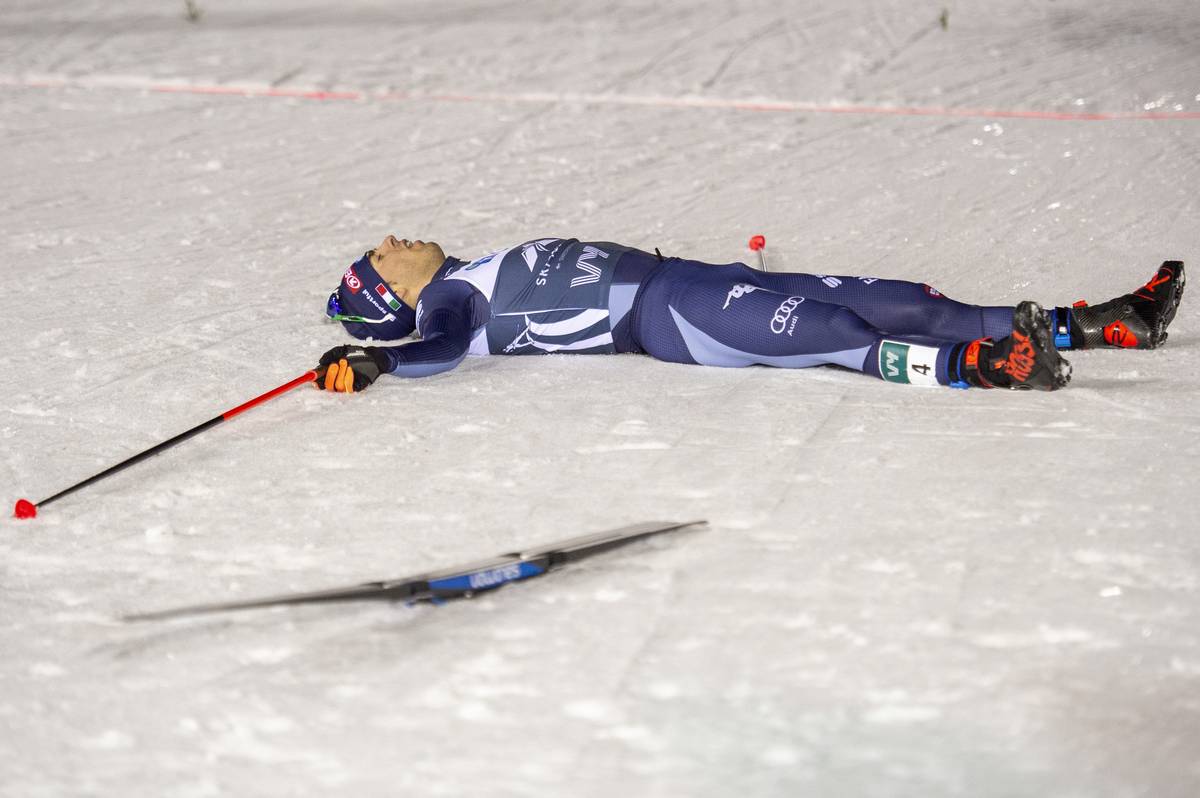
    Italy’s Pellegrino: totally spent. He placed second overall in the Stage 3 Ski Tour 2020 sprint. (Photo: NordicFocus)

    Klæbo won the final in 2:02.63. Pellegrino was second (+2.39), and Renaud third (+3.70). Golberg was fourth (+14.46), Chanavat fifth (+26:39), and Valnes sixth (+1:05.62). 

    Time to chill at the finish: Johannes Høsflot Klæbo of Norway. (Photo: NordicFocus)

    “It was a real suffer-fest,” Klæbo told FIS after the race. “It was a lot of fun. At the end I was just trying to push all out. I turned my head on the last climb and it was a huge gap. … It was good to get the confidence again and fight for the podium. … At the end, I was just trying to push all out. I turned my head on the last climb and it was a huge gap. In the end, it was really fun.”

    For the U.S. Simi Hamilton was the lone North American who advanced into the heats qualifying in 17th (+7.12). Hamilton skied to third (+2.27)  in the second quarterfinal which was won by Russia’s Denis Spitsov in 2:04.14. The Aspen, Colorado native placed 14th in the final standings. (Below we have included an extended post-race interview with Hamilton. In the interview Hamilton discussed his injuries, and his return to racing World Cup sprints.)

    The U.S. Ski Team’s Simi Hamilton in Åre, Sweden. (Photo: NordicFocus)

    Post-race interview with Simi Hamilton

    In his return to World Cup sprinting, Simi Hamilton skis to 14th overall on Stage 3. (Photo: NordicFocus)

    Logan Hanneman placed 45th on the stage, Kevin Bolger 60th, David Norris 65th, and Ben Lustgarten 81st. 

    Post-race interview with U.S. World Cup Coach Matt Whitcomb

    For Canada, Russell Kennedy finished in 73rd, Evan Palmer-Charrette 75th, Alexis Dumas 76th, and Ricardo Izquierdo-Bernier 78th.  

    Qualification | Results | Ski Tour 2020 Standings

    Stage 3 (Ski Tour 2020) skate sprint podium: Federico Pellegrino (ITA) second, Johannes Høsflot Klæbo (NOR) first, Renaud Jay (FRA) third, (l-r). (Photo: NordicFocus)
  • Down to the Wire, Golberg Out Sprints Bolshunov for the Pursuit Win

    Down to the Wire, Golberg Out Sprints Bolshunov for the Pursuit Win

    Picking up where we left off in Östersund, Sweden: a pursuit start 15-kilometer classic. Unlike the women’s field where Therese Johaug “administered a beatdown”, creating a large time gap for herself, the margins for the men were much smaller. 

    A glance at the start list shows yesterday’s winner and Tour leader Sjur Røthe of Norway starting only two seconds ahead of his teammate, Simen Hegstad Krüger, and 17 seconds ahead of Finn Hågen Krogh and Martin Johnsrud Sundby. 

    This year’s Tour de Ski winner Alexander Bolshunov of Russia, whose winning streak was interrupted, would start with a 22 second time deficit in fifth. Tenth place Ivan Yakimushkin (RUS) was 33 seconds back and Jens Burman (SWE) in 20th just inside a minute. 

    Alexander Bolshunov during Stage 2’s 15 k classic pursuit of the Ski Tour 2020. (Photo: NordicFocus)

    With four 3.75 k laps to cover, the deficits were manageable. Perhaps the only Tour victory hopeful who was kept up about the work that needed to be done was Johannes Høsflot Klæbo, who would start 1:23 behind the leader after finishing 31st the day before. 

    The caveat would be to stay upright while navigating the icy winding bends of the primarily man made track. With grey skies and above-freezing conditions, it was fast and dicey, made evident by numerous crashes. 

    During one particularly noteworthy four-person pileup, Kamil Bury of Poland was taken out by Italy’s Maicol Rastelli as the two navigated a treacherous right hand turn at the bottom of a steep descent. Though neither had full control, Rastelli slid off the left side of the course, taking Bury along with him. Bury lost a ski and became tangled in the netting. 

    As Rastelli stood up and worked to right his skis, which were pointing in opposing directions, a third skier, Lin Bao of China, essentially slide tackled Rastelli, sending him in a complete backflip back down to the snow. 

    A fourth skier, Tadevos Poghosyan of Armenia, also lost control and slid into the pile. Bao and Poghosyan were able to stand up relatively quickly and continue on their way, but cameras cut away before the resolution of whether Bury found his ski and Rastelli was able to recover from his forced aerials. 

    Holy carnage… back to the race.

    At the end of the first lap, it was as if the men were gifted ready-made groups. Røthe and Krüger matched stride for stride and double pole for double pole, while the remainder of the top five plus a handful of additional Norwegians, namely Pål Golberg, Hans Christer Holund, and Martin Løwstrøm Nyenget, chased from roughly six seconds back.

    In bib 11, Martin Løwstrøm Nyenget (NOR) works his way towards the sharp end of the men’s 15 k classic pursuit. (Photo: NordicFocus)

    It looked as though Røthe and Krüger might run away from the field, but it was not so easy. By 4.4 k, the gap was closed and an eight-man train chugged along the tracks. As Yakimushkin had fallen off the pace, it became seven Norwegians and Bolshunov. 

    Over the final two laps, the front pack whittled down from eight to five, where it remained with one k to go. Holund, Golberg, Røthe, Bolshunov, and Nyenget. The Russian in the yellow bib was primed to make a move. 

    Bending, rolling, and swooping, they headed for the stadium. Up the final punchy climb, Golberg and Bolshunov were side by side, and Golberg started to slip. He recovered and powered out of the climb, running with Klæbo-like dominance over the crest of the hill and into a tuck to lead into the stadium. 

    Bolshunov had fast skis and caught a draft before whipping into second place as the men entered the final straight. The Russian was right behind Golberg and absolutely charging. But there was not enough real estate. He changed lanes to challenge the Norwegian and looked as though he would overtake him, but the final meters evaporated and Golberg threw his foot for a clear win. 

    Golberg crossed the line in 34:50.8, with Bolshunov 0.3 seconds behind. Nyenget took third (+2.1) in a tight finish with Røthe (+2.5). Holund dropped off in the final sprint to round out the top five (+7.3).

    Pål Golberg wins at the line over Alexander Bolshunov during the 15 k classic pursuit, Stage 2 of th Ski Tour 2020 in Östersund, Sweden. (Photo: NordicFocus)

    “Perfect klister conditions,” Golberg told FIS at the finish. “I managed to get the ski pair from last weekend, so I had good skis this weekend as well. It was a really, really good day.”

    The interviewer noted that conditions were much different than the previous day.

    “It was hard in the middle,” Golberg explained. “It was a bit drier, so a bit difficult with klister in the downhill. But the tracks were perfect, so I’m really happy.” 

    Not the start of the FIS Ski Tour 2020 desired by Johannes Høsflot Klæbo. (Photo: NordicFocus)

    Speaking of Klæbo, the Norwegian skied his way into 25th, but ceded an additional 52 seconds in the overall standings by finishing 2:15 back on the leaders. 

    FIS sent out a news brief shortly after the race with information regarding Klæbo’s injured finger. Here is the statement in full:

    “Johannes Høsflot Klæbo (NOR) has to undergo an emergency check up for his broken finger. The check up has to take place with his doctor in Trondheim (NOR). As the rules of the FIS Ski Tour 2020 state no other transportation of athletes than by train, the jury gave permission to Johannes to travel by car to Trondheim and back to Åre for this special case. After the consultation, the jury will receive a report of the treating medical team in Trondheim.”

    The American men hovered near their positions in Stage 1 at the end of the pursuit. Still grinding, David Norris finished 34th (+3:05.0), followed by Simi Hamilton in 43rd (+3:47.8). 

    Ben Lustgarten was the next American in 68th (+6:01.4), followed by Kevin Bolger in 70th (+6:12.7), and Logan Hanneman in 85th (+10:00.2). 

    Ben Lustgarten in the mix during the classic pursuit in Östersund, Sweden. (Photo: NordicFocus)

    Racing for Canada, Russell Kennedy was again the top skier in 58th (+4:47.3). Next up was Alexis Dumas in 61st (+4:51.9), and Evan Palmer-Charette in 66th (+5:33.7).  

    Tomorrow is a rest day on the Ski Tour 2020, Stage 3, a skate sprint, will be held on Tuesday.

    Final Results | Overall Tour Standings After Stage 2 | Time of Day Results

    The men’s Stage 2 Ski Tour 2020 15 k classic pursuit podium:
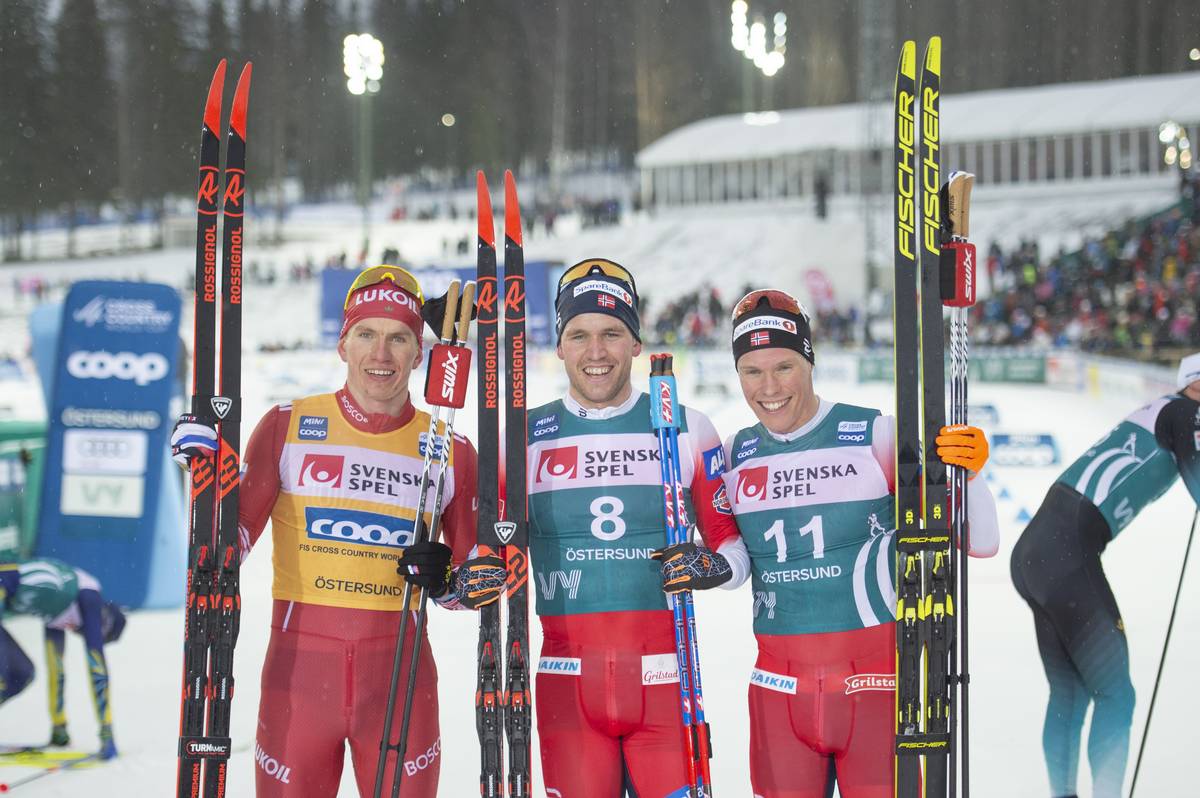
    Alexander Bolshunov (RUS) second, Pål Golberg (NOR) first, and Martin Løwstrøm Nyenget (NOR) third, (l-r). (Photo: NordicFocus)
  • Perfect Pacing: Sjur Røthe Claims Ski Tour 2020 Stage 1 Win

    Perfect Pacing: Sjur Røthe Claims Ski Tour 2020 Stage 1 Win

    The pacing master of Stage 1 of the Ski Tour 2020: Sjur Røthe. (Photo: NordicFocus)

    The six-stage Ski Tour 2020, which runs from Sweden to Norway over the next week, began Saturday in Östersund, Sweden with the men’s 15-kilometer individual start skate. The race began with twilight immersing Östersund with the sky eventually morphing into black as the seeded group of skiers looped around on what FIS called a 4.71 k course. This much can be concluded after a single day of what will be a hotly contested tour: the Norwegians fired on Stage 1 as they captured the top four spots in the field of 90 skiers. 

    The other take away beyond the Norwegian team’s blistering skis – Sjur Røthe paced himself a masterful 15 k of skiing as he won the event in 30:41.5 minutes.

    However, not all looked shiny for the Norwegian as he went on to win his first World Cup of the season. At the 5 k time check, Røthe came through in 19th place, 19.5 seconds behind Hans Christer Holund, also of Norway. At 7.6 k, the halfway mark for the race, Røthe had moved up to 10th overall but remained 20.3 seconds off the fastest split set by yet another Norwegian, Simen Hegstad Krüger. 

    Then the tides turned, and Røthe began chiseling away at the time deficit. As he lapped through at 10 k, he sat in fourth, 15.4 seconds behind the virtual leader, Krüger. The chisel became a jackhammer; at 12.6 k Røthe was within six seconds of Krüger.

    Simen Hegstad Krüger hammering during the 15 k skate, Stage 1 of the Ski Tour 2020. (Photo: NordicFocus)

    The pacing proved perfect only when Krüger crossed the line: Krüger was a later starter than Røthe: Røthe began in bib 48, Krüger in bib 64. Røthe could, however, pace himself off the splits of Norway’s Finn Hågen Krogh who began in bib 16. Of the early starters, Krogh set the fastest marks at 5 k, 10 k, and the finish, respectively.

    Finn Hågen Krogh (bib 16) an early starter during Stage 1 of the Ski Tour 2020, but fast through his 15 skate effort for third overall. (Photo: NoridcFocus)

    Røthe’s first-place time (30:41.5) was 1.7 seconds faster than Krüger’s who took second on the day. Krogh was third overall (+16.6), and the veritable senior citizen of the Norwegian team, Martin Johnsrud Sundby, placed fourth (+17.3). 

    Saturday’s victory was Røthe first win of the season – however, it was his sixth individual podium which includes a second-place time of day podium in Ruka’s 15 k skate pursuit back in December. Last week, he was second in Falun’s 15 k mass start skate. 

    “It was a great day for me and the Norwegian team,” Røthe told FIS after the race. “I think we need to give a big hug to the guys in the wax cabin today. They made brilliant skis for us today, and for sure I have done my preparations well, I am really satisfied with today. I am looking forward to [the Ski Tour], it has been one of my main goals this season so for sure I am prepared, but I need to go home and get a good rest because it is not many hours before we do the classic race here in Östersund as well.”

    For those playing the long-term odds in the Ski Tour 2020, after one stage down, Russia’s overall World Cup leader, and 2019-2020 Tour de Ski winner, Alexander Bolshunov, placed fifth (+22.2). 

    Russia’s Alexander Bolshunov, the overall World Cup leader here during Stage 1 of the Ski Tour 2020. He placed 5th on the day. (Photo: NordicFocus)

    Along with capturing first through fourth places, Norway also claimed sixth (Hans Christer Holund), and eighth (Pål Golberg) place in the top-10. Norwegian Johannes Høsflot Klæbo was out of the points in 31st (+1:22.8). The Norwegian star returned after missing last weekend’s racing in Falun with a broken finger. Along with Bolshunov’s fifth place, Russia took ninth (Denis Spitsov) and 10th (Ivan Yakimushkin). The national team outlier in the top-10 was France’s Adrien Backscheider in seventh. 

    David Norris (APU), of the U.S., was the best-placed North American in 36th (+1:27.7). U.S. teammate Simi Hamilton (USST) placed 46th (+1:54.5). He returned to the World Cup racing after sitting out last weekend’s racing due to lingering neck pain. Kevin Bolger (USST) skied to 71st (+3:11.1), Ben Lustgarten (CGRP) 73rd (+3:12.2), and Logan Hanneman (APU) 86th (+4:35.6).  

    David Norris of the U.S. during the 15 k skate, Stage 1 of the Ski Tour 2020. (Photo: NordicFocus)

    Post-race comments from U.S. World Cup Coach Matt Whitcomb

    For Canada, Russell Kennedy skied to 52nd (+2:02.5), Evan Palmer-Charrette 60th (+2:31.9), Alexis Dumas 64th (+2:39.4), and Ricardo Izquierdo-Bernier 80th (+4:10.7).

    Russell Kennedy of Canada, during Stage 1 of the Ski Tour 2020. (Photo: NordicFocus)

    Racing continues in Östersund tomorrow with a 15 k classic pursuit for the men and a 10 k classic pursuit for the women. 

    (No time bonuses were on offer in today’s race.)

     Results | Ski Tour 2020 Standings After Stage 1 

    Ski Tour 2020 Stage 1 podium: Simen Hegstad Krüger (NOR) second, Sjur Røthe (NOR) first, and Finn Hågen Krogh third. (Photo: NordicFocus)
  • Canmore NorAm/SuperTour/Nationals Classic Distance

    Canmore NorAm/SuperTour/Nationals Classic Distance

    Katherine Stewart-Jones got second again in the 5km classic. (Photo: Doug Stephen)
    Katherine Stewart-Jones powering to another second place in the 5km classic. (Photo: Doug Stephen)

    Day two of the first NorAm and SuperTour weekend was interval start classic, with 10km for the men and 5km for the women.

    The US SuperTour athletes took the chance to show their depth today, packing the top ten of the open categories.

    The 154 men raced first, with the U.S. Ski Team’s Zak Ketterson winning comfortably in 27:33.1. National team member Antoine Cyr was second at 15.0 back, followed by CGRP’s Ben Lustgarten at 20.4 seconds.

    Dartmouth’s Katharine Ogden won the 5km in 14:58.1, 19.7 seconds ahead of national team member Katherine Stewart-Jones and 36.5 seconds ahead of Sun Valley’s junior Sydney Palmer-Leger. 119 women finished today.

    While the open categories got the headlines, they aren’t the only people racing. In a throwback to 2009, Tasha Betcherman beat out Olympic medallist Sara Renner in the masters women’s 10km. In total, 33 masters and 268 younger athletes raced today, for a total of 578 finishers.

    National team's Natalie Wilkie attacking a climb while coach Robin McKeever shoots video. (Photo: Doug Stephen)
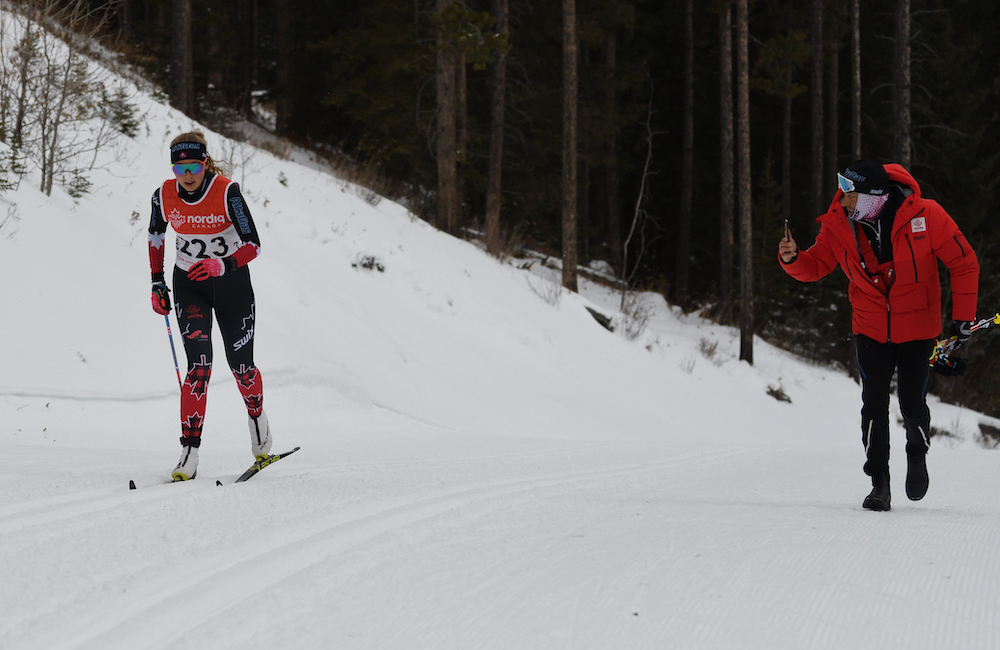
    National team’s Natalie Wilkie attacks a climb while coach Robin McKeever shoots video. (Photo: Doug Stephen)

    Mexico crowned the second ever national champion, with Jonathon Moreno taking the title in 41:25.7, 1:47.5 ahead of yesterday’s winner, Rodrigo Rangel Fernandez.

    Rangel Fernandez was excited by the progress Mexico is making, throwing down a challenge to Johannes Høsflot Klæbo.

    https://www.instagram.com/p/B5xsbrJJpwD/?igshid=kh344b10iifr

    Full results for the weekend are on zone4, including live timing again for Sunday. The timers included separate climb results for Saturday; Canmore is the head office of the Zone4 timing company, and once again they added some detail that isn’t usually included at this level of racing.

    Doug Stephen’s gallery has 162 full-res photos today.

  • Off-Season Training Options: Ramsau am Dachstein

    Off-Season Training Options: Ramsau am Dachstein

    First the Snow:

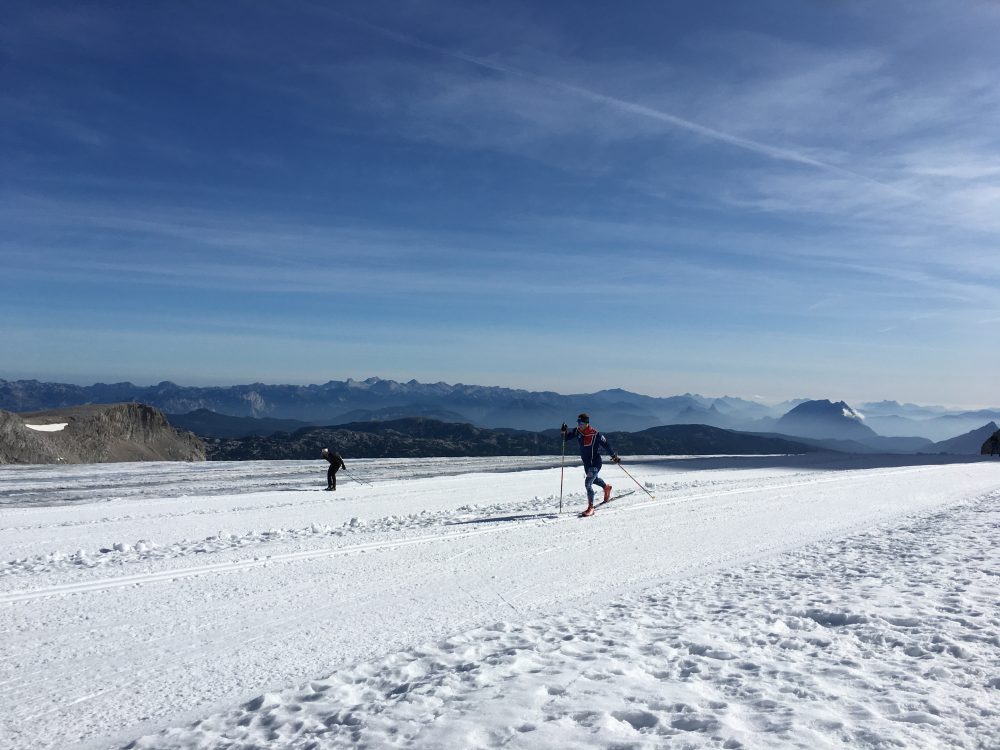
    Ben Lustgarten (CGRP) striding out on the Dachstein Glacier. (Photo: courtesy Ben Lustgarten)

    Sometimes off-season snow is an afterthought — access to trail running, mountain biking, and yes even rollerskiing is enough to satiate the training apatite. And sometimes it’s not. Warm temps prevent access to snow and maybe you simply need a break.

    With that in mind, here are some resources for accessing snow in Ramsau am Dachstein: the famed high region in Austria where the Dachstein glacier awaits with groomed “off-season” cross-country tracks.

    The basics to access snow are this: take toll road to gondola — gondola to the glacier — walk/hike a short distance to glacier skiing — ski. Reverse in order when descending to town.

    Most tourist stay in or around Schladming, a small mountain town nestled in the valley with all the amenities you’d expect. Schladming is also at the base of the toll road.

    Dates for Groomed Ski Tracks: Mid-May through the end of November. During the fall months, you are likely to see a smattering of World Cup skiers on locale testing skis and readying the fitness.

    Costs for Cross-Country Passes: A single day will set you back € 40.00 for adults. A seven-day pass runs € 217.50.

    Travel to the Gondola: It’s a bit more complicated than simply hopping on an express chairlift and zipping to snow right from town. So let’s back up a bit. The gondola is accessed by a toll road. According to online info, the toll road fee is waived for those presenting a validated pass for the Dachstein gondola. We assume you are there to ski, so you’ll have a lift pass and therefore will not be paying to use the toll road. Otherwise, that’s a € 14.00 toll road fee with no valid lift pass. Local buses also offer transport up the toll road.

    Gondola Service to and from the Glacier: Round trip on the gondola for an adult is € 39.00. (This does not include a cross-country ski pass. It’s only for the lift ride up and down.) The first lift up rolls at 7:50 AM. Make note, if you are traveling to the Dachstein during the summer, you are required to make a gondola reservation. “DURING SUMMER A GONDOLA RESERVATION IS REQUIRED!” All caps and an exclamation point claims the website– they mean business. The website we have linked claims reservations are needed until the beginning of September. Evidently, non-ski tourist love the high altitude access too.

    Some scale for reference. Groomed ski tracks on the Dachstein Glacier. (Photo: Ben Lustgarten)

    The Skiing: The groomed glacier skiing is high elevation: situated at 2700 meters, which is pushing 9,000 feet. You’ll want to check the weather and be prepared. To ensure the weather gods won’t be tossing thunder and lighting or spitting moisture — you can view the live cam.

    The 18 kilometers of tracks are groomed for skate and classic. Depending on snow conditions, the available skiing may be less than 18 k.

    Ben Lustgarten of the Craftsbury Green Racing Project (CGRP) has been in Ramsau am Dachstein with several teammates and had this advice:

    The skiing this year is pretty good, but short. This is only my second time here but it is shorter than the previous time, and there are plenty of rocks and dirty snow/ice. I would recommend rock/training skis for sure. The temperature this time of year is around 25 Fahrenheit or when its sunny it can warm to 40 Fahrenheit. We aim to take the first gondola ride up that leaves the tram at 7:50 am so we ski at around 8:05 am for a few hours. Earlier is better because it only gets warmer and softer and skied in throughout the day.

    So far we have been lucky and have had good weather. When it is sunny it is absolutely gorgeous. But it can be quite windy, foggy, cloudy, and rainy as well. I always pack a rain jacket, ski pants, ski jacket, buff, etc just in case because even if it is sunny at the bottom it can be totally different up there. Also remember sunscreen for your face and dark or photochromatic sunglasses. Even if it is cloudy, there’s a ton of UV reflection on the glacier. I would recommend boot covers that brands such as Alpina, Rossi, and Fischer have now because you have to walk down a steep rocky section that can very easily destroy carbon ski boots, or bring running shoes to use for that section. As always, plan to pack dry clothes and a snack for after, because if you miss the gondola down it is a 20 min wait then a 10min gondola ride down and you don’t want to mess up your recovery especially when you are training at 10,000 ft.

    There is not a table and bench waxing set up at the glacier. For skate skiing I recommend waxing, scraping, and brushing your skis before you get to the gondola so you are ready to go when you get up there. For classic I think we were kicking on some universal klister. But if you want to ski for a while bring the tube with you because there are lots of icy corners and you will inevitably scrape off your kick within an hour or so.

    We have been cooking all of our meals, so can’t comment on local food, but I am sure it is awesome! There is an extensive grocery store in Schladming as well.


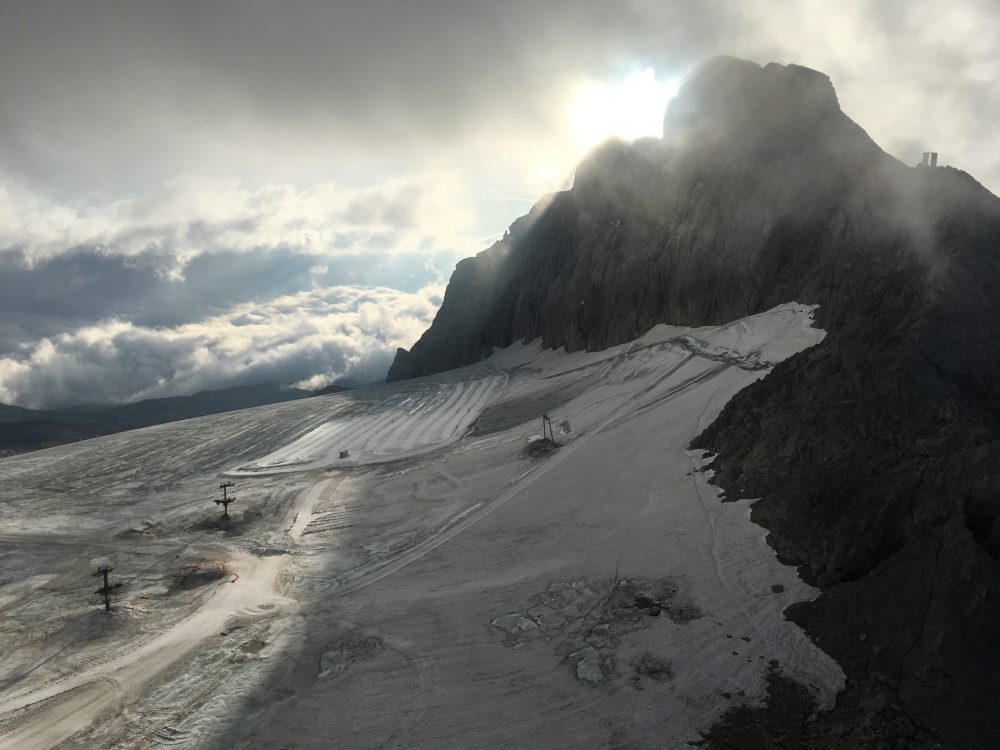
    Below are some visuals to help orient yourself with the splendors of the Dachstein. (Click images to enlarge.)

    A zoomed out view showing Schladming and the cross-country tracks to the right of the Dachstein Skywalk towards the mountain shadows.


    Map from derdachstein.at


    The Mountain Running:

    The area also offers world-class dryland training. Much of it in the form of mountain running.

    Caitlin Patterson of the U.S. Ski Team and the CGRP relayed that many of the local accommodations offer a complimentary “Summercard”. The card provides access to free bus service and discounted entry to several local attractions.

    Patterson is also an accomplished mountain runner. Here’s her advice on using some phone apps to assist with determining the day’s running route.

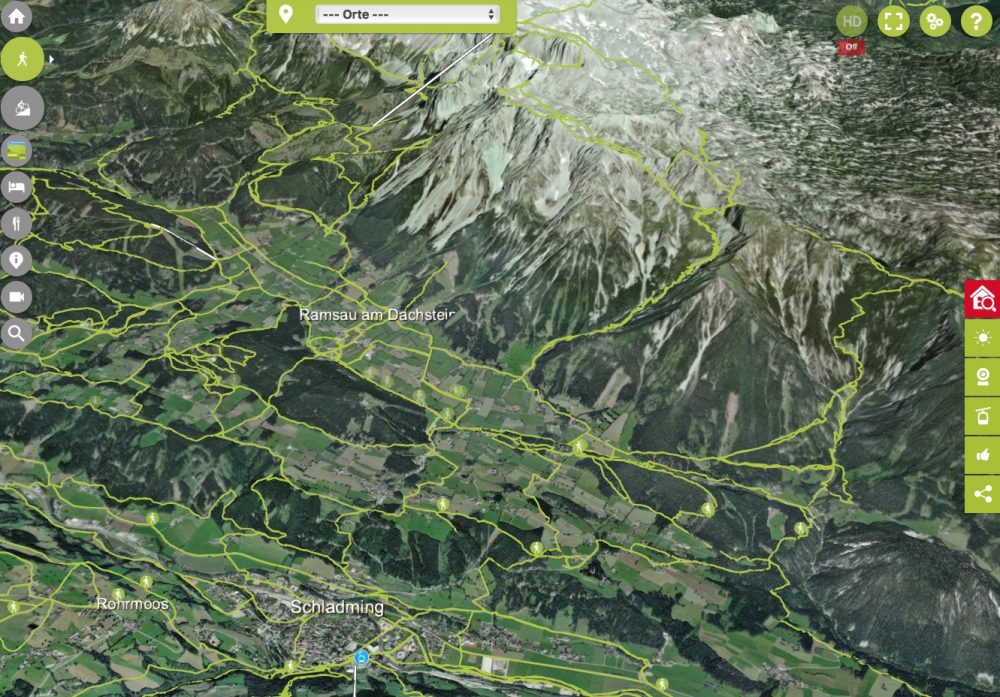
    3d map screenshot

    There are a lot of great trails meandering around the valley and lower hills near Ramsau, but what I really like to do is get up higher in the mountains! The visitor/information center in Ramsau has paper maps which are quite helpful, with the trails numbered as they will be out on the signs, but there are also plenty of resources online. I like to use the “Offline Topo Maps” app, where I can download a map of this area, since I don’t have European cell service. I also just discovered this 3D interactive map, which could be useful to give newcomers a sense of the vertical: https://www.schladming-dachstein.at/en/service/digital-services/3d-realitymap-webgl

    Generally this year I’ve been cross-referencing several of these maps, studying my route, and then also programming it into my Suunto 9 watch using the Suunto App which is extremely handy for mileage estimations and on-the-fly navigation.
    A few notes for people going for any of the serious mountain/trail runs:
    1. Don’t calculate mileage based on your flat-running speed – the mid-to-high mountain trails are rocky and climb a lot. We pro skiers are finding that at a pretty good clip we cover about 4 miles per hour in these mountains, sometimes a little less. For example a 9.5 mile run/hike the other day took 2.5 hours.
    2. All major trails are directed with yellow signs, which have trails labeled with their numbers, and the destinations and time estimate to those destinations. Related to the speed of travel note above, we find that we can run/hike in about 1/2 the time marked on the sign. Not like in the U.S. where you can divide a hiker time estimate by 4 or 5 – people hike fast here! Most of the trails also have painted markers on rocks guiding along the way.
    3. If the weather is bad or foggy, consider staying down lower or at least don’t venture onto steep unknown trails if you can help it – there are quite a few via ferrata routes around here that are awesome but not to be taken lightly nor without gear. This is part of the reason to cross-reference several maps when planning a route, and pay attention to the ladder symbols or other mentions of via ferrata or klettersteig.
    4. If visitors are into adventure and don’t mind heights, the via ferrata (German name kletterstieg) is really fun, a kind of hybrid of rock climbing and hiking with metal cables and pins. You can find guidebooks in the info center, and can rent or buy gear at local shops like Ski Willy.
    5. Carry a few Euros so you can grab a snack at the huts, or sometimes you may also need to pay to refill water at the huts.

    A few of my very favorite runs/hikes:

    – hike up from Ramsau to the Guttenberghaus. Guttenberghaus up and down is about 7.5 miles, expect 2-3 hours. Can add on one of several peaks up above the hut.
    – link a loop by ascending the Silberkaralm Gorge east of town, across the top/back of the ridge, and down the Guttenberghaus trail. Silberkaralm Gorge to Guttenberghaus and down, 10.8 mile loop so expect 3-4 hours.
    – hike to top of Rettenstein, west of Ramsau. 6-10 mi depending on start and end point.
    – from tram base station, make a loop to the west that goes through a pass between “Raucheck” and “Torstein”. We present you the gaming portal 1xbet live India, you will find interesting slots, a large number of sports events. This is 9 miles from base of tram, several miles longer if running from town. On the 3D map this loop is called “Torwanderug”
    There is also quite a good rollerski track, but it would be recommended only for advanced rollerskiers because it has some serious corners and descents. In general for intensity, we’ve done running with poles intervals down in town, to keep the speed sharp after a bunch of glacier skiing.


  • Catching up with the News

    First up, the cheese is going nowhere. The cheese we speak of is the cheese of record when it comes to cross-country skiing: Le Gruyère.

    It turns out the Finns are fond of Le Gruyère too. In a recent press release, it was announced that the Finnish Ski Association and the Swiss company, Le Gruyère AOP, the purveyors of the finest of cheeses, have signed a three year sponsorship agreement for Finland’s World Cups.

    You know this stuff is good when the press release uses the word “rejoices” to describe the ski association’s stoke.


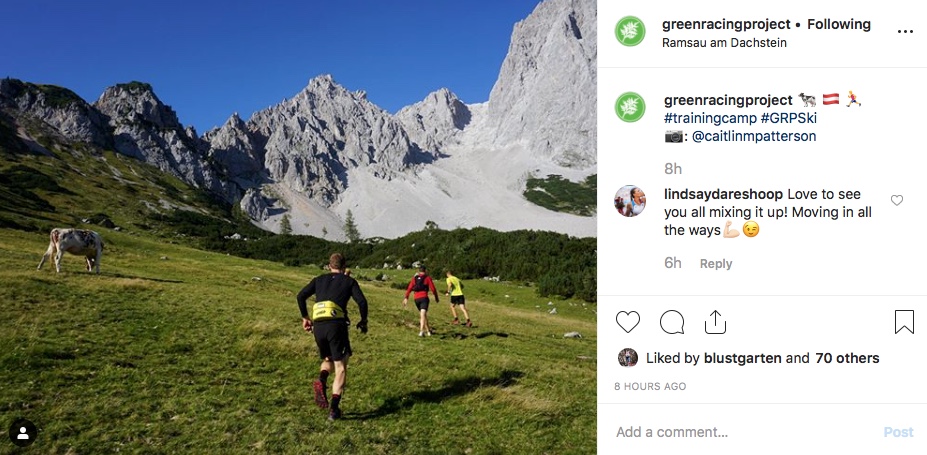
    The hills are alive….(Photo @greenracingproject Instagram account)

    Some of the Craftsbury Green Racing Project crew is based, for the moment, in Ramsau am Dachstein Austria. Embrace your own place and don’t succumb to FOMO. But their Instagram feed, if anything, is a wonderful glimpse into the yin-yang of high mountain transition season. The group, led by coach Pepa Miloucheva, has an extended training camp in the region combining long mountain runs with high altitude on-snow training. As we referenced last week in an article, embrace this quote from tennis great Arthur Ashe – “Start where you are, use what you have, do what you can.”

    Ok. You are where you are. Now take a look at the feeds from Caitlin Patterson, and Ben Lustgarten. It would be nice to be there too. 


    In doping news, the International Biathlon Agency’s (IBU) Anti-Doping Hearing Panel has banned Russian biathlete Margarita Vasileva for 18 months starting September, 17. Vasilev was banned for an anti-doping rule violation. According to the IBU’s press release, she has missed “any combination of three missed tests and/or filing failures (…) within a twelve-month period (…).” 

    Vasileva has 21 days to appeal the decision to the  Court of Arbitration for Sport (CAS).


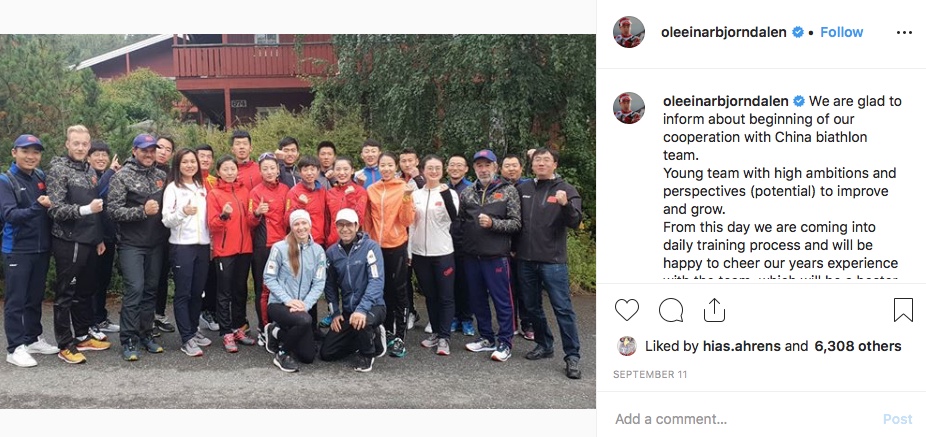
    (Photo: screenshot from @oleeinarbjorndalen Instagram)

    From China, hands down the biggest growth market for nordic sport as the nation builds towards hosting the 2022 Winter Olympics, the National Olympic Committee of China has hired Belarusian biathlete Darya Domracheva and Norway’s Ole Einar Bjørndalen as coaches.   Nuotraukos ant drobės ir paveikslai https://interdeko.lt/produktai/paveikslai

    The AP reported on September 12, that the husband and wife duo has signed on to assist China’s burgeoning National biathlon program. 

    On his Instagram account, Bjørndalen wrote the following:

    “We are glad to inform about beginning of our cooperation with China biathlon team. Young team with high ambitions and perspectives (potential) to improve and grow. From this day we are coming into daily training process and will be happy to cheer our years experience with the team, which will be a hoster of next winter Olympic Games. I became a head coach of all team and Darya is a coach of women’s team now. We are full of motivation to give our best advices to the athletes, team stuff and everyone who works together with us on the way of reaching a good result, in our focus – to build high professional team, support and help each athlete to reach their own potential. And of course, we are happy to use a chance and help our favorite sport to develop around the world, in a countries, where biathlon and all winter sports have huge potential.”

    Check out this video short from the IBU on China’s biathlon program.


    From Norway, news last month revealed that World Cup sprinter Sondre Turvoll Fossli had suffered cardiac arrest according to a translated article from NRK. The twenty-six-year-old Fossli will be reevaluated in October, but he admits the prospects of a return to high level competitive skiing remain doubtful. “There is a risk that I have to give up. It certainly is. So it may be that I have to find something else to do. But I have to wait and see a little bit when it comes to just that,” Fossli told NRK. 

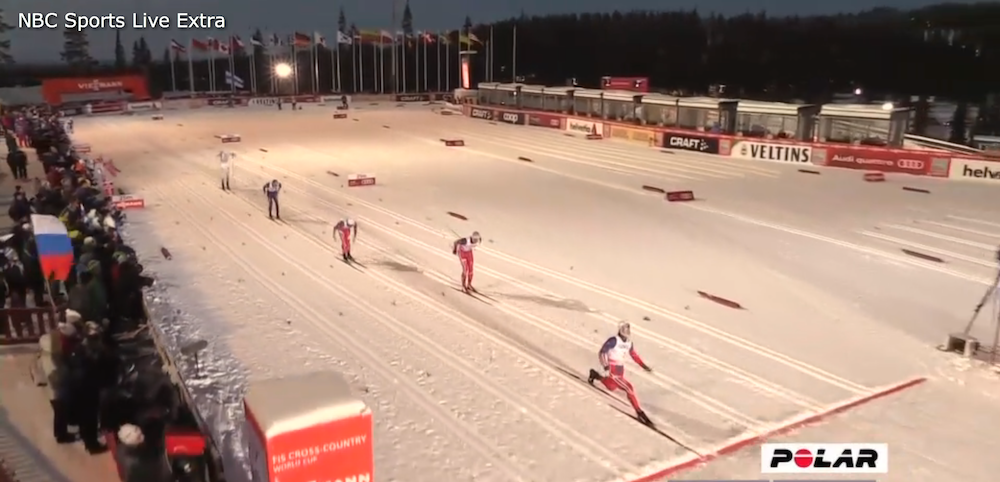
    Norway’s Sondre Turvoll Fossli, 22, crosses the line first for his first World Cup victory in the first World Cup of the 2015/2016 season in Kuusamo, Finland. His teammates Eirik Brandsdal (second from r) and Petter Northug (third from r) placed second and third, and American Andy Newell (second from l) was fourth in the first of the three-day Ruka mini tour.


  • Wednesday Workout: Depletion

    Wednesday Workout: Depletion

    To be depleted can take on many forms. In endurance sport, depletion often refers to an athlete’s fueling state. Are they stocked up on muscle glycogen, have they properly fueled with a balanced diet of proteins, carbohydrates, and “good” fats or are they trending towards empty?

    Carbohydrates are the body’s primary fuel source, particularly during exercise, however, fat molecules are a caloric gold mine when it comes to available energy. The caveat is that fat is not as readily available, as it is more difficult for the body to break down into a usable form. Some athletes use depletion workouts to train their bodies to better adapt to fat burning when training and racing. When glucose/glycogen stores run low, the ability to burn fat for energy might ward off the feared bonk.

    The general rule of thumb goes like this: as exercise intensity increases, the body’s ability to burn fat (fat oxidation) decreases. Sprinters burn almost exclusively glucose/glycogen for those big bursts of speed. Those running marathons or skiing 30 and 50 k cross-country events also use glucose/glycogen stored in their muscles, but this fuel source will become depleted as the body is not able to produce glycogen at a fast enough rate to replace what is being consumed. If the long-distance athlete’s body is able to adapt to this depleted state and break down its fat stores for energy, they may be able to maintain their level of exertion longer with less dependence on fueling. 

    Ben Lustgarten on his first lap passing Ian Williams. (Photo: Peggy Hung)
    Ben Lustgarten during the 2018 Sovereign Lake NorAm/Supertour 15 k classic.(Photo: Peggy Hung)

    Some Craftsbury Green Racing Project (CGRP) athletes have been experimenting with their version of a depletion workout. Before we contrast this with what is done the realm of long distance running, CGRP skier Ben Lustgarten briefed us on their rollerski workout that adds elements of “depletion”. 

    • We eat and drink normally until the workout starts, then we are just supposed to drink water. 
    • We do about a standard 30 min easy skiing warm up. 
    • We then do depletion L3 with minor short 15 second pick ups every 10 minutes or so just to mix it up. 
    • We pick an out and back over a large hill that is about 14 minutes out, 14 minutes back, and we usually do 3-4 full “loops”. I think it is a good hard workout. It is weird to do continuous L3 without fueling properly, but good practice to feel some cramping and keep pushing. 

    “Refueling, naturally, is incredibly important for this workout,” Lustgarten said of the need to replenish stores following the effort. “It resembles most the feeling of a 50k so immediately after the interval, I try to eat carbs and protein, and I use Hammer Recoverite but just a good ratio of carbs, protein, and proper electrolytes is important. It actually feels kind of like my mountain bike races in the summer because they go from about 1h 30m to 2h long. Naturally, I fuel properly for those, but that duration and need for power in the legs feels kind of similar.”

    Lustgarten emphasized that the CGRP depletion efforts are similar but not the same as what runners would call a depletion run or workout. He eats a normal breakfast of oatmeal before executing the workout. “I think for us it was more a basic depletion like L3 until you cramp and bonk,” said Lustgarten. “With the volume we are training, on the hard weeks, a full depletion would really destroy the quality after the workout for the next few days when we needed to keep training.”

    Akeo Maifeld-Carucci in green, winner of the 2019 American Birkebeiner, along with Brian Gregg in 2nd (left), and Matt Liebsch (right) in 3rd, racing down main Street in Hayward, WI. (Photo:James Netz)

    Akeo Maifeld-Carucci, one of Lustgarten’s teammates, explained they try to keep their effort during the workout solidly in L3, noting that is approximately 4mmol of lactate. They are not puttering along in L1+ at 1-2mmol of lactate. In their first depletion rollerski, Maifeld-Carucci and Lustgarten skated 44 k in under two hours.

    “That is no normal distance ski,” wrote Maifeld-Carucci. The team only plans on a few of these workouts over the duration of the May-November dryland season.

    FasterSkier reached out to Elliott Heath, a former pro-runner and the product line manager for track and field and racing at Nike to learn more about depletion running workouts. As part of his job, Heath spends time in endurance running hotbeds like Kenya, receiving feedback from athletes to optimize the racing shoe line. He also coaches for the Bowerman Track Club (BTC) based in Portland, Ore. and directs their summer running camp in Bend. Ore. One of his runners, Carrie Dimoff, will be representing the U.S. at the 2019 IAAF World Championships in Doha, Qatar. Dimoff races the marathon.

    “Depletion workout or depletion run, there are probably different forms of it generally,” said Heath. “The idea is this: going for a long time and not fueling. A more common version of a depletion effort would be to set yourself up to be in a depleted state by doing a long effort in the morning before eating breakfast. You head out and go for your long run right away after waking up so that your body has less free and readily available energy stores in the muscles.”

    For those with a ritual of big breakfast fuelings prior to a long effort, the mere thought of food-restriction can be a stressor. According to Heath, the whole premise is to train yourself in a depleted state. 

    “It puts you into a state where you have used all the readily available energy and your body has to figure out how to deal with that depleted state either by getting fatigued or switching over fuel consumption into things like fat and more long chain fuel stores,” said Heath. 

    In his experience, Heath, who ran competitively in Minnesota as a high schooler, with Stanford in college, and with Nike/BTC as a pro, depletion workouts are the realm of marathoners. 

    “It is pretty much exclusively marathoners, but it could be arguably applicable to a half-marathoner or even a 10k athlete in a less direct way,” clarified Heath. “But considering a direct benefit area, it is really only marathoners that are going to be experiencing that state in their race.”

    The traditional methods for runners using depletion workouts are as follows:

    1. At least ten hours after your last meal, complete a long run at moderate intensity with no refueling before or during the run. (Hydrating with water is fine.) 
    2. Complete two workouts during the day, with each workout incorporating moderately hard distance efforts. Do not refuel between workouts with carbs.  

    This is an oversimplification of depletion runs. There are many ideas about how best to incorporate them into training and the type of preferred diet that should be maintained to optimize the efficacy.   

    Which brings us to an important point raised by Heath. He explained that coaches and athletes need to think of both stress and adaptation, but also stress and recovery. 

    Elliott Heath in Bend, Ore. as the director of the Bowerman Track Club Running Camp. (Photo: Cortney White)

    “You are trying to balance the benefit of that adaptation process with the cost of possibly needing four more days of recovery to actually dig yourself out of that hole from the depletion session,” added Heath. “From a training perspective I would say yes, it is all about stress and adaptation but when it comes to something like depletion runs, there is always a trade off between stress and adaptation and stress and recovery. What I would think about in terms of incorporating depletion runs or depletion efforts into your training is what are the trade off costs?”

    As a student of running, Heath has thought about the origins of depletion workouts and why they may have been adopted more widely. “I am sure there were origins of this being researched in the lab long before this, but what perked a lot of interest in depletion running was asking how Africans train for marathons?”

    That question has been explored ad-nauseam. The answer as to why East Africans have come to dominate the world’s top marathons are complex. But something as basic as observing daily training routines and habits, as Heath does as part of his work with Nike in Kenya, reveals depletion happens less by design. 

    “A lot of African runners, they are not thinking about ‘OK I need to do depletion training’,” said Heath. “Their life routine is that they wake up at sunrise, and they go out and do their long run. They don’t have food until they are back from it usually. So I believe some people have looked at that and think all these African runners are the best in the world at marathons, and this is what they do. They are so good at the end of the race it must be because they are practicing this depleted state over and over and over.”

    Causation and correlation then enter the conversation. And Heath can play devil’s advocate. 

    “You could make the flip side argument,” claimed Heath. “If fueling is actually really important, I would say in many races some of them still under fuel and do not take enough to replenish the system over the course of a two hour plus marathon. You could say they are the best now, but how good could they be if they fueled ideally? Is it the practicing of depleted state running that is making them great or could they just be better? There are a lot of other things that are making them great.”

    In cross-country skiing, depletion training is no staple in the stress, adaptation, and recovery training matrix. And it is wise to remember that consulting an expert on your personal capacities, nutrition, and goals are important before engaging in a depletion workout. There are lots of right ways to do things, but only a long wait to dig yourself out of a training hole. 

    “Even along the lines of depletion runs, you can talk to five different coaches and get a handful of different opinions on whether that was important or not,” Heath said. “Some might say it is the gold standard and there is no way you should run a marathon without doing it. And another coach might say that you are crazy for doing that because all you are doing is sending your body through too much stress that you are not recovering well from.”

    That said, Heath does not incorporate depletion running into the training for the athlete’s he mentors. 

    “It depends on the athlete, but in most cases, we usually prioritize practicing fueling and teaching the body to process that nutrition while running rather than seeking out a depleted state,” added Heath. “Naturally, there is likely to be some depletion over the course of a really long effort, but we generally try to avoid more excessive depletion. This prioritizes optimal recovery from the long hard sessions so that it’s easier to turn around a couple of days later for another hard session.”

    Doing our due diligence, we contacted Stephanie Howe Violett PhD — a former skier and cross-country runner at NMU and accomplished ultramarathoner. Along with running professionally, she is a coach and sports nutritionist. She said what remains critical is that athletes maintain a long term outlook and steadily fuel their system. Howe Violett has never incorporated depletion running into her training.

    “I think maximizing training and fueling properly lead to better physiological adaptations than trying to manipulate depletion runs,” Howe Violett emailed. “There is no scientific evidence that this is helpful in the long term, or even the short term for performance. Of course, we want to stress the body to lead to the greatest adaptations, but training in a fasted state doesn’t do this. If anything it reduces the intensity at which one can train and creates a longer recovery time, both of which are negative for performance.”

    Athletes commonly seek out a new stressor to stimulate adaptations for improved race day performance. When introducing new concepts, Howe Violett said to proceed with caution.

    “I’d really work closely with an exercise physiologist and sports nutritionist because low glucose can lead to many negative performance and health issues,” said Howe Violett. “Overtraining, injury, illness, disturbed mood state, negative impact on performance are the short term consequences. But these can take weeks to years to correct.”

    If you are reading this, we assume you are interested in skiing. To be clear on how the CGRP athletes are “depleting” themselves, they are not adhering to the strict concept put forth by depletion running. They are fueling with a solid breakfast before their roughly two hour depletion rollerski. They are also montitored closely by their coach and have access to high quality food at the Craftsbury Nordic Center. Further, the athletes using this workout are doing so sparingly, two to three times over nearly a seven month dryland training period.

  • Hamilton, Ogden win 2019 NENSA App Gap Challenge

    Hamilton, Ogden win 2019 NENSA App Gap Challenge

    From right to left: Caitlin Patterson, Sophie Caldwell, Evelina Sutro, and Katharine Ogden during the skate portion of the 2019 App Gap Challenge. (Photo: Reese Brown – xcski.org)

    On a bright, hot Saturday, Simi Hamilton (SMS T2/USST) and Katharine Ogden (Dartmouth/SMS T2) won the NENSA App Gap Challenge in Fayston, VT. Hamilton finished the race in 26:10 minutes, 26 seconds shy of Kyle Bratrud’s record-setting win last year. Ben Lustgarten of the Craftsbury Green Racing Project (CGRP) raced to second, 12 seconds back at 26:22. CGRP teammate Adam Martin followed in third place at 26:37.

    Ogden won in 32:15, with Sophie Caldwell (SMS T2/USST) finishing 21 seconds back in 32:36. CGRP’s Caitlin Patterson was third at 32:48.

    The App Gap is a rollerski skiathlon with a twist. Instead of beginning with a classic leg, the race starts with freestyle. At the Mad River Glen alpine area, approximately 5 k from the long course start, athletes change over to classic gear for the push to the finish.  

    NENSA App Gap Challenge course. The finish is marked by the red pin.

    In the past, the race distance was set at 7.25 k for men and 5 k for women. According to Justin Beckwith, the New England Nordic Ski Association (NENSA) competition director, coaches requested a longer course for their athletes. Thus, 17 women, including all the racers above, raced the longer 7.25 k course. Ogden’s time is the new women’s course record for the long course. Junior women skied the 5 k distance. 

    Working with local municipalities, Beckwith was able to get the westbound lane of Vermont State Route 17 closed for the race. The early kilometers have a fairly relaxed profile. As the skiers approach Mad River Glen, the road pitches up, with sections at thirteen and fifteen percent grade.

    “This was my first time skiing up App Gap,” Hamilton said after the race. “I’ve been up a few times on my bike, so I know the road a little bit. I wanted to conserve energy down on the flats, kind of see how hard everyone else was going to ski, and just stay relaxed on the climb.  These kinds of races tend to be either really good for me or really bad. I just wanted to see what I could do, and it turned out OK.”

    The skate to classic format suited Hamilton. 

    “Today it was pretty nice to be able to classic the upper section of the hill,” Hamilton said. “It gets so steep at the top that if you classic skied the bottom and then skated, it would really work your legs. It’s pretty nice today that we got to skate first and then classic.”

    With his European race schedule many months away, Hamilton was able to use the App Gap race as a low consequence fitness barometer. 

    Simi Hamilton bib 312 followed by fourth place finisher Akeo Maifeld-Carucci. (Photo: Reese Brown – xcski.org)

    “You never know how your body’s going to feel at this time of year because we haven’t really been doing a lot of hard intervals to get ready for this kind of effort,” said Hamilton. “At the same time, it’s really good to put a race bib on and revisit those feelings of really trying to go hard.  It’s a race in August, it’s awesome to feel great, but it’s not the end of the world if you don’t.” The world of online betting is becoming more and more popular every day, not only in Poland but also all over the world. Sports betting is especially current during big championships, tournaments or matches of famous football teams! Bookmaker bets – soccer or other sports really give a lot of fun, because thanks to them you can not only increase your interest in the sport or football team, but also to win big money! Yes, yes, modern sports betting for many players is not just a pleasant hobby, but the whole art, thanks to which they successfully earn millions of zlotys a month watching their favorite matches!

    For Lustgarten, App Gap came at the end of the first week of a two-week block of hard training. 

    “It went pretty well today!” Lustgarten emailed. “I didn’t feel amazing during the warm up from the hard week of training, so I wanted to draft the leaders and just see what happened. The skate leg got tough near the transition with all the climbing. My V2 wasn’t as strong as it usually feels so I switched to V1 earlier and more often than I would have liked. But I managed to maintain contact with Adam and Simi through the exchange. I felt like I could relax in my kick double pole and tried to ski smooth and long. I felt ok and took the lead for a bit but then Simi pulled up next to me and I knew I was in trouble. We had maybe 500m to go and he picked up the pace and at the 200 m to go sign he did a nice little acceleration and dropped me. I didn’t have any other gears left. It was a solid effort

    The men’s front group on the skate leg. From Right to left: Kyle Bratrud, Ian Torchia, Ben Lustgarten, Adam martin, Simi Hamilton, Akeo Maifrld Carucci, and Ben Saxton. (Photo: Reese Brown – xcski.org)

    “We have had [App Gap] on the schedule for a while. It fits in well to our schedule to add a nice hard effort that is more maximal instead of longer L3 that we do during the summer. I have a mountain bike race tomorrow as well so this weekend is pretty challenging but it’s a nice mix to the standard training routine.”

    Asked about her day, Ogden said, “I’ve just been doing some solid training this summer, and it’s fun to get out and train and race and hang out with all the people I don’t see in the summer. It’s cool to hang out with [CGRP] a little bit, see my SMS T2 teammates – I don’t see them too much because I’m in Hanover, New Hampshire. I didn’t have a plan [for the race], I wanted to have some fun. … I tend to do well on a lot of race efforts,” Ogden added. “It’s always good for me to get out there and get going a little bit. I’ve been doing some bike racing this summer. Definitely not the last intensity of the year.”

    Katharine Ogden (bib 328) and Evelina Sutro (bib 325) during the 2019 App Gap Challenge. (Photo: Reese Brown – xcski.org)

    Caldwell’s App Gap experience provided an opportunity to synch her top gear efforts with the terrain best suiting her. The Vermont based skier was the fourth ranked sprinter on last season’s World Cup.

    “Uphill races are generally not my strength,” Caldwell emailed. “My goal was to hang on for as long as possible and to try to conserve energy. I quickly realized that my strengths relative to the pack were the more gradual sections where I could double pole kick or V2, so I tried to save a little energy there and then match KO and Caitlin on the uphills. Caitlin led the entire skate section and then KO put in a surge on the classic that I tried to match and we took some turns leading there before she pulled away. It was a very hard effort and a nice test of fitness. I don’t read into rollerski races too much in the summer, but I was psyched with how today went!”

    Sophie Caldwell during the 2019 App Gap Challenge. (Photo: Reese Brown – xcski.org)

    Hilary McNamee, the third-place finisher in the women’s open division is also the head coach at Ford Sayre. She said that about half of her racers came to App Gap. She sees the day as an opportunity for her athletes to remain connected to race day sensations and environment. 

    “It’s a hard effort that we train through,”  McNamee said. “It’s more about putting on a bib. In the summer, if you’re not hopping into local races, you lose that feeling of putting on a bib, and getting nervous, and going through the warm-up process, and finding the race zone. For us, it’s about staying in touch with racing. To have it be our nordic community hosting the race is an added bonus. These are the people we’re going to see in a couple of months on snow, and it’s that excitement around our sport, that’s the biggest piece for me.”

    The organizational guru, NENSA’s Justin Beckwith (yellow vest). (Photo: Reese Brown – xcski.org)

    Years ago, the App Gap was the low-key culmination of a summer camp at Green Mountain Valley School (GMVS) when Beckwith coached at there. After a hiatus when the App Gap race lapsed, it returned when Beckwith became New England Nordic Ski Association’s (NENSA) competition director.

    In 2017, the first year that NENSA organized the App Gap event, there were 57 finishers. That total bumped to 119 last year. This year’s App Gap featured 167 finishers. 

    “It all comes down to the action we have in our clubs right now,” Beckwith said. “It’s the vision we’re trying to promote.” 

    Beckwith credited clubs from beyond the local area buying into the event, saying that this was the first year Stratton Mountain School junior athletes had competed. 

    “The elite skiers love it,” Beckwith said.  “We had four of the top-10 overall ranked male and female skiers in the U.S. here this year. That’s really inspiring for the kids.”

    Full 2019 App Gap Results


  • Saturday Race Rundown: Oslo, Östersund

    Saturday Race Rundown: Oslo, Östersund

    The Holmenkollen jump overloooks the iconic venue above Oslo, Norway.

    FIS World Cup Oslo, Norway Holmenkollen 50 K Mass Start Classic

    Today’s podium at the men’s 50-kilometer mass start classic at Holmenkollen involved a tight group of skiers, many of them Russians and Norwegians.

    Of the top-11 skiers, five were from Russia, five from Norway with the lone wolf slotted in there, Alex Harvey from Canada.

    Russia swept the podium with twenty-two-year-old Alexander Bolshunov placing first in 2:23:49.8 hours. Maxim Vylegzhanin was second (+1.0), and Andrey Larkov third (+1.6). For good measure, Ilia Semikov, also from Russia, skied to fourth (+2.0).

    Harvey, in his final appearance at Holmenkollen, placed fifth (+4.6). Norway took sixth through ninth.

    www.vteabp.org

    Scott Patterson  (USST) was the best placed American in 19th (+1:06.4), with

     (APU) in 24th (+2:06.6). Adam Martin (CGRP) skied to 31st (+2:37.8). Ben Lustgarten (CGRP) is listed as a did not finish.

    Also for Canada, Jack Carlyle placed 42nd (+18:50.9).

    Results

    ***

    IBU World Cup Östersund, Sweden Men’s 10 k sprint

    On Saturday in Östersund, Sweden, the IBU World Cup men’s field raced a 10-kilometer sprint, with Norway’s Johannes Thingnes Bø took the win, completing the course in a time of 24:37.6 after one miss (0+1). Russia’s Alexander Loginov placed second after shooting 100 percent and finishing 13.7 seconds behind Bø. Third place went to France’s Quentin Fillon Maillet, who also shot clean and finished 16.5 seconds behind the winner.

    Leading the way for the North Americans was the U.S.’s Sean Doherty in 22nd. Doherty shot clean and finished 1:32.1 minutes back from Bø. Just outside the Top 30 was American Leif Nordgren who also had a perfect shooting score and finished 1:51.5 minutes off the winning time.

    American Sean Doherty ater placing 22nd on Saturday in the men’s IBU World Cup 10-kilometer sprint held in Östersund, Sweden. (Photo: ZDF Screenshot)

    Racing for Canada, Scott Gow finished in 50th (+2:18.2) after one miss. U.S. skier Jake Brown placed 58th (+2:41.0) after three misses (0+3) and Canadian Aidan Millar 61st (+2:43.5) with one missed shot (1+0). Two more Canadians raced on Saturday, with Jules Burnotte placing 76th (+3:18.1) after two misses and Christian Gow finishing in 84th (+3:32.5) after four missed shots (2+2).

    Results

    ***

    NCAA’s Stowe, Vermont

    The 2019 NCAA Skiing National Championships wrapped up on Saturday, with the University of Utah taking home the overall title. Utah finished with 530.5 points, followed by the University of Vermont with 476 points, and Colorado University with 455 points.

  • Sundby Blows the House Down in Seefeld’s 15 K Classic; Bjornsen 17th

    Sundby Blows the House Down in Seefeld’s 15 K Classic; Bjornsen 17th

    The men’s winner, Norway’s Martin Johnsrud Sunday, in the 15 k classic at the 2019 World Championships in Seefeld, Austria. (Photo: John Lazenby/lazenbyphoto.com)

    It was a tough day in Seefeld, Austria Wednesday on and off the race tracks. The efforts and drama in the men’s World Championship 15-kilometer classic were overshadowed by the news of several athletes arrested on suspected doping violations. The distractions shed more light on the underbelly of some high-speed athletes and those who support the cheating. The only thing deafening the day’s police actions was the roar of the considerable Norwegian fanbase in Seefeld.

    Home away from home. Norwegian fans at the flower ceremony for the 15 k classic at the 2019 World Championships in Seefeld, Austria. (Photo: John Lazenby/lazenbyphoto.com)

    Shedding his usual toque, Norway’s Martin Johnsrud Sundby hammered up the final hill revealing his seasoned years as a top form athlete. Sundby’s bald dome and iconic beard coupled with his raw lumberjack build were a throwback to old-school power generation. Although only 34, Sundby now looks like a cherished relic when compared to the coiffed flare of a Johannes Høsflot Klæbo. On a day when it was Sundby’s moment, so much for the young and the restless.

    How many times have we seen the almost? The almost win in the World Championships. A query of top-five individual World Championship results reveal seven races within that mark — none of them wins for Sundby. There was a third place in the 2011 Oslo championship 15 k classic. In total, he has two thirds and three second-place finishes at Worlds.

    voltaren buy online

    Perhaps the most crushing “almost” came in 2017 when Sundby was poised for his first elusive championship win. In the closing moments of the 30 k skiathlon, as he dueled Russia’s Sergey Ustiugov, Sundby made his hop-skate move on the final climb. It looked like a kill shot: uptempo, perfect technique, and a jolt of kinetic energy that could only deliver the win.

    Then there was a literal snap. Sundby’s pole broke in two and Ustiugov was gone. The Norwegian fans that had been screaming let out a collective sigh and then silence. Not that a second place, which Sundby earned in that race, was nothing to celebrate — but Norwegian fans travel for the win.

    Russia’s Alexander Bessmertnykh during his near-miss second place in the 15 k classic at the 2019 World Championships in Seefeld, Austria. (Photo: John Lazenby/lazenbyphoto.com)

    As if Sundby’s considerable force alone could not propel him on Wednesday, the soundwaves in Seefeld from the fans perhaps gave him that extra oomph. Sundby took his first career championship win in 38:22.6 minutes. Russian Alexander Bessmertnykh placed second (+2.9), and Iivo Niskanen of Finland placed third (+20.4).

    Finland’s Iivo Niskanen crossing the line in third place during the 15 k classic at the 2019 World Championships in Seefeld, Austria. (Photo: John Lazenby/lazenbyphoto.com)

    The 15 k classic was a hot affair even without the world class speed. With temps well above freezing and short-sleeves and no-shirt the day’s chosen racing style for many, Sundby did not wilt. He was 8.3 seconds behind the time check leader Bessmertnykh at 5 k. At 9.8 k Sundby ceded more time to the Russian, coming through the check 13.9 seconds back. Like a slow and steady fisherman reeling in the prize, careful to not reel too fast or over-tension the line, Sundby played pacing brilliance: his 6.6 seconds behind at 11.25 k became a 2.9 second margin of victory as he crossed the line.

    Here it is, in an official race report for the first time at a World Championships or Olympics in an individual race…Sundby wins.

    “It is a lof them, it is a lot of everything,” a teary Sundby told the International Ski Federation (FIS) after the race when asked about his emotions. “I did not think it would be this emotional in this kind of a moment. It has been a long time coming. Yeah. I made it. We have a fantastic waxing team and so many good teammates and people that believed in me are finally getting this one. “

    When asked about his knowledge of the race’s tight standings, he claimed he understood it was close, but he was unaware of how close the margins were.

    buy vancomycin online

    “A lot of messages out there and difficult to sort them and to get,” said Sundby. “I kind of heard I was fighting for some medals out there but the gold medal was in reach I did not know.”

    Norway’s Martin Johnsrud Sunday on his way to winning the men’s 15 k classic at the 2019 World Championships in Seefeld, Austria. (Photo: John Lazenby/lazenbyphoto.com)

    Sometimes the athletes who step atop the podium, despite their speedy skiing, let us down. Sundby is no stranger to that plotline. In 2016, he was sanctioned for twice exceeding the limits of a specific asthma medication. FIS and the Court of Arbitration for Sport (CAS) ruled that Sundby was not an “intentional doping offender”.

    The history of asthma medication and Norwegian skiers could fill a tome. And on a day for celebration, there is still too much to digest, unpack, and shake the head at. Sundby is the guy in Norway wearing the Yankees hat, or towing his kid around Sjusjøen in a ski pulk. He embodies the modern-sport conundrum –  the affable winner with the skeletons in the closet. He’s now an individual champion.

    The U.S. Ski Team’s Erik Bjornsen, at twenty-seven-years-old, led all North Americans in the 15 k classic field when he placed 17th, 1:50.3 minutes back.

    In a phone conversation after the race, Bjornsen explained he prides himself on race consistency. So far, his 2019 World Cup has been up and down. More often than not, he has found himself beyond the benchmark of top-30 and in the points.

    Erik Bjornsen of the U.S. skiing to 17th overall during the 15 k classic at the 2019 World Championships in Seefeld, Austria. (Photo: John Lazenby/lazenbyphoto.com)

    “I changed my training quite a bit this summer, I was, of course, trying to make another step forward but I haven’t necessarily felt like it and made that even though I have had some standout results,” said Bjornsen. “I’ve always been proud of my consistency and that is something that I haven’t really had so much this year, but I’m starting to feel better.”

    On Dec. 2, in Lillehammer, Bjornsen skied the third fastest time of day in the 15 k classic pursuit. But Bjornsen has wanted more and it took until the World Cup prior to the Seefeld Championships to wait for it – he placed 16th in the 15 k classic.

    Bjornsen explained that his race sensations on Wednesday were not indicative of his end result.

    “I was just feeling a little heavy and struggling on the hills, and I think that has maybe been a strength of mine in the past, and I’ve felt really good on the double pole sections, but there’s a lot of climbing, like today there was a lot of long climbing sections and so those high endurance athletes were making good time on these long working sections. … Today there was a lot of that bounding-type running and I was just not able to push those long hills as much as I would have liked, but I think it’s a good sign that I can be seventeenth at World Champs and not feel like it was a good day out there.”

    Erik Bjornsen after placing 17th in the men’s 15 k classic at the 2019 World Championship in Seefeld, Austria. (Photo: John Lazenby/lazenbyphoto.com)


    With a notable result in a marquee time-trial type event like a 15 k interval start, Bjornsen was able to seed his belief that he can wring out more.

    “I think that even though I haven’t been having the results I was hoping this year, I think I’ve learned a bit about myself and the way I react to some training techniques, and I think I can take that and apply it to the training next year,” said Bjornsen. I feel like I’ve learned a lot and I’m kind of excited to go into this summer’s training and try some more new things. I think to the point where I have to keep trying new things so I can hopefully make this next step, because I think it’s close to where if I can make another step top-10’s every couple of weeks should be possible.”

    Racing continues for the men on Friday with the 4 x 10 k relay.

    Results


    – David Brown Contributed

    Click the images to enlarge.


  • Wednesday Race Rundown from Seefeld: Sundby Gets His Win

    Wednesday Race Rundown from Seefeld: Sundby Gets His Win

    Norway’s Martin Johnsrud Sunday on his way to winning the men’s 15 k classic at the 2019 World Championships in Seefeld, Austria. (Photo: John Lazenby/lazenbyphoto.com)

    FIS Nordic World Ski Championships Seefeld, Austria Women’s Individual 15 k Classic

    Norwegians travel well to international cross-country races. That was evidenced by the roar of the crowd in Seefeld, Austria during Wednesday’s 15 k classic as Martin Johnsrud Sundby crested the final climb and descended into the home stretch. Nothing was for certain until +2.9 seconds popped up next to Russian Alexander Bessmertnykh’s name as Sundby crossed the finish.

    Sundby won the race in 38:22.6 minutes. Bessmertnykh placed second 2.9 seconds back. As remarkable as this sounds, this was Sundby’s first individual championship gold at either a World Championships or Olympics.

    buy tizanidine online

    Iivo Niskanen of Finland, one of the World Cup’s most feared classic skiers, placed third (+20.4).

    Erik Bjornsen led the way for the U.S. with a 17th place finish (+1:50.3). Scott Patterson raced to 30th (+2:34.7), Kyle Bratrud 31st (+2:43.8), and Ben Lustgarten 45th (+3:49.6).

    Scott James Hill topped the results for Canada with a 34th place (+3:01.3). Evan Palmer-Charrette skied to 46th (+3:52.7) , Lenny Valjas 47th (+3:52.9), and Russell Kennedy 67th (+5:50.8).

    Results

    Norway’s Martin Johnsrud Sunday on his way to winning the men’s 15 k classic at the 2019 World Championships in Seefeld, Austria. (Photo: John Lazenby/lazenbyphoto.com)
  • Saturday Race Rundown: Cogne, SoHo, Minneapolis (Updated x 1)

    American Jessie Diggins (center) after winning the women’s 1.6-kilometer freestyle sprint in Cogne, Italy. Germany’s Sandra Ringwald (l) placed second and Sweden’s Johanna Hagström in third.

    FIS Cross Country World Cup 1.6-kilometer freestyle sprint Cogne, Italy

    Amidst sunshine and sporting rolled up sleeves on Saturday in Cogne Italy, American Jessie Diggins took the women’s 1.6-kilometer freestyle sprint win in nail-biter fashion. After making it into the semifinals and the final as one of the day’s lucky losers, Diggins outlunged Germany’s Sandra Ringwald by 0.11 seconds, claiming the victory in a time of 3:32.73.

    The 27 year old Afton, Minnesota native now has six individual World Cup sprint podiums, Saturday marking her first individual World Cup sprint victory (not to be forgotten is the gold medal Diggins and Kikkan Randall  won in the team sprint during last year’s Pyeongchang Olympic Winter Games).

    Following Diggins, Ringwald placed second (+0.11), Sweden’s Johanna Hagström third (+0.86), and Norway’s Ane Appelkvist Stenseth was fourth (+1.31). American Sadie Bjornsen also advanced all the way to the final on Saturday where she placed fifth, 2.23 seconds back from Diggins’ winning time. The sixth finalist on Saturday was Eva Urevc of Slovenia, who crossed 2.32 seconds back from Diggins. 

    In her strongest individual World Cup sprint result yet, Julia Kern of the U.S. raced to an 11th place. Prior to Saturday, Kern’s best individual World Cup finish in a sprint was 19th, which she earned at this year’s freestyle sprint in Dresden, Germany. 

    Three more U.S. woman finished in the top 30, with Sophie Caldwell placing in 17th followed by Ida Sargent in 24th and Rosie Brennan in 27th.

    American Kelsey Phinney finished 1.03 seconds outside of qualification, ending the day in 33rd overall.

    Four Canadian women raced on Saturday, with Dahria Beatty leading the way in 38th. The next Canadian finisher after Beatty was Cendrine Browne in 48th, followed by Maya Macisaac-Jones 49th and Katherine Stewart-Jones 51st.

    Results: Women’s Qualifier | Final

    Italy’s Federico Pellegrino (c) after winning the men’s 1.6-kilometer freestyle sprint on Saturday in Cogne, Italy. His teammate, Francesco de Fabiani (l) placed second and France’s Lucas Chanavat third. (Photo: FIS Instragram screenshot)

    On the men’s side, Italians Federico Pellegrino and Francesco de Fabiani put on a show for the home crowd, with Pellegrino taking the win in a time of 3:09.07 and his teammate de Fabiani earning second (+0.48) by 0.03 seconds after a photo finish with France’s Lucas Chanavat, who placed third (+0.51).

    After narrowly avoiding a crash in his semifinal, American Simi Hamilton advanced to the final, ending the day just off the podium in fourth (+3.91). Following Hamilton was Norway’s Sondre Turvoll Fossli in fifth (+4.03) and Sweden’s Marcus Grate in sixth (+27.90). 

    Racing for Canada, Russell Kennedy was the next top North American finisher in 11th. Following Kennedy was American Andy Newell in 23rd and the U.S.’s Logan Hanneman in 27th. Kevin Bolger qualified for the fourth quarterfinal, but did not start and ended the day in 30th.

    Erik Bjornsen of the U.S. Ski Team placed 39th while Canada’s Alex Harvey ended the day in 48th and Evan Palmer-Charrette 59th.

    Results: Men’s Qualifier | Final

    Germany’s Denise Herrmann winning the women’s IBU 10 k pursuit on Saturday at the SoHo venue in Midway, Utah. (Photo: IBU Instagram screenshot)

    IBU World Cup Soldier Hollow (Midway), Utah: 10/12.5 k pursuit

    International Biathlon Union (IBU) competition has returned to the famed Soilder Hollow (SoHo) race course venue in Midway, Utah for the first time in 17 years–the last time IBU/World Cup level competitions were held there was back in 2002, when Salt Lake City played host to the Winter Olympic Games.

    The IBU’s third day of competition in SoHo brought on a 10-kilometer pursuit for the women. Germany’s Denise Herrmann won the event in a time of 28:03.4 after skiing two penalties (0+0+1+1). Franziska Hildebrand, also of Germany, claimed second, finishing 4.2 seconds behind Herrmann with one missed shot (0+0+0+1).

    Racing for Finland, Kaisa Mäkäräinen placed third, 16.5 seconds back from the winner with three misses (2+0+1+0).

    Susan Dunklee was the top North American woman, finishing in 26th (+2:34.5) with one miss (0+0+0+1). Just 0.4 seconds back from Dunklee in 27th  (+2:34.9), was U.S. skier, Clare Egan with three missed shots (0+0+2+1).

    Rosanna Crawford of Canada placed 34th (+2:48.2) after skiing three penalties (0+1+0+2) and U.S. skier Joanne Reid finished 40th (+4:11.9) after skiing two penalties (0+1+1+0). Canada’s Sarah Beaudry placed 44th (+4:33.2) after two missed shots (0+0+1+1) and Emma Lunder, also racing for Canada, placed 51st (+5:41.3) after skiing  six penalties (2+2+2+0).

    Results: Women’s IBU Pursuit 

    Quentin Fillon Maillet (c) after winning the men’s IBU World Cup 12.5-k pursuit at the SoHo venue in Midway, Utah. Norway’s Vetle Sjåstad Christiansen (l) placed second and Simon Desthieux, also of France, placed third. (Photo: IBU Instagram)

    In the men’s 12.5-kilometer pursuit, France’s Quentin Fillon Maillet claimed the win in a time of 30:55.8 after shooting 100 percent. Norway’s Vetle Sjåstad Christiansen, who earned his first IBU World Cup win on Friday, placed second in Saturday’s pursuit,  finishing 25.9 seconds behind Fillon Maillet and missing just one shot (0+1+0+0).

    Simon Desthieux, also of France, placed third on Saturday, finishing 47.3 seconds back from the winner after skiing three penalties (0+1+1+1).

    Racing for Canada, Christian Gow placed 8th (+2:21.2) after shooting clean. American Sean Doherty finishing two places behind Gow in 10th (+2:22.8) with three misses (0+3+0+0). Canadian Scott Gow, Christian’s brother, placed 25th (+3:58.5) after skiing four penalties (1+1+2+0).

    Also racing for Canada, Aidan Millar finished in 39th (+5:25.1) with five missed shots (2+0+1+2).

    Results: Men’s Pursuit

    ***

    Minneapolis SuperTour 20 k/15 k mass start classic

    The SuperTour returned to racing on Saturday in Minneapolis, Minnesota with a 15/20 k classic mass start. The men’s 20-kilometer event was won by Northern Michigan University (NMU) skier, Zak Ketterson in a time of 54:08.0. Ben Lustgarten skiing for the Craftsbury Green Racing Project (CGRP) placed second, 0.9 seconds behind Ketterson. Norwegian Mathias Rolid, also skiing for NMU, placed third, 15.8 seconds behind the race winner.

    In the women’s 15 k event, Kaitlynn Miller of the CGRP won in a time of 50:17.1. Skiing for the Stratton Mountain School T2 team was Alayna Sonnesyn in second place (+25.1). Liz Guiney (CGRP) claiming third (+30.6).

    Results: Men’s 20 k | Women’s 15 k 

  • Sunday Race Rundown: Ulricehamn, Antholz, and Lake Placid (Updated)

    Sunday Race Rundown: Ulricehamn, Antholz, and Lake Placid (Updated)

    The winners of the 2019 4 x 5 k relay in Ulricehamn, Sweden: (l-r) Norway’s Astrid Uhrenholdt Jacobsen, Therese Johaug, Heidi Weng, and Ingvild Flugstad Østberg. (Photo: fis-ski.com screenshot)

    FIS World Cup Ulricehamn, Sweden 4 x 5 k / 4 x 7.5 k relay

    The sun rises, the sun sets, and Norway wins the women’s 4 x 5-kilometer relay in Ulricehamn, Norway on Sunday. For the 11th time in a row, a Norwegian women’s team bested the world in the storied race format.

    Heidi Weng, Therese Johaug, Astrid Uhrenholdt Jacobsen, and Ingvild Flugstad Østberg won in a time of 57:06.3 minutes. For the first tag, nine teams came in separated by 8.1 seconds. Johaug, skiing the second leg for Norway, opened a gap of 9.3 seconds over Russia I by the 10 k mark.

    The time back to second-placed Sweden I stretched to 37.4 seconds by the finish.

    Sweden I’s team consisted of Evelina Settlin, Ebba Andersson, Charlotte Kalla, and Jonna Sundling.

    Finland I placed third (+41.2) wth Laura Mononen, Krista Pärmäkoski, , Riitta-Liisa Roponen, and Evelina Piippo.

    The U.S. team of Sadie Bjornsen, Rosie Brennan, Caitlin Patterson, and Jessie Diggins finished in sixth (+1:26.6).

    Women’s Results

    In the men’s 4x 7.5k relay, Russia II and Russia I came away in first and second place respectively.

    Russia II’s team of Evgeniy Belov, Alexander Bessmertnykh, Denis Spitsov, and Artem Maltsev won in a time of 1:17.53.2 hours.

    Russia I’s Andrey Larkov, Alexander Bolshunov, Andrey Melnichenko, and Sergey Ustiugov finished 20.8 seconds back.

    In third was Norway, 35.8 seconds behind. Hans Christer Holund, Didrik Tønseth, Sjur Røthe, and Simen Hegstad Krüger, Norway’s foursome, were 35.8 seconds back. On the first leg, at 9.7 k, Norway was in ninth place, with a 43.1-second deficit.

    The U.S. team of Erik Bjornsen, Scott Patterson, David Norris, and Ben Lustgarten placed 13th (+4:10.8).

    Men’s Relay Results


    ***

    IBU World Cup Antholz, Germany 12.5 k / 15 k Mass Start

    On Sunday in Antholz, home country athlete Germany’s Laura Dahlmeier won in 35:32.8 minutes while skiing a single penalty lap during her first prone stage. The Czech Republic’s Marketa Davidova placed second (13.1, 0+0+1+0), with Vanessa Hinz of Germany in third (+16.4 1+0+0+0).

    “It’s a fantastic feeling to be right at the top again,” Dahlmeier told the IBU. “I started very badly and I felt slow. But I came back strongly and I remained virtually without error in the shooting. It was a good weekend for me.”

    US Biathlon’s Clare Egan raced and shot to 15th overall, 1:05.8 back, with two penalties in her first prone stage, otherwise she shot clean.

    Rosanna Crawford of Canada placed 28th (+3:50.2, 0+1+3+1).

    Women’s Results

    In the men’s 15 k mass start, there was one new development: Johannes Thingnes Bø of Norway did not win.  He did, however, place second to France’s Quentin Fillon Maillet. He won the race in 34:39.4 seconds while shooting clean in all four stages. Depositing between PLN 60 and PLN 199, we will receive a bonus of 125% of our deposit (a maximum of PLN 1,600), as well as a package of 50 free spins Vulkan Bet on the Doom of Dead slot machine. On the other hand, if we deposit at least PLN 200, we will get 100 free spins after the game as a reward, as well as a bonus of as much as 200% of our own deposit (a maximum of PLN 2,800 to visit).

    Bø was 14.3 seconds back in second place, with a single miss in each of his standing stages. Germany’s Arnd Peiffer was third (+24.6, 0+0+0+0).

    Christian Gow of Canada was the sole North American in the race. He placed 27th (+3:22.5, 1+1+0+1).

    Men’s Results

    ***

    Lake Placid SuperTour 10 k/15 k mass start classic

    Kaitlynn Miller (CGRP) won the women’s 1o k classic mass start in 36:12.7 minutes. Coming in 2.9 seconds back was Jessica Yeaton (APU/Australian National Team) in second place. In third, skiing for Dartmouth, was Katharine Ogden (37:27.8).

    Women’s Results

    Kyle Bratrud (SMS T2) won the men’s 15 k classic mass start in 46:41.3 minutes. In second place was Adam Martin (CGRP) who raced to a time of 46:55.0. Canada’s Andy Shields (Lappe Nordic) placed third in 47:41.6.

    Men’s Results


  • Friday Race Rundown: World Juniors, IBU World Cup, and Super Tour (Updated 2x)

    Friday Race Rundown: World Juniors, IBU World Cup, and Super Tour (Updated 2x)

    Hailey Swirbul for the U.S., skiing to 10th overall in the U23 World Championship 15 k classic mass start in Lahti, Finland. (Photo: Doug Stephen)


    2019 U23 World Ski Championships in Lahti, Finland 15 k/30 k Classic Mass Start

    Link to Doug Stephen’s images from Lahti.

    Of the four Russian athletes starting the 15-kilometer classic mass start in Lahti, Finland three placed in the top four. Anna Zherebyateva won in 40:31.4 minutes as she was able to stretch her nine-second gap at 10 k to 23.5 seconds by the finish. Also from Russia, Lidia Durkina placed second (+23.5), Germany’s Katharina Hennig skied to third (+37.5).

    “My tactic was to make a gap in the second loop,” Zherebyateva said during the post-race press conference. “So I did exactly what I wanted. It went really well. Tracks were exactly right for me. This gold medal is an important step for my sport career.”

    Yana Kirpichenko was the third Russia in the top-five as she placed fourth (+41.6).

    The best North American finisher was U.S. skier Hailey Swirbul who raced to 10th (+1:27.8). Swirbul was positioned 29th at the 5 k time check but steadily moved up in the field as the race progressed. By 10 k she had positioned herself in the top-15.

    For the twenty-year-old Swirbul, this is her first go at U23 Worlds after participating in three Junior Worlds as an U20. Last season in Goms, Switzerland she placed second in the 5 k classic and third in the 10 k skiathlon.

    Two other U.S. skiers raced into the top-30. Julia Kern placed 16th (+1:43.4), while Alayna Sonnesyn was 23rd (+2:24.9). Hannah Halvorsen, the fourth U.S. starter, placed 54th (+6:58.6).

    Hannah Mehain was the top Canadian in 31st (+3:16.8), Sadie White placed 33rd (+3:18.6), and Natalia Hynes 51st (+3:40.9). Marie Corriveau did not start.

    Women’s Results

    Similar to the U23 women’s race, Russian skiers dictated the pacing at the front of the pack — the four Russian starters swept first through fourth place.

    Andrey Sobakarev won in 1:17:19.1 hours, Ivan Kirillov placed second (+3.5), Ivan Yakimushkin third (+4.9), and Anton Timashov fourth (+11.4).

    Canada’s Antoine Cyr was the top North American in 27th (+2:26.8), while teammate Gareth Williams toed the line a fraction behind in 28th (+2:26.9). Also for Canada, Ritchie Graham was 41st (4:44.1), and Julian Smith 45th (+5:14.3).

    Peter Holmes was the top U.S. finisher in 33rd (+3:15.7). Hunter Wonders placed 40th (+4:43.0), Braden Becker 53rd (+6:59.0), and Daniel Streinz 66th (+15:53.9).

    Men’s Results


    ***

    Johannes Thingnes Bø scored his 10th IBU World Cup win of the season today in the 10 k sprint in Antholz, Italy. (Photo: biathlon world.com screenshot)

    IBU World Cup Antholz, Italy 10 k sprint

    In the groove is in the groove. Norway’s twenty-five-year-old Johannes Thingnes Bø scored his 10th IBU World Cup win of the season today in the 10 k sprint in Antholz, Italy. Bø won the race in 23:53.9 minutes with a single penalty in standing. The Norwegian leads the IBU World Cup overall and padded his lead with his fifth sprint win this year.

    “It was quite difficult; the altitude here is quite heavy and with the new tracks, I felt dead from 5K so the last 5K was really tough,” Bø said to the IBU after the race. “I managed to have a good plan for the race. When I shoot nine targets, I was quite happy and then it was just to fight hard for the finish line. I like this year’s track; I liked last year’s too because it was not so painful.”

    Bø’s season thus far has been a study in speedy skiing. His shooting stands at 87% for accuracy (82% standing, 91% prone) with his superior skiing speed carrying him to the World Cup overall lead. In Antholz today, his course time for each of his two 5 k laps were ranked first.

    Norwegian teammate Erlend Bjøntegaard shot clean in both his shooting bouts to take second place, 17.5 seconds behind. France’s Antonin Guigonnat placed third (+20.2, 0+1).

    Scott Gow of Canada was the top North American in 20th (+1:06.6, 0+0). Teammates Jules Burnotte raced to 48th (1:55.9, 1+1), Christian Gow 61st (+2:13.4), and Aidan Millar (+3:46.7, 2+2).

    Jake Brown was the top American in 40th (1:42.4, 1+0). Sean Doherty finished in 55th (+2:06.2, 2+1), Max Durtschi  62nd (+2:13.8, 0+1), and Leif Nordgren 73rd (+2:43.1).

    Racing continues tomorrow in Antholz for both the men and women with the 12.5k  and 10 k pursuits.

    Men’s Results

    ***

    Lake Placid SuperTour 5 k/10k Skate Individual Start

    In the 5 k-freestyle individual start Jessica Yeaton (APU/Australian National Team) placed first with a winning time of 15:01.9 minutes. She was in a tight race for the top spot with U.S. Ski Team/SMS T2 athlete Sophie Caldwell who finished 3.0 seconds back. Caldwell is back home in Vermont training and preparing for the 2019 World Championships.

    Katherine Ogden (Dartmouth Ski Team) placed third in a time of 15:17.8. Kelsey Phinney (SMS T2) placed fourth in 15:37.7.

    “Today’s race went super well for me; I had awesome skis despite tricky conditions/weather leading into the race – our wax tech did a phenomenal job,” Yeaton wrote to FasterSkier. “The course here is really good for me with all the steady climbing in the first part- I just tried to push hard to the top of the course and then survive and carry my speed on the downhill, which turned out to be a good tactic.
    “Between US Nationals and now I definitely feel like I am in a good place leading into Seefeld. I struggled with some injuries in the fall and was forced to do a lot of cross-training (especially on the bike) and skip the early season races in Nov/Dec. In retrospect I think this actually was a blessing in disguise, as I ended up putting in a super hard training block and gaining a lot of fitness. Looking ahead to Seefeld, my goal is to top 30 in one of the races, with my main focus being on the skate events (30k and sprint), and the 15km skiathlon. I am really excited for the rest of the races this weekend; they are my final prep before heading over to Europe to race on World Cup and in Seefeld.”

    Women’s Results

    Kyle Bratrud (SMS T2) won the men’s 15 k skate in 25:27.1 minutes. Bratrud, who was recently selected to the 2019 U.S. World Championship Team, has been a top-performing distance skier this season on the SuperTour.

    “Today went well,” Bratrud emailed. “After Nationals, I made the tough decision of turning down World Cup starts in Otepaa and Ulricehamn in order to get some quality training in for the World Champs. Today reflected that as I felt a little tired and pretty flat from not racing since Nationals. That being said, I expect to keep feeling better each race and I should be in a great place when I fly to Europe on the 4th!”

    Bratrud recently won the NorAm/SuperTour 15 k classic in Sovereign Lake and the 15 k classic at U.S. Nationals. Bratrud placed second in West Yellowstone’s SuperTour 15 k skate, and the 30 k skate mass start at U.S. Nationals.

    Akeo Maifeld-Carucci (CGRP) placed second in a time of 26:18.9. It was Carucci’s second SuperTour podium of the season and his best career SuperTour result. In West Yellowstone, he was third in the 15 k skate behind Ben Lustgarten (CGRP) and Bratrud.
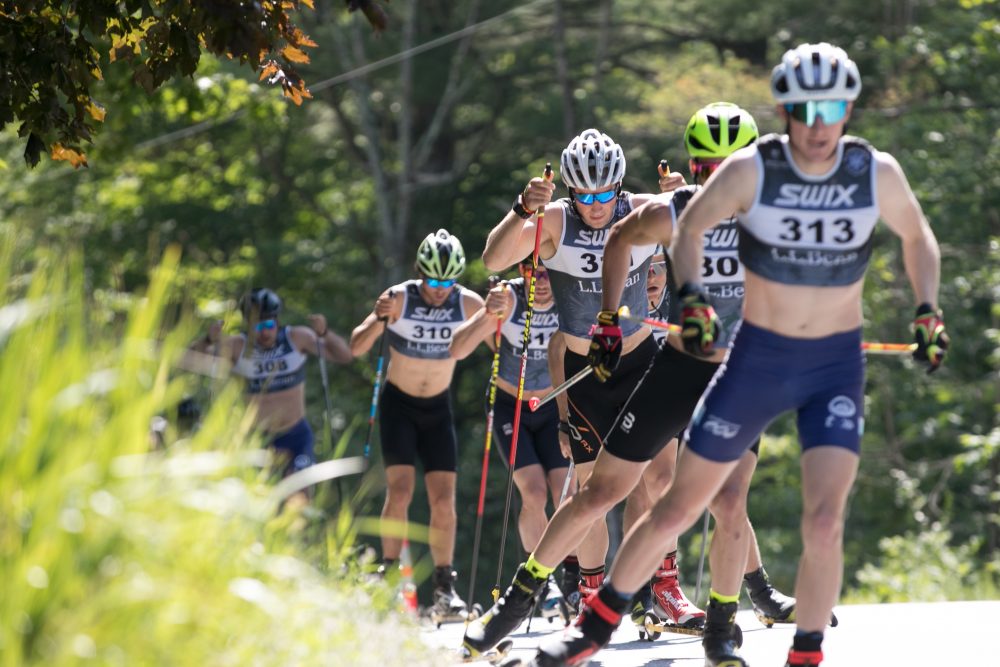
    Alexis Dumas (CNEPH) of Canada was third in 26:32.2. U.S. skier Adam Martin was fourth, 3.1 seconds behind Dumas.

    Men’s Results


  • U.S. 2019 World Championship Team Announced

    U.S. 2019 World Championship Team Announced


    Sadie Bjornsen and Jessie Diggins are both medalists from the 2017 World Championships. (Getty Images – Richard Heathcote)

    In a press release Monday afternoon, U.S. Ski and Snowboard announced the members of the 2019 Cross-Country World Championships in Seefeld, Austria. 

    (Press Release)

    U.S. Ski & Snowboard has named 18 athletes to the U.S. Cross Country Team that will compete in the 2019 FIS Nordic World Ski Championships next month in Seefeld, Austria. The biennial World Championships brings together the best athletes in the sport for the Feb. 20 – March 3 event which will be live streamed in its entirely on NBCsports.com.

    “This team has the experience and the tenacity to bring medals home from Seefeld,” said U.S. Cross Country Team Head Coach Chris Grover. “Both Sophie and Jessie know how to win on these courses, and they’ll be supported by a veteran group. Our staff has been making some great skis this season and brings many years of Championship know-how to Seefeld. We are excited to see what everyone can do.”

    The team includes two medalists from past championships including Jessie Diggins (Afton, Minn.) and Sadie Bjornsen (Winthrop, Wash.). At the 2017 World Championships in Lahti, Finland, Diggins won the silver in the freestyle sprint and teamed up with Bjornsen in the classic team sprint to take the bronze. Only five Americans have won a cross country medal at World Championships.

    “It’s always an honor to be named to a Championship team, and I’m excited to join such a strong team as we head into Seefeld 2019,” said Diggins. “Although there’s always pressure coming into big events like this, I’m going to be focused on executing my race plan and peaking for the events I’ve targeted at the World Championships in the next few weeks. I’ve enjoyed racing and training on the trails in Seefeld and they have a great atmosphere there, so it should be a really fun and exciting set of races.”

    Competition opens on Thursday, February 21, with the freestyle sprint, followed by the skiathlon before heading into the distance races.  The Championships conclude on March 2-3 with a 30k women’s and 50k men’s freestyle mass start.

      2019 U.S. Cross Country World Championship Team
     (name, hometown, ski club, birthdate)

    Men
    Simi Hamilton, Aspen, Co., (SMST2) 5/14/1987
    Erik Bjornsen, Winthrop, Wash., (Alaska Pacific University) 7/15/1991
    Andy Newell, Shaftsbury, Vt., (SMST2) 11/30/1983
    Kevin Bolger, Sun Valley, Idaho, (SVSEF) 04/11/1993
    Logan Hanneman, Fairbanks, Alaska, (Alaska Pacific University) 6/2/1993
    Kyle Bratrud, Eden Prairie, Minn., (SMST2) 2/9/1993
    David Norris, Fairbanks, Alaska, (Alaska Pacific University) 12/12/1990
    Ben Lustgarten, Burlington, Vt., (Craftsbury Green Racing) 4/17/1992
    Adam Martin, Wausau, Wis., (Craftsbury Green Racing) 10/26/1994
    Scott Patterson, Anchorage, Alaska, (Alaska Pacific University) 01/28/1998

    Women
    Sadie Bjornsen, Winthrop, Wash., (Alaska Pacific University) 11/21/1989
    Sophie Caldwell, Stratton Mountain, Vt., (SMST2) 3/22/1990
    Jessie Diggins, Afton, Minn., (SMST2) 8/26/1991
    Rosie Brennan, Park City, Utah, (Alaska Pacific University) 12/2/1988
    Ida Sargent, Craftsbury, Vt., (Craftsbury Green Racing) 1/25/1988
    Julia Kern, Waltham, Mass., ( SMST2) 09/12/1997
    Caitlin Patterson, Craftsbury, Vt., (Craftsbury Green Racing) 1/30/1990
    Rosie Frankowski, Minneapolis, Minn., (Alaska Pacific University) 7/30/1991