Tag: Bend Camp

  • Bend Camp—Building the Team Dynamic:  Part I

    Bend Camp—Building the Team Dynamic: Part I

    This coverage is made possible through the generous support of Marty and Kathy Hall and A Hall Mark of Excellence Award. To learn more about A Hall Mark of Excellence Award, or to learn how you can support FasterSkier’s coverage, please contact info@fasterskier.com.
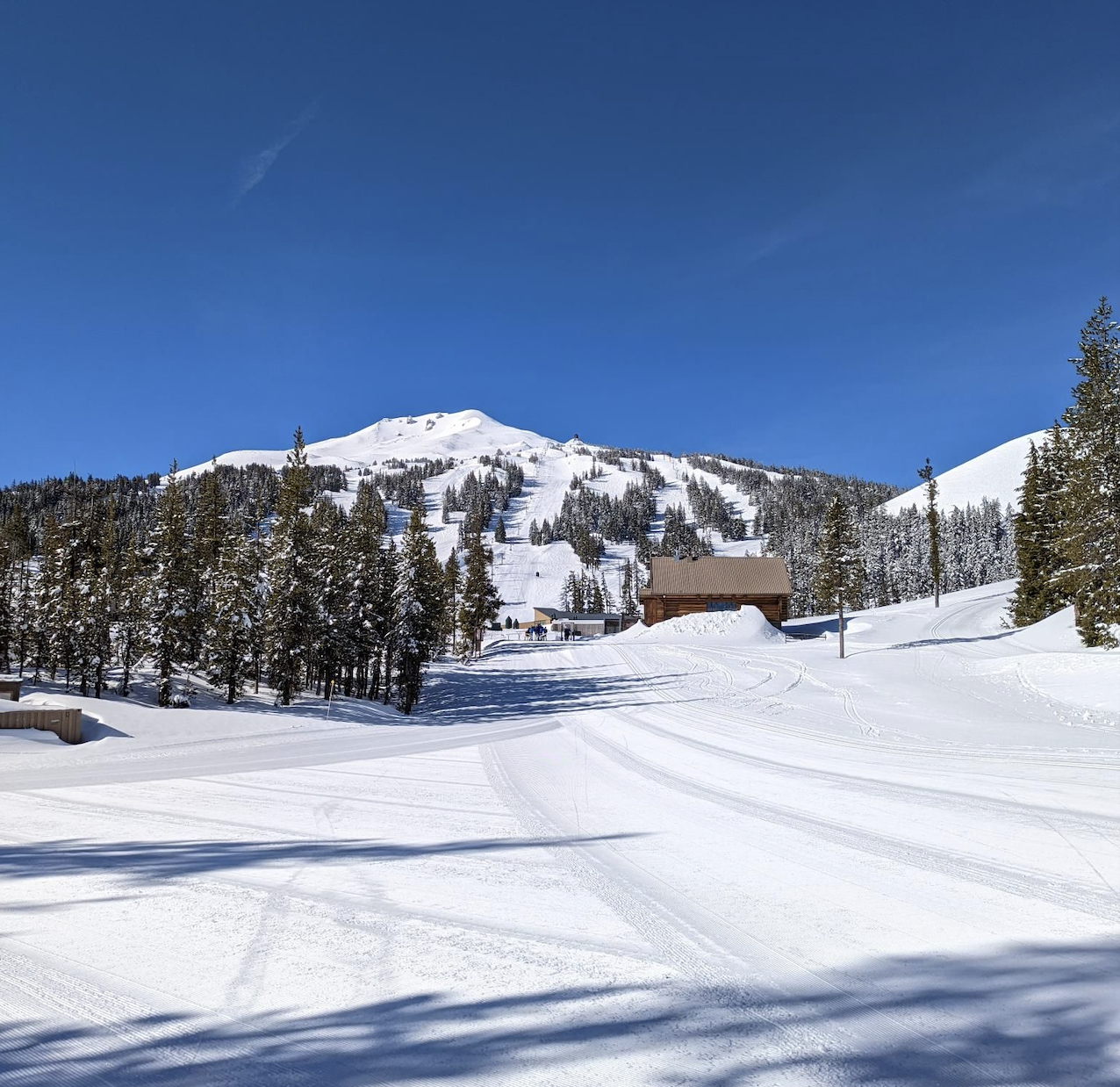
    Bluebird skies and great conditions greeted the Stifel U.S. Ski Team at Mt. Bachelor above Bend, Oregon. (Photo: Leann Bentley, U.S. Ski & Snowboard)

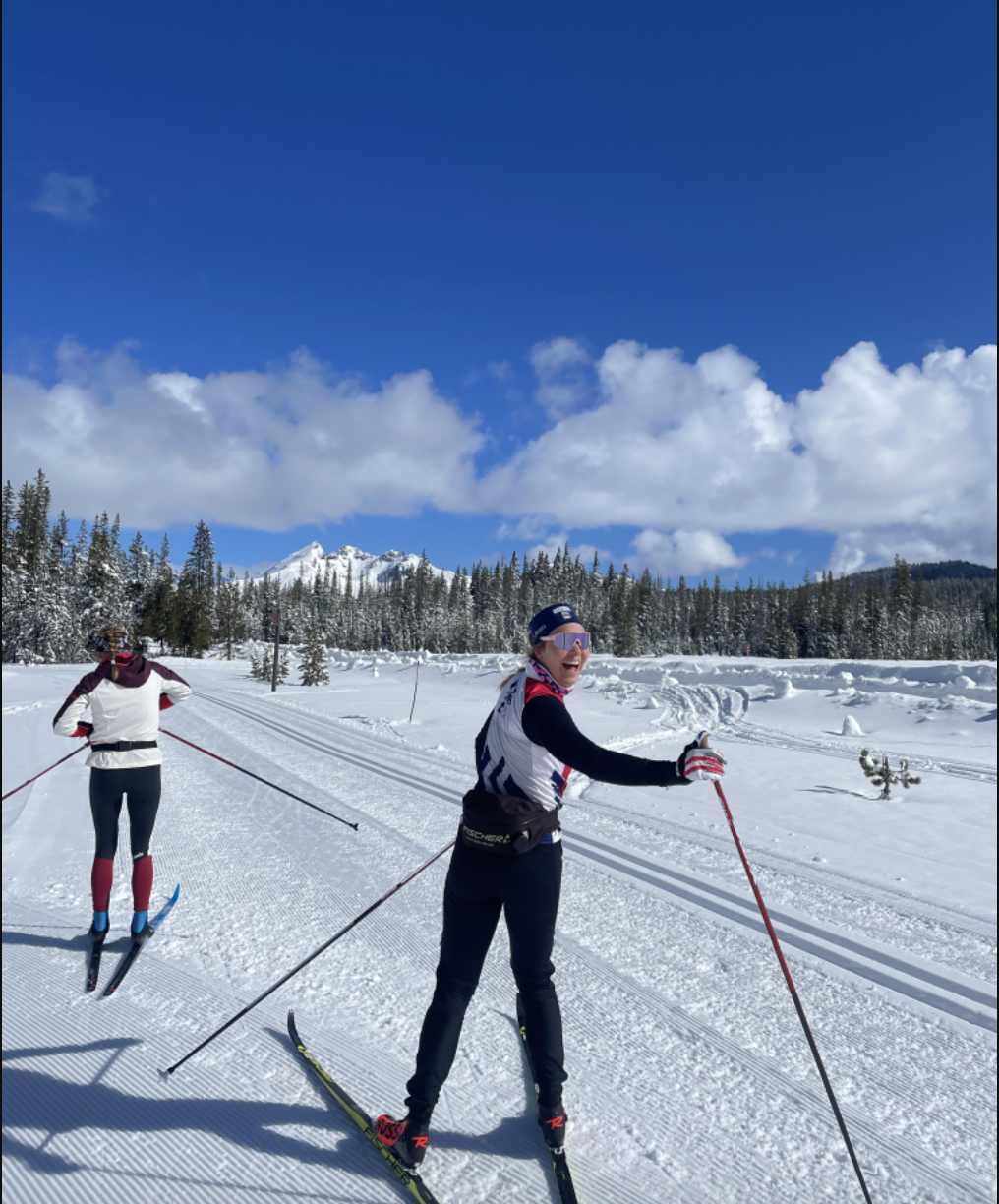
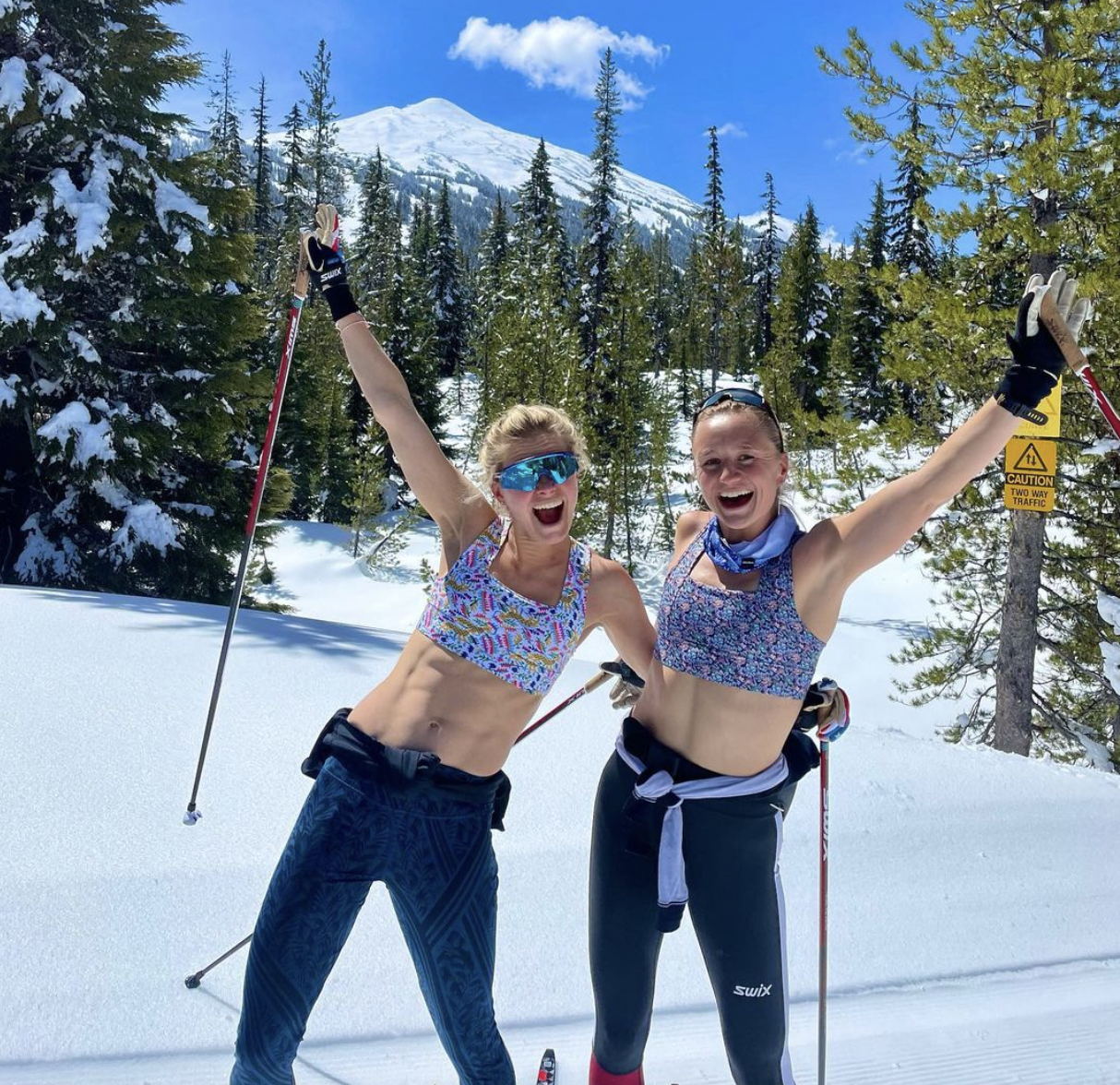
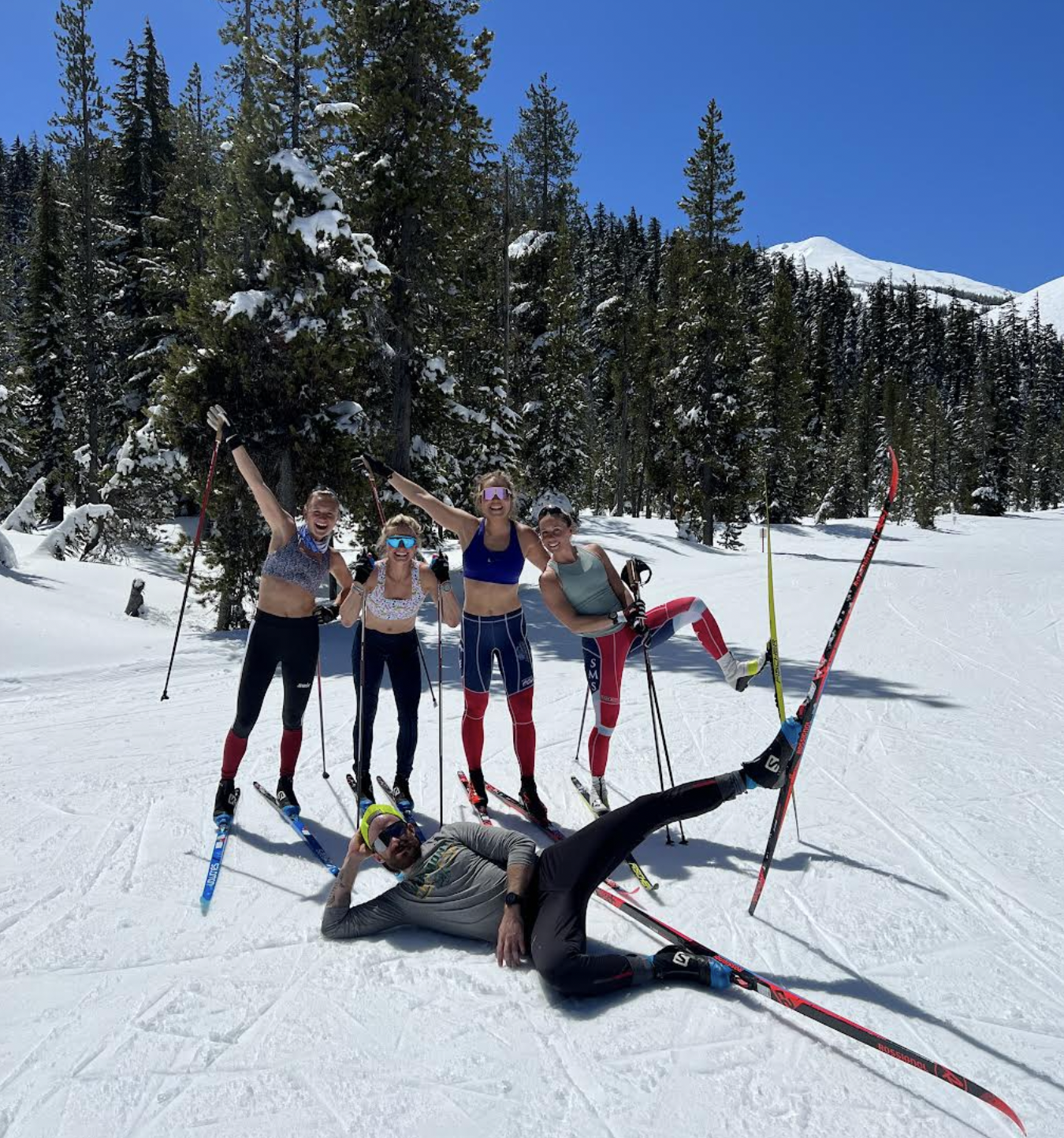
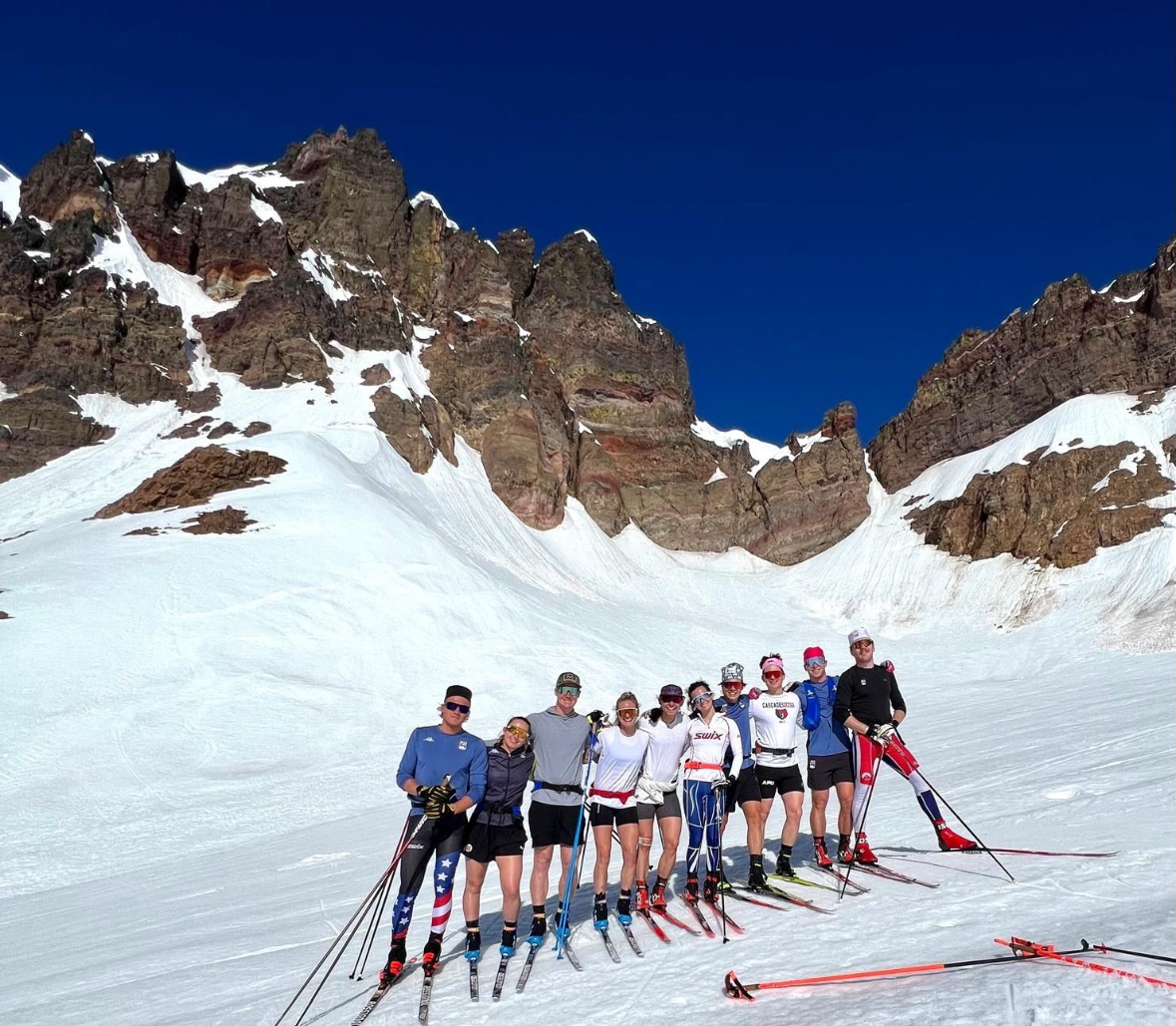
    May 4th through the 17th marked the return to the unofficial start of serious cross-country ski training for Team USA with their annual return to Bend, Oregon for their spring camp held at Mt. Bachelor. Over the years, Bend camp has become a rite of passage for Stifel U.S. Ski Team members who enjoy Mt. Bachelor’s unique ability to provide excellent snow conditions late into the spring on a reliable basis, and enjoy summer like weather while in the valley below. Skiing in shorts and t-shirts is a great way for the team to get back on snow while having a little bit of fun. It’s a low key atmosphere; a little more laid back than camps closer to race season.
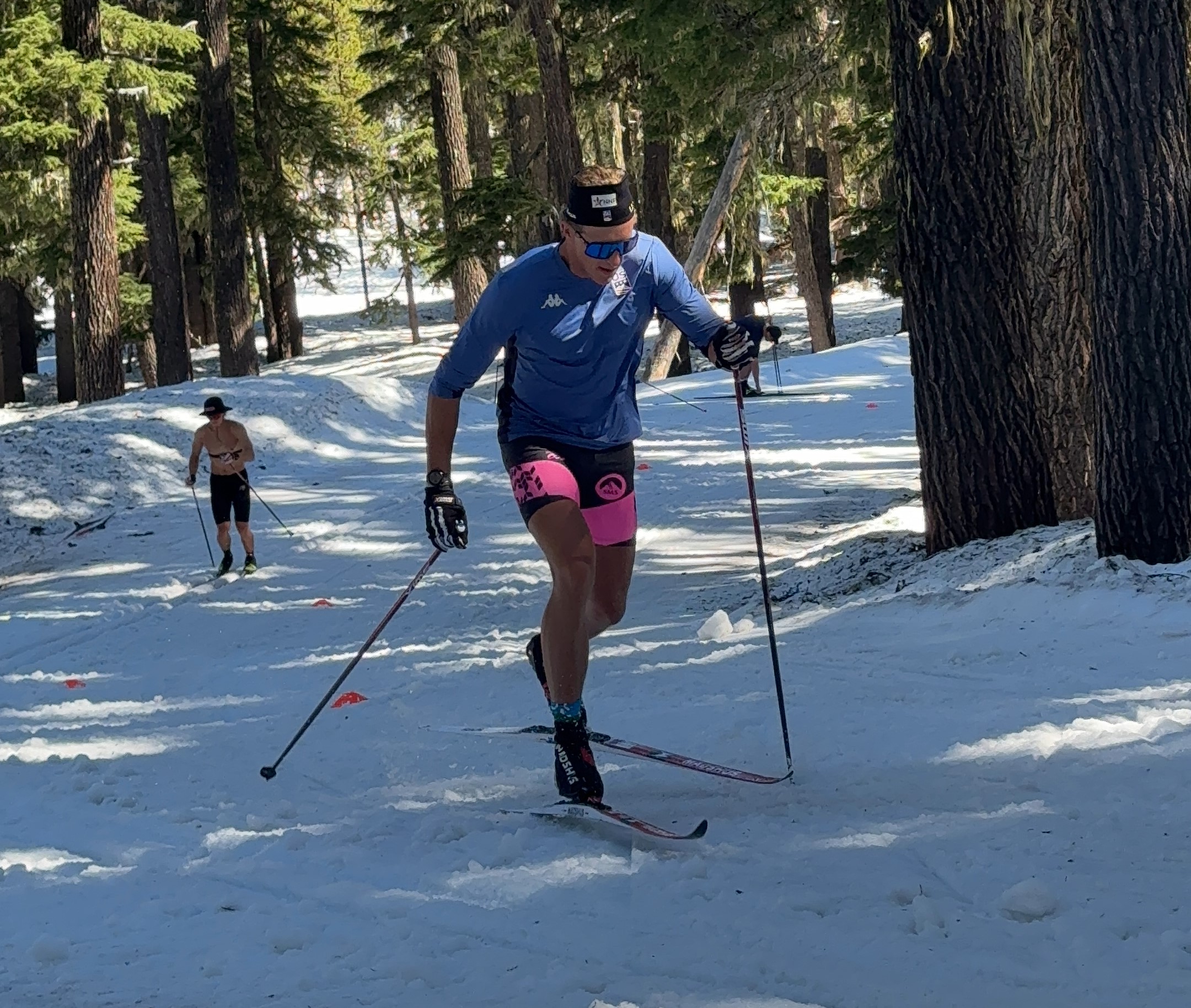
    Fin Bailey works on uphill technique at training camp. (Photo: Leann Bentley, U.S. Ski & Snowboard)

    Bend’s reliable spring snow has made it the venue of choice for many North American teams. Not only is the U.S. cross-country team in attendance, but also in Bend this spring are the U.S Biathlon Team and Craftsbury Green Racing Project team. According to Mt. Bachelor cross-country director, Sydney Powell, those teams will be joined by members of the U.S. and Canadian Para Nordic teams, some members of the Canadian biathlon team, and several other North American Nordic teams.

    FasterSkier had the opportunity to speak with Team USA coach, Matt Whitcomb, for updates on what was going on in Bend, and to get the inside scoop on early season training.
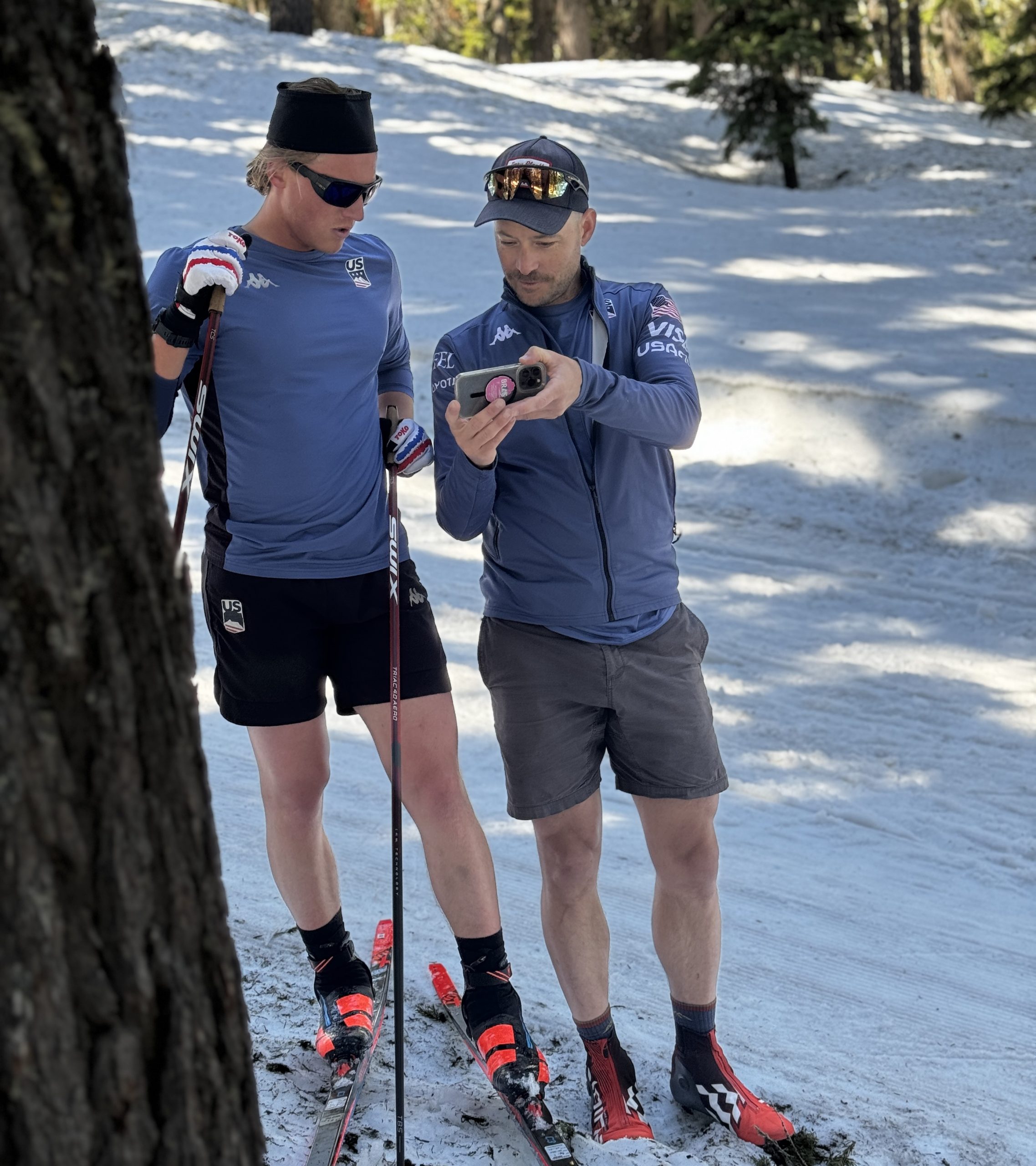
    Gus Schumacher and Matt Whitcomb work on improvements for the next World Cup season. (Photo: Leann Bentley, U.S. Ski & Snowboard)

    This spring, Bend has lived up to its reputation as a skiing paradise. “Conditions have been great,” Whitcomb said. “When we arrived, we had two days of winter, the first day was below freezing and the second day was right around zero (Celsius) and still snowing. Waxing was a challenge, which is what we hope to run into. We need work skiing, waxing, and training in these tricky conditions. Since then, it’s been bluebird conditions; freezing overnight then warming during the day; universal and red klister all day.” The waxing fine tuning is carried out by coaches since the team is unable to have their regular season waxing support. In addition to Whitcomb, the World Cup coaches present included Chris Grover, Kristen Bourne, and Jason Cork. Also present were Greta Anderson and Brian Fish. Rounding out the group is strength coach, Tschana Schiller. Schiller sets up strength training sessions known as “garage training.”

    There was an excellent turnout; 22 of 27 Team USA members attended for all, or part, of the camp. And joining this year’s camp was Swedish star Emma Ribom (friend of JC Schoonmaker). Having prominent visitors from foreign teams has also become a tradition of Bend camp.
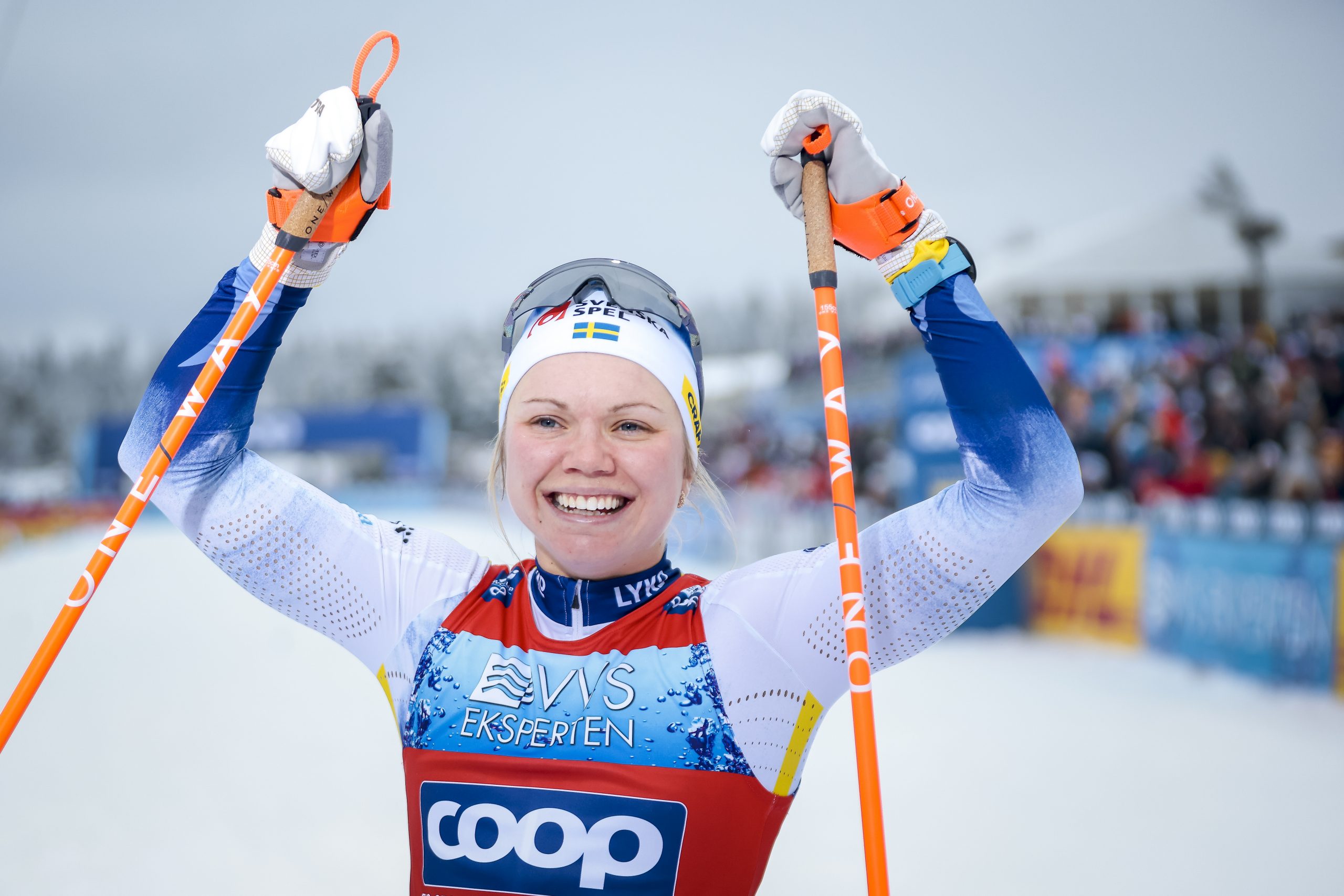
    Emma Ribom celebrates another sprint victory. She’s also a Bend camp alumnus. (Photo: NordicFocus)
    The Format

    Each day at Bend camp provides unique opportunities. “Every day is different,” Whitcomb said. “But the general plan is we ski in the morning, load up the vans at 7:30, and we’re skiing by 8:15. This is after we’ve gotten together and watched a little World Cup video to set the tone, and do a little visualization. We ski for 2-3 hours, not an incredible amount of volume this time of year. This camp is particularly early this year, the way it fell on the calendar, so we’re being a little more conservative. Then in the afternoons we do dryland training, running, roller skiing, biking, or doing strength training. The goals are getting a jumpstart on our fitness and strength and motivation to kick us off into another training year. Also, every hour we can log on snow is a very valuable hour for us. We do emphasize individuality. If there’s a workout that doesn’t work for an athlete, we work with them, if someone misses an interval session because they’re tired, we’ll run a separate one for them later in the week. We’re very flexible.”

    There are many ingredients that go into making a good training camp. “One of the goals is that we set the stage for what our new team looks like,” said Whitcomb. “We get together in a room several times a day to eat and train. Some athletes are brand new. Every year this team feels entirely different…even if you exchange just one athlete, the dynamic feels different. This camp is really about setting the tone for what the new team is going to represent.”
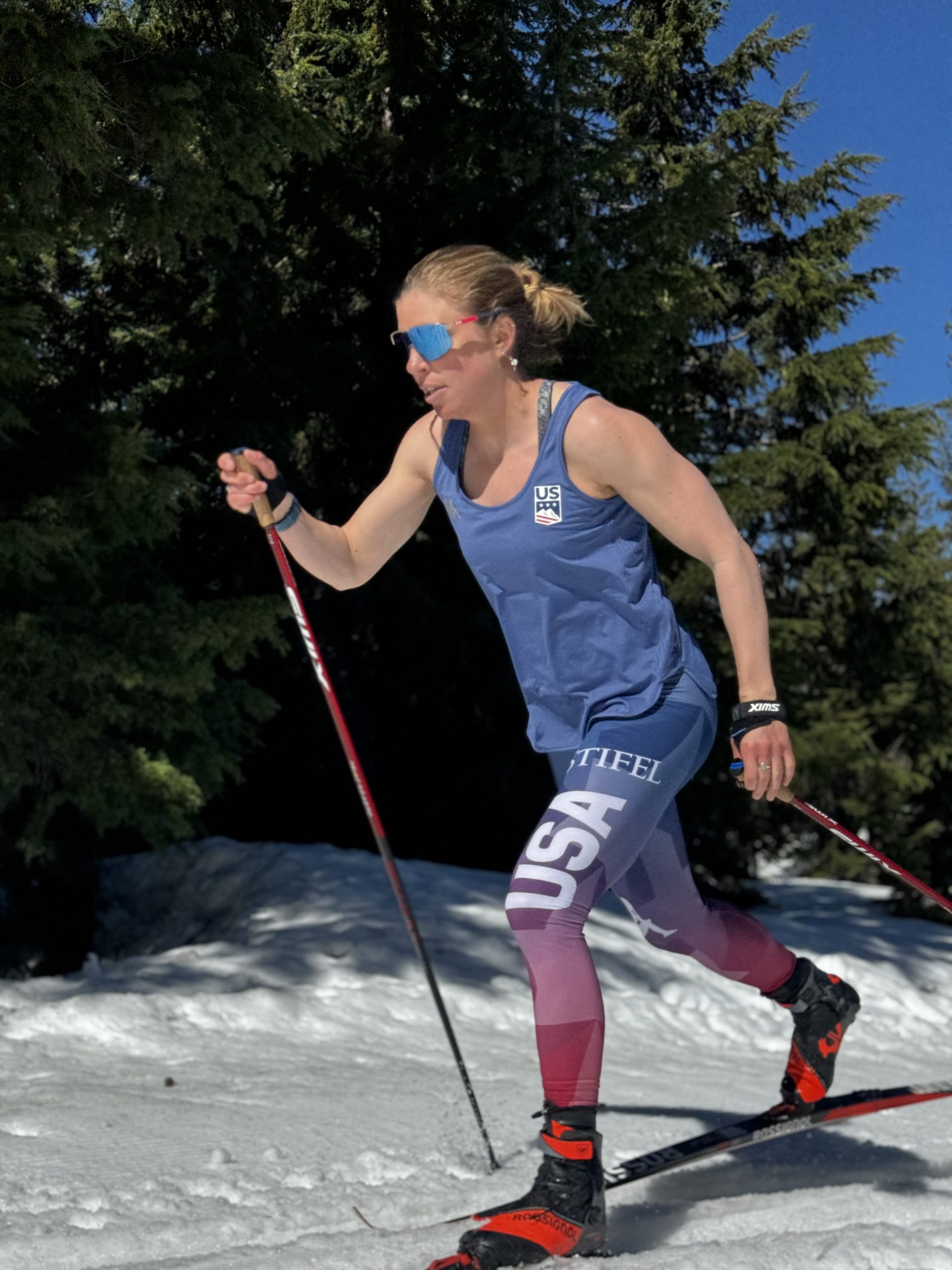
    Veterans like Rosie Brennan help set the tone for team building. (Photo: Leann Bentley, U.S. Ski & Snowboard)
    Building Team Culture

    The American squad is now well known for its team approach, but it doesn’t come by accident. “One of my favorite meetings of the year that we have is what we call our team culture meeting,” said Whitcomb. “We ask ourselves three questions, talk about them and build a document we can reference the rest of the year to remember at the beginning of the season what we intended to build.

    Whitcomb shared the secret sauce of the content of the three question approach. The first question is: “What are we proud of as members of the U.S. ski team, as ambassadors for U.S. skiing? So, it will be things like we’re proud of the community we’re part of, which was in our face in Minneapolis.”

    “The second question is: “If we wanted to, how would we wreck our team culture? That’s a fun one. Rather than calling ourselves out on things we don’t do well, we can talk about things we know will destroy the fabric of the team, like being late, creating cliques, being lazy, not having each other’s backs.”

    “The last question is: “What are our action items; what are we going to do as a team? An example of that is we want to do one community event per camp. Another example is we want to review this document several times through the year, to make sure we’re on track.”

    This type of candor can present a challenge for new members. “We don’t ever say that we want everybody to participate…just because not everybody is comfortable speaking in a group that they’re adjusting to for the first time. But generally, everybody does participate with something spoken. But simply to be present is to participate.”
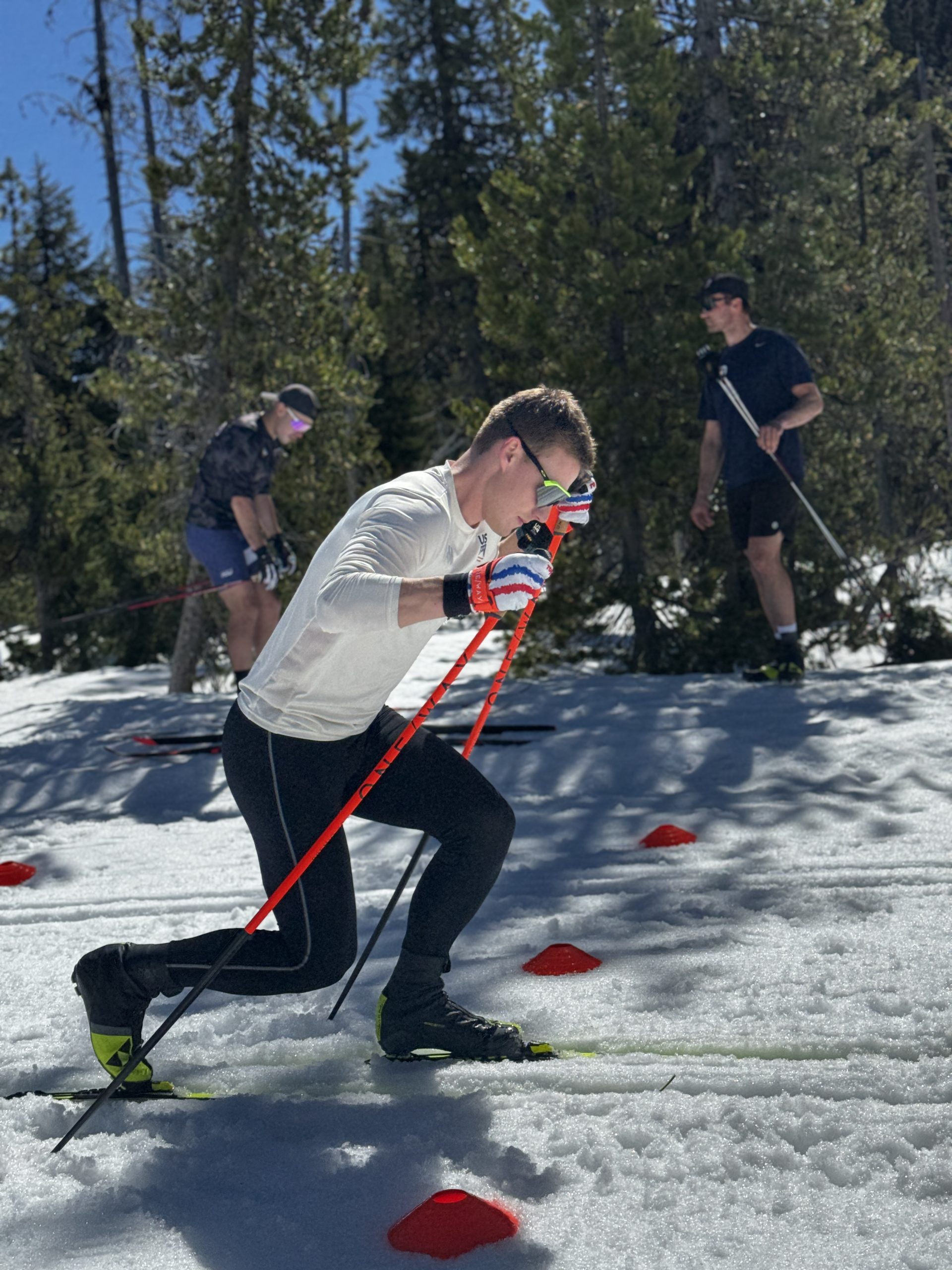
    Zanden McMullen and every participant take concepts back to their home clubs. (Photo: Leann Bentley, U.S. Ski & Snowboard)

    The message of what skiers take home is different for everyone. “The one baseline concept I hope they get is a new level of confidence knowing that they have this other team, the national team, that has their backs that they are a part of and connected to. Also, individually we have worked on technical and training concepts that they can bring home to apply to their training.”
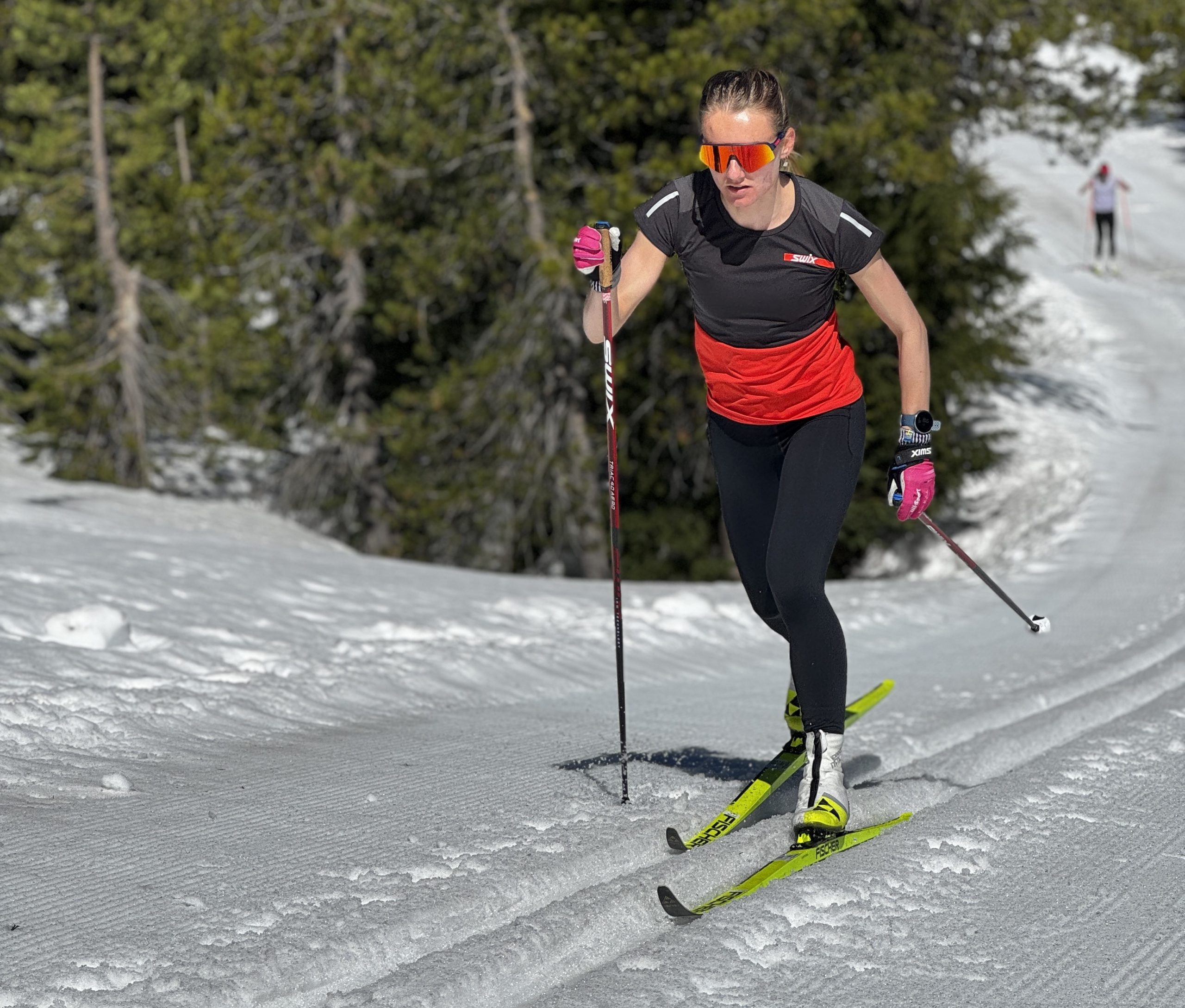
    Novie McCabe dials in her Classic technique. (Photo: Leann Bentley, U.S. Ski & Snowboard)
    The American Way

    The U.S. team’s approach to camp is different than many other countries. Since the American system is decentralized, the athletes also work with their own clubs when not training with the national team. “It’s no problem for a lot of these athletes to accomplish all of the training that they need to be able to sustain a great season in Europe, or at World Juniors,” said Whitcomb. “But at the end of the day, in particular for World Cup athletes, you’re not going to be spending that time with your club program. You need two teams. We are proud to be a decentralized program that depends on its clubs as important partners. This is an additional resource. It’s really necessary for an American athlete to have two teams…to have a club program and national team. If we’re not a connected group, we won’t perform well in Europe. We’re on the road for too long in too tight of quarters not to have team cohesion be a critical focus.”

    Please return to FasterSkier for part II of our interview with Matt Whitcomb for more insight into the Bend/Mt. Bachelor training camp when he will discuss the team’s goals, integrating a new generation into the team, trying to be the best in the world, World Cup issues, and an update on Ben Ogden.
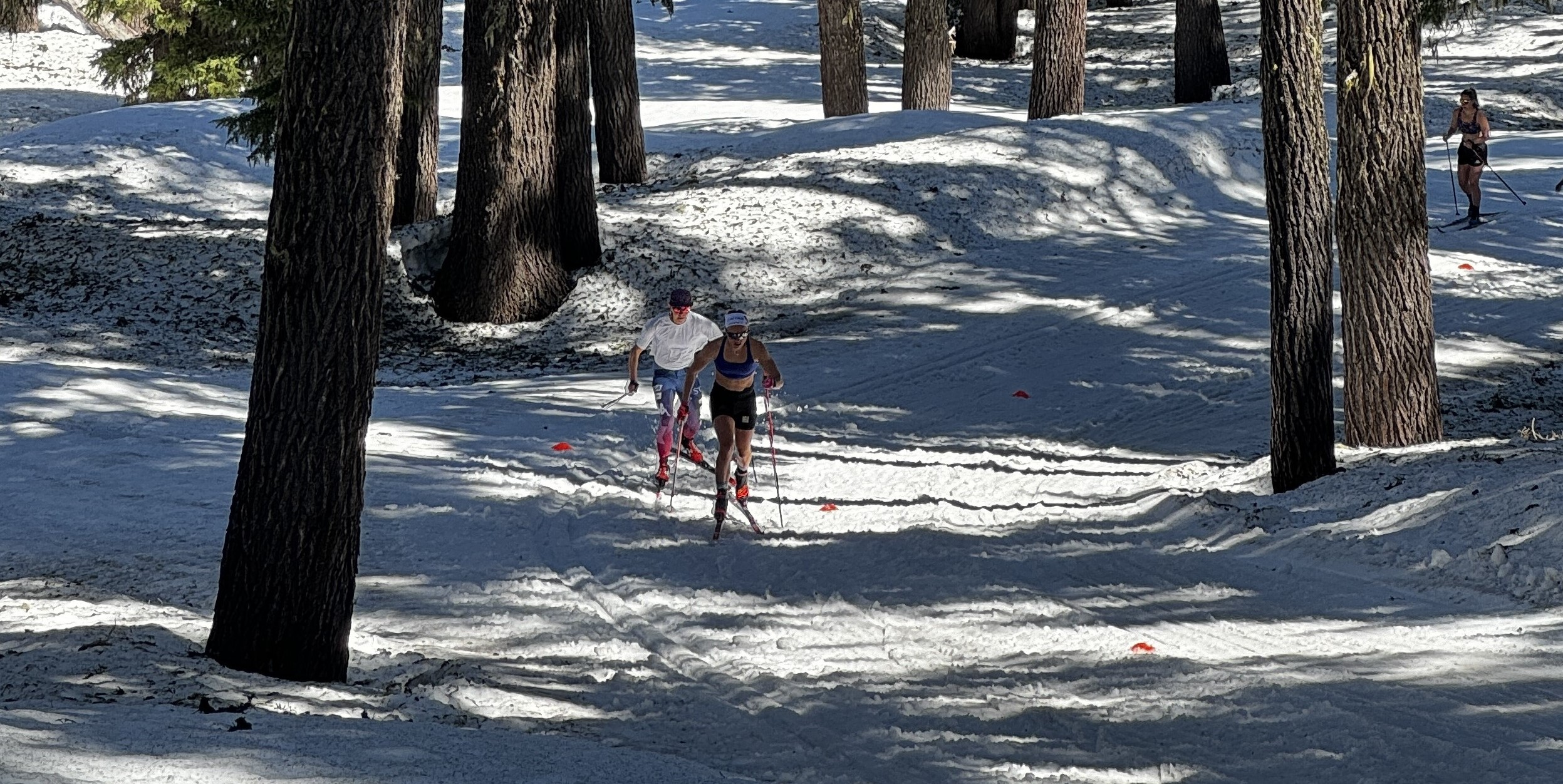
    Emma Ribom and Julia Kern enjoy the woods of Mt. Bachelor. (Photo: Leann Bentley, U.S. Ski & Snowboard)
  • Spring skiing: Mt. Bachelor Nordic Center hosts annual U.S. Ski Team camp

    Spring skiing: Mt. Bachelor Nordic Center hosts annual U.S. Ski Team camp

    May or January? The US Ski Team has found prime conditions at Mt. Bachelor during the 2022 Bend Camp. (Photo: Noel Keeffe)

    Believe it or not, it is mid-May. For those following a traditional cross-country calendar, this means the start of a new training year, building toward the 2022/2023 competition season. And, for many of the top American athletes, this means it’s time to make an annual pilgrimage to Bend, Oregon for the on-snow camp of the season at the Mt. Bachelor Nordic Center.

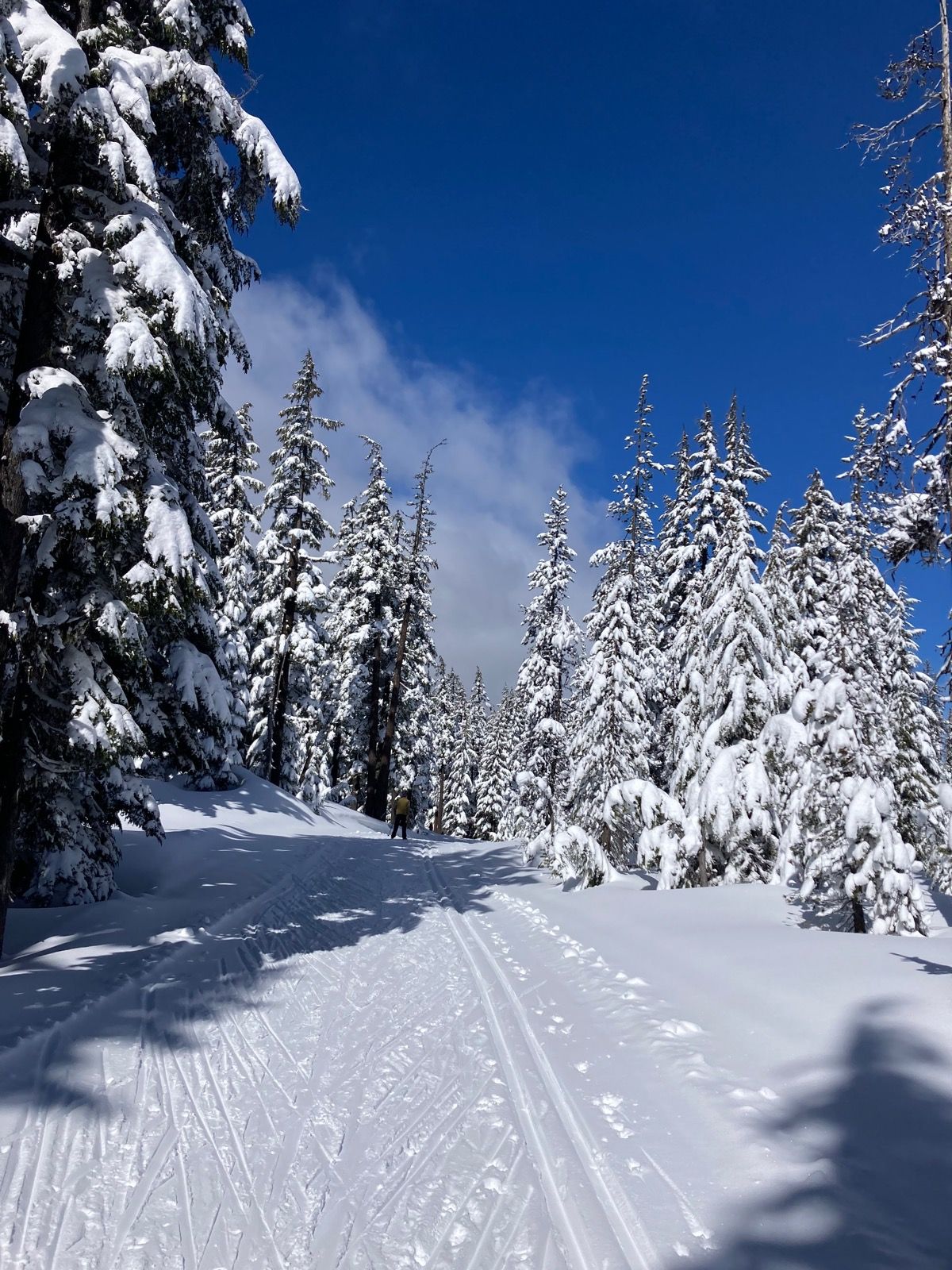
    The weather gods were kind to the camp attendees, with nearly a foot of fresh snow falling on Mt. Bachelor last weekend, restoring it to mid-Winter conditions. April was also a fruitful month for snowfall, setting up for a base-depth of 92” currently reported on the trails – not bad for May!

    To learn more about the camp and what has made Bend and Mt. Bachelor a staple of the U.S. Ski Team’s early season training, FasterSkier connected with head coach Matt Whitcomb, who shared that he has been coming to Bend almost-annually for the last 26 years. 

    He first experienced the trails at Mt. Bachelor during the 1996 U.S. National Championships. 

    “I was rooming with Justin Beckwith (current NENSA Competitive Program Director),” Whitcomb recalled fondly. “Amy Caldwell took us out and then Sverre [Caldwell] joined us, and we had our first experience racing Nationals. And it really jumped out as this town that had skiing at its center, not only alpine but cross country.” 

    The following summer, Whitcomb, Beckwith, and a couple additional training partners hopped into a car and drove to Oregon to spend the summer of ‘97 in Bend. 

    “But we weren’t, by any means, the first people to do this – we were following in the footsteps of Justin Wadsworth and Pat Weaver and a whole bunch of other people. And by our senior year [at Middlebury College], we had twenty-something people driving out from the east just to experience what Bend has in late May and June, and we’d be there through August until we had to go back to college.” 

    Lina Sutro (right) and Alayna Sonnesyn (left) enjoy fresh snow and a fresh groom at Mt. Bachelor during the 2022 Bend Camp. (Photo: Lauren Jortberg)

    What Bend has in late May and June, he said, is a vast array of diverse training opportunities, which most importantly includes snow. 

    “That’s probably the first thing that really drew us in, particularly as people from the East.”

    He shared that the snow report they had received from Mt. Bachelor Nordic Center manager Sue Foster was measuring the accumulation from April storms in feet, not inches. 

    But it’s not just the access to snow on its own that makes Mt. Bachelor worth the trip.

    “The trail system is world class. You’re skiing through Douglas fir — just these massive, old old trees on creative, windy, hard trails, and on a good year they’ll have close to 30 or 40 kilometers groomed for us still in May.” 

    In addition to its geographical location and an accumulation of over 300” of snow annually, the elevation of the Nordic Center preserves the snowpack for late season skiing. The parking lot sits at roughly 6,000’ above sea level, while trails range from 5,750 to 6,400’. 

    This puts Mt. Bachelor in a similar altitude zone to Soldier Hollow, UT, offering athletes both an early season bump in red blood cells and the opportunity to fine tune their altitude skiing strategies, “which is something that we really value. Because skiing at altitude is not just something for the aerobically gifted; it’s also something for people that develop the skill of how to actually ski at altitude. So that’s been great.”

    Whitcomb also lauded the convenience of Mt. Bachelor relative to their lodging down in Bend, roughly a 25 minute drive down the mountain at a significantly lower elevation of roughly 3,300’. In addition to easy access to the trails, this gives the team the opportunity to train high and sleep low, as well as to enjoy non-ski training modalities in a totally different climate. 

    “So recovery is complete. We can also go roller skiing in the afternoon, we can go mountain biking, we can run in shorts and tee shirts. It’s like you’re experiencing the summer and the winter on the same day for two weeks in a row.”

    Fresh snow and vitamin D — Jessie Diggins and Alayna Sonnesyn head to Mt. Bachelor for the 2022 US Ski Team spring training camp. (Photo: Lauren Jortberg)

     Overall, Bend and Mt. Bachelor have become a special place for Whitcomb, and for the many athletes who have made their way there over the years. 

    “It’s just such a wonderful environment. The way these cascade forests smell this time of the year when the new growth is coming up — you step out of the car when you first arrive and it’s like, ahh. I could be blindfolded and tell you exactly where I was.”

    While Mt. Bachelor offers high quality grooming all season, Whitcomb also spoke to the relationships the US Ski Team have developed with the trail operations team, and their willingness to adapt their usual grooming patterns to best serve the visiting skiers. This year, Whitcomb is looking to replicate the track format of a World Cup stadium so the team can practice “switching lanes in the finish and figuring out how to develop more speed — a bit of a twist to our [usual] speed training.”

    At the helm, and helping US Ski Team coaches interface with the grooming team, is the aforementioned Nordic Center Manager, Sue Foster, who Whitcomb says has been an invaluable resource over the years. 

    “She meets us in the lodge every day, she helps us prepare the TV and the chairs so that we can do a little visualization before every session. And she’s just a delightful, inviting person that makes you want to come back and see [her.] It’s rare that every athlete on the team knows the names of the people working the lodge, but Mt. Bachelor is one of those places.”

    Midwinter conditions return in May to Mt. Bachelor. (Photo: Alayna Sonnesyn)

    Off the ski trails, Whitcomb shared that a highlight for many athletes is the lower elevation terrain in Bend, where the unique volcanic geology of Mt. Bachelor sets up for miles of tacky “hero dirt” for afternoon rides. 

    “The mountain biking is some of the best in the US, particularly in May, before it’s gotten dusty.”

    During the late spring, many trails along the Deschutes River are also beginning to open up, and often the team will be dropped off an hour and a half up-river to enjoy a point-to-point run  back to their cluster of rental houses. 

    This year, the team is spread between three large rental homes in close proximity, with the staff house centrally located to host nightly team dinners catered by USOPC chef Megan Chacosky. To reduce COVID risks among the team and staff, masks are still worn during team meetings, allowing them to safely happen in-person. Though mask mandates and COVID safety precautions are largely being dropped, Whitcomb expressed the importance of keeping athletes and staff healthy, setting everyone up for success during the high-volume summer months of training. 

    “I think the world has made a major shift to decide that the pandemic is over, but we’re pretty well aware that the COVID is not done yet.”

    Finally, Whitcomb cited the greater ski community in Bend as a reason the camp has been such a valuable component of the annual training cycle. 

    “As far back as I can remember, it didn’t matter whether we are registered with a local club or not, we were always being invited by [coach/director] John Downing to the XC Oregon sessions. He’s still a good friend of the team, and we have so many locals in town that are helping us out and welcome us every year to town.”

    Acknowledging that he was only giving the short-list of names from the Bend skiing community who have supported and welcomed the team each year, he also noted former physiologist at the Olympic Training Center in Colorado Springs Tim Gibbons, who builds excitement for the camp by giving Whitcomb snow reports all winter, indicating how the trails are shaping up for spring skiing. And lastly, he thanked the members of the Mt. Bachelor Ski Education Foundation (MBSEF), including nordic director Dylan Watts. 

    This community support allows the team to maximize their time training in Bend, while also creating opportunities for outreach via programs like Fast and Female or hosting workouts for the MBSEF junior athletes. This partnership helps the team feel connected, and also stoke the enthusiasm of the next generation of cross country skiers. 

    “It just really feels like a family that we’re coming back to every year. So thanks to everybody that has always been welcoming. We try to be great ambassadors for the sport, and we need partners like this [to continue to move forward as a nation].

    Sun, snow, and lots of training during the 2022 US Ski Team camp at Mt. Bachelor. (Photo courtesy Alayna Sonnesyn)

    The Mt. Bachelor Nordic Center is known for it’s world class spring cross-country skiing. You can find more information about spring conditions at mtbachelor.com.