
Tag: Bend Training Camp

  • Bend Camp—Building the Team Dynamic:  Part II

    Bend Camp—Building the Team Dynamic: Part II

    This coverage is made possible through the generous support of Marty and Kathy Hall and A Hall Mark of Excellence Award. To learn more about A Hall Mark of Excellence Award, or to learn how you can support FasterSkier’s coverage, please contact info@fasterskier.com.
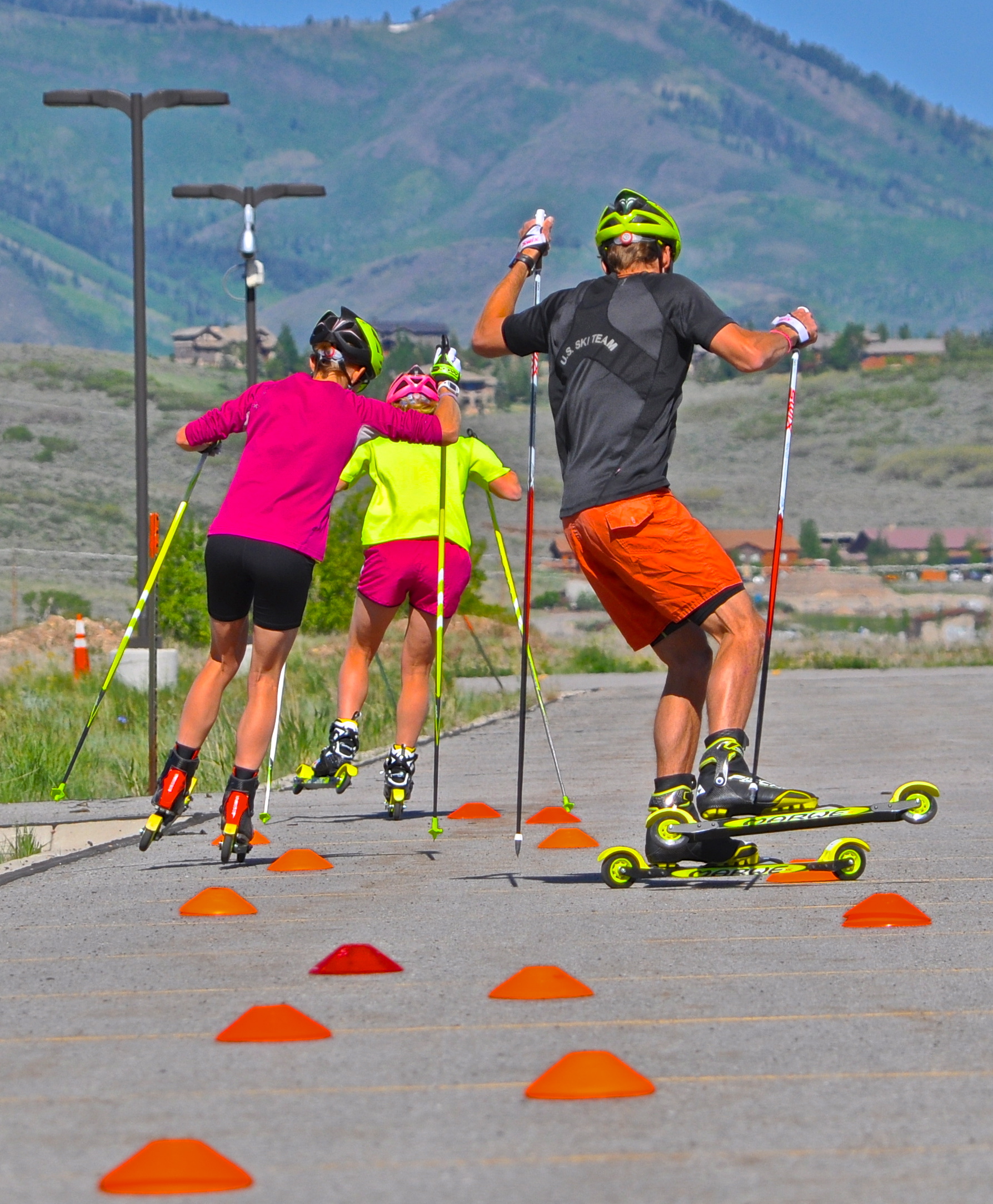
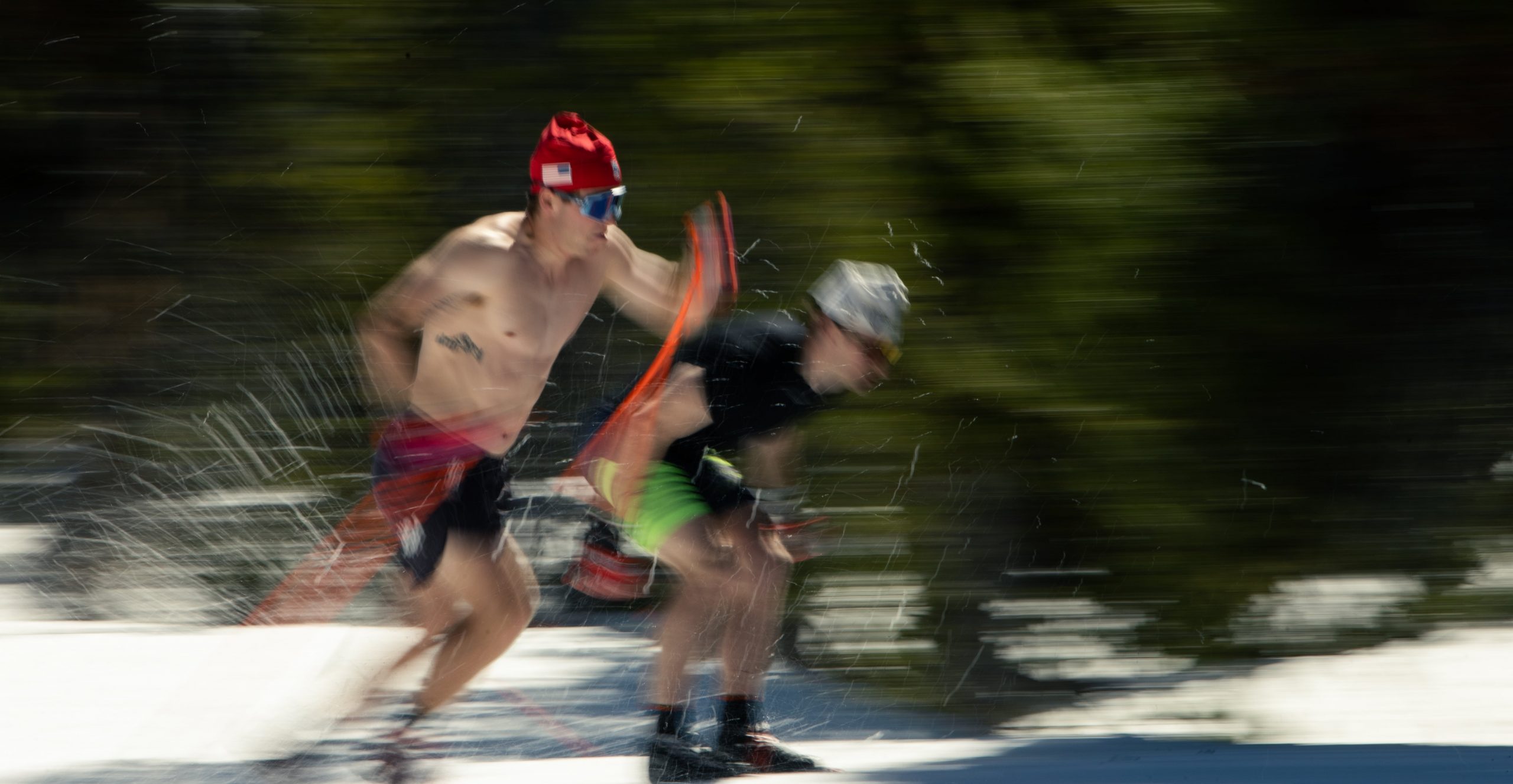
    Trey Jones and John Schwinghammer getting in some Sprint training. (Photo: Eli Zatz 5/23/24)

    In part one of our interview with U.S. coach, Matt Whitcomb, about Bend spring training camp he told us about training regimens and the team building approach. In part II, Whitcomb talks more about training in Bend and wider ranging topics.

    Aiming To Be The Best in the World

    A big point of focus at training camp from the team perspective is the standings in the Nation’s Cup. “One of the things that’s sort of a rallying cry for us is the quest to finish in the top three in the Nation’s Cup scoring,” said Whitcomb. “There’s a lot of energy surrounding our Nation’s cup scoring when we talk about our team culture document: team goals that we can rally around. We’ve finished fourth for the last two years. (Losing to Finland in the last weekend for two consecutive years.) This is something that ten years ago we weren’t even discussing. The fact that we’re even in a discussion to be in the top three represents a massive change over the course of the last decade. That’s something we’re very proud of; to be competing on equal ground with the Scandinavian nations, often beating them. In a great year we used to be sixth. Now we know we are often in the top three, we just haven’t finished there by season’s end. That’s a big goal of ours. While we do have a way to go, in particular against the Norwegian men, and the Swedish women, we can see the pathway to becoming the best ski nation in the world. We have the numbers of athletes to accomplish this, we have the number of coaches and clubs. It’s all there. Each of us needs to take a couple of small steps forward, and we’ll be that much closer. But these are levels that we haven’t felt as being tangible targets; now they are. Now that we can see it, we can see the pathway to becoming the best cross-country skiing nation in the world. I think in the near term, on the scale of a decade…the changes that have happened over the last decade…if they happen again, we’ll be in contention for (best in the world). We feel that’s a place we can now actually go, and target.”
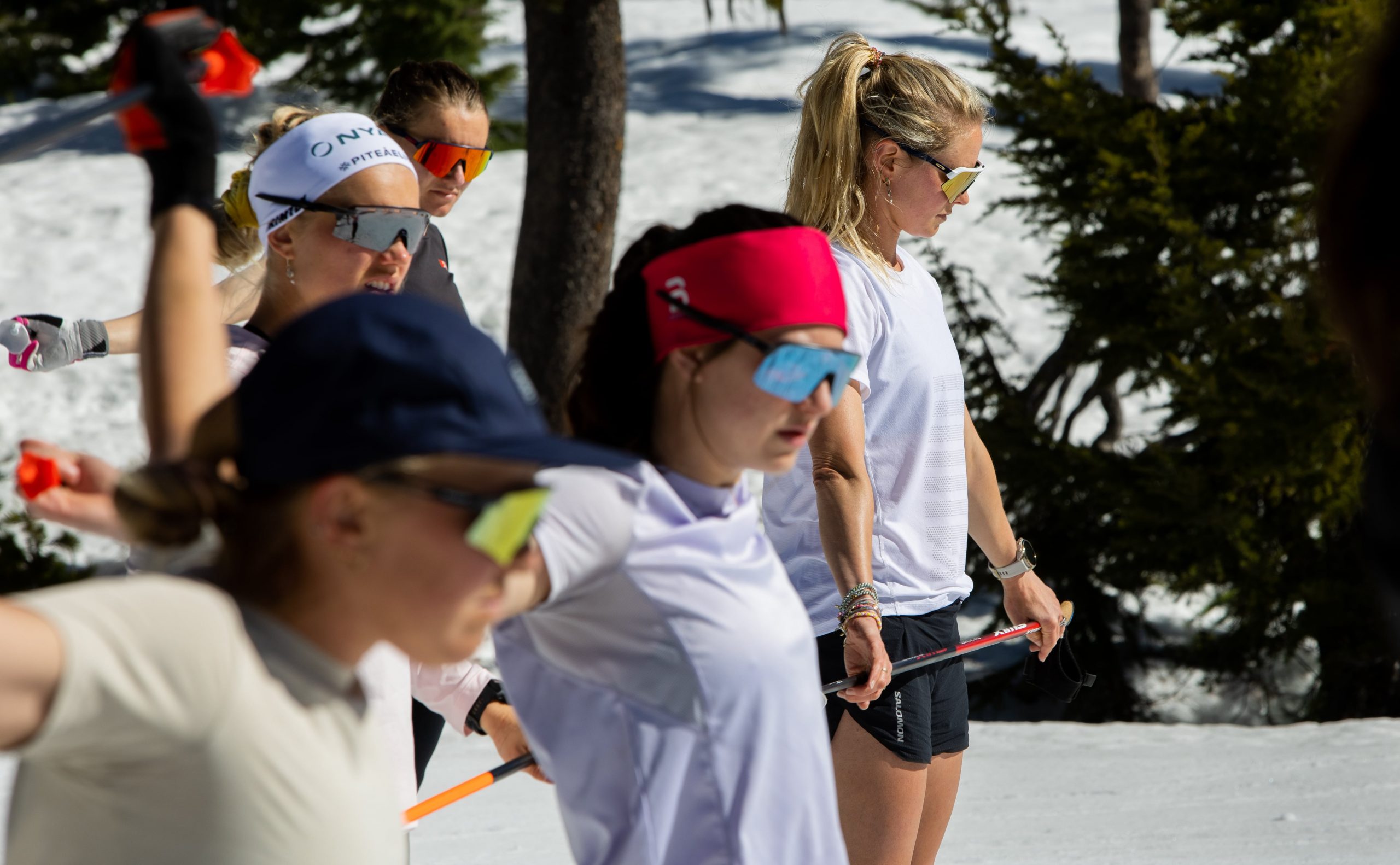
    U.S. Teammates and guests line up for drills at Mt. Bachelor above Bend, Oregon. (Photo: Eli Zatz 5/23/24)

    But to do well in the nation’s cup, team USA will have to strike a difficult balance of putting forth the best team while also resting athletes who need it. “There are times when we are not starting our best relay team because we are trying to preserve the long term goals of (individual) athletes. But all the athletes on the team respect any athlete’s need to sit out an event. They all know how hard it is.”
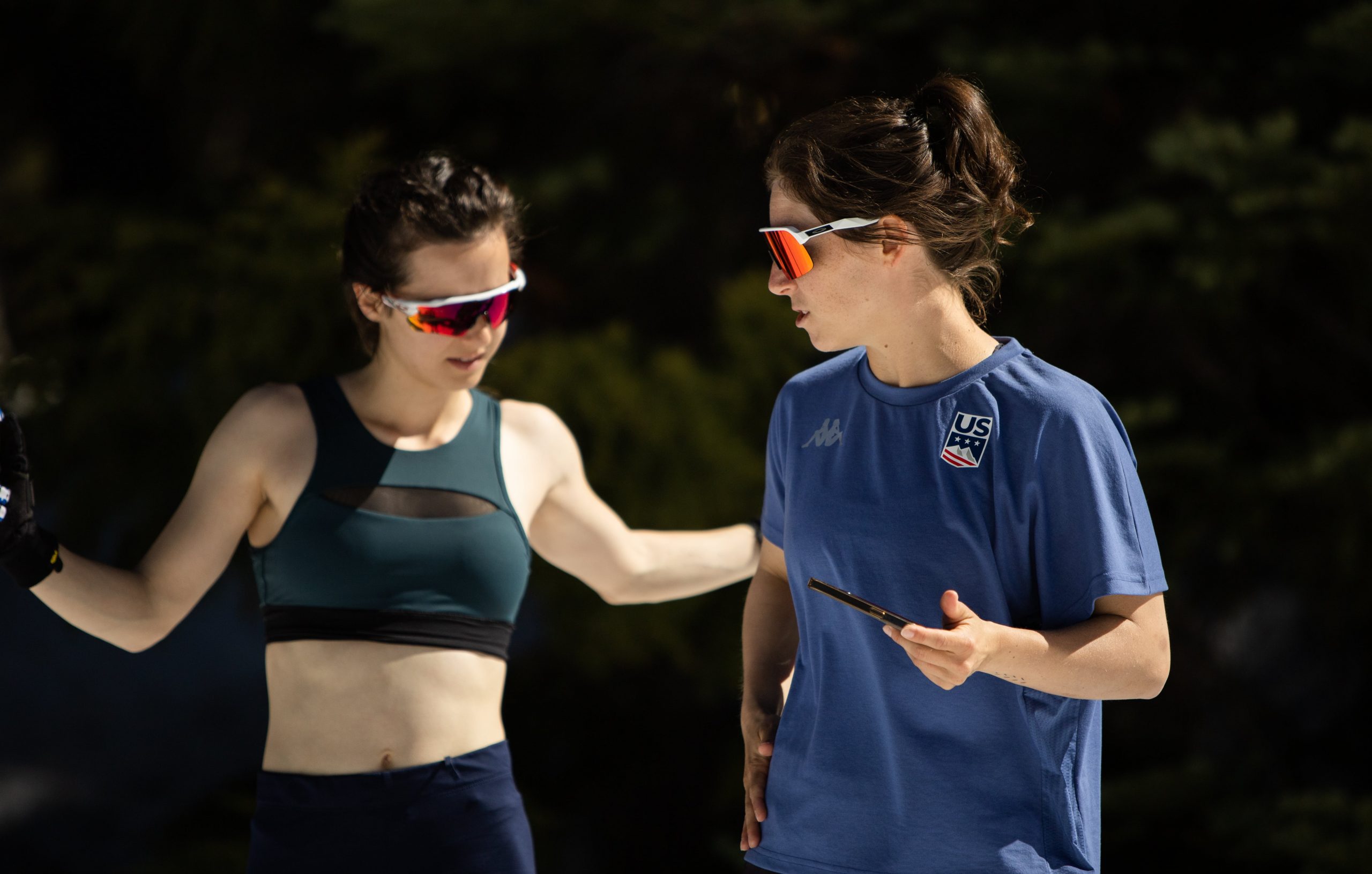
    Kendall Kramer and coach Kristen Bourne take a break to review technique.(Photo: Eli Zatz 5/23/24)
    The Next Generation

    Whitcomb has noticed a generational shift of sorts with new team members. “The athletes arriving now (for camp) on the development team, they are more professionally prepared, have better technique, and overall are better trained (than they used to be),” whitcomb explained. “The athletes on average are training 100 hours more (per year) than they were ten years ago. We have surveys that we have taken over the years, so we know the training volume has grown, along with that, the level of coaching has grown. We have so many great coaches peppered throughout the country that we didn’t always have.” Whitcomb sees the long term impact of this change. “It gives us more belief in the future of our program, and our ability to compete against the best in the world.”

    With a new class of younger athletes coming in, there are new challenges and new expectations. “At this age change happens very quickly, it can happen over the course of a camp. A lot of the athletes are skiing better by week two.”

    Along with the heightened abilities of new athletes is also the challenge of dealing with increasing team success. Last year was one of the best ever—if not the best­—for U.S. cross-country. Does it create a different level of pressure? “As we’ve improved as a nation, we’ve also improved under pressure,” Whitcomb said. “We’ve learned to utilize the pressure as an asset and resource, we see it as a privilege. On a race day when an athlete is dealing with nerves, you can reframe it and acknowledge to them that they have this privilege of doing something important; it’s not necessarily a negative source of energy. At this time of year pressure is fun and motivating.”
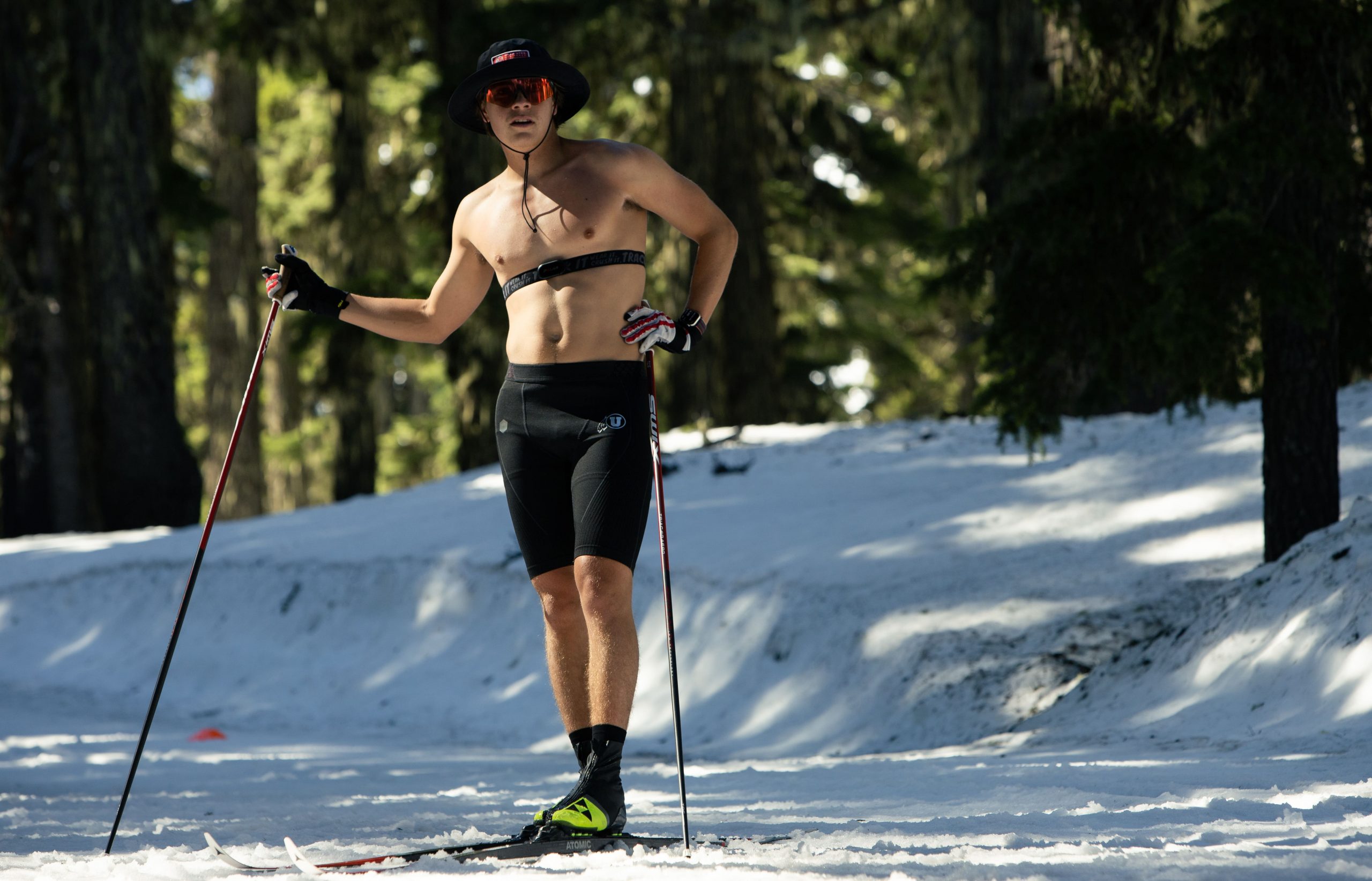
    Mt. Bachelor: Zach Jayne taking it all in. (Photo: Eli Zatz 5/23/24)
    The Bend Chill

    Bend is also unique because of its more relaxed atmosphere. “There’s a different tone in our October camps where we’re training at a higher level, we’re training big hours, we’re doing specific time trials,” said Whitcomb. “There’s a layer of stress that doesn’t exist at Bend. An example is we had an athlete get sick (in Bend). He stayed in his room to recover and protect everyone else’s health, but people weren’t really that stressed. That’s a different story on the World Cup where you try to avoid these germs at all costs.”

    Ogden’s Status

    For world-class endurance athletes, illness is often an issue around which accommodations must be made; Ben Ogden’s presence and performance at the camp was a relief to the team. Ogden is returning from a case of mononucleosis he contracted toward the end of last season that kept him out of the Minneapolis World Cup. Fans will be happy to hear that he is doing well. “Ben is training at a very high capacity,” said Whitcomb. “We are still being careful. We’re probably asking him how he’s feeling more than the other athletes. We want to make sure we’re not starting too early. He’s had a wonderful medical team around him since his diagnosis. I feel like he’s in the place where he’s training at nearly full capacity, and I say nearly just because it’s May, and I don’t know if anybody is training at full capacity just yet.”
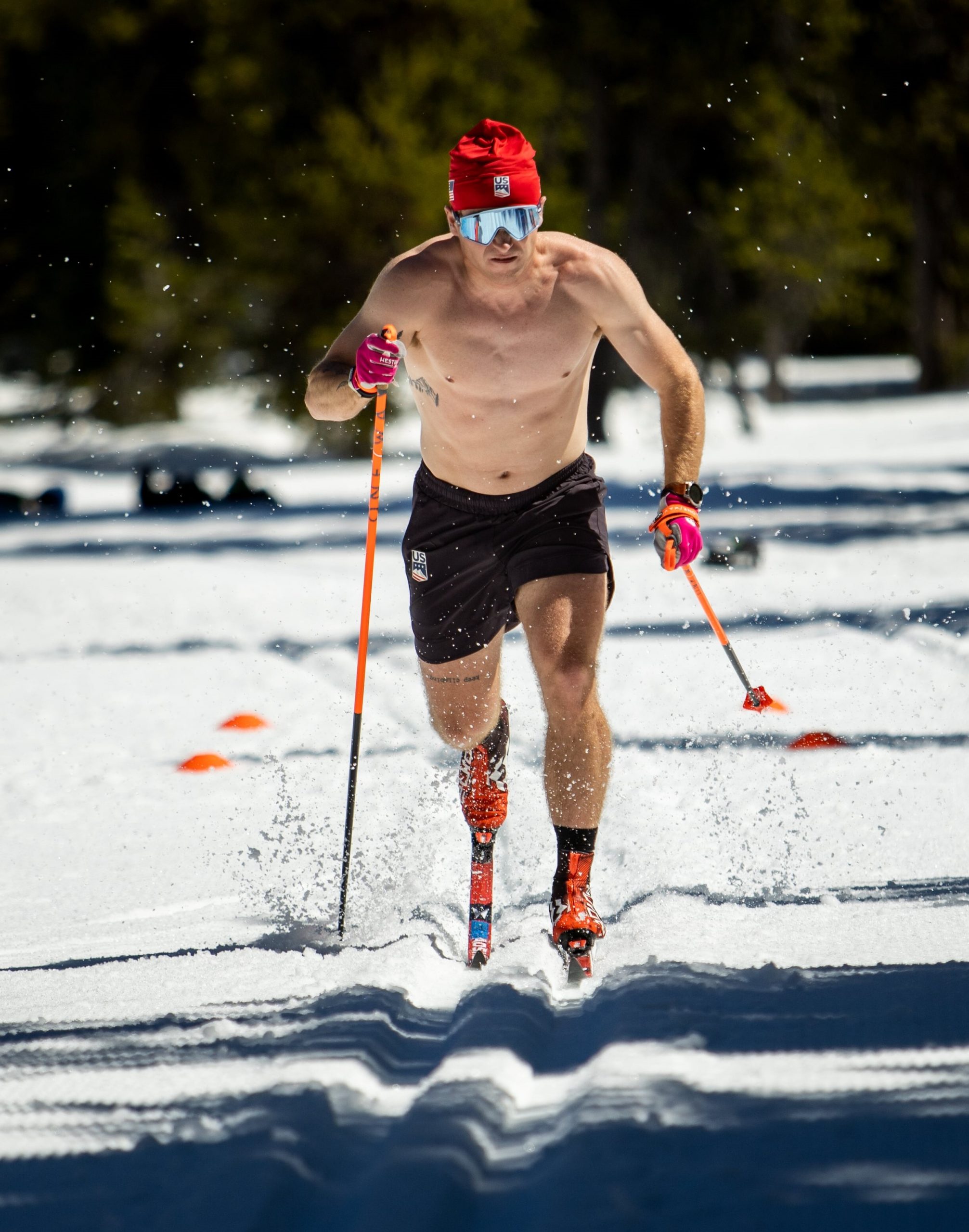
    Trey Jones working on Classic sprint technique. (Photo: Eli Zatz 5/23/24)
    World Cup Developments

    Whitcomb is also looking forward to changes which will have to be addressed during the upcoming World Cup season. One of the big changes is FIS’s decision to raise the maximum altitude at which races can be held. Whitcomb doesn’t see that as much of a problem for the American team. “For Americans, I think that’s actually and advantage,” he said. “We tend to race pretty well at altitude because we naturally have more experience at altitude. All of our best athletes throughout the year will be training at an altitude event. That’s not the case for (other countries). I feel like this is something we excel at. I welcome it. We need to be able to access more venues (for snow); I think it’s a good change.”

    Whitcomb also shared his thoughts on the potential of Lake Placid, New York, hosting a World Cup. “This is great news. Minneapolis is no longer a one-off amazing experience; it’s a legacy event. The Europeans had such a great experience in Minneapolis that I think we’ll draw a full compliment of World Cup athletes.”
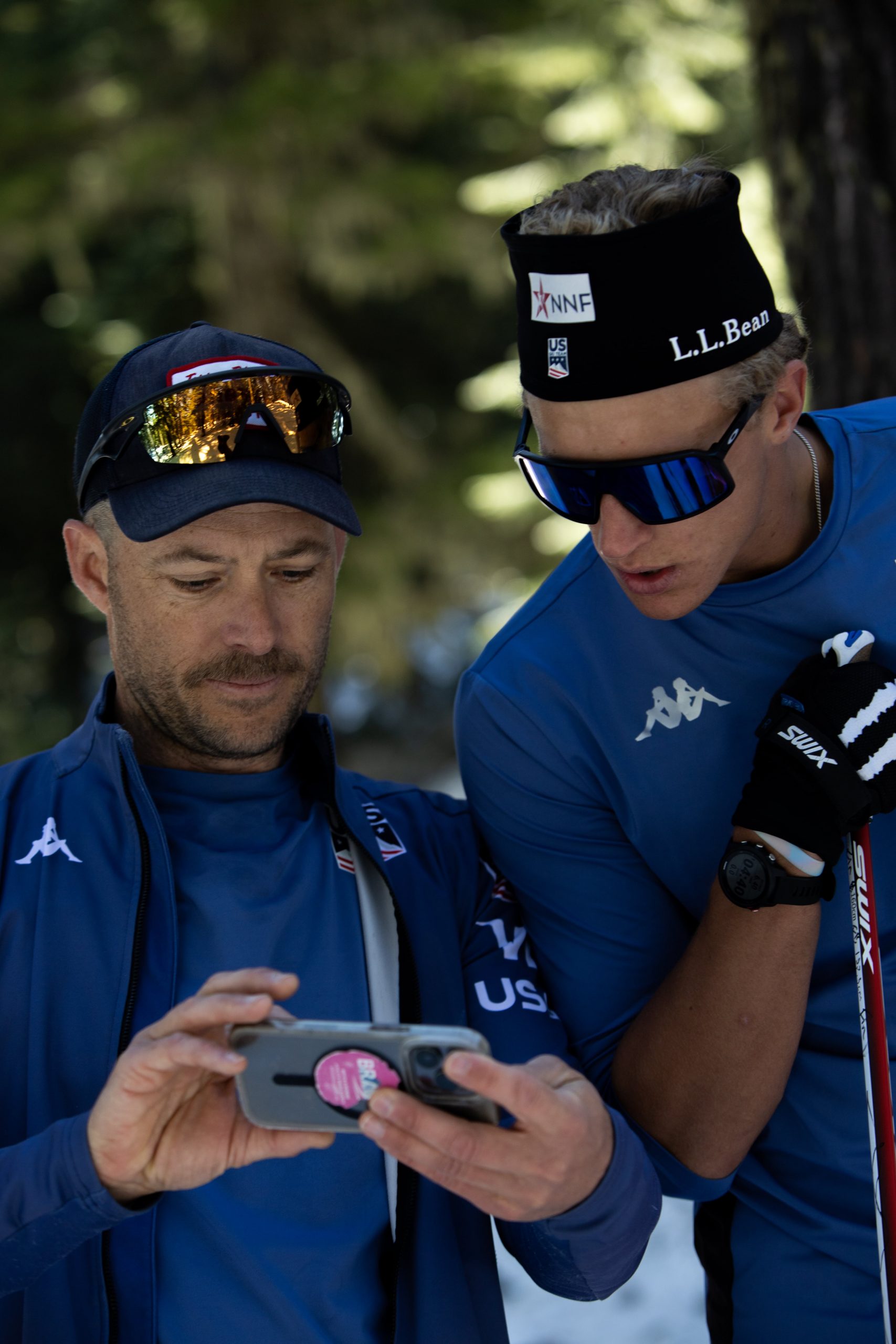
    Matt Whitcomb and Fin Bailey get immediate video feedback. (Photo: Eli Zatz 5/23/24)
  • U.S. Ski Team Starts Anew at Annual Bend Training Camp

    U.S. Ski Team Starts Anew at Annual Bend Training Camp

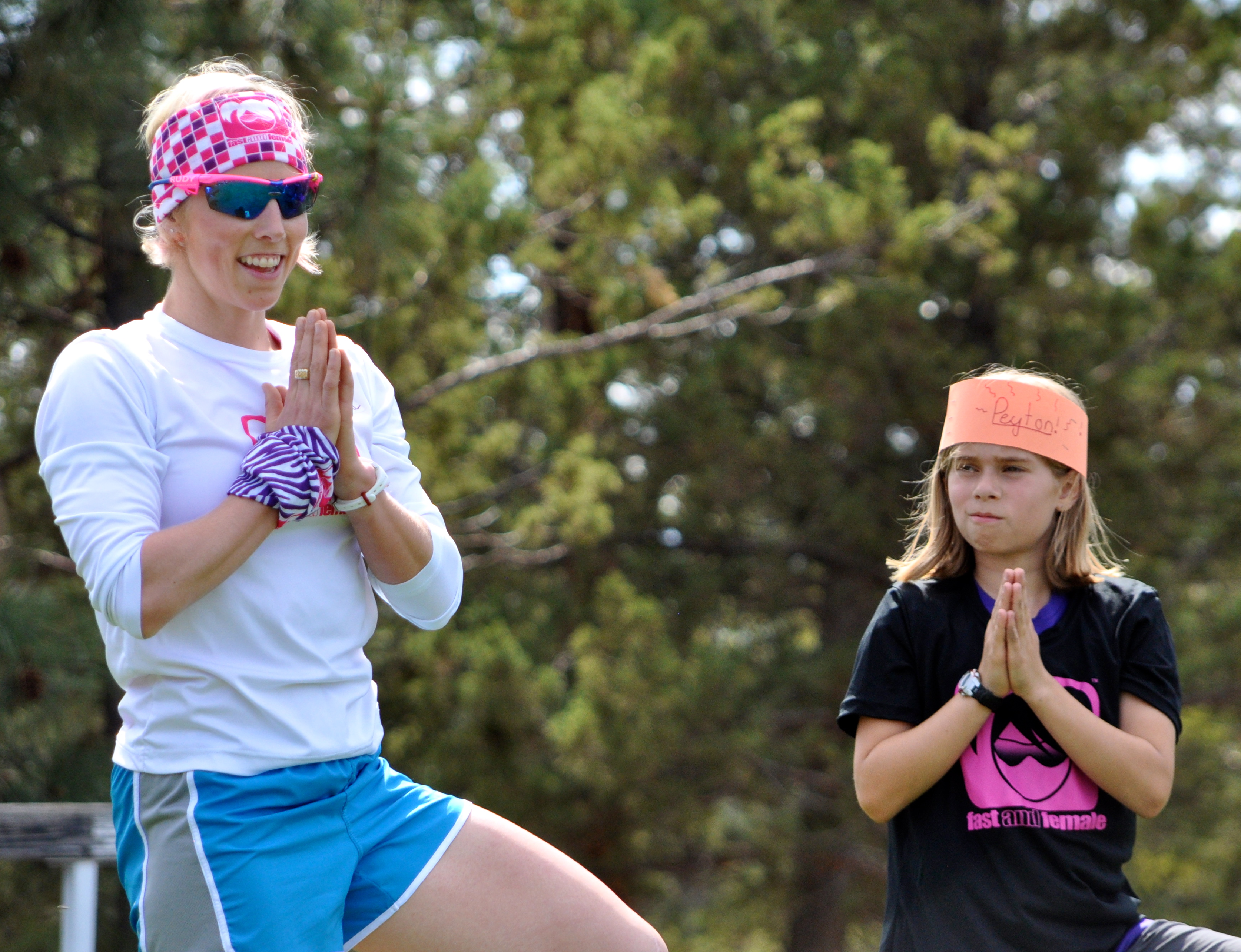
    Kikkan Randall leading Fast and Female in Bend, Or. as part of the Annual Bend training camp in May. (Photo: Matt Whitcomb)
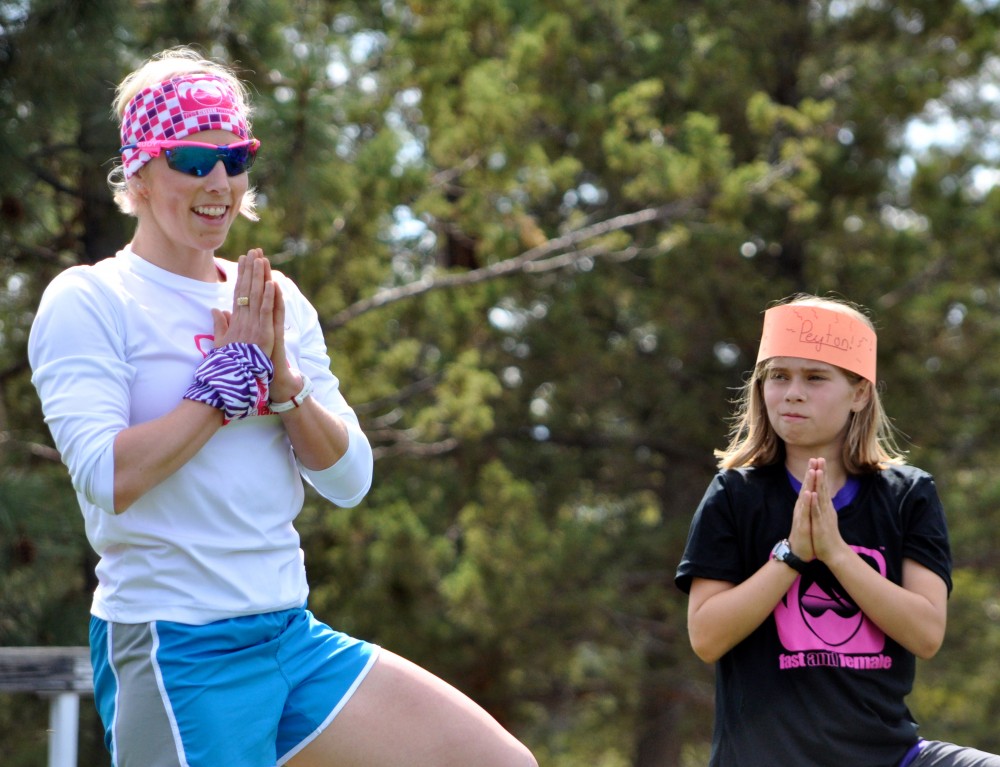
    Kikkan Randall (l) leading a Fast and Female event in Bend, Ore., as part of the annual Bend training camp in May. (Photo: Matt Whitcomb)

    When the U.S. Ski Team rolled into Bend, Ore., for their annual spring training camp in May it felt like home. With outstanding support from Mount Bachelor and its staff, excellent conditions, and a welcoming community, the team and their coaches were more than comfortable in what many would call the contiguous United States’ spring-skiing mecca.

    Despite the usual volatility of the weather in Bend, the 2014 camp held only one day of significant snowfall for the team which included 2014 Overall World Cup Sprint Champion Kikkan Randall, 2014 Olympic standout Sophie Caldwell, and veteran Andy Newell.

    According to U.S. Ski Team (USST) Women’s Coach Matt Whitcomb, the conditions were the best that the team had seen in four to five years. The crust cycle this past May, which had been unfavorable in the past, allowed the team to complete the tradition an over-distance ski in the Broken Top meadows on the camp’s last day.

    “That workout alone is reason enough to cross country ski,” said Whitcomb of their workout in an email.  “If you can ski well enough to get up there safely, it’s just something you need to do. That’s a direct order.”

    Andy Newell tests pair of Fischer boots while training with the U.S. Ski Team last month in Bend, Ore. In a post Olympic year, the camp serves as an opportunity to try new equipment and sign new contracts. (Photo: Matt Whitcomb)
    Andy Newell tests pair of Fischer boots while training with the U.S. Ski Team last month in Bend, Ore. In a post Olympic year, the camp serves as an opportunity to try new equipment and sign new contracts. (Photo: Matt Whitcomb)

    The Bend camp served as fresh start for the U.S. Ski Team as it begins its quest for even stronger results in the 2014-2015 season. However, that doesn’t mean the camp consisted of nonstop intensity and endless over-distance skis. Rather, it was an opportunity to regroup and establish plans for the coming year. As part of this strategy, USST Head Coach Chris Grover, articulated his plan for each athlete and asks for feedback in return so that all parties are on the same page.

    The Bend camp also served as an opportunity for team building. While it’s hard to imagine the U.S. Ski Team getting any closer than they already are, the Bend camp cemented their bonds as both the women’s and men’s team developed team goals that involve training, racing, and community involvement.

    The actual training in the 2014 camp was comprised of less intensity this year, and focused on bolstering technique early on in the season. Using a visualization practices involving video, U.S. Ski Team coaches aided athletes in their technical skiing.

    “It’s a new quadrennial and we want to enter the World Cup season having the most technically improved team. We ski well but can do better,” said Whitcomb.

    In order to enter their new era of technical advancement, the U.S. ski team coaches reviewed every World Cup race from the 2013-2014 season. They then converted these races into accessible clips that featured foreign competition so that the year’s evolutions in technique could be studied.  These clips were then used for specific workouts so athletes could visualize the technique they were working towards. An example of a visualization workout involving striding can be found in this week’s Wednesday Workout.

    Andy Newell (r) chases Liz Stephen and Jessie Diggins in a post-Bend agility training involving skiing a slalom course with one foot. (Photo: Matt Whitcomb)
    Andy Newell (r) chases Liz Stephen and Jessie Diggins in a post-Bend agility training involving skiing a slalom course with one foot. (Photo: Matt Whitcomb)

    According to Whitcomb, athletes found the visualization practice productive as well as challenging, especially once it was applied on snow. However, the exercise involved some amusement as well.

    “I think the team had some fun with it,” said Whitcomb. “Some of the drills included skipping on skis in classic tracks, downhill striding, one ski slalom followed by a 2-ski GS course, and various cornering exercises to improve comfort while skiing on the outside edge of the ski.”

    Despite the camp’s success, the Bend also brought some challenges to the team. These troubles came in the form of injury to both Sophie Caldwell and Erik Bjornsen.

    “It’s definitely a bummer to have couple injuries during a camp,” said Whitcomb.  “It’s tough for everyone because Erik and Sophie are such great personalities to have at training. In elite sport we do our best to push the physical envelope in smart, creative ways to gain fitness while trying to remain injury free. Sometimes it isn’t enough.  It can be that we pushed too hard, and it can sometimes be a matter of chance.”

    According to Bjornsen’s support staff in Alaska, he irritated his L3/4 disc during a double pole interval session as a result other discs being so tight.

    “A strong guy like Erik can put down a lot of force and he got unlucky,” Whitcomb said. Despite his injury, Bjornsen is predicted to return to training in a matter of weeks.

    Caldwell’s status, on the other hand, is still up in the air. After a mountain-bike tumble in Bend, the rising star fractured her elbow. While remaining upbeat, she has begun a training regimen that isolates her legs and protects her arm with activities such as skating without poles, hiking, and spinning.

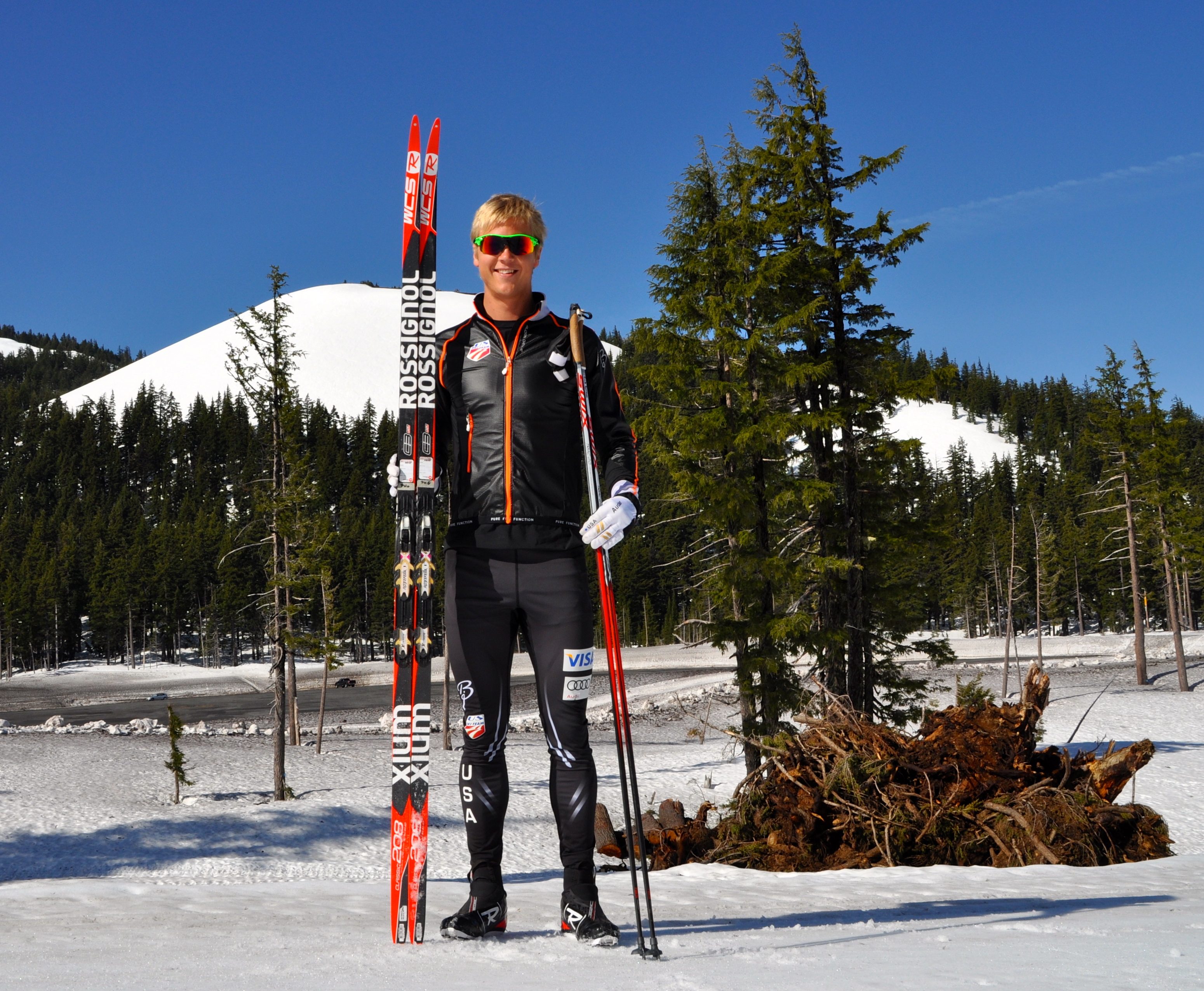
    Erik Bjornsen showing off his new Rossignol equipment in Bend. Bjornsen suffered an injury to his back during a double pole interval session, but will be back to full training in a matter of weeks. (Photo: Matt Whitcomb)
    Erik Bjornsen showing off his new Rossignol equipment in Bend. Bjornsen suffered an injury to his back during a double pole interval session, but will be back to full training in a matter of weeks. (Photo: Matt Whitcomb)

    After her second MRI in Park City, Utah, on June 2, specialists had yet to give a full prognosis. According to Whitcomb, there is a possibility that Caldwell’s radius may have been injured in addition to the humorous. There is also a chance that several floating bone flecks may not absorb naturally, thus requiring surgery to remove them.

    While injuries are always unwanted, Whitcomb stressed that sometimes it is impossible to avoid injury while training 800-plus hours a year. In the wake of Caldwell’s accident, he believes mountain biking can be useful for training.

    “Mountain biking will always be a risk, but we’re also aware it is fun and has some important application to what we do,” he said. “We try to add things like swimming and biking that are low impact and allow for more volume. I suspect it’s something we’ll continue to do for those that like to bike, but at the moment we’re kicking ourselves.”

    Injuries aside, the U.S. Ski Team will continue their work towards improved technique, speed, and strength throughout the summer months. Their next summer training camp will take place Alaska next month.

  • Wednesday Workout: Tackling Technique with Visualization (like the U.S. Ski Team)

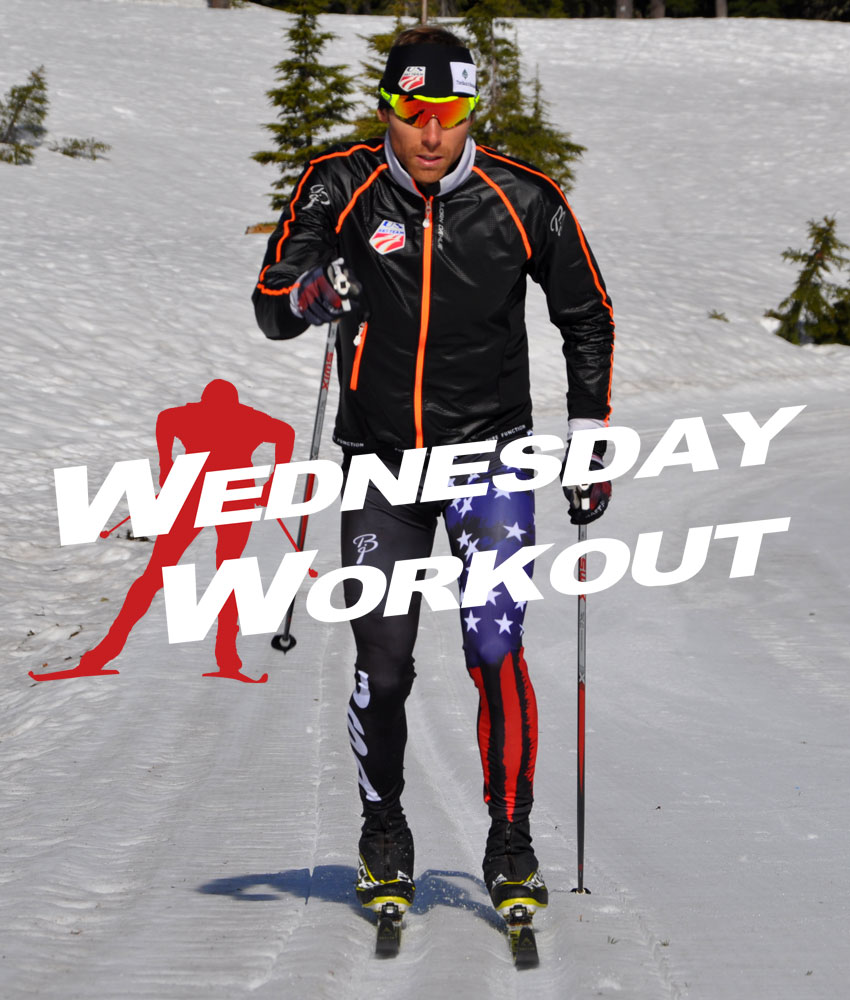
    Wednesday Workout: Tackling Technique with Visualization (like the U.S. Ski Team)

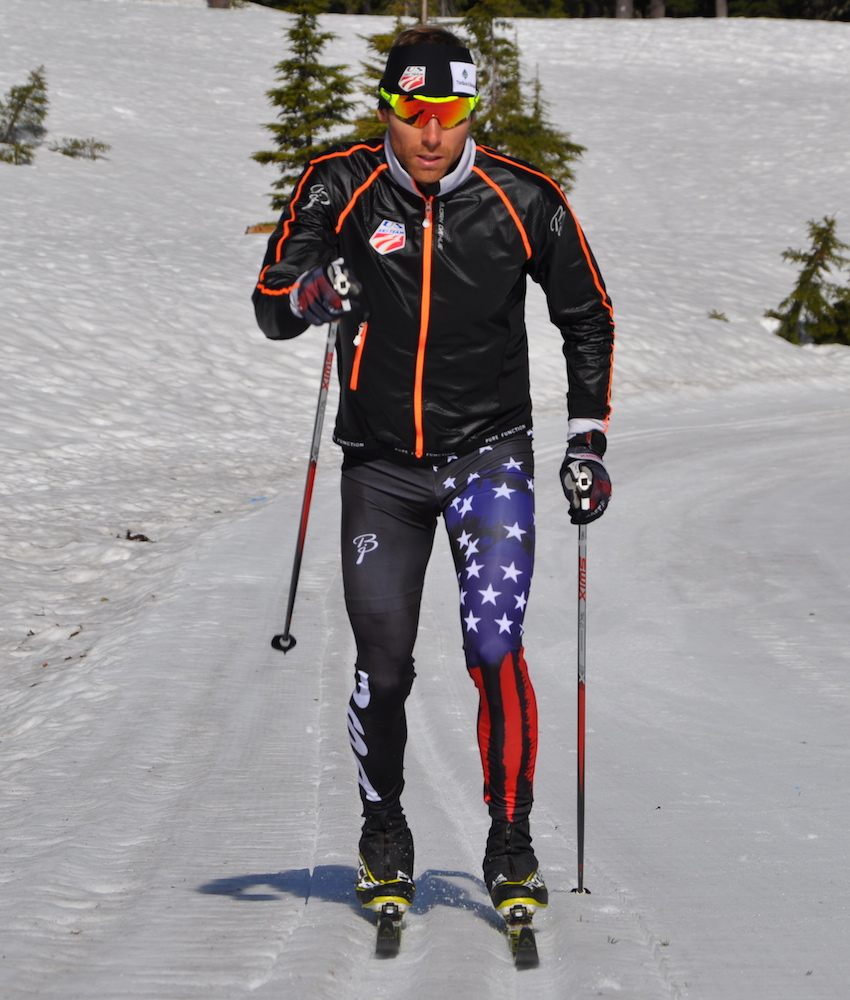
    Andy Newell while training with the U.S. Ski Team last month in Bend, Ore. (Photo: Matt Whitcomb)
    Andy Newell while training with the U.S. Ski Team last month in Bend, Ore. (Photo: Matt Whitcomb)

    This week’s Wednesday Workout comes from Matt Whitcomb, the U.S. Ski Team women’s coach. Whitcomb and the team recently returned from their on-snow camp in Bend, Ore., where they practiced improving technique with visualization. 

    ***

    Before starting the workout the coach identifies one 10-second clip of one male and one female World Cup skier classical striding up gradual terrain and then plugs it into iMovie. I like the clips of Anne Kyllönen striding up the sprint course in Sochi. If you don’t have access to these clips, YouTube something and video your own computer screen. The quality will be lower but you’ll be surprised at how well it works.

    In iMovie, create a project that plays your 10-second clip in regular speed and then in 1/2 speed (totaling 30 seconds), and repeat that six times in your movie project without music or any sound to remove sensory interference so the women’s clip is 2 minutes long. Add a 2-minute clip for the men to watch. Paste a 30-second clip of the women to see one last time at the end followed by a 30-second men’s clip. The total movie is only 5 minutes so you can get out the door and ski more.

    Keep the men and women together for the viewing in case one clip works better than the other. Watch on a large TV screen or with a projector play your iMovie clip to the team immediately before going out to ski. As a variation try talking them through the clip one one day, focusing in one one thing the World Cup athlete does well, and on another day try not talking at all to prevent polluting what they are seeing on their own. Many athletes are much better coaches than we are!

    If you don’t have access to footage, here is a YouTube video of Anne Kyllönen in addition to other World Cup athletes:

    Warm-up for 30 minutes and encourage the athletes to ski by themselves and on similar terrain to what you just watched, trying to channel and emulate the World Cup skier. It’s very easy for some and nearly impossible for others, but the process opens up new windows regardless.

    Meet your team on a very gentle downhill slope that is 200-meters long for a drill. Have them ski back and forth, striding both the gradual downhill and uphill. This isn’t about holding your glide for as long as possible on the gradual downhill, but more about feeling the flow of good striding under low tension. Watching our team do this left us feeling that the gradual downhill section unlocked some hip and shoulder tension in many athletes.

    Encourage the athletes to ski by themselves and on similar terrain to what you just watched, trying to channel and emulate the World Cup skier. It’s very easy for some and nearly impossible for others, but the process opens up new windows regardless.

    After the drill, film your athletes one at a time skiing up a gradual hill. Before they begin to ski toward you, have them rest on their poles, eyes closed and without talking, and visualizing that World Cup clip for 30 seconds. Then have them ski past you. Film the pass on your iPad or phone so they can look at it immediately.

    If it works out, great. Please let me know. If not, there are many creative ways to trigger technical improvements. Email me at mwhitcomb@ussa.org if you have a cool idea to share or just drop it anonymously into the comment section :). I would love to take a couple of your thoughts to our glacier camp in Alaska next month. Keep it fun and focused out there!

  • Photo Gallery: Spring Skiing in Bend

    Photo Gallery: Spring Skiing in Bend

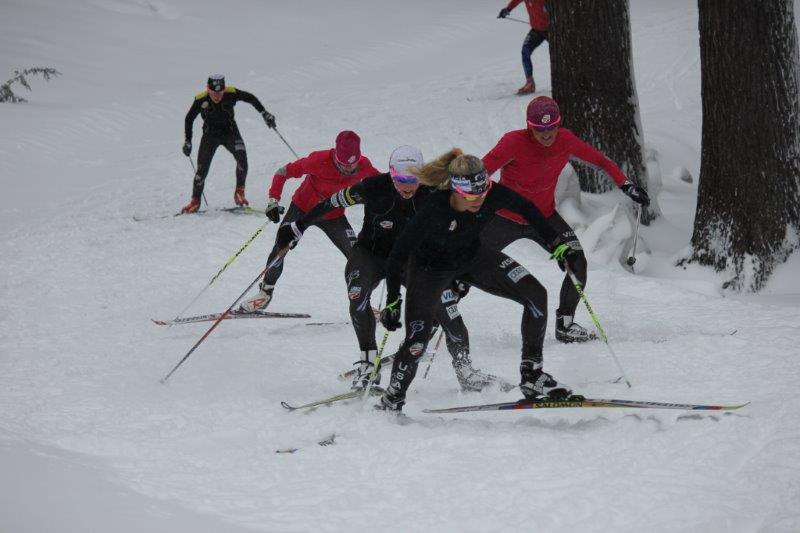
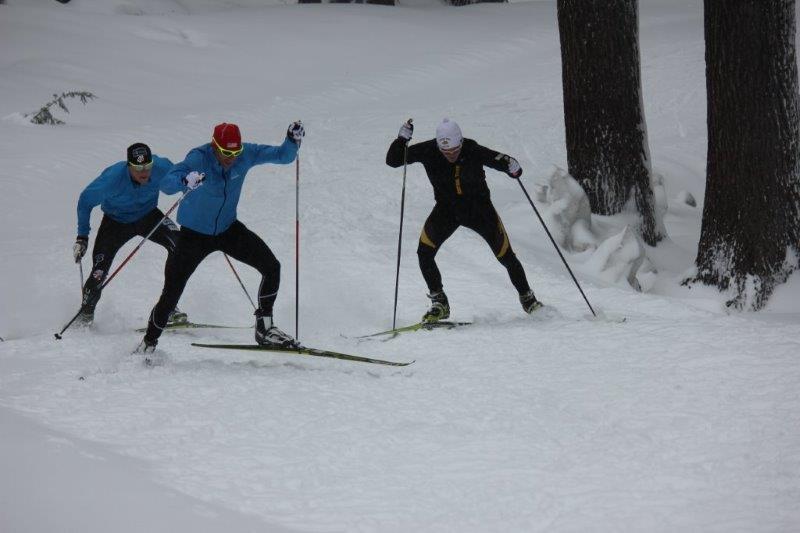
    The U.S. and Canadian national teams currently in Bend, Ore., for their spring camps had an unstructured training session at Mt. Bachelor this weekend. Mt. Bachelor Ski Education Foundation nordic director and three-time Olympian Dan Simoneau snapped photos of junior skiers and World Cup athletes alike ski laps around the trails.

    “One of the cool parts of these generation of racers is how much they want to pull kids along,” Simoneau said.

  • In Bend, U.S. Ski Team Reunites to Begin the Road to Sochi

    In Bend, U.S. Ski Team Reunites to Begin the Road to Sochi

    Jessie Diggins, Holly Brooks, Kikkan Randall skiing at Mt. Bachelor on Wednesday during an interval workout. (Photo: Dan Simoneau)
    Jessie Diggins, Holly Brooks, Kikkan Randall and Liz Stephen skiing at Mt. Bachelor on Wednesday during an interval workout. (Photo: Dan Simoneau)

    After six weeks apart, most of the U.S. Ski Team reunited again this week for their annual May training camp in Bend, Ore. Through sunny skies and falling snow, the group put vacation time in the past and set to work at Mt. Bachelor to get ready for the 2013-2014 season. So far that’s included on-snow speed workouts, over distance and intervals, along with mountain biking ride and lots of team meals.

    “The team atmosphere is great,” said Holly Brooks, the USST’s newest A-team member. “There are lots of hugs, lots of great meals together and workouts, stories about the spring…it’s really easy to get back into the natural swing of things.”

    There is also a quietly building anticipation for the most-hyped part of the upcoming season, the 2014 Olympics in Sochi, Russia. It snowed in Bend on Wednesday for the team’s first group interval workout, and athletes saw the soft conditions as practice for the snow they might see in Sochi.

    “It sucks, none of us want to be in cold weather this time of year, but for training it’s pretty good,” said Andy Newell. “Conditions were pretty soft today, but realistically those are the conditions we may see in Sochi and so many other place on the World Cup. So we don’t like it, but it’s good practice.”

    Andy Newell, David Norris and Erik Bjornsen scramble during intervals. (Photo: Dan Simoneau.)
    Andy Newell, David Norris and Erik Bjornsen during intervals on Wednesday. “Bjornsen and I did a few intervals together, which was great. I don’t get to do intervals with him very often,” Newell said. (Photo: Dan Simoneau)

    Bjornsen and I did a few intervals togheter, don’t’ get to do intervals with him very often.

    “We got to [Mt. Bachelor] and we said, ‘It’s championship day,’” added Brooks. “That’s Matt [Whitcomb]’s favorite thing to say when it’s adverse conditions.”

    The first cross-country race of the Games, the 15/30 k skiathlon, go off on February 8, and a measured excitement for the opening ceremonies is already building in Bend. The team’s training program at the camp is similar to what it’s been in the past — on-snow sessions mixed with less structured workouts on biking and running trails — and only part of their recent goal-setting sessions have focused on Sochi. But there is no denying that Olympic hype has started in the media and within the team, adding an extra element of focus to their first camp.

    “For an Olympic year, it’s definitely a big motivator,” Newell said, a 2006 and 2010 Olympian. “You want to make every interval session count; you want to make sure each one is at it’s best. We train like that every year, but it seems more magnified in an Olympic year because you have that thought in the back of your mind. It only comes around once every four years. It raises the intensity level of all the training camps.”

    Even with the Olympics looming, however, May is still just the beginning of the off-season. Athletes are being smart as they reenter a full training schedule, Brooks says, resting when they think they need to so they’ll be ready to go come February.

    “One thing that’s different is people are extremely proactive about their health and injuries,” she said. The Alaskan skipped SuperTour Finals, for example, to make sure she was fully recovered to begin training for the Olympic year.

    “I think our whole team has gotten smarter in that regard,” Brooks continued. “People are being really patient with their bodies and…making sure they’ll be in good health come February.”

    The media hype that surrounds the Games has already begun, adding another level excitement to the training season. Newell and women’s team leader Kikkan Randall flew to Los Angeles, Calif., last month for a photo shoot with NBC, where Newell said his interviews with the Olympic broadcaster indicated more interest in cross-country than he’s experienced in the past. The whole team will have another media summit in Park City, Utah, in October, and NPR is scheduled to do a piece on the team during the Bend camp.

    As a result, the team’s reunion in Bend has been an opportunity to define what motivates them as a group as they enter a brighter spotlight and a year filled with big expectations. The increased media attention makes the upcoming season feel a little different, Brooks says, but the team’s drive to work hard comes from the same place it always has.

    “We had a great team meeting last night and went over some goals that weren’t necessarily performance goals but process goals,” she said. “How to treat each other, what we want to do outside of ski racing as a group and stuff like that. And it was just really cool to see how united everyone is and how motivated everyone is and how we’re really ready to approach the Olympic year as a team.

    “There’s not secret to it; it’s not like we do anything different,” Brooks continued. “At this point, we got here by doing something right, and hopefully we continue that good energy and take that with us to Sochi.”

    One of the bigger goals for the team will be to replicate their pre-World Championships momentum from last season.

    “I think a big goal for me this year and for everyone is: you don’t want to go into Sochi hoping you’re going to do well,” Newell said. “I’m looking to have a successful beginning to the World Cup season…For me a big goal is to be on the podium before going to Sochi. I think that can take the pressure off. Last year the more success we had, the momentum carried to the Championships. So that’ll be the same goal this next year — to roll with momentum into Sochi. Then it’s just like another weekend of racing, and that’s a fun position to be in.”