Tag: Bernadette nelson

  • O’Brien, Nelson Continue Their Development as U.S. Junior/U23 Worlds Coaches

    O’Brien, Nelson Continue Their Development as U.S. Junior/U23 Worlds Coaches

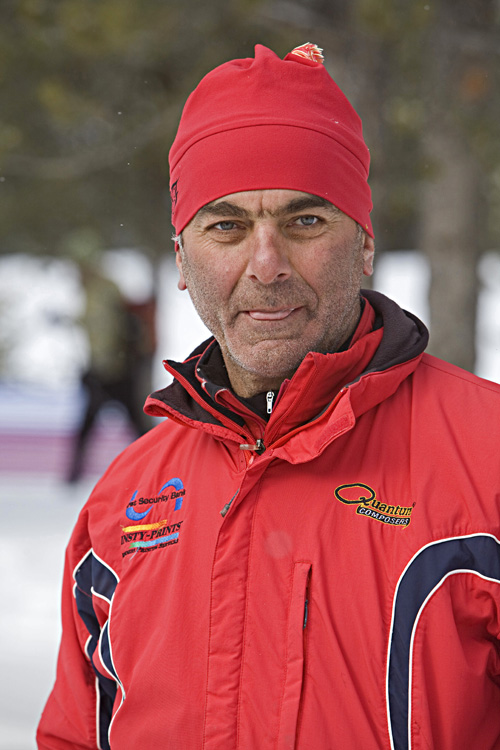
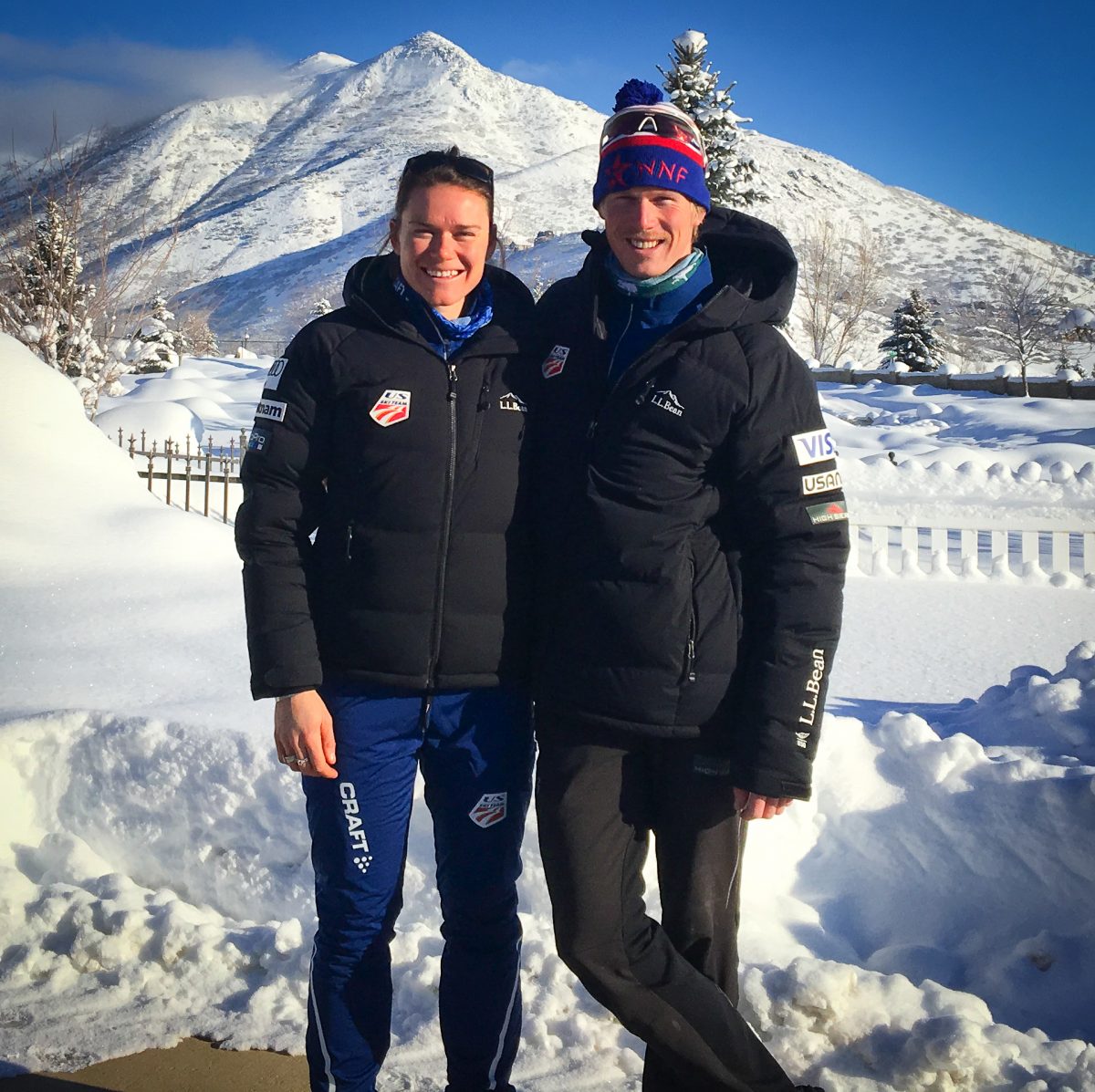
    Bernie Nelson U.S. U23 Worlds Coach (l) and Patrick O'Brien U.S. Junior Worlds Coach get settled in Utah with their athletes prior to Monday's start of the U23 and Junior Worlds racing at Soldier Hollow. (Photo: Courtesy Bryan Fish)
    Bernie Nelson (l), U.S. U23 Worlds coach, and Patrick O’Brien (r), U.S. Junior Worlds coach, get settled in Utah with their athletes prior to the start of the U23 & Junior World Championships, which start Monday, Jan. 30, at Soldier Hollow in Midway, Utah. (Photo: Bryan Fish)

    The world is coming to Soldier Hollow in Midway, Utah. From Jan. 30-Feb. 5, the Olympic venue known as “SoHo” will host 2017 Junior and U23 World Championships. Throughout the last week, skiers from approximately 40 nations have descended on rural Utah and the race venue tucked up on the Eastern flanks of the Wasatch.

    From the outset, athletes, coaches and wax techs will be busy. It’s the usual hustle and bustle and last-second scramble of any ski race weekend — the early morning ski tests, athlete meals, handing out bibs, and delivering just-in-time prepped skis to a racer waiting at the line. No glamour. It’s long before any potential podiums — it’s when any coffee is good coffee.

    This environment with higher-stake races at SoHo isn’t simply a means of exposing emerging international skiers to the world’s best. It’s also fertile ground for coach development where they are exposed to the inherent stressors of international-level ski racing. This year, U.S. Ski Team Development Coach Bryan Fish will lead the cadre of 12 junior skiers and 10 under-23 (U23) skiers gathering in Utah, with the help of Stratton Mountain School (SMS) Elite Team Head Coach Patrick O’Brien and Bend Endurance Academy (BEA) Nordic Director Bernie Nelson.

    O’Brien, a 26-year-old Vermont native and former Craftsbury Green Racing Project skier, will lead the U.S. Junior Worlds team. He’s coming off an eventful U.S. nationals, also held at SoHo, where his level of tolerance and preparedness for the whimsical Heber Valley weather gods was tested.

    “It was one of those situations when it’s a waxers nightmare and you just have to try and figure your best to have options and keep your head on a swivel and see how conditions are changing,” O’Brien said on the phone from Truckee, Calif., site of last weekend’s SuperTour races, as he reflected on the all-hands-on-deck conditions during nationals.

    “We ran the full array for what we saw for weather,” O’Brien added. “Temperatures that were so cold that they were causing the diesel generators in the wax areas to gel and shut everything down to some really heavy rain that was putting the courses in jeopardy as well as our ability to get there and set up. We were digging drainage ditches and sandbagging to move water around the wax area to some pretty heavy snowfall for the last day sprint qualifier.”

    That experience will help O’Brien keep his calm. In the event of an all-conditions SoHo morass during World Juniors, he’s already helped his SME Elite techs and athletes make quick decisions there.

    “The thing is, you just have to be prepared for everything, you never know what you are going to wake up to, at SoHo especially,” O’Brien said.

    His return visit to the 2002 Olympic venue, only weeks after U.S. nationals, comes with an emphasis on ensuring the athletes are prepared, and less pressure on prepping skis — he’ll leave that job to the team’s wax techs.

    “The role that I am best suited in is trying to see the forest through the trees and provide the clearest information in terms of what I see going on out there,” O’Brien clarified. “So the best thing that I can do is be outside the wax room.”

    I am a facilitator,” Nelson, also 26, said of how she defines her role when traveling as an international coach. “These athletes come with training plans, they come knowing what they are going to do. I am the person in the starting pen that is like, ‘Hey, you’ve got this, the work is done. Go out there and have fun. Have a good race.’ ”

    The coaching duo return to Utah with past international coaching experience on their resumes. It’s O’Brien’s third year as the SMS Elite Team head coach, where he supports his athletes with training plans and wax-tech support at SuperTours, including U.S. nationals. He’s also teched and coached at a spring OPA cup trip and at last year’s season-ending World Cup series, the Ski Tour Canada.

    Nelson, the U.S. U23 team coach, served the dual tech-coach role at 2015 World Championships for Australian national-team member Paul Kovacs. At the time, Nelson was also Kovacs’s coach at the Bridger Ski Foundation (BSF). She also teched at last year’s Juniors Worlds and U23 Worlds in Romania. Like O’Brien, Nelson gained experience working the Ski Tour Canada.

    Both coaches enter a situation demanding flexibility and a willingness to embrace unknowns. For Nelson, the U23 athletes are ones she may not work with on a daily basis, but she’s begun to develop relationships with.

    “Kelsey Phinney came and spent a summer with me when I was at BSF,” Nelson explained. “Bill Harmeyer is a former BEA postgraduate and I spent this past summer with him. Logan Diekmann is a former post-grad, Alayna Sonnesyn also spent the summer at BEA. I feel really connected to a lot of the athletes. For the ones that I don’t, it goes hand in hand. It’s my job as a coach to reach out to them and let them know I am someone they can trust.”

    Nelson said she’ll only be responsible for waxing skis when asked by a technician. Her primary tasks will focus on athlete preparedness, and include big-picture items, like allowing athletes to decompress away from the competition venue, and small-picture, businesslike tasks of handing out bibs and communicating accurate start times, which aren’t exactly glamorous, but essential.

    “I also feel responsible for making sure the techs have what they need to succeed — coffee, a chair, or whatever,” Nelson added.

    Nelson said she believes the U.S. sends competitive teams to Junior & U23 World Championships. Although this year, with U.S. athletes enjoying home-field advantage, Nelson stated she’ll emphasize not adding any undue pressure to perform.

    “It is important for the athletes to not feel that pressure, but to understand that they belong there and they have been brought to this event for a reason,” she said.

    One reason these athletes are brought to events like Worlds is for the opportunity for a race performance on the international stage representative of their current form and to learn. These events are stepping stones.

    Rolling into the SoHo infield where a world of flags will snap in the Wasatch downdraft may also remind these two young coaches that they are enhancing their knowledge base to help foster a stronger ski community.

    “I am still learning,” Nelson willfully admitted. “Every time I go on a trip my eyes are wide open. I think there are always opportunities to make split-second decisions and I think a lot of the learning happens after the fact, because you get to another situation and you’ll have the tools to make an informed decision that you didn’t really realize that you had. They compound and build on each other.”

  • An Emerging Leader in the Ski World, Nelson Takes Over at BEA

    An Emerging Leader in the Ski World, Nelson Takes Over at BEA

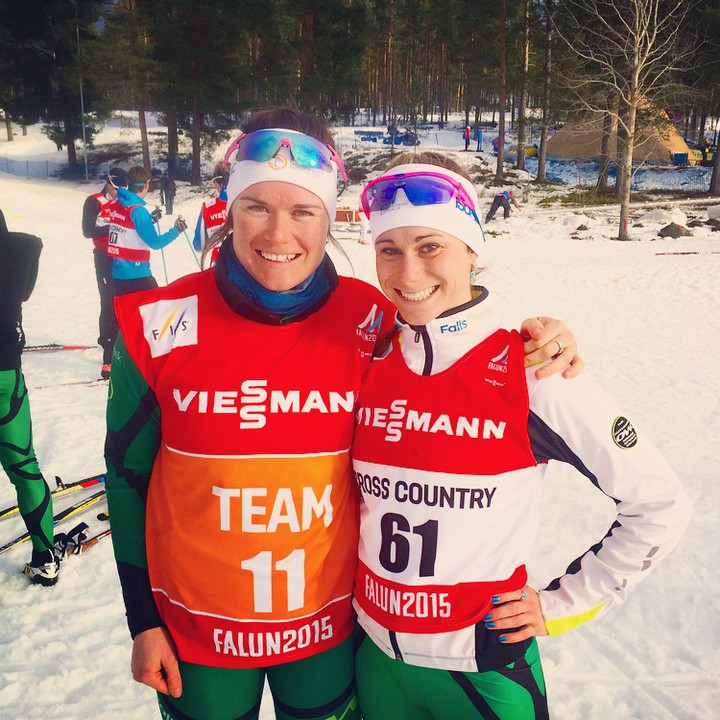
    Bernie Nelson (l) coaching Australian national-team skier, Alaska Pacific University member and former MSU athlete Jessica Yeaton (r) at the 2015 World Championships in Falun, Sweden. (Photo: Bernadette Nelson)
    Bernie Nelson (l) coaching Australian national-team skier, Alaska Pacific University member, and former Montana State University athlete Jessica Yeaton (r) at the 2015 World Championships in Falun, Sweden. (Courtesy photo)

    BEND, Ore. — A few things stand out while interviewing Bernadette “Bernie” Nelson, the newly hired head nordic coach at the Bend Endurance Academy (BEA): she’s intentional with her words, meticulous and grateful for the opportunities she’s been given as she develops into an emerging leader on the cross-country ski racing scene.

    All this at the age of 25.

    Growing up in Truckee, Calif., Nelson said she became hooked on nordic skiing because of the way her coaches used the Sierras as a playground — where play just happened to be training.

    “Skiing wasn’t just skiing,” she explained. “We went running, and climbing, and biking, and we ran all our camps out of Yosemite, which was just the coolest opportunity ever.”

    Beyond the physical settings and cross-training opportunities the Sierras afforded, Nelson mentioned that Truckee’s ski scene placed an emphasis on building a unified team. Nelson said that end goal — team spirit — began with parents emphasizing the organization rather than individual results. 

    “I feel like when I was growing up, something that worked in Truckee was that the parents weren’t just invested in their child — they were invested in the organization and the community and the process,” she said. “I feel like it shifted the focus from the child’s performance to the experience that the child was having. And so, having parents invested in that experience and invested in the greater organization kind of it took the emphasis off of, ‘My child won today.’ ”

    In that healthy environment, Nelson thrived — she skied herself onto several Junior National podiums.

    Coach and Collaborator

    Bernadette Nelson klistering skis while coaching at Montana State university. (Photo: Bernie Nelson Collection)
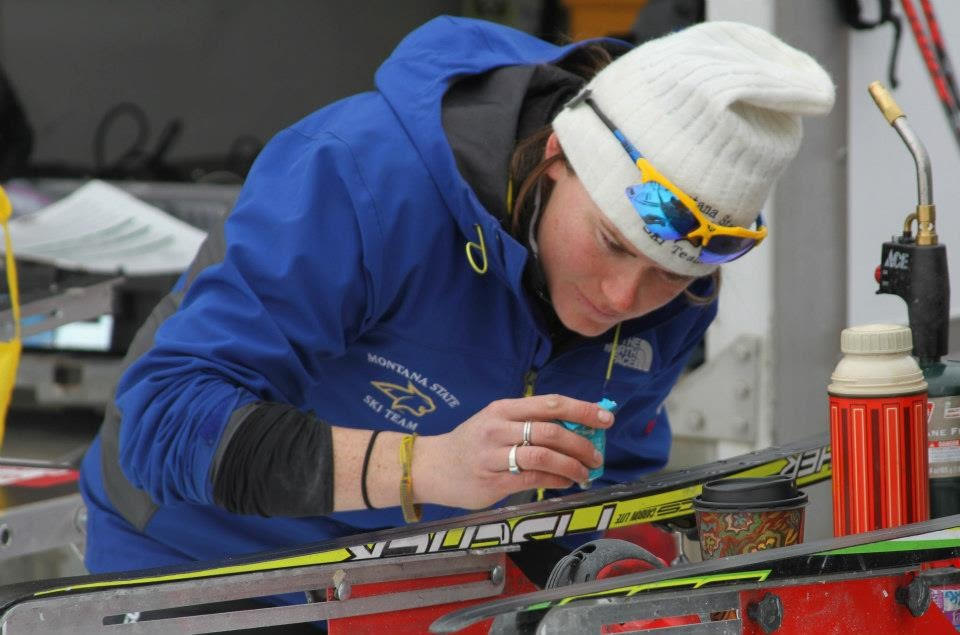
    Bernie Nelson prepping skis while coaching at Montana State University. (Courtesy photo)

    Nelson eventually went on to ski for the Montana State University (MSU) nordic ski team for two years. After that she focused on her studies while at the same time serving as the assistant nordic coach at MSU for another three seasons.

    With a proven aptitude for managing athletes, school and the stress of travel and waxing, Nelson was hired by Bridger Ski Foundation’s (BSF) Dragan Danevski to head up the post-graduate and elite teams in 2014.

    One difficult task Nelson was held responsible for was guiding a team of 18- and 19-year-olds in BSF’s post-grad program. Nelson says she built mutual respect with her athletes premised on a simple common goal.

    “I want the athletes to develop just as much they want to develop,” she said of her coaching style: less dogmatic, more like a collaborator. “I hand them the keys and I’ll sit in the passenger seat. I’ll provide the roadmap to where they are going and where they need to turn and if they are driving too fast or you’re not paying attention anymore, the speed limit is 60 and you are going 25. And that’s how I run my program. It’s through mutual respect and mutual understanding and a lot of communication.”

    For Nelson, communicating wasn’t simply about the day’s intensity session, or periodization within a complex training plan. Sometimes it was more basic.

    “I’ve worked with [postgraduates],” she said. “So there is a lot of life things going on. ‘I’m out of the house.’ ‘I don’t know how to do laundry.’ ‘I cannot find a job, can you help me?’ ‘Can I list you as a reference?’ And so it’s just a big picture and I try to not be ignorant of any of the moving pieces.”

    Two BSF athletes who built a strong relationship with Nelson will be moving to Bend this June to continue working with her: Nick Michaud and Akeo Maifeld-Carucci.

    At BEA, Nelson says she’ll make good use of the multi-disciplinary hat she once wore at BSF in terms of meeting the demands of junior skiers and what they want out of the sport.

    “Especially in junior skiing, their goals range from making JN’s, to racing a junior qualifier, to winning JN’s, to going to World Juniors, to making friends,” she said. “I mean, the spectrum is so broad and through all of it, you learn pillars that support your life later on.”

    Time to Simplify

    This past spring, before her move to Bend, Nelson’s life became more complicated. While in Canmore serving as a guest coach for the U.S. Ski Team at the Ski Tour Canada, Nelson had a health scare.

    “I had a Grand mal seizure in Canmore,” Nelson explained. “I came home from the skiathlon, got out of the shower, they think that I just passed out from accumulation of stress and exhaustion, and hit my head and had a Grand mal seizure. And I was actually air flighted and medically sedated into a coma in Calgary. It was unfortunate timing in that I couldn’t go to [SuperTour] Spring Series and I think there were all of these rumors flying and circulating about why I was leaving BSF.”

    Nelson wanted to make clear that her departure from BSF was amicable.

    “I did not leave because of BSF — BSF was keeping me in Bozeman,” Nelson said. “I love that job. I loved that organization, and working with Dragan was a fantastic opportunity. And I’m excited to continue working with him.”

    BSF’s program director, Danevski could not be reached for comment.

    Dakota Blackhorse-von Jess admiring turns with Bernadette Nelson below Broken Hand Mountain, Three Sisters Wilderness outside Bend, Oregon. (Photo: Bernadette Nelson Collection).
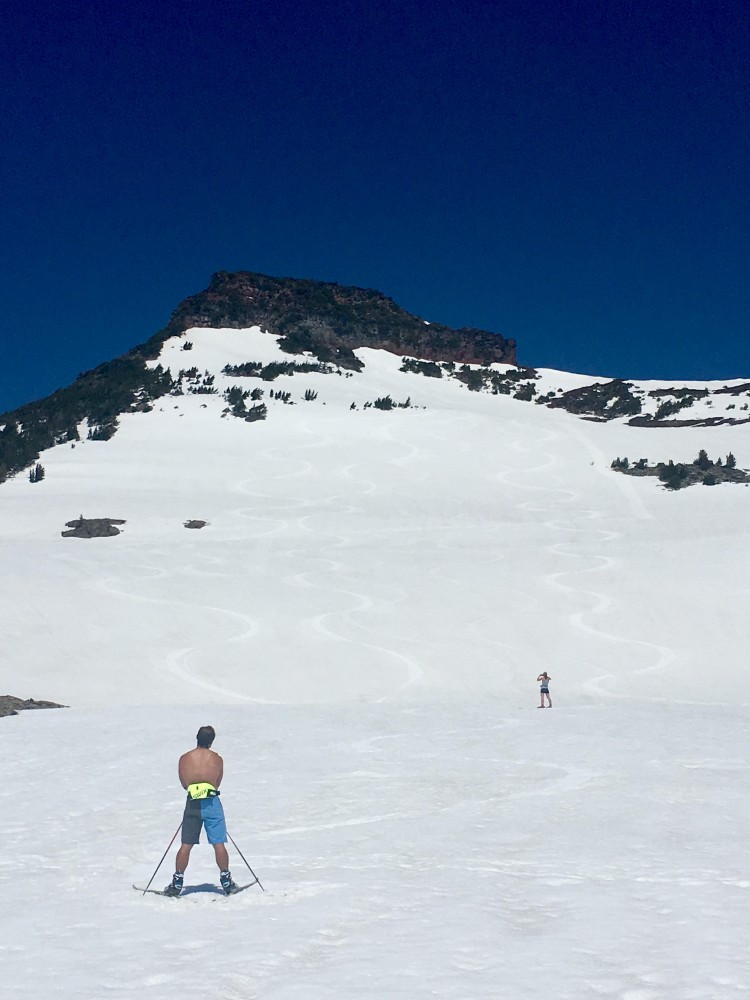
    Dakota Blackhorse-von Jess admiring turns with Bernie Nelson below Broken Hand Mountain in the Three Sisters Wilderness outside Bend, Ore. (Courtesy photo)

    Nelson’s arrival in Bend was in many ways an attempt to simplify her life. Her partner is Dakota Blackhorse-von Jess, a perennial SuperTour sprint podium threat and longtime Bend resident. The couple saw each other either in Europe or at national-level races, or they endured the 800-mile road trip between Bend and Bozeman.

    It was a combination of events that convinced Nelson to make the move: her personal relationship, the events in Canmore, and the job opening at BEA.

    “I was more or less planning to come out here and then I had this seizure and it was like, ‘Yup, life is short,’ ” she said.

    She explained that during her recovery —  at least in the short-term —  she couldn’t be alone or drive.

    “It’s just that my life, a little bit, has just been kind of turned on its head,” she said.

    Having Blackhorse-von Jess nearby to help with her recovery made practical sense. But on a lighter note, being in Bend affords Nelson the opportunity to foster their relationship.

    “Part of me moving here takes the traveling out,” Nelson said. “Hopefully it allows him and us to kind of be a team here. In the sense that we can get things done together.”

    Blackhorse-von Jess reiterated Nelson’s sentiments that their partnership in Bend will streamline their lives.

    “Most of the upside is actually the intangible stuff,” Blackhorse-von Jess said. “We can facilitate workouts if necessary. If I need someone to drive a vehicle for example or run a lactate meter. The real benefit to having her here is that I don’t have to travel to Bozeman/she doesn’t have to travel here for us to see each other. And having two people in the house actually makes a huge difference with regards to food preparation and scheduling, and equipment maintenance. Those are the sort of tasks that you can share when you are in the same general field together.”

    With World Championships this coming winter and 2018 being an Olympic year, Blackhorse-von Jess, 30, said he plans to continue training and racing for at least the next two years.

    BEA Executive Director Ben Husaby will continue to supervise Blackhorse-von Jess’ training as he has for most of the 2013 and 2015 national champion’s career.

    “I’m not coaching him, Ben is, and Ben does an awesome job,” Nelson maintained. “Maybe there will be days where we’ll be at the same place and I’ll take some video but I’m not going to coach him.”

    Husaby’s hands will be full. BEA is a growing nonprofit with biking and climbing programs complimenting their nordic skiing offerings.

    “Up until two years ago, I was everywhere,” Husaby said. “My primary focus was to grow the nordic program, to show its financial viability, and to lead the program … As time has gone on and our board has watched us grow and our program directors have had more needs, there were two options. I was either going to continue to be the program director and be the face of the nordic program, or I was going to shoot into the Executive Director role. And it’s been a relatively slow process, because selfishly, I really still enjoy coaching. It’s my passion.”

    For the past two seasons, Jordan Buetow served as BEA’s head nordic coach. Buetow helped build the program and in his second season became the go-to face of the ski program as Husaby primarily coached Blackhorse-von Jess and tended to organizational duties.

    Husaby said Buetow created a seamless transition for Nelson before he recently returned to his native Alaska.

    Currently, Nelson is immersed with office work, learning about the broader details of BEA’s programs and community of parents and athletes, and writing training plans. She’ll be taking over more of the ski program’s coaching duties starting June 1.

    Bernadette Nelson leading an OD workout for Bend Endurance Academy skiers. (Photo: Bernadette Nelson collection)
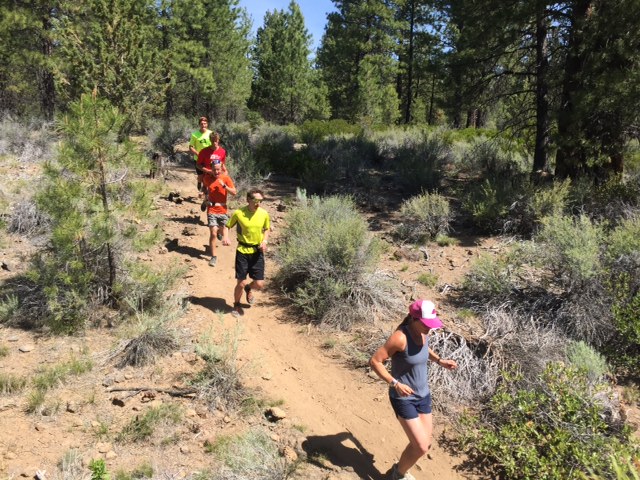
    Bernadette Nelson leading an OD workout for Bend Endurance Academy skiers. (Photo: Bernadette Nelson)
  • After Turbulent Summer, BSF Rebounds with New Focus

    After Turbulent Summer, BSF Rebounds with New Focus

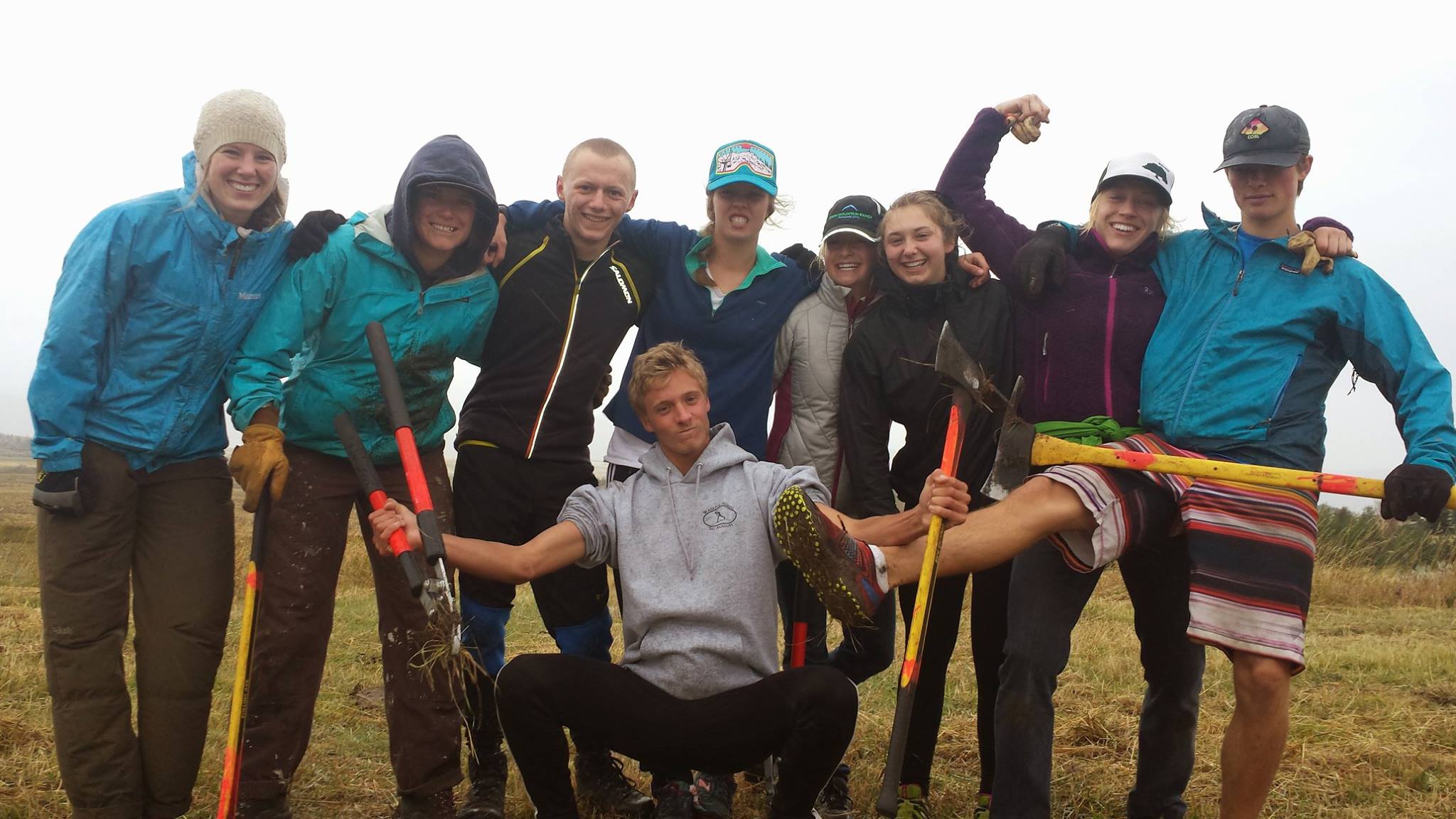
    Members of the Bridger Ski Foundation elite and postgraduate perform trail maintenance at Bozeman's Lindley Park in September. (Photo: Bridger Ski Foundation)
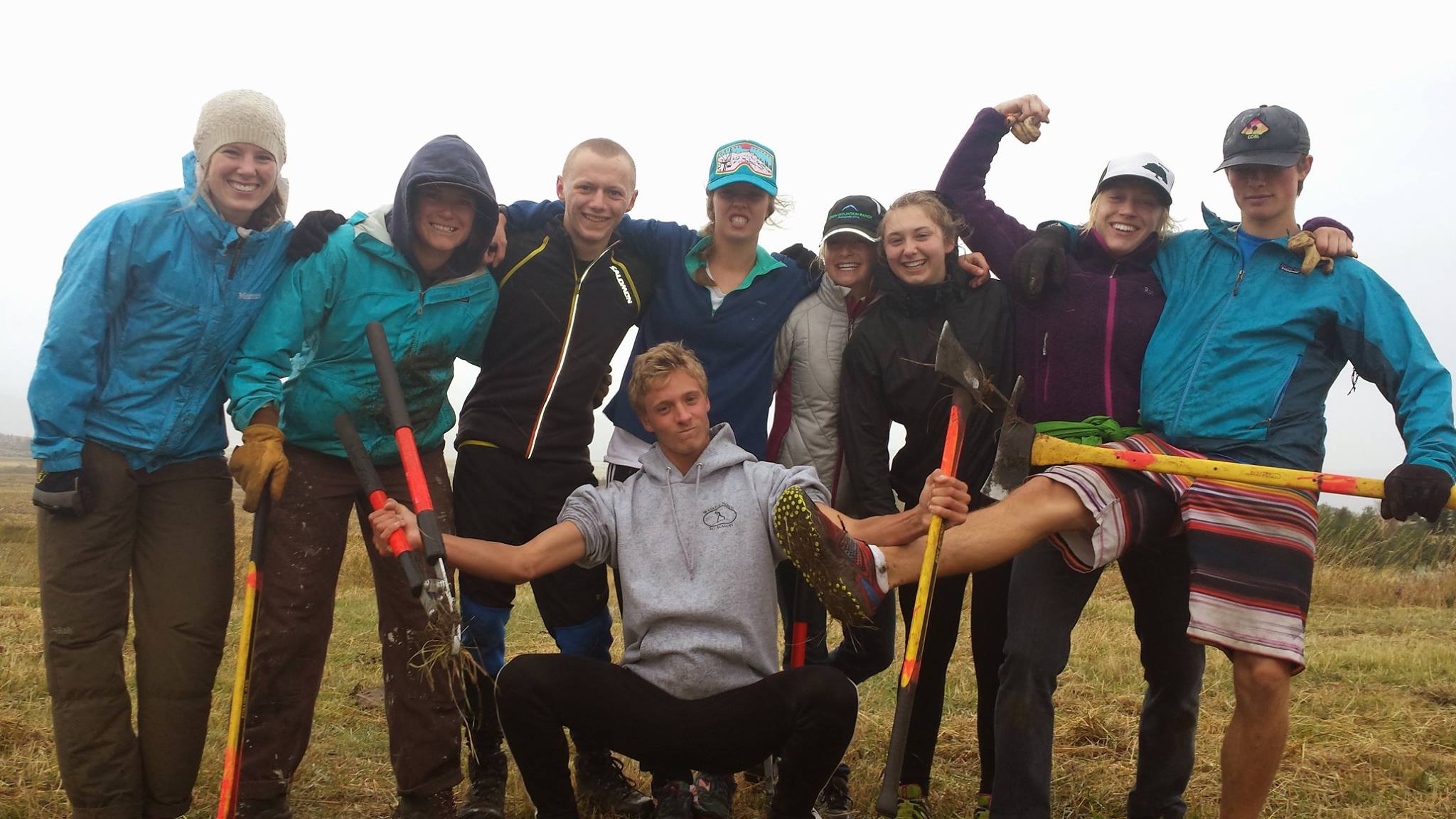
    Members of the Bridger Ski Foundation elite and postgraduate perform trail maintenance at Bozeman’s Lindley Park in September. (Photo: Bridger Ski Foundation)

    The future of the Bridger Ski Foundation (BSF) elite and postgraduate team was a bit uncertain in July.

    Shortly after coming on as BSF’s new elite-and-postgrad coach in May, alumna and Bozeman, Mont., native Kristina Trygstad-Saari left her position to lead the Montana State University (MSU) nordic team.

    To make matters worse, soon-to-be BSF athletes Sam Tarling and Eric Wolcott decided to retire from skiing, leaving just two elite skiers, Jennie Bender and Riley Eusden, on the team.

    Today, however, the woes of the summer are behind BSF as it says its team is stronger than it has been in years. In a remarkable turn of events, the elite and postgraduate team now boasts 14 high-level athletes led by Truckee-native Bernie Nelson.

    Rebuilding the Team

    Dragan Danevski, the Bridger Ski Foundation head coach and program director. (Photo: Bridger Ski Foundation)
    Dragan Danevski, the Bridger Ski Foundation head coach and program director. (Photo: Bridger Ski Foundation)

    According to BSF Head Coach Dragan Danevski, the summer months were trying for the team’s skiers and coaches due to the uncertainty of the program. However, Danevski and his colleagues worked tirelessly to build the team from the bottom-up.

    “It was not good for BSF’s image in the summer,” Danevski said in a phone interview. “Many of us were not happy with how that developed. It was disappointing for us.”

    According to Danevski, the first step in rebuilding the team was hiring a coach.

    Nelson, who served as assistant coach to Grethe Hagensen and Chad Andersen at MSU, was exactly what Danevski was looking for: she had extensive knowledge of the sport, experience racing, and energy.

    “This is not a job for everybody. Everyday you have to work with athletes, you have to energize them, and you have to motivate them,” he said. “You can do that only if you as a coach are energetic and enthusiastic. That is what we see with Bernie.”

    Once Danevski hired Nelson, he was faced with the daunting task of completing the team roster.

    With persistence and good luck, Danevski recruited 10 incoming and current MSU students to join the postgraduate program.

    Nelson was also instrumental in building the the team’s numbers. Given her experience as a college athlete from her days at MSU, the 23 year old could relate to university students as they balanced school and skiing.

    With the postgraduate team squared away, all that remained was the addition of more elite skiers to the team.

    American skiers had already been with their respective teams since the beginning of the summer, but fortunately for Danevski and BSF, two foreign skiers were looking for an American team to join.

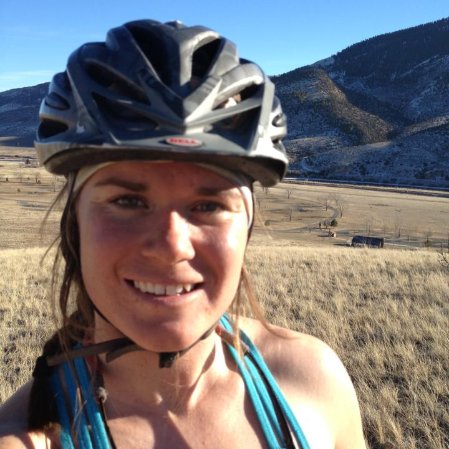
    Bernadette Nelson joined BSF as its post graduate and elite coach in September after Kristina Trygstad Sarri left the position in June. (Photo: LinkedIn)
    Bernadette Nelson joined BSF as its elite and postgraduate coach in September after Kristina Trygstad Sarri left the position in June. (Photo: LinkedIn)

    Australian Paul Kovacs contacted Danevski this spring about the possibility of training with the BSF elite team. Always open to new energy, Danevski remained in touch with the Australian and accepted him on his squad. After hearing about the opportunity from Kovacs, another Australian skier, Mark Pollock jumped at the chance to train in Montana and worked to earn a spot on the team as well.

    Both Kovacs and Pollock raced in the FIS Australia New Zealand Cup this summer, and now that the Australian winter is over, the two will travel to Bozeman in the coming weeks to begin their training and racing with the team.

    Reflecting on the changes to his team, Danevski said he was pleased with the progress and happy that the program was able to recover from a tumultuous summer.

    Bender, who spent part of August and September in the east, said that she didn’t recognize the team when she returned to Bozeman.

    “When I left for the Lake Placid [training camp] there were three athletes,” she said. “When I came back there were 14 new people and a new coach. Now that we have this big group, there’s been great a vibe.”

    Team Veteran: Bender 

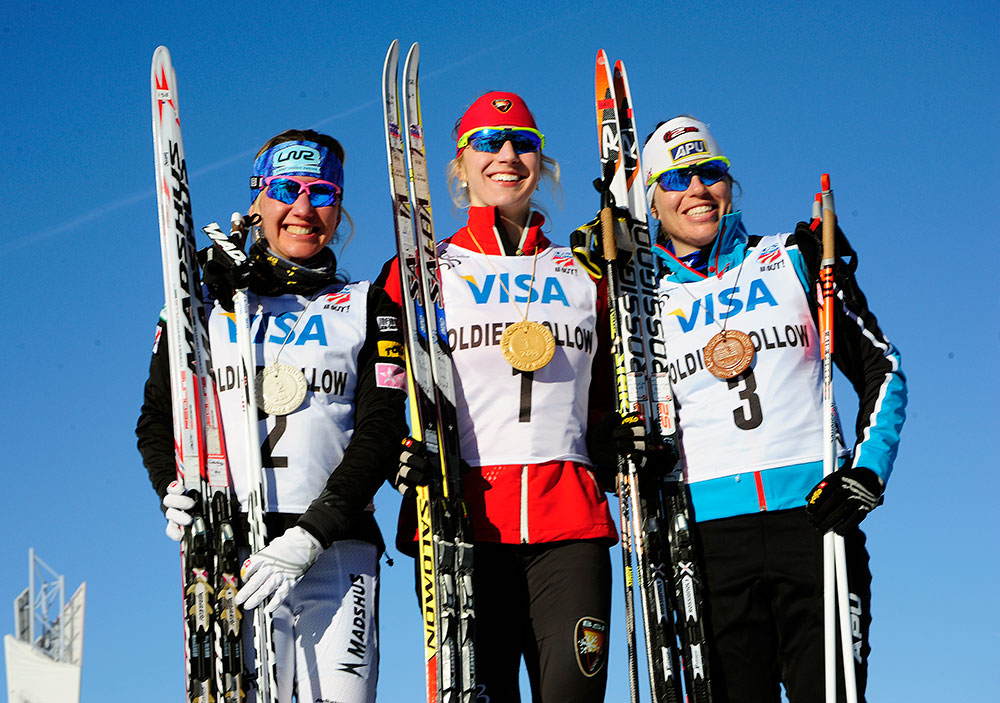
    The women's 1.5 k freestyle sprint podium, with winning Jennie Bender (c) of the Bridger Ski Foundation, Caitlin Gregg (l) of Team Gregg/Madshus in second, and Rosie Brennan (APU) in third. (Photo: Tom Kelly/USSA)
    The women’s 1.5 k freestyle sprint podium at the 2014 U.S. Cross Country Championships , with Jennie Bender (c) of the Bridger Ski Foundation, Caitlin Gregg (l) of Team Gregg/Madshus in second, and Rosie Brennan (APU) in third. (Photo: Tom Kelly/USSA)

    At the center of the BSF elite team, Bender has seen it all. In the past two years, she’s had ranging results spanning from the top of the podium to the back of the pack.

    Since she began skiing with BSF last season, the Vermont-native earned her second national title in January. At the same time, however, she failed to accomplish her goal of making the 2014 Olympics and struggled to find her form in last March at the World Cups in Finland and Norway.

    Bender said that a major factor in her inconsistent results over the past two years was her health. In addition to a case of mono and Lyme disease in 2012, Bender suffered a herniated disk in 2013. Due to fatigue and pain, her training and racing suffered.

    “The last two years have been a physical struggle and a mental struggle,” Bender on the phone. “Having a couple good races at nationals was huge. … I didn’t go out and accomplish what I was hoping to do with my World Cup starts, but having those starts was important for me and I’m hoping to have more because I’m ready for that next stage. I feel that there is more that I can give.”

    Despite the impediments of the the last two years, Bender said she believes the 2014/2015 season will be her best yet. With her health intact and little-to-no pain in her back, she said she recently finished her most consistent-and-productive summer training to date.

    She also has a new outlook on life and skiing. Bender said she learned important aspects about herself from the past ups and downs, and that such lessons will aid her in her search for top results.

    “Tenacity became really important. I’ve had my lowest of the lows and my highest of the highs all in one year with being at my wits end and then being on top of the podium,” she explained. “Being thrown into different those two different spectrums, I’ve learned to maintain a solid head and realize what’s important and what’s not important in life. I think it’s been a good lesson on how to stay positive and not dwell on the negative.”

    As the winter approaches, Bender said that she is excited to demonstrate the hard work she has put into her training over the past months. Her season goals are lofty – a spot on the 2015 U.S. World Championships team – but not out of reach.

    A Team of Potential

    Bender’s teammates are also aiming high.

    According to Danevski, Kovacs hopes to compete for the Australian World Championships team in Sweden this February, while Pollock’s main goal is to race at the U23 World Championships in Kazakhstan.

    Three of the nine postgraduate skiers are training to compete at Junior World Championships, while the rest of the squad is looking to prequalify for Junior Nationals by ranking as top-20 juniors at U.S. nationals in January in Houghton, Mich.

    While the team will have the opportunity to accomplish their goals in a few short months, the way BSF sees it, it’s already won half the battle, rebuilding from what many would call a devastating summer.

    “I think BSF has potential to be a very solid elite team,” Bender said. “Everyone on the team is in a really good space. Everyone is working hard and it’s great.”