Tag: Bettina Gruber

  • Throwback Workout: Pace-Development Intervals with the NAWTA (Remember That?)

    Throwback Workout: Pace-Development Intervals with the NAWTA (Remember That?)

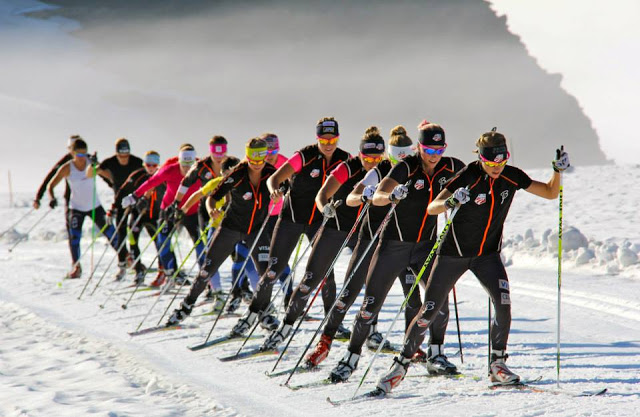
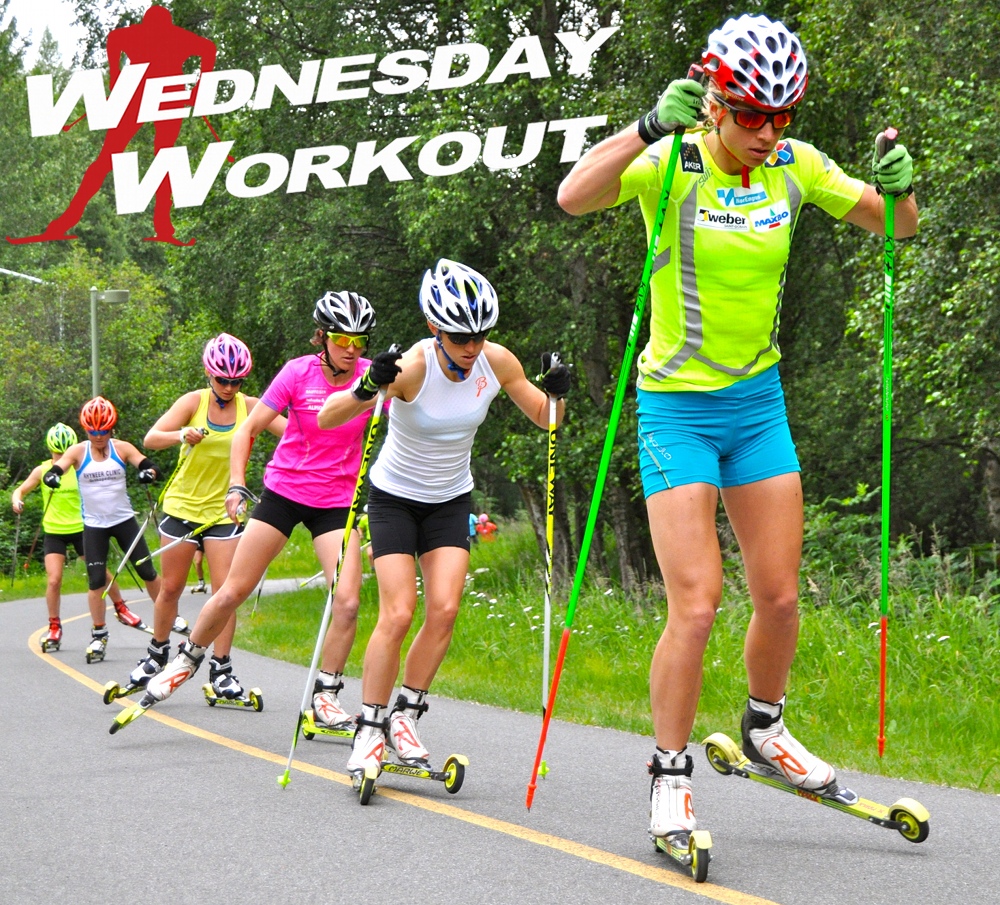
    Astrid Jacobsen (NOR), Liz Stephen, Bettina Gruber (SUI), Jessie Diggins, Holly Brooks and Ida Sargent during threshold intervals in Anchorage, Alaska, on Tuesday. (Photo: Matt Whitcomb)
    Norway’s Astrid Jacobsen (r) leads Liz Stephen (U.S. Ski Team), Switzerland Bettina Gruber, and U.S. Ski Team members Jessie Diggins, Holly Brooks and Ida Sargent during threshold intervals at the 2013 North American Women’s Training Alliance (NAWTA) camp in Anchorage, Alaska. (Photo: Matt Whitcomb)

    For this week’s workout, we bring you one of the best threshold workouts U.S. Ski Team Women’s Coach Matt Whitcomb said he’s ever seen — back in 2013. That’s not to say this workout is outdated, and the kind of training environment nearly a dozen top-level athletes created at the 2013 North American Women’s Training Alliance (NAWTA) camp in Anchorage, Alaska, was one other teams and clubs can try to emulate. All it takes is a quality all-around effort and well-thought-out terrain choices. Read original article here.

    ***

    [circa July 2013]

    The third-annual North American Women’s Training Alliance (NAWTA) camp began this week in Anchorage, Alaska, and on Tuesday morning they completed a threshold workout that ended with a lot of high-fives in the van and left U.S. Ski Team women’s coach Matt Whitcomb pretty happy.

    “Today’s threshold workout was the best threshold workout I’ve seen out of this group of women since I’ve been working with the team,” he said on the phone, as the group began their afternoon strength session.

    Kikkan Randall, Jessie Diggins, Liz Stephen & Co., are joined at this camp by Alaska Pacific University skiers, National Training Group athletes, and decorated Norwegian Astrid Jacobsen, Switzerland’s Bettina Gruber and Canada’s Chandra Crawford. The workout is one that Whitcomb and APU head coach Erik Flora have repeated over the last few years in order to work specifically on high-speed skiing in the middle of a threshold session.

    The keys to accomplishing this goal are two-fold: the choice of terrain, and the presence of a group to ski with. It was his team’s skilled pack skiing that Whitcomb thinks set Tuesday’s session apart from the rest, but the rolling hills are a critical ingredient to the goal of the entire workout.

    “It’s not so much emphasizing going harder, it just emphasizes patterning your muscles, neurally, to fire faster,” Whitcomb explains. “I think a lot of times, certainly my tendency as been to prescribe intervals that are a bit too slow. We might be nailing the percentage of your max heart rate and the proper lactate right on the money, but the pace is just too slow — you’re going uphill, uphill, uphill, and a lot of times when we find hard terrain we go hit intervals there.”

    To encourage speed variation while staying within threshold, the workout should be done on a stretch of pavement that includes gradual uphills, flats and gradual downhills, which “systematically [builds] some pace development intervals into your session,” Whitcomb says.

    “It doesn’t need to be incredibly hard — today was roughly threshold and above during bursts of speed — but it was about the terrain that helped push the pace for us.”

    The Workout:

    • 20-30 minute warm up*
    • 4-6 x 7-10 minute L3 intervals (3 minutes rest) on fast terrain that incorporates gradual uphills, flats and gradual downhills. Most interval sessions use hard and grinding terrain, great for building capacity but not so great for higher pace development. The key to this workout is in the choice of terrain.
    • 20-30 minute cool down*

    *Do a warm up and cool down that allows you to focus on the intervals. “Sometimes a mistake can be made where people are going after volume in addition to high intensity on interval days,” Whitcomb says.

    Don’t do try to multi-task for this workout. “Warm up only the minimum that your body requires,” he continued. “You want to make sure your muscles are ready to go, and build into the intervals if you have to — you don’t want to pull any muscles or get injured — but a 45 minute warm up is too long, as is a 45 minute cool down. Keep them concise and focus more on the on-time.”

    Frequency: 

    Every two to three weeks in the summer, with increasing frequency to every 10 days as fall approaches. “A workout like this is in addition to L4 intervals, time trials, speeds, ODs,” Whitcomb said. “It’s just another small component, another ingredient to throw in the bag and mix it up.”

    Variations:

    • Shorter recovery time as the season goes on, or longer recovery when at altitude — “just to make sure the on-time is what’s being emphasized,” Whitcomb says.
    • Pre-determined sprint preems that accomplishes a similar break from straight threshold, forcing athletes to go from threshold, into race pace, then back into threshold when they cross certain preem markers in the interval.

    On Tuesday, the women did this session on a stretch of bike path in Anchorage’s Kincaid Park. They chose a section of rolling terrain that was about 7-10 minutes long going either way. The group started their first interval in one direction, which took about nine minutes, took their three-minute recovery, and then skied back the other way to the start, which took about seven minutes.
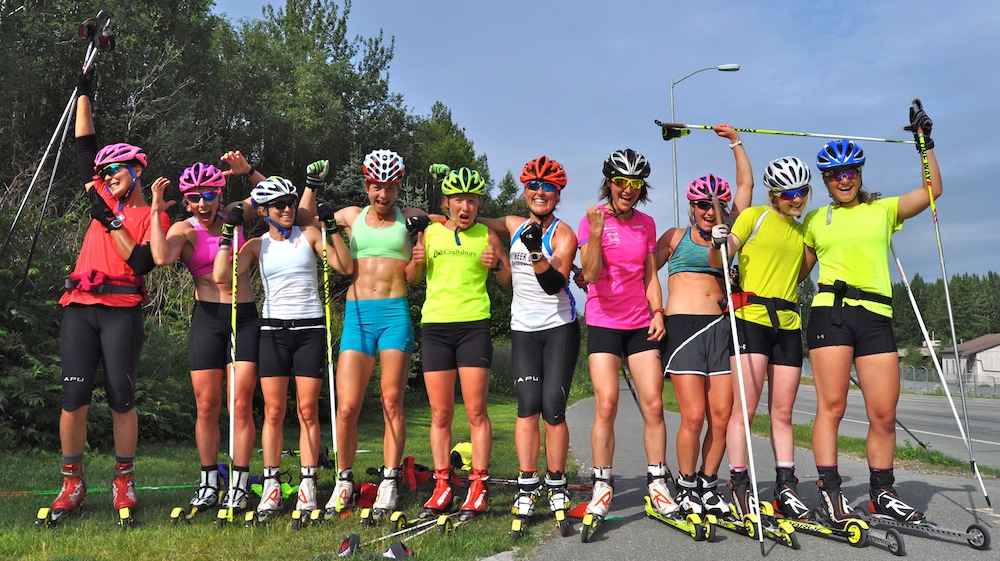
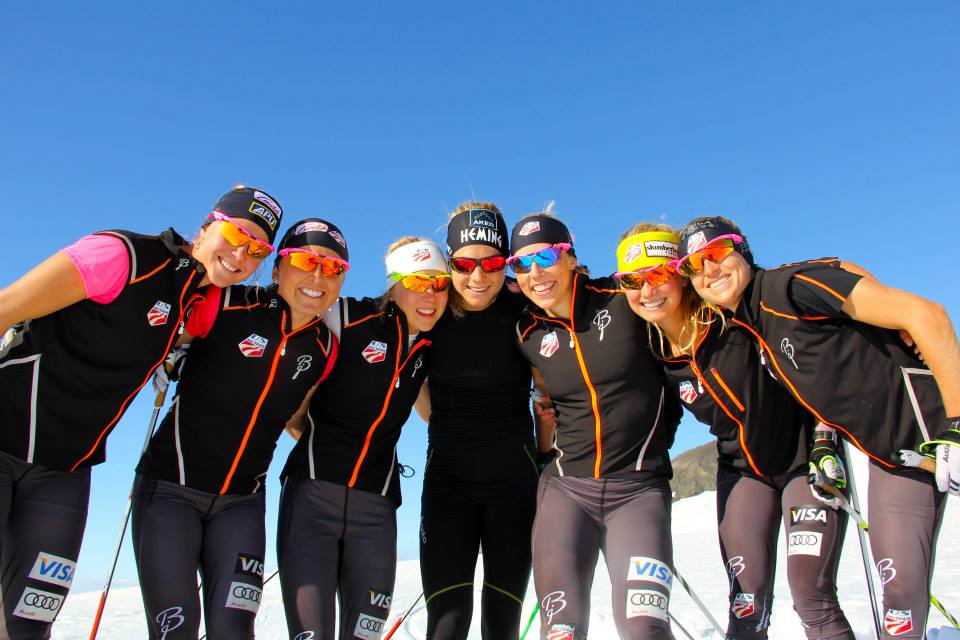
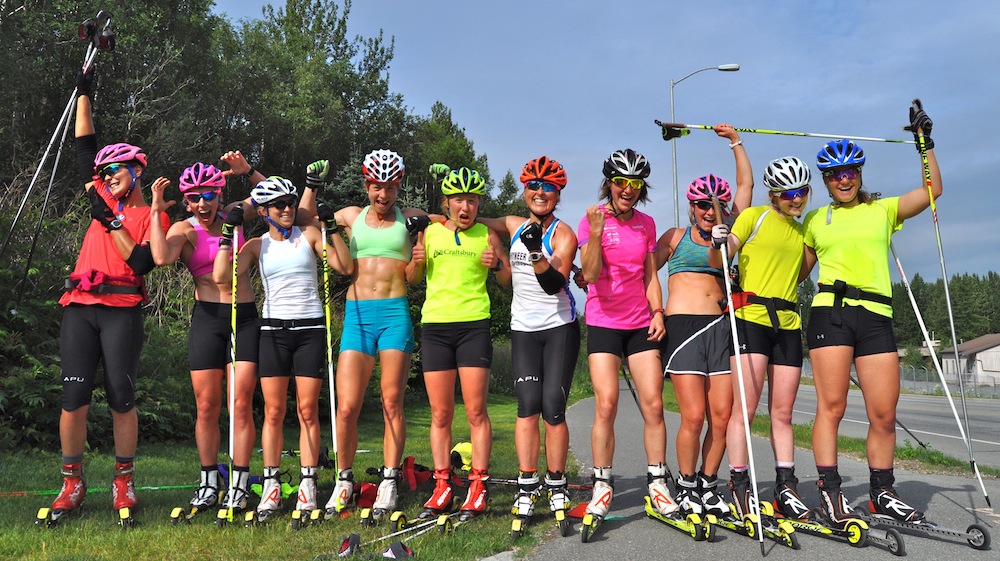
    The 2013 North American Women's Training Alliance group after a well-executed workout in Anchorage, Alaska. (L to R) Kate Fitzgerald, Kikkan Randall, Liz Stephen, Astrid Jacobsen (NOR), Ida Sargent, Holly Brooks, Bettina Gruber (SUI), Jessie Diggins, Emily Hannah, Anika Miller. (Photo: Matt Whitcomb)
    The 2013 North American Women’s Training Alliance group after a well-executed workout in Anchorage, Alaska. (L to R) Kate Fitzgerald, Kikkan Randall, Liz Stephen, Astrid Jacobsen (NOR), Ida Sargent, Holly Brooks, Bettina Gruber (SUI), Jessie Diggins, Emily Hannah, Annika Miller. (Photo: Matt Whitcomb)

    From a coaching perspective, this workout shows Whitcomb things that don’t surface in regular threshold intervals.

    “I think when we started doing this it taught us that the speed didn’t really change as much as we thought it would when the terrain asked for higher speed,” he said. “You try and go faster and your muscles simply didn’t want to move faster. It wasn’t a matter of being at your max heart rate, people were well within threshold, but they just didn’t want to fire those muscles faster. But the body fortunately adapts pretty quickly to a group session like this and you see pretty notable progress in your speed in just a few weeks.”

    So what made Whitcomb call Tuesday’s workout, in particular, the best threshold session he’s ever seen from his team?

    In addition to their raw speed — “they were really flying” — Whitcomb noticed they skied better together within the pack than they have before.

    “Everyone spent some time leading, some time sandwiched cycling in the spin wash in the middle of the pack, and it was really unlike this group perhaps in the past — you know, you establish a pecking order and somebody’s out there hammering off the front all day, maybe somebody switches out if they get tired, somebody is flying off the back all day because they’re struggling,” he said.

    “And today instead it was much more this series of incessant attacks at the front where you’d recover a little bit, spend some time in threshold in the pack, and then you’d work your way to the front and use your good feelings and your recovered state to push the pack and pull everybody along at a faster rate. It looked more like watching a cycling race today, to be honest, and that’s kind of a new thing particularly in girls skiing, I think. The mass starts [sometimes] just getting strung out from 100 m into the race, and I think we’re moving in the direction of more pack skiing. And as we can improve our skills within the pack were going to be better suited for those days when the women’s pack does stay together.”

    — Audrey Mangan

  • Engadin is Anything But Easy: Glørsen, Roponen Win Swiss Marathon; Brooks Fourth

    Engadin is Anything But Easy: Glørsen, Roponen Win Swiss Marathon; Brooks Fourth

    2014 Engadin Ski Marathon (Photo: www.Engadin-SkiMarathon.ch) http://www.liveimageticker.ch/slideshow/?border#_hdskimarathon2014
    2014 Engadin Ski Marathon (Photo: www.Engadin-SkiMarathon.ch)

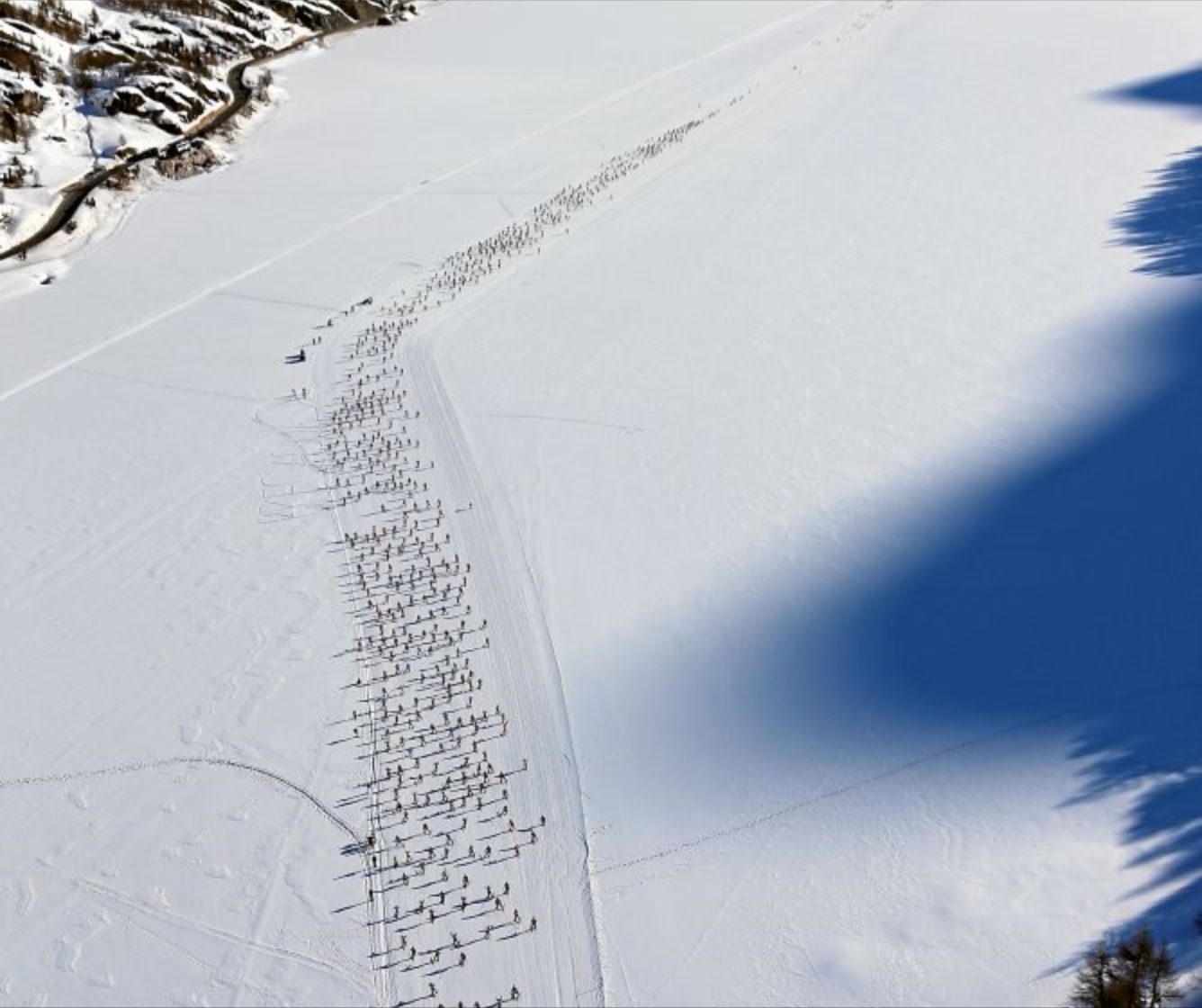
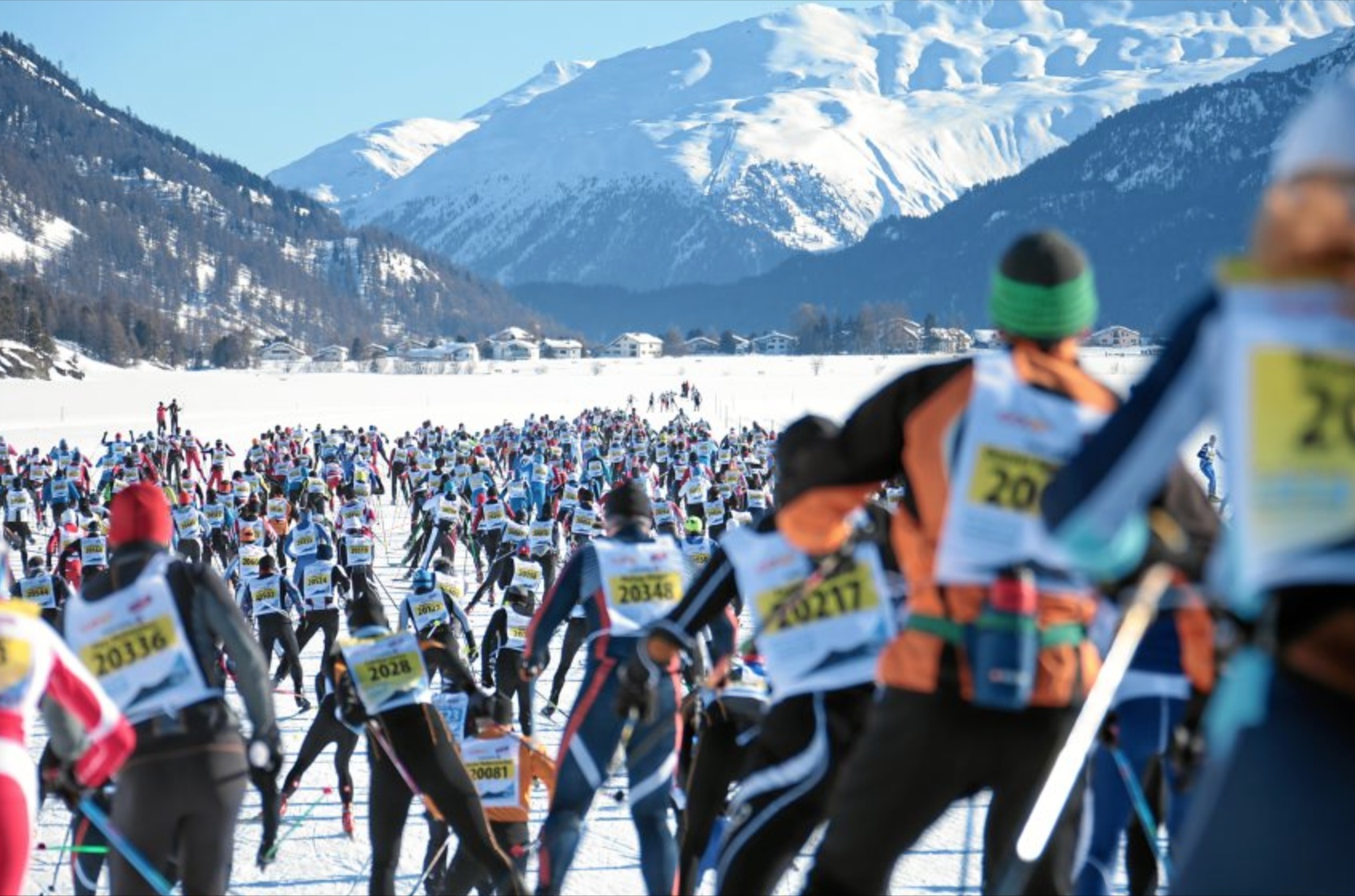
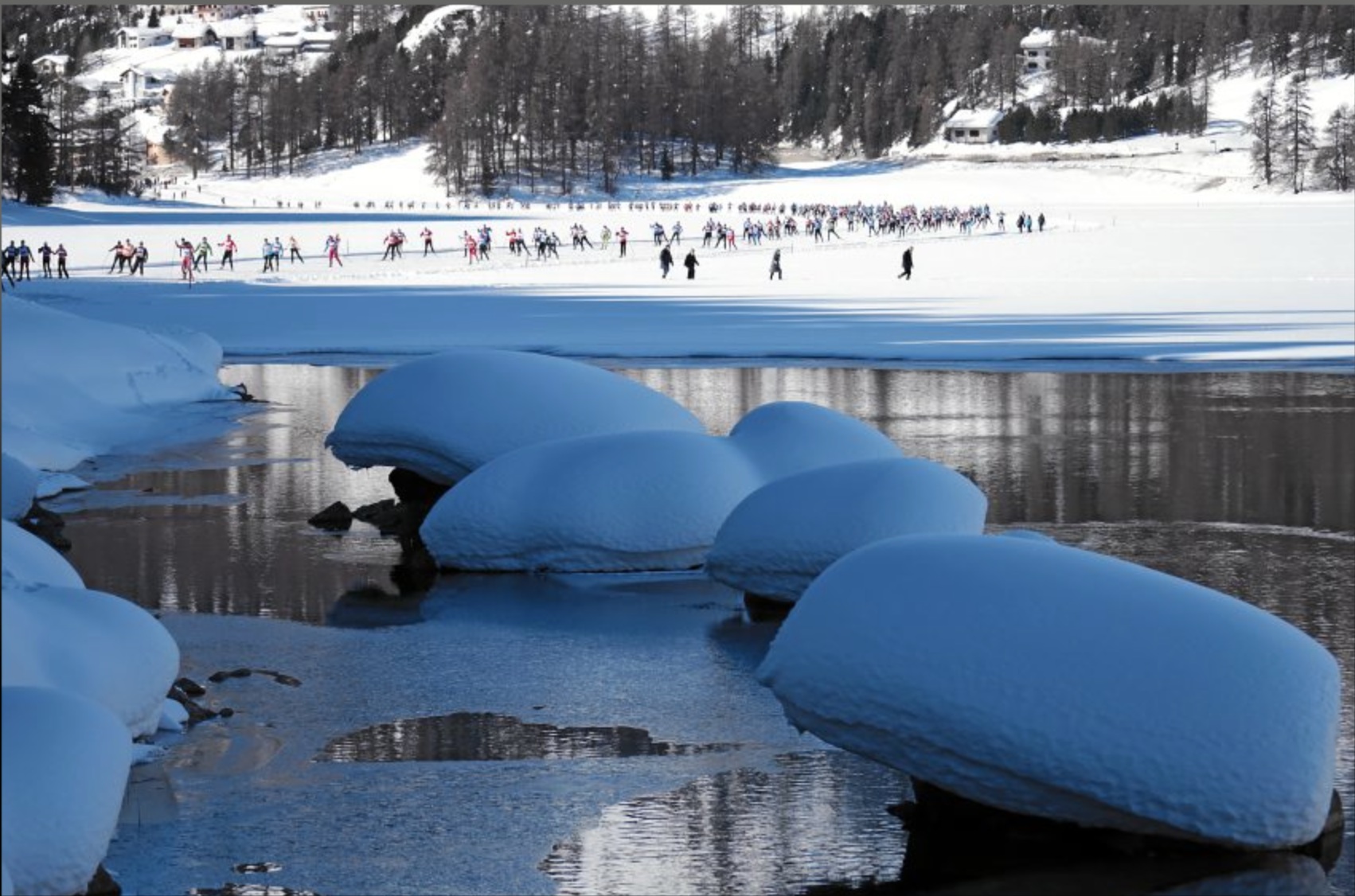
    The 46th annual Engadin Ski Marathon took place this past Sunday, March 9.  The 42-kilometer skate race, which is part of the Worldloppet series, and included some 13,395 competitors, begins in Maloja, in south-eastern Switzerland, and ends in S-chanf. Though the course follows a valley downhill, losing a total of 150 meters (nearly 500 feet), that fact alone did not guarantee an easy race — on the contrary, most top finishers claimed this marathon to be one of their toughest.

    2014 Engadin Ski Marathon (Photo: www.Engadin-SkiMarathon.ch) http://www.liveimageticker.ch/slideshow/?border#_hdskimarathon2014
    2014 Engadin Ski Marathon (Photo: www.Engadin-SkiMarathon.ch)

    On the men’s side, Anders Glørsen of Norway won in 1:35:05 hours.

    “I am really happy,” Glørsen said after the race, according to a Worldloppet press release. “The Olympics were up and down for me, but afterwards I felt very good … I skied from St. Moritz to the finish [Saturday] to get familiar with the course, which I knew already from rollerskiing in the summer.”

    Glørsen says he looked up all the results of the last 10 years and saw that nearly every year at least 10 people came in with the same time.

    “So I knew that it would be a tight race and that I should be saving some energy for the finish sprint,” he explained. “I got a gap at around 5 k to go but a kilometer later, Jean-Marc [Gaillard of France] caught me and I was almost sure that he would be beating me in the finish as I was already pretty tired. But somehow he was tired too I guess, and so I could cross the finish line as first.”

    Gaillard placed second, just 0.7 seconds later. This was Gaillard’s first Engadin, and he said that overall he is happy with his performance, “even though I was so close to winning.”

    “Anders is a good sprinter and I was already pretty tired in the end, I didn’t really believe in my possibility to win,” Gaillard said. “Maybe that was what cost me the victory as apparently Anders was pretty tired, too. But it was a really nice race and I enjoyed skiing in this beautiful weather. I had a broken pole right before the uphill in St. Moritz, which was really a bad place for such a thing, but these things happen.

    “Around 5 k before the finish, Anders got away from the group and got a gap,” he added. “I gave it a go and tried to catch him, which I did soon after. Somehow the others couldn’t follow, but I knew that we weren’t allowed to drop the pace as they weren’t far away. Unfortunately it didn’t work out with the first place in the end, but I am satisfied nevertheless.”

    In third was Switzerland’s Toni Livers, who broke a pole shortly out of the start and had to change two or three more times before finding a suitable replacement.

    “I lost faith,” Livers said. “I didn’t really believe in a podium place anymore, but I had a good position when it came to the last kilometers. I knew that only from Zuoz on, the race would really start, so I prepared for that. I pushed really hard as I was eighth when we came into the finish area, then fifth and then there was an open spot, I took it and pushed into first position. It was a tight fight with Romain Vandel [who finished 4th] and I am really happy that I could get my foot over the line in front of him in the end!”

    2014 Engadin Ski Marathon (Photo: www.Engadin-SkiMarathon.ch) http://www.liveimageticker.ch/slideshow/?border#_hdskimarathon2014
    2014 Engadin Ski Marathon (Photo: www.Engadin-SkiMarathon.ch)

    On the women’s side, Finland’s Riita-Liisa Roponen won in 1:38.39.1, nearly 19 seconds ahead of Switzerland’s Bettina Gruber in second.

    For Roponen, it was her second Engadin victory and third in the FIS Marathon Cup this season.

    “Winning the cup with these three wins as well is really enormous,” Roponen said. “I had the goal to beat my record time from last year, but this didn’t work out, but I am nevertheless satisfied with my race. It was a really hard one, but mostly because I didn’t feel so good. I wasn’t even sure if I won when I crossed the finish line.”

    Roponen hopes to be able to do more long-distance races next season, but would also like to take part in the World Cup if she is given the opportunity to do so. Roponen expects more competition in the women’s field next year and therefore suspects that it will become more difficult to gain the overall victory again.

    Gruber said she was happy with second, considering how tough the mass start was.

    “I was skiing a lot with Katrin [Zeller of Germany, who finished third] and we tried to catch Riita-Liisa, but she was already too far gone,” she said. “In the end I was able to out-ski Katrin in the finish sprint, so I am really satisfied. The Engadin Ski Marathon is a really nice race, but also a tough one, especially for the women who are skiing with all the men around and it’s so easy to break a pole or to fall.”

    Zeller took third despite an early tangle. She didn’t start in the first line and got caught up in a crash from the get-go, consequently losing several places early on.

    “Just getting back to the group again, somebody crashed right in front of me and I got a pole between my legs and got a big cut which hurt a lot,” she said. “Again, I tried to find the other girls, I moved left when the big group went right and visa versa in order to have more space and to move faster. I really felt good.”

    Zeller said she believed a victory would have been possible for her and that she was disappointed with her result. She won the Engadin six years ago and was hoping to win again as the final of her career.

    “A victory here would have been a really nice end,” she said. “I was skiing together with Bettina in the end and I knew that she was the better sprinter. I tried to pass her, but I was squeezed in and so I finished third.”

    Zeller will go on to compete in the World Cup final in Falun, Sweden, later this week, which will act as the replacement “finale” she was looking for.

    Holly Brooks of the U.S. Ski Team was the fourth female, 2:25 behind Roponen.

    “Took myself out of podium contention w/big crash but happy w/wooden medal,” Brooks tweeted after the race. “Fun times at the Engadin.”

    Matt Gelso (Sun Valley Ski Education Foundation) place 16th overall, just 11.7 seconds back from the winner, and Torin Koos (Bridger Ski Foundation/Rossignol) finished 87th (+4:21.1). Matt Briggs of Bend, Ore., finished 95th (+5:57), and Eric Packer (Stratton Mountain School T2 Team) finished 126th (+7:59.7). According to a report by Fast Big Dog, 80 Americans entered the race.

    Among other top U.S. women, Katja Heinicke of Dallas placed 139th, and Robin McGee of Jackson, Wyo., was 170th.

    Complete results

    More about above video

  • APU Coaches Bring Sochi Courses to Life on Eagle Glacier

    APU Coaches Bring Sochi Courses to Life on Eagle Glacier

    Liz Stephen (USST) leads a train of skiers during a morning skating session in July on Alaska's Eagle Glacier. (Photo: Matt Whitcomb)
    Liz Stephen (USST) leads a train of skiers during a morning skating session in July on Alaska’s Eagle Glacier. (Photo: Matt Whitcomb/Sadie Bjornsen’s blog)

    In advance of his club’s facility playing host to the third annual North American Women’s Training Alliance (NAWTA) camp last month, Alaska Pacific University (APU) Nordic Director Erik Flora broke down film of last year’s World Cup races in Sochi, Russia.

    His focus wasn’t on the skiing, even though several of the athletes planning to attend the camp on Eagle Glacier were featured in the video. He was studying every undulation of the race courses, with a goal to replicate the Olympic venue.

    The altitude and topography of the widely separated parts of the world is similar enough to make the project worthwhile. Referencing course profiles and maps, Flora and APU wax techs Mike Matteson and Don Haering logged 16 to 20 hours daily constructing and maintaining the trail system.

    U.S. Women's Ski Team members (L-R) Sadie Bjornsen, Holly Brooks, Ida Sargent, Kikkan Randall, Jessie Diggins and Liz Stephen with NAWTA camp guest Astrid Jacobsen of Norway.
    U.S. Ski Team members (L-R) Sadie Bjornsen, Holly Brooks, Ida Sargent, Kikkan Randall, Jessie Diggins and Liz Stephen with NAWTA camp guest Astrid Jacobsen of Norway. (Photo: Matt Whitcomb/Sadie Bjornsen’s blog)

    The women’s U.S. Ski Team (USST) joined the APU elite women, a few National Training Group skiers and international guests Astrid Jacobsen, of Norway, and Switzerland’s Bettina Gruber for a week of dryland training, followed by a week of living and skiing on the remote glacier.

    According to U.S. women’s coach Matt Whitcomb, the skiers woke to blazing fast skating conditions every morning, which softened in the sun to create wildly variable classic tracks in the afternoon.

    “It’s rare and productive when you can train on that range of conditions in a single session,” Whitcomb wrote in an email. “Striding in tricky classic conditions is something our women’s team can improve on, so these sessions are really important.”

    As much as they learned from the snow, which transformed in similar patterns to what they remembered of the Sochi race-day conditions, the women might have learned more from one another.

    “With eight World Cup racers at a camp, it’s rare that the same person leads every day,” Whitcomb wrote. “Everyone had a session where they could put their best strength to work, and of course a session when they got absolutely trounced.”

    Jacobsen is regarded as one of the best technical classic skiers in the world. She was the 2007 World Champion in the classic sprint and placed third in the 3-kilometer classic prologue in the third stage of last year’s Tour de Ski.

    U.S. star Kikkan Randall earned the same respect for her skating ability, which she has ridden to the last two World Cup sprint titles.

    At the end of the competition season, Randall extended an invitation to Jacobsen, not really expecting her to accept as athletes don’t typically do anything too out-of-the-norm in an Olympic year.

    Flying in star athletes from traditionally dominant skiing nations brings the untouchable down to eye level, Whitcomb said. U.S. skiers are seeing that they have all the same tools, and maybe even some advantages. In a phone interviews, Randall said that Jacobsen seemed to admire the positive team dynamic of the U.S. women.

    “Before, we felt that we had to know the course and know the snow and everything had to be perfect [to be successful],” Randall said. “I think what our good results have shown over the last few years is that if we’re in shape, I think we can encounter everything.”

    The primary difference Randall sees in the training philosophies of the Norwegian and American national teams is the value U.S. coaches place on time in the weight room. Randall said her team puts more of an emphasis on Olympic-style lifts, which develop explosiveness and functional strength, than some other nations.

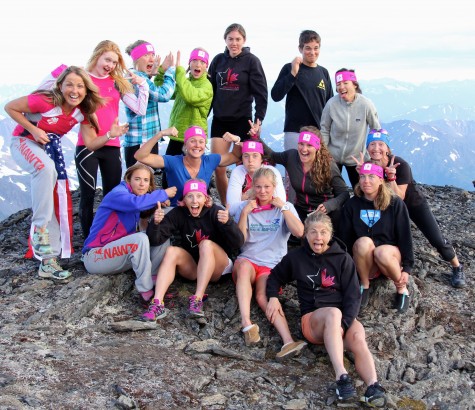
    The 2013 NAWTA camp near Anchorage, Alaska, including APU and U.S. Ski Team members Holly Brooks (l) and Kikkan Randall (at bottom, second from l). (Photo: Matt Whitcomb)
    The 2013 NAWTA camp near Anchorage, Alaska, including APU and U.S. Ski Team members Holly Brooks (l) and Kikkan Randall (at bottom, second from l). (Photo: Matt Whitcomb)

    Training logs aside, Randall said one of the most valuable things she gained from spending a couple of weeks with Jacobsen and Gruber was two more friends to keep in touch with during five long winter months of travel.

    The NAWTA name originated in 2011 when Canadian World Cup skiers Chandra Crawford and Perianne Jones joined the annual USST glacier camp. Last year, Finnish sprinter Aino-Kaisa Saarinen was the team’s international guest.

    This year’s camp schedule listed two skiing sessions daily, with skating first every day except the one they started with classic intervals. Everyone shared chore duties, including meal prep, dishes and cleanup. They also had to prep their own skis for each workout.

    On the fourth day on the glacier, the coaches spiced up the workout with a sprint relay, covered by several media outlets that flew in for the day to see Flora’s creation and get some perspective on how this camp will help the women prepare for Sochi.

    Even with a twin of the Olympic venue in her back yard, an experienced Randall knows familiarity with the courses alone will not decide the podium in February.

    “I guess what I’ve learned over my previous three Olympic experiences is if you prepare well and you show up at the Olympics rested, healthy and in good shape, then you’re really ready to conquer anything,” Randall said.

  • The Band is Back Together: Women’s Training Camp Begins in Alaska

    The Band is Back Together: Women’s Training Camp Begins in Alaska

    The group after a well-executed workout. (L to R) Kate Fitzgerald, Kikkan Randall, Liz Stephen, Astrid Jacobsen (NOR), Ida Sargent, Holly Brooks, Bettina Gruber (SUI), Jessie Diggins, Emily Hannah, Anika Miller. (Photo: Matt Whitcomb)
    The North American Women’s Training Alliance converged again this week in Anchorage for their third annual camp, this time with a few more foreigners than usual. (L to R) Kate Fitzgerald, Kikkan Randall, Liz Stephen, Astrid Jacobsen (NOR), Ida Sargent, Holly Brooks, Bettina Gruber (SUI), Jessie Diggins, Emily Hannah, Anika Miller. (Photo: Matt Whitcomb)

    The joint women’s training camp between the U.S. Ski Team and Alaska Pacific University began this week in Anchorage, Alaska, bringing many of the nation’s top female skiers together for the first time in a month along with a few special foreign guests. According to USST women’s coach Matt Whitcomb, training has been going well so far.

    “It’s nice to have the band back together up here for the third annual NAWTA camp,” he said on Tuesday. “We had a killer session [on Tuesday] with some Level 3 pace development intervals, and we’re gearing up for a great couple of weeks here.”

    The pack of Americans once again includes Canada’s Chandra Crawford, whose participation in the camp since its iteration in 2011 inspired the name North American Women’s Training Alliance, or NAWTA. But the group might have to change its name soon if it keeps attracting so many European athletes; this year decorated Norwegian skier Astrid Jacobsen and top Swiss national team member Bettina Gruber joined its ranks to experience the group’s training environment.

    “We’re in really good company this week,” Whitcomb said. “Just the day in, day out training situation resulting from such a high caliber group is where we get most of our benefit from.”

    The group training is precisely what brought Jacobsen says brought her to Alaska.

    “For me it is exotic to travel here to see Alaska,” Jacobsen told FIS in a recent interview. “Most importantly though it was the opportunity to go and train with Kikkan [Randall]. For me she is the best skate sprinter we have. I felt that we could challenge each other. We each have different qualities.

    “Also, if you look at how the American women’s team has developed in the last couple of years it is a really interesting team with a good spirit. I was curious to come here and see how they work as a group.”

    In return, the Americans hope to benefit from the new perspective a foreign athlete brings to the table.

    “I got this descriptor from Rikard Grip, the Swedish head coach: he talked about the Americans adding just the right spice to training, so I’ve taken the word spice and have really appreciated the spice that it does add, having Bettina and Astrid and Chandra,” Whitcomb said. “It’s just a nice simulation for everybody, including the guest athlete. We’re going to be watching these girls and their strengths closely, and we hope they can pull something out of this camp and have a better shot at a medal in Sochi, as well.”

    If it surprises anyone that the U.S. national team has opened up its training to foreigners, particularly before an Olympic year, Whitcomb says this is simply part of how they operate.

    “One of the philosophies of the team is we’re very open,” he said. “We share any secrets we might have, and in doing that we end up learning much more. So it’s an open environment and the more we can share the more we can learn.”

    The first week of the camp is being spent dryland training in Anchorage during a higher-intensity block, and next week athletes and coaches fly up to Eagle Glacier for more volume-specific training on snow.

    Thus far, Whitcomb has been happy to see his athletes looking strong in workouts and staying healthy while managing mild injuries.

    “We have a couple mild injuries being nursed along but nothing major this season,” he said. “I think everybody has their little tendonitis issues, little things here and there, and as a team we’ve gotten things much better under control this season. Through working with a physical therapist and setting up better injury management system than we’ve had in the past.

    “The key is just smart, varied training,” Whitcomb continued. “When you do varied training it allows the body to recover in sneaky ways, so we’re doing a lot of that to be preemptive. They’re doing a much better job as athletes, we’re doing a better job paying attention and being strict when needed as coaches, but everybody’s doing great and hitting the ground running here.”

    When the group moves to the glacier this weekend they’ll spend about six days on snow for between 23 and 30 hours of volume on skis. The team has both individual and group-specific goals for the entire camp; as athletes work on personal technique or equipment-based goals, the team aims to continue operating better together as they live and train together on Eagle Glacier.

    “It’s just a great opportunity to get out there and get on skis,” Whitcomb said. “Learning to kick a ski on sloppy snow — mornings are firm and fast for skating, focusing on something similar to our workout [from this week]… Whether you’re socializing on a long easy ski or going head to head in a speed workout, we really run everything as a group at this camp.”

  • Pros of Tomorrow: Widmer Lives Her Dream in Switzerland

    Pros of Tomorrow: Widmer Lives Her Dream in Switzerland

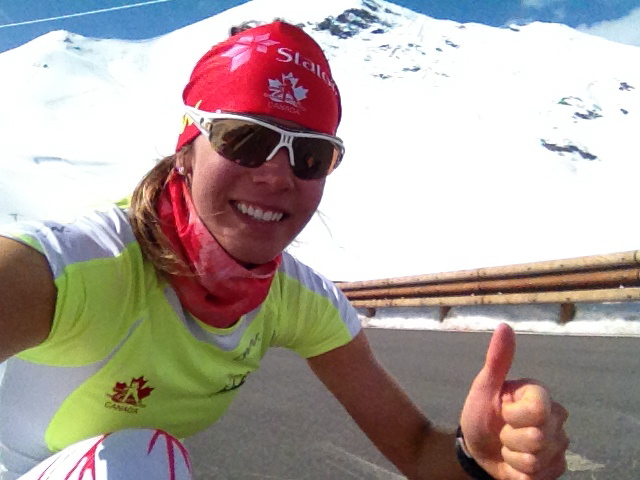
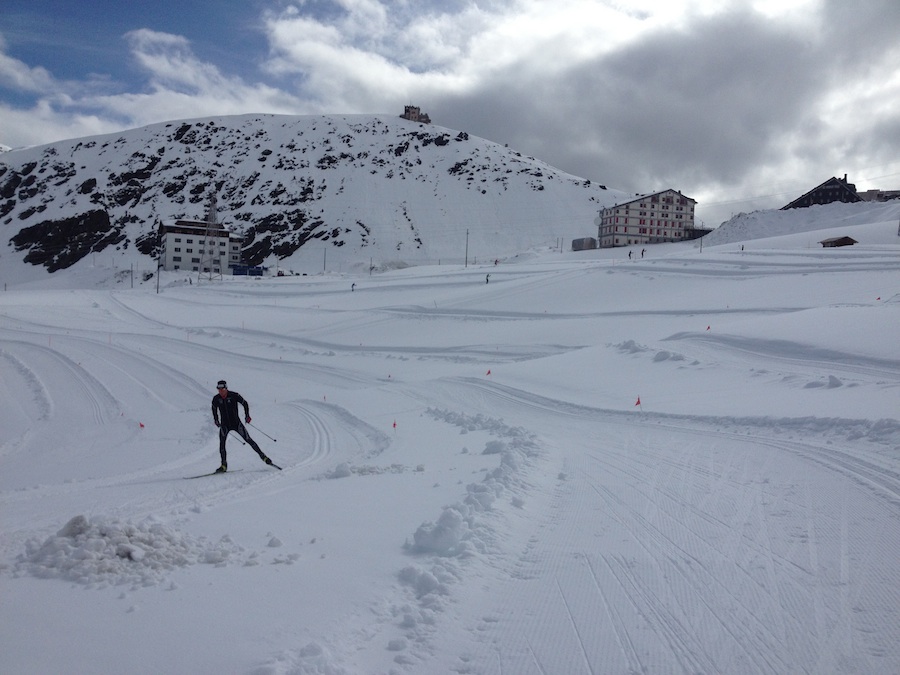
    A happy Heidi Widmer on a bluebird day at Stelvio Pass in Switzerland. She spent five days at a Swiss national-team training camp near the Italian border  in early June. (Courtesy photo)
    A happy Heidi Widmer on a bluebird day at Stelvio Pass in Switzerland. She spent five days there at a Swiss national-team training camp near the Italian border in early June. Widmer, 22, made the Canadian Senior Development Team in April. (Courtesy photo)

    Editor’s Note: This is a continuation of our recently relaunched ‘Pros of Tomorrow’ series, which highlights some of the most notable up-and-coming athletes around the world. See also: Cendrine Browne

    ***

    Fresh off her last races of the season at Canadian Nationals in Whistler, British Columbia, Heidi Widmer plunged into the backcountry in early April for some ski touring in Callaghan Valley.

    There, the 22-year-old Banff native knocked off the 1,275-metre (nearly 4,200-foot) Mt. Cayoosh and headed to a lodge in the Selkirk Mountains for more touring. Even with all the physical activity capping a long season, Widmer considered the trip relaxing amid beautiful scenery.

    The Stelvio Pass ski track and hotel Widmer stayed at 2,700 metres above sea level in Switzerland. (Courtesy photo)
    The Stelvio Pass ski track and hotel Widmer stayed at earlier this month 2,700 metres above sea level in Switzerland. (Courtesy photo)

    “It’s really a huge mental break,” she said on the phone Sunday from Switzerland, where she’s training with the Swiss national team. “It’s really a good chance for reflection because you’re out for hours on end, most of the time slogging around.”

    Now in Davos, Switzerland, Widmer also visited El Salvador (for surfing) and New Orleans (for a music festival) for a total of two weeks in late April. Then it was back to training, first with the Alberta World Cup Academy (AWCA) for five days in Canmore, Alberta, then for a weeklong camp in Vernon, B.C.

    Widmer spent another five days back in Canmore before flying to Switzerland on May 25, and she’ll be there until June 24.

    Doesn’t she get tired?

    “Surprisingly not,” Widmer said with a laugh. “I have to take my downtime when I can get it. I really enjoy traveling, but I maybe enjoy it too much. I really got after it in the spring.”

    With a list of trips lined up, Widmer was uncertain about Switzerland, arranged through former AWCA head coach Christian Flury, now in charge of the Swiss women’s team. She knew if she received the call up to Canada’s Senior Development Team, which she had been working for her entire junior career, her schedule would depend on the national team’s.

    Lucky for her, it all worked out.

    “I’ve been working toward getting on the national team for a couple years and the fact that it all fell together, it just kind of means that the work is just beginning,” Widmer said. “It’s gratifying knowing that I’m doing something in the right direction.”

    Heidi and Phil Widmer; siblings on top of the podium. Photo: Mike Cavaliere.
    Siblings Heidi and Phil Widmer sharing the podium at a NorAm in January. (Photo: Mike Cavaliere)

    She heard the good news soon after emerging from the backcountry during an April meeting with AWCA women’s coach Chris Jeffries. Her initial excitement came with some apprehension: did her brother Phil make it, too? Jeffries couldn’t say, so she waited to hear from her older brother, who was in the backcountry away from reliable cell service for another week.

    While making pizzas with friends one night, Widmer got a phone call from her mom, who was crying. Phil, 29, left a message about being renominated.

    “My mom was so happy,” Widmer recalled. “It’s really cool being able to accomplish something together. … I think that says a lot about persistence. He’s been for sure inspiring, to watch him take the setbacks in stride and keep working towards getting where he wants to go.

    “I don’t know where I would be if I didn’t have him to follow in the sport,” she added. “I remember when he qualified for Torino [Olympics in 2006]. I was at an influential age where you’re like, ‘My older brother can do this, so can I.’ ”

    Last season, Widmer tallied two podiums at nationals in the 5- and 30-kilometer freestyle races. At U23 World Championships in Liberec, Czech Republic, she placed 28th in a 10 k skate. There, she spoke with Flury about her dream of coming to Switzerland, where her father was born and she and her siblings have citizenship.

    Also in Liberec, Widmer saw online that The Gypsy Kings and Fleetwood Mac were playing in New Orleans. Taking a short detour to Louisiana on the flight back from El Salvador was a no-brainer, and so was going to Switzerland.

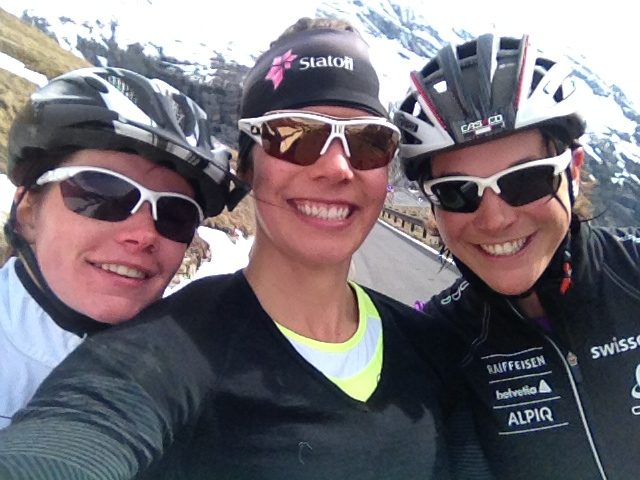
    Heidi Widmer (c) with Swiss skiers Nathalie von Siebenthal (l) and Christa Jäger after rollerski intensity on Stelvio Pass in Switzerland. (Courtesy photo)
    Heidi Widmer (c) with Swiss skiers Nathalie von Siebenthal (l) and Christa Jäger after rollerski intensity on Stelvio Pass in Switzerland. (Courtesy photo)

    Flury assured Widmer it was possible and spoke with Jeffries about her training plan.

    “Through email and conversations with him, I knew that he was really open to it and I felt extremely comfortable coming over to train with him,” Widmer said. “The rest of the team being so welcoming, I was optimistic it was going to work out, but they definitely exceeded my expectations.”

    After visiting her grandmother in Zurich, Widmer met up with the Swiss team at the national-sport centre headquarters in Magglingen, Switzerland. She spent the next week adjusting to the time difference and recovering while the national team did baseline testing.

    Widmer then spent few nights in Davos with Tatjana Stiffler, originally her Facebook friend, before heading to a training camp on Stelvio Pass at a glacier some 2,700 metres (8,850 feet) above sea level.

    “It’s been amazing,” Widmer said. “I always wanted to come over here and train but I didn’t really know what to expect. … Right away the team was super inclusive and everyone was really supportive of me being there, and I felt like part of the team instantly. It was pretty awesome.”

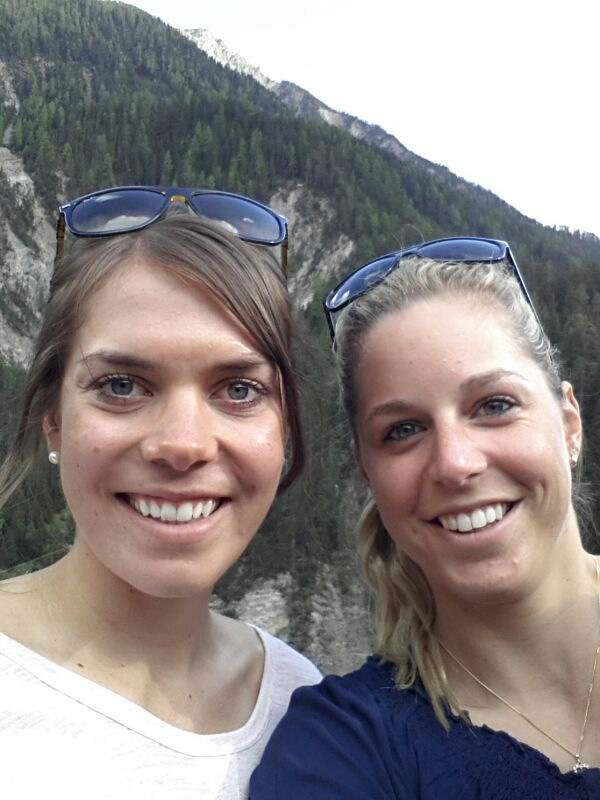
    Canadian Heidi Widmer (l) and Davos skier Tatjana Stiffler (Courtesy photo)
    Widmer (l) and Davos skier Tatjana Stiffler (Courtesy photo)

    She didn’t speak much Swiss-German, but was learning thanks to Stiffler. The dialect and vocabulary were much different than the High German she knew, but Widmer said she was having fun catching on and chatting with Swiss skiers when she could.

    “I always felt, ‘My name’s Heidi Widmer … and I’m not super connected with Switzerland,’ ” she said. “I know they had a strong team to train with and the environment seemed like it would be a good fit and a good experience. I’m always interested in learning how different teams are approaching ski racing so that was also a draw.”

    So what’s different about Switzerland, in terms of its national-team training methods and glacier? According to Widmer, not much on the philosophical front, except for a few technical points she’s been working on.

    “It’s been very similar to what we do in Canada,” she said. “You’re doing longer hours and more hours when you’re at altitude on the glacier and similar approach to the training speed and … not just going out and hammering at altitude.”

    As for the glacier itself: “I’m trying to think of another word besides pimped,” Widmer said with a laugh. “It was a lot more comfortable living than our [Haig] glacier camp, let’s put it that way.”

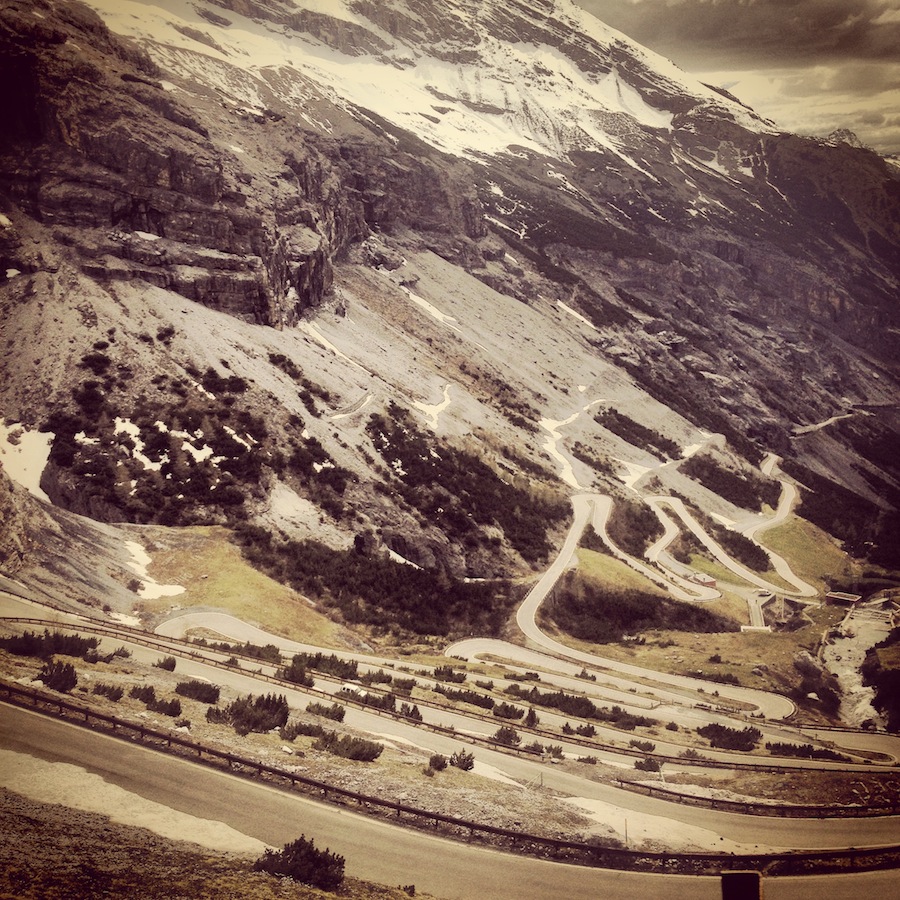
    The road up Stelvio Pass, the highest paved roadway in the Eastern Alps, with 42 hairpin turns and 14 percent grade in some parts, according to Heidi Widmer. "We did classic intensity up this road starting at 1900m," she said. (Courtesy photo)
    The road up Stelvio Pass, the highest paved mountain pass in the Eastern Alps, with 42 hairpin turns and 14 percent grade in some parts, according to Heidi Widmer. “We did classic intensity up this road starting at 1900m,” she said. (Courtesy photo)

    From the hotel, one can cross the road and immediately access the 4 k ski loop, which starts with a brief descent before winding back up to the top of the glacier.

    “Then you go back to your hotel and all the meals are cooked for you,” she said. “All the teams are there, and it’s a really cool atmosphere.”

    Widmer spent five days with the team on Stelvio before heading back to Davos last week. She’ll be dryland training there for the rest of her stay with Stiffler and a few U23s, like Nathalie von Siebenthal and Christa Jäger. World Cup skier Bettina Gruber, 28, is also in Davos, and the two planned to meet up for some intensity.

    Looking ahead, Widmer said she’s most focused on peaking for her last year of U23’s – and making the Olympics if possible. Number one on her list: the skate sprint at U23 World Championships in Val di Fiemme, Italy.

    “What I did last year is working; I don’t think I have to do anything drastic to change my training approach,” she said, adding that she’s boosted her strength training.

    Naturally a sprinter, Widmer didn’t rule out her potential in distance events, especially with a 10 k classic Olympic qualifier in January in Canmore.

    “My classic skiing in distance and sprinting has to step it up a notch so I’m putting my focus on that as well,” she added. “I haven’t had a breakout international performance yet so I’m really looking towards that.”

    ***

    Have an idea for a skier you’re itching to read more about? Email info@fasterskier.com with the subject line: Pros of Tomorrow.

  • At Long Last: Canadian Season Wrap (Video)

    At Long Last: Canadian Season Wrap (Video)

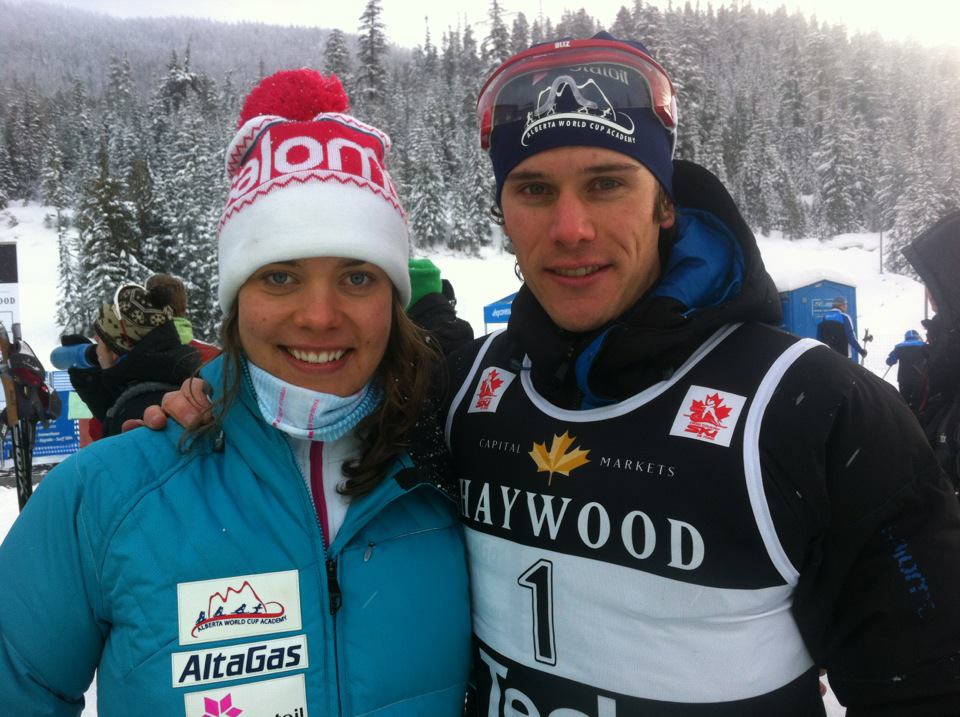
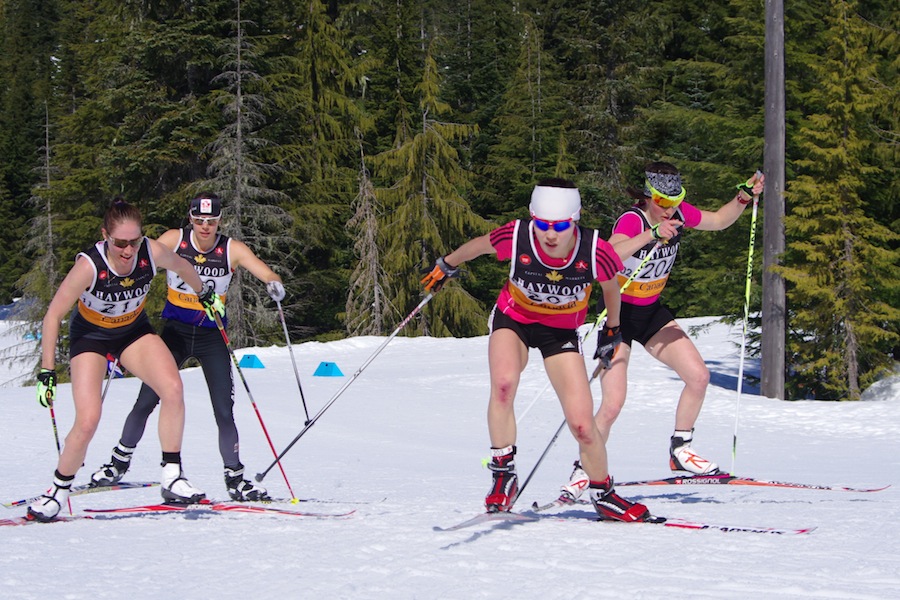
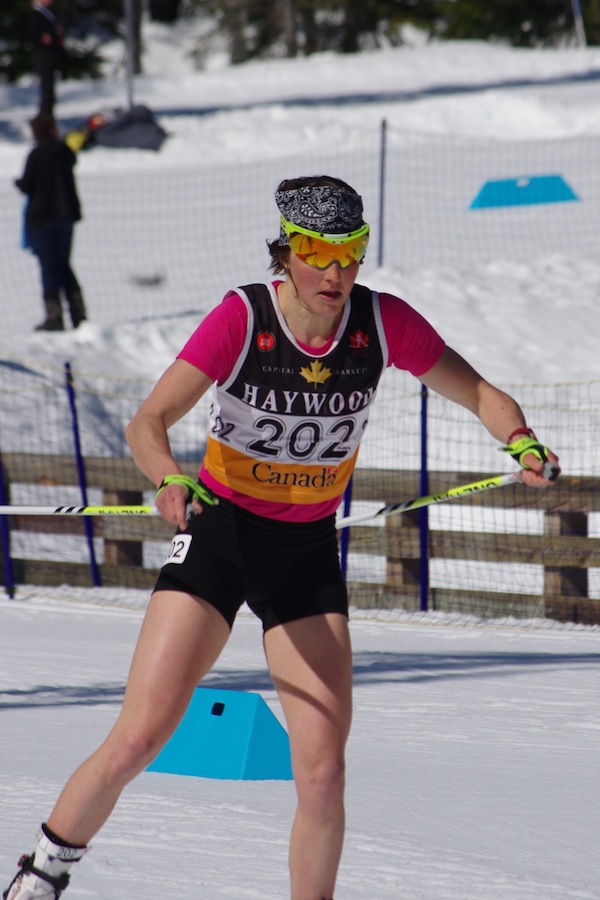
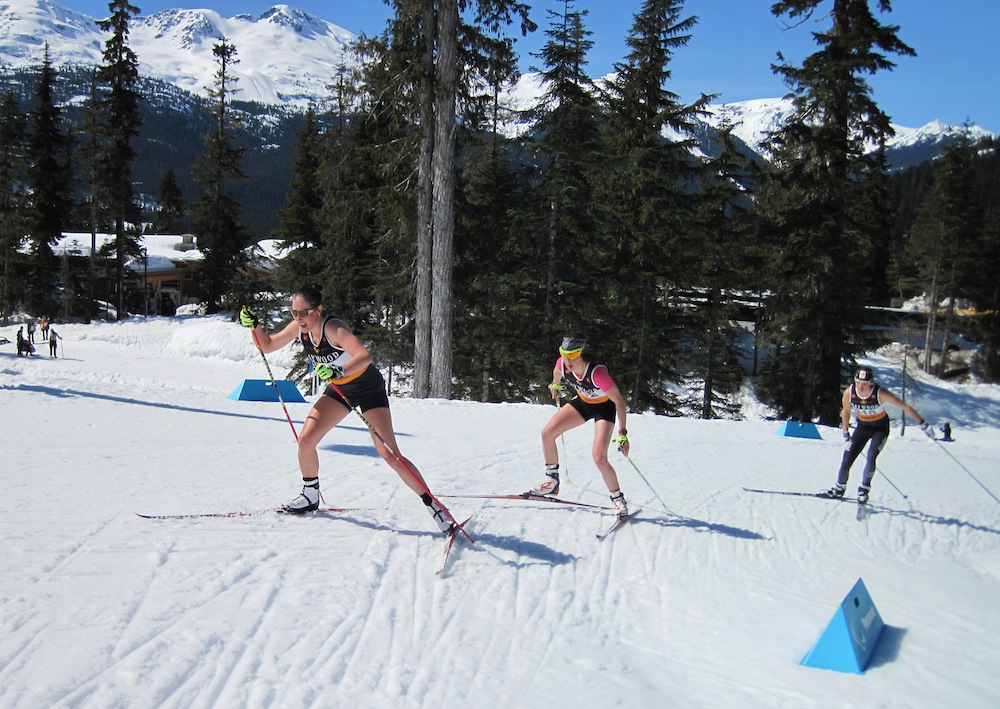
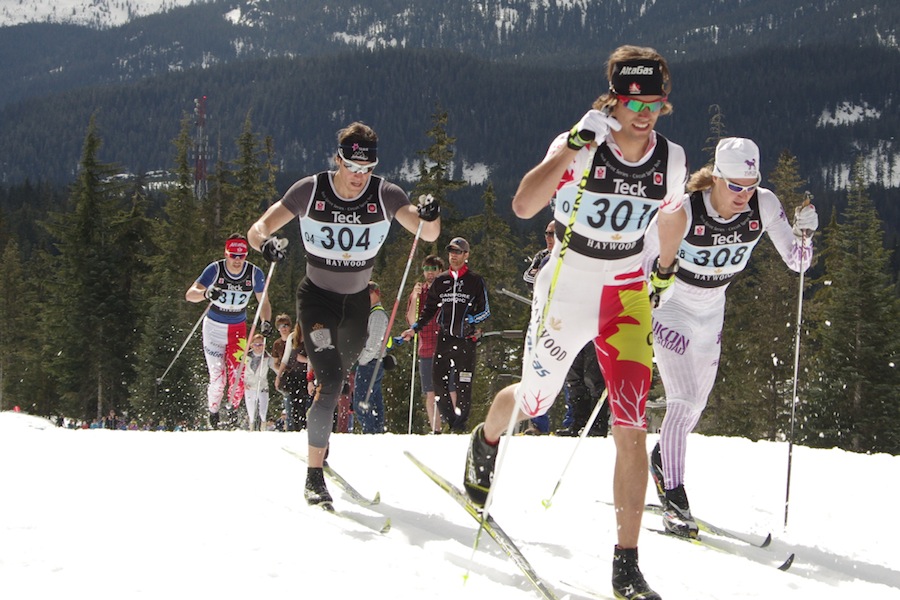
    Japan's Chisa Obayashi (second from r) leads after crashing early in Saturday's 30 k freestyle mass start at Canadian Nationals in Whistler, B.C. Eventual winner, Bettina Gruber of Switzerland (r), runner-up Zina Kocher (l) and Heidi Widmer (second from l) follow. (Photo: Martin Kaiser)
    Japan’s Chisa Obayashi (second from r) leads after crashing early in the 30 k freestyle mass start at 2013 Canadian Nationals in Whistler, B.C. Eventual winner, Bettina Gruber of Switzerland (r), runner-up Zina Kocher (l) and Heidi Widmer (second from l) follow. (Photo: Martin Kaiser)

    WHISTLER, B.C. — Wondering how your favorite Canadian skier is feeling about last season? We asked many of them at Canadian Ski Nationals in late March. Here is the final product of our efforts: a montage of interviews with some of the best (at least the ones at nationals) talking about their seasons and final races in Callaghan Valley.

    Like this? Check out our “Bits from Canmore” video from the Alberta World Cup in December.

  • International Couple Top Canadian Nationals Mass Starts; McMurtry Ends Career with Gold (Updated)

    International Couple Top Canadian Nationals Mass Starts; McMurtry Ends Career with Gold (Updated)

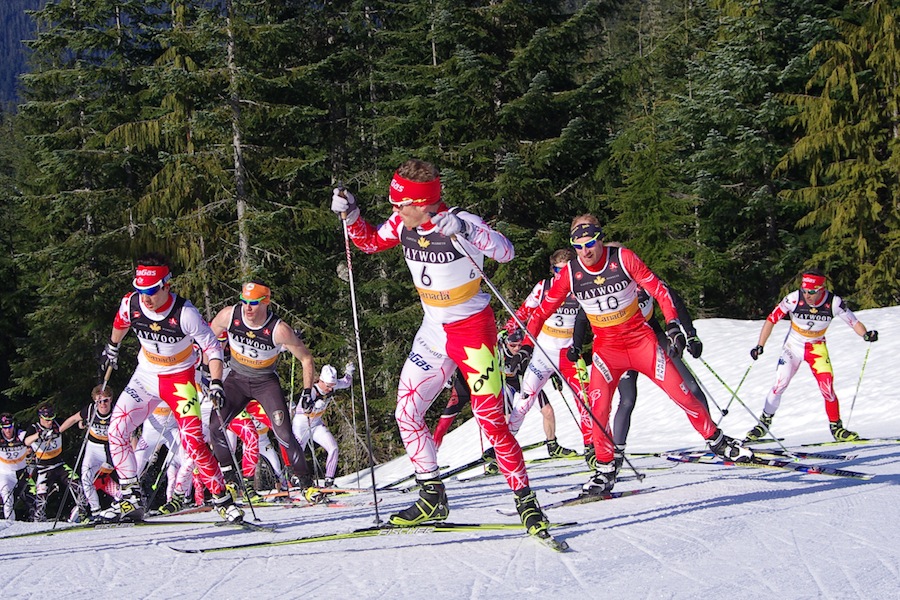
    Former US Ski Team member Torin Koos (Bridger Ski Foundation/Rossignol) leading Saturday's 50 k freestyle mass start at 2013 Canadian Nationals in Whistler, B.C. Koos won the race by 0.4 seconds over Brent McMurtry (AWCA). (Photo: Martin Kaiser)
    Former U.S. Ski Team member Torin Koos (Bridger Ski Foundation/Rossignol) leading Saturday’s 50 k freestyle mass start at 2013 Canadian Nationals in Whistler, B.C. Koos won the race by 0.4 seconds over Brent McMurtry (AWCA). (Photo: Martin Kaiser)

    WHISTLER, B.C. – Canadian Cross Country Nationals ended the way it started at Whistler Olympic Park, with exciting racing and sunshine on a freestyle-technique day.

    In the men’s 50-kilometre race, American Torin Koos (Bridger Ski Foundation/Rossignol) attacked on the final hill and held on to edge Brent McMurtry of the Alberta World Cup Academy (AWCA) by just 0.4 seconds in 2 hours, 4:55.2 minutes. His girlfriend, Bettina Gruber of Switzerland, later won the women’s 30 k.

    Brent McMurtry of the Alberta World Cup Academy (AWCA) checks back during the men's 50 k freestyle mass start at 2013 Canadian Nationals on Saturday in Whistler, B.C. McMurtry went on to place second to American Torin Koos for his second Canadian title of the week. (Photo: Martin Kaiser)
    Brent McMurtry of the Alberta World Cup Academy (AWCA) checks back during the men’s 50 k freestyle mass start at 2013 Canadian Nationals on Saturday in Whistler, B.C. McMurtry went on to place second to American Torin Koos for his second Canadian title of the week. (Photo: Martin Kaiser)

    The men’s runner-up by a ski length, McMurtry, 26, ended his season and career as a National Senior Development Team athlete with one last Canadian title (he won the 15 k classic earlier in the week).

    His teammate, Kevin Sandau was third, 1.8 seconds behind Koos, and Brian McKeever of the Para-Nordic Ski Team took fourth and the Canadian bronze (+2.2).

    The race started at 9 a.m. Saturday at -2 degrees Celsius with the sun starting to rise over the mountains to warm the stadium. The first hour featured hard, crusty snow, with fertilizer making a few climbs hard enough to be difficult for skating.  The first lap was the blue 5 k (Olympic skating) loop, then the men settled in for six 7.5-k laps, featuring the first 4 k of the red loop (Olympic class) then the last 3.5 k of the blue.

    This was the fifth event and eighth day of cross-country nationals and tired bodies contributed to a relaxed pace on very fast snow (the opening 5 k, with a total climb of 170 meters, was completed by the leader at the time – McMurtry – in just over 11 minutes).  The next four 7.5-k laps were completed in about 19 minutes each, with slightly softening snow and increasing intensity resulting in an even pace.  An all-Academy pack with McMurtry, Michael Somppi and Chris Hamilton led much of the opening 35 k, while Graham Nishikawa (AWCA) and Koos skied relaxed in the group.

    On a slower-starting sixth lap, Somppi tried a push before Sandau made a real attack, but Koos ultimately closed on Sandau.

    “I was a little worried; that was the first time I thought maybe I’m not going to have it today,” Koos said. “Two k’s later I felt good again, and I was like, ‘Okay, all right, I know how to win this race.”

    Fifteen men were still together at the start of the final lap.

    “With 5k or one lap to go, I thought Torin was the guy to mark,” McMurtry said. “I was trying to stay on him, watch him.”

    Koos went to the front with about 1.5 k to go and “just slowed the pace to his speed,” Sandau said. “He was definitely one of the guys you didn’t want to bring to the finish line, but he had some good endurance today.”

    “I am a little disappointed,” McMurtry said of his second place. “I had the gas at the top of the hill, but I was behind Brian [McKeever] and I didn’t push to get on Koos. He opened up a bit of a gap. Coming into the stadium, I used some gas to catch up to him. In the final stretch, I just didn’t have the legs to get around him.“

    “I felt really strong and had perfect skis,” McMurtry said, “I enjoyed the final race of my career.”

    McMurtry’s first Nationals win, as a juvenile boy in 2001, was in the sprint where he was beaten by an American, so it was “a fitting way to end my career with a title but also getting beat by an American.”

    The men had similar views on the course conditions:

    Koos: “It was awesome!”

    Somppi: “Conditions were awesome.”

    McMurtry: “It was amazing. A perfect day for ski racing in March, or almost April. You can’t really ask for anything more. Sunny, super fast at the beginning, and still held up really well. A perfect way to go out, a super, super day.”

    In the junior men’s 30 k, starting just after the open men, national-junior team member Raphaël Couturier of the Pierre-Harvey National Training Centre (CNEPH) attacked with more than a kilometre remaining to take the gold by 8.3 seconds in 1:18.15.4. Matthew Vrielink of Rocky Mountain Racers (RMR) placed second, and Sebastien Dandurand (Callaghan Valley TC) outsprinted four others to take the bronze medal, 18.8 seconds after Couturier.

    Gruber Dominates Women’s 30 k

    Japan's Chisa Obayashi (second from r) leads a group after crashing early in Saturday's 30 k freestyle mass start at Canadian Nationals in Whistler, B.C. Eventual winner, Bettina Gruber of Switzerland (r), runner-up Zina Kocher (l) and Heidi Widmer (second from l) follow. (Photo: Martin Kaiser)
    Japan’s Chisa Obayashi (second from r) leads a group after crashing early in Saturday’s 30 k freestyle mass start at Canadian Nationals in Whistler, B.C. Eventual winner, Bettina Gruber of Switzerland (r), runner-up Zina Kocher (l) and Heidi Widmer (second from l) follow. (Photo: Martin Kaiser)

    The women’s freestyle mass start began just before noon with the temperatures already up to 9 degrees Celsius and sun on most of the course.  Organizers previously fertilized the entire stadium, plus the climbs and corners, to preserve the course and it held up well for the women, with a thin layer of slush over a frozen base for most of the blue 5 k course.

    The action started on the first climb out of the stadium with Japan’s Chisa Obayashi (Madshus/Black Jack) taking a hard fall, breaking her pole across both knees, and losing about 40 places.  Obayashi quickly rejoined the leaders, finishing the first lap in the top 10.

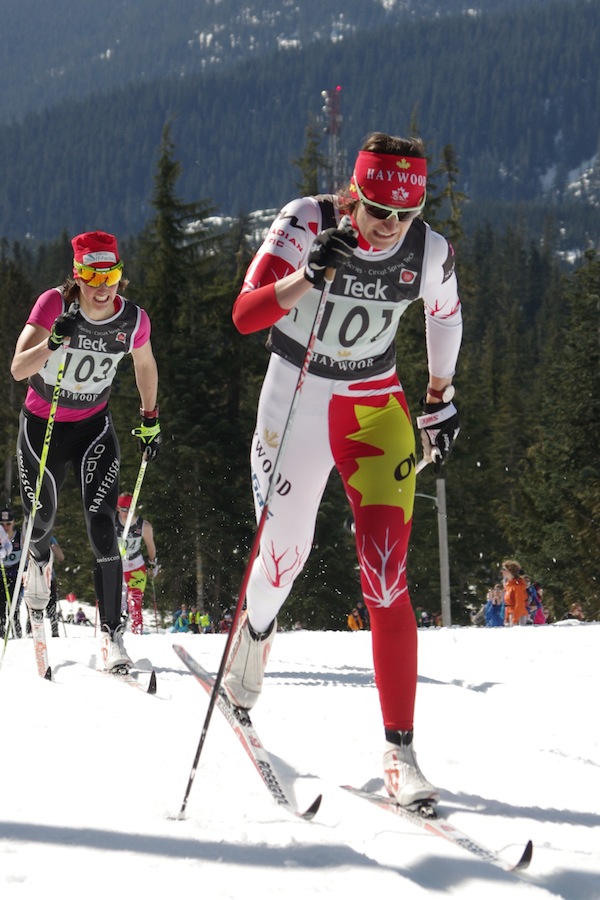
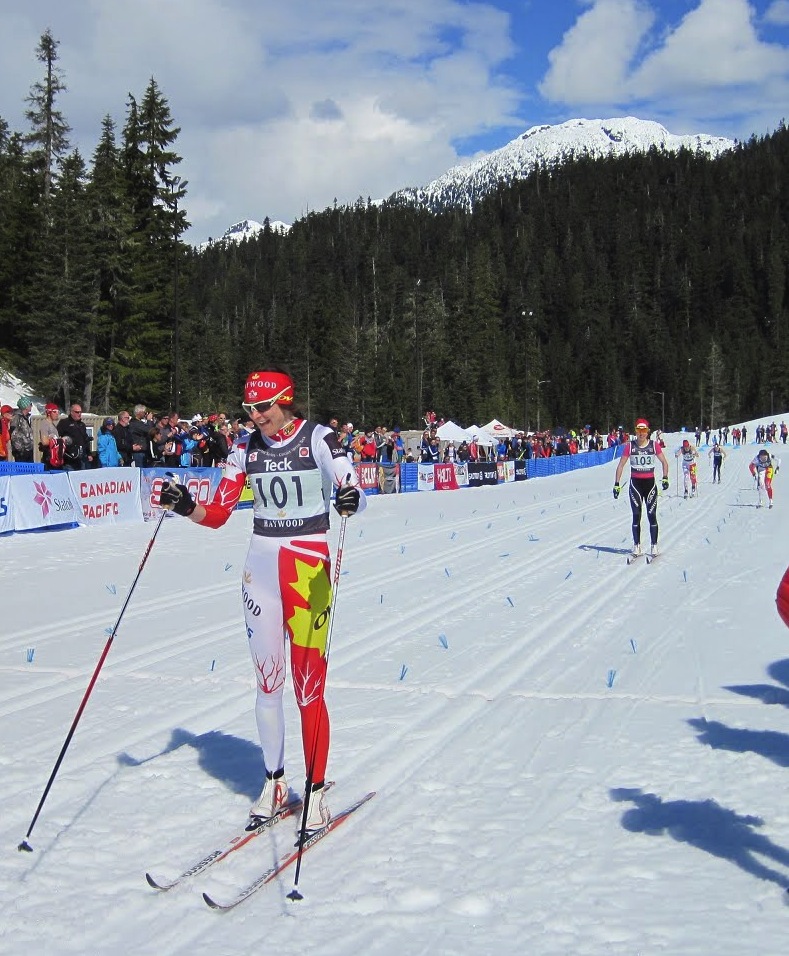
    Bettina Gruber of Switzerland's National Ski Team en route to her first victory at 2013 Canadian Nationals in Whistler, B.C. Gruber won the women's 30 k freestyle mass start by over 40 seconds. (Photo: Martin Kaiser)
    Bettina Gruber of Switzerland’s National Ski Team en route to her first victory at 2013 Canadian Nationals in Whistler, B.C. Gruber won the women’s 30 k freestyle mass start by over 40 seconds. (Photo: Martin Kaiser)

    The second lap quickly separated with a group of four who would ski most of the race together at the front.  Heidi Widmer (AWCA), Zina Kocher (Biathlon Canada), Bettina Gruber (Swiss National Team) and Obayashi slowly grew their lead through three laps.

    On the fourth lap, Obayashi dropped back, with the combination of a tired body from chasing back to the group on the first lap and swelling knees slowing her down.

    On the final lap, Kocher made a hard attack up the first hill out of the stadium and only Gruber followed.  By the staircase climb, Gruber was comfortable again.

    When Kocher faltered, Gruber was able to ski away for the victory in1:18:41.1, 40.2 seconds ahead of Kocher, the top Canadian, in second.  Widmer wasn’t able to close on Kocher, finishing another 19 seconds back in third.

    Resurgent Brittany Webster (Highlands Trailblazers) skied two fast final laps and outsprinted Obayashi for fourth place and the Canadian bronze.  Eliska Hajkova (University of Colorado-Boulder), who struggled with ski speed as the snow softened, took sixth.

    “Until about 15 k, it was four girls together, it was solid speed, a good pace,” Gruber said. “Then it went a little bit faster, and we dropped Chisa.”

    “We kept it pretty easy until that final lap and then we really tried to put on the moves,” Kocher said. “The first one I did and dropped Bettina a bit, but she caught me after the downhill and then she made a move on me on the second uphill in the woods and I could go for half of it, and then I was done.”

    Zina Kocher attacks during Saturday's 30 k freestyle mass start at Canadian Nationals. Kocher was the first Canadian and second overall behind Switzerland's Bettina Gruber.
    Zina Kocher (Biathlon Canada) attacks at the start of the last lap of Saturday’s 30 k freestyle mass start at Canadian Nationals. Kocher was the first Canadian and second overall behind Switzerland’s Bettina Gruber (second from l).

    “It was a lot of fun,” Widmer said. “I definitely exceeded my expectations as far as 30 k’s go. Really strong girls to ski with; Zina, Bettina, Chisa Obayashi and I skied the first four laps together and then on the fifth lap Chisa dropped off.

    “At the end, coming out of the stadium for the sixth lap, Zina and Bettina attacked and I didn’t have the gas to go with them,” she added.

    “That race was really fun,” Webster said, despite struggling with the pace from the start. “I was yoyo-ing off the back, got swallowed up by the girls behind and then kind of accelerated again.

    “I had the best skis ever, so that was definitely a bonus,” Webster added. “Foothills Nordic did my skis, and yeah, they were phenomenal.”

    “After start, I crashed, my pole is broken and I scratched my knees,” Obayashi said. “First lap, I used too much energy, so fourth, fifth, sixth laps, I lost energy.”

    Gruber said the conditions were “pretty good. I was surprised, I thought it would be slower and more sluggish, but the track held up pretty well.”

    In the junior women’s 20 k, Cendrine Browne (CNEPH) skied away from teammate Anne-Marie Comeau to take the gold by 3.7 seconds in 54:47.6.  Biathlete Julia Ransom (Canmore) finished third, 49 seconds after Browne.

    While the fertilizer gave the men an extremely fast course and the women a fairly fast course, the sheer volume of younger skiers and a high of 15 C created slushy skiing by the end of the day.

    At the end of a long week and a long season, the start list was shorter.  There were 79 open men, 45 junior men, 53 open women, 22 junior women, 73 juvenile boys, 82 junior boys, 59 junior girls, 74 juvenile girls, and 14 para-nordic skiers.

    More than 150 volunteers made this event possible.

    ***

    Full results and splits are at zone4.ca, with photo galleries coming at the event website.

    Results by race:

    Men’s 50 k

    Junior men’s 30 k

    Women’s 30 k

    Junior women’s 20 k

  • Gaiazova, Valjas Take Charge in Canadian Nationals Classic Sprints

    Gaiazova, Valjas Take Charge in Canadian Nationals Classic Sprints

    Dasha Gaiazova leads Switzerland's Bettina Gruber in Thursday's 1.4 k classic sprint A-final at Canadian Nationals in Whistler, B.C. Gaiazova won the final ahead of Gruber and Canadian World Cup teammate Perianne Jones, respectively. (Photo: Martin Kaiser)
    Dasha Gaiazova leads Switzerland’s Bettina Gruber in Thursday’s 1.4 k classic sprint A-final at Canadian Nationals in Whistler, B.C. Gaiazova won the final ahead of Gruber and Canadian World Cup teammate Perianne Jones, respectively. (Photo: Martin Kaiser)

    WHISTLER, B.C. – On another sunny day at Whistler Olympic Park, Canadian World Cup team members Dasha Gaiazova and Lenny Valjas set the standard, earning national titles in their favourite event – the classic sprint – on Thursday.  Both won their respective 1.4- and 1.6-kilometre qualifiers at Canadian Nationals on fast, icy snow before delivering once more in the soft-and-slow finals.

    Racing started early, as the para-nordic skiers and more than 300 younger racers competed in the sprints on Wednesday.  By the time 75 women and 117 men finished the qualifiers on the Olympic courses, the crunchy, fast snow of Thursday morning was already turning to a thin layer of slush.

    Dasha Gaiazova smiles as she cruises across the finish in first, claiming her second-straight title at 2013 Canadian Nationals in Thursday's 1.4 k classic sprint in Whistler, B.C.
    Dasha Gaiazova smiles as she cruises across the finish in first, claiming her second-straight title at 2013 Canadian Nationals in Thursday’s 1.4 k classic sprint in Whistler, B.C.

    The women’s event was fairly straightforward with Gaiazova leading each heat most of the way around before finishing the 1.4 k course with a clear gap. In the final, Gaiazova coasted in with a big smile, followed by Swiss National Team skier Bettina Gruber comfortably in second.  Gaiazova’s teammate, Perianne Jones over-powered Alysson Marshall of the Alberta World Cup Academy in the final stretch to take the silver medal.

    “Classic sprinting, I love it!” Gaiazova said.  “I had a great qualifier and it went really well in the heats.”

    Still struggling with jet lag, Gaiazova came to the venue on Wednesday to watch the younger racers and award medals.

    “It could be almost more fun than winning medals because you just see the joy on the faces of those people,” she said. “I got a chance to give out medals to para-skiers. It is so inspiring to see them race and fight.”

    Gruber, who was second in the same event at Swiss Nationals earlier in the month and is headed to U.S. SuperTour Finals next week, was happy with her day.

    “Pretty good, I would say, for just coming over to Canada,” she said. “Qualifying felt no so good; it was hard fight.”

    “Qualifying was pretty icy, hard packed conditions are not my favourite,” Gruber said.  “Right now, it’s pretty good, it’s a little slushy but still kind of good track.”

    The second Canadian, Jones was happy with her performance. “It was really fun, and I am really happy that my season is over now,” she said.

    Signing autographs before Thursday’s medal ceremony, Jones also handed out awards on Wednesday.

    “It was great to be up here and see the kids race and give out medals at the end of the day,” she said. “That’s why we’re here, to see that next generation come up.  It’s nice to see them race super-hard and then get to shake their hands at the end.”

    Marshall collected her third individual bronze of these championships, putting a strong finish on a challenging season.

    “I was feeling strong, and I was pretty close to Peri, so I am happy with that,” she said.

    Marlis Kromm and Heidi Widmer took fifth and sixth for the Academy, making the A-final after winning Saturday’s team sprint.

    Marshall and Gruber will be racing Saturday’s 30 k freestyle mass start, while the other podium finishers take a break.  Gaiazova will be going to Russia in two weeks for a sprint race, and is resisting the temptation to do the distance race.

    “The race organizers have done a great job and it’s a great venue,” she said.  “It’s a pleasure to race here, for sure.”

    Emily Nishikawa (AWCA), who also made time to give out awards on Wednesday, opted out of the sprints coming off some fatiguing races at World Cup Finals.

    Vajlas Takes Control

    In the men’s 1.6 k sprints, Valjas relied on tactics to collect his third national title in his only race at this year’s championships.

    Lenny Valjas of the Canadian World Cup Team leads Phil Widmer of the AWCA (l) and Knute Johnsgaard of the Yukon Elite Squad (r) in Thursday's  1.6 k classic sprint A-final at Canadian Nationals in Whistler, B.C. Valjas went on to beat Graham Nishikawa and Widmer, who were second and third, respectively, for the title. (Photo: Martin Kaiser)
    Lenny Valjas of the Canadian World Cup Team leads Phil Widmer of the AWCA (l) and Knute Johnsgaard of the Yukon Elite Squad (r) in Thursday’s 1.6 k classic sprint A-final at Canadian Nationals in Whistler, B.C. Valjas went on to beat Graham Nishikawa and Widmer, who were second and third, respectively, for the title. (Photo: Martin Kaiser)

    His tall build and slick skis allowed him to move to the front on every downhill.  With marginal grip, he judged his efforts on the climbs and finished comfortably in the top two in the quarterfinal and semifinal.  In each heat, he led into the finishing straight, taking the fastest lane in the increasingly wet snow.

    In the final, Phil Widmer (AWCA) followed Valjas into the stadium and moved over a lane to start the double-pole battle.  In the slower lane, Widmer was unable to stay with Valjas, and his teammate, Graham Nishikawa, took advantage of the faster tracks to steal second, nearly running over Valjas, who slowed at the line.

    “I was just out here to enjoy the day and have fun,” Valjas said. “It’s been a long season and I’m happy with how it ended up.”

    Asked about his backup plan for the finish, he said, “I had one extra, tiny, gear if someone did show up beside me.”

    A man of few words, Nishikawa answered a question about whether he expected to get a medal in the classic sprint with “No,” and a laugh. On tactics, he was more verbose.

    Graham Nishikawa (AWCA) puts out his hands to prevent crashing into Thursday's sprint winner Lenny Valjas (l).
    Graham Nishikawa (AWCA) trying not to crash into Thursday’s sprint winner Lenny Valjas (l) after the A-final.

    “A lot of guys [had] superfast skis,” Nishikawa said. “I think mine were right in the middle, good kick and decent speed, I got passed on the first downhill by some guys with fast skis but my strength is striding so I need the good kick.”

    Widmer could have played it safe and followed Valjas for a near-certain silver, but chose to put it all out there, to the delight of the crowd.

    “It is the end of the season, and the body is feeling it a little bit, but for the most part it was good,” Widmer said after the race.  “It’s nice to have Lenny here and the Americans.”

    Jess Cockney (AWCA) took fourth, after poor grip in the final caused him to lose ground on each of the climbs.  Cockney saved his energy for a fast finish in the quarter and semi, but wasn’t close enough in the final to use his speed.

    Rune Ødegärd of the University of Colorado-Boulder took fifth ahead of a breakthrough performance by Knute Johnsgaard (Yukon Elite Squad).

    Two Norwegians, Ødegärd and his Colorado teammate Trygve Markset, who was ninth, were the only men to try double poling on skate skis and qualified in 16th and ninth, respectively.

    After the race, Ødegärd said they made the decision so they wouldn’t have to re-wax after the qualifier.  Without a support team, they skied all three heats on the same wax. Ødegärd had great skis in the quarter, gliding up from the back of the group to win, but reversed the process in the final, losing places on each downhill.

    Americans Torin Koos (Bridger Ski Foundation/Rossignol) and Dakota Blackhorse-Von Jess (Bend Endurance Academy), who qualified in second and third behind Valjas, took advantage of those results in the quarters, knowing that a third place would guarantee them a lucky-loser spot.

    NorAms and nationals use untimed heats to reduce the number of volunteers required. This changes the way that lucky losers are chosen from the best two times among third- and fourth-place finishers to the two lowest bib numbers who placed third.

    Koos reported to the jury that he was obstructed in the semifinal and requested a spot in the A final.  The jury reviewed the video and decided that there was “no evidence of obstruction.” After a 10-minute delay, the A-final was run without Koos being added as a seventh starter. He ended up 12th and did not start the B-final.

    Final results

    Complete qualifying results

  • For Once, Americans and Canucks to Race on Home Turf

    The Canadian cross-country ski team, pictured, is competing on home turf for the first time since 2010. Photo, Gestev/Michel Arnautovitch

    QUEBEC CITY – When Canadian cross-country skiers Len Valjas and Devon Kershaw went to get coffee on Thursday, they didn’t have to wander the streets looking for a good spot, as they do when they’re on the World Cup circuit in Europe. Instead, they headed straight for a place called Le Nektar.

    “We know where everything is,” Kershaw said. “We didn’t just go to a random café.”

    For the first time since the Vancouver Olympics, in 2010, the world’s elite cross-country skiers have traveled across the pond, for a pair of race weekends in Quebec and Alberta.

    Since the American and Canadian national ski teams had been racing in Scandinavia through Sunday, they’re suffering from sore legs and jet lag just like their European counterparts. Nonetheless, the transatlantic swing has upended the typical order on the World Cup circuit: the North Americans are racing on home turf, while the Europeans are an ocean away from theirs.

    That’s afforded the local teams several perks.

    The U.S. team, for example, didn’t have to ship all their waxing equipment back from Europe; instead, they could use irons and benches supplied by American clubs.

    Instead of staying at the race hotel in Quebec City, the Canadian men have been sleeping at the nearby home of Alex Harvey, where the team enjoyed a Christmas dinner with presents and a tree.

    “Even though it’s not our home, it’s a home,” Valjas said.

    And for once, it’s the Europeans who had to pack adapters for their electronics—something Kershaw relished when he was asked about it by a German competitor, Jens Filbrich.

    “We were like, ‘Sorry buddy, you have to pack that 1960s brick to transform your power,’” Kershaw said. “That’s what we’ve been doing for years.”

    From an athletic and logistical standpoint, the playing field for the Quebec City competitions will be largely level. The sprint course is a new one this season, so despite the fact that the race will be held near Harvey’s hometown, the Canadians don’t have any extra experience with the track.

    And since the heavy hitters on the two North American teams were racing in Finland last weekend, they’re no less jet lagged than the Europeans.

    “Our guys look tired at night as much as everybody else,” said Chris Grover, the head coach of the U.S. team. “I think everyone’s kind of catching their breath.”

    The advantages are mostly around the margins. There’s some extra equipment: the U.S. squad, for example, brought four exercise bikes for warm-ups, supplied by a pair of Vermont club teams.

    And there are also friends and family: Kikkan Randall, the star American woman, had the support of her mother while she took laps of the sprint course on Thursday.

    Andy Newell, the American sprinter from Vermont, has a contingent of some 25 people traveling to watch him race in Quebec City, including one of his youth coaches, plus a crew of buddies driving up in a converted white schoolbus, complete with couches and a full bar.

    “It’s not going to be any different racing,” Newell said. “But it’ll be fun afterwards.”

    For the Europeans, the travel to North America offers some inconveniences, but also some nice changes—especially since this weekend’s races are taking place in an urban setting, with racers staying in the plush Hilton Quebec.

    “Everything is bigger, and everything is new,” said Bettina Gruber, a Swiss racer.

    Most Europeans, Gruber said, “are not used to traveling” so far to get to races.

    She too had to remember to pack an adapter. But on the other hand, Gruber added, the food in Canada has been “at least as good” as what’s available in Scandinavia—and even offers some novelties.

    “I’m really into the Greek yogurt,” she said.


  • Team 9: Switzerland

    Team 9: Switzerland

    Switzerland

    Nations Cup Ranking: 9th (2013 pts)

    Men: 7th (1729 pts)

    Women: 15th (284 pts)

    2010/2011 World Cup Team

    Men

    Dario Cologna

    Curdin Perl

    Toni Livers

    Remo Fischer

    Women

    Silvana Bucher

    Bettina Gruber

    Doris Trachsel

    What you may have missed last season:

    After going from zero to hero between 2007 and 2009, Dario Cologna took a step backwards in 2010, falling to fourth in the race for the Crystal Globe. While he was still undeniably one of the strongest men in the World Cup field, as his bronze medal on the Tour de Ski and gold in the Olympic 15 k  show, Cologna’s leg injury in the fall slowed him at start to the season. He failed to crack the top 10 until December 19 in Rogla, Slovenia, and his first medal came during the fifth stage of the Tour de Ski, during a slightly awkward sprint finish with Petter Northug and Marcus Hellner.

    But more importantly, Switzerland wasn’t just the Dario Cologna show last year. Curdin Perl was a solid-if-not-spectacular distance skier, and more

    Curdin Per's FIS profile picture

    importantly, looks like he really loves life. Toni Livers and Remo Fischer were similar, and after the first race at the Olympics, where all four skiers finished a Canadian-esque top 17 on the day, hopes were high for the relay. But they were unable to pull off a Czech-like upset there.

    As for the sprinters, Eligius Tamborino was the best after Cologna. His chief problem is his abysmal classic sprinting, in which he failed to qualify for a single set of heats, while in skate he made the cut.

    As for women, things are a little light. Silvana Bucher was the best of the lot, collecting all her points in just three stops on the circuit – most notably finishing sixth in the competitive skate sprint in Oslo, Norway. Meanwhile Bettina Gruber, currently nursing a shoulder injury, skate sprinted well, although like Tamborino, her classic technique could use some work.

    In other news, longtime women’s team stalwart Laurence Rochat has decided to end her career. At the same time, sprinter Seraina Mischol, who scored over 500 World Cup points in 2008, was pegged to retire after collecting just one point last season. But she’s still training hard.

    What You Should Know For This Season

    Despite finishing fourth and taking a large hit in World Cup points in 2009-2010, Cologna is nowhere near finished. He is arguably the third best all-around skier on the World Cup, after Northug and Hellner, and is a good bet to finish in the top 10 no matter what race is on tap.

    While he may have the worst nickname on the circuit (Super Dario – really?) Cologna does have a massive fan club, with nearly 6,000 fans on Facebook. In comparison, FasterSkier has a paltry 600.

    If you thought the Canadians had a confusing and convoluted coaching history, check out Switzerland. The Swiss briefly picked up Canadian castoff Inge Braten this spring, but he failed to stick, and after dismissing him this fall, they opted instead for Guri Hetland (wife of former Norwegian sprint star and current Swiss sprint coach, Tor Arne Hetland) to lead their distance team, with Fredrik Aukland, Dario Cologna’s personal coach, in a support role. Still not really sure who is coaching whom in Switzerland? Yeah, us neither.

    Also, if you’re a Nikolai Pankratov fan, and you’re disappointed that he won’t be skiing this winter, blame the Swiss – their border guards were the ones who busted him.

    Who You Should Watch

    For immediate World Cup success, Silvana Bucher is the best bet. She has the speed, obviously knows the sprint course in Oslo quite well, and won two distance races plus the sprint at Swiss National Championships last year.