Tag: biking

  • The Other Tour: Roadside Perspective from the Tour de France

    The Other Tour: Roadside Perspective from the Tour de France

    Recently I’ve become rather obsessed with the Tour de France. Having never watched a bike race previously, I now find myself glued to Eurosport for upwards of five hours a day. There are a number of factors contributing to this shift on my part: an increased familiarity with the landscape and culture of the host nation, some covid-induced couch time, and a newfound respect for the insane feats of athleticism on display day after day. 

    Aware that this is a cross-country skiing publication, I should point out that this famous bike race is not totally without connection to our sport of focus here at FasterSkier. The event that ski fans might refer to as “the Tour” (the Tour de Ski) is the result of an idea allegedly generated in a Norwegian sauna by then International Ski Federation (FIS) cross-country race director, Jürg Capol and ski legend, Vegard Ulvang. Following the germination of this idea, Capol visited the Tour de France in 2006 before the first edition of the Tour de Ski. According to an FIS press release, “the goal of the trip was to gain valuable insight into the logistics, marketing implementation, television and internet production and accreditation services that are part of the organization of any world-class sports event consisting of multiple stages.” 
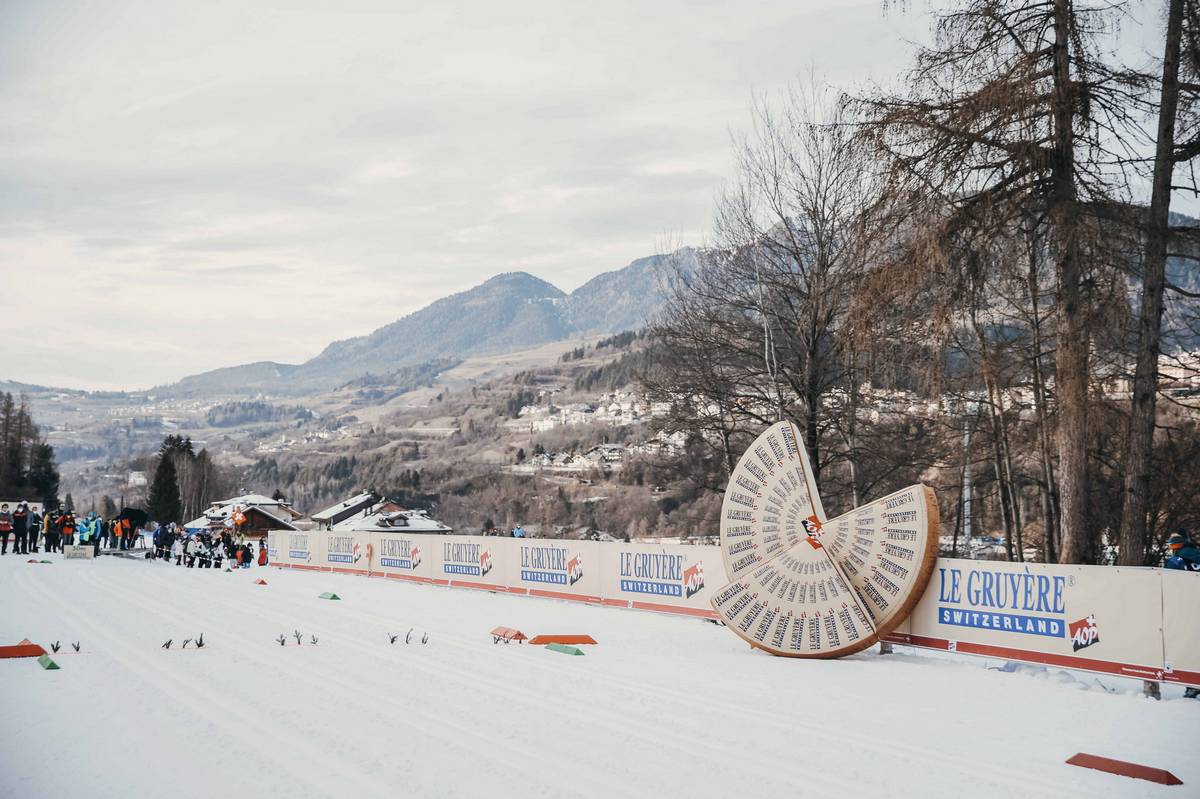
    The course in Val di Fiemme, ITA  prepped and ready for the men’s mass start during the 2021-22 FIS Tour de Ski. (Photo: NordicFocus)

    After his visit Capol remarked, “the logistical accomplishments of the local organizing committees at the Tour de France are truly remarkable… I am convinced that the organizers of the FIS World Cup Cross-Country could all learn a lot by reaching out to other sports and events in the future.” 

    The logistics are just one of the many impressive things about the Tour de France, which saw its 109th edition start in Copenhagen on the first of the month. The spectators are another. Without having witnessed either race in person, I imagine the atmosphere at the Tour de France being somewhat akin to the Holmenkollen World Cup, only lasting three weeks as opposed to two days. 

    To gain some insight on the roadside spectating experience, I reached out to a few people who made it there in person. 

    Anna Gibson grew up watching the Tour de France annually with her family from their home in Wyoming. Gibson said, “even on TV, I could tell how physically and emotionally intense the Tour was. It has always impressed me. But getting to watch the Tour in person made me realize that the race is even more athletically impressive than I ever thought.” 
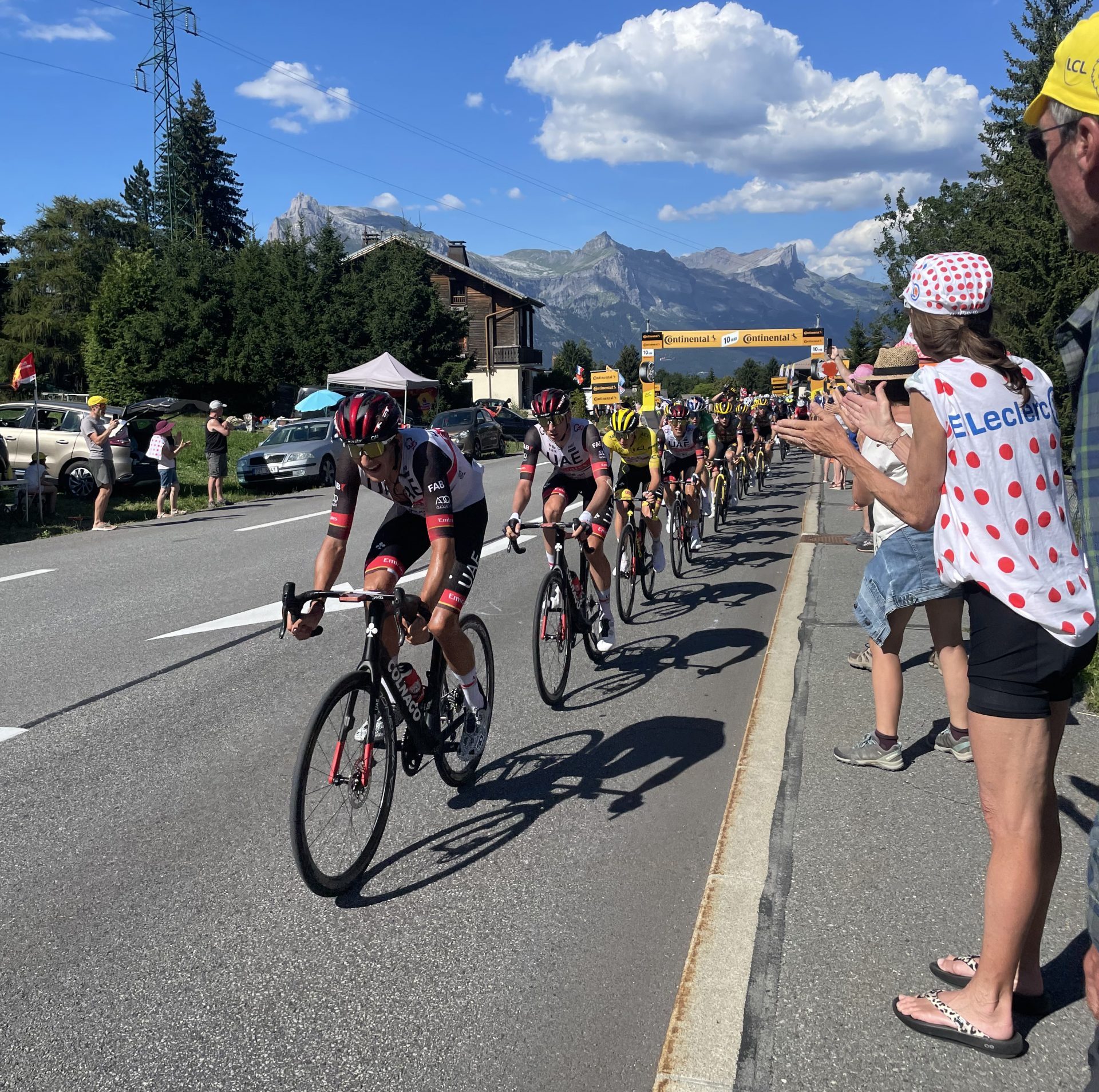
    Team UAE riders lead the yellow jersey, then worn by Tadjec Pogačar of Slovenia, on Stage 11 (Photo: Anna Gibson)

    Consisting of 21 stages stretched over three weeks, bikers race a total distance of 3,328 kilometers (2,068 miles) with just two rest days. Though each stage varies in distance and elevation gain, even the ‘easiest’ of days look challenging on paper.

    Sophie Stuber was on her own multi-day bike adventure with a friend, and planned a route overlap with the Tour in a few places. “It definitely gives you such an appreciation for what they do because our tour days were basically half or a third of the length of a stage and the [pros] climb up 11% grades literally twice as fast. And our days felt hard,” she added. 

    Fans line the road as Tadej Pogačar (UAE) and Jonas Vingegaard (Jumbo Visma) battle on Stage 11 (Photo: Anna Gibson)

    Aside from appreciating the overwhelming physical performances of the riders and the obvious excitement of watching the athletes ride by, spectating at the Tour is a fully immersive experience. As Gibson explained, “What you don’t see on TV is everything that happens before and after the riders pass through… The entire day is a party for everyone involved, whether they watch in town, or camp on the side of the mountain the previous night and picnic all day beforehand, or ride up the climb earlier in the day to find a spot to spectate.”

    Gibson chose the latter option for Stage 11 (which turned out to be a pivotal race day as two-time Tour winner Tadej Pogačar from Slovenia lost nearly three minutes to his rival Jonas Vingegaard of Denmark who currently wears the yellow jersey). The portion of the stage that Gibson rode included 30 miles and 7,700 feet of climbing from Saint Jean de Marienne to the summit of the Col du Galibier. Gibson said, “although this segment was just the middle section of the stage for the pros, this was amongst the most challenging rides of my life, and unquestionably the most fun.” 
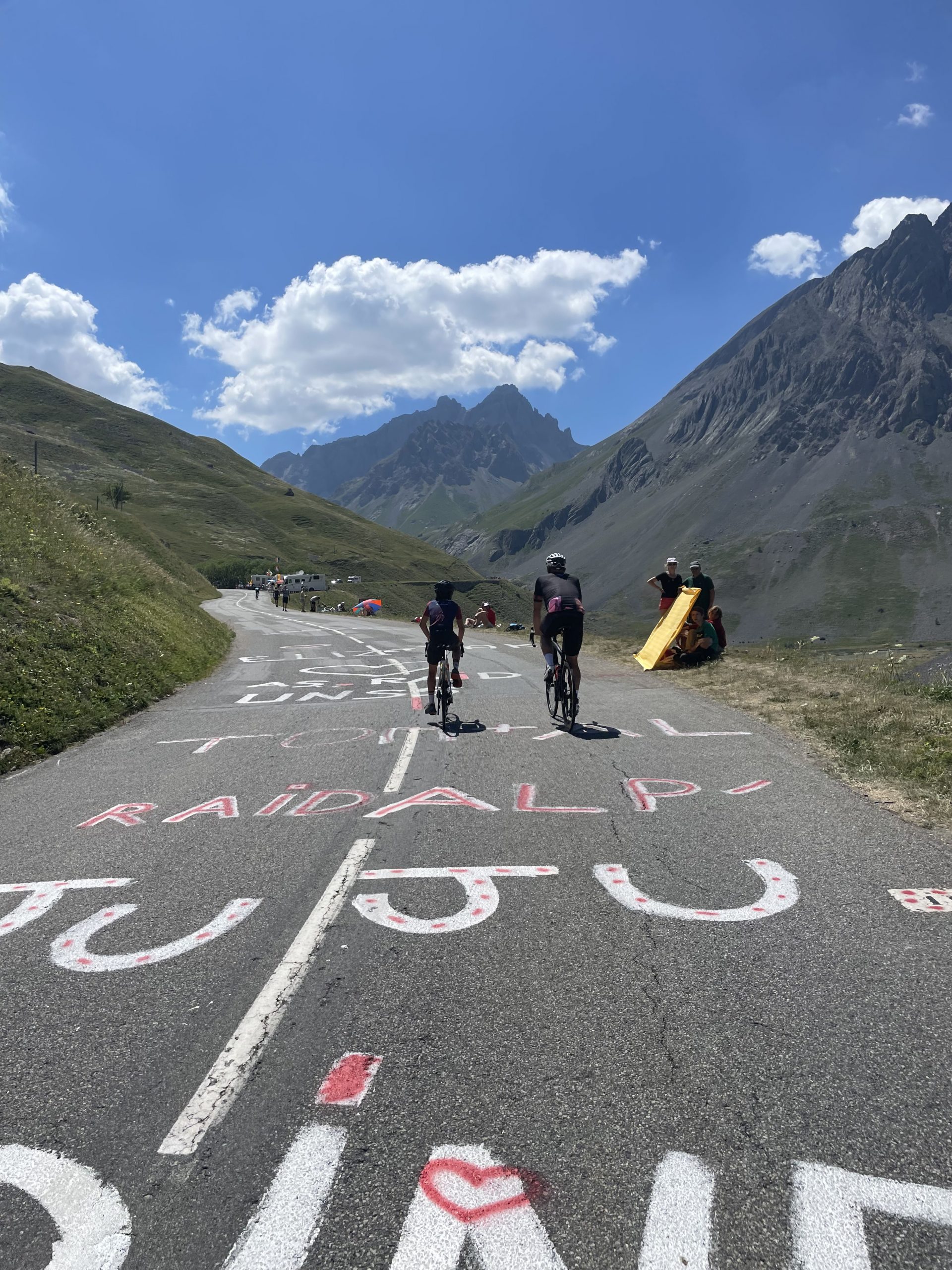
    Heading up the Col du Galibier in the morning before the riders come through (Photo: Anna Gibson)

    The racers aren’t the only ones getting encouragement from the crowds, Gibson said, “I even got small tastes of what it must be like to be in competition, as some of the crowd hollered ‘allez’ or ‘femme’ or ‘bravo’ as I laboriously pedaled onward. People waved flags for me and made tunnels. The energy was infectious, and by the time I reached the top and gently laid my bike down on the rocks, exhausted and exhilarated, I was doing the same for the other random people reaching the summit.” 

    Waiting for the riders to arrive, Gibson talked to fellow fans from all over the world. With no cell service available, anticipation was high to see how the race was unfolding. Gibson said, “It turned out to be a very exciting stage, with small groups of riders separated by several minutes. People (including me) went absolutely berserk watching the race unfold before their eyes. A few of my idols rode through, crusted in salt from the afternoon heat. Seeing them do their thing in person was legendary!”
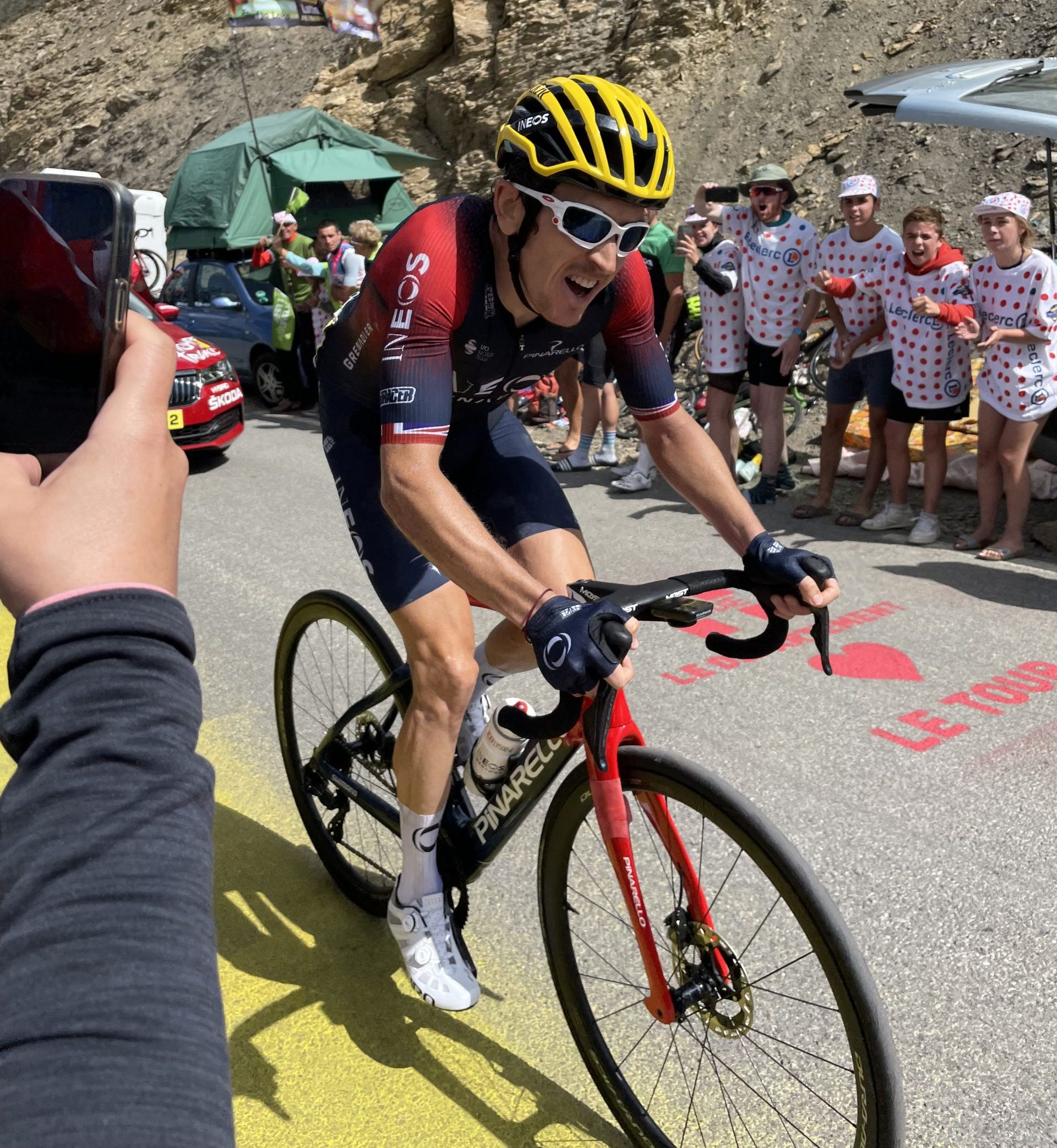
    Victor of the Tour de France in 2018, Geraint Thomas heads up the Col du Galibier, riding for team Ineos Grenadiers (Photo: Anna Gibson)

    With the racers through, the crowds also had to make their descent, which Gibson described as “epic.” She said, “I assumed a position in what was essentially a civilian peloton, ripping down turn after turn. Returning to Valloire at the base of the climb, I came across a big screen broadcasting the end of the stage in the cobbled center plaza. The pace was packed and the party went on.” 

    Though she only watched three of the twenty-one stages, Gibson said, “I can imagine the party goes on in this same manner for the whole three weeks of the Tour. It is a production. And seriously one of the coolest things I’ve ever seen.” 

    After such a testimony, I’m ready to add in-person Tour de France viewing to my bucket list. For the time being however, the screen experience will have to suffice. 

    With 76 hours, 33 minutes and 57 seconds on the cumulative race clock for leader Jonas Vingegaard, only one stage remains before the 2022 Tour de France comes to an end- on the Champs Élysées in Paris on Sunday. Lucky for me, the race watching opportunities don’t end there as the first edition of the Tour de France Femmes kicks off the same day.
  • A National Team’s Question: How to Get to the Next Camp? Its Answer: Bike!

    A National Team’s Question: How to Get to the Next Camp? Its Answer: Bike!

    Like a lot of national teams, the U.S. biathlon squad has training camps at different facilities around the country throughout the year. And after a stint at the Camp Ethan Allen Training Site in Jericho, Vermont, this week, they needed to get home.

    Unlike most national teams, they solved the logistical challenge by biking there – all the way to the Olympic Training Center in Lake Placid, New York.

    Susan Dunklee training in Bend earlier this summer.

    “It’s funny because it sounds kind of long, but I don’t think it’s even 100 miles,” laughed A-teamer Susan Dunklee. “I feel pretty badass after I do it, but then I think what the Ironman participants are going to be doing this weekend and it doesn’t seem that impressive.”

    The team covered a large part of that distance on back roads. Their one major geographical obstacle was Lake Champlain, a 490-square mile behemoth that runs 125 miles along the Vermont-New York Border. Rather than take a ferry – a nice opportunity for a snack break – they rode south to a bridge, and after leaving Jericho at 8 in the morning, arrived home around 3:30. Dunklee said she didn’t bonk until about a mile and a half from the Training Center, and headed straight for the food to recover.

    After a week of hard training in Jericho, Dunklee appreciated something different.

    “Mixing it up is exciting,” she said in a phone call from Lake Placid. “We did it last year, and I think people liked it a lot – it was tough, but it was good, so we decided to do it again this year.”

    Plus, it fit with her training plan.

    “I wouldn’t say it would [have been] a wasted day because it’s only two hours to get there, so we easily could have done a workout or two,” Dunklee explained. “But it’s that time of year when we’re trying to put in a ton of volume, and it’s a really fun way to put in a good day of volume.”

    Volume hadn’t actually been the focus of the Jericho camp; the team had done a few time trials, while volume is still two weeks away on the schedule. One of the main things that exhausted them was actually the humid, muggy heat wave that has hit New England just like the rest of the country.

    “It cooled off a lot today compared to what it was before,” Dunklee said. “The heat was definitely getting to us doing combos and such on the range this past week, and living in the barracks where there’s no air conditioning [note: Camp Ethan Allen is an Army National Guard site that also houses the Mountain Warfare School].

    “But today felt pretty nice,” she continued. “It was still warm, but on a bike you get a lot more breeze.”

    The beginning of the camp also featured a guest appearance by German World Champion and Olympic gold medalist Andrea Henkel, who was at the end of a long stay in the States; she had also joined in some sessions in Lake Placid earlier. In Jericho, she was mostly training on her own, doing a series of intensity trials to make up for missing her own national team’s testing block. But the U.S. athletes still appreciated having her.

    Henkel crossing the line for gold as the anchor leg of the German relay at 2012 World Championships. She’s been in the U.S. visiting Tim Burke. Photo: NordicFocus/USBA.

    “It was great to see her on the range, and we did a few shooting drills and stuff when she was around,” Dunklee said. “She shoots really fast. It’s nice to have her there to remind us what we have to strive for.”

    It’s not the first time Henkel has joined in; as the long-time girlfriend of U.S. athlete Tim Burke, she has visited before. But Dunklee, who just completed her first season on the World Cup, says that this time around, she’s getting more out of the superstar’s presence.

    “I think having been on the World Cup, now I feel a lot more confident about being able to– I guess I just don’t feel as intimidated by her as I used to,” said Dunklee. “So that allows me to look at her a little more objectively, at what she does. I see a lot to learn.”

  • Spring Training: Randall Races in Bike For Women Time Trial

    Spring Training: Randall Races in Bike For Women Time Trial

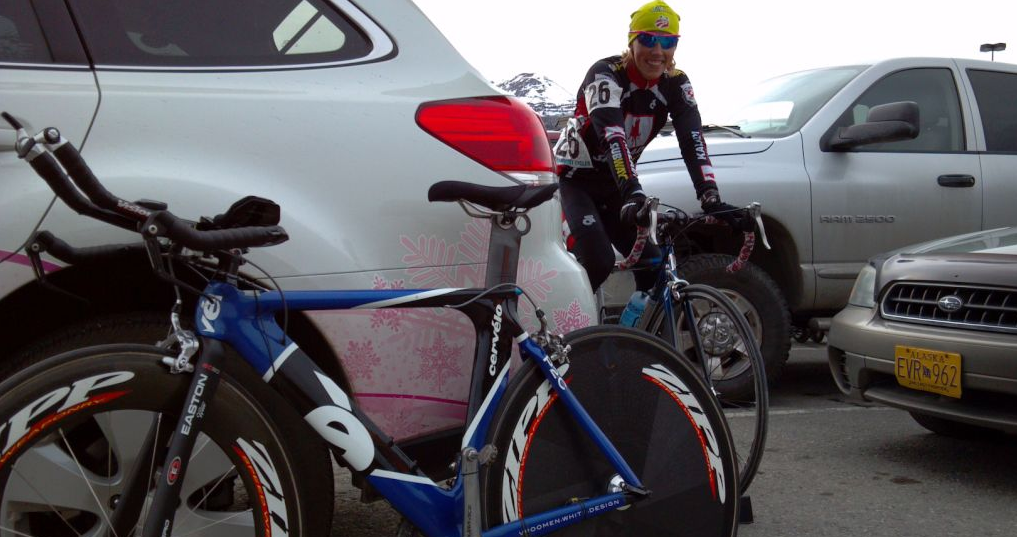
    Kikkan Randall warming up for the Bike for Women time trial on Sunday. Courtesy photo.

    The beginning of May is generally viewed as the official start of spring training, and everyone has their own preferred activity for getting back in the swing of things. Alaska’s resident Crystal Globe-winner Kikkan Randall (APU/USST) decided to kick her off-season into gear with a hard effort on the bike; over the weekend she entered her second-ever time trial, the 12th annual Bike For Women in Anchorage. A grand total of 526 women aged eight to 70 completed the nine-mile race; Randall was fourth to local triathlete Shannon Donley. We asked her about the race and how she incorporates biking into her spring and summer training.

    FasterSkier: Have you entered many bike races before? What were you expecting out of this one?

    Kikkan Randall: This was my second bike race ever. I did one time trial a few years ago but it was on my regular road bike with a regular helmet. I’ve also done the women’s triathlon the last few years and ridden hard in that race. But this was my first time doing a pure time trial on the bike with a time trial bike and the fancy helmet.

    My friend talked me into doing the Bike for Women this year. I figured it would be a fun new challenge and a good way to get in a hard effort as we’re back into training this first week.

    It was a great experience. I warmed up on a stationary trainer. The warm-up was pretty hard and I was actually a little anxious about how hard the race was going to hurt. Once I got into the race however, I actually felt pretty good. The course is deceiving because it’s mostly downhill on the way back. The second half was really tough. I can tell I have a lot to learn about corners and shifting, but it was fun to try something new.

    FS: This looks like it was a big race. How big a deal was the event? How serious was the field?

    KR: The women’s-only events in Anchorage are big events!  Many of the events sell-out within a matter of hours. There is a Bike for Women, Triathlon for Women, Run for Women and Ski for Women. If you finish three of the events in a year, you get a triple finisher patch.

    The fields in each event are usually pretty competitive. One of the top triathletes up here has won age-group nationals before and there is a group of women that train together pretty seriously. Yesterday, there were quite a few women out there with pretty fancy bikes!

    It was a fun event. I definitely credit growing up in a community where these women only events are quite common and prosperous (and competitive) for helping make sport and competition such a natural part of my life.

    FS: How much does biking factor into your spring and summer training, usually?

    KR: I like to bike 1-2 times per week during my spring/summer training. I usually just ride for recovery mid-week, or sometimes for an afternoon distance session. I really enjoy biking.

    FS: How has your spring training been going, overall?

    KR: The spring has been good. Overall I’ve trained a little less this spring than in previous years, just to make sure I recover from the high load of racing from the winter. The last two weeks I’ve been building back into training. I started off with a bunch of road biking in Maui while on vacation with my husband. Then this past week, APU kicked off the new training year with our annual Start-Up Camp. We did a ton of crust skiing and got back in the weight room. It’s been a bit of a shock but I’m actually excited to be back in the training rhythm again.

    2012 Bike for Women Results