Tag: Bill Bowler

  • ‘Midwest Might Not be the Most Sexy Training Site’ But It’s Got the Athletes, Says New CXC Team Coach Keller

    ‘Midwest Might Not be the Most Sexy Training Site’ But It’s Got the Athletes, Says New CXC Team Coach Keller

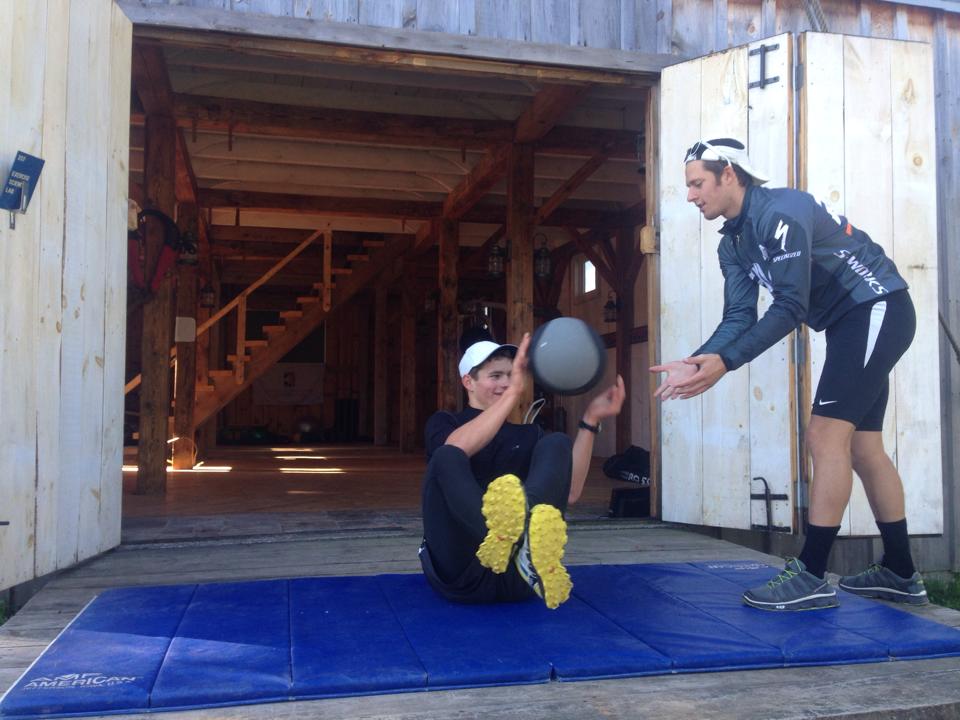
    The newly appointed CXC Team Head Coach Andy Keller (r) works on strength with an athlete outside a barn near Cable, Wis. (Photo: CXC/Facebook)
    The newly appointed CXC Team Head Coach Andy Keller (r) works on strength with postgrad Scott Harrison outside a barn near Cable, Wis. (Photo: CXC Skiing/Facebook)

    Three years ago, Andy Keller was a college kid looking for an internship toward his exercise-science degree at Michigan Tech. He knew a girl, who knew Jason Cork, and he used the connection to land an apprenticeship at the Central Cross Country (CXC) Ski Association in Cable, Wis.

    At the time, Cork was heading up the CXC Team, which executive director Yuriy Gusev established in 2006 to support promising skiers striving for top national and international performances. Keller, who grew up just outside Minneapolis in Chanhassen, Minn., became Cork’s intern assistant.
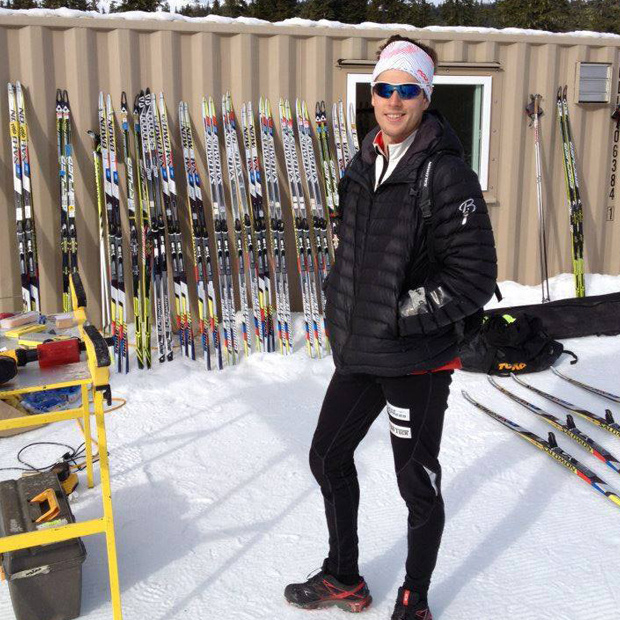
    Andy Keller started as an intern, then an assistant, and finally a junior coach before being promoted to CXC Team head coach this month, following the departure of Bill Pierce. (Photo: CXCnewsfeed.wordpress.com) https://cxcnewsfeed.wordpress.com/category/training-camps/junior-skiers/
    Andy Keller started as an intern, then an assistant, and finally a junior coach before being promoted to CXC Team head coach this month, following the departure of Bill Pierce. (Photo: CXCnewsfeed.wordpress.com)

    Months later, before Keller began his senior year, Gusev offered him a job.

    “I said, ‘I kind of want a degree so I’ll talk to you in a little less than a year,’ ” Keller reflected on the phone last week.

    He skied for four seasons at Michigan and graduated in 2012, then asking Gusev if there was still a spot for him. There was, though Keller’s job title and responsibilities changed three times before he officially got started, he said.

    First, he was hired as sport-development manager, tasked with connecting CXC to youth clubs and high-school programs in the Midwest. Then, CXC’s assistant coach Gus Kaeding left to head the Stratton Mountain School (SMS) elite team in Vermont. Cook needed an assistant, and CXC’s board decided Keller would be it.

    But before that played out, Cork accepted a coaching position with the U.S. Ski Team in the spring of 2012. Igor Badamshin became CXC Team head coach and Keller took on Badamshin’s previous role coaching juniors.

    That first year, he worked alongside Badamshin.

    “Then there was a little bit of [difference] with coaching styles and athletes on the team, so Bill [Pierce] got brought on to work alongside Igor [and] I took more of a dedicated role to the junior program,” Keller said of last season. “This year started off the same way … I was focused more on the junior program.”

    For the next several months, Badamshin oversaw the program and Pierce worked as the elite head coach. In late January, Badamshin died unexpectedly of a heart attack while skiing the Birkie trail between Cable and Hayward, Wis. He was 47, and his passing left CXC and the surrounding community stunned.

    “A guy that works his ass off and is willing to do anything for his program … his passion truly lied with working with athletes,” Keller reflected. “[I] was just trying to carry on his legacy — inspiring kids to ski and getting them excited to be out there. If there’s one thing he was good at, it was definitely that, and also carrying on his work ethic. The guy wouldn’t complain. He’d be out there skiing 50 k and waxing…

    “There was definitely big shoes to fill when he passed away,” CXC Team’s new head coach continued. “As I’ve come through, I’ve been working under a ton of coaches; my philosophy is I can always learn something. When I was interning under Jason and Gus that was what I loved to do — learning and listen.”

    “There was definitely big shoes to fill when [Badamshin] passed away. … As I’ve come through, I’ve been working under a ton of coaches; my philosophy is I can always learn something.” — Andy Keller, CXC Team Head Coach as of September 2014

    Keller Becomes Head Coach

    That’s right, Keller, in his third season as a CXC coach, was recently promoted to head of its elite team following Pierce’s decision to accept a job in Colorado (he’s becoming nordic director of the Snow Mountain Ranch YMCA near Winter Park this fall) earlier this month.

    But “elite” is a term Gusev and several other U.S. nordic directors like to stay away from: it’s about development and helping athletes reach their higher-competition goals. The CXC Team became Team Vertical Limit in 2009 as part of a sponsorship deal, and a year later it had 18 athletes, including a couple Olympians (Garrott Kuzzy and Caitlin Compton — now Caitlin Gregg).

    The New: 2014/2015 CXC Team 

    CXC Team: 

    • Cory Ellertson
    • Bjorn Batdorf
    • Bill Bowler
    • Chris Pappathopoulos
    • Hilary Patzer
    • Andrew Brown
    • Scott Johanik
    • Natalia Naryshkina (lives in Russia, plans to compete in western SuperTours and U.S. nationals)

    Postgrads: (living in Cable this fall/winter)

    • Scott Harrison
    • Sam Boardman

    College Summer Residency Group:

    • Nichole Bathe (University of Alaska Fairbanks)
    • Nicolette Reker (now at Winona State University, competing for CXC Team)
    • Tom Bye (Postgrad last year, now at Michigan Tech)
    • Thomas Kendrick (Michigan Tech)
    • Will Frielinghaus (St. Lawrence University)
    • Seth Mares (Gogebic Community College, plans to transfer to Michigan Tech)

    International Training Partner:

    • Leandro Lutz (living in Cable this fall, plans to travel to Europe for international races in an attempt to qualify for World Championships; may stay in Cable and race U.S. circuit)

    The CXC Team currently has eight members, most of which will be focused on top-10 results in Midwest marathons to attract sponsors. In addition, Keller is overseeing two postgrads, about 10 juniors and an international guest skier.

    “All the coaches agreed, the team needs to get back to the roots of developing athletes,” Gusev explained on the phone. “You would have never called our team the CXC Elite Team, it just came later when this word became very popular.

    “We always see our team as a development tool for that higher step,” he added. “We don’t see this team as full of stars, but we want to have a team open to athletes of that level. If it can help them great … It’s just like having a child: at some point you need to let them go and see if they can stand on their feet.”

    Considering that, Gusev is encouraged by the direction his program is headed, especially with a homegrown coach at the helm.

    “It’s exciting to see somebody who went through the original pipeline and became a coach,” he said. “And that’s a goal from the time he applied from an internship.”

    Still, the last few weeks — and months — have been busy at CXC, to say the least. Following Badamshin’s passing, Gusev said the organization interviewed a couple people to hire in his absence, but ultimately, Pierce and Keller stepped up and said they could handled the added responsibilities without another coach.

    “It was probably more emotional for some of us, but you just move on,” Gusev said. “The programs needed to move on as well and … we had to adjust right away.”

    It didn’t take long for everyone to get back “in the groove,” he added. Pierce continued to serve as head coach and Keller as his assistant and junior coach.

    Last Friday, Keller drove 300 miles southeast to Madison to test about 10 juniors at a weekend camp at CXC’s administrative headquarters. The group meets about once a month in various places, holding camps with other Midwest clubs, like Loppet Nordic Racing (LNR), May through December, Keller said.

    He also helps host monthly CXC master’s camps, and while he’s not scheduled for every single one, he led a recent camp under Pierce’s guidance earlier this month.

    “I made Andy run over half the sessions, and I watched him and helped him a little bit,” Pierce said. Then he told him and the rest of CXC about his decision to leave.

    “I saw it coming,” Keller reflected. “Bill did talk to me as he found out more about the new position he was taking.”

    In Cable, where Keller lives in a condo on the Telemark property, he spent the summer working with six athletes in CXC’s new college summer residency program, which Pierce initiated.

    “That overlapped with what you would call our team now, more of a marathon team,” Keller said of his previous and current responsibilities, coaching juniors and now seniors as well. “The athletes that we’ll have competing on the SuperTour is relatively small.”

    Those skiers include two postgrads from LNR — Scott Harrison and Sam Boardman — who plan to live and train full time in Cable this fall and winter. Their main races include western SuperTours, U.S. nationals, and the Midwest Junior National qualifiers .

    “We don’t see this team as full of stars, but we want to have a team open to athletes of that level. … It’s just like having a child: at some point you need to let them go and see if they can stand on their feet.” — CXC Executive Director Yuriy Gusev

    With an overall emphasis on regional competitions, CXC is looking to assemble the best skiers in the Midwest.

    The Old: What happened to last season’s CXC Team?

    Not returning: Karl Nygren, Eric Wolcott, Dmitriy Ozerski (was flying back-and-forth from Russia for races)

    With a single returner from last year’s CXC Team (college skier Tom Bye), Keller explained what happened:

    “When Igor [Badamshin] took over there was little bit of communication issues … a little bit of discontent,” he said. Athletes like Karl Nygren, who might have had as many as five coaching changes in seven years, ultimately decided to leave the program.

    “If there’s anything the program needs is some stability,” Keller said.

    “As the coach now, I’d love to build the program back up to how it was when I interned,” he said, referencing past CXC standouts like Jessie Diggins, Caitlin Gregg, Brian Gregg, and Jennie Bender. “…That was the year they won the NNF Cup so that’s the level I’d like to bring it back to.”

    One of Gusev’s priorities is hiring another coach focused on sport development to further connect CXC with grassroots organizations and schools throughout the central U.S. Looking at the big picture, it’s about promoting the sport and coaching development. In the long run, CXC is hoping that will translate into athlete retention.

    “Regardless whether the athletes come to us directly or not … it’s a matter of whether we have consistent, easy to follow progressions, like soccer does or swimming does,” Gusev said of two sports he considers domestic successes in the U.S. “[Those sports outline the] steps to high school, college and beyond, which doesn’t exist really in cross-country skiing. We have all the pieces in place, and we can communicate that to parents.”

    For Keller, his goal is to help grow the base and competitive nature of skiers in the Midwest, which includes Illinois, Indiana, Iowa, Kansas, Michigan, Minnesota, Missouri, Nebraska, North Dakota, Ohio, South Dakota, and Wisconsin.

    “It’s where I grew up,” he said. “[We’re] trying to make the Midwest more of a ski powerhouse, and that’s definitely happening. We’re developing athletes, but we’re having a hard time getting them to stay around.”

    He counted eight skiers in elite programs outside their region, including Jessie Diggins (SMST2), Anne Hart (SMST2), Ben Saxton (SMST2), Gordon Vermeer (Craftsbury Green Racing Project), and Rosie Frankowski (Alaska Pacific University).

    “It seems like everybody wants to go somewhere else and I’ve got to figure out why,” Keller said. “I think the level of support CXC gives is among the best … It’s just we’re not in the mountains and we don’t have a glacier to [train on]…

    “The Midwest might not be the most sexy training site as a Sun Valley or something like that,” he continued. “… [But] it’s not that we’re not producing the athletes.”

    “It seems like everybody wants to go somewhere else and I’ve got to figure out why. I think the level of support CXC gives is among the best … It’s just we’re not in the mountains and we don’t have a glacier to [train on]…” — Keller

    In terms of coaching styles, Keller said he gained a lot from working with Cork, Kaeding, Pierce, and Badamshin.
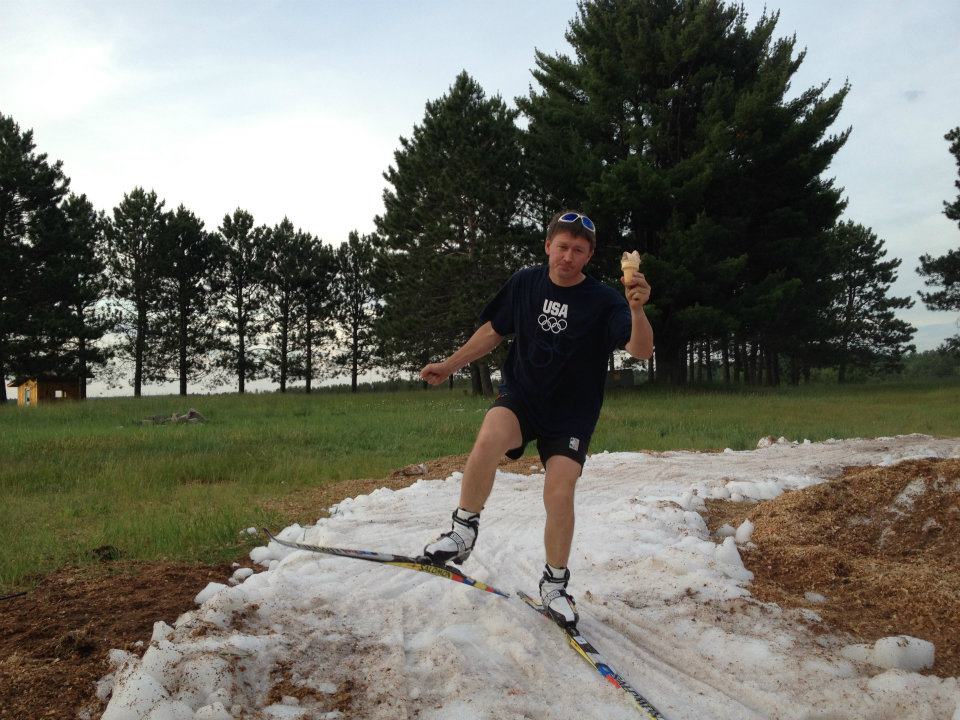
    Igor Badamshin: photo is titled "Snowflakes, ice cream, and Igor," by former CXC Team elite coach Bill Pierce. Badamshin was the CXC program head coach until his unexpected death in January 2014. (Photo: cxcnewsfeed.wordpress.com)
    Coach Igor Badamshin having some fun on a few patches of snow. Photo is titled “Snowflakes, ice cream and Igor,” by former CXC Team elite coach Bill Pierce. Badamshin was the CXC program head coach until his unexpected death in January 2014. (Photo: cxcnewsfeed.wordpress.com)

    “I’d hope I’d be maybe as analytical [as Cork],” he said. “I’m hoping I can be half as enthusiastic and motivating as Igor … I try to pull from all those guys and find out what works for myself and what doesn’t fit my personality. I would say I’m relatively soft-spoken and sometimes it’s a little bit harder for me to put myself out there. I hope I’ve gotten better at that.”

    When it comes to managing athletes, Pierce will continue to write training plans for those that started with him at the beginning of the season, including Cory Ellertson, Chris Pappathopoulos, Andrew Brown, and Scott Johanik.

    Keller said he’ll take on those that joined the team more recently and will be in Cable the next several months: the two postgrads and guest skier Leandro Lutz from Brazil, who plans to travel to Europe to try to qualify for 2015 World Championships.

    As for coaching and waxing for 18 or so skiers throughout the season, Keller said that working alongside other Midwest clubs at races, especially at main events like U.S. nationals, should help. And not all the athletes will  compete at the same events, given their varied focuses — from marathons to junior-qualifying races.

    At the same time, Keller said he’s looking forward to having an assistant or some kind of helper in the future. Gusev said the new hire would largely help with junior camps.

    In the last month since Pierce’s decision, he said he’d been working with Keller on the transition and will continue to offer assistance beyond his final day at the end of September.
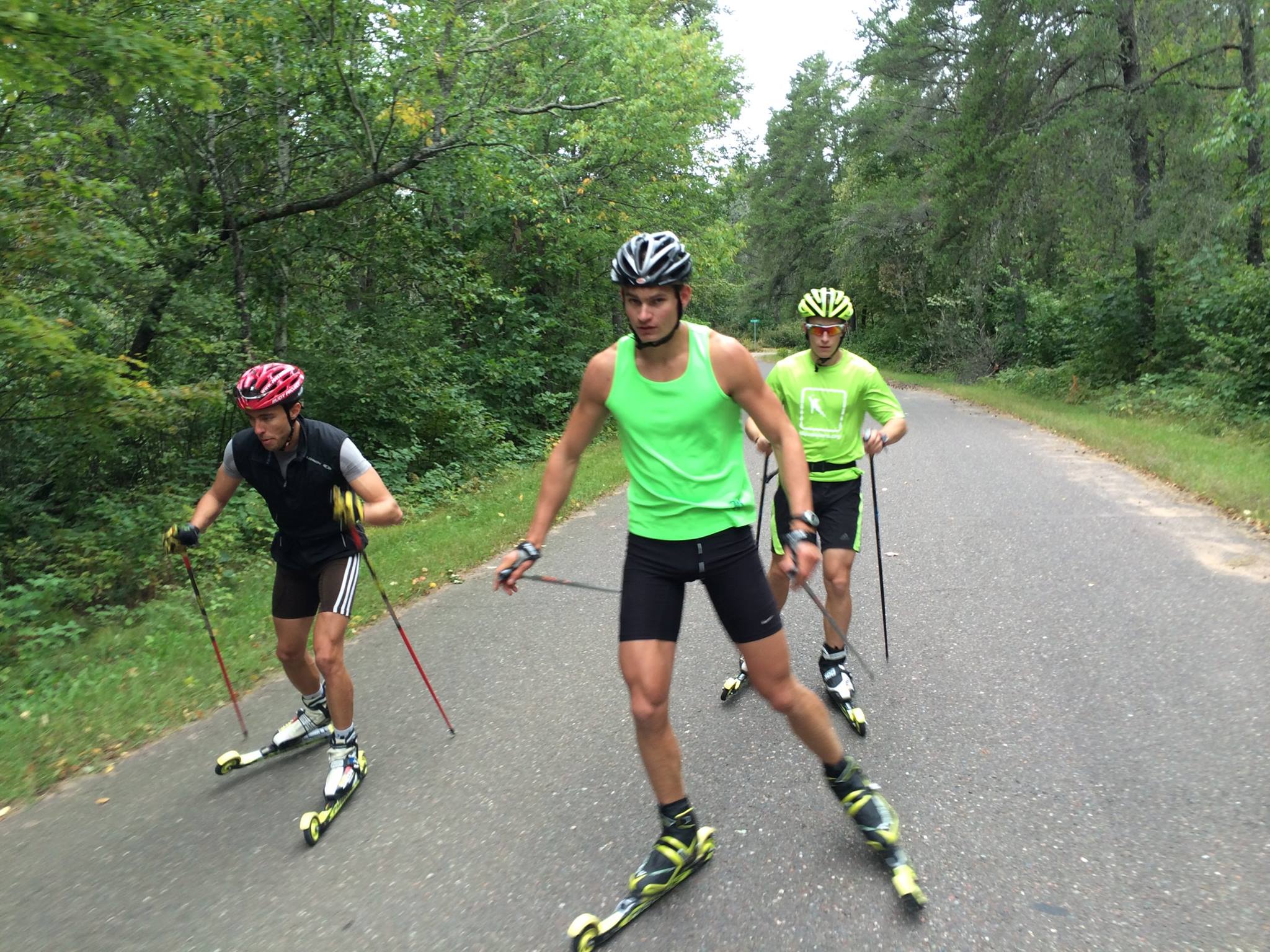
    CXC Team's fall/winter crew working out in Cable, with postgrads Scott Harrison and Sam Boardman, and guest skier Leandro Lutz from Brazil, who will be joining the team for the next couple months. (Photo: CXC/Facebook) https://www.facebook.com/cxcskiing/photos/a.108988649143884.5167.107878629254886/793777080665034/?type=1&theater
    CXC Team’s fall/winter crew during a recent workout in Cable, with postgrads Scott Harrison and Sam Boardman, and guest skier Leandro Lutz from Brazil, who will be joining the team for the next couple months. (Photo: CXC Skiing/Facebook)

    “I’ve basically given [Keller] my daily responsibilities,” Pierce said earlier this month. That included even the little stuff, like “teaching him how to smooth out a trail and pick rocks and seeds.”

    “There’s definitely a lot to catch up on as far as ski selection and things like that,” Keller observed. “Working with Rossignol, getting in contact with those guys, getting up to speed with things Bill might’ve taken care of as far as a team aspect and getting [ready] to compete.”

    He’s also tasked with attracting sponsors through top results in Midwest marathons.

    “We’ll do fine with that,” he said of his mostly marathon-focused team. “Our postgrads have goals of trying to make World Juniors … definitely a big one is qualifying for Junior Nationals and trying to make top-20 [there]. The goals for the marathon team is being on the podium or top 10 … that should be no problem.”

    He’d also like to bring the CXC Team back to an “elite, elite” team, he said, by recruiting recent graduates.
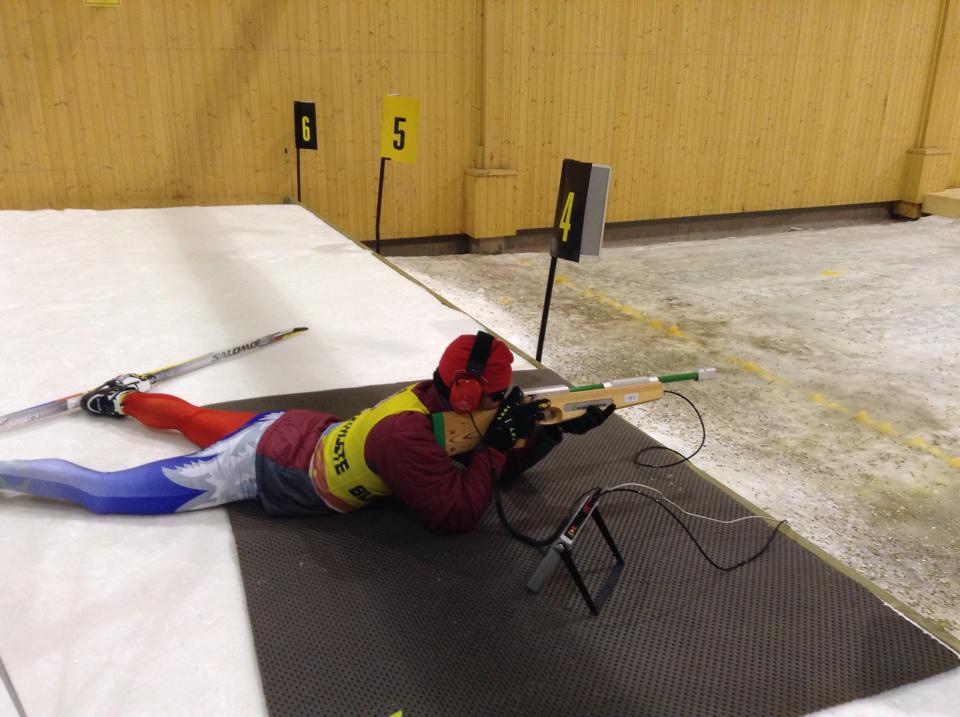
    CXC Para Nordic Team member Steve Baskis training with U.S. Paralympics Nordic Program in the ski tunnel in Torsby, Sweden, earlier this month. (Photo: CXC Skiing/Facebook)
    CXC Para Nordic Team member Steve Baskis training with U.S. Paralympics Nordic Program in the ski tunnel in Torsby, Sweden, earlier this month. (Photo: CXC Skiing/Facebook)

    According to Gusev and CXC’s mission statement, the 2,000-member organization has four straightforward goals: to build its base, promote the sport, achieve competitive success, and create partnerships through collaborations. The way he sees it, member athletes are part of that as well.

    “[The CXC Team] athletes are in a community to be motivation to adult athletes at clinics, to be role models and whatever else comes with it,” Gusev said. “With competitive excellence, we hope to get them to the level [of someone like Garrott Kuzzy or Tad Elliott, who made the U.S. Ski Team]. We hope the athletes that come through our program will eventually contribute to international success…”

    Emerging Adaptive Team

    CXC is also focused on building its adaptive program under coach Andrew Poffenberger, another Minnesota native who skied as a junior and studied health fitness at Gustavus Adolphus College in St. Peter, Minn.

    2014/2015 CXC Para Team:

    • Steve Baskis (blind athlete, veteran)
    • Aaron Pike (sit-skier, 2014 Paralympian)
    • Travis Dodson (sit-skier, Veteran, 2014 Paralympian)
    • Augusto “Goose” Perez (sit-skier, cancer survivor, 2014 Paralympian)
    • John Oman (standing athlete, 2014 Paralympian)

    “Emerging Talent” Program:

    “People who have tried nordic skiing on several occasions and show promise, interest in competition, and commitment to the sport,” Poffenberger wrote. “This is an area where I am looking to grow in the next few months as people turn their attention from fall sports to winter.”
    Junior Para Development: Focused on youth development and coaches interested in instructing adaptive skiers in high schools. “Our annual  coaches clinic and certification will include a few sessions on adaptive nordic skiing for those interested this year,” he wrote.
    Anyone interested in participating in adaptive athletics, please contact andrew.poffenberger@cxcskiing.org.

    This year, the CXC Para Team has expanded to include five elite athletes, four of which went to the 2014 Sochi Paralympics: Aaron Pike, Travis Dodson, Augusto “Goose” Perez, and John Oman. Its fifth member, Steve Baskis, a blind athlete and veteran, recently joined the U.S. Paralympics Nordic Team at an on-snow camp in Sweden.

    Poffenberger also works with three “emerging talent” adaptive skiers — those “who have tried nordic skiing on several occasions and show promise, interest in competition, and commitment to the sport,” he explained in an email.

    In addition, he coaches about four or five junior-development skiers, athletes that “can sit ski for 10 to 15 k in a session,” Gusev said. “Andrew’s done an amazing job with them.”

    “Ideally we would like to mirror the development structure of able-bodied skiing,” Poffenberger explained. “Possibly the most important component of that structure is youth development. If we expect to be competitive at the highest level, we need to start developing young athletes.”

    Among their efforts: CXC has submitted a proposal to include adaptive nordic at the Wisconsin state meet.

    “We are also seeking out coaches who are willing and able to coach adaptive nordic skiing at the high school level,” he added.

    Last week, Poffenberger attended a conference with The United States Association of Blind Athletes at the Olympic Training Center in Colorado Springs.

    “I love working with these athletes because they have perspective of the entire picture, and don’t let small things stand in their way,” he said, now in his second season with the team.

    “I hope we can keep having more and more individuals like [Poffenberger and Keller] that get involved with a sport as a profession,” Gusev said. “They understand the way athletes move from one stage to another stage and it’s easier for them to communicate with athletes at the younger level what expectations are. That’s really the goal.”

  • Vaillancourt, Smith Collect Mass-Start Titles at Canadian Biathlon Nationals

    Audrey Vaillancourt (Quebec) completed her set of three titles at 2013 Canadian Biathlon Championships on Tuesday with a photo-finish victory over Megan Heinicke (Biathlon BC) in the 12.5 k mass start in Whistler, B.C.

    “We both deserved to win today,” Vaillancourt wrote in an email. “I’m just glad I managed to have a better stretch.”

    Vaillancourt shot clean at Whistler Olympic Park to finish in 34:54.0. Heinicke was just 0.2 seconds behind and missed one shot (0+0+1+0).

    “Today skiing didn’t feel as good as during the weekend,” Vaillancourt wrote, “So I focused more on shooting and it worked very well; I had a perfect day on the range.”

    Vaillancourt enjoyed her first mass start of the season: “On the last lap we came out of the range together, so I knew this was going to be a really tough one,” she wrote. “We both tried to drop each other at different places on the course, but we were both dead tired and ended up together for the final sprint! It has been a photo finish for the win!”

    Corrine Malcolm (U.S. Biathlon) took third place in 36:38 (1+0+1+0), 30 seconds ahead of Julia Ransom (Biathlon BC) in fourth.

    “Today was actually the best I’ve ever shot in a race,” Malcolm wrote.  “Unfortunately I lost a little bit of time when I accidentally started to ski onto the 2km cut off on our second loop.  Luckily [Canadian biathlete] Rosanna [Crawford] saw me veer off and was able to yell to me to turn around. By the time I made it back to the right trail Julia was coming by and I was able to get in with her and ski nice and relaxed.  Julia and I stayed together until the last shooting stage where I cleaned and she missed her final shot.”

    Ransom’s time of 37:08 (2+0+1+1) was good enough for third Canadian, but shooting was perhaps not surprisingly the difference for the 20 year old who started her first Cross Country World Cup earlier this season in Canmore, Alberta.

    In the men’s 15 k mass start, Nathan Smith (Alberta/Biathlon Canada) struck back after Sunday’s starting error by dominating the day. He won by 44 seconds in 37:53 despite missing three shots (1+0+0+2) during what he described as ideal shooting conditions.

    “I missed that first shot prone and was a little concerned, but after that I felt comfortable and in control,” Smith told Biathlon Canada. “I know I didn’t win the pursuit race, but I feel like I’m in great shape and accomplished what I came here to do.”

    Marc-André Bédard (Quebec) was second in 38:37 with four misses.

    “Shooting was perfect 3 out of 4 times,” he wrote in an email.  “[I] missed 4 at my first standing!”

    Although disappointed by his shooting, that should not be a problem next week when Bédard competes at Canadian cross-country nationals. “I’m hoping to repeat or do better than my 4th at the 15 free last year!” he wrote.

    Bill Bowler took third place to lead a large American contingent with his second podium. He finished 43 seconds behind Bédard, and also had four penalties (0+1+2+1).

    “I felt good on the skis,” Bowler wrote. “Definitely better than in the races earlier this week.”

    He agreed that the conditions weren’t a problem. “It was a perfect day for racing with fast tracks,” he wrote. “The weather in Whistler can be volatile so it was nice to have sun and solid conditions.”

    Kurtis Wenzel (Alberta) grabbed the Canadian bronze with 39:31 (0+0+1+1), good for fourth overall.

    Biathlon wraps up Wednesday with the relays.  The Sea to Sky Nordic Festival continues with cross country nationals (March 23 to 29), nordic combined (March 28 to 30) and ski jumping (March 28 to 30).

    Mass-start results

  • After Three-Race Trials Series in Minnesota, US Names Biathlon IBU Cup Squad

    After Three-Race Trials Series in Minnesota, US Names Biathlon IBU Cup Squad

    Hannah Dreissigacker (Craftsbury GRP/U.S. National Team) and Katrina Howe (Maine Winter Sports Center) dueling on the range. Both were selected for IBU Cup races in Otepaa, Estonia, and Ostrov, Russia. Photo: Gregory Haugen/HaugenPhoto.com.

    MOUNT ITASCA, Minnesota – After a winter which had already seen below zero (F) temperatures in Minnesota, no one really expected 33 degrees with rain for Saturday’s Sprint competition at the US IBU Cup Selection Trials, but that’s exactly what they got.

    It rained for hours prior to the start, and only turned to huge, wet flakes of snow mid-way through the race.  Conditions were predictably slow, but Wynn Roberts (National Guard) didn’t let that keep him off the top step of the podium. He finished the 10k course with a time of 23:35.0 after shooting clean in the prone stage, and only missing one in the standing.

    Mark Johnson (Mt. Itasca Biathlon) was hard on his heels however, and if he had not missed one prone shot and another standing, the podium could have looked different as he was only 15 seconds behind (23:50.1).

    Bill Bowler (Biathlon Alberta) was third at 23:54.7 after missing two prone and two standing.

    Corrine Malcolm (US National Team) set the pace for the women as the wet snow continued to fall, with three total misses (2 prone, 1 standing), finishing the 7.5k course in 21:45.3.

    1.1 seconds separated her from second-place Hannah Dreissigacker (Craftsbury GRP/US National Team), which was a great result considering she had one more miss in the shooting stage than Malcolm.

    Also with four total misses, coming across the line in 22:06.3, was Katrina Howe (MWSC).

    The snow continued into the night, and conditions for the Pursuit on Sunday were much more satisfying for athletes and coaches alike, as well as the Mt. Itasca course volunteers. Several inches of new snow had been worked into the trail surface for significantly faster conditions, and morning temps in the low 20s felt perfect.

    Hannah Dreissigacker would be fastest for the women as she covered the 10k course in 31:36.4 and shot the best of any of the seniors, men or women, with only 4 misses over 4 shooting stages. Katrina Howe and Corrine Malcolm joined Dreissigacker on the podium again, with 5 and 7 misses respectively.

    Bill Bowler stood on the top step Sunday with Wynn Roberts in second and Raleigh Goessling (MWSC) in third. Bowler had 7 misses to Robert’s 8 and Goessling’s 10, and finished the 12.5k course in 32:12.

    Monday was make-or-break for the athletesm, as anyone who wanted to travel to Europe as part of the IBU Cup team for race 4 would likely need to notch the win today. Anyone lagging too far behind the first place finisher might be out of the running for a discretionary selection. The overall points winners for the weekend’s three races could count on a spot at the starting line for IBU Cup 4 in Otepaa Estonia on January 4th.

    The format was a 15k Mass Start for the men and 12.5k for the women. Bill Bowler would be the victor today, shooting two better than Roberts, who missed 7 total. Wynn Roberts skied well though, and even with two more penalty loops than Bowler, only finished approximately 30 seconds off the pace. Mark Johnson followed him, with Michael Gibson (Vermont Biathlon) and Raleigh Goessling next.

    Hannah Dreissigacker managed to hang on to first place and finish 8 seconds ahead of Katrina Howe, even with 3 misses compared with Howe’s exceptional results of only 2 misses over 4 stages. Corrine Malcolm joined them on the podium again in third but had a disappointing day on the range with 8 shots outside the black.

    Based on results from all three events, USBA announced later Monday afternoon that the primary selections for the US IBU Cup Team would be Bill Bowler and Hannah Dreissigacker, with Wynn Roberts and Katrina Howe named as discretionary selections. Those athletes will join Jeremy Teela and Tracy Barnes, who qualified for the December period of IBU Cups, and Jay Hakkinen and Lanny Barnes, who raced the first period of World Cups but are moving down to the second tier of racing.

    USBA announced that seven athletes will remain on the World Cup, based on results from the first period of racing: Tim Burke, Lowell Bailey, Russell Currier, Leif Nordgren, Susan Dunklee, Sara Studebaker, and Annelies Cook.

    Full results for the weekend’s races, including Masters, Juniors, and Youth are available at www.minnesotabiathlon.com.

    -Chelsea Little contributed reporting.

  • Spare Rounds: On Their Own

    Our recent series on biathletes facing the question of when and whether to go to college (parts one, two, and three) produced more interview material than we could fit into the three-part sequence, but we wanted to share a few more of the ideas with you anyway. What do biathletes do if they miss a target in a relay? They use a spare round. This week, we’re presenting you with short briefs on a few lingering topics.

    Raleigh Goessling competing at 2011 World Junior Championships in Nove Mesto, Czech Republic. Photo: Judy Geer.

    In biathlon even more than in skiing, making the senior national team is crucial to an athlete’s success. Although the few clubs that support senior athletes – the Maine Winter Sports Center and the Craftsbury Green Racing Project – offer comprehensive support, the sheer lack of options outside of the national team can be limiting to an athlete’s ability to continue competing at the senior level.

    So what happens to the athletes who remain dedicated, but don’t have national team resources at their disposal, and aren’t interested or able to join one of those two programs? We caught up with two of them: 20-year-old Raleigh Goessling, who recently left the Maine Winter Sports Center (MWSC), and 25-year-old Bill Bowler, a Development Team alumnus who had risen to the “B” squad but was left off of this year’s national team.

    Goessling went straight from high school in Minnesota to MWSC, where he has trained for the last two years. In total, he’s made five trips to World Youth and Junior Championships, but the 2012 edition was actually one of his worst.

    “Last season was tough,” Goessling wrote in an e-mail this spring. “It was the first time I had ever struggled for an entire season, not just a workout or a weekend.”

    But after poring over his training logs, Goessling says he has discovered some of the reasons that his performances were disappointing. On his blog, Goessling wrote that one of the most important things he realized is that “training alone does not guarantee success.”

    Yet, in a major change, that’s just what he will do – Goessling has left MWSC and will based out of Yarmouth Maine through at least this fall, where he will work with coach Bill Meyer. At that point, Goessling hopes to find a training group for the on-snow season. He anticipates starting school next summer, and has narrowed down a list of potential colleges.

    “The transition from junior to senior for me will be tough logistically because I am not working with a club, and my results last season where well below national team standards,” Goessling explained.

    Although he is leaving northern Maine, Goessling said that his decision to train there was perfect at the time: “I will be forever grateful to the coaches, organization, and most of all the community members who were there to help and support me during my first years out on my own in the big wide world,” he wrote on his blog. He says that the MWSC education is what gave him the tools to be able to now go solo.

    “I was able to put in two very solid years of training, make some great industry contacts, and most importantly learn about myself and what I wanted to do,” he said. “By training independently I lose things like travel funding and race support, but I gain the flexibility to draw from many different points of view when planning my training and racing. I am planning on racing some regional cross county races and USBA IBU selection races. I’m excited to for the new season, and will use last season’s disappointment and frustration as motivation.”

    Bill Bowler in 2009, his first season as a biathlete.

    Bowler, meanwhile, has left the country entirely and will be training primarily with the Canmore-based Biathlon Alberta Training Center; he faces many of the same challenges Goessling describes, and has a similar attitude towards overcoming them. The following is a transcript from an interview with Bowler in Bend, Oregon, several weeks ago.

    FasterSkier: So what are you up to now?

    Bill Bowler: It’s kind of crazy actually. I’m in Canmore now as my home base for training. I’m going to be between there, here in Bend, and a little bit in Park City. And then also a little bit back at home in Wisconsin. So it’s a big shift from being out East. I’m doing a lot more on my own.

    FS: Are you working with any coach in particular?

    BB: I’m pretty much self-coached at this point. I kind of like being my own boss and writing my own training plans and stuff. But I do work with the Biathlon Alberta Training Center, which is based in Canmore.

    FS: So that’s with Richard Boruta?

    BB: Yup, Richard. I shoot with those guys.

    FS: Were they cool with having a non-Canadian come up there?

    BB: Yeah, Richard has worked a lot with U.S. athletes in the past, like Wynn Roberts and Leif Nordgren when they were up there for Junior Worlds. So he was pretty cool about it.

    FS: So were they excited to have another senior on their team? It seems like their senior program is small.

    BB: Yeah, they have Zina Kocher, and then Melanie Schultz who is another top Canadian athlete. It’s a younger group – I mean, I’m 25 now, and a lot of the other athletes are 19 to 22 or 23. But it’s a good group to train with, and I do some workouts with the national team as well.

    FS: Are the national team coaches still willing to work with athletes who are not on the national team?

    BB: It’s a more welcoming community. And I know that when I come to these camps with the U.S. team, the coaches, Per Nilsson and Armin Auchentaller, will still help me out here and there.

    FS: Was it a surprise for you not to get re-named?

    BB: No, I saw the criteria and I knew that I didn’t quite meet it, so I wasn’t surprised. But it was kind of surprising to see the team shrink so much. It gets harder and harder to make it every year – it’s down to six guys now. In some ways that’s good because it makes you a little hungrier and a little more competitive. But it’s hard for developing athletes in a way, when you have to be on the team and off the team.

    FS: Is it intimidating not to have a coach to rely on and bounce ideas off of?

    BB: A little bit, but I’m confident in my ability to train myself. I was on my own a couple of years ago as well. And that was actually the year I took the big step up to get to the international level, was when I was training on my own. So obviously USBA is doing a great job of training athletes, and I feel like I did make improvements training under the system. But I’m also confident that I can call the shots and do what I need to do.

    FS: In terms of training will you be following the same progression you were on there?

    BB: Yeah, a little bit. I’m actually going to make this year a really big volume year, because I’ve never really done huge hours in the past. I’m going to try to do a lot this year and hopefully it will pay off in 2014. So that’s the goal. A lot of times with that training, if you put in a lot of hours one year you’ll get a little bit of the benefit that year but then it will be a big payoff later.

    FS: So you’re definitely in until Sochi.

    BB: I’m hoping so. At this point I am… the level of expectation is very high on the team. The men’s team is incredibly competitive right now, and just to break into that World Cup level, I’m prepared to take some really big risks to do it.

  • USBA’s Grand Experiment: How Quickly Can You Build a Biathlete?

    Note: This is the second piece in a three-part series following several groups of biathletes as they negotiate the college question. Part one, which featured five top juniors who took a detour through college before returning to the international stage, ran last Monday. Stay tuned for part three next week.

    Susan Dunklee celebrating her fifth-place finish at 2012 World Championships, which came in her fourth season as a biathlete. NordicFocus/USBA.

    As I was standing near the finish waiting for U.S. biathlete Susan Dunklee to come through the mixed zone after the IBU World Championships women’s 15 k individual in Ruhpolding, Germany, I was approached by a gray-haired French journalist who usually sat at the table directly behind me in the media center. We had also shared a shuttle back into town one night, so he knew I was American.

    “Who is this Susan Dunklee?” he asked me.

    Dunklee was bib one that day, so it wasn’t surprising that she crossed the line first. Ultimately, she finished fifth in the race. It was one of the best results ever by a U.S. woman, tying Kari Swenson’s result at 1984 World Championships, and certainly a surprise to the sport’s European fanbase. I explained that it was her first season on the World Cup, and she had previously had just one top-20.

    “She has only been doing biathlon for four years,” I said.

    The French journalist’s eyebrows raised as if to say, go on.

    “She was a skier in college, and then she learned how to shoot,” I continued. “Her father was in the Olympics in cross country skiing.”

    He scribbled in his notebook, and then asked me Dunklee’s father’s name and which years he was an Olympian.

    “I write for a newspaper,” he said. “I don’t have a lot of room. Usually, fifth place, maybe we mention it, maybe not. But this? This is interesting enough to put in. Thanks.”

    * * *

    During the 2011-2012 competition season, the U.S. Ski and Snowboard Association had 1,139 members with “cross country competitor” licenses. The U.S. Biathlon Association’s (USBA) year-end points list, by contrast, featured fewer than 200 athletes.

    USBA’s numbers are even more grim in terms of development. While the masters biathlon scene has been growing in the U.S., that points list included just 37 junior men and 23 junior women. At World Junior Trials or U.S. Nationals, a field of 15 or so youth men (ages 18 and under) whittles down to just a handful of juniors (ages 19-20). Five or six women compete in each division. After the robust development teams of the 1990’s and early 2000’s were lost in a budget crunch, the junior national team is now largely symbolic.

    That leaves the biathlon community with big questions: how do you develop a World Champion with such low numbers? What if top juniors leave the sport for college or other pursuits? (This happens.) By 2007, there was an undeniable talent gap in U.S. biathlon.

    “Cory Salmela had developed a bunch of people on the junior team in the 1990’s, and I was taking over those juniors,” said James Upham, who was the USBA’s Development Coach at the time and is now the Nordic Head Coach for U.S. Paralympics. “We had pretty much pushed those guys onto the [senior] national team. So we said, well, we’ve got to have some more people because there aren’t enough clubs in America producing the high end biathletes that we’re looking for.”

    Along with USBA CEO Max Cobb, Upham came up with a new idea: instead of looking at college as a sink that they lost athletes to, they would look at it as a source.

    “We needed to find some talent, some fairly young talent, and maybe a little raw, someone that could be molded,” Upham told FasterSkier. “We felt like even in their early 20’s we could manage that– that it was good resources to put away if you had the engines and the attitudes, and that within four or five years [you could have] a World Champion.”

    Sarah Konrad, an early indicator that skiers could learn to shoot. Photo: TeamToday.

    He was also perhaps emboldened by the success of Sarah Konrad, who at age 37 and after just two years in biathlon finished 50th in the individual race at 2005 World Championships. She went on to the 2006 Torino Olympics, where she became the first U.S. woman to compete in two winter sports: skiing and biathlon.

    With “engines and attitudes” as his manta, Upham began scouting the college field. He offered college juniors the chance to try biathlon at a training camp over the summer. If they showed some aptitude for shooting, Upham would offer them a spot on his re-tooled Development Team when they graduated. USBA provided a free place to live at the Olympic Training Center (OTC) in Lake Placid, a crash course on shooting, and the country’s best biathletes as training partners.

    Could you really create a world-class biathlete starting at age 22? It was an unusual strategy, but Upham was confident that he could pull it off. He signed Caitlin Compton, who was coming off a season in which she took five SuperTour wins and represented the U.S. at FIS World Championships in Sapporo, Japan. She was joined by recent All-American Sara Studebaker, who had just helped captain Dartmouth to an NCAA title, and her boyfriend Zach Hall, another mainstay on the EISA circuit.

    “It sounded like a really legitimate way to pursue a nordic sport at a high level,” said Hall, who had been contemplating how to swing a ski career financially. “You were able to go there and focus on it 100%.”

    And in that very first year, Compton (now Gregg after her marriage to CXC teammate Brian Gregg) showed that the development program could work. It’s a forgotten fact that Gregg, who was a 2010 Olympian in skiing, had her first World Cup starts in biathlon and made the 2008 World Championship team. By her own admission she “didn’t know what [she] was doing” and told the online news site MinnPost that she estimated there were ten high-level female biathletes in the entire country.

    But even if she benefitted from a small field in terms of selection, Gregg turned in strong performances. She finished 37th in the individual at World Championships in Ostersund, Sweden, hitting 16 of 20 targets and skiing the 29th-fastest time. She was the top American in the race.

    Gregg left the team to return to skiing after just one season, but her success surely reinforced USBA’s confidence in its plan. Hall and Studebaker joined more experienced athletes on the “B” squad, and the Development Team started fresh with Dartmouth’s several-time All American Susan Dunklee, former junior national sprint champions Bill Bowler and Casey Simons from Northern Michigan University (NMU) and the University of Utah, and Jen Wygant, another NMU grad.

    In 2009, Dunklee moved up to the “B” team and was replaced by Katrina Howe, a two-time NCAA competitor for the University of Vermont. The next year, the Development Team was cut – but Studebaker also became an Olympian. Even after it ended, the program was delivering what USBA had hoped for.

    Engines and Attitudes, Exhaustion and Frustration

    While Gregg had succeeded right away, the transition may have been more natural for her. She was 26 years old when she joined the team, and had already trained at a high level for several years. Before the younger recruits could match her results they needed to transform into senior athletes, which was challenging. There was no time to ease into the transition because Upham was trying to accomplish in a few years what usually took ten.

    “It was a big increase in terms of training volume and overall intensity, and it was a little bit overwhelming to be training with the national team and surrounded by all of that,” Hall told FasterSkier in an interview. “That whole first year was crazy…. I was straight up exhausted all the time.”

    He wasn’t quite sure of the numbers, but estimated that his training volume had jumped about 20% that first year. Upham has other stories, too. After the very first week in Lake Placid, Studebaker told him that she had never trained so many hours in a week before, ever. The next year, he encountered the same thing with his new crop of athletes.

    “Going into the winter I remember Susan saying, ‘This is more classic skiing than I’ve ever done,’ and you’re a biathlete now– you don’t even race it!” Upham laughed. “It’s fun taking a college-level athlete who’s really gifted and smart, and putting them into a full-time training program. That transition is pretty tough and you don’t necessarily get better right away, but you put a huge amount of work in and it pays off… you see them doing really well later.”

    Bowler, who had trained about 600 hours a year at NMU – “definitely on the upper end of the spectrum for a college skier” – was better prepared for the hours, but not necessarily for the intensity of national team training.

    Bill Bowler and Zach Hall competing in Altenberg, Germany in 2011. Photo: Viktoria Franke.

    “There’s a big difference between doing a 20-hour week with one or two intensity days, and one of those being classic, versus a 20-hour week with three skating intensities,” he told FasterSkier in an interview in Bend, Oregon, last week.

    Then there was shooting, which added another roughly 200 or 300 hours to the training load without any immediate payoff; several of the athletes said that it takes a minimum of three years before shooting comes together. Until then it’s a lot of work, and at no point is hitting targets a guarantee.

    “I’d like to say that biathlon gets easier, and it definitely does, but inherently biathlon is more tumultuous than nordic skiing,” Hall said. “No matter how good you get, there’s always that question… there’s so much that’s thrown into the mix with the shooting. You have a really good race and you have euphoria, and then the next race you can be behind from the first stage and then you’re out of it.”

    While the endurance training was tough on athletes’ bodies, shooting tired their minds and tested their patience. They were immediately thrown into workouts with experienced senior national team athletes, which created a good learning environment. But it could be demoralizing to be the worst shooters day after day after day.

    “I went into it being super focused,” Hall explained. “By nature I’m fairly detail-oriented when I approach training, and shooting ends up being all about the details. So every day is focusing on a million different details and trying to figure it out… For me it was challenging sometimes, because you know you’re not nearly as good [as the other athletes].”

    The final piece of the transition was living at the OTC, which was ideal in many ways: no rent to pay, no meals to cook, a gym and coaches and training all in one place. But the austere building was the antithesis of the vibrant college campuses most athletes had recently called home.

    “You live in a bubble,” Bowler said of the experience. “It’s a very focused environment all the time. It was good for me for certain chunks of time, but sometimes you need to get out to the real world a little bit, because biathlon is very far from the real world.”

    Dunklee, too, needed a release. For the 2011 season, to the initial chagrin of her coaches, she joined the Craftsbury Green Racing Project so that she could get back to Vermont (she is still in Lake Placid more than half the time). She said it was a lifesaver for her mental health.

    “I need balance and I need to use my mind,” she told FasterSkier last fall. “When training or racing isn’t going well, I need a means of distancing myself from biathlon.”

    All of the changes were a lot to take in, and Upham knew it. To try to keep his team motivated, he read everything that he could about sports psychology. In his previous work with junior and senior biathletes he had seen racers hit a plateau even though they were physically capable of continued improvement. With his new team, Upham wanted to make sure athletes’ heads didn’t get in the way of their performance.

    “The lifestyle change [is a big thing],” he said. “We worked on sports psychology every day. It’s not something that you read the book and suddenly you have it, it’s just practice, practice, practice, and forming habits. Most of our psychological aspect was, how do you deal with going from winning college races or being top ten, to internationally pretty much getting your butt kicked for a year or two?”

    Mixing It Up in Europe

    One measure of the Development Team’s success was that like Gregg, Dunklee and Studebaker made it to Europe in their first year as biathletes. It took the others a bit longer, but of the eight, all but Wygant have competed at the IBU Cup or European Championship level, if not higher.

    Initially, a European tour added to the stress of the athletes’ transition.

    “My first race I was in the 90’s in an IBU Cup, which is really a tough pill to swallow when you go over there and you have a race that you might be happy with in the United States,” Bowler said.

    In her first season as a biathlete, Dunklee won a national title in the sprint. But on the IBU Cup, biathlon’s second tier of racing, her top finish was 35th. A year later, Simons also won a national championship, but when he competed at Open European Championships his best race left him 40th. Despite multiple international tours, Bowler hasn’t excelled; he didn’t crack the top 40 in an IBU Cup until 2012, when the circuit traveled to Canmore and field size shrunk by half.

    But the athletes had plenty to fall back on, and they started improving.

    “The first race Sara was ever in as a full-time biathlete, she cleaned [a four-stage race],” Upham explained. “She hit all 20 targets. I think there are a lot of biathletes out there who have still never done that! Zach, his second year he was our number one shooter in the country in terms of percentage. That just shows the amount of work they put in.”

    After Gregg, Studebaker was the first one to make it onto the big stage (she had an advantage: dabbling in biathlon in high school had left her with some shooting background). In 2009, she earned her first World Cup start. She had dreamed big and hoped to make the World Championship team that year, but missed, in what she described as one of the biggest setbacks in her biathlon career.

    Studebaker leading Andrea Henkel (GER) in the mixed relay at 2012 World Championships.

    “I was pretty devastated after that,” she told FasterSkier. “I had been told that they may have a spot for me at the Vancouver World Cup [at the end of the season], but it took a while for it to be official. When I finally found out I would get to race, I was really excited and determined to make the most of it. In the sprint, I cleaned and scored a couple World Cup points.”

    After a single weekend of racing, the 38th-place finish made Studebaker one of only three U.S. women to score World Cup points all year, which lifted her spirits and set her up to compete in the first period of World Cups the next season. She has been one of the team’s top performers ever since, and raced at the Vancouver Olympics.

    In 2011, her fourth season as a biathlete, Studebaker collected four top-20 results. That put her 34th on the World Cup points list, the highest-ranking U.S. woman. Although the development team was no longer in existence, it was delivering the results USBA had expected in year four.

    “We were really happy to see Sara have a top-15 result,” Cobb said. “It was right where she needed to be.”

    Hall, too, faced disappointment before his World Cup debut. After competing in Altenberg, Germany, for the final round of trials for the 2010 Olympics, he wasn’t named to the team. Based on his performances there and the next weekend in Nove Mesto, Czech Republic, however, Hall received World Cup starts in Antholz, Italy. He finished 85th and 96th, but the experience showed him what biathlon really was, and what he was striving for.

    “Over 15,000 spectators came out for each of the races so the atmosphere was electric,” Hall wrote on his blog at the time. “It’s really cool going from the U.S., where only a handful of people show up, to an area of the world where biathlon is the most widely televised sport and spectators come out in droves for an all-day party.”

    While Studebaker excelled and Hall got sporadic tastes of World Cup action, Dunklee has ultimately become the poster child for the Development Team. Even in the beginning, she stood out as an obvious choice to bring to Lake Placid.

    “Everyone can see world class aerobic potential if you ever see her do anything,” Upham marveled. “So how do we teach her how to shoot things, how do we refine her technique? We felt like we were pretty good at that. It wasn’t daunting to us, [we didn’t see it] as a great risk. And she had a great attitude as well, there was no denying that.”

    But unlike Hall, it took her four whole years to make the World Cup despite having top-20’s and even a top-ten on the IBU Cup. She was crushed when she missed the Vancouver Olympics by a few spots, and she didn’t receive the consolation prize of World Cup rights, either.

    At the beginning of the 2012 season, Dunklee capitalized on her first World Cup starts, placing 45th, 28th, and 32nd in the individual, sprint, and pursuit competitions in Ostersund, Sweden. Like Studebaker, she had scored World Cup points on her first try; the former Dartmouth teammates were the top Americans in all three races. Dunklee wasn’t going to get left at home again. She had her first top-20 in Antholz, then missed a single shot to finish fifth in the World Championships individual race, just seven seconds from a medal. In the final weekend of racing, she picked up top top-tens in Khanty-Mansiysk, Russia. Dunklee is currently ranked 34th on the World Cup – exactly the same position that Studebaker had one year ago.

    “We had the feeling that it was probably going to be four years before they were ready to do something internationally,” Cobb said of the Development Team athletes. “When we were initially talking with the athletes, we said they had to be willing to give this a try for two seasons. We were thinking in the fourth season they could have top 20 results [on the World Cup].

    “That’s what we saw with Susan,” he continued. “Yay!”

    So You Want To Race?

    USBA Women’s Coach Jonne Kahkonen told FasterSkier in the fall that the team was deliberately holding Dunklee in reserve until she was ready to excel at the World Cup level, but the athlete herself was chafing at the bit.

    “I had become fixated on earning a World Cup spot,” she wrote in an e-mail this spring.

    And if Dunklee was frustrated being stuck on the IBU Cup, her teammates were even more desperate to get in top-level races; between IBU Cup and Under-26 Open European Championship racing, Dunklee’s two tours represented as many or more European starts every year as any mid-level American biathlete.

    Casey Simons at 2010 U.S. Nationals in Fort Kent, Maine.

    The lack of high level racing and its benefits for development and motivation, said Hall, was one reason said that the program’s success and retention rate could have been better. After all, Simons left the sport in 2010 after a national title was not rewarded when team nominations came due; he declined to comment for this article. Hall himself retired in 2011. (Bowler and Howe are currently pursuing biathlon at the Biathlon Alberta Training Center and the Maine Winter Sports Center, respectively.)

    Without going to Europe, the athletes were left to race against a NorAm field that is undeniably weak, especially compared to skiing’s SuperTour circuit. With the top five men and three or four women on the World Cup at all times in addition to the periodic IBU Cup tour, biathletes are competing against the same handful of people every weekend. They now more or less how things are going to shake out.

    And that’s where the men were stuck. In 2007 when the Development Team started, Jay Hakkinen, Jeremy Teela, and Tim Burke had already scored multiple World Cup top-tens. Lowell Bailey had been in the top 20. By contrast, of the women only Lanny Barnes had a single top-20. Studebaker, Dunklee, and Gregg were certainly talented, but they were helped by the relative strength of the men’s and women’s national teams.

    Hall didn’t want to offend his former teammates by implying that the women on the Development Team had it easier, but Studebaker confirmed as much. There was more of a gap on the women’s team, and she was there to fill it.

    “Things may have been easy on the women’s side when I was starting out biathlon,” she wrote in an e-mail last week. “There were always more men competing, and that meant fewer of them had a chance to get international competition. It was definitely a little easier to get over to Europe and get on the IBU Cup at least, but it did take me a while to get to the World Cup level.”

    Unfortunately for the men, the IBU Cup experience played a huge role in determining how quickly the athletes improved.

    “As a developing biathlete, the most important thing is being in competition situations where you are forced to ski as fast as you can and shoot as fast as you can, and do that over and over again,” Hall said. “Everybody at USBA understands that there’s not a lot of opportunity for racing unless you make it to Europe. It’s a bit of a catch-22 right now.”

    Studebaker believed that she and Dunklee had the ability to score World Cup points in their first outings thanks in large part to their many lower-level European race starts before they hit the big stage. And, both said, the racing and travel opportunities were carrots drawing them along when their new sport could begin to feel like a slog.

    “I thought I’d try the sport for a year or two and then move on with my life,” Dunklee said. “Qualifying for a Europe trip was a huge factor in hooking me. I realized that if I gave my shooting time to develop, I could become a very good biathlete… I could not have justified [my dedication] if I only ever raced three or four other women at a handful of NorAms. I would have switched back to cross country where we do have a strong domestic circuit that can develop athletes.”

    If she’d had to do the work that Hall did, she might not have stuck around.

    “U.S. athletes do have to take initiative to keep the sport engaging and worthwhile,” Dunklee said. “In 2011 there were no NorAms in the peak of winter because all our biathlon officials were needed in Maine for the World Cups. I suspect the lack of race opportunities contributed to Zach’s decision to leave the sport when he did.”

    In the Red

    It did, said Hall. By the time he left the sport, the men’s team had only improved at the top: Tim Burke had worn the overall leader’s yellow bib, Bailey had begun racing better, and at 2011 World Championships youngster Leif Nordgren had made a splash with his first top-20 finish. Hall felt that he might be stuck racing NorAms for a long time.

    “For me, I knew from the get-go that it was really slim odds that I could make [the Olympic] team,” Hall said. “I like slim odds, but I knew – and I like to think I’m pretty perceptive – it seemed as though the [men’s] relay team for the Games was already pretty much chosen.”

    The other side of his decision was financial. As Bowler said: “It is a little bit alarming not to have any income.”

    Studebaker had quickly progressed onto the “A” team, which provides stipends to athletes, so she had less to worry about. Dunklee eventually made that transition too, with a longer stop on the “B” team. And Bowler, while worried, seemed philosophical about the lack of funding.

    Caitlin Gregg has returned to skiing; on the SuperTour, she can pick up prize money. Photo: Toko.

    “I mean, there are plenty of people my age who are in grad school or medical school and they’re going backwards into debt, more so than I am,” he said. “The job market is tough right now, so in some ways it’s nice to be in biathlon. At least you’re doing something and you’re not unemployed. “

    Hall, however, left Dartmouth with loans to pay, and it was impossible to have a job that earned him cash. Even when he made the “B” team and began receiving a small stipend, that money mostly went to getting out of debt from the first season. If there was one thing he thought that the Development Team could have done better, it would be to teach athletes how to sell themselves to sponsors. With USBA’s budget, he knew that receiving a stipend was too much to ask. But perhaps the federation could have helped athletes find funding from other sources.

    “I pretty much went from Dartmouth right into a crash course on marketing, which I failed the first couple of years,” he said.

    Imagine, suggested Bowler, that you are a cross-country skier struggling to find sponsorship dollars. Now imagine that your sport is even more obscure and less familiar to the general public.

    “People are like, ‘what’s biathlon?’” he said. “I’ve been lucky that a lot of people have helped me out along the way.”

    Upham knew that money was a problem– it’s not often, he pointed out, that Ivy League graduates make a several-year commitment to a job that leaves them with a bank account saying “zero.” It was one more pull on his athletes’ mental ability to focus on biathlon, and he tried to build it into his sports psychology sessions.

    Another issue was the dearth of prize money on the NorAm circuit. In skiing, athletes can sometimes use prize money won in the U.S. to fund trips to Europe. But meaningful cash isn’t up for grabs for biathletes. If you win, you might be rewarded with $75.

    In the end, it all added up to too much for Hall.

    “There was just very little money, so being able to do anything outside of biathlon was really difficult, especially being able to travel home to Alaska,” he said. “I’m close to my family, so for me that was really difficult. It’s a lot of stress, and if there’s any way you can come up with to alleviate some of that financial stress you’ll probably end up with athletes who can perform better more consistently.”

    Unfilled Gaps

    While Dunklee and Studebaker are shoo-ins for Sochi and show that the Development Team was the perfect band-aid for the women’s team, Hall’s career can almost make it seem like the U.S. didn’t need the program to supplement it’s men’s squad. Unfortunately, that couldn’t be farther from the truth.

    “I think anyone you talk to in biathlon recognizes that there’s a hole in our development program,” Upham said. “We’re really only getting one elite-level junior every couple of years. You need to have a couple of them in the program all the time, and you need to sink a ton of resources into getting those juniors to the next step.”

    The U.S. men’s team may be as strong as it has ever been, but it’s also not a young team. Teela is 35, and on Hakkinen’s birthday in July he’ll catch up; Bailey is about to turn 31, and Burke is 30. At least two, if not more, of those athletes will likely retire after Sochi, and there aren’t many men waiting in the wings. Nordgren and Russell Currier are ready to take over, but there are only three or four other seniors who race at the IBU Cup level, and a small group of juniors.

    “It’s really scary to think about the gap that’s there in development right now,” Studebaker said.

    To all of the former Development Team athletes contacted for this story, refunding the program seemed like an obvious solution.

    Dunklee in Ruhpolding. NordicFocus/USBA.

    “There’s so much talent in the United States,” Bowler said. “Athletes could go over to Europe and have very good ski times on the biathlon circuit, and if you give them three years you could really see some results. There’s such a strong core group of men right now, at least through 2014, but beyond that it is going to be a problem because you need to get more athletes into it, and there’s just not a big pool of athletes in their early 20s that are really committed.”

    And Cobb agreed. For years, USBA has known that it can’t have a strong senior national team made solely of career biathletes.

    “It was always imagined that there would be two different tracks,” he said. “One for junior biathletes who want to continue training right on through, and then the other track let athletes come into the sport after college… the strongest skiers want to go and compete in college, and [a degree] is something most athletes want to get at some point. So we’re facing that reality pretty clearly and just saying, okay, well, given that that’s how it is, how do we create a program that accepts that?”

    Right now, Cobb said, the organization cannot come up with the roughly $100,000 a year that he estimated it took to fund the Development Team; to pay for a full-fledged development system, including juniors, Upham thought USBA’s budget would have to double.

    There will be a camp in Lake Placid this summer to introduce a few college skiers to the sport, but there’s no offer of a residency program at the end. USBA has all of its eggs in the high-performance basket – with great success at the sport’s highest level. But unlike skiing, biathlon does not have a strong club system which is capable of picking up the slack on the development front. In recent years only two clubs, the Maine Winter Sports Center and Craftsbury, have put athletes on the national team.

    Meanwhile, the next Susan Dunklee or Sara Studebaker is probably in college right now, starting another summer of training for skiing. If the biathlon team could snag her – or him – they’d have a shot at developing a World Champion.

    “For biathlon, you need to train really seriously for ten years,” Upham said. “Ten years, 10,000 hours. For most skilled or endurance type of sports, that’s what it takes to develop and be world class. If you start at 15, then at 25, bingo. World Champion. Fantastic. But if you start when you’re 22 out of college, you can still do it, maybe by the time you’re 31, 32. Maybe it’s accelerated, maybe you can do it even faster than that.”

    Studebaker encountered setbacks in her fifth season, when she had just one top-20 and ended ranked 55th in the world. Dunklee might follow a straighter path to the top, or she might not. Regardless, Upham’s two disciples have made it clear: USBA might not need ten years.

    It might take just four.


  • Dunklee’s Success Brings New Attention to U.S. Women’s Squad, Validates Unusual Development Strategies – With Video

    Dunklee’s Success Brings New Attention to U.S. Women’s Squad, Validates Unusual Development Strategies – With Video

    (l-r) USBA President Max Cobb, Stan Dunklee, Susan Dunklee, USBA women's coach Jonne Kahkonen, and Judy Robitaille-Dunklee at the medals ceremony on Wednesday night. Stan (a 1976 and 1980 Olympic skier) and Judy, Dunklee's parents, traveled to Ruhpolding to watch her compete.

    RUHPOLDING, Germany – When Susan Dunklee was leading Wednesday’s World Championship 15 k individual race, fans, coaches, and journalists alike were scratching their heads. Who is this Susan Dunklee?

    The American World Cup rookie is not unknown on the circuit – coming in to these races she had scored World Cup points eight times and finished in the top 20 in a sprint in Antholz, Itlay – but she wasn’t too familiar, either. While the U.S. has seen four different men place in the top ten this season, the women’s team hasn’t had even one top-ten performance in years.

    But the sight of an American at the women’s medal ceremony – Dunklee ended up fifth on the day, the best World Championships result ever by a U.S. woman – would not be nearly as surpring to European audiences as the story of how she got there, which highlights the unique challenges faced by the biathlon in North America. The sport has never had a huge base of athletes to draw on; like cross country skiing, it suffers from a lack of tradition and culture in the U.S. and Canada. Except that for biathlon, it’s even tougher to draw top talent.

    In the early 2000’s, the U.S. Biathlon Association (USBA) started a development team to try to fight these issues, with the idea that the program could take talented skiers, turn them into biathletes, and supplement their base of junior biathletes, not all of whom made it through to the senior ranks. It provided a high-level introduction to the sport for many athletes over the last decade, although funding necessitated ending the program after the 2010 season.

    Studebaker leading Andrea Henkel (GER) here at World Championships. Studebaker's best finish has been 38th in the individual.

    Dunklee, who hadn’t shot a rifle until she decided to pick up biathlon in 2008, when she finished at Dartmouth College, has now become the most successful of that cohort of athletes. But plenty of others have represented the U.S. in international competition as well. Sara Studebaker, who had four World Cup top-twenties last year and one this year, had done biathlon as a junior, but not as her main focus; after graduating from Dartmouth in 2007, she joined the development team and was soon promoted to the national team proper. Dunklee and Studebaker were both NCAA All-Americans and members of their school’s team which won the NCAA Championship in 2007.

    Studebaker’s boyfriend Zach Hall also joined the program straight from Dartmouth, and started two World Cup races before retiring at the end of last season. Bill Bowler, a former Northern Michigan University skier, has represented the U.S. in Continental Cup competitions and is now a member of the national “B” team. University of Vermont racer Katrina Howe also joined the program around the same time, and is now a full-time biathlete at the Maine Winter Sports Center.

    None of these athletes picked up biathlon until they were in their early 20’s – which definitely can’t be said of the Europeans they are competing against. The broadcast of the men’s individual race here in Ruhpolding reportedly drew four million television viewers, and biathlon is the most popular winter sport for Europeans to watch. With such publicity, national team programs are robust and function like clockwork.

    Dunklee and Studebaker’s competition consists of women who have been training for the sport since their mid teens at least, and in many cases even younger. Tora Berger, who won the individual race, has been a member of Norway’s national team since 2002. Second-place Marie Laure Brunet picked up biathlon at age 17. Bronze medalist Helena Ekholm, who was seven seconds ahead of Dunklee after four shooting stages and 15 k, is in her seventh year of senior Championship racing for Sweden. Dunklee is in her first.

    USBA High Performance Director Bernd Eisenbichler, a former German skier who is well-acquainted with European development systems, said that it was highly unusual, although not unheard of, for an athlete to be top-ten at a Championship event after only four years of shooting training.

    “The only one I can remember is Kati Wilhelm maybe, in two years she was World Champion in Pokljuka in 2001, but other than that, no,” Eisenbichler told FasterSkier.

    Wilhelm represented Germany as a cross-country skier at the 1998 Olympics, then picked up biathlon in 1999 and went on to win 21 individual World Cup races.

    Dunklee gets a hug from Matthias, her Swedish wax tech.

    Wilhelm is probably a once-in-a-lifetime athlete, and Eisenbichler said that even though a successful transition between sports like the German’s is possible, it shouldn’t diminish Dunklee’s accomplishment.

    “It was impressive,” he said.

    (Dunklee is also an unusual athlete within the centralized, Olympic Training Center-based U.S. system, in that she spends about half her training time as a member of the Craftsbury Green Racing Project in Vermont. She travels to training camps in Lake Placid and elsewhere with the national team, and follows their training plan rather than working closely with Craftsbury coach Pepa Miloucheva, but the arrangement – while ultimately rewarding for everyone – has been hard work for both athlete and coaches.)

    Did the U.S. team feel like her result made all the funding and work they had poured into a group of non-biathletes worthwhile?

    “It is definitely a validation,” U.S. Biathlon Association President Max Cobb said in a trailside interview. “This is just thrilling, for her to do this today. It’s definitely a clear indicator of some huge potential.”

    Eisenbichler thought that Dunklee’s anything-is-possible saga would boost morale on his team, which was slightly deflated after the men’s pursuit and individual races.

    “I think that was missing a little, a little surprise performance for everyone,” he said. “We know that we can do it, and Tim [Burke] showed already that he can do it – tenth place was a super result. And now Susan with this sensational result, it will for sure have influence for the whole team and it will kick something positive into the weekend, where we will still have some really exciting racing going on.”

    Additional commentary from the U.S. coaches can be seen in the video interviews below.

    Disclaimer: The author was a teammate of Dunklee’s and Studebaker’s at Dartmouth College, and also a member of the Craftsbury Green Racing Project, but objectivity is always the priority for FasterSkier.

  • USBA Names Twelve Athletes to Pre-World Cup Training Camp in Sweden

    The United States Biathlon Association has named six men and six women to attend a pre-World Cup training camp in Sweden in November. The camp will be used to divide the team further into a World Cup team and a group traveling to the IBU Cup, a coordinated international race circuit are one level below the World Cup.

    The national A-team athletes, including Tim Burke, Jay Hakkinen, Leif Nordgren, Lowell Bailey, Sara Studebaker, and Laura Spector, were prequalified for the training camp. Other athletes were chosen based on the results of the North American Rollerski Biathlon Championships in Jericho, Vermont this summer and from time trials held at Soldier Hollow, Utah last week.

    Three-time Olympian Jeremy Teela headlined the additions to the team, and was joined by fellow national team member Bill Bowler to round out the squad of six men. All but Bowler have experience at either the Olympic Games or World Championships, and the four A-team men worked together to notch a remarkable sixth-place finish at 2011 World Championships. Both Burke and Teela have stood on the World Cup podium before, while Hakkinen and Bailey have top-ten finishes to their names.

    On the women’s side, Studebaker and Spector each notched top-twenty World Cup finishes last season. They will be joined by Tracy and Lanny Barnes of Durango, Colorado, who were the top qualifiers based off of time trial results. The twin sisters are not members of the national team although they have each competed in at least one Olympics, with Lanny Barnes posting the best U.S women’s result in a decade at the 2010 Games in Vancouver. National team members Susan Dunklee, who achieved top-ten results on the IBU circuit last year and Annelies Cook, who competed in the 2011 World Championships in Khanty-Mansiysk, Russia, round out the team.

    Both the men and women will receive four starting spots on the World Cup circuit this season, so at least two men and two women will be sent to the IBU Cup following the training camp in November.

  • Bailey Wins Twice at North American Rollerski Biathlon Championships (updated)

    Bailey Wins Twice at North American Rollerski Biathlon Championships (updated)

    Lowell Bailey racing in Saturday. Photo: Elizabeth Garaghty.

    The United States Biathlon Association (USBA) held their biggest summer event in Jericho, Vermont this weekend: the North American Rollerski Biathlon Championships, which crowned men’s and women’s champions in four different age categories as well as the masters men’s division.

    “Things went wonderfully,” said John Madigan, president of the Ethan Allen Biathlon Club, which hosted the races. “It is such a close and fabulous community in biathlon and it is always special when we can have all the top U.S. biathletes racing here in Vermont.”

    Despite the event’s name, no Canadian teams were in attendance, making the races an all-American affair. The U.S. national team was at the end of a week-long camp in Jericho, and comprised most of the senior field. In the junior races, athletes traveled from as far away as Alaska to attend the races.

    “I think the Canadians missed a great opportunity to race at the highest level at one of the best rollerski venues in the country, but they had not put it into their training plan at the beginning of the year,” Madigan said.

    On Saturday, the biathletes faced a scorcher of a sprint. The races were short – 7.5 k for women and 10 k for men, with just two shooting stages. With 80-degree weather, bright sun, and 80-percent humidity, many athletes struggled to adapt.

    Tracy Colliander. Photo: Judy Geer.

    “Heat has always been a challenge for me and it was definitely pretty intense for the Saturday race,” national team member Lowell Bailey wrote in an e-mail. “Even with extra attention to hydration, I was still pretty dizzy by the end. I think almost everyone had the same experience.”

    2006 Olympian Tracy Colliander said that the women had just as much trouble with the hot temperatures.

    “The heat was a big factor in these race,” she told FasterSkier. “The biggest thing was to try to avoid overheating as long as possible. It was inevitable that you were going to overheat, but if you could delay it, you were better off.”

    Bailey managed to triumph over his heat troubles in the sprint. He and Bill Bowler had the best shooting for the men – only a single penalty each – but Bailey was the faster skier, and picked up the win by 56 seconds. Jeremy Teela was another 38 seconds behind after missing three shots, and gave the national team a sweep of the podium.

    Tim Burke, who is recovering from compartment syndrome surgery, finished sixth after missing eight shots.

    “I was trying some new sites on my rifle but unfortunately I only received them the day before so I did not really have a chance to test them,” Burke said. “I decided the race would be the perfect situation to test them. I learned right away that they don’t work for me!”

    Burke’s skiing was solid, and he was confident that he would be back in top race shape by December despite missing a large amount of ski-specific training this spring.

    In the women’s race, Sara Studebaker picked up the win. Studebaker and Tracy Colliander had one penalty each; Colliander finished 15 seconds back, with her twin sister Lanny Barnes in third with two penalties.

    Sara Studebaker. Photo: Judy Geer.

    “Yesterday was good for me,” Studebaker wrote in an e-mail. “I was really happy with my shooting, and managed to keep things together with the skiing for most of the race despite the heat. It was super humid both days and it definitely took a toll on people.”

    While she was happy to win, Studebaker didn’t want to read too much into her victory. As a member of USBA’s “A” team she is prequalified for the first period of World Cup racing and is taking the long view.

    “For me, it’s certainly nice to see some good results right now, but that’s never been to goal,” she said. “I’m really focusing on December, and not having to qualify for the World Cup gives me good opportunity to treat these races like training and just get some more races under my belt without the stress.  In all, training has been going really well for me.  I’ve been trying some new things with my shooting and working a lot on ski technique.”

    Sunday brought a simulated pursuit – although the athletes started in the order they finished on Saturday, they were separated by thirty seconds instead of the time gaps from the previous race. For Studebaker, the 15-second advantage would have been nice to hold onto.

    “I think today [the heat] just caught up to me,” she wrote. “My prone shooting was solid, but by the time I got to standing I was pretty tired and just couldn’t keep things going. It was a tough one for sure.”

    Pursuits feature four shooting stages – two prone and two standing. For the women, these stages are spread over 10 k. Studebaker missed seven shots and finished in sixth place.

    Mark Johnson, 5th place in the sprint. Photo: Elizabeth Geraghty.

    With the previous day’s winner faltering, Barnes stepped up and took the win by a solid minute over her sister. Of all the women, Barnes shot the best: she had only a single penalty to Colliander’s four. The best shooting in the men’s field was four penalties as well. The twins, who do not have national team support, have been the best American shooters for several years – and have turned heads when they appear on the World Cup circuit as well.

    “We are where we want to be leading up to the next set of trials in Utah,” Colliander told FasterSkier. “It’s still early in the summer though and there is a lot of work to be done still before the season. We don’t want to be rocket fast right now, we want to be fast in the winter. You can’t look to seriously at results in the summer like this, but you can gauge how you feel and what you still need to work on before the snow flies.”

    National team member Laura Spector, who is finishing up her last term at nearby Dartmouth College this summer, finished third with seven penalties.

    “I’ve been training in Hanover during the week and go to Jericho for combo training on the weekend,” Spector said of her summer schedule. “It’s been pretty standard, and I just try to fit the training sessions in between classes and homework.”

    In the men’s race, Bailey stuck to his winning ways, this time beating teammate Leif Nordgren by 17 seconds over 12.5 k of skiing despite having five penalties to Nordgren’s four.

    “The races went pretty well,” Bailey said in a characteristically humble e-mail. “I have changed around my training a bit over the last month and I was happy to see that I was still able to perform well given those changes.”

    But like Studebaker, he was careful not to take his victories to seriously.

    Annelies Cook, 5th place in the sprint and 4th in the pursuit. Photo: Elizabeth Geraghty.

    “As far as these races are concerned, I think it’s hard to look at summer results and make assumptions or predictions about the upcoming winter,” Bailey said. “I’m happy with the way this weekend went, and it is a good affirmation of the work I’ve been doing. However, it’s important to keep things in perspective: my focus is on the December World Cups and eventually World Champs in Ruhpolding later this winter.”

    Norgren, who is the youngest member of the national team, was pleased with his second-place finish.

    “The skiing was pretty fast,” he said. “I’ve made a lot of improvements this summer in both technique and strength so I was happy with how the skiing went. As to where I was last summer, I’d say I’m way ahead of there now!”

    Bowler edged out Teela for the final spot on the podium, giving the national team another sweep.

    What’s next for the biathletes? The “A” team will be traveling to Europe for a training camp, while the rest of the squad will stay in the U.S.

    The next races at Jericho will be the International Biathlon Union’s North American Summer Biathlon Championships, which pair running with shooting. It’s unlikely that any winter biathletes will be competing.

    Results from the weekend can be found here.

    Lanny Barnes in the start. Photo: Elizabeth Garaghty.
    Lowell Bailey leading Mark Johnson in the sprint. Photo: Elizabeth Geraghty.
    Susan Dunklee (l) and Annelies Cook on the range in the sprint. Photo: Elizabeth Geraghty.
  • Strong Finishes for North Americans on IBU Cup, but is Increased European Presence Best for Domestic Biathlon?

    2006 Olympian Tracy Barnes had the top North American result in IBU Cup racing, finishing seventh in the sprint in Martell, Italy. Photo: USBA.

    This year, the U.S. Biathlon Association (USBA) had a radical shift in its athlete development strategy: instead of sending a full squad to the World Cup and leaving the rest of the American biathlon field at home, they would minimize their World Cup presence to only those athletes who were succeeding, and field a much larger team at the IBU (International Biathlon Union) Cup races.

    While the U.S. biathletes that FasterSkier talked to, on and off the record, were unanimously positive about the change, it’s going to take time to assess whether the new strategy is the best one for biathlon’s long-term growth in North America.

    What is the IBU Cup?

    The IBU Cup is the level of racing below the World Cup, and unlike in skiing, it’s a well-defined series of races contested by athletes from every IBU member country. Modeled after the World Cup itself, there are only eight weekends of racing, plus the Open European Championships and World Military Championships.

    The IBU Cup is always incredibly competitive. But in April, the IBU Executive Board voted to reduce the field size at World Cup events, meaning that this year the IBU Cup is even tougher than usual.

    In addition to diminishing each country’s athlete quota and capping the field at 108 starters, the IBU ruled that in order to compete in World Cup competitions, athletes must have finished within 15% back from the winner at an IBU Cup race. To continue racing on the World Cup in each new trimester of competition, athletes must now finish within 15% back in one World Cup race.

    As a result, this year’s IBU Cup races have been especially competitive. So far, former World Champions and racers with top-10 World Cup finishes have skied and shot their way to top results in bids to regain World Cup start rights.

    And racing right along with them were ten North Americans. Canada has traditionally sent a large group of athletes to the IBU Cup races, and in 2009 had six men competing there mid-season. The U.S., on the other hand, only funded two weeks of IBU Cup racing last year.

    While a number of athletes moved between the IBU Cup and World Cup circuits, this year there were four American and six Canadian regulars at the second and third race weekends. In Martell, Italy and Obertilliach, Austria, they racked up seven top-20 results, including American Tracy Barnes’ seventh-place finish in the 7.5 k sprint in Martell.

    With four more Americans headed to Europe next week, it’s important to assess exactly how the IBU Cup trips are benefitting North American athletes.

    Pros: Confidence and Experience

    The group of North Americans contesting the first round of IBU Cup races had widely varying levels of experience. On one hand, there was Scott Gow, a twenty-year-old Canadian who had competed in four World Junior Championships, but no senior events in Europe. On the other, there was 28-year-old Barnes, a 2006 Olympian and several-year World Cup veteran. FasterSkier caught up with both athletes, as well as American Bill Bowler and Canadian Melanie Schulz.

    All the athletes said they had benefitted from the trip, but in different ways.

    For Barnes, who did not get to compete on the World Cup last year and was not re-named to the national team this year, the IBU Cup is a place where she can get her groove back. After finishing 19th and 7th in Martell, she got called up to the World Cup, where she finished 64th in the 15 k individual race in Pokljuka, Slovenia. It wasn’t her best performance, and she later returned to Obertilliach to race.

    “I feel more comfortable and more confident right now on the IBU Cup,” Barnes said in an e-mail. “When I get to the World Cup my confidence in my skiing falters, and I’ve lost the race before it even starts. But on the IBU Cup I find that I’m more aggressive and I attack on the skis and stay with people and try and pass them.

    “The staff on the IBU cup has been so incredibly supportive and has helped me to really get to a place where I need to be competitively.”

    While Schulz doesn’t have Barnes’ years of international experience in her back pocket, she is now in her second year of IBU Cup racing, and is beginning to see a payoff.

    “I had my best results this last weekend in Obertilliach,” she told FasterSkier. At those races, Schulz finished 35th in the sprint and 30th in the pursuit.

    But as she pointed out, racing internationally is a lot different than racing NorAms, which have tiny fields, sometimes comprising just ten senior women. NorAms don’t prepare athletes for the confusion of starting a 60-woman pursuit, as Schulz discovered in Obertilliach.

    “I messed up in the pursuit race,” she said. “There are new IBU rules this year. Athletes are responsible for starting themselves, and the start is videotaped and reviewed to make sure everyone started on time. Starting up to 3 seconds early results in a 30 second time penalty, and starting more than 3 seconds early results in disqualification.

    “Somehow with all the anticipation and excitement in the start gates, I ended up starting 0.2 seconds early. I didn’t realize this until the end of the race when I was bumped from 23rd place to 30th place due to the penalty.”

    Her teammate Gow, despite top-10 World Juniors finishes and a relay medal to his name, learned a lot on the IBU Cup, too.

    “This year was my first time on the IBU Cup and the level of competition was much higher than anything I was used to,” he said in an e-mail. “I felt that in order to compete on this circuit, it was really important that I race my best every day and make sure that everything I do in my prep work is perfect.

    “I loved the atmosphere, too. Just being at that higher level is exciting and makes me want to train harder to be better. The experience I’ve gained from the IBU Cup is going to be great going into Junior Worlds this season, and for racing and motivating my training for next season.”

    Bowler, who was racing overseas for the first time, said that besides providing general motivation, the experience helped him set specific goals.

    “Now that I’ve experienced a high level of international racing, I can see exactly what I need to work on,” he told FasterSkier in an e-mail. “Biathlon is really interesting in that you can break down an entire race and see places where you can gain valuable pieces of time. Some of these elements for me include shooting speed and the speed of my approach and exit to the range. I’d like to chop another 5-10 seconds off my shooting speed per stage.”

    So for all four athletes, racing on the IBU Cup circuit has been an important step in their continual quest for improvement.

    Cons: Is It Best for the Sport?

    But regardless of each athlete’s personal experience, questions still remain about whether sending large groups of athletes to Europe is what’s best for North American biathlon.

    Bowler, for one, thinks that the U.S. should send more athletes to the IBU Cup.

    “I think it’s great that USBA is able to support more IBU Cup racing this year,” he said. “If you look at the top guys in the sport, it has taken them many years of international competition to reach the level they’re at. Being able to go over there and gain experience is the first step towards getting to that point. It’s always a matter of funding, but giving more athletes an opportunity to race in Europe is the best catalyst for international improvement as a nation.”

    But Gow had a different theory, even though he clearly benefitted from his IBU Cup experience.

    “I don’t think we need more North Americans in Europe,” he said. “But we do need to emulate the same level of competition in our NorAm races. Obviously we can’t have the same field size, but we can create the same atmosphere and pressures that would exist on the IBU Cup. That would be the biggest way to get that same kind of experience without having to go to Europe.”

    He has a point: with more and more of the top North American biathletes heading to Europe, there isn’t much competition left for everyone else. While everyone who goes to Europe clearly benefits, those left at home are starved for competition.

    When racing resumes in January, there will be fifteen Americans racing on the World Cup and IBU Cup circuits, including every member of the U.S. men’s national team. That leaves approximately six senior women left to contest NorAms, and even fewer men. In USBA’s second round of trials, only three senior men bothered to show up, and one of them, Wynn Roberts, is now heading to Europe.

    The situation illustrates how difficult it can be to build up a sport faced with such low participation. Providing the best athletes with opportunities could in some ways slow biathlon’s growth at the grassroots level. It’s hard to take NorAm racing seriously with such small fields, and even harder for athletes to improve when those are the only available race opportunities.

    There’s a middle ground available: after the fifth weekend of IBU Cup racing in Altenberg, Germany in mid-January, part of the American team will probably be sent home. While a few athletes will stay in Europe for the Under-26 Open European Championships, the U.S. is not planning to field a team for sixth and seventh IBU Cup weekends in Slovakia and Bulgaria.

    It’s encouraging that USBA is trying out a new strategy, and shows that they are dedicated to discovering the best solution to a complex problem. In the meantime, the best Americans and Canadians will continue to excel on the IBU Cup, and gain valuable experience on their path to the World Cup.

  • Barnes-Colliander, Simons Win Biathlon Sprint Titles

    Barnes-Colliander, Simons Win Biathlon Sprint Titles

    Casey Simons skiing to victory in the men's 10k sprint at the North American Biathlon Championships

    Neither Tracy Barnes-Colliander nor Casey Simons got what they really wanted this winter, which was a trip to Vancouver to compete in the 2010 Olympics.

    But after today’s 10/7.5k sprint in Fort Kent, those two have pretty good consolation prizes: a North American biathlon title. Pushing through mushy trails, Barnes-Colliander and Simons were the winners of the first event of the three-race championships here, overcoming fields that included Olympic competitors in both genders.

    While Barnes-Colliander had to shoot clean to win her race, Simons found himself still in the thick of things despite three misses in his first of two stages.

    There were just six elite competitors in the men’s race, and none of them shot well in their first round, either. In fact, out of all of them, only one, Russell Currier, could knock down even four targets.  (Currier squandered his chances with three misses in the final stage) Everyone else had a couple of penalties, and the race was still tight as the skiers left the range.

    There’s no scoreboard in Fort Kent, so Simons had no idea where he stood after those misses. All he knew was what he could see, which was a few of his competitors chasing him out on course.

    Then, in his second stage, Simons cleaned, hitting all five targets standing, which he said gave him a big boost on his final lap.

    Hot on his heels, though, was Walt Shepard. Starting a minute behind, Shepard came into the range for his last shooting stage only to see a stoked Simons leaving—without a single penalty.

    Walt Shepard skiing to second place

    “I needed to shoot fast, trying to have a chance to ski with him in the last loop,” Shepard said.

    With retirement on the horizon at the end of the year, Shepard went for broke, squeezing off five rounds, machine-gun style, in the space of about ten seconds. Amazingly, it almost worked, as he hit four of five targets.

    “Not too many races left—gotta go for it,” he said.

    But that one miss left Simons with just enough of an opening, and he held off Shepard by nine seconds for the victory. Bill Bowler was third, 26 seconds back, with two penalties.

    The two Olympians on the start list, Wynn Roberts and Marc-Andre Bedard, were neutralized, respectively, by poor shooting and the U.S. Department of Homeland Security.

    Bedard, a Canadian, was stopped at the border, and without the necessary paperwork to bring his rifle into the U.S., he had to turn around. He still hopes to compete in the races on Saturday and Sunday, according to Pierre Pepin, one of the Canadian coaches.

    Roberts said that he never felt good skiing, and as a result, tried to pick things up in shooting.

    He emerged from the prone stage relatively unscathed, but then felled himself with four penalties in standing, ending up nearly a minute and a half off Simons’ time.

    Tracy Barnes-Colliander on her way to victory in the women's 7.5k sprint. Photo courtesy of Andy Shepard, Maine Winter Sports Center

    The women’s race also came down to a two-person duel, between Barnes-Colliander and Claude Godbout, a 23-year-old Canadian who skis for the country’s national development team. Out of nine senior women in the race, they were the only two who could hit more than six targets.

    Barnes-Colliander’s clean shooting was enough to put her seven seconds ahead of Godbout, who had one penalty in the standing stage. But while that lone miss quashed Godbout’s chances for a win, she had problems during the prone shooting, as well.

    A couple of shots in, the breezy wind that blew all morning picked up into a strong gust. Rather than force her last few rounds and risk missing, Godbout waited patiently until the blowing subsided, then knocked down the rest of her targets.

    The time she took may have cost her the race, but Pepin said Godbout didn’t have any options. While there might not have been a way to beat Barnes-Colliander today, a miss might have cost her third place over Haley Johnson.

    “It’s either [being patient], or spend more time in the penalty loop,” Pepin said. “I think it was a very good move.”

    While there’s no money to be won at the races here, Barnes-Colliander did actually have more on the line today than just bragging rights. She said she has a bet with her twin sister Lanny, who’s currently competing in Europe, about who will miss fewer targets over the last races of the season.

    The competition is called “don’t waste a bullet,” Barnes-Colliander said, and the loser has to buy ammunition for the fall elk hunt.

    Lanny put the pressure on by shooting well at the Olympics (impressively, she hit all 20 targets in the 15k individual race). But now Tracy is firing back.

    “It will be tough [to win the bet], but it motivates both of us,” she said.

    Johnson, in third, was clearly was the fastest skier on the day. She said that she likes the tricky courses in Fort Kent, which aren’t “highway skiing” like

    Haley Johnson skiing to second. Photo courtesy of Andy Shepard, Maine Winter Sports Center

    some others. But she couldn’t overcome her four misses.

    While Johnson wasn’t complaining about the trails here, she was one of few who didn’t struggle. Temperatures here stayed above freezing last night, and the loops were quickly chopped up as 128 athletes made their way around three times each.

    “Really tough conditions out there. It was getting really deep, and so that made the skiing portion really slow and really tough,” Barnes-Colliander said–though she made it clear that it was through no fault of organizers or volunteers. “It was just kind of pushing yourself through it.”

    A few wondered whether the race start could be moved earlier for the next set of races, when the courses might be more firm, but Patrick Coffey, a jury member, said that without a hard freeze at night, a time change won’t make a difference.

    Caitlin Compton, who raced cross-country at the Olympics, struggled through six misses to finish seventh today. Straight off the plane from Norway and using a borrowed rifle, Compton said that the last time she picked up a gun was this summer.

    “I definitely came in a little bit shakey in the range…I’d never seen a rifle shake quite that much,” she said. “But once I settled down, I hit the last two of each stage, so 40 percent isn’t bad for not my rifle, and coming over from Europe, I guess.”

    Numerous other classes raced here today; full results were not yet available. FasterSkier will post a link on the Continental Cup blog as soon as possible. Maine Winter Sports Center CEO Andy Shepard has a photo gallery from the race, available here.