From the FasterSkier archive — posts syndicated from athletes’ and coaches’ own blogs between 2004 and 2012, kept online as published. Current coverage is at fasterskier.com.
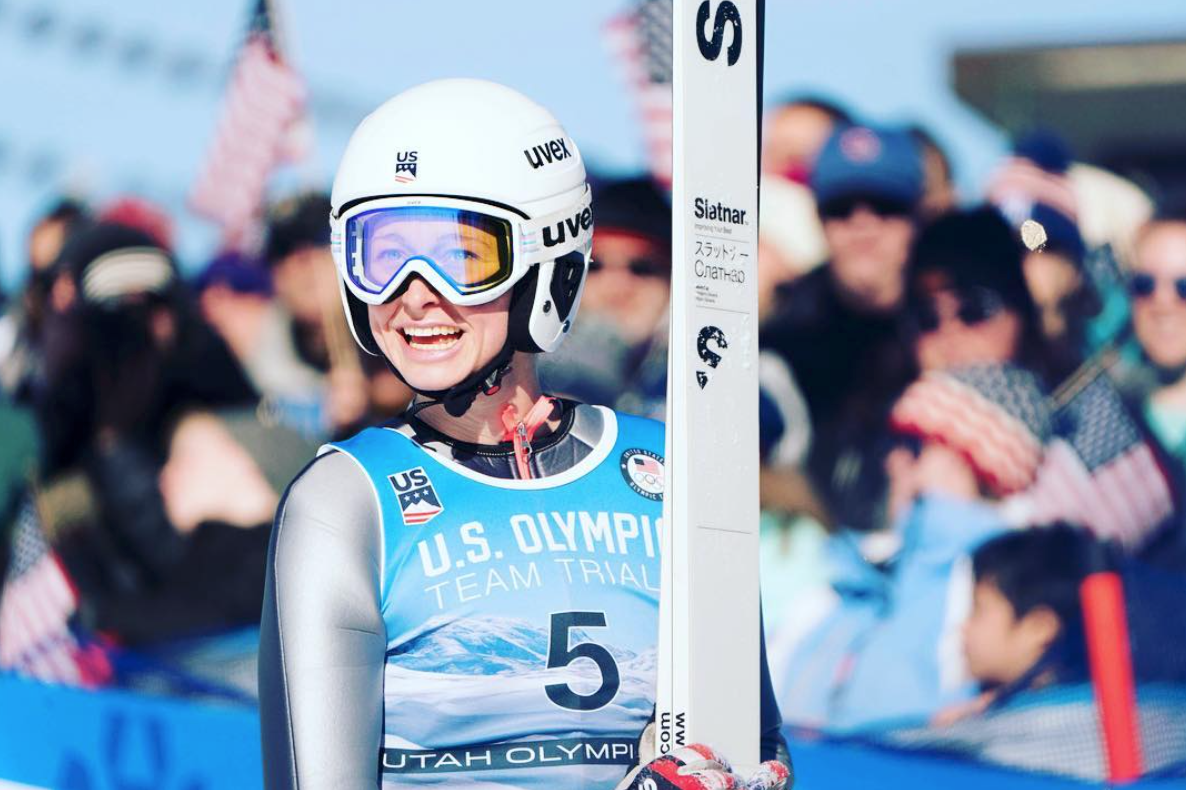
Tara Geraghty-Moats at 2018 U.S. Olympic trials (Photo: Tara Geraghty-Moats/Instagram)
The nordic-combined team includes six men and for the first time, a woman, with Tara Geraghty-Moats on the 2018 Women’s Nordic Combined National “C” Team. (Geraghty-Moats is also a member of USA Nordic’s Women’s Ski Jumping “C” Team.)
On the men’s Nordic Combined National Team, 2018 Olympian and Junior World Championships bronze medalist Ben Loomis stands as the lone A-team member following Bryan Fletcher’s retirement. The B-team includes team veteran Taylor Fletcher, Jasper Good and Stephen Schumann, while Grant Andrews and Jared Shumate were nominated to the C-team.
“We are excited about our continued expansion of our teams and with the exciting development of Women’s Nordic Combined including confirmation of the event in the 2021 World Championships!” USA Nordic Executive Director Bill Demong said in the press release. “Tara Geraughty-Moats continues to be one of our top talents in the sport and, though she was unable to compete in any Nordic Combined competitions last year due to injury, USA Nordic recognizes the importance of growing our sports and developing athletes who have the ability to push the envelope and we are excited to lead growth and opportunity in this new discipline of Womens Nordic Combined.”
USA Nordic 2018/2019 Men’s Nordic Combined National Team
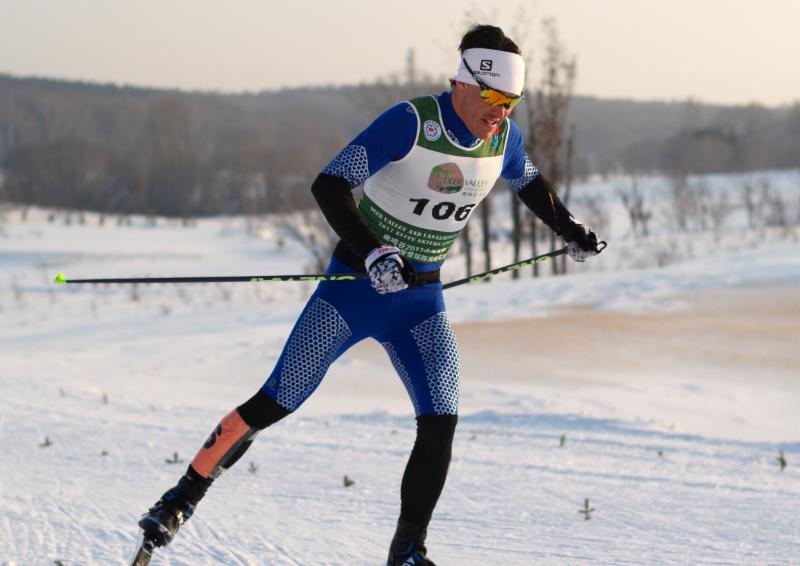
Nick Hendrickson racing at the Tour of China earlier this winter.
Testing and Choosing Race Skis at the Boulder Mountain Tour 2017
On a typical day in the Wood River Valley, you can pretty much bet on sunny days, cold nights, firm new snow and amazing grooming. But so far, this hasn’t been a typical year in Ketchum. Last week it didn’t seem to stop snowing, with about 20 inches accumulating on Friday and Saturday, it made for some interesting ski testing, and racing!
Testing
Whatever skis you may have in your bag, make sure the skis you test are all zeroed (same wax and prep on all). Test skis the day before race day on conditions that you think will mimic race conditions (as best as possible). The BMT is unique because the start and finish could be very different conditions, choose a spot to test skis that is going to give you an idea of what the snow will be up high at the start, and down at the finish. You can always test at multiple locations if you’re really keen, just be careful to not overthink things. This brings us to probably the most important part of ski testing, choosing which ski to race on.
If you have a good quiver of skis, chances are you’ll have two pairs of skis that feel similar on testing day. This is when you go with your gut feeling. If you’re thinking that one ski feels better than the other, but just a little bit…choose the better ski! In the end, if your skis are really so similar, it will not make or break your race. Take the skis that feel slightly better and wax those up for race day. Another option is to race wax both pairs and test them the morning of the race on the course when you know what the weather and grooming is looking like on the race course. Whatever ski you end up choosing, be committed to that ski!
Nick Hendrickson, 2016 Boulder Mountain Tour Champion
This is an excellent article written for SBX racers, but should be read by anyone who wants to improve at anything and have a positive experience
Self-Talk By Cody Brown Head SBX Coach SSWSC
One of the most important yet often overlooked aspects of mental game and success in athletics is, “Self-Talk.” In this eblast we will review the key concepts and the role self-talk plays in athletic performance.
With every new athlete that enters my program one of the first things we actively eliminate is negative self-talk. I often hear negative self-talk in response to feedback that is being provided to athletes. It usually sounds something like, “I am just not good at that technique” or “I just can’t do that.” The first thing that I do when I hear this kind of negativity is cut the athlete off to stop the negative self-talk. Then reframe the statement and try it again. The new statement would sound something like, “I am improving that technique,” or “that is something that I am working on getting better at.” If an athlete is verbally condemning their performance, it is almost a guarantee they are mentally doing it as well.
The underlying principle behind self-talk and its effect on athletic performance is simple. Your sub-conscious mind is indifferent to results and is essentially programed by your conscious mind. One of the first psychologists to explain this notion was Maxwell Maltz in his book ‘Psycho-Cybernetics’ . For example, if you persistently say (verbally or mentally), “I am not good at pumping transitions” that is exactly what your sub-conscious mind is going to produce. If you reinforce to your sub-conscious mind positive statements such as “I am working on getting better at pumping transitions,” you will, over time produce that desired result. A rule of thumb if you find yourself negatively criticizing yourself is, in order to eliminate one negative thought, you need to mentally or verbally say a reframed positive statement four times. One technique many athletes use is a “power statement”. If they catch themselves being negatively critical of their performance mid-run, they can force out the negativity by mentally saying the power statement of their choice four times immediately after. This statement can be as simple as “my technique is excellent” or “I ride with power and finesse.”
This also applies to outside influences as well. I make a conscious effort to speak to my athletes the same way I want them to speak to themselves. For instance, if an athlete is speed checking or slowing down before a jump, I will resist the temptation to say “don’t speed check!” But rather tell the athlete to “eliminate the speed check” or “after the first feature point it straight into the jump.” It is subtle but effective.
To sum up self-talk in three simple steps:
Listen: Pay attention to what you are saying to yourself.
Reframe: If negative, reframe the statement to be positive.
Reinforce: Repeat the positive reframed statement.
Achieving your goals is a process, so be nice to yourself and enjoy the journey.
USA Nordic signs strategic partnership with Toko
Park City, January 15, 2017
“USA Nordic is very pleased to announce that we will be working with Toko as our exclusive glove supplier for the Nordic Combined Team’s cross country racing for the 2017 season,” said Bill Demong, Executive Director of USA Nordic. “Toko has a long, distinguished history as one of the premiere Nordic brands and we are very excited to be working with their committed team.”
Toko US Brand Manager Ian Harvey commented, “Bryan Fletcher lives in Heber, Utah close to me and I have been impressed with him and his other teammates’ professionalism and commitment. It is my pleasure to support them.”
“Switching to Toko was a fantastic opportunity,” stated Taylor Fletcher, one of the top athletes on the USA Nordic Combined team. “The gloves have a great warmth to weight ratio. Due to their European sizing, the size increments are smaller such that we can achieve a perfect fit. I appreciate the personal touch that Ian has given the gloves as well as to our team”.
USA Nordic is the parent organization for USA Nordic Combined and USA Ski Jumping and is based in Park City, Utah. To stay connected with all of the USA Nordic Combined athletes, please visit www.usanordic.org and subscribe to our newsletter!
USA Nordic’s Bryan Fletcher, a top Nordic Combined skier wearing Toko profi gloves in Winter Warrior color
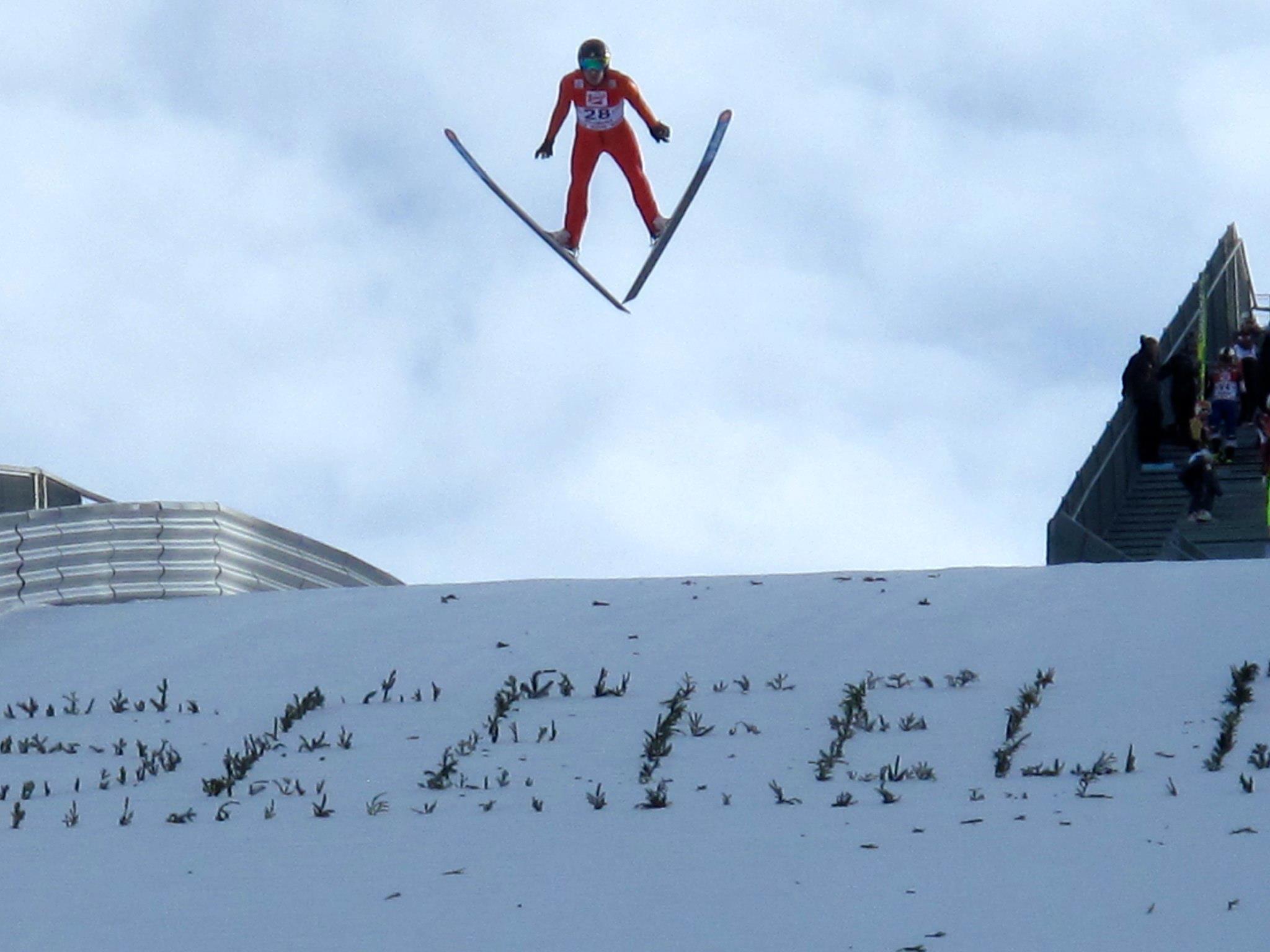
Taylor Fletcher jumping earlier this year in Seefeld, Austria, where he was fifth and third for World Cup career bests. (Photo: Michael Ward)
FasterSkier’s coverage of the 2013 FIS Nordic World Ski Championships in Val di Fiemme, Italy, is brought to you by the generous support of Fischer Sports.
VAL DI FIEMME, Italy – As more than a half dozen members of the U.S. Nordic Combined team and staff zipped around the stadium at Lago di Tesero on Thursday, several made jokes in the transitions between testing skis, but it didn’t seem to effect their efficiency.
That’s no surprise; three out of five of the team’s World Championships athletes have been to this level – the biggest thing outside of the Olympics – at least seven times. Todd Lodwick, 36, leads the group entering his ninth World Championships just a few years after winning two individual golds in Liberec, Czech Republic. Billy Demong, 32, also notched a world title that year in 2009, as well as a bronze, and just last year, he reached a season high of third in the Val di Fiemme World Cup. That success could mean good things for the seasoned U.S. team with multiple world titles, including Johnny Spillane, 32, who won the individual sprint here 10 years ago.
But this year, the team’s goal of three World Championships medals could largely ride on the performance of its youngest athletes: Taylor Fletcher, 22, and his older brother Bryan, 26. Both have notched breakout results in the past year, with Taylor most recently notching a career-best bronze at the World Cup in Seefeld, Austria, and Bryan winning the 134-meter large hill/Gundersen individual at the 2012 World Cup finals in Oslo, Norway.
The team also combined for a relay podium in early Januray in Schonach, Germany, with the two Fletchers, Lodwick and Demong combining for third behind Norway and Germany. It’s those kind of results that make the their coaches know big things are possible in the four competitions at World Championships over the next week and a half, but they know it’s going to take all they can muster to get there.
U.S. jumping coach Chris Gilbertson chatted with FasterSkier alongside the track on Thursday, one day before the team started the first competition: the individual HS 106 and Gundersen 10 k. The team event, with a 4 x 5 k relay, will take place Sunday, followed by the individual HS 134/Gundersen 10 k on Feb. 28 and the team sprint (2 x 7.5 k) on March 2.
FasterSkier:How’s everyone doing?
Chris Gilbertson: Pretty much everyone’s healthy. Todd’s been doing OK with the cough and stuff that he’s got. Since basically the middle of January, everything’s been moving better and better and better, going in the right direction. Bryan’s skiing is finally starting to catch up to the jumping side and of course Taylor has always been crossing fast and that confidence is starting to carry over into the jumping, which is nice. It sort of takes a little bit pressure off Taylor one way and then it also takes pressure off Bryan just to be the only guy that’s doing well. Also having Bill jumping better now, that was always his plan. He said, ‘Don’t worry, I’ll be ready by World Championships,’ and Dave and I were pretty much ready to strangle ourselves. All summer he was just horrible and we’re like, ‘I’ll get better,’ and we’re like, ‘Come on, when are you going to start?’ Finally, the last two weeks.
FS:What’s it like coaching a World Championships team with three seasoned veterans?
CG: It’s harder in some ways and easier in others. Easier in the sense that, you kind of don’t have to tell anyone what to do, they already know for the most part what’s going on. But on the other hand it’s really hard to tell the older guys what they need to do, because they already feel like they know, what they need to do. I kind of joke my coaching’s more reminding than anything, but it needs to be a little more forceful sometimes and you just can’t do that with the older guys because it just won’t work. The younger guys you can be a little more strict and stronger, with these guys, it’s kind of like, ‘Come on.’ If they’re on track, it’s fine, and when they’re not, it’s really hard to kind of pull them back into where you think they should be.
We just kind of have to let it run and let the results speak for themselves. [Head coach] Dave [Jarrett] is probably one of the best guys about this it’s like, ‘Look, it’s they’re performance and their results, and until they realize what’s going on, you can’t make them do anything.’ And it’s hard. It’s really hard to know that they’re making mistakes, that they’re a little bit off, or that they don’t want to listen. They’re still being stubborn in what they think is right. It’s not that we’re that far off, but sometimes it’s just enough.
Luckily they’ve all done it [won world titles]. You don’t have to reinvent the wheel in that sense, but just finding that, and we’re always saying the consistency.
FS:What do you think they’re capable of at these championships?
CG: It’s a little bit rough because we put high expectations on when we do the spring meetings, but I would say that the season so far hasn’t gone as planned. It’s been pretty good for Bryan and better and better for Taylor, but not for Johnny, Todd or Bill so I think that kind of tempers everything a bit. It’s not out of the realm of possibility but I would kind of say we’re gonna need to jump better than we’ve been to get close. We need to be within a minute and 15 or a minute to really get medal contention for sure. Definitely one of the better things was getting that third in Schonach [in a World Cup relay in Germany.] That showed Taylor went above and beyond and I think can pull it in. When we get close, we’re all right, but we can’t be that far out.
FS:What about the team’s past success in Val di Fiemme?
CG: I think on the big hill is better for Johnny, and I know these guys, they like the cross-country course. This is where it all began so it’s good. We trained here twice this summer. This is another place that we’re very comfortable, being at the hotel that we’re at, knowing everyone else here.
FS:What about the cross-country course?
CG: I thought it was really hard, which I think plays in our favor. I think it’s good for Taylor, good for Bill.
FS:How long has the team been training here?
CG: We just got here Saturday night/Monday morning. Bill loves to just show up as late as he possibly can. Bryan and Johnny like to come a couple days earlier than that. These guys aren’t affected by jet lag anymore. They won’t use that as an excuse ever. It’s only for Johnny, sometimes he’s got to stretch more and Bryan needs to get the cobwebs out a little, but then we’re good to go.
FS:What’s the goal at this point?
CG: A goal is three medals here, and however it happens, whether it’s one individual, one team, we’ll take any combination we can get. I’d be happy with one right now, the way things have been going.
FS:How key is having the younger guys step up?
CG: It’s good that that’s happening. We’ve been like, ‘Come on guys, we can’t depend on the older guys that are getting older,’ so it was good to finally see Taylor moving in and that breakthrough with Bryan last year was good.
Olympic and World Championship gold medalists touring the world with a sewing machine? Professional athletes have unique and interesting ways of reducing stress and passing the time on the road, but sewing is not the new hobby of the US Nordic Combined, though I am sure the ski world would love to see what Todd Lodwick could come up with for the Oscars.
The sewing machine is a critical part of the racing gear the squad needs to compete at the highest level. The issue at hand is that the FIS rulebook it as thick as the New York City Yellow Pages. The rule book details every part of the jumping competition, including equipment rules. And that’s not to be taken lightly, although the FIS officials seem to interpret them differently every time, the guys explained.
So to be on the safe side, the nordic combined skiers generally check in the day before the competition to get their suits cleared by the local FIS technical delegates, as they interpret the rules and with their measuring tapes. If you show up on race day with a suit that is not within the standards, you get disqualified, no exceptions.
The suit, which is made of a foam-like material, cannot be more than 5 millimeters thick. No part of the suit can be more than 6 centimeters wider than the body part it covers.
Bryan Fletcher and a fully legal suit – at least it was legal at the FIS control the previous day.
There are rules for how many panels of material the suits can be made from ,and how they have to be designed. For instance, the torso section is made from no more than 6 panels: two in the front, two in the back and one on each side. The distance from the seam front side to the seam on the front side on the other side has to be the same.
Additionally, there are individual measurements that have to be considered, based on the racer’s height. For instance, Taylor Fletcher’s inseam – as measured from the center of the crotch to the ankle cuff – has to be exactly 84 centimeters, not 85 or 83.
The veterans on the US Nordic combined team has been through the routine more times than they care to recall. And accordingly, they travel the world with a sewing machine. The seamstress on the team? Bryan Fletcher has shown that he has a good handle on the art.
“We waste a lot of time and money on suits,” Johnny Spillane said with a sarcastic grin.
Teammate Billy Demong sighed and agreed:
“We spend more time dealing with jump suits than anything else in this sport.”
The team landed on Norwegian soil on February 15, and made a beeline for the suit factory Spinno in Vikersund. A new shipment of suits was waiting, the skiers as excited as children on Christmas Day.
“You know the feeling right off the bat. It makes everything else so much easier. You can rely on a good suit to perform. But the best guys still win,” Todd Lodwick said.
However, the Nordic combined obsession with suits, fabrics, designs and measurements can easily be compared to the cross-country skiers’ scientific approach to picking and collecting skis. Cross-country skiers generally have a large selection of skis with all kinds of grinds and flexes. On the jumping side, nordic combined skiers don’t worry as much about skis, grinds and flexes, and often having one pair of jumping skis. So much is literally riding on the suits, or perhaps more aptly, in the suit.
With all of the US Nordic combined athletes proving they are in peaking shape for the cross-country – posting the fastest times on the course in Saturday’s individual competition – all that’s needed is attention to detail to make it all the way to the medals for the team competition.
The US crew for the team competition consists of Bill Demong, Johnny Spillane, Todd Lodwick and Bryan Fletcher. Demong, who had the fastest time of the day Saturday, has jumped well in practice, as have Spillane and Lodwick, who both had a slow start to the season due to injuries and illness. Bryan Fletcher has made huge strides and showed consistent improvement this season and was tenth after the jumping on Saturday. Fletcher dropped some spots on the course, which is normally his strongest side. Alas, the podium is within reach if the team puts all the pieces together on the same day.
“We are excited to compete on Monday,” head coach Dave Jarrett said to FasterSkier.
“We know if we focus on the things we can control the results will be there,” he said.
“We are recovered from yesterday and ready for tomorrow. We plan on being right in position to fight for medals, and that is all you can ask for,” Jarrett said.
The normal hill team competition starts with jumping at 11:30am local time (5:30am EST) and continues with team relay at 3pm local time (9am EST).
Bill Demong skied the challenging 10 kilometer course in Holmenkollen in 24 minutes and 18.4 seconds, moving him up 22 spots from 29th to seventh.
Billy Demong heads out on course in the cross-country portion of the World Championship Nordic Combined competition.
“The jump competition was disappointing. But I’m vying for a spot on the relay team,” Demong said with a grin. Demong won the gold medal at the 2010 Olympics in Vancouver, and was hoping for a podium Saturday, which he considered within reach on a good day.
Todd Lodwick was the second best American, finishing in eighth.
“The race was good, jumping was not good,” Todd Lodwick said, noting that he gave everything on the course. “It was a grudge fest out there. It was pure will at the end there,” he said.
Lodwick pointed out that the conditions – falling snow and basically no visibility on top of steep and technical loops – made for a hard day at the office.
The second-best ski leg (24:25.6) belonged to Felix Gottwald (AUT), who moved up from 15th place to the podium for the bronzed medal. Eric Fretzel (GER) won the competition. After delivering the best jump of the day, Fretzel was able to fend off the other racers on the course as well, even though there were plenty of racers with faster times for the ski leg.
Spillane, like Demong, fared better on the track today.
Johnny Spillane, who just recently returned to World Cup racing after recovering from a knee injury, felt that things were easier on the course than on the hill. Now he’s focusing on posting better results in the jumping.
“I obviously have to jump better, and I pretty much speak for all of the team there,” Johnny Spillane said to FasterSkier after the competition. Spillane moved up from 34th to 19th on the course, and had the fifth fastest cross-country time of the day.
Promising from the rookie
Despite knowing he has more to offer on the hill Taylor Fletcher posted his strongest international result in a World-Cup caliber field: 26th place.
“I am definitely happy with my race. I was able to move up quite a bit, from 39th to 26th. I caught a lot of people on the first lap, but then I skied two laps of the race entirely by myself. I never really latched onto a real group,” Fletcher said, explaining that skiing with people makes a big difference.
“I’m hoping to build on this through the World Championships and into the end of the World Cup and finish strong in Lahti,” Fletcher said.
Bryan Fletcher had the best jumping result of the five, starting the cross-country in 10th place, one minute behind the leader Eric Frentzel (GER) who also ended up winning the competition. However, Fletcher lost significant time on the course and dropped 12 spots to 22nd.
Todd Lodwick was eighth in Sunday’s World Cup competition in Chaux Neuve (FRA), after jumping to start the cross-country in third place. Bryan Fletcher could easily have been top 10 on Saturday if the margins were on his side, Johnny Spillane is consistently jumping better and returning to race shape, and Bill Demong is showing promising colors. This was the final World Cup weekend before the World Championships in Oslo next month.
“Four guys in the top 30 is always a good day, for sure we wanted to be in the top half with everyone too. Things are coming together more and more,” said US Nordic Combined head coach Dave Jarrett after the competitions in France.
Jarrett’s conclusion on the weekend’s events is that things are on track.
“Todd jumped well but didn’t finish the race strongly. He was out of gas the last lap. Bryan had a great trial jump but his comp jump was a bit below his average. The good thing is that he now able to score points in a full-strength World Cup with a below average day. Johnny had a better day, jumping is coming slowly each jump and racing is coming around too. Billy is still looking for the loving feeling on the hill. Skiing is coming too,” Jarrett said to FasterSkier, summarizing the weekend in France.
Now the team is returning to base in Park City, Utah, to make sure all their i’s dotted and their t’s are crossed before heading back across the pond for the Worlds.
“We are going home now to get ready for Oslo and show up with our full Mojo,” said Jarrett.
Confidence-builder
Bryan Fletcher, who has moved in, established and defended his position in the top 30 on the World Cup this season, is excited about the upcoming championships. This last World Cup weekend helped his confidence.
“The weekend was a success, not on any huge level for me, but I am happy with my results. Things felt good this weekend my jumping was on par with what I was hoping for and my cross-country felt strong,” Fletcher said in an email to FasterSkier.
“The first day I surprised myself and was able to ski up to 13th place only to hit a wall on the last hill and lost my pack falling back to 21st place. However I was happy with my race over all it was a solid step to build some confidence,” the 24-year-old said.
Jarrett is also encouraged by Fletcher’s performance, and points out that his preliminary jump was particularly good, landing him an 18th place. Saturday Fletcher was 24th in the jumping and 21st overall.
“With just a few more meters he could have been top 10 again today. Anyway, he jumped well and skied well. He was in a group with some fast guys so it was hard to make up places. Solid nonetheless,” Jarrett noted.
Sunday Fletcher ran into bad conditions on the jump hill but still pulled off a decent jump and started the cross-country in 34th place, two minutes behind Jason Lamy-Chappuis (FRA) who went ahead and won the competition on home turf. Solid performance on the course landed him in 27th place overall, securely within his own season goal of consistent top 30 results on the World Cup.
“The second day I had some adverse conditions on the jump hill. However was able to put an OK jump together and had another solid race. I didn’t feel quite as good as the first day, but I was able to ski into points, which is tough from my starting position. I ended up 27th place,” Fletcher explained.
Prep time
From here it’s all about getting ready for the World Championships.
“There will be lots of training to gear up (for the Worlds),” Fletcher said, adding that he is looking forward to the process.
“I will be focusing on fine-tuning the things that are limiting me from being in the top 10. I will also be taking the time to gain some much needed rest and relaxation,” Fletcher said to FasterSkier.
Fletcher is also planning on racing into shape by participating in some races on home turf and some longer efforts, including the 32-kilometer Boulder Mountain Tour in Sun Valley, Idaho.
“I plan on doing a couple races as well when I am home. The biggest race will be the Boulder Mountain Tour. The BMT has always been a fun race for me, and having missed it last year I am looking forward to being able come back and ski this year. I find it’s always fun to mix it up a little bit with the other skiers,” Fletcher concluded.
The first Nordic Combined race at the World Championships in Oslo is on February 26.
Complete results from Saturday’s World Cup in Chaux Neuve here.
Complete results from Sunday’s World Cup event here.
Taylor Fletcher: COC in Harrachov (CZE)
Bryan Fletcher’s brother had a job to do with the US Nordic Combined team on the Continental Cup circuit and executed according to plan.
“It was a very successful trip for me! Not only did I score World Cup points, but I am now three for three on COC podiums this year,” Taylor Fletcher in an email to FasterSkier. The 20-year-old has raced with the World Cup crew for much of the winter. Just like his brother, Taylor Fletcher found the final major event weekend before the Worlds to provide extra confidence.
“I felt like this weekend was a very motivating weekend. I told (head coach) Dave Jarrett what I wanted to do, and went and did just that. It is a major confidence-builder as we are heading to Oslo,” Taylor Fletcher said.
Leading up to the Worlds, he will be paying attention to the details and honing his peak, as well as just getting some more raw volume under his belt. Taylor Fletcher is also trying to dial his match weight for optimal performance, something that matters more on the hill than on the course.
“I’ll be training a lot building up my intensity making sure I am the fastest I possibly can. I will do at least one race and possibly the Boulder Mountain Tour. But I will also slim down a little more and try to get to 65 kilos before Oslo to optimize my performance on the jump hill,” Taylor Fletcher said.
Complete results from the COC Friday here and Saturday here
Park City, Utah – Dave Jarrett, US Ski Team Nordic Combined Head Coach, is content with Demong’s result and glad to see him returning from his early-season jumping funk. Despite a less than stellar jump this morning, Demong has delivered some promising jumps since returning from Europe last weekend. And he is generally reliable on the cross-country.
“We definitely had difficult racing conditions today. Bill was leading going into the stadium, but it was so soft he didn’t have a chance to sprint,” Jarrett said.
Demong, who was 18th after the jumping, had quite a job to do on the cross-country course. After a less than stellar day on the hill, Demong started 1:40 behind Sebastian Reuschel (GER), who had the best jump and proceeded to win the competition.
“Bill came back from pretty far behind and caught the leaders on the first lap. He tried to make a move on the top of the last hill, but he just couldn’t drop anyone. They all came in together, but when they lined up to sprint it was just too soft,” Jarrett said.
“I was definitely in it to win today,” Bill Demong said. But he is not disappointed with fifth place. “I got what I wanted out of this, and it was a good hard race,” he said, noting that the conditions on the hill in the morning were difficult. At first, there was not much wind at all, while those jumping later had more wind.
“I started out behind, but I put my head down and caught everyone. I wanted to not be following anyone, so when we got to the sprint, the others were definitely going to be a bit fresher,” Demong explained.
Decent and difficult
“It was a pretty good day,” Jarrett said of the US team after Saturday’s event.
Friday’s trial round was marred by rain, and conditions didn’t set up over night, so both the hill and the cross-country course featured soft, saturated conditions.
Eric Camerota also had a good race, and landed himself a ninth place, as the only other American in the top 10.
The COC continues tomorrow in Park City/Soldier Holllow. Taylor Fletcher and Brett Camerota, who didn’t compete Saturday, will be in that event, while Demong takes the day off. Jarrett hopes that Brett Camerota can get back in business on the jumping hill. For Taylor Fletcher, the Sunday race is merely an opportunity to stay sharp and get a race in on a weekend off before he heads back to the World Cup in Ramsau (AUT) next weekend.
Bryan Fletcher was the top American in Sunday’s nordic combined race, finishing 26th overall. He was 22nd after the jumping, and started 1:28 behind Jason Lamy Chappuis (FRA), who was leading at the beginning of the cross-country race and proceeded to win overall.
Bill Demong was 38th,climbing four spots on the trails, and Taylor Fletcher was 48th overall after finishing the jumping competition in 55th. Brett Camerota was 45th after the jumping, but did not finish the cross-country.
Lamy-Chappuis (FRA), who was second in the competition on Saturday, managed to keep Mikko Kokslien (NOR) behind him on Sunday. On the jumping hill, nobody seems to be able to beat the French bird, but so far, he has lost ground in the woods.
Sunday, Lamy-Chappuis had a 20-second lead on the next racer, and started 1:28 ahead of Kokslien. Mario Stecher (AUT) was tenth after the jumping, and skied his way into third place, only a tenth of a second behind Kokslien.
Fletcher told FasterSkier that his 18th place on day two of the World Cup season opener in Finland last weekend (his career best in a World Cup) was encouraging and exciting, but that his goal for the season is to establish himself solidly in the top 30.
Hometown favorite Mikko Kokslien (NOR), who started the cross-country in 16th place, 1 minute and 4 seconds behind Braud Francois (FRA), won by 8.4 seconds over Lamy-Chappuis. Francois, who was first after a jump of 138.5 meters, ended up in 20th place overall. In the final kilometer of the race Kokslien dug into the reserves and beat the French Olympian to earn his first WC victory.
Kokslien jumped into the Norwegian national spotlight when he skied into second place in the World Cup opener in Finland last weekend, only narrowly beaten by Felix Gottwald (AUT). Lamy-Chappuis started the cross-country in third place, 18 seconds behind Francois, after a jump of 137 meters. Gottwald started in 32nd place, 1:50 behind.
Brett Camerota jumped the longest of the Americans, 126 meters, and started in 22nd place, 1:20 behind Francois. Bryan Fletcher jumped 119.5 meters and started in 35th place, 2:11 behind. Taylor Fletcher was 44th after the jumping (118.5 meters) and 2:30 behind, while Bill Demong (111 meters) started 3:20 behind. Except for Demong, who advanced from 53th to 45th over the 10K course, all had a tough time on the course and dropped spots in the overall.
Bryan Fletcher, who delivered his career best World Cup result in Finland last week when he hauled into 18thplace, was not content with Saturday’s effort.
“Today was not as good as I hoped. The race was tough today. Slow snow and a course with not a ton of rest so it was a very challenging day for myself and for others,” Bryan Fletcher admitted to FasterSkier, but has already put the race behind him and preparing for the next.
“I am just focusing on tomorrow. Tomorrow is a new day and we will try again. Hopefully I will have a better go. Oh well,” he said.
Aside from Bryan Fletcher’s career best finish, there were not a whole lot of things to cheers about in Finland last weekend for the U.S. nordic combined team. But simply getting the season underway and the World Cup opener under their belts was a start.
With Head Coach Dave Jarrett back in the U.S. helping out with the Continental Cup races in Soldier Hollow, Utah, Chris Gilbertson is in charge of the U.S. nordic combined squad for this weekend’s World Cups in Lillehammer.
While extreme cold still is holding a firm grip on Scandinavia, the skiers are getting used to it, and with a more comfortable venue, it’s not looking half bad this weekend, Gilbertson told FasterSkier.
“Things are going better. It’s still cold, -17 Celsius, but we are back in a venue that the guys are much more comfortable in,” Gilbertson said, noting that Fletcher and Brett Camerota, especially, have been jumping better this week.
The jumping was definitely the weak spot for the Americans at the Finland events.
“Taylor (Fletcher) is struggling a little bit, and Bill (Demong) and I have gone over tons of videos of old jumps to get him back where we know he can jump,” Gilbertson said.
Gilbertson also noted that the whole squad feels better about the skiing side.
“We were able to follow our normal routine this week, as opposed to last week, which was hampered by delayed, then missed flights. So I think we will see our guys racing much better,” Gilbertson said.
So far, the only challenge the Americans have had in Lillehammer was being moved by the organizers, once they had set up camp and gotten organized.
“We were settled in our jump cabin, but then the organizers decided to move us to another cabin, and move the Austrian special jumpers in. Some things never change,” Gilbertson said.
Exciting atmosphere
Bryan Fletcher, 24, who is coming off his best-ever World Cup performance, is excited about the competitions in Lillehammer.
“Lillehammer is cool, because it’s just in the nordic capitol of the world, which means lots of fans cheering you on, as well as some good competitions,” Bryan Fletcher told FasterSkier, adding that his workouts this week have been promising.
“I am feeling good about the races this weekend. We have had some good training heading into the weekend, both on the jump hill and the cross-country side,” he said.
Fletcher said that he knows his performance last weekend was not just luck.
“My hopes for the weekend are same as last weekend. I had a good result last weekend, but my goals have not changed. I know I am capable of doing it again, and I will be doing my best to better it,” Bryan Fletcher said, adding that he knows the competition at the World Cup level is fierce, and that he needs to be realistic.
“My goal is still just to be in the top 30. I am trying to establish top 30s as a consistent result for me throughout the season,” Fletcher said.
As far as preparing for the competitions, Fletcher said he feels like things are on track, aside from from the constant challenge of beating the cold.
“The only thing I have been working on non-stop is finding warm gloves. It’s been so cold outside that I cannot take it,” Fletcher said.
The American starters for the two individual competitions in Lillehammer on Saturday and Sunday include Bryan Fletcher, his brother Taylor, Brett Camerota and Bill Demong.
The Nordic world is focused on Kuusamo, Finland, this weekend. In addition to the cross-country World Cup taking place, the first Nordic Combined World Cup is taking happening in the same location.
Bryan Fletcher led the American contingent with a strong ski, moving himself four spots up on the result lists after finishing 22nd in the jumping competition Saturday. Fletcher started 1 minute 20 seconds behind the leader, only a second behind Mikko Kokslien (NOR), who ended up second overall. Fletcher went right to work from the get-go, and picked off a couple of spots in just the first quarter of the race. He was able to pluck off two more spots in the final kilometer of the race to earn himself 18th place.
“I was able to jump more like I had been jumping in training, which landed me in 22nd after the jumping,” Fletcher said to FasterSkier after the race. “I was able to ski strong and ski my own race without pushing it too hard and blowing up,” he said, explaining that he was happy with a top 20 result.
“Kuusamo was a tough place to start the season, cold weather and a large hill, with an even tougher course make it a really challenging opener for the season,” Fletcher said, noting that the cold added more trouble.
“The cold can really screw up your routines on the jump hill and on the race course. The weather was very, very cold and the humidity didn’t help. Everyone was freezing during and after the race. Because it so cold you tend to try to stay in a warm place as long as possible, however this can make you late for your jumps or the race and then jumping into the comp can be hectic,” Fletcher explained, adding that two hours after the race, his fingers were still tingling.
“I hope it is a breakthrough for him,” U.S. Nordic Combined Team head coach Dave Jarrett said to www.usskiteam.com.
“It’s a step in the build to 2014 where we need to have more different guys doing this more often. It starts with top 30s, then top 20s,” Jarrett continued. “But we need to keep it in perspective. It is his best result but we have higher expectations.”
Billy Demong jumped 111 meters to start the cross-country in 38th place, which Jarrett suspects is partly an equipment issue. Demong worked himself up two spots to finish in 36th but that doesn’t concern Jarrett too much at this point.
“With more and more jumps leading into Oslo [World Championships], he’ll have plenty of time to dial things in. That’s the focus for Bill this season,” Jarrett said.
Taylor Fletcher was 36th after the jumping with a distance of 115 meters, but dropped to 39th after the cross-country. Brett Camerota did not start the cross-country after a tough start on the hill.
Day for breakthroughs
It was the day for breakthroughs in Finland; Mikko Kokslien (NOR) was 21st after the jumping but skied into second place. Kokslien was narrowly beaten by Felix Gottwald (AUT), who won the competition after skiing from 26th to 1st place over the 10K course, only passing Kokslien on the last kilometer. Jason Lamy Chappuis (FRA), who earned himself a 15-second head start after soaring 140 meters in the jumping, ended up in third place.
Kokslien, who started 1:19 behind and lead the race for parts of the course, said he doesn’t know what to feel, losing first place by 7.5 seconds at the finish.
“I don’t know what I was thinking. This is a new situation for me. I thought the Austrian was a little ways back, but then suddenly he was right there,” Kokslien said to Norwegian television station NRK
“This was wicked good. I’ve worked so hard for so many years,” Kokslien said to NRK.
This is Kokslien’s best international result, and the Norwegian coaches consider it a breakthrough for the 25-year-old.
Francois Braud (FRA) was second after the jumping, but finished the cross-country in 16th place. Wilhelm Denifl (AUT) was third after the jumping but finished 11th overall.
More work
“Overall I am happy with my results in Kuusamo, however I know I can still do better,” Fletcher said. “The whole team is looking ahead to Lillehammer and hoping to post some solid results there. Our team knows we can be at the top and the group of guys here can definitely put it together, it’s just a matter of time,” Fletcher said.
And while Jarrett is excited about Bryan Fletcher’s break into the top 20, he is looking at the performance as a whole and seeing that there are plenty of things to work on. The crew now heads to Lillehammer (NOR) for a pair of World Cup races next weekend, and then to Ramsau (AUT) the weekend after, and looks to build on the season opener in Finland.
“Collectively we’re not skiing on par,” said Jarrett. “We come into a long block of racing now. If the plan goes as we’re hoping they’ll ski stronger in Lillehammer next weekend and be in good shape for Ramsau the following weekend.”
There aren’t many people who can spend more time in work boots than cycling shoes and still harbor reasonable hopes of keeping up in a bike race with Tour de France veterans. But count American nordic combined skier Billy Demong as one of the few members of that group.
Over the past few years, Demong has been an avid bike racer during the off-season. This summer, though, he’s been more focused on remodeling his house than riding his bike, which will make things a more difficult this week as he competes with professionals like George Hincapie and Levi Leipheimer in the six-stage Tour of Utah.
“Most years, I actually ride quite a bit, and focus on some of the races. This year, I’ve…really just been relying on long-term fitness,” Demong said in an interview Tuesday. “The cool thing is that I’ve been able to ride at a fairly high level on certain days.”
Demong competed in two Oregon stage races earlier this summer—the Mount Hood Cycling Classic near Portland and the Cascade Cycling Classic in Bend—finishing mid-pack in both. He placed 100th of 120 in the Tour of Utah prologue on Tuesday, one second faster over the 4.5 kilometer course than his time from last year. That left him 47 seconds down on race leader Taylor Phinney heading into stage one on Wednesday—an 85-mile road race.
The light summer training and racing schedule is all part of Demong’s master plan for the next four years. After committing earlier this spring to training and racing through the 2014 Sochi Olympics, Demong said he first needed a little time to catch up on the non-athletic aspects of his life.
“It just seemed appropriate to take a break now and get some things done,” he said. “It’s been really healthy, mentally and physically.”
Demong got married in July, and he also began the process of demolishing and remodeling the interior of his house in Park City. He started roughly nine weeks ago, and the project will be done around the end of the month.
While Demong began the work happy to take a break from full-time training—which he’s done for the past eight years—he said on Tuesday that he’s early awaiting his return to life as an athlete. His training plan for the summer has been closer to that of a 40-year-old father than a 30-year-old Olympian in his prime preparing for World Championships. “When I train, it’s kind of a treat,” he said.
“I’ve basically just fit a few rides a week around all the work,” he said. “The workouts I do are all hard—I’m like, ‘what intervals can I do today…to get the most bang for my buck?’”
Demong (r) and teammate Todd Lodwick share the podium at the 2009 World Championships
That approach, Demong said, has underscored the value of rest and recovery, with which he is already intimately familiar through the American nordic combined team’s tapering process—one that has led to multiple Olympic and World Championship medals.
“I think a lot of people get the attitude that, ‘as soon as I stop doing 20-hour weeks, I’ll be dead.’ [But] one of the things we’ve realized on our team is that the best races come after taking longer breaks,” Demong said, citing the 10-day to two-week taper that he executes before important nordic combined events. “To me, it’s been amazing how good I still feel when I go hard for some of these [bike] race efforts, despite not having the volume of training that I used to.”
Obviously, Demong acknowledged, the many years of heavy training already under his belt probably allowed him to get away with doing a little less work this summer. But despite the duration of most cycling races—some stages on the domestic circuit can be as long as five hours and 120 miles—Demong has learned that he still doesn’t have to put in huge hours.
In his first year as an elite rider, Demong said, he did some “really massive weeks of volume and intensity leading up to these stage races, mimicking what some of these other top amateurs were doing—assuming it was different than ski racing because of length.”
“By the end of the first season, I realized I was actually kind of hurting myself doing the volume before the races. Last year, I did more of a build, and then recover and taper…and had much better feelings,” he said. “Even though it’s four or five hours long, it comes down to the hardest five- or 10- or 20-minute effort, and that’s where the recovery comes into play.”
Ironically, Demong said that after the summer of light training, he’ll have to build his fitness into this winter rather than tapering back. After the conclusion of the Tour of Utah this weekend, Demong will travel to Europe with his nordic combined teammates for a two-week camp in September, which he plans as the start to a solid chunk of training.
“With a good block…in September and October and November, I can show up for the first World Cups in shape,” Demong said, “and do what I need to do to get ready for World Championships again.”
It’s a pretty good sign for the U.S. Nordic Combined Team that a fourth-place World Cup finish for Bill Demong isn’t greeted with a whole lot of fanfare.
With 28 days before the first race of the 2010 Olympic Games, Demong and his teammates have already been on the podium four times this year, despite the fact that Head Coach Dave Jarrett says that his athletes haven’t even tried to peak yet.
In Sunday’s World Cup in Chaux-Neuve, France—his last before heading home to the U.S.—Demong finished just outside the top three, as Mario Stecher (AUS) caught and passed him in the stadium right before the finish. Five years ago, the result probably would have been treated with significantly more reverence, but today it seemed like more of a pedestrian effort.
Conditions in Chaux-Neuve were dicey this morning, and officials almost scrapped the jumping round. Had they done that, Jarrett said that the Americans would have been well-positioned for the cross country race, but the weather ended up giving the organizers just enough of an opening.
After the jumping round, Demong was sitting in ninth place. In the ensuing race, eventual winner Magnus Moan caught him from behind, and the two skied together almost until the finish, Jarrett said in a phone interview from Europe.
In the finale, the American couldn’t quite hold Moan’s pace, and ended up getting dropped by the Norwegian, who was on his way to his second win in as many days. Jason Lamy Chappuis of France also came by.
“We thought Bill was going to get third going away at the top of the last hill,” Jarrett said. “He was just cooked. Mario came back to him in the stadium, and they had kind of a drag race.”
At the line, Stecher came out on top, 1.2 seconds ahead of Demong. Todd Lodwick and Johnny Spillane followed in 13th and 16th, respectively, and Brett Camerota finished in 35th.
Following this weekend’s races, the Americans will head home for some training. After six races in two-and-a-half weeks, Jarrett said that the team is skipping the next two World Cup weekends to ensure that “everybody’s going into Whistler with the right taper and the right preparation.”
“Training-wise, they haven’t tried to peak yet, so hopefully these next three weeks, we’ll hit it right,” he said.
The first nordic combined event of the 2010 Olympics is on February 14th. Jarrett said that his team is planning its final camp for Park City, one week before they leave for the Games.
The initial team for Whistler will be announced on Thursday.