
Tag: Bill Marolt

  • Changing of the Guard: USSA President Marolt to Guide Shaw

    Changing of the Guard: USSA President Marolt to Guide Shaw

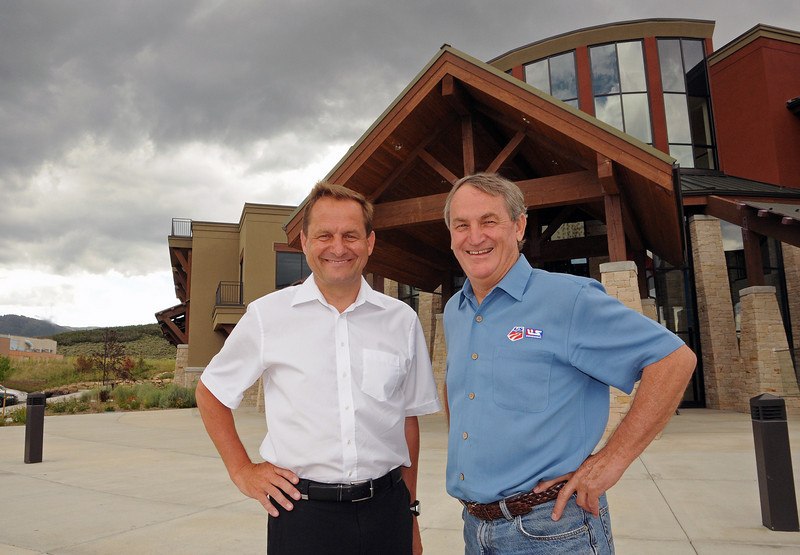
    U.S. Ski and Snowboard Association President and CEO Bill Marolt gives a tour of the USSA Center of Excellence in Park City, Utah to Germany Ski Association President Alfons Hoermann. Marolt and Hoermann are members of the International Ski Federation's Council.
    U.S. Ski and Snowboard Association President and CEO Bill Marolt (r) with Alfons Hörmann, president of the German Ski Association, during a 2010 tour of the USSA Center of Excellence in Park City, Utah. Marolt and Hoermann are members of the International Ski Federation’s Council. (USSA photo)

    When you’re in charge of the U.S. Ski and Snowboard Association (USSA), you can’t view your job with a shortsighted lens.

    For 18 years, Bill Marolt led the premier governing body of American snow sports, setting the bar high with the goal of more Olympic medals than any other nation. And since the Winter Olympics come every four years, that made it easy to stick around.

    “We put together a four-year plan and we execute pretty carefully along those plans,” Marolt said in a recent phone conversation. “It made sense to transition after Sochi and let the next CEO take over.”
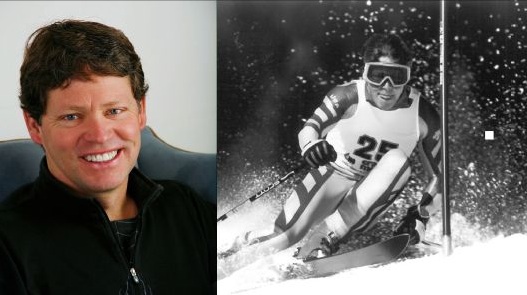
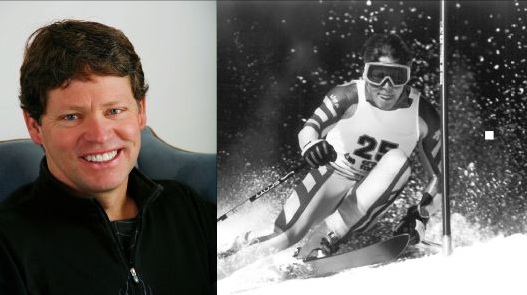
    Former Olympic alpine ski racer Tiger Shaw named new CEO of USSA. USSA photo
    Former Olympic alpine ski racer Tiger Shaw was recently named the new CEO of USSA. He will start as chief financial officer on Oct. 1 and assume the full position as president in the spring of 2014. (USSA photo)

    That chief executive officer would be Tiger Shaw, a two-time Olympic alpine skier and nine-time national champion. In late August, USSA announced that the Stowe, Vt., native would be taking over as president and CEO after the 2014 Winter Olympics in Sochi, Russia.

    A former Olympian and U.S. alpine team director, Marolt, 70, was going to finish out another quadrennial first.

    “It’s not work in the sense of work,” he said. “You like what you’re trying to do. You like the athletes. You like the people you work with. You like the focus of trying to have athletic success.”

    Growing up in Aspen, Colo., Marolt won four NCAA Championships and went to the 1964 Olympics before retiring in 1968. A year later, he became head coach at the University of Colorado (CU), where he led the Buffs to seven NCAA titles from 1969 to ’78.

    Marolt spent the next six years directing the U.S. Ski Team (USST), and his athletes won three gold and two silver medals at the 1984 Sarajevo Olympics. After that season, he returned to CU as athletic director, and over the next several years, his Division-I program tallied several more NCAA titles and a national football title in 1990.

    In 1996, Marolt returned to the big leagues at USSA as president and CEO.

    “When I started, it was basically alpine, nordic and jumping,” he said. “Now we’ve added snowboard and freeskiing … We’re almost twice as big, and in sheer numbers, that’s a challenge.”

    In 2008, USSA fell into an economic recession with the rest of America, which took years to climb out of. For the next two seasons, the organization made budget cuts and entered the 2010 Olympics with less financial resources than previous years, Marolt said.

    “We had to reduce the size of our staff,” he said, noting that programs also suffered. “The worst places were development and where you try to build for the future. Slowly we’re coming back from that.”

    During his tenure, Marolt saw the completion of the Center of Excellence in 2009 in Park City, Utah, where he’s currently living, and the Olympic upgrades to Soldier Hollow in nearby Midway. In 2011, the U.S. Ski Team Speed Center opened for athletes at Copper Mountain in Colorado.

    “We have added a lot of world-class support facilities,” Marolt said. “Our staff is much bigger; when I arrived we really had no high-performance staff. … We’ve changed it a lot and it’s all in that line of going for the best in the world.”
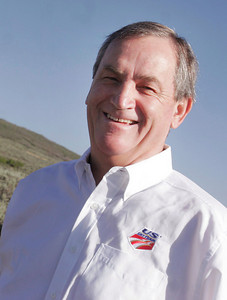
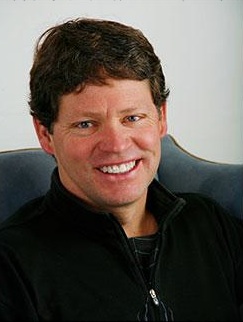
    Bill Marolt, USSA president and CEO for the last 18 years (USSA photo)
    Bill Marolt, USSA president and CEO for the last 18 years (USSA photo)

    In 2010, Marolt started talking about retiring after the 2014 Olympics. It seemed far enough away, but allowed for a smoother transition, he said. A year ago, USSA ramped up the search for his replacement, reaching out to about 100 people, according to Shaw.

    “They cast a very wide net across all sports,” Shaw said on the phone from Hanover, N.H., where he’s living until the end of the month. “I’m not really sure who all the candidates were.”

    USSA contacted select individuals and asked for input regarding the new hire. It helped that Shaw was a USSA athlete alumni trustee and a former athlete of Marolt’s during a time when the USST “was a difficult team to make,” according to Marolt.

    Shaw said he wasn’t an outstanding athlete by his measure of Olympic medals (although he did notch eight World Cup top-10 results), but he understood the lifestyle and environment elite athletes needed to thrive.

    “One thing that changed considerably [was] how we trained and prepared,” he said. “We were shooting in the dark. Especially strength and non-event specific training, any given team is much more uniform in how it’s prepared and ready. … It wasn’t nearly as scientific or results-based as it is now.”

    “Thanks to sports science and our physiology team, we get it better than most of the countries and they’re sniffing around us to try to figure out what we’re doing,” he added. “That wasn’t the way it used to be.”

    Over the next few months, Shaw, 52, will serve as chief operations officer while Marolt and USSA Vice President Luke Bodensteiner head up athletics through Sochi and into next spring.

    Shaw has spent the last two years as sales and marketing manager for Global Rescue, an East-Coast company that provides international travel support for corporations and individuals seeking security on their trips.

    “People go fishing in some of the craziest places,” Shaw said.

    So how did one job lead to another, and how did he end up taking a job with USSA in Park City? Shaw said he wasn’t sure if his Eastern roots helped his application, but he thinks it’ll be an asset to the company.

    “I have a huge network in the East and it always pains me to hear anybody talking about USSA and East vs. West,” he said. “What about the Midwest, and Pennsylvania and southern [regions]? There are a huge number of competitors in those areas. I hope to pull those regions together.”

    A ski racer at the core who ventured into sales and his own business ventures throughout his career, Shaw spent 12 years as a volunteer coach for the Ford Sayre ski team in Hanover near his alma mater, Dartmouth College.

    “My kids grew up ski racing and I’m also very close to the nordic program here,” he said. “I’ve always loved that. It was my passion as an athlete and my passion as a volunteer. I didn’t choose that as a career path; I was interested in starting companies.”

    When the USSA position came up, he encouraged himself to go for it.

    “It’s always fascinated me because it’s a major business job,” Shaw said. “It’s incredibly complex … from a relationship standpoint and building networks and understanding athletes.

    “I inherit an incredibly strong organization, how to keep it that strong and how to move forward is not going to be easy but honestly that’s what it’s been my dream,” he said.

    Starting Oct. 1, he’ll jump in by taking a number of trips, meeting sponsors, stakeholders and members, and getting to know athletes across all USSA sports. He also plans to try the various sports: “I can snowboard and I’m not a bad skate skier, so I intend to do those things,” he said. “I’m not going to do the large hill.”

    “One of the things I want to do during this, I guess you could say, quiet period is learn about all these sports that have not been a big part of my life: cross-country and jumping, snowboarding, slopestyle,” he said. “That’s important because the number of sports has grown considerably and who knows where it might go. The key thing is to support and maintain where we’ve been the best and build where we aren’t the best.”

    “It’s not necessarily going to remain alpine-centric,” he added. “Who knows? You have to have your eyes wide open and be able to shoot your paradigm. Especially on the cross-country side … what they’ve been doing is frankly amazing.”

    Kikkan Randall (USA) wins her second straight FIS Sprint Crystal Globe on March 20 in Stockholm.   (Photo: Fischer/Nordic Focus)
    Kikkan Randall (USA) wins her second straight FIS Sprint Crystal Globe on March 20 in Stockholm. (Photo: Fischer/Nordic Focus)

    Shaw brought up Kikkan Randall’s sprint dominance the last two seasons, including her World Championships gold in the team sprint with teammate Jessie Diggins. With such success, paired with methods of watching live races or staying updated on results, Shaw said the popularity of lower-profile sports is growing.

    “I think there’s going to be some interesting things going on with Sochi,” he said of social media’s impact. “How many sports are there that USSA governs? Twenty-six? That’s incredible, and you can’t cram that into a two-hour show that’s designed for TV audiences.”

    That’s why USSA is paying attention to how much people are looking up online.

    “Sixty percent of the information people are getting off the internet now are going to mobile devices,” he said. “Digital means, social media, Pintrest, Facebook, Twitter, those are the communication tools that produce instant measurement and can go viral. Television is different that way; it’s so important still, but there’s so many other ways to consume and follow your sport.”

    So what does that mean for sports that get the most attention, whether through webpage views or television viewership? That’s the tricky part, Shaw said.

    “From a budget standpoint, we’ve grown and we’re bigger than we’ve ever have been,” he said, but with that comes additional pressure and strain on providing equal resources for each sport.

    “Bigger isn’t always better,” he said. “We are bigger mainly because of all the added sports. We have to understand in each sport how the grassroots work. It’s different in every sport.

    “It’s not easy to figure that out, but I do know that some sports need more money at a lower level,” Shaw added, referring to newer sports that don’t have deep roots in ski academies like nordic and alpine. “I think everyone would argue that everyone needs more money or more resources.”

    Another problem is how to go about funding programs. Most of the money is needed in development, but when you go one tier down on the pyramid, with elite or professional athletes at the top, the number of clubs, programs and people needing assistance grows considerably.

    “There’s been lots of debate … especially in jumping; there’s been a lot of growth in these new sports,” he said, specifically referring to USA Ski Jumping, which is independent of USSA. “Do they need a lot of money from USSA? Probably, but the neat thing is, on the fundraising side there’s a lot of capability from passionate people that want to support it.”

    “I’m confident that we can raise the money,” he said. “I don’t know where and how it needs to go. I’ll look to Bill and Luke who’ve been guiding it for years to figure out where it needs to go and find the optimal way to apply it.”

    In the meantime, Marolt is going to stay involved with fundraising for USSA through programs that are already in place, he said. He’s still the International Ski Federation (FIS) vice president and a U.S. Olympic Committee board member, and is considering moving back to Colorado with his wife, who’s originally from Golden. His youngest daughter just had her first child, and Marolt was headed south to visit them in Phoenix.

    As for memories at USSA, Marolt said he’s proud of the organization’s overall growth and emergence as a world leader in sports science.

    “For any CEO, kind of the standard is, did you leave it better than you found it? And I would say yes to that,” Marolt said. “We created a $60 million-dollar endowment. We started a U.S. Ski Team academy. We’ve added a lot.

    “I think it’s been a good run,” he added. “We’ve had good success and that’s all exciting, but the most fun is what’s ahead. … I think Tiger’s the right guy and he has the right platform. … We’ll have a great leader.”

  • Alpine Olympian Tiger Shaw to Succeed Bill Marolt as USSA CEO

    Alpine Olympian Tiger Shaw to Succeed Bill Marolt as USSA CEO

     The USSA announced today the appointment of Olympian Tiger Shaw as chief operating officer. He will transition in the spring of 2014 to become president and chief executive officer of the USSA. (Photo: USSA)

    The USSA announced today the appointment of Olympian Tiger Shaw as chief operating officer. He will transition in the spring of 2014 to become president and chief executive officer of the USSA. (Photo: USSA)

    (Press release)

    PARK CITY, UT (Aug. 28) –The U.S. Ski and Snowboard Association (USSA) today announced the appointment of Olympian Tiger Shaw as chief operating officer, effective October 1.

    Shaw, a native of Stowe, VT and former U.S. Alpine Ski Team athlete, will transition in the spring of 2014 to become president and chief executive officer of the USSA. He will succeed Bill Marolt, who previously announced his intention to retire after leading the USSA for 18 years. Marolt will remain president and CEO through the Sochi Olympic Winter Games, and will continue serving as a vice president of the International Ski Federation (FIS) as well as a member of the United States Olympic Committee’s Board of Directors.

    Shaw, a graduate of Dartmouth College who competed as part of the U.S. Olympic Team in the 1984 Olympic Winter Games under then Head Alpine Coach Bill Marolt, is a two-time Olympian, a nine-time U.S. Champion and successful business executive. Most recently, he was senior director, response services at Global Rescue LLC, where he was responsible for business development and new markets, products and services. Before Global Rescue, Shaw was director, inventory strategy at Dealertrack, where he managed a suite of products addressing automotive retail sales, financing, profitability management, digital marketing and operations systems.

    As an athlete alumni trustee of the U.S. Ski and Snowboard Team Foundation, Shaw spearheaded the development of successful educational programs for USSA athletes that enable national Team members to attend and earn college credits at reduced or no cost while competing on the USSA’s elite teams.

    “Tiger is an outstanding addition to USSA staff leadership as we prepare for Sochi and beyond,” said Marolt. “He brings an exceptional combination of leadership skills, knowledge and experience gained as an Olympian, USSA club coach, athlete parent and successful entrepreneur and business executive.

    “I had the privilege of working with Tiger during the ’84 Olympics in Sarajevo as well as while he was a trustee of the Foundation Board. I welcome his passion for furthering a Best in the World vision that means a great deal to us both. He has earned success on and off the slopes, and I’m confident that the USSA will be in good hands under his leadership.”

    “This is an exciting time for the organization,” said Shaw. “I look forward to working closely with Bill and the rest of our talented leadership team, who have established a solid foundation for the future. We have two goals: First, to continue our long term vision of becoming the Best in the World in Olympic skiing and snowboarding by providing world class training, education and athletic opportunities to USSA’s athletes. Second, to keep the Olympic dream burning brightly by increasing the visibility of our sports and continuing to return value to USSA’s members, sponsors and resort partners.

    “I would also like to recognize Bill. It is because of his tremendous leadership and unwavering commitment to athletic excellence over the past 18 years that the USSA is well positioned for continued success. I look forward to maximizing the opportunities presented by the exciting portfolio of sports within the USSA.”

    Shaw and his wife Kristin have three children and are planning a family move to Park City where he will be based at the USSA’s Center of Excellence.

    About the U.S. Ski and Snowboard Association

    The U.S. Ski and Snowboard Association, established in 1905, is the national governing body of Olympic skiing and snowboarding, and the parent organization of the U.S. Ski Team, U.S. Snowboarding and U.S. Freeskiing. Developed to facilitate participation in national and international competition, the Olympic sports organization provides structure for competitive skiing and snowboarding. Its vision is to make the USA the best in the world in Olympic skiing and snowboarding, and to provide leadership and direction for tens of thousands of young skiers and snowboarders who share an Olympic dream while maintaining a strong adherence to core values. The USSA operates out of the national training and education facility, the Center of Excellence, in Park City, UT.

  • Tax Docs: USSA Chief Got Five Percent Pay Cut in 2010

    United States Ski Association (USSA) Chief Executive Officer Bill Marolt took a five percent cut in base compensation and benefits in the 2010 fiscal year, according to federal tax forms recently released by the Internal Revenue Service.

    In both 2010 and 2009, Marolt received a $250,000 bonus from USSA and its affiliate organizations. In the last fiscal year, however–which ended April 30, 2010–his base pay decreased from $309,947 to $269,258, while his benefits and nontaxable compensation increased from $92,000 to $98,553.

    A spokesperson told FasterSkier that Marolt declined to comment on his salary, and he did not respond to an email.

    But in an interview, USSA Board Chairman Dexter Paine, a former alpine racer who now heads his own $2.7 billion private equity firm, said that the decrease was a reflection of across-the-board salary cuts instituted by the organization in January, 2009, at the peak of the financial crisis.

    Those cuts have since been eliminated, according to Paine. “We actually returned everyone [in 2011] back to the level that they had prior to the pay cuts,” he said.

    But in the mean time, Marolt was buffered from the reductions by his $250,000 bonuses. Marolt also receives non-monetary benefits, like the use of two Audi cars, and the tax forms show that USSA executives are offered first-class or charter travel for themselves and a companion.

    As is the case every year, it was the USSA board that made the decision on how much to pay Marolt.

    “We have a board,” Paine explained. “That board is made up of approximately 20 people, approximately a third athletes, a third people from the industry, and a third outside board members. We [also] have a compensation committee. That compensation committee sets goals and objectives for Bill.”

    If Marolt meets the objectives, then he is rewarded with a sizeable bonus. For the 2010 fiscal year, the goals were to run a budget surplus, and to achieve particular performances at the Olympic Games. Since Marolt accomplished both – thanks in part to the success of the American nordic combined team – he was awarded the $250,000.

    Acording to Paine, USSA settled on that figure, as well as the base salary, using a study that examines the compensation for leaders of other organizations, including CEOs in private industry, athletic directors, and college coaches.

    “That’s what Bill did before he came to us, so we think that’s a quite comparable data point,” Paine said. “We look at compensation for heads of other national governing bodies.”

    Documents from the IRS show that Marolt’s total compensation is higher than that of any other CEO for a winter Olympic sport organization, including that of Dave Ogrean, the executive director of USA Hockey. USA Hockey had 585,000 members to USSA’s 30,000, and collected $33.8 million in revenues in 2010 compared to USSA’s  $19.7 million, while Ogrean received approximately $335,000 for his work.

    As for athletic directors, the best-payed can make in the $1 million range. But salaries fall sharply away from the football- and basketball-centric conferences like the Southeastern Conference, Atlantic Coast Conference, Big 12, and Big 10.

    The University of Utah, for example, has an athletic budget of over 26 million dollars, and employs roughly 160 staff members (USSA employs 200). Despite the big budget, athletic director Chris Hill had a salary of only $314,768 in 2009; the big bucks were reserved for the football coach, who was paid over a million dollars.

    Paine, however, stood by Marolt’s figure.

    “[Marolt] is well compensated—certainly not the highest-compensated national governing body member out there—but in terms of performance, I’d argue that he’s the best-performing CEO of any NGB,” Paine said, citing Marolt’s success as a fundraiser for the U.S. Ski Team.

    “For another example, the head of USA Tennis…made a million three last year. The temporary head of the USOC [U.S. Olympic Committee], Stephanie Streeter, made over a million dollars. Quite frankly, we think that the group I just talked about is a relevant group, in terms of comparisons,” Paine said.

    USSA pays four other employees over $100,000. They are led by Chief Financial Officer Mark Lampe, who receives $112,077 from USSA and $131,596 from related organizations. Others include Vice President of Events Calum Clarke, Controller Chris Sampson, and Vice President of Marketing Edward Morris.

    The Big Picture: Programs

    While Marolt’s compensation decreased slightly, USSA’s overall financial standing appears to have been steadily improving over the last few years. In the 2010 fiscal year, revenues increased from $18,484,671 to $19,766,542, according to tax documents.

    “I think that we started to see revenues come back,” Paine told FasterSkier. “This year, revenues were up, and they are budgeted to be up slightly again next year, but sports marketing dollars remain very tight. I think it’s the last piece that comes back…There have been slight increases, so we’ve been able to increase our athletic spending.”

    In 2010, domestic athletic support decreased from just over $4 million to $3.75 million, while grants to the ski and snowboard national teams dipped to $6.2 million from the previous year’s $6.9 million. However, on the whole, program spending increased by some $400,000.

    One reason that was possible in 2010 was the Vancouver Olympics.

    “The money that we got from the USOC was up slightly last year, because it was an Olympic year,” Paine explained. “But those moneys remain essentially flat.”

    In the future, though, the USOC money will be stretched even more thinly. At least three new ski and snowboard events have been added for the Sochi Olympics: women’s ski jumping, and men’s and women’s ski halfpipe have been approved, while men’s and women’s slopestyle was tabled at the spring meeting of the International Olympic Committee, but could be reconsidered again before 2014.

    “We get new sports and no new money, which means that you end up spreading dollars over more athletes, and it’s just a real challenge,” Paine said. “Every year, we have to figure out where we are going to allocate dollars among all the different programs.”

    Aside from USOC money, USSA generated $3.4 million in revenue from memberships and fees, and as well as some $961,000 from event registration. Sponsorships brought in over $7.4 million–but in its annual report, USSA showed that it spent more than 20 percent of its budget on sponsor and donor fulfillment.

    “It’s certainly a challenging environment, from a revenue perspective,” Paine said. “We continue to work very hard to expand our sales marketing base, and expanding our foundation, which is where we raise money from donors. But certainly, the environment is still challenging out there.”

    Goals for the Future

    In order to continue receiving his large bonuses, Marolt will have to keep meeting USSA’s objectives.

    The main thing, Paine said, is to keep raising money.

    “Our goal is to continue to generate more revenues,” he told FasterSkier.

    Specifically, USSA is focusing on fundraising for two major projects. The first is an early-season training site at Copper Mountain in Colorado, which will serve the alpine, freestyle, and snowboard teams.

    “We are close to putting that deal together. By November 1, we’ll have an automated snow system, and all the necessary safety, communications and timing equipment to have a world-class downhill speed center like no other around,” Marolt told Ski Racing Magazine at the 2011 USSA Congress. “What we will have will be a game changer, to have an opportunity to be on world-class snow by the first of November until the middle of December for the elite programs, and then after that, it will be totally for the development programs.”

    The second focus, which is more relevant to the nordic program, is a continuing commitment to education.

    “One of the areas that Bill has really focused on is getting athletes access to education while they’re competing, through a program we have at Westminster, as well as other universities,” Paine told FasterSkier.

    Several of the nordic athletes are taking classes at Westminster College in Salt Lake City, which provides full tuition to U.S. Ski Team athletes, and Torin Koos is taking advantage of a similar deal with the University of Utah.

    USSA also offers a tuition reimbursement program for athletes attending other schools. For language learning, specifically, athletes have free access to Rosetta Stone online courses, and USSA pays for interested skiers to attend ten-day intensive language classes with Dartmouth College’s Rassias Program in Hanover, NH.

    “We now have 68 athletes who are going to school at the same time that they’re competing, which is a dramatic increase over when Bill [arrived],” Paine said.

    “And we want to increase that even more, so our next step is going to be to raise endowment money to be used for education… The stronger the alumni base of our organization, the stronger our organization will be, going forward. To the extent that we can do more for our athletes, regardless of what sport they’re in, the better job we do serving them.”

    While the combination of education and collegiate skiing has been a hot topic in the nordic community over the last few years, Paine was clear that as far as he’s concerned, there’s no reason to eschew school, and he added that USSA is dedicated to making education possible for its skiers.

    “It keeps athletes from being forced to make that decision of: ‘Do I go to school, or do I compete?’” he said. “I grew up ski racing, and I wasn’t good enough to have to make that decision, but I made the decision to go to school, and certainly knew lots of athletes who were in a difficult position, trying to figure out, ‘geeze, what do I do?’”

    Nathaniel Herz contributed reporting.

  • Marolt to Take Pay Cut, Relinquish USSA Audi

    In a gesture of unprecedented generosity, U.S. Ski and Snowboard Association (USSA) chief Bill Marolt says that has taken a pay cut from his 2009 salary of nearly $652,000.

    With the effects of the economic having forced cuts to USSA staff and programs over the last few years, the organization released a statement Wednesday that as part of new austerity measures, Marolt agreed to have $4.52 sliced off his pay for the fiscal year 2010.

    “During these trying times, it’s important that everyone takes one for the team,” Marolt said. “I didn’t just take one for the team—I took 452 cents for the team.”

    In an interview, Marolt said that the funds he has relinquished will be redistributed throughout the organization. $3.00 will go to the alpine program, while $1.25 will be split between freestyle and snowboarding.

    The remaining 37 cents will be added to the nordic budget—the first significant increase the program has seen in the last three years.

    According to USSA Nordic Director John Farra, the extra 37 cents will allow him to stretch his budget much farther than in past seasons.

    In an interview, he said that 25 cents would go to the new U.S. Cross-Country D-Team, to be split between rookies Erik Bjornsen and Skyler Davis as their funding for travel to camps in Bend, Oregon, and New Zealand.

    Ten cents, Farra said, would go towards purchasing brand-name Maruchan ramen for U.S. Ski Team coaches on their winter European trips. In the past, Farra said, team staff had been eating generic packaged noodles purchased from safeway. “This is the good stuff,” Farra said. “Chicken flavor, oriental, you name it.”

    Finally, the remaining two cents would be used to buy a pair of sheepskin seat covers from Marolt himself, to outfit the USSA cargo van in Europe. U.S. Ski Team Serviceman Randy Gibbs has been relentless in his requests for a pair of the covers over the last year, Farra said, and Marolt “gave us a great deal.”