From the FasterSkier archive — posts syndicated from athletes’ and coaches’ own blogs between 2004 and 2012, kept online as published. Current coverage is at fasterskier.com.

Tag: Bill Pierce

  • Thanksgiving Camp Guide: Where To Go in the U.S. and Canada

    Thanksgiving Camp Guide: Where To Go in the U.S. and Canada

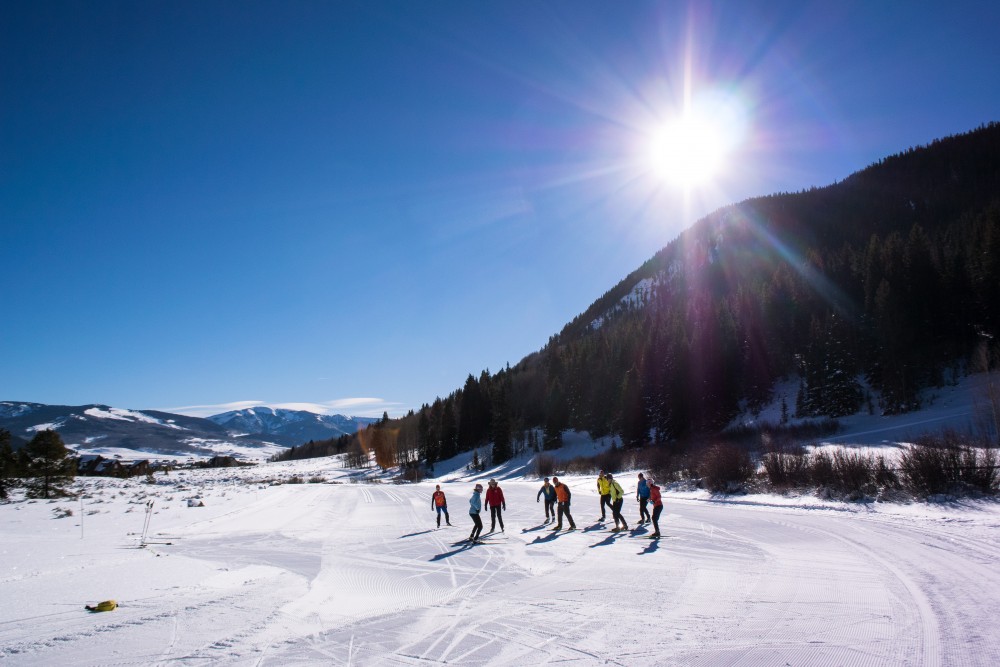
    Sun stretches over the hills during a cross-country lesson at Crested Butte in Colorado. The nordic center there is hosting its annual Crested Butte Nordic Thanksgiving Camp from Thursday to Sunday. (Photo: Xavier Fane)
    Sun stretches over the hills during a cross-country lesson at Crested Butte in Colorado. The nordic center there is hosting its annual Crested Butte Nordic Thanksgiving Camp from Thursday to Sunday. (Photo: Xavier Fane)

    We’ve been hearing about West Yellowstone since, well, the U.S. Ski Team officially started its annual Fall Camp there in 1978. But surely, Montana’s southern tip can’t be the only place to get on snow this time of year…

    That’s why we provided a guide to Thanksgiving on-snow camp venues in the U.S. and Canada (we realize this week isn’t Thanksgiving in Canada, but we’re sticking to areas that offer skiing around this week in late November for all intents and purposes). If we’re missing an early season camp, we apologize — it’s a big continent — but let us know so we can feature that camp in next year’s guide.

    ***

    What: Yellowstone Ski Festival

    Where: West Yellowstone, Montana
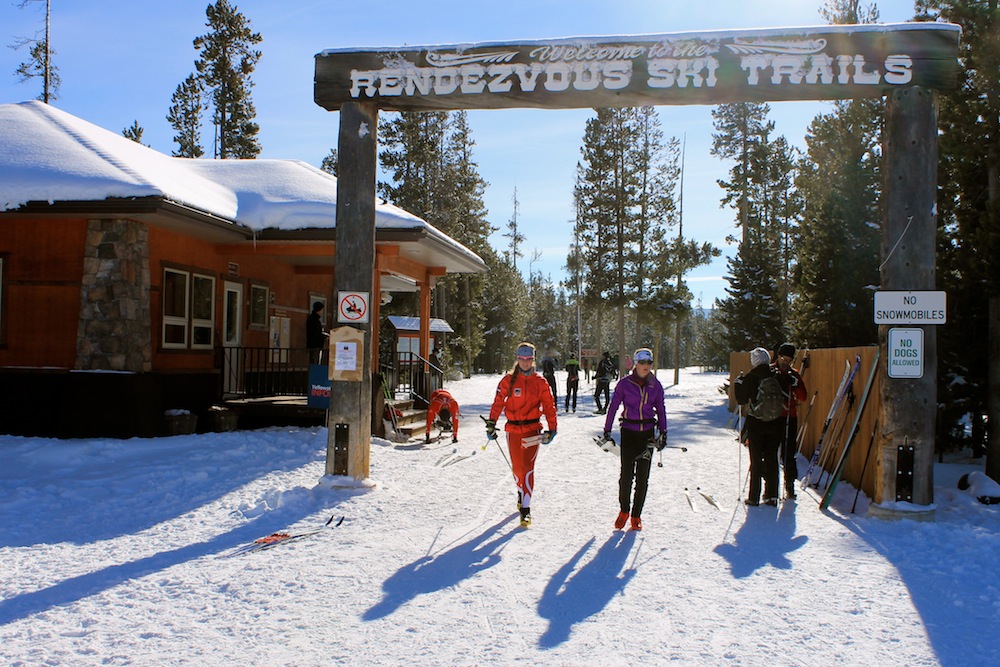
    Hundreds of skiers took to the Rendezvous Ski Trails on Tuesday in West Yellowstone, Mont.
    Each year, the Rendezvous Ski Trails see hundreds of skiers each day during the Yellowstone Ski Festival on Thanksgiving week in West Yellowstone, Mont.

    Website: http://www.skirunbikemt.com/yellowstone-ski-festival.html

    When: Tuesday, Nov. 24, to Saturday, Nov. 28, 2015

    How many years running? 20+

    Target audience: Masters and beginners (clinics available for both), as well as elite racers
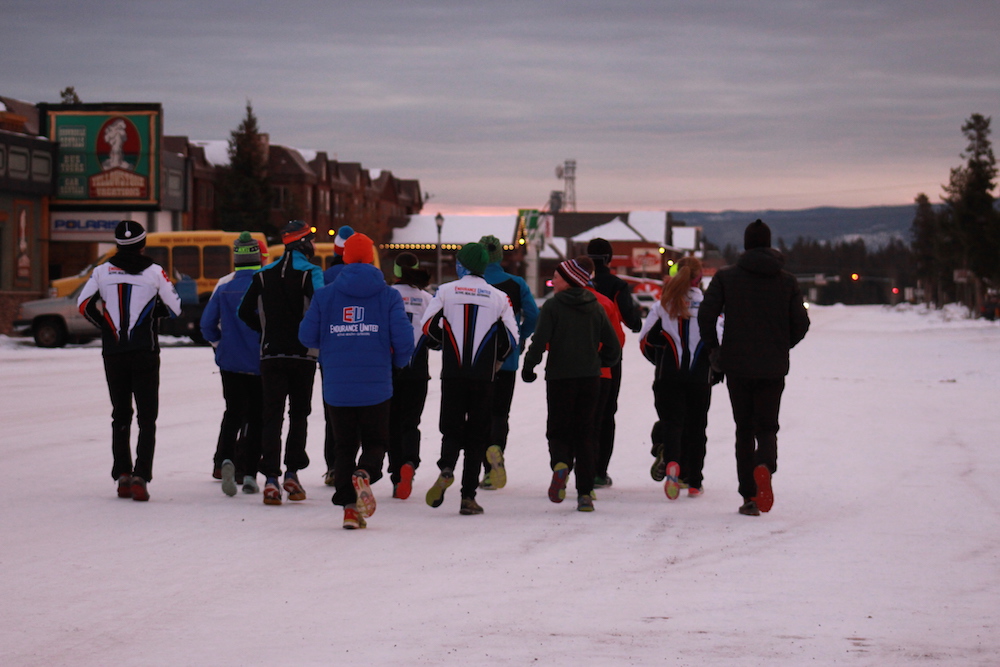
    Athletes get ready for a day of skiing during a morning run in West Yellowstone, Mont., at this year's 2015 Yellowstone Ski Festival. (Photo: Gabby Naranja)
    Endurance United team members get ready for a day of skiing during a morning run in West Yellowstone, Mont., at this year’s 2015 Yellowstone Ski Festival. (Photo: Gabby Naranja)

    Anticipated participation: An estimated 4,000-5,000 skiers throughout the week. “It varies from year to year depending on the snow conditions and the snow level,” West Yellowstone Ski Education Foundation Program Director Moira Dow explained. “Because we’ve gotten snow early this year and good snow, we have been able to get the word out. Like right now the trails are packed. We will probably have a lot of people coming for longer periods of time.”

    Advance reservation required? Racers must preregister. Trails are open to public; trail pass required.

    Trail pass rates: $12/day, $55/month, kids 10 & under 1/2 price

    Grooming report: Essentially everything is open. “It’s full-coverage skiing on good skis with full tracks,” Dow said. More details | Webcam
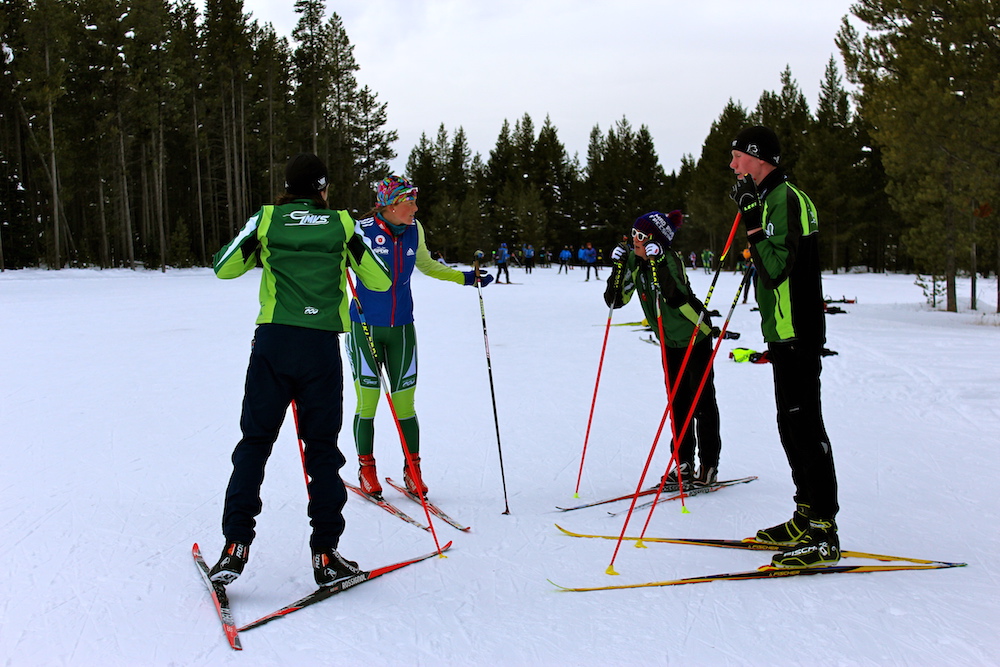
    Green Mountain Valley School nordic skiers meet up during a ski on the Rendezvous Ski Trails this week in West Yellowstone, Mont. (Photo: Gabby Naranja)
    Green Mountain Valley School nordic skiers meet up during a ski on the Rendezvous Ski Trails this week in West Yellowstone, Mont. (Photo: Gabby Naranja)

    What makes this camp unique? “The number of trails and the quality of snow that we have. We’re one of the few places in the country that does have consistent, early, good snow. In addition to that, we have a lot of industry participation. And we have great evening programs for people. We have not just skiing, we have the full package for everybody and anyone, from the beginner skier who wants to get out on the snow for the first time, to the SuperTour elite athlete who can train at high altitude, and good snow in the early part of the season.”

    Special events: 

    • U.S. Ski Team Development Coach Bryan Fish and the former vice president of Fischer Skis U.S. nordic division, Peter Ashley, will be featured speakers
    • Freebies: “Everything at the indoor expo at night is free. Anybody who has a trail pass can get into the outdoor demo area for free. In addition, on Wednesday and Friday night we have ‘après-ski’… [with] complimentary adult beverages and junior beverages, sledding, some music, and fun stuff like that. Just a little bit more of a party atmosphere after the sun goes down and before the expo opens.”

    ***

    What: Crested Butte Nordic Thanksgiving Camp

    Where: Crested Butte, Colorado
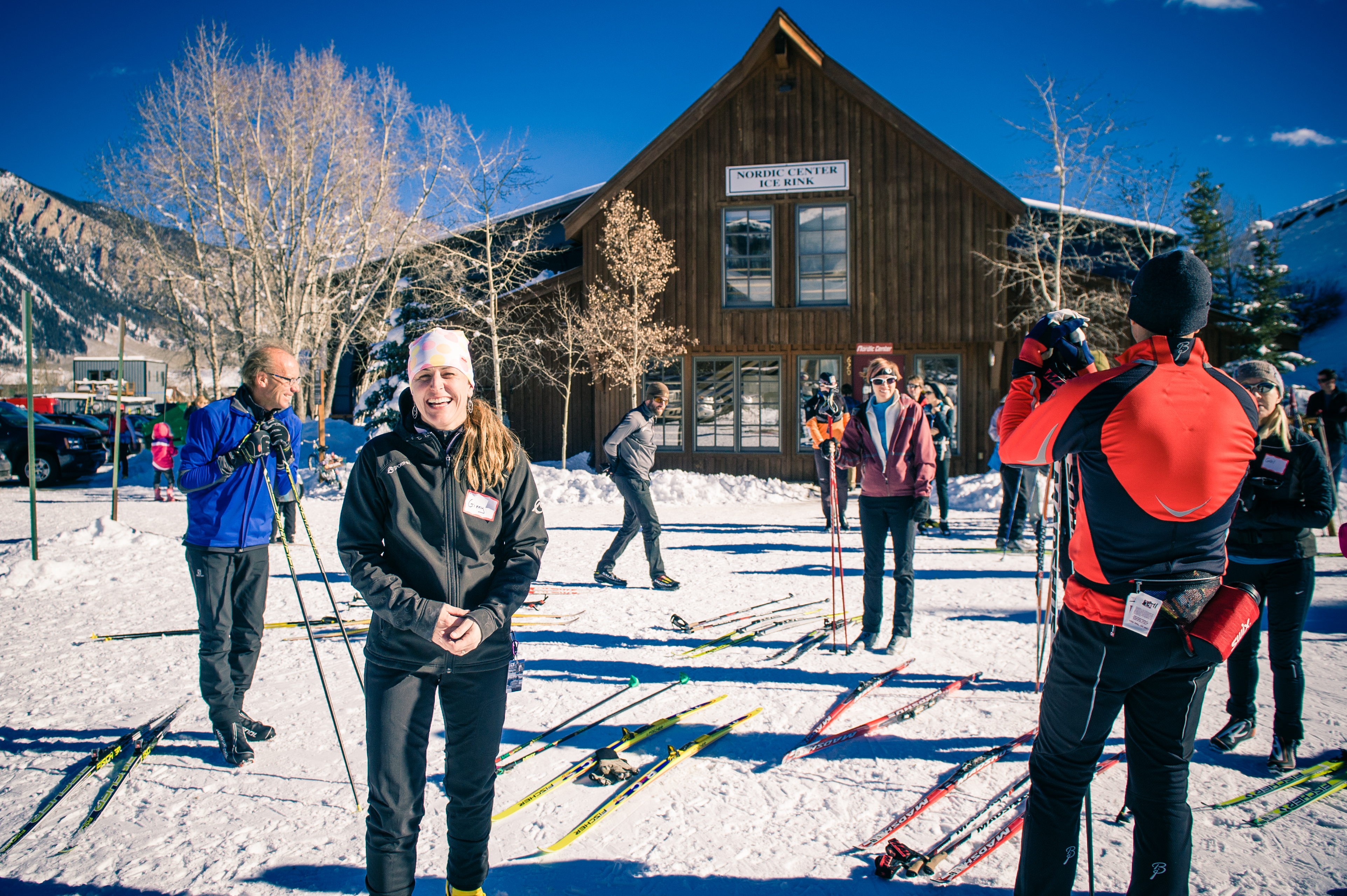
    The Thanksgiving Camp is a fundraiser for Crested Butte Nordic; a non-profit dedicated to getting people on the local trails. (Photo Xavier Fane)
    The Crested Butte Nordic Thanksgiving Camp, now in its 14th year, is a fundraiser for Crested Butte Nordic, a nonprofit dedicated to getting people on the local trails. (Photo: Xavier Fane)

    Website: http://cbnordic.org/thanksgivingnordicskicamp/

    When: Thursday, Nov. 26, to Sunday, Nov. 29, 2015
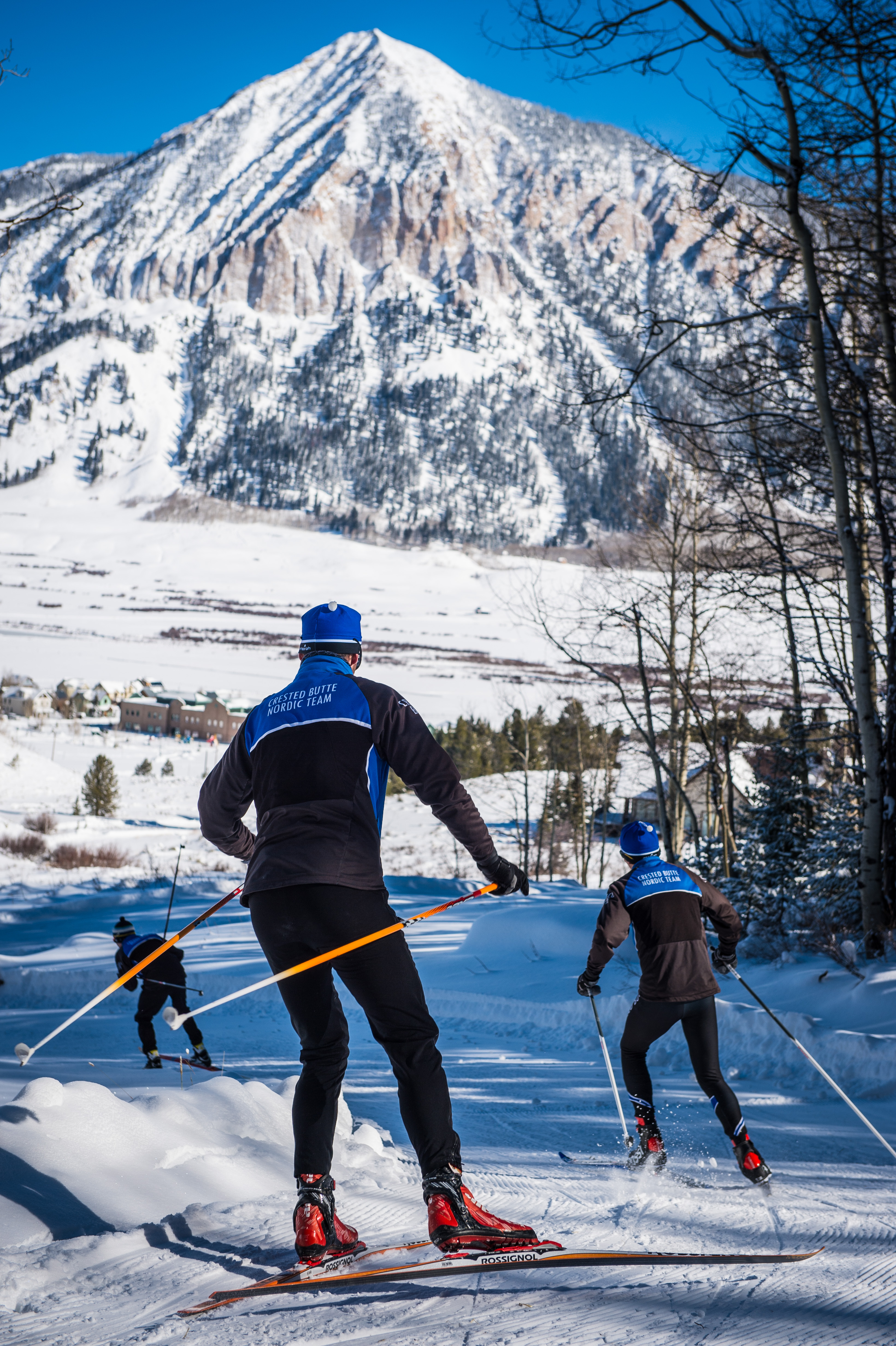
    Skiing at Crested Butte Nordic in Colorado. (Photo: Xavier Fane)
    Skiing at Crested Butte Nordic in Colorado. (Photo: Xavier Fane)

    How many years running? 14 as an official organized camp: “Crested Butte has really good and reliable early season snow so the Nordic Center decided we should try to get folks to come here and get some instruction from our great instructors,” said Drew Holbrook, marketing director for Crested Butte Nordic and the Grand Traverse ski race. “We also have a wonderful venue for early season nordic skiing and we’ve been fortunate enough to have been on-snow every year.”

    Target audience: All ages and abilities, “from never-evers to master blasters looking to improve their technique,” Holbrook said. “If parents are skiing along with children, kids ski free. All kids 17 and younger get free passes and rentals. And, actually,  all season long we do that —  people 17 and younger ski free. At the Thanksgiving Camp we also do free kids clinics. So if a parent is taking a clinic, then they can have their kids taken care of all day.

    Anticipated participation: Several hundred skiers on the trails throughout the long weekend. For clinics, projecting 75-80 participants.

    Advance reservation required? Pre-registration recommended for clinics. Nordic Center trail passes available any time. Skiing at Lily Lake, a 10 k early season trail system four miles up Kebler Pass Road, is free.

    Trail pass rates: $18/day, skiers 17 & younger ski free. $130 for a 10-punch transferable pass.

    Grooming report: With about a foot of snow at the venue in town, “it’s looking like in-town skiing for the camp,” Holbrook said. As of Tuesday, Ruthie’s Run (5-kilometer loop at the nordic center and up on the bench) and Lily Lake (six miles west of town up on the pass) were groomed. “We’ll have over 10 kilometers of high quality skiing available,” Holbrook added. More details
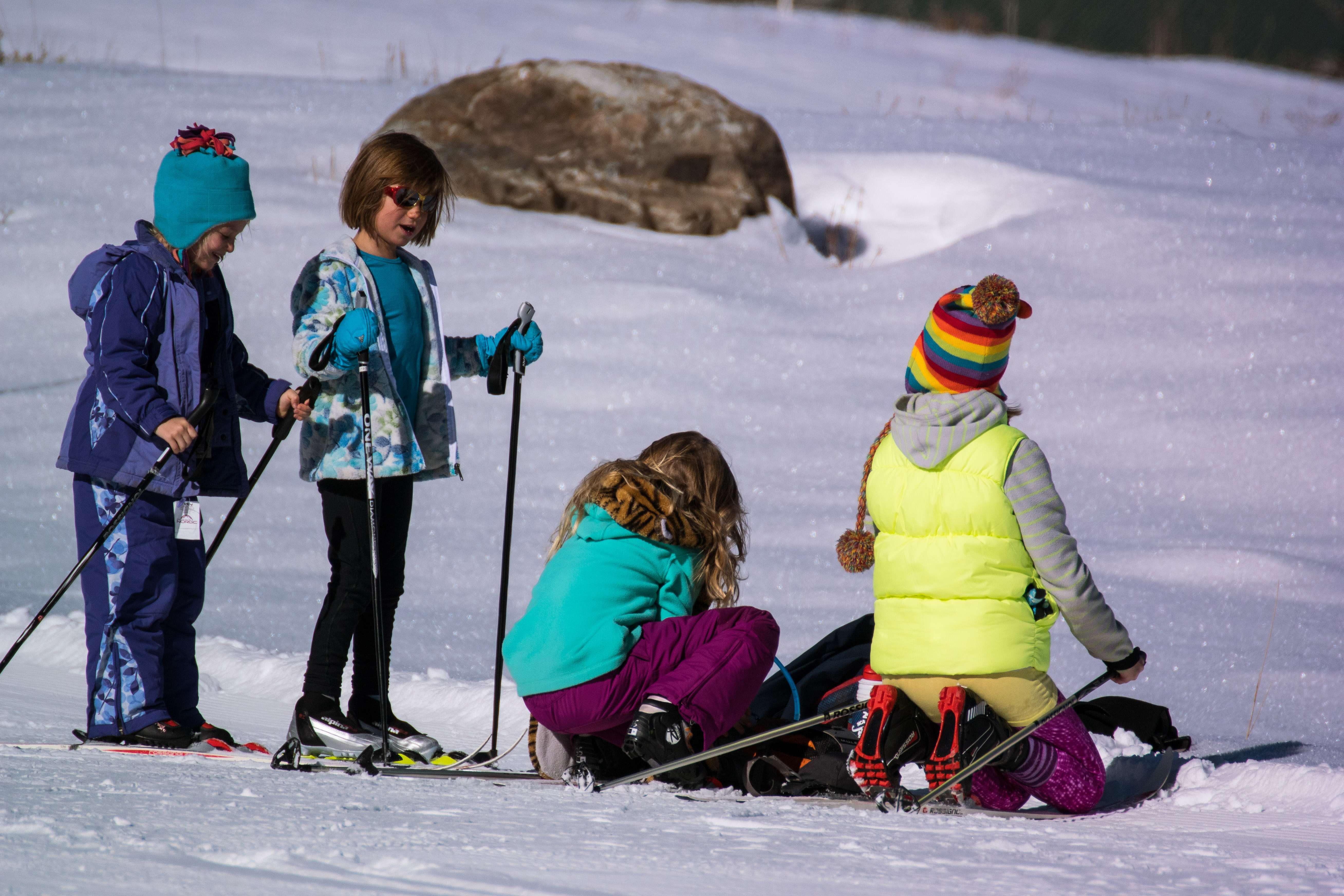
    Here's a deal: Kids 17 and under enjoy free rentals, passes, and clinics. (Photo Xavier Fane)
    Here’s a deal: Kids 17 and under enjoy free rentals, passes and clinics at the Crested Butte Nordic Thanksgiving Camp. (Photo: Xavier Fane)

    What makes this camp unique? “As a non-profit, our mission is to get people out on the trails skiing. We are not making a ton of money off it,” Holbrook said.

    “We just want people to come here and use our trails and make it affordable. A lot of people come back year after year and work with the same instructor. They get to know each other and get to know the other people that come into camp. So it’s definitely got this small feel to it, it’s kind of personalized.”


    Special events: 

    • For the first time, a race (on Sunday): 5/10 k freestyle + kids’ race with new homologated course on Ruthie’s Run. “It’s engineered, seeded, and mowed,” Holbrook said. “Due to the engineering, we are able to groom the race course with a lot less snow than we used to need. That enables us to count on having this race and count on have a good race venue close to town.”
    • Winter Kick-Off Party (Saturday night): Fundraiser for Crested Butte Nordic, tickets $30/adult,$10/children.
    • Wax clinic, nutritional talk and Nov. 25 is opening day at Crested Butte Mountain Resort, with free skiing all day.

    ***

    What: CXC Thanksgiving Nordic Festival

    Where: Telemark Trails in Cable, Wisconsin
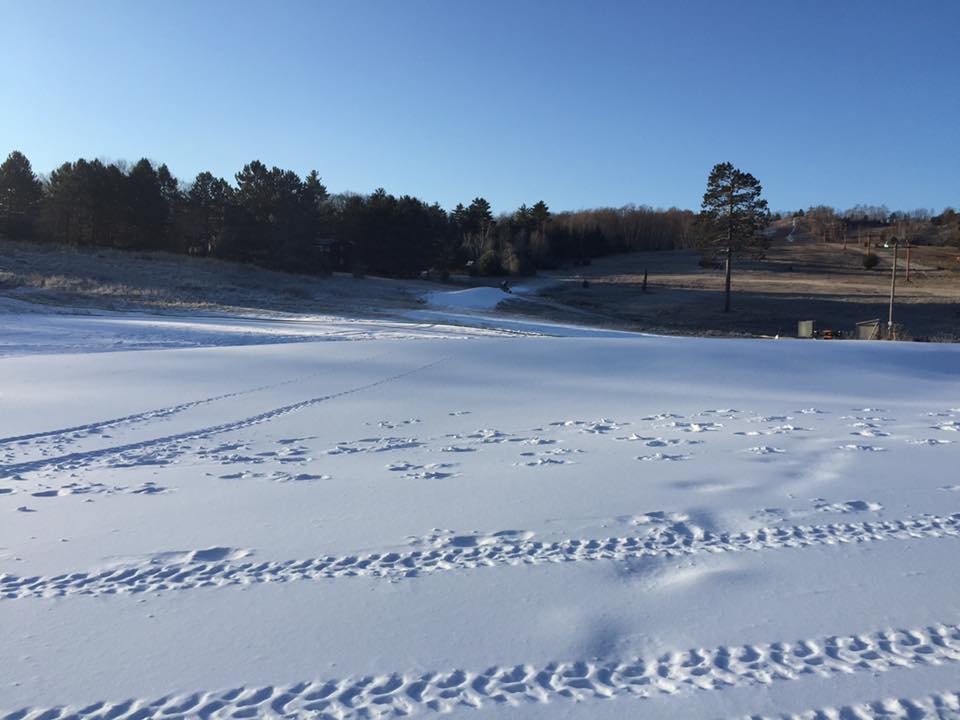
    After three nights of blowing snow,  CXC Thanksgiving Nordic Festival organizers were ready to groom the Telemark trails in Cable, Wis., on Nov. 22. (Photo: Facebook)
    After three nights of blowing snow, CXC Thanksgiving Nordic Festival organizers were ready to groom the Telemark Trails in Cable, Wis., on Nov. 22. (Photo: Facebook)

    Website: https://www.facebook.com/events/446146035558219/

    When: Wednesday, Nov. 25, to Sunday, Nov. 29, 2015

    How many years running? First year. “Our goal for the festival is to show the template to other communities, what it takes to make snow … to provide a business and operations template to other places around the Midwest so they can do these festivals in late November and then have a reliable loop for the winter,” CXC Executive and Athletic Director Yuriy Gusev explained.
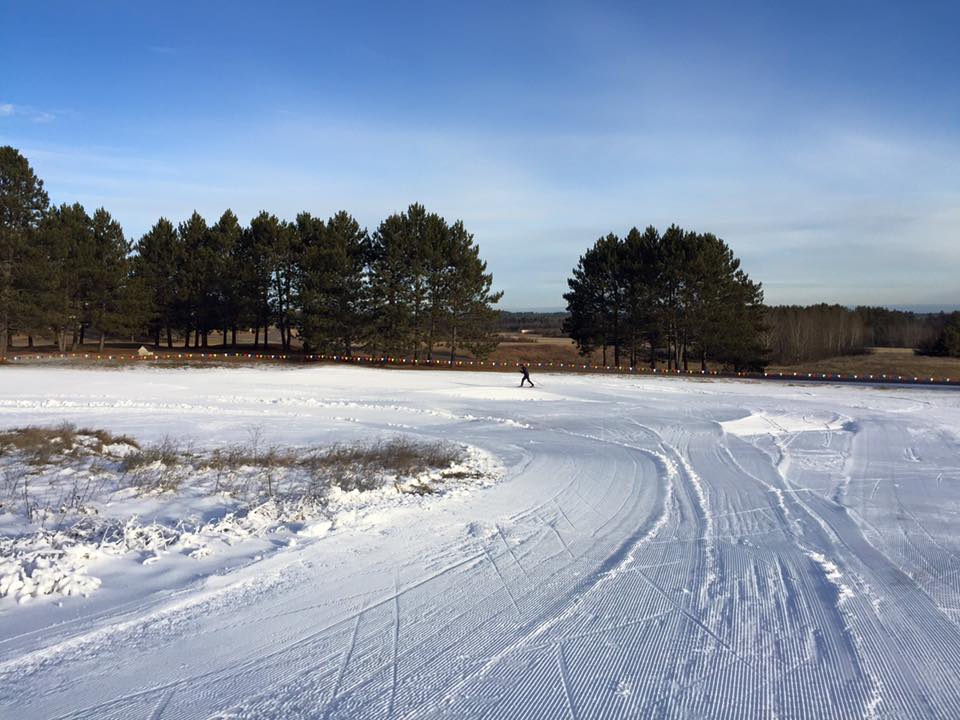
    A 1 k loop was made and groomed for the first-annual CXC Thanksgiving Nordic Festival in Cable, Wis. (Photo: Facebook)
    A 1 k loop was made and groomed for the first-annual CXC Thanksgiving Nordic Festival in Cable, Wis. (Photo: Facebook)

    Target audience: All skiers; open to the public

    Anticipated participation: Based on the camp’s Facebook page, at least 75 plan on attending, and Gusev estimated that paired with a local turnout would amount to 200-300 skiers. “We don’t want to make it a big deal … just to show the community this is an opportunity to ski,” he said.

    Advance reservation required? Yes, for clinics (instructed by Gusev on Friday, Saturday and Sunday).Trails open to public.

    Trail pass rates: $50 season passes, good for the festival and the whole winter. Trail passes can be purchased at www.cxcskiing.org/skipass, Telemark condominium office and Cable Area Chamber of Commerce Office.

    Grooming report: Skiing on a 1 k loop at Telemark started on Sunday: “Usually there’s no natural snow this time of year, so our plan was to make snow,” Gusev said. “It just didn’t get cold like it normally does.” Once temperatures finally cooled late last week, the snowmaking crew was able to work on blowing and laying out a 1-kilometer manmade loop, some of which will be used for the 2016 Junior Nationals sprint course. More details

    What makes this camp unique? “Anytime you have early snow, you stand out. I think it can be a key component to have this … to provide a reliable base for the rest of the winter, especially for youth programs where the snow is critical and also for entry-level participants. We’ve seen already with the couple snowmaking areas in the Twin Cities how much impact these have on the ski industry and local ski shops. They’ve been able to actually do relatively well in snowless winters.”

    Special events: Fischer Demo

    ***

    What: Snow Mountain Ranch Nordic Ski Camp

    Where: Granby, Colorado
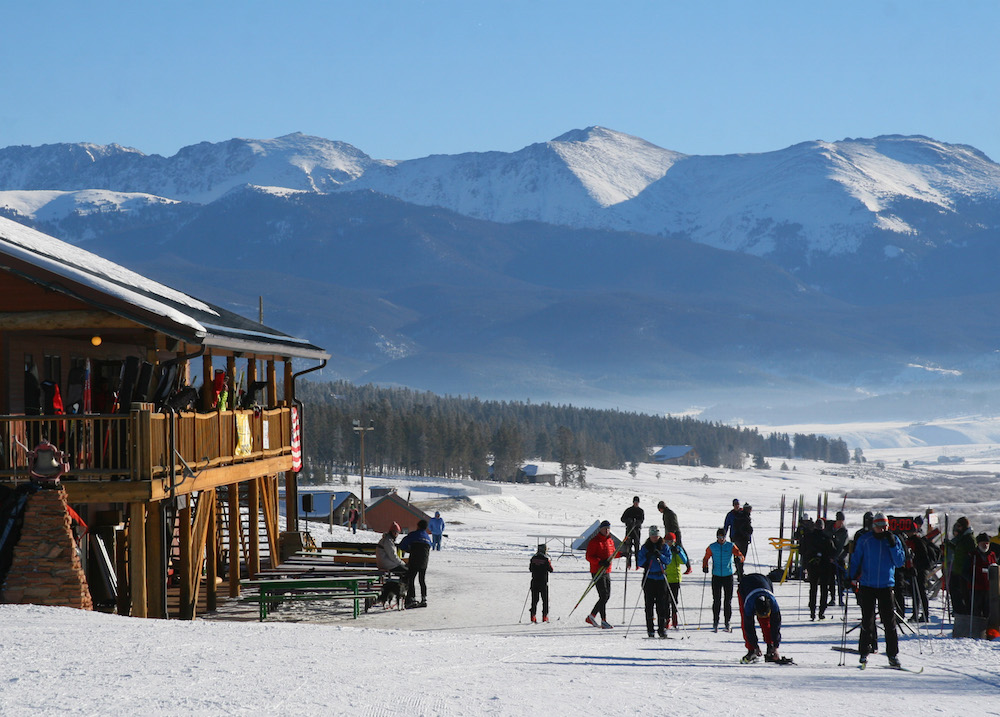
    A November day at Snow Mountain Ranch, which opened for skiing earlier this month and remains open with 50 k groomed with a set track. (Courtesy photo)
    A November day at Snow Mountain Ranch, which opened for skiing earlier this month and remains open with 50 k groomed with a set track. (Courtesy photo)

    Website: http://snowmountainranch.org/event/nordic-ski-camp/

    When: Friday, Nov. 20, to Tuesday, Nov. 24

    How many years running? First time in recent years

    Target audience: Beginner skiers to seasoned racers

    Advance reservation required? Yes.
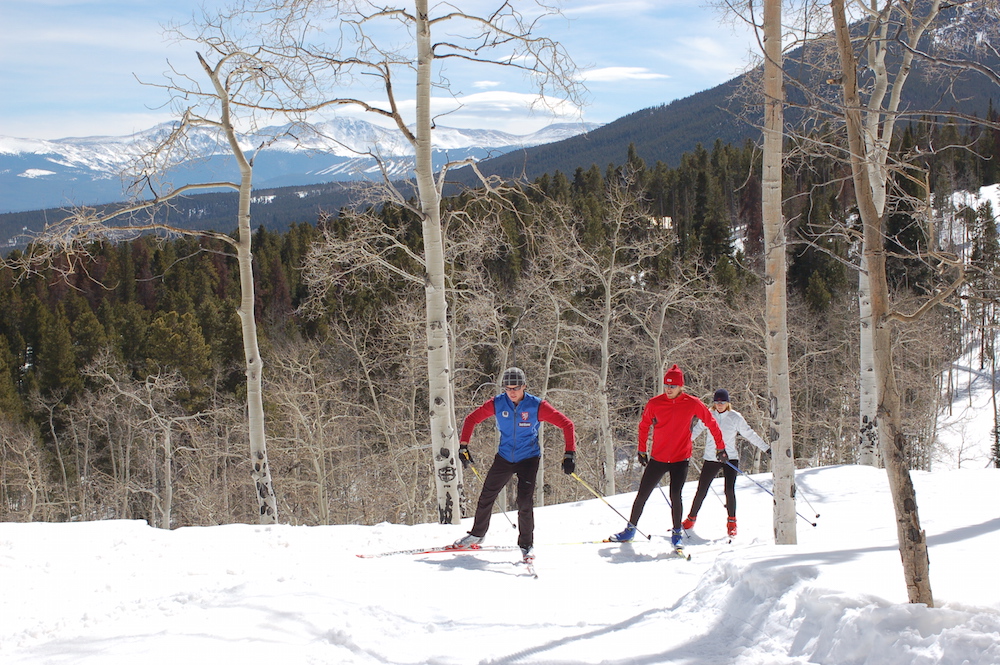
    November skiing at Snow Mountain Ranch in Granby, Colo. For the first time this year, a five-day camp was held for masters. (Courtesy photo)
    November skiing at Snow Mountain Ranch in Granby, Colo. For the first time this year, a five-day camp was held for masters. It ended on Tuesday. (Courtesy photo)

    Participation: Capped at 24. “Smaller is better from both a coaching and athlete viewpoint,” Snow Mountain Ranch’s Nordic Center Director Bill Pierce explained. In its first year with little marketing, the five-day camp attracted four athletes.

    “It was really small, but it was great,” Pierce said. “It’s so early that people don’t expect there to be snow [when] it’s 60 degrees in Boulder. … We just want to put another option out there; a lot of skiers want to be on snow in early November and Denver is really easy to get to.”

    Trail pass rates: $350 for the camp, includes all coaching sessions and day passes

    Grooming report: 50 kilometers groomed and track-set. Snow Mountain Ranch started grooming Nov. 4 and opened for skiing on the 14th. According to Pierce, they have anywhere from a 4-5 inch base to 10 inches in some places. It was snowing there on Thanksgiving, with four inches of snow expected to fall today. More info | Webcam

    What makes this camp unique? “This is the earliest masters camp in North America on-snow as a pre-Thanksgiving camp,” Pierce explained.

    The idea was to run a masters camp similar to an elite or junior camp, with two-a-day sessions combining workouts and technique — all at 9,000 feet above sea level. The focus was on transitioning from dryland training to snow skiing, with an emphasis on technique and slow volume at high altitude.

    With a small but mighty coaching staff (two of which are USSA certified), Pierce said the ability to work with athletes helps them set, understand and achieve skiing goals.

    “We all speak the same language,” he said of the coaches. “You can go to a lot of places, and a lot of places you feel like you’re getting a lesson. There’s a difference between a lesson and coaching.”

    “[This camp is] just another opportunity in the country to go skiing all day,” he added.

    Special events:

    ***

    What: Sovereign Lake XC SuperCamp

    Where: Vernon, British Columbia
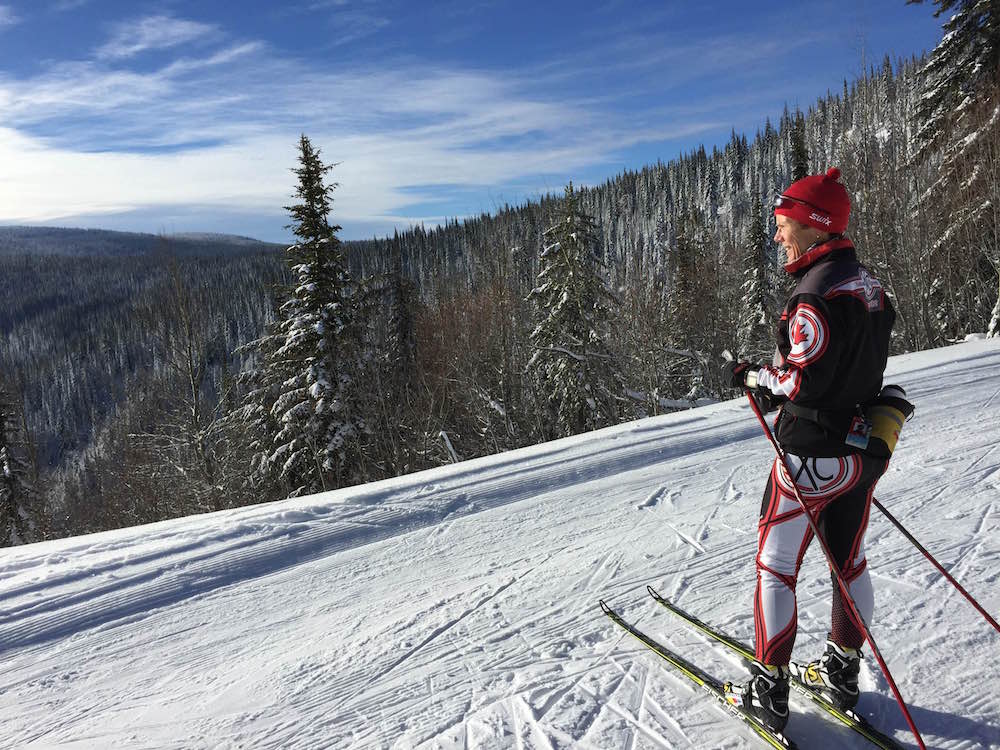
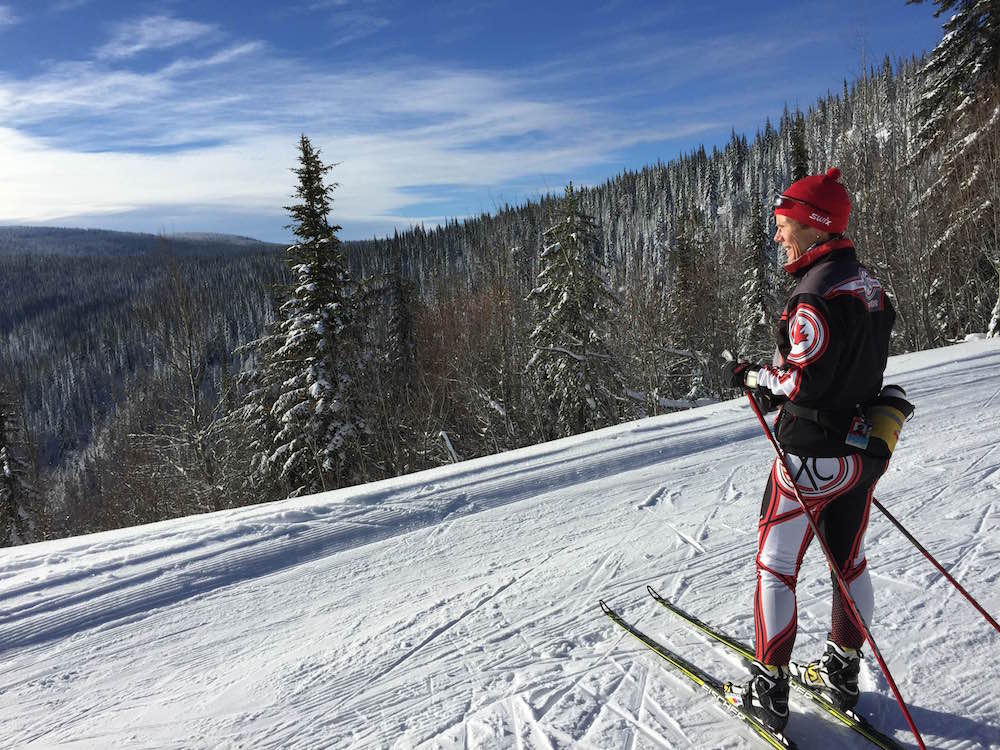
    A Sovereign Lake Nordic Centre board member checks out the trails on Nov. 21. (Photo: Gerry Furseth)
    A Sovereign Lake Nordic Centre board member checks out the trails on Nov. 21. (Photo: Gerry Furseth)


    Website: http://xcsupercamp.com

    When: 2 1/2-day weekend and 5-day midweek camps (schedule): 
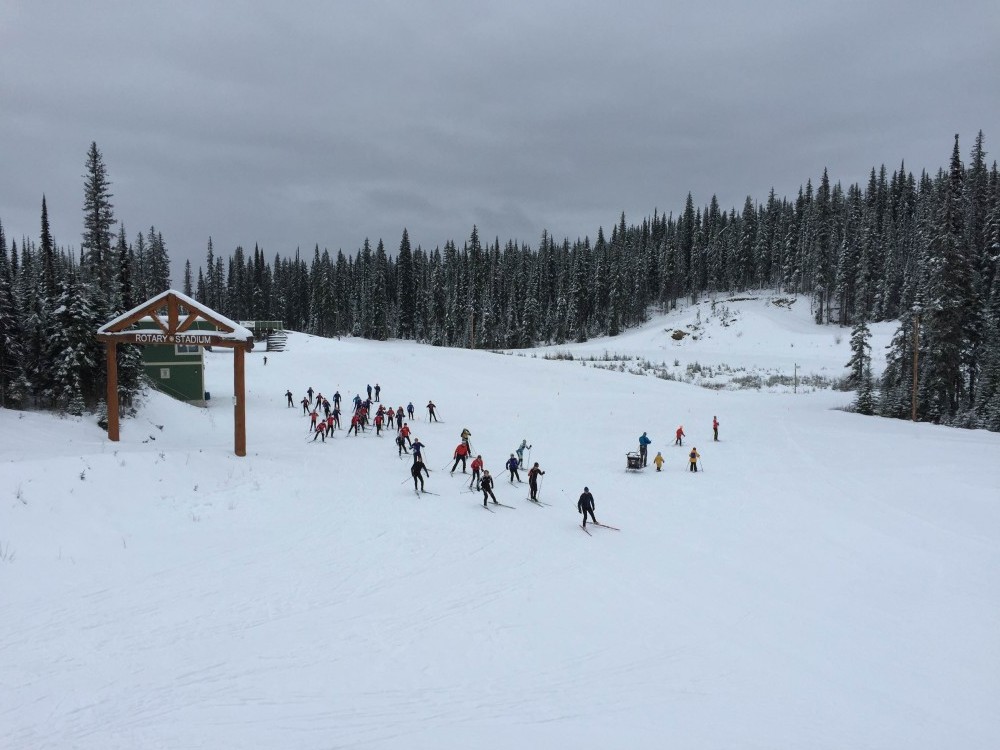
    A gaggle of skiers at a junior camp head out on the trails at the Sovereign Lake Nordic Centre on Nov. 14 in Vernon, British Columbia. Each winter, Sovereign Lake hosts a series of weekend and weekday camps, called SuperCamp. (Photo: Gerry Furseth)
    A gaggle of skiers at a junior camp head out on the trails at the Sovereign Lake Nordic Centre on Nov. 14 in Vernon, British Columbia. Roughly 800 skiers took to the trails that day. Each winter, Sovereign Lake hosts a series of weekend and weekday camps, called SuperCamp. (Photo: Gerry Furseth)
    • Camp #1: Nov. 20-22
    • Camp #2: Nov. 23-27
    • Camp #3: Nov. 27-29 (with Pro-camp option)
    • Camp #4: Nov. 30-Dec. 4
    • Camp #5: Dec. 4-6
    • Camp #6: Jan. 15-17
    • Camp #7: Feb. 19-21

    How many years running? 26 (The SuperCamp program started in 1989)

    Target audience: All ages and skill levels from beginner to elite racer.

    Advance reservation required? Yes.

    Anticipated participation: Typically around 225 to 250 participants, hoping for 260 this year.
    “In its heyday in the early ’90s [SuperCamp attracted] upwards of 400,” Sovereign Lake Nordic Center General Manager Troy Hudson explained. “We want to get back to those numbers by offering some great new initiatives like focussed Masters Pro camps for racers and more options such as the biathlon camps which are proving to be very popular.”

    Trail pass rates: Dual area trail passes included in camp fee, ranges from $339 to $925 Canadian dollars per person (depending on length of camp, and half or full days). Pricing
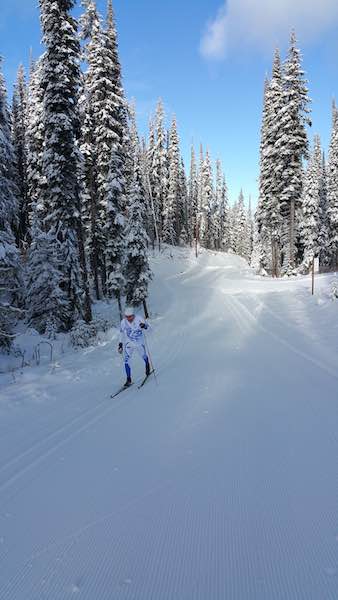
    VR40 blue-wax skiing on Nov. 16 at the Sovereign Lake Nordic Centre in Vernon, B.C. (Photo: Gerry Furseth)
    VR40 blue-wax skiing on Nov. 16 at the Sovereign Lake Nordic Centre in Vernon, B.C. (Photo: Ryan Olson)

    Grooming report: Sovereign Lake has 40 kilometers groomed and Silver Star has an additional 40 k open. More details (and webcam)

    What makes this camp unique? “I’m often asked, what is Supercamp?” SuperCamp coordinator Shane Landreville wrote in an e-newsletter. “That’s a great question and because Supercamp offers so much more than a traditional ski lesson, it’s a difficult concept to explain and it’s difficult for people to wrap their heads around it. Quite simply, Supercamp is a Nordic experience.”

    SuperCamp attracts top-level coaches, as many come from across Canada to get early snow before they start their season at home. Each camp includes lectures and lessons on waxing, how to build a training plan, and sports nutrition, as well as access to the national altitude training centre gym, and best of all, 105 kilometers of trails between Sovereign Lake and Silver Star — many of which are used for World Cup, NorAm, and World Master events.

    With half- and full-day options, the camp is at an altitude of 1,600 metres (5,250 feet). Many of the accommodation options are on the nordic trails. You can ski or walk to restaurants and bars in the evening.

    Biathlon camps are either five days long or a single afternoon, and a new Pro camp is more racing focused.

    The Silver Star alpine area opened earlier this week, as did the separate Fat Bike trail system.

    Special events:

    • Keynote speakers, a sports nutrition lecture, and wax clinics
    • Stretching classes, body pre-activation sessions, and for 5-day campers, two 30-minute massages. “Skiing for a solid 2 days or 5 days is tough, it really is, so taking care of your bodies is important,” Landreville wrote. “For our 5 day camps, you can also take part in the excursion to the spa and pools at Sparkling Hill Resort.”

    ***

    Also: Canada’s Early Season XC Venues

    What: Frozen Thunder

    Where: Canmore, Alberta

    When: Oct. 23-Nov. 14, 2015

    Website: http://www.albertaparks.ca/canmore-nordic-centre/activities-events/events/frozen-thunder-opening-day.aspx | http://www.canmorenordiccentre.ca

    How many years running: 6

    Open to: Public use after noon on weekdays and all day on weekends

    How much snow: 900 meters expanded to 1.1 k of manmade trails initially; now complete cover/about 32 kilometers groomed. More info

    Good to know: Each year, this venue hosts the first XC skiing and racing in Canada, with a sprint race, time trial and biathlon national-team trials this year.

    ***

    What: Boreal Glide (Glisse Boréale)

    Where: Forêt Montmorency, owned by the Université Laval, in Saint-Ferréol-les-Neiges, Quebec

    Website: http://www.foretmontmorency.ca/en/activities/winter-activities/cross-country-skiing/

    How much snow: Boreal Glide, a 2.5 k manmade loop, is open for both freestyle and classic. Course map | Weather

    Good to know: 

    • According to according to Julie Moffet, the regional operations coordinator at Forêt Montmorency, la Forêt is the only place in North America with cross-country skiing as early as Oct. 30 all the way to Easter in April.
    • No races or special events are scheduled, simply skiing and snowshoeing for all.
    • To reserve a room on the trails (with two single beds and a shared bathroom), with access to a cafeteria, two lounges with a fireplace, game room, auditorium, and wax room, visit http://www.foretmontmorency.ca/en/lodging/
  • ‘Midwest Might Not be the Most Sexy Training Site’ But It’s Got the Athletes, Says New CXC Team Coach Keller

    ‘Midwest Might Not be the Most Sexy Training Site’ But It’s Got the Athletes, Says New CXC Team Coach Keller

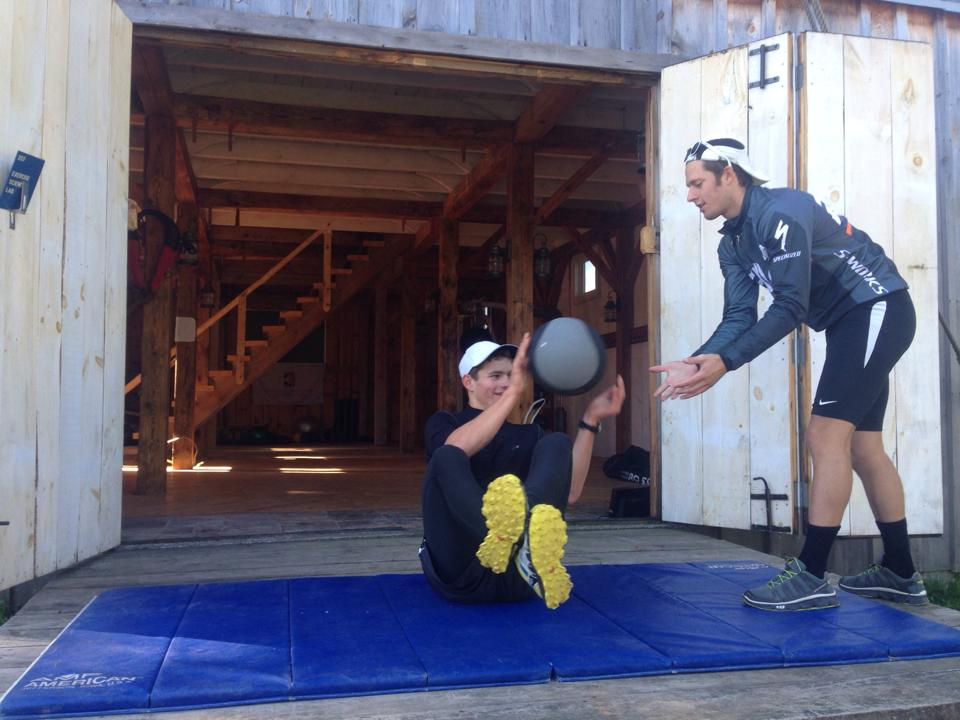
    The newly appointed CXC Team Head Coach Andy Keller (r) works on strength with an athlete outside a barn near Cable, Wis. (Photo: CXC/Facebook)
    The newly appointed CXC Team Head Coach Andy Keller (r) works on strength with postgrad Scott Harrison outside a barn near Cable, Wis. (Photo: CXC Skiing/Facebook)

    Three years ago, Andy Keller was a college kid looking for an internship toward his exercise-science degree at Michigan Tech. He knew a girl, who knew Jason Cork, and he used the connection to land an apprenticeship at the Central Cross Country (CXC) Ski Association in Cable, Wis.

    At the time, Cork was heading up the CXC Team, which executive director Yuriy Gusev established in 2006 to support promising skiers striving for top national and international performances. Keller, who grew up just outside Minneapolis in Chanhassen, Minn., became Cork’s intern assistant.

    Andy Keller started as an intern, then an assistant, and finally a junior coach before being promoted to CXC Team head coach this month, following the departure of Bill Pierce. (Photo: CXCnewsfeed.wordpress.com) https://cxcnewsfeed.wordpress.com/category/training-camps/junior-skiers/
    Andy Keller started as an intern, then an assistant, and finally a junior coach before being promoted to CXC Team head coach this month, following the departure of Bill Pierce. (Photo: CXCnewsfeed.wordpress.com)

    Months later, before Keller began his senior year, Gusev offered him a job.

    “I said, ‘I kind of want a degree so I’ll talk to you in a little less than a year,’ ” Keller reflected on the phone last week.

    He skied for four seasons at Michigan and graduated in 2012, then asking Gusev if there was still a spot for him. There was, though Keller’s job title and responsibilities changed three times before he officially got started, he said.

    First, he was hired as sport-development manager, tasked with connecting CXC to youth clubs and high-school programs in the Midwest. Then, CXC’s assistant coach Gus Kaeding left to head the Stratton Mountain School (SMS) elite team in Vermont. Cook needed an assistant, and CXC’s board decided Keller would be it.

    But before that played out, Cork accepted a coaching position with the U.S. Ski Team in the spring of 2012. Igor Badamshin became CXC Team head coach and Keller took on Badamshin’s previous role coaching juniors.

    That first year, he worked alongside Badamshin.

    “Then there was a little bit of [difference] with coaching styles and athletes on the team, so Bill [Pierce] got brought on to work alongside Igor [and] I took more of a dedicated role to the junior program,” Keller said of last season. “This year started off the same way … I was focused more on the junior program.”

    For the next several months, Badamshin oversaw the program and Pierce worked as the elite head coach. In late January, Badamshin died unexpectedly of a heart attack while skiing the Birkie trail between Cable and Hayward, Wis. He was 47, and his passing left CXC and the surrounding community stunned.

    “A guy that works his ass off and is willing to do anything for his program … his passion truly lied with working with athletes,” Keller reflected. “[I] was just trying to carry on his legacy — inspiring kids to ski and getting them excited to be out there. If there’s one thing he was good at, it was definitely that, and also carrying on his work ethic. The guy wouldn’t complain. He’d be out there skiing 50 k and waxing…

    “There was definitely big shoes to fill when he passed away,” CXC Team’s new head coach continued. “As I’ve come through, I’ve been working under a ton of coaches; my philosophy is I can always learn something. When I was interning under Jason and Gus that was what I loved to do — learning and listen.”

    “There was definitely big shoes to fill when [Badamshin] passed away. … As I’ve come through, I’ve been working under a ton of coaches; my philosophy is I can always learn something.” — Andy Keller, CXC Team Head Coach as of September 2014

    Keller Becomes Head Coach

    That’s right, Keller, in his third season as a CXC coach, was recently promoted to head of its elite team following Pierce’s decision to accept a job in Colorado (he’s becoming nordic director of the Snow Mountain Ranch YMCA near Winter Park this fall) earlier this month.

    But “elite” is a term Gusev and several other U.S. nordic directors like to stay away from: it’s about development and helping athletes reach their higher-competition goals. The CXC Team became Team Vertical Limit in 2009 as part of a sponsorship deal, and a year later it had 18 athletes, including a couple Olympians (Garrott Kuzzy and Caitlin Compton — now Caitlin Gregg).

    The New: 2014/2015 CXC Team 

    CXC Team: 

    • Cory Ellertson
    • Bjorn Batdorf
    • Bill Bowler
    • Chris Pappathopoulos
    • Hilary Patzer
    • Andrew Brown
    • Scott Johanik
    • Natalia Naryshkina (lives in Russia, plans to compete in western SuperTours and U.S. nationals)

    Postgrads: (living in Cable this fall/winter)

    • Scott Harrison
    • Sam Boardman

    College Summer Residency Group:

    • Nichole Bathe (University of Alaska Fairbanks)
    • Nicolette Reker (now at Winona State University, competing for CXC Team)
    • Tom Bye (Postgrad last year, now at Michigan Tech)
    • Thomas Kendrick (Michigan Tech)
    • Will Frielinghaus (St. Lawrence University)
    • Seth Mares (Gogebic Community College, plans to transfer to Michigan Tech)

    International Training Partner:

    • Leandro Lutz (living in Cable this fall, plans to travel to Europe for international races in an attempt to qualify for World Championships; may stay in Cable and race U.S. circuit)

    The CXC Team currently has eight members, most of which will be focused on top-10 results in Midwest marathons to attract sponsors. In addition, Keller is overseeing two postgrads, about 10 juniors and an international guest skier.

    “All the coaches agreed, the team needs to get back to the roots of developing athletes,” Gusev explained on the phone. “You would have never called our team the CXC Elite Team, it just came later when this word became very popular.

    “We always see our team as a development tool for that higher step,” he added. “We don’t see this team as full of stars, but we want to have a team open to athletes of that level. If it can help them great … It’s just like having a child: at some point you need to let them go and see if they can stand on their feet.”

    Considering that, Gusev is encouraged by the direction his program is headed, especially with a homegrown coach at the helm.

    “It’s exciting to see somebody who went through the original pipeline and became a coach,” he said. “And that’s a goal from the time he applied from an internship.”

    Still, the last few weeks — and months — have been busy at CXC, to say the least. Following Badamshin’s passing, Gusev said the organization interviewed a couple people to hire in his absence, but ultimately, Pierce and Keller stepped up and said they could handled the added responsibilities without another coach.

    “It was probably more emotional for some of us, but you just move on,” Gusev said. “The programs needed to move on as well and … we had to adjust right away.”

    It didn’t take long for everyone to get back “in the groove,” he added. Pierce continued to serve as head coach and Keller as his assistant and junior coach.

    Last Friday, Keller drove 300 miles southeast to Madison to test about 10 juniors at a weekend camp at CXC’s administrative headquarters. The group meets about once a month in various places, holding camps with other Midwest clubs, like Loppet Nordic Racing (LNR), May through December, Keller said.

    He also helps host monthly CXC master’s camps, and while he’s not scheduled for every single one, he led a recent camp under Pierce’s guidance earlier this month.

    “I made Andy run over half the sessions, and I watched him and helped him a little bit,” Pierce said. Then he told him and the rest of CXC about his decision to leave.

    “I saw it coming,” Keller reflected. “Bill did talk to me as he found out more about the new position he was taking.”

    In Cable, where Keller lives in a condo on the Telemark property, he spent the summer working with six athletes in CXC’s new college summer residency program, which Pierce initiated.

    “That overlapped with what you would call our team now, more of a marathon team,” Keller said of his previous and current responsibilities, coaching juniors and now seniors as well. “The athletes that we’ll have competing on the SuperTour is relatively small.”

    Those skiers include two postgrads from LNR — Scott Harrison and Sam Boardman — who plan to live and train full time in Cable this fall and winter. Their main races include western SuperTours, U.S. nationals, and the Midwest Junior National qualifiers .

    “We don’t see this team as full of stars, but we want to have a team open to athletes of that level. … It’s just like having a child: at some point you need to let them go and see if they can stand on their feet.” — CXC Executive Director Yuriy Gusev

    With an overall emphasis on regional competitions, CXC is looking to assemble the best skiers in the Midwest.

    The Old: What happened to last season’s CXC Team?

    Not returning: Karl Nygren, Eric Wolcott, Dmitriy Ozerski (was flying back-and-forth from Russia for races)

    With a single returner from last year’s CXC Team (college skier Tom Bye), Keller explained what happened:

    “When Igor [Badamshin] took over there was little bit of communication issues … a little bit of discontent,” he said. Athletes like Karl Nygren, who might have had as many as five coaching changes in seven years, ultimately decided to leave the program.

    “If there’s anything the program needs is some stability,” Keller said.

    “As the coach now, I’d love to build the program back up to how it was when I interned,” he said, referencing past CXC standouts like Jessie Diggins, Caitlin Gregg, Brian Gregg, and Jennie Bender. “…That was the year they won the NNF Cup so that’s the level I’d like to bring it back to.”

    One of Gusev’s priorities is hiring another coach focused on sport development to further connect CXC with grassroots organizations and schools throughout the central U.S. Looking at the big picture, it’s about promoting the sport and coaching development. In the long run, CXC is hoping that will translate into athlete retention.

    “Regardless whether the athletes come to us directly or not … it’s a matter of whether we have consistent, easy to follow progressions, like soccer does or swimming does,” Gusev said of two sports he considers domestic successes in the U.S. “[Those sports outline the] steps to high school, college and beyond, which doesn’t exist really in cross-country skiing. We have all the pieces in place, and we can communicate that to parents.”

    For Keller, his goal is to help grow the base and competitive nature of skiers in the Midwest, which includes Illinois, Indiana, Iowa, Kansas, Michigan, Minnesota, Missouri, Nebraska, North Dakota, Ohio, South Dakota, and Wisconsin.

    “It’s where I grew up,” he said. “[We’re] trying to make the Midwest more of a ski powerhouse, and that’s definitely happening. We’re developing athletes, but we’re having a hard time getting them to stay around.”

    He counted eight skiers in elite programs outside their region, including Jessie Diggins (SMST2), Anne Hart (SMST2), Ben Saxton (SMST2), Gordon Vermeer (Craftsbury Green Racing Project), and Rosie Frankowski (Alaska Pacific University).

    “It seems like everybody wants to go somewhere else and I’ve got to figure out why,” Keller said. “I think the level of support CXC gives is among the best … It’s just we’re not in the mountains and we don’t have a glacier to [train on]…

    “The Midwest might not be the most sexy training site as a Sun Valley or something like that,” he continued. “… [But] it’s not that we’re not producing the athletes.”

    “It seems like everybody wants to go somewhere else and I’ve got to figure out why. I think the level of support CXC gives is among the best … It’s just we’re not in the mountains and we don’t have a glacier to [train on]…” — Keller

    In terms of coaching styles, Keller said he gained a lot from working with Cork, Kaeding, Pierce, and Badamshin.

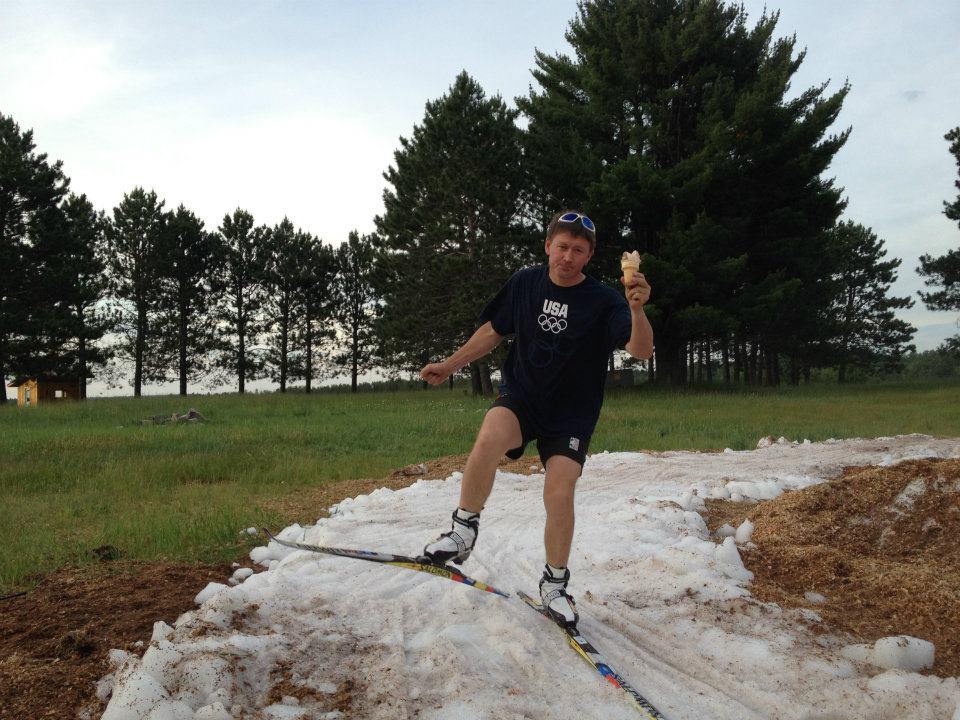
    Igor Badamshin: photo is titled "Snowflakes, ice cream, and Igor," by former CXC Team elite coach Bill Pierce. Badamshin was the CXC program head coach until his unexpected death in January 2014. (Photo: cxcnewsfeed.wordpress.com)
    Coach Igor Badamshin having some fun on a few patches of snow. Photo is titled “Snowflakes, ice cream and Igor,” by former CXC Team elite coach Bill Pierce. Badamshin was the CXC program head coach until his unexpected death in January 2014. (Photo: cxcnewsfeed.wordpress.com)

    “I’d hope I’d be maybe as analytical [as Cork],” he said. “I’m hoping I can be half as enthusiastic and motivating as Igor … I try to pull from all those guys and find out what works for myself and what doesn’t fit my personality. I would say I’m relatively soft-spoken and sometimes it’s a little bit harder for me to put myself out there. I hope I’ve gotten better at that.”

    When it comes to managing athletes, Pierce will continue to write training plans for those that started with him at the beginning of the season, including Cory Ellertson, Chris Pappathopoulos, Andrew Brown, and Scott Johanik.

    Keller said he’ll take on those that joined the team more recently and will be in Cable the next several months: the two postgrads and guest skier Leandro Lutz from Brazil, who plans to travel to Europe to try to qualify for 2015 World Championships.

    As for coaching and waxing for 18 or so skiers throughout the season, Keller said that working alongside other Midwest clubs at races, especially at main events like U.S. nationals, should help. And not all the athletes will  compete at the same events, given their varied focuses — from marathons to junior-qualifying races.

    At the same time, Keller said he’s looking forward to having an assistant or some kind of helper in the future. Gusev said the new hire would largely help with junior camps.

    In the last month since Pierce’s decision, he said he’d been working with Keller on the transition and will continue to offer assistance beyond his final day at the end of September.

    CXC Team's fall/winter crew working out in Cable, with postgrads Scott Harrison and Sam Boardman, and guest skier Leandro Lutz from Brazil, who will be joining the team for the next couple months. (Photo: CXC/Facebook) https://www.facebook.com/cxcskiing/photos/a.108988649143884.5167.107878629254886/793777080665034/?type=1&theater
    CXC Team’s fall/winter crew during a recent workout in Cable, with postgrads Scott Harrison and Sam Boardman, and guest skier Leandro Lutz from Brazil, who will be joining the team for the next couple months. (Photo: CXC Skiing/Facebook)

    “I’ve basically given [Keller] my daily responsibilities,” Pierce said earlier this month. That included even the little stuff, like “teaching him how to smooth out a trail and pick rocks and seeds.”

    “There’s definitely a lot to catch up on as far as ski selection and things like that,” Keller observed. “Working with Rossignol, getting in contact with those guys, getting up to speed with things Bill might’ve taken care of as far as a team aspect and getting [ready] to compete.”

    He’s also tasked with attracting sponsors through top results in Midwest marathons.

    “We’ll do fine with that,” he said of his mostly marathon-focused team. “Our postgrads have goals of trying to make World Juniors … definitely a big one is qualifying for Junior Nationals and trying to make top-20 [there]. The goals for the marathon team is being on the podium or top 10 … that should be no problem.”

    He’d also like to bring the CXC Team back to an “elite, elite” team, he said, by recruiting recent graduates.

    CXC Para Nordic Team member Steve Baskis training with U.S. Paralympics Nordic Program in the ski tunnel in Torsby, Sweden, earlier this month. (Photo: CXC Skiing/Facebook)
    CXC Para Nordic Team member Steve Baskis training with U.S. Paralympics Nordic Program in the ski tunnel in Torsby, Sweden, earlier this month. (Photo: CXC Skiing/Facebook)

    According to Gusev and CXC’s mission statement, the 2,000-member organization has four straightforward goals: to build its base, promote the sport, achieve competitive success, and create partnerships through collaborations. The way he sees it, member athletes are part of that as well.

    “[The CXC Team] athletes are in a community to be motivation to adult athletes at clinics, to be role models and whatever else comes with it,” Gusev said. “With competitive excellence, we hope to get them to the level [of someone like Garrott Kuzzy or Tad Elliott, who made the U.S. Ski Team]. We hope the athletes that come through our program will eventually contribute to international success…”

    Emerging Adaptive Team

    CXC is also focused on building its adaptive program under coach Andrew Poffenberger, another Minnesota native who skied as a junior and studied health fitness at Gustavus Adolphus College in St. Peter, Minn.

    2014/2015 CXC Para Team:

    • Steve Baskis (blind athlete, veteran)
    • Aaron Pike (sit-skier, 2014 Paralympian)
    • Travis Dodson (sit-skier, Veteran, 2014 Paralympian)
    • Augusto “Goose” Perez (sit-skier, cancer survivor, 2014 Paralympian)
    • John Oman (standing athlete, 2014 Paralympian)

    “Emerging Talent” Program:

    “People who have tried nordic skiing on several occasions and show promise, interest in competition, and commitment to the sport,” Poffenberger wrote. “This is an area where I am looking to grow in the next few months as people turn their attention from fall sports to winter.”
    Junior Para Development: Focused on youth development and coaches interested in instructing adaptive skiers in high schools. “Our annual  coaches clinic and certification will include a few sessions on adaptive nordic skiing for those interested this year,” he wrote.
    Anyone interested in participating in adaptive athletics, please contact andrew.poffenberger@cxcskiing.org.

    This year, the CXC Para Team has expanded to include five elite athletes, four of which went to the 2014 Sochi Paralympics: Aaron Pike, Travis Dodson, Augusto “Goose” Perez, and John Oman. Its fifth member, Steve Baskis, a blind athlete and veteran, recently joined the U.S. Paralympics Nordic Team at an on-snow camp in Sweden.

    Poffenberger also works with three “emerging talent” adaptive skiers — those “who have tried nordic skiing on several occasions and show promise, interest in competition, and commitment to the sport,” he explained in an email.

    In addition, he coaches about four or five junior-development skiers, athletes that “can sit ski for 10 to 15 k in a session,” Gusev said. “Andrew’s done an amazing job with them.”

    “Ideally we would like to mirror the development structure of able-bodied skiing,” Poffenberger explained. “Possibly the most important component of that structure is youth development. If we expect to be competitive at the highest level, we need to start developing young athletes.”

    Among their efforts: CXC has submitted a proposal to include adaptive nordic at the Wisconsin state meet.

    “We are also seeking out coaches who are willing and able to coach adaptive nordic skiing at the high school level,” he added.

    Last week, Poffenberger attended a conference with The United States Association of Blind Athletes at the Olympic Training Center in Colorado Springs.

    “I love working with these athletes because they have perspective of the entire picture, and don’t let small things stand in their way,” he said, now in his second season with the team.

    “I hope we can keep having more and more individuals like [Poffenberger and Keller] that get involved with a sport as a profession,” Gusev said. “They understand the way athletes move from one stage to another stage and it’s easier for them to communicate with athletes at the younger level what expectations are. That’s really the goal.”

  • After Nearly Two Decades in Hayward, CXC Team Coach Pierce Takes Colorado Job

    After Nearly Two Decades in Hayward, CXC Team Coach Pierce Takes Colorado Job

    CXC elite-team head coach Bill Pierce recently accepted a position as nordic director of Snow Mountain Ranch YMCA of the Rockies in Granby, Colo. (Photo: CXC/Facebook) https://www.facebook.com/notes/cxc-skiing/thank-you/809964002358509?fref=nf
    CXC elite-team head coach Bill Pierce recently accepted a position as nordic director of Snow Mountain Ranch YMCA of the Rockies in Granby, Colo. (Photo: CXC/Facebook)

    Almost a decade ago, Bill Pierce and Yuriy Gusev took a walk in the Cable/Hayward area of northern Wisconsin, where Gusev, the director of Central Cross Country (CXC) since 2005, decided to root the CXC Team and Junior Program (and later an adaptive program and CXC Academy).

    Pierce, who built custom homes at the time through his own company, Pierce & Associates Design/Build, Inc, wanted to show Gusev a thousand-acre parcel — a potential site for a big idea.

    A competitive cross-country skier and runner up until the mid-80s, when he studied at the University of Wisconsin-Milwaukee School of Architecture and Urban Planning, Pierce moved to Hayward and found part-time work in 1997, grooming the Birkie trail on a need-basis with one broken-down snowcat.

    “When I went to Hayward, my first job to get paid skiing was [as head coach] at Hayward High School,” Pierce said Thursday on the phone. “That was enough money for one month over five to make a living off of so I did other things.”

    It wasn’t long before he was chairman of the American Birkebeiner Board of Directors and landed his first full-time coaching job in 2007. He built his home in Seeley and dreamt of more for Hayward: a charter school and training center for nordic skiers — and not just any nordic center: a multi-use events center.

    “If you want to be mainstream and survive as a business, you can’t just be nordic,” Pierce reflected.

    In his development near the Birkie’s “00” halfway point, ski trails touch every lot. Yet without Telemark Resort open, the area remains without a nordic center.

    Thinking back to his idea, he imagined opening the events center to non-skiing attractions: music festivals, beer-and-wine tastings, bike shows, and more. Unless its developers were subsidized, they would have to — selling trail passes four or five months a year wasn’t going to pay the bills, he said. But with the offseason revenue, they could fund their dream of a true nordic-training center.

    To this day, Gusev has kept that same goal in sight and taken steps, such as researching the potential of Telemark Lodge, to make it a reality. It’s been on Pierce’s mind for the last two decades, and he said the 1,000-acre parcel remains on the market.

    “It’s a soft market and soft economy … [and] we’re looking at another piece of land south of here,” he said. “There’s opportunities.”

    An estimated 60 athletes and coaches attended the 2014 CXC/Loppet Nordic Racing/F.A.S.T. dryland camp in Ironwood, Mich., earlier this summer. Here, athletes were caught in action during a bounding workout. (Photo: Bill Pierce/Facebook)
    An estimated 60 athletes and coaches attended the 2014 CXC/Loppet Nordic Racing/F.A.S.T. dryland camp in Ironwood, Mich., earlier this summer. Here, athletes were caught in action during a bounding workout. (Photo: Bill Pierce/Facebook)

    But Pierce, CXC’s elite head coach since May 2013, couldn’t wait on that. In the last few years, he applied for other jobs, including with the American Birkebeiner — which Gusev knew about as a board member — and as executive director at Soldier Hollow in Midway, Utah.

    One position near Winter Park in Granby, Colo., stuck. Pierce accepted the Snow Mountain Ranch YMCA’s offer to come on as its first full-time nordic director this fall, and he sat down with Gusev to tell him about it three weeks ago.

    “I knew that sooner or later Bill will leave and we were somewhat planning on it,” Gusev wrote in an email. “We have discussions with other staff about possible options if that would happen. We also had plans to add additional staff this fall even before Bill notified us about his leaving.

    “It is definitely a loss for CXC and the Midwest Nordic community but Bill is following his passion and I’m glad he found something that he is very excited to be involved in,” he added. “We all at CXC wish Bill the best in his new venture.”

    “It was a hard choice,” Pierce explained. “I’d come back in a second to work for [CXC]. It was a lot of factors, some of them were personal…”

    In post on CXC’s Facebook page on Thursday, Pierce announced his departure and move to Colorado on Oct. 1.

    “… Life is extremely short and we really won’t ever know what the next day will bring,” he wrote.  “In the past year, I have seen a lot of loss and it has been a difficult one.  I lost my Mom, two very close friends and colleagues in John Hugus and Igor Badamshin, and I lost my marriage.  It is time for a change.”

    CXC’s former high-performance advisor and CXC Team coach, Badamshin died of an apparent heart attack while skiing on the Birkie trail in January. He was 47.

    Hugus, who founded the Knicker Nordic Ski Club in Wausau, Wis. — of which Badamshin was also head coach — and served as secretary of the Central Wisconsin Skiing Association, died last October at 57 after batting multiple myeloma for 17 years.

    “With Igor’s death and coaches leaving to do different things, I’m leaving because I feel like I can do something more for developing the sport, to help people enjoy it and enjoy winter,” Pierce said on the phone.

    His first job with CXC came in 2007, when Gusev hired him as a full-time head coach of CXC’s Junior Development Team. He worked there until 2010 and went on to co-found F.A.S.T. Performance Training with his wife Kathy, spending the next three seasons working to establish a high-performance mecca in Hayward.

    It wasn’t for naught. Athletes like Ben Saxton, now on the U.S. Ski Team’s D-team, came up through F.A.S.T., and Nichole Bathe, a University of Alaska-Fairbanks sophomore and CXC training partner, have already achieved top national results.

    Gusev had brought International Paralympic Committee (IPC) World Cups to Cable, and in the last year, landed the 2015 IPC World Championships and 2016 U.S. Junior National Championships. But Pierce said the next step — creating a permanent nordic or training facility — required teamwork.

    “Any project of that size takes a group of people and collaboration,” he said. “Everyone wants to be a part of that growth. I think people need to realize more that we need to work together to do that.

     “No matter how small, you are just doing the right thing. If you’ve got four or five kids, just coach ’em. … You’ve just got to stick at it year after year and just be consistent what you do. It’s a long, long process.” — Bill Pierce, F.A.S.T. Performance Training founder and CXC elite-team head coach, who recently took a job as Snow Mountain YMCA’s nordic director

    “You think of Hayward as a destination,” he added. “You get a few hundred people every weekend.”

    Upon a recent visit to Winter Park, he estimated 1,000 people in the area on a weekday.

    “That’s a destination,” he observed. “I call it an adventure park or activity park. They’ve done a good job of becoming a true destination.”

    While he said Hayward’s not quite there yet, “they’re different animals,” he explained. Snow Mountain’s YMCA of the Rockies has been around for more than 100 years. “The Birkie trail has been groomed for twenty years,” he pointed out.

    Jesse guides Shawn through the 50km Birkie Trail. Photo: Kelly Randolph
    Birkie racers on the Birkie Trail (Photo: ABSF/Kelly Randolph)

    Since then, the American Birkebeiner has grown its fleet to three PistenBullies and roughly four snowmobiles under Pierce. Formerly the Birkie’s head groomer, who oversaw 88 k of trails and 14 pieces of equipment, he retired from grooming last year to return to full-time coaching.

    “I love sitting on the groomer at night; it’s a blast,” he said. “[But] I don’t have to sit on it every night for eight hours.”

    As for that job: “I felt like I did what I wanted to do and it was time to leave and do something else,” he explained.

    Leaving the Midwest, where he was born in southern Wisconsin, went to school in Milwaukee, and spent 14 years in Minneapolis, was about timing as well.

    “I’ve always moved around — I haven’t been home in three years,” he explained. “That was actually one of the considerations: when you’re on the domestic circuit, you’re on the road from October to March. … To me, it wasn’t a sacrifice, it’s just hard.”

    He began researching other opportunities to educate himself. When he discovered the opening at Snow Mountain, the idea of expanding an existing nordic area with 100 kilometers of trails, adding to mountain-bike terrain and cultivating the fat-bike craze there was too good to pass up.

    “Of all the jobs I’ve looked at, this is an accumulation of all the duties in one,” Pierce said. “I kind of look at it as three phases: running the center, overseeing the coaching, and overseeing the trails. It’s a year-round job.”

    And while it will be a transition — from elite coaching to building a nordic culture from the ground up — he said he’s ready.

    “The relationships that have been formed with many people, colleagues, and athletes cannot be matched or replaced,” he wrote on Facebook. “I loved all aspects of the position but most of all I really enjoyed coaching the Master skiers. They truly are trying to find enjoyment and re-creation in this sport and it was so rewarding to see progression and enjoyment from these athletes and people!

    “The hard part is leaving the relationships,” Pierce explained on the phone. “I won’t forget them, I just wont see them as much as I did now.”

    At a CXC masters camp late last month, he had CXC Development Coach Andrew Keller run more than half of the sessions. Keller will fill in as elite coach during the transition this fall, Gusev confirmed.

    “Of all the years that I’ve coached masters, this was the best,” Pierce said, adding that they have another masters camp next week. “Being a coach … is being able to look at someone and tell them how to change, and … the level of professional and social relationships that you build…

    “You’ve just got to be consistent and keep doing it,” he said of his passion and advice to other coaches. “No matter how small, you are just doing the right thing. If you’ve got four or five kids, just coach ’em. … You’ve just got to stick at it year after year and just be consistent what you do. It’s a long, long process.”

    In October, he’ll start all over again in Colorado, assessing what is needed there. Unsure of what the future holds, he’s excited by the challenges and possibilities.

    “F.A.S.T.  is not dead,” he joked.

  • The 12: Central Cross Country

    The 12: Central Cross Country

    Karl Nygren (l) and Dmitriy Ozerskiy working Level 3 skate intervals during a CXC elite camp earlier this summer. (Photo: Bill Pierce)
    Karl Nygren (l) and Dmitriy Ozerskiy working Level 3 skate intervals during one of three CXC elite camps this summer near Hayward, Wis. (Photo: Bill Pierce)

    Note: This is the 11th preview in our U.S. elite-team series, the “The 12.” We asked coaches to tell us what’s new and whom to look out for this season, and we’ll publish the final U.S. preview as well as Canadian training-centre profiles in the coming weeks.

    Team: CXC Team

    Coaches: Bill Pierce (elite head coach), Yuriy Gusev (executive and athletic director), Igor Badamshin (high-performance advisor, CXC Team head coach), Andrew Keller (development coach), Andrew Poffenberger (sports manager).

    Roster: Karl Nygren, Eric Wolcott, Tom Bye, Dmitriy Ozerski; Corrine Malcolm

    Eric Wolcott, Scott Johanik and Andrew Nadler during Level 3 running/ski walking intervals at a CXC Team camp earlier this summer near Hayward, Wis. (Photo: Bill Pierce)
    Eric Wolcott, Scott Johanik and Andrew Nadler during Level 3 running/ski walking intervals at a CXC Team camp earlier this summer near Hayward, Wis. (Photo: Bill Pierce)

    Who’s new: Bye, who raced for Eden Prairie High School and is taking a post-grad year before skiing for the University of Utah, according to Pierce.

    Ozerski, a Russian, joins the team as a marathon skier and trained with CXC for nearly 2 1/2 months this summer in Cable and Hayward, Wis. He’s back in Russia now, but Pierce says he’ll return for the opening SuperTour races in November in West Yellowstone, Mont.

    Previously on the US Biathlon national team, Malcolm had to do some soul searching this spring when she was not renominated. She moved back to her college town of Bozeman, Mont., to finish her degree at Montana State University. Upon visiting her hometown of Hayward for the CXC Regional Elite Group (REG) camp earlier this summer, Malcolm signed on with CXC, but will continue to train in Bozeman.

    Who’s missing: Jennie Bender (now with the Bridger Ski Foundation in Bozeman), Brian and Caitlin Gregg ( joined the Methow Olympic Development team in Washington while continuing to live and train in the Twin Cities), Nichole Bathe (University of Alaska Fairbanks freshman), Adam Martin (Northern Michigan University freshman), Doug Debold, who “went on with life,” according to Pierce.

    Top results last season: In a phone interview, Pierce said the team’s in a rebuilding year and moving on after some less-than-stellar results in 2012/2013. Nygren, 26, went from second on the overall U.S. SuperTour standings in 2011/2012 to 19th last season, logging his best results in sprint qualifiers at the SuperTours in Minneapolis and Madison, Wis.

    A CXC junior development coach from 2007 to 2010 who went on to lead his own F.A.S.T. Performance Training team, Pierce became CXC’s elite coach in May and started off by meeting with his athletes, including returners Nygren and Wolcottt.

    “A lot of them are in flux and weren’t satisfied where they were, Karl especially,” Pierce said. “He has the gifts and the talents to do that, and we’ve already been making big steps in the first three months of training.”

    Wolcott, 26, “felt fatigued and not recovered from his workouts,” Pierce explained. “We’re in a rebuilding year with him, too.” He was sixth in the freestyle sprint qualifier at U.S. nationals in January in Midway, Utah, and went on to tie Nygren (and Ozerskiy) for second in the freestyle sprint qualifier in Madison.

    Coach’s comment: Coming into the CXC picture in May, Pierce said he didn’t have a chance to recruit, but that’s already on his radar. This season, he said each of his athletes have set realistic goals — not necessarily Olympics-oriented — because there are so many other races and objectives to focus on throughout the winter.

    “We’re looking at the top SuperTour spot,” he said. “Our goal is to get athletes to the top of the SuperTour, to get them to the World Cup, to get them to the OPA Cup, and as times goes on we hope [the unit] steps up.”

    According to Pierce, “Corrine was about to give up on biathlete and I didn’t think she should do that yet. …  She’s got to put in some training and we’ll see what happens when she does some cross-country racing.” He asked her to compete at the North American Biathlon Rollerski Championships (which doubled as US Biathlon overseas camp trials) last month, “just so she stays engaged in biathlon,” he said. After two days of racing in Jericho, Vt., she ended up 14th.

    This week, Nygren will join the U.S. Ski Team (USST) and National Training Group (NTG) in Lake Placid, N.Y., then meet CXC in Park City, Utah, for the beginning of another USST camp in late September. CXC will then travel north as a unit to Canmore, Alberta, for some on-snow training in October on Frozen Thunder.

    As for the transition, Pierce said he’s impressed with guys like Nygren, who have stuck with the team through several coaching changes in the last few years.

    “They’re resilient and they’re patient,” Pierce said. “Karl’s first year was [USST Development Coach Bryan] Fish’s last year and my last year at CXC. He’s seen four coaches in six years. Good or bad people have left for different reasons.

    “I look at Karl and I see what he’s got to tweak,” he added. “Physically he’s one of the biggest and strongest there is, but why isn’t he the fastest and why did he decline last year? I think at first, [the athletes] were skeptical to listen to me because they’ve heard this before and results have ebbed and flowed, but I think they’re willing to give it a chance.”

    ***

    Other previews: Alaska Pacific University | Bend Endurance Academy |Bridger Ski Foundation | Craftsbury GRP | Maine Winter Sports Center | Methow OD | SSCV/Team HomeGrown | Stratton Mountain School T2 | Sun Valley SEF Gold Team | XC Oregon

  • ‘Train Like A Birkie’ Camp Timed for Fat Tire Bike Festival, with Elliott Back in Town

    ‘Train Like A Birkie’ Camp Timed for Fat Tire Bike Festival, with Elliott Back in Town

    Scenes from the 2012 "Train Like A Birkie Champion" camp: featured skiers Tad Elliott and Matt Liebsch lead fundamental movements and balance work. (Photo: Facebook)
    Scenes from the 2012 “Train Like A Birkie Champion” camp: featured skiers Tad Elliott (black and yellow) and Matt Liebsch (fourth from left) lead fundamental movements and balance work. (Photo: F.A.S.T./Facebook)

    Bill Pierce gets it. If you’re a citizen or master athlete in the Midwest, chances are you’re not training year-round for the Birkie – or at least you have other races and diversions to keep you entertained through the summer.

    And if one of those interests is mountain biking, you might be signed up for the Chequamegon Fat Tire Festival from Sept. 13-15 in Cable and Hayward, Wis.

    Perfect, thought Pierce, the outgoing director of F.A.S.T. Performance Training who recently took over as head coach of the Central Cross Country (CXC) elite team. Let’s give those athletes a dryland camp with a mountain-bike twist. And let’s get Tad Elliott back to northern Wisconsin.

    Both elements were relatively easy to pin down, Pierce explained on the phone earlier this week. At the end of last year’s “Train Like A Birkie Champion” camp, Elliott, a former U.S. Ski Team (USST) member who’s still pursuing professional skiing while mixing up training with his other love – mountain biking (he was on the U23 national team) – vowed to make the trek from Durango, Colo., back to Seeley, Wis. Then Pierce suggested adding a mountain-bike option to the three-day camp.

    “I suggested it and he jumped on it,” Pierce said. “It was done for a marketing reason. The citizen-master athlete does not train for skiing from May ’til March. They’re doing multiple things, and I think one of their main goals is to enjoy an exercise program that’s two or three sports.”

    Pro skiers Tad Elliott (second from left) and Matt Liebsch (second from right) with Rivers Eatery owners Mick and Beth for the Saturday-night dinner at last year's "Train Like A Birkie Champion" camp. (Photo: F.A.S.T./Facebook)
    Pro skiers Tad Elliott (second from left) and Matt Liebsch (second from right) with Rivers Eatery owners Mick and Beth for the Saturday-night dinner at last year’s “Train Like A Birkie Champion” camp. (Photo: F.A.S.T./Facebook)

    From Sept. 6-8, F.A.S.T. will sponsor its third consecutive “Train Like A Birkie Champion” camp, which Pierce timed strategically before the Fat Tire Festival that attracts some 2,500 riders annually. Last October, the citizen/masters’ camp that featured Birkie champs Elliott and Matt Liebsch had 15 or 16 participants, Pierce said. This year, he’s hoping for as many as 30.

    “We’re kind of taking advantage of fall training,” he said. “For almost all masters and citizens, [it] doesn’t get thought about until Sept. 1.”

    While Liebsch won’t be at this camp (the Minnesota native and Gear West race services director held his own earlier this summer), Boulder Nordic Sport race service director and former USST member David Chamberlain will, according the schedule.

    Elliott will lead a mountain-bike skills and training session on the afternoon of Sept. 7, and about $1,500 dollars of the money raised through registration and a silent auction will go to him.

    Another $2,000 to $4,000 dollars generated by the camp will go to the Birkie Skier Development Grant Program, which has doled out more than $200,000 dollars over the years to nordic programs across the U.S. Last year, the American Birkebeiner Ski Foundation (ABSF) awarded 10 grants to programs in Wisconsin and Minnesota totaling $11,000 dollars. Pierce hopes his fundraiser will supplement the ABSF’s yearly donation.

    “They’ve given funds all over the country,” Pierce said. “The revenue is entry fees, $20, 40 or $50,000 in their budget; [they] give it as a line item. We’re trying to help them.”

    “Train Like A Birkie Champion (On a Mt. Bike!)” Camp Schedule

    Friday, September 6, 2013

    8-9:00am: Check in at Lenroot Lodge, Seeley, WI
    9-10:30am: Intro to the fundamental movements of Nordic skiing. Dry land drills and skills.
    10:30-Noon: Double pole and V2 fundamentals on roller skis.
    Noon-2:00pm: Lunch at the Sawmill and video review after.
    2-5:00pm: V1 skate technique work with video.
    5-6:15pm: Strength instruction and session.
    6:45-8:30pm: Fish fry at the Sawmill and discussions with Dr. TBD.
    8:30-10:00pm: Discussions and demos on ski selection and waxing by David Chamberlain from Boulder Nordic Sport.

    Saturday, September 7, 2013

    7:30am: Morning run or bike for 20 min. with exercises.
    8-9:00am: Breakfast on your own.
    9-10:15am: Stretching with Dr. Jim Mullens
    10:30-Noon: Basic classic technique session and video with Bill, David, and Tad.
    Noon-2:00pm: Lunch at the Sawmill with video review after.
    2:00-4:30pm: An additional skate/classic roller ski workout session(specific strength) or an afternoon training and skills session with Tad on the mountain bikes.
    4:30-5:30pm: How to deal with repairs in a race: flats, broken chains or spokes, etc…
    6-7:30pm: Pizza dinner at the Rivers Eatery in Cable.
    7:30-Done: Chat with a Champion, dessert and coffee during discussions with Tad about his pursuit of a US Olympic Team position.

    Sunday, September 8, 2013

    7-8:00am: Breakfast on your own.
    8-10:30am: Classic or skate technique and video with Bill, David, and Tad.
    10:30-Noon: Video review from the morning session.
    Noon: Camp departure.

    Camp Fee: The fee for this camp is $224.00.  It includes 2.5 days of coaching and sport instruction, two lunches, two dinners, and some swag.  The camp is limited to the first 30 registrations.  All proceeds from this camp go to supporting Tad Elliot and also a gift to the Birkie Skier Development Fund.

    For more information or to sign up, click here.

  • Wednesday Workout: The Rest of the Work, Giving 110 Percent

    Wednesday Workout: The Rest of the Work, Giving 110 Percent

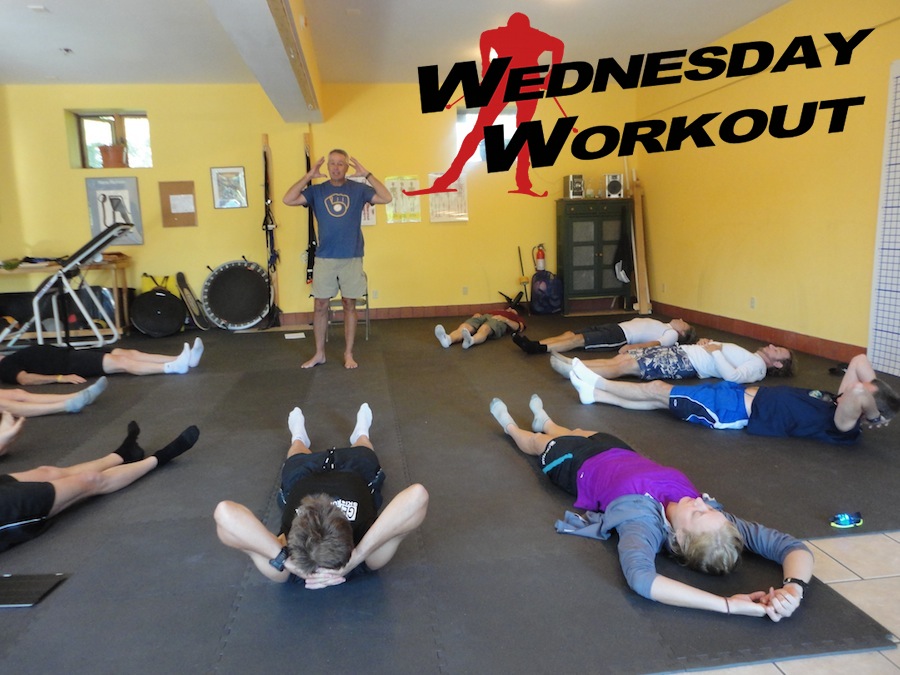
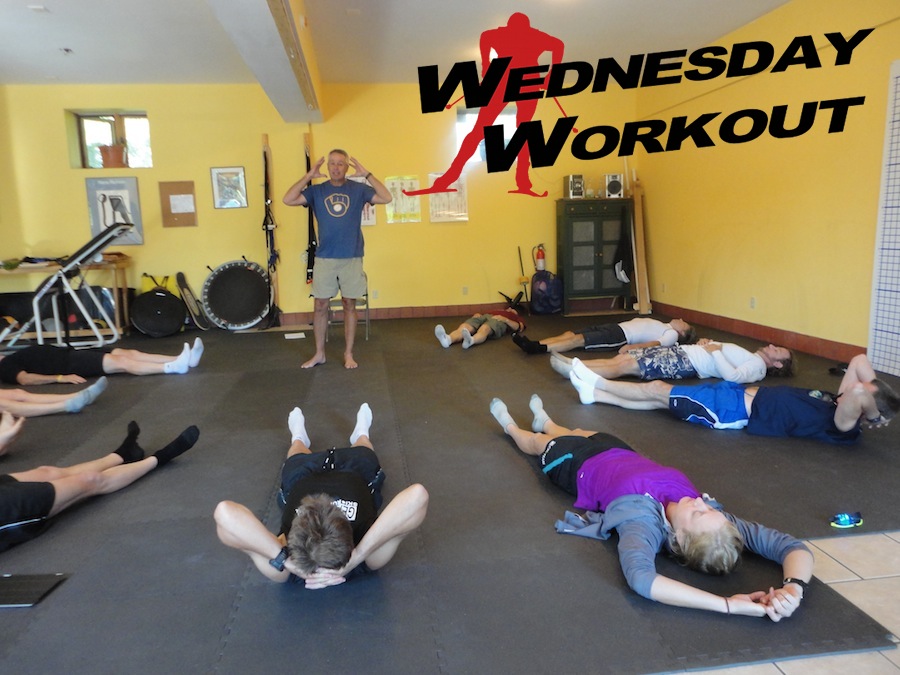
    Jay Tapper, who runs stretching programs for a company called ActivEdge, leads a masters group through some floor exercises and core work last fall. (Photo: Bill Pierce)
    Jay Tapper, who runs stretching programs for a company called ActivEdge, leads a masters group through some floor exercises and core work last fall. (Photo: Bill Pierce)

    By Bill Pierce

    Welcome to Wednesday Workout, the newest workout series on FasterSkier. This week, Central Cross Country (CXC) Elite Team coach Bill Pierce talks about going the extra 10 percent by being diligent about flexibility, recovery and agility. 

    ***

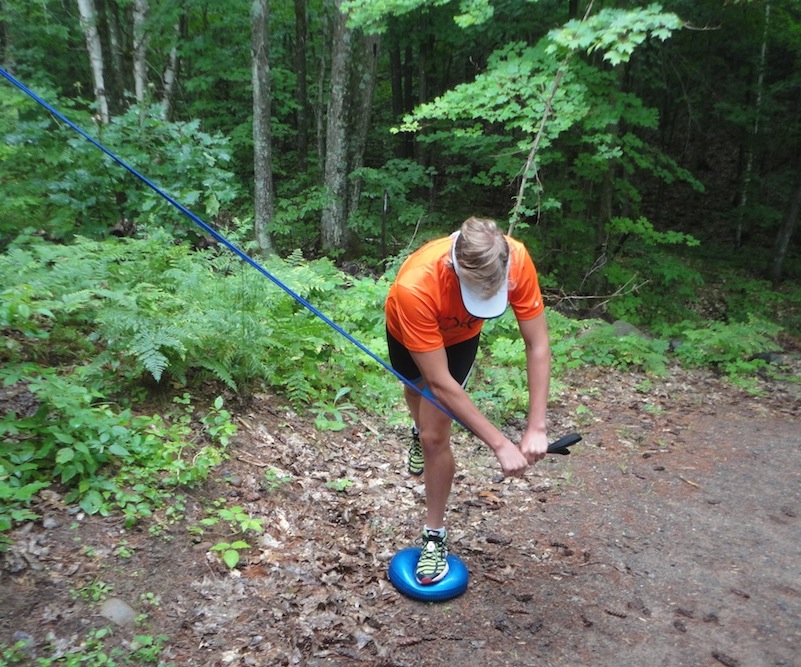
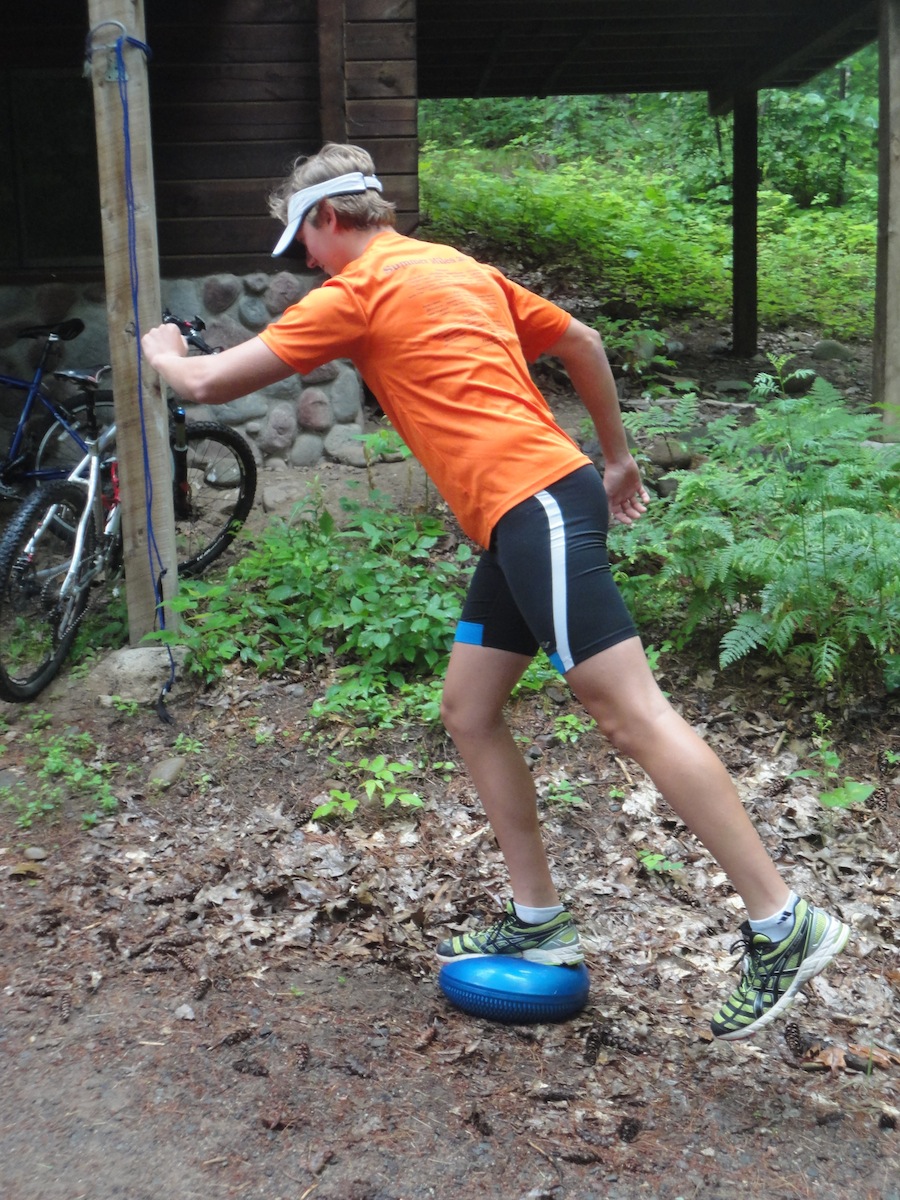
    A cross-over bungee pull: a simple leg and arm pendulum swinging and the other. While standing on the pillow, pull 90 degrees, twisting the shoulders and core but not the hips. This fires the glutes and the IT band for leg alignment and stabilization during the glide phase. Development of the glute is especially important in having a stable and aligned leg during the loading of the glide phase. (Photo: Bill Pierce)
    A cross-over bungee pull: a simple leg and arm pendulum swinging and the other. While standing on the pillow, pull 90 degrees, twisting the shoulders and core but not the hips. This fires the glutes and the IT band for leg alignment and stabilization during the glide phase. Development of the glute is especially important in having a stable and aligned leg during the loading of the glide phase. (Photo: Bill Pierce)

    I can think of quite a few workouts that I could call my favorites but I thought that I would contribute some work ideas that I have been focusing on as a coach with athletes and the team this season. When it comes to the workouts in our resume of experience, we are either working on endurance, intensity, or strength.

    When we add up all the time and ratios of this work it should be 100%. I tell athletes that if we are to be the best, you have to give 110%, all the time.  So, what do I think the other 10% is? Flexibility, physical recovery, and agility.

    At the beginning of the month Mikey Sinnott penned an article on stretching. It was spot on! Best advice was “make it a routine”, like brushing your teeth. We talk about it at clinics, camps, and workout sessions, but we just don’t do it on a consistent daily basis.

    While full-body stretching from extremities to core should be worked on, at the very least skiers should focus on stretching the body zones of power application; shoulders and chest, core, and hips/glutes/quads/hamstrings are the three areas that if ignored will very quickly tighten. Eventually a decrease in performance and an increase injuries will happen.  Bottom line, stretching will enhance your performance and keep you less prone to injury, ask Mikey!

    Shoulders and chest, core, and hips/glutes/quads/hamstrings are the three areas that if ignored will very quickly tighten.

    The second piece of the extra 10% is physical recovery. Foam rolling, stick massage, icing/baths, and sauna are just a few of the options for speeding recovery that athletes should be using. Foam rolling and massage are not options. Every athlete from juniors, collegiate, seniors, and masters should own and travel with a foam roller.

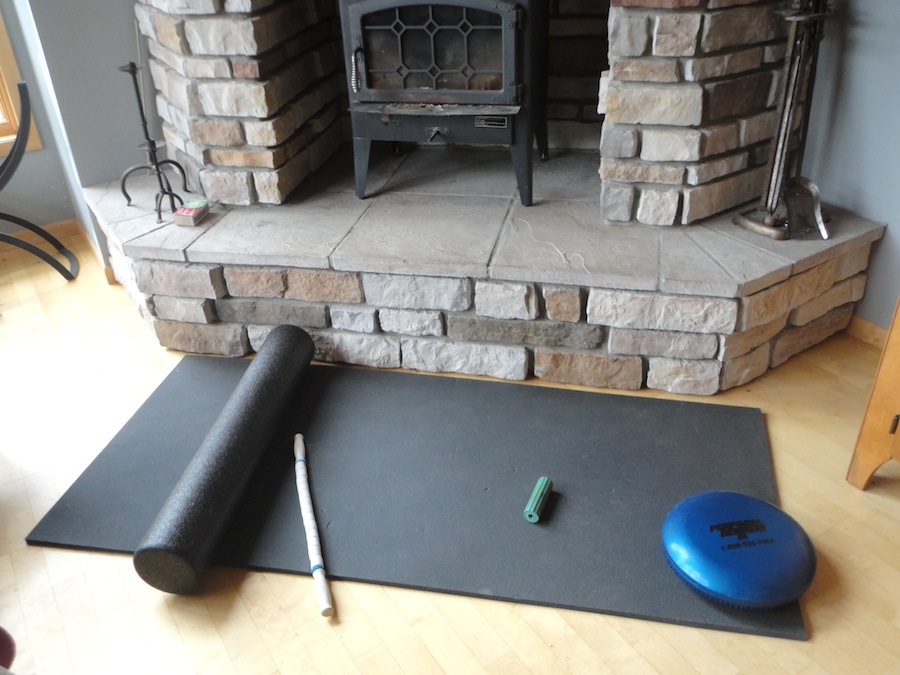
    Tools for success: a mat, foam roller (l), dowel, small ribbed roller (great for the bottom of the foot and helping prevent plantar fasciitis issues) and balance pillow (r). (Photo: Bill Pierce)
    Tools for success: a mat, foam roller (l), dowel, small ribbed roller (great for the bottom of the foot and helping prevent plantar fasciitis issues) and balance pillow (r). (Photo: Bill Pierce)

    While stretching is the first component to a post-workout routine, rolling should be the second. Self-massage or myofascial release (tissue work via gentle pressure or stretching) will help knead out trigger points, further stretch and massage the muscle, and increase circulation to the muscle to speed the recovery process. Again, developing the routine and habit of rolling the specific muscle groups used in a workout will speed your recovery and enhance your performance down the line.

    And the last piece of the extra 10% is agility. Being agile on skis is all about our balance skill. In order to possess that skill, we must train the muscle groups and movement patterns that help us achieve balance.  The more we work at it from the strength room to the trail, the quicker we learn it.

    A balancing exercise on what Bill Pierce calls the balance or air pillow.
    A balancing exercise on what Bill Pierce calls the balance or air pillow.

    One of the tools I have been using the past half dozen years is the balance (air) pillow, or the Bosu.  Athletes start by learning how to first stand and “swing out” on a pillow. Swinging out is nothing more than a pendulum motion of the arms and legs for warm up and movement pattern development. Push ups, squats and toe touches can all be exercises done off of unstable bearing in order to enhance the development of balance.

    Eventually, we incorporate many of their strength exercises onto a pillow so that they can simulate the instability of snow conditions in the power application phase of ski technique. Quiet a few of the exercises that we incorporate or design into a routine help develop the ability to quiet the core and stabilize the leg. While some athletes may have a better understanding of body awareness, it is mostly a learned and trained skill. You still have to do the work.

    So when you find yourself looking for that extra edge and advantage when you step to the line this winter, ask yourself, “Are you giving 110% everyday?” It’s never too late to start!

    Related: Foam Rolling – How To Start and Finish That Workout Right

  • Canada’s Frozen Thunder Offers Goods to All

    Canada’s Frozen Thunder Offers Goods to All

    Alberta World Cup Academy skiers Brent McMurtry and Phil Widmer skating on the 1.8 k manmade course at Frozen Thunder on its opening day, Oct. 13. (Devon Kershaw courtesy photo/devonkershaw.com)

    Before the sun rises in Canmore, Alberta, those near the ski trails can probably hear the sounds of striding and skating along hard-packed snow this time of year. That’s likely accompanied by voices, chit-chatting as skiers compete 1.8-kilometer loops around the Canmore Nordic Centre before trail passes go on sale at 9 a.m.

    They’re not exactly renegades, night owls or extreme enthusiasts. For the most part, these individuals belong to clubs – some of which are American – and they’re just sharing a slice of the popular pie that is Frozen Thunder.

    According to Canmore Nordic Centre manager Michael Roycroft, about 150 skiers per day for the next few weeks are expected to use to the 5-meter wide manmade course, which officially opened for the fourth straight year on Oct. 13 and is expected to stay open through the winter. That daily estimate probably didn’t account for groups like F.A.S.T. Performance Training from Hayward, Wis., which were among those skiing before or after business hours.

    Juniors from F.A.S.T. Performance Training out of Hayward, Wis., on snow for the first time this season on Oct. 13 at the Canmore Nordic Centre. From left to right: Ryan Davis, Zach Goldberg and Ben Saxton. (F.A.S.T. courtesy photo: facebook.com/pages/FAST-Performance-Training/222929117723592)

    F.A.S.T. head coach Bill Pierce guessed there were as many as two hundred skiers at the centre Wednesday afternoon, and not all were on snow.

    “It’s amazing how busy the training centre was with athletes in the afternoon,” he wrote on Facebook. “Cross country skiers both on snow and rollers, runners, mountain bikers, and biathletes in every age range were training.”

    With more than a week and a half remaining of their two-week Canmore camp, Pierce wrote his five athletes recently transitioned higher intensity, like many of the skiers there. They started with an easy 1 ½-hour ski on snow, followed by speed work on rollerskis in the afternoon. Earlier in the week, the Alberta World Cup Academy invited them to a strength session at the national-team headquarters.

    “Canmore is living up to its reputation as the perfect place to train for endurance sport,” Pierce wrote in an email. “The camp is a great mix of dryland and snow!”

    He added that it was unusual to be in a wax room when it’s 50 degrees Fahrenheit (10 degrees Celsius) with green grass outside. Regardless, the snow was holding up despite the warmer temperatures earlier in the week.

    Pierce recalled the feeling of getting on Frozen Thunder for the first time.

    Frozen Thunder two years ago on Oct 17, 2010. (Canmore Nordic Centre courtesy photo)

    “The first 500m of snow felt awkward and unstable but after 5 min., the feel of slippery glide gets under control and the grace of being on snow takes over,” he wrote. “It was just an awesome feeling and even at 50F the snow was faster than rollers.”

    According to Pierce, the weather had been a mix of sun and clouds that initially shrunk the snow base. Fortunately for the groomers and snowmakers there, daytime highs below freezing were expected through the weekend.

    “We’re just glad to have the snow opportunities mixed in with the dryland,” Pierce wrote. “One learns in today’s training and racing environment that any day on snow is better than not. It’s a great camp in a great town!”

    Who’s there: 

    CANADA

    1. Nordic World Cup

    2. Biathlon

    3. Para-Nordic

    4. Biathlon development

    5. Alberta World Cup Academy

    6. Thunder Bay NDC

    7. Canmore Nordic Ski Club

    8. Rocky Mountain Racers

    9. Blackjack Ski Club

    USA

    1. U.S. Nordic Ski Team

    2. CXC

    3. Craftsbury GRP

    4. Bridger Ski Foundation

    5. Stratton Mountain School T2

    6. F.A.S.T.

    (Note: This is not a complete list, but is based on those who registered with CCC high-performance director Tom Holland and other sources.)

    He called the scene “almost an elite WY [West Yellowstone],” with more than a dozen teams flocking to the first substantial, skiable surface in North America.

    In all, there were at least nine Canadian teams, six of which were national-team affiliated, and six squads from the U.S., including its national ski team.

    Against a rainy backdrop on Friday, Cross Country Canada officially announced its 2012/2013 World Cup, Biathlon and Para-Nordic teams at Frozen Thunder (FT), a project launched in 2009 to provide preseason training opportunities to their high-performance athletes. Since then, FT has expanded from spreading a snow pile (preserved through the summer under sawdust) into a 400-meter track to one that’s nearly two kilometers and growing.

    American Matt Liebsch, who’s been training in Canmore while staying with Canadians Ian Murray and national-team biathlete Brendan Green, said the potential is certainly there for more skiing and the snowmakers have their guns ready along a 5 k loop. Back in 2010, Canmore proved it could blow about 30 kilometers worth of snow when it hosted the World Cup.

    “It was very low snowfall and they still had 30 k of trails open,” Liebsch said on the phone Friday. “There’s not anything quite like this in the states.”

    The Minnesota skier with Borton Volvo XC United said he scheduled a six-day trip to Frozen Thunder to get the maximize his time before the season starts in nearly a month. In late August, he took a group of skiers to the Haig glacier, about 45 minutes outside Canmore, for a week of high-altitude, on-snow training.

    “That was a little awkward, you know, long skiing and stuff, but since I’ve been here I’ve put the skates on and that felt really good,” Liebsch said. “I was doing quality sessions my second and third day here.”

    Since then, he’s been working out with friends like former teammate Tad Elliott (U.S. Ski Team/Team HomeGrown) and Sylvan Ellefson (Team HomeGrown). The U.S. Ski Team (USST) arrived on Thursday, and Liebsch said he skied with those two on Friday morning. Yesterday, he and Ellefson went on a 1 ½-hour mountain bike.

    In terms of getting on snow, scheduling isn’t too complicated. While it was previously first-come, first-served, Roycroft wrote that this year, the nordic centre reserved time for high-performance athletes from any country (either national team, provincial or the development equivalent) to use the trails from 9 a.m. to noon. The public can ski any time outside of that. Regarding total use, he said it’s up 25 percent.

    Phil Widmer (AWCA) on snow at Frozen Thunder on Oct. 13 in Canmore, Alberta. (Devon Kershaw courtesy photo)

    While the Canadian World Cup skiers have been in Canmore for more than a week, their U.S. counterparts recently settled in for their 1 ½-week camp. According to Canadian head coach Justin Wadsworth, they hadn’t coordinated workouts, but that didn’t mean they weren’t going to.

    “This part of the season is crucial to be flexible and not force workouts just because they’re on the plan,” Wadsworth wrote in an email.

    One thing’s for sure: there’s going to be a timed-and-bibbed sprint showdown Oct. 26.

    According to a Cross Country Canada press release, Frozen Thunder’s first major sprint race – the WinSport Frozen Thunder Classic – will include more than 100 competitors from the U.S. and Canada. Qualifying will begin at 9 a.m. with the head-to-head heats starting at 10 a.m.

    “The sprint race is another important element in Frozen Thunder’s delivery of what Canada’s athletes have asked for, and need, in their pursuit of international excellence,” Roycroft said in the release.

    “Through the financial backing of the Government of Canada’s commitment to the Own the Podium program, along with WinSport Canada, this multi-year effort complements the more than $30 million these organizations, along with the Government of Alberta, have invested into the facilities and resources at the Canmore Nordic Centre over the last two Olympic cycles to help our Nordic athletes reach their goals.”

    As Wadsworth put it: “It’s just a really competitive field for sprinting so it should be a fun race to see.”

    Cross Country Canada announcing its World Cup and Para-Nordic Ski Teams on Friday at Frozen Thunder in Canmore, Alberta. (CCC photo/twitter.com/cccski)
    A look at the 1.8 k course at Frozen Thunder in Canmore, Alberta, earlier this week. (Matt Liebsch courtesy photo/mattliebsch.com)
  • Elliott Schedules Trip to Wisconsin for “Train Like a Birkie Champion” Camp

    U.S. Ski Team member Tad Elliott celebrates winning the 2012 American Birkebeiner 50 k skate race in Hayward, Wis. (Photo: Darlene Prois/American Birkebeiner)

    When the head of F.A.S.T. Performance Training in Hayward, Wis., Bill Pierce heard Tad Elliott pulled off a cross-Atlantic trip to win the American Birkebeiner last February, he knew he had to have him back in town.

    Matt Liebsch, one of the Midwest’s nordic heroes and 2009 Birkie champion, thought the same.

    In July, F.A.S.T. held its first “Train Like a Birkie Champion” citizens training camp of the year after Liebsch, an XC United skier, reached out to Pierce about coordinating clinics. Pierce was all for it, and Liebsch suggested adding Elliott, a U.S. Ski Team  (USST) member and former Central Cross Country (CXC) skier, to coach at future camps. Pierce immediately sought him out for the second one Oct. 26-28.

    Matt Liebsch, 2009 American Birkebeiner 50 k skate race champion (ABSF photo)

    “I talked to Tad about two months ago and I said, ‘I’ve got one open weekend,’ ” Pierce said on the phone Wednesday. “He said, ‘That’s the same one I’ve got.’ ”

    Empathizing with Elliott’s busy USST schedule, one in which Pierce figures “hardly gives [its athletes] time to sit down,” he was impressed with Elliott’s enthusiasm.

    “The cool thing about this kid is, against the advice of his coaches and his dad, he flew home [from the World Cup] … and did the race and flew back to Europe,” Pierce said of Elliott, who won the Birkie’s 50-kilometer skate with the second-fastest time in race history.

    Elliot will pull off a similar yet smaller-scale feat when he leaves the upcoming USST camp Canmore, Alberta, one day early to coach at the “Train Like a Birkie Champion” weekend clinic Oct. 26-28 in northern Wisconsin. According to Pierce, Elliott will fly out of Canada early Friday, Oct. 26, and will arrive in Minneapolis by noon. There, Liebsch will drive him to Seeley, just north of Hayward, to lead a dryland skills-and-technique session that evening. After three days of instructing, he’ll fly home Sunday night to Park City, Utah.

    “I love going back to the Midwest and seeing the huge enthusiasm they have there for nordic skiing,” Elliott wrote in an email. “I will get to do the Birkie clinic with one of my close friends Matt Liebsch [and hopefully see] his wife Mary-Beth and their two young kids Grant and Samantha. I got to stay with them for two weeks last year and they took incredible care of me. Looking forward to seeing Bill Pierce. Sounds like this clinic is really well organized looking forward to going to it.”

    “He’s doing this because he likes the Birkie,” Pierce said. “The kid’s got so much positive energy.”

    Pierce likes to tell his juniors about Elliott and his USST teammate Noah Hoffman and their results at the 2006 Junior Olympics. Seven years ago, they finished around 28th and 30th place, he said. Now look where they are.

    “It’s kind of cool to see where these kids come from and a progression,” Pierce said. “They made a choice to pursue a passion, and that’s what the focus is for.”


    More on the “Train Like a Birkie Champion” Camp Series:

    October 26-28, 2012; Hayward, WI – “Train Like a Birkie Champion”

    “Live & Ski Like a Champion”


    Purpose: This camp designed for the Master/Citizen athlete that wishes to improve and progress their skiing while fitting the demands of lifestyle, family, and work into their schedule. Sessions will be held on technique, flexibility, strength, and ski skills along with discussions on the body and the affect of aging.

    Abilities: This camp is designed and open to all abilities of skiers. You do not have to roller ski to attend this camp. We are showing you what it takes to progress to your goals of skiing no matter where you are with your abilities as a Nordic skier. So, whether you are an elite wave athlete or an aspiring athlete wishing to compete in your first Birkie, this camp will train, inspire, and motivate you to your best Birkie! Don’t pass on a great opportunity to train with and meet Birkie Champions.

    Guest coaches include 2012 Skate Champion Tad Elliot and 2009 Skate Champion Matt Liebsch.

    Participation limited to 30 athletes.


    CAMP SCHEDULE 


    Friday, October 26, 2012:


    3-5pm: Check in at Lenroot Lodge and Sawmill Saloon

    5-6:15pm: Intro to the fundamental movements of Nordic skiing with Bill Pierce. Dryland skills and technique

    6:45-8:30pm: Fish fry dinner at Moose Lips with discussions with Dr. Brent Carlson.

    8:30-10pm:  Discussions and demos on skis and waxing at Moose Lips.

    Saturday, October 27, 2012:


    7:30am: Morning run and swing out

    8-9:00am: Breakfast on your own

    9:00-10:15am: Flexibility and stretching session with Jay Tapper.

    10:30am-Noon: Basic skate technique session with video with Bill, Matt, and Tad.

    Noon-2:00pm: Lunch at the Sawmill Saloon, video review.

    2-5:00pm: Skate roller ski session with specific strength drills and skills with Bill, Matt, and Tad.

    6-7:30pm: Dinner at the Rivers Eatery in Cable

    8-9:30pm: Chat with the Champions, dessert and coffee at Rivers Eatery with Matt and Tad.

    Sunday, October 28, 2012:


    7-8:00am: Breakfast on your own

    8-10:00am: Classic or skate technique session with specific strength and video with Bill, Matt, and Tad.

    10:30-Noon: Video review technique discussions

    Noon: Check out and camp departure


    To register: http://www.fastperformancetraining.com/clinicscampsretreats/

  • Liebsch, Bender to Coach Birkie Masters Camp

    Liebsch, Bender to Coach Birkie Masters Camp

    Train With Birkie Champions!

    Matt Liebsch & Jennie Bender

    July 27-29 in Seeley, Wis.

    (Just ten miles north of Hayward)

    Matt Liebsch, 2009 American Birkebeiner 50 k skate race champion (ABSF photo)

    Imagine how much your skiing will improve by spending a weekend dryland training with Birkie Champions Matt Liebsch and Jennie Bender at the Birkie Masters Camp. Take advantage of this rare opportunity to get their one-on-one help with hill climbing, endurance, speed, efficiency, and making the most of the “off” season. Other Birkie coaches will also be there to work with you on your personal challenges and skiing goals.

    On July 27-29, get out on the Birkie Trail with this exclusive coaching staff and let them not only show you, but work with you to make their secrets your own.

    Register Quickly – Only 24 Participants Max

    This camp is open to a maximum of 24 participants to ensure personalized feedback and one-on-one training and assistance throughout the weekend. A minimum of 8 participants is required.

    “Live & Ski Like a Champion”

    Jennie Bender, 2011 American Birkebeiner 54 k classic champion

    Purpose: This camp designed for the Master/Citizen athlete that wishes to improve and progress their skiing while fitting the demands of lifestyle, family, and work into their schedule. Sessions will be held on technique, flexibility, strength, and ski skills along with discussions on the body and the affect of aging.

    Abilities: This camp is designed and open to all abilities of skiers. You do not have to roller ski to attend this camp. We are showing you what it takes to progress to your goals of skiing no matter where you are with your abilities as a Nordic skier. So, whether you are an elite wave athlete or an aspiring athlete wishing to compete in your first Birkie, this camp will train, inspire, and motivate you to your best Birkie!

    Cost: This Birkie Masters Camp, which includes coaching, meals, and training sessions, is $195.00 per participant. Lodging for this camp is also available at the Lenroot Lodge for a cost of $39/individual for double occupancy per night.

    TO REGISTER: Email Coach Bill Pierce at fastperformancetraining@gmail.com or, call 612-590-1427.

    CAMP SCHEDULE 

    Friday, July 27, 2012:

    3-5pm: Check in at Lenroot Lodge and Sawmill Saloon

    5-6:15pm: Intro to the fundamental movements of Nordic skiing with Bill Pierce. Dryland skills and technique

    6:45-8pm: Fish fry dinner at Moose Lips

    8:00-9pm: Camp introductions and training discussions.


    Saturday, July 28, 2012:

    7:30am: Morning run and swing out

    8-9:00am: Breakfast on your own

    9:00-10:15am: Flexibility and stretching session with Jay Tapper.

    10:30am-Noon: Basic skate technique session with video with Bill, Jennie, and Matt.

    Noon-2:00pm: Lunch at the Sawmill Saloon, discussion session with Dr. Brent Carlson, video review.

    2-5:00pm: Skate roller ski session with specific strength drills and skills with Bill, Jennie, and Matt.

    6-7:30pm: Dinner at the Rivers Eatery in Cable

    8-9:30pm: Chat with the Champions, dessert and coffee at Mooselips with Matt and Jennie.


    Sunday, July 29, 2012:

    7-8:00am: Breakfast on your own

    8-10:00am: Classic technique session with specific strength and video with Bill, Jennie, and Matt.

    10:30-Noon: Video review technique discussions

    Noon: Check out and camp departure


    For more information, visit Birkie.com.

  • Rolling Out Hayward’s Main Street (Video)

    Rolling Out Hayward’s Main Street (Video)

    All American Birkebeiner coverage is brought to you through the generous support of Concept2, makers of the SkiErg.

    HAYWARD, Wis. — Ever wonder how they get all that snow, about half a kilometer’s worth and 6 inches to a foot deep, all across Main Street and out toward Hayward Lake for the finish of the American Birkebeiner?

    FasterSkier’s Alex Matthews tagged along for a four-hour grooming session in downtown Hayward with two of the Birkie’s main men, Chief of Course Bill Pierce and PistenBully sales rep Greg Toomire.

    With more than 40 years of combined experience, Pierce and Toomire worked together to spread about 120 truck loads of natural snow. About seven town and state highway trucks carried the piles down from a soccer field two or three miles away. An industrial snowblower churned up the white stuff, and a skiff prevented grass and dirt from mixing into the pristine white snow.

    According to Pierce, the head coach of Hayward’s F.A.S.T. high-performance ski club, this winter was  drier and warmer than usual, but there was plenty of snow in the area to lay down on Main Street for the Birkebeiner and preceding elite sprints. Three inches of fresh snow Tuesday night and a couple on Monday evening helped.

    Grooming Main Street in downtown Hayward, Wis., on Wednesday night before the 39th American Birkebeiner on Saturday, Feb. 25.

    “There’s snow out there, it’s just having the power to make it happen,” Pierce said. “That’s the thing the Birkie has, resources to make it happen.”

    This year’s 39th American Birkebeiner, which includes 50 k skate, 54 k classic and 23 k Korteloppet races, attracted a record number of participants at just over 9,000.

    Pierce said he and his crew had been working for the last three weeks since Feb. 1 to make sure the event goes off without a hitch on Saturday, Feb. 25. They patched the trails with snow from the woods when needed, unloading 500 totes of snow — each weighing 300 pounds — on the course. He said they shoveled 75 totes by hand.

    A Birkie staple for about 32 years, Toomire typically brings one PistenBully to events for demo purposes, but goes the extra mile at the Birkie, grooming Wednesday through Saturday. At 65, he’s considering retiring.

    “They don’t even tell me what to do anymore, I know what to do,” Toomire said. “I used to know all the mail boxes in town; I used to hit them all.”