From the FasterSkier archive — posts syndicated from athletes’ and coaches’ own blogs between 2004 and 2012, kept online as published. Current coverage is at fasterskier.com.
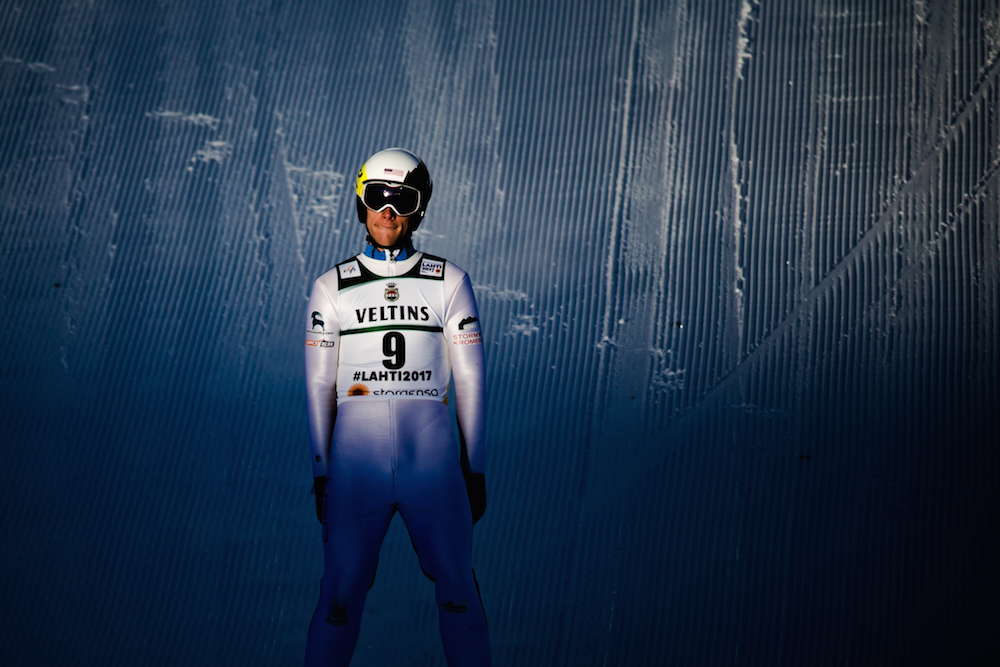
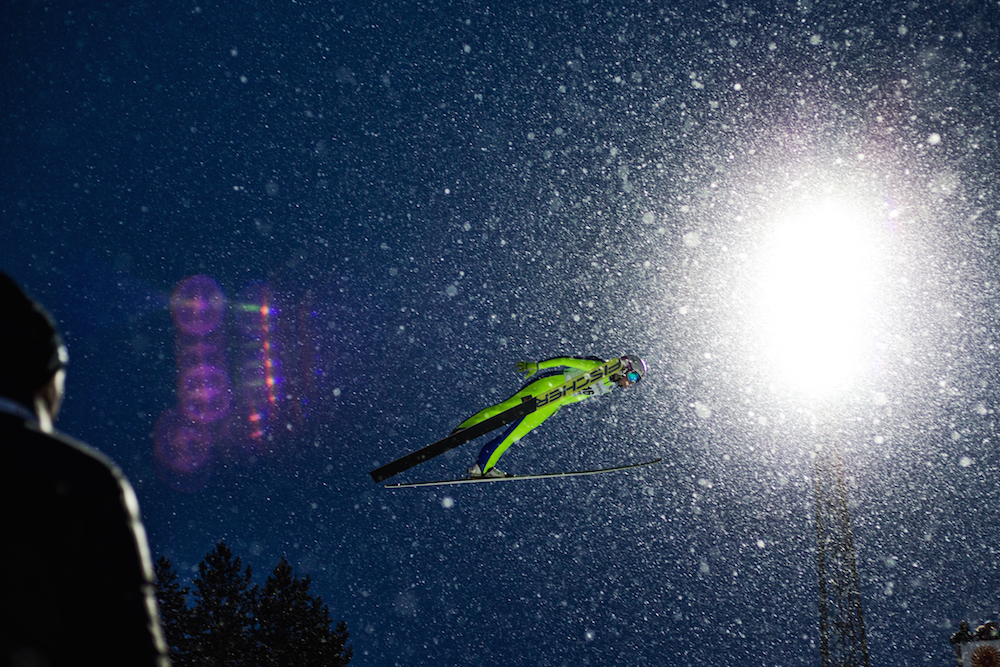
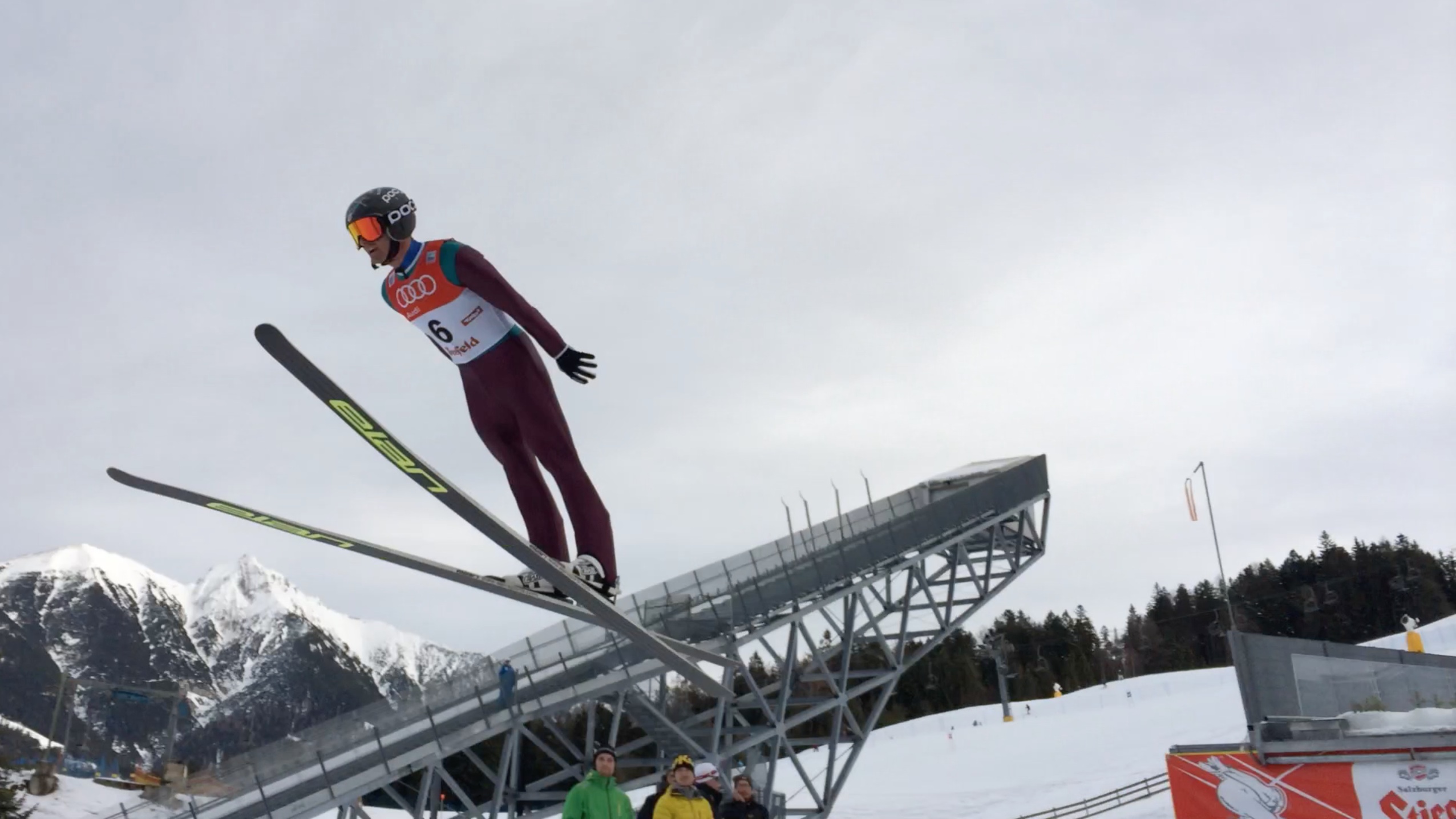
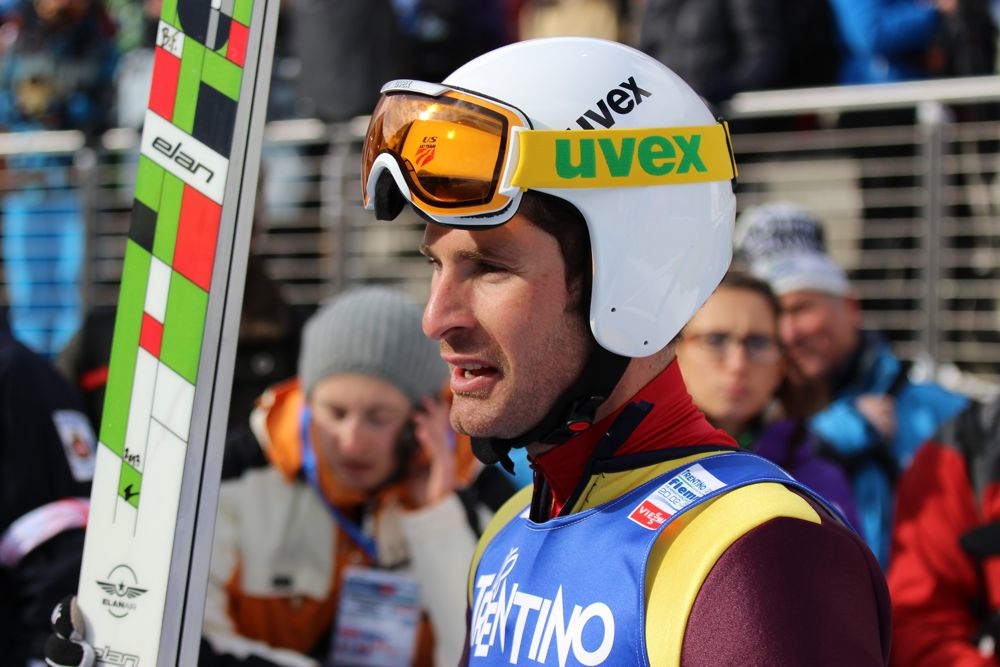
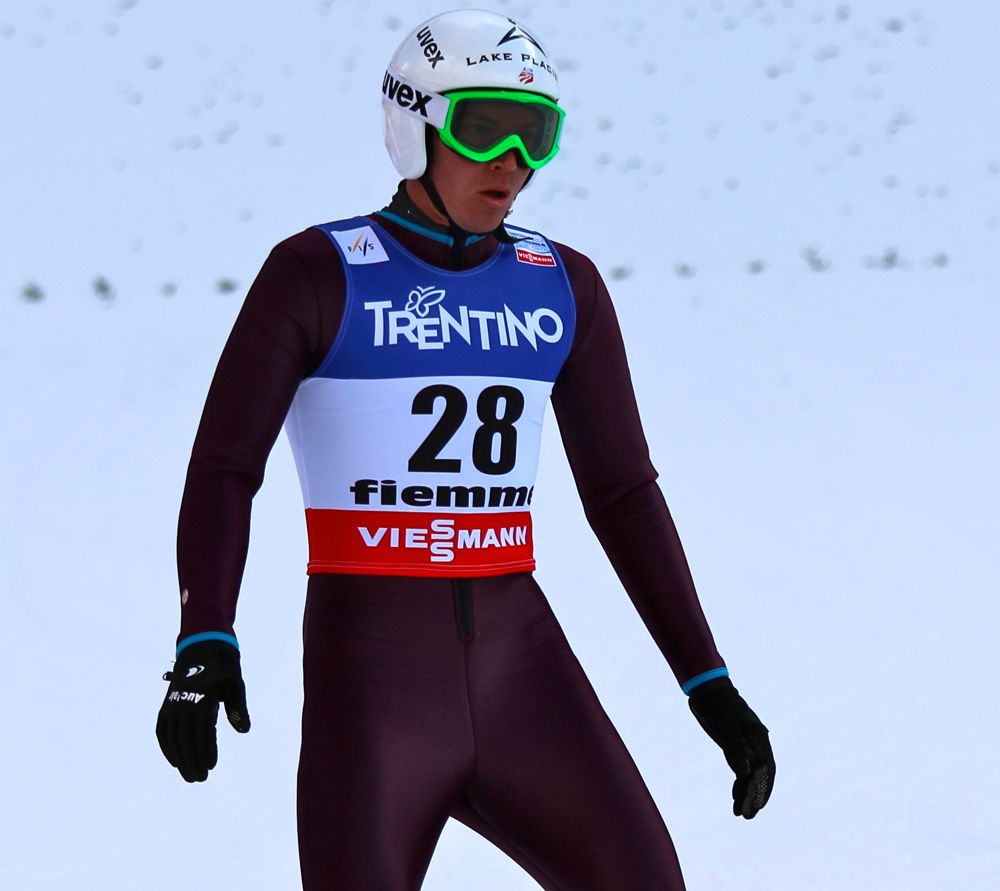
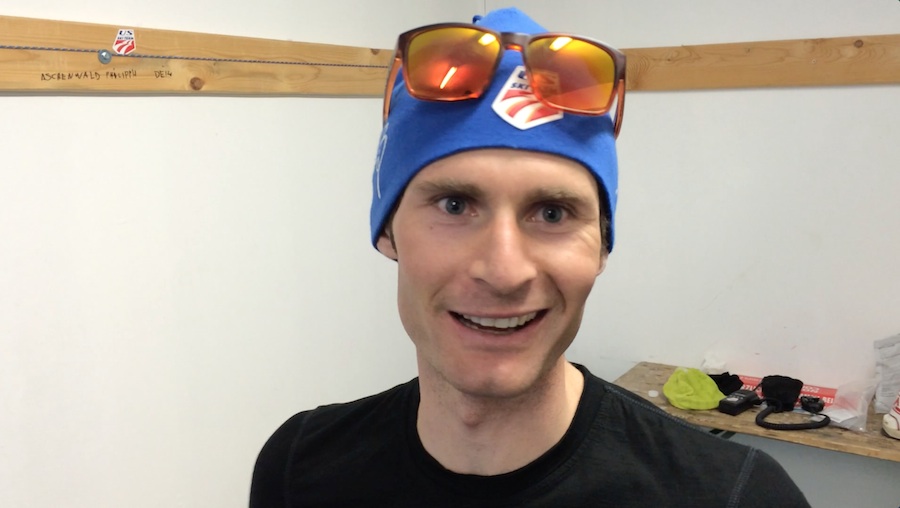
American Ben Berend after jumping to 22nd in the nordic-combined individual/normal hill competition at 2017 FIS Nordic World Ski Championships in Lahti, Finland. He went on to place 41st in the 10 k to end the day on Feb. 24.
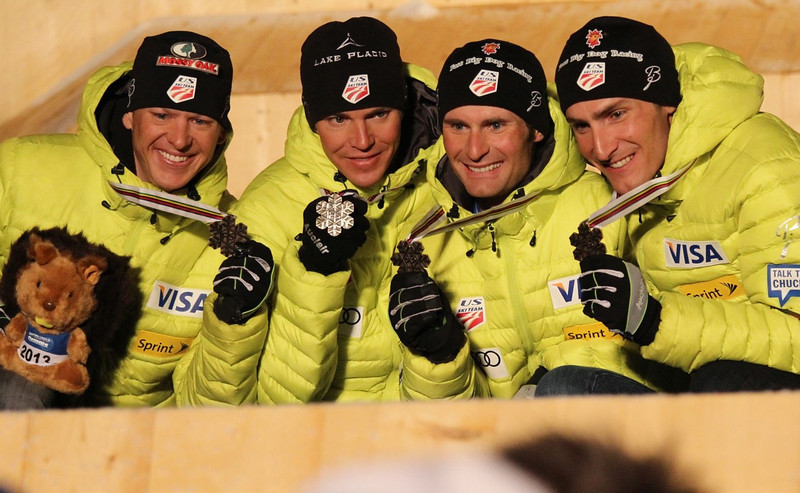
Three years ago, U.S. Ski and Snowboard (formerly known as the U.S. Ski and Snowboard Association, or USSA) officially dropped nordic combined from its funding rolls. It was a potentially big blow and flat-liner moment for a program coming off one the most successful runs in U.S. nordic sports history. As recently as 2013, the foursome of Todd Lodwick, Billy Demong, Bryan Fletcher, and Taylor Fletcher earned bronze in the team event at World Championships in Val di Fiemme, Italy.
Now, under the umbrella of USA Nordic, and two World Championships and nearly two Olympics removed from that seismic restructuring, American ski jumping and nordic combined are way beyond life-support mode.
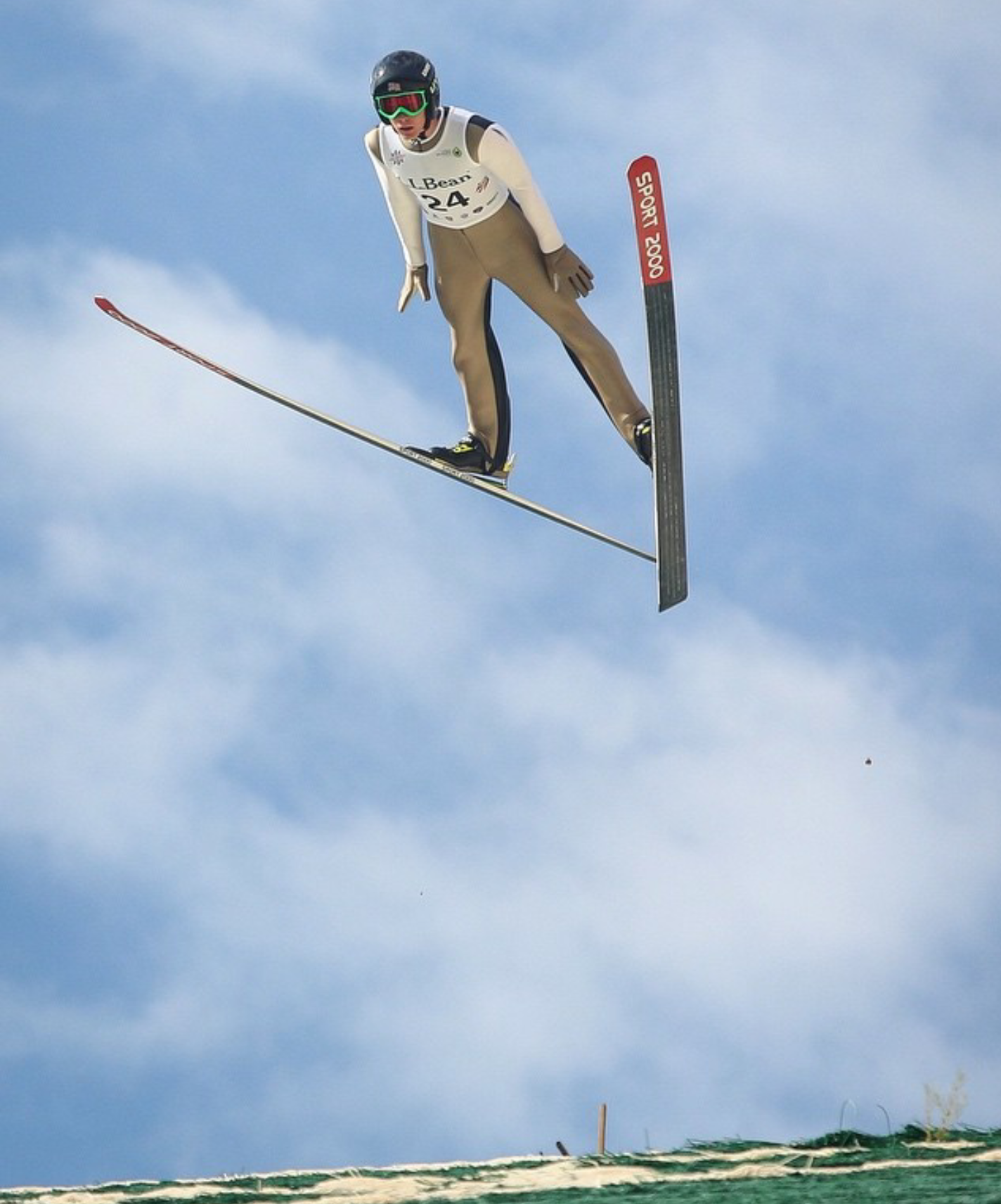
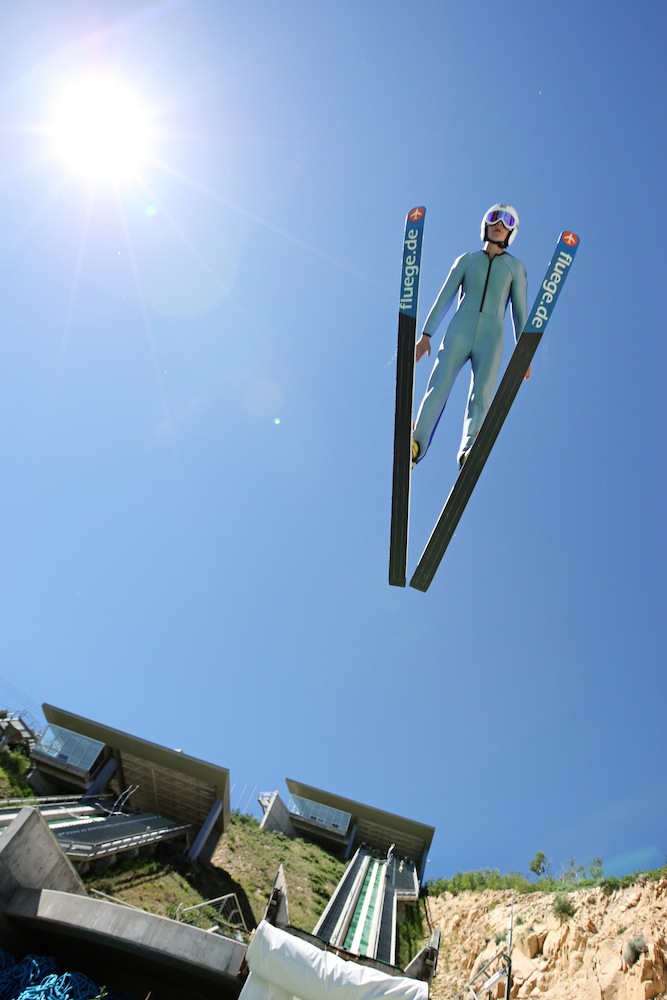
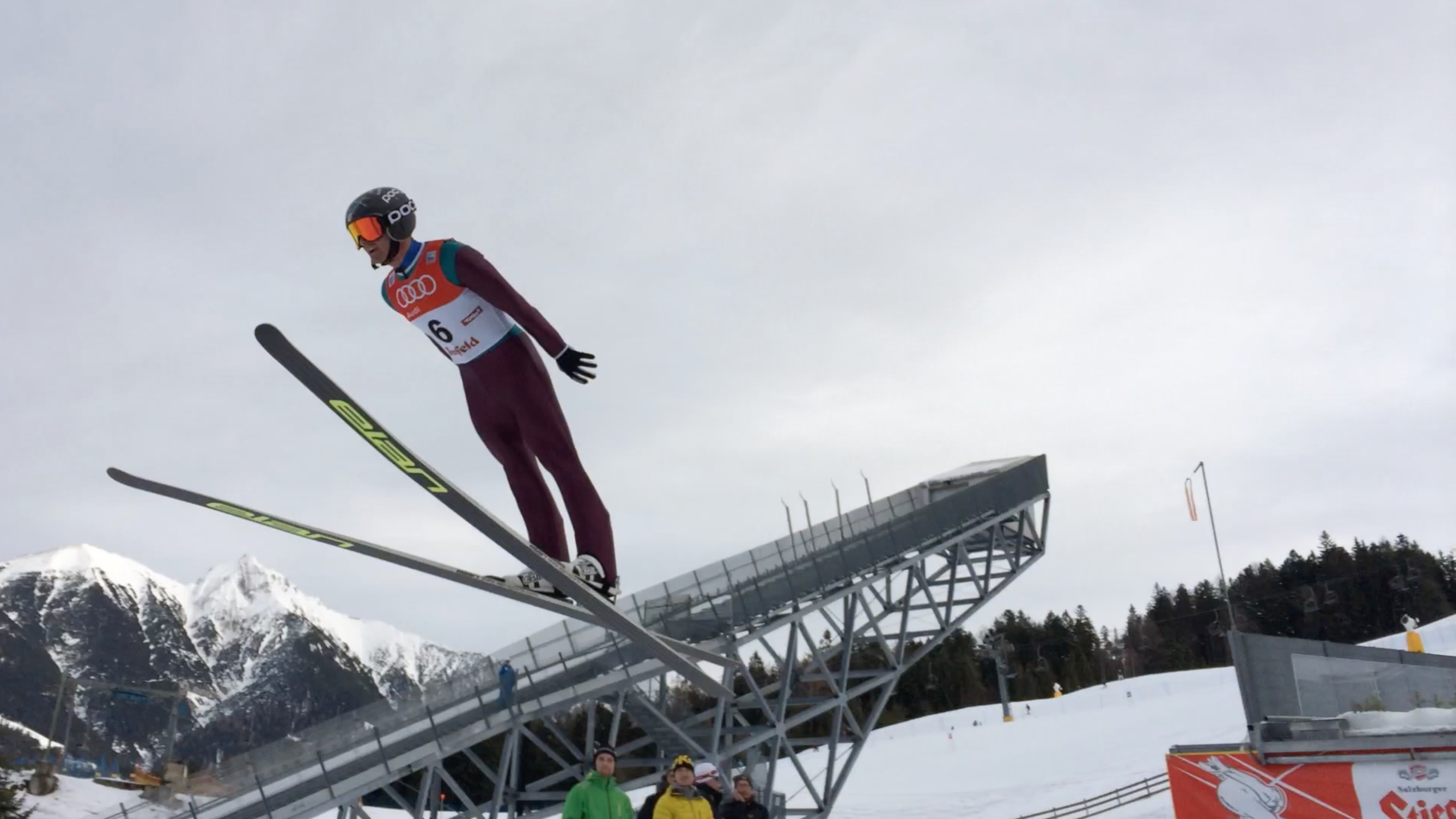
Koby Vargas (Park City Nordic Ski Club) jumping at 2016 U.S. nationals in Park City, Utah. (Courtesy photo)
“What we see, and we see this across sport and the larger picture of health, is that we have less young athletes participating in sports these days,” said Jed Hinkley, sport development director for USA Nordic. “It’s not unique to any specific sport — it is across the board. There are some exceptions to that and I would say ski jumping and nordic combined are an exception to that.”
Hinkley has been on the job since last summer. He’s seen his mission morph from grasping member clubs’ capacity, infrastructure, and financials to determining how to attract athletes and retain them.
“I know our numbers are heading in a positive direction, but we still do see a fairly big drop off as athletes enter their teen years,” he said. “I would say that my role has shifted a little bit to be more athlete development around the U20 level — to try to keep athletes in the sport longer.”
According to Hinkley, ski jumping is experiencing a resurgence in the U.S. In 2014, USA Nordic began organizing a regional jumping competition, the US Cup Junior Series. Three of the four regions tracked by USA Nordic — Central, West and Alaska — experienced significant growth in participation. The only outlier was the East, which canceled its end-of-season jump competition due to severe weather. Hinkley believes that cancellation skewed the data downward.
Data collected for the series tracks boys and girls ages U10 (under 10) to U16. Between 2016 and 2017, the Central region increased participation 49 percent, the West percent, and Alaska 192 percent.
From a global perspective, the U.S. appears to be on a path to fostering a legitimate nordic-sport pipeline. Hinkley admits his data collection methodology relied in part on the “brother of a friend of a brother’s mechanic model,” but his information appears promising.
“To the best of my knowledge, Norway and Germany are one and two for numbers in ski jumping and nordic combined,” Hinkley said. “From what we can figure out, it appears that the U.S. is the third-largest ski jumping and nordic combined nation in the world. There is one country that I don’t have numbers for that could outrank us, that being Poland, because they have such a huge love for ski jumping. It appears our numbers are higher than Slovenia, Austria and Japan, which are all part of the jumping and nordic-combined powerhouses.”
Jumping and nordic combined are resource-intensive sports — they both require what can be costly jumping infrastructure. Two regions have taken different approaches to ski jumping viability.
In Anchorage, Alaska, two women spearheaded a regional revival. As part of the Nordic Skiing Association of Anchorage (NSAA), Karen Compton and Vivienne Murray, along with a core group of volunteers, now respond to daily emails, shuttle athletes, and supply and maintain loaner equipment in an effort to expose young athletes to jumping.
“When we started there were only three other boys jumping and a burned-out coach who quit shortly thereafter,” Compton said on the phone from Anchorage. “There just wasn’t anyone involved in the program, and I ran around a got some friends have their kids come and try it out because it’s only fun if your friends are doing it along with you. Vivian was one of the friends I asked. Her kids liked it and at the end of the season, which was just a few months, we talked about it and we decided the two of us would take it on and resurrect the program.”
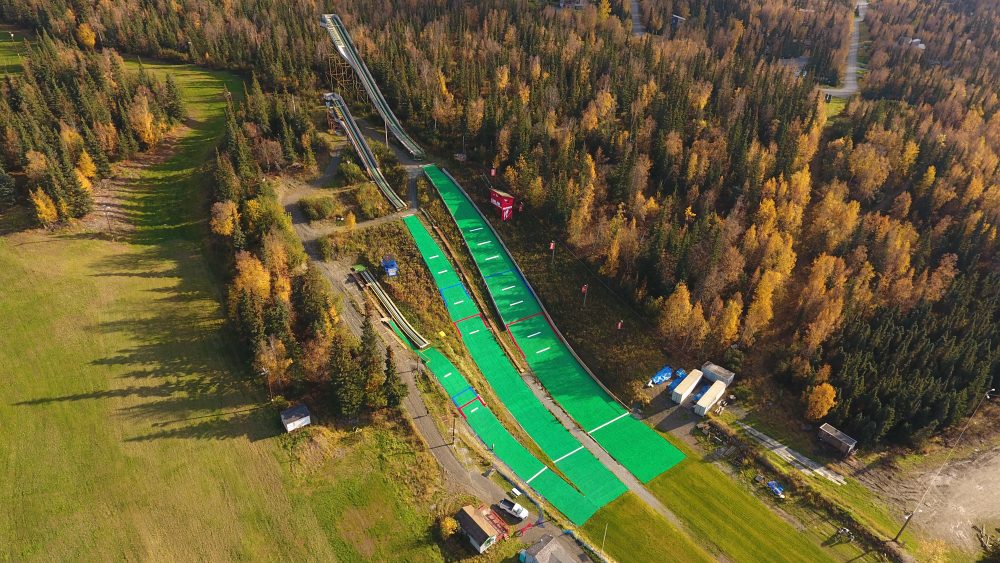
The Karl Eid Ski Jumping Complex in Anchorage, Alaska, which completed a retrofit in 2016. The three jumps pictured are now modernized with summertime jumping available to the athletes. (Photo: NSAA)
In 2012, Compton and Murray began co-chairing a grant-writing and fundraising campaign. By 2016 they had raised enough funds to rehabilitate the jumps at Anchorage’s Karl Eid Ski Jumping Complex. The complex now boasts a modernized 10-20 meter combined jump, and 40-meter and 65-meter jumps, respectively. Under NSAA, Team AK Ski Jumping/Nordic Combined has upwards of 70 kids jumping each winter.
Perhaps more importantly to developing higher-level jumpers, the modernization efforts allowed NSAA to plasticize the jumps’ in-runs to facilitate summertime jumping.
“[Anchorage] has been a good model to recruit, maintain, and make the sport fun,” Hinkley said. “They do a lot of social stuff outside of the jump hill, and organization-wise they are creating a welcoming environment and a professional organization. … I think what they are doing really well is they are a part of NSAA, which is all of cross-country skiing in Anchorage. They work collaboratively with the cross-country side and they are all in it together. I think in a lot of places, historically, there has been a divide between ski-jumping clubs and cross-country clubs, whereas in Anchorage there is an awesome collaboration.”
Anchorage came to the table with jumps in place. The Midwest boasts two from-the-ground-up success stories.
Red Wing, Minn., is developing a new Olympic-size jump on land owned by the Prairie Island Indian Community. “It’ll be a state-of-the-art facility with potentially cross-country trails at the base. And they want to do things like World Cups, FIS Cups, Grand Prix,” Hinkley said.
On a smaller but no-less-significant scale, a dedicated group in Cameron, Wis., built a 7-meter snow jump. That group collaborated with the well-established Flying Eagles Ski Club, a nationally recognized ski jumping club in Eau Claire, Wis.
The Pipeline
How bright is the future when it comes to international potential? On the U.S. men’s ski jumping side, four athletes were recently named to the its national team. Sixteen-year-old Kevin Bickner, who began jumping in Illinois but now lives in Park City, Utah, is the only A-team member. Bickner jumped to a 15th place on the World Cup this past March in Vikersund, Norway. In doing so, he jumped 244.5 meters, which was an American distance record, according to a USA Nordic press release.
Rounding out the men’s jumping team are three B-team members: Casey Larson (18), Michael Glasder (28) and William Rhoads (22). At last year’s Junior World Ski Championships, Larson placed eighth in the individual normal-hill competition.
“With men’s jumping, we have seen quite a phenomenal turnaround,” said USA Nordic Executive Director Billy Demong. “In participation for both women’s and men U14 levels, but for the national team, we have some guys who are really good. In fact, Kevin Bickner has had the best results in over a decade. And cumulatively the team scored more points last year than over the previous twelve years combined. They also had the best team-event finish since 1985, so there’s a solid group of four athletes.”
Demong also noted that keeping U20 skiers involved with the sport remains a priority. For scoring criteria as it relates to national-team selection, USA Nordic begins scoring at the more competitive (larger field size) Continental Cup competitions. He explained that success at the Continental Cup indicates a positive trajectory. The C-team is organized as a U24 program, essentially allowing older athletes an incentive to invest and remain in the sport. The C-team is comprised of two skiers, Nicholas Mattoon (22) and AJ Brown (22).
“We give our athletes a little more time to develop,” Demong said. “I think that’s partially why we are seeing the change. We are providing resources and opportunities for a greater group of athletes and at a higher level than it has been.”
This season, the U.S. Nordic Combined team will be led by A-team returners and brothers Bryan Fletcher (31) and Taylor Fletcher (27).
Last winter, the nordic-combined team was bottom heavy on the age-and-experience spectrum, with the Fletcher brothers being obvious outliers. U.S. Nordic Combined lacked the World Cup quota spots to expose several young skiers to that level of competition beyond domestic races and Junior World Championships .
U.S. NoCo’s Stephen Schumann (28) passing on the outside, en route to 10th in the normal hill/10 k at 2017 Nordic Junior World Championships at Soldier Hollow in Midway, Utah. (Photo: U.S. Ski Team/Steven Earl)
“One of the hopes is that we are able to start increasing the quota on the World Cup as well as the Continental Cup,” Demong said. “Last year, we had five different individuals score a top 10 on the Continental Cup, I believe. That’s unusual to have that much depth at that level. And what we need now is for some of those guys to transition into the World Cup.”
Adam Loomis (25), Ben Berend (21), Ben Loomis (19), Jasper Good (21) and Stephen Schumann (17) comprise the Nordic Combined B-team. Grant Andrews (19) is the sole C-team member.
The fleet of skiers following the Fletchers have time on their side in terms of World Championship and Olympic cycles, yet their recent junior-level results maintain the team’s emerging optimism. At the most recent Junior World Championships at home in Park City and Midway, Utah, U.S. Nordic Combined tallied two top-10 performances. Schumann placed 10th in the 10-kilometer Gundersen, and Ben Loomis finished ninth in the 5 k.
“There is a big group behind Schumann and Ben Loomis,” Demong explained. “I think in one of the qualifying events in Park City, there were six or seven of them that all finished within a minute, so pretty good size crew for a little sport.”
This April, USA Nordic formalized its efforts to keep promising athletes in an organized pipeline. Demong said it expanded its junior-national teams for both ski jumping and nordic-combined to include top athletes in the U16 to U20 range. USA Nordic also has national-development camps planned for this summer.
“I think it is a very nice transition from the Junior National team to National Team the way we have built it out, because we set our own criteria for the teams we fund,” Demong said. “Ideologically we are trying to give the U20’s a reason to continue competing and skiing in the critical 18-, 19-, 20-year-old ages and that this is something really worth investing in.”
Russian ski jumper Sofia Tikhonova during the women’s 100HS final at 2017 FIS Nordic World Ski Championships in Lahti, Finland. (Photo: Dustin Satloff/dustinsatloff.com)
For Tara Geraghty-Moats, nothing compares to the sense of weightlessness she feels and the way spectators appear to sink into the ground when she soars off a ski jump — except maybe the feeling of pushing her physical limits during a cross-country ski race.
The two sports have been a part of the 24-year-old New England native’s life since her grammar-school days — she picked up both at the age of 9 and in both, she excelled.
By the time she was 15, her jumping talents earned her a spot on the Women’s Ski Jumping USA development team, and she captured third place at the 2009 Springer Tournee in Park City, Utah. But within a year of her nomination, due to concurrent knee injuries, she was forced to leave the ski hill and for the next four seasons, she focused on cross-country skiing.
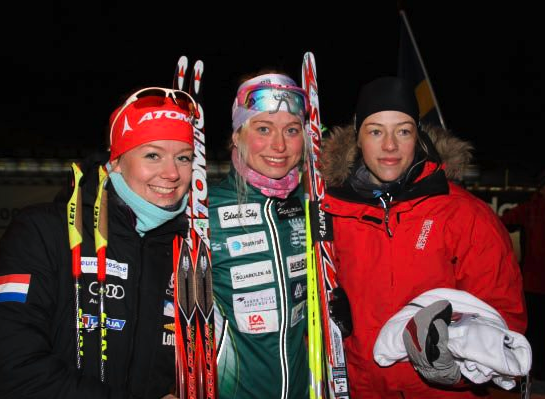
Vermonter Tara Garaghty-Moats (c) after winning the junior sprint at 2013 Swedish Biathlon Championships. (Courtesy photo)
Despite being told she would never jump again, she returned to the hill in 2013. That same year, she jumped to fifth at ski-jumping nationals in Lake Placid, N.Y., which earned her nomination to the Women’s Ski Jumping USA World Cup B-team.
While Geraghty-Moats saw success in both jumping and XC over the years, she never had the opportunity to showcase her combined abilities at an international level. Not because she didn’t want to, but because the opportunity didn’t exist — until this year.
“We have sort of been waiting for the sport to catch up with Tara Geraghty-Moats for quite a while,” Billy Demong, executive director for USA Nordic Sport (the U.S. governing body for men’s ski jumping and nordic combined) said on the phone earlier this month.
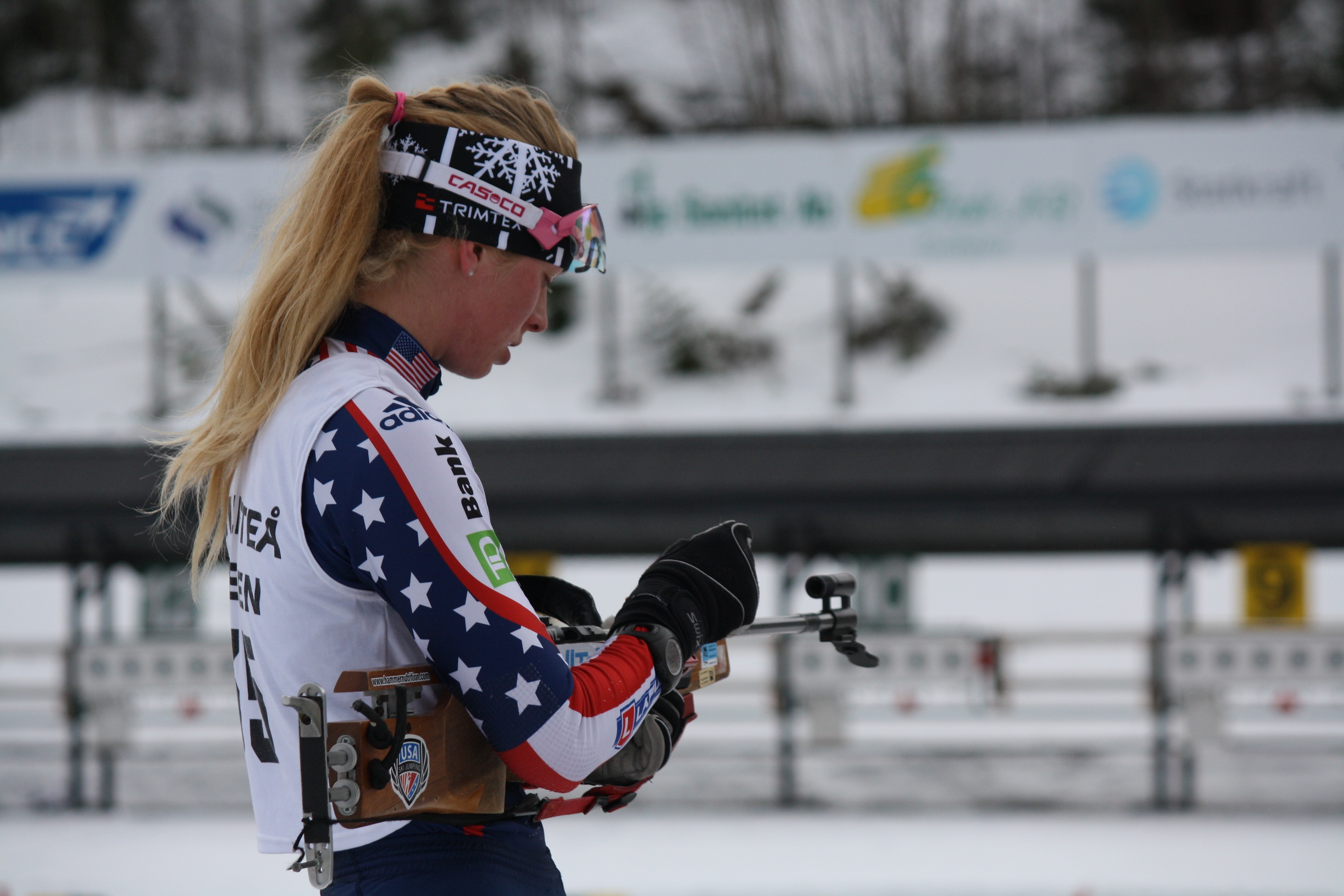
Geraghty-Moats on the range at 2011 Swedish Biathlon Nationals. (Photo: Per Nilsson)
Now it appears to be heading in Geraghty-Moats’s favor. Prior to this season, most of the cross-country ski training she did was either for pleasure or to maintain fitness for ski jumping. Now her training will take on a new meaning, as for the first time in history, women’s nordic combined will be included in the International Ski Federation (FIS) Continental Cup schedule. The inaugural women’s Nordic Combined event in the U.S. will be the USSA National Championships in Lake Placid on October 7. Demong anticipates eight to ten women to participate in the event.
“I’ve been wanting to compete on an international level for nordic combined for a long time,” Geraghty-Moats said on the phone this month. “It’s something I’m really invested in long term and something I’d like to see at a World Championships and Olympic-level competition. I’m really looking forward to helping develop the sport and helping mentor the younger girls that are getting into and also performing at a high level internationally.”
Women’s nordic combined has not yet been contested at the World Cup or Olympic level. Since this season marks an Olympic year, Geraghty-Moats will put her focus on World Cup ski-jumping events and enter as many FIS nordic-combined Continental Cups as she can.
“The ideal situation would be that I would qualify [for the 2018 Winter Olympics] in ski jumping and then am able to compete all the nordic combined races,” she said. “But there’s no way for me to tell where I’ll be in the points for the Olympic qualifying competitions … so hopefully I’ll be able to do them all, but I don’t really know.”
According to Demong, incorporating women’s nordic combined into the FIS schedule has been “on the radar for quite a while.” However, one blockade that prevented immediate action was the risk of draining athletes from a developing sport. Women’s ski jumping was added to Nordic World Ski Championships in 2009, the World Cup in 2011 and the Olympics in 2014.
“I think [women’s nordic combined] has really been in discussion since it was obvious that women’s ski jumping was going to be in the Olympics,” Demong said. “At the FIS level, I think one of the biggest challenges is with women’s ski jumping, you still have a developing sport. The ranks just aren’t as large and deep as the men’s side. And so I think there was a lot of fear that if you add another discipline, it could truncate the growth of women’s jumping.”
Sarah Hendrickson (Women’s Ski Jumping USA) taking flight during a summer competition in 2011. (Photo: Dan Campbell)
Over the past few years, the U.S. has seen more junior women participating in ski jumping. According to Demong, some a clubs have doubled their numbers within the last five years.
“The largest increase we saw in any user group was U8 [under 8], U10, and U12 in the Midwest, but also in Park City there was a pretty big increase, too,” he said. “We didn’t have a whole lot of participation before probably because they didn’t see a pathway. There were some diehards, like Tara and Gabby [Armstrong], but there weren’t droves of them and I think now there will be more in the sport because there’s a much more clear pipeline.”
This year will also be the first year that women’s nordic combined will be included at Junior World Championships. To Demong’s knowledge, Geraghty-Moats and Armstrong are the only two senior American women that plan to compete in the FIS Continental Cup competitions. Both will be supported by USA Nordic national-team staff at nordic-combined events, since the women’s events are scheduled to align with the men’s competitions.
“We have some really good 14 and 15 year olds that we’d like to see participate in the FIS Youth Cups again this year,” Demong added.
Also this year, the inaugural Women’s Nordic Combined National Championships will be held Oct. 7 in Lake Placid, N.Y.
With a longtime dream finally coming to fruition, Geraghty-Moats is not ready to let it end there.
“I don’t necessarily schedule things four years out,” she said. “But I definitely know that nordic-combined is going to be in my goals as an athlete for the foreseeable future. Obviously I need to stay healthy and continue doing things in my life, like going to school and staying at a high level of skiing, but I’m 100-percent sure that I will do nordic combined for as long as possible.”
U.S. Nordic Combined’s 2011/2012 team members (from left to right) Billy Demong, Bryan Fletcher and Taylor Fletcher with head coach Dave Jarrett at Soldier Hollow in Midway, Utah. (Photo: USSA)
Listed at the bottom of a U.S. Ski & Snowboard Association (USSA) press release announcing U.S. Nordic Combined Head Coach Dave Jarrett’s retirement are his coaching highlights. It’s a long list defined by two things: Olympic and World Championship medals and longevity. Jarrett will forever be linked with the iconic names of U.S. nordic combined, including Billy Demong, Johnny Spillane and Todd Lodwick. His coaching legacy rewinds back to the 2002/2003 World Cup season.
Before that, as a nordic-combined athlete, Jarrett was a member of the U.S. Ski Team from 1992-1996 and is a two-time Olympian. He’s a lifer. And for lifers, separation from what they have always known remains difficult.
“I have been doing it a long time both as an athlete and and a coach,” Jarrett, 46, told FasterSkier on the phone. “It is now of those things where all of sudden it hits you, like, you are tired. You’re not able to go give everything and do everything. And certainly, it’s hard to justify a lot of time on the road. Missing family things, but also on the athletic side you are not able to give to the athletes everything that you need to give.”
Until 2014, USSA managed the U.S. Nordic Combined Team. The team is now run by USA Nordic, yet Jarrett’s position has remained under USSA’s umbrella — they continued to pay his salary. With the 2014 split, Jarrett’s responsibilities grew as he took on both coaching duties as well as some of the logistics of running a team.
Dave Jarrett, head coach of U.S. Nordic Combined, during the 2013/2014 season. (Photo: USSA)
“Honestly, it’s amazing he lasted as long as he did,” U.S. Nordic Combined A-team member Bryan Fletcher said on the phone from his home in Park City, Utah. “He’s definitely a trooper, for sure. It was pretty intense because he was still employed by USSA and still had bosses there, but he also had bosses on USAN and had obligations on both sides of the coin. That combined with continuing his education research for coaching stuff, it adds up quick. And then doing all the travel logistics for not only World Cup but for World Cup and B-team and then having to be there in person, it was insane.”
Taylor Fletcher, another longtime U.S. Nordic Combined athlete and Bryan’s younger brother, also noted the stress on Jarrett.
“He had definitely been challenged … he had to go from a full-time coach to a full-time coach and a team manager,” Taylor explained on the phone. “He was in charge of doing a lot of the fundraising, and all the aspects to keep our sport alive in the U.S. And that really took a toll on him and that was definitely difficult on all of us. But also, I think it put way more weight on his shoulders than he really needed.”
Diminishing funds correlates to increased non-coaching responsibilities for coaches, less on-snow time and more connecting the non-competitive dots for athletes. Jarrett weathered that type of job description metamorphosis. Ski coaching at the elite international level is an all-encompassing life, and he lived it for 15 years.
“For me and my wife, we got married while I was still an athlete and so this is a lifestyle, the only lifestyle we have ever really ever known,” Jarrett said. “Both of my children were born in 2002 and 2004. Again this is a lifestyle that’s all they have ever known.”
Demong, USA Nordic’s executive director for the last year, has spent nearly his entire international-skiing career under Jarrett’s wing. The two became teammates back during the 1996/1997 season when Demong bumped up to national-team status.
“DJ had a good understanding of physiology, so he and I bonded over that in the beginning,” Demong said. “Especially given the fact at the time we had a really good team culture developing but we didn’t have the physiological expertise in our training programs and that sort frustrated both us. So we sort of found a commonality there right out of the gate.”
After completing his competitive career, Jarrett went on to earn a degree in exercise physiology and kinesiology from the University of Colorado. He was able to bring his education into play as he joined the coaching ranks.
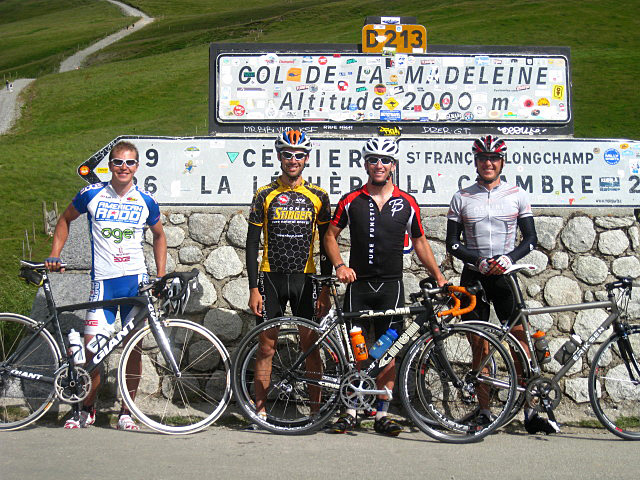
The U.S. Nordic Combined team takes a break at the top of the Col de la Madeleine during a 2009 training camp in nearby Courchevel, France. From left to right: Bill Demong, Johnny Spillane, coach Dave Jarrett, and Todd Lodwick (Photo: USSA)
“When he came back to coaching it was really a breath of fresh air,” Demong said about Jarrett’s academic and nordic-sports knowledge. “We had built this great culture and were all working really hard, but we still didn’t have the plan training-wise that I felt we needed.
“Going back to my high-school running days, we peaked when we wanted to peak for states and federations, and when we were doing our nordic training I felt like we were sort of doing what other nordic-combined skiers did, which was get up, ski, or get up, go jump, have lunch, go ski, go home,” he continued. “And DJ brought a ton of new ideas and concepts that he had learned in school as well as from networking with other sports. DJ really helped pioneer a lot of things on the physiological side and take our team from good culture, talented hard working athletes, to champions.”
Jarrett plans to open a strength and agility center in Heber, Utah, where he lives with his wife and children, the youngest of which will be entering eighth grade; his oldest will be a freshman in high school. As with any change, he said he looked forward to what the opportunity might bring and remaining close to his family. Yet looking back, Jarrett said he’d miss the small daily aspects of the sporting life.
“It’s the everyday victory I’ll miss,” Jarrett said. “I’m psyched to see the work that the athletes are putting in. The work that the coaching staff are putting in to see those everyday victories — those personal best, in testing, first time getting Continental Cup points, or first time getting World Cup points, or a World Cup podium. You can say the hardware is why you do it for sure, but I will miss is the everyday camaraderie and training.”
U.S. NoCo Moving Forward
Demong said the program remains stable heading into an Olympic season; Jarrett had been discussing a transition for the past several seasons.
“It had been something that has been on my radar for awhile and DJ certainly communicated early enough for me to to start planning, and quite honestly, we do have a good safety net,” he said.
U.S. Nordic Combined Assistant Coach Martin Bayer will step into the role of head coach. Bayer hails from the Czech Republic and began coaching domestically in the U.S. in 2000. He is currently based in Planica, Slovenia.
Demong said Bayer is entering this position with the institutional knowledge to make the coaching change seamless.
“Martin has worked his way up through the club system to the development team coach,” he said. “He has basically coached everybody onto the national team with the exception of Bryan, who is just a little bit older. So he has already a great relationship with all the athletes that are on the team. He knows all the athletes in the pipeline. … He knows the environment and he is familiar with how we operate, and there is a level of trust both from my end and with the athletes.”
Nick Huber will remain the program’s head ski-jumping coach. On the cross-country side of the sport, former U.S. national-team biathlete Jeremy Teela is advising the team. “He has agreed to come in and help us with domestic cross-country coaching and plan writing,” Demong said.
Jon Schafer, who had been U.S. Nordic Combined’s high-performance director for the last year, has also stepped down.
“Jon is a great and a good friend and very very exceptional high-level strategic thinker,” Demong said. “I think our organization is not at the point right now where we can take advantage of his talents and capacities fully, and quite honestly, we just need more boots on the ground. At this point, we are not going to fill that position. He has, however, written us a very detailed plan that we will be using as a road map going forward. It is a living document. For us, it is like everything from recruitment to medals and everything in between as it relates to coaches, education, and national-training centers.”
A business executive, Schafer brought management experience to USA Nordic, and on the sporting side, he was previously an elite-level rower and coach.
“My decision to step down was a very difficult one and one that I most certainly did not take lightly,” Shafer wrote in an email. “I loved working with the athletes and even after my departure, I am still very concerned about their success. It can be very difficult working in an environment of highly constrained resources, in particular with almost no support from USSA.
“Every position or idea simply cannot be funded and every shot has to be a kill,” he continued. “People are going to disagree about the best ways to spend highly limited funds and the tighter the budget, the harder it is to balance all of the different agendas. The organization has a lot of operational needs and the executive director and a few members of the board felt it was more important to have staff selling t-shirts, writing newsletters, marketing copy and other very ‘boots on the ground’ tasks, than a High Performance Director setting strategy and working with coaches and athletes at a higher level. I disagreed with this approach and since they couldn’t afford both, I tendered my resignation. I think this move is good for everyone, as the overall organizational dynamic proved to be a bit too bruising and tumultuous for an honest, easy-going, soft-spoken Midwest boy like me. I want to be very clear here too — my departure was a smooth and respectful one on both sides and I wish them nothing but the best.”
Always the jokester, Schafer (FasterSkier’s gear-review guru) added, “One big upside of this change for me too, is I now anticipate having much more time to write about how long you can wear your underwear without washing it. And perhaps teaching my Great Dane to finally respond to his name.”
The U.S. Nordic Combined team will meet in early May for an all-team camp, which will include all staff and any athlete with a chance of qualifying for the Olympics.
“It’s really going to be focused on learning more about ourselves, learning more about each other, learning how to communicate better and be tougher,” Demong said of the camp.
Editor’s note: This year, we opted for a spin on the holiday gift guide. Rest assured, we tasked the right guy — our gear-review guru — with the job of compiling a 12-day list of gift ideas (in various price ranges) for all the nordies in your life.
***
Day 7: Canine Companions
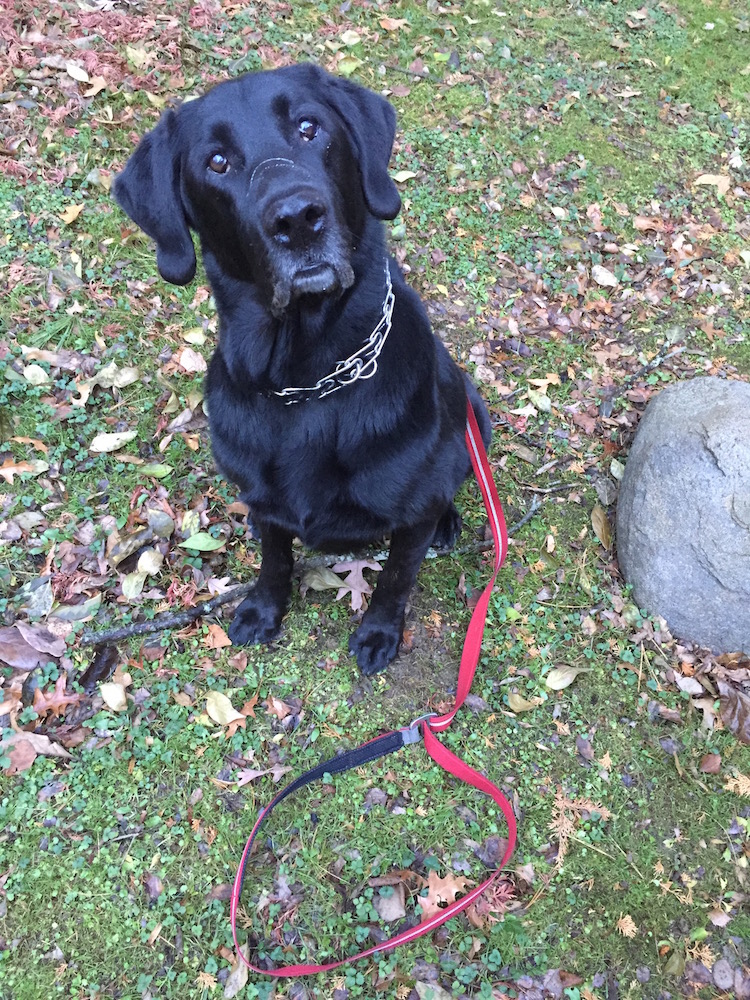
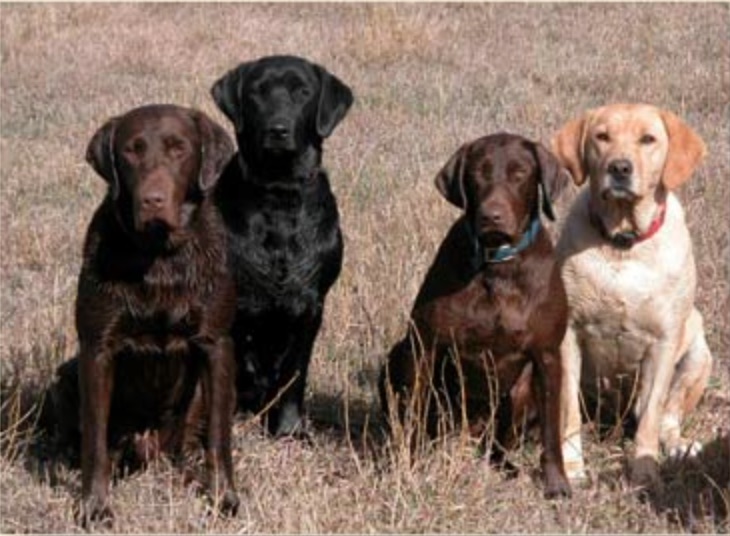
Ah, man’s best friend — they will protect the house, help you meet girls (or boys) and most importantly, be loyal, faithful, lifelong companions on all of your adventures. The best part is that if you get a Labrador Retriever, they view even a simple trip to the grocery store as an adventure. And take it from an owner who’s had his lab puppy chew through his leash in order to free himself so he could go ripping through the grocery store at Mach 10 to find me, a lab puppy will make trips to even the most previously mundane locations an adventure for you, too.
Trust me, you haven’t lived until you’ve been in the produce section, minding your own business, when a frantic voice comes over the PA demanding that the owner of a black dog come to the front of the store immediately. Your first reaction will likely be, “Hmmm, I wonder who was dumb enough to bring their dog into the grocery store, what a dick…..” then the pieces will suddenly all come together and you’ll have to slink the to customer service desk with your tail between your legs. Life changing.
Dogs are also without a doubt the best training companions on the planet. They never complain about you going too fast, too slow, too long or too short. They’re equally stoked with an easy 30-minute recovery hike in the park or an epic four-hour mountain run. They seem to know when you’ve had a bad race and will quickly remind you that it was probably your skis fault. They’re also there to celebrate all of your wins by being the first to suggest a victory lap in the park, so it’s pretty much hard to beat the four-footed teammate. Given this, today’s offerings are focused on, and dedicated to, Canis lupus familiaris. Here are a few suggestions on how to optimally get the whole team as well prepared as possible for this season.
As innocuous as this may first appear, this gift probably has the highest ROI of any item in this entire series. For less than $15, you can increase the visibility of yourself and your hound over a hundredfold. In this day of distracted drivers (texting while driving is the drunk driving of the 21st century), you need to do everything you can to stay safe, in particular at night. The light has both a continuous beam and a “disco” mode, which provides amazing contrast and pierces the darkness.
What’s also very cool about this light is that is has both a clip and a bike mount, so you only need one light for all of your training disciplines. Clip one to Fido’s leash, another to the front of his collar and a third to your back and for less than $50, you’re now very visible to motorists in all directions. Rollerski? Same deal. Going for a ride? No problem, simply slide the clip into the included seat post bracket. Yes, meathead motorists will still pass you way too close, Philly drivers still call you an a-hole for daring to use “their” roads, but this little wonder will greatly increase your odds of making it home without serious incident. Be safe out there people. Shop local options or at Amazon.
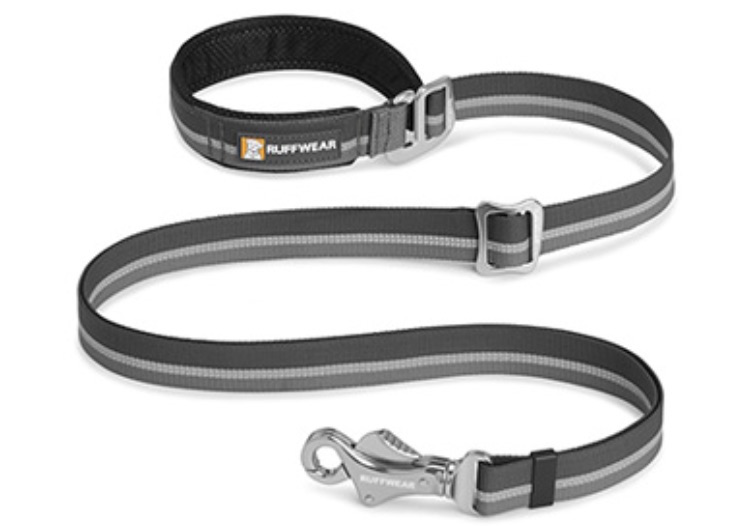
The one potential downside to running with Rover is that holding a leash while your hyperactive, mega-amped Lab is charging down the road, sending the neighbor’s cat and all nearby squirrels scurrying for cover, is having a leash in one hand can upset your finely tuned running biomechanics. Sure, you have a back like Arnold from all of your DP workouts…
… but the asymmetry of your unruly beast straining at the length of the lead in one hand can fatigue and disrupt even the most fit double poler. I suppose one solution is to properly train your animal, but we discussed this at the FBD house and I was immediately voted down by the entire squad, as they felt that even the most sensitive and subtle dog training techniques were still far too fascist for their liking, so we instead opted for a hands-free leash. Not only does this allow me to keep both of my hands free to “Keep up foreign relations” whenever necessary with angry, East Coast motorists, but I’m going to let you in on a secret, if you’re running hill repeats and you’ve got a dog with some horsepower like Pdiggy…
… a little forward “mo” gently applied at the waist can really help those splits. Please feel free to use this pro tip at your own discretion in your next hill TT. Available at Ruffwear.com.
Mad props to my good buddy Billy Demong on this one. Billy D’s canine companion, Scout, has some crazy “wheels” on her, and, like Billy D, she’s a bit of a free spirit, so given the proximity of their property to open space and the propensity of wildlife in the area, occasionally Scout has been known to take a flyer. With this cool tracking device, not only are you immediately notified when your pooch leaves whatever area you designate, but you can then use a super slick app to track their exact location for the retrieval. If you’re extra lucky (like me), you can even use this feature to help facilitate a mid-run “feed” for human and canine alike (Pdiggy says ‘Thanks mom.’) Available at Whistle.com.
(*This gift suggestion was placed in the $100 – $250 category as it also requires an $8 monthly subscription, bringing the yearly cost to $175)
(Below: This is why Billy needs a GPS tracker for his dog. #BadAss)
https://www.instagram.com/p/m-wdcruGzm/
***
Over $250: Life-changing, house-wrecking, upholstery-chewing lab puppy, $1,200
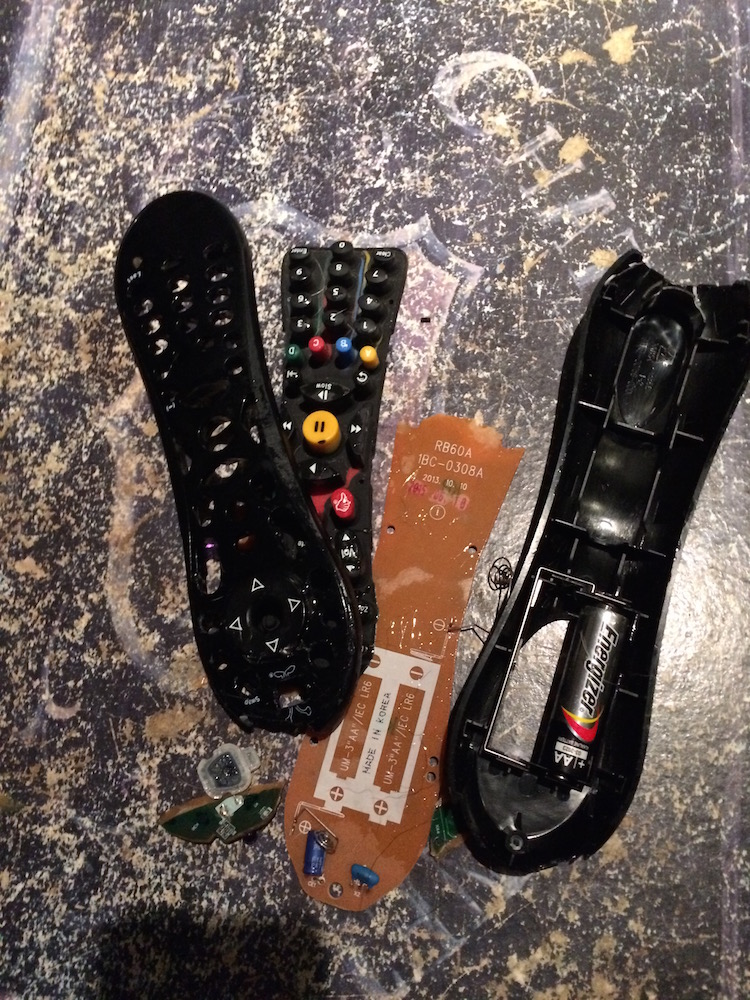
Actual dog. Yes, yes, I know, you read articles all of the time about how the holidays are a bad time to give dogs as a present, as it is a decision often made with emotion and the family hasn’t necessarily thought out the reality of owning a dog. My take on this is that stupid people make stupid decisions all year, so if you’re dumb enough to think that owning a dog isn’t a lot of work, you’re dumb enough to have that misconception year-round. To be clear, it IS a lot of work, especially if you pick a high-energy breed like a Lab, but if you’ve thought this through (like you should), you are willing to make approximately a 15 year commitment to this creature, you have the time, are prepared for “hidden expenses,” (vet bills, boarding, replacing TV remote controls) and understand that it is a big investment, you’re going to never regret it. Please, please, please, think it over carefully, talk to people who own one and consider adopting as well, but if you’re well-prepared, you’ll be glad you made the leap.
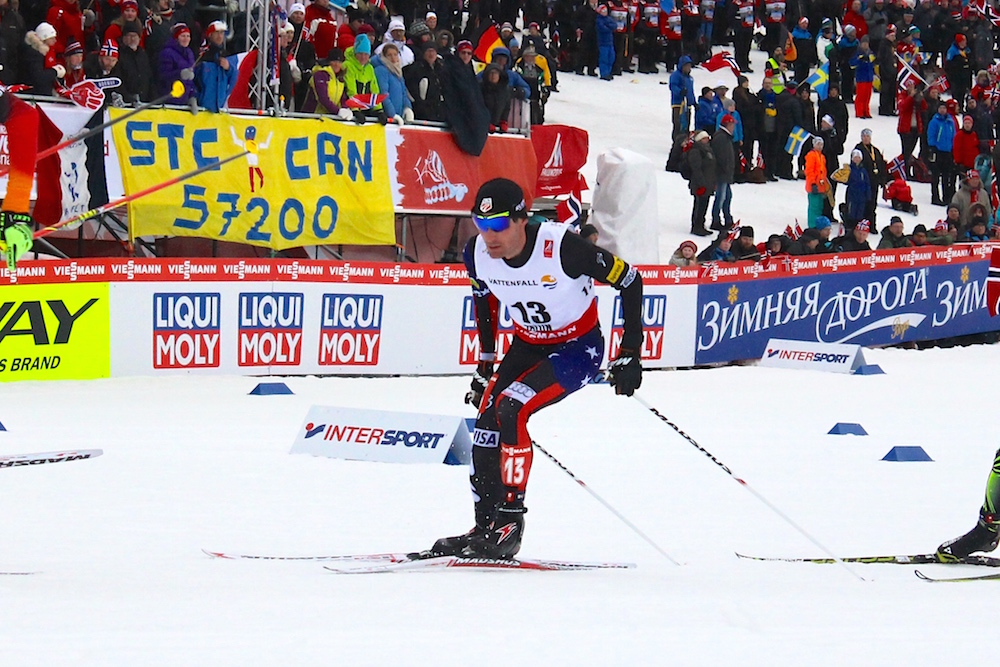
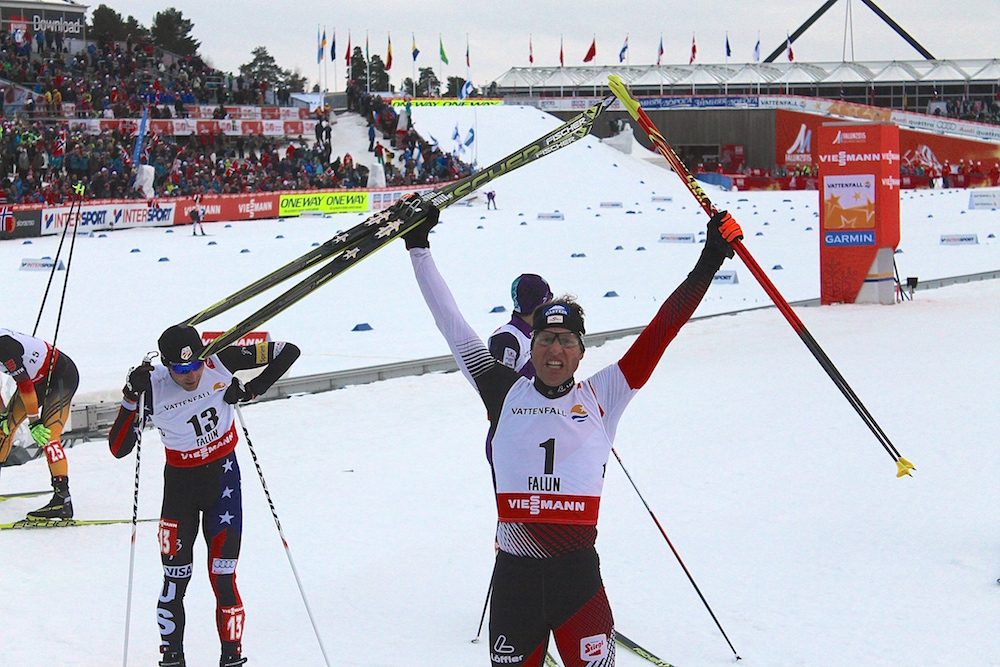
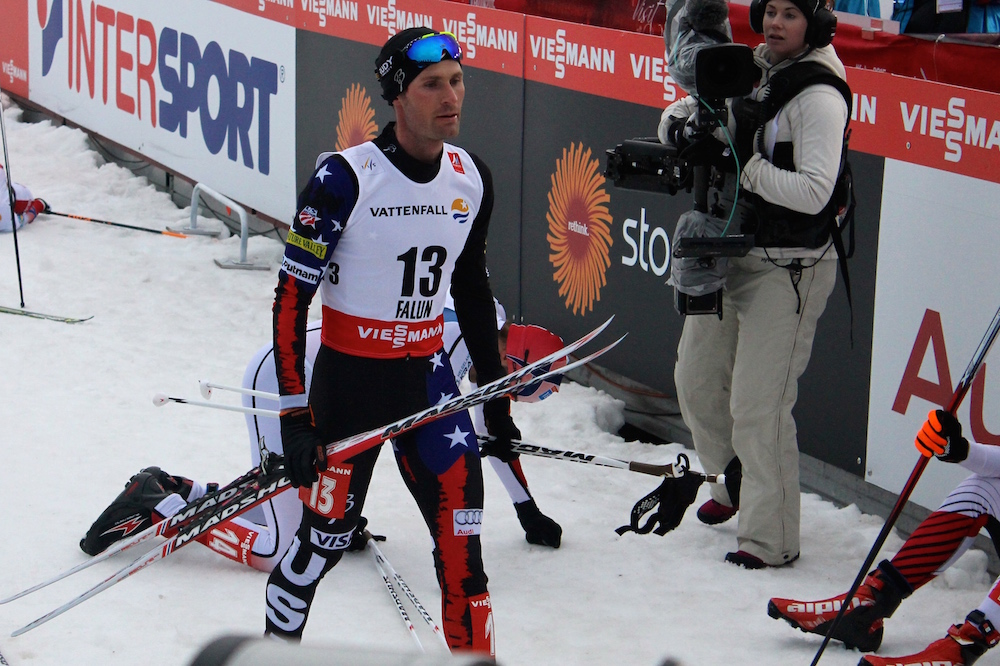
Billy Demong, a former U.S. Nordic Combined skier and five-time Olympian, jumping at 2015 World Championships in Falun, Sweden. (Photo: FlyingPointRoad)
Twenty-two World Cup podiums and five Olympics later, Billy Demong can’t leave what’s in his blood behind; he was born to jump and ski fast. No, Demong, 36, is not announcing a comeback — he retired from international competitions after the 2014/2015 Nordic Combined World Cup season. For a year he stayed away. Post-retirement, Demong worked in marketing for Utah-based Reynolds Cycling. He’s back as executive director of USA Nordic Sport.
Let’s turn back the clock for a moment to gain some perspective. Beyond Bill Koch’s 1976 Olympic medal, the U.S. Nordic Combined team remains the only other nordic discipline to win a coveted Olympic medal. In 2010, Demong won an individual gold and was part of the team relay silver in Vancouver, British Columbia.
There’s a reason to reference past Olympic glory — as part of this narrative, it matters.
A scant four years after the Vancouver Games and two months after the 2014 Sochi Olympics, the U.S. Ski and Snowboard Association (USSA), once the primary funder and governing body responsible for U.S. Nordic Combined, dropped most of its funding for nordic combined. It was a seismic event that most insiders had a feeling was coming. Current U.S. Nordic Combined Head Coach Dave Jarrett said at the time, “Based on [USSA’s] study in 2010 that eliminated jumping in other sports, they didn’t think nordic combined was a podium-potential sport for 2018 or 2022.”
Looking back, Demong voiced his understanding of USSA’s decision.
“At the end of the day it really comes down to resources,” Demong, now in his full-time role with USA Nordic Sport, said on the phone late last month. “Resource allocation is a tough thing. USSA, they are successful organization — I have watched them grow and develop. But there are a lot of teams and a lot of athletes. There were a lot of hard choices that needed to be made, but I believe in the potential of the athletes we have in the pipeline today and the opportunity for long term sustainable success with strong leadership in both ski jumping and nordic combined.”
The defunding setback also served up an opportunity for the primary nordic-combined stakeholders to take ownership over the sport’s viability.
“The community of ski jumping and nordic combined athletes and alumni have historically really leaned on USSA to develop athletes and I think now over the last six-seven years, we have taken a lot of that back onto our community,” Demong explained. “And it’s been successful. I think we have some of the best athletes in the pipeline right now that we have had in a long time in ski jumping. We have some great up and coming talent in nordic combined. And we have a growing base. Last year we developed a study that indicates about 800 kids put bibs on or participated in a program. So it is a healthy number for a sport that is not big anywhere.”
The community Demong referenced was not beginning from scratch. An organization named USA Ski Jumping — founded originally by past ski jumping and nordic combined Olympic athletes and coaches including Rex Bell, Jim Holland, Jeff Hastings and Alan Johnson — was already carrying the ski jumping torch. With their help over time, Demong said during the interview, that group worked to grow and develop the scope of the organization. In the spring of 2015 they adopted new bylaws and became committed to assisting the nordic combined community. With the more inclusive snow sport focus, the organization was renamed USA Nordic Sport. And two months ago, Demong was named its Executive Director.
Back to Demong’s World Cup and Olympic credentials. Demong offers proof that the US can develop nordic combined skiers ranging from kids soaring off small-scale jumps to international champions. He also comes with the cache of Olympic hardware: that can be a draw when soliciting funds and volunteers.
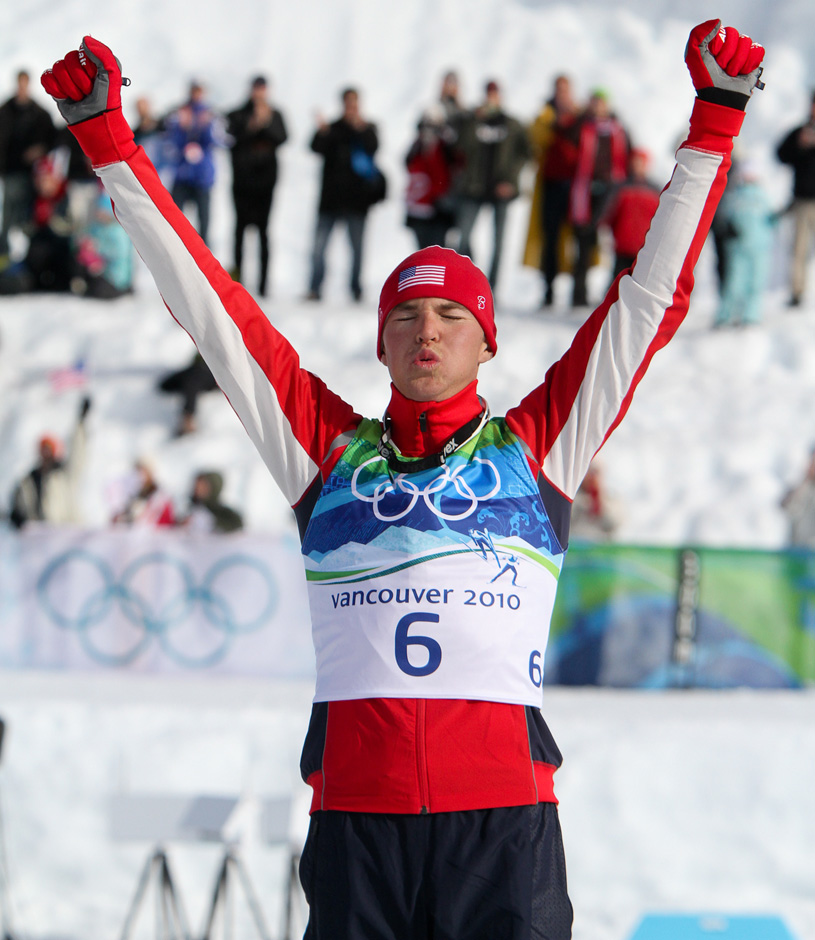
Billy Demong soaking up his victory atop the podium after winning the individual large hill competition at the 2010 Vancouver Winter Olympics.
The whirlwind of a new job and mission have given Demong a fresh perspective of what endurance means beyond chasing elite skiers around a loop.
“The first two months here have been exciting,” Demong said of his appointment as Executive Director. “I feel very passionate about what I am doing and there is a lot going on every day. Because this isn’t simply going out and raising some money and spending it. We’ve got ten staff. We’ve got a lot people and we are working together and making sure that everybody’s efforts are moving the sports in the right direction together. That requires a lot of time and energy as well as raising funds and keeping our audience and community engaged.”
Ski jumping and nordic combined are not completely devoid of USSA’s support and input. Demong noted that USSA is the National Governing Body. Therefore, nordic combined’s FIS representatives are appointed by USSA. And sponsors like LL Bean and Craft — both sponsors of the U.S. Cross Country Ski Team — also uniform the nordic combined team. Additionally, team USA’s head nordic combined coach remains Dave Jarrett and his position, as well as a grant for sport development, are funded by USSA. In this fashion, a quasi partnership has emerged between USA Nordic and USSA.
USA Nordic Sport (USANS) operates much of the day to day business of the U.S. Nordic Combined and U.S. Men’s Ski Jumping teams (women’s ski jumping has been its own entity since 2003, Women’s Ski Jumping USA). It’s also tasked with growing the sports of ski jumping and nordic combined, fielding competitive elite and international teams and building a pipeline of athletes for the future. This last part of the equation, Demong said, is where USANS is placing much of its effort as they support their pre-existing athletes and clubs while building a broader community.
“We are focusing a lot of our efforts on the operating clubs we have, adding new clubs as opportunities arise, establishing and disseminating best practices to those clubs so they can develop,” Demong said. “They can recruit more athletes, they can engage those athletes and those communities, and develop higher-quality experiences and opportunities. Ultimately, that is really our big goal right now, basically one team, one community, where all of our nordic combined and ski jumping clubs, and athletes, coaches and parents feel like they are part of something bigger. And athletically, we are really focused upon recruit, retain, and engage.”
“That is really our big goal right now, basically one team, one community.” — Billy Demong, USA Nordic Sport’s executive director
Specifically, Demong said that USANS has a detailed plan to execute the mission. They can assist clubs with building low-tech jumps made of snow and absent any permanent jumping structure. For more ambitious clubs, USANS will provide building plans, detailed architectural drawings of jumps, and the tools to build and operate a facility.
“The medium-range goal is to take these small feeder clubs, and if there is local desire and a champion, to help them drive a fundraising effort to build a more sizable hill,” he added. “We would like to be able to help accomplish that, and additionally, provide opportunity and a pathway for athletes that want to take it to the next level.”
Taking it to the next level could mean higher-end jumping equipment and travel assistance to places like Park City, Utah, that host events for aspiring jumpers and skiers. One Park City-based summertime event is called Springer Tournee — it doubles as the US Large Hill Ski Jumping and Nordic Combined Championships. USANS also organizes what they call Virtual Nationals. It’s a low-cost low barrier of entry competition allowing juniors to participate in a nationwide event without leaving their local jumping hill.
“What we do is we ask the kids and parents to send in videos of their children jumping and then they are broken into classes like U-10 girls, U-12 boys, etc.” Demong said. “Last year, we had a group of judges like Sarah Hendrickson and Clint Jones … that basically allowed the kids to compete in their peer group around the country. So that’s been really effective in getting everybody engaged together.”
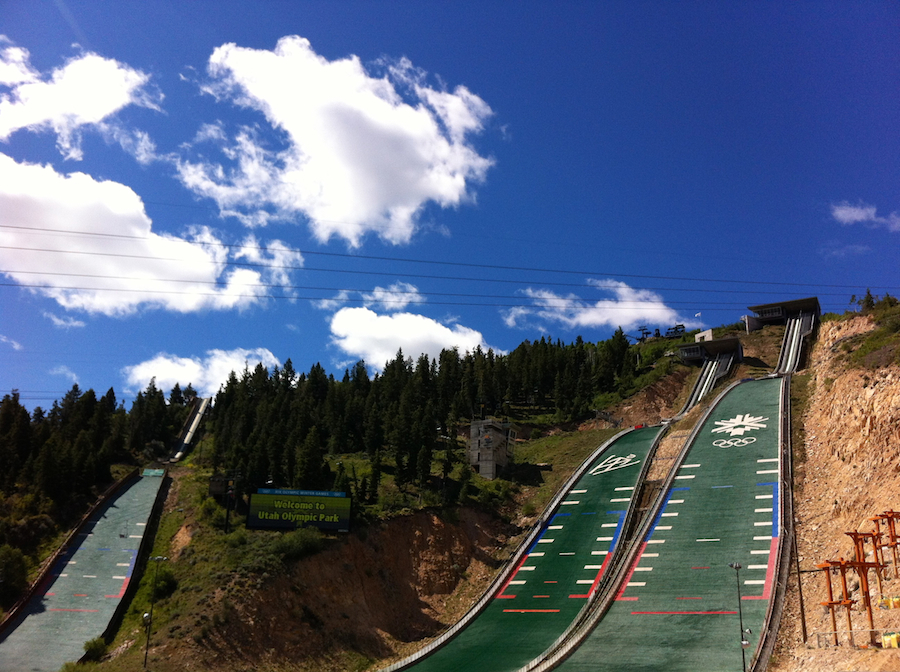
The U.S. nordic combined and ski jumping hills in Park City, Utah (Photo: Mikko Kokslien)
Demong said nordic combined has suffered from a lack of record keeping when it came to junior development. He hopes things like Virtual Nationals will help change that dynamic.
“That has been one of the struggles historically — we have some clubs with quite a few athletes but nobody has really been keeping records,” Demong explained. “Does U-12 usually make to U-16? We know that we have attrition along the pipeline just like any sport, but how can we have less? How can we retain more? How can we have a more complete pipeline from first jump on a 10-meter to a World Cup team?”
Demong insists the health of jumping and nordic combined are way beyond life-support status. On the contrary, Demong believes his beloved sports are poised for growth. That may, in some part, be attributed to the roughly fifty percent of the population — women — traditionally unable to participate in jumping and nordic combined. Although opportunities to jump internationally are not on par with those afforded to men, 2014 marked the first time women’s ski jumping was an official Olympic sport.
On the nordic-combined side, Demong mentioned this winter will be the first for women’s international nordic-combined competitions without an age limit.
“In the past couple years, when women’s nordic-combined has been brought online, it has been age limited to mostly junior competitions, and now all of sudden there is going to be open class, senior-level events. It will not be in PyeongChang [South Korea for the 2018 Olympics], but certainly I think it is tracking to be in Beijing [in 2022]. And so that is something Dave Jarrett has definitely been a proponent of at the FIS level and is also preparing to gear up to develop a national-team program for that as well.”
With new ventures moving forward, Demong also mentioned the links cross-country skiing and nordic jumping sports share. In his eyes, they each possess attributes that benefit the other.
“Cross country is an amazing sport. It’s so difficult, it teaches so much discipline and perseverance and work ethic, and a host of other core values. They obviously have the same heritage,” he said. “And there is a whole other set of values ski jumping offers for personal growth, like courage: the ability to stand on top of the in-run, even to stand on top of the 40-meter [hill] and look down as a good skier and know that if you let go to the bar there is no backing out. It is a skill set unto itself. If I had one vision for our nordic communities, it is that we will continue to work together to provide as many participants as possible the opportunity to experience all that the nordic sports have to offer… I think there is a tremendous opportunity there … to add some additional skills to the cross country side by participating at whatever level in some ski jumping activity and vice versa.”
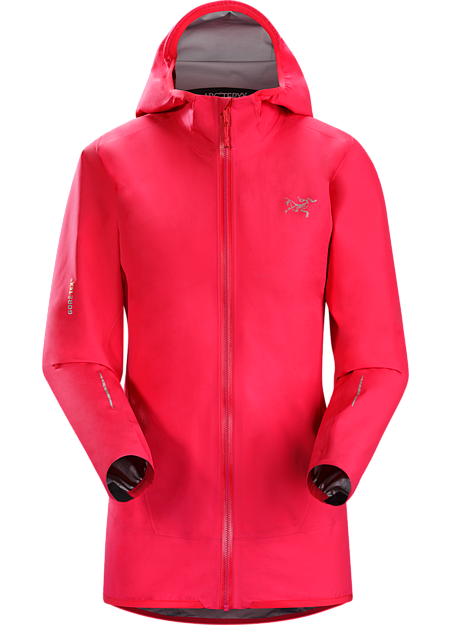
Fast Big Dog’s black lab and ultimate training partner, Pdiggy, models FBD’s pick for Best in Show jacket: the Arc’teryx Norvan Jacket.
Concept
In homage to not just the greatest movie ever made about dog shows (perhaps the only movie ever made about dog shows, but that’s OK, as I often introduce myself as the greatest FasterSkier gear reviewer ever — the fact that I’m the ONLY gear reviewer ever usually doesn’t seem particularly pertinent), I am very proud to present the latest feature in our ongoing search for truth and light: Best in Show (BiS).
Definition
What exact is BiS? I’m glad you asked. It is a bit of a departure from our earlier gear reviews in that this in an overview of what we believe to be the best offerings from all of the manufacturers for any given temperature range. We will not be performing our usual, lengthy, painstaking analysis and comparison of several different products, presenting all of the pluses and minuses. Rather, we will be doing all the behind-the-scenes work of that same lengthy, painstaking analysis, but simply presenting you — the loyal reader — with the best outfit for a 35-to-45-degree rollerski, for example.
This Test
Let’s dive right in. To kick things off, we’ve put together the BiS outfit for the dreaded 35-45 degree run or rollerski (or as Zach Caldwell likes to call them, “whap sticks”). Now, no bitching about this first outfit recommendation being too late in the year, as I recently returned from the USA Nordic Sports and USSA meetings in Park City and on the few days I did manage to squeeze in a workout (despite Billy Demong’s long, rambling PowerPoints), 35-degree rain was the condition that I encountered almost every day.
If you know anything about Billy Demong, you should know three things: he has an Olympic gold medal, if you train with him on whap sticks, there is a very good chance you may die, and he is trying to kill me. Following on the theme of that last point, Billy managed to shame me into a rainy whap-stick roll, (FBD shaming is serious problem facing society today, but that’s a story for another day), so trust me when I tell you that these outfits were tested in some of the crappiest conditions known to man. If it is now warm where you are, rock on in the Daisy Dukes and keep these little tidbits tucked away until fall. Not to fear, we’ll also be doing warm-weather stuff very soon, too.
Results
When it’s this cold and nasty, you’ve really gotta nail it if you want to be survive three hours out there in that crap. That’s where we come in.
This one was easy: as usual, Arc’teryx KILLED IT. Those crazy Canadians sent one and only one top, the Norvan Jacket and quite frankly, it blew everything else away in this category. It is light, breathable, warm, dry, and the cut is perfect. The attention to detail is spot-on and every little feature works perfectly.
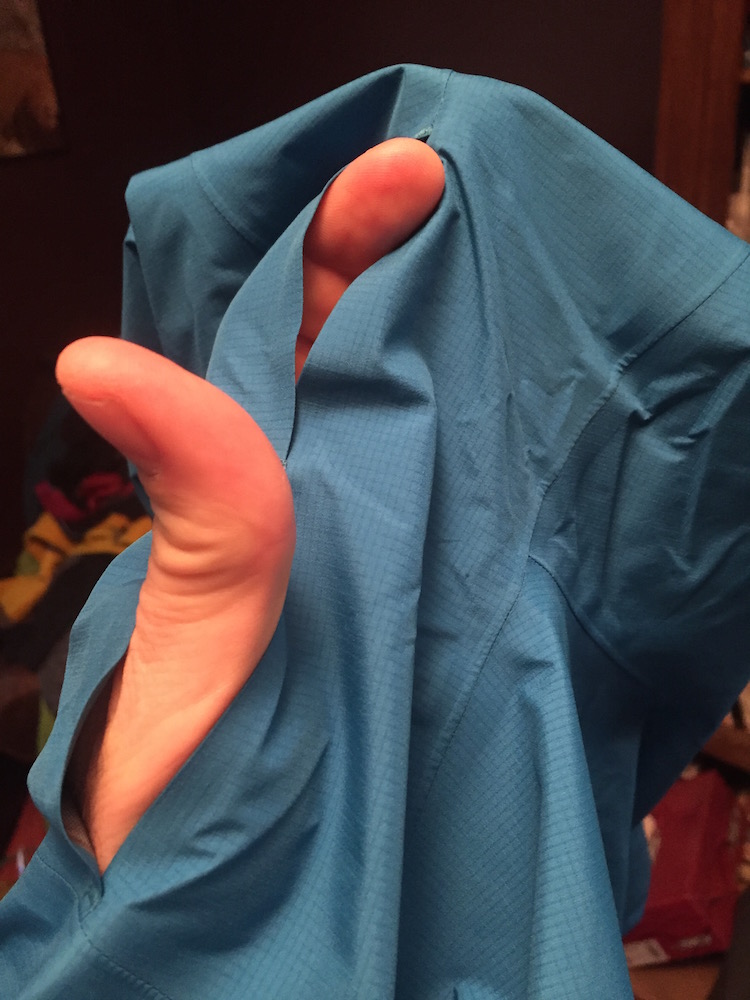
For example, instead of no-armpit ventilation like many other products in this class, or clunky, heavy, pit zips, The Bird has clever armpit vents that are the perfect size (see Figure 1 below). The length of the cuffs is also slightly offset (Figure 2), providing just a touch more coverage on the outside, which again, is perfect. The color, styling and overall fit are also dead on the mark, so this was an easy pick for BiS.
Arc’teryx armpit vents (Figure 1)Arc’teryx offset arm cuffs (Figure 2)
I have been champing at the bit ever since my ground-breaking and revolutionary base layer review, as a few loyal readers chimed in about a Norwegian brand Brynje.
Always looking to build a better mouse trap, I immediately wrote these folks after receiving the very favorable feedback about this brand in the comments section on my base layer review, and low and behold, they were kind enough to send a few thousand different pieces. Long story short: the stuff is awesome.
They sent everything but the kitchen sink, but the piece that really stood out in these conditions was the thin wool top. It was perfect, so thank you to all of my loyal Norwegian readers for this heads-up. These products are available in the U.S., too, thanks to the magic of the Internets, just point your browser to www.brynje.no and tell ’em Fast Big Dog sent cha. I don’t think that will save you money, but it sure does sound cool.
3. HAT: L.L. Bean Waterproof Baseball Cap
The Toyota Tacoma pickup of rainy day gear is a good hat: neither may be sexy or the first to come to mind, but each are subtle in their perfection. A good hat is indispensable in bad weather, so it should come as no surprise that L.L. Bean — a company that made its name on practical, no-nonsense gear — offers the BiS in this category.
This baseball cap is light, breathable and, most importantly, waterproof. Keeping rain out of your face helps SO much in overall comfort and psyche, that I tip my hat (sorry) to Bean on this one. Good under helmets and solo. Excellent piece.
L.L. Bean Adults’ Waterproof Baseball Cap (Photo: FBD)
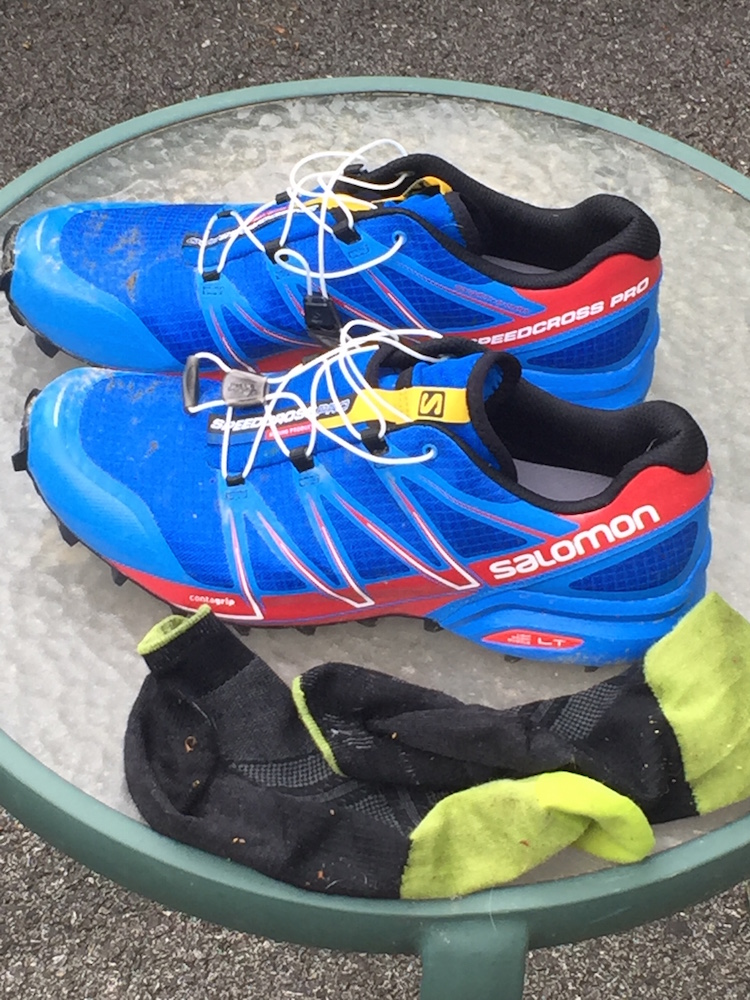
4. SHOES:Salomon SpeedCross Pro
Salomon SpeedCross Pro trail-running shoes and SmartWool PhD Run Ultra Light socks are the winners for best shoes and socks. (Photo: FBD)
This is a bit tricky as shoes are very personal, since fit is very individual. Having said that, I know a lot of World Cup skiers who run in Salomon and they seem to fit a wide range of both men’s and women’s feet very well. For a wide variety of reasons, I try to do most of my running on trails, so the ask here is reasonable: light, grippy, stable shoes.
The Salomon SpeedCross Pro fits the bill perfectly. Most of my preferred courses are serpentine singletrack with lots of rocks and roots. Given the preponderance of rain we’ve had in Steamboat, Park City and Philly, these shoes are absolutely perfect. It’s also nice to support a brand that supports our community. Am I perhaps a bit biased toward ski brands? Perhaps, but maybe this is because we are all skiers? Even with this, they are still clearly the BiS for shoes.
5. SOCKS: Smartwool PhD Run Ultra Light
What’s a good pair of shoes without good socks? You’re out of your frickin’ mind if you’re rockin’ cotton for the wet, sloppy trail run or cold, nasty whap-stick roll — “Cotton Kills.” Solution? SmartWool PhD running socks. ’Nuff said.
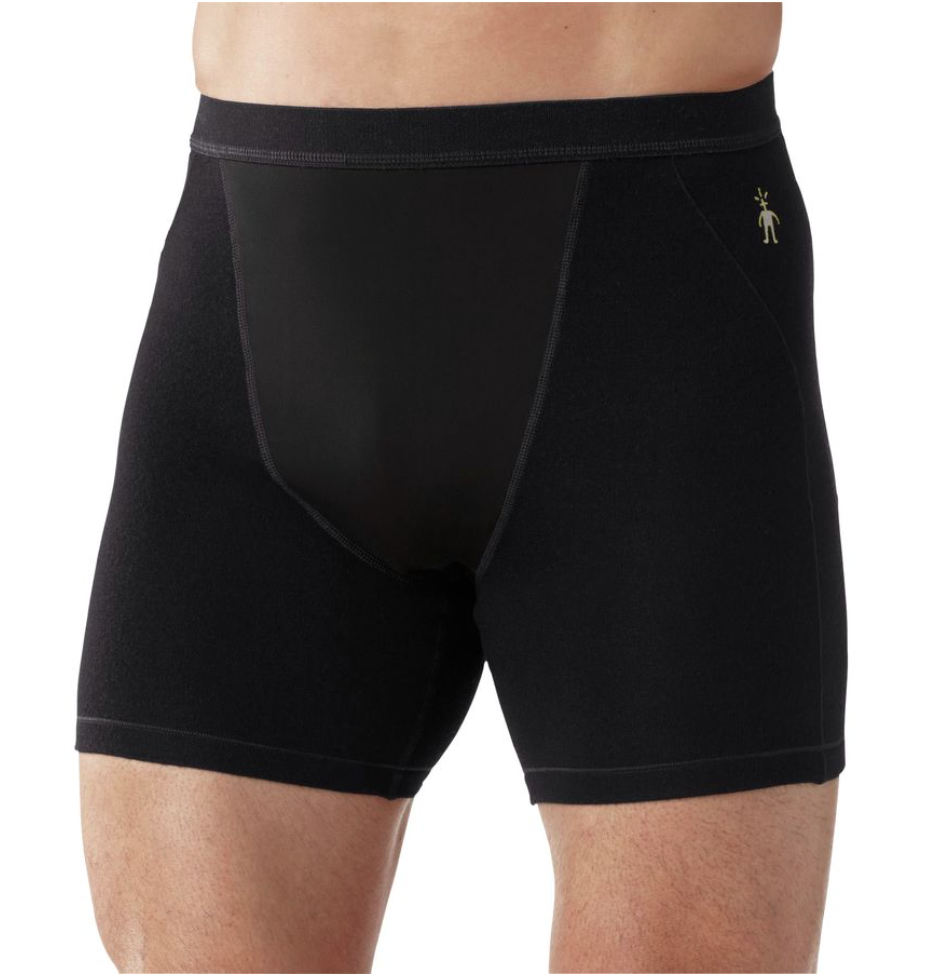
Now that you know how bad cotton is for your feet, you aren’t actually training in cotton undies, are you? Do you have a death wish? Or perhaps you made a flight to Europe in coach next to a crying baby and you’re thinking you’re going to invest in your future with the ol’ DIY frostbite vasectomy. If that’s your M.O., keep on truckin’ w/ those tighty whitey BVDs. I also understand that if you’re a male nordic skier, you probably haven’t had a date with a girl in quite some time, perhaps ever, but don’t panic — at some point you’ll work up the courage to ask out a real, live woman (not an avatar or inflatable model) and if that goes well, you’re going to want everything working properly “downstairs,” so buck up now for some decent wool man-panties: SmartWool PhD Boxer Briefs.
For what it’s worth, I’d had a few pairs of these for years and they are trusted travel companions for all European adventures: comfortable, odor resistant, quick drying for laundry in your hotel sink — in other words, perfect. The new model fits better under tights, so it’s perfect for training, we’ll see if it stands the test of time like its battle-tested predecessors.
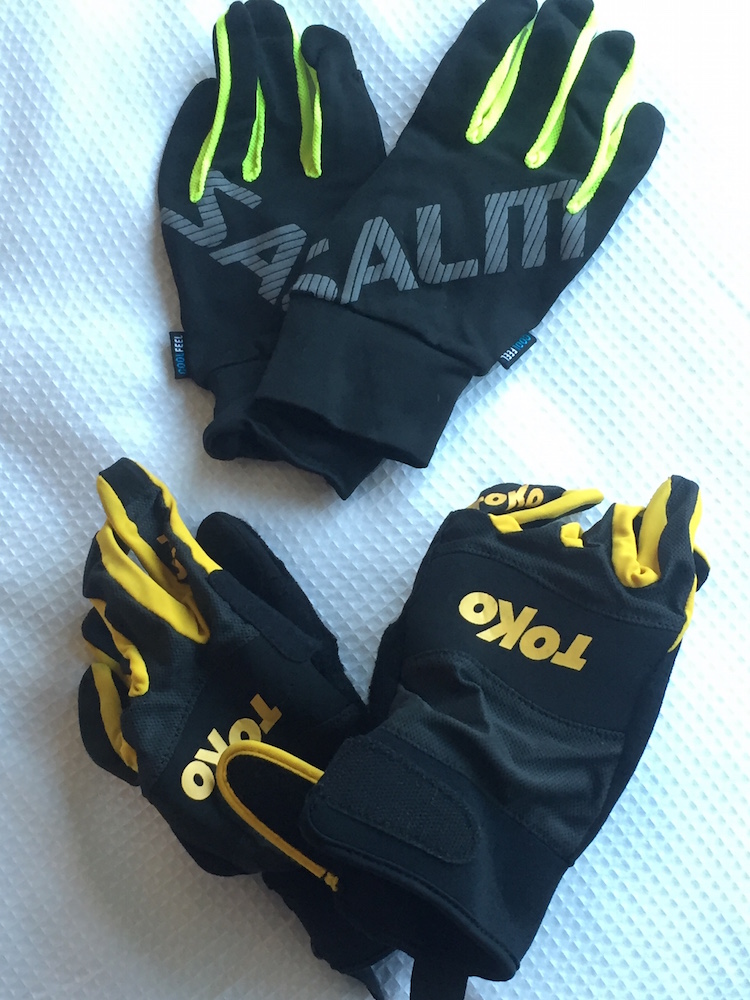
7. GLOVES: Toko & Salming
Top picks for Best in Show gloves for running (Salming; top) and rollerski (Toko; bottom). (Photo: FBD)
For rollerskiing, I like Toko’s Rollerski Glove 2.0. They’re breathable, yet solid which for me is quite important, since as I wrote earlier, Billy Demong and gravity both regularly conspire to try to kill me, so durable gloves are a must. Since my self-preservation game is strong and I have no shame, I will use any object in my immediate vicinity on a rollerski in a largely futile attempt help abate my speed: radio antennas on passing cars, roadside vines, power lines, barbed-wire fences, you name it, so my braking/balance techniques often resemble this.
As such, my rollerski gloves must be borderline indestructible and these gloves are that good. If you’re silky smooth and easily roll over FBD-killing, near-invisible rocks, glide gracefully around off-camber, rain-soaked corners and haven’t felt the embarrassment and humiliation of a high-speed, whap-stick yard sale into traffic, then you can kiss my ass and buy whatever glove you want. If you know the thrill of unplanned encounters with concrete and danger lurks around every corner of the dreaded Billy Demong “Park City Loop,” these babies are for you.
For running, I found another great brand with Nordic roots, Salming. They’re lightweight, reflective and very comfortable. Can you run in your ski gloves, sure you can, but then you’re THAT GUY and you don’t want to be that guy, now do you? Fork over the $30 Scrooge for the sweet running jawns; you’ll thank me when the cute girl/guy compliments you on your gloves (which happens to me all of the time).
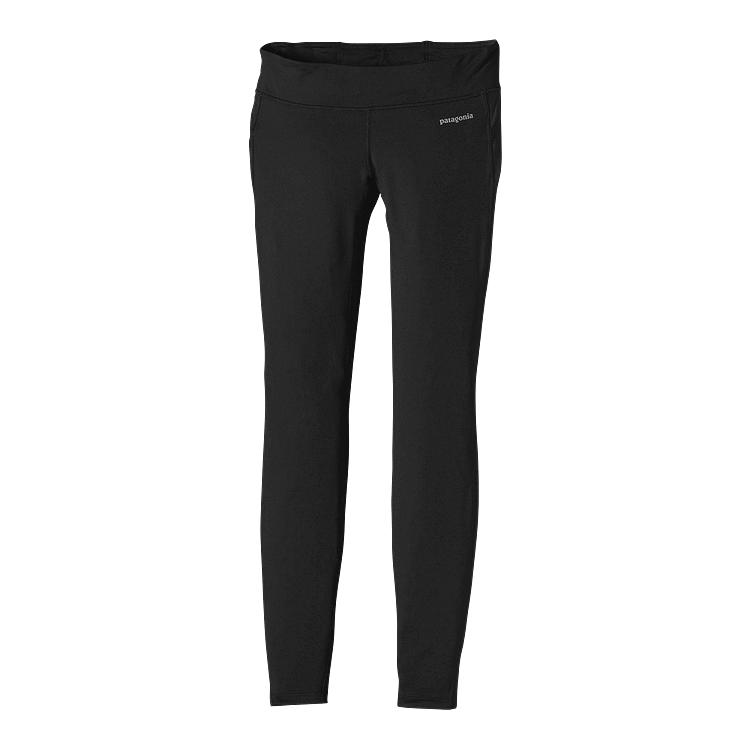
Don’t be fooled by the fact that tights are last on the list, as they are still plenty important. Goof up this step and you’re totally hosed (I bet all of the ladies out there got this one), so I’m pleased to report that this category had another clear winner: Patagonia. Their Patagonia’s Velocity Running Tights are superior. It seems like this would be hard to get wrong, yet so few people seem to get it right. These babies are tight in all of the right places, yet not too tight. The fabric is light and breathable, yet still warm. Remarkably, they’re also quite thin, which makes it perfect for wet training days.
***
Now you’re out of excuses, so get out there.
Oh yeah, and if you see me screaming (literally and figuratively) down some god-damn 60 mph downhill in Park City, Lake Placid or Steamboat with Billy Demong gracefully weaving his way through obstacles, do me a solid and carefully position your vehicle near me for some type of elaborate car antennae reverse slingshot maneuver. Sure, this won’t work, but this way when you stop to pick up your broken antennae, you can give me a ride to the hospital.
U.S. Ski Team member Liz Stephen competes in the XTERRA Trail Run National Championship on Sept. 20 at Snowbasin Resort near Ogden, Utah. (Photo: Liz Stephen)
Since wrapping up a successful camp in Norway with two top-10 results at Toppidrettsveka, U.S. Ski Team (USST) veteran Liz Stephen has been enjoying some time at home in Park City, Utah, working on her double pole and preparing for another busy winter. She skipped the weeklong USST camp in Lake Placid, N.Y., so she would not have to travel and could instead work more on some personal goals.
“As you get older, and apparently I am doing that, [traveling] definitely begins to wear on you a little more,” Stephen, 28, said in a recent phone interview. “I want to be ready to be on the road for four months, and I needed to stay close to home for a little bit to settle before the season.”
So stay home she did. But for Stephen, staying at home does not mean taking it easy. She, as well as several other USST athletes, left Norway wanting to improve her double-pole strength and technique. Even though double pole had already been a main focus for Stephen this summer, she learned even more improvement was necessary if she wanted to compete amongst the world’s best. So Stephen has been doing a lot of lower-core-activation exercises, both before double-pole sessions and before strength workouts. She has also been doing some shorter duration double-pole sessions where the focus is on having high-quality technique and energy rather than double poling for extended periods of time and risking a relapse to her old double-pole habits.
However, improving her double pole has not been the only thing Stephen has been doing during her extended time at home. She has also been enjoying one of her favorite activities, running. According to Stephen, the fall weather in Utah has been gorgeous, and there is no better way to enjoy it than by going for a run.
“I feel so lucky every time I can lace up my shoes and I am healthy enough to go run a 17-mile loop just quick in the morning. I hope I am able to do that my whole life,” she said. “When you’re running, you’re just enjoying being active and healthy and I think that keeps all the other workouts that maybe you don’t love as much in perspective because you know at least once a week, you are going to get a big run in.”
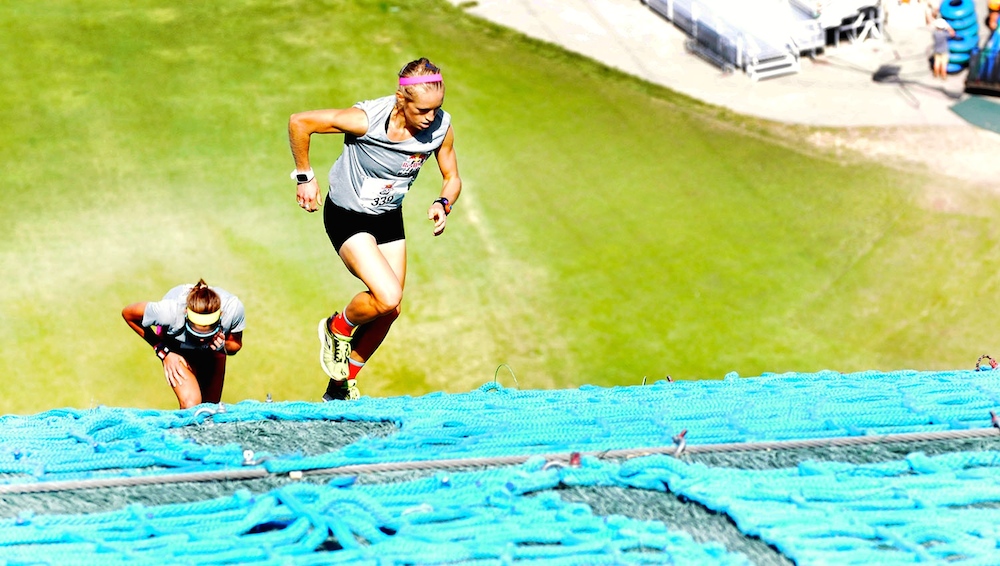
Liz Stephen holds the lead over Austria’s Veronika Mayerhofer while running up the Olympic ski jump in the Red Bull 400 hill climb at the Utah Olympic Park ski jumps. (Photo: Tom Kelly/USSA)
For the two-time Olympian, going for a run is the perfect way to clear her mind, but it also is a great workout. Stephen even uses running as a means to improve her classic technique, sometimes running with poles for a more classical-style workout and bounding up hills to improve kick power. After all, skating has traditionally been Stephen’s stronger technique, and in order to achieve her goal of being on the podium either at the end of the 2016 Tour de Ski or Ski Tour Canada, she said her classic skiing has to improve.
“When you’re running, you’re just enjoying being active and healthy and I think that keeps all the other workouts that maybe you don’t love as much in perspective because you know at least once a week, you are going to get a big run in.” — Liz Stephen, U.S. Nordic Ski Team member and two-time defending Trail Run National champion (and the winner of the inaugural Park City Red Bull 400)
On Sept. 20, Stephen raced in her fifth-consecutive XTERRA Trail Run National Championship, which took place at Snowbasin Resort near Ogden, Utah. The race is a half marathon (13.1 miles) that features two big hills and a final, mile-long incline to the finish.
Right out of the start, competitors ascend a two-and-a-half mile slope that also includes the steepest section of the course. After storming back down, the racers climb roughly 1,000 feet in another two-and-a-half miles to the high point and then descend to the low point of the course. Finally, there are a few more hills before the finish.
“I’ve gotten a little faster since they have changed the course and I think this is my fourth time on this course. It’s a great course,” Stephen said.
For Stephen, the competition at the trail-running nationals varies. The last two years, she won handily, as no other woman came close to matching her pace. But three years ago, Lindsey Anderson, a steeplechase Olympian from Utah, battled with Stephen for the entire race before dropping her on the last half mile with a strong finishing kick. The year before that, Morgan Arritola, a former cross-country skier and current world-champion mountain runner, finished minutes ahead of Stephen. This year, Stephen’s closest competition was Alayna Szucha, an 11-year-old girl from Evergreen, Colo. Szucha finished 17 minutes behind Stephen with a time of 1:45:32, averaging 8:03 minute/miles. Stephen won in 1:28:39 with 6:46 as her average mile pace.
“I actually didn’t run with a single person the entire 13 miles so it felt a bit lonely at times, but I have to say, the most inspiring and just crazy thing is that the second-place girl is 11 years old. It was her first half marathon,” Stephen said. “I got a chance to chat with her for a little bit after the race, just like a fired up little kid … It’s going to be fun to have a little penpalship with her and maybe send her some cross-country gear, see if we can give her the bug.”
While Stephen did accomplish one goal at nationals — winning — she did not accomplish her other goal of beating her previous year’s time. Despite having perfect weather this year compared to last year’s windy and rainy race day, Stephen could not quite match her pace from 2014.
“Being a little slower than the year before was a bit of a bummer, but at the same time it was like 40 seconds slower or something, which, in a 13-mile race, isn’t too much when you take a step back. I was happy with it and I just had fun,” Stephen explained.
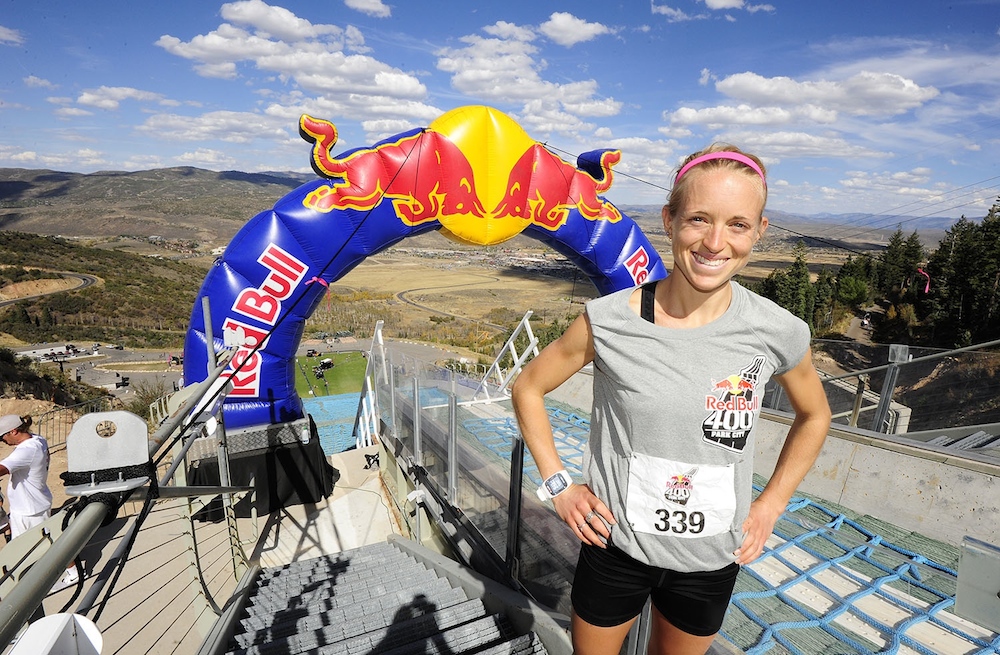
Liz Stephen celebrates her win in the Red Bull 400 hill climb up the Olympic ski jump at the Utah Olympic Park. It was the first time the Red Bull 400 has been held in the U.S. (Photo: Tom Kelly/USSA)
However, the Trail Run Championship was not enough for Stephen. On top of nationals, she did the Beach to Beacon 10-kilometer race in Maine earlier this summer, where she finished as the seventh woman, and the USA’s inaugural Red Bull 400 in Park City last weekend.
In the Red Bull 400, contestants charge up the large-hill (HS134) ski jump landing, onto a ramp that goes up to the jump takeoff, and then up the stairs to the top of the in-run. Organizers even placed cargo netting across the incline so competitors could more effectively crawl up the extremely steep sections of the jump. Five hundred racers came out, ready to test their limits.
After winning the qualifier, Stephen managed to hold off the University of Utah’s Veronika Mayerhofer, an NCAA champion from Austria, in the final to win the event.
“I tried to stay out of the nets as much as I could; I didn’t want to trip and you don’t have as much control over your limbs as usual,” Stephen said. “I tried to stay out and use it where I needed to. Most of it was a hike with your hands and legs.”
Meanwhile, on the men’s side, U.S. nordic-combined Olympians Bryan Fletcher and Billy Demong placed in the top 10, with Fletcher in fifth and Demong in ninth, and cross-country ski Olympian Torin Koos finished seventh.
For Stephen, all of these events both contribute to her fitness and her love for running. After all, summer — and early fall — are the perfect times to take advantage of her desire to run competitively.
“Running has a really special place in my heart because I grew up doing it and it’s so pure,” Stephen noted. “I really love the sport of running so to be able to compete and get my competitive fix and racing in during the summer by running is really perfect for me.
“All you need is a pair of shoes and a pair of shorts and you’re out the door. And I think that being able to use [running] so much for training keeps [cross-country skiing] really happy and fresh for me.”
Bryan Fletcher (U.S. Nordic Combined) racing to fifth in while skiing with a chase pack during Thursday’s 10 k at 2015 World Championships.
FasterSkier’s coverage of the 2015 FIS Nordic World Ski Championships in Falun, Sweden, is brought to you by the generous support of L.L. Bean, now featuring a complete line of Kikkan Randall training wear.
FALUN, Sweden — Bryan Fletcher knew there was one thing that could elevate him to the podium on Thursday at FIS Nordic World Ski Championships, and it wasn’t going to be playing it safe.
The 28-year-old U.S. Nordic Combined skier decided to go with the “go-big” mindset on the 134-meter large hill, and in doing so, he jumped to 13th on Thursday morning — a huge improvement from his 20th-ranked jump in the normal-hill individual competition at Falun World Championships, where he ended up 21st last Friday.
Bryan Fletcher (U.S. Nordic Combined) jumping in Sunday’s four-man team event at the 2015 FIS Nordic World Ski Championships in Falun, Sweden. (Photo: FlyingPointRoad.com)
“Today, I came into jumping in attack mode,” Fletcher recalled after Thursday’s 10-kilometer Gundersen start. “It was like, ‘Well since these are the Championships, and it’s not really worth being anything but on the podium, I’m just going to go for it as hard as possible and lay it all out there.’ ”
Starting the race 13th and 44 seconds behind the jump leader, Austria’s Bernhard Gruber, meant Fletcher could actually move up enough to matter.
“I jumped pretty well, put myself in contention, and then going into the race I was pretty nervous because being in contention is exciting but it’s also like, ‘Uh oh, now what do I do?’ ” Fletcher said.
Before Thursday, his previous individual best in four World Championships was 14th. He won a World Cup two years ago, but had not placed better than fifth in an individual competition since. He called upon his experience from a month ago in Sapporo, Japan, where he placed eighth and ninth in back-to-back World Cup competitions.
On a dark-and-damp Thursday afternoon, Gruber took off 5 seconds ahead of France’s Jason Lamy Chappuis in second and another Frenchman, Francois Braud, who started 7 seconds back in third. After that, the fifth- through eighth-best jumpers started within six seconds of one another, 23 to 29 seconds after Gruber, and Fletcher headed out six seconds after 11th and one second out of 12th.
“My goal was to ski a tactically smart race and not be in the front too much, but do enough work to put myself in contention,” Fletcher explained.
He ended up completing the first of four 2.5 k laps in 10th, toward the front of a 14-man pack. The group trailed the three frontrunners: Lamy Chappuis, Gruber and Braud, respectively. Japan’s Yoshito Watabe skied alone in fourth, 15 seconds behind them, while the chase pack reined him in from another 15 seconds back.
By 3.8 k, Norway’s Magnus Moan continued to lead the chase in fourth, with Fletcher in eighth and Watabe back in 11th. By the halfway point, the group was 30 seconds behind the three leaders, with Moan still in fourth, Germany’s Johannes Rydzek and Tino Edelman in fifth and sixth, and Fletcher up to seventh. Less than a kilometer and a half later, Fletcher was at the front of the pack in fourth, just 19.3 seconds behind the top three.
There, the American pushed to bridge the gap to the podium. Mostly focused on a medal, he gave his all while leading at least 11 others directly behind him.
“There were a lot of guys in our pack,” he said. “I think at one point it was all the way from third to 20th, and if you glance over your shoulder, you’re like, ‘Oh man, what am I doing at the front of this thing? I’m wasting so much energy.’ But at the same time, the guys that were at the front, myself included, were kind of really trying to get more people to share in the workload because we wanted to ultimately catch the front of the race and then be able to work past that.
“I think we were caught in a zone where we were working, and then also trying to rest at the same time,” he added. “It was tough to organize, but I feel like Magnus and I did a good job of sharing the workload as much as possible, and then also breaking away from the rest of the guys in that train to give ourselves a shot.”
With one lap to go, Fletcher was still in fourth, 20 seconds out of third. Moan clung to him in fifth, and Rydzek skied in sixth, followed by 10 others. Over the next 2.5 k, Moan attacked, Rydzek went with him and Fletcher worked to stay in the fight for fourth, while the rest of the pack dropped off the pace.
“I jumped on them and was actually really surprised when I looked back and we were clear of the group,” Fletcher said. “I was kind of relieved because I knew it was just us, and we were catching up to third place really fast so I was going all out trying to get there.”
American Bryan Fletcher (l) after finishing fifth to Austria’s Bernhard Gruber (1) in the individual large hill/10 k at 2015 World Championships in Falun, Sweden. It was Fletcher’s World Championships career best and a season best as well.
While Moan and Rydzek charged to the finish, Fletcher lost contact on the last two uphills. Gruber cruised into the stadium and finish uncontested to win in 22:45.8, 11.9 seconds ahead of Braud in second. Rydzek and Moan overtook Lamy Chappuis in the last kilometer and sprinted to the line for third. Rydzek took it by 0.2 seconds, 14.9 seconds after Gruber, Moan settled for fourth, and 8.3 seconds later, Fletcher finished fifth (+23.4).
“I was hoping I could beat those guys on the hill, but they were strong, they skied a great race, and obviously I [felt] the legs at the end,” Fletcher said. “This is a personal-best result this season for me and in a World Championship event. To be on the podium would have been a dream come true, but to be in the fight was more what I was really looking for.
For me, I really just want to ski a good race, a good race to the best of my ability and the best of my performance,” he added. “I was happy that I was able to do that today and I was in the fight.”
“To be on the podium would have been a dream come true, but to be in the fight was more what I was really looking for.” — Bryan Fletcher, fifth for a career-best individual result at World Championships
His younger brother Taylor, who jumped to 34th and raced up to 29th, 1:51.7 after Gruber, patted him on the shoulder afterward.
“I think that’s the best [U.S. Nordic Combined has] done since 2009 for an individual result so hats off to him,” Taylor said of Bryan’s new World Championships marker. Teammate Billy Demong won the large hill/10 k at 2009 worlds in Liberec, Czech Republic, and in 2011, he placed sixth in the same event.
“[Bryan] really pulled it together today and skied a smart race by the looks of it, and was able to finish hard, which is the most important thing here,” Taylor said.
The second American on Thursday, Taylor wasn’t pleased with his performance after putting himself 2:01 back after the jump.
“It’s hard to say what could’ve been,” he said. “But knowing how I’ve been skiing, I could’ve been up there for that medal. I’ve had a lot of really good jumps and I’ve had huge improvements in my last competitions, and I gotta be satisfied with that but at the same time I’m really disappointed … when it came time to show that work and that effort, I fell short a little bit.”
While Bryan posted the eighth-fastest course time, Taylor, 24, ranked 10th fastest of 47 men in the 10 k.
“I’m probably the most competitive guy out here,” Taylor said. “I yelled at guys in the track earlier because I just wanted to go. I can’t settle for something. I want it more and more and I’m going to work my ass off to get it.”
Bryan Fletcher (U.S. Nordic Combined) after finishing fifth in the large hill/10 k at 2015 World Championships in Falun, Sweden, for an individual season best and career best at World Championships.
Also for the U.S., Demong went from 30th in the jump to 33rd overall (+2:27.3), and Adam Loomis improved from 44th to 41st (+3:46.5) at the end of the day.
With one competition left at World Championships — the 2 x 7.5 k team sprint — Taylor, for one, was looking for redemption.
“I know what I did on the hill and what happened and I’ve got one more event [the two-man team sprint] on Saturday, where it’s probably going to be Bryan and I and that’s gonna be special,” he said. “Hell, if he’s skis like he did today, and I jump better on the hill like I know I can, there’s no reason in hell why we shouldn’t be first, second or third.”
Germany’s Johannes Rydzek (5) celebrates his first World Championships title in the first nordic-combined competition of 2015 World Championships on Friday in Falun, Sweden. He edged Italy’s Alessandro Pittin in the normal hill/10 k individual by 1.3 seconds. (Photo: FlyingPointRoad)
FasterSkier’s coverage of the 2015 FIS Nordic World Ski Championships in Falun, Sweden, is brought to you by the generous support of L.L. Bean, now featuring a complete line of Kikkan Randall training wear.
FALUN, Sweden — Johannes Rydzek hadn’t seen the podium in a World Championships competition since his first World Championships in 2011 in Oslo, Norway, where he won three silver medals between the large-hill individual and two team events.
Four years later, the 23-year-old German rose to gold in the normal hill/10-kilometer individual on Friday, the first day of nordic combined at 2015 FIS Nordic World Ski Championships.
“Every child that comes to sport has this dream to be a world champion, and now I am one,” Rydzek told the Associated Press.
Rydzek jumped to fifth on the 100-meter hill at Lugnet Arena in Falun, Sweden, then overcame a 31-second starting deficit to make a break for first on the last lap of the 10 k Gundersen start. Rydzek answered an attack from Italian leader Alessandro Pittin with about half a kilometer to go, trailing him down into the stadium. On the final rise before a sweeping downhill toward the finish, Rydzek passed Pittin and outlasted him by 1.3 seconds for the win.
“I tried everything to go alone,” Pittin told the AP. “But for sure, Johannes was faster than me when we entered the stadium.”
Pittin had raced up to second with the fastest ski time, latching onto the lead pack on the fourth-and-final lap. He jumped to 14th and started the 10 k race 1:16 minutes behind Germany’s Eric Frenzel, who led the jumping portion.
Rydzek posted the fourth-fastest ski time to win in 26:38.9, while France’s defending Olympic champion Jason Lamy Chappuis finished third (+5.0) after starting third, 25 seconds back. Frenzel placed fourth (+6.1) with the 20th-ranked time.
Håvard Klemetsen led Norway in fifth (+9.6) after starting sixth, and Japan’s Akito Watabe and Yoshito Watabe placed sixth (+12.2) and seventh (+14.4), respectively. The two were among the most competitive in the jump on a windy afternoon, which included delays, with Yoshito soaring to second and Akito ranking fourth heading into the 10 k.
Norway’s Jørgen Graabak improved from 11th to eighth, Germany’s Fabian Riessle rocketed from 23rd to ninth with the fifth-fastest time, and Austria’s Bernhard Gruber went from 17th to 10th overall.
U.S. Nordic Combined’s Taylor Fletcher (25) racing to 19th in Friday’s 10 k after jumping to 25th on the normal hill in Falun, Sweden. Fletcher was the lone American in the top 20 on the first day of nordic combined at 2015 World Championships. (Photo: FlyingPointRoad)
Taylor Fletcher led the U.S. in 19th after starting 25th, 1:31 behind Frenzel, and finished 1:32.5 after Rydzek. His ski time ranked 18th.
“I felt like I had good speed, I just I never got into a rhythm,” Fletcher said afterward. “I felt like I was swimming and I was never comfortable. I had people stepping all over my poles and I was going in and out of the line of people trying to move up, and I didn’t race my style.”
Fletcher started four seconds behind his older brother Bryan, who jumped to 20th and ended up 21st (+1:40.9).
“We were really hoping that we’d be able to pull away or work together and pull up to the front, but with the way the conditions were and just how I was skiing, it was really hard to actually make up ground on anybody,” Bryan said.
While temperatures cooled slightly to around 35-degrees Fahrenheit by the start of the race at 4 p.m., the course had turned to a mashed-potato-like consistency with the sun beating down on a 40-degree afternoon.
The 50-man field saw the jumping portion delayed from 10 a.m. to 1:30 p.m. because of winds, leaving competitors with about 50 minutes after the last jump to prepare for the pursuit-style race.
“We didn’t get much of a warmup and we were only able to ski the upper part of the course,” Bryan said. “They didn’t have the full course open or anything so that was tough. It was a quick turnaround.”
Ben Berend (U.S. Nordic Combined) competing in his first World Championships competition on Friday in Falun, Sweden. After jumping to 16th on the normal hill, Berend finished 45th in the 10 k. (Photo: FlyingPointRoad)
He noted that his teammate Ben Berend, in his first World Championships, had more adversity to deal with jumping as the ninth starter in the first group.
“Every time they were going to start the competition today, he’d have to get dressed, go all the way to the top of the jump and by the time he’d get there, they’d say, ‘OK we’re not going to do it,’ and he’d have to come right back down,” Bryan said. “For us in the later group, it wasn’t nearly as bad. It certainly is a lot of warming up and then, ‘OK, we’re not going yet.’ … It’s the same for everybody. It used to happen a lot more on World Cup then it does these days with TV and everything, but it’s just something you have to deal with.”
Berend jumped to 16th, the second best of the four Americans after Billy Demong leapt to 10th.
After having competed at one World Cup beforehand, the 19-year-old Berend was surprised to discover he led the jump through the first 18 men.
“I went and actually got equipment checked. I was in there forever and I came back out and they were like, ‘You’re still in the lead. You need to come back to the leader’s chair,’ ” he recalled. “I’ve never been there before so that was a pretty awesome experience being able to take that in.”
The 19th jumper, Demong bumped him out of it.
“Having Bill take me out of that leader’s chair, it couldn’t have been more perfect,” Berend said.
“They were like, ‘You’re still in the lead. You need to come back to the leader’s chair.’ ” — Ben Berend (U.S. Nordic Combined), who was 16th in Friday’s jump and 45th overall for his career best in his second World-Cup-level individual competition
Demong went on to finish 25th in the 10 k (+1:51.8), and Berend placed 45th (+4:54.6).
“I’m not fast enough to ski at the front of these races,” Berend said. “The conditions just made it tougher so the race was pretty brutal, but you learn. It was good experience for me out there. … Overall it was an awesome day. I’m looking forward to learning from this and moving on to better results in the future.”
Demong noted that this was Berend’s first World Championships and third-ever World Cup event (after two competing twice at last month’s World Cup in Schonach, Germany).
“To execute well and sit in the lead, that’s huge,” Demong said. “At 19 it’s a lot easier to train a few years and get faster at cross country than it is to make a ski jumper. Ski jumping is a really funny sport. When I was his age I was a great jumper, but I struggled in cross country. I’d rather start with someone who is a talented athlete, a great jumper, and try to teach them the cross-country side.”
In his eighth World Championships, the 34-year-old Demong explained that jumping has been his strong point this year.
“I haven’t competed a whole lot, and seemingly in my old age not training much for jumping has paid off,” he said. “The same can’t be said about cross country. I haven’t raced super well this year, but it’s been stable. Today, I started out harder, hoping to make something happen and paid for it the second half of the race. Ordinarily, these were my racing conditions. When I was my fittest this is where I would win, like Vancouver and Liberec. That being said, when you’re not the fittest, it is punishing.”
The second of four nordic-combined events is scheduled for Sunday with the 4 x 5 k team event.
“Sunday is going to be great if we can jump like we did today,” Demong said. “I think Taylor and Bryan skied a really good first half today. They’ve been two of the fastest, if not the fastest guys this year, so hopefully I can pull my stuff together and we’ll have a fight for a medal.”
10 k G at Gorgoza Park on the morning of Friday, Dec. 12. (Photo: Paul Loomis)
Day 1 of FIS Nordic Combined Continental Cup in Park City: 10 k race at Gorgoza Park on the morning of Friday, Dec. 12. (Photo: Paul Loomis)
Day 1 of FIS Nordic Combined Continental Cup in Park City: 10 k race at Gorgoza Park on the morning of Friday, Dec. 12. (Photo: Paul Loomis)
Day 1 of FIS Nordic Combined Continental Cup in Park City: 10 k race at Gorgoza Park on the morning of Friday, Dec. 12. (Photo: Paul Loomis)
Day 1 of FIS Nordic Combined Continental Cup in Park City: 10 k race at Gorgoza Park on the morning of Friday, Dec. 12. (Photo: Paul Loomis)
Day 1 of FIS Nordic Combined Continental Cup in Park City: 10 k race at Gorgoza Park on the morning of Friday, Dec. 12. (Photo: Paul Loomis)
Day 1 of FIS Nordic Combined Continental Cup in Park City: 10 k race at Gorgoza Park on the morning of Friday, Dec. 12. (Photo: Paul Loomis)
Day 1 of FIS Nordic Combined Continental Cup in Park City: 10 k race at Gorgoza Park on the morning of Friday, Dec. 12. (Photo: Rosalie Lipfert)
Day 1 of FIS Nordic Combined Continental Cup in Park City: 10 k race at Gorgoza Park on the morning of Friday, Dec. 12. (Photo: Rosalie Lipfert)
Day 1 of FIS Nordic Combined Continental Cup in Park City: 10 k race at Gorgoza Park on the morning of Friday, Dec. 12. (Photo: Rosalie Lipfert)
Day 1 of FIS Nordic Combined Continental Cup in Park City: 10 k race at Gorgoza Park on the morning of Friday, Dec. 12. (Photo: Rosalie Lipfert)
Day 1 of FIS Nordic Combined Continental Cup in Park City: 10 k race at Gorgoza Park on the morning of Friday, Dec. 12. (Photo: Rosalie Lipfert)
Day 1 of FIS Nordic Combined Continental Cup in Park City: 10 k race at Gorgoza Park on the morning of Friday, Dec. 12. (Photo: Rosalie Lipfert)
Day 1 of FIS Nordic Combined Continental Cup in Park City: 10 k race at Gorgoza Park on the morning of Friday, Dec. 12. (Photo: Rosalie Lipfert)
Day 1 of FIS Nordic Combined Continental Cup in Park City: 10 k race at Gorgoza Park on the morning of Friday, Dec. 12. (Photo: Rosalie Lipfert)
Day 1 of FIS Nordic Combined Continental Cup in Park City: 10 k race at Gorgoza Park on the morning of Friday, Dec. 12. (Photo: Rosalie Lipfert)
Day 1 of FIS Nordic Combined Continental Cup in Park City: 10 k race at Gorgoza Park on the morning of Friday, Dec. 12. (Photo: Rosalie Lipfert)
Day 1 of FIS Nordic Combined Continental Cup in Park City: 10 k race at Gorgoza Park on the morning of Friday, Dec. 12. (Photo: Rosalie Lipfert)
Day 1 of FIS Nordic Combined Continental Cup in Park City: 10 k race at Gorgoza Park on the morning of Friday, Dec. 12. (Photo: Rosalie Lipfert)
Day 1 of FIS Nordic Combined Continental Cup in Park City: 10 k race at Gorgoza Park on the morning of Friday, Dec. 12. (Photo: Rosalie Lipfert)
Day 1 of FIS Nordic Combined Continental Cup in Park City: 10 k race at Gorgoza Park on the morning of Friday, Dec. 12. (Photo: Rosalie Lipfert)
Day 1 of FIS Nordic Combined Continental Cup in Park City: 10 k race at Gorgoza Park on the morning of Friday, Dec. 12. (Photo: Rosalie Lipfert)
Day 1 of FIS Nordic Combined Continental Cup in Park City: 10 k race at Gorgoza Park on the morning of Friday, Dec. 12. (Photo: Rosalie Lipfert)
Day 1 of FIS Nordic Combined Continental Cup in Park City: 10 k race at Gorgoza Park on the morning of Friday, Dec. 12. (Photo: Rosalie Lipfert)
Day 1 of FIS Nordic Combined Continental Cup in Park City: 10 k race at Gorgoza Park on the morning of Friday, Dec. 12. (Photo: Rosalie Lipfert)
Day 1 of FIS Nordic Combined Continental Cup in Park City: 10 k race at Gorgoza Park on the morning of Friday, Dec. 12. (Photo: Rosalie Lipfert)
Day 1 of FIS Nordic Combined Continental Cup in Park City: 10 k race at Gorgoza Park on the morning of Friday, Dec. 12. (Photo: Rosalie Lipfert)
Day 1 of FIS Nordic Combined Continental Cup in Park City: 10 k race at Gorgoza Park on the morning of Friday, Dec. 12. (Photo: Rosalie Lipfert)
Austria’s Tomas Druml celebrates a win on Day 1 of FIS Nordic Combined Continental Cup in Park City, Utah, following the 10 k race at Gorgoza Park on Friday, Dec. 12. Lukas Greiderer placed second and Marco Pichlmayer placed second and third, respectively, as part of a top-five Austrian sweep. (Photo: Rosalie Lipfert)
Austria’s Tomas Druml celebrates a win on Day 1 of FIS Nordic Combined Continental Cup in Park City, Utah, following the 10 k race at Gorgoza Park on Friday, Dec. 12. Lukas Greiderer placed second and Marco Pichlmayer placed second and third, respectively, as part of a top-five Austrian sweep. (Photo: Rosalie Lipfert)
FIS Nordic Combined Continental Cup in Park City: jumping on the 100-meter normal hill on the afternoon of Friday, Dec. 12. (Photo: Rosalie Lipfert)
FIS Nordic Combined Continental Cup in Park City: jumping on the 100-meter normal hill on the afternoon of Friday, Dec. 12. (Photo: Rosalie Lipfert)
FIS Nordic Combined Continental Cup in Park City: jumping at Utah Olympic Park on the afternoon of Friday, Dec. 12. (Photo: Paul Loomis)
FIS Nordic Combined Continental Cup at Utah Olympic Park in Park City: jump-out run on the 100-meter normal hill on the afternoon of Friday, Dec. 12. (Photo: Paul Loomis)
FIS Nordic Combined Continental Cup at Utah Olympic Park in Park City: jump-out run on the 100-meter normal hill on the afternoon of Friday, Dec. 12. (Photo: Paul Loomis)
FIS Nordic Combined Continental Cup at Utah Olympic Park in Park City: jump-out run on the 100-meter normal hill on the afternoon of Friday, Dec. 12. (Photo: Paul Loomis)
FIS Nordic Combined Continental Cup at Utah Olympic Park in Park City: jump-out run on the 100-meter normal hill on the afternoon of Friday, Dec. 12. (Photo: Paul Loomis)
FIS Nordic Combined Continental Cup in Park City: jumping on the 100-meter normal hill on the afternoon of Friday, Dec. 12. (Photo: Rosalie Lipfert)
FIS Nordic Combined Continental Cup in Park City: jumping on the 100-meter normal hill on the afternoon of Friday, Dec. 12. (Photo: Rosalie Lipfert)
FIS Nordic Combined Continental Cup in Park City: jumping on the 100-meter normal hill on the afternoon of Friday, Dec. 12. (Photo: Rosalie Lipfert)
The Russian team gets in some kicks between wind delays on Friday, Dec. 12, the FIS Nordic Combined Continental Cup in Park City, Utah. (Photo: Rosalie Lipfert)
Park City, Utah, played host to the FIS Nordic Combined Continental Cup opener last week, Thursday, Dec. 11 through Saturday, Dec. 13, despite balmy temperatures around 50 degrees Fahrenheit and venue changes. The cross-country races were moved to the Gorgoza Park tubing complex, where there was enough stocked up, manmade snow to create a 1.7-kilometer loop with “plenty of spectator-friendly hills and turns,” according to a press release.
Jumping kicked off on Thursday at Utah Olympic Park with Austria’s Lukas Greiderer besting the field on an afternoon with “subtle, swirly winds,” according to a U.S. Ski & Snowboard Association (USSA) press release.
Greiderer posted the top jump of 92.5 meters on the 100-meter normal hill, followed by Germans Tobias Simon and Philipp Blaurock, respectively.
The top American in his first competition of the season, Billy Demong tied Russia’s Timofey Borisov in eighth with an 84.5-meter jump, and Ben Berend notched 22nd while Taylor Fletcher jumped to 26th.
On Friday morning, Dec. 12, Greiderer started the 10-kilometer individual Gundersen at the Gorgoza Park tubing hill 4 seconds ahead of Simon and 6 seconds ahead of Blaurock. Demong started 1:02 back, followed by U.S. teammates Berend (+1:50) and Fletcher (+2:16).
“It’s going to be a really tough cross-country event, especially if it’s icy,” Fletcher told USSA before Friday’s race. “But I feel I have the ability to catch the field.”
Despite what turned out to be icy conditions at the tubing park (with the 10 k races held there because of low snow at Utah Olympic Park), Fletcher ended up posting the third-fastest ski time to finish as the top American in eighth on Friday.
Austria’s Tomaz Druml won it in 29:17.2 minutes after starting 40 seconds behind and posting the second-fastest time, behind France’s Geoffrey Lafarge, who improved from 28th in the jump to sixth overall. Greiderer took second, 18.7 seconds back, and Marco Pichlmayer placed third (+57.6) to complete the Austrian podium sweep. In fact, Austria occupied the top five with Alexander Brandner in fourth and Harald Lemmerer in fifth.
Demong placed 13th and Berend finished 23rd, just 0.4 seconds ahead of teammate Michael Ward in 24th.
“This was perhaps the most difficult nordic-combined race I’ve done,” Demong said of the six-lap course with three hills per lap.
Jumping at Utah Olympic Park at the Nordic Combined Continental Cup in Park City, Utah. (Photo: Craig Ward)
Jumping at Utah Olympic Park at the Nordic Combined Continental Cup in Park City, Utah. (Photo: Craig Ward)
Jumping at Utah Olympic Park at the Nordic Combined Continental Cup in Park City, Utah. (Photo: Craig Ward)
Jumping at Utah Olympic Park at the Nordic Combined Continental Cup in Park City, Utah. (Photo: Craig Ward)
Jumping at Utah Olympic Park at the Nordic Combined Continental Cup in Park City, Utah. (Photo: Craig Ward)
Day 2 of the FIS Nordic Combined Continental Cup at Gorgoza Park in Park City, Utah. (Photo: Paul Loomis)
Day 2 of the FIS Nordic Combined Continental Cup at Gorgoza Park in Park City, Utah. (Photo: Craig Ward)
Day 2 of the FIS Nordic Combined Continental Cup at Gorgoza Park in Park City, Utah. (Photo: Craig Ward)
Day 1 of Nordic Combined Continental Cup in Park City, Utah. (Photo: Craig Ward)
Day 2 of the FIS Nordic Combined Continental Cup at Gorgoza Park in Park City, Utah. (Photo: Paul Loomis)
Day 2 of the FIS Nordic Combined Continental Cup at Gorgoza Park in Park City, Utah. (Photo: Paul Loomis)
Day 1 of Nordic Combined Continental Cup in Park City, Utah. (Photo: Craig Ward)
Michael Ward leads fellow American Colin Delaney in the second 10 k in two days at the FIS Nordic Combined Continental Cup in Park City, Utah. Ward placed 28th and Delaney was 29th. (Photo: Paul Loomis)
(Photo: Craig Ward)
(Photo: Craig Ward)
Ben Berend racing to 23rd on Day 1 of the Nordic Combined Continental Cup in Park City, Utah. (Photo: Craig Ward)
(Photo: Craig Ward)
(Photo: Craig Ward)
(Photo: Craig Ward)
(Photo: Craig Ward)
(Photo: Craig Ward)
(Photo: Craig Ward)
(Photo: Craig Ward)
(Photo: Craig Ward)
(Photo: Craig Ward)
(Photo: Craig Ward)
(Photo: Craig Ward)
(Photo: Craig Ward)
(Photo: Craig Ward)
(Photo: Craig Ward)
(Photo: Craig Ward)
(Photo: Craig Ward)
(Photo: Craig Ward)
(Photo: Craig Ward)
(Photo: Craig Ward)
(Photo: Craig Ward)
(Photo: Craig Ward)
(Photo: Craig Ward)
(Photo: Craig Ward)
(Photo: Craig Ward)
(Photo: Craig Ward)
(Photo: Craig Ward)
(Photo: Craig Ward)
Japan’s Yuseke Minatojumped the farthest in the second competition on Friday afternoon, giving him a 6-second head start on teammate Go Sonehara.Blaurock started 10 seconds back in third, followed by Austria’s Franz-Josef Rehrl (+14) and Druml (+24).
Demong posted the best U.S. jump for the second-straight day and started the 10 k race in 14th, 1:20 minutes behind Minato.
Fletcher jumped to 20th with a 1:36 starting deficit. He made it up quickly, posting the fastest time of the day in the 10 k to finish fifth.
Druml raced to his his second-straight win in 26:16.9, edging Italian runner-up Lukas Runggaldier by 2.9 seconds. Minato hung on for third, 25.8 seconds behind Druml, and Greiderer was fourth (+33.9).
Demong placed 17th (+2:53.8) and the U.S. had four in the top 30 with Michael Ward in 28th (+3:52.3) and Colin Delaney (New York Ski Education Foundation) finishing 7.6 seconds later in 29th for his first Continental Cup points.
Jasper Good (Steamboat Springs Winter Sports Club) just missed the points in 32nd, Ben Loomis (Flying Eagles Ski Club) placed 35th for career bests for both skiers. Ben Berend placed 40th.
The Soldier Hollow organizing committee hosted the two-day event, and executive director Richard Hodges emphasized the amount of effort it took to pull off the competitions given the warm conditions and lack of snow. He said Soldier Hollow, Park City, Gorgoza and The Utah Nordic Alliance (TUNA) worked together to pull off the cross-country races: making snow, moving snow, and being flexible when it came to schedule changes.
The Nordic Combined World Cup circuit resumes in Ramsau, Austria, on Saturday, Dec. 20, and Sunday, Dec. 21. Americans expected to compete include Taylor and Bryan Fletcher, Billy Demong, and Adam Loomis.
Billy Demong (US Nordic Combined) and friend Sam Krieg (r) pose after finishing the 2014 NYC Marathon. Demong placed 51st with a time of 2:33:05. (Photo: Drea Braxmeier, NYRR)
Nordic-combined Olympic gold medalist Billy Demong ran like a champion in the 2014 New York City Marathon. Despite having never raced a road marathon until Sunday, the 34 year old ran the 26.2-mile road race in 2:33:05 and placed 51st overall.
What set Demong apart from the estimated field of 50,000 was his ability to adapt to the challenging conditions. With wind gusts reaching 50 miles per hour and chilly temperatures, Demong said that the race felt more like a nordic competition than a marathon.
“It was way more of a cross-country race than a normal marathon because of the weather and the terrain,” he said on the phone Monday. “There were a lot of sharp corners and not-so-good pavement in places.”
Hoping to run the race in 2:36:00, Demong was surprised that he surpassed his goal by three minutes on a challenging course in trying conditions.
From the beggining of the race he ran with a pack of “sub-elite” racers that included many Scandinavians. However, the group set a blazing pace that Demong knew he wouldn’t be able to maintain while running through the five boroughs of the city.
Demong and several other runners eventually broke off the back of the group, but were still running mile speeds that were 20 seconds faster than he wanted.
“At that point I was like, ‘Well let’s just see. My legs feel all right. I’ll just keep going,’ ” he recalled.
Even with the rapid pace at the beginning, Demong said that he was able to maintain his energy throughout the race and have a strong finish.
“I didn’t ever feel like I fell apart. I really pushed it to the line,” he said. “I’m ecstatic given the conditions and the course. It was really far outside of what my training put me at. My training put me at that pace on a perfect flat day with no wind in Chicago, not in New York on the hardest day.”
Demong, who was the 15th American male to cross the line, explained that he wanted to compete in a marathon for over ten years — dating back to his last competitive endurance running race in 2002. He had originally registered for the Oct. 12 Chicago Marathon, but due to a conflict with his team’s overseas training camp in Switzerland, Demong decided to run the New York City Marathon instead.
It was a decision he didn’t regret.
“I was astounded at how awesome it was,” he said. “It was a two-and-a-half hour adrenaline rush .”
Billy Demong (US Nordic Combined) running in the NYC Marathon Sunday. (Photo: Andrew Quinn)
Demong may be in top running shape, but the 2010 Olympic gold medalist said he’s less prepared for the upcoming ski season than in years past. He explained that while his jumping is on-par, he is skiing roughly a minute slower on average than he did in previous years.
After the Olympic games in Sochi, Demong was unsure whether or not he was ready for another season of competition.
However, the nordic-combined veteran eventually decided to compete in the 2014/2015 season after the national team began to face its financial problems.
One of Demong’s main goals for the year is to regain his paid spot on the World Cup so that the U.S. team will have future opportunities to send skiers to nordic combined’s highest level of racing.
Once that goal is accomplished, Demong hopes that he will be skiing well enough to help the U.S. be competetive in the team relay at the 2015 World Championships in Falun, Sweden.
“We’ve had some guys who have really stepped up this summer, and we have a good team on that squad,” he said. “Hopefully I can be good enough to add to that dynamic and put us back in medal contention at World Championships.”
U.S. Nordic Combined will begin international competition Nov. 29 and 30 at the opening weekend of the FIS Nordic Combined World Cup. Demong, however, will not attend the races in Kuusamo, Finland. Instead, he will start his World Cup season in January, when he believes that he’ll have overcome any training deficiencies.
Members of the Sun Valley Ski Education Foundation Gold Team with coach Colin Rodgers in Europe last season. (Photo: NNF)Five years ago, David Knoop was a self-described master blaster looking for a cause, and the National Cross Country Ski Education Foundation (NCCSEF) was going to be it.
His process of finding the NCCSEF didn’t happen overnight. In fact, the nonprofit had been more or less defunct since 2008, when founder Reid Lutter decided he was too busy to continue its mission of supporting junior development in U.S. nordic skiing.
After starting the NCCSEF, formerly based in St. Paul, Minn., 14 years earlier with Rick Kapala and evolving to the point where they could send American kids to Junior World Championships, Lutter simply had other focuses as a ski coach and owner of a custom-apparel company, Podiumwear.
Meanwhile, Knoop, who lives in Park City, Utah, and works as an insurance broker in Salt Lake City, was figuring out his own calling. In the spring of 2008, his 20-year-old son Matthew Knoop was killed by a hit-and-run driver while on a mission for The Church of Jesus Christ of Latter-day Saints in Brazil. The oldest of Knoop’s two children, Matthew was a Park City High School soccer standout who captained his team to a state championship in 2006, his senior year.
After his passing, Knoop started to research charitable causes to devote himself to.
“My son didn’t get paid to go on a volunteer mission — it was something he wanted to do because he made a difference,” Knoop said on the phone this week. “He taught me a lesson there and I just decided I could give back.”
Simi Hamilton on his way to winning the U23 World Championships skate-sprint qualifier by one second in 2010 in Hinterzarten, Germany. He went on to place 26th after his pole broke in the quarterfinal. This season, Hamilton, 27, is a member of the U.S. Ski Team A-team. (Photo: NNF)By way of the U.S. Ski Team, he found the NCCSEF. A regular donor to the team, Knoop eventually got a direct request from then-U.S. Ski Team (USST) director John Farra.
“Farra said, ‘I want you to take over the NCCSEF,’ ” Knoop recalled. “I was like, ‘I don’t even know what you’re talking about it.’ He was like, ‘I’ll help you with it for a couple of months.’ ”
Knoop remembered thinking about the potential of the sport and the ranging emotions people have when it comes to their perception of the USST or its national governing body, the U.S. Ski and Snowboard Association (USSA). Instead of admiring the problem, he decided it was time to take positive action.
According to Knoop, the National Nordic Foundation (NNF), which came to be in 2011 out of the same 501(c) because “just saying [NCCSEF] is a mouthful,” started with a basic structure — not exactly a business plan.
“[Farra] said, this is junior development, this is how junior development works, these are the projects that are sorely in need of funding,” Knoop said.
From there, the former soccer coach and longtime nordic enthusiast began to immerse himself in U.S. cross-country skiing from the club to national-team levels.
The 2011 NCCSEF calendar cover. (Photo: FasterSkier)Then, he got some help from Kapala. The head of the Sun Valley Ski Education Foundation (SVSEF) nordic program, Kapala knew of a generous donor in Sun Valley, Idaho, who would likely support a national cause as well, and he connected him with Knoop.
“The first year I did a bit of wandering in the wilderness by myself — John Farra gave me a lot of guidance in terms of projects he felt were important … Rick Kapala had a few people he introduced to me,” Knoop said. “They were kind to me. They could tell I really didn’t know what I was talking about, but I had an idea and there was probably half a dozen donors that wrote some good-sized checks and said, good luck with your experiment.”
Knoop was not a professional fundraiser; he was a volunteer with a demanding day job. Once donors realized that and understood that he had little to gain, he said they became easier to approach and usually more likely to open their wallets.
NNF’s Rise
In 2009, the NCCSEF came back to life with roughly $35,000 dollars in the bank. Five years later, Knoop as the director checked the balance from his Salt Lake office: the NNF had about $215,000 in reserves for cross-country skiing and about $43,000 for nordic combined. And that was more than three weeks before the Drive for 25 (D25) ended.
Annually the foundation raises more than half a million dollars in donations. With goals of raising $150,000 for cross-country and $50,000 for nordic combined in this year’s D25, the NNF was more than halfway there with 19 days to go. As of Friday, 75 percent of the target had been reached for cross-country and 14 percent for nordic combined.
While the discrepancy between the two sports might seem large, Knoop explained that it’s misleading: nordic combined parted ways with the NNF this summer, then returned to the organization three weeks before the D25 started Oct. 1.
When USSA defunded nordic combined in April, NNF board member and nordic-combined veteran Billy Demong devoted his offseason to fundraising to save his sport. One of his first moves was partnering with USA Ski Jumping.
NNF Board of Directors:
David Knoop (executive director)
Reid Lutter
Joey Caterinichio
Yuriy Gusev
Jennifer Barba
Steve Fuller
Kerry Lynch
Billy Demong
Contract employees:
James Southam (administrator)
Andrew Gardner (public relations)
According to Knoop, that led nordic combined — which was in search of top-to-bottom funding — to search for funding outside the NNF, which reserves financial support for national B-team athletes and those in the developing ranks below them and above Junior Nationals.
“My response to Billy [was], ‘You can leave the NNF, but we’re not kicking you out. There’s no hard feelings,’ ” he said, explaining that they kept their lines of communication and nordic-combined’s checking account within NNF open.
“We even funded a summer project for them with some remaining funds they had,” he added. “Kerry [Lynch] and Billy remained on our Board of Directors.”
Over the course of the summer, nordic combined generated most of the money it needed to get through the next season and put a renewed emphasis on development and future sustainability. As a result, Knoop said the program was probably stronger as a result.
“They’ve had a heck of a ride,” he said. “They got a fair amount done through [USA Ski Jumping] all summer long, then they kind of realized, we benefit from being part of the NNF. There’s no takeaway here — why wouldn’t we have three buckets of revenue?
“They came back to us three weeks before the Drive for 25 and you can see the result,” he added. “It’s not very scintillating, but they’ll be back.”
At the same time, the Drive is one of multiple nordic-combined fundraisers held each year. The then-NCCSEF added nordic combined to its support structure in the spring of 2011.
“Nordic combined historically has done really well,” Knoop said. “[As] Kerry Lynch said, ‘We might be small, but we’re mighty.’ ”
The Drive: what it is and how it started
NNF’s D25-donation tally by state, with director David Knoop emphasizing the importance of the number of donors over the fundraising amount. “There’s a national appetite for this,” he says.
In its fourth year, the D25 is one of two annual fundraisers the NNF holds for cross-country. Alternatively, nordic combined prefers to spread its efforts, and typically solicits donations in different forms multiple times a year.
The idea to encourage an estimated 4,000 U.S. nordic enthusiasts to donate in the name of development came to life in 2011 with founders Peter Vordenberg and Matt Whitcomb, then both U.S. Ski Team coaches. They reasoned if thousands donated $25 on a single day — Nov. 15 — it could make a lasting impact on developing cross-country skiers.
“U.S. cross country skiing is in financial trouble,” a 2011 press release for the D25 stated. “While we have improved from a nation that seldom put a single skier in the top 15 on the World Cup to a nation with World Cup and World Championship podiums we are currently operating at a budget of less than a tenth of our toughest competitors. And more importantly our budget shortfalls are making it impossible for our younger developing athletes to afford the racing opportunities they require to compete among the best.”
There were two ways to get involved: simply donate $25 on Nov. 15, or even better, become an ambassador and persuade at least 10 others to donate $25 on the same day.
The premise was solid, but NNF’s mailbox nearly couldn’t handle it. Knoop said it was a good problem to have, “Sure enough, on November 15, it rained [money] on that day … We raised like $50,000, like, holy smokes,” and the buzz surrounding the Drive was what left a lasting impression.
But there were questions. Knoop said he received checks in the months following with letters asking if the NNF would still accept donations. Of course they would, he always responded. And while the Drive took different forms in the years to come — from lasting almost three months last year, to six weeks this year — the goal was the same: to get “hay in the barn” so NNF’s board could allocate funds for the fast-approaching winter.
“Sure enough, on November 15, it rained on that day … We raised like $50,000, like, holy smokes.” — David Knoop, NNF director on the inaugural Drive for 25 in 2011
Before the Drive, Knoop said he focused on larger donors, and Vordenberg and Whitcomb drew his attention to the importance of a grassroots presence. What he later found was the NNF could have the best of both worlds, with big-time donors offering to match the amounts raised by grassroots donors.
The NNF is currently promoting a matching challenge for U.S. Nordic Combined’s Drive for 25, effective until Nov. 12, 2014. (Photo: NNF press release)Nordic combined currently has a matching challenge on the table: if it reaches $20,000, it’ll receive $20,000 in matching grants. As of Oct. 24, it had raised just over $7,000.
NNF’s athlete ambassadors sometimes have their own matching proposals to help them reach individual fundraising goals.
Katharine Ogden of the Stratton Mountain School led this year’s ambassadors in donations after exceeding her goal of $3,000 with more than $4,300 as of Oct. 24. The second-highest fundraiser, Paddy Caldwell of the USST D-team raised nearly $2,000 of his $2,500 goal in that time.
Knoop said those athletes went above and beyond their expectations as ambassadors, but he encouraged anyone who has benefited or could benefit from the NNF’s support to fundraise on its behalf as well.
And that’s the part of the Drive that hasn’t changed over the last four years. According to Knoop, the bottom line is, ambassadors are still expected to get 10 friends to donate $25 before Nov. 12.
While fundraising isn’t glamorous, it’s necessary, Knoop said.
“It’s about as tedious as your parents asking you to mow the lawn,” he said. “In terms of the timing of it, we run it a bit longer because all these kids are going to school, they’re training and to tell them they’ve got to get something done in one or two weeks, it’s not going to happen. We need to give these kids some time to build momentum.”
Not all of NNF’s roughly 80 ambassadors are developing athletes. USST Head Coach Chris Grover has raised the third-most amount of donations as an individual and USST Assistant Coach Jason Cork is fifth on the list after Team Gregg.
Several members of the USST A-team, the elite tier that doesn’t receive money from the NNF, are also ambassadors. According to NNF’s public-relations director Andrew Gardner, everyone on the USST with the exception of Andy Newell received NNF funds as developing skiers — and Newell supports the NNF regardless.
“What we’re trying to do now, twenty years later is say, there’s a whole development need and there’s a space between Junior Nationals and the A-team on the U.S. Ski Team that’s a funding void. In terms of development, that’s what you need.” — Knoop
Understanding the NNF
Last year, the D25 exceeded its goal of $150,000 for cross-country and raised $170,000 with 1,071 donors. That’s great, Knoop said, but what confounds him is how many nordic skiers still don’t know what the NNF is.
“I race a lot in the Midwest; it is master-blaster central,” he said. “Just imagine, part of our tagline is: generations helping generations. I wear an NNF patch on my hat and yet as a master blaster going to a fairly large citizen race, I can stand there at the starting line and easily 90 percent of the athletes will have no clue what that NNF patch is. That’s the potential. Whether or not we ever reach a broader base, that is the question mark.”
An example of thank-you postcards the NNF receives by the dozens each season. Above: from Italy. Below: from the SMST2 Team
In a perfect world, he’d set a goal of half a million dollars for the D25 and the NNF could still “blow through that money” if it was all raised. The U.S. is competing in an international realm with players like Norway and Germany with multi-million dollar budgets.
“I’m glad that we’re a half-million dollar organization,” he said, referring to the $516,000 NNF received in donations last year (up from $192,000 in 2012 and $352,000 in 2013). “I’d like to see us one day get to be a million-dollar organization, but as you can see we’re competing against countries that are far more robust. … We’ve been able to do far more with far little, and the reality is that it’s never enough.”
Last year, the NNF’s expenses amounted to about $120,500 in administrative-and-fundraising costs like website development and maintenance, and two contract salaries with Gardner and full-time administrator James Southam. On top of that, NNF spent some $313,000 on athletics in 2013/2014, specifically pillar projects — the initiatives it stands behind and works to support year after year — for a total profit of about $82,000.
Since the foundation’s inception, helping athletes afford U23 and Junior World Championships has been a priority. This season, the NNF stated on its website that it aims to spend $80,000 on that event (70 to 80 percent of its cost to U.S. athletes) and $348,000 total on athletics.
“I want to say that’s a three to four-thousand dollar expense per athlete,” Knoop said. “We typically tell the athlete the event will cost you $700 or $500 … plus your airfare. We want you over there and focused on racing and not have your parents stressed about money.”
After the D25 ends in Nov. 12, Knoop said his eight-member board will meet over conference calls to discuss how to spend the money — and how much they should use.
“Let’s say we hit $150,000 — it’s going to be a fun meeting for cross-country to say we have $350,000 in the bank, what do you want to spend?” he explained. “They all want to know, here’s how much we have, how much do we want to spend? Let’s be careful, let’s be conservative … how much should we save? As a rule of thumb, with $350,000, we typically spend half of it.”
NNF’s funding goals for 2015 amount to nearly $350,000, between projects like U23/junior worlds, paying for a development coach, assisting World Cup skiers, and supplementing the OPA, Scando and U18 trips in Europe. Besides the D25, the NNF relies on other fundraisers throughout the year, like the online auction held last winter that raised upwards of $150,000.
“Let’s just say for whatever reason the Drive for 25 falls flat, we’ve got those other fundraising mechanisms,” he said.
The NNF also gets direct donations from certain photographers like board member Steve Fuller, who sells his nordic photos on FlyingPointRoad.com and gives all proceeds to the foundation.
A thank-you postcard from Mattie Watts from New Brighton, Minn., now a freshman on the University of Vermont nordic team.Over time, Knoop has learned about the delicate balance of relying on loyal donors while searching for new support. For this reason, he writes handwritten thank-you notes to anyone that mails a check, and while online donations far outnumber those received by mail (and come with automatically generated thank-you’s), he tries to remember to thank online donors when he sees them in person.
When it comes to the timing of fundraisers, Knoop said it’s OK when others in the ski community are raising money simultaneously. The Stratton Mountain School T2 Team is currently promoting its own Matching Grant Challenge, where a private donor will match all team donations up to $25,000 before Nov. 15.
As a team, Stratton’s raised more than $7,000 for the NNF this year.
“If they’re donating to a club or some other cross-country initiative, there’s no need to cannibalize each other — that’s not going to further our sport,” Knoop said. “To the degree that people want to donate to the NNF and they see the value of what we’re doing, then I fully support that. If they want to support an initiative in another part of the country, then that’s great … and they should do it. We still win as a sport.”
The Greater Goal
In the years since its resurrection, Knoop said the NNF’s growth has been more gratifying than surprising.
“We’re not a huge nonprofit, but for our sport and the niche that we provide, I’d say we’re pretty successful,” he said.
“When you look at the entire potential of cross-county skiing, then I’m like, OK, I guess we’re never going to be like Norway where every citizen owns a pair of cross-country skis,” he later added. “But if we have a couple thousand people who get what cradle-to-grave skiing is all about, then we should have no problem getting our message across.”
That said, Knoop, in his late 50s, isn’t sure he’ll be onboard when the NNF reaches full steam.
“I’m going to get tired one of these days and I hope to hand the NNF baton off to someone who has the energy,” he said, noting his gratitude to Lutter for having the vision to start it.
With a cash fund to rely on for rainy days, Knoop said he dreams of finding enough money to start an endowment: a “big chunk of cash” that goes into an interest-bearing account and cannot be touched. Meanwhile, his example of a million-dollar endowment would generate $100,000 in additional cash each year — and he imagined what the NNF could spend that on.
At the same time, saving that much reserve money or finding a million- or half-million-dollar donor isn’t easy.
“I’ve never asked people for money in my life, and I’ve gotten more comfortable with it,” Knoop said. “I’m moderately comfortable getting people to write checks for $10,000 to $100,000 dollars so far…”
At the end of the day, there’s one thing that matters most to Knoop, and that’s whether the NNF is staying true to its mission statement: “to support athletic excellence in developing nordic athletes in the United States.”
Whenever there’s a question or debate amongst the board regarding what they should help pay for, he said that’s what they go back to.
Never Saw It Coming
In August, Knoop suffered a stroke that knocked him to the ground shortly after finishing a running-interval workout in Park City.
“Obviously that was quite a shock and it’ll probably take me a year to recover,” he said. “I had a brain aneurism. It had been there like a ticking time bomb … [that] dated back to youth football.”
National Nordic Foundation (NNF) Director Dave Knoop doing his thing as a self-described master blaster. (Photo: NationalNordicFoundation.org)
At the time, he was only about a mile from USSA’s Center of Excellence (COE), located next to a hospital. Knoop had been feeling strong and striding along some single-track trails when he finished his last interval, walked for a bit, then began an easy jog.
“I walked about a hundred or two-hundred meters and then just about as I started to run, I got really dizzy and I had no feeling and I dropped in the dust,” he recalled. “[I thought], ‘Oh, that’s great, you look like an idiot here.’ I knew something was wrong, but I had no comprehension it was a stroke.”
He tried to get back to his feet, but fell down without any feeling along the right side of his body. He later learned he had 50 percent paralysis.
Within minutes, a mountain biker discovered him and told Knoop to relax. He could talk, but with the right side of his face not working, it was difficult. As the biker tried to call for help, his cellphone was dying. Meanwhile, thunderstorms started to roll in.
“I’m like great, the fire station is only a mile away, the guy’s cell battery’s dying, it was just a calamity,” Knoop said.
It took the paramedics two hours to get to him.
“These firefighter guys were totally city and they had no idea that the trails existed,” Knoop said, adding that he still intended to thank them personally and provide them with some info on the trail system.
They loaded him onto a stretcher with a single wheel and pushed him a bumpy mile to their entry point, which was about 500 meters away from the hospital. Knoop couldn’t remember when, but at some point, they transferred him to an ambulance.
Once inside the hospital, he was informed he had about 45-minutes left in a three-hour window to reverse his paralysis with an anti-stroke medicine. While there was a 97 percent success rate, there was also a slight chance that the drug could lead to complete paralysis or death.
“The way they read the riot act to you, it’s like, big gulp,” Knoop said.
With his 24-year-old daughter at his side, they decided to take the chance. Within three minutes of being injected, Knoop could feel the medicine starting to work with tingling sensations in his right arm and leg.
Fewer than three months later, he was working out three to four times a week at “low Level 1” to avoid raising his heart rate. “I’m glad I can do this,” he said. “Walking I’m a little dizzy and yet I can go for a run on a trail and I feel fine. It’s weird how your brain gets affected.”
Sitting at his desk earlier this week, Knoop explained his short-term memory has been affected, his right arm and one of his fingers still tingle, and certain nerves in his arm and shoulder muscles feel like they’re firing at all times.
“I’ve had a number of CAT scans and MRI’s that show me pictures of parts of the brain that have been damaged,” he explained. “I’m not sure how it all works but your brain will remap itself in terms of just sending nerves and neurons around the dead parts, but it takes months if not over a year for that to [happen].”
Regardless, he feels lucky and compelled to carry a cell phone any time he works out alone.
“I didn’t take a cell phone with me — I prefer to workout away from people. I love to be in the wilderness all the time, mostly because I’m working in an office in downtown Salt Lake City,” he explained. “Now it’s like, I cant work out anymore without having my cell phone on me.”
And with responsibilities like NNF, he was grateful to have Southam and Gardner around. While the “three amigos” planned for this year’s D25 well before August, Knoop said they finalized its structure and implementation without him in the weeks after.
“James worked for a number of months on new fundraising mechanism [for nonprofits]: StayClassy,” he said. “Andrew worked on photography and getting the message out.”
“I think this year we’re much more organized,” he added. “If there was ever a time for somebody on the team to take a hit … I’m glad to see it doing well. The NNF or the Drive for 25 really shouldn’t be about any one person or a few key people, it should be about a whole community putting it together. As long as there’s the right framework, there should be the structure to make it happen.”
Several U.S. Nordic Combined skiers, including Taylor Fletcher, Benjamin Berend, Adam Loomis, Bill Demong, and Michael Ward, lead a clinic in Aspen, Colo., during a mini camp in August. (Photo: USA Nordic Combined/Facebook)
When the U.S. Ski and Snowboard Team Foundation (USSTF) Board of Trustees, the nonprofit fundraising arm of the U.S. Ski Team, met on July 24, Billy Demong had something to say.
A guest at the annual meeting, the five-time Olympian and current U.S. Nordic Combined Team skier had been given the floor to speak on behalf of his sport and its sustainability in the U.S. What he said was moving enough that it persuaded the board to give U.S. NoCo $150,000 dollars for the next two years, amending its July 31 defunding deadline — in which the U.S. Ski and Snowboard Association (USSA) initially planned to cease team funding for nordic combined.
Demong could not be reached for comment and U.S. Nordic Combined Head Coach Dave Jarrett wasn’t at the meeting in Park City, Utah, but the outcome was a big deal, Jarrett explained on the phone last week.
Adam Loomis leads U.S. Nordic Combined teammate Michael Ward during a rollerski workout at a mini camp in August in Aspen, Colo. (Photo: USA Nordic Combined/Facebook)
“I think they realized that they made a perhaps a hasty decision,” Jarrett said. “… It sounded like all the trustees were not necessarily aware of the way the decision was made and the actual facts involved. They were really ill-informed with what we have in the pipeline…”
He added that, at the end of last season, USSA did not ask him to prepare a presentation or explain where his team stood for the next four years.
“They didn’t give us a chance to show that we have this many U16s and U18s and U20s in our pipeline and that our sport is alive … and on a per-capita basis we’re doing a lot with our athletes,” Jarrett said. “… To be honest, even if we won a medal in Sochi, this same thing would’ve happened. I think it was done before Sochi and they just looked at it, that Bill was probably going to be finished and Todd [Lodwick] was finished … and they just classified us as nothing. I don’t know that for a fact; that was just my gut feeling that was going to happen.”
On Aug. 12, USSA CEO Tiger Shaw sent an email to nordic-combined stakeholders regarding the outcome of the trustees’ annual meeting. He signed it, along with USSTF Vice President Trisha Worthington and another trustee, Greg Boester.
“This spring we had to make many tough funding decisions as we evaluated our sport allocation along the guidelines of the 2010 Strategic Planning Committee adopted following the 2010 Games in Vancouver,” the email began. “This resulted in our decision to reduce funding for the nordic combined national team to a level far below that of the 2014 Olympic season, despite the previous success of that team four years ago…”
Jarrett said he would challenge every program under USSA’s umbrella to prove they have the depth to continue performing at the USSA’s ‘Best in the World,’ medal-potential standards, should they lose a couple athletes to retirement, injury or something of that nature.
“Almost every program within USSA isn’t as deep as you think,” he said.
“… We have been seeking ways to help bridge this sudden gap in funding and to help the nordic combined community with an alternative funding model,” the email continued. “To further this effort, the USSA and its foundation have agreed with Billy Demong, his teammates and the nordic combined community to forge a partnership.”
That involved USSA fronting the team $150,000 for this season (and committing to the same amount next year) in exchange for 15 Gold Passes, valued at $10,000 apiece. USSA aims to sell 450 of these passes by the end of the fiscal year (April 30, 2015) to go toward its general fund. The passes are fully transferable and provide lift access to more than 250 U.S. ski resorts, and 85 percent of their total cost is tax deductible.
U.S. Nordic Combined must sell its 15 passes by next spring to donors the foundation hasn’t previously reached out to. So instead of just asking for money, like it has been, U.S. NoCo will have something big to offer supporters in return.
“As far as I know, this is the first opportunity where [USSA has] allocated a certain number of Gold Passes to a program,” Jarrett said. “… We’ll see if it works. In light of everything that’s happened, the whole fundraising-revenue paradigm at USSA is perhaps going to be different and probably change for a good thing, but I think there will be some growing pains involved in that. This is certainly a great opportunity for us in light of our situation.”
As of Aug. 29, Jarrett wasn’t sure how many Gold Passes his program had sold — maybe one, he said. Mostly parents in nordic-combined’s core community were heading up the effort.
If they sell more than 15 passes, the remaining funds go to USSA’s general fund. Jarrett wasn’t sure if they could revisit the agreement next year and seek more than $150,000 if they exceed USSA’s fundraising expectations.
“It’s generous for USSA to provide us with this opportunity if they have 450 [passes] to sell,” Jarrett explained. “…That’s taking money out of the general fundraising.”
In terms of what kind of difference those dollars will make, Jarrett said it’s huge. His position had already been secured, but the extra money from USSA ensured that the team could keep coach Greg Poirier and hire a Continental Cup coach and service technicians for the coming season.
“It was a real shot in the arm at the very last minute because Greg’s salary was set to end on July 31, so it was a big deal right then,” Jarrett said. “Really, when you’re starting at zero, $150,000 is a big jump on it to get things going.”
“It was a real shot in the arm at the very last minute. … Really, when you’re starting at zero, $150,000 is a big jump on it to get things going.” — Dave Jarrett, U.S. Nordic Combined Head Coach on USSA’s recent two-year financial agreement with his team
At the same time, it doesn’t come close to matching U.S. NoCo’s roughly $600,000-dollar annual budget. By now, Jarrett needs to have plane tickets booked and travel logistics locked down for his team, which starts its international season in November.
“The question that we’re all struggling with now is, what kind of risk are we willing to assume to get things going?” he said. “If we wait until we get it in the bank, it’s going to be two months too late.”
The money from USSA will cover the team’s entire staff salaries and some travel expenses, minimizing the risk factor, he added. The rest of its budget will have to be self-raised, which the team and its community are working on. U.S. NoCo partnered with USA Ski Jumping this summer in an effort to collaborate on fundraising and sponsorships, but the partnership is new and funds remain separate.
In mid-October, after U.S. Nordic Combined Championships from Oct. 11-12 in Lake Placid, N.Y., 17 athletes and four coaches with the team will travel to Europe for their first overseas camp of the season. First, they’ll first compete at Swiss nationals and later train on the jumps in Oberstdorf, Germany. Most of the athletes will be paying their own way.
“It’s really only the ‘A’ team that’s 100-percent fully covered,” Jarrett said. “There’s definitely self funding going on, almost from the top down.”
He explained they asked most of their athletes to put down the money they’ll need to cover their individual costs for the season. If fundraising goes as planned, they’re hoping to give as much of that back to them as possible.
But $10,000-dollar ski passes, with additional incentives like invites to work out with Olympians and a VIP tour of the Center of Excellence, can be a tough sell.
“At first it sounded like these were going to sell like hotcakes,” Jarrett said. “… But not everybody can afford to do that.”
He pointed to the USA Ski Jumping website as a means of donating any amount (as of now, all donations go to a general fund for USA Ski Jumping & Nordic Combined) and USSA’s website to find out more about the Gold Pass.
“No amount is too small,” he said. “We want people to donate with the thought, what can I do every year for the next four years? … like an annual giving to nordic combined.”
U.S. Nordic Combined skiers during a recent, foggy rollerski session near Park City, Utah (including Bryan Fletcher, Taylor Fletcher, Ben Berend, Brett Denney, Michael Ward, and Adam Loomis). (Photo: Dave Jarrett/Twitter)
July 31 was the day. On Thursday morning when U.S. Nordic Combined Head Coach Dave Jarrett walked into his office at the U.S. Ski and Snowboard Association (USSA) Center of Excellence in Park City, Utah, he knew he’d leave there with his job still in tact.
That was one takeaway from meetings with USSA in the last few months since the association, which serves as nordic-combined’s national-governing body (NGB), revealed in April that it would no longer fund the team after July 31.
According to Jarrett, USSA reasoned that if nordic combined wanted to raise money to sustain itself, it needed someone in charge. With help from USSA’s trustees, his position remained “pretty stable,” he said on the phone Thursday afternoon.
“The whole thing from the beginning was that they were trying to shake the trees and see if they could find more money,” he said.
Most recently, it was the status of his team’s other coach, Greg Poirier, he was uncertain of.
“He was ready to turn in his stuff at the office [on Thursday],” Jarrett said. “They came back to Greg and said we have some money for you to take care of you.”
While Poirier’s position as jumping coach wasn’t finalized, Jarrett said USSA had indicated it could cover Poirier as well for another season. That brought Jarrett to the next item on his wish list: securing a Continental Cup coach.
“Things are moving forward for sure, and it’s a little bit more hopeful than in April,” he said.
Bryan Fletcher jumping at the FIS Nordic Combined World Cup Triple in Seefeld, Austria, last season, where he ended up with a season-best fifth overall. (Photo: Fast Big Dog)
Money Game
As of Aug. 1, USSA will fund individuals rather than the team. According to Bryan Fletcher, for next season, that means him and his younger brother Taylor. Based on Bryan’s understanding, those two demonstrated the most “podium potential,” and with that came a set dollar amount from USSA to be used toward expenses next season. That amount is payable upon receipt, not a cash advance or stipend.
“Instead of funding an entire team and giving them a set budget, [USSA is] giving individuals who meet a set criteria for the ski team or based on the executive’s judgement … a set amount of money to pay for their season,” he explained. “Essentially Taylor and I are in that situation, given a little bit of money to fund our individual movements…”
The Fletchers have already spent their USSA funds on re-hiring the team’s two wax technicians, Andrej Jezeršek and Matjaz Dobrovoljc.
“There’s no point in showing up for World Cups if you have no support,” Bryan said. “Ideally that would be used for plane travel and [other travel expenses] … We decided that the most important thing was our wax techs’ salaries. It’s much easier to make ends meet while you’re over there.”
Jarrett agreed: “It’s the most cost-effective place [to compete], because you get paid to be there,” he said of the World Cup and the monetary perks (including comped food and lodging) that come with top international results.
“We decided that the most important thing was our wax techs’ salaries. It’s much easier to make ends meet while you’re over there.” — Bryan Fletcher, on using his personal USSA funds to pay for his team’s wax techs
At the same time, he’s optimistic that future arrangements and partnerships, both within and outside of USSA, could be used to pay for those two techs — adding it was essential to lock them down for another season first.
The team can also count on Switzerland to pay for about 30 percent of their servicemen’s salaries. Jarrett said they teamed up with Swiss nordic combined last season, waxing and testing some of their nordic skis in exchange for reimbursement.
As for the total cost of the season, with camps and competitions U.S. NoCo has yet to finalize its budget for, Jarrett estimated it amounts to roughly $250,000 dollars. That’s for the entire program, including travel expenses like airfare, room and board, fuel, and rental cars for all team and staff members. It does not include employee salaries or benefits, and equipment costs, such as jumping suits, bindings, wax and supplies — all of which Jarrett described as another huge cost.
Bryan estimated that waxing and travel expenses in Europe could amount to $2,000 a week per athlete — a figure that could be lower depending on how much other teams, like Switzerland, or race organizers help with defraying costs.
Regardless, they need cash to train — ideally at international venues — and get to the highest-level competitions.
That’s where Billy Demong, the team’s veteran and most-decorated athlete, has stepped up. As U.S. NoCo’s point person for marketing and fundraising, he plans to keep training and compete next season, but has already devoted a large part of his offseason to securing finances for his program.
“He’s pretty well-connected,” Jarrett said. “He really selflessly took that on … It’s a lot, that’s no question, but we know Bill…”
While Demong has been working out on his own schedule, the Fletchers have been training with the rest of the team in Park City. Aside from Todd Lodwick retiring from the A-team, the program has retained and slightly grown its training group, and Jarrett said all of its members are excited and motivated to make the jump from the development ranks.
A New Team Structure
New this season, U.S. NoCo is looking to fill a C-team, which Jarrett described as mainly a junior squad.
“Our goal now is to take care of the sport from top to bottom: A, B, C, and a development team,” he said. “The clubs really aren’t equipped to handle post-grad in nordic combined … [Athletes] need to be either on the Continental Cup or training.”
With its budget in flux, the program hasn’t decided how to divvy up funds for athletes among those teams. Jarrett said C-team will likely be unfunded, while providing a sense of national-team belonging and training opportunities for young skiers. At this point, B-team members that don’t make it to the World Cup will likely have to self-fund as well next season.
The big questions that remain for the U.S. team include its competition schedule and how many world and continental cups it can afford to attend, as well as whether it can swing an international training camp this fall.
“We didn’t do a camp in July. We’re not doing a camp in August,” Jarrett explained. “We’re hoping to have a big camp together with the Swiss guys, go to Lake Placid [for U.S. Nordic Combined nationals] in October, then go to Europe after that to have a camp [in Germany and Switzerland].”
Bryan pointed out that the team needs to jump at lower elevations than Park City and would benefit from the ice track in Oberstdorf, Germany.
“You’ve got to see the level of how everyone’s jumping,” Jarrett said.
In the past, the team held three summer training camps, most of which were in Europe. This year, its athletes skipped their usual Tour-de-France camp, replacing it with a five-day endurance camp/fundraiser in Aspen, Colo.
“We had donors come to pay and ride with us for a week,” Bryan explained. “We had an awesome time. … That was mostly Bill’s idea, just to continue that bike idea in Aspen.”
Craig Ward is heading up another nordic-combined fundraiser in line with the USA Pro Cycling Challenge from Aug. 14-19 in Aspen, Bryan added. Because of funding uncertainty this spring, the team had to rule out competing at the International Ski Federation (FIS) Summer Grand Prix in Germany and Austria in late August.
As for the team’s winter World Cup schedule, Jarrett said it will be similar to in the past, with specifics being worked out in the next few months.
“It’s moving in the right direction,” he said.
USASJ and NoCo Unite
By partnering with USA Ski Jumping (USASJ) to form a singular “USA Ski Jumping and Nordic Combined,” Jarrett hopes his sport continues to grow, both in participation and financial stability, for seasons to come.
The agreement was sort of a natural byproduct of the two sports’ commonalities, he explained. Not only is jumping essential to the success of both, but they also share the few jumping venues scattered across the U.S. Plus, most nordic-combined skiers start out as jumpers — and if they don’t, they have to move to a place with jump hills to learn how.
“There’s much more in common with ski jumping than there is with cross-country for nordic combined,” Jarrett said. “It’s just a better fit, a better understanding of how this sport works.”
Since 2006, USASJ has operated independently of USSA (which also remains its NGB), coming up with its own marketing and fundraising strategies. While Demong will continue to work on landing sponsors for nordic combined, the two sports won’t likely combine marketing efforts in the near future — unless a major sponsor wants them as a unit and each slice of the pie is large enough to make it worth pursuing, Jarrett said.
“There’s much more in common with ski jumping than there is with cross-country for nordic combined. It’s just a better fit, a better understanding of how this sport works.” — Dave Jarrett, U.S. Nordic Combined Head Coach
“Right now there’s no downside for [USASJ]; they’re not giving up anything,” he said. “They’re just sharing a place for us to raise money. That was the goal that we started with. They’ve already been down this path … they’ve already suffered through all the growing pains that’s involved with getting cut like that. It’s been definitely a good partnership … [and] we’re coming into it with pulling our own weight.”
In the future, Jarrett said they could revisit collaborating with Women’s Ski Jumping USA, too. However, that program has opted to remain separate for the time being.
“That could be a really good dream: to have both men’s and women’s ski jumping and both men’s and women’s nordic combined under the same roof,” Jarrett said. “But Women’s Ski Jumping USA is also protective with what they’ve done as an organization and rightly so.”
The next couple years could be telling for all the aforementioned organizations.
“We need to keep together to keep our sports alive,” Jarrett said. “I think [Women’s Ski Jumping USA needs] to figure out how they’re going to proceed now that they’re into the Olympics and the suffrage story is over. Hopefully we can talk and figure out what’s the best for our sport. … FIS and the IOC, they really want women’s nordic combined … to flourish.”
Coaches education, development outreach, jumping equipment and technique are among many elements ski jumping and nordic combined could share, Bryan said. But they’re also different sports and not everything overlaps.
“We need our own staff and they need their own staff,” Jarrett said of USASJ.
NoCo and NNF
A longtime supporter of U.S. NoCo, the National Nordic Foundation (NNF), a nonprofit designed to help fund developing nordic athletes in the U.S., will continue to back nordic combined.
NNF Director Dave Knoop explained the foundation is currently working on its upcoming “Drive for 25” fundraiser, typically launched in late fall, and intends to include Nordic Combined in that movement.
“We understand how and why NC has merged with Jumping and what they are doing makes a lot of sense,” Knoop wrote in an email. “The NNF has not abandoned funding NC Pillar Projects and we look forward to funding NC designated projects in the future.”
Meanwhile, nordic combined will receive support from both NNF and USASJ. NoCo representatives Demong and Kerry Lynch remain on the NNF board.
“In the past few months we have stepped back a bit to let Billy and others define how Nordic Combined would fit within the USA Ski Jumping [organization],” Knoop explained. “Now that this is clear we will begin defining and communicating NC’s role within the NNF. Specifically the transparency aspect of what we will fund and why so donors know where their donations are going.
“If anything can be said of this episode regarding USSA’s actions regarding Nordic Combined funding is that I am hopeful that it just made NC rebuild [itself] in a way that eventually will make it a stronger organization,” he continued, “that the sport will grow in numbers and develop great athletes in the future.”
Billy Demong (l) with his son Liam and wife Katie after the final competition of the 2014 Sochi Olympics, the large-hill/4 x 5 k team event in Krasnaya Polyana, Russia.
KRASNAYA POLYANA, Russia — With the clock ticking away and a competitor from the Czech Republic in hot pursuit, Billy Demong dug deep exactly a week ago in the last nordic combined race of the Olympics, trying to find any extra grit to push him across the line as the anchor leg of the 4 x 5-kilometer team event.
The U.S. Nordic Combined veteran found it, leaving him gasping for air on the ground at the finish, but when he got up, his team’s result on the video board at the RusSki Gorki Ski Jumping Center didn’t reflect the fairy tale ending many had come to expect from his team.
The Sochi Olympics hadn’t played out like the 2010 Winter Games in Vancouver, British Columbia. Not even close.
The jumps hadn’t gone well enough for the four-man U.S. Olympic team — not Thursday or in either of the two preceding individual competitions — at least not to their potential.
Billy Demong after placing 31st in the 2014 Sochi Olympic individual large hill/10 k, the event which he won gold in at the 2010 Olympics, on Feb. 18 in Krasnaya Polyana, Russia. “There’s certainly some details to look at for sharing and for the future,” Demong said after anchoring the U.S. to sixth in the \team event. “The headspace was right … I’m thinner than I was in Vancouver, I’m just as strong. Throw the dice another day on a different jump and who knows?” (Photo: Sarah Brunson/U.S. Ski Team)(Photo: Sarah Brunson/U.S. Ski Team)
Demong got some satisfaction with his best competition jump of the Sochi Games in the large-hill/4 x 5 k team event, but his score of 108 ranked seventh in his group of nine teams. Two of his teammates, Todd Lodwick and Taylor Fletcher, also ranked seventh in their groups, and Bryan Fletcher ranked ninth of the final jumpers.
Combined, the results on the hill put the U.S. in eighth, 1 minute and 52 seconds behind Germany in first. The Germans started the relay first, 7 seconds ahead of Austria. Norway followed another 25 seconds back in third, then France, the Czech Republic, Japan, and Russia, respectively.
The Americans started 38 seconds after Russia in seventh and needed to make up a minute and a half if they wanted to come close to the podium. With Demong posting the second-fastest anchor time, the team finished sixth, 2:21.6 behind the German winners and a second ahead of the Czech Republic in seventh.
“Throw the dice another day on a different jump and who knows?” Demong said after the race. “But the important thing I think as a group is that we were able to overcome any disappointment and kind of rally. Today wasn’t perfect, but I think we all enjoyed ourselves.”
A year earlier, the same team notched the first-ever U.S. relay medal at World Championships, coming back from a minute deficit in fifth to place third.
Four years ago, U.S. Nordic Combined made Olympic history with a series of unprecedented performances at the Vancouver Olympics. Johnny Spillane, who retired this past spring, opened the Games with an individual silver in the normal hill/10 k. The four-man team of Spillane, Demong, Lodwick, and Brett Camerota went on to tally another silver in the 4 x 5 k. Two days later in the individual large hill/10 k, Demong became the first U.S. nordic skier to win gold, just 4 seconds ahead of Spillane, who captured his third silver of the Games.
That is the memory that stands out for Demong, a 33-year-old, five-time Olympian, when he thinks back to the accomplishments and accompanying bliss he and his teammates experienced in Vancouver.
“Before we got whisked down to the Today Show … [Johnny and I] were sitting in room 406 or whatever … I don’t think we even had a TV in our room,” Demong told reporters after last Thursday’s 4 x 5 k. “It was pretty bleak, except we had five medals sitting on the bed, and it was kind of like, 16 years ago we were sharing the popup camper in your parents’ backyard for a summer. We did it, we’re here. It was that whole thing coming true, the dream beyond dreams.”
The Sochi Olympics didn’t repeat those memories or create new stories of success to take their place. And while Demong couldn’t put his finger on what exactly went wrong over at these Games, he wasn’t devastated by it either.
For the U.S., the team event in Sochi took on a new kind of significance, which extended beyond results for a big-picture perspective.
Lodwick, 37, who became the first six-time Winter Olympian in U.S. history, had returned to his first series of competitions since a training-jump crash in early January sent him back to the U.S. to rehab his shoulder.
The Sochi relay would be his first race back in nearly two months, and also the last of his career. For Demong, the race would most likely be his final one at the Olympics.
“I would seriously doubt that I’ll be here in four years in that capacity on skis,” Demong said.
At the same time, he didn’t rule out competing on the World Cup next season.
“As of three months ago, I was like, today’s the day, you can ship my skis to Park City or wherever, Lake Placid when this is over,” Demong recalled. “But I’m going to be back [in Europe] and I’m gonna race Trondheim and Oslo [March 6 and 8]. Part of that is to keep some options open for the team, part of it’s for myself. I think my wife and my coach Dave showed me, OK, maybe you can plan for years ahead your entire career, [but] maybe have a little grey area.”
So that’s Demong’s tentative plan — finish out the World Cup season, “take a deep breath,” then see what his team needs.
“I’m sure I’ll stay involved in the sport; I may do some racing next year,” he said. “I’m more excited and I think I owe it to the younger guys to see what they need in order to usher in the next group.”
Taylor Fletcher, a two-time Olympian and the youngest member of the A-team at 23, said it would be difficult to imagine the future without Lodwick and Demong.
“Billy and Todd and Johnny, they’re gone and honestly that sucks,” he said after skiing the fastest penultimate leg to lift the team from eighth to seventh. “Without them, it’s hard to say, but really, we’ve shown over the years that our team’s capable of putting in the hard work, getting the good results, and it’s just a matter of time.
“Hell, it might take us a decade, but we’ll get them,” Fletcher added, referring to the team’s medal drought leading up to the 2010 Olympics.
“We know what to do now. I would say last year was the year that we really figured it out. Bryan got the King’s Cup podium and that seemed like it came easy to him, and last year I got a [World Cup] podium and then we got that World Championships medal.”
The team has several development skiers that will be looked at to fill the void, including Brett Denney, who nearly made the U.S. Olympic team as the fifth-man out of its four allotted quota. While the Fletchers are the A-team’s only “sure-shot” returners, U.S. Nordic Combined has experienced B-team members in Nick Hendrickson, Adam Loomis and Michael Ward.
“Hell, it might take us a decade, but we’ll get them.” — Taylor Fletcher, on U.S. Olympic medals
“I heard several times in 2010 that nordic combined was one of the most exciting events,” Taylor said. “USA Today just rated it the hardest Olympic sport and people know what nordic combined is now, and that’s because of them [Demong, Lodwick and Spillane]. And now it’s my job, Bryan’s job and the rest of the team to kind of keep it there. … I don’t see any rhyme or reason why it won’t be where it is now and even higher. It’s just a matter of believing in ourselves and allowing it to happen.”
Demong credited team veterans like Lodwick, who won two gold medals at the 2009 World Championships after taking two years off from the sport, for raising the bar way back when.
Todd Lodwick with his 8-year-old daughter after Lodwick won the Gold Cup U.S. Olympic trials on Dec. 28 in Park City, Utah, to qualify for his sixth Olympics — a first for a U.S. Winter Olympian. (Photo: Sarah Brunson/U.S. Ski Team)
“Nobody does it like Todd,” Demong said. “There’s some really good lessons that I think we’ve all learned from him, a number of which are not traditional athletic lessons, but it’s about finding the right headspace. Todd can have a bad day, and he can write it off and come back out swinging”
Demong said he learned from Lodwick’s example and even put that into action in Sochi when he struggled individually, placing 31st on the large hill and 24th in the normal-hill competitions.
“If Todd hadn’t started winning World Cups as an annoying 18 year old to his older teammates, I don’t know where we’d be,” Demong said. “He certainly showed us younger guys the way, and he invested in the team … and he helped us believe that we could do it too. He’s given a lot to this sport over the years.”
Lodwick fought tears after Thursday’s race, in which he lost one place after Bryan tagged him in seventh and handed off to Taylor in eighth, 20 seconds behind Italy. It wasn’t necessarily the pain in his shoulder, which he said was improving: “It’s getting there. It’s stronger than I ever thought it would be.”
Rather, it was the fact that he was at his sixth Olympics.
“I really enjoyed getting up this morning and starting the day off right,” Lodwick said. “The Olympic rings are something that as an athlete throughout my career, you believe in them you see them in different ways. Lillehammer was the most amazing experience to that point and I really had a lot of fun. Going into Nagano, I was way too serious and I didn’t really take in the Olympic Games for what it was all about. Through the years, this being my sixth, I came here with the biggest smile. I came here just taking it in because I didn’t think I was gonna be here.”
He recalled sitting in an ambulance six weeks earlier, thinking that an Olympic comeback was out of the question.
“I remember going up to each of my teammates’ rooms and saying, please don’t count me out. They kind of looked at me like, OK, and from the first day I got back from Park City, I was on the treadmill and working my ass off to get to this point to be a team supporter. I couldn’t have gotten there without my teammates and my coaches and [team physiotherapist] Adam Perreault … he’s gotten my shoulder back the most amazing place and I cant thank him enough.”
Selected by his fellow U.S. Olympians, Lodwick went on to lead more than 200 U.S. Olympic team members as the Opening Ceremony flag bearer on Feb. 7. The next week, he returned to competition for the first time since December and logged half a dozen training jumps in Sochi — the first since his accident.
Lodwick jumped to 34th on the 106-meter normal hill on Feb. 12, the second-best result after Demong in 31st, then ranked 30th on the 140-meter large hill on Feb. 18. He did not race either days in an effort to let his shoulder heal as much as possible before the team event on Feb. 20.
There, Lodwick’s jump was the second-best after Demong’s. He started his first race in nearly a month as the U.S. team’s second leg, taking over after Bryan made up more than 50 seconds on the teams ahead of him.
“You start, the gun goes off and you race, you get tagged and you race,” Lodwick recalled. “I proved probably more to myself than I did to anybody else, that with hard work and a lot of support that anything is possible. First step is to dream big. That’s something that I live by. Anything is possible and I wouldn’t do anything different. The shoulder injury was a blessing. It made me respect this sport and the hard work to getting back, these Olympic Games, just taking everything in.”
Lodwick reflected on how each Olympic experience was different, and how he’s grown over the last two decades in the sport.
“Lillehammer [in 1994] was the most amazing experience to that point and I really had a lot of fun,” he said. “Going into Nagano [in ’98], I was way too serious and I didn’t really take in the Olympic Games for what it was all about. Through the years, this being my sixth, I came here with the biggest smile. I came here just taking it in because I didn’t think I was gonna be here.”
He guaranteed himself a spot by winning the U.S. Olympic Trials on Dec. 28. Less than two weeks later, he crashed in Chaux-Neuve, France, just four weeks out from the Sochi Games.
While Lodwick soaked up the moment in the mixed zone with reporters, looking up at times with tears in his eyes, Demong caught a glimpse of his wife holding their 3-year-old son, and took an early exit to meet them on the other side of the fence.
“Liam!” Demong exclaimed.
“Daddy!” Liam called out.
Four years ago, Demong proposed to Katie after winning gold in Vancouver, then was chosen to carry the U.S. flag in the Closing Ceremony. In Sochi, his personal journey had come full circle; he had both Katie and his first child cheering him on.
From left to right: Todd Lodwick, Billy Demong, Bryan Fletcher and Taylor Fletcher with their bronze medals from the team event at the 2013 Nordic Combined World Championships in Val di Fiemme, Italy. (Photo: Fiemme2013)
FasterSkier’s coverage is made possible through the generous support of Swix.
KRASNAYA POLYANA, Russia — Today is the day for U.S. Nordic Combined. Its four Olympians pinned the 4 x 5-kilometer team event as their best shot at a Sochi Winter Games medal as far back as a year ago when they won their country’s first-ever World Championships medal in the event in Val di Fiemme, Italy.
Not everything had panned out exactly as planned in the season that followed; in early January, Todd Lodwick crashed on a jump in France a day before the World Cup there. He immediately flew to the team’s primary base in Park City, Utah, for further evaluation, and spent the next few weeks rehabbing his shoulder there.
His first time back jumping wouldn’t come until Sochi about two weeks ago.
Meanwhile, the team narrowly missed out on getting a fifth member to score World Cup points, which could have granted them a fifth quota spot at the Sochi Olympics. That would’ve taken the pressure off Lodwick, a six-time Olympian in his final Winter Games, to compete in the team event.
Regardless, Lodwick has been one of the top Americans on the normal- and large-hill competitions at the RusSki Gorki Ski Jumping Center, jumping to 34th on Day 1 and 30th on Day 2. He opted not to race the 10 k Gundersen starts in both competitions, allowing his shoulder to continue to heal as much as possible before the relay.
Thursday marks Day 3, the final day of nordic-combined competition at the 2014 Olympics, and Lodwick hasn’t raced internationally in nearly two months.
“We came into these Olympics knowing that getting back on my skis and getting back in shape and knowing that I can jump … and having the confidence to do that,” Lodwick told the U.S. Ski and Snowboard Association (USSA) after Tuesday’s large-hill jump. “We are continuing to gain every single day — just builds more confidence through the team event, which is the reason why we came here in the first place. … I’m in a really good place, and taking in the Olympic spirit is something that is really rare for a lot of people, especially as an athlete, and I’m just trying to live every moment of it.”
Taylor Fletcher, Billy Demong, and Bryan Fletcher racing together in the individual 10 k at World Championships in Val di Fiemme, Italy.
So far, the top U.S. result in nordic combined at these Olympics has been Taylor Fletcher’s 20th two days ago. Bryan Fletcher placed 22nd in the same individual event, and Billy Demong — the defending large-hill/10 k champion — finished 38th. Almost a week earlier Demong led the team in 24th on the normal hill.
On Tuesday, the Fletcher brothers and Demong each knocked off at least five places to finish with a better result than where their jumps put them, with Taylor skiing up 15 spots with the sixth-fastest time. Bryan improved from 27th on the large hill, and Demong moved up from 38th.
“Obviously things haven’t been going too great, I’ve had a super up-and-down year,” Taylor said.
With pouring rain complicating the jump, causing at least two men to crash in front of him, Taylor had to wait more than 10 minutes at the top of the hill. The rain didn’t stop all afternoon, lasting through the 10 k as well.
“It was just like wait, wait, wait and then I ended up having a strong jump – a jump I was happy with,” he said. “I had the worst wind on the hill so to have that jump in those conditions – I can’t be disappointed. I came out and had a good race, I was happy with the race. I skied away and picked up the tempo on each lap and I felt really, really good. So it’s a step forward for the team event.”
Demong left Tuesday’s competition disappointed and at a loss for words: “I swore I woke up feeling like today was the day, and right up until I landed that first comp jump, I didn’t see anything coming,” he said. “I mean, I feel great, body-wise and everything. It’s kinda devastating, really.”
Unsure why his competition jump was the shortest in the last few days by 10 meters, Demong explained not knowing what to correct was the problem.
“I think I’m old enough and wise enough to have expectations and be able to follow through on them and then a day like today happens and it throws you for a loop,” he said. “I swear I felt the same tingle today that I felt in Vancouver. … Everything feels like it’s in the right place. I did a really good job tapering. I’ve been sick a lot, but that’s always the case. I won World Championships in 2009 with a cold, so I don’t want to make any excuses, but I’m certainly going to look for a more concrete reason why things didn’t go any better.”
The youngest member of the team, Taylor, 23, said Demong had a “fantastic” trial jump. “He’s just gotta figure out what he’s doing – if he’s putting a little bit too much pressure on himself or what.”
Talking about the rest of his teammates, Taylor said, “Todd showed today that he can still jump … and he hasn’t taken many jumps, so each jump he takes is gonna get better and better. And Bryan showed that he’s consistent. He didn’t have a great jump [Tuesday] and he was still right in there, and he’s skiing fast. So I’m looking forward to the team event; I think we have a strong team. We may not be showing it on the results in the individual comps, but a little spirit comes into these team comps and everyone pulls out a little bit of extra … I think it’s gonna be special when we come to this, and we’re gonna let it happen.”
Thursday’s 4 x 5 k team event starts at 3 p.m. Moscow time. Click here for live results.
***
Update: Out of the nine teams that started on Thursday, the U.S. unofficially ranked eighth after the jump and will start the relay 1:52 behind Germany.
At World Championships last year, the Americans started fifth, 1:02 behind the race leader, to finish third 4.2 seconds behind the French winners.
Billy Demong after winning gold in the large hill/10 k competition at the 2010 Olympics in Vancouver, B.C.
KRASNAYA POLYANA, Russia — It’s been almost a week since the nordic-combined Olympians did their thing in the first of three competitions at the 2014 Winter Games. Last Wednesday’s event was on the 106-meter normal hill, not exactly U.S. Nordic Combined’s favorite.
Billy Demong led the U.S. in 24th, nearly a minute and 50 seconds behind German’s Eric Frenzel, who won the 10-kilometer Gundersen start. He had posted the 31st-best jump (tied with Finland’s Janne Ryynänen) out of 46 in the competition round, going 92.5 meters for 108.2 points. In the preceding trial round, Demong, 33, had his best jump of the season — just shy of 100 meters.
“It’s hard to be too upset because I’ve been struggling a little bit this week on this hill,” said Demong, the defending large hill Olympic champion, after last week’s competition. “I think it’s a little flatter than anything I’ve skied before.”
Flatter? His teammate Bryan Fletcher, who improved from 41st to 26th, for the second-best U.S. result on Feb. 12, tried to explain.
“This is probably one of the hardest hills I’ve ever jumped in my life,” the 27-year-old Fletcher said. “The rhythm of the hill does not match how your subconscious feelings are, so it was really difficult to find a rhythm. I found it in the trial round today, but I went for it in the comp jump, tried to lay it all out on the line, all or nothing. Unfortunately it didn’t work out, but I’ll try again next week.”
His younger brother Taylor Fletcher, who improved from 46th to 33rd, was the third American in the results. Todd Lodwick jumped to 34th — in his sixth jump after a scary crash in France in early January — but did not race in order to further heal his shoulder before the team event.
“This hill … is … it’s hard. I don’t understand it,” Taylor, 23, said. “I think a lot of people have the same feelings. I don’t know what it is that makes it so difficult. It’s a big hill, and we’ve jumped big hills. I jumped really well last year on it. It was my best jump, my best result all year, so I know I can race that. I’m a little bit better on a big hill. I don’t know if it’s my size that allows me to do that, but I get in a rhythm on it, and I can be a little more aggressive, which you really can’t on a smaller hill.”
Demong said there were positive takeaways from Day 1 of the Olympics: he had his two best jumps of the season between the trial and competition rounds.
“I almost pulled off the miracle jump today — what I didn’t think was possible before today, but it was by far my best jump of the weekend,” he said. “It kind of gave me a little hope. I’ve already almost been looking forward to the big hill because I think things were pretty good there last year, and my shape’s much better.”
The competition also gave the NoCo guys a chance to scope out the 2.5 k course they’ll race around two more times at the Olympics — with another 10 k Gundersen start after today’s large hill competition (starting at 4 p.m. Moscow time) and the 4 x 5 k team event on Thursday.
“I think the cross-country course is a lot of work,” Bryan said. “There’s no rest on it whatsoever, and any rest is followed by a technical corner or stuff like that. You really zap the legs going in with all the hills, and if you ski the hills hard like you want to, you pay for it on the corners again, so it’s just a very cumulative course as far as energy goes.”
Looking ahead to Tuesday’s large-hill competition, U.S. Nordic Combined Head Coach Dave Jarrett said Lodwick wasn’t a definite for the 10 k, and he was hoping the rest of his athletes would rise to the occasion on the 140-meter hill.
“We were better than our average, but our average wasn’t good enough,” Jarrett said last week. “We need to get off to good start on the big hill. The first training jump needs to be good. There are some good things that happened: Todd jumped pretty well and tested his shoulder and I think he’ll be able to ski. [The others] jumped OK, at least they had a good jump and they’re not walking away from the small hill without any good jumps. We’re looking forward to the big hill and keeping a positive attitude.”
With a drawn-out schedule that spaces out three competitions over nine days, Jarrett said it can be tough to stay focused — especially in a place like Krasnaya Polyana, at least an hour away from the coastal cities of Adler and Sochi. In 2010, they flew down to Park City, Utah, between Olympic competitions in Vancouver.
“There’s nowhere to go, really,” Jarrett said of their current Olympic home base, adding that they’ve trained at the Laura Cross-Country & Biathlon Center as well.
Sightsee? Shop?
“Yeah, we’ve done that,” he said.
Could the extra time help Lodwick’s shoulder?
“Yeah, it’s good for him,” Jarrett said. “The difference between this week and next week as far as a fracture being healed is not really that much. … Rehab is going well, he’s not out of the woods yet, but if everything stays the same, he’ll be able to compete.”
Update: After Tuesday’s jump, Bryan Fletcher led the team in 27th, Todd Lodwick was 30th, Taylor Fletcher 35th, and Billy Demong 38th.
U.S. teammates Jessie Diggins (l) and Kikkan Randall celebrate a gold medal in the freestyle team sprint at 2013 World Championships in Val di Fiemme, Italy.
The U.S. Cross-Country and Nordic Combined teams officially announced their athlete selections for the 2014 Winter Olympics, which start in just over two weeks in Sochi, Russia.
The U.S. Cross-Country Ski Team (USST) includes seven men and seven women, filling 14 of the maximum 17 quota spots. On a conference call, head coach Chris Grover explained that no discretion was involved, leaving the selection to either the first criteria of a top-50 World Cup ranking or the third standard regarding International Ski Federation (FIS)-point rankings.
The objective was to fill the maximum starts allowed per race, not necessarily the quota.
“We’re excited to announce the strongest cross-country team to the Winter Olympic Games in modern history, if not ever,” Grover said.
The women’s team is led by Olympic veterans Kikkan Randall (APU/USST), Liz Stephen (Burke/USST), and Holly Brooks (APU/USST) and also includes Sadie Bjornsen (APU/USST), Sophie Caldwell (SMST2/USST), Jessie Diggins (SMST2/USST), and Ida Sargent (CGRP/USST).
The men’s team includes Olympic veterans Andy Newell (SMST2/USST), Simi Hamilton (SMST2/USST), Kris Freeman (MWSC) and Torin Koos (BSF/Rossignol), plus Noah Hoffman (SSCV/Team HomeGrown/USST), Erik Bjornsen (APU/USST), and Brian Gregg (Team Gregg/Madshus).
While three of the seven men on the team are not on the U.S. Ski Team, all of the women are on the national squad.
“We had our team approved last night,” Grover explained. “I’ve notified everyone that was in the top 10 of the rankings, but on the wrong side of the selection. Some athletes knew it was coming for sure; everyone had seen the points list…
“We really tried to apply the selection criteria in the most fair way possible,” he continued. “That becomes for sure a challenge, especially on the men’s side when you get down to the sixth, seventh, eighth guys, you’re really splitting hairs because the FIS points are so close. … Because they were so close, we opted not to use discretion. It really wasn’t a fair way to do it. It’s obviously super exciting for the athletes that were on the right side of that cut and heartbreaking for those that [weren’t].”
***
U.S. teammates Bill Demong (l) and Todd Lodwick (r) get congratulations from friends and family after winning silver in the team event at the 2010 Olympics in Vancouver, British Columbia.
All four of U.S. Nordic Combined’s A-team members were named to the Olympic team, which maximized its quota of four. The team includes Olympic veterans Todd Lodwick, Billy Demong and Taylor Fletcher, as well as Fletcher’s older brother, Bryan Fletcher, who narrowly missed qualifying for his first Olympics in 2010.
Lodwick has spent the last 10 days in Park City, Utah, rehabbing a dislocated shoulder and humerus fracture he sustained in a jumping accident in France. Head coach Dave Jarrett said he is focusing on recovering in time for the team event.
“There’s one thing that he really wants is another medal at the Olympics, more than being a six-time Olympian,” Jarrett said of Lodwick. “We feel that if anyone can recover from injury, Todd can do it. We’re looking to maximize his recovery in every way possible.”
The U.S. had hoped to secure the maximum of five Olympic spots, but were just outside the top-55 cutoff based on World Cup standings from the last calendar year to Jan. 19. Bryan Fletcher led the team in 11th in the World Cup rankings through that point, Demong was 22nd, Taylor Fletcher 27th and Lodwick 52nd. The team had hoped to get one of their B-teamers, such as Brett Denney, to the Olympics as well, but Denney was unable to score World Cup points to make the overall standings (he could have been selected if the total number of 55 athletes was not met based on World Cup points and defaulted to Continental Cup standings.)
“It was gonna be razor thin,” Jarrett said. “At the end of the qualification period, the spot Johnny [Spillane, now retired] scored points in last year wasn’t enough to qualify … [and] none of our B-team guys have scored World Cup points. We were 56th and they took 55. It’s just the way that it shook out.”
The 2014 Olympics are likely to be the last for both Lodwick and Demong. “Between Bill, Johnny and Todd, there’s gonna be a big [void] that needs to be filled,” Jarrett said, adding that the Fletcher brothers have already made huge strides in their footsteps.
2014 OLYMPIC CROSS COUNTRY NOMINATIONS
Men’s Cross Country
Erik Bjornsen, Winthrop, WA (7/14/1991)
Brian Gregg, Winthrop, WA (6/27/1984)
Kris Freeman, Concord, NH (10/14/1980) *
Simi Hamilton, Aspen, CO (5/14/1987) *
Noah Hoffman, Aspen, CO (8/1/1989)
Torin Koos, Leavenworth, WA (7/19/1980) *
Andy Newell, Shaftsbury, VT (11/30/1983) *
Women’s Cross Country
Sadie Bjornsen, Winthrop, WA (11/21/1989)
Holly Brooks, Anchorage (4/17/1982) *
Sophie Caldwell, Peru, VT (3/22/1990)
Jessie Diggins, Afton, MN (8/26/1991)
Kikkan Randall, Anchorage (12/31/1982) *
Ida Sargent, Orleans, VT (1/25/1988)
Liz Stephen, East Montpelier, VT (1/12/1987) *
2014 OLYMPIC NORDIC COMBINED NOMINATIONS
Billy Demong, Vermontville, NY (3/29/1980) *
Todd Lodwick, Steamboat Springs, CO (11/21/1976) *
Bryan Fletcher, Steamboat Springs, CO (6/27/1986)
Taylor Fletcher, Steamboat Springs, CO (8/11/1990) *
Bryan Fletcher (U.S. Nordic Combined) jumping to ninth on Day 2 of the Nordic Combined World Cup Triple in Seefeld, Austria. Fletcher improved to sixth in the 10 k. (Photo: Fast Big Dog)
Billed as the premier nordic-combined event of the season, the first-ever Nordic Combined Triple ended up being a perfect platform for American Bryan Fletcher to produce his best results of the season. From Jan. 17-19 in Seefeld, Austria, there were three consecutive days of competition with a total of four competition jumps and three races of 5-, 10- and 15-kilometers on Friday, Saturday, and Sunday, respectively.
“Simply put, I was happy with all three of my races this weekend,” Fletcher wrote in an email after he ended up a season-best fifth overall. “Each day I improved a bit and ended with perhaps my best performance on Sunday!”
Bryan Fletcher at last year’s World Championships in Predazzo, Italy.
He has plenty of reason to be happy, skiing his way to a season-best sixth in Friday’s opening prologue, ranking 11th in the jump and skiing the 16th -fastest 5 k to finish 25.2 seconds behind German winner Eric Frenzel, who won all three races for the Triple title.
Fletcher repeated his performance on Saturday, with the ninth-best jump and 10th-fastest 10 k time to place sixth (+57.4 behind Frenzel), and then improved one spot in Sunday’s pursuit-style competition to finish the weekend in fifth (+47.6), after the seventh-best jump and seventh-fastest 15 k.
It has been a season of steady improvement for Fletcher, with this weekend’s results in Seefeld putting him into 11th place in the overall World Cup standings, tied with Lukas Klapfer of Austria, which makes Fletcher the top-ranked North American.
Fellow U.S. Ski Team member Bill Demong also had a strong weekend, finishing a season-best eighth (+27.0) on Friday with a 17th ranked jump and a 12th-fastest ski, despite breaking a pole in the 5 k. On Saturday, Demong ended up 12th (+1:39.6), with the 20th -best jump and eighth-fastest ski. On Sunday, he wrapped up the Triple in 11th , after jumping to 22nd and starting the 15 k race 3:42 minutes back. Demong skied the third-fastest time of the day, making up nearly two minutes to finish 1:54.7 back from Frenzel. Demong’s strong results come despite some bad luck, with Friday’s broken pole “costing him a podium opportunity,” and a “not great” jump on Sunday putting him farther behind for the race.
“Even though I had my best race of the year on Sunday I was only able to move up to 11th place,” Demong wrote in an email. “I like that [the distances] changed every day but certainly my strength is in longer distances,” he continued. “It was awesome to do 15 k again, though!”
Billy Demong at 2013 World Championships in Predazzo, Italy.
The weekend’s results put Demong into 22nd in the overall World Cup standings, tied with Austria’s Mario Stecher.
Frenzel won each race of the weekend and finished in first overall, extending his lead in the overall World Cup standings. Haavard Klemetsen of Norway finished second (+21.2) in the Triple and fellow Norwegian Magnus Moan placed third (+29.1).
Both Fletcher and Demong were pleased with the new race format.
“I like that it is different, it adds pressure with the mini-tour format I hope they continue offering new events like this,” Demong wrote, while Fletcher called it a “nice change of pace from our normal schedule.”
Both skiers also felt that the increased importance of skiing, due to the longer distances, catered to their strengths.
“The distance increase each day made the competitions progressively harder and allowed the stinger skiers to show their strength” Fletcher wrote in an email. “Each day it was easy for me to improve. Our training is concrete and so each day I felt better than the previous day.”
When asked how Seefeld’s results will translate to the coming Olympics in Sochi, Russia, both skiers became a bit more circumspect.
“I don’t think this weekend’s results are anything suggestive,” Fletcher wrote. “The Olympics are a different animal and anything can happen.”
Demong is cautiously optimistic, saying that preparations were going well. “I’ve had my best jumps in years, maybe ever, but I need to get it out in competition for sure. Cross country is going well and I’m looking forward to putting on the finishing touches and peaking!”
Both skiers are training in Park City, Utah, and will head to Germany shortly before the Olympics to train and break up the travel. They will focus on speed work to train and create a fitness peak just in time for the Olympics. They head to Sochi on Feb. 6th. Both men are optimistic, but Fletcher is the more cautious of the two.
“I think that the best is yet to come,” Demong wrote, “I like that, while I’m not the favorite, I’m on everyone’s radar.”
“We will just have to see what happens when we get there,” Fletcher wrote.
Americans Taylor Fletcher and Brett Denney competed on the first day of the Seefeld Triple, finishing in 56th (+1:54.5) and 63rd (+2:37.1), respectively, just outside the top 50 required to advance to Day 2.
SEEFELD, Austria — What a weekend it was in Seefeld, the site of the first-ever Nordic Combined World Cup Triple, with Germany’s Eric Frenzel winning every competition and bringing home the big bucks: €30,000 Euros (almost $40,600 dollars). While Frenzel stole the show with his sweeping performances on back-to-back-to-back days, Bryan Fletcher of the U.S. notched a season-best fifth overall on Sunday.
Bryan Fletcher (U.S. Nordic Combined) during a post-race interview on the last day of the Nordic Combined Triple in Seefeld, Austria. Fletcher notched fifth, a season best. (Photo: Fast Big Dog)
“Personal-best result this season,” Fletcher says to the camera with a smile.
“It was a good format, it was a lot of fun, it was interesting,” he explained. “We’re excited to go into Sochi next.”
The second American who made Friday’s top 50 to qualify for Saturday’s and Sunday’s competition, Billy Demong ended up 11th.
“The weekend was pretty good overall, a couple of good jumps, a couple of OK jumps, but on a good level and racing was really good,” Demong says. “Finished on a high note with the 15 k back in my territory with a little longer races and was able to ski the third-fastest time and pass a bunch of guys to finish 11th.”
The U.S. Nordic Combined Team is headed back to Park City, Utah, for an altitude-intensity block before the Olympics in Sochi, Russia, Feb. 7-23.
“We’re gonna go home now and do some high-speed intervals, little bit harder than normal and try to start exuding a little bit of a peak here,” Demong explains. “We’ve got some icing on the cake for the big show over in Russia.”