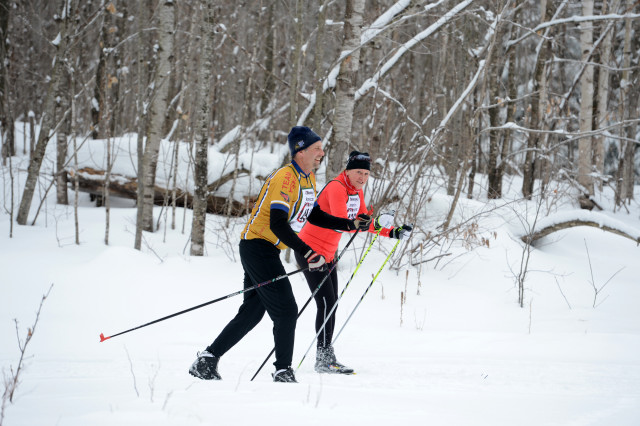
Tag: birkie trail

  • ABSF Announces Groundbreaking of New Samuel C. Johnson Family Outdoor Center

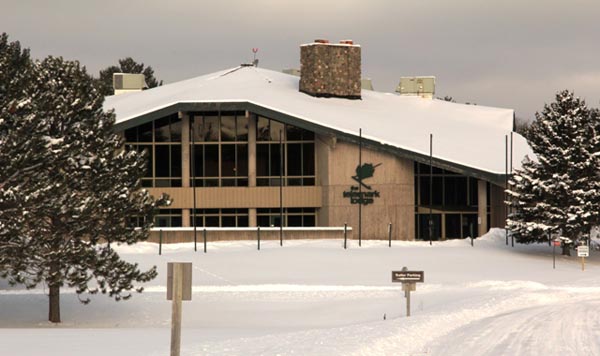
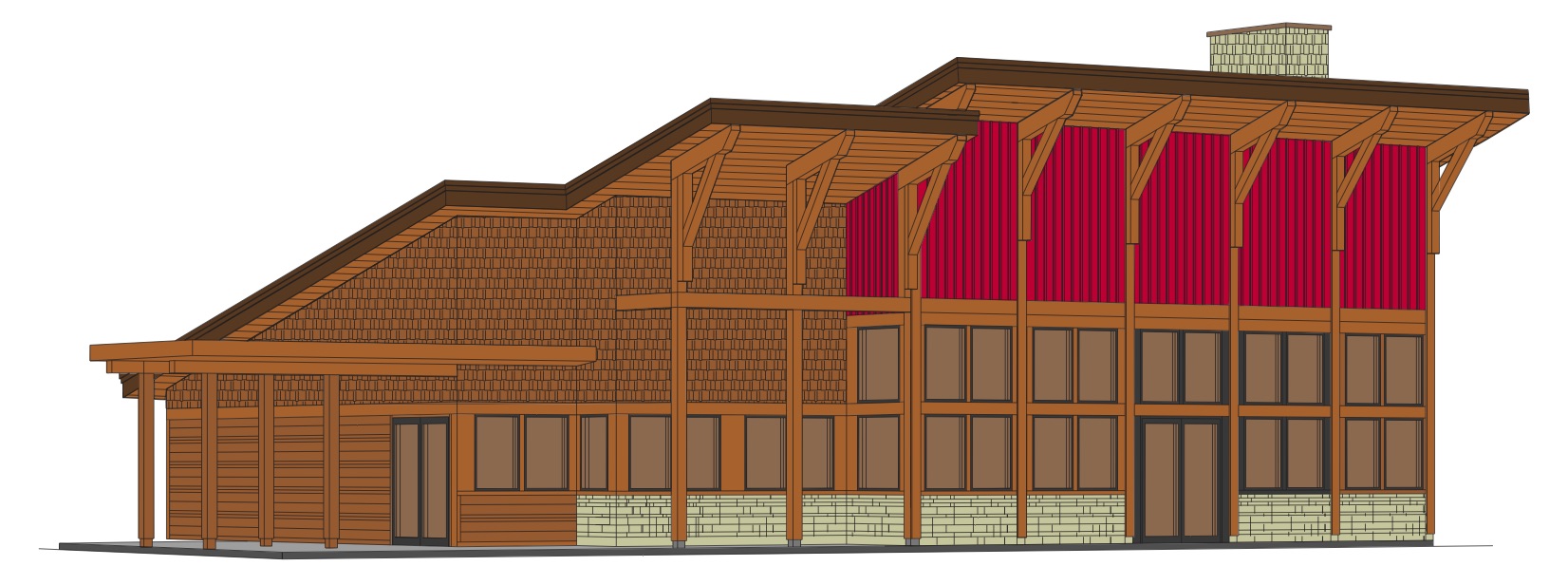
    Rendering of the new Samuel C. Johnson Family Outdoor Center at the halfway point of the Birkie Trail near Seeley, Wis. (Photo: ABSF)

    (Press release)

    2500 Donors from 37 states & Canada Help ABSF to Reach Capital Campaign Goals

    Hayward, WI (May 25, 2018) — The American Birkebeiner Ski Foundation (ABSF) has been enhancing the quality of lives for nearly half a century. For generations, ABSF events and the award-winning Birkie Trail system have been motivating adventurous spirits to embrace an active, outdoor lifestyle. In support of providing the infrastructure, spaces, and places to keep that spirit alive, the ABSF is pleased to announce completion of the second and final phase of their Honoring the Legacy – Ensuring the Future capital campaign.The resulting initiatives will change the face of the Birkie Trail for participants, volunteers, visitors, and surrounding communities for years to come.

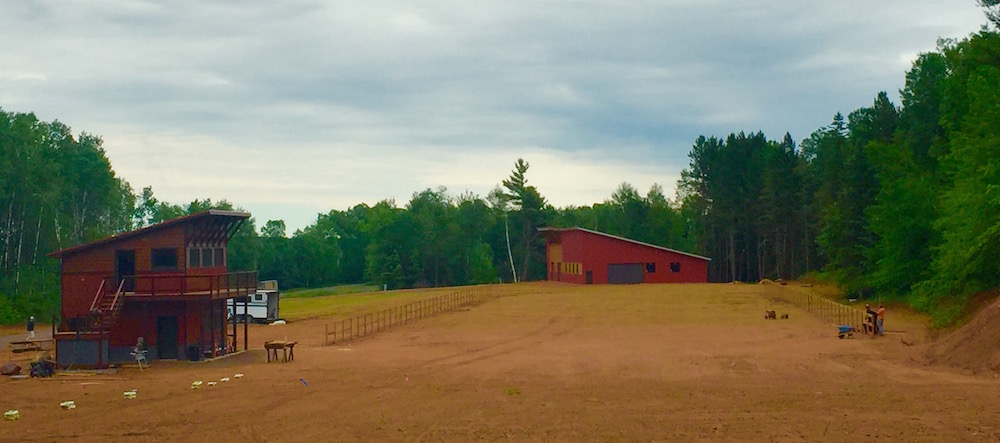
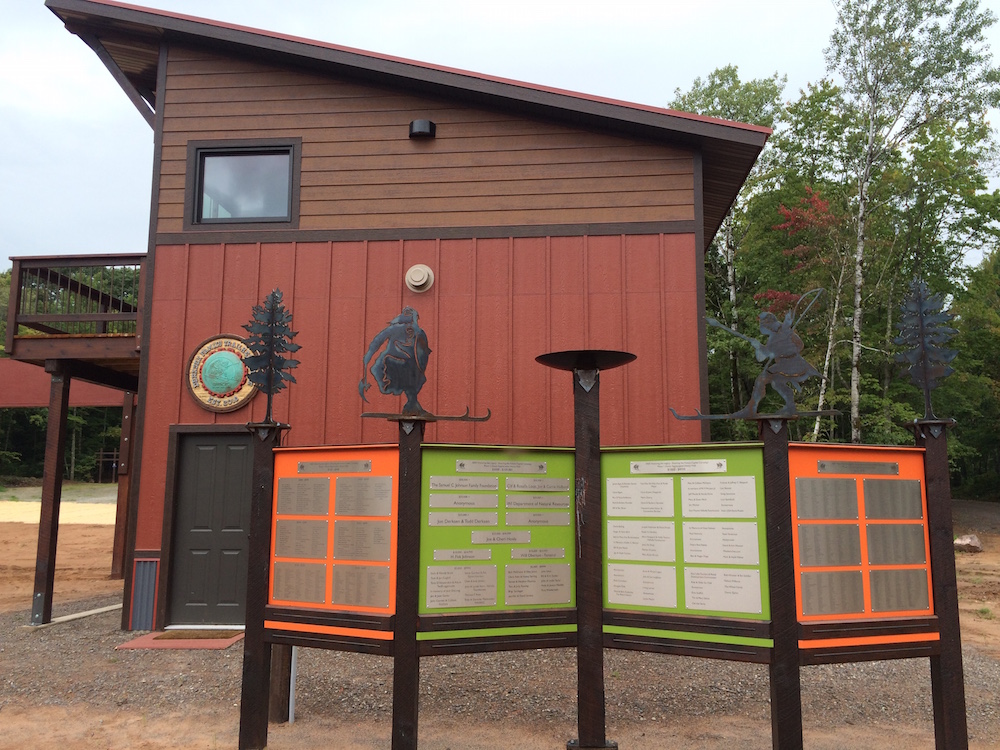
    At the heart of phase two of the capital campaign is the creation of the Samuel C. Johnson Family Outdoor Center. The new 4,000 square foot facility will be located at the halfway point of the Birkie trail at the WI County Highway OO Trailhead near Seeley, WI. With an estimated 100,000+ Birkie Trail users each year, the Samuel C. Johnson Outdoor Center will provide a gateway and year-round hub for people to access and utilize the world-class trail for hiking, biking, running, skiing, and year-round events. Facility amenities will include a gathering hall, heated restrooms, changing rooms, and a waxing and bike repair room. Named in memory and honor of Samuel C. Johnson, the Johnson family from Racine and Cable, WI, respectively, provided the lead gift for the structure through the Johnson Family Foundation. This is not the first philanthropic support the ABSF has received from the Johnson family over the years (SC Johnson Wax, Johnson Financial Group, Johnson Family Foundation). Johnson Financial Group (Johnson Bank) is the longest-standing Birkie event sponsor through their ongoing support of the Barnebirkie youth ski tour, while the Johnson Family Foundation and Johnson Financial Group supported the creation of the Tony Wise Museum of the American Birkebeiner, and the family was personally instrumental in assisting the ABSF with procurement of the land for the American Birkebeiner Trailhead, along with other philanthropic efforts.

    “We are extremely grateful to the Samuel C. Johnson Family and the many generous donors who helped us to reach our capital campaign goals,” said Ben Popp, ABSF Executive Director. “We’re humbled by the supportof the Birkie community, by their sustained belief in what we do, and are thankful we can continue to make theBirkie lifestyle dreams a reality for generations to come.”

    The groundbreaking ceremony for the Samuel C. Johnson Family Outdoor Center is slated for June 9, at 2:00pm, 3.3 miles East of Seeley, WI, at the County Highway OO Trailhead. The public is invited to attend.

    In addition to support from the Samuel C. Johnson Family, a grant for development of the trailhead was approved through Sawyer County and with the help of County Administrator, Tom Hoff. Funding will come from the Stewardship Acquisition and Development of Local Parks Grants program and the Recreational Trails program of the Department of Natural Resources (DNR). In addition, grant funding was made possible through the Huelsmann Foundation and the Judd Alexander Foundation. Funds will be received from the Johnson Family over three years, with DNR funds acquired throughout the construction process. In addition, over 2500 individual donors from 37 states and Canada supported the second phase of the Honoring the Legacy –Ensuring the Future capital campaign. Other donors playing an integral role in the Samuel C. Johnson Family Outdoor Center and associated Birkie Trail infrastructure enhancements include:

    • Brent Carlson, M.D. Great Room, Classroom, and Entry foyer – Supported by Brent Carlson, M.D., the rooms will provide gathering spaces for groups, clubs, families, and schools, before and after they embark on outdoor adventures on the Birkie Trail.
    • New Moon Ski & Bike Shop Ski Waxing & Bike Repair Room – Supported by New Moon Ski & Bike Shop of Hayward, WI, this tech room will enable skiers and bikers to prepare and repair their equipment for their Birkie Trail experiences.
    • Virkus Workout Room — Supported by Gus and Julie Virkus, this room will provide a year-round space for outdoor Birkie Trail users to learn and practice skills to encourage an active, outdoor lifestyle.
    • GymRage Outdoor Circuit Course — Supported by Thom and Utina Malnourie, this outdoor, multi-station fitness course will adjoin the Samuel C. Johnson Family Outdoor Center.
    • Key Log Rolling Crossing — Supported by Jay and Judy Hoeschler and located near the new Samuel C. Johnson Family Outdoor Center, this Birkie Trail connecting bridge will allow safe passage over WI County Highway OO for all users of the Trail system.
    • Becker Law Link — Supported by Becker Law Firm, this recreational tunnel will enable Birke Trail users to travel beneath WI County Highway 77, on race day and every day.

    Plans for all projects are underway with completion dates ranging from fall 2018 to spring 2019; final approvals, permitting, and plan revisions are currently in progress.

    Previously completed phase two capital campaign projects include an initial investment in snowmaking infrastructure for low snow years; procurement of a new dump truck, snowplow, skid steer, snow bucket, and Arctic Cat snowmobile; construction or renovation of trailside cabins including the addition of running water and solar-powered generators at each. Trailside cabin benefactors include Timber Trail Cabin (Anonymous Family, Cable, WI); Franzen Firetower Trail Cabin (Greg & Marilyn Franzen); Strand-Johnson Gravel Pit Trail Cabin (William Johnson); and Mandli Boedecker Trail Cabin (Mike & Jane Mandli). These gifts are in addition to thousands of donors who made the initial phase of the capital campaign a smashing success.

    The American Birkebeiner Ski Foundation is a 501(c)(3) non-profit organization with a mission to promote and conduct the finest international cross-country ski competition and healthy, active lifestyle events; to serve as good stewards of the American Birkebeiner Trail; and to support healthy and active lifestyles among people of all ages and abilities. As the sole steward of the over 100-kilometer Birkie Trail system, the ABSF spends an estimated $350,000 annually on ongoing trail maintenance, mowing, and grooming.

    About the American Birkebeiner® Ski Foundation and Birkie® Events

    Located in Hayward, Wisconsin, the American Birkebeiner Ski Foundation (ABSF), a 501(c)(3) organization, is known for its signature American Birkebeiner Ski Marathon held each February. Today, the Birkie has grown to encompass a variety of year-round, silent sport events that promote a healthy, active lifestyle for thousands of outdoor fitness enthusiasts. The ABSF also acts as steward of the legendary Birkie Trail, providing year- round grooming, mowing and maintenance to all 100+ kilometers. From the iconic American Birkebeiner ski race, to the Birkie Trail Run Festival, and Fat Bike Birkie, the ABSF and the Birkie Trail attract skiers, runners, bikers, trekkers, and hikers, from around the world. Learn more at www.birkie.com.

  • Who’s Still Skiing? More People Than You May Think

    Who’s Still Skiing? More People Than You May Think

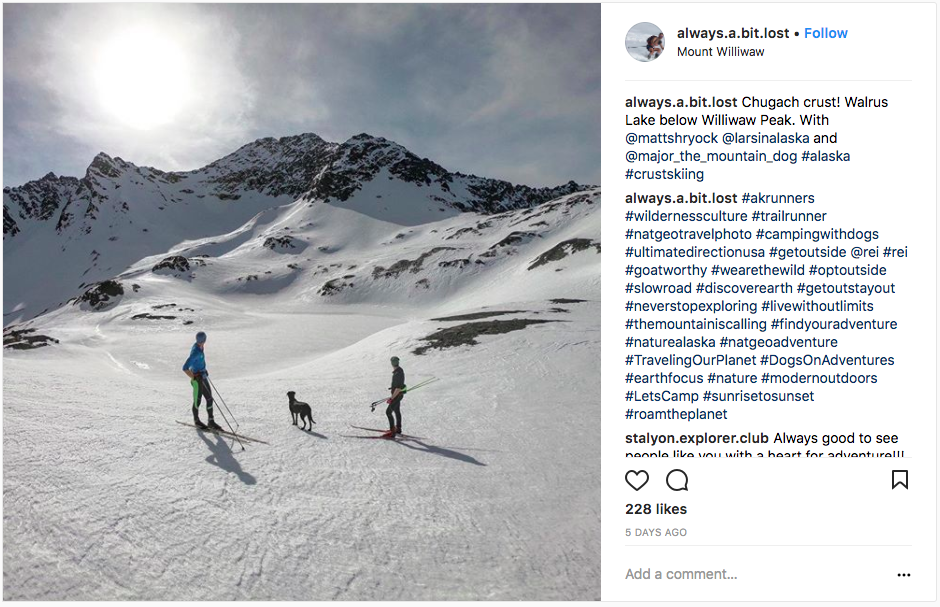
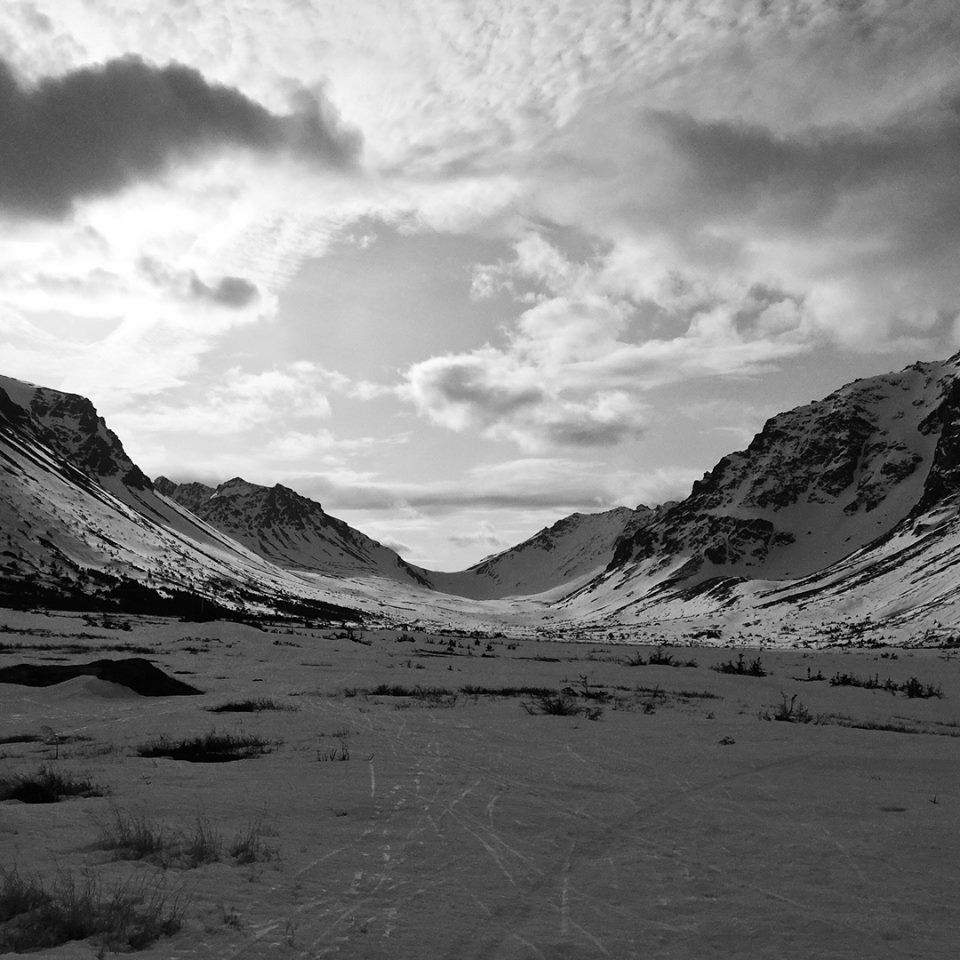
    Crust skiing on April 17 in Chugach State Park, at the edge of town above Anchorage, Alaska. (Photo: Gavin Kentch)

    This article has been updated with additional information on pro skiers who volunteered with Skiku, and additional pictures from Montana and New York.

    *   *   *

    It’s the last week of April. Skier New Year, May 1, looms next Tuesday. It’s roughly six months till the presumptive first race of the 2018/2019 season, seven till the first World Cup weekend. Whether you’re a pro or an amateur, whether you’re targeting your first World Championships or your first Birkie elite wave, now is the time to start thinking about setting goals and writing training plans.

    For a certain subset of athlete, those spring training plans still involve skiing. On snow. In some cases, really good snow, in surprisingly wintry weather.

    In honor of the last week of the offseason, please join FasterSkier as we channel our inner Us Weekly and flit through an extremely unscientific social-media roundup of those athletes who are still on snow, arranged in very approximate order of most to least surprising to be skiing at this time of year. (Actually, it’s only the Midwest and Vermont where it seems somewhat surprising to still have skiable snow in late April; no offense is intended to anywhere on the list after that.)

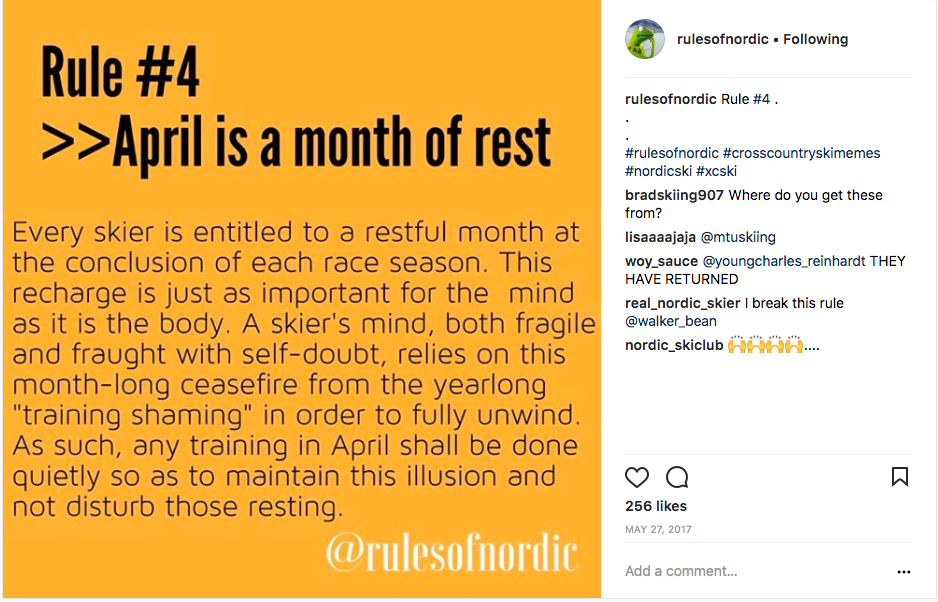
    And before we begin, a quick note on methodology: This social media roundup is by definition limited to those athletes who are not only currently out in the snow, but who are also posting about it on social media. This second criterion threatens to bring your average recovery-month athlete into conflict with what has been codified as Rule of Nordic No. 4, “April is a month of rest.”

    So, caveat lector: Just because your favorite skier has been taking a well-deserved break from finding and curating Instagram-worthy content for your enjoyment, this doesn’t mean that they’ve been sitting on their butt since Spring Series. They just might not want to tell you what they’ve been up to, and/or they wish to avoid damaging the fragile psyches of their colleagues.

    inhalers online

    With all that out of the way, on to:

    New York:

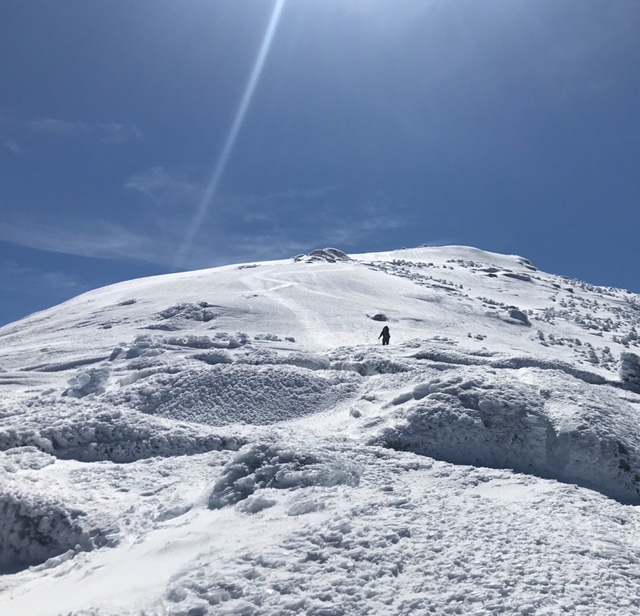
    Skiing on New York’s highest peak? Check. David Hochschartner of the North Country School in Lake Placid sent us this photo of backcountry shredding on Mount Marcy, the highest point in the state at 5,343 feet above sea level.

    “Monday skiing from bottom to the summit of Mount Marcy in New York,” Hochschartner wrote in an email to FasterSkier on Wednesday. “Over 3500′ vertical … backcountry skiing does not break rule #4 because it isn’t training, it’s just fun!”

    Backcountry skiing near the top of Mount Marcy in New York’s High Peaks region on Monday, April 23. (Photo: Tim Ely)

    The Midwest

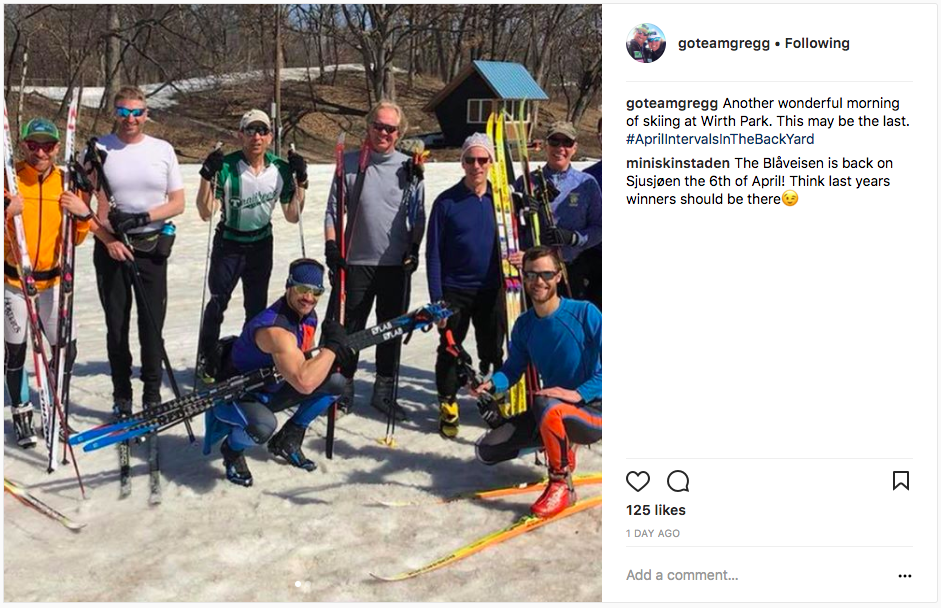
    It snowed in the Twin Cities last week. Like, a lot. Like, a short-notice classic race was held at Theodore Wirth Park on April 16, on fresh natural snow, in Extra Blue conditions. Coverage appears to have been pretty darn good.

    While things seem to be melting fast now, here was the scene at Wirth on Sunday morning, April 22, courtesy of Team Gregg:

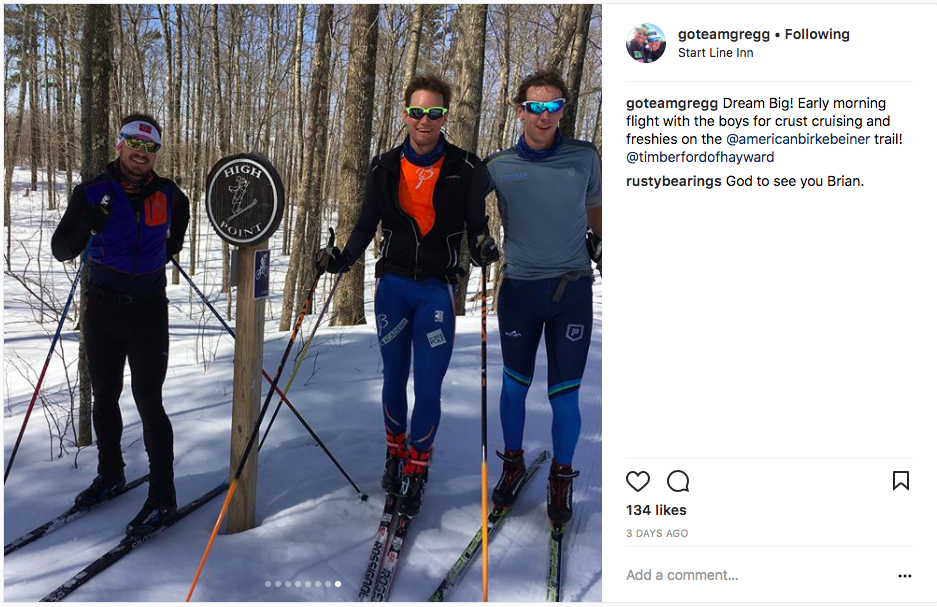
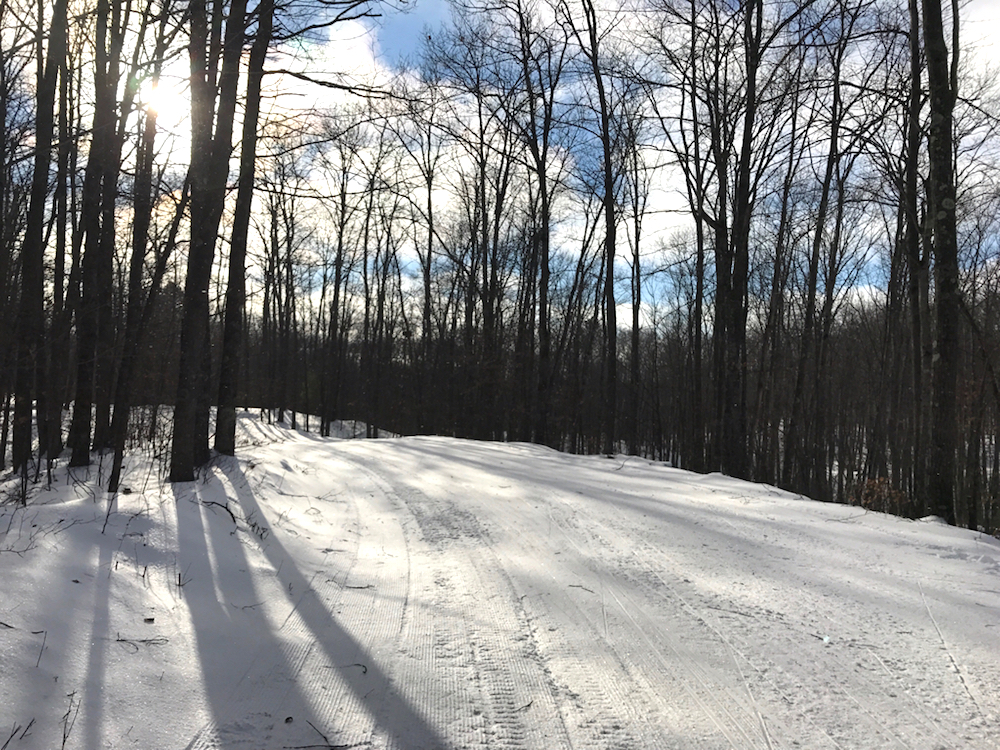
    And here’s the Birkie trail on April 20, same Instagram feed:

    The mid-April Midwest blizzard was notable, to be sure. But was it historic? Yes, says Ari Ofsevit, who now lives in Boston but was formerly the source behind Twin Cities XC Commentary and who remains the one-man operation behind the indispensable BirkieGuide.com.

    Here’s Ofsevit with some historical meteorological perspective:

    Basically, the current weather in the Twin Cities is pretty unprecedented. The only other similar year was 1975, when there was at least 3″ of snow on the ground in MSP for 11 days in April (this year had 12), but that year it was an old, melting base that mostly fell in late January. This year will set the following records:
    * Most days with at least 3″ of snow on the ground in April (skiable snow): 12
    * Most snow in April: 26.1″
    If the current forecast to hit the 70s this weekend holds, it won’t wind up the coldest April on record, but will likely be in the top three. But it’s a good combination of cold and snow, which hasn’t been seen to this degree before.
    The average year has the snow depth dipping below 3″ around March 1, so it’s an extra month and a half of winter.

    Vermont

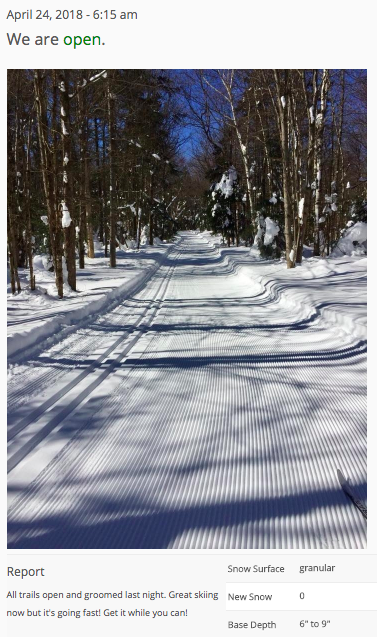
    There’s a lot of snow at Prospect Mountain in Woodford, Vermont, too. (“Getting 80″ in a week in March didn’t hurt,” Ofsevit notes.) Here’s a stunning screenshot from the conditions report for Tuesday, April 24 (just offscreen is the current temperature, 69°):

    Dartmouth skier Adam Glueck skied 50 k there on Sunday, describing conditions as “50+ F and transformed.”

    Montana

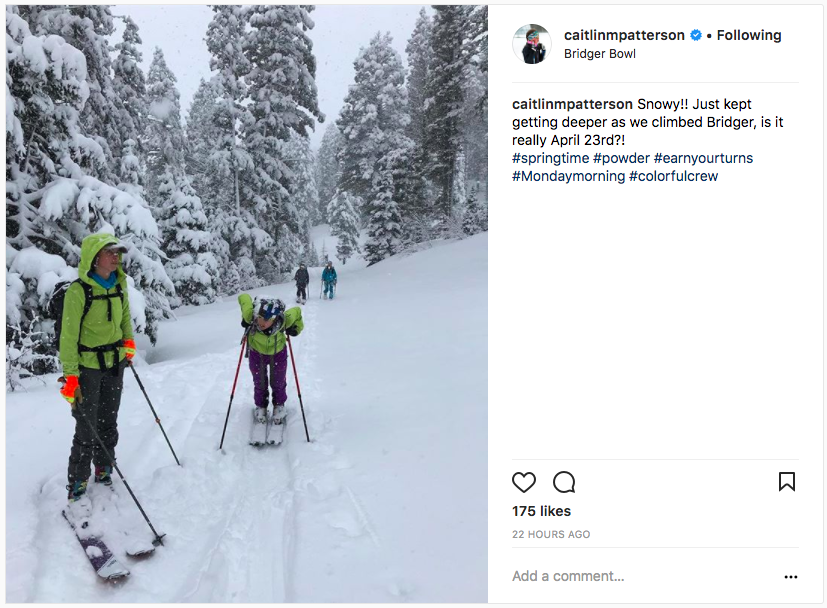
    Effective Tuesday morning, they were still grooming some nordic trails at Crosscut Mountain Sports Center (formerly Bohart Ranch). Pictures of nordic skiing there are hard to come by right now, so here’s a screenshot from Caitlin Patterson’s Instagram page showing backcountry skiing at adjoining Bridger Bowl on April 23 in fresh powder:

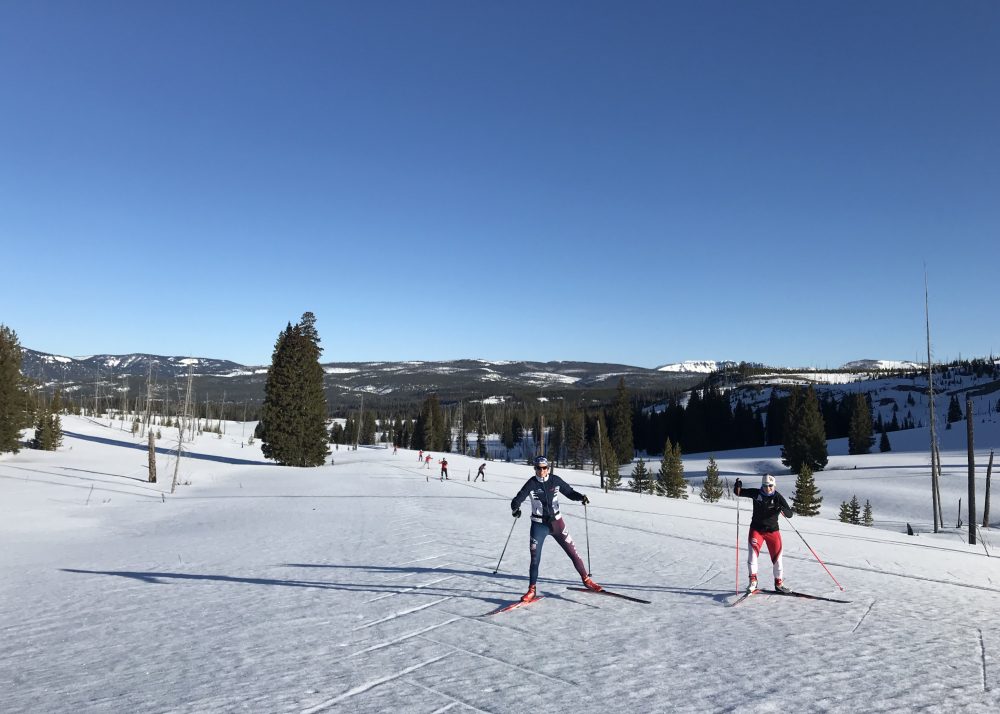
    And from two days before that, here’s some prime crust skiing at Fawn Pass on Saturday:

    Crust skiing at Fawn Pass, outside West Yellowstone, Montana, April 21, 2018. (Photo: Caitlin Patterson)

    Canada

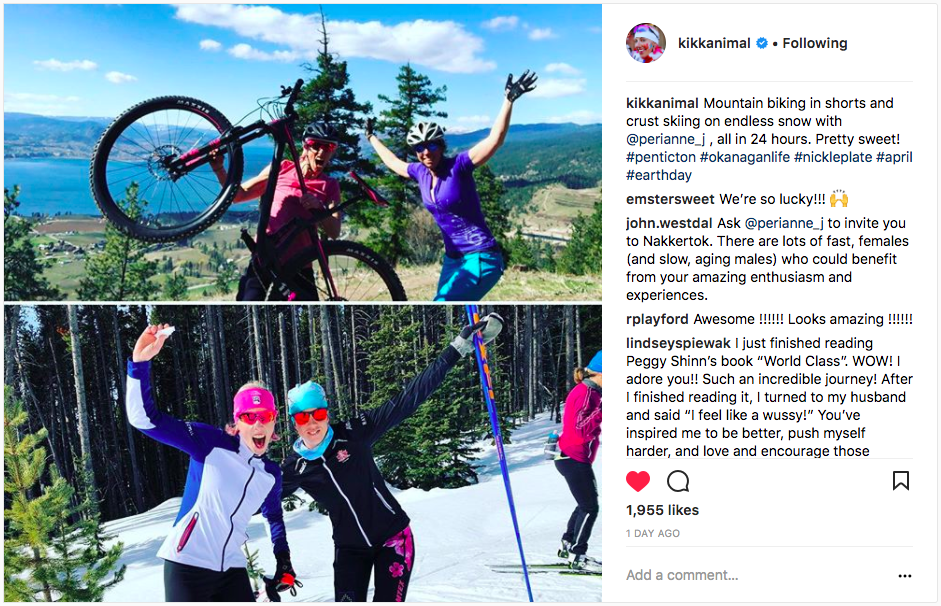
    Recently retired American skier Kikkan Randall doesn’t seem to be suffering from her move to Penctiton, B.C., judging from Sunday’s shot of crust skiing with former Canadian World Cup racer Perianne Jones:

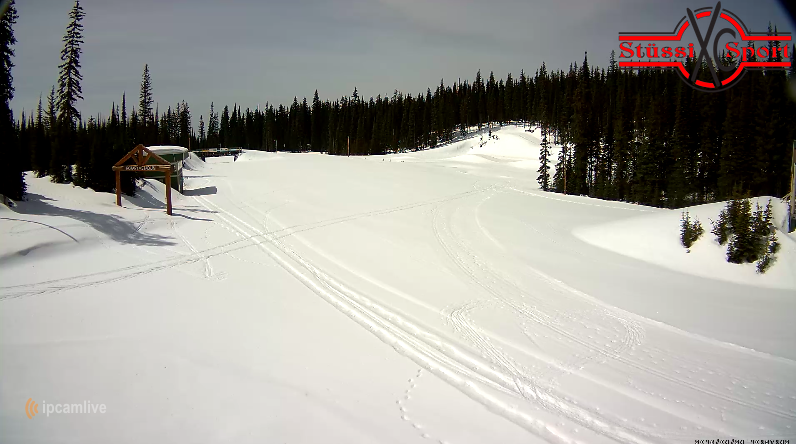
    And 100 kilometers to the north, Sovereign Lake Nordic Centre isn’t lacking for snow, either. Here’s a screenshot from the webcam as of Tuesday morning, showing impeccable coverage:

    That’s a base of 256 centimeters, or over eight feet (!) in American, according to a current conditions report. Sovereign Lake is closed to official skiing at present, but reopens from May 10-13 for its Spring Fling Ski Camp.

    Oregon

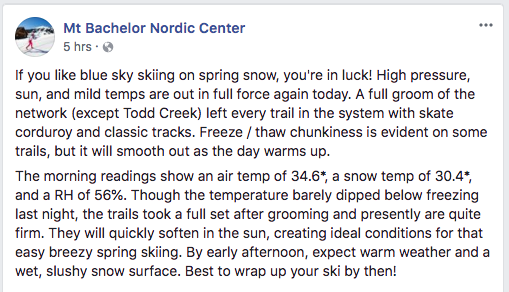
    Mt. Bachelor currently has a base of 85″ at 6,300 feet near the base of the alpine area, which is somehow less than Sovereign Lake but still, you know, more than seven feet of snow. Here’s the nordic grooming report from Tuesday morning:

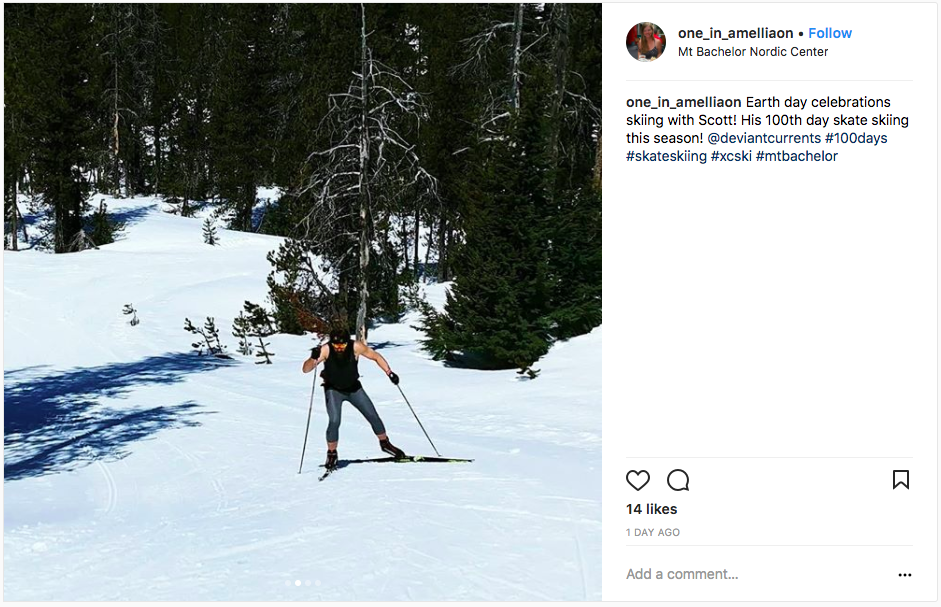
    And here’s a screenshot from local skier Amelia Roberts’s Instagram page, showing conditions on the Mt. Bachelor trails last weekend:

    Alaska

    There’s still a lot of snow in Alaska right now. Maybe not at sea-level Anchorage, which is staggering toward spring with a series of high-30s, mid-40s raw and windy days culminating in snow squalls Tuesday evening – Kincaid is down to the dregs of a snowmaking loop by this point, and formal grooming there ended last weekend – but pretty much everywhere else. This reporter found fresh snowfall and blowing spindrift at 2,200′ at the edge of town Monday morning, and most places higher than that are still snow-covered. There is over five feet of snow at Hatcher Pass, and temperatures there remained below freezing even as it rained at sea level on Tuesday. The Mat-Su Ski Club should presumably once more be grooming through mid-May with ease.

    (And this doesn’t even get into the Interior. They’re still grooming at Birch Hill in Fairbanks, for example, and a quick look around the state shows that most spots still have snow on the ground.)

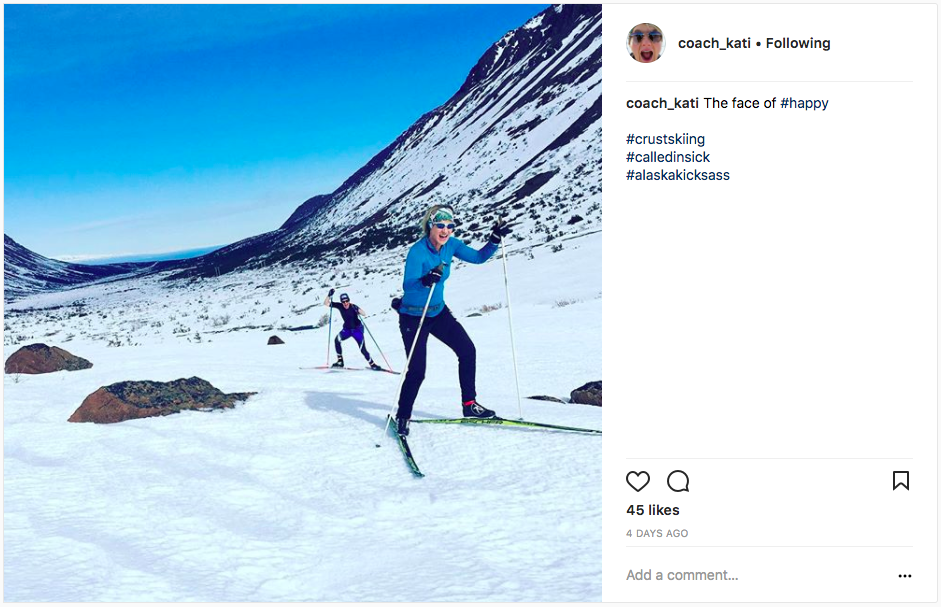
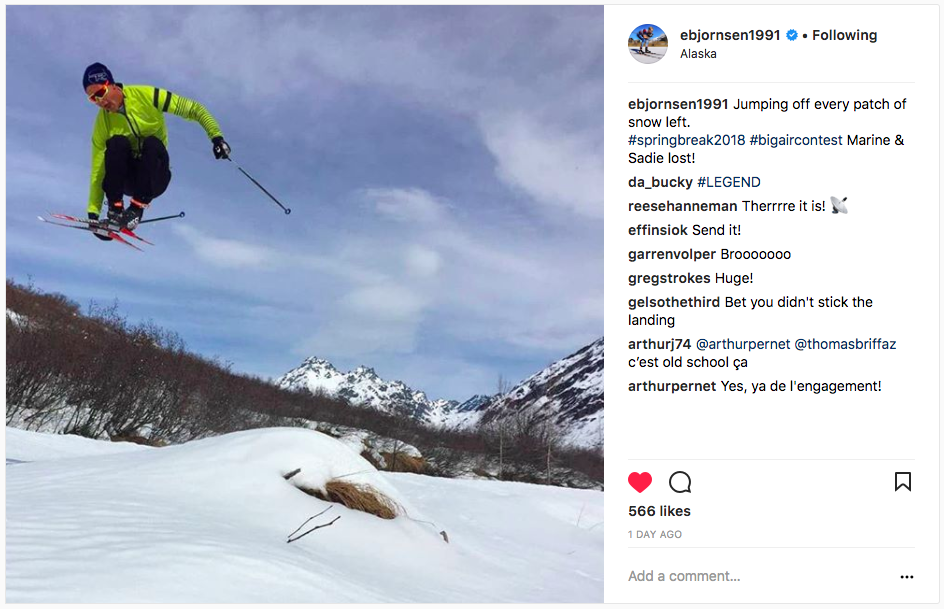
    Until then, there’s crust skiing. Here, for example, are local Master skier Kati Rehm, local dentist Adam Jensen, and local two-time Olympian Erik Bjornsen on recent crust ski outings around Anchorage:

    For those less fortunate, here are FBD’s nonpareil reviews of skate and classic rollerskis.

    Other

    P.S. Who’s not on snow right now? Plenty of athletes are taking a well-deserved break this month, see Rule 4, supra. Andy Newell (on the beach in Indonesia), Erika Flowers Newell (on the beach in Indonesia, with Andy), Jessie Diggins (on the beach in Boston), Noah Hoffman (enjoying retirement in New York City), Sadie Bjornsen (at Zion National Park), and Kaitlynn Miller (in Milan) are among the American skiers who are doing anything but clipping into their bindings right now. Plus honorable mention, volunteer division, to Tyler Kornfield, Rosie Brennan, Team Gregg, and Scott and Caitlin Patterson, all of whom spent roughly a week earlier this month doing ski education outreach in rural northwest Alaska through Skiku.

  • Caitlin Gregg on Her Record-Setting Fifth Birkie Title: ‘I’m trying to set the bar pretty high’

    Caitlin Gregg on Her Record-Setting Fifth Birkie Title: ‘I’m trying to set the bar pretty high’

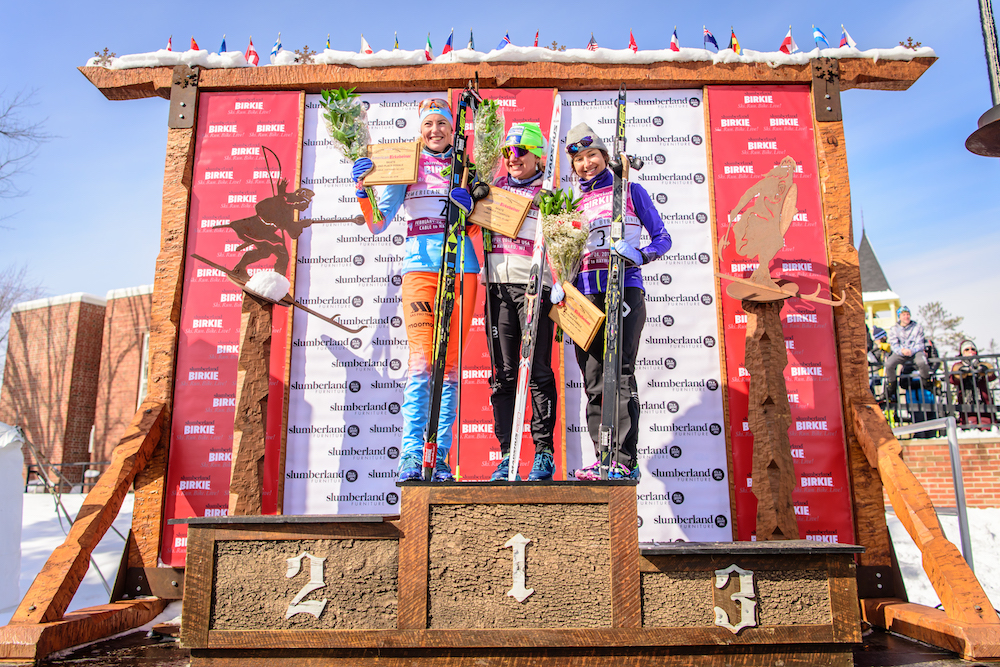
    The elite women’s skate podium at the 2018 American Birkebeiner on Saturday in Hayward, Wisconsin, with Caitlin Gregg (c) in first, Sweden’s Maria Gräfnings (l) in second and Chelsea Holmes (r) in third. (Photo: American Birkebeiner Ski Foundation 2018)

    Caitlin Gregg has raced the American Birkebeiner enough times — and won it more than anyone else — that she’s got the course down pat. Powerline, Big Bertha, High Point, Heckler’s, OO, Gravel Pit, Mosquito Brook, B*tch Hill, Hatchery, the lake, the bridge, the Main Street finish.

    But the conditions and the competition, that’s something that changes from year to year. The elite racers were among the first to start the 50-kilometer American Birkebeiner (“Birkie”) skate races on Saturday, giving them the edge in terms of firmer conditions over nearly 13,000 other racers behind them, but it was still not the fastest Birkie on record after six inches of new snow had fallen the day before.

    But away they went, jetting out of the Birkie’s new start line and embarking on the 50 k point-to-point course from Cable to Hayward, Wisconsin. The elite women’s skate race started at 8:30 a.m. followed by the elite men 20 minutes later.

    While the women remained in a large pack for the first 15 k or so, according to Gregg, they were down to six around 20 k.

    “I think this is one of the strongest fields that I’ve ever seen at the American Birkebeiner for the women,” Gregg recalled in a post-race press conference. “A lot of really fast ladies, a lot of depth, and so it was a pretty high-paced race the whole time. There were definitely five of us in that top six group taking leads and doing pulls, and we definitely worked together to kind of separate ourselves from the field behind us.”

    Three of those racers fell of the pace, which left Gregg, Sweden’s Maria Gräfnings, and Chelsea Holmes contending for the win. Gregg, 37, races for the Central Cross Country (CXC) Team, Loppet Nordic Racing and Team Gregg. Gräfnings, 32, is a former University of Utah skier, and Holmes, 31, races for Alaska Pacific University (APU).

    Just over 2 kilometers before the finish, as the three were skiing across Lake Hayward, the elite men’s race leaders caught them. Typically, the top elite women finish before the men.

    “I could hear another snowmobile, and I knew what that meant, and I kind of looked around at the women and I said, ‘Oh, the men are coming,’ ” Gregg reflected. “… When they caught us, it was actually kind of a surprise because a couple went by, and then they just kept coming.”

    The lead pack of men was still close to 30 strong at that point, just 2 k before the finish.

    “It was the weirdest thing I’ve even experienced in a race, where you just have this consistent line of guys coming and it was actually, really great,” Gregg continued. “Because the women, we raced our own race, we jumped in towards the back of that pack, but we stayed in our own pack.

    “At one point, I suggested maybe we should move over for the men,” she added. “I like these ladies; they were like, ‘NO. They can go around us. They can figure it out. We’re doing our own thing.’ So I thought that was pretty cool.”

    Gräfnings had been leading when the men caught them.

    “And then I thought ‘Now I can go with them,’ but, no, they were going really fast,” Gräfnings said at the press conference. “So, then I was leading the pack, the women’s, and I guess I was getting really tired when I was doing that…”

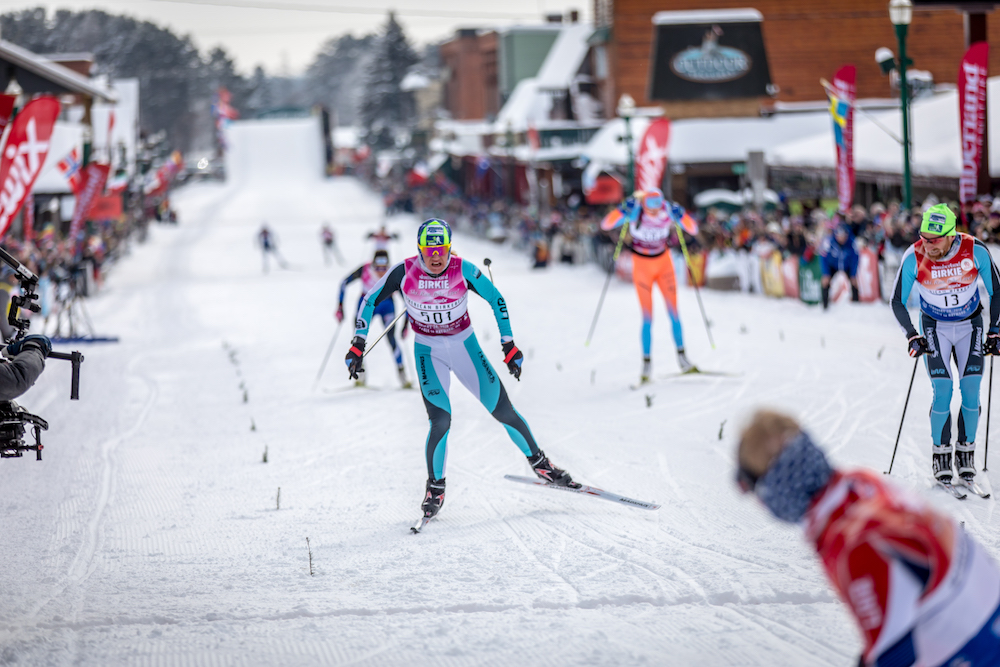
    Caitlin Gregg (501) winning her fifth American Birkebeiner on Saturday in Hayward, Wisconsin, while skiing alongside her husband Brian Gregg (13), who placed 22nd in the elite men’s skate race. (Photo: American Birkebeiner Ski Foundation 2018)

    Gregg took the lead just before the Birkie’s International Bridge and went on to hold off Gräfnings and Holmes for the win in 2:23:30.3 hours. Gräfnings finished second, 2.5 seconds back, while Holmes placed third (+3.8).

    “I was like, ‘No, I can’t give up this. I have to really try to sprint then,’ ” Gräfnings recalled. “I’m glad I could get the second place.”

    Gregg won the last American Birkebeiner contested in 2016 (last year’s race was canceled due to low snow) in 2:22:44. With Saturday’s win, she has most Birkie wins of any racer, male or female, with five victories (2011, 2013, 2014, 2016, and 2018).

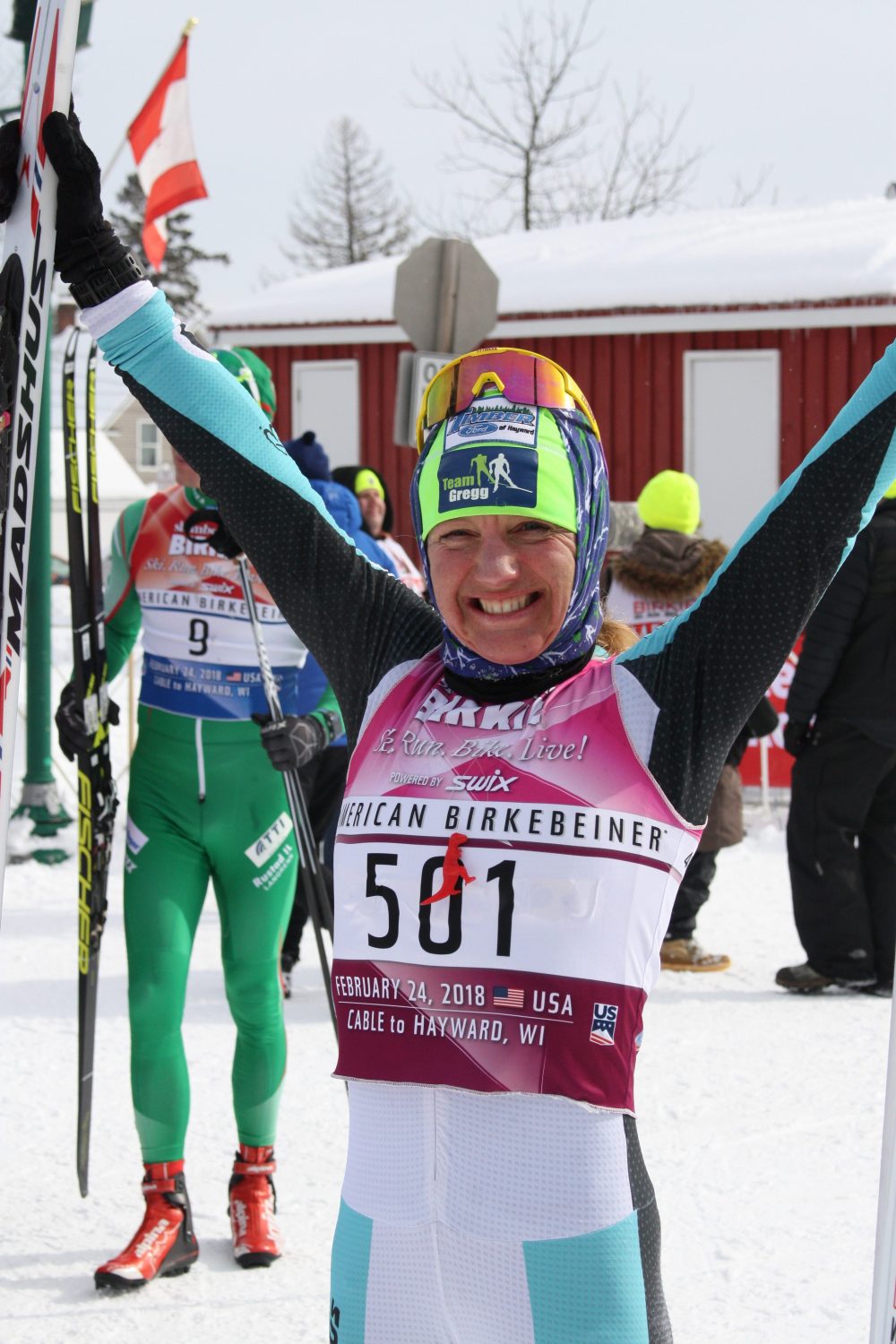
    “I’m trying to set the bar pretty high for the next person to come along and break that [record], so it feels amazing to win my fifth,” said Gregg, who lives in Minneapolis, Minnesota. “The conditions were absolutely perfect today. The course was just in amazing shape and just beautiful out there, and this is definitely one of my favorite races, that’s why I keep coming back. Everything about it, between the organization and the volunteers makes this a special event for so many people, but, for myself, especially. So yeah, I was really happy year to be able to race again and feel good and really fight for the win.”

    Gräfnings said was pleased with her own race and glad to return to the U.S.

    “I was studying in the University of Utah and now I’m back in America and it’s so fun to meet a lot of friends and it’s really special for me,” she said.

    Holmes had previously raced the Birkie in 2014 and placed fifth, 3:45 minutes behind Gregg. She struggled with the cold and suffered in that race, she explained at the press conference.

    Caitlin Gregg celebrates her fifth American Birkebeiner win on Saturday after winning the women’s 50 k skate race by 2.5 seconds over Sweden’s Maria Gräfnings in second place. (Photo: RJ Ochmann)

    “I was very worried today about surviving with enough feeds and being warm enough,” Holmes said. “In the beginning, it’s a strange feeling because it always feels a little bit slow, like a very different race pace than even a 30 k that you do at other times, and especially with less climbing, which, I miss the hills a little bit … so that’s a little bit hard for me sometimes to sit in. But I think we shared the lead fairly well.

    “It was … good for me always to remember to relax and be patient because even when you have 25 k, you’re only halfway there,” Holmes continued. “So it’s a unique experience, the 50 k, because sometimes it feels like you’re not working that much, and I felt quite good. And then when I got five meters from the finish line, my legs just, I basically walked across the line. So, clearly I was very tired, but that’s how it goes.”

    France’s Aurelie Dabudyk was the fourth woman across the line, 28.7 seconds behind Gregg, Anja Gruber of Bozeman, Montana, placed fifth (+2:44.6), and Erika Flowers of the Stratton Mountain School (SMS) T2 Team finished sixth (+3:30.1). Also in the top 10 were Liz Guiney of the Craftsbury Green Racing Project (CGRP) in seventh (+5:33.8), Hallie Grossman (CGRP) in eighth (+8:03), Hannah Bettendorf of Duluth, Minnesota, in ninth (+8:19.2), and masters skier Laura McCabe of Winthrop, Washington, in 10th (+8:20.6).

    The Birkie is the fifth of seven races on the 2018 FIS Worldloppet Cup calendar. Dabudyk now leads the overall standings by just 10 points over Gräfnings in second. In her first Worldloppet race of the year, Gregg ranks seventh.

    In the men’s overall standings, France occupies the top four with Gerard Agnellet in first, just 1 point ahead of Ivan Perrillat Boiteux in second, and 120 points clear of Loic Guigonnet in  third. Adrien Mougel ranks fourth, another 2 points behind, and Norway’s Anders Gløersen breaks up the French sweep in fifth, 3 points behind Mougel.

    Norris Makes the Move, Gløersen Takes the Win

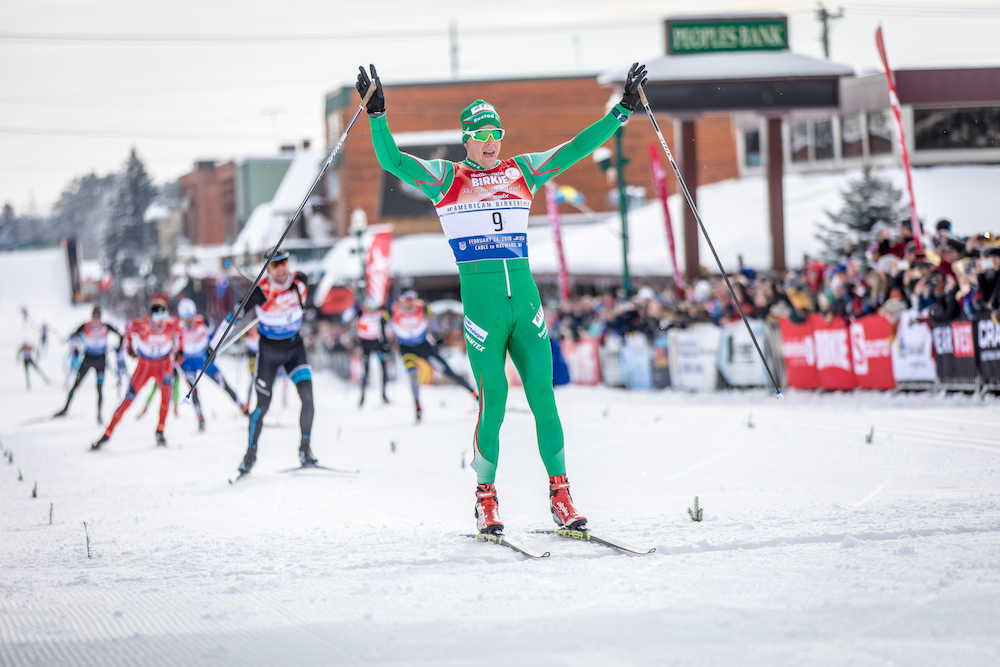
    Norway’s Anders Gløersen winning the American Birkebeiner elite men’s 50 k skate race on Saturday in Hayward, Wisconsin. (Photo: American Birkebeiner Ski Foundation 2018)

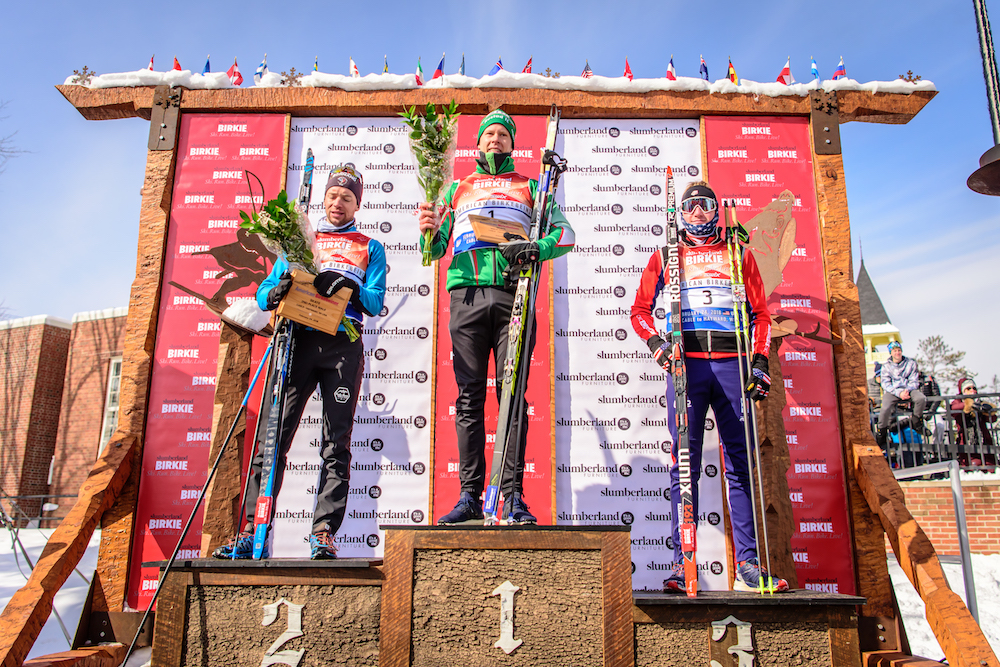
    Gløersen won the Birkie elite men’s skate race on Saturday in 2:02.29.6, just 1.9 seconds ahead of Perrillat Boiteux in second and 3.4 seconds ahead of American Kyle Bratrud (CXC Team) in third.

    After as many as 30 men stayed together up until the last 2 kilometers, the men’s pack began to string out after coming off the lake. According to Bratrud, it was David Norris who made the defining move at that point in the race. Norris had launched a similar attack two years ago, just before the bridge, to win the 2016 Birkie.

    “He started to string it out a bit and six or seven of us started to pull away from a line of about 30 of us,” Bratrud recalled at the press conference. “That’s kind of what led us to the break and ultimately to the sprint.”

    The top-10 men were within eight seconds of first, with Mougel finishing fourth (+4.4), Norris losing his lead and ending up fifth (+5.1), France’s Bastien Poirrier placing sixth (+5.5), and Agnellet following in seventh (+5.7). France had six in the top 11 with Guigonnet in eighth (+6.6) and Benoit Chauvet in 11th (+13.3). Americans Ben Lustgarten (CGRP) finished ninth (+7.0) and Jack Hegman of the Sun Valley Ski Education Foundation (SVSEF) placed 10th (+7.2).

    “It was a great race,” Gløersen, 31, said at the press conference. “Perfect conditions and nice weather. And it was a difficult to know how to do because I don’t know so many of the American skiers here, and I know the French guys … I had to watch out for them. So I just tried to stay in front of the big group to be ready if someone made an attack. It seemed like it was difficult to get away, and I was just glad when it was one kilometer left.”

    After Norris’s attack, Gløersen made a point to follow him.

    “I got the perfect position on the bridge here, just was number two and then had the perfect position going into the final 300 meters,” he said.

    Asked about passing the women late in the race, he said it didn’t affect the men’s race too much.

    “If it’s snowing, then it could make a difference because then you have the women making way, and when you pass them it’s going to be slower,” Gløersen said. “But today was quite good conditions so it was just fun to see when they catch them and to see who was in the group, but other than that, it doesn’t affect us much.”

    The elite men’s skate podium at the 2018 American Birkebeiner in Hayward, Wisconsin, with Norway’s Anders Gløersen (c) in first, France’s Ivan Perrillat Boiteux (l) in second and American Kyle Bratrud (r) in third. (Photo: American Birkebeiner Ski Foundation 2018)

    While both Gløersen and Perrillat Boiteux are marathon regulars, this was the first American Birkebeiner for both of them.

    “The Birkie was a great race, well organized, and I loved it,” Perrillat Boiteux, 32, said through a translator at the press conference.

    Bratrud, 25, was born in Eden Prairie, Minnesota, and attended Northern Michigan University, yet this was his first Birkie. According to the FIS database, it was also his first marathon. Asked about skiing in such a large group for most of the 50 k race, he said it was a new experience, but it was likely because the field was so competitive.

    “There’s a ton of strong guys there and no one really wanted to pull the other person to a victory,” Bratrud said. “So it was a lot of kind of cat and mouse and looking at each other and people made moves, but with so many strong skiers, it was hard for anyone to get away.”

    In the 55 k Birkie Classic, Minnesota native Ben Saxton (SMST2) edged Cole Morgan (SVSEF) by 1.5 seconds at the finish for the win in 2:47:35.9. Mathias Rolid of Marquette, Michigan, followed in third (+6.1).

    Wisconsin native Felicia Gesior (CXC Team) won the women’s classic race by more than 10 minutes in 3:08:07.3. Brandy Stewart of Bozeman placed second (+10:54.8) and Josie Nelson of Medicine Lake, Minnesota, reached the podium in third (+11:20.9).

    $$$

    While the Birkie’s 50 k skate race is part of the FIS Worldloppet Cup and reserves most of its prize money for first- through sixth-place finishers in both the elite men’s and women’s skate races (with $7,500 dollars for each winner), the 55 k Birkie Classic awards $1,000 to its men’s and women’s winners.

    This year, there were also two $500 sprint bonuses in the Birkie skate race, which were awarded to the first male and female competitors to reach the intermediate sprint checkpoints. According to Gregg, the first “prime” was about 2 1/2 or 3 kilometers into the race, and the second came just before 20 k.

    “I was curious how aggressive the women would be to go for those [sprint] primes and they were very aggressive, very fun,” Gregg said. “I think the first prime kind of set the tone and kind of strung things out a little bit.”

    Results (top 25): Birkie skate | Birkie classic

    Full results

  • Birkie Trail Run Festival & USATF Half Marathon Trail Championship Results

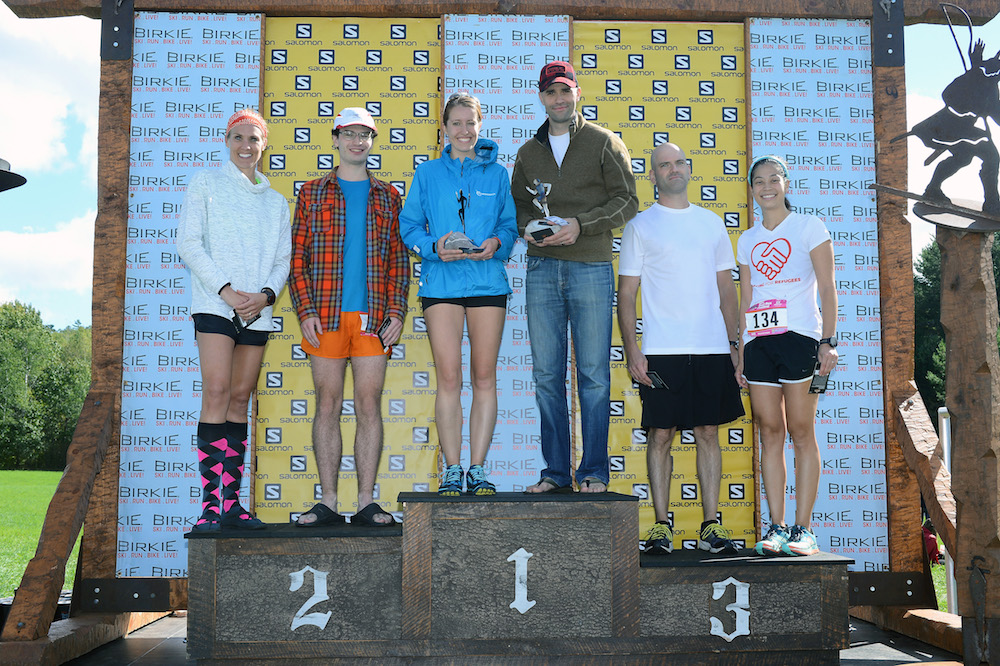
    2017 Birkie Trail Run Marathon podium finishers. (Photo: American Birkebeiner Foundation © Randolph)

    (Press release)

    Birkie Trail Run Festival & USATF Half Marathon Trail Championship Finish with Podiums from Coast to Coast!

    Birkie Trail Run Festival Continues to Grow & Attract Runners Nationwide

    Hayward, WI (September 30, 2017) – Runners and trekkers were welcomed with perfect temperatures, sunny skies, and cool autumn breezes at Birkie Ridge, Seeley, WI, for the 16th Annual Birkie Trail Run Festival and USATF Half Marathon Trail Championship race. With a record field of over 1200 runners in the day’s events, participants were amped up for the festival which included an ultra-marathon, marathon, marathon relay, half marathon, 5K, 10-mile Nordic trek, and fun run for kids.

    Birkie Half Marathon & USATF Half Marathon Championship Race

    The Birkie half marathon proved to be the most competitive and exciting event of the day as it played host to the USATF Half Marathon Trail Championship. The appeal of the National Championship race enticed participation from some of the best elite trail runners from across the U.S. The elite field didn’t disappoint.

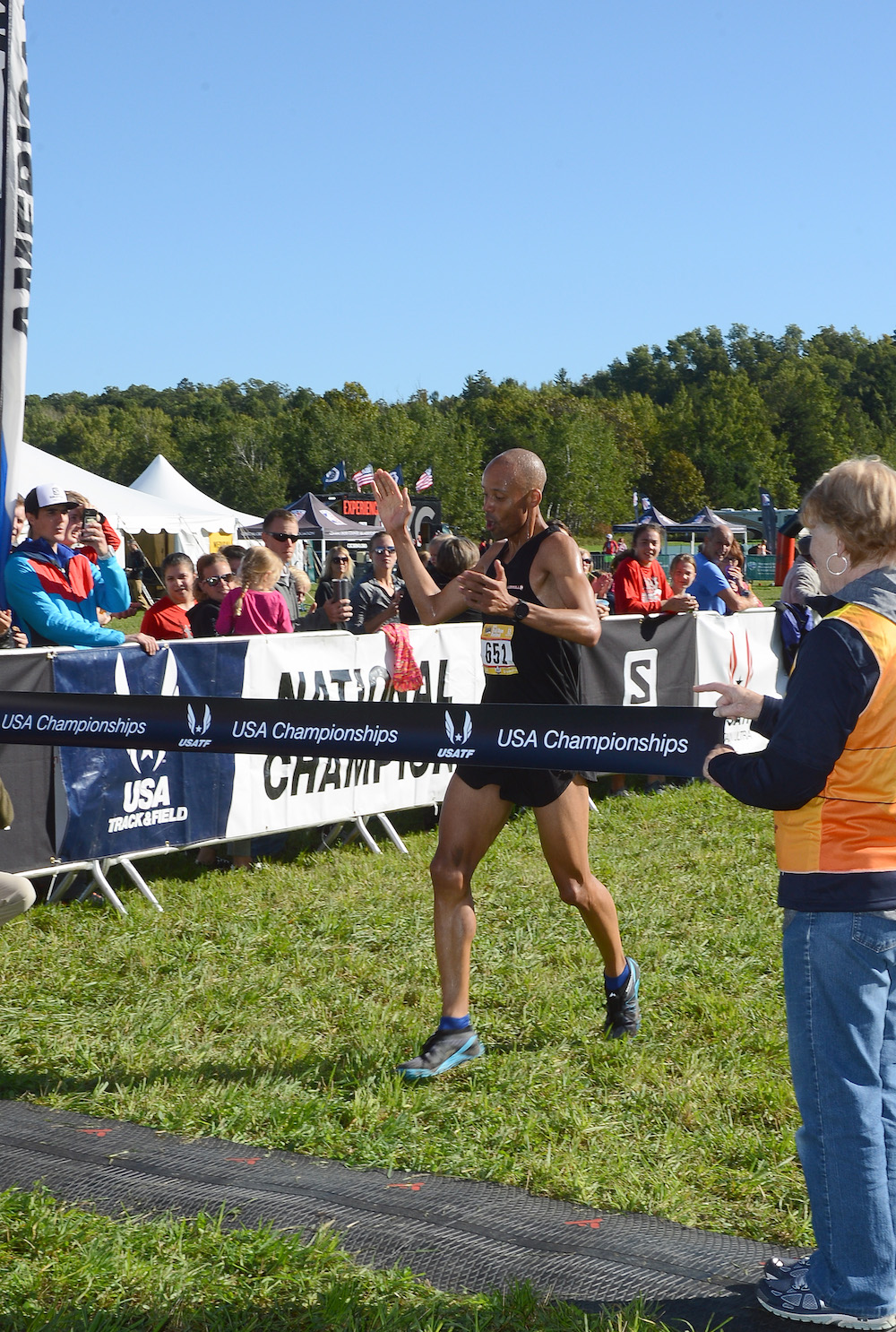
    Joseph Gray – USATF National Half Marathon Trail Champion (Photo: American Birkebeiner Foundation © Randolph)

    Joseph Gray, Colorado Springs, CO, blew through the finish line amongst the cheering crowds at Birkie Ridge. The 33-year-old emerged from the forested trail and into the final stretch with Justin Grunewald, Minneapolis, MN, not far in his rearview mirror. Gray finished with a time of 1:10:11, with Grunewald, age 31, on his heels at 1:10:51. No stranger to the top step on the podium, Gray has amassed 13 U.S. National titles.

    “It was a dream come true to run on so many miles of grass. I was amazed at the Birkie Trail course, it was heaven out there,” said Gray, after collecting his USATF National Championship award. “I really dug the course, there was awesome energy, it was well marked, lots of enthusiasm from spectators along the way. It was a great day.”

    12.4 Mile – USATF Half Marathon Trail Champions – Men

    • 1st Place – Joseph Gray, Colorado Springs, CO – 1:10:11
    • 2nd Place – Justin Grunewald, Minneapolis, MN – 1:10:51
    • 3rd Place — Tyler Sigl, Seymour, WI – 1:13:03
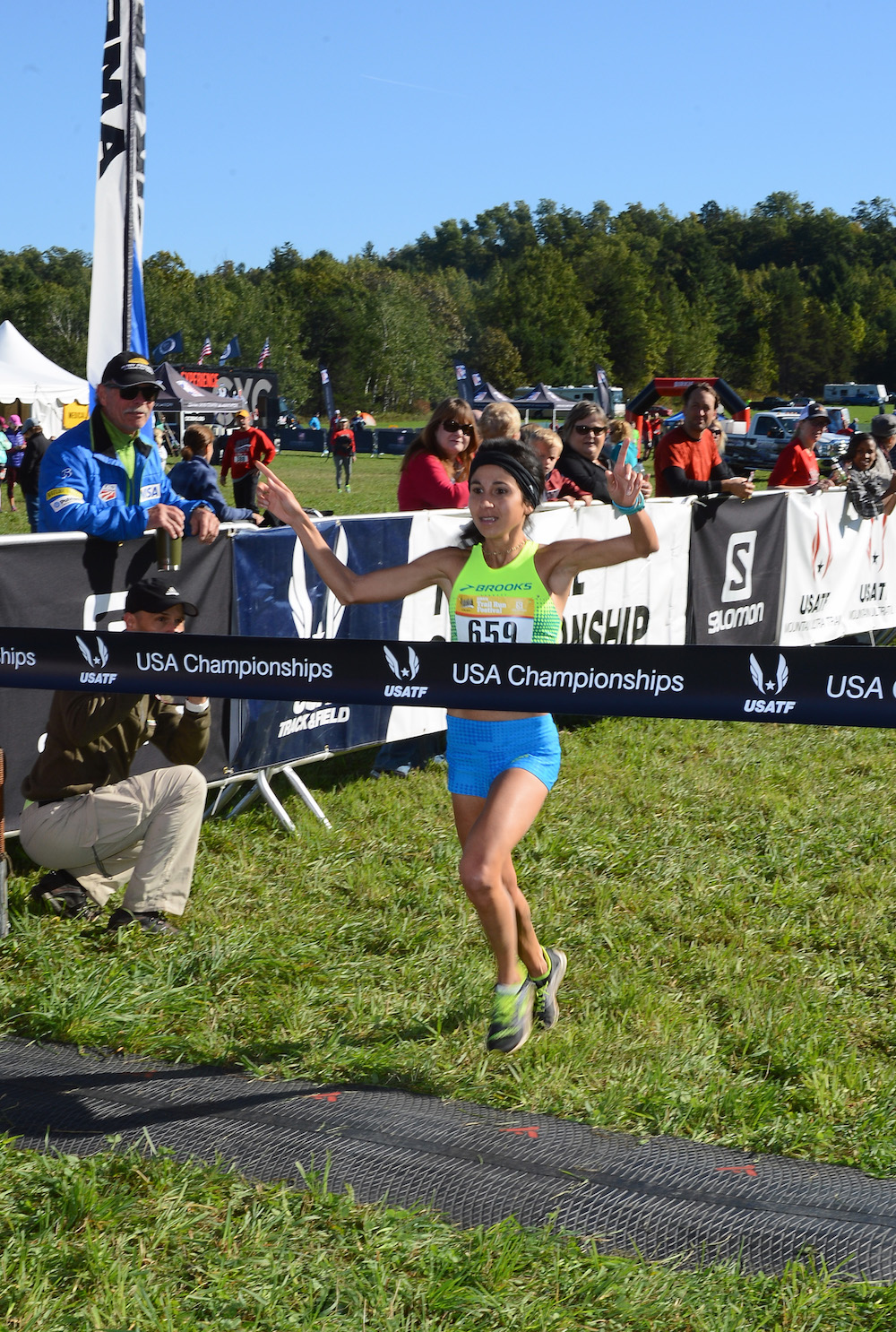
    Ashley Brasovan – USATF National Half Marathon Trail Champion (Photo: American Birkebeiner Foundation © Randolph)

    Twenty-six-year-old Ashley Brasovan ripped it up on the trail and flew across the finish line with a time of 1:18:30. While not a stranger to running in the mountains, this was Brasovan’s first trail run.

    “When I’m going to compete, I’m going to run hard. You just go out and see whose day it is going to be. I really wanted to podium today, it was a really great day,” said Brasovan. “Everyone has been super friendly and laid back, the race was well run, spectators were great, running my race was just the cherry on top. I’d love to come back next year,” Brasovan continued.

    12.4 Mile – USATF Half Marathon Trail Champions – Women

    • 1st Place – Ashley Brasovan, Westminster, CO – 1:18:29
    • 2nd Place – Dani Moreno, Santa Barbara, CA – 1:23:40
    • 3rd Place – Amber Kranz, Boise, ID – 1:28:58

    Saturday’s running events started early with the Ultra race (100 kilometers) at 5:30 am. Ultra marathon runners left Birkie Ridge with headlamps aglow as they made their way into the woods and the beginning of their journey on the Birkie Trail. The Ultra runners, proving their endurance and determination, were the first to start and last to finish their event. 26 brave souls started the race, with the first runners finishing over 11 hours later. Hayward, Wisconsin’s own Allison Parr, ran her first ever ultra marathon and placed a solid third in the women’s division with a time of 14:54 (unofficial time).

    Birkie 100 Kilometer Ultra Marathon Champions – Men

    • 1st Place – Brad Birkel, Middleton, WI – 11:38:00 (unofficial time)
    • 2nd Place – Matthew Bower, St. Paul, WI – 11:54:00 (unofficial time)
    • 3rd Place – Tom Kelby, Webster, WI – 14:48 (unofficial time)

    Birkie 100 Kilometer Ultra Marathon Champions – Women

    • 1st Place – Heather Norton-Bower, St. Paul, MN – 13:49 (unofficial time)
    • 2nd Place – Megan Blaszak, Marquette, MI – 13:55 (unofficial time)
    • 3rd Place – Allison Parr, Hayward, WI – 14:54 (unofficial time)

    The robin-egg-blue-sky-day continued with a variety of events for the hundreds of running and trekking enthusiasts in the festival. While the breeze was cool, the pace was hot for the following competitors:

    Birkie 24.8 Marathon Champions – Men

    • 1st Place – Andy Elvester, Minnetonka, MN – 2:52:53
    • 2nd Place – Alex Kasparek, Superior, WI 3:15:04
    • 3rd Place – Andrew Miller, Milwaukee, WI 3:39:41

    Birkie 24.8 Marathon Champions – Women

    • 1st Place – Michelle Pratt, Albany, NY – 3:33:20
    • 2nd Place – Carissa Laack, Wausau, WI – 3:58:23
    • 3rd Place – Mara Klein, Saint Peter, MN – 3:59:46

    Birkie 5 Kilometer – Men

    • 1st Place – Joshua Halverson, Cameron, WI – 18:54
    • 2nd Place – Joachim Marjon, Rochester, MN – 19:12
    • 3rd Place – Jason Slining, Ironwood, MI – 20:35

    Birkie 5 Kilometer – Women

    • 1st Place – Nancy Hobbs, Colorado Springs, CO – 22:51
    • 2nd Place – Louisa Ward, Woodbury, MN – 24:29
    • 3rd Place – Stella Meza, Lac du Flambeau, WI – 24:29

    Additional results for age-class and relay events are available at www.Birkie.com.

    All running and trekking events took place on the scenic and rolling hills of the Birkie Trail and single-track sections of the CAMBA (Chequamegon Area Mountain Bike Association) trail system. The festival was rounded out with live music, great food, Birkie Brew-Ski craft beer, CXC experiential truck, and the Dive for the Dirt obstacle course for kids.

    The 2018 Birkie Trail Run Festival is slated for September 29, 2018.

    The Birkie Trail Run Festival is sponsored by: Salomon – Title Sponsor Birkie Trail Run Festival; CARLSON MD – Presenting Sponsor Marathon; FITS – Presenting Sponsor Marathon Relay; HydraPak – Presenting Sponsor Half-Marathon; The Rivers Eatery – Presenting Sponsor 100K Ultra-Marathon; Corner Deli – Post-Race Food & Beverage; GU – Official Energy; NUUN – Official Hydration; Hayward Area Memorial Hospital & Waters Edge – Presenting Sponsor: Dive for the Dirt.

    About the American Birkebeiner® Ski Foundation and Birkie® Events

    Located near Hayward and Cable, Wisconsin, the American Birkebeiner Ski Foundation, a 501(c)(3) organization, is known for its signature American Birkebeiner Ski Marathon held each February. Today, the Birkie brand has grown to encompass a year-round lifestyle that provides healthy, active events for thousands of outdoor fitness enthusiasts of all levels.
    Birkie. Ski. Run. Bike. Live! Visit www.Birkie.com to learn more.

    About the USATF – USA Track & Field

    USA Track & Field (USATF) is the National Governing Body for track & field, long distance running and race walking in the United States. USATF encompasses the world’s oldest
    organized sports, some of the most-watched events of Olympic broadcasts, the country’s No. 1 high school and junior high school participatory sport and more than 30 million adult runners in the United States. For more information, visit: usatf.org

    About Salomon – Designed for Freedom –

    For more information about Salomon, visit www.Salomon.com

  • 2017 American Birkie: An Experience I’ll Never Forget

    2017 American Birkie: An Experience I’ll Never Forget

    The scene at 2017 BirkieFest on Feb. 25 at the American Birkibeiner trailhead near Cable, Wis. The iconic race was canceled this year due to a lack of snow and a casual ski on a 5 k loop and festival at the trailhead was held in its place. (Photo: American Birkebeiner Ski Foundation)

    The following firsthand account was written by FasterSkier intern Ian Tovell, who attended this year’s American Birkebeiner in February, which was canceled due to lack of snow. Instead, the 2017 BirkieFest was held on Feb. 25 at the new Birkie trailhead and start area near Cable, Wis., with an estimated 10,000 people coming out for a casual ski on a 5-kilometer loop, on-snow demos, live music, food and a beer garden. Photos from Ian, FasterSkier contributor Vince Rosetta, and the American Birkebeiner Ski Foundation.

    ***

    The 2017 American Birkebeiner will be a race that no one will ever forget. It will be remembered for a tremendous amount of effort from Ben Popp and his hard-working staff. Even though there was no race, it was a great event with 10,000 of likeminded friends and a lot of great food, live music, and the ability to check out the latest-and-greatest gear.

    I was very excited to race in my third Birkie after missing the race in 2016. Heading into Birkie week, I was obviously worried, like most racers were, as the weather did not look like it was going to corporate. With high optimism, I left Boston to head to Hayward, Wis., with my two travel companions in hopes the race would still happen.

    On Friday we headed to the OO trailhead to see if we could get some skiing in. As we were headed to the trail, we got the news the race was going to be canceled and turned into a non-competitive ski in Cable at the start. After traveling all that way, that wasn’t going to stop us from getting in some skiing.

    However, my friend forgot his boots that day. Knowing the skiing was not going to be that great, I offered to run the trail so he could ski. We were able to do about 10 k worth of skiing on icy and grassy trails, but it was great just to be out on the Birkie Trail. We were not the only ones that had the same idea as we saw a bunch of other hopeful skiers getting some kilometers in as well.

    On Saturday, we headed to Cable to join some 10,000 skiers that wanted to check out the 5 k loop and get some more skiing in. All things considered, the loop was in great shape. As the day went on and more people joined in, the trail became crowded to the point that it was difficult to ski with much speed.

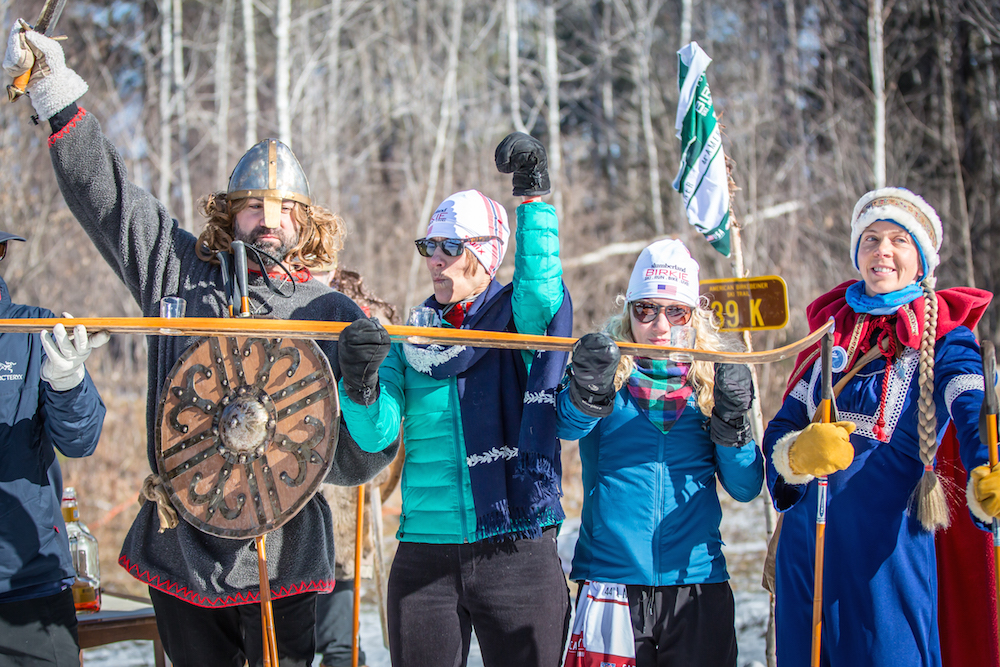
    The famous 39K Club Shot Ski trailside at 2017 BirkieFest near Cable, Wis. (Photo: American Birkebeiner Ski Foundation)

    The highlight of the course was at 4.8 k, where the 39K Club was there with its shot ski, making sure that the Birkie spirit was alive and well and getting everyone excited just to be at BirkieFest.

    After a quick two-lap ski we were off to the food tent to get the famous on-course cookies and chicken-noodle soup. We were fortunate to test out some fat bikes at the demo, which was a ton of fun because we were able to ride them on the Fat Bike Birkie race trail. After listening to some live music, collecting our fair share of free ski ties and other goodies, we headed back to our hotel to start planning our trip for Birkie 2018.

    Though my 2017 Birkie experience was not the one I was hoping for, just being on the Birkie trail with 10,000 other people felt like any other Birkie. The atmosphere and camaraderie at this race is unmatched in my experience, and being a part of it is truly special. This year was such a great time even without skiing that I know that it will be the most memorable Birkie of my career. I am looking forward to returning to Cable and Hayward in 2018.

    ***

    Editor’s note: 2018 Birkie registration opened May 1. The 2017 event marked the second official cancellation in the Birkie’s 44-year history. An article in the Birch Scroll 2017 spring edition (page 15) confirmed that 2017 race fees will not be refunded and presented numbers to explain why. The total cost of organizing the 2017 Birkie Week amounted to more than $854,000 dollars. Read the article here.

  • BirkieFest 2017 Draws 10,000 Skiers after Cancellation of Iconic Race

    Family time at the 2017 American Birkiebeiner BirkieFest last weekend. (Photo: ABSF/Sally Krueger)

    (Press release)

    Hayward, WI (February 25, 2017) – The American Birkebeiner Ski Foundation’s BirkieFest 2017 brought over 10,000 skiers and spectators to the American Birkebeiner Trailhead and new start area near Cable, WI. Skiers from around the world and across the country took to the Birkie Trail for a quick ski on the 5K loop painstakingly saved and crafted by the Birkie Trail Crew for the event.

    The American Birkebeiner is North America’s largest cross-country ski race which normally runs from Cable to Hayward, Wisconsin, finishing on the snow-covered Main Street of Hayward. However, after days of unseasonable weather, rain, and snow storms that missed the Hayward and Cable areas, the American Birkebeiner Ski Foundation was regretfully forced to cancel the 44th Annual Slumberland American Birkebeiner, Kortelopet, and Prince Haakon cross-country ski races.

    “Of course, we were really disappointed that we weren’t able to host a ski race, but if there is a silver lining, BirkieFest is certainly it. Over 10,000 skiers and their family and friends enjoyed the day skiing, eating, listening to great music and having a great time in the north woods,” said Ben Popp, American Birkebeiner Ski Foundation Executive Director. “I’m really proud of our Birkie team, the Nordic community, and the Cable, Seeley, and Hayward communities – it was certainly an all hands on deck effort! We consider this the first day of training for Birkie 2018!”

    Skiers spent the day skiing a 5K loop on the Birkie Trail crafted from snow caches stored in the woods along the trail system. Festival goers enjoyed live music, a beer garden serving Birkie Brew-Ski crafted by Lucette Brewing Company, Birkie Brats by Louis Finer Meats, Norwegian waffles, shopping in the Birkie Store, on-snow ski and fat bike demos, biathlon demos, and more. Skiers and spectators were bused to the brand new American Birkebeiner Trailhead for the day of Nordic fun.

    “This past week was a great learning experience, it taught us things that will make us even more successful in the future,” said Chris Campbell, Birkie Trail Manager. “We learned so much about snow management. We’ve never needed a snow cache on the north end of the trail and we used every snowflake we could muster for our 5K course today. It was certainly worth it.”

    The 45th Annual Slumberland American Birkebeiner week of events is slated for February 22-25, 2018 with registration opening on May 1, 2018. The ABSF is hosting the Fat Bike Birkie, the world’s largest fat bike race on March 11, 2017 at the American Birkebeiner Trailhead near Cable, WI. “The Cable area was pleased to play a part in helping to host the BirkieFest today. Skiers were really happy with all the hard work that the Birkie staff and countless volunteers put into make this event possible,” said James Bolen, Executive Director, Cable Area Chamber of Commerce.

  • As Birkie Outgrows Its Britches, New Developments for America’s Biggest Ski Race

    As Birkie Outgrows Its Britches, New Developments for America’s Biggest Ski Race

    During the construction of the new permanent start and American Birkebeiner Trailhead in Cable, Wis. (Photo: ABSF)
    A look at the new permanent start and American Birkebeiner Trailhead during construction this summer in Cable, Wis. (Photo: ABSF)

    It has been an exciting 2016 for the American Birkebeiner Ski Foundation (ABSF). After a successful completion of the Phase 1 fundraising program in 2015, the ABSF secured a land purchase that will give North America’s largest ski race, known as the Birkie, a permanent start area for events.

    The Phase 1 campaign also supported the construction of a warming shelter at the new start, which is open year-round, several aid-station buildings along the trail, which can be used throughout the year, and also the construction of brand-new Birkie offices and the Tony Wise Museum in Hayward, Wis.

    Just like in previous years, the ABSF has been busy in the offseason, making improvements to the American Birkebeiner (including the 50-kilometer skate and 55 k classic marathons, set for Feb. 25, 2017) and its trail system.

    In mid-December, FasterSkier checked in with Ben Popp, ABSF executive director, on the phone to discuss some of these changes and what future Birkie participants can expect.

    ***

    FasterSkier: First off, congratulations on the new start-line purchase and trailhead. That seemed to be a goal the Birkie had for years. Can you tell us why that was such an important piece of the Phase 1 fundraising campaign?

    The Derksen Family Trailhead Warming Shelter at the new American Birkebeiner Trailhead. (Photo: ABSF)
    The Derksen Family Trailhead Warming Shelter at the new American Birkebeiner Trailhead. (Photo: ABSF)

    Ben Popp: We are really excited for this new trailhead. We recently had the first event there, a youth biathlon camp and it was great to see the potential this new trailhead will bring. I skied up from Boedecker and when I got to the new trailhead, I had a warm place to change, people were hanging out, there were nice new bathrooms for people to use. Upstairs, the kids were meeting and getting lessons before they headed out to the trail.

    You finally see that when you have facilities like this it brings in other people as well as the skiers. There was a woman inside reading a book while her husband was out skiing longer. It’s that whole concept that I am excited to see at the start line. It is something that can be used for events other than the Birkie. It is going to be the start for a JNQ [Junior National qualifier] meet, the Wisconsin state championship and the newly announced race that the Hayward high school nordic team is putting on this winter.

    Phase 1 fundraising raised $715,000 dollars from more than 1,400 donors. They will all get to reap the benefits and be able to enjoy a first-class facility and help build the nordic community.

    During the week between Christmas and New Years, we will have the big building heated and have concessions inside to support the 300-400 high school kids who are up here to ski. Before they huddled up into buses and hung around Double OO. Now they will have a warm building to hang around at, wax skis and get something to eat.

    FS: Now that Phase 1 is complete, what does Phase 2 entail? How is the fundraising coming along?

    BP: It has been a very busy fundraising season for us. The Birkie staff has been all over promoting the Foundation and the new development phases. The feverish pace has picked up for sure. We’ve been out a lot, as far as Traverse City and everything in between. It is important to work with USSA [the U.S. Ski & Snowboard Association], The Loppet, and Endurance United to strengthen the nordic-ski message in this area. People expect us the be a leader in this movement because we are looked on to be the innovators and spokesperson for this community. The community is small but extremely passionate, and we as a group need to capitalize on this if we want the sport to grow. Our message is to support us, but in doing so you are supporting the community and the whole nordic industry. Having spokespeople like Kikkan [Randall and Jessie [Diggins] out there winning and supporting the USSA, it is, in turn, helping us grow.

    Phase 1 was the land purchase and trailhead. With that accomplished, we moved into Phase 2 and that focuses on improving the trail. The question always comes up about snowmaking and we finally have an opportunity to pursue this with power and water at the new start line.

    We are starting to explore the possibility of storing snow during the summer like they do in Canada and in Europe. Some of our staff just got back from Europe where they met with a bunch of people from the FIS [International Ski Federation] and World Cup venues to talk about this very topic.

    Between the skiers and the bike riders, we estimate that there are over 100,000 people using the trail all year long. That leads to a lot of erosion concerns and Phase 2 addresses these concerns. If we can improve the way the trail drains and stop erosion we could easily ski on just two inches of snow.

    The Timber Trail warming shelter. (Photo: ABSF)
    The Timber Trail warming shelter on the Birkie Trail. (Photo: ABSF)

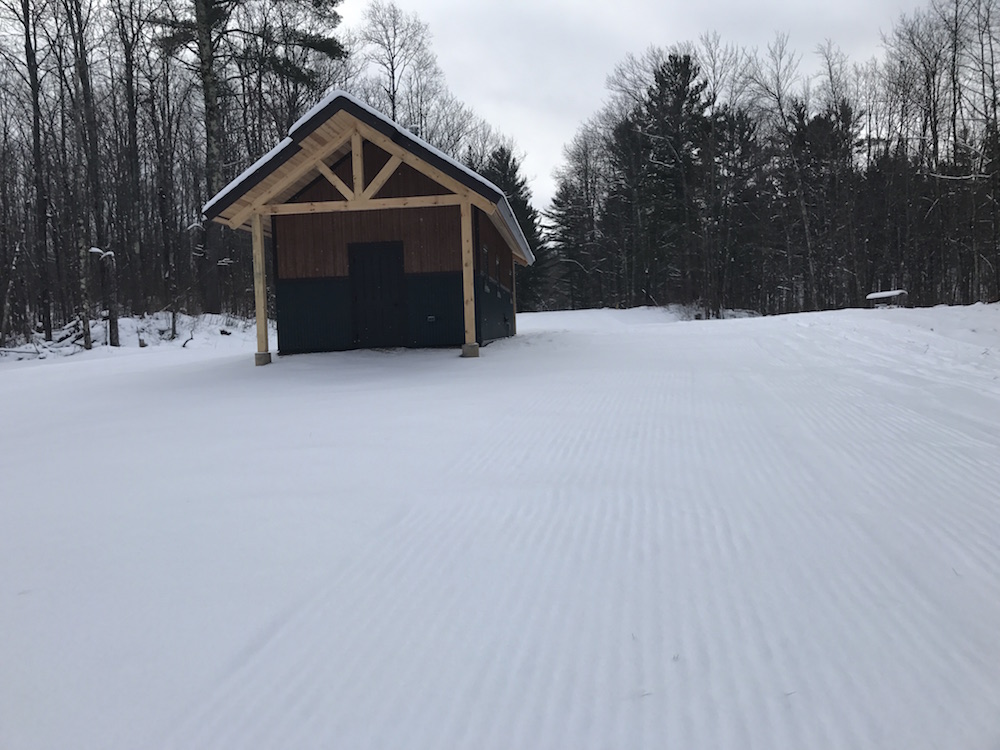
    Another part of Phase 2 is the aid stations. Every aid station is now going to have heated buildings with water that are open year-round. The idea is that it’s a building that is open to the public year-round for water and shelter. For the 30 events that use the trail, they will provide a place to store race-day equipment and everything that gets used for the events.
    Other parts to Phase 2 include extending the classic trail south of Double OO. It’s not a full second trail but there are some places we can separate the skate and classic trail past Double OO.

    Other items include putting an underpass under [Route] 77 for skiers and bikers. We are working in conjunction with the Wisconsin DOT and using some grant money to find a way to not to have to block that road during our race and other races that use that intersection.
    We are also working on replacing some of our older pieces of equipment. Our oldest PistenBully is 17 years old, so with upwards of 100 k of trail, these machines really take a beating.

    We are looking to get wider PistenBullys to accommodate the width of the course better. Right now it takes us three passes to groom the trail. Wider PistenBullys will reduce that to only two passes. Fewer passes mean faster and more importantly, better grooming.

    We want to wrap up Phase 2 around December 2017. The fundraising goal for Phase 2 is right around $1.6 million dollars which is twice as high as Phase 1 was. We raised about 35 percent now and are close to $600,000 raised to this point. We are getting there and are excited about the response.

    FS: Recently the Birkie Trail got two very prestigious awards, being named the best cross-country ski trail in the U.S. as voted by USA TODAY’s 10 Best Readers’ Choice travel award contest and, in conjunction with the Hayward Lakes Visitors and Convention Bureau, earned a 2016 Champions of Economic Impact award. What do these two awards mean to the American Birkebeiner Ski Foundation, the towns of Hayward and Cable, and also for the trail itself?

    BP: We have the trail but also the community support to host the nordic community. The town’s “all-in” mentality of letting the Birkie Foundation take care of the trail, we (the community or Hayward and Cable) will take care of the people who are here to ski and make sure they have a great time outside of skiing. That was a huge part of us getting these two awards. The future is very exciting for us and the community. Being so close to the Twin Cities and their enormous nordic community makes us very lucky because we can be the destination that some of these other great cities and resorts have become. The area has turn into a four-season, all-year-round destination spot.

    In terms of what the Birkie means to the cities of Cable and Hayward financially was shown in a recent 2013 University of Wisconsin economic study that estimated the silent sports lifestyle in Hayward and Cable brings in close to $22 million dollars to the community. That is a huge number for a town of 3,000 people. That includes visitors coming up to ski, bike, ride ATVs, hunting, and fishing, etc. It also includes people renting hotel rooms and buying second homes here. That goes back to my point of the towns embracing this lifestyle because bars and restaurants realize that there are other things people want to do up here once they are done skiing.

    All the construction in Phase 1 and Phase 2 has been from local contractors in the Cable/Hayward area. Again, building that sense of community that helped us get these awards.

    FS: How did the decision to separate the 29 k Kortelopet race from the Birkie come about? Was it due to logistical problems and too much traffic, or something else?

    BP: Obviously, the biggest change is moving the Korte, America’s second largest ski race, to Friday. We started thinking about doing this about two years ago. The question is why? We knew two years ago that this race wasn’t the race experience we wanted to give participants. They missed out on the opportunity to see the crowds that lined Main Street and cross the finish line there. Starting at the airfield [jn Cable] and ending close to there just wasn’t the event experience we wanted. The current setup worked but didn’t give the experience we were proud of. People told us time and time again that they wanted to be a part of the atmosphere at Main Street, and not just be an afterthought of the Birkie.

    The biggest factor that prompted the move other that the atmosphere was demographics. The majority of the Korte participants are women and 40 percent are under the age of 23. Basically, its kids and women and those are two demographics that are vital to us and ones that we needed to get excited about the race. The concept was that if we can give these two groups and event experience that was as good as or better than the Birkie and then get them to get more kids and women involved in the events then it is a huge win for us. We were willing to take on the risk, extra costs and manpower to accomplish this because we felt it was important to get these two demographics excited about skiing.

    FS: With the Korte starting at OO, what changes did you have to make to that area to be able to hold that many racers at once, compared to previous years where the field was pretty thin by the time they got to OO?

    BP: We did a lot of work at Double OO for the new Korte start and for the Birkie. We will eventually have a new building there as a result of Phase 2, which will really help support or races as well as the mountain bike races in the summer.

    Since the Korte start is almost as big as the Birkie start we did a lot of work widening parts of the trail that leads from the start to “Picnic Table Hill”. The start line for the Korte will be on the south side of Double OO. If you skied from the current Double OO cabin and went left down the hill to that flat area, you will be right at the new start line. We widened that area by two acres and also added a walking path for spectators. They will walk from the building over the bump and through the nostalgic arches which is pretty cool because that part of the trail won’t be used for the Birkie anymore. (Basically, once you cross Double OO, Birkie racers in previous years went right up the hill, in 2017, we will cross the street and turn left.) Everyone will funnel through the new Korte start on Saturday since all the aid stations and infrastructure will be there from Friday’s race.

    We reworked that corner so it isn’t off-camber anymore and also worked on the descending hill into the Korte start area. Once the skiers cross the road both races will join at that point. in past years, the classic race didn’t join the skate race until Picnic Table Hill. Now they join once everyone crosses Double OO. The course is now 70-feet wide as it goes up the hill to the top of Picnic Table Hill.

    We also worked on the righthand turn from the Picnic Table Hill descent. That has always been a nasty hill so now it just flows straight instead of turning to the right. That should help with the flow of the race and support the large group of Korte skiers that will be coming down that hill.

    After all these course changes, the Birkie is just a bit shy of 51 k. Last year the race was a bit longer because of the added 2 k section at Fish Hatchery. This year, we are taking that section out for the skate race so it puts the skate race close to 50.5 k and the classic race is just shy of 55 k, sitting at 54.6 k.

    In the future, the classic race might get a bit shorter as we continue to work that trail south of Gravel Pit. There are a few places that we can put in a new classic trail as we go south but for now, the distances are staying very close to the advertised 50 k and 55 k distances.

    FS: What changes are being made to the expo and race weekend this year in order to support the racers who are entered in the Korte race?

    BP: Basically, everything is staying the same. The whole event weekend ends up just being four hours longer. The events on Thursday are just starting a little bit earlier. In the past, we started all the events around noon. This year we are starting at 8 a.m. Overall, the events are spread out a little more.

    We are turning downtown into a big festival over the race weekend. We are going to have live bands, food vendors and family events to help improve the excitement of the race and to support the spectators there waiting for their loved ones to finish.

    The expo will stay the same for this year. Feedback from most of the vendors we talked to said that the current setup is the extent of what they can handle in terms of manpower, product and race-weekend support. It will be interesting to see. After the race, we will ask for feedback and change things up and adjust things that happened or didn’t work. For now, we just ask everyone to go into it like they normally would and let us know your thoughts and feeling after the race.

    One of the Birkie's new kilometer markers on the classic trail. (Photo: ABSF)
    One of the Birkie’s new kilometer markers on the classic trail. (Photo: ABSF)

    FS: On a recent trail run, I noticed the new trail markers. What was the 15 k mark is now 37 k to Hayward mark?

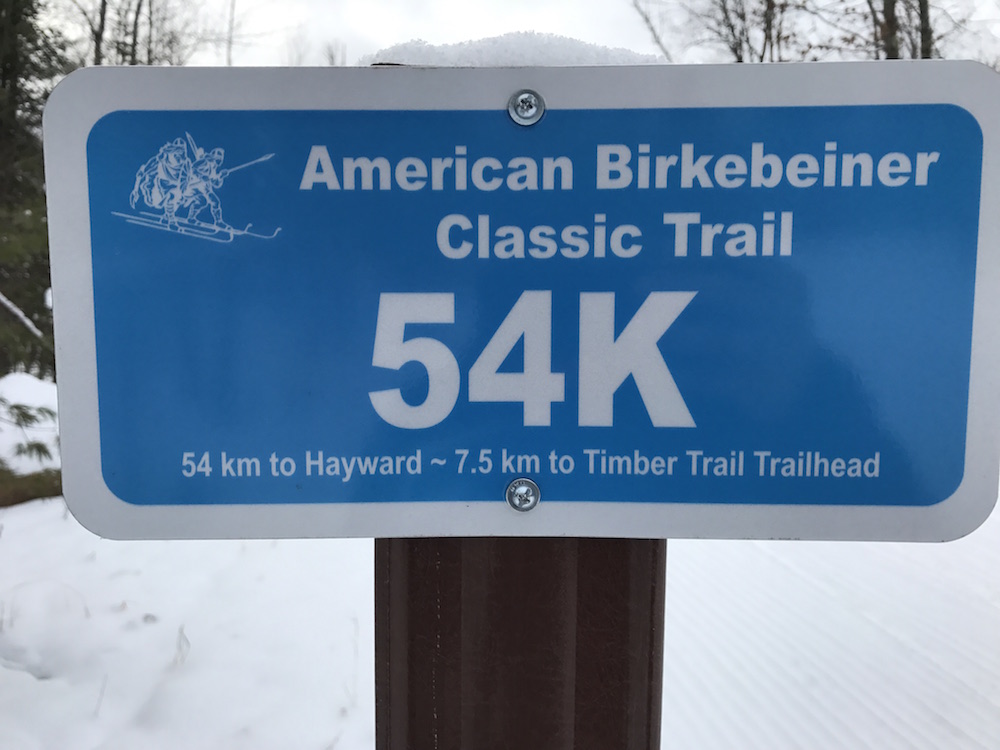
    BP: All the signage on the trail has been redone this year. It now counts down to Hayward instead of counting up just like the race. Also, every sign is unique because they are now directional. The staff at Apple Awards designed the signs to tell you how may kilometers to Hayward, Firetower, Boedecker, Double OO etc. The classic trail signs will be blue and the skate trail signs will be red. It gets interesting when the two courses meet at Double OO because the race distance will be different. This just reflects the extra length for the classic race.

    FS: After last year’s warm weather and the warm lake conditions, have you considered reworking the finish to avoid the lake?

    BP: Downtown is critical for the race. We have to get into Hayward to finish the race. We have looked at a few worst-case scenarios if Lake Hayward is deemed unskiable. The alternative routes we looked at involving a few different turnoffs onto the snowmobile/ATV trail then go around the backside of New Moon into town.

    If we have snow to work with and the lake ice isn’t safe, then it is possible because we will have snow to move around and can activate the other backup plans we have talked about. If it is a warm year with no snow and no ice, then it becomes a little more challenging.

    Telemark Resort (Photo: Tom Held)
    Telemark Resort (Photo: Tom Held)

    FS: Visitors and guests to the old Telemark Resort will remember the hall of fame wall covered with past Birkie winners. Now with the opening of the new Tony Wise Museum of the American Birkebeiner, the hall of fame has an official home. What did it mean to the history of the race to get the hall of fame and museum established in a permanent location?

    BP: The museum provides the tradition and inspiration that the Birkie is all about. Having Kikkan here last year and Jessie being a Birkie Ambassador this year is great. They provide the inspiration and role models for kids and adults.

    The Birkie is all about tradition. With Telemark closing, we were going to lose a lot of that tradition with the Hall of Fame and other aspects of the race potential being lost forever. We were approached by an extremely qualified woman lives in Cable and worked for the Smithsonian and she wanted to take on the museum project. She helped raise the money to build the museum and to relocate the Birkie offices all under one roof.

    The museum far surpassed all expectations we had for it. Having so much history and tradition in one building is incredible. We have a lot of hands-on interactive displays, personal stories, and history of Tony Wise and his family. The is so much potential for the museum to grow in the future. We still have a storage room of archived pieces that was donated to us by the Lewis family from Telemark that we haven’t even begun to look at yet. It will be fun to see how the museum evolves in the future.

    It is great to see how many people have come from states that have never heard of the Birkie, who might be in town for vacation or visiting family, and see their reaction as the walk around the museum experiencing the Birkie history for the first time.

    The Birkie trail as seen this past weekend between Cable and Hayward, Wis. (Photo: Vince Rosetta)
    The Birkie trail as seen this past weekend between Cable and Hayward, Wis. The entire trail is covered, with less than a five-inch base, according to a groomer on Saturday, Dec. 31. (Photo: Vince Rosetta)

    ***

    Author’s note: The Birkie Foundation has been working hard to give fans, spectators and racers the best experience possible for this years race weekend. If you are interested in supporting the American Birkebeiner Ski Foundation all the information can be found on its website.

  • Birkie Trail Open for Early Season Skiing

    Birkie trail open for early season skiing (Photo: ABSF)
    The Birkie trail is open for early season skiing! (Photo: ABSF/Darlene Prois)

    (Press release)

    With early snowfall and consistently cold temps the Birkie Trail is groomed tip to tail to near mid-winter condition. With over 75km groomed on the skate and classic trails from the North End Cabin to Birkie Ridge and to Hatchery Park the skate deck and classic tracks are firm. For the latest trail reports and grooming conditions go to http://www.birkie.com/trail

    What exactly does it take for this trail system to be in tip top shape for the weekend crowds?

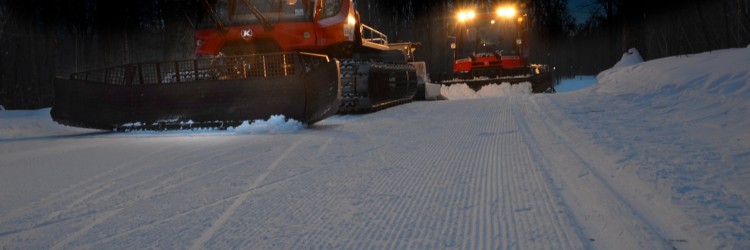
    It starts with a dedicated grooming crew. Chris Campbell, the American Birkebeiner Ski Foundation’s grooming manager, begins a typical winter work day after dark as the temperature drops.

    A round trip in the PistenBully south from Double O, where the equipment is stored, to the Fish Hatchery takes seven hours on average. North to the start line at Telemark and back requires around ten hours at the PistenBully’s 8-10 kilometers per hour. Campbell took over the lead grooming position last year and has been grooming the Birkie Trail for the past eight years.

    Campbell, charged with grooming and maintaining the ABSF’s 107 kilometers, oversees a staff of three part-time groomers and a fleet of three PistenBully snow cats, four Ski-Doo snowmobiles and a Polaris Ranger side-by-side. The PistenBully, which does an exceptional job leveling the snow deck and makes skate skiers smile, doesn’t come out until Campbell’s sure there will be at least a four-inch base intact after grooming.

    Besides Campbell, Gary Wright, Derec Strapon and John Fitzgerald work as part-time groomers. In a week of normal snowfall, Campbell estimates the grooming crew puts in roughly 100 hours of work. Much of this time is spent getting the trail ready for the weekends when the trail sees much more pressure. Last season, the groomers put in 780 hours of work, and the ABSF spent $111,342 on grooming.

    According to Campbell, he doesn’t groom to make the trail look better. “We don’t groom for aesthetics,” he said. “We groom when (the trail) doesn’t ski well.”

    To keep the conditions top notch stop at one of our local retailers to buy your daily or annual SkiPass before hitting the trail.  100% of ski pass revenue goes toward grooming and trail maintenance. See detailed information at http://www.birkie.com/trail/pass or stop in at New Moon Ski and Bike in Hayward, Riverbrook Bike and Ski in Hayward, and Redbery Books in Cable.

    In addition every trailhead now has brand new maps posted with color coded trails, kilometer markers, and common landmarks. The overall map you’re familiar with has been broken down into sections to show more detail. Keep your eyes peeled for the soon-to-be printed brochure with the new maps and history of the trail.

  • Gear West BrewSki Weekend Oct. 24-26

    gear west brewski weekend

    Enjoy good brews, better company, and the best training with Matt Liebsch and Fischer.

    Birkie Trail, Seeley WI

    Join Matt Liebsch from October 24-26 for a weekend of relaxation and ski specific training in Seeley, WI, brought to you by Fischer and Gear West. Workouts will include individualized coaching and technique analysis, while beverages will be provided for “recovery” between sessions. It’s the perfect way to get fired up for the coming season!

    Register for the BrewSki weekend here

    Schedule

    Friday 10/24
    5:00 – 6:00 pm: Optional Pole Hike/Trail Run – Mosquito Brook trail crossing. We will run north if you wish to arrive later and meet up on the trail
    7:30 pm: Dinner at Coop’s Pizza – included with registration

    Saturday 10/25
    9:00 – 11:30 am: Dryland workout and Skate/Classic video technique – Seeley Trailhead(?)
    12:00 pm: Lunch at Sawmill Saloon – included with registration
    2:00 – 4:00 pm: Easy roller ski, additional technique work
    6:00 pm: Optional dinner at Rivers Eatery – cost NOT included with registration
    8:00 pm: Bonfire at host cabin – beer, snacks, and good times provided

    Sunday 10/26
    9:00 am – 12:00pm: Over distance roller ski – Seeley Trailhead(?)
    12:15 pm: Optional Lunch/coffee at Sawmill before leaving – cost NOT included

    Bring ski equipment (some demo rollerskis may be available) and come prepared to learn, train, and have fun!

    Cost: $100.00 per person
    Includes coaching, two meals, and beers.

    Lodging is not included. For lodging options, visit:

    Seeley Lodging & Info
    Hayward Area Lodging
    Cable Area Lodging

  • Adventures in Birkie Land: A First-Timer’s Experience at the American Birkebeiner

    Adventures in Birkie Land: A First-Timer’s Experience at the American Birkebeiner

    Birkie Fever, incarnate.
    Birkie Fever.

    HAYWARD, Wis. — This past weekend, nearly the entirety of the adult population of Midwestern skiers made their way to Hayward for the annual get-together of the ski community: The Birkie. The American Birkebeiner (or Birkie, for short), is the biggest ski race in North America. For many skiers, the race represents their culmination of training for the whole year.

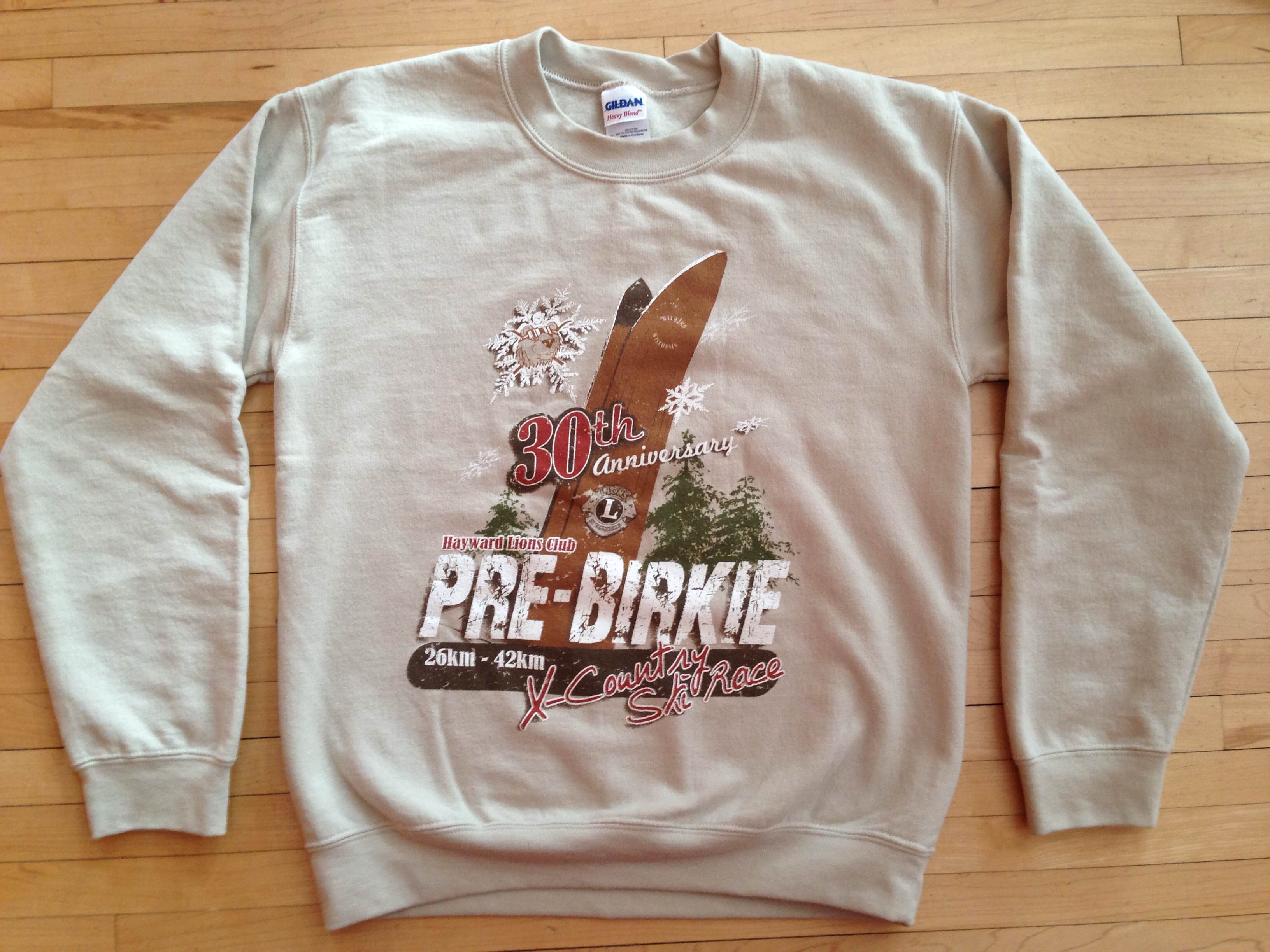
    The commemorative sweatshirt for the Pre-Birkie, circa 2012.
    The commemorative sweatshirt for the Pre-Birkie, circa 2012.

    Accordingly, the level of excitement and attention towards this race is high enough that there is actually a term for it — Birkie Fever.  There is even a fairly large race dedicated to preparation for the Birkie itself, logically named the Pre-Birkie, which races on the Birkie trails two weeks prior to the big race.

    Growing up in the Midwest, I had been fully aware of the Fever, but as a junior and collegiate skier, this time of year was often filled by preparation for Junior Nationals or other races. This year, I finally decided to make the trek to Hayward from Canmore, Alberta (my current residence), for my first-ever Birkie. My plan was to meet up with my family and my friend Julie, who lives on the East Coast.

    T-minus 6 weeks: I decide to start mixing some interval sessions into my usual workout schedule, which generally consists of easy skiing and lots of mixed and ice climbing. I also discover some amazingly colorful workout spandex online and have an in-depth discussion on race day wear with Julie on whether we should start our own team and wear said spandex.

    T-minus 4 weeks: A last-minute three-week climbing trip is organized, and I leave for the climbing trip. The trip is fantastic, but with temperatures dropping to -20F, I sustain moderate frostbite in my feet.

    T-minus 7 days: I start noticing in-depth wax discussions for the Birkie popping up on major ski shop websites based on the 10-day forecasts. Info emails from the Birkie, which had previously been arriving several times a month in my inbox, start arriving every other day. I also learn that there are no less than three songs that have been written about the Birkie (available for listening here).

    T-minus 4 to 5 days: Comments start popping up on Facebook about the Birkie. Focus is centered on the weather forecast, which has changed significantly. A mega-snowstorm predicted to arrive Thursday afternoon is dubbed “Birknado” and spawns the hashtag #BirkiePanic.

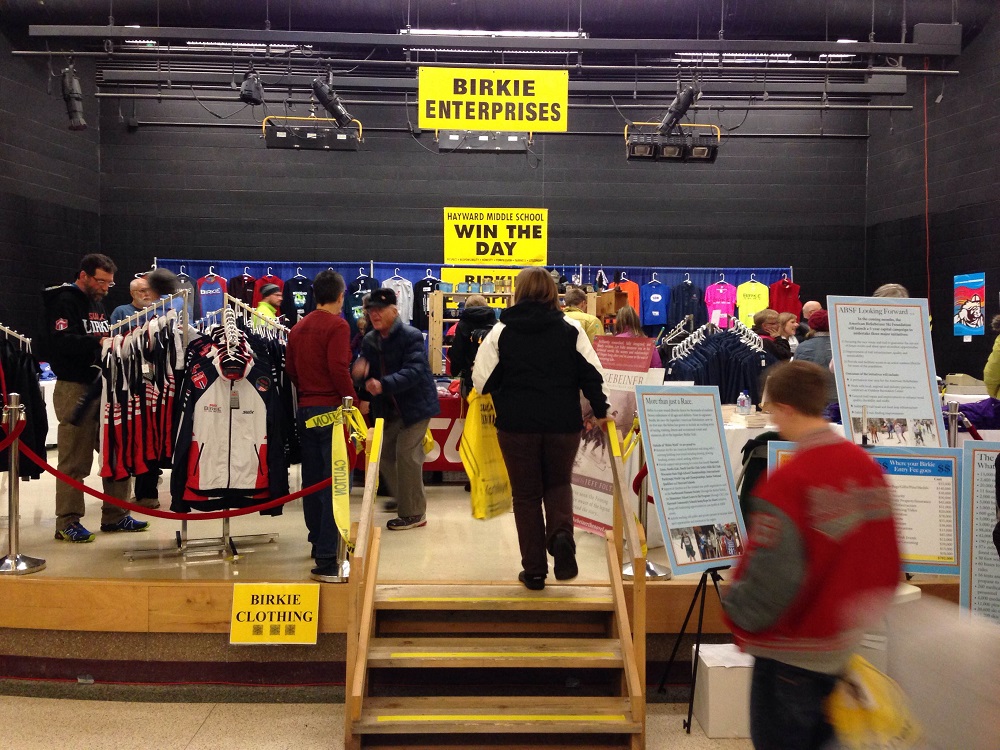
    Commemorative Birkie Merchandise
    Commemorative Birkie Merchandise.

    T-minus 2 days: I travel to Minneapolis, arriving just before all of the flights are canceled coming into town, due to the mega-snowstorm that’s about to hit. Julie’s flights are all canceled, and now she’s not scheduled to arrive until late Friday night. My dad and I travel to Hayward. Bib pickup is the most elaborate set up I’ve ever seen. I have to show photo ID twice. Wandering around the vendor booths afterward, we notice the Birkie memorabilia stand, where one can choose from hundreds of items with which to display one’s Birkie pride.

    T-minus 1 day: I head back into Hayward, armed with a hat, a Buff, and a photo of a photo ID of Julie. The goal is to pick up Julie’s bib via impersonation, and it is a stunning success at first. At the second ID check, however, I’m asked what my birthday is, and in a worst-friend-ever maneuver, I totally blank. I tell my story to the bib lady, and she lets me take the bib anyway.

    I am also informed by a seasoned Birkie skier that the road “00,” which marks the rough midway point of the race, is actually pronounced “double-oh,” and not “double-zero,” as I had been calling it. This is a serious faux-pas. #BirkieFail.

    Race Day: After at least five Birkie emails in the past 24 hours, we arrive at the Birkie start. There has been so much snow that the start area warm-up tent is partially collapsed, but the bitter cold has driven many people inside the tent anyway.  It’s 1F at 8 a.m., and there’s a strong headwind. There’s a helicopter shooting video circling above us.  The cost basis of helicopter filming is absurdly high, so I know that this is serious business.

    I move into the start area and file into my wave zone. I’m lucky enough to be in Wave 1, but I notice that as the start countdown for the wave ahead of us (Classic Wave 2) begins, all of the people around me start to shift into a crouching position. Confused at first, I realize that they are setting up to run to the start line once our wave moves up.  Classic Wave 2 goes off, and my wave starts a full-on sprint to the start line. Realizing that this is how stampedes begin, I, too, break into a sprint and score a great starting spot.

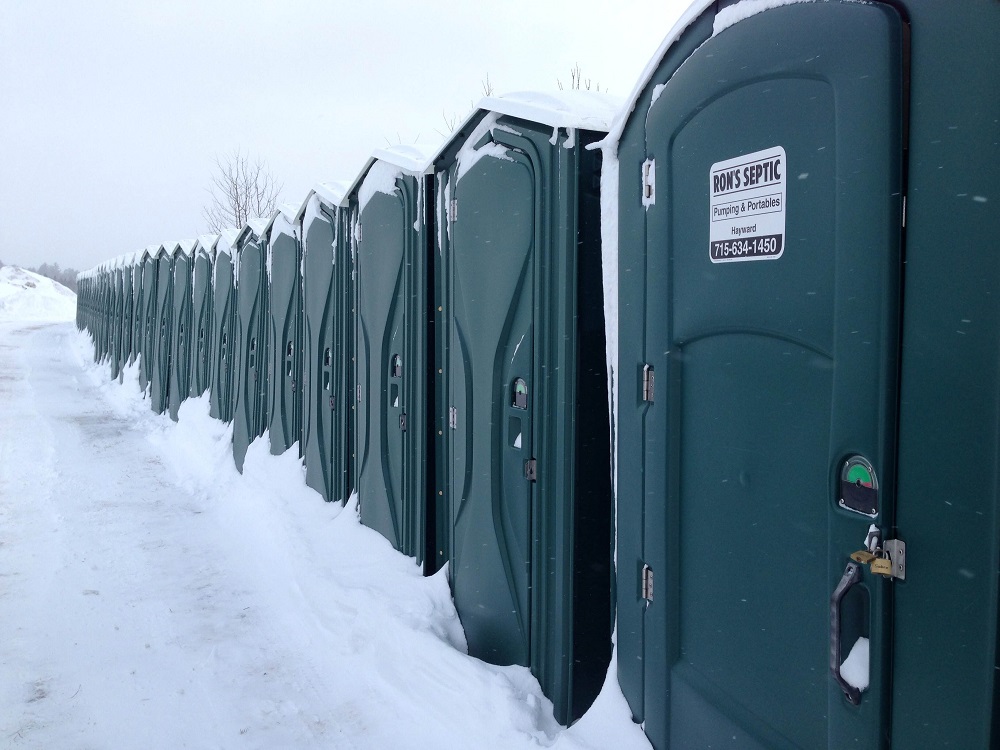
    Lots of restrooms at the Birkie start.
    Lots of restrooms at the Birkie start.

    The start itself is pretty standard, but I’m impressed to see bins of poles on the side of the trail after the chaos has settled out. Replacement poles, sorted by length, are available to all. I later find out that this is standard at the aid stations, as well.

    As my wave settles in a rhythm, all goes smoothly. There is great cheering from supporters on the sides of the trail, and there are sometimes massive slowdowns on the uphills as skiers bog up in the very soft, very cold snow, but otherwise, the race is fairly normal.

    At 00, I end up dropping out due to cold feet (a carryover from the cold injuries sustained on the climbing trip), but Julie, also in her first Birkie, finishes the race. She is stoked about the shot-ski at the top of Bitch Hill and, like the Dartmouth alum that she is, fully indulges. Later on, she is not so stoked about the ski across the lake to the finish (due to the headwind, not the shot), but finishes strong.

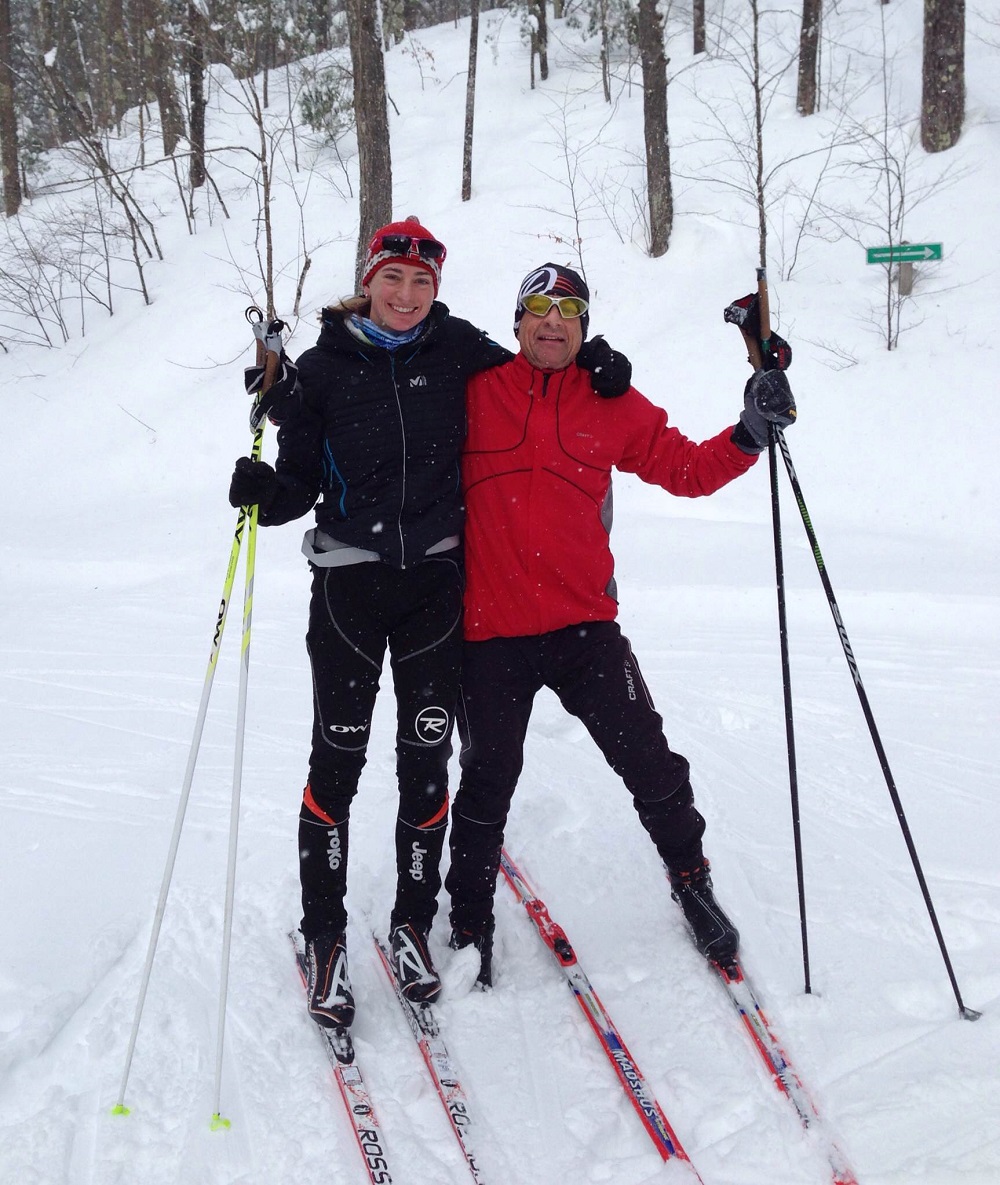
    The author and her dad out for a ski before the Birkie.
    The author and her dad out for a ski before the Birkie.

    I hitch a ride to the finish area. I find my clothes bag in the meticulously organized and enormous bag area just as Julie finishes the race. She’s tired, but mostly extremely impressed at how nice Midwestern skiers are. The streets are packed with people. Everyone is exhausted, but the sun is just warm enough to make the cold manageable. There is serious revelry going on, and even though I’m a little disappointed about my race, the atmosphere is so fun that it more than makes up for it.

    Overall, the Birkie was a great experience. It’s pretty amazing to see how many people are excited enough about skiing to want to ski a hard, cold, 50 k skate race hours away from any population center. I was stoked to finally experience “The Fever,” and I will definitely be back next year.

  • New Birkie Ski Pass System in Place

    Happy trails on the Birkie trail. (Photo: ABSF/Kelly Randolph)
    Happy trails on the Birkie trail. (Photo: ABSF/Kelly Randolph)

    (Press release)

    The American Birkebeiner Ski Foundation has been working on a new trail pass system for the Birkie Trail. In the past, passes were issued “per car” on a voluntary basis year-round.  Starting now, in December, passes are now being issued on a “per skier” basis from  December 1  to March 31 only. Skiers will carry their passes with them while skiing on the trail. Please note that  if you had laready purchased an annual vehicle pass, you are set for the 2013-2014 season.

    The decision was made by the ABSF to transition to the individual ski season pass to help meet its annual budget for caring for the Birkie Trail. The annual ABSF budget for maintaining the Birkie Trail is over $300,000. In winter, the average cost to groom the entire 97+ KM Birkie Trail system ONCE exceeds $4,000. In 2013, less than $28,000 in trail pass fees were collected.

    “It is our goal,” said Ben Popp, Executive Director of the American Birkebeiner Ski Foundation, “to keep the trails groomed and in great condition as much as possible for skiers when they arrive.“

    All money collected from trail passes goes to fund trail maintenance. That includes snow grooming, plowing the parking lots, trail mowing, erosion control, lighting, signage, restroom maintenance, along with the equipment that makes all that possible.

    A Few Details About the New Birkie Ski Season Pass:

    • Passes will be required to ski on the groomed Birkie Ski trail from December 1 to March 31.
    • Adult Ski Pass:  $50.00 for the season | $10 per day
    • Youth Ski Pass (13-18yrs old):  $25.00 for the season | $5.00 per day
    • Children 12 and under are FREE!
    • Family Ski Pass (including 2 adults & up to 4 children living in their home): $125.00
    • Bus Daily Pass (for visiting youth teams or groups):  $75.00
    • Passes can be purchased online (birkie.com/trail), at New Moon Ski & Bike,
    • Riverbrook Bike & Ski, or at the Birkie trailheads

    “We count on the revenue brought in from trail passes to make the Birkie the BEST trail year-round.” said Popp. As the saying goes, ‘Trails don’t just happen!’ Thanks for your support of a resource that is precious to us all!”

    If you have any questions or concerns, please call the Birkie office at 715-634-5025 or email birkie@birkie.com.

  • Birkie Puts Trailhead Proposal on Hold, Works with Telemark (Updated)

    Birkie Puts Trailhead Proposal on Hold, Works with Telemark (Updated)

    Start of the American Birkebeiner back in the "day" around the 1980s, when some participants tried the newly created skating technique (see front right)

    (Note: On April 25, the American Birkebeiner Ski Foundation announced it issued a two-part plan to Telemark Properties and its lender to move forward in securing land access and use of its lodge facilities for Birkie events throughout the year.)

    Efforts to create a new trailhead for North America’s largest ski marathon are off the table, at least for now.

    Earlier this month, the American Birkebeiner Ski Foundation (ABSF) withdrew its proposal to the Bayfield County Forestry Committee to purchase properties for a backup start, deciding instead to continue negotiations with Telemark Resort in Cable, Wis.

    For nearly 40 years, the lodge has been home to the 50-kilometer race, which currently starts at Telemark and meanders south to Hayward, Wis. Land access has been an issue in recent years, with certain private landowners requesting up to $150,000 for race-day use. The Birkie crosses six private properties and also needs ensured access to Telemark’s trails and the adjacent Cable Union Airport, where nearly 10,000 people are expected to start the race next year.

    American Birkebeiner Executive Director Ned Zuelsdorff said the foundation is trying to reach an agreement with Telemark that guarantees land and facility access. Since the resort’s heyday in the 1980s, its financial stability has been in question. The lodge closed in May 2010 and reopened in January 2011 with new owners.

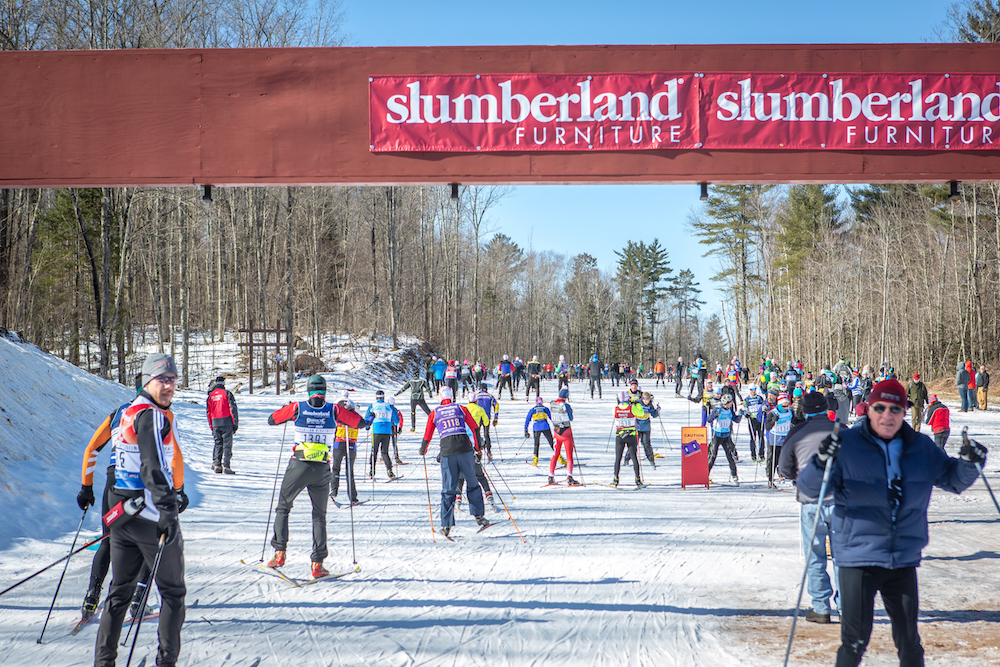
    The 2012 American Birkebeiner warriors await the start of the 50- and 54-kilometer races at Cable Union Airport in Cable, Wis., on Feb. 25. (Photo courtesy of Darlene Prois/ABSF)

    Steve Kaufman of Telemark Properties officially took over last June and said the lodge’s historical integrity and nordic roots are a priority. He would have never bought Telemark if he thought the Birkie — one of its “top three” events along with the Chequamegon Fat Tire mountain bike festival — would be held anywhere else.

    “We think it’s important for the competitors or the participants of Birkie events, who have built traditions at Telemark, for that to stay,” Kaufman said in a phone interview. “I think moving it would be a mistake after three decades at one place. … I would have never got involved with Telemark if I ever thought for a second that the Birkie and Telemark wouldn’t be synonymous in the same sentence.”

    Essentially, the Birkie foundation and its board of directors feel the same way, but as the race approaches its 40th anniversary in 2013, they’re seeking piece of mind. Two years ago, trail access across one private property wasn’t guaranteed until five weeks before the race. The landowner requested upwards of $100,000 dollars and eventually accepted $25,000.

    Each year, the uncertainty of costs resurface, which is why the Birkie is working with Telemark now. Last November, the foundation formulated a plan to build about five acres of trails and a new trailhead on 120 acres south of Cable. Telemark joined the conversation and released a proposal of its own in late March.

    In a bullet-point letter, Telemark Resort outlined several possible solutions for keeping the race there, which included guaranteed easements to Telemark trails for Birkie events, free year-round access to the Birkie Trail and a heated expo center, which Telemark would construct.

    More than 9,000 participants prepare to start the full- and half-distance American Birkebeiner ski races at Cable Union Airport in Cable, Wis., on Feb. 25. (Photo courtesy of Darlene Prois/ABSF)

    In return, it asked the Birkie to base its races, registration and expo at Telemark and lease the new expo center during its events for a 10-year renewable term.

    Zuelsdorff said the ABSF planned to send Telemark its own “comprehensive plan,” written with the help of a lawyer, late last week. On Monday, Kaufman said he had not received it yet, but both parties were confident they’d reach an agreement relatively soon.
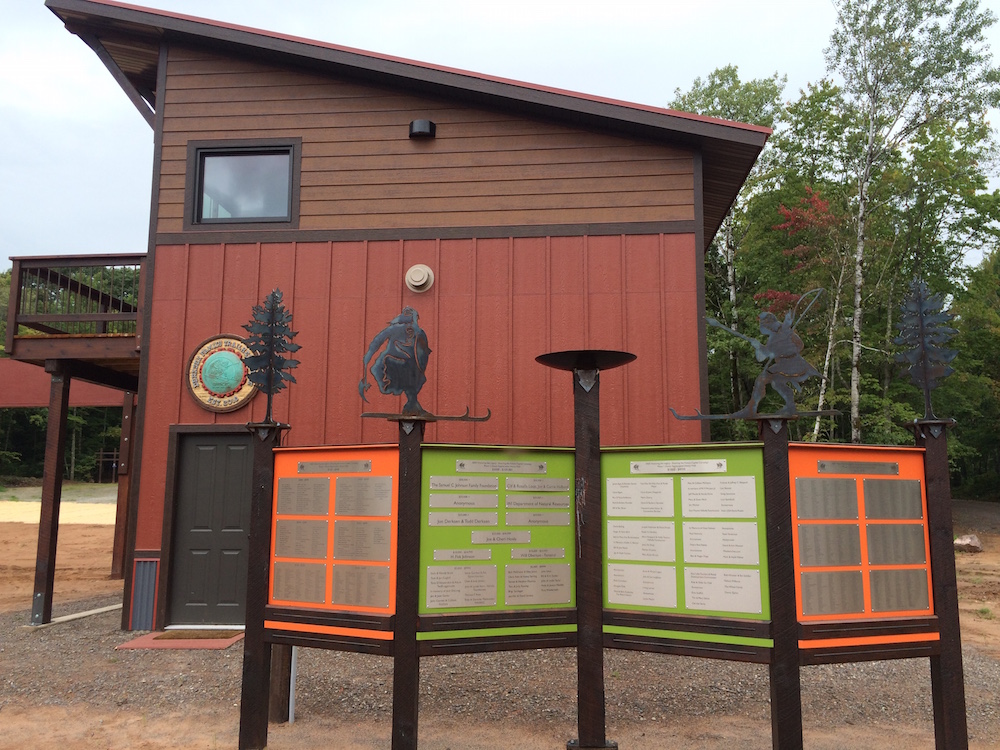
    “Negotiations are still ongoing of course, and we’re doing our best to address the concerns of the American Birkebeiner foundation and at the same time do what’s in the best interest at Telemark and [its] lending institution,” Kaufman said.

    According to Kaufman, Great Southern Bank in Springfield, Mo., has to sign off on any agreement between Telemark Properties and the ABSF. Zuelsdorff said they were still determining how many lien holders might be involved in the decision. Kaufman said Great Southern Bank was the only one.

    “Nothing is as simple as it might appear,” Zuelsdorff said, citing costs and fees as the big questions.

    Kaufman said Telemark is basically asking the Birkie for a “one-dollar commitment” to access all of Telemark’s property in exchange for basing the race there for certain number of years. He understood the Birkie might have prior commitments to other venues in the area.

    At the moment, Zuelsdorff said the Birkie is focused on securing trail access near Telemark and an additional easement to bypass private properties if needed. He also hoped they would be allowed to use the lodge for all of its events.

    “I think there’s a reasonable chance that we will be able to work out an agreement relatively soon,” Zuelsdorff said. “If anything were to complicate that, then we would have to go to some reasonable alternatives.”

    While the new trailhead proposal was on hold, it certainly wasn’t out of the question.

    “By taking it off the table immediately is effectively … just putting it on the back burner,” Zuelsdorff said. “That is an alternative for us. There’s actually a couple of other alternative sites that we could use if we needed to.”