From the FasterSkier archive — posts syndicated from athletes’ and coaches’ own blogs between 2004 and 2012, kept online as published. Current coverage is at fasterskier.com.
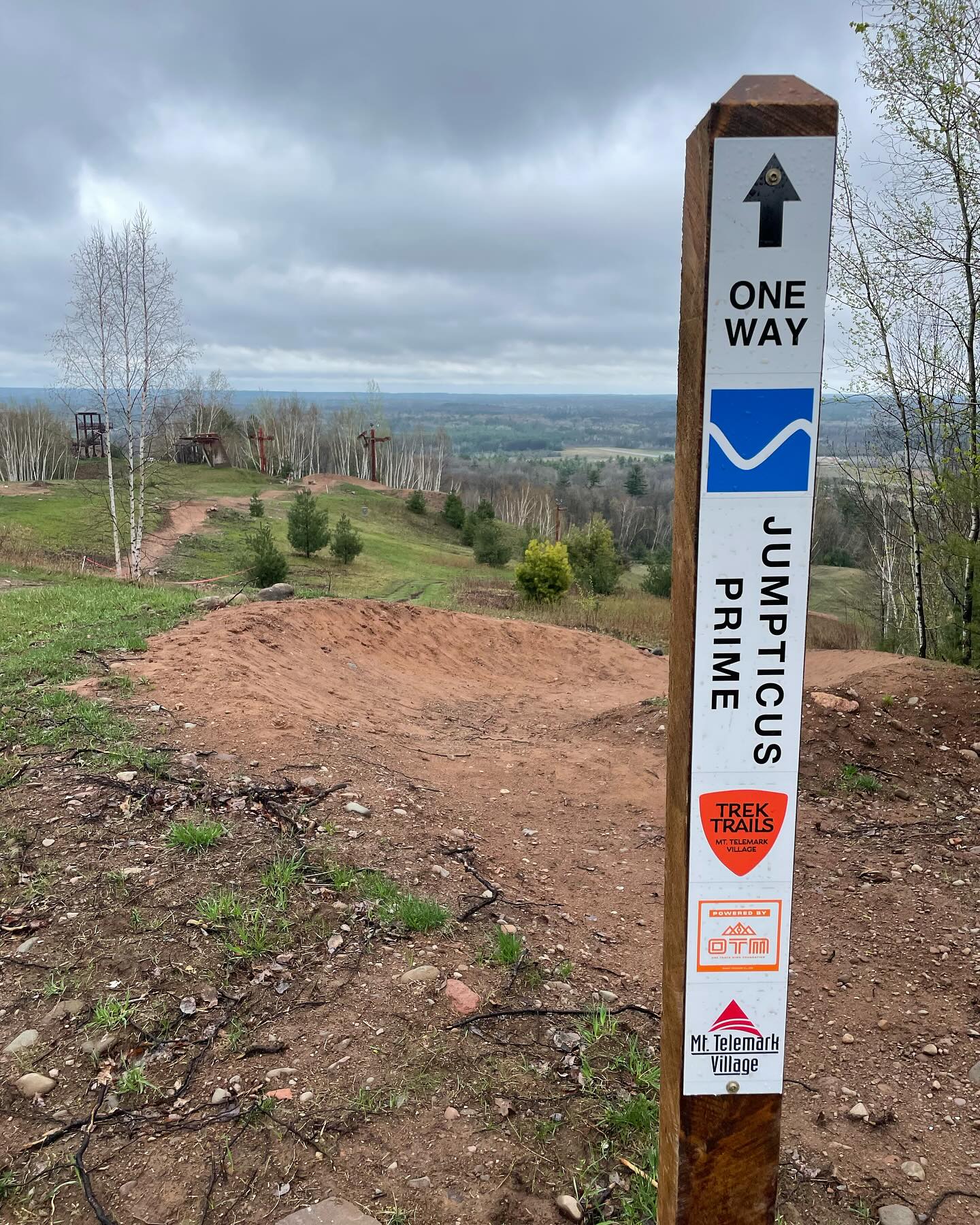
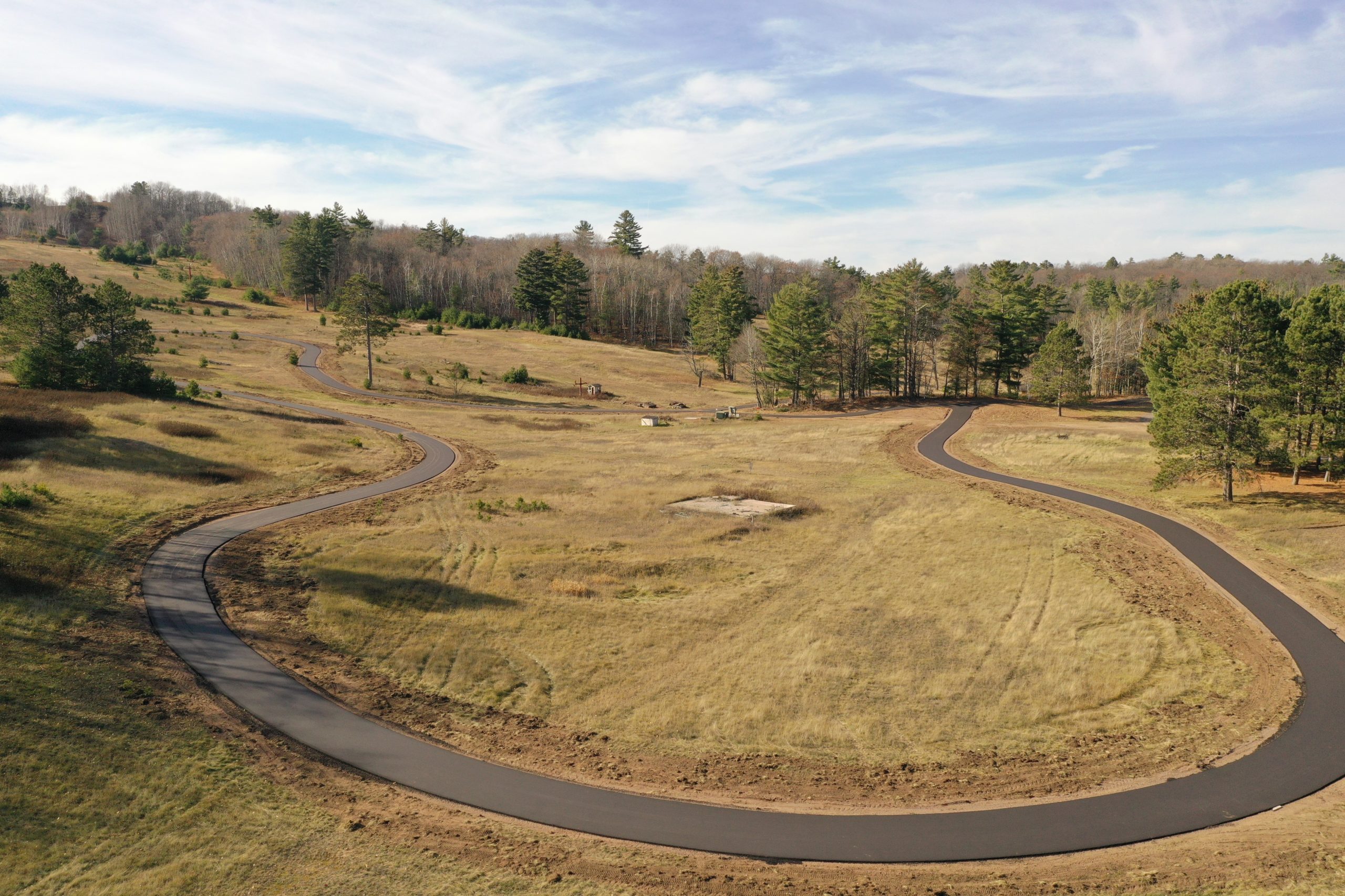
Atop one of the new Trek trails at Mt. Telemark, with the old lift towers from Telemark-past still visible. (Photo: American Birkebeiner Ski Foundation)
For the American Birkebeiner Ski Foundation (the Birkie) it’s been a long time coming.
The dedication ceremony held Saturday for the new projects that encompass the Mt. Telemark Village, the former site of the legendary Telemark Lodge, have been in the works for five years. All together, Mt. Telemark Village is “the biggest thing the American Birkebeiner has ever done.” Its $10.2 million dollar capital campaign, though, doesn’t capture what, for skiing, might just might be priceless. Up in the woods outside of Cable, Wisconsin, the Birkie has been busy figuring out how to commemorate a little glacial knoll that’s played an outsized role in the history of skiing while making it a vital place for more of that history to happen.
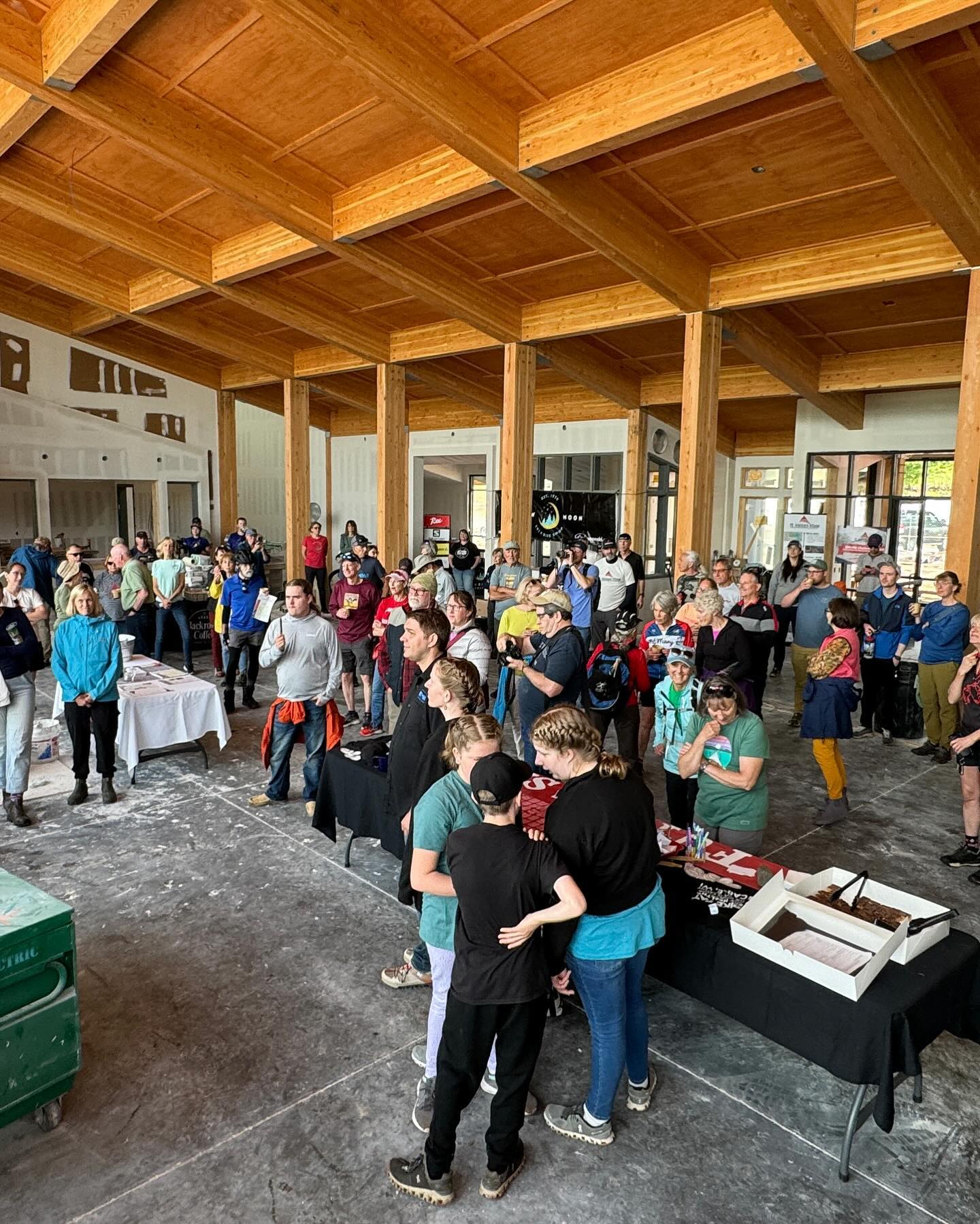
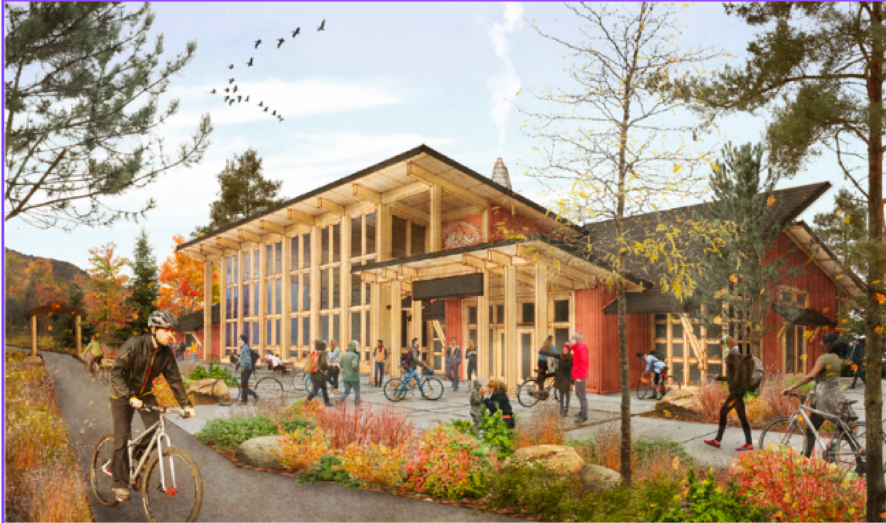
Inside the new Mt. Telemark Community Center, the Birkie community celebrates the dedication of new ski and bike trails. (Photo: American Birkebeiner Ski Foundation)
The dedication ceremony on Saturday featured two main draws that illustrate that delicate balance at the heart of Mt. Telemark Village. The first was the official dedication of the paved rollerski loop to George Hovland, a name linked to the deep past of skiing in North America. The second was the opening of a new mountain bike trail system sponsored by Wisconsin-based bicycle manufacturer, Trek, building on another of Telemark’s legacies as a key site in the development of the sport of mountain biking. In addition, the on-going, glass-plated construction of a new base lodge promised the realization of a vision that’s been in the works for the Birkie and Telemark the past five years.
Telemark and Tony Wise
Mt. Telemark Village, itself, is a re-birth of a long-lived Midwestern legend. Telemark was set up in 1947 by local entrepreneur Tony Wise. The downhill ski area made all it could of its ~300 ft of vertical descent set upon a glacial erratic. Wise, an ebullient character, seemed to derive inspiration from that terrain, making Telemark a cultural erratic, a place for Governors, Musicians, and Packers (the biggest celebrities on offer in Wisconsin) set in rural northern Wisconsin. He did so unrelentingly, building the giant 200-room Telemark Lodge that was too big for its own good. In the glory days, Telemark was a flame whose influence burned over thousands of miles of Northland. After bankruptcy in the 1980s, the embers of Telemark continued to glow primarily in the American Birkebeiner, Wise’s cross-country ski race from Telemark to Hayward that became the largest in North America.
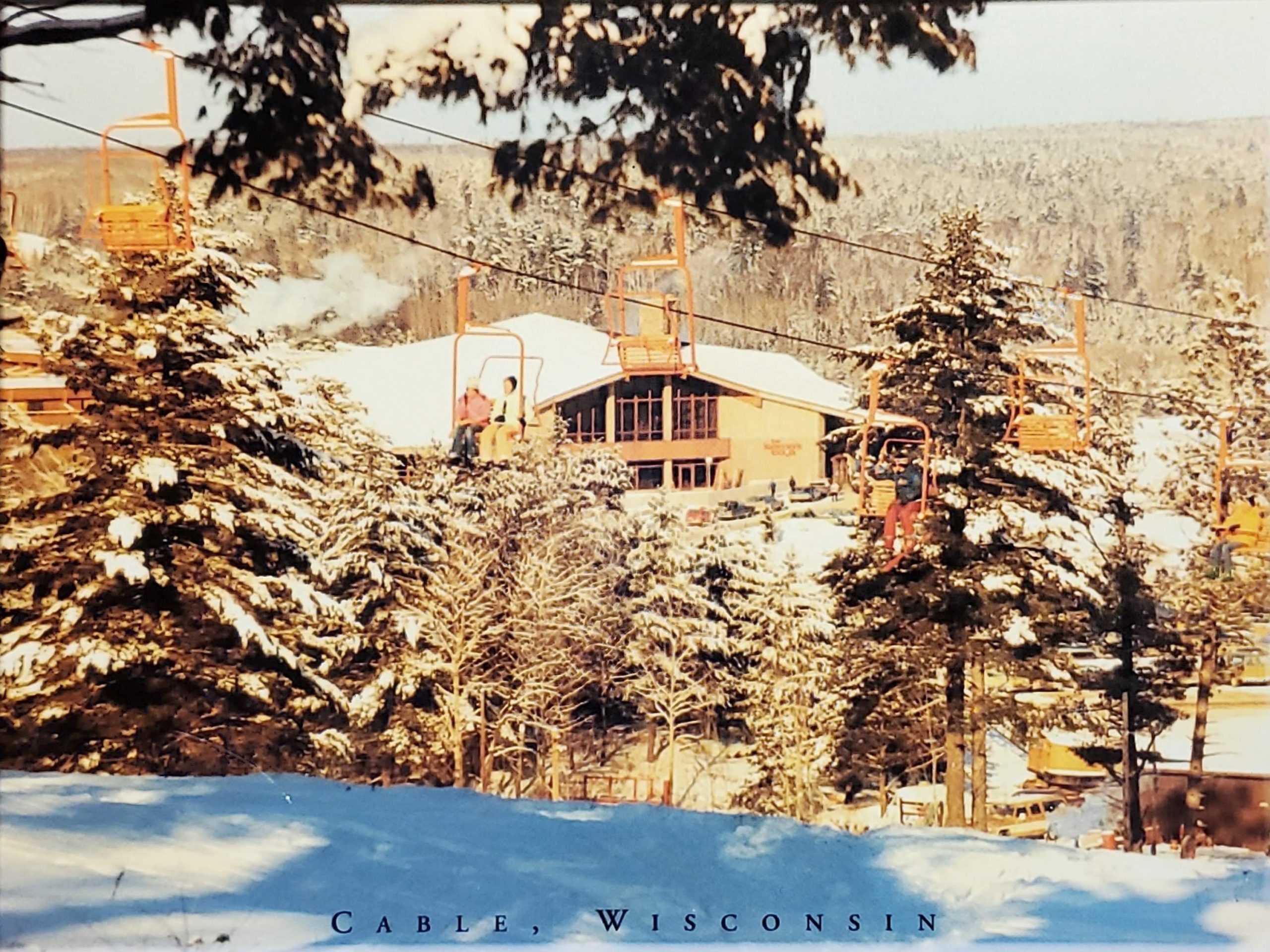
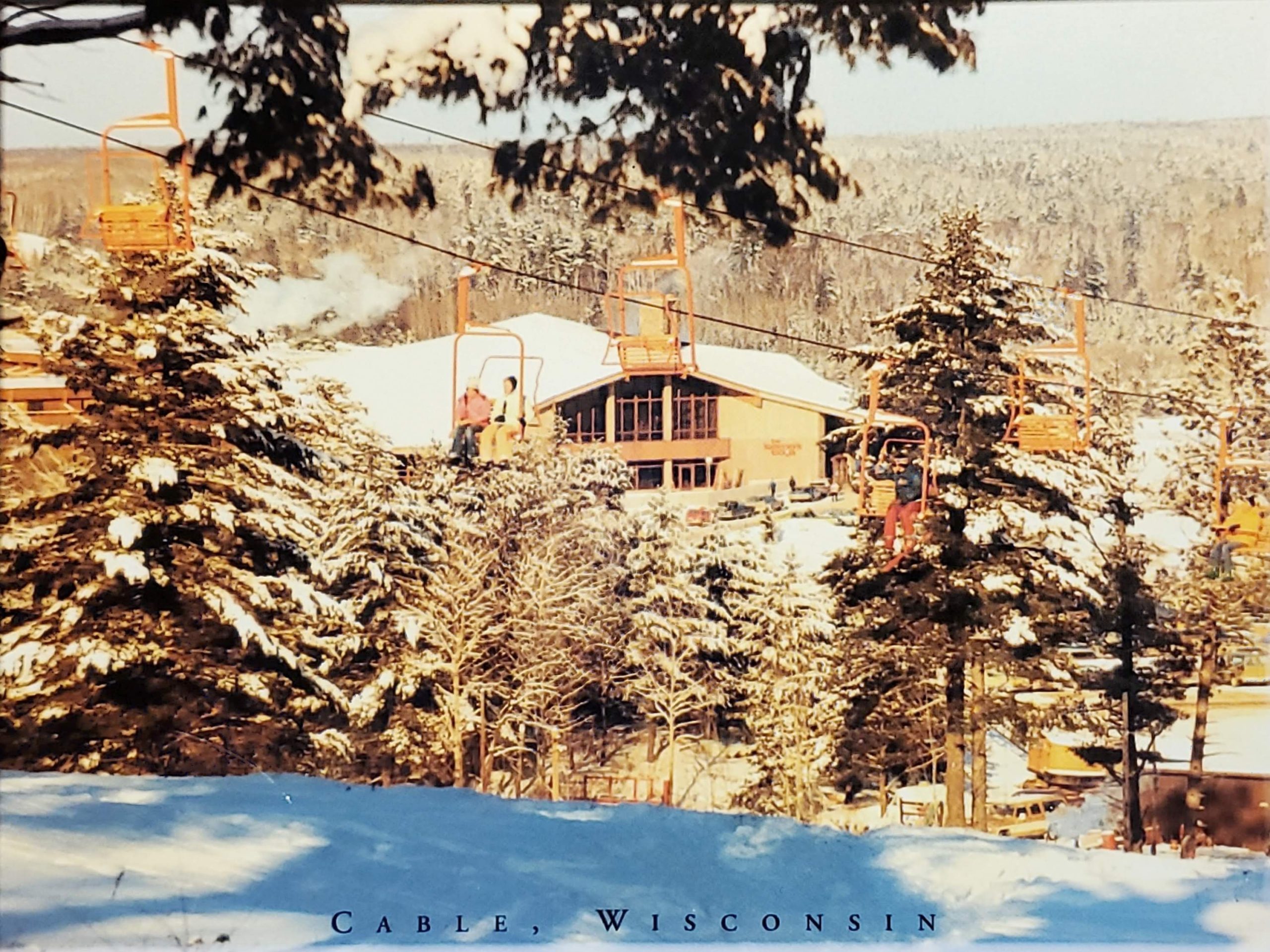
The Telemark Lodge as pictured from the top of Mt. Telemark in Cable, Wisconsin on a 1970s postcard. (Photo: Telemark Education Foundation).
The Birkie was Telemark’s first foray into cross-country skiing, but the race’s momentum in the 1970s led to the resort playing an outsized role in the development of modern cross-country skiing in the United States, and beyond. The first World Cup race ever was held on a trail system laid out in 1978 by American skiing pioneers John Caldwell, coach Marty Hall, and Olympic medalist Bill Koch.
The legacy of Telemark limped along on its own legend for years following Tony Wise’s bankruptcy and surrender of the property in the 1980s. Numerous owners passed through. Central Cross Country Skiing (CXC) briefly made it a home for its Elite Team in the early 2010s, before Telemark closed for good in 2014. The Lodge sat abandoned for years.
In 2020, the Birkie started to piece together a new vision for the property: Mt. Telemark Village. The Lodge was demolished in 2021, the vision that has played out since is the Birkie’s community-oriented project to honor the whirlwind of history that emanated from the little patch of Wisconsin woods, and make it a site to take a central role, again.
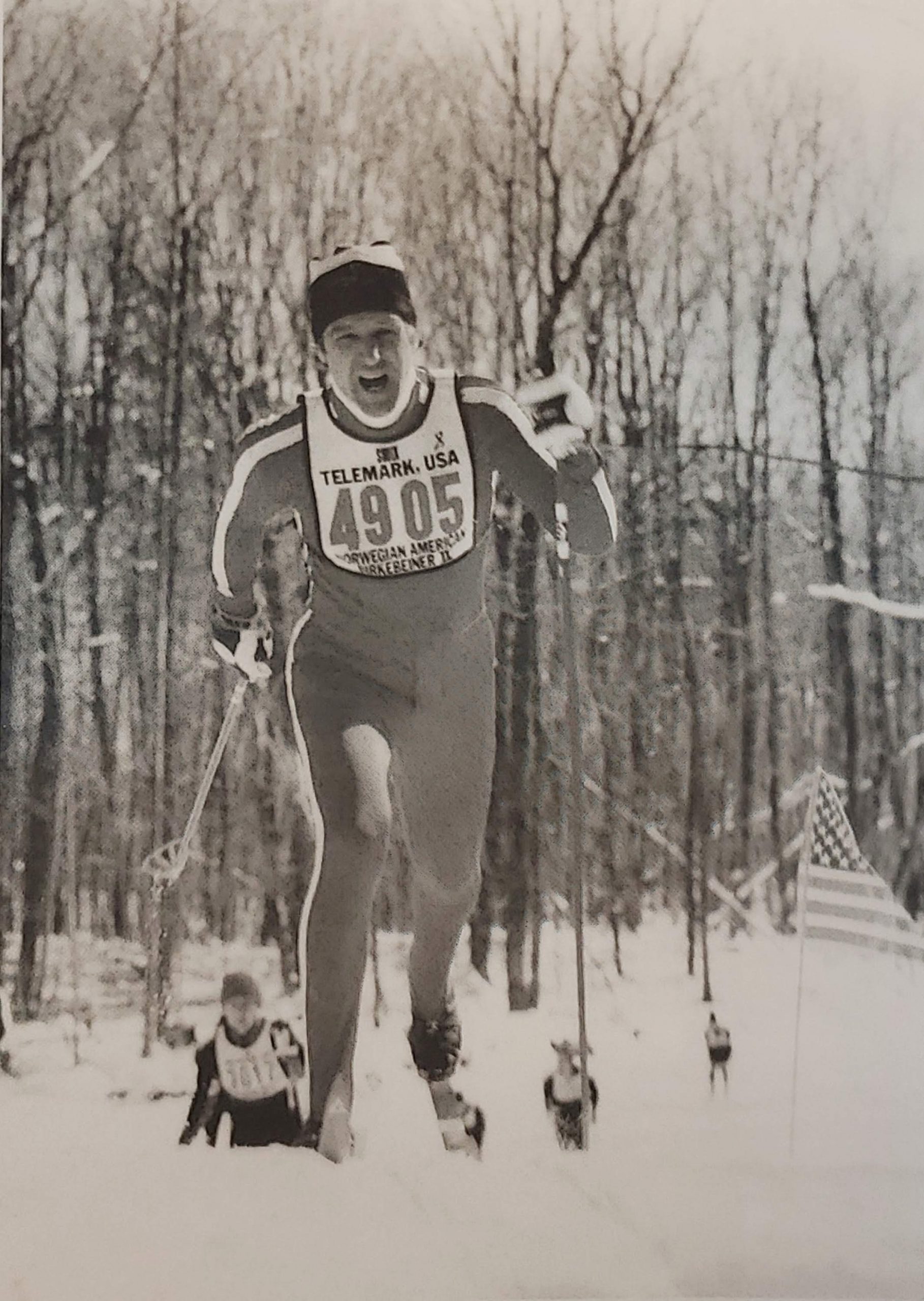
George Hovland at the American Birkiebeiner in 1982. (Photo: Sawyer County Record Archive)
George Hovland Trail
Saturday’s dedication ceremony celebrated the success of the new Birkie venue linked by a number of trails to Telemark. It also linked the new venue to a giant of Midwestern skiing: George Hovland.
George Hovland’s name looms large in his hometown of Duluth, Minnesota, where the 1952 Olympian had a hand in founding nearly all present-day fixtures of Zenith City’s ski scene including Spirit Mountain, Snowflake Nordic Center, and the North Shore In-line marathon.
Hovland’s legacy as a ski pioneer in the wider-Midwest is being celebrated by the Birkie in dedicating its 5 k training loop. A friend of Tony Wise, Hovland competed in every Birkie from 1974 to 2012. In the years prior to his passing in 2021, Hovland was the vital link to a deep, essential past of Midwestern skiing. Hovland took to the sport of skiing as a boy in the 1940s when jumping was nordic’s premier discipline and Chester Bowl in Duluth was still populated by the Scandinavian immigrants who brought the sport to America. He skied his last kilometers after Minnesotan Jessie Diggins and Kikkan Randall combined to earn the first Olympic gold in US skiing history. The George Hovland Trail will play an active role in developing Midwestern ski racers this summer, with CXC hosting its Developmental Camps, and Team Birkie looking to utilize the resource.
“George was such an amazing man and an influence on our sport,” said Ben Popp, American Birkebeiner Ski Foundation Executive Director. “George loved training and this will forever be a medium to get people training and faster!”
Trek Trails Lay New Lines Down Mt. Telemark
Before snow fills the George Hovland Trail next winter, there will be plenty of treads on trails of another type: biking.
Telemark was the site of some early movement in the sport of mountain biking. As the sport first advanced beyond riding klunkers in the West in the early 1980s, one of the first flat-land homes it found was the Birkie trail at Telemark. The Chequamegon Fat Tire Festival, one of the oldest extant mountain bike races in the country, was dreamed up in 1983 with the proposition, “What if we did a bike race on the American Birkebeiner trail?”
While the Chequamegon was based out of the nearby Lakewoods Resort for most of its formative years, a trail system was quickly developed on the Telemark property, and eventually linked via the CAMBA trail system.For years, the Telemark portion of the CAMBA system stood out as a kind of staid testament to those early days of mountain biking as a sport. The trails cut through the woods between logging roads. In the days before slack frame geometry, 29 inch wheels, and full suspension made riding downhill more joy than hazard, the singletrack was laid out to get from point A to B more so than to get from feature to feature.
In more recent years, Mt. Telemark itself started to look ripe for the new-look crop of mountain bike trails that were being built around the Midwest at places like Spirit Mountain Duluth, MN, or Copper Harbor, MI.
When the Birkie took over the property in 2020, those in the Wisconsin biking community took notice. That included Trek, based in southern Wisconsin, which was willing to provide funding for the development of a trail system that utilized the whole of Mt. Telemark’s terrain and set it up to be a central host for mountain biking in the same way that Telemark had long served for skiing.
An additional grant from nonprofit group One Track Mind set the Trek Trails at Telemark in motion. Now in development, 16 additional miles of trail will eventually play host to training and racing for cross-country, enduro, and downhill racers alike.
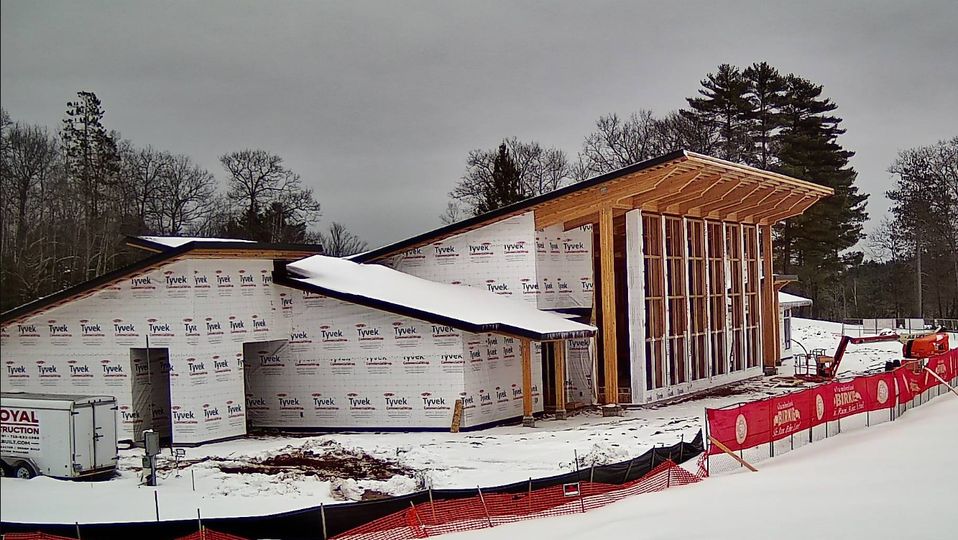
The new Mt. Telemark Village Base Camp under construction last winter. (Photo: American Birkebeiner Ski Foundation)
Mt. Telemark Village Gets a Base Camp
What’s next? A successor for the old Telemark Lodge. While the Birkie gathered its community together on Saturday, the site of a new building under construction where the legendary lodge once stood seemed an apt harbinger.
The “Base Camp” Community Center still looks erratic against the fields and forests that surround it. But in terms of decadence, Telemark seems to have a matured sense of stature. The three-floor fireplace that once greeted visitors in the lobby of the old Lodge isn’t making a comeback. Emeril Legassi is unlikely to be in this version of Telemark’s kitchen (he was, in fact, in the old one).
This new community center doesn’t include the giant concrete walls that are still visible on site from the old Lodge, but it seems to impart that this version of Telemark, after a half-decade of dreaming, is starting to be set.
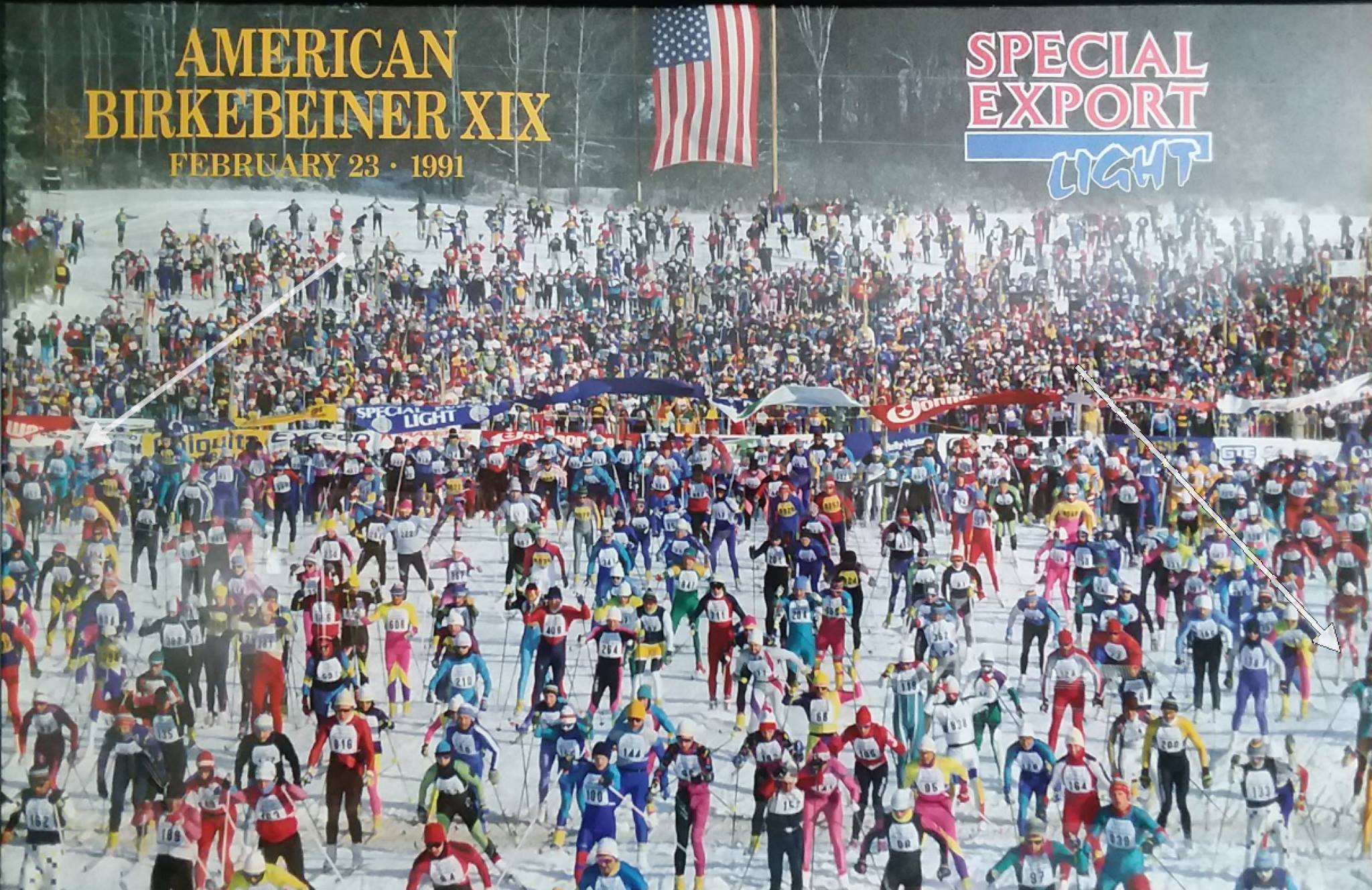
The official American Birkebeiner poster from 1991, when the race started in “Rosie’s Field,” located near the present-Fish Hatchery trailhead outside of Hayward, Wisconsin. (Photo: American Birkebeiner Ski Foundation)
“You’re skiing along, and you look up at the green of the pines and look down and see golden tamarack needles peeking out of the Wisconsin snow, and you find yourself gliding along thinking, ‘my gosh, how lucky can one guy get…and Go Packers too!” – Grandpa Theyerl, Wisconsinite, Birchlegger.
The American Birkebeiner turns 50 years old this weekend. And although it didn’t ask for it, I’m doing some reflection on its behalf.
At 26 years old, I’ve only been around for half of the history of the “Birkie.” I was born and raised in Wisconsin. Never knew it without the Birkie. I was also born into a family whose name has appeared in the Birch Scroll for 45 of the Birkie’s 50 years. Somewhere out there amongst those forested knolls, the Birkie became intwined in my family tree. The quintessential American ski race, and my quintessential family experience.
And why not? The yearly ritual spending a day skiing 50 kilometers from Cable to Hayward has thrown muskie-sized ripples into our lives every other day of the year. Slowly, year-over-year, it’s plotted the course of my family’s collective life over generations. And though the magnitude may vary, the experience is typical. The Birkie is all about the ties that bind: a physical exercise with ontological overtones.
There are two kinds of dreams: aspirational and retrospective—the Birkie has been both. The aspirational dream is when you look into the future and decide what you want to see there. That was Birkie dream of Tony Wise, the ebullient Northwoods businessman who planned to give his hometown an economic engine, and a way to spin a mythology out of snow, pines, and skinny skis.
The other type of the dream is the one you find in retrospect; the momentary circumstances and connections that point towards something that feels like home. That’s been my Birkie dream. I’ve had a lot of great skis in my life, but the best great skis have all been on the Birkie trail. I’ve had a lot of good fortune in my life—making a living in this sport, growing up among the Northwoods of Wisconsin, my parents meeting and starting a family—but so much of that luck began with my Grandpa signing up for the American Birkebeiner 45 years ago.
Tony Wise, the “brains, brawn, inspiration, energy source, and grand imagination” behind Telemark Lodge, and the Founder of the American Birkebeiner. (Photo: Telemark Educational Foundation).
Tony Wise, Telemark, and the Birkie Idea
The Wisconsin Northwoods are a vast region. Endless pines, countless lakes, and the frigid omnipresence of Lake Superior. They beckon every human soul to dream outstretched dreams. The lucky few that are comfortable dancing in their low, endless expanses earn a typically understated moniker, a character.
Tony Wise was a character. “The brains, brawn, inspiration, energy source, and grand imagination behind [Telemark], a bulky excitable fellow who talks with the chattering speed of a machine gun and apparently thinks the same way,” as a profile on Wise in Ski Magazine put it in 1977.
Wise built his Telemark Resort while living in the same Hayward tar-paper shack in which he’d lived his entire life. His 1995 obituary in the Star Trib (The Minneapolis Star Tribune) concluded that Wise “built Telemark from a dream, and it did what he said it would do. It brought life and vibrancy and entertainment stars and international athletes and development to what had been a depressed area of Wisconsin.” At the same time, the lede on the same article also declared “Wise’s bank account showed $0.00 when he died Thursday.” Tony Wise, in life, emptied the tank.
He was a born during the lean years after the Wisconsin timber boom went bust. Went off to war as young man, a tank commander during World War II. During the waning days of the War, he was introduced to Alpine skiing in the Bavarian Alps, and decided he’d bring it all back home.
Wise founded Telemark Ski Resort in Cable, Wisconsin on a 300-foot vertical run with a nothing more than a surplus Jeep engine. The resort rounded out the fishing-summer-hunting tourism economy underfoot in the Northwoods after the War, providing year-round tourism dollars and jobs to an entire community.
The Telemark Lodge as pictured from the top of Mt. Telemark in Cable, Wisconsin on a 1970s postcard. (Photo: Telemark Education Foundation).
Things hummed along for some thirty years, before Wise could see the writing on the wall. He had just built his Telemark Lodge in 1973, but could also see the limitations of what he was working with in Wisconsin for Downhill skiing. Airfare to the American West—where old mining towns had took on second lives as ski resorts by simply putting up a lift on the nearest mountain with a 3,000 foot run—was beginning to become feasible for the middle-class. Wise started to look to other options.
The dense thickets of the Northwoods mask an endlessly undulating set of kettles and moraines, left from the last retreat of the Wisconsin glaciation 10,000 years ago. A cross-country ski race would help bring people in on the secret; in 1973, Wise stitched together a path of snowmobile trails, old logging cuts, and hunting footpaths from the Lumberjack Bowl in Hayward to the base area of the Telemark Lodge in Hayward: 55 kilometers. For a name, he leaned into the Norwegian heritage present in the area—and his own myth making at “Telemark”—taking the legendary story of the Birkebeiners from the Norwegians, and dubbing his event the American Birkebeiner.
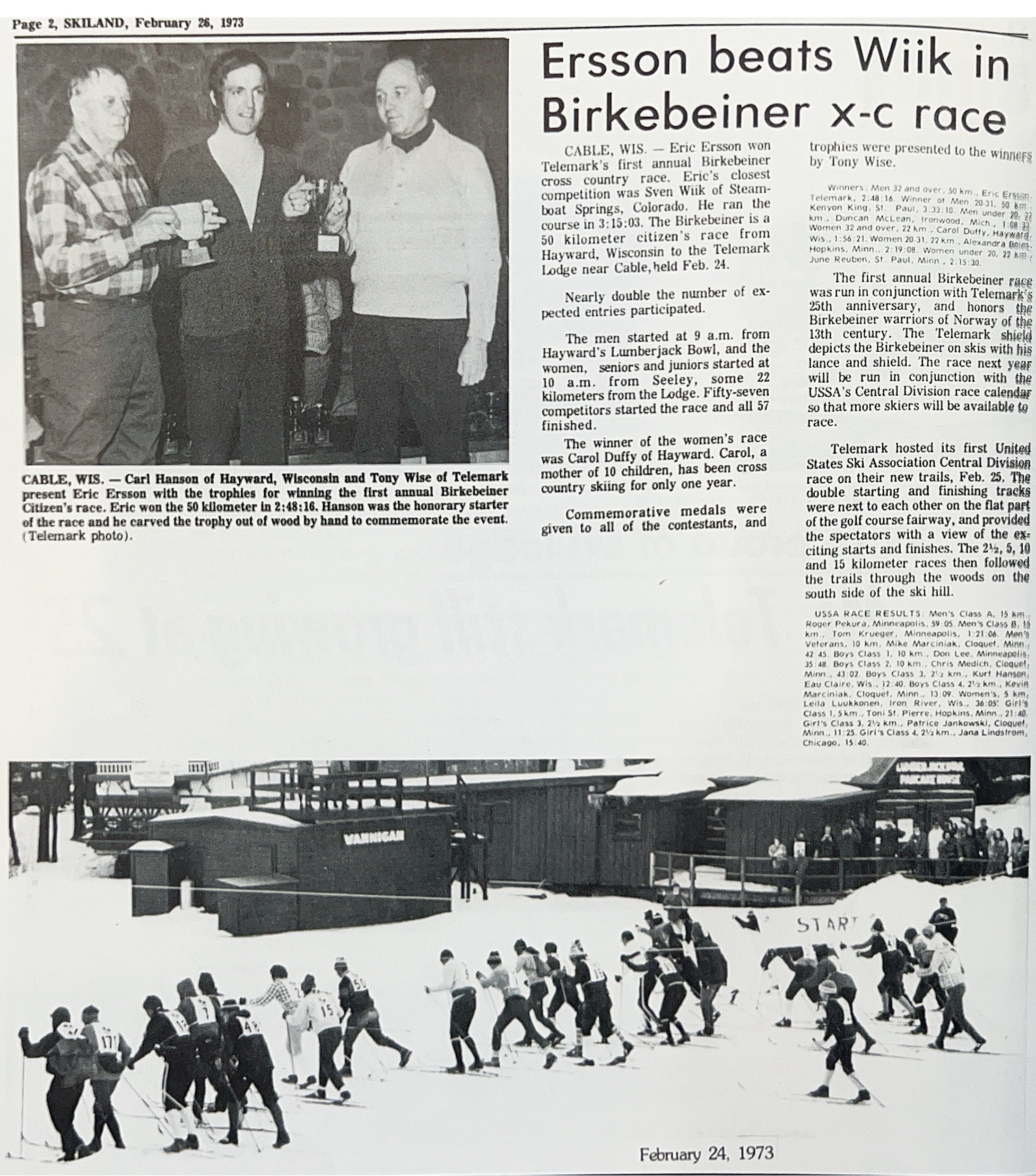
The first running of the American Birkebeiner took place on February 24, 1973. 57 racers competing across two events. Thirty-four men and one woman, Jacque Lindskoog, completed the entire 50 kilometer course. Eric Ersson, a Swedish skier Wise had enlisted to add to the Scandinavian heritage aspect (he was doing this a lot in the early years), beat out the legendary Swedish-American ski coach Sven Wiik. Another nineteen competitors completed a half-distance course that was won by Hayward local Carol Duffy. Starting in the mid-way outpost of Seeley, this proto-event would become the Korteloppet, the Birkie’s half-distance cousin.
The Sawyer County Record’s report on the very first American Birkebeiner in 1973. (Photo: Sawyer County Record Archive).
Humble beginnings, but the architecture for what the Birkie is today was all there in its inaugural year. The point-to-point course through the county forests of both Sawyer County and Bayfield County. The name. The perfectly perched late February date making the Birkie the last true gasp of winter before hopes of spring could start to bubble forth.
The People’s Race
The most important aspect of Wise’s first Birkie was that it cut a wide swatch through cross-country skiing. In 1973, it didn’t take many people to represent the whole of the American ski community. In truth, the sport was probably in its lowest moment of the last century in the United States. The grand wooden ski jumps (the more popular form of nordic skiing at the time) which had been the preferred form of Midwestern after-church Sunday entertainment before the Minnesota Vikings started playing football were starting to rot and be torn down. From Chester Bowl in Duluth to Theodore Wirth Park in Minneapolis. Numbers in the Minnesota High School Ski League, long the greatest holder of young ski talent in the country, were diminishing. American skiing was three years away from its competitive high-water mark for the next 50 years with Bill Koch’s 1976 Olympic medal at the Innsbruck games. But Koch came from a separate, more-focused, tradition of cross-country skiing that had taken shape in the prep schools and liberal art colleges of New England. The more populist tradition of nordic skiing in America—having started out among the Scandinavian diaspora with miners, farmers, and lumberjacks—was already fading out.
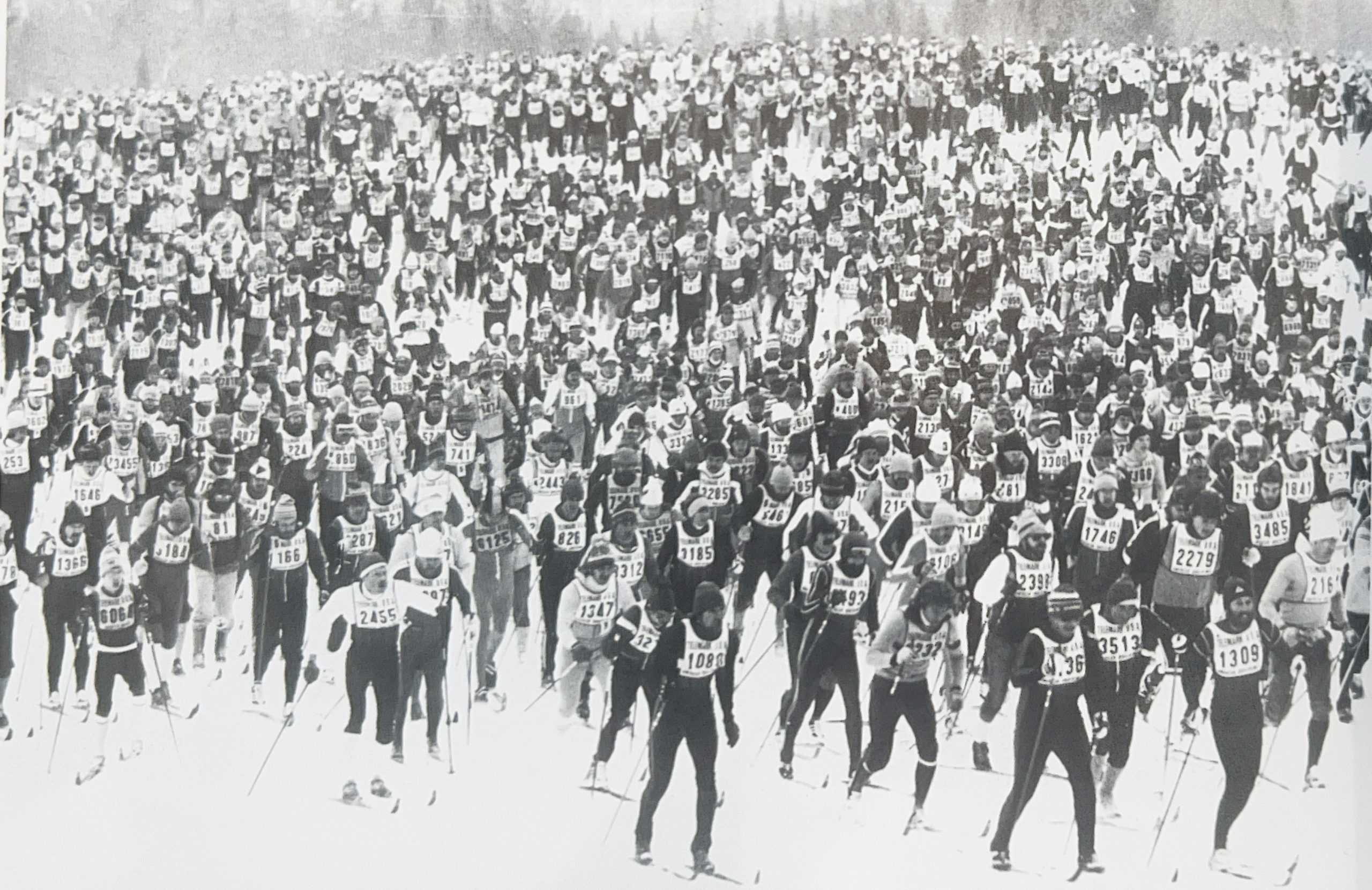
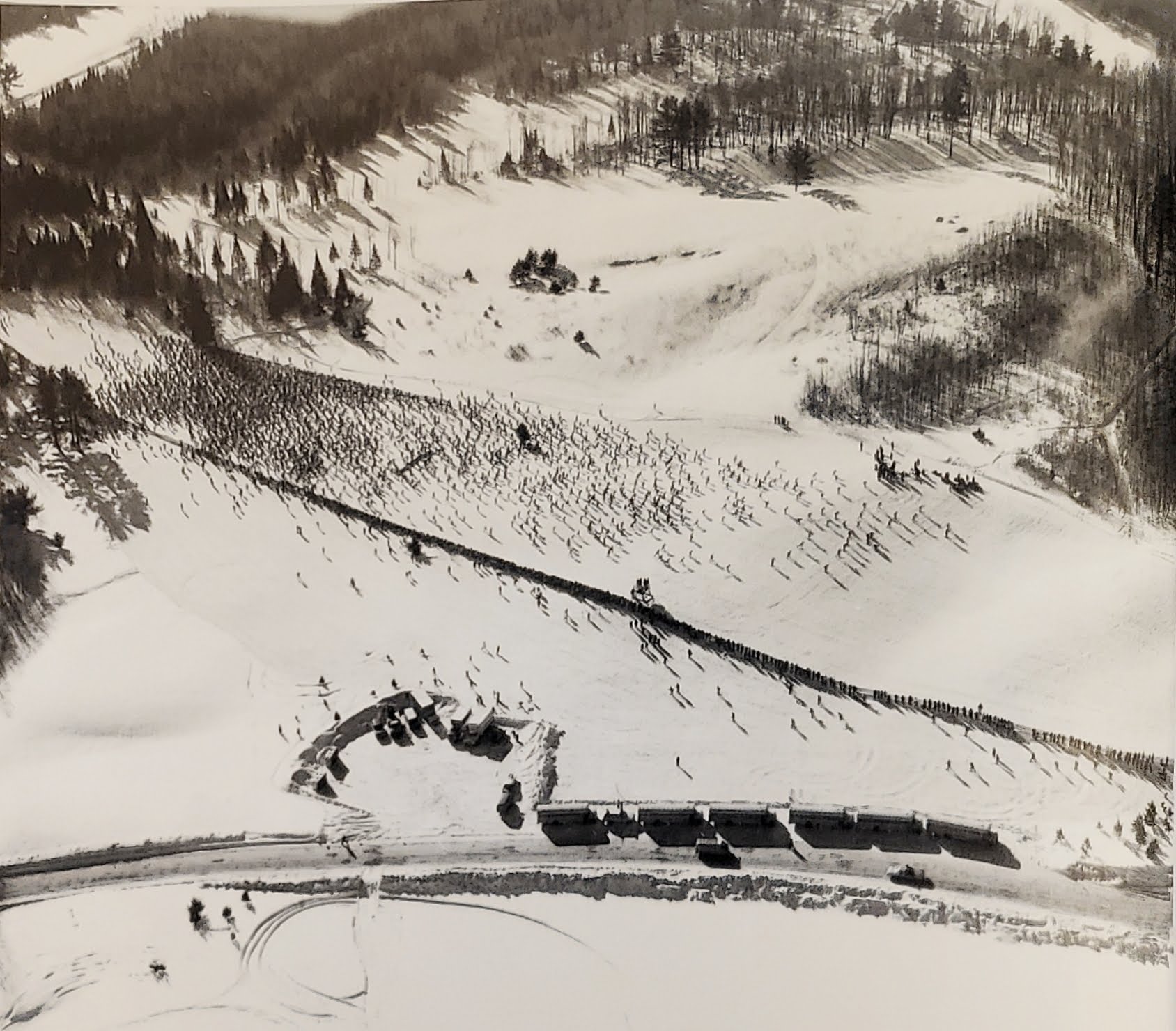
American Birkebeiner VIII in 1981, when the race began by cresting the top of Mt. Telemark. (Photo: American Birkebeiner Ski Foundation)
The group that started that first Birkie—the now-famous red-bib-wearing “Founders”—turned around the popular participation in cross-country skiing. The ski community which exists today is the ski community they kindled back in the Lumberjack Bowl. The Birkie revolution was a quiet one, and one inspired by even more humble actors. Most were local Wisconsinites and Minnesotans who had found their way to cross-country skiing by accident or by heritage.
There was Ernie St. Germaine, a local Wisconsin schoolteacher and tribal chief for the Lac du Flambeau band of the Ojibwe, that as of writing is the only person to have completed every edition of the American Birkebeiner. St. Germaine ought to—and I believe would prefer to—always have his childhood Dave Langraff accompany him in his telling of how they did the first event on a whim, and then saw it change their lives for good. For his part, Dave Langraff was as radiant a skier as you’d ever find out on a trail. He was another teacher, operating out of the “Jump Rope Capital of the World,” of Bloomer, Wisconsin. My few memories of him are all exuded joy, and all on skis. There’s an unadulterated patch of Birkie fever found on the Hickory Ridge trails Langraff helped cut outside Bloomer, where there’s “more lakes than kilometers to ski!” Every sharp jutting corner and fast-running downhill re-asserts a love that resonates down the years.
Other founders include John Kotar, who hung up the skis a decade ago and since has helped shepherd the Birkie into a new era of growth as a member of its Board of Directors. There was also Karl Andresen, a Geography Professor in my hometown of Eau Claire, Wisconsin who founded the Eau Claire Ski Striders. In my youth, he played a kind of Midwestern Falstaff for all that was good about the sport of nordic skiing, regaling us with tales of this Birkie race and the little features of it that had taken on their own mythos: the Power Lines, the Fire Tower, “Double-OO.”
These “Founders” glowed with a quiet, unassuming fire through the Midwestern ski community. Close in their tracks would be others who got in on the action as quick as they could. Through Minnesota Youth Ski League clubs and high school teams they’d coach and give back to sport which had sent them out into the great Wisconsin woods. Most of us who learned to ski in the Midwest in the last 50 years have someone who did the Birkie to thank for setting us down on tracks. Through a child’s eye, the accolade of “Birkie” skier was everything. In my mind’s eye now, I recognize the little gleam in our local ski coaches eyes when they’d talk about the race that had sparked their own love for the sport. With the Birkie spirit coursing through the community, we were all operating from a level plane.
The author’s father celebrates after a warm Birkie finish sometime in the late 1980s. (Photo: Courtesy Image/Ted Theyerl)
A Family Tale
The Birkie has remained true to its intention: adventure, first and foremost. Growing from 57 racers, the legions number in the hundreds of thousands on participants who have discovered qualities within themselves by venturing out there on skis. Things caught on quick. By the fourth Birkie in 1977—the one my Grandfather first hopped in—the Birkie field had grown from 57 to 2,000 racers.
Twenty years in, the American Birkebeiner Ski Foundation (ABSF), noticed that there was a unique staying power to the Birkie. Through the massive changes in a human life that come about over decades, A growing group was had been back year-after-year. The observation resulted in the establishment of the Birchleggers club. Membership requirement: twenty Birkie’s completed. Reward: a famous Purple bib (then gold, after 30 Birkies, then red, after 35).
The Birchleggers now number in the hundreds. Within their ranks, there are just as many Birkie stories, and many of them key in on one particular metaphysical quality. Though the Birkie race course has remained a relative constant for them, the lived experiences they bring to the race each year, and the experiences lived during the race each year, continue to offer something close to constant discovery.
My father—Ted Theyerl—who is 34 Birkies in at the time of this writing, signed up for his first Birkie as soon as he turned 18 in 1986. He earned an elite wave placement based off placing second in the Korteloppet the previous year. He completed the race that year skating, but still had kick wax underfoot because “no one could believe you could climb without it!” From there, through college, and well into his days as the fittest coach on my little league baseball roster, he’d consistently place in the top two-hundred, earning a bid in the Birkie’s elite wave the next year.
One year in the early 1990s, he was out early-season training near his home in Milwaukee, Wisconsin, fell, and fractured his leg. In need of rehabilitation to keep his Birkie total on track, he turned to a Physical Therapist name Denise. They hit it off, got married, and here I am, their son, recounting the story.
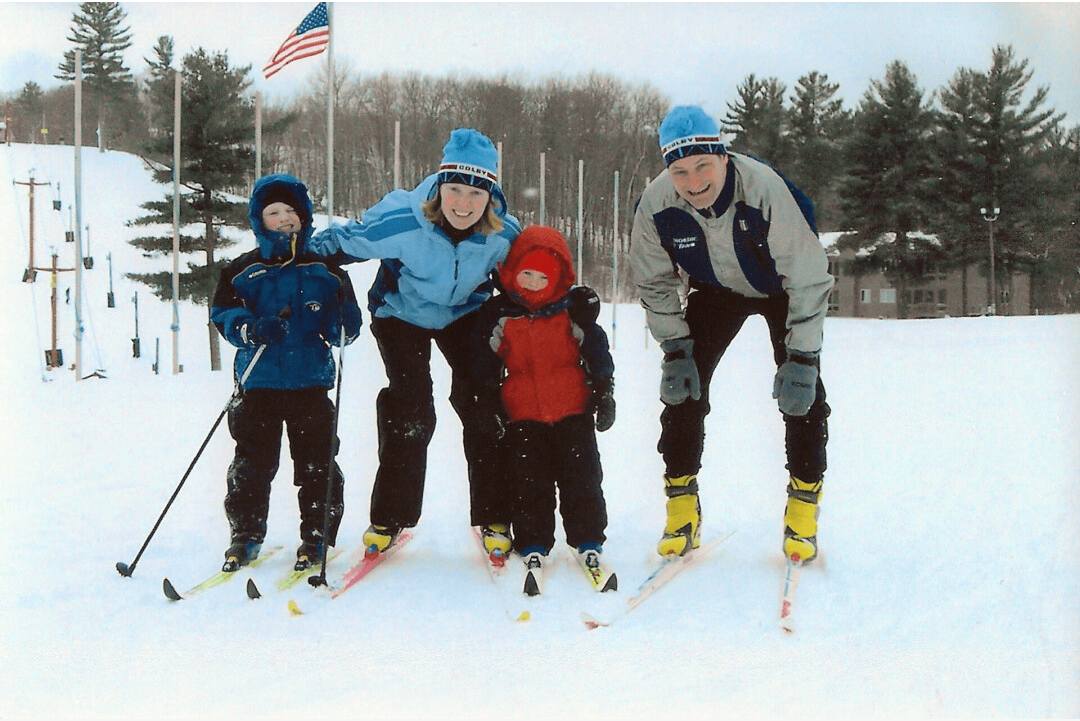
The author (l) and his family (L-R), mom Denise, brother Christian, and dad, Ted, on an early 2000s excursion to the Telemark Lodge, site of the former Birkie finish line. (Photo: Courtesy Image/Ted Theyerl)
When Dad finally left the elite wave, it was in another crash. In 2010, my mother and I were mingling in the crowd at Angler’s Pub after my first Korteloppet, when the wave of Birchlegger elite wave finishers that my Dad usually finished with started to filter into the scene telling us he had taken a hard fall. Dad had separated his shoulder near the unofficial half-way point at County “OO” in Seeley.” He stopped off at the aid station, discarded a broken pole, took up a sling, and proceeded to skate towards Hayward. “I remember thinking, well, this will be different,” he recounted. “I don’t have to sprint across the Lake now!”
Eventually, we found him wandering on Main St. in Hayward among the thousands of people he’d smiled, greeted, and had conversations with throughout his long, slow, one-pole skate to Hayward. He remembers that as one of his most enjoyable Cable-Hayward treks, where the kilometers lay long and thick with connections to other skiers behind him. Dad eventually slipped out of the elite wave permanently, and then took up skiing with my brother, or sister, as they started to forge their own Birkie journeys.
Admittedly, I haven’t pulled my weight in the family Birkie legacy, having spent most of my adult life far-flung from the Northwoods of Wisconsin and with only two American Birkebeiner finishers to my name. There’s irony in that: because of the Birkie, I’m now in a spot where I can’t do the Birkie, and will be spending this year’s Birkie Saturday at a wax bench in Colorado coaching the Crested Butte Nordic Team. It’s a circumstance I count as a blessing, not unlike the example of my aunt, Tracey Cote (nee Theyerl), who left the Birkie twenty-six years ago to take up the helm of the Colby College Ski Team. She’s been spending the last weekend in February on the collegiate carnival circuit ever since. Time and distance haven’t diminished my love of a race that has directed where I’ve gone and who I’ve known in life.
Gathering Around for Winter Vespers
I can still evoke the feeling I had during my first Korteloppet when I turned the corner three kilometers into the race. I saw the Power Lines stretching out before me, laden with zig-zagging masses of skiers and supporters. I felt like I’d arrived at a familiar haunt. I’d spent the first 13 years of my life envisioning what that moment would be like. In reaching it, I reached that rare state where you truly can appreciate the miracle of every lived moment. I’ve been in a coasting of sorts ever since that moment.
The other instance I hold onto from that first experience was one of inheritance. During that first Korte, I was biding my time in the line up one of the first big hills when a man wearing one of the red “Spirit of 35” Birkie bibs pulled up next to me, and shouted, “Ben!” I looked over, and got an introduction, “I’m Jim O’Connell, your Grandpa and I used to be out here together,” and in an instant, the Birkie Trail seemed to stretch before me to a different, looser, sense of time construed not around some linear march through life, but instead by the connections you make in it.
I choose to believe there’s a reason there have been so-many repeat Birkie winners. There must be a logic behind why Caitlin Gregg, Matt Liebsch, David Norris, Alayna Sonneysn and those others who come back to compete for the top step of the Birkie podium every year. I choose to believe it’s probably along the same lines as those who are pulling over to breathe in the pines, and thank the volunteers, and make their way to Hayward from Wave 8, and 9 and 10.
The real power of the Birkie is in repeating the ritual. Every February, a whole sport heads to one neck of the woods. Popping through old sawmill towns, gaining that first view of the Namekogan river on the drive to Hayward, the bridge welcoming you into Birkie-land which has always read “SPOONER BLOWS” in your rearview mirror. The “Viking Warriors” in full regalia still make their way to Hayward. The Sawmill Saloon in Seeley with its Birkie Bash, and seeing snowmobilers and Birkie champions, alike, gain equal purchase over a fish fry and a good ol’ can of Leinie’s O.’
Through the many seasons of our lives, the Birkie has become communion: a gathering around for each winter’s vespers. In skiing that fifty kilometers, we’re reminded that the winter can be warm. It can make you shed a few layers. The harsh cold is no match for the warmth that human souls, pointed together in the same direction, can provide. And that, burning brightly, is the source of “Birkie Fever.”
The Birkie: a dream dreamed, a dream realized, and a dream that skis on.
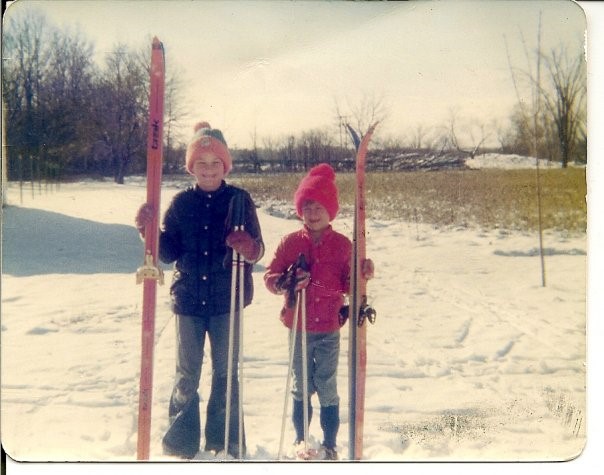
The author’s father, Ted Theyerl, and aunt Tracey Cote (nee Theyerl) prepping for their first trip to the American Birkebeiner in winter 1977. (Photo: Courtesy Image/Ted Theyerl)
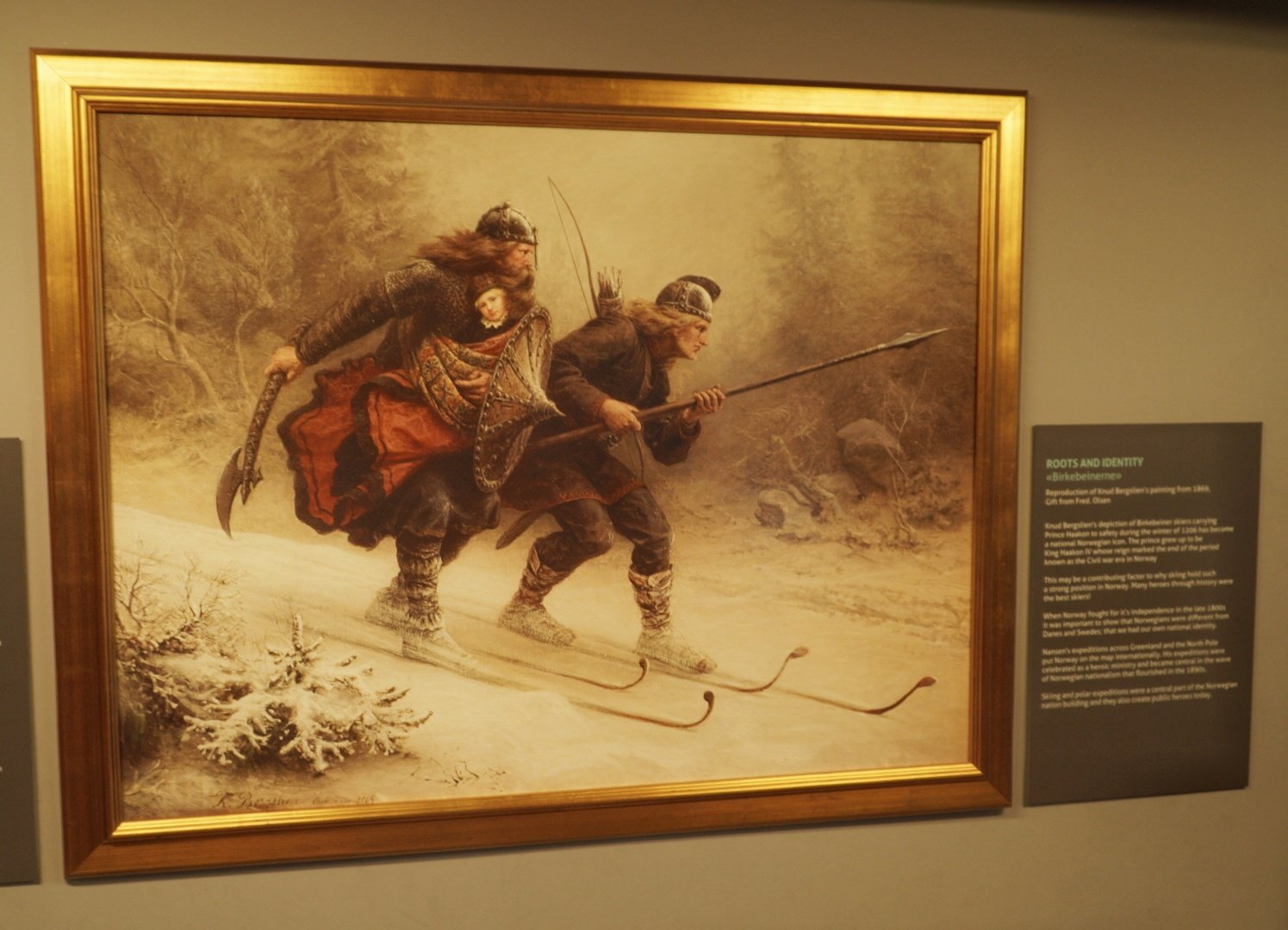
The original 1869 oil painting of Knud Larsen Bergslien’s “The Birkebeiner” is on display at the Holmenkollen Ski Museum in Oslo. (Photo: Lumi Experiences)
Most Birkie skiers are familiar with the legendary story of the original Norwegian Birkebeiners and how that inspired the famous cross country ski race in Norway, from Rena to Lillehammer; which in turn inspired the American Birkebeiner from Cable to Hayward.
But what is the Norwegian Birkebeiner like today? I skied my first American and Norwegian Birkies last year and took away many impressions.
“Wait, what?!” you ask. “Garrott, you lived in Hayward for 5 years and have never skied the Birkie?” Well, okay. I skied the Birkie once in 2007, but it finished at OO that year. The Birkie’s timing in late February always overlapped with World Cups or Olympic Games. After retiring in 2011, I moved away from Wisconsin. Last year was my first year back, as my company, Lumi Experiences, had a booth at the Expo, sharing stories from the Worldloppet events where we run cross country ski vacations.
Spectators cheering on Birken skiers. (Photo: Lumi Experiences)
On Birkie Saturday, I couldn’t pass up the opportunity to ski from Cable to Hayward and actually finish on Main Street. Finally, I checked off one of my bucket-list items as a ski racer.
Three weeks later, I found myself standing in Rena, Norway getting ready to classic ski 54 km from Rena to Lillehammer, carrying an 8 pound backpack representing baby prince.
Spectators provide extra sustenance to skiers between the official aid stations. (Photo: Lumi Experiences)
Håkon Håkonsson. The three-week gap between the two events was enough to recover from one and carry good fitness into the next.
Our group was staying in Lillehammer, so it was an early morning bus ride to get to the start in Rena. The race course takes you on a direct path over the mountains, but the roads have to go around the mountains. In order to arrive at the start by 8:00 am, the bus left Lillehammer at 5:30 am. I was expecting a very dark start to the morning, but when I opened the blackout curtains and daylight came in, I thought I had slept through my alarm. This should not have surprised me, as we were just two days from the Spring Equinox and only 5° south of the Arctic Circle.
Ski trails in every direction. (Photo: Lumi Experiences)
The start of the Birken is basically in a farm field with temporary warming tents without any permanent infrastructure. The colloquial name for the Birkebeinerrennet was one of the biggest surprises for me. I’ve grown up in the US calling it the Norwegian Birkie, but in Norway, it is unequivocally referred to as the “Birken.” This terminology makes it easy to differentiate the American “Birkie” from the Norwegian “Birken.”
The start itself was one of the most civilized starts I have ever experienced. The ~ 10,000 starters are split into 14 waves. As a wave 1 Birkie skier, my Birkie time was good enough to be seeded in the 4th wave at the Birken – a wave placement which seemed surprisingly accurate, given the pace of the skiers around me. Ample tracks and a gradual uphill start kept everyone spread out without any accidents. It seemed like everyone understood they had 54 km to ski and no one needed to win the first kilometer.
Sunshine and blue skies. (Photo: Lumi Experiences)
In fact, as early as one kilometer into the race, skiers were already stopping to work on their kick wax. Conditions were surprisingly tricky, as the course starts only 1000 feet above sea level, then climbs to about 3000 feet of elevation. The weather warms throughout the day and a skier may go through three or four different wax conditions.
I waxed with a thin layer of klister, covered with hardwax. This combination is tricky because you have to keep your skis moving to prevent icing in the powder at higher elevations, but it provided great kick for the first 20 km of climbing up to the plateau in Raudfjelllet. It was also durable enough to last for my entire 54 km race. I just stopped once to switch skis half-way through the race in Kvarstad. This meant the wax that had worn off the inside edges of my skis was now on the outside edges, giving me better glide and kick for the second half of the race.
The spectators really help make a ski race fun for participants. The Marcialonga in Italy and the Engadin in Switzerland both go through many villages, so it’s easy for people to cheer from their balcony. The Birkie and Birken courses are much more rural, so they’re harder for spectators to access. However, the spectators that make it out onto the course are there to have fun and bring a lot of enthusiasm for the racers. There were so many spectators at the Birkie this year that I thought I was already at OO when in fact, I was only at Boedecker Rd. By the time I was actually at OO, skiing over the Key Log Bridge, I was in awe at all of the new infrastructure and enthusiastic spectators. My favorite spectators, however, are the snowmobilers. They are often in the harder to reach corners of the course and seem to be there more to cheer on the agony of defeat than the thrill of victory.
Skiing into the Birkebeiner Stadium. (Photo: Lumi Experiences)
The Birken goes through a protected region, high on the plateau, so there are no snowmobilers. Somehow, though, spectators figure out how to bring couches to the trailside, build huge bonfires and offer homemade aquavit or Jagermeister to skiers passing by.
Speaking of aid stations: each Worldloppet event seems to have its own unique treats, like Comte cheese in France, dark chocolate in Switzerland or blueberry soup in Sweden. In Norway, it’s lefse. Seriously. The rolled lefse dough filled with cinnamon and sugar looked a little dry to me, but I was hungry at the first aid station and took a bite. It turned out to be one of the best tasting race foods I have ever eaten. After that, I made sure to take a buttery lefse at each aid station. Yum!
Unlike the Birkie, which is mostly wooded from start to finish with lots of rolling trails, the Birken is mostly on a high open plateau with long, sustained climbs and long, gradual descents. I often found myself looking out over the wide expanses and admiring the views throughout the race.
We were fortunate to have ideal weather conditions for this year’s Birken, save for a headwind somewhat reminiscent of crossing Lake Hayward at the Birkie this year. There are years, however, where the weather on the plateau can be much less ideal. Besides the symbolism of the backpack, there is also the practical consideration that you can carry warm, dry clothes with you. Not only does the backpack need to weigh 8 pounds, it also needs to store a windproof jacket, pants, long underwear, hat, gloves and balaclava.
One of the best parts of the Birken is the final 15 km from Sjusjøen to Lillehammer. Rather than big climbs and a lake leading to the finish, the last 15 km of the Birken is a long, gradual downhill. Before the race, I learned that a special award is given to finishers who cross the line within 25% of their age group winner’s time. I’m not sure if the Birkie still has a 25% Club award, but the tradition lives on in Norway. I train far less than I did as a racer, but still have a competitive spirit. Achieving the 25% Club award in the Birken is not easy. When I realized I may still be in the running at the last time check, I tried to make up as much time as I could on the downhill to Lillehammer, relying more on my ski skills than on my fitness.
Lumi guests Bill and Meg celebrate at the Birken finish. (Photo: Lumi Experiences)
The Birken finishes at the Birkebeiner Stadium, which hosted the 1994 Lillehammer Olympic Games and still has one of the most challenging trail networks on the World Cup circuit.
Fortunately, the Birken finish does not take racers on any of the World Cup course. Instead, skiers cruise through the flat stadium and into the finish. After a quick backpack check, skiers are awarded their Birken medal and Worldloppet passport stamp, recognizing their achievement.
For me, one of my favorite aspects of completing a big event like the Birken is sharing the experience with friends. After the race, everyone gathered to share stories about their journey from Rena to Lillehammer and to cheer on the new friends they had made during the week. Skål!
If you’d like to ski the Norwegian Birkebeiner, check out the Lumi Experiences Norway Birken Trip and receive the early booking discount of $300 per person when you secure your spot before March 31. We would love to have you along. Reach out to see the itinerary!
American Birkebeiner VI in 1979. The “Birkie” will celebrate its 50th anniversary next February. (Photo: Telemark Education Foundation).
Tony Wise could see 10,000 years at once. The last ice age had sent a glacier down over Wisconsin, and then tore it back. In the process, the landscape and lilt of a place emerged. Deep-pocketed kettles, ridges, gentle and subtle rolling hills, all draped in the needly green of the pines. Gaze at it, and time didn’t seem like something that moved forward, but instead danced within the bounds of a whole epoch. A 400ft moraine that rose up from the Superior Upland outside of Cable, Wisconsin: the Ojibwe called it kawabaming—the place to look out from. Look out, and it kept going. Time stretched out and blurred, forward and back. Ten thousand years didn’t seem like much.
Wise was a local boy who had just returned from serving as a tank commander overseas during World War II. During his service in Europe, he’d found himself in the Bavarian Alps, where he’d been introduced to a way of moving across the Earth that filled the metaphysical space found on top of the local hill he now stood on. Skiing was an ancient way to front the winter, and a wholly new thrill in each and every turn. Hopes and histories were about to mix as Wise sought to purchase a piece of Wisconsin land to develop into a sking destination. Wise carved a number into one side of birch tree. Walt Kliszcz—a local railroad man who held the deed—carved a number into the other side. They met in the middle: $750.00. Wise renamed the hill Mt. Telemark, then built a ski hill, a lodge, a race, and a dream.
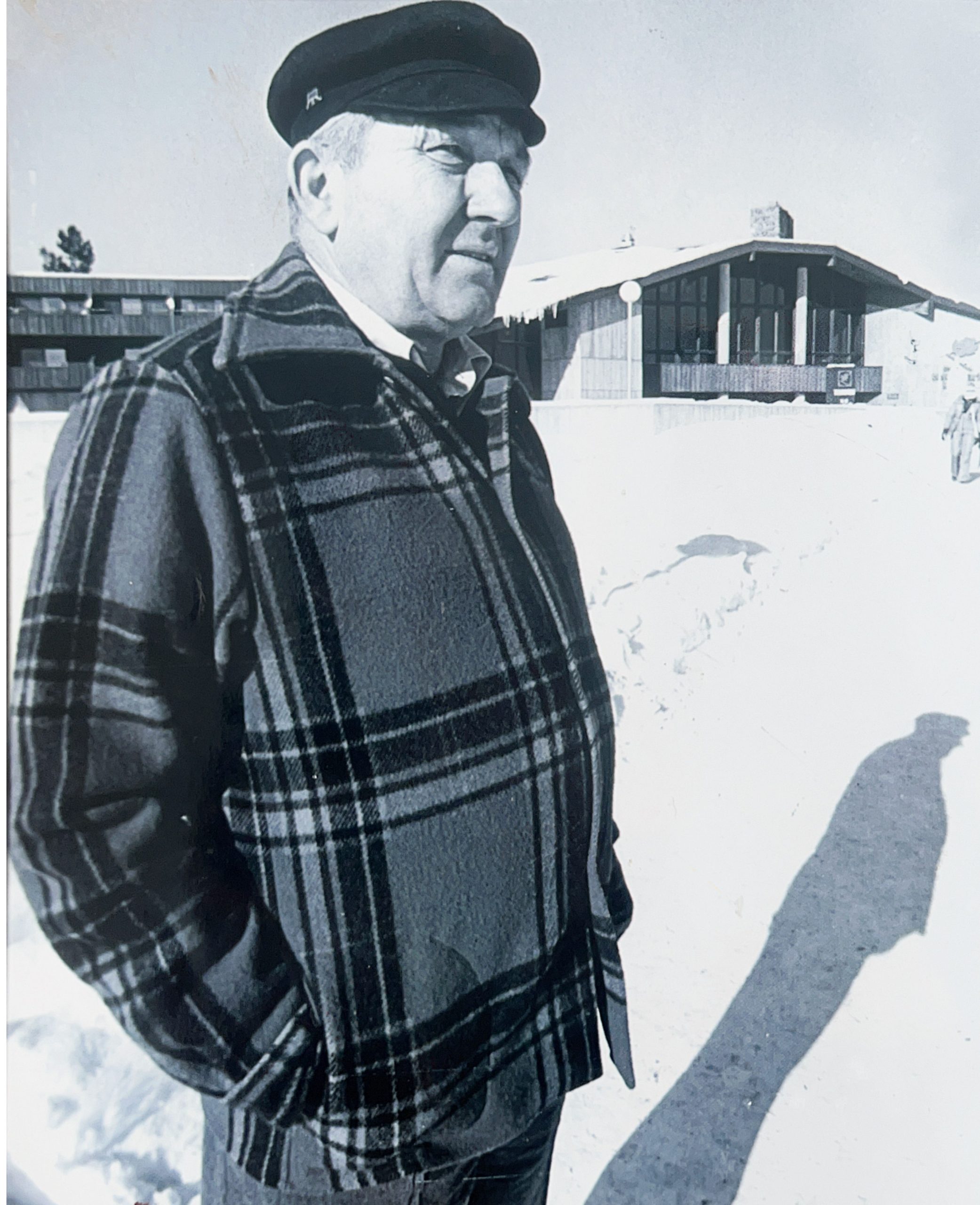
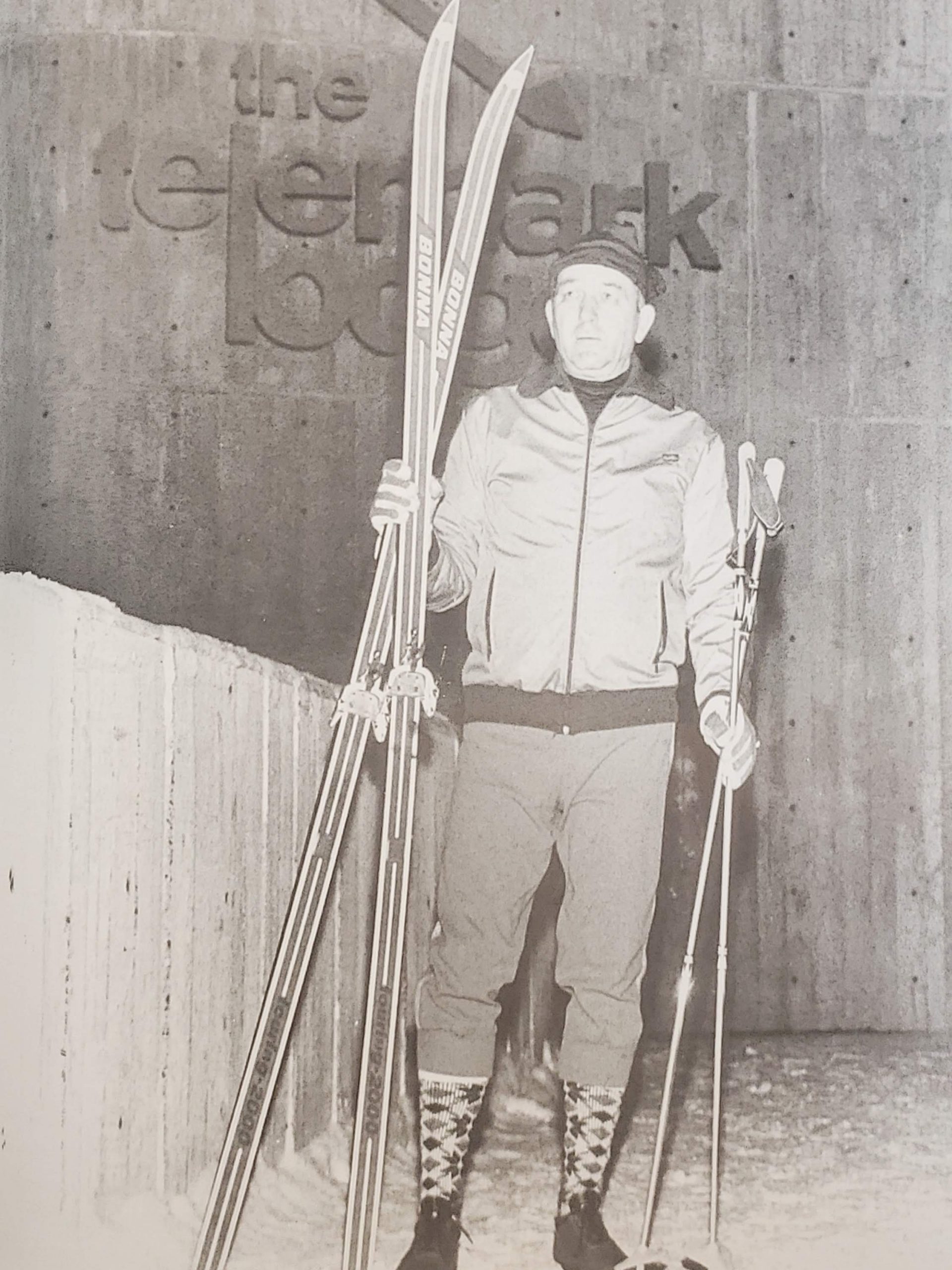
Tony Wise in 1972 outside of the old Telemark Lodge in Cable, Wisconsin. (Photo: Telemark Education Foundation).
Everything that successively unfurled was united by the understanding of time and place that Wise found at the top of Mt. Telemark. In transformation, there was always tradition. In 1973, when Wise set out to start a cross-country ski race, he simply adopted a Norwegian legend from 1206—the Birkebeiners—who saved the country by ushering the baby Prince Haakon to safety on skis. In its first year, the American Birkebeiner had 35 participants. In 2023, the “Birkie” was up to 13,000. In each ski stride over each glacial ridge and valley in the interim, the Birkie began to be interwound with the place Wise had set it in. The challenge was always there. Ski 50 kilometers. Like no other race out there though, people could find themselves having quickly done twenty or thirty Birkies over as many years. Soon, there were so many in that category they started a club for them all, the Birchleggers. It all added to the legend of Wise’s race, starting out there in the shadow of the place to look out from.
Which all leads to the big irony for the American Birkebeiner in 2023. For a race in a place that has staked itself on blurring the very concept of time to match the place it exists in, there is one span that is all anyone around the Birkie can talk about these days: 50 years. The American Birkebeiner is starting out on its 50th anniversary year.
Tony Wise himself now belongs to the realm of Paul Bunyan and the Birkebeiners—legends out there among the Northwoods. His careful balance of plotting out the new in the landscape is being heralded by a whole cadre of dedicated staff, volunteers, and skiers at the American Birkebeiner Ski Foundation (ABSF). At the helm is Ben Popp, ABSF Executive Director since 2013. He’s another homegrown local who has inherited Wise’s ebullient energy and community-focused spirit.
When FasterSkier caught up with Popp to talk all things Birkie, he put the passage of fifty years right back into Birkie terms. “It’s been on the horizon for fifty years,” he said. “And yet, it feels like it came up super-fast!” Which is to say that the Birkie remains comfortable dancing within multiple timelines. While shovels hit the ground in one place, the groundwork is being laid out for the race’s biggest milestone yet come February 2024.
Popp’s way of directing all that energy follows what he calls a “three-step filter: 1) what is the history behind what we want to do? 2) Does what we’re doing build on that history in a way that’s good for what we define as the “Birkie” community, and 3) Can we do it sustainably?” What that has yielded during the first ten years of Popp’s tenure is a bolstered Birkie Trail system, including a new start area, increased participation in the Birkie’s now year-round event schedule, and a larger staff, presence, and place for the Birkie in the Hayward, the Northwoods, and the ski community writ large.
The filter is starting to be reflexive in time. The two big projects ahead for the Birkie in its semicentennial include looking back and figuring out the right way to mark the occasion at next year’s American Birkebeiner event, while also transforming Mt. Telemark and the remnants of the former resort into a world-class ski facility.
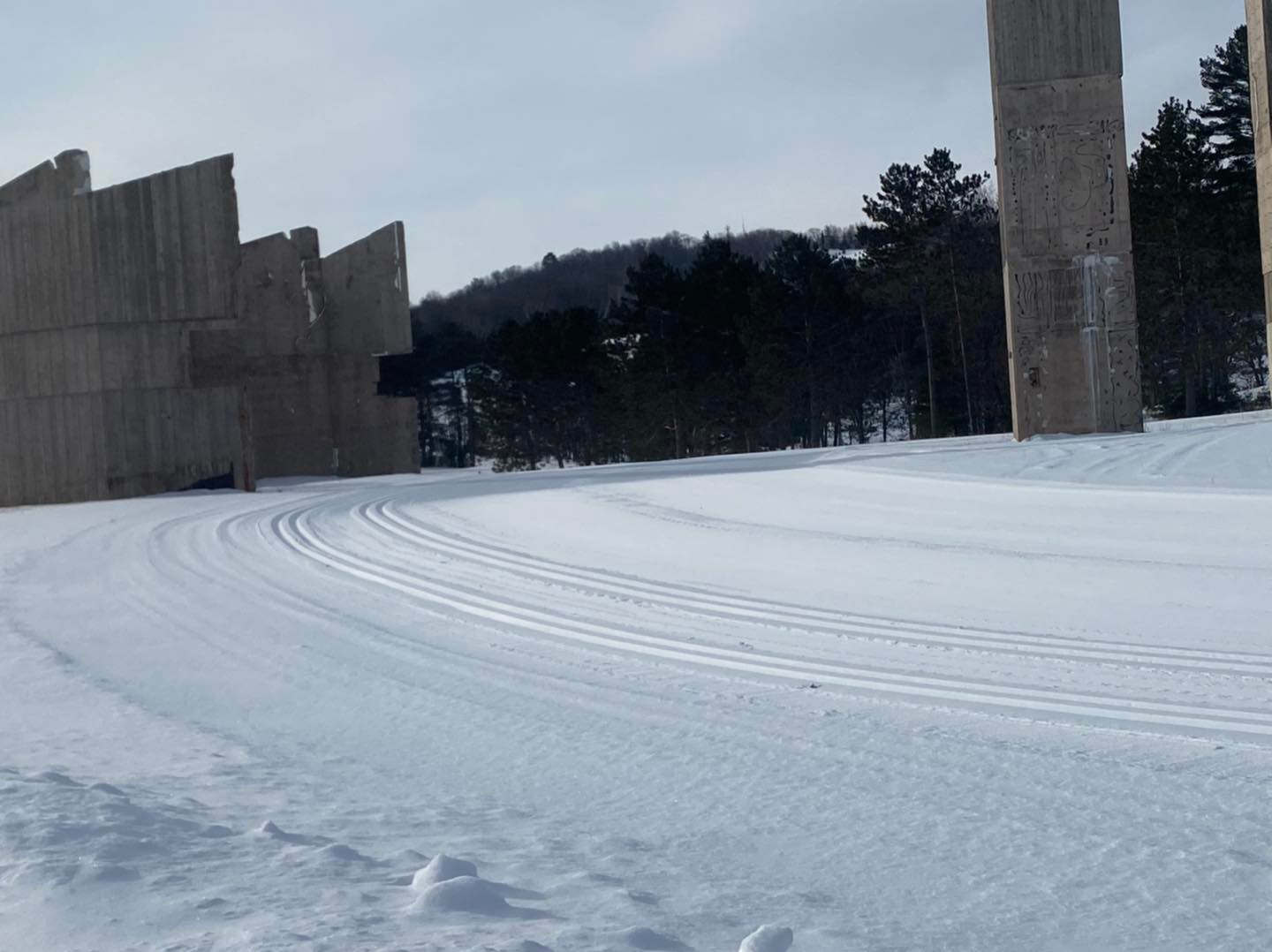
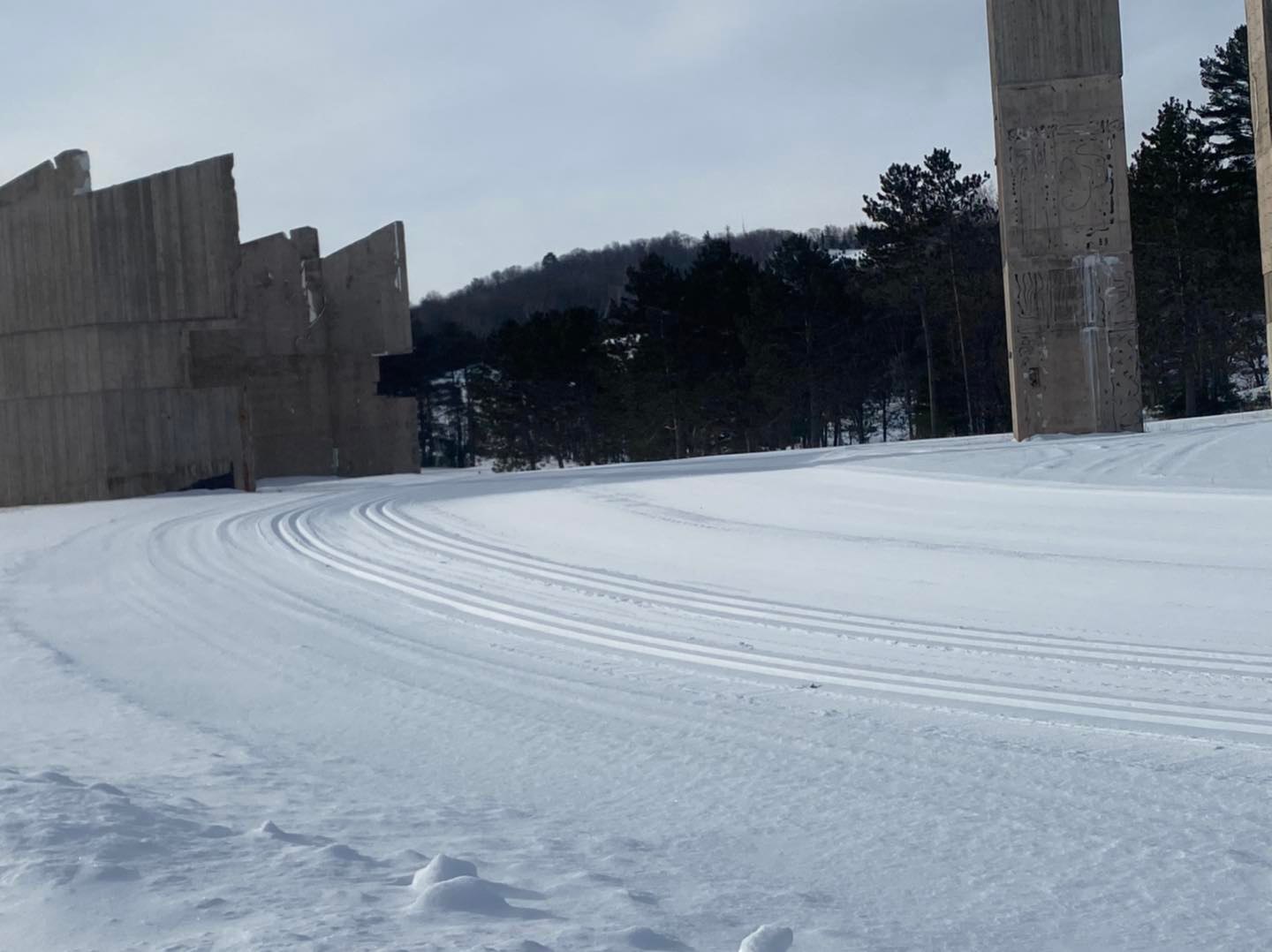
The ski trail affectionately dubbed “Tele-henge,” the ABSF’s ski trail through the old lobby, and future site of Mt. Telemark Village. (Photo: ABSF)
Telemark Looks Out Again
It was the “only place where the Lodge is bigger than the hill,” said Olympic gold medalist Alpine skier Billy Kidd at the opening of Tony Wise’s Telemark Lodge in 1970. With 400 rooms, the hotel offered more rooms than the ski hill outside had vertical feet. The Lodge was an outstretched behemoth that was demolished in 2021. All that now remains are towering old brutalist walls, deemed “Tele-henge” by the skiers down the hill at the new Birkie start line area. The meandering tale of how the Telemark Lodge got to Stonehenge status though, had left specters that still glowed with life. Mainly, the Birkebeiner, and the sport of cross-country skiing that it had helped build in the United States.
Which has got the Birkie Foundation dreaming big. After years of unstable ownership, the lodge was acquired by ABSF in 2018. Once the Lodge was condemned and demolished two years ago, the creative energies started to flow.
“For Telemark, there’ll be three big pieces: the ski trails, the mountain bike trails, and the Base Camp building” says Popp. A partnership with Wisconsin-based Trek Bicycles, along with a major grant from the One Track Mind Foundation promises to build an additional 17 miles of single-track mountain bike trail on top of the existing Chequamegon Area Mountain Bike Association (CAMBA) trail network over the next three to four years. Rock Solid Trail Contracting, the builders behind the renowned trails in Copper Harbor, Michigan, are on the job. “Four miles are already done, and by the end of this summer, we’ll have nine miles added on,” says Popp.
The new rollerski loop at the base of Mt. Telemark, outside of Cable, Wisconsin. (Photo: ABSF)
Over at the Birkie start-line, the pavement of a new 5-kilometer rollerski loop—the first of its kind in the Midwest—is “just now starting to cure,” says Popp. The loop is laid through the old remnants of the Telemark base area and is giving skiers from everywhere access to Birkie terrain year-round for the first time. The loop is slated to host Central Cross-Country Skiing’s (CXC) Regional Elite Group (REG) camp later this summer, and just hosted its first Igor Legacy U14 camp this summer. The trail also become a favorite multi-use trail. “We get some older folks just strolling out there,” said Popp. “Hard place for a walk!”
As for the winter ski trails themselves, the ABSF’s focus isn’t so much on building new trails, but rather restoration of trails. Down at the base of Mt. Telemark, in view of abandoned Alpine ski lift towers, are the cuts and juts of a trail designed by American ski pioneers Marty Hall, Sven Wiik, and John Caldwell. These trails once hosted the Gitchee Gami Games with fields that included not just the best American skiers of the era, Bill Koch, Martha Rockwell, Stan Dunklee, Tim Caldwell, but notable names from ski history like Oddvar Bra and Arto Koivisto. A contemporaneous Sports Illustrated article on the 1977 edition reported that it was part of a then “controversial series” put on by the International Ski Federation (FIS), what would become the World Cup. An aged wooden sign between two tall maples identifies these as “The Telemark World Cup Trails.” With some clearing and modifications for grooming, skiers will be able to take to them again. The World Cup trails have an outsized place in the purpose of the whole Telemark Village project. While not the most resource-intensive, the project drives, or rather, skis, to the heart of the sport the Birkie community ultimately comes together around, and also represents the unique dance of making, and re-making, the energy of Telemark and all it stood for.
The resource-intensive side is there though, in the form of the planned “Telemark Base Camp Building,” an estimated $3.5 million nordic center that will come fully equipped to welcome World Cup athletes and first-timers alike. “I think the heart of what Telemark represented could be captured by the idea that on a given afternoon back in the day, you might have Bill Koch and a kid who’d never heard of the sport an hour before in the same place, and we want to get back to that,” says Popp on the essence driving the Base Camp’s purpose.
The Telemark Village Base Camp building is the next priority in the Birkie’s major restoration of the former Telemark Lodge site. (Photo: ABSF)
The plans call for a full-service nordic center—rentals, changing rooms, spaces for local business partners to sell coffee and food—while also acting as a jumping off point to experience the unique history of Telemark. Key to that is using the remnants of the Lodge to build a park-like plaza, where a collaborative project with the local Cable history museum will lay out Birkie history back to when Tony Wise carved his number into an old Birch tree.
The final piece of the project is up at the top of Mt. Telemark where an observation tower is being built out of recycled lift towers from Wise’s original alpine ski operation. The tower will act as a capstone on the Telemark project that Popp says tells Birkie they’re doing things right, “There’s a throughline in that project that really reiterates how there really is a rootedness in the values of honoring our history, and the history of this place. There were two people down in Spooner, Wisconsin who donated to make the tower possible, which included the naming rights, and they asked that it honor the original Ojibwe name of the area. So how do we make that happen? Well, the person to naturally ask is an Ojibwe Tribal Historian, and it just so happens that the only guy to do all fifty Birkie races, Ernie St. Germaine, is the preeminent Ojibwe historian.”
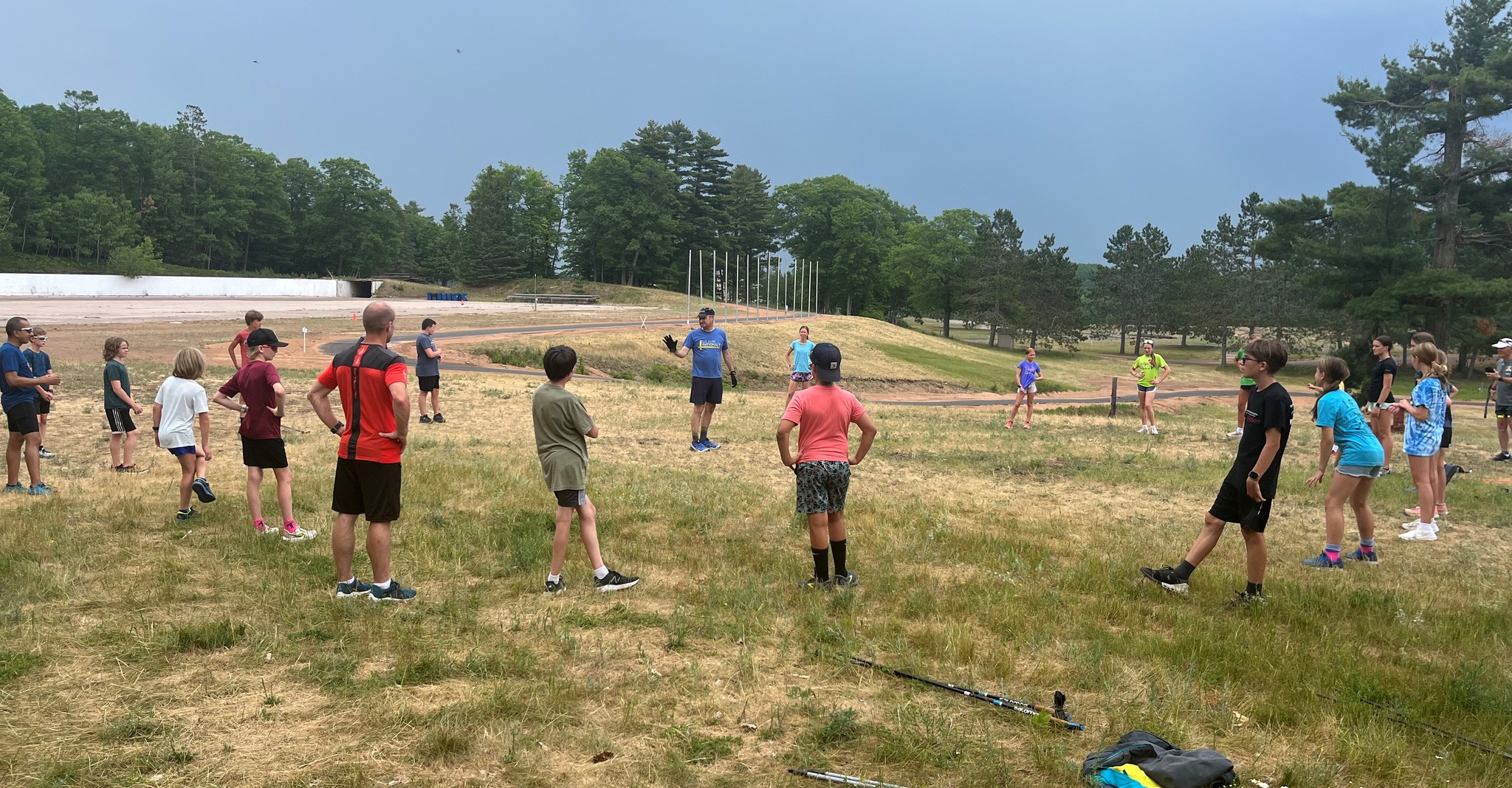
The former Telemark Lodge stadium hosts CXC’s U14 Igor Legacy Camp last weekend. (Photo: Ted Theyerl)
In other words, the drive of this version Telemark is to keep all that was contained in the old Telemark going. The ABSF capital campaign around it totals $10.5 million, with Popp saying, “we’re about half-way there on fundraising, and we feel like have about half of what we want to build done.” The purpose though, remains clear, “ultimately, that money isn’t ours. It’s an amalgamation of a whole lot of people and communities that value what the Birkie is. When you think about all 250,000 people that have completed the race since 1973, plus many more who touch our trails, or volunteer, or touch us in some other way, it’s a lot of angles that we want to make sure we’re covering in any single project. It’s pretty cool to have that presence, and to have that responsibility.”
“Celebrate in the Right Way” at the 50th Birkie
Just how expansive the Birkie community has become in 50 years makes for a big proposition come next February: “With the 50th, we really want to do justice to the countless people that have taken part in anything we have done over the past half century” says Popp, “The guiding question is what is a meaningful way to make sure that we represent what this thing, the Birkie, really means?”
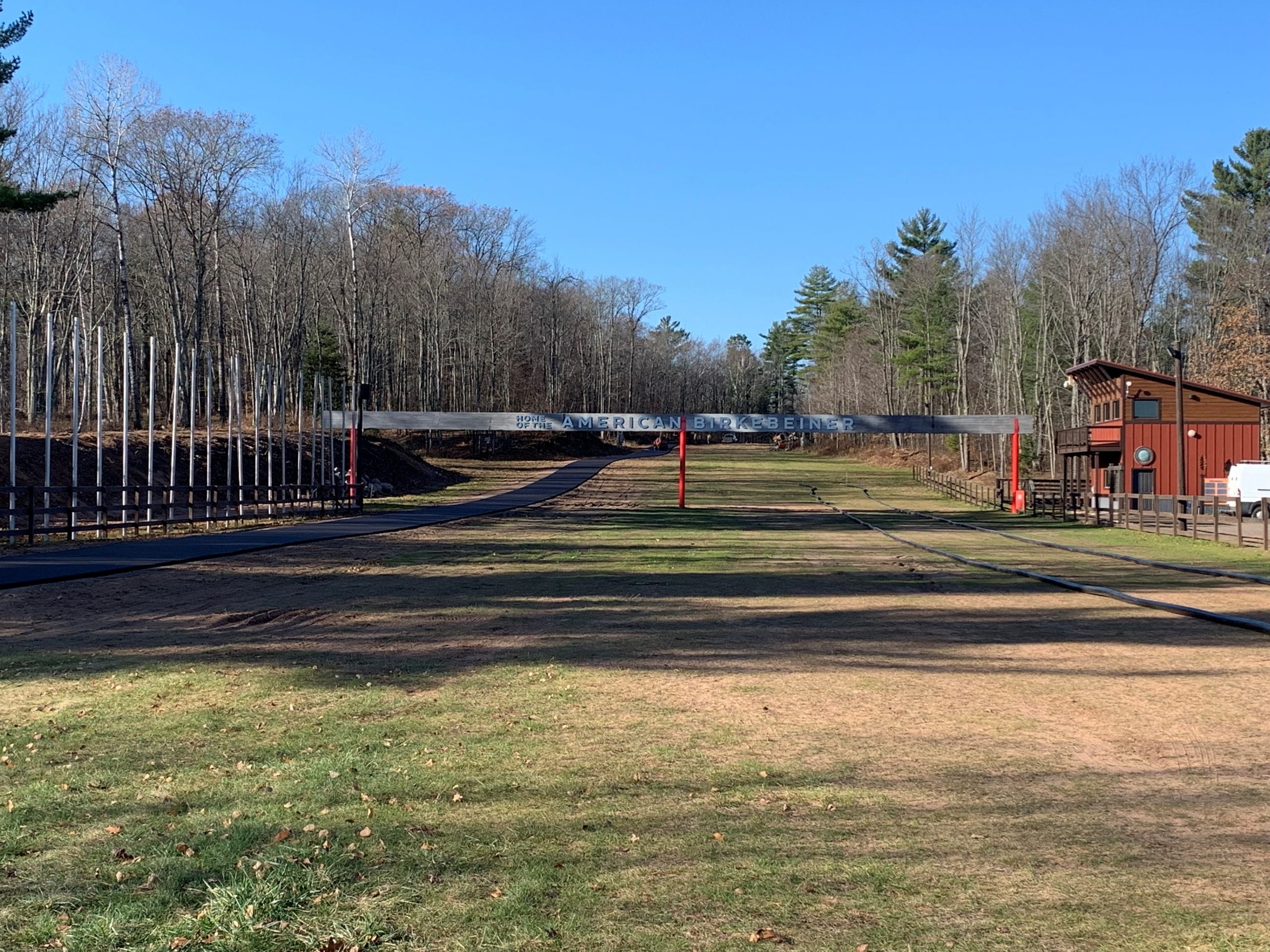
The Birkie start line area in Spring 2023. (Photo: ABSF)
For the Birkie Foundation, those preparations started well in advance of the coming anniversary year, and included, at least at first, a kind of disappointment. In keeping with the kind of full circle nature that the Birkie paints with time, plans were underway to make the 50th Birkie the first World Cup ski race in Cable since Wise’s Gitchi Gami Games in 1977. A joint bid was underway with the Loppet Foundation in Minneapolis, Minnesota to make the World Cup’s 2023 North American tour one that covered city style racing in the Twin Cities, paired with the US’ most prominent international ski event. “At some point though,” says Popp, “we had to make a decision that was best for the Birkie organization, and we decided we couldn’t take on that financial risk without it potentially leading to us not being able to do the community-oriented projects that are already underway.”
The Loppet’s World Cup bid was accepted, which means the World Cup will visit the Midwest Friday February 17th to Monday, February 19th, one week before the 50th running of the American Birkebeiner on Saturday, February 27th. “It’s going to create an unbelievable atmosphere within the Midwest,” says Popp, “for ten days, no matter how you engage with cross-country skiing, all roads will lead here.” The Loppet Foundation, on its part, has also alluded that while the official World Cup joint bid may have passed, the spirit of the World Cup’s return to the United States will be bonded to the celebration of the Birkie’s 50th anniversary.
If registrations are any indication, the roads leading to the Midwest will be busy come February. “The pace has been incredible, we’ve had Birkie start wave after wave fill so far,” says Popp. In planning out what those registrants will experience, there’s been an approach to plot out change carefully. After all, says Popp, “if what the Birkie is has gotten us to fifty years, we want to make sure that we’re not messing with it!” The overall approach to race planning then, is one that is looking to accentuate the best aspects of the Birkie, rather than change them wholesale.
While no official announcement is expected until August, Popp says that the Birkie has “secured some agreements to keep some of the best World Cup athletes in the Midwest to do the Birkie.” It’s a step taken to help honor the marked competitiveness that has been set the race apart in American skiing throughout its history. “We’ve had Bjorn Daehlie, Vegard Ulvang, and what I’m willing to bet is the majority of American Olympic cross-country skiers, do the race, and we want to build on that legacy next year,” says Popp.
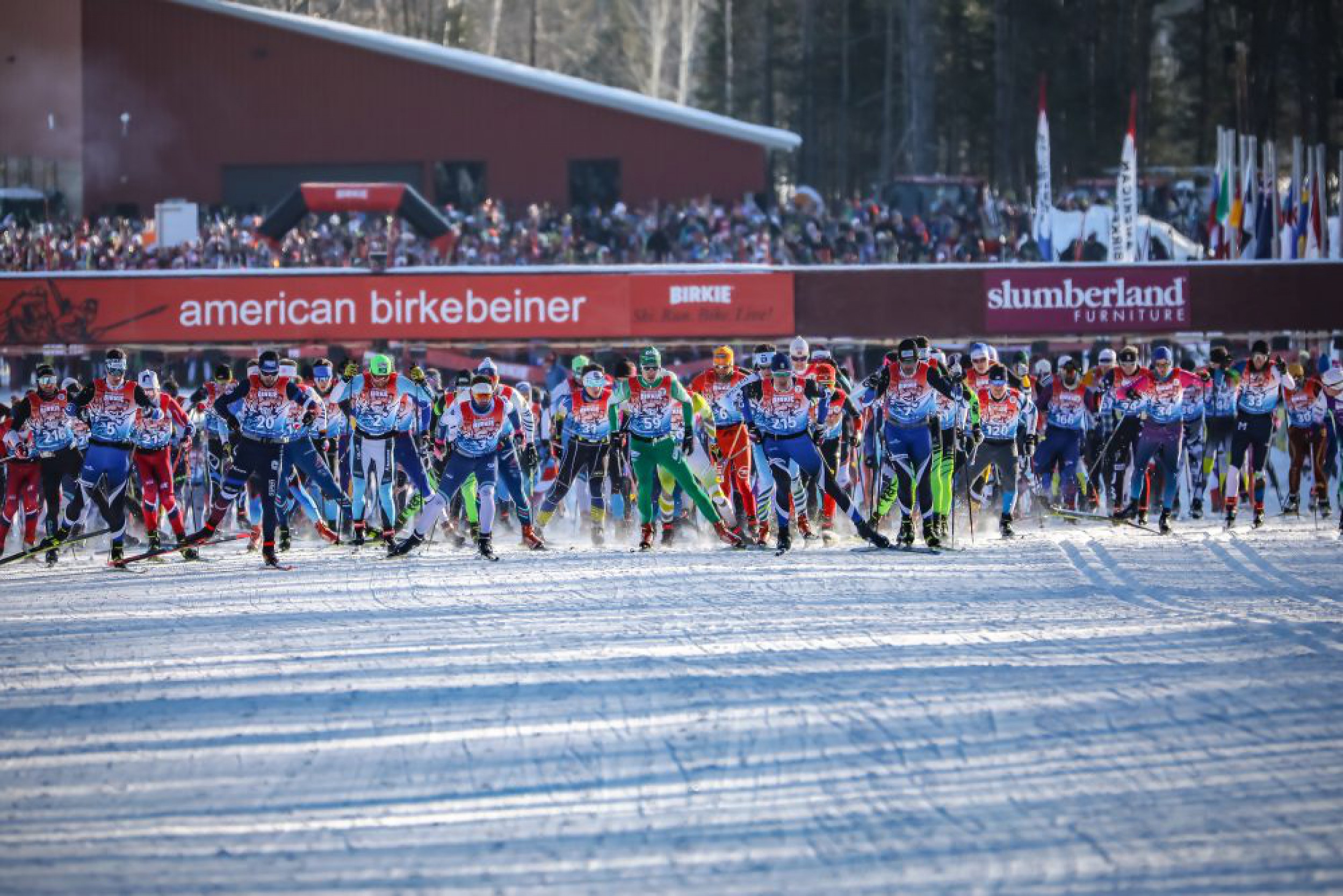
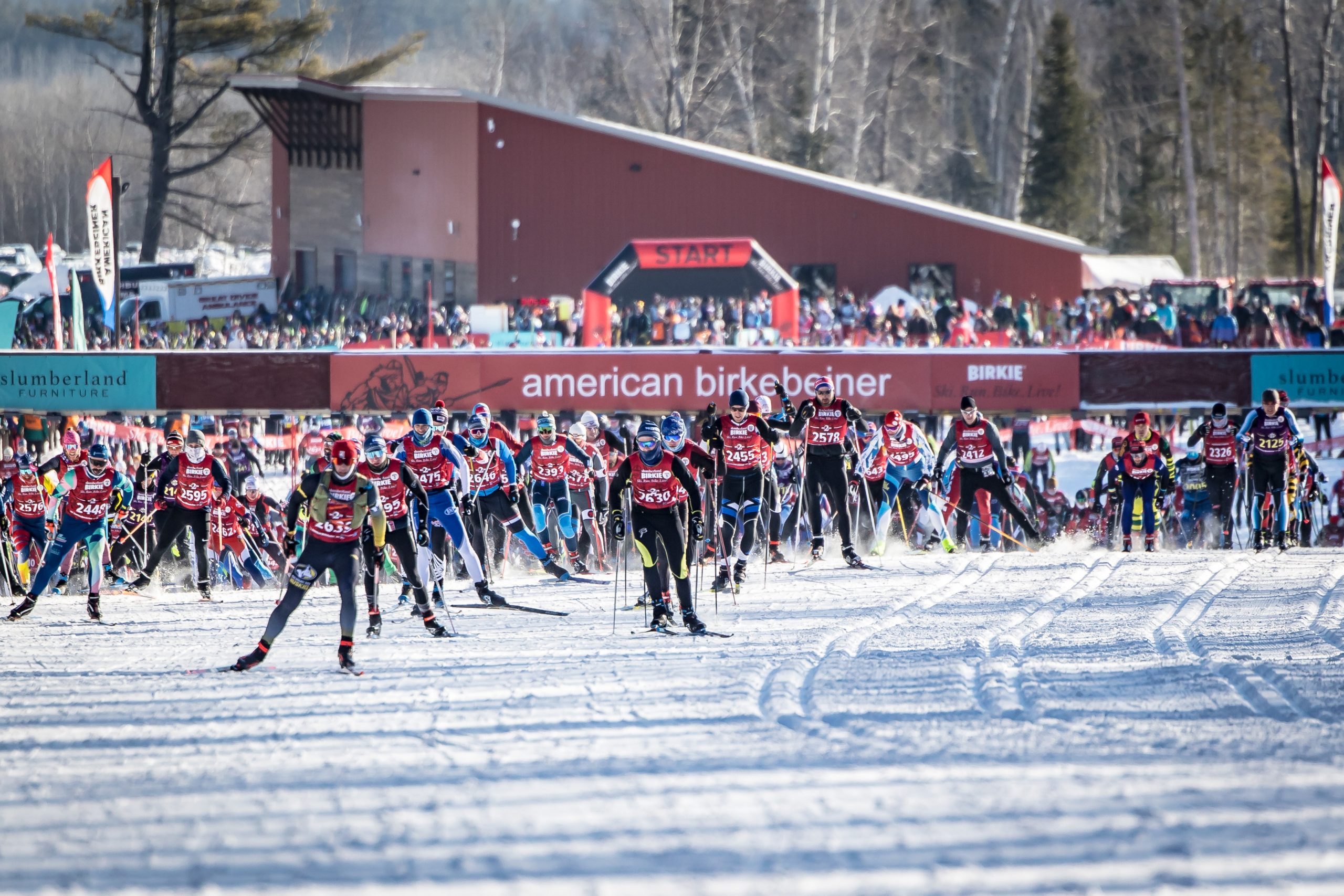
The Men’s elite field starts at the American Birkebeiner in 2023. (Photo: ABSF)
The Birkie is also looking to honor the kinds of characters and legends who have all added to the races lore. “One of the first groups we always go to plotting our next steps is the Birchleggers—those who have done 20+ races— because that really represents the beating heart of what we do” says Popp. In initial outreach, the Birchleggers returned a clear essence that the Birkie will key in on in the year approaching the 50th anniversary race. “What stuck out is that there was two paradoxical ideas which really play well together: they were saying, 1) My experience with the Birkie is unique to me, and that’s why I keep doing it, and 2) I want new people to be able to come to the race and form their own unique experience too.”
What does that look like in practice? Popp finds anecdotal evidence in the king of the Birchleggers, Ernie St. Germaine. The only active “Birkie founder,” one of the original 35 racers in 1973, St. Germaine plans on being the only skier to complete all 50 races come next February. St. Germaine has dutifully made the fifty-kilometer trek every February, but in recent years, has done so sans the crowded field on race day as part of the Birkie’s “open track” option. “It was something that fell into our laps with COVID, right?” says Popp, “but we realized was one way to allow some of our most dedicated skiers to continue being part of the race. Yes, most are going to want to be part of Saturday, but for some, the time, the space, and the camaraderie afforded doing so on the Wednesday before opens up a whole new way to engage.”
St. Germaine has continued on the spirit of inclusivity beyond just his racing as well. He has been a key part of the ABSF’s “Birkie One” initiative to “to reduce barriers and increase participation in skiing, running, and biking for marginalized groups in communities near and far.” An active member of the Ojibwe tribe, St. Germaine has helped bridge the Birkie with the local Anishinabeg people, including initiatives to restore trails on the Lac Courte Oreilles College campus outside of Hayward. The initiative has also helped the Birkie see where the existing infrastructure around the race, and the places people use to train for the race, can be more accessible. The paved rollerski loop at Telemark, for example, was officially designated mixed-use when it opened, to allow trail access to those who otherwise might not be able to access unpaved roads.
And finally, there are plans for the 50th Birkie to be a Birkie. For thousands to front the powerlines, then climb to the high point, flow through “OO,” over and with the terrain. For each individual to take on climbing “B**** Hill,” and over Fish Hatchery, and the Lake, and the International Bridge onto Main St., Hayward, Wisconsin, before swapping the thousands of stories that form in the ridges and creases of the land between.
It’s out there where the Birkie still dances within the bounds of some kind of glacial time, surrounded by glacial terrain. A new fixture of the place that Tony Wise once dreamed of among the tamaracks and pines. Over 50 years, the stories have multiplied, the time blurred and stretched, the particular feeling becoming something ever more complicated. Best not break its power into pieces. It’s all got coined under one tent, one community, this thing called the “Birkie.” Best to keep it there, and say what has been said on Main St. Hayward, Wisconsin at the end of February a thousand times before: “Can’t wait for next year!”
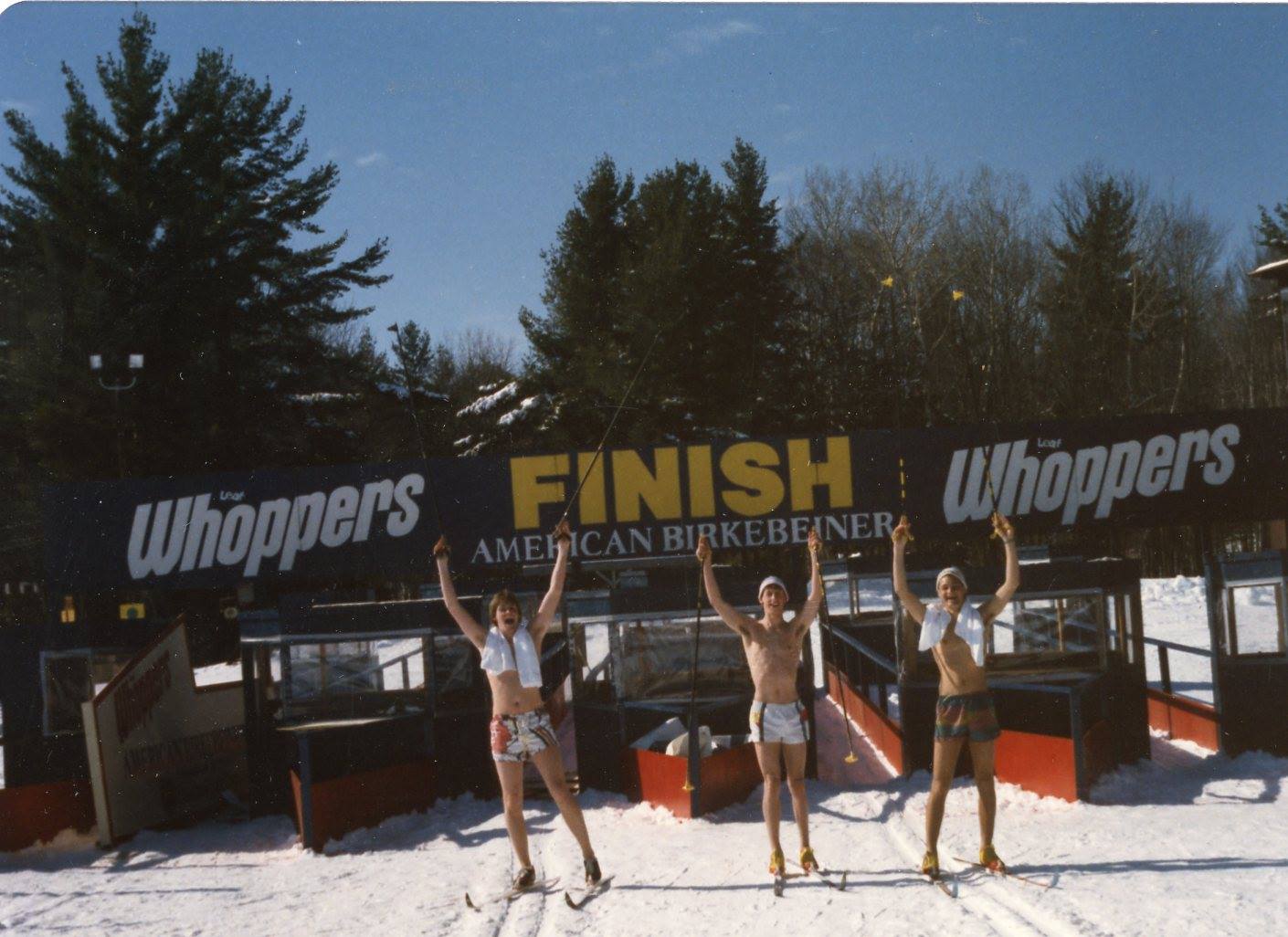
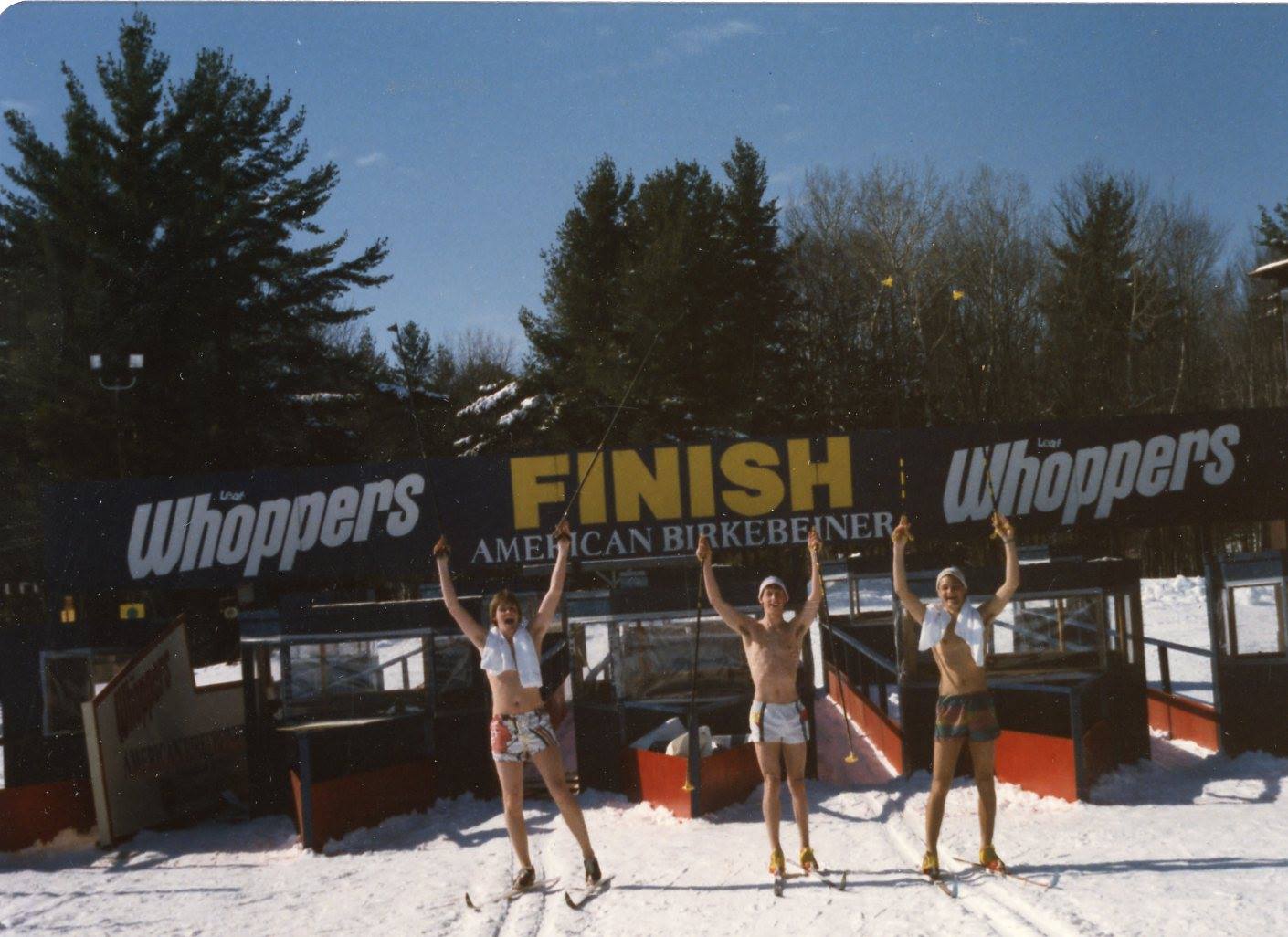
Birkie finishers celebrate in 1991. True to Birkie form, all three are still involved in the race in 2023. (Photo: Ted Theyerl)
If you look at the lines that graph long-term athletic performance – VO2 max, anaerobic threshold, maximum heart rate, 10k running speed – it can be pretty demoralizing. Even before age 30, there’s a slow and steady cant downward, and then by the mid-40s, a descent into a valley that plunges toward the abyss’s void of emptiness.
Some of us choose to oppose these trendlines, wrestling with them like tentacles in a roiling sea of errands and bills and fraying cartilage and arthritis. During well more than one rollerski session each year, I think of the “strange resistance” Robert Frost describes in his poem “West Running Brook”:
“It has this throwing backward on itself / So that the fall of most of it is always/ Raising a little, sending up a little.”
This man, whose Vermont cabin touches the Rikert Nordic trail system, continues:
“It is this backwards motion toward the source/ Against the stream, that most we see ourselves in,/ The tribute of the current to the source./ It is from this in nature we are from./ It is most us.”
The tribute of the current to the source. It’s as though Frost (who, I’m guessing would be Birkie wave 8 – at best) was tasked to make an inspirational T-shirt that captures the mind of a masters skier. I am proud to be a member of this infinitesimal subset of American society, and if you still think skis with holes in the tips look new, I imagine you are too.
Tim Donahue mid-race during the 2020 Winter World Masters Games in Seefeld, AUT. (Photo: Garrott Kuzzy / Lumi Experiences)
After too much running for my large frame and my knees, I began uphill skiing in earnest in my mid-30s, just as I knew these charts were generally tipping downwards. As I was effectively starting from scratch, though, I felt I had an advantage. I did not have to chase the ghost of my 22 year-old self, vaunted by a college program and a systematic knowledge of voluntary suffering. Skiing gave me a second athletic life, and as I opened its invitations to technique, training blocks, intensity sessions, and World Cup fandom, I delighted in every aspect of its complexity.
Nearly twenty years into it, the fires still burn, though sometimes it’s hard to tell whether I’ll coax any new flames or just ride along the glimmer of dying embers. Now into the swing of summer as we are, I find myself between an acronym – SAMITS (skiers are made in the summer) – and, a hammock. Can I throw another log onto this fire? Should I? It’s a question of little worldly consequence, and yet it’s the central question of this other world I’ve built for myself.
More than anything, the lure of skiing these days is that reliable doorway it opens into another place. I have sat through all-morning “self-care” sessions in hot rooms in masks, and then I have clicked into the Marwes and breathed. I have endured a full Guy Fieri cooking show in the doctor’s waiting room, then I’ve gently climbed through the woods with four points of contact. I just learned the world emitted more C02 than ever last year, and I needed to get out and roll among the innocent trees.
This otherworldliness has especially come as I’ve lived in, and now just north of, Manhattan all these years. I have approximately one teammate (the great Sproule Love) and I get on snow maybe a dozen days a season. But new wheels roll well on fresh pavement even here, and it’s easy to let the mind return to the familiar grooves. On the rail trail that runs mercifully just out my door and now nearly connects through the entire state of New York, I can lather into a third hour under a canopy of early spring leaves and let the Wendell Berry in: “The health of nature is the primary ground of hope – if we can find the humility and wisdom to accept nature as our teacher.” Yes, skiing can soften the hard edges of the world and give way to the dance of balance and strength. And yet, sometimes I need more than this.
Sometimes, I can rouse the fires within to see a completely different world beyond, with its own muses and images. Here’s where I hear the siren song of Devon Kershaw and his allusions of carnage: the “rip their legs off” and “gun to tape annihilate” and the “going down to the basement.” Racing is just instinctual for me. I ran my first 10k back in 1979, when I was nine, and whether up stairs, across bogs and sand dunes, on bikes, on skis or snowshoes, I’ve raced every year since. To this career high school English teacher, it’s the opposite of grading essays.
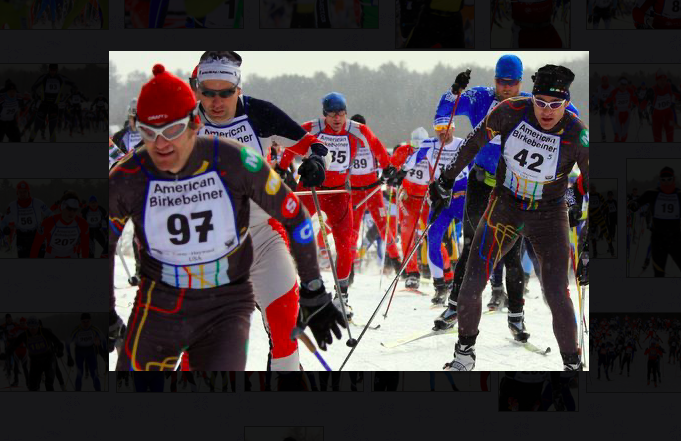
The author, Tim Donahue, races the 2012 American Birkie with teammate Sproule Love (bib 97). (Photo: livestream screenshot)
When I’m trying to connect with my limited stores power and speed, I’ll sometimes watch World Cup clips on YouTube. I see Petter Northug gritting his way through the field to take the 50k classic at the 2015 Falun World Championships; I see those last few k’s in the Beijing Olympic 30k when Jessie Diggins finishes on fumes for silver. (Yes, a proud moment in our household when my daughters encouraged me to name our puppy Diggins.) The one I’m thinking of now is the 2019 World Champs 30k skiathlon in Seefeld. It’s Sundy-Bolshunov-Røthe trying to destroy each other up the last few climbs, finding a hop skate after seventy-five minutes of redline racing, then spilling across the line with perfectly emptied tanks. Perhaps you have your own favorite clips.
As I try to summon a summer interval in the suburbs, after dropping my daughter a sleepover, I can get to thinking about my own highlight tape, which Chad Salmela is definitely not narrating. I think of the 2006 Pepsi Challenge, when at 48k, I gave a nod to my one teammate and we made a decisive surge, dusting the last young buck riding in our train. I think about Bitch Hill, a steep little climb 40k into the Birkie, when several years later, I found the spring to fracture our large, lollygagging pack. I find these memories within, gently flogging me with their flagella. In part because it’s so hard to explain them in my faculty lounge in the Bronx, in part because they are the payouts of so much stoic suffering, and mostly because I just love it, I want to make more.
This winter was different though. Mysteriously, I started feeling a constriction in my chest. I was often unable to get a full breath, even when reading in bed at night. When I tried to get out of zone three, I just couldn’t find the air. I saw my pulmonologist, my cardiologist, a gastroenterologist. I drew blood, I got tests. I got sucked down the Internet vortex: was it long Covid? Had I even had Covid? It took time and was expensive, and I didn’t learn much.
With each race I had penciled into the schedule and had to decline, I felt the nip of disappointment. I didn’t want to say good-bye yet. Could I salvage, at least, something?
One day in February after a good night’s sleep, I decided to enter a low-stakes challenge – the benchmark 10k rollerski time trial in Central Park. It wasn’t awful. In fact, it was an improvement from a few months prior. So, I succumbed to the beast and tried a few late-season races.
It’s not a great feeling to stand on the starting line with a doubting mindset – “What am I doing here?” “Don’t blow up.” But that’s how things went – I felt like I was wearing someone else’s clothes. It was hard, humbling, and really not that much fun. But my last race of the “season” (four races total) offered a glimmer of hope. It was just a 5k relay leg, in perfect conditions on a rather flat course. Still, I felt relatively strong. I was actually able to pass people up a hill. So that’s the memory I’m choosing to take away.
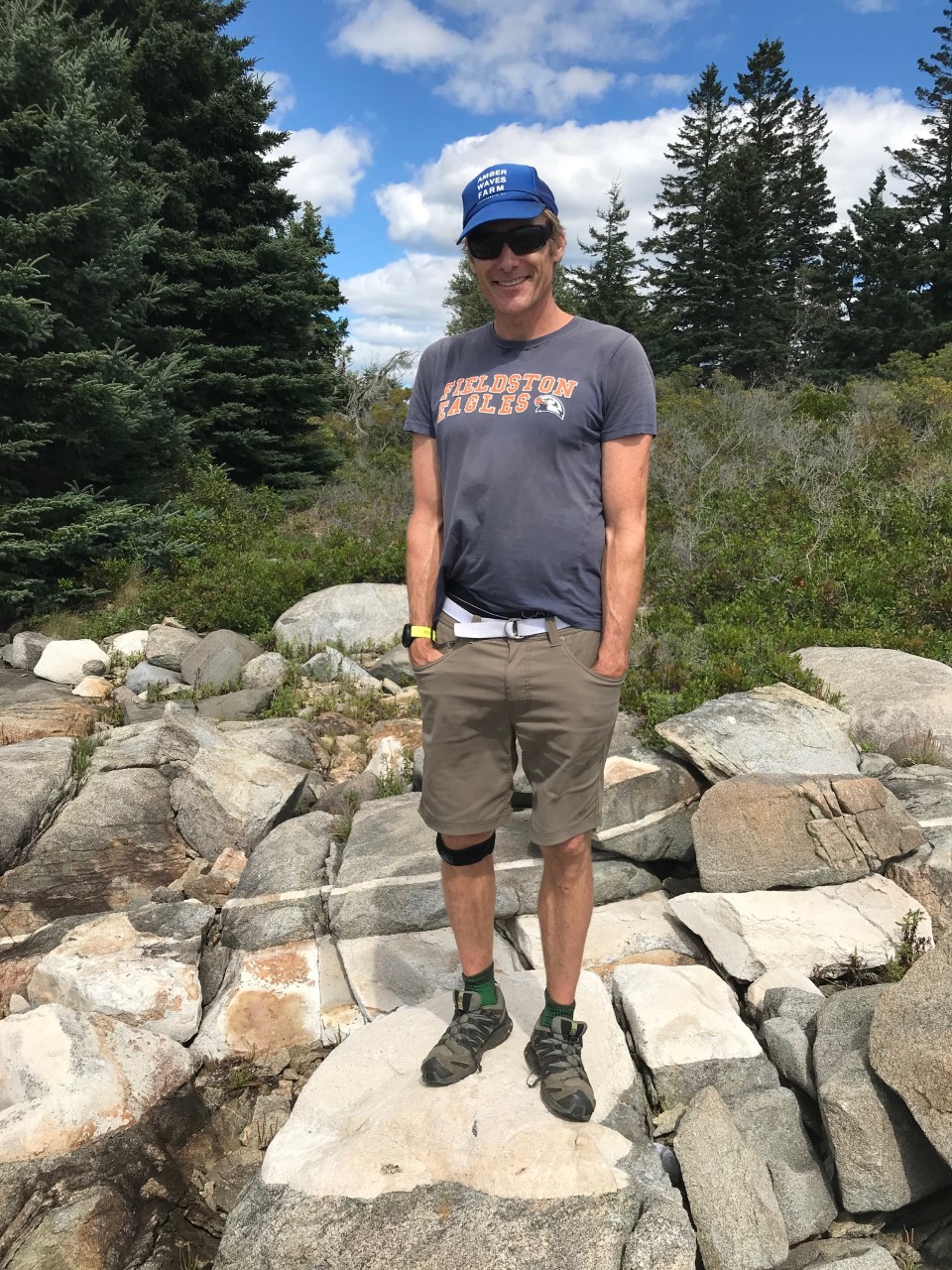
Tim Donahue in Maine during the summer of 2020. (Photo: Sproule Love)
But is it enough to justify all the rigamarole? That sixth hill interval when the pain just feels pointless? Those beautifully aimless workouts – where you go a little faster than you should – interrupted by the voice of prudence? The occasional margarita you eschew for some pious purpose? And then, when winter comes, all that fretting over Wunderground and waxes and websites, where you read about volunteers shoveling snow onto corners in dwindling hopes of staving off the coming thaw, toward which your travel no doubt contributes?
Ugh – yeah, it’s worth it! We skiers worship a rather demonic god, it seems. And its worth only grows because it’s so fleeting, like surfing through a barrel wave – exhilarating and bound to crash. Like trying to ski uphill forever. If you, reader, have not grappled with this same question, you probably will!
Here’s the best revelation I’ve come to: I just want to be able to work hard enough so that going out on a long ski feels easy. For a recent New York Times piece about the pleasure of running slowly, one of the most popular comments was, “Running for joy beats running to win anytime.” I’m not quite there yet, but I see the light of this too. For now, I want my strength to be more than my pain. I know my imagination can supply the rest.
Author Bio:
Tim Donahue teaches high school English at the Ethical Culture Fieldston School in The Bronx. He lives in Hastings-on-Hudson, NY and rollerskis year round. You can find his writing on climate change and education in The New York Times, USA Today, and Newsweek.
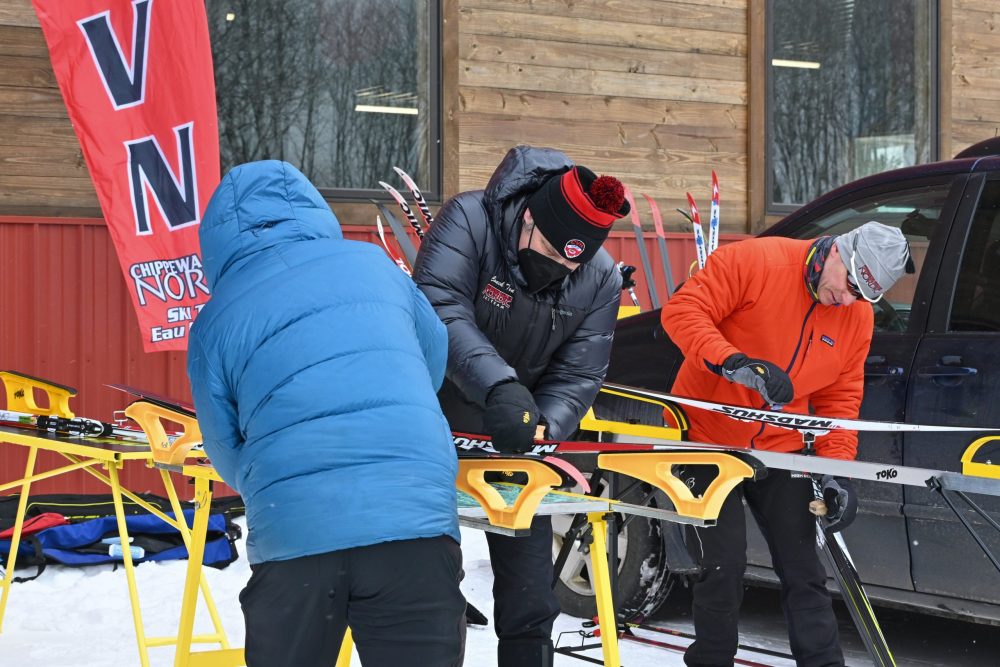
Chippewa Valley Nordic coaches prep classic skis for their athletes at the 2022 Wisconsin Northern Conference meet. (Photo: Chippewa Valley Nordic)
In case you missed it, here’s part 1 and part 2 of this series, in which industry representatives and expert ski technicians discuss ski performance theory and what impact a single-wax policy may have on competitive skiing.
What goes on inside the wax cabins and trucks at high-level competitions from the SuperTour to the World Cup seems, in equal parts, expertise, artistry, and alchemy. And, for those looking to understand to which conditions their pair of race skis might be best suited, the basic insights into ski performance provided in previous installments of this story provide ample fodder for consideration and experimentation on the ski track.
However, these insights may not fully resonate at a meet where coaches are furiously corking in kick wax on benches set in the snow for skiers who only recently took up the sport. Or a league which simultaneously supports competitive racers and participation-based programs, and ultimately just wishes to see the sport grow and thrive at all levels.
In speaking with representatives from leagues that have implemented a single-wax protocol, it is clear that there are a myriad of factors involved in the decision making process beyond ski performance theory that might skew the cost-benefit analysis on any inequity in ski speed derived from putting all racers on Swix HS6.
Ben Popp – executive director at the American Birkebeiner Ski Foundation, Wisconsin Nordic Ski League President, and volunteer coach – discusses the wax policy and sponsorship package accepted by the league this season. (Photo: American Birkebeiner Ski Foundation)
To unpack the counterpoints, we’ll begin again in Wisconsin, with a conversation with American Birkebeiner Ski Foundation Executive Director Ben Popp, who also sits as president of the Wisconsin Nordic Ski League (WNSL) and is a volunteer ski coach for the youth program in Spooner, 30 miles southeast of the Birkie finish line in Hayward.
Before jumping into the conversation, a nuanced reminder to readers that will be revisited in subsequent stories: the WNSL wax policy is unique in that the policy was included in a sponsorship proposal from Swix, which offered the league $10,000 per year over a three year period. Under the policy, all athletes would race on Swix HS5, HS6, or HS7 hard wax in cold or moderate temperatures, with HS7 and HS8 liquids used in warmer conditions. In other leagues, there may be special pricing available through this manufacturer, but this was not the origin of the policy.
In what the single-wax policy implies: rather than spending money on a robust wax box, programs would only need to purchase the five aforementioned products for glide. The event hosts determine which wax is most appropriate for the conditions a few days prior to the race, allowing coaches and athletes to wax their skis accordingly before travel.
While questions of the financial impact on other wax manufacturers and the loss of experience for developing high-level wax technicians remain present, it’s also worth noting that this policy only applies to events that are organized by the WNSL; this small list of events includes only the northern, central, and southern conference meets, and the Wisconsin state championship – two races per year for each club or school. Regional Junior National Qualifiers (JNQs) and other local events not organized by the league remain open. Simply put, the wax protocol only applies to what Popp described as “a sliver of all of Wisconsin skiing.”
According to Popp, in considering the proposal presented by Swix, there was one key word on the minds of WNSL board members: opportunity.
“The checkbook for the Wisconsin Nordic league, before this year, never had more than $2,000 in it,” he stated matter-of-factly in the call.
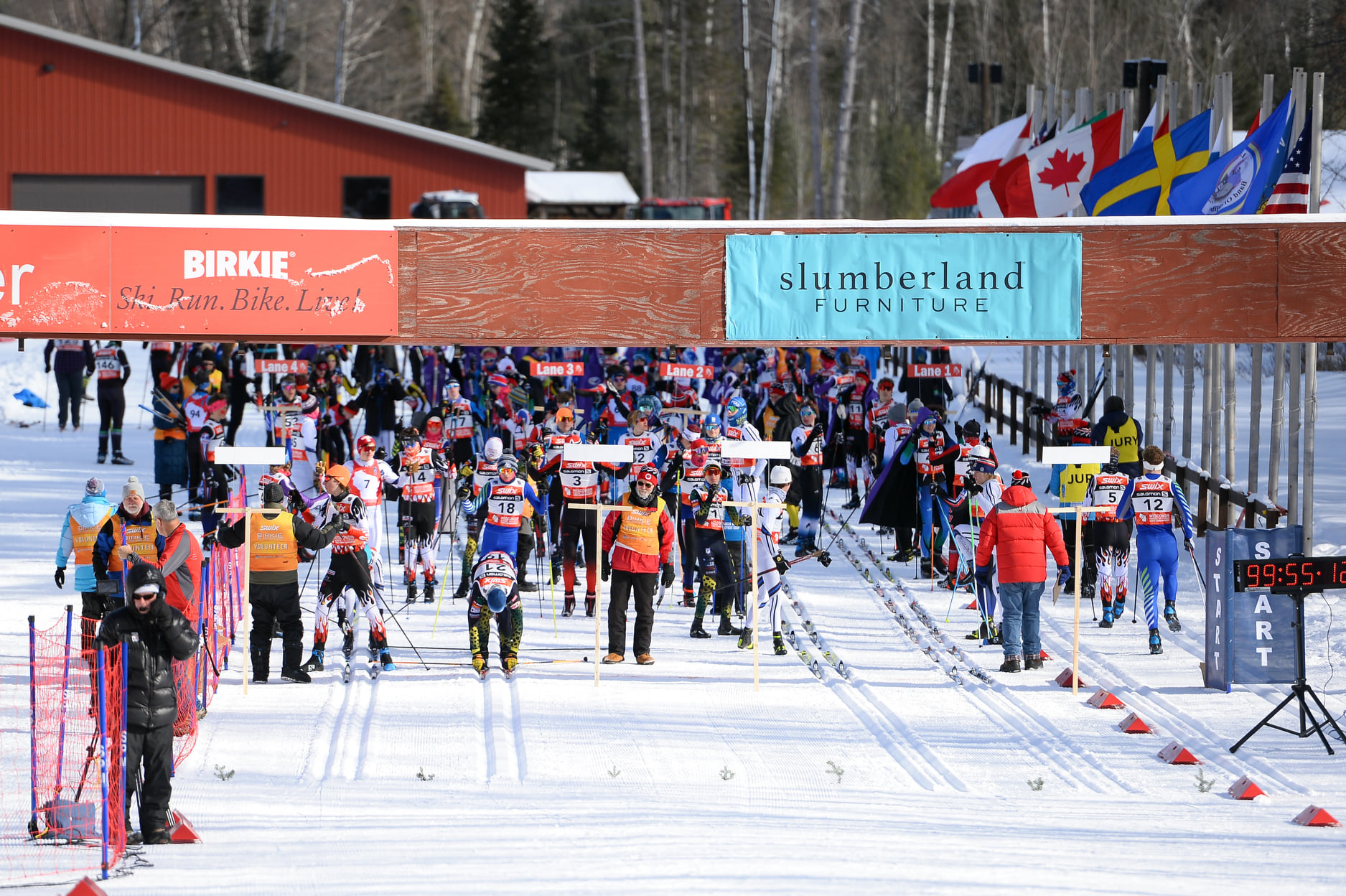
Wisconsin skiers line up at the Birkie Trailhead in Cable for the state championships. (Photo: Once in a Blue Moon Studio / Kelly Randolph Photography)
Another key distinction is that the state of Wisconsin is among the few remaining states in which high school and club level programming fall under the same umbrella, without financial support from the high schools that offer skiing. This means small participation-based programs with volunteer coaches compete against well-established clubs who can support kids whose goals extend to representing the Great Lakes Division at Junior Nationals; it’s a state of vastly different programs with vastly different budgets. And it stands in contrast to Wisconsin’s neighbor, Minnesota, with whom Wisconsin used to compete against for spots on the Midwest regional team for JNs. It’s a nuanced structure that Popp explained has constrained the potential of the league historically.
“Even though the league has been around for a while, I think it’s still in its real infancy. It’s completely volunteer run, but yet we’re in a climate that has metropolitan areas where there is snow, so we’ve got a ton of opportunity. But I think we have to look at, ‘How can we start to grow the league?’”
Under the constraints of the previous budget, the WNSL was limited in its ability to promote development in programming state-wide, and Popp explained that primarily, the board only planned the state meet and agreed upon its rules. That leaves little room for supporting new teams, planning summer camps, and other initiatives that might grow the league and the sport more broadly. A 500% increase in funds would allow the WNSL to hire a part-time administrator, who could improve inter-team communication, oversee a league schedule, and perhaps most importantly, continue fundraising initiatives to support broader development.
“Our goal is to create opportunities for kids to cross country ski and race in the state of Wisconsin. So we have to look at, ‘What is the best way we can do that?’ And we’ve been doing the same thing for a long time, and we’ve gotten the same result. So if we now say, ‘We want to grow the sport in our state’, I think we have to look at a variety of options. We see what the results are in a couple years, and then we’ll readjust from there.”
Athletes from Rhinelander, WI compete at the frosty state championship meet in Cable. (Photo: Rhinelander Nordic Ski Team)
While the WNSL is interested in supporting the upper tiers of youth racing, Popp explained that the main objectives remain at the participation level: improving access to ski programming and helping get more kids on skis.
“I feel that we don’t necessarily have to focus on the high end of development. I think that happens organically and naturally rises… the bigger and broader a base that we can build, it’s just going to build that up much higher of a pyramid.”
In his mind, implementing a wax policy fits with this initiative by removing a potential hurdle for smaller teams and coaches with limited background knowledge.
“In making it simple [to wax], it really makes a small team, the newer teams – it lowers the barrier to entry a little bit. Like, ‘Okay, now, me as a new coach, or as a new team, this waxing thing isn’t quite as overwhelming and doesn’t seem like such a heavy lift that I can actually now get into this without being completely overwhelmed.’ So I look at it as a tool for trying to create growth at the very basic level for newer teams.”
As the Swix sponsorship proposal was accepted in November 2021, last season was the first in which the conference and state championships operated under the wax policy. Popp reflected on the impact of the sponsorship and protocol through the first year.
“I personally think it was beneficial. Obviously, it helped from a sponsorship standpoint to help us grow our league and invest back in the skiers of Wisconsin. Again, personally, I think it helps sort of lower that barrier to entry for some of the newer and inexperienced teams. And whether it does or does not make it fair or unfair, if you will, to the skiers – I think you’re always going to have that in some way, shape or form. There’s a reason skiing is going to be different than track… there’s always going to be a set of variables.”
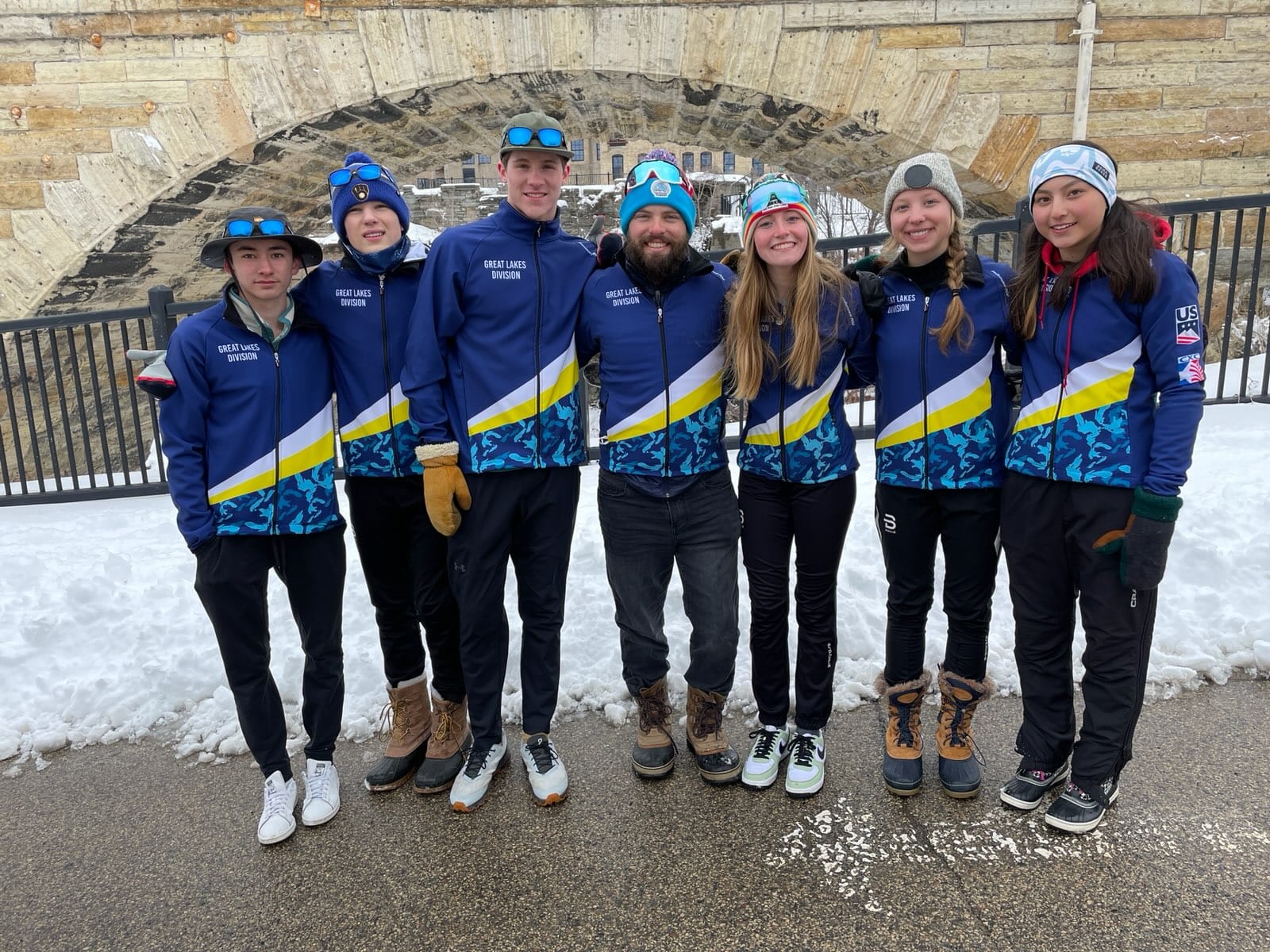
Chippewa Valley Nordic skiers compete for the Great Lakes division team at the 2022 Junior National Championships in Minneapolis, MN. (Photo: Chippewa Valley Nordic)
Speaking to the reception of the policy more broadly by WNSL teams, Popp expressed it was “overwhelmingly supported”. He indicated that a of the larger programs who had already put together well-equipped wax boxes were reluctant initially, but ultimately, those teams were still taking athletes to JNQs and other events where those waxes were fair game, so they would not go to waste.
Mostly, Popp felt that the results seen at the WNSL championship events were as expected, indicating that the wax call likely had minimal impact on the race outcomes.
“Because it was relatively benign in terms of the amount of races [where it was enforced], and then two: there weren’t some funky results at the state meet or the conference meets where [the policy was] used – the best kids still won, so there were no surprising results. And because the amount of wax that people had to buy and the cost level of it was really pretty low – I think the benefit of what this can bring in the future, ‘Let’s see.’ I would say the coaches that I’ve talked to certainly felt like, as a whole, it wasn’t detrimental. And if it leads to some growth and benefit for us in the league in the coming years then… we’ll just have to see.”
Stay tuned for the next aspect of the league-wide wax protocol story, where we consider the evolution and outcomes of policies enacted at the club level by the Rocky Mountain Nordic (RMN), Pacific Northwest Ski Association (PNSA), and Intermountain Division (IMD).
A look at what’s ahead for the Birkebeiner, and its former home at the Telemark Lodge.
When I reached out to American Birkebeiner Ski Foundation (ABSF) Executive Director Ben Popp before Christmas to set-up an interview discussing the Birkie’s plans for the now-defunct Telemark Lodge property, he was already putting plans into action. An interview would have to wait until after the holidays, because that weekend ,the Birkie was hosting a SuperTour race which would serve as a test event for its start-line venue in a bid, along with the Loppet Foundation in Minneapolis, to host an FIS World Cup in 2024.
Bringing a World Cup to Cable, Wisconsin is ambitious, but then again, when Popp is involved with the Birkie, energy and momentum are not the barriers. It’s not a question of “if”, but “how big” the end project will be. Since starting with the Birkie in 2013, he has overseen the expansion of what was already America’s largest race into a year-round docket of endurance programs.
For Popp, that expansion has been done with a forward-looking vision that is deeply rooted in his own history. A son of Wisconsin’s Northwoods, he witnessed first-hand the outsized dreams of Birkie founder Tony Wise, who at the opening of the Telemark Lodge in 1971 invited US Olympic Gold Medalist in Alpine Skiing Billy Kidd, and found his reaction to be simply, “[Telemark] is the only place where the Lodge is bigger than the ski hill!”
Ben Popp, Executive Director of the ABSF. (Photo: ABSF)
For the original Telemark, that turned out to be both an intrepid mantra, and its ultimate failing. Which leads me back to why I initially reached out to Popp – discussing the Birkie’s purchase of the now-closed Lodge and its demolition last year, and the new plans to build a dedicated Nordic Center on the former site.
Our conversation, though, turned into something much more akin to sharing a round of Leinie’s at Seeley’s famous Sawmill Saloon. Which is to say, Wisconsin skier to Wisconsin skier, cheesehead to cheesehead, Ben to Ben, we covered a lot of ground. The result is a conversation that covers the idiosyncrasies of a very specific place in the skiing landscape – Wisconsin – but by doing so gestures towards contemporaneous issues in the development of our sport in the US from a multitude of perspectives, all wrapped up into one professional – Ben Popp.
The excerpts below touch on, among other things: how the Birkie views plans for new infrastructure as supporting their mission; how skiing organizations are planning a sustainable future for the sport; and how Wisconsin skiing can develop the next generation of elite skiers from its ranks.
(This interview has been edited for length and clarity.)
FasterSkier (Ben Theyerl): The Birkie Foundation (the Birkie) now owns the former site of the Telemark Lodge, can you bring us up to speed on what’s happened since you bought the old Lodge last year, and what the plans are for the future there?
Ben Popp (BP): In February 2021, we closed on the property. As part of that agreement, we had to commit to raising the money to remove the building. That turned out to be a challenge, because generally people don’t like to give money to tear things down – that’s not very exciting.
To make up the costs, we decided to sell 250-acres on the far-western edge of the Telemark Property that didn’t have any trails on it, and to try and conserve it into perpetuity. Landmark Conservancy bought that property; it’s now the Telemark Forest Preserve.
That brings us to now. The building is down. We just applied for a $7.5 million dollar grant with the federal government to build a Nordic Center (details here) which will be LEED Platinum certified. We’re also working on a huge solar-array with Dairyland Cooperative, which would help us offset [the carbon emissions] from our snow-making operation [at the Birkie start venue and Telemark].
That’s the the nuts-and-bolts that got us to where we are now, which is the idea that Telemark is vital to: one, the economic activity of this region, and two, for the Birkie to carry out our mission of having amazing experiences while getting people outside, we need a medium, and this is the place for it.
(Photo: Telemark Education Foundation)
FS: As a follow-up, what’s the timeline looking like for the Nordic Center?
BP: The timeline is tricky. We’ll hear back on the grant in June, which with the current construction market would make breaking-ground this year very hard. We have said though, that now is the time to start planning, so that’s what we are doing.
What we’ve already started implementing is additional snowmaking, so that we could successfully host the Super Tour in December (2021). What’s interesting about that is we’ve still only invested $400,000 into it, which, yes, is a lot of money, but in the world of snowmaking is nothing. [For example,]Battle Creek (in the Twin Cities) is going to be about $5.6 million dollars. I give a lot of kudos to our crew for [what they were able to do for the SuperTour], having 3.75 kilometers of trail open before December 10th, but the reality is that was such a heavy lift, and we’re going to have to invest another $1 million into our snowmaking system to make it sustainable and reliable.
FS:The Birkie has a lot of other projects outside of Telemark. How do you see Telemark intersecting with those?
BP: That’s one of the highest priorities for us. If we look at our mission: one, putting on great events; two, being stewards of the [Birkie] trail; and three, providing opportunities for people to be active outside. Getting Telemark ready for events is critical to part one and three. You could argue that this isn’t directly related to how you improve the Birkie Trail, [part 2 of our mission]. But by way of getting more people involved, it gives us the capacity to put resources into the Trail.
FS: There also seems to be more of a faith in the Birkie Foundation to get Telemark right than past attempts at reviving the property. How have you built trust in the local community and gotten them involved in what the Birkie is doing?
BP: I think there’s two parts to it.
One, doing what you say we are going to do. [In the past,] people saying “we’re going to rebuild Telemark!” and then never having it happen just made it worse and worse. For us, starting back in 2013-14 when we said we’re going to raise $750,000 and buy an area for a new Birkie start line and build a bridge over highway 63 at OO, we got reactions of “no way, no way” and then…we did it! I think little steps like that start to prove to the community that you’re worthy of trust.
Two, it’s being really involved in the community and being open to other nonprofits. That allows us to openly invest in the community. We donate over $50,000 to the [Hayward] schools and their initiatives. Instead of us looking at simply how we leverage the assets around the community, we look at how we can partner with them so it’s good for both parties. That example is very local in Cable/Hayward, but we also help with initiatives around Wisconsin/Minnesota that need help get projects off the ground.
Like as an example I was just brainstorming with Claire Wilson (Executive Director of the Loppet Foundation in Minneapolis, MN) – how cool would it be to do some kind of exchange program where we’re going to send kids from the Northwoods to go down and experience living in Minneapolis and skiing at Theodore Wirth, and vice versa, they send kids up here and we can house them at Telemark and they get to spend a week in the woods [and make them say] “wait, where’s the stoplights?!” Those would be opportunities that would be awesome.
The remnants of the Telemark Lodge lobby in winter 2022. The Birkie has started grooming trails on the Telemark Property from the adjoining Birkie startline just a half-kilometer away. (Photo: ABSF)
FS: You’ve also startedTeam Birkie (a pro-racing development team that launched this summer) that’s already had success getting skiers to the World Cup.
BP: Yeah, we want to bring in the elite athletes to train [in Cable], that’s whatTony Wise (Telemark, and Birkiebeiner founder) used to do. I mean the U.S. Ski Team – Marty Hall and Bill Koch – they were here! They designed our trails! We need to figure out how we get our elite athletes, our role models, to stay in the Midwest and train so that they can inspire our kids here. The next Jessie Diggins can, but shouldn’t have to go out and live elsewhere, which is how it currently stands with Midwestern skiers. But they can’t spend time here if we don’t have roller-ski loops, snowmaking, and the things that they need to get better at their profession.
[Your dad] (Ted Theyerl, former Wisconsin Nordic Ski League President) has a great way of putting it. Trying to teach skiing without reliable snow is like trying to teach basketball if the gym is there only once every other week.
Team Birkie’s Zak Ketterson takes command through the heats to win the classic sprint during last December’s Gitchi Gami Games – the Birkie’s SuperTour event. (Photo: American Birkebeiner Ski Foundation.)
FS: That part is something I look at with a lot of potential based on my experience at Telemark. I intersected with the brief period [around 2010] when CXC (Central Cross Country Skiing) was trying to use Telemark Lodge as a training center. I remember going into what used to be the nightclub at the Lodge, which they were using as our dining hall, and sitting down and Jessie Diggins was at the table, and it made us juniors go “Holy crap!” That’s so inspiring.
BP: You’re right that’s inspiring!
FS: In a similar way, I wanted to get your personal perspective on what Telemark has meant to you, and the community in the Northwoods, and how that drives your plans and the Birkie Foundation’s plans?
BP: I mean I grew up in northern Wisconsin and I remember as a kid going over to Telemark and being like, “Woah, where am I? This is incredible!” Telemark was just an incredible economic and cultural driver.
I think personally my motivation is that this project is going to create a ton of opportunity, and essentially extend the reach of the Birkie Foundation and what we do. I often use a statistic when we are out on the road. If you draw a circle 50 miles around Cable/Hayward, 90% of our revenue comes from outside of that circle. But we spend over 80% of our revenue within that 50-mile Hayward/Cable circle. The bigger the Birkie gets then, the more gets spent here in our community.
FS: And now, to me, the additions of the Super Tour and the World Cup build on that spirit of Tony Wise saying we can dream big, and we can do it in Cable, Wisconsin. I was wondering if you find inspiration in that spirit? What is your “wish list” as an Executive Director for the next 10 years for the Birkie Foundation?
BP: Tony is an inspiration, no doubt about it. TheWorld Cup is a great example. Is hosting in 2024 going to be a ton of work? It is going to be a ton of work. But to do it as a part of the 50th anniversary of the Birke, bringing it full circle to Tony having the first World Cup here back in1978, and his creation of the Worldloppet, well it will: one, shine a light on the sport that we love; and two, on the Midwest, where many times even from a ski standpoint people think you just fly over it.
Then we go, “How do we get to doing it?” Well, we’ll take it step-by-step.
Tony was really vested in making sure Telemark and the Birkie benefitted his community and had a primary focus on getting people outside and being active. While [Telemark] isn’t going to be a lodge with 200 rooms, it is going to be cut from the same cloth of getting people outside, skiing in the Nordic community, and being connected to the world at-large.
That [last part] was especially important to Tony – he was a tank commander in World War II for goodness sakes, and learned to love Scandinavia and Austria along the way – so for us there must be that worldly component of the Birkiebeiner. Being a WorldLoppet and us trying to bring a World Cup here in 2024.
That gives us comfort knowing that where we’re going, well, with the historical vision Tony had, it’s one and the same.
Rosie Frankowki races the classic sprint qualifier in Cable, WI during the Gitchi Gami Games. (Photo: American Birkebeiner Ski Foundation.)
FS: Final question: The Birkie and you have been a leader in sustainability in the sport over the past couple of years, how do you see clubs, organizations, and the sports headed towards a more sustainable future? Especially the shift to going fluoro-free in waxing so it’s sustainable for the environment, but still equitable so that the best skiers are rising to the top?
BP: That’s a great question. For the Birkie, the sustainability piece is at the forefront for everything we’re doing. It’s tough because we balance the environmental, actual sustainability of the sport – skiers getting into skiing and staying in skiing – and the financial. If we go 100% and do everything possible on the environmental front, which would be the ideal, then we’re not going to be able to be financially sustainable and therefore the sport isn’t here in the Northwoods in 5 years. It’s about how you marry those three things in an optimal amount.
At the Birkie, we want to remain at the forefront for years to come.
FS: What’s your dream in that respect?
BP: My ultimate dream often comes when I think about the World Cup.
How amazing would that be to line up Jessie Diggins next to Johannes Høsflot Klæbo, next to your dad, my mom, a kid from Minneapolis who didn’t know what skiing was two years ago, a kid from the Lac Courte Oreilles reservation, and on and on.
I like to think that Klæbo may be just as inspired by a kid out on skis for her first time as I might be sitting at home watching him on the start-line. When we all get to sit at the same table, we all get to inspire each other, and that’s what I’m working towards at the end of the day.
The American Birkiebeiner takes off towards Mt. Telemark in 1978. (Photo: Telemark Education Foundation)
Just over a month ago, the American cross country ski community descended upon the small town of Hayward, Wisconsin. Skies were clear, the snow was cold and firm, and lycra was everywhere. But one set of race suits stood out, both because of the noteworthy athletes wearing them and for their bold neon colors. It was the MountainFLOW Eco Wax race team of Simi and Sophie Hamilton, Sylvan Ellefson, Sadie Maubet Bjornsen, Erik Bjornsen, Matt Gelso, and Liz Stephen.
While most reading FasterSkier will recognize these names without introduction, this is a “band” of retirees who have each, at minimum, raced on the World Cup. Five are Olympians, and one has a collection of top-10 results in World Championship and Olympic sprint results. In short, they’re good skiers who also happen to be good friends.
Racing the Birkie wasn’t about stacking a fast team; leading into the event, mountainFLOW founder Peter Arlein said it would be “super fun, and maybe not super serious.” As the photos suggest, a lot of fun was had, but some fast racing – on skis waxed with mountainFLOW products – happened too.
The mountainFLOW eco wax team was “all business” at the Birkie. (Courtesy photo)
“A trip down memory lane,” wrote Erik Bjornsen after the race. “Super fun to get a crew together and pretend to be athletes again. We are all at different fitness levels, one thing in common though: far from our best. It was fun to try and forget that for a weekend, and go live the athlete lifestyle. It’s been a busy winter in the retail industry, so it was nice to have a little break from work and hang out with friends. No beers were consumed… nothing but business at the mountainFlow house.”
(Side note: they may have been spotted at the Moccasin Bar post race.)
As he alluded, there was a range of fitness levels and race objectives, but the prominent theme seemed to be that becoming some of the best American cross country skiers of their generation correlates strongly with good technique and a high level of residual fitness.
Taking the top result was Sadie Maubet-Bjornsen, who finished fifth in the women’s race, just over two minutes behind winner Alayna Sonnesyn. Erik Bjornsen was the top male racer in 9th (+2:59.05), with Simi Hamilton finishing roughly four minutes behind in 16th. The remaining skiers finished in pairs, with Sylvan Ellefson crossing with Matt Gelso in 121st in the men’s division, and Sophie Hamilton finishing alongside Liz Stephen in 123rd and 124th.
“It was amazing to get the band back together!” wrote Maubet-Bjornsen. “My husband’s family is from Hayward, so after visiting them this summer, we were already committed to doing the Birkie simply to be considered valid members of the Berrard family. When Simi mentioned he was forming a fun team with some of my favorite previous teammates, I was all in. Having jumped full force into this new life, preparing for a 50k couldn’t have been more different than it would have looked in the past. My new way of exercising is waking up at 5:30AM, and hitting the ski trails from my doorstep from 6-7AM.
“Two weeks [before the race], I called in Rosie Brennan to give me some last minute interval workouts to train my brain to accept physical pain again. Four interval sessions later, I showed up and joined the dance. It was pretty fun to ski with the girls, and just witness the gift of fitness that comes out of all those years of hard work. As the top ladies skied away about 35 k in, I no longer could fake the fitness anymore, but still enjoyed every second of skiing it home.”
Adding to the message that more so than lingering fitness, these athletes have maintained a love of the sport and the friendships made through their time immersed in it, Maubet-Bjornsen continued, “I look forward to many more years ahead of joining various classic American races throughout the country that I never had the chance to participate in [while racing on the World Cup]. I feel lucky that my ‘band’ and family that I created in the past ten years is just as excited to jump into a 50 k race, despite the fact we are no longer the pro athletes we were before.”
Sylvan Ellefson in the wild, wearing his neon mountainFLOW race suit. (Courtesy photo)
“For me, cross country ski racing transcends so much more than competition,” wrote Ellefson post-race. “I’ve formed my family and life around the experiences I’ve had and the friends I’ve made along the way. To me the Birkebeiner is an event that encapsulates this cross country ski culture in the US. The people racing at the Birkebeiner are truly the backbone of the ski community and I think for them to see former World Cup and Olympic level skiers helps affirm that in the US, this sport is one giant family.”
The mountainFLOW Eco Wax team carboloads for the Birkie. (Courtesy photo)
Commenting on the mountainFLOW products and ethos, Ellefson added, “Our waxes were fantastic and I’ve loved using something other than what we’ve been accustomed to using for so long. I’ve tested a couple out now and they truly are not just a great wax, but also a great brand. Getting to spend time with Peter and Brian showed me the culture mountainFlow is trying to create in a space in the industry that is much needed.”
Matt Gelso prepares his skis with mountainFLOW cold wax at the 2022 American Birkie. (Courtesy photo)
More to come, as the coach of non-affiliated French athlete Celine Chopard-Lallier, who took sixth in the women’s race, shares his review of mountainFLOW products, on which Chopard-Lallier also raced at the Birkie. Note that this content is not sponsored by mountainFLOW.
Ian Torchia crosses the finish line at a 2021 World Cup in Falun. Torchia announced his retirement last week following the American Birkiebeiner. (Photo: NordicFocus)
Skiing-wise, Ian Torchia has nearly done it all. And now, in life, he’s ready to do some more.
In anInstagram post following the American Birkiebeiner, Torchia announced that he is retiring from professional skiing with his trademark blend of gratitude and humor, saying, “In the end I won’t remember the races won (a few) or lost (many more) but the lifelong bonds of teammates, the support of friends and family, and how special the ski community as a whole is.”
Heading into retirement, Torchia seemed to take a victory lap through the Midwest marathon circuit, starting with a win in the 37 k classic City of Lakes Loppet in Minneapolis on February 5th. He then went back-to-back to the following weekend at the Mora Vassaloppet, winning both the 48 k skate and classic races within one weekend. At the Birkie on February 26th, Torchia finished 5th in the 50 k skate, roughly 15 seconds behind the winner, Gerard Agnellet of France. Not a bad run.
That skiing contains truths about how to live a good life is not a unique notion, but Torchia had a one-of-a-kind knack for finding those truths and sharing what he learned. He also did so, of course, while racing very fast. Torchia lived out the wildest dreams that every young Midwestern kid has when lined up for the Junior Birkie – coming from Rochester, Minnesota to win a junior national title, ski for legendary coachSten Fjeldheim at Northern Michigan University (NMU), add to that program’s legacy by winning a NCAA title in 2018, be nominated to the US Ski Team, race the World Cup, win the Birkie in 2021, andbecome training partners with some of the best athletes in the US, like Jessie Diggins.
It’s been a busy path that’s seen him in constant movement. But that suits Torchia.
When FasterSkier caught up with him less than a week after his announced retirement, he was stepping out from a visit to the St. Louis Aquarium on a day trip with his brother’s kids. Already on the move, Torchia was gracious enough to share what’s next, and what, in these early days of retrospection, he has learned from our sport.
This interview has been edited for length and clarity.
Ian, and dad, Mike Torchia at an inline skate race on Madeline Island, Wisconsin, in 2016. Torchia wrote on his dad’s advice at the time: “‘You know what happens to hot dogs, Ian? They get eaten!’ – Mike Torchia While my dad (affectionately called Sir) has given countless gems of advice, the above is one that I remember the most as he has always emphasized humility in the face of success.” (Courtesy Photo)
On the decision to retire and what comes next:
Ben Theyerl / FasterSkier (FS) : Starting with a pretty simple question; how are you feeling right now?
Ian Torchia (IT): I’m feeling great. I’m in St. Louis with my brother’s family and their five kids. It’s been a little bit of a whirlwind. I’m just taking a week off – not running or doing anything which I haven’t done in a long, long time. But I’m just feeling very energetic about what’s next.
I’m looking forward to a second interview for a job right now. I want to get some experience as a medical scribe before going to medical school to become an osteopathic physician. Between that, taking the MCAT, and a few prerequisites, it’s going to be a busy next two years.
FS: I know you just retired, but have to ask, any plans to throw your hat into citizen races the rest of the season?
IT: Maybe theGreat Bear Chase. Realistically, my next race effort is going to be in Marquette, MI with my college buddies. There’s a route [in Marquette] where you godown County Road 510 to the Lake (Superior) and back, it’s 18mi or so, and we’ve wondered whether on an icy day you could do it in under an hour.
FS: Have you thought about what racing looks like next season for you?
IT: I want to do Senior Nationals in [Houghton, Michigan]. I wouldn’t do it if it wasn’t in Houghton (Torchia is based out of Ann Arbor, MI). And probably, the Birkie.
FS: Which races would you want to race again at Nationals? Like are you targeting the 30 k, or have you thought that far yet?
IT:I mean, I had a lot of fun with sprint’s this year, and I qualified for my first final at Nationals, so while I haven’t thought too much about it, I’m going to miss doing those types of races so why not do one more? It’s more just that I want to do the races that I know that I like racing. A shorter, classic race is not really my forte, but like a longer classic race, or a skate marathon, I’m game. I think it’s a skate 30 k at Nationals next year, so that would be cool.
FS: With your goals set towards medical school, have you put any thought towards where you’d like to go?
IT: This is all early, butPacific Northwest University in Yakima, Washington has an osteopathic school, and I think it’d be really cool to move out West for four years. But Kameron and I (Torchia’s wife) have definitely talked about coming back to the Midwest when everything’s said and done. And specifically, Marquette. We just love that place so much.
FS: Backing up, what was the process of coming to the decision that now is the right time to step away from professional skiing?
IT: I think it started at the beginning of the training season in May. I talked about it with my wife, and we both agreed that I should give it my best shot to qualify for the Olympics, because that’s always been my goal. At the time we also looked out beyond this season and said, ‘you know, the journey to become a doctor is a long one,’ and I need to get started at some time. I wasn’t thinking beyond this season with skiing, and personally, I was okay with that.
A lot of it comes down to just wanting other parts of my life. It’s hard being away from Kameron and our dog. I give a lot of props to the members of the US Ski Team who are away from their loved ones for four to five months every winter. It’s hard to do it, and yeah, one big reason to retire was actually being able to live with my wife.
Number two is, and I don’t want it to be misconstrued, but skiing at a professional level means being a little selfish – it is a big focus on you and yourself, and everyone around you is working for you. I think about life, and at some point, I wanted to step back and give back, and I think that’s the main goal I have now. My goal to become an osteopathic physician is based around helping others, and there’s a lot of cool things in skiing to do that work on inspiring the youth and inspiring each other.
FS: Yeah, on the skiing end, I think I can say I’m sure there’s at least a hundred kids who would sign up for an “Ian Torchia skate clinic” at Wirth Park (in Minneapolis) anytime.
IT: (Laughing) Well, thanks. That’s something I want to try to bring here, actually, to Ann Arbor and downstate Michigan. When I go skiing on the one snowmaking loop around here, I really don’t see that many kids out. So if in these next few years, I could get something going where I can help bring even more kids out from Detroit and get them on skis, it would be really cool. I’d love to do that.
Ian Torchia leads the charge at the start of the men’s 30k mass start freestyle in Soldier Hollow at 2022 US Senior Nationals. (Photo: Tobias Albrigtsen / @untraceableg)
On a life, so far, spent skiing:
FS: I know it’s early, but I wanted to go all the way back and get your retrospective on your time in skiing, if you’re okay with that?
IT: Oh that’s all I’ve been thinking about, so yeah.
FS: You’re from Minnesota, which is pretty well-known, but what’s glanced over is you’re from Rochester, which is I-90, not I-94 — it’s south of most of the ski leagues and big clubs. Coming from there, what drew you to Nordic skiing over say, running, which you and your older brothers were also very successful in?
IT:I credit my mom for starting all of this. Like, they put me on skis the day before I turned two, apparently, and I definitely don’t remember that.
Beyond that, my parents started the high school team here in 2000 when I was five. I have four older siblings who are all four plus years older than me, and so since my mom had no choice but to bring me along, I was an honorary member of the team. ThatRochester team has just grown and grown over the years – right now there’s like 200 kids every year and over half of those are newcomers who just want to try it out. I think they’re getting their first snowmaking loop now, which with the way things are going is important to being able to have a place to ski [in Rochester].
It was an unusual place to start skiing. My family was building the team, and I got to help build the trails. I look back and it may be what led me to love skate more than classic, since we didn’t have classic trails in high school.
I loved it. It was unique, but I wouldn’t have changed it for the world.
FS: Then from there it was a Junior Nationals title, the Northern Michigan (NMU) team, NCAA championships, the US ski teams, the Birkie win. You’ve seen a lot of the sport. What does that journey look like from where you’re sitting right now?
IT: (pausing) I mean, yeah, it really is just looking back on it all.It sounds funny to say, but I look at that Junior Nationals title my junior year of high school as a pivotal moment in my life. I give a lot of credit to Sten Fjeldheim who met with me like a week after that happened. I was thinking I was going to run in college, and I ended up winning my first junior nationals race, he sent me an email, and the rest is history. It’s the one moment I look back on and go, where would I be now?
So I guess I would say to Sten, ‘Thanks for finding me and putting me on the path I’m on.’ I’m grateful for everyone who’s helped me out on the way. The support, as I look back on it, is insane. My best friends have come from skiing. My wife – I wouldn’t know her if it wasn’t for skiing (Kameron and Ian were teammates at NMU). It’s shaped my life.
Yeah, I’m done with the professional side of it, but I’m going to be doing the Birkie for many years to come.
FS: To return to that moment, you mentioned Sten and NMU. That’s a big legacy in Midwestern and US skiing that you were instrumental in sustaining. What made Sten and that experience special?
IT:I was just getting a massage from this guy in Marquette, and we were talking about Sten, and my masseuse of all people was like, ‘man, Marquette would be a different place if Sten Fjeldheim had never been here.’ And it’s so true. He transformed not only the Northern Michigan team into a powerhouse but helped make Marquette a skiing community. And he’s just a force of nature. The first time I ever talked to him, even across the phone, I was getting fired up. As soon as I hung up the phone, I wanted to ski for that guy. He has a way of lighting a fire inside you and getting you to be your best self. I definitely miss being coached by him.
Marquette is my favorite place in the world and I’m lucky to say that it’s my wife’s too. It just has everything that you could ever want. Every year, it seemed I would find a new thing that I was like, ‘Oh my gosh, you can do this here.’ Freshman year it was just running on trails all the time, the next it was mountain biking, and the next I discovered surfing on Lake Superior. It’s a cool playground with a Midwest community and a Midwest vibe, and it would be great one day to return there. I have a pipe dream that my friends could all live next to each other, and yeah, that would just be too good to be true.
Ian Torchia (1) on the shoulders of Northern Michigan University Head Coach Sten Fjeldheim after he won the men’s 20-kilometer freestyle race at 2018 NCAA Skiing Championships in Steamboat Springs, Colorado. (Courtesy photo)
FS: That’s going to be quite the lineup in the waves out there.
Both talking here and reading back on a few interviews you’ve done with FasterSkier, I keep being struck by just how much you seem to revel in both the sport of Nordic skiing, and the people who you do the sport with. A couple of years ago, you said [to FasterSkier] that one of your all-time favorite moments was having three All-Americans from NMU in the same year with you, Adam Martin, and Jake Brown.
What is special about nordic skiing as a sport for you? What’s been at the center of the sport for you as you kind of climbed up its ranks?
IT: It sounds cliche, but it’s not the destination. It’s the journey along the way. My favorite memories are out, training on the roads, doing three-hour ODs, the trails and the van rides.
It’s crazy people who love to be out in crazy weather pushing their hardest. Like, you don’t need any team bonding activities when you’re out on a rainy cold three-hour OD. That’s the thing bringing you together.
FS: Two-part question: Looking back over everything, what’s one – your favorite result? And two – your favorite moment?
IT: Favorite result; winning NCAAs was really special. It wasn’t the hardest I’d pushed in a race, but the tactics are what I’m really proud of. I think oftentimes I feel like I have a responsibility in a pack to go hard, and so it was a testament to my teammates that a sprint developed there and I was able to come out on top.
Favorite moment: The Birkie Classic [last year] because I hadn’t won the day before (the 2020 Birkie was raced over four days, with a Saturday race featuring an elite skate race, and a Sunday race featuring an elite classic race) and there were just crazy conditions. I bonked and pushedthrough it.
FS: I mean, I’ve been on the Birkie trail all my life, and watching you trudge through those conditions (a couple of inches of new, wet, heavy, snow covered what was essentially ice during the race) was one of the crazier scenes I’ve ever seen.
IT:It was hard to understand-type ‘crazy.’
FS: Picking the Birkie as a favorite moment reminds me that you’ve really been one of the more fun athletes to watch at that race the past couple of years. Not only last year, but also the year before — I have to imagine skiing with Niklas Dyrhaug was pretty cool.
IT:Oh yeah, thanks for bringing that up. I was proud of that one too, because I was having cramps about halfway through and pushed through those and just kind of stayed in it. I wasn’t battling it out with Dyrhaug at the end, but got into a sprint for second and ended up with it. That was definitely a special race too.
I mean, just doing this is making me realize there’s many little special moments along the way. Just a lot of special moments…
FS: Which brings you to where you are now. I know that’s a lot of big questions but…
IT: I should also say that Stratton (Mountain School) was huge the past couple of years. I hadn’t had a great last year of college, but they still brought me on the team and that was just the most unique experience. Getting to learn alongside Jessie (Diggins), Simi and Sophie (Hamilton), and Kyle Bratrud. Pat (O’Brien) especially drew me to that team. It was just like Marquette with it being another special pocket of the world in Vermont where Nordic skiing is just the thing.
FS: Yeah, like you just rattled off being teammates with Jessie, Sophie, and Simi – that’s three of the most influential athletes in US skiing history right there…
IT: I mean, yeah. I have anInstagram post about it from right after Jessiewon the silver (medal, in the Olympic 30 k freestyle). I had a matched interval bounding workout last fall where I was at threshold, and she had max. five-minute sets. We’re fifteen seconds into the first one and she was already breathing like a truck. Then she just keeps it pinned there for the next, I don’t even know, thirty or thirty-five minutes.
I was watching the Olympic 30 k live and was like, ‘Oh my gosh, I’ve seen this film before.’ When you see her doing that on the television, it’s pretty cool. When she’s right next to you it makes you go, ‘Ok, if I want to be that good, I have to work this hard.’
FS: She goes out and turns in a performance that’s not just the iconic moment of the Olympics for skiing, but for the whole country. That’s a pretty unique way to experience it.
IT: Just one of the coolest.
FS: So, after all that then, do you have any other thoughts?
IT:I’m just lucky, and happy…and probably gotta get back to the aquarium.
FS: Well then, I’ll end by saying congratulations from all of us out there in skiing.
IT: Thanks man. Thanks everyone.
Ian Torchia (l) with wife Kameron hiking in Franconia Notch, N.H. in 2018. (Courtesy photo)Right to left: Ian Torchia, Paddy Caldwell, Adrien Backscheider, Simi Hamilton, and Erik Bjornsen during a post-interval cool down in Villard-de-Lans, France in 2018. (Courtesy photo)
A team of familiar faces is soon headed to the American Birkebeiner, and rumor has it, their race suits will be something to behold.
Spearheaded by brand ambassador Simi Hamilton, the team of Sophie Hamilton (Caldwell), Sadie Maubet-Bjornsen, Liz Stephen, Matt Gelso, Sylvan Ellefson, and Erik Bjornsen will be racing as members of the mountainFLOW Eco Wax team.
“We’re gettin’ the band back together!” This familiar team of retired skiers is headed to Hayward to represent mountainFLOW eco wax at the American Birkie. (Photo: mountainFLOW)
Based in the Roaring Fork Valley of Colorado, where Hamilton grew up, mountainFLOW Eco Wax is the maker of a line of plant-based ski waxes and bike maintenance products that spare the environment without compromising the performance skiers and riders expect. The company officially began in 2016 after years of tinkering in founder Peter Arlein’s kitchen. Experimenting with various plant-based alternatives to the petroleum based products that the ski industry has historically relied upon, Arlein ultimately concocted a solution that he felt checked all the boxes.
Why consider an eco-friendly wax?
“It’s a classic micro-pollution problem where you can’t see the wax coming off [your skis],” Arlein explained in a call. “It’s not like you’re littering and you can see what you threw on the side of the road, but in aggregate, it becomes a big issue. And all of these pollutants are collecting and accumulating in the rivers because they melt in the snow, and then that melts, and then it all flows down into the local watershed.”
Arlein, who has worked in the ski industry for more than 20 years as everything from a fry cook to a patroller, explained that prior to mountainFLOW, he had tried all the available eco-friendly products, but was never satisfied with the performance relative to the traditional petroleum based products on the market.
The pillars of mountainFLOW products: 100% plant based and petroleum free, without compromising ski speed and performance. (Photo: mountainFLOW)
“Eco waxes, for a while, were really bad,” Arlein said simply. “So we’re here to show, first and foremost, our waxes are high performance — and they happen to be non-petroleum and made from plants. Because it can be as green as possible, but if it’s slow, then it’s not a very good product.”
He explained that most eco-friendly products had historically relied on soy wax as a main ingredient, which is readily available, relatively cheap, and easy to work with.
“But it’s also super soft,” he said “So, in anything colder than 30 degrees. It’s just too slow.”
Through experimentation and research, mountainFLOW has developed a set of recipes that use a variety of plant-based waxes to account for the variation in moisture and friction of different temperature ranges, with which cross country skiers are well-accustomed. The ingredients they landed on had traditionally been used in the organic health and beauty industry, which is ultimately where mountainFLOW sources them.
“We’ve tweaked the ratio of plant waxes, and the different types of plant waxes that we’re using, to mimic the qualities of a traditional wax. You can measure hydrophobicity, you can measure hardness, which are the main characteristics that a normal wax has.”
mountainFLOW’s basic line of ski waxes, akin to Swix Performance line, features three temperature ranges, plus an all-temperature wax to keep the bases of your cross country, alpine, and touring setups fast and protected. (Photo: mountainFLOW)
Expanding well-past Arlein’s kitchen, the company began to take off in 2019 after appearing on ABC’s Shark Tank.With patents on the wax formulas in hand, mountainFLOW eco waxes quickly found their way into over 600 doors. The products are now sold at retailers nationwide and now reach as far as New Zealand and Europe. Demonstrating commitment to protecting the environment, mountainFlow is a Certified B Corporation with all USDA Certified biobased products, with biodegradable and 100% post-consumer recycled packaging materials to boot.
With the harmful effects of fluorinated waxes and how to halt their use at the forefront of discussions in the cross country ski community for the last several years, the concept of eco-friendly alternatives should pique the curiosity of environmentally conscious skiers. But what the elimination of fluoros has also perhaps highlighted is that cross country skiers are reluctant to compromise when it comes to ski speed on race day.
Arlein explained how mountainFLOW has stepped up to this challenge in creating its line of race waxes, innovating with materials developed for purposes well-beyond the scope of sliding around on skinny skis as quickly as possible.
“We were able to source this ceramic nanopowder that mimics qualities of fluoros, but it’s totally non-toxic and biodegradable,” Arlein shared. “It was actually developed by the Department of Defense for use in bulletproof vests, because it’s really durable and hard. But it also happens to be super hydrophobic and slippery, so then it started being used to coat runners for luge and bobsled. We found this little lab that was making it in the Midwest, and we licensed the rights to use it for ski wax. And so that’s what we’re putting in our non-fluoro race wax, and that’s what everyone will be skiing on at the Birkie.”
MountainFLOW Eco Wax has created a biodegradable plant-based line of race waxes, allowing skiers to have fast race skis without the harmful environmental impacts of petroleum based products. (Photo: mountainFLOW)
The mountainFLOW race wax lineup includes three temperature ranges – cold, cool, and warm – which they’ve tested against comparable products from companies like Swix and Toko.
“We’ve found that the wax works especially well in cold temperatures with hard abrasive snow.”
The mountainFLOW team is in luck. Temperatures in Cable, WI the three nights prior to the American Birkebeiner on Saturday the 26th are currently predicted to be -8, -6, and -1 Fahrenheit.
Arlein comes from an alpine ski background and says his progression with cross country skiing began last year when he headed out with his wife on skate skis. “We did not go very far. And I was dying. And I looked terrible,” he laughed.
Luckily, he was already connected with Simi Hamilton, whose older sister had grown up with Arlein’s wife. Knowing the mountainFLOW products would perform just as well on cross country skis as they did on alpine and backcountry boards, he called Hamilton from his car that day hoping to rope him in for some guidance.
Simi and Sophie Hamilton out for a classic ski near their home in Aspen, CO. (Courtesy photo)
“I was like, ‘Simi, I need help. I don’t know what I’m doing. I’m not good at this sport. And I don’t know enough about it to speak from an authentic place. Can you help?’”
Hamilton, who has been a long-time ambassador for Protect Our Winters and spokesperson for environmental policy, quickly agreed. Hamilton paired technique advice with perspective on mountainFLOW’s ability to meet the demands of committed cross country ski racers. Having spent decades racing on the best and most expensive waxes, filled with some of the harshest chemicals, he can speak better than most to the performance of mountainFLOW’s products relative to alternatives.
“I’ve been super impressed at how well their waxes have performed,” Hamilton wrote in an email. “I haven’t had a chance to try any of their products in super wet or dirty snow yet (after all, this is Colorado), but I really think the moly is going to work awesome for those springtime conditions. We’ve had a pretty wild winter here with huge temperature fluctuations and periods of big snowfall followed by seemingly endless dry spells, and all of the waxes I’ve used thus far have performed just as well if not better than the fluorinated paraffins I’ve used in the past for hard training sessions, etc. Because I’ve been able to get out on my alpine and backcountry skis more than normal this year, I’ve definitely been better about keeping my gear in good shape with somewhat regular waxing. Without a doubt, I can say that arcing turns in powder or on groomers is way more enjoyable with some fast planks under your feet.”
Though Hamilton says he has used mountainFLOW products since the early days of tinkering in Arlein’s kitchen, it was not until this summer when he joined the team as an ambassador and consultant, first testing some of their bike lubes and cleaning products.
“I was super impressed right off the bat with their stuff. Like the ski waxes, it worked just as well, if not better, than the very best traditional (petroleum-based) lubes and cleaners I’ve found. I’ve gradually become more involved with the company over the last handful of months mostly because I really believe that what they are doing is making a difference in our ski and bike communities. They are throwing out the conventional belief that the petroleum-based products that are already out there are the only products that work well.
“MountainFLOW is showing the outdoor industry that we can venture into the mountains and use products that are both 100% sustainable andenrich the important mountain experiences we seek,” Hamilton emphasized.
“And perhaps most importantly, they’re just an awesome company with some incredible people at the helm who love to share the stoke they have for being outside and doing really fun things.”
Simi Hamilton enjoying retirement while out for a backcountry ski near his home in Aspen, CO. (Courtesy photo)
As the two schemed ways to reach the cross country ski market with mountainFLOW products, bringing a team to the Birkie seemed like an obvious choice. Arlein said the team would be “super fun, and maybe not super serious.” Perfect for a group of retirees looking for an excuse to get together.
“I was immediately psyched about the idea mostly because Peter’s number one objective was to just go have a great time at what is probably the most iconic ski event in the country. I think cross-country skiers in general are some of the most attentive people out there when it comes to climate change and other important environmental issues, so to be part of a team that can introduce this company, their ethos, and their standard-setting products to a community of people who want to be a part of the solution and not the problem, is super cool. Not to mention it’s just going to be a heck of a good time to hang out with [my former teammates] for a few days. We’re gettin’ the band back together and I couldn’t be more psyched about all these pieces falling into place!”
Those heading to Hayward this week can find the mountainFLOW team at the Birkie expo, where you can chat with Arlein and the race team about the products and race-day wax recommendations, buy waxes and tools, or have your skis waxed – for free! – by the crew. Otherwise, find mountainFLOW online or at a retailer near you, and try knowing there is a 100% money back guarantee should the products fall short of your expectations.
After nine years, the Borah Foundation is passing ownership of the Borah Epic to the
American Birkebeiner Ski Foundation
Hayward, Wi. – August 5, 2021 – The Borah Epic was founded in 2013 with the intent of hosting an unforgettable mountain bike race on the pristine singletrack trails between Cable and Hayward, Wisconsin. Since its start in 2013 with less than 200 participants to its most recent 2021 event with close to 1,000 riders, the Borah Epic has paid tribute to some of the Midwest’s best trails.
The ABSF is flattered to be selected to take what the Borah Foundation has built and nurture that into the future. Two very important parts of the ABSF mission are to host World Class Events and help people of all ages get outside and lead a healthy active lifestyle.
Photo: James Netz/American Birkebeiner Ski Foundation
“It is enormously flattering to be selected to nurture the Epic event into the future. Our entire staff and events crew is ready to dig in to make sure that we propel the event positively. We will endeavor to honor the past while providing an expanded future for the event,” noted Ben Popp, Executive Director of the ABSF.
The ABSF is excited for the future of its Bike brand with the popular Fat Bike Birkie on the famous American Birkebeiner ski trail, the Telemark Ascent going into its 2nd year with a combination of singletrack and ski trails that expose riders multiple times to the incredible views from the top of Mt. Telemark, and now with the addition of the historic Epic event – one of the most important singletrack races in the Upper Midwest.
“Ski, Run, Bike, Live are all equally important elements of the ABSF brand, and the Epic will be a foundational element of the Bike brand into the future,” says Joe Vadeboncoeur, COO of the ABSF. “Our family of cycling events and the MTB trails project at Mt. Telemark will all help expand the ABSF bike brand to it’s potential.”
The Borah Foundation and the Epic event, have provided a donation to the CAMBA trails organization in the past, and as the new owners of the event, the ABSF intends to continue to contribute to the CAMBA trails via the proceeds from the Epic Singletrack event.
Photo: James Netz/American Birkebeiner Ski Foundation
“We could not be more excited about transitioning the Epic to ABSF, I’ve witnessed firsthand the ABSF’s ability to host world-class events,” Chris Jackson says of ABSF. “I am extremely confident in their ability to take the Borah Epic to even greater heights, continuing to build upon what we have started.”
ABSF is currently preparing for the 10th annual race and will be releasing more details soon. Interested riders can find more information at www.birkie.com.
###
About the American Birkebeiner® Ski Foundation and Birkie® Events
Located near Hayward and Cable, Wisconsin, the American Birkebeiner Ski Foundation, a 501(c)(3) organization, is known for its signature American Birkebeiner Ski Marathon held each February. Today, the Birkie brand has grown to over 45 different events spread over 13 different weekends and to encompass a year-round lifestyle that provides healthy, active events for thousands of outdoor fitness enthusiasts of all levels. www.Birkie.com
About Borah Teamwear
Borah Teamwear is one of the leading custom sports apparel companies in North America, producing high-quality custom gear for cyclists, runners, triathletes, and skiers. All of Borah’s products are 100% custom-made at the company’s solar-powered headquarters in Coon Valley, WI, where the latest technological advancements in sustainable apparel design and production are utilized.
When we reviewed this year’s results for the elite women’s field at the American Birkebeiner, we did a double take. Jessica Yeaton sets a new course record and beats Riitta-Liissa Roponen of Finland, a favorite for the win, by over 40 seconds.
The surprise was not because Yeaton’s name didn’t belong there; the 28-year-old Perth, Australia native who has skied for APU has a list of SuperTour podiums and a wealth of international racing experience that includes the 2018 Olympics. Last year, she was 22nd in the 7.5/7.5 k skiathlon at the World Championships in Seefeld, Austria and finished 30th in Holmenkollen 30 k classic.
Along the way, she has also demonstrated her prowess in mountain running, winning the 2018 Mount Marathon race in Seward, AK and the Alyeska Cirque Series race.
This year, however, Yeaton was a relative unknown as she began full time Physical Therapy school at the University of New Mexico in Albuquerque this fall. As such, her race schedule has been squeezed into the school calendar, keeping her out of the SuperTour and racing significantly less than previous years.
In fact, Yeaton’s trip to the Birkie was a prime example of this. After taking an exam in the anatomy lab last Friday, she hopped on a plane and flew to Minneapolis, arriving in Hayward the evening before the race. She flew back the day after, heading into a week full of five additional exams.
Yeaton’s other domestic race experience this season was a 5 k skate in West Yellowstone during her Thanksgiving break, where she took second. She also spent a few weeks in Europe during her winter break training and racing in Austria, followed by finishing 38th overall in the Tour de Ski.
During the interview, Yeaton shares how she has adapted her training to accommodate the demands of her schooling and the lessons she has learned through the process.
Of course, we also talk about how the race unfolded and whether she caught the fever in her first year at the Birkie. Thanks for listening.
Post-race interview with full time student and Birkie champ Jess Yeaton
As Birkie Fever is fully here with the 2020 race starting in just eight days, Hayward’s Steve Morales brings us back to the early days of the race and the beginning of New Moon Ski and Bike Shop.
SMS T2 skier Alayna Sonnesyn with the 2019 American Birkebeiner win. (Photo: James Netz)
The countdown is on. Marathon season is underway and we are inside the final two weeks before theAmerican Birkie. At this point, “the hay is in the barn” when it comes to training, but there is still time to dial in a nutrition plan to stay fueled and all the way from Cable to Hayward.
For pro tips, FasterSkier reached out to last year’s Birkie winner, Alayna Sonnesyn (SMST2), for insight into the system that powered her performance. This season, 23-year-old Minnesota native earned three podiums at U.S. Nationals in Houghton, Michigan: 2nd in the 10 k skate, 3rd in the classic sprint, and 2nd in the freestyle sprint. She also earned her first European World Cup starts in Nové Město and Oberstdorf, improving on the results from her first World Cup starts in Quebec City the previous season.
“My dream came true.” An emotional Alayna Sonnesyn after winning the 2019 Birkie. (Photo: Screenshot asonnesyn.com)
For Sonnesyn, the Birkie has always been a family affair. In a blog post, she recalled watching through the fence as racers flew by like “superheroes.” All four members of her family raced the 2019 Birkie; her sister, Marit, took 7th, her mom was 72nd, and her dad 180th.
While bottle hand offs and extra supplies may not be a luxury available to the recreational skier, Sonnesyn’s fueling plan embodies the “eat and drink early and often” wisdom, finding a product that sits well and meets your needs, and erring on the side of over prepared.
Pre-Race Fueling:
The night before the race, I ate a ton of Rigatoni pasta (which contained beef for protein) that my mom made along with a salad.
On the morning of, I had a big bowl of oatmeal with a spoonful of Greek yogurt and a sprinkle of protein powder. I’ve found that extra protein before a big race can give me that extra energy to really dig deep later in the day. I also drank A LOT of coffee that morning, sipping it all the way until the start line.
During the Race:
Last year I carried a water bottle that had Tailwind Nutrition electrolyte mix in it. I’ve been using Tailwind for two years now and I LOVE IT! It’s so easy on your stomach and doesn’t taste overly sugary like Gatorade or Powerade. I prefer the “Naked” flavor which is essentially flavorless but also really like the Berry flavor. I know it’s sold at Gear West!
At about 15k I took a gel and chased it with water at one of the aid stations. It’s nice to know the trail so well that I could anticipate the aid stations well in advance.
My goal was to have finished my first water bottle by the time I got to OO (kilometer 20.6) where I dropped my bottle and received a new one from my Rossignol rep. This second water bottle contained more Tailwind Nutrition mix and also a crushed up caffeine pill. Not sure if the caffeine pill helped much but I felt great!
At about 35k I took another gel that contained more caffeine and followed this up with water from an aid station. I had the option of getting another water bottle from my Rossignol rep at this point but I was feeling good and didn’t think it was necessary.
Finally, before crossing 77 (6 k to go), I received a “flat coke” feed from another Rossi rep, dropped my drink belt and put the hammer down!
Overall, I didn’t have a “calories/hour” goal but I wanted to take feeds early and often so that I could prevent any bonking. I’m not a fan of gels so I really wanted to be sure I had water after taking these to make sure I got them down well. Also, food and blocks are too much for my stomach during a race like that so I kept things relatively liquid.
The elevation profile of the American Birkebeiner. (Photo: Screenshot birkie.com)
The Race Logistics:
I was fortunate enough to have INCREDIBLE support from my Rossignol team. I gave a Rossi rep a spare set of poles that would be available about 10k into the race in case I needed them. Another Rossi rep had spare poles at OO. Luckily, I didn’t need to use these!
My aunt was also available at OO with extra everything. Poles, gloves, water, food… again though, I was lucky not to need any of this.
My race suit doesn’t have any pockets but my water bottle carrier did. I stored three gels in this pocket that I knew would be plenty to get me through the race (I used two of them). Last year it wasn’t too cold so I wasn’t worried about my feeds freezing, but keeping them close to my body made sure they would stay warm just in case.
Overall, I wanted to be over prepared rather than under. I made sure that if anything went wrong, I was prepared for it. Two days before the race, I practiced skiing at high speed with a water bottle carrier and taking a feed from it. Practicing this helped me feel way more confident in the procedure and all of the logistics for the race.
The women’s podium of the 2019 American Birkebeiner. Alayna Sonnesyn took first ahead of Anja Gruber and Katie Feldman. (Photo: Screenshot Instagram @asonnesyn)
The “First Tracks” series highlights the pregnancy, postpartum, and parenting experiences of noteworthy athletes in cross-country skiing in various stages of their professional careers. The sharing of these experiences can benefit athletes in any stage of their career, whether they are an elite or recreational skier, by demonstrating that it is very possible to return to skiing, competition, and an active lifestyle with a growing family. The series will include the physical challenges of being an athlete during and after pregnancy, balancing family life with skiing, and the joy that starting a family can bring. So far, this series has highlighted Kikkan Randall (Part 1 | Part 2) and Holly Brooks (Part 1 | Part 2).
In October, 2018, FasterSkier spoke with Caitlin and Brian Gregg, the Olympian husband and wife dyad of Team Gregg, about the transitions in both of their lives following the PyeongChang Olympics. The couple had also recently announced that they were expecting a baby girl in February of 2019.
Caitlin and Brian Gregg announced their pregnancy on social media in August 2018. (Photo: Instagram @caitlincgregg)
At the time of the interview, Caitlin was about 24 weeks pregnant and undergoing treatment for the blood clots that she had experienced early on in the pregnancy. Brian was working full time in finance while completing coursework to become a financial planner, in addition to training. He has since placed second in the 2019 Birkie and passed both the Series 7 and Series 66 exams, certifying him as an investment advisor or securities agent.
In this conversation, Caitlin shared a deeper look into how the blood clots impacted her both physically and emotionally and recounts her training during pregnancy and her recovery postpartum.
For Olympic caliber athletes, conception can include tracking more than just the cycles of mother-to-be; the quadrennial cycle of the Olympics is also taken into account. Caitlin explained that she and Brian had always hoped to have a family of their own. The Greggs have cherished their work as mentors of kids ages 6 – 13 for the In-the-Arena Organization, a nonprofit which connects at-risk youth in their community with elite athlete mentors, as well as their time coaching juniors at the Loppet Foundation. However, before embarking on the journey to create their own family, they wanted to first explore their limits as athletes and also take advantage of the opportunities to race internationally.
“We wanted to see if we could get the training, racing, and travel bug out of our system first,” Caitlin explained in a call. “So after the 2018 Olympics, we decided, ‘Okay, this is when we’re going to try.’”
She elaborated that they were mentally prepared that the conception process might not be simple, based on the experiences of her former Olympic teammate, Holly Brooks, and other friends who had shared their difficulties. While optimistic, the Greggs were open-minded to all possibilities of what “a family” might look like, including adoption or simply continuing to be mentors and role models for lots of children without one of their own.
The Greggs approached the 2018 season with the goal of competing together at the Olympics in PyeongChang and their race performances landed them both on the cusp. However, neither were selected for the team. Caitlin
went on to win her fifth Birkie, then the couple wrapped up their season competing at Canadian Nationals.
While parenting roles can be shared, there is no denying that the creation of a baby takes a much greater role on the mother than the father. In any pregnancy, there are plenty of unknowns, especially in regard to how much training an elite athlete might be able to sustain while gestating. Caitlin explained that while she was eager to have a baby, the idea of being pregnant and putting her athletic goals aside for an indefinite amount of time was daunting.
“Initially, I mentioned to Brian that as soon as we found out about the Olympics [it would be time], meaning if we didn’t make the Olympics, we would start trying. And then I got kind of cold feet and I kept saying, ‘Oh, you know, the Birkie is coming up and I don’t think I want to be pregnant for the Birkie,’ and ‘Oh, there’s Grandma’s Marathon, I’ve always wanted to run a marathon.’”
As she was encroaching on “advanced maternal age”, Brian gently nudged her that they may not want to delay the process for too much longer. They began “trying”, but as the timeline of when she might become pregnant was vague, she continued to train, focusing on marathon-specific road running. Despite not cutting back, Caitlin fell pregnant quickly and the Greggs found out that they were expecting a baby girl just two weeks before the next Birkie.
“We realize that we are really fortunate. I was 37 at the time, training a lot. I had kind of convinced myself it wasn’t going to happen [right away], which maybe then took the pressure off, so that was the caveat to it all.”
Caitlin captioned this photo: “regnancy…from the first couple of weeks to the last couple of weeks!!! I am in awe of what the female body can do! From pushing the limits of physical capacity to growing another human…I am humbled and proud to be a woman! Here’s to many more years of being fearless and spreading my passions to our daughter.” (Photo: Instagram @caitlincgregg)
The Greggs were “super excited” that they were on their way to a family so quickly. As Grandma’s Marathon in Duluth, MN was imminent and Caitlin was still feeling like herself, she decided to race but switched to the half, finishing in 1:31:38, an average pace of about 7 minutes per mile. A few weeks later, after a long car ride back from Thunder Bay, Ontario where she had cheered for Brian in a rollerski race, Caitlin felt a sharp pain in her calf, which was later diagnosed as a blood clot.
“What I think I’ve learned about pregnancy is that if it isn’t one thing, there’s another thing. Everyone has good and bad experiences. For us, getting pregnant wasn’t a problem, but then I developed blood clots in my left leg, which was really scary for me.”
During the first trimester of pregnancy, women are in a hypercoagulable state as their blood volume increases by 40 to 50 percent to support the growing baby. This change in blood volume also increases cardiac output — essentially how hard the heart is working — and the likelihood of developing a blood clot. A blood clot poses a threat to both the mother and the baby, as the risks include heart attack, stroke, pulmonary embolism, and miscarriage.
Her doctors started her on anti-clotting medications, which she learned to inject into her belly twice each day throughout the pregnancy and for the first six weeks postpartum. She immediately reached out to the ski community, contacting Holly Brooks about her experiences with high-risk pregnancy and Kikkan Randall, who had experienced a blood clot in 2008. She recounted that their support and advice were essential in helping her through the stressful news.
“[Talking to them] was key for me to have a much better experience overall.”
“I went from feeling great and being able to do everything I was doing before and coaching and having fun, to really scared, like ‘Oh my goodness, what does this blood clot mean? I don’t want it to dislodge or embolize or anything like that.’ And my doctors really couldn’t tell me if I should train, if I shouldn’t train, if activity was good – because, in theory, activity helps circulate the blood, but at what point is the clot stabilized? So there were a couple of weeks that were pretty nerve-wracking where I couldn’t get answers and didn’t know what I was supposed to do.”
Caitlin recalled talking with her doctors and reading as much as possible before coming to the decision to take two weeks completely off, during which the clot would stabilize and the medication she was taking would dissolve the clot, though not fully. It was an abrupt change, but for better or worse, the anxiety she felt about her health kept her mind off the training hours.
“For me, those two weeks were a combination of being very scared and anxious about what the blood clot meant, which overrode the, ‘Oh my gosh, I’m not training.’ Then as I started training again, there were a lot of unknowns going forward as to, ‘Okay, what does this mean with the blood thinners?’ And I kept trying to be optimistic about it and say, ‘Oh, I can probably keep doing things and just be conscientious.’ But what the doctors said, ‘You can’t ride a bike. You can’t rollerski.’ And not because of the pregnancy, but because the risk of falling while on blood thinners was so dangerous.”
She explained that it would not be the road rash or scrapes from a fall that would cause problems. Rather, if she took a hard fall on her abdomen or hit her head, there would be a very high risk of internal bleeding.
Though pregnancy and training while pregnant were shaping up much differently than she envisioned, the need to cut back did not take as much of an emotional toll as she thought. It simply required a change in approach.
“When everything was great at the beginning, I was like, ‘I’m going to have this awesome summer of fun adventures while pregnant.’ And all of a sudden it was like, ‘Whoa, I’m going to have to navigate things differently now.’”
Though biking and rollerskiing were cut out, she continued to run and bound. She also sought out a strength training coach, Andrea Claassen, who specializes in working with prenatal athletes to ensure that she was moving in ways that were safe for her changing body.
She also joined Blooma, a group that offers pilates, yoga, and barre classes for expecting and postpartum women in addition to childbirth education classes and body work. Adding new faces to her support system helped prevent Caitlin from feeling as though she was missing out on the training partners she might otherwise be logging hours with.
“That was awesome because all of a sudden I had a new community that I could exercise with,” she said. “And some of the groups that I had been training with here in the twin cities, I could still run and bound with them. So that helped normalize what I was hoping for in my pregnancy.”
Caitlin Gregg demonstrates a hanging row with her pregnancy “weight vest”. (Photo: Instagram @caitlincgregg)
As her belly grew and her body changed, Caitlin became conscious of her exercise routine in hopes of avoiding diastasis recti, or the separation of the rectus abdominis muscles. Grateful for the professional athletes who have spoken out about this topic, including professional runner Stephanie Bruce and Olympic Gold Medalist in Triathlon Gwen Jorgensen, Caitlin was aware that strategies and devices existed to reduce the strain on these muscles during exercise.
“One of the strategies I used was the FitSplint to help alleviate that expansion, especially when I’m training and trying to really give my body as much support as I could.”
Designed by Celeste Goodson of ReCORE Fitness, a pre and postnatal trainer who experienced diastasis recti herself, the FitSplint band wraps snugly under and around the belly, lifting gently to relieve some pressure on the bladder and strain on the low back. The band also reduces bouncing and offers structural support, relieving the abdominal muscles from some of the work they would otherwise be responsible for.
Caitlin wore the band daily from 17 weeks onward. She especially felt it benefitted her during running or bounding sessions but used it regardless of the activity. She also explained that she changed the types of exercises she was doing while strength training to avoid moves that heavily recruited the core.
“I really worked with my strength coach to really avoid any ab work that would put strain on those muscles and to sort of let the abs that I had disappear so that there wasn’t that extra force there.”
While reducing training did not have much emotional toll, Caitlin did struggle with the lifestyle change from traveling regularly for training and racing to suddenly needing to stay put in Minneapolis.
“One of the things that was really different for me was that I was unable to travel as much as I had envisioned. That was something I was really excited about – being on the road and supporting Brian while he was racing. That was tough, for sure. I missed that part of our life, for the last twelve years what we’ve been doing together. I had to tell myself that I could do it in the future and be patient.”
She recalled missing Brian while he was away and also the experience of being in different places and taking part in events.
As the weeks ticked by and winter approached, running became more and more uncomfortable for Caitlin. Luckily, in early November, temperatures in the Midwest dropped and snow began to fall. To the week, when Caitlin was ready to retire her running shoes, she was able to slip into ski boots and begin skate skiing on a 400 meter loop.
Caitlin Gregg loved being able to skate ski on natural snow during the later months of her pregnancy with her daughter Heidi, born February 2019. (Photo: Instagram @caitlincgregg)
“I was just on cloud nine. It felt so great to skate ski. I was a little nervous to classic ski because I was unsure with my balance with my belly and kicking, and I just didn’t want to mess around with hitting an oak leaf and falling.”
Because she has spent so much of her life skiing, she and her doctors agreed that it was safe so long as she took it easy and remained confident that she wouldn’t fall.
“The motion was just so perfect and it was nice to mix it up again and be back moving how I love to move.”
Caitlin was thankful that both she and her baby were healthy throughout pregnancy, despite being labeled high-risk because of her age and the blood clot. She explained that blood thinners can sometimes cause babies to have a low birth weight, but at each of the regular growth checks, baby Gregg measured perfectly. Because of the medication she was taking, her doctors advised scheduling an induction at 38.5 weeks. This allowed her medical team to gradually wean her off the blood thinners in time for the delivery without prolonging the amount of time she was without the medication.
“I was really scared about the delivery on the blood thinners,” she recalled.
Most women experience some apprehension about delivery, but Caitlin felt especially concerned since if she went into labor earlier than her induction date, the blood thinners would still be in her system, increasing the likelihood of severe bleeding.
“At that point, I had a lot of friends who were pregnant that [delivered] early, and that was what I was most scared about. What if she decides to come a week or two early?”
Though she had confidence in her doctors and in the advice they provided, that remained her biggest fear. However, as the date of the induction drew near, Caitlin felt no signs of impending labor.
Caitlin Gregg seen “nesting” in the nursery in the final days before the birth of her daughter, Heidi, who arrived in February 2019. (Photo: Instagram @caitlincgregg)
“She wasn’t ready,” she laughed. “She had no intention of coming out, so we went in for a scheduled induction, which was kind of different knowing that you are just going to pack your bags and head to the hospital at a specific time to have a baby. For people who like schedules, that’s great.”
One of the many pregnancy resources Caitlin sought out was a doula who helped her and Brian understand their options for pain management during the birth. Caitlin was apprehensive about getting an epidural, as there is a slightly increased risk of needing a c-section among other risks. She was also concerned about simply having a needle placed in her spine. Ultimately, her priority was delivering a healthy baby and remaining healthy herself throughout the birth.
As she thought about her birth plan, Caitlin found herself reading about the birth experiences of other athletes who had shared their stories, eventually finding an article in Runner’s World by pro runner Lauren Fleshman. Here’s an excerpt:
“My goal was to have a natural labor. Not to be on some moral high ground against the use of medical technology, but because I wanted to know what it felt like. Call it old-fashioned curiosity. Part of my job as a pro athlete is believing in my body’s ability to do amazing things, and I wanted to test its limits. Experiencing a natural birth was a challenge and an opportunity to feel a bond to all the women around the world since the beginning of time. But when talking to my doulas, I made one thing clear: I’m not interested in heroics. If I’m having what’s considered an average birth experience, I want to be coached to persevere, but if things move toward the extreme, I’m open to the help of modern medicine.”
Reading this section helped Caitlin to reflect on her own response to pain and helped her become comfortable with the idea of getting an epidural to help her relax during labor.
“As athletes, we have very strong pelvic floors, and that can be really hard to release,” she explained. “So one of the things I thought a lot about is this concept of, ‘When I feel pain, do I tense up or do I relax?’ And I definitely am someone who when I am racing or training hard, when things get tough, I grit my teeth and try to push through it. That’s just my mentality. So what we talked with our doula about is that childbirth is the opposite. As soon as you feel that pain, you need to relax and let it go.”
When she went in for her induction, her plan was to see how her body responded to the pitocin and to labor, then ask for the epidural when she felt that she needed it.
“As soon as I started getting to the point where every contraction I started fighting it, and I was gritting my teeth and trying to be tough, I knew that it wasn’t going to work, I needed the epidural. And I had no qualms requesting it and I think that was the best decision I made.”
However, there was a chance that she would not be able to have the epidural because of the anti-clotting medication. If the concentration of the blood thinners remaining in her body was above a certain level, it would be unsafe for an epidural to be administered since it could cause a spinal epidural hematoma, a bleed inside the spinal canal which can cause an injury to the spinal cord, potentially resulting in paralysis. Luckily, when the doctors tested her before delivery, the concentration was at a safe level.
“So there were a couple of things that had to come together at the right moment. I couldn’t be too far dilated or too far along. I couldn’t be too anticoagulated. So when they came in and said, ‘Alright, you’re in a good spot. Do you want the epidural?’ And I was like, ‘YES!’”
Because she was able to relax and allow her body to progress through labor comfortably, neither she nor the baby showed any signs of distress. She also expressed that the epidural contributed to a positive overall experience.
“It took away so much anxiety. I had anxiety about the needle and the side effects, but in the moment, it helped me be more present.”
Stay tuned for Part 2 of this conversation in which Caitlin discusses her recovery from pregnancy and birth and Team Gregg’s adventures navigating parenthood, travel, and training.
Leave your waxing kit at home and forget about the nervous worrying over snow conditions. Let us prepare your skis for the American Birkie. We want to be your race ski technicians. All you need to do is drop your skis off by February 20th and we will prepare them for your race. This means we will worry about the weather and snow conditions and you can relax and focus on preparing for your race.
This year skate pick up will be at the Birkie start line under the Pioneer Midwest tent. We will be testing various kick wax options and giving recommendations as well as selling kick products for you to apply. Note-We will not be applying kick wax race morning, but will have both top coat and kickwax for sale. Wooden SPA Solutions Ltd Premium Saunas, Baths, BBQ grills and wood fired hot tubs
– Kortie and Birkie Drop off: Deadline 8:00pm on Wednesday, February 20th In-Store
– Limited drop off at Birkie Expo Thursday, February 21st 1pm-8pm (Birkie Only, Details Below)
*** Pick Up Details ***
– Kortie Pick Up: Thursday, February 21st during the Expo at the Rex/Pioneer Midwest booth from 1pm-8pm.
– Birkie Classic Pick Up: Friday, February 22nd during the expo at the Rex/Pioneer Midwest booth from 1pm-8pm.
– Birkie Skate Pick Up: Saturday, February 23rd at the start line under the Pioneer Midwest Tent from 6:00am-9:55am(Wave 8 Start).
*** For Birkie racers only! You have an expo drop off option: you can drop off your skis for waxing service at the Birkie expo on Thursday, February 21st from 1pm – 8pm and pick them up on Friday 1pm-8pm. This waxing service is $120/pair of skis and there is limited availability. If you would like to drop off your skis at the expo please call us to arrange the details: 763-420-8981***
I know what you do the day after the Birke. Linger in bed. Go online to look at your time. Compare it with that other guy in your ski club’s time. And that other guy. Figure out if you were fast enough to move up a wave next year.
But this year there’s another option. You could drive a few hours west to Lake Itasca State Park in Minnesota and climb back into your boots and join in something novel: a nordic ski protest against the proposed Line 3 tarsands pipeline. Ski the Line they’re calling it, and if you ask me it’s a way to pay back winter for all it’s given us.
Bill McKibben: Climate activist, educator, and lover of all things xc skiing. (Photo: BillMcKibben.com)
The 15 k ski along part of the proposed route of the pipeline is a stand against inevitable leaks and oil spills, and against the continued subjugation of native Americans. And, crucially, against the ongoing disruption of the planet’s climate. Line 3 is, like the Keystone or Dakota Access pipelines, the classic example of something that should never be built again. Theoretically a “replacement” for an existing pipe built in 1961, it’s much larger in volume and cuts across a new corridor—in fact, at 915,000 barrels of oil a day it would be one of the biggest pipelines on earth.
And it would carry the dirtiest oil on earth—the tarsands sludge from the wastelands of Alberta’s once-grand boreal forest. A large-scale study made clear in 2015 “that any increase in unconventional oil production” (which is to say tarsands oil) is “incommensurate with efforts to limit average global warming to 2 °C” (which is to say, keep building these things and it’s game over for the climate.)
Ski the Line is being organized by Honor the Earth, a remarkable nonprofit headed by the equally remarkable Winona Laduke, from the Ojibwe White Earth reservation in Minnesota. She’s made the case that the pipeline violates not only tribal sovereignty, but also the “usufruct” rights granted the tribes when they were forced off their land. “Pipelines threaten the culture, way of life, and physical survival of the Ojibwe people. Where there is wild rice, there are Anishinaabeg, and where there are Anishinaabeg, there is wild rice. It is our sacred food. Without it we will die. It’s that simple.” And when pipelines leak, as they inevitably do, there goes the water—just ask the people of Kalamazoo, where the river still hasn’t fully recovered from a 2010 tarsands pipeline spill.
But even when oil reaches the refinery without leaking, it spills into the atmosphere in the form of carbon dioxide. These pipelines are like giant straws sucking the carbon out of Alberta and pouring it into the air: if all the economically recoverable oil in the Canadian tarsands was burned, the atmospheric concentration of CO2 would grow from its current 410 parts per million (already much too high) to 540 parts per million. Just from this one oilfield—it’s an emergency.
After years of local organizing, most local government officials came to agree that the plan was a bad idea: the Minnesota Department of Commerce officially found there was no need for the project, and recommended not granting it a permit. But the state’s Public Utilities Commission approved the plan last summer, and so it’s likely to proceed unless people stand up in even greater numbers.
Which is where Nordic skiers come in. For most people, 15 kilometers through the Minnesota woods is a long trek, but for people who just skied the Birke, it’s a cooldown. We’re able to go see the facts on the ground and to help spread the word. Yes, it will take a tank of gas to get there. But it will be the most useful carbon you burn all year.
I’ve watched too many snowstorms turn to slushy rain the last few years. (And watched the destabilized Arctic send us an occasional blast of the polar vortex too, a few days of temps too cold to ski.) I love the winter that humans knew throughout the Holocene, the season when friction disappeared. I love it enough to crawl out of my bed the day after the Birke and do what needs to be done. I hope you do too. As the Ojibwe say, Miigwech!
You can register for Ski the Line here. Bill McKibben is a founder of the environmental group 350.org, and the author of, among many other books, Long Distance: A Year of Living Strenuously about his adventures as a slow cross-country ski racer.
Over the coming weeks and months,watch for more on how the Birkie, the National Nordic Foundation (NNF), and US Ski & Snowboard are joining forces to help US Junior skiers reach for their own gold medal dreams!
The start of Wave 2 of the 2018 American Birkebeiner 50 k skate race, which author Katie Miller was in. (Photo: American Birkebeiner Ski Foundation)
The following was written by Katie Miller, a former University of New Hampshire (UNH) ski racer who recently completed her first American Birkebeiner and 50-kilometer ski marathon, after registering for the race last year. That race was canceled due to low snow, but Miller returned for this year’s edition on Feb. 24. She currently lives in southern N.H. where she does her best to “juggle a full-time job as a criminal defense investigator with the desire to get outside and ski all day everyday!”
***
The pull of the storied American Birkebeiner brought me to register for the 2017 race. I had heard nothing but positive reviews of the Birkie. I had not even experienced the race yet and I was bummed when it was cancelled in 2017. Fast forward to 2018, my excitement level was high and my expectations of the race were all over the place. This was the largest cross-country ski marathon in North America. This was my first 50K. This was the longest race I had ever done. I had trained as much as I could while working full time. I had skied as much as I could considering the January and February thaw we experienced in southern NH. I rolled my eyes while embracing the New England weather as I ran in 70-degree weather four days before the race. And as I stood in the start pen surrounded by thousands of other people all ready to conquer the 50K it dawned on me that this was F*&%ing awesome.
The view of the Main Street finish the day before the 2018 American Birkebeiner, as seen from the International Bridge. (Photo: Katie Miller)
Now rewind two days, getting to the race in Wisconsin made the finish line that much sweeter. Thursday morning set to travel with my parents, a.k.a. the best support crew, we left for the airport at 4 a.m. Our flight from Boston to LaGuardia went off smoothly and we landed in N.Y. with a three-hour layover ahead of us. Plenty of time to relax, have some food, and get back to the gate. With 45 minutes before our flight departed we got to the gate, sat down, and were informed our departure gate had been changed to a different terminal, forcing us to go in and out of security, again. We got through security for the second time smoothly, apart from a few expletives from my mom as she had to throw out another bottle of water and off we went on our second flight. We landed in Minneapolis at 5 p.m., picked up our bags, got our rental car, and were on our way, seemingly without hitch! After a quick dinner stop at LOLO American Kitchen (yum!) in Stillwater, Minnesota, we started the drive to Cable … in a snowstorm.
Two-and-half hours later, driving on slow, snow-covered roads in a rental car lacking the proper tires for these slippery roads, the car starts to lose power. Fifteen miles outside of Hayward, on the highway, with NOTHING in sight, a rare car passing us every few minutes. We putter along for another 5 miles as I am on the phone with the rental car’s emergency roadside assistance, a lovely woman who is struggling to figure out where we are to send a tow truck. It is 10:30 p.m. and stress levels are high in our failing rental car. We pull to the side of the road, five miles from Hayward. A few minutes later we attempt to continue driving. The power seems to have returned to the car, we can drive over 20 mph now. I feel slightly relieved, but we still have 40 miles to our cabin in Cable. Thankfully, we make it to our cabin, safe and exhausted at 11:30 p.m. I get to sleep after 12 a.m., which would be 1 a.m. in the time zone we started our travel in a long 21 hours ago. Not an ideal travel day.
Pre-race powder ski on Birkie Ridge. (Photo: Katie Miller)
Friday morning, with one day to go before the race, I wake up ready to put the long travel day behind me and get out for a ski. With six inches of new powdery snow and a questionable car, that was not going to be as easy as I planned. Luckily the car made it through the rest of weekend without a problem. I headed to Birkie Ridge for a deep powdery ski on the ungroomed trail. My ski was a mix of skating, double poling, and single sticking trying not to tire myself out in the deep snow. There were a few other skiers as I started and by the end the trail was full of people getting out and getting ready for the next days races.
Every skier I passed smiled or said hi, some asked questions about the trail (not that I knew the answers), but everyone seemed happy to just be there for the race. I skied as easy as I could in the deep snow, just happy to be skiing, anxious for the next day. I had no idea what to expect with the size of the race and the distance. It was exciting but nerve wracking. Post-ski, my parents and I had lunch at the Brickhouse Café in Cable. A friendly, delicious café with breakfast, lunch, baked goods, and coffee, I highly recommend it! With our confidence in the rental car cautiously optimistic we made our way south to the expo (and possibly my dad’s favorite part of the weekend: free stuff! When the Clif wonders why their energy gels disappeared so quickly midafternoon, I know why….). I picked up my bib, explored the expo, bought some Birkie gear, and got my new Birkie gear bag.
With each event moving closer to race time, the stress of travel and the excitement of the race was taking over. The moment we got to downtown Hayward and I climbed the stairs up the Birke bridge and looked down main street towards the finish a huge smile took over my face. I could not wait to be at the top of the bridge tomorrow during the race. Fast-forward to Saturday morning, I had checked, double checked and triple checked my backpack and gear, making sure I had everything I needed. The quality of the organization of the race and entire weekend is better than any event I have ever been to. From busing to the start, volunteers with information everywhere you look, feed stations full of volunteers handing out much needed fuel, to having a place to change after the race, it was simple and stress free. The best kind of race environment for racers and spectators alike.
Author Katie Miller finishing her first American Birkebeiner 50 k ski marathon on Feb. 24 in Hayward, Wisconsin. (Photo: Marathonfoto)
Now back to the race, standing in the start pen, the excitement palpable as thousands of skiers wait to start their race journey that day. The starts guns go off, I wait for the people in front of me to move forward and off I go. The beginning kilometers of the race was a slow accordion of movement down the trail. Doubling poling being more effective, and safer for my poles, than trying spread out and skate. As the kilometers started to tick by, the crowd thinned, and the trek to Hayward was on! Three hours of skiing has never gone by so quickly. I smiled and laughed out of pure bliss the entire 50K. I laughed as I tried to open my GUs during the race without dropping them. I laughed (and tried not to fall) going around the sharp rutted corners lined with snowmobilers, the rowdy crowd cheering and waiting for people to fall. I laughed when my water bottle froze after 20K. I laughed as my quads cramped up climbing “bitch hill”. Why? Because there was a priest with a megaphone telling jokes on the hill followed by two nuns cheering.
I marveled at the beautiful skiing and the other racers that surrounded me as I skied. The feeling of cresting the top of the bridge, like Rocky at the top of the Philadelphia steps, was an indescribable feeling, one of pure joy. Looking down main street towards the finish, the street lined with cheering people, was a feeling that was worth all 50K. I skied up those last 200 meters feeling like I could take on the world. It was the most amazing, captivating race I have ever done. I’ve caught Birkie fever (caution: highly contagious) and I don’t think I’m ever going to shake it.
The love of skiing, the hard work of the Birkie organizers and amazing volunteers (and a big party…) brings all these people together and that is a special thing.
I was smiling the entire 50K and I’m still smiling a week later. I think I can speak for everyone waiting for next year’s race when I say…can we do it tomorrow?
***
Miller, 29, finished 15th in her age group (25-29) in 3:01:44.1 hours.
Wave 2 of the 2018 American Birkebeiner on course. (Photo: American Birkebeiner Ski Foundation)
The elite women’s skate podium at the 2018 American Birkebeiner on Saturday in Hayward, Wisconsin, with Caitlin Gregg (c) in first, Sweden’s Maria Gräfnings (l) in second and Chelsea Holmes (r) in third. (Photo: American Birkebeiner Ski Foundation 2018)
Caitlin Gregg has raced the American Birkebeiner enough times — and won it more than anyone else — that she’s got the course down pat. Powerline, Big Bertha, High Point, Heckler’s, OO, Gravel Pit, Mosquito Brook, B*tch Hill, Hatchery, the lake, the bridge, the Main Street finish.
But the conditions and the competition, that’s something that changes from year to year. The elite racers were among the first to start the 50-kilometer American Birkebeiner (“Birkie”) skate races on Saturday, giving them the edge in terms of firmer conditions over nearly 13,000 other racers behind them, but it was still not the fastest Birkie on record after six inches of new snow had fallen the day before.
But away they went, jetting out of the Birkie’s new start line and embarking on the 50 k point-to-point course from Cable to Hayward, Wisconsin. The elite women’s skate race started at 8:30 a.m. followed by the elite men 20 minutes later.
While the women remained in a large pack for the first 15 k or so, according to Gregg, they were down to six around 20 k.
“I think this is one of the strongest fields that I’ve ever seen at the American Birkebeiner for the women,” Gregg recalled in a post-race press conference. “A lot of really fast ladies, a lot of depth, and so it was a pretty high-paced race the whole time. There were definitely five of us in that top six group taking leads and doing pulls, and we definitely worked together to kind of separate ourselves from the field behind us.”
Three of those racers fell of the pace, which left Gregg, Sweden’s Maria Gräfnings, and Chelsea Holmes contending for the win. Gregg, 37, races for the Central Cross Country (CXC) Team, Loppet Nordic Racing and Team Gregg. Gräfnings, 32, is a former University of Utah skier, and Holmes, 31, races for Alaska Pacific University (APU).
Just over 2 kilometers before the finish, as the three were skiing across Lake Hayward, the elite men’s race leaders caught them. Typically, the top elite women finish before the men.
“I could hear another snowmobile, and I knew what that meant, and I kind of looked around at the women and I said, ‘Oh, the men are coming,’ ” Gregg reflected. “… When they caught us, it was actually kind of a surprise because a couple went by, and then they just kept coming.”
The lead pack of men was still close to 30 strong at that point, just 2 k before the finish.
“It was the weirdest thing I’ve even experienced in a race, where you just have this consistent line of guys coming and it was actually, really great,” Gregg continued. “Because the women, we raced our own race, we jumped in towards the back of that pack, but we stayed in our own pack.
“At one point, I suggested maybe we should move over for the men,” she added. “I like these ladies; they were like, ‘NO. They can go around us. They can figure it out. We’re doing our own thing.’ So I thought that was pretty cool.”
Gräfnings had been leading when the men caught them.
“And then I thought ‘Now I can go with them,’ but, no, they were going really fast,” Gräfnings said at the press conference. “So, then I was leading the pack, the women’s, and I guess I was getting really tired when I was doing that…”
Caitlin Gregg (501) winning her fifth American Birkebeiner on Saturday in Hayward, Wisconsin, while skiing alongside her husband Brian Gregg (13), who placed 22nd in the elite men’s skate race. (Photo: American Birkebeiner Ski Foundation 2018)
Gregg took the lead just before the Birkie’s International Bridge and went on to hold off Gräfnings and Holmes for the win in 2:23:30.3 hours. Gräfnings finished second, 2.5 seconds back, while Holmes placed third (+3.8).
“I was like, ‘No, I can’t give up this. I have to really try to sprint then,’ ” Gräfnings recalled. “I’m glad I could get the second place.”
Gregg won the last American Birkebeiner contested in 2016 (last year’s race was canceled due to low snow) in 2:22:44. With Saturday’s win, she has most Birkie wins of any racer, male or female, with five victories (2011, 2013, 2014, 2016, and 2018).
“I’m trying to set the bar pretty high for the next person to come along and break that [record], so it feels amazing to win my fifth,” said Gregg, who lives in Minneapolis, Minnesota. “The conditions were absolutely perfect today. The course was just in amazing shape and just beautiful out there, and this is definitely one of my favorite races, that’s why I keep coming back. Everything about it, between the organization and the volunteers makes this a special event for so many people, but, for myself, especially. So yeah, I was really happy year to be able to race again and feel good and really fight for the win.”
Gräfnings said was pleased with her own race and glad to return to the U.S.
“I was studying in the University of Utah and now I’m back in America and it’s so fun to meet a lot of friends and it’s really special for me,” she said.
Holmes had previously raced the Birkie in 2014 and placed fifth, 3:45 minutes behind Gregg. She struggled with the cold and suffered in that race, she explained at the press conference.
Caitlin Gregg celebrates her fifth American Birkebeiner win on Saturday after winning the women’s 50 k skate race by 2.5 seconds over Sweden’s Maria Gräfnings in second place. (Photo: RJ Ochmann)
“I was very worried today about surviving with enough feeds and being warm enough,” Holmes said. “In the beginning, it’s a strange feeling because it always feels a little bit slow, like a very different race pace than even a 30 k that you do at other times, and especially with less climbing, which, I miss the hills a little bit … so that’s a little bit hard for me sometimes to sit in. But I think we shared the lead fairly well.
“It was … good for me always to remember to relax and be patient because even when you have 25 k, you’re only halfway there,” Holmes continued. “So it’s a unique experience, the 50 k, because sometimes it feels like you’re not working that much, and I felt quite good. And then when I got five meters from the finish line, my legs just, I basically walked across the line. So, clearly I was very tired, but that’s how it goes.”
France’s Aurelie Dabudyk was the fourth woman across the line, 28.7 seconds behind Gregg, Anja Gruber of Bozeman, Montana, placed fifth (+2:44.6), and Erika Flowers of the Stratton Mountain School (SMS) T2 Team finished sixth (+3:30.1). Also in the top 10 were Liz Guiney of the Craftsbury Green Racing Project (CGRP) in seventh (+5:33.8), Hallie Grossman (CGRP) in eighth (+8:03), Hannah Bettendorf of Duluth, Minnesota, in ninth (+8:19.2), and masters skier Laura McCabe of Winthrop, Washington, in 10th (+8:20.6).
The Birkie is the fifth of seven races on the 2018 FIS Worldloppet Cup calendar. Dabudyk now leads the overall standings by just 10 points over Gräfnings in second. In her first Worldloppet race of the year, Gregg ranks seventh.
In the men’s overall standings, France occupies the top four with Gerard Agnellet in first, just 1 point ahead of Ivan Perrillat Boiteux in second, and 120 points clear of Loic Guigonnet in third. Adrien Mougel ranks fourth, another 2 points behind, and Norway’s Anders Gløersen breaks up the French sweep in fifth, 3 points behind Mougel.
Norris Makes the Move, Gløersen Takes the Win
Norway’s Anders Gløersen winning the American Birkebeiner elite men’s 50 k skate race on Saturday in Hayward, Wisconsin. (Photo: American Birkebeiner Ski Foundation 2018)
Gløersen won the Birkie elite men’s skate race on Saturday in 2:02.29.6, just 1.9 seconds ahead of Perrillat Boiteux in second and 3.4 seconds ahead of American Kyle Bratrud (CXC Team) in third.
After as many as 30 men stayed together up until the last 2 kilometers, the men’s pack began to string out after coming off the lake. According to Bratrud, it was David Norris who made the defining move at that point in the race. Norris had launched a similar attack two years ago, just before the bridge, to win the 2016 Birkie.
“He started to string it out a bit and six or seven of us started to pull away from a line of about 30 of us,” Bratrud recalled at the press conference. “That’s kind of what led us to the break and ultimately to the sprint.”
The top-10 men were within eight seconds of first, with Mougel finishing fourth (+4.4), Norris losing his lead and ending up fifth (+5.1), France’s Bastien Poirrier placing sixth (+5.5), and Agnellet following in seventh (+5.7). France had six in the top 11 with Guigonnet in eighth (+6.6) and Benoit Chauvet in 11th (+13.3). Americans Ben Lustgarten (CGRP) finished ninth (+7.0) and Jack Hegman of the Sun Valley Ski Education Foundation (SVSEF) placed 10th (+7.2).
“It was a great race,” Gløersen, 31, said at the press conference. “Perfect conditions and nice weather. And it was a difficult to know how to do because I don’t know so many of the American skiers here, and I know the French guys … I had to watch out for them. So I just tried to stay in front of the big group to be ready if someone made an attack. It seemed like it was difficult to get away, and I was just glad when it was one kilometer left.”
After Norris’s attack, Gløersen made a point to follow him.
“I got the perfect position on the bridge here, just was number two and then had the perfect position going into the final 300 meters,” he said.
Asked about passing the women late in the race, he said it didn’t affect the men’s race too much.
“If it’s snowing, then it could make a difference because then you have the women making way, and when you pass them it’s going to be slower,” Gløersen said. “But today was quite good conditions so it was just fun to see when they catch them and to see who was in the group, but other than that, it doesn’t affect us much.”
The elite men’s skate podium at the 2018 American Birkebeiner in Hayward, Wisconsin, with Norway’s Anders Gløersen (c) in first, France’s Ivan Perrillat Boiteux (l) in second and American Kyle Bratrud (r) in third. (Photo: American Birkebeiner Ski Foundation 2018)
While both Gløersen and Perrillat Boiteux are marathon regulars, this was the first American Birkebeiner for both of them.
“The Birkie was a great race, well organized, and I loved it,” Perrillat Boiteux, 32, said through a translator at the press conference.
Bratrud, 25, was born in Eden Prairie, Minnesota, and attended Northern Michigan University, yet this was his first Birkie. According to the FIS database, it was also his first marathon. Asked about skiing in such a large group for most of the 50 k race, he said it was a new experience, but it was likely because the field was so competitive.
“There’s a ton of strong guys there and no one really wanted to pull the other person to a victory,” Bratrud said. “So it was a lot of kind of cat and mouse and looking at each other and people made moves, but with so many strong skiers, it was hard for anyone to get away.”
In the 55 k Birkie Classic, Minnesota native Ben Saxton (SMST2) edged Cole Morgan (SVSEF) by 1.5 seconds at the finish for the win in 2:47:35.9. Mathias Rolid of Marquette, Michigan, followed in third (+6.1).
Wisconsin native Felicia Gesior (CXC Team) won the women’s classic race by more than 10 minutes in 3:08:07.3. Brandy Stewart of Bozeman placed second (+10:54.8) and Josie Nelson of Medicine Lake, Minnesota, reached the podium in third (+11:20.9).
$$$
While the Birkie’s 50 k skate race is part of the FIS Worldloppet Cup and reserves most of its prize money for first- through sixth-place finishers in both the elite men’s and women’s skate races (with $7,500 dollars for each winner), the 55 k Birkie Classic awards $1,000 to its men’s and women’s winners.
This year, there were also two $500 sprint bonuses in the Birkie skate race, which were awarded to the first male and female competitors to reach the intermediate sprint checkpoints. According to Gregg, the first “prime” was about 2 1/2 or 3 kilometers into the race, and the second came just before 20 k.
“I was curious how aggressive the women would be to go for those [sprint] primes and they were very aggressive, very fun,” Gregg said. “I think the first prime kind of set the tone and kind of strung things out a little bit.”