This article is part of a series of interviews with professionals in sports nutrition and female physiology. To get started, you can find a primer on this topic here, and listen to this podcast on Nordic Nation discussing female athlete specific nutrition with registered dietician and professional runner Maddie Alm.
Guro Strøm Solli is a PhD candidate and instructor of exercise physiology at Nord University in Bodø, Norway. (Photo: Nord.no)
Readers who have followed cross-country skiing for several decades may be familiar with the name Guro Strøm Solli. Now 37-years-old, Solli was a member of the Norwegian National team from 2005-2008, retiring from professional skiing in 2010. During her athletic career, Solli earned two individual sprint podiums and another in the team sprint, and finished 10th in the classic sprint during the 2005 World Championships in Oberstdorf, Germany.
FasterSkier connected with Solli on a call in January to discuss the findings of the research and how it might benefit female athletes.
In reflecting on her own time as an athlete, Solli does not recall considering her own MC in training and did not experience significant side effects from it. It was not until she began working as a coach of developing athletes and an instructor at the university level that the topic crossed her radar.
“It was not talked about at all [when I was an athlete],” Solli recalled. “It was not a topic that was discussed by the coaches, or even the athletes so much. So that was something I was kind of thinking about — it was nothing that I focused on during my career, but I received a lot of questions from my athletes when I was a coach and also teaching exercise physiology. I experienced that there are a lot of questions, and I started to think, ‘Okay, this is something we need to look into to try to answer all these questions for the athletes.’ So it’s after my career that I’ve been more aware of the topic.”
The research presented in Solli’s article summarized the results of 140 responses to a detailed survey by female Norwegian cross country skiers and biathletes 18-years and older who compete at a national or international level. The questionnaire involved 54 questions regarding age, overall training volume and high intensity training completed during the general preparation and competition periods of a training year, use of hormonal contraceptives, and the prevalence and intensity of side effects such as pain, bloating, mood swings, and appetite changes. Participants also identified when their overall feelings in training and competition were at their best, and conversely when their overall feelings in training and competition were at their worst, and when and to what extent these negative side effects required them to alter or miss training sessions.
“I think an interesting thing that we saw was that over 50% experienced this varied physical shape or training feelings across different phases,” Solli explained. “And there were over 50% that had to actually change their training because of menstrual related side effects. But only 27% had communicated about it and only 7% had planned their training according to the menstrual cycle, so it’s kind of a mismatch between the experience of the skiers and the planning of training. So I think that was an interesting finding, and I think it’s possible to gain something by increasing communication and logging to see if you can find some patterns that work for you.”
An additional statistic that perhaps frames this series of articles is that only 8% of participants reported to have sufficient knowledge about the MC in relation to training, and, as Solli mentioned, just 27% had communicated about it with their coach.
“We asked them why [they had not discussed it], and there was a lack of knowledge, the coach was a man, it was embarrassing, and private,” said Solli. “A lot of athletes didn’t feel the need to talk about it. So it was different topics, but lack of knowledge and that the coach is a man was the most mentioned topic to why it was difficult, so I guess there is still a barrier that there are a lot of male coaches that perhaps have the knowledge but perhaps they don’t dare to talk about this or approach it or know it it’s appropriate.”
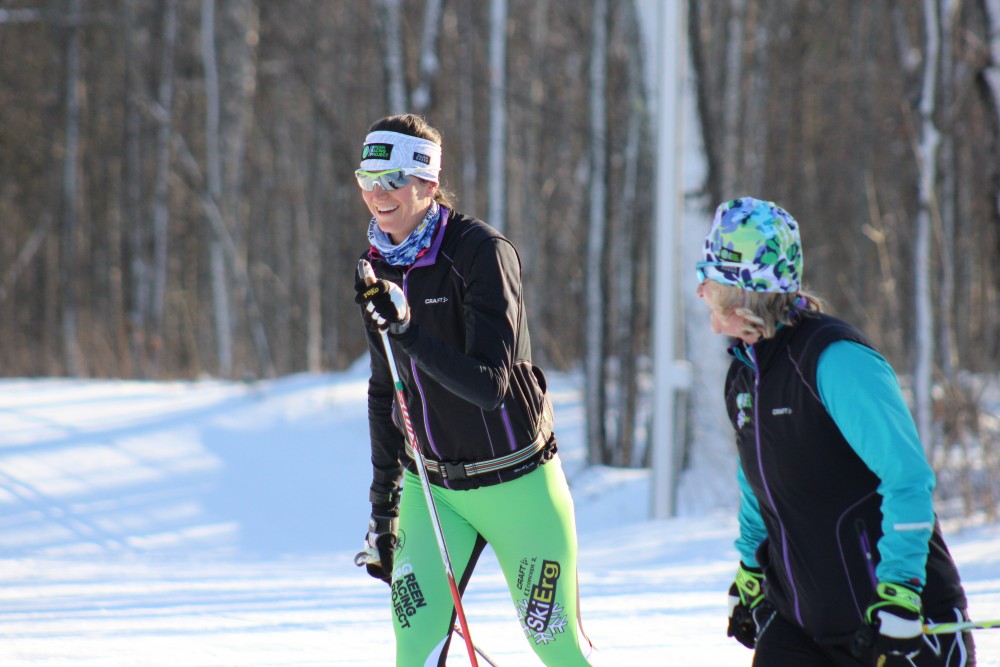
Craftsbury Green Racing Project’s Liz Guiney (l) and head coach Pepa Miloucheva during a ski on Saturday, Jan. 2 in Houghton, Mich., the day before the kickoff of 2016 U.S. nationals.
Some athlete quotes featured in Stolli’s September, 2020 article include:
“It feels like it’s a taboo. I am afraid that the coach won’t take it seriously and thinks I’m using it as an excuse.”
“I think I have more competence and knowledge about this topic than he.”
“Because he is a man.”
The September, 2020 article also summarizes the importance of this communication, both in terms of athletic development and overall well-being.
“Since menstrual dysfunctions are an important marker for relative energy deficit, a syndrome affecting many aspects of physiological functioning, health, and athletic performance, it is important that athletes feel comfortable to discuss this topic with their coach. Furthermore, because of the high inter-individual variability in performance and side effects experienced by athletes during the MC, coach-athlete communication is important to safeguard the athlete’s health as well as optimize training adaptations and performance. In response, increased attention should be paid to educating female athletes and their support teams about the MC and athletic training.”
Optimistically, Solli continued that she sees the lack of knowledge and communication as a barrier that is in the process of being broken down.
“I have a lot of talks about this with coaches who have wanted me to talk a little bit about the topic,” explained Solli. “And they’re very curious, and they’re starting to realize — you kind of have to get over this being a topic that you don’t mention… Particularly in elite sport, when there are so many topics that are discussed, it’s kind of silly that this topic should not be mentioned as part of the whole situation of an athlete.”
She continued that both research and coach-athlete education on the subject is trending in the positive direction. However, high levels of variation are experienced by women, which makes it challenging to give generalized recommendations.
“It’s starting to be, for the last 2-3 years, kind of a hot topic. I’ve experienced that both coaches and athletes are starting to see that and to investigate if this has an impact [on the individual]. Also, when I read up on the research and meta analysis that are published that try to sum up what we know and what do we not know, it summarizes that we don’t have evidence-based recommendations that can be done on a group level, but it seems like this topic should be approached through an individual.”
Overall, she sees increased awareness and access to information as a positive for female athletes. She noted the increased prevalence of logging apps, such as FitrWoman, that make it easier for athletes to track their cycle and observe trends in their feelings.
In Norway, the possibility to log the MC has also been implemented into the digital training diary that has been designed by the Norwegian Olympic Federation and is used across all sports.
“That’s a step forward, I think. It’s going quite fast in this area, so it will be interesting to see in five years, where are we? I think we will get a lot more knowledge just because athletes are starting to log and discuss this topic. Research takes time, but slowly we will be able to get more studies and more knowledge.”
Zooming out to discuss existing research on the MC and how it might influence the planning of training for elite athletes, Solli noted that a pervasive theme is that the potential for optimal performance can occur during any phase.
“In theory, we expect [hormonal fluctuations] to affect training, nutrition, and performance, but when you look at the meta analysis of how the menstrual cycle affects performance, we don’t have a clear answer on that. It seems like the studies are concluding that on average you can’t see a large difference between the performance in different phases.”
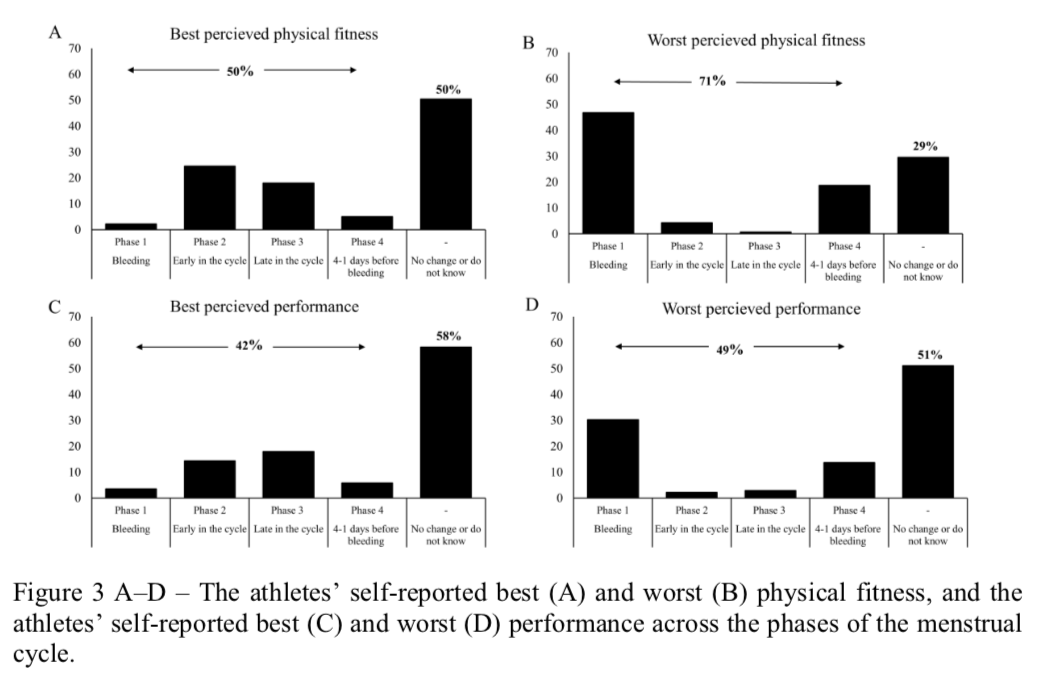
(Click to enlarge.) Reprinted from “Changes in Self-Reported Physical Fitness, Performance, and Side Effects Across the Phases of the Menstrual Cycle Among Competitive Endurance Athletes” by G.S. Solli et. al., September, 2020 in the International Journal of Sports Physiology and Performance.
While athletes can rest assured that racing is unimpacted, Solli explained that there are considerations athletes and coaches might apply to training to optimize adaptations.
“When it comes to training effect, there are some studies that highlight that it might be beneficial to periodize your strength training early in the menstrual cycle. This is the phase where you have an increased level of estrogen, which is a hormone with over 400 functions in the body, but two important functions is that it is an anabolic hormone, so it’s good for your ability to build muscle mass, and also important for bone health and to build bone mass and ensure bone density.”
She explained that 4-5 peer-reviewed studies indicate that you can get a higher training effect in terms of muscle strength and muscle mass by periodizing strength training sessions with higher weight and lower reps in the first half of the cycle. Solli added the caveat that, like all research in this area, the studies are often small and the overall topic is still in its infancy.
“It will be interesting to follow the research during the next years to see if we can get stronger evidence in the case of strength training, and whether we’ll also see that we can get some endurance studies, for instance, with periodizing high intensity training in particular phases. We don’t have studies answering that conclusively yet, but it would be exciting to see.”
Diving deeper into the survey results analyzed in her study, Stolli discussed the most prevalent themes athletes reported. She also discussed how hormonal fluctuations might explain these effects.
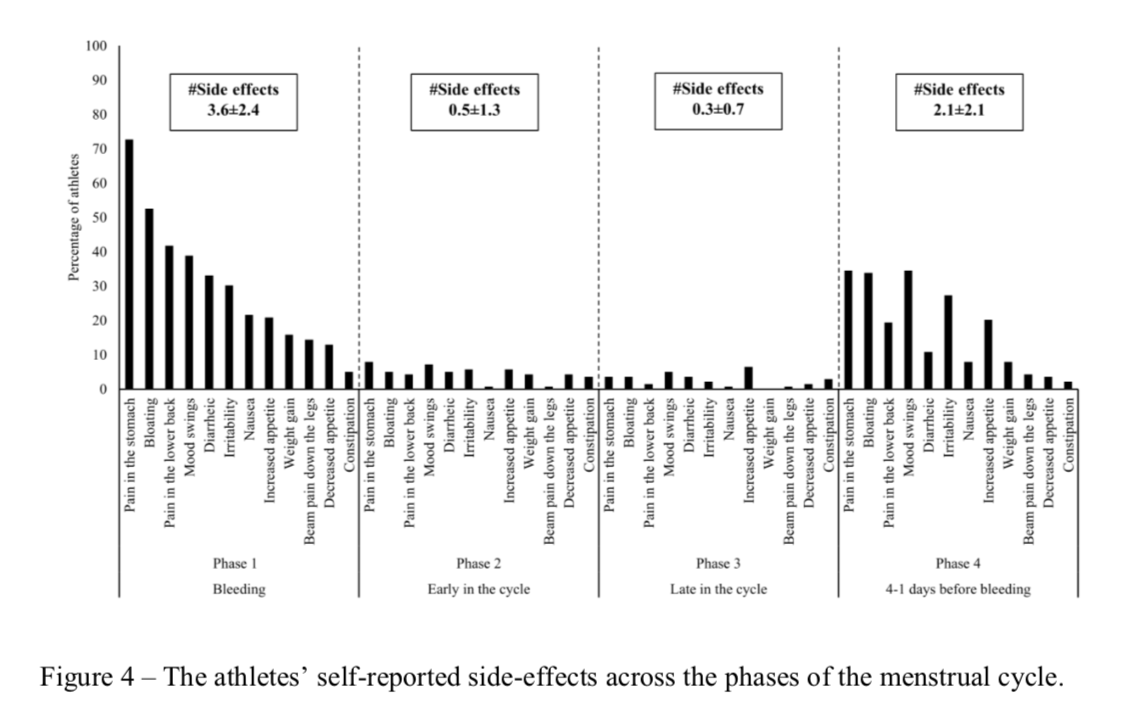
“As we discovered in the study, what the athletes perceive is that the phases where they feel their worst physical shape and have their worst performance was in the days right before the menstrual bleeding and during the bleeding. Right before the menstrual bleeding, we have a drop in both estrogen and progesterone, and this hormone drop is associated with PMS symptoms and different side effects, and we also saw that in our study. The negative side effects reported by the athletes were high during the periods right before and during the bleeding phase.”
This is also the time when athletes most frequently reported using pain-killers to manage symptoms and needing to alter their training by decreasing volume or intensity.
“I guess that is not only my study, but also other studies highlight that those two periods can be a risk for decreased training quality or that the athletes don’t manage to perform the training they have planned because they are experiencing these negative side effects.”
In contrast, most athletes perceived their best fitness was achieved during the middle phases of the cycle. This coincided with the window where negative side-effects were least reported.
(Click to enlarge.) Reprinted from “Changes in Self-Reported Physical Fitness, Performance, and Side Effects Across the Phases of the Menstrual Cycle Among Competitive Endurance Athletes” by G.S. Solli et. al., September, 2020 in the International Journal of Sports Physiology and Performance.
Another noteworthy statistic Solli touched on was hormonal contraceptives (HCs), which 56% of athletes reported using. The fact that HCs were not broken into subcategories such as oral contraceptives, IUD, etc., was listed as a limitation of the study.
“A large proportion of the athletes are using hormonal contraceptives,” said Solli in the call. “And there are a lot of different types with different amounts of synthetic estrogen and progesterone that suppresses the normal hormonal fluctuations, and you get a more stable cycle. As we saw, there were positives experienced with using HC’s that athletes reported that they get reduced pain and they also get control of the bleeding phases, so they can control it according to their competitions or trainings. But there are also some negative effects with weight gain and irregular bleeding.”
Solli explained that there is little research apart from survey data pertaining to how HC’s might affect female athlete performance and, similar to experiences with a natural cycle, the side effects women experience vary considerably. Here too, Solli recommended considering each athlete and situation as unique, advising athletes to pay close attention while adjusting to new or different forms.
“From research, when they compare using HC to having a normal menstrual cycle, most studies show that there is no effect on performance and that also performance is relatively consistent across the HC cycle,” Solli explained. “Also here, an individualized approach based on each athlete’s response is recommended from research, because you see that from some athletes they report more negative side effects, so that’s important to find a type that suits you and to log the effects when starting a new type.”
Of the athletes not using HC, a noteworthy 35% reported fewer than nine periods per year, an indicator of menstrual dysfunction possibly due to low energy availability, meaning the caloric and/or nutrient density of an athlete’s diet does not meet the demands of their training. While this may be unintentional, the condition known as Relative Energy Deficiency in Sport (RED-S) is prevalent in endurance sports, particularly those that favor leanness. It is often associated with disordered or restrictive eating behaviors.
“Although we did not assess energy intake or energy expenditure,” the article states, “high volumes of training and high amounts of high-intensity endurance training are associated with high energy expenditure and can prompt relative energy deficiencies. Elite endurance athletes and their coaches should therefore be aware of the risk of MC irregularities induced by high volumes of training and high amounts of high-intensity training. The prevention of MC irregularities should also be pursued, because primary and secondary amenorrhea can result in adverse health conditions, including reduced bone health.”
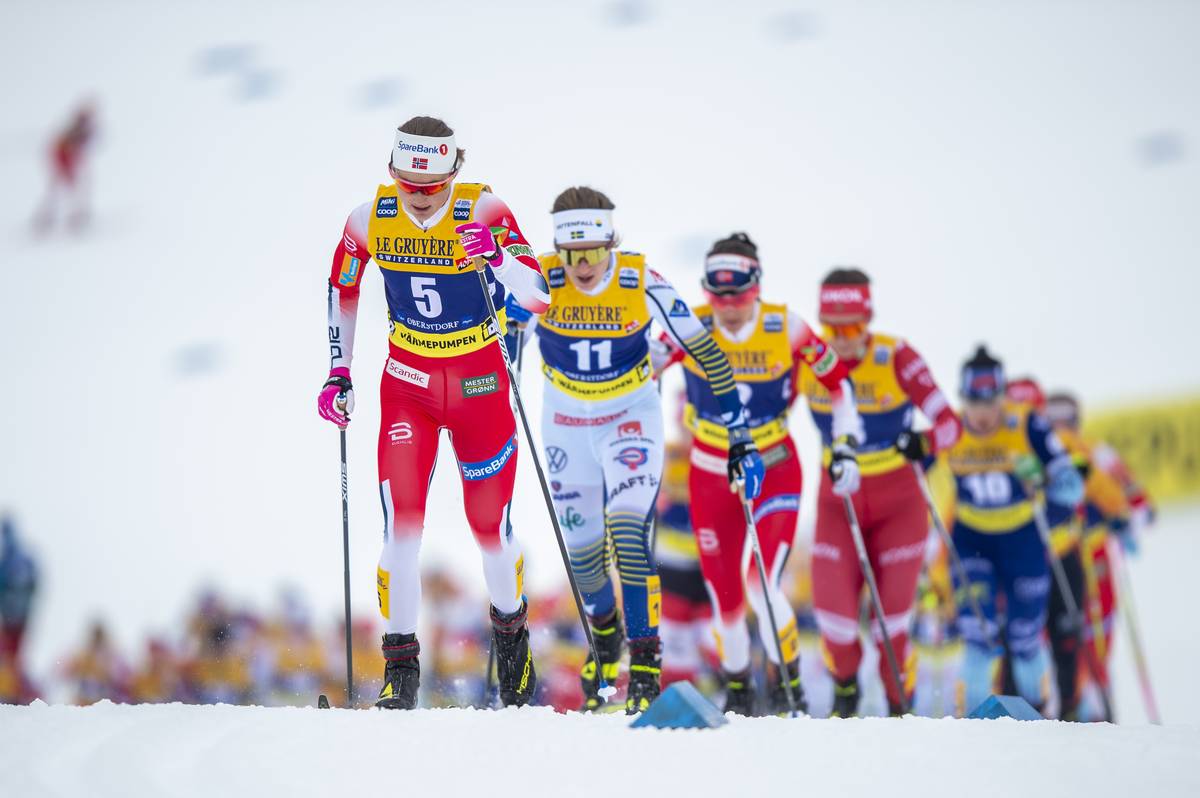
Ingvild Flugstad Østberg (bib 5) leading the chase during the classic portions of the Obertsdorf, Germany 15 k skiathlon in January, 2020. (Photo: NordicFocus)
At the World Cup level, this phenomenon has made FasterSkier headlines in the cases of Norway’s Ingvild Flugstad Østberg and Sweden’s Frida Karlsson, who were pulled from competition last season by national team doctors after failing to meet team health metrics. Østberg resumed competition for the 2020 Tour de Ski, where she finished third, and competed through the first weekend of racing in March in Falun. Her season then ended abruptly after she sustained a stress fracture in her foot from hopping off a three foot cement step to the ground.
The 30-year-old Østberg sustained a second stress fracture in July and has not competed on the World Cup this season. Østberg has been working with team doctors to bring her body back to health in order to compete in the 2021/2022 World Cup and Olympic season.
Karlsson was withheld from competition from early December, 2019 to February 9th, 2020 and has remained in competition since. More recently, Finland’s Kerttu Niskanen sustained a fracture in her tibia during a race in Falun that was not caused by a crash. FasterSkier has not received further insight into her situation.
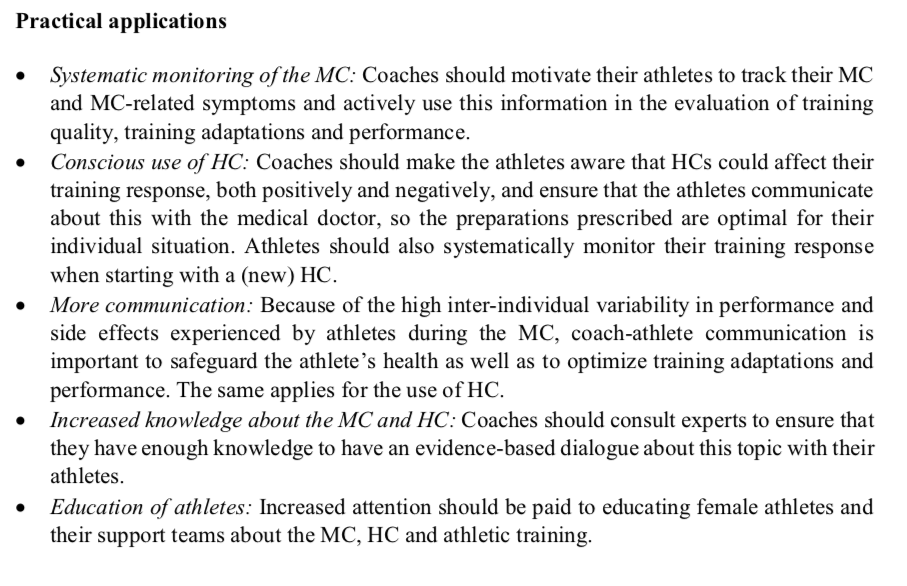
Bringing it all together with the information Solli discussed in mind, how should athletes and coaches approach this topic? Solli’s article lists a set of practical applications of the information currently available.
Practical applications of self-reported data from elite cross country skiers and biathletes for coaches and athletes. Reprinted from “Changes in Self-Reported Physical Fitness, Performance, and Side Effects Across the Phases of the Menstrual Cycle Among Competitive Endurance Athletes” by G.S. Solli et. al., September, 2020 in the International Journal of Sports Physiology and Performance.
Solli concluded that understanding the MC and how it might influence training and performance is just one piece of the puzzle of female athletic development. She stated that hype from media attention might make it seem essential, but for many who do not experience significant effects, this area might not be worth investing in. However, for many athletes, better understanding and communication could lead to significant improvement. For this reason, Solli recommends an individualized approach, adjusting the focus based on the extent to which an athlete is impacted.
“It is a part of a lot of different [aspects of training],” said Solli. “So you have to look at it in the bigger picture, but that doesn’t mean that we don’t need to talk about it. You can’t ignore it, but you should not make it too big of a deal if you aren’t struggling with it and you have a natural cycle and everything is okay, I don’t think you need to change something. But I think some athletes are struggling with it and I think they should know that it’s possible to get help.
“There is a lot of information now, a lot of good articles that are published, and information in the apps — I think it’s really good for young athletes to start there and to log [their cycle] and learn. That’s something I really would have wanted when I was a young athlete, that I could have an app and to start early to find my own pattern that I could optimize. I think that’s a really good opportunity to learn how your body works.”
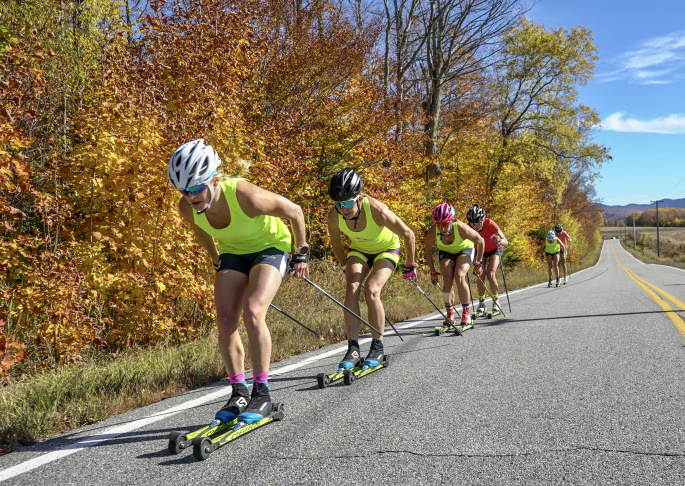
The SMST2 squad led by Jessie Diggins pushes the pace in a double pole interval workout during a fall 2019 training camp in Lake Placid, NY. (Photo: Matt Whitcomb / smseliteteam.wordpress.com)
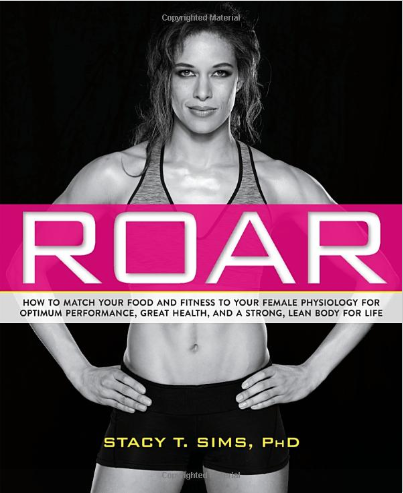
“ROAR: How to Match Your Food and Fitness to Your Female Physiology for Optimum Performance, Great Health, and a Strong, Lean Body For Life” by Stacy Sims, Ph.D is an excellent resource for female athletes, parents, and coaches. (Photo: Screenshot Amazon.com)
This book is for female athletes ages 12 to 92. Or for parents of female athletes. Or coaches of female athletes. Or anyone who wishes to otherwise support female athletes.
In 2016, Stacy Sims, Ph.D sparked a shift in training philosophy with her simple message to female athletes: “You are not a small man. Stop eating and training like one.”
Although the fact that there are physiological differences between men and women are abundantly clear, the implications in the realm of athletic performance do not date back to proto-humans.
In her book, “ROAR: How to Match Your Food and Fitness to Your Female Physiology for Optimum Performance, Great Health, and a Strong, Lean Body For Life”, Sims explains that for generations, research in exercise physiology excluded women because the varying hormone levels depending on age and phase within the menstrual cycle created anomalies in data. It was assumed — perhaps naively by male scientists — that women followed the trends seen in studies performed on males.
Sims experienced this phenomenon first-hand during her own career as an elite triathlete; she competed in the Ironman World Championships in Kona, HI and the XTerra Worlds in Maui. She recognized that the training plan her male peers followed did not work as well for her, and that she and her female teammates recognized their fueling and hydration needs and performance were impacted by their menstrual cycles. So she set out as a scientist to better understand female-specific physiology.
Stacy Sims, Ph.D, is an exercise physiologist and nutrition scientist who specializes in female performance. (Photo: Screenshot Facebook.com/drstacysims)
From 2007 – 2012, Sims studied “sex differences of environmental and nutritional considerations for recovery and performance” at Stanford University. Basing “ROAR” on the outcomes, Sims offers women research-based methods to align their training, fueling, and hydration with their female physiology to improve performance.
“Sex differences extend far beyond ponytails and sports bras,” she writes in the introduction.
Some of the topics in the book include aligning training and performance schedules with phases of the menstrual cycle, understanding how female hormones affect nutrition and hydration needs, the impacts of hormonal birth control, and the effects of aging and menopause on physiology and performance. While the supporting science is included, it is well explained and can be easily understood without a degree in exercise physiology, endocrinology, or nutrition.
Though I have been training, competing, and menstruating for more than half my life, I found “ROAR” to be eye-opening and an invaluable tool to identify opportunities to improve my own training and nutrition as I prepare for the American Birkie. I highly recommend it as a resource for female athletes of all levels and for anyone who works with female athletes.
Here are some of my biggest takeaways.
“Chapter 1: Demystifying and Mastering Your Menstrual Cycle.”
Right off the bat, Sims states that periods should not be avoided, and the absence of menstruation is a major red flag indicating that the athlete is not properly fueling their body, resulting in RED-S. She emphasizes that an under-fueled athlete cannot achieve peak performances and is impairing their overall health. Sims advocates for an “all in” approach to naturally restoring the body’s hormone balance by decreasing training intensity and volume (athletes can shift focus to technique here), and increasing caloric intake.
Dr. Stacy Sims, author of “ROAR: How to Match Your Food and Fitness to Your Female Physiology for Optimum Performance, Great Health, and a Strong, Lean Body For Life”, sends a clear message to female athletes experiencing menstrual disfunction. (Photo: Instagram @drstacysims)
In this chapter, Sims also unravels the phases of the menstrual cycle, providing information on the physiological effects of hormonal fluctuation.
One of the biggest surprises she shares is that competing during your period actually aids performance, because that is the phase of the cycle when estrogen and progesterone are at their lowest. In the hormonal sense, this is when women and men are most alike.
“Once you’re in the clear of the possibility of pregnancy, the body goes into a more relaxed mode and all those energy systems used in the high-hormone phase are at your disposal for exertion,” Sims writes.
She explains that this optimal window extends through the low-hormone follicular phase in the week following menstruation. This window is also when women are at their strongest and can experience increased pain tolerance and decreased recovery time. This is the best window for an intense training block or a peak race, though the latter is not always in our control.
Anecdotally, my summer goal race, the Lead King Loop 25k trail run, fell during my period. While I was expecting the worst (since I had not yet read the book), I ended up crushing my time goal, finishing third for women, and feeling the strongest I had in years.
Conversely, during the luteal phase of the cycle when estrogen and progesterone are at their highest. Though performance metrics like VO2 Max and lactate threshold remain constant, it is harder for women to build and repair muscle. Carbohydrate demands are higher during this phase, which affects fueling needs during exercise and may explain why many women experience cravings during the week before their period. Blood volume is also impacted, which can make it harder to control body temperature — not the easiest time to race in the heat!
There are also the lovely symptoms of PMS which include cramping, headaches, GI issues, bloating, and mood swings. Sims explains why each of these symptoms occurs and offers suggestions for mitigation.
Her overarching message is not to dwell on manipulating the cycle to align the low-hormone phase with peak performance, and especially not to fear the menstrual cycle as an athlete. Rather, by understanding the female physiology throughout the cycle, athletes can feel empowered to adjust their nutrition and hydration accordingly to optimize training and performance at any phase of the cycle.
One addendum: the impacts of high levels of estrogen and progesterone also explain the negative performance impact many women experience from hormonal contraceptives. This method of birth control uses artificial forms of these hormones throughout the cycle to manipulate the lining of the uterus and prevent ovulation, essentially prolonging the high-hormone phase.
“Chapter 10: Daily Fueling”
I found this takeaway less revolutionary, but so important to repeat. Sims advises women to eschew diet culture, in particular the low-carb high-fat trends, like the Ketogenic diet. She explains that while some males respond well to this type of fueling, women experience elevated levels of the stress hormone cortisol, which increases muscle breakdown and impairs the body’s ability to repair. A double whammy.
“In the end, a low-carb diet compromises your ability to maintain high-intensity or prolonged periods of exercise and puts your body under exorbitant stress.”
Sims recommends a well rounded diet that includes roughly 30% of calories coming from protein, 30% fat, 40% carbohydrate.
No surprise — the longer and harder you train, the more carbohydrates your body needs. The same goes for protein. She offers a formula to calculate individual need for these macronutrients based on the current demands of your training program.
From her guidance, I recognized that I need to include a bit more protein before and after my workouts (Sims recommends 10-15 grams before, 25-30 grams after hard exercise). I have also begun including a bit more protein in my bedtime snack, which typically looks like some Greek yogurt and a piece of whole grain toast with peanut butter.
Alayna Sonnesyn (SMST2) captions this shot of cooking with Jessie Diggins, “Gotta fuel hard to train hard!”. (Photo: Instagram @asonnesyn)
Sims also recommends front-loading calories, in particular carbohydrates, during the morning when the body’s natural hormone stasis makes it “primed for carbohydrates”, whereas it can rely more on fats and protein later in the day. This helps keep blood sugar levels balanced, preventing spikes and crashes in energy throughout training and life.
Are you, like me, a 5 AM alarm clock athlete? Just give me some coffee (life-blood) so I can properly tie my shoes and get out the door! It turns out, training first thing in the morning with an empty stomach is a recipe to put your body in an over-stressed state.
“[Fasted training] is particularly bad in the morning because your cortisol (a stress hormone) levels are already elevated. If you go out and exercise first thing, your body wants to pump out more cortisol, but needs the right ingredients to manufacture it, which are your sex hormones – testosterone, estrogen, and progesterone.”
High levels of cortisol stimulate fat storage and impair muscle repair and growth — not what you were hoping to get out of that gym session! You’re also digging yourself into a calorie depleted hole…
To counter these effects, Sims recommends consuming some protein and carbohydrates before the session, which boosts blood sugar and drops cortisol levels. In an Outside Magazine piece, Sims shares that one of her go-to’s is oats soaked overnight in almond milk and topped with greek yogurt and a little maple syrup. Yes — you might need to give yourself a little extra time to digest before getting after it, but that gives you time to do that foam rolling or activation drills you’ve been neglecting, or to mindlessly scroll Instagram. Just me?
“Chapter 11: Sport Specific Fueling”
This is where Sims dives into the nitty gritty. Her advice for pre, during, and post-workout fueling include explanations of how various carbohydrates are broken down in the gut and suggestions to troubleshoot GI issues like cramping, bloating, and sloshing. And though her book is based on female physiology, this section is beneficial to those with Y-chromosomes as well.
One of the most revealing messages regarded the breakdown of sports gels in the stomach. I have never had much luck with gels during races or training — I inevitably end up with a bloated crampy belly and sticky residue in my mouth, on my hands, and wherever I stash the wrapper. Perhaps I was just looking for Sims to confirm this bias, but her explanation of the digestive process sealed the deal that candy and real food alternatives will continue to be my fuel of choice.
“The trouble with gels”, as Sims puts it, comes down to two factors: osmolality and the mix of sugars contained in the gel. Osmolality is “the concentration of dissolved particles such as electrolytes in your blood plasma. The higher the carb concentration, the higher the osmolality, and the slower it leaves your stomach and your intestines.”
Essentially, the viscous sugary gel is too thick to be absorbed readily during exercise when your body is diverting blood flow into your working muscles and away from your stomach. Even washing it down with water, as is recommended, does not transform the gel into an optimal form.
Dr. Stacy Sims, author of “ROAR: How to Match Your Food and Fitness to Your Female Physiology for Optimum Performance, Great Health, and a Strong, Lean Body For Life”, provides revolutionary information on performance hydration and nutrition. (Photo: Instagram @drstacysims)
This concept is explored further in the subsequent chapter, “Hydration is Power”, which transformed my understanding of hydration. Sims explains that many electrolyte drink solutions aim to be a source of fuel and fluids, but this doesn’t jive with the body’s digestive processes either. Sims recommends the approach of “hydration in your bottle, fuel in your pocket”, meaning separating the two for better overall fueling. The chapter is so rife with information that summarizing it here does not do it justice — go read the book!
Back to gels. The second factor of the problem is that most gels contain a blend of three sugars: glucose, fructose, and maltodextrin. The first is good, the second two are difficult for the body to digest, requiring water to be drawn from the bloodstream into the gut during digestion, which leads to the suboptimal sloshy gut feeling. No bueno.
That said, Sims acknowledges that gels do work well for some athletes. If this is the case for you, there is no need to fix what isn’t broken.
What should you use if you need an alternative? Sims recommends using 100-200 food calories per hour containing primarily carbohydrates, though some protein and fats are okay. For the above reason, she recommends avoiding fructose — which is found in fruits — and sticking to low-fiber foods that contain glucose and dextrose, which can be found in bread, and sucrose, which is table sugar. In essence, nibbling on a PBJ might keep your stomach happier and your body better fueled during a training session than sucking down a couple of GUs.
She also speculates that many people place too much emphasis on fueling during races, but it is not a “more is better” scenario.
“Contrary to what you may have heard, when in doubt, err toward the lesser amount [of food]. It is very common for athletes to overeat during training and racing with the thought that they are supplying their muscles with needed carbohydrate. But in reality, you’re consuming more than your gut can absorb, so the excess just remains in the stomach or intestinal tract too long, causing nausea, pain, and discomfort (which, of course, impairs performance).”
Sims also emphasizes that when it comes to performance in long events, like the Birkie, hydration is king. Your over-distance training session bonk might actually be a result of dehydration, not of under-fueling.
“I’m going to drill the point home here. The solution to staying strong and delaying fatigue is taking care of hydration first and foremost — reducing your loss of blood volume — and topping off your stores with small amounts of carbohydrates from real food when possible, not the kind you drink or slurp.”
The Consensus
These points hardly scratch the surface of what “ROAR” has to offer. It is a worthwhile read for any female athlete, regardless of age or performance level, and can certainly be a valuable tool for a coach looking to direct developing female athletes to sound nutritional guidance to help build a healthy body that also performs its best. Having a period is a good thing. Fueling the body is essential. “Women are not small men.”
FasterSkier is starting a new, once-a-month series looking at new research in the field of sports science. Periodically, we’ll flip through some of the world’s best peer-reviewed medical journals and summarize, in plain English, studies that we think will be of interest to skiers. Here’s our first installment – enjoy!
* Those dopers who claim that their blood measurements were funny because they just did a really hard workout might actually have a point. A team of Australian researchers showed in a paper in the International Journal of Sports Medicine that hemoglobin mass (Hb Mass) does, in fact, increase after an endurance race effort.
Blood. Image via creative commons.
Back in 2008, a German group led by Dr. Nicole Prommer at the University of Bayreuth suggested in Medicine and Science in Sports and Exercise that Hb Mass, which unlike the Hemoglobin concentration (Hb) measurement used in biological passport programs by anti-doping organizations is not influenced by fluctuations in blood and plasma volume, should be used in anti-doping efforts.
But the Australian team followed up on previous work done since 2008 and put 18 sub-elite triathletes through their paces in an Ironman, and then compared them to 8 control athletes who hadn’t done the race. They found that the racers’ Hb Mass increased by 3.2 % from before the race to directly afterwards, while the control subjects showed no significant change.
Noting that this increase corresponds to the illicit benefit of the infusion of one bag of blood, the researchers discouraged WADA from including Hb Mass in their biological passport program, at least until further work can be done to determine how long the effect lasts after a hard effort.
More information: Gough, C.E., Eastwood, A., Saunders, P.U., Anson, J.M., and Gore, C.J., (2012) Spurious Hb Mass increases following exercise. International Journal of Sports Medicine 33:691-695.
* In the September 1 issue of the British Medical Journal, a team of researchers from several Boston-area hospitals and medical schools published a meta-analysis (review of past studies) of the effects of progestin-only contraception on the risk of thrombosis, a condition in which a blood clot forms in a vein or artery; 300,000 Americans die from venous thrombosis each year. As FasterSkier reported last summer, the use of hormonal birth control appears to have an indirect, if not necessarily direct, impact on athletic performance in female skiers. In addition, U.S. star Kikkan Randall suffered a scary run-in with Deep Vein Thrombosis (DVT), which she attributed to her use of birth control.
creative commons/flickr user Anna.
As the Boston team wrote, when hormonal birth control became available in the 1960’s, the corresponding increase in thrombosis incidence was pinned on estrogen, the first of two hormonal elements in the typical birth control pill (progestin being the other). Over the last 50 years, pills have gradually decreased in their estrogen concentration, and the types of synthetic estrogen and progestin used in birth control have also changed. It has been assumed that progestin-only pills, which were put on the market beginning in the 1970’s, carried a smaller risk of thrombosis.
But as FasterSkier found last summer, there hasn’t been much in the way of controlled, high-quality testing on this issue. The team led by Drs. Simon Mantha of the Lahey Clinic and Jeffrey Zwicker of Beth Israel and the Harvard Medical School encountered a similar problem. A search using terms like “progestin”, “progesterone”, and “thromboembolism” in the top three scientific search engines returned over 2,000 papers, but after screening, only eight addressed the question of progestin and thrombosis.
Not a single one of the studies was randomized, one of the cornerstones of strong scientific and medical research, to compare outcomes for women taking the progestin and those in a control group. Instead, all eight studies used existing groups of patients. Five of the eight studies were case-control, taking patients with known outcomes (thrombosis, no thrombosis) and looking back at their histories to examine the cause. The other three studies were cohort studies, which take groups of patients with known risk factors (for example, progestin vs. not) and then examing the prevalence of a disease (for example, thrombosis) going forward.
The Boston team then effectively combined all of the women in the various studies and ran a global test, determining that the relative risk factor for thromboembolism (either venous or pulmonary) for progestin-only users compared to the general population was 1.03, deemed an insignificant risk (this would mean that progestin users would have a three percent greater chance than the general population of developing thrombosis). Interestingly, the relative risk factor for women using an injectable progestin (rather than a pill of IUD) was 2.67.
Mantha and Zwicker’s team concluded that the lack of increased risk might be due to the fact that progestin-only “mini-pills” contain much lower doses of the hormone than do the more common combined estrogen-progestin pills. But they also called for more studies, saying that the small amount of research on this subject could mean that some studies were biased.
* Do girls drop out of sports more frequently than boys, and when children or teenagers of either gender quit athletics, why is it? These are a few of the questions addressed by Dr. Jose Francisco Guzman of the University of Valencia and Dr. Kieran Kingston of the University of Wales in a recent paper in the European Journal of Sports Science.
Following a group of 857 Spanish children ages 11 to 19, all of whom participated in some kind of organized sports, for 19 months, the researchers tried to determine why athletes quit using a model called “self-determination theory.” They looked at how self-motivated the athletes were, how they perceived sports to impact their studies, and how satisfying they found athletics, among other metrics, and pooled athletes by age and gender.
They found that there was a correlation between an athlete’s level of motivation and their perception of how their sport might hamper their studies; taking it one step further, the researchers guessed that motivated athletes were less likely to consider athletics a drawback to their academic success. Regardless, they found that this combination led athletes to stay in their sports longer.
Interestingly, the team saw that dropout rate did not change significantly with age or gender, and concluded that their model could be applied generally to assess and predict how many children would stay in sport.
* Summer may be basically over, but a study published in the October issue of the European Journal of Applied Physiology suggests a way for athletes to better cope with heat during training: pre-cooling. But was does that mean? If you’re running a race in the summer, do you have to sit in an ice bath before hitting the start line?
Because heat stresses the body in many ways and can athletic performance, previous research had suggested preemptively cooling the body to try to curb heat stress. A paper by researchers at Charles Sturt University in Australia, led by Dr. Geoffrey Minett, examined various durations of pre-cooling and their effects not only on athletic performance but also on neuromuscular function.
The Australians used eight subjects in their study, all men in their mid-20’s who were club-level athletes in team sports. At roughly 91 ºF and 33 % relative humidity, the men were asked to perform two 35-minute exercise sessions separated by 15 minutes of rest. Each session included both maximal sprints and “shuttle running” intervals of 50 seconds, with jogging and walking recovery in between, measuring how far the athletes ran in each 50-second interval.
Each subject did the workout three times, with randomly assigned pre-cooling treatments: either no cooling, ten minutes of cooling, and twenty minutes of cooling. The treatment itself was complex and comprehensive: an iced towel over the head, neck and shoulders, dunking the hands in cold water up to the wrists, placing ice packs on the thighs, and wearing an ice vest.
The treatments did have their desired effect. Core body temperature was significantly lower in the 20-minute pre-cooled group compared to the others, and that effect lasted the entire workout. Other physiological variables, such as heart rate and blood pH or glucose levels, were unaffected. Muscles, however, also showed the benefits of pre-cooling: the maximum voluntary contractions (MVC), in this case the force applied by the right knee extensor in response to an electric stimulus, were higher both mid- and post-exercise in the pre-cooled athletes.
All of this led to performance increases for the 20-minute pre-cooling treatment. The times of the maximal sprints in the second bout of a session declined more drastically in athletes having only the control (8.82 %) or ten-minute (6.95 %) pre-cooling treatment, whereas the 20-minute pre-cooled athletes declined a modest 6.09 % during the second bout. Distances covered during the shuttle-running portion of the workout were significantly higher for the 20-minute athletes as well.
The researchers concluded not only that pre-cooling was beneficial, but that the dose was important: ten minutes of the treatment did not produce the same performance increase shown by twenty minutes of cooling.
* Publishing in the same journal online ahead of the print edition, ew: score one for icky science. In an attempt to understand why athletes so often exhibit signs of asthma or general bronchial constriction, a Madrid-based research team looked at what the athletes coughed up. Sputum!
Lead author Dr. Beatriz Sastre of the IIS-Fundacion Jimenez-Dıaz Immunology Department and five Spanish colleagues rounded up 68 subjects, divided between athletes and non-athletes and asthmatics and non-asthmatics; the athletes were Spain’s Olympians from 2008. All the subjects were put through breathing “challenges”, which meant chemically inducing a constricted airway. Between the asthmatic and non-asthmatic athletes, the researchers actually didn’t find any difference in inflammation of the airways.
In the sputum samples, the researchers found that athletes had expelled more bronchial skin cells – meaning that there were injuries to their airways that left them spewing tissue. They also tested the presence of several kinds of white blood cells, finding that healthy control subjects expelled fewer of three different kinds of white cells (eosinophils, neutrophils, and basophils) than athletes and asthmatics; athletes showed higher levels of neutrophils and basophils than even asthmatic non-athletes. Basophils, for example, initiate inflammation.
Given the lack of inflammation difference between asthmatic and non-asthmatic athletes, and the fact that athletes seem to have more epithelial airway injuries and also more white blood cells which promote inflammation, the study concludes that exercise can induce airway difficulties in all athletes – even the best-trained ones.
(Author’s Note: While some of the athletes and coaches contacted by FasterSkier for this story were willing to openly discuss birth control, many wished to remain anonymous rather than allow the public to make assumptions about their sexual choices, a desire that FasterSkier respected. For these sources, pseudonyms will be marked with an asterisk (*) the first time they appear, and they will subsequently be referred to by first name, rather than last name like the rest of the sources.)
Clare Egan representing UNH at the Lake Placid SuperTour last winter.
In 2006, Clare Egan was a successful high school athlete with a bright future. A member of the cross-country, nordic skiing, and track teams at Cape Elizabeth High School on the Maine coast, she won three state titles in track and skied to top-twenty finishes at the Junior Olympics her senior year. After that, she left home to attend Wellesley College, where she expected to continue her athletic success.
For a while, she did. Egan cut more than a minute off of her 5 k personal best in cross-country over the course of her freshman fall. But then, she began to fall apart.
“Starting the winter of my freshman year I had a decline in my athletic performance,” Egan told FasterSkier. “I went to Junior Olympics again and they were in Soldier Hollow [Utah]. I did really badly, especially compared to the year before, even though I was in theoretically better shape. I was very close to the back of the pack instead of being 13th and 14th.”
At the time, Egan blamed her results on the altitude, which can be a challenge for skiers from New England and other low-elevation areas.
But her performance continued to backslide. She had a disappointing track season in the spring, and in the fall of 2007, she was suddenly running in the 20-minute range for a 5 k instead of the 18:30’s she had raced her freshman year. Things got worse and worse. First, Egan thought that low iron was the culprit, even though she didn’t meet the clinical definition of anemia. Then she wondered if she was burnt out, so she took her entire junior year off from training and racing and studied abroad.
“That summer, before my senior year, I basically went through and I systematically resolved all of the problems that I thought I had,” Egan said. “I had taken a whole year off, so I couldn’t blame being burnt out. I got my iron back to totally fine levels, so I couldn’t blame the iron. I thought that maybe I wasn’t really training that well. So I did a lot of cross training. I upped my volume. I just did a much better job of summer training before my senior year than I had ever done before.”
Even after so much thought and preparation over the summer of 2009, Egan’s senior cross-country season was no better than her sophomore one.
“It was very hard for me to break 20 minutes in a 5 k,” Egan explained. “I always felt like I was able to push myself to 80 or 85 percent or so, and not beyond that. It was okay in a lot of workouts… I was able to run mile repeats at a fast pace, but I couldn’t do a race. Basically, I was not able to race. Racing is when you push yourself to 100 percent, and I could not do it. Within 800 meters, I would feel like I had totally reached my VO2Max, and couldn’t go any harder, and then I would just really suffer for the next three miles.”
Like a scientist doing an experiment, Egan had already examined all of the variables she thought could be affecting her performance, and she had controlled them. What could be the problem?
She began to form a hypothesis when she began suffering from stomach aches. She marked the days when her stomach hurt on the calendar, and noticed that they coincided with the first day of a new month of NuvaRing, a form of hormonal birth control she had been using since the August before she started college.
“I had never had any noticeable side effects before,” Egan said.
Although Egan had been racking her brain for months trying to explain her poor performance, she had ruled out birth control as a possible factor. After all, her freshman cross country season had been stellar even though she was already using NuvaRing. But when the side effects began showing up three years later, a light bulb went off in her head.
“I thought, okay, I’ve never had these before and they’re showing up after three years,” Egan said. “Maybe there are side effects that are creeping in.”
After more deliberation, she stopped using NuvaRing in October. That winter, skiing for Wellesley – which didn’t have a ski team until Egan arrived and started one, acting as both coach and athlete – she qualified for 2010 NCAA Championships, where she finished 25th in the skate race, the fourth woman from the East.
Egan also competed at D-III track and field championships that spring, where she finished 6th, was named an All-American, and tied the Wellesley College record for the 1,500 meters.
“If you look at my athletic performance, someone would say, ‘wow, is this person on drugs?’” Egan said.
Egan’s results on the trails have continued to impress: in 2011, she started graduate school and represented the University of New Hampshire at NCAA Championships for skiing, and she is now a member of the Craftsbury Green Racing Project, an elite post-collegiate team based in Vermont.
Most doctors say that birth control pills do not have any effect on athletic performance; some would argue that Egan was grasping at straws when she blamed her poor results on NuvaRing. But when she discontinued her use of hormonal contraceptives, Egan went from anonymity to success, and she is not the only skier who has had this experience. Which begs the question: why do so few people think that hormonal birth control can affect female athletes?
An Invisible Problem, or an Imaginary One?
Stories like Egan’s are just that: stories. There is little scientific evidence that the hormones in birth control have any effect on performance, positive or negative. So what can Egan – and the dozens of other female skiers who have had an experience like hers – do?
Perhaps, they can simply talk to their peers. According to the Center for Disease Control, seventeen percent of American women of childbearing age took oral birth control pills between 2006 and 2008. In young women, the numbers were even higher. A Thompson-Reuters study showed that more than one in four 18-year-olds were prescribed “the pill” in 2009, and according to the American College Health Association, forty percent of college women use oral contraceptives.
(NuvaRing, the vaginal insert Egan had been prescribed, is used by 1.5 million women worldwide. Because it uses the same kinds of synthetic estrogen and progestin as oral contraceptives, NuvaRing has the same side effects as the pill, and anything written about the pill in this article applies to the ring as well, unless otherwise noted.)
Of 123 female skiers and biathletes surveyed by FasterSkier, 71 percent had used hormonal birth control at some point. The majority of these women were never warned by their doctors that birth control could have an impact on their skiing careers – and in fact, in many cases, the opposite was true.
“My doctor told me that wasn’t a possibility,” said Jean*, a post-collegiate skier.
And yet of the 88 women who had used hormonal birth control, 44 percent believed that it had negatively affected their performance, although not always to the extent that Egan did.
Sara Studebaker racing at the Presque Isle World Cup in February.
“When I went off the pill, I lost weight and generally just felt like I was better able to handle training,” said 2010 Olympic biathlete Sara Studebaker. “Clearly there are several factors that could have impacted this as well, but I feel the pill definitely played a roll.”
For years, the medical community has batted questions about the safety of hormonal birth control back and forth. Does it increase the risk of breast cancer? Lead to infertility? Cause increased mortality? While the answers to these questions appear to be “no,” the effects of added hormones on the human body still aren’t fully understood – and the impact on athletic performance has barely been examined.
But that doesn’t mean that it doesn’t exist. For instance, use of the pill can lead to the development of blood clots, a life-threatening situation. They can affect an athlete’s mood, which can diminish their drive to train and compete. Hormonal birth control can lead to higher core body temperatures and changes in thermoregulation. Side effects like nausea and headaches can make training unpleasant or even impossible.
And then there are the stories, coming from skier after skier, about how their performance declined after they began using birth control pills, and improved when they stopped taking them. Without scientific proof that hormonal contraception caused these changes in results, the anecdotes are puzzling, but they shouldn’t be ignored.
Nevertheless, Jean’s experience was not unusual; many doctors don’t think that hormonal birth control has any effects on athletic performance.
Kristine Karlson, a family medicine doctor at the Dartmouth Hitchcock Medical Center in Hanover, New Hampshire who also specializes in sports medicine and happens to be a three-time World Champion in rowing, said that she informs her athletes about many side effects of birth control pills, but that decreased performance is not one of them.
“As far as I’m aware… I’m not aware of any studies that say, without a question, that this is causing trouble,” Karlson told FasterSkier. “Anecdotes are anecdotes, and what do you do with that? I don’t know.”
Given that the research hasn’t been ideal – there are few studies which address the topic, and the ones that exist are limited in scope – women are being left without much, other than anecdotes, to guide their decisions. However, there is no question that hormones play an important role in many aspects of physiology, some of which may affect athletic performance.
Sex, Drugs, and Sports
“From prepuberty through to… menopause and beyond, the female athlete is exposed to a constantly shifting kaleidoscope of endogenous sex steroid hormones,” a team of researchers led by Dr. Naama Constantini of Tel Aviv University noted in a 2005 paper. “Oral contraceptives… further introduce exogenous synthetic hormones to the equation.”
How, exactly, do those exogenous (from outside the body) hormones shift the equation? To answer that question, it’s important to have a basic understanding of the endogenous, or naturally-occurring, ones which they replace.
The female body is awash with hormones that regulate the menstrual cycle and reproduction; estrogen, progesterone, and testosterone have the strongest presence. For athletes, who usually try to avoid pregnancy, the main reminder that all of these hormones affect their lives is from their monthly period.
Most women dislike having their period, but Karlson said that in terms of athletics, there’s no reason to avoid it
“As far as I know, there’s no good evidence to say that having your period is going to affect your performance, that during your period your performance is going to be that much worse or better,” Karlson said.
The obvious exception is for women who suffer from premenstrual syndrome (PMS), defined as a range of physical and emotional symptoms occurring five to eleven days before menstruation, which can also lead to depression. Another exception is for those who have exceptional heavy periods with significant blood loss. For these women, training and competing are much more difficult during their periods.
There’s not much research showing that periods affect athletic results. For instance, one of the few studies showing a negative correlation used only six women as test subjects. But the menstrual cycle affects some aspects of physiology that could impact performance in more subtle ways.
For instance, women have been found to tear their anterior crucial ligaments (ACL’s) far more frequently in one phase of the menstrual cycle than the others. While there’s no definitive explanation for the correlation, researchers say that the most likely culprit is hormone concentrations.
The menstrual cycle is divided into three sections: the follicular phase, the ovulatory phase, and the luteal phase, all of which have their own signature hormone profiles.
The follicular phase begins the cycle and lasts about nine days, during which estrogen levels slowly increase.
Then, after a spike in estrogen, a woman ovulates, or releases an egg. The ovulatory phase lasts about five days.
During the luteal phase – the rest of the 28-day cycle – the egg, now called a corpus luteum, releases progesterone until it is flushed from the body during a woman’s period; hormone levels return to baseline.
So over the course of a month-long cycle, hormone levels and ratios can change dramatically, from the low levels of both hormones at the beginning of the cycle through the high estrogen levels in the ovulatory phase and then the corresponding increase in progesterone during the luteal phase.
“There appears to be a consensus emerging from the literature that the likelihood of incurring an ACL injury does not remain constant during the menstrual cycle, with a significantly greater risk during the preovulatory [follicular] phase than during the postovulatory phase,” an International Olympic Committee (IOC) panel wrote in 2008.
A generalized depiction of the changes in hormone concentrations through a 28-day menstrual cycle.
While ACL tears are extremely rare in the nordic world, the panel’s conclusions are far from irrelevant for skiers and biathletes. One component of the findings was that since hormone profiles are unique to each woman and can vary greatly, some women may be at greater risk for injury as the ratios of estrogen and progesterone seesaw in their bodies.
And although the panel was concerned about the hormones’ impact on ligament injuries, the ACL is only one of the many aspects of physiology that is influenced by naturally-occurring hormones. For example is that core body temperature rises between 0.3 and 0.5 degrees Celsius when progesterone is released during the luteal phase. This reduces the body’s ability to defend itself against heat; female athletes are more easily fatigued in hot weather during the luteal phase, which can affect both training and competition.
Among other physiological contributions, estrogen has significant effects on the cardiovascular system, while progesterone is a controlling factor in some aspects of respiration. Estrogen and progestin might sometimes counteract one another, but in other instances they might have additive effects.
How, exactly, do they shift the equation? That is far from fully understood, although some data has been collected. For example, a team of researchers at San Diego State University published a paper in 1997 showing that women using oral contraceptives experienced a larger core temperature increase and higher heart rates after exercising in the heat than women who were not taking the pills.
But overall, there isn’t much research about the effects of hormonal birth control, despite the large percentage of women who take it. Even when it comes to ACL injuries, which get a lot of attention, doctors aren’t sure whether shifting hormone concentrations with contraceptives might change the likelihood of injury.
“There is a paucity of clinical research examining these effects in women who… use contraceptive hormones, and who represent a large percentage of the physically active female population,” the IOC panel noted, adding that future studies should investigate the effects of oral contraceptives on musculoskeletal tissue.
What’s in a Pill?
On a most basic level, birth control pills consist of synthetic, or exogenous, hormones which mimic the natural, or endogenous, ones in a woman’s body. Hormonal contraception works by overriding the body’s natural cycle; hormone production is more or less shut down, and eggs are no longer released from the ovary.
“The pill” was first introduced in the United States in 1960. At that point, it contained 100 to 175 milligrams of estrogen and 10 milligrams of progestin, the synthetic equivalent of progesterone. The strategy with these early pills was to trick the body into thinking it was pregnant so that it would not ovulate.
“When you’re taking an oral contraceptive, the levels that you are maintaining day to day to day are quite different than the fluctuating levels that occur during a normal menstrual cycle,” said Witters.
Over the years, the amount of estrogen and progestin in birth control pills has steadily decreased in an attempt to reduce side effects. (In the 1970’s, rumors that the pill led to breast cancer created a backlash against it.) Today, most pills contain only 30 to 35 milligrams of estrogen, and some low-dose formulas have only 20 milligrams. “Mini-pills”, a slightly less effective formulation, contain only progesterone.
“All of the birth control pills we use now are the lowest possible doses that we can get away with because of the whole side effect thing,” said Karlson, the sports medicine doctor.
Regular pills and NuvaRing are both based on synthetic estrogen, which despite being chemically different than the naturally-occurring estrogens, binds with estrogen receptors in the body.
Estrogen has wide-ranging effects beyond simply regulating the reproductive system: it can function on the metabolism, fat stores, protein synthesis, muscle growth, bone reabsorption, blood coagulation, and salt retention, among other aspects of physiology.
Just how many other aspects? A team of researchers from Illinois and Singapore identified over 1,000 estrogen receptor binding sites in the human genome. While this doesn’t mean that there are 1,000 genes controlled by estrogen – not every binding site leads to a change in gene expression – it does indicate that the hormone regulates a lot of different things. It also means that ethinyl estradiol, the synthetic hormone, likely does much more in a woman’s body than simply stopping ovulation.
A variety of different synthetic progestins are used to mimic progesterone in birth control pills. They are derived from different sources, metabolize differently in the body, and interact with the hormone receptors to varying degrees. They carry different side effects, which is one reason why doctors sometimes prescribe women a different brand of pill if they don’t like their original prescription.
Like estrogen, progesterone controls more than just the reproductive system. A team of researchers from California noted in a 2008 paper that there are progesterone receptors throughout the brain and in every type of neural cell. So like synthetic estrogen, progestins have the ability to influence a large number of physiological functions.
There hasn’t been much conclusive research about the long-term effects of any of these synthetic hormones. But researchers have hypothesized that even slight differences in their structure can influence how the molecules act in the body.
“It shouldn’t be at all surprising if one saw differences from exogenous estrogen and progestin versus the endogenous ones,” said Witters, the endocrinology professor.
Dreams Deferred, and Testosterone Depressed
Like Egan, Connie* began using hormonal birth control just before she went to college. And like Egan, she had been a standout high school racer, winning her state championship and excelling at Junior Olympics, where she had stood on the podium and notched other top-ten results. Connie was poised for a successful college career.
She attended a school with a strong ski program, and her freshman year, she didn’t have any standout results, instead blending in with the team’s other above-average racers. At the time, she figured that it was just the freshman curse – many athletes have less than stellar results as they begin college and are faced with living on their own, balancing school and social life, and other new experiences.
But even as Connie grew older and figured college out, her racing still stagnated. She was frustrated, because she was sure she could be a great skier; although she was a solid varsity member of her team, her results didn’t match up to the potential she had showed as a junior athlete.
Then, one spring, she stopped taking Yaz, her birth control pill.
Things changed.
“All of a sudden I could run up hills, and keep running, fast, for a long time,” Connie told FasterSkier.
Like Egan, Connie said she had felt slow and bogged down while she was using hormonal birth control. She described how she would start running or skiing in a full-bore workout, and a few minutes later feel like her legs were filled with lactic acid, preventing her from pushing at full capacity. After she stopped taking Yaz, she felt like she was “back to normal.”
But unlike Egan, Connie hadn’t gone through an elaborate review of what could be hurting her performance, and even after she improved – she went on to be one of the best racers in her region, and race after college – she was reluctant to blame birth control outright for the less outstanding performances earlier in her college career.
“I was a lot more relaxed in general, and so that might have had something to do with my improvement,” Connie said.
None of Connie’s coaches had warned her that her performance might be affected by the pills, and neither had her doctors, who had only talked about the more commonplace side effects. She had been told that she’d probably have less acne, but that she might gain weight, and her breasts might grow. For Connie, birth control pills didn’t seem to have any drawbacks until she stopped taking them and her results improved dramatically.
After the fact, she talked to another doctor. Connie still wasn’t sure whether birth control explained the change in her fortunes as a skier, but she was starting to get curious. Taking hormonal birth control, the new doctor said, can lower women’s testosterone levels. And if Connie was an athlete whose body relied on testosterone to perform, he said, then this might be why she had struggled.
Egan also received this explanation after seeking out a knowledgeable doctor. The theory, based on a study published in 2006 by researchers from Boston University, is that long-term use of hormonal birth control leads to higher production of sex-hormone binding globulin (SHBG).
This protein binds to sex hormones like testosterone, making them unavailable for the body to use. The study found that women who had been taking birth control pills had four times the amount of SHBG that non-users were producing; as a consequence, there was much less testosterone available for their bodies to use. Perhaps even more importantly, for women who had used birth control pills but then stopped, SHBG levels did not return to normal – they stayed high, indicating that there was the potential for long-term effects on testosterone.
Luckily for Connie, she didn’t suffer any noticeable long-term effects from Yaz. She was happy with her college experience and had the chance to be a full-time athlete after graduating.
Yaz-Tastrophe
What Connie didn’t know until later was that poor athletic performance wasn’t such a bad outcome compared to the experience of some other women who were using Yaz.
Yaz was approved by the Food and Drug Administration (FDA) in 2006, and Bayer, the manufacturer, began promoting it heavily, especially to young women. The drug contained a low dose of estrogen compared to many birth control pills, and Bayer also claimed that it would help with acne and pre-menstrual depression (PMDD). Within a few years, Yaz became the best-selling birth control pill in the U.S.
The drug used the same synthetic form of estrogen as other birth control pills, but its form of synthetic progestin, drospirenone, was unique and had only been used in Yasmin, a higher-estrogen pill that had been approved in 2001. Unlike the other progestins which had been included in birth control since the 1990’s, the newer synthetic hormone didn’t have years of testing behind it.
This turned out to be a big problem. As early as 2007, women were complaining about Yaz – they had many side effects ranging from weight gain to depression to headaches to nausea to high potassium and even blood clots. As the years went by, more and more cases of extreme side effects cropped up. Although numbers are hard to confirm, there are between 50 and 200 reported deaths of mostly young women who were taking the pill.
No skiers have died from taking Yaz, but they did experience some of the extreme side effects.
One senior racer said she experienced “drastic depressed mood effect from the pills,” while a college racer wrote in the FasterSkier survey that she was easily tired, didn’t feel a competitive drive to train or race, and couldn’t ski or run with the same intensity as when she was not taking the pills. A third skier said that she became very light-headed when she raced and her sodium level plummeted.
When a fourth skier was asked about how Yaz affected her athletic performance, she simply wrote, “VERY negatively, with more and more negative effects over time.”
Yaz was so bad that it drew attention for more than just its effects on athletes. In both 2008 and 2009, the Food and Drug Administration (FDA) slapped Bayer with citations.
“YAZ has additional risks because it contains the progestin, drospirenone . . . which may result in potentially serious heart and health problems,” the FDA wrote in their 2008 warning to Bayer.
In 2009, the problems with Yaz gained national prominence when the New York Times published an article about women who had developed blood clots while on the pill. At the beginning of August this year, the online Huffington Post ran an editorial calling on the FDA to conduct stronger oversight on the ways in which drugs are marketed, citing Yaz as one of the primary examples of how the process can go wrong.
To date, more than 7,000 lawsuits have been filed against Bayer by women who suffered serious side effects from Yaz. Yet Bayer is still trying to project a squeaky-clean image for its drug. How? More marketing, for one thing. But they’ve also infiltrated the scientific record.
Preliminary research on the side effects of drospirenone will lead the curious to a large European study showing no increase in the risk of blood clots, high potassium, or other dangerous side effects. At first, it seems like the American statistics about deaths might have been fudged by headline-chasing trial lawyers. But then a secret emerges: the European cohort study was sponsored by Bayer, the manufacturer.
“Increased venous thromboembolism [blood clot] risk is associated with any [oral contraceptive] and Bayer is committed to studying the safety and efficacy of our products,” said Dr. Leo Plouffe in a press release from Bayer, where he is the Vice President of Medical Affairs and Women’s Health.
“Bayer’s assessment that its drospirenone-containing [pills] are safe and effective,” he stated in another release.
Others beg to differ.
As more research has been done, independent studies have found that Yaz and other drospirenone-based oral contraceptives do have increased risks. For instance, a study published this year in the British Medical Journal reported an almost threefold increase in the incidence of blood clots for women using the pills compared to those taking a contraceptive containing a different kind of progestin.
Bayer has worked to minimize the implications of that research.
“Bayer’s assessment, based on its review to date, is that the manner in which the authors applied the study methodology reported in these two publications show significant flaws and the databases used provide less reliable conclusions than are available from existing scientific evidence,” the company said in a press release.
While Bayer and independent scientists are arguing, a number of skiers are left picking up the pieces after bad experiences with Yaz.
“I wasn’t as fit-feeling even though I was training well,” one NCAA Championships competitor said. “I was emotional and lethargic. I noticed the negative effects once I went off – immediately I was feeling more normal, but four months later was when I really felt like I was back to being myself as a ski racer and a regular person.”
In all, ten of the fifteen Yaz and Yazmin users surveyed by FasterSkier said that they thought the pill had negatively affected their performance; all of them had stopped taking the drug at some point and seen their results improve.
They were luckier than a lot of other women across the country – none of them came close to death caused by an unsafe birth control pill.
Side Effects and Sports
There’s no way of knowing whether Connie’s testosterone was actually lower when she was taking Yaz, but if it was, it’s symptomatic of the way that most skiers experience the impact of hormonal birth control: through invisible, inexplicable changes. There’s little proof that hormonal contraceptives change big metrics like VO2Max or affect how a woman can handle lactic acid.
For instance, although scientists have discussed whether birth control hormones can lower VO2Max, most studies haven’t found this to be true. Many of the studies that sparked this claim were done using older types of birth control pills with much higher doses of hormones. More recent research is divided in its findings, and none of the studies used highly-trained athletes.
“The research is just crappy,” said Witters, the Dartmouth professor. “It’s surprising.”
As with aerobic capacity, there have been conflicting results about whether using hormonal contraceptives influences an athlete’s ability to add muscle mass.
A team of Texas A&M researchers published a paper in 2009 showing that non-trained young women using birth control pills had a much harder time gaining lean muscle compared to those not taking pills. But even the researchers themselves were unsure whether their results meant that there would be significant impacts on performance.
Nevertheless, it got enough press that a few skiers had heard of it.
“I read in a magazine that birth control could affect your muscle growth,” one college racer said. “I hadn’t been improving in the weight room in the two years since I’d been on birth control, but after going off of birth control my performance in the weight room and in general increased substantially.”
Many other papers have reported that hormonal birth control had no noticeable effect on muscle growth, and as with aerobic capacity, none of the research has been done with elite-level athletes – in fact, most of the studies have focused on “active” women who spend much less time exercising than the typical cross-country skier.
But even if birth control pills haven’t been shown to change specific athletic metrics, the seemingly minor side effects that are a risk for all women can still have a big impact on athletes.
In a world where everything from training to eating to sleeping is carefully monitored and planned to optimize performance, even seemingly insignificant side effects could make it harder to produce a top performance, some of the survey respondents surmised. Most of the side effects of hormonal birth control seem harmless, if inconvenient: mood changes, larger breasts, and occasional nausea or headaches during menstruation.
“I think the birth control affected me as it suggests it may affect females: upset stomach, nauseous, feeling sluggish,” one post-collegiate racer wrote in the survey. “This in turn affected my everyday life- I didn’t feel as good doing things like working, training, etc. The birth control itself did not alter ski performance; the other factors did this.”
While these minor side effects can slow an athlete down, the thing that most skiers and coaches are concerned about is weight gain, which has long been listed along with the pill’s other side effects.
“My club coach in high school told me never to go on birth control because it would make me fat and slow,” another college skier told FasterSkier.
Not all pill users experience weight gain, and in fact, most studies on the topic show that it isn’t even caused by hormonal contraception. Two recent papers published in the journal Human Reproduction tackled the issue from different angles.
In the first, a team of Swedish researchers followed a cohort of women starting in 1986, when the test subjects were 19 years old. The scientists found that use of oral contraceptives had no effect on weight gain, and that in fact age was the main predictor of weight – in other words, all of the women gained weight, not just those taking birth control pills.
The other paper was written by a team from Oregon which used rhesus monkeys in an experiment. They found that giving the monkeys birth control pills did not increase their weight, and in obese monkeys it actually lowered body weight
In addition, 2008 study at the University of Massachusetts looked specifically at this issue in athletics. At the end of the trial, the team wrote that oral contraceptives did not cause the athletes to gain either weight or body fat.
But despite the scientific evidence, a 2010 survey showed that 61 percent of American women between the ages of 18 and 35 believed that birth control pills caused weight gain. Several more athletes told FasterSkier that they had been warned by doctors, coaches, and teammates that using hormonal birth control would make them gain weight. Others, including 2010 Olympian Studebaker, confirmed that they had gained weight while using the pill.
The whole suite of side effects has impacted skiers in different ways.
“Whenever the levels of hormones in the birth control changed I would spend the entire day throwing up,” one high school skier wrote in an e-mail. “I was unable to train and I often got tired.”
“I think my training was affected,” Alyssa Devlin, a member of the Harvard ski team, told FasterSkier. “The pill gave me bad cramps, interrupting some interval sessions. It also made my breasts grow, making running not quite as easy as it used to be.”
Still, most doctors would say that the majority of women are unaffected by these problems, and for those who are, it’s simple enough to go off the pill.
Living Dangerously
A Sprint Cup podium almost didn't happen for Kikkan Randall after a health scare in 2008.
While Yaz is proving to be one of the most dangerous birth control pills on the market, nearly all of the hormonal contraceptives carry one big risk: blood clots. Consider the case of Kikkan Randall.
In late March 2008, the Olympian went to the doctor because she was having back pain, and was surprised to learn that she had a massive blood clot in her leg. Randall immediately underwent a procedure in which physicians inserted a catheter into one of her veins and sprayed a thinning agent to disintegrate the clot. Randall’s blood clot was so large that she had to have three surgeries and ended up spending more than a week in the hospital before the clot was cleared completely.
The condition Randall was suffering from is called deep vein thrombosis (DVT), and it affects a startling number of young, active, otherwise very healthy women. Blood clots develop more frequently in the legs, where blood is flowing more slowly, and they often are a result of an injury to a blood vessel.
There are several risk factors which increase the likelihood of developing DVT: May-Thurner syndrome, when a vein near the pelvis is compressed; the genetic disorder Factor V Leiden, which affects five to seven percent of the Caucasian population; long plane trips; and the use of hormonal birth control.
Soon after the blood clot was found, Randall learned that she was a carrier for Factor V Leiden; she has also been diagnosed with May-Thurner syndrome. And as for the long plane rides? Pretty much unavoidable for World Cup athletes.
To make matters worse, Randall had been using NuvaRing, the same form of hormonal birth control used by Egan, the skier who opened this story, making her a perfect candidate for DVT.
“[DVT] never even came up [when I was prescribed NuvaRing],” Randall told FasterSkier.
The estrogen in birth control can boost several factors that help blood form clots. Progestin, for its part, relaxes blood vessels, meaning that there are more opportunities for blood to pool. Together, these two hormones lead to a major increase in the risk of DVT; researchers have found numbers ranging from two-fold to five-fold jumps.
The risk factors have an interactive effect, too. A 1995 study from the Netherlands found that women who were carriers for Factor V Leiden were 50 times more likely to suffer from a thrombosis if they used hormonal birth control.
“I was never tested to see if I had this clotting factor, understandably I guess – it occurs in such a small percentage of the population that it’s not really cost-effective to test everybody,” Randall said. “But given that it increases your clotting factor by forty times or something like that it’s also a little scary that they do just hand out [pills] like candy.”
Even though she displayed many of the other risk factors, Randall believed that birth control was the biggest cause of her blood clot. She pointed out that until she had started using NuvaRing, she had been traveling a lot and had already developed May-Thurner syndrome and Factor V Leiden, but hadn’t had problems with blood clots.
Kikkan Randall racing at 2011 World Championships.
“I think for sure that [birth control] was the biggest factor,” Randall told FasterSkier. “I think all of those other things… it was definitely the NuvaRing that kicked it over the top.”
To decrease the likelihood of developing another clot in the future, Randall stopped using hormonal birth control.
Although she was hospitalized and missed some spring training that year, Randall was lucky because the clot was discovered before it traveled somewhere else in her body. The Center for Disease Control reports that DVT and its variants, like pulmonary embolism, in which the clot is carried through the bloodstream to the lungs, strike approximately 300,000 to 600,000 American women each year. Between 60,000 and 100,000 of those women die.
Just this March, tennis superstar Serena Williams had to undergo emergency surgery after she suffered a pulmonary embolism. The condition results in immediate death in about a quarter of its victims.
While most people think that blood clots can’t happen to young, healthy athletes, that simply isn’t true. Besides the high-profile cases involving Randall and Williams, an NCAA All-American told FasterSkier that she had developed thrombosis after beginning to take birth control pills, and is no longer using them.
Besides the risk factors present for the average woman, athletes have a few more to contend with. Low resting heart rates, which are typical of many endurance athletes, mean that blood is moving slowly and has time to coagulate. In addition, strong muscles can compress veins – some researchers have hypothesized that this is one cause of May-Thurner syndrome.
“You hear about athletes who travel, long plane trips to Asia, and end up with a blood clot in their leg which is attributed to possibly family history, and complicated by her being on a birth control pill,” said Karlson, the sports medicine doctor. “Everyone I start on a birth control pill, I’ll ask them whether they have a family history of blood clots. Because that’s sort of a first hint.”
Britain’s Royal College for Obstetricians and Gynecologists stressed in its 2010 report on contraceptives and DVT that the condition was still rare, and that women on hormonal birth control should be aware, not alarmed.
“Although the relative risks of venous thromboembolism do increase with combined hormonal contraceptive use, the absolute risk in women of reproductive age is very low,” the College wrote in its 2010 Guidelines.
These days, Randall is winning races on the World Cup circuit – and she’s embroiled in a national lawsuit against Merck, the manufacturer of NuvaRing. Like Bayer, Merck was not entirely upfront with patients about the risks its product carried.
“It has kind of come to light that the company that produces NuvaRing has had some shady trials where they kind of put some results under the rug until they got the results they wanted,” Randall said. “It turned out to be far more dangerous than other things on the market.”
The Pill’s Many Purposes: Contraception and the Female Athlete Triad
One reason that it is so important to understand the effects of hormonal birth control on athletes is that many young women are prescribed the pills not only for contraception, but also to preserve bone mass.
“As an athlete, I never got my period, so I was put on the pill to get it at 17…. My doctor was worried that my bones weren’t getting enough nutrients, like estrogen and calcium, that women naturally get from menstruation, and which protect their bones and keep them away from stress fractures and osteoporosis,” former junior national medalist Julia* told FasterSkier. “And it worked.”
Menstruation and osteoporosis are connected through a syndrome called the female athlete triad, which affects many women, not just endurance athletes. However, it is more prevalent in elite athletes than the general public, and is most common in sports which emphasize leanness, such as running, cycling, skiing, figure skating, and gymnastics.
The triad consists of three interrelated problems: eating disorders or negative energy balance (when less energy is consumed than expended), skipped periods or the complete loss of periods (amenorrhea), and low bone mass. Some women display extreme symptoms of the triad, while others show intermediate symptoms, such as “disordered eating” rather than a clinical eating disorder. Others have a reduced frequency of periods, rather than completely losing them.
The three conditions which form the triad are closely related. Negative energy balance and poor nutrition lead to changes in the menstrual cycle and skipped periods; amenorrhea leads to lower estrogen levels in the body, which contribute to bone loss. So if a woman shows one symptom of the triad, it is likely that she is affected by the other components as well.
As a result, doctors become concerned when a female athlete says that she is skipping periods. Decreased bone density can lead to osteoporosis, when the body fails to form new bone or reabsorbs existing bone. Osteoporosis is a chronic disease and leads to more frequent fractures. According to the International Osteoporosis Foundation, at least two-thirds of the 30,000 hip fractures which occur in the United States each year are caused by the disease.
“The injury most associated with eating disorders in sports like cross-country and ballet is the stress fracture, which stems from the decrease in bone density that is a part of the female athlete triad,” said Meredith Curtis, a medical student at the University of Pennsylvania who studied the female athlete triad in cross-country runners when she was an undergraduate.
“Interestingly, this isn’t true for other sports which may also promote disordered eating like gymnastics, because the athletes put different stresses on their bodies that actually promote bone growth. All the high impact [in gymnastics] is really good for building strong bone, whereas runners and ballet dancers have a lot of low-impact, high-repetition stress on the bone that is hard on it.”
As athletes in one of these low-impact, high-repetition sports, how can skiers avoid injury? That’s where the pills come in.
In an effort to boost hormone levels in these women’s bodies and stop the loss of bone density, doctors for many years prescribed hormonal birth control, hoping that the exogenous hormones would do what the diminishing endogenous ones could not.
“The bottom line is that once you have osteoporosis, it’s very hard to fix your bones,” Karlson, the doctor from Dartmouth-Hitchcock, told FasterSkier. “So we’re really trying to preserve bone mass by giving back the hormones that you’re missing.”
The strategy made sense to doctors, who had been prescribing menopausal women with estrogen for the same reasons.
“There obviously is a parallel of estrogen deficiency in other circumstances, namely with respect to bone disease in the post-menopausal woman or the anorexic woman,” said Witters, the endocrinology professor. “It made perfect sense to say, let’s just give estrogen and that will correct this tendency to osteoporosis.”
And so more and more women have had the same experience as Julia, the junior national medalist.
“Athletic doctors have actually recommended birth control to me as a way of artificially forcing a period,” one former World Junior Championships team member told FasterSkier.
However, according to Witters, there is little evidence to suggest that replacing hormones in younger women is effective in preventing bone loss.
“In a relatively small number of studies, to be fair, when one is given estrogen, one does not see the achievement of normal bone density,” Witters said, referring to the lack of research into the subject. “So I think it is a myth that [birth control] protects oneself against bone loss or stress fractures.”
Curtis explained that some of the bone loss which resulted from the female athlete triad might not even be caused by low estrogen.
“[Researchers] think that the eating disorder is the root cause of the decrease in bone mineral density,” she wrote in an e-mail. “Losing some of the nutrients in a balanced diet may have direct detrimental effects on the bone, irrespective of whether the woman also has low estrogen levels because her reproductive axis is suppressed.”
Karlson said that she had stopped prescribing hormonal contraceptives for women who were skipping periods – unless they needed them for birth control – and was focusing on other aspects of health to solve the problem.
“The folks who are really looking at the literature are saying, ‘maybe this isn’t really the answer,’” Karlson told FasterSkier. “The real answer to actually getting your periods back is, well, getting your periods back, which means changing your energy balance, which means that a little more calories, even without weight gain, can help to regulate your periods again.”
This sentiment was echoed by U.S. Ski Team Women’s Coach Matt Whitcomb, who said that his staff was aware of the female athlete triad and encouraged athletes to address it by eating healthy – and enough.
Matt Whitcomb coaches the top U.S. women.
“Hormone regulation can be difficult for many reasons, but perhaps most commonly with endurance athletes it may be due to low available energy,” Whitcomb wrote in an e-mail. “This balance may be restored with the use of birth control medication, but it may also be restored by increasing the available energy. Each case is individual.”
Whitcomb hoped that more coaches around the country would become aware of the challenges presented by the female athlete triad.
“Long-term health should be prioritized over performance with regards to training any athlete,” he said.
For Julia, the contraceptives were a solution to skipped periods. She said she stopped taking the pills this winter, and her periods disappeared. But if Karlson is right, Julia might not have been any healthier on the pill than she will be off it – and in another few years, athletes in her situation may not be prescribed hormonal contraceptives in the first place.
For now, though, a number of young women are enduring the side effects of the pill, even if they don’t use it for contraception.
The Missing Link: Education
Not all female athletes are educated about female health issues, much less about the side effects of hormonal birth control, so they can’t always make informed decisions.
For instance, Curtis, the University of Pennsylvania medical student, said that when she was researching the female athlete triad in cross-country runners back in 2006, many of the women she talked to were unaware of the concept.
“I surveyed 150 college runners on cross-country teams,” she said. “They had some awareness of the fact that amenorrhea was a problem but many – almost half – had not heard of the female athlete triad. Those that had often heard from teammates and not from trainers and coaches, which points to a need for more education.”
Of the 123 women who responded to the FasterSkier survey, only 21 had been warned about any potential performance effects of birth control pills by their doctors or coaches.
Jessica*, a former U23 World Championship team member, suggested that male coaches in particular did not want to approach the birth control issue.
“I have only had about two female coaches compared to about eight male coaches,” she explained. “Almost all of them have been men who relate very well to women as well as men. The problem is, no matter how much female emotion they seem to connect to, there are some topics that no man wants to talk about, listen to, or know anything about. Some of these include birth control, periods, body image issues, relationship stress, and eating disorders.”
For high school athletes, talking with a coach about birth control and sex may be inappropriate, or at the very least uncomfortable; one of the nation’s top junior coaches said that he had not discussed birth control with his athletes and had only ever talked about it with one other coach.
Even coaches of more mature skiers seem to shy away from discussing an awkward topic, as evidenced by the dozens of skiers – including Connie, whose racing had stagnated while she took Yaz – who said they had never discussed contraception with their coaches.
Sometimes, coaches and other support staff just don’t feel like the issue is in their jurisdiction. For instance, Ed Merrens, the doctor for the U.S. Biathlon Association, said that he did not usually discuss birth control with his national team athletes.
“Most of the women I have been working with have had to make this decision a while back and not in their late 20’s, so by the time I work with them, they’ve sorted out the decision on what to use for birth control and what formula works best for them,” he explained.
But some coaches are trying to address the birth control issue. One male college coach said that he and his assistant were perfectly comfortable talking about contraception with their athletes.
“I’ve had athletes who it has affected pretty heavily,” said Joe*. “It was an enormous difference pre-birth control to post-birth control… Because unless you’re aware of birth control as a possible cause for poor performance, my experience is that an athlete will start going south for no real reason, and the athlete won’t even know the cause.”
Joe felt that he could be a better coach if he knew whether his athletes were hormonal contraceptives, so he said he made sure that the team atmosphere made those discussions comfortable and possible for his female athletes.
Another college coach, Grace*, said that she had gained weight and slowed down while taking birth control pills during her own ski career, and several of Grace’s athletes said that they had discussed birth control with her.
Jessica, who had lamented the lack of female coaches at high-level ski teams, thought that more skiers should be able to have open coach-athlete relationships, like the ones Grace and Joe had with their teams, and that with more female coaches women might be more likely to discuss topics like birth control.
“We need some more professional woman coaches and women with sports medicine backgrounds who women can contact about these kinds of issues,” Jessica wrote in an e-mail.
One Last Tale
While most of the women who responded to FasterSkier’s survey hadn’t talked about birth control with their coaches, roughly a quarter had discussed it amongst teammates. In many cases, this made them wary of using synthetic hormones.
Lynn* had heard from college teammates and friends that birth control pills could hurt her skiing, so when she went to a doctor in search of a low-hormone pill, she specifically asked about the interaction between birth control and athletic performance.
“When I initially had this conversation with my doctor, I told her I was hesitant to try it because of all the side effects and horror stories I had read and heard about, especially from other athletes,” Lynn told FasterSkier. “She seemed so nonchalant about prescribing such a powerful dosage of hormones that clearly has a strong affect on the majority of patients.”
Despite having reservations, Lynn decided to go ahead and try taking birth control pills.
“Other than hearing about some people’s bad experiences with birth control, no one discussed the possibility that birth control could negatively affect my athletic performance,” she said. “When I had heard negative reviews, people always said that it works differently for everyone and that you won’t know until you try.”
So try she did. Lynn’s doctor prescribed her Yaz.
Like Connie, Lynn didn’t really realize that Yaz was causing problems until she stopped taking it. But she hadn’t been herself since she started taking the pills. She said she started having huge mood swings: sometimes she was elated, and then she’d be severely depressed.
“The lows seemed to overpower the highs, as I was often extremely emotional,” Lynn said.
When she was feeling depressed, she didn’t care about anything: not ski racing, and not school. Her test scores dropped and she couldn’t muster the effort to do anything about it. She wanted to quit skiing.
“I suddenly didn’t care if I was first or last,” she said. “It was terrible.”
Even though she had heard stories about other women who had been affected by hormonal birth control, she still didn’t connect the dots.
“I looked for support in various people that I thought could help,” Lynn said. “My mom, my boyfriend, my closest girlfriends, my teammates, my coaches, etc. People sensed that something was ‘wrong’ with me, but I had a hard time figuring out what it was. I went to my coach as an emotional wreck. I was overwhelmed with emotional stress and I couldn’t figure out where it was rooted.”
While her mood swings and depression were her biggest problem, Lynn also couldn’t go hard in workouts or races. She never felt well-rested and her pain tolerance had decreased; all of a sudden she would stop trying when things got hard.
Finally, she switched to a different form of birth control, and her symptoms subsided. She said she still experiences side effects, but they are nothing like what she felt while she was taking Yaz.
These days, she has a strong opinion about hormonal birth control: she feels cheated.
“I didn’t know at the time that [so many problems] could have been caused by the absurd amount of artificial hormones I was prescribed,” Lynn said.
But Lynn had more information about birth control than three quarters of FasterSkier’s survey respondents – she had the stories from her friends and teammates. If even Lynn still ended up in a situation where a pill made her want to quit skiing, what’s a girl to do?
“You’re a Special Case”: Ask Questions
Kikkan Randall: "Talk to your doctor"
That’s a question that nobody seems able to answer, and they probably won’t any time soon.
The gold standard of medical testing is the double-blind study, in which neither the researcher nor the test subject know whether they are receiving the drug in question or a placebo. The few studies looking at hormonal birth control and endurance athletes have not been double-blind; they were instead observational, using a group of women who knew they were taking a birth control pill, and a group of women who weren’t taking anything.
One reason for this is that it’s problematic to tell a woman that she can’t become pregnant, and then hand her a sugar pill with no contraceptive benefits.
“In randomized clinical trials, there are ethical considerations since patients are allocated by a random mechanism to either a control group in which the patient receives a standard procedure or into an experimental group where the outcome may be uncertain,” wrote University of Sydney researcher Edith Weisberg in a 1986 paper on how to design studies of birth control pills.
The clinical trials which allowed each drug to get approved by the FDA were double-blind. But beyond that, the moral considerations have added one more item to an already-long list of difficulties for researchers who want to study birth control and sports.
Another issue is that well-designed medical studies control as many variables as possible, and that’s difficult when working with elite athletes. In the case of hormonal contraception and skiing, each athlete has her own training plan and her own goals, so differences in results wouldn’t be due solely to hormonal contraception. Yet separating the women from their teams and disrupting their training probably wouldn’t attract many test subjects.
But even without the rock-solid evidence provided by a double-blind study, there are some guidelines that seem to have drawn a consensus – for instance, Yaz or other birth control formulations that contain drospirenone should be avoided. Women shouldn’t use hormonal birth control if they show other risk factors for DVT. And above all, they shouldn’t take birth control pills if they don’t need them – even if they are skipping their periods.
Outside of those recommendations, it’s not wise to simply tell athletes to stop using hormonal birth control when it has other benefits unrelated to athletic performance.
“I don’t have any doubt that there might be effects on respiration, effects on cardiac function, effects on blood pressure, effects on lots of things,” said Witters, the endocrinology professor. “[But] there are so many things that can affect performance that I would be very reluctant to tell someone, you can’t use this form or birth control, where it might be the best form of birth control.”
Even Randall, whose DVT experience was a major health scare, didn’t want to tell skiers to avoid birth control altogether. She just wanted them to be smart, and to be educated.
“I think [hormonal contraception] can be a really good thing,” Randall told FasterSkier. “It shouldn’t be something that everyone shies away from. But whenever you’re talking to your doctor, make sure that you’re really emphasizing that you’re an athlete and you’re a special case.”
As the cases of Yaz and NuvaRing illustrated, drug companies aren’t always honest about the side effects associated with their products. It’s important for skiers – like all women – to try to learn as much as they can about birth control before getting a prescription.
“I believe that drug companies have so much of an effect on the perception of birth control that its side effects are ignored,” one college racer said in FasterSkier’s survey.
Randall agreed.
“As an athlete I had to look at drugs with a hint of caution anyway to stay within the guidelines of the World Anti-Doping Agency,” she said. “So I felt like I had pretty good control over what was going in my body, but this was just such a casual thing. It was like, ‘yeah, this is what you do,’ so it really just caught me by surprise.”
There are, of course, other birth control methods. Belle*, a senior racer, had a suggestion for other women.
“Many forms of birth control don’t come in the form of oral contraception,” she wrote to FasterSkier in an e-mail when she learned about this piece.
“I used to take [birth control pills] until a non-skiing friend urged me to try an intrauterine device (IUD). IUD’s are one of the safest, most fool-proof forms of contraception, and especially for someone that travels and keeps a funny schedule, you don’t have to remember to take a pill at the same time every day. When I switched from the pill to an IUD, I had significant weight loss, which is important for skiing.”
Belle didn’t go so far as to say that using an IUD instead of hormonal contraceptives had made her a better skier, because she knew that many other things had changed in her life over that long period of time. But based on her own experience, she suggested that other athletes might want to think outside the pillbox.
For some athletes, hormonal contraception will never create problems in their performance, and Karlson, the doctor, said she thinks that women shouldn’t worry too much. If they start to believe that birth control pills are affecting them, it will, she said.
“For that person, they believe that it’s real, and you’re never going to change their mind,” she told FasterSkier.
But it’s important for skiers to know that if their performance starts to “go downhill,” as Joe had said, birth control might be one factor to consider. For those whose natural hormone profiles don’t play well with the pill, education is essential.
One thing is for sure: while hormonal birth control has wreaked havoc on a number of skiers, it’s made their later successes even sweeter. Like Egan’s.
“I actually had a job lined up as of February 2010, my senior year of college,” she told FasterSkier. “But in March, when I completely out-of-the blue qualified for NCAA’s, I began to think that continuing to ski might be a possibility. And only after that spring track season did I get offered the running scholarship that allowed me to go to UNH as a graduate student and athlete.
“I told my UNH teammates this year that whenever they are having a tough day at practice, and they feel that the last thing they are doing is ‘living the dream’ – they are living mine!”
After her DVT scare, Randall had a similar outlook on life.
“I think I take for granted that I have a pretty healthy body that can do just about anything, so it made me step back and think about just how lucky I am,” she said.