From the FasterSkier archive — posts syndicated from athletes’ and coaches’ own blogs between 2004 and 2012, kept online as published. Current coverage is at fasterskier.com.
Registration is open for the Stratton Mountain School BKL Summer Camp, which runs August 3-6, 2026, on the SMS campus in Stratton Mountain, Vermont. The camp is open to athletes ages 10 to 14, with a maximum grade of eighth.
The four-day program is built around progressive skill work in a low-pressure setting. Hiking, swimming, roller skiing, ski bounding, and games are all on the schedule, along with the camp’s annual lip-sync contest. Campers will also sit down with members of the SMS T2 Elite Team for a Q&A — the T2 group has put skiers on World Cup and Olympic start lists, and the session is one of the camp’s longer-running traditions.
The camp is split into two sections, one for male athletes and one for female athletes, both running the same August 3-6 dates. Registration and payment deadlines are both July 31, 2026.
If the camp fills before the deadline, SMS is keeping a waitlist through a Google form linked on the registration page. Note that the form does not allow duplicate phone numbers. Cancellations made fewer than 30 days before the camp start date are non-refundable.
For questions, contact Nordic Program Director Matt Boobar at mboobar@gosms.org or 570-594-7555.
Stowe Nordic, Stowe Vermont’s premier nordic ski club for over 20 years, is seeking a ski coach for the 2017-18 season to lead our youth program (BKL age group, 5-14). The coach will be responsible for all aspects of Stowe Nordic’s youth program (weekly communication, lesson plans, and on-snow instruction).
Program dates and times are: Tuesday and Thursday3:00-5:00 pm beginning in December and ending in mid March. Salary and other ski pass benefits available for the right candidate.
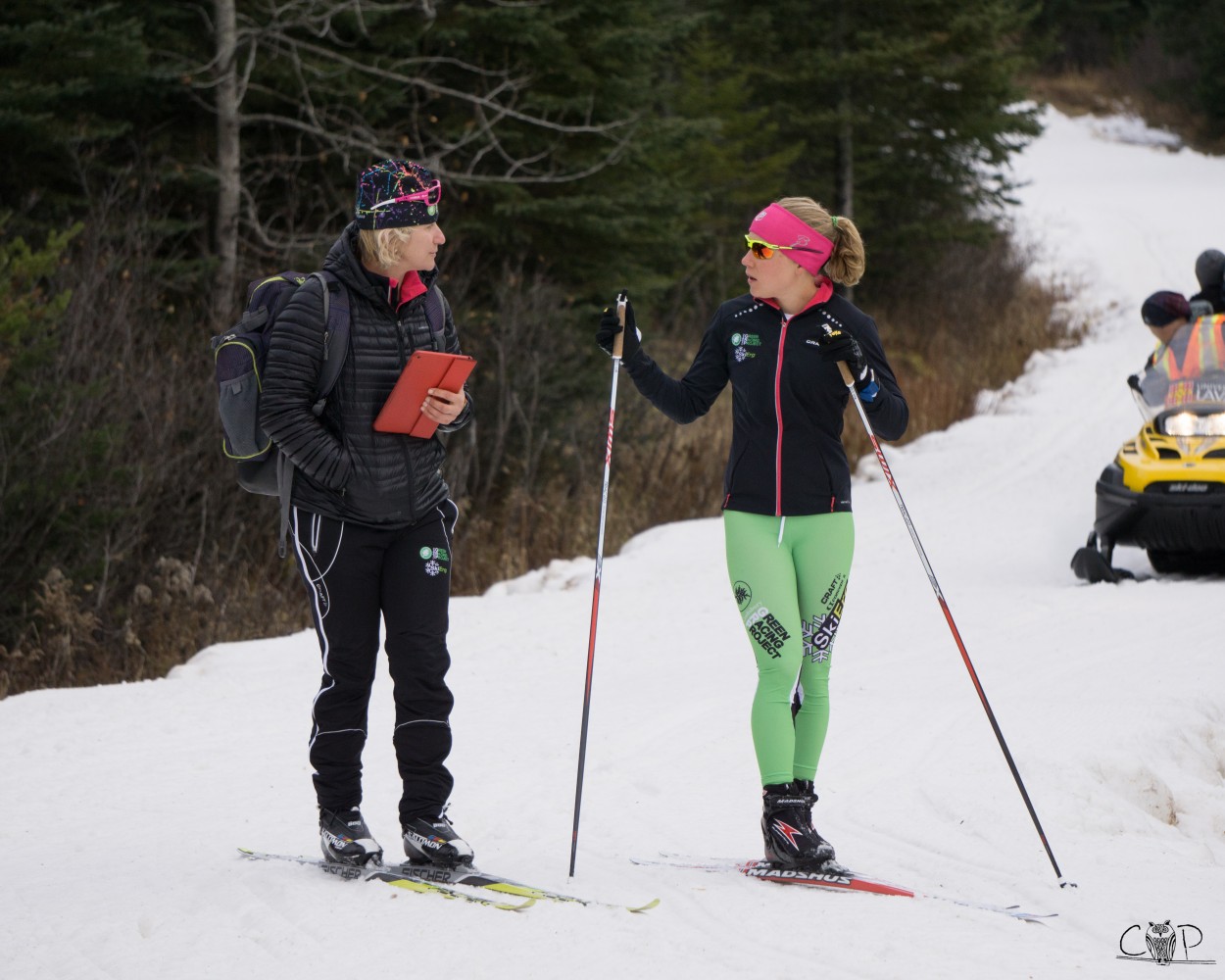
Pepa Miloucheva skates behind CGRP biathlete Casey Smith while at a training camp at La Forêt Montmorency in Quebec. (Photo: Caitlin Patterson)
Pepa Miloucheva (l), head coach of the Craftsbury Green Racing Project, giving biathlete Susan Dunklee some sculling instruction at the Craftsbury Outdoor Center in June 2012. (Photo: Susan Dunklee)
Pepa Miloucheva (center) with biathletes Casey Smith and Mike Gibson during an early November training camp at La Forêt Montmorency, Quebec. (Photo: Caitlin Patterson)
Pepa Miloucheva and Emily Dreissigacker after a workout at La Forêt Montmorency, Quebec. (Photo: Caitlin Patterson)
Pepa Miloucheva (center) gets a new hair-do from (left to right) Ida Sargent, Hannah Dreissigacker, Emily Dreissigacker, Elsa Sargent, and Anna Schulz in 2001. (Photo: Hannah Dreissigacker)
Recently, FasterSkier interviewed the youngest elite female coach on the American circuit. This week, FS shares the story of one of the most experienced elite female club coaches in the U.S., Pepa Miloucheva of the Craftsbury Green Racing Project (CGRP) in Craftsbury, Vt.
Like many in the field, before Miloucheva — better known as “Pepa” — was ever a coach, she was an athlete. Unlike many, she is also a world champ.
“I was a competitor for the Bulgarian [ski orienteering] women’s team and won the world championships in 1994,” she said during a recent phone interview. “I’ve been competing since I was 15, 16 years old. Sports, in general, made me who I am.”
Sports like nordic skiing, ski orienteering and sculling are just a few that appear on the elite coach’s list of expertise.
While Miloucheva, 48, claims she no longer races, her question “does the New York Marathon from last year count?” challenges that claim. Instead, she devotes her time, specifically the last 20 years, to being a coach.
“I have my master’s in sports science, so coaching is my education,” she said. With a master’s degree from the Bulgarian Sports University and concentrations in physiology, biomechanics and science of sports training, Miloucheva has the education to back up her business in coaching.
For Miloucheva, school never stops. “Coaches need to be willing to constantly learn,” she said. “When I have a new athlete, I have to get to know them in and out. Every person has different strengths and you learn from each one.”
Meanwhile, she prioritizes the instructional development of her skiers. “A big part of [coaching] is educating the athlete,” Miloucheva said. “I talk to my athletes a lot about what they’re doing and why they’re doing it. Every time I send them a training schedule, I make sure they understand it and if they don’t understand something, then I explain it to them.”
Miloucheva (l) and Ida Sargent during a workout in early November while training at La Forêt Montmorency in Quebec. (Photo: Caitlin Patterson)
Even if the call for that explanation comes during her hours of sleep.
“Pepa puts an incredible amount of time and effort into her coaching and is always available to help,” Ida Sargent, a U.S. Ski Team member now in her sixth season with the CGRP, wrote in an email. “I’ve called her in the middle of the night before when I’m in Europe and she always picks up the phone.”
Sargent, 27, describes Miloucheva’s coaching style as one of “complete dedication,” and she feels Craftsbury offers something most programs do not.
“I love the mission behind the GRP program,” Sargent wrote. “It’s really neat to have skiers, biathletes, and rowers in the same location towards similar goals of success. … Working with Pepa and has given me a continuity in coaching that allows me to train without missing a beat.”
Having been coached by Miloucheva since she was 8 years old, Sargent, from Orleans, Vt., just north of Craftsbury, has enjoyed a rare continuity of coaching.
That’s stemmed from Miloucheva’s ambition. When initially asked to help work at the Craftsbury Outdoor Center, Miloucheva recalls, “they had a nordic junior program and a master’s program, but were missing the level of people who were graduating college. So we started [the CRGP].”
Even so, Miloucheva explained she never intended to coach competitively in the U.S.
“I wasn’t planning to stay in Vermont,” she said. “I had a friend living in Craftsbury and planned to just stay for the winter. Then I stayed 19 more years.”
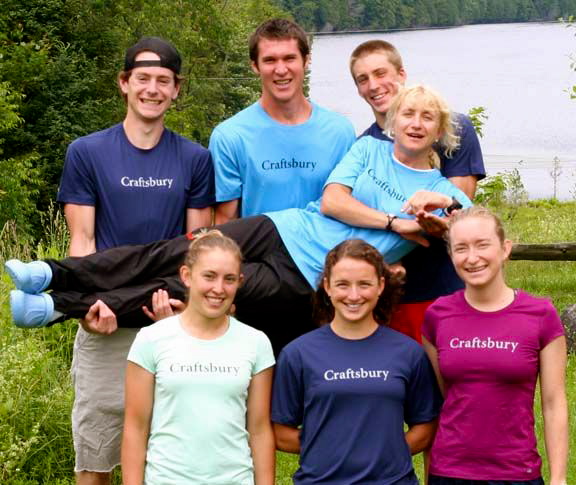
In 2010, Pepa Miloucheva was named NENSA Coach of the Year. Pictured here with her team at the time (back l-r): Ollie Burruss, Tim Reynolds, Matt Briggs; (front l-r): Chelsea Little, Lauren Jacobs, Hannah Dreissigacker. (Photo: CRGP)
Regardless of her original intentions, Miloucheva’s current goals rest within the Vermont-based program.
“Right now, my biggest thing [is] making sure our levels all the way from BKL to the elite [are] well developed,” she said.“I really hope for us to have everyone, from 5 year olds to masters, ski all the levels.”
“She was hired by the Center as a ski instructor and soon had a flock of youngsters following her tracks around the Soccer Fields,” John Brodhead, Craftsbury skiing director wrote in an email. “At the same time she had a following of Elderhostelers [60-and-over citizens who go on travel-and-learning vacations] demanding her as their instructor. Pepa’s excitement about x-c skiing is contagious. She is in many ways responsible for Craftsbury’s reputation as a premiere Center for Nordic skiing.”
With many of the nation’s top skiers and biathletes joining her team, the reputation of Miloucheva and the CGRP says a lot.
“Generally, I haven’t done much recruitment,” she said. “People know the program. If athletes feel the program is the best fit for them, then they apply. Acceptance depends on available spaces we have and how many athletes we can support. It’s really about the athletes and whether they want to be here.”
According to Miloucheva, the athlete is responsible for picking the program.
“I wasn’t planning to stay in Vermont. I had a friend living in Craftsbury and planned to just stay for the winter. Then I stayed 19 more years.” — Pepa Miloucheva, head coach of the Craftsbury Green Racing Project
“Nothing is static with our training on the GRP,” four-year CRGP skier Caitlin Patterson, 25, wrote in an email. “Certainly we have workouts that we return to time and time again, and Pepa especially has her favorites in which we athletes suffer greatly (and grow stronger for it) – but it’s great to have a program where I can always ask why and learn the reasons behind a workout, or I can start a discussion and influence a change in how we structure our workouts in the future.”
Ultimately, the combination of a well-driven program and driven athletes has made the CGRP successful. “Like everything in life, sometimes you get discouraged, but we work through it together,” said Miloucheva. “With skiing you’re always an individual, but also a team.”
A Dash of Pepa:
Name: Pepa Miloucheva
Age: 48
Hometown: Govedarsi, Sofiya, Bulgaria
Favorite Memory:
1.The Bulgarian national team singing the national anthem when I won in 1994. The organizers didn’t have the Bulgarian anthem.
2. Hannah [Dreissigacker], Ida [Sargent], and Susan [Dunklee] walking at the opening ceremony in Sochi.
Favorite Quote: The last one I came across “Pain is just a weakness leaving your body.”
Dream Job: I have it. Being able to coach from the BKL to the elite level.
Pepa Miloucheva head coach for the past 20 years of the Craftsbury Green Racing Project in Craftsbury, Vt. (Photo: Clare Egan/GRP blog)
Stowe Nordic (Stowe, Vermont) is seeking to hire a Program Director/Head Coach to develop and run its youth cross-country skiing program. In this role the Head Coach will work across the BKL age spectrum (5-14), to develop young cross-country skiers’ skill and passion for the sport from their first time on skis through competing as a cohesive team at local and regional competitions.
The Head Coach must be a passionate ski professional that brings enthusiasm and structure to the role, creating a rewarding environment of personal growth, fun and achievement for all participants.
Responsibilities:
Plan, Develop and Manage the Program
Design and document a program structure and curriculum incorporating age appropriate content
Develop training schedules and daily/weekly training plans
Community Outreach & Program Expansion
Communicate regularly with parents of participants
Reach out proactively to potential new participant pools (regional schools, etc.)
Drive strong ties to the local community and other ski organizations/clubs
Proactively seek new athletes to expand the program
Maintain a positive and highly engaged relationship with NENSA, USSA, and members interest groups in the central Vermont region
Fall Dry Land and Winter On-Snow Ski Training
Implement the program beginning in the fall of 2015
Work with parent volunteers to assist with younger age groups
Lead November dry land training
Lead all Winter on-snow training sessions – programming up to 3 days per week based on athlete ability/interest:
1 session a week program (recreational focus but with some instruction)
2 sessions a week (participants want to ski more often, experience racing or challenge themselves further on technique skills and endurance)
3 session a week (highly motivated participants/want to race – adds a third practice per week concentrating on technique training for racing and performance).
Plan, coordinate and lead participation in local and regional races/events – introduce young skiers to racing in a fun, supportive, team oriented environment.
Future Growth & Development
Potential to expand to a full-time year-round position through driving:
growth in participation
expansion of age groups within the program
development of complimentary summer programming
offering summer camps for club members or out-of-town athletes
Potential to add assistant coach(es) as needed to manage program growth
Salary will be based on experience and may be impacted by growth in skier enrollment in the program. An initial contract will range from $10,000 to $12,500, commensurate with experience, for the November through March season.
To inquire or apply please submit a resume and cover letter to: info@stowenordic.org
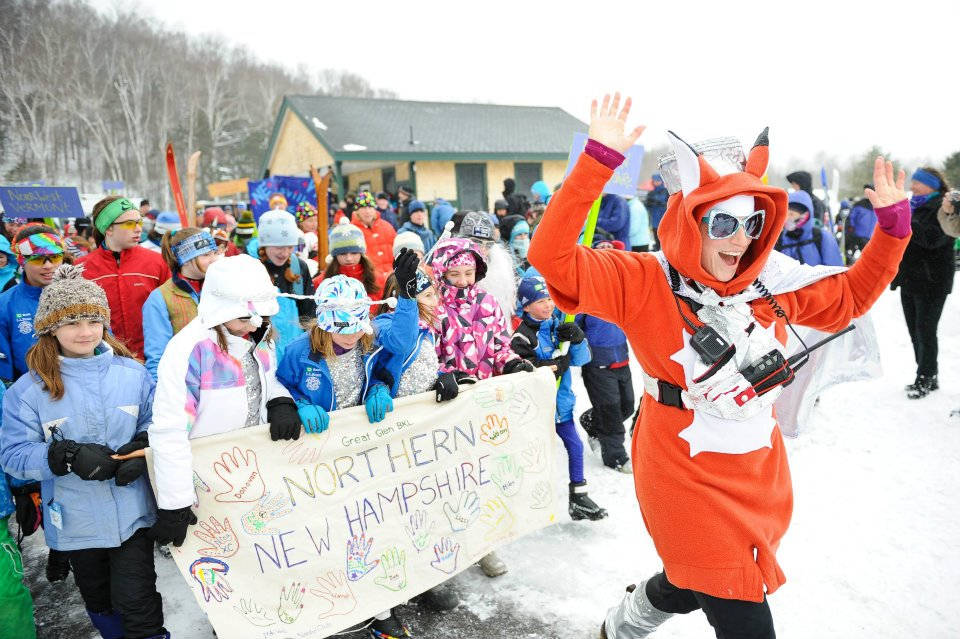
The “NENSA Fox,” Abby Weissman (r), youth programs director for the New England Nordic Ski Association (NENSA), at the 2012 TD Bank Bill Koch Festival. Weissman wears the costume at events and writes a weekly newsletter called “Fox Tales.” (Photo: Kris Dobie)
Editor’s note: This is the final piece of a four-part series called ‘Part of the Team: The Impact of Female Coaches in the U.S.’ In Part I, two-time Olympian and former U.S. Ski Team member Nancy Fiddler introduced herself, Part II took a look at several influential female collegiate coaches, and Part III explored female coaching at the junior level. Part IV discusses women who work with the little guys, the future of skiing, through youth programs across the country.
***
For many years, the height of my winter weeks came on Friday afternoons at 3:00. The snowy parking lot of the Tamarack Cross Country Ski Center in Mammoth Lakes, Calif., would fill with cars full of kids with an end-of-school-week itch. Soon, the ski center was full of snowsuit-clad youngsters jostling for space on the pine benches.
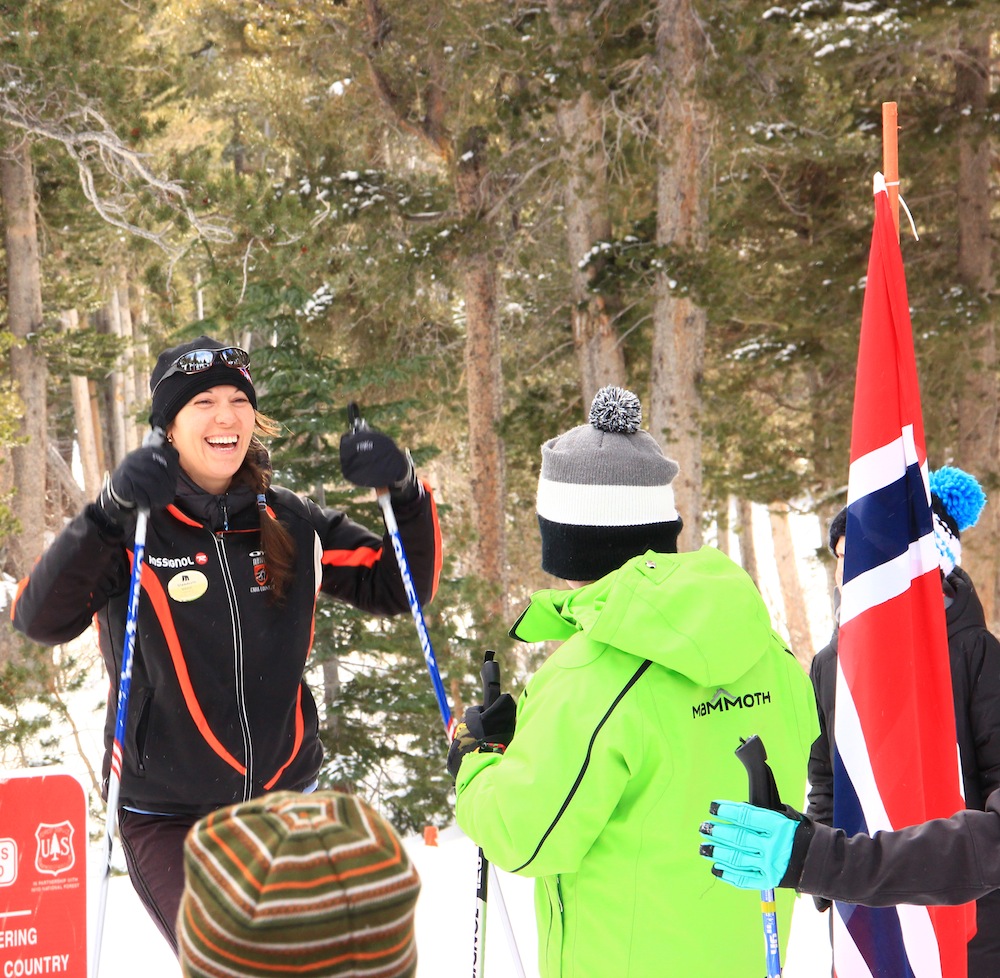
The ski center prepares for the Gliders’ arrival ahead of time, lining up rental boots on the counter in a row from smallest to biggest. Skis and poles are fanned out across the snow out front, and the coaches are dressed and ready for action. Dashing between the tasks of helping the youngest tie, zip, and Velcro their boots and fitting tiny hands into pole straps, while also greeting and chatting with parents, I was typically in a full sweat by the time the Gliders lined up behind their team nation flags at 3:15.
Gliders coach Marie French with her 10-11-year-old group, the “Norwegians” at the Tamarack Cross Country Ski Center in Mammoth Lakes, Calif. (Courtesy photo)
Fifty skiers between the ages of 6 and 10 are divided into Norwegians, Swedes, Americans, Russians, and Italians. The coaches stand at the head of the team lines. My favorite way to begin sessions was by calling first for quiet, and then for the Gliders’ Stomp. The sound of a hundred skis stomping on the packed snow begins in a disharmonious din, but grows into a unified beat of left, right, left, right, louder and louder. With the energy channeled, the coaches siphon off their groups, race through the teaching lanes and into the afternoon’s planned activities.
Shouts, squeals, and laughter ring through the Lower Lakes Basin for the next hour and a quarter, as the kids skate through games of Sharks and Minnows, hunt for treasures, do relay races, or take off on adventures through the snowy forest. With plentiful snowfall in the Eastern Sierra, a favorite Glider activity is Powder Pigging.
The goal of Powder Pigging is simple; climb a large hill either by means of a groomed trail or by breaking trail and then, simply, ski down through the un-groomed snow. The coaches themselves are big fans of Powder Pigging, because, after all, they are just overgrown kids who like to ski the trees. Powder Pigging is the hidden teacher of all skiing skills: balance, stance, weight shift, turning, and getting up after the occasional crash. Above all, Powder Pigging is the big motivator to ski repeatedly up the hill in pursuit of that perfect downhill run.
Heading back to the ski center for the awaiting hot chocolate and Oreo snack after an exhilarating game or adventure, tired and happy, we smile those silly grins that almost hurt your face.
Skiing with the youngest kids feels like the most important coaching I have ever done. When I retired from ski racing in 1993, I made it a goal to bring cross-country skiing to the kids of the Eastern Sierra. I began with high school and middle school teams, but didn’t get around to forming the Gliders program until my daughter, Laurel, was 5 and in need of an organized ski program.
I had gone about the process in the wrong order, I realized. The youngest kids form the base of the skiing pyramid! They are the future of our sport; the life-long participants, the racers, the coaches, the officials, the instructors, and the parents of the next generation of cross-country skiers.
Part IV of my series on the role of female coaches in U.S. skiing focuses on women who work with the youngest participants of the many cross-country ski programs around the country. I connected through email with six female youth coaches from Maine, Idaho, and California to find out more about their jobs, their programs, and their love of cross-country skiing.
Grassroots ski programs take the form of Bill Koch Youth Ski League, local ski clubs, Ski P.E., and middle-school teams. The coaches who help foster these programs are working close to home with a large base of participants. Youth nordic ski coaches are often providing a child’s first outdoor winter experience. They are getting kids off couches and onto skis from New England to California.
Sparking Interest
“Our team is open to any kid who can find boots. We have no tryouts and supply two pairs of skis, two sets of poles and a uniform. We are trying to expose as many kids as we can to cross-country skiing in a community with a very strong alpine skiing leaning.” — Mary Ellen Benier, head nordic coach at Alder Creek Middle School, Truckee, Calif.
With big ski mountains offering thousands of feet of terrain and plentiful snowfall, places like Truckee and Mammoth Lakes have a lot to offer downhillers. Kids growing up in these communities have plenty of opportunities to ski and snowboard the steep and deep, and play in the half pipes and terrain parks of giant ski areas. Attracting kids to cross-country skiing in these places can be challenging.
Mary Ellen Benier, head coach of the Alder Creek Middle School nordic team, with Ian Smith (r) and David Dalicandro (l) last winter. (Photo: Mark Nadell/MacBeth Graphics)
Despite the lure of the alpine areas in the region, the Alder Creek Middle School (ACMS) team draws nearly 80 kids annually. The Tahoe-Truckee area is home to four major nordic areas with long operating seasons. The community of people who live in this area have embraced the active lifestyle, including nordic skiing. Benier and her co-coach, Mark Nadell, have worked hard to capture a large number of participants to the middle-school program.
Benier wrote she aims to keep her program “big, fun, accessible and viable. My pay works out to probably .20/hr, so it’s a labor of love. The draw is the fun factor and the enthusiasm of the kids.”
The ACMS team has become established in Truckee as a cool place to be, thanks to the efforts of Benier and the rest of the staff. It is affordable, the equipment has been taken care of, and it can compete with alpine and snowboarding teams with its reputation for being inclusive and fun. Kids want to be part of this energy.
Nordic youth programs across the country are finding ways to attract the youngest skiers to the sport. Lauren Jacobs is the mid-Maine Healthy Hometowns coach for the Maine Winter Sports Center (MWSC). Jacobs’ job is to support active, outdoor lifestyles in the communities she serves. The MWSC offers year-round programming to help promote healthy living, and nordic skiing is a good solution to the long Maine winters.
According to Jacobs, “The main issue I see is less about how to retain skiers for the long-term than it is about getting them to start in the first place,” she wrote. “Money plays a big role in this. Getting started in skiing can be an expensive endeavor, one that many parents are reluctant to try if they’re not sure their kids will enjoy it. Children who grow up in active, outdoor families often get started in sports like nordic skiing ‘automatically’, but kids who don’t come from that background can have a really difficult time getting involved.”
Lauren Jacobs (Courtesy photo)
Jacobs cites initiatives like the MWSC and New England Nordic Ski Association (NENSA) ski-lease programs as being instrumental in getting families to introduce their kids to nordic.
The MWSC has figured out a way to expose large numbers of the general youth population to cross-country skiing. Jacobs explained that the children who come from skiing families come to the sport fairly easily. The MWSC is literally bringing skiing to the places where kids actually are; school and after-school programs.
“One of my favorite things is bringing our Healthy Hometowns ski trailer to different schools for a couple weeks at a time,” she wrote. “Getting to ski with PE and Health classes means I’m getting to ski with all kids, whether they come from an outdoorsy background or not.”
Jacobs echoed Benier’s commentary on boosting participation. “My job is to make the introductory experiences as positive, fun, and accessible as possible,” Jacobs wrote.
Abby Weissman is NENSA’s youth and introductory programs director. A Maine native, she’s responsible for putting on major events like the Bill Koch Festival, which draws 600 kids and their families.
New England is home to over 40 active Bill Koch League (BKL) clubs. There are a lot of kids who are exposed to skiing in New England because of this activity. Weissman is going into her sixth year working for NENSA and has seen the organization’s youth membership grow 40 percent since she started.
“It’s all about momentum and community,” she wrote. “The key is to have lots of excited families who are bringing their energy and flavor to local programs. That’s where the growth comes from. There’s not a cookie cutter approach that will work perfectly for each club — it has to be adapted to the energy and needs of the families and skiers in that club.”
Weissman is clear that everything NENSA accomplishes would not be possible without tremendous community support. She sings praises of the many volunteers who consistently give back.
“There are a lot of moving parts and my favorite part of my job is seeing how wide the community reaches and how much we can accomplish when we work together,” she wrote.
The Skis for Kids lease program, which Weissman oversees, provides over 300 pairs of skis to New England kids. Accessible equipment, abundant Bill Koch League clubs, and volunteer support and activism are providing plenty of cross-country skiing opportunities to children in the northeastern US.
Must Love Skiing
“I began coaching two years ago. I’d grown up alpine skiing and came to nordic skiing as an adult. I fell in love with the sport, the local nordic community and culture and wanted to get more involved and keep learning.” — Mia James, development coach at the Sun Valley Ski Education Foundation (SVSEF), Sun Valley, Idaho
So how does one become a nordic youth coach? With all the kids out there running around on cross-country skis, it would take an army of leaders to provide a safe environment where the fun and learning take place. The female coaches referenced in this story have a diverse set of skills and backgrounds, but share one important passion: a special relationship with skiing.
Sun Valley Ski Education Foundation (SVSEF) devolopment coaches Mia James (l) and Laurie Leman at the 2013 Devo Tri. (Photo: Nancy Fiddler)
James has been coaching the Devo Team at Sun Valley for two years. She has done some local racing and knocked the American Birkebeiner off her bucket list. A self-acclaimed newbie, James is fueled by her enthusiasm and respect for skiing.
“Like any new discovery, I want others to be as excited as I am about skiing,” she wrote.
Being involved with 7- to 11-year-old kids on snow has been an empowering experience for James. She sees skiing as a source of lifelong fun and friendships.
“I hope that I can build confidence by helping kids realize that with dedication and focus they can accomplish things they thought were beyond them – a lesson they will carry throughout life,” she wrote.
It does take a village for someone like James to find a footing as a nordic ski coach. She credits the support of the SVSEF coaching staff, which she describes as outstanding examples of skiers, coaches and people.
She acknowledges Muffy Ritz and her VAMPS (all-women masters nordic program with over 160 participants) program. “Like SVSEF, the VAMPS coaching staff is first rate — a huge source of technical knowledge, confidence, and enthusiasm. I certainly would not be the skier or coach I am without my VAMPS experience.”
James sees herself as a contributor to the big picture of U.S. skiing. She feels she is at the foundation of the sport, helping establish future generations of skiers who will take it forward.
At Tamarack Cross Country, Jane Lester has been teaching and coaching for 14 years. Like James, she was a latecomer, drawn to the sport because of its camaraderie. An occasional citizen racer, Lester loves the peaceful quality of skiing most of all.
Lester heads up the Tamarack Gliders program for 5 to 11 year olds. She has used a lifetime of teaching experience to become the coach she is today. She feels that her special skill is developing personal connections with each student.
“I am passionate about the sport so it is easy to come to work!” she wrote. “I feel like I am making a difference locally. We maintain a very high level of programming, all the way down to the 5 year olds.”
Marie French has been coaching the Tamarack Gliders for five years – not much longer than she’s been skiing. Regardless, French is an avid participant in all the local races and attended the Masters World Cup in Italy last winter.
“I like racing and training myself,” she explained. “It felt very natural to work with kids who have fun and passion for cross-country skiing”.
French hopes to continue to improve as a skier and racer so that she can bring more knowledge back to the kids she works with. She is channeling her excitement about nordic skiing directly into the children and knows she is making a difference when the Gliders move up to the middle school team and then the high school team.
Mary Ellen Benier at the 2013 U.S. Distance Nationals at Royal Gorge in Soda Springs, Calif. (Photo: Mark Nadell/MacBeth Graphics)
Benier has been leading the ACMS team for eight years. She plunged into coaching when her son, Stefan, joined the team in sixth grade.
“His draw to join the team was primarily social and resulted in nordic kids becoming his core group of friends through college,” she wrote.
A skate-skiing enthusiast for 15 years before she took up coaching middle schoolers, Benier considers herself a proficient skier, but without any formal training or racing experience outside of the occasional Great Race.
Benier’s son moved beyond middle school a long time ago, but Benier has continues to coach the team. “It is a benefit to our society to turn any kid onto exercise and a sport you can do for a lifetime,” she wrote.
Once a mom, always a mom? Benier explained she possesses some special “kid skills” that apply to coaching. She brings something else to the mentoring table as well: “a female perspective on hurt feelings, tired bodies, bad days, silliness, total success, crushing failure, and hugs.”
Lester and Benier share the desire to function as female role models for the girls. They’re concerned lots of girls drop out of sports in middle and high school, but Benier believes she is making a difference.
“I can’t match the racing backgrounds of some male co-coaches, but I can offer the perspective of cross-country skiing as a lifestyle and what you can get out of it,” she wrote.
Jacobs picked up nordic as a senior in high school at Gould Academy in Bethel, Maine. She skied her way onto the Bates team, where she competed for four years. From there, she skied for the Skibec Club in Quebec City, followed by two years with the Craftsbury Green Racing Project (CGRP).
Jacobs blended her athletic career with an interest in coaching early on. “Coaching started for me as a young gymnast coaching other young gymnasts,” she wrote. “I guess I’ve sort of always been a coach! I just enjoy sharing the sports I love. It seems natural.”
Coaching gymnastics was a stepping-stone to coaching high-school skiing in Farmington, Maine, after college. Jacobs got into coaching the local BKL program while training with Craftsbury , and it was not long after that she started working at MWSC.
For Jacobs, her own experience serves as her platform for coaching. “As someone who didn’t start skiing until my senior year of high school, it’s nice to be able to tell kids that they don’t have to have grown up with skis on their feet to still love the sport and go far with it,” she explained.
While not every kid will become a ski racer, Jacobs’ message is this: “I think it’s really important that the ski community recognizes how essential to our community every member is.”
She points out that aspiring female nordic coaches in New England are fortunate in that they have an amazing group of mentors to look up to in elite and collegiate coaches Cami Thompson-Graves, Becky Woods, Tracey Cote and Pepa Miloucheva.
Abby Weissman at the Frost Mountain Nordic Grand Prix (Photo: Matt Trueheart)
Weissman wrote that she fell “completely and wildly in love with cross-country skiing” when she moved to Carrabassett Valley, Maine, in 2004. A competitive runner in high school and college, her exposure to skiing was limited to family outings while growing up in Maine.
Working in the Sugarloaf Outdoor Center and then as an English teacher at Carrabassett Valley Academy, she spent many hours nordic skiing in the woods nearby.
“I worked really hard on my technique then with the goal of being a more efficient skier,” she wrote. “I wasn’t interested in competing, just being in good enough shape to enjoy long adventures.”
Weissman feels that her experience as a “middle-of-the-pack athlete” has fueled her interest in coaching kids. “I loved the hard work of training and the thrill of competition but my goal was never to win events,” she wrote. “I just loved the process. I got so much out of being on a team and learning how to be an endurance athlete. It was always fun to me.”
Besides working for NENSA, Weissman puts on Fast and Female events in New England. She’s inspired by the current U.S. women’s national team, which, she wrote is a “phenomenal example of teamwork and healthy competition.” She couldn’t ask for better role models for kids in the East.
Weissman acknowledges NENSA’s former executive director Pat Cote for his leadership and encouragement. “He would always listen to my crazy ideas and never shot them down.”
Kids on Skis
“It’s all about fun for the younger skiers. If we catch their interest year after year, even if it’s with a ride on the groomer or rolling around in the powder, they will love cross-country skiing and come back for more.” — French
The departing shot of this story – and series – is of the kids (and adults) who benefit from the creative energy of the female leaders of their programs. The many clubs, leagues, programs and teams around the country are alive and well. Youth development is producing outdoor enthusiasts, healthy kids, ski racers, and lifetime nordic skiers.
At least for kids, the secret is in the play. Lester is a firm believer in teaching skills through fun activities.
“Treasure hunts and patrol races are always big hits. No season would be complete without some time off track,” she wrote. “Powder pigging in the deep snow is a must! I think it is so important to access the fun and freedom of cross-country skiing to retain the youngest skiers. They already know how to play, it’s the coaches’ job to play with them!”
Jacobs is a fan of ski games because “they get kids moving, increase balance and speed, and- more importantly-help establish a really positive, fun atmosphere among a group,” she wrote. adding that she uses scavenger hunts to encourage kids to ski longer distances.
Another way to motivate kids to ski longer is the Kilometer Odometer chart used by the Tamarack Gliders. Lester doesn’t like to overemphasize skiing kilometers just for the sake of kilometers. She wrote that the chart works because “cross-country skiing is a very challenging sport and tracking the distance covered is a way for them to ‘see’ their accomplishments daily.”
Lester likes the skill-pin program that they adopted from Auburn Ski Club as another motivator. “The kids earn pins according to the skills they master,” she explained. “They can move up through the different colors to help them track their improvement over the years.”
Weissman’s nickname is “NENSA Fox” for the fox costume she wears at events. In keeping with this theme, she writes a weekly newsletter called “Fox Tales.” Working tirelessly to organize Bill Koch League events and competitions, Weissman stays on track with how youth participation fits into the big picture of skiing in the U.S.
“Youth Development is one of the most important pieces of developing a thriving ski community,” she stated. “If the goal is to have top athletes at the Olympic level, then growing the base helps to have a bigger pool to draw from and more kids to raise the level of competition. I’m less concerned with the competition and more about the fun and the lasting benefits of being involved with sports at an early age.”
Last week was the second week-long BKL camp of the summer, and I’m happy to announce we escaped without any casualties. In fact, one of the rollerski groups completed their session without any bloodshed! — a landmark accomplishment. Add to that the good weather, enthusiastic campers, and fun activities, and you can imagine that we all finished the week tired but happy.
Throughout the week, GRP skiers and rowers, coaches from the Center, and other Craftsbury athletes led about 20 BKL-ers on half-day sporting adventures. Like the first camp back in July, the first four days included mountain biking, canoeing, biathlon, soccer & games, bounding & agility, sculling, and rollerskiing. There was also lots of swimming, multiple times a day in fact. Pretty astonishing how much entertainment kids can draw from jumping off the dock into the lake.
I helped out with a few different sessions myself, including one rollerski morning where I got a glimpse of the East’s next wave of skiing talent! Some of those little rippers ride a better gliding ski than me, I swear. I also worked with Jeremy Nellis to do a morning of agility exercises.
Bounding exercises on the Upper Soccer Field. Photo: Gordon Vermeer
The ladder hones agility, coordination, and speed. Photo: Gordon Vermeer
The full photo album from that morning is posted on the GRP’s facebook page.
Friday, in a sort of culminating adventure, Dylan and Nils organized a multi-stage adventure race where the campers got to run around the Center doing all sorts of crazy things. It started off pretty tame with a swimming portion and a team log carry, but things started to get exciting when they reached the log bridge — attempting to walk across “Frog Pond” on a bridge of logs tethered to shore and to one another. It was extremely popular, so I imagine the log bridge will feature in future BKL camps. I tried the log bridge myself and fell in the swampy pond shortly after everyone started chanting “fall! fall! fall!” at me.
Rivaling the log bridge in popularity was the tire roll, where teams got to (safely, I assure you) roll tractor tires down a big hill. “Wait, we actually get to roll it down there?!” they exclaimed when instructed to do so.
I filmed the whole morning! There’s a highlight video of the race online — lots of good footage of falls into the swamp.
We capped off the week with a bike trip to the Dreissigacker’s camp and an afternoon of pizza-making and rope-swinging. Judy Geer took a bunch of pictures including the ones below, but check out the whole album here.
Watermelon and pizza with dough from the Center's kitchen. What more could you want? Photo: Judy Geer
One of countless trips out over Hosmer. Photo: Judy Geer
I look forward to seeing all these BKL athletes tearing up the trails this winter!
While visiting my family for Father’s Day, I ran across an old scrapbook in my childhood bedroom. One gem that I unearthed was a NENSA Newsletter featuring a story that the Sargent sisters and I had written together many years ago. It brought me back to one of the most memorable misadventures from our Bill […]
When I woke up today, I felt like a kid on Christmas morning. I wanted to rush around the house and wake everybody up and show them the beautiful snow outside. Unfortunately, there was no one to wake up except Emily, and I figured she’d appreciate being able to sleep in on her day off. The first thing I did instead was to email out to the Craftsbury junior skiers to cancel morning rollerski practice and replace it with ski practice on the Center’s fields.
We convinced Lisa (one of the Center's rowing coaches) to put on some skis and join in the fun.
These apples still taste amazing
A game of "cut the pie" on the upper soccer field
No need for kick wax
We ditched the skis for a short game of snow soccer
By late afternoon, the snow was already beginning to disappear
When I woke up today, I felt like a kid on Christmas morning. I wanted to rush around the house and wake everybody up and show them the beautiful snow outside. Unfortunately, there was no one to wake up except Emily, and I figured she’d appreciate being able to sleep in on her day off. The first thing I did instead was to email out to the Craftsbury junior skiers to cancel morning rollerski practice and replace it with ski practice on the Center’s fields.
We convinced Lisa (one of the Center's rowing coaches) to put on some skis and join in the fun.
These apples still taste amazing
A game of "cut the pie" on the upper soccer field
No need for kick wax
We ditched the skis for a short game of snow soccer
By late afternoon, the snow was already beginning to disappear
When I woke up today, I felt like a kid on Christmas morning. I wanted to rush around the house and wake everybody up and show them the beautiful snow outside. Unfortunately, there was no one to wake up except Emily, and I figured she’d appreciate being able to sleep in on her day off. The first thing I did instead was to email out to the Craftsbury junior skiers to cancel morning rollerski practice and replace it with ski practice on the Center’s fields.
We convinced Lisa (one of the Center's rowing coaches) to put on some skis and join in the fun.
These apples still taste amazing
A game of "cut the pie" on the upper soccer field
No need for kick wax
We ditched the skis for a short game of snow soccer
By late afternoon, the snow was already beginning to disappear