Tag: Black Forest

  • Summer Training In… Germany’s Black Forest with Ann-Cathrin Uhl

    Summer Training In… Germany’s Black Forest with Ann-Cathrin Uhl

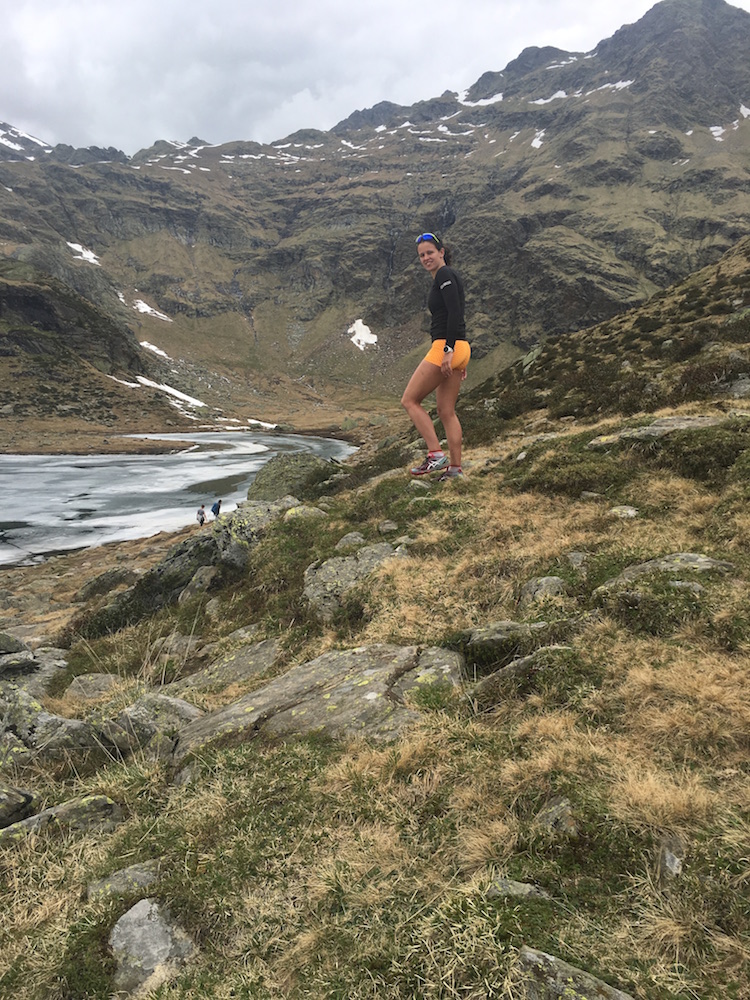
    Ann-Cathrin Uhl on a hike in Germany this summer. (Courtesy photo)

    Ann-Cathrin Uhl will be a senior at the University of Anchorage Fairbanks (UAF) this year, but for the summer she was back in her native Germany as usual.

    Uhl made her first trip to NCAA Skiing Championships last season, finishing 30th and 34th at the races in Jackson, N.H. But she has long been a contributor to the UAF Nanooks effort both on the ski trails and as a cross-country runner. This summer, a group of ski teammates came to visit her in Germany.

    “I understand Seiji Takagi, Nick Lovett, Anni and Jan Cech all got together for a couple of weeks earlier in the summer,” UAF head coach Nick Crawford wrote in an email. Lovett then joined Cech for a few extra weeks of training in the Czech Republic.

    Uhl is probably also a familiar name to American competitors as well, because in both 2015 and 2016 she won the junior heats of the classic sprint at U.S. Cross-Country Championships.
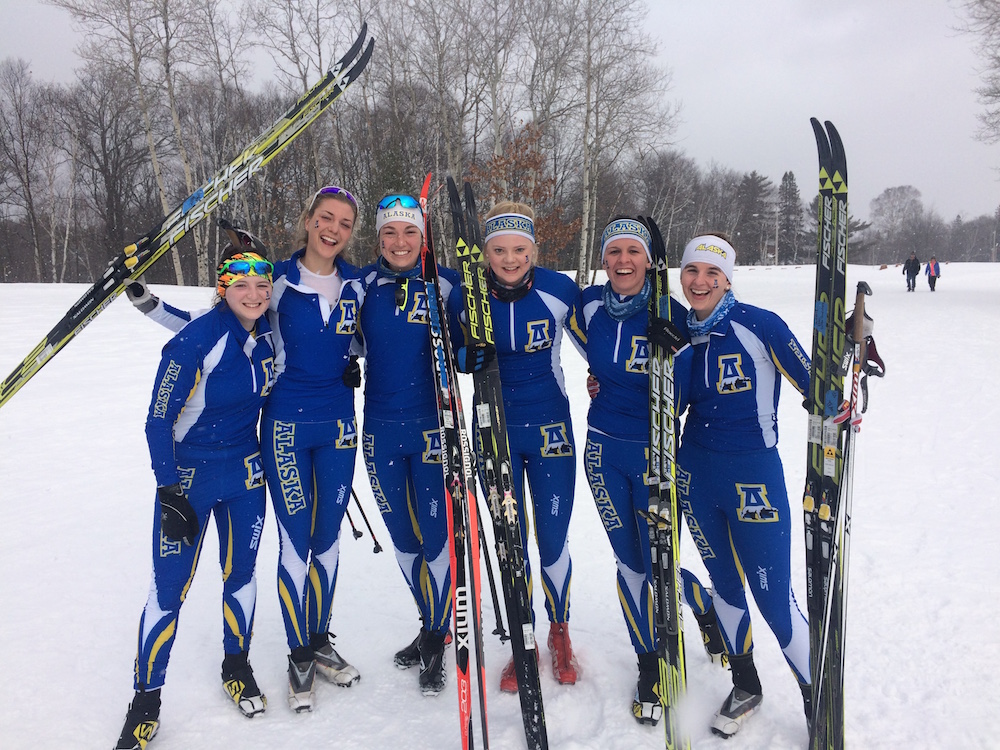
    University of Alaska Fairbanks women’s nordic-team skiers get together for a photo last season: (from left to right) Hannah Rowland, Anne-Tine Markset, Nichole Bathe, Martina Himma, Ann-Cathrin Uhl, and Sarissa Lammers. (Photo: Nick Crawford)

    Uhl took some time over email to share what it’s like to train from her home base in Germany’s Black Forest region, a mountainous region in the southwest of the country.

    FasterSkier: Where are you based this summer? What part of the Germany?

    Ann-Cathrin Uhl: This summer my training base is mainly the Black Forest, that is the southwestern part of Germany. I am living with my family in Mühlenbach, which is the town I grew up in. During the week I train at home and on some weekends I drive to the Alps for altitude training.

    FS: What is your part of the Germany like? How is the landscape? What do people do there?

    ACU: I live close to a town called Schonach, where the annual Nordic Combined World Cup is hosted. Sandra Ringwald, the German Nordic World Cup skier is also from this town. The Black Forest is a mountainous region, bordering France and Switzerland. Its beautiful nature with mountains, valleys, gorges, lakes and rivers is reason for lots of tourism. People that live here like to be outside and active. Hiking and mountain biking are very popular.

    Uhl competing at German Mountain Running Championships, where she finished 30th and helped her team to sixth place. (Courtesy photo)

    FS: Do you have a team that you are training with, or are most of your training sessions alone? 

    ACU: I don’t have a ski team I can train with. I do all the rollerskiing and strength on my own. But I am training with a professional mountain running team in my area. I actually got to know my teammates pretty well, since we were travelling to competitions together.

    FS: How do you design your training — is it based on a plan from Nick at UAF? Are you adapting it at all to be able to match with other people/groups you might have opportunities to join?

    ACU: My training is based on the plan from coach Nick at UAF. I am training with the running team two to three times a week and other than that I try to follow Nick’s instructions for rollerskiing, strength, volume, and intensity. Sometimes, I adapt the plan to train with the team.

    FS: Is your college training plan very different in terms of volume, types of workouts, or other focus compared to what you would be doing if you were on a German team at the same level? 

    ACU: My college training plan is pretty similar to what I would be doing on a German team. I believe that Germans do more running and less strength than we do at UAF. Germans highly value intensity running workouts, whereas most of our intensity is on rollerskis, but other than that the plans are similar.

    Uhl heading uphill on a rollerski workout. (Courtesy photo)

    FS: What’s the hardest workout you have done so far this summer?

    ACU: This question is hard to answer. I would say the workouts I did in the Alps were the toughest ones. I did some hard uphill rollerskis and mountain running workouts. Apart from that, I raced at German Mountain Running Nationals with the running team, which was a very intense and tough race.

    FS: Are there any absolute favorite places to run or bike or rollerski?

    ACU: I love training in South Tyrol, which is in Northern Italy. It’s super fun to do uphill rollerskiing and running in the Italian Alps. Other than that, the Black Forest is perfect for summer training. The landscape is very diverse and therefore perfect for road biking, running, and rollerskiing.

    FS: Is your area set up best for some parts of training? 

    ACU: I honestly thing that the Black Forest is ideal for summer skiing training. At my home we have many excellent hills for intensity, but also hilly and flat areas for longer workouts. We have a million of trails for running and biking, and good bike paths for rollerskiing. We only drive three hours to the Alps for training in bigger mountains. The only thing that is currently missing is more snow in the winters.

    FS: What do you do when you are not training? Do you need to have a job?

    ACU: I worked a summer job at the tax office for six weeks. In my free time I like to hang out with my friends from home or go swimming at lakes and the local swimming pool.

    FS: What is the best part of German summer, aside from training?

    ACU: I like being so close to Switzerland, Austria, France, and Italy, because it’s so easy to travel and do some roadtrips. I also like the climate, since it gets up to a 100 degrees.
    Finding the cold: Ann-Cathrin Uhl in the mountains this summer. (Courtesy photo)
  • Pros of Tomorrow Presented by Fischer: Lukas Ebner

    Pros of Tomorrow Presented by Fischer: Lukas Ebner

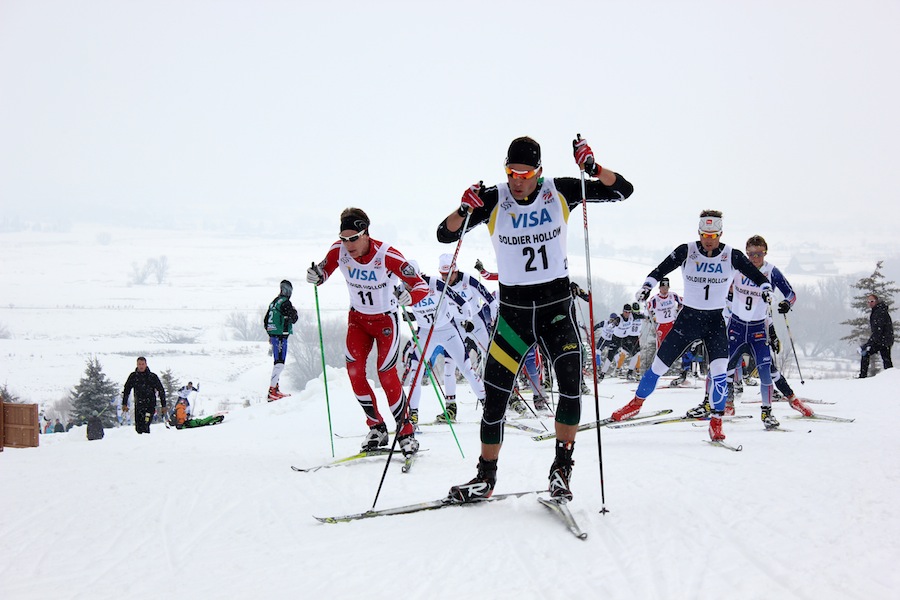
    Lukas Ebner (21) leads Mats Resaland of the University of New Mexico (11) and Kris Freeman (1) up Hermod's on the third of six laps in the 30 k freestyle mass start at U.S. nationals at Soldier Hollow.
    Lukas Ebner (21) leads Mats Resaland of the University of New Mexico (11) and Kris Freeman (1) up Hermod’s Hill on the halfway through the 30 k freestyle mass start at the 2014 U.S. Cross Country Championships at Soldier Hollow in Midway, Utah. He went on to place 13th.

    This ‘Pros of Tomorrow’ series, brought to you by the generous support of Fischer Sports, aims to highlight some of the most notable up-and-coming athletes around the world, not necessarily Fischer-sponsored skiers. If you have an idea for a top-notch skier you’d like to read more about, please email info@fasterskier.com with the subject line: Pros of Tomorrow. We’re also looking for stories about intriguing juniors, collegiate skiers, or lesser-known athletes; please email us with names — subject line: From the Pack.

    ***

    When Lukas Ebner arrived in Anchorage, Alaska, in 2010, it was bound to be a shock. The German had never seen a moose and had only glimpsed his home of the next four years in photos.

    Traveling almost 5,000 miles, Ebner arrived in the land of The Last Frontier to attend school at the University of Alaska-Anchorage (UAA).

    Hailing from Furtwangen, Germany, a small town in the Black Forest, Ebner, now 24, began cross-country skiing at the age of seven. As he progressed through the ranks of German skiing, his inability to crack the ranks of the German National Team caused him to lose passion for sport. However, he wasn’t ready to end his skiing career and decided that a stint on the American college circuit was just what he needed.  

    Four-and-a-half years later, the university has treated him well. In addition to a diploma, Ebner graduated from UAA with four NCAA appearances, three All-American honors, and the 2014 Rocky Mountain Intercollegiate Ski Association’s MVP award. 

    Hoping to build upon the success of his college career, Ebner is returning to his home country with the goal of making the German National Team. Before plunging into the competitive German racing circuit, Ebner caught up with FasterSkier to discuss his beginnings in skiing, his future goals and what makes Alaska so special.

    FasterSkier: Tell us about yourself. How did you get involved in skiing? 

    Lukas Ebner: I’m from a small place called the Black Forest in Germany. It’s well known amongst people in the ski community. It’s also known for its wildlife, which is not as exciting as it is here in Alaska, but that’s as good as it gets for us in Germany.

    I started skiing when I was seven or eight years old. It was primarily because of my brother, who skied at that time. My parents dragged me along and they wanted me to check it out. I started liking it and I just kept skiing. Like other Germans, I had to make a decision to pursue skiing as a serious sport or pursue soccer, which is what everybody else does at that age. Rather than quitting soccer, I decided to do both simultaneously – but then I realized that soccer was not something that I’d have success in so I became a skier.

    FS: What was your skiing career like in Germany?

    LE: I was never really quite good enough to make the national team … Usually if you are not in the top five or six in your age group you don’t get to race internationally. I raced mostly on the national level, which is a lot like the SuperTour. There were also a few exceptions where I got to do some continental cups.

    FS: What prompted you to come to the U.S. for school and skiing?

    LE: After I graduated from high school, I gave myself a year where I would only pursue my skiing. I figured that I had to give it a shot at least once in my life – to be off all the duties at school and don’t have to worry about homework. I dedicated a full year during the 2009/2010 season and I trained pretty well and hoped to make the next step to the national team. Unfortunately pretty much the opposite happened. I was slower than ever and I didn’t enjoy skiing. The national team was not even in sight anymore.

    At that time I wasn’t really willing to give up skiing, but it was hopeless to continue reaching for the National Team in Germany. I heard of the opportunity to come in the U.S. and pursue an education while skiing for a college ski team and that sounded like a nice setup. I applied to pretty much all the schools in the U.S. that have a ski team and I got feedback from a bunch and I called a few coaches. UAA had a German assistant coach, and she made sure that I would choose UAA over all other schools. It was really a coincidence because all the right people were in the right place at the right time.

    FS: It seems that Alaska is pretty popular with German college skiers. Other than the assistant coach, what made UAA so appealing to you?

    LE: I actually didn’t really know what to expect from Alaska. I heard friends of mine say it was a super-nice place. Now that I’ve been here for four-and-a-half years, it’s definitely a place like no other. There are the mountains on one side and the ocean on the other side. You have daily encounters with moose, and hopefully not daily encounters with bears. The training opportunities are really good, so it all adds up to be a super nice location for a nordic skier.

    FS: What did you take away from your experience UAA?

    LE: I’m definitely super happy that I made this step abroad and I gave it a shot.

    At first I had a hard time dealing with the team aspect. Obviously nordic skiing is an individual sport so I was focused on my own training and my own results. Halfway through my freshman year I realized that college skiing is especially more than doing it for yourself. Rather, the team aspect is what counts. Looking back I definitely enjoyed being part of a team. You feel like you’re part of a little family, which is important because you’re so far away from home. You have the same people around, you have coaches that are super helpful, and you grow up and get more mature as an athlete and also as a person.

    FS: Now that you’ve graduated from UAA, who are you training with?

    LE: I’m mostly training by myself. I jump in with the UAA team every once and a while. I have a lot of friends in town that are either still skiing or used to ski. Peter Kling, who used to ski for APU, I meet up with him and we go for rollerskis and runs. I meet up for runs and hikes with all the other APU guys in town. That makes it a lot easier for me to pursue a relatively good training plan.

    I’m currently interning at the Alaska Club, which is a fitness club in Alaska. I’m doing that part-time. It gives me plenty of time to work out twice a day. I’m trying to train as much as I can.

    FS: What do you hope to accomplish in the coming year?

    LE: My plan is to leave Alaska at the end of November — right around Thanksgiving. To make the German National Team, I need go to the national races, which are on Dec. 6 and 7. That is pretty much a qualifier to get nominated for the OPA Cups which take place in mid-December.

    In the best case scenario, if everything goes according to plan, I might get a chance to race the first two or three stages of the Tour de Ski. If that doesn’t happen, there’s a chance I might go to China. There’s a Tour de Ski there, which is pretty much the same time as the World Cup one. There’s nothing decided yet.

    Then the plan is to come back in January and race a few SuperTours depending on my financial situation. I will definitely do a few SuperTour races and I’m planning on doing the American Berkibeiner. Then I also hope to do the Tour of Anchorage and Spring Series in Sun Valley.

    Lukas Ebner (University of Alaska-Anchorage)
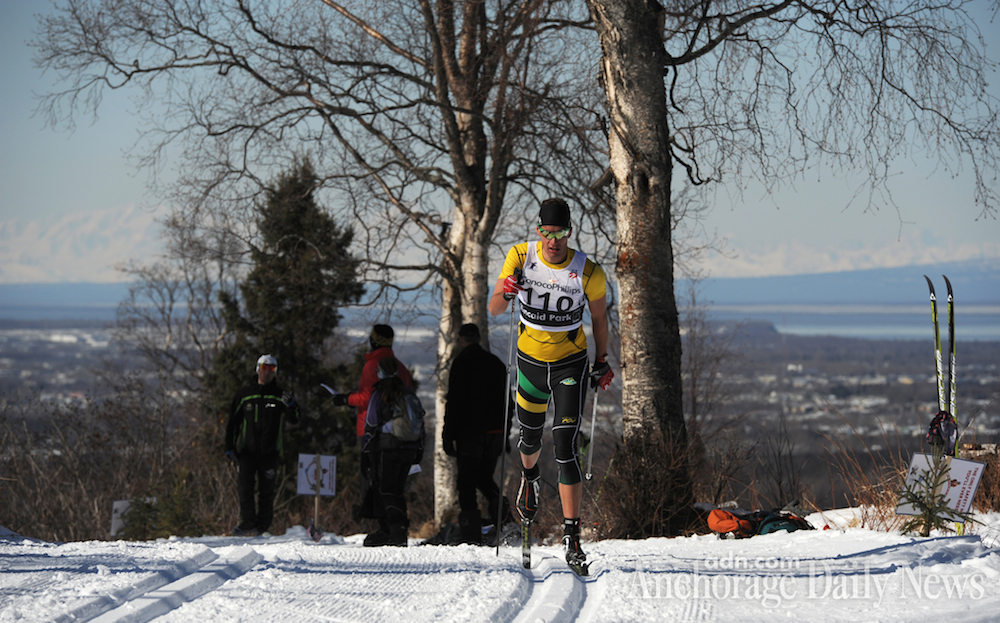
    Lukas Ebner racing at the 2014 SuperTour Finals in Anchorage, Alaska (Photo: Anchorage Daily News)
    This series is brought to you by the generous support of Fischer. Visit them online at fischersports.com
    This series is brought to you by Fischer. Visit them online at fischersports.com