Tag: Black Jack

  • Qualified for First World Cups, Locke Sees It As ‘First Step’

    Qualified for First World Cups, Locke Sees It As ‘First Step’

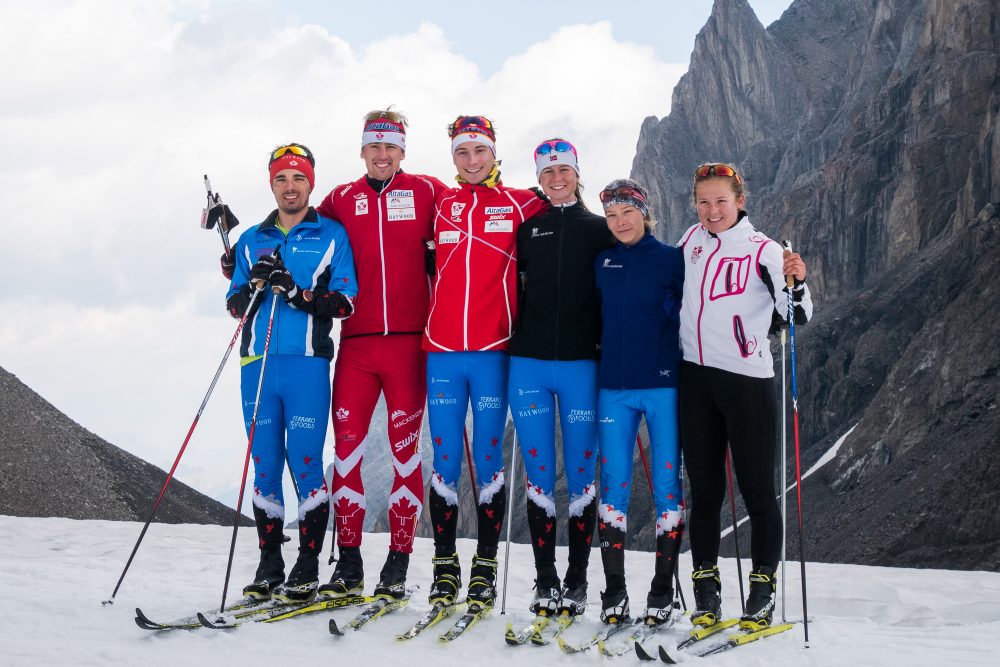
    Black Jack Ski Team members (left to right): Daniel Merlo, Julien Locke, Remi Drolet, Michaela McLean, Abbey McLean and Molly Millar. (Photo: Julien Locke)

    In Rossland, British Colombia, most residents can reach the town’s lone alpine hill by car in five minutes, the cross-country trails in seven. Tucked high in the Monashee Mountains, hemlock and fir outnumber some 3,500 locals, most of whom know each other by name. And over the past two decades, Rossland, which was featured three years ago in The New York Times travel section, has shown that a small town can produce nordic talent, repeatedly.

    Thanks in part to snow that covers the ground an average of five months each year and roadways that provide 25 kilometers of continuous rollerski climbing, the area is one that Dave Wood — Cross Country Canada’s national-team coach from 1998 to 2010 and the current head coach of Rossland’s Black Jack Ski Team since 2010 — says has “everything you need to make great skiers.”

    George Grey was one of them. The two-time Olympian grew up in Rossland after moving there from Great Britain, where he was born, with his parents at the age of 2. He spent much of his childhood skiing and racing for Black Jack before being selected to Canada’s national team in 2001. Grey then moved to Canmore, Alberta, the home of Cross Country Canada (CCC) since 1995.
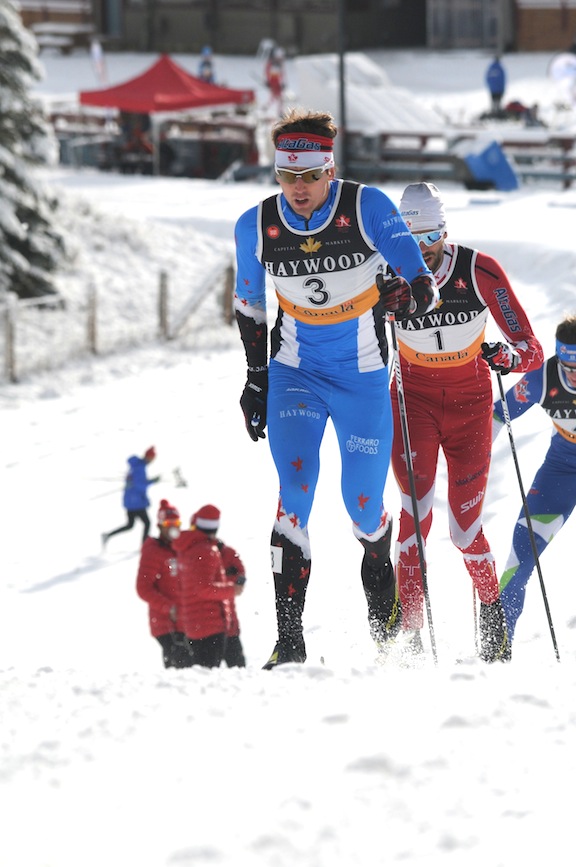
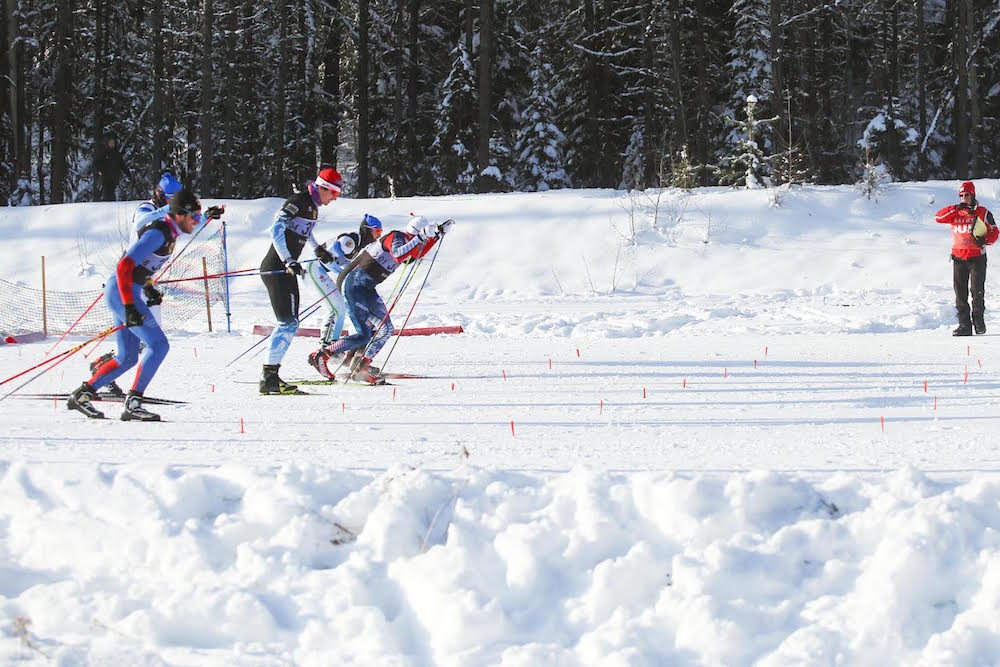
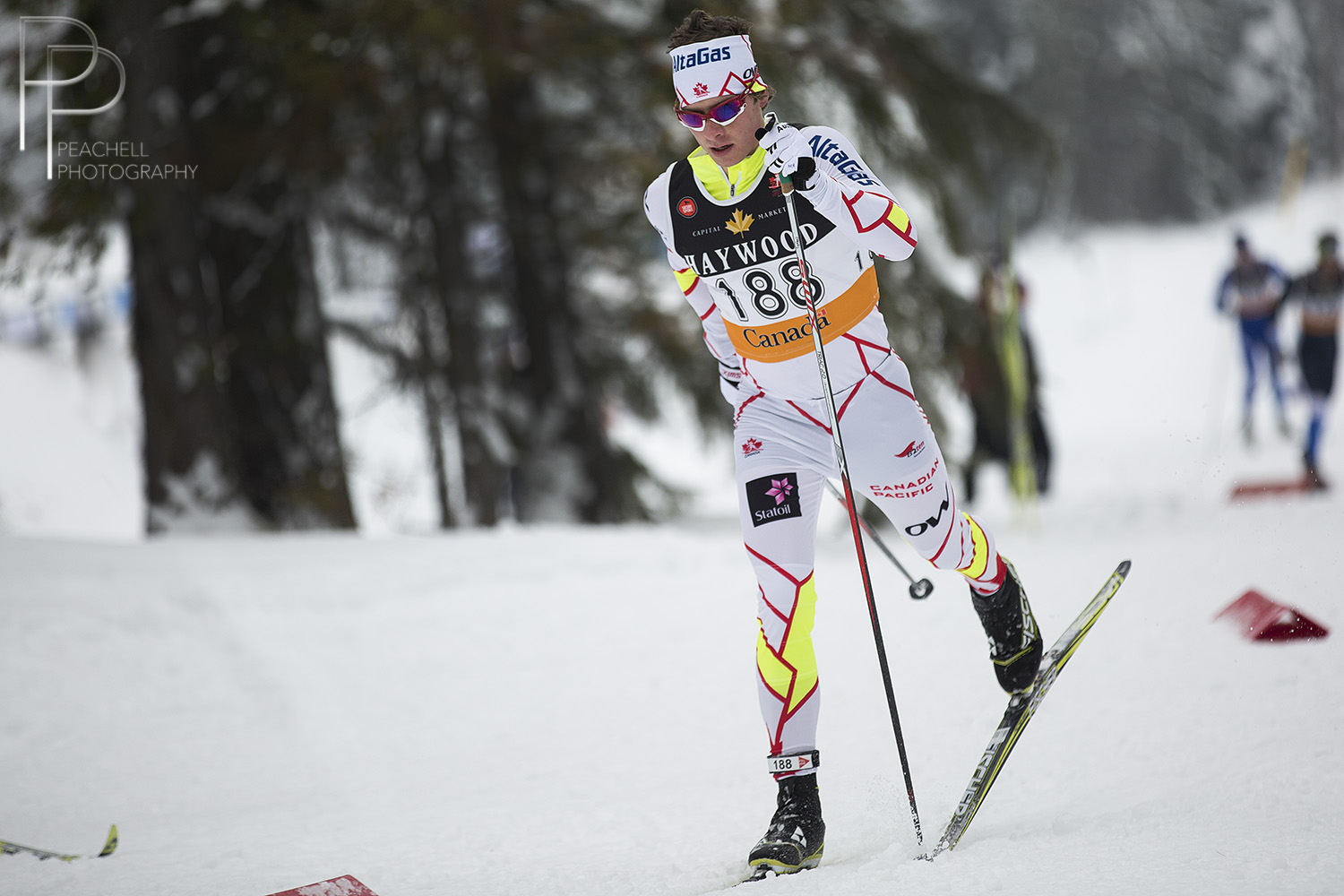
    Black Jack and national U25 Team member Julien Locke (3) leads Canadian World Cup Team member Le Valjas (1) in a Frozen Thunder classic sprint heat on Nov. 1 in Canmore, Alberta. (Photo: Angus Cockney)

    Despite living more than six hours away, Grey returned to Rossland often enough to join his old club team for training camps. When he was in town, “George Grey Days” were occasionally held for local youths interested in testing their skill against anyone else willing, including skiers from a relatively nearby town, Nelson.

    Racers received race bibs and a chance to learn the course by following Grey around the trails beforehand. While many young skiers participated, one Nelson native saw the events as more than just a chance to race against friends.

    “Before I joined Team Black Jack, when I was still racing for Nelson, he’d have George Grey Days where we’d put on a race and we’d all meet him and ski with him,” 24-year-old Julien Locke recalled on the phone earlier this month. “I think to have someone like that in the regional ski community was huge in impressing upon me that it is possible to come from a small place and get somewhere in sport.”

    Born in Nelson, a town with a population of about 10,000, Locke grew up participating in the Nelson Nordic Ski Club’s Jackrabbits program until he was 14. He then moved an hour away to Rossland, where he joined Black Jack in 2006.

    “Rossland became an adopted hometown,” he said. “I consider the Rossland club my home club.”

    Locke’s first year with Black Jack was also his first year completing a full, yearlong training program. Though he had been skiing since he could put boots on his feet and click into skis, that season gave him new insight into his sport and what he wanted to do with it. In 2009, Locke competed at Canadian nationals in Duntroon, Ontario, and finished fourth in the juvenile boy’s classic sprint

    “That sat heavily with me all summer because I knew, I believed that I was capable of being on the podium in a sprint at nationals,” Locke said.

    The following year, Locke returned to Canadian nationals, held in Whitehorse, Yukon. This time, he won the juvenile boy’s freestyle sprint

    “I think that was a pivotal moment in understanding that training and preparation makes the difference at the end of the day,” he said. “Coming from a small town … I’ve always had a belief that I can rise to the top, but that was the first moment it really cemented into my mind.”

    From then on, skiing became Locke’s primary athletic focus. He placed second in the classic sprint at the 2015 nationals and third in the freestyle sprint at the 2016 U.S nationals. Later that season, he racked up another third place in the freestyle sprint at 2016 Canadian nationals, and the following spring, he was nominated to CCC’s national U25 Team for 2016/2017. Last season, before making his World Cup debut in PyeongChang, South Korea, Locke won two races at South Korea’s national championships: the classic sprint and 10 k classic. At the subsequent PyeongChang World Cup, he finished 36th in the classic sprint.

    This season, Locke has his sights set on the 2018 PyeongChang Winter Olympics in February. After what he called his “best summer of training” yet, which included two national-team training camps in Park City, Utah, and a few camps with Black Jack, he put his fitness to the test on Nov. 1 at Frozen Thunder’s opening races in Canmore.

    This year, the first race, the Frozen Thunder classic-sprint qualifier held big implications for those vying for the final spot on the Canadian men’s World Cup Team for Period 1. The winner of the men’s qualifier would earn a trip to Europe to race the first four weekends of the World Cup, from late November through December. And World Cup results were what Locke needed if he wanted to qualify for the Olympic team.
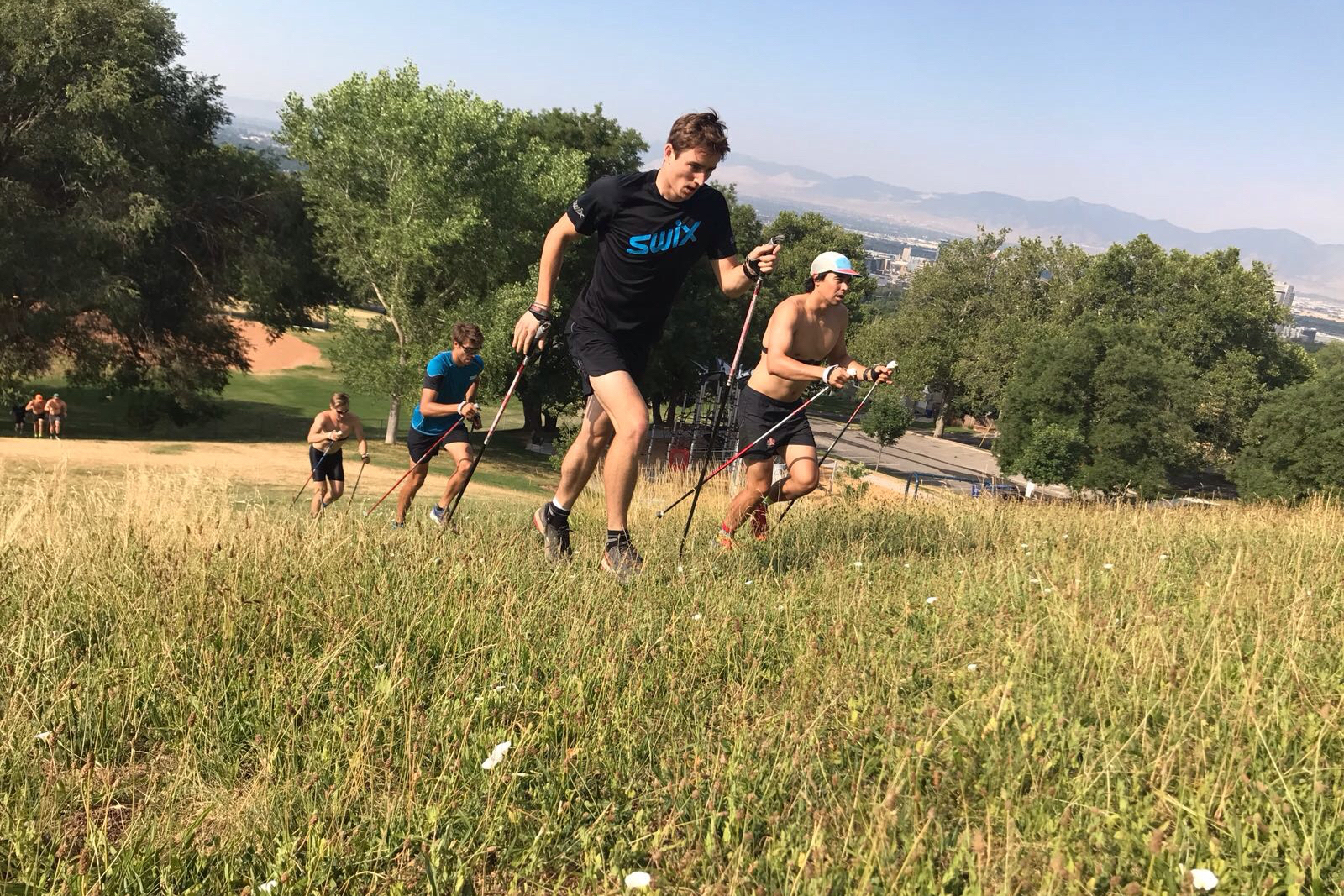
    Julien Locke (center), of the Canadian U25 Team and Black Jack Ski Team, during a bounding training session with the Canadian national team in Park City, Utah, this fall. (Courtesy photo)

    “[My coach Dave Wood and I] made the decision this summer to put a pretty high priority on the Frozen Thunder race because, with the way the Canadian selection process works this year with the Olympics, World Cup results are the most important thing, and there’s not a lot of opportunities to get on the World Cup, with these trials being the first and the most straightforward way to get there,” Locke said.

    But Locke understands he’s not the only one with Olympic aspirations this season. A number other top domestic skiers are also gunning for a spot on the team.

    “Start of every year in the spring, you sit down and look at what the goals are going to be and of course, this year it’s the same for everybody,” he said. “The Olympics are the big focus, across the board, everybody is going for the same thing.”

    Despite the pressure to perform in the Frozen Thunder sprint prelim, he was able to push aside any nerves.

    “I knew my season would look drastically different if I didn’t perform,” Locke said. “And I was quite confident in my preparation. I think with any race, that’s what I build my confidence from is knowing that I prepared well.”

    Locke won the qualifier in a time of 3:37.81 to secure that spot on the World Cup team. He flew to Sweden on Nov. 11 for the opening International Ski Federation (FIS) races in Gällivare, Sweden, this past weekend. This week, Locke and the rest of the Canadian World Cup team is headed to Kuusamo, Finland, where the World Cup opens on Friday with the Ruka Triple mini tour.

    While his coach, Wood, will remain in Rossland, he’ll continue to keep in touch with Locke by phone  to help guide him through the start of the season.

    “It’s a step along the road for the season,” Wood told FasterSkier. “Lots of athletes you see, their focus is like a funnel. In May, they’re looking at the funnel through the small end instead of the big end, and by the time the fall comes, now they’re through the big end and for whatever reason they can’t maintain or refine the things they have to do. In May, they’re doing everything right and in the fall they’re doing not very many things right. Julien is one of those athletes that understands that and as the season gets closer, his focus intensifies.”

    This past Friday through Sunday in Gällivare, Locke raced to 72nd in the opening 10 k freestyle, skipped Saturday’s 15 k classic, and then placed 39th in Sunday’s classic sprint qualifier. He missed the top 30 needed to qualify for the heats by 2.36 seconds.

    “This weekend was a great chance to do some good race efforts ahead of the World Cup,” Locke wrote in an email on Sunday. “With such large fields, it was a good reminder that the margin for error is very small. Leading into the World Cup next weekend, it will only become ever more important to focus on the details. I’m looking forward to the upcoming three weeks, particularly the Ruka sprint as it has always been a favourite race of mine to watch. It’s such a tactical course with so much potential for excitement in the last 45 seconds.”

    While Locke previously referred to his win at Frozen Thunder a “relief”, it is just the beginning of a several-monthlong journey.

    “Of course I’m excited, but it felt to me sort of as the first step in the broader plan for the season,” Locke said. “Just one box being checked off.”
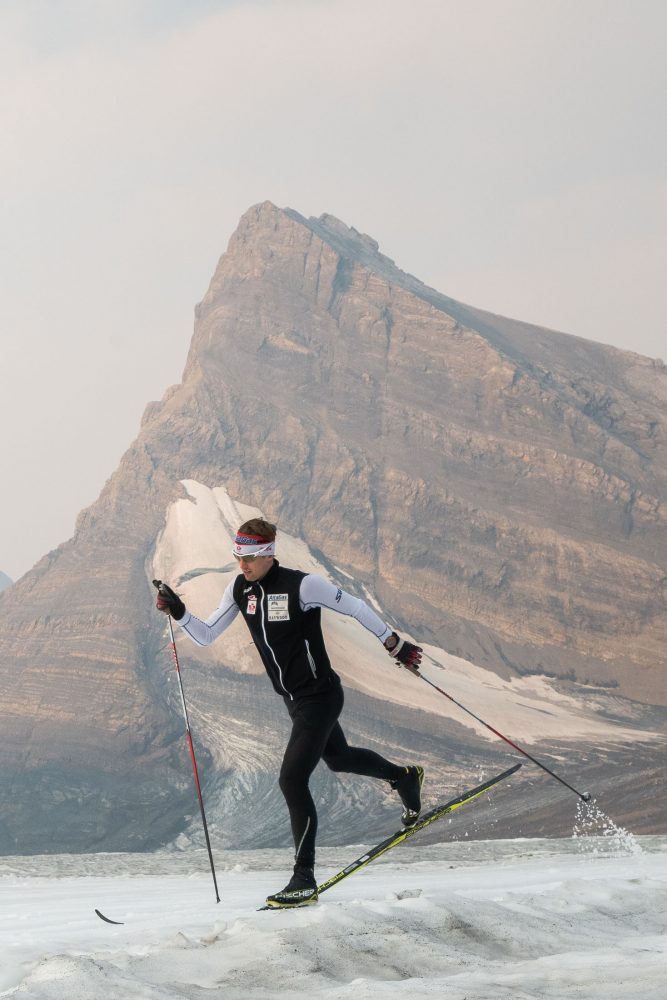
    Julien Locke (Canadian U25 Team/Black Jack) training on Haig Glacier near Canmore this summer. (Courtesy photo)
  • Under 23 Questions with Rémi Drolet

    Canada's Remi Drolet (r) and Norway’s Harald Østberg Amundsen during the men's 20 k skiathlon at 2017 Junior World Championships at Soldier Hollow in Midway, Utah. On Amundsen's seventh lap, he lapped Drolet. Amundsen went on to finish third and Drolet 49th. (Photo: FlyingPointRoad.com)
    Canada’s Remi Drolet (r) skiing a downhill with eventual third-place finisher Norway’s Harald Østberg Amundsen during the men’s 20 k skiathlon at 2017 Junior World Championships at Soldier Hollow in Midway, Utah. On Amundsen’s seventh lap, he lapped Drolet, who went on to finish 49th. (Photo: FlyingPointRoad.com)

    In an effort to showcase the North Americans competing at this past week’s International Ski Federation (FIS) 2017 USANA Nordic Junior World Championships and U23 Cross Country World Championships at Soldier Hollow in Midway, Utah, we asked those qualifying athletes several questions about themselves — actually, we had them fill in the blanks. Here we have 16-year-old Rémi Drolet, of Team Black Jack, representing Canada at his first Junior Worlds.

    On Feb. 1, Drolet competed in the men’s 10 k freestyle, where he finished 50th, and two days later, he placed 49th in the 20 k skiathlon.

    ***

    “My full name is Rémi Drolet, but you can call me Sir Remington Danger Drolet III. I was born in Trail, B.C., raised in Rossland, B.C., and one thing you should know about my hometown is it is a super-awesome ski town.

    Canada's Rémi Drolet (Team Black Jack) racing to 50th in the men's 10 k freestyle, his first race of 2017 Junior Worlds Championships at Soldier Hollow in Midway, Utah. (Photo: FlyingPointRoad.com)
    Canada’s Rémi Drolet (Team Black Jack) racing to 50th in the men’s 10 k freestyle, his first race of 2017 Junior Worlds Championships at Soldier Hollow in Midway, Utah. (Photo: FlyingPointRoad.com)

    I started cross-country skiing when I was four, thanks to my dad. I currently train in Rossland with Team Black Jack.

    If I’m not skiing, you might find me mountain biking or hiking. If I had to pick a favorite book, it would be ‘The Lord of The Rings‘.

    One of the things I’m most excited about for Junior Worlds at Soldier Hollow is racing against the best juniors in the world and representing Canada. One race I’m especially targeting there is the 20 km skiathlon.

    The best advice anyone ever gave me about skiing or racing was eat until it hurts. One of the best race memories I have is qualifying for the World Junior Championships.

    If I could meet one World Cup skier, it would be Martin Johnsrud Sundby.

     If I don’t end up being a professional skier, I’ll probably be a physicist.

    I’m missing 11 days of school to be here, and my teachers are probably thinking, ‘Rémi had better be doing homework right now.’

  • Holmes, Palmer-Charrette Win Black Jack Mini Tour

    Holmes, Palmer-Charrette Win Black Jack Mini Tour

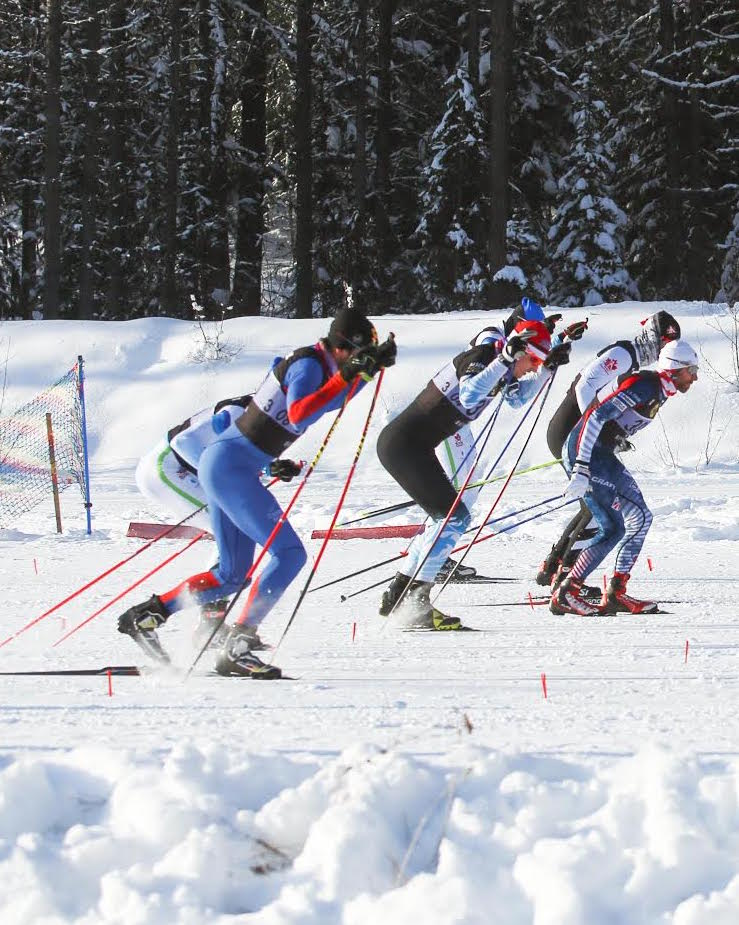
    The start of the A final, day two of of the BlackJack mini tour in Rossland. Newell (301) leads Locke (304, tallest) with Kennedy nearest. (Photo: Dafné Theroux Izquierdo)
    The start of the men’s freestyle sprint A-final on Day 2 of of the NorAm mini tour in at Black Jack Ski Club in Rossland, B.C. American Andy Newell (301) leads Julien Locke (304, tallest) with Russel Kennedy nearest. (Photo: Dafné Theroux Izquierdo)

    The Black Jack mini tour represented the final chance for Canadians to earn World Cup Period 2 starts. A timely week of snow and colder weather delivered great skiing conditions after an unusually warm November wreaked havoc on most of the western ski areas. That same warm weather canceled the Bozeman combined SuperTour/NorAm, which reduced the selection races from seven days to five.

    Chelsea Holmes of Alaska Pacific University (APU) continued her winning ways in Canada, destroying the field in the 10-kilometre freestyle on Friday, placing fourth in the Saturday freestyle sprints, and holding off the field in the 15 k classic pursuit on Sunday with the second-fastest race time to complete the weekend with an aggregate time of 1:08:04.4.

    Erika Flowers of the Stratton Mountain School (SMS) Elite team finished the weekend in second, 2:23.9 behind. Olivia Bouffard-Nesbitt of the Alberta World Cup Academy (AWCA) and Canadian National U25 Team took third, 0.2 seconds ahead of Katherine Stewart-Jones of the Thunder Bay National Team Development Centre (NTDC TBay).  Bouffard-Nesbitt and Stewart-Jones will also be very close on the NorAm leaderboard, and one of them has earned a quota spot for World Cup Period 2.

    In the men’s overall, Evan Palmer-Charrette (NTDC TBay) started the pursuit with a 37-second lead after winning the 15 k freestyle and placing third in the freestyle sprints. Palmer-Charrette held off the chasers to take the overall title and, most likely, the Continental Cup (COC) leader’s spot for World Cup Period 2.

    Alexis Dumas of the Pierre Harvey National Training Centre (CNEPH) charged up from a sixth-place start to grab second overall with the fastest time of the day, 52.2 seconds behind Palmer-Charrette. AWCA’s Jack Carlyle used the second fastest time of the day to take third overall, 1:10.1 back.

    Friday: Freestyle Interval Start

    In a reprise of the the previous Sunday’s event at Sovereign Lake, Holmes won the 10 k by an even larger margin, 1:49.4 minutes, finishing in 29:37.8.

    I love the courses here,” Holmes wrote in an email to FasterSkier. “Lots of steep climbing followed by technical downhills … very fun!”

    She learned from her 31-second victory five days earlier: “Last week in the 10k I exploded into a million pieces at 5km, so I tried very hard to control myself in the first lap today.”

    Flowers, who caught a ride with Holmes the previous week, moved up one place to second despite the larger time gap.

    I felt decent skiing (albeit a bit cold!) but definitely have some work to do on the downhills and keeping my tempo up on the hills,” Flowers wrote. “I tend to ski with a lot of glide so I am learning to turn it over a bit more when is cold like this and good glide is harder to come by.”

    This would be the warmest day of the three, with a high of -12 degrees Celsius.

    Bouffard-Nesbitt placed third (+2:27.2), and was already missing the deeper field of the previous weekend.

    “When you have 2:27 separating the top 3, that’s not something you really want to see at the highest level of domestic racing,” Bouffard-Nesbitt wrote.

    In the men’s 15 k, Palmer-Charrette made up for his head cold-induced DNF the previous weekend with the winning time of 40:36.7.

    Until today I had not had a strong distance race this year, so it was great to see the form come around.”

    Palmer-Charrette was also missing the deeper SuperTour field.

    “This weekend definitely is not as competitive […] as we had last weekend with the Americans in Sovereign Lake,” he wrote. “I’m disappointed [that] I was under the weather when we had the chance to race with them.”

    Russell Kennedy (Team R.A.D.) was leading after 5 k before fading to second, 31.1 seconds back.

    “I really wanted the win after the first lap but my body was feeling a little fatigued,” he explained in an email. “It was cold and the snow wasn’t very fast, but the weather was nice.”

    Erik Carleton, of Rocky Mountain Racers and the Canadian Para-Nordic Ski Team, was happy with his third place, 56 seconds back, especially after a late arrival on Thursday.

    “My teammate [and fellow Para-Nordic guide] Graham [Nishikawa] and I waxed our own skis, with the help of some good advice, and the outcome was positive,” Carleton wrote.

    Carleton and Nishikawa have raced at a lot of venues, while guiding paralympian Brian McKeever and in their own domestic and World Cup careers, and are a good source for course comparisons.

    “It was a fun and challenging course, with steeper climbs and slightly more technical downhills than most courses,” Carleton wrote of the Black Jack trails. “At -18C this morning, the snow was quite slow, especially on the steep uphills. If you had decent skis, the course was more of factor than the conditions. Climbing steep uphills with no glide was a key to a good race.”

    SMS Elite’s Andy Newell, freshly arrived from the World Cup circuit, placed fourth (+1:08.9).

    It’s my goal to use these races to help get back into the feeling of racing again after such a rocky start to the season,” Newell wrote after Friday’s race. “I was happy with the way today went and they way my body felt.”

    Newell is another athlete with wide experience of race courses: “Having just come off the world cup I can tell you that these courses here are top notch,” he wrote.

    Saturday: Freestyle Sprint

    Saturday brought a romantic result to a chilly day, with the affianced Flowers and Newell winning the women’s and men’s sprints, respectively.

    Bouffard-Nesbitt won the qualifier and easily moved through to the A-final, but Flowers was first at the line.

    Olivia skied really well off the line and up the entire first half of the course-super smooth and strong,” Flowers wrote. “I was able to jump in behind her in second and tried to chase her down leading up to the high point of the course. By the top of the first big climb we had a sizable gap on the rest of the field but she was still a few meters ahead of me so I tried to ski hard over the top of the hill and free skate the downhill in order to chase her down. I was able to get right behind her going into the last little uphill and felt good coming off the downhill into the finish stretch for a drag race finish.”

    The sprint course has some tricky descending which didn’t affect the top racers or Flowers’s enjoyment of the day.

    “I did get to see a few epic crashes on the S-turns and I thought it was fun to join my fiance Andy on the top of the podium!” she wrote.

    Bouffard-Nesbitt was also positive about her race, despite coming up 0.44 seconds short of the win.

    “I’m pretty happy with my race today!” she wrote. “Definitely happy with my qualifier. I skied the final just like I skied the final in Silver Star — I left it all out on the course.”

    Bouffard-Nesbitt found her legs were fading in the finishing stretch, after spending much of the summer on crutches.

    Stewart-Jones placed third (+7.89), edging Holmes by four-hundredths of a second.

    “Olivia and Erika skied impressively well, all day today!” Holmes wrote. “Olivia took the final out hard and Erika followed… I didn’t see much after that but the results tell the story!”

    Maya MacIsaac-Jones (AWCA/NST U25 Team), who is recovering from a more-recent foot injury than Bouffard-Nesbitt, held off her NTDC TBay’s Annika Richardson by nearly 2 seconds for fifth (+10.65).

    Newell won the men’s qualifier and every heat before topping the A-final in 2:44.81.

    Another view of the men's A final. Newell and Lapointe (black suit hidden by Newell) would lead out early. Kennedy is nearest, Locke is tallest, the TBay skiers are light blue. (Photo: Dafné Theroux Izquierdo)
    Another view of the men’s A-final. Newell (far right) and Lapointe (black suit hidden by Newell) take the lead out early, with Kennedy (nearest) Locke, and the Thunder Bay NTDC skiers in light blue. (Photo: Dafné Theroux Izquierdo)

    “I was happy with the race today,” he wrote. “The cold temperatures felt a little more manageable today and it was a great opportunity to race 4 hard rounds on a fun sprint course.

    “It was my strategy to be in a front position to be able to charge up the second hill and gap the field, which was the strategy I used in all the heats,” he added

    Former Black Jack racer Julian Locke (AWCA) was 1.05 back, outreaching Palmer-Charrette by 0.05 seconds.

    “[CNEPH’s] Simon Lapointe was pushing pretty hard with Newell and Russell Kennedy with him,” Locke wrote. “I had to put on the gas halfway up [the first long hill] to get back with the leaders and stay in the race. I made contact with the group going over the top and then got behind Newell going over the small hill in the middle of the course, following him down through the twists and into the finish. Evan Palmer-Charrette had some good speed coming into the lanes and we had a fun lunge to the line.”

    Kennedy was on the wrong side of the gap for fourth. Lapointe and NTDC TBay’s Angus Foster, who with Palmer-Charrette crashed out of the previous weekend’s sprint, rounded out the A-final in fifth (+6.26) and sixth (+6.97), respectively. 

    Sunday: Classic Pursuit

    Sunday brought slightly warmer conditions for the 10/15 k classic pursuits, but the waxing was still straightforward with -13-degree Celsius air and colder snow.

    Holmes started the 10 k pursuit with a 1:42 head start and kept the lead, finishing in 35:35.4, which stood as the second-fastest time of the day. Her race plan was simple.

    I think the expression is to go out ‘like a bat out of hell.’ ”she wrote on Saturday night.

    On Sunday, she was feeling more contemplative after the race: “I have never started off the front in a pursuit and quite honestly it made for some different feelings out there… surprisingly lonely.”

    Flowers was third on Sunday, 48.1 seconds back, but it was enough to maintain her second overall (+2:23.9).

    “I wasn’t thrilled with my race today but it was a good mental challenge to get out there and play around with some classic skiing,” Flowers wrote. “I have some work to do there technically for sure and while I wasn’t pleased with how I skied, I now know where to focus some training energy over the next few weeks so that’s a good thing!”

    Bouffard-Nesbitt was fifth-fastest on the day, 1:04.7 back, but was able to finish ahead of a flying Stewart-Jones by a scant 0.6 seconds for third on the mini-tour podium (+3:25.2).

    Stewart-Jones was the fastest in the 10 k classic, 6.2 seconds ahead of Holmes, for fourth overall (+3:25.7).

    “I was able to stay relaxed and set into a good pace on the first lap and really dig deep on the second,” Stewart-Jones wrote. “It took awhile to get into race shape but every race I have felt stronger. I’m really looking forward to the rest of the season!”

    Richardson was fourth-fastest of the day after starting fourth, dropping one place to Stewart-Jones who started 8 seconds behind her for fifth overall (+4:08.7).

    Palmer-Charrette started the men’s 15 k classic pursuit with a 38-second lead over Kennedy.

    I skied smooth and relaxed at the front of the race,” Palmer-Charrette wrote. “I kept the pace quite conservative until the second half of the last lap just to ensure I had an extra gear in the tank in case someone started to bring back major time.”

    Palmer-Charrette was very happy with his first time leading a pursuit and first mini-tour win. He finished 52.2 seconds clear of runner-up despite Dumas, who posted the fastest time of the day. (Palmer-Charrette’s time ranked fourth, 1:14.7 behind Dumas.)

    “I was really happy with my weekend, mostly with how consistent I was able to ski all three days. Today I was pretty far off the win [for time of day], but skiing out front racing for the mini tour overall I didn’t quite leave it all out there,” Palmer-Charrette wrote.

    Dumas started in sixth, 2:08 back, but was able to ski through to second after catching Kennedy, Newell, Carleton and Carlyle, all of whom started ahead of him. Carlyle had the second-best time of the day, 29.9 seconds slower than Dumas, to move from fifth to third overall (+1:10.1).

    Carleton was third on the day, 1:01.2 back, and came within 0.8 seconds of catching Kennedy, who finished the mini tour in fourth overall (+1:20.8) after starting second.

    “It was a good weekend,” Kennedy summarized. “I just couldn’t seem to hold it together in the classic but learned a lot and have some stuff to work on over Christmas!”

    ***

    At the end of the three days of racing, there were a lot of positive comments, but as Holmes put it:

    I am very glad that I chose to come to Rossland to finish off my early season racing — all the girls were super great, Canmore Nordic (who helped me with wax for the weekend) and the venue, organizers and volunteers were top notch!”

    ***

    Results: Day 1 | Day 2 (QualifierHeats) | Day 3 (click “overall results” and “aggregate results” tabs on top of page)

  • Let It Snow: Despite Weather Woes, First Two NorAms in the Bag

    Let It Snow: Despite Weather Woes, First Two NorAms in the Bag

    Kris Freeman on his way to winning the 30 k freestyle interval start by more than a minute and a half on Dec. 20 at the Sovereign Lake NorAm in Vernon, B.C. (Photo: Frances Weeks)
    Kris Freeman on his way to winning the 30 k freestyle interval start by more than a minute and a half on Dec. 20 at the Sovereign Lake NorAm in Vernon, B.C. (Photo: Frances Weeks)

    Canada’s NorAm circuit is what the International Ski Federation (FIS) calls a Continental Cup series, similar to the U.S. SuperTour.  The name NorAm is short for North American, a hold-over from when Canada and the U.S. had a combined race series.  These races are critical to the elite racers, with guaranteed World Cup starts, national-team positions, and trips to Junior/U23 World Championships in Almaty, Kazakhstan, on the line.

    Or to put it another way, it would take a major event to cancel a NorAm race — like perhaps a record-breaking storm in a unusually snowless early season.

    As organizing committees secured the final details for the first two NorAm weekends, a major storm was expected to bring heavy rain to most of southern British Columbia.

    By the end of the four-day storm, a Vancouver suburb had declared a state of emergency, heavy rain at 12-degree Celsius (54 Fahrenheit) had closed numerous ski resorts across B.C. (including Whistler Blackcomb). Seattle set weather records, and 220,000 people were without power in California.

    While all this was going on, organizers in La Clusaz, France, canceled their World Cup and later moved it to Davos, Switzerland, a venue which had previously avoided canceling its original race weekend because of a huge snow-moving effort largely funded by a retired alpine skier.

    Black Jack Ski Club

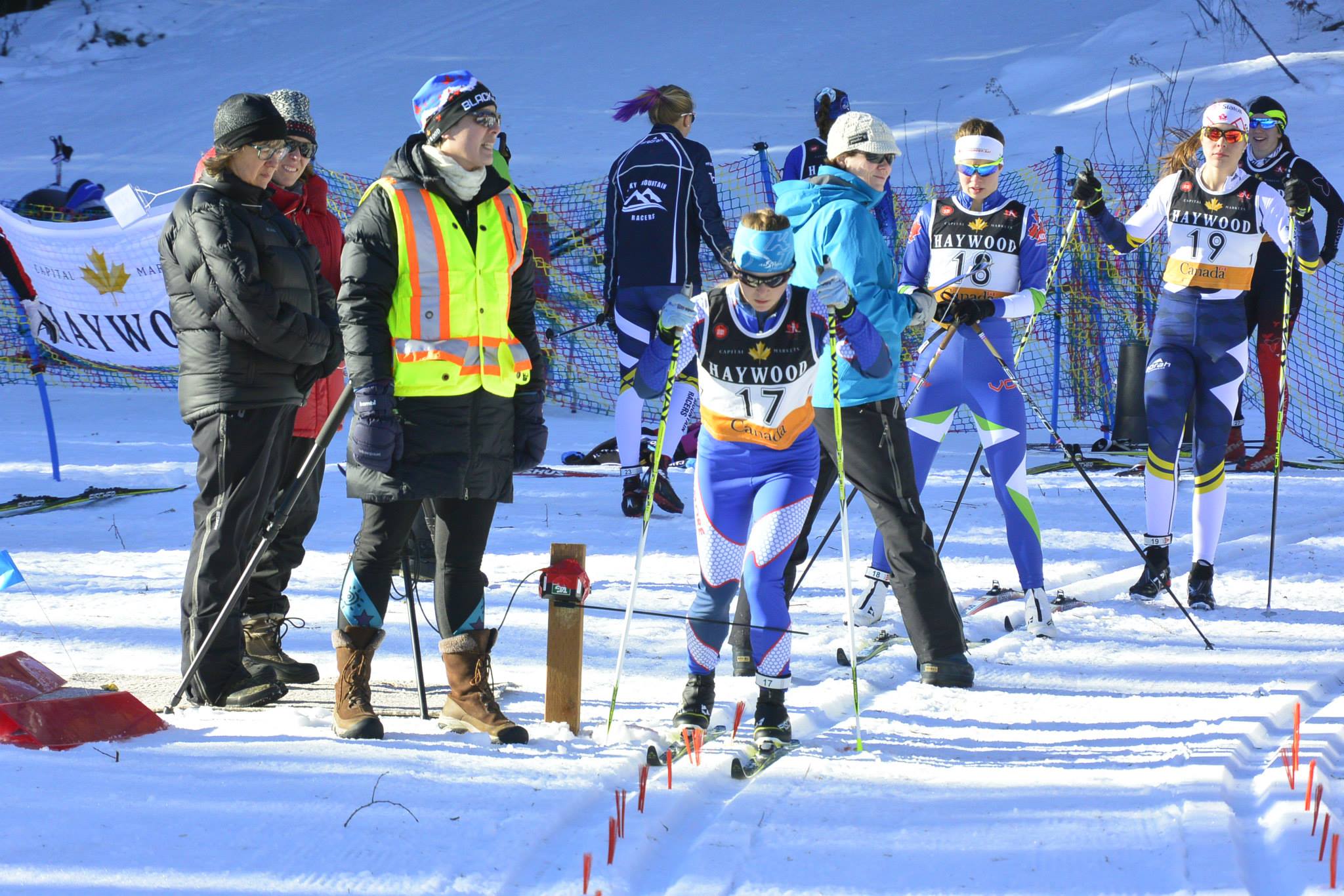
    The start of the women's 7.5 k classic at the Black Jack NorAm on Dec. 13 in Rossland, B.C. ( Saturday’s 11 k classic individual start at the NorAm opener in Rossland, B.C. (Photo: Fresh Cafe & apres/Facebook)
    The start of the women’s 7.5 k classic interval start at the Black Jack NorAm opener on Dec. 13 in Rossland, B.C. (Photo: Fresh Cafe & apres/Facebook)

    The first NorAm weekend this year was scheduled for Dec. 13-14, hosted by the Black Jack Ski Club in Rossland, B.C. Outside the province, Black Jack is best known as the club that produced George Grey (top-10 finisher at the 2010 Olympics) and the current home of long-time national team coach Dave Wood.

    When low snow, warm weather and predicted rain made the club’s homologated courses unsuitable for skiing, the club decided to move the opening races up to the biathlon trails, more than 200 meters (650 feet) higher in elevation. As the four-day storm progressed, the freezing level was up to 2,000 meters (6,500 feet) in the area, well above the 1400-meter(4,590-foot) elevation of the biathlon trails.

    When rain made the sprint loop unskiable two days before the race, the organizing committee didn’t give up. Club members, neighbours and team coaches spent hours shoveling snow onto the course. When another wave of rain destroyed the sprint course overnight, the organizing committee switched to two individual-start classic distance races and volunteers headed out again to shovel more snow onto the distance course.

    After four days of rain and a move to a higher venue without electricity or a timing building, the races were held. Generators provided power, live results were available on the internet and the event was generally agreed to be up to the Continental Cup standard.  Some 140 official volunteers plus an unknown number of shovelers made this possible.

    “We estimate we did about 130 man-hours of shovelling this week,” Chief of Competition Ian Sibbald wrote in an email.

    Unsolicited athlete quotes from the Black Jack NorAm

    “The volunteer base is incredible.  That is an astounding number [of volunteers] since only 3,500 people live in Rossland. Given the lack of snow, the conditions were great.” — Kris Freeman (Team Freebird)

    “Conditions were good! A few twigs poking through here and there, but tracks were fast and hard. Big thanks to the volunteers and organizing committee for working hard to run these races!” — Michael Somppi (Alberta World Cup Academy/Canadian Development Team)

    “Conditions were remarkable, especially considering the challenging weather the Black Jack Ski Club has been dealt. One would hardly know that though skiing the course, unless you look closely and notice all the shoveling marks on the side of the trail.” — Brian Gregg (Team Gregg/Madshus)

    “Conditions were much better than I expected, the organizers and groomers did an amazing job making the race happen with tough conditions and the tracks today were great!” — Alysson Marshall (AWCA/National Development Team)

    “Conditions today were amazing considering the weather … The race organizers and many volunteers from the town have worked hard to get a good track to make these races happen.” — Andrea Dupont (Rocky Mountain Racers)

    “The crew at Black Jack did an amazing job on the course, it was close to perfect considering what they had to work with. The tracks were great, I was very impressed.” — Dahria Beatty (AWCA/National U23 Team)

    “The course held together exceptionally well, due to the work of the volunteers and the slightly colder weather that appeared day of.” — Jennie Bender (Bridger Ski Foundation)

    Callaghan Valley Cross-Country

    Callaghan Valley Cross-Country (CVXC), the host of the second NorAm weekend, isn’t so much a ski club as it is a consortium of four clubs based in the Vancouver/Whistler area: Nordic Racers, Whistler Nordics, Hollyburn Jackrabbits, and Spud Valley Nordic. Squamish Nordic contributes, as do a number of other clubs from the province. For higher-level events, volunteers from other clubs commonly join in, either to add expertise to help the host club earn the event, or gain experience and knowledge so their own club can host similar events in the future.

    Scheduled the weekend before the holiday break, CVXC was on track with 85 volunteers with two weeks to go. Snow is rarely a problem at Whistler Olympic Park. In 2010, no provision for snow making was made and the Olympics were held on natural snow despite a seven-week block of rain that ended a week before the Olympics started.

    With very little snow and the forecast of the storm earlier this month, the organizing committee had to make a decision to commit, cancel or move the NorAm races with 12 days to go. On decision day, 100 millimetres (4 inches) of rain was forecast for the race venue.

    At this point, much of the sponsorship money had been spent, hundreds of volunteer hours had been invested, and teams had booked lodging and flights well in advance.

    With heavy rain falling at the venue, few people were surprised when organizers announced they were moving the races to Sovereign Lake in Vernon, B.C.

    Once the decision was made, the logistical headache began. The new venue is more than 400-kilometers away, which meant the existing volunteers wouldn’t be sleeping at home. Many of the teams had booked flights leaving Vancouver on Sunday night.  With two mountain passes and six-driving hours separating Sovereign from the airport, there wouldn’t be time to hold the planned events on Sunday.  Moving the races to Friday and Saturday solved the travel problem, but made the volunteer issue more difficult.

    At this level of competition, there are strict rules about roles and responsibilities. The assistant technical delegate, Sharon Clarke, was no longer eligible, as the new host was her home club. Clarke and the chief of competition, Sherryl Yeager, swapped roles before tackling the rest of the changes.

    “Having to change the event at such a late date due to weather is heartbreaking,” Yeager, also the CVXC vice chair, explained in an email. “All the work that went into planning, arranging sponsors, maps, courses, setting up run sheets, the race notice, registration, accommodation, food, the website and more is largely of no use.”

    Andrew Pohl of the New Zealand Ski Team crossing the line in 15th in the men's  NorAm 30 k freestyle interval start on Dec. 20 at Sovereign Lake, B.C. (Photo: Frances Weeks)
    Andrew Pohl of the New Zealand Ski Team crossing the line in 15th in the men’s NorAm 30 k freestyle interval start on Dec. 20 at Sovereign Lake, B.C. (Photo: Frances Weeks)

    Sovereign Lake Nordic Club

    Sovereign Lake is a perennial NorAm host, using trails built for a World Cup event in 2005. The trail system is interconnected with Silver Star Mountain Resort, which leaves most visitors a bit confused. In recent years, the division is simple: race at Sovereign, sleep at Silver Star, ski at both.

    Sovereign was hosting a CPL race (one level below Continental Cup) when the possibility of moving the NorAm was raised. With 80 volunteers on site, it was easy for the organizers to quickly find out how many might be available for a potential NorAm and make the commitment to offer the venue.

    The shift from Saturday/Sunday to Friday/Saturday was essential for the teams, but difficult for the organizers. More of the CVXC volunteers were unable to help and many of the Sovereign volunteers were unable to get a day off work at short notice.

    Without a sprint in the first NorAm weekend of racing, Sovereign’s first day became a classic sprint, requiring another rewrite of the race notice. Ultimately, the merged organizing committee was able to get about 100 volunteers over the two days, including some from neighboring clubs.

    Several racers generally viewed the event as a typical NorAm, with more comments on the challenges of heavily falling snow than the logistical obstacles of the event move.

    While athletes, coaches, families, and race-day volunteers have moved on, the two organizing committees are sorting out how to share the entry fees and sponsorship money to cover their extra expenses.

    The Result

    After two weekends and four races, more individuals volunteered than raced.  Athletes got crucial early season race time into their legs.  Several athletes have positioned themselves to race in Europe later this season.

    Was it all worth it? Dahria Beatty, Raphaël Couturier, Annah Hanthorn, and Philippe Boucher pre-qualified for Junior/U23 World Championships in early February in Almaty, and based on his NorAm results, Patrick Stewart-Jones earned his spot at the World Cup sprint in Otepää, Estonia, from Jan. 17-18.

  • Black Jack NorAm Photo Gallery

    Black Jack NorAm Photo Gallery

    Some of the best photos from last weekend’s NorAm at the Black Jack Ski Club in Rossland, B.C, with freestyle sprints on Dec. 14 followed by 10- and 15-kilometre classic individual starts on Dec. 15. All photos by Shelley Peachell/Peachell Photography.

    Want to know what happened? Check out our recaps: Saturday’s sprints | Sunday’s classic races

    Results: Sprint ResultsSprint BracketsMen’s 15 k classicWomen’s 10 k classic

  • Sandau, Fitzgerald Win Black Jack NorAm Classic Races

    Sandau, Fitzgerald Win Black Jack NorAm Classic Races

    Amanda Ammar (Team Ninja) racing to third in the 10 k classic individual start on Dec. 15 in Rossland, B.C.  (Photo: Shelley Peachell/Peachell Photography, http://peachellphotography.com/)
    Amanda Ammar (Team Ninja) racing to third in the 10 k classic individual start on Dec. 15 in Rossland, B.C. (Photo: Shelley Peachell/Peachell Photography)

    In the last big North American races before the holiday break, Kevin Sandau of the Alberta World Cup Academy (AWCA) and Canadian National Senior Development Team (NST) and American Kate Fitzgerald of Alaska Pacific University (APU) took top honors on Sunday in the Black Jack NorAm 15- and 10-kilometre classic individual starts in Rossland, B.C.

    Kate Fitzgerald (APU) racing to third in the West Yellowstone SuperTour 10 k freestyle individual start on Nov. 30.
    Kate Fitzgerald (APU) racing to third in the SuperTour 10 k freestyle individual start on Nov. 30 in West Yellowstone, Mont. She won the Black Jack NorAm 10 k classic individual start on Sunday in Rossland, B.C.

    On a day marked by warmer temperatures, tough waxing conditions and even tougher race courses, racers had only positive things to say about the quality of the race course and the depth of talented racers in the combined Canadian-American field.

    In the women’s 10 k, Fitzgerald gritted out the win in 31:53.7 after feeling “super strong.” In an email, she wrote that her coaches nailed the tricky waxing, and it helped to have a strong skier to race against.

    “Caitlin Gregg [Team Gregg/Madshus] started right in front of me and I caught up to her and we skied together the whole race after that,” Fitzgerald wrote. “She was awesome! We pushed each other and it was so much fun to have someone to ski with and work together!”

    The women’s SuperTour leader, Gregg ended up fourth, and Canadians Emily Nishikawa (AWCA/NST) and Amanda Ammar (Team Ninja) squeezed in for second and third, respectively. After leading the first of two laps by nearly seven seconds over Fitzgerald, Nishikawa finished 13.9 seconds back in second, and Ammar was another 9.9 seconds back in third. Gregg was 30.3 seconds back in fourth, and Zoe Roy finished 47.1 seconds off the winning pace in fifth.

    “There was an extremely strong field of women here this weekend, all of which I highly respect, and who are also in great shape,” Ammar wrote in an email. “I have been consistently getting stronger and stronger in each race. I’m right where I want to be.”

    Ammar added that the courses were hard, but doable. “These were the kind of trails I was brought up on,” she explained. “Hard steep climbs, and fun windy technical downhills. I had an absolute blast out there!”

    Sandau Edges Ellefson

    In the men’s 15 k, Sandau echoed the sentiments of the women, adding that it was nice to have warmer-racing temperatures compared to the frigidity of last weekend’s opening NorAm at Sovereign Lake. Although he dealt with some icing on his skis, Sandau did his best to maintain efficiency and came out on top in 42:08.4.

    Kevin Sandau (AWCA/NST) racing to victory in the NorAm 15 k classic individual start on Dec. 15 in Rossland, B.C.  (Photo: Shelley Peachell/Peachell Photography, http://peachellphotography.com/)
    Kevin Sandau (AWCA/NST) racing to victory in the NorAm 15 k classic individual start on Dec. 15 in Rossland, B.C. (Photo: Shelley Peachell/Peachell Photography)

    “I’m pretty happy with [Sunday’s] result,” he wrote. “It’s just how I wanted [to] end things going into the holiday break before Olympic trials.”

    Sylvan Ellefson (Ski & Snowboard Club Vail/Team HomeGrown) ended up second, just 3.2 seconds behind Sandau, and Graham Nishikawa rounded out the podium in third (+33.2), for his third top-three in over just two NorAm weekends. US Ski Team member Erik Bjornsen (APU) placed fourth (+44.3) and Andy Shields (NDC Thunder Bay) was fifth (+56.0).

    Ellefson was also satisfied with his race. In an email, he explained that despite feeling pretty tired midway through the race, he was able to dig deep to pull out a solid race.

    “The last 2k had to be the fastest 2k of my life,” Ellefson wrote. “I’m very happy with my results from the weekend and these results definitely help the confidence going into US Nationals in 3 weeks.

    “The courses here are amazing,” he added. “Amazingly hard, amazing beautiful. Whoever crafted them was a genius because any kids coming out of that Black Jack program can probably ski anywhere after running those courses. Technical and fun, almost seems like a downhill biker designed them. Up there with the hardest course I have ever skied without a doubt.”

    He was right on.

    Ethan Meginnes, co-owner of Joyride Bike Parks, wrote in an email that he helped construct the Black Jack course.

    “We build the course for the Red Bull Joyride slope style comp at Whistler as well as many other downhill bike trails,” he explained. “Dave Wood, Al Fisher and myself were the primary volunteer supervising the course build with a local contractor, Ed Mayer.”

    After this weekend, most of the racers on the circuit are dispersing for the holidays, quality time with friends and family, and local citizens’ races until the recommencement of racing January 8-12 in Canmore, Alberta.

    Results

  • Weekend Roundup: High Expectations

    Weekend Roundup: High Expectations

    Kikkan Randall and Marit Bjørgen's photo finish (Photo: Fischer/Nordic Focus)
    Kikkan Randall and Marit Bjørgen’s photo finish in Sunday’s Sprint in Davos, Switzerland. Bjørgen won it by a hair. (Photo: Fischer/Nordic Focus)

    Extraordinary performances are becoming ordinary for the North American contingent this year as new stars emerge, historic results accumulate, and expectations continue to grow.

    FasterSkier was on site in Davos, Switzerland, where five USST members raced to the top 30 in Saturday’s distance races. Kikkan Randall placed 18th in the women’s 15 k, followed by Liz Stephen in 20th, Holly Brooks in 25th, and Jessie Diggins in 30th. Noah Hoffman was 25th in the men’s 30 k.

    Sunday’s Skate sprints brought even more excitement for the U.S. team with Randall skiing to a hard fought second place against powerhouse Marit Bjørgen. Sophie Caldwell, in a breakout performance, reached the World Cup semifinals and cracked the top ten with her ninth place finish. Diggins and Sadie Bjornsen, who both suffered falls, were 12th and 27th.

    On the men’s side Simi Hamilton and Andy Newel advanced to the quarterfinals and finished in 14th and 17th.

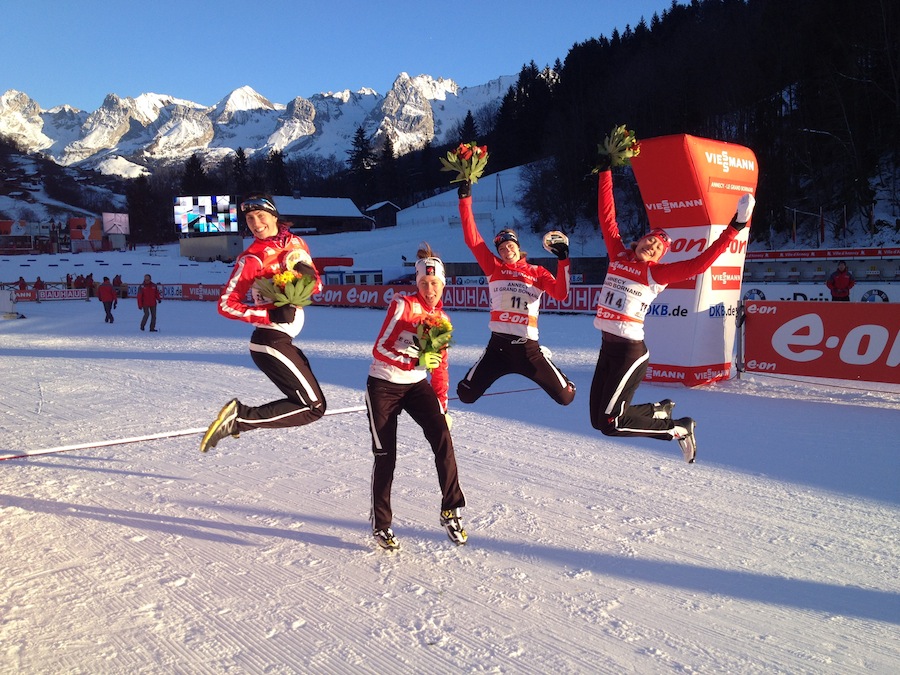
    The Canadian women jumping for joy after notching Biathlon Canada's best-ever finish in a relay. (Photo: Biathlon Canada/Matthias Ahrens)
    The Canadian women jumping for joy after notching Biathlon Canada’s best-ever relay result of fourth. (Photo: Biathlon Canada/Matthias Ahrens)

    North America shined in the IBU World Cup with the Canadian women’s relay team taking a historic fourth-place finish in the 4 x 6 k relay. The success continued throughout the weekend with four Canadian women qualifying for the pursuit, and Rosanna Crawford ultimately finishing 19th.

    On the men’s side Canadian Nathan Smith finished 16th in the 10 k sprint and was followed by Americans Tim Burke in 28th and Lowell Bailey in 35th.  In the 12.5 k pursuit Smith impressed again with an eighth-place finish. He was followed by Bailey and Burke in 15th and 16th.

    The action didn’t stop there with historic results from U.S. Nordic Combined. In Ramsau, Austria, Bryan Fletcher and Todd Lodwick skied the fastest combined time in the 2 x 7.5 k team sprint to place fourth, the best-ever result for the U.S. in the two-man event.

    In Sunday’s individual 10 k competition, Fletcher and Billy Demong cracked the top ten by placing seventh and ninth.

    With all the success happening across the pond it’s easy to forget that North America had some races of its own this weekend. Rossland, B.C. hosted the second set of NorAm races where Erik Bjornsen and Emily Nishikawa triumphed in the sprint, and Kate Fitzgerald and Kevin Sandau won Sunday’s 10 and 15 k.

    The IPC World Cup also took place in Canmore, Alberta, with several North American standouts. Canadian Brian McKeever won the 10 k on the opening day and churned out another winning performance in the 20 k classic race. American Oksana Masters placed third in the women’s sit-ski 5 k and fourth in the 0.75 k sprint.

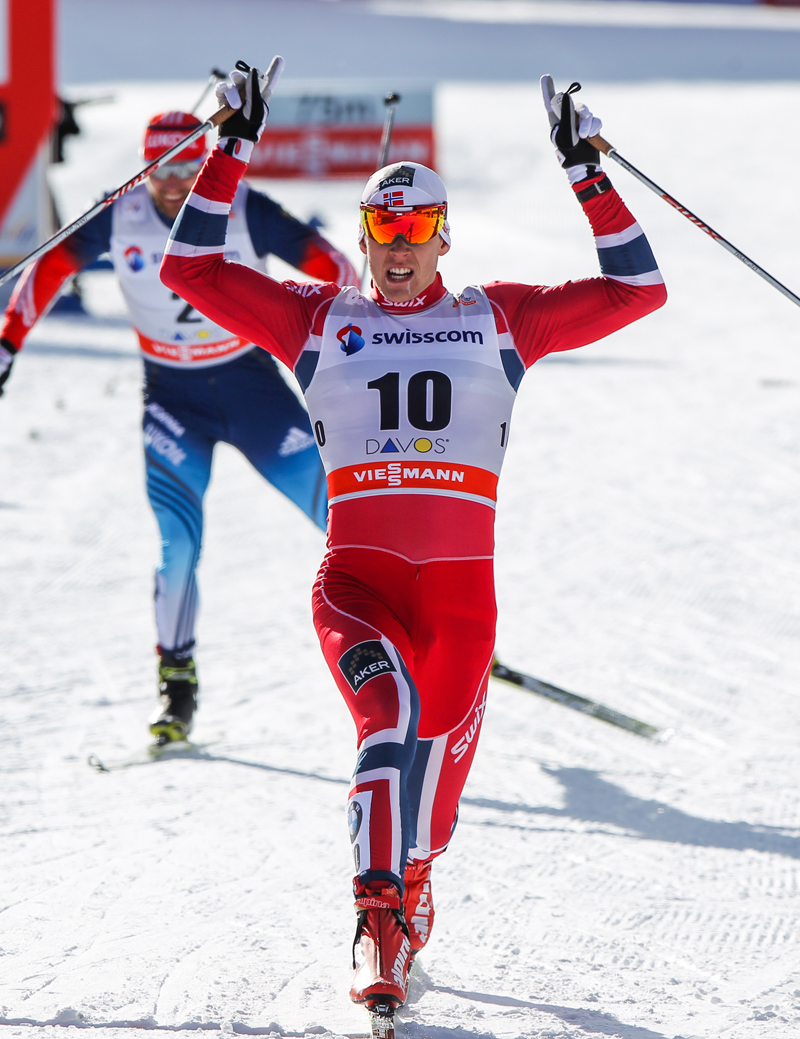
    Norway’s Anders Gløersen celebrates his win as he crosses the finish line (Photo: Fischer/Nordic Focus)
    Norway’s Anders Gløersen celebrates his sprint win as he crosses the finish line in Davos. (Photo: Fischer/Nordic Focus)

    Cross-Country World Cup, Davos, Switzerland (Results)

    Saturday’s 15/30 k skate individual start: Women’s report | Men’s report | U.S. women’s report | Hoffman Happy with Performance

    Sunday’s 1.5 k skate sprint: Women’s report | Men’s report | Canadian report | One of USST’s ‘Best Days Ever’ | Randall’s Lesson for SochiUSSA CEO Shaw Spectates in Davos

    Nordic Combined World Cup, Ramsau, Austria (Results)

    Saturday’s 2 x 7.5 team sprint: Report

    Sunday’s NH/10 k: Recap

    IBU World Cup, Annecy, France (Results) 

    Thursday’s 4 x 6 k relay:  Women’s report

    Friday’s 4 x 7.5 k relay:  Men’s report

    Saturday’s 7.5/10 k sprint: Women’s report | Men’s report

    Sunday’s 10/12.5 k pursuit: Women’s report | Men’s report 

    Black Jack NorAm, Rossland, B.C. (Results)

    Saturday’s skate sprint: Report

    Sunday’s classic 10/15 k: Report

    IPC World Cup, Canmore, Alberta (Results)

  • Emily Nishikawa, Bjornsen Tally NorAm Sprint Wins in Rossland

    Emily Nishikawa, Bjornsen Tally NorAm Sprint Wins in Rossland

    Emily Nishikawa (AWCA/NST) halfway through her 10 k freestyle race on Dec. 7, in which she placed fifth in the NorAm opener at Sovereign Lake, B.C.
    Emily Nishikawa (AWCA/NST) halfway through her 10 k freestyle race on Dec. 7, in which she placed fifth at the NorAm opener at Sovereign Lake, B.C. The next day, she was third in the classic sprint there.

    Saturday’s NorAm freestyle sprints at the Black Jack Ski Club delivered an exciting day of racing, with crashes, tactic changes between rounds, and photo finishes in Rossland, B.C.

    Emily Nishikawa of the Alberta World Cup Academy (AWCA) and Canadian National Senior Team (NST) won the women’s 1.4-kilometre A-final by 0.22 seconds in 3:21.29, and teammate Heidi Widmer edged Olivia Bouffard-Nesbitt (Laurentides) in a photo finish for second.

    The Americans rounded out the rest of the A-final with Caitlin Patterson (Craftsbury Green Racing Project) in fourth, Jennie Bender (Bridger Ski Foundation) in fifth and Caitlin Gregg (Team Gregg/Madshus) in sixth. After crossing the line in fourth, a jury decision bumped Gregg to sixth after she collided with Bender in the finishing straight. Bender went down; Gregg did not.

    “I was relegated to 6th place and I deserved it,” Gregg wrote in an email.

    The women’s final was considerably faster than qualification, with qualifier winner Bouffard-Nesbitt taking five seconds off her qualification time of 3:26.26.

    In an email, Nishikawa wrote that she “got off to a slower start in the qualifier, but I felt much better throughout the heats.”

    She was happy with her day and the way the season is starting, a noticeable upgrade from one week earlier when she said she was “looking forward to some more races” to show what her training had accomplished.

    The women’s heats were closer and more tactical than the previous NorAm at Sovereign Lake.

    “Most of the heats were really tight,” Nishikawa wrote. “With a fast finish stretch I barely squeaked into the final!”

    American Caitlin Gregg (Team Gregg/Madshus) kicked off the final the same way she won both her heats, trying to drop the group on the opening climb. “This [tactic] worked well until the final when Emily and the other ladies could stay with me,” Gregg wrote. “Emily had an incredible surge up the steepest hill on the course and took the lead from there on out. It was impressive!”

    Widmer used the same tactics as Gregg to win her quarter, but “barely squeaked into the final because the others came up so quickly in the finish” of her semifinal.

    Widmer and Nishikawa finished 0.04 seconds apart in their semifinal to take the lucky loser spots, relegating Alysson Marshall to the B-final by 0.2 seconds.

    Bouffard-Nesbitt tried to hang back in the final.

    “After the ‘S’ turn I was carrying a lot more speed than the person ahead of me,” she wrote in an email. “But had Emily and Heidi coming up on my right so I had no choice but try to squeeze by on the left.”

    She pushed the last corner to work her way up to the photo finish for second. She was happy with her result and first qualification win.

    “I learned a lot today though!” she added.

    Bjornsen Nabs First Win of the Season

    Erik Bjornsen (APU/USST) leads Peter Hegman (CGRP) up Tele Hill. Erik Bjornsen (APU/USST), 11th
    Erik Bjornsen (APU/USST) leads Peter Hegman (Craftsbury) during the SuperTour 15 k skate on Dec. 1 in West Yellowstone, Mont. Bjornsen went on to place 11th in the event.

    In the men’s 1.6 k skate sprint, Erik Bjornsen of Alaska Pacific University (APU) and the US Ski Team (USST) changed his tactics to come out on top in the A-final in 3:37.53, 0.19 seconds ahead of fellow American Miles Havlick of the Sun Valley Ski Education Foundation (SVSEF) in second.

    Only two Canadians advanced to the final, including Graham Nishikawa (NST), who placed third. Sylvan Ellefson (SSCV/Team HomeGrown) finished fourth, Dakota Blackhorse-von Jess (Bend Endurance Academy) was fifth, and Knute Johnsgaard (Yukon Elite) placed sixth.

    “In the quarters I thought I could go out and control the race,” Bjornsen wrote. “But I quickly learned my lesson when I got out sprinted by two people in the finishing lanes.”

    After getting “lucky” in the semi “when two Canadians went down,” Bjornsen advanced to the final.

    “I stayed comfortable, kicked hard over the tops of hills, and prepared myself for the final sprint,” he explained. “When I made the move past Dakota and Miles in the finish I could see the win, I was just a happy little bear.”

    In his first year with the SVSEF Gold Team, Havlick was “psyched” by his second place.

    “As a junior, I used to be a pretty strong sprinter but after 4 years of NCAA skiing (without sprinting), it has been tricky finding that next gear again,” he wrote. “But today, it felt like it was back.

    “The courses today were tough and like 2 weeks ago [at the SuperTour] in West Yellowstone, offered few opportunities to pass after the start,” Havlick added. “I wanted to be aggressive and get out early and keep the pedal down from there.”

    Nishikawa was happy with third. “I felt better throughout the heats so that was positive and the main goal of the day,” he wrote.

    Like a number of the more experienced Canadians who have been describing the NorAm races in terms of process rather than results, his focus appears to be locked on Sochi.

    Johnsgaard was frustrated by the tactical choices that put him sixth in the A-final. Coming into the final 100 metres, he “tucked in behind Miles and Dakota, but the guys behind us really worked the downhill and swallowed us up.

    “I was mad at myself for letting up on the last downhill because I thought I could get on the podium today for the first time,” he wrote.

    At 21, he is determined to get to U23 World Championships and needed more to break AWCA member Patrick Stewart-Jones’ grip on the top spot. Based on the first two NorAm weekends, one Canadian male and one female will be pre-selected for U23s.

    After winning his quarterfinal, Michael Somppi (AWCA/NST) crashed in the semifinal, which didn’t remedy his frustrations with his early season races. He ended up eighth overall behind Stewart-Jones in seventh.

    “I tried to start strong in my heats and set a hard pace on the first climb,” Somppi wrote. “It’s really the only place on the course you could make people’s legs burn. The rest of the course was fast and twisty so passing was difficult.”

    This tactic “worked for me in my quarter-final heat and was working in my semi-final as I was skiing in second place before I crashed,” he explained.

    “You often need a little luck on your side in sprint racing and today I didn’t have a horseshoe,” Somppi concluded.

    There are a number of racers who might agree with that.

    Results | Brackets

  • Catching Up with Canada’s Former Head Coach Dave Wood

    Catching Up with Canada’s Former Head Coach Dave Wood

    Dave Wood, Alison and their two Cocker Spaniels (Courtesy photo)
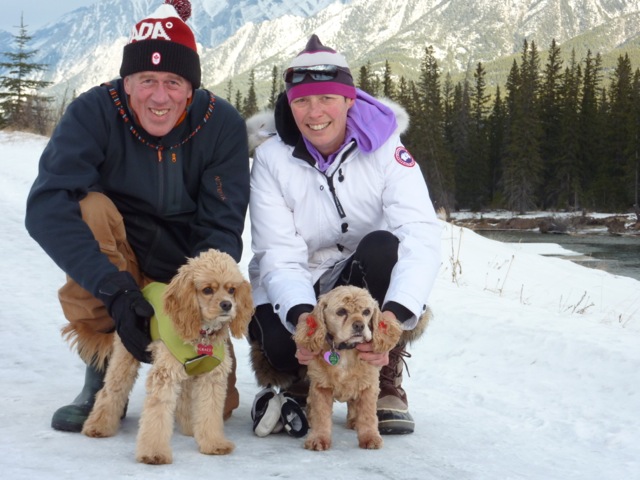
    Dave Wood, Alison and their two Cocker Spaniels (Courtesy photo)

    Several weeks ago, I received an email from Dave Wood, a longtime head coach of the Canadian National Ski Team. He had just arrived in my hometown of Mammoth Lakes, Calif., with a small group of athletes from Black Jack Ski Club in Rossland, B.C. We planned a rendezvous to catch up and to chat about the local training hot spots.

    It had been a few years since Wood had been in Mammoth with skiers. Back around 2003 or 2004, during his tenure as Canada’s national-team head coach, he had discovered this high-altitude training location through an online search and some U.S. distance running links. A reconnaissance to the area gave him all the information he needed: a “live high and train high or low” scenario with great fall weather and miles of trails and open roads.

    Dave Wood Black Jack Ski Club Oct. 2013
    Dave Wood during a recent altitude dryland camp in Mammoth Lakes, Calif.

    For several subsequent falls, Wood and his national team left their home base in Canmore, Alberta, for three weeks of high-altitude sunshine in the Eastern Sierra. Now, Wood was back, this time with a few dedicated athletes from Black Jack, of which he had been the head coach since 2010.

    The Black Jack camp format was similar to the national-team camps he ran in Mammoth years before. Condominium living at just over 8,000 feet gave athletes rollerskiing options right out the door, with single-track running trails not too far away. Proximity to the town of Mammoth Lakes offered a fitness club, grocery store, and some rest day “in-town” opportunities were just a short bike ride away.

    As Wood explained over coffee, the beauty of coming to Mammoth was the convenience of being able to stay in town and drive 40 minutes down to 4,000 feet for intensity training. He raved about the “exceptional rollerskiing,” where on one lonely road leading to Nevada, his athletes saw only a handful of cars during an over-distance rollerski workout.

    I had hoped to join Wood and his Black Jack skiers for several workouts, but managed just one: a long run in Lower Rock Creek. Wood had to leave town for a couple of days, so he enlisted me to take the athletes to a nearby trailhead for their run over Duck Pass. Several inches of snow overnight jammed up that idea, so I drove down the hill with the guys and Chisa Obayashi, a Japanese skier who has been training under Wood’s supervision the past few months. I had in mind beginning the run out of the snow zone at the Paradise trailhead, just north of Bishop, Calif.

    The Black Jack Ski Club, with head coach Dave Wood, while hiking Mount Assiniboine on the Great Divide on the British Columbia/Alberta border in August 2011. (Photo: Dave Wood)
    The Black Jack Ski Club, with head coach Dave Wood, while hiking Mount Assiniboine on the Great Divide on the British Columbia/Alberta border in August 2011. (Photo: Dave Wood)

    Tagging along on the run through towering Jeffrey pines and golden aspens, I was able to learn a little bit about the Black Jack athletes. David Palmer and Colin Ferrie, accomplished junior skiers, are heading into their first year as seniors. They, along with teammate Julien Locke, who missed the trip due to an injury, are among the best in their age group in Canada. They have had solid training all summer including a trip to get on snow at the Haig Glacier. Following their Mammoth camp, they will be heading to Canmore for some time on Frozen Thunder.

    An adopted Black Jack skier, Obayashi made the trip down to Mammoth with the men’s team and was also planning to join them after in Canmore, where she would get some snow kilometers before going to Finland for the start of the racing season. Obayashi connected with Wood through her manager in Japan and had only positive things to say about her training experience in North America, she told me as we ran on the Lower Rock Creek trail.

    The kind of individualized coaching she was receiving from Wood was hard to come by in Japan. She had no regular training group in Japan, so the opportunity to train with Black Jack was setting her up well for her quest to make the Japanese Olympic Team.

    Chief, Cook and Bottle Washer

    A few days later, I met up with Wood again for lunch. He pulled up in the team van on time, but appeared a bit flustered. Dressed in running clothes, he explained that he had dropped off his group over in June Lake to do a three-hour, point-to-point run. He then drove to the termination of the run, parked and began to run the trail in to meet the athletes. They ended up missing a key turn and added nearly an hour to their run. Wood shook his head, muttering something about knuckleheads, but it was hard for Wood to disguise his pride in his skiers.

    The soft-spoken 58-year-old Wood is unflappable, handling his role as “chief, cook and bottle washer” for Black Jack in his customary professional manner. He uses the same thorough and systematic system to train his club skiers as he did to build a solid Canadian team. Wood uses the Mammoth camp as an altitude block is based on science, experience and much thought. There is even a short recovery phase when the athletes pack up and go down to 4,000 feet to sleep.

    Dave Wood at the 2010 Olympics in Callaghan Valley, British Columbia. (Photo: Dave Wood)
    Dave Wood at the 2010 Olympics in Callaghan Valley, British Columbia. (Courtesy photo)

    Four years after resigning from his position at Cross Country Canada following the 2010 Olympics, Wood seems to have landed on his feet. As he explained it, after 18 years with CCC, holding positions as head wax technician, head coach and team leader, it was time to move on. He described his transition without a trace of rancor. In fact, the move to Rossland seemed like the most natural thing in the world.

    After eight years of commuting from Canmore to Rossland to see his girlfriend (about a 6 ½-hour drive in good weather), Wood saw his exit from CCC as the perfect opportunity to move in with Alison, an operating-room nurse at a local hospital. At the same time, Black Jack was looking for a head coach, so Wood felt the timing was perfect.

    Black Jack is a well-established nordic club with over 700 members. It offers programs for 4 year olds to masters, with a small, but active racing program. Ski Academy opportunities are available for Black Jack skiers, as well as for the local alpine program, Red Mountain Racers.

    With about 3,500 residents, Rossland is nestled in the Monashee Mountains of the West Kootenay region at an elevation of 3,410 feet. Winter sports are a big deal there, which usually has skiing from early November through late April. Red Mountain Resort boasts an average 300 inches of snowfall per year and the Black Jack trail system features 40 kilometers of groomed track, a lighted loop, a kids terrain park, and a biathlon range. An extensive mountain-bike park offers single track riding and running during the summer, making Rossland an ideal home for a nordic skier.

    Wood’s approach to ski racing is simple. He believes the bottom line is using the training to become faster.

    “You can’t improve by just going to Europe to race,” he said. “You have to figure out a way to cut 45 seconds over 15 kilometers before going.”

    He likes to keep travel to a minimum during the training phase in order to accomplish goals. There are so many training and racing opportunities out there for skiers, but it’s easy to lose sight of what you are really after, which can boil down to those 45 seconds.

    Thoughts from a Former Coach

    While Wood has been busy with Black Jack the past several years, he’s kept an eye on what is happening at the national level in Canada. Coaching the nation’s top skiers through CCC gave him perspective on his job as a club coach, which notably has different viewpoints and team structure than the nation’s four training centres. There is a lot of training, racing and experience necessary to bridge the gap from club to national-team skier and even more to move into the international realm.

    Wood’s approach to ski racing is simple. He believes the bottom line is using the training to become faster.

    On the state of skiing in Canada, Wood has definite concerns. He recognizes the success of the women’s team in recent years, with medal performances by Beckie Scott, Sara Renner and Chandra Crawford, and a men’s team highlighted by Devon Kershaw’s overall second place in the 2012 World Cup, and Kershaw and Alex Harvey’s sprint championship title at the 2011 World Championships. The problem CCC faces is a lack of depth in its program, he said.

    Wood sees the potential for Canadian success at Sochi in the sprint and team sprint. On the Canada’s stated goal of winning two medals, Wood said, “You have to ski the race before you win the medal.”

    While Harvey is a proven racer, Kershaw has to have a better year than last year for any of this to happen, he said. Wood sees lack of depth on the women’s side as a liability, as well as problems with the Olympic qualification system. It’s difficult to compete against teams like Russia, Norway and Sweden that have large pools of athletes racing at a high level. Those countries can play with putting athletes with fresh legs out in every race.

    One of the underlying problems he sees within the Canadian system is that all of the funding is at the World Cup level. He estimates that what was CCC’s $180,000 dollar budget in 1999 is probably now close to a $2-million dollar budget. Development is left up to the four training centres. While these centres are nationally funded, Wood said there’s a lack of a coaching system, resulting in inexperienced coaches.

    In his opinion, the biggest hurdle for athletes taking part in the training centres is the cost. At a given training centre, he estimated $12,000 Canadian dollars covers a year of coaching and four weekends of racing, but by the time the racing season is over, participants doll out $20,000 to $30,000 annually. Sponsorships are difficult to come by and jobs are low-paying in the training centre locales. Wood isn’t sure enough athletes are going through the system to build the kind of depth CCC needs to become an international power.

    Adding to the situation is the lack of skier development opportunity through the Canadian universities, he said. Lots of junior athletes are dropping out of the sport at 18 years old to get an education.

    Wood is confident that what he is providing at Black Jack is an affordable, high-quality program for juniors and seniors to help make the jump to the international level. A lot of money is spent on Integrated Sports Teams at the national training centres, he said. Besides the expense of these doctors, trainers, massage therapists, etc., is the cost of waxing and equipment.

    “Cut down on this nonsense, and it would be affordable,” Wood said.

    Wood keeps expenses down for his athletes by, once again, keeping things simple. He keeps his wax box stocked with a minimum of wax brands, and while not denying that wax technology is a major element of ski racing, he said it helps to remember what the race really comes down to.

    “Cut down on this nonsense, and it would be affordable.”

    After the Mammoth camp, Wood and the Black Jack skiers planned to head back to Rossland for a short break. Wood had a few days of downtime with Alison and their two Cocker Spaniels, then was due in Canmore for an on-snow camp at Frozen Thunder.

    The schedule in November is dedicated to snow camps in Vernon and Rossland, with racing kicking off at December NorAms in the same locations. Things ramp up in January for the Black Jack skiers, with a NorAm in Canmore, the qualifier for Olympics, U23, and Junior World competitions. The remainder of the season sees the team criss-crossing Canada attending Eastern and Western Canadian Championships, and Canadian Championships in Newfoundland in March. The season concludes with March BC provincial events.

  • There’s Still Snow in Sovereign: Spring Camp Wraps Up

    There’s Still Snow in Sovereign: Spring Camp Wraps Up

    Patrick Stewart-Jones of the Alberta World Cup Academy leads the way at the high point of the Upper World Cup trail at Sovereign Lake Nordic Centre last week.
    Patrick Stewart-Jones of the Alberta World Cup Academy leads the way at the high point of the Upper World Cup trail at Sovereign Lake Nordic Centre last week.

    VERNON, B.C. – Sovereign Lake Nordic Center’s annual Summer Ski camp from May 10-19 attracted the usual collection of hard-core skiers, a mixture of teams and day trippers who need a last fix of snow before the inevitable arrival of summer. With neighbour Silver Star Mountain Resort gearing up for a summer of mountain biking, and the city of Vernon already in full-summer mode in the valley below, Sovereign’s weeklong camp is the last chance for set tracks in the region.

    Canmore Nordic was the first group to arrive on May 10, with a four-day camp justifying the six-hour drive to Vernon. Another Canmore-based team, the Alberta World Cup Academy (AWCA) arrived next for a seven-day, sleep-low (train-high) camp beginning May 12. Black Jack skiers trickled in for the final four days, and biathletes and Para-Nordic team members flocked to the snow-covered trails as well.

    The week preceding the camp featured five consecutive days of temperatures at or about 30 degrees Celsius (86 Fahrenheit) in the valley below and significant snow loss even at the 1600-metre low point of the early season trails. After four days of skiing and a major thunderstorm, the track setters shifted to a higher set of trails.

    AWCA brought most of its athletes, including last season’s NorAm winners Emily Nishikawa and Michael Somppi, as well as Canmore World Cup top-15 finishers Jess Cockney and Phil Widmer, and perennial domestic podium contenders Kevin Sandau and Alysson Marshall.

    “We are up here in the mornings for skiing a few hours at least and then we’re downtown [in Vernon],” said AWCA coach Mike Cavaliere. “We do some cycling, or running in Ellison Park, or go to the gym.”

    While the team is expecting to return to crust skiing in Canmore, this camp was attractive for set tracks and the nearby low elevation (380 meters), with accommodation on a beach near the Ellison Park mountain biking area.

    “Part of the goal is to let people enjoy summer,” Cavaliere said.

    One day, the AWCA women got out their road bikes for a training ride to Marshall’s parent’s house in nearby Salmon Arm for lunch. The next day, the men rode from their lakeside accommodation to Silver Star Village – ascending some 1,200 metres – for their post-ski workout.

    Former Canadian national team coach Dave Wood, now happily “retired” in Rossland, B.C., persuaded his small Black Jack team to drive five hours to start the new training season on groomed trails.

    “We started skiing [in Rossland] in October, and they set track until April 27th,” he said.

    And what about those masters athletes? Most stayed down in the valley, mostly for all the biking, mountain biking, running, rowing, and stand-up paddling recreational options. Skiers from at least four nearby nordic areas were spotted up at Sovereign, having driven by the summer alternatives to get here.

    Despite the example set by the elite athletes, middle-aged journalists are simply not capable of skiing two hours in the morning and then running or biking in the evening for more than five consecutive days. Lesson learned. Or lesson not really learned, because it was so much fun.

  • Diggins Wins Women’s Nor-Am minitour After Rocket Performance Sunday

    Diggins Wins Women’s Nor-Am minitour After Rocket Performance Sunday

    Holly Brooks (APUNSC) was leading the overall Nor-Am mini-tour in Rossland, BC, Sunday morning and was the first skier out of the gate in the women’s 10K classic race. She was ahead by 7.3 seconds after winning the 5K skate on Saturday by 11 seconds over Sadie Bjornsen (APUNSC), and placing third in the sprint Friday. But when Jessie Diggins (CXC Elite) passed her on the last lap, there was nothing she could do. Diggins, who started in third place, 19.1 seconds behind Brooks on Sunday, was able to widen the gap and won both Sunday’s stage and the overall mini-tour title.

    “Sadie (Bjornsen) caught me on the big uphill after the first lap. We skied together for a long time; most of that second lap, and then Jessie (Diggins) basically blew by us. Then Sadie gapped me a little bit. I was able to hold off Perianne Jones and stay on the podium for the aggregate,” Brooks said.

    “I much rather be one of the chaser than being chased. You’ve got to ski fast, because you don’t know where people are. It makes it hard to ski smooth, and easy to get bad technique, forget long strides and skiing smooth,” Brooks said.

    “The race today felt awesome! I went into today’s race without a strong race plan – I didn’t really know what to expect since I haven’t done many races in this format” Jessie Diggins said in an email to FasterSkier, explaining that her plan was simply to ski fast.

    “I definitely like to chase people down more than I like being chased, so I wanted to focus on trying to catch the leaders and not on all the people trying to catch me! I ended up catching Holly (Brooks) and Sadie (Bjornsen) at the start of the second lap, and when I passed them on a downhill I just decided to go for it and see what happened, hoping they wouldn’t reel me back in. And I got lucky and had a great race,” Diggins said.

    Diggins explained that the dumping snow made for some tricky conditions, not only on the waxing side of operations, but also for the racers on the course.

    “The conditions were really interesting, since it was snowing hard and although some of the tracks had been skied in, there were definitely a few spots where it was advantageous to switch lanes,” Diggins noted.

    Diggins also contributes her success to the CXC coaches.

    “I’m beyond impressed with our coaches; they absolutely nailed the wax and my skis felt like they were on fire. They’ve also been helping me a lot with my classic technique this year and I feel like it’s all starting to come together. It’s weird because I’ve always considered myself a better skater, but today made me feel more confident in my ability to hold my classic technique together.”

    Feeling the toll

    Sadie Bjornsen (APUNSC) was almost surprised to beat Brooks in the classic race, and maintain her second place overall. She was 7.3 seconds behind Brooks at the start, and was in second place overall after the first two stages.

    “Warming up I knew I was going to have to work for this race,” Bjornsen said to FasterSkier, explaining that a 3-day mini-tour on top of the longest racing stretch in her career so far was starting to take a toll on her. While Bjornsen was surprised that she was able to catch and hold Brooks, she had not accounted for Diggins.

    “It was a really close race with like 50 girls going out in two minutes, and none of us wanted to look back. So it was quite a surprise when Jessie (Diggins) came by us so quickly. We tried to stay with her, but she as on a roll,” Bjornsen said.

    Caitlin Compton (CXC) was also impressed with her teammate.

    “I think Diggins put a ton of time on everyone that second lap. I saw her as she crested the hill and then never again,” Compton said.

    “My strategy was to catch the girls ahead of me. When I realized I wasn’t going to catch Perriane (Jones), I realized that there were still a ton of girls behind me chasing me down! So my focused shifted to holding them off for the last half of the second lap. I was happy to cross the line without giving up any places. Overall, a solid classic day for me,” Compton concluded. She was in fifth place after stage one and two, and started 36.8 seconds behind Brooks on Sunday morning, and finished fifth overall for the aggregate after an eighth place in the classic race.

    Organizers and volunteers shine

    While snow was falling throughout the weekend, the racers all chime in on how great the organizers were and how well maintained and prepped the courses were.

    “Black Jack did a great job with the event and the courses were in great shape,” Compton said.

    Diggins also noticed the effort the organizers had put into making the mini-tour a smooth, fun experience for everyone involved, from racers to spectators and support staff.

    “What I do know was that the volunteers out there this weekend made it so nice – the courses were very clearly marked, there was a sweet DJ playing, and the people at the start and finish were friendly and helpful. It was just a fun weekend,” Diggins said.

    Complete results here.

    Women's overall podium: Jessie Diggins (CXC), Sadie Bjornsen (APUNSC), Holly Brooks (APUNSC), Perianne Jones (NTS) and Caitlin Compton (CXC). Photo courtesy of Rob Whitney