From the FasterSkier archive — posts syndicated from athletes’ and coaches’ own blogs between 2004 and 2012, kept online as published. Current coverage is at fasterskier.com.

Tag: Black Mountain

  • 2014-15 NENSA Eastern Cup Series Preview

    (NENSA press release)

    By Sophie Hodges

    We are down to three months away from the next Eastern Cup, NENSA’s signature race series, and it is time to get prepped for all the excitement to come! In case any of you have been keeping up with the Farmer’s Almanac, this year is supposed to be a winter to remember, so lets get excited!

    I personally am very excited for this winter, because we have a new venue, Rikert Nordic Center! For those of you who have not skied there before, I can assure you, it is a wonderful place to ski and a beautiful woodland area, perfect for this year’s Eastern Cup Opener. Rikert is equipped with snow-making guns, and will be properly prepared for the races byDecember 20th. 

    Keith Wilkerson from the Frost Mountain Nordic ski club, co-director of the races with Mike Hussey of Rikert Nordic Center are putting together an exciting weekend of races. Says Keith Wilkerson, ”We’ve partnered with the Better Middlebury Partnership, our local business development group, and the Addison County Chamber of Commerce, to engage the larger community in hosting this event. Middlebury Inn has agreed to be our host hotel and we’re fine tuning the details for a special Saturday evening reception for skiers and fans in town. We’re also really excited about having Eastern Cup racing on Rikert’s homologated course. Our goal is to put on a marquee event.” Looking forward to it, Keith!

    After Rikert’s event, we have weekend number two, at Black Mountain in Rumford Maine! The first day of this weekend, January 17th, is also the Bates College Carnival which looks to be very promising, and according to Becky Woods, “Bates is thrilled to be hosting at Black Mountain and working with the Chisholm Ski Club. The planning is in full swing – it should be a great event. We are excited to have one race day that is a combined Carnival and Eastern Cup!” Thanks Becky, sounds like it’s going to be a great weekend!

    The next in line will be race weekend number three, at the Craftsbury Outdoor Center, in Craftsbury Common, Vermont. This is going to be an exciting weekend because on February 6th-8th, Craftsbury is hosting a USSA SuperTour, the Dartmouth Carnival on February 6th and 7th, and the NENSA Eastern Cup on February 7th and 8th. 

    Everything will be super busy, and my advice to you would be to make sure your skis are labeled! Liz Guiney, from the Craftsbury Green Racing Project says that everyone at Craftsbury is “really excited about this event for a few reasons. The first is that the Outdoor Center will be hosting in our new Activity Center, which is spacious and directly on the nordic trails. The skiers will have plenty of room to change, spread out between races, and get warm next to the fireplace. The other exciting aspect of the race weekend is that it is a combination Eastern Cup, carnival, and a USSA SuperTour. This means that the best college racers, juniors, and professional skiers will all be competing together, which will raise the level for everyone involved. It’s going to be a great event and an awesome time to ski at Craftsbury!” Hope to see you all there!

    The final weekend of the Eastern Cup series will be held in both Oak Hill, Hanover, New Hampshire, and the Holderness School, in Holderness New Hampshire. Day one, February 14th, will be held by the folks at Oak Hill, who say, “race committees have met several times and energy is running high! The excellent snow ‘in town’ through the latter half of last year’s xc season left all of us energized about getting outside on skis, and the Eastern Cup is a community-building way of celebrating Nordic skiing and racing.” Day two will be put on by the Holderness School, and it is also the Cheri Walsh Memorial Eastern Cup race. From the race organizers at Holderness: “As always, we hope to use the traditional Cheri Walsh course which we believe showcases fun agile classic skiing in it’s purest form. The best part about hosting the race is that it brings the best skiers in the region to our home club, and allows our ski community to come together and experience ski culture at it’s best. We always hope that a young Bill Koch skier will see the best Eastern Cup skiers and say to themselves, ‘I can do that’.”

    Eastern Cups are open to skiers from all levels, and even draws some of the nation’s finest talent. Katharine Ogden, one of last year’s Gallagher Cup winners says “I am really excited for this new season of racing and can’t wait to race against a new batch of skiers for my fourth year in the Eastern Cup race circuit!”

    Says Patrick O’Brien, also a winner of last year’s Gallagher Cup, “the Eastern Cup circuit is a valuable development tool for skiing in New England because it allows citizen, high school, and senior racers to come together and compete against each other. Skiing is normally a pretty small sport in the US so any time you can get those often separate groups to all compete on the same course you are going to increase participation and make for a higher level competition. A high school freshman can see where they stand agains a World Cup starter or USST member. The Eastern Cup circuit is also critical development path for our junior racers to practice higher level starts before heading to Junior Nationals come March. Having a unified race circuit throughout the winter is one of the reasons New England has historically been one of the strongest regions at Junior Nationals!”

    We are excited to see you all out there, ready to race for the first weekend, December 20th and 21st!

  • Shepard Campaigning to Save Black Mountain

    Shepard Campaigning to Save Black Mountain

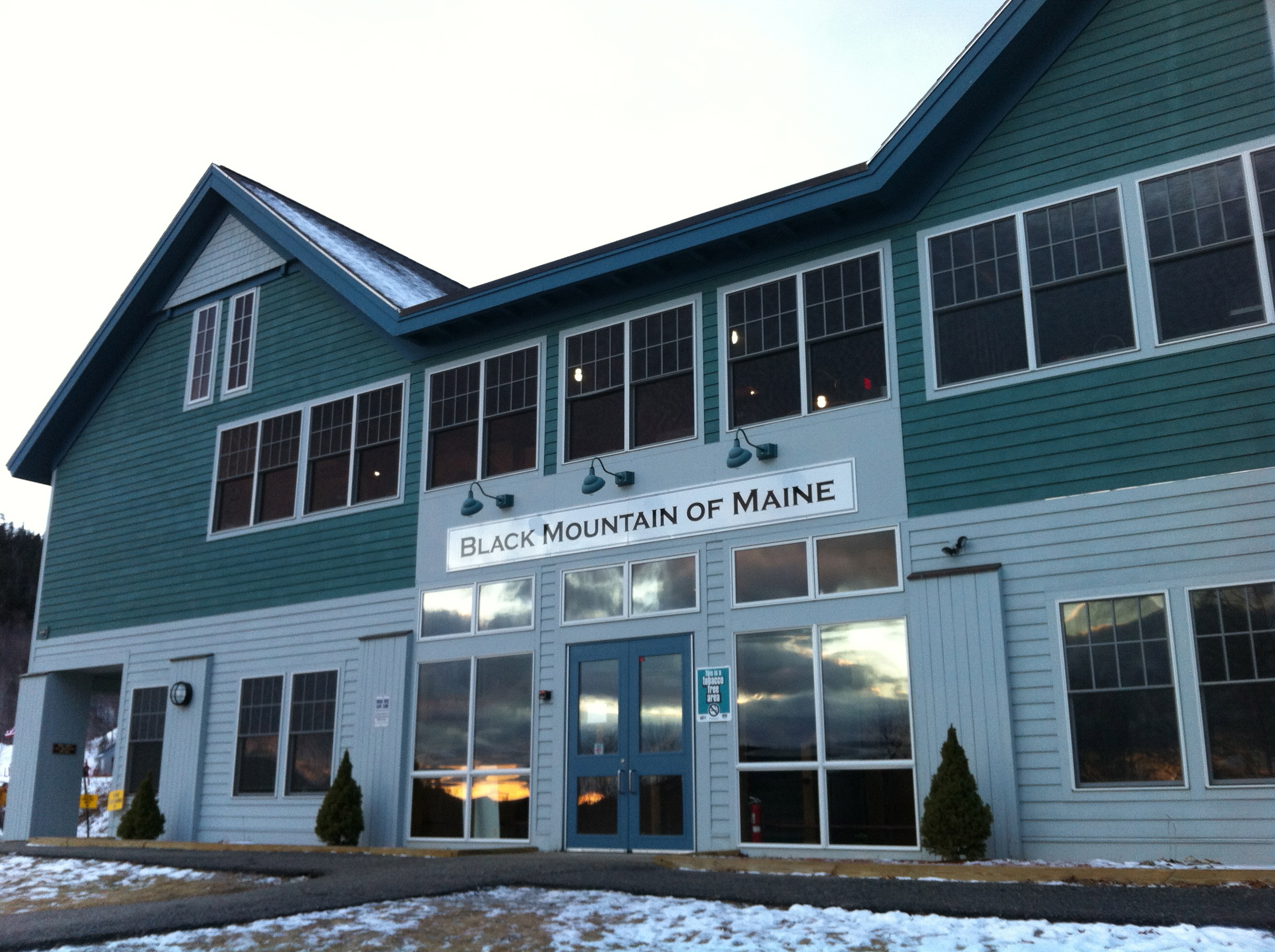
    The lodge at Black Mountain in Rumford, Maine.
    The 13,000-square-foot lodge at Black Mountain in Rumford, Maine.

    After announcing Wednesday that the Maine Winter Sports Center (MWSC) is closing Black Mountain Ski Resort in Rumford, Maine, six-time host of the U.S. Cross Country Nationals, President/CEO Andy Shepard is hoping a buyer will step forward soon.

    “At this point, I am completely focused on finding a way to keep Black Mountain operating next year,” Shepard wrote in an email. “While MWSC won’t be involved, there has been too much progress and the mountain is too close to making money to stop now.”

    Maine Winter Sports Center President and CEO Andy Shepard (l) with two-time Olympic nordic skier Chummy Broomhall at Black Mountain in Rumford, Maine. Broomhall designed the mountain's 17-kilometer trail system in the 1960s. (Photo: flyingpointroad.com)
    Maine Winter Sports Center President and CEO Andy Shepard (l) with two-time Olympic nordic skier Chummy Broomhall at Black Mountain in Rumford, Maine. Broomhall designed the mountain’s 17-kilometer trail system in the 1960s. (Photo: flyingpointroad.com)

    Shepard told the Lewiston Sun Journal that is has not been decided whether its nordic trails will also be closed.

    In the meantime, Shepard has started the Black Mountain of Maine Fund in an effort to find a nonprofit to transition ownership to and a group of individuals or corporations willing to provide economic stability. In its first day, the fundraiser brought in $2,300 dollars and was up to nearly $9,000 dollars on Friday. It has a goal of $100,000 dollars.

    A Rumford town vote to eliminate funding to the mountain made Shepard’s decision to close the resort after 10 years of ownership “untenable.” The Portland-based Libra Foundation supports the MWSC, and its partners knew when they purchased the mountain in 2003 that they couldn’t sustain it without a supportive community.

    The new owners would inherit a 13,000-square-foot lodge less than 10 years old, an internationally certified nordic venue, a snowmaking system, and Maine’s fourth-highest vertical mountain with a 50-year history. Two-time Olympian Chummy Broomhall (who competed at the ’48 and ’52 Games) designed its 17-kilometer trail system, along with the Olympic nordic trails in Lake Placid, N.Y., and Squaw Valley, Calif.

    The volunteer-driven Chisholm Ski Club has hosted nationals at Black Mountain, along with the 1950 World Championships, NCAA Championships (1976, 1999, 2009), 1996 Junior Olympics and 1991 U.S. Biathlon Championships.

    The venue is not a primary training site for the MWSC Olympic Development Team. The club’s office is in Caribou, a five-hour drive north of Rumford. Its athletes train on world-class trails at the Nordic Heritage Center in Presque Isle and the 10th Mountain Ski Center in Fort Kent.

    A longtime host of high-school state championships, Black Mountain also regularly holds Maine’s largest high-school race, the Jon Sassi Memorial Classic, which doubles as the state’s J2 team qualifier. It’s also the home course of the Bates College Nordic team, which hosts a carnival for the Eastern Intercollegiate Ski Association (EISA) circuit.

  • Maine Winter Sports Center to Close Black Mountain Alpine Operation

    Maine Winter Sports Center to Close Black Mountain Alpine Operation

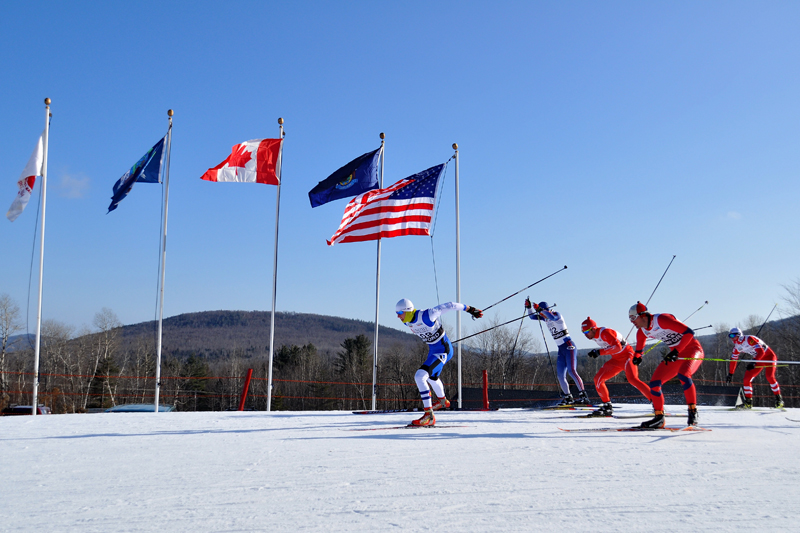
    The second men's semifinal gets out on the course.  Photo: James Doucett.
    Black Mountain in Rumford, Maine, host of the 2012 U.S. National Championships, announced this week that it plans to close down its alpine operations. Photo: James Doucett.

    Maine Winter Sports Center Press Release:

    The Maine Winter Sports Center, which has owned and operated Black Mountain in Rumford, Maine since 2003, has announced its intention to close the alpine mountain, effective immediately.

    “The timing is unfortunate coming off our best season ever,” said Andy Shepard, President and CEO of the MWSC, “Several years ago we took on the challenge of turning Black Mountain around with an understanding that we needed strong community support to make the economics work.”

    “I know the mountain still has a lot of support within some sectors but the electorate told us clearly that there are other priorities and we absolutely respect that,” Shepard added, referring to the recent town vote not to fund Black Mountain as a recreational resource by a nearly 2-1 margin.

    Black Mountain had changed its business model radically last year, looking to make skiing more accessible to the region and to also reach profitability. It reduced day tickets to $15 and season passes to $150, adding a new snowmaking system, expanding the Last Run Lounge, adding a retail shop and a new, upgraded website. It also added a new 1.5-mile intermediate trail, Allagash, which quickly became a major new attraction.

    “Day Ticket sales last season were up 197%, rentals were up 93% and lessons up 426%,” said Shepard. “Overall revenue was substantially up and the mountain was making progress. That said, the nonprofit community mountain still posted a loss, which required outside sources to cover.”

    After a careful review of the financials and discussions with financial backers, Maine Winter Sports Center was contemplating future operations but the town vote to eliminate funding to the mountain made the tenuous decision untenable.

    “We invested in the operation of Black Mountain for 10 years because we saw the mountain as an important part of the economy and skiing heritage in the region,” said Craig Denekas, President and CEO of the Libra Foundation. “That partnership has been a success for many seasons and we were pleased to play some role in that. But we also understand that the people have spoken and we simply have to recognize that,” Denekas added.

  • U.S. Nationals Classic Sprint Preview and Predictions

    Jessie Diggins (CXC) comes out of her tuck and free skates into the stadium in the A-Final with teammate Jennie Bender just behind. Photo: James Doucett.

    RUMFORD, Maine – Following a nail-biter of a skate sprint to open the U.S. Cross Country Championships, the athletes contesting Sunday’s classic sprint can be expected to finish out the week with another great race. And with important U23 Championship qualifying points still up for grabs, the younger skiers especially will be looking to fight to the top spot on the podium.

    Athletes have been racing and training on the 1.4  and 1.6 k sprint courses all week and finally know exactly what to expect, where to make the move, and perhaps even the strengths and the weaknesses of the competitors they have been observing throughout the week.

    However, there is one athlete on the start list that has shown no weakness this season, and certainly not this week. Jessie Diggins (CXC/USST) has taken all three U.S. Nationals titles this week and is looking to win the classic sprint to cap off a flawless week of racing. It is hard to bet against her, with a grand total of 12 wins this season between the SuperTour, NorAms and nationals.

    After coming so close to victory on Tuesday’s opening skate sprint, Diggins’ CXC teammates Jennie Bender and Caitlin Gregg appear to be the contenders with a chance of knocking Diggins off the top step. Bender in particular is a strong classic sprinter, and has her eye on snatching her first gold medal of the week. Look for the two CXC stars to battle it out on Sunday.

    Following an untimely pole break in the freestyle sprint, Ida Sargent (USST/CGRP) will be out for redemption. With three top results so far this week, including a second place in Thursday’s 20 k mass start classic, the strong classic skier will look to break free from the pack in the A-final.

    Kate Fitzgerald (APU), fresh off a top five in the 20 k classic, should be shooting to climb onto the podium for the first time of this year’s nationals. Her teammate Rosie Brennan could also be a threat—her powerful technique will be an advantage in the long final straightaway.

    Canadian star Dasha Gaiazova (RMR/CNST) enters her first sprint of the week. Known as an excellent sprinter on the World Cup, Gaiazova enters the race a favorite for the win. With numerous World Cup starts to her name, she may certainly use her speed and experience to outpace the field.

    As of Saturday morning before training, Sadie Bjornsen (APU/USST) hadn’t decided if she would take to the line on Sunday, but if she ends up feeling well enough to put on a bib, it’s hard to count out a World Cup silver medalist.


    Predictions: 

    Steve:

    1. Jessie Diggins
    2. Dasha Gaiazova
    3. Ida Sargent
    4. Jennie Bender
    5. Kate Fitzgerald
    6. Becca Rorabaugh

    Matt:

    1. Dasha Gaiazova
    2. Jessie Diggins
    3. Jennie Bender
    4. Ida Sargent
    5. Sadie Bjornsen (if racing) or Sophie Caldwell
    6. Eliska Hajkova

    Audrey:

    1. Jessie Diggins
    2. Jennie Bender
    3. Dasha Gaiazova
    4. Ida Sargent
    5. Sadie Bjornsen (if racing) or Eliska Hajkova
    6. Kate Fitzgerald
    The men's A Final enters the stadium, Torin Koos (BSF) leads Dakota Blackhorse-von Jess (Bend Endurance Academy), Lars Flora (APU), Sylvan Ellefson (SSCV/Team Homegrown), Karl Nygren (CXC) and Tyler Kornfield (UAF). Photo: James Doucett.

    Men:

    The favorite coming into the event has to be Torin Koos (BSF/Rossignol), now with three straight U.S. Nationals sprint titles to his name. With a plethora of experience, Koos will look to capitalize on a course that has provided him with so much success over the years.

    Aiming to end Koos’ stronghold on the sprints will be a number of elite racers. Sprint specialist Dakota Blackhorse-von Jess (Bend Endurance Academy) stands a good chance of ending Koos’ streak. Blackhorse-von Jess was able to ski behind Koos in the freestyle sprint earlier in the week and should now have a good idea of what to expect from the Olympian in the critical final few hundred meters of the stadium. 

    Mike Sinnott (SVSEF) will be looking to recapture the speed he had earlier in the season. Despite a sub-par U.S. Nationals so far, don’t count Sinnott out of the mix. Known as a strong sprinter, Sinnott will certainly be a threat. Sun Valley teammate Matt Gelso will look to improve upon his 30 k classic mass start, where he placed sixth.

    The youngest U.S. Ski Team member, 20-year-old Skyler Davis (SMS/USST) will be looking to prove his berth on the national team. In 2011, Davis placed third in the event and will be looking to once again step onto the podium. Fellow USST D-team athlete Erik Bjornsen (APU/USST) also was on the podium in 2011 and will also be looking for a top result, though recent sickness may hold him back.

    Eric Packer (Dartmouth) will return to Black Mountain on Sunday following a podium placing in Friday’s 30 k classic mass start. A strong sprinter, Packer will most definitely be in the mix. Tyler Kornfield (Alaska Winter Stars/University of Alaska Fairbanks) will be looking to make his second podium of the week. Sylvan Ellefson, (SSCV/Team HomeGrown) will hope take back the mere centimeters the eluded him in the week’s opening sprint.

    Following a fourth place in the distance mass start, Lars Flora (APU) appears to be back to his old self. A veteran of the pack, Flora will look to use his years of experience to land yet another national podium spot.


    Predictions: 

    Steve:

    1. Torin Koos
    2. Eric Packer
    3. Dakota Blackhorse-von Jess
    4. Erik Bjornsen
    5. Sylvan Ellefson
    6. Lars Flora

    Matt:

    1. Torin Koos
    2. Eric Packer
    3. Dakota Blackhorse-von Jess
    4. Erik Bjornsen
    5. Lars Flora
    6. Mike Sinnott

    Audrey:

    1. Dakota Blackhorse-von Jess
    2. Torin Koos
    3. Lars Flora
    4. Eric Packer
    5. Erik Bjornsen
    6. Skyler Davis


  • Notes and Quotes from Nationals: 10/15 k Freestyle

    Notes and Quotes from Nationals: 10/15 k Freestyle

    RUMFORD, Maine – On the second day of competition at the 2012 U.S. Cross Country Championships, a longer course and a massive hill made for some spent athletes in the women’s 10 k and men’s 15 k freestyle individual starts at Black Mountain on Thursday.

    Here are a few quotes that didn’t make the recaps:

    On the course:

    “It was a really fast course so it was really hard, too, not a lot of recovery.” – Bryan Cook (Craftsbury Green Racing Program), 5th

    “I kind of grew up from [Bates] College skiing on this course and having that comfort. Knowing these trails pretty well helps a lot.” – Sylvan Ellefson (Team Homegrown/SSVC), 3rd

    “I wouldn’t say it suited my strengths, but it wasn’t a bad course for me by any means. As long as there’s good hard places on the course that’s good for me. If there’s not enough up and down, I’ll struggle because I’m not that powerful. There was definitely enough timing for me.” – Matt Gelso (Sun Valley Ski Education Foundation), 6th

    On High School Hill:

    “Icy, hard, steep. I don’t think that’s where I was making time up out there.” – Tad Elliott (USST/Team HomeGrown), 15 k freestyle champion

    “It felt pretty good, it was a little icy halfway up. I was trying to V2 as much as I could; as soon as I slipped then I go into V1 and I stayed pretty relaxed. For the fourth lap, it was a thrash-fest to get up and over it as fast as I could.” — Matt Liebsch (Team Strong Heart/Team Birkie), 2nd

    On the value of splits:

    “It’s sweet because usually when you’re getting splits sometimes you’re like, ‘I need to pick it up,’ or ‘I need to go slower.’ Just to hear that your teammates were fighting for podium that’s pretty, I mean it makes it more fun it makes you more relaxed and enjoy skiing out there.” – Elliott

    In the video below, coaches Fred Fayette (University of Vermont) and Erik Flora (Alaska Pacific University) walked us through two versions of split timing methods:

    On high expectations:

    “I’m trying to make sure I don’t get caught up in other people’s expectations and stuff and just go out there and have fun because if I’m not able to enjoy the day then its not worth it.” – Jessie Diggins (USST/CXC), 1st

    “(Diggins is) going on Wednesday to Milan to race [in the World Cup] next weekend. It’s a really quick turnaround … it’s kind of rough. We didn’t want her to take off immediately after the last race, but at the same time she needs to adjust over there. It’ll work out … That’s the thing, too; the goal we set at the beginning of year was to have as good a season as last year. So far she’s exceeded those a lot and racing the World Cup, she’ll get to start some, get some experience there so if she goes a little jet lagged, it won’t be like, ‘Aw, stupid Jessie, didn’t win!’ ” – Jason Cork, CXC head coach

    On making changes:

    “I made a little bit of a change today. The early races this year, I’ve been trying to ski into them, kind of stay big and relaxed. I tried to step it up a little bit on the first two laps of this race, see if I could hold onto it a little bit longer.” – Ellefson

    “I was able to use some of the new cues that I’ve worked on and get some traction on this new snow because that’s been a problem for me, not to just kind of spit out and spaz a little bit so I think that was a good one, something I’ve worked hard on and happy with how that went.” – Noah Hoffman (USST/Team HomeGrown), 4th

    “[I] had some gas pedals and was able to put it down, definitely a lot more than sprint; that was not a stellar day. Wasn’t as good as I would have liked, but I wasn’t fourth so that’s good.” – Gelso

    On fast skis:

    “Skis were wicked fast, those downhills I had to remember to blink sometimes because my eyes teared up.” – Diggins

    “My skis were rad out there. It kind of showed that they helped make us lucky out there … that we’re up near the front when it’s that tight. We want to thank those guys for sure.” — Elliott

    On recovering from a cold:

    “I felt real good the first lap, the second one I was still coughing up something from the cold that I was getting over. … This is like my third illness of the year. I flew in Saturday and Sunday felt OK, but Monday felt real bad so I’ve been just skiing just real light, just jogs, and a lot of tea and Cold-Eeze and Zicam, and I was able to wake up and feel pretty decent today. I took a really long warm up so I was able to get the body going.” — Matt Liebsch (Team Strong Heart/Team Birkie), 2nd

    “I’ve been trying to get over it for like a week. I decided to take off the sprint, which I really didn’t want to. Today I warmed up and it was kind of like the same feeling and it’s like, well I’m not going to skip another race so I went for it. … When you’re out there you feel 99 percent, that extra little bit isn’t there. I felt all right but not what I would have hoped to feel.” – Erik Bjornsen (APU)

    On racing in Rumford before going back to Europe:

    “It’s a really good preparing for World Cup, for sure. I haven’t raced in two weeks now, I had a good training block back home over the holidays. I’m racing with a lot of very fast American girls. It’s exciting to see so many good distance racers in USA, and it’s great preparation for me for the World Cup in terms of doing hard racing, but in a bit of a relaxed atmosphere and not changing so many time zones.” – Dasha Gaiazova (Canadian National Ski Team), 2nd

    On not being on the start list:

    “That was a surprise. I wasn’t actually on start list, it was kind of funny, my parents called me last night and they were like, ‘Hey you’re not on the start list.” – Kate Fitzgerald (APU), 4th

    On back-to-back races (with 30/20 k on Friday):

    “Everyone’s in the same boat racing 2 days in a row, but that’s kind of where the sport’s going, too. You have mini tours, Tour de Ski, stuff like that. Gotta learn how to hydrate, eat, put your legs up.” – Cork

  • U.S. Cross Country Championships: 10/15 k Freestyle Preview and Predictions

    U.S. Cross Country Championships: 10/15 k Freestyle Preview and Predictions


    Tad Elliott (CXC) charges ahead in the 30K skate at US Nationals 2011 Photo: Flying Point Road.

    RUMFORD, Maine — Racing resumes at Black Mountain on Thursday at 9:00 am with the 10/15 k individual-start freestyle. With forecasts predicting temperatures to remain below freezing for the majority of the week, the upcoming races will likely all be held on hard-packed, fast courses.

    The Course

    On Wednesday, athletes and coaches were seen testing skis, training and acquainting themselves with the entirety of the 3.26 k lap of which the women with do three laps and the men will do four.

    Athletes will continue downhill from the original sprint course.

    The beginning of the distance loop remains identical to the first section of Tuesday’s sprint course. The longer loop splits off in the old relay exchange area and carries athletes further into Black Mountain’s trail network.

    Following a lengthy downhill section, athletes will climb back up in elevation before dropping again. This is the section where athletes will want to conserve as much energy as possible before climbing the infamous High School Hill, a deciding section of the course where only the strongest of athletes will prevail.

    With lungs and legs burning, athletes will descend back onto the sprint course before heading into the stadium, where they will either head out for yet another lap or power towards the finish.

    Men’s Preview:

    Tad Elliott (Team Homegrown/USST) is the defending national 30 k champion in the classic discipline, and the Durango native is an even better skater. He found his form in Davos, Switzerland last month, scoring his first World Cup points with a 27th place in the 30 k skate. Back on home turf, Elliott will be a major threat on Thursday. As the first starter, however, he will be at a disadvantage in receiving splits, with the rest of the men’s A-seed in the chase.

    Elliott’s teammate Noah Hoffman (Team Homegrown/USST) sits in the opposite position on the start list: as the 17th skier out of the gate, the distance specialist will be able to hunt his competition down. With the 30 k classic only a day later on Friday, however, which is Hoffman’s stronger distance, he may decide to conserve energy for the longer event. Regardless, Hoffman is clearly fit—he missed qualifying for the sprint heats by less than a second on Tuesday, his 33rd place a significant jump up from the 54th he finished in last year.

    Lars Flora (APU) quietly finished in the top five in the skate sprint on Tuesday. As his real strength lies in distance racing, he will be one to watch out for. He is the defending 15 k classic champion, and was the runner-up to Elliott in last year’s 30 k freestyle race.

    Sylvan Ellefson (SSCV/Team Homegrown) should also be right in the action on Thursday. He’s been racing well this winter, and the fact that he made it into his first A-final on Tuesday speaks to the fact that he’s in prime shape for this week of racing.

    Mike Sinnott (Sun Valley Ski Education Foundation) started off the season in top shape, taking an early lead in the overall SuperTour and continuing to race well for the December NorAms. He was 10th in the sprint earlier this week, but with the prospect of World Cup racing coming up, he’ll be aiming for a top result.

    Karl Nygren (CXC) seems to be getting into surprisingly fast form. His smart tactics played a big role in his progress through to the finals on Tuesday, but the University of Colorado alum also considers himself to be a better distance skier. Leif Zimmermann (BSF/Madshus) should be right in the mix as well—after a win at the opening SuperTour, he had two top-5s in the NorAm 15 ks. Veteran Brian Gregg (CXC) did well in the skate distance in West Yellowstone, and is could pop a good result on Thursday.

    Staff Predictions:

    Steve: 

    1. Sylvan Ellefson
    2. Noah Hoffman
    3. Lars Flora
    4. Tad Elliot
    5. Mike Sinnott

    Audrey:

    1. Tad Elliott
    2. Noah Hoffman
    3. Lars Flora
    4. Sylvan Ellefson
    Matt:
    1. Noah Hoffman
    2. Tad Elliott
    3. Sylvan Ellefson
    4. Lars Flora
    5. Leif Zimmermann


    Women’s Preview:

    After her 10th win of the season, Jessie Diggins (CXC/USST) is the safest bet for the top spot in the women’s 10 k. She may be skiing with a target on her back, but at least as the 16th starter she can be the one to hunt everyone else down. After their sprint podium sweep on Tuesday, her teammates Caitlin Gregg and Jennie Bender will also be major contenders. The trio is clearly feeding off each others’ performances, and after her fall in the last meters of the A-final, Bender in particular will be out for redemption, though skate is her weaker discipline.

    Ida Sargent (CGRP/USST) had an unlucky day in the sprint, breaking a pole and failing to find another one for a significant stretch in the final. She certainly has the potential to do well on this course, as she’s a strong skater on the hills. There will be no shortage of climbing with the women heading up High School Hill three times.

    Sadie Bjornsen (APU/USST) took Tuesday’s sprint off due to illness, but is on the start list for Thursday. She could still skip the 10 k, but even if she doesn’t, her health might slow her down. Her teammate Kate Fitzgerald (APU), however, could pop a big race. She was fifth in both distance races at Nationals last January, and has had solid skate distance results all season.

    Eliska Hajkova (University of Colorado), who was 5th on Tuesday, will have the altitude advantage on her side in the distance race, and has been training on snow much longer this season than some of her competitors. Corey Stock (Cambridge Sports Union), who finished 4th in the sprint, could have another breakout performance in the distance. But since the 17-year-old had to skip Nationals last year due to injury, she’s still a bit of an unknown against this caliber of a distance field.

    Staff Predictions:

    Steve:


    1. Jessie Diggins
    2. Caitlin Gregg
    3. Eliska Hajkova
    4. Jennie Bender
    5. Sophie Caldwell

    Audrey:

    1. Jessie Diggins
    2. Ida Sargent
    3. Caitlin Gregg
    4. Kate Fitzgerald
    5. Corey Stock

    Matt:


    1. Jessie Diggins
    2. Caitlin Gregg
    3. Ida Sargent
    4. Kate Fitzgerald
    5. Eliska Hajkova


  • The Rumford Mixed Zone: Post-Sprint Interviews (Video)

    The Rumford Mixed Zone: Post-Sprint Interviews (Video)

    RUMFORD, Maine — There was no shortage of excitement at Black Mountain on Tuesday, where U.S. Cross Country Championships kicked off with a freestyle sprint. We checked in with the day’s winners Torin Koos (BSF/Rossignol) and Jessie Diggins (CXC/USST), as well as Caitlin Gregg (CXC), Jennie Bender (CXC), Ida Sargent (CGRP/USST), Corey Stock (CSU), Colin Rodgers (SVSEF), Karl Nygren (CXC), Joanne Reid (CU), Eliska Hajkova (CU), Bryan Cook (CGRP) and Nils Koons (CGRP).

    Men’s Race Report | Sprint Brackets

    Women’s Race Report | Sprint Brackets

  • Koos Claims Third-Straight National Sprint Title

    Koos Claims Third-Straight National Sprint Title

    The Men's A Final enters the stadium. Photo: James Doucett.

    RUMFORD, Maine — Torin Koos (Bridger Ski Foundation/Rossignol) made it three straight U.S. National sprint titles Tuesday at Black Mountain, using his veteran racing experience to navigate a fast, tactical day. In a tightly packed A-final, Bend Endurance Academy’s Dakota Blackhorse-von Jess was close behind in second, and in a fight for bronze that was close enough to protest, Tyler Kornfield (University of Alaska Fairbanks) completed the men’s podium in third mere millimeters ahead of Sylvan Ellefson (SSCV/Team Homegrown).

    “I felt really good — I’ve won here before, so that probably gives [me] confidence,” Koos said. “It’s all about you and your lane. You don’t think about that other stuff going on in the other four or five lanes around you.”

    The men’s racing began at 10 a.m., where Blackhorse-von Jess posted the fastest qualifying time and set himself up nicely for the rounds. Mike Sinnott (Sun Valley Ski Education Foundation) and Ellefson were both less than a second behind in 2nd and 3rd, respectively.

    Smart tactics, fast skis and a knack for avoiding crashes were the trick making it through the subsequent rounds. The trails at Black Mountain were hard-packed and slick, which favored athletes that could confidently balance on their skis. With the help of cold temperatures overnight and all of Tuesday, the crew at Black Mountain was able to repair the parts of the course made thin Sunday night’s rain. Meanwhile, the wind made positioning and drafting of the utmost importance for all but the gutsiest racer.

    The first men's semifinal entering the stadium. Reese Hanneman (APU) leads Tyler Kornfield (UAF) and Patrick O'Brien (GRP). Photo: James Doucett.

    Ten athletes — the top two finishers in each quarterfinal — automatically advanced to the semi-finals, along with lucky losers Ellefson and Dave Norris (Alaska Winter Stars), who had the fastest qualifying times of the all the 3rd-place quarterfinal finishers.

    The semifinals were hard fought. Tim Reynolds (Craftsbury Green Racing Project) entered the final few hundred meters of the first heat with a substantial gap over the rest of the field but lost his balance, ending his run for the podium. Reynolds chose not to start in the B-final, perhaps saving energy for the back-to-back races to be held later in the week.

    In the B-final, Patrick O’Brien (CGRP) showed that he still had plenty left in the tank. He skied well, outpacing the rest of the field, which consisted of Norris, Reese Hanneman (APU), Sinnott, and Ryan Scott (Montana State University). O’Brien ended the day seventh overall, adding another U.S. Cross Country Championship top 10 to his name.

    When it came time for the A-final, Koos proved he had a tactical expertise that only comes with race experience. The former U.S. Ski Team member made a risky move in deciding to lead for the majority of the race. In interviews afterwards, his competition said their early strategy was to let others — whoever makes the early move — do the work, and hope to slingshot out of his draft coming into the stadium.

    “I think everyone was kind of trying to figure out what everyone else was going to do,” Blackhorse-von Jess said about the final. “Everyone was going ‘let’s go, let’s go,” the whole race, and the first climb [Koos] was just skiing easy.”

    When Blackhorse-von Jess found himself still on Koos’ tail as the pack moved down the final hill, he thought he could end up winning. But it was not to be.

    “He’s a crafty old veteran, man,” he said afterwards. “Dude pinched me out … as soon as we stood up he just started sprinting to the finish. You could feel everybody coming.”

    The second men's semifinal enters the stadium, Torin Koos (BSF) leads Lars Flora (APU), David Norris (Alaska Winter Stars) and Karl Nygren (CXC). Photo: James Doucett.

    At that point, he said he knew he was fighting for second.

    Koos explained his ability to win from the front of the pack as a confluence of his experience and everything coming together at the right time.

    “It was a race more from the front in the final,” he said. “But I thought I had enough energy for that. I had rocket skis today too. When you have that it allows you to do a bit more.”

    Behind the top two men, the fight for bronze between Kornfield and Ellefson was too close to call with the naked eye, but upon film review, Kornfield was deemed the third-place finisher.

    Kornfield skied each of his heats conservatively, and in the final, came from fifth off the last downhill to swing into third in the last 50 meters.

    “I got a little lucky I think, but it was a good heat,” he said before he learned his unofficial third place withheld the protest. “I’m pretty excited with fourth or third — whatever I got.”

    Ellefson, who is less of a sprint specialist than his A-final competitiors, was right in the mix as the pack moved through the first part of the course. He felt he had a good position in the middle of the group as he passed under the bridge, but ended up having to swing wide into the icy and little-used far left lane, where it was more difficult to see the other racers.

    “I’m not sure what happened in the finish,” Ellefson said, “But I’m pretty excited on the day.”

    Veteran Lara Flora (APU) and CXC skier Karl Nygren rounded out the heat finishing fifth and sixth, respectively.

    Flora said he’s definitely more focused on the distance races this week, but felt good about his result.

    “It was really sprinting tactics out there,” he explained. “There were four true sprinters, and Sylvan and I were kind of the distance skiers in there, so there was a lot of yo-yoing.”

    Alex Matthews and Sam Evans-Brown contributed reporting.

    Men’s Heats

    Men’s Qualifier Results

  • CXC Women Open Nationals with Podium Sweep

    CXC Women Open Nationals with Podium Sweep

    Jessie Diggins (USST/CXC) comes out of her tuck and free skates into the stadium in the A Final with teammate Jennie Bender just behind.


    RUMFORD, Maine – Standing opposite of six bodies storming toward the finish at the 2012 U.S. Cross Country Championships on Tuesday, a spectator a few hundred meters away might have struggled to pick out a specific racer in the Central Cross Country crew.

    There were three of them in the women’s 1.4 k freestyle sprint A-final at the Black Mountain on Tuesday — all in red, all blond and all at the front of the pack.

    Closer to the finish line, the athletes came into focus and made their moves as individuals. After winning the same race in Rumford at last year’s nationals, Jessie Diggins (USST/CXC) was the fastest qualifier in 2:58.84 on Tuesday. She went on to win her heats and appeared poised for another victory.

    For Jennie Bender and Caitlin Gregg, second and third appeared up for grabs.

    Just before the finish, Gregg threw up her arms to celebrate. Fewer than 30 meters behind her, Bender scrambled to recover from a last-minute fall. Gregg had successfully finished second to Diggins, and Bender managed to get up and pull off third.

    The CXC women swept the podium in Tuesday's U.S. Nationals freestyle sprint at Black Mountain in Rumford, Maine. From left to right: Caitlin Gregg (in second), Jessie Diggins (in first) and Jennie Bender (in third). Photo: Toko

    After the remaining racers finished — Corey Stock (Cambridge Sports Union) in fourth, Eliska Hajkova (University of Colorado Boulder) in fifth, and Ida Sargent (U.S. Ski Team/Craftsbury Green Racing Project) in sixth – Bender remained on the ground, grimacing in pain.

    “I think I split my butt in two,” she said with a laugh after the race.

    Joking aside, it really hurt, she said. CXC head coach Jason Cork said she might have bruised her tailbone. Fortunately for her, Wednesday is an off day in the recently altered U.S. Nationals weeklong schedule.

    “She’s super bummed and understandably so,” Cork said. “She could have won; she got third. …  Any time the team gets 1-2-3, that’s good.”

    Bender wasn’t sure how the fall happened. She figured she lost control of her movements in the final push. That wasn’t that uncommon in a sprint, she said.

    Dartmouth senior Sophie Caldwell fell about 50 meters from the finish in the B-final on Tuesday. The runner-up in last year’s freestyle sprint at nationals, Caldwell ultimately placed 12th overall.

    Despite Bender’s mishap, the CXC women were all smiles standing together after the race. Bender said she and Gregg worked cohesively in the quarterfinals and semifinals. Once the final came around, team tactics were simple.

    “When you’ve got a bunch of red suits in there, you just kind of say, ‘OK, follow that red suit,’ ” said Gregg, the second-fastest female qualifier in 3:01.37.

    “Amazingly, despite our slip-ups and a fall we still went 1-2-3,” Gregg said.

    “Which is the best feeling ever, three on the podium,” Diggins added.

    After winning her quarterfinal, Diggins said she didn’t like having a bull’s-eye on her back.

    “I don’t like the feeling that everyone’s watching me, trying to take me down,” she said.

    Last year in the same race at nationals, she fell in the final and came back to win.

    “Sometimes you have to deal with that,” Diggins said.

    For the most part on Tuesday, she didn’t. The first to start in the qualifier and quick to break out in the heats, Diggins positioned herself to her liking – in front. She had to be careful, with a particularly long downhill into Black Mountain’s large stadium.

    “It’s definitely an interesting course when you finish on that downhill,” Cork said. “You might be sitting first and might end up last because everyone goes by you.”

    Several racers said the hard-packed and fast conditions remained consistent throughout the afternoon with temperatures in the mid-teens. Race organizers had postponed Monday’s sprint in hopes of blowing snow for Tuesday after unseasonably warm weather and heavy rain saturated the manmade course Sunday night.

    Despite nearly 400 racers that descended on the course on Tuesday, some taking four laps apiece plus warm-up loops, the cover held.

    Fresh off the World Cup circuit, Sargent said the skiing was fun. For her, it was also tumultuous – especially in the final. Skating out of the stadium and vying for the front with several others, Sargent broke her pole. Several hundred meters later, she had not found a replacement.

    With no other alternative but to keep free skiing, she started skating up the first hill with one pole in hand.

    “Nobody had a pole out there, I don’t know what happened,” Sargent said. “So I was trying to get one from one of the APU coaches and then I fell over. I got a pole though, but I was way off the back. I tried to catch up … pretty frustrating day.”

    Sargent said the adversity was relative after experiencing tough breaks and falls in the World Cup.

    “My qualifying wasn’t superb today,” she said. “On the world cup, [it’s] like, you’re done, but here, it’s like, oh, you get another chance. … Here it was kind of fun to play around, try some different strategies.”

    In her first U.S. Nationals, Stock was happy to qualify in 17th. She was even more excited to finish fourth.

    “It’s an exciting start to the season to see how the training’s turning out in my racing,” the 17-year-old high school senior said. “It was definitely a surprise. I’m really happy and it was really fun to be out there … It was pretty cool to be on the same course as all those amazing athletes.”

    Hajkova, who finished 5th, said she was behind Sargent when the latter broke her pole, and like Sargent, wasn’t able to catch the others.

    Rosie Brennan (APU), who won the B-final, decided to get out fast so she could ski her own race.

    “I’m not really much of a sprinter, so the getting off the line part is somewhat of a challenge,” she said.

    Craftsbury Green Racing Project’s Hannah Dreissigacker was ninth and teammate Maria Stuber finished 10th. Also in the B-final, Kate Fitzgerald (APU) was 11th.

    The first listed starter in the women’s qualifier, Sadie Bjornsen (APU) did not compete because of illness.

    Audrey Mangan contributed reporting. 

    For women’s qualifier results, click here.

  • First Shots at Black Mountain: Day 1 of U.S. Nationals (Photos and Video)

    First Shots at Black Mountain: Day 1 of U.S. Nationals (Photos and Video)

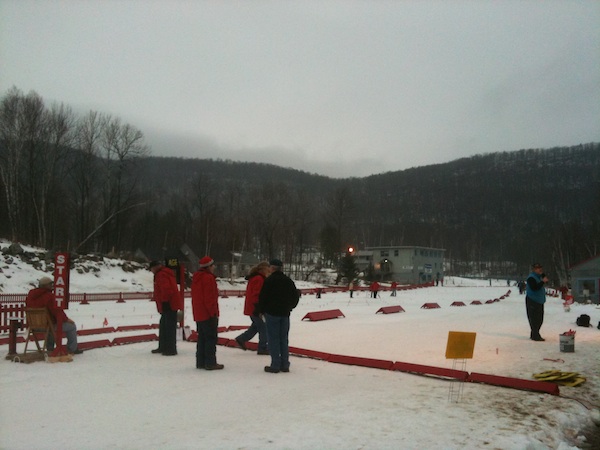
    RUMFORD, Maine — A look at the freestyle sprint course on Black Mountain, about 1 1/2 hours before the start. The women’s 1.4 k qualifier kicks off at 9 a.m. and the men start the 1.6 k qualifier at 10 a.m.

    Video: Athletes were busy warming up on the sprint course and some coaches had been testing wax since before dark.

  • Rain Delays U.S. Nationals, Black Mountain Adjusts

    2012 U.S. Nationals
    An empty stadium Monday morning.

    RUMFORD, Maine — The old adage “If you don’t like the weather, wait a minute,” was overheard many times at Black Mountain on both Sunday and Monday, but waiting around all morning didn’t change the fact that Sunday night’s rain put a serious damper on U.S. Nationals.

    News broke early Monday morning that an overnight downpour had soaked the artificial snow at Black Mountain and forced race organizers to postpone the scheduled freestyle sprint indefinitely. From 6:00 am to mid-day, coaches, athletes and wax techs waited around in uncertainty while the race jury discussed their options, inspected the entire sprint course, and reconvened to finalize the revised schedule.

    At noon, the second meeting broke and program speculation was put to rest. Monday’s skate sprint was moved to Tuesday, Wednesday’s 10/15 k freestyle shifted to Thursday, and the second half of this week’s races — a 20/30 k classic and a classic sprint — remained on the schedule for Friday and Sunday as originally planned.

    The snow in the stadium was a sheet of ice on Monday morning, and remained slick through stretches of both sun and flurries into the afternoon when temperatures approached freezing. Further from the stadium, where snow hadn’t been spread as deeply, patches of dirt were visible.

    According to Chief of Competition Carlie Casey, the trail crew begin making repairs Monday evening after the weather was comfortably below 32 degrees F and the snow had had all day to dry out. The plan was to use snow from what was already stockpiled to spread over thin spots on the 1.4 and 1.6 k sprint courses, and turn on the snow guns to make the snow still needed to cover the distance course.

    “It’ll get icy [at night], but once it gets hard it’ll be groomed over,” said Casey just after the final jury meeting dispersed at midday on Monday. “We just need to let it dry out as much as we can.”

    Andy Shepard, President and CEO of Maine Winter Sports Center (MWSC), which owns Black Mountain, said that it was the high temperatures and moisture in the snow, not the amount of snow available, that ultimately pushed the decision to postpone Monday’s sprint. He attended the later jury meeting that made the final decision. Manmade snow in particular soaks up water, and if a Pisten Bully were let loose on the course in such a state, the machine leaves behind a sheet of boilerplate ice.

    “Today wasn’t an issue of snow; we had plenty of snow,” Shepard said in a phone interview on Monday evening. “It would have been possible to hold the race today probably, but I think the race organizers made the right call given the moisture that was on the course and the difficulty with grooming trails with that much wetness in the snow.”

    The snow that was being saved for the distance course would have to be remade.

    Though the announcement of the rearranged race schedule let coaches know how to begin rewaxing their athletes’ skis, questions still remained about the level of priority given to U.S. Nationals over regular alpine operations at Black Mountain. The chairlift on the northernmost hill at was still running on Monday, and the boarders and skiers carving turns all day stood in stark contrast to the closed sprint course.

    Shepard said alpine obligations had not detracted from preparations for nationals. He said 100 percent of the venue’s snowmaking efforts had been focused on the nordic event up until they thought they had made enough snow to last them the week.

    None of the weather reports predicted the amount of rain Rumford ended up getting on Sunday night, and instead Black Mountain lost a lot of the saved snow they’d been counting on.

    “I know there’s been frustration out there,” Shepard said. “I’ve heard people say we’re trying to get guns off the nordic trails to make money for the alpine area.”

    That notion, he continued, was inaccurate. “We got to the point where we thought we had enough snow to do the event, and then we moved our snow guns back to the alpine hill.”

    He estimated that MWSC had put $85,000 to $100,000 into preparations for nationals before Sunday’s rain hit.

    “We went into [hosting nationals] knowing that if it came down to choosing between nordic and alpine, we’d prioritize nordic,” Shepard said. “It has not been the hand-wringing, controversial challenge that people might think it has been.

    “After last year’s event, we needed to do everything we could so that if we found ourselves in this situation again…we had everything we needed to make snow.”

    Competition resumes on Tuesday at 9 a.m. U.S. Ski Team Development Coach Bryan Fish, who is observing the week’s racing in order to select the J1 Scando, Wold Junior, and U23 Championship teams, thought the hairy weather conditions and the need for athletes to adjust to them was good preparation for racing in Europe.

    “It’s something that we need to adapt to as athletes and coaches,” he said.

    Fish also emphasized that, though the conditions were not ideal, at least everyone had the same challenge.

    “Is it fair? I think so. Everyone has the same shot, the same opportunity to get on the snow, albeit limited,” he said.

    As the course was closed Monday to skiers, few athletes made the trek to the venue and instead went running in preparation for competition to resume.

    The athletes, and the development of skiing in the state of Maine, is ultimately the reason Maine Winter Sports Center decides to host Nationals, Shepard said. As a nonprofit organization, MWSC does not aim to make money off the event and given the amount of snowmaking the past two years has required, they don’t break even at the end of the week.

    “We don’t go into this because it will make or lose money, we do it because it’s important in the U.S calendar and Black Mountain has historically been a top nordic venue in the country,” Shepard said. “It’s important to the community, to our organization, and [we] want to continue to be a part of national racing.”

  • One Day ‘Til Nationals: A Look at Rumford (Video)

    One Day ‘Til Nationals: A Look at Rumford (Video)

    On the eve of U.S. Nationals in Rumford, Maine, FasterSkier’s Audrey Mangan talks about the conditions and the atmosphere in at Black Mountain on Sunday.

    2012 U.S. Nationals
    Looking down on the two-way stretch into the stadium at the 2012 U.S. Cross Country Championships on Sunday at Black Mountain in Rumford, Maine.
  • Soggy Sprint Set for Sunday in Rumford, With Video

    Soggy Sprint Set for Sunday in Rumford, With Video

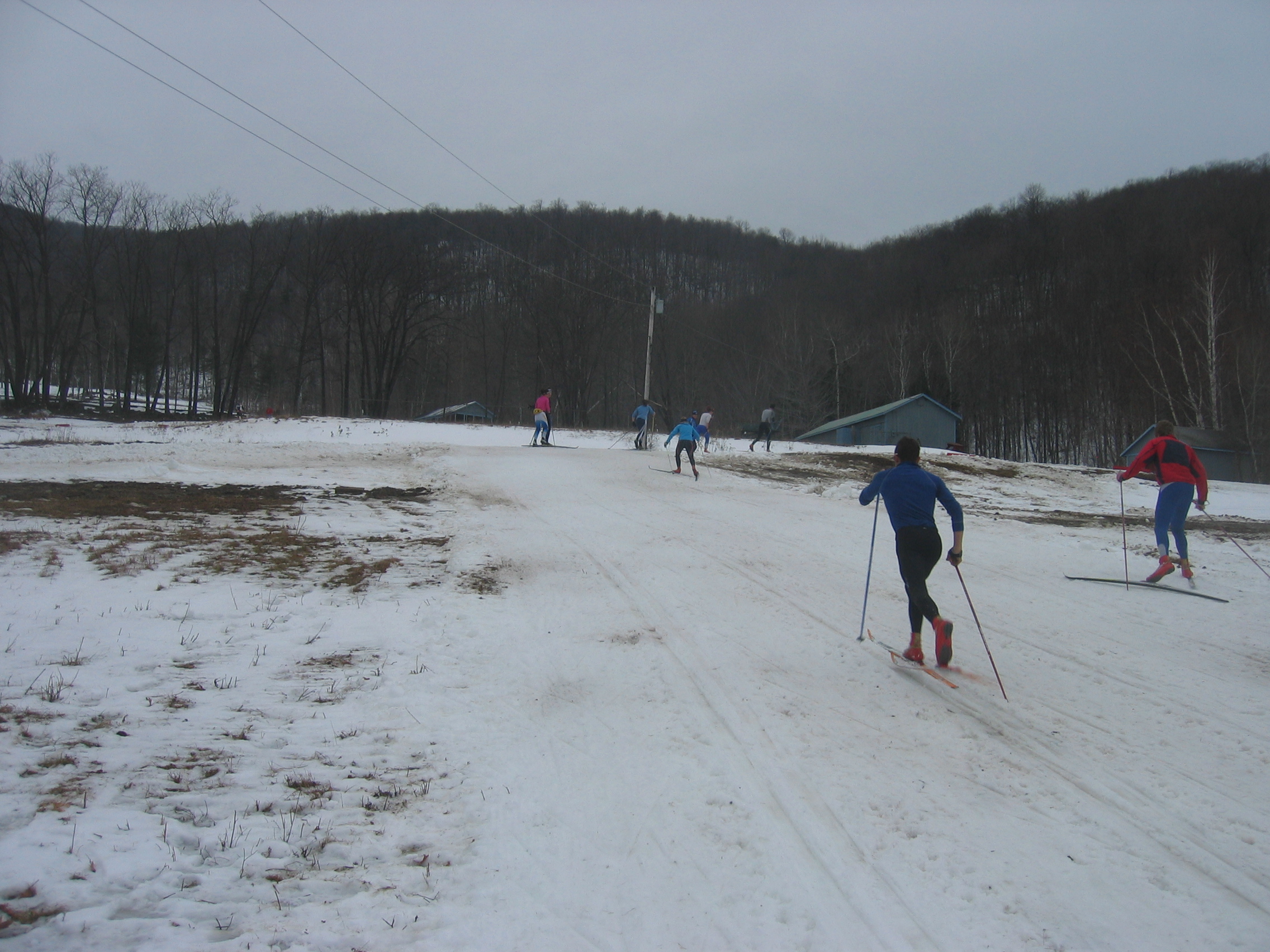
    Athletes on the first first climb on the classic sprint course in Rumford. Photo, Win Goodbody.

    There will be racing in Rumford on Sunday, but it won’t be pretty.

    “It’s gonna be messy as hell,” said John Farra, the U.S. Ski and Snowboard Association nordic director.

    The 2011 U.S. National Championships are set to get underway in one hour, after a long afternoon and evening of work by volunteers and organizers. The 1.4-kilometer classic course at Black Mountain is covered with snow, or a semblance of it – it’s clean in some places, while as of a few minutes ago, volunteers were still busy shoveling onto areas where dirt, rocks, and mud were showing.

    The best parts of the course are the start and finish, in the stadium area. There’s a significant dirty spot on the first downhill corner, and some bigger muddy areas towards the top of the course’s main climb, and on its ensuing descent. Chief of Course Ray Broomhall said that he’d have crews with shovels working throughout the day.

    Qualifying starts with the men at 10 a.m. We’ll have live updates on the Continental Cup blog, and on Twitter (@fasterskier). Video interviews with Broomhall and Fischer/Swix’s Chris Hall are below (we’re waiting for them to upload – they’ll be up soon), as well as a quick course overview.

    Start lists are available here.

    Results can be found here, when they are available.

  • Black Mountain Challenged by a Dearth of Snow as U.S. Nationals Draws Closer

    Black Mountain Challenged by a Dearth of Snow as U.S. Nationals Draws Closer

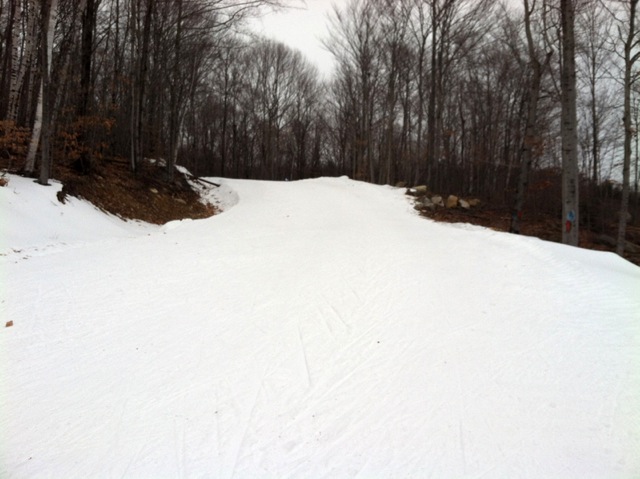
    The first uphill on the sprint course is looking a bit brown.

    It seems like every second year, U.S. Nationals comes out on the losing end of its battle with Mother Nature.

    In 2007, the first of two years that the event was hosted in Houghton, Michigan, there was barely enough snow to ski on. And in 2009, the first of two years in Anchorage, Alaska, most of the races were cancelled due to a debilitating cold spell that left temperatures far below the FIS legal limit for racing.

    Well, this first year in Rumford, Maine, is no different.

    With warm temperatures, no snow in the forecast, and an ill-timed trip with the pisten bully, the courses at Black Mountain are looking a little thin, with dirt spots and rocks in more than a few spots.

    “I’ve seen better, and I’ve seen worse,” said U.S. Ski and Snowboard Association Nordic Director John Farra in a phone conversation on Friday night.

    “I skied the 5 k and the sprint course, and it’s clear that if nothing changed we could get by. But for sure the jury is concerned about what seems to be a warming trend and potentially some rain.”

    Heading into Sunday’s classic sprint, race organizers have already had to make a few adjustments. While the men were originally supposed to compete on a longer, 1.6 k course, they will now ski the same 1.4 k loop as the women.

    “We at least decided to focus on the 1.4 k so that we could really get the groomer focused on making that the best possible sprit course we could get,” Farra said.

    “We just got to the point where we said, this women’s 1.4 k is a FIS homologated trail. It’s actually a pretty damn good sprint course—in some ways it’s almost a harder climb. It’s a legit 1.4 k sprint and we just can’t be pressuring ourselves to have that second option.”

    The stadium has good snow cover.

    On Saturday, many of the worst dirt spots on the sprint course had been covered by snow – and that was the only part of the trail network open for skiing. The stadium in particular was covered in an abundant layer of trucked-in snow, and seemed to be in solid shape.

    But with temperatures hovering in the 40’s all day and dozens of racers reduced to doing their entire workouts on the loop, snow on some other parts of the sprint course was rapidly melting away.

    And while Sunday’s sprint will almost certainly go off without a hitch, competitors were worried about the races later in the week. With rain in the forecast for Sunday and no snow predicted for the following week, it is hard to picture Black Mountain finding a good loop for the distance races.

    “Are we going to be able to have a 7.5 k?” asked Farra. “No, I wouldn’t bet on it—but who knows. Then we say, oh, okay, well if we can’t have a 7.5 k, can we get a solid 5 k out of it? If that goes to the shitter, can we get away with 3.75 k?”

    Still, despite the rumors flying around about how the distance races would be held – would the schedule change? What about the venue? – Farra said that they had no concrete plans for the rest of the week, and were working on making Sunday’s sprint the best possible race. After that, they would tackle the other courses.

    “From our perspective, all we need to be focusing on is obviously getting off this first race,” he said. “Very quickly after that we’ve already started looking at the best case to the worst case — there’s five options in between — even if they’re not ideal — and people don’t want to think about it.

    “I’m pretty confident we’re going to have racing in Rumford,” he continued. “I don’t think there’s any question of that. I think it’s just a matter of what it’s going to look like. Could be better, could be worse.

    “People are pretty cool about it today—everybody I talked with said, eh, well, you know, that’s the way it goes.”

    -Nathaniel Herz contributed reporting.