Tag: Bob Gray

  • Friends Remember Charlie Kellogg’s Love for the Sport, the Outdoors and Its People

    Friends Remember Charlie Kellogg’s Love for the Sport, the Outdoors and Its People

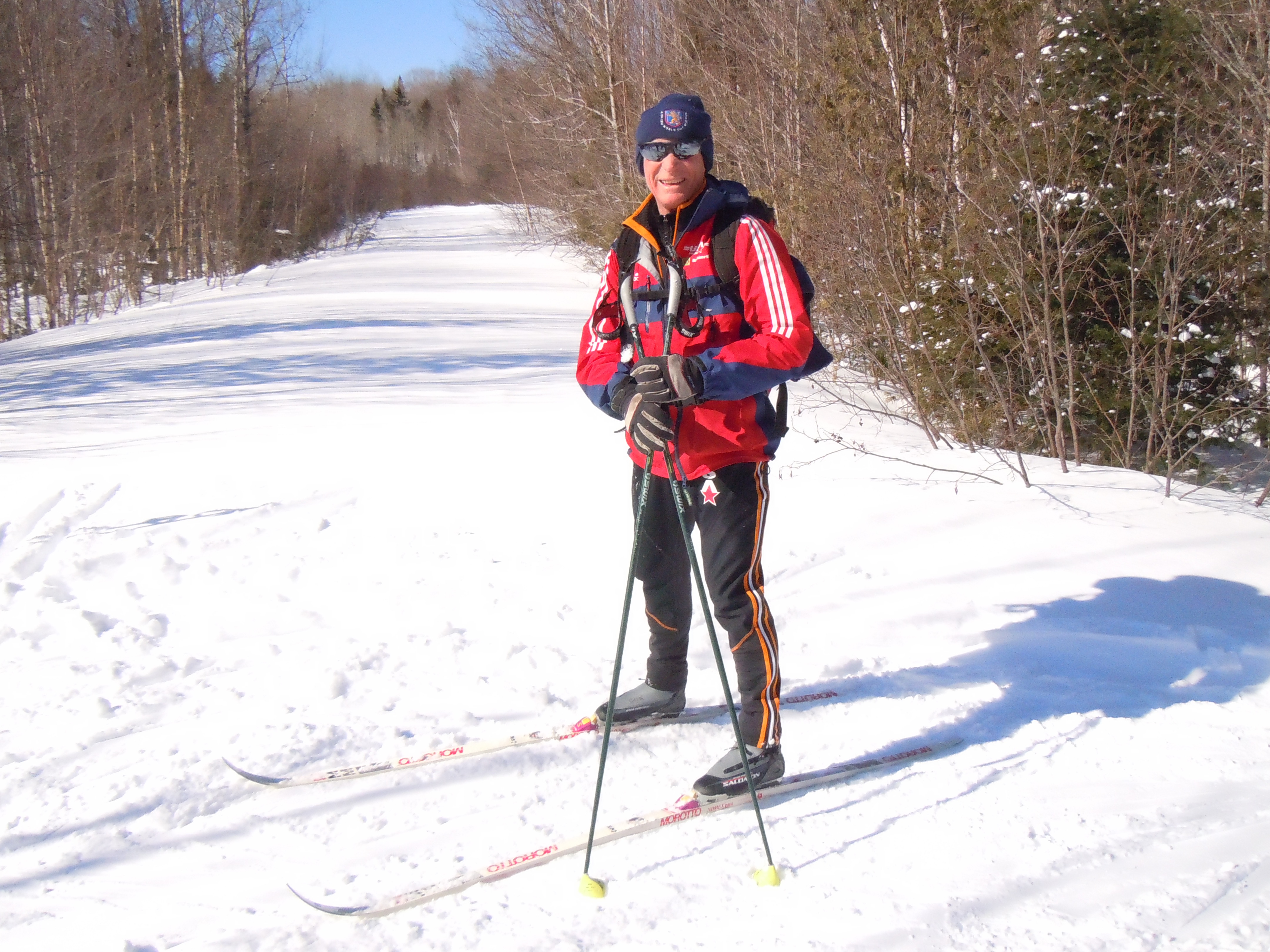
    Charlie Kellogg skiing in Maine with the AMC alumni group the O H Association. (Photo: Doug Hotchkiss)
    Charlie Kellogg skiing in Maine with the AMC alumni group the O H Association. (Photo: Doug Hotchkiss)

    Bob Gray was hiking in the Sierra Nevada mountains, off the grid, when it happened. Later his phone began buzzing, and he learned that his former U.S. Ski Team teammate and friendly rival over decades and decades of races, Charles Kellogg, had passed away.

    Gray was surprised. Kellogg had not been well, but the end came fast once months of excruciating pain was finally diagnosed as a malignant and fast-metastasizing sarcoma.

    “It hit me hard,” the 76-year-old Vermont farmer said on the phone, still from the trail, last Saturday. “It could be me next… I miss him terribly.”

    Kellogg, 75, had been one of the ties that kept Gray and the ski community together.

    “It’s pretty much nose to the grindstone,” Gray said of his life at 4 Corners Farm in Newbury, Vt. “Charlie made a special effort to talk; he was always calling me up. It was great to talk to him. He would drag me out of that focused world.”

    But while it’s hard for Gray, at the moment, to connect to Kellogg’s family or other friends, in a way the mountains are a poetic place for Gray to say goodbye to Kellogg, who was a longtime member of the Appalachian Mountain Club (AMC) and its alumni Old Hutsman (OH) Association, and who always made time for a ski or a hike, even if he had just flown back from a work trip to Asia.

    “It’s been on my mind, these two days, just thinking about him,” Gray said. “I had nothing to do but walk and contemplate, without any distractions. It’s a pretty emotional moment for me.”

    The Storyline
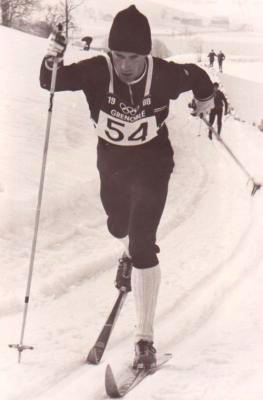
    Kellogg competing at the 1968 Olympics in Grenoble, France. (Photo: US Biathlon Association)
    Kellogg competing at the 1968 Olympics in Grenoble, France. (Photo: US Biathlon Association)

    Kellogg, a 1968 Olympian in cross-country skiing and a national champion, died a week ago on Sept. 21. Known as “Chuck” or “Spike” to some friends, Kellogg was an integral member of the nordic community, a mentor and friendly face to many on the trails.

    As noted in his U.S. Biathlon Hall of Fame induction description, Kellogg wasn’t obviously bound for skiing glory from day one. But the guy who grew up primarily in Andover and Brookline, Mass., picked up skiing at Holderness Academy a few hours north in New Hampshire and never looked back.

    And so perhaps his first impact on the sport was as the fast racer everyone was chasing: in college races for Williams College, then as he took up biathlon and eventually won a national championship in 1965, and then still as he competed as a cross-country skier in the Olympics and raced as a member of the U.S. Ski Team (USST).

    “He was one of a group of half a dozen guys who I would describe as the early generation of capable international-caliber nordic skiers in this country,” said John Morton, an Olympian and coach. “There were a couple of individuals who preceded them, but… I remember when I was on the U.S. ‘B’ team, and those guys set the standard, and the rest of us just desperately tried to keep up.”

    Gray remembers a relay race in Reit im Winkl, Germany, in 1968.

    “Charlie came in in the lead, and Jack [Lufkin] kept it, and I was able to hold on – we won a relay race in Europe,” Gray marvels. “It was amazing. Everybody was going crazy over there. It was kind of unusual for an American team to win a relay.”

    Kellogg’s race career never really ended. In 1998 he won a World Masters Championship in Lake Placid, N.Y.

    There, too, Gray was Kellogg’s teammate.

    “Neither he nor I had very good points,” Gray remembers. “We started in the back. But we both had incredible skis so together we made up to the front through 80 people. All of a sudden we were in the lead. I couldn’t hold it up – Charlie went on to win. He’s a great skater! Talk about tough competition, that’s the best of the best. I know he was very proud of that.”

    Kellogg never boasted about his success, and not all of his friends were familiar with the details of his ski career. But it’s possible to be humble and proud at the same time, and Kellogg was.

    “He was very proud of his achievements,” said Doug Hotchkiss, a friend from near Kellogg’s home in Massachussetts who was part of a nonprofit board and also the O H Association with Kellogg. “Of course, he was very modest, so you would never know it unless you asked him about it. But then it was clear.”

    No matter which year you ask about, his friends and teammates will tell you that he was a great guy to be around. Kellogg was a role model for how to balance a job, a family, and high-level training.

    “I always admired and was continuously impressed with how Charlie was able to balance his training at a high level while working full time for IBM and fulfilling his responsibilities and obligations as a husband and a father,” USST teammate Mike Elliott wrote in an email. “In the late 60s, there just were not many athletes who could do that successfully.”

    “He was disciplined and a very tough athlete,” Gray agreed. “But just a real pleasure to go head to head with.”

    Kellogg never stopped skiing – this year he competed in the White Mountain Classic in Jackson, N.H., and earned an age-group podium in the 10 kilometer at Masters National Championships in Craftsbury, Vt. – but as he grew older he also bettered the ski community in other ways.

    His expertise as a board member was so impressive that a group of biathletes in 2006 lobbied hard for him to be elected vice chairman of the United States Biathlon Association (USBA).

    “While most countries were increasing staff numbers, sponsors, and athlete support, many of us felt that USBA was headed in the opposite direction,” Lowell Bailey, one of the signatories on an open letter before the election, wrote in an email. “Charlie represented one of the new faces that we felt could help facilitate and oversee the difficult changes that USBA would need to undertake in order to remain competitive internationally.”

    Kellogg, who worked in sales at IBM and later at Global Partners, had a knack for business and nonprofit interactions. He was described by colleagues in three different organizations as a model board member. Besides his help with USBA, he was also the president of the Manchester Essex Conservation Trust near his home in Massachussetts, and a board member of the Jackson Ski Touring Foundation, where he and his wife had recently bought a condominium.

    How did he manage it all – these many tasks and passions which added up to more than most people could handle?

    “He was hyperactive is what he was!” Hotchkiss remarked with a laugh. “But he loved it.”

    And people loved Kellogg.

    “We had a regularly-scheduled board meeting this week, and all of us were thinking how much we’re going to miss Charlie,” said Ken Kimball, a friend on the Jackson Ski Touring Foundation board.

    The Hutsman

    Before he became a full-time skier, Kellogg started working in the AMC huts. At just 16 years old, he spent his first season at Lake of the Clouds on Mount Washington in New Hampshire. Soon he was the hut manager.

    His legend preceded him, said Hotchkiss, who didn’t actually meet Kellogg until later.

    “Everything I ever saw him do, he led by example, not by being loud and boisterous and carrying a big stick,” Hotchkiss recalled. “I had heard of Charlie and seen that he had all kinds of records for speed hiking. In those days we kept records of the macho things – it was all boys working in the huts then, no women. It was how much weight you could pack, how fast you could go, all of that. That was the measuring stick amongst guys. How many dishes you could wash in as short a time as possible, how big a pancake you could make. Part of the fun of working in huts was bringing the crew together.”

    When U.S. Supreme Court Chief Justice William O. Douglas visited Lake of the Clouds in 1960 with a National Geographic camera crew in tow, Kellogg was managing the hut. He ended up in photos in the magazine. He was 20 years old.

    Working in the huts was fun and gave Kellogg a chance to stretch his legs. But working on Mount Washington, home to some of the most extreme weather on earth, was also serious. Kellogg wrote in a recent O H Association newsletter of going out in a gale to find and retrieve the bodies of two young hikers who had perished, dressed only in cotton.

    “Of course the terrible visibility contributed to [a lack of volunteers] and the wind was keeping people inside their respective buildings where they plied their trade, such as TV broadcasting, checking weather or testing jet engines,” Kellogg wrote.

    Weather didn’t keep him or his friend Greg Prentiss inside, of course.

    The ties he forged, to other hutsmen, hikers, and the mountains themselves, stayed strong. Kellogg also worked as a mountain guide in the Grand Tetons at one point, and trekked in Nepal.

    Hotchkiss soon met him again, this time in earnest.

    “In 1978 when another Old Hutman and I showed up near Jasper in the Canadian Rockies to do a randonée ski trip,” Hotchkiss said. “We were flown back into a remote camp by helicopter, and then for a week we spent every day climbing up with skis with skins, and descending. Charlie was there with his wife and his brother-in-law and his wife’s sister. And so there were six of us who were connected, but we didn’t know they would be there!”

    After a day of skinning up thousands of feet, taking a few runs, and then descending to camp, Hotchkiss was usually looking for “an ibuprofen and a beer.”

    Not Kellogg or his wife, Gillian.

    “Charlie and Gillian would put on their cross-country skis and go out for more skiing on the frozen lake,” Hotchkiss said. “Every day! And then be ready to go the next morning.”

    While Kellogg spent a decade racing at the top levels of national and international competition, he was also just as happy going out on the trails with friends who hadn’t been elite athletes. He and Hotchkiss went on several O H Association trips to Maine, where groups of hutsmen and women could ski from the Little Lyford Ponds lodges.

    “He was always miles ahead of everybody,” Hotchkiss said. “I’m sure you’ve been hiking with a dog, where the dog goes bolting ahead and eventually will return. That was Charlie’s method.”

    While racing was something he loved – Gray and Morton both recalled that Kellogg would never, ever, let it go in a sprint finish, even after a marathon distance spent going together – non-competitive pursuits were also key.

    “A lot of athletes, they have their competitive life and then they move on to something else,” Morton said. “They may be nostalgic about the old days, when they were in shape and could do the Presidential Traverse in a single day. Charlie Kellogg kept at it. He probably up until relatively recently could still do a Presidential Traverse in one day, and look forward to it.”

    Kellogg was a lifelong steward of ski and hiking trails, as well, not just maintaining AMC trails or those at the Manchester Essex Conservation Trust, but then later in Jackson.

    “As we looked at new trail configurations he’d be out in the field skiing around trying to find a new route,” said Ken Kimball of his time with Kellogg in Jackson.

    “He was always miles ahead of everybody. I’m sure you’ve been hiking with a dog, where the dog goes bolting ahead and eventually will return. That was Charlie’s method.” — Doug Hotchkiss, friend of Charlie Kellogg

    The Racer

    After five summers of training on Mount Washington, in a systematized way or not, Kellogg was beginning to turn heads on the Eastern college circuit. By his senior year at Williams, in 1962, he was the captain of the team.

    The next year, he headed to Alaska to join the Modern Winter Biathlon Team at Fort Richardson to fulfill his Army service. During the war, men like Peter Hale, Terry Aldrich, Dennis Donahue, Bill Spencer, and John Morton paid their dues at Fort Richardson, although not all overlapped with Kellogg.

    “He said it was great,” laughed Hotchkiss. “He got to ski every day!”

    In 1964 Kellogg went to Fairbanks for the Equinox Marathon, which his biathlon teammate Jerry Varnum won, while Kellogg was second. The Fort Richardson program was already a few years old at that point, but it was close to Anchorage, not Fairbanks. The pair’s exploits led the Fairbanks Daily News-Miner to write a blurb, “What does biathlon mean?”

    Kellogg represented the U.S. in international competition including in Östersund, Sweden, where he was the top American finisher at the 1964 World Military Championships.

    After leaving the Fort Richardson program, Kellogg went back to straight skiing.

    “Charlie was very serious in training and when studying the sport of cross-country skiing,” Elliott wrote. “I have nothing but fond memories of my experience of training and racing with Charlie. John Caldwell, as the USST Coach, organized ski team members for running and hiking the length of the Long Trail in summer of 1969. Pictures of that experience shows a bunch of lean fit young men. On that trip were John Caldwell, Peter Davis, Everett Dunklee, Mike Gallagher, Tom Corbin, Ned Gillette, Bob Gray, Charlie Kellogg, Jack Lufkin, and myself, Mike Elliott.”

    Gray, too, remembers that trip well – and the crew that went with it.

    “It raised a lot of awareness for the team,” said Gray, noting that the men would come off the trail and have dinner or drinks with communities in the local towns every night. “The U.S. Ski Team was gaining ground. A few years later, it was Bill Koch. We were sort of the foundation.”

    Elliott said that Kellogg was one of the smartest guys on the team: after eventually making the Olympics, he went to the Tuck Business School at Dartmouth. His LinkedIn profile lists “the Shakespearian authorship question” as a hobby.

    And that cerebral nature also came through in sport. Kimball, who would later work and ski with Kellogg in Jackson, remembers meeting him for one of the first times at an Eastern ski race around 1970.

    “I was at a race at the Swedish Ski Club in Vermont, and I was just coaxing my just-married wife to also start cross-country skiing,” Kimball said. “That was in the day when race courses were quite snowshoed-out, quite different than today. Here’s a guy out talking about snow crystals and how they penetrated different kinds of waxes. In that day that was all very new and scientific and the rest of us were wondering what this guy was really talking about. But obviously his results showed what he was talking about! That was my introduction to Charlie.”

    Kellogg was clearly a leader on the trails.

    “The most accurate way to sum it up would be to say that I was in some of the same races that Charlie was in,” said Kimball, who had raced in college and was continuing while he went to graduate school.

    But racing was no easy task in those days.

    “I was on the U.S. Ski Team for 14 years,” Gray said. “By the last year, they began to have some kind of payments, but I think it was 1500 dollars. To be able to train year round – I didn’t do that until 1970, even then it was hard. By the time I left the team in 1974 I was broke. I mean broke.”

    Yet Kellogg held it all together, seemingly.

    “When Charlie was racing, you really had to have a second job to stay alive,” Kimball said. “It wasn’t like today where you are a professional or semi-professional athlete. He was like everybody else: you had something else that was a major part of your life to sustain your family and your income, which meant that you really had to have a love for the sport to continue to participate at a high level. He obviously sustained that for quite a while.”

    The Board Member

    While continuing to ski, run, hike, and bike for fun, Kellogg also transitioned to professional life. After going to the Tuck School and working for IBM and Global Partners, his personality and skills came to be in great demand in the nonprofit world.

    Hence that letter, which was signed by biathletes Bailey, Tracy and Lanny Barnes, Jeremy Teela, and Tim Burke. Of the four paragraphs dedicated to lobbying for five different nominees, fully half of that text was devoted to Kellogg.

    “As Vice President Mr. Kellogg would support new fundraising initiatives and help USBA gain the necessary resources to reach a medal at the 2010 Vancouver Olympics,” they wrote at the time. “As a successful professional fundraiser, he understands the fine points of generating financial stability within an organization. The new Vice Chairman must be business savvy, but also possess an adequate knowledge of our sport.  Charlie Kellogg is more than qualified in both respects.”

    Kellogg more than delivered once he was elected, according to the biathlon community.

    “What struck me most about working with Charlie was the thoughtfulness with which he promoted biathlon and cross-country skiing at both the elite and recreational levels,” Walt Shepard, a former biathlete who was an athlete representative, wrote in an email. “His love for the sport — coupled with his serious credentials as a former Olympian — inspired enthusiasm from folks in both camps. More than anything, he was just a great guy to have a conversation with. He was very interested in getting to know people, and I really appreciated that about him.”

    “More than anything, he was just a great guy to have a conversation with. He was very interested in getting to know people, and I really appreciated that about him.” — Walt Shepard, former biathlete and athlete representative

    Bailey agreed.

    “[Kellogg] was at the core of a group of newly elected board members and staff who ushered in a new chapter in USBA’s history,” Bailey wrote in an email. “In many people’s eyes this is the period where USBA went from an ‘also ran’ to a legitimate medal contender on the world stage… Perhaps more impressive was Charlie’s genuine love of our sport and the athletes and staff of USBA. I considered him not only a crucial member of our US Biathlon Team, but more importantly, a friend who cared about my life both as an athlete and a human being.”

    It was after the election of Kellogg and other new board members that Burke and Teela hit the World Cup podium for the first time, and then in 2014 Bailey and Susan Dunklee did as well.

    “He was on the board during a time of probably the most dramatic advancement of the sport in America, and the most success for our program and our athletes,” Morton said. “He was part of the leadership which has allowed our team – we’d had individual athletes, but certainly never more than one or two – that so consistently were in a position to be on the podium. He was part of putting that program together, and probably more importantly, securing the funding.”

    In the nonprofit world, moving towards decisions and policies can be a painstaking process if a board of directors is fractured. Kellogg proved to be adept at advocating not only for his own ideas, but for forward progress.

    “He seemed impatient, but he somehow was able to show patience,” Hotchkiss said. “When you’re working for nonprofits it’s more of a consensus-based decision. He had a real talent for moving groups towards that.”

    “He was a very good board member,” agreed Kimball. “I’ve served on a number of boards and some people are just warming a seat, but others really join in and participate. Charlie was one of the latter.”

    Kimball said that Kellogg was particularly good at understanding the challenges Jackson faced, given that many of their trails are situated on private land which makes further development impossible.

    “Charlie was also very good at bringing up his ideas constructively with the board, and pushing his ideas forward, and also trying to make them happen,” Kimball said. “A lot of people are willing to just spit out ideas and hope that someone else will pick up and do all the work. That’s not how I would label Charlie. He was also willing, if people disagreed with him, to accept that as well. It was a real pleasure to work with him.”

    So both at the national and the local level, the ski community was lucky to benefit from Kellogg’s devotion.

    “Charlie has paid it forward by paving the way for so many others that have come after him,” Elliott wrote.

    The End

    Hotchkiss was around this summer as Kellogg’s pain got worse. It was months before the sarcoma was diagnosed as the underlying problem, but Hotchkiss knew Kellogg was in trouble when he took the short route home during a trail-clearing day for the conservation group.

    “That was completely unlike him,” said Hotchkiss, who added that he could never imagine how Kellogg, who was outside at every possible moment, ever held a desk job.

    By August, Kellogg was in the hospital and had to miss Lake of the Clouds’ 100th birthday party, an O H Association event he had been looking forward to.

    “I did get a book of pictures of Mount Washington, and a lot of his friends signed it and put comments it,” Hotchkiss said. “That’s the kind of association we have. We all stick together. I brought it back, and he seemed to enjoy going through that and reading the notes from people who were up there.”

    Others are left looking back at particularly fond memories of their friend.

    “When the UNH Carnival was up here, there was a race for old codgers like Charlie and myself, and we all went out and did our one or two kilometer loop,” Kimball said. “When you ski with Charlie, he always had a big grin on his face. He’s just a good person to be around.”

    ***

    To honor Kellogg, donations may be sent to two organizations he devoted so much time to: the Charlie Kellogg Memorial Funds at the Manchester Essex Conservation Trust, P.O. Box 1486, Manchester, MA 01944 or at the Jackson Ski Touring Foundation, P.O. Box 216, Jackson, NH 03846.

    Do you have any memories of Kellogg to share? Please write them in the comments below.

  • Masters World Cup 2015: The Russian Experience

    Masters World Cup 2015: The Russian Experience

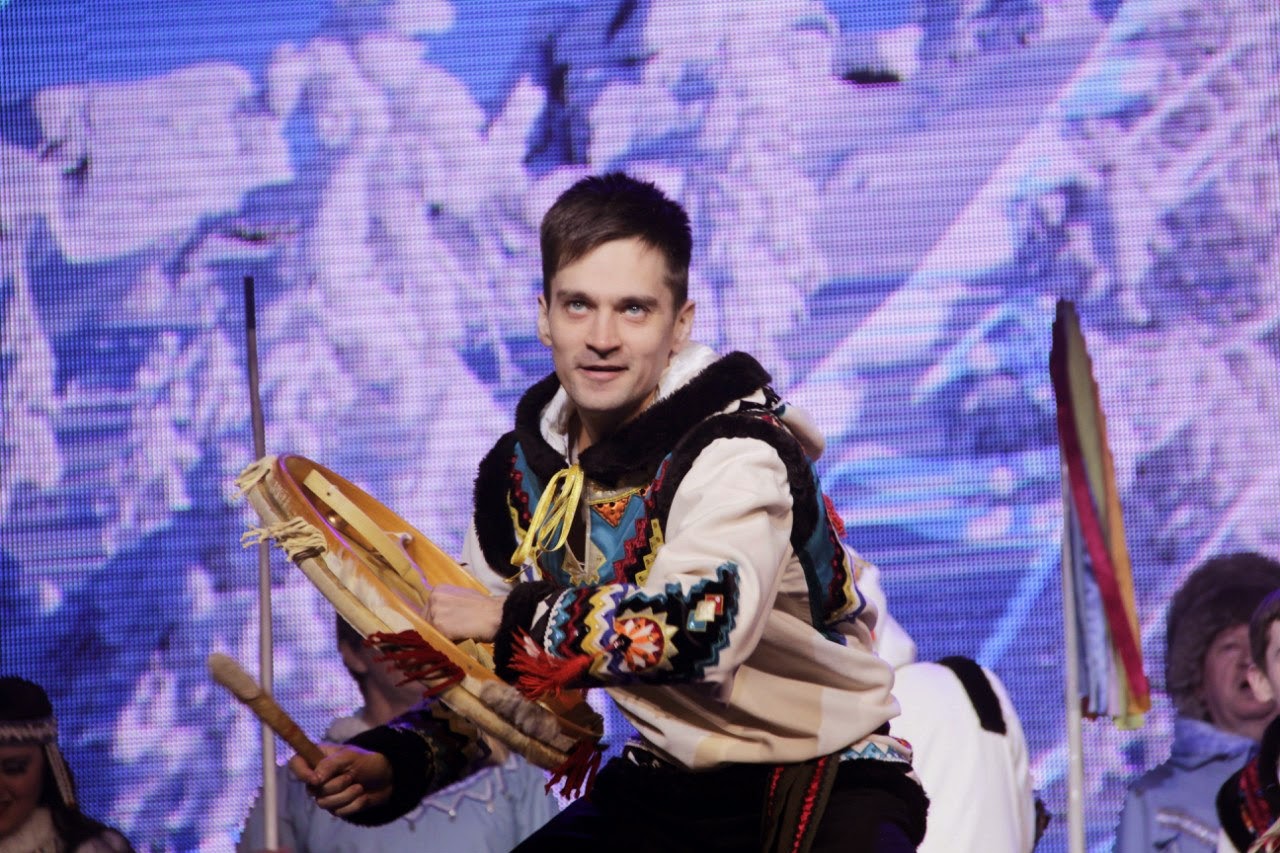
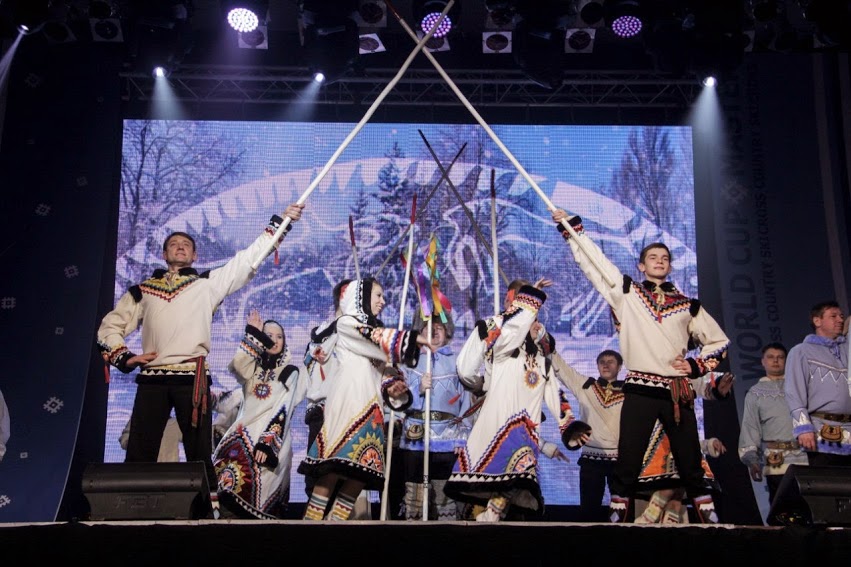
    From the opening ceremony. Photo: MWC2015
    A scene from the opening ceremony at the 2105 Masters World Cup in Syktyvkar, Russia. (Photo: Masters World Cup 2015)

    The following is an editorial submitted by FasterSkier contributor Inge Scheve, a Norwegian native who lived in Fairbanks, Alaska, and Bend, Ore., for a number of years where she became an avid skier and masters racer. Scheve recently returned from competing in her fifth Masters World Cup in Syktyvkar, Russia.

    ***

    Russia was quite a trip. Literally. The 2015 Masters World Cup in Syktyvkar, Russia, from  March 14 to 20 was amazing, maybe one of the best I’ve experienced in terms of racing, depth of competition, facilities, professionally run venue and race organization, as well as opening ceremony, medals ceremony and entertainment that made you feel like these championships were a big deal.

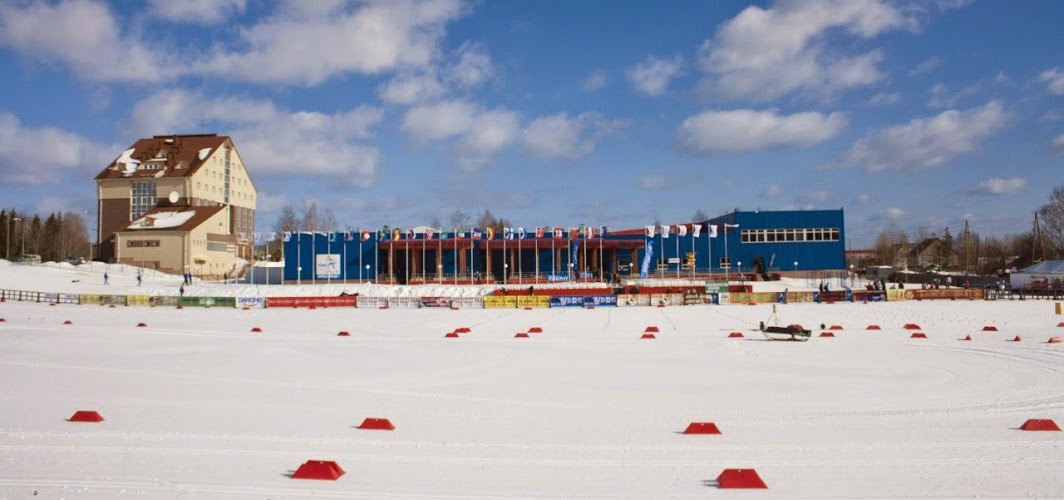
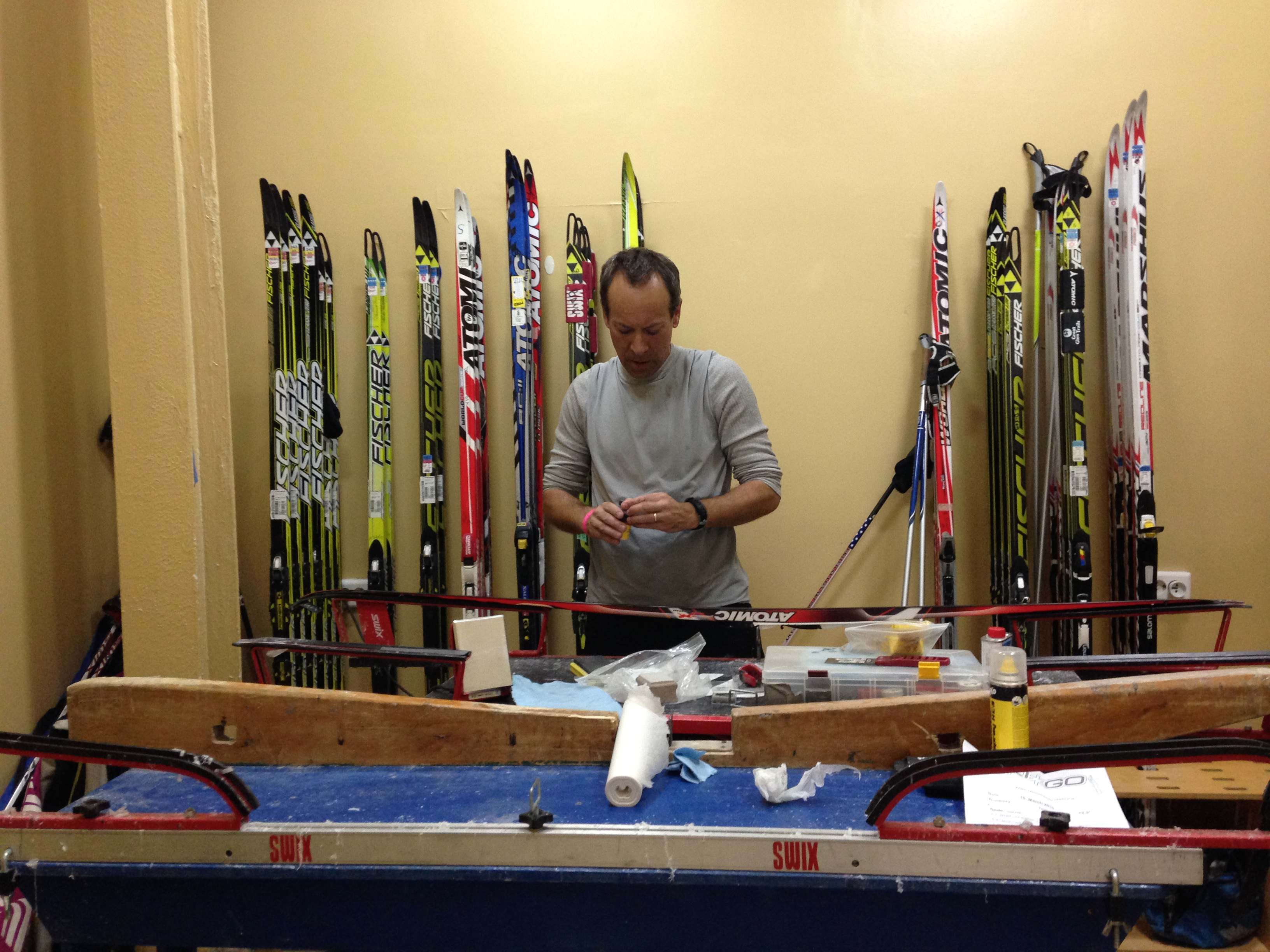
    The head of grooming was the same guy who was in charge for the 2014 Winter Olympics in Sochi, Russia. The courses and stadium fit every International Ski Federation (FIS) technical specifications and rules for World Cup standard. Each national team was given its own wax room complete with amenities, premium ventilation and work conditions, locker rooms, bathrooms and showers.

    The Smetanina Sports Complex at Masters World Cup 2015. (Photo: MWC2015)
    The Smetanina Sports Complex at Masters World Cup 2015. (Photo: MWC2015)

    The U.S. team consisted of a scant dozen travelers, including supporting spouses and a couple of racers who ended up injured just prior to the trip, but still decided to go because of the novelty of the destination. And you can certainly argue that it was.

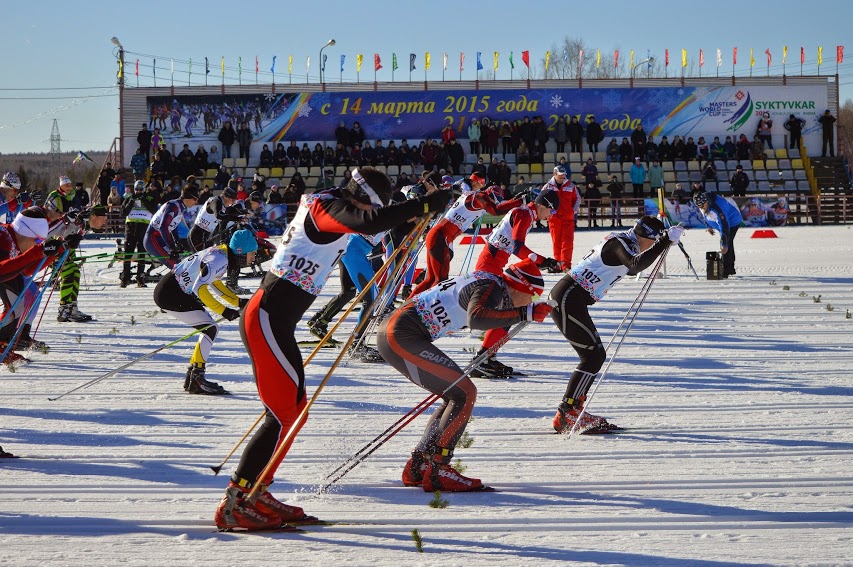
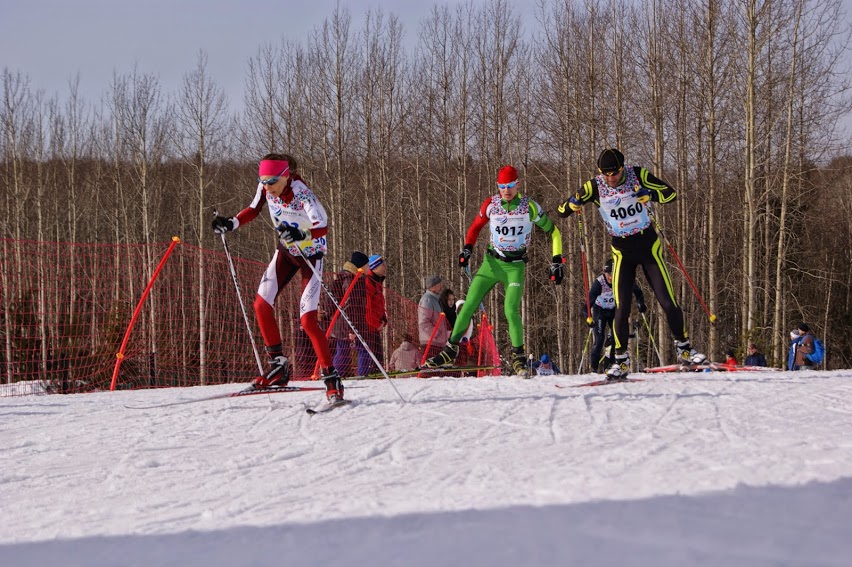
    Start of a race in the M1 category. (Photo: MWC2015)
    Start of a race in the M1 category. (Photo: MWC2015)

    We stayed at the Olympiets Hotel at the venue, with a view of the courses from our rooms, and within spitting distance of the wax rooms and venue.

    For a lot of us, Masters World Cup is the main event of the season, and the most important training and performance goal. It’s what you have in the back of your mind through the soggiest moosehoofing intervals in the fall and on those the frigid long-distance workouts in January.

    And it’s also the closest most of us working folks get to a taste of Petter Northug and Marit Bjørgen’s world, with no further comparison. We certainly don’t ski as fast, but many definitely dig just as deep for the finish line.

    Masters World Cup is one week of racing your brains out in events where the competition is fair,  and you don’t have to worry about racers stepping on your gear out of the start and excessive jockeying and fighting for positions.

    JD Downing at work in the U.S. wax room at the Smetanina Sports Complex at 2015 Masters World Cup. (Photo: Inge Scheve)
    JD Downing at work in the U.S. wax room at the Smetanina Sports Complex at 2015 Masters World Cup. (Photo: Inge Scheve)

    It’s unlike so many of the mass events such as the Birkebeiner and the Engadin with 10,000 to 15,000 racers on course. Even in the largest men’s categories, the start field at the Masters World Cup rarely exceeds 50 to 70 racers, and even those fields string out fairly quickly.

    But Masters World Cup is so much more than just a week of crazy hard racing. It’s the five-week peaking plan leading up to the event. It starts with three hell weeks of volume and intensity that makes you wonder if you are going to bury yourself entirely, followed by two tapering weeks when you finally feel speed and snappiness come to you. You are race-ready and bursting at the seems.

    And it’s a week where the world revolves around sleeping, eating, training, racing, waxing, and performing.

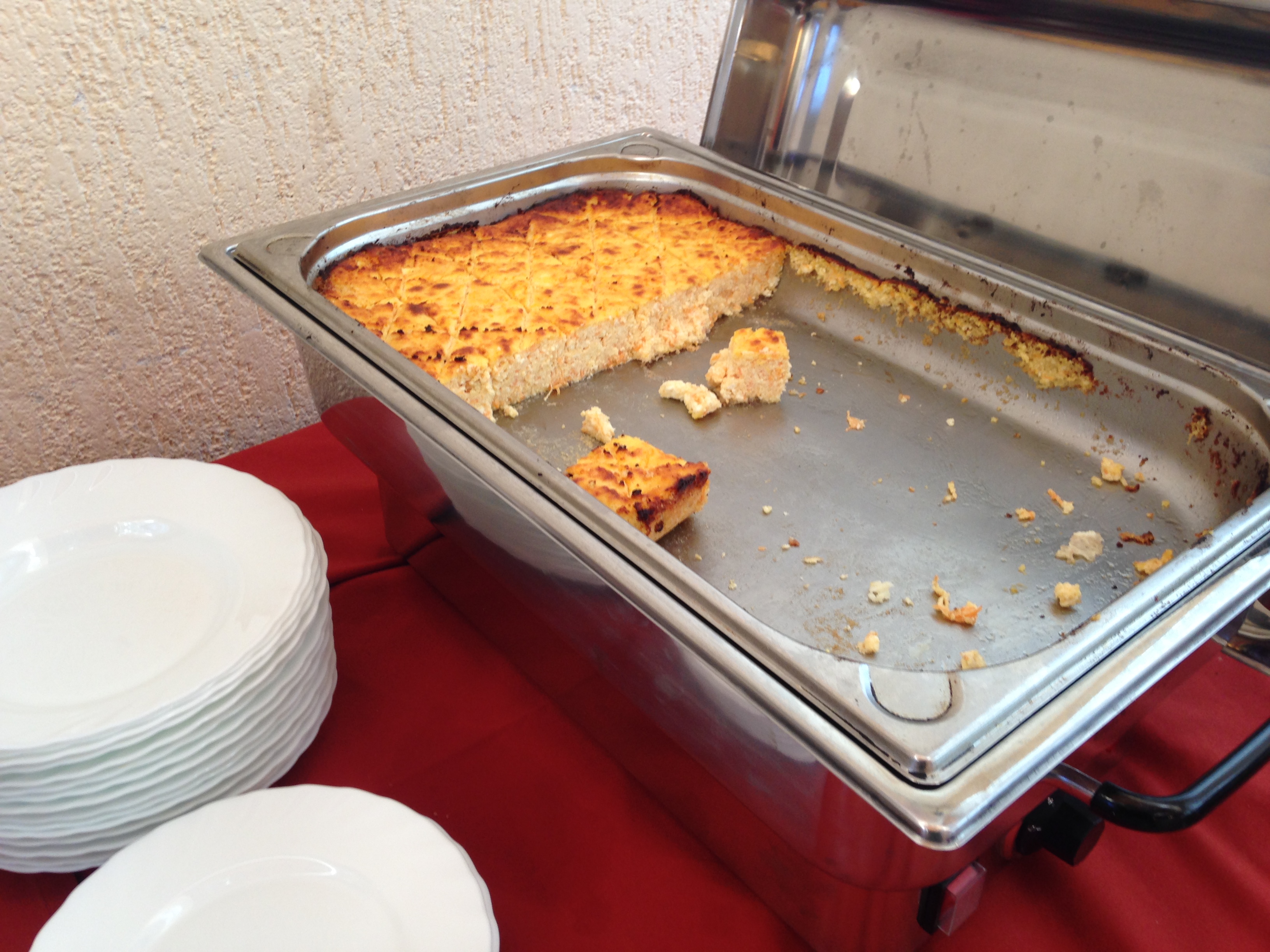
    The dubious cottage cheese pudding at the Olympiets cafeteria. Not sure it will make me an Olympian. Photo: Inge Scheve
    The dubious cottage cheese pudding at the Olympiets cafeteria. Not sure it will make me an Olympian.

    Staying healthy is an important part of that equation, and it’s at the forefront of our minds to the point where some even start to feel they are coming down with something. Many carry hand sanitizers and try to avoid the obvious germ traps such as excessive hugging and handshaking, sharing water bottles, and avoid using the serving spoons in the cafeteria and touching handrails and elevator buttons.

    But all kinds of precautions only go so far when the food-service hygiene fails. Food is expensive in Russia – relative to Russians, of course – and at our hotel’s cafeteria, leftover food was kept for a long time, reheated and resurfaced day after day. That creates a perfect growing environment for bacteria, and by the end of the week, many of us had both colds and stomach infections.

    Syktyvkar is also the home of former Olympians Raisa Smetanina, Vasiliy Rotchev and Nikolay Bazhukov, who were on the World Cup circuit in the 1970s and ’80s. The stadium facilities, courses and venues are named after Smetanina. This is the national training center for the Komi Republic, where Syktyvkar is the capital, and from time to time, there are World Cup races both in cross country and biathlon at the Smetanina Sports Complex.

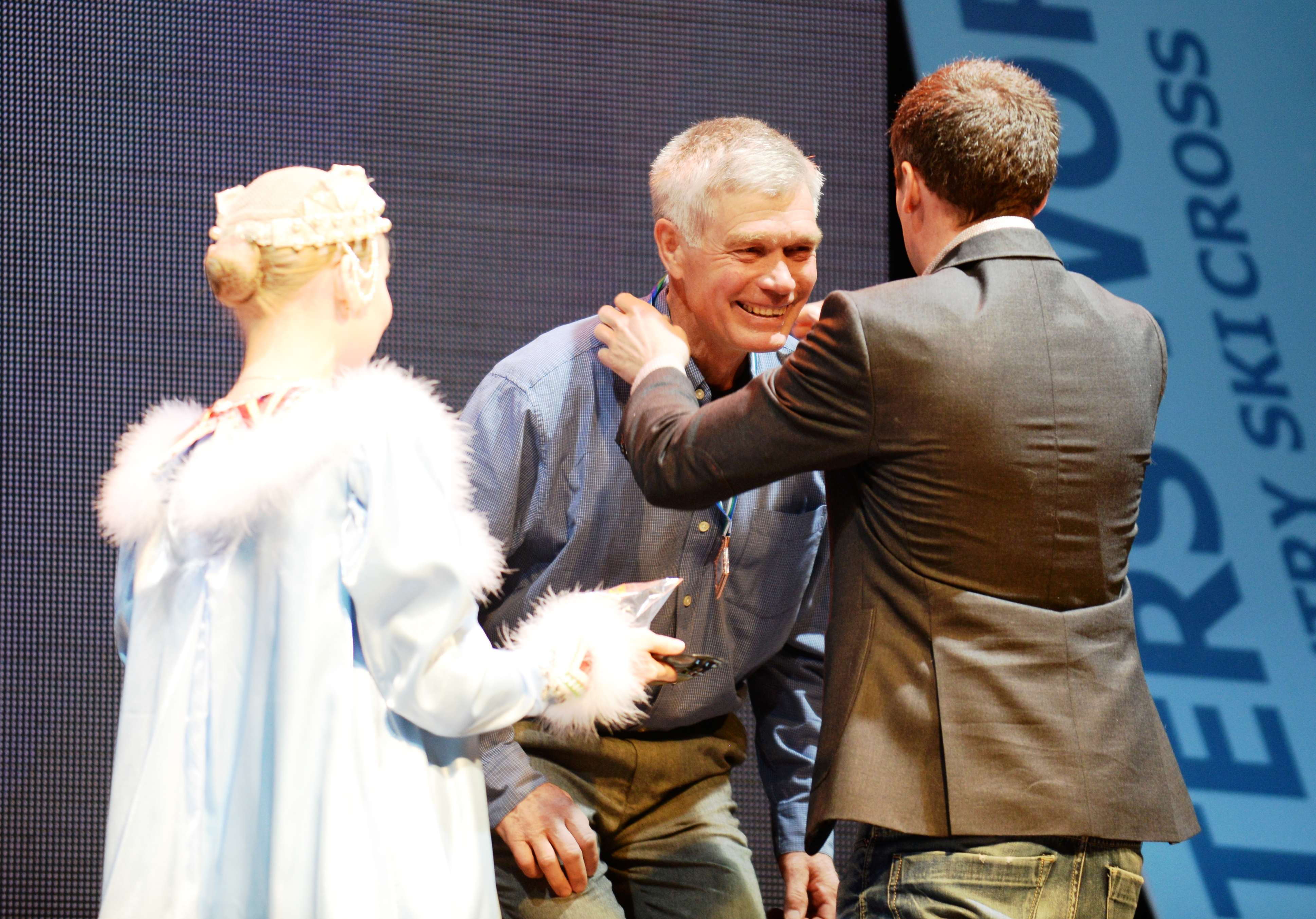
    Bob Gray receiving his bronze medal. Photo: Kent Murdoch
    Bob Gray receiving his bronze medal. (Photo: Kent Murdoch)

    The quick and dirty on U.S. results at MWC

    Eight U.S. athletes collected a total of seven medals in Syktyvkar: Milan Baic of Michigan earned bronze in the men’s 30-kilometer skate on March 14, the first day of the races, as well as a bronze medal in the men’s 45 k skate on March 19.

    On March 16, Bob Gray of Vermont took bronze in the men’s 5 k classic, and I finished second in the women’s 10 k skate.

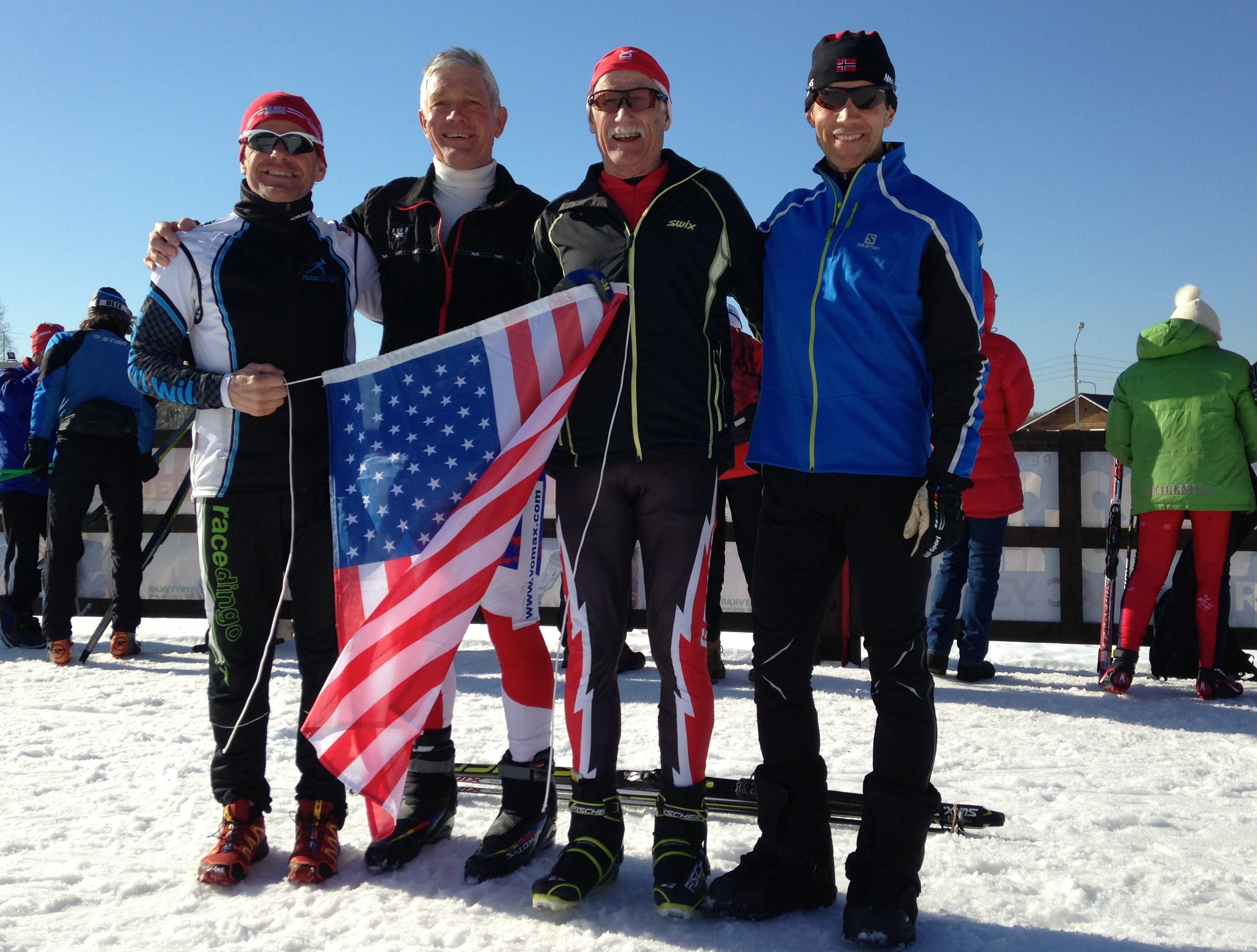
    Baic also scrambled for the U.S. men’s relay team that earned bronze in the M5 category on March 18. Gray skied the second leg for the team, Steve Smigiel of Michigan skied the third leg, and Kent Murdoch of Washington anchored the team to third place.

    There were also several top-10 finishes during the Syktyvkar race week, including Murdoch’s fifth place and Gray’s sixth place in the men’s 10 k skate, Murdoch’s 10th place in the 30 k skate and my fifth place in the 15 k skate on March 14. On March 19, I placed fifth in the 30 k skate and Murdoch was sixth in the 45 k skate.

    Additionally, the U.S. team consisted of Sherry and Richard Dixon, Alec Davies, and the U.S. national director of the Masters World Cup Association, J.D. Downing, who also raced two events during the Syktyvkar championships week. Dan Nolan was also part of the team, but did not race due to a thumb injury.

    The USA bronze medal relay team: Milan Baic, Bob Gray, Steve Smiegel and Kent Murdoch. Photo: Inge Scheve
    The U.S. bronze-medal relay team: (from left to right) Milan Baic, Bob Gray, Steve Smiegel and Kent Murdoch. (Photo: Inge Scheve)
    The cheering was first class: John Downing kept tabs and splits on all the US racers. Photo: Inge Scheve
    The cheering was first class: U.S. National Director J.D. Downing kept tabs and splits on all of the U.S. racers.

    The Syktyvkar experience

    We have competed against the Russians in many World Masters events before. I’ve wondered about their race faces and admit that they can be quite intimidating on the start line. They’re serious about the racing, with everything from ski testing to warmup routines and recovery. They mean business.

    But off the course, the Russians are warm people, excited to share their culture and proud of their heritage. And with the global political situation starting to resemble the intensity of the Cold War days, most Russians are eager to show that they are not the regime. They are genuine, compassionate and generous. The organizers had more than 1,500 volunteers, and each national team was assigned a team of young students who worked as guides and interpreters, guiding us smoothly through language barriers, red tape and bureaucracy, and happy to take us anywhere we wanted to go, be it the mall, the supermarket or the ballet.

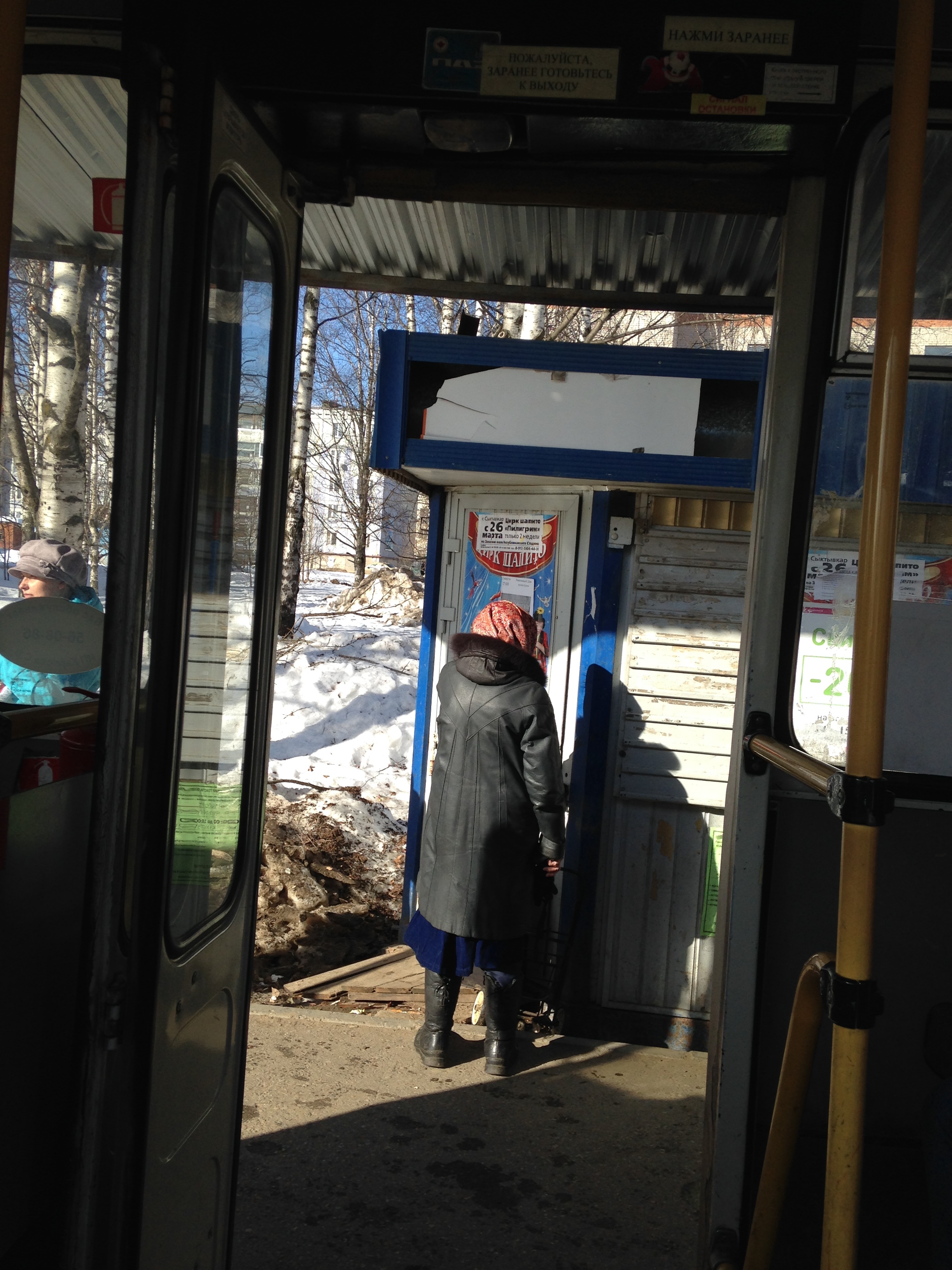
    Downtown Syktyvkar, from the city bus. Photo: Inge Scheve
    A snapshot of downtown Syktyvkar, taken from the city bus.

    Syktyvkar is the capital of the Komi Republic and has been a city since Catherine the Great granted such status in 1780. The Tsarina needed timber and natural resources from the north, and also a new location for a penal colony. That tradition was continued by Stalin, who established a number of gulag prison camps in the area from 1929 and well into the post-World War II era. Prison gangs built rails and roads, towns and mines and most of the industrial infrastructure of Syktyvkar and other Komi cities, as well as numerous other Soviet communities. On paper, these gulags were no longer used after 1955, but it has later been documented that they were alive well into the Gorbachev era in the 1980s.

    I must admit that Syktyvkar’s past sent chills down my spine when walking the muddy streets of the city and taking the bus through the town. Knowing that every ditch and road here is carved out manually with only crude tools and by scantly clad and undernourished prisoners, many sent there without a proper trial and only on dubious charges, casts a dark shadow over the beautiful cathedral roofs.

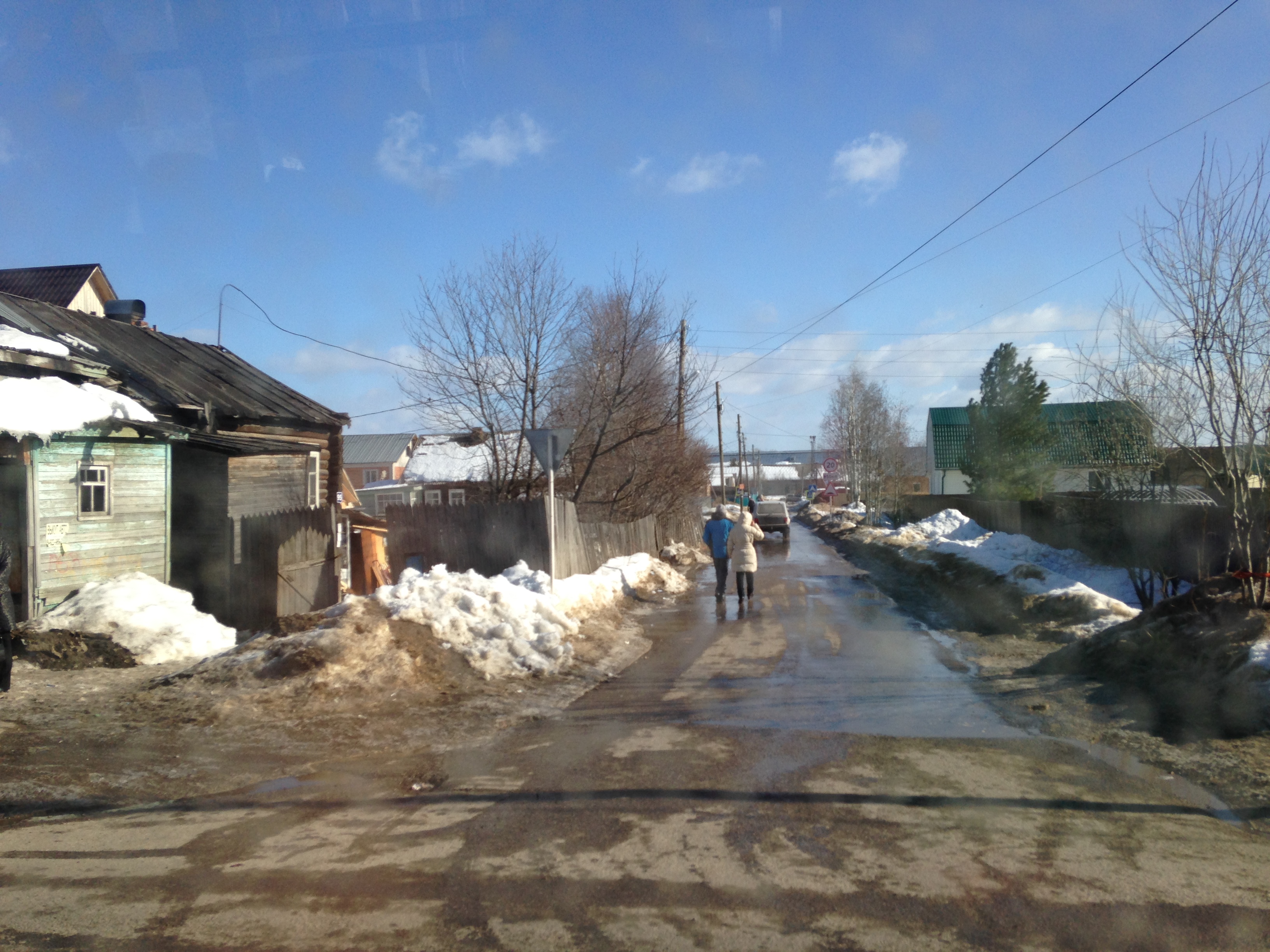
    Syktyvkar city street.
    Syktyvkar city street.

    Syktyvkar, a town of a couple of hundred-thousand people at the foothills of the Ural mountains, now has a university and several large corporations in timber industry, mining, oil and natural gas. At first glance, Syktyvkar looks like just another mid-size town consisting of endless gray communist-era housing projects in various stages of decay and suburbs of shabby-looking wooden cabins that reflect on the region’s economic state.

    But the area has a vibrant cultural scene, with numerous museums, a theater of ballet and opera and performing arts, evident during the spectacular opening and closing ceremonies and the daily medal ceremonies at the Masters World Cup. At all of these events, local artists performed traditional music and dances.

    From the opening ceremony at the 2+15 MWC in Syktyvkar, Russia. Photo: MWC2015
    From the Opening Ceremony at the 2015 MWC in Syktyvkar, Russia. (Photo: MWC2015)
    From the opening ceremony at the 2015 MWC in Syktyvkar, Russia. Photo: Kent Murdoch
    The Opening Ceremony at the 2015 MWC in Syktyvkar, Russia. (Photo: Kent Murdoch)

    The racing

    Yours truly on the final lap of the 30k skate. Photo: MWC2015
    Yours truly (l) on the final lap of the 30 k skate. (Photo: MWC2015)

    I’m quite content with the results at Worlds this year, especially given the rocky preparation and the stressful winter I’ve had with my professional work situation.

    The fifth place in the 15 k skate on the opening day felt like a solid effort, where I raced the best I could on that day. The field was stacked with Russian skiers without prior Worlds points, which made them total wild cards. I beat the racers whom I generally compete with at these events, but I was also beat by a couple of these wild cards. So, overall a solid effort.

    But the silver in the 10 k skate was particularly exciting. At that event, I also beat a couple of the wild-card racers who topped me in the first race. The feeling of having dug so deep, put it all on the line and making it to the podium is magic.

    The feeling of having dug so deep, put it all on the line and making it to the podium is magic.

    However, digging so deep sure took a toll. The next couple of days I felt very tired, even shorts workouts seemed like they required more recovery than expected, and I was on the brink of coming down with a full-on cold, which had been circulating in the team for a few days.

    Then on the day of the 30 k, I woke up in the middle of the night with a monster head congestion in addition to the race hack I had been dealing with since the 15 k on Saturday. As if that wasn’t enough, several of the team suffered from the revenge of the cafeteria – stomach pain and the runs. Not a great setup for a 30 k race. But given that this was the last race of the week, I gave it a shot with the ambition of finishing in style. So a fifth place under those circumstances felt like another success.

    The price to pay was that the trip from Syktyvkar to Lillehammer, Norway, the following day became a bear. The same is true for Murdoch, who was sixth in the 45 k skate and suffered a similar illness both before the race and during the expedition trek to Lillehammer. Needless to say, only working at the Norwegian Birkebeiner on March 21 felt quite all right. Neither one of us felt a desire to race the 54 k classic event, despite the best conditions in several years. But we will be back!

    Kent Murdoch (back of the train) in his 45k skate. Photo: MWC2015
    Kent Murdoch (back of the train) during the 45 k skate at 2015 Masters World Cup. (Photo: MWC2015)

    About the author:

    A longtime contributor, Inge Scheve was born and bred in Norway, and learned to ski about the time she learned to walk. She always loved skiing, but didn’t really get into racing until she came to the University of Alaska Fairbanks, where she was introduced to collegiate ski racing American style. After UAF, she moved to Bend, Ore., in 2001 to ski with XC Oregon. She has competed for the U.S. in five World Masters, earning eight gold medals, 10 silver and 11 bronze.

    When she’s not skiing, Inge loves caribou hunting on the tundra in her native Rendalen valley in Norway, dabbles in adventure racing, mountain biking, road cycling, hiking, trail running and kayaking. Inge really wants to become a wine snob, but realizes that probably involves learning to like red wine.

  • Where Are They Now: Mike Gallagher (with Audio)

    Where Are They Now: Mike Gallagher (with Audio)

    This article is the third profile in the ‘Where Are They Now’ series, made possible through the generous support of Fischer Sports. Learn more about their products at www.fischersports.com.

    Pittsfield, Vt.

    Mike Gallagher, a three-time Olympic cross-country skier and former U.S. Ski Team head coach, stands in front of his home in Pittsfield, Vt., on Nov. 1.

    FS Podcast Short: Mike Gallagher discusses the evolution of skating with Alex Matthews
    [podcast]http://images.fasterskier.com/2011/11/MikeGallagher.mp3[/podcast] 
    (You can subscribe to FasterSkier Podcasts in iTunes here)

    PITTSFIELD, Vt. — The “XC1” license plate on the Subaru wagon should have been a dead giveaway. Instead, it took a minute to be sure the man walking across the general-store parking lot was Mike Gallagher, one of the pivotal players who put U.S. nordic skiing on the international map.

    Inside the store, appropriately named the “Pitt-Stop” after the town with about 550 residents, Gallagher greeted a few familiar neighbors and affectionately asked the clerk to prepare his turkey-BLT sub without onions.

    “They don’t come with onions,” she said, kindly. “Oh, no?” the 70-year-old Gallagher said about one of his favorite grinders. “Well, all right then.”

    Pittsfield and Irene:

    When Tropical Storm Irene swept the country in late August, it devastated several communities in central Vermont, including Pittsfield.

    High atop a mountain road, Gallagher lost his driveway. With his power out, he thought, “Poor me,” he said.

    Then he walked into town. In the river valley, 22 homes had been condemned or destroyed in Pittsfield, he said. Residents were stuck without a way out for more than a week.

    The Pitt-Stop rationed gas to five gallons a day per household, the National Guard and FEMA flew supplies in, and people met every other day at town meetings.

    “The town came together like it never has,” said Gallagher, who has lived in Pittsfield since 1967. “We’ve had what we call floods, but nothing. We never lost bridges, we never lost homes.”

    With his wife, Tyna, in Boston during the storm, Gallagher couldn’t talk to her for four days. He had to walk to town and stand in one spot to get cell service.

    When Tyna arrived home later that week, she was covered in scratches from walking through the woods, Gallagher said.

    They couldn’t use their driveway for nearly a month, he said. It took 63 dump-truck loads of gravel to fill in.

    Before proceeding a few miles from town to his home at the height of the land, the three-time Olympian and former U.S. Ski Team head coach visited the postmaster.

    Up at his log cabin on 50 acres of land surrounded by national forest, Gallagher revealed four green-and-spotted apples the postmaster gave him. She thought they were interesting, he said with a laugh. He had apple trees in his yard.

    Placing them on the woodpile that filled his front porch, Gallagher explained he used to chop the wood himself. Now, he had it delivered, but even after having a hip replacement a year and a half ago, he still stacked it.

    Before eating lunch inside the house he built in the 1970s, Gallagher pointed to a green square nailed outside his garage. High above the ground, the original “XC1” Vermont license plate attested to his ski career; the nine-time U.S. nordic champion received it in the ’70s upon being the top racer in the country.

    With prestige came egos, Gallagher said. He had plenty of stories to illustrate his.

    A veteran member of the U.S. Ski Team in 1968, he remembered when about 10 teammates set a running record on Vermont’s Long Trail, which extends nearly 300 miles from Canada to Massachusetts.

    A year later, he and the team took on another training excursion: bicycling some 1,000 miles around Vermont.

    “I had this license plate, but I was not a biker,” Gallagher said, with a smile. “I had a 10-speed bike. … It didn’t have those fancy toe clips. I didn’t wear those fruity-looking black pants and those pointy Italian shoes with these clips on the bottom. I was a real man. I got on the bike and pushed the pedals.”

    A graduate student at Springfield College in Massachusetts at the time, Gallagher joined his teammates on weekends to prepare. Meanwhile, many of them — which he described as bikers — trained more seriously for the ride.

    “They did stuff like get in a line and rotate the lead and stuff like that,” he said. “But real men don’t do that type of stuff. You just get on the bike and go up front and stay there.”

    In tennis shoes, running shorts and a T-shirt, the helmet-less Gallagher embarked on the cycling journey with the group. He treated as a race, avoiding the pull line and leading his peers by several bike lengths.

    On the last day of the ride, the team approached the last 110 miles in similar fashion, drafting one another and taking turns breaking the wind. Gallagher couldn’t take it.

    “I take off, ” he said. “For about 40 miles, I go off the front and just stay there, and they’re doing all this kind of stuff, staying about a quarter mile behind me.”

    They regrouped at lunch in Manchester, Vt., about 50 miles from their final destination in Putney at the home of their head coach, John Caldwell. From there, they started to climb Bromley Mountain.

    “This is where Mikey was gonna get his lesson,” Gallagher said. “He was gonna get spanked. All of a sudden, one of the guys goes off in front … and the next one goes, and the next one goes, and I am dropped … dropped bad. And I was Mr. XC1.”

    Exhausted and about 20 minutes behind, Gallagher missed a shortcut into Putney, which saved the others about 20 miles. Laughing with tears in his eyes, he said he didn’t even have a water bottle.

    When he eventually wheeled into Caldwell’s driveway about 1 ½ hours after the team, he saw his license plate, which had been chalked with two zeros: “XC100.” Everyone was in the sauna, drinking beer and singing.

    “I’ve had a long day and they put it to me,” he said. “Of course, with the ego I had, being as cocky as I was, I really deserved it. But boy, they put it to me bad.”

    He couldn’t let that go. “Guess who went out and bought a racing bike?” he asked. “And some of those pointy Italian shoes and some of those black pants?”

    Yes, he ended up in “a tight, flashy T-shirt and a helmet,” he said, and trained so hard he won a national time-trial championship in 1972.  A few months before he claimed the 25-mile cycling crown, Gallagher skied in his third Olympics, helping the men’s relay finish 12th and placing 30th in the 30 k.

    He had previously cracked the top 30 in the 1968 Olympics (22nd in the 50 k, 27th in the 30 k), and was 38thin the 15 k at the 1964 Games.

    “I was a wicked-good hill climber,” Gallagher said of his competitive cycling career.  “Tremendous time trialist, terrible pack rider.”

    He chuckled for a while and continued to eat his BLT.

    That was the thing about Gallagher. Spending more than three decades in the sport at its highest level (as a USST athlete from the early ’60s to the mid-’70s, as its head coach in the ’80s and an assistant in the early’90s), he told it like it was, with an exceptional memory that lent to storytelling.

    “There’s a couple things outside my skiing that I’m quite proud of,” he said.

    The Mount Washington Road Race was high on the list. He won the 7.6-mile climb to the top of the 6,260-foot mountain four times from 1968-1971. In June, he was inducted into its Hall of Fame with two others: Daniel Kihara of Kenya and Derek Froude of New Zealand.

    He would’ve gone after a fifth-straight title, too, if it hadn’t been for an incident on the auto road in ’71.

    Before the race, he overheard Boston-Marathon winner Amby Burfoot telling reporters that he didn’t expect to lose to a skier. He didn’t forget that.

    About 1 ½ miles from the finish, Gallagher checked back to see Burfoot 20 seconds behind him. A car trailed him even closer, beeping as Gallagher cut across the switchbacks.

    “Hell, I had the right of way,” Gallagher said. “And he came up and hit me and I rolled up onto the hood and fell off on the side.”

    He stood up and saw Burfoot just down the road. That motivated him to run even faster.

    “I put on about a half-mile kick right then,” Gallagher said. He won by nearly a minute.

    Pittsfield, Vt.

    Gallagher, 70, stands near a pond on his 50-acres property in Pittsfield near his sauna (not shown).

    Starting from Scratch

    Inside his log cabin, Gallagher glanced at the large, rounded beams overhead. They were heavy, he said, and he installed them on his own.

    When he bought the property in 1967, Gallagher wasn’t a builder. He considered it a risk in some ways as a full-time athlete at the height of his career.

    “It was tough in the old days,” he said. “I worked 70 hours a week to train 70 hours a week.”

    By trade, he was a teacher, working long hours in colleges like Castleton and Johnson State in Vermont to fit in semesters between seasons. Trained in physical eduation, he created a Sport and Society course at Johnson State.

    In 1974, his Pittsfield home burned to the ground. Gallagher and his first wife were in Bermuda at the time, and as they switched hotels throughout the week, the bad news never reached them.

    “The message that our house burned down was always one jump behind us,” he said. “(We) got back to Boston, jumped in a car and drove up to a cellar hole here.”

    Six months later, Gallagher finished building their new home, which he did himself except for the plumbing and bricklaying. He didn’t have any architectural plans, he said, just an ambition to work.

    Born in Yonkers, N.Y., and raised near Rutland, Vt., Gallagher began a family of his own in Pittsfield with two boys: Jesse, now 34, and Sean, 31. Both talented skiers, Jesse went to the University of Alaska and Sean skied for the University of Vermont.

    Elan

    Gallagher (R) with his son, Jesse, in his Elan work van.

    Jesse became a big-game hunting guide, spending some of the year in Alaska and traveling to Africa last summer. When he wasn’t on the road, Gallagher said his oldest son lived in a small cabin on his property, back in the woods without a driveway.

    Also in Pittsfield, Sean lived closer to town with his 2 ½-year-old son, Andrew.

    “He’s a keeper,” Gallagher said of his grandson.

    He said the same about his second wife, Tyna, whom he married 10 years ago and recently built a horse barn for.

    “Everything in my life except my training and my devotion to my wife is what I call and organized mess,” he said as he walked around the barn, built for Bud, the horse, and their three dogs: Roscoe, Thunder and Jaeger.

    On the other side, Gallagher pointed to his beehives surrounded by an electric fence. As of early November, two of three had survived.

    A self-described, small-time beekeeper, Gallagher said he did his best to cultivate and protect the hives for the benefit of the environment. Pollination was good, he said, and comb honey was healthier than jar honey. Bears were his biggest problem.

    Jesse helped by bringing spiked-bear boards from Alaska and laying them around the hives. Gallagher also placed muskrat traps nearby. “You try all your tricks because a hive like this is worth probably $300,” Gallagher said. “A bear comes in, then you’re out of luck.”

    Beekeeping

    Gallagher shows off his beehives, surrounded by an electric fence and bear boards.

    Elsewhere on the property, Gallagher said he spent most of his time gardening and mowing. With nine acres to cover at least once a month and four acres a week, he mostly mowed.

    “Not that I’m retired,” said Gallagher, an independent subcontractor for the last 16 years. “But I basically am.”

    In May 2010, Gallagher had hip surgery that was both life-changing and hard to bounce back from. Without it, he would be on crutches or relying on a cane, he said. Before it, he couldn’t ski.

    Last winter, he resumed his part-time job instructing skiers at Mountain Meadows in Killington, Vt., and planned to return in a few months. This year, he hoped he could skate ski.

    “There’s no reason why I can’t,” he said. “I just wasn’t ready last winter, but the activity was good for me.”

    Continuing the tour of his property, Gallagher walked toward a wooden hut on the edge of a heart-shaped pond. The green space beside it was where he married Tyna, who now works as an office manager and sells candles on the side.

    Beyond the pond was a place he described as “special,” a 10-person sauna with a ski-memorabilia changing room.

    Inside, ski tips from as early as the ’30s served as clothes hangers and posters of some elite nordic skiers — including Bill Koch and longtime friend Bob Gray — plastered the walls. He looked closely at a plate, which named every Swedish Olympic cross-country ski champion through 1977.

    “(What) makes the difference between a great champion and other skiers, (is) that they can change their technique during a race to accommodate conditions,” Gallagher said. “They can change it from day to day, even sometimes from year to year.” Through the years and his experiences with top-tier skiers, Gallagher learned that.

    ‘An Organized Mess’

    Mike Gallagher, Bill Koch
    Gallagher points to a photo of Bill Koch from 1982 in his basement “museum” in Pittsfield, Vt.

    Back inside his home, Gallagher stood in his basement admiring his wax bench, which he used with the national team and with his sons. Well-worn, it appeared to be operational.

    “I’ve got so much wax up here,” he said. “Literally, thousands of dollars of wax.”

    He motioned toward the adjacent room: his office, or as he called it, “the museum.” He recalled an inscription above the library doors at the University of Colorado at Boulder, his alma mater.

    “ ‘He or she who knows only their own generation remains always a child,’ ” Gallagher said. “So this is a lot of history of skiing, not just Mikey.”

    The sauna had been just a warmup. This was a shrine to the sport with newspaper clippings, original photos, plaques and medals all holding pieces of history.

    1982 World Cup

    A photograph of Bill Koch en route to winning a 1982 World Cup event in Italy. Notice the coaches checking out his skis.

    Pinned to the back wall, an action shot of Koch was at the heart of the collage. Gallagher pointed out two Norwegian coaches in the photograph, who were on their knees and straining to look under Koch’s skis. He won the World Cup race in Italy that day and the overall title that year in 1982.

    Koch became the first American nordic skier to win a World Championship medal in ’82, after claiming an unprecedented silver at the ’76 Olympics.

    “I coached him and he was one of my heroes,” Gallagher said. “And I’m one of his heroes. You know how that goes?”

    After translating Norwegian and Swedish newspaper headlines, Gallagher shifted his focus to perhaps his biggest hero, his father. A member of the 10thMountain Division — a group of mountain-warfare soldiers formed in 1942 — his insignia hung on the wall.

    Gallagher pointed out his father’s ice ax, which he used in World War II as a climber and downhill skier.

    “I hang a lot of things on nails,” he said. “Jesse, about three years ago, said, ‘What are you gonna do with Grandpa Don’s ice ax?’ And I paused for a second, and he said, ‘Hang it on another nail?’ ”

    Don Gallagher, Mt. McKinley

    The ice ax Gallagher’s father, Don, used while in the 10th Mountain Division. Gallagher’s son Jesse used it about three years ago to climb Mt. McKinley.

    Probably, he responded.

    Jesse wanted it to climb Alaska’s Mount McKinley, the highest mountain in North America. His father didn’t think he would go through with it.

    “After he climbed the mountain, he gave it back to me,” Gallagher said. “ ‘Hang it on a nail.’ ”

    Closing the door behind him, Gallagher turned around to face several posters of bald eagles. He was once so frustrated with a group of athletes, he told them, “I can’t fly with eagles if you ask me to train like a turkey!”

    They responded by calling him “The Eagle.” “So today my nickname is,” he said, removing his cap. “The Bald Eagle.”

    Testing the Waters

    Before graduating Rutland High School in 1959, Gallagher earned early exposure with the national team at one of Caldwell’s training camps the fall of his senior year.

    Fresh off his cross-country season, the Vermont state champion found himself in a perfect position at the snow-less camp, which resorted to running.

    “I’m looking over my back the whole time at these guys who are training for the Olympics,” Gallagher said. “They can’t keep up. I said, ‘Whoa, this looks like the doors (are) open.’ ”

    That winter, he won the Junior Olympics. In college, Gallagher wanted to surround himself with some of the best skiers he knew, so he chose to join Gray and Mike Elliott in Boulder. The three of them eventually dominated American racing.

    After three years at CU, Gallagher — then a member of the U.S. Olympic training squad — took a year off to immerse himself with the team.

    “By the end of the year, I was one frustrated puppy,” Gallagher said. “We had trained our butts off. … No other athletes in the world had trained any harder than some of us, but we weren’t trained right. We were more in shape to run and hike than we were to ski.”

    He ventured to Norway that spring in search of a solution. He found it in the Norwegian training method.

    “They did some silly son-of-a-gun thing called rollerskiing,” Gallagher said.

    Upon returning to Colorado for his final year of college, he found his mind was elsewhere. With one semester left, he withdrew from CU and stayed in Europe to study the Norwegian system. He began rollerskiing, importing the three-wheeled skis to the U.S. and selling the first 200 pairs before they even landed.

    For the rest of his ski career, Gallagher imported European items, such as skis, boots and bindings, and sold them out of his car at races. His eye for the market landed him jobs with ski companies, including Splitkein, Hexcel, Edsbyn and Elan, where he designed and tested fiberglass skis.

    FasterSkier Podcast: Mike Gallagher Talks Skating

    Even when he retired as an athlete in 1975, Gallagher maintained his part-time industry positions, which kept him in touch with the sport and its athletes before he returned to the scene in 1980, first as a private coach at the Lake Placid Olympics and then as the USST head coach from 1980-86.

    “Basically, that’s how I got hired,” he said. “Because the racers had experience with me as an ex-athlete and a person that’s very knowledgeable and most of all, very enthusiastic.”

    Peter Ashley, the U.S. women’s coach in the ’80s who worked with Gallagher, remembered him as an important figure during a transitional period in the sport. While people around the world resisted the skating technique, Gallagher fought for it.

    “He brought some interesting openness to different ways of doing things,” said Ashley, now Fischer USA’s nordic division vice president.

    “And you needed to because you had Bill Koch there. Mike was the perfect guy for Kochie because he allowed him to do things in a different way. … Flexible when he needed to be and would stand on things when he needed to.”

    Personally, Ashley said Gallagher had a special impact on him as a freshman at the University of Colorado. In 1969, Gallagher helped save his life.

    “We were out training one day and decided to take a tour,” Ashley said. “I ran into a tree and it was not exactly warm out there in Colorado.”

    Several members of the group shed their clothing to cover Ashley and used pine-tree branches to insulate him. Some went to get help at the lodge, while the others stood by his side. He had destroyed his stomach muscles and could hear a few people quietly worrying if he was going to make it.

    A couple of hours later, Ashley made it out safely on a toboggan. He raced at the NCAAs later that season.

    How Far We’ve Come

    For Gallagher, skiing was a lifelong sport and coaching became a passion. When he thought back to his career’s highlights, he said he missed coaching.

    When skating disrupted the nordic world in the 1980s, Gallagher was hesitant at first. The Americans didn’t know how to do it, but Koch pushed them to experiment.

    By the time his team got the hang of it around 1985, some others weren’t there yet. Gallagher remembered going to a meeting in Sweden, where an outraged technical delegate exclaimed: “ ‘Furthermore, our research shows that skating will damage women’s crotches!’ ”

    “Ruff Patterson, who was my assistant coach, and I said, ‘Crotches?’ ” Gallagher recalled. “People were just going crazy.”

    By 1986, skating was an accepted discipline. “I think it’s great the way it is now,” Gallagher said.

    But evolution wasn’t easy to foresee. When U.S. Olympic biathlete Charlie Kellogg came to a summer practice with a pair of rollerskis — with the tips and tails cut off so they fit in his Saab — Gallagher was furious.

    After cussing him up and down, Gallagher said, “ ‘How are you gonna get the kinesthetic feeling if you don’t have a ski on your foot?’ You can’t ski on a skate!’ ”

    “Wrong,” Gallagher said, nearly 50 years later.

    Earlier this year, Gallagher sold his last pair of rollerskis — his own — to a girl for $50. He told her it was the best deal ever.

    Looking ahead to this season, Gallagher was excited to teach again. But he won’t teach beginners how to skate. One of the reason he thinks cross-country skiing struggles to gain popularity with newcomers is because of the industry’s dishonesty.

    “We said cross-country skiing is as easy as walking. It’s not,” he said. “(To some people) I say, ‘Nah, I think you better be on snowshoes, you’re not ready to ski.’ … They want to exercise on snow. Not everybody can ski.”

    In the end, he wants to make it fun for beginners and keep them coming back. “I enjoy teaching someone how to cast a fly,” he said. “I enjoy teaching someone how to pound a nail. I enjoy teaching someone cross-country skiing.”

    And he loves being in Vermont. At his induction into the Vermont Ski and Snowboard Hall of Fame in 2007, Gallagher borrowed a line from one of his favorite presidents, John F. Kennedy. “Ich bin ein Vermonter,” he said. I am a Vermonter.

    <div